Programme Notes
Sun 10 May 2026 • 14.15
Shostakovich and Prokofiev
Sun 10 May 2026 • 14.15
conductor Andris Poga
cello Nicolas Altstaedt
Sergey Prokofiev (1891-1953)
Symphony-Concerto in E minor, Op. 125 (1950-51)
• Andante
• Allegro
• Andante con moto - Allegretto - Allegro marcato intermission
Sergey Prokofiev
Suite from The Love for Three Oranges (1921)
• The Ridiculous
• The Magician Tchelio and Fata Morgana Play Cards
• March
• Scherzo
• The Prince and the Princess
• Flight
Dmitri Shostakovich (1906-1975)
Symphony No. 1 in F minor, Op. 10 (1924-25)
• Allegretto - Allegro non troppo
• Allegro - Meno mosso
• Lento - Largo - Lento (attacca:)
• Lento - Allegro molto
Concert ends at around 16:15
Most recent performance by our orchestra:
Prokofiev Symphony-Concert: Nov 2007, cello
Pieter Wispelwey, conductor Vassily Sinaisky
Prokofiev Suite from The Love for Three Oranges: Jun 2005, conductor Stéphane Denève
Shostakovich Symphonie No. 1: Sep 2021, conductor Valery Gergiev
One hour before the start of the concert, Sander Zwiep will give an introduction (in Dutch) to the programme, admission €7,50. Tickets are available at the hall, payment by debit card. The introduction is free for Vrienden.
Cover: Photo Xiaolong Wong (Unsplash)
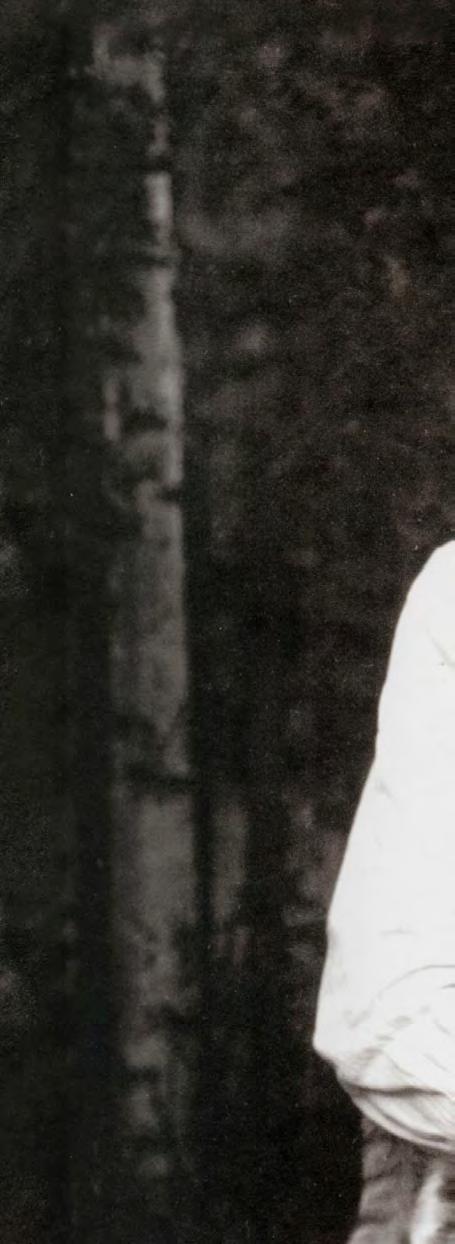
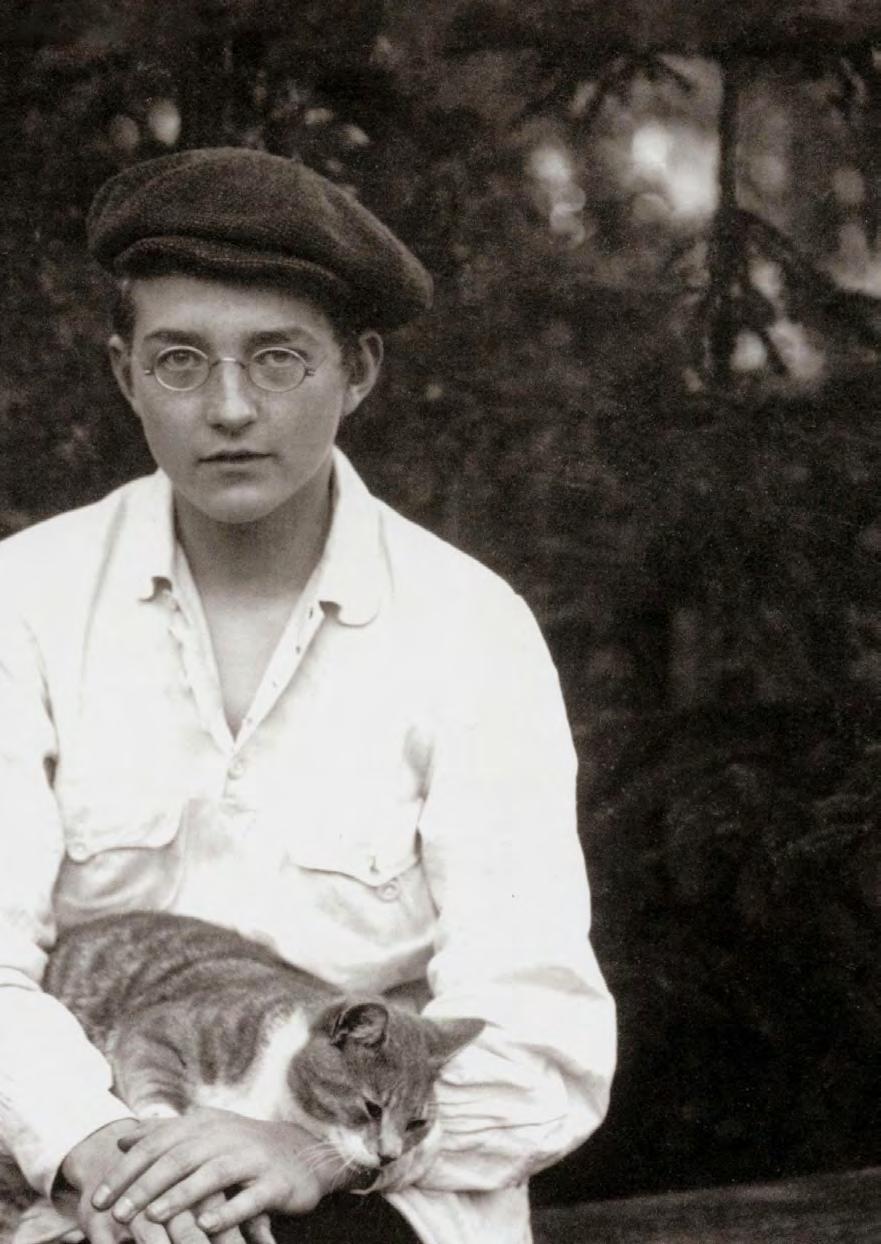
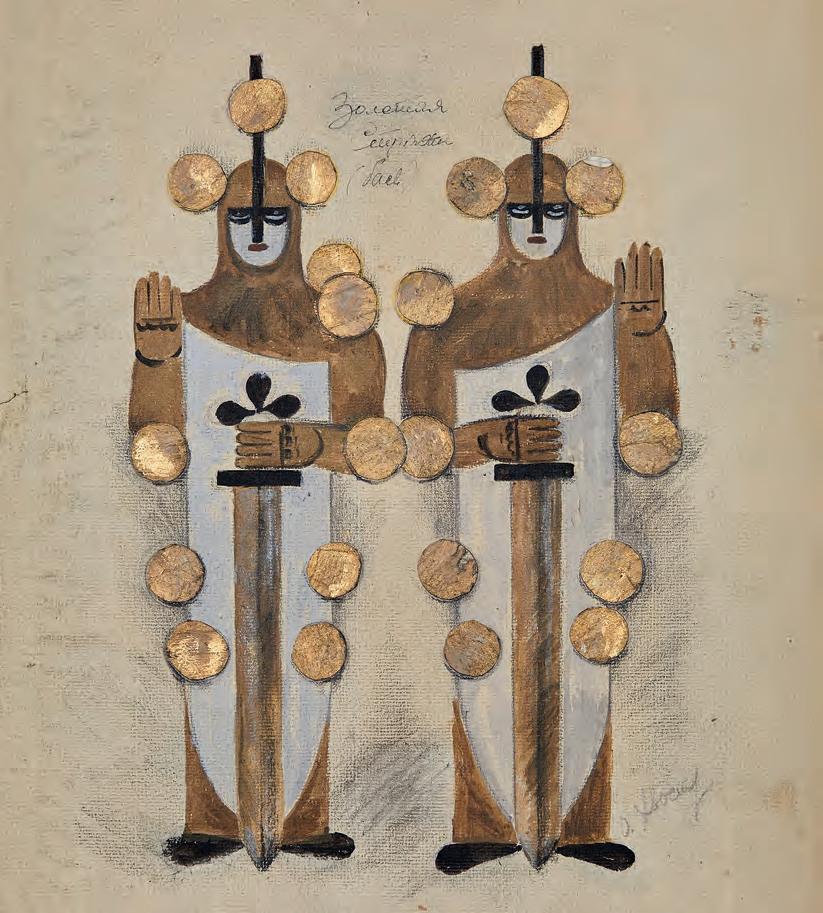
Golden Guards. Costume design (1926) by Alexander Khvostenko-Khvostov for The Love for Three Oranges
Sergei Prokofiev perfectly captured the spirit of the Roaring Twenties with his cartoonish opera The Love for Three Oranges. The 19-year-old Dmitri Shostakovich was present at the Russian premiere in February 1926. Three months later, he would rival Prokofiev with his own First Symphony.
If you had to name one stylistic characteristic of Sergei Prokofiev, it would be his eclecticism. His oeuvre contains as much fairy-tale elegance as it does sounds that seem to come from a blast furnace complex; sometimes he even combines them in a single piece. In his twenties and thirties, he worked primarily in Europe, where he wrote his most representative pieces. When he eventually returned to Russia for good, he increasingly fell back on a predictable, heavy Soviet style. The Symphony-Concerto for Cello and Orchestra dates from that period, and look: here the composer’s former sharpness appears to be fully intact. Melodic richness, bitter harmonies, and fierce rhythms go hand in hand. And that comes in handy with a solo instrument that can sing and hum like no other—as well as growl, moan, and even whistle. The fact that this piece is seldom heard is due to the extremely virtuosic solo part.
Despite the cello’s leading role, Prokofiev chose the title Symphony-Concerto: the orchestra has an almost hyperactive part,
thereby transcending the role of accompanist. Incidentally, Prokofiev could also have called the piece Triptych, as the three movements could stand alone as concert pieces. In terms of melody and character, the first movement is closely related to the ballet Romeo and Juliet, completed more than twelve years earlier. Constant shifts in mood also characterize the middle movement, in which Prokofiev challenges the cellist with dazzling playing one would expect more from a violin. And amidst the acrobatics, an ethereal melody suddenly blossoms, seeming to come from another world.
The final movement has precisely the folksong character with which a Soviet composer could earn high marks – at the beginning, that is, because soon the music seems to be making fun of itself. The tunes introduced are gradually distorted, peppered with ‘wrong’ notes, and bombarded by other instrumental groups. Prokofiev was certainly no dissident, but such ambiguities reveal that he was more loyal to his own taste than to the State. That
this cello concerto did become a success was mainly due to the dedication of the thenvery-young cello phenomenon Mstislav Rostropovich: he edited Prokofiev’s manuscript but left many devilishly difficult double stops and leaps intact – thereby setting a new standard for anyone who still dared to touch a cello.
Some thirty years earlier, Prokofiev had tried in vain to establish a career in America. The only result was The Love for Three Oranges, commissioned by the Chicago Opera Company. It became Prokofiev’s greatest operatic success, partly due to the colourful play by the 18th-century writer Carlo Gozzi
on which it was based. Gozzi’s comedy about court intrigues, masquerades, and black magic was right up the composer’s alley, as he was at that time excelling in musical shock effects and whimsical gestures.
The suite from the opera became a timeless repertoire piece and serves as a showcase of Prokofiev’s style at the time. At times the soundscape feels Russian, at times Italian (in the butterfly-like string tutti of ‘The Flight’, for example), and at times even jazzy-American. From the very first movement, the tone is absurdist: the spotlight falls not on the characters of the play, but on the audience (consisting of types such as ‘ridiculous’, ‘tragic figures’, ‘comedians’, and ‘empty-headed fools’). From that moment on, the caricatures rush by, with all their so-called magic tricks, pseudo-heroics, and ‘deeply felt’ romance. It was not so much in America as in Europe that The Love for Three Oranges received a warm reception – including in Leningrad, where the young Dmitri Shostakovich was among the enthusiastic audience at the premiere in 1926.
Shostakovich’s struggle with the Soviet regime runs like a thread through his symphonies – one that’s easy to trip over. The political context adds extra weight to his work, but it can also obscure its purely musical merits. That is why the First Symphony can be so refreshing: music by a highly talented 19-yearold conservatory student, free from the traumas that Stalin’s dictatorship would later burden him with.
Many of the distinctive features of Shostakovich’s mature style are already present in this debut work. First and foremost, the ability to craft catchy tunes reminiscent of folk or children’s songs; it is telling that an elderly aunt of the composer, upon hearing this work, recognized melodies that the very
young ‘Mitya’ used to play on the piano. The penchant for caricature and exaggeration was also clearly present from an early stage. Even before the symphony was written, Shostakovich had already been reprimanded by his composition teacher for his ‘love of the grotesque,’ and the first two movements in particular bear witness to this; indirectly, one can hear here that the composer had a side job as a cinema pianist and was a great circus enthusiast.
One can hear that the composer had a side job as a cinema pianist and was a great circus enthusiast
And just as in his later symphonies, the almost hysterical cheerfulness can suddenly give way to sorrow. The final movement has a desolate atmosphere, inspired by the death of a young poet friend. Shostakovich conveys his emotional involvement through a strikingly sparse orchestration in which solo instruments repeatedly come to the fore. The transparent sound contrasts sharply with the heavy, ‘heroic’ grandstanding that the Party expected of composers.
Shostakovich wanted to break new ground and leave behind the romantic embellishments of his great predecessor Rimsky-Korsakov. That did not have to go hand in hand with a lack of emotion, as the First Symphony proved. Conductor Nikolai Malko, a great champion of new music, ensured that the work premiered in Leningrad in 1926. The overwhelming success gave a flying start to a career that the composer would later look back on with mixed feelings.
Michiel Cleij
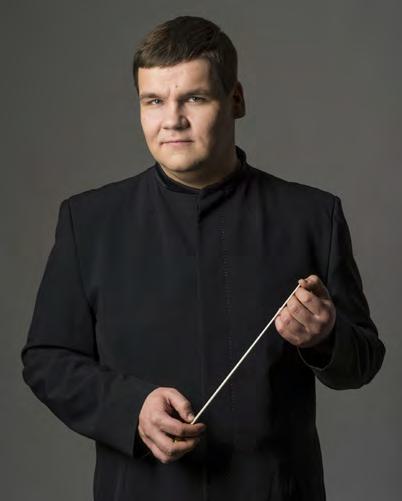
Born: Riga, Latvia
Current Position: chief conductor Stavanger Symphony Orchestra
Education: trumpet and conducting at the Jāzeps Vītols Latvian Academy of Music, conducting at the Universität für Musik und darstellende Kunst Wien, Philosophy at the University of Latvia
Breakthrough: 2010, First Prize in the Evgeny Svetlanov International Conducting Competition
Subsequently: guest appearances with Royal Philharmonic Orchestra, Gewandhausorchester Leipzig, Deutsches Symphonie-Orchester Berlin, NDR Elbphilharmonie Orchester, Tonhalle-Orchester Zürich, Mozarteum Orchester Salzburg, Accademia Nazionale di Santa Cecilia, Orchestre National de France, Hong Kong Philharmonic, NHK Symphony Orchestra Tokyo, Sydney Symphony, Dallas Symphony; Music Director Latvian National Symphony Orchestra (2013–2021)
Debut Rotterdam Philharmonic: 20026
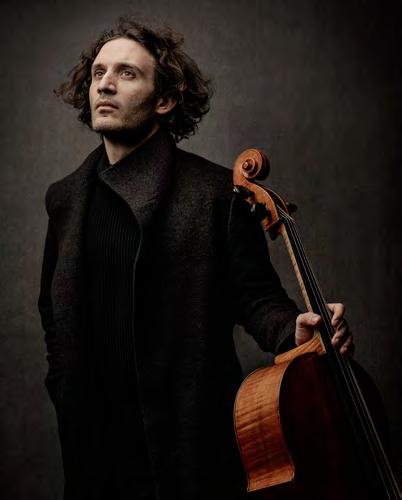
Born: Heidelberg, Germany
Education: Hochschule für Musik Detmold; Musik-Akademie Basel with Ivan Monighetti; Hanns Eisler Hochschule Berlin with Boris Pergamenschikow and Eberhard Feltz
Awards: Credit Suisse Young Artist Award (2010), BBC New Generation Artist (2010-12), Beethoven Ring Bonn (2015), Musikpreis der Stadt Duisburg (2018)
Breakthrough: 2010, debut with the Wiener Philharmoniker under Gustavo Dudamel, Lucerne Festival
Subsequently: London Philharmonic Orchestra, Symphonieorchester des Bayerischen Rundfunks, Münchner Philharmoniker, Budapest Festival Orchestra, Czech Philharmonic, Tokyo Metropolitan Orchestra, Royal Concertgebouw Orchestra; Artist in Association Tapiola Sinfonietta 2025–2028; Artistic Director Lockenhaus Kammermusikfest (since 2012)
Instrument: Giulio Cesare Gigli, Rome c. 1760
Debut Rotterdam Philharmonic: 2016
Commemoration Concert
Thu 14 May 2026 • 20.15
violin Marieke Blankestijn
cello Emanuele Silvestri
clarinet Julien Hervé
piano Hannes Minnaar
Shostakovich Piano Trio No. 1
Messiaen Quatuor pour la fin du temps
Fri 15 May 2026 • 20.15
conductor Jukka-Pekka Saraste
Van Dun L’appel du vide (World Première)
Bruckner Symphony No. 5
Music for Breakfast 5
Sun 17 May 2026 • 10.30
Dudok aan de Maas musicians and programme: rpho.nl/en
Thu 21 May 2026 • 20.15
Fri 22 May 2026 • 20.15
conductor Lahav Shani
piano Daniil Trifonov
Schönberg Verklärte Nacht
Brahms Piano Concerto No. 2
Lahav and Friends
Thu 28 May 2026 • 20.15
soprano Chen Reiss
piano Lahav Shani
musicians from the Rotterdam
Philharmonic
Mozart Quintet for Piano and Winds
Mahler Three Rückert Songs
Schubert Trout Quintet
Chief Conductor
Lahav Shani
Honorary Conductor
Yannick Nézet-Séguin
Principal Guest Conductor
Tarmo Peltokoski
First Violin
Marieke Blankestijn, Concert Master
Vlad Stanculeasa,
Concert Master
Quirine Scheffers
Hed Yaron Meyerson
Saskia Otto
Rachel Browne
Maria Dingjan
Marie-José Schrijner
Noëmi Bodden
Petra Visser
Sophia Torrenga
Hadewijch Hofland
Annerien Stuker
Alexandra van Beveren
Marie Duquesnoy
Second Violin
Charlotte Potgieter
Frank de Groot
Laurens van Vliet
Elina Staphorsius
Jun Yi Dou
Bob Bruyn
Eefje Habraken
Maija Reinikainen
Babette van den Berg
Melanie Broers
Tobias Staub
Sarah Decamps
Robin Veldman
Viola
Anne Huser
Roman Spitzer
Galahad Samson
José Moura Nunes
Kerstin Bonk
Janine Baller
Veronika Lénártová
Rosalinde Kluck
León van den Berg
Olfje van der Klein
Jan Navarro
Cello
Emanuele Silvestri
Gustaw Bafeltowski
Joanna Pachucka
Daniel Petrovitsch
Mario Rio Eelco Beinema
Carla Schrijner
Pepijn Meeuws
Yi-Ting Fang
Killian White
Paul Stavridis
Double Bass
Matthew Midgley
Ying Lai Green
Jonathan Focquaert
Arjen Leendertz
Ricardo Neto
Javier Clemen Martínez
Marta Fossas Mallorqui
Mario Fernández
Flute
Juliette Hurel
Joséphine Olech
Manon Gayet
Flute/Piccolo
Beatriz Baião
Oboe
Karel Schoofs
Anja van der Maten
Oboe/Cor Anglais
Ron Tijhuis
Clarinet
Julien Hervé
Bruno Bonansea
Alberto Sánchez García
Clarinet/
Bass Clarinet
Romke-Jan Wijmenga
Bassoon
Pieter Nuytten
Lola Descours
Marianne Prommel
Horn
David Fernández Alonso
Felipe Freitas
Wendy Leliveld
Richard Speetjens
Laurens Otto
Pierre Buizer
Trumpet
Alex Elia
Adrián Martínez
Simon Wierenga
Giovanni Giardinella
Trombone
Pierre Volders
Alexander Verbeek
Remko de Jager
Bass trombone
Rommert Groenhof
Tuba
Martijn van Rijswijk
Timpani/ Percussion
Danny van de Wal
Ronald Ent
Martijn Boom
Jesús Iberti Rubira
Harp
Albane Baron