Findings from user-centred research into mobile refill services
Report authors
Ella Shone, TOPUP TRUCK
Rosie Hornbuckle, University of the Arts London
Catriona Tassell El Baz
R&D Funding
This research was funded by a grant from UK Research & Innovation’s Smart Sustainable Plastic Packaging Challenge, delivered by Innovate UK.
Thank you
We would like to thank design researchers Sanne Visser and Becca Rose, and the project delivery team, including Jenny Haigh, Liz Hosmer, Megan Pegram and Chloe Watt.
We would like to thank Julia Davies of We have the Power, and Bonnie Chiu of The Social Investment Consultancy for enabling this project to happen.
Executive Summary
From March 2023 to June 2024, TOPUP TRUCK undertook a usercentred research and development project to improve its mobile refill service in partnership with design researchers from University of the Arts London.
The project started from the basis that:
• Plastic packaging is now seen as a real problem, with a growing public interest.
• People are seeking low-waste alternatives to the dominant ‘over packaged’ and centralised shopping experience offered by supermarkets.
• Refill shopping is one potential solution to reducing packaging waste, but requires potential customers to adapt their behaviours.
• Improving proximity to refill services is one option being pursued by mobile refill service TOPUP TRUCK.
• To ensure an optimised service, the business first needs to understand barriers and motivations to
adoption and sustained use.
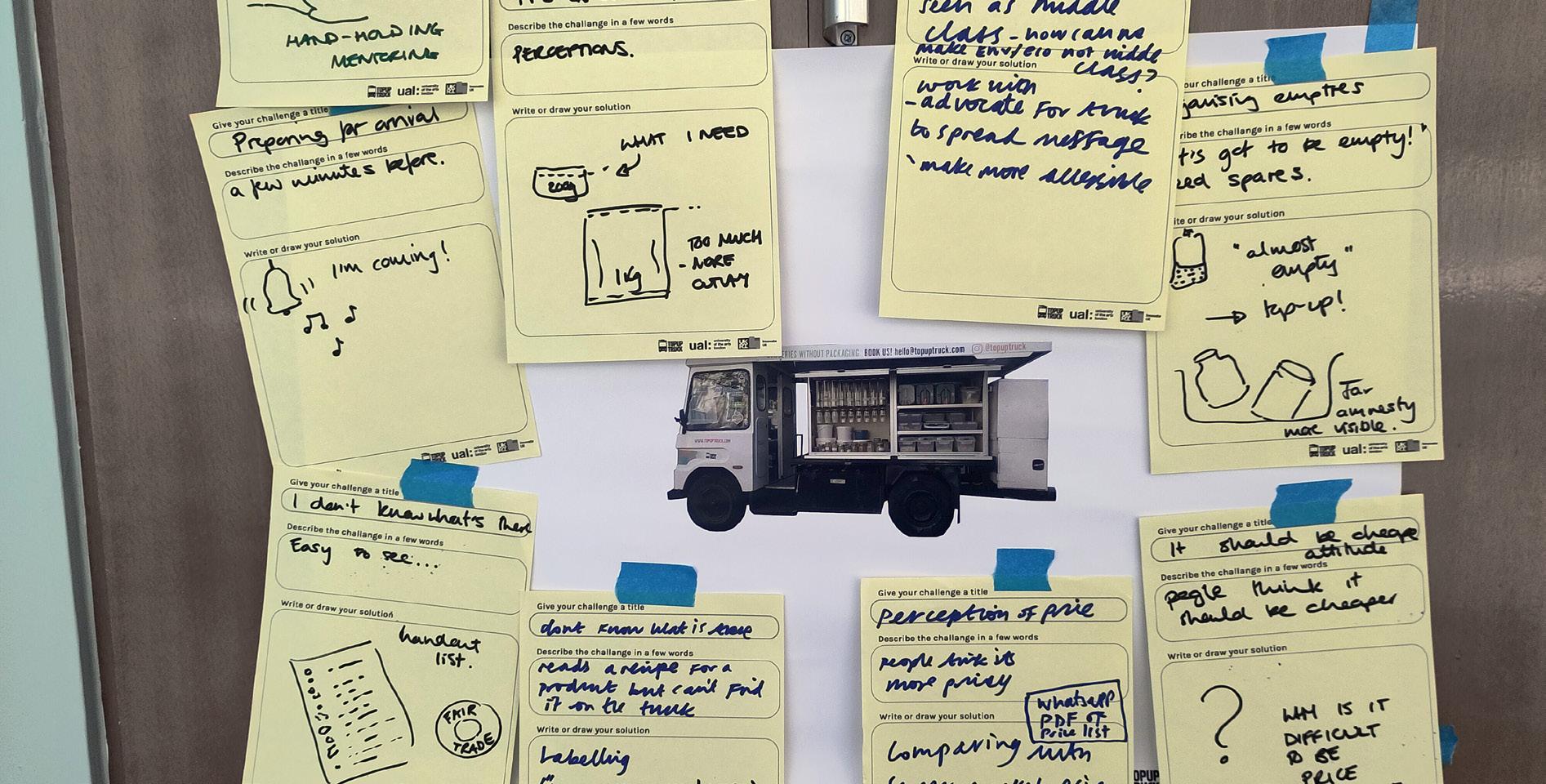
The team conducted a survey, interviews, workshops and rapid ethnography with TOPUP TRUCK’s North and East London customer base. The aim was to identify key barriers and motivations to mobile refill service adoption, and areas where the service might be improved through better design. Just over 150
Planet
potential, new, existing and lapsed customers took part in the study. The research allowed TOPUP TRUCK to improve the design of their entire service, including an upgrade to their digital and truck-side experiences. This report shares the key barriers and motivations identified through the research as well as discussing 10 themes that can help others to understand refill behaviours. Overall, the research revealed that for refill to become mainstream, the service must address the need for convenience, clear product information, and competitive pricing, all of which customers have come to expect from packaged products. We have stated calling this behaviour ‘the packaging hangover’. Taking a user-centred approach to the service redesign, as described in this report, can overcome some of these barriers. The project also highlighted how a mobile refill service can provide additional value for customers, driving loyalty and behaviour change through features such as:
• Creating a ‘feel-good’ factor.
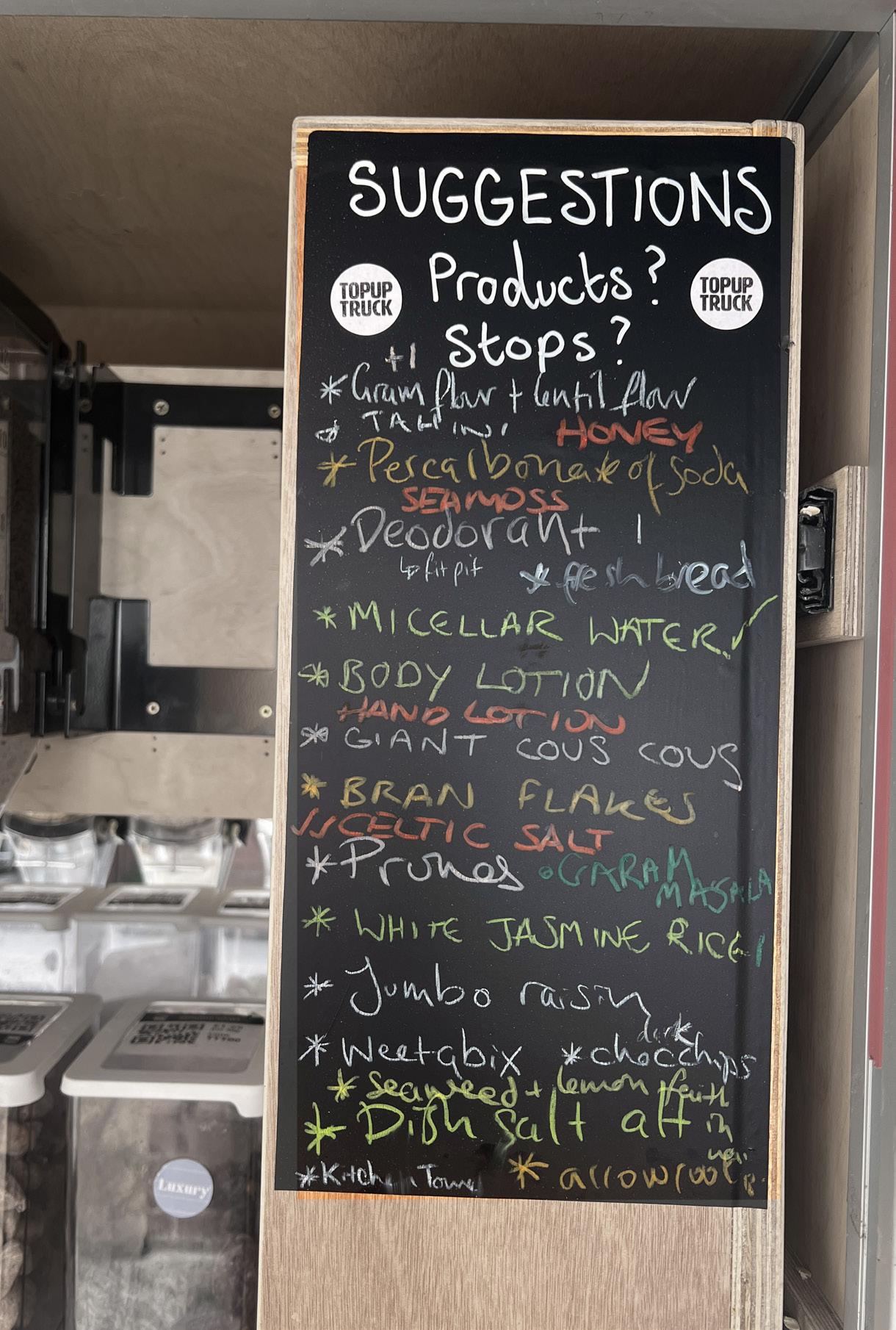
• Providing access to unique and locally-sourced products.
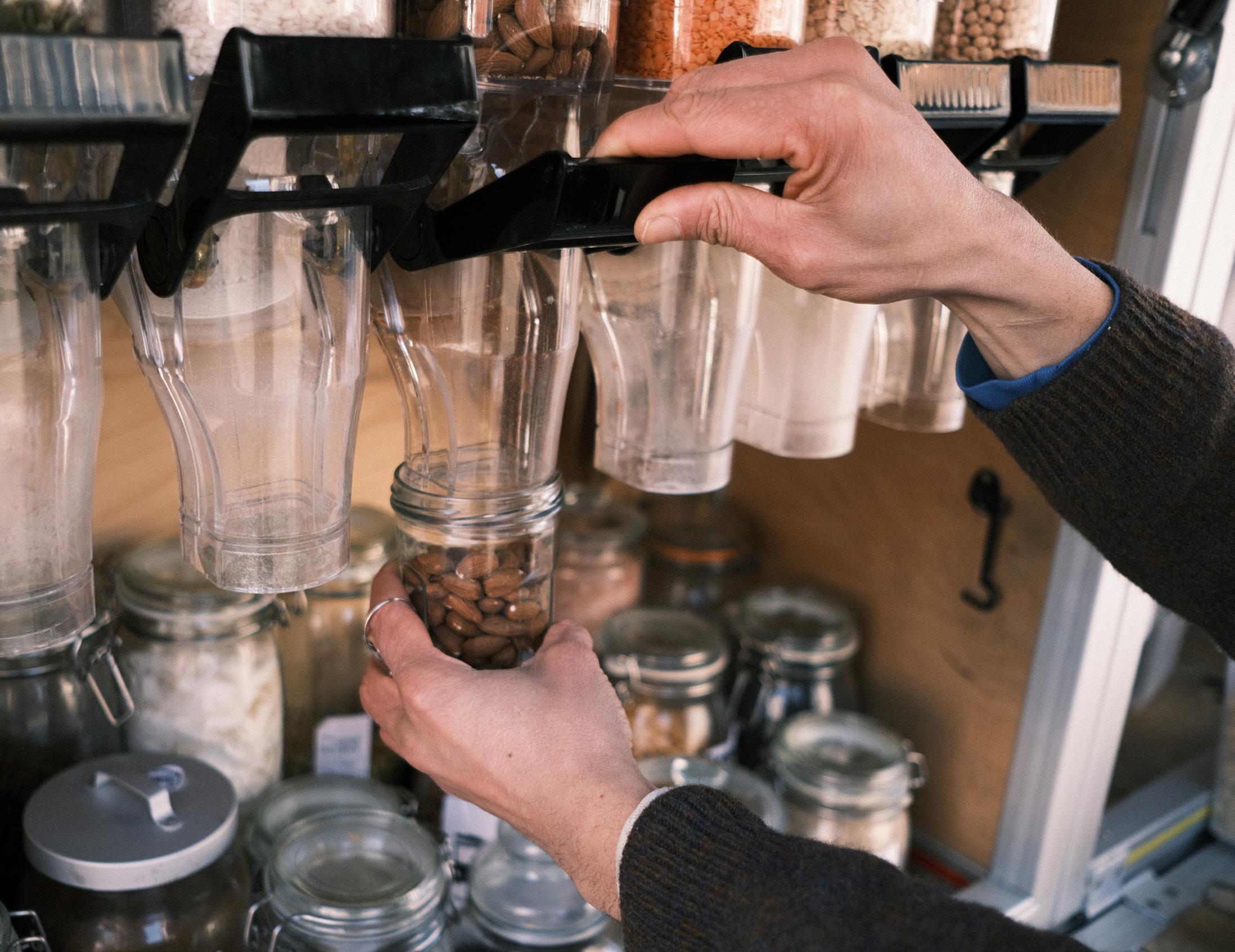
• Offering a more engaging handson experience out in the open.
• Being situated within easy proximity to their homes, places of work or leisure.
• The choice to buy the quantity they want (i.e. a lot of cashew nuts or just a handful of raisins) to suit their needs and budget.
Introduction
Background
‘Refill’ is both an old and a new way of shopping. In many areas of the world, loose dry goods such as spices, peas or lentils are still sold by weight from containers in the same way they have been for centuries. In the UK, where this research is focused, there were once many buy-by-weight stores, but these have been declining since the 1950s. Buy-by-weight still exists in street-markets across the UK, but is mainly used for fresh produce such as fruit and veg, and some of these goods are ready-portioned into containers for ease of pricing and speed of shopping.
Today’s approach to refill shopping is similar in many ways to the buyby-weight model of old. However, more emphasis is placed on its role in reducing packaging waste and, instead of providing a disposable (paper or plastic) bag to carry goods home in, customers are encouraged to bring their own reusable containers from home to refill.
Refill shopping is growing in popularity in direct reaction against the dominance of supermarkets, who provide their whole product range pre-portioned and pre-packaged. This model contributes to huge quantities of waste, with wide-reaching environmental and social impacts. The growing public unease with plastic generally, and with single-use plastic packaging pollution specifically, has given rise to community-based entrepreneurs offering alternative low-waste shops and services.
“I really hate plastic waste and I am willing to make compromises in my way of life to achieve a more sustainable way of life.”
Survey participant
Although consumers report an increase in ethically-motivated buying intentions and there is an apparent appetite for low-waste shopping, in reality the actual takeup of refill is frustratingly slow. If refill is to become a mainstream retail model and shopping practice, then the ‘intention-action gap’ needs to be better understood.
A
user-centred design partnership
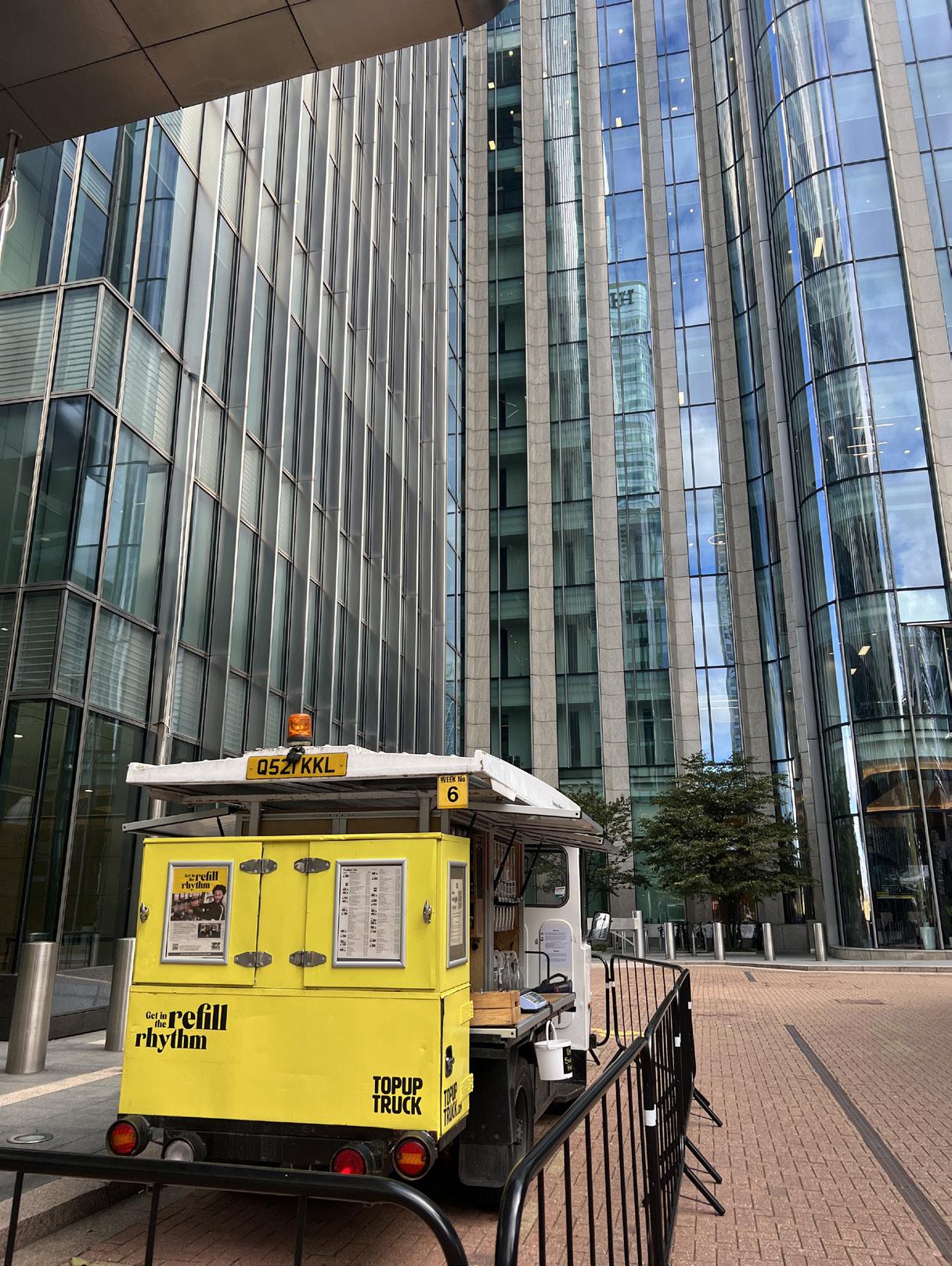
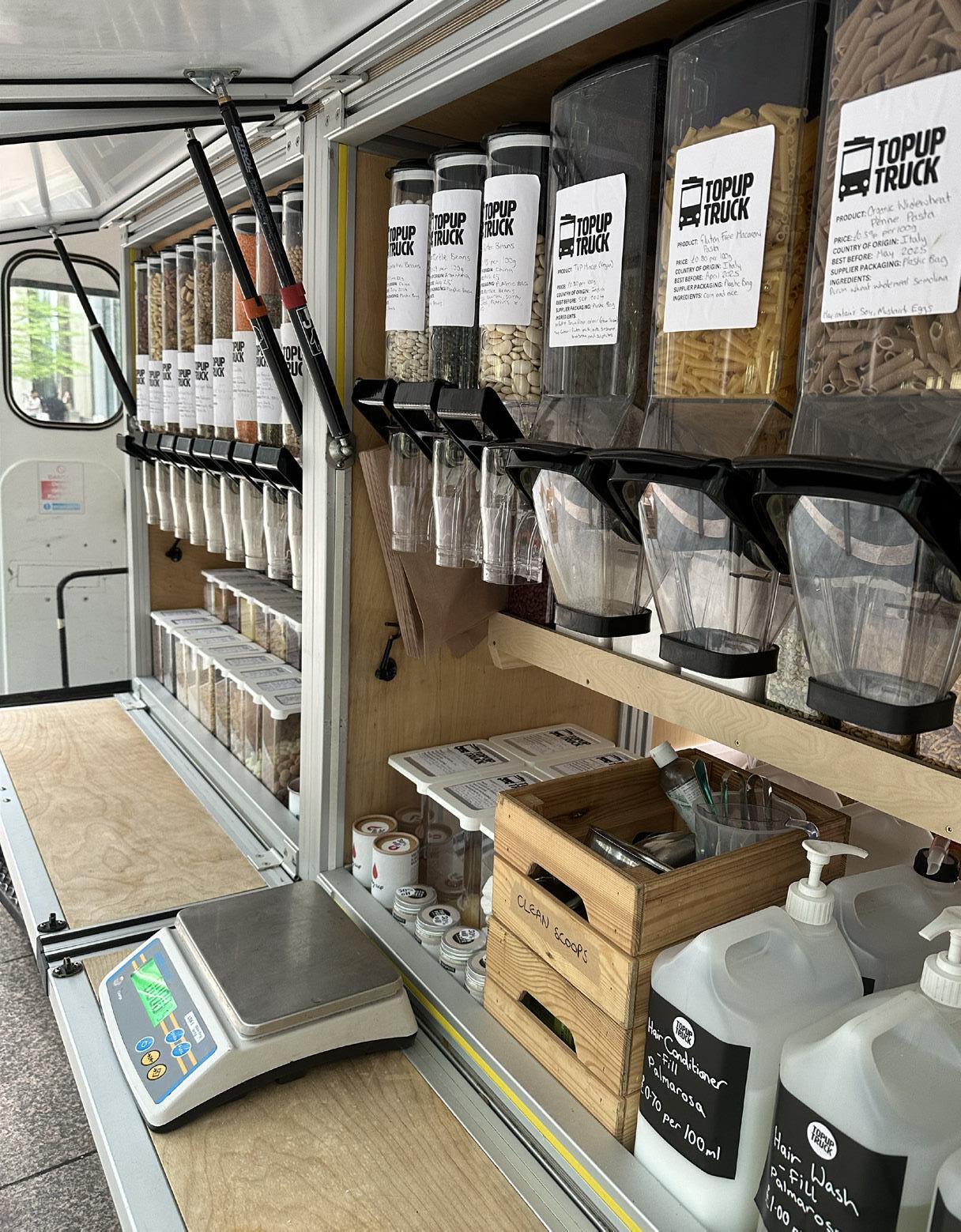
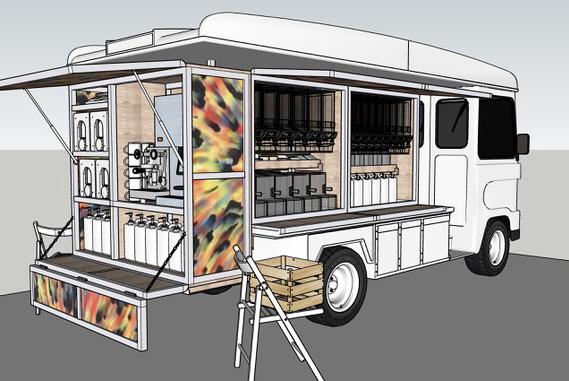
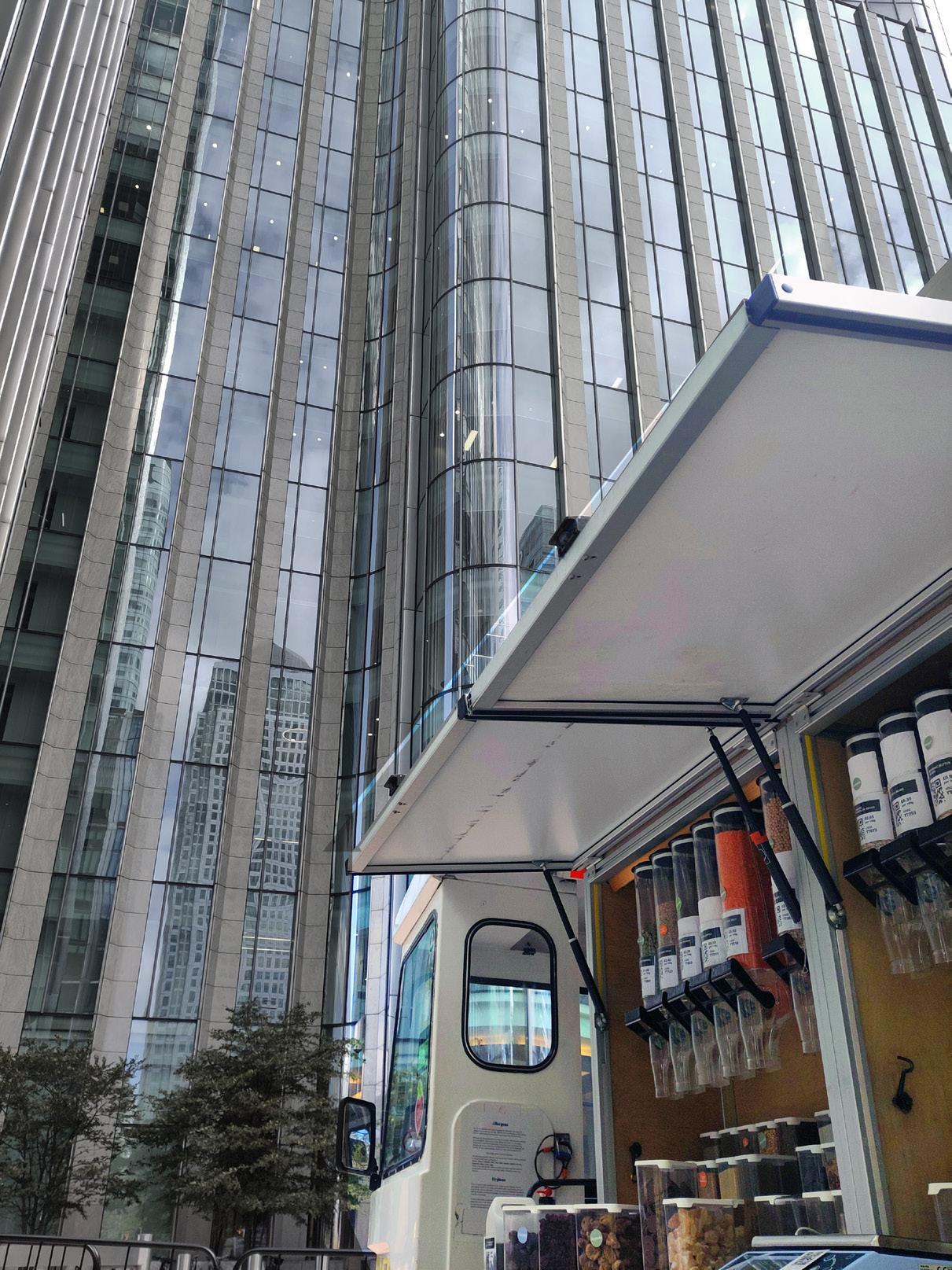
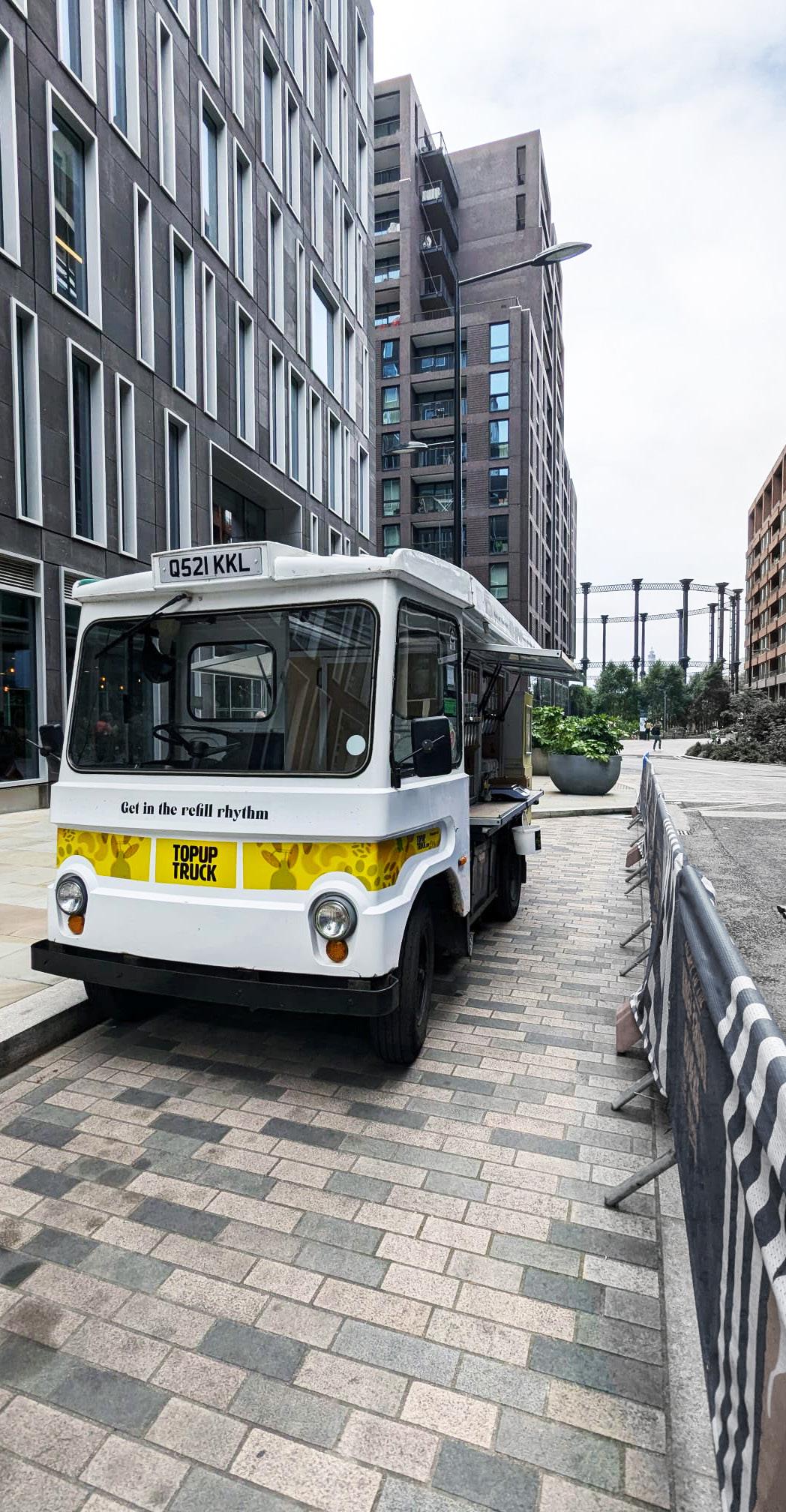
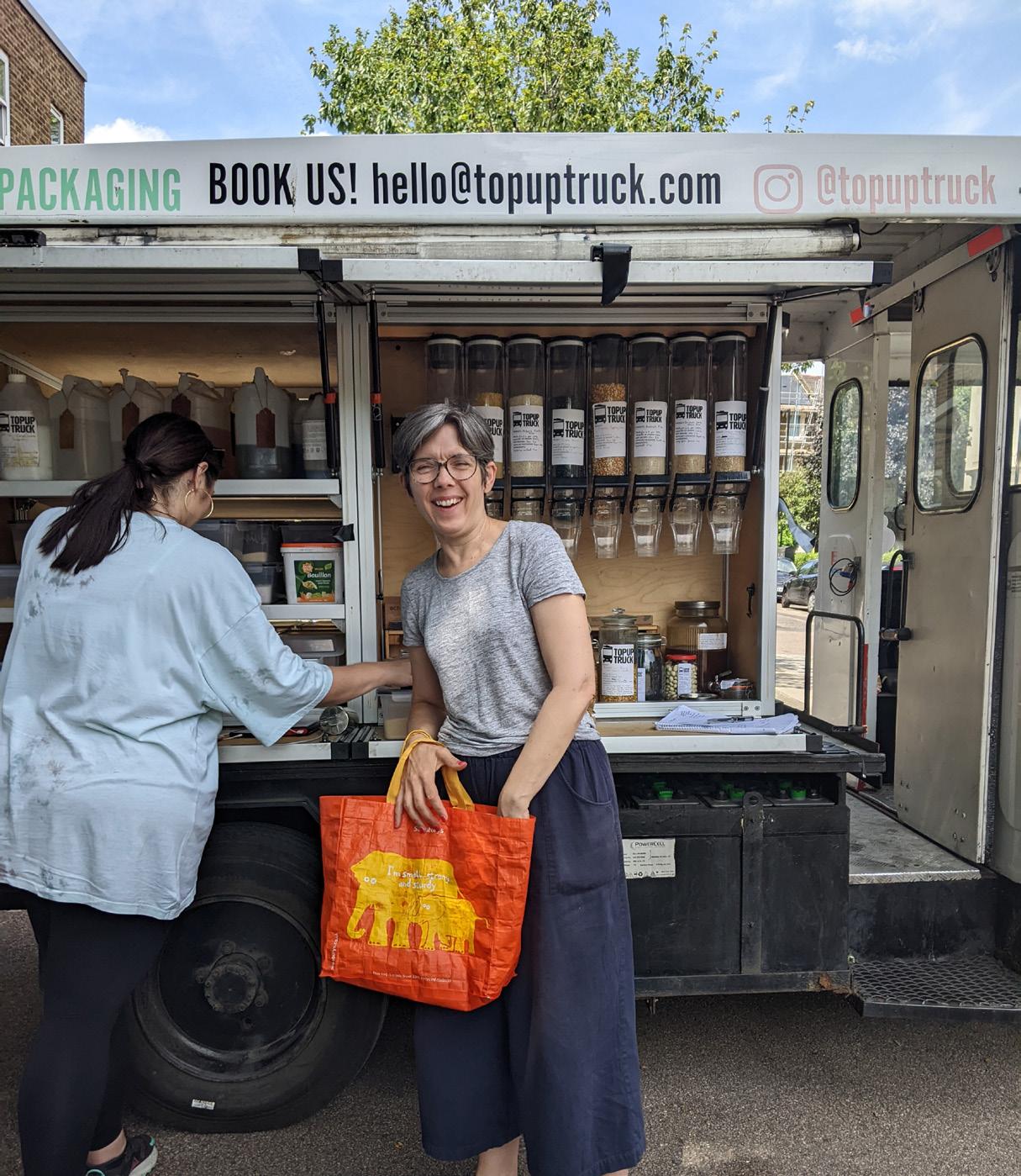
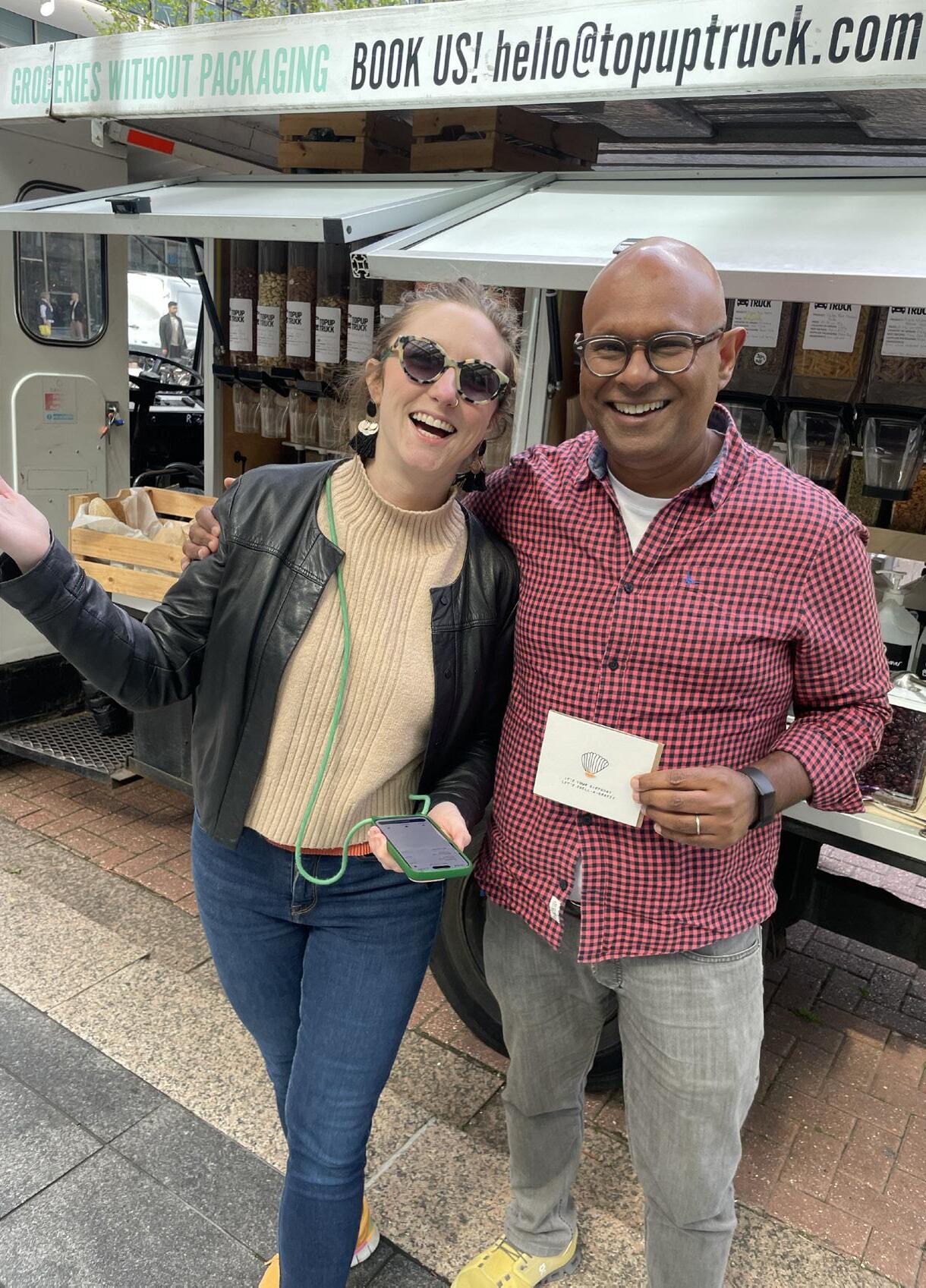
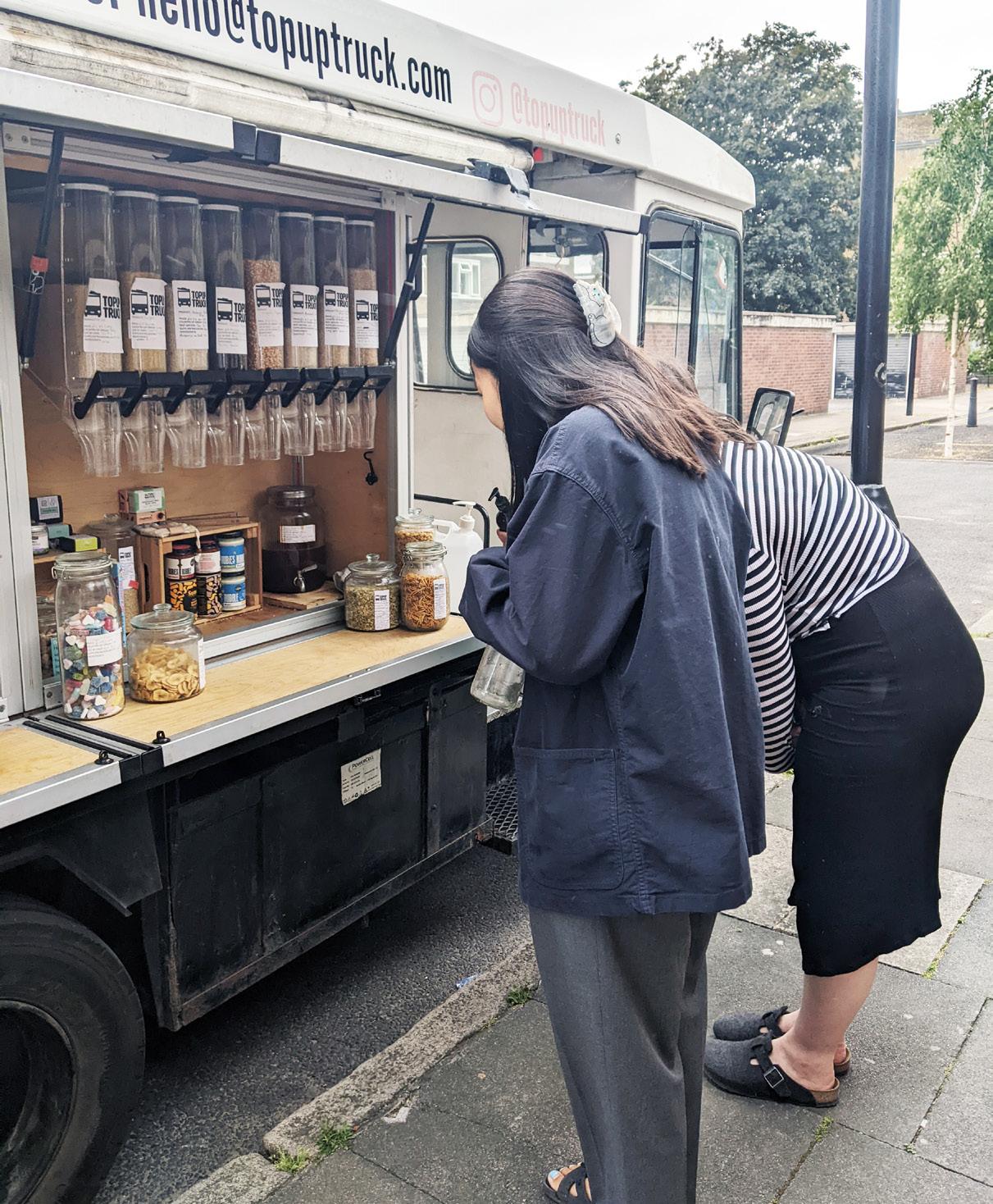
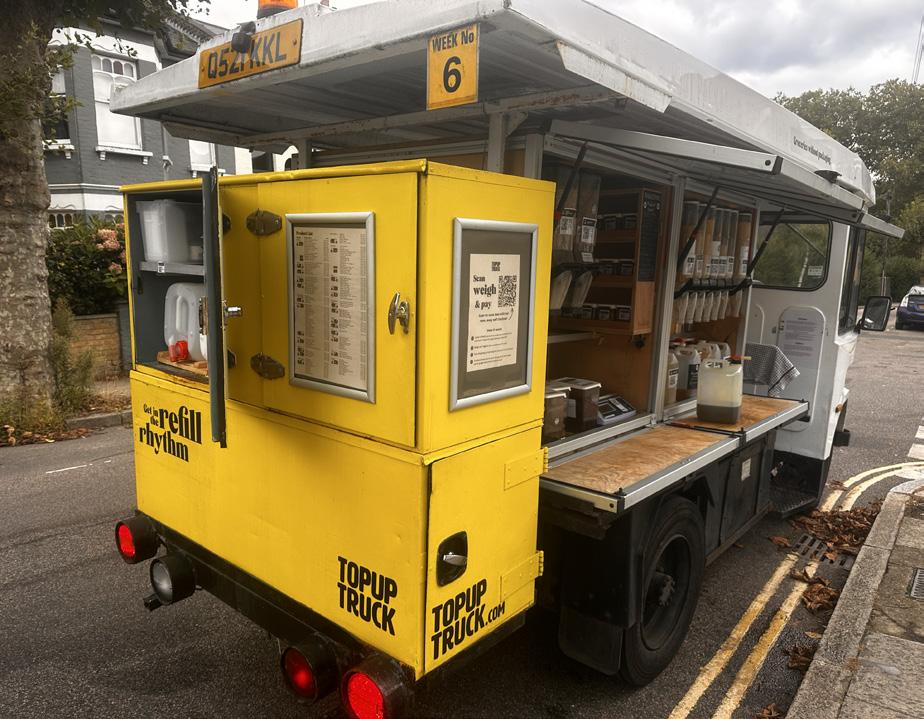
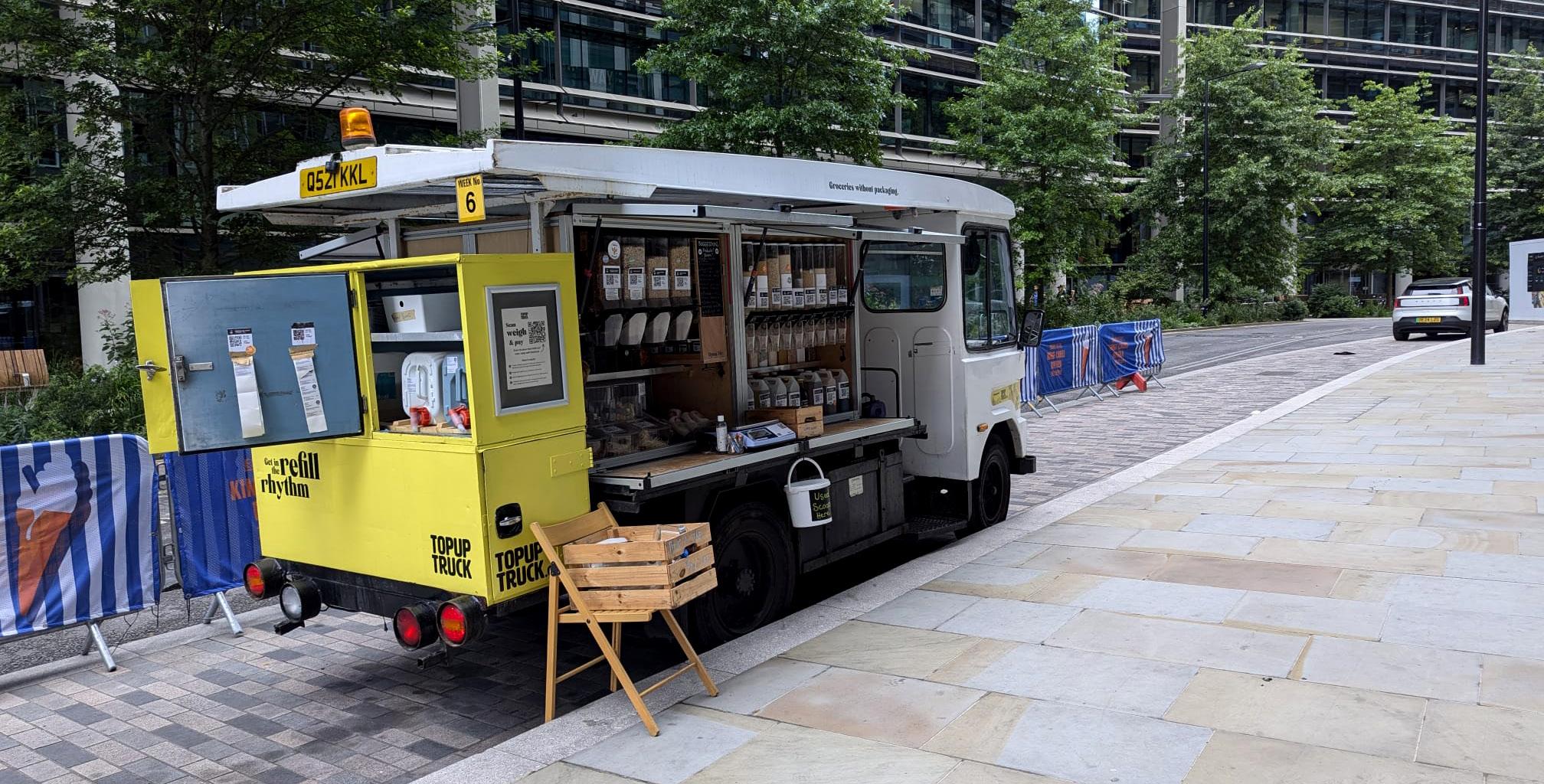
Within this context, TOPUP TRUCK is a mobile refill service, selling food, household and personal care products by weight from a converted electric milk float. The service began in 2020 as one truck circulating residential streets and offices in the North East London boroughs of Hackney and Haringey, and in the financial district of Canary Wharf, serving a small but loyal customer base.
In April 2023, in partnership with Design Researchers from University of the Arts London (UAL), TOPUP TRUCK received a grant from UK Research & Innovation’s Smart Sustainable Plastic Packaging Challenge, delivered by Innovate UK, to investigate the barriers and motivations to
adopting a mobile refill service. The insights fed into a behaviour-led service redesign to improve the user experience and increase uptake.
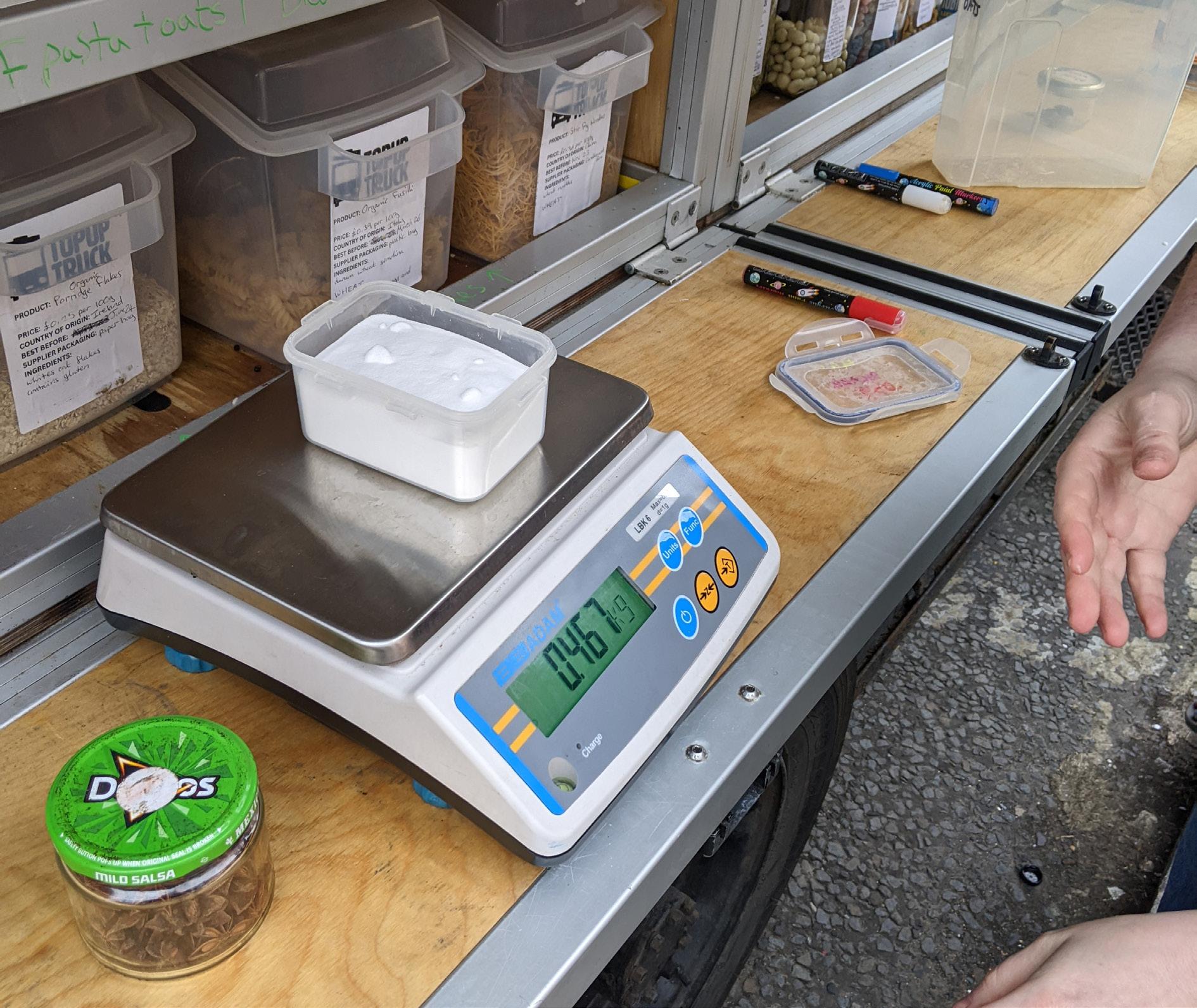
The research resulted in practical recommendations for the TOPUP TRUCK mobile refill service. These changes included an updated digital experience, the introduction of scanweigh-pay technology, an overhaul of the truck’s external appearance and storage layout, an adapted product range and new communications.
“The Service is brilliant. Every time we come down, it is not always the same person, but everyone is really passionate about what they do” Survey participant
Our research approach
The research brought together behavioural science and design research methodologies to explore:
1. Barriers and motivations to using TOPUP TRUCK.
2. Opportunities for improving the customer experience and driving habitual use of the service.
The research was conducted in two stages. In 2023 we investigated the existing service and identified key areas where TOPUP TRUCK might improve the user experience and address barriers to habitual use.
Following a redesign of TOPUP TRUCK, we revisited the service to gauge customer response to the changes and analyse the impact of user-centred design interventions in a real life setting.
Research participants included current regular users, irregular or ‘lapsed’ users (i.e. customers who had previously used the service but had not returned for 2+ months), first time users, and potential customers who had not yet used the service but had registered an interest. During the 18
month 2-stage research process we:
• Conducted a survey with 78 responses.
• Interviewed 20 current, ‘lapsed’ or first-time users.
• Conducted five design ethnography field visits to TOPUP TRUCK, including approximately 40 informal interviews with truck users, photos, and fieldnotes.
• Collected seven research diaries covering the entire digital and in-person service journey.
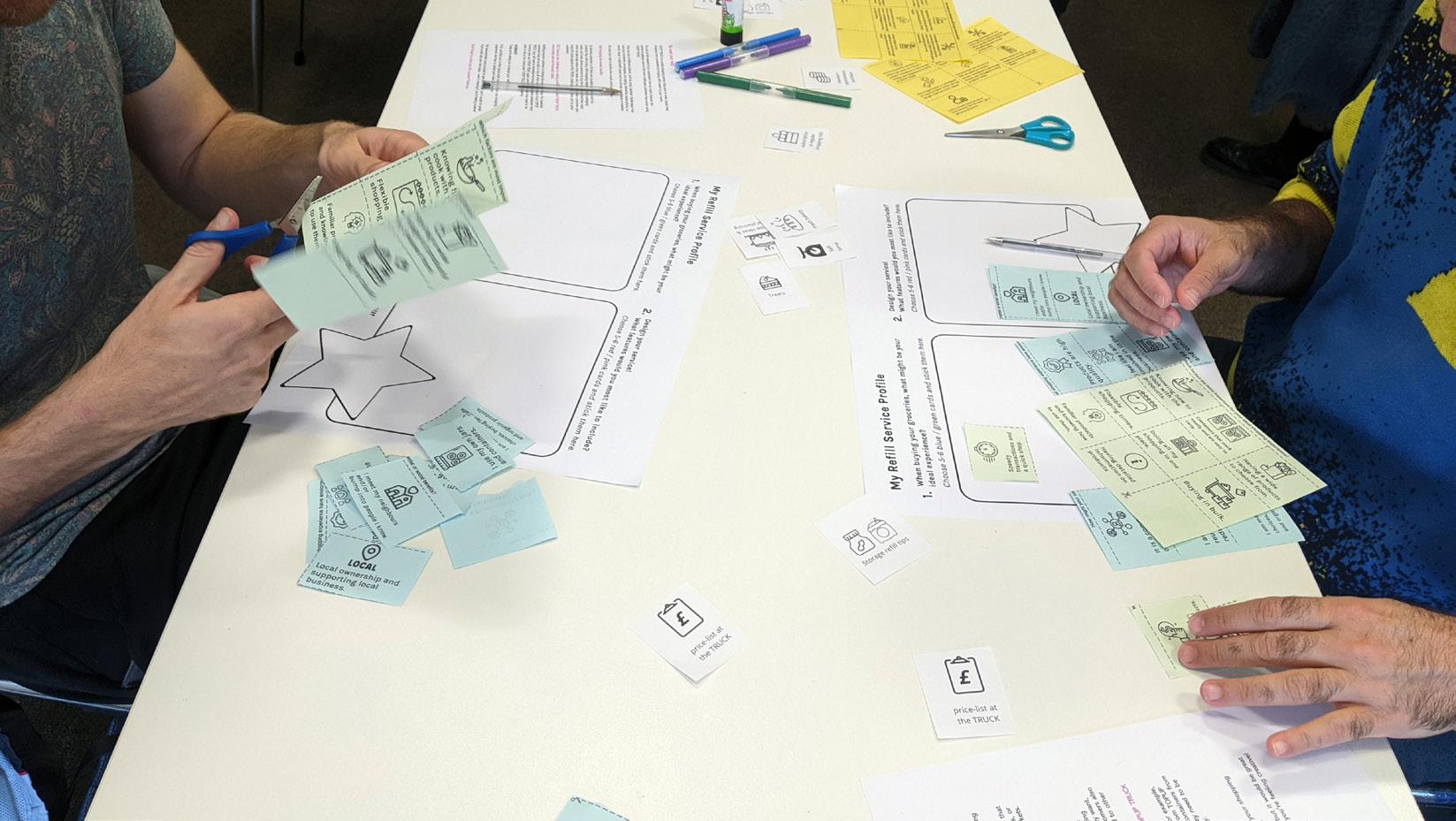
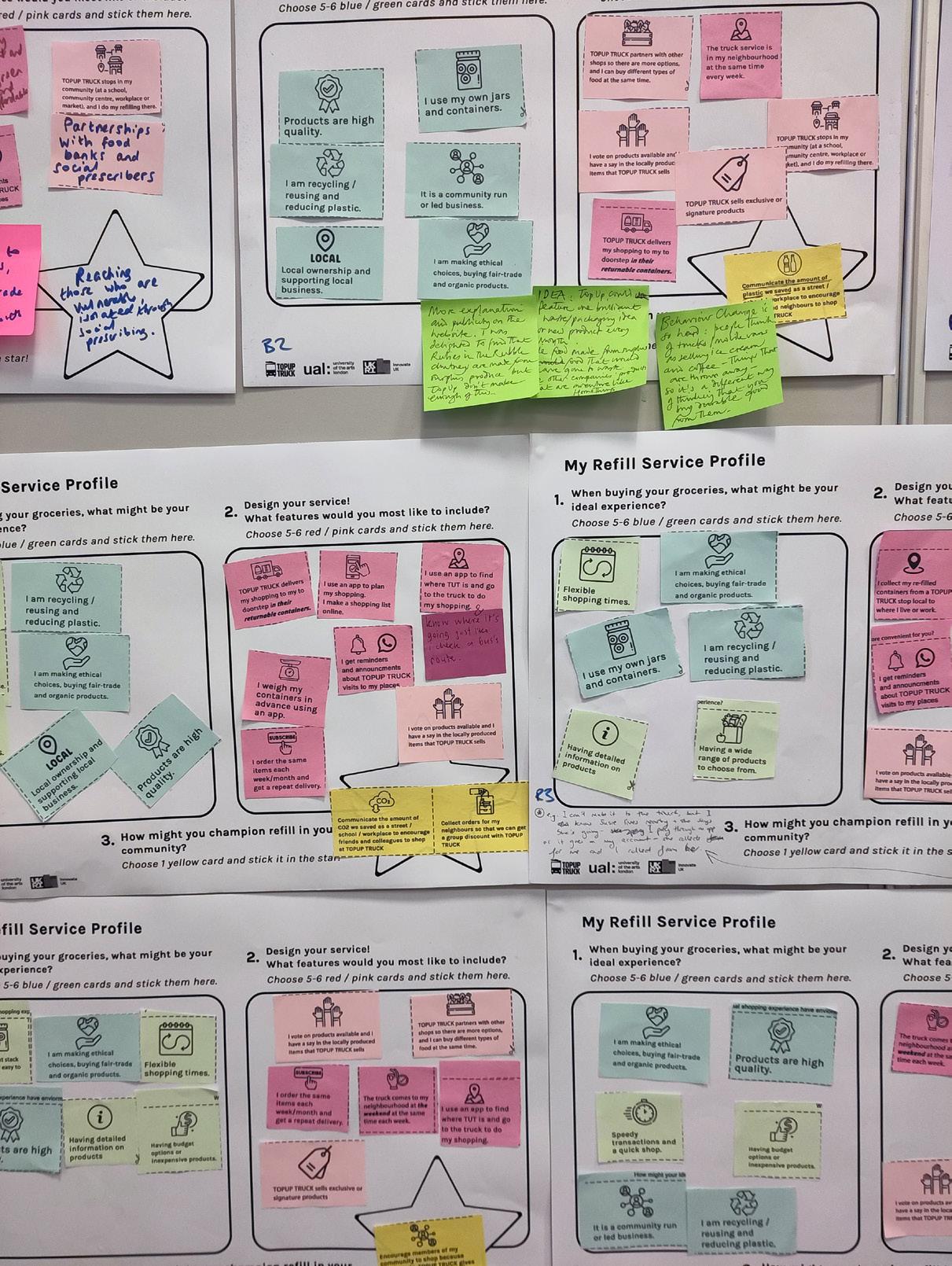
• Facilitated three codesign workshops with 25 participants in total.
Undertook a series of upgrades across the operating model, truck design, marketing communications, digital experience and the product range.
The data was analysed using a combination of approaches including descriptive statistics, thematic analysis and researcher reflection.
Cutplastic
TOPTUP TRUCK and beyond
This report marks a significant milestone in the journey of TOPUP TRUCK. However, the progress of TOPUP TRUCK as a single business is not the sole focus of this report. Instead, the findings presented here demonstrate the potential for mobile refill services to contribute to the broader shift away from single-use packaging.
Through a series of research-driven interventions, we identified and addressed key barriers to adoption, resulting in measurable improvements to the service. Notably, these efforts led to a steady 12% average monthon-month increase in revenue following implementation. These results illustrate how targeted design changes can positively influence consumer behaviour and operational performance.
At the same time, the role of initiatives like TOPUP TRUCK extends beyond individual success. Small, agile businesses are uniquely positioned to innovate, engage communities, and serve as a visible provocation for change, helping to drive the public demand necessary to influence policy and accelerate systemic shifts. By creating a foundation of early adopters and demonstrating practical, scalable solutions, TOPUP TRUCK supports the broader refill ecosystem alongside larger retailers, such as Waitrose, Aldi, and Ocado, whose refill pilots bring these approaches closer to the mainstream.
This report shares key barriers and motivations, alongside the
top 10 themes from our research, which we believe will be valuable to policymakers, innovators, and businesses aiming to advance refill systems. By releasing these findings publicly, we seek to foster collaboration across the sector, ensuring that collective knowledge continues to grow.
While TOPUP TRUCK is only one piece of the puzzle, its evolution reflects the challenges and opportunities inherent in creating a more sustainable retail system. We remain committed to driving the refill movement forward by sharing our insights, supporting innovation, and continuing to engage with the broader conversation on reducing plastic pollution.
Barriers and motivations
“It’s
more expensive to refill foods”
Survey participant
Here we summarise the key barriers and motivations encountered during the research. Some of these points are discussed in more depth in relation to the 10 Themes.
Key barriers
The factors that resulted in people choosing not to use the refill service or to use it less regularly were largely to do with:
• Price (refill was assumed to be more expensive).
• Inconvenience (the perception that extra effort, time, and preparation is required).
• Hygiene and cleanliness of ‘unpackaged’ food.
• Difficulty and mess of refilling.
• Stock uncertainty (the likelihood that stock might run out before the service gets to you).
• A limited product range compared to static stores.
• Unpredictability of the
service (being on time and parking in the same spot).
Although perhaps unsurprising, the concern over price relates to a particular feature of refill shopping that requires people to be able to decipher the cost of a product by weight. In the past, this literacy was built through repeat practice. However, with consumers now accustomed to pre-packaged food with standardised prices, this skill has faded. Therefore, additional support is needed to help customers feel confident in predicting the price of their refills. The concerns around extra effort, messiness, low stock and scheduling point to a general intolerance of anything that appears to be less convenient than buying pre-packaged foods at supermarkets.
Key motivations
Almost without exception, the main motivation for using refills is that they offer a more sustainable way to buy food, particularly with regards to plastic reduction.
Interestingly, topics that are perceived as barriers by some people are seen as motivations by others:
• Ease of use through proximity (being able to use a mobile refill service even closer to home).
• Affordability (particularly when comparing some staple products to supermarkets).
• The enjoyment of the do-ityourself refill experience.
• High quality and more locally sourced products.
• A good product range.
Other motivations included:
• Interacting with friendly staff.
• Supporting a local business.
The types of product sold through refill are favoured by people who cook their meals from scratch using raw ingredients rather than using preprepared food items. This can also distinguish between people who don’t mind shopping in a few different places to access the range of fresh and storecupboard ingredients desired, and who like to find the cheapest option across multiple stores, and those who would prefer to buy everything from one retailer. Throughout the research, a clear motivation for returning to
the refill service emerged: to buy a specific high-quality product that couldn’t easily be found elsewhere, such as hand-made, luxury granola, or a cold-pressed Greek olive oil.
Refill shopping also offers a more personal experience, whether mobile or in-store, and many people appreciated being able to have a conversation with friendly staff. However, in general, they were far less interested in communicating and connecting to other refill users, primarily because this meant refill shopping took too long.
“I find the local Sainsbury’s and corner store expensive, so TOPUP TRUCK is better than this”
Survey participant
10 themes from the research
These
10 themes expand upon the barriers and motivations, offering more guidance
experiences
on how to adapt refill
in ways that reduce barriers and increase habitual use of the service.
These insights have been synthesised across the research as a whole, including how customers responded to service changes. While some insights reflect general patterns in refill behaviour, others highlight how specific design interventions influenced uptake. By sharing these findings, we hope to support further innovation in refill systems beyond our own service.
1. Packaging Information & Product Choice
Packaging has changed peoples’ expectations around product information and choice. Packaging provides a wide range of information, including ingredients, nutritional information, product origin and best-before or use-by-date, helping consumers to choose between a range of products in the same category. When two products are in fact very similar, it is the power of a preferred brand that wins. Whereas packaging can make consumers feel as though they have more choice, we observed that some decisions are taken away from them, such as the quantity they would like to buy.
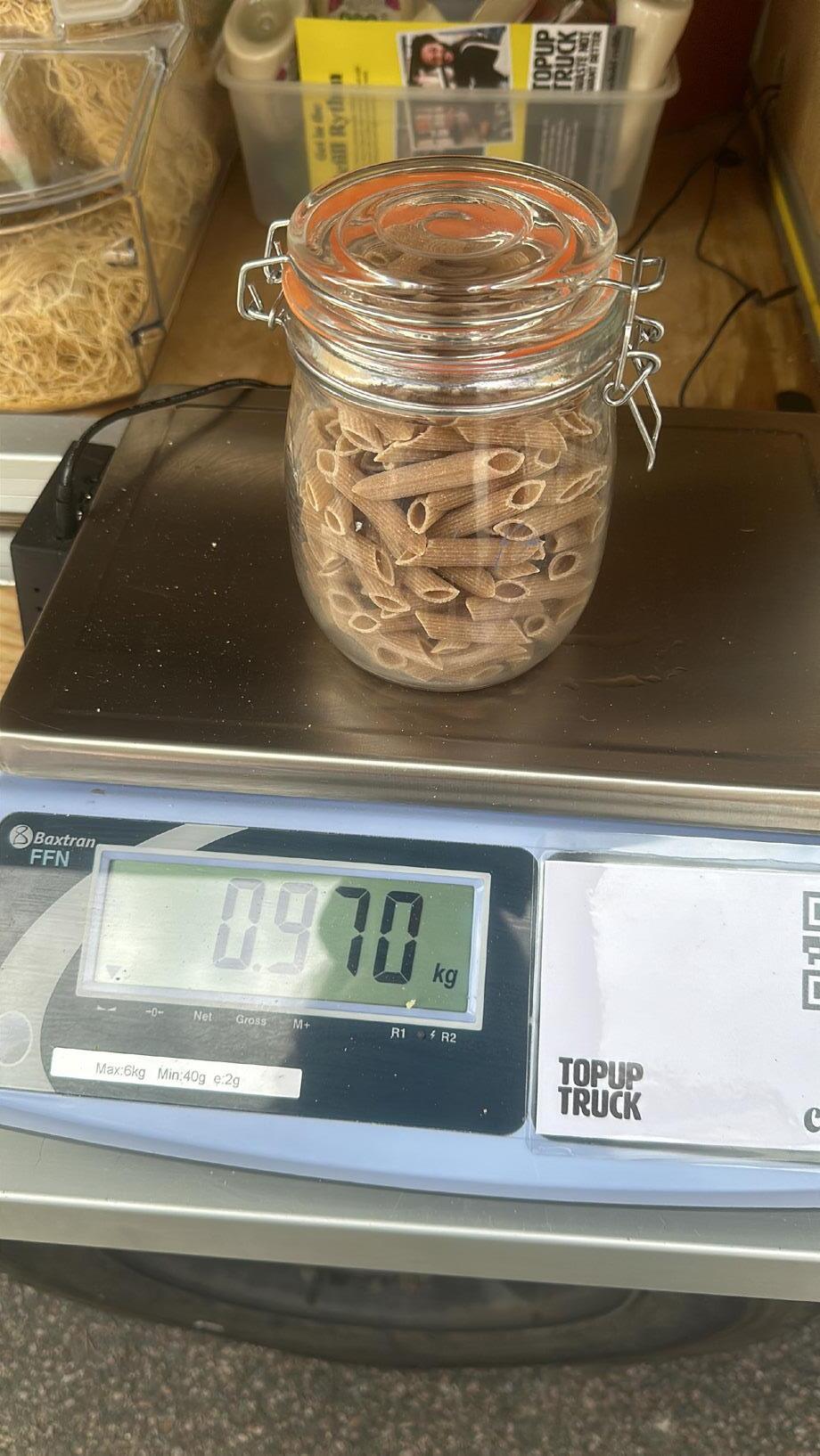
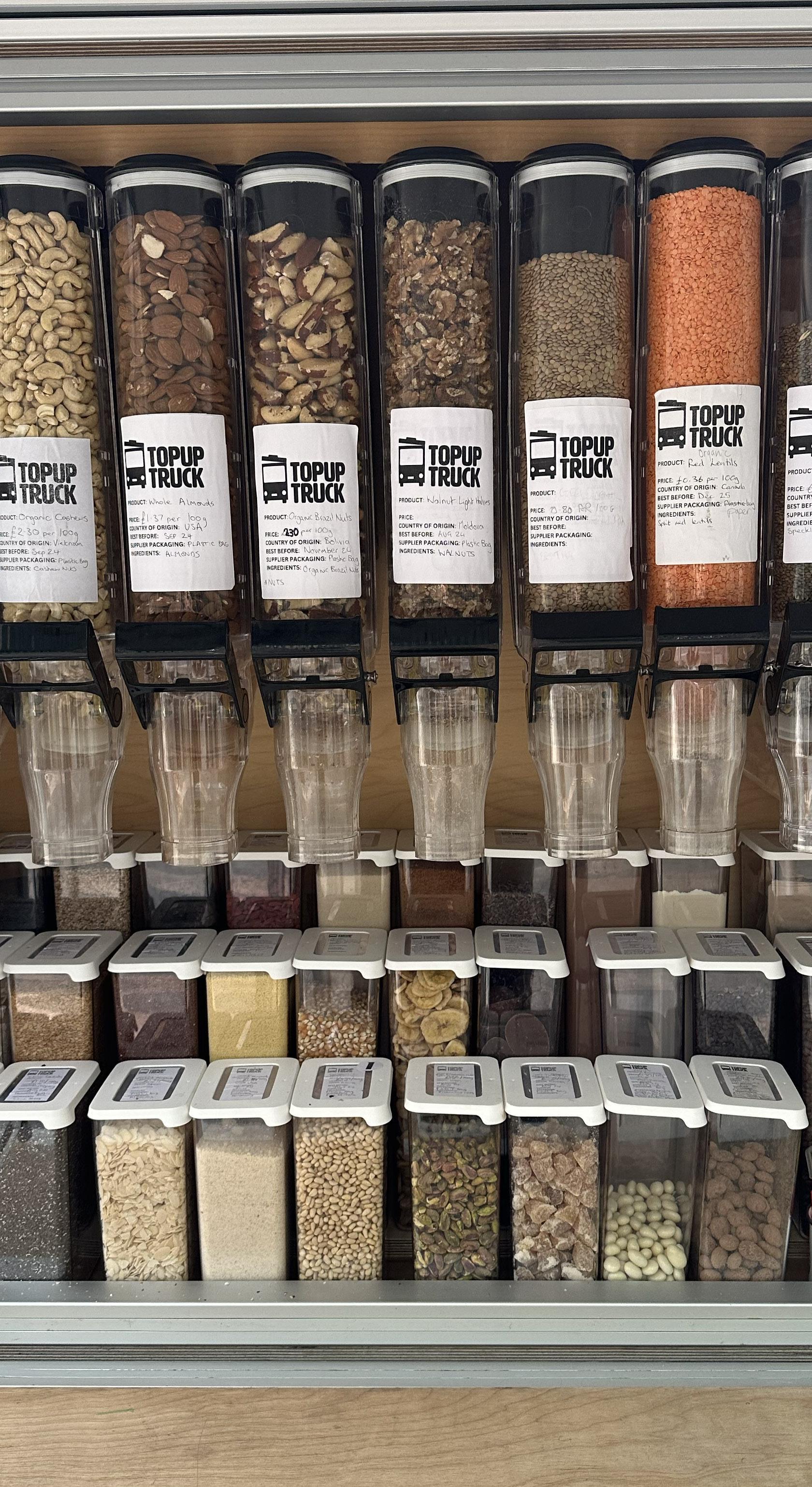
In comparison, refill products are often stored and presented to customers in containers with very little information beyond general type, for example ‘penne pasta’ or ‘red lentils’. The research highlighted that this negatively affected user experience because, over time, consumers have become more discerning about product features and often have a range of specific preferences, such as whether an item is ‘organic’, ‘vegan’, ‘gluten free’, or importantly ‘may contain nuts’.
“It’s not like buying a packet –with a price on it, you don’t really know how much it is going to cost until you fill up your container, and then its suddenly like “oh I’ve just bought £15 of granola”
Interview Participant
The more sustainably-aware customers also wanted more transparency on the quantity of non-consumer facing packaging waste produced across the supply chain (e.g. the packaging that products were originally sent to the refill store in), and the countries of origin, to gauge import emissions. Despite a lack of product information, some people felt that TOPUP TRUCK would make good choices on their behalf, reinforcing the importance in building a trusting relationship between refill business and customer.
Some people were put off by the inability to understand how much food they needed to buy. Others felt that this to be an advantage because they could buy just the amount they needed, saving cupboard space and making it more affordable on a weekly basis. This appeared to be the case even when the price per weight was slightly higher than the prepackaged supermarket alternative.
Aim to provide product information that customers have come to expect
“The more you want to refill, the more you would want it to be very close to where you live”
Interview Participant
Develop your understanding about who will benefit most from topping up
2. Proximity & Convenience
One of the central motivations for using a mobile refill service is improved access to packaging-free products, reducing the distance customers need to travel. The research revealed that the proximity of the refill service was seen as beneficial for many customers. However, some interesting differences between stopping locations were identified. In streets with terraced houses, some customers supplemented their use of the mobile refill service with bulk online orders, box schemes and supermarket deliveries. When we spoke to residents within more urban settings (e.g. people who live in apartment blocks and pavement fronted houses), they reported using online delivery less due to a lack of storage space or secure drop-off points. These people appeared to have more ‘top-up’ type behaviours, shopping more frequently from multiple stores close-by. The research therefore indicates that some residential areas might benefit more from the mobile refill service than others.
3. Community & Advocacy
Small businesses like TOPUP TRUCK, who are offering a new and unfamiliar service, rely on ‘word of mouth’ and a community ‘snowball effect’ to gain traction and reach optimum operation. When the research began, TOPUP TRUCK was predominantly serving residential communities, and found that personto-person recommendations on residential streets didn’t happen as expected. Dedicated customers were encouraged to ‘spread the word’, such as promoting TOPUP TRUCK on their street WhatsApp groups. However, when we spoke to these service ‘advocates’, they reported that this approach had not worked with their neighbours and they also found it onerous. They found that ‘preaching’ about the worthiness of refill didn’t motivate people or support relationship building. Instead, they would prefer to begin these conversations with incentives for their neighbours, such as rewards, or shared savings, as well as evidence of plastic waste reduction at a street level. These people needed more support from the business to leverage the ‘feel good’ effect at a group level
within a neighbourhood so that they feel like they are helping people rather than being perceived as evangelical. This aspect of the research led to a central idea: communities that ‘spread’ ideas are more likely to be communities of shared practices and common ground (e.g. people who attend the same leisure centres, hobby clubs, schools, community gardens and places of work), rather than residential communities which may not share cultural interconnections. Refill services could therefore be well-placed to tap into communities of practice.
“Our local climbing centre could be a good hub, they could they team up and make amazon style lockers I could collect from”
Workshop Participant
Try seeding incentives into communities of practice to spread the word
“Do
you know what? There just isn’t another olive oil that I can compare it with, it will have me back every single time.”
Interview Participant
4. Experience & Loyalty
Within the research we saw a strong connection between appreciation of the shopping experience, the product range and loyalty. The most loyal customers were motivated by their concerns for the environment. However, it is generally acknowledged that this alone will not drive widespread behaviour change. The ‘hook’ for customers was often highquality products they could not find elsewhere, such as hand-made granola and single origin organic olive oil. Nuts that are often sold in small packets in the supermarket were bought in large quantities from TOPUP TRUCK because customers perceived the amount of packaging to be excessive. Again, this exposes the inflexibility of prepackaged goods for affording nuanced customer behaviours. Customers also returned to the mobile service because they like the experience of shopping there, such as being outdoors, having a friendly interaction with the driver and actively participating in filling products into containers.
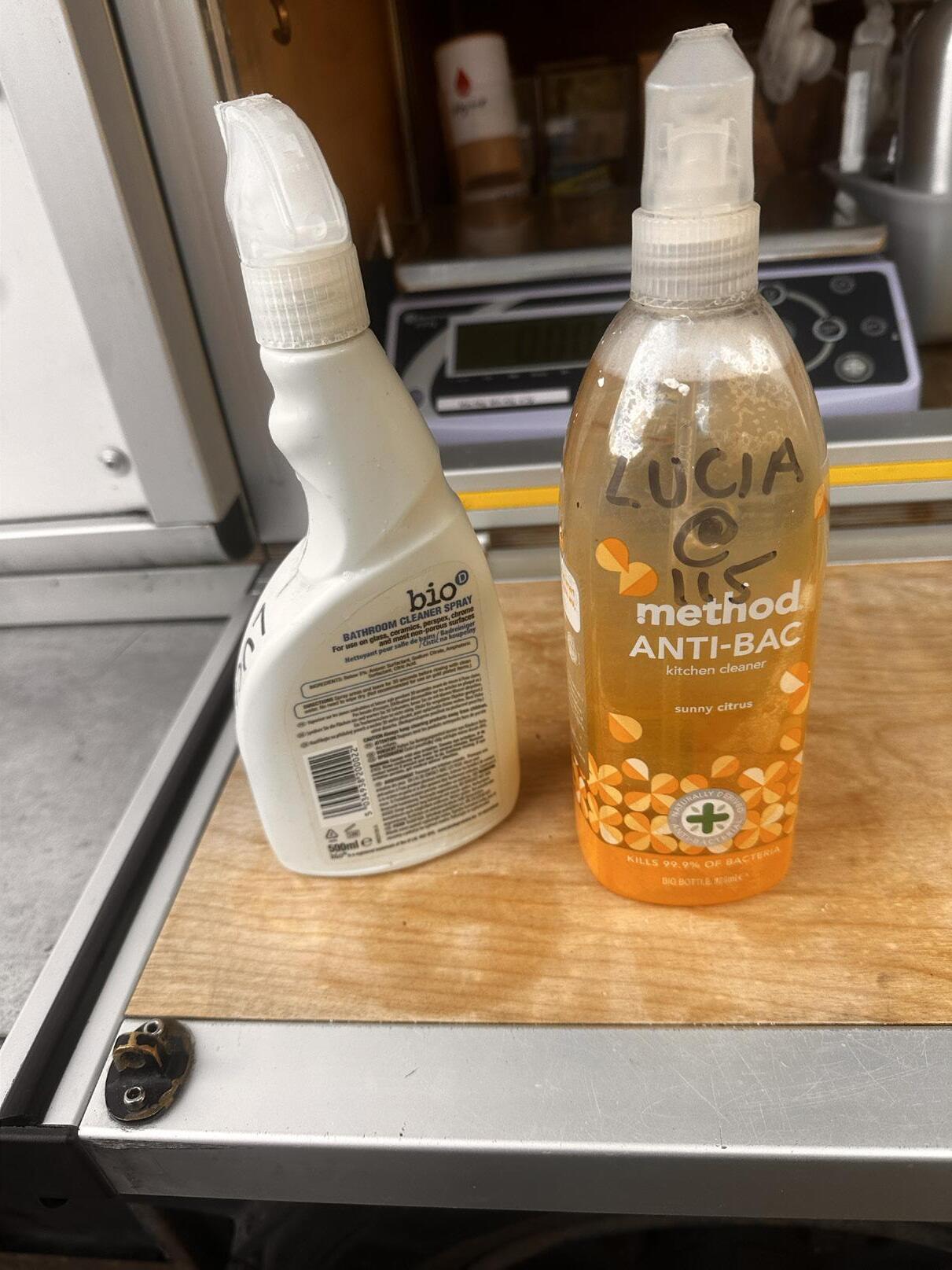
Household cleaning products and toiletries are favoured in refill sectors because they are seen by customers
as particularly over-packaged with few low waste options. However, these liquid products are difficult for customers to dispense themselves on a mobile refill service like TOPUP TRUCK and heavier to carry home. The recent introduction of subscriptions for household cleaning products and toiletries in minimal packaging and in dry form has provided new options for customers. One suggestion here is that dry alternatives, lighterto-carry concentrated solutions, and home drop-off options for these items will improve the refill experience for customers. Dry products can also save space on a mobile refill service, allowing extra room for a wider product range.
Try featuring luxury products alongside good value staples to drive loyalty
Design onboarding and maintaining approach to help customers adapt their routines
“The chutney they sell is made from surplus, but they just don’t make enough of this. If you care you would buy that chutney – just shout about it”
Survey participant
5. Onboarding and maintaining
For most people in the UK, refilling is an unfamiliar practice and requires them to rethink and adapt their current habits and behaviours. For this reason, adequately ‘onboarding’ customers, so that they are guided through the key features and expectations, is crucial for all forms of refill service. The research found that, without an onboarding protocol for new customers, some key messages were not introduced early in the TOPUP TRUCK service journey. For example, new customers often weren’t aware of the rewards scheme, or that they could join a WhatsApp group to receive notifications when the refill service arrived in a preferred location. A consistent onboarding protocol would enable the business to more readily retain new customers who may be put off by unfamiliar refill behaviours and need appropriate measures in place to ‘ease’ them into service use. Onboarding measures could include information on how to find products on the truck, how to dispense, weigh and pay for goods, how the scheduling is organised, where the truck might stop and why it might be late. The onboarding protocol can then evolve into a maintaining protocol to retain customers. Retention measures could include information on how much plastic packaging a customer has saved, upcoming events, new products and incentives.
6. Digital Enablers
One of the central questions of this research was whether a digital platform could improve the experience for both the drivers and the customers. This question responded to the insight that truck employees experienced ‘driver fatigue’ when performing many service tasks as well as driving and setting up the truck. From a customer perspective, convenience was seen as a central barrier and motivation. At busier stops, the time spent waiting for space on the truck to place and refill containers, coupled with waiting for guidance from the driver and waiting to pay, felt difficult and onerous. From a business perspective, the truck has limited spatial capacity and so reducing the amount of time customers spend refilling and paying on the truck could help build capacity for increasing custom and sales.
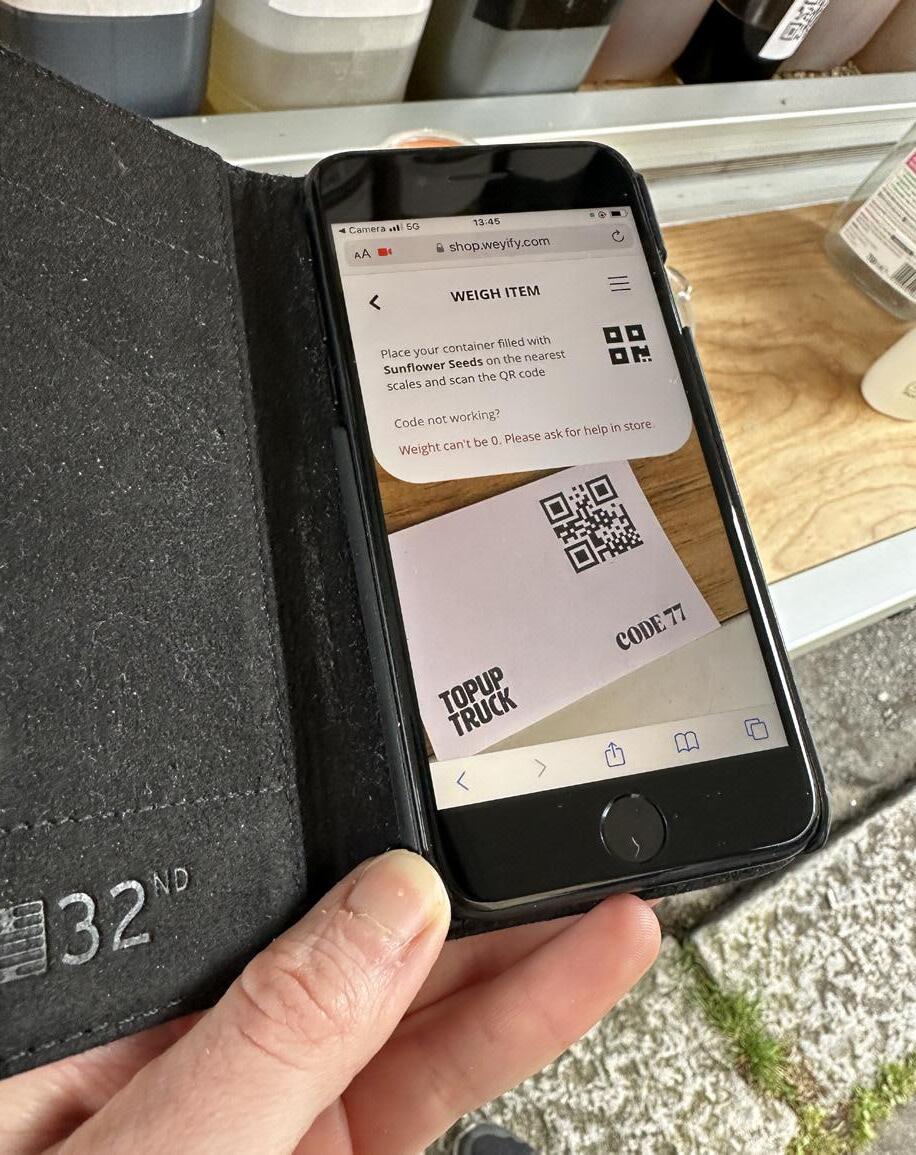
Weyify is a digital service platform from the developers of Shopify, designed specifically for price-perweight retail. A new digital service was developed for TOPUP TRUCK which allowed customers to serve themselves: choosing products, dispensing refills, and weighing and paying autonomously. We found that, when implemented effectively, the digital platform succeeded in providing
Invest in a seamless digital platform for a quicker service
a quicker service, removing the need for the driver to support several phases of the user journey. The digital platform was most effective as an app rather than browser, saving customer preferences for each return visit.
On a vehicle, there are challenges with connectivity which need to be carefully considered, such as selecting appropriate locations for stops. As with all digital technology, it is also important to perform sufficient user and driver testing to ensure optimum performance when the platform is launched with customers. The early stages of transitioning to an app were frustrating for some customers, particularly for those who use digital technology infrequently and existing users who were already familiar with an app-free service. However, these frustrations were quickly overcome when customers experienced the technology working well. For example, customers felt satisfied when the items they had bought appeared in their virtual basket. This level of feedback is not possible with the analogue process, where customers only find out what they have spent at the end when they are asked to pay. Another small but important insight
is that people found it easier to use their phone whilst refilling when they had a phone strap. This freed up both hands for refilling. We found that, given the choice, customers often reverted to being served by the driver. However, in the long term the digital platform will be essential to ensure business growth, ensuring a quicker service for more people. This added convenience and time-saving benefits for the predominant user base of busy families and workers, who are also more likely to be tech-savvy.
7. Inclusivity & Price
Price was seen as a barrier to new customers using the TOPUP TRUCK service. Potential new customers often assumed that products from a refill service would cost them more than the equivalent supermarket products. This relates to one of the central challenges we observed in the research: few people understand priceper-weight and are unable to make the translation into product value. An additional challenge is that most of the TOPUP TRUCK product range has additional features, such as ‘organic’, ‘vegan’ or ‘hand-made’, making them incomparable to supermarket budget ranges. This raises the question of how accessible mobile refill services can be for households on the lowest incomes. It is difficult for a mobile refill service with limited space to stock a wide range of products that are pricecomparable to supermarket budget and premium product ranges. From a redesign perspective, it is important to ensure that it is as easy as possible for customers to understand which products are offered at prices comparable to supermarkets and highlight the additional features that justify the higher cost such as being ‘organic’ or ‘hand-made’. This adds the layer of information that customers have come to rely on with packaged products, to help them identify which
“I’d rather it wasn’t a premium product for things like toilet paper or for my basic needs to then be able to get more from the truck”
Interview participant
products might best suit their budget and values. Clear communication for differentiating products throughout the service as well as an up-todate price list helps customers to make informed choices. Otherwise, customers wait until their product is weighed before they can understand if it is affordable for them. In reality, most new customers we observed were surprised to find that the total spend was less than they expected. The digital app helped people to understand how much their shopping costs cumulatively as they added each item to their subtotal, rather than only finding out the total price at the checkout. In turn, stored information on previously purchased quantities in the app will help build customers’ price-per-weight literacy and support their longer-term transition to refill.
Design clear and inclusive communication around pricing
8. Refill Style
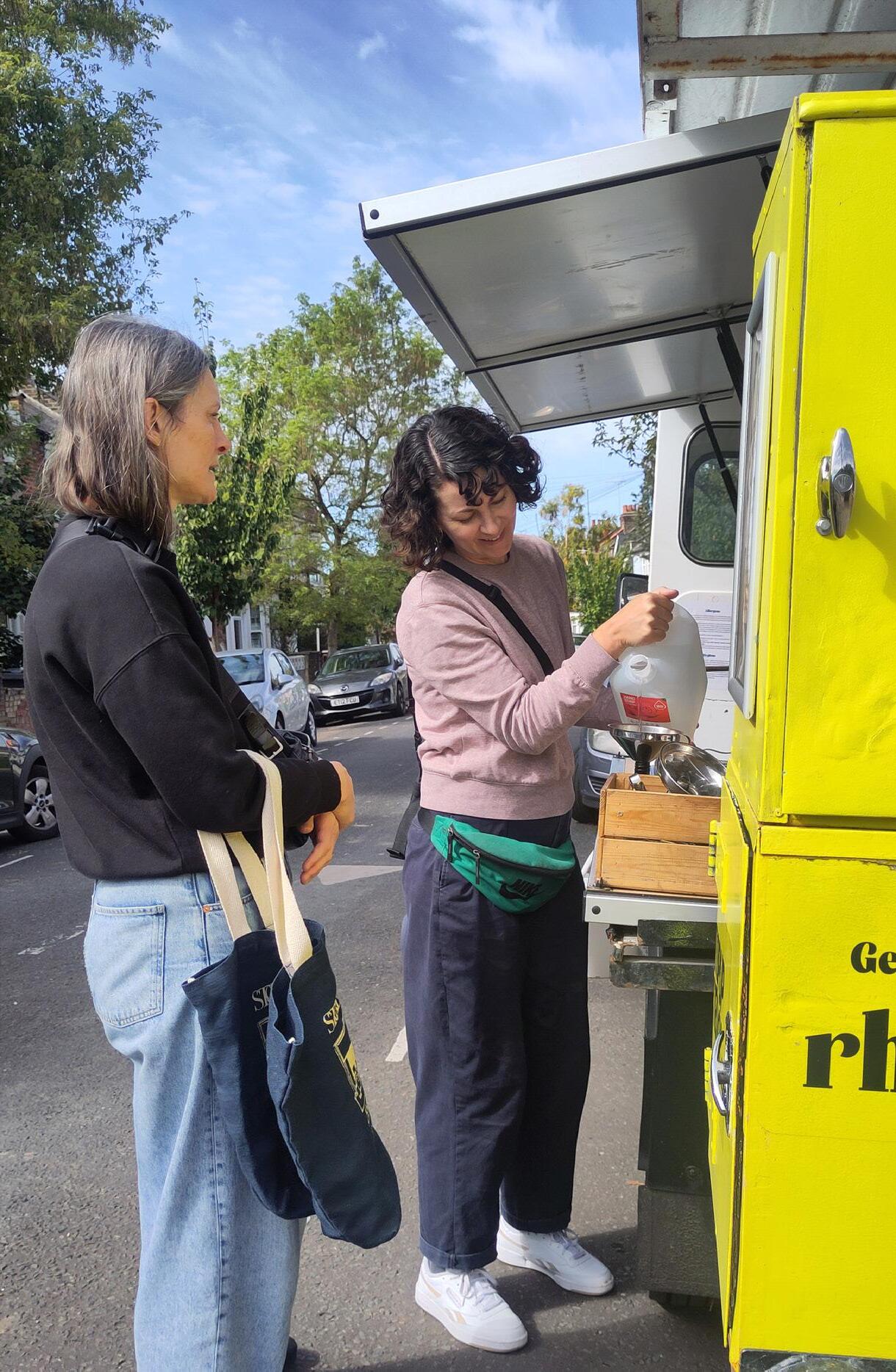
Refill styles vary from customer to customer, with some people preferring to make use of their empty packaging (e.g. old ice-cream tubs and used jam-jars) and others preferring to use Kilner jars and containers bought especially for the purpose of refilling. We discovered that neurodiversity also played a role in the capacity to build a refill routine. For example, one customer said that ADHD made it difficult for them to organise and prepare boxes to leave on their doorstep for the driver to refill on their behalf, a service option that TOPUP TRUCK provides to customers who live close to a stop. Some customers would bring temporary containers to fill at the truck, adding
“I do like the idea of reusing packaging. I’ve got a kitchen full of boxes and Tupperware”
Interview participant
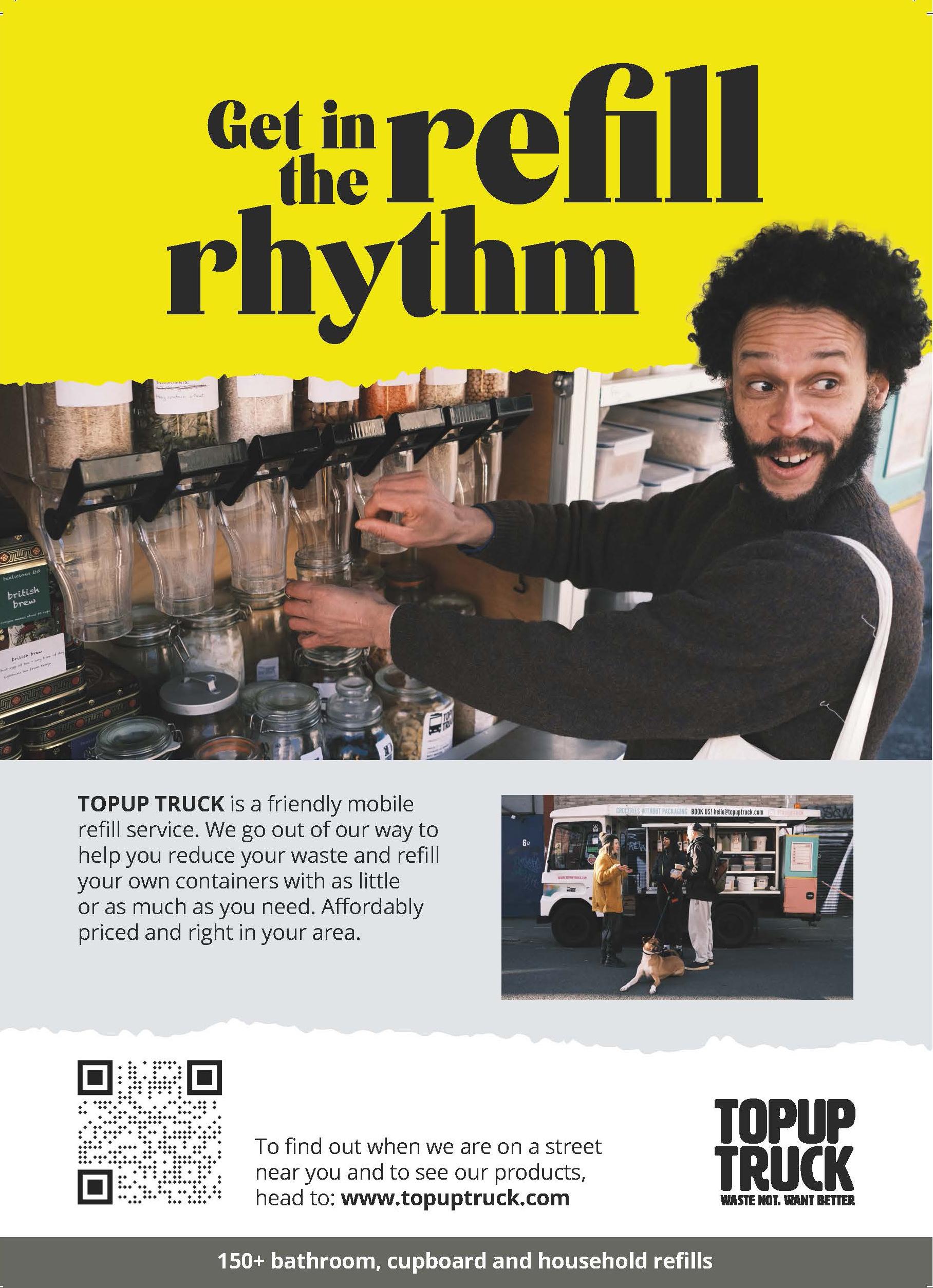
the contents to their permanent containers back at home. Others would do the opposite, decanting the old contents of their permanent jars into temporary containers at home and bringing the permanent containers to the truck to fill, pouring the older products back on top when they returned home. Different refill styles were captured in the revamped branding for TOPUP TRUCK through the slogan ‘Get in the Refill Rhythm’. We observed that it takes people quite some time to establish their own refill style and routine, with some using the free paper bags for months before suddenly bringing a shopping bag full of empty containers to fill up. There are steps that can be embedded in the onboarding protocol to help new and potential customers understand how to adjust their shopping routines, integrate refill with ease and find their style.
Celebrate and accommodate different refill styles in the service design
Aim to be consistent in service delivery to alleviate uncertainties
9. Consistency & Uncertainty
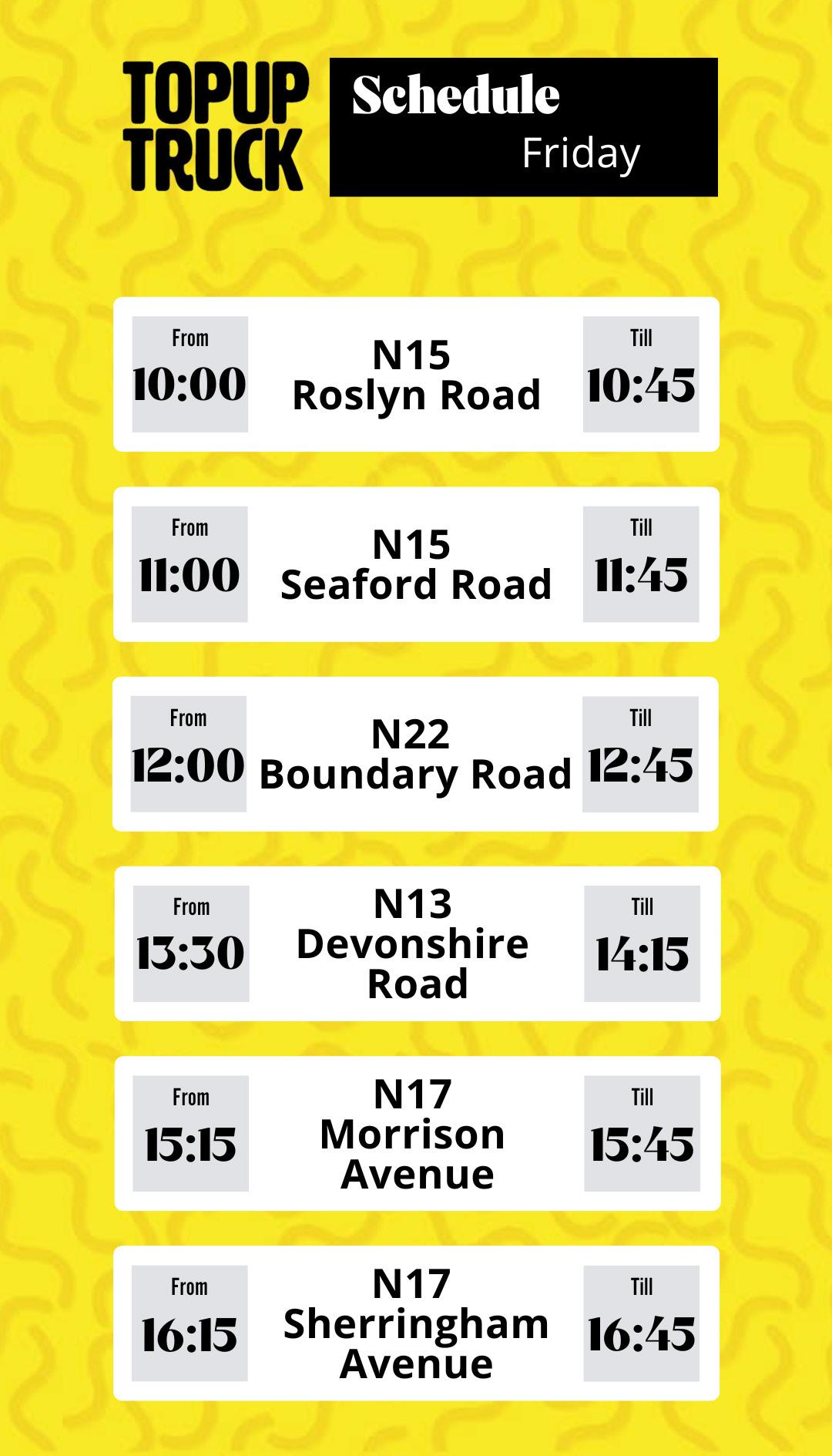
Convenience and certainty in grocery shopping has increased exponentially in the last 50 years, fuelled by prepackaged products, ready-made food, extended shopping hours and the growth of supermarkets, where all goods can be located under one roof. This has changed consumers’ expectations of shopping and means that alternative services like TOPUP TRUCK need to be mindful of related needs when designing their customer interface. Some of the ways we built consistency and certainty during the TOPUP TRUCK service redesign included GPS tracking that enables customers to locate the truck in realtime, near-real-time digital stock level checks, and an adapted timetable that includes some longer slots, focussing on ensuring the truck is at the stop at the time published. Changing the truck schedule from fortnightly to weekly and restricting timetable changes to once every six months could also help to ensure people develop habits and routines that support loyalty to the service.
“It’s just knowing when it’s gonna be here and trusting that it is gonna be here.”
Interview participant
Take a user-centred design approach when developing the service
10. User-centred Design
Consumers to use refill services need to adapt their current behaviours and routines and develop new ones. To make it worth the extra effort, refill services need to provide meaningful experiences so that doing something ‘good’ also brings additional value for customers. On a basic level, services need to function well. Taking into account the interface between the person and the service, they should make refill shopping feel easy, joyful even. Whilst services solely focussing on sustainability might attract a niche group of consumers who identify as ‘eco warriors’, they do not motivate the wider market. Our research has demonstrated that simple but important features, such as more information on products, ease of use and convenience, loyalty incentives, a consistent and reliable timetable, an onboarding protocol, a good range of products and transparent pricing, can improve a mobile refill service. Such behavioural considerations informed the TOPUP TRUCK redesign, taking on an array of improvements from a seemingly trivial bag hook to a sophisticated digital platform. Other improvements included signposting and communication measures at the levels of product, truck, website and social media channels, as well
“I remember a zero waste shop doing something around: ‘let me explain to you why this actually isn’t more expensive’ and like breaking it all down. Things like that I think are helpful.”
Interview participant
as rebranding. On the truck itself, product organisation was streamlined to improve the use of space and make it easier for customers to find and identify products. Every aspect of the service was taken into consideration and ‘tweaked’ in a ‘marginal gains’ approach to user experience. Although it may be too soon to validate the service redesign beyond promising monthly increases, taking a user-centred design research approach has greatly advanced our understanding of how people interact with mobile refill services and identified what can be done to make it easier for them to transition to this new (old) way of shopping.
Can it be scaled?
Mobile refill services could represent a distinct and scalable model within the refill sector, combining doorstep convenience with lowwaste principles. However, to scale successfully, supportive policy changes are needed. Provided that a critical mass of customers find that the enablers outweigh the barriers, then scaling is possible. At the same time, it is widely accepted that a pluralistic approach to transition is needed. There won’t be one solution that works all the time and in every local context to reduce our environmental impacts and boost local economies. Mobile refill services offer one model for building the transition to low-waste grocery shopping that can work in support of other refill and low waste offers currently being developed. Micro-businesses can offer new services that respond to behaviours born out of packaging-based retail models. However, to scale mobile refill businesses, a larger piece of followup research is needed to examine the policy bottlenecks that prevent mobile refill services from succeeding. Current regulations, such as restrictive street trading licensing fees, are designed with traditional, centralised retail models in mind and create significant barriers for small-scale businesses working to reduce waste and promote sustainable practices. Policies must therefore be updated to foster the growth of these kinds of businesses, ensuring they can thrive.
Conclusions
The public concern around plastic packaging and its negative environmental impact has created a strong demand for low-waste shopping. However, for refill to become a mainstream alternative, services need to deliver the same convenience, value, and product information that customers have come to expect from traditional retail.
This report outlines key barriers and enablers for mobile refill adoption and offers practical recommendations for overcoming challenges and enhancing the customer experience, in particular maximising the feelgood factor surrounding refill shopping.
Success lies in taking a user-centred approach, designing services that
are convenient, well-communicated, and tailored to customer behaviour.
Factors such as improved product information, transparent pricing, consistency in service, and a seamless digital experience can significantly increase adoption and retention.
While TOPUP TRUCK is a single example of how a mobile refill service can drive behaviour change, scaling these models will require supportive policy changes and wider collaboration across the industry. Also, what works in one geography may not work in another. By focusing on localised user needs and embedding convenience and value into refill models, innovators can help customers build a sustainable ‘Refill Rhythm’ that sticks.
Getting communities into the Refill Rhythm
Findings from user-centred research into mobile refill services