
ate Play To Fix The Subway
Facing a multibillion-dollar budget gap, the Metropolitan Transportation Authority is seeking unconventional partners to save its century-old and rapidly aging subway system. Chief among them: well-capitalized developers splurging on new office and residential towers
Flickr/MTA/Marc A Hermann
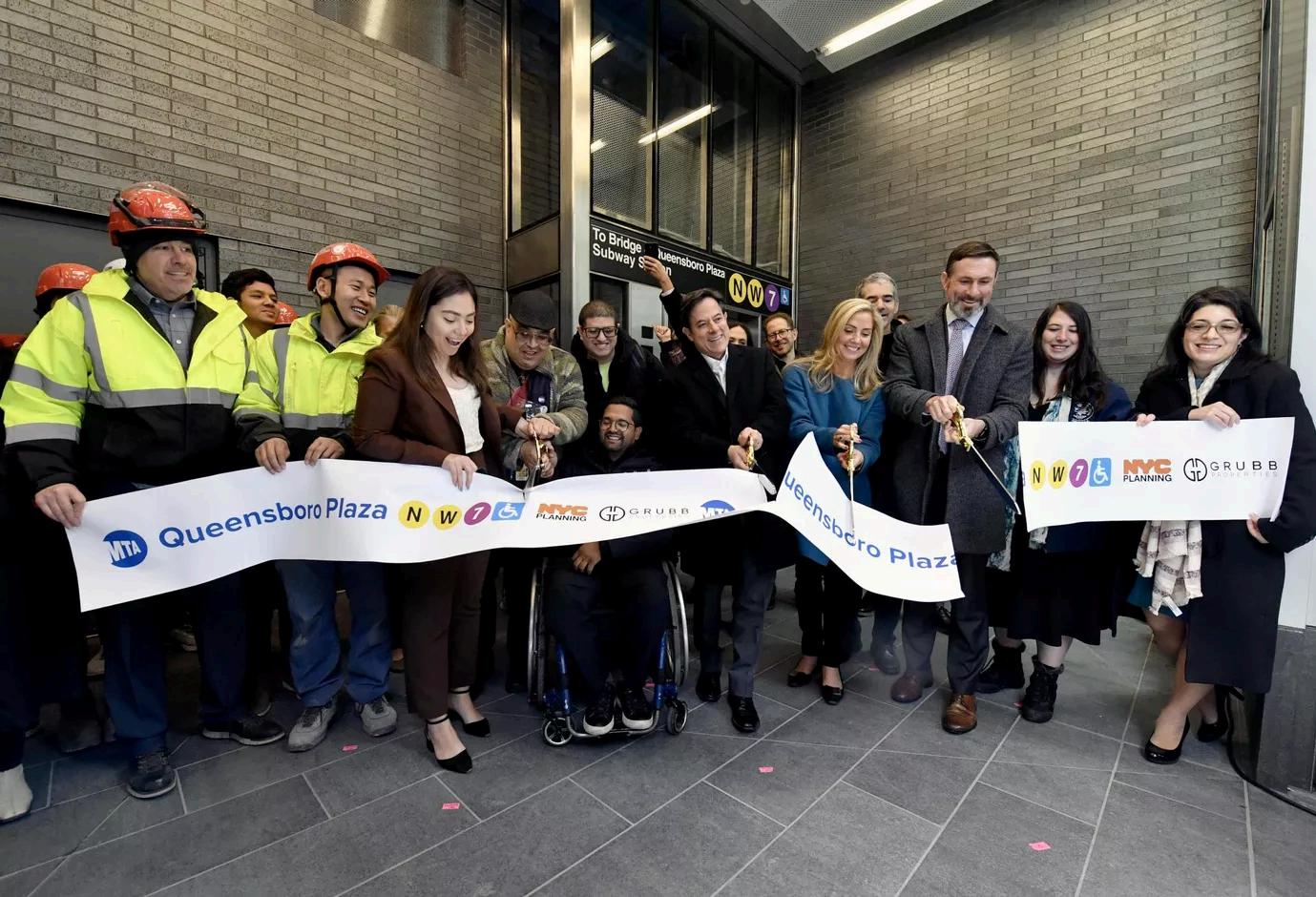
Grubb Properties' Lauren Cahill joins MTA officials and advocates for a ribbon-cutting ceremony at a new elevator to the Queensboro Plaza station April 10 It's the first project under the Zoning for Accessibility initiative to open
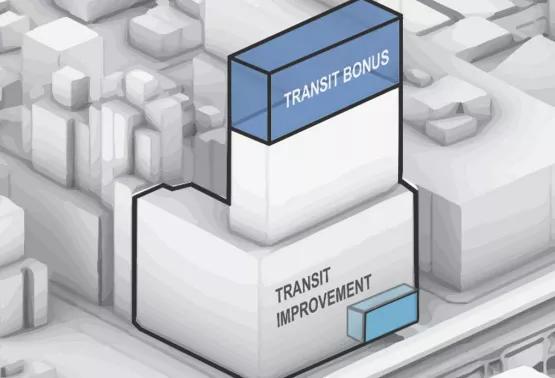
The MTA expanded its Zoning for Accessibility program in 2021, offering floor area bonuses in exchange for much-needed subway entrance and circulation upgrades. Developers can now opt in to the program, which has been simplified and extended to high-density districts outside of Midtown.
“If a developer comes in and makes an improvement, that is money saved that we could put elsewhere in another station or anywhere else in the system,” said Munsun Park, the senior director of zoning and development for the MTA’s transit-oriented development group
Transit easements still exist, under which upgrades are thrust upon those building within 50 feet of stations a requirement that has previously held developers back from certain lots. Expanding ZFA is an attempt to reduce those easements and, as a result, has opened a greater, friendlier line of communication, both sides of the table said
“The fact that now you are getting a benefit, aside from the improvement in the subway entrance, that's something that will definitely be attractive to other developers,” Grubb Properties Senior Vice President of Multifamily Development Lauren Cahill said
Eight projects are in the pipeline, and the TOD team is discussing additional opportunities with potential participants The MTA says hundreds of lawyers, consultants, architects and engineers have tuned in to recent webinars on the project
This type of education is necessary, as the program can add a plethora of additional costs and complexities to the building process
“Doing any construction in New York is challenging, but subsurface subways, it's not easy We try to make it as streamlined as possible and, quite frankly, help [developers] in other ways,” TOD team Senior Vice President Miriam Harris said. “They get a little more attention We make sure that their process is being taken care of because this accessibility work, it's our mission, it's a requirement, and we could never do it fast enough.”
MTA/Handel Architects
A diagram of the zoning floor area bonus provided for transit improvements at the Queensboro Plaza stations
After the pandemic-era plummet in subway ridership, the MTA received federal aid to cover deficits through 2024. Then, starting this year, the agency forecast a $3B recurring budget shortfall
The MTA’s budget took another hit Wednesday when the Trump administration announced it would withhold $18B in federal funds for two ongoing infrastructure projects: an expansion of the Second Avenue subway and construction of new tunnels under the Hudson River for commuter rails.
Although New York City has the most robust public transit system in the country, other cities like Philadelphia, Miami and Chicago are also facing budget cuts, jeopardizing the future of their bus and rail systems.
The MTA has begun tackling the issue in other ways too In January, the nation’s first congestion pricing program was introduced, placing a toll on drivers entering Manhattan south of 60th Street. Tolls are expected to collect $500M this year
That’s just a drop in the bucket. Despite various capital plans implemented over the years, much of the subway’s underlying infrastructure is deteriorating. The first underground subway line opened in 1904, charging riders a nickel per ride.
The network is reliant on signal systems installed in the 1930s, based upon technology from the 1890s. It
causes an average of 285 delays per month. Railcars break down approximately 292 times per month Aging substations can result in long-lasting power failures, delaying 34 trains per incident, according to the Regional Plan Association.
When the MTA expanded the ZFA program, 140 of New York City’s 493 subway stations were accessible, the agency said. Today, that number is up to 153. The goal is to make 95% of stations accessible by 2055
In its 2020-2024 capital plan, the MTA committed more than $5B to funding accessibility projects With that funding, 46 stations were made accessible under the Americans with Disabilities Act, and another 43 stations were under construction as of June
The agency’s 2025-2029 capital plan budgeted another $7 1B for accessibility improvements for 60 more subway stops and six railroad stations
Hitting its accessibility goal may require getting more developers of all sizes on board
Incentivizing Builders
In April, the MTA celebrated a new accessible entrance to the 7, N and W lines at Queensboro Plaza at no cost to taxpayers.
The project, the first to open under the new ZFA, was financed and constructed by Grubb Properties. The firm will also maintain the entrance to the Long Island City station
ZFA allowed Grubb to add nearly 49K SF to its adjacent development, Link Apartments QPN at 25-01 Queens Plaza North The 371K SF, 417-unit mixed-use building was completed this summer
“This is public-private partnership at its best,” Cahill said “Hopefully, other developers see the value Transit is what makes the city run.”
NYC Planning/Sedesco/Urbahn Architects
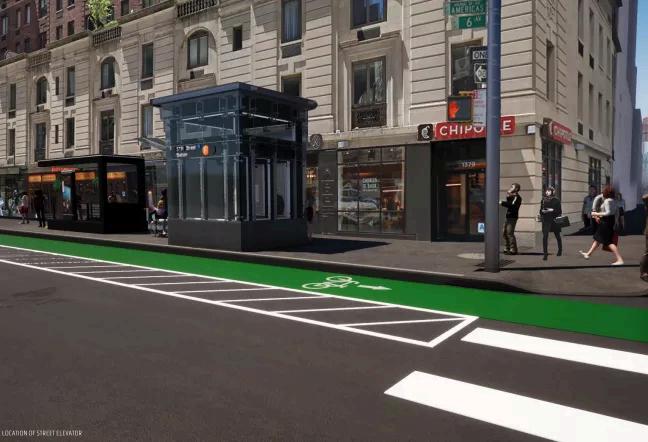
A rendering of a street elevator provided by Sedesco under Zoning for Accessibility
Among the other projects in the works is the 57th Street station, where Sedesco is adding two elevators, set to open in the spring The upgrades will make it the first accessible station in the 60-square-block area bounded by Central Park South, 49th Street, Eighth Avenue and Lexington Avenue, according to planning filings The next closest accessible station on any line is seven stations away
In return, the developer requested a 20% bonus the maximum possible under the program for its residential project at 41 W 57th St
The Lenox Hill Hospital was approved for a ZFA bonus tied to the 77th Street station in July Specifics on construction haven't yet been determined, according to the MTA
ZFA is also becoming more common in public project filings
For his proposed 154-unit mixed-use tower at 655 Madison Ave , Gary Barnett is offering upgrades to the Fifth Avenue-59th Street subway station, including building a new ADA-compliant entrance. If approved, he would construct a 765K SF, 74-story skyscraper If not, a slimmer 600K SF, 84-story supertall would rise.
Nearby, LVMH is seeking to add approximately 25K SF to the development of its 25-story flagship In
exchange, the luxury goods company would improve the Lexington Avenue-59th Street subway station, including creating an ADA-compliant entrance
“Things typically have a better chance of working if you create incentives for all parties, and this is really incentive-driven,” Allen Matkins partner Marshall Brozost said. “It's become more a part of the development vocabulary in the last few years.”
Brozost added that the process has become more institutionalized and “relatively user-friendly” for applicants
That’s music to the MTA’s ears. Since 2021, TOD has standardized the process and added more stations to the program Additionally, developers seeking bonuses of less than 200K SF can now access ZFA without a special permit.
“We're starting to demystify how we work here at the MTA, TOD in particular,” Park said.
'Headache'
Renovating the city’s infrastructure, much of which runs underground, remains extremely complicated and costly
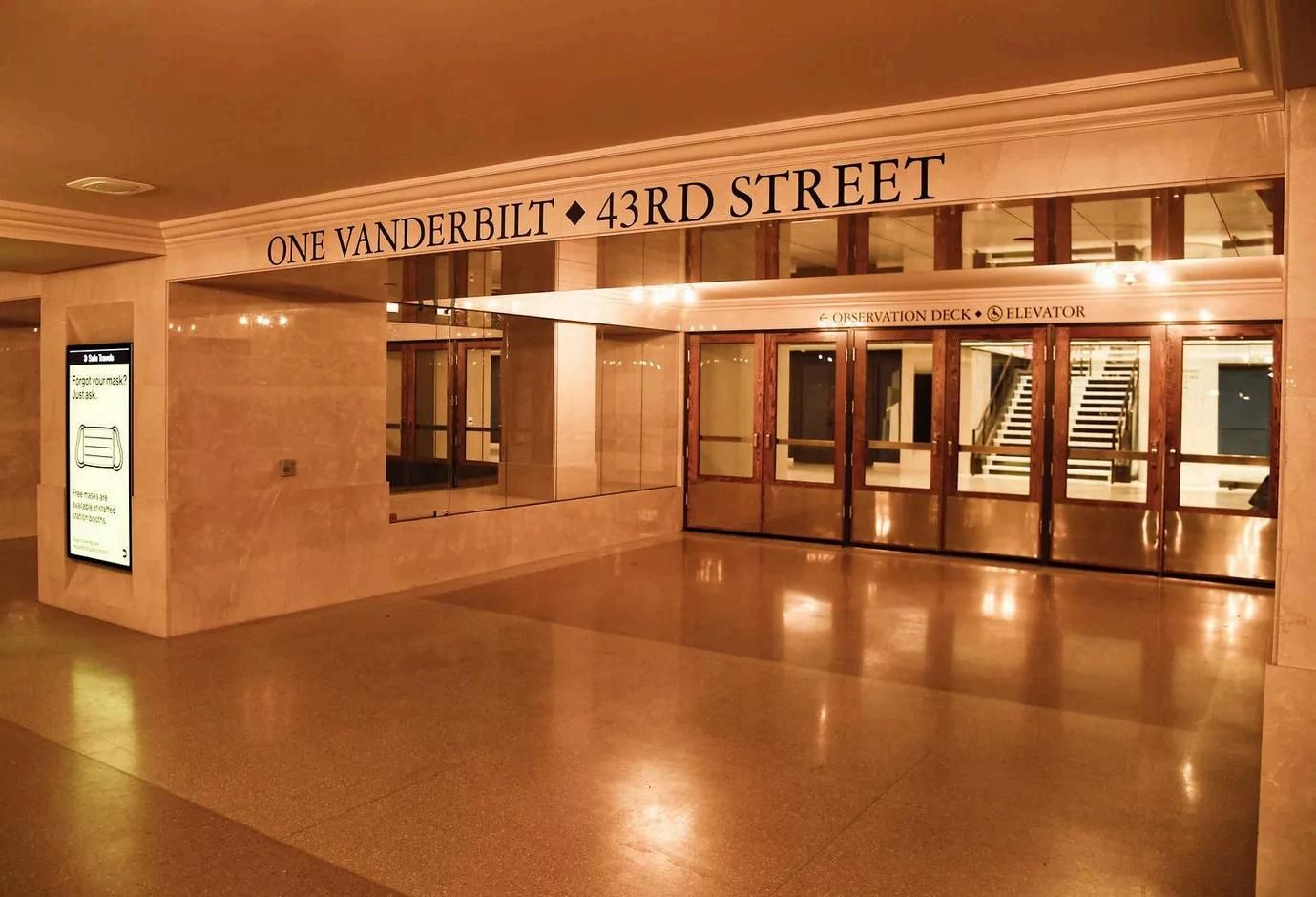
The increased floor area ratio under ZFA can create more revenue in the long run, along with an amenity for buildings with commuters But the process of
Flickr/MTA/Marc A Hermann
getting there adds to the hard costs of station renovations and the soft costs of MTA supervision and review, according to Rosenberg & Estis counsel David Rosenberg.
“You theoretically get a bigger building, but it's a lot more headache in the calculation,” Rosenberg said “In my experience with developers, the thinking is, ‘Well, is this the site that we want to build on, or do we just keep what we have, collect rent and move on?’”
The costs and complexities can lock smaller developers that aren't as well capitalized or experienced out of the program.
“There are probably more resources now than [what the MTA] had before So there's a little bit more leniency on and care to what the developer wants,” said Duane Burress, who specializes in land and air rights valuations “But I know the overall consensus is: If you can afford it, then fine. If you can't, then give me someone who can afford it.”
For those who have been able to afford it, the program has been described as a “win-win ”
Despite being completed before the new ZFA, One Vanderbilt is referred to by the MTA and others as creating a blueprint for such partnerships SL Green committed $220M to construct public open space, new subway entrances and a massive concourse below Grand Central Terminal. The developer also built a 4K SF public transit hall inside the tower, allowing office employees to enter the 1 7M SF building without ever having to step foot outside.
“What happened with One Vanderbilt is what's leading my clients to go before the MTA and at least have the discussion,” Brozost said. “Do you need an easement in this location? Would it be useful in the future? And if so, what can I get for it?”
Contact Sasha Jones at sasha jones@bisnow com