The aims of this report are to deconstruct a luxury designer brand operating globally and understand its branding through analytical tools and branding theory. This assessment will study the brand Alexander McQueen.
BRAND OVERVIEW
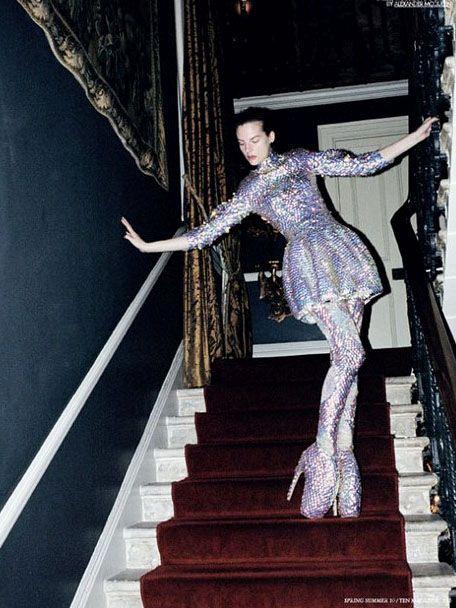
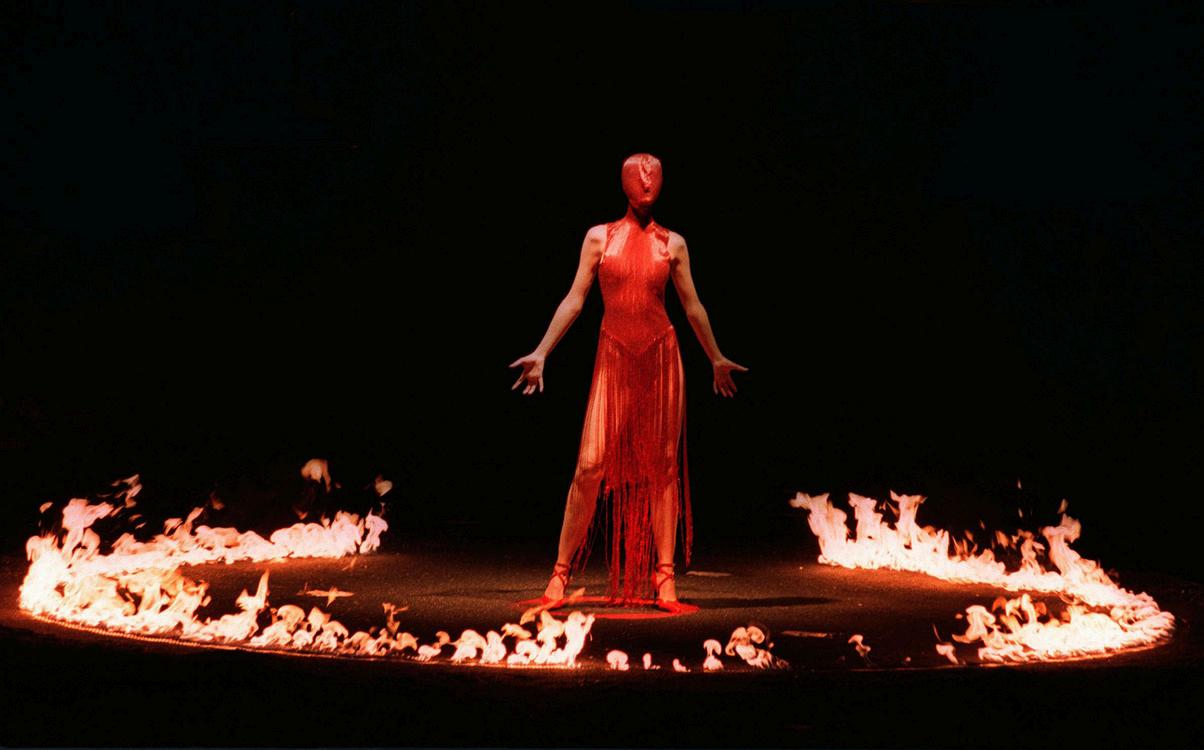
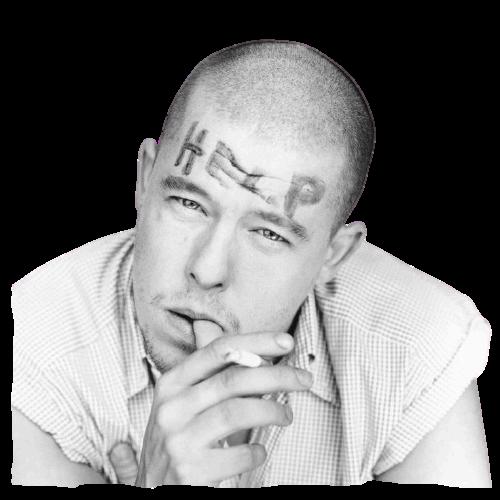
Alexander McQueen was created in 1992 by designer Lee Alexander McQueen. The House’s early collections created controversies and the shocking nature of the runways quickly earned the designer the title of “hooligan of fashion” (MENDO, 2018). However, this 'bad press' contributed to the brand's sucess and it is seen as one the most innovative fashion houses that contributed to change the fashion industry.
KEY PERSONNEL
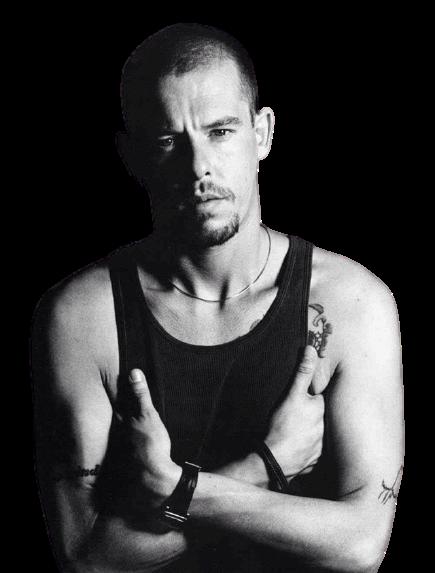
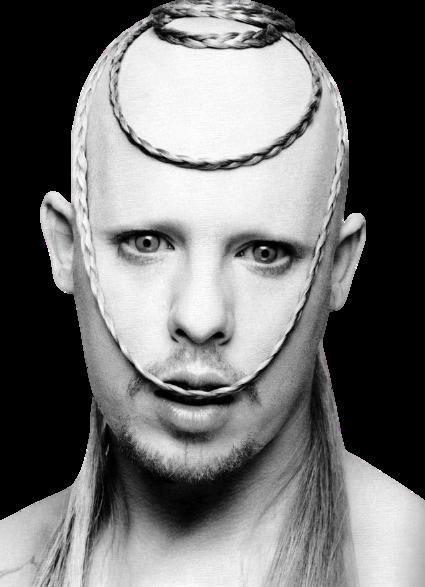
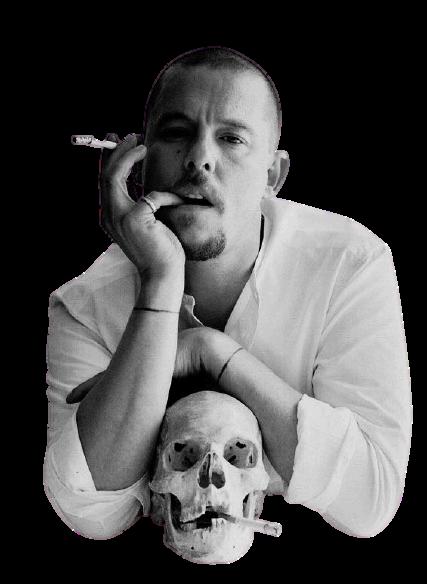
Lee Alexander McQueen was born in 1969 in a modest background unrelated to fashion. But it is Central Saint Martins that will allow him to access his dreams which he graduated from in 1992. At McQueen, clothing creation is subordinate to the idea of the runway. A perfect mastery of tailoring, a silhouette recognizable among a thousand, a dark even macabre universe, which will assert itself over the eighteen years of his personal career, Lee McQueen is seen as one of the most innovative and influential designers of the history of fashion. He committed suicide in February 2010 and left behind a unique work and an indelible imprint.
Sarah Burton studied Print Fashion at the Central Saint Martins. During her third year she did her year's placement at Alexander McQueen. On graduation in 1997, she joined the company full-time as McQueen's personal assistant. As a long-time colleague and friend to the designer, she has been Alexander McQueen's creative director since his sudden death in 2010 and had critically acclaimed collections ever since.
Lee McQueen founds his own label Alexander McQueen 1992
Sarah Burton is appointed as Head Designer in womenswear at Alexander McQueen
Alexander McQueen joins Kering Group
Death of Lee McQueen
The brand receives global recognition as the designer of the Duchess of Cambridge's wedding dress
Lee Alexander McQueen graduates in Fashion Design at Central Saint Martins
Lee McQueen ensures the artistic direction of Givenchy 1996
Alexander McQueen sells 51% of its shares to the Gucci Group
Lee McQueen departs from Givenchy
Launch of lower-priced diffusion line McQ
Sarah Burton becomes Alexander McQueen's Creative Director
Burton appointed Officer of the Order of the British Empire (OBE) for services to the British fashion industry
Timeline of Alexander McQueen: the brand's history and key milestones (Author,
2021)
ABOUT THE BRAND... ABOUT THE BRAND
BRAND IDENTITY
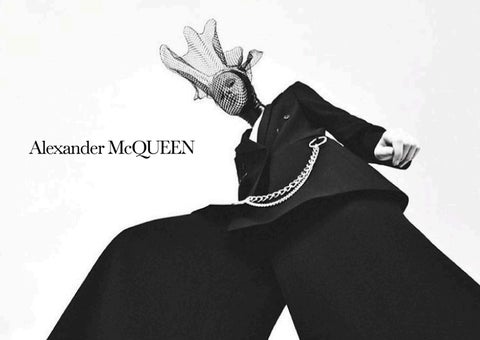
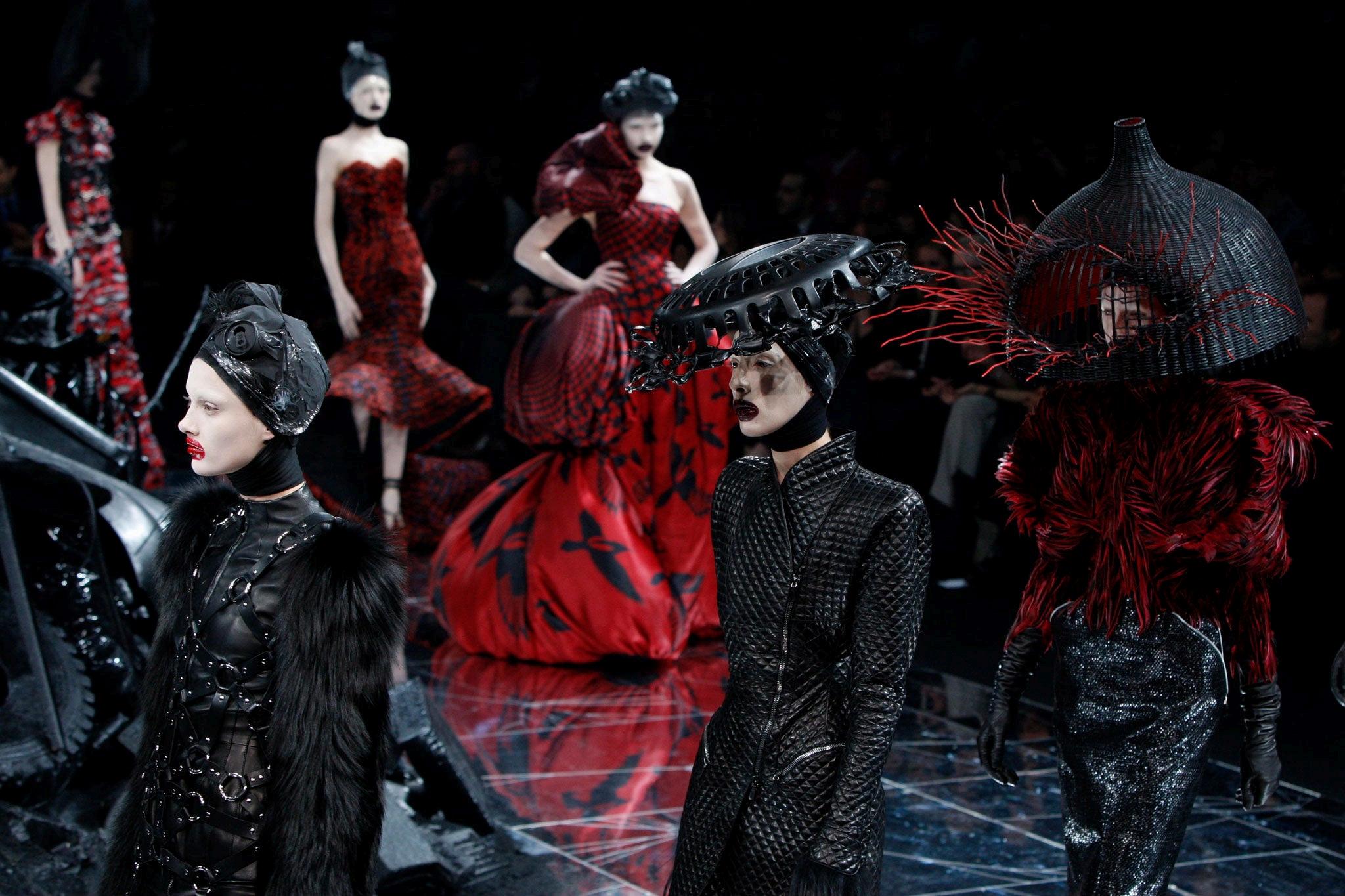
Alexander McQueen is synonymous to English modern couture as the collections never fail to provide a national sense of identity, notably due to its use of tartan. Thanks to its multiple controversies, the brand built itself a strong identity around its provocative and grotesque nature, as well as from its influences from the punk and English street cultures. Alexander McQueen's labels in its early collections had the designer's strands of hair enclosed in a small plastic bag. This obviously reinforced the brand's idea of nonconformity which attracted expressive consumers who supported the striking difference and change Lee McQueen was creating in the fashion world.
Alexander McQueen's brand identity slowly shifted under Sarah Burton. For example the logo went from a bold, gothic look to a more classic, feminine one while keeping its original font. This could be explained as a will from Burton to slightly change the provocative image the brand lingers to this day. It might be seen as an effort to attract a different type of consumer, who prefer more formal clothing with softer tones as presented in newer collections. However, the brand still possesses its rebellious and ruledefying identity to this day.
Alexander McQueen's logo shift from Lee McQueen's to Sarah Burton's
Alexander McQueen hair labels from 1992 to 1994 (Mugrabi, 2018)
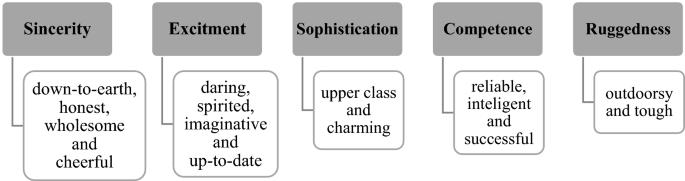
Maruitti F. & Giraldi J., A hindsight of Aaker’s theory, 2019
BRAND PERSONALITY
On Aaker's Brand Personality Scale, Alexander McQueen is seen as an Excitement brand from its daring, unique and imaginative aspect with its new and original traits. (Aaker, 1997).
BRAND ARCHITECTURE
Alexander McQueen joined Kering, a multinational luxury group that manages the development of the fashion houses shown on the brand architecture (Kering, 2021), in 2001 in couture and leather goods and eyewear as well as its diffusion line McQ in 2006 in eyewear.
UNIQUE SELLING POINT
Alexander McQueen's Brand Architecture (Author, 2021) (Kering, 2021)
COMPETITOR ANALYSIS
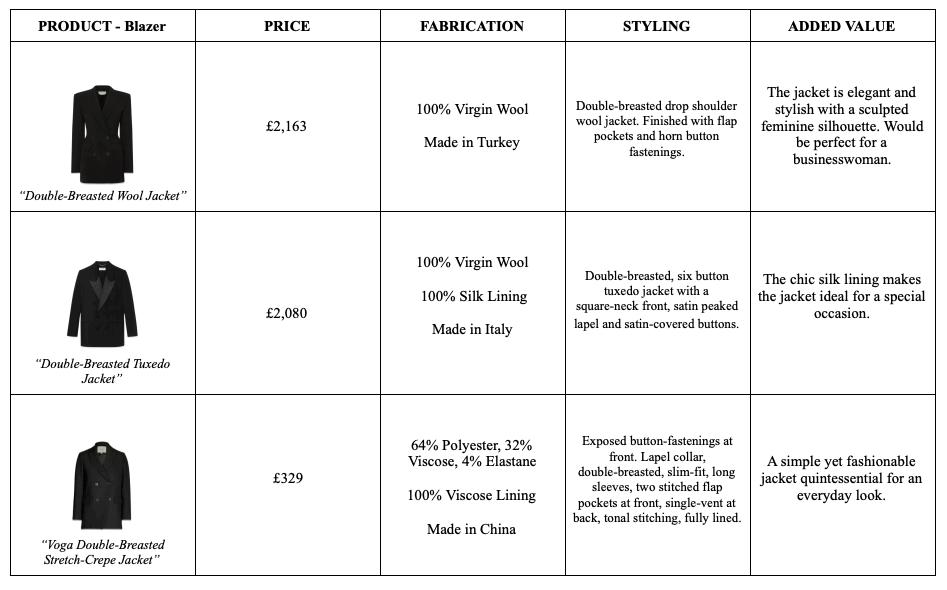
A survey was conducted for this essay with 25 candidates, which presented a number of potential competitors to Alexander McQueen such as Comme des Garçons, Iris Van Herper, Yohji Yamamoto, Vivienne Westwood, and others. Vivienne Westwood and Comme des Garçons were seen as the main competitors to the brand with 24.1% and 20.7%, respectfully (Appendix). They are both worldwide known high-fashion brands that offer avant-gardiste silhouettes. Vivienne Westwood's ready-to-wear collection has a lower price range (from £500 to £2,000) than Alexander McQueen while providing a grunge/punk aesthetic. A Like for Like comparison chart was created using a black double-breasted blazer as comparison tool. Alexander McQueen proposes the highest price for its Double-Breasted Wool Jacket as it is a very exclusive fashion brand reserved for a niche target market.
BRAND POSITIONING & CONSUMER PROFILE
BRAND POSITIONING
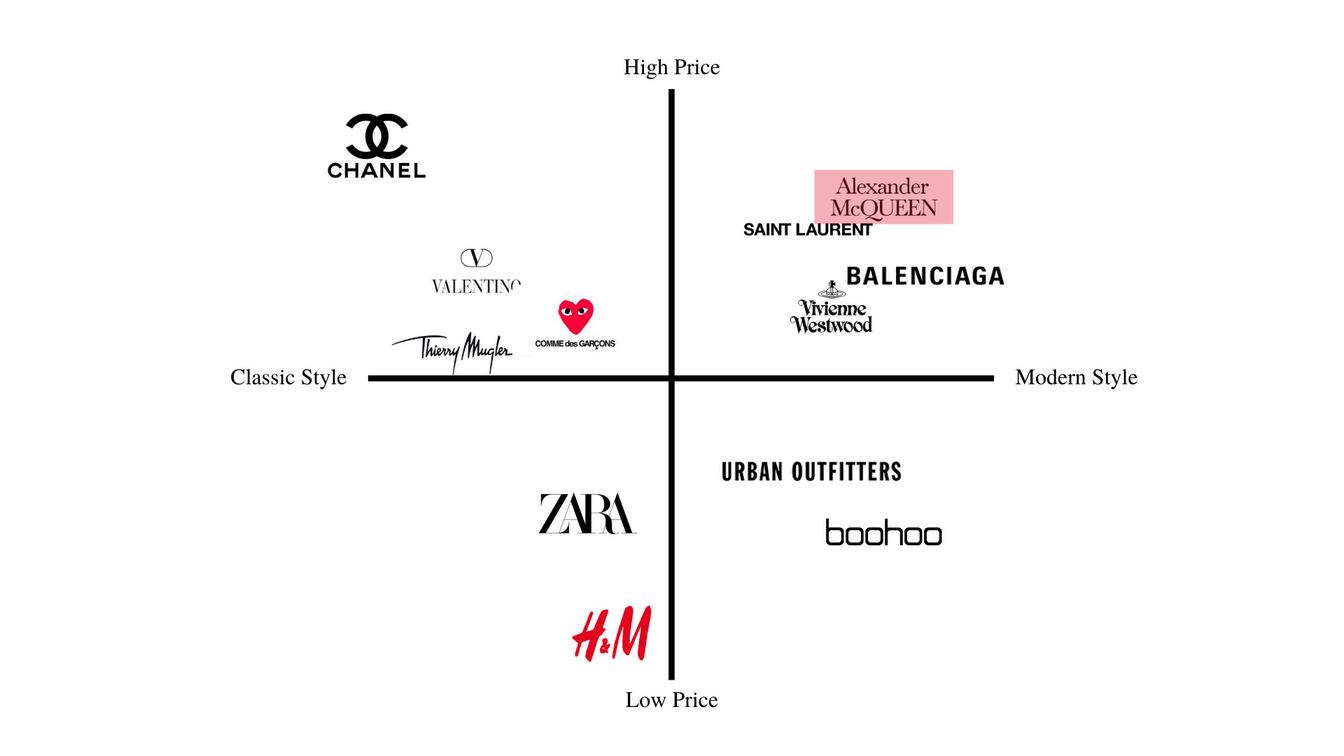
"Brand positioning in fashion is increasingly based on aspirational lifestyles and personalities which are designed to appeal to the target market" (Jackson & Shaw, 2008). Below is a brand positioning map for Alexander McQueen which places the brand as high-priced and modern styled compared to some of its competitors such as Thierry Mugler or Chanel.
McQueen positions itself as such due to its designs' uniqueness with its avant-garde silhouettes, the high-quality products and the exclusivity of the brand, the target audience is further attracted to Alexander McQueen. This enables the brand to keep a stable position in the market which simultaneously benefits the brand's image as this equals a clear brand identity for Alexander McQueen's consumers as the brand differentiates itself through its price and design style from its competitors. This gives the brand credibility and confidence from its consumer therefore customer loyalty.
UMER PROFILE
der McQueen’s consumers are between 20-50 years old. The ge is wide as McQueen's genius tailoring adapts to both formal ravagant clothing which could cater to this large audience. Most socialites, celebrities, royalty or wealthy ordinary people e clothes from Alexander McQueen. The customer has quite an ant personality and a very active interest in fashion. They are for something that can cater to their excesses, that fits their mon and lavish lifestyle. Alexander McQueen meets its ers' needs by reflecting through its designs their selfnce, independence, success, personal satisfaction, prestige, and tion from others. Below, on page 15, is presented examples of der McQueen's target consumers via pen portraits.
Brand Positioning Map for Alexander McQueen (Author, 2021)