Enterprise Green Communities Certifications GreenPoint Rated Certifications
Letter from our President
The promise of a better life is too often constrained by ZIP Code. We recognize that much still needs to be done to distribute opportunities, environmental health, mass transportation, access to nature, and social services more evenly, so as to help restore the fabric of our communities. We also understand the impact that buildings have on the environment, and the critical need to mitigate greenhouse gas emissions, reduce water consumption, and eliminate toxic chemical exposure.
At Jonathan Rose Companies, our approach is ambitious yet attainable: to ensure safe, stable, green affordable housing in communities across the country—providing an essential base for individuals and families from which opportunity can grow. We understand that building communities of opportunity means ensuring access to quality affordable housing, meaningful work, nearby transportation, educational and health services, centers for arts and culture, and communal spaces for contemplation and compassion. In upholding our commitment to the environment, we also recognize that this involves creating transit-oriented projects that are more energy-, water-, and waste-efficient, and tracking and measuring our performance to provide transparency and ensure continuous improvement.
Our talented and diverse team works with thought and care to develop new and preserve existing affordable housing communities, make them more efficient and healthful, and partner with local social service providers to enhance the lives of residents. Among our most significant highlights from the past year has been the launch of our Communities of Opportunity pilot programs and the innovative ways that we are transforming affordable housing properties, making them more efficient and resilient.
More than ever, investors in the real estate space are looking for measurable and quantifiable social and environmental results. We look forward to using this report as a platform for communicating our performance, as well as a place to share our accomplishments and the challenges we and our communities continue to face.
Sincerely,
Jonathan F.P. Rose President, Jonathan Rose Companies
Our Vision
To co-create communities in which all of our residents, employees, and neighbors can thrive in safety, ecological and personal health, cultural vitality, collective efficacy, and educational and economic opportunity regardless of ZIP code.
Company Overview
Jonathan Rose Companies is a national real estate development, owner’s representative, and investment management firm based in the United States with headquarters in New York City. Since 1989, we have operated with the belief that all communities deserve the opportunity to thrive. Our work seeks to restore the balance between people and nature, while harnessing the power of connected, integrative, and well-designed and programmed places to promote social and financial well-being. Social, economic, and environmental responsibility is holistically embedded in our approach, and we look to implement thoughtful and innovative solutions to a wide array of urban challenges.
For almost 30 years, Jonathan Rose Companies has developed or acquired more than $2.3 billion of real estate projects, much of it in close collaboration with not-for-profit organizations and local governments. We understand that cities and the buildings, neighborhoods, and residents that compose them, are complex, interdependent, and adaptive systems, each unique in its makeup and attributes. We draw on our deep knowledge of community development, real estate, environmental design, finance, and program management to engender vibrant, healthy, and equitable places.
Our work spans all regions of the United States. Our development and planning work is primarily focused in the New York metropolitan area, Washington D.C., and the Rocky Mountain region.
Since 1989, the Jonathan Rose Companies has developed or acquired more than $2 billion of real estate projects.
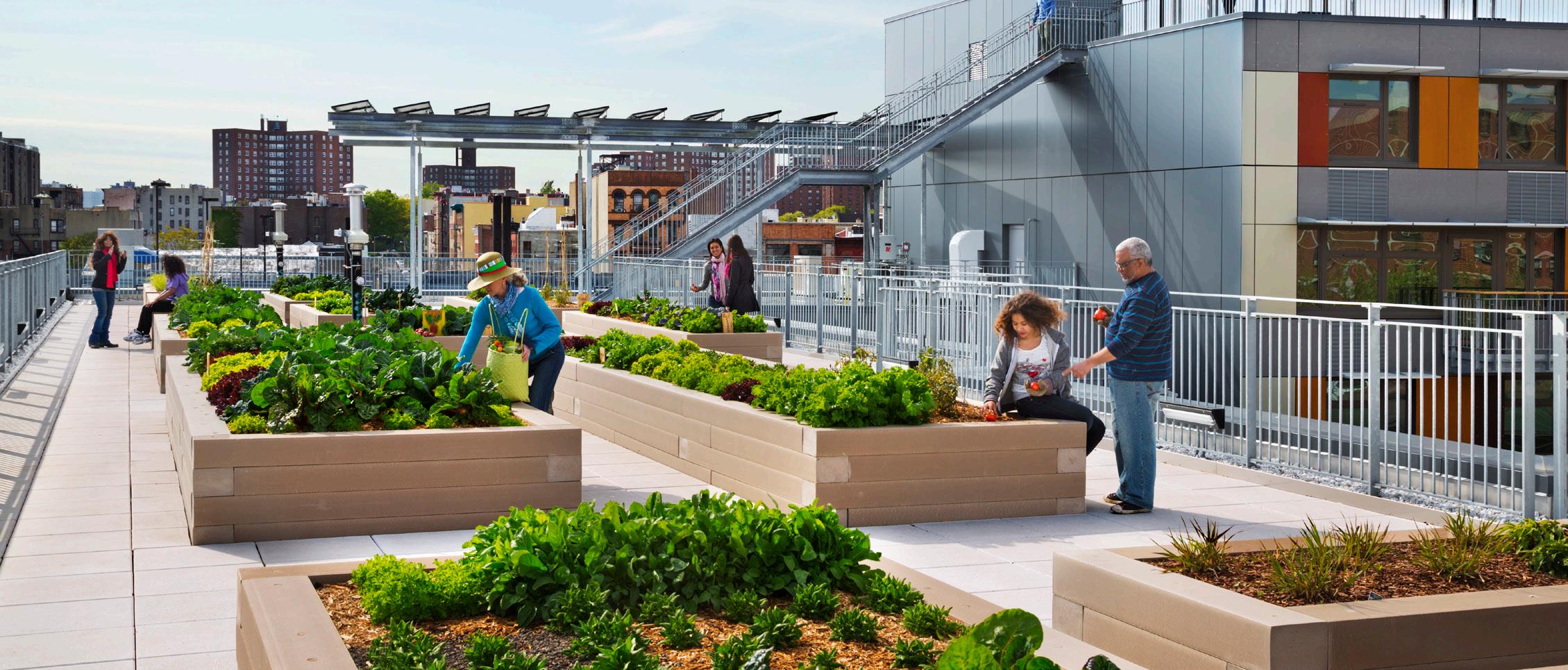
VIA VERDE – Rooftop community gardens
“We
are ensuring that all of our properties — new and existing — are healthy, efficient, and environmentally responsible. By tracking environmental performance and continuously improving our approach, we hope to demonstrate the significant value of sustainable, affordable housing to benefit communities nationwide.”
– Lauren Zullo Director of Sustainability
Jonathan Rose Companies
Environmental Responsibility at Jonathan Rose Companies
Central to Jonathan Rose Companies’ mission as a sustainable real estate firm is our dedication to greening the built environment to create more resilient and healthy communities.
The built environment is a major contributor to climate change—responsible for more than 40 percent of national greenhouse gas (GHG) emissions. In response, we have established strategic climate change mitigation goals to measure performance and continue to reduce environmental impact across our portfolio.
Our approach is to design, build, and acquire communities that produce fewer GHG emissions and consume fewer natural resources than traditional development. We actively manage our assets and rely upon measured performance as a basis for continuous improvement. For more than 25 years Jonathan Rose Companies has demonstrated our commitment to this philosophy by establishing positive relationships among the natural environment, well-being of residents, and community prosperity.
Our Public Commitments to Climate Action
Jonathan Rose Companies proudly participates in local, national, and international public commitments aimed at reducing the impacts of climate change.
We Are Still In
Jonathan Rose Companies signed the We Are Still In commitment, an open statement from mayors, governors, tribal leaders, college and university leaders, businesses, and investors in the United States, to uphold climate action necessary for the U.S. to meet emissions targets of the Paris Agreement.
Better Buildings Challenge
Through the U.S. Department of Energy Better Buildings Challenge, Jonathan Rose Companies has committed to reducing our energy intensity by 20 percent across all multifamily properties within 10 years.
Stamford 2030 District
Jonathan Rose Companies is a founding member of the Stamford 2030 District, an initiative of property owners and community partners working to meet the energy, water, and transportation emission reduction targets of the 2030 Challenge for Planning.
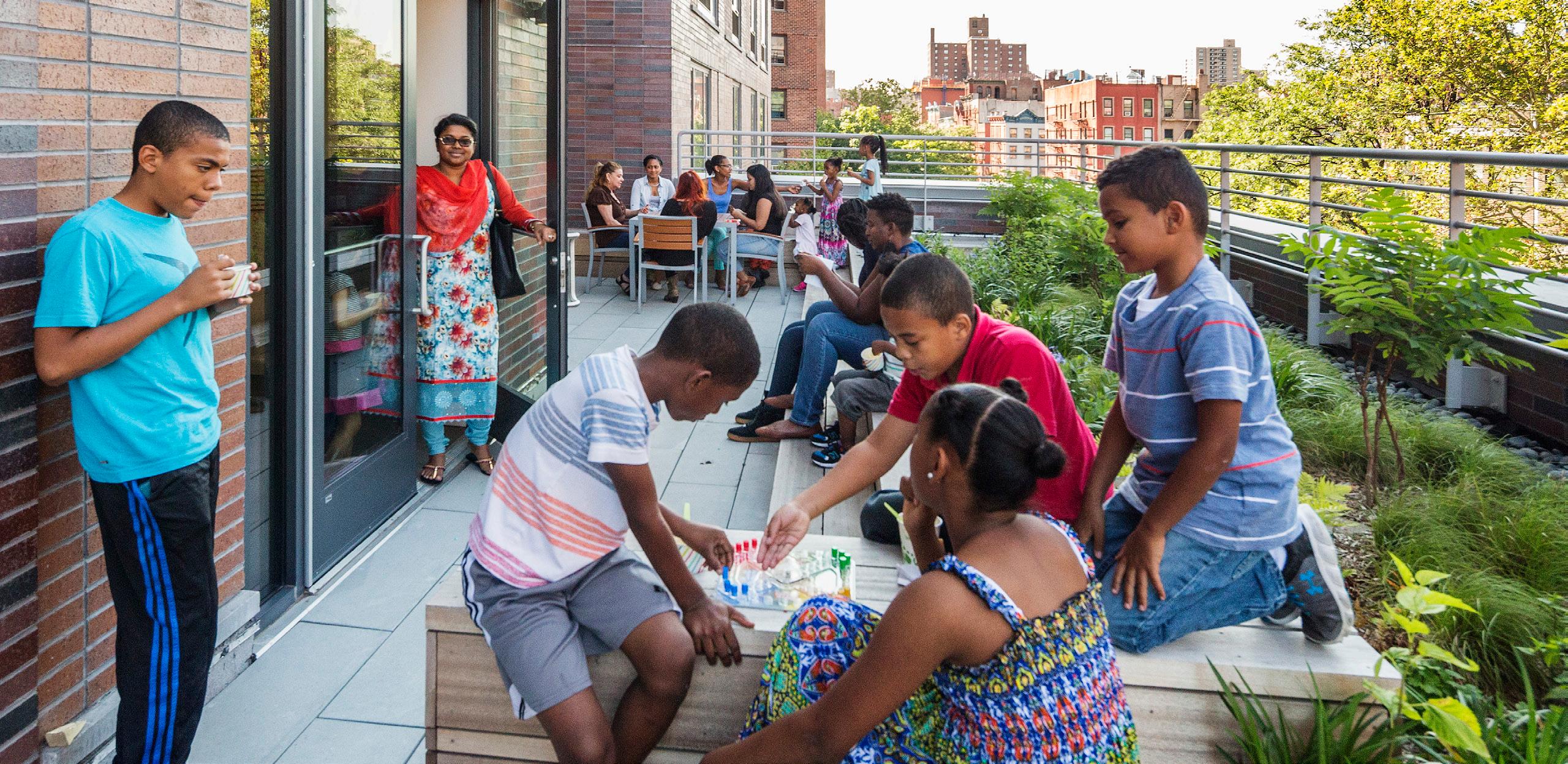
PASEO VERDE – Green roof terrace
Climate Change Mitigation Goals
Jonathan Rose Companies has established the following environmental goals to uphold our commitment to climate action:
Greenhouse Gas Reduction
To design, construct, retrofit, and operate properties to minimize their emissions of greenhouse and ozone-depleting gases. We are committed to both mitigation through reducing emissions and adapting to our changing environment.
Goal: Reduce carbon dioxide equivalent (CO2e) emissions intensity by 20% or more from baseline year* levels within 10 years.
Water Reduction
To design, construct, retrofit, and operate properties to make the most efficient use of water resources, minimize consumption, and reduce adverse effects on water infrastructure systems.
Goal: Reduce water intensity by 15% compared to baseline year.*
Energy Reduction
To design, construct, retrofit, and operate properties using strategies to reduce energy use including integrated design, efficiency improvements, conservation measures, and optimized operations.
Goal: Reduce energy intensity by 20% compared to baseline year.*
Waste Reduction
To design, construct, retrofit, and operate properties to minimize waste sent to landfills. We aim to design waste out of our processes and to divert landfill waste through recycling and composting.
Goal: Increase the amount of waste diverted from landfills by 15% from baseline year.*
*Baseline for existing buildings assumes the first 12 months from the acquisition date with complete consumption data, including full usage, delivery costs, and supply costs. Baseline for new construction assumes a typical code-compliant building. All values are based on intensities to normalize for portfolio changes.
Case Study
Green Affordable Housing at Squire Village
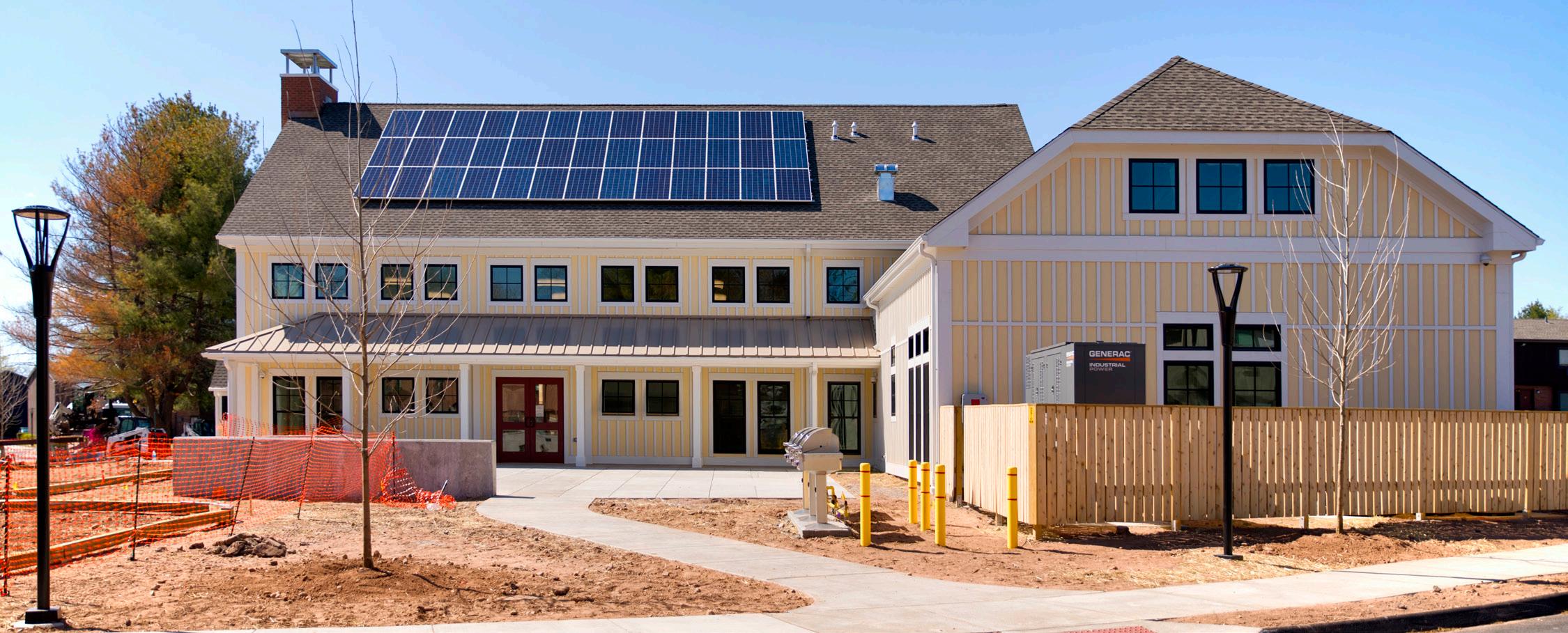
Jonathan Rose Companies acquired Squire Village in early 2016, with the aim to transform the development into a community of opportunity for its residents and the surrounding areas alike. The property—located in Manchester, Connecticut—is a 379-unit affordable housing development.
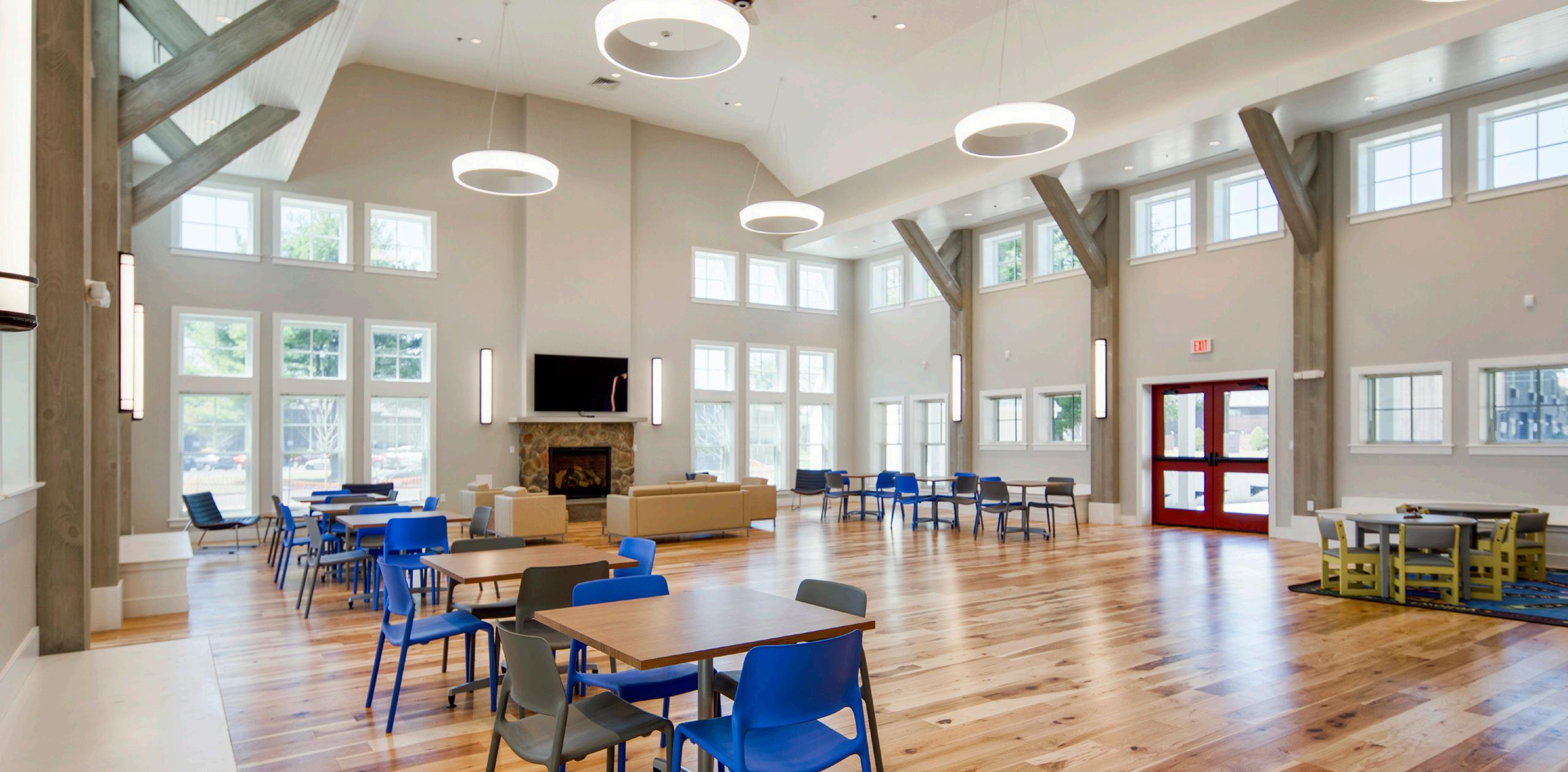
To date, approximately $12 million has been allocated to reshaping and reinventing the property. At the heart of this redevelopment plan is a freestanding, 7,000-square-foot community center. This bright and airy center plays host to events including health screenings and exercise classes, as well as tutoring and literacy programs. The building also serves as a resilience center for residents, with a generator to power the building duing outages, a cable television for news, shower facilities, and a community kitchen.
As a Communities of Opportunity pilot project, Squire Village is staffed by a full-time resident services coordinator who helps organize a diverse range of activities, including exercise classes, adult training courses, health screenings, after-school activities, and wellness initiatives for residents.
The project has also received more than $500,000 in utility rebates for green retrofits and upgrades. The property is on track to receive an Enterprise Green Communities Certification.
Environmental and comfort enhancements include:
• Air sealing
• Attic insulation
• LED lighting retrofit
• Low-flow plumbing fixture installations
• New ENERGY STAR appliances
• Rooftop solar PV
Property Highlight
A 250 kW solar installation at the property is expected to produce 271,000 kWh of electricity annually and reduce owner-paid electric bills by approximately $80,000 per year.
SQUIRE VILLAGE – Community center
Property Spotlight Metro Green Residential
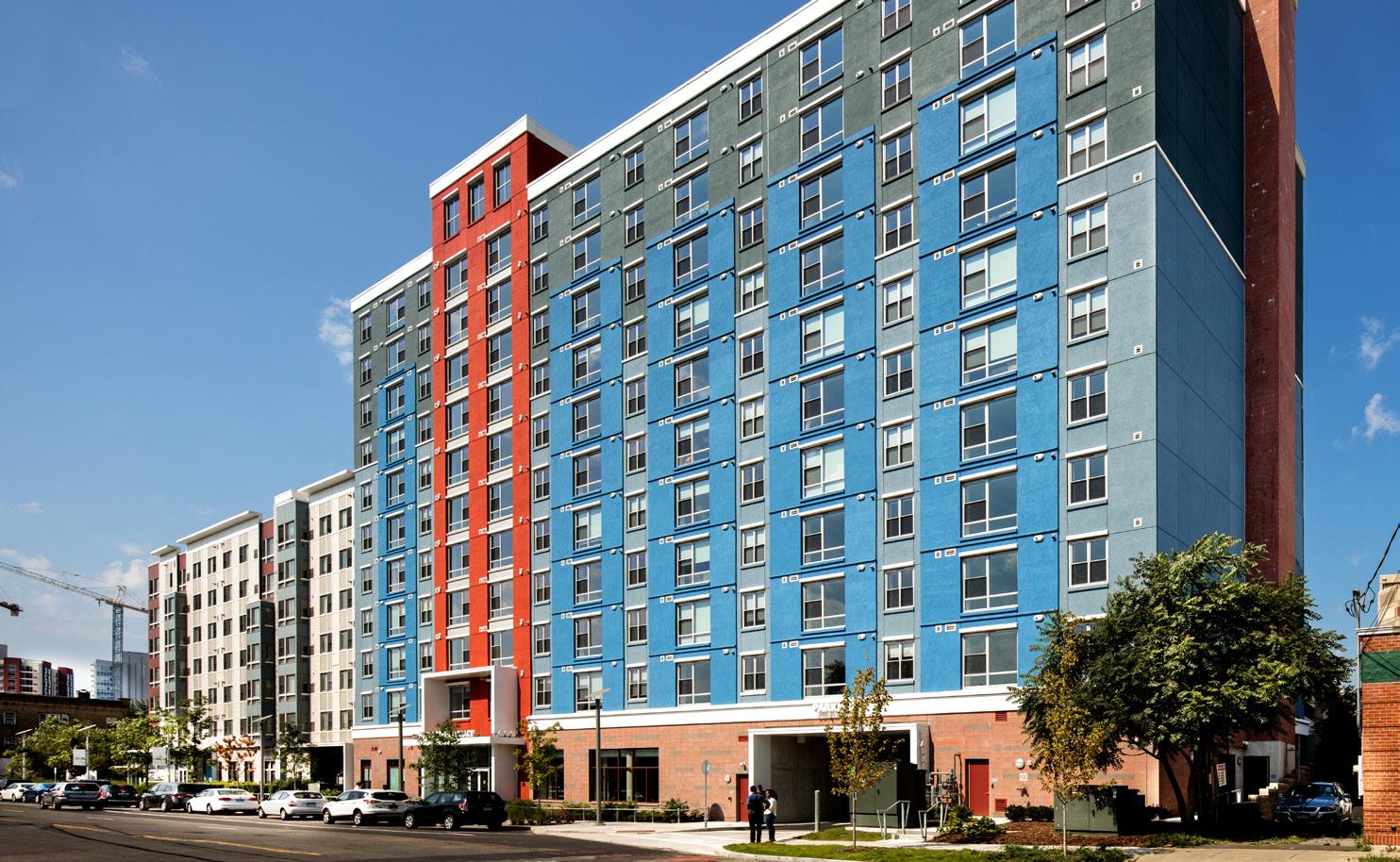
The Metro Green development is the foremost transit-oriented mixed-income community situated in a smart-growth location in Connecticut. It is a cornerstone of the City of Stamford’s plan to advance climate prosperity, and is a green model for the state.
The site achieved a LEED for Neighborhood Development Gold Certification, and features a rainwater harvesting system and environmentally responsible features to enhance the urban environment and promote health for residents. The property includes an acre of open space in its urban setting, featuring a meditative labyrinth and resident gardens.
Our Environmental Management System
Jonathan Rose Companies is committed to integrating a holistic sustainability strategy at all levels of the organization and has established an Environmental Management System (EMS) aligned with the International Organization for Standardization (ISO) 14001 to set goals, create plans, implement changes, ensure results, and demonstrate continuous improvement.
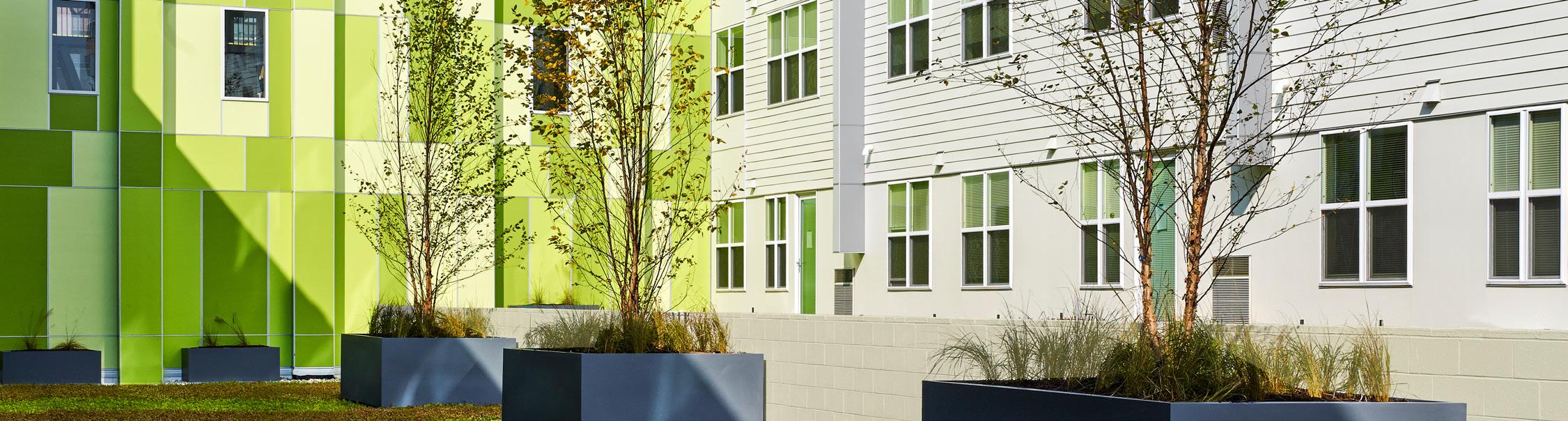
METRO GREEN TERRACE
Jonathan Rose Companies’ Environmental Plans and Policies
• Emissions management
• Energy management
• Water management
• Waste management
• Indoor environmental quality
• Nontoxic materials
• Resilience
• Biodiversity and habitat
• Community health
Environmental Plans and Policies
To formalize and communicate our commitment to sustainability, we have developed plans and policies across all of our business practices that guide our approach to critical health and environmental issues in the real estate industry. Our environmental policies are supported by operational practices and are an essential part of our EMS.
Pre-Development/Pre-Acquisition
We target sites and properties located in transit-oriented locations. Furthermore, we identify and underwrite opportunities for building system improvements, conduct due diligence of an asset’s historical carbon footprint, identify green financing mechanisms, and employ an integrated design process for new development projects. When appropriate, we utilize funding sources, such as Fannie Mae’s Green Rewards program.
New Development
We establish specifications and protocols that ensure that new construction projects will provide safe and healthy accommodations for residents with reduced impact on the environment and natural resources during the construction phase and throughout the life of the building. We design properties to be nontoxic to our residents and resilient in the face of new and changing climate risks. We aim to use new technologies and strategies to demonstrate market viability in affordable housing.
Acquisition
Upon acquisition, we conduct energy audits to identify operational improvement opportunities, create an energy and water action plan that includes capital improvements, project budgets, and timelines, and identify funding sources with a commitment to achieving Enterprise Green Communities Certification. We pursue utility incentives and rebate programs to help offset upfront costs and achieve energy and water savings.
Asset Management
We take a hands-on asset management approach to ensure that our climate change mitigation goals are fully integrated into a property’s business plan. We work with partners and property managers to continually identify and implement capital improvements and operational changes. We monitor performance to ensure that targets are met or exceeded, while communicating results to our investors, staff, and residents. In our commercial spaces, we work with tenants to design and operate efficient spaces by including a green lease rider in our standard leases.
Property Management
We have designed property management procedures and strategies that promote energy and water efficiency in building systems and create cleaner, healthier environments within the living and working spaces for tenants. Our property management approach focuses on energy and water consumption and conservation, and sustainable materials and practices. Our goal is to bring healthy activities into our daily habits and promote environmental and health awareness.
Investor Relations
We report on the status of all sustainability initiatives, in addition to all other relevant property and fund-level information, on a quarterly basis. We provide investors with updates on thirdparty certifications, cost savings estimates, and efficiency improvements. In addition, we report our portfolio funds to the Global Real Estate Sustainability Benchmark (GRESB).
“The ultimate goal of the Communities of Opportunities Program is to substantially improve outcomes for our residents. To fully realize this goal, it is essential that we first recognize that each community is unique, and that solutions do not exist in a vacuum. In each case, we must work closely with residents, listen to their needs, and leverage the relationships and resources that already exist. “
– Lori Stanlick Director of Social
Services,
Jonathan Rose Companies
Our Sustainable Development Approach
Our strategy involves developing, acquiring, and investing in affordable and mixed-income multifamily housing developments, with the goal of enhancing the lives of residents and improving the environmental performance of our buildings.
We acquire sites and assets situated in transit-oriented locations and work to preserve the asset’s affordability, as well as improve its economic and environmental performance. For example, we work to safeguard affordable housing by leveraging local incentives and carrying out public-private partnerships. Furthermore, we invest in environmental retrofits, work to reduce the operating costs of our properties, and enhance resident well-being through social services programming. As a measure of our performance, Jonathan Rose Companies proudly targets third-party standards including the Enterprise Green Communities Criteria.
Building Communities of Opportunity
In 2016, Jonathan Rose Companies launched the Communities of Opportunity Program. The Program includes pilot initiatives taking place at affordable and mixed-income developments across the United States, in cities such as Detroit, Newark, N.J., and Manchester, Conn.
The Communities of Opportunity Program aims to strengthen communities by bringing health, educational, and social services to residents through physical transformations of space and on-site programming. Through these programs, we engage with residents to introduce and encourage healthy and environmentally sustainable activities, such as walking and biking, healthy eating from our community gardens, and using stairs instead of elevators.
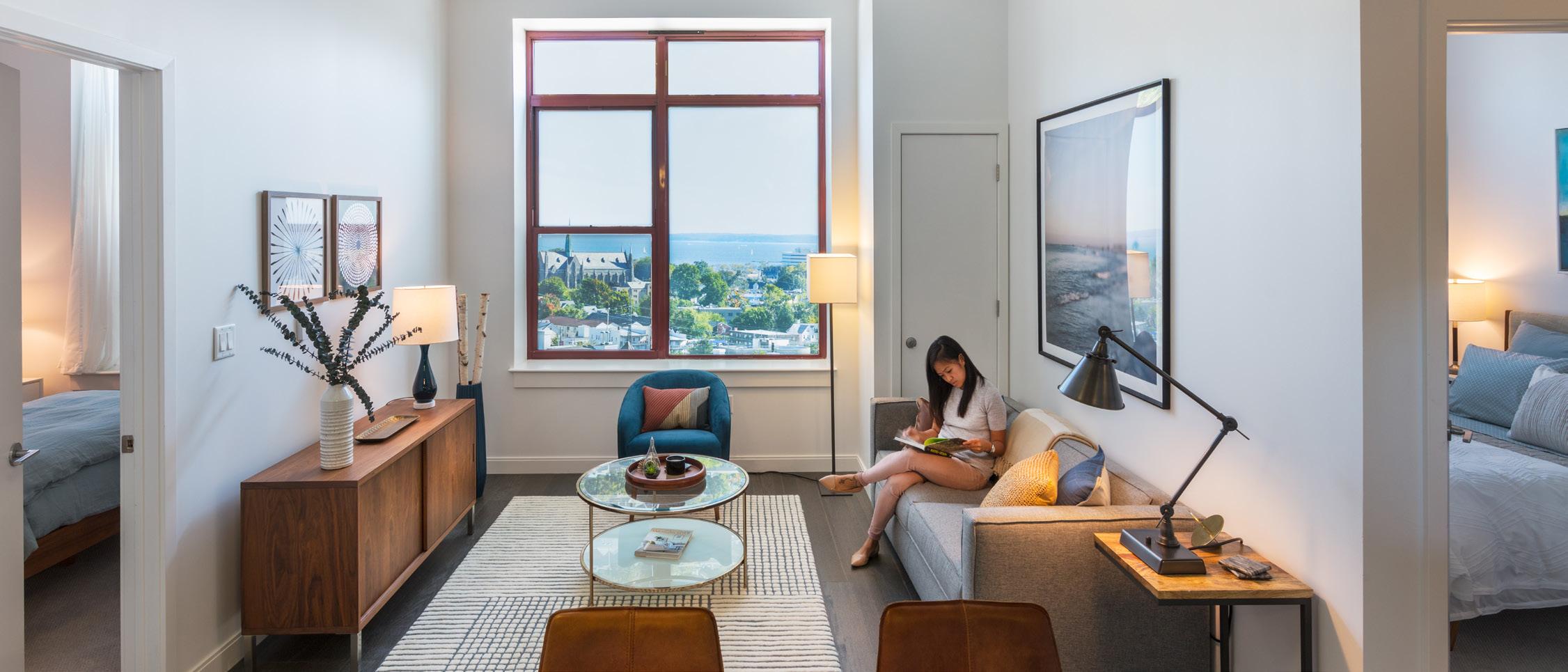
METRO GREEN TERRACE – Unit interior
Case Study
Developing an Intergenerational Community of Opportunity at Grace West Manor
Grace West Manor is a 429-unit, affordable development in Newark, N.J. The complex consists of a 12-story tower with 324 units designated for senior citizens, and 21 town homes with 105 units designated for families. One hundred percent of the units are reserved for households earning below 50 percent of the area median income (AMI).
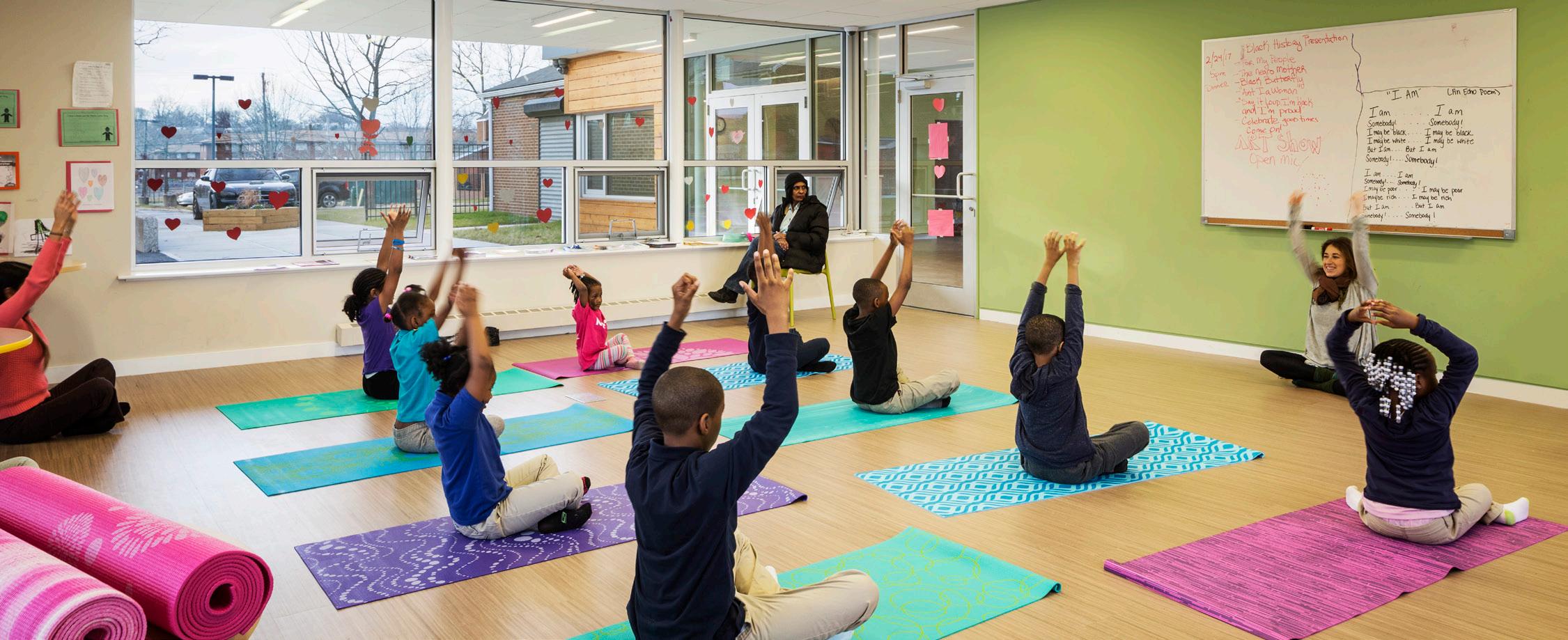
The complex, part of the Communities of Opportunity pilot programs, has intergenerational residents including senior residents and families. To address the needs of all residents, we revitalized an abandoned community center at the heart of the complex as a communal meeting space, suitable for hosting a variety of social services programming and activities. The center is used for educational programs, homework spaces for children, yoga classes, and other recreational activities and events designed to increase engagement among residents.
Other property highlights include:
• Transit-Oriented: Located near many neighborhood amenities with quick access to several bus lines and New Jersey Transit and Amtrak stations.
• Energy Efficient: A weatherization project in the townhomes will help increase the property’s energy efficiency and resident comfort by upgrading lighting to LEDs, air-sealing units, adding attic insulation, and more.
• Upgraded Spaces and Systems: Ongoing improvements and renovations include replacement of townhome HVAC systems, façade repairs, and communal area improvements.
Property Highlight
In 2017, volunteers from Jonathan Rose Companies, Rose Community Management, Public Service Enterprise Group (PSEG), and Kaboom! came together to build a playground at the development.
GRACE WEST MANOR, COMMUNITY HOUSE – Youth yoga
GRACE WEST MANOR – Playground
Enterprise Green Communities Criteria
is a green building framework that helps developers, investors, builders, and policymakers address the needs of the affordable housing sector.
Jonathan Rose Companies is committed to developing all new properties and retrofitting all acquisition properties to meet Enterprise Green Communities Criteria.
To date, eight Jonathan Rose Companies properties have earned Enterprise Green Communities Certifications.
Our Retrofits & Building Environmental Programs
Jonathan Rose Companies uses strategies to improve the performance of our buildings and the wellbeing of our residents by identifying and replacing inefficient and underperforming infrastructure, educating tenants, and leveraging neighborhood assets. We invest in environmental retrofits that enable our properties to perform to third-party standards, improve resource efficiency, and reduce operating costs.
We implement retrofit and capital improvement plans that target baseload electricity reduction, resiliency measures, water conservation, heating and mechanical system upgrades, and better building operations and maintenance practices. Through active monitoring and tracking, we help optimize building performance.
We are dedicated to designing and operating our buildings in accordance with the Enterprise Green Communities (EGC) Criteria and are committed to achieving EGC certifications across the portfolio. We achieve this by performing EGC feasibility studies on all of the properties we acquire and incorporating necessary physical improvements into our retrofit and capital expense budgets. Working together with property management teams, we implement operations and maintenance procedures aligned with the EGC Criteria.
Our Commitment to Renewable Energy
Jonathan Rose Companies is committed to increasing the clean and renewable energy mix of our building portfolio. In addition to purchasing Renewable Energy Certificates to offset our electricity consumption, we plan to install at least 1.5 MW of renewable power across properties by 2020.
Ongoing Monitoring
Jonathan Rose Companies benchmarks property performance using Bright Power’s EnergyScoreCards software. We perform continuous analysis of our multifamily and commercial assets through this online energy management tool to calculate energy and water use metrics, prioritize opportunities for improvement, and track the progress of conservation measures.
We also use the U.S. EPA’s ENERGY STAR Portfolio Manager® platform to compare property performance against the national baseline. We comply with local ordinances in all jurisdictions that require energy and water benchmarking. The ability to access whole-building utility data at properties where tenants are individually metered continues to be a challenge, and we urge utility companies to provide this information.
Case Study
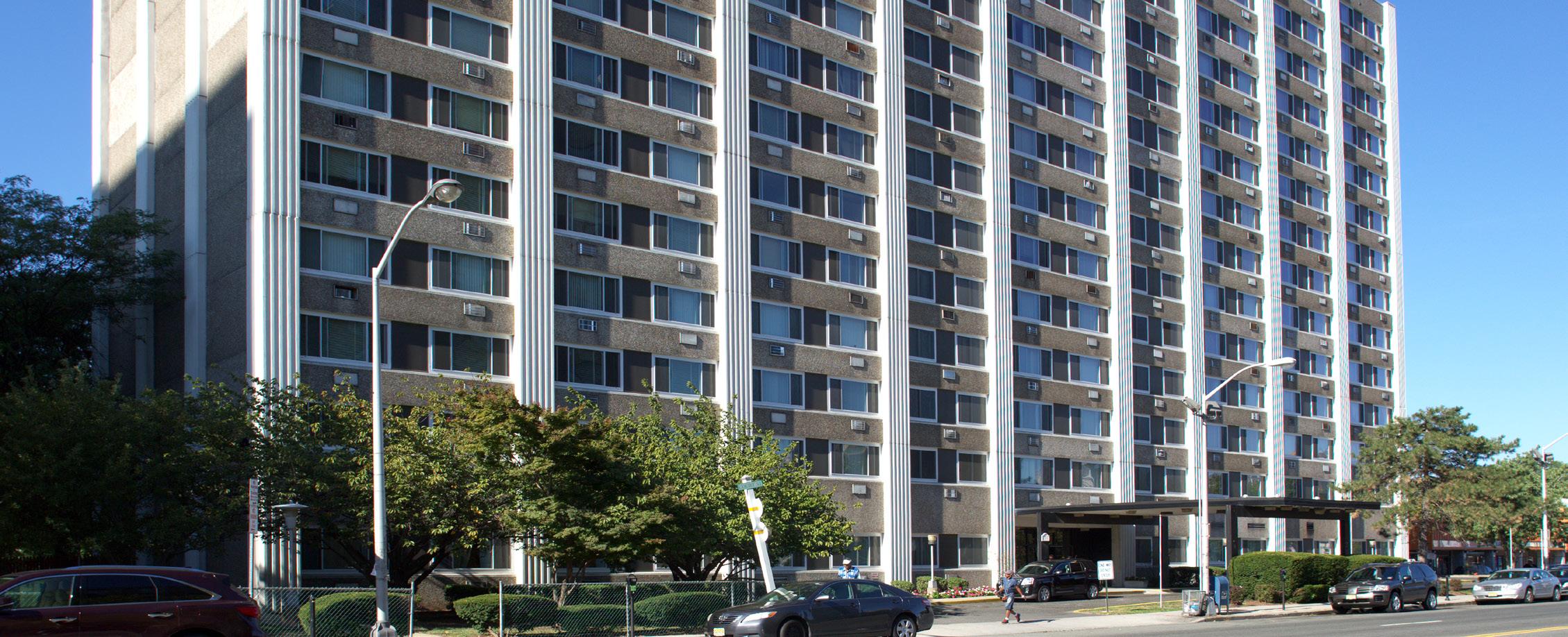
Enterprise Green Communities Improvements at Court Tower Apartments
Court Tower Apartments is a 221-unit affordable senior living community located in Newark, New Jersey. The property, acquired in 2013, is strategically located near a major retail corridor in downtown Newark and provides convenient access to multiple transit lines.
Over the last several years, the property has undertaken many capital improvement projects. In 2014, a full window replacement helped to improve insulation and reduce the property’s gas consumption, saving close to $50,000 in operating expenses in its first year.
In 2016, the building underwent a U.S. Department of Housing and Urban Development Rental Assistance Demonstration (RAD), which enabled it to convert existing, expiring rental assistance payments for more than 130 units, to a new 20-year Section 8 Project-Based Rental Assistance contract for more than 200 units.
The RAD conversion, and subsequent net rent increase, enabled nearly $8 million in capital improvements at the property including unit rehabilitations, energy efficiency improvements, and enhanced community spaces and social services.
As part of its Enterprise Green Communities renovation, Court Tower implemented a boiler upgrade, installed variable-frequency drives, retrofitted all lighting with LEDs, updated facilities with low-flow plumbing fixtures and new toilets, and has plans to install a cogeneration system.
In addition to the environmental work, the property is committed to bringing art and inspiration to residents. The property teamed up with the Newark Arts Partnership, which curated commissioned artwork by local artists who sought inspiration through a collaborative process with the residents.
Property Highlight
The Court Tower renovation follows the Enterprise Green Communities framework, and will achieve certification, showcasing the commitment to green and affordable housing.
1 COURT STREET – 221-unit affordable, transit-oriented senior property
Healthy Building Network (HBN) is a national nonprofit organization whose mission is to transform the building materials market and the real estate industry to advance human health. HBN researches toxic chemicals in building materials, develops usable information and databases, and advocates for the use of responsible, healthy building materials. Jonathan Rose Companies is a proud partner, working alongside HBN to develop and share specifications for healthy building materials for affordable housing.
Healthy Building Materials
Jonathan Rose Companies is committed to reducing and eliminating toxic chemicals from our properties. In doing so, we improve the health outcomes of our residents, as well as the people who construct our buildings. The first step in eliminating toxics is understanding where they are, so we are committed to product transparency efforts and seek materials with Health Product Declarations and Environmental Product Declarations. We work with design and construction teams to specify products that eliminate or minimize the presence of toxic chemicals in the home. We collaborate with the Healthy Buildings Network to understand which toxic chemicals are harmful, where they may be present in building materials, and select products that will not harm our residents but rather enhance their health. In partnership with the Healthy Building Network, we share specifications of several interior focus materials with other affordable housing developers to help create a database of healthy building materials and products for use in affordable housing. By working together, we can make the industry more transparent and our housing healthier.
Being Green Everyday
We integrate sustainability practices into building operations to help enhance the health and wellbeing of residents, better engage tenants, and improve building environmental performance. We provide tenants with tools and educational resources to help them conserve energy and water, and reduce waste through recycling and composting practices. Our environmentally preferable purchasing policy guides building staff through:
• Green cleaning and janitorial requirements
• Healthy and environmentally friendly product and purchasing guidelines
• Integrated pest management strategy to maximize natural control of pests and reduce the need for applications of pesticides, improving indoor air quality
• Incorporating sustainability into third-party vendor contracts
Case Study
Integrating Renewable Energy & Resident Engagement at Channel Square
Channel Square Apartments is a 223-unit, mixed-income housing development located in Washington, D.C. By incorporating both innovative sustainable design elements and active tenant engagement, Channel Square has become a thriving and sustainable residential living community.
Among its unique features, Channel Square Apartments has installed a 240-kilowatt PV system—the largest private multifamily housing solar production system of its kind in D.C. The solar installation is expected to provide more than $20,000 in annual savings, which is being passed on to the roughly 500 low- and moderate-income residents.
As part of a multiphase energy retrofit, the property is currently implementing several energy efficiency initiatives and building renovations, including:
• New roof coating and roof replacement
• Physical upgrades to the communal spaces
• New boiler installations
• Low-flow water fixture installations
• Lighting upgrades
• Electric vehicle charging stations
To complement the robust sustainability initiatives, we are working with the tenant association to help drive and fund tenant programs. These include a new community garden, playground, and fitness center, as well as upgraded communal spaces and amenities to foster stronger community engagement.
Property Highlight
Channel Square is expected to save more than $2.7 million in utility costs over the useful life of equipment upgrades.
CHANNEL SQUARE – 223 mixed-income units and 4,625 SF of retail space, in a combination of a tower and garden style town homes
Environmental Performance - Investment Fund Properties
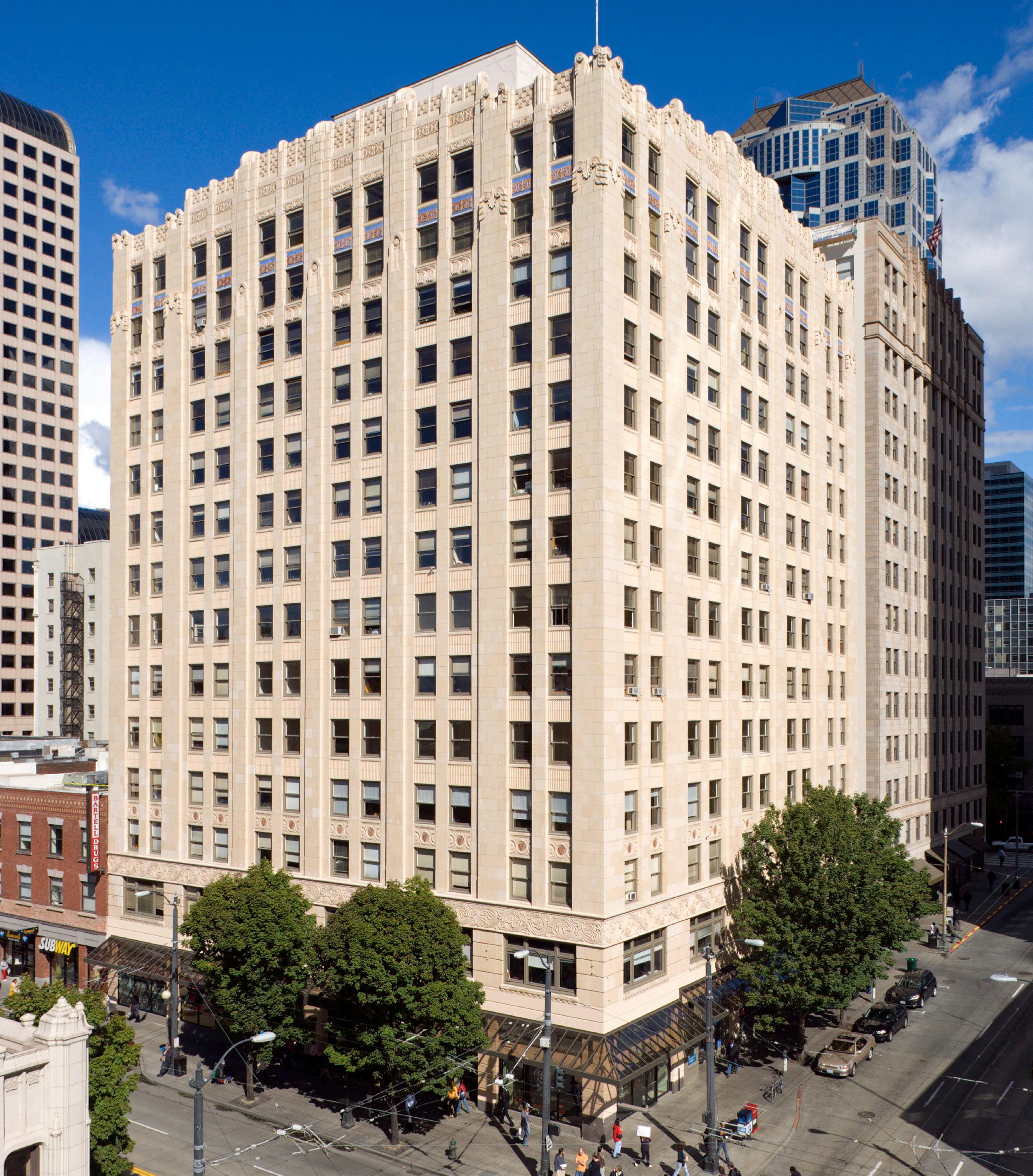
THE JOSEPH VANCE AND STERLING BUILDINGS – Historic commercial buildings in transit-based downtown location
Rose Smart Growth Fund
Rose Smart Growth Fund is composed of nine mixed-use properties, including retail, residential, and office spaces. Among the many environmental highlights, four properties in the Fund have achieved LEED Certification, Collins Circle earned an Enterprise Green Communities Certification and is implementing a green capital improvement plan, and the El Granada Building has received a GreenPoint Rating certification, installed solar panels, and completed a lighting retrofit.
Performance Summary
Clipper Mill - Assembly Apartment and
(2013)
Clipper Mill - Foundry Building (2013)
Mill - Poole & Hunt (2013)
Joseph Vance Building
Performance Summary
Rose New Jersey Green Affordable Housing Preservation Fund
The Rose New Jersey Affordable Housing Preservation Fund comprises three senior-living properties including 2 Nevada Street, Court Tower, and Arlington House. In 2016, each property implemented energy efficiency measures including boiler upgrades, lighting retrofits, window replacements, and weatherization. Enterprise Green Community Certification is under way at all of the Fund’s properties, with certification of Nevada Street and Court Tower expected in 2017.
*The water intensity baseline for both Arlington House and Court Tower was established near the end of the useful life of the utility water meter, when full consumption was not recorded accurately. Both properties recieved new utility water meters, which cause 2016 consumption to appear significantly higher.
Rose Green Cities Fund
Rose Green Cities Fund is composed of three residential properties. The Fund has made energy and water investments and capital improvements to improve the portfolio’s energy and financial performance, including a solar installation at Channel Square. The Fund expects to achieve Enterprise Green Communities Certification of Channel Square in 2017 and Grace West Manor in 2018.
Performance Summary
*Portner has no utility data because the property is being redeveloped from the ground up.
Selected Property Performance Highlights
Grace West Manor
Rose Affordable Housing Preservation Fund
The Rose Affordable Housing Preservation Fund is composed of seven affordable residential properties. Across the fund’s portfolio, several capital improvements have been implemented. Improvements include energy and lighting retrofits, solar PV installations, and water fixture upgrades. All properties are pursuing Enterprise Green Communities Certification.
Rose Affordable Housing Preservation Fund IV
Rose Affordable Housing Preservation Fund IV is composed of two residential properties, 2101 South Michigan in Chicago and Grand Lowry in Denver. The properties are in the process of completing indepth energy audits as well as green retrofits, which includes the replacement of cooling towers and the roof at Grand Lowry. Both properties are pursuing Enterprise Green Community Certifications.
Performance Summary
For more information, visit www.rosecompanies.com
To provide feedback or request additional information, please email Lauren Zullo Director of Sustainability, Jonathan Rose Companies at lzullo@rosecompanies.com
About This Report
This is Jonathan Rose Companies’ second environmental sustainability report and its first since 2015. The report references Jonathan Rose Companies’ sustainability performance, as well as information about relevant programs and activities.
The report includes environmental performance data on six Jonathan Rose Companies funds. These funds are The Rose Affordable Housing Preservation Fund IV; The Rose Affordable Housing Preservation Fund; The Rose New Jersey Affordable Housing Preservation Fund; The Rose Green Cities Fund; The Rose Value-Add Office Retrofit Fund; and The Rose Smart Growth Fund. Unless stated otherwise, all fund performance data is reported for calendar year ending December 31, 2016. Baseline for existing buildings assumes the first 12 months from the acquisition date with complete consumption data, including full usage, delivery costs, and supply costs. Baseline for new construction assumes a typical code-compliant building. All Jonathan Rose Companies financial information is reported in U.S. dollars.