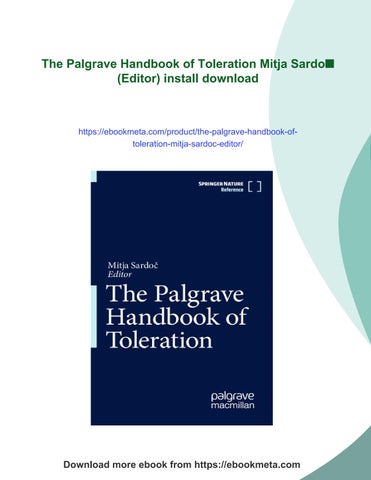
The Palgrave Handbook of Toleration Mitja Sardo■ (Editor) install download
https://ebookmeta.com/product/the-palgrave-handbook-oftoleration-mitja-sardoc-editor/
We believe these products will be a great fit for you. Click the link to download now, or visit ebookmeta.com to discover even more!
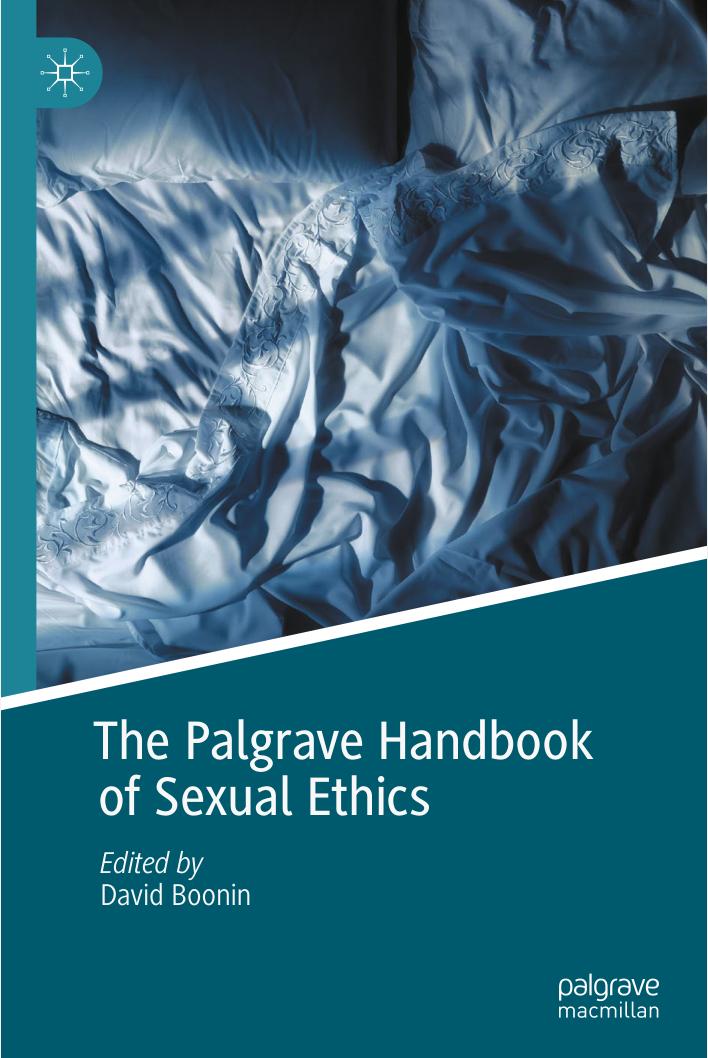
The Palgrave Handbook of Sexual Ethics David Boonin
https://ebookmeta.com/product/the-palgrave-handbook-of-sexualethics-david-boonin/
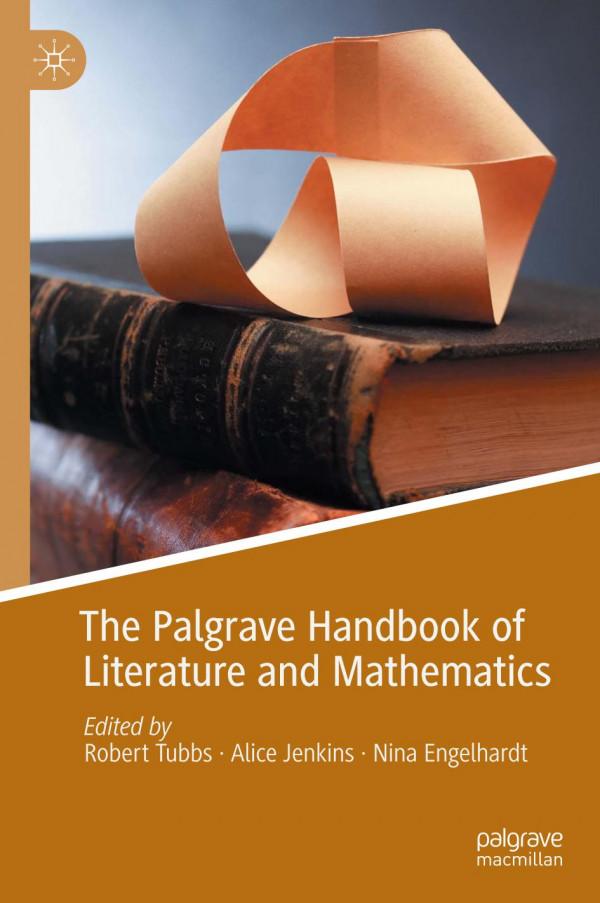
The Palgrave Handbook of Literature and Mathematics
Robert Tubbs
https://ebookmeta.com/product/the-palgrave-handbook-ofliterature-and-mathematics-robert-tubbs/
The Palgrave Handbook of Servitization Marko Kohtamäki (Editor)
https://ebookmeta.com/product/the-palgrave-handbook-ofservitization-marko-kohtamaki-editor/
Anatomy of the Organs 1st Edition Vincent Perez
https://ebookmeta.com/product/anatomy-of-the-organs-1st-editionvincent-perez/
Bite Of The Truth The Black Fan 2 1st Edition Laura Greenwood
https://ebookmeta.com/product/bite-of-the-truth-the-blackfan-2-1st-edition-laura-greenwood/
The Merchant John Askin Furs and Empire at British Michilimackinac 1st Edition Justin M Carroll
https://ebookmeta.com/product/the-merchant-john-askin-furs-andempire-at-british-michilimackinac-1st-edition-justin-m-carroll/
Midnight Ice Madison Night Cozy Mystery 05 Diane
Vallere Et El
https://ebookmeta.com/product/midnight-ice-madison-night-cozymystery-05-diane-vallere-et-el/
Cancer Care in Pandemic Times Building Inclusive Local Health Security in Africa and India 1st Edition
Geoffrey Banda
https://ebookmeta.com/product/cancer-care-in-pandemic-timesbuilding-inclusive-local-health-security-in-africa-and-india-1stedition-geoffrey-banda/
Hit List Anita Blake Vampire Hunter 20 First Edition
Laurell K Hamilton
https://ebookmeta.com/product/hit-list-anita-blake-vampirehunter-20-first-edition-laurell-k-hamilton/
https://ebookmeta.com/product/culture-and-literature-1st-editiontawhida-akhter/
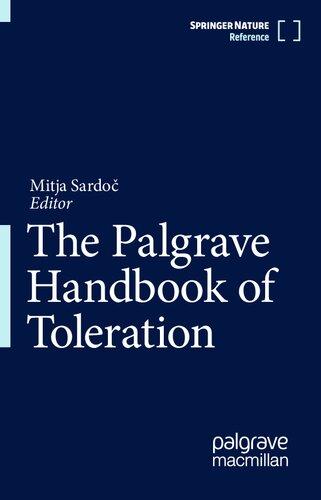
Mitja Sardoč Editor
The Palgrave Handbook of Toleration ThePalgraveHandbookofToleration MitjaSardoč Editor
ThePalgraveHandbookof Toleration Editor MitjaSardoč EducationalResearchInstitute Ljubljana,Slovenia
ISBN978-3-030-42120-5ISBN978-3-030-42121-2(eBook)
ISBN978-3-030-42122-9(printandelectronicbundle) https://doi.org/10.1007/978-3-030-42121-2
©SpringerNatureSwitzerlandAG2022
Thisworkissubjecttocopyright.AllrightsarereservedbythePublisher,whetherthewholeorpartofthe materialisconcerned,specificallytherightsoftranslation,reprinting,reuseofillustrations,recitation, broadcasting,reproductiononmicrofilmsorinanyotherphysicalway,andtransmissionorinformation storageandretrieval,electronicadaptation,computersoftware,orbysimilarordissimilarmethodology nowknownorhereafterdeveloped.
Theuseofgeneraldescriptivenames,registerednames,trademarks,servicemarks,etc.inthispublication doesnotimply,evenintheabsenceofaspecificstatement,thatsuchnamesareexemptfromtherelevant protectivelawsandregulationsandthereforefreeforgeneraluse.
Thepublisher,theauthors,andtheeditorsaresafetoassumethattheadviceandinformationinthisbook arebelievedtobetrueandaccurateatthedateofpublication.Neitherthepublishernortheauthorsorthe editorsgiveawarranty,expressedorimplied,withrespecttothematerialcontainedhereinorforanyerrors oromissionsthatmayhavebeenmade.Thepublisherremainsneutralwithregardtojurisdictionalclaims inpublishedmapsandinstitutionalaffiliations.
ThisPalgraveMacmillanimprintispublishedbytheregisteredcompanySpringerNatureSwitzerlandAG. Theregisteredcompanyaddressis:Gewerbestrasse11,6330Cham,Switzerland
Preface “ThesafestgeneralcharacterizationoftheEuropeanphilosophicaltradition,” as AlfredNorthWhiteheadaccentuatedin ProcessandReality (basedonhis Gifford LecturesDeliveredintheUniversityofEdinburghDuringtheSession1927–28) “is thatitconsistsofaseriesoffootnotestoPlato” (1978,p.39).Ifonewouldfollow Whitehead’sfootsteps,contemporarydiscussionsoftolerationmightbestbe depictedasdidaskaliatothewritingsofJohnLocke.Seminalintellectual figures suchasPlatoandLockealongsideotherluminariesfromthephilosophicaltradition provideuswitha(giant’s)shoulderonwhichtostandon,whilegrapplingwith whateverthetaskofscholarlyresearchoneisfocusingon.
Asarepositoryofknowledgeonaparticulartopic,referenceworksincluding encyclopedias,handbooks,andcompanionsprovideanothersuchshoulderonwhich tostandupon.Yet,themaingoalofthispublishingprojectisnotonlyoneof customarypurposereferenceworkhasbeenusuallyassociatedwith.Ultimately, anyauthororeditorhasitsownoverallplanonhowthevolumeoneiseitherwriting oreditingshouldturnoutattheend.Forexample,IanFlemingsupposedlywrote CasinoRoyale,the firstofaseriesofnovelsonwhatturnedouttobetheglobal franchiseofJamesBond,toendallspystories.Thisreferenceworkobviouslydoes notpointinthisdirection.
Theoverallaimofthishandbookhasbeentobringtogetherasetofcontributions presentingsomeofthemostdistinctive,complex,andcontroversialaspectsassociatedwiththeideaoftoleration.Interestinglyenough,thereareplentyoftheseissues around,makingthenavigationinthisareaofscholarlyresearchparticularly distressing.Itsambivalentcharacteranditsenigmaticnaturetogetherwithits allegedlyexoticoriginsandcomplexlegacyarejustsomeofthecharactertraits tolerationhasbeenassociatedwith.Theimmediateimpulseoneencounterswhen facedwiththescholarlyliteratureontolerationwouldmostprobablyresemble WinstonChurchill’spuzzlingobservationsummedupintheparableof “ariddle wrappedinamysteryinsideanenigma.” Thishandbookthereforeaimstoprovidea conceptualcartographythatwouldenableanyonemakinguseofitasafejourney throughthemanytumultuousissuesthisareaofscholarlyresearchisrepletewith. Incontrasttosomeoftheotherconceptsfromthepantheonofpoliticalideas, tolerationhasbeengracedwithanumberofmonographs,articles,journalspecial issues,andeditedcollectionsthathavepoppeduparoundtheglobe.Nevertheless,
despiteasteadysupplyofscholarlyoutput,noreferenceworkontolerationhasbeen availabletothisdate.Thispublishingprojectaimsto fillthisgapintheacademic marketbybringingtogethermorethan50chaptersbyleadingacademicsinthisarea ofscholarlyresearchonsomeofthemostpressingandtimelyissuestolerationhas beenassociatedwith.
Likeanyscholarlypublication,thisreferenceworkhasitsfairshareoflost opportunities.Theywouldhavebeenmuchmorenumerousifitwouldn’tbefor theeditorialteamatPalgrave.Inparticular,IwouldliketothankAmbraFinotello, seniorcommissioningeditorinpoliticsatPalgrave,andMichaelHermann,chief editoroftheMRWseriesatSpringer,forsupportingtheideaofthishandbookand forhelpingoutinthetransitionfrom “bookproposal” to “bookcontract” forthis publishingproject(usuallyadistressingperiodforanyauthororvolumeeditor).My mostprofoundthanksgotoEleanorGaffney,editoratPalgrave,forhersuperb editorialskills,patience,care,anddedicationtothishandbook.Anyauthoror volumeeditorcouldnot findbettereditorialcooperationthanEleanorhasprovided bothtomeasvolumeeditorand,Ibelieve,toeachofthecontributorstothis handbook.
Lastbutnotleast,IwouldliketodedicatethishandbooktomywifeMojcaand ourtwosons, ŽigaandJakob.Itisintheircompanythattheideaforthishandbook aroseduringasummerholidaybackin2018ontheislandofMljetinCroatia. Perhapsmorethananyoneelse,theyexemplifyaformof “liberalexpectancy” the ideaoftolerationhasbeenassociatedwith.Describingthemanynuancesoftheir toleration(alongsidetheirunfailingsupportandencouragement)wouldtakeanother volumetostraightout.
September2021MitjaSardoč
References
WhiteheadN(1978[1929])Processandreality(Giffordlecturesdeliveredinthe UniversityofEdinburghduringthesession1927–28).FreePress,NewYork
Volume1
1TheTroublewithToleration ..............................1 MitjaSardoč
2Toleration:ConceptandConceptions .......................11 RainerForst
3DefiningToleration .....................................23 AndrewJasonCohen
4WhatTolerationIsNot ..................................53 DavidHeyd
5Toleration ............................................71 AnnaElisabettaGaleotti
6ParadoxesofToleration .................................93 PeterKönigs
7TheEpistemicJustificationforTolerance
JoshuaC.Thurow
8PoliticalTolerationExplained .............................129 PeterBalint
9Toleration,RespectforPersons,andtheFreeSpeech RighttoDoMoralWrong ................................149 KristianSkagenEkeli
10TolerationandPoliticalChange ...........................173 LuciaM.Rafanelli
StijnSmet
12TolerationandDomination
MonicaMookherjee
13StateResponsestoIncongruence:Tolerationand Transformation ........................................229 PaulBillingham
14TolerationandStateNeutrality:TheCaseofSymbolicFGM ....249 FedericoZuolo
15TolerationofMoralOffense ..............................263 ThomasE.HillJr
16MoralismandAnti-MoralisminTheoriesofToleration ........277 JohnChristianLaursenandZacharyDorson
17TolerationandNeutrality ................................299 PeterJones
18PoliticalTolerationasSubstantiveNeutrality
BryanT.McGraw
19ConscientiousExemptions:BetweenToleration,Neutrality,and Respect ..............................................341 YossiNehushtan
20TolerationandItsPossibilities:Relativism,Skepticism,and Pluralism .............................................363 JohnWilliamTate
21Toleration,Reasonableness,andPower
ThomasM.BeschandJung-SookLee
22TolerationandReasonableness
RobertaSala
23InternationalToleration
PietroMaffettone 24TolerationandToleranceinaGlobalContext
VickiA.Spencer 25TwoModelsofToleration
WillKymlicka 26ModusVivendiToleration
ManonWestphal
SuneLægaard
CillianMcBride
29TolerationandDignity
ColinBird
30TolerationandRespect ..................................583 JohnWilliamTate Volume2
31TolerationandJustice ...................................615 FabioMacioce
32TheLogicofIntolerance .................................635 RichardDees
33IntoleranceandPopulism ................................653 NenadMiščević
34FearandToleration .....................................673 RobertPaulChurchill
35Toleration, “Mindsight” andtheEpistemicVirtues ............699 ColinFarrelly
36ToughonTolerance:TheViceofVirtue
ThomasNysandBartEngelen
37TolerationandClosePersonalRelationships .................737 MichaelKühler
38HospitalityandToleration ...............................757 AndrewFiala
39TolerationandCompassion:AConceptualComparison ........777 YossiNehushtanandEmilyPrince
40TolerationandReligion ..................................797 JohnWilliamTate
41TolerationandReligiousDiscrimination
AndrewShorten
42ReligiousTolerationandSocialContractTheoriesofJustice
PhillipJ.Donnelly
43TolerationandtheProtestantTradition
ManfredSvensson
44AtheistToleration ......................................887 CharlesDevellennes
45TolerationandtheRighttoFreedomofReligioninEducation ...905 ZdenkoKodelja
46EducationandToleration ................................925 JohannesDrerup
47Toleration,LiberalEducation,andtheAccommodation ofDiversity ...........................................951
OleHenrikBorchgrevinkHansen
48TolerationBeforeToleration ..............................969
CaryJ.Nederman
49EarlyModernArgumentsforToleration ....................993
AndrewR.Murphy
50ThomasHobbesandtheConditionalityofToleration .......... 1009 J.JuddOwen
51JohnLockeandReligiousToleration
JohnWilliamTate
52 “StopBeingSoJudgmental!”:ASpinozistModelofPersonal Tolerance
JustinSteinberg
53TolerationandLibertyofConscience ....................... 1095
JonMahoney
54ToleratingRacismandHateSpeech:ACritiqueof C.E.Baker ’s “Almost” Absolutism .........................1115
RaphaelCohen-Almagor
55TolerationofFreeSpeech:ImposingLimitsonElected Of
AmosN.Guiora
AbouttheEditor MitjaSardoč (PhD)isseniorresearchassociateatthe EducationalResearchInstituteinLjubljana(Slovenia). Hisresearchinterestsandexpertiseincludephilosophy ofeducation,politicalphilosophy,andeducationpolicy. Overthelasttwodecadeshehasbeenmemberof several(nationalandinternational)researchprojectson multiculturalism,diversity,equalityofopportunity, patriotism,citizenshipeducation,etc.Duringthelast fewyears,hisresearchinteresthasmovedtosomeof theconceptualandpolicy-orientedissuesassociated withradicalization,violentextremism,andconflicting diversity.Between2018and2021,hecarriedouta researchproject “RadicalisationandViolentExtremism: Philosophical,SociologicalandEducationalPerspective (s)” fundedbytheSlovenianResearchAgencyaspartof its “basicresearchprojects” program(themostselective researchfundingschemeforbasicresearchinSlovenia). Heisauthorofmorethan40scholarlyarticlesandeditor ofanumberofjournalspecialissuesonradicalization andviolentextremism,citizenshipeducation,multiculturalism,toleration,theAmericanDream,equalityof opportunity,andpatriotism.Heactedasanexpertfor variousresearchinitiativesincludingtheOrganization forSecurityandCo-operationinEurope(OSCE),the CouncilofEurope,andtheSloveneMinistryofForeign Affairs.Healsocarriedoutconsultancyworkforother internationalinstitutions(e.g.,CardiffUniversity, ODIHR).HeisManagingEditorof Theoryand ResearchinEducation (http://tre.sagepub.com/),Editorin-Chiefof TheHandbookofPatriotism ,andeditorof TheImpactsofNeoliberalDiscourseandLanguagein Education publishedbyRoutledge.BetweenSeptember andDecember2019,hewasavisitingfellowatthe RobertSchumanCentreforAdvancedStudiesatthe xi
EuropeanUniversityInstituteinFlorence(Italy).Additionalinformation(includingthelistofpublications)is availableatthewebsite: https://www.researchgate.net/ profile/Mitja_Sardoc
Contributors PeterBalint SchoolofHumanitiesandSocialSciences,UNSWCanberra,Canberra,ACT,Australia
ThomasM.Besch SchoolofPhilosophy,WuhanUniversity,Wuhan,Hubei,China DepartmentofPhilosophy,TheUniversityofSydney,Sydney,NSW,Australia
PaulBillingham DepartmentofPoliticsandInternationalRelationsandMagdalen College,UniversityofOxford,Oxford,UK
ColinBird DepartmentofPolitics,PrograminPoliticalPhilosophy,Policy,and Law,UniversityofVirginia,Charlottesville,VA,USA
RobertPaulChurchill DepartmentofPhilosophy,GeorgeWashingtonUniversity, Westminster,MD,USA
AndrewJasonCohen GeorgiaStateUniversity,Atlanta,GA,USA
RaphaelCohen-Almagor UniversityofHull,Hull,UK
RichardDees UniversityofRochester,Rochester,NY,USA
CharlesDevellennes UniversityofKent,Canterbury,UK
PhillipJ.Donnelly BaylorUniversity,Waco,TX,USA
ZacharyDorson UniversityofCalifornia,Riverside,Riverside,CA,USA
JohannesDrerup TechnischeUniversitätDortmund,Dortmund,Germany
KristianSkagenEkeli UniversityofStavanger,Stavanger,Norway
BartEngelen TilburgUniversity,Tilburg,TheNetherlands
ColinFarrelly Queen’sUniversity,Kingston,Canada
AndrewFiala DepartmentofPhilosophy,CaliforniaStateUniversity,Fresno,CA, USA
RainerForst GoetheUniversity,NormativeOrdersResearchCentre,Frankfurt/ Main,Germany
AnnaElisabettaGaleotti UniversitàdelPiemonteOrientale,Vercelli,Italy
AmosN.Guiora S.J.QuinneyCollegeofLaw,UniversityofUtah,SaltLakeCity, UT,USA
OleHenrikBorchgrevinkHansen OstfoldUniversityCollege,SchoolofEducation,Ostfold,Norway
DavidHeyd TheHebrewUniversityofJerusalem,Jerusalem,Israel
ThomasE.HillJr DepartmentofPhilosophy,UniversityofNorthCarolina, ChapelHill,NC,USA
PeterJones NewcastleUniversity,NewcastleuponTyne,UK
ZdenkoKodelja EducationalResearchInstitute,Ljubljana,Slovenia
PeterKönigs HumanTechnologyCenter,AppliedEthics,RWTHAachenUniversity,Aachen,Germany
MichaelKühler DepartmentofPhilosophy,UniversityofMünster,Münster,Germany
WillKymlicka DepartmentofPhilosophy,Queen’sUniversity,Kingston,ON, Canada
SuneLægaard DepartmentofCommunicationandArts,RoskildeUniversity, Roskilde,Denmark
JohnChristianLaursen UniversityofCalifornia,Riverside,Riverside,CA,USA
Jung-SookLee SchoolofSocialSciences,UNSWSydney,Sydney,NSW, Australia
FabioMacioce LawSchool,LumsaUniversity,Rome,Italy
PietroMaffettone PoliticalScienceDepartment,UniversityofNapoli,FedericoII, Naples,Italy
JonMahoney DepartmentofPhilosophy,KansasStateUniversity,Manhattan,KS, USA
CillianMcBride Queen’sUniversityBelfast,Belfast,UK
BryanT.McGraw WheatonCollege,Wheaton,IL,USA
NenadMiščević UniversityofMaribor,Maribor,Slovenia
MonicaMookherjee SchoolofSocial,PoliticalandGlobalStudies,KeeleUniversity,Stoke-on-Trent,Staffordshire,UK
AndrewR.Murphy DepartmentofPoliticalScience,VirginiaCommonwealth University,Richmond,VA,USA
CaryJ.Nederman DepartmentofPoliticalScience,TexasA&MUniversity, CollegeStation,TX,USA
YossiNehushtan KeeleUniversity,Newcastle-Under-Lyme,UK
ThomasNys UniversityofAmsterdam,Amsterdam,TheNetherlands
J.JuddOwen DepartmentofPoliticalScience,EmoryUniversity,Atlanta,GA, USA
EmilyPrince UniversityofSheffield,Sheffield,UK
LuciaM.Rafanelli TheGeorgeWashingtonUniversity,Washington,DC,USA
RobertaSala FacultyofPhilosophy,Vita-SaluteSanRaffaeleUniversity,Milan, Italy
MitjaSardoč EducationalResearchInstitute,Ljubljana,Slovenia
AndrewShorten DepartmentofPoliticsandPublicAdministration,Universityof Limerick,Limerick,Ireland
StijnSmet FacultyofLaw,HasseltUniversity,Hasselt,Belgium
VickiA.Spencer Politics,SchoolofSocialSciences,UniversityofOtago,Dunedin,NewZealand
JustinSteinberg BrooklynCollegeandCUNYGraduateCenter,NewYork,NY, USA
ManfredSvensson DepartmentofPhilosophy,UniversidaddelosAndes,Santiago,Chile
JohnWilliamTate DisciplineofPoliticsandInternationalRelations,Newcastle BusinessSchool,CollegeofHumanandSocialFutures,UniversityofNewcastle, Newcastle,NSW,Australia
JoshuaC.Thurow UniversityofTexasatSanAntonio,SanAntonio,TX,USA
ManonWestphal InstituteofPoliticalScience,UniversityofMünster,Münster, Germany
FedericoZuolo DepartmentofClassics,PhilosophyandHistory,Universityof Genova,Genova,Italy
TheTroublewithToleration 1 MitjaSardoč
Contents
Introduction:TheLanguageofToleration .........................................................2 SummaryandFutureDirections ...................................................................7 References ..........................................................................................8
Abstract
Bothhistoricallyandconceptually,tolerationhasbeenoneofthefoundational characteristicsthatdefi netheveryessenceofaplurallydiversepolityandthe basicvirtueassociatedwithaliberalconceptionofcitizenship.Despiteits centralroleincontemporarypoliticalth ought,tolerationremainssubjectto variouscontroversiesanddisagreementsstemmingfromthemanyparadoxes, dilemmas,andpuzzlesassociatedwithit.Thischapteridenti fi essomeofthe distinguishingfeaturesof contemporarydiscussionsabouttolerationaswellas elucidatesthemostpressingandchallengingcontroversiesthesediscussions havebeenfocusingon.
Keywords Toleration·Diversity·Liberalism·Pluralism·Limitsoftoleration·Justification oftoleration·Critiqueoftoleration
M.Sardoč (*)
EducationalResearchInstitute,Ljubljana,Slovenia e-mail: mitja.sardoc@guest.arnes.si
©TheAuthor(s),underexclusivelicencetoSpringerNatureSwitzerlandAG2022 M.Sardoč (ed.), ThePalgraveHandbookofToleration, https://doi.org/10.1007/978-3-030-42121-2_17
Introduction:TheLanguageofToleration Asacommunityofideas,thepantheonofpoliticalconceptshasbeenrepletewitha varietyofproblems,challenges,andotherconceptual “mishaps” thatmakethe analysisofalmostanyofitsmembersfarmoredeviousthanoriginallyenvisaged. Alongsideambiguityandconfusion,perhapsthemost “stable” companionsofany conceptualanalysis(andtheassociateddisputes),someofthemostwell-known politicalconceptsareplaguedbyverypeculiarproblemsandchallenges.Ifbeingan essentiallycontestedconceptisnowahouseholdchallengemostoftheconceptsare facedwith(Gallie 1955),othersarefarlessstraightforward.Forexample,the “traveling” ofaparticularconcepthasbeenidentifiedasaninterestingphenomenon inpoliticalscience(Sartori 1970).Equalityofopportunityandresponsibilityarejust twoofthemostrepresentativeexamplesofthisphenomenon.
Anotherfrequentconceptual “mishap” associatedwiththe “travellingproblem” (Sartori 1970)hastakenuptheformofconceptualstretching.Interestinglyenough, writingmorethanacenturyapart,theFrenchpoliticalscientistAlexisdeTocqueville andtheBritishhistorianofideasIsaiahBerlinpointedtothisinterestingphenomenonthatseemstodominateourcontemporarydiscussions.InBookIIof DemocracyinAmerica,AlexisdeTocquevilleemphasizedeloquentlythat “[a]nabstract wordislikeaboxwithafalsebottom:youcanputinanyideasyoupleaseandtake themoutagainwithoutanyonebeingthewiser” (deTocqueville 2000,p.553).Ina similarvein,IsaiahBerlin’sessay “TwoConceptsofLiberty ” pointstoavexing problemplaguingtheideaofliberty, “[l]ikehappinessandgoodness,likenatureand reality,themeaningofthistermissoporousthatthereislittleinterpretationthatit seemsabletoresist” (Berlin 2002,p.181).
Atthesametime,severalconceptsfacethechallengestemmingfromtheabsence ofa fixeddefinition.Interestinglyenough,thishashadimportantrepercussions outsidethe “ideal” worldofconceptualanalysis.Aleadingexampleofthischallenge hasbeenthelackofa fixeddefinitionofterrorismthathasbecomeasortof trademarkofthe “WaronTerror.” AsStephenNathansonemphasizes, “[c]larityis noteveryone’sgoal,however,becauseconfusioncanbepoliticallyuseful ” (Nathanson 2010,p.20).
Severalconceptsfaceanotherchallengingproblem.Althoughtheslogan “we recognizeviolencewhenweseeit” (Bufacchi 2009,p.293)unequivocallyillustrates allthebrutalityofitsconsequences,theconceptofviolenceisneithersimplenor unproblematic.Duetothesensitivenatureofphenomenaitmaybeassociatedwith thereisasortofurgencyinhavingitaddressedinacomprehensivemanner.Given thefactthatitmayrefertophenomenaasdiverseasphysicalviolence,cyber violence,mobbing,domesticviolence,bullying,sexualviolence,violent[political] extremism,aswellasstructuralviolence,symbolicviolence,culturalviolence,etc., theconceptofviolenceneedstobe flexibleenoughtoincorporateallitsaberrations. Nevertheless,havingitopentoaswideadefinitionaspossible,wemayultimately endupwithasortofconceptualinflation.Violenceaswellasracismarejusttwoof theexampleswherethisproblemisofparticularsalience(Bufacchi 2007;Milesand Brown 1989).
Amongthemostunlikelyoftheconceptual “mishaps” onemayencounterhas beentheone “identified” byAlasdairMacIntyreinhisbook AfterVirtue.Ashe accentuates, “rightsdonotexistassuchandtobelieveinthemissimilartobelieving inwitchesandunicorns” (MacIntyre 2007,p.69).Surprisinglyenough,thisisnot theonlysuchexampleofskeptical “denial” inscholarlyresearch.Radicalization leadingtoviolentextremismhasbeenanothersuchcasewhere “radicalization deniers” (Neumann 2003)haveexpressedskepticismovertheveryexistenceof thisphenomenon.
Atthesametime,thecomplexityandcontroversialityofaparticularconcept couldintuitivelyalsobeevaluatedbyeitheritsconvergencewithordistancefroman ordinarylanguagedefinitionofit.Infact,conceptsandtheideastheyareassociated withinhabitnotonlythepantheonofideasbuthavetheirexistencealsooutsidethe scholarlydiscussionsanditscodifiedlanguage.Therearedifferentwaysofdepicting therelationshipbetweenascholarlydefinitionofaparticularconceptanditsusagein ordinarylanguage.Forsomeoftheseconcepts,atleastonthesurface,movingfrom onelanguageregistertoanotherdoesnotrepresentanymajorproblem.Forexample, inthecaseofpatriotism[whereinbothcasespatriotismmeans loveofpatria],there isalmostnodifferencebetweenitsuseinordinarylanguageanditsdefinitioninthe scholarlycommunity[whateachoftheseelementsmaymeanisacompletely differentendeavorwithasetofseparateproblems].
Incontrast,thereisaconceptwheretheamplitudebetweenitsmeaninginthe registerofordinarylanguageanditsscholarlydefinitionisfarfrombeingnegligible. Itisthatoftoleration.AsAndrewJasonCohenemphasizes, “[o]utsidetheacademic worldofphilosophy,theterm ‘toleration’ isoftenusedindifferentways” (Cohen 2004,p.70).Nevertheless,onthesideofordinarylanguage,tolerationisstraightforwardlyunequivocal.Beingtolerant,asWendyBrownsomehowsubsumesits ordinarylanguageusage, “conjuresseemliness,propriety,forbearance,magnanimity,cosmopolitanism,universality,andthelargeview,whilethoseforwhomtoleranceisrequiredtaketheirshapeasimproper,indecorous,urgent,narrow,particular, andoftenungenerousoratleastlackinginperspective” (Brown 2006,p.178).On thisinterpretation,tolerationisprimarilyassociatedwithopen-mindedness.AsPeter Jonesemphasizes, “‘[t]olerant’ , ‘tolerance’,and ‘toleration’ aregenerallyusedas termsofcommendation,while ‘intolerant’ and ‘intolerance’ aretypicallypejorative terms,butthatshouldnotmisleadus” (Jones 2013,p.629).
Incontrast,ascholarlydefinitionoftolerationiscrammedwithparadoxes, puzzles,anddilemmas,withdifferentconditionsandcircumstancestornapartby thedifferentconceptionsoftolerationitself.Atthesametime,tolerationalsoneeds tobediscussedalongsideconceptsandideasthatarepartofitsgravitationalorbit, e.g.,civility,dignity,coercion,harm,conflict,disagreement,secularism,orthodoxy, dissent,knowledge,authority,power,domination,trust,restraint,non-interference, neutrality,fairness,reasonableness,pluralism,autonomy,(mutual)respect,recognition,andultimatelydiversityitself.Infact,oneofthemostimportantissuesin discussingaparticularconcepthasbeentocontextualizeitwithitsimmediate surroundingechoingFirth’sprincipleofco-occurrence[“Youshallknowaword bythecompanyitkeeps”](Firth 1957).Thisisanimportantsignalforwhatlies
aheadforanyoneundertakingeithertheanalysisofaparticularaspectoftoleration oracomprehensivecoverageofthisconcept.
Infact,theunderstandingoftolerationhasneverbeeneithersimpleorstraightforward.Thiscomesasnosurprisesincethehistoryoftoleration,onemightclaim withconsiderableconfidence,hasbeenahistoryofconflicts.Itslongandvenerable historyspansacrosssomeofthemosttumultuousperiodsofhumanexistencegoing allthewaybacktotheagesofdiscovery,empire,revolution,theextremes,etc. [topartlyparaphraseEricHobsbawm’schronologicaltimeline].AsRainerForst accentuates, “thehistoryandthepresentoftolerationarealwaysatthesametimea historyandapresentofsocialstruggles ” (Forst 2003,p.2).Furthermore,its “exotic” origins,itsenigmaticnature,andcomplexcharacter,aswellasacontentiouslegacy [atleastforitscritics]havebeenamajorfactorinasomehowpuzzlingresponseby almostanyonetryingtomakesenseofoutofit.
Atthesametime,theturnoflastdecadeofthetwentiethcenturyhaswitnesseda theoreticalseismicshiftofconsiderablemagnitudethathadimplicationsfordiscussionsabouttoleration.IfJohnLocke’s EpistoladeTolerantia [ALetteronToleration] firstpublishedin1689representssomesortofa “YearOne” onthecalendarof “standard” discussionsabouttoleration,severaloftheeventsin1989havehada galvanizingeffectondiscussionsabouttolerationinplurallydiversedemocracies.In Novemberofthatyear,followinglarge-scaledemonstrationsinEastGermany,the BerlinWallfell,leadingtothecollapseofcommunismthroughoutEasternEurope. Thiswasaccompaniedbytheriseofbothxenophobicnationalismandreligious fundamentalismthathavefueledseveralsubsequentconflicts.Interestinglyenough, precedingthefalloftheBerlinWallbyjustafewweeks,threeMuslimgirlswere suspendedinaFrenchpublicschoolforwearingthe hijab.Thiswasapreludetothe headscarfcontroversy[l’affairedufoulard]thatremainstothisdayalandmarkevent associatedwithcontemporarydiscussionsabouttoleration(Laborde 2008).
Fromthenon,tolerationremainedattheforefrontofpublicinterest.Casessuchas thebanningofminaretsinsomeEuropeancountries,thedisplayofreligious symbolsinclassrooms,thebanoffacecoveringinpublic(targetingprimarily Muslimwomenwearingtheburkaortheniqab),the “gaycake” controversy,cases ofculturalappropriation,thedisrespectfulportrayalofreligious figures,etc.,are someofthemostrecentexampleswherecontroversiesovertolerationareatthe centerofsocialandpoliticalattention.However,thesearejustsomeofthemost visiblecasesmakingiteitherallthewayuptothehighestlevelsofjudiciary authorityincludingtheUSSupremeCourtandtheEuropeanCourtofHumanRights ortofrontlinenews(insomecasesboth).
Furthermore,phenomenaasdiverseaspopulismonboththe “left” and “right ” of thepoliticalspectrum(Galston 2018;Müller 2016),theshrinkingcivicspace (Deželanetal. 2020),hatespeech(Waldron 2012),fakenews[includingitsvarious “alternatives,” e.g.,misinformation,distortedfacts,etc.],extremistpoliticalmovements, “moralpanic” andconflictingdiversityincludingradicalization(Sardoč etal. 2021)andviolentextremism(Cassam 2021)havealsohadanimportantinfluenceon theorizingabouttoleration.Theseilliberalformsofauthoritarianismarepartofthe “globalauthoritarianpushbackagainstdemocracyandhumanrights” thathasbeen associatedwithaglobalphenomenonof “reversetransitions ” (Buyse 2018).
Atthesametime,thedominanceofthestandardliberalconceptionofcivic equalityanditsuniformtreatmentapproachtowardsculturaldiversitywaschallengedinitiallybyahandfulofscholarsarguingthatthisconceptionofcivicequality failedtorecognizethelegitimateinterestofethno-culturalgroupsinastablecultural contextandlackedthemeanstocompensateadequatelyforindividuals’ unequal circumstances(e.g.,Kymlicka 1989;Spinner-Halev 1994;Taylor 1997 [1992]; Young 1990).Moreover,theyalsoarguedthatthestandardliberalconceptionof tolerationasnon-interferencedidnotsufficientlyprotecttheinterestsofculturally disadvantagedgroups,includingnationalminorities,immigrants,andindigenous peoples.Onthisinterpretation,tolerationisinconsistentwithacommitmenttocivic equalityandarequirementoffairness.
Fromthenon,discussionsabouttoleration(andrelatedissues)havebeen allbutanemic.Itthereforecomesasnosurprisethattherehasbeenasteady supplyofresearchmonographs(e.g.,Balint 2017 ;Bejan 2017 ),editedcollections(e.g.,DrerupandSchweiger 2021 ;Först 2020 ),andscholarlyarticles (e.g.,Galeotti 2021 ;Konigs)addressingtheseandotherphenomenapreviouslythoughttobeeitheratthefringesofscholarlyinterestontolerationor settledforgood.Infact,timeandagain, tolerationcomestotheforefrontasa frameworkmostadequatetomakessenseoutofthevariouscon fl icts,disputes, andotherpressingissues.
Theeventsandtheoreticaldevelopmentsexplicatedabovehavehadadecisive influenceonsubsequentdiscussionsabouttolerationandhaveactuallycontributed tosomesortofarenaissanceoftheorizingovertoleration.As “oneofthedefining topicsinpoliticalphilosophy” (WilliamsandWaldron 2008,p.1),tolerationremains tothisdayoneoftheconceptswhosecomplexityandcontroversialitycanhardlybe matched.Infact,bothhistoricallyandconceptuallytolerationhasbeenrepletewith problems,challenges,andparadoxes,few,ifanyoftheotherconceptsfromthe pantheonofpoliticalideasareentrustedwith.
Inparticular,thecomplexityofthefoundations,natureandvalueoftolerationand thecontroversialityofthestatus,thejustificationandthelimitsofwhatistobe tolerated,raiseanumberofquestionsoverthebasisoftolerationinaplurallydiverse polity.Astheexistingliteratureonthistopicclearlyexemplifies(e.g.,Brown 2014;McKinnonandCastiglione 2003a;Dees 2004;Deveaux 2000;Galeotti 2002;Heyd 1996;Kukathas 2003;McKinnon 2006;Mendus 1989;Newey 1999; Parekh 2000;Rawls 1993;Sardoč 2010;Sardoč 2013;Scanlon 2003;Spencer 2017;Taylor 1997 [1992];Walzer 1997;WilliamsandWaldron 2008),thepersistenceofmoralandconceptualobjectionsagainsttolerationconfirmthatanumberof issuesassociatedwiththetoleration-basedapproachtodiversityremaincontested.
Forexample,tolerationisnotauniversalstrategyforeachandeveryconflictwe mayencounter.Tolerationhasbeenastrategyformanagingonlypeculiarconflicts, asconceptualdiscussionsabouttheconditionsoftolerationmakeclear.AsRainer Forstemphasizeseloquently, “tolerationisanattitudeorpracticewhichisonly calledforwithinsocialconflictsofacertainkind” (2003,p.1).Itthereforeremainsa contestedissuewhatrepresentsagenuineobjectoftoleration.Inparticular,the “inflatoryuseoftoleration” (Ceva 2015,p.633)mayultimatelyendangeritsoverall coherence.
This,inturn,opensasetofchallengesassociatedwiththelimitsoftoleration. Thereisanimportantdistinctionthatneedstobemadebetweenthelogicalandthe moraldimensionofthelimitsoftoleration.Thelogicaldimensiondelineatesthe conditionsaparticularactneedstofulfillinordertoqualifyasanactoftoleration. Forexample,liberalandmulticulturalconceptionsofthelogicaldimensionofthe limitsoftolerationdifferprimarilyoverwhatcountsasarelevantobjectoftoleration.Ashasalreadybeenemphasized,tolerationtraditionallydealtwithreligious andmoralconflicts.Incontrast,amulticulturalconceptionoftolerationcanalsobe directedatidentitiesandnotonlyreligiousbeliefsorotherconscience-basedcommitmentsofindividuals.Thelogicaldimensionofthelimitsoftolerationistherefore linkedtothestatusaswellasthenatureoftheobjectoftoleration.
Incontrast,themoraldimensionofthelimitsoftolerationaddressestheproblem ofwhichdifferencesshouldbetoleratedandwhataretheprincipledbasesdelineatingthelimitsoftoleration.Themoraldimensiondefinesthesituationwherethe reasonsfortherejectionofcertainbeliefs,practices,orconceptionsofthegoodare strongerthanthereasonsfortheiradoption.Themoraldimensiondetermineshow farthelimitsoftolerationaretobeextended.AsRainerFörstemphasizes,
Thedistinctivefeatureisthattolerancedoesnotresolve,butmerelycontainsanddefuses,the disputeinwhichitisinvoked;theclashofconvictions,interestsorpracticesremains,though certainconsiderationsmeanthatitlosesitsdestructiveness.(Först 2003,p.1)
Whilebothclassicalandcontemporaryproponentsoftolerationarguedsuccinctly foritsnecessityforthemaintenanceofastableandapeacefulpoliticalcommunity,its status,itsjustification,andthelimitsofwhatistobetoleratedremainlargelycontested. Attheheartofthesecontroversieslieanumberofconceptualandmoralproblems stemmingfromthemanyconceptsandideasthatarepartofitsgravitationalorbit, e.g.,civility,dignity,coercion,harm,power,conflict,disagreement,secularism, orthodoxy,dissent,knowledge,authority,domination,trust,restraint, non-interference,neutrality,fairness,pluralism,autonomy,(mutual)respect, recognition,etc.Moreover,theuseandapplicationoftolerationhasalsobeen questionedasitmightrepresentaformof “liberalexpectancy” (Rosenblum 1998, pp.53–57).Thisstrategyisbasedontheassumptionthattolerationwillgradually exertagravitationalinfluencebyattractingtowardsthetolerationthatwhatisbeing tolerated.AsSanfordLevinsonemphasized,tolerationofdiversityincludesthe expectancythat “exposuretodiversebeliefsandwaysoflifeovertimewillshift thetolerated ’sviewtowardsthoseofthetolerator” (Levinson 2003,pp.91–92). Liberalshopeandexpect,writesWillKymlicka, “thatethnic,religious,andcultural associationswill,overtime,voluntarilyadjusttheirpracticesandbeliefstobring themmoreinlinewiththepublicprinciplesofliberalism,whichwillreducethe ‘incongruence’ betweenassociationalnormsandliberalprinciples” (Kymlicka 2002,p.103).Similarly,asJürgenHabermasemphasizeseloquently,
[t]heliberalstateexpectsthatthereligiousconsciousnessofthefaithfulwillbecome modernizedbywayofacognitiveadaptationtotheindividualisticandegalitariannature ofthelawsofthesecularcommunity.(Habermas 2003,p.6)
Onthisinterpretation,tolerationwouldmostlikelyappearasanextensionofthe classical “formula” advancedbyvonClausewitzwherewarfunctionsas “the continuationofpoliticsbyothermeans.” Toextendtheinterpretationfurther,asan instrumentofliberalgovernance(Brown 2006),tolerationwouldappearasthe continuationofwarbyothermeansorassomesortofaliberal “Trojanhorse” aimedto “colonize” eitherilliberalornon-liberalcommunitiesassomeofitscritics mightargue(Žižek 2008).
Itthereforecomesasnosurprisethatdespiteitspoliticalrelevanceandtheoretical import,tolerationhasfounditselfincrossfirebetweenthedifferentpositionsfrom thepoliticalspectrumasitsuseandapplicationfounditswayalsoonthe “minefield” ofthe “WaronTerror.” Forexample,tolerationhasbeendefinedoneofthecentral valuesaimedtotackleradicalizationandviolentextremismina flagshipantiradicalizationprogramthatispartofthePreventstrategybytheUKgovernment. AsAwanetal.emphasize, “[t]heUKgovernmenthasdefinedextremismasthe ‘vocaloractiveoppositiontofundamentalBritishvalues,includingdemocracy,the ruleoflaw,individuallibertyandmutualrespectandtoleranceofdifferentfaithsand beliefs’” (Awanetal. 2019,p.10).Heretolerationfunctionsprimarilyasacivilizationaldiscourse(Brown 2006).Onthisinterpretation,tolerationappearsalsoasan ideologicalcategoryasissuesasdiverseasinequality,exploitation,domination,and discriminationhavebeenrecastasproblemsoftoleration. “Thelanguageoftolerationinliberaldemocracies,” writesGlenNewey, “isvulnerabletopoliticalmanipulationandthattheoriesthatignorethisfactriskbecoming,inthepejorativesense, ideological” (Newey 2013,p.3).
Interestinglyenough,thelanguageoftolerationhasalsofounditswayintothe moralizingrhetoricofzerotolerancebybecomingasloganusedbypublicauthoritiestotackleproblemsasdiverseasviolence,drugs,sexualharassment,corruption, etc.AsCatrionaMcKinnonandDarioCastiglioneaccentuate, “zerotolerance” standsasaslogan “foralessforgivingsociety” (2003,p.1).Forexample,the shiftofemphasishereisthatthefoundationalquestionoftoleration,i.e., “whatare thelimitsoftoleration” becomesredundantaszerotolerationmeansthatany phenomenonidentifiedastheonethatistobetackled,forexample,violenceor corruption,isequallyunacceptableasanyother.Thisopensarangeofseparate problemswithimportantconceptualandempiricalchallenges.AsGlenNewey emphasizes, “[t]hepoliticalrhetoricof ‘zerotolerance’ providesanexpression ofthiswayofthinking,whichsubvertstolerationbyappropriatingitsvocabulary ofcommendation” (2013,p.46).
SummaryandFutureDirections Themainchallengediscussionsabouttolerationfaceisthereforenotoneofdirect criticismaddressedintheformofobjectionsbutprimarilyinarangeofmultitudeof shortcomingsthatmighthamperourunderstandingoftolerationinallitscomplexity. Ontheonehand,discussionsabouttolerationsomehowfailtoacknowledgethat thereisacontinuingimportofparadoxes,dilemmas,andotherconceptual
“mishaps.” Ontheotherhand,mostoftenwhentolerationisbeingdiscussed,its civilizationalimportisoftentimesneglected.AsMichaelWalzerrightlyemphasizes,
[t]olerationitselfisoftenunderestimated,asifitistheleastwecandoforourfellows,the mostminimaloftheirentitlements.Infact,[...]eventhemostgrudgingformsand precariousarrangements[oftoleration]areverygoodthings,sufficientlyrareinhuman historythattheyrequirenotonlypracticalbutalsotheoreticalappreciation.(Walzer 1997, p.xi)
Lookingforalternativesforthoseinterestedingoingbeyondtolerationwould remainatitsmostproductivewhenitsacknowledgment – whateveritsfaultsmay be – willberightlyacknowledged.Itscontinuingrelevanceisultimatelyanimportantremindernotonlyofthebasiccivilizationalcommitmentto “liveandletlive” butoneperhapsmuchmorechallenging.Thetroublewithtoleration,asGlenNewey accentuatedinhisEpilogueto TolerationinPoliticalConflict, “isnotjustabout livingwithathreateningother,butaboutlivingwithourselves” (2013,p.209).
References AwanI,SpillerK,WhitingA(2019)Terrorismintheclassroom:security,surveillanceandapublic dutytoact.PalgravePivot,Cham
BalintP(2017).RespectingToleration:TraditionalLiberalism&ContemporaryDiversity.Oxford: OxfordUniversityPress
BejanT(2017)Merecivility:disagreementandthelimitsoftoleration.HarvardUniversityPress, Cambridge,MA
BerlinI(2002)Twoconceptsofliberty.In:HardyH(ed)IsaiahBerlin:liberty.OxfordUniversity Press,Oxford,pp166–217
BrownW(2006)Regulatingaversion:toleranceintheageofidentityandempire.Princeton UniversityPress,Princeton
BrownW(2014)Thepoweroftolerance:adebate.ColumbiaUniversityPress,NewYork BufacchiV(2007)Violenceandsocialjustice.Palgrave/Macmillan,NewYork BufacchiV(2009)Introduction:rethinkingviolence.GlobalCrime10(4):293–297
BuyseA(2018)Squeezingcivicspace:restrictionsoncivilsocietyorganizationsandthelinkages withhumanrights.IntJHumanRights14(5):1–23
CassamQ(2021)Extremism:aphilosophicalanalysis.Routledge,London CevaE(2015)WhytolerationisnottheappropriateresponsetodissentingMinorities’ claims.EurJ Philos23(3):633–651
CohenAJ(2004)Whattolerationis.Ethics115(1):68–95 deTocquevilleA(2000)DemocracyinAmerica.UniversityofChicagoPress,Chicago DeesR(2004)Trustandtoleration.Routledge,London DeveauxM(2000)Culturalpluralismanddilemmasofjustice.CornellUniversityPress, Itacha/London
DeželanT,LakerJ,Sardoč M(2020)SafeguardingcivicspaceforyoungpeopleinEurope. EuropeanYouthForum,Brussels
DrerupJ,SchweigerG(eds)(2021)Tolerationandthechallengestoliberalism.Routledge,London FialaA(2005)Toleranceandtheethicallife.Continuum,London FirthJR(1957)Asynopsisoflinguistictheory,1930–1955.In:Studiesinlinguisticanalysis.Basil Blackwell,Oxford,pp1–32
FörstR(2003)Tolerationinconflict:pastandpresent.CambridgeUniversityPress,Cambridge FörstR,(2020).Toleration,PowerandtheRighttoJustification:RainerForstinDialogue. Manchester:ManchesterUniversityPress
GaleottiAE(2002)Tolerationasrecognition.CambridgeUniversityPress,Cambridge
GaleottiAE(2015)Therangeoftoleration:fromtolerationasrecognitionbacktodisrespectful tolerance.PhilosSocialCrit41(2):93–110
GaleottiAE(2021)Rescuingtoleration.CritRevIntSocPolPhil24(1):87–107
GaleottiAE,LiverieroF(2021)Tolerationasthebalancebetweenlibertyandsecurity.JEthics 1–1925:161–179
GallieWB(1955)Essentiallycontestedconcepts.ProcAristotSoc56:167–198
GalstonWA(2018)Anti-pluralism:thepopulistthreattoliberaldemocracy.YaleUniversityPress, NewHaven
GausG,D’AgostinoF(eds)(2013)TheRoutledgecompaniontosocialandpoliticalphilosophy. Routledge,London
GrayJ(1996)Berlin.Fontana,London
GutmannA(ed)(1997)Multiculturalismandthepoliticsofrecognition.PrincetonUniversityPress, Princeton
HabermasJ(2003)Intoleranceanddiscrimination.IntJConstitLaw1(1):2–12
HardyH(ed)(2002)IsaiahBerlin:liberty.OxfordUniversityPress,Oxford HaydonG(2006)Respectforpersonsandforculturesasabasisfornationalandglobalcitizenship. JMoralEduc35(4):457–471
HeydD(ed)(1996)Toleration:anelusivevirtue.PrincetonUniversityPress,Princeton JonesP(2006)Toleration,recognitionandidentity.JPolitPhilos14(2):123–143
JonesP(2013)Toleration.In:GausG,D’AgostinoF(eds)TheRoutledgecompaniontosocialand politicalphilosophy.Routledge,London,pp629–639
KaplanBJ(2010)Dividedbyfaith:religiousconflictandthepracticeoftolerationinearlymodern Europe.BelknapHarvard,Cambridge,MA
KellyE,McPhersonL(2001)Ontoleratingtheunreasonable.JPolitPhilos9(1):38–55
KühleL,LindekildeL(2012)Radicalizationandthelimitsoftolerance:aDanishcase-study.JEthn MigrStud38(10):1607–1623
KukathasC(2003)TheLiberalarchipelago:atheoryofdiversityandfreedom.OxfordUniversity Press,Oxford
KymlickaW(1989)Liberalism,communityandculture.ClarendonPress,Oxford
KymlickaW(1996)Twomodelsofpluralismandtolerance.In:HeydD(ed)Toleration:anelusive virtue.Princeton,PrincetonUniversityPress,pp81–105
KymlickaW(2002)Contemporarypoliticalphilosophy:anintroduction,2ndedn.OxfordUniversityPress,Oxford
LabordeC(2008)Criticalrepublicanism:thehijabcontroversyandpoliticalphilosophy.Oxford UniversityPress,Oxford
LadenAS,OwenD(eds)(2007)Multiculturalismandpoliticaltheory.CambridgeUniversityPress, Cambridge LevinsonS(2003)Wrestlingwithdiversity.DukeUniversityPress,Durham
MacIntyreA(2007)Aftervirtue:astudyinmoraltheory.UniversityofNotreDamePress,Notre Dame
McKinnonC(2006)Toleration:acriticalintroduction.Routledge,London
McKinnonC,CastiglioneD(2003a)Introduction:reasonabletolerance.In:McKinnonC,CastiglioneD(eds)Thecultureoftolerationindiversesocieties.ManchesterUniversityPress, Manchester,pp1–9
McKinnonC,CastiglioneD(eds)(2003b)Thecultureoftolerationindiversesocieties.Manchester UniversityPress,Manchester
MendusS(1989)Tolerationandthelimitsofliberalism.HumanitiesPressInternational,Atlantic Highlands
MilesR,BrownM(1989)Racism.Routledge,London
MüllerJ-W(2016)Whatispopulism?UniversityofPennsylvaniaPress,Philadelphia NathansonS(2010).TerrorismandtheEthicsofWar.Cambridge:CambridgeUniversityPress
NeumannPR(2003)Thetroublewithradicalization.IntAff89(7):873–893
NeweyG(1999)Virtue,reasonandtoleration:theplaceoftolerationinethicalandpolitical philosophy.EdinburghUniversityPress,Edinburgh
NeweyG(2013)Tolerationinpoliticalconflict.CambridgeUniversityPress,Cambridge ParekhB(2000)Rethinkingmulticulturalism:culturaldiversityandpoliticaltheory.Palgrave, NewYork
RawlsJ(1993)Politicalliberalism.ColumbiaUniversityPress,NewYork RosenblumN(1998).MembershipandMorals:ThePersonalUsesofPluralisminAmerica. Princeton:PrincetonUniversityPress
Sardoč M(ed)(2010)Toleration,respectandrecognitionineducation.Wiley-Blackwell,London
Sardoč M(2013)Theanatomyoftoleration.Annales23(2):203–214
Sardoč M,CoadyCAJ,BufacchiV,MoghaddamFM,CassamQ,SilvaD,Miščević N,Andrejč G, KodeljaZV,BorisP,MichaelA,TesarM(2021)Philosophyofeducationinanewkey:on radicalizationandviolentextremism.EducPhilosTheory. https://doi.org/10.1080/00131857. 2020.1861937
SartoriG(1970)Conceptmisformationincomparativepolitics.AmPolitSciRev64(4):1033–1053
ScanlonTM(2003)Thedifficultyoftolerance:essaysinpoliticalphilosophy.CambridgeUniversityPress,Cambridge
ShortenA(2005)Tolerationandculturalcontroversies.ResPublica11:275–299
SpencerV(ed)(2017)Tolerationinacomparativeperspective.LexingtonBooks,Lanham Spinner-HalevJ(1994)Theboundariesofcitizenship:race,ethnicity,andnationalityintheliberal state.TheJohnsHopkinsUniversityPress,Baltimore TaylorC(1997[1992])Thepoliticsofrecognition.In:GutmannA(ed)Multiculturalism:examiningthepoliticsofrecognition.PrincetonUniversityPress,Princeton,pp25–74 WaldronJ(2012)Theharminhatespeech.HarvardUniversityPress,Cambridge,MA WalzerM(1997)Ontoleration.YaleUniversityPress,NewHaven WilliamsM,WaldronJ(eds)(2008)TolerationanditsLimits.(Vol.48).NewYork:NYUPress YoungIM(1990)Justiceandthepoliticsofdifference.PrincetonUniversityPress,Princeton ZagorinP(2003)Howtheideaofreligioustolerationcametothewest.PrincetonUniversityPress, Princeton
ŽižekS(2008)Toleranceasanideologicalcategory.CritInq34(4):660–682
Toleration:ConceptandConceptions 2 RainerForst
Contents
Introduction.......... .............................................................................11
TheConceptofTolerationandItsParadoxes ....................................................12 FourConceptionsofToleration ..................................................................16 SummaryandFutureDirections ..................................................................19 Cross-References .................................................................................19 References ........................................................................................20
Abstract
Inordertodojusticetothemultipleinterpretationsofthetermtoleration,itis usefultodistinguishacoreconceptoftolerationfromdifferentconceptionsofit. Foursuchconceptionscanbedefined,eachinvolvingdifferentwaystorelateto otherswithwhomonedisagrees.Inaddition,tolerationshouldbeunderstoodasa normativelydependentconcept,i.e.,onewhichmustbecombinedwithjustificationsthatstemfromothernormativesources.
Keywords
Coexistence·Conceptoftoleration·Justification·Paradoxesoftoleration· Permission·Respect
Introduction
Theterm “toleration” isusedinmanywaysandwithverydifferentevaluations, rangingfromverypositivetoextremelynegativeones(Forst 2013;Newey 2013). Forsome,itmarksanidealofpluralistcooperationandmutualesteem,andfor
R.Forst(*)
GoetheUniversity,NormativeOrdersResearchCentre,Frankfurt/Main,Germany e-mail: forst@em.uni-frankfurt.de
©TheAuthor(s),underexclusivelicencetoSpringerNatureSwitzerlandAG2022 M.Sardoč (ed.), ThePalgraveHandbookofToleration, https://doi.org/10.1007/978-3-030-42121-2_11
others,ahierarchicalformofdominationandstigmatization.Therefore,onemight beledtoassumethatthereisnotjustonebutmanyconflictingconceptsoftoleration, inthesensethatIsaiahBerlin(1969)spokeof “twoconceptsofliberty.” However, thisassumptionisproblematic.For,iftheseusagesaretocountasunderstandingsof toleration,theymustshareacoremeaning,andthiscoreisthe concept oftoleration. Importantdifferencesresideinhowthiscoregetselaborated,thusconstituting different conceptions oftoleration,which,furthermore,areassociatedwithdifferent justifications fortoleration.FollowingJohnRawls’s(1999,p.5)proposal(apropos theconceptofjustice),a “concept” includesthecentralsemanticcontentsofthe term,whereas “conceptions” arespecificinterpretationsoftheelementscontained withinthegeneralconcept.
TheConceptofTolerationandItsParadoxes Thecoreconceptoftolerationisdefinedbythreecomponents,eachofwhichis connectedwithaparticularparadox.
1.Ofprimaryimportancefortheconceptoftolerationisthefactthatthetolerated convictionsorpracticesareregardedasfalseorcondemnedasbad;following PrestonKing(1976,pp.44–51),thiscanbedescribedasthe objectioncomponent.Withoutthiscomponent,onewouldnotspeakoftolerationbutinstead eitherofindifference(theabsenceofanegativeorpositivevaluation)orof affirmation(thepresenceofapositivevaluation).Althoughthesetwoattitudes areoftenconfusedwithtoleration,theyareinfactincompatiblewithit.
Althoughtodemandthatthereasonsforobjectionshouldbe “objective” or “capableofbeinggenerallyshared” seemsexcessive,neverthelesscertaincriteria foranacceptableobjectionareindispensable – atleastifweunderstandtolerance asavirtue(inthefollowing,theterm “tolerance” isusedprimarilytodenotea particularattitudeandtheterm “toleration” mainlytorefertoapractice,butthe conceptualargumentholdsforboth).Iftheobjectionrestedonmereprejudices, suchasbeliefintheinferiorityofcertain “races,” orevenonblindhatred,thenthe callfortolerancewouldacceptsuchobjectionsandprejudicesasvalidjudgementstoacertainextent.Thiscouldleadtothe paradoxofthe “tolerantracist” accordingtowhichsomeonewithextremeracistantipathieswouldbedescribed astolerantprovidedonlythatheorsheshowedrestraintinhisorheractions (withoutchanginghisorherwayofthinking).Andthemoresuchprejudicesthe racisthad,thegreaterwouldbehisorherscopefortolerance(Horton 1994, p.17f.;Newey 1999,p.107f.).Tocallonaracisttobetolerant,therefore,seems mistaken;whatweshoulddoinsteadiscalluponhimorhertorepudiate thisprejudiceandattempttoconvincehimorherofitsgroundlessness(Crick 1971).Otherwise,thedemandfortolerationwouldbeindangerofexerting repressiveeffectsbyperpetuatingsocialdiscriminationandmorallydemeaning condemnations.
Resolvingthisparadoxregardingthevirtueoftolerancerequirestheformulationofminimalconditionsforobjectionjudgements,which,toputitnegatively, excludegrosslyirrationalandimmoralprejudices.Reasonsforobjectionwill,of course,bedrawnfromparticularethicalbeliefsystems;butthekeypointisthat theymustnotfallbelowacertainmoralthresholdbeneathwhichonecannot speakoftoleranceasavirtue.
2.Inadditiontotheobjectioncomponent,tolerationalsohasan acceptancecomponent (King 1976,pp.51–54),whichspecifiesthatthetoleratedconvictionsand practicesarecondemnedasfalseorbad,yetnotsofalseorbadthatother,positive reasonsdonotspeakinfavoroftoleratingthem.Theimportantpointhereisthat thepositivereasonsdonotcanceloutthenegativeonesbutaresetagainstthemin suchawaythat,althoughtheytrumpthenegativereasons,theobjectionneverthelessretainsitsforce.Thepracticalreflectionofthosewhoexercisetolerance consistsinthisbalancingofreasons.
Thenatureofthereasonsforobjectionoracceptanceremainsopenatthe levelofthegeneralde fi nitionoftheconcept.Thus,anegativeaesthetic valuationcanbeoffsetbyapositiveethicalormoralevaluationorareligiously groundedobjectionbyotherreligiouslygroundedconsiderations.Ifthereasonsforobjectionaswellasthoseforacceptanceareidentifi edas “ moral, ” the paradoxariseshowitcanbemorallyright orevenobligatorytotoleratewhatis morallywrongorbad.Thisparadox,whichwecancallthe paradoxofmoral toleration ,hasbeenexhaustivelydiscussedi ntheliteratureontolerationand hasinspiredverydifferentproposals.AccordingtoJohnHorton(1994 ,p.13), theparadoxcanberesolvedifeitherpragmaticreasonsspeakfortolerationorit becomesclearthatlackoftolerationwouldjeopardizeahigher-levelvalue suchasfreedomorautonomy.AccordingtoSusanMendus( 1989 ,p.161f.),we mustgobeyondliberaljusti fi cationsandappealtotheideathattolerating somethingtowhichoneobjects,butwhichneverthelessispartofpeople’s identities,isimperativeifwearetocreateaninclusivesociety.GlenNewey ( 1999 ,p.73f.)arguesthattolerancemustberegardedasasupererogatory attitudeonthegroundsthatthereasonsforobjectionsaremorallysuf fi cientto repudiateaconvictionorpractice protanto ,andhencethattherecannotbean obligationtotolerate(seealsoBejan[ 2017 ]ontolerationoutofastanceof “ civility ” ).
Thisisnottheplacetoexaminethese(andother)proposalssincethatwould meanexaminingthefullspectrumofjustificationsfortoleration.Itbecomes apparent,however,thatresolvingtheparadoxofmoraltolerationdependson clarifyinghowthereasonsforobjectionmustbeconstitutedinordertoadmita morally(andnotjuststrategically)grounded,higher-levelacceptancecomponent withoutcontradiction;andthiscalls,forexample,foradistinctionbetween ethical and moral reasonsandthecorrespondingjudgementsconcerning “wrong” or “bad” convictionsandpractices.Thus,acasefortolerationarises whereonehasethicalobjectionsagainstcertainpracticesasbeingdetrimentalto thegoodlifebut findsnobasicmoralfaultwiththemsuchthattheyviolate essentialstandardsofmoralrespect.Forexample,onemay findacertainreligious
wayoflifewrongheadedbutacceptitbecauseitdoesnotdenyotherpeople’s basicrights.
Theparadoxinquestionisreflectedattheepistemologicallevel.For,ifthe objectionto “wrong” convictionsisunderstoodasafunctionofbeingconvinced ofthetruthofone’sownsystemofvalues,thenthe paradoxoftherelativization oftruth follows.Accordingtothis,thepersonwhoexercisestoleranceseemsto becompelledtoregardherconvictionsastrueinordertoarriveatanegative judgementandatthesametimetoassumethattheconvictionsobjectedtocould alsobetrueifsheistoarriveatajudgementofacceptance.Thisparadoxposesa seriousproblemfortheconceptoftoleration,foritamountstothedemandfora kindofrelativizationandrestrictionofone’sownconvictionswhichdoesnot fundamentallyplaceone’sbeliefintheirtruthinquestion – a relativization withoutrelativism,asitwere.Oneofthecentralissuesindiscussionsofreligious toleration,forexample,ishowtolerationispossiblewithoutrelativismorskepticism(Forst 2013;Rawls 2005).
3.Theconceptoftolerationimpliestheneedtospecifythe limitsoftoleration.This isaconceptualmatter,fortolerationinvolvesstrikingaprecariousbalance betweennegativeandpositivereasonsandpresupposesthewillingnesstosuspendtolerationwhenthetoleratedconvictionsandpracticesarejudgedinsuch negativetermsthatthepositivereasonsarenolongersufficienttocounterbalance them.Thespaceoftolerationislimited.Towanttotolerate “everything” isan incoherentstance,forinthatcase,onewouldhavetotolerateapracticeandatthe sametimealsotolerateitnotbeingtolerated(seeForst 2020 vs.Kukathas 2020). Butunlimitedtolerationisalsoimpossibleforpracticalreasons,for,accordingto Popper(1994),itwouldentailtheparadoxthattolerationcoulddisappearaltogether:iftolerationextendstotheenemiesoftoleration,itleadstoitsown destruction(thiscouldbecalledthe paradoxofself-destruction).Thisparadox isovercomewhenweacknowledgethattolerationisjustifiablyrestrictedandwe understanditasinvolvingacertainformofreciprocity,sothatextremeintolerancedoesnothavetobetolerated(andundercertainconditionsshouldnotbe toleratedeither).
Howshouldthelimitsoftolerationbedrawn?Hereitisimportanttorecognize that,inadditiontothereasonsforobjectionandreasonsforacceptance,weneeda thirdcategoryofreasons,namely,thoseforrejectingconvictionsandpractices, wheretherejectioncannolongerbeoffsetbyreasonsforacceptance.Hencehere wecanspeakofa rejectioncomponent.Thenatureofthereasonsforrejectionis notpredetermined:theycanbeofthesamekindasthereasonsforobjectionorthe reasonsforacceptance,buttheycanalsobeofadifferentkind.
Againstthisbackground,weshouldmakeadistinctionbetweentwoboundaries:the firstboundaryisthatbetween(a)thenormativedomainofwhatone agreeswithcompletely,inwhichthereisaffirmationandnoobjection – the domainofwhatistruly “one’sown,” asitwere – and(b)thedomainofwhatcan betoleratedinwhichthereisnormativeobjectionandyetalsoanacceptance whichleadstotoleration;thesecondboundary,thetruelimitoftoleration,runs betweenthelatterdomainand(c)thedomainofwhatcannotbetolerated,ofwhat
isstrictlyrejectedandrepudiated.Whenitcomestotoleration,therefore,wemust distinguishthreenormativedomains,notjusttwo.
Inlightoftheforegoing,however,theresolutionoftheparadoxofselfdestructionseemstogiverisetoanewparadox.Iftheconceptoftoleration impliesthenecessityofdrawingaboundary,theneveryconcretizationofthe conceptleadstothedrawingofaboundarywhichplacesthetolerantonthe “good” sideincontrasttothosewhoarelabelledas “intolerable” or “intolerant” asaconsequence.Butthenthereisnogenuinetolerationbecausethisone-sided actseemstobeitselfanactofintoleranceandofarbitraryexclusion.Whatlays claimtothenameoftolerationmerelyservestoprotectandstrengthenone’sown evaluativeconvictionsandpracticesandtoclaimahigherformoflegitimacyfor them.Neithersidecanfallbackonsuchaclaimtolegitimacy,however.Therefore,the paradoxofdrawingthelimits statesthattolerationmustalways flipover intoitsopposite,intolerance,onceittracestheinevitableboundarybetweenwhat canandcannotbetolerated(Fish 1997;Minow 1990).
Thisparadoxpointstocentraldifficultieswiththeconceptoftoleration.Forit canindeedbeshownhistoricallythatwherethemaxim “Notolerationtowards theintolerant!” was filledwithcontent,intolerancealltoooftencreptinandmade itspresencefelt,forexample,whentheadherentsofaparticularreligion(or atheists)were – andare – distrustedandcondemnedasagroup.Therearegood reasonsformistrustingthewayinwhichtheboundariesseparatingthe “tolerant” fromthe “intolerant” weredrawnhistoricallyandcontinuetobedrawntoday. Hereweshouldnotforgetthattolerationisalwaysamatterofsocialpower (BrownandForst 2014).
However,thedeconstructivist-skepticalargumentthatpurportstodemonstrate theincoherenceoftolerationmustbetreatedwithsomeskepticismbecauseit conflatestwomeaningsof “intolerance” whichshouldbekeptapart.Forto describeboththeattitudeandbehaviorofthosewhoroundlyrejectthenormof tolerationandtheattitudeandconductofthosewhodonottoleratethisalikeas “intolerant” presupposesarelativismconcerningvalueswhichfundamentally doubtsthepossibilityofdrawingthelimitsoftolerationinanonarbitraryand justifiableway.Thisanswerdoesnotresolvetheparadoxinquestion,however. Rather,itpresupposesthepossibilityofanonarbitraryjustificationofthelimitsof toleration,sothattheidentificationandcritiqueofintolerancecannotitselfbe describedassimilarly “intolerant.” Noteveryrejectioncouldthenbecriticizedas abadformofintolerance,butonlyarejectionwhichlacksgoodreasons.The normativemeaningoftheconceptoftolerationcanberescuedonlyifone succeedsinplacingitonahigher-level,generallyjustifiablefoundationwhich cannotbedeconstructedasone-sidedandarbitrary.
4.Theconceptoftolerationisfurthercharacterizedbythefactthattolerancemustbe exercised ofone’sownfreewill andmaynotbecoerced.Forinthatcase,one wouldspeakinsteadof “puttingupwith” or “bearing” practicesagainstwhichone ispowerless(GarcónValdéz 1995,p.471).However,toconcludefromthisthat thetoleratingpartymustactuallybeinapositionofpowerfromwhichtheycould effectivelypreventthepracticesinquestionseemsunfounded(Williams 1996). 2Toleration:ConceptandConceptions15
Foraminoritywhoarenotequippedwithsuchpowercanalsoadoptanattitudeof toleranceandbeofthe(uncoerced)convictionthat,iftheyhadsufficientmeansof powerattheirdisposal,theywouldnotusethemtothedisadvantageofothers.
5.Finally,itisimportanttokeepinmindthattheconceptitselfleavesopenthe questionofwhich justification oftolerationisthecorrectormostappropriateone. Hence,inordertoacquireanormativecontentandtoleadtoajustifiedconception,theconceptmustbe filledoutwithotherprinciplesorvalues – andonlyin thiswaydoesitbecomeavirtueoraparticularpractice.Theconceptoftoleration itselfremainsa normativelydependentconcept whichisindeterminatewithout othernormativevaluesorprinciples.Thehistoryoftoleration(Forst 2013)can thenalsobeunderstoodasthehistoryofthejustificationsthathavebeenusedto fillthethreecomponentsofobjection,acceptance,andrejectionwithcontent.
FourConceptionsofToleration Inlightofthischaracterizationofthecentralelementsoftheconceptoftoleration, wecandistinguishfourconceptionswhichprovidespecificinterpretationsofthese elements.Allofthemrefertothepoliticalcontextofastateinwhichthesubjects (whoarealsomembersofparticularcommunities)exhibitimportant,profound differences.Theseconceptionsoftolerationarenotconstruedasdifferentregimes oftoleration,whetherinthesenseofahistoricalseriesorinMichaelWalzer ’s(1997) senseofdistinctsocialarrangements.For,ascurrentdiscussionsoftheproblemof tolerationshow,theseconceptionsexist simultaneously inpresent-daysocieties. Moreover,manyoftheheateddiscussionsaboutwhattolerationmeansinconcrete termscanbeunderstoodasconflictsbetweenadvocatesoftheseconceptions.
1.Onthe firstconception,whichwecancallthe permissionconception,toleration designatestherelationbetweenanauthorityormajorityandaminoritywhich doesnotsubscribetothedominantsystemofvalues.Tolerationheremeansthat theauthority(ormajority)grantstheminoritythepermissiontoliveinaccordancewithitsconvictionsaslongasitdoesnotquestionthepredominanceofthe authority(ormajority).TheEdictofNantesof1598,whichwassupposedtoput anendtotheconflictsbetweenCatholicsandHuguenotsinFrance,canserveasa historicalexample.InitHenryIVdeclared: “[N]ottoleaveanyoccasionof troubleanddifferenceamongourSubjects,wehavepermittedanddopermitto thoseoftheReformedReligion,toliveanddwellinalltheCitiesandplacesof thisourKingdomandCountreysunderourobedience,withoutbeinginquired after,vexed,molested,orcompelledtodoanythinginReligion,contrarytotheir Conscience,norbyreasonofthesamebesearchedafterinhousesorplaceswhere theylive” (seeMousnier 1973,pp.316–347).Themorethanfourcenturiesthat separateusfromthisedict(whichwasrevokedin1685)shouldnotmisleadus intothinkingthatthisformoftolerationhaslostitsrelevance;onthecontrary,itis oftenraisedasaminimaldemandbyoppressedminoritiesandplaysanimportant roleintheinterestcalculationsofstatesandmajoritypopulationswithinstates.
Aslongasthedifferencebetweentheminorityandthemajorityremains withinlimitsanda “privatematter,” sothatnodemandismadeforapublic politicalstatusbasedonequalrights,onthisconceptiontheminoritycanbe toleratedprimarilyonpragmaticgrounds,althoughalsoforreasonsofprinciple. Accordingtothepermissionconception,therefore,tolerationmeansthatthe authorityormajoritywhichhasthepowerandopportunitytointerveneandto coercetheminorityinto(atleastexternal)conformity, “putsupwith” their differenceandrefrainsfromintervening,whiletheminorityisforcedtoaccept theauthority’spositionofpower.Therefore,thetolerationsituationisnotreciprocal:onesidepermitstheothercertaindeviationsfromthedominantpracticesor beliefsprovidedthatthepoliticaldominanceofthepermission-grantingsideis notinfringedupon.Tolerationisaccordinglyunderstoodas permissiomali,as puttingupwithaconvictionorpracticewhichisregardedasneitherworthynor deservingofequaltreatment,eventhoughitdoesnotexceedthe “limitsofthe bearable.” ItisthisconceptionwhichGoethehadinmindinhisdictum concerningtolerationasaninsult: “Toleranceshouldbeatemporaryattitude only;itmustleadtorecognition.Totoleratemeanstoinsult” (Goethe 1998, p.116;translationamended).
2.Thesecondconceptionoftoleration,the coexistenceconception,resemblesthe firstinassertingthattolerancecountsasanappropriatemeansofavoidingconflict andpursuingone’sownendsanddoesnotitselfrepresentavalueorrestonstrong values.Tolerationisjustifiedprimarilyinpragmaticandinstrumentalterms.What isdifferent,however,istheconstellationformedbythesubjectsandobjectsof toleration.Fornow,itisnotanauthorityormajorityandaminorityorminorities whichconfrontoneanotherbutgroupsofapproximatelyequalstrengthswho recognizethattheymustexercisetoleranceforthesakeofsocialpeace.They preferpeacefulcoexistencetoconflictandconsenttotherulesofamodusvivendi intheguiseofamutualcompromise.Thetolerationrelationisthusnolongera verticalone,asinthepermissionconception,butahorizontalone:thosewho exercisetoleranceareatthesametimealsotolerated.Theinsightintothe preferabilityofaconditionoftolerationdoesnothaveastrongnormativecharacterbutisratheraninsightintopracticalnecessities.
3.Bycontrast,the respectconception oftolerationproceedsfromamorally groundedformofmutualrespectonthepartoftheindividualsorgroupswho exercisetoleration.Thetoleratingpartiesrespectoneanotherasautonomous personsorasequallyentitledmembersofapoliticalcommunityconstituted undertheruleoflaw(Scanlon 1996;Yovel 1998).Althoughtheirethicalconvictionsaboutthegoodandworthwhilelifeandtheirculturalpracticesdiffer profoundlyandareinimportantrespectsincompatible,theyrecognizeoneanother – andhereanalternativewithfar-reachingconsequencespresentsitself – as ethicallyautonomousauthorsoftheirownlives(Raz 1988;Weale 1985) or as moralandlegalequalsinthesensethat,astheyseeit,thebasicstructureof politicalandsociallifecommontoall,whichconcernsthebasicquestionsofthe ascriptionofrightsandtheallocationofsocialresources(Rawls 2005,lec.7), shouldbegovernedbynormswhichcanbeacceptedbyallcitizensalikewithout
privileginganysingle “ethicalcommunity” (e.g.,areligiouscommunity)(Forst 2013;Habermas 2004).Thismaybebasedonrespectforthemoralautonomyof theindividualandher “righttojustification” ofnormswhichclaimtobereciprocallyandgenerallyvalid(Forst 2012).Notwithstandingthealternativebetween justificationsbaseduponatheorythat – followingclassicalliberalism – treatsthe righttobetheautonomousauthorofone’slifeascentralandjustificationsbased uponanapproachwhichemphasizestheprincipleoftheimpartialjustificationof universalnormsofjustice,therespectconceptiondoesnotrequirethatthe toleratingpartiesmustregardandvalueeachothers’ conceptionsofthegoodas equally(orinpart)trueandethicallygood;rather,theyshouldbeabletoviewthem (andherethealternativeagaincomesintoplay)astheresultsofautonomous choicesorasnotimmoral.Thepersonoftheotheris respected;herconvictions andactionsare tolerated
Twomodelsoftherespectconceptioncanbedistinguished,thatof formal equality andthatof qualitativeequality.Theformerassumesastrictseparation betweentheprivateandpublicdomainsaccordingtowhichethicaldifferences betweencitizensshouldbeconfinedtotheprivatedomainandmustnotleadto conflictswithinthepublicpoliticalsphere.Allcitizensareequaland,asequals, theystand “outside” or “above” theirprivateconvictions.Thismodelcanbe foundinliberalandrepublicanversionsdependingonwhetherindividual,private libertyorthepoliticalequalityofthe citoyens isaccordedcentralimportance;an exampleofthelatteristheviewoftheFrenchauthoritiesthatheadscarvesasa religioussymbolhavenoplaceinapublicschool(Galeotti 1993).Themodelof formalequality,therefore,turnsessentiallyondefendingclassicallibertyrightsof citizensandavoidingdiscriminationonethicalgrounds.
Themodelofqualitativeequality,bycontrast,isareactiontothefactthat certainstrictregulationsofformalequalityareindangerofgivingpreferenceto ethical-culturalformsoflifewhoseconvictionsandpracticescanbemoreeasily reconciledwithsuchaseparationbetween “private” and “public” orcorrespond tothereceivedunderstandingofthisseparation.Viewedinthislight,themodelof formalequalityisitselfpotentiallyintolerantanddiscriminatorytowardsformsof lifewhichlayclaimtoakindofpublicpresencethatcontradictscustomary practiceandconventionalinstitutions.Accordingtothealternativemodel,personsrespectoneanotheraslegalandpoliticalequalswhoneverthelesshave different,politicallyrelevantethicalandculturalidentitieswithaspecialclaimto considerationandtoleration,becausethevaluesandconvictionsconstitutiveof theseidentitieshaveaspecialexistentialmeaningforpersons.Thisdemandfor respectinthesenseoffairnesscalls, finally,forparticularexceptionstoor changesintraditionalrulesandstructures(LadenandOwen 2007;Waldronand Williams 2008).
4.Indiscussionsoftherelationbetweenmulticulturalismandtoleration,afourth conceptionisoccasionallyencounteredwhichcanbecalledthe esteemconception. Itinvolvesamoredemandingformofrecognitionthantherespectconceptionfor, accordingtoit,tolerationmeansnotonlyrespectingthemembersofotherculturalor religiouscommunitiesaslegalandpoliticalequalsbutalsoesteemingtheir
convictionsandpracticesasethicallyvaluable(Apel 1997;Bauman 1991;Kristeva 1991).However,ifthisistoremainaconceptionoftolerationandtheobjection componentisnottobelost,theesteeminquestionmustbelimitedor “with reservations,” sothattheotherformoflifedoesnotcountasequallyasgoodas, orevenbetterthan,one’sown.Onevaluescertainaspectsofthisformoflifewhile objectingtoothers;however,thedomainofwhatcanbetoleratedisdefinedbythe valueswhichoneaffirmsinanethicalsense.Thus,thisconceptionoftoleration corresponds,fromaliberalperspective,toaversionofvaluepluralismwhichholds thatarivalryexistswithinasocietybetweenintrinsicallyworthwhileyetincompatibleformsoflife(Raz 1988)and,fromthecommunitarianperspective,totheview thatthereareparticular,sociallysharednotionsofthegoodlifewhosepartial variationscanbetolerated(Sandel 1989).
SummaryandFutureDirections Theconceptualanalysisoftolerationprovidesaframeworkfor fleshingoutdifferent conceptionsoftoleration,butgiventhenormativedependencyoftheconcept,the sourcesoftheprinciplesandvaluesusedtodeterminethegroundsofobjection, acceptance,orrejectionarenotpredeterminedbythisanalysis.WithinWesternhistory, onemajorsourceforallofthethreesetsofreasonswasreligiousfaith,whetherJewish, Christian,orMuslim.Inthecourseofhistory,manyotherfoundationswereadded,and apartfromstrategicorinstrumentalconsiderations,valuessuchaspeace,truth,reason, autonomy,community,identity,democracy,humandignity,andthelikewereusedto justifyastanceorpoliciesoftoleration.Someofthesefoundationslendthemselves moretooneratherthananotherconception,buttherangeofpossiblecombinationsis broad.Atthispoint,normativereflectionthatisconnectedbutnotbasedonthe foregoinganalysisbecomesnecessary.Itmaybehelpfultoconsiderthequestionof tolerationtobeaquestionof justice andofthemutualjustifiabilityofacommonlegal andpoliticalnormativeorder,butthatquestioncannotbefurtherexploredhere(Forst 2013).Itremainsamatterforfurtherresearchtodiscusstheadvantagesandproblems ofvariousjustificationsfortoleration.
Anotherimportantdirectionforfurtherresearchistotranscendtheboundariesof Westerntraditionsanddiscoursesandinquireintothewayinwhichothertraditions andreflectionsdealtwiththequestionoftoleration,especiallywhetherthereisa particular,similarconceptforitornotandhowtolerationwasjustified(Chan 2014; Dhouib 2020;Flanagan 2013).
TranslatedbyCiaranCronin
Cross-References ▶ ParadoxesofToleration ▶ TolerationandJustice ▶ TolerationandLibertyofConscience
▶ TolerationandNeutrality
▶ TolerationandReasonableness
References ApelK-O(1997)Pluralityofthegood?Theproblemofaffirmativetoleranceinamulticultural societyfromanethicalpointofview.RatioJuris10(2):199–212 BaumanZ(1991)Modernityandambivalence.Polity,Cambridge,UK BejanTM(2017)Merecivility.HarvardUniversityPress,Cambridge,MA BerlinI(1969)Twoconceptsofliberty.In:Fouressaysonliberty.OxfordUniversityPress,Oxford BrownW,ForstR(2014)Thepoweroftolerance.ColumbiaUniversityPress,NewYork ChanJ(2014)Confucianperfectionism.PrincetonUniversityPress,Princeton CrickB(1971)Tolerationandtoleranceintheoryandpractice.GovOppos6(2):144–171 DhouibS(2020)ToleranzintranskulturellerPerspektive.Velbrück,Weilerswist FishA(1997)Missionimpossible:settlingthejustboundsbetweenChurchandState.Columbia LawRev97(8):2255–2333 FlanaganO(2013)TheviewfromtheEastpole:buddhistandconfuciantolerance.In:ClarkeSetal (eds)Religion,intolerance,andconflict.OxfordUniversityPress,Oxford ForstR(2012)Therighttojustification.ColumbiaUniversityPress,NewYork ForstR(2013)Tolerationinconflict.Pastandpresent.CambridgeUniversityPress,Cambridge,UK ForstR(2020)Thedialecticsoftolerationandthepowerofreason(s).Replytomycritics.In:Forst R(ed)Toleration,powerandtherighttojustificationRainerForstindialogue.Manchester UniversityPress,Manchester
GaleottiAE(1993)Citizenshipandequality.Theplacefortoleration.PoliticalTheory21(4):585–605 GarcónValdézE(1995)NimmdeinedreckigenPfotenvonmeinemMozart!’ Überlegungenzum BegriffderToleranz.In:GarcónValdézE,ZimmerlingR(eds)FacettenderWahrheit.Alber, Freiburg
GoetheJW(1998)Maximsandreflections.Penguin,London
HabermasJ(2004)Religioustolerance – thepacemakerforculturalrights.Philosophy79(307):5–18 HortonJ(1994)Three(apparent)paradoxesoftoleration.SynthPhilos17(1):7–20 KingP(1976)Toleration.St.Martin’sPress,NewYork KristevaJ(1991)Strangerstoourselves.Discoveringtheadaptiveunconscious.ColumbiaUniversityPress,NewYork KukathasC(2020)Let’sgetradical.ExtendingthereachofBaylean(andForstian)toleration.In: ForstR(ed)Toleration,powerandtherighttojustification.RainerForstindialogue.ManchesterUniversityPress,Manchester LadenAS,OwenD(eds)(2007)Multiculturalismandpoliticaltheory.CambridgeUniversityPress, Cambridge,UK MendusS(1989)Tolerationandthelimitsofliberalism.HumanitiesPress,AtlanticHighlands MinowM(1990)Puttingupandputtingdown.Tolerancereconsidered.In:TushnetM(ed) Comparativeconstitutionalfederalism.EuropeandAmerica.GreenwoodPress,NewYork MousnierR(1973)TheassassinationofHenryIV.Thetyrannicideproblemandtheconsolidation oftheFrenchabsolutemonarchyintheearlyseventeenthcentury.Scribner,NewYork NeweyG(1999)Virtue,reasonandtoleration.Theplaceoftolerationinethicalandpolitical philosophy.EdinburghUniversityPress,Edinburgh NeweyG(2013)Tolerationinpoliticalconflict.CambridgeUniversityPress,Cambridge,UK PopperK(1994)Tolerationandintellectualresponsibility(StolenfromXenophanesandfrom Voltaire).In:PopperK(ed)Insearchofabetterworldlecturesandessaysfromthirtyyears. Routledge,London RawlsJ(1999)Atheoryofjustice,reved.HarvardUniversityPress,Cambridge,MA RawlsJ(2005)Politicalliberalism,exped.ColumbiaUniversityPress,NewYork
2Toleration:ConceptandConceptions21
RazJ(1988)Autonomy,tolerationandtheharmprinciple.In:MendusS(ed)Justifyingtoleration. Conceptualandhistoricalperspectives.CambridgeUniversityPress,Cambridge,UK
SandelMJ(1989)Moralargumentandliberaltoleration:abortionandhomosexuality.CalifLaw Rev77(3):521–538
ScanlonTM(1996)Thedifficultyoftolerance.In:HeydD(ed)Toleration.Anelusivevirtue. PrincetonUniversityPress,Princeton
WaldronJ,WilliamsM(eds)(2008)Tolerationanditslimits.NewYorkUniversityPress,New York
WalzerM(1997)Ontoleration.YaleUniversityPress,NewHaven
WealeA(1985)Toleration,individualdifferences,andrespectforpersons.In:HortonJ,MendusS (eds)Aspectsoftoleration.Methuen,London
WilliamsB(1996)Toleration:animpossiblevirtue?In:HeydD(ed)Toleration.Anelusivevirtue. PrincetonUniversityPress,Princeton
YovelY(1998)Toleranceasgraceandasrightfulrecognition.SocRes65(4):897–919
DefiningToleration AndrewJasonCohen
Contents A.Indifference,SimpleNoninterference,Resignation .......................................25 B.A Principle ofToleration ..................................................................28
C.Pluralism,Multiculturalism,Diversity ....................................................28
1. Agent(“ an agent tolerateswhenshe ... ”). ...............................................35
2. Intentional(“anagenttolerateswhenshe intentionally ... ”) ............................36
3. Value(“anagenttolerateswhensheintentionally andonprinciple ... ”). ...............36
4. Noninterference(“anagenttolerateswhensheintentionallyandonprinciple refrains frominterfering ”) .........................................................................41
5. Opposition(“anagenttolerateswhensheintentionallyandonprinciplerefrainsfrom interferingwithan opposed ”). ............................................................43
6. Object(“anagenttolerateswhensheintentionallyandonprinciplerefrainsfrom interferingwithanopposed other(ortheirbehavior,etc.) ”). ............................46
7. BelievedPower(“anagenttolerateswhensheintentionallyandonprinciplerefrains frominterferingwithanopposedother(ortheirbehavior,etc.),though shebelievesshehas thepowertointerfere”). ......................................................................47
SummaryandFutureDirections ..................................................................49
References ........................................................................................51
Abstract
Thetaskofthischapteristoprovidewhatisnecessaryforaconceptualanalysis oftolerationsuchthatonewouldhaveacleardefinitionofthiscentralliberal tenet.First,notionsrelatedtobutdifferentfromtolerationarediscussed;this
A.J.Cohen
GeorgiaStateUniversity,Atlanta,GA,USA
e-mail: cohenaj@gsu.edu
©TheAuthor(s),underexclusivelicencetoSpringerNatureSwitzerlandAG2022 M.Sardoĉ (ed.), ThePalgraveHandbookofToleration, https://doi.org/10.1007/978-3-030-42121-2_20
providesguidancebyintroducingthelikelydefinitionalconditionsoftoleration. Next,thoseconditionsareexplicatedanddefended.Puttingtheconditions together,wecansay anagenttolerateswhensheintentionallyandonprinciple refrainsfrominterferingwithanopposedother(ortheirbehavior, etc.),though shebelievesshehasthepowertointerfere.Thisdefinitionisneithernormatively loadednorsufficientformoralorpoliticaltheory.Readersmayalsoprefera definitionmadewithsomesubsetoftheconditionsratherthanall.
Keywords
Toleration·Tolerance·Interference·Neutrality·Diversity·Pluralism·Power
Introduction Tolerationhasbeencalled “thesubstantiveheartofliberalism” (Hampton 1989:802). Thisshouldbeunderstoodaspreciselyaspossible.Thetaskofthischapteristhusto providewhatisnecessaryforaconceptualanalysisoftolerationsuchthatonewould haveacleardefinitionofthiscentralliberaltenet.First,notionsrelatedto,butdifferent from,tolerationarediscussed;thisprovidesguidancebyintroducingthelikely definitionalconditionsoftoleration.Next,thoseconditionsareexplicatedand defended.Puttingtheconditionstogether,wecansay anagenttolerateswhenshe intentionallyandonprinciplerefrainsfrominterferingwithanopposedother(ortheir behavior, etc.),thoughshebelievesshehasthepowertointerfere1.Thisdefinitionis neithernormativelyloadednorsufficientformoralorpoliticaltheory.Readersmay alsopreferadefinitionmadewithsomesubsetoftheconditionsratherthanall.
RelatedConcepts Whilewealllikelyhavesomeinchoateideasabouttoleration,itisalsolikelythat theseideasaresomewhatconfused.Outsidetheworldofacademicphilosophy,the term “toleration” isoftenusedindifferentways.Sincemuchofthatvariation finds itswayintoscholarlythought,itisworthdistinguishingtolerationfromother conceptswithwhichitisoftenconfusedbeforeengagingdirectlyinconceptual
1ThisisarevisionofworkinChaps.1and2ofCohen(2018),whichwasitselfrevisedfromCohen (2004a).ThedefinitiondefendedhereisthusamodificationofthatinCohen(2004a):thatanactof tolerationisanagent’sintentionalandprincipledrefrainingfrominterferingwithanopposedother (ortheirbehavior,etc.)insituationsofdiversity,wheretheagentbelievesshehasthepowerto interfere.Thecurrentversionismeanttobesubstantivelyequivalenttothe2004athoughwiththe removaloftherequirementof “situationsofdiversity,” whichnowseemstometoaddnothingto thedefinitionforreasonsImakeclear.IamgratefultoTaylorandFrancis(Routledge)for permissiontousethematerialfromCohen(2018)and Ethics fortheearlierpermissiontousethe materialfromCohen(2004a).
analysis.Thiswillalsoprovideguidancefordeterminingwhatthecoreideaof tolerationisaswebegintoseeconditionsnecessaryfortoleration.These,indeed, willappearquitequicklyinthisdiscussion;itwillnonethelessbeworthlookingata numberofotherconceptsthatareoftenconfusedwithtoleration.Thefollowinglist owesmuchtoRobertPaulChurchill 1997 (esp.193–198).Inparticular,indifference, resignation,permissiveness,andneutralityareallsuggestedinhisdiscussion, thoughtheyarediscusseddifferentlyhere.Ofcourse,alloftheseconcepts – and theothersdiscussedhere – are related totoleration.Iftheywerenot,therewouldbe noconfusion.Somemaybeonacontinuumwithtoleration,butweneednotbe concernedwiththathere.
A.Indifference,SimpleNoninterference,Resignation Tolerationisnotindifferenceorsimplenoninterference.Ifyouseesomeoneplaying baseballandhavenointerestinthatAmericangame,youwouldlikelywalkpast withoutinterfering;whenyoudo,itdoesnotseemrighttosayyoutoleratethe behavior.Thereasonforthisseemsstraightforward:wethinkofourselvesas toleratingonlywhenwerecognizesomethinganddisapproveor,atleast,dislikeit. Ifsomeoneisthrowingaballagainstyourwall,youmaytolerateit(ornot) – inpart becausethebehaviorannoys.Somenegativeresponseisnecessaryforourlackof interferencetocountastoleration.Putanotherway,wemust care (seeChurchill 1997:193;DavidHeyd 1996:4;andEdwardLangerak 1997:111).Absentcaring aboutthatwithwhichwerefrainfrominterfering,wearenottoleratingit.Itmaybe thatweareindifferenttoitorthatwesimplydonotnoticeit.
Fromthisbriefdiscussion,wealreadyseethatwearethesortsofbeingsthatcan tolerate,thattolerationrequiresnoninterference,andthatbehaviorissomethingthat canbetolerated.Thesethreefactsseemuncontroversial;theywillbeconditionsone (agent),four(noninterference),andsix(object).Alsointerestingisthattoleration requiresthatthetoleratorhavesomenegativeresponse;asBernardWilliams explains, “Ifyoudonotcareallthatmuchwhatanyonebelieves,youdonotneed toleration Indeed,ifIandothersintheneighborhoodsaidwewere tolerating thehomosexualrelationsofthecouplenextdoor,ourattitudewouldbethoughtless thanliberal” (Williams 1996:20).Interestingly,then,aworldpopulatedbyindividualsindifferenttothosetheydonotknowandlikemightbebetterthanaworld populatedbyindividualswhoknowandtoleratethoseothers.Onewaypeoplecan toleratemoreoften,afterall,istohavemorenegativereactions.Hortonnotes somethingsimilar(1996:34)whichhepointsoutmaybethoughtparadoxical(see Horton 1994).Newey’sdiscussionofthe “censorioustolerator ” (1999:107ffand elsewhere)ishelpfulindispellingtheparadox,butitcanalsobedispelledbynoting thatthoughtheagentwhohasmorenegativereactionsisless tolerant,hemay tolerate more(seethediscussionabout tolerance below).Indeed,Williams’spoint (above)issimplythat “beingliberal” (inthecolloquialsense)requiresbeingtolerant, nottolerating.Theneedforanegativereaction – fortoleration,nottolerance – will becondition five(opposition).
Havinganegativereactiontosomethingisnotenoughtomakenoninterference withittoleration.Onemayrefrainfrominterferingwithit,afterall,becauseone recognizesthatonehasnopowertostopthedislikedbehavior,becausethe opposedotherisphysicallystrongeror,differently,becauseothershaverights “ eveniftheyexercisethoserightsinunattractiveways” (Walzer 1997 :11;seealso 59).Noninterferenceweresignourselvestobecausewecannotdootherwiseisnot tolerationbutamatterenduringwhatonedoesnotlike – asortofresignation, “ mererestraint ” (Heyd 1996:14),or “ akindofmoralstoicism ” (Walzer 1997 :11). Thepersonengaginginthisformofnoninterferenceresignsherselftolivingwith othersforthesakeofpeace,asifinasortofmodusvivendi(seeJohnRawls 1999a , esp.430 – 433)or “ pragmaticcompromise ” (Heyd 1996 :4;seealsoWalzer 1997 :10).
Ifthesedescriptionsareaccurate,whydon’tweconsidertheseactivitiestoleration?Why,thatis,doesone’sresignationtoone’sinabilitytopreventsomebehavior notcountastoleration?Simplyput,itisbecausewethinktolerationissomethingwe do fortherightreasons.Thepresenceofthosereasonsmatters.Wemightsaythat one endures whatone(believesone) hasto;one tolerates whatone(believesone) should
Tobeclear,etymologically,theLatinrootoftoleration, “tolerantia,” is “broadly intendedtolabel ... thegeneralnotionofenduring,” asPrestonKingpointsout (King 1976:12;seealsoCreppell 2002:5).Kingalsonotesthis,though,asadistinct use.Whatisherecalled “resignation,” Kingcalls “‘acquiescence ’ or ‘sufferance’ or ‘endurance’”; “toleration” isdifferentandlikelyrequireswhatisbelowcalledthe believedpower condition(King 1976:21).GeorgeFletchersimilarlypointsoutthat inGerman,Hebrew,andRussian,the “samerootgeneratesbothtoleranceand patience” (Fletcher 1996:237note12)butaddsthat “people[haveto] care enough tobetolerantratherthanindifferent” (237;emphasisadded).Thereareoftentimes whentheconceptsseemtooverlap,atleastinordinarylanguage.Wesay,for example,thatoneenduresapainandthatonetoleratesit(orbuildsone’stolerance towardit).Ifsomethingcouldbedoneaboutthatpain – takingananalgesic,for example – butoneintentionallyandonprinciplerefrainsfromdoingso,itmaybe tolerationaswell.
Importantlyatthispoint,noninterferencemustbe valued orproperly principled forittocountastoleration.Thiswillbeconditionthree(value).Itisobvious,but worthpointingout,thatforacaseofnoninterferencetobeprincipled,itmustalsobe intentional – onedoesnotactonone’sprinciplesbyaccident.Thiswillbecondition two.(Whileanactioncouldbeintentionalandunprincipled,itcannotbeprincipled andunintentional.Hence,wecouldconsidertheintentionalityrequirementasubconditionofthevaluecondition.)
Onemustrefrainfrominterferingforgoodreasonforone’snoninterferencetobe toleration.Thatonemustactforgoodreasonmeansthatone’sbeliefstatesmatter whendeterminingifoneistoleratingormerelynotinterfering.Beliefstatesmatterin asecondway.Consideranewexample.SayAlberttriestopersuadehissisternotto haveanabortionbutthenstandsasidewhensheleavestogotothefamilyplanning clinic.Surely,Alexmaybetoleratingheraction.Hisattemptatrationalpersuasion
which,aswillbemadeclearerinbelow,shouldnotbeconsideredinterference –failedandhedoesnotinterferewithheractions,whichhenonethelessopposes.Now itmaybethatAlbertismerelyenduringhissister ’sactions – thatbecausehehasno (legal)righttointerfere,hecoulddonothingandsomusthaveresignedhimselfto heraction.This may bethecase,butitneednotbe.PerhapsAlexmistakenlythinks hedoeshavea(legal)righttointerfere.Ifso,hemaynotbemerelyresigninghimself toheraction.Hemaybestandingasidebecause,thoughhebelieveshe can interfere, healsobelieveshe should not – thatis,hemaywellvaluehisnon-interferingorher righttoproceedsothathisnoninterferenceisbasedonaprincipledreason,as indicatedisneededinconditionthree.Whatwealsoshouldnoticenowisthatthis caseclearlysuggeststhat believingonehasthepowertointerfere isrelevantto toleration.Itwillbeconditionseven(believedpower).
Thepreviousparagraphassumedthatwhatwasatissuewasthelackofalegal right(ofAlbert’s)tointerferewithhissister.Somemaythinkitisamoralrightthatis atissue;thatis,theymayclaimthatAlberthasnomoralrighttointerferewithhis sister ’saction.Forthattomakeitsuchthatthecaseisnotoneoftolerationbutoneof mereresignationtowhathecannotchange,themoralprohibitionindicatedbythe absenceofarightmustbeaccompaniedbyaninternalcompulsiontoabideby morality.Iftherewerenone,hewouldbeabletointerferebydisregardingmorality. Delvingfurtherintothisrequireslookingtotheinternalism-externalismdebate. Ifsomeone(athirdpartytotheabovedebate)weretothinkthatAlberthad,inthe example,amoralright(perhapsaccompaniedbyalegalright)tointerfere,thenitis indeedpossiblethatthecaseisoneoftoleration.
Twocaveatsshouldberecognizedatthispoint.First,asmotivationsandbelief statesgenerallyareoftenmixedand/orconfused,theremaybecaseswheredeterminingwhetheranactisoneofmereresignationoroneoftolerationisnear impossible;indeed,itmaybethatthereisnosharplinebetweenthetwo.Second, complicatingthe first,thereisacommonuseoftheword “tolerance” (itself discussedbelow)whichisequivalenttoendurance – one “buildsone’slevelof tolerance/endurance.” Giventhatandtheoftconflationoftoleranceandtoleration, confusionsarenotinfrequent.
Wehavenow(briefly)elucidatedthesevenlikelyconditionsoftoleration.They are:
1.thepresenceofan agent
2.who intentionally
3.and onprinciple
4. refrainsfrominterfering with 5.an opposed
6. other (ortheirbehavior,etc.)though 7.she believesshehasthepowertointerfere.
Eachofthesewillbeexaminedbelow.First,though,wecontinueourexaminationofconceptsthataredistinctthoughrelatedto – andsometimesconflatedwith –toleration.