Lessons in environmental justice: from civil rights to black lives matter and idle no more 1st editi
Lessons in Environmental Justice: From Civil Rights to Black Lives Matter and Idle No More 1st Edition Michael Mascarenhas (Editor) install download https://ebookmeta.com/product/lessons-in-environmental-justicefrom-civil-rights-to-black-lives-matter-and-idle-no-more-1stedition-michael-mascarenhas-editor/
We believe these products will be a great fit for you. Click the link to download now, or visit ebookmeta.com to discover even more!
A Pursued Justice Black Preaching from the Great Migration to Civil Rights 1st Edition Kenyatta R Gilbert
All rights reserved. Except as permitted by U.S. copyright law, no part of this work may be reproduced or distributed in any form or by any means, or stored in a database or retrieval system, without permission in writing from the publisher.
All third-party trademarks referenced or depicted herein are included solely for the purpose of Illustration and are the property of their respective owners. Reference to these trademarks in no way indicates any relationship with, or endorsement by, the trademark owner.
Printed in the United States of America
ISBN 978-1-5443-2195-0 This book is printed on acid-free paper.
PART IV • ENVIRONMENTS OF (IN)JUSTICE AND
PREFACE
As a first-generation college graduate-the only person in my entire extended family to graduate with a doctoral degree-and a person of color, born in the United Kingdom of refugees from South Asia, and then an immigrant and eventual citizen of Canada, and now the United States, I am intimately familiar with the experiences, challenges, and biases faced by the poor, immigrants, and people of color in Canada and the United States, where I currently reside. I have lived with displacement, poverty, and racism my entire life. As a student and later a faculty member, I have witnessed place, race, ethnic, class, gender, and able bias; lack of adequate representation of diverse backgrounds and perspectives; and other institutional variables (for example, lack of support networks and lack of diversity in leadership) that have led many students and faculty to question their existence in the academy, drop out, and leave. This intransigence of the academy has been hard to watch, but it has inspired me, through various research, teaching, and service activities and approaches, to make the academy a more diverse, fair, equitable, and inclusive place.
For me this book project marks a turning point for thinking more deeply about environmental justice and environmental racism. Its consequence is, in part, the outcome of my frustration with academia to theorize environmental injustice and environmental racism in a more meaningful way. The book is directed at undergraduate students. Many of them, like me, have experienced multiple forms of environmental injustice and environmental racism but struggle to make sense of what they are experiencing. This book is an effort to help them understand that they are not alone. This book is also directed at those who come from privileged environs, to help them understand that racism is so much more than intentional and hostile acts. As this book articulates, it is also rooted in white supremacy, white privilege, and institutional racism. I am deeply indebted to the authors who contributed to this pedagogical intervention. Their response to my poorly written oucline was encouraging. And I am thrilled to write that the book is so much more than I imagined. I am sure you will agree.
ACKNOWLEDGMENTS
This book project would not have been possible without the extensive editorial oversight of Dr. Kelly Grindstaff, at the Lawrence Hall of Science, UC Berkeley. In addition to working with each author, she conceptualized many of the chapter teaching activities, drawing on her experience teachingEnvironment and Society, and Environment and Politics, as well as researching STEM and multicultural education. Her pedagogical contribution and creative insight is all over this book.
SAGE would also like to acknowledge the following reviewers:
Benjamin C. Brown, University of New Hampshire
Kishi Animashaun Ducre, Syracuse University
Penn Loh, Tufts University
Jonathan London, University of California, Davis
Kari Marie Norgaard, University of Oregon
Dianne Quigley, Brown University
ABOUT THE EDITOR
Michael Mascarenhas is a first-generation college graduate, anti-colonialist, anti-racism comrade. Professor Mascarenhas's scholarship examines the interconneccions becween contemporary neoliberal reforms, environmencal change, and environmencal juscice and racism. This incerdisciplinary body ofresearch brings together concepts from critical race theory and environmencal studies to help cultivateknowledgethat contributes to political activismand coalition politics. Mascarenhas is an associate professor in the Departmenc ofEnvironmencal Science, Policy, and Managemenc at the University ofCalifornia, Berkeley. He is the author of Where the "Waters Divide: Neoliberalism, White Privilege, and Environmental Racism in Canada (2012) and New Humanitarianism and the Crisis ofCharity: Good Intentions on the Road to Help (2107). He was an expert witness at the Michigan Civil Rights Commission on the Flint water crisis and an invited speaker to the National Academies of Sciences, Engineering, and Medicine's Committee on Designing Citizen Science to Support Science Learning.
ABOUT THE CONTRIBUTORS
Julian Agyeman is a professor of urban and environmental policy and planning at Tufts University. He is the originator of the concept of "just sustainabilities," the intentional integration of social justice and sustainability. He is the author or editor of 12 books, including just Sustainabilities: Development in an Unequal World (2003) and Sharing Cities: A Casefor TrulySmart andSustainable Cities (2015). He is editor-in-chief of Local Environment: The International journal ofjustice and Sustainability; series editor of just Sustainabilities: Policy, Planning, and Practice; and co-editor of the Routledge Equity, Justice and the Sustainable City series. In 2018, he was awarded the Athena City Accolade by KTH Royal Institute of Technology, Stockholm, for his "outstanding contribution to the field of social justice and ecological sustainability, environmental policy and planning."
J. M. Bacon is a visiting assistant professor in the Sociology Department at Grinnell College. Bacon's research explores the relationship between culture, identity, and eco-social practice with special attention to activism, emotions, and decolonization. Current projects include an ongoing consideration of settler solidarity with Indigenous-led environmental activism, an analysis of the experiences of LBGTQ+ environmental activists, and place attachment among Celtic cultural practitioners.
Carolina L. Balazs is a research scientist for the California EPA's Office of Environmental Health Hazard Assessment (OEHHA), where she leads the Human Right to Water project. Balazs is also the co-founder and co-lead of the Water Equity Science Shop at the University of California, Berkeley, a crossinstitutional collaboration promoting community-based water equity research. Her studies on social disparities in drinking water contamination in California were among the first such studiesin the State. Prior tojoiningOEHHA, she was a postdoctoral scholar at the University of California, Davis, and worked as a research scientist with theCommunity WaterCenter. She is the recipient of the Switzer Environmental Leadership Fellowship, the UC Chancellor's Award for Diversity and Community, a National Science Foundation Graduate Research Fellowship, and a Fulbright Fellowship. She holds doctoral and master's degrees from UC Berkeley in energy and resources, and a bachelor's degree in environmental science from Brown University.
Phil Brown is a University Distinguished Professor of Sociology and Health Science at Northeastern University, where he directs the Social Science Environmental Health Research Institute and its PFAS Project lab, which has grants from the National Science Foundation to study social policy and activism concerning PFAS, and from the National Institute of Environmental Health Sciences (NIEHS) to study children's immune responses to PFAS and
community response to contamination. He directs an NIEHS T-32 training program, Transdisciplinary Training at the Intersection of Environmental Healthand Social Science, and heads the Community Outreach and Translation Core of Northeastern's Children's Environmental Health Center (Center for Research on Early Childhood Exposure and Development in Puerto Rico/CRECE) and both the Research Translation Core and Community Engagement Core of Northeastern's Superfund Research Program (Puerto Rico Testsite to Explore Contamination Threats, PROTECT ). His books include No Safe Place: Toxic Waste, Leukemia, and Community Action; Toxic Exposures: Contested Illnesses and the Environmental Health Movement; and Contested Illnesses: Citizens, Science, and Health Social Movements.
Robert D. Bullard is Distinguished Professor of Urban Planning and Environmental Policy at Texas Southern University in Houston. He is often called "the father of environmental justice." Bullard is the author of 18 books that address environmental racism, urban land use, housing, transportation, sustainability, smart growth, climate justice, and community resilience. His latest books include Race, Place, and Environmentaljustice after Hurricane Katrina (2009), Environmental Health and Racial Equity in the United States (2011), and 7he Wrong Complexionfor Protection (2012). In 2008, Newsweek named him one of the "13 Environmental Leaders of the Century." In 2013, Sierra Club honored him with its John Muir Award; and in 2014, the organization named its new Environmental Justice Award after him. In 2018, the Global Climate Change Summit named Bullard one of 22 Climate Trailblazers. And in 2019, Apolitical named him one of the world's 100 Most Influential People in Climate Policy.
Stella M. Capek is Elbert L. Fausett Emerita Distinguished Professor of Sociology at Hendrix College. She has taught Environmental Sociology, Social Change/Social Movements, The Urban Community, Images of the City, Medical Sociology, Food/Culture/Nature, Sociology of Travel and Tourism, Sociological Theory, and Exploring Nature Writing, as well as sustainability-focused travel seminars in Costa Rica and in the U.S. Southwest. She co-authored Community Vt>rsus Commodity: Tenants and the American City and Come Lovely and Soothing Death: 7he Right to DieMovement in the United States. Her articles focus on environmental justice, tenants' rights, urban design, environmental health, and social constructions of nature and the self. She also publishes environmentally themed creative nonfiction and enjoys interdisciplinary collaborations focused on social justice.
Alissa Cordner is associate professor and Paul Garrett Fellow at Whitman College, where she teaches sociology and environmental studies courses. Her research focuses on environmental sociology, the sociology of risk and disasters, environmental health and justice, and public engagement in science and policy making. She is the author of Toxic Safety: Flame Retardants, Chemical Controversies, and Environmental Health (2016), which won the 2018 Schnaiberg Outstanding Publication Award from the American Sociological Association's Section on Environmental Sociology, and the co-author of 7he Civic
Imagination: Making a Difference in American Political Life (2014). She has conducted extensive research on the regulation, research, and activism related to industrial chemicals. She also studies the sociological aspects of wildfire risk management in the Northwest with a focus on firefighter safety, public safety, and resource management.
Cristina Faiver-Serna is a Chicana scholar and a doctoral degree candidate in geography at the University of Oregon. She has a master's degree in public health, and worked for several years as the director of health education and outreach at a nonprofit community health center in Southern California. Her current research project builds on her time spent working alongsidepromotoras de salud against the everyday oppressions ofenvironmental racism, and critically examines the multiscalar geographical andhistorical infrastructure that requires their ongoing community care work. Faiver-Serna is an interdisciplinary critical race scholar, whose expertise and research interests in critical environmental racism and injustice, Latina feminist theory and praxis, Latinx geographies, and critical public health studies have developed both within, and outside of, academia.
Jill Lindsey Harrison is associate professor of sociology at the University of Colorado Boulder. Her research focuses on environmental justice, environmental politics, workplace inequalities, and immigration politics. In her research, she identifies the narratives, other interactive dynamics, and broader political economic structures through which people come to define highly inequitable circumstances as reasonable and unproblematic. She also identifies the practices through which other groups push the srate to remedy those inequalities. She has done so through research on political conflict over agricultural pesticide poisonings in California, immigration policing in rural Wisconsin, and government agencies' environmental justice efforts. Her first book, Pesticide Drift and the Pursuit ofEnvironmental justice (2011), won book awards from the Rural Sociological Society and the Association of Humanist Sociology. Her second book, From the Inside Out: The FightforEnvironmental}ustice within Government Agencies, was published in 2019.
Elizabeth Hoover is associate professor of American studies and faculty chair of the Native American and Indigenous Studies Initiative steering committee at Brown University. Her first book, The River Is In Us: Fighting Toxics in a Mohawk Community (2017), is an exploration of Akwesasne Mohawks' response to Superfund contamination and environmental health research. She is currently working on her second book, From Garden \.%rriors to Good Seeds: Indigenizing the Local Food Movement, exploring NativeAmerican communitybased farming, food and seed sovereignty, Native chefs in the food movement, and the fight against the fossil fuel industry to protect heritage foods. Hoover's other publications include co-editing Indigenous Food Sovereignty in the United States with Devon Mihesuah (2019) and several articles. Outside of academia, Hoover serves on the executive committee of the Native American Food
Sovereigncy Alliance and the board of North American Traditional Indigenous Food Sy stems.
George Lipsitz is professor of black studies and sociology at the Universicy of California, Santa Barbara. He is the co-author with Barbara Tomlinson of Insubordinate Spaces: Improvisation and Accompaniment for Social Justice. His single-authored books include The Possessive Investment in Whiteness, How Racism Takes Place, A Life in the Struggle, Time Passages, and A Rainbow at Midnight. Lipsitz serves as chair oftheboard of directors of theAfricanAmerican Policy Forum. He was awarded the American Studies Association's Angela Y. Davis Prize for Public Scholarship in 2013 and its Bode-Pearson Prize for Career Distinction in 2016.
Deniss Josefina Martinez is a doctoral student in the Graduate Group in Ecology ar the Universicy of California, Davis. She is also a health policy research scholar with the Robert Wood Johnson Foundation. Her work seeks to understand how California Native Nations navigate power differentials in varying natural resource stewardship collaborations with western institutions. She is passionate about increasing Indigenous representation in environmental stewardship in order to support environmental justice, health equity, sovereignty, and cultural vitality.
Beth Rose Middleton Manning is an associate professor and chair in the Department of Native American Studies at the University of California, Davis. Middleton's research centers on Native environmental policy and Native activism for site protection using conservation tools. Her books Trust in the Land: New Directions in Tribal Conservation (2011) and Upstream (2018) focus on Native applications of conservation easements and on rhe history of Indian allotment lands at rhe headwaters of the California State Water Project, respectively. Middleton is currently developing projects focused on tribal participation in the carbon market, on California Indigenous legal history, and on intersecting Afro- and Indigenous Caribbean histories. She is passionate about increasing under-represented perspectives, especially Indigenousperspectives, in academia and in environmental policy and planning.
Paul Mohai is a professor in the School for Environment and Sustainabilicy at the University of Michigan and faculty associate at the Institute for Social Research. He is a founder of the Environmental Justice Program at the University of Michigan and a major contributor to the growing body of quantitative research examining disproportionate environmental burdens and their impacts on low-income and people-of-color communities. He has served on the U.S. Environmental Protection Agency's National Environmental Justice Advisory Council and has provided testimony on environmental justice to the U.S. House of Representatives, the U.S. Senate, and the Michigan Civil Rights Commission.
He is author of numerous articles, books, and reports focused on race and the environment.
Rachel Morello-Frosch is a professor in the Department of Environmental Science, Policy and Management and the School of Public Health at the University of California, Berkeley. As an environmental health scientist and epidemiologist, Morello-Frosch conducts research that examines race and class determinants of environmental health disparities among diversecommunitiesin the United States with a focus on climate change and environmental chemicals. She also writes about the influence of community-based participatory research projects on environmental health science, regulation, and policymaking. She is the co-author of numerous books and articles. Her awards include the Chancellor's Award for Research in Public Service, University of California, Berkeley (2012), and the Damu Smith Environmental Health Achievement Award, Environment Section, American Public Health Association (2010).
Kari Marie Norgaard is professor of sociology and environmental studies at the University of Oregon. Over the past 15 years, Norgaard has published and taught in the areas of environmental sociology, Indigenous environmental justice, gender and environment, race and environment, climate change, sociology of culture, and sociology of emotions. She is the author of Salmon and Acorns Feed Our People: Colonialism, Nature, and Social Action (2019) and Living in Denial: Climate Change, Emotions, and Everyday Life (2011) and a recipient of the Fred Buttel Distinguished Contribution Award, a Sociology of Emotions Recent Contribution Award, and the PacificSociological Association's Distinguished Practice Award. Her work on climate denial and Indigenous environmental justice have been covered by The Washington Post, National Geographic, the British Broadcasting Corporation, the Canadian Broadcasting Corporation, National Public Radio, High Country News, and Yes Magazine, among others.
David N. Pellow is the Dehlsen Chair and professor of environmental studies and director of the Global Environmental Justice Project at the University of California, Santa Barbara. His teaching and research focus on ecological justice issues in the United States and globally. His books include What Is Critical Environmentaljustice?; TotalLiberation: ThePower and Promise ofAnimal Rights and the Radical Earth Movement; The Slums ofAspen: Immigrants vs. the Environment inAmerica'sEden (with LisaSun-Hee Park); Resisting Global Toxics: TransnationalMovementsfor EnvironmentalJustice; The Silicon Valley ofDreams: Environmental Injustice, Immigrant Workers, and the High-Tech Global Economy (with Lisa Sun-Hee Park); and Garbage ™irs: The Strugglefor Environmental justice in Chicago. He has served on the boards of directors for Global Response, The Global Action Research Center, the Center for Urban Transformation, che Santa Clara Center for OccupationalSafety and Health, Greenpeace USA, and International Rivers.
Kaitlin Reed (Yurok/Hupa/Oneida) is an assistant professor of Native American studies at Humboldt State University. Her researchis focused on tribal land
and warer righrs, exrractive capitalism, and settler colonial political economies. She is currently working on a book titled From Gold Rush to Green Rush: Cannabis and California Indians. This book connects the historical and ecological dots berween the Gold Rush and the Green Rush, focusing on capitalistic resource extraction and violence against Indigenous lands and bodies. In 2018, she was awarded the Charles Eastman Fellowship of Native American Studies at Dartmouth College. Reed is an enrolled member of the Yurok Tribe m Northwestern California.
Sarah M. Rios is an assistant professor in the Department of Community and Environmental Sociology at rhe University of Wisconsin-Madison. Rios received a doctoral degree from the University of California, Santa Barbara, in 2018. Rios's ongoing research examines how farmworkers and former prisoners elucidated new ways of knowing about an environmental disease known as Valley Fever, its connection to cumulative vulnerabilities, and new ways of healing from its devastating effects. Rios is especially interested in how poverty, pollution, and prisons lead to health problems, and how communitybased knowledge can address and redress cumulative health impacts. Over the next few years, her studies will develop a broad framework that sheds light on community-based knowledge and variations of community-based research methods to further explore the links among race, place, and health.
Oday Salim is a clinical assistant professor of law and director of the Environmental Law & Sustainability Clinic, as well as an attorney ar the National Wildlife Federation in irs Great Lakes Regional Center. Prior to joining the clinical program, Salim practiced environmental law in Pennsylvania and Michigan, focusing on stormwater management, water quality permitting, water rights, environmental justice, land use and wning, utility regulation, mineral righrs, and renewable energy. He has litigated in administrative and civil courrs at the local, state, and federal levels, and has done transactional work for individuals and nonprofirs. In 2018, he was named one of Grist magazine's 50 Fixers for his work on environmental and public health prorection in minority communities.
Joao Costa Vargas is a professor in the Department of Anthropology ar rhe University of California, Riverside. His work is based on collaborative projects engaging antiblackness in the Unired States and in Brazil. He has published, among other books, Catching Hell in the City ofAngels: Life and Meanings of Blackness in South Central Los Angeles (2006), Never Meant to Survive: Genocide and Utopias in Black Diaspora Communities (2008), and The Denial ofAntiblackness: Multiracial Redemption and Black Suffering (2018).
Ingrid Waldron is an associate professor in the Faculty of Health and the ream co-lead of the Health of People of African Descent Research Cluster at the Healthy Populations Institute at Dalhousie University. Waldron's scholarship is driven by a long-standing interest in looking at the many ways in which spaces and places are organized by structures of colonialism and gendered racial capitalism. She is the director of rhe Environmental Noxiousness, Racial Inequities
& Community Health Project, which is investigating the socioeconomic and health effects of environmental racism in Mi'kmaq and African Nova Scotian communities. Her first book, 7here's Something in the U'later: Environmental Racism in Indigenous and Black Communities, received the 2019 Atlantic Book Award for Scholarly Writing. The 2019 documentary 7here's Something in the ™1ter is based on Waldron's book and was co-produced byWaldron, Ellen Page, Ian Daniel, and Julia Sanderson.
Kyle Powys Whyte is theTimnick Chair in the Humanities at Michigan State University, professor of philosophy and community sustainability, a faculty member of the Environmental Philosophy & Ethics graduate concentration and the Geocognition Research Lab, and a faculty affiliate of the American Indian & Indigenous Studies and Environmental Science & Policy programs. He is an enrolled member of the Citizen Potawatomi Nation. Whyre's work focuses on climate and environmental justice and Indigenous environmental studies, most recentlystudying issuesrelated to Indigenous food sovereignty and Indigenous critiques of concepts of the anthropocene. His writing appears in journals suchas Climatic Change, SustainabilityScience, and HumanEcology. He is the recipient of several awards including the K. Patricia Cross Future Leaders Award from theAssociation ofAmerican Colleges and Universities in 2009, and the Bunyan BryantAward for Academic Excellence from Detroiters Working for Environmental Justice in 2015.
Stephen Zavestoski is a professor of environmental studies at the University of San Francisco. He has co-edited books such as Social Movements in Health (2005), Contested Iilnesses: Citizens, Science, and Health SocialMovements (2012), and Incomplete Streets: Processes, Practices and Problems (2014). He is also co-editor of the Routledge book series Equity, Justice and the Sustainable Ciry. His research areas include environmental sociology, social movements, sociology of health and illness, and urban sustainability. Zavestoski's previous research has also covered topics such as ecological identity, consumerism, and the effects of the Internet on public participation in environmental regulatory rulemaking processes.
INTRODUCTION
Michael Mascarenhas
I have wanted a book like chis for some rime: a book char nor only provides an entry point co the field of environmental justice for those who are unfamiliar with the topic but also provides the opportunity co assemble a group of scholars who are helping co cultivate a new and vibrant wave of environmental justice scholarship, methods, and activism. Toward this effort, I invited a diverse set of scholars co contribute co this edited book. Some readers will recognize established scholars in the field. Other names are new. I wanted readers co read the words and ideas of scholars who have often been marginalized in their own fields. Justice comes in many forms, and academic writing needs co increase matters of diversity, equity, and inclusion in our research, teaching, and learning. This book project is an effort co do that.
For example, black women account for two percent of full-rime professors of college and university faculty, and Latinas make up one percent or less of the total number of full-time professors. This blatant omission of women-ofcolor scholars, I argue, is one char rhe discipline of environmental sociology and efforts coward environmental justice can ignore only at their own peril. At the time of writing this book, the University of California, Berkeley, my employer, had three Native American faculty. Similarly, African Americans (men and women) occupy a palcry 4.6 percent of leadership positions in environmental organizations; Hispanics/Latinxs, 2.3 percent (Taylor, 2014). As a result, much of what we know about environmental justice and environmental racism has been written by academics who have never experienced institutional racism or sexism. I saw this book project as a means to challenge the white supremacy chat lies at the heart of much of our academic writing.
My motivationfor this book project was also inspired by recent developments in environmental justice theory and methods. For example, in addition co conceptualizing the environment as a place where we work, live, and play, scholars in chis book have considered the conditions of how and where we ear, where people are incarcerated, and the emotional costs of being subjected ro environmental injustice and environmental racism. The heinous crimes of Dylann Roof and Gregory Bush, who cogether murdered 11 African Americans, reveals nor only the rise of white rage and antiblack genocide in the United States, discussed by Joao Costa Vargas, but also the need for us to expand our thinking about environmental racism in this county and around the globe.
Similarly, scholars in this book have given much thought co how co engage in research with vulnerable communities. Many of the scholars in this book have advanced a collaborative style of community engagement that works with and not on environmental justice communities. This participatory style of research can be difficult, lengthy, and complicated; and it stands in stark contradiction co the publish-or-perish mantra of the academy. Yet, the contributions of scholars in this book illustrate that social science research can be both academic and directed coward local empowerment and meaningful social and environmental
change. In a post-Flint water crisis era, having community-based health monitoring research and programs chat are built on the idea that ordinary residents are knowledgeableabouttheir environment andthe status oftheir health is now, literally, a matter of life or death.
The Flint water crisis, antiblack genocide, unremitting seeder colonialism, andchepossessive investmentinwhiteness, more generally, underscorea continuing theme inAmerican history-the betrayal ofenvironmental juscice for nonwhite communities. This enduring racial formation also raises some important questions about the role of the state in normalizing environmental justice. And although scholars are generally critical of theabuse of state and corporate power with respect co the perpetration of environmental injustices, chey generally do not question che existence of chose institutions. This reformist approach, David Pellow argues, is an existential chreac to social and environmental juscice and ecological sustainability for all beings. How do we reconcile, Cristina FaiverSerna asks, a society that simultaneously permits the poisoning of particular (racialized and marginalized) communities yet also sets aside funds to pay for the medical treatment of members of that same community? Thinking through environmental justice as structure, I suggest, can help explain this seeming contradiction.
le has also been my intention to make thetheory and praxis of environmental justice relevant co students and ochers who are struggling co make sense of a rapidly changing world, growing levels of inequality, and deepening degrees of socialandenvironmentalinjustice. Byforegroundingthe workofenvironmental justice scholars, many of them also people of color, I hope co instill a sense of hope and the chance for change for you and the communities you call home.
The book is divided into five parts. Part I begins with an introduction and history of the environmental justice movement. le is fitting chat Robert Bullard writes chis chapter. He has written dozens of books on the subject, helping co shape theory and influence environmental justice policy. Many people have referred co Bullard as the father of environmental justice. Yer he will admit chat his wife, attorney Linda McKeever Bullard, was the original motivating force behind his efforts, as he provided che sociological data chat attorney McKeever Bullard required in a discriminatory facility siting in Houston, Texas. His study, conducted in 1978, was che first comprehensive account of environmental racism in the United States. In Chapter 2, Stella Capek explains why che environmental justice frame continues co be a powerful cool for understanding social and environmental inequalities ac a systemic and personal level. Environmental justice has always been about more than just "disproportionate dumping" oftoxins on vulnerable groups, Capek argues. The environmental justice frame powerfully linked the civil rights movement co che environmental movement, andover time it has been expanded co include global processes, transnational networks, Indigenous understandings of place, urban as well as rural sites, and issues like immigration, food production, and climate justice. In Chapter 3, Indigenous scholar Kyle Powys Whyte asks us co consider how processes of imperialism, colonialism, industrialization, and secdement undermine Indigenous ways of life by altering ecosystems co suit dominant societies. A key observation co culrivacing environmental justice is recognizing that wherever we are in North America (Turtle Island), we are always standing on colonized land. Noc recognizing chis face is a major barrier co environmental justice efforts.
Part II explores environmental justice methodology, both in terms ofepistemology (how do you know) and ethics (who should you involve). In Chapter 4, PaulMohai reflects on meeting his colleague Bunyan Bryanc, "the first African American environmental studies professor I ever met." Before their collaboration, Mohai had nor scopped co consider that environmental problems may be disproportionately burdening certain groups in society over others. Mohai's chapter raises many important questionsabout methodology, including appropriate scale and availability of longitudinal data, in the assessment of environmental justice. In Chapter 5, Alissa Cordner and Phil Brown explain why che most impacrful approaches co environmental justice research and advocacy are community engaged and reflexive. They highlight four such approaches: community-based participatory research, transdisciplinary social science-environmental work, the New Political Sociology ofScience (NPSS), and reflexive research ethics. In Chapter 6, Carolina Balazs and RachelMorelloFrosch advance the debates around environmental justice measurement, suggesting that rigor, relevance, and reach of science to support environmental justice claims must include affected communities at all levels of the research process, from conceptualizing the problem co communicating the findings co the affected communities. In Chapter 7, J.M.Bacon and KariMarie Norgaard turn the microscope inward co address emotions. Specifically, they examine how unequal mental and emotional harms shape che way communiries and individualsexperience environmental injustice.
In Part III, chapters focus on the intersection of state agencies, policy, and environmental justice. With exclusive access co EPA staff, Jill Harrison asks in Chapter 8 why government agencies have been so slow co bring about meaningful environmental justice change for affected communities. Harrison suggests that government agency staff engage in racialized claims and actions thatdefend existing regulatory practiceand undermineproposed environmental justice reforms. In so doing, they bolster a regulatory system that has long disproporcionarely protected white middle-class and wealthy communities. Drawing from an understanding ofracial capitalism, and using Accor Network Theory, Cristina Faiver-Serna explores in Chapter 9 che ways in which rhe stare is deeply entangled with racial capitalism to reproduce environmental racism, expressed in disproportionate asthma incidents in the Larinx community of Long Beach, California. Chapter 10, by Oday Salim, focuses on the case of the Flint water crisis and the law's ability co address environmental injustice in such cases.
The chapters in Parr IVexamine environments of(in)justice and activism. In Chapter 11, George Lipsitz examines the intersection between housing, health, and race. Using a social ecology framework, Lipsitz connects individual ills co discrimination; collective, cumulative, and continuing ideologies; structures; and systems. In Chapter 12, Elizabeth Hoover explains how environmental justice impacting Indian Country needs co be considered through che unique colonial history and relationship that tribes have with che United Scares and Canada, and their status as sovereign nations. Using three case studies, Hoover explains rhac in order to achieve true food sovereignty for Native communities, tribes need co be able ro define their own standards for health and wellbeing, and demand environmental conditions char support their Indigenous food systems. In Chapter 13, Sarah Rios examines the prison as an egregious environment of injustice and racism. Rios shows how the siring of prisons in
the Central Valley of California has placed inmates in proximity to noxious industries such as agricultural operations, chemical waste evaporation from oil well water ponds, ammonia gases from dairies, and open dust fields. These multiple exposures have contributed to the gestation and dissemination of Valley Fever in California's prisons. In Chapter 14, Beth Rose Middleton Manning, Kaitlin Reed, and Deniss Martinez reveal how processes of seeder colonialism harm both water and Indigenous peoples. For many Indigenous communities, Middleton Manning and her co-authors argue, environmental justice struggles began with the invasion and colonization of our lands. Using various examples, including the protests at Standing Rock, efforts to recognize the rights of the Klamath River, and re-storying the Sierra Nevada, Middleton Manning et al. explain how Indigenous peoples across the globe are standing up to protect water relatives and future generations.
In the final section of the book, Part V, you will find chapters that discuss new frontiers and old questions regarding environmental justice. In Chapter 15, IngridWaldron provides a detailed case study of the fight againstenvironmental racism in two African Nova Scotian communities in Canada. Waldron locates her analysis of environmental racism within Canada's seeder-colonial existence. She concludes that addressing environmental racism in Nova Scotia and Canada must acknowledge and address structural as well as environmental determinants of health, and it must involve the community in consultations and monitoring to right the impacts of environmental racism. Whereas the ocher chapters in this text focus more explicirly on environmental justice, Chapter 16, by Joao Costa Vargas, delves more deeply into an enduring pattern of imposed and global marginalization on black communities that precipitates and normalizes environmental injustices. Using the framing ofantiblack genocide in the United States and Brazil, Costa Vargas argues that, from residential segregation, to police brutality, to blocked access to well-being and quality medical care, and to exposure to environmental toxins, black people were never meant to survive. Julian Agyeman and Stephen Zavestoski examine in Chapter 17 how urban sustainability efforts are creating new forms of environmental injustices and racial segregation in the city. They conclude that as private interests use the rhetoric of sustainable, livable, and smart cities to gain more and more influence in urban planning and development, the environmental justice movement must adapt through a combination of drawing on lessons learned from the movement's early history and innovating new ways of identifying the earliest possible signs of speculative investment and then build coalitions capable of placing social equity at the center of such projects. In Chapter 18, David Pellow frames Black Lives Matter as an environmental justice movement. Black Lives Matter has become one of the most important sources and sites of racial justice struggle in the early 21st century. It has built on the long history of anticolonial/decolonial resistance movements among Indigenous people, people of color, and their allies for the past half millennium. Pellow develops the critical environmental justice studies framework as a way of contexrualizing environmental justice studies and the problem of environmental racism, and as a tool for rethinking the Black Lives Matter movement. As with all the other contributions co this edited volume, Pellow's intersectional analysis provides a novel and generative space for thinking about new ways to engage a range of social and environmental justice movements in the 21st century.
UNDERSTANDING ENVIRONMENTAL JUSTICE: CLAIMS. FRAMES. AND COLONIALISM
FROM CIVIL RIGHTS TO BLACK LIVES MATTER
Robert D. Bullard
This introductory chapter lays the foundation for understanding environmental justice from its early roots in the modern civil rights movement to the current-day Black Lives Matter (BLM) movement. It also explores how the environmental justice framework redefined environmentalism and challenged institutionalracism and the dominant environmental protection paradigm. The chapter uses an environmental justice framework to examine the location of polluting facilities; government response to natural and human-made disasters; andthe application and enforcement oflaws, policies, and regulationsgoverning equal protection and civil rights. The environmental justice framework rests on developing tools and strategies to eliminate unfair, unjust, and inequitable conditions and decisions. It also attempts to uncover the underlying assumptions that contribute to and produce inequality, including differentialexposure, unfair treatment, and unequal protection. The framework brings to the surface the ethical, moral, and political questions of "who gets what, when, why, and how much?"
Various movements over the decades have challenged structural racism that devalued blacks and other people of color and their communities. These movements challenged the underlying assumptions that contribute to and reproduce inequality. The modern civil rights movement of the 1950s and 1960s was largely an anti-racism and anti-white supremacy movement. The 1970s and 1980s ushered in a more focused era of targeting unequal and unfair pollution burdens borne by poor people, people of color, and other vulnerable populations-including children. The 1990s and 2000s expanded the equity and justice lens to include issues ranging from health equity, parks and green space, food security and healthy food access, sustainability, climate change, community resilience, racial profiling, policing, and criminal justice.
LEGACY OF THE MODERN CIVIL RIGHTS MOVEMENT: 1950s AND 1960s
The U.S. civil rights movement waged an assault on various forms of structural racism that penetrated the daily lives of African Americans and other people of color-in voting, housing, education, employment, transportation, and equalaccess tootherpublicaccommodations. Protesters-youngandold-were beaten, hosed with water cannons, attacked with vicious police dogs, harassed, and jailed, and some were killed in their quest for equal treatment. Yet, they persisted in their intergenerational quest for justice.
It is worth noting that Dr. Martin Luther King Jr. went to Memphis, Tennessee, in April 1968 to support the environmental and economic justice struggle of 1,300 striking sanitation workers from Local 1733. The strike shut down garbage collection and sewer, water, and street maintenance. Clearly,
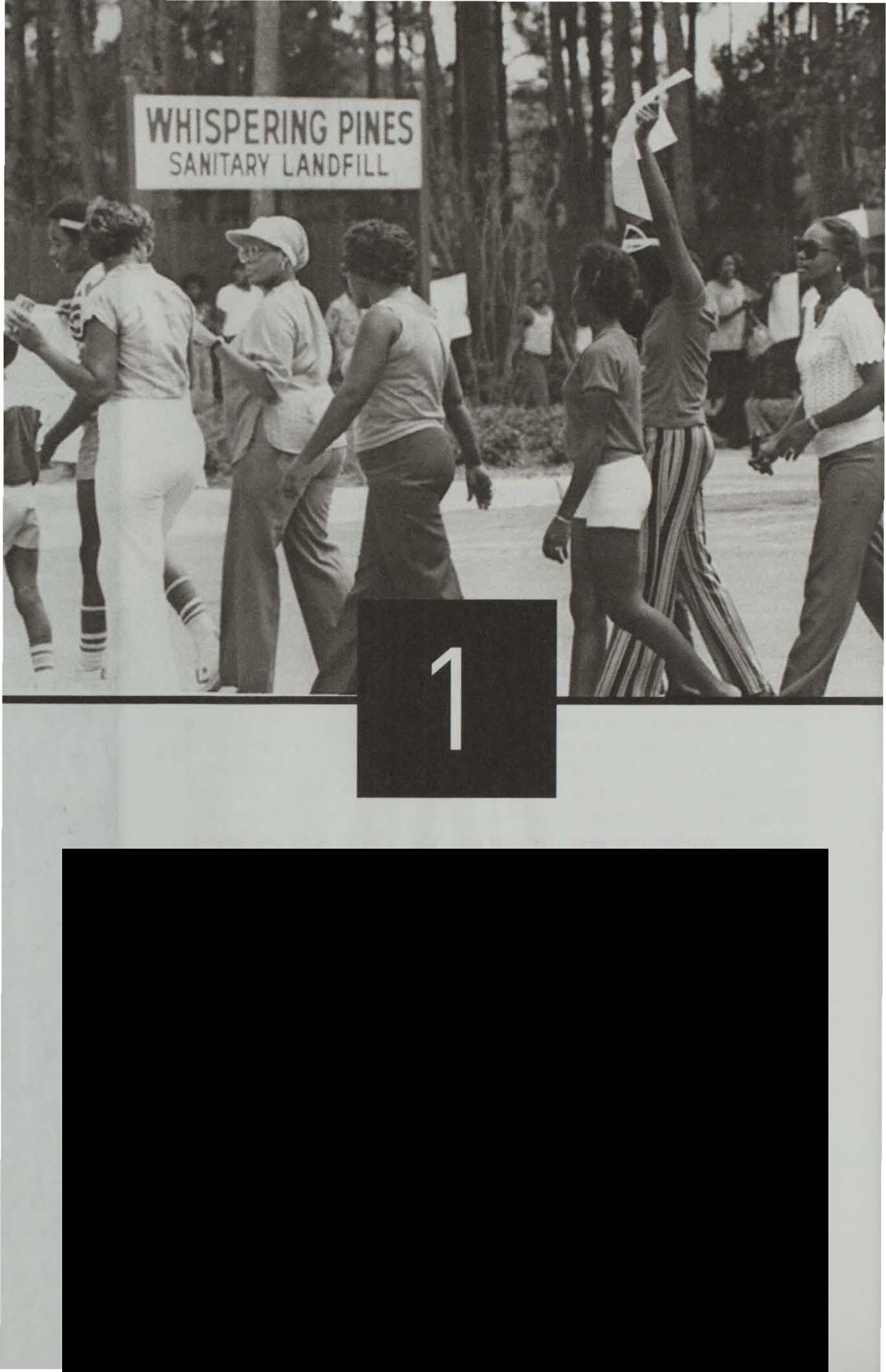
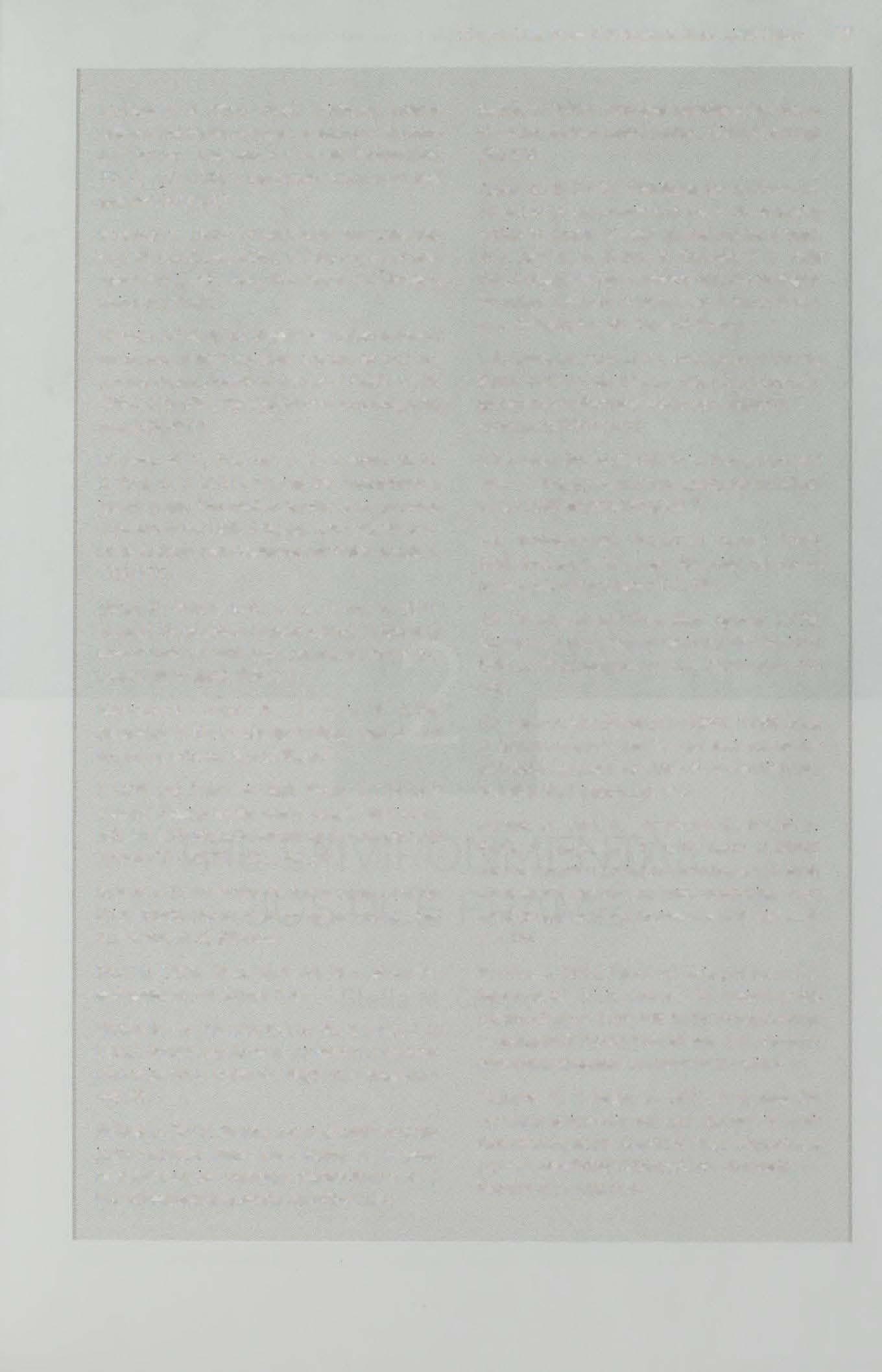
Photo 1.1 Houston protests against the Whispering Pines Sanitary Landfill that was the subject of the Bean et al. v Southwestern Waste Management Corps. lawsuit-the nation's first lawsuit to challenge environmental racism using civil rights laws.
Photo by Robert D. Bullard. 1978.
the Memphis struggle was much more than a garbage strike. The "I AM A MAN" signs chat black workers carried reflected the larger struggle for human dignity and rights. Black sanitation workers were on strike because of unequal pay, discriminatory labor practices, and unsafe work conditions that resulted in disproportionately high rates ofinjuries and deaths among them. They were also striking to be treated as men-with the same dignity and respect accorded white city workers. For Memphis strikers, Black Workers Mattered. Memphis was Dr. King's "last campaign." He was assassinated on April 4, 1968, bur his legacy lives on and is an integral part ofanti-racism movements around jobs, environment, health, transportation, land use, smart growth, energy, climate, and criminal justice.
HOUSTON WASTE STUDY HISTORICAL BACKDROP: 1970s
The historical backdrop ofthe environmental justice movement has its roots in small, isolated strugglesfoundacross the United Scares. A decadeafter Dr. King's death, black homeowners in 1978 took on a fight against a municipal landfill proposal ina mostlyblack suburban community in Houston, Texas.The cityhas seen a dramatic demographic shift over the past three decades (Bullard, 1987). In 1980, it was 52.3 percent white, 27.4 percent black, 17.6 percent Hispanic, and 2.7 percent Asian and other. By 2010, Houston became a majority peopleof-color city-25.6percentAnglo, 43.8 percentHispanic, 23.7percentAfrican American, and 6.0 percent Asian.
The Houston case study examined solid waste disposal in Houston from the 1970s through 2013. Houston is the nation's fourth largest city with a population of some 2.3 million persons spread over more than 600 square miles and more than 500 neighborhoods. It is the only major American city without zoning. This no-zoning policy allowed for an erratic land-use pattern. As a result, che NIMBY (Noc in My Back Yard) practice was replaced with the "PIBBY" (Place in Blacks' Back Yard) policy (Bullard, 1983). The allwhire, all-male Houston city government and private industry targeted landfills, incinerators, garbage dumps, and garbage transfer stations for Houston's black neighborhoods (Bullard, 1987). Five decades of this type of thinking and discriminatory land-use practices lowered black residents' property values, accelerated physical deterioration, and increased disinvestment in Houston's black neighborhoods. Houston's black neighborhoods were in face "unofficially zoned for garbage" (Bullard, 2005). Discriminatory siting of waste facilities stigmatized black neighborhoods as "dumping grounds" for a hose of other unwanted services, including salvage yards and recycling (Rosen, 1994, pp. 223-229).
Ineffective land-use regulations created a nightmare for many of Houston's neighborhoods-especially rhe ones rhar wereill equipped to fend offindustrial encroachment. From the 1920s through the 1970s, the siting ofnonresidential facilities heightened animosities between the black community and the local government. This is especially true in the case of solid waste disposal. Ir was not until 1978, with Bean v. Southwestern Wdste Management Corp., that Black
Houston mounted a legal assault on environmental racism in solid waste facility siting (Bullard, 1983).
The Bean case exposed racism and the discriminatory practices of Houston's waste facilities as well as its flawed no-zoning legacy. For example, the Whispering Pines Landfill that triggered the lawsuit was sited less than 1,500 feet from a public school and within a two-mile radius of a half-dozen other schools in the predominately black and poor North Forest Independent School District. Although the landfill was built and plaintiffs lost their legal case in 1984, rhe lawsuit changed the city's solid waste facility siting practices after 1979 (Bullard, 2005). From the time of the lawsuit until the present, not a single Type I municipal landfill has been sired in Houston, in contrast to the 1920s to the late 1970s, when Black Houston became the "unofficial dumping grounds" for the city's garbage (Bullard, 1983).
For decades, rhe city used two basic methods to dispose of its solid wasteincineration and landfill. Eleven of 13 dry-owned landfills and incinerators (84.6 percent) were built in black neighborhoods. This city siting pattern set the stage for private waste disposal firms to follow. From 1970 to 1978, the Texas Department of Health (TDH) issued four sanitary Type I solid waste landfill permits, for the disposal of Houston's solid waste, and all four were located in city council districts that were majority people of color.
In 2018, the brunt of waste disposal was sti!J borne disproportionately by low-income people of color. In 2018, two Type I landfills, McCarty Landfill and Whispering Pines Landfill, operated in Houston, and both were in council district B, which is 93 percent people of color (53 percent black and 40 percent Hispanic). As mentioned earlier, after 1979 and the Bean case, no other Type I landfills were built in the city. Houston instead began sending much household garbage to four landfills located outside the city limits. In 2018, three of these fourlandfills were located incensus tracts where the majorityof the population is people of color-Waste Management (76.6 percent), Atascocira (86.0 percent), and BFI Blue Ridge (85.7 percent).
BIRTH OF THE ENVIRONMENTAL JUSTICE MOVEMENT: WARREN COUNTY. NORTH CAROLINA: 1980s
The national environmental justice movement in the United Stares was born in mostly African American, rural, and poor Warren County, North Carolina, in the early 1980s after the state government decided to dispose of 30,000 cubic yards of soil contaminated with polychlorinated biphenyls (PCBs) in the tiny town of Afton-more than 84 percent of the community was black in 1982 (Bullard, 2000). Protesrs ensued, resulting in more than 500 arrests. The landfill later became the most recognized symbol in the county, and Warren County became a symbol of the environmental justice movement. By 1993, the facility was failing with 13 feet of water trapped inside it (Exchange Project 2006). For a decade, community leaders pressed the state to clean up the leaky landfill. Although the PCB landfill has been cleaned up, the county is still economically worse offthan the state as a whole. More than 24.4 percent of Warren County residents in 2008-2012 were below the poverty line, compared with North
Carolina's 16.8 percent poverty rare-a 7.6 percentage point gap. The 20082012 median household income for Warren County residents was only $34,803, compared with $46,450 for the state, or roughly 75 percent ofthe state median (U.S. Census Bureau, 2018). These data reveal the cumulative burdens that impact toxic communities.
The Warren County protests provided the impetus for a 1983 U.S. General Accounting Office (GAO) study, Siting ofHaza.rdous Waste Landfills and Their Correlation with Racial and Economic Status ofSurrounding Communities (U.S. General Accounting Office, 1983). The GAO study found that three out offour ofthe off-site, commercial hazardous waste landfills in Environmental Protection Agency (EPA) Region 4 (Alabama, Florida, Georgia, Kentucky, Mississippi, North Carolina, South Carolina, and Tennessee) were located in predominantly African American communities, although African Americans made up only 20 percent of the region's population. The protesters put "environmental racism" on the map.
The disturbing findings from the GAO report led Benjamin Chavis of the United Church of Christ Commission for Racial Justice to produce the first national study on race and waste in 1987. The study report, Toxic Wastes and Race in the United States, found race to be the most significant variable in predicting where these waste facilities were located-more powerful than household income, the value ofhomes, and the estimated amount ofhazardous waste generated by industry (Commission for Racial Justice, United Church of Christ, 1987). In other words, race was a more powerful predictor than class of where toxic waste facilities are located in the United States. The Toxic Wastes and Race study was revisited in 1994 using 1990 census data, in which it was found that people ofcolor were 47 percent more likely than white Americans to live near a hazardous waste facility (Goldman & Fitton, 1994).
ENVIRONMENTAL JUSTICE MOVEMENT BUILDING: 1990s
In 1990, Dumping in Dixie: Race, Class, and Environmental Quality became the first book to chronicle environmental injustice, environmental racism, and the convergence of two major movements-the civil rights and environmental movements-into the environmental justice movement (Bullard, 2000). Dumping in Dixie documented racial dynamics involved in the location of municipal landfills, hazardous waste sites, incinerators, lead smelters, refineries, and chemical plants. The book provided clear examples of "environmental racism 101" and was adopted as a textbook by dozens of U.S. colleges and universities. The southern United States or "Dixie" is different from the rest of the country. The South has a unique legacy of slavery, "Jim Crow" racial segregation, and resistance to equal justice for all its citizens. The South is also the most environmentally degraded region ofthe country. It is no accident that the modern civil rights and environmental justice movements were born in the South.
A growing grassroots environmental justice movement began to take shape in the late 1980s and early 1990s. The impetus for this growth centered around grassroots activism; the redefinition of environmental rights and civil rights;
alliances and coalitions; community-driven research, forums, and conferences; and the First National People of Color Environmental Leadership Summit held in October 1991. The summit was attended by more than 1,000 individuals from every state in the U.S. and at least a half-dozen other countries. Summit delegates adopted the 17 Principles of Environmental Justice. By the time the June 1992 United Nations Conference onEnvironment and Development (the Rio Earth Summit) started, the Principles of Environmental Justice had been distributed and translated into a half-dozen languages.
Environmental justice leaders embraced the principle that all people and communities are entitled to equal protection ofour environmental, health, employment, education, housing, transportation, and civil rights laws (Bullard, 1993a). For decades, hundreds of communities across the nation used a variety of tactics to confront environmental injustice (Agyeman, Bullard, & Evans, 2003; Bullard, 1987, 1993a, 1993b, 1993c, 1994, 2000, 2007; Bullard, Johnson, & Torres, 2011). The federal EPA took action on environmental justice concerns in 1990 only after extensive prodding from grassroors environmental justice activists, educators, and academics who called themselves the Michigan Group, named for environmental justice leaders who were successful in meeting with EPA administrator William Reilly and his senior staff. These meetings resulted in some key first steps in advancing environmental justice at the EPA, including the creation of the Office of Environmental Equity. In 1992, under the George H. W. Bush administration, the EPA produced EnvironmentalEquity:Reducing RisksforAll Communities, one of the first federal reporrs to acknowledgethe fact that some populations shouldered greater environmental health risks in some areas than others (U.S. Environmental Protection Agency, 1992).
Thus, environmental justice was not something invented by the EPA. However, in 1992 the EPA arrived at its own definition of environmental justice as "fair treatment and meaningful involvement of all people regardless of race, color, national origin, or income with respect to the development, implementation, and enforcement of environmental laws, regulations and policies." For the EPA, "fair treatment means that no group of people, including racial, ethnic, or socioeconomic groups should bear a disproportionate share of the negative environmental consequences resulting from industrial, municipal, and commercial operations or the execution of federal, state, local, and tribal programs and policies" (U.S. Environmenral Protection Agency, 1998, p. 2).
In 1994, President Bill Clinton issued Executive Order 12898, "Federal Actions to Address Environmental Justice in Minority Populations and LowIncomePopulations" (Clinton,1994).This executive orderattemptedto address environmental injustice within existing federal laws and regulations. Ir also reinforcedtheCivil RightsActof 1964, TideVI, which prohibits discriminatory practices in programs receiving federal funds (see Chapter 10) and put the spotlight back on the National Environmental Policy Act (NEPA), a law that set policy goals for the protection, maintenance, and enhancement of the environment. NEPA's goal is to ensure for all Americans a safe, healthful, productive, and aesthetically and culturally pleasing environment. NEPA requires federal agencies to prepare a derailed statement on the environmental effects of proposed federal actions chat significantly affect the quality of human health.
Executive Order 12898 called for improved methodologies for assessing and mitigating health effecrs from multiple and cumulative exposures as well as
impacts on subsistence fishers and consumers of wild game, in addition to the collection of data on low-income and minority populations who may be disproportionately at risk. It also encouraged participation of the impacted populations in the various phases of assessing impacts-including scoping, data gathering, considering alternatives, analysis, mitigation, and monitoring.
In 1999, environmental justice leaders were able to get the national Academy of Sciences Institute of Medicine (IOM) to examine environmental justice and health in the United States. The IOM study concluded that government, public health officials, and the medical and scientific communities need to place a higher value on the problems and concerns of environmental justice communities (Institute of Medicine, 1999). The study also confirmed what most environmental justice leaders and communities have known for decades. People of color and low-income communities are exposed to higher levels of pollution than the rest of the nation; and they experience certain diseases in greater numbers than more affluent, white communities. In the United States, all communities are not created equal. If a community happens to be poor or working class or is inhabited largely by people of color, it generally receives less protection.
The environmental justice framework challenges the dominant environmental protection paradigm that largely institutionalizes unequal enforcement; trades human health for profit; places the burden of proof on the "victims" and not the polluting industry; legitimates human exposure to harmful chemicals, pesticides, and hazardous substances; promotes "risky" technologies; exploits the vulnerability of economically and politically disenfranchised communities; subsidizes ecological destruction; creates an industry around risk assessment and risk management; delays cleanup actions; and fails to develop pollution prevention as the overarching and dominant strategy (Finkel & Golding, 1994).
The EPA is mandated to enforce the nation's environmental laws and regulations equallyacross the board (Collins, 2005). It is also required to protect all persons who live in the United States, not just individuals or groups who can afford lawyers, lobbyists, and experts. Environmental protection is a right, not a privilege reserved for a few who can "vote with their feet" and escape or fend off environmental stressors (Bullard, 2005, p. 20). Companies operating industrial facilities are required to obtain permits from state and sometimes federal environmental agencies and conform to local land-use regulations. However, even when operated according to accepted specifications, industrial facilities can adversely impact nearby residents when leaks, explosions, and accidents occur. Indeed, industrial facilities in some cases have posed serious safety risks to health, property, and quality of life (Baibergenova et al., 2003; Bullard et al., 2008; Edelstein, 2004; Elliot et al., 1993; Fielder et al., 2000; Gerschwind et al., 1992; Nelson et al., 1992; Vrijheid et al., 2002). As a result of these threats, public opposition to industrial facility siting has been nearly universal, especially for high-profile facilities such as incinerators and landfills (Bullard et al., 2008).
The 1990s saw a record number of communities of color "racially profiled" or targeted for polluting operations. Communities all across the country resisted, but most were still vulnerable to industrial facility siting because of their limited financial, scientific, technical, and legal resources (Cole & Foster, 2000; Lerner, 2010; Taylor, 1998). People-of-color environmental justice organizations and networks were still small and underfunded, and only a
handful had paid staff. Generally, communities with the greatest needs have the least resources and organization capacity to effectively fend off environmental assaults.
In 1992, the National Law journal uncovered glaring inequities in the way rhe EPA enforced its laws related to hazardous waste cleanup (Lavelle & Coyle, 1992). The authors wrote: "There is a racial divide in the way the U.S. government cleans up toxic waste sires and punishes polluters. White communities see faster action, better results and stiffer penalties than communities where blacks, Hispanics and other minorities live. This unequal protection often occurs whether the community is wealthy or poor" (pp. Sl-S2). These findings supplement the findings of earlier studies and reinforce what many grassroots leaders have been saying all along: People of color differentially are impacted by industrial pollution, and they also can expect different treatment from the government.
NEW TECHNOLOGY, RESEARCH TO ACTION, POLICY. AND ORGANIZING TOOLS: 2000s
The 2000s ushered in new technological advances that offered tremendous benefits to the environmental justice movement and froncline communities. A record number of grassroots leaders from low-wealth and people-of-color communities were able to gain access to new computing and communication technology and the Internet, which enabled them to better connect with their constituencies and allies. New funding opportunities from private foundations allowed more grassroots community groups and their leaders to have access to cell phones, geographic information systems (GIS) and other spacial mapping tools, community-based participatory research (CBPR) (see Chapter 6), and multi-stakeholder networks, including community-university partnerships and collaborations.
A 2002 study, Air ofInjustice: African Americans and Power Plant Pollution, found that more than 68 percent of African Americans live within 30 miles of a coal-fired power plane, the distance within which the maximum effects of che smokestack plume are expected to occur, compared with 56 percent of whiteAmericans (Clean the Air et al., 2002). In September 2005, the Associated Press (AP) released results from its analysis of an EPA research project showing that African Americans were 79 percent more likely than whites to live in neighborhoods where industrial pollution is suspected of posing the greatest health danger (Pace, 2005). The study revealed that in 19 states, blacks were more than twice as likely as whites to live in neighborhoods where air pollution seems to pose the greatest health danger. Hispanics in 12 states and Asians in seven sraces were also more likely to breathe dirty air than whites in some regions of the United States. The AP found that residents of at-risk neighborhoods were generally poorer and less educated, and unemployment races in chose districts were nearly 20 percent higher than the national average. The 2007 study Toxic \.%stes andRace at Twenty 1987-2007 found chat people of color make up the majority (56 percent) of those living in neighborhoods within two miles of the nation's commercial hazardous waste facilities (Bullard et al., 2008).
A 2008 study by University of Colorado
facilities are clustered together, people of color make up 69 percent of these neighborhoods. This pattern underscores the cumulative impact from discriminatoryzoning and landuse practices. People of color were also overrepresented in populations living within a onemile radius (''percent} and a three-mile radius ('6 percent} of the nation's 1,388 Superfund sites.
This study reveals that where researchers on race, income, and environmental inequality in the United States concluded that African Americans experience such a high air-pollution burden that black households with incomes of $50,000 to $60,000 live in neighborhoods that are, on average, more polluted than neighborhoods of white households with incomes less than $10,000 (Downey & Hawkins, 2008). In effect, research indicates that environmental inequality for African Americans could not be reduced to a "poverty thing." That same year, Hoerner and Robinson (2008), in their study of differential impacts of climate change on vulnerable populations, found that 43 percent of African Americans live in urban "heat islands," compared to only 20 percent of whites. Nationally, African Americans have a 5.3 percent higher prevalence of heat-related mortality than whites, and 64 percent
of this disparity is traced to disparities in the prevalence of home air conditioning.
In 2011, a team of Duke University researchers also found significant air pollution burden borne by people of color compared to whites (Miranda et al., 201 1). They found that
non-Hispanic blacks in the United States suffer worse air quality across multiple metrics, geographic scales, and multiple pollution metrics.Hispanics also suffer worseair quality withrespect to particulate matter, but not necessarily so for ozone. It also appears that environmental justice concerns are more prominent along race/ethnicity lines, rather than measures of poverty. (Miranda et al., 2011, p. 1755)
In ranking the 75 worst polluting coal-fired power plants in the United States, a NAACP (2012) study, CoalBlooded:PuttingProfitsbeforePeople, found that four million people live within three miles of these plants. Two million people live within three miles of one of the top 12 "dirtiest" coal-fired power plants. Approximately 76 percent of these residenrs are people of color and the average per-capita income is $14,626, compared with the national average of $21,587. People of color are severely overrepresented in communities that host the "dirty dozen" coal power plants since they made up only 37 percent of the U.S. population in 2010 (U.S. Census Bureau, 2010).
A Coming Clean (2012) report, Whos in Danger?A Demographic Analysis ofChemical Disaster Vulnerability Zones, found that fence-line residents who live closest to the facilities have average home values 33 percent below the national average and average incomes 22 percent below the national average. The percentage of blacks in the fence-line zones is 75 percent greater than for the United States as a whole, and the percentageof Latinosis 60 percent greater. The percentage of adults in the fence-line zones with less than a high school diploma is 46 percent greater than for the United States as a whole, but the percentage with a college or other post-high school degree is 27 percent lower;
and che poverty race in che fence-line zones is 50 percent higher chan for the United States as a whole.
Oil trains also pose special risk to people of color, who often live on the "wrong side of che tracks." The nation's oil trains are more likely to run through communities of color and expose their residents to elevated risks from explosion and derailment"blast zones." The blast zone is everything within a mile of cracks used for the oil trains (ACTION United, ForestErhics, and PennEnvironment Research and Policy Center, 2016). The Fumes across the Fence-Line report details the health coll the oil and gas indusny has on black communities (NAACP and CleanAir Task Force, 2017). Morethan a million African Americans live within a half-mile of an oil and gas operation, and more chan 6.7 million live in a county chat is home to a refinery. Many of these communities (Manchester in Houston; Louisiana's "Cancer Alley"; North Richmond, California; Southwest Detroit; Port Arthur, Texas) are described as "sacrifice zones" because of the concentration of oil and gas pollution. And because of heightened exposure to oil and gas pollution, African American children suffer from 138,000 asthma attacks and 101,000 lose school days each year (NAACP and Clean Air Task Force, 2017).
The 150 or so U.S. oil refineries operating in 32 states emit thousands of tons of hazardous air pollurancs, including substances char cause cancer. Half of the people at an increased cancer risk from refineries' pollution are people of color (Garcia, 2014). America is still segregated, and so is pollution (Bullard et al., 2011). More than 69.2 percent of Hispanic children, 61.3 percent of African American children, and 67.7 percent of AsianAmerican children live in areas that exceed the EPA ozone standard, compared with 50.8 percent of white children. University of Minnesotaresearchers found char African Americans and other people of color breathe 38 percent more polluted air than whites and are exposed to 46 percent more nitrogen oxide (Clark et al., 2014). All indicators point to pollution taking a heavy health roll on Black America-especially black children.
The former vice president under Lyndon Johnson, Hubert H. Humphrey, once said, "The moral test of government is how that government treats chose who are in the dawn of life, the children; those who are in the twilight of life, the elderly; chose who are in the shadows of life, che sick, the needy and the handicapped." Children, especially poor children of color, form one of our most vulnerable groups in the United States when it comes to pollution. In addition to schools, many urban parks and playgrounds are located next to refineries, coal planes, chemical facilities, and highways. The adverse health effects of living or playing so close to polluting sources is elevated asthma and respiratory disease. For example, the asthma rate among African Americans is 35 percent higher than among whites; the hospitalization rate for African Americans and Latinos is three to four times the rate for whites; African Americans and Puerto Ricans are three times more likely than whites to die from asthma-related causes; and African Americans accountfor 13 percent of the U.S. population bur 26 percent of asthma deaths.
Lack of zoning and poor land-use planning created a pollution nightmare for children living along the petrochemical corridor. The vast majority of residenrs and school children living along the Houston Ship Channel are Hispanic and African American. Children living within two miles of the channel had
a 56 percent greater chance of developing lymphocytic leukemia (Houst0n Department of Health and Human Services, 2005). This pattern of overpolluting children of color also occurs in cities with zoning. A 2006 California study found that areas that suffer from increased respiratory hazards from air toxics tend to have schools with larger percentages of poor students and students of color (Pastor et al., 2006, p. 337).
The problem of schools near polluting facilities was thrust on the national stage in the USA Today special report Toxic Air and America's Schools (Morrison, Heath and Jervis 2008). In mapping the nation's 127,800 public, private, and parochial schools, the investigative reporters found that 20,000 schools-about one in every six-are within a half-mile of a major industrial plant. Nationally, one in three U.S. school children is at risk from a chemical catastrophe. In 201l, a team of University of Michigan researchers found that students of color are more likely than their white counterparts to attend schools in heavily polluted areas (Mohai et al., 2011, pp. 852-862). In Michigan, for example, whereas 44.4 percent of all white students in the state attend schools located in the top 10 percent of the most polluted locations in the state, 81.5 percent of all African American children and 62.1 percent of all Hispanic students attend schools in the most polluted zones.
The University of Michigan researchers also found that air pollution from industrial sources near Michigan public schoolsjeopardizes children's health and academic success. Schools located in areas with the highest air pollution levels had the lowest attendance rares and the highest proportions of students who failed to meet stare educational testing standards. California researchers found a clear link between toxics near schools and student academic performance in Los Angeles (Pastor, Morello-Frosch, & Sadd, 2006). In El Paso, Texas, residential exposure to air toxics was linked to lower grade point averages among school children (Clark-Reyna, Grineski, & Collins, 2016).
Students of color are hit especially hard by transportation pollution. One in every 11 U.S. public schools, serving roughly 4.4 million students, lies within 500 feet of highways, truck routes, and other roads with significant traffic; 15 percent of schools where more than three-quarters ofthe students are racial or ethnic minorities are located near a busy road, compared with just 4 percent of schools where the demographics are reversed (Hopkins, 2014). White children make up almost 52 percent of U.S. public school students, yet only 28 percent attend high-risk schools. Black students, by contrast, make up just 16 percent of the total public school population, with 27 percent attending high-risk schools. Latinos constitute 24 percent of public school students, and 34 percent attend high-risk schools (Grineski & Collins, 2018).
This systematic overexposure of African Americans to air pollution was borne out by a 2018 U.S. EPA study that found race was more powerful than poverty in predicting exposure to air pollution (Mikati et al., 2018). In 46 states, people of color live with more air pollution than whites. African Americans are exposed to 1.54 times more fine particulate matter than whites, Hispanics are exposed to 1.2 times more than whites, and those below the poverty line are exposed to 1.35 times more than those above the line. The overall pattern reveals that a disproportionate share of places where people of color live, work, play, and learn are toxic "hotspots" with dangerous operations that pose elevated health threats---especially to vulnerable children of color.
A NEW GENERATION FIGHTING TO MAKE BLACK LIVES MATTER
Blacks lives matter less than white lives because ofsystemic racism that is baked into every institution in America-whether in voting, education, employment, health, the environment, or the criminal justice system. The environmental racism you will read about in this text, such as the Flint water crisis, is no fluke. In the United States, some people and communities have the "wrong complexion for protection" (Bullard & Wright, 2012). The Black Lives Matter (BLM) movement emerged in response to the 2012 death of unarmed black teenager Trayvon Martin and the 2013 acquittal ofhis vigilante killer, George Zimmerman. The unpopular verdict sparked outrage, protests, and the Black Lives Matter hashtag posting on social media by three black women-Alicia Garza, Patrisse Cullars, and Opal Tometi. BLM co-founder Alicia Garza gave a succinct overview ofwhat the Black Lives Matter movement stands for: "Black Lives Matter is an ideological and political intervention in a world where Black lives are systematically and intentionally targeted for demise. Ir is an affirmation ofBlack folks' contributions to this society, our humanity, and our resilience in the face ofdeadly oppression" (Garza, 2014).
The #BlackLivesMatter hashtag used social media to effectively shine che national spotlight on racialized state-sanctioned killings ofunarmed black men. Black Lives Matter activists exploited social mediathrough videos and testimony where African Americans were recorded being shot, beaten, choked, and/or killed by police or vigilantes (Pellow, 2016). The movement gained national attention for its street demonstrations and mass protests following the 2014 police killing ofrwo African American males: Michael Brown in Ferguson, Missouri, and Eric Garner in New York City (Day, 2015; Luibrand, 2015). BLM protests expanded into dozens ofchapters in the United States with a primary focus on addressing racial profiling, racial inequality, and racism in the U.S . criminal justice system (Cullars-Brignac, 2016). The BLM nerwork developed 13 core principles to guide their work; among chem are diversity, empathy, restorativejustice, being unapologetically black, and incergenerationality (Barre, 2016, p. 2).
Systemic policies ofpolice violence and killing, racial profiling, overpolicing, overticketing, arresting, and jailing in the criminal justice system all emanate from the same systemic forces that target, overpollute, and poison black people where theylive, work, play, and attend school.Just as black people are special targets ofstate-sanctioned police violence, black communities and their inhabitants are also targets ofstate-sponsored permits to pollute and of pollution violence (poisoning men, women, children, and unborn babies is a form ofviolence) by industries that cause premature illnesses and deaths in the black community.
Social media and videos taken on smartphones have allowed Americans to see in living color how racialized policing kills blacks with impunity. Racism in the criminal justice system kills and denies black people equal justice and equal protection under the laws guaranteed by the U.S. Constitution. Environmental racism kills more slowly (without the vantage point of videos) and harms a disparate share of black people. Racism denies them the same rights of equal protection and equal justice by targeting black communities
for environmentally risky and polluting facilities-resulting in elevated rates of cancer and respiratory and cardiovascular illnesses such as heart disease and stroke. Racism is making Black America sick.
Dismantling systemic racism is a core guiding principle of both the environmental justice movement and the Black Lives Matter movement. In the final analysis, there is only one movement-the movement that fights for an American society that values black lives the same way it values white lives. Erasing American racism from our society will make us a much healthier, safer, and more just nation.
DEEPENING OUR UNDERSTANDING
1. This chapter has reviewed a voluminous quantity of evidence that people of color endure more than their fair share of environmental burden, at root due to structural racism.
a. Where are the environmental burdens in your own community (where you are from or where you go to school)? For example, where is garbage taken? Where are toxic substances transferred, stored, or dumped? Where are industries that produce air or water pollution located?
b. Who lives close to these facilities? Does it fit with the dominant national trend that this chapter describes?
2. Video taken on smartphones has aided awareness of Black Lives Matter in terms of police violence. In what ways do you think technologies do or could enable more significant exposure of and activism around environmental justice concerns today?
REFERENCES
ACTION United, Forest Ethics and Penn Environment Research and Policy Center. [2016). Environmental Justice and Oil Trains in Pennsylvania. https.//pennenvironment.org/sites/environm ent/files/reports/OilTrainPAReport_r1.pdf
Agyeman, J., Bullard, R. D, & Evans, B. [2003) Just sustainabilities.· Development in an unequal world. Cambridge, MA: MITPress.
American Heart Association. [2016, December). High blood pressure and African Americans. AHA Fact Sheet. https://www heart.org/idc/groups/hea rt-publ1c/!awcm/lahcm/documents/downloadable /ucm_300463 pdf
Ba1bergenova, A., Kudyakov, R.. Zdeb, M., & Carpenter, D. 0. [2003). Low birth weight and res1dent1al prox1m1ty to PCB-contaminated waste sites. Environmental Health Perspectives, 111!1Ol. 1352-1357.
Barre, D. [2016, October 12). 3 ways racial and environmental 1ustice are connected, as explained by the vision of black lives. https://www.greenpeac e.org/usa/3-ways-racial-and-env1ronmental-1us tice-are-connected-as-expla1ned-by-the-v1sionfor-black-l1ves/
Bullard, R. 0. [1983). Solid waste sites and the black Houston community. Soc1olog1cal Inquiry, 53[Spnngl. 273-288.
Bullard, R. D. (1987). Invisible Houston: The black experience in boom and bust. College Station, TX: Texas: A&M University Press.
Bullard, R. D. [Ed.l. (1993al. Confronting environmental racism: Voices fromthe grassroots. Boston: South End Press.
Bullard, R. D. [1993bl. Race and environmental justice in the United States. Yale Journal of InternationalLaw, 78[Winterl. 319-335.
Bullard, R. D. [1993cl. The threat of environmental racism. Natural Resources & Environment, 55-56. 7[W1nterl. 23-26.
Bullard, R. D. (19941. Unequal environmental protection: Incorporating environmental justice in decision making. In A. M. Finkel & D. Golding [Eds.I. Worst things first? The debate over nskbased national environmental priorities (pp. 237266). Washington, DC: Resources for the Future.
Bullard, R. D. (2000) Dumping m Dixie: Race, class and environmental quality (3rd ed.l. Boulder, CO: Westv1ew Press.
Bullard, R. D. (2005). The quest for environmental justice: Human rights and the politics of pollution. San Francisco: SierraClub Books.
Bullard, R. D. (2007). Growing smarter: Achieving livable communities, environmental justice and regional eqwty. Cambridge, MA: MIT Press.
Bullard, R. D.. Moha1, P., Saha, R., & Wright, B. (2008). Toxic wastes and race at twenty: Why race still matters afterall of these years. Lewis & Clark Environmental LawJournal, 38(2). 371-412.
Bullard, R. D., Johnson, G. S., & Torres, A. 0. [2011]. Environmental health and racial justice in theUnitedStates:Buildingenvironmentallyjust, sustainable, and livable communities. Washington, DC: APHA Press. http://aJph.aphapublications.org/do1 /book/10.2105/9780875530079
Bullard, R. D., &Wright, B. (2012]. The wrong complexionforprotection:Howthegovernmentresponse to disaster endangers African American communities. New York: New York University Press.
Casey, J. A. [2018, May]. Coal and oil power plant retirements in Cal1forn1a associated with reduced
preterm birth among populations nearby. American Journal of Epidemiology. Accessed June 2018. https://doi.org/10.1093/aje/kwyl10
Clark, L. P., Millet, D. B., & Marshall, J. D. [2014, Aprill. National patterns in environmental injustice and inequality: Outdoor N02 air pollution in the United States. PLOS. http://journals.plos.org/ plosone/article?id=l0.1371/journal.pone.0094431
Clark-Reyna. S.. Grineski, E., & Collins, T. M. (2016]. Res1dent1al exposure to air toxics is linked to lower grade point averages among school children in El Paso, Texas, USA. Population and Environment, 37(3). 319-340. https://link.springer.com /article/10.1007Is11111-015-0241-8
Clear the Air, Black Leadership Forum, Southern Organizing Committee for Economic and Social Justice and the Georgia Coalition for the Peoples Agenda. [2002, October). Air of in1ust1ce: Afncan Americans and power plant pollution. Washington, DC: Clear the Air. http://www.energyjustice.net/f1 Les/coal/Air_of_lnjust1ce.pdf
Clinton, W. J. [1994). Federal actions to address environmental justice in minority populations and low-income populations. Title 3 - The President Executive Order 12898 of February 11, 1994. Federal Register, February 16, Vol. 59, No. 32.
Cole, L., & Foster, S. (2000). From the ground up: Environmental racism and the nse of the environmentaljustice movement. New York: New York University Press.
Collins, R. M. (2005). TheEnvironmentalProtection Agency: Cleaning up America:S act. Westport, CT: Greenwood.
Commission for Racial Justice, United Church of Christ. (1987). Toxic wastes and race m the United States: A nat10nal report on the racial and socioeconomic characteristics of communities with hazardous waste sites. New York; United Church of Christ.
Cullars-Brignac, P. M. (2016, February 22). We didn't start a movement. We started a network. Medium. https://med1um.com/rapatrissemariecull orsbrignac/we-didn-t-start-a-movement-we-sta rted-a-network-90f9b5717668
Day, E. 12015, July 19). #BlacklivesMatter: The birth of a new civil rights movement. TheGuardian. http://www.theguardian.com/world/2015/Jul/19/ blacklivesmatter-birth-civil-nghts-movement
Downey, L. . & Hawkins, B. 12008, December). Race, income and environmental inequality in the United Sates. Social Perspectives, 5114]. 759-781.
Duke, L. (2007, March 20). A well of pain. Washington Post, C1.
Oum, Q. 12017). Air pollution and mortality in the medicare population. New England Journal of Medicine, 376, 2513-2522.
Edelstein. M. R. [2004). Contaminated communities:Copingwithresidentialtoxicexposure (2nd ed.]. Cambridge, MA: Westv1ew Press;.
Elliot, S., Taylor, S. M., Walter, S., Stieb, 0., Frank, J.. & Eyles, J. [19931. Modeling psychological effects of exposure to solid waste facilities. Social SC1ence and MediC1ne, 3716]. 805-812.
Exchange Project.[2006, September). Real People, Real Stories: Warren County: Town of Afton. Chapel Hill: Department of Health and Health Education, University of North Carolina at Chapel Hill. http://exchangeproject.unc.edu/real_people/afton_ overview/
Fielder, H. M. P., Poon-King, C. M.. Palmer, S. R., Moss, N., & Coleman, G. 12000). Assessment of impact on health of residents living near the Nant-y-Gwyddon landfill site: Retrospective analysis. British Medical Journal, 320, 19-22.
Finkel, A.. & Golding. 0. (1994). Worst things first? The debate over risk-based national environmental priorities. New York: Resources for the Future.
Garcia, L. [2014, October 8). Communities near oil refineries must demand cleaner air. Huffington Post. http://www.huffingtonpost.com/lisa-garcia/ communities-near-oil-refi_b_5662559.html
Garza, A. [2014, December). A herstory of the #blacklivesmatter movement.'' TheFeminist Wire. http://www.thefeministwire.com/2014/1O/blackli vesmatter-2/
Gerschwind, S. A.. Stolwijk, J., Bracken, M., Fitzgerald, E., Stark, A., Olsen, C. . & Melius, J. (19921. Risk of congenital malformations
associated with proximity to hazardous waste sites. American Journal of Epidemiology, 135, 1197-1207.
Goldman. B., & Fitton, L. [1994). Toxic wastes and race revisited. Washington, DC: Center for Policy Alternatives.
Grineski, S. E., & Collins, T. W. [2018, February). Geographic and social disparities in exposure to air neurotoxicants at U.S. public schools. Environmental Research, 161, 580-587.
Hoerner, J. A. . & Robinson, N. 1 2008, July). A climate ofchange:AfricanAmericans, global warming, and ajust climate policy for the U.S. Oakland, CA: Redefining Progress.
Hopkins, J. S. 12014, February). Invisible hazard afflicting schools. Center for Public Integrity. https://www.publicintegrity.org/2017/02/17/20716/ invisible-hazard-afflicting-thousands-schools
Houston Department of Health & Human Services. [2005). Preliminary epidemiologic investigation of the relationship between the presence of ambient hazardous air pollutants [HAPS) and cancer incidence in harris county. http://www.houstontx.gov/ health/UT.html
Institute of Medicine. [1999). Toward environmental justice: Research, education, and health policy needs. Washington, DC: National Academies Press.
Khan, J. [2017, January). Environmental racism is a special and urgent concern. The Root. https://www.theroot.com/environmental-racismis-a-special-and-urgent-concern-1791343793
Lavelle, M.,&Coyle, M. (1992, September). Unequal protection. National Law Journal.
Lerner, S. [201 Ol. Sacrifice zones: The front lines of toxic chemical exposure in the UnitedStates. Cambridge, MA: MIT Press.
Luibrand, S. (2015, August 71. Black lives matter: How the events in Ferguson sparked a movement in America. CBS News. https://www.cbsnews.com /news/how-the-black-lives-matter-movement-c hanged-america-one-year-later/
McConnell. R. [2010, July). Childhood incident asthma and traffic-related air pollution at home and school. Environmental Health Perspectives, 118[7]. 1021-1026. https://www.ncbi.nlm.nih.gov/ pubmed/20371422
McGurty, E. (2007). Transforming environmentalism: Warren County. PCBs, and the origins of environmental 1ustice. New Brunswick, NJ: Rutgers University Press.
Mikat1, I. (2018, Aprill. Disparities in distribution of particulate matter emission sources by race and poverty status. American Journal of Public Health, 108[4). 480-485. https://www.ncbi.nlm.nih.gov/pu bmed/29470121
Miranda. M. L.. Edwards, S. E .• Keating, M. H.. & Paul, C. J. (2011). Making the environmental Justice grade: The relative burden of air pollution exposure in the United States. International Journal ofEnvironmental Research and PublicHealth, 8, 1755-1771.
Mohai, P., Kweon, B. S., Lee,S., & Ard, K. [2011, August!. Air pollution around schools is linked to poorer student health and academic performance. Health Affairs, 30[5]. 852-862.
Morrison, B., Heath, B... & Jervis, R. [2008, December 7). The smokestack effect: Toxic air and America's schools. Special Report.
NAACP and Clean Air Task Force. [20171. Coal blooded: Putting profits before people. Baltimore, MO: NAACP. https://www.naacp.org/wp-content/ uploads/2016/04/CoalBlooded.pdf
Nelson, A. C.. Genereux, M., & Genereux, J (1992) Pnce effects and landfills on house values. Land Economics, 68(4]. 359-365.
Pastor, M., Jr , Morello-Frosch, R., & Sadd, J. L. [2006). Breathless: Schools, air toxics, & environmentaliustice inCalifornia.PolytechnicStudyJournal, 337.
Pellow, 0. [2016). Toward a critical environmental iustice studies: Black Lives Matter as an environmental iust1ce challenge. DuBois Review, 13, 2. https://escholarship.org/uc/item/2rw7p84x
Rosen, R. [1994). Who gets pollution: The movement for environmental justice. Dissent [Spring). 223-230.
Taylor, 0. E. [19981. Mobilizing for environmental justice in communities of color: An emerging profile of people of color environmental groups. In J. Aley, W. R. Burch. B. Canover, & 0. Field (Eds.I. Ecosystem management: Adaptive strategies for natural resource organizations in the 21st century. Philadelphia, PA: Taylor & Francis.
U.S. Census Bureau. (2018, June). Warren County, North Carolina Qu1ckfacts. https://www.census. gov/quickfacts/fact/table/warrencountynorth carolina,NC/PST045216
U.S. Census Bureau (20101. Quick Facts. Retrieved from https://www.census.gov/quickfacts/fact/ table/US/RHl825218#RHl825218
U.S. Environmental Protection Agency (1992. July). Environmental equity: Reducing risk for all communities. Washington, DC: EPA.
U.S. Environmental Protection Agency. [1998]. Guidance for incorporating environmentaljustice in EPA·s NEPA compliance analysis. Washington, DC: EPA.
U.S General Accounting Office [GAO). (1983). Siting of hazardous waste landfills and their correlation with racialand economic statusofsurrounding communities. Washington, DC: GAO.
Vrijheid, M.. Dolk. H.. Armstrong. B., Bosch1, G , Busby, A., Jorgensen, T., & Pointerm. P. [2002]. Hazard potential ranking of hazardous waste landfill sites and risk of congenital anomalies. Journal of Occupational and EnvironmentalMedicine. 59, 768-776.
Wernick, A. [2016. February). This professor says Flint's water crisis amounts to environmental racism. Living on Earth, PRI Radio. https://www.pr 1.org/stories/2016-02-11/professor-says-flints-w ater-crisis-amounts-environmental-rac1sm
Williams, T., & Smith, M. (2015, December 291. Cleveland officer will not face charges in Tam1r Rice shooting death. New York Times. https://www .nytimes.com/2015/12/29/us/tamir-rice-police-s hootiing-cleveland.html
Zhang. M. (2018, May). Maternal exposure to ambient particulate matter <2.5 during pregnancy and the risk for high blood pressure in childhood.
When the Flint, Michigan, water crisis broke into che national news, and stories appeared about low-income African American children being exposed to unusually high levels of lead, the term environmentaljustice (EJ) was already somewhatfamiliar to the general public. But in the later partof the 20th century, che concept was still being invented. EJ emerged from a number of different directions, as a wayof"framing" (or naming in a new way) a pattern of injustices that disproportionately exposed minority and low-incomecommunities to toxic hazards. Multipiesocial actors, including social movementactivistsand scholars, have shaped its evolution. In this chapter, I'll begin by revisiting an EJ case from my research that daces back to the time when the EJ"frame" was starting to spread through local and national networks (Capek, 1993). The Carver Terrace case reveals some of chose early dynamics and provides an interesting comparison and contrast with present-day EJ activism. I'll also discuss how I was woken up to the issue of EJ, and how it shaped my research. Then, I'll focus on "framing" theory as a useful analytical tool, and I'll reflect on how the EJ frame has evolved over time. Throughout, I'll draw selectively on the broad and rich field of EJ scholarship, which investigates not only where harm has been done but also how a socially and ecologically just society can be envisioned (see Agyeman, Schlosberg, Craven, & Matthews, 2016). But first, let's imagine a community named Carver Terrace, a place that no longer exists, whose residents learned about EJ through a persistent struggle to get justice.
CARVER TERRACE
Picture this: In Texarkana, Texas, a thriving African American neighborhood called Carver Terrace is flourishing in the 1960s. Proud homeowners inhabit che neighborhood, jobs are plentiful, strong social networks connect neighbors, and the Mr. Zion Missionary Baptise Church is an active place. Residents compete to have the best lawns; children play safely outside; andgardens yield flowers, fruit, and vegetables. The neighborhood seems close to ideal. Fast forward to the early 1990s, and the neighborhood sits empty, surrounded bya chain link fence with posted "NOTRESPASSING" signs. The houses andchurch are boarded up, and weeds are growing in the once well-manicured yards. You'll notice the unnatural silence. There are no people-no children playing outside, no neighbors calling to each ocher. By 1993, the houses and church are completely gone, and only the concrete pads, driveways, and streets are still in place. Some gardens are still blooming-the last "residents" to give up on the place. How could a place so promising disappear?
Carver Terrace was built in the 1960s by a Louisiana-based developer who intentionally designed an affordable community for prospective African American homebuyers. Given the realities of racially segregated space in the South (and elsewhere), a development like thiswas highly desirable. As aresident told me, "It was a drawing card to us, because there had not been any houses of this quality available to us." Those who moved in had a variety of stories-
PHOTO 2.1 · Patsy Oliver, Camille Brown, and Bettye Davis.
Photo by Stella C:apek.
some were middle-class professionals; others were working-class residents who had never owned their own home. All were thrilled at the opportunity offered by Carver Terrace. The houses were eagerly bought up, and for many years, the neighborhood appeared to thrive.
CARVER TERRACE ON CONTAMINATED LAND
Bur there was a catch. Although it didn't seem too significant when people bought their houses, the land for Carver Terrace was part of a former industrial sire that the city had rezoned "residential." Starting in 1910, a number of industries operated there, using creosote to coat wood. The most recent was Koppers, Inc., beginning in the 1940s. When Koppers ceased operations in Texarkana, they left behind buried tanks and residues of creosote. Some local residents knew about the former creosoting operation, bur when they expressed concerns, they were reassured by the city that it would be safe to live there. So, they anchored their lives to this place and made it flourish.
Decades went by. One day in 1984, Environmental Protection Agency (EPA) employees in "moon suits" showed up in the neighborhood, testing the soil. This is how residents found our that there was suspected contamination under and around their homes. In 1979, Congress had asked the 50 largest chemical companies in the United States to report hazardous waste sires (a reminder about rhe importance of passing good laws!). Koppers reported hazardous chemicals, including creosote. Coal tar creosote, used as a wood preservative, has been declared a probable human carcinogen by the International Agency for Research on Cancer (IARC) and the Agency for Toxic Substances and Disease Registry (ATSDR, 2002). Over the years, Carver Terrace residents had noticed an unusual number of illnesses in the neighborhood, from rashes ro a variety of cancers, and a surprising number of miscarriages and even deaths. Bur without good information, it was easy to normalize and explain away such incidents. Now, as news of the testing for toxic chemicals spread through the neighborhood, the health problems and the odd materials dug up during landscaping took on a new meaning.
As residents became more aware of the threat of toxic chemicals, their relationships to their land and houses began to change. Distrust of local and federal agencies rose. While it is possible that in the 1960s less was known about the carcinogenic nature of certain chemicals, the rezoning of an industrial sire like this one as "residential" was at best careless; at worst, it was negligent. Ir is also highly likely that a lower standard of scrutiny and safety was applied to land use for an African American and less affluent neighborhood. Residents felt deeply betrayed. The EPA declared Carver Terrace a Superfund sire in 1984 (the federalSuperfund was created to fund cleanups of contaminated sites) and placed it on the National Priority List. The next year, EPA and Koppers worked on a remedial plan, and Koppers did some soil removal and sod replacement in some people's yards. Bur the process moved slowly, and little information was shared with residents. They anxiously wondered what would become of their neighborhood, and of their lives.
Chemical contamination is sneaky, pernicious, and unsettling. Ir is often invisible, and its boundaries are unclear, which makes it difficult to assess and