“Making a presentation is a moral act as well as an intellectual activity. The use of corrupt manipulations and blatant rhetorical ploys in a report or presentation — outright lying, flagwaving, personal attacks, setting up phony alternatives, misdirection, jargon-mongering, evading key issues, feigning disinterested objectivity, willfully misunderstanding the other point of view — suggests that the presenter lacks both credibility and evidence. To maintain a standard of quality, relevance, and integrity for evidence, consumers of presentations should insist that the presenters be held intellectually and ethically responsible for what they show and tell. Thus, consuming a presentation is also an intellectual and moral activity.”
— Edward Tufte, Beautiful Evidence. 2006.
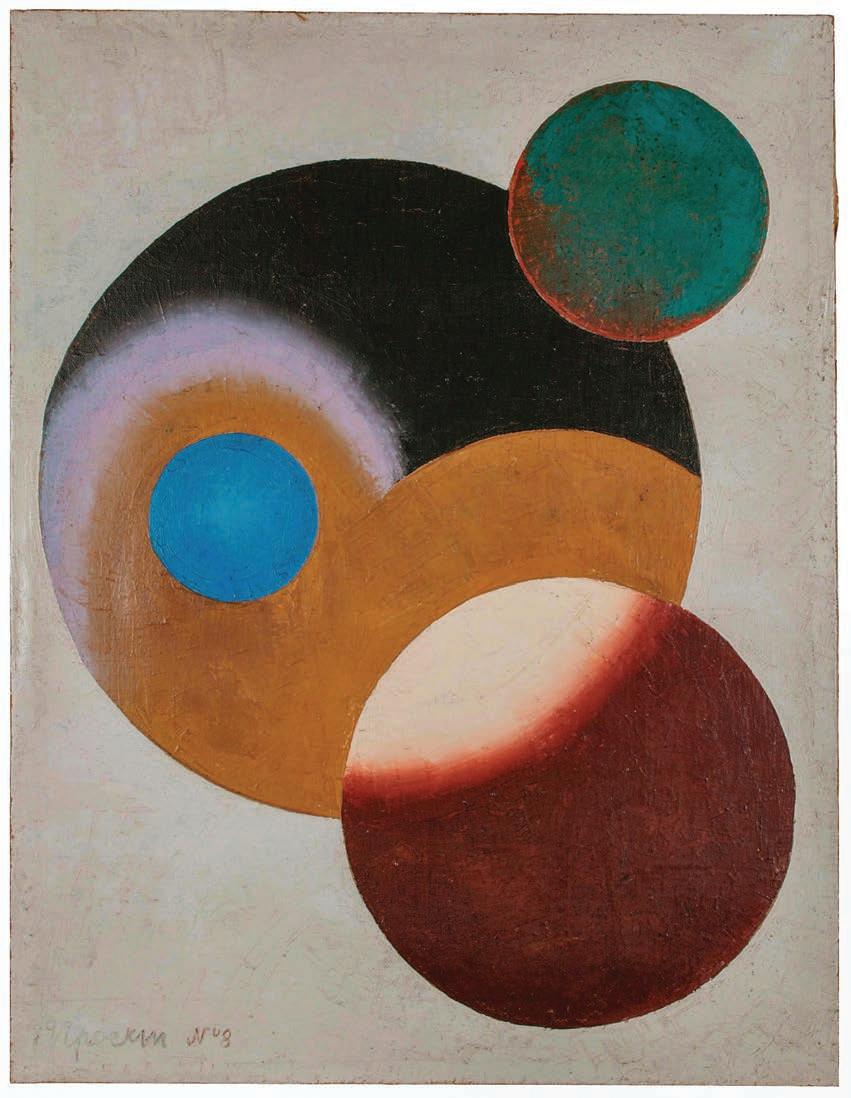
"I hope you are safe and this beautiful art is safe too. You did a great job and now this art influences people and artists all around the world. I just hope you are not at risk.
For me it is very touching also because of the history of my country. As well as the whole humanity of course.
As I feel these bright colors and forms hide artists souls suffering from great tension in a totalitarian state. Like a manifest of freedom hidden in a silent scream. And also for some artists like a dream of a new better world."
— A Russian follower of the Instagram account for this collection.
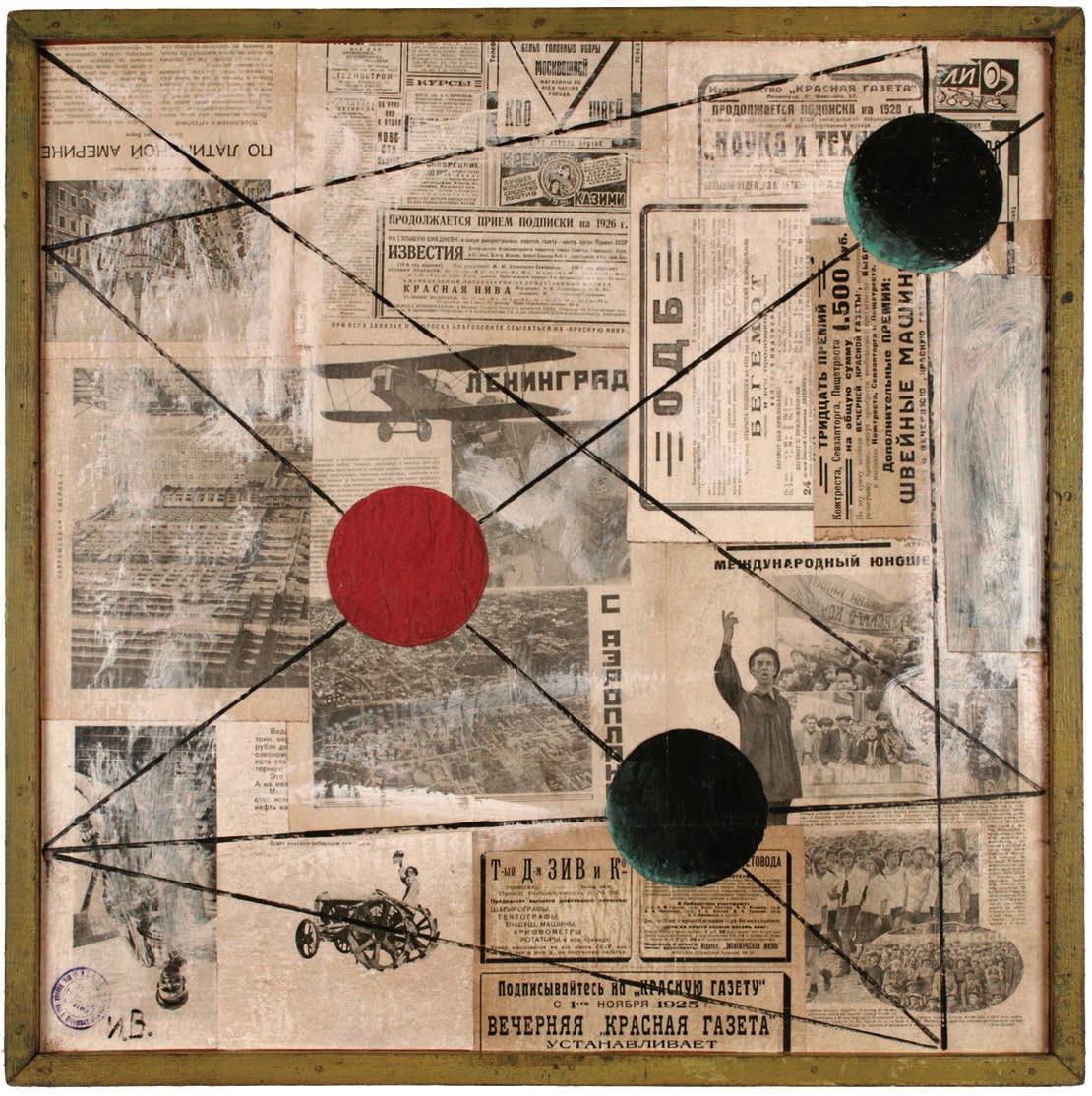
facing page: Unattributed.
Signed “I.V.” (Translation).
There’s an undeciphered bureaucratic stamp on the lower left front. Mixed media on plywood.
64.5 x 65 cm.
TABLE OF CONTENTS
1 - 8. The White Cross. A censorship label. An underpainting. A human hair.
9 - 10. "Perhaps these are works that were saved from Soviet ideological destruction."
11 - 12. Paintings hidden in a wall. The Red Scare. A blacklisted curator.
13 - 16. Secondary School, Sverdlovsky Region.
17 - 18. A Ukrainian postage stamp. Russia's Hypersonic Avant-Garde Missile.
19 - 20. An SS officer’s son. The red machine of socialism.
21 - 24. A painting viewed using transmitted light. An under-painting of a religious icon.
25 - 26. The X-ray of a painting.
27 - 28. "Woman with a Saw". Forensic handwriting analysis.
29 - 30. "A biological Institute in Vladimir?"
31 - 38. "The Anger of a Young Lady". A Handwriting Match.
39 - 40. "For What We Struggle". "To hang noodles on your ear."
41 - 42. "Kharbin papers… It's impossible.”
43 - 52. An X-ray reveals an underpainting.
53 - 56. Resemblance to works by the German artist, Willy Baumeister.
57. “Go, Doctor, I’m in Pain!!!”
58. "They believed money was evil."
59 - 64. Possible portraits of Anna. Anna Akhmatova.
65 - 66. Assignment. Stalin regime approved art.
67 - 68. Heinrich and Angelika Hoerle. Stupid. The First Russian Art Exhibition.
69 - 70. Sophie Taeuber-Arp. Angelika Hoerle. HEAD.
71 - 72. Sophie Taeuber-Arp. The First General German Art Exhibition.
73 - 78. The 1914 solar eclipse.
79 - 80. An X-ray reveals a man with a mustache.
81 - 82. An X-ray reveals a reclining nude. Tea Room.
83 - 84. "On the Beach in Sestoretsk."
85 - 86. U.S. ARMY. TRAM.
87 - 88. IZORAM.
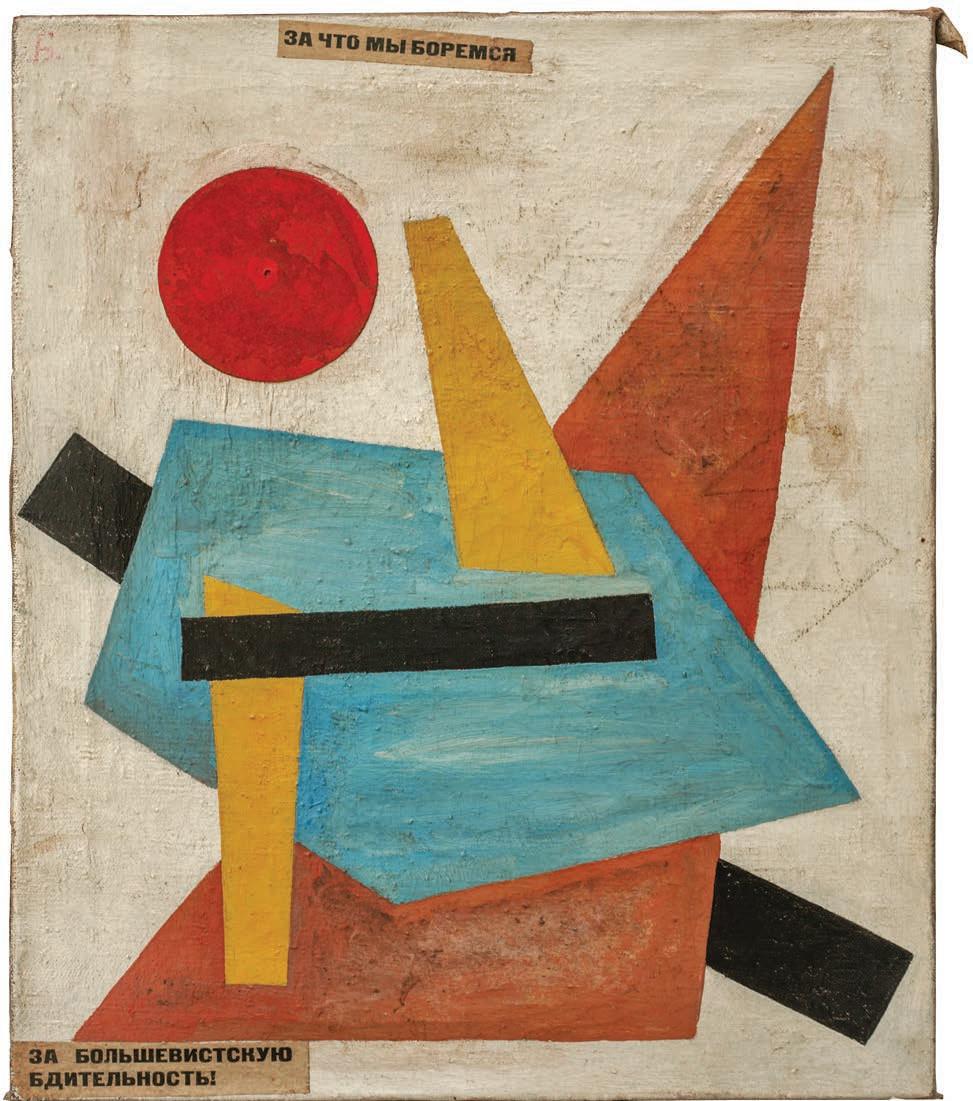
89 - 90. Gosizdat mark. The State Publishing House of the RSFS.
91. A hand washer.
92. A phone booth.
93 - 94. "It seems it belonged to the Military Publishing House."
95 - 96. An X-ray reveals a windmill. An artist’s journey.
97 - 98. The Communist Academy.
99 - 100. A second painting on the reverse.
101 - 102. A painting viewed using transmitted light.
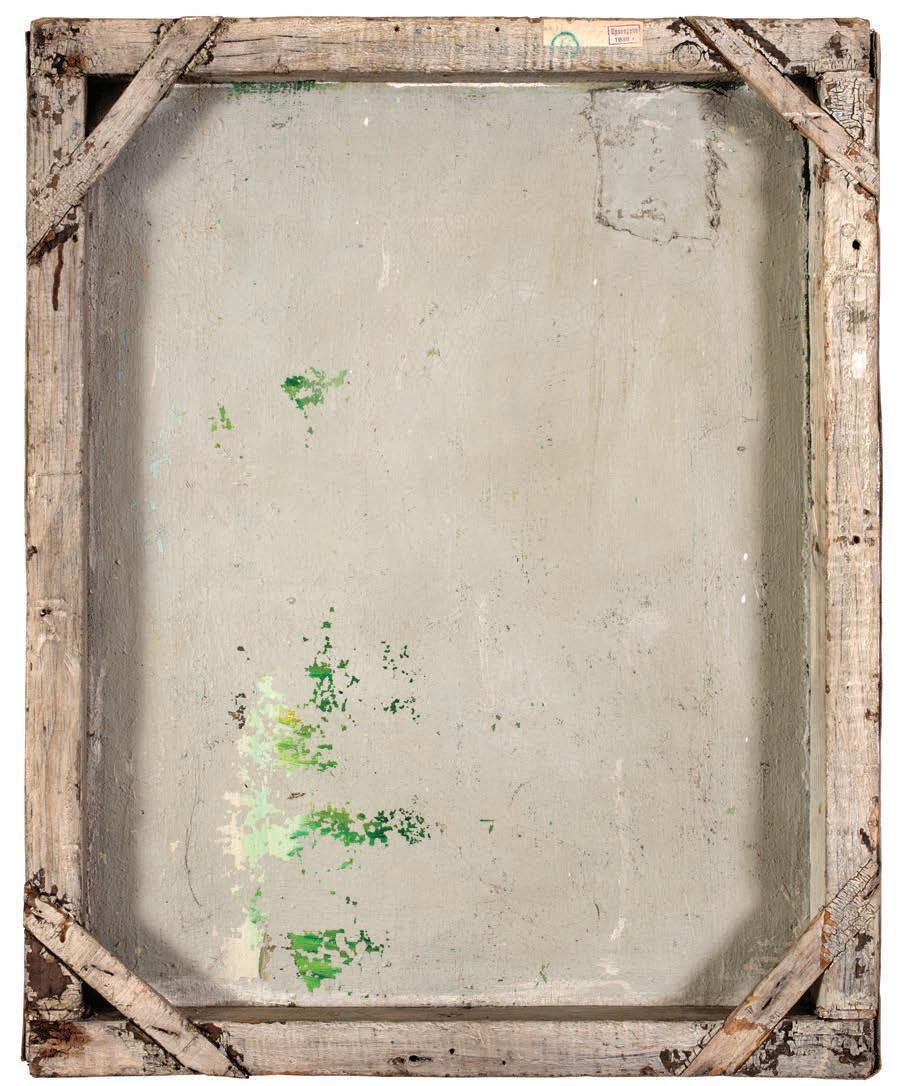
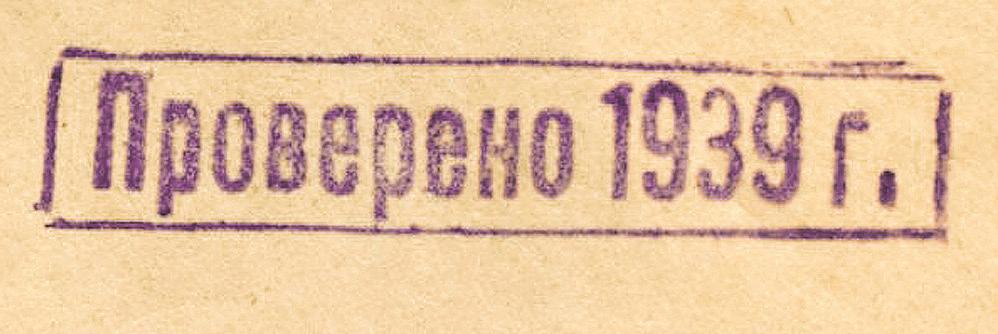
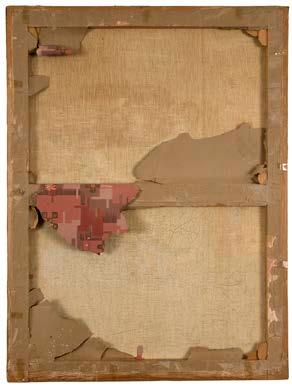
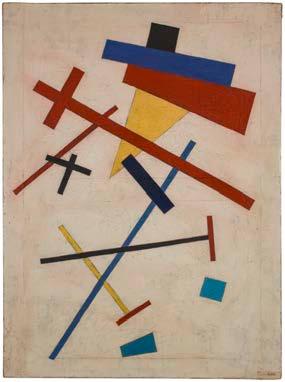
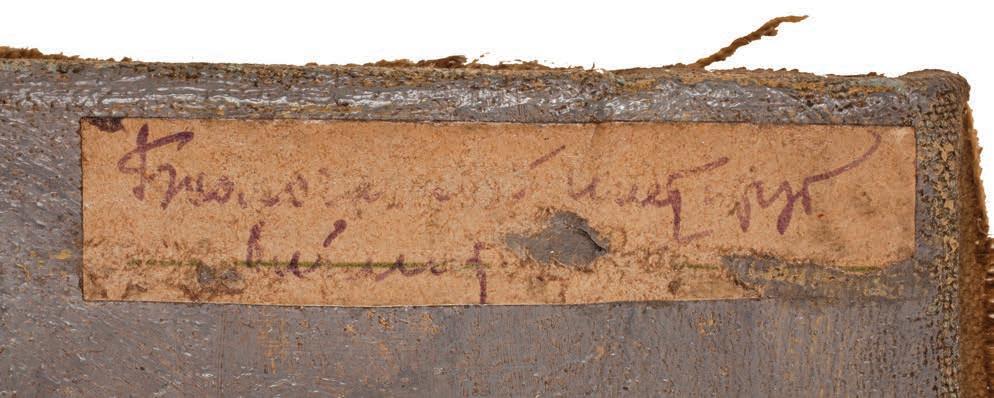
We acquired this painting from the German seller on December 8, 2004. Upon arrival, we noticed a small paper label on the reverse. A rubber stamp on the label translated to: "Retrieved 1939r." A handwritten inscription on the label appears to be an inventory number.
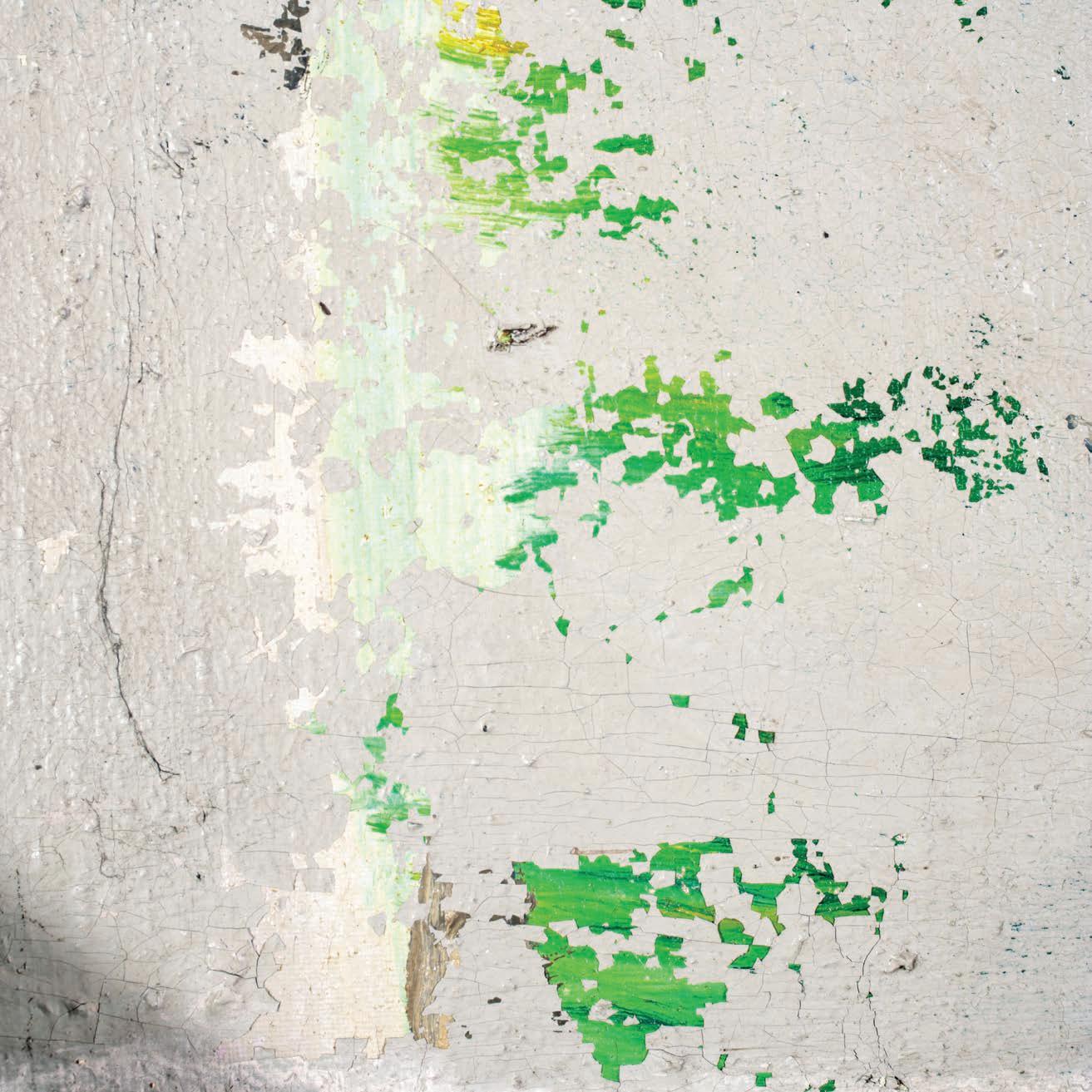
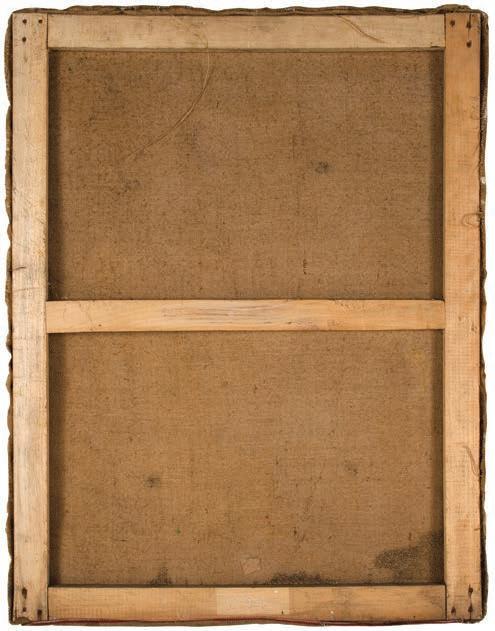
The reverse of the painting was covered with a layer of grey paint. In some areas, the paint was flaking off, revealing what appeared to be a second painting underneath.
The composition on the front of the painting consists of four black squares--one square in each corner. The four black squares on a white background form a simple white cross.
This is not a simple painting.
In the black areas, ruptures have occurred in the bituminous black pigment. These types of pigment ruptures are characteristic of Kasimir Malevich's work.
This painting has undergone extensive chemical analysis, which has concluded that the painting "No anachronistic pigments, binders, or fillers where (sic) observed".
Examples of these features and details are pictured on the pages that follow.
Facing Page:
In the style of Kasimir Malevich, (Ukrainian). Label on reverse in Russian translates to “It is verified 1939”, with the inventory number "-----" written in pencil.
Over-painting on reverse consisting of grey paint covering earlier painting.
Oil on canvas.
60 x 50.5 cm.
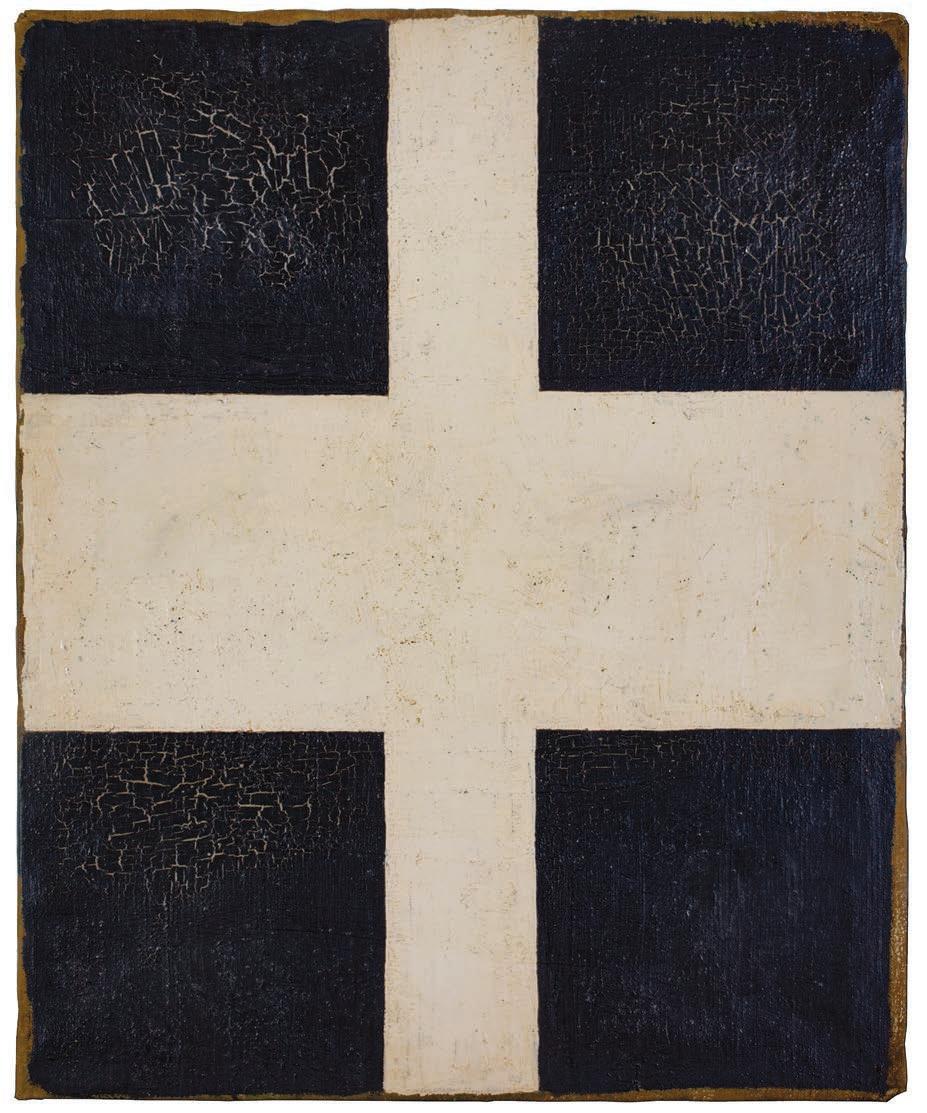
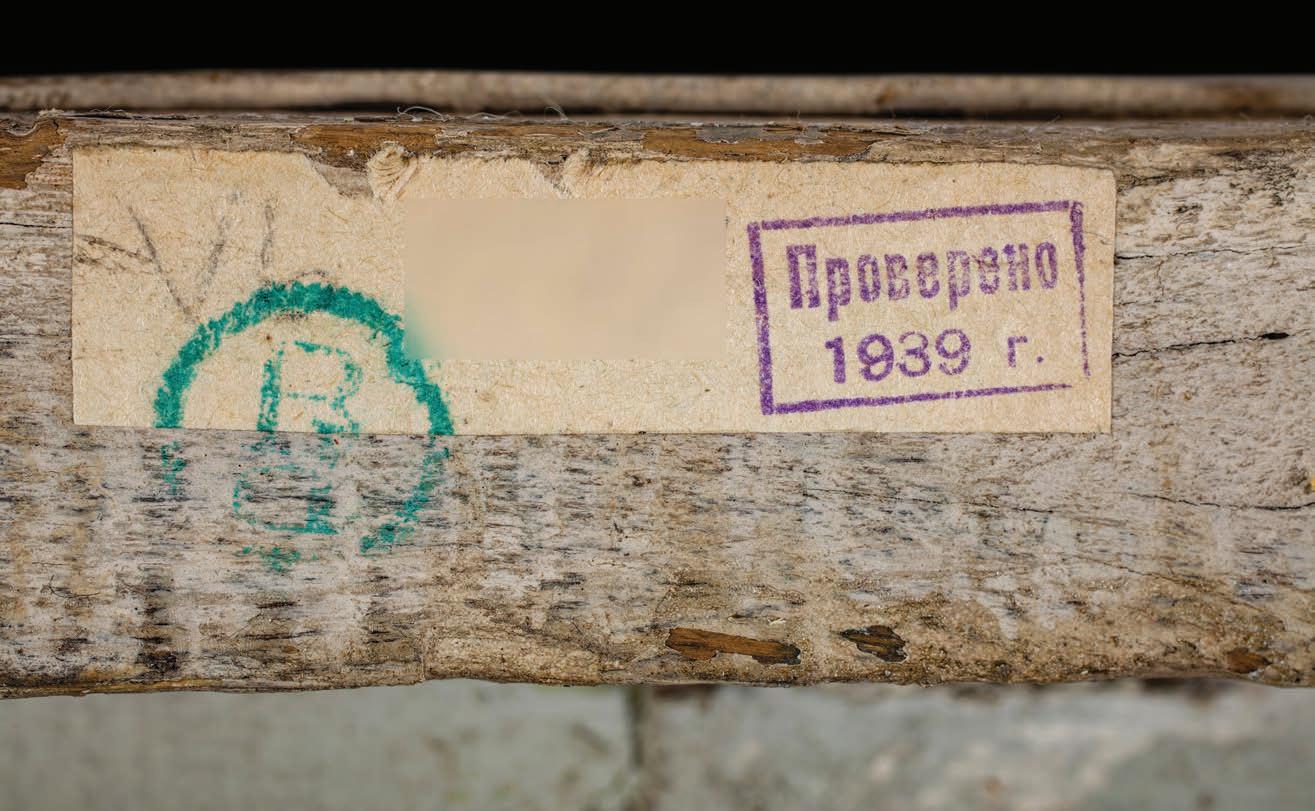
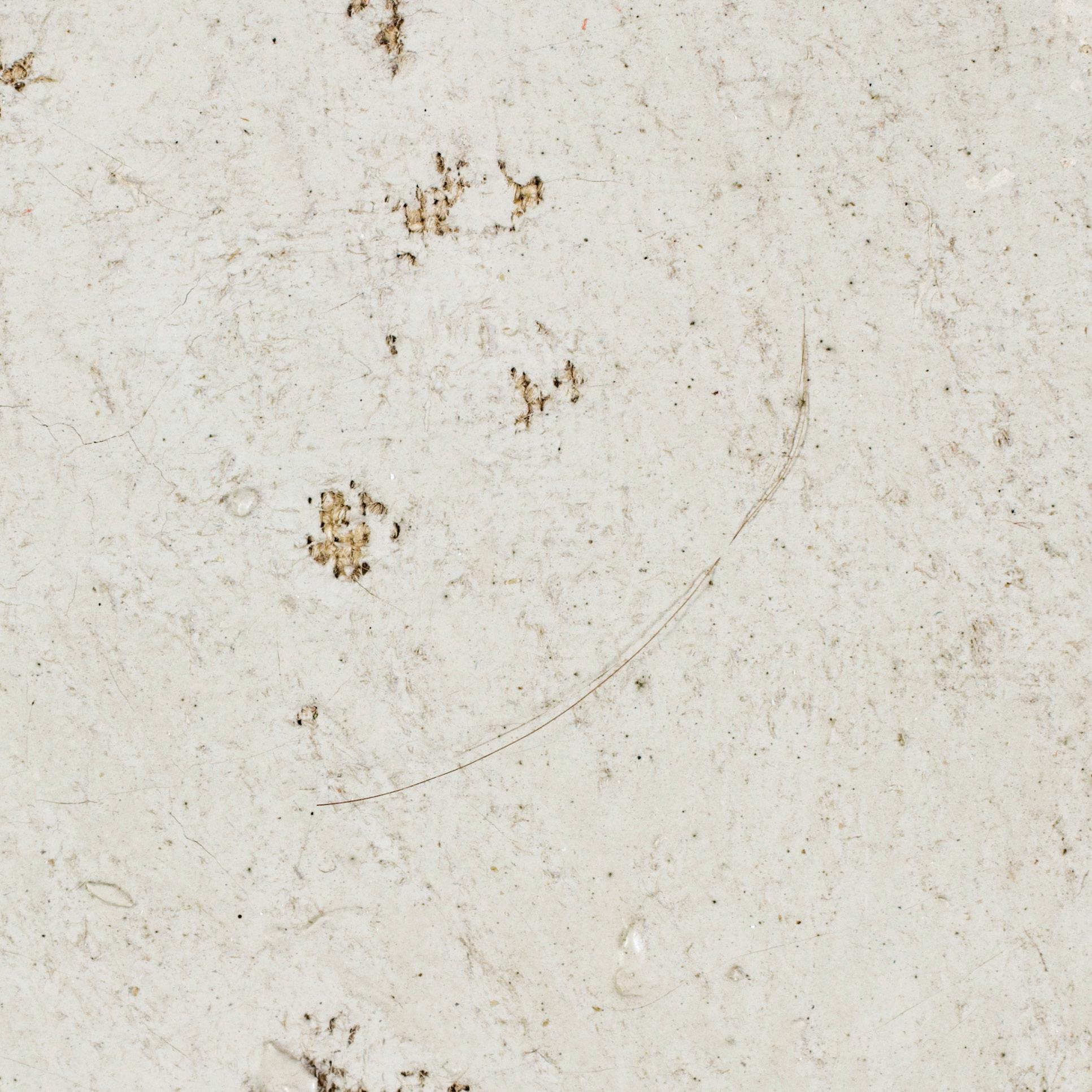
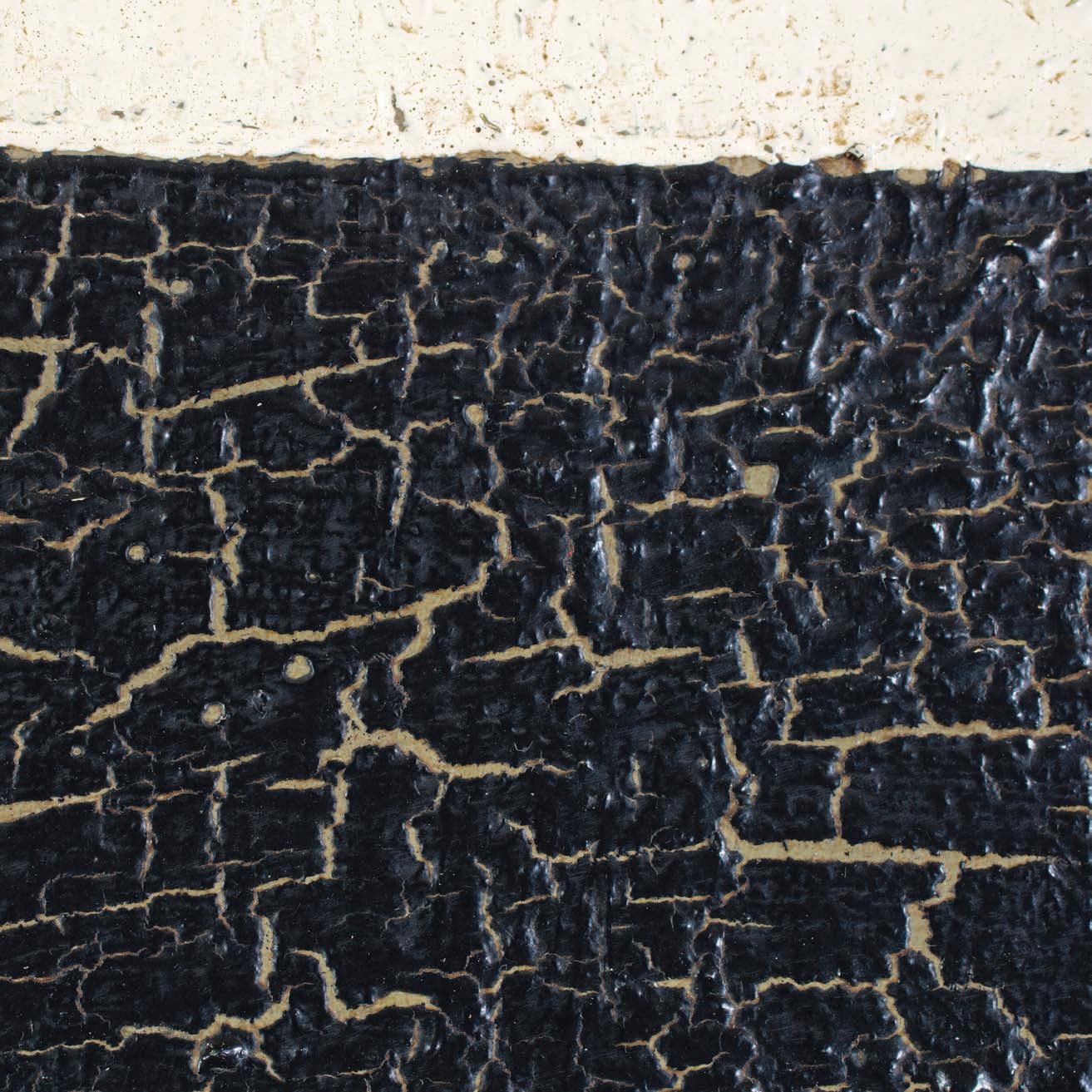
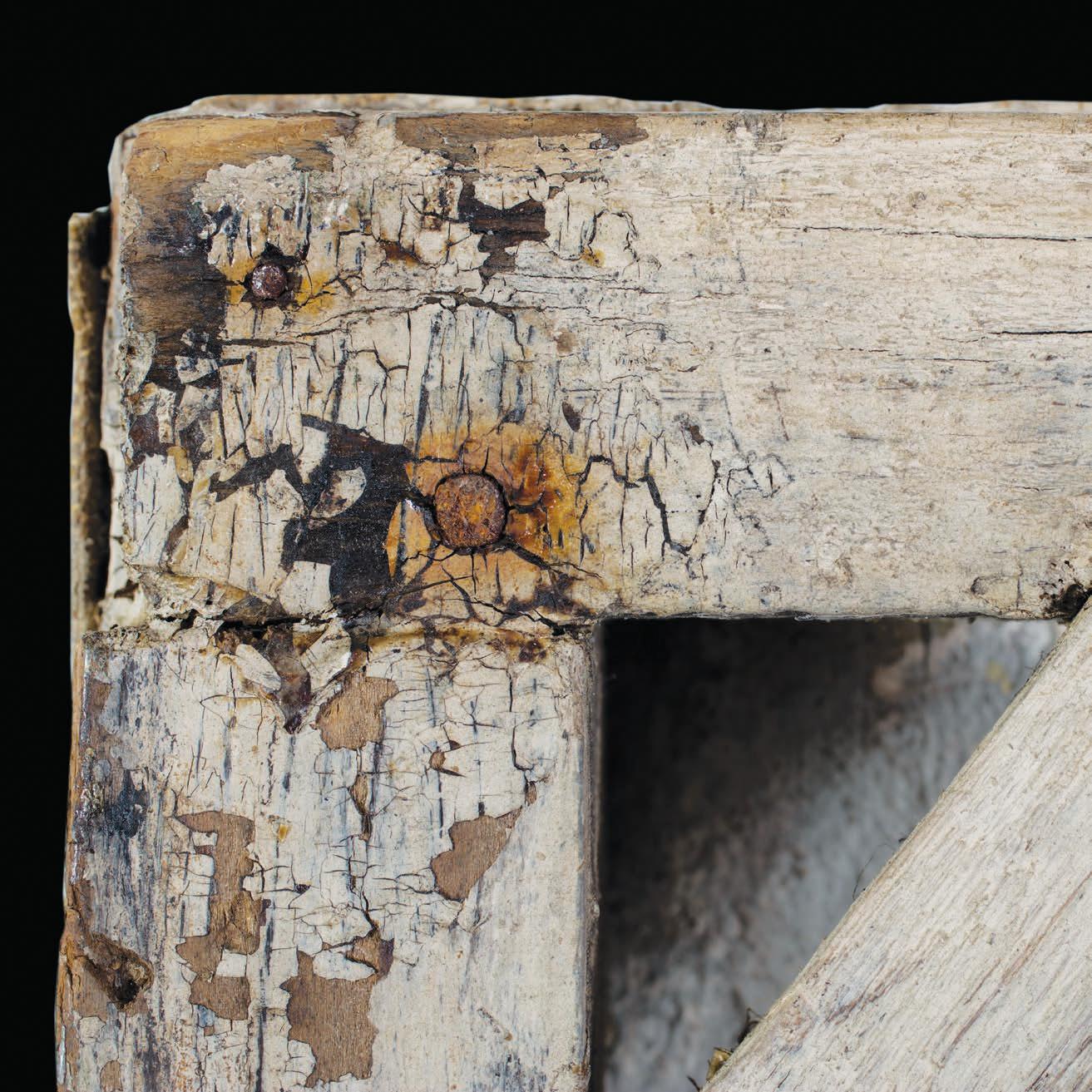
Detail of a strainer connection on the reverse.
We purchased this painting from the German seller on September 23, of 2004.
On the lower left corner of this painting there’s an inscription. An Instagram follower offers this as a possible translation.
“I.V. may be a signature. (Possible) Work of Boris Ioganson. Soviet Constructivism. Perhaps these are works that were saved from Soviet ideological destruction.”
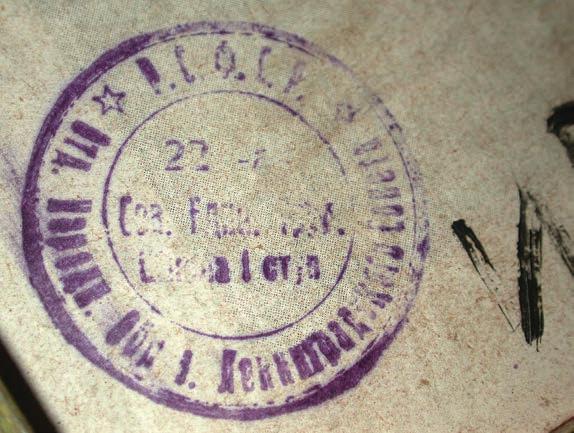
Detail of bureaucratic stamp.
Facing page: Signed “I.V.” in Russian. Bureaucratic stamp on the lower left front. Mixed media on plywood. 64.5 x 65 cm.
Susan opened the door to her late uncle's storage shed. It was the last room to be cleared out before the house could be placed on the overheated Los Angeles real estate market. This wasn't any ordinary house; it was a modernist masterpiece designed by the legendary architect Richard Neutra.
Susan's uncle, James (Jimmy) Bernard Byrnes, was the first curator of modern art at the Los Angeles County Museum of Art. She told me that he'd lost the position in 1952 after accusations of being a communist sympathizer during America's infamous Red Scare.
As Susan made her way through the stacks of posters, cardboard, and frames, she noticed something peculiar. At the back of the shed, a section of drywall had been cut out of the wall, then replaced. She could tell it wasn't a repair because the section cut from the wall was the same piece used to patch it.
She told me, "I thought to myself, could there be something hidden in the wall?
She explained how she removed the screws and pulled away the drywall, exposing a cavity. Hidden in the wall were five dusty paintings covered with Russian writing.
We stared at the Russian paintings propped against the living room sofa as Susan told me the story. Shaking her head, "Why were the paintings hidden? When were they hidden - did the artworks pose some threat? They must have. Why else would Uncle Jimmy feel the need to hide them?"
I sat looking at her paintings with another reason to wonder: Susan's works were clearly from the same family as ours. Nearly all of the experimental art of this period was produced in large Soviet staterun schools. Were these student works, or was this hoard of artworks what some had suggested, a mix of students and masters?
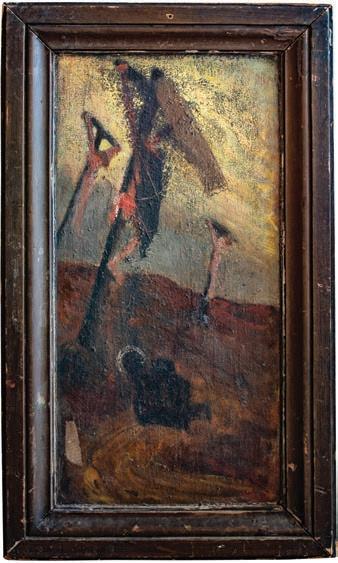
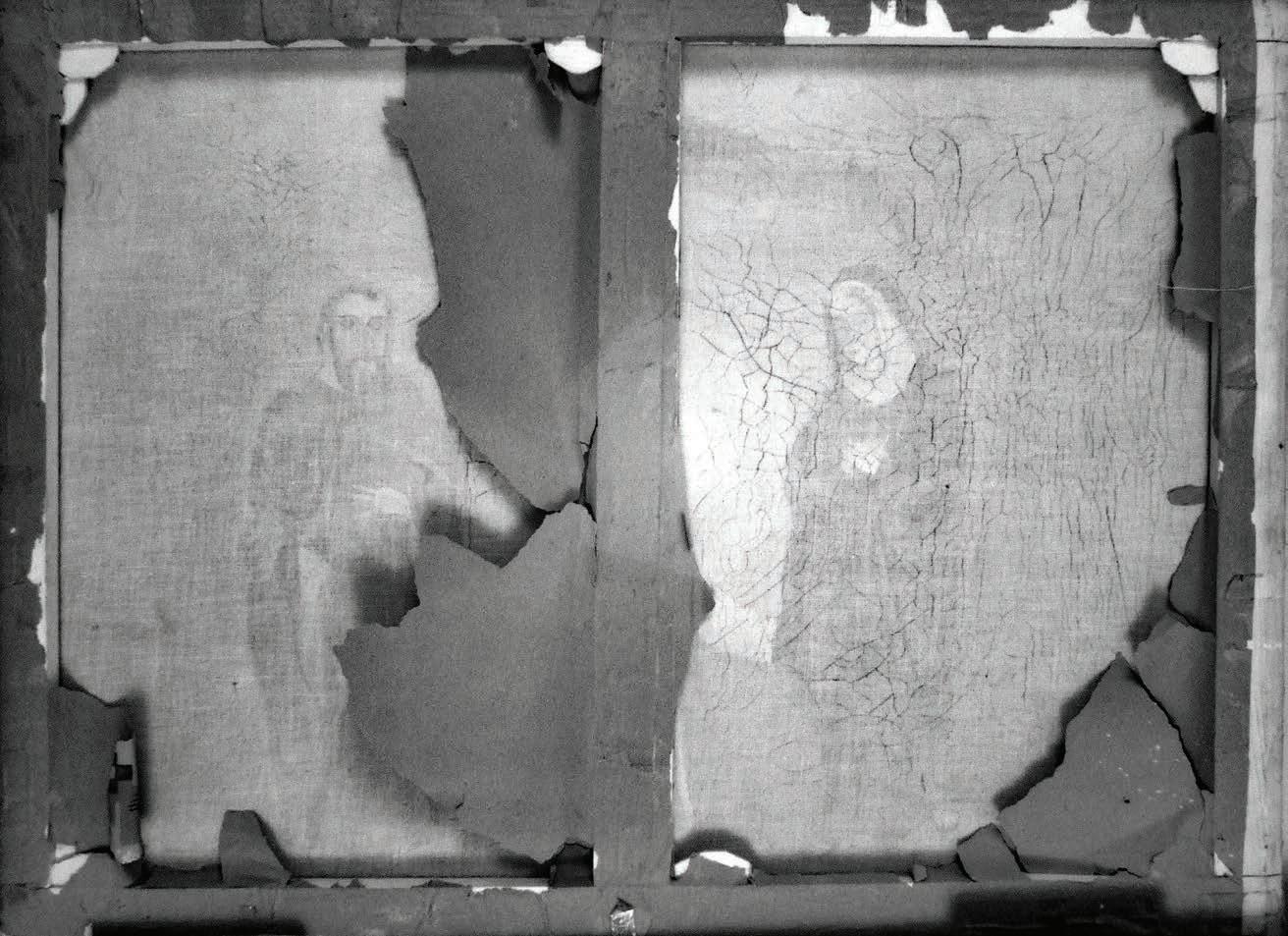
Above: An image of the crucifixion of Christ that appears on the reverse of a painting on the facing page.
Facing page: Three of the five paintings Susan Lucky discovered behind a false wall in the storage shed belonged to her uncle, a former curator of Modern Art at the Los Angeles County Museum of Art, LACMA.
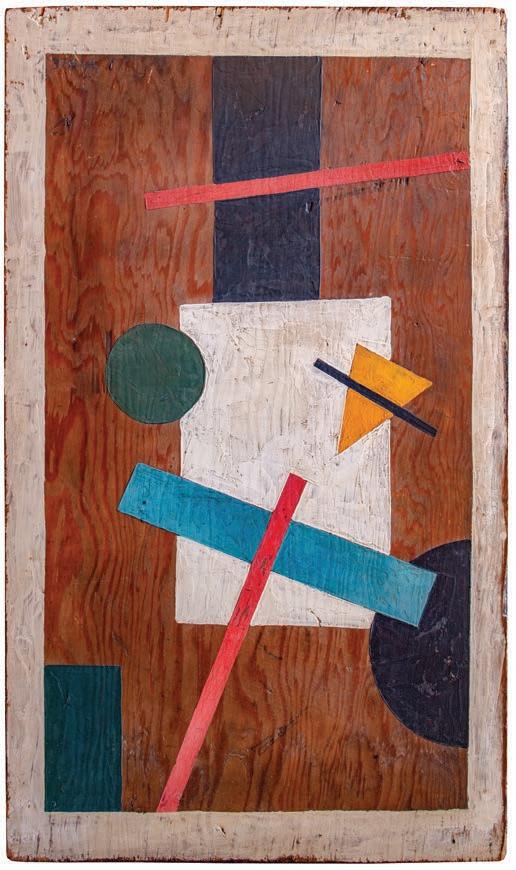
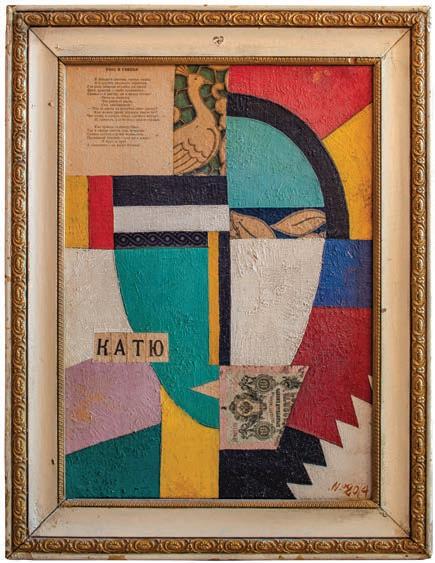
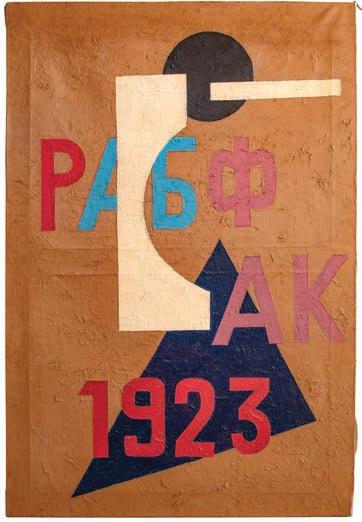
We acquired this painting on December 8, 2005. Upon its arrival, we noticed a small paper label (pictured right) on the upper front, right corner. The obscure label appears to read in Russian, “Library 20…Secondary School, Sverdlovsky Region.” A hand-written inscription on the strainer bar on the reverse also read “Km 60A.”
Below: Inscription on reverse reads “Km 60A”.
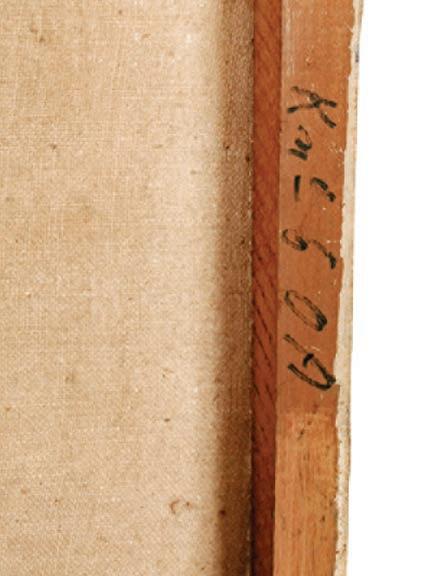
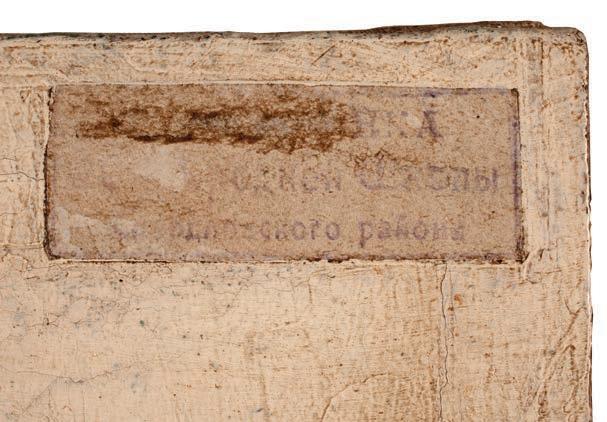
Label in upper right front corner is obscured, but appears to read in Russian “Library 20…Secondary School, Sverdlovsky District.”
Facing Page:
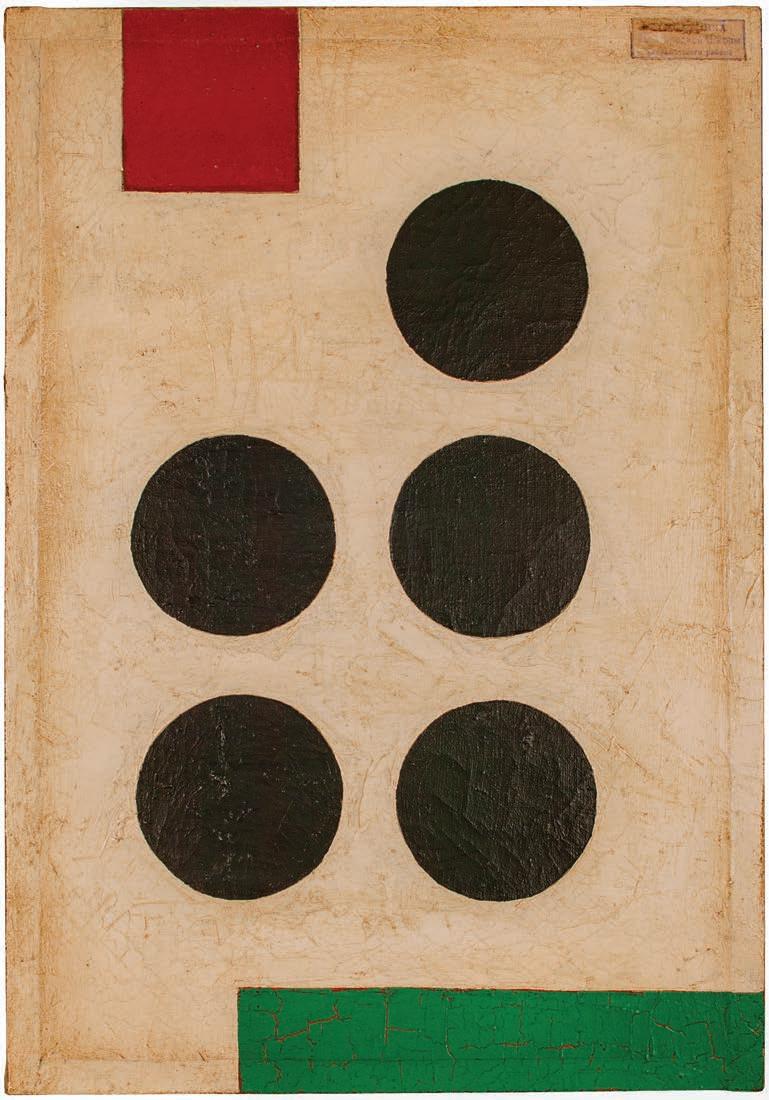
In the style of Kasimir Malevich, (Ukrainian).
Label in upper right front corner is obscure, but appears to read in Russian “Library 20… Secondary School, Sverdlovsky Region”.
Oil on canvas.
51 x 35.5 cm.
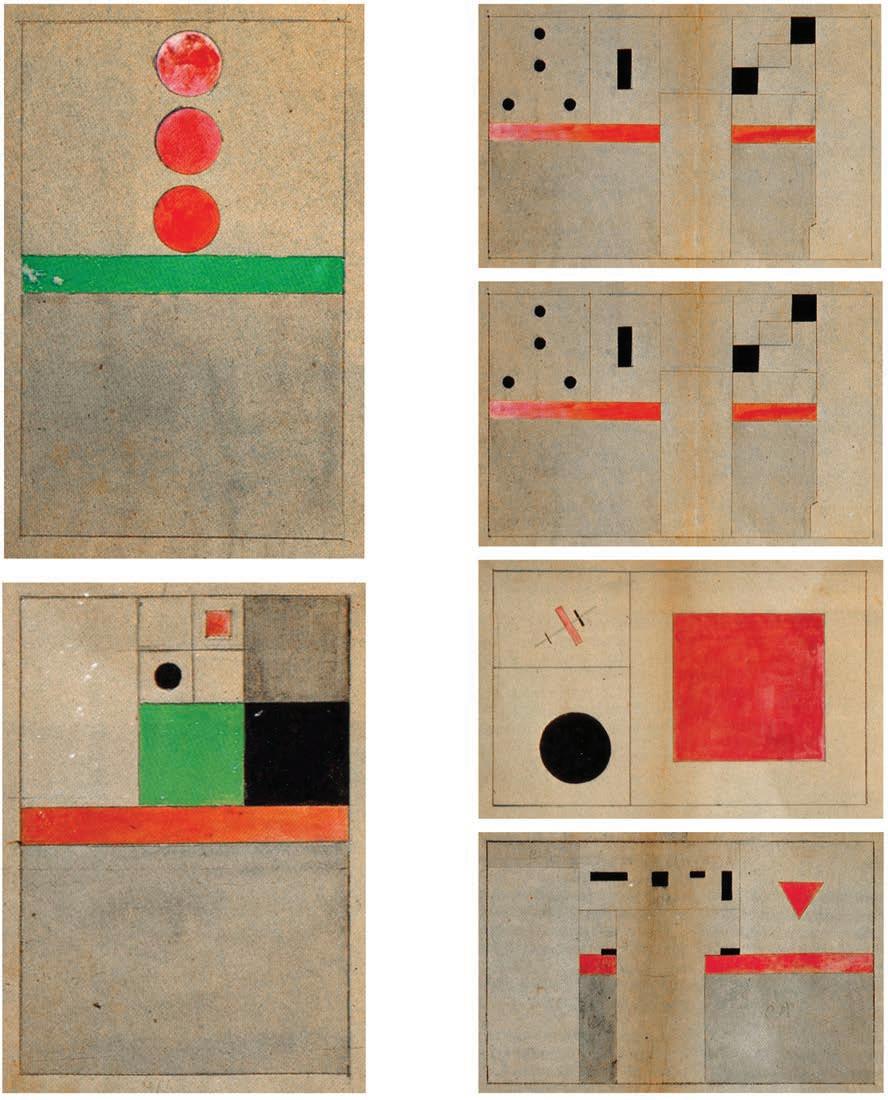
On the facing page are six drawings from the George Costakis Collection. George Costakis was an early collector of Russian Avant-Garde art. As a middle-class citizen in the former Soviet Union, he was able to purchase this banned art on the cheap. In Soviet Russia, these works had no monetary value. During certain periods of Soviet rule, even talking about this period in Russian art history could get a person sent to the Gulag.
Costakis discovered a painting on plywood by the great avant-garde artist Lyubov Popova being used to board up a broken window—the price he paid to acquire the work - a new piece of plywood.
These six drawings are a group of works that are thought to be by Kasimir Malevich, produced when he was a teacher at the Vitebsk school between 1920 and 1921. Notations on the sketches refer to rooms, “1st room,” “2nd room,” 3rd room,” “ceiling,” etc. It is believed that they are outlines for interior architectural spaces that were to be decorated in accordance with his Suprematist system.
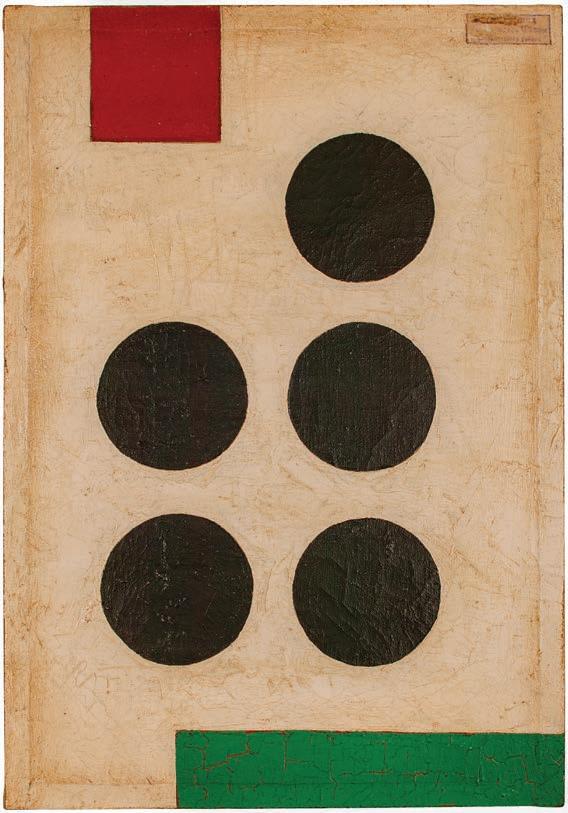
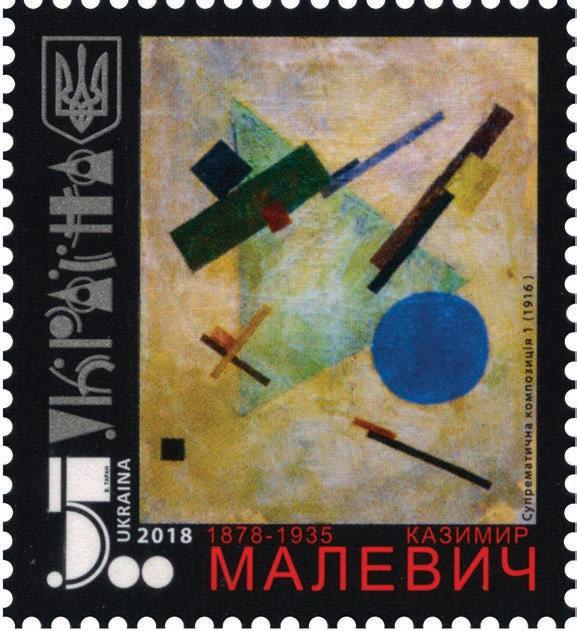
Born in Kyiv, Kasimir Malevich was Ukrainian. In 2018, the Ukrainian government honored him by issuing a postage stamp featuring one of his paintings.
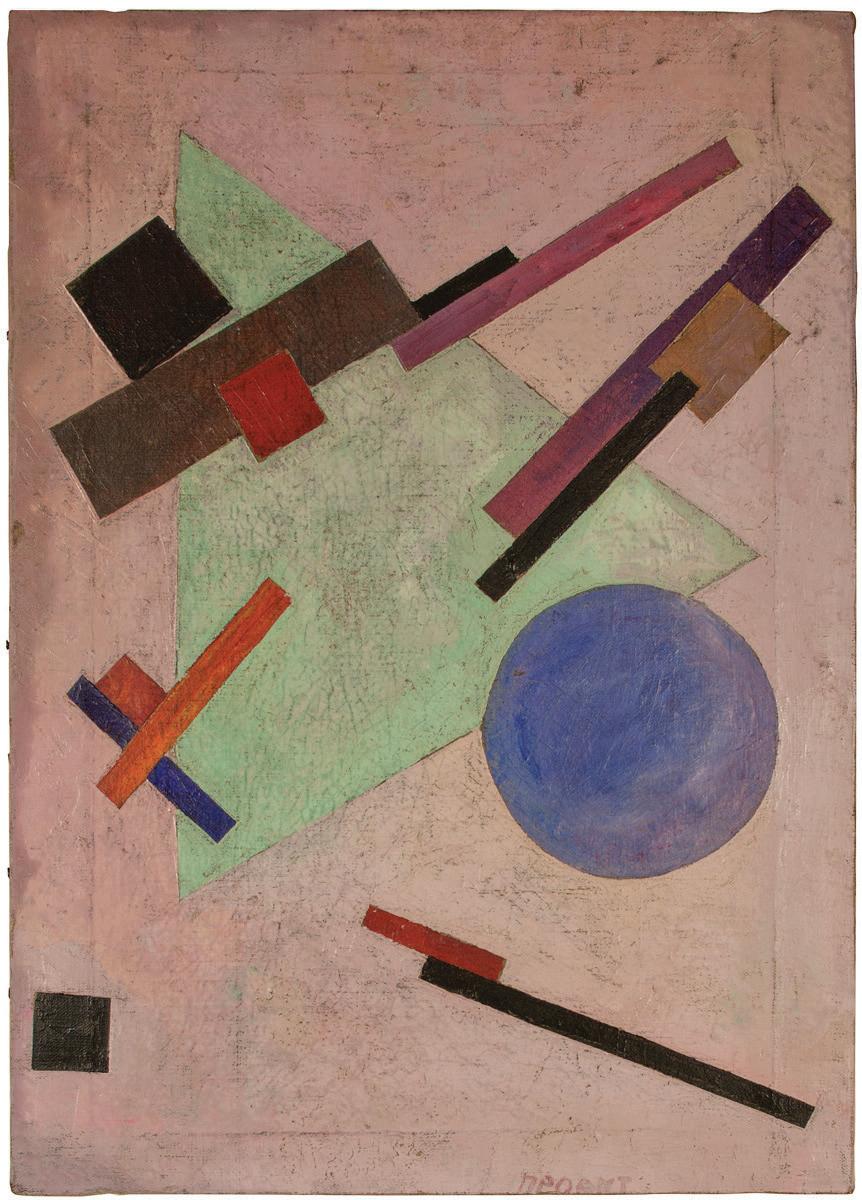
The artwork on this postage stamp appears similar to a painting in our collection, shown on the facing page.
In the 2016 Sochi Winter Olympics opening ceremony, the work of Kasimir Malevich was held up as a crown jewel of Russian cultural heritage. Malevich was Ukrainian. Under Stalin, the Russian government silenced Malevich. Very few Russian citizens today know who Kasimir Malevich was, yet his legacy is treasured in Ukraine. Is it possible that the Ukrainian government created this stamp to send a message?
I find it odd that when the Russian military introduced its new hypersonic missile, it was named the Avant-Garde. Was giving a weapon the name of an art movement that the Soviet government all but obliterated intended to send a message? What kind of diabolical synchronicity is at play that the first use of the weapon against the civilian population was in Kyiv, Ukraine, the birthplace of Kasimir Malevich?
We acquired this painting from the German seller on December 5, 2005.
Facing page: “PROJECT”
In the style of Kasimir Malevich, (Ukrainian).
The inscription in Russian on the lower right front corner translates to “Project.”
Oil on canvas.
50 x 36 cm.
Ours is not the only collection of this type of Soviet Avant-Garde art. There are several others.
In 2019, a friend and I visited a collector who lives in Germany. The man lived in a modest apartment in a small village. He was a collector; his walls were covered with artworks that spilled onto the floor and poured out of closets. He was good-natured and disclosed that he'd acquired all of his avant-garde works from the same seller we'd acquired our works from.
He told us about his past and how he'd come to live in his little town. Now in his late 70s, he told us that his father, an SS officer and physician in the German army, was tasked with counting the dead after the firebombing of Dresden. He told us that his father stopped counting the dead when the number reached 130,000.
He explained that Dresden was his birthplace and that his father fled, taking his family, as the Russian troops advanced. He brought them to the little village where he now lives with his collection of orphaned Russian art.
A Russian individual who follows our Instagram account sent me this message after I posted this image of a painting from the German man's collection:
"This is Soviet communism propaganda, if interested read about it. How painters and sculptors were used in the USSR during the era of the avant-garde. This is basically the order of the red machine of socialism."
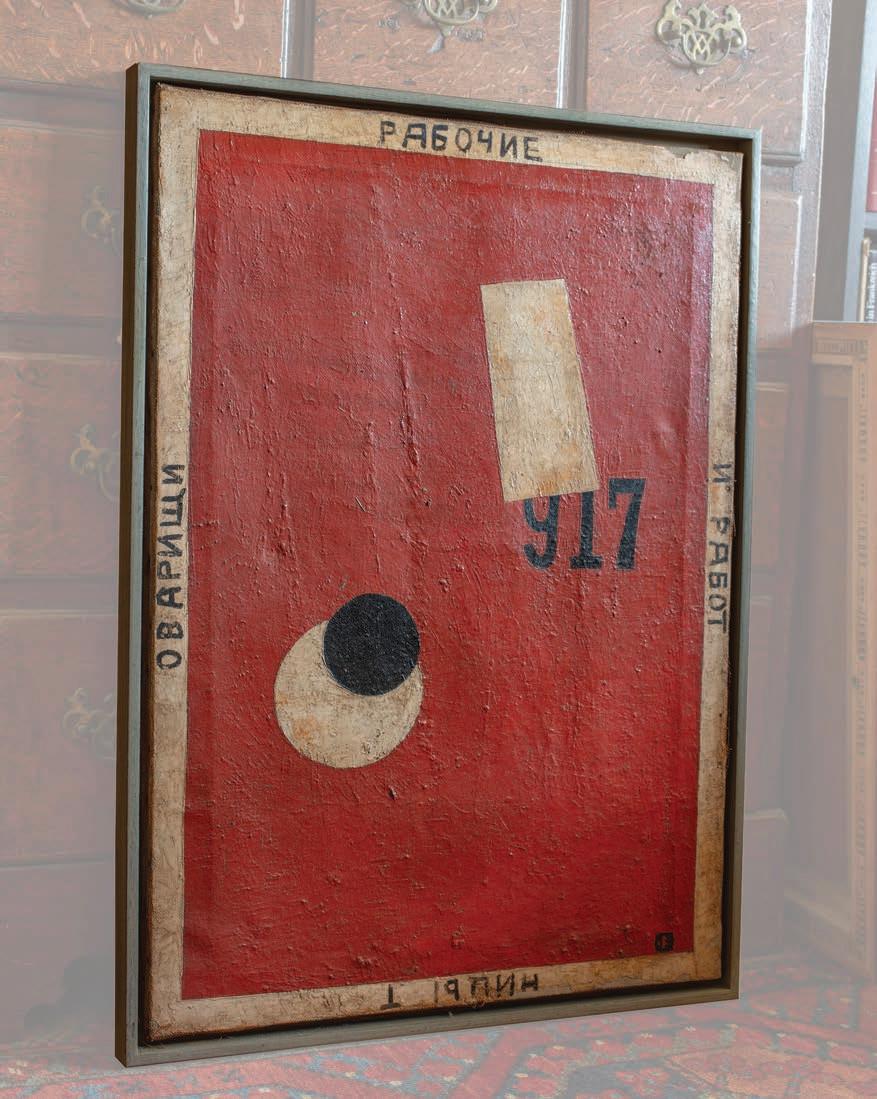
Using Google Translate, I deciphered the words inscribed on the painting. They appear to translate to: On the top, "WORKERS," On the right-facing edge, "AND WORKS" on the bottom, "NICE," and on the left, facing edge, "COMRAD."
The word "COMRAD" appears to have the first letter blotted out. The likely letter that was blotted out would be a "T" that would complete the spelling of "COMRAD." Why someone would do this is anyone's guess. I've placed a picture below of the over-painted area.
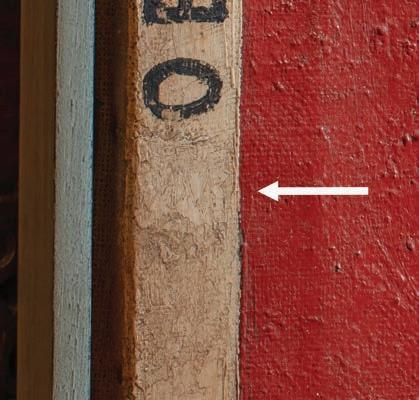
Over-painted area
Facing page:
A work from the anonymous German collection.
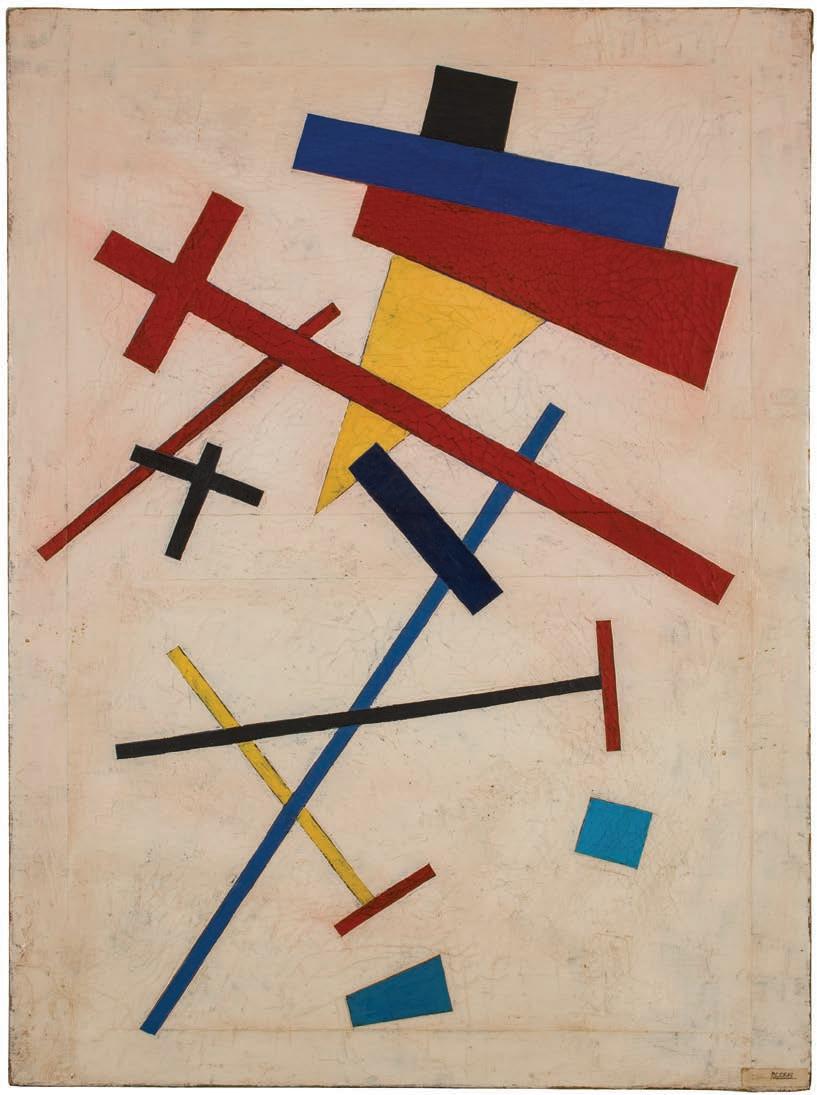
We acquired this painting on January 6, 2006, from the German seller.
Sitting in my living room, using a box cutter, I gently extracted the painting from a chrysalis of bubble wrap and packing tape. Two days before, it was in Germany. Now, here it was in Colorado. It was a cloudy winter morning. As I gently pushed away the plastic, I moved the painting into position to see it more clearly. Arms outstretched, I rotated the painting, momentarily blocking the picture window. What I saw shocked me. In areas, mainly the reds, there was a dense network of craquelure; the cracking in the red pigment was so intense that, as I moved the painting past the window, I could see the branches of a leafless tree in our front yard through the dense network of cracks.
I later photographed the painting using transmitted light (right).
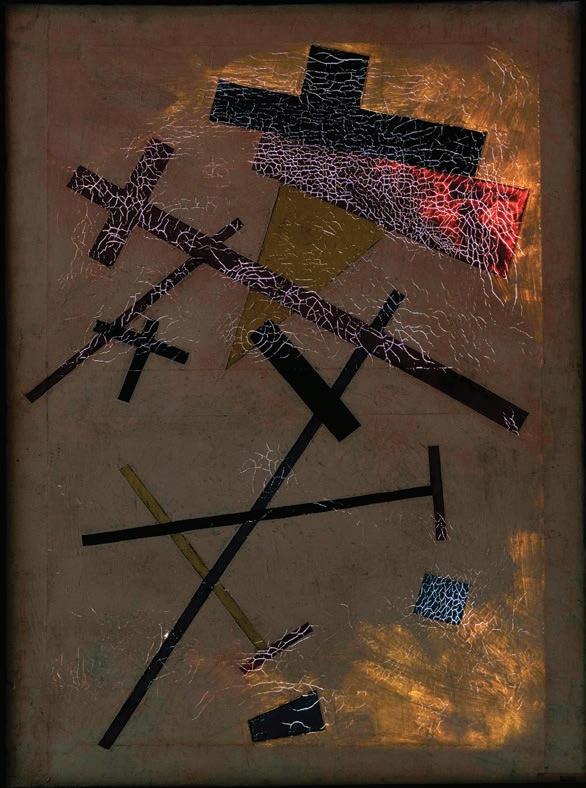
Above: Viewed using transmitted light.
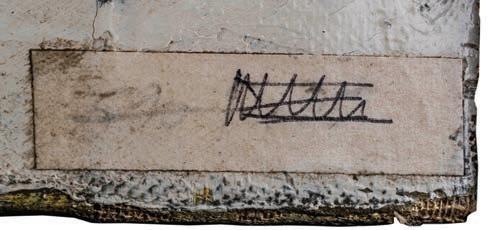
Facing page: Unsigned.
In the style of Kasimir Malevich, (Ukrainian). Undeciphered paper label on the lower right front. Oil on canvas. 73 x 54 cm.
When we think of the classic Russian Orthodox icon, we usually picture it as egg tempera on a solid wooden board. Still, there was a significant shift during the Synodal period toward painting freestanding icons on stretched canvas, following the Westernizing reforms of Peter the Great in the early 18th century.
Conservation research from major Russian institutions, such as the State Tretyakov Gallery, reveals that some avant-garde artists, including Kazimir Malevich and Ivan Kliun, occasionally painted over traditional religious icons. Driven largely by material shortages during the late 1910s and early 1920s, artists reused traditional linden icon boards prepared with levkas. Technical imaging and material analysis published in conservation bulletins have uncovered fragmented Orthodox features—such as halos, facial modeling, and inscriptions—hidden beneath Suprematist and abstract surfaces.
While there are explicit cases of modern compositions executed directly over partially removed icons with visible saints' faces, conservators exercise caution, noting that the underlying imagery is often heavily scraped or obscured. Ultimately, this scattered body of evidence confirms that physical overpainting occurred, though it primarily involved lesser-known works. Rather than a systematic or ideologically unified practice of destroying religious art, the reuse of these panels appears to have been a pragmatic response to the era's material constraints.
Facing page:
The image of a religious scene on a painting that appears to be in the style of Kasimir Malevich (left) was revealed using infrared reflectography.

An X-ray of the painting on the facing page revealed a still life beneath the visible surface. The hidden painting appears to be in the style of the artist Ilya Mashkov. Mashkov taught at the State Free Art Studios at VKhUTEMAS from 1918 to 1930. VKhUTEMAS was a revolutionary school that promoted radical experimentation and design, often going further than its German Bauhaus counterpart.
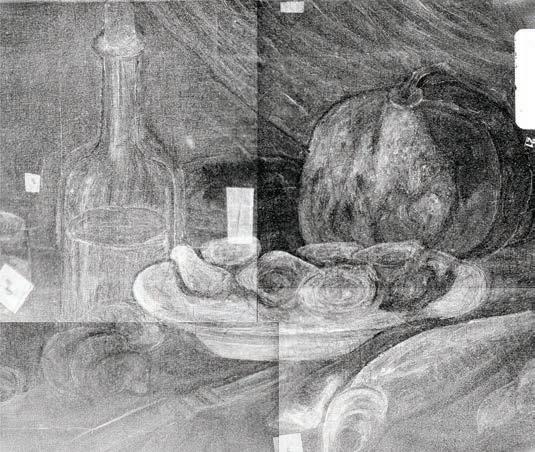
Under-painting revealed using X-ray.
The curriculum at VKhUTEMAS was designed to give students an understanding of the principles that were being explored in abstract and avant-garde art by starting with the principles developed by Cezanne and then working forward to Picasso’s cubism.
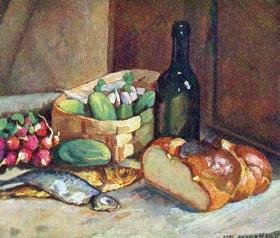
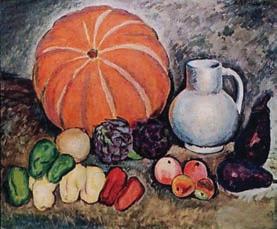
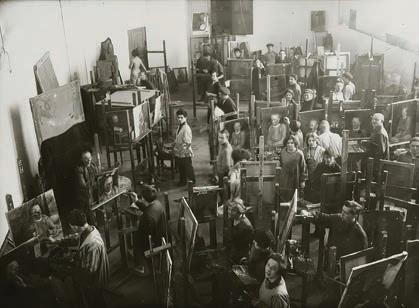
Facing page: Unattributed. There's an undeciphered inkstamp on front right corner. An under-painting has been revealed using X-ray. Oil on canvas.
65 x 50 cm.
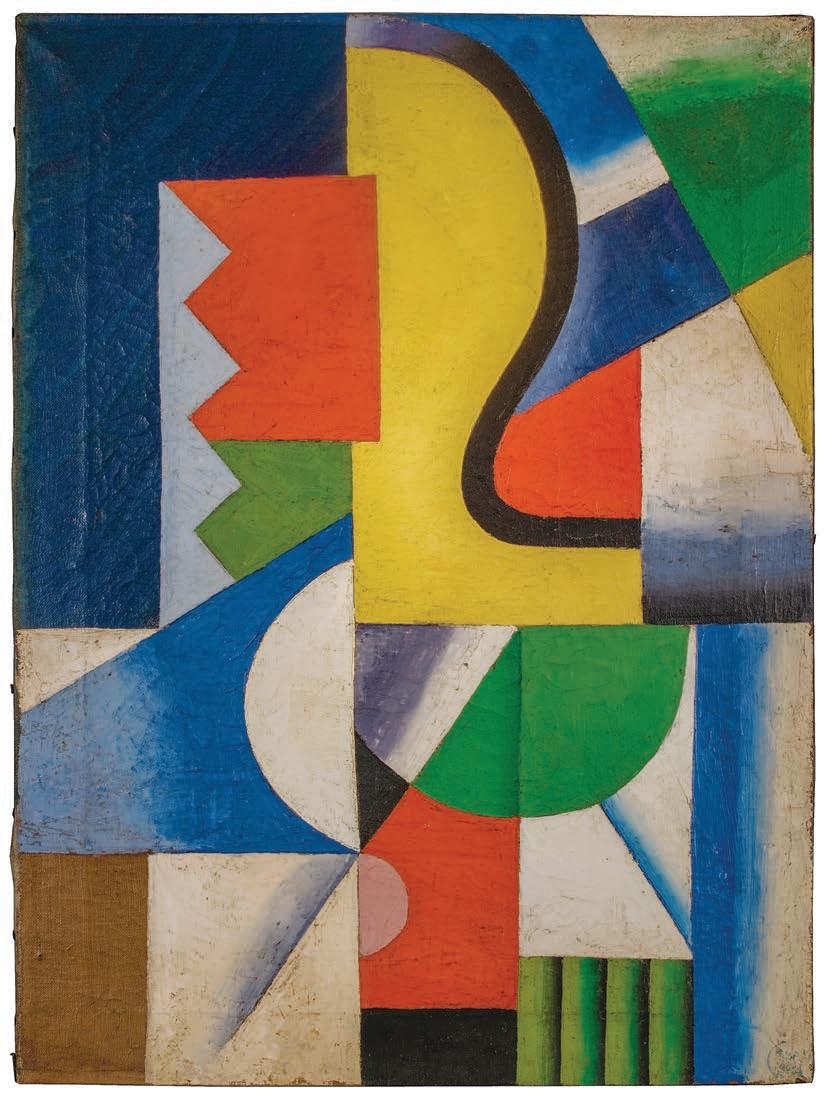
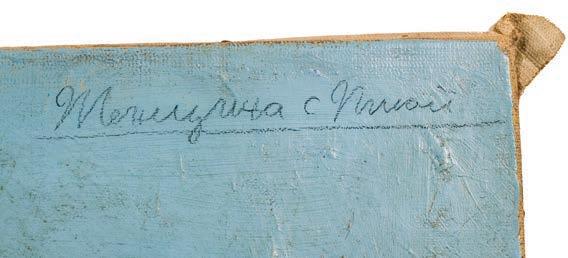
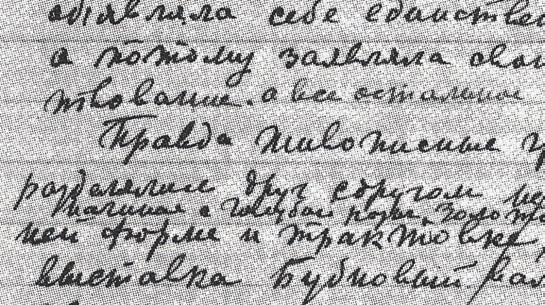
We acquired this work from the German seller on December 19, 2004. Upon arrival, we noticed an inscription in the top-right corner of this painting. The Cyrillic inscription, lightly done in pencil, translates to "Woman with a Saw." I sent an image of the inscription, along with known examples of Kasimir Malevich's handwriting, to a board-certified forensic document examiner. She concluded in a written statement:
"Handwriting characteristics appearing in Q-1 identified as the writing of "Kasimir Malevich" also appear in K-1 submitted as the known signature of "Kasimir Malevich.'
'The opinion is based on similarities identified with Q-1 and K-1. The Letter spacing, word spacing, style of letters, initial and terminal strokes, letter connections, upper and lower extensions, angular and rounded letter styles, open case e plus many other similarities.'
'It is this examiner's opinion that there is a high probability Q-1 and K-1 were authored by the same writer."
Facing page:
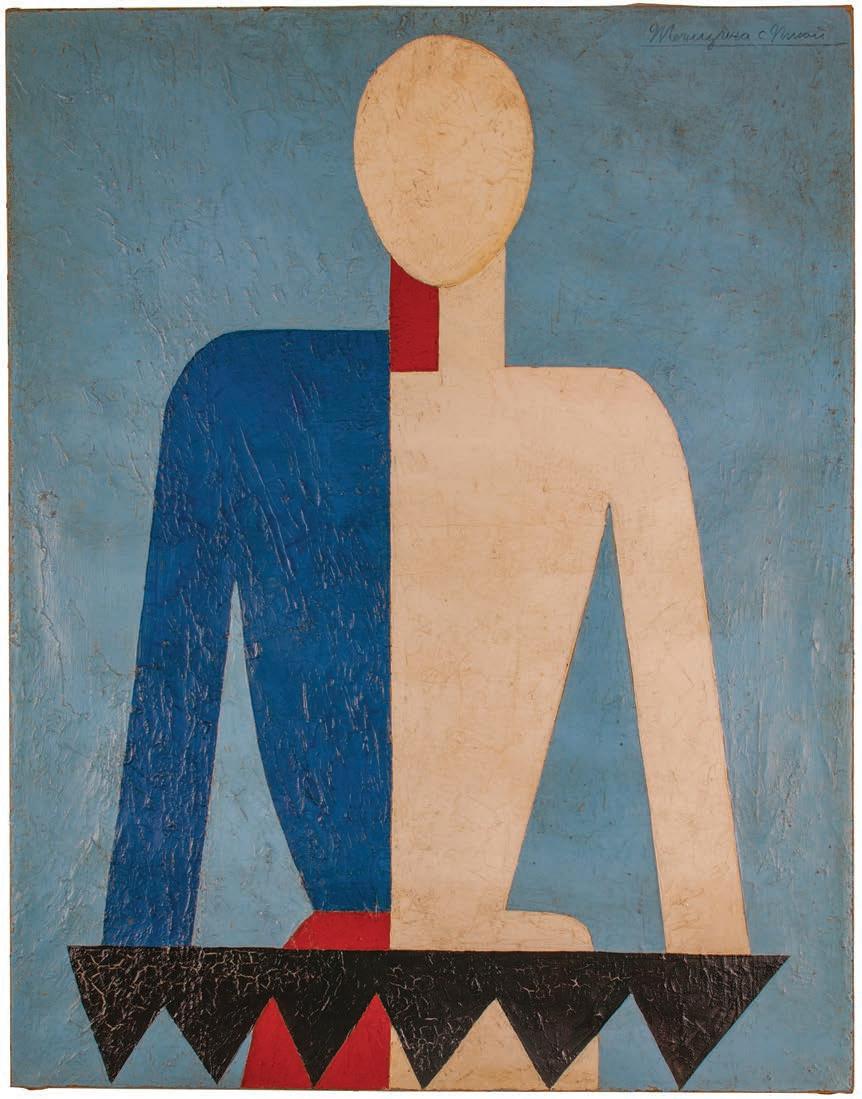
“Woman with a Saw”
In the style of Kasimir Malevich (Ukrainian). The text in Cyrillic cursive in the upper right front corner translates to “Woman with a Saw”. Oil on canvas. 90 x 70 cm.
On the upper right corner of this painting there’s a small paper label. An Instagram follower offers this as a possible translation.
“Biological Institute. Bottom row: Vladimir? Perhaps the town, or an artist’s name. There's a Bio institute in Vladimir."
Facing page: In the style of Nadezhda Udaltsova. Label in Russian, upper right front corner translates to “Biological Institute” (Institute of Biology). Oil on canvas. 48 x 38 cm.
We acquired this work from the German seller on May 28, 2005.
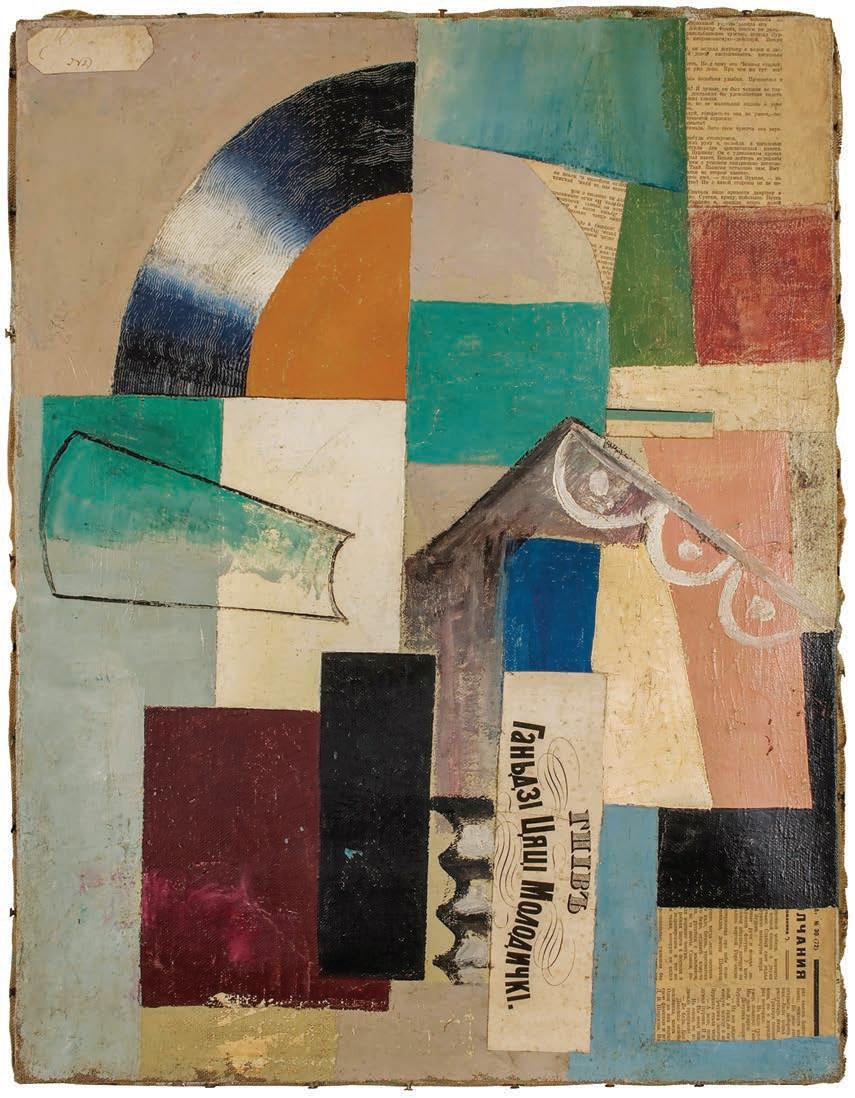
There's an inscription on a small paper label affixed to the canvas on the upper left corner. A follower of our Instagram account offered this translation:
"The incomplete inscription says — 'Of Tsargrad. Tsargrad was an old Slavic name for Constantinople/ Istanbul."
The collage element in the lower center-right appears to be a fragment of sheet music that references the title of an old Ukrainian folk song. The satirical verse, or a broadside, reads: “The Anger of Young Lady Hanzi Tsyatsya.”
This painting has undergone extensive chemical analysis, which concluded that, "No anachronistic pigments, binders, or fillers where (sic) observed".
The hand-woven canvas is coarse, and the hardwood strainer must have been difficult to penetrate, as the nails on the tacking edge protrude, giving this painting a rustic and provisional sense of urgency.
If there's one quality that runs through all of the work in this collection, it is a sense of urgency. This art has the feel of work that needed to be made.
Facing page:
In the style of Kasimir Malevich, (Ukrainian).
Paper label written in Cyrillic cursive, upper left, translates as “Of Tsargrad.”
Mixed media on canvas.
67 x 50 cm.
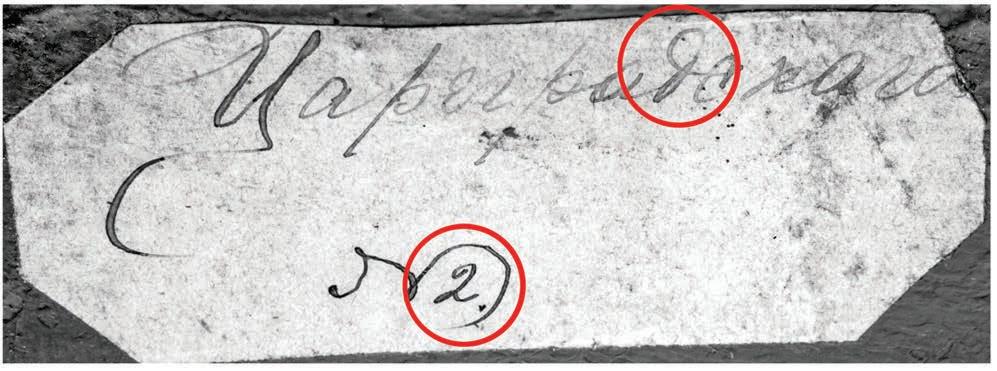
Above: Detail of the label on the painting in our collection.
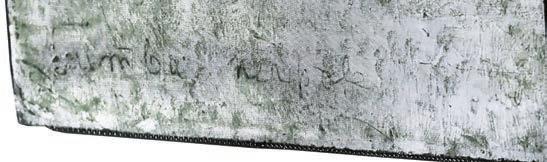
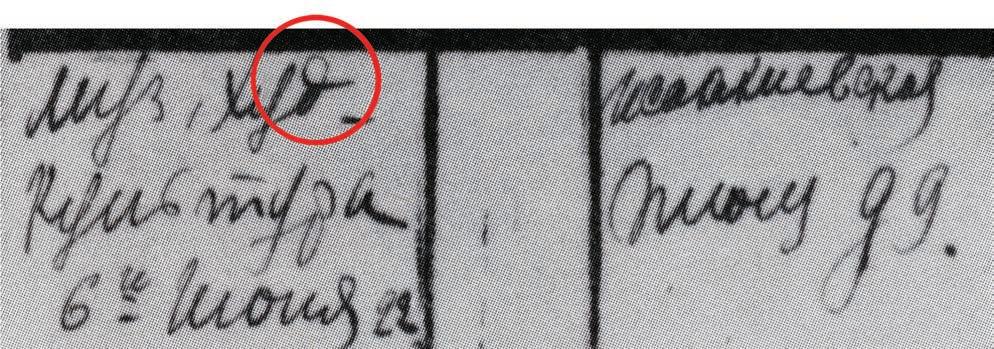
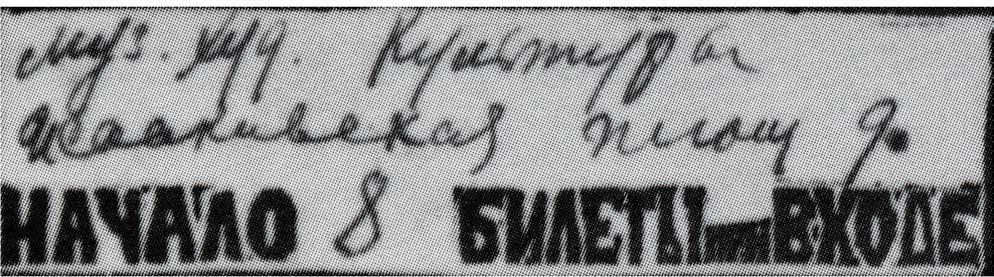
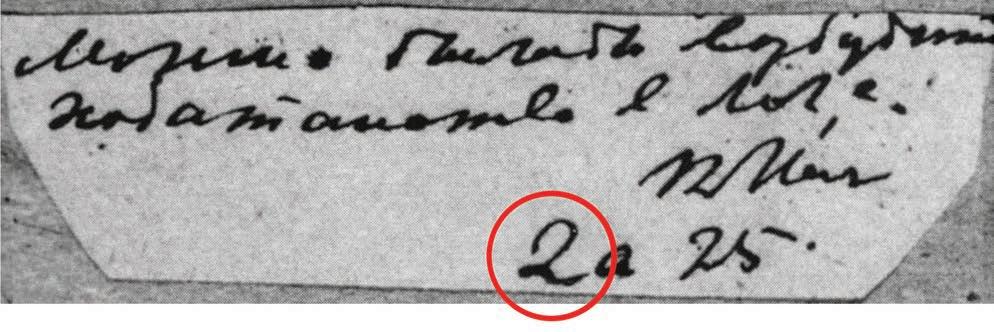
As with Woman with a Saw, this painting retains a trace of its past that may help determine its authorship. On the opposite page are three inscriptions that are known to be by Malevich. It seems remarkable that one of the labels even has the same clipped corners. This label and the delicately penciled inscription on the Woman with a Saw painting make me wonder how many such titles, labels, and captions may have been lost or destroyed on known and accepted works, simply because of the low status of this art. In Soviet Russia, avant-aarde works were generally treated with disregard, if not outright disdain.
In the words of the forensic document examiner, when she gave her rationale that the handwriting on Woman with a Saw was by Kasimir Malevich:
“The letter spacing, word spacing, style of letters, initial and terminal strokes, letter connections, upper and lower extensions, angular and rounded letter styles, open case e plus many other similarities.”
Facing page: Three handwriting samples by Kasimir Malevich.
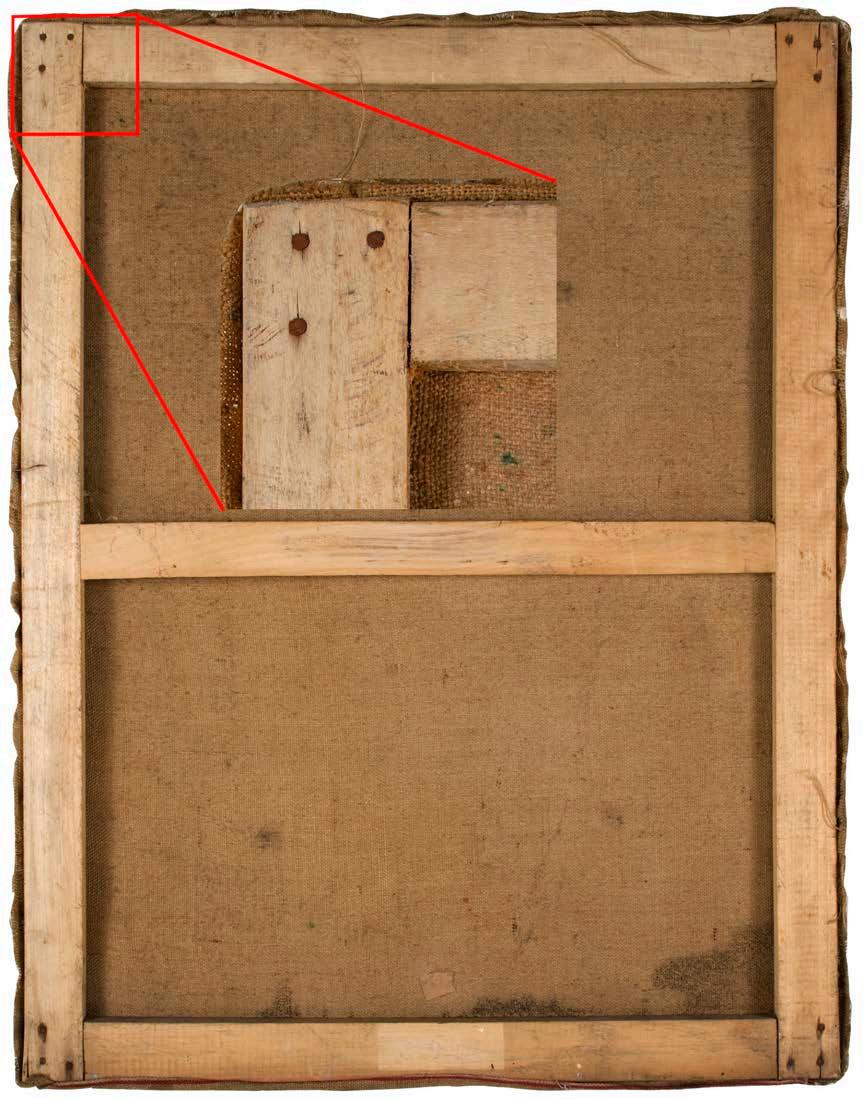

The strainer connections on our painting appear similar to those on a known work by Kasimir Malevich, shown on the facing page.
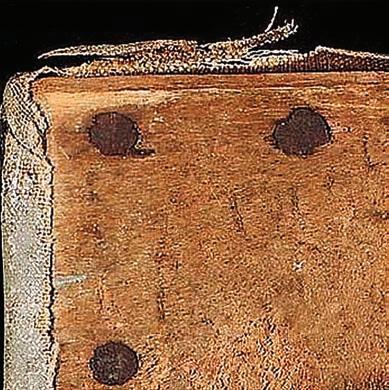
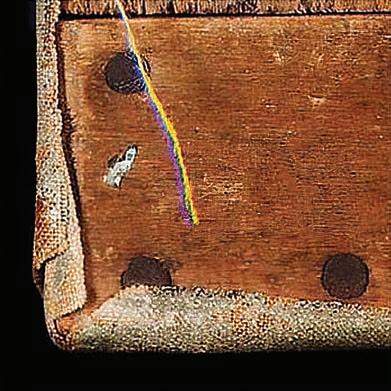
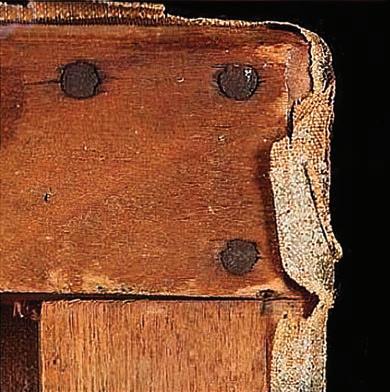
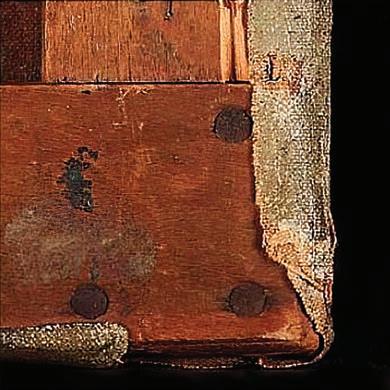
Above:
Strainer connections on a known work by Kasimir Malevich, (Ukrainian).
BONHAMS
28 Nov. 2005, London, New Bond Street The Russian Sale, 13453
Kasimir Malevich, Female Torso, Oil on canvas, 21 x 15.5 cm.
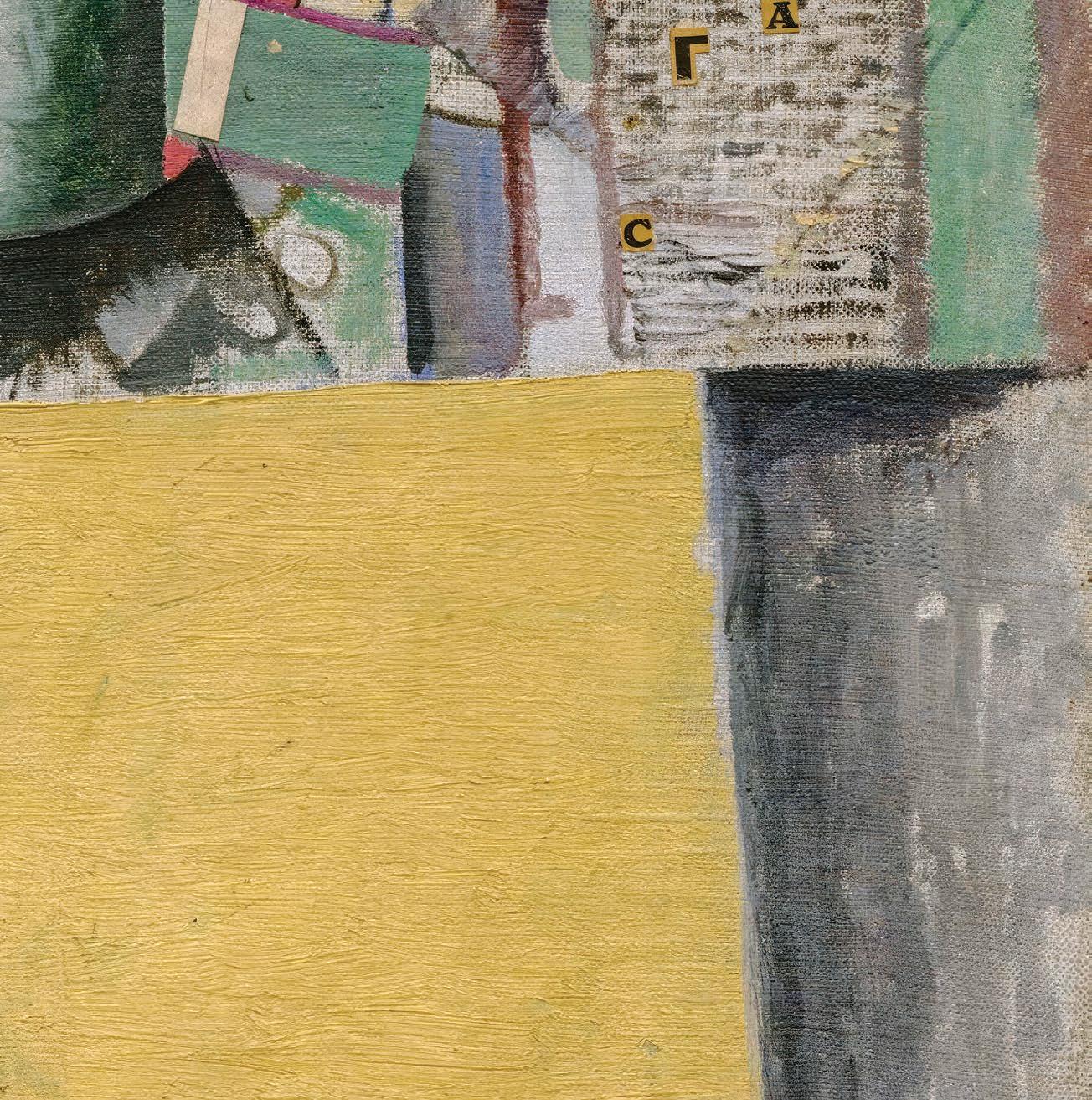
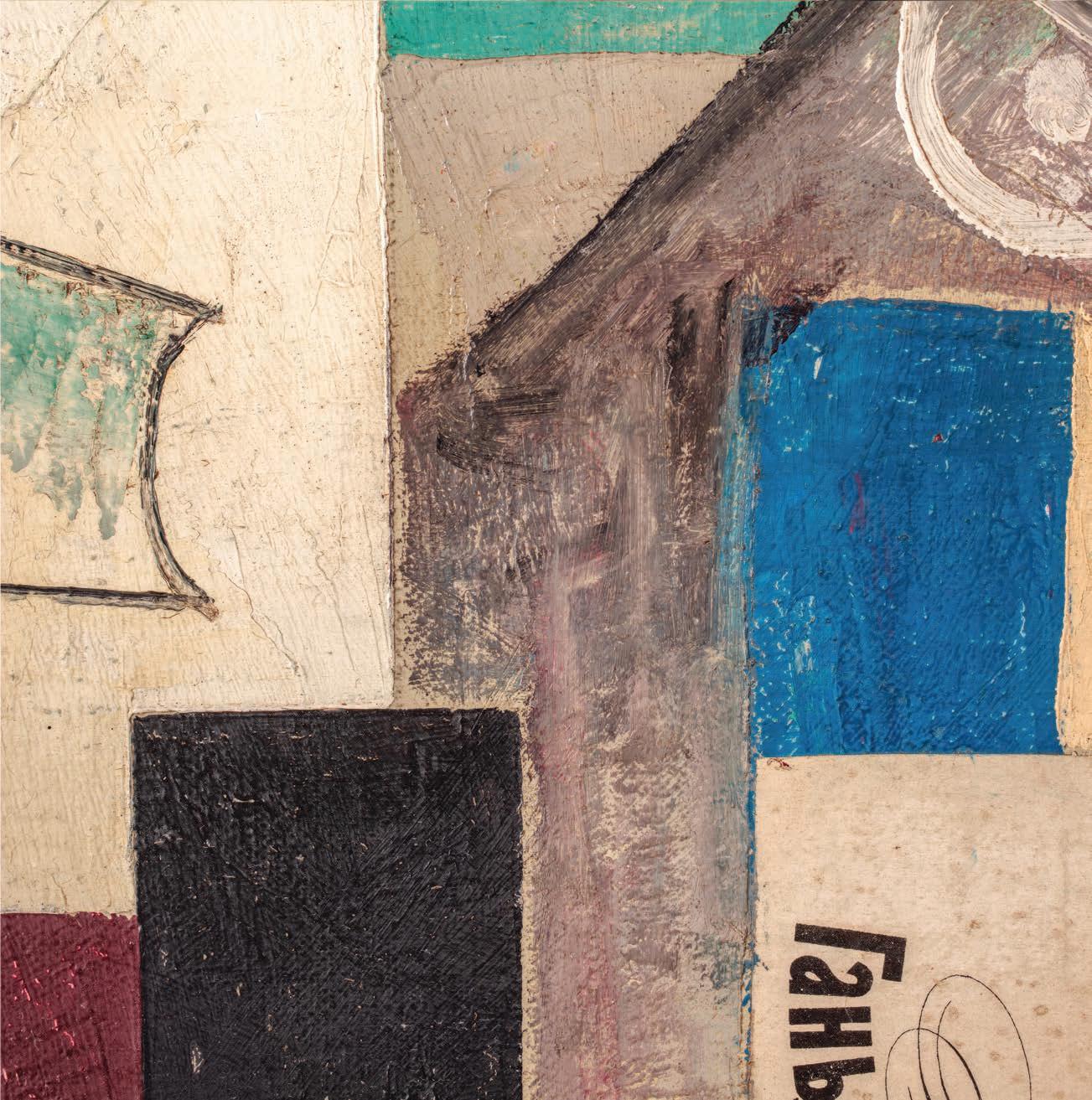
On this page is a detail of Kasimir Malevich’s Reservist of the First Division from 1914.

On the facing page is a detail of the painting in our collection.
I was careful to keep the size of the photographed sections dimensionally accurate.
Each image depicts a 10 x 10 centimeter area on each painting.
A follower of our Instagram account reached out with her take on the message in this painting. Her comment shows how art can live many different lives, how a work’s meaning can change as society changes, and how what was once a hopeful message can become a joke.
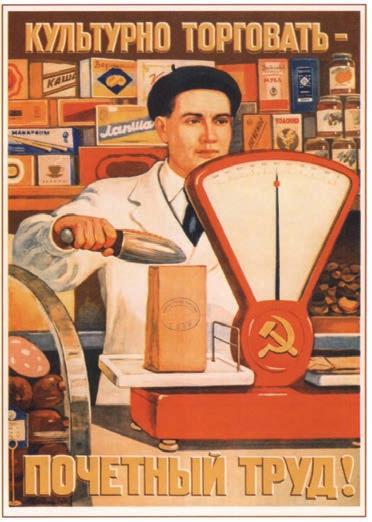
“Because the socialist project failed. The painting says “For what we struggle” and an abstraction is drawn. This means that we are struggle for something that is impossible to achieve. I find it amusing. I do not insist that this joke was conceived in the picture, but I saw it that way. It is similar to Aesopian language. There were many such jokes in the USSR.’
‘Here is one example. This is a poster glorifying Soviet trade that was never good. The official inscription reads “Cultural and Trade - Honorable Work!” But the noodles are drawn next to the seller’s ear. And the Russian expression ‘To hang noodles on your ears’ means to lie.”
Facing page: In the style of Nadezhda Udaltsova.
Collage element in upper center left translates, “For What We Struggle.” Collage element on the lower right corner translates “For Bolshevik Vigilance!”
Mixed media on canvas.
50 x 40 cm.
After posting images of this painting, I received this response from someone who follows our Instagram account:
"Kharbin papers… It's impossible."
About Kharbin:
Kharbin is the Placename of a city in North East China. It's the capital of Heilongjiang Province on the Songhua River. Founded by Russians in 1897, it became the center of tsarist activities after the October Revolution in Russia in 1917.
"In the decade from 1913 to 1923, Russia went through World War 1, the Russian Revolution, and the Russian Civil War. In the 1920s, Harbin was flooded with 100,000 to 200,000 White emigres fleeing from Russia. They were mostly officers and soldiers involved in the White movement, members of the white governments in Siberia and the Far East of Russia. There are both intelligentsia and ordinary people. Harbin held the largest population outside of the state of Russia." - Wikipedia.
Within these works, so many odd historical connections are screaming to be unraveled. According to the person who left this comment, the collage elements in this painting may have come from a newspaper originating in a remote region of China.
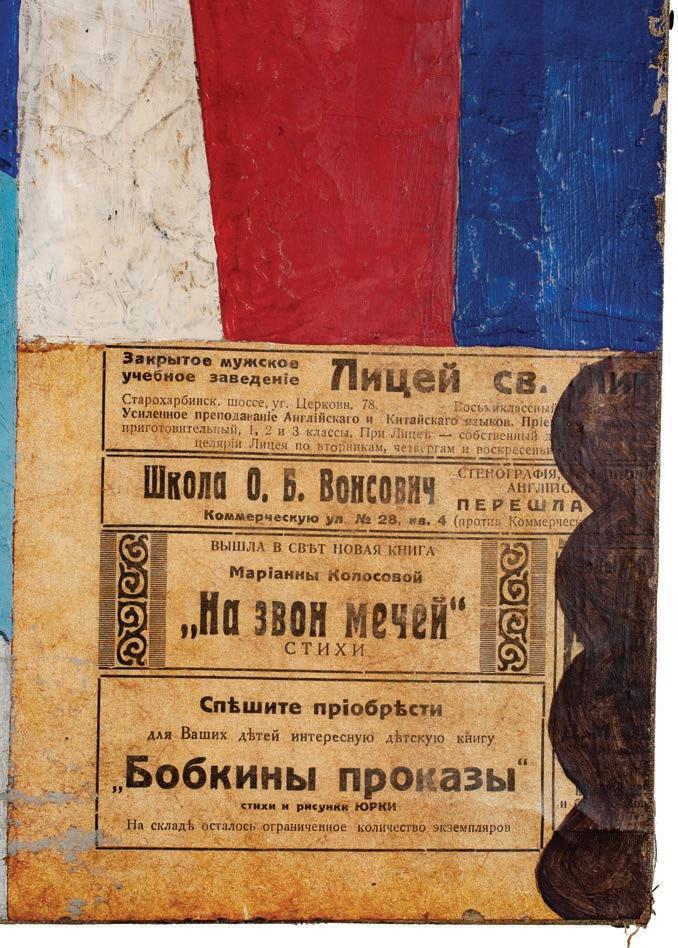
of surface.
Facing page: Unattributed. Mixed media on canvas. 60 x 50 cm.
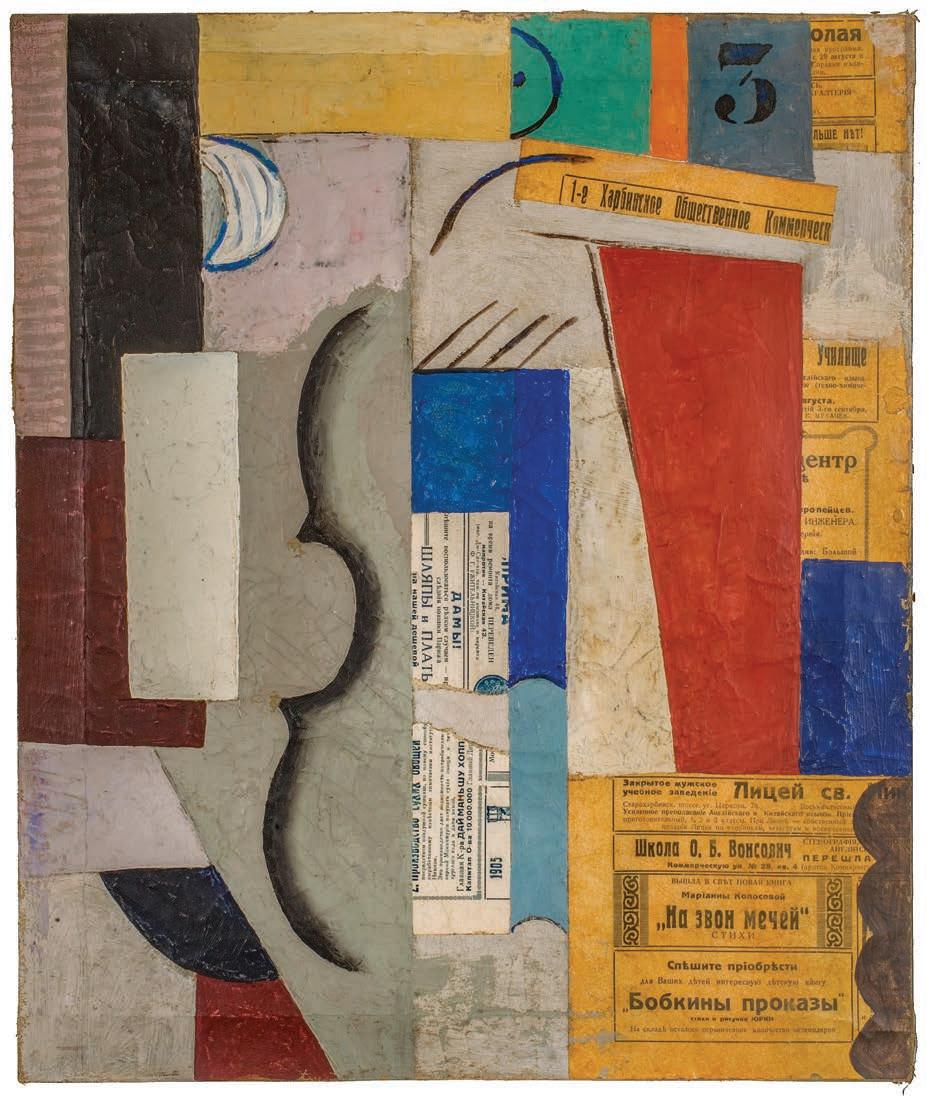
We acquired this work from the German seller in May of 2007.
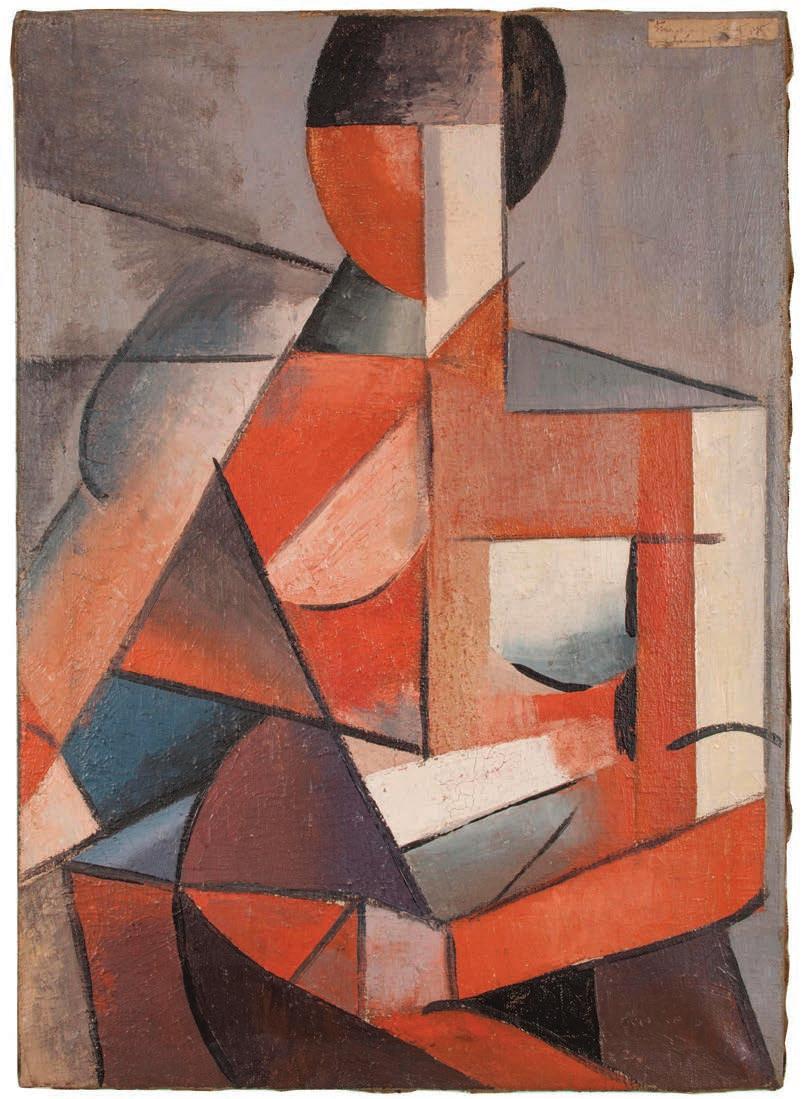
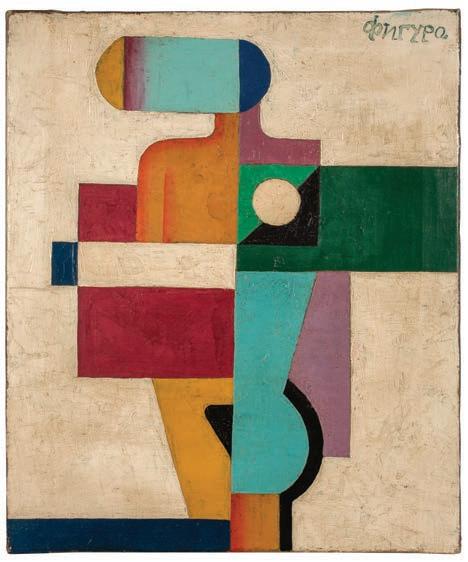
This work is in the Russian Cubo-Futurist style. Russian Cubo-Futurism was an adaptation of the Italian Futurist and French Analytical Cubist movements of the first quarter of the twentieth century.
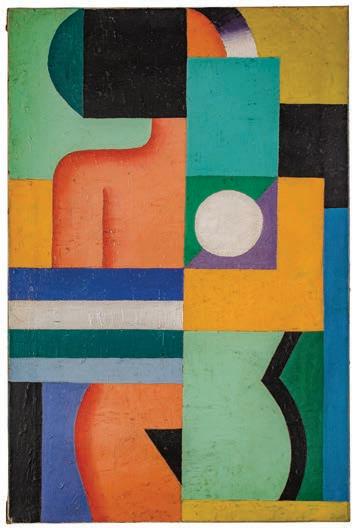
We acquired several of these Cubo-Futurist figurative works from the German seller. All had one compositional element in common: a datum line that served as the basis for the overall composition. A vertical datum line runs through the center of both compositions. From this center line, compositional elements branch out.
Datums are often used in architectural studies, so these figurative compositions are highly architectural. We discovered a similar figurative composition by the artist Iossif Moisseievitch Tchaikov. Unfortunately, as with so many works from this period in Russian art, this work by Iossif Moisseievitch Tchaikov is missing.
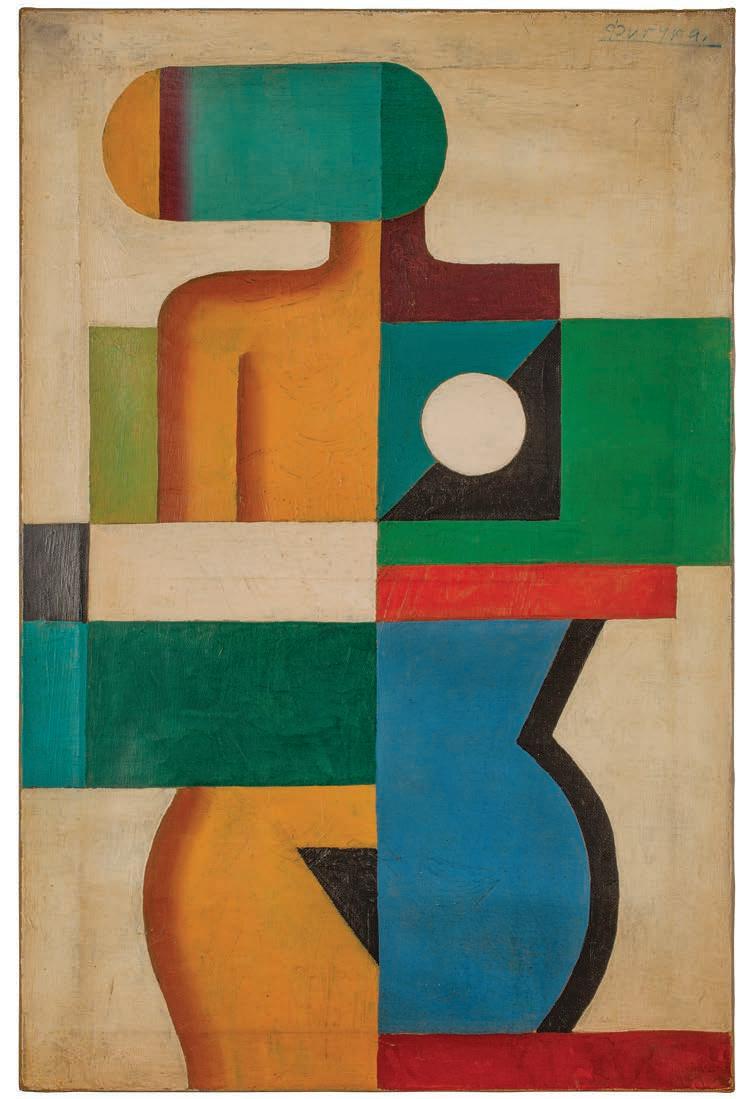
The inscription “Figura” appears in the upper right corner of our painting.
Initial inspection of this painting revealed an underpainting, which will be explored in the following few pages.
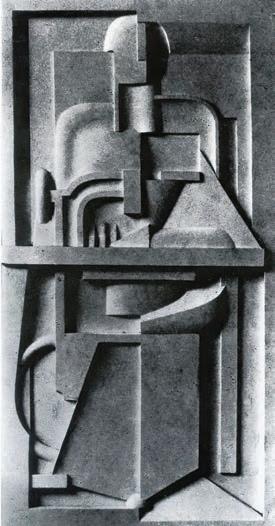
Iossif Moisseievitch Tchaikov, The Seamstress Relief, 1922 (Missing) VHUTEMAS/ School of Malevich.
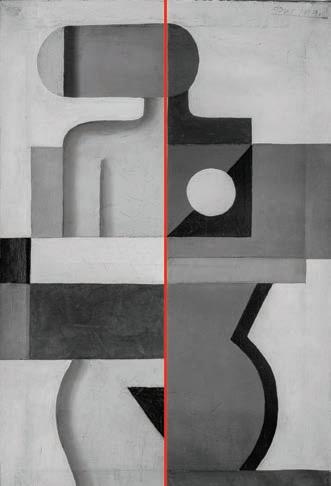
Facing page: “FIGURA”
In the style of Kasimir Malevich, (Ukrainian). Text in Russian, upper right front, translates to “FIGURA.” Oil on canvas.
60 x 40 cm.
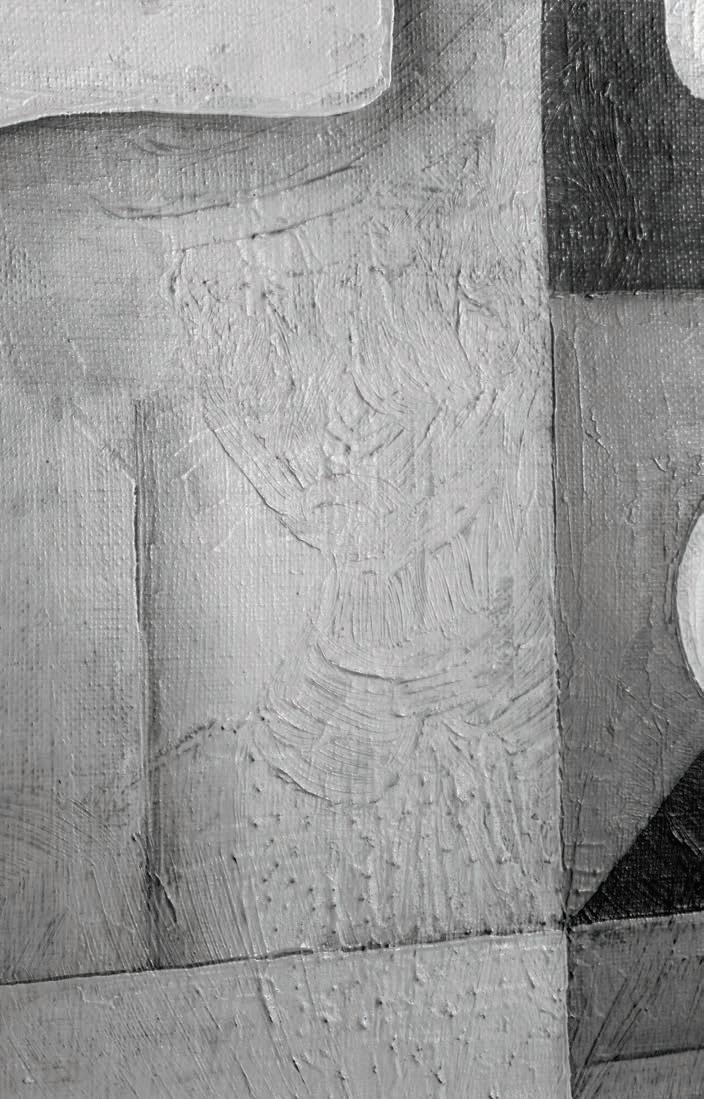
Inspection of this painting using infrared reflectography and raking light revealed what appeared to be an under-painting. In this image to the right, if you look closely, you can make out the profile of a person’s cheek, a collar, and a woman’s bustle.
Oil paint takes sixty years to fully dry. In the curing process, specific colors can flatten and lose opacity. This can be an issue, especially with certain white paints.
During drying, the flattening and thinning of the visible paint layer revealed what lay beyond it. In this case, the ghostly image from the past is of a woman wearing a hat in a billowing dress.
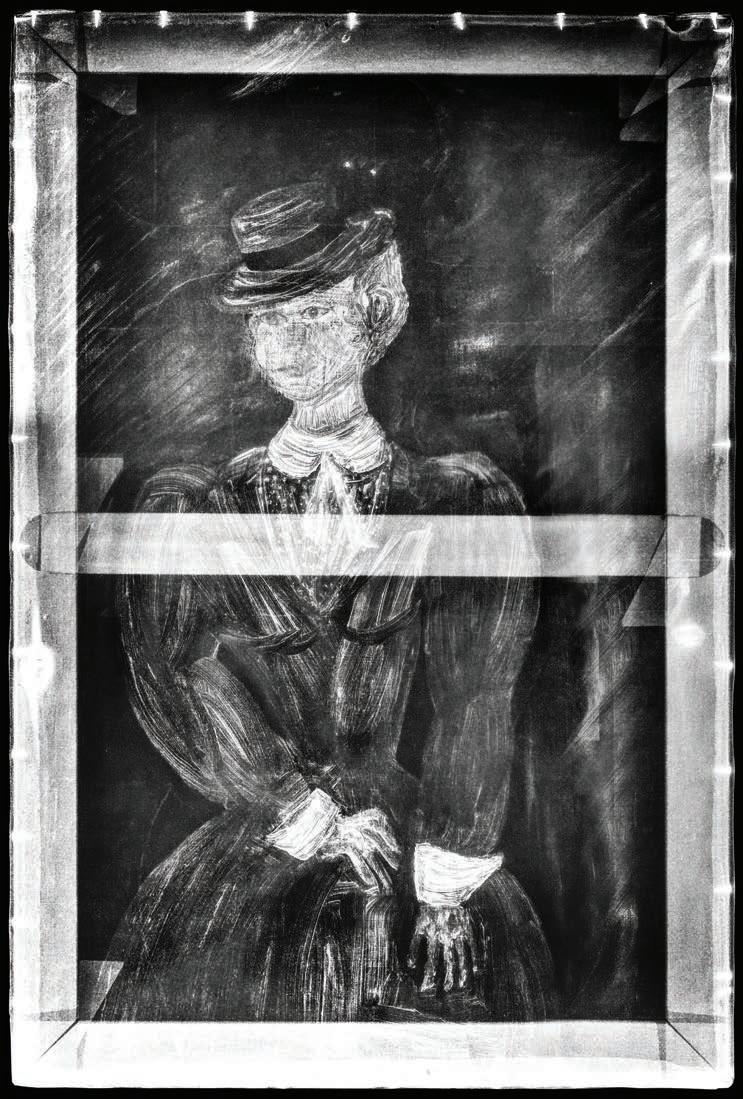
Using a combination of infrared and X-ray we were able to reveal this hidden image of a woman.

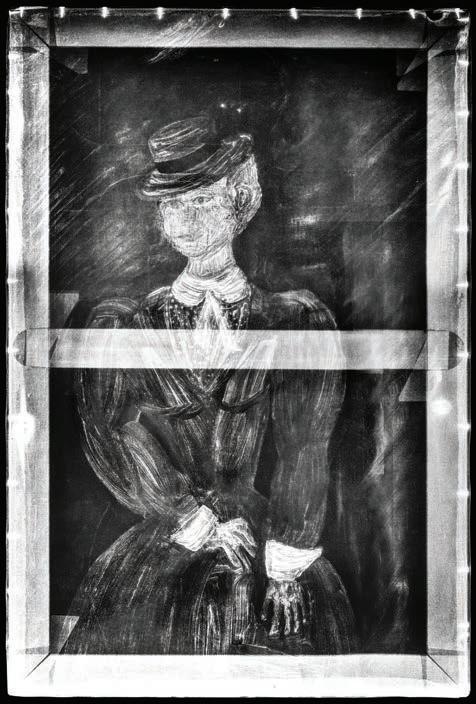
Underpainting revealed using X-ray.
In the catalog raisonne of Kasimir Malevich, we came upon these drawings. It’s said that he enjoyed sketching and painting his friends and family while they spent their leisure time in cafes and parks.
Below:
A known painting by Kasimir Malevich from a documentary image. The original painting is listed as missing.
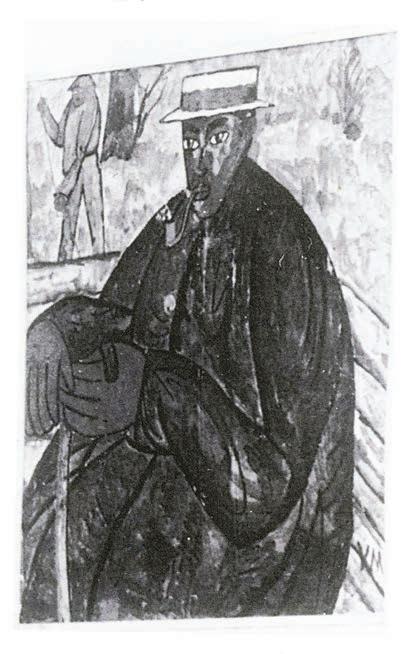
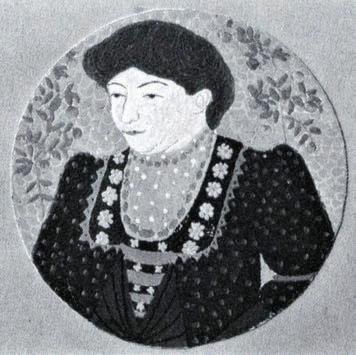
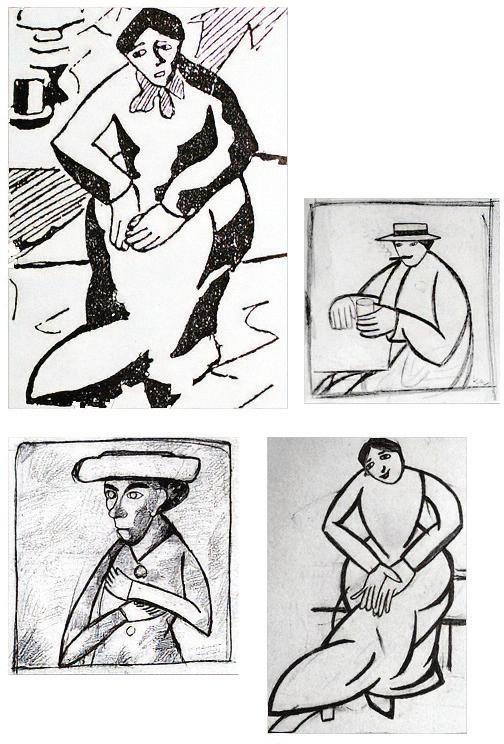
This page: Known works by
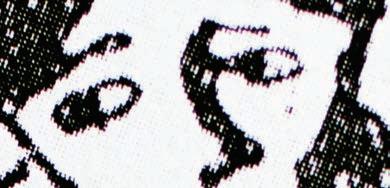
The similarities between Malevich's known works and the underpainting extend beyond the overall composition and subject matter. Where the similarities are most striking are in the details. In the hats, the rendering of the hands and the eyes.
The underpainting resonates with Malevich’s pictorial/figurative work of the mid-1910s, when his experimental and theoretical explorations overlapped with his figurative early work.
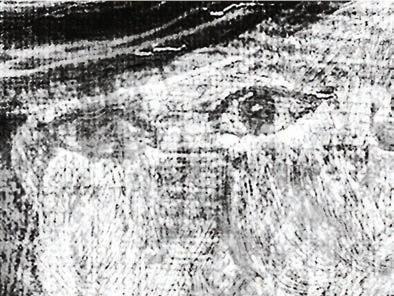
Detail of the under-painting on our painting.
Below:
Eyes from known works by Malevich
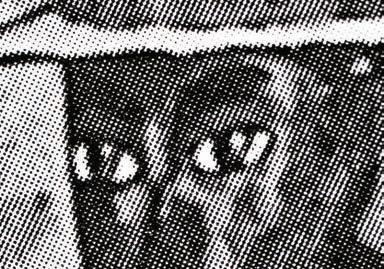
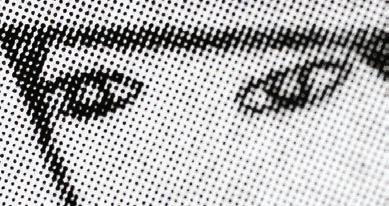
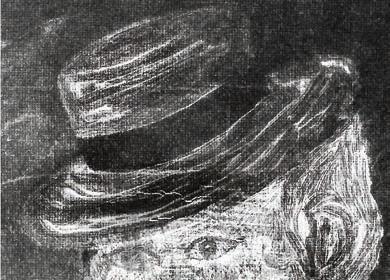
Detail of the under-painting on our painting.
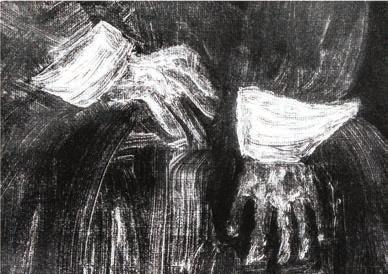
Detail of the under-painting on our painting.
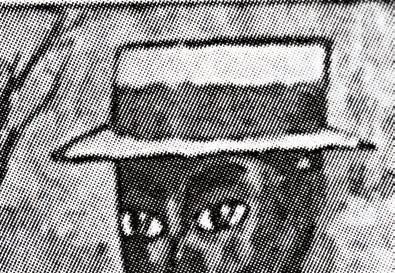
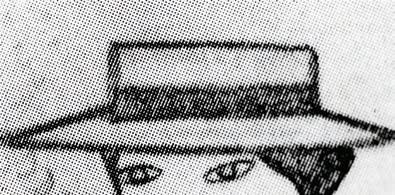
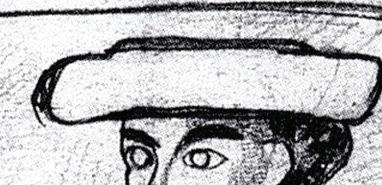
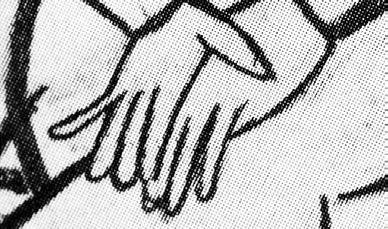
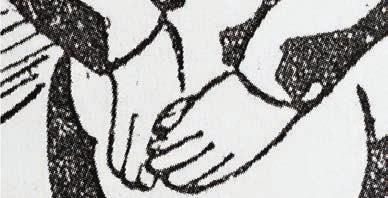
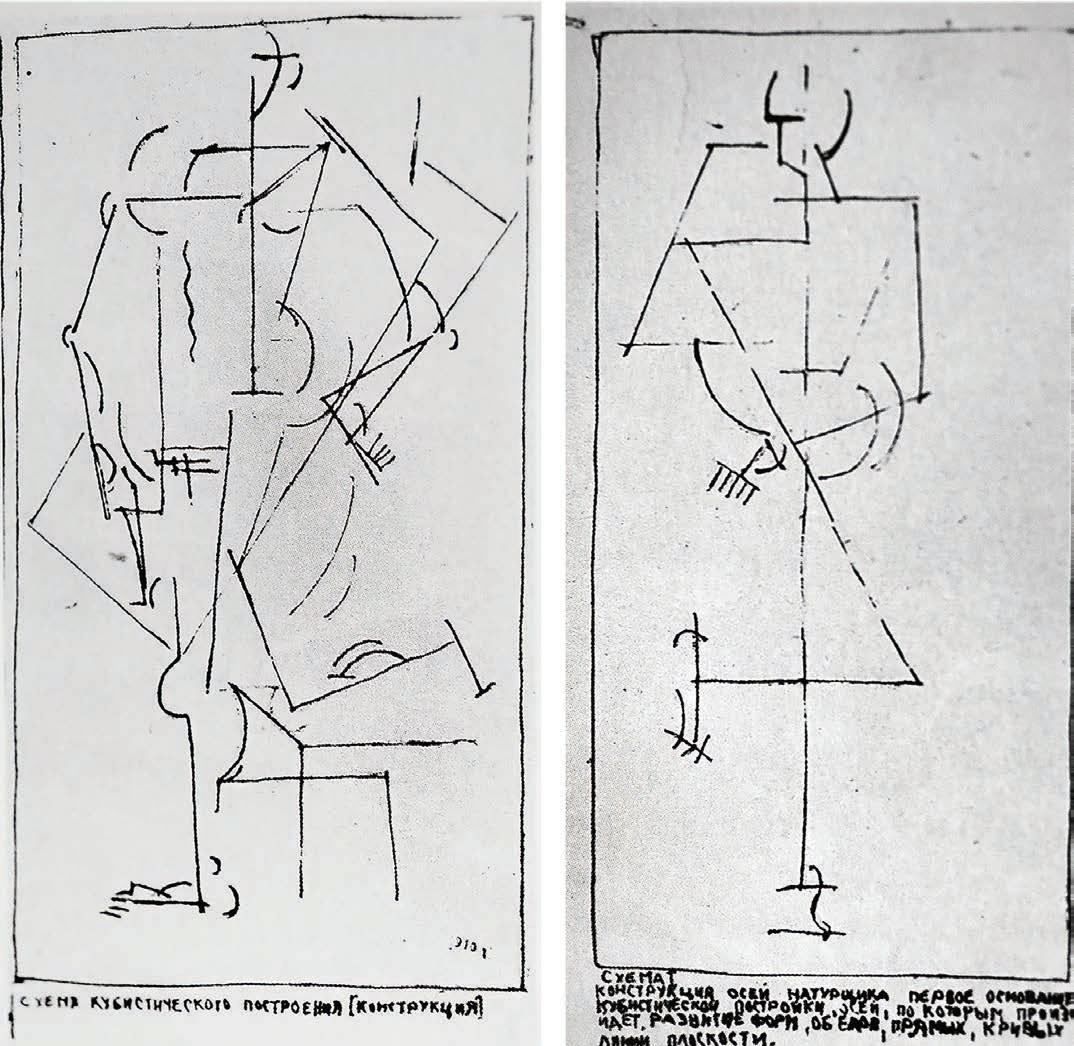
The visible painting (facing page) also shares many compositional elements with these Cubo-Futurist sketches by
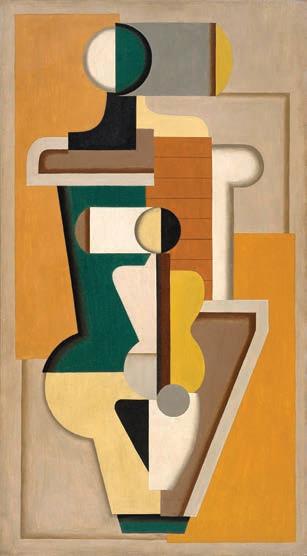
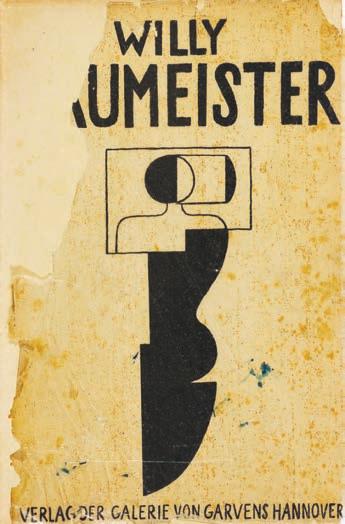
Several of the works in our collection bear a striking resemblance to works by the German artist, Willy Baumeister. Baumeister’s early work aligned closely with the principles of the Russian avant-garde, particularly the experiments of artists such as Alexandra Exter, Lyubov Popova, and Alexander Vesnin, who rejected illusionism in favor of dynamic, abstract spatial compositions.
His engagement with this milieu deepened over the 1920s. A pivotal moment came in 1927, when Baumeister encountered Kazimir Malevich at the Great Berlin Art Exhibition and participated in the Stuttgart Werkbund exhibition, which also featured Malevich’s work. These exchanges placed Baumeister in direct dialogue with key figures of the Russian avant-garde, reinforcing shared concerns with abstraction, construction, and the integration of art into modern life.
Throughout this period, Baumeister’s development was shaped by sustained interaction with international avant-garde networks, including figures like El Lissitzky and Wassily Kandinsky. This cross-cultural exchange positioned his work within a broader European movement in which the innovations of the Russian avant-garde played a central role.
Facing page:
Known works by Willy Baumeister.
Upper left:
Willy Baumeister
"A I orange-vert" 1923 - Huile sur toile 123 × 89 cm.
Lower left:
Willy Baumeister
Galerie von Garvens, Hanover, 1922
Two works from our collection.
Upper right: “FIGURA.”
The inscription on the upper right front translates to “FIGURA.” Oil on canvas. 46 x 38 cm.
Lower right: Oil on canvas. 54 x 36 cm.
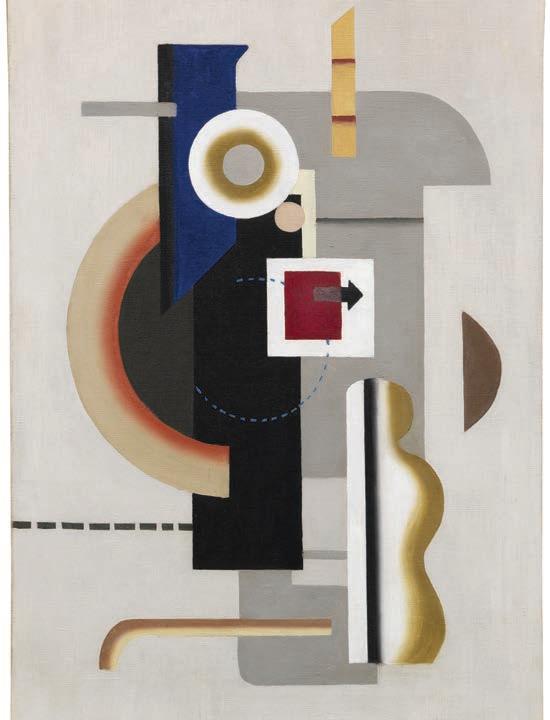
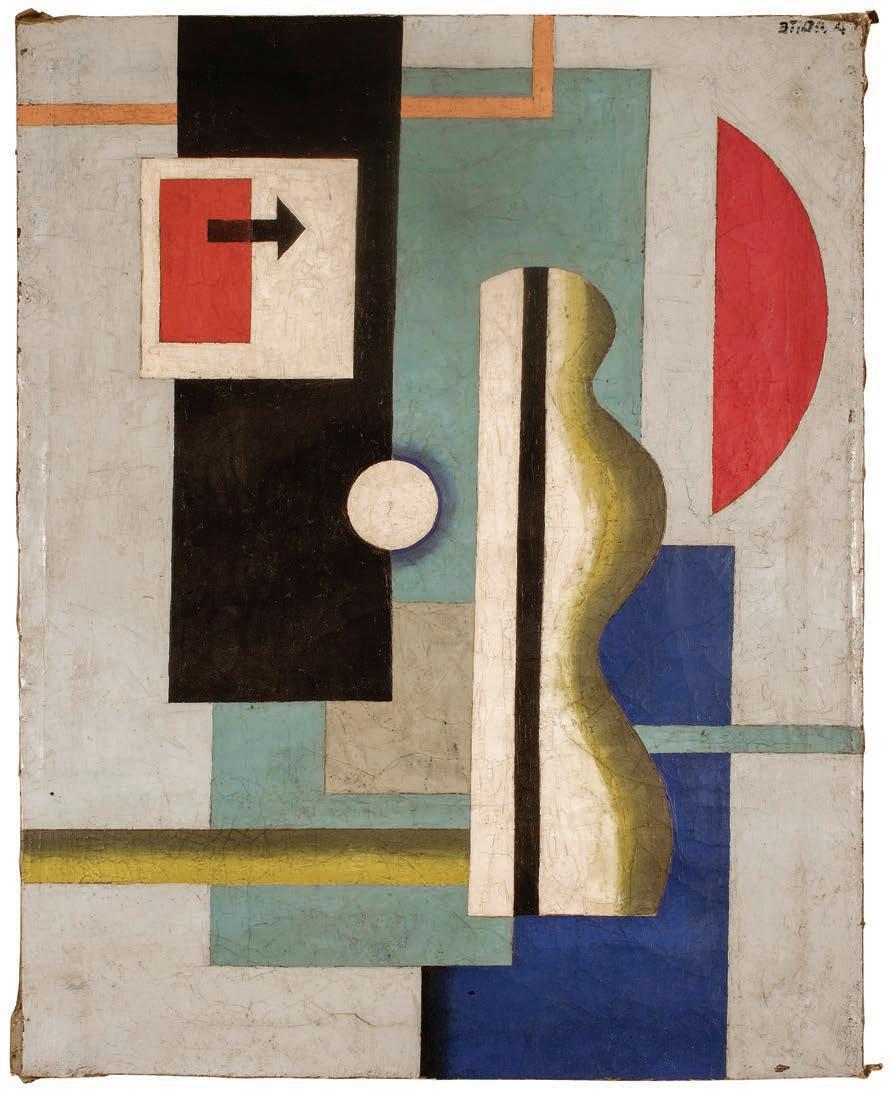
Maschine grau mit Pfeil II, 1926. Oil
This page: Two known works by Willy Baumeister.
Facing page: A painting in our collection.
Geometrical floating forms, 1925. Oil
canvas. 65 x 54 cm
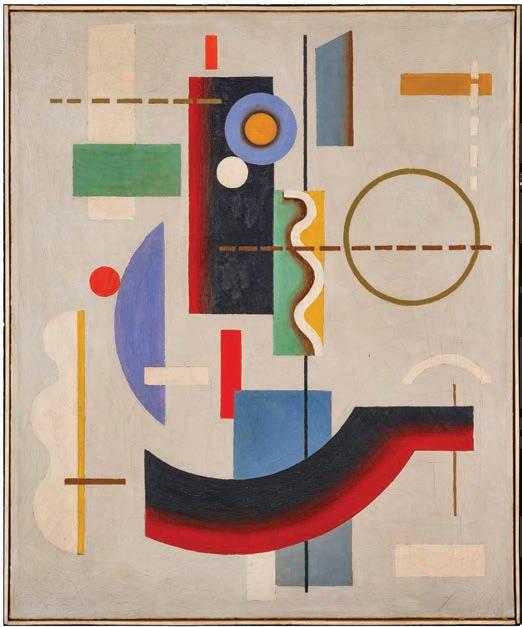
Another painting in our collection that resembles works by Willy Baumeiser.
Unattributed.
The inscription on the upper right corner translates to “ETUDE.” Oil on canvas.
91 x 73 cm.
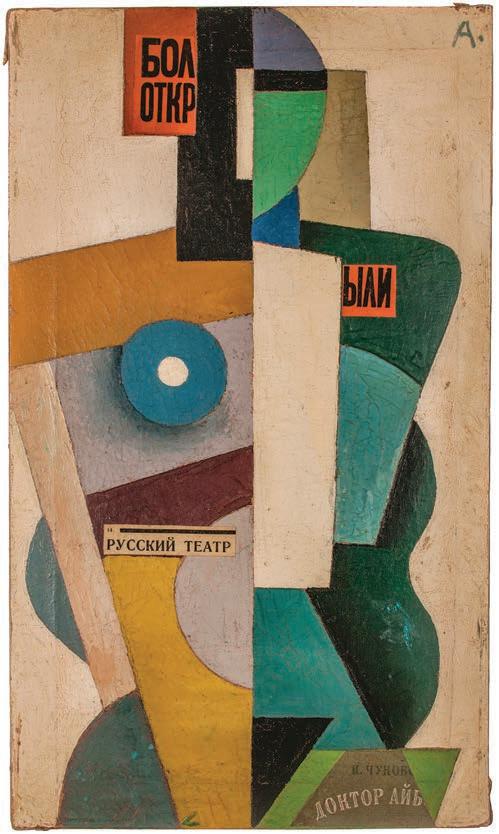
A follower of our Instagram account messaged me with some information about the possible inspiration for this painting. Her message:
“According to my Russian research, it could be an original model poster of the play. “Go, Doctor, I’m in Pain!!!”
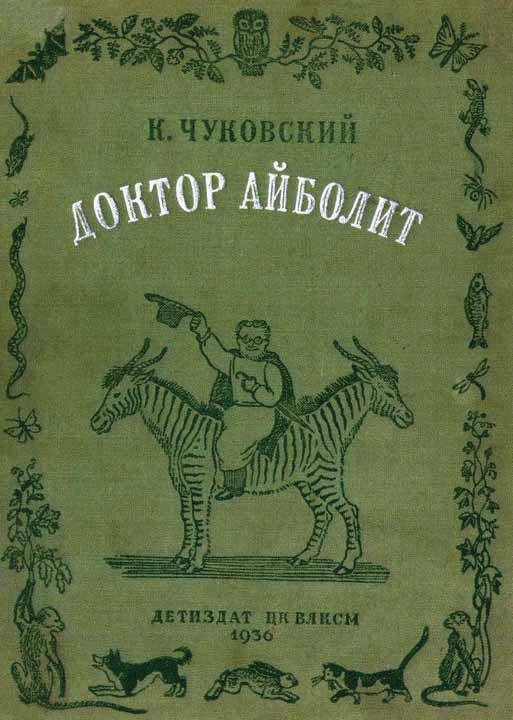
The collage element on the lower right corner of our painting was taken from a book cover titled “Doctor Aibolit” by K. Chukovsky.
The publication date of 1936 would place the creation of this painting at the very tail end of the Russian Avant-Garde movement.
Signed “A” in Russian upper right front.
Oil and mixed media on canvas.
60 x 35 cm.
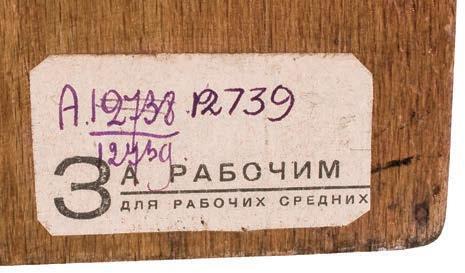
A follower of our Instagram account reached out to explain the possible meaning behind this label.
She said, The first phrase translates:
“For a Worker.” She said that the label refers to supporting a worker. "The second sentence in the label translates to: For Middle Workers (Working Class)."
She went on to comment, “Looks like a propaganda slogan. It was an honor for these people to be workingclass and serve the country because they built every single thing for their country themselves. Working was the best; trying to be wealthy was considered the worst thing. They believed money is evil.”
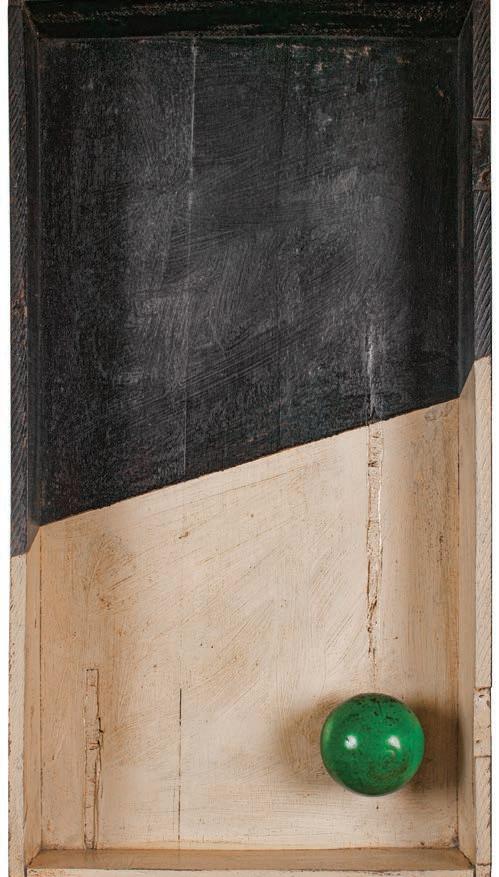
Above:
In the style of Ivan Puni. Label on reverse translates: “AT WORK. FOR WORKING MEDIUMS.”
Mixed media collage. 54 x 30 x 2.5 cm.
After I posted this painting, an Instagram follower reached out with an insight regarding the possible subject of these two portraits.
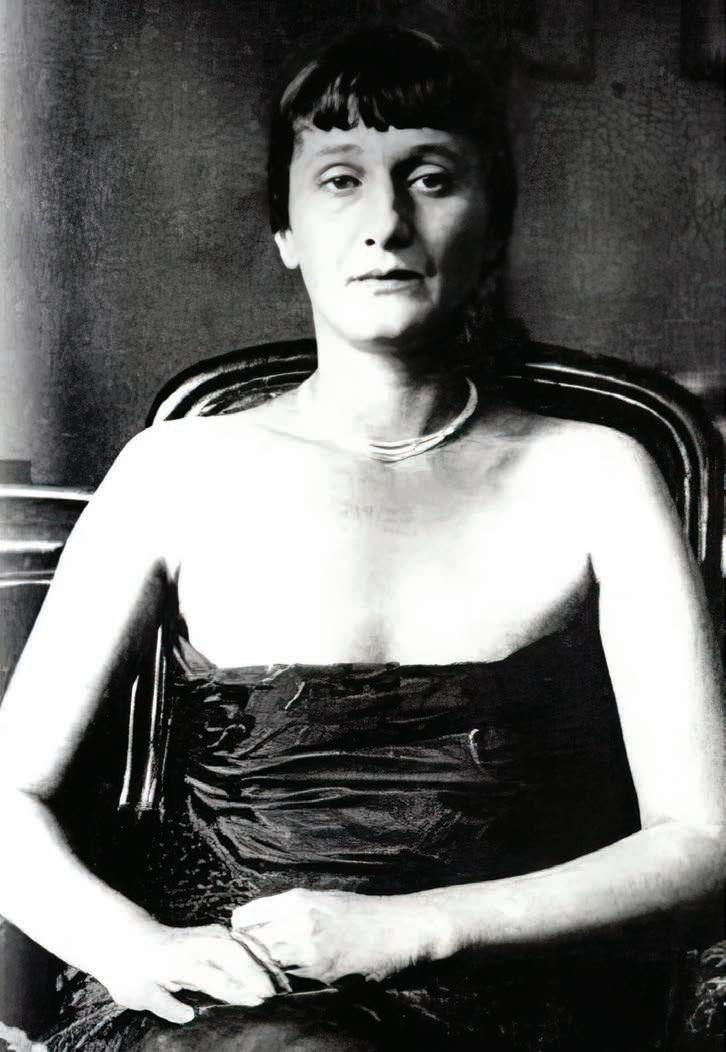
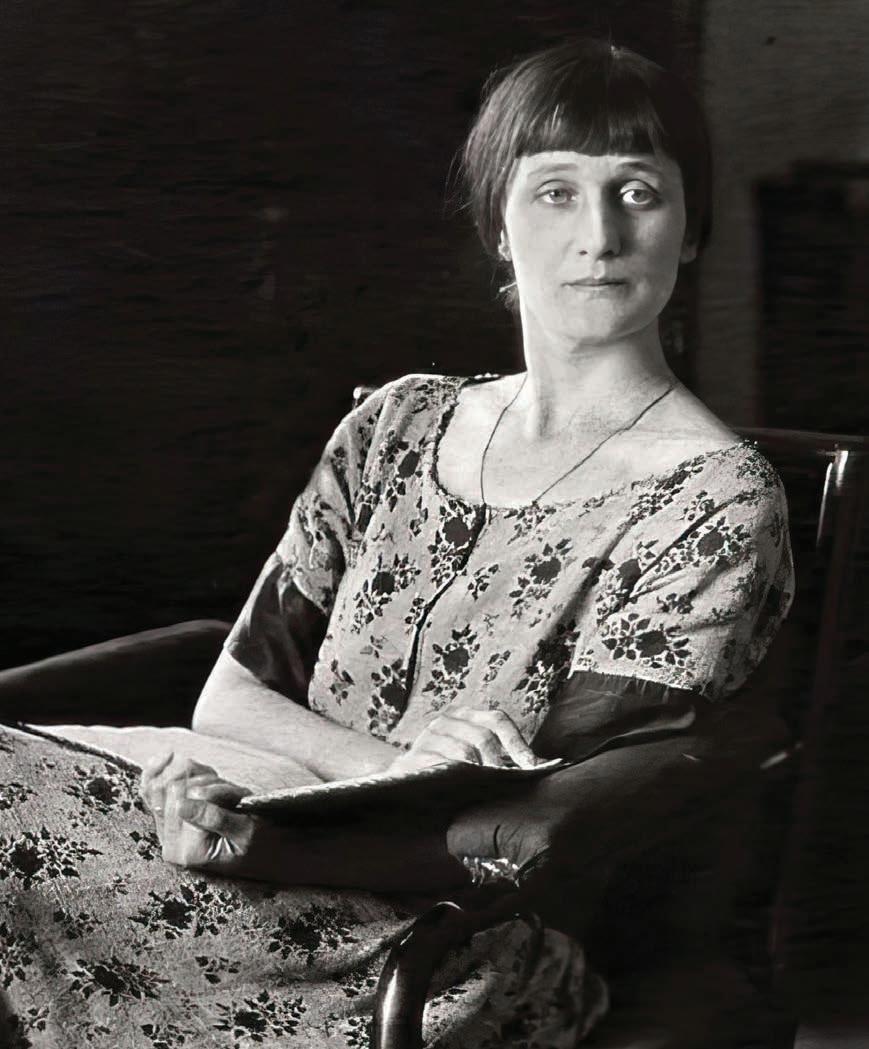
The follower suggested that the inscriptions on these works, “Portrait of Anna” and “Portrait of A,” may be a reference to the great Russian poet Anna Akhmatova.
It’s difficult to convey the level of human and cultural destruction that was leveled against the citizens of Russia by the Soviet Government. One need only look at the life of this remarkable woman to understand the pain and suffering endured by the creative and intellectual class.
Anna Akhmatova was married to the poet and art critic Nikolay Punin. Both Anna and Nikolay were enmeshed in the world of painters and poets. They were close friends with many of the most significant artists of the avant-garde movement.
When Stalin came to power, Anna’s husband, Nikolay Punin, was arrested and sent to the Gulag, where he later died.
Anna’s son Lev was arrested during the purges of the 1930s, simply for being his father’s son.
Anna kept a coat hanging in her apartment where Nikoly had left it. He promised Anna he’d return.
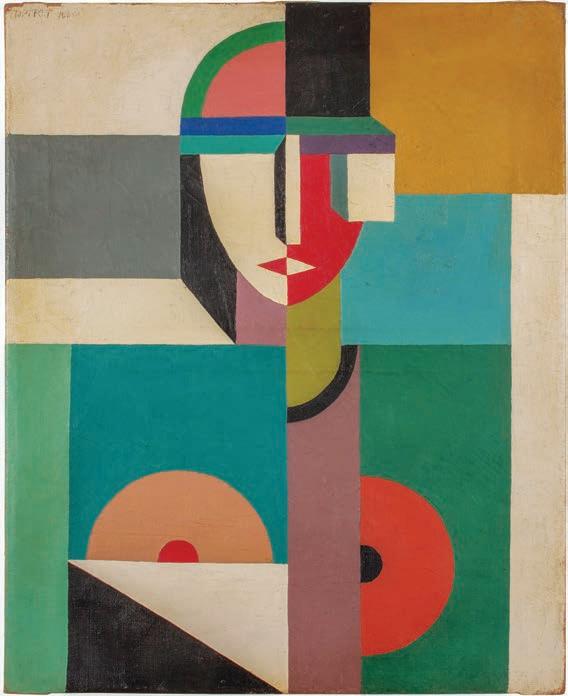
Inscribed
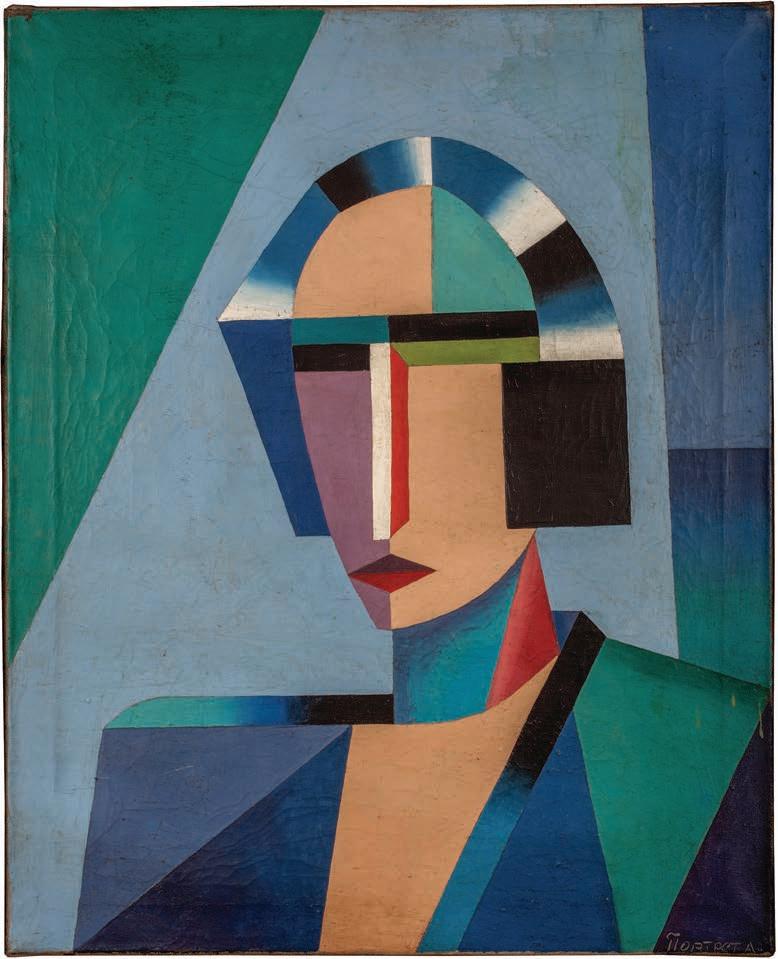
“Portrait of A” Unattributed. Inscribed “Portrait of A” on the upper left front corner. Oil on canvas. 80 x 65 cm.
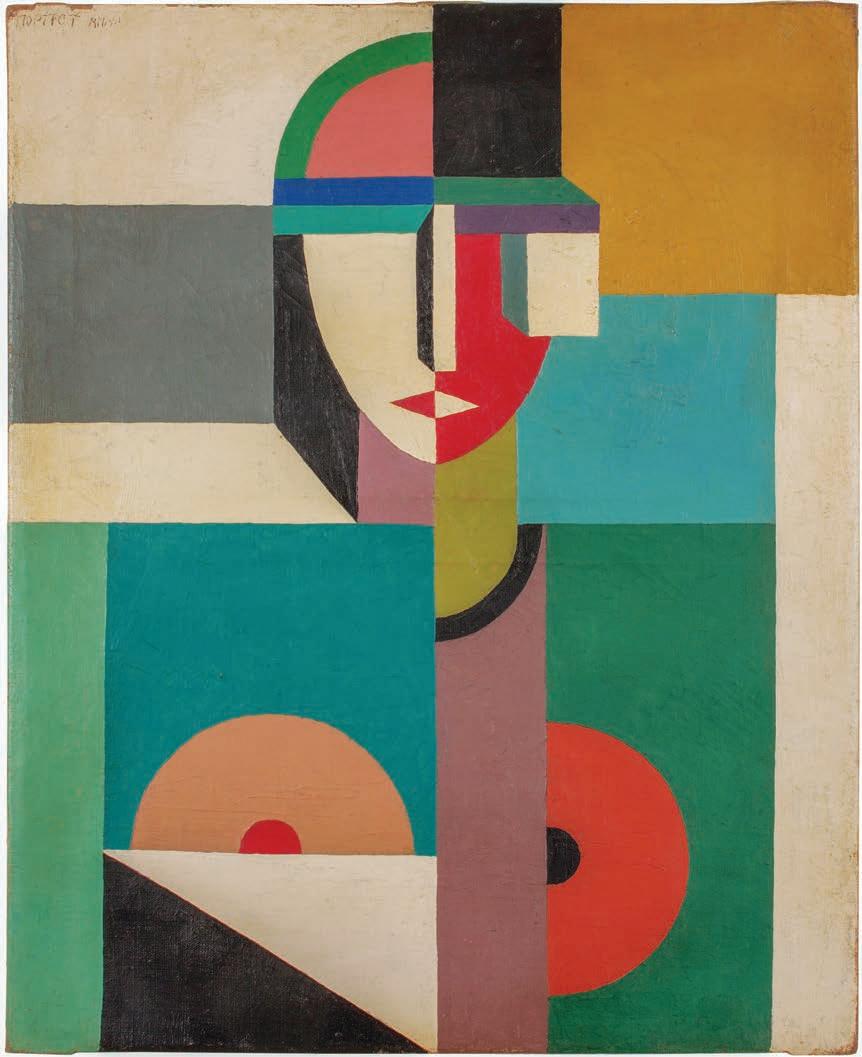
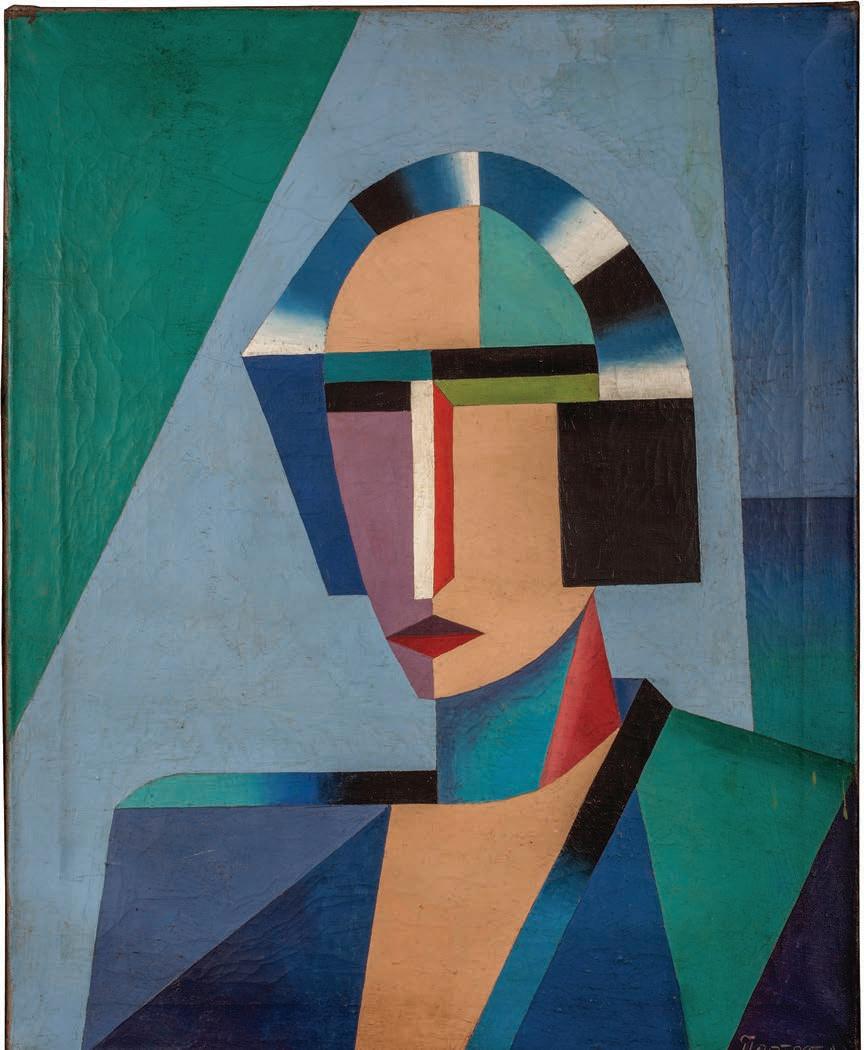
The inscription on the lower right corner translates to: “Portrait of A.”
In 1912-13, Ivan Kliun came under the influence of Kasimir Malevich. Not long afterward, he began exhibiting in St. Petersburg with a group of artists known as the “Union of Youth.” His artistic experimentation spanned Cubo-Futurism, Constructivism, and Suprematism. He exhibited with several avant-garde groups, which thrived in Russia shortly before and after the revolution.
When Stalin came to power, Kliun resorted to producing conventional representational artworks that conformed to the regime’s totalitarian ideology.
The painting on the facing page has been in our collection since May of 2007.
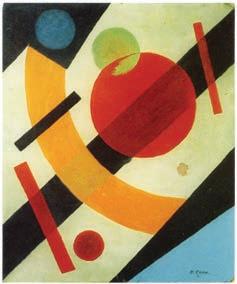
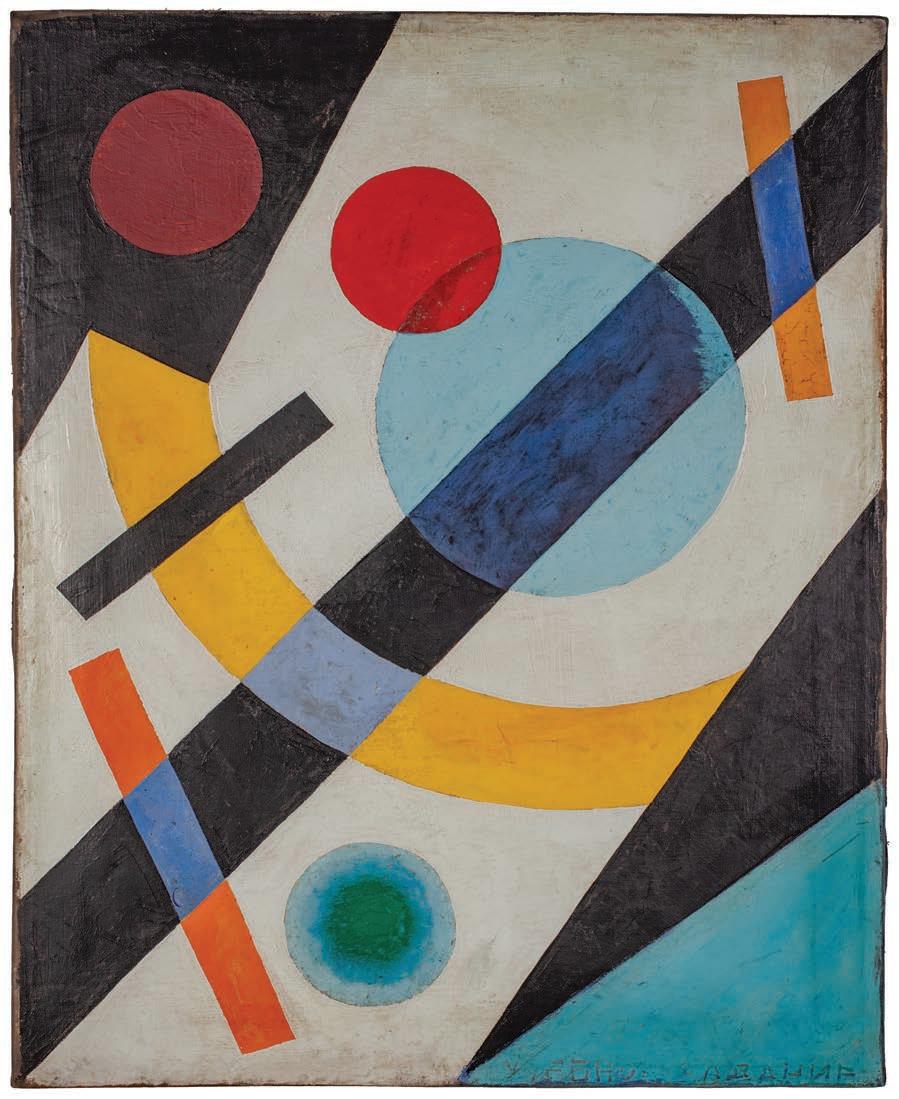
A known work by Ivan Kluin. Composition with Red Circle and Yellow Arc. Oil on board, 45 x 37.5 cm. Private Collection.
Detail of inscription.
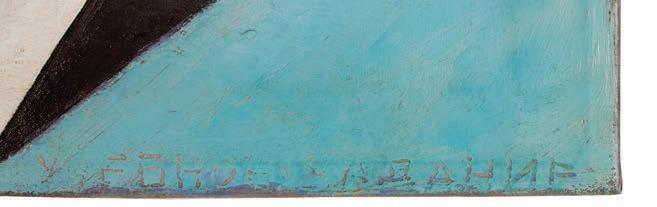
There's an inscription on the lower right corner, etched into the paint layer, which we’ve never been quite able to decipher. Two followers of our Instagram account offered their interpretations:
Comment one - “It looks like it says “ASSIGNMENT” in the bottom right corner.”
Comment two - “Adanir is a first name of Turk origin, arguably a Soviet artist from southern Caucasian Russia.”
Stalin Regime Approved Art.
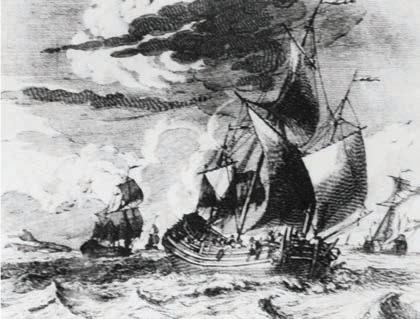
This is Ivan Kliun’s mural design for The All-Soviet Research Institute of Marine and Fishing Industries and Oceanography, 1936-38.
Facing page: In the style of Ivan Kliun.
Undeciphered inscription on lower right corner. Oil on canvas.
64.5 x 41.5 cm.
"Heinrich Hoerle cowered at the sound of wind through trees because it reminded him of bullets that whizzed by him in the trenches." So was the account of Heinrich's young wife, Angelika, a rising star in the tumultuous art scene that arose in Cologne, Germany, at the end of World War I.
Heinrich, Angelika, and her brother Willy founded the German Dada movement, "Stupid." Stupid was committed to the idea that art could transform the world. Stupid believed that the establishment, art museums, art dealers, and the upper class had neutered art and were actively trying to control art's ability to give a voice to the people.
In 1923 when Angelika died of tuberculosis she was only 23. Heinrich died in 1935 at the age of 41. However, he lived long enough to see his artwork condemned as degenerate when the Nazis took power in 1933.
So, how did this painting by a German artist get mixed up with a bunch of Russian art? There may be some clues.
In 1921, Angelika Hoerle became deeply involved in a movement to send aid to millions of starving Russians. A year later, an exhibit called "The First Russian Art Exhibition" opened in Berlin to tremendous success. Funds derived from the exhibit were sent to help starving Russians.
The Russian exhibit had a profound impact on Heinrich Hoerle. He became enamored with the theories that Vladimir Tatlin and El Lissitzky espoused.
In 1924, Russia reciprocated with an exhibit of contemporary German art called "The First General German Art Exhibition." Among the artists exhibited was Heinrich Hoerle.
During the 1920s, cross-pollination among Avant-Garde movements across Europe was intense. For a brief period, Russia was a magnet for artists from all over Eastern Europe. Works by artists of many nationalities are represented in this collection — Ukrainian, Latvian, Hungarian, Finnish, and German.
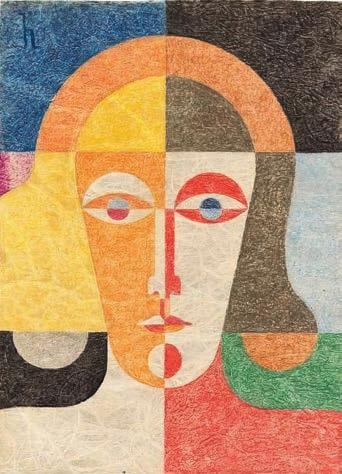
"Frauenkopf” - Circa 1935 Heinrich Hoerle
Wax crayon on Japan paper. 15 × 11 in.
From the collection of August Sander.
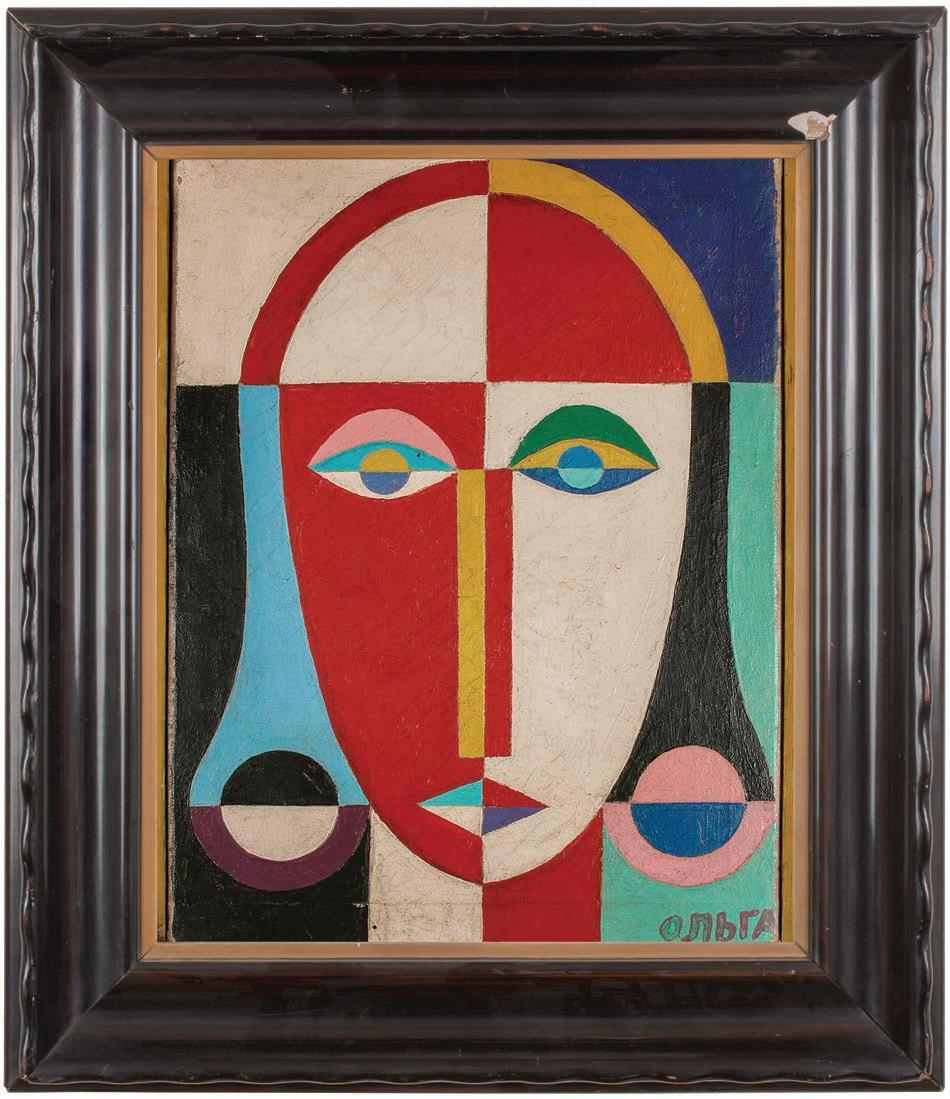
Facing page: “OLGA”
In the style of Heinrich Hoerle. The inscription on the lower right corner translates to “Olga.”
Oil on canvas.
40 x 30 cm.
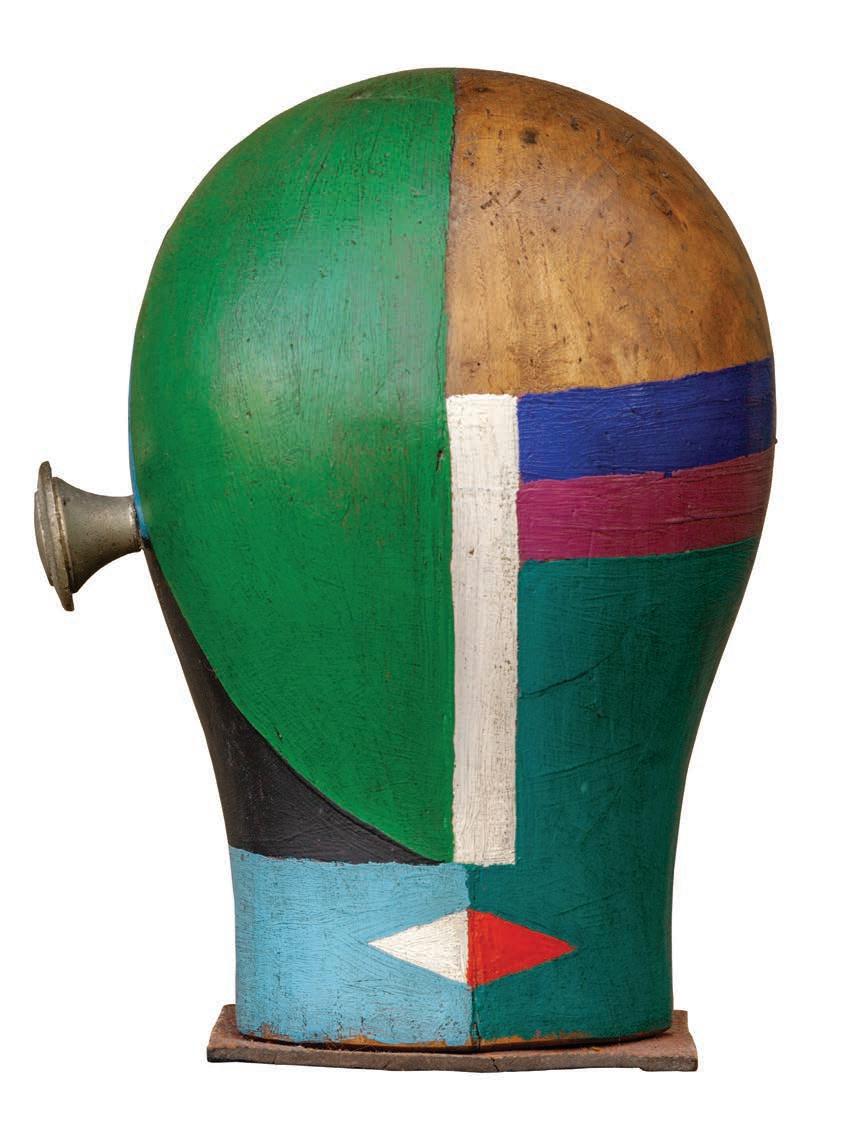
An admittedly tenuous connection arose from one of the odder anomalies in our collection. We noticed that a linocut had been used as a base on the sculptural head (shown on the facing page). The use of a scrap linocut seemed to speak to the provisional nature of much of this work. After all, these artists were poor, and one must assume they used whatever was lying around to complete a project.
Maybe it’s interesting, maybe not. But the design on the linocut used for the base of the sculpture is, in many ways, formally similar to the linocuts below, by Angelika Hoerle.
There are several similarities and connections between what appear to be works by German artists and some of the Russian works in this collection.
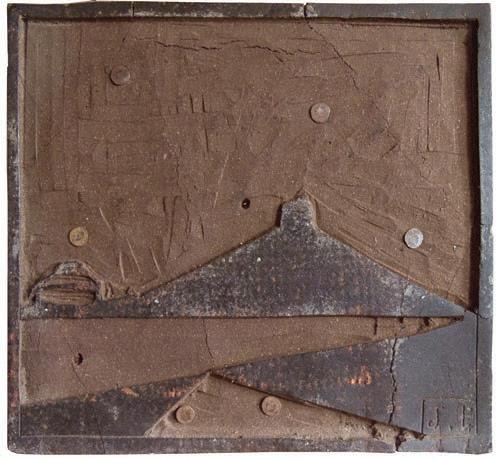
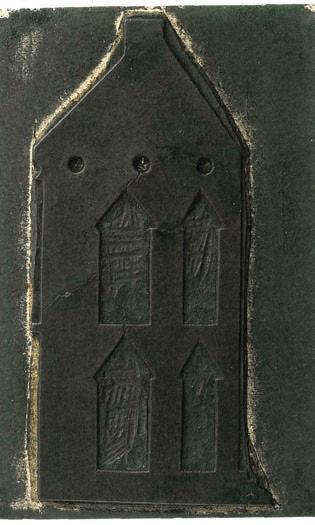
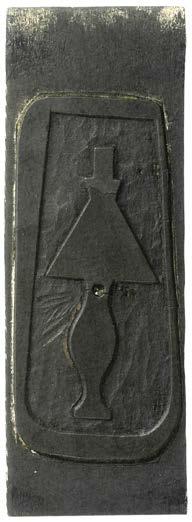
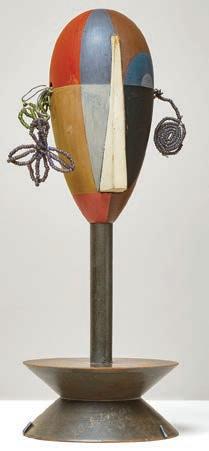
Inscribed, “HEAD - N.P.” on reverse.
Mixed media construction on a wooden hat block. 30cm(h) x 20cm(d) x 18cm(w).
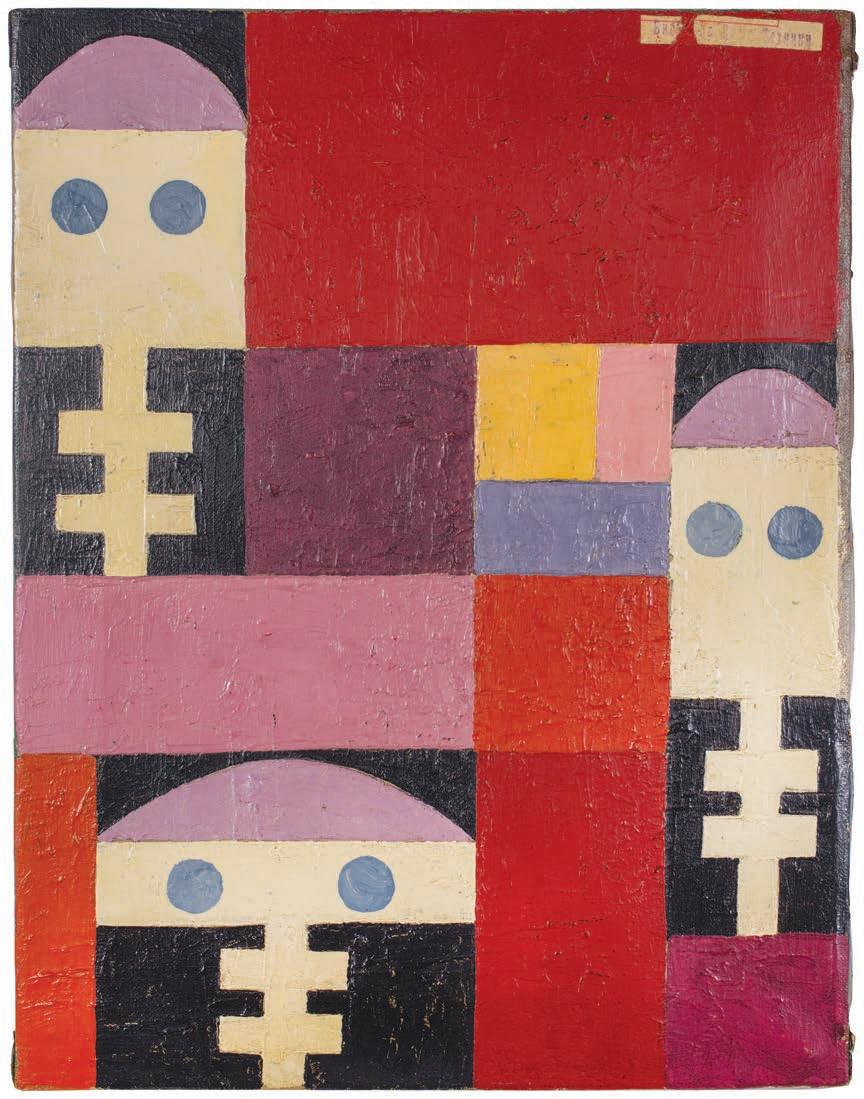
In 2016, I received an email from a man named Will. He'd attached an image of a nearly identical watercolor by the Swiss artist Sophie Taeuber-Arp. As well as being exciting, it was also suspicious and concerning. A Swiss/ German artist turning up in a hoard of Russian art?
Here's Will's email:
"I just read your fascinating and exciting essay, and though I don't for a moment doubt that there are paintings that are 'lost' and forgotten, one (unattributed, below) appears to be a copy or an alternative version of a quite well-known Sophie Taeuber-Arp design. Whether than making it more interesting or just more suspicious, I don't know!"
Like Angelika Hoerle, Sophie Taeuber-Arp believed that art was political; they both held that, for a healthy society, art needed to be integrated into everyday life. Sophie embraced the principles of Russian Constructivism and became one of the movement's most influential practitioners outside Russia.
Though I couldn't find a rock-solid connection between Sophie Taeuber-Arp and Russia, her husband, Jean Arp, did attend the Constructivist International Congress in Berlin in 1922. In 1924, Jean Arp's work was exhibited alongside Heinrich Hoerle at "The First General German Art Exhibition," which opened in Moscow in October of 1924. The exhibit traveled to Saratov and then on to Leningrad in May of 1925.
Sophie Taeuber-Arp was also the artist who created the sculpture titled "HEAD," which is similar to the sculpture in our collection, which is also titled "HEAD." Those sculptures are pictured in the previous spread.
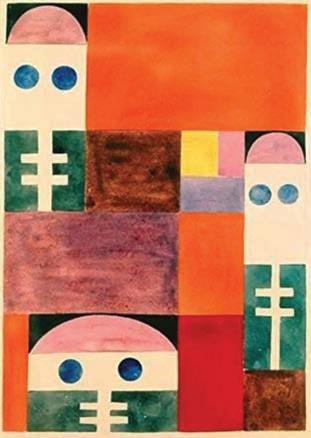
Sophie Taeuber-Arp Motifs Abstraits, Masques, (1917)
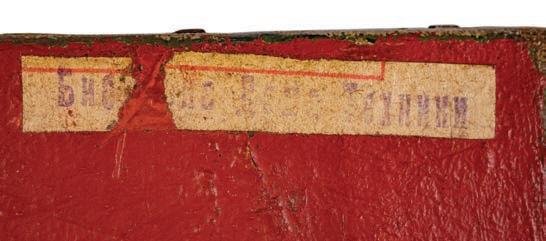
Label may translate to “Library of the House of Technology.”
Facing page, a work from our collection: In the style of Sophie Tauber-Arp.
The paper tag on the upper right front corner translates to “Library of the House of Technology.”
Oil on canvas.
40 x 31 cm.
When we asked the German seller how he’d acquired the works he was selling us, he told us that he’d purchased all of them in the mid-1990s when he was the high bidder on a container of unclaimed freight. The story seemed far-fetched at the time, but we’ve come to believe he was telling the truth.
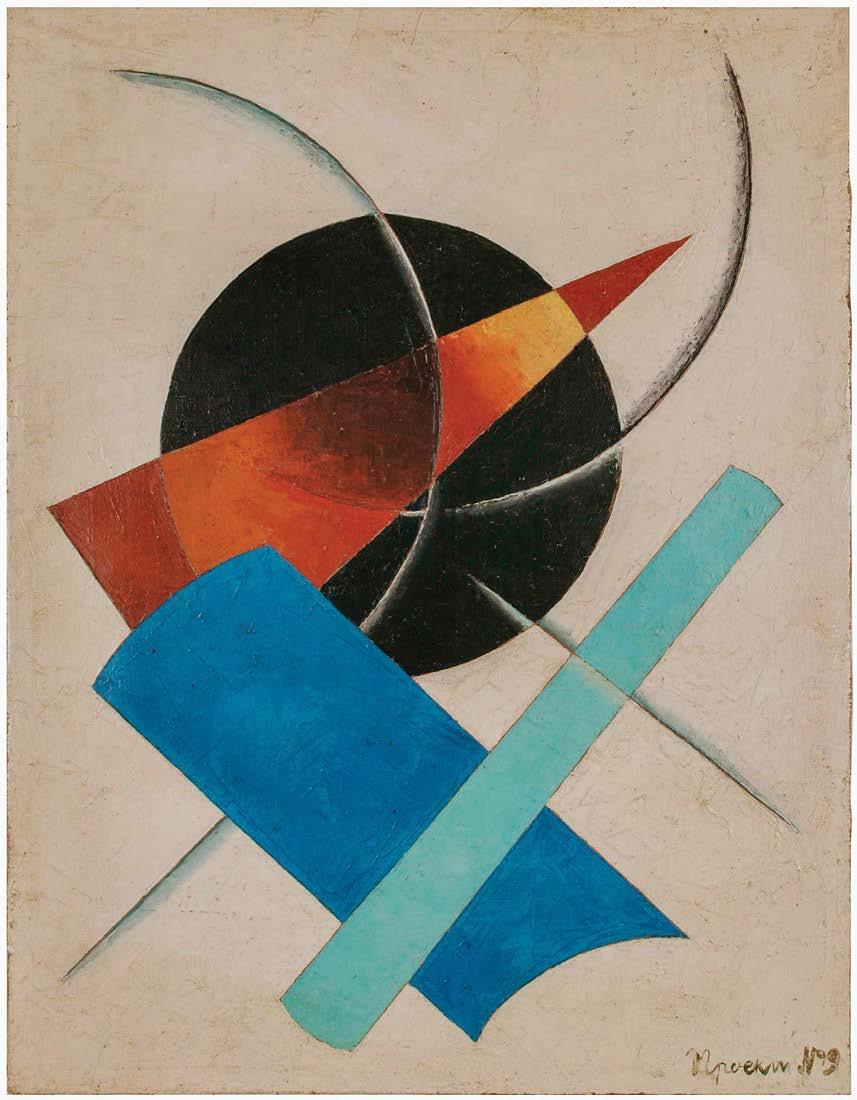
Like many of the works in this collection, their mysteries are often hidden in plain sight. Both paintings on the facing page have inscriptions painted onto the front of the canvases. The inscriptions are sequential and read “Project No.8” and “Project No. 9.” We purchased these works from the German seller in September 2004. They were, in fact, the first works that we acquired. They were the paintings that started this journey. They were the paintings that the conservator told us were “Right.”
These works are in the style of Alexander Rodchenko. Rodchenko is best known as a photographer and graphic designer, but early in his career, he was a painter. We were told that he kept a record of the works he produced, totaling about 120 paintings. To date, only about 70 of those 120 works are known to exist.
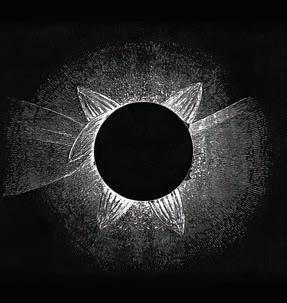
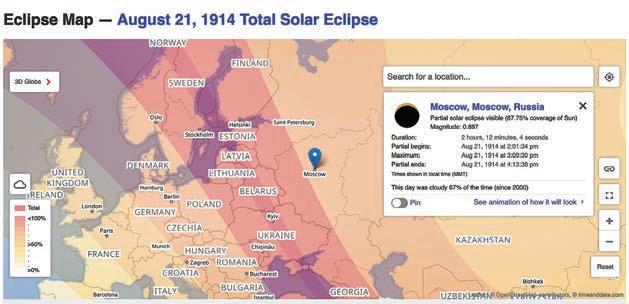
In his studio, Rodchenko kept an engraving of a total solar eclipse by Emmanuel Liais. His fascination with the celestial event may have stemmed from his experience of the solar eclipse that passed over Eastern Europe and Russia on August 21, 1914.
Kasimir Malevich also used the phrase “Partial Eclipse” as a compositional element in several of his paintings.
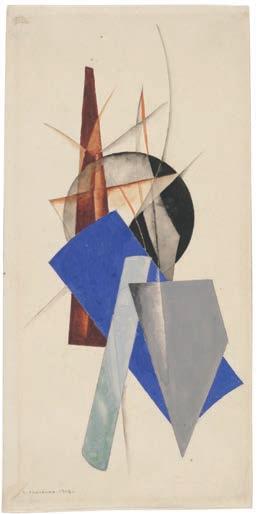
I'm always cautious about comparing known works by these artists in an attempt to establish some plea for authenticity. But in this case, this watercolor by Aleksander Rodchenko from 1918 from the collection at MOMA is so beautiful and seems to be singing the same song of the spheres as the two paintings in our collection.
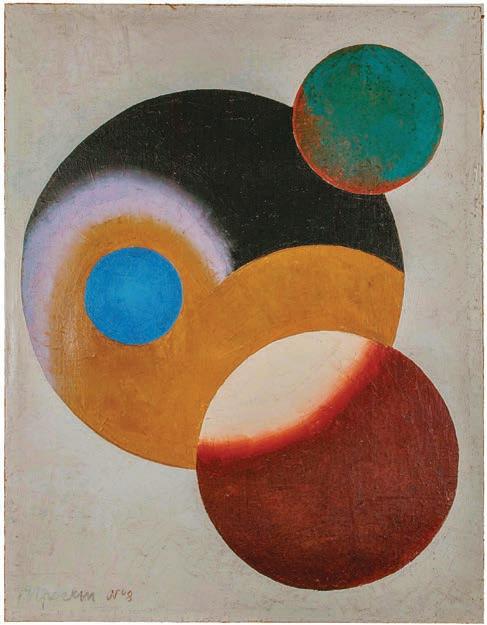
“Project No. 8”
In the style of Aleksander Rodchenko.
Inscription on the lower left front corner, translates to “Project No. 8.” Oil on canvas. 65.5 x 50.5 cm.
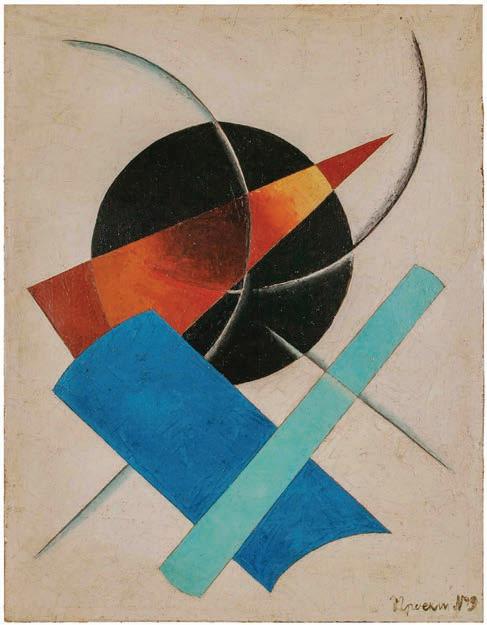
“Project No. 9”
In the style of Aleksander Rodchenko.
Inscription on the lower left front corner, translates to “Project No. 9.” Oil on canvas. 65.5 x 50.5 cm.
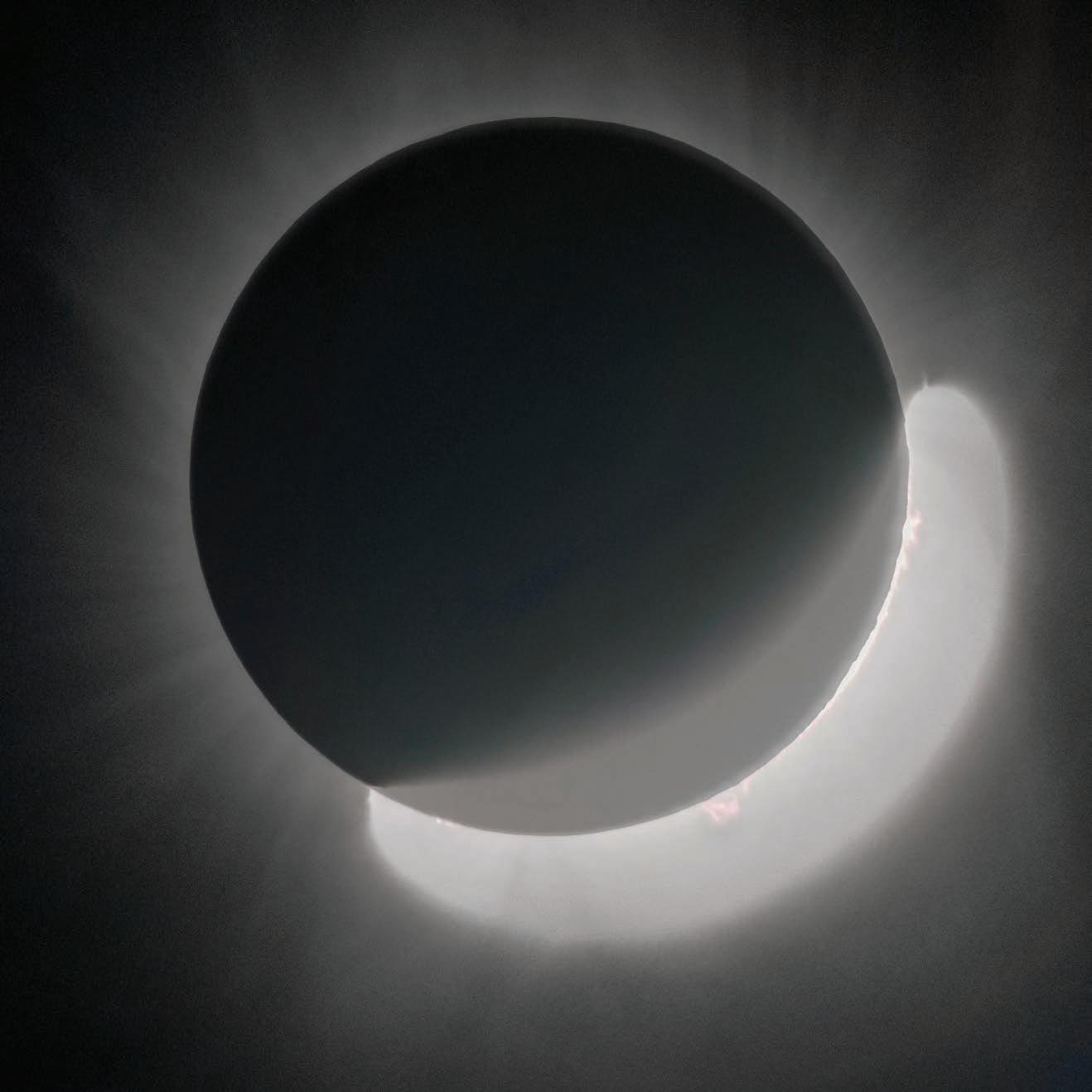
Total Solar Eclipse: 2017/08/21, 17:49:14.1 GMT. Alliance, Nebraska.

Total Solar Eclipse: 2017/08/21, 17:49:14.1 GMT. Alliance, Nebraska.
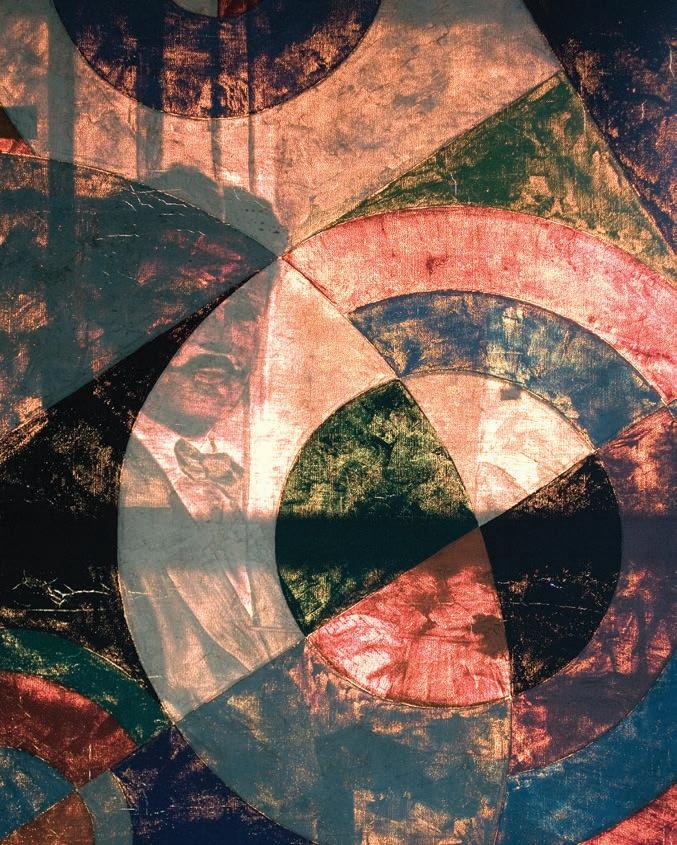
Above:
Viewed using transmitted light.
Oil paint takes over sixty years to fully dry. As it dries, it often becomes more transparent.
Transmitted light is a technique in which a light source is placed behind the canvas and photographed from the front.
In this case, the process revealed the image of a man sporting a mustache, wearing a suit and a bow tie.
His overall style indicates that the underpainting was likely executed in the first quarter of the twentieth century.
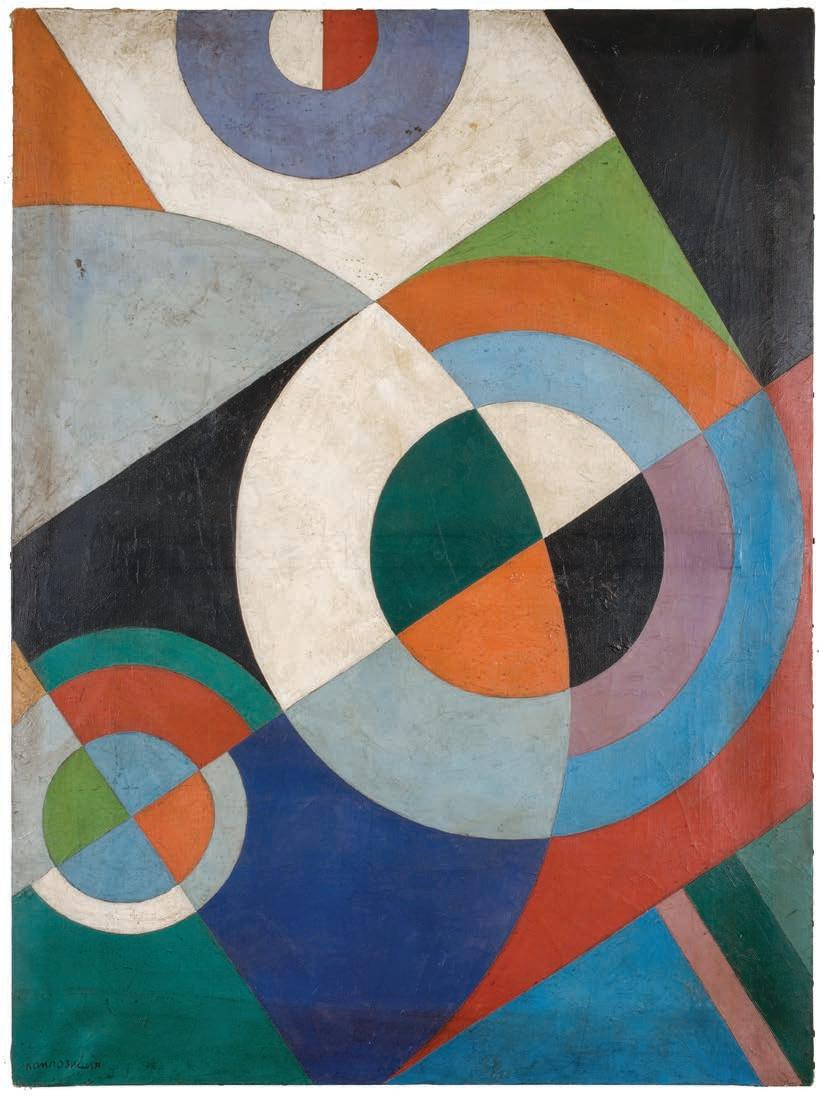
Facing page: “COMPOSITION”
In the style of Alexsandr Rodchenko.
Text in Russian on lower left front, translates to “COMPOSITION”.
Oil on canvas.
100 x 75 cm.
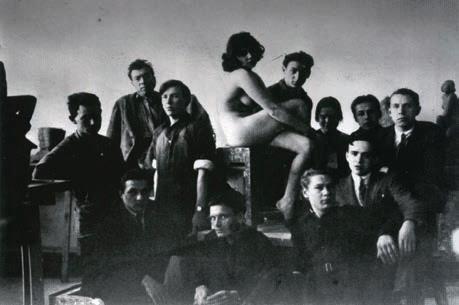
Life drawing studios were an integral part of the curriculum at the schools where avant-garde art was practiced and taught. The painting revealed under the visible painting on the facing page, using infrared reflectography, is very much in keeping with some of the known works produced in these schools.
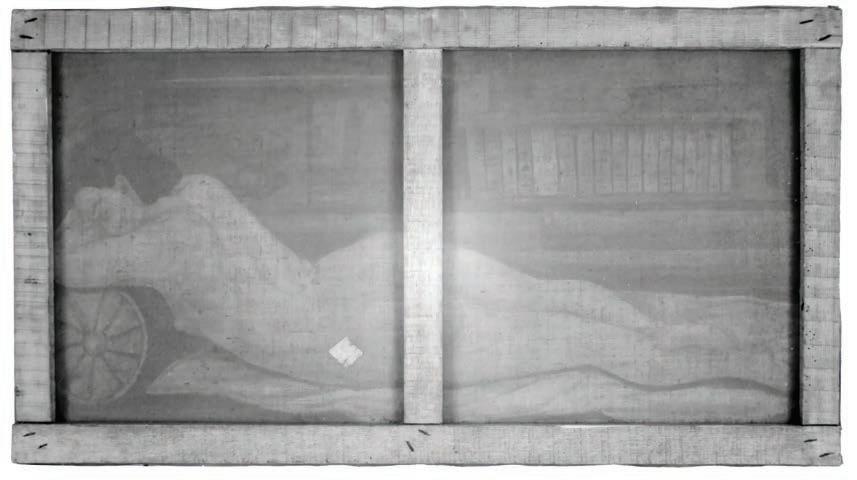
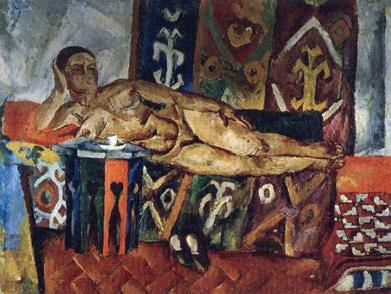
Facing page: “TEA ROOM”
Unattributed.
Text in lower left corner translates to “TEA ROOM.”
Mixed media on canvas.
84.5 x 45 cm.
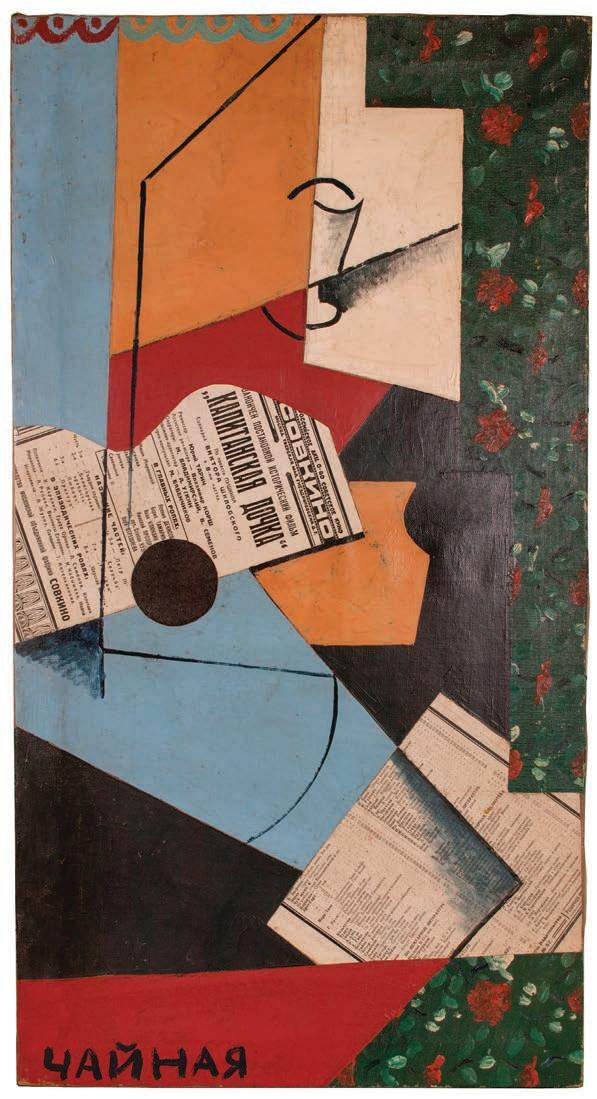
This painting was one of our first acquisitions from the German seller. When it arrived, I immediately took it to a conservator. She stated that, in her opinion, it was very likely produced within the first quarter of the 20th century.
We quickly determined that the painting was in the style of the Finnish artist Ivan Puni. It was very similar to a known work by the artist titled "Window Washer."
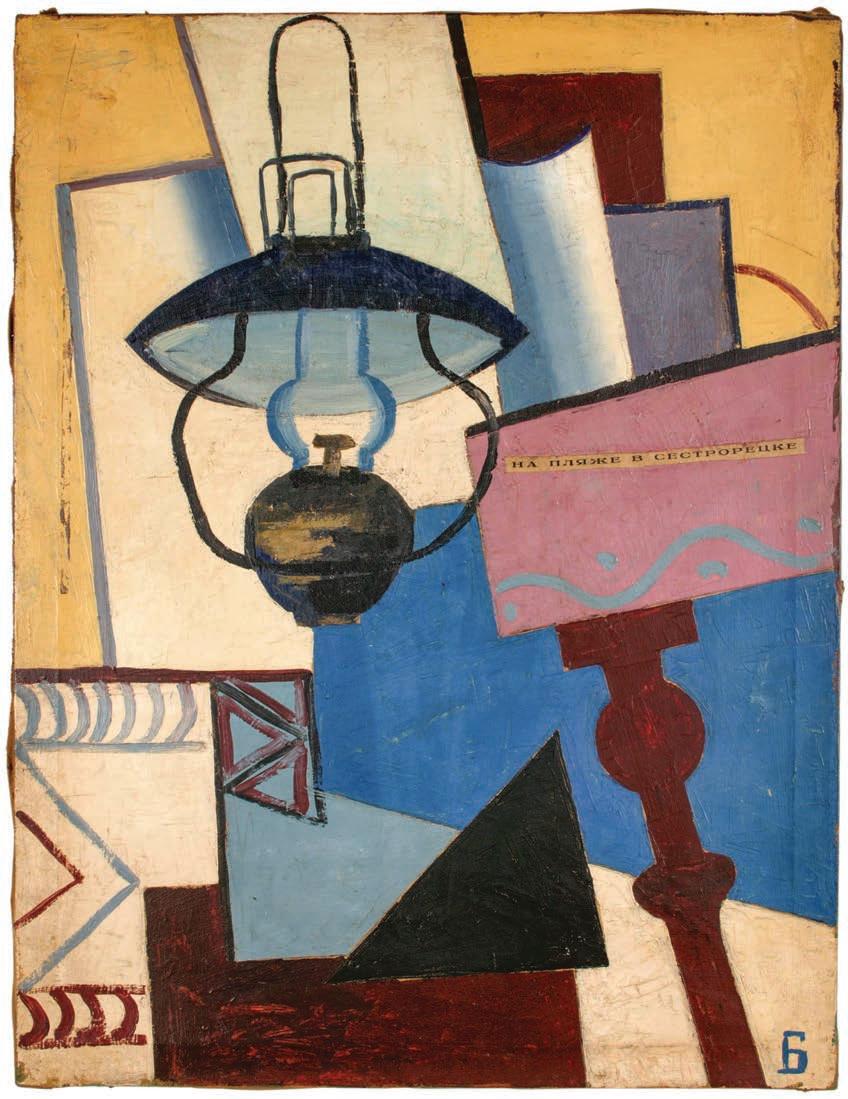
The painting has a single paper collage element that translates to: ON THE BEACH IN SESTORETSK.
In 2004, when we acquired this work, the internet was still in its nascent infancy, and a great deal of information was becoming available that would have been difficult, if not impossible, to access only ten years earlier.
On a Russian real estate website, an agent was listing a property in the Baltic coast village of Kuokkla. In her praise of the property and its location, she mentioned it as a former artists' retreat and that the family of the artist Ivan Puni once had a residence there.
A nearby beach to the village of Kuokkla is the beach called Sestoretsk.
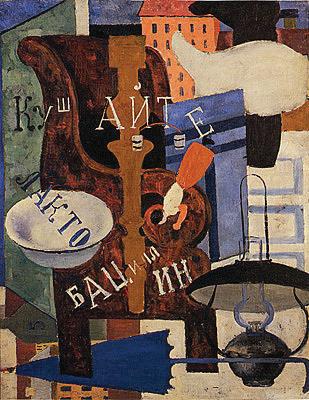
Facing page: "On the Beach in Sestoretsk"
In the style of Ivan Puni. Mixed media on canvas.
65 x 50 cm.
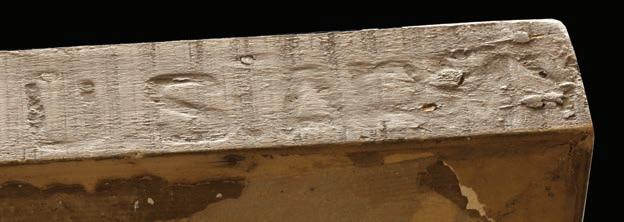
When we acquired this painting in 2007, we noticed something extraordinary. The frame on this painting, which was original to the picture, had the inscription "U.S. ARMY" hand-carved on it. The inscription was covered with a thick layer of grime. In raking light, it was unmistakable. It read, "U.S. ARMY" in bold block letters.
We were aware of the U.S. Army's role in repatriating Nazi plunder. The inscription's crude nature suggests a soldier carved it.
Most of the avant-garde art that was suppressed under Stalin was removed from museum ledgers and stored in secret "Spetsfonds" (Special Files).
It's documented that when German forces raided Kyiv in 1941, they stole all of the art that they could find. They even raided the Spetsfonds. Records indicate that the invading German soldiers looted approximately two thousand Soviet-censored avant-garde artworks from the Kyiv Spetsfonds. Only three hundred artworks were returned to Kyiv at the war's end.
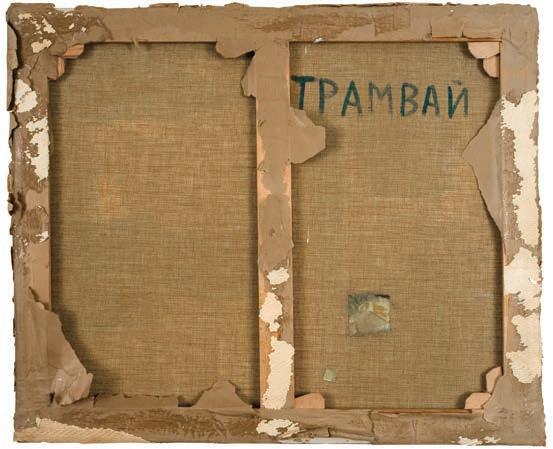
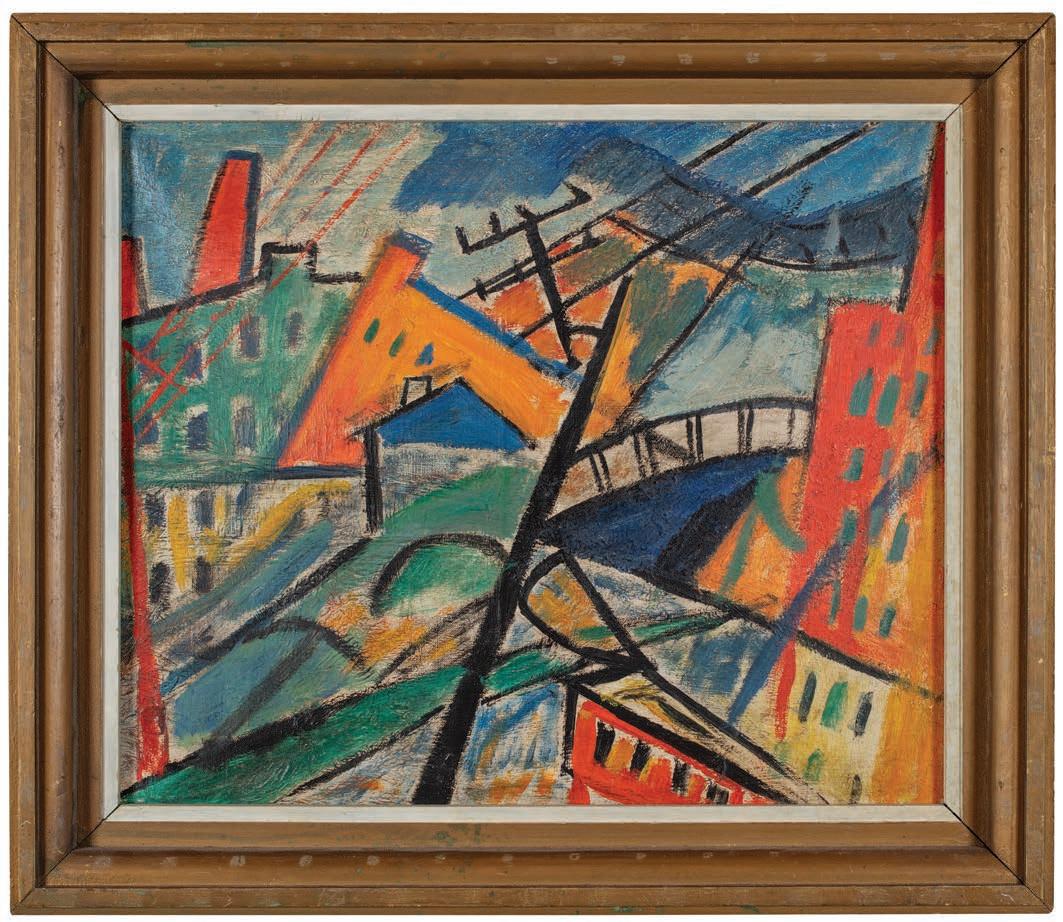
In the style of Olga Rozanova.
Inscription on the reverse translates to “TRAM.”
Oil on canvas.
50 x 60 cm.
As with much of the art produced in Russia during this period, much of the history has been lost. Determining the origin of a given work is nearly impossible. In this case, the likely origin of this work was written in big block letters.
On the reverse of the painting, there's an inscription that reads "IZORAM." The passage below, from a bookseller's website, briefly explains the IZORAM organization.
"IZORAM (Mass Organization of Komsomol Amateurs Art) appeared in 1925 in Leningrad as the Association of Visual Arts Groups for Young Workers to develop a new, Avant-Garde language of amateur arts and crafts, as amateur artists used to imitate academic art. Worker's art groups (izoyadra) were led by professional artists which assured the high quality of the amateur IZORAM productions. The association was disbanded in 1932 after the formation of the Artists Union."
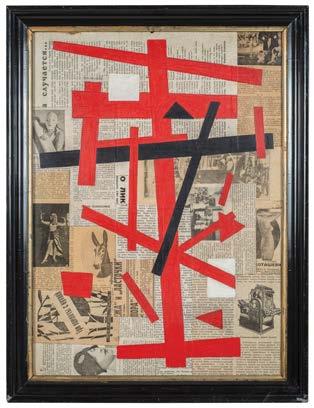
We've discovered three similar works in other collections.
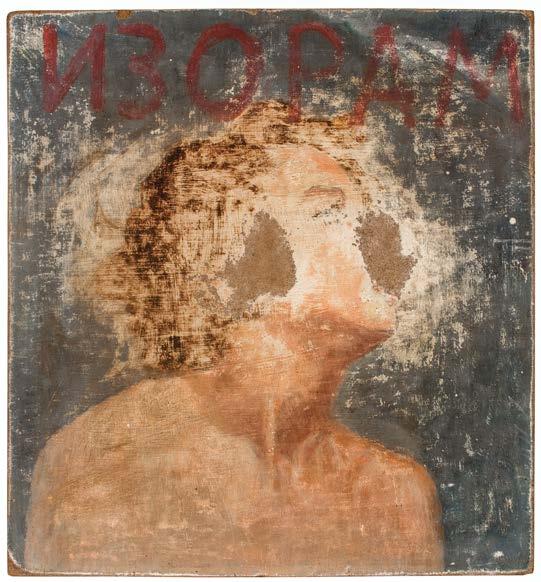
Facing page: Unattributed.
Inscription on reverse translates,"IZORAM”, an acronym for: “Young Visual Arts Workers.”
Mixed media on board.
41 x 38 cm.
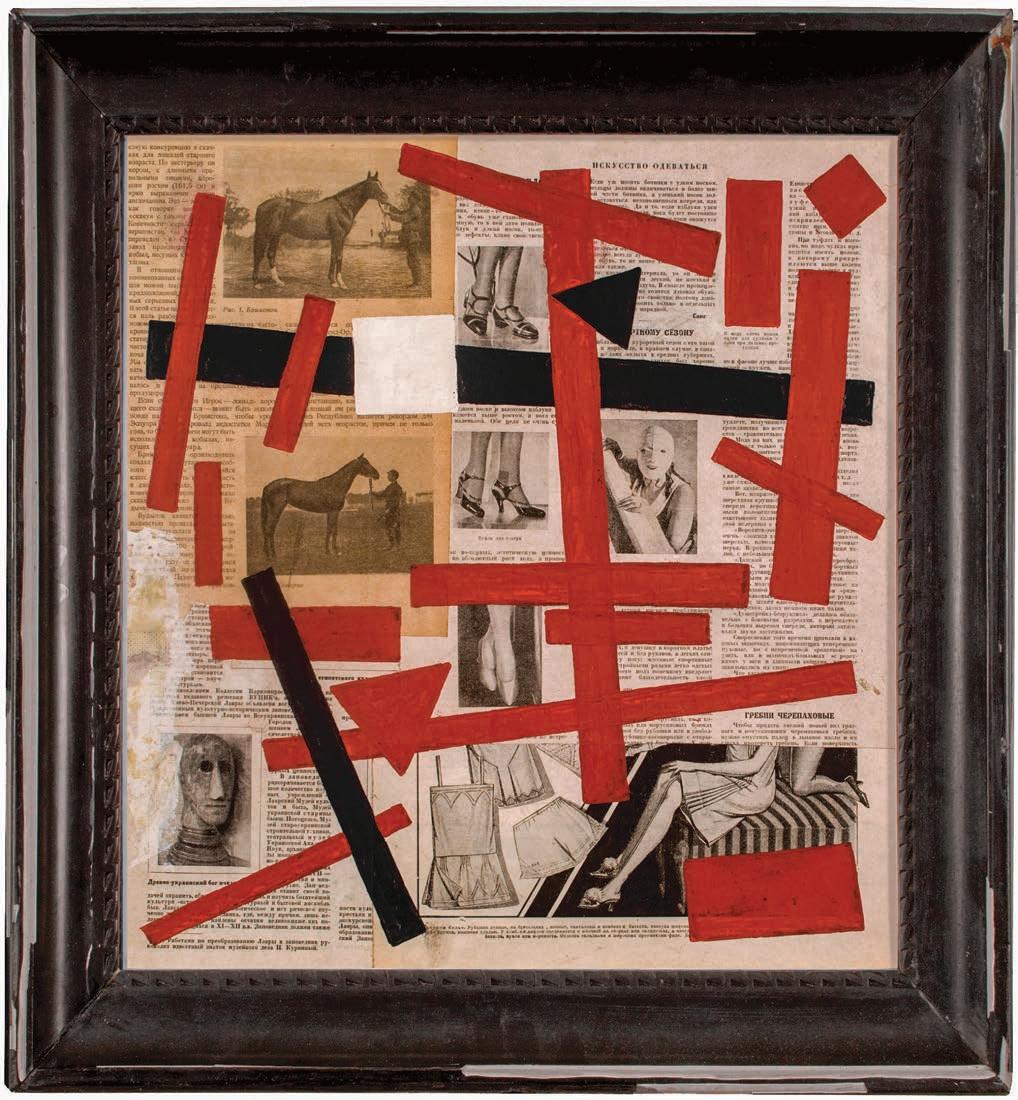
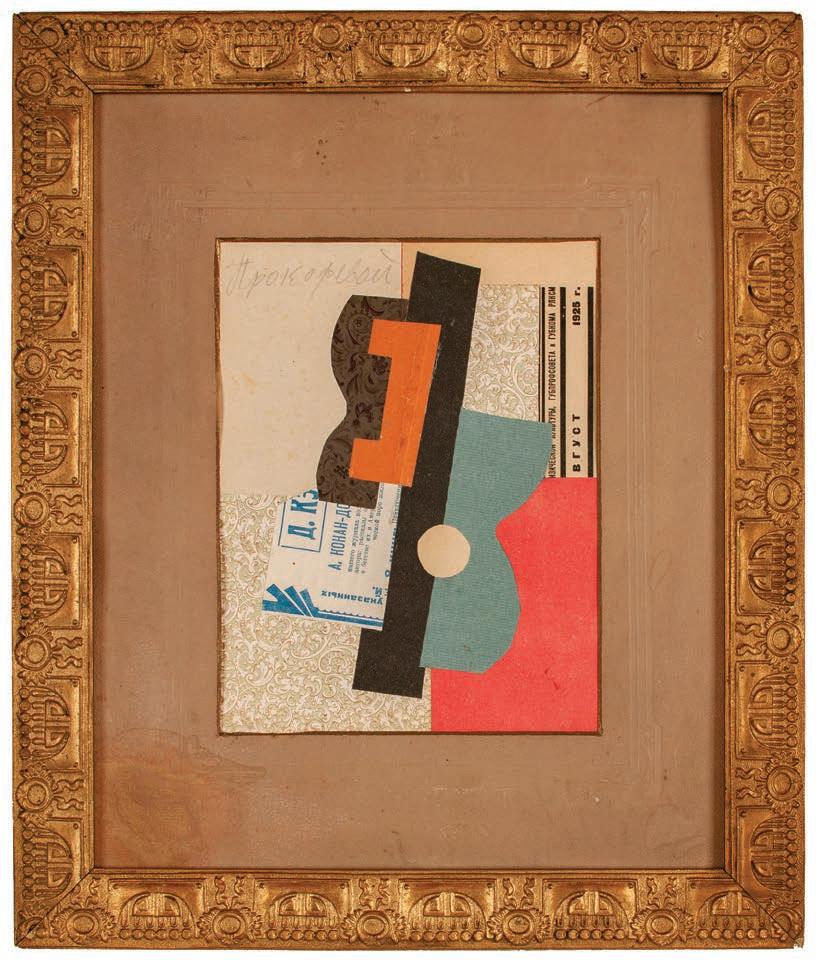
Unattributed.
Undeciphered inscription on the upper left front corner.
Label on reverse is shown on the facing page.
Collage on board.
21 x 16.5 cm.
Facing page: The partial label on the reverse of this collage.
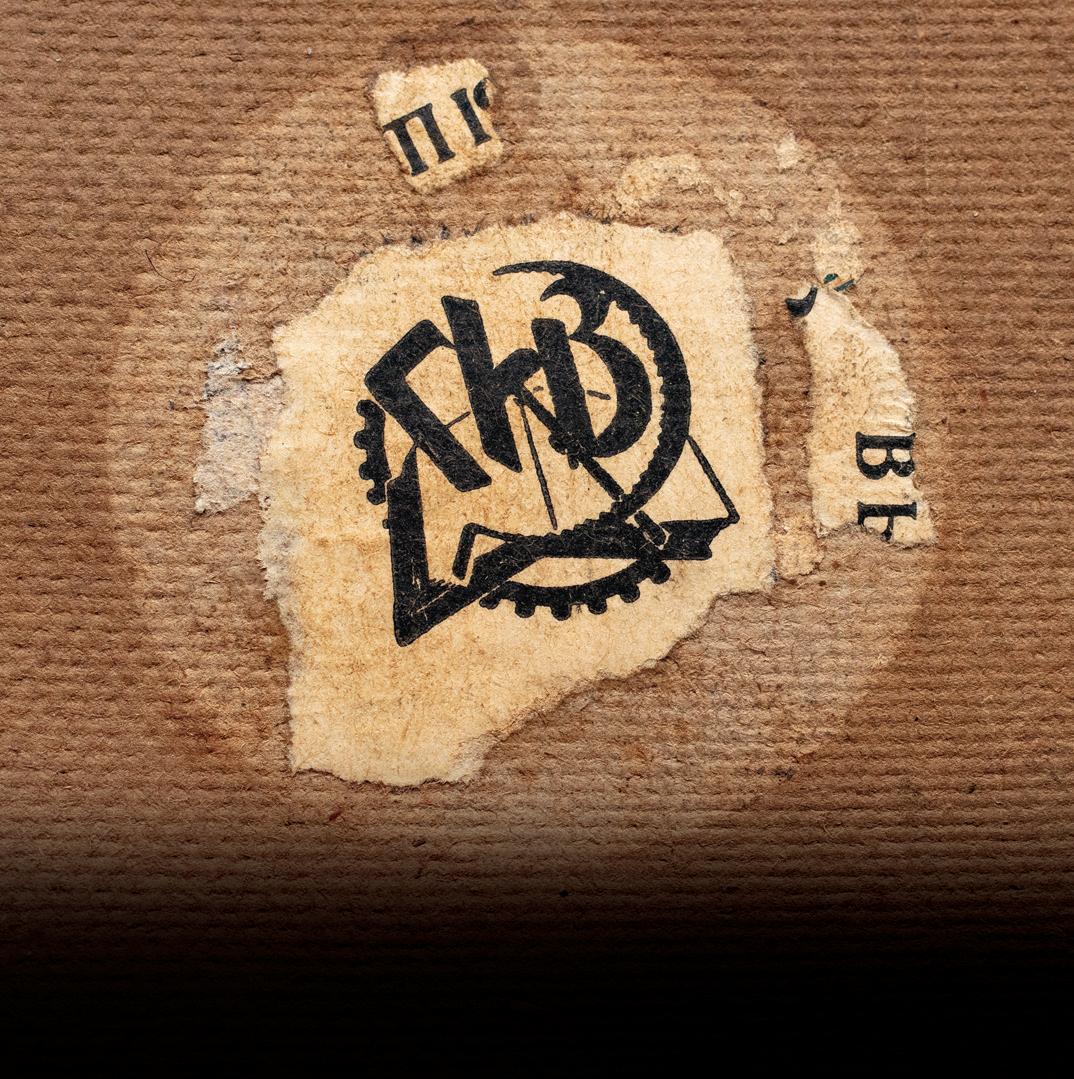
This logo appears to be the Gosizdat mark, used by the State Publishing House of the RSFSR. Gosizdat operated under that name from 1919 until 1930, when it was reorganized into OGIZ, so the logo was in use for about 11 years.
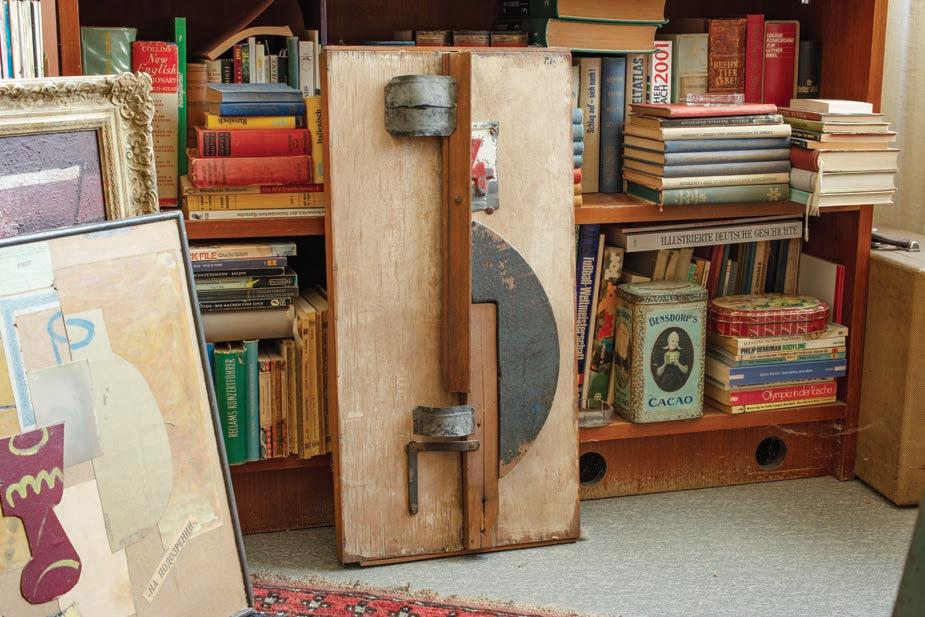
This construction is in a private European collection.
The construction pictured above may not be as abstract as it seems at first glance. A Russian follower of my Instagram commented that "In the 4th photo (the image was part of a sequence) is a HAND WASHER. We had one in our garden. Washing our hands after work."
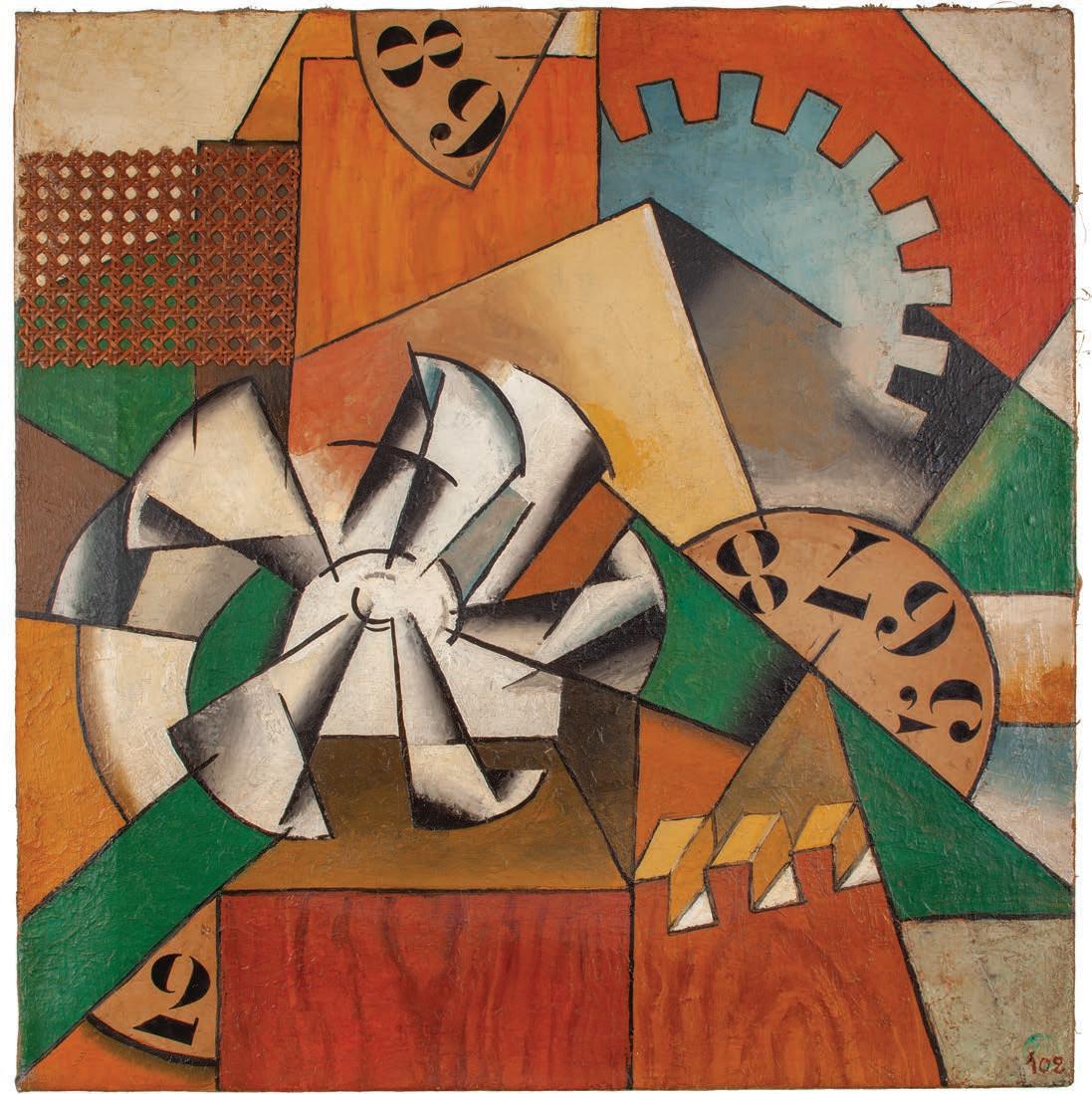
Similarly, for the painting on the facing page, an Instagram follower made the observation, "I think it's a painted picture of the booth of a phone machine! Or am I wrong?"
Facing page: In the style of Ivan Kliun. Inscribed “102” on the lower right front corner. There’s also an undeciphered inkstamp on the lower right front corner.
Mixed media on Canvas. 60 x 65 cm.
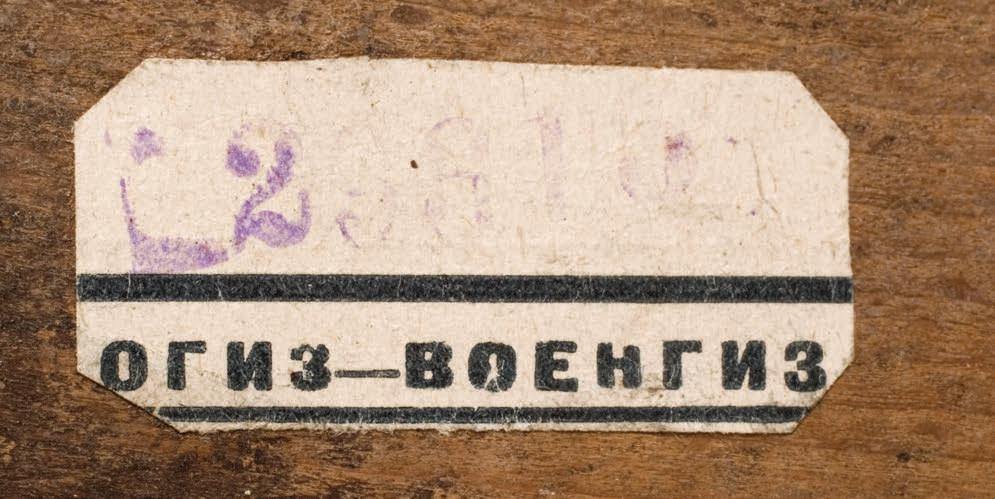
On the back of this construction there’s a label with what appears to be an inventory stamp. An Instagram follower offered this as a possible translation.
“Nice peice! - The Stamp on the back looks like an inventory number. It seemes (sic) it belonged to the Military Publishing House. Maybe they had it in their collection.”
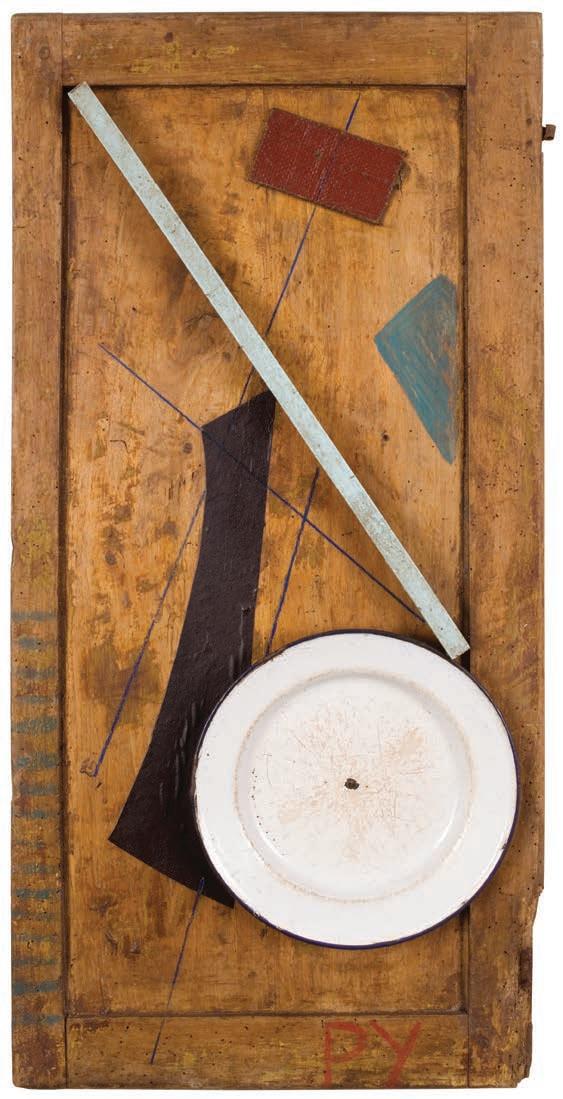
Facing page: Signed “PY” on lower right front. Mixed media on a wooden panel. 84 x 40 cm.
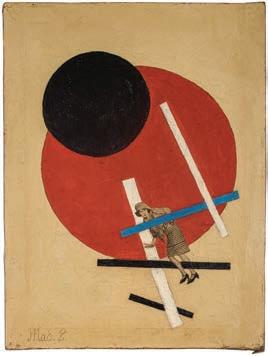
We purchased two paintings from the German seller on November 29, 2004. Both of the paintings appeared to be in the style of the artist El Lissitzky. They were inscribed with sequential inscriptions that translated to “Tab. 1 and Tab. 2.”
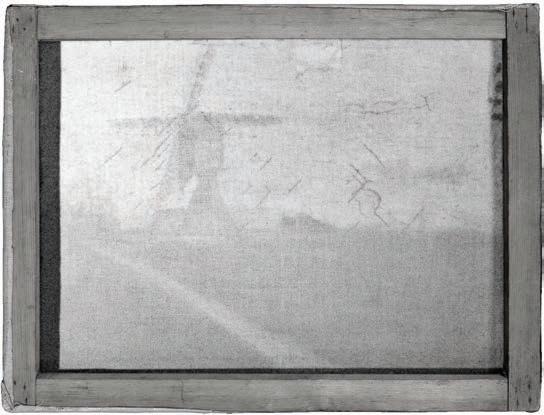
The painting on the facing page underwent rigorous chemical testing and analysis. The technicians used an infrared camera to examine the work. When the camera was focused on the back of the painting, an image suddenly appeared. It was the image of a windmill!
We quickly went online to see if there was any evidence that El Lissitzky had a connection with Holland. Sure enough, El Lissitzky had visited Holland in 1923 and 1926.
Whether El Lissitzky painted a windmill and then painted over it, or repurposed an existing canvas that already had a windmill painting on it, is unknowable. The unlikely collision of a Dutch windmill appearing under the surface of a Russian painting is what matters.
If El Lissitzky had never visited Holland, that would matter in considering the possible origin of this painting. But a Russian painting colliding with the painting of a windmill, when it is known that the artist responsible for the visible painting had such a strong connection to Holland, seems to narrow the possibilities quite a bit.
In the end, the chemical analysis results were conclusive. The report states that, "No anachronistic pigments, binders, or fillers where (sic) observed.".
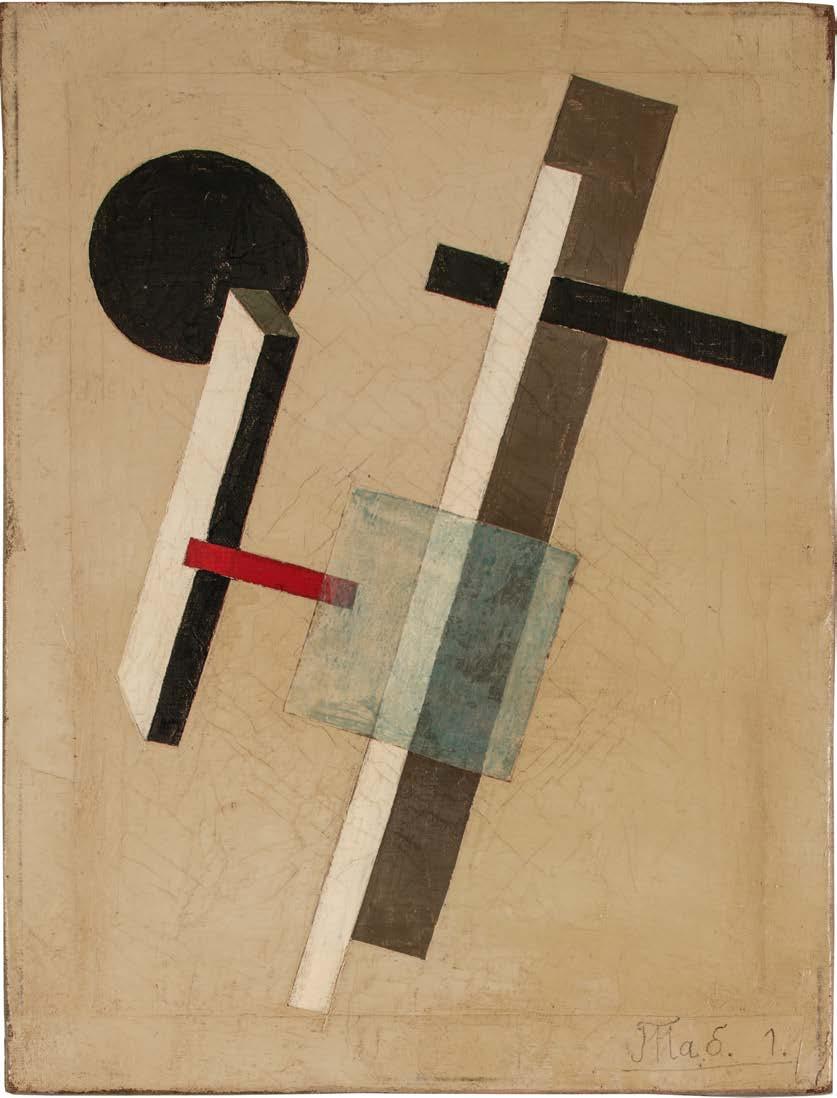
Facing page: “Tab. 1.”
In the style of El Lissitzky.
Text written in Russian, lower left front, translates to “Tab.2.”
Mixed media on canvas. 40 x 30 cm.
On the lower right corner of this painting there’s a small ink stamp. An Instagram follower offered the following as a possible translation:
“The (ink) stamp seems to translate as ‘of the Communist Academy.’ It looks like something illegible above it.’
‘The Communist Academy was a higher education and research institute in Moscow, abolished by Stalin in 1936 (see wikipedia entry). Would this add weight to the authenticity of the painting - but then how can it be proven that the stamp is authentic?”
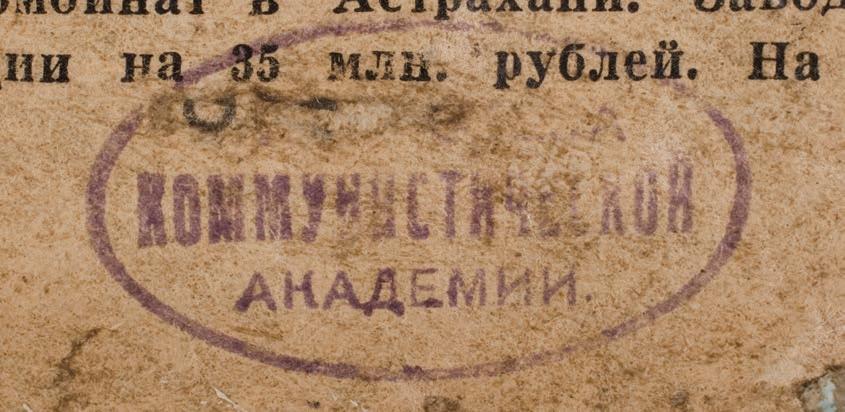
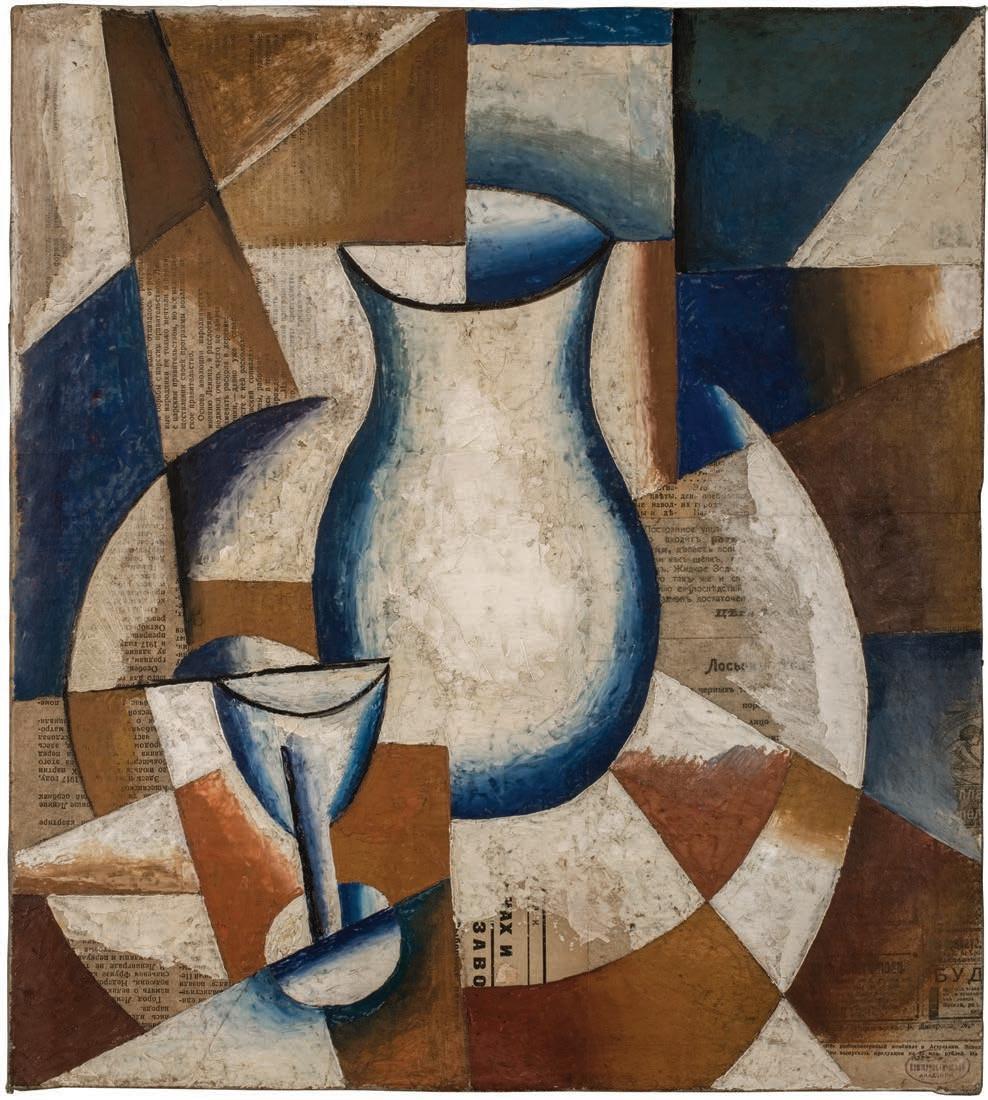
Facing page: In the style of Ivan Kliun. Bureaucratic stamp on the lowewr right corner translates “Communist Academy.” Mixed media on canvas. 50 x 44.5 cm.
We acquired this painting from the German seller on October 19, 2005.
This painting, executed on plywood, is in the style of Kasimir Malevich. There is a second painting of an interior on the reverse. During the 1910s, Malevich alternated between impressionistic and experimental works.
Late in his career, Malevich recreated some of his early impressionistic works to provide historical context for his development as an artist, since his earlier works had been lost.
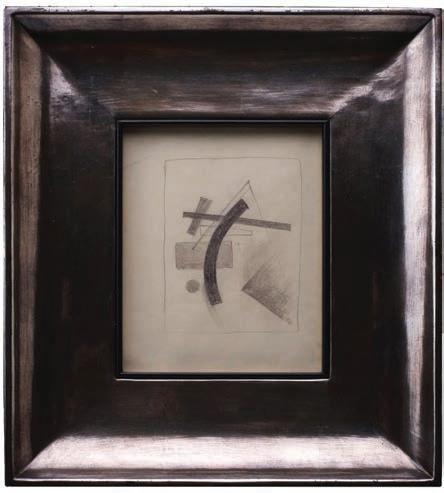
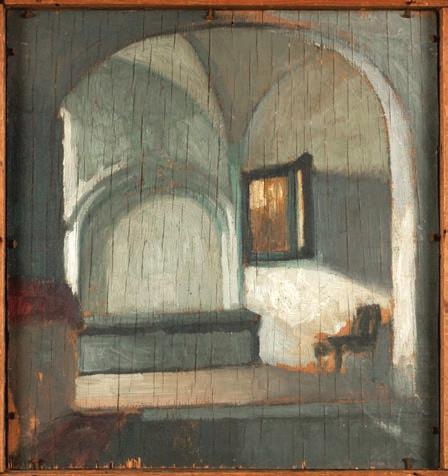
The painting on reverse of the work in our collection.
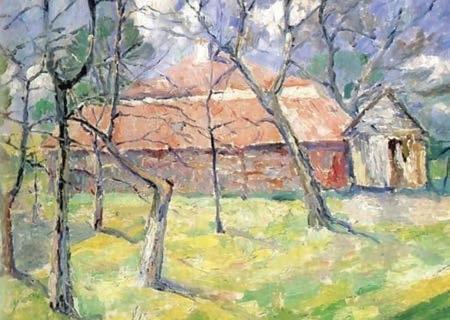
Facing page: Unattributed.
In the style of Kasimir Malevich, (Ukrainian).
The ink stamp in lower right reads MOCKBA (Moscow)
Second painting on reverse depicting interior of room, (above, top).
Oil on plywood. 28 x 28 cm.
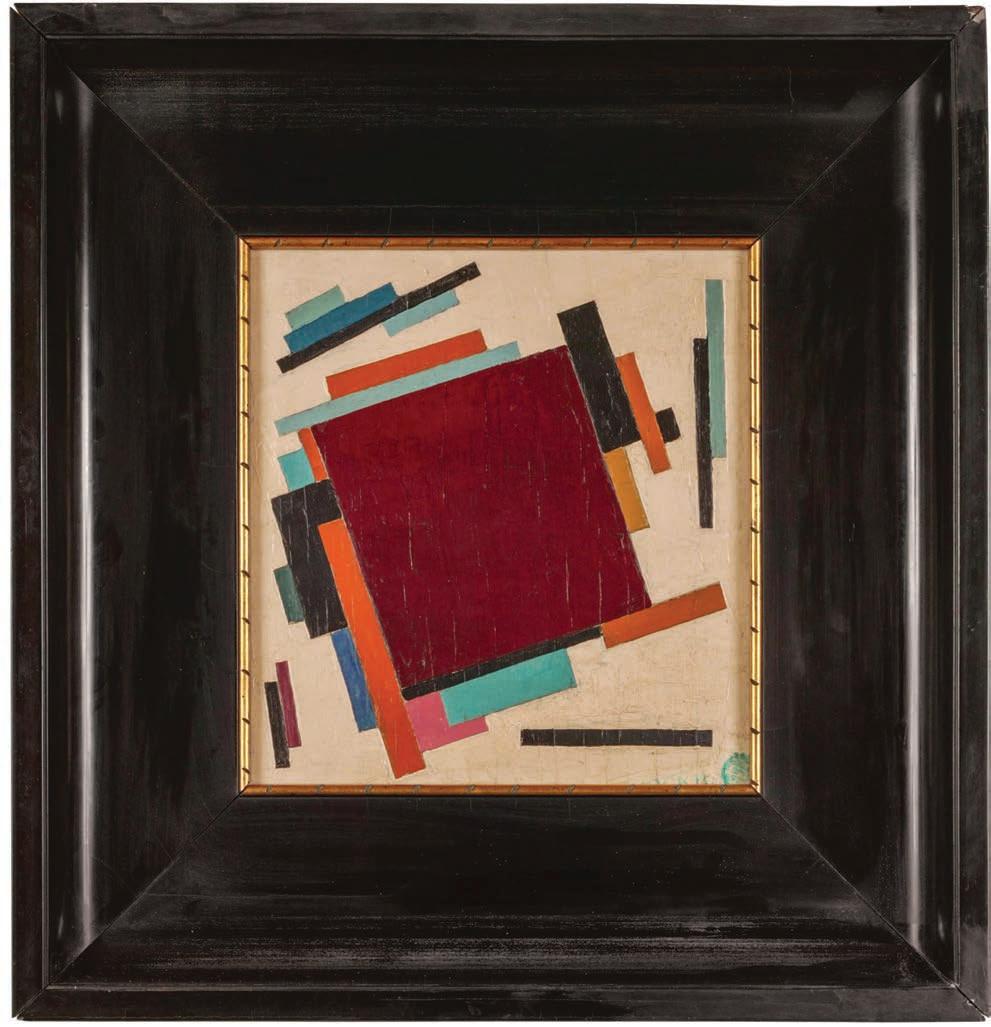
We purchased this painting from the German seller on February 13, 2007.
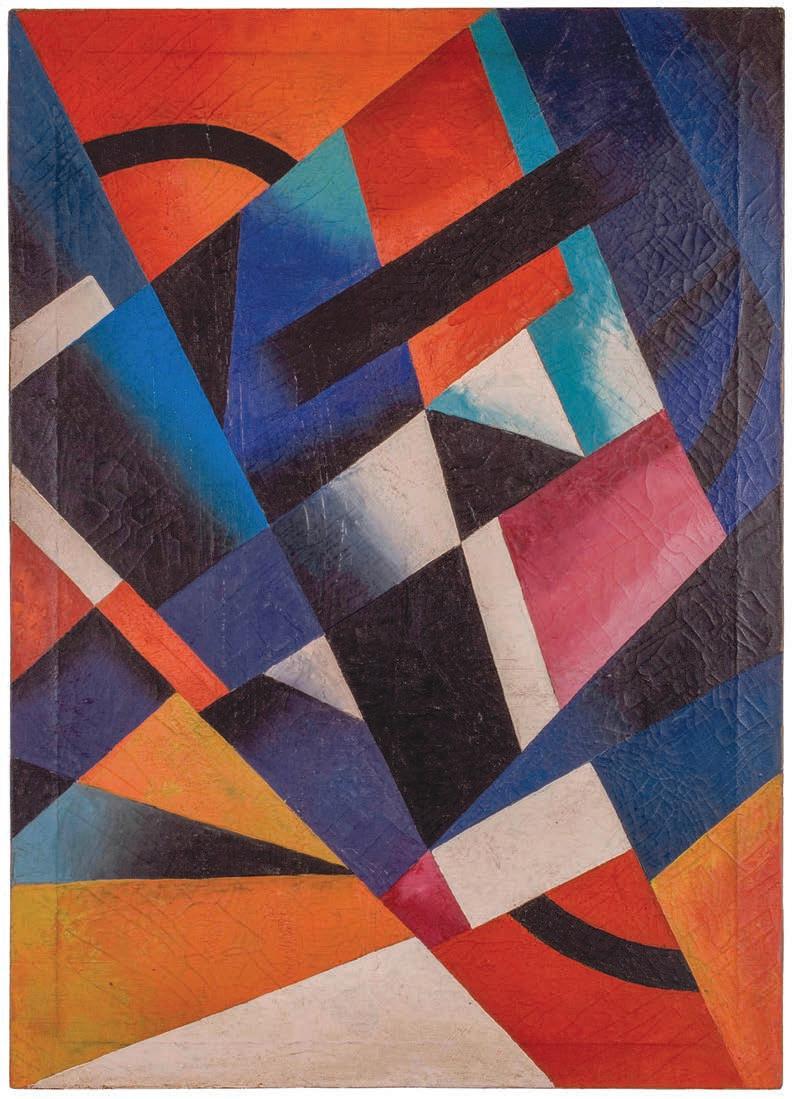
It appears to be by the Ukrainian artist Alexandra Exter. An unusual aspect of this work is the mixed use of oil paint and gouache. Gouache is a water-soluble pigment and, unlike oil paints, does not become transparent with age.
In the transmitted-light image of the painting on the facing page, the areas where gouache was used appear as dark blue, black, and teal regions.
A repair patch on the back of the painting is visible in the upper left corner of the translucent image.
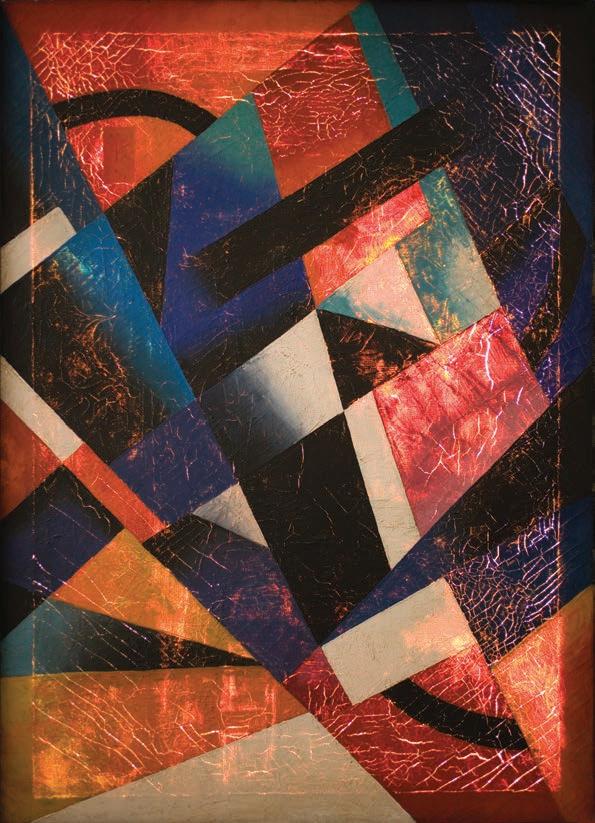
Above: Viewed using transmitted light.
Facing page: Unsigned.
In the style of Alexandra Exter, (Ukrainian).
Oil and gouache on canvas.
77 x 57 cm.
© Ron Pollard Photography Inc., 2026
www.artofthezero.com
www.ifoundmalevich.com
www.ronpollardphotographer.com
This book is for research purposes only.