Roman Vintfeld: How Drone Inspections Improve Workplace Safety and Efficiency
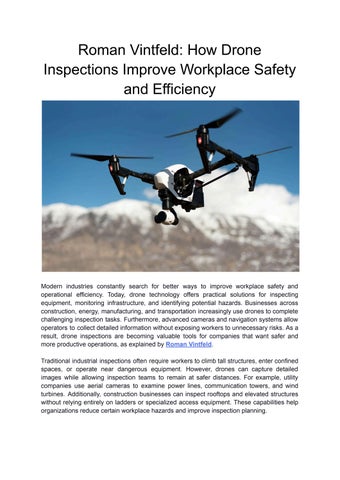
Modern industries constantly search for better ways to improve workplace safety and operational efficiency. Today, drone technology offers practical solutions for inspecting equipment, monitoring infrastructure, and identifying potential hazards. Businesses across construction, energy, manufacturing, and transportation increasingly use drones to complete challenging inspection tasks. Furthermore, advanced cameras and navigation systems allow operators to collect detailed information without exposing workers to unnecessary risks. As a result, drone inspections are becoming valuable tools for companies that want safer and more productive operations, as explained by Roman Vintfeld. Traditional industrial inspections often require workers to climb tall structures, enter confined spaces, or operate near dangerous equipment. However, drones can capture detailed images while allowing inspection teams to remain at safer distances. For example, utility companies use aerial cameras to examine power lines, communication towers, and wind turbines. Additionally, construction businesses can inspect rooftops and elevated structures without relying entirely on ladders or specialized access equipment. These capabilities help organizations reduce certain workplace hazards and improve inspection planning.
Efficiency is another major advantage of drone inspections. Conventional inspection methods may require extensive preparation, specialized machinery, and several employees. In contrast, trained drone operators can often collect aerial information more quickly. Moreover, drones can cover large industrial properties and provide updated images within relatively short periods. This improved access to information helps maintenance teams identify visible problems and prioritize necessary repairs. Consequently, companies may reduce unnecessary delays and improve resource management. Advanced imaging technology also strengthens inspection accuracy. High-resolution cameras allow technicians to examine equipment surfaces and identify visible damage. Furthermore, thermal imaging sensors can detect unusual temperature patterns that may indicate electrical or mechanical concerns. Businesses can compare information from repeated inspections to monitor equipment conditions over time. As a result, maintenance professionals can investigate potential problems before they cause major disruptions. However, successful drone inspections require proper planning and responsible operation. Businesses must consider weather conditions, aircraft limitations, battery performance, and applicable aviation regulations. Additionally, operators need appropriate training to maintain safe flight procedures and collect reliable information. Although drones provide valuable inspection support, professionals must verify important findings and perform physical examinations when necessary. The continued development of artificial intelligence and automated flight systems will further improve industrial inspection capabilities. Advanced software can help analyze aerial images and recognize selected equipment concerns. Moreover, programmed flight routes allow organizations to collect consistent information during recurring inspections. Ultimately, drone technology helps businesses balance workplace safety with operational efficiency. By combining advanced aerial equipment with trained professionals, companies can reduce unnecessary risks, improve maintenance planning, and strengthen overall productivity. As drone technology evolves, its role in industrial inspections will likely continue to expand.