ESSENTIAL EXPERIENCE
Why hands-on learning at Rollins is the ultimate classroom
Why hands-on learning at Rollins is the ultimate classroom
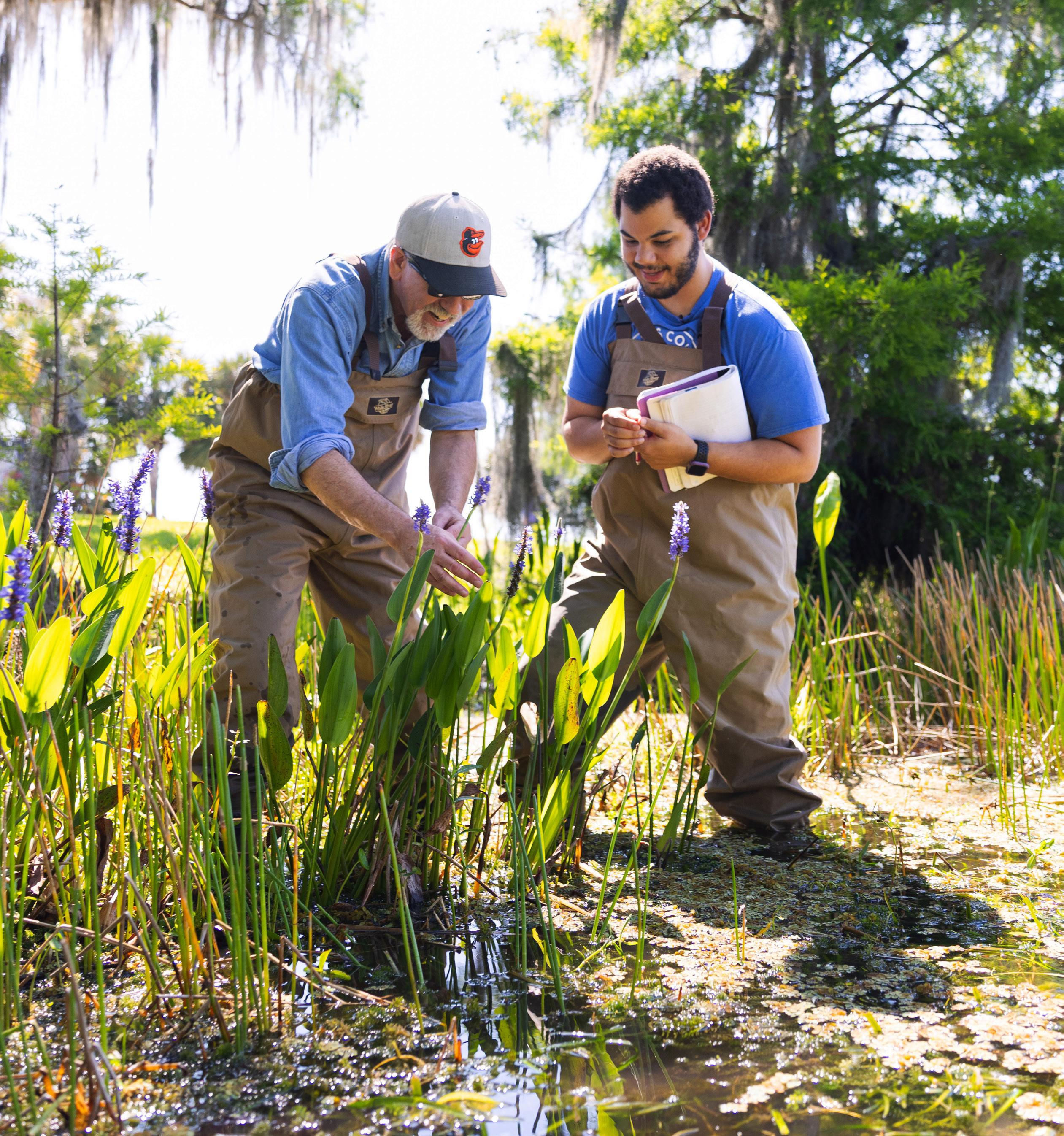
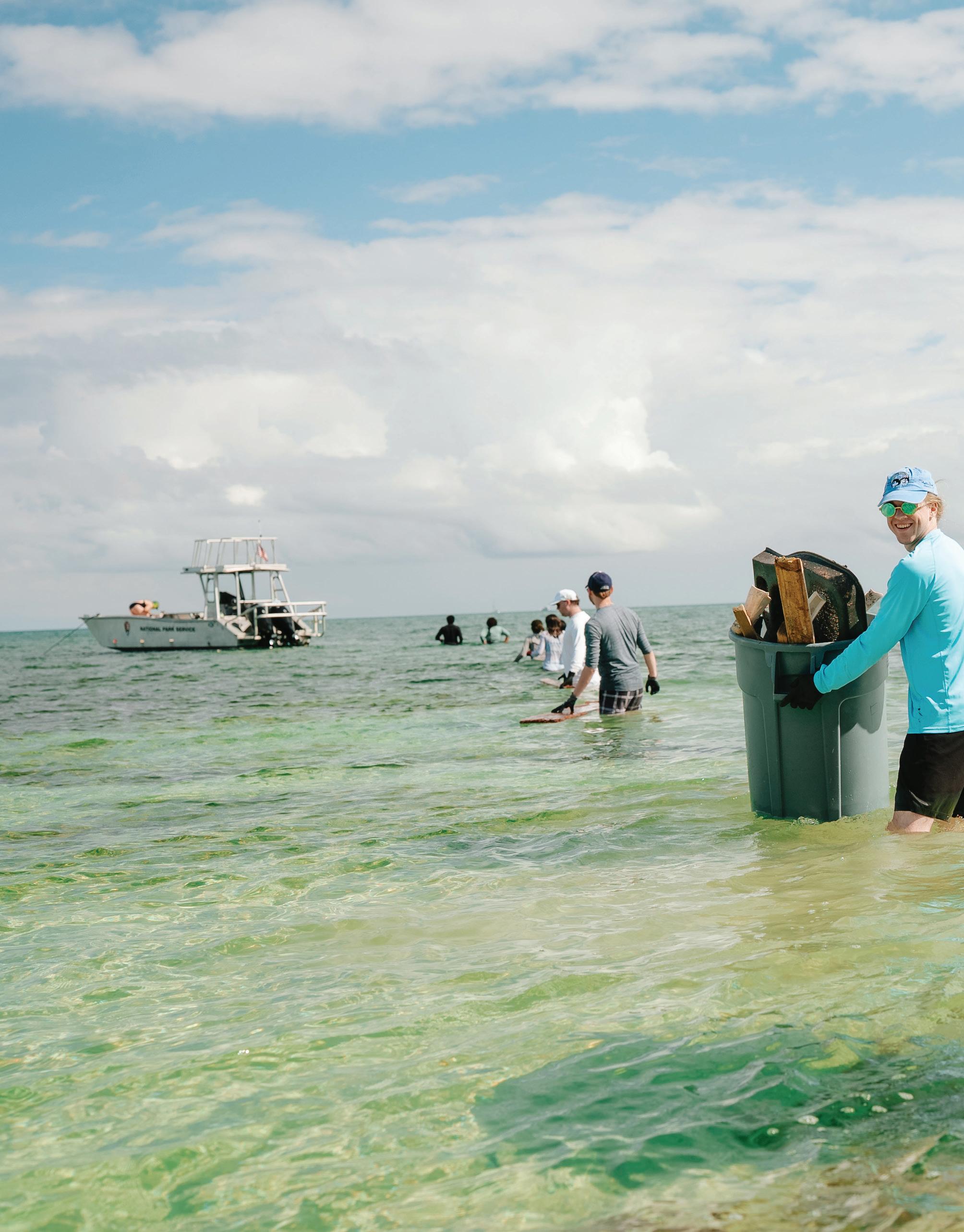
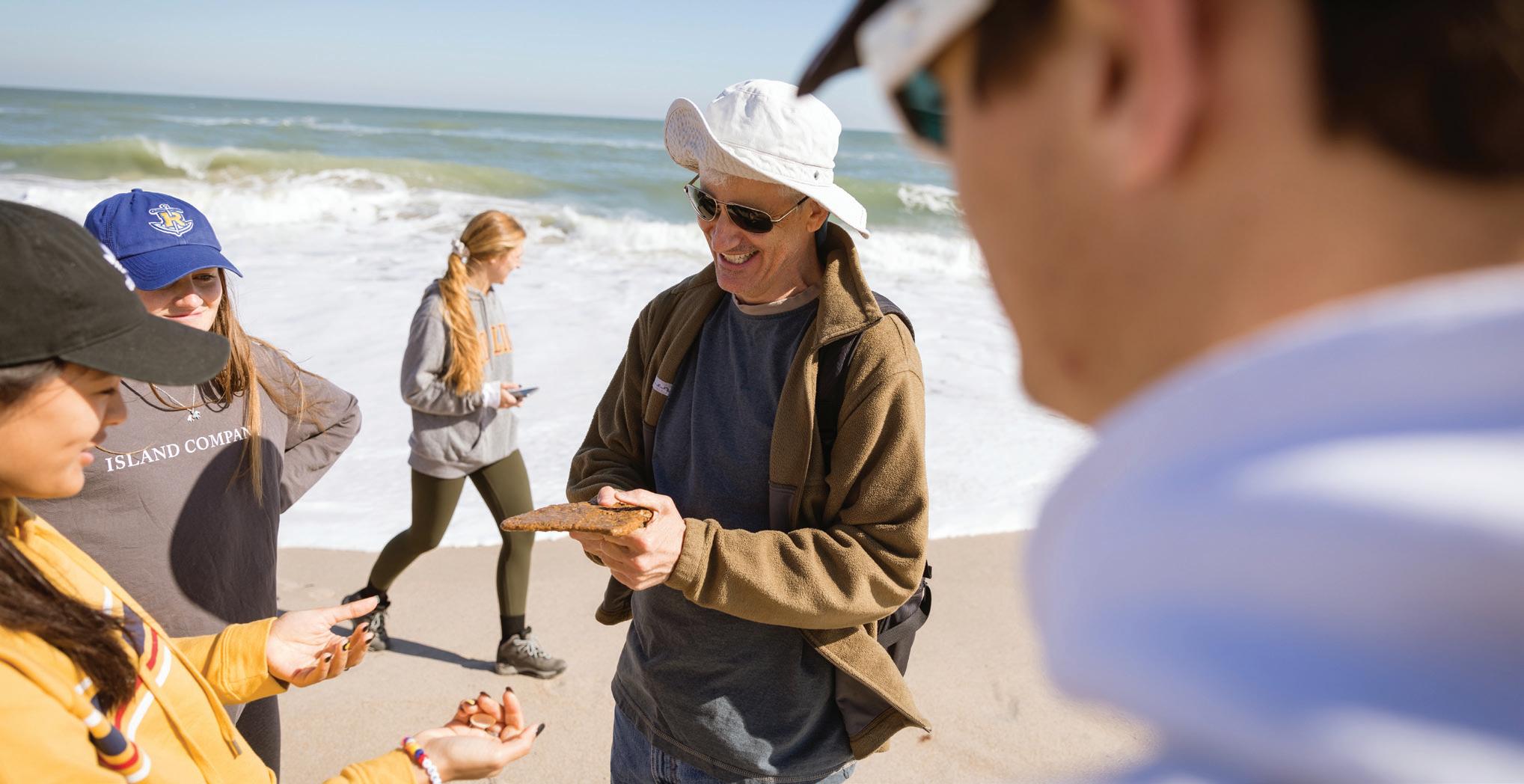
Rollins’ Immersion program is one of the College’s signature service-learning experiences, inviting students to step beyond the classroom and engage directly with complex cultural, environmental, and social challenges. During a recent Immersion to Biscayne Bay and Everglades National Park, Rollins students worked alongside National Park Service staff to restore natural spaces—removing debris from island shorelines, maintaining park trails, and learning firsthand about the environmental stewardship required to protect one of the country’s most unique ecosystems. Experiences like these allow students to connect their academic learning with real-world impact while building confidence, teamwork, and a deeper sense of responsibility to the communities and environments they serve.
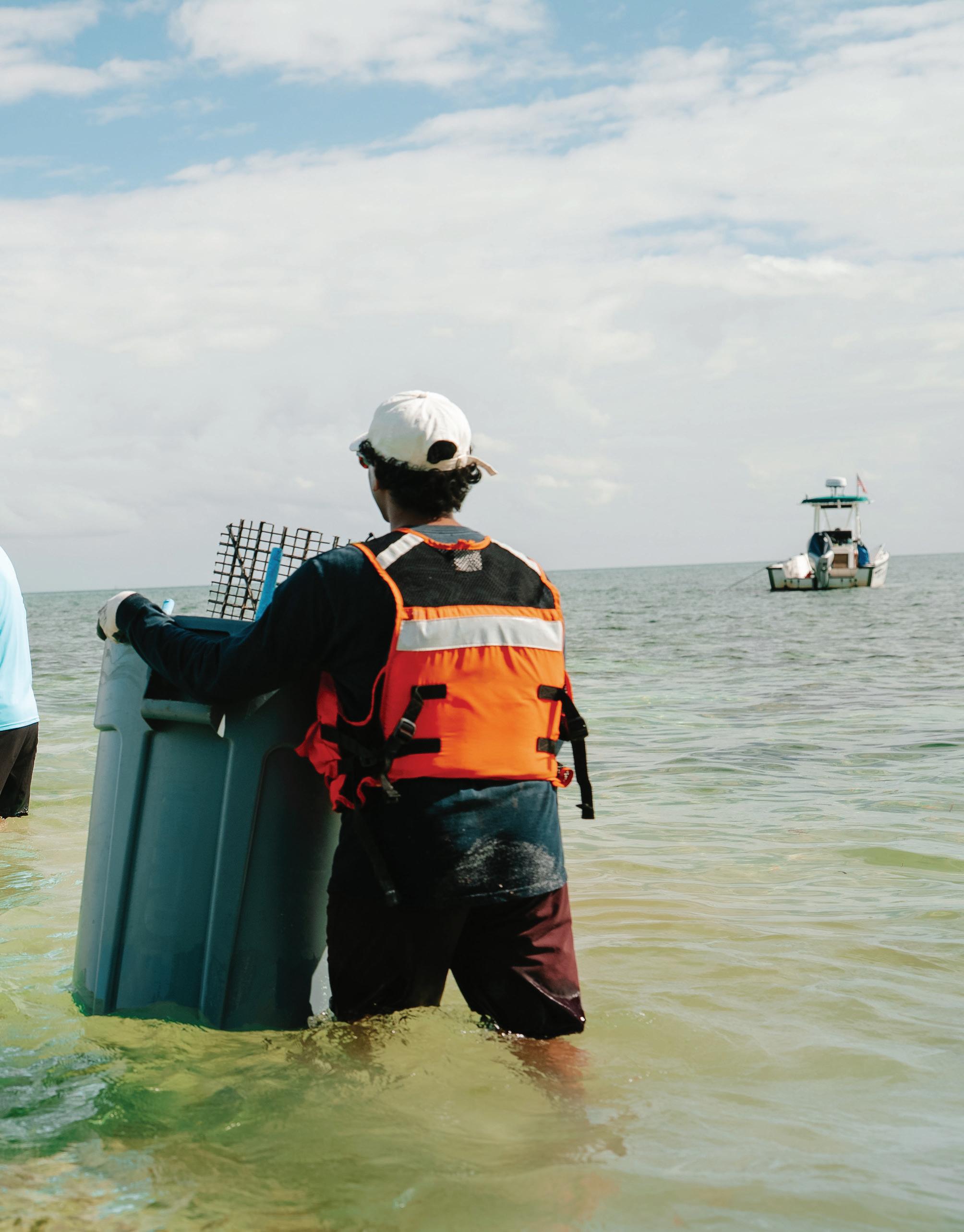
Supporting applied learning experiences like Immersions is one of the many ways your gifts to Rollins empower students to tackle real-world challenges and build skills that will serve them long after graduation. You can be a part of this transformational impact by making a gift at rollins.college/give.
At Rollins, I’ve participated in Immersions, field studies, leadership conferences, and internships alongside my academic studies. Through these experiences, I’ve honed skills in critical thinking, communication, project management, and teamwork, giving me a competitive edge to thrive in missiondriven organizations and contribute to transformative social change. I hope my Rollins journey paves the way for future first-generation students of all identities to maximize their opportunities as well.
— Ricardo Pierre ’25

At Rollins, social entrepreneurship major Ricardo Pierre ’25 built a college experience rooted in service, leadership, and global engagement. He immersed himself in hands-on learning through field studies in Singapore and Tanzania and deep involvement with the Center for Leadership & Community Engagement (CLCE), where he helped lead service initiatives like SPARC Day, train student facilitators, and expand the impact of Rollins’ Immersion program. Recently, Pierre was selected for the Tulsa Service Year Fellowship, where he will work with the National Albert Schweitzer Fellowship in Tulsa, Oklahoma, to strengthen community partnerships, enhance engagement strategies, and support program operations connecting national health leadership efforts with local communities.
Visit rollins.college/giving to see how your gifts to Rollins give students like Ricardo the ability to say yes to every opportunity.
Rollins magazine
Email: rollins360@rollins.edu
Phone: 407-691-1361
Write: 1000 Holt Ave. – 2729
Winter Park, FL 32789-4409
Web: rollins.college/magazine; click on “Talk to Us”
Office of Alumni Engagement
Email: alumni@rollins.edu
Phone: 407-646-2266
Write: 1000 Holt Ave. – 2736
Winter Park, FL 32789-4409
Web: rollins.edu/alumni-supporters
Giving to Rollins
Email: giving@rollins.edu
Phone: 407-646-2221
Write: 1000 Holt Ave. – 2750
Winter Park, FL 32789-4409
Web: rollins.college/give
Editor-in-Chief
Audrey St. Clair ’03 ’26MBA
Associate Creative Director
Ashley Willsey
Assistant Creative Director
Sarah Bodman
Assistant Editor Jessica Firpi ’11
Associate Director, Photo & Video Alex Stiner
Assistant Director, Photo & Video
Elliott Kiernicki
Contributors
Laura J. Cole ’04 ’08MLS
Scott Cook ’24MBA
Rob Humphreys ’16MBA
Assistant Vice President of Marketing
Luke Woodling ’17MBA
Produced by the Office of Marketing
All ideas expressed in Rollins magazine are those of the authors or the editors and do not necessarily reflect the official position of the College. Letters to the editor are welcome and will be considered for publication in the magazine. Rollins magazine is published twice a year by Rollins College for alumni and friends of the College.
Postmaster
Send address changes to: Rollins College
1000 Holt Ave. – 2747
Winter Park, FL 32789-4409
Visit Rollins magazine online at: rollins.college/magazine



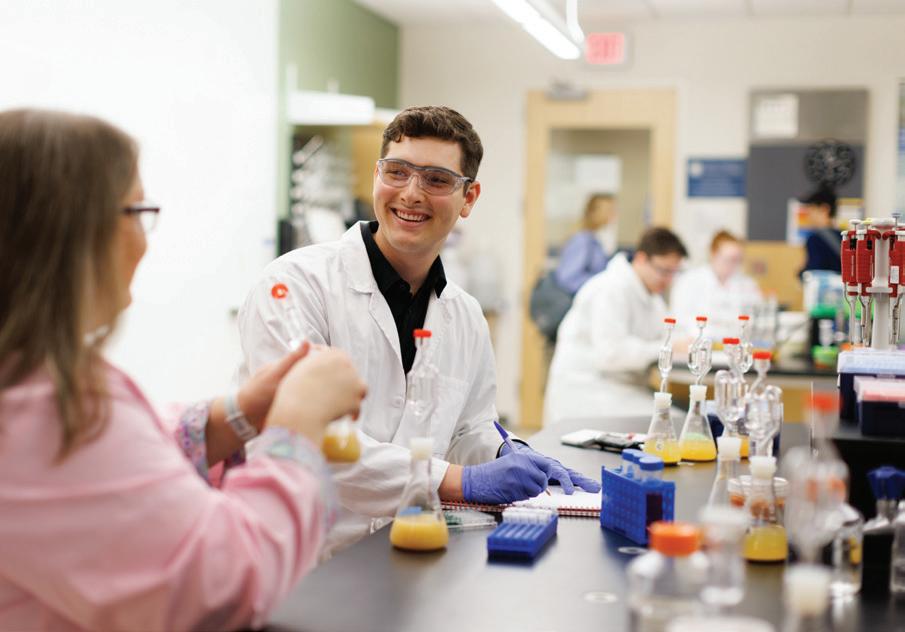
Rollins taught
me how to
think both analytically and creatively, balancing datadriven decision-making with adaptability and innovation while showing me the power of community and relationships.
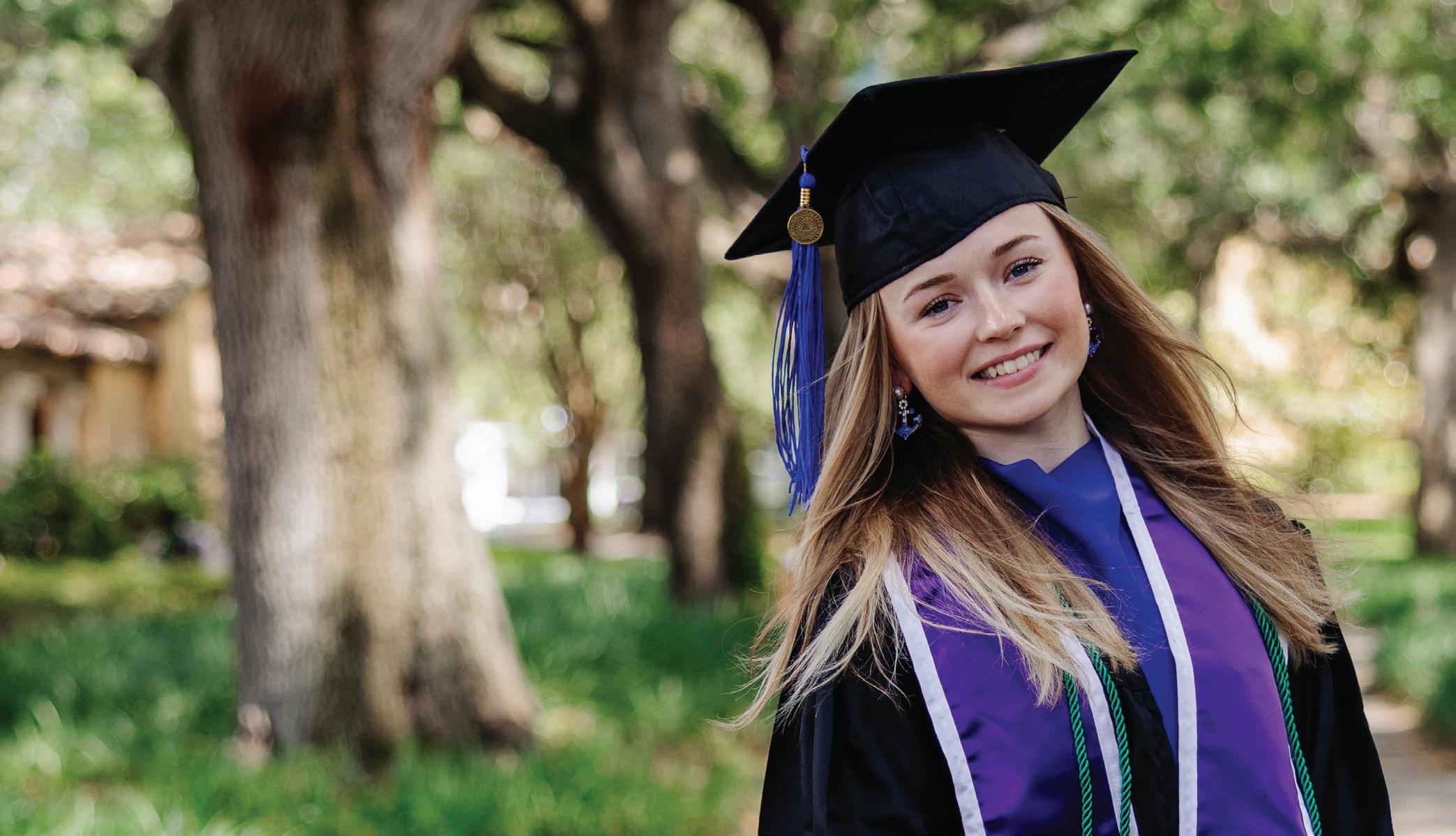
Adara Evans ’26 , a business management major with a minor in economics, built a strong foundation in finance through a series of real-world, high-stakes internships with both Lockheed Martin and Citigroup, where she developed the technical expertise and confidence to thrive in fast-paced corporate environments. Along the way, she broadened her global perspective during a semester abroad at the American University of Paris and found support through Rollins’ Women in Finance Program, gaining professional development and a powerful network of women who are thriving in the world of finance. Evans has accepted a full-time role with Citigroup as an investment banking financial analyst and plans to pursue an MBA while continuing to grow her career in finance and entrepreneurship.
For the 15th consecutive year, Rollins has ranked in the top 5 in the nation for championing both academic and athletic excellence, with a 98 percent graduation rate. Rollins has been named a top producer of Fulbright Students for the 13th time, reaffirming our national leadership in cultivating global citizens and changemakers.
Sara Jane Renfroe ’18 is one of just 80 scholars to earn the highly selective Gates Cambridge Scholarship, which will fully fund her PhD at the University of Cambridge.
Rollins has landed in the top 5 master’s-granting institutions nationwide for the highest percentage of students who study abroad.
Rollins has earned the 2026 Carnegie Community Engagement Classification, a national designation recognizing a deep integration of community partnerships, civic engagement, and real-world learning across academics and campus life.
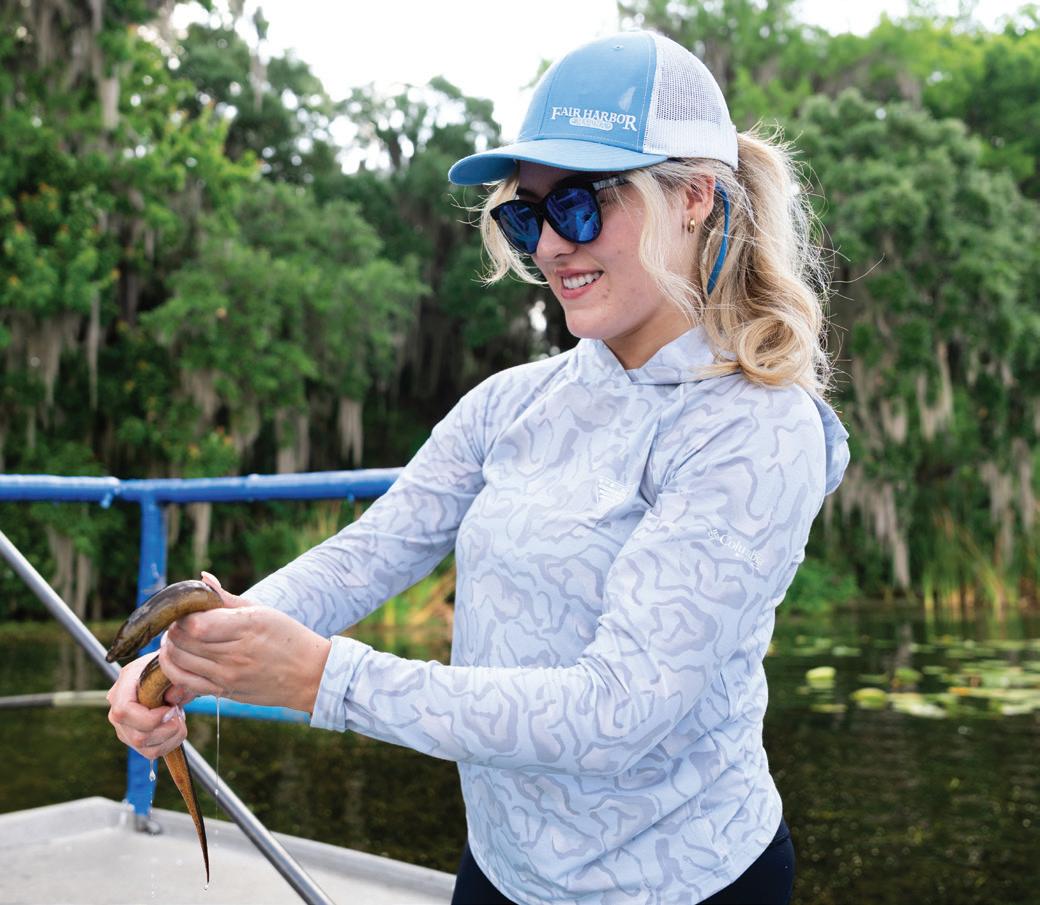
“I’ve been involved in a range of research at Rollins—from turtle health monitoring to ongoing eel research with Florida Fish and Wildlife—which has helped me build real-world field and data skills.”
— Makenna Morrison Gary ’26, a biology and environmental studies double major and recent Fulbright recipient, on studying invasive Asian swamp eels in Lake Virginia—essential applied learning experiences that have helped her connect classroom knowledge with hands-on research
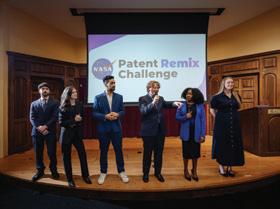
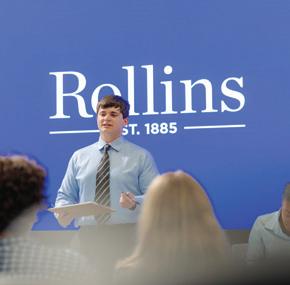
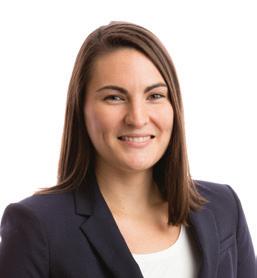
Crummer students on SubQ Six, a Rollins venture team, won the $10,000 grand prize at the 2025 NASA Patent Remix Challenge for commercializing NASA-developed medical imaging technology.
The Rollins Debate Team returned from the 2026 Florida Intercollegiate Forensics Association State Tournament with two state championships.
Physics professor Whitney Coyle has been named the recipient of the 2026 R. Bruce Lindsay Award from the Acoustical Society of America (ASA), one of the world’s leading professional organizations in acoustics.
The number of valedictorians in the Class of 2026: Nora Faunt Le Roy, Ella Juengst, Em Nguyen, Emma Salerno, Kate Salerno, Lindsey Scanlan, and Julia St. John 7
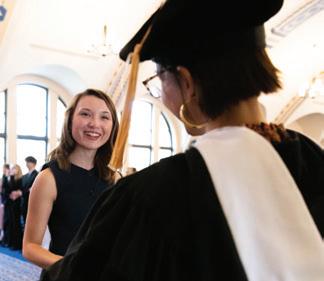
The number of new members inducted into Phi Beta Kappa, the nation’s oldest and most prestigious academic honor society 26

Amount raised on Giving Day 2026, empowering the next generation of Rollins students to pursue their dreams $639,125
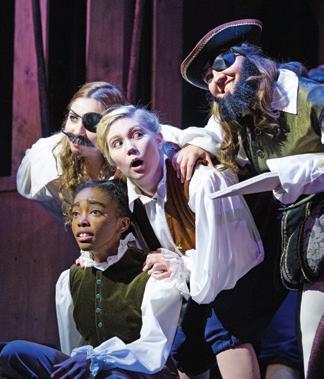
The starting price for a season subscription to the Annie Russell Theatre, whose 2026-27 season includes performances of The Bounds, Arcadia, and In the Heights $59
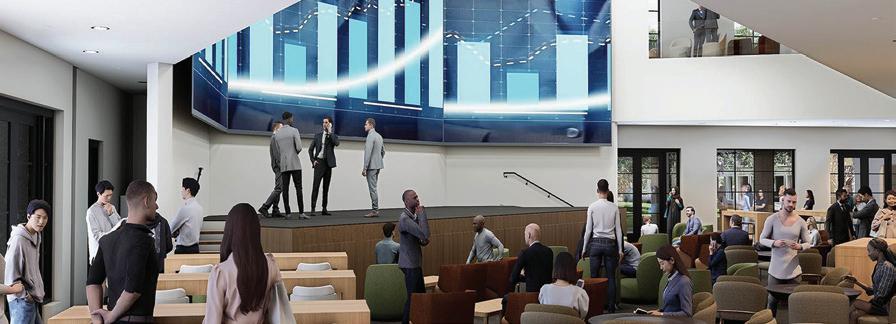
The square footage of the new Rick Goings Institute for Management & Executive Leadership, which will deliver advanced management and leadership training 35,000
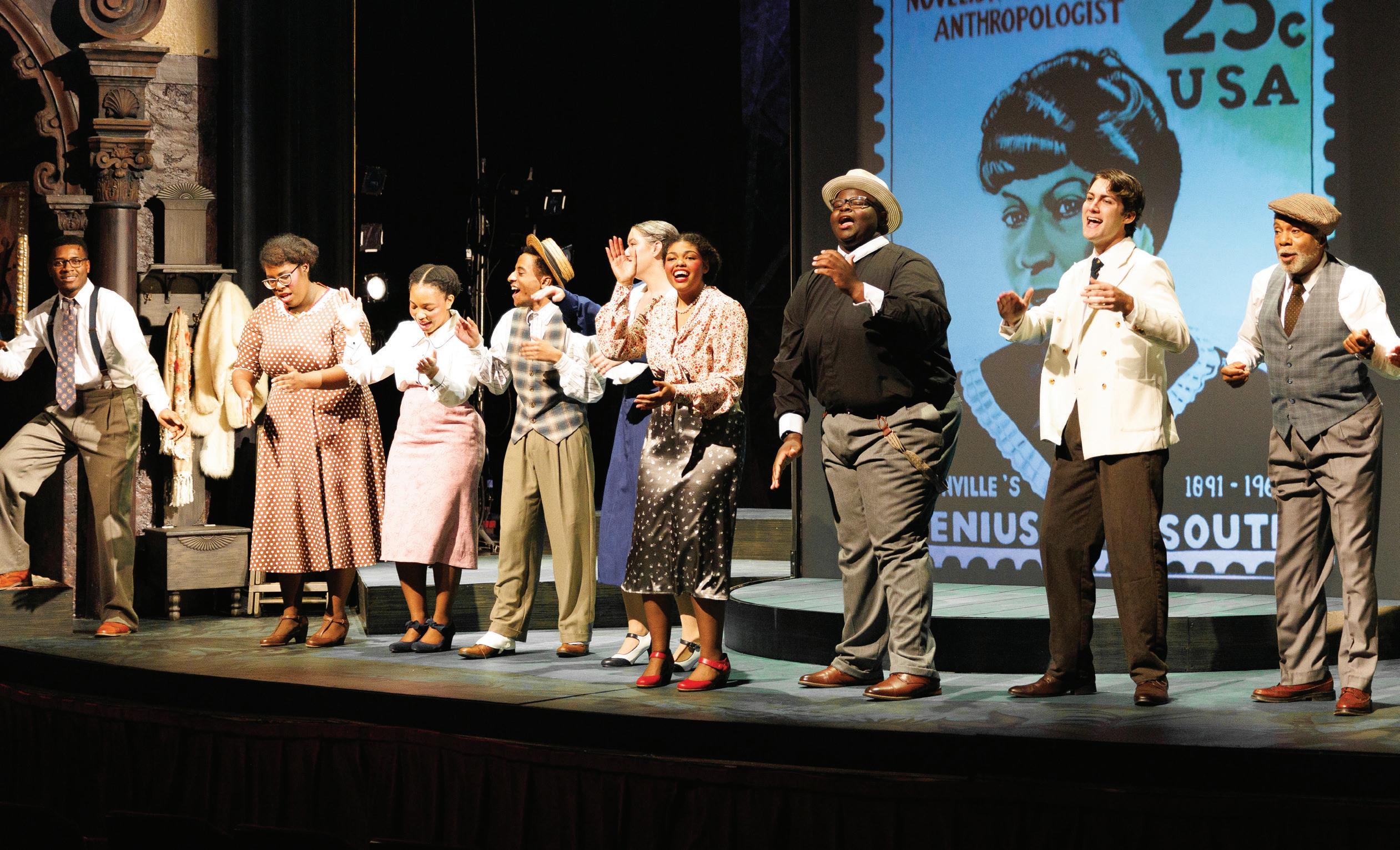
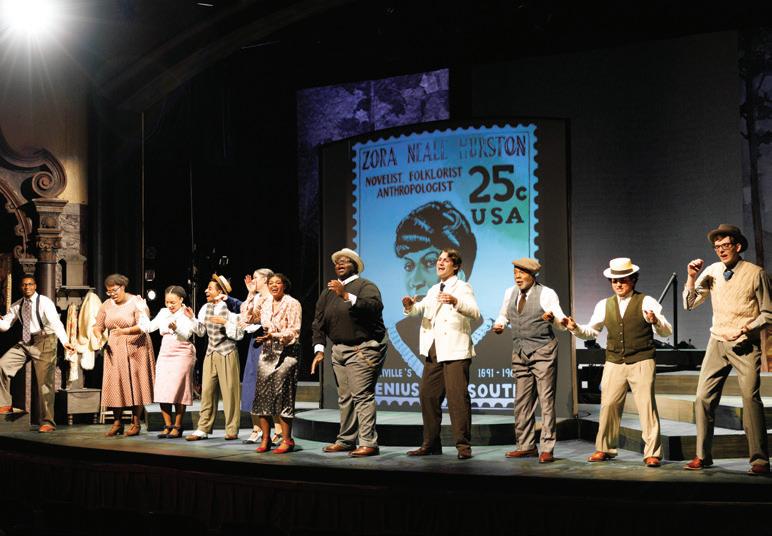
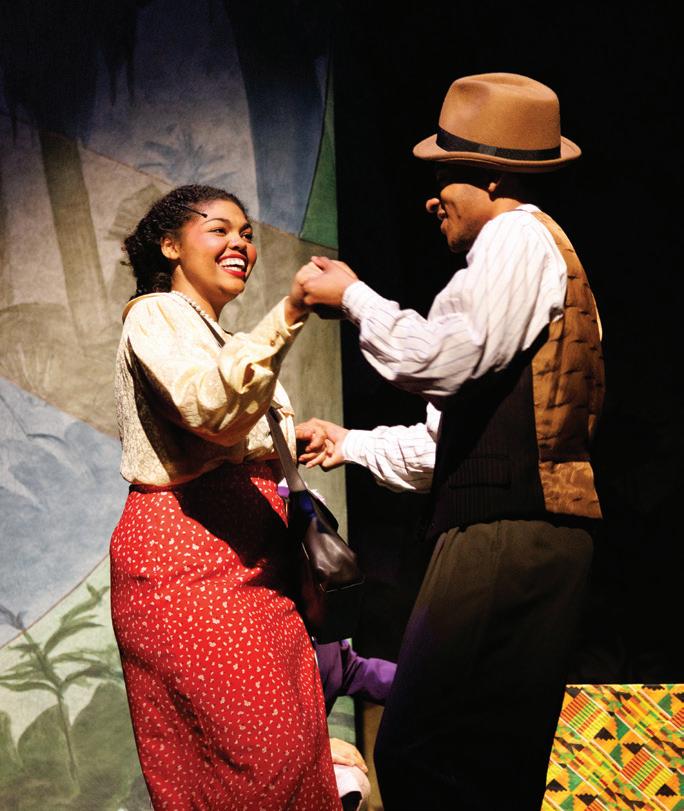
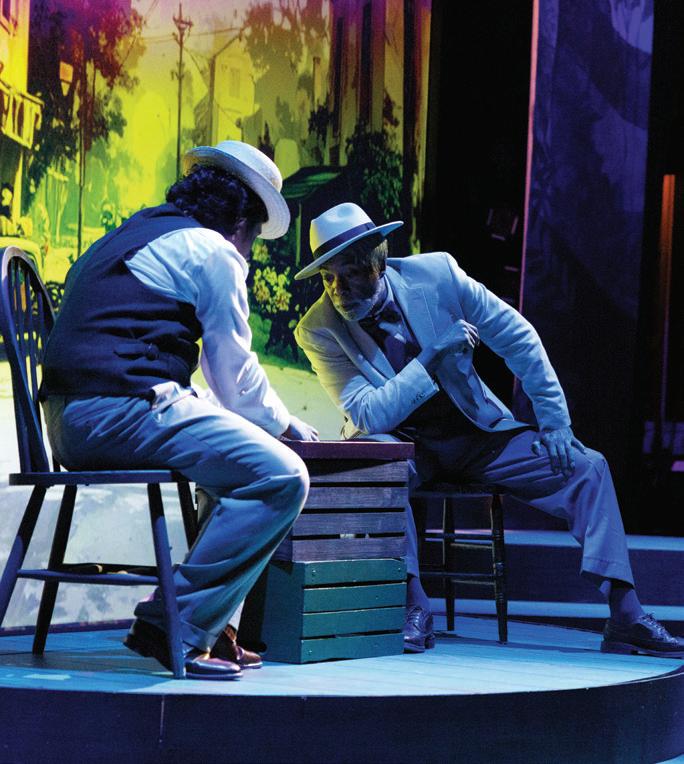
Through yearlong research and close faculty collaboration, Rollins students honored Zora Neale Hurston’s legacy with Let the People Sing, an original documentary drama that blends history, music, and storytelling.
By Conner Chaumley ’26, Yasmine Hudson ’27, and Max Payton ’27, as told to Jessica Firpi ’11
Photos by Scott Cook ’24MBA and Alex Stiner
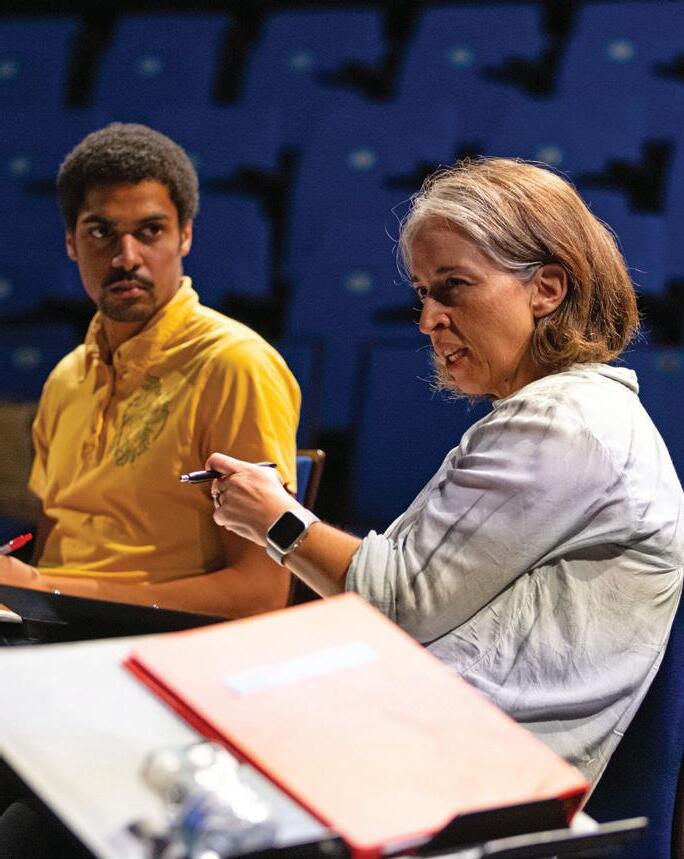
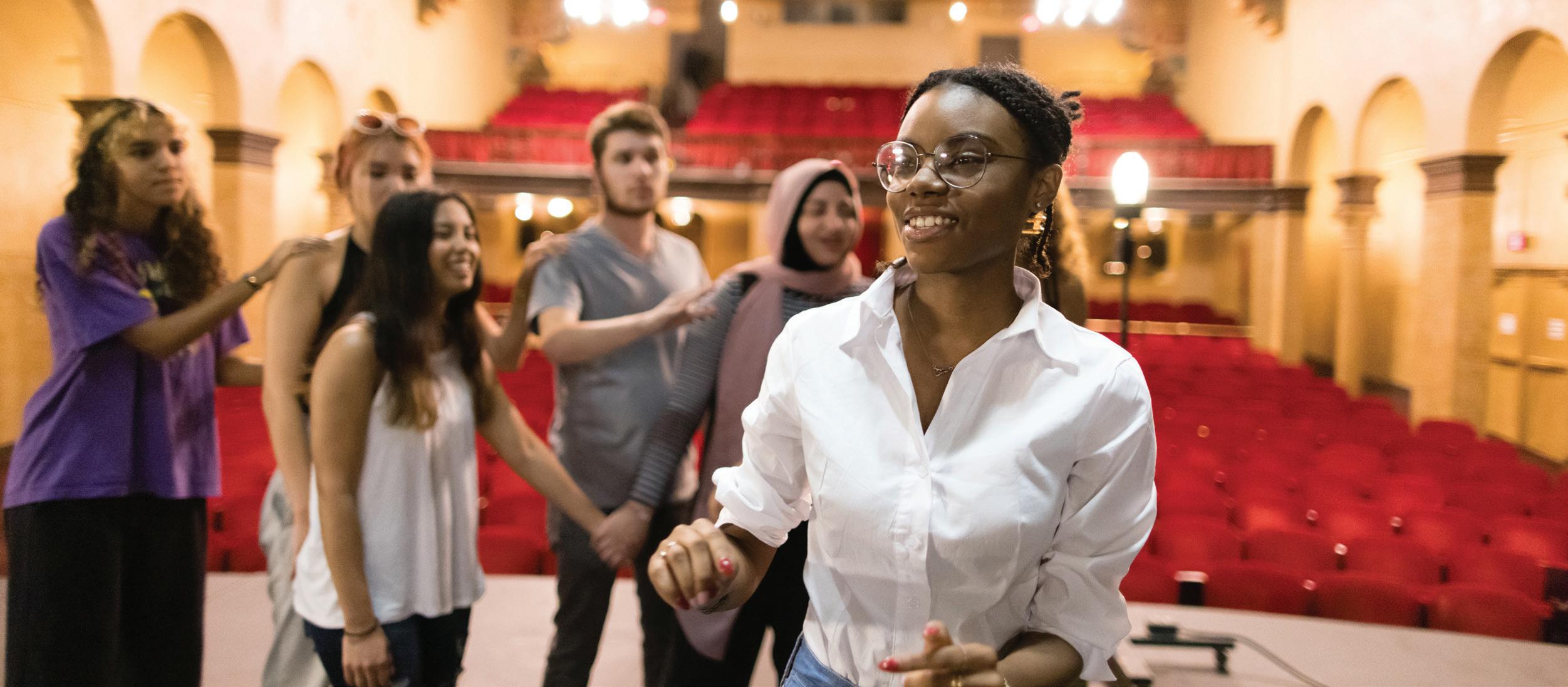
Nearly 100 years after Zora Neale Hurston’s work went unrealized at the Annie Russell Theatre, Rollins students have brought her voice home. Guided by theatre professor Marianne DiQuattro, the team of Conner Chaumley ’26, Yasmine Hudson ’27, and Max Payton ’27 spent a year immersed in archival research, fieldwork, and collaborative playwriting to create Let the People Sing, an original documentary drama inspired by Hurston’s 1933 musical revue From Sun to Sun and her anthropological work in Central Florida.
Hear from the students behind the play as they reflect on collaborating with each other and alongside DiQuattro to bring Hurston’s story to the stage.
Chaumley: “What initially drew me to her work and her research was the fact that she was a famous African American figure in our history. But what really drew me in was being able to tell her story in the form of theater. Over time, understanding the history of the Annie Russell Theatre—as it continued to have more students of color on the stage— inspired me.”
Payton: “I learned about Zora in my anthropology classes as a pioneer of ‘anthropology at home,’ as in, not traveling across the world to study other people but studying your own people. But I had no idea she had a theatrical career.”
Payton: “About five weeks in, we’d finished writing Act One, and we read through it, and it was bad. It was long and fluffy. This was a big moment because before that we thought we were actually halfway done. The project was intended to be a documentary drama, but what we had at that point was just historical fiction. We cut it down and took it in a documentary-style direction. We’re not just watching the story unfold as realism; we’re watching it through the lens of 100 years later. We turned the whole thing inside out and added the frame of Zora as an unreliable narrator, which was something she actually did in her writing.”
Payton: “Writing dialogue is hard, and writing dialect is hard. Although we knew what happened, we didn’t know exactly what people said to each other and how during that era. We knew approximately when Zora Neale Hurston and Langston Hughes met, but we weren’t there. Luckily, we did have a lot of letters about meetings that happened. We were reading those and extrapolating
what that looked like rather than what it sounded like in words. The best we could do was read it out loud, and Dr. DiQuattro would help us understand how different people spoke in the 1930s.”
Chaumley: “Just being a part of Rollins theater history is inspiring. This process has shown how much we’ve progressed when it comes to our culture and history. Two years ago, we did A Raisin in the Sun, which was the first time we ever had a full Black cast on the Annie stage. I want to continue that legacy of putting more students of color on the stage.”
Payton: “This experience has been fulfilling. I came to Rollins knowing I wanted to major in anthropology and sort of discovered theater by accident. I’d been wondering how I might combine the two disciplines because they seem so opposite to me. I felt like I’d be well suited to this research experience but also as a creative project about an anthropologist. I have always thought of myself as an academic first, and now I want to create art. That’s an insight into where I might take my career.”
Hudson: “As someone who doesn’t claim to be a writer, I tried to avoid signing up for this project. But I’m so glad I did. I improved not just my writing skills but also my storytelling abilities.”
Chaumley: “My goal is to be an actor, but I would love to write for television as well. This project has helped me become a better researcher—not only for my academic classes but for scriptwriting in the future. It has helped me take ownership and pride in the work that I’ve done and helped me realize I’m capable of doing great things.”
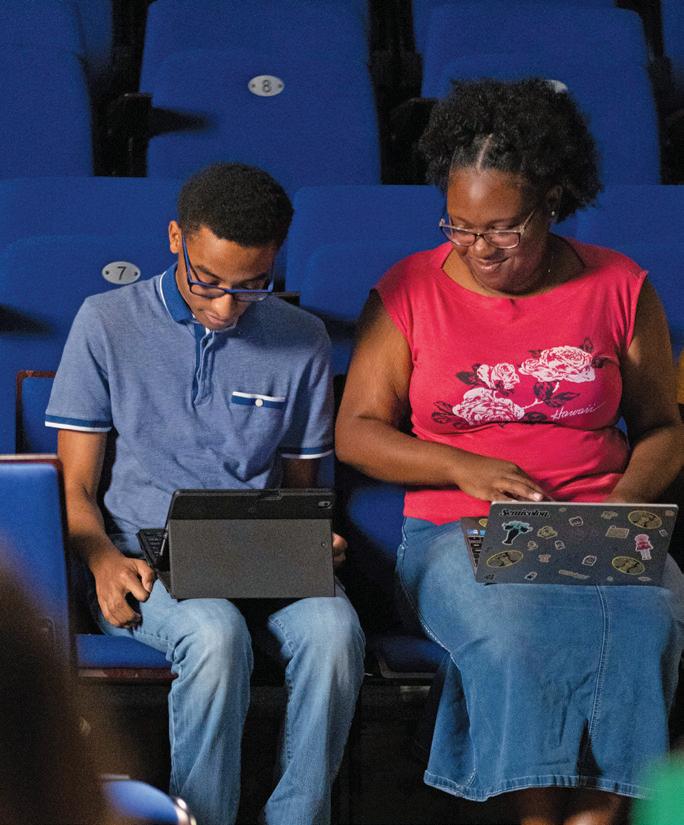
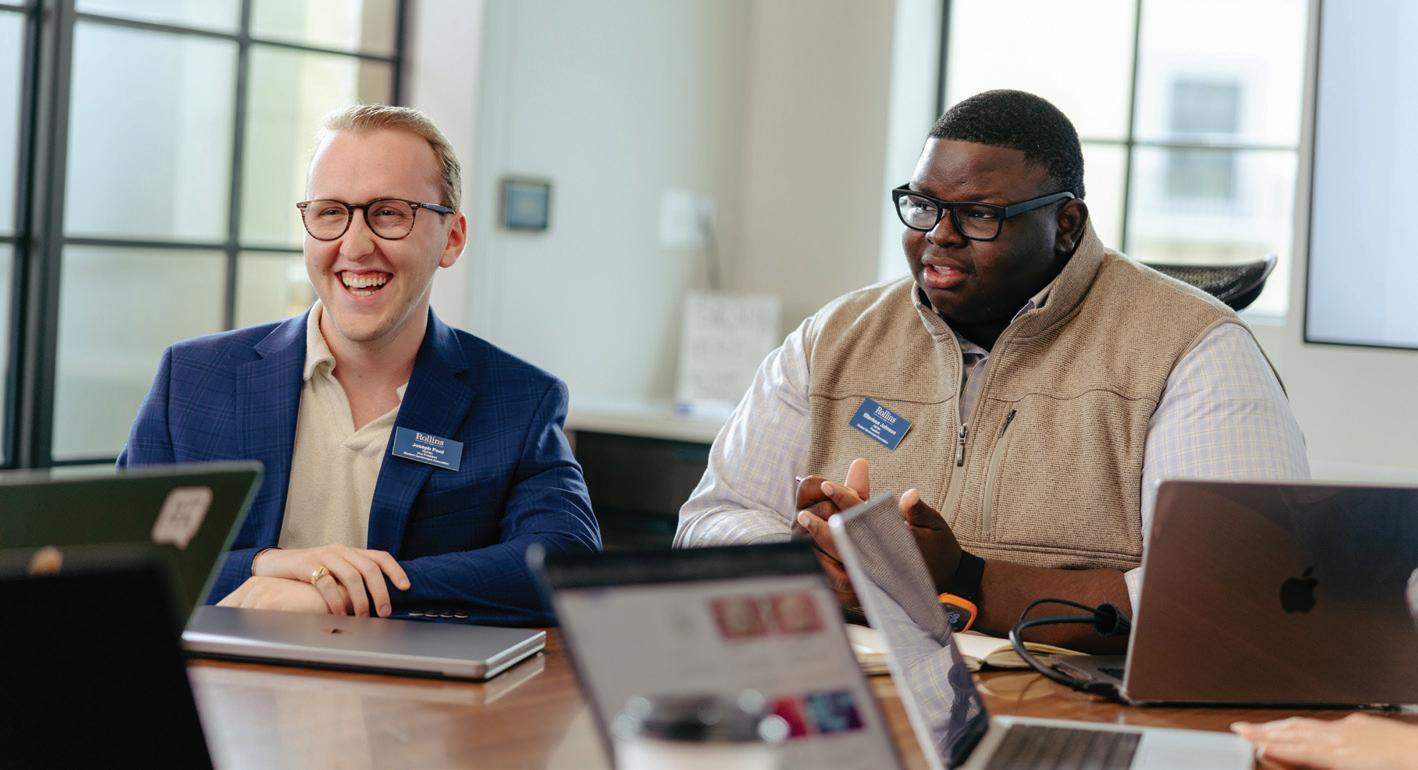
Once again, Student Philanthropy Week rallied the Rollins community for a campuswide giving push, where even a $5 gift fuels student-led initiatives and friendly competition. With challenge funds, creative outreach, and collective impact at stake, your generosity turned into real momentum for student groups across campus.
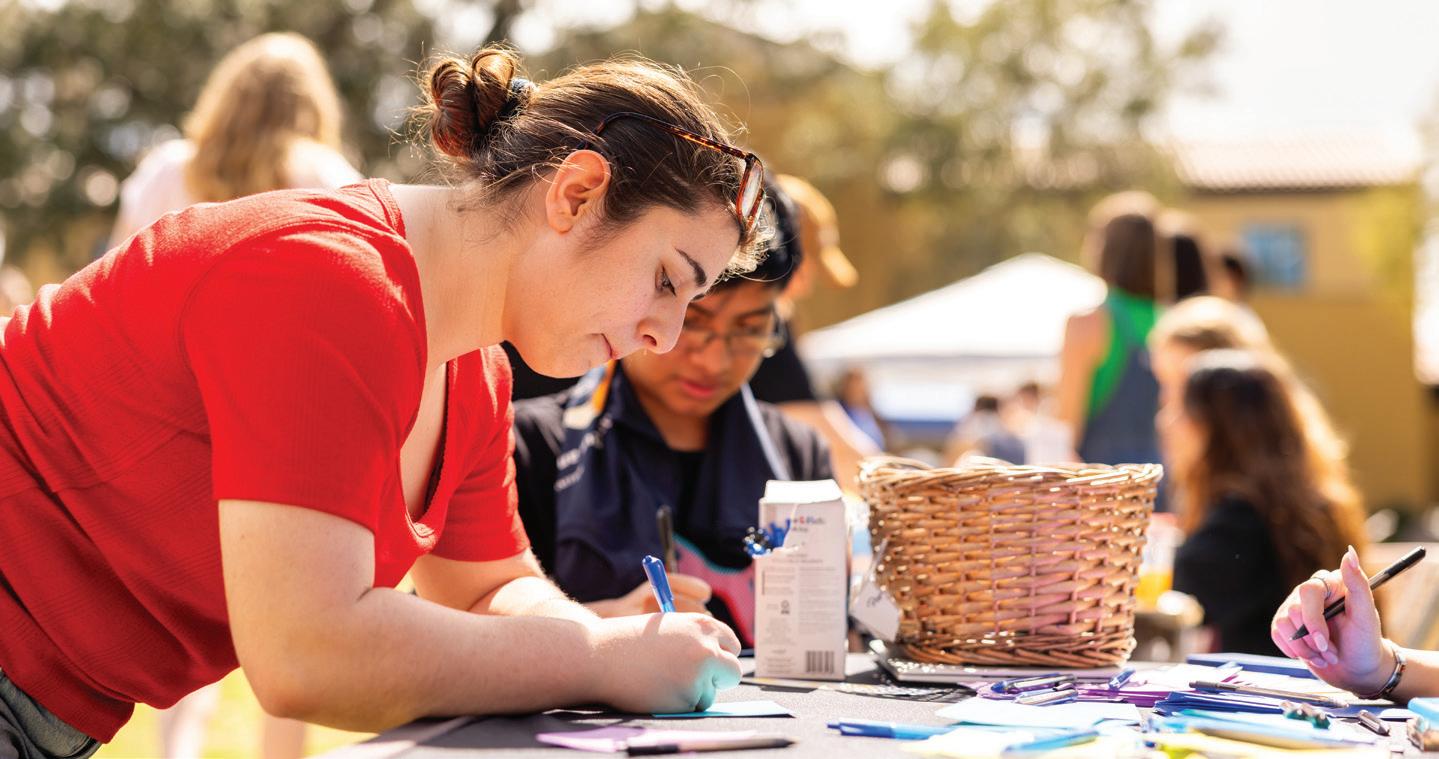
To celebrate the sixth annual Thaddeus & Polly Seymour Acts of Kindness Day, Tars came together to show their commitment to both service and Rollins, bringing in nonperishable goods for the Tars Pantry, donating blood, assembling wellness kits for elementary school students, and swapping anonymous messages of kindness meant to brighten each other’s day.

Charged by electric school spirit and show-stopping performances, the highly anticipated Lip Sync event set Mills Lawn aglow as student organizations delivered a night of highenergy dance, music, and crowd-pleasing routines, culminating in Kappa Delta rising above dozens of fierce competitors to claim the top spot.
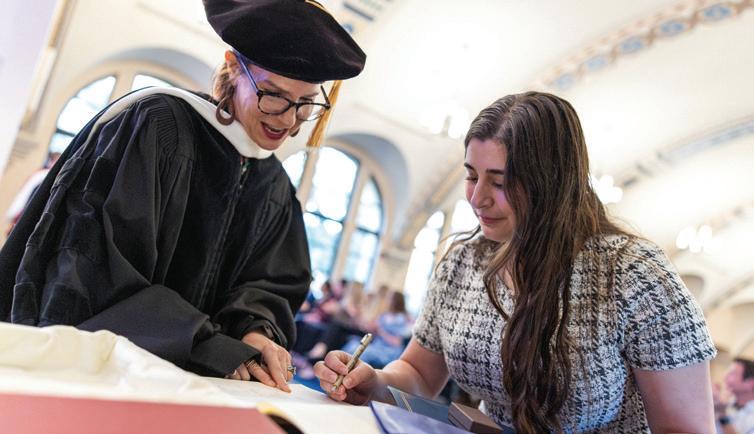
The Rollins chapter of Phi Beta Kappa inducted 26 students into its fifth class of members at the Rice Family Pavilion. The latest cohort makes for a total of 116 Tars to earn a spot in the Theta Chapter at Rollins, which is part of a distinguished set of less than 10 percent of colleges in the U.S.—and only seven others in Florida—to shelter a chapter of Phi Beta Kappa.
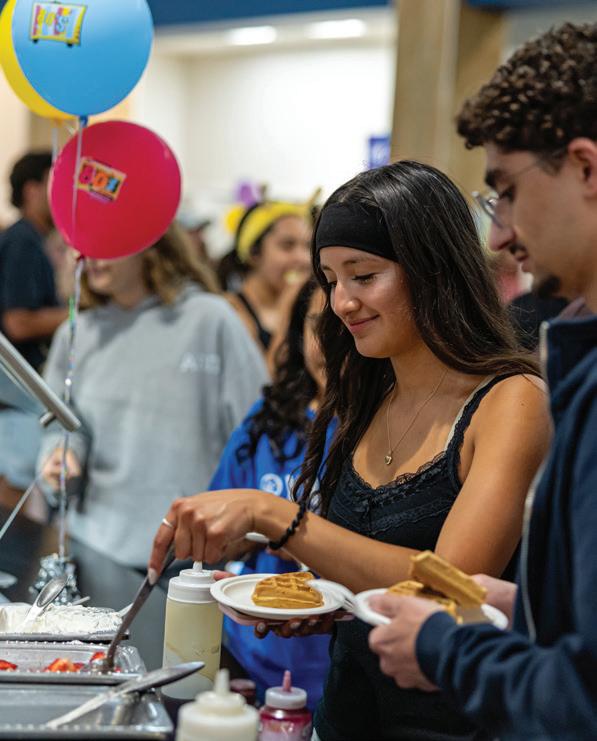
On the eve of finals, Skillman Dining Hall transformed into a midnight haven as students packed in for Late Night Breakfast, where faculty, staff, and even the president served up stacks of pancakes, madeto-order omelets, and comfort classics—fueling both study sessions and a much-needed dose of fun.
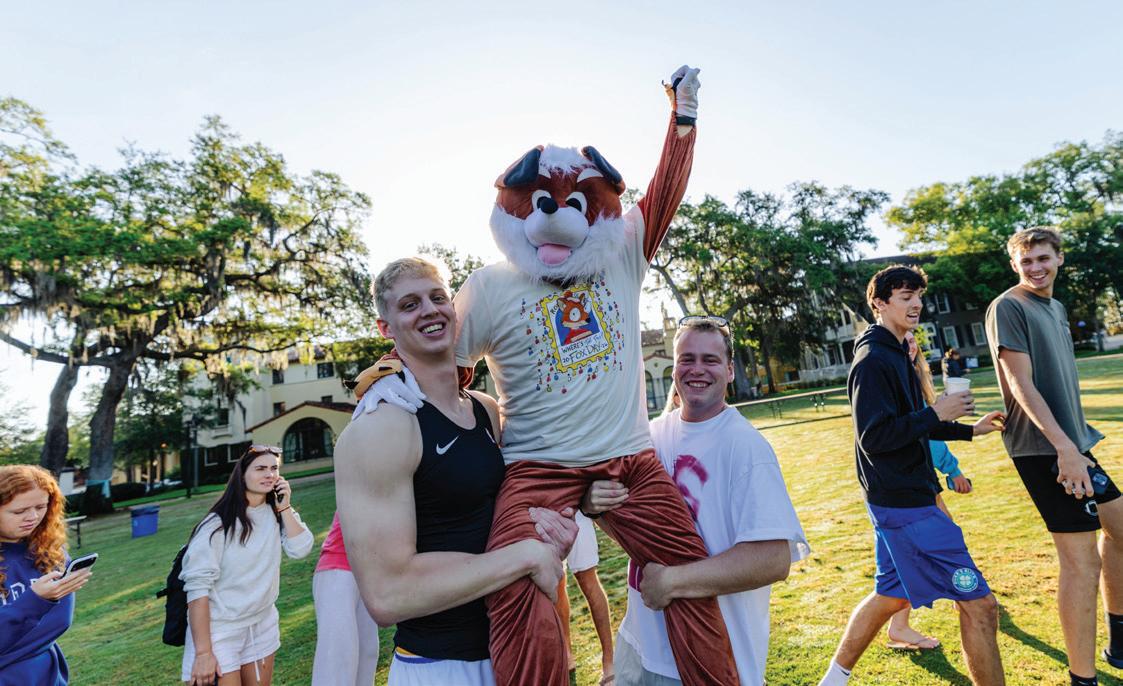
Fox Day was once again everyone’s favorite day of the year— and with this being President Brooke Barnett’s first Fox Day proclamation, anticipation was at an all-time high. There have been 14 Wednesday Fox Days—three of which have fallen on the exact same date: April 15 (1981, 2015, and 2026).
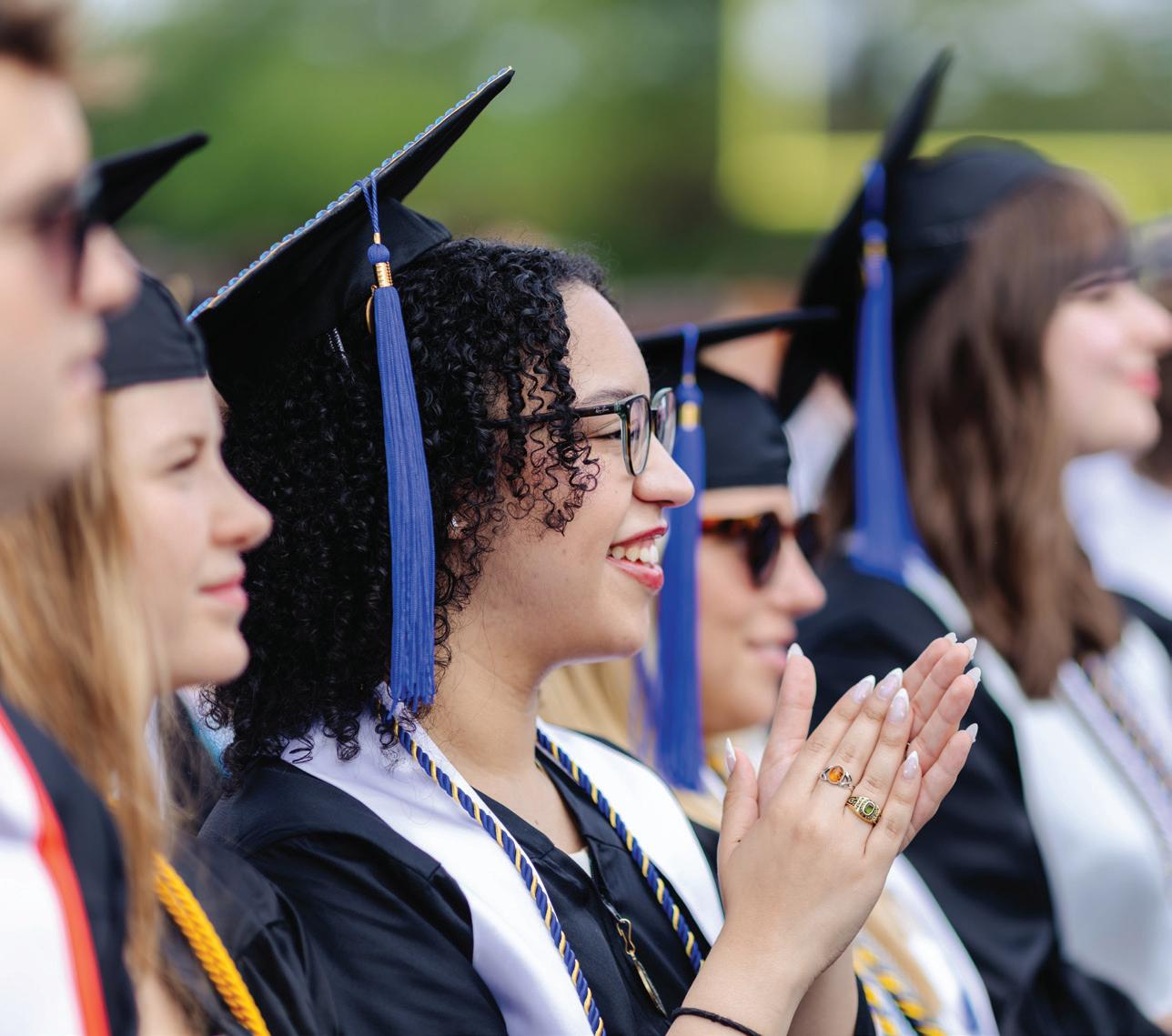
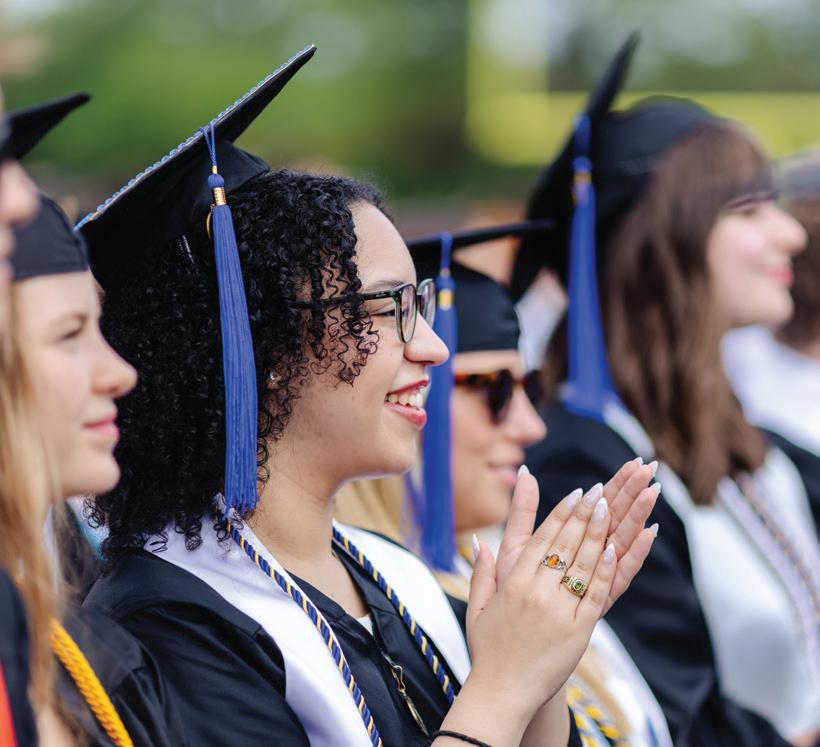
Graduates of the College of Liberal Arts carried forward a cherished Rollins tradition, crossing the commencement stage on Mother’s Day to celebrate their accomplishments and embrace a promising future.
new Tennis & Golf Center elevates the student-athlete experience while honoring Rollins’ legacy of excellence.
By Jessica Firpi ’11 | Photos by Elliott Kiernicki
A new chapter in Rollins athletics has taken shape on the east side of campus, redefining how student-athletes train, compete, and connect. Facing Elizabeth and Ward halls, the 9,961-square-foot Tennis & Golf Center officially opened this past October as the new home for men’s and women’s tennis as well as the men’s and women’s golf teams.
“This new space represents the best of what athletics can offer: precision, passion, and purpose,” says Pennie Parker, associate vice president of athletics. “It’s a space built to inspire excellence, to support our student-athletes in their pursuit of greatness, and to bring our campus community together through sport.”
The state-of-the-art facility features reconfigured courts, golf simulators, locker rooms, dedicated coaches’ offices, a stringing room, meeting space, and spectator areas. But more than a collection of spaces, the center is designed to shape experience, drawing student-athletes together throughout the day, shortening the distance between training and downtime, and creating a shared home for competition and connection.
“The competitiveness of the Sunshine State Conference attracts top athletes, and Rollins’ academic reputation sets it apart for students seeking both athletic and academic excellence,” says varsity tennis player Sydney Eckstein ’26. “The new Tennis & Golf Center embodies these principles. It symbolizes Rollins’ commitment to its student-athletes as well as the values and skills that are developed throughout our time here. This building inspires us to continue to push each other and to dream bigger than what we thought was possible.”


Designed by LaBella Associates, a firm specializing in tennis facilities, the space reflects Rollins’ Mediterranean aesthetic with a red tile roof, arched openings, and open-air transitions. A central breezeway leads to six competition courts—three east, three west—creating a natural indoor-outdoor flow.


The second floor houses Rollins’ golf programs, featuring a specialized grip room with a fully equipped workbench, coaches’ offices, and secure team storage. An expansive simulator room, outfitted with the largest, most advanced simulators available, allows both the men’s and women’s teams to train simultaneously.
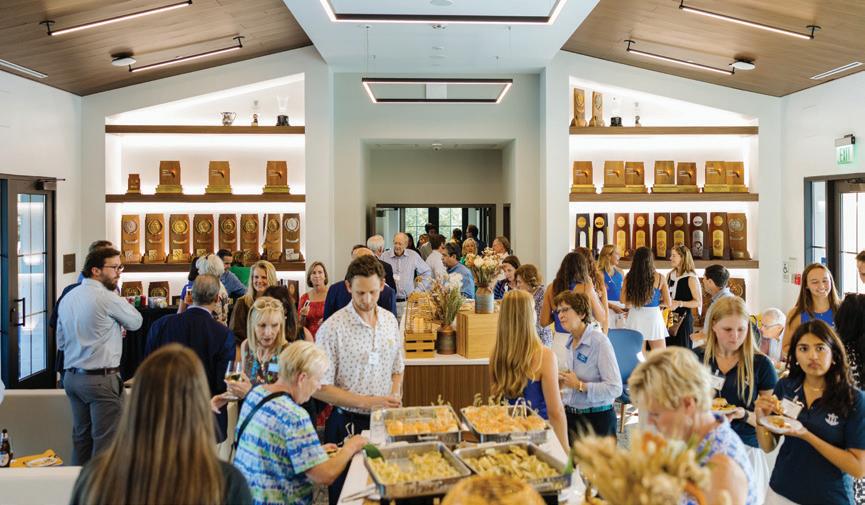
Framed by sweeping views of the courts, the Players’ Lounge serves as a shared hub for both teams, hosting everything from team meetings and study sessions to events and match viewing. High-top seating and lounge areas invite camaraderie while surrounding trophies and team regalia ground the space in tradition and pride.
Above the courts, twin covered balconies redefine the spectator experience. Instead of traditional grandstands, an elevated viewing area puts approximately 120 spectators right above the action.
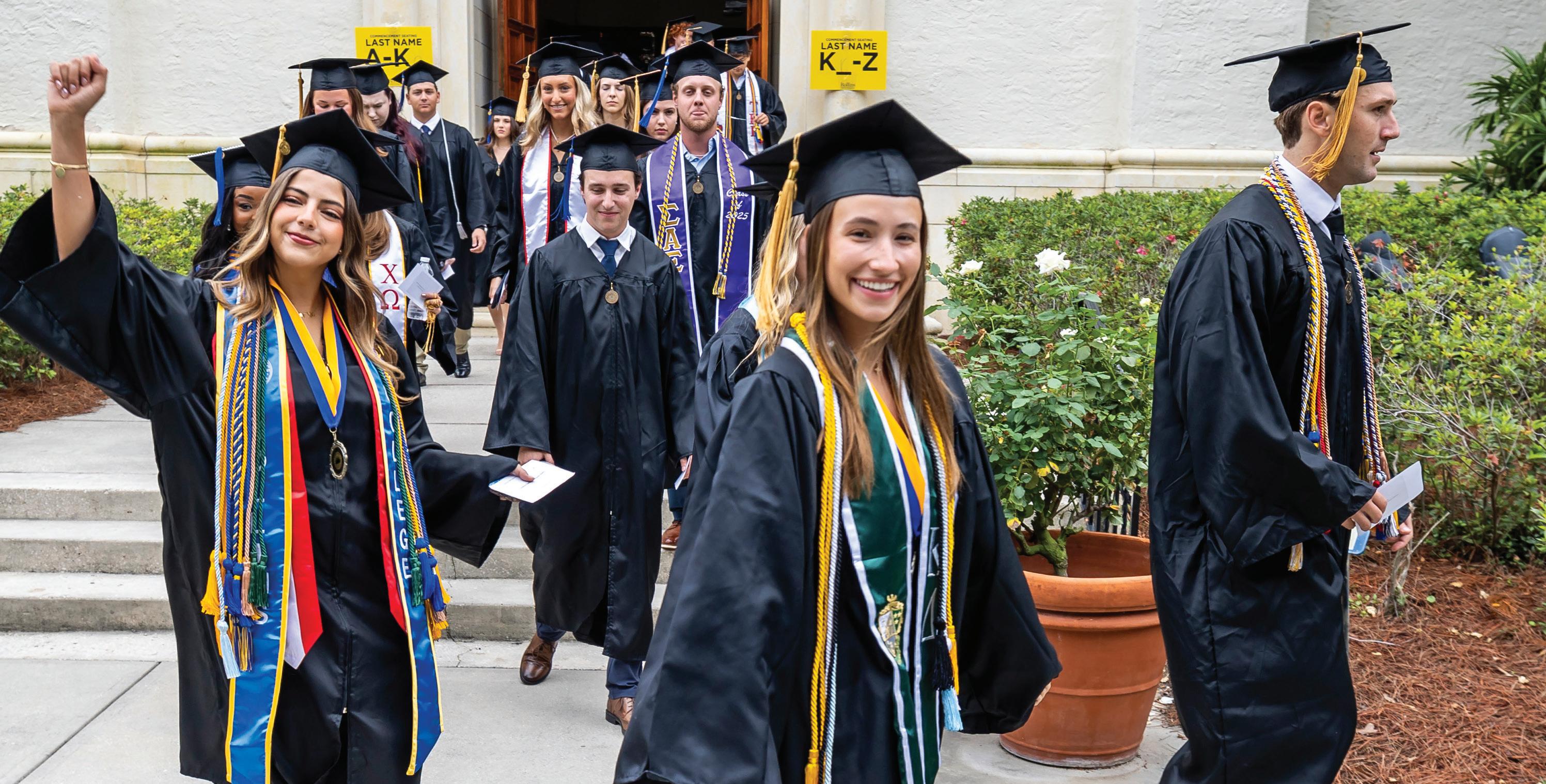
Rollins grads launch their meaningful lives and productive careers with a significant advantage. For proof, look no further than the success of Rollins’ graduating class of 2025. Each year, Rollins’ Center for Career & Life Planning tracks the accomplishments of our graduating seniors as they embark on their first careers, enroll in graduate school, or participate in prestigious service.
This First Destination Report on the Class of 2025 is based on 96 percent of College of Liberal Arts graduates. Data is collected up to six months after graduation from sources that include student surveys, the National Student Clearinghouse, and LinkedIn.
92% of graduates were employed, continuing their education, or engaged in military or volunteer service.
$55,000 is the average annual salary, with more than half of grads earning over $50,000.
30% were continuing their education.
Rollins’ 2025 grads have launched productive careers at some of the world’s top companies and organizations.
AdventHealth
Bank of New York Mellon
Disney
Insight Global
Major League Baseball
Northwestern Mutual
Orlando Health
Pacific Northwest National Laboratory
Travel + Leisure Co.
Universal Orlando Resort
Boston University
Brown University
City Year
Cornell University
Emory University
Fulbright Garcia-Robles Binational Scholarship, Mexico
Fulbright Open Study/Research Award, Portugal
Fulbright Scholarship, English Teaching Assistant, Slovakia
King’s College London
Peace Corps
Princeton in Asia Program
Queen Mary University of London
Stanford University
University of Cambridge
University College London
Vanderbilt University
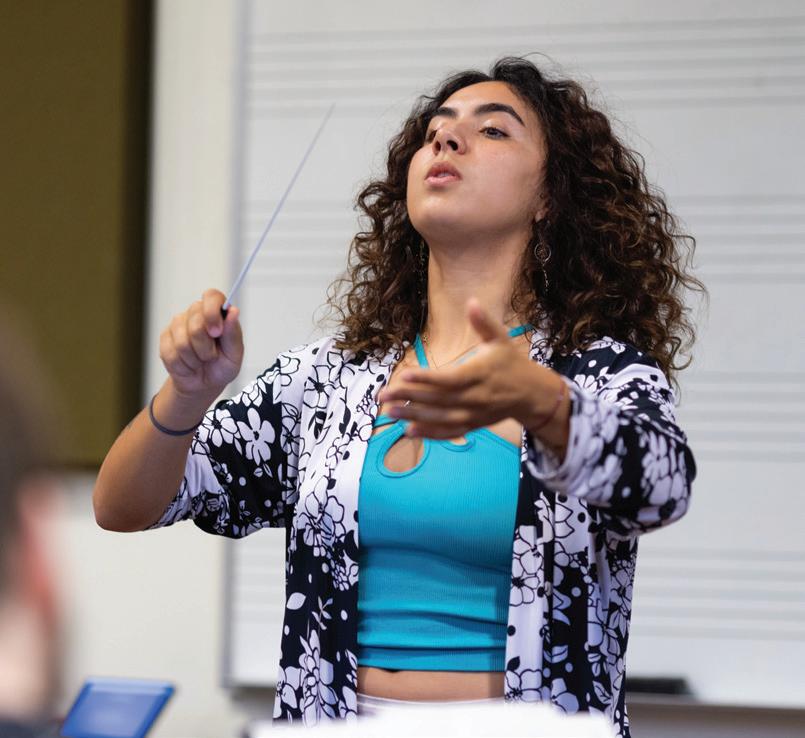
“Rollins prepared me for success the moment that I stepped on campus. I came in completely undecided, but I left as an independent thinker and a confident artist who was ready to dive into my Fulbright assignment. Rollins is really a place where you get to create, experiment with, and explore your calling. I benefited so much from having mentors who helped me artistically and musically.”
Pia Hernandez ’25 Fulbright Research Award, Choral Conducting, Instituto Politécnico de Lisboa

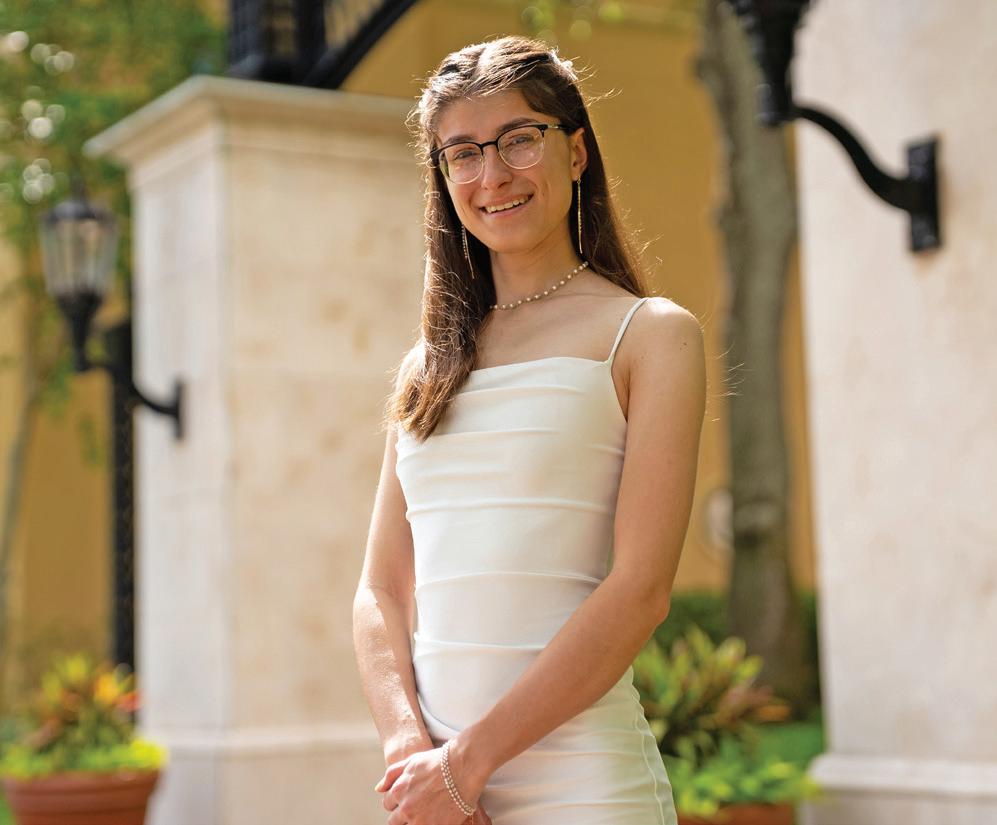
“Rollins’ hands-on, relationship-based approach taught me to think critically from multiple angles. With fewer people in a room, you’re pushed to find your voice and listen to those around you meaningfully. That foundation gave me the confidence to present ideas thoughtfully and adapt to new technology and changes in the business landscape.”
Emily Reynolds ’25 Financial Analyst, The Walt Disney Company
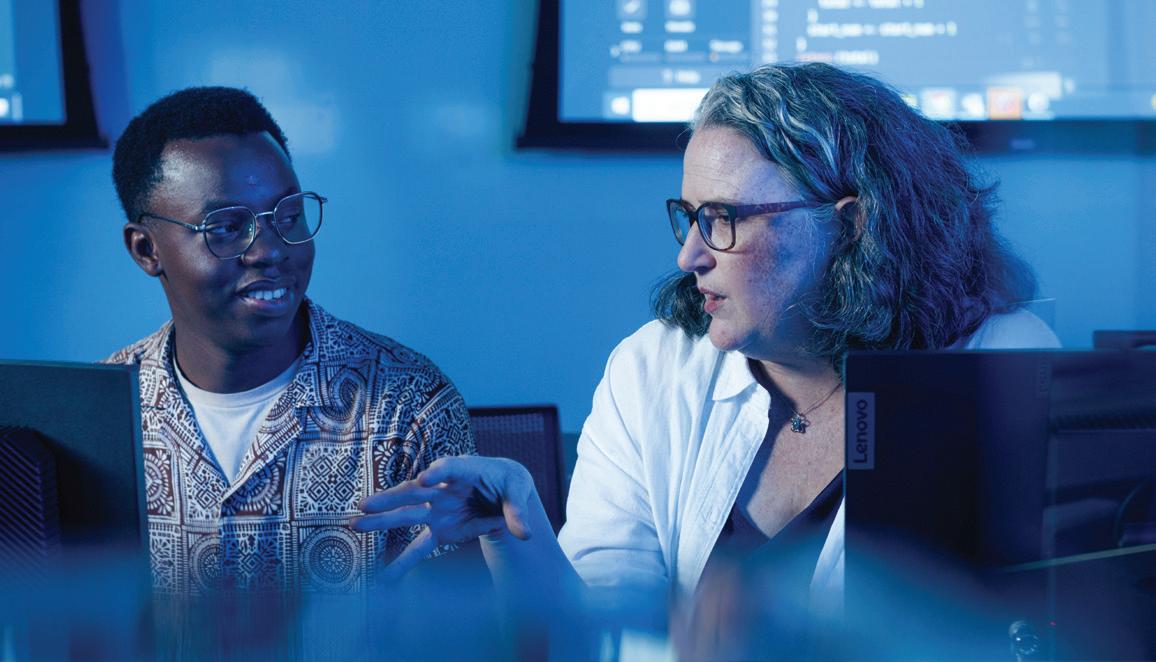
“Rollins laid the foundation for my current path by immersing me in an interdisciplinary liberal arts education. Through close mentorship from my professors and collaborative research opportunities, I was able to merge my interests in computer science and psychology. This early exposure to the intersection of technology and learning is exactly what led me to pursue my master’s in learning design and technology.”
Nchimunya Mwiinga ’25 MS Candidate, Stanford University
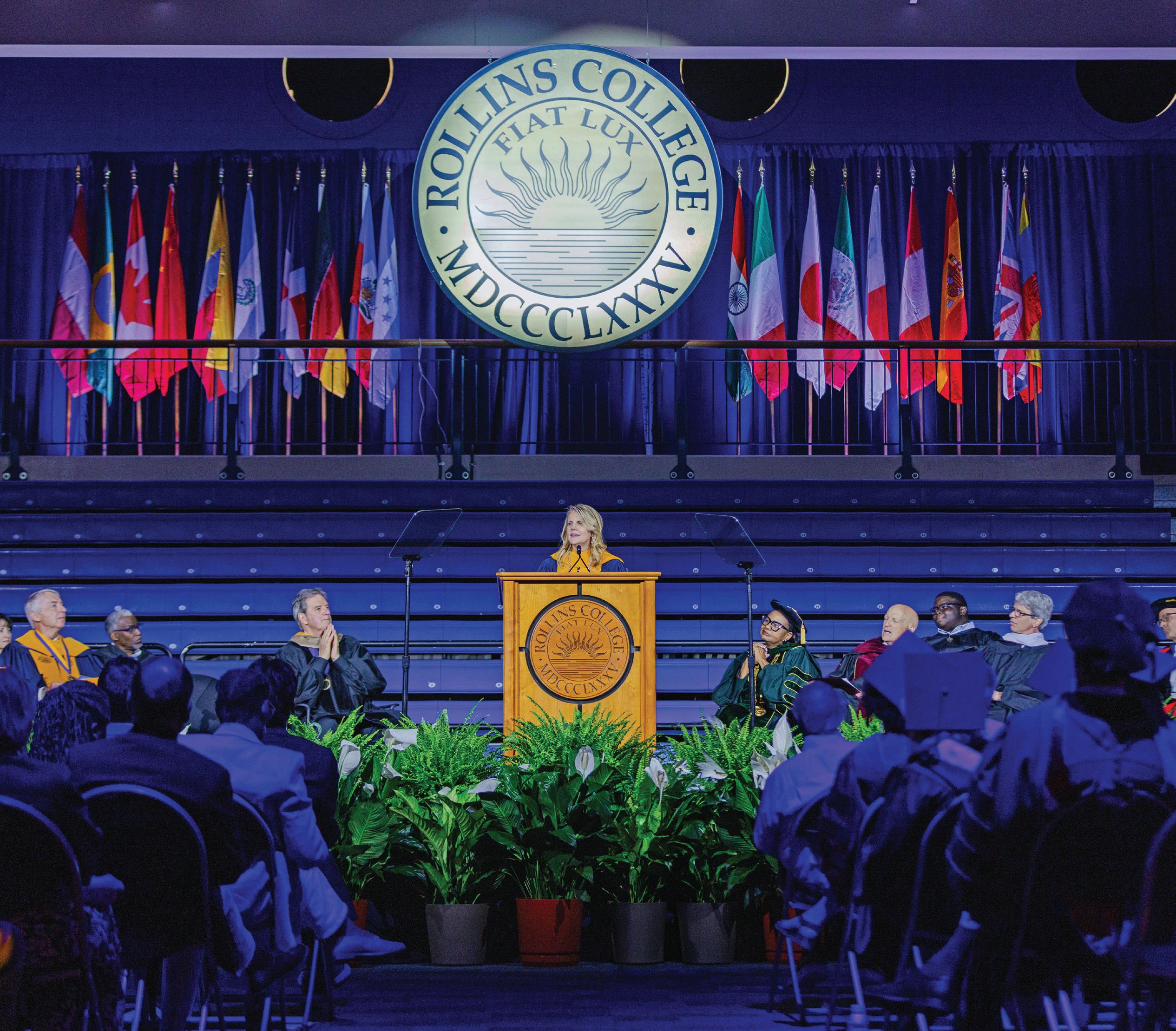

An inauguration marks an important moment in an institution’s story. At Rollins, that moment unfolded over the course of multiple days, shaped by the people and experiences that define the College and its mission. Reflecting Rollins’ foundational commitments to academic excellence, service, leadership, and community, the events served as both a celebration and statement of purpose. In her inaugural address on April 18, President Brooke Barnett pledged to focus on students, champion faculty teaching and scholarship, and strengthen community ties—priorities that came to life through moments of celebration and connection and offered a shared vision of how Rollins prepares students to lead meaningful lives and productive careers.
“Rollins has secured a president who leads with fierce courage and unfaltering kindness. President Barnett is aspirational and willing to do the hard things that are necessary for an institution to thrive. ... She is the kind of leader we should uphold to young people and say, ‘Be like her.’”


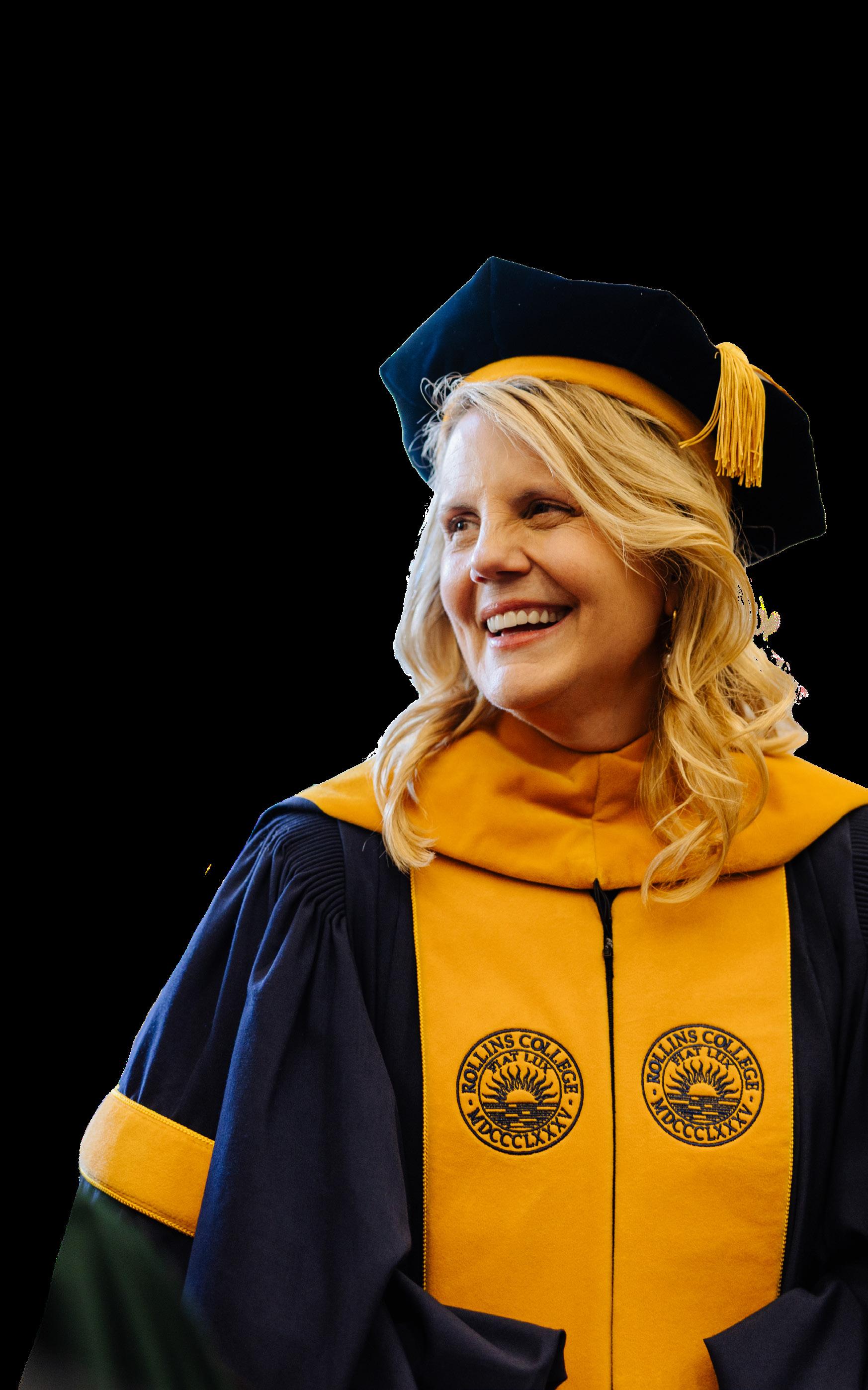

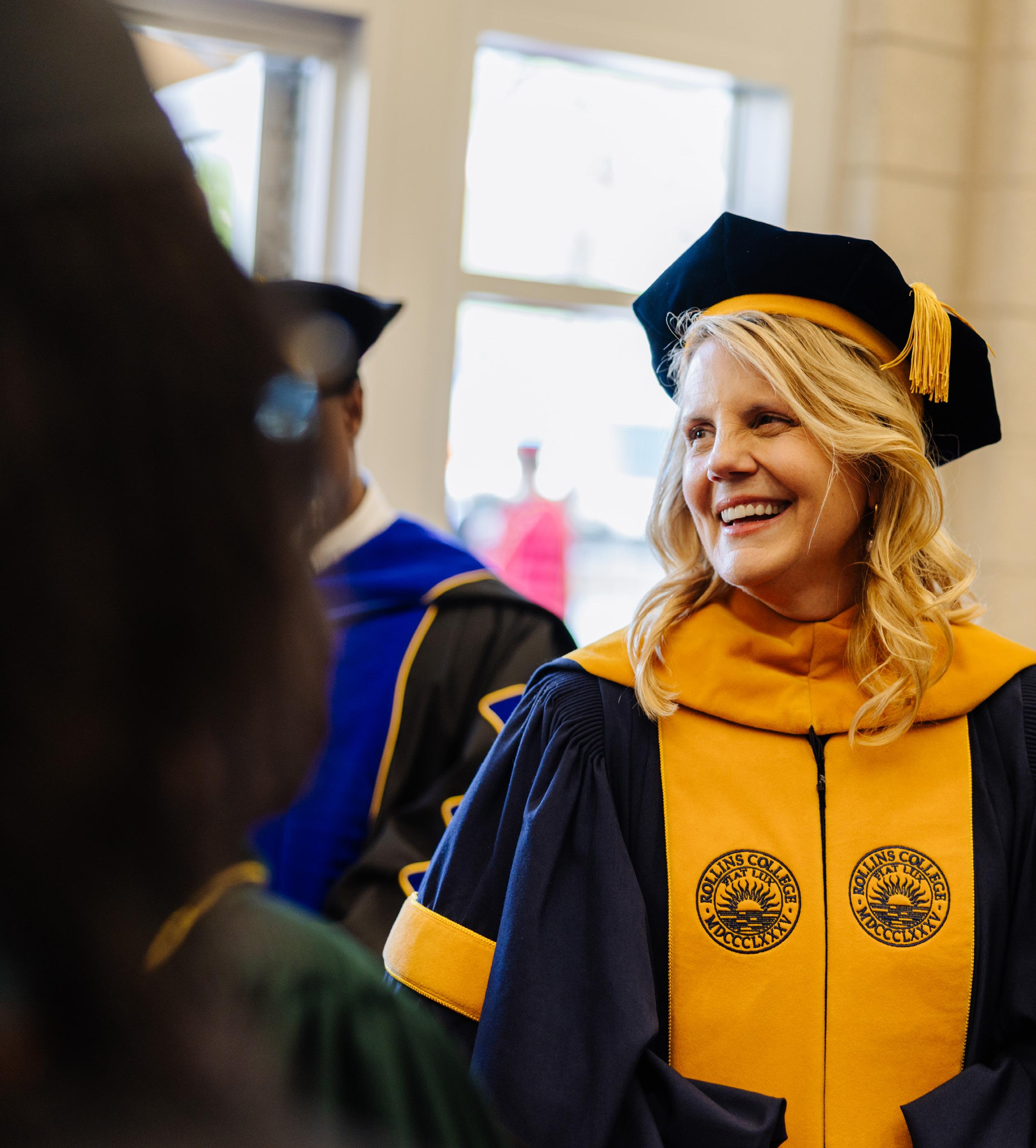
“Rollins College, you have gained an extraordinary leader, a change agent, a doer, a thinker, a person who will work incredibly hard for this community.”
Khalila A. Marbury VP, Butler University
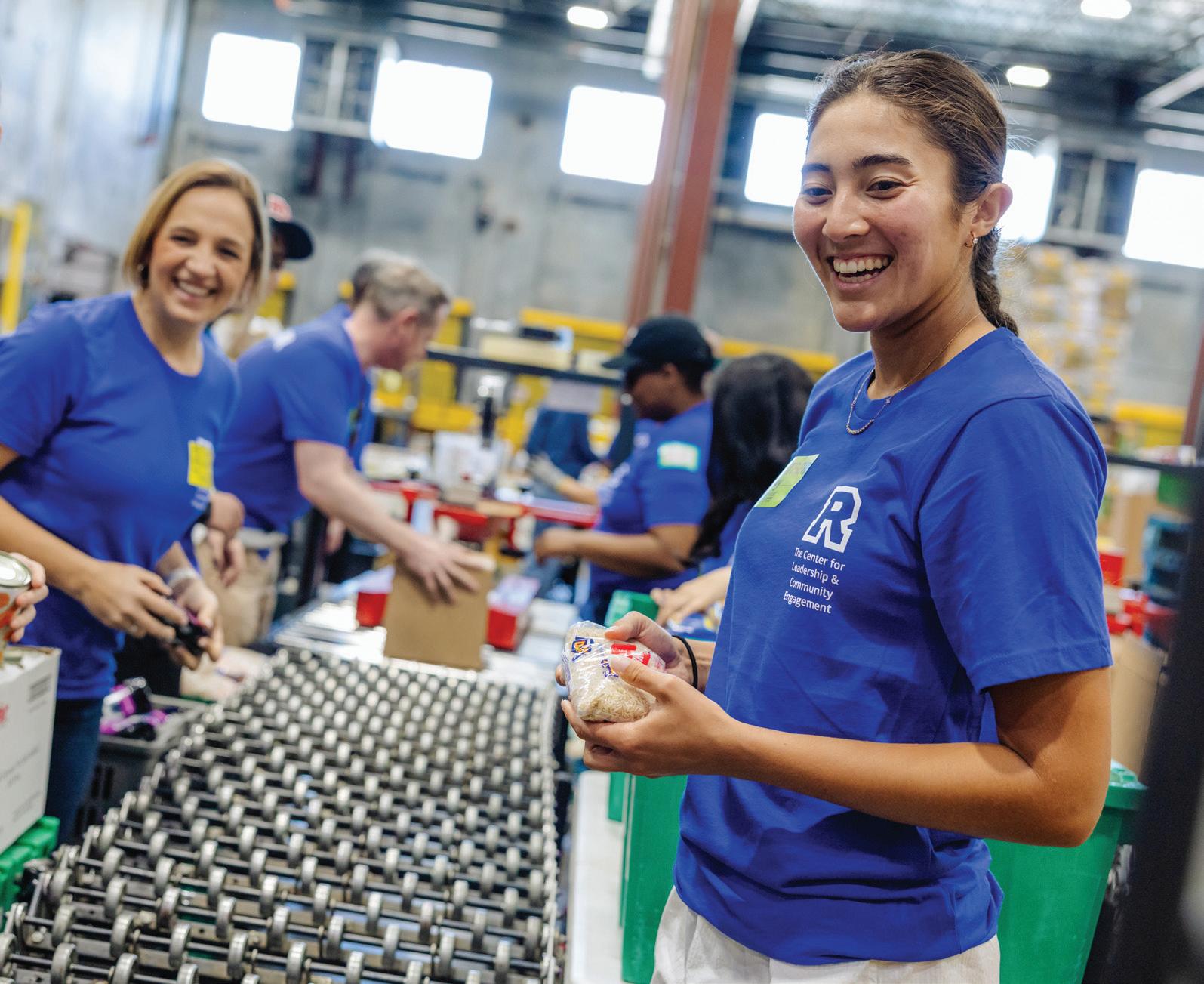
Service is a defining value of a Rollins education. In anticipation of the inauguration, the Day of Service offered a memorable opportunity for the Rollins community to come together and honor this central pillar of our mission. In partnership with Second Harvest Food Bank and United Against Poverty, Tars helped pack 540 boxes, assemble over 11,000 meals, and support the organizations’ grocery and thrift stores, demonstrating the tangible impact of collective action.
“What a gift to reflect what we see in others that they may not yet see in themselves. This year I have been honored to hear so many stories about students finding and honing their own passions through the help of our wonderful faculty and staff.”
— President Brooke Barnett



“There is something refreshing about a leader who doesn’t need to command attention in every room but still earns it. Someone who can move through a crowd, listen more than they speak, and connect with people in a way that feels genuine.”
Eltavious Johnson ’26
SGA
President

The Scholarship Showcase highlighted the intellectual rigor and curiosity that drive the Rollins experience. Featuring the work of students, including collaborations with faculty and Bonner Leaders capstone research, projects covered everything from analyses of political instability to explorations of art therapy’s impact on mental health. Collectively, they represent a rich body of scholarship grounded in real-world problems and committed to community impact.
“You [students] are the reason we are here and why I do what I do. I will keep you at the forefront of my mind as I make decisions. I care deeply about your experience and will invest my whole self to make Rollins the best it can be for you.”
— President Brooke Barnett



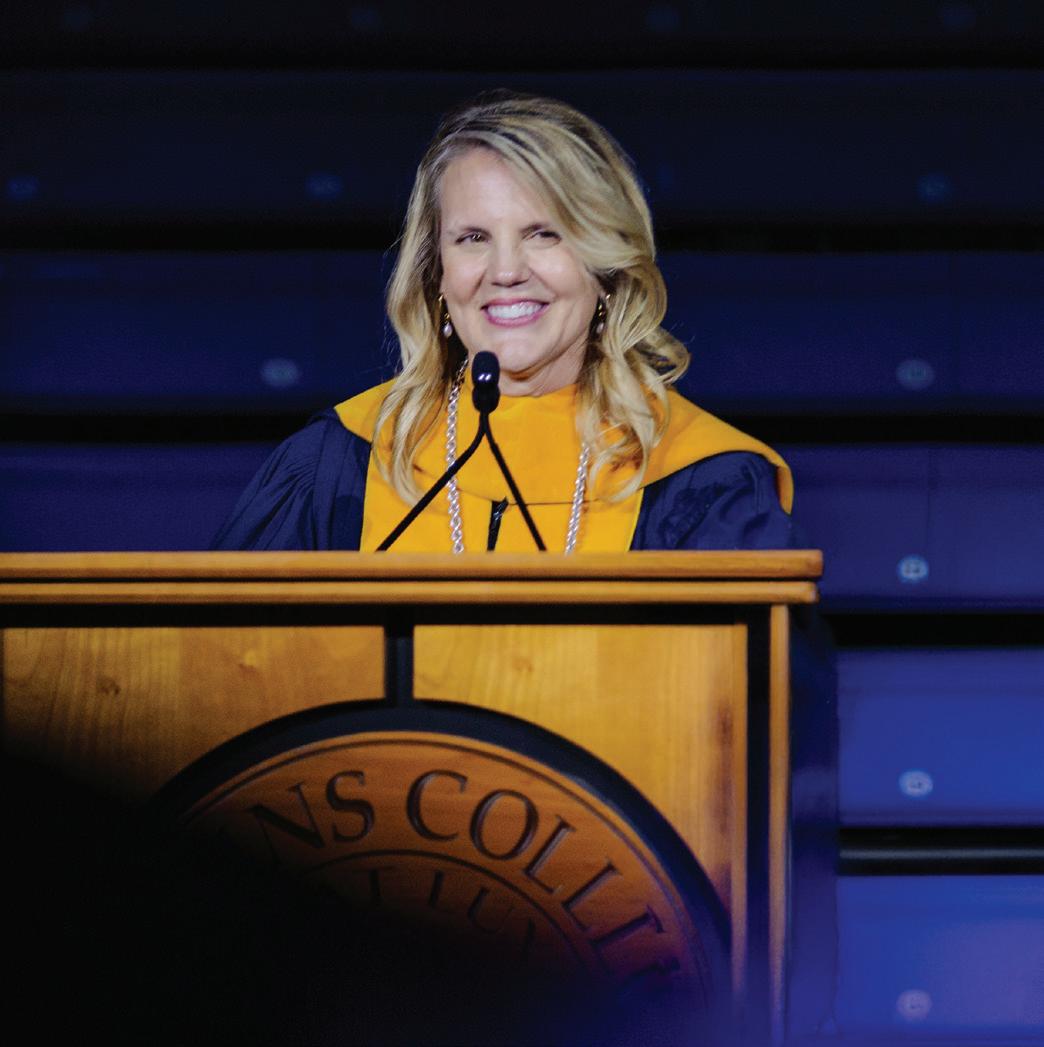
The inauguration ceremony itself captured both tradition and change as it marked a new chapter in Rollins’ 140-year history. The ceremony opened with interfaith reflections from faculty and students, offering prayers of peace, light, and wisdom as Barnett began her tenure.
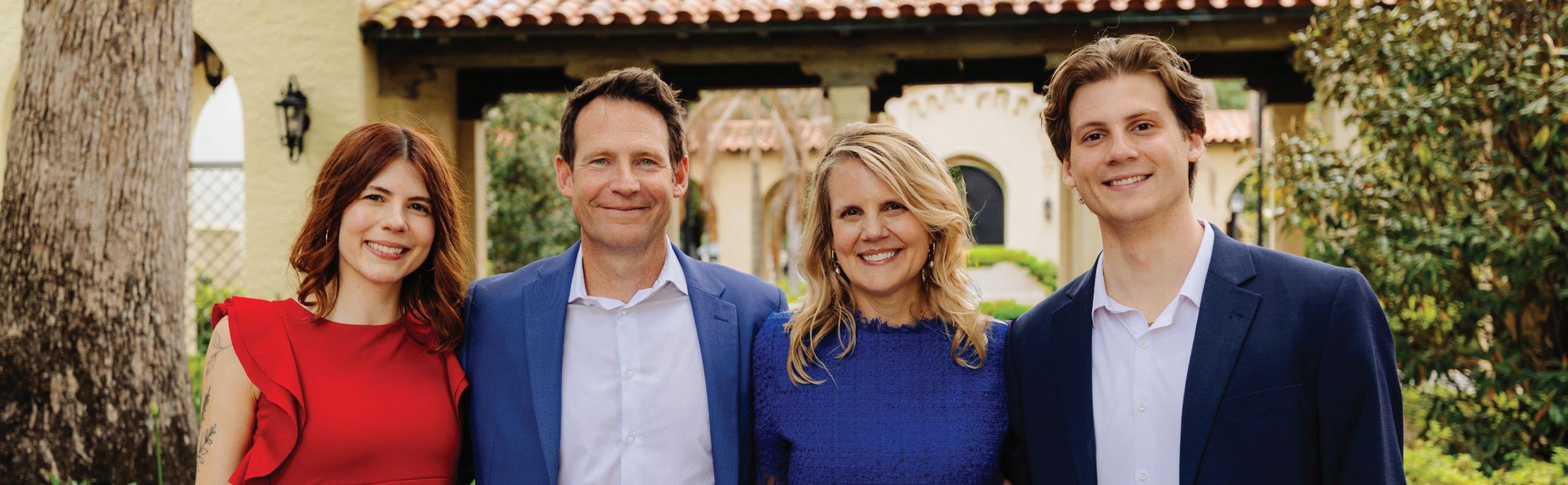
Greetings from across the Rollins community and beyond emphasized her collaborative leadership style and the strong partnerships already forming between Barnett, the College, and the broader Central Florida community. Friends, former colleagues, mentors, and Barnett’s family— her husband, Tom Mould, and children, Lily and Jack—reflected on the qualities that have defined her life and leadership: curiosity, compassion, integrity, sense of humor, and deep commitment to helping others thrive. Rick Goings, chairman of the Rollins Board of Trustees, led the formal investiture, officially installing Barnett as the College’s 16th president.
In her inaugural address, Barnett positioned herself within Rollins’ lineage of bold leadership while articulating a vision shaped by what she heard across her Every Voice, One Vision listening tour. Her remarks emphasized collaboration, listening, and student-centered decision-making as guiding principles, reinforcing the connections and values that already distinguish the Rollins experience while pointing toward what comes next.
“Our future-forward approach means together we will forge an inspiring vision based on what matters most for our students and the future of Rollins. Hope is not our strategy, but it is our ethos. The promise and possibility are palpable. We will not fall
prey to
exceptionalism, but we will know our own worth, elaborate on what makes us special, and adapt and change to remain relevant.”
— President Brooke Barnett


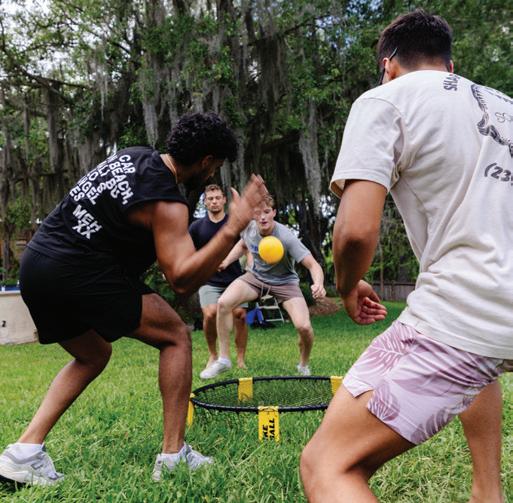
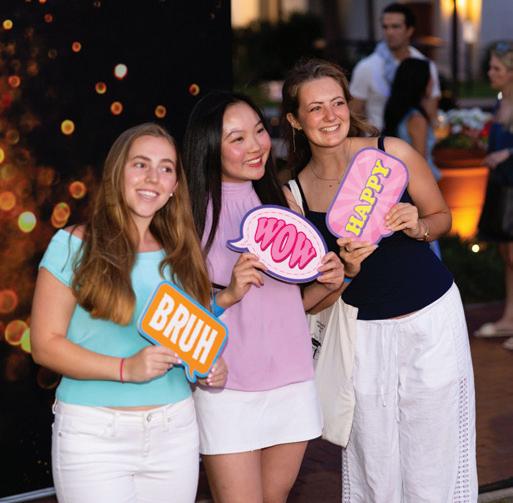
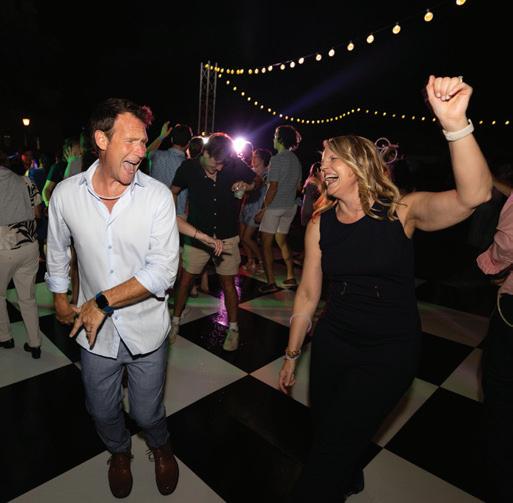
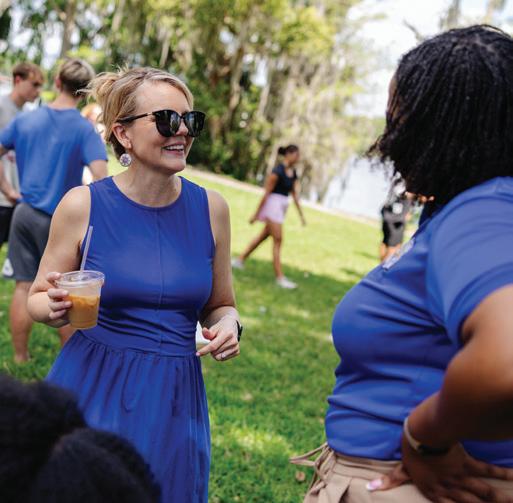
Events like Field Day and Tars Under the Stars reflected the heart of the Rollins experience: a relationshiprich, close-knit community where students are welcomed and supported. Whether in a game of spikeball or through music and dancing under the night sky, these shared moments foster connections that carry into the classroom and beyond, shaping how students learn and succeed.
“Rollins relationships are real and really important. Tom and I have felt this from day one with the warm welcome we received and with how many times a student or colleague notes the relationships that make their Rollins experience.”
— President Brooke Barnett

“With Brooke, there’s this openness. It’s a curiosity that’s probing, but it’s also warm and funny. And that approach to life is what makes her exceptional as a teacher, an academic, a leader, and a friend.”
Marshall Curry Documentary Filmmaker
See the moments of President Brooke Barnett’s inauguration come to life by watching the full ceremony.
By Audrey St. Clair ’03 ’26MBA | Photos by Scott Cook ’24MBA and Elliott Kiernicki
Meet the 2026 Alumni Award Winners, whose lives and careers reflect the enduring impact of a Rollins education.
Each year, Rollins honors alumni who carry forward the College’s ethos in distinct and meaningful ways through leadership, service, innovation, and a commitment to the greater good. This year’s recipients represent a wide range of paths and professions, each shaped by a shared foundation at Rollins. From shaping the arts and advancing medicine to leading global conservation efforts and serving at the highest levels of government, the 2026 honorees demonstrate what it means to lead with purpose and passion.
Recognizes alumni who have demonstrated outstanding success and achieved remarkable distinction through their professional accomplishments
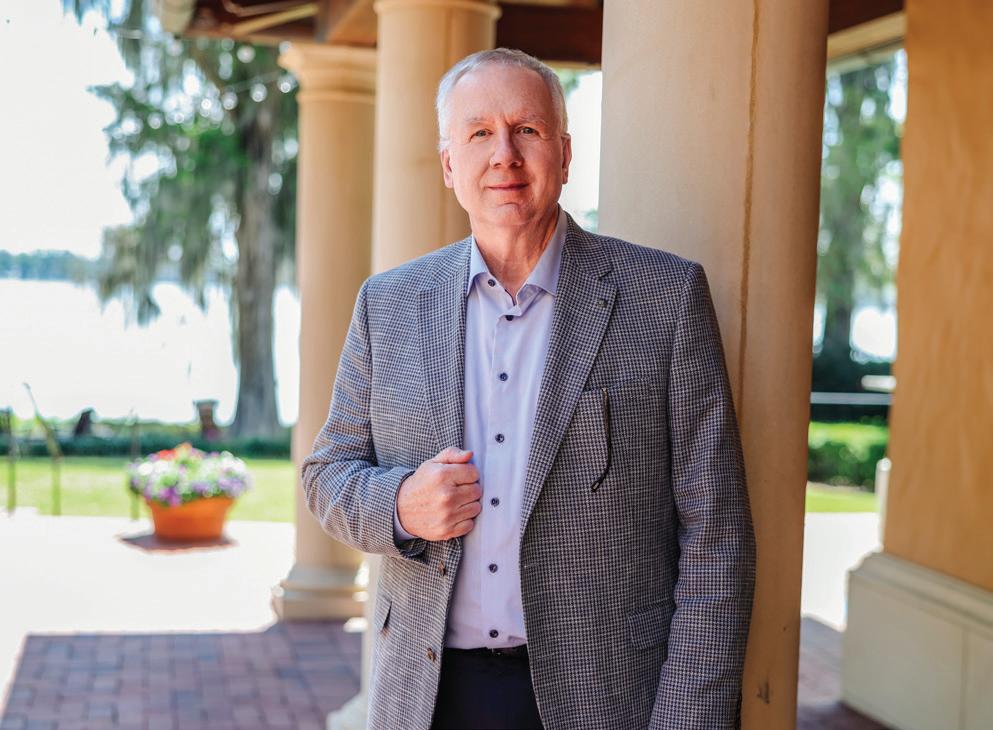
Board-certified in pulmonary disease and sleep medicine, William H. Noah has played a key role in advancing treatment and awareness in a field that directly impacts quality of life for millions. After graduating with honors from Rollins, he earned his medical degree from the University of Tennessee and trained at the University of Utah, building a career defined by clinical excellence, research, and leadership.

For Chris Russo, the road to the National Radio Hall of Fame began at Rollins, where he called games on WPRK and built the foundation for a groundbreaking career. He went on to pioneer the two-person sports talk format on WFAN’s Mike and the Mad Dog and later launched SiriusXM’s Mad Dog Sports Radio. Across nearly four decades, Russo has helped redefine how fans engage with sports.
Recognizes alumni who provide exceptional leadership to the College and their community through volunteerism and service activities
For more than five years, Alexandria Crawford has supported Rollins Theatre & Dance through mentorship, advocacy, and leadership. A Chicago-based actor and teaching artist, she helped lead the department’s Color Action Group—work that informed its Anti-Racism Action Plan—and remains active in its continued implementation.
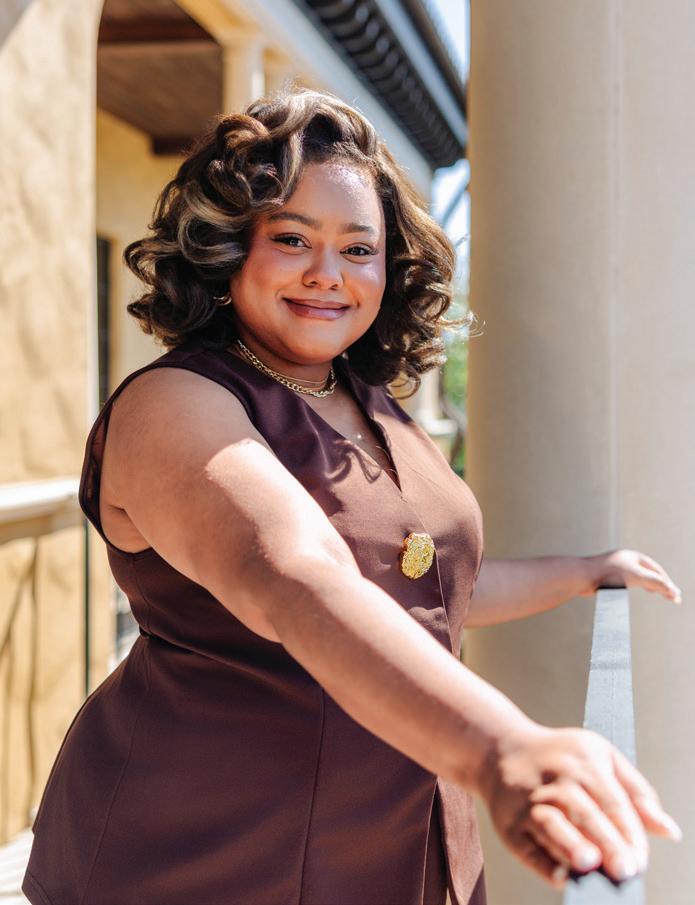
Recognizes prominent alumni who exemplify the Rollins mission of global citizenship and responsible leadership through their extraordinary achievements and impact on society
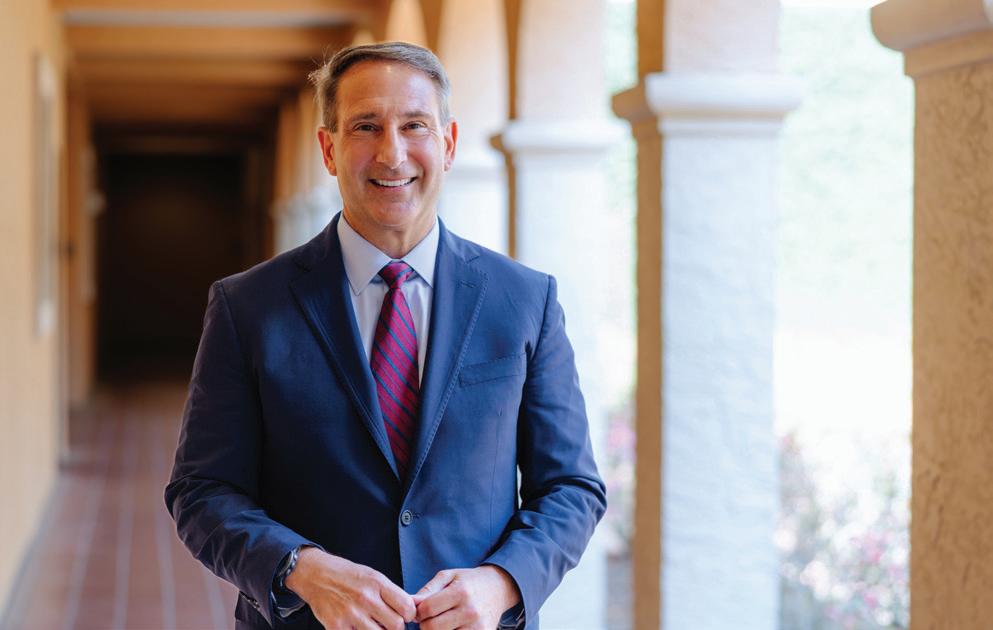
From commanding nuclear submarines to advising at the highest levels of national defense, Robert “Navy Bob” Roncska personifies leadership, dedication, and service. Today, through his “Leading with Love” framework, he helps leaders across industries build trust, elevate others, and create lasting global impact.
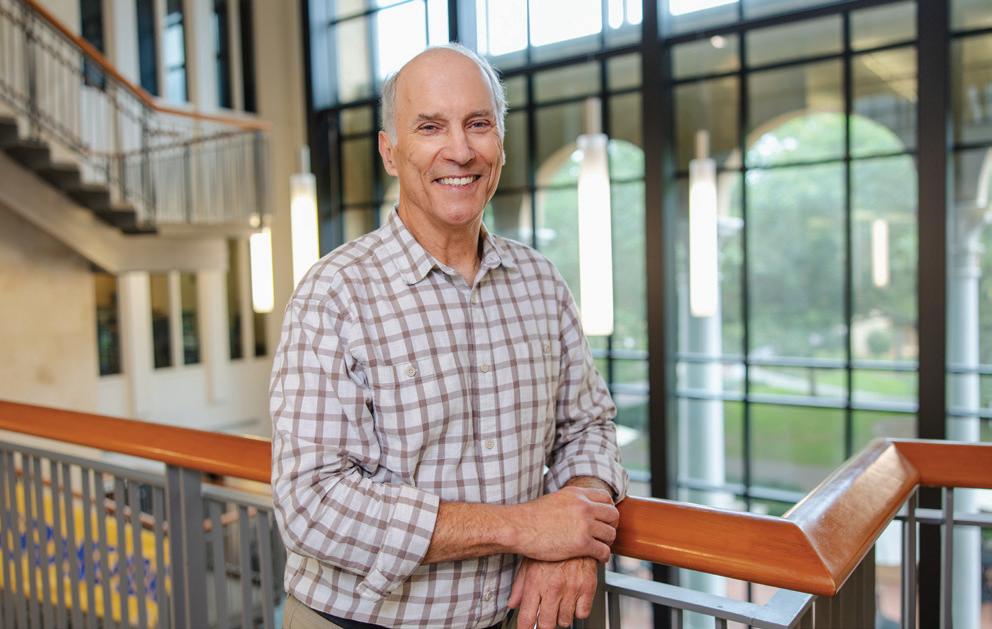
As executive director of the Cincinnati Zoo & Botanical Garden, Thane Maynard has spent his career championing wildlife conservation through storytelling and education. Under his leadership, the “Greenest Zoo in America” marked its 150th anniversary in 2025, furthering his mission to connect people with wildlife.
Recognizes the outstanding accomplishments of alumni who graduated within the past 10 years
Zoe Mack ’15
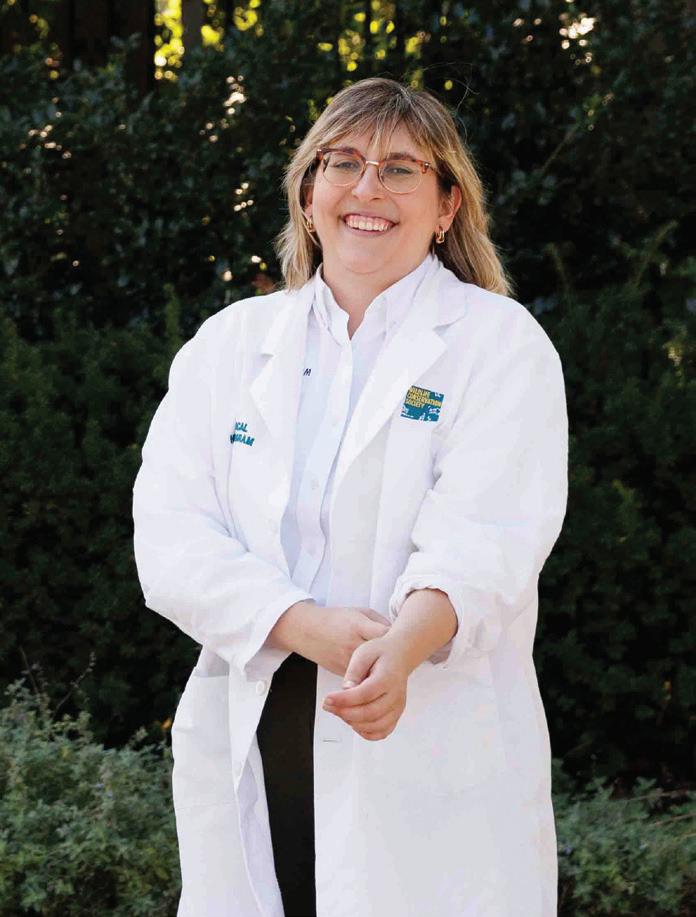
Zoe Mack works on the front lines of conservation science as an associate pathologist with the Wildlife Conservation Society. Board-certified in 2022, she studies disease across species and continents, helping guide conservation strategies. From identifying pathogens to advising survival programs, she is bringing expertise and urgency to protecting biodiversity worldwide.

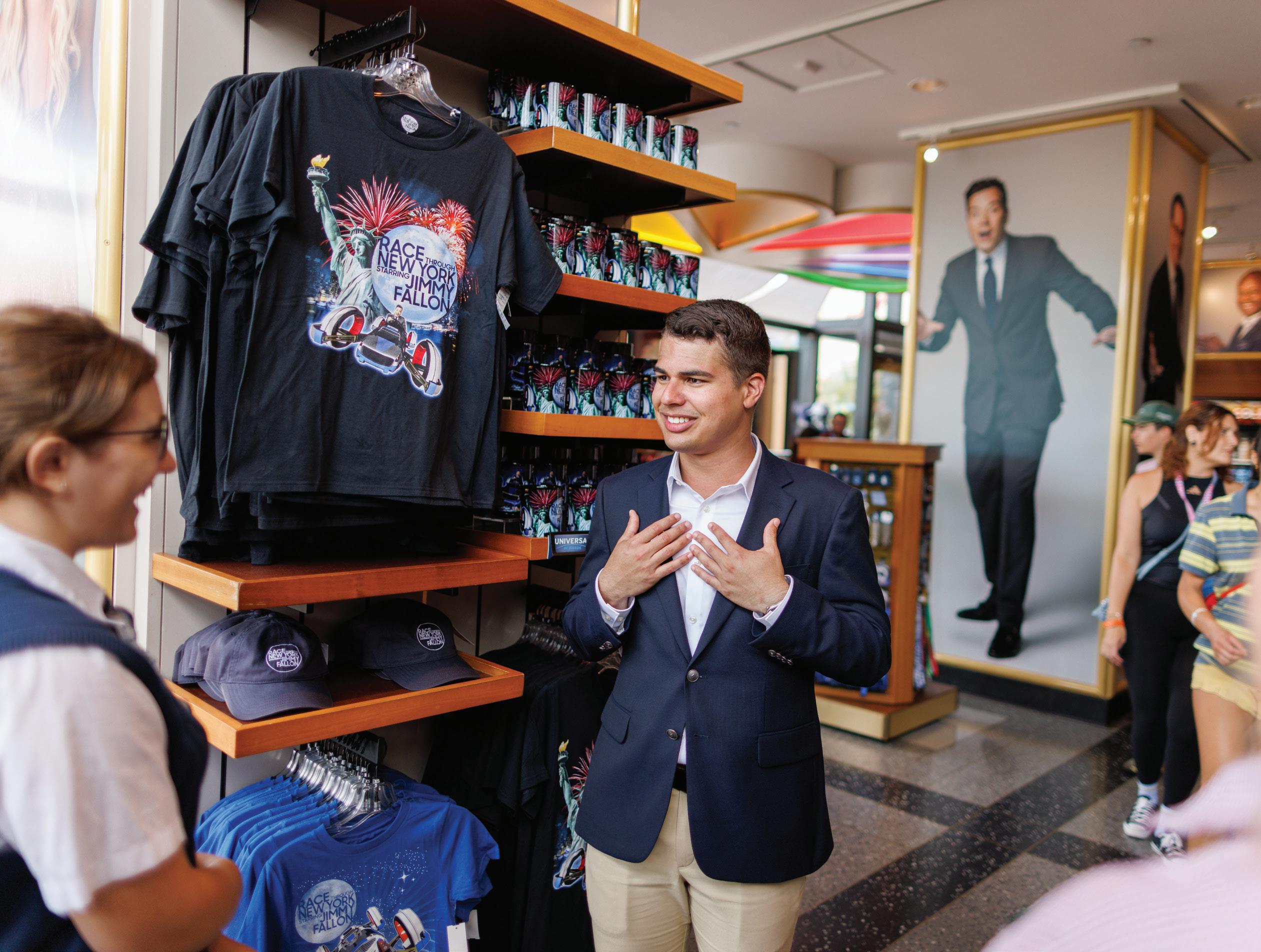
Hayley Stoddard ’24 didn’t plan to fall in love with numbers. But in business professor Serina Haddad’s statistics class at Rollins, something clicked. And it changed everything that followed.
“I can’t think of a day when I’m not on Excel doing some sort of statistical analysis or graph for a presentation,” says Stoddard, who majored in international business and minored in data analytics and French.
But falling in love with numbers and knowing how to turn that passion into a career are two different things. Clarity came during an internship while doing data visualization for a fintech startup in Dublin. For the first time, the concepts she had studied in class took on urgency and purpose.
“In my internship, I built out a lot of dashboards and insights, and knew that’s what I wanted to do,” she says.
“Taking that statistics class was a butterfly effect. Because I took it, I did an internship, and because of that experience, I was all in. It’s very similar to what I do now.”
What began as a spark in the classroom became a defining moment in her career. Today, Stoddard is a digital growth analyst at Travel + Leisure Co., leading analytics for Sports Illustrated Resorts. Her LinkedIn profile captures it simply: “I love turning data from numbers into the start of meaningful stories.”
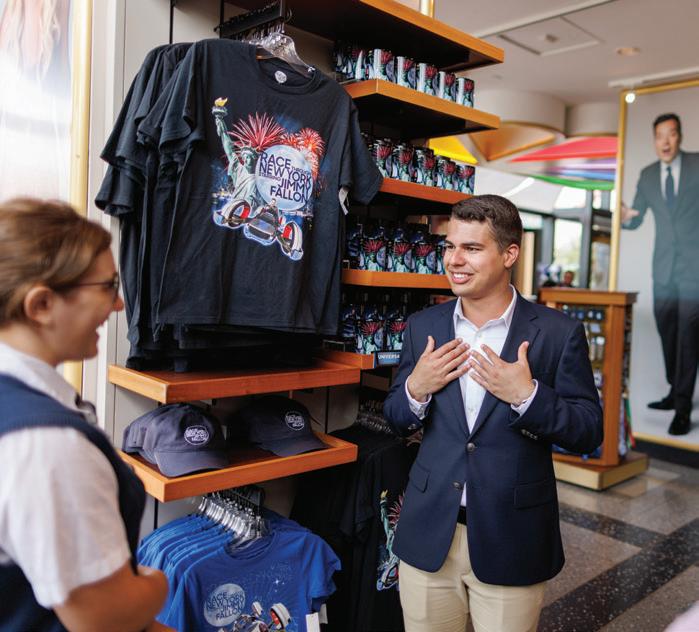
LaGessie’s internships provided the same kind of awakening. In class, he was studying inventory management, financial analysis, and leadership. On the job, those concepts stopped being theoretical. He managed sales, inventory, and talent. He analyzed profit and loss statements. He learned what it means to be accountable for outcomes—and for people.
“It was incredible to dive deeper into the topics I was learning about,” says LaGessie, who analyzes capital assets for Universal. “Most internships are a foot in the door for your bigger, broader interests, and mine showed me how to be an asset in this company.”
For LaGessie, Stoddard, and countless others, internships are more than résumé lines. They are the moment when learning becomes real and when employers get a clear view of a candidate’s true potential. National data reflects just how much this matters. According to the 2025 Internship & Co-op Report by the National Association of Colleges and Employers (NACE), 62 percent of employers extended full-time offers to their interns. Even among those who didn’t, 81 percent say they are more likely to hire candidates with internship experience, according to a recent employer report by the American Association of Colleges & Universities (AAC&U).
In my internship, I built out a lot of dashboards and insights, and knew that’s what I wanted to do. Taking that statistics class was a butterfly effect. Because I took it, I did an internship, and because of that experience, I was all in. It’s very similar to what I do now.
Hayley Stoddard ’24
Digital Growth Analyst, Travel + Leisure Co.
But internships aren’t the only experiences that move the needle. That same AAC&U report found that 81 percent of employers are equally likely to hire a student who held a campus leadership role, just above the 73 percent who favor candidates with jobs during college.
“One of the greatest investments of time while on a college campus is for students to engage in an internship,” says Meyer. “But they’re not the only valuable experiences students can have. Leadership roles in student organizations allow students to execute vision, strategy, and teamwork. I often say, if you can lead and inspire your peers, you can do anything.”
team, I had coaches who taught me how to navigate conflict and supported me through the process. I use those skills every day.”
LaGessie and Stoddard share similar stories. Organizing a campuswide Christmas service as a leader for Cru Ministries taught LaGessie how to bring people together across departments and perspectives. It’s a skill he uses regularly in coordinating work across teams and time zones. Stoddard’s role as president for Delta Zeta, where she worked to bring alumni back to campus, mirrors the audience engagement work she does in marketing today.
“You can apply that experience in a lot of ways,” she

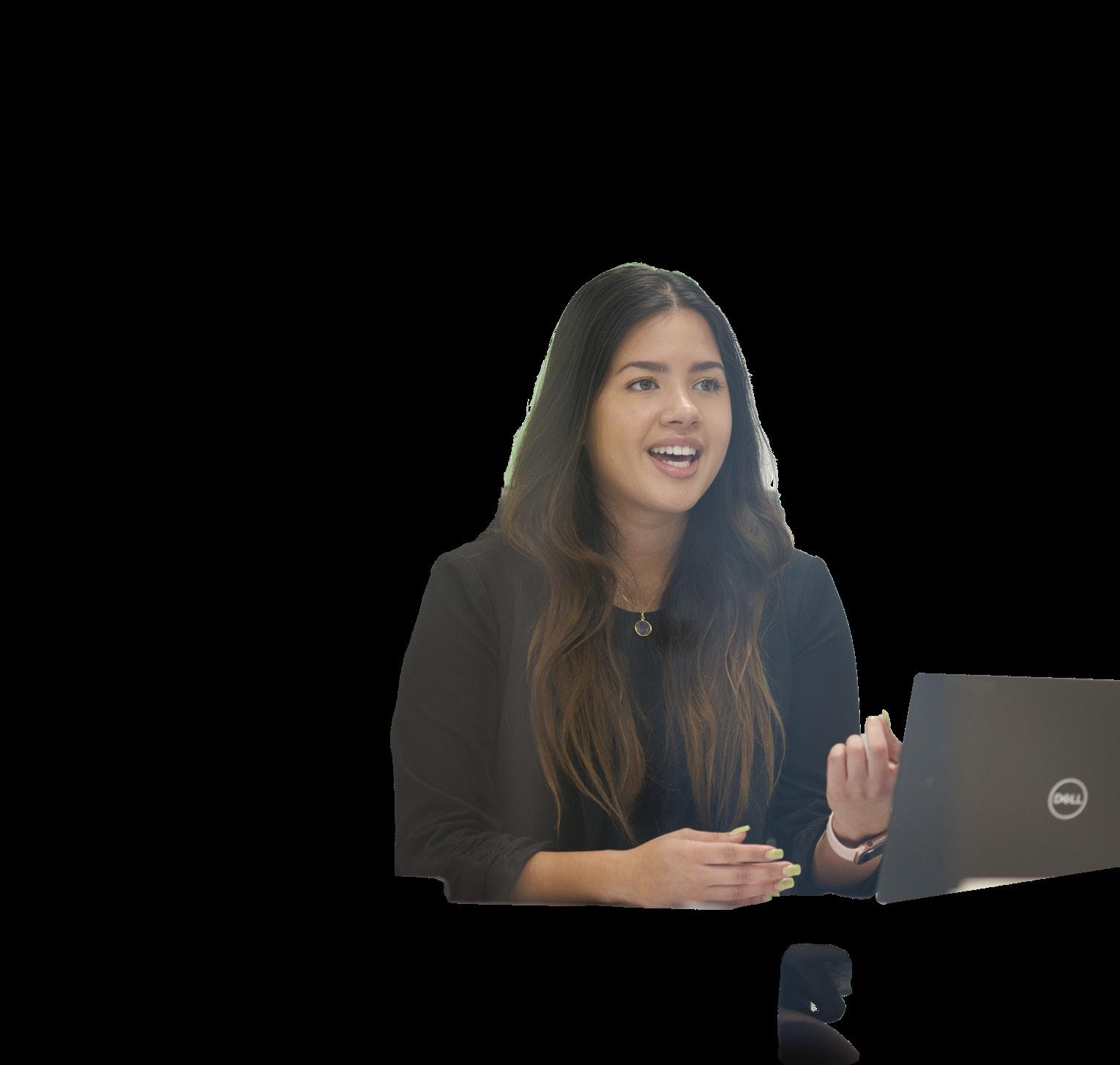
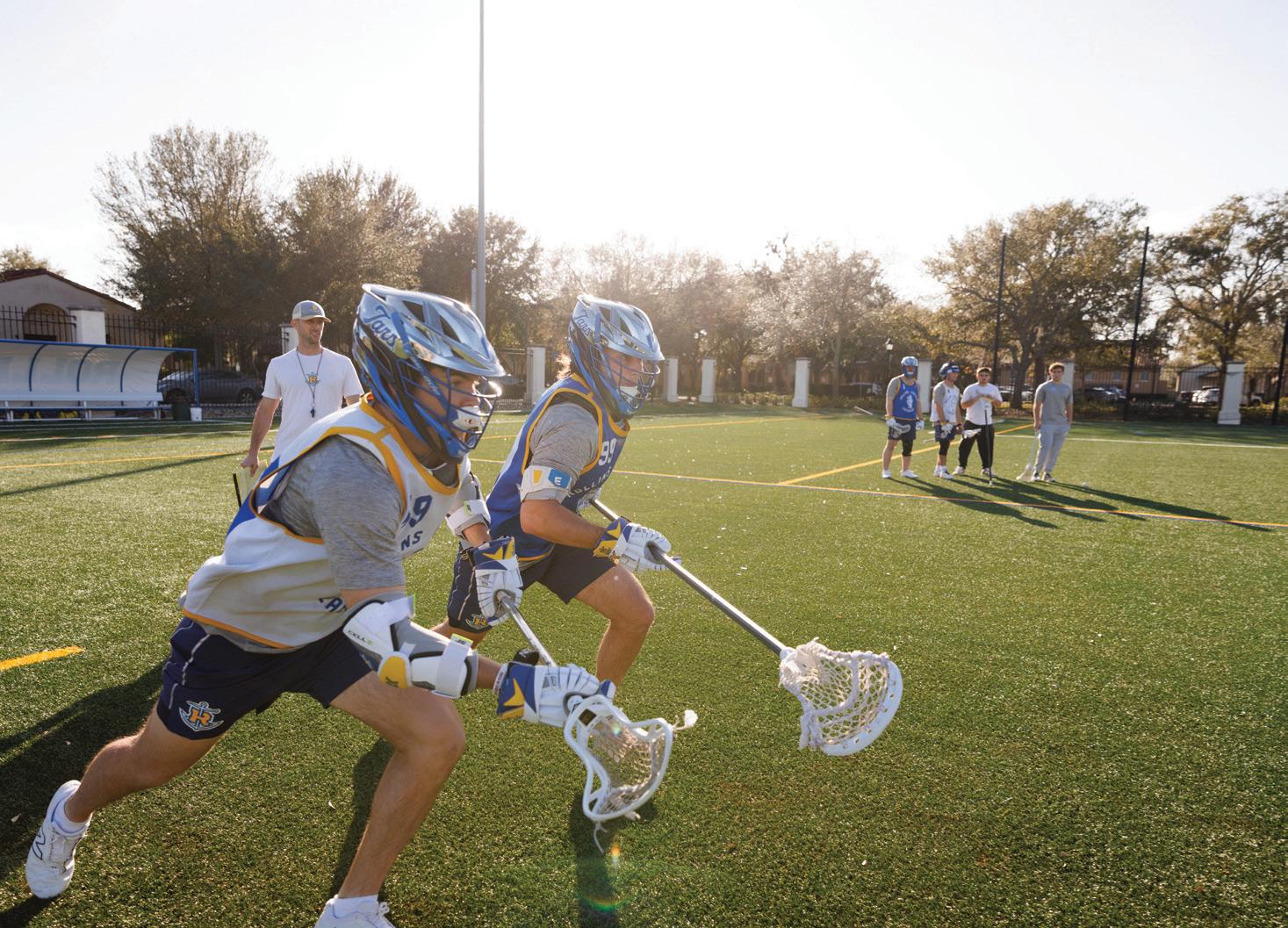
Tianna-Marie Rosser ’20 understands why. As manager of brand experience for the Detroit Pistons, she works across departments and with influencers to produce social media campaigns, suite experiences, and pop-ups. Internships in social media and athletics on campus helped her build technical skills “that made transitioning to doing social media for an NBA team easy.” But her time as a residential assistant and captain of the women’s basketball team proved just as formative.
“Being an RA, I learned how to work with people,” says Rosser, a communication major. “On the basketball
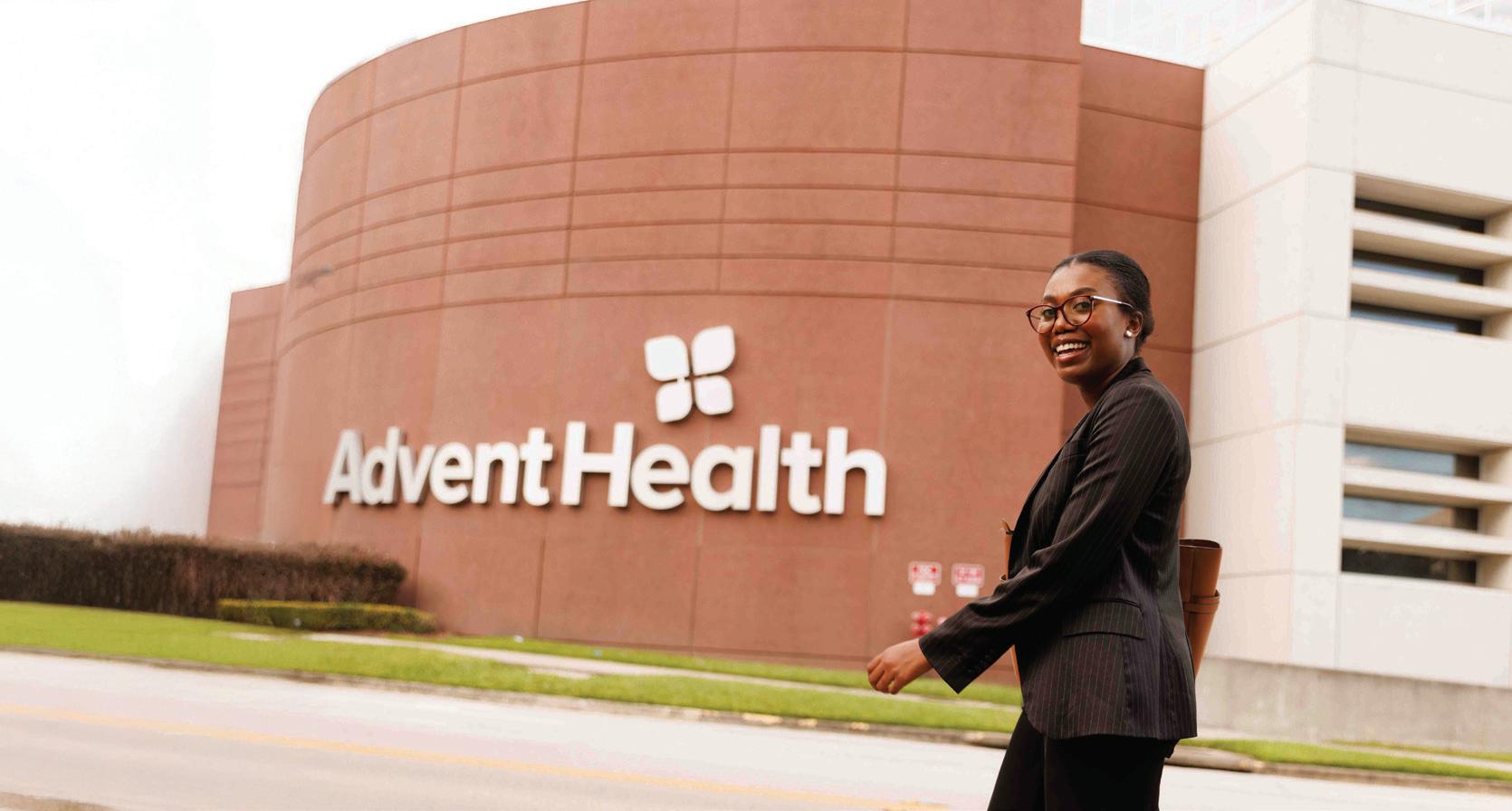
In her role with the Pistons, Rosser is responsible for shaping external experiences ranging from influencer integrations to major brand activations. At the center of that work is a deceptively simple question, one Stoddard also learned to ask at Rollins: Do we truly understand the people we’re trying to reach?
“I’m in charge of doing cool stuff to make sure that as a brand, we’re culturally relevant and viewed as leaders within the league,” says Rosser, who credits Rollins’ core curriculum and her minor in critical media and cultural studies with giving her the tools to do just that. “My experiences at Rollins helped me have empathy and understand people and their different backgrounds, which is essential for the work I do with influencers and our audiences. Because of Rollins, I’m able to make sure our brand reflects our city to the fullest capacity.”
For many students, the classroom introduces knowledge that changes how they see the world. But learning doesn’t stop there. It happens in study abroad programs that immerse students in new cultures. In field studies that bring academic concepts into real-world context. In service-learning projects and partnerships with local nonprofits that ask students to listen, collaborate, and
students have the opportunity to maximize moments when understanding deepens and worldviews expand.
My experiences at Rollins helped me have empathy and understand people and their different backgrounds, which is essential for the work I do with influencers and our audiences.
Tianna-Marie Rosser ’20 Manager of Brand Experience, Detroit Pistons
Michelle Rodriguez ’24 seized every one of them. Alongside internships with Ayuda and the Farmworker Association of Florida, she spent two years serving on the Immersion planning team, designing trips that placed students alongside local nonprofit organizations to engage issues including homelessness, food insecurity, and racial justice. She also studied abroad in Mexico, learning
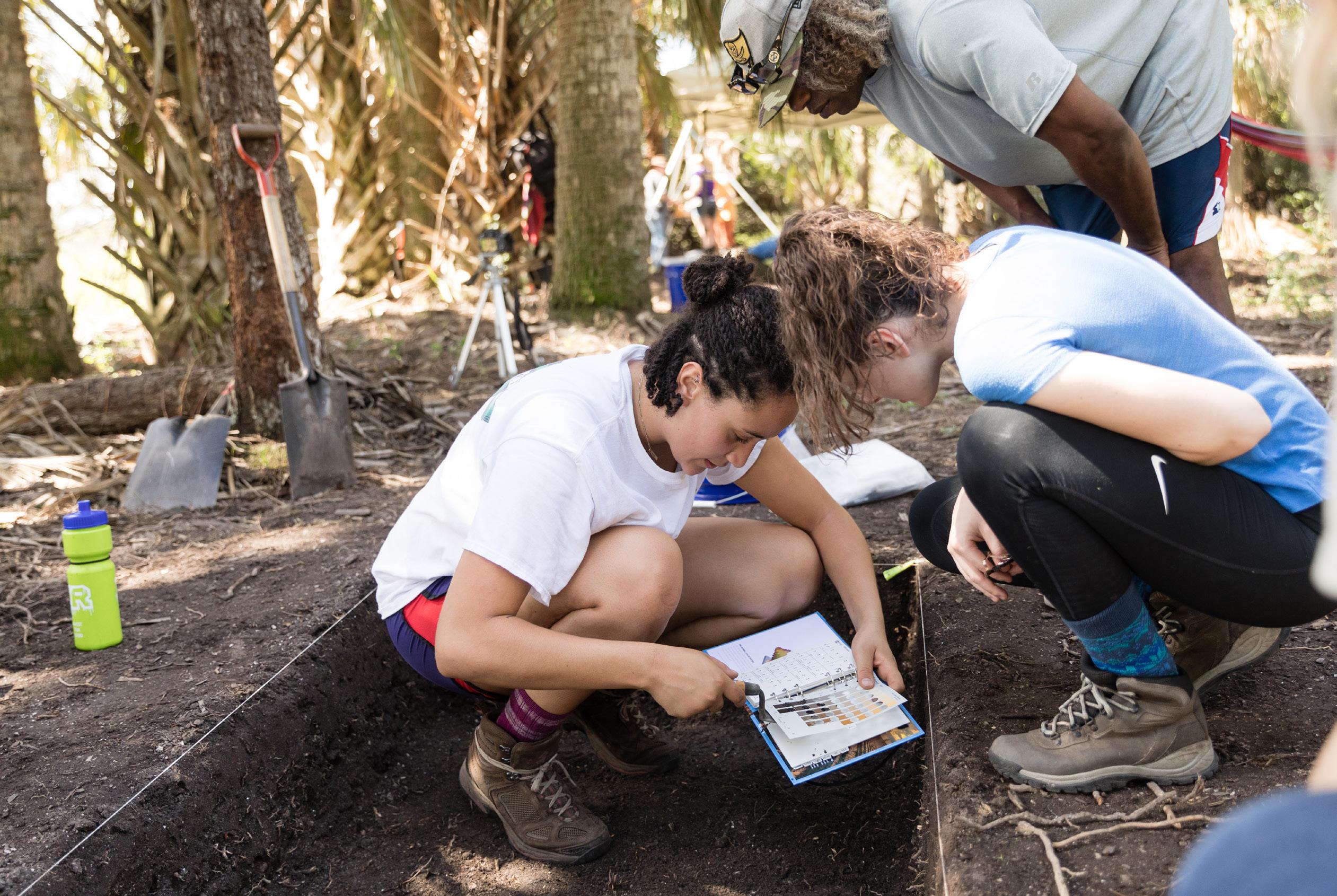
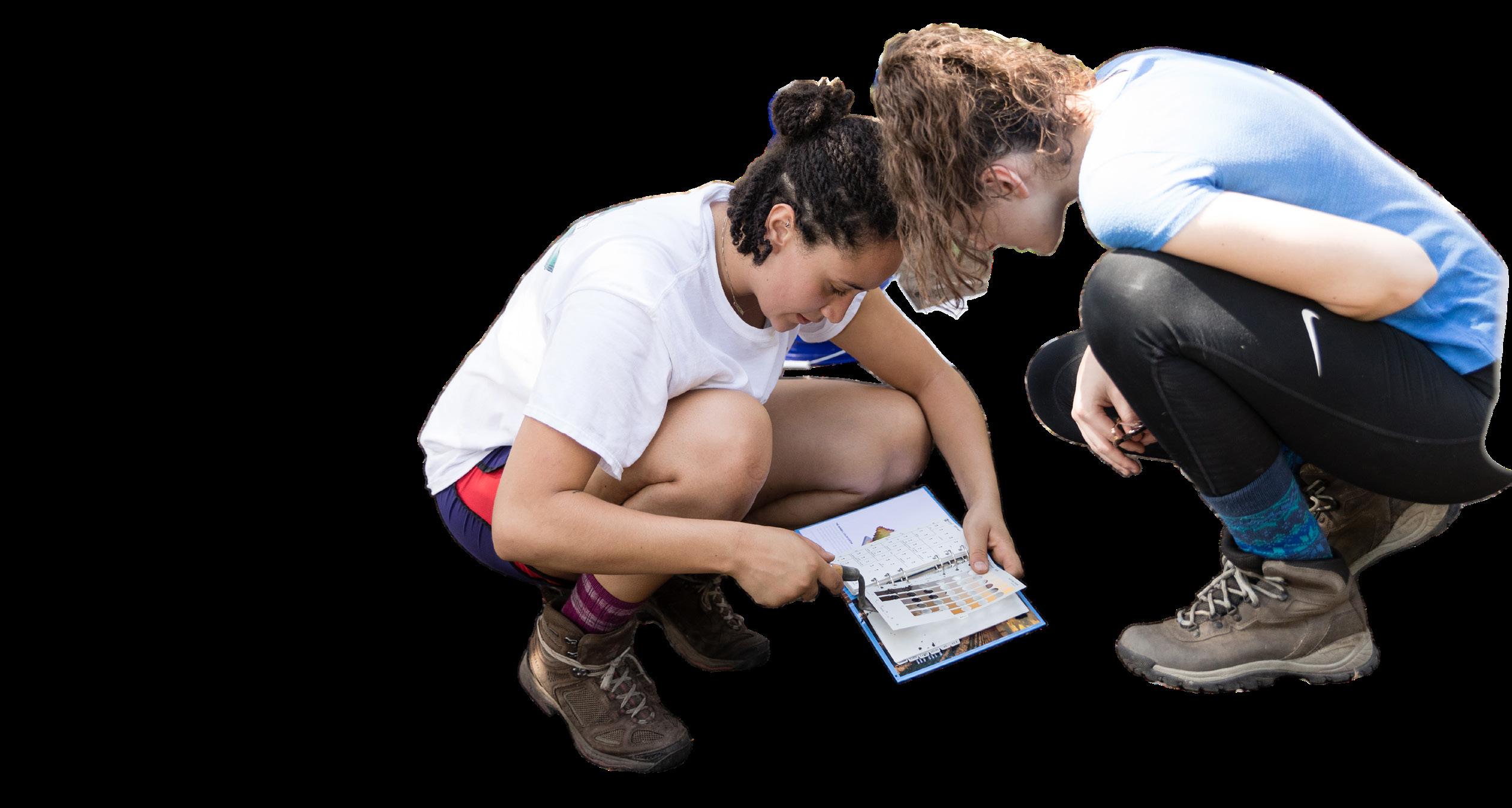
nonprofits, external partners, and people navigating real, difficult moments, which taught me compassion and how to work with both families in need of affordable housing and leaders across our community.”
Her path reflects a broader truth: Experiential learning doesn’t just build skills; it builds perspective.
“Applied learning opportunities give students the experiences and tools they need to respond to the greatest challenges of our times,” says Meyer.
Employers agree. According to the recent AAC&U report, 76 percent of employers are more likely to hire a candidate who engaged with a community organization, and 69 percent favor candidates with a global experience like studying abroad. These aren’t soft extras. They cultivate the mindsets employers increasingly see as central to workforce readiness, such as being able to engage diverse perspectives, practice constructive dialogue, and navigate complexity.
“
My Rollins experiences gave me a leg up on the work I do today. I gained applied skills in coordinating with nonprofits, external partners, and people navigating real, difficult moments.
Michelle Rodriguez ’24

”
Community Outreach Coordinator, Habitat for Humanity
The combined skills and mindsets translate across roles and industries. As an associate attorney focused on renewable energy and infrastructure for Morgan, Lewis & Bockius in New York, Addiel Perez ’22 oversees project development and finance for utility-scale energy projects, from initial funding to tax equity deals. His path to that highly specialized field was shaped by experiences that expanded his view of the world: volunteering at Shepherd’s Hope, completing a field study in Costa Rica, studying abroad in Uganda and Rwanda, and working on a service project at the Rosebud Indian Reservation in South Dakota. After graduating, he returned to Tanzania as a field-study site leader and continued his international exposure while earning a J.D. from the University of Miami.
“While at Rollins, I had the privilege of studying sustainable development in Costa Rica and Tanzania—
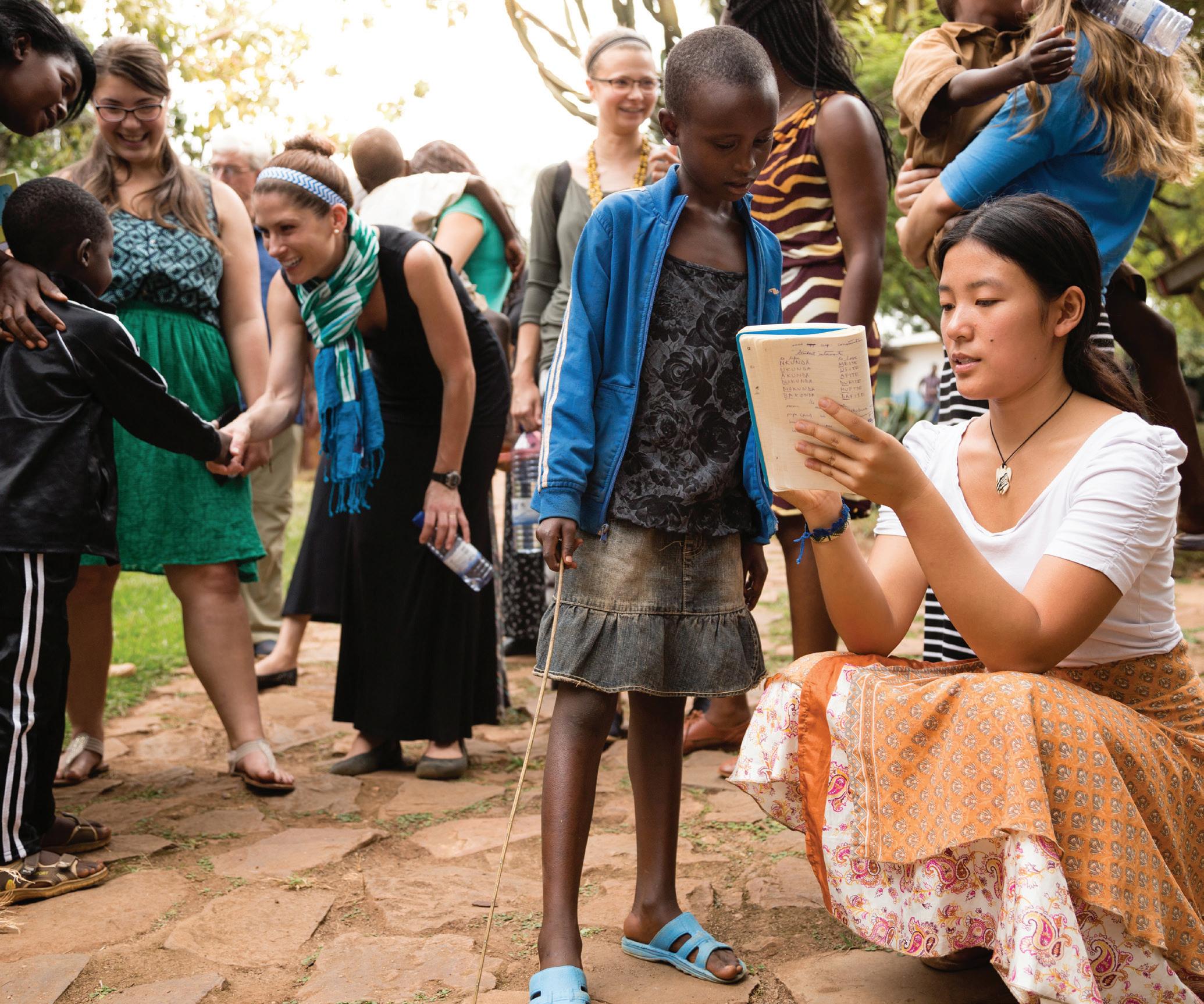
experiences that opened my eyes to the power of communitydriven solutions,” says Perez, who majored in political science.
“Renewable-energy project finance is a very cutting-edge and niche area of law that many people don’t even know about. I’m super grateful for the work I get to do today, and I am in this space because of the education and experiences I was able to participate in at Rollins.”

During his first year of law school, Perez watched as fellow classmates adjusted to the demanding workload. While many were finding their footing, he had already hit his stride.
“In my political science classes at Rollins, we were required to read a lot and show up to class prepared to discuss what we had read,” he says. “I did well in law school when a lot of my classmates struggled because I was used to the rigor of Rollins. It gave me a huge leg up in my first year in law school, which are the grades law firms use to recruit candidates.”
Among his favorite courses at Rollins was Political Psychology , where he studied how emotion, personality,
and social relations influence political beliefs and behaviors. He enjoyed it so much that he designed a research project based on the class readings, receiving funding through the Collaborative Research Fellowship Program (CRFP) to survey American voters on how political psychology shaped their opinion of the January 6 attack on the Capitol.
“It was while doing that research with political science professor Pavielle Haines that what I learned in the classroom became real,” he says.
And that’s the point. The transformation from reading about a concept to having a hands-on role in advancing understanding in a field is a hallmark of the Rollins experience. Seventy percent of CRFP participants go on to attend graduate school, citing the rigorous experience as a major motivator. Employers take note as well. According to the AAC&U employer report, 73 percent of employers are more likely to hire a candidate who has completed a collaborative research experience with a faculty member.
In fact, all the experiences employers say make them more likely to hire a candidate—internships, leadership roles, community-based projects, research—
“It was while doing research with political science professor Pavielle Haines that what I learned in the classroom became real.
”Addiel Perez ’22 Associate Attorney, Renewable Energy, Morgan, Lewis & Bockius
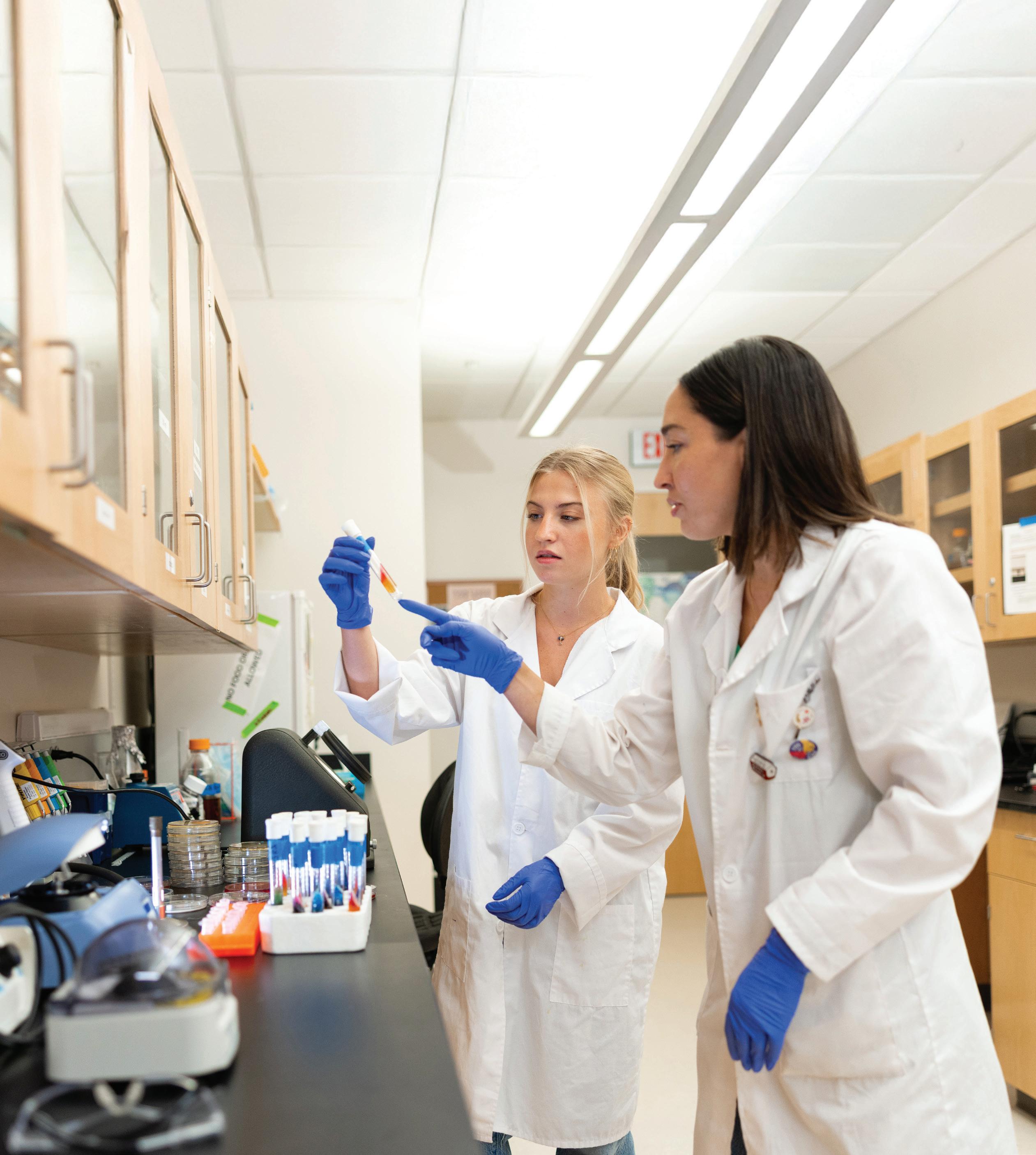
Campbell Brown ’90, the Gateway Fellows program covers all expenses, including accommodations, travel, and food, so students can afford to participate in highly selective
“ ”Because of the Gateway Fellowship, I didn’t have to worry about the financial side of the experience. I just got to say yes, knowing Rollins was going to make sure I could pursue it.
Angelina Khourisader ’23 ’24MBA Analyst, Management Consulting Team, World Wide Technology
“Because of the Gateway Fellowship, I didn’t have to worry about the financial side of the experience,” says Khourisader. “I just got to say yes, knowing Rollins was going to make sure I could pursue it.”
During her time on the Hill, she attended various committee meetings, including one on proprietary technology across industries, turning her studies in lobbying and public policy into lived experience. The internship showed her where she belonged.
“One of my greatest takeaways from that experience was knowing I wanted to come back to D.C. after graduation,” she says. “I knew that was the place for me; it was where I fit and where I wanted to kick off my professional career post-graduation. The internship allowed me to propel my career and to be the person I want to be outside of my career.”
Today, Khourisader is an analyst on the management consulting team at World Wide Technology, helping clients navigate digital transformation, cloud strategy, and the integration of artificial intelligence and machine learning. The network she began building in D.C. as an intern has only grown over the two years that she lived in the nation’s capital. This includes with the Florida House, where she serves on the board of trustees. She partnered with them to launch FL|DC Connect, a professional networking organization for Floridians and alumni of Florida colleges and universities living in D.C.
For Khourisader, the internship on Capitol Hill wasn’t just a line on a résumé. It was a true inflection point—one made possible because donors invested in her ability to say yes.
LaGessie is building a career inside one of the world’s largest entertainment ecosystems. Stoddard is turning data into stories for a global travel brand. Rosser is shaping what it means to be a fan of one of the NBA’s most storied franchises. Rodriguez is helping families find a place to call home. Perez is financing the infrastructure of a cleaner future. And Khourisader is helping organizations navigate the technologies transforming the world while preparing them for what comes next.
Six graduates. Six different paths. One common thread: an experience at Rollins when learning became real—and everything that followed became possible.
“My internship opened my eyes to what a life as a lobbyist or in public policy would really look like,” says Khourisader. “Getting to see what I studied firsthand was one of the best experiences I’ve ever had, and it changed my life.”
While every experience is personal, the scale of engagement reflects a campus where hands-on learning and real-world impact—the very things employers seek most—are the norm, not the exception.
85+ STUDY ABROAD PROGRAMS
TOP PRODUCER OF FULBRIGHT STUDENTS
TOP 5 FOR STUDY ABROAD BY THE
40,000+ SERVICE HOURS COMPLETED, 2024–25
50+ COMMUNITY ENGAGEMENT CLASSES, 2024–25
70% OF CLASS OF 2025 STUDENTS COMPLETED AN INTERNSHIP OR RELATED EXPERIENCE
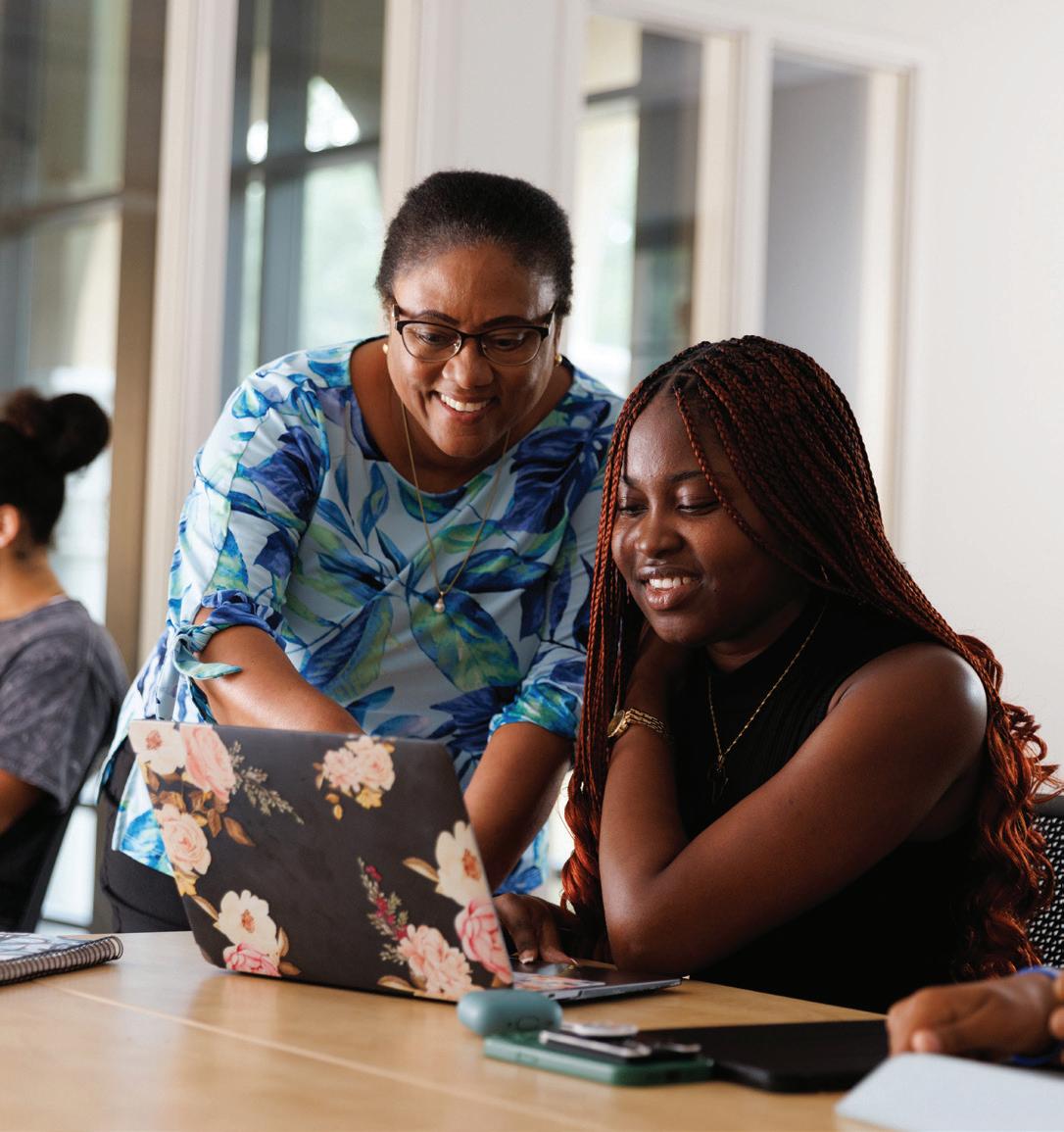
Step inside a Rollins classroom, where personalized, hands-on learning produces graduates fluent in the skills employers value most.
By Laura J. Cole ’04 ’08MLS
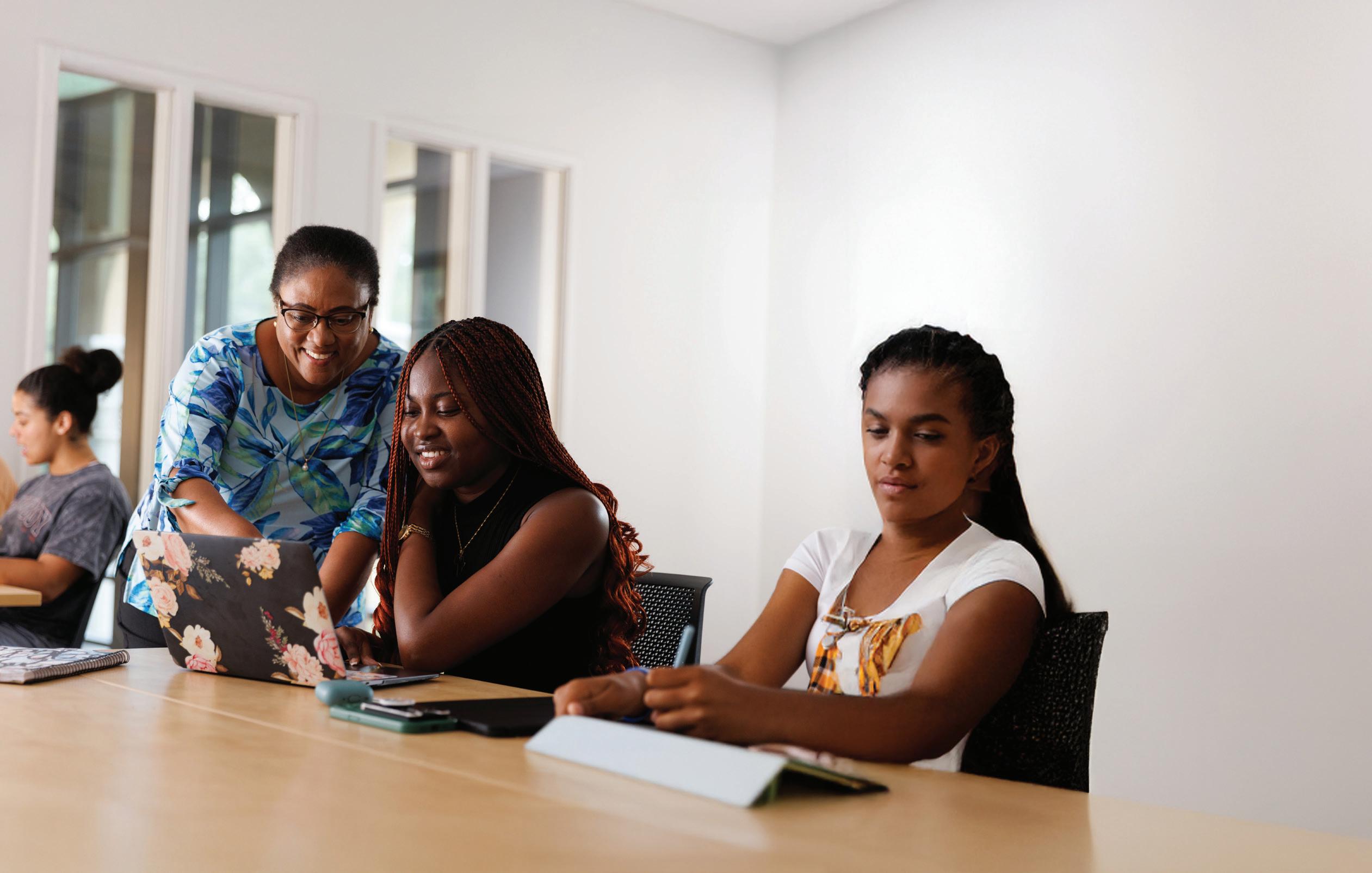
Abrielle Mannino ’25 came to Rollins certain of two things: She wanted to become a lawyer, and she hated math. By the time she graduated, both convictions had shifted, reshaped by professors who knew her well enough to see both her potential and the possibilities she hadn’t yet imagined for herself.
“At Rollins, you meet so many people who pay attention to who you are as an individual,” says Mannino. “They push you to explore realms you wouldn’t otherwise consider.”
The first was philosophy professor Eric Smaw, whom she met at a webinar for students interested in pre-professional programs before classes even began. Over time, through classes, conversations, and consultations as her Debate Team advisor, Smaw recognized Mannino’s talent for writing, argumentation, and public speaking, and encouraged her to pursue research. She did so her senior year— an experience that set her on the path she’s forging now as a PhD candidate at Brown University.
“He looked closely at my work and challenged me to grow,” she says. “Having a professor who knew me both in and out of class made all the difference.”
At Rollins, mentorship-driven relationships are far from new. They’re a legacy nearly a century in the making. In 1931, President Hamilton Holt convened a national conference led by philosopher and educator John Dewey that helped shape the College’s distinctive approach to learning, rooted in a culture where every student is welcomed, known, and supported.
“The first business of the College [is] to ascertain with respect to each individual student … the interplay of interest and aptitude,” wrote Dewey in the 1931 report. “These considerations inexorably condition the whole relationship between student and teacher … without which the relationship is sterile.”
That philosophy still defines the learning experience at Rollins, one where professors know students well enough to challenge them, expand their thinking, and open new doors of opportunity. It’s a model built on small classes, close mentorship, open dialogue, and real-world application. And it’s one that continues to prepare graduates with the strengths and skills that employers demand.
Growing up, Mannino heard for years that math wasn’t her strength. Eventually, she believed it.
When she mentioned her dislike for the subject in a logic course, emeritus philosophy professor Tom Cook stopped her. Why? he asked. When she said she wasn’t good at it, he pushed back. Based on her work in class, he told her that wasn’t true. Logic and math are closely linked—and she was excelling.
The moment stuck.
“He planted the seed that the skills I was building in philosophy were translatable,” says Mannino, who double majored in philosophy and public policy and political economy. Her senior year, she enrolled in the math and computer science courses she once avoided. Today, she uses both for her doctoral program in climate science.
It’s the kind of shift that happens only when a professor knows a student well enough to challenge what they think they know about themselves. In small classes, supported by an 11:1 student-to-faculty ratio, these moments are commonplace. The intimate environment allows faculty to recognize how students think, advocate for their growth, and connect their interests to unexpected possibilities—from research to internship and career pathways.
For international business major Paola Quiroz ’20, the connections she made at Rollins proved transformative. After teaching her in two classes, her advisor, business professor Allen Kupetz, recommended Quiroz for an internship at the e-commerce consulting agency Knoza, where he serves as chief operations officer. The experience changed her trajectory.
“Because of that role, I was able to work on technical projects and discovered I wanted to work in tech,” she says.
That realization led to another conversation, this time with business professor Marc Fetscherin, who encouraged Quiroz to pursue a master’s in information systems and digital innovation at the London School of Economics. She did.
“The role at Knoza had a domino effect that kickstarted my career,” says Quiroz, now a senior finance manager at Microsoft working with the company’s AI Azure team. “It was all possible because of Rollins’ small classes, where I had access to my professors and was able to cultivate meaningful relationships with them, where I felt comfortable enough to go to them for everything from questions on what we were learning to advice on my career.”
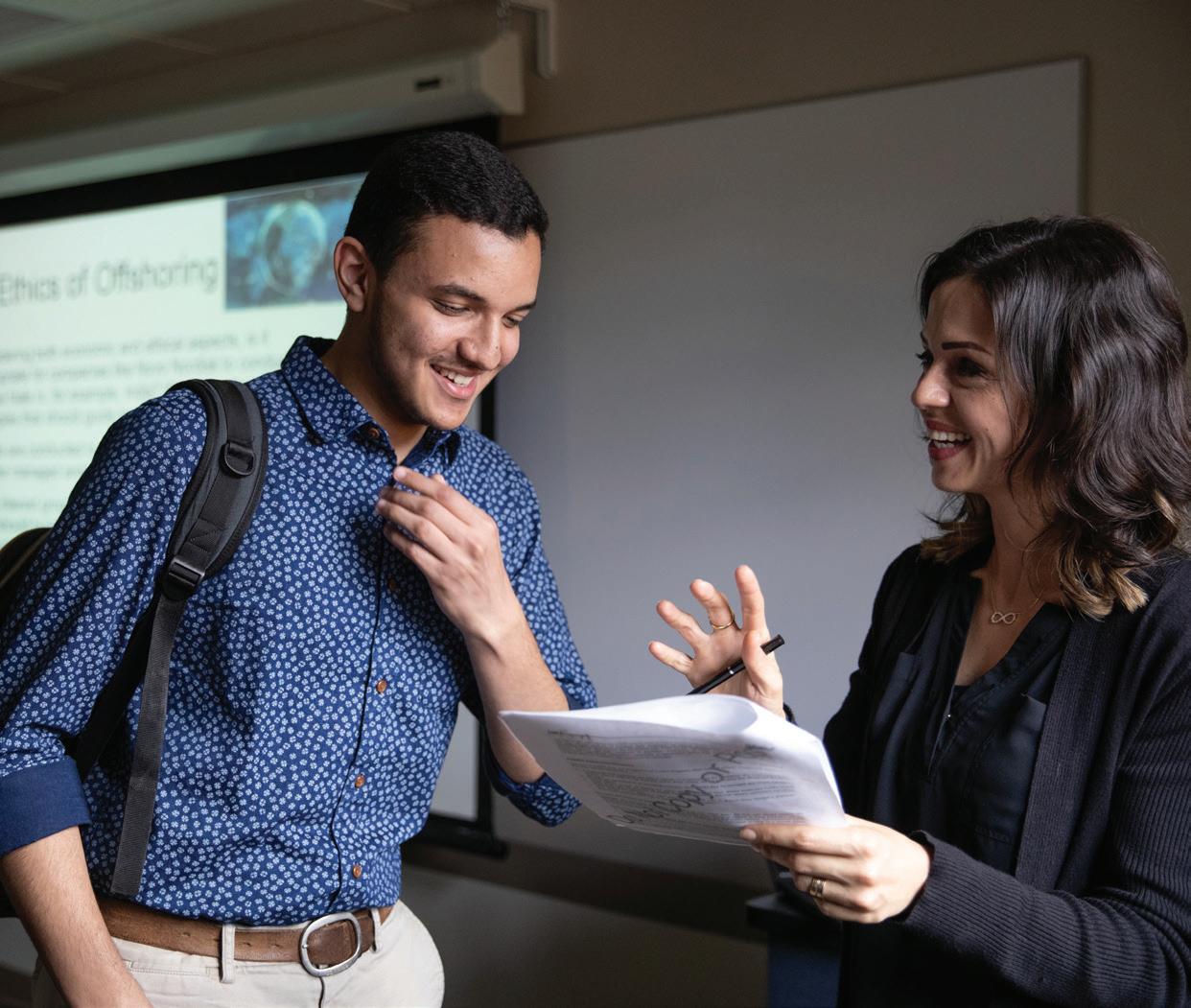
“ Through Rollins’ round-table discussions, I learned to articulate my own opinions and understand the perspectives of others—skills that guide my work now whether it’s giving a presentation, leading a project, or mentoring others.”
Nuh Elalaoui ’21
Data Analytics Associate, KPMG
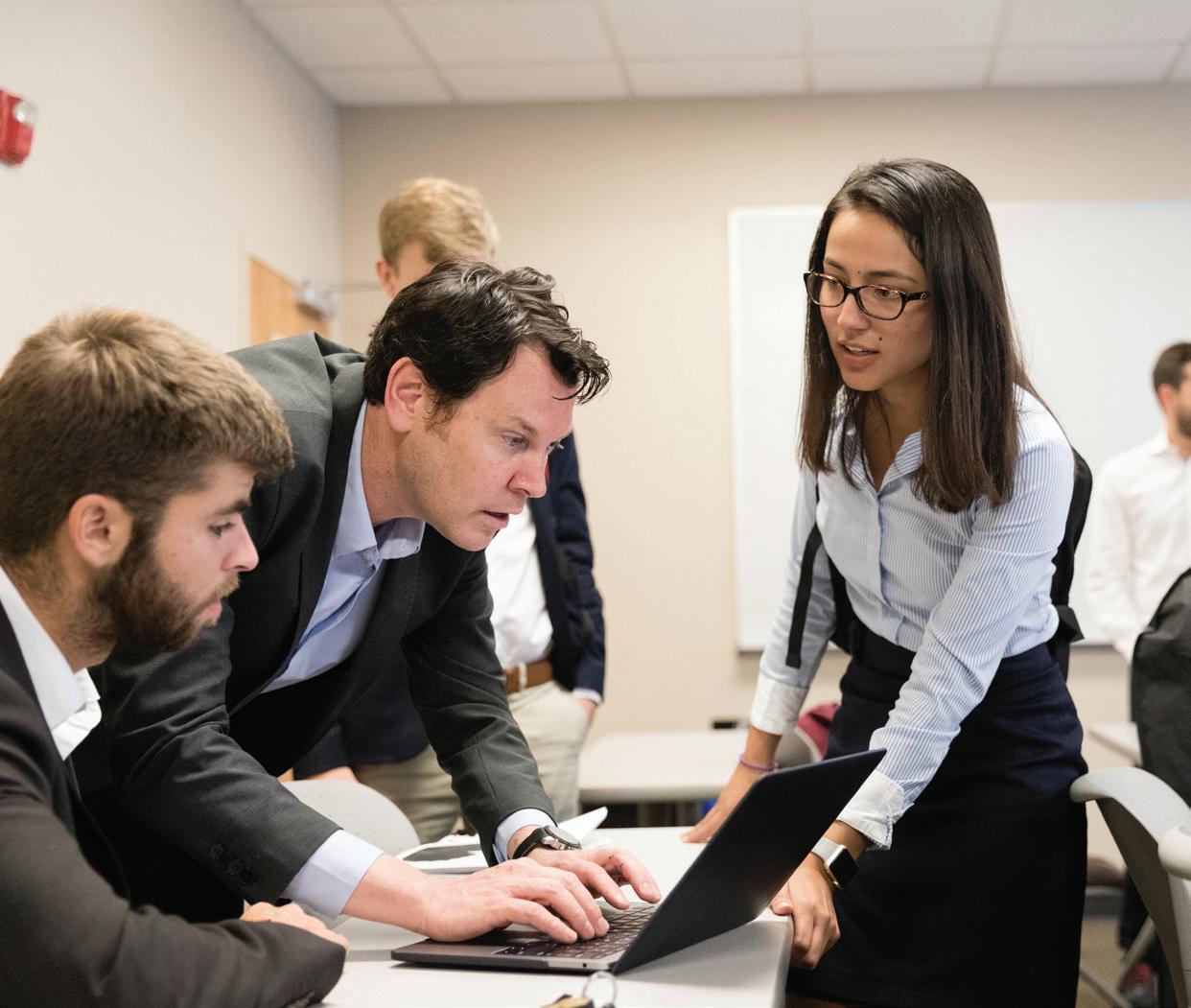
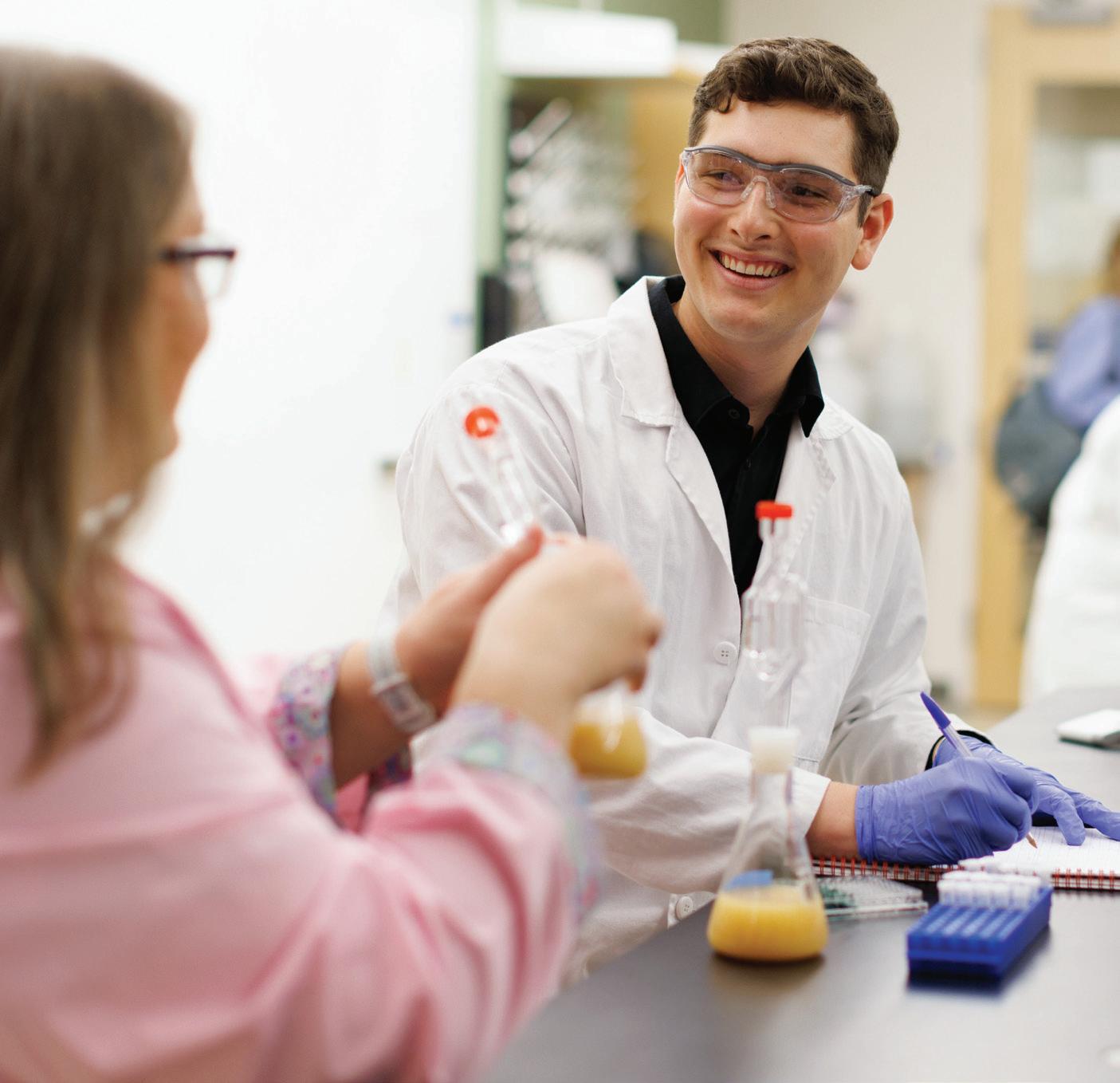
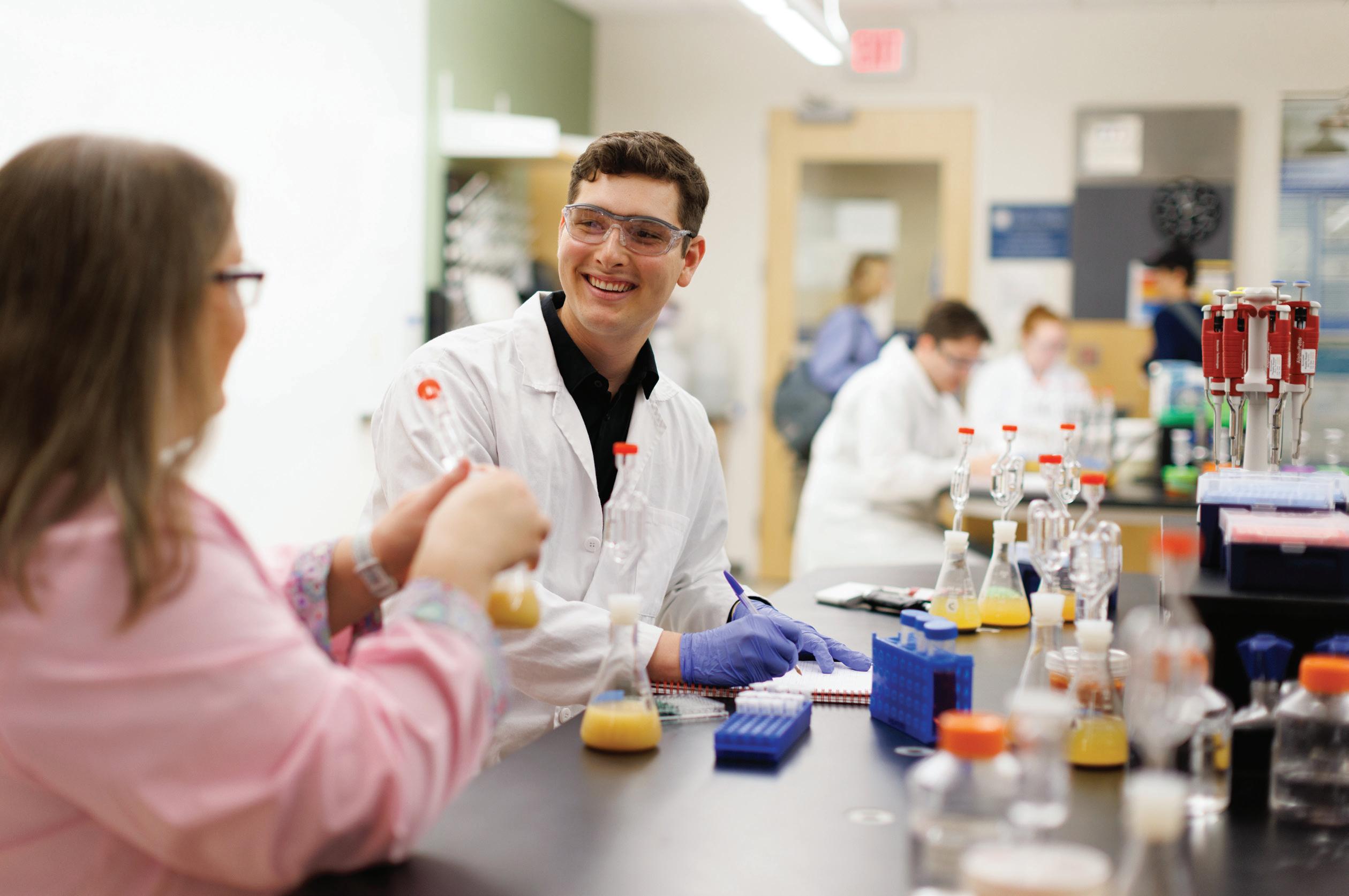
The future isn’t about having the right answer and memorizing a bunch of facts. It’s about asking really good questions, thinking critically, communicating your ideas well to others, building relationships, and solving problems—and that’s what an interdisciplinary liberal arts education at Rollins prepares you to do.”
Jay
Kirkley ’24
Analyst, CIL Strategy Consultants
Quiroz learned quickly that at Rollins, asking questions is de rigueur. She leaned in early. In an international marketing class, she was analyzing where to open a coffee franchise when the data led her somewhere unexpected: the United Kingdom. Everything she thought she knew pointed elsewhere—to the cafe culture of the Latin American countries she grew up visiting, not a nation known for tea.
So Quiroz spoke up. Can someone take a look at my analysis? This can’t be right.
“The cool thing about studying at Rollins is how many international students are in the room who can share their perspectives,” she says.
The data held. The U.K. is a major coffee market, a reality Quiroz would later experience firsthand when she moved to London. More important than the answer, however, was how she got there: by questioning assumptions, inviting challenge, and learning in conversation with others.
At Rollins, classrooms are built around dialogue, where ideas are tested, refined, and sometimes
overturned. Students learn to engage across differences, listen closely, and support their thinking with evidence.
“At Microsoft, I consistently have to communicate with people from all over the world, and because of Rollins, it’s not new to me,” says Quiroz. “I wouldn’t be at this stage in my career if I hadn’t learned how to ask for, receive, and apply feedback.”
According to a new report from the American Association of Colleges & Universities (AAC&U) that surveyed 1,030 hiring managers and executives nationwide, these interpersonal and adaptive skills are precisely the ones employers identify as the most essential today: clear and persuasive communication, collaboration, and critical thinking. They’re the skills Rollins has been teaching for decades and ones that travel across industries, often well beyond graduates’ original plans.
Take Jay Kirkley ’24. When he graduated, he intended to work in public health policy and went on to earn a master’s in health, medicine, and society
at the University of Cambridge. But he decided he should first better understand the commercial world. Today, he’s doing just that as an analyst at CIL Strategy Consultants.
“Though my work as an analyst is entirely separate from anything I’ve ever studied, the core critical-thinking, communication, and collaboration skills I learned at Rollins prepared me to be adaptable, to recall and synthesize information, and find multidisciplinary solutions,” he says.
At Rollins, critical skills are learned in the classroom—and tested and refined in the world beyond it. Kirkley was one of many students who took full advantage of every opportunity for both. Alongside conducting undergraduate research, studying abroad, and working as a campaign manager, he pursued competitive fellowships, landing placements at Harvard and Carnegie Mellon. He was also twice named a Gateway Fellow, a selective Rollins program that provides funding for summer internships, where he worked with Rep. Anna Eskamani and at Equality Florida, applying what he was learning in real time.
“When you’re in class, you’re engaging with ideas that can feel theoretical,” says Kirkley, who double majored in biochemistry/ molecular biology and public policy and political economy. “But through my fellowships, I learned professionalism, how to communicate effectively, and how to navigate complex scenarios. They helped me learn about the messiness of the real world and how to translate academic concepts into strategic problem-solving.”
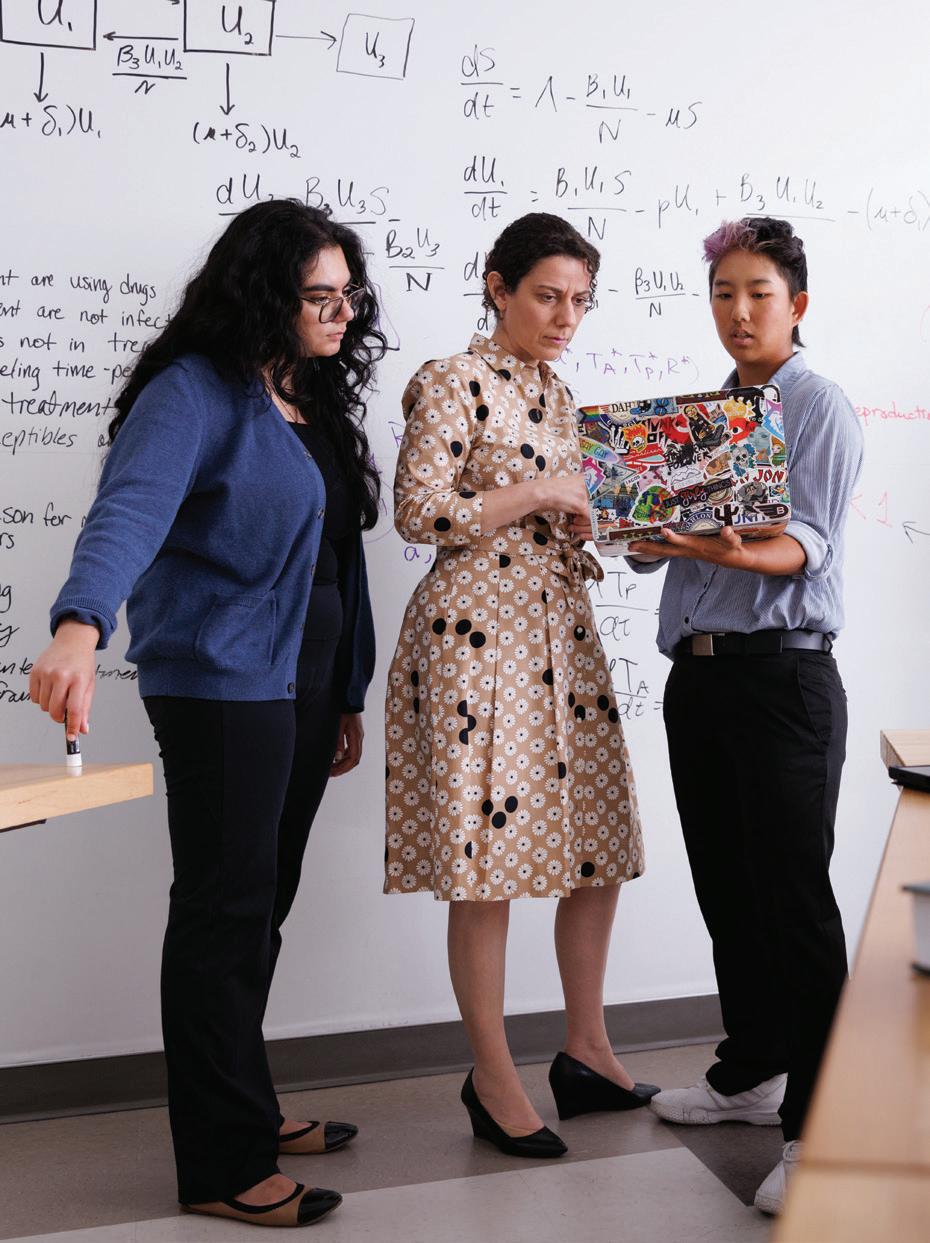
Rollins offers applied learning opportunities to all students, often weaving them directly into the curriculum. Many courses incorporate community engagement experiences, research opportunities, and field studies to give students the chance to apply what they’re learning in context. In The Environmental Crisis in Its Cultural Context, Mannino worked alongside migrant
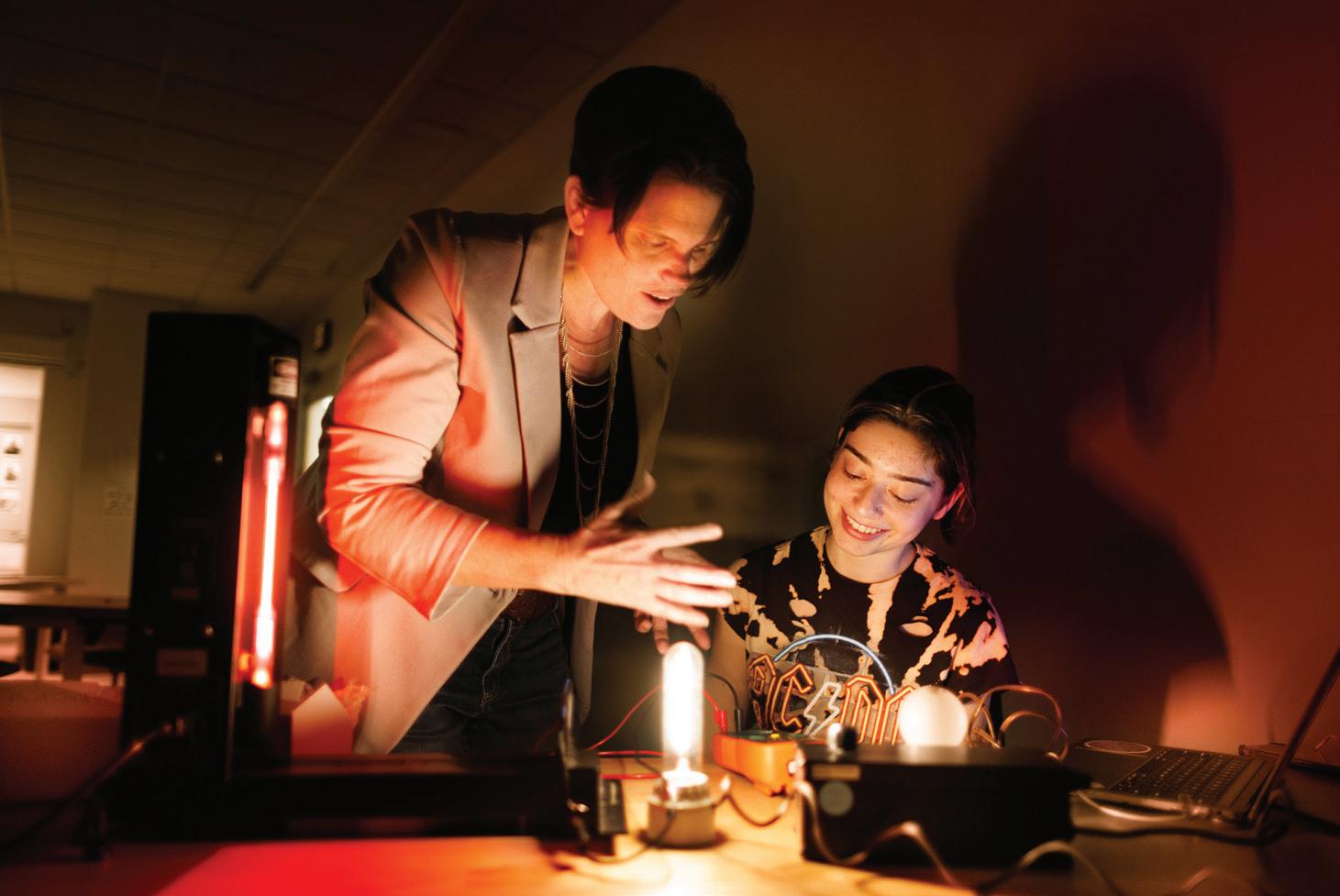
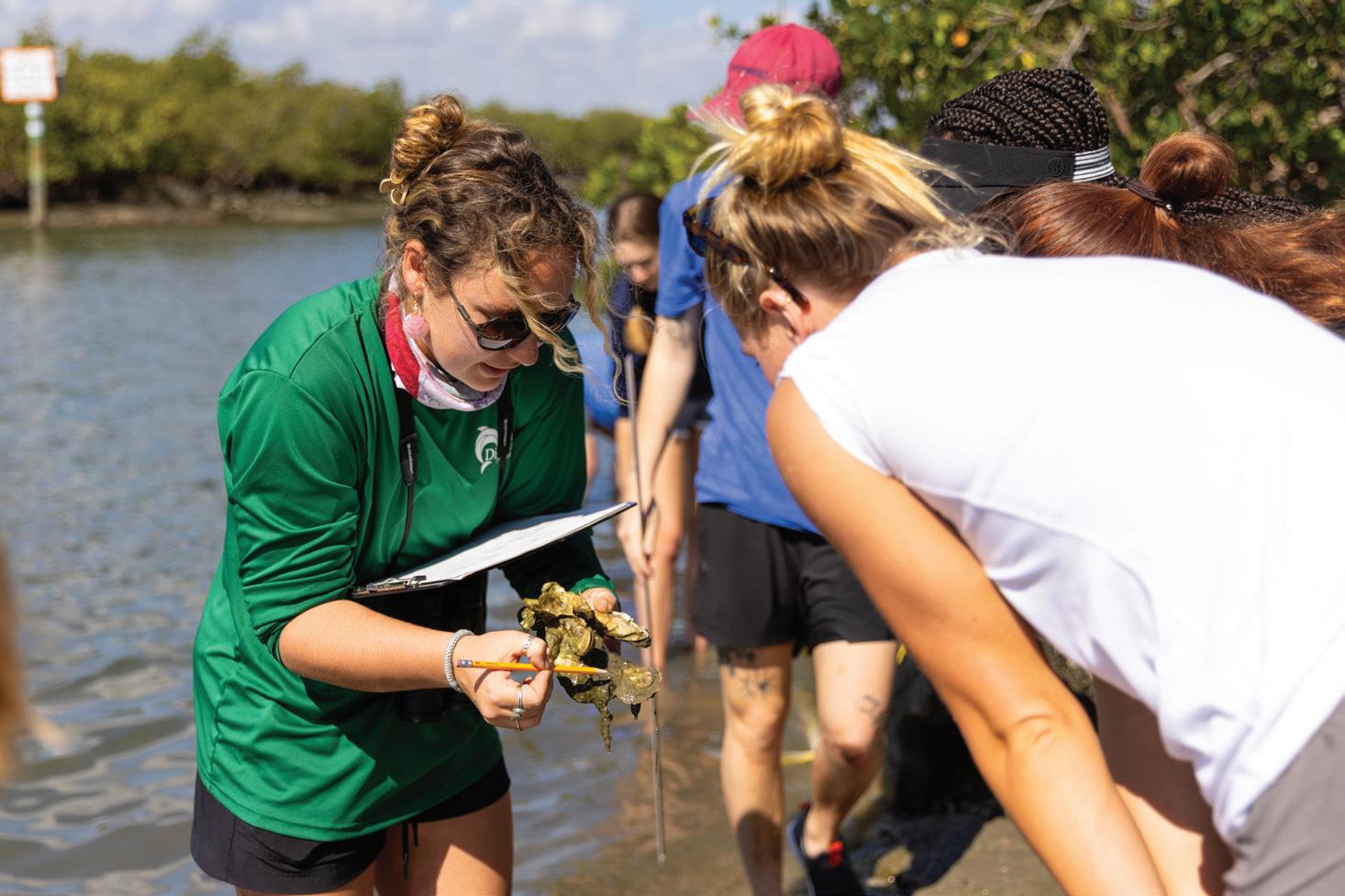
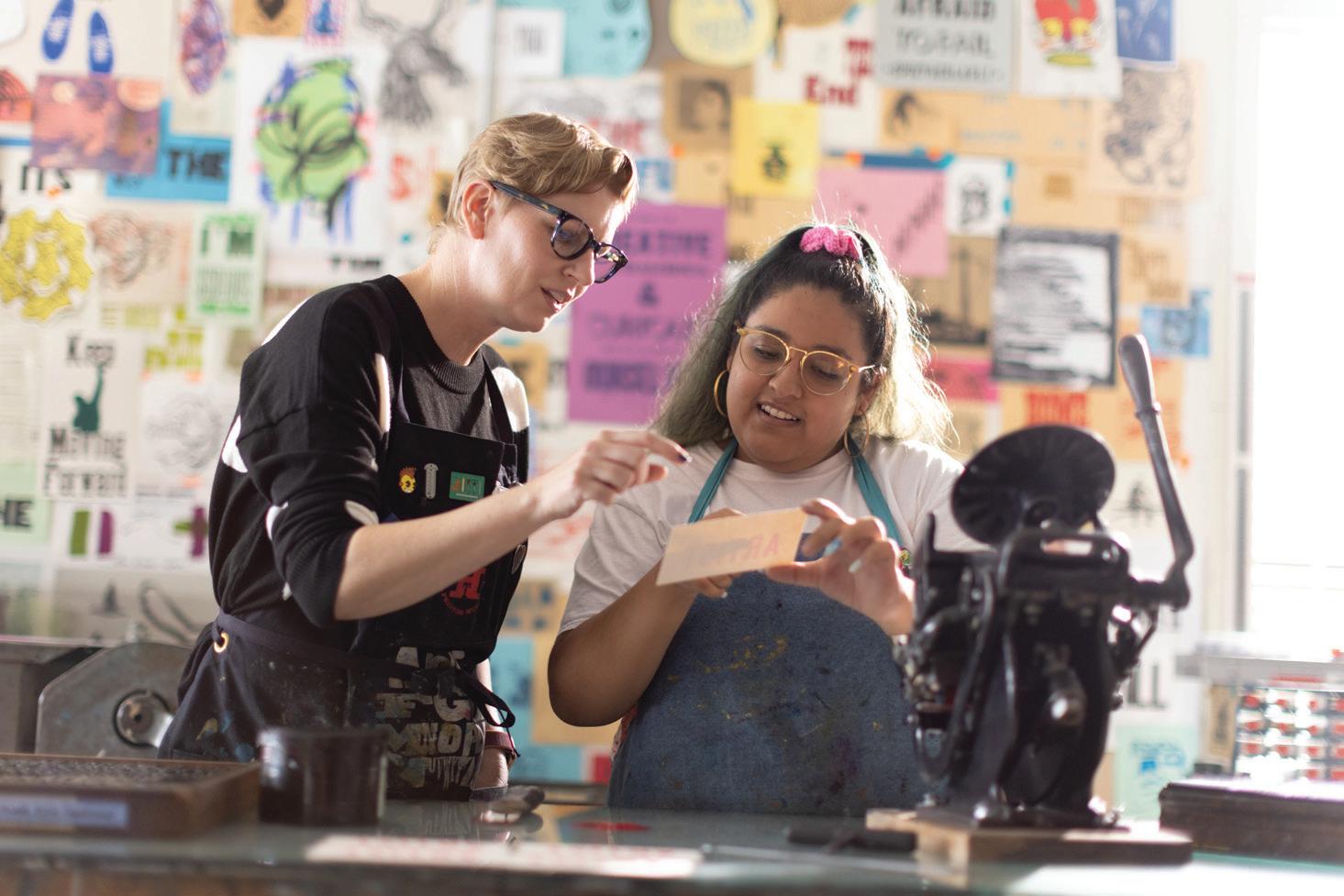
farmers in Apopka through the Farmworker Association of Florida. There, the lessons planted in the classroom blossomed into life.
“A lot of times it becomes difficult when you’re reading very abstract academic literature to visualize the people behind it, but meeting them firsthand and seeing the issues up close illuminated and humanized the farmers’ experience,” she says.
Applied learning deepens understanding and gives graduates a powerful differentiator. The AAC&U report found that 95 percent of employers say it’s important for graduates to demonstrate the ability to apply knowledge in real-world settings, and 75 percent prefer candidates who have participated in community-based projects and worked with people from diverse backgrounds.
At Rollins, students graduate having already done both and with the instinct to keep seeking more.
At Rollins, a lifelong love of learning is encouraged and modeled by professors who are continually learning themselves.
Across campus, faculty are rethinking what it means to teach in a world defined by constant change. At the Endeavor Center for Faculty Development, workshops, institutes, and collaborative sessions on artificial intelligence, inclusive teaching, and productive dialogue bring professors together to share strategies, test ideas, and treat their courses not as finished products but as evolving experiences.

“ I was really motivated by the environment at Rollins to participate because I knew I was having an active conversation with my professors. They weren’t just talking at me, which went a long way to motivate me to be an active participant in my learning.”
Abrielle Mannino ’25 PhD Candidate, Brown University

“Faculty are committed to teaching as a practice of learning, particularly when it comes to AI,” says Lucy Littler, interim director of the Endeavor Center and senior lecturer of English.
To evolve the classroom experience for today’s students, the Endeavor Center helps faculty integrate AI into their courses, build custom tools, and trial new approaches to teaching. It also convenes professors to share strategies for supporting neurodivergent learners and facilitating conversations around divisive topics.
“Supporting faculty is supporting students,” says Littler. “The goal is truly accessible, transformative learning experiences that are the heart of personalized learning.”
These efforts reflect a core belief: Education is expansive. Yes, it’s about mastering knowledge, but it’s also about developing the habits of mind to keep learning. That’s why Rollins professors emphasize questioning, adapting, and growth—qualities employers now value just as highly. According to AAC&U, more than 90 percent of employers rank initiative, resilience, self-awareness, and a
desire to learn alongside traditional skills like teamwork and communication.
At Rollins, students develop those habits in classrooms where faculty model them every day.
“Being a lifelong learner is about continually building your skills and adding to your toolkit,” says Quiroz. “Rollins trained my brain to do just that.”
For Mannino, the payoff is clear. In addition to math classes, she took Intro to Computer Science her senior year to explore AI and machine learning.
“It ended up being a really important class,” she says. “Coding and evaluating output provided by large language models are things researchers at Brown do regularly, so it really prepared me for the reality of the field.”
And in the end, that may be the most enduring outcome of a Rollins education: not just what students achieve while they’re here but who they become once they leave— engaged, curious, and eager to keep learning wherever life and career may lead.
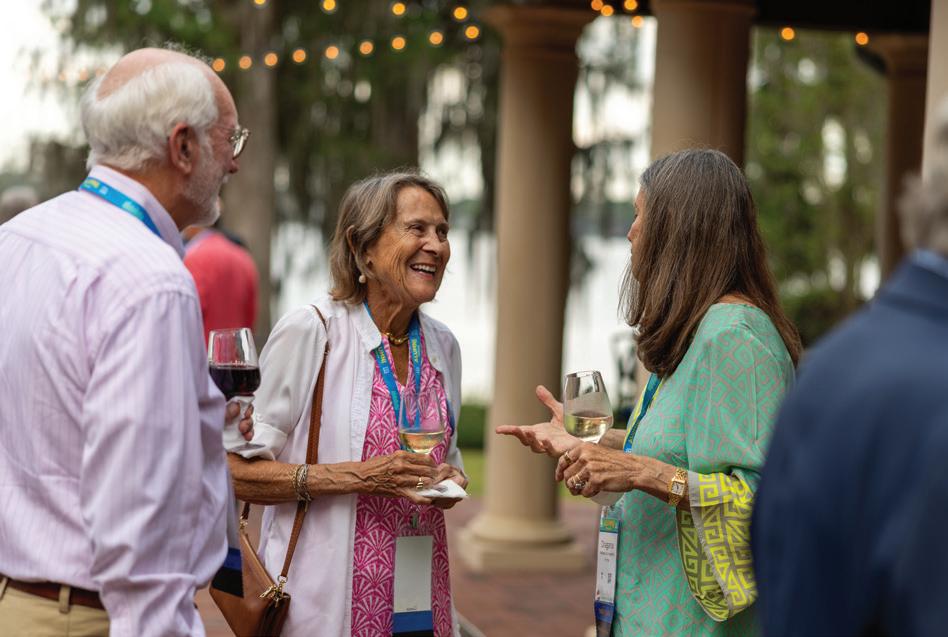
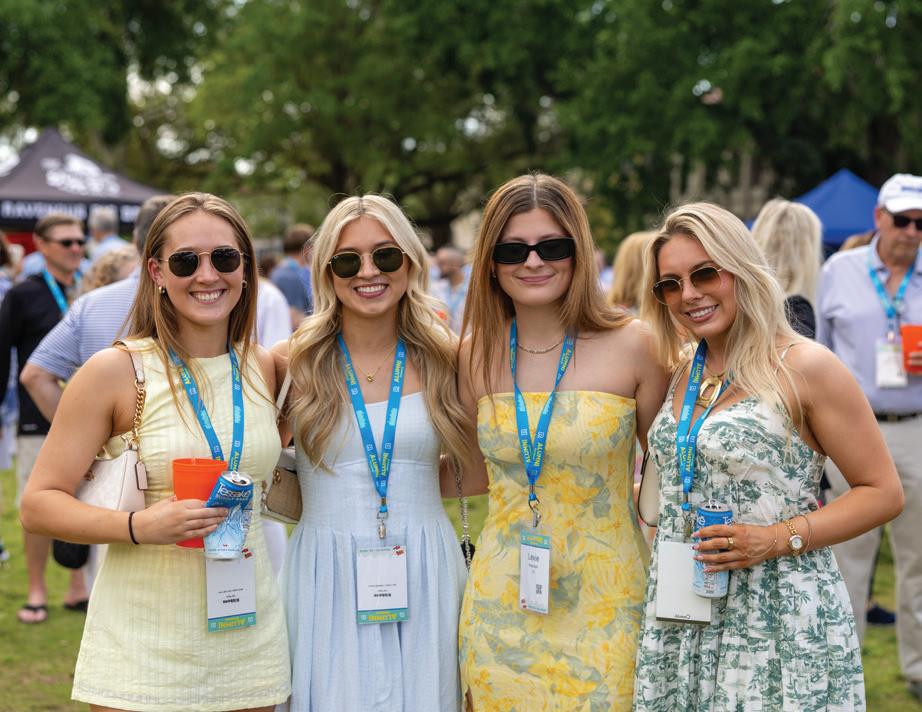
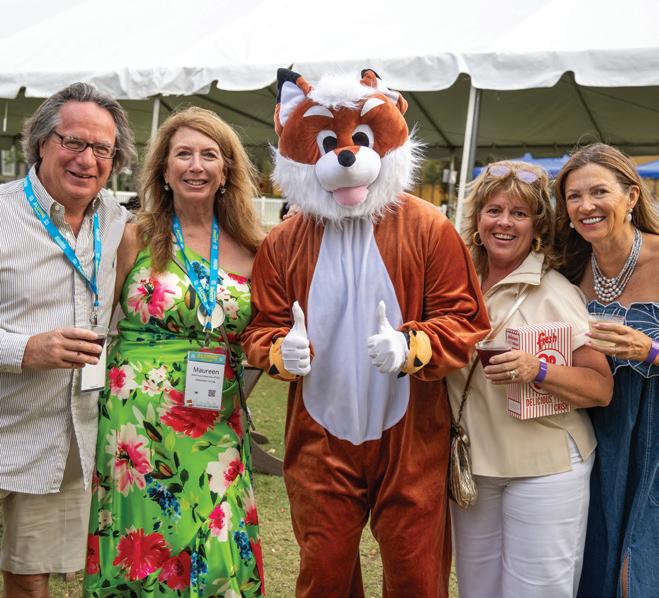
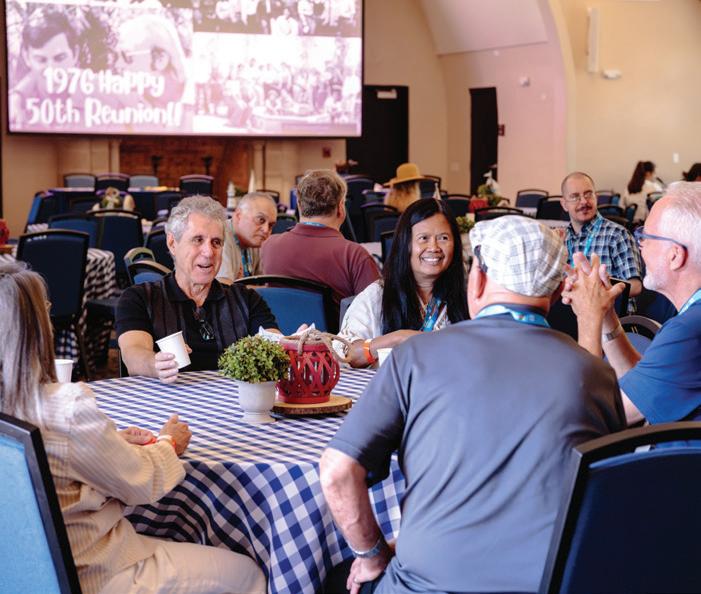
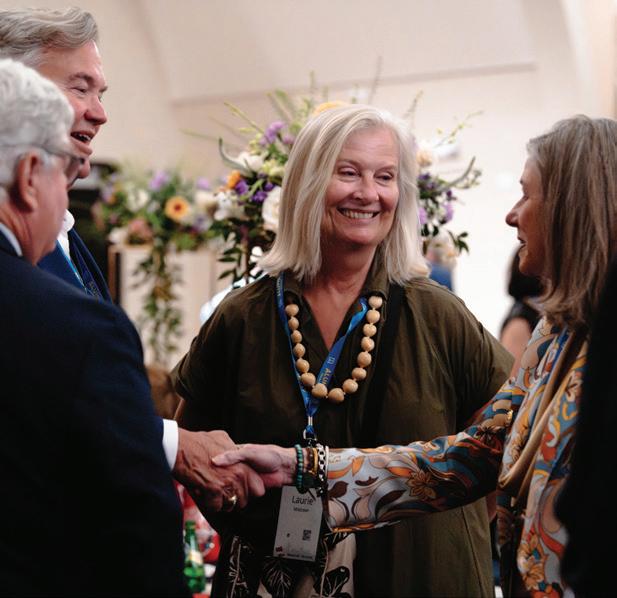
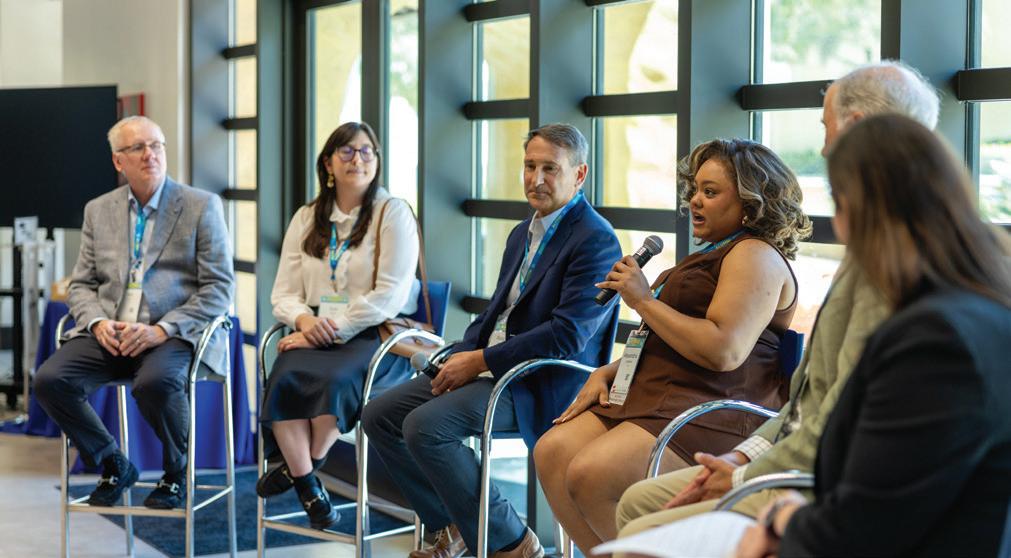
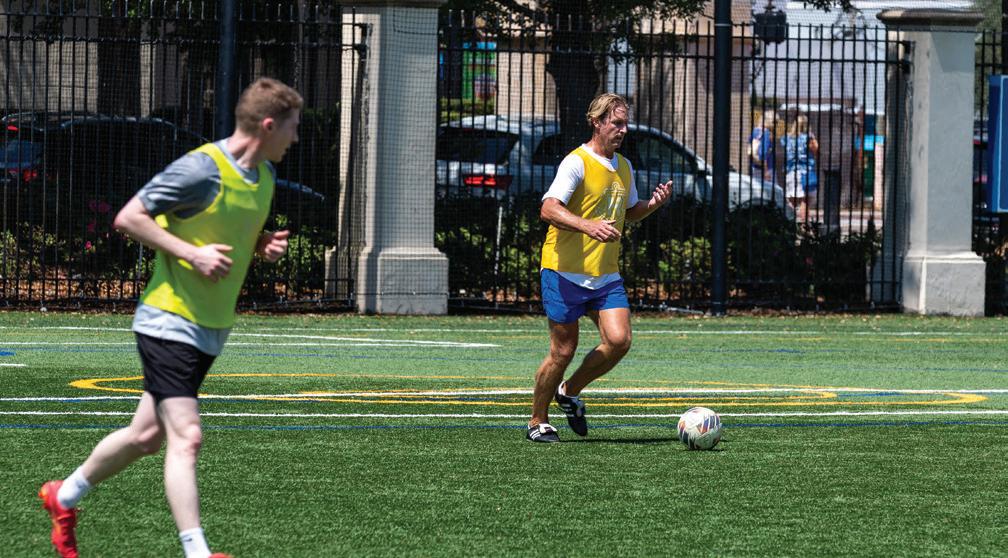
Alumni Weekend 2026 brought Tars from across the country back home to Rollins for a weekend filled with friendship, tradition, and lots of school spirit. From beloved traditions to fresh experiences, alumni reconnected with classmates, made new memories, and celebrated the momentum shaping Rollins’ next chapter. Take a look back at a few highlights from everyone’s favorite weekend of the year.
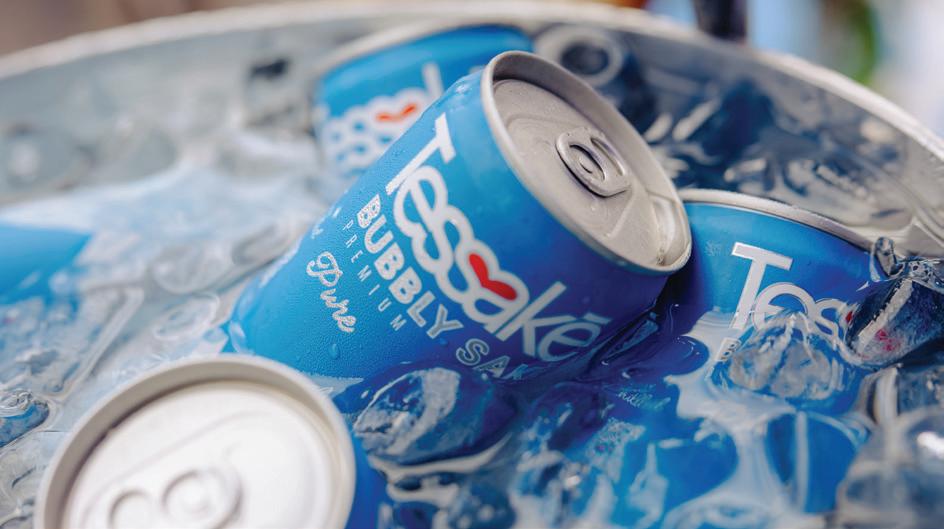
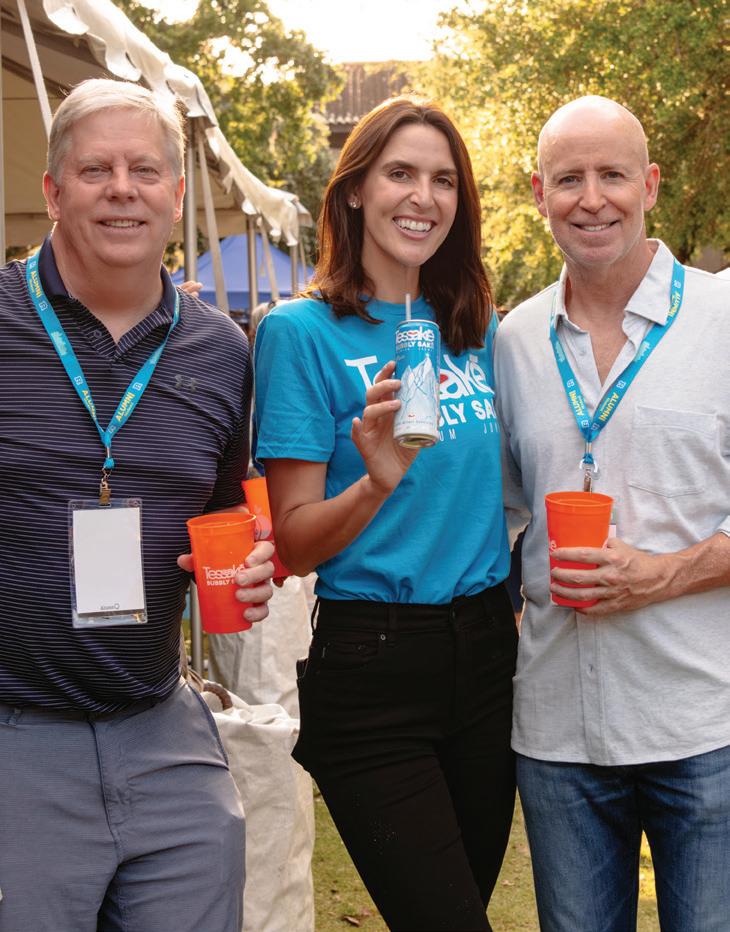
Owned by Tessa Hahn ’10, Tessakē served as this year’s sponsor for the much-anticipated Grove Party.
Grove Partiers 1,100

Alumni Weekend Events 20
Amount raised by 50th reunion class $2,352,487
Attendees
1,206
Farthest Distance Traveled
2,442 miles (from San Francisco, California)
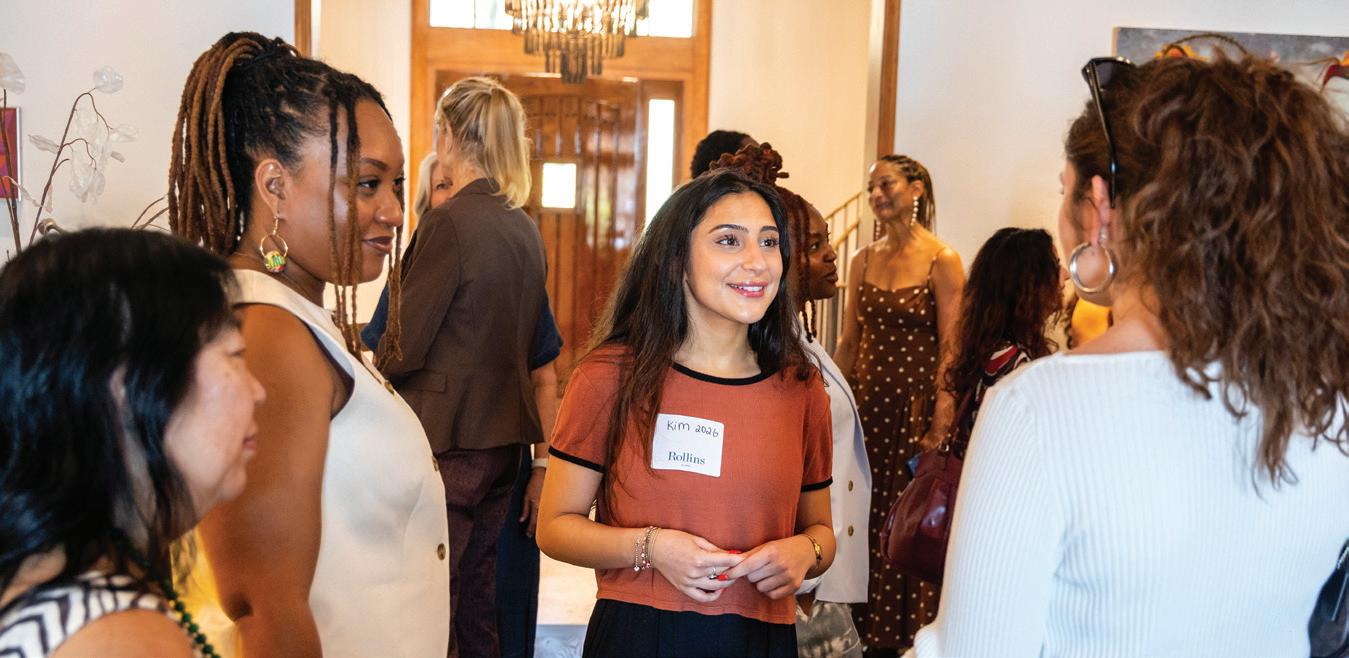
On Giving Day 2026, the Rollins community came together to make dreams come true.
By Audrey St. Clair ’03 ’26MBA | Photos by Scott Cook ’24MBA, Elliott Kiernicki, and Alex Stiner
On February 19, you helped turn our students’ dreams into action. Your support on Giving Day 2026 strengthens our ability to provide the South’s best liberal arts education—one that fosters purpose, connection, and community. More than 1,400 Tars came together to raise nearly $640,000—a new Giving Day record—opening doors across student media, athletics, theatre, the Rollins Museum of Art, and more. To celebrate, we’re sharing a few of the dreams you helped realize.
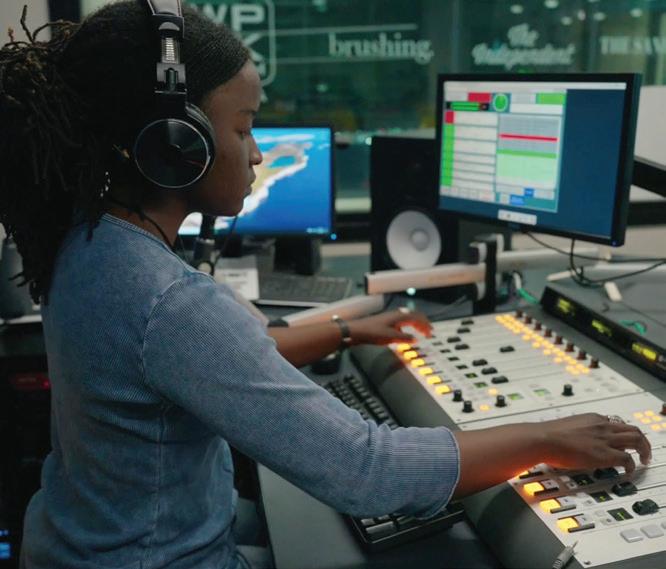
Thanks to you, students like WPRK station manager Jordyn Burnett ’26 sharpen their voices and amplify others through student media roles that prepare them for careers across mutiple storytelling channels.
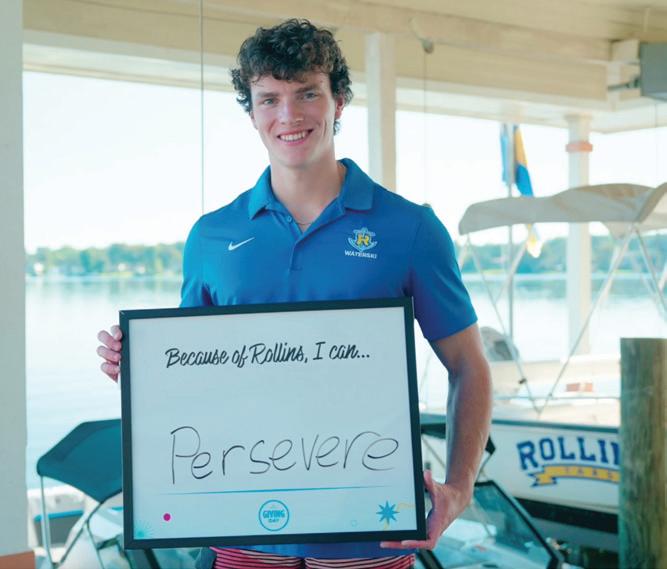
Thanks to you, student-athletes like water-skier Patrick Payne ’27 are learning to lead with purpose, building discipline, resilience, and the ability to inspire others both on the water and in the classroom.
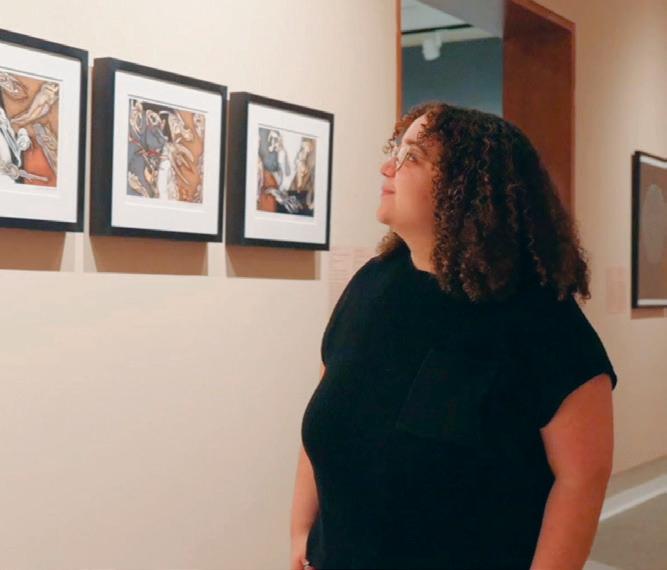
Thanks to you, art lovers like Avryl Colón-Pérez ’26 are gaining hands-on curatorial experience at the Rollins Museum of Art and finding their own unique path in the field of museum work.
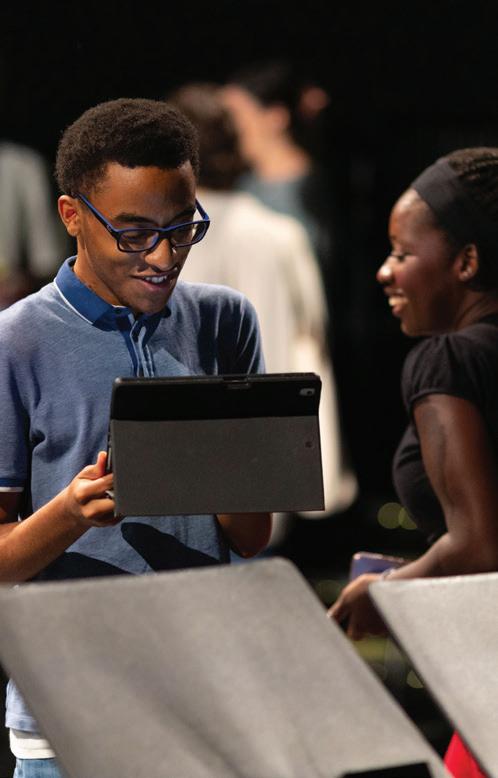
Thanks to you, theatre students like Conner Chaumley ’26 have the opportunity to partner with peers and faculty to write original plays, turning archival research into live performance.
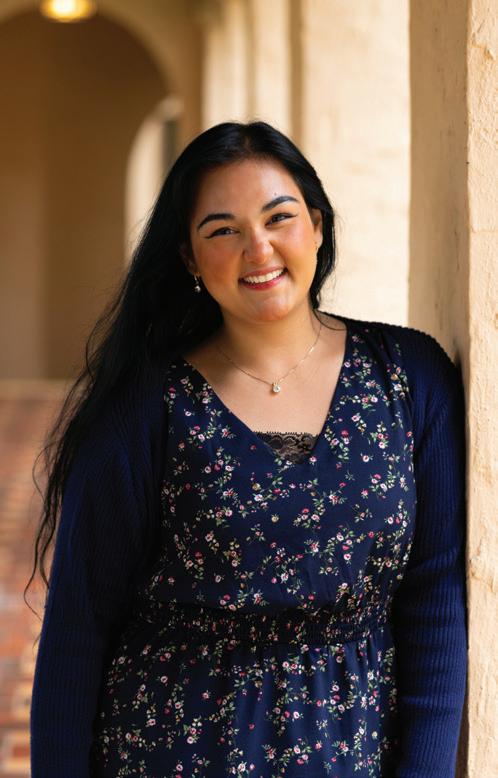
Thanks to you, firstgeneration students like Nazliyan Duman ’26 find a world of opportunity at Rollins, where support for financial aid helps open doors to experiences that build confidence, leadership, and lasting connections.
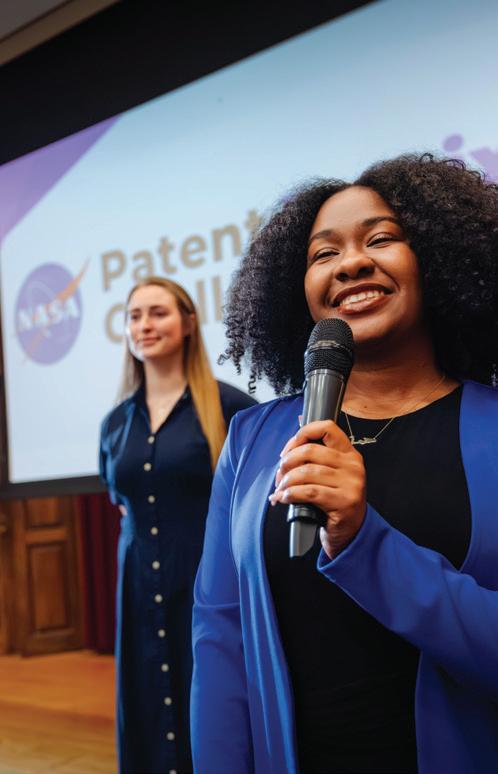
Thanks to you, Accelerated Management Program students like Xandria Bramble ’25 ’26MBA get the chance to compete in prestigious programs like NASA’s Patent Remix Challenge, transforming bold ideas into tangible solutions.
1,433
Number of donors
$639,125
Amount raised (highest on record for Giving Day and a 41% increase from 2025)
$380,000
Amount unlocked by matching challenge gifts
408
Number of first-time donors
118
Number of student donors
Missed Giving Day? You don’t have to wait another year to show your support. Help turn Rollins students’ dreams into reality by making a gift to the Rollins Annual Fund today.
By Rob Humphreys ’16MBA | Photo by Scott Cook ’24MBA
Rollins’
friendly learning environment inspired Ann Berlam ’69 to a career in public service. Now, her estate will create an endowed scholarship fund that will help future Tars follow in her footsteps.

Six decades after graduating from Rollins, Ann Elmore Berlam ’69 fondly recalls the warm welcome of Hugh McKean, Rollins’ 10th president, when she showed up, sight unseen, for her first year on campus.
“He didn’t have children, so he’d always tell the students, ‘You are my family,’” says Berlam, a Charlotte native and the first in her family to attend college. “It was a real family atmosphere at Rollins, and it felt very comfortable even though I went there not knowing anybody. Rollins provided me with an excellent education that resulted in a deeply fulfilling career.”
Berlam, a psychology major and recipient of the Algernon Sydney Sullivan Award, credits Rollins for giving her the confidence to believe in herself, try new things, and succeed. She joined the chapel staff, Panhellenic Association, and Phi Mu sorority. She took sailing lessons, learned to play golf and three-wall handball, spent weekends at the famed Rollins house in New Smyrna Beach, and student-taught at Winter Park High School.
While earning her master’s in educational administration at Duke, Berlam worked for a nonprofit that established North Carolina’s first public kindergarten program. For 26 years, she represented the North Carolina Department of Public Instruction, initially with the U.S. Congress in Washington, D.C., and then in Raleigh with the General Assembly, pushing for the best legislation and highest appropriations for public schools.
After retiring in 2000, she formed Berlam Associates, an educational consulting firm advocating for North Carolina’s five largest school systems in the state legislature. The North Carolina Center for Public Policy Research named her among the 50 most successful people in her field, and she earned induction into the Order of the Long Leaf Pine, the state’s highest honor society.
“I had a great career and credit my success with the foundation Rollins gave me,” she says.
Today, Berlam is focused on helping others—her own extended academic family of sorts—access the same learning opportunities that Rollins championed for her all those years ago.
With guidance from Rollins’ Office of Planned Giving, Berlam added a provision to her will establishing an endowed fund to support scholarships, first for students from North Carolina with financial need, followed by education majors and first-generation college students.
“Public education is something to be proud of,” says Berlam, “and I thought if I could establish a scholarship to help people pursue that career, it would be worthwhile. I hope it will give students the same opportunities Rollins gave me to be the best people they can be and pursue their passions.”
Berlam’s commitment to lifelong learning runs deep, rooted in honoring the memory of those closest to her.
Berlam’s mother, Madeline Elmore, was an administrator for an assistant superintendent of the Charlotte-Mecklenburg School System. In her 50s, Elmore started taking classes toward her associate’s degree, a decision Berlam always admired. When her mother died 10 years ago, Berlam created a scholarship for girls in Naples, Florida, who wanted to teach and were the first in their family to attend college.
More recently, Berlam established an Alzheimer’s support network at her retirement community in Greenville, South Carolina, in honor of her late husband, Bob. “Club Berlam” offers a warm environment for residents struggling with memory issues, providing music, exercise, arts and crafts, games, and shared meals.
“The traditions of service and education I learned at Rollins are what will move this country forward the best we can,” she says, adding that students should consider a career in public service. “You’re not going to make millions of dollars, but you’re going to provide a service to others, and you’ll know you’re making a difference.”
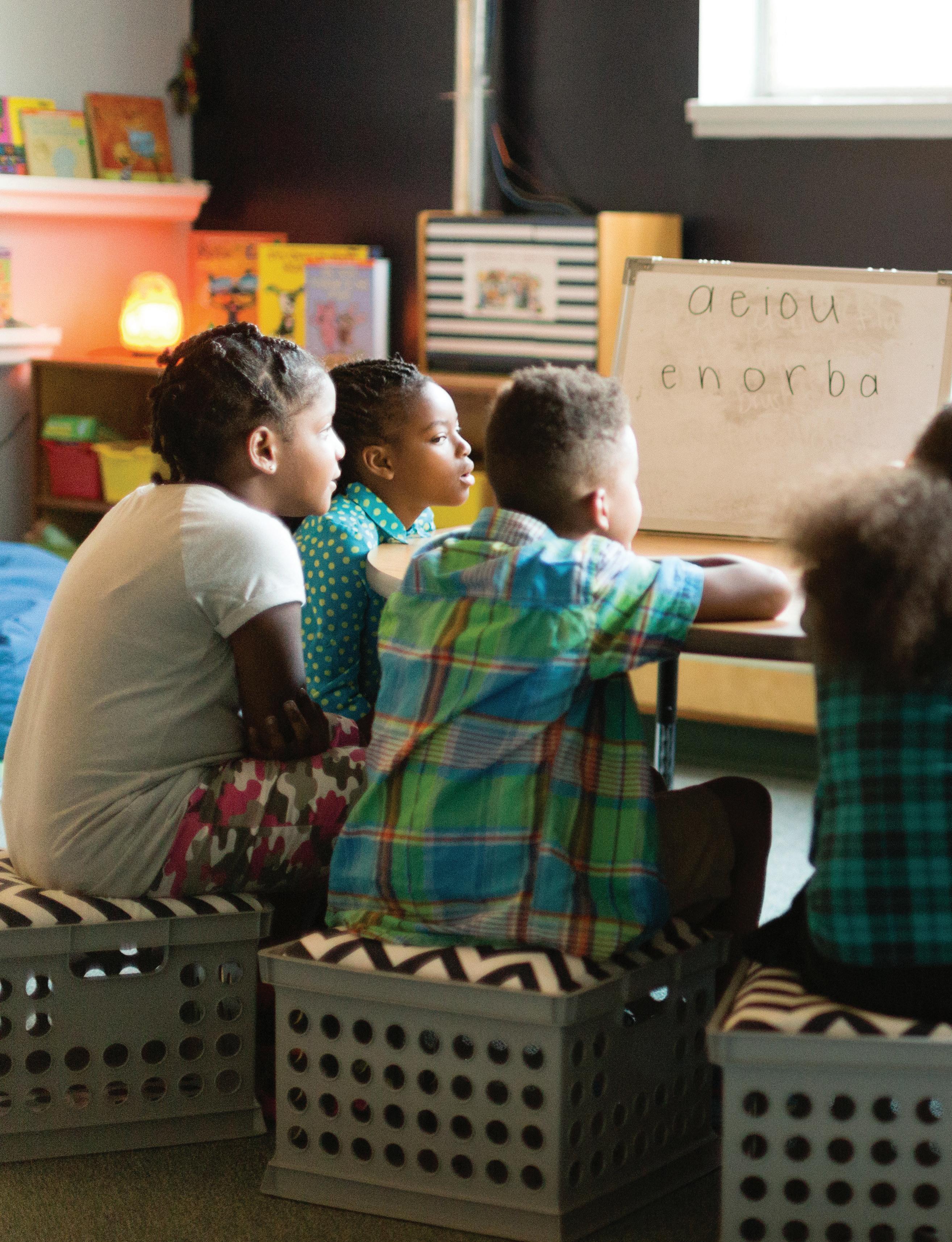


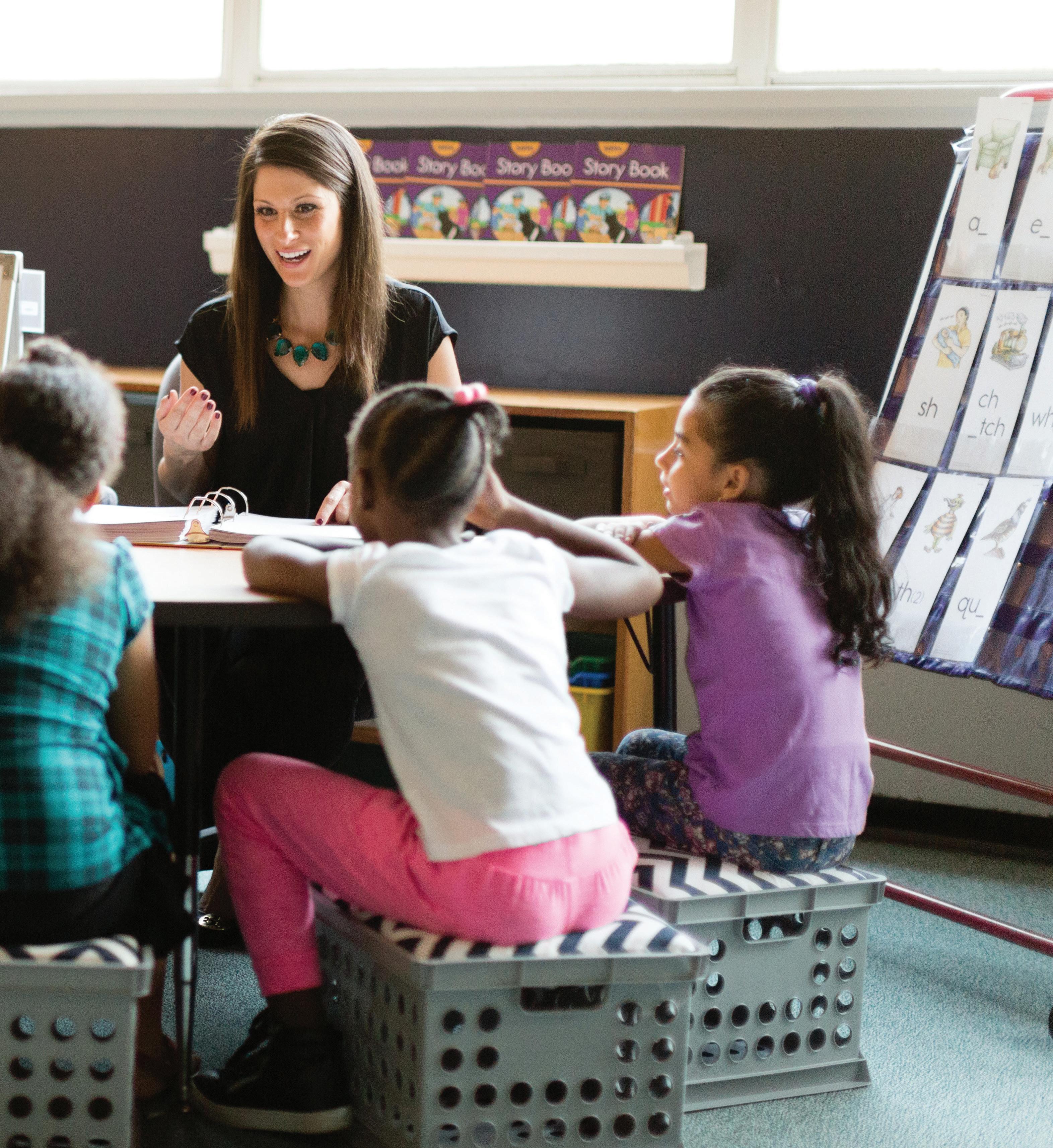
Rollins education majors learn by doing, bringing lessons to life in real classrooms and discovering the impact they can make.
1. Bequest
This monetary gift passes through a will or trust. It can be designated for scholarship aid, the music department, athletics, or however you choose. You can also use it to create an endowed fund that provides lasting support.
2. Beneficiary
You can add Rollins as a beneficiary to receive a percentage or specific dollar value from your life insurance or retirement funds.
3. Life Insurance
You set up a separate life insurance policy, with Rollins as the owner, and make premium payments each year.
4. Retirement Accounts
When you leave an IRA or 401(k) as a “charitable gift,” the money isn’t taxed. You can replace this asset with life insurance as a family inheritance.
5. Charitable Gift Annuity
In exchange for a gift of $10,000 or more, Rollins makes annual payments back to you for the rest of your life.
To learn more, contact Beth Fontes, executive director of major and planned gifts, at 407-646-2508 or efontes@rollins.edu.
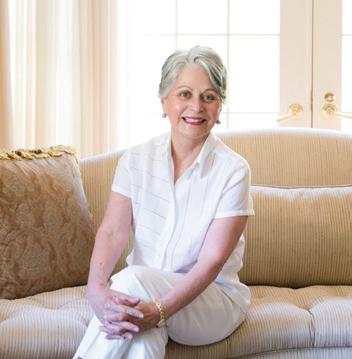
Sandra Jordan ’68 wrote and published Loving Alpaca, a memoir tracing her early experiences in Peru and the global journey that shaped her work in Peruvian craftsmanship and textiles.
Mark Peres ’85 published two books this year: The Accord, a novel exploring the future of human-AI relations, and The Man Who Lived a Hundred Lives, a memoir about his father’s improbable life of reinvention.
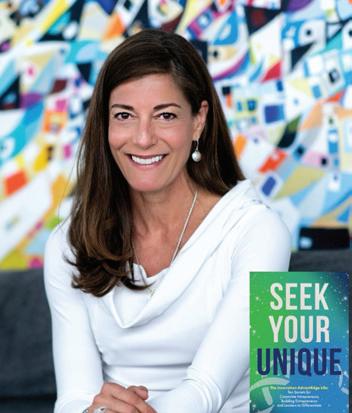
Kellee Johnson ’90’s first book, Seek Your Unique: Ten Secrets for Corporate Intrapraneurs, Budding Entrepreneurs, and Leaders to Differentiate, has been purchased on four continents and reached Amazon bestseller status in outsourcing.
Former member of the Florida House of Representatives, Robert “Bobby” Olszewski ’01MA, released his book, Grand Slam Leadership, which applies lessons from baseball to leadership and long-term success. The book reached No. 1 in multiple Amazon categories and features endorsements from Hall of Famer Barry Larkin and MLB All-Stars Johnny Damon and A.J. Pierzynski.
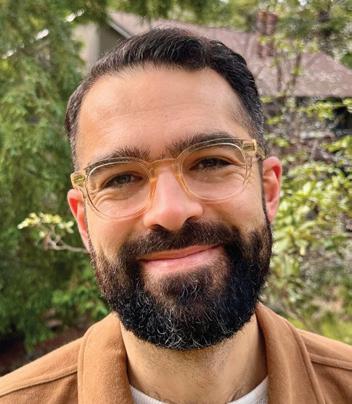
At the 2025 Aesthetica Short Film Festival in York, England, this past November, Camilo Garzón ’15 premiered his original audio drama To SETL, a story that follows the relationship between two scientists amid an unexplained cosmic phenomenon.
Allan E. Keen ’70 ’71MBA ’10H was named the 2026 James B. Greene Award recipient by the Orlando Economic Partnership, recognizing his lifelong commitment to advancing the Orlando region’s economic prosperity.
Will Graves ’77 ’78MBA was featured by Marquis Who’s Who on its 2025 list of distinguished leaders.
Sarah Sprinkel ’80MAT received the Evaline Lamson Meritorious Service Award in recognition of her leadership in education and public service.
Ann Marie Varga ’82 ’12MHR received PRSA Orlando’s Geri Evans Lifetime Achievement Award, recognizing her four decades of professional service and mentorship across the industry.
Jen Atwell ’11 ’20MBA was honored with PRSA Orlando’s PR/Communications Advocate Award for her two decades of creative and strategic impact on communications at Rollins.
Doragnes Bradshaw ’18 ’20MBA ’24DBA received PRSA Orlando’s President’s Award for Distinguished Service, recognizing her leadership in organizational strategy and communication as well as her commitment to service and integrity.
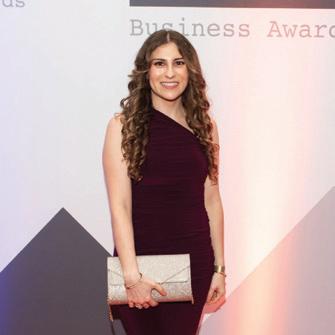
Claudia DeFabio ’19 has been named the United Kingdom’s Young Business Person of the Year by the SME National Business Awards. Her company, Meeko Teams, supports businesses by recruiting and managing talent through its Kyivbased operations.
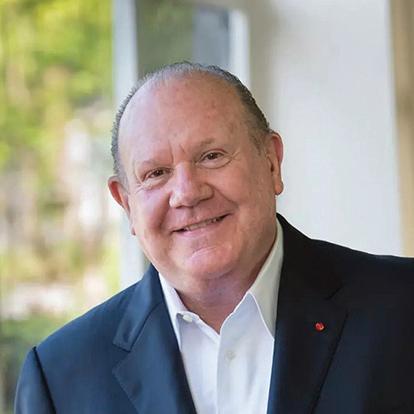
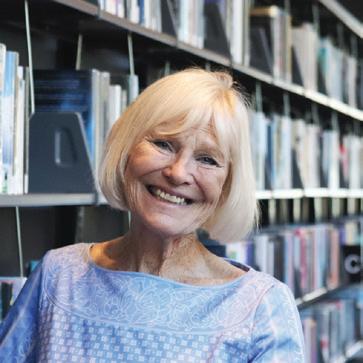
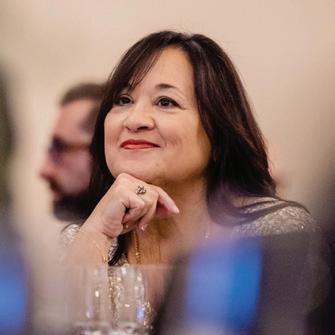
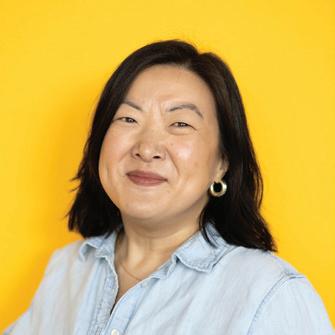
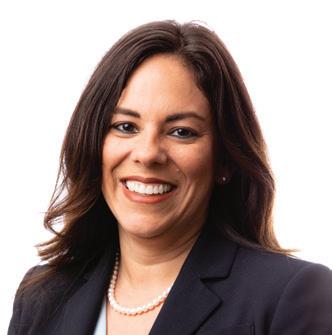
Carmen Gomez ’71 celebrated her 54th wedding anniversary with her husband, Juan. The couple is happily retired.
Bev Buckley ’75, former Rollins women’s tennis coach, was inducted into the Sunshine State Conference Hall of Fame. Buckley led the Tars for more than 35 years and retired with the seventh-most wins in Division II history.
Bob Sullivan ’76 attended the premiere of A Great Awakening for which he supplied custom paper props through his business, Sullivan Press. Over the past 35 years, the company has created specialty props for film, television, and Broadway productions, including the HBO series The Gilded Age
Thanks to the work and generosity of Michael Stewart ’82 , Corey O’Gorman ’83, and Nancy Loving, a new digital collection featuring William “Bill” Loving Jr.’s photographic works is now available through Olin Archives. Loving’s photography captures life at Rollins during the 1970s and ’80s through campus scenes, portraits, social gatherings, theatrical productions, athletic competitions, and more.
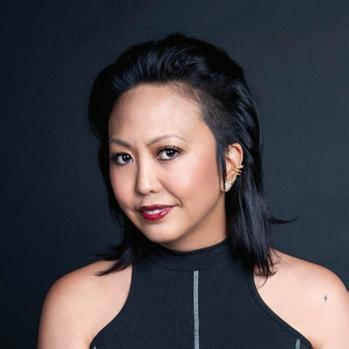
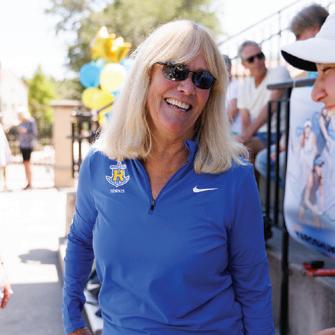
Leah Nash ’00 marks her two-year anniversary as executive director of Timucua Arts Foundation.
Allison Vogt ’00 celebrates a full-circle moment as her daughter, Addison ’29, is now attending Rollins and plays for the women’s golf team under Coach Julie Garner—the same team and coach Allison played for as a student.
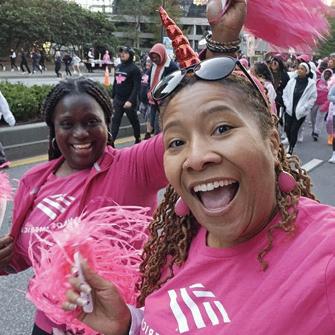
Kristina Holmes ’05 took part in the Susan G. Komen Atlanta More Than Pink Walk at Lenox Square, joining more than 175 Bank of America teammates to raise awareness and funds for breast cancer research, treatment access, and policy change.
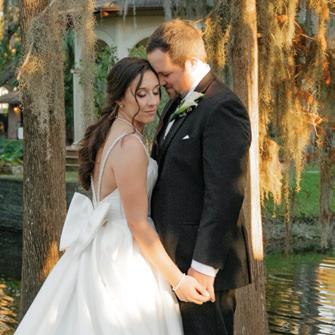
Andrew Wheeler ’18 ’20MBA married Rachel Valocchi ’20MBA in Port Orange, Florida, on December 31. The couple met on their first day at the Crummer Graduate School of Business and celebrated their wedding alongside fellow alumni Cara Borowski ’20MBA, Beatriz Bulgarelli ’20MBA, Matt Caldwell ’20MBA, Clara Mount ’20MBA, and Roderick Zak ’19 ’20MBA
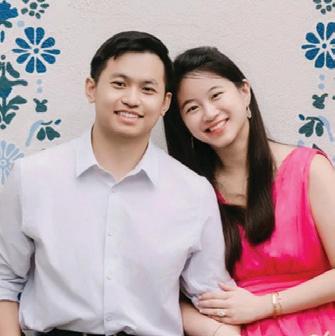
Cristalle Choi ’22 announced her engagement to Alex Quach. The couple is planning a ceremony in Texas in fall 2026.
With Tessakē, Tessa Hahn ’10 introduces a premium, clean take on the sake category—one that’s already gaining traction. During Alumni Weekend, she returned to Rollins as sponsor of the Grove Party. Grounded in a global perspective shaped at Rollins, Hahn is blending culture and entrepreneurship as she expands her brand’s reach. Community is everything to me. I’m incredibly grateful for my Rollins experience, and sponsoring the Grove Party was a meaningful way to give back to something that’s very dear to my heart.
— Tessa Hahn ’10
Stacy Pierson ’92 was promoted to associate professor of pediatrics at Baylor College of Medicine.
Henry Schumann ’94MBA joined Blueberry Pediatrics as chief financial officer.
Michele Bowden ’98 is now teaching art classes through the Ohana Preservation Foundation in Aldie, Virginia, and leading creative sessions for children in Embark Residential Housing.
Jennie McDonald-Brown ’04 has been appointed vice president of advancement at Urban College of Boston, where she will lead strategic initiatives, strengthen alumni engagement, and guide the college’s newly launched Foundation initiative.
Francisco Lutz ’08 has advanced from vice president of sales to chief operating officer at Truly Nolen International, overseeing executive leadership and a workforce of more than 6,000 employees.
Michaela Cooper Bagwell ’11 has launched her own digital marketing consulting firm, MBCResults, following more than a decade of experience in the field.
Sarah Spurling ’12 earned her licensed clinical social worker credential and is now practicing psychotherapy in Springfield, Illinois.
Candy Cole ’13MBA has been named Central Florida hub director for FloridaMakes and executive director of the Manufacturers Association of Central Florida.
Naomie Droll ’16 is serving as interim executive director of the Scholars Equity Network, helping advance professional development and civic engagement for Gates Millenium Scholars alumni.
Chance Sweat ’16 purchased and successfully grew a business during the COVID-19 pandemic and exited in 2025.
Since then, he has launched his own small business coaching and consulting practice.
Rayshaun Wagner ’17 was accepted into the Executive MBA program at NYU’s Stern School of Business.
Laura Alvarado ’18 began a new role as vice president on the Global Investment Research Management team at Goldman Sachs.
Gerardo Abril ’19 ’20MBA was promoted to head of revenue management for LEGOLAND Parks North America.
Addison Cursey ’19 ’21MBA, vice president of Human in the Room, is co-creator of the B Student Podcast, which was recently ranked in the top 10 percent of Apple Podcasts worldwide.
Sunny Toreihi ’20 recently passed the Florida Bar exam and began working as an assistant county attorney in Broward County.
Kacie Escobar ’21MBA was promoted to president of Curley & Pynn, an Orlandobased public relations firm.
Jackie Stanchina ’22MBA recently launched Morse & Main, a Winter Park-based creative agency specializing in brand strategy and campaign development.
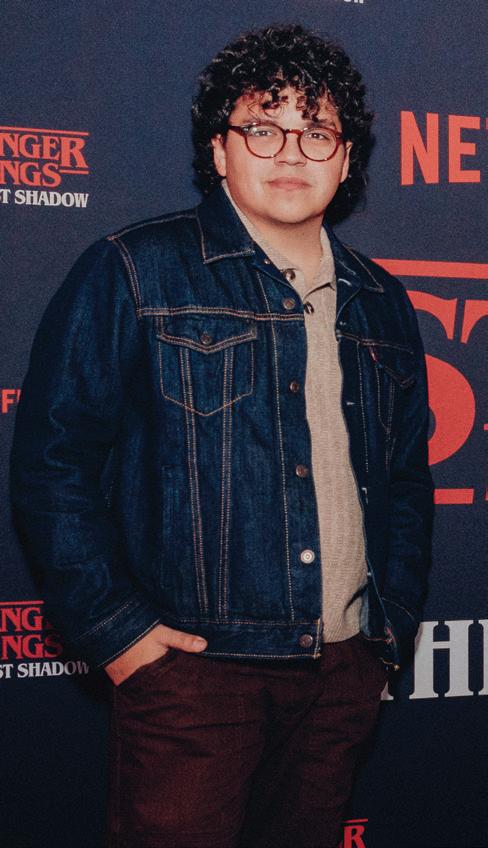
Juan Carlos ’23, who plays Bob Newby in the Broadway production of Stranger Things: The First Shadow, recently returned to campus to share what he’s learned on his journey from Rollins to theatre’s biggest stage. After gaining TV and film experience, including on Grey’s Anatomy, he earned the role through a competitive audition process. His time at Rollins—spent balancing multiple jobs with performance opportunities—instilled the discipline that continues to guide his work. Make problems your opportunity. If something feels like a setback, there’s always a way to turn it into something that moves you forward.
— Juan Carlos ’23
Sara Jane Renfroe ’18 has leveraged her passion for anthropology and gender equity to drive impact on a global scale. Guided by faculty mentorship at Rollins, she pursued immersive, realworld experiences that shaped her focus on human rights. Now, after earning a master’s from Columbia and gaining nonprofit experience, she has earned the prestigious Gates Cambridge Scholarship, which will fully fund her PhD at the University of Cambridge.
This scholarship emphasizes wanting to do work that leads to global good, and that commitment has a hundred percent shaped my pathway, which started at Rollins.
— Sara Jane Renfroe ’18
Mary P. Dunlap ’48 November 2, 2025
Lolita N. (Nicholis) Stein ’51 September 5, 2025
Adele F. (Fort) Kirkpatrick ’56 March 19, 2026
James P. Brown ’61 April 17, 2025
Donald C. Griffin ’64 P’95 P’98 October 17, 2025
Dianne K. (Kaighin) Martin ’68 February 16, 2026
Clifford E. Montgomery ’69 ’70MBA February 22, 2026
Laurene H. (Hopson) Cooney ’70 March 27, 2026
Jewel-Ann A. Nicony ’70 November 13, 2025
Robert R. Taylor ’70 March 12, 2026
GO GREEN
Burton G. Tremaine III ’70 P’04 August 22, 2025
John E. Marszalek ’72 September 19, 2025
Gail E. (Johnson) Jauron ’74 December 30, 2025
Karen K. (Kronauer) Ganner ’75 March 31, 2026
Alison Hurst ’76 November 1, 2024
Mark C. Travaglini ’76 June 24, 2024
Craig L. Watson ’77 September 2, 2025
James D. Dickenson ’81 February 14, 2025
Steven W. High ’81MBA P’99 December 17, 2025
Toni T. (Tate) Sanders ’82 December 14, 2025
Scan here or visit rollins.college/gogreen to receive your magazine electronically. If you choose this option, you will no longer receive the print version of Rollins magazine.
Harold A. Ward III ’86H March 30, 2026
Roger C. Gibbons ’87 January 8, 2026
Daniel L. Craig ’89 April 8, 2025
Ashley M. Tenney ’98 March 9, 2025
Rollins trustee Harold Ward III, whose vision, leadership, and commitment helped shape the College and Winter Park, passed away March 30 at the age of 92.
Harold was the wisest, brightest, most loyal, and most insightful human being I’ve ever known. Rollins, Winter Park, and so many folks and organizations were most fortunate to have him in their lives. He will be immensely missed.
— Allan E. Keen ’70 ’71MBA ’10H
HAVE NEWS TO SHARE? Visit rollins.college/classnews to fill out a class news submission form, or mail your news to: Rollins College Class News Office of Alumni Engagement 1000 Holt Ave. – 2736 Winter Park, FL 32789-4409
NEED TO UPDATE YOUR CONTACT INFORMATION? Visit rollins.college/alumniupdate or notify us at alumni@rollins.edu or 407-646-2266
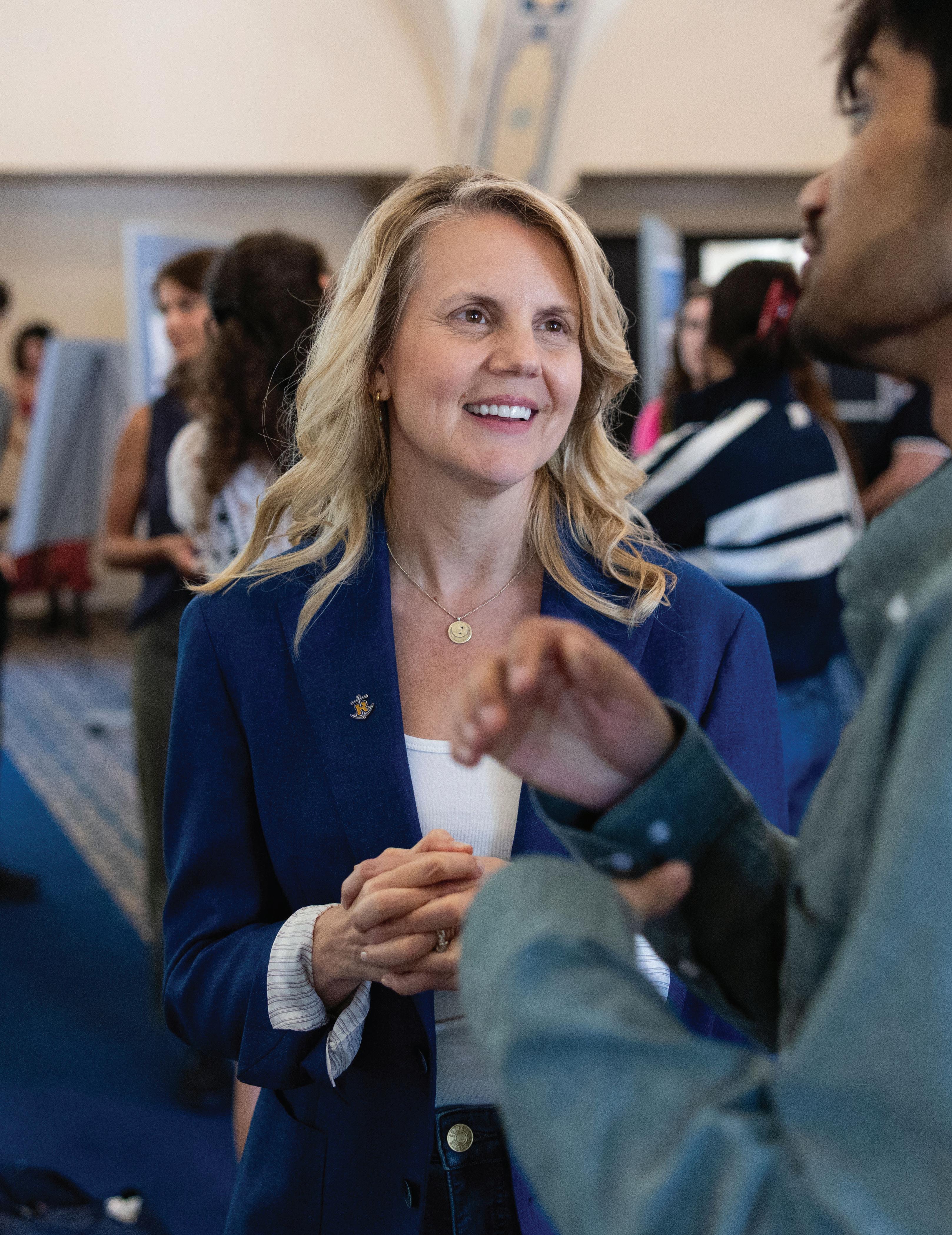
By Luke Woodling ’17MBA | Photo by Alex Stiner
As President Brooke Barnett nears the end of her first year at Rollins, she reflects on what she has learned about the College’s past, present, and future on her Every Voice, One Vision listening tour.
Brooke Barnett has been busy. Since taking office on July 1, 2025, the College’s 16th president has spent virtually every day engaged in an ambitious effort to harness the collective wisdom of the Rollins community and to soak in the full range of experiences that make this place special.
Along the way, she’s met personally with every department and many student organizations on campus. She’s hosted alumni and donor gatherings in Winter Park and across the country. And she and her husband, anthropology professor Tom Mould, have invited every member of the Rollins community—nearly 4,000 faculty, staff, and students—to Barker House.
Barnett has experienced all sorts of firsts— from her first SPARC Day and Fox Day to her first convocation and commencement. She and Mould have cheered on each of the College’s 21 varsity athletic teams, attended student performances and exhibitions at the Annie Russell Theatre, Tiedtke Concert Hall, and Rollins Museum of Art, and worked side by side with students, faculty, staff, and alumni on an array of service projects.
The new president has asked thousands of questions and done several hundred hours of listening. More than anything, she has learned about the people, programs, and places that have transformed the lives of students for 140 years and made Rollins one of the nation’s best liberal arts colleges. On the eve of her inauguration, we asked President Barnett to share some of things she has learned about Rollins during her first year.
Relationships are at the heart of the Rollins experience. No matter what brought them to Rollins, students, faculty, staff, and alumni stay, thrive, and come back because of relationships. They remain the College’s greatest strength.
Our students make me excited for the future. They are bright, curious, and ambitious, and they pursue their interests with energy and purpose. They are the most important part of Rollins, and I will invest my whole self to make Rollins the best it can be for them.
Our faculty change lives in ways that last for decades. Great teaching leaves a lifelong imprint, and I’ve seen how a single course or mentor can influence how our graduates think, lead, and serve—even 50 years later.
Teaching, scholarship, and mentorship are inseparable. Our faculty don’t just teach content—they generate knowledge and invite students into the process. That integration defines academic excellence at Rollins.
Our staff are stewards of student experience and institutional excellence. From student-facing roles to behind-the-scenes operations, Rollins staff bring care, expertise, and pride to their work, and students feel the difference.
Our alumni make us proud every day as they reflect the Rollins ethos in their lives and work. We’ll continue to do everything we can to make them proud of their alma mater by creating an environment that will always feel familiar but will also always improve.
Rollins is a love letter to the liberal arts. The liberal arts aren’t theoretical ideals at Rollins—they are applied, dynamic, and deeply connected to the world our students are preparing to enter.
Service is a way of life here. The ethos of service permeates throughout campus and is carried out into the world by our students, faculty, staff, and grads.
Applied learning must be accessible. Practices like internships, research, service, and study abroad should be available to all students—with barriers thoughtfully removed—because we know how vital they are to student success.
Rollins is worth believing in. Higher education faces real headwinds, but I look to the future with optimism because of the people here—their expertise, talent, care, and commitment. Together, we’ll focus on what matters most to our students and act decisively.
ROLLINS COLLEGE
1000 HOLT AVE. – 2747
WINTER PARK, FL 32789-4409
CHANGE SERVICE REQUESTED
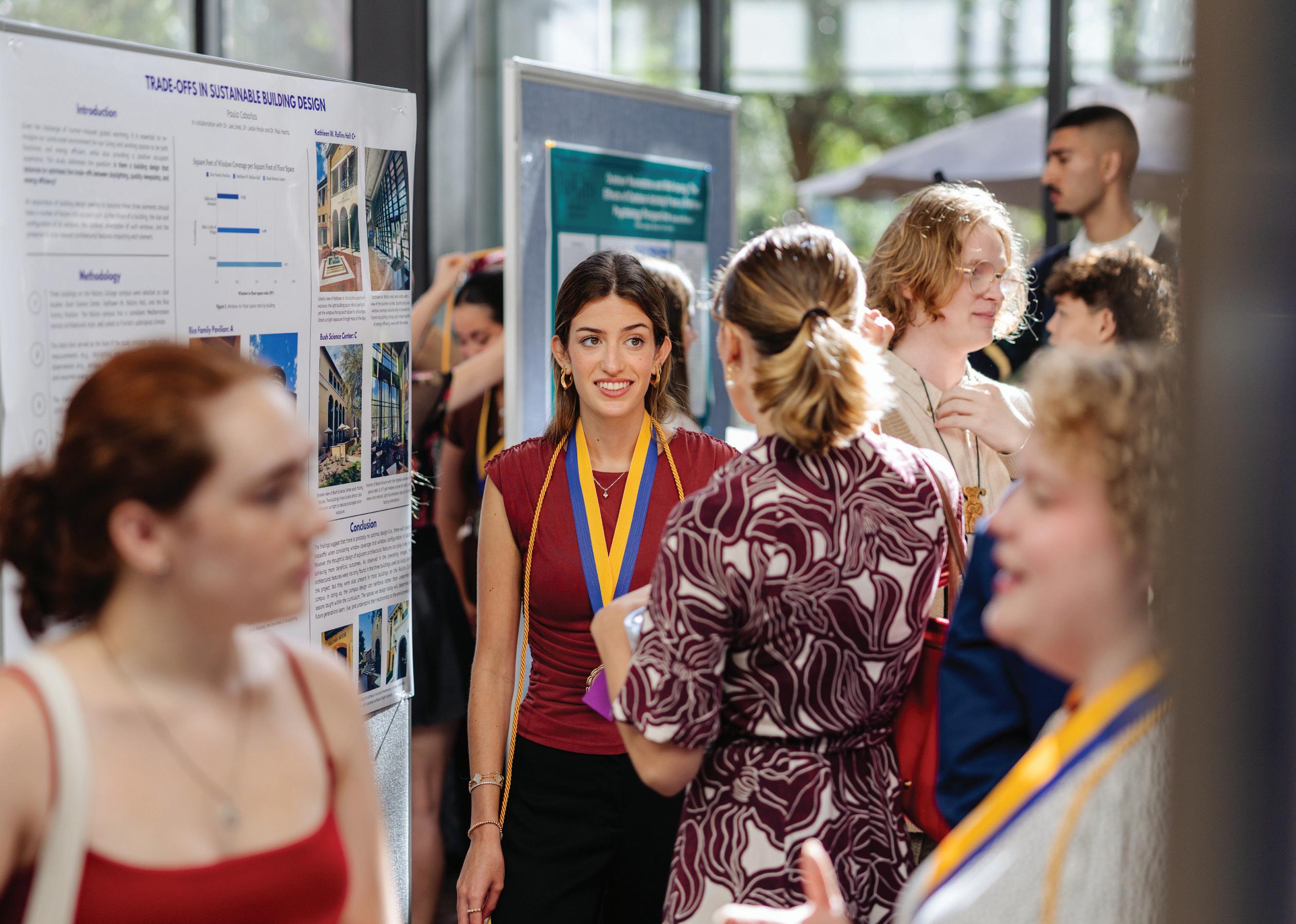
Each semester, the Foundations Summit gives Rollins students a powerful bridge from classroom learning to professional practice. By volunteering as interviewers, alumni bring a critical eye and real-world perspective to students’ interdisciplinary capstone presentations, offering insights that help them sharpen their elevator pitches, networking conversations, and responses to common interview questions. Your time and perspective can help students translate the value of their liberal arts education into compelling narratives while creating valuable connections across the Rollins network. Learn more about the Foundations Summit and other meaningful ways to share your time and talent with our students at rollins.college/volunteer