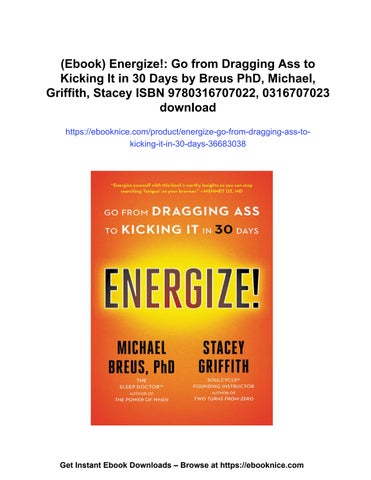
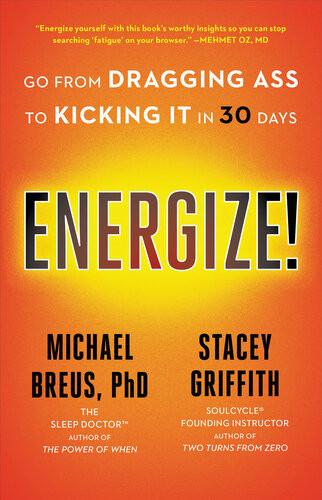
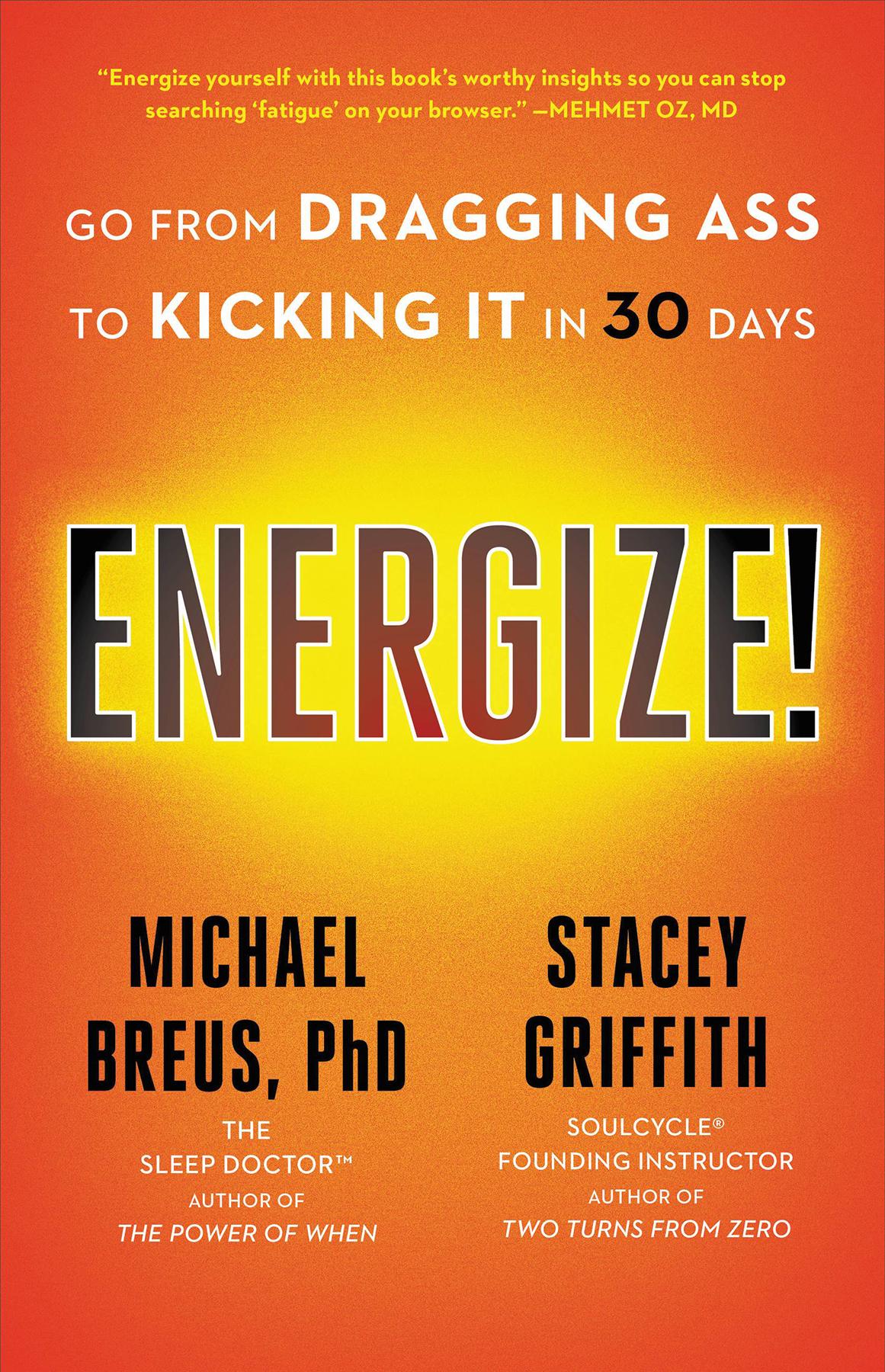
(Ebook) Energize!: Go from Dragging Ass to Kicking It in 30 Days by Breus PhD, Michael, Griffith, Stacey ISBN 9780316707022, 0316707023 download
https://ebooknice.com/product/energize-go-from-dragging-ass-tokicking-it-in-30-days-36683038
Instant digital products (PDF, ePub, MOBI) ready for you Download now and discover formats that fit your needs...
Start reading on any device today!
(Ebook) Biota Grow 2C gather 2C cook by Loucas, Jason; Viles, James ISBN 9781459699816, 9781743365571, 9781925268492, 1459699815, 1743365578, 1925268497
https://ebooknice.com/product/biota-grow-2c-gather-2c-cook-6661374
ebooknice.com
(Ebook) Matematik 5000+ Kurs 2c Lärobok by Lena Alfredsson, Hans Heikne, Sanna Bodemyr ISBN 9789127456600, 9127456609
https://ebooknice.com/product/matematik-5000-kurs-2c-larobok-23848312
ebooknice.com
(Ebook) SAT II Success MATH 1C and 2C 2002 (Peterson's SAT II Success) by Peterson's ISBN 9780768906677, 0768906679
https://ebooknice.com/product/sat-ii-success-math-1c-and-2c-2002-peterson-s-satii-success-1722018
ebooknice.com
(Ebook) Master SAT II Math 1c and 2c 4th ed (Arco Master the SAT Subject Test: Math Levels 1 & 2) by Arco ISBN 9780768923049, 0768923042
https://ebooknice.com/product/master-sat-ii-math-1c-and-2c-4th-ed-arco-masterthe-sat-subject-test-math-levels-1-2-2326094
ebooknice.com




(Ebook) Cambridge IGCSE and O Level History Workbook 2C - Depth Study: the United States, 1919-41 2nd Edition by Benjamin Harrison ISBN 9781398375147, 9781398375048, 1398375144, 1398375047
https://ebooknice.com/product/cambridge-igcse-and-o-level-historyworkbook-2c-depth-study-the-united-states-1919-41-2nd-edition-53538044
ebooknice.com
(Ebook) Sams Teach Yourself C in 21 Days (4th Edition) (Sams Teach Yourself...in 21 Days) by Jesse Liberty ISBN 9780672320729, 067232072X
https://ebooknice.com/product/sams-teach-yourself-c-in-21-days-4th-edition-samsteach-yourself-in-21-days-1286610
ebooknice.com
(Ebook) Everyday Watercolor: Learn to Paint Watercolor in 30 Days by Jenna Rainey ISBN 9780399579721, 0399579729
https://ebooknice.com/product/everyday-watercolor-learn-to-paint-watercolorin-30-days-11904100
ebooknice.com
(Ebook) Go Climb: Read It, Watch It, Do It (GO SERIES) by Nigel Shepherd ISBN 9780756619435, 0756619432
https://ebooknice.com/product/go-climb-read-it-watch-it-do-it-go-series-2268454

ebooknice.com
(Ebook) 33 Days to Morning Glory: A Do-It-Yourself Retreat In Preparation for Marian Consecration by Michael E. Gaitley ISBN 9781596142442, 1596142448
https://ebooknice.com/product/33-days-to-morning-glory-a-do-it-yourself-retreatin-preparation-for-marian-consecration-11139080
ebooknice.com
Copyright © 2021 by MINDWORKS, Inc. and Stacey Griffith Cover design by Lucy Kim
Cover © 2021 Hachette Book Group, Inc.
Hachette Book Group supports the right to free expression and the value of copyright. The purpose of copyright is to encourage writers and artists to produce the creative works that enrich our culture.
The scanning, uploading, and distribution of this book without permission is a theft of the author’s intellectual property. If you would like permission to use material from the book (other than for review purposes), please contact permissions@hbgusa.com. Thank you for your support of the author’s rights.
Little, Brown Spark Hachette Book Group 1290 Avenue of the Americas, New York, NY 10104 littlebrownspark.com twitter.com/lbsparkbooks facebook.com/littlebrownspark Instagram.com/littlebrownspark
First ebook edition: December 2021
Little, Brown Spark is an imprint of Little, Brown and Company, a division of Hachette Book Group, Inc. The Little, Brown Spark name and logo are trademarks of Hachette Book Group, Inc.
The Sleep Doctor and Nap A Latte are registered trademarks of MINDWORKS, Inc.
The publisher is not responsible for websites (or their content) that are not owned by the publisher.
The Hachette Speakers Bureau provides a wide range of authors for speaking events. To find out more, go to
hachettespeakersbureau.com or call (866) 376-6591.
Illustrations by Maggie Rosenberg
ISBN 978-0-316-70701-5
E3-20211027-JV-NF-ORI
Contents
Cover
Title Page
Copyright Dedication
INTRODUCTION: Our Lightning Strike
PART I UNPACKING EXHAUSTION AND ENERGY
CHAPTER 1: Exhausted to Energized: The Energy Scale
CHAPTER 2: What’s Your Power Profile? Body Type and Chronotype
CHAPTER 3: Resting Energy
CHAPTER 4: Moving Energy
CHAPTER 5: Eating Energy
CHAPTER 6: Emotional Energy
PART II
YOUR POWER PROTOCOL
CHAPTER 7: The Medium Bear Power Protocol
CHAPTER 8: The Slow Bear Power Protocol
CHAPTER 9: The Medium Wolf Power Protocol
CHAPTER 10: The Slow Wolf Power Protocol
CHAPTER 11: The Fast and Medium Lion Power Protocol
CHAPTER 12: The Slow Lion Power Protocol
CHAPTER 13: The Fast and Medium Dolphin Power Protocol
CHAPTER 14: The Slow Dolphin Power Protocol
CHAPTER 15: The Other Power Profiles in Your Life
PART III ENERGY FOR LIFE
CHAPTER 16: Year-Round Energy
CHAPTER 17: Energy and Your Health
CHAPTER 18: A Word Before You Go, Go, Go!
Acknowledgments
Discover More About the Authors
Also by Michael Breus, PHD Notes
Iwantto dedicate this bookin three ways:
First, to my incredible family, Lauren, Cooper, andCarson, as wellas our animals, whogive so muchjoy—Monty andHugo, aka Sugar Bear. Book4, stillgoing strong.
Second, a specialdedication to Drs. Michael andBridgetStamos—you were right, allI neededto do was “Waitfor it,”bepatient, andhave more balance in my life. Thank you seems trivialbuttruthful.
Finally, to allmypatients throughout my more than twentyyears ofpractice. Ilove learning fromyou all, every time we meet.
—MB
Iwantto dedicate this bookto my superstar ofagrandmother, Stella Mae Bjornson, whom Ilost in March2020, the same week
the Covid-19pandemic shuteverything down. Sayinggoodbye to a lovedone over FaceTime is a story that many ofus have to tellin the worldwe live in today. Grammy, I loveyou, andyou wouldhave lovedthis book; it’sprescriptive andto-the-point, as you always toldme to be in my fitness career.
Mom, you’re always my #1!
MDSG, ILOVEYOU—thanks for always being realwithme, forever… —SG
Explore book giveaways, sneak peeks, deals, and more.
Tap here to learn more.

INTRODUCTION
Our Lightning Strike
The two inspirations for this book were a cardiac event and a personal crisis.
MICHAEL’S STORY
On a balmy California evening a few years ago—I was forty-nine at the time—my wife and I were out to dinner with two friends who, luckily as it turned out, were both physicians. After a trip to the bathroom, I returned to the table, feeling strange. When I sat back down, I tried to tune in to one of my companions who was telling a story, but all I could hear were muffled nonsense words, like the man was speaking in a foreign language in slow motion.
Something’sup, I thought.
All of a sudden, my peripheral vision started darkening around the edges. The voices got even weirder, and I thought I was having either a stroke or a heart attack. I broke out in a cold sweat, turned to my wife to say, “I don’t feel so…”
And that was the last thing I remembered. I fell out of my chair and, thanks to the quick reflexes of my friend who caught me on the way down, I didn’t smash my skull on the tile floor of the restaurant. After about thirty seconds, I regained consciousness. My wife was looking down at me. She later recalled, “His face was as white as his teeth. I was terrified he was dead.” One of my doctor friends was cradling my head, saying, “Michael, come back. Michael, come back.”
From the floor, I realized that I’d been unconscious and had come to, but there was a big problem. My eyes were open, but everything was black. I whispered, “I can’t see,” and I think I started to cry.
My friend said, “Wait for it, just wait for it,” and then, in a stunning flash, my vision snapped back, which was a huge relief, followed immediately by a powerful urge to throw up.
While I was “out,” my wife had called 911. Two paramedics were already on the scene (we were dining at a food festival, and fortunately an ambulance was parked just down the street). One of the paramedics ripped my shirt open and put electrodes on my chest to measure my heart activity.
I said, “I think I’m going to vomit. I’ve got to turn over. Can somebody turn me over?” The paramedics started to flip me on my side… and then I had another blackout, the second heart stoppage in just several minutes.
When I regained consciousness the second time, I was on a gurney in the ambulance, speeding to the hospital. My wife was in the front seat with the driver, telling him how to get there faster (true story). As the paramedics wheeled me into the ER, a nurse appeared to hook me up to an IV. I’m not a huge fan of needles and objected, but the nurse grabbed my arm and just jammed it in… which triggered a thirdcardiac event in less than an hour. I passed out again. It was a long night.
The good news was that my heart activity was being monitored on an EKG by then, so the ER doctors could see what was going on. They discovered that I was dropping “P waves.” In the heartbeat, the P wave is the ignition. You know when you put the key in the ignition of your car and it doesn’t turn over, but you pump the gas anyway and flood the engine? My heart was that flooded engine.
After a night in the hospital, my doctors and I theorized that I might have a genetic condition. My father had had significant cardiac issues, after all. The first thing I did when I got out of the hospital was call my friend and colleague Mehmet Oz, aka Dr. Oz, a cardiothoracic surgeon. Dr. Oz referred me to the top electrophysiologist in the country at the UCLA Medical Center.
I arrived at my appointment with the heart specialist, fully
expecting to be told that I’d need a pacemaker like my father. But after some diagnostic testing, the doctor said, “Michael, when you were in my waiting room, what was the average age of the people in there?”
“I’d say probably sixty-five.” Sixteen years older than I was then. “You’re right. You’re the healthiest person to come into this office in ten years,” he said. “I don’t want to put a pacemaker in you. It’s the most overprescribed surgery there is. You need to make lifestyle changes. I think this had a lot to do with anxiety and not taking care of yourself. You really need to look at your stress levels.”
Whatthe…?But I was in great shape! At a healthy weight, I ran three 5Ks a week and took supplements for my health. I was living what anyone would consider an objectively healthy lifestyle. It wasn’t like I was doing anything wrong. I wasn’t a morbidly obese chain-smoking alcoholic. I was probably more physically fit than I’d ever been.
And yet, in this “great shape,” I’d had three cardiac events in a row that gave my wife and me (and our two kids) one of the most frightening nights of our lives. For the most part, I’d been doing what anyone should do for good health. But clearly, what worked for “anyone” wasn’t cutting it for me. I would have to reevaluate my approach to my own fitness and health and make some changes or I might have another cardiac event. According to my wife, this was not an option.
Yup, the Sleep Doctor got a wake-up call.
So I pushed the pause button on my routine to figure out the best approach forme, since what I was currently doing had put me in the hospital.
STACEY’S STORY
Meanwhile, in New York City, I was having a crisis of a different kind. Often after teaching five classes in a day, I somehow had to rally to enjoy a night out with my partner and our close friends. I felt bad
that I always seemed to be the odd man out, having to leave early to go to bed. Some of my mornings began at 6:00 a.m. at SoulCycle, where, as one of the founding master instructors, I was compelled to teach high-quality classes more than twenty times per week. Getting less than eight hours of sleep per night was like torture for me. As much as I tried to muster the strength to hang with my crew, it was hard for me to squeeze out what little energy I had left by the end of my day.
Everybody needs sleep. Granted, some might need more than others, but I knew I required a lot. Every thingneeds to rest. Even your computer and phone must chill in their docks to recharge. Humans are no different.
It got to the point where I went to see my doctor about getting a prescription to help me maximize my day. At the end of the visit, she sent me home with a prescription to sleep more. Unfortunately, that was still impossible. For a while, I tried to just live on a different schedule than everyone else. But that wasn’t working either. When I felt run-down, I would tend to slip into an argumentative state of mind. I’d be at a function or gathering and, as the hours passed, I would start looking at my watch anxiously. If I could even make it until 11:00 p.m., I’d need toothpicks to keep my eyelids open. I was diagnosed with clinical exhaustion and only had the bandwidth for work and sleep.
My energetic style was what contributed to my success at SoulCycle. Without it, would my classes sell out in minutes? Would there still be a waitlist of riders excited to get in? I knew I was on a path to burnout and depression. Along with the problem of simply not getting enough rest, the relationship tension was another huge energy suck. I was dragging ass when I needed to be kicking it, not only for myself, but for my students as well. Something had to change.
MICHAEL AGAIN
Stacey and I were each examining the crises in our own lives when we met for the first time in 2017, at an event in New York. We were both honorees for that year’s Thrive Global Fuel List, me for my contribution to sleep education and Stacey as a fitness motivator. At the reception for all the honorees, a woman with platinum blond hair approached me and said excitedly, “I’m a hugefan of sleep and I’ve been stalking you for years!”
It was Stacey, of course. In her Googling for solutions to her sleep/relationship problem, she’d come across my TV appearances, books, website, and blog. If she was going to find a solution to her exhaustion, it would be through the Sleep Doctor. She asked if she could schedule an appointment with me to get to the bottom of her sleep issues.
We had a consultation and she shared her complaints. I realized immediately what was going on. I’m an expert in chronobiology (the study of circadian rhythms) and had written a book called ThePower of When about the fact that not all people’s genetically determined body clocks run on the same schedule. There are four different “chronotypes” and each one has a different inner schedule based on your genes. I’m a Wolf, a late riser who doesn’t feel tired until midnight at the earliest. Stacey is an early riser, a Lion whose energy is highest in the morning and falls off a cliff after dinner. (These types used to be called “night owl” and “early bird,” but I created a new classification system based on my research. The other two chronotypes in my system, along with Wolves and Lions, are Bears, who fall in between extremes, and Dolphins, the insomniacs.)
Stacey’s social life was more Wolfish, for those who can stay up late.
As I listened to her story, I knew she had to make some changes. Although I told her in a nicer way, I had to deliver a tough message: Lions can’t function well if they try to live like Wolves. Stacey and her social life were incompatible. And her conflict couldn’t be hacked because body clocks are genetic, part of one’s DNA.
I heard Michael’s underlying warning and knew it was the truth. Every day, every month or year, when I was fading, many of my friends would be emerging. We’d always be at our best at different times. As I knew from past relationships, there’s something super special about waking up early together, having coffee or tea at the table as the sun comes up, preparing for sleep and getting in bed together at day’s end. Shared rituals are intimacy enhancing. Incompatible chronobiology could widen a relationship gulf. It wasn’t that I got tired early to be passive-aggressive or get out of going somewhere. I just needed rest and felt physically and emotionally awful if I lived out of sync with my body’s natural rhythm.
The session with Michael was the first step in a major life change. But I received two parting gifts: (1) a much clearer idea of the characteristics to look for in close relationships, and (2) with Michael’s help, a new understanding of myself.
The two of us—the Sleep Doctor and the Fitness Expert—started hanging out whenever we were in the same city, talking about our lives and updating each other on our vocations, namely, educating people about sleep and movement. During one meet-up in New York in 2019, we talked about the biggest complaint among his patients and my clients: “Why am I always so exhausted?”
This question was always topic number one whenever either of us did media interviews, too. It seemed like everyone was slogging through their days, sleeping fitfully all night, and living in a lowenergy loop.
Michael had been studying and teaching the science of sleep for decades, and he knew that exhaustion was often the result of living out of sync with one’s circadian rhythms, the inner clocks that dictated the ebb and flow of hormones, body temperature, and blood pressure. If you live against your natural rhythms—for example, your body wants you to go to sleep at 9:00 p.m., but you force yourself to stay up later night after night, as I had—you are at high risk for sleep deprivation,1 chronic stress, mood disorders,2 lowered immunity,3 and compromised overall health. When you’re out of sync with the master clocks in your brain (specifically, in your
hypothalamus, I learned) and the dozens of mini-clocks that control every organ and system in the body, all your energy goes toward waging battles within. When you live in sync with your circadian clocks, you are not fighting against your own nature and have energy to spare.
OVER TO MICHAEL
In my reevaluation of my health after my trio of cardiac events, I discovered that I wasn’t always following my own advice. Despite having literally written a book about how each of us needs to follow our own chronotype schedule for optimal health, I wasn’t able to stay in sync with mine because of weekly travel to educate people about sleep! So I jammed my three weekly 5Ks to boost my energy —because everyone knows that exercise gives you energy and makes you healthy. But I didn’t run during my chronotype’s ideal exercise time (because I was usually on a plane), so I was not getting the benefits I thought I was—like stress reduction. As I learned in the scariest way possible, being healthy was not about checking one box, or doing what works for others. I needed to personalize an approach that took into account my chronotype as well as my eating schedule, anxiety level, and lifestyle.
Stacey suggested that I run lessoften. WTF?
Running three 5Ks a week—on top of working full-time (sixty-plus hours per week), traveling constantly, helping raise my kids—was more exhausting than energizing. Running caused stress instead of reducing it. It was just too much, especially for someone who was already under pressure, one step ahead of burnout, with a family history of heart disease. On top of that, because of relentless travel and constantly sleeping in different places, I had to deal with the first-night effect—having poor-quality sleep the first night in a new environment which prevented my body from repairing and recovering from the stress I put myself under. It was a major “Doctor, heal thyself” moment and also a bit of a surprise. I ran a
distance to reduce my stress, and when I had more stress, I just ran farther, because I had more stress, assuming that running more would make me lessstressed. And now the fitness guru was telling me to exercise less?
Having seen the energy toll of overdoing it on some of her clients at SoulCycle, Stacey believes that more can be less, and less can be more when it comes to grueling fitness like running and spinning. Based on her observations, exhaustion was the result of the “more is always more” misconception. Exercise is important to stay limber, improve blood flow and oxygen circulation, and prevent muscle stiffness and fatigue that keeps people from wanting to move at all. Mathematician Isaac Newton’s first law of motion (aka the law of inertia) states that an object in motion is more likely to stay in motion, and that an object at rest is more likely to stay at rest.
As Stacey explained, “Movement doesn’t have to be constant, but it should be consistent.”
She’d isolated five particular times during the day when people needed to get up and move to get their juices flowing: first thing in the morning, midmorning, after lunch, midevening, and before bed. A short movement break—taking a walk, doing twenty jumping jacks, stretching—didn’t require the body to use up a significant amount of energy to signal the hormones that control alertness to “wake up.”
Hearing Stacey’s movement schedule got me thinking. The same timeperiodsshe mentioned coincided with hormonal changes in the Bear chronotype’s circadian rhythms. (That’s a lot of people! Bears account for half of the general population.) For example, the levels of cortisol, the fight-or-flight hormone, dropped in the midafternoon, around 2:00 p.m., which is why Bears feel sleepy after lunch. I often recommend a midafternoon “Nap A Latte”—drinking a cup of coffee, immediately taking a twenty-minute power nap, and waking up right when the caffeine kicks in. According to Stacey, doing three minutes of jumping jacks when you feel that afternoon dip in energy has the same heart-energizing, brain-clearing effects as a shot of espresso or a power nap. That gave me more options for my clients, which improved compliance.
Combining our ideas provided multiple recommendations for boosting energy!
STACEY AGAIN
We discussed the problem with one-size-fits-all energizing plans. Michael had his four chronotypes, and a different schedule for each. I pointed out that I recommended different exercise and movement approaches for the three main body types. You may have more of an understanding of body types than chronotypes since these were taught in high school health class. Do you remember endomorphs (curvy and rounded with a slow metabolism), ectomorphs (long and lean with a fast metabolism), and mesomorphs (athletic with a medium metabolism)? Our body type is determined by our genes. You can work with your DNA to become the best version of yourself, but you were born with your basic shape. It turns out that each body type and its corresponding metabolic speed has a different capacity for effort, stamina, and power (all the aspects of movement). Individuals respond to exercise or a single movement based on two important factors: their overall fitness history andtheir body type.
In my classes, I’ve noticed that naturally pear-shaped built-forcomfort people with a slow metabolism (endomorphs) tire quickly. An effective weight loss strategy for them is to do spurts of activity rather than maintaining a low, steady pace throughout class. For our purposes, let’s call them Slow types.
Athletic, muscular people with a medium-speed metabolism (mesomorphs) gain energy when they push their limits, but if they work too hard, they can burn out or injure themselves (like Michael). Their best weight loss strategy is a combo of cardio and strength training. We’ll call them Medium types.
Long-limbed and lean people with a fast metabolism (ectomorphs) have high endurance at a lower amplitude, but unless they build muscle, they won’t feel as energetic as they could feel.
They don’t need a strategy to lose weight. Even if they put on extra pounds, they can lose the weight easily by eating a bit less and moving a bit more. They are Fast types.
As an instructor and personal trainer, I intuitively personalized workouts to fit clients based on their body type / metabolic speed so they’d have more fun and get better results. If clients were miserable at the end of a session, I knew they wouldn’t keep up with the plan long-term. But for all types, I always emphasized that if you want to feel energized, you had to move your body at least five times per day, regardless of your exercise regimen, and of course get good sleep.
OUR STORY
Our discussion got even more fascinating when we correlated certain chronotype traits with body type. Early-riser Lions tend to be healthconscious, dedicated exercisers and have a lower-than-average body mass index (BMI). So are all Lions naturally athletic with a fast metabolism? Probably not all.
Late-riser Wolves are less health conscious with higher BMIs. Does that mean a typical Wolf is a built-for-comfort, slowmetabolism endomorph? Most likely not.
Dolphins (insomniacs) tend to be naturally slim and indifferent to fitness routines, so are a significant majority of them the long-andlean ectomorph type? Doubtful.
Bears, or “in the middle” people, have average to above-average BMIs and care about their health theoretically but aren’t obsessive about fitness or healthy eating. Is it possible that most of them are comfy, slow-metabolism endomorphs, too? Remained to be seen.
We started to develop our own theory. But to prove it, we had to do some scientific research and conduct studies of our own to get statistics on these cross-referenced chronotypes and body/speed types. With that information, we could create personalizedsleeping andmovementplansforeverypossiblecombination.What would be
the ideal schedule and the ideal movements for a Wolf with a medium metabolism like Michael, or a Lion with a fast metabolism like Stacey?
We knew that being sedentary was tiring and that moving was energizing. But how could we get driven Lions and neurotic Dolphins to plan more rest and recovery in their day so that they could prevent burnout? And what about Wolves, the rebels, the night creatures who hate exercise and healthy food and would rather have a beer than attend a fitness class? What kind of daily movement plan would entice a slow-metabolism Wolf to get off the couch?
Any energizing protocol had to be highly individualized. One-sizefits-all plans were useless. Everyone is preprogrammed with DNA for a specific chronotype and metabolic type. You were born to be a Slow Bear or a Fast Lion; it’s in your genes. So stop wasting energy by living out of sync with who you are. Instead, use the simple science of good timing and small movements to reduce energy expenditureandincreaseenergyreplenishment.If people used their own DNA to their advantage, they’d get more benefit from movement and would improve the quality of their sleep to sufficiently recharge and power up their bodies for maximum energy.
To stop feeling “so tired” and burst with infinite energy all day long, all you have to do is follow the right schedule, personalized for your chronotype and body type.
Then we just had to figure out what the right schedule was for each type.
The good news: We did it. We worked our asses off compiling data, including from the results of a chronotype/body-type quiz that we sent out to Michael’s online community. Five thousand people took it, giving us deeper insight into the combinations and types of people out there. With the data, we isolated eight distinct Power Profiles and calculated eight corresponding Power Protocols, with
a daily schedule for five timed movement sessions (each about five minutes long). But we didn’t stop there. Since people gain energy by eating and sleeping on the right schedule, we figured out the ideal schedule for those activities, too. And we used scientific research to identify specific energy drains for each type and came up with strategies for combatting them.
The Power Protocols have been road tested by members of our communities with amazing results. Weight loss. Stamina. Less stress. Better endurance and strength. Brightened mood. More satisfying relationships. Higher-quality sleep.
Our two areas of expertise—circadian timing and movement truly came together to create a whole new concept of how people can improve their health and feel more of what we all desperately crave: energy. Going from “I’m so tired!” to “Hell yes!” is a simple matter of knowing when to move, how to move, when to rest, when to eat, when to stop eating, and how to boost your mood.
Tweak your schedule, increase your movement, supercharge your energy, change your life.
TIMING+MOVEMENT=ENERGY
This formula works. It’s the antidote to exhaustion, the secret to accessing your abundant natural resources, to setting off sparks in every area of your life. Our plan is so successful because it asks you to be authentically yourself.
We’re so psyched to share this with you! It’s going to change your life.
Personal experience taught us that what works for one person does not work for all. Running three 5Ks won’t necessarily boost energy and reduce stress. Staying up much later than your genetic bedtime can’t be brushed off as no big deal. But personalization allows the body to work at its peak potential. Science is finally teaching us that people are unique, and that if we try to sleep, move, or eat on someone else’s schedule, we are making ourselves tired and vulnerable.
Workingtogether , wecrackedthecodeforhowyou,yourmother , your friend, your partner , your kids, or your boss can achieve personalized,energizedgreatness.
We know there are ideal times to sleep based on our chronotype. We know there are ideal ways to move based on our body type. With a personalized plan for beating exhaustion with timing, movement, eating, and sleep schedules, you can eradicate exhaustion entirely. No dieting, no deprivation, no hard-core exercise. By following your personalized protocol, you tap into the vast power and potential of “doing you,” genetically and energetically speaking. We’re opening our toolbox here, and you’ll have all you need to biohack your energy reserves, end exhaustion, and put yourself on a faster track for success and wellness.