Building on Experience A Corporate Makeover with Sihl
by Melissa Donovan
In April 2009, Carol Boyd and Ann Dominiski, GM and sales manager, respectively, purchased Dodge Color from its retiring founder. Operating since 1980, it serves the metropolitan region of the District of Columbia, MD, and VA—referred to as DMV. The new co-owners expanded the scope and breadth of the business in May 2010, acquiring Chrome Imaging.
The merged entities became what is today known as Dodge-Chrome. “The name is significant in the DMV area, as both companies are premier photo providers. Together, we offer high-quality graphics and printing services including photographic and large format printing, installation, design, production, high-resolution
scanning, and retouching to a diverse customer base throughout the U.S.,” share Boyd and Dominiski.
A 17,000 square foot facility in Silver Spring, MD boasts a staff of 18, offering everything from custom large format printing and installation, trade show exhibits and graphics, design and production to museumquality prints and scanning, digital retouching, photo and inkjet fine art printing, and mounting and framing eco-friendly signage.
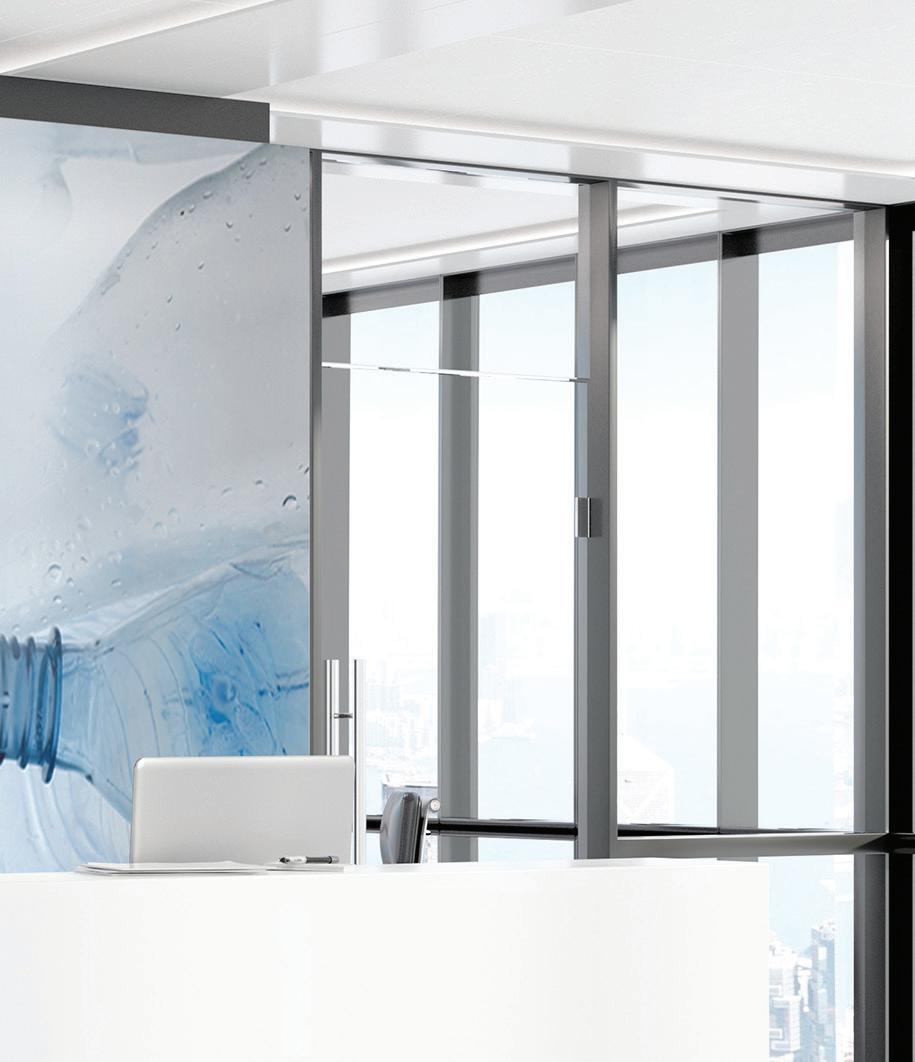
The space looks incredible and truly refl ects the iconic brands we build, making it something our teams feel proud to walk into every day.
—
Bill Beck, president, tools and outdoor, Stanley Black & Decker
Top Knowledge
Known for its quality, precision, and efficiency, Dodge-Chrome was presented with a noteworthy project in Spring 2026.
Stanley Black & Decker is a worldwide leader in
tools and outdoor power equipment. It manufactures power tools, hand tools, storage, digital job site solutions, outdoor and lifestyle products, and engineered fasteners to support builders, tradespeople and do-it-yourselfers. Well-known brands include BLACK+DECKER, CRAFTSMAN, Cub Cadet, DeWalt, and Stanley.
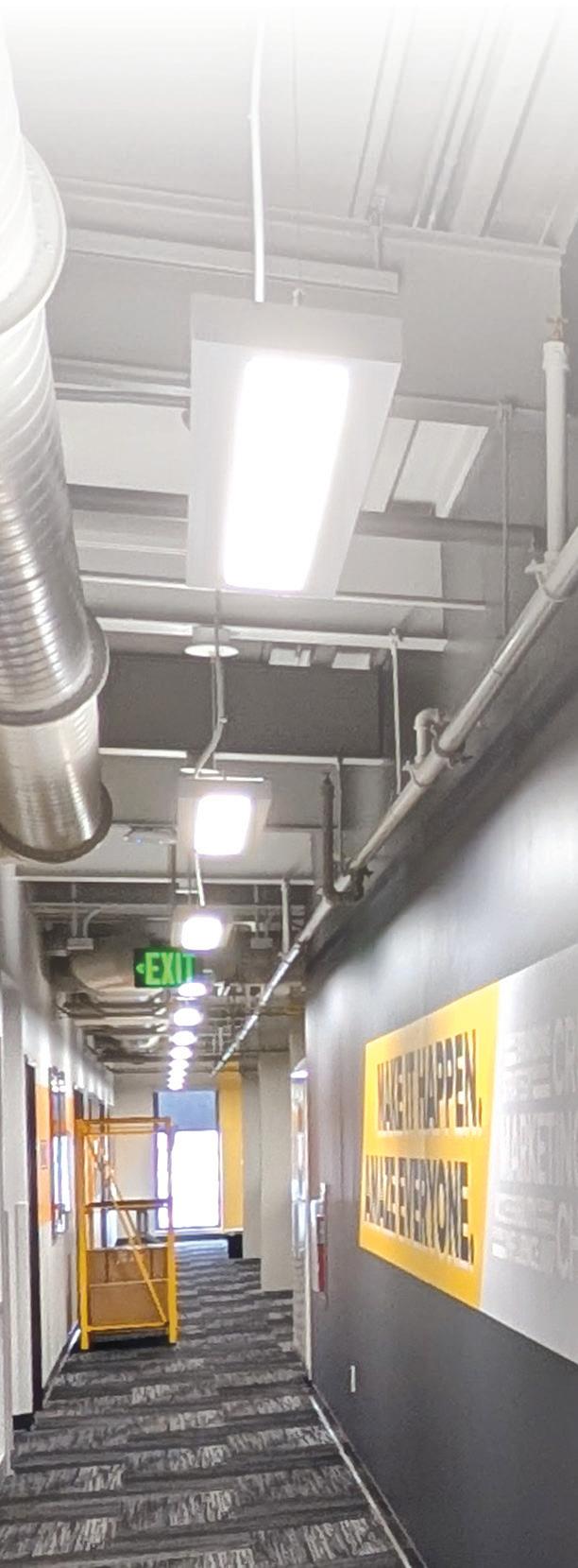
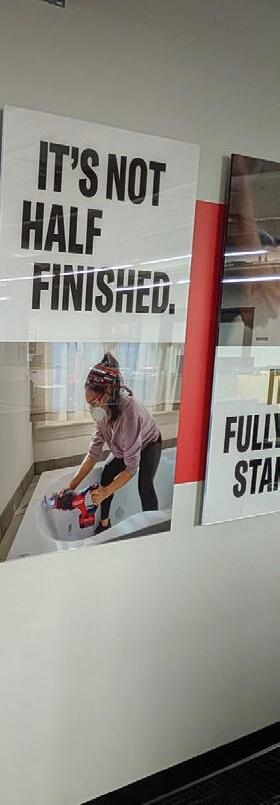
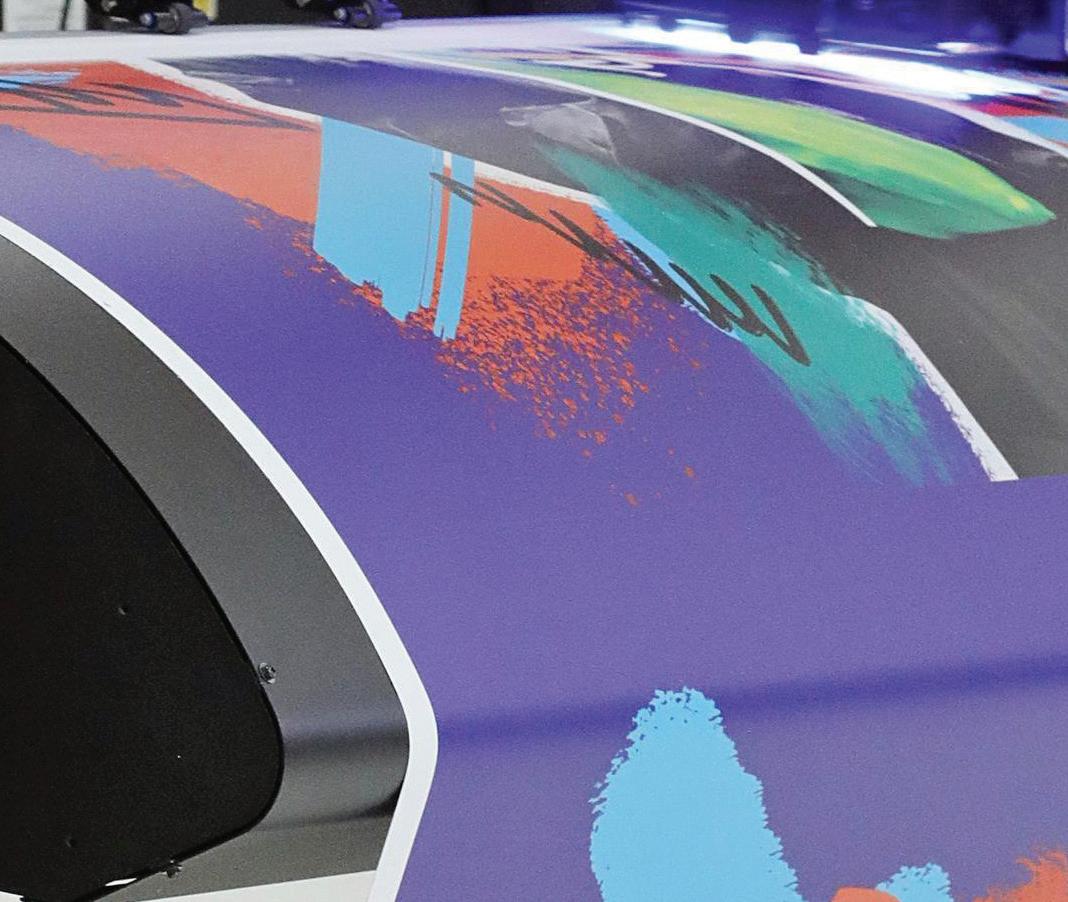
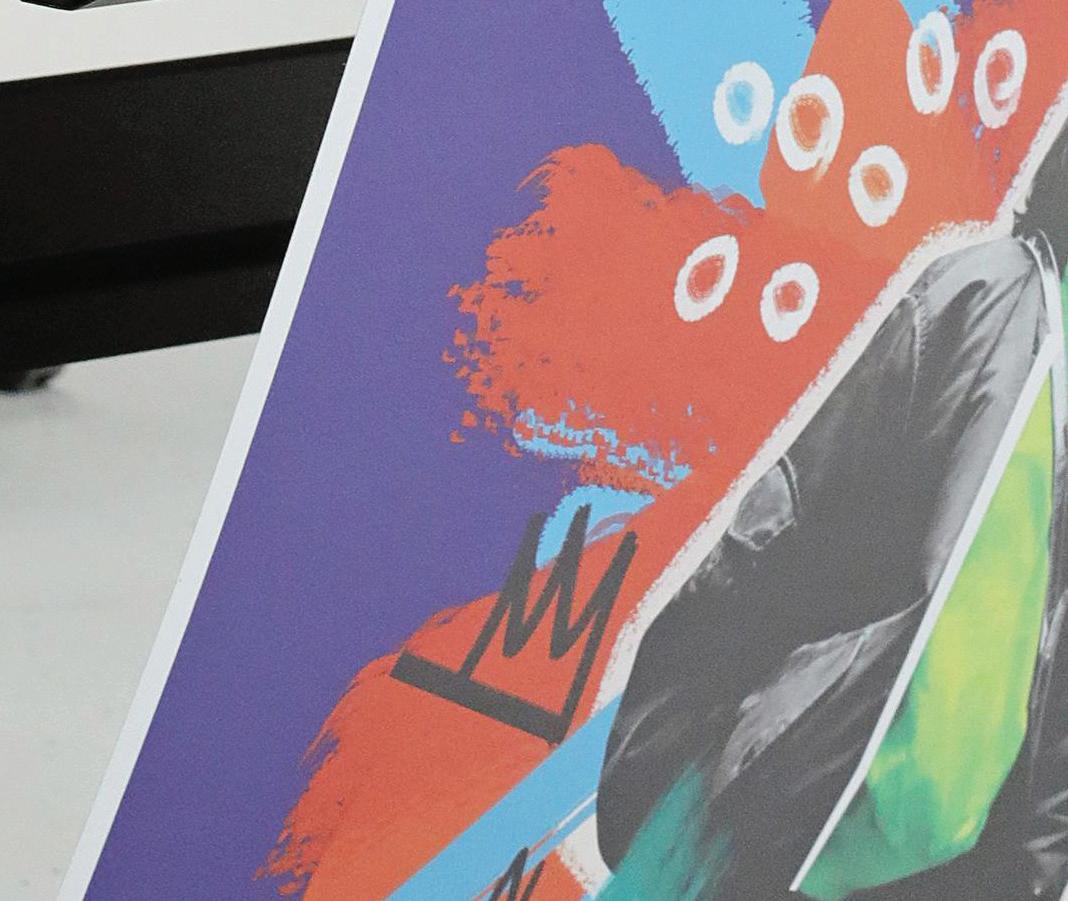
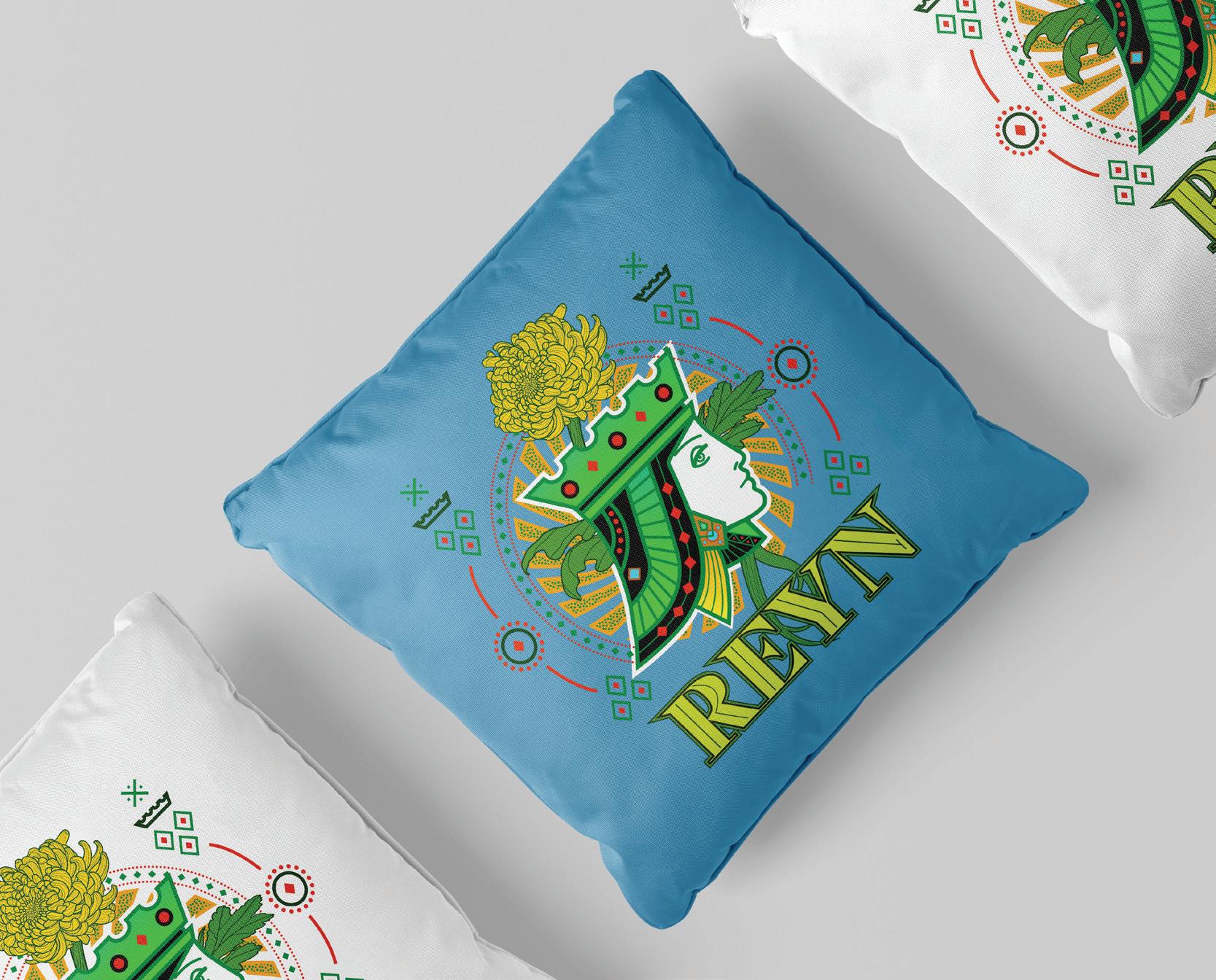
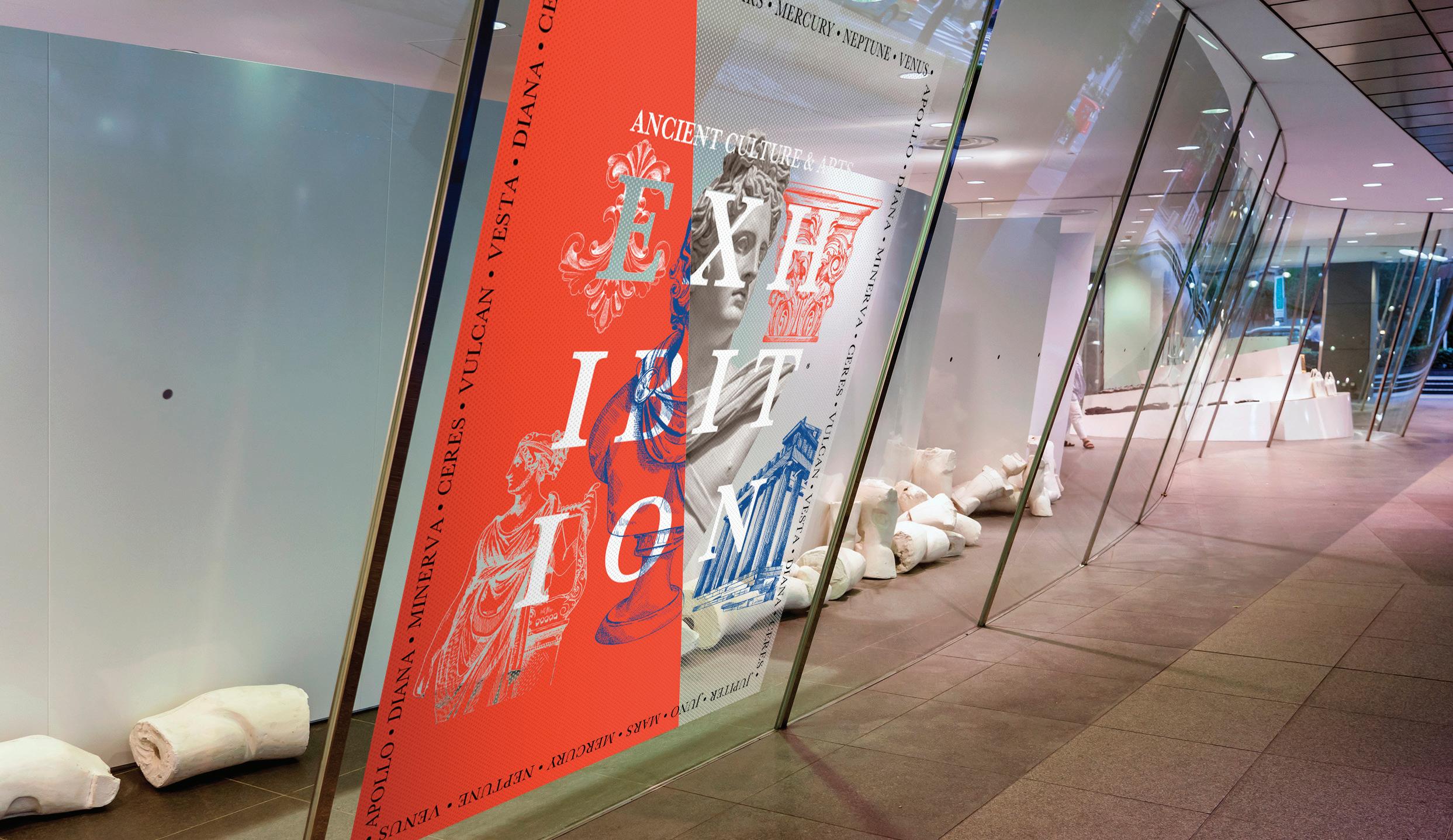
The manufacturer was looking for a local supplier—an added bonus 100 percent women owned— to jazz up a newly renovated building part of its Towson, MD campus. Boyd and Dominiski say Stanley Black & Decker provided Dodge-Chrome with clear objectives. The company wanted “bright, bold, and colorful graphics to enhance the space for their employees and promote their brands and products.”
“This project was about more than enhancing the physical space—it was about creating an environment that reflects our brands, values, and the people who work here every day. Partnering with Dodge-Chrome allowed us to work with a trusted local vendor that shares our focus on quality and sustainability, while delivering bold, high-impact graphics that bring our brands to life throughout the building,” shares Bill Beck, president, tools and outdoor, Stanley Black & Decker.
At the outset, Dodge-Chrome’s capabilities stood out and more importantly its experiences with and knowledge of the best media and hardware for the job at hand. The Stanley Black & Decker team
wanted to outfit several walls in the building with full graphics, some would also include pictures that popped a bit more via another method of application.
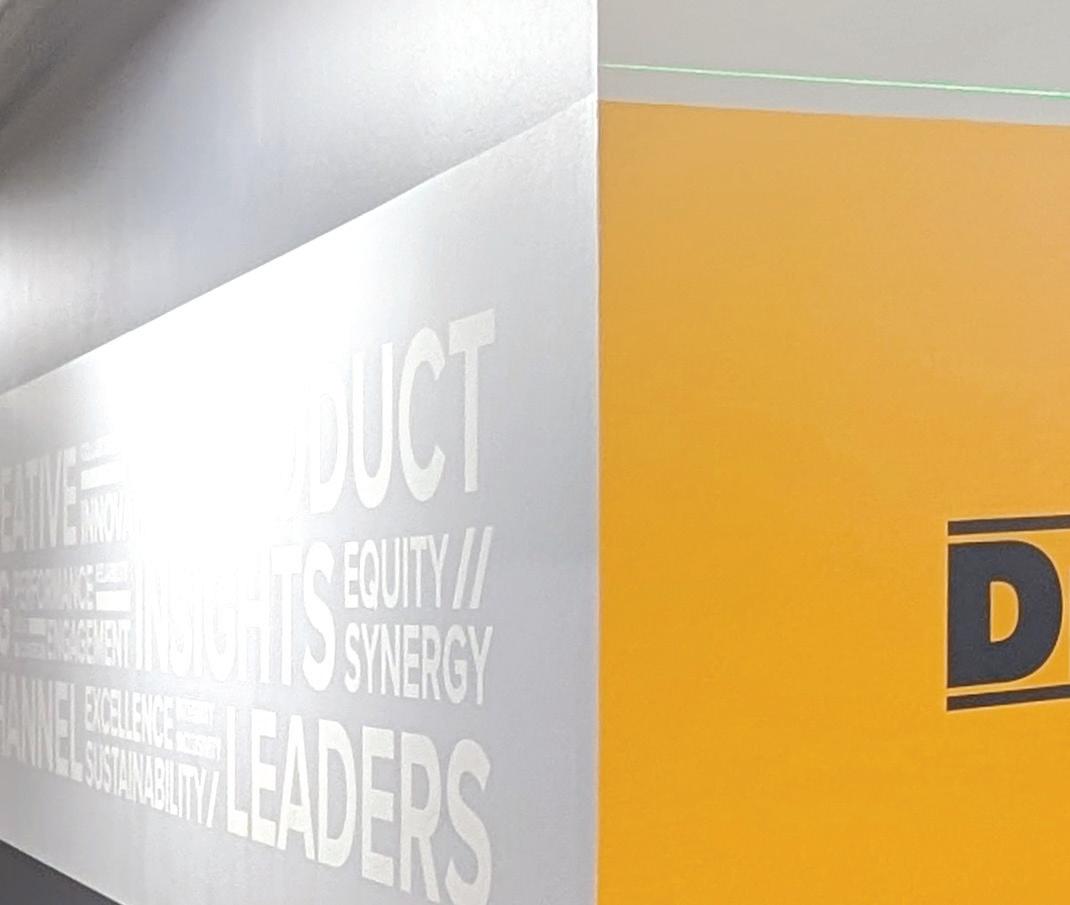
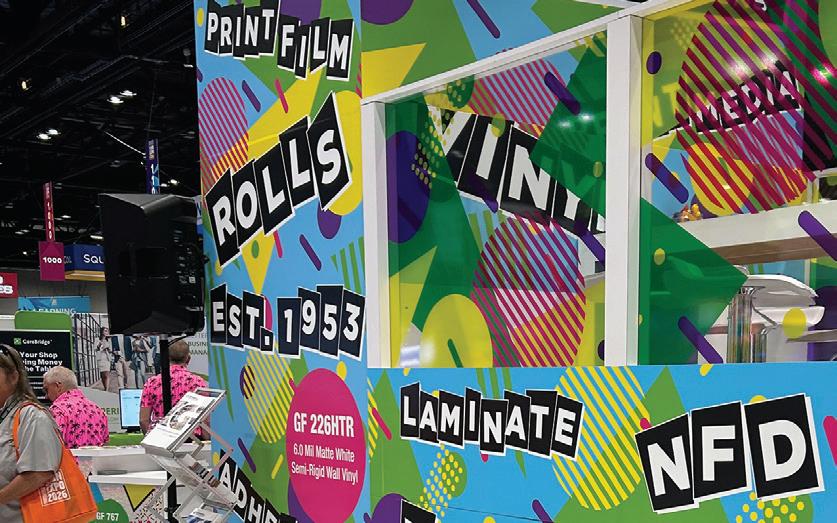
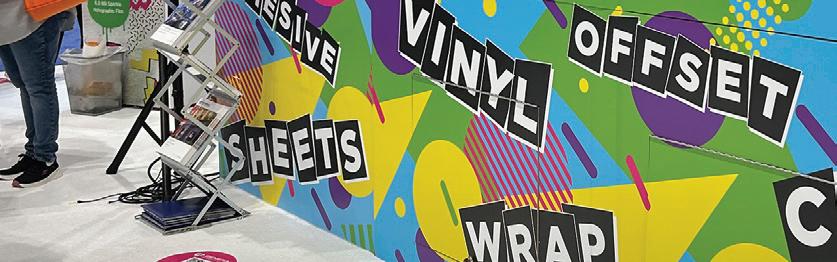
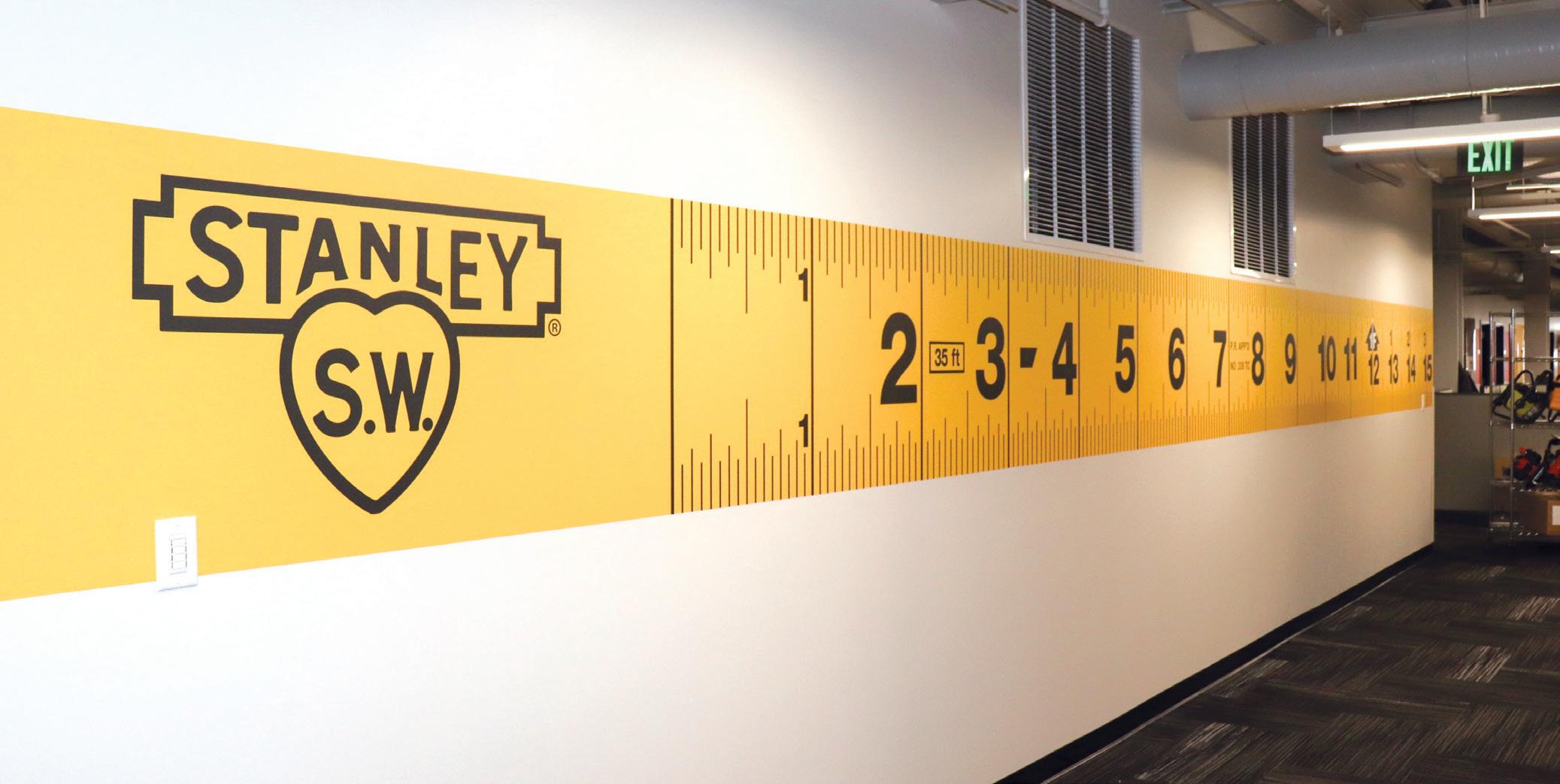
Boyd and Dominiski turned to Sihl Inc. and its vast media portfolio. First, wall graphics.
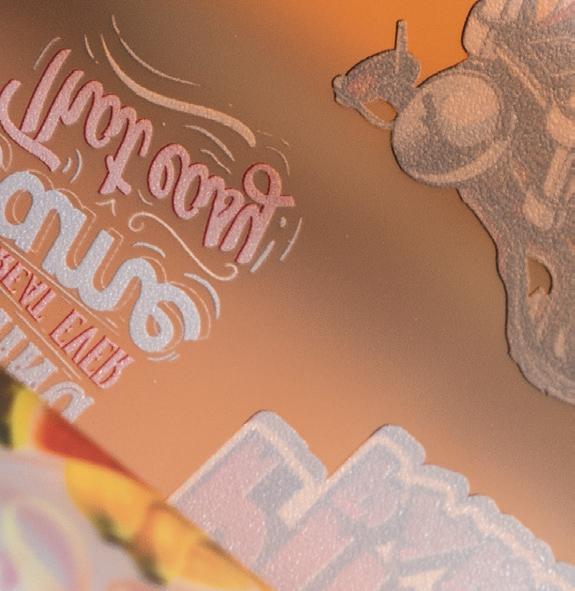
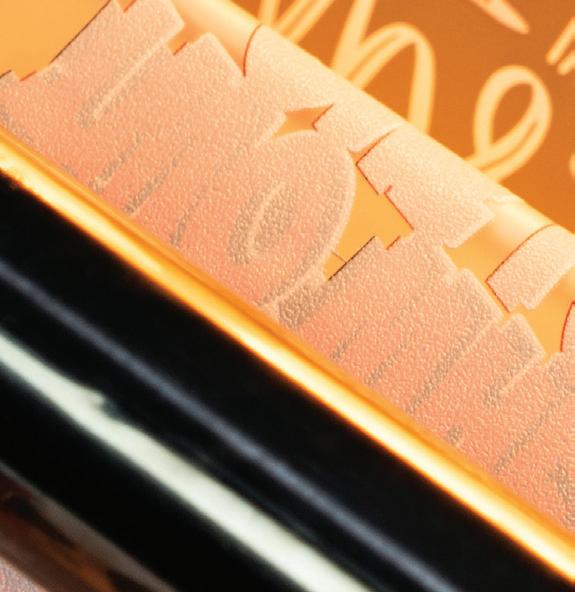
Understanding that Stanley Black & Decker had sustainability in mind while outfitting this building, Dodge-Chrome chose Sihl 2505 WallBliss Type II coated satin nonwoven media. Offering a textile-like finish, it is ideal for commercial spaces thanks to features like stain resistance and scrubbability. The media is ecofriendly because it is not only PVC-free, but also FSC, ASTME84, and Class A certified.
“As part of our ESG commitment, we were intentional in using ecofriendly materials that support sustainability while enhancing the everyday work environment for our employees,” notes Beck.
A heavy weight—300 gsm— 2505 WallBliss Type II offers great dimensional stability, allowing for ease in pasting to the wall. An added plus, the DodgeChrome team finds it much easier to install than comparable materials they have used in the past.
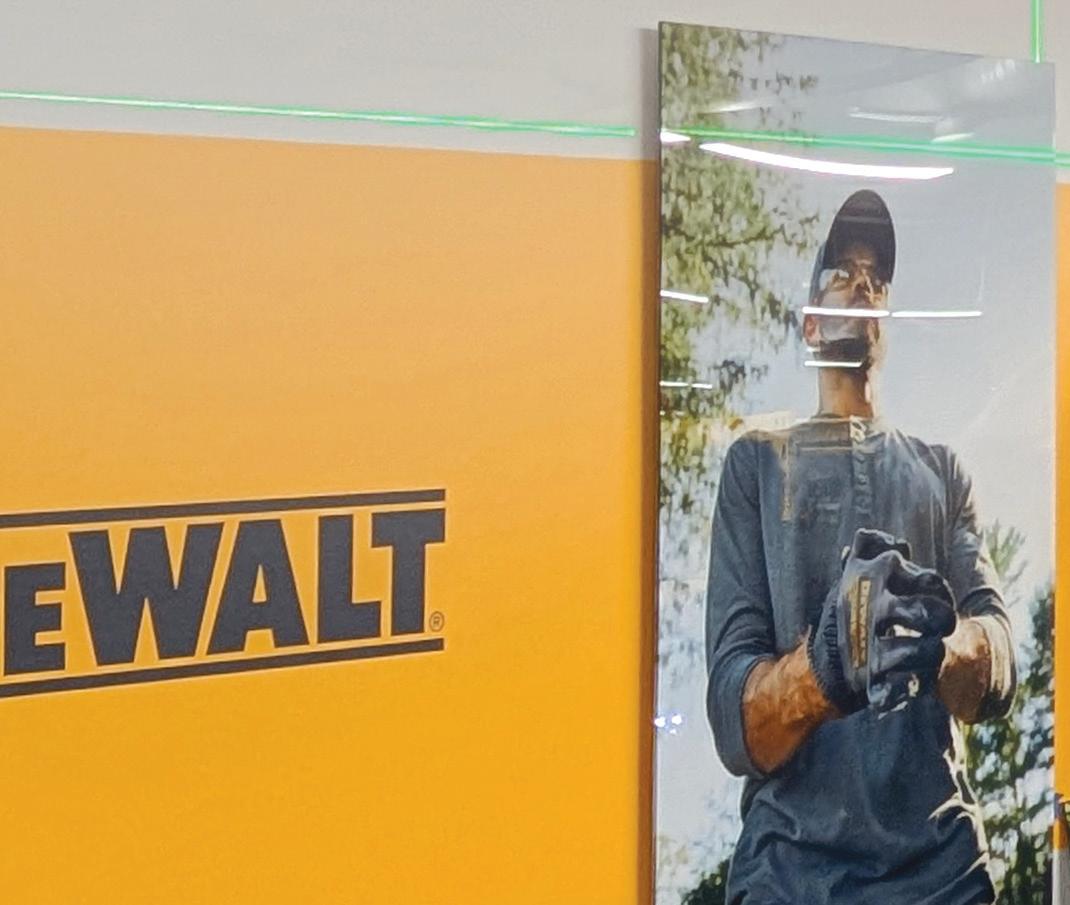
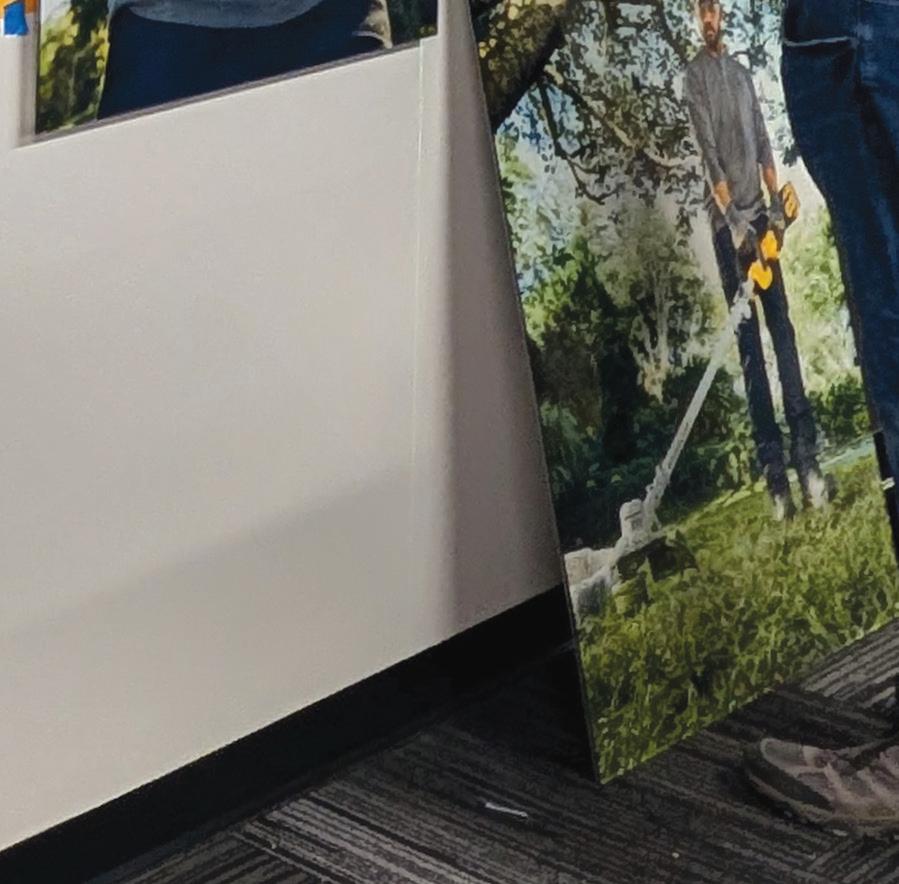
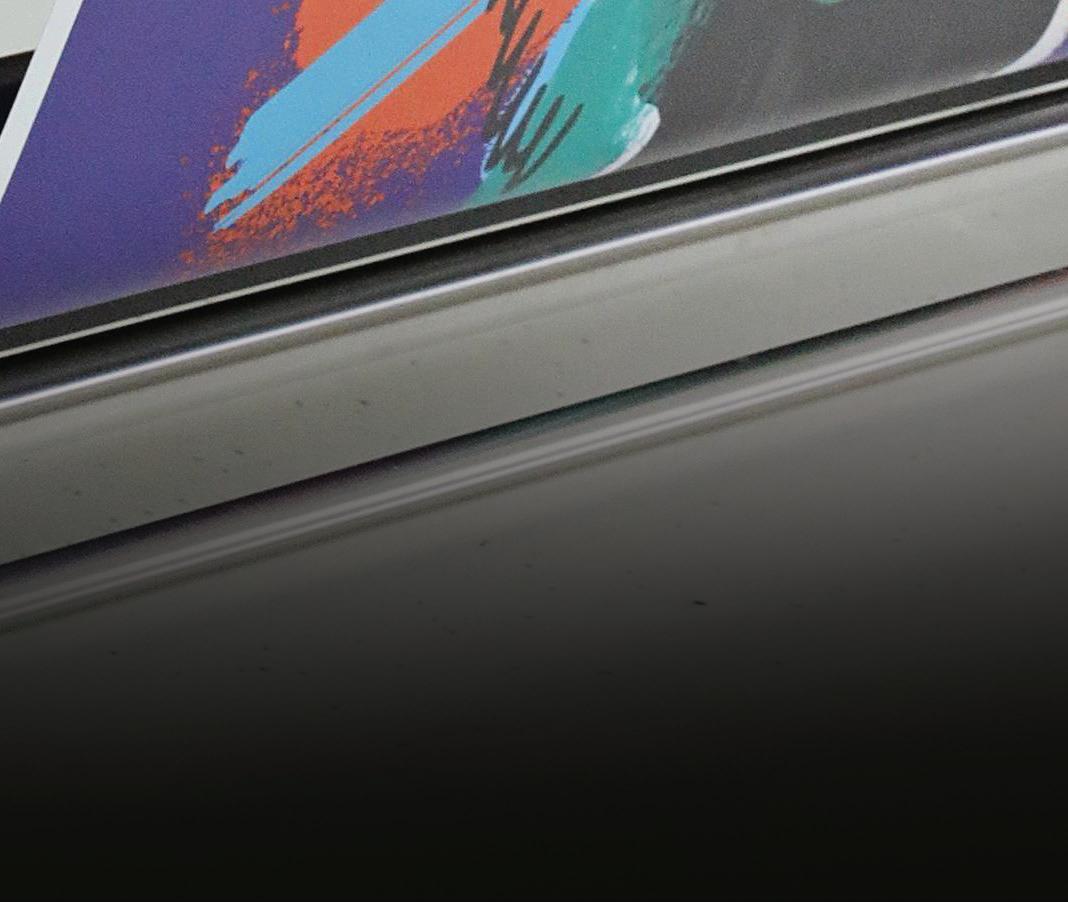
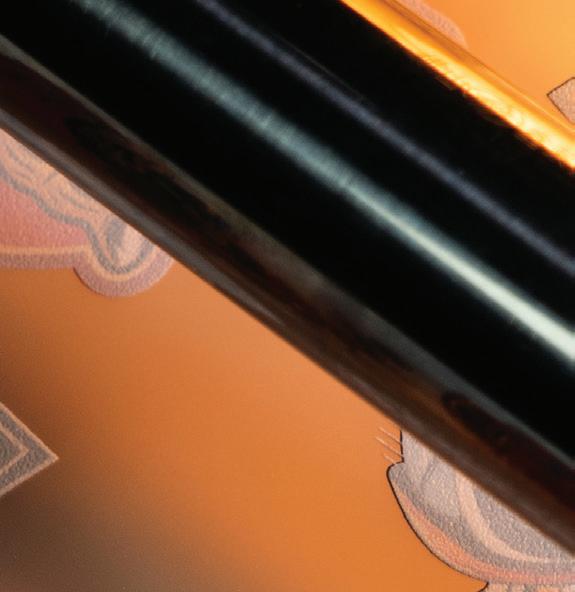
For the second type of application, used to make specific imagery stand out from the wall graphics, the project team decided to design acrylic face mounts hung with metal hanging frames. The face mounts were printed to Sihl 3999 Maranello 8G instant dry, glossy photo paper, which features a 7.5-mil thickness and neutral white to offer a wide color gamut as well as accurate skin tones.
“The Sihl materials were integral. We selected them based on our extensive industry experience with the printing and installation of these specific types of products,” note Boyd and Dominiski.
When it came to printing the graphics, the print provider operates a variety of devices in house on a daily basis including hardware from both Canon U.S.A., Inc. and Epson.
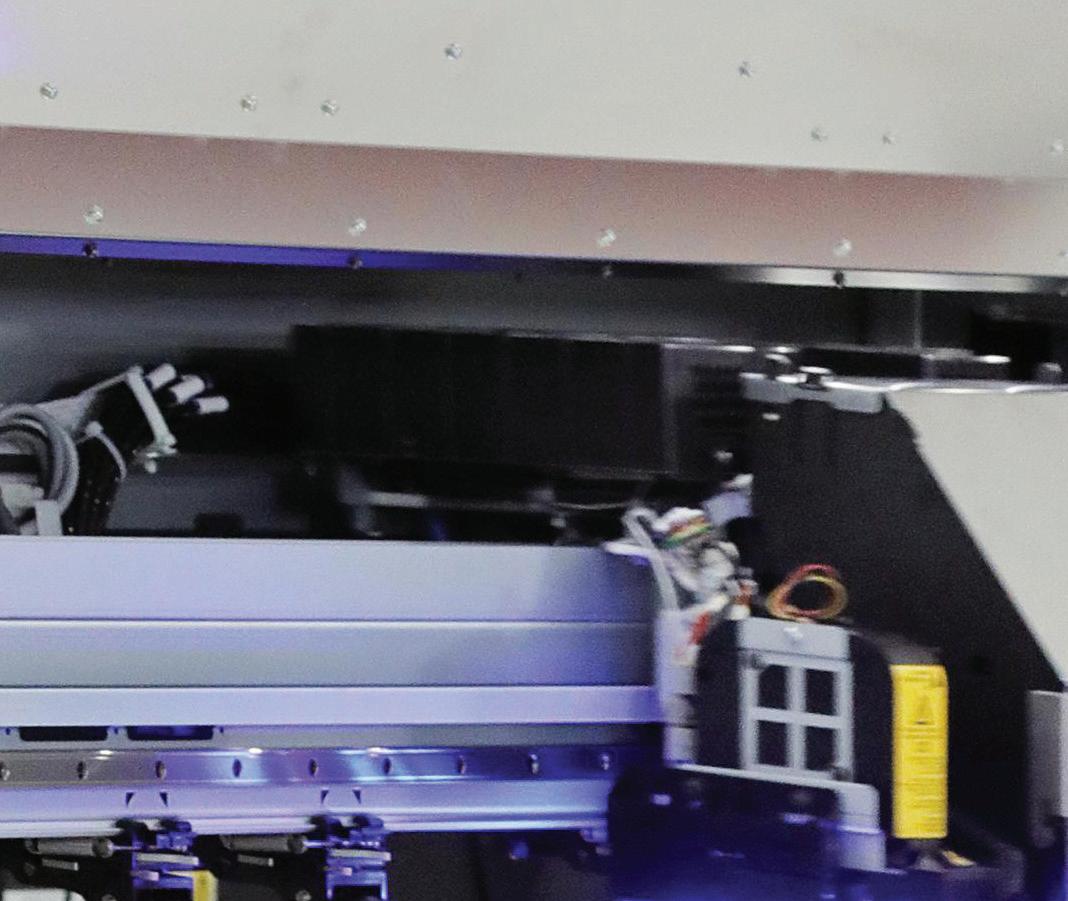
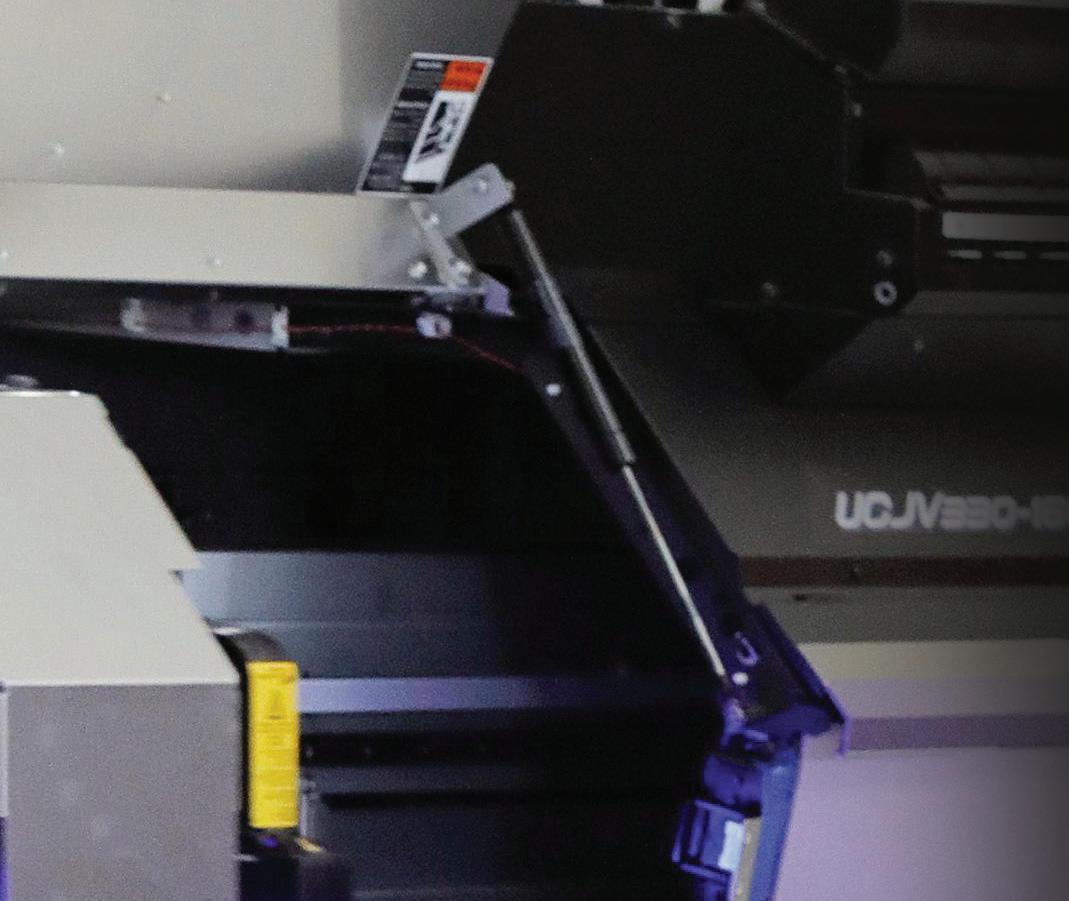
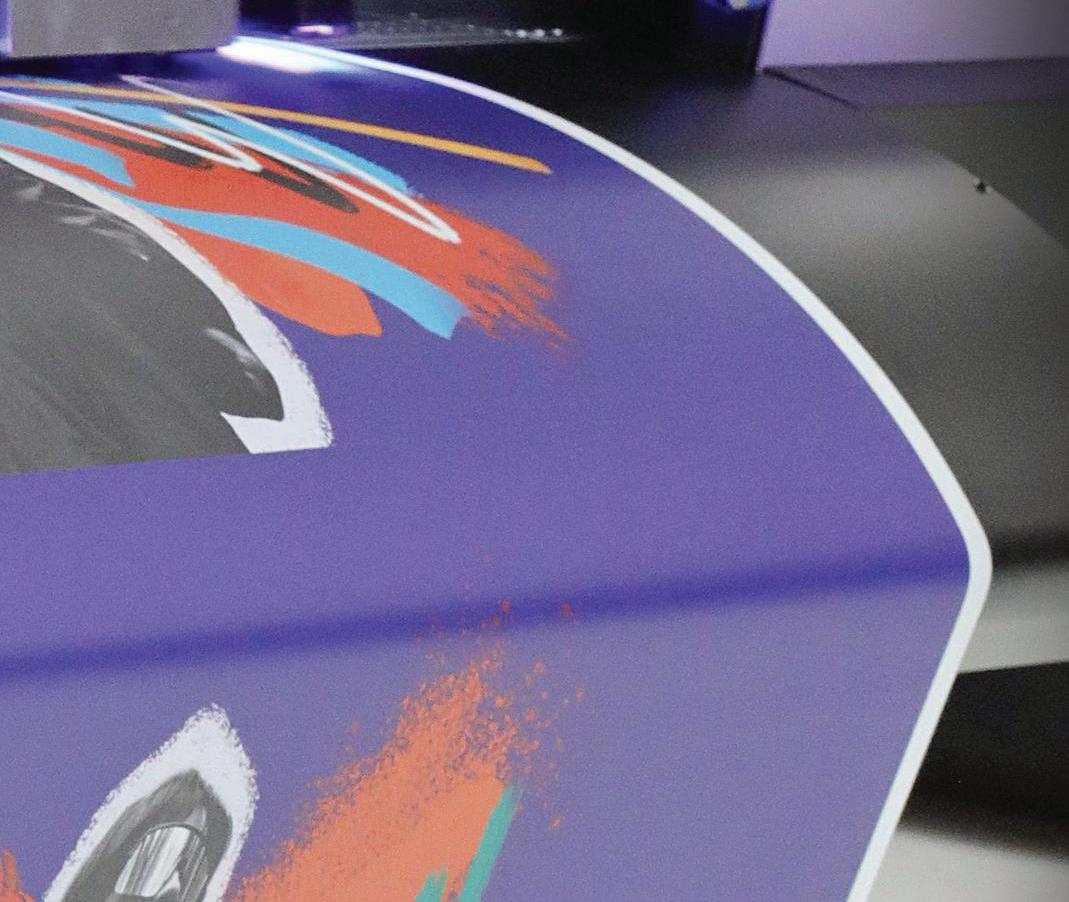
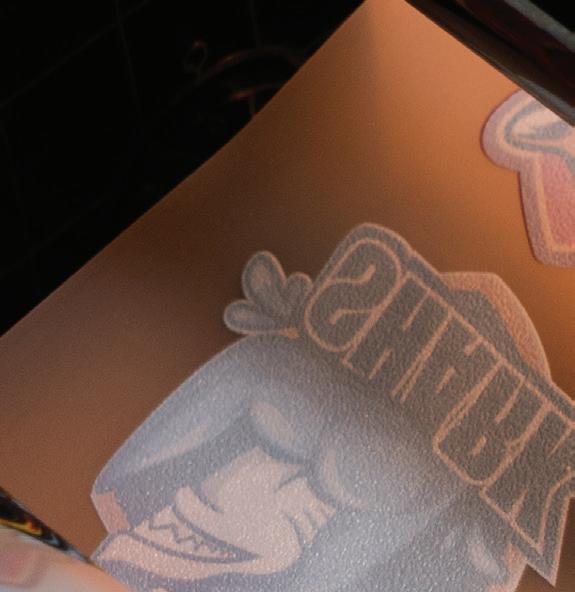
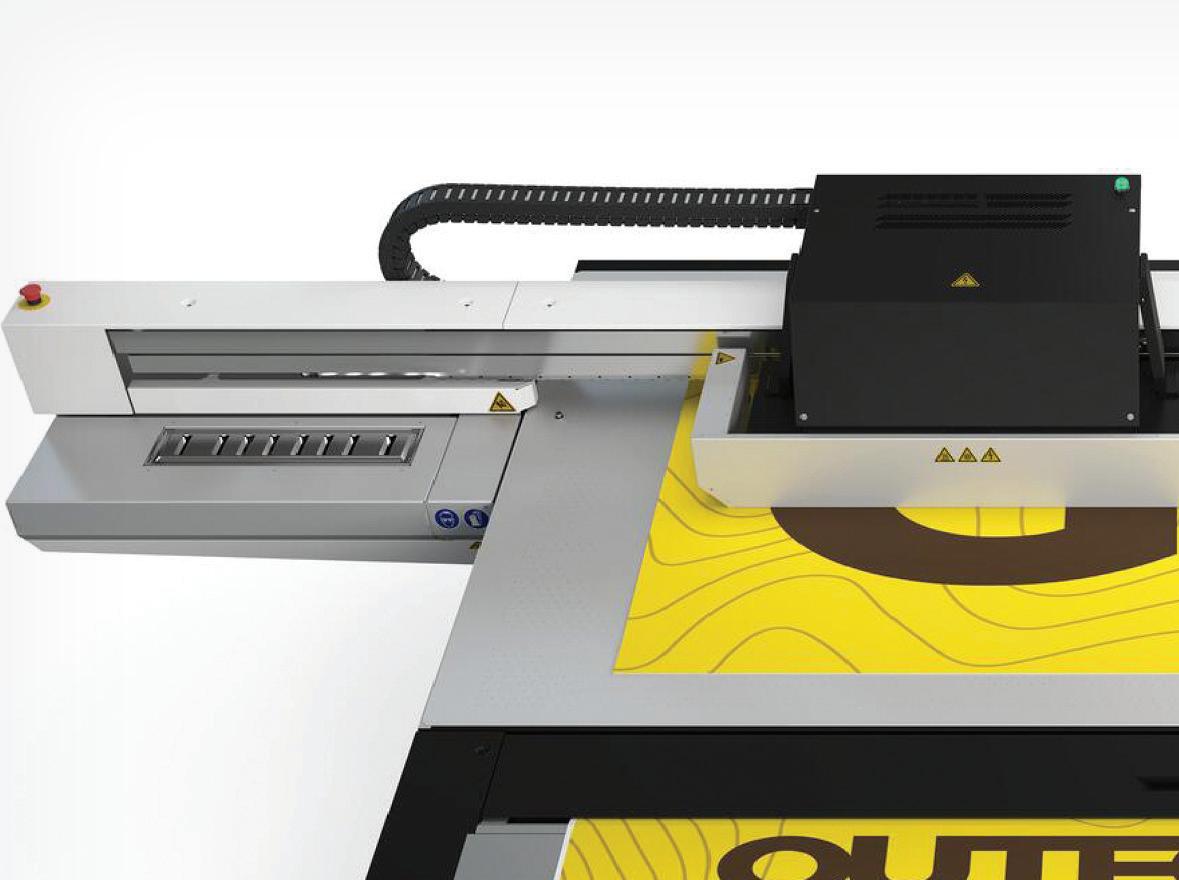
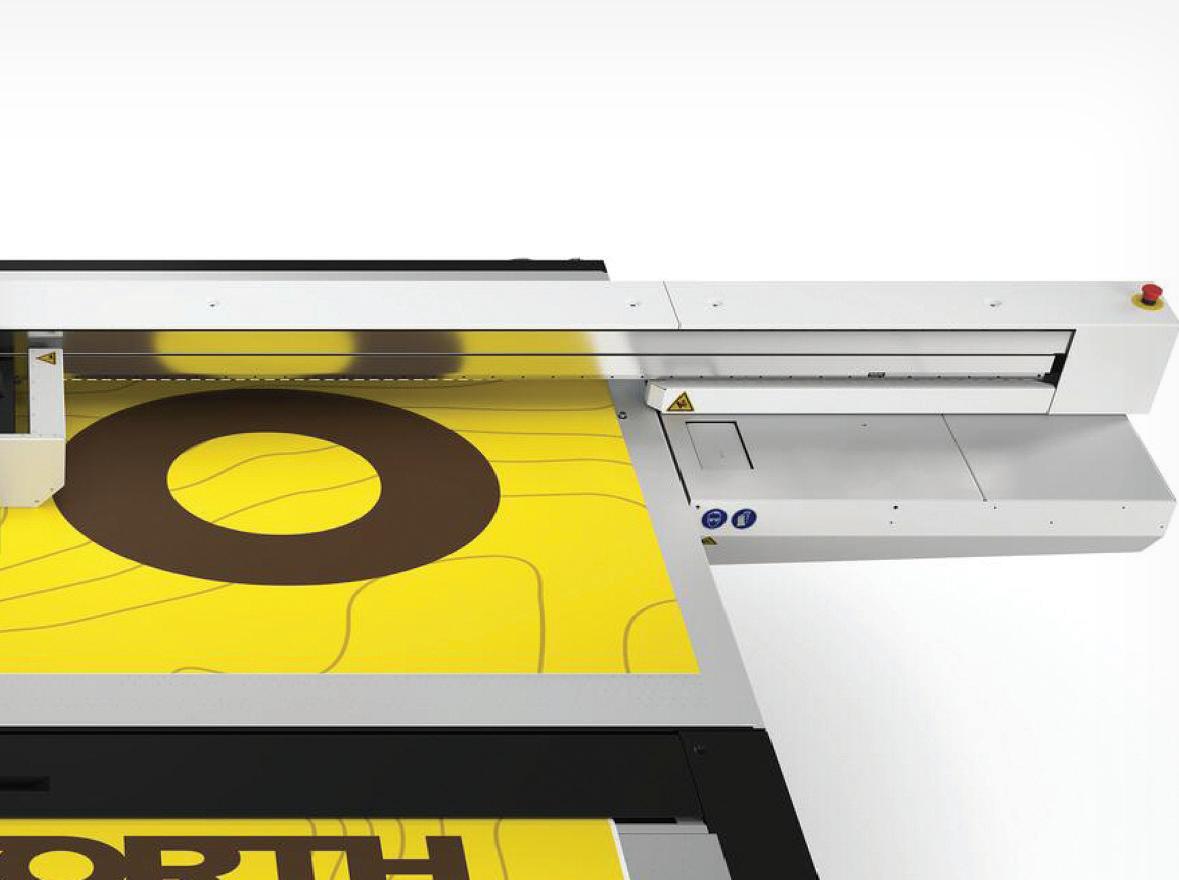
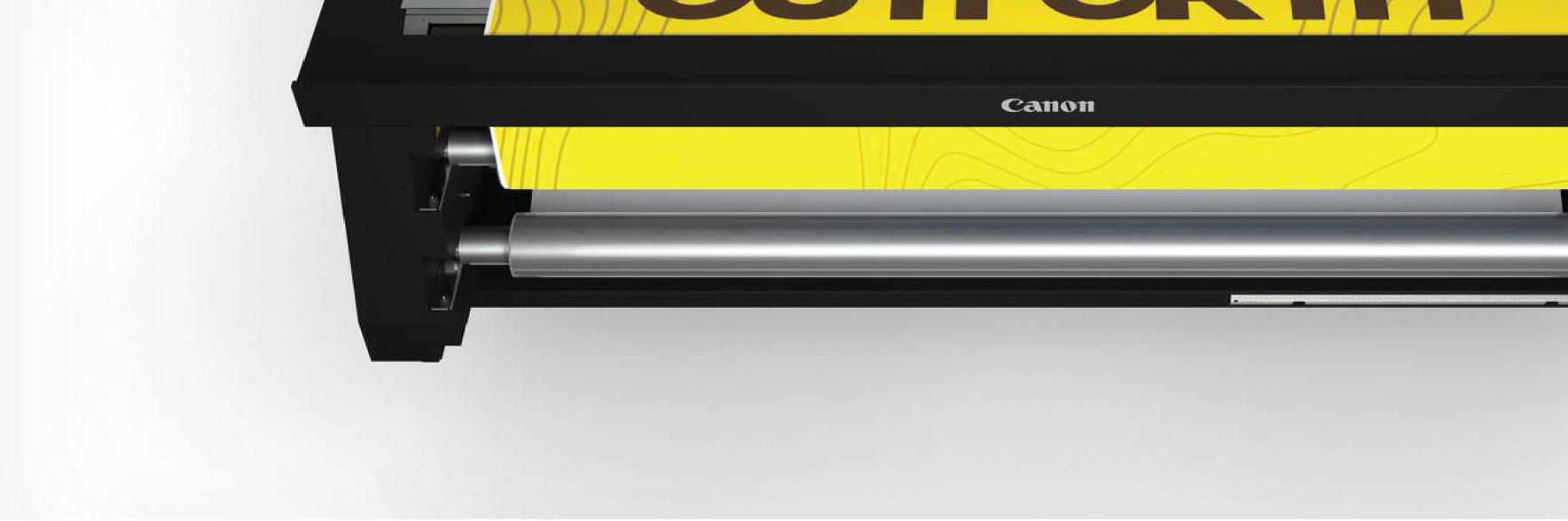
For this particular job, a Canon Colorado 1650 UVgel roll printer was used to print to 2505 WallBliss Type II. The 64-inch printer offers up to 1,800 dpi resolution and features FLXfinish technology, which allows for instantly dry prints at a low temperature.
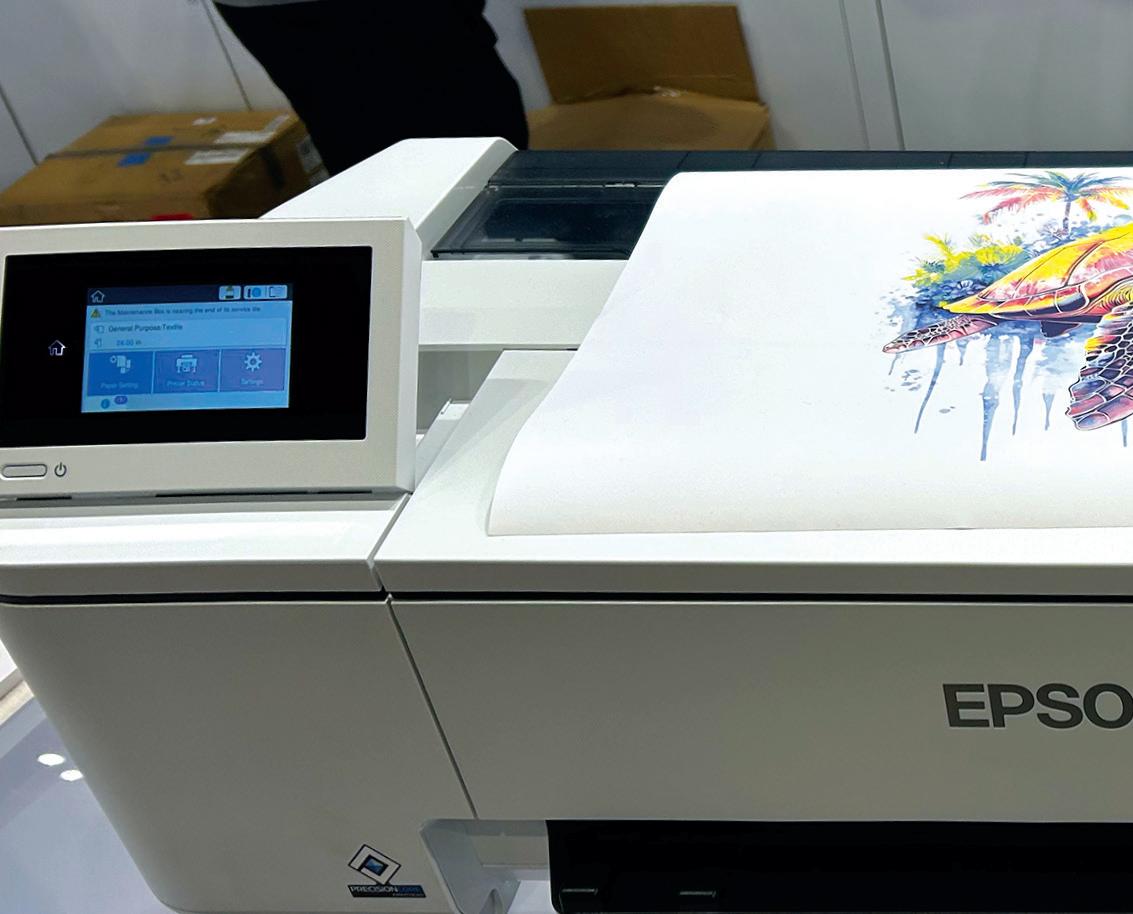
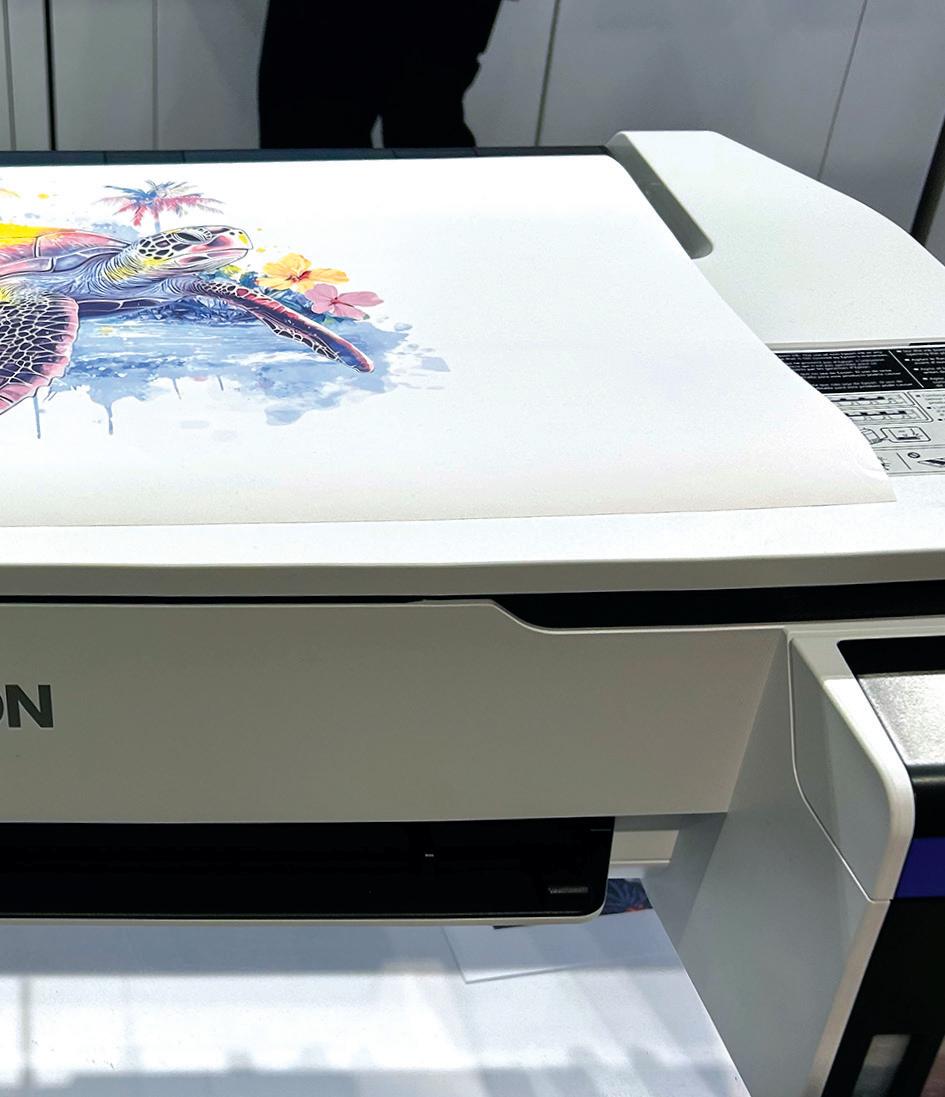
The Sihl 3999 Maranello 8G photo paper on the other hand was printed on an Epson SureColor P20000 64-inch roll-fed printer using UltraChrome HDX ink, a high-performance, ten-color pigment ink set.
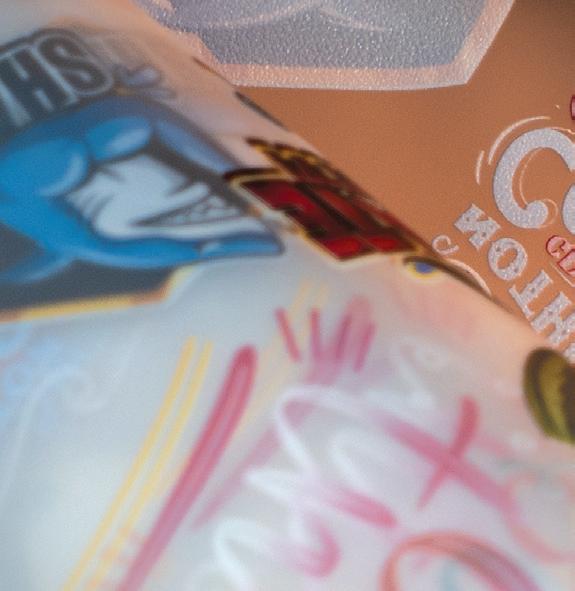
68 acrylic face mounts at 48x32 inches were printed to the Sihl 3999 Maranello 8G and 3,000 square feet of wall graphics were printed to the Sihl 2505 WallBliss Type II. Finishing that
much media meant turning to automated equipment.
Between the print provider’s Sharpcut router from Colex Finishing Solutions, Inc., which cuts materials up to 2.5 inches in thickness; a 54-inch Graphtec America FC7000MK2-130 cutting plotter; and a 36x51-inch Laguna Tools SmartShop Laser Ex CO2 laser cutter and engraver, the team was able to meet production deadlines throughout the process.
“This technology streamlines our in-house production by providing precise cutting and trimming,
which allows for greater efficiency and faster turnaround times,” state Boyd and Dominiski.
Overall, between consulting with the Stanley Black & Decker team, test prints, color matching, final printing, and fabrication, the production process took between two and three weeks.
Color matching was one of the more strenuous parts of the process. Ensuring that each logo from the various brands associated with Stanley Black & Decker would be printed properly required precise color management.
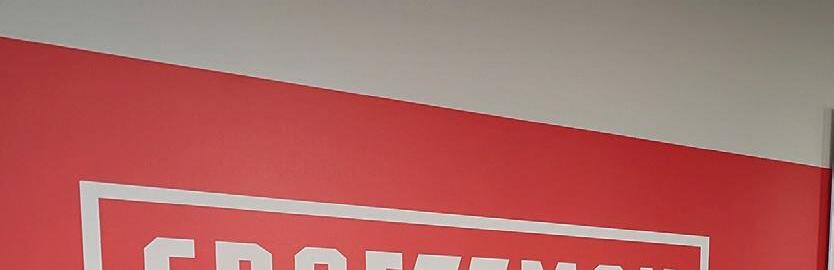
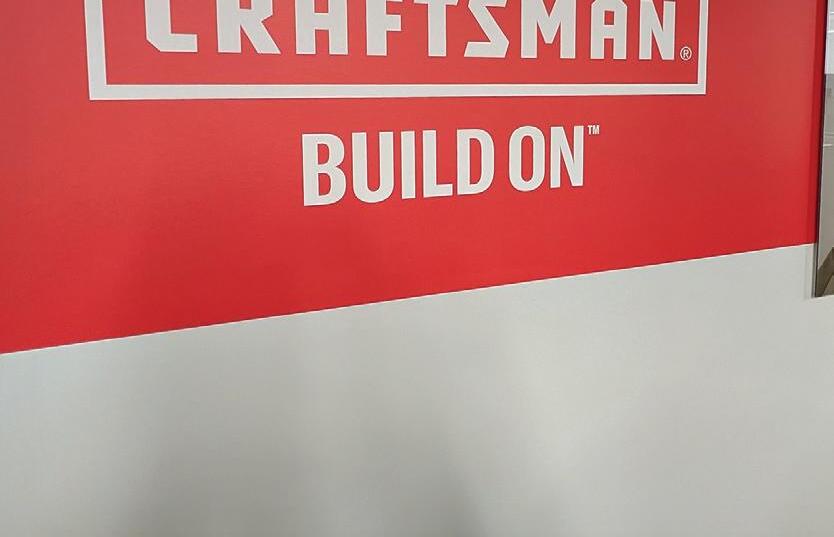
“Our brand colors carry meaning, and getting them right matters. Whether it’s CRAFTSMAN red or DEWALT yellow, we wanted to ensure exact color matching across all applications, including our workplace, so the environment feels as authentic and on-brand as the products we build,” shares Beck.
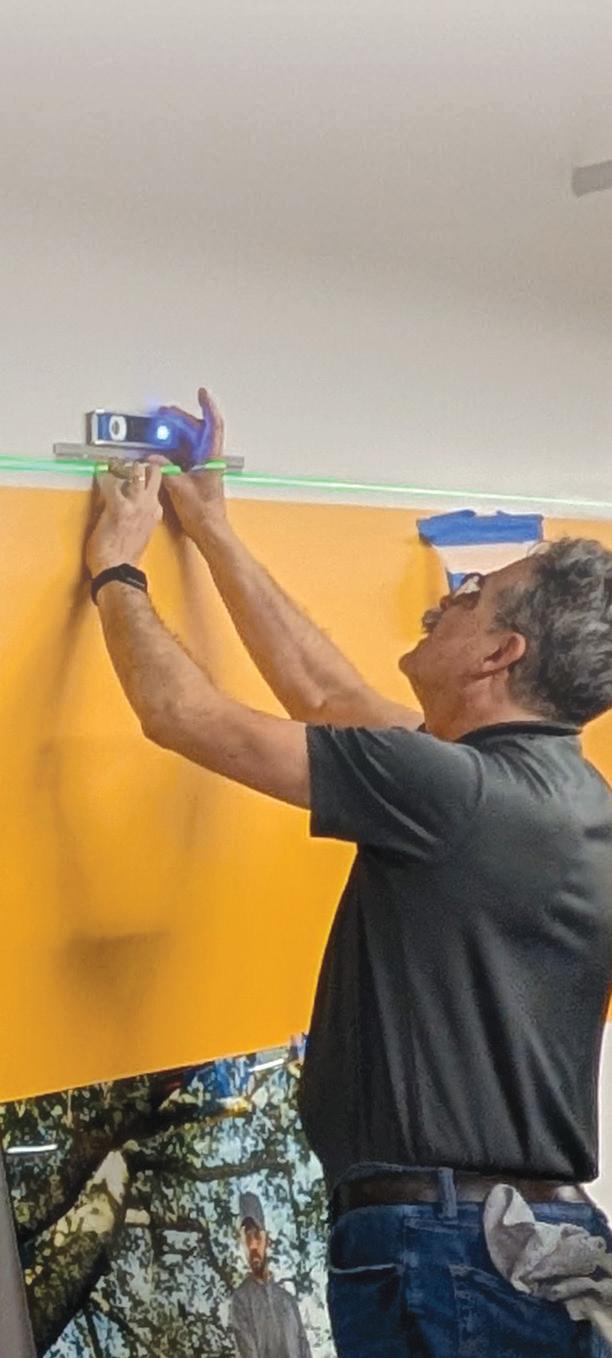
Dodge-Chrome also handled installation, which lasted a little over seven days. It was a smooth process thanks to not only the ease of installing Sihl’s 2505 WallBliss Type II but the installation team was also able
to use Stanley Black & Decker equipment for the duration of the project.
“The Stanley Black & Decker team was incredibly organized throughout the entire process, from the initial site visit and receipt of graphic files to the final installation. They were excellent to work with and we look forward to our continued partnership,” share Boyd and Dominiski.
“We couldn’t be happier with the final result. The space looks incredible and truly reflects the iconic brands we build, making it something our teams feel proud to walk into every day. The team at Dodge-Chrome was professional, extremely detail oriented, and a great partner from start to finish,” admits Beck.
New Mutoh XPJ-1641SR Pro II
The MUTOH XpertJet 1641SR Pro II introduces the new AccuFine HD Pro printhead, delivering up to 60 percent faster print speeds and improved dot placement. An updated front dryer increases drying capacity by 20 percent, while the new smart take-up unit automatically starts and stops with printing to support long, unattended runs. With accurate media handling and consistent color reproduction, the XPJ-1641SR Pro II supports a range of applications. Its four-stage head-height adjustment and multi-stage pressure roller system help maintain print quality across different media types and thicknesses. Enhance productivity with MUTOH VerteLith RIP Software and a complimentary one year subscription to SAi Flexi DESIGN MUTOH Edition—a combined value of $1,600.
Request a FREE sample today. INFO# 1
INC.
Automate DTF Cutting
The ExpressCutPRO reduces labor and increases profits by eliminating the time-consuming task of manually cutting direct to film (DTF) or UV DTF transfers. Featuring an integrated conveyor belt and quick response code workflow, allows for a fully unattended workflow experience. Increase your output while reducing operation costs with ExpressCutPRO DTF Cutters.
For more information visit supply55.com, call 734-6680755, or email sales@supply55.com. Simplify your cutting operation today with ExpressCutPRO. INFO# 2
According to Darren Speizer, VP of sales and marketing, Sihl, consulting with Stanley Black & Decker and Dodge-Chrome and contributing to the overall project was memorable. “The opportunity to deliver high-quality print media that met both the visual and ESG objectives was a true privilege. The final results are amazing—with stunning, impactful brand messaging throughout the Stanley Black & Decker facility, enhancing the environment for employees and visitors alike.”
Bright and Bold
A combination of the right hardware, materials, and collaborative partnership yielded the perfect end result. To quote Boyd and Dominiski, “bright, bold, and colorful graphics” now find a home in the Towson, MD building. D
MUTOH
SUPPLY55,
raditional PVC-based banner materials present longterm waste challenges. They’re not recyclable in most municipal systems, contain harmful additives, and often end up in land�ills after a short-term campaign. In lieu of PVC, many PVC-free products are used for hanging banners, posters, billboards, and similar signage. These offer the same expectations in terms of durability, print quality, and tear resistance.
Meeting Customer Needs
Non-PVC materials used for hanging banners, posters, billboards, and other types of signage are popular options for a number of reasons. This is especially true when the customer or end user is particularly focused on eco-friendliness and/ or sustainability.
Julie Brannen, director, sales and sustainable solutions, Monadnock Paper Mills, Inc., notices sustainability demands continue to rise across retail, brand, and print environments.
Le ) Ultraflex o ers PVC-free banner solutions through its EcoVantage line, developed as alternatives to traditional PVC banner materials. by Melissa Donovan
“Many signage applications are inherently short term and commonly used for promotions, seasonal campaigns, or temporary displays, prompting greater scrutiny of material choices that rely on single-use plastics.”
“PVC has long been the default substrate for large format applications such as hanging banners, billboards, building wraps, and event graphics, mainly due to its �lexibility and widespread industry familiarity. However, when
assessed through a sustainability lens, PVC presents signi�icant environmental and human health challenges that are dif�icult to justify,” admits Nova Abbott, head of marketing, Kavalan.
“PVC-free products are preferred over PVC-based because they eliminate the toxic chemicals released during PVC production and disposal, which pose environmental and health risks.
PVC-based products release volatile organic compounds into the
environment, making PVC-free options a more environmentally friendly, safer choice,” share Darren Speizer, VP of sales and marketing and Erica Wilton, channel marketing and training specialist, Sihl Inc.
Audrianna Manee, marketing manager, Ultraflex Systems, Inc., agrees that non-PVC materials are increasingly preferred due to their minimal environmental impact across the product lifecycle. While traditional PVC-based substrates can be dif�icult to recycle and may release harmful chemicals during disposal, non-PVC materials can be produced without phthalates or heavy metals and are easier to recycle.
“Over time, PVC materials in land�ills also shed microplastics, contributing to soil and groundwater contamination. Non-PVC alternatives present a signi�icantly lower environmental impact. Their manufacturing processes are cleaner and the materials themselves
are recyclable, making them a more sustainable option overall,” shares Mike Maurer, marketing coordinator/account manager, XCEL Products.
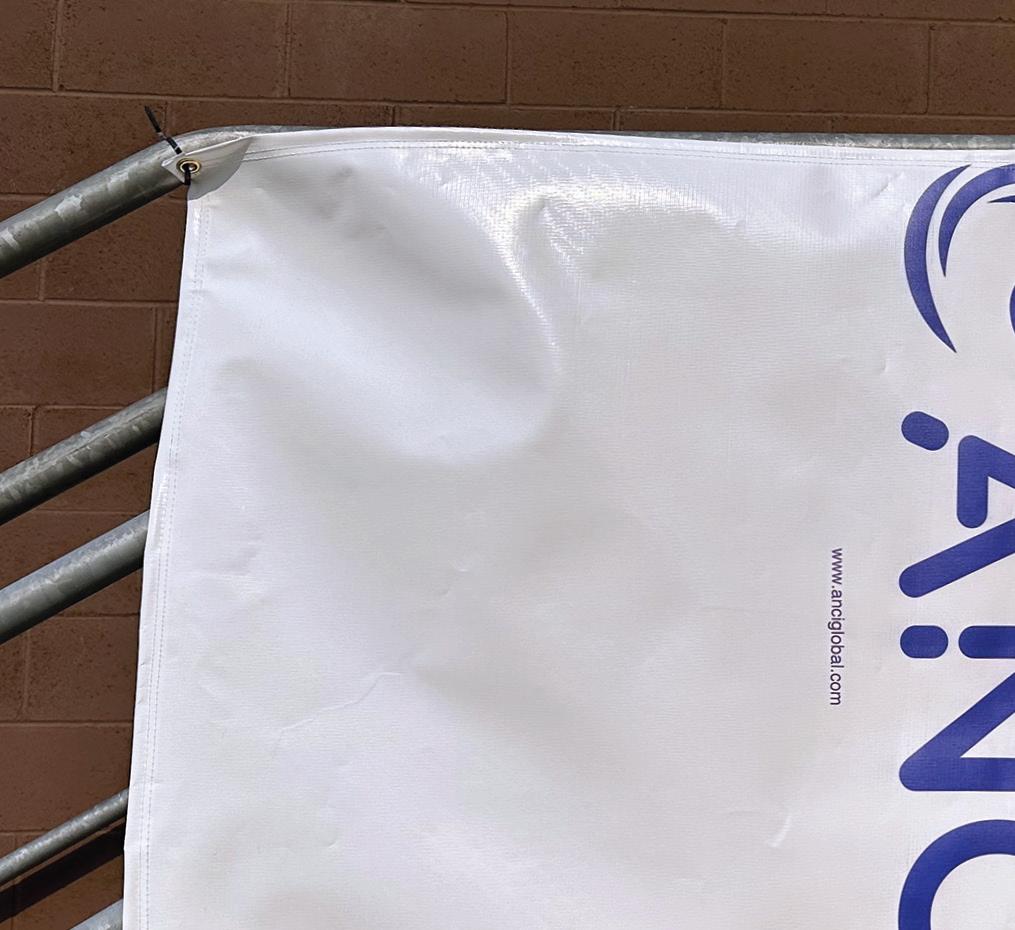
With PVC scrim banners typically ending up in land�ills due to the lack of commercially viable recycling options, Sean McDermott, director of Sycltex sales, The Nicholas Group/ANCI Global, says non-PVC products like ANCI’s Sycltex promote a true circular economy. It is 100 percent recyclable through the company’s take back program. “These nonPVC products appeal to brands and printers pursuing Environmental Social Governance (ESG) goals, EcoVadis certi�ication, or regulatory compliance in regions that are phasing out PVC.”
Recognizing these challenges to the environment and human health, “brands and corporations increasingly seek signage solutions that align with their sustainability initiatives. NonPVC banner materials offer a way to reduce environmental impact while maintaining performance,” adds Manee.
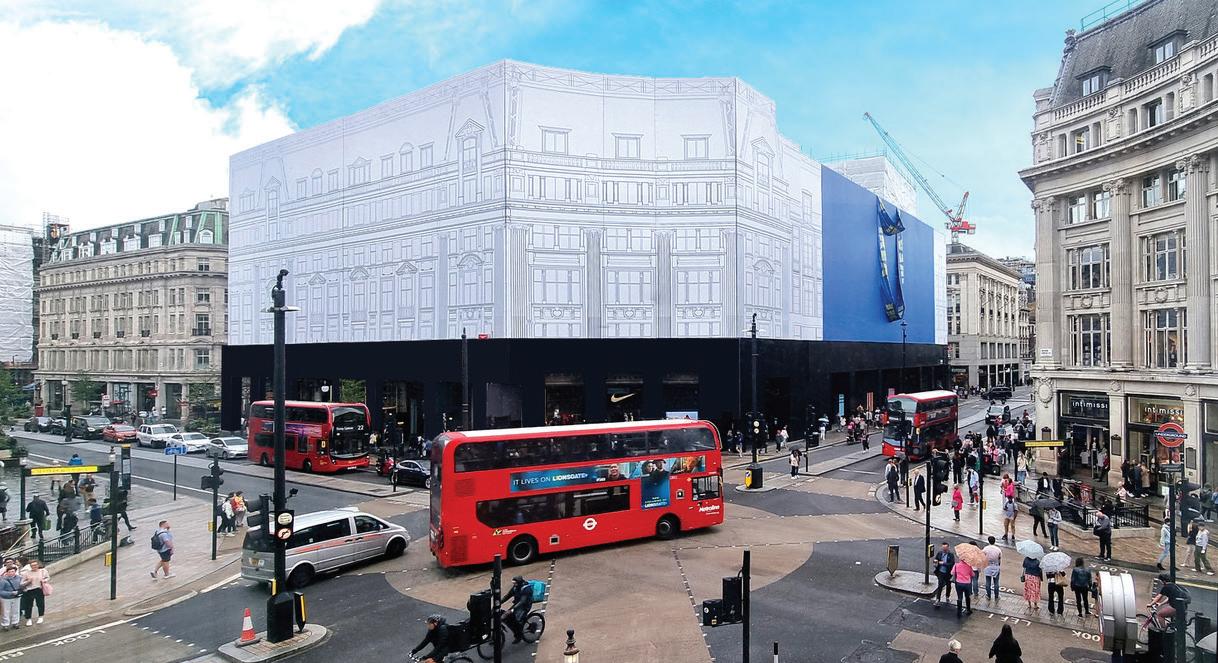
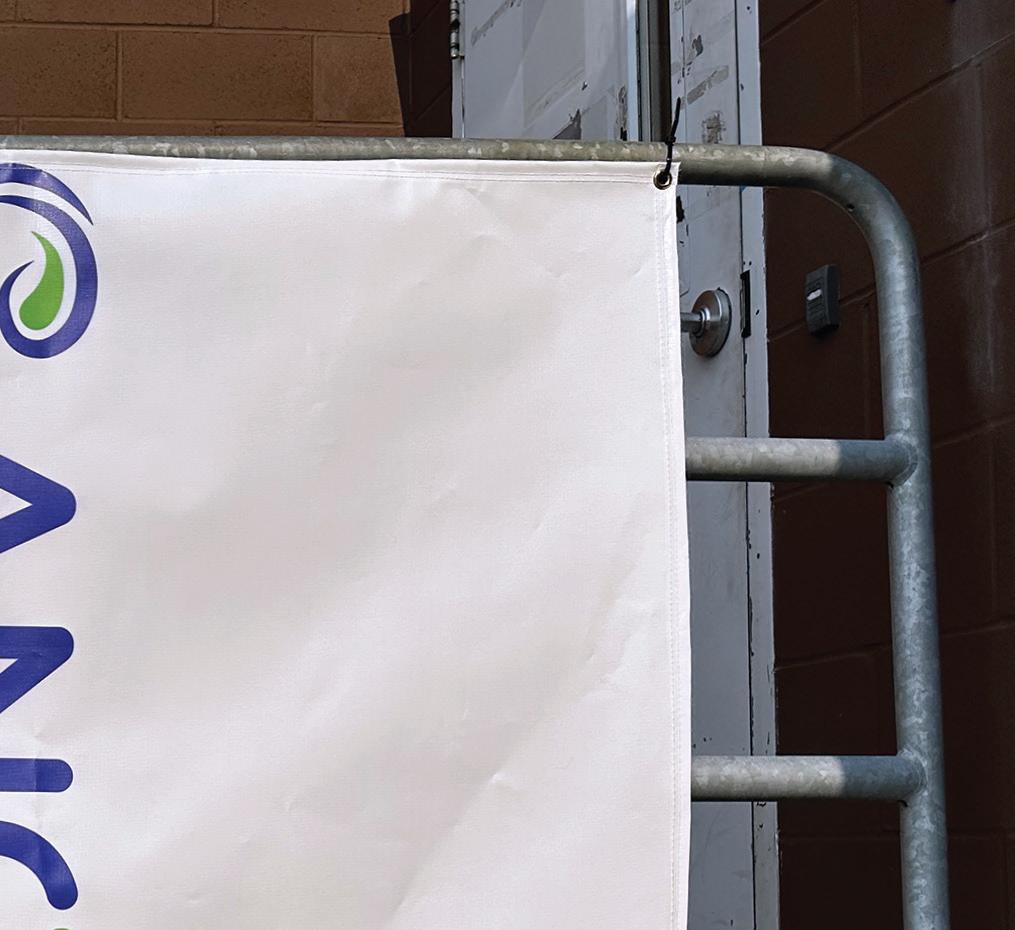
1) Kavalan Bu erfly is a double-sided PVC-free blockout textile material ideal for two-way signage and hanging banners. 2) Embrace Building Wraps delivered a 2,400 square meter building wrap for IKEA’s Oxford Street store in Oxford Circus, London, UK, demonstrating the durability and structural integrity of Kavalan PVC-free materials at scale, specifically Sunlight Weldable. 3) Sihl o ers 3275 TexBanner—a 13-mil, ma e, lightweight, 100 percent synthetic non-woven banner designed for both indoor and outdoor applications.
PVC-free materials support a cleaner environment and safer human exposure �irst and foremost. The bonus is in that they deliver high durability and strength, making them ideal for long-term projects, advise Speizer and Wilton.
What’s the Alternative
Non-PVC is a broad term, so what de�ines a non-PVC material—especially in terms of the applications discussed here, mainly
hanging banners, posters, and billboards? At the top level, there are thermoplastics, divided into polyole�in and polyesters. Polypropylene (PP) and polyethylene (PE) polymers are types of polyole�in. Popular polyesters include PE terephthalate (PET). Paper-based products are also PVC free.
“Non-PVC banner materials are manufactured using alternative base fabrics and coating technologies that remove the need for vinyl altogether,” explains Abbott.
Manee says most PVC-free banner products are polyole�in or polyester-based constructions. This is because of their ability to offer a strong balance of printability, durability, weight, and cost. They are considered eco-friendly because they do not include chlorine-based plastics or phthalates.
Polyester-based fabric combined with a proprietary water-based coating system delivers �lexibility, durability, print quality, and �lame retardancy without relying on PVC, phthalates, or other hazardous additives. “What makes these materials genuinely more sustainable is not simply what they are made from, but what they deliberately eliminate. By removing PVC from the equation, Kavalan materials avoid the toxic chemistry associated with vinyl production, including carcinogenic precursors and endocrinedisrupting plasticizers,” comments Abbott.
Another polyester-based option is PET �ilm, which display �ilms and backlits might be made out
of. “It’s a more sustainable choice because it’s recyclable, doesn’t contain toxic additives, requires less energy, and generates fewer emissions than creating new plastics,” say Speizer and Wilton.
Part of the polyole�in category is PP and PE. “These polymers are recyclable through standard recycling streams, making disposal and reuse more practical and environmentally responsible,” says Maurer.
Proprietary blends of PE polymers that are then reinforced with CLAF—an open mesh fabric—for superior durability and strength, are other examples, shares McDermott. These do not include any PVC, phthalates, or heavy metals.
Paper-based products are considered free of PVC. For example, certain portfolios offer options made from 100 percent post-consumer recycled tree �iber. Monadnock’s paper-based substrates are process chlorine free, so no chlorine or chlorine compounds are intentionally used during recycling and manufacturing.
How the product is manufactured helps de�ine its sustainability.
“Forest Stewardship Council standards support responsible forest management. Products can also be manufactured under a thirdparty certi�ied ISO 14001 Environmental Management System, with environmental performance continually assessed through EcoVadis,” explains Brannen.
Another example is the production process for Kavalan’s PVC-free
materials, which is inherently cleaner and less resource intensive, according to Abbott. “All Kavalan materials are compliant with international standards including REACH and RoHS, EN71 Toy Safety, and EN13432 for biodegradability and compostability, supporting safer handling and more responsible end-of-life pathways. Every Kavalan product has undergone independent Life Cycle Assessment, demonstrating
superior environmental performance compared with both PVC and conventional textile substrates. These assessments show lower carbon footprints and signi�icantly reduced freshwater consumption during production.”
No Compromises
While non-PVC banner materials used for hanging banners, posters, and billboards offer the advantage of eco-friendliness and
sustainability it’s important they not compromise on other essentials like ink laydown, color gamut, durability, and tear resistance.
According to Abbott, “there is a common misconception that PVC-free banner materials compromise on performance or durability. In reality, modern nonPVC substrates are engineered to meet the same demands as PVC for large-scale, long-term outdoor applications. They offer excellent strength, weldability, and weather resistance, while
providing a clear environmental advantage at end of life, as they do not release harmful toxins if incinerated or sent to landfill. This performance is proven in real-world applications.”
Most non-PVC banner materials are designed to perform similarly to PVC in terms of print quality and durability. “They support strong ink adhesion, vibrant color, and smooth ink laydown across ink technologies such as UV, latex, and solvent/ eco-solvent. They also offer
excellent tear resistance and strength, making them suitable for banners, billboards, and outdoor signage without sacri�icing performance,” says Manee.
Brannen points out that depending on the material, for example paper-based substrates, a distinct visual and tactile advantage is offered—further enhancing the bene�its. “The natural surface and texture of paper can enhance the look and feel of printed graphics in ways that uniform plastic �ilms cannot, particularly in retail and display environments where material perception matters.”
“Depending on surface �inish and white point, non-PVC banner
4)
materials often deliver superior visual results compared to PVC banners. PVC materials require an embedded fabric scrim for stability, which can be visible in the �inal print. Non-PVC constructions eliminate this issue, resulting in a cleaner, more re�ined printed image,” adds Maurer.
And while many PVC-free materials do meet—or even in some cases exceed—performance expectations, intended use must always be considered. “In terms of durability and tear resistance, expectations must be set on the intended use,” stresses Brannen.
Durability depends on the application, seconds Steven Verheul, category manager/ technical skins, Walki. Products used indoors need to last over three years and outdoor applications should be rated for two years and up, especially when mounted onto a panel or tensioned in a frame with limited wind access.
Pricing Sacrifices
Non-PVC banner materials used for hanging banners, posters, and billboards typically cost more than their PVC-based counterparts. In an interesting economic climate, increased prices are dif�icult to justify. However, both print providers and customers �ind the sustainability aspect worth the added expense.
The first iterations of ecofriendly alternatives to PVC did carry higher price points, hard to verify sustainability claims, and were not comparable to PVC in terms of durability,
weldability, and tear resistance, admits Abbott. “This combination created hesitation among print providers and buyers alike. That landscape has changed signi�icantly. Advances in material science and manufacturing now mean PVC-free banner materials can meet—and in many cases exceed—the performance requirements of large format applications, without introducing a meaningful cost barrier.”
Today, “cost varies by application, performance requirements, and �inishes. Some projects require a premium �inish and inherently cost more, while others are comparable in price to PVC-based options. Overall, many customers do not �ind the difference signi�icant, especially when compared with performance expectations and material requirements,” notes Brannen.
PVC banner materials are historically less expensive, points out Maurer, due to long-standing mass production. PE and PP resins are comparable in cost to PVC resins, he continues, but believes as demand for non-PVC alternatives continues to grow, production volumes increase, which steadily drives costs down and improves price competitiveness.
Manee agrees that demand for these products continues to grow as organizations prioritize sustainable solutions, which means availability is expanding and this in turn keeps pricing competitive.
“In today’s economic climate, customers prioritize ‘greener’ materials that reduce toxic
chemicals and support sustainability initiatives. As a result, the demand for PVC-free materials is increasing, driven by customer preferences and companies working to meet ESG goals,” add Speizer and Wilton.
Regulation is accelerating the shift to non-PVC materials used in signage. “A clear example is Tallinn, Estonia, which became the �irst European capital to ban PVC-based advertising in public spaces starting January 1, 2026. Decisions like this, rooted in public health, environmental safety, and circular economy principles, highlight a growing reality—PVC’s true cost has never been accurately priced into the material itself. This is where the concept of hidden cost becomes critical. PVC may
appear cheaper at the point of purchase, but its environmental and health impacts are externalized costs born by communities, ecosystems, and future generations. These impacts are effectively unaccountable on a balance sheet, yet they represent real economic and societal liabilities that are increasingly being addressed through policy, regulation, and procurement standards,” shares Abbott.
McDermott adds that while certain PVC-free substrates cost more upfront, the total cost of ownership is lower. “This is due to reduced shipping weight and higher longevity—fewer replacements. Brands and printers increasingly view it as a smart investment in brand reputation and ESG initiatives.”
“Interest in and demand for nonPVC materials is growing. Brand owners prefer recyclable advertising materials as this serves their corporate environmental strategy. The awareness that future legislations may prohibit PVC-based materials is fueling the interest,” says Verheul.
Higher Demand
The demand for PVC-free substrates, specifically those used for hanging banners, posters, billboards, and similar types of signage, continues to steadily rise. This is largely thanks to mandates from corporations and governments, consumer interest and preference as education on the advantages grows, and updated supply chains make it possible for mass production of various products. D
FACTORS GREEN CERTIFICATIONS
In completing the chart, vendors’ responses do not reflect that all of their products are eco-friendly. Please contact companies for more information on the specific media portfolios that meet the criteria referenced in the chart.
#14
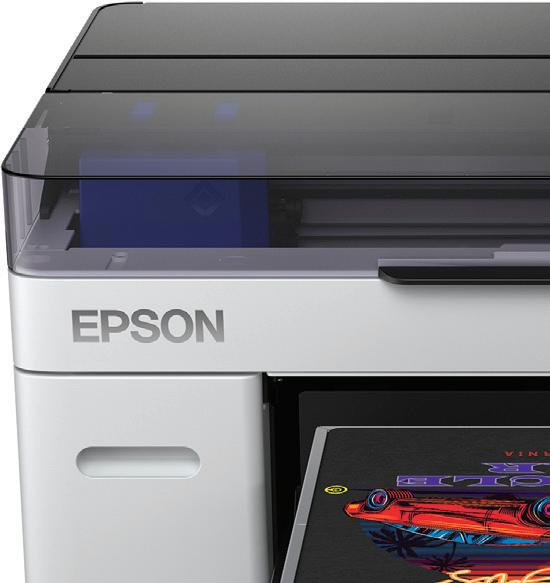
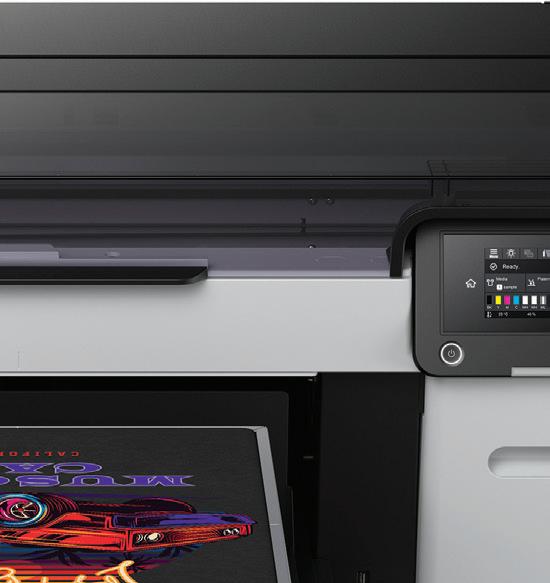
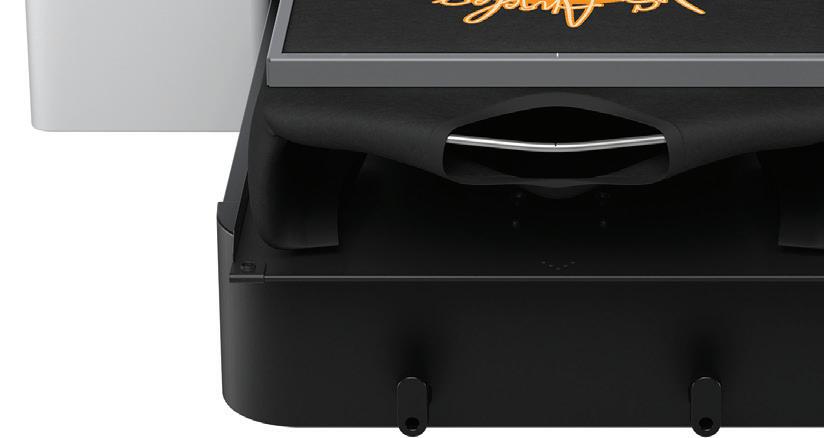
irect to film (DTF) and direct to garment (DTG) printing solutions are leveraged by wide format print shops as a way to extend offerings. Customers looking for signs and apparel? What about a banner and personalized drinkware? They can get it all in one place, with one point of contact.
by Melissa Donovan
For the print service provider (PSP) considering adding DTF or DTG printing to their service lineup, a hybrid solution—a device offering both capabilities—is enticing. As an entry-level user unsure of the demand, having either DTF to DTG on hand is an advantage. Once its evident which service is in more demand, it might make sense to invest in a standalone device.
Let’s Go Hybrid
A hybrid device offers the best of both worlds—DTG and DTF—in one compact solution.
DTG/DTF hybrid options are well suited for smaller print shops that lack space. “The printers provide
Above) Polyprint’s Filmjet Mini is a complete DTF solution designed to make production simple and reliable.
decent productivity, about 20 shirts an hour, and can be set up in a spare room. Since these hybrid printers create DTG and DTF, they are versatile, allowing users to decorate any fabric type and expand offerings to hats, shoes, bags, and other non-�lat items,” explains Karl Tipre, owner, PrinterBiz, a DTG-C Company.
It’s all about application/substrate versatility. Print shops can choose between the most ef�icient print method—DTG or DTF—based on “incoming job features, such as garment type, order size, details required, and turnaround time. These hybrid systems also allow operators to easily pivot between work�lows and adapt production throughout the day as orders come in,” says Paul G. Morales, product manager, Professional Imaging, Epson America, Inc.
Morales adds that hybrid systems print directly to cotton, blends, and synthetics, while also producing �ilm transfers for nonapparel applications or materials that are not ideal for DTG.
“A DTG/DTF hybrid printer is nice because certain graphics have a lot of saturation and can feel thick, like a sticker if printed using DTF. With a hybrid printer, you can choose to use DTG for the softer hand, or DTF if you’re printing on polyester or non-�lat surfaces,” continues Tipre.
Kostis Gounaris, business development, Polyprint, believes
“a hybrid DTG/DTF machine is a great option, especially for small businesses, because you basically get two important printing technologies in one machine. Instead of buying separate DTG and DTF systems, you can handle both with a single setup, which is a big help when you’re working with a limited budget. It also lets you serve a much wider range of customers—from cotton t-shirts to different types of fabrics—so you can take on more orders and grow your business faster.”
While positives abound, there are negatives to implementing a hybrid solution.
Gounaris points out that with hybrid machines, the DTF process is still manual on some models compared to a dedicated DTF printer. In addition, DTG inks are typically more expensive than DTF inks.
Ayden Tran, digital marketing manager, Ricoh DTG, says “hybrid printers are not intended to compete with high-volume, roll-toroll DTF shakers. If a shop’s sole business is over 100 transfers a day, a dedicated roll-to-roll system is faster; however, for the average custom shop, the hybrid’s �lexibility outweighs the raw speed of a specialized unit.”
The manual part of the DTF process makes it best suited for short-run production. “This is because the �inishing portion, which includes applying and melting the powder, is done manually. Additionally, many hybrid printers are slower than production-level DTF printers, so they don’t provide the same
kind of productivity,” explains Mike Davis, application specialist, Roland DGA Corp.
“There are a few disadvantages with hybrid machines. They do require a print shop to have printer operators familiar with two separate pretreatment, work�low, and post-work�low requirements,” admits Morales.
Ink Sharing
Working on a hybrid device means sharing inks between DTF and DTG processes.
“Hybrid printers use the same ink for DTG and DTF printing. The upside is it is easy to switch between DTG and �ilm. The downside is a hybrid printer system typically has more expensive ink,” says Kipre.
Certain ink sets are capable of producing vibrant, high-quality output for both DTG and DTF, says Morales.
“Specialized DTG inks are engineered to bond perfectly to fabric and DTF transfer �ilm. This
eliminates the need for two ink inventories and prevents clogging issues often seen when switching chemistries,” says Tran.
Switch It
It does not take long to switch modes on a hybrid device.
Gounaris says the switch between DTF and DTG couldn’t be easier. “It’s just settings on the RIP and instead of a shirt you load a �ilm on the platen.”
According to Morales, the change between DTG and DTF on a hybrid device should be fast and intuitive. Software makes it as simple as selecting either t-shirt or �ilm. “Once chosen, the software and printer automatically adjust the appropriate settings so the operator doesn’t need to manually change ink densities, RIP pro�iles, or hardware components. This seamless transition minimizes downtime and allows users to move cleanly and con�idently between production modes.”
This is all dependent on the system, as some might still involve
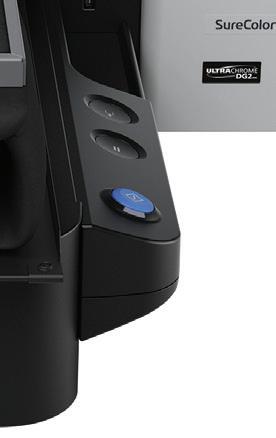
1) The Epson SureColor F1070 Business Edition is a garment printing system designed for entrepreneurial creators ready to launch or grow their apparel business.
manual changeover versus software driving the switch. When it’s included in the software, “the image is automatically mirrored and the ink order reversed to make the switch easy,” explains Tipre.
He does note that there is some inherently learned knowledge involved in the switchover. “The user must reduce the amount of white ink in the software settings when switching to film since it is far less absorbent than fabric. There can be a learning curve for using this technology, but a good printer
dealer will have training to make the user comfortable.”
Standing Alone
Printers specializing in only DTG or DTF are also useful in a wide format print shop.
Standalone devices are optimized for their specific print methods, attests Morales. They offer high speeds, increased productivity, and a streamlined workflow. This makes “it easier for operators to become familiar with the print technology and maintain consistency.”
“If volume and efficiency are your priority, standalone can be a strong choice,” advises Gounaris.
Production levels increase because a standalone DTF machine for example is a more automated setup over a hybrid device. “It’s built specifically for DTF production, which means you can produce higher volumes every day with minimum manual work. That helps lower your cost per print and makes it easier to handle more customers,” explains Gounaris.
“Standalone units are optimized for a singular purpose. A dedicated DTF line is ideal for massproducing transfers to be heat pressed later,” adds Tran.
Theoretically, all DTG printers can print film—so a DTG standalone device is not necessarily something that exists in the sense that it can physically only print on garments. The user may choose to only print garments and not film, but the film capability is still there. Tipre points out that it’s not that the printer can’t switch between the two options, but more that some printers make it
easier than others with integrated software.
Standalone printers are ideal if the intent is to print to a specific application/material. If printing to garments and film is the goal, then investing in two separate machines for DTF and DTG “means higher upfront costs and more space needed,” admits Gounaris.
“A disadvantage of using a standalone DTG or DTF printer is that such a device can’t satisfy the needs of users who require an all-in-one solution of performing both DTG and DTF printing. Having both DTF and DTG standalone printers can be challenging for operations that don’t have the space for two independent devices,” shares Davis.
Tran agrees and suggests that standalone setups often require double the floor space and expanded maintenance routines.
Running a standalone DTF printer does limit the capability of offering a softer hand on the final graphic. “A DTF standalone printer cannot print anything but transfers, so for solid graphics the finished product can feel thick like a sticker,” suggests Tipre.
With a dedicated printer, “you are locked into a specific workflow. A standalone DTF setup cannot print directly onto a garment for that soft hand feel that several customers demand,” says Tran.
Volume Work
A hybrid device is best suited for on demand single orders, samples, and short runs. Meanwhile
standalone solutions—either DTG or DTF—make more sense for higher volumes of work.
Tipre believes that DTG/DTF hybrid machines are ideal for those looking to use the printer for samples or smaller runs. “They can print about 20 shirts per hour, but require an operator to print one shirt at a time. If a print shop needs more volume, about over 50 items per day, it makes sense to invest in a more automated system like a DTF standalone device.”
“Once the add-on service grows into a constant, mid- to high-volume business, it’s time to consider a single-function device,” seconds Morales. “When a single hybrid printer begins to struggle to keep pace with demand across both DTG and DTF workflows, adding a roll-to-roll DTF unit is often the most efficient next step. A dedicated roll-to-roll system allows the operator to print and cure DTF transfers simultaneously, freeing the hybrid device to focus on DTG output. This parallel workflow not only increases total production capacity but also improves turnaround times as the business scales.”
As with any machine, “you only profit when you have work for them. I would say that if you are doing less than ten designs per day on average, outsourcing is the best option. Above that you can start thinking of getting a machine and also work on growing your business,” suggests Gounaris.
“A hybrid device is suitable for wide format providers. It excels
at on demand, single orders and short- to mid-volume runs. Because wide format shops already understand color management and substrate versatility, they find the move into t-shirts, hoodies, totes, and even structured hats to be a natural extension of their existing business,” explains Tran.
Pricing Thoughts
Comparing the cost of a hybrid solution versus a standalone DTG or DTF device goes beyond the out-of-the-box price tag. It’s about total cost of ownership (TCO).
The TCO includes the equipment to support the DTF process—for hybrid printers, a powder applicator and curing oven are typically separate expenses. For dedicated DTF systems, many incorporate the powder application and curing within the unit. “This streamlined setup reduces the amount of manual handling required, which can lower overall labor costs and improve workflow efficiency,” comments Morales.
A separate powder melting device usually costs $500 to $1,000 depending on the unit, so that must be factored into the overall cost when choosing a dedicated DTF printer versus hybrid. And “while this type of device is not needed for a DTG machine, DTG printers also have an accessory—a pretreat machine—that boosts productivity. This device, which allows for easy and repeatable application of the pretreat solution to a garment, can run anywhere from $2,000 to $6,000,” shares Davis.
Gounaris says “the cost of DTF machines varies but starts lower than a DTG machine. Also the TCO is lower for DTF as the consumables cost less for DTF than DTG.”
“Ultimately, the best value depends on the user’s production needs—hybrids offer flexibility, while dedicated units can deliver operational efficiencies at higher volumes,” concludes Morales.
What’s Your Need?
Hybrid DTG/DTF devices and dedicated solutions are both something to consider in a wide
format print shop. For those just starting out and looking to test their customer base on what will be the main application, a hybrid device is ideal. They offer short- to mid-volume runs at an economical price point and versatility to flip easily between garment and film. When—or if—a standout application is identified, it might make sense to invest in a standalone solution, one that can offer higher rates of productivity if needed.
Visit digitaloutput.net in May to access a webinar on the same topic. D
by Cassandra Balentine
co-friendly media comes in many forms, either based on its composition and/or level of recyclability. As the demand for sustainability increases, print service providers (PSPs) must be well versed in controlling color on these specific types of substrates to meet the needs of customers as interest continues to grow.
“The term eco-friendly covers a range of materials from PVC-free options and media made from recycled content to substrates designed to produce fewer harmful emissions, and more,” offers Kerry Moloney, senior product marketing manager, Fiery. “Each category
comes with its own characteristics and performance nuances. As a result, eco-friendly materials can introduce specific challenges that effective color management helps control and overcome to achieve optimal print quality.”
Whenever you introduce new materials to your print operation, it is important to consider color management. RIPs and color management tools help support accurate color across a range of media—including eco-friendly and non-PVC banner materials.
Above) A graphic printed using an HP Latex printer. HP Latex printers—including the 730 and 830 Printer Series—have an onboard HP spectrophotometer and color profiling engine.
Challenges
When working with eco-friendly media, certain color challenges may arise.
The idea behind ecofriendly substrates is limiting the amount of environmental impact created when printing. “This can pose a challenge when trying to get an accurate color that you may �ind with traditional methods,” admits Chris Alegre, Flexi product manager, SAi.
Eco-friendlysubstrates—particularlynon-PVCbanners 1 andrecycledtextiles—tendtobefar lessforgivingthantraditional vinyl.SofiiaKaminska,marketingandsales,ViesusAG,says theprimarychallengeissubstratevariability.“Sustainable materialsoftenexhibitdifferentinkabsorptionrates,lower inklimits,andsurfacetextures thatcanleadtomutedcolorsor muddyshadowsifthesource fileisnotproperlybalanced”
MattCrawford,president/CEO, OnyxGraphics,Inc.,agrees, stressingthatmanyeco-friendly substrates—textiles,recycled papers,�iberboards—have roughorunevensurfacesthat aredif�iculttomeasurereliably
1) The Canon Arizona series of flatbed printers are compatible with multiple RIP and color management solutions to ensure the proper balance between various hues and tints.
Accurate color on eco-friendly substrates requires a shift in perspective. “Color management must begin with data optimization before the �ile reaches the RIP. By balancing exposure and contrast upstream, the image �its naturally within the tighter technical envelope of sustainable media,” says Kaminska.
A material’s white point can cause issues when trying to provide accurate color on ecofriendly substrates. Michael Voight, application specialist, swissQprint, says in some cases pro�iling these medias with a white underlay ensures a consistent white point.
Paul Wagner, solutions architect, HP Inc., points out that
latex/resin and UV-cured technology can print to PVC-based banner material, but can often also print to many eco-friendly, non-PVC banner medias constructed of PET, polypropylene (PP), or polyethylene (PE)based medias. “The white point and dot gain on these medias can vary considerably, and this places a premium on properly implemented color management workflows.”
Patrick Donigain, senior manager, Canon U.S.A., Inc., doesn’t see any limitations when it comes to eco-friendly, non-PVC media with Canon’s UV and UVgel inks. “While some media may be heat sensitive, the Colorado M-series and Arizona series utilize a low-heat, energy-efficient LED
curing system that ensures dimensional stability even on thin or sensitive sustainable substrates,” he attests.
Traditional work�lows rely on RIP and ICC pro�iles to correct these issues. “However, if the image data entering the RIP is already pushing saturation or shadow density beyond what a non-PVC material can handle, the results become unpredictable,” cautions Kaminska.
Textiles like table drops, booth graphics on cloth, and t-shirts are challenging because customers want vibrant, bright colors for these applications. “Many users will try to print with lots of ink coverage to achieve this result. However, taking the time
to create a good ICC profile, although tenuous, can make it so you are using far less ink while still achieving the result many look for,” shares Alegre.
Uncoated non-PVC banner materials, including PP/PE, also present challenges. One of the primary limitations is reduced color gamut, which Moloney says can make achieving brand colors and vibrant, high-impact results more difficult. “Effective color management helps maximize the available gamut, optimize ink combinations for stronger visual impact, and improve color matching—even on substrates with a non-neutral white point and more absorbent surfaces.”
These materials are also highly sensitive to ink limits. Proper ink limiting is critical to prevent visible defects such as loss of shadow detail, gray hue shifts, muddy colors, extended drying times, and set-off issues. “Careful
calibration ensures stable, predictable output and consistent quality,” offers Moloney.
Non-PVC surfaces often have more texture or more matte finishes than smooth PVC, causing light to scatter differently. Moloney says this can make colors appear to shift based on viewing angle and lighting, and standard color profiles can’t account for these variations, so again, a custom profile makes a difference here.
Uncoated or specialty eco-substrates absorb ink differently, often resulting in higher or more variable dot gain. Traditional profiles built for coated PVC surfaces don’t accurately compensate for this, which can cause muddy mid-tones and reduced vibrancy, cautions Moloney.
“Many eco materials have different base whiteness levels or fluorescence behavior, which can affect color gamut and overall perception—particularly in
bright colors and whites. Professional color management can compensate for non-white white points, improving overall color results,” adds Moloney. “These challenges apply to uncoated and coated non-PVC banner materials as coatings are typically light and provide only partial mitigation. However, these issues are usually more pronounced with uncoated substrates.”
Translucent or transparent media products used for backlit or window applications tend to be more challenging to profile than front lit white medias. “For example, translucent banner material may be front lit in the day and backlit at night. These different illuminants can result in colors that are too dark when front lit and washed out at night,” comments Wagner.
The most recent X-Rite i1Basic Pro 3 Plus spectrophotometer operates in reflective and transmissive modes. “This allows it to capture accurate measurements
from front lit and backlit banner, film, and textile medias,” shares Wagner.
Materials with low surface tension, high ink absorption, and optical brighteners can be challenging, “but with the right tools and processes when evaluating materials, you can make challenging tasks become easy,” adds Voight.
Color Considerations
Print providers must have the necessary tools in place to manage color.
For example, swissQprint suggests a spectrophotometer from Barbieri Electronics. “This device creates consistent profiles whether it’s front lit or backlit applications. We partner this device with Caldera or PrintFactory RIPs to handle color profile generation using easy step-bystep processes to create accurate color profiles,” shares Voight.
PSPs need to balance the quality of the product as well as the colors with sustainability advancements. “Tweaking color management settings or using various software options might enable the print provider to achieve more than acceptable color accuracy while limiting the amount of ink usage. The provider will need some additional education on the design software, as well as understanding the print options for their specific RIP, to achieve this balance, but it’s manageable,” believes Alegre.
SAi helps train its users in color management with courses and
Alegre says its customers have found great success.
Setting up color management correctly yields optimal results. It is key for trickier media options to have color performance checked and evaluated over time—meaning it’s important to get to know your media.
“Does it still look visually correct after a roll change? How often does it drift out of tolerance? Eco-friendly substrates are less predictable from roll to roll and batch to batch due to the production processes involved, so the workflow is more ‘set then check’ rather than ‘set and forget,’ which is sometimes the approach used for more stable media. On top of this, there are all the usual variables you have in large format production, deviations on the printer itself, its ink, and environmental factors—all benefit from color performance being checked over time,” offers Moloney.
While print buyers and end customers value eco-friendly substrates in terms of sustainability, if prints do not meet expectations, clients may revert to non-eco-friendly substrates. Moloney feels that it’s vital for PSPs to set the right expectation for the use of these and inform the buyer that they take every measure with color management to attain the best possible color results, but there will be a difference.
Proper Profiling
Profiles help translate color across devices, media, and inks.
A good ICC profile can control the color accuracy of a design, but also the amount of ink used to achieve those colors. “Limiting the amount of ink reduces the impact on the environment, especially for projects that will be disposed of soon after use,” shares Alegre.
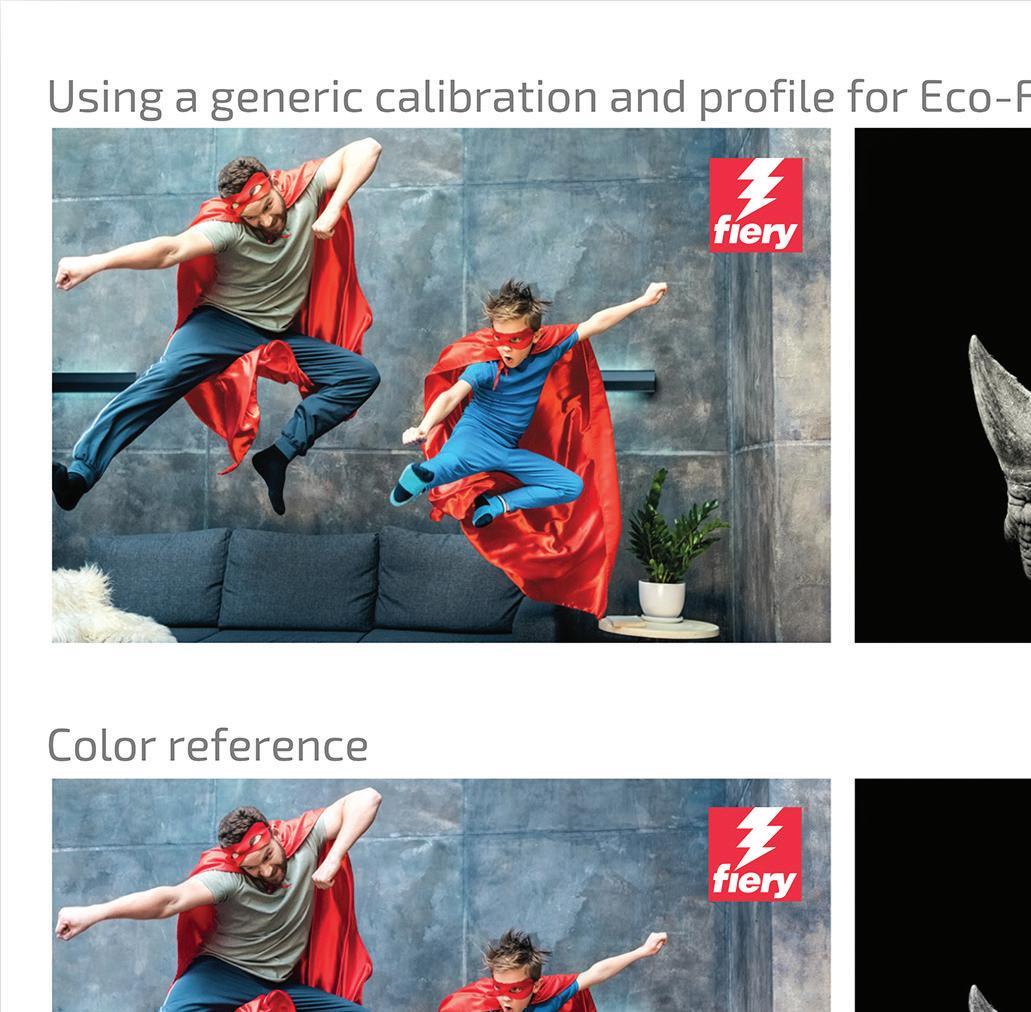
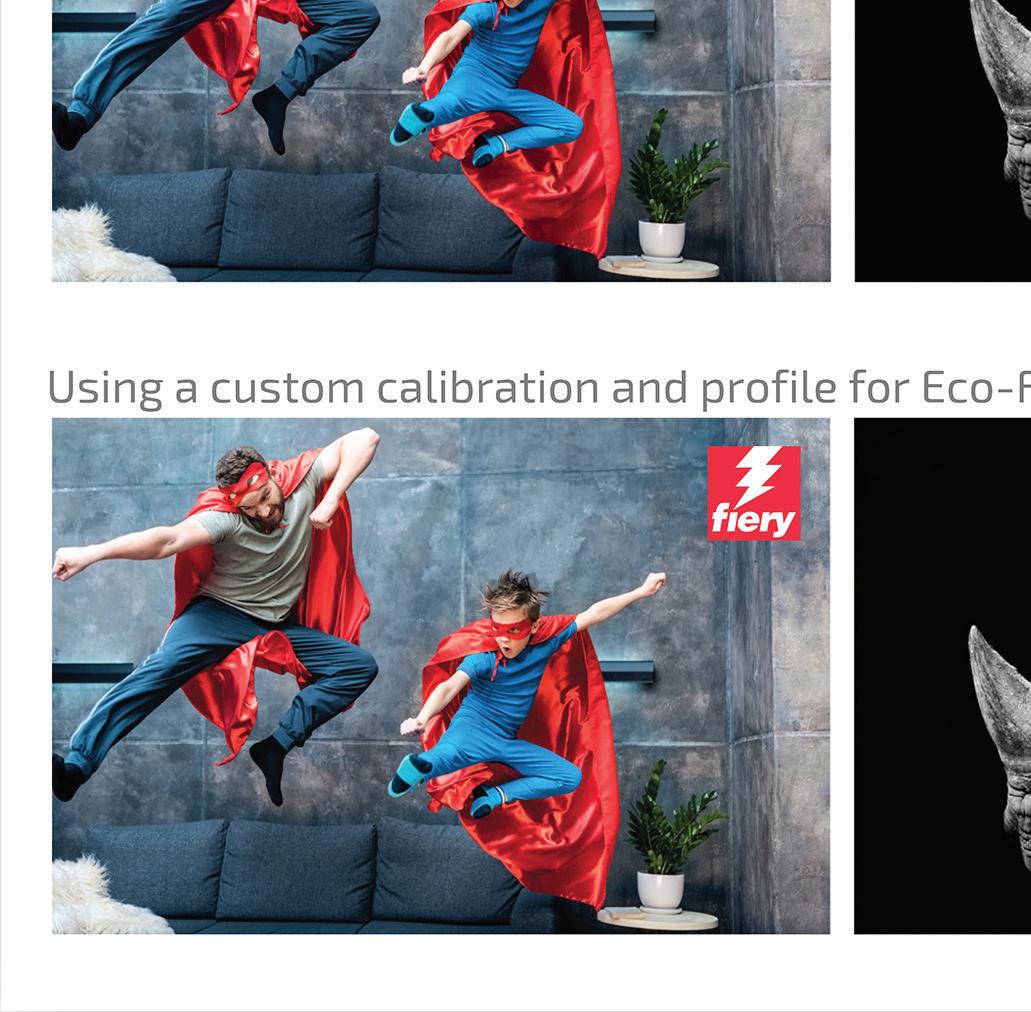
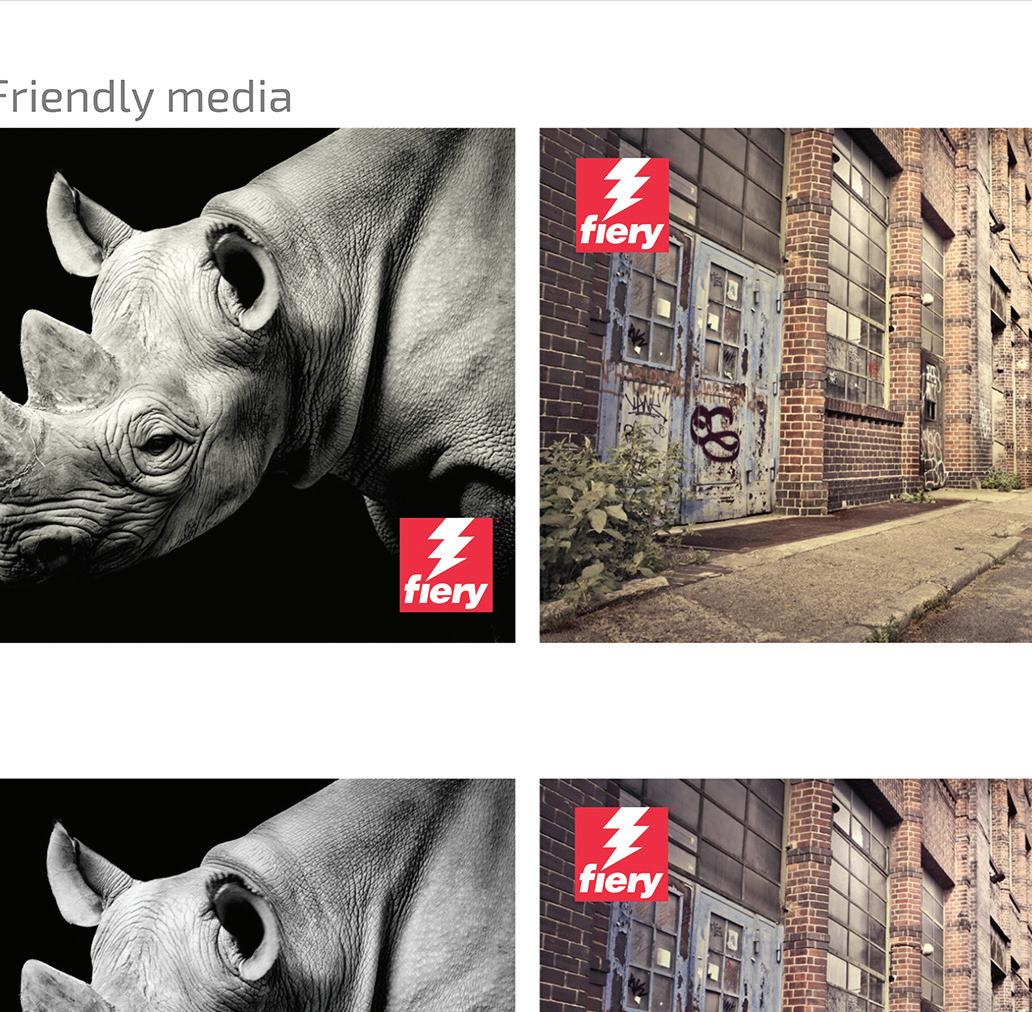
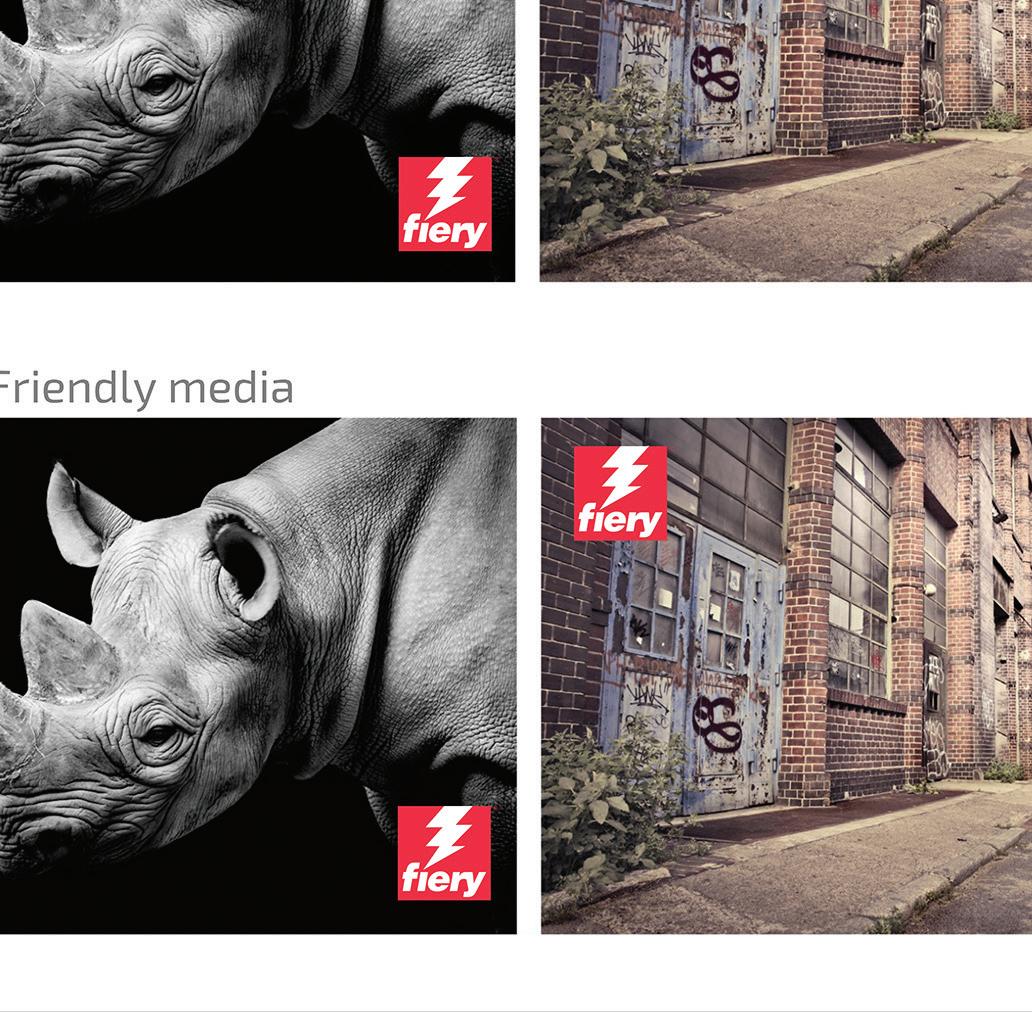
Off-the-shelf calibrations and profiles don’t always cut it for eco-friendly media. “A custom calibration—rather than a generic one—is essential to capture the maximum printable gamut during profile creation and to set ink limits correctly.
This prevents issues such as drying or curing problems, color shifts, and reduced print quality. Skipping these steps can unnecessarily restrict an already limited gamut, resulting in poor color reproduction and potential production challenges,” notes Moloney.
Creating a custom calibration for each eco-friendly substrate provides control over pre-ink, ink, and total ink limits, as well as dot gain compensation to ensure the best visual results and minimal production issues. Moloney says that generating custom ICC
profiles with adjusted black generation and appropriate gamut mapping stabilizes color reproduction. Features such as Fiery Intensify—part of the Fiery Edge profile creation process—manage vibrancy while preserving neutral tones and skin colors.
A custom profile is also needed to ensure the full potential color space of the media is captured, and understanding how neutrals and near-neutrals are produced as part of that profile is key. “Also important is that custom color management is done per media, print mode, and ink set
combined as each has a distinct effect on the color behavior,” shares Moloney.
Creating custom output profiles on front lit opaque white medias are generally a more straightforward procedure than translucent or transparent medias. Wagner suggests translucent and clear medias benefit from the use of a transmissive spectrophotometer, where opaque medias require a reflective instrument.
For both UV and UVgel technologies, Donigain says standard color management practices and high-quality RIP profiles work effectively on eco-friendly substrates. “Because UVgel technology consumes up to 40 percent less ink than traditional technologies to build up the same image quality and color intensity, providers may find they achieve superior results with lower ink loads on sustainable media.”
Tools Advance
Eco-friendly substrates are inherently variable. Crawford says recycled content, alternative coatings, and textured surfaces
introduce fluctuations in absorbency, base color, and ink behavior. Solutions like ONYX RIP software are designed to manage that variability.
“As print providers expand into recycled, PVC-free, paper-based, and textile media, success depends less on chasing maximum color gamut and more on process control, ink efficiency, and repeatable production. This is where ONYX color management and workflow technology delivers a decisive advantage,” notes Crawford.
ONYX provides integrated calibration and process control workflows that allow print providers to regularly verify tone response and color stability, quickly recalibrate for new media lots or environmental changes, and maintain consistent output without rebuilding profiles from scratch.
One recent innovation in the Fiery Color Profiler Suite is Fiery Intensify, which allows users to customize gamut mapping that pushes colors to the more vibrant part of the available color space while intelligently protecting key
areas such as grays and skin tones—ensuring the absolute best possible results and the best of both worlds in terms of punchy results and realistic skin tones, as well as keeping grays neutral.
“The great news with Fiery Intensify is that it’s a setting that can be applied on top of the custom color profile already created for maximum color accuracy. Users don’t need to create multiple custom profiles—one for accuracy, one for vibrancy— they just need to decide ‘what does great color mean for this particular job’ and check the right buttons,” says Moloney.
As of January 2026, Fiery ColorGuard is available for large format print production. It guards color by activating regular color verifications, and reporting results over time. The outcome being providers can act quickly when conditions change to avoid expensive reprints due to bad color, get to know a media better to predict potential issues in advance, and prove color consistency over time for the more discerning print buyers.
Kaminska points out that one of the most significant advancements is artificial intelligencedriven adaptive image analysis. Unlike static global corrections, modern systems analyze the content of an image—identifying skin tones, skies, vegetation, and shadow areas—and adjust tonal balance accordingly.
exposure and contrast before the image reaches the RIP, partners report ink savings of up to 15 percent while maintaining—and in some cases improving—visual vibrancy. This ink-conscious processing contributes to faster drying times and reduced waste, aligning with the core goals behind adopting eco-friendly media in the first place,” notes Kaminska.
Donigain says Canon’s core technology addresses common pitfalls of these materials. “For instance, the Automatic Advance Correction feature uses optical sensors to monitor media step accuracy. This is helpful for nonPVC or paper-based media that might otherwise be prone to stepping issues or banding.”
Winning Color
Color is critical for many print buyers. However, sustainability is increasingly important. To offer the best of both worlds, print providers must properly handle and profile eco-friendly media.
Specific to eco-friendly, non-PVC banner materials—both coated and uncoated—common challenges include reduced color gamut, non-white white points, ink limit sensitivities, and color shift during drying. Moloney feels that addressing these variables through proper calibration, profiling, and verification is essential to maintaining color accuracy and consistency.
199
200
“This is particularly relevant for sustainability. By optimizing
Visit digitaloutput.net for more content about achieving successful color management of ecofriendly media. D