











7 } Rules of A raction Printing Magnetic Media
Keeping
Practical and visual advantages to using the right fabric. by Melissa Donovan



7 } Rules of A raction Printing Magnetic Media
Keeping
Practical and visual advantages to using the right fabric. by Melissa Donovan
Two of three features in this month’s issue focus on functional applications—fabric signage and magnets. The ability to reuse either type of graphic multiple times makes them sustainable and economical. With print providers and their customers increasingly looking for ways to stretch budgets, applications that can be switched out and installed multiple times are practical.
The ability to reuse either type of graphic multiple times makes them sustainable and economical.
Our cover story, Fabric Tactics, takes on fabric-based trade show graphics. Depending on the framing structure, textiles can be repeatedly reused and even easily cleaned. Printability yields impactful messaging, however not every printable fabric is right for this application. The article looks at considerations to take into account like opacity, white point, soft hand, elasticity, and weight.
Rules of Attraction reviews production techniques for printable magnets and magnetic-receptive media. Another excellent option when it comes to reusable graphics, magnetic media offers flexibility in terms of install, removability, repositionability, and switching out components over time. Pairing the correct printer with the right magnetic product makes for successful output.
Elsewhere this issue includes an article on heat presses and two charts— one lists wide format textile printers and the other shares vendors offering both direct to garment and direct to film printers.
EDITOR IN CHIEF
Thomas Tetreault ttetreault@rockportpubs.com
EDITOR
Melissa Donovan mdonovan@rockportpubs.com
ASSOCIATE EDITOR
Cassandra Balentine cbalentine@rockportpubs.com
WEB EDITOR
Melissa Mueller
ART DIRECTOR
Sarah M. White swhite@rockportpubs.com
CONTRIBUTORS
Marco Boer, Olivia Cahoon, Tim Greene, Melinda Tetreault, Amber Watson
ADVERTISING SALES
PUBLISHER
Thomas Tetreault
NATIONAL ACCOUNT EXECUTIVES
Amanda Doyon adoyon@rockportpubs.com 978-921-7850, Ext. 170
Subscribe online at digitaloutput.net
CORPORATE & PUBLISHING OFFICE
300 Newburyport Turnpike, Ste. 11 Rowley, Massachusetts 01969
ROCKPORT CUSTOM PUBLISHING, LLC
CHAIRMAN
Jeffrey Jensen
PRESIDENT & CEO
Thomas Tetreault
Digital Output is published monthly by Rockport Custom Publishing LLC. ©Rockport Custom Publishing, LLC 2026. Reproduction by any means of the whole or part of Digital Output without written permission from the publisher is prohibited. Views expressed in the editorial pages do not imply our endorsement.
Vendors: We welcome your product news. Include prices, slides, photos, and digital files with your press release. Please forward product samples and media kits to Reviews Editor, Digital Output 300 Newburyport Turnpike, Ste. 11, Rowley, MA 01969. We cannot be responsible for unsolicited product samples.
SUBSCRIPTION RATES

Cheers, Melissa Donovan, editor mdonovan@rockportpubs.com
U.S.: $82.95 per year; $165 for 2 years; single copies: $6.95; Canada and Mexico: $99.50 per year (U.S.D.); Other international subscriptions: $275 per year (U.S.D.)
POSTMASTER
Please send address changes and form No. 3579 to: Digital Output, 300 Newburyport Turnpike, Ste. 11, Rowley, MA 01969. Periodical Class postage rates paid at Rowley, Massachusetts and additional mailing offices.
CHANGE OF ADDRESS NOTICE
Six to eight weeks prior to moving, please clip the mailing label from the most recent issue and send it along with your new address (including zip code) to: Digital Output magazine, change of address notice, 300 Newburyport Turnpike, Ste. 11, Rowley, MA, 01969. Attention: Circulation Department.
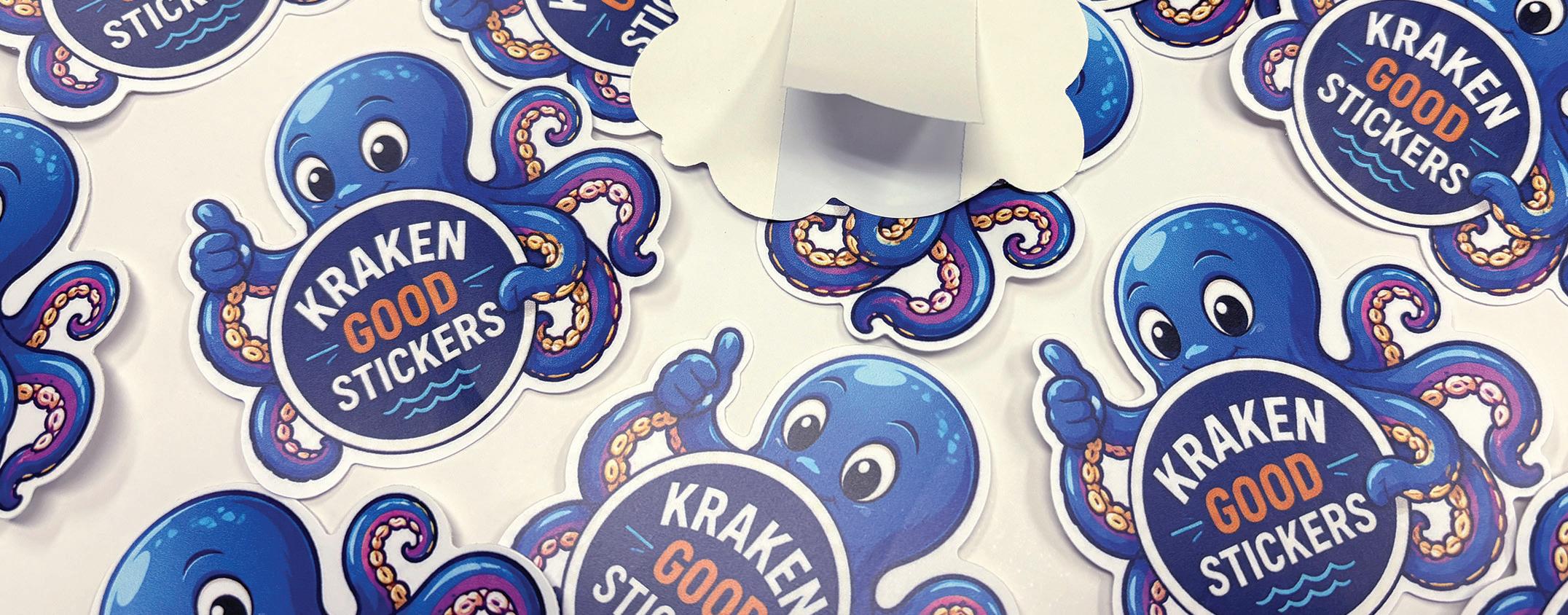
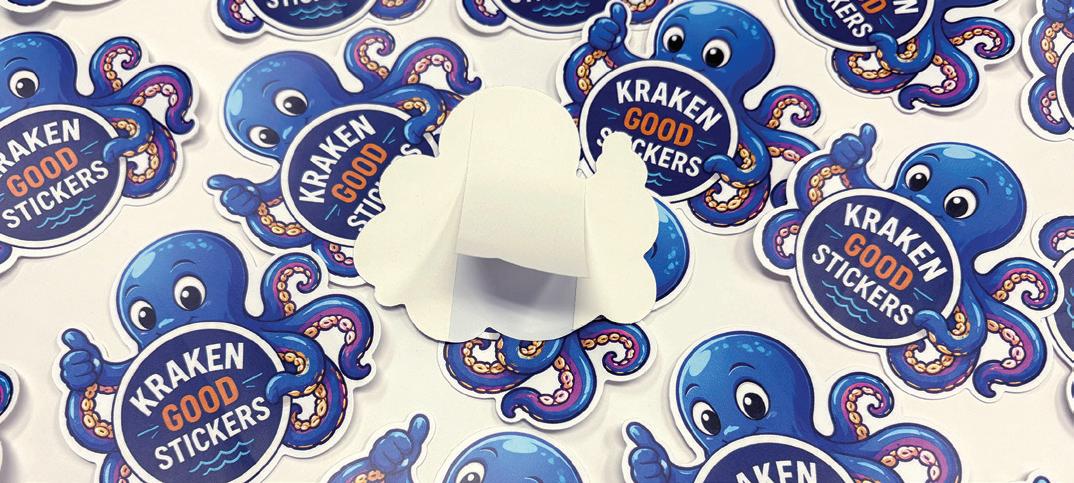
General Formulations (GF) introduces QuickSplit Scored Liner. Designed for speed, precision, and efficiency, Quick-Split Scored Liner is engineered to streamline installation and application workflows, enabling faster and more efficient application of stickers, decals, window graphics, and point of purchase displays.
Quick-Split Scored Liner with universal 1.25-inch spacing “cracks” for quick release and seamless application. The liner is compatible across multiple print platforms and ink technologies, making it well suited for short-run, high-volume environments and multi-platform workflows.
GF offers Quick-Split Scored Liner in wide format media, narrow format digital, as well as screen and offset sheets. Stocked wide format digital media includes GF 201QS and GF 302QS, matte white vinyl constructions with permanent or removable clear adhesive options, available in 54- and 60-inch by 150-foot rolls. Custom sizes are also available in sheets and rolls. #170
NUtec Digital announces the availability of Ruby R10-DTF, a high-performance UV-curable direct to film (DTF) ink solution that delivers smooth decal transfer and clean release performance without the need for weeding. The R10-DTF formulation offers stable jetting and fast curing performance on DTF, PET, and paper-based A-films. #171
Significans Automation, a customized workflow software and process integration company, and one of the fastest growing integration firms in the Enfocus family, earned recognition as the top Reseller of Enfocus Phoenix workflow software for 2025. Enfocus Phoenix helps commercial, packaging, and wide format printers automate job planning with imposition artificial intelligence that improves material utilization and reduces manual touchpoints. #172
Summa launches the F Series Vantage, combining enhanced cutting speeds with intelligent automation. Its open, modular architecture ensures seamless integration into existing production environments.
Promising 40 percent productivity gains, the F Series Vantage transforms the finishing workflow thanks to automation that anticipates errors before they happen, an open ecosystem, and a wide tool library. The tool library features the new High frequency 3.7kW router, Fast+ and Core+ tangential modules, as well as Rigid material and High precision cutout tools.
New motion control, unique blade recognition, and a new media thickness sensor accelerate every stage, from setup to execution. With GoConnect and GoData, the F Series Vantage becomes a part of your ecosystem, open to any feeder or stacker. #173
Kornit Digital announces the commercial availability of the Atlas MATRIX platform following the successful completion of a global beta program across leading production environments in Europe and North America.
Atlas MATRIX expands the capabilities of Kornit’s Atlas MAX PLUS platform into polyester, blends, and sublimated fabrics, enabling customers to produce across any fabric type with one unified production system while maintaining premium retail quality, durability, and industrial-scale productivity. Atlas MATRIX introduces Kornit’s proprietary Karbon Shield process, enabling direct decoration on polyester and sublimated garments while eliminating the dye migration challenges that have historically limited digital production capabilities. The platform allows producers to seamlessly transition between cotton, polyester, and blended fabrics in a single workflow. #174
Avery Dennison Graphics Solutions announces an online training program designed to help shop professionals, detailers, and owners build a more successful business. With the launch of Avery Dennison Online Business Bootcamp, the company expands its educational reach into the virtual space, providing shop owners with the “missing piece” of their professional journey, the business acumen required to maximize profitability.
Led by industry experts Justin Pate of The Wrap Institute, and John Duever with Vinyl Images, the Online Business Bootcamp offers a five-part learning series that teaches proven business strategies in an easy-to-access, premium video format. The digital program offers practical solutions for common business challenges in the automotive aftermarket. #175
1) GF introduces Quick-Split Scored Liner, available in wide format digital media referred to as GF 201QS and GF 302QS. The matte white vinyl constructions feature permanent or removable clear adhesive options and are offered in 54- and 60-inch by 150-foot rolls.
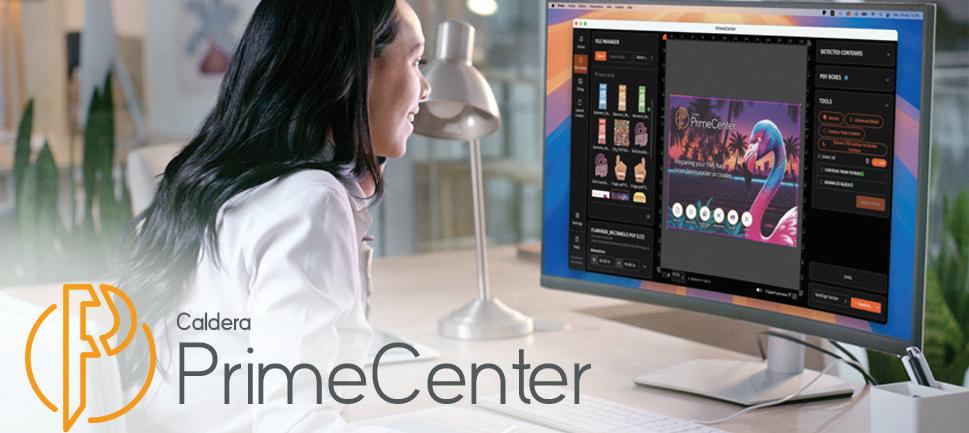
Caldera Unveils PrimeCenter 5
Caldera PrimeCenter 5 is the latest version of the prepress job preparation and workflow software for wide format and industrial print workflows. Headlining the release is File Editor, a new built-in workspace designed to help print service providers inspect, modify, and validate files faster before creating layouts for production.
Integrated directly inside PrimeCenter, File Editor allows users to review critical file components, which include dimensions and cutting paths and apply immediate corrections and confirm results in real time. Files can then be passed directly to PrimeCenter’s Layout Creator, where jobs are automatically nested into optimized layouts for printing and cutting. Visit caldera.com for more information on PrimeCenter 5. INFO# 178

Avery Dennison Graphics Solutions debuts five new colors for its Supreme Wrapping Film color change vehicle wrapping film product line. These include Gloss Ivory, Gloss Sand Dune, Satin Metallic Cyber Green, Matte Metallic Oasis Blue, and Gloss Metallic Gothic Rose. Avery Dennison Supreme Wrapping Film combines an extensive color change collection with more than 140 film colors and feature Avery Dennison Easy Apply RS technology. Visit graphics.averydennison.com to learn more. INFO# 179
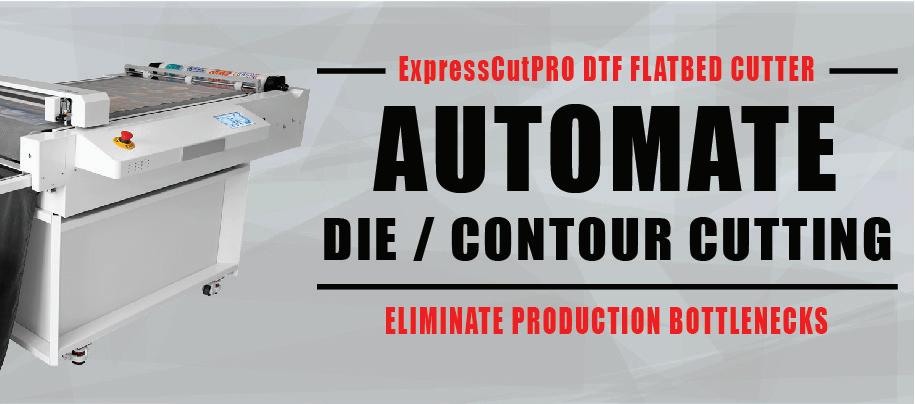
ExpressCutPRO reduces labor and increases profits by eliminating the time-consuming task of manually cutting direct to film (DTF) or UV DTF transfers. Featuring an integrated conveyor belt and quick response code workflow, the ExpressCutPRO allows for a fully unattended workflow experience. Increase output while reducing operation costs with ExpressCutPRO DTF cutters.
For more information visit supply55.com, call 734-6680755, or email sales@supply55.com. INFO# 1

Continental Grafix USA launches X-Treme Air, a 6-mil vinyl backed with its proprietary high-tack removable (HTR) adhesive, redefining performance expectations for HTR adhesive applications. X-Treme Air combines HTR adhesive with installation-friendly handling. It is designed for wall applications, covering everything from standard to the most demanding wall and window graphic challenges. It combines reliable adhesion with installation-friendly air egress liner, not normally found in the HTR category. Learn more about X-Treme Air at cgxusa.com. INFO# 180
Mimaki Printers Approved for 3M MCS Warranty Program
Mimaki Engineering Co., Ltd. announces that its large format inkjet printers, the JV200 and CJV200 series, JV330 and CJV330 series, as well as the compatible eco-solvent inks are approved for the 3M MCS Warranty Program.
The 3M MCS Warranty Program is a comprehensive finished graphics warranty, which provides non-prorated warranty coverage for the graphicʼs intended lifespan, including protection against fading, cracking, peeling, blistering, discoloration, and other aspects of graphic performance.
With the addition of the entry-level JV200 and CJV200 series to the certified lineup, which previously included the production models JV330 and CJV330 series, even more customers can now choose this warranty program. Furthermore, the newly certified eco-solvent ink “SS22” delivers vibrant color reproduction and high weather resistance while significantly reducing the characteristic odor of solvent inks, contributing to a more comfortable working environment. #176
Canon U.S.A., Inc. announces the 24-inch imagePROGRAF GP-2600S large format inkjet printer, expanding its GP S Series portfolio with a space-saving model. Designed for in-house print operations and print-for-pay environments, the imagePROGRAF GP-2600S incorporates a seven-color ink system that includes orange ink. The printer is powered by LUCIA PRO II pigment ink technology, formulated to enhance image permanence while also helping to improve durability of printed materials used in retail, hospitality, corporate, and event settings. #177





by Melissa Donovan
o glue, no stickiness, no negating the adhesive if it’s touched prior to application—traditional printable magnets or magnetic-receptive media are popular options in the signage industry. Ease of install, repeatability—the attraction makes sense. However, printing directly to magnetic material is not without challenges.
“Magnetic media is still a problem child when it comes to printing it consistently. While magnetic media appears flat and stable at rest, its layered construction—typically a magnetic base laminated to a printable vinyl or polymer surface—makes it extremely sensitive to heat and uneven mechanical stress
magnets used for
for promotional items like fridge magnets; car magnets in both business and personal use; and some limited directional, informational, or wayfinding signage.
during printing,” explains Rob Nelson, senior segment manager, Mimaki USA, Inc.
Choosing a low-heat printing option as well as awareness of potential incidents that can occur along the process yield an effective signage product.
As print technologies evolve, magnetic media’s compatibility with various ink sets does too.
“There’s no single preferred print technology for magnetic media, as the best approach depends largely on material thickness and the production set up. Resin, eco-solvent, and UV technologies all perform well, as they adhere to smooth, non-porous surfaces while delivering durable, high-quality results,” notes David Bistrovic, product manager, Professional Imaging, Epson America, Inc.
Neil Hawkins, marketing manager, Magnum Magnetics Corporation, summarizes the processes. “UV printing is often preferred for bold, durable graphics and strong outdoor performance. Latex printing is another excellent fit because it combines high-quality output with flexibility and durability for a range of indoor and outdoor signage needs. Eco-solvent and screen printing still serve important roles as well, depending on the application and production setting.”
Overwhelmingly, UV-based technologies are used for magnetic media due to what Patrick Donigain, senior manager, large format printing solutions and Angel Georgiou, senior product planning specialist, large format printing, Canon U.S.A, Inc., say is their unique balance of durability and low-heat processing.
“Evaporative technologies require temperatures as high as 130 to 230 degrees Fahrenheit— whereas UV or UVgel cures at much lower temperatures. This is designed to limit the magnetic media from becoming brittle or losing its flat profile during the print process. Furthermore, the instant dry nature of UV and UVgel inks means the heavy rolls can be finished or applied immediately, minimizing the risk of ink smearing or the need for lengthy outgassing periods,” explain Donigain and Georgiou.
UV LED inkjet’s defining advantage is instant, heat-free curing, seconds Nelson. “UV inks polymerize under light rather than thermal energy, which minimizes expansion, contraction, and internal stress in the magnetic sheet. As a result, the material retains its original shape throughout the print cycle.”
Paul Wagner, solutions architect, large format production, HP Inc., believes that most of the widely used outdoor-durable ink chemistries, such as latex or resin, can print to magnetic medias. “Latex inks are compatible with traditional PVC-faced materials as well as polyurethane magnetic films. Latex inks create a thin film, are actively cured in the printer, and support easy lamination if needed—yet also are highly scratch resistant when overcoat is used.”
“Latex works well on magnetic-receptive films and flexible constructions, though curing temperatures must be considered. It is popular for indoor graphics where low volatile organic compound output
and odorless prints are priorities,” shares Kylie Schleicher, VP of business development and product management, Ultraflex Systems, Inc.
Eco-solvent offers a durable, flexible and moderate heat curing process, shares Bistrovic.
For magnetic-receptive materials, “eco-solvent is a strong allaround performer for both indoor and moderate outdoor use. Inks penetrate the media’s receptive coating well, offering good ink adhesion,” notes Schleicher.
Some magnetic media portfolios are designed to handle all ink sets. The magnetic-receptive media line that XCEL Products, Inc. supplies is designed to print on UV, latex, eco-solvent, and solvent printers. According to Jesse Casady, operations manager - media, XCEL, the vinyl that makes up the magnetic material XCEL offers is engineered to work with most common printing technologies.
Several print technologies deliver excellent results—when paired with the right product, adds Hawkins. “The real key is not choosing one technology as universally best, but matching the print method to the magnetic construction, end use, and printer capabilities.”
For example, “UV printing is a fast, cost-effective method to
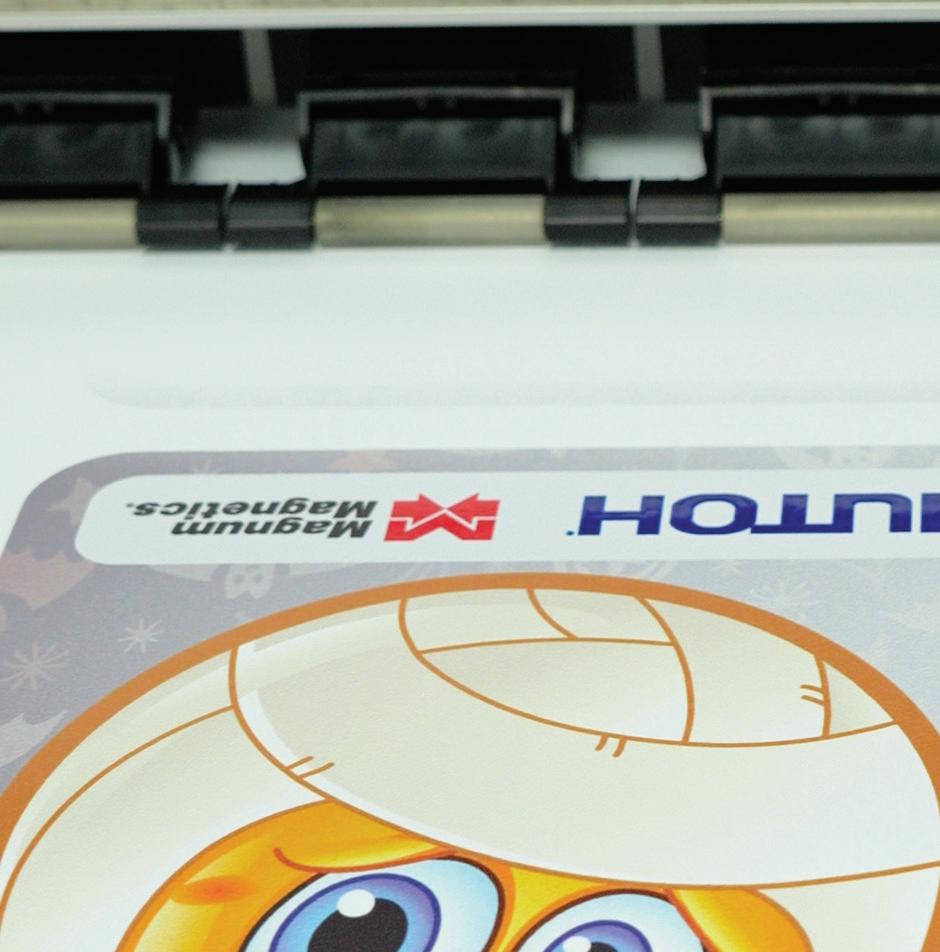
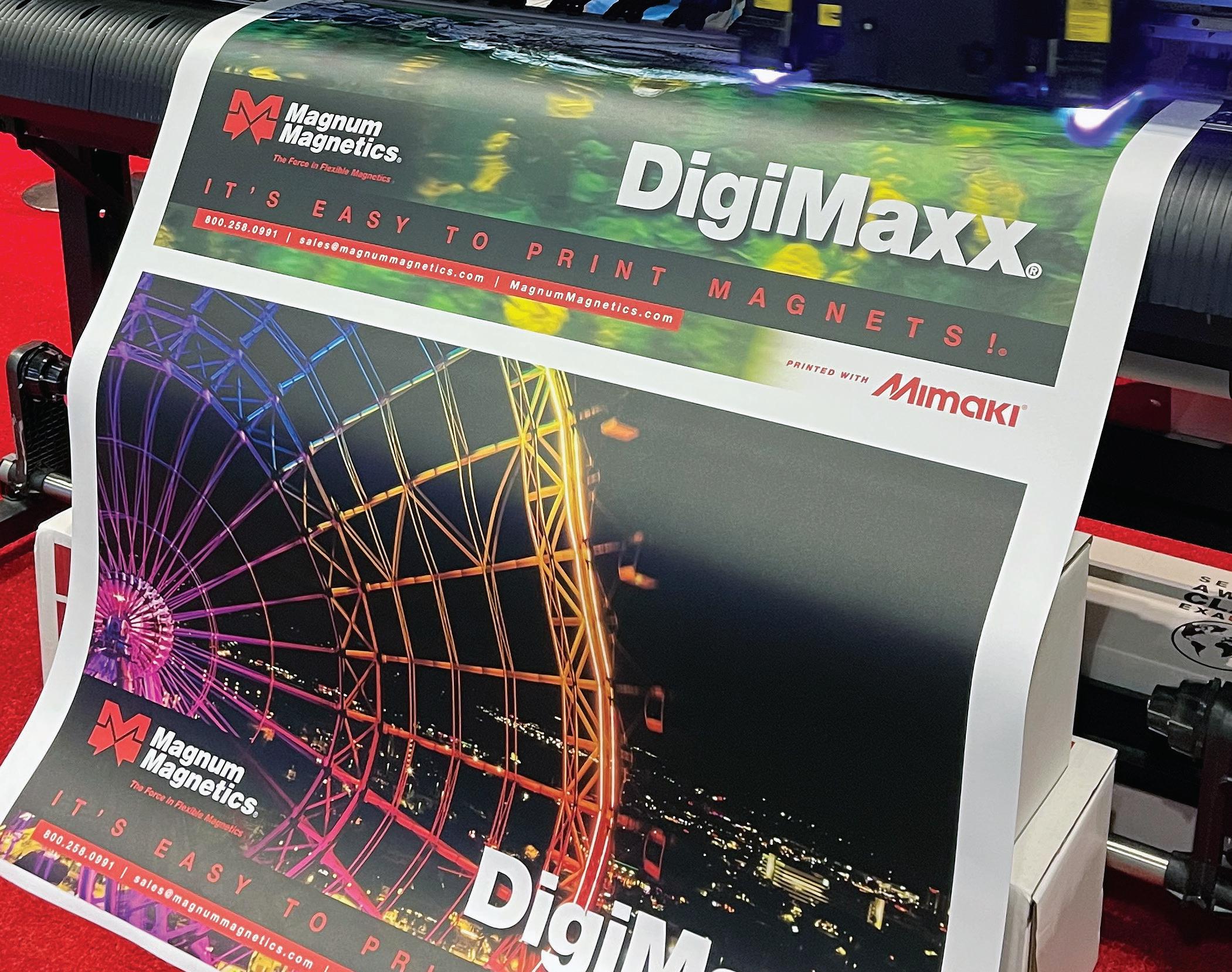
1) Ultraflex Signetics Magnetic Receptive Media features effortless, on-site installation, no-edge chipping, and exceptional durability. 2) Magnum Magnetics is a U.S. manufacturer of flexible magnetic products. It works closely with customers to help identify the right magnetic media for their equipment, application, and performance goals.
produce small- to medium-batch promotional magnets with low durability, outdoor exposure, and post-treatment requirements, whereas eco-solvent may be better suited for outdoor use and/ or longer/larger size runs,” says Tony Simmering, product manager, Mutoh America, Inc.
The drying or curing of ink plays a key role in both dimensional stability and warping of media.
According to Nelson, the curing method is one of the most critical variables when printing magnetic sheets. “Magnetic media reacts quickly to heat because the magnetic layer and printable face expand at different rates. When thermal energy is introduced unevenly, as with heater-based curing systems, the result is often localized bowing, edge lift, or surface ‘oil canning.’ Even minor deformation can cause printhead interference or transport errors.”
“High-heat curing can cause non-uniform expansion and contraction, which can lead to ‘cockling’ or edge curling,” say Donigain and Georgiou.
Technologies like Canon’s cool LED curing system found on the Canon Colorado M-series printers ensure the magnetic media maintains a stable temperature throughout the process, which allows the material to remain flat.
“UV ink offers instant curing with low-heat exposure, making it a reliable option for magnetic material. This low-heat process helps magnetic substrates maintain the
shape and integrity of the magnets,” adds Bistrovic.
For HP Latex printers, Wagner suggests heat signatures stay at temperatures between 160 and 185 degrees Fahrenheit to avoid media deformation. Today’s latex ink cures at much lower temperatures than previous generations, so temperature-constrained media is more compatible in general.
According to Bistrovic, eco-solvent inks cure primarily through evaporation with moderate thermal heat assisting with the evaporation process. Because temperatures are lower during the curing and offgassing process, eco-solvent inks cause less stress to the material and result in better stability.
“For magnetic media, the curing method is often the difference between a controlled process and a chaotic one,” notes Nelson. The material maintaining dimensional stability has production advantages including consistent printhead gap across the full sheet, reliable unattended printing, and immediate post-print handling without cool down.
Depending on the curing technology of a printer, a specific magnetic media may need to be purchased to avoid issues like cocking, curling, or warping.
“The good news is that these challenges are manageable with the right media, proper handling, and well-controlled print settings. Choosing a magnetic product designed for a specific print platform can make a
significant difference overall,” suggests Hawkins.
“Manufacturers engineer magnetic-receptive media with specific base materials and constructions to minimize risk across different print platforms. For example, a scrimless magnetic-receptive film may be prone to distortion when exposed to the elevated curing temperatures of a latex printer. In these cases, a product built on a polyester base is recommended,” explains Schleicher.
Magnetic media is tricky, a few issues can pop up when it is running through the printer.
“The most common feed and handling issues usually come down to the fact that magnetic

media is a specialty substrate. It is typically heavier, denser, and sometimes stiffer than traditional print materials, so it requires the right setup and expectations,” explains Hawkins.
Since magnets tend to be thicker and heavier compared to other types of media, loading and running these materials can be challenging, agrees Wagner.
“One of the most prevalent challenges when handling
magnetic media is the material’s natural tendency to ‘grab’ or stick to the metal surfaces of the printer’s internal paper path. This can lead to friction-related jams or inconsistent media stepping, which can result in visible banding,” suggest Donigain and Georgiou.
Specialized kits are available to combat this issue. For example, the Canon Colorado M-series Magnetic Media Kit replaces standard sheet metal components with stainless steel guide plates and specific plastic stops to neutralize the magnetic pull.
Casady says the number one challenge is material running back on a printer if there is any metal found on that printer. XCEL can offer technical advice as well as manufacturer videos that show how to mask off the printer specifically for roll stock magnetic media.
“The largest obstacle for eco-solvent printers specifically is when they feature a magnetized platen; this can ultimately cause feed tracking issues or jamming when running magnetic material across the device during the printing process,” suggests Simmering.
Another element to be aware of, the added weight of the media roll. Combined with high density, accurate media step control is required, add Donigain and Georgiou. This involves advanced sensors that can accurately read the media’s movement.
“In some cases, operators need to account for the natural weight and pull of the material during transport through the printer. Other common issues include feeding consistency, sheet tracking, printhead clearance on thicker materials, stacking behavior, and handling challenges if sheets are not stored or conditioned properly before printing,” notes Hawkins.
The transport system is the main origin of media handling problems. “Most of the feeding challenges arise from roll-to-roll print technologies. The stiffness and weight of magnetic material can make it difficult to transport smoothly through a roll-to-roll system, heavier magnetic substrate rolls may exceed system limits, which can stress the feeding system and increase the risk of errors. When working with a UV flatbed solution, these issues are largely eliminated since these materials remain stationary on the print bed,” shares Bistrovic.
“Traditional roller-based feed mechanisms found on printers support media at linear contact points. With magnetic sheets, this creates several predictable problems like edge lift between rollers, especially on thinner gauges of material; skew caused

by uneven resistance as the magnetic layer interacts with metal components found on the printer; and loss of traction when the sheet resists conforming to roller curvature. These problems are further magnified when heat introduces even slight warping,” attests Nelson.
Similar to the flatbed solution suggested by Bistrovic, Nelson believes vacuum belt transport systems found on these printing devices fundamentally change how magnetic media behaves during printing, addressing both mechanical instability and material memory.
“A belt transport system supports the sheet across a continuous surface rather than isolated rollers. This prevents the magnetic material from flexing between contact points, reducing edge lift and mid-sheet bowing, which are two of the most common causes of printhead strikes. Vacuum suction pulls the magnetic sheet flat against the belt, counteracting its natural tendency to curl back to its stored shape—which is a roll,” continues Nelson.
Traditional magnetic media features a thicker density, which impacts feed reliability and end use durability.
While thicker media provides better long-term durability for outdoor applications like vehicle signage, Donigain and Georgiou say it requires more robust tension bars to prevent the material from sagging or sticking to the printer frame during the printing process. “Modern industrial printers now use specialized winding tension settings, such as locked tension bars, to counteract the stiffness of thicker magnetic rolls so that the media remains taut and accurate during high-speed production.”
Devices like the HP Latex R Printer Series support heavier medias, are belt driven, and accommodate rigid and flexible medias up to two inches thick.
Another important fact, thicker media reduces the amount of media that can fit on one roll, leading to more frequent roll changes, add Donigain and Georgiou.
Thinner magnetic materials are increasingly prevalent. “From a handling perspective, thinner magnetic materials are more common because they are lighter, easier to ship, and more compatible with roll-to-roll printers,” explains Bistrovic.
“Magnetic-receptive medias are lighter weight and more flexible than traditional printable magnets. The construction of magnetic-receptive media makes it
easier for printers to handle and feed through the equipment,” says Schleicher.
Nelson believes thinner magnetic sheets are increasingly viable thanks to vacuum belt transport, which compensates for reduced stiffness and coil memory.
With the introduction of thinner magnetic material, certain challenges disappear—and new ones pop up.
“While the industry shifts toward thinner, lighter magnets for ease of handling, these materials are often more susceptible to curling during unwinding,” note Donigain and Georgiou.
Hawkins believes thickness is still part of the conversation, but it is more about application fit than limitation. “Thicker magnetic sheeting can provide a more substantial feel, stronger magnetic hold, and enhanced durability for demanding applications. At the same time, thicker gauges can require more printer accommodation in terms of feed path and clearance.”
On the other hand, thinner magnetic media has become an increasingly popular choice between both print providers and their customers. “This is because it is often easier to handle, easier to print, and more efficient for shipping and converting. For many modern graphic applications, thinner magnets perform extremely well and provide the functionality customers need without adding extra weight,” adds Hawkins.
To summarize, “thicker magnetic materials offer a stronger hold and greater durability, making them a better choice for outdoor applications and longterm use. Thinner magnets, while more versatile and easier to handle, are typically better suited for indoor applications,” says Bistrovic.
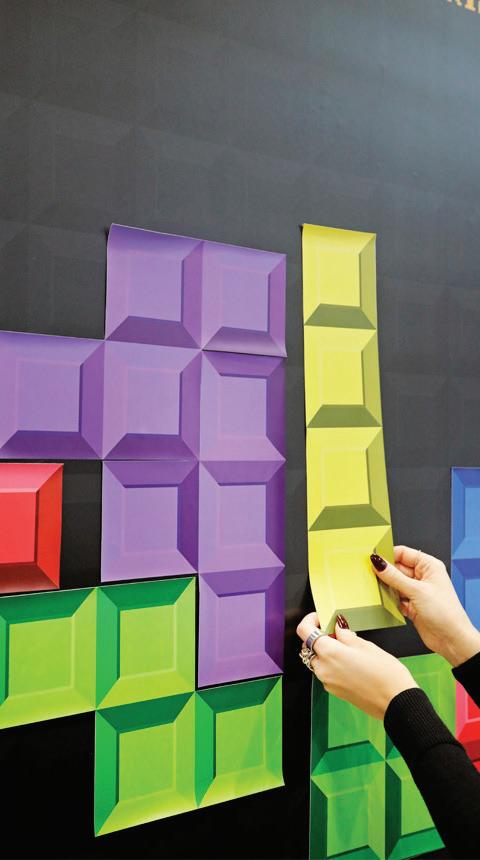
Digitally printed magnetic media is used in a number of ways, to promote a business with a graphic attached to a vehicle or easily swapped out to update a menu or schedule.
Magnetic media thrives in locations where temporary, interchangeable messaging is required, points out Nelson.
“Magnetic films are increasingly found in restaurant and retail environments, due to their unique ease of installation and removal. This is in addition to the traditional magnetic applications that include vehicle and refrigerator magnets,” says Wagner.
Vehicle graphics are another staple, “as they offer a non-permanent branding solution that can be removed and reused,” share Donigain and Georgiou.
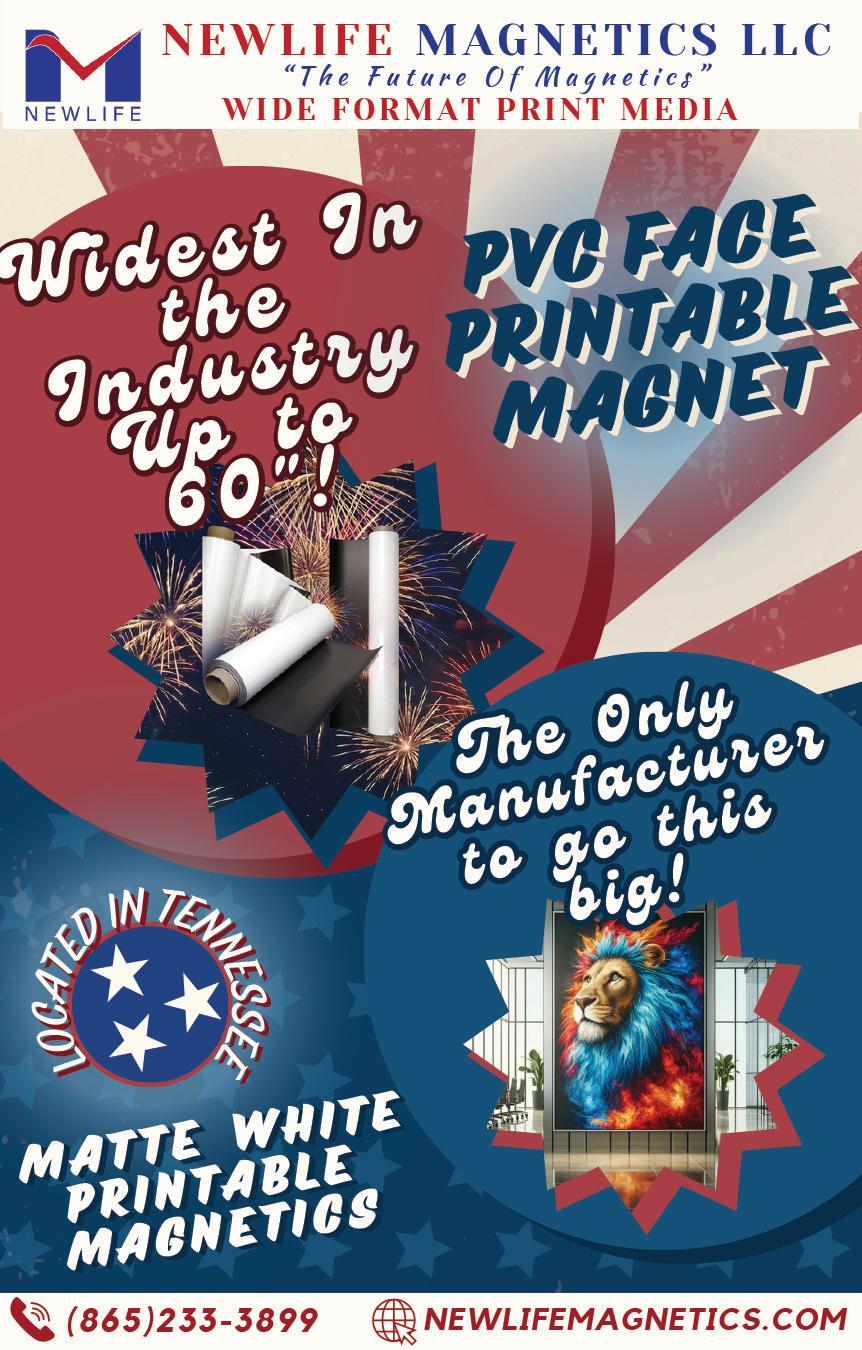
Newlife Magnetics LLC offers Miracle-Mag High Energy PVC magnet with a matte white PVC print surface for direct digital printing. At 20 mil, it features a stronger holding force than a standard energy 30 mil magnet, which is the most common choice for vehicle signage. In addition to a stronger holding
force, it reduces overall weight by 33 percent.
Beyond magnet material’s primary usage in retail signage and vehicle magnets, Casady also believes promotional pieces/ giveaways is another application to consider.
“It’s also widely used for warehouse labeling and in educational or office settings for interchangeable signage,” points out Bistrovic.
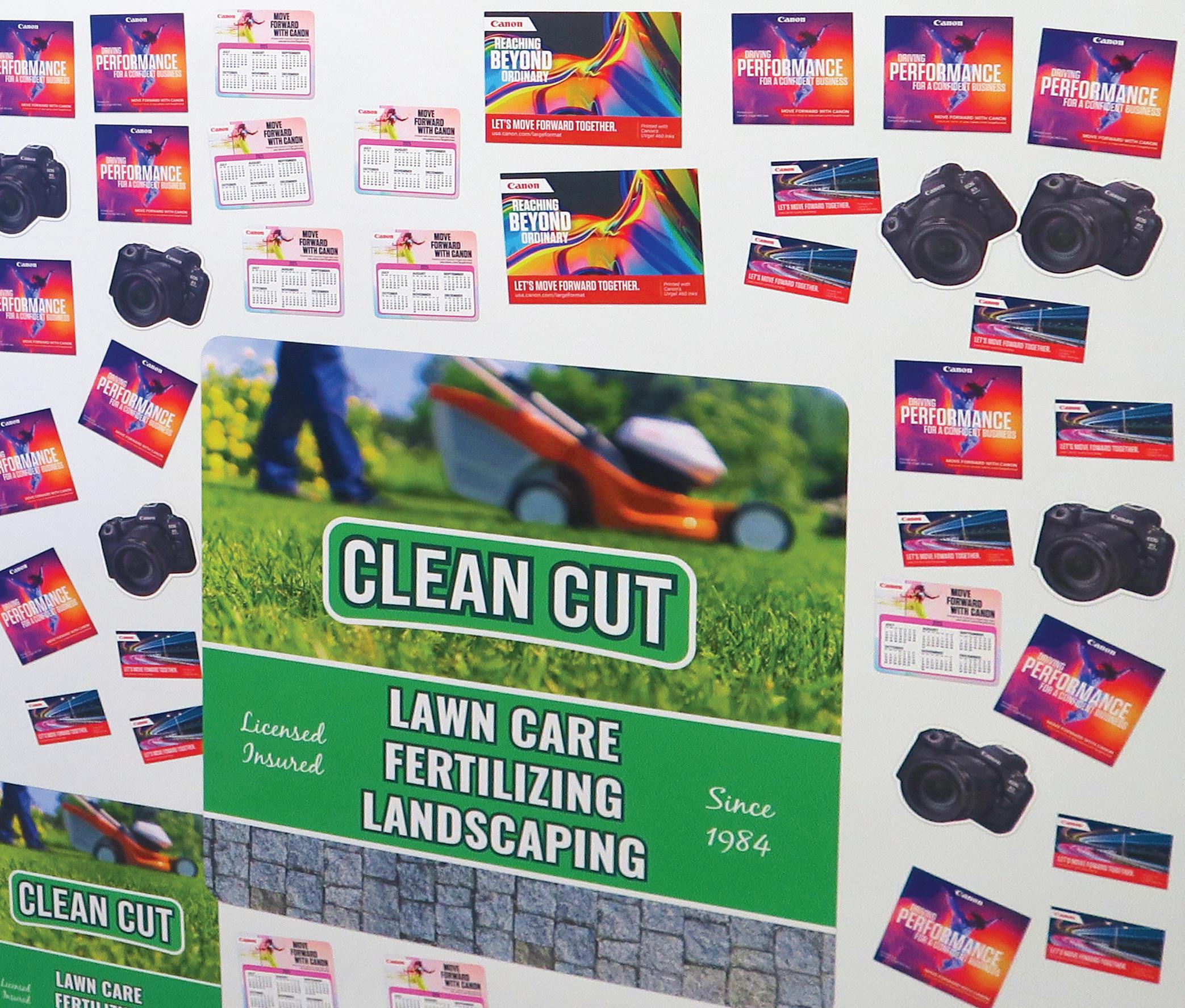
There is continued interest in magnetic-receptive graphic systems. “These allow brands and retailers to refresh messaging quickly and cleanly. As more organizations look for adaptable display solutions, magnetic media continues to prove its value,” shares Hawkins.
“For magnetic-receptive media—in-store promotional walls, seasonal campaigns, price change and product callout graphics, end cap and point of purchase displays, exhibit and museum graphics, interactive displays, and menu boards” are all ideal applications, suggests Schleicher.
“One of the greatest benefits of magnetic media is its flexibility. It allows users to install, remove, reposition, and update graphics with ease. That makes it ideal for
projects where changeability, reusability, and convenience matter,” says Hawkins.
This material, while not without challenges, is well suited for many applications. It prints well when using low heat and the proper handling techniques. Pairing the correct printer with a specific magnetic product makes for successful output.
Today magnetic media is successfully used for a host of application whether it is a sign placed on a vehicle, something for a retail store, or a menu board in a dining establishment. The attraction to printable magnetic media will only grow as more print providers and their customers understand the versaility of this medium. D



by Cassandra Balentine
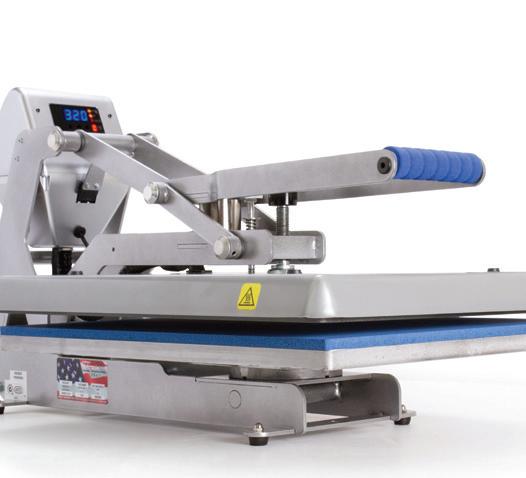
eat presses are required for direct to garment (DTG) printing. Traditional heat presses feature a platen size of roughly 9x12 inches, but vendors are now designing and selling 15x15-inch models—or wider—to accommodate rising interest in creating oversized graphics and meeting higher volumes of production.
“Across our customer base, heat platen sizes larger than 9x12 inches are purchased at a ratio




of approximately seven to one,” shares Shauna Soom, GRP director, global sales and service, Hotronix, Stahls’. “This trend reflects the increased versatility and production efficiency that larger platens provide, particularly as decoration demands continue to evolve.”
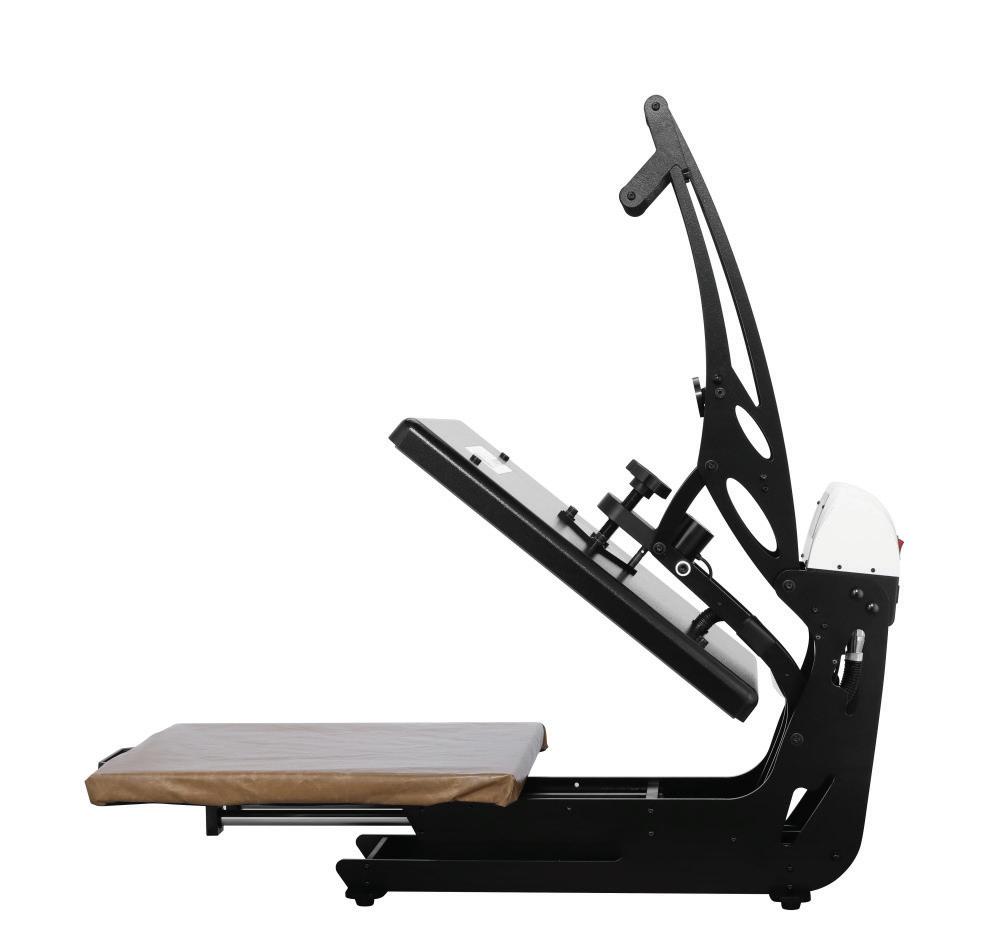
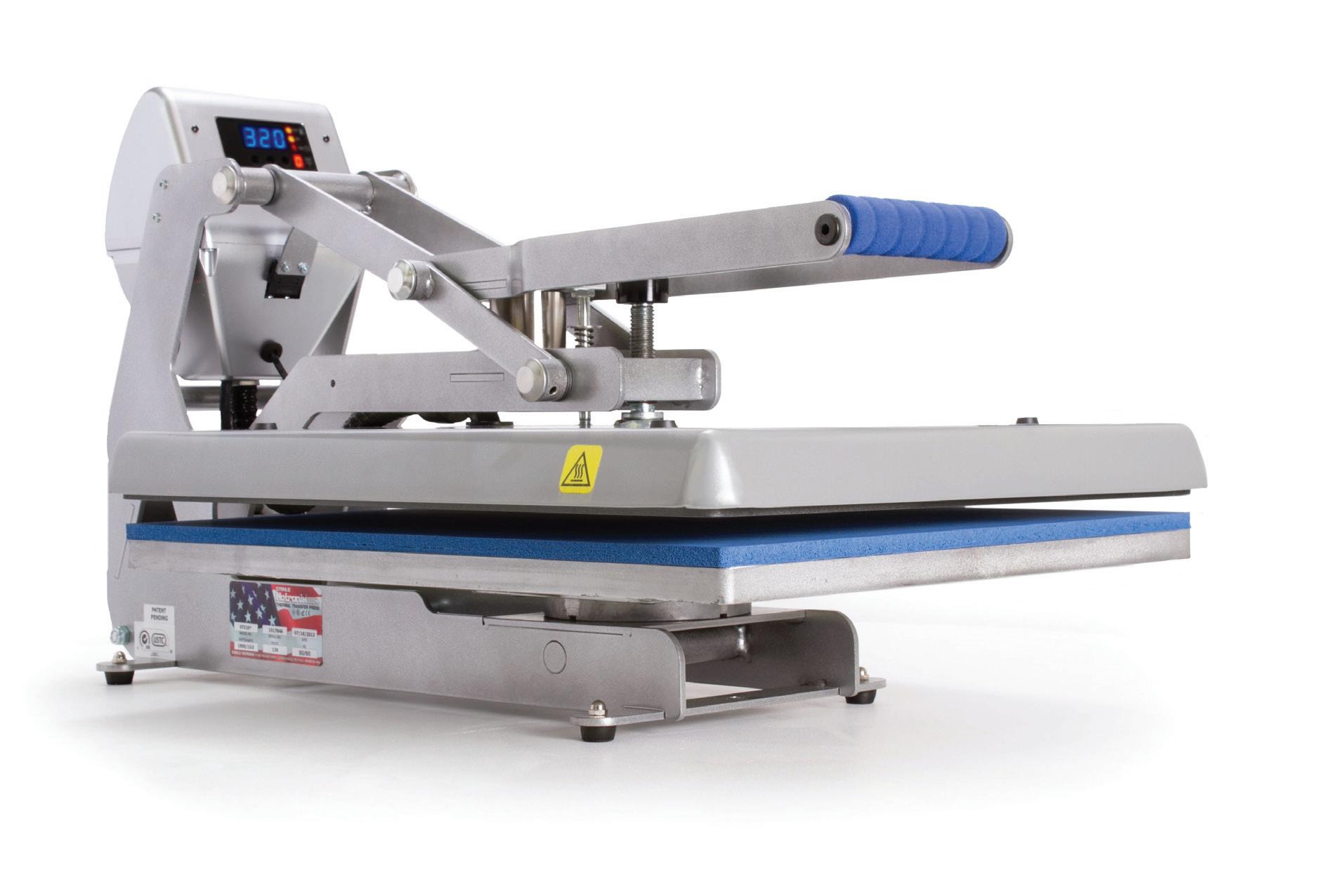
Above) ColDesi offers a range of heat press machines, equipment, and accessories to meet all customization needs and yield quality items like t-shirts. 1) The ColDesi C20 Auto Clamshell Heat Press offers a 16x20inch heater with consistent, quality results.


Zuzana Cloete, sales, Practix Mfg. U.S.A., sees more shops moving beyond traditional platen sizes as they take on bigger jobs and higher volumes.
Marc Vila, director of marketing, ColDesi, notes a trend towards heat presses measuring 16x20 inches. “Fashion items are leading a lot towards oversize prints. Larger shops are pushing into 16x20 inches.”
While smaller platens still serve specific purposes, Ben Robinson, chief manufacturing officer, Stahls’, points out that the most in demand heat presses remain in the 16x20-inch range. This is especially true in DTG workflows where larger platens provide the flexibility to handle full-size graphics and a variety of garment types without repositioning.
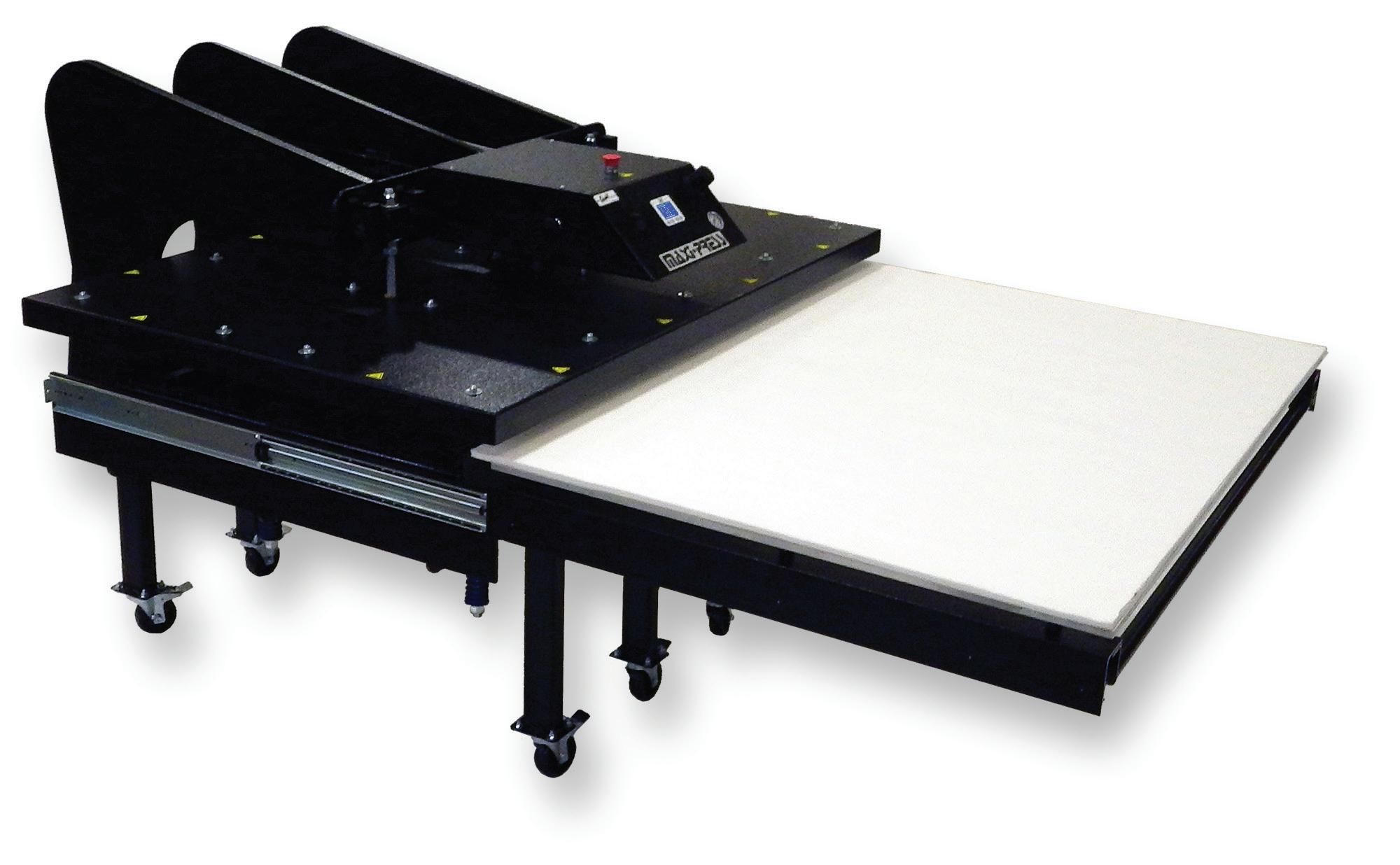
According to Aaron Knight, VP, Geo Knight & Co., Inc., although just about every press now purchased is typically 14x16 and 16x20 inches—16x20 being the most popular standard t-shirt press size—there is a robust market demand for large format press equipment, including its 20x25- and 24x32-inch heat platen sizes. “Beyond that, 3x5and 4x8-foot heat platen sizes are regularly called for in many large format printing applications.”
Bigger graphics as well as higher volumes increase the demand for larger platen heat presses.
During DTG production larger platens make it easier to properly position garments and ensure
accurate placement of pretreatment and printed graphics.
“They reduce the need for repositioning, improve efficiency, and support today’s trend toward oversized and full-front designs,” notes Robinson.
Soom argues that larger platens offer the flexibility to handle a range of applications. They easily accommodate oversized graphics, larger garments, and bulkier items such as hoodies, tote bags, towels, and blankets.
“At the same time, they allow operators to press multiple smaller items—like koozies, coasters, or tags—simultaneously.”
A larger working surface also improves visibility and layout accuracy, enabling operators to position transfers more efficiently
and work faster, which directly impacts productivity, adds Soom.
Cloete says that while larger styles won’t fit on a standard platen, beyond that there is a need for better efficiency. “A bigger press means fewer passes per garment, which saves time and labor on every job.”
twin loading automatic pressing features,” admits Knight.
Twin loading automatic pressing features found on standard size platens also help with efficiency. “Yes, multiple smaller items can be nested on a larger press, but there are inefficiencies to doing that when it comes to loading and unloading, versus using standard-sized platens with
The heightened popularity of direct to film (DTF) printing or sublimation also adds increased interest for larger platen sizes.
With DTF, shops can gang up transfers and press multiple

pieces in one cycle on a large platen. Sublimation for wide format pieces like jerseys and oversized tees benefit the same way, offers Cloete.
“As decoration methods evolve, so do the requirements for the equipment supporting them. Larger presses provide the flexibility and consistency needed to handle a broader range of transfer types, making them especially valuable for decorators
2) Stahls’ Hotronix Hover Press Heat Press allows the heating element to hover over the garment without contact. This enables proper curing of DTG prints without flattening fibers or damaging delicate fabrics—an essential advantage for achieving high-quality, retail-ready results. 3) Geo Knight offers larger size platen options like its MaxiPress Air, which is an automatic large format heat transfer press. The model shown here features a 44x64-inch platen.
adopting newer print technologies,” says Soom.
DTF allows for the fastest full-color printing, so Vila says there is less of a need to save time by printing smaller digital prints. “Customers and shops can now deliver large prints with a fast speed and a low cost,” shares Vila.
Certain segments are more prone to benefit from larger platen size heat presses.
This includes production print shops and contract decorators running high volumes. Apparel brands that scaled past the startup stage are close behind, states Cloete.
Soom finds adoption spans across multiple segments, including print shops, apparel brands, and advanced hobbyists,
though the reasons vary. “Professional decorators and brands are driven by the need for higher production efficiency, larger print areas, and consistent results at scale.”
Robinson believes all segments are adopting larger platen presses. “In DTG environments, the need for consistent, repeatable results and the ability to handle multiple garment sizes make larger platens the most practical and scalable solutions.”
Knight says adoption is largely by commercial operations due to the cost increases of large format machinery in sizes of 20x25, 26x32, 32x42, 44x64, and 54x103 inches over typical desktop sizes like 14x16 and 16x20 inches.
Hobbyists tend to start in the normal desktop range of standard t-shirt presses first, and then build out into the larger presses as demand and business increases, adds Knight.
Vila says hobbyists often look to save money and space. “A shop might not see a big difference in spending ten to 20 percent more to get a larger press, but hobbyists are trying to spend the least they can. As hobbyists get more experience they recognize the larger investment is worth it.”
Cloete agrees, pointing out that hobbyists tend to remain with smaller formats because the investment
makes more sense once the volume is there.
As previously mentioned, several applications benefit from a larger platen size heat press.
DTG applications with full-front prints, oversized graphics, and team apparel benefit from larger platens. “They also support better garment loading and alignment, which is critical for maintaining print accuracy across production runs,” agrees Robinson.
Soom feels that most applications benefit from a larger platen, particularly when it comes to improving speed and consistency. “Oversized garments, jackets, and full-front or full-back graphics are well suited for larger platens as they allow for better coverage, easier positioning, and uniform results across the entire design.”
Knight adds that “all-over” printing of sports jerseys and sublimation printing of metal signage and fine art in large format sizes also rely on larger platen sizes.
“Full-front oversized prints, allover panels, DTF gang sheets, sublimation on jerseys and performance wear, and large specialty pieces like blankets and tote bags are all items a smaller press would require multiple passes or cropping to handle—so they benefit from a larger platen size,” summarizes Cloete.
Heat consistency and pressure distribution are important factors for heat presses in DTG/DTF.
As platen size increases, maintaining consistent heat and pressure across the entire surface becomes more critical. “Uniformity—especially at the edges—is essential for achieving high-quality results. This requires precise engineering, high-quality heating elements, and durable construction. Without these, inconsistencies can lead to uneven applications, which is why build quality is a key differentiator in larger presses,” explains Soom.
Robinson also finds that maintaining consistent heat and pressure across the entire platen—especially edge to edge—is essential for DTG curing and finishing. “Inferior presses often struggle here, which can compromise print durability.”
Vila stresses that it comes down to quality. “If you are purchasing a quality press, there are no challenges from the end user. If you are purchasing a very low quality press, then expect challenges.”
Additionally, there may be some trade-offs to consider when working with a larger size platen versus a smaller one.
Soom points out that larger presses can be heavier, less portable, and may require slightly more time to reach operating
temperature, along with increased energy usage. “However, these factors are minimal when compared to the benefits. The gains in versatility, production speed, and application consistency make larger platens the preferred choice for most professional environments.”
Larger equipment makes it a production floor machine—not a portable unit, so it needs dedicated space and proper electrical service. “For shops running large format jobs regularly, the throughput gains more than offset those factors,” agrees Cloete.
Energy is another consideration. Typically if the heat platen is designed with a standard wattage density per square inch, the power draw is proportional and the heat up time for a very large heat platen is still relatively the same as a desktop-size heat platen. “If the heater is well designed with maximum insulation around the cover area, there is minimal heat loss, so once up to heat, the duty cycle of actual power consumption is quite low,” adds Knight.
Vila admits that smaller presses will warm up fast, but this isn’t enough of a concern for larger heat presses unless infrequent print on demand work is occurring where the press is turned off consistently.
With properly engineered equipment, Robinson feels that a larger platen size does not significantly impact energy efficiency or performance. “While footprint may increase, high-end presses are designed to maintain fast recovery times and consistent operation regardless of size.”
The broader growth of heat printing—DTF, sublimation, and DTG—has increased demand for
more versatile heat presses. “In DTG specifically, the heat press plays a critical role before and after printing—curing and finishing—so having the right platen size and functionality directly impacts print quality and workflow efficiency,” offers Robinson.
When it comes to DTG and DTF printing, large sized items or areas and higher volumes are trending. Heat presses in bigger platen sizes help improve efficiency. D









kyoceradocumentsolutions.com



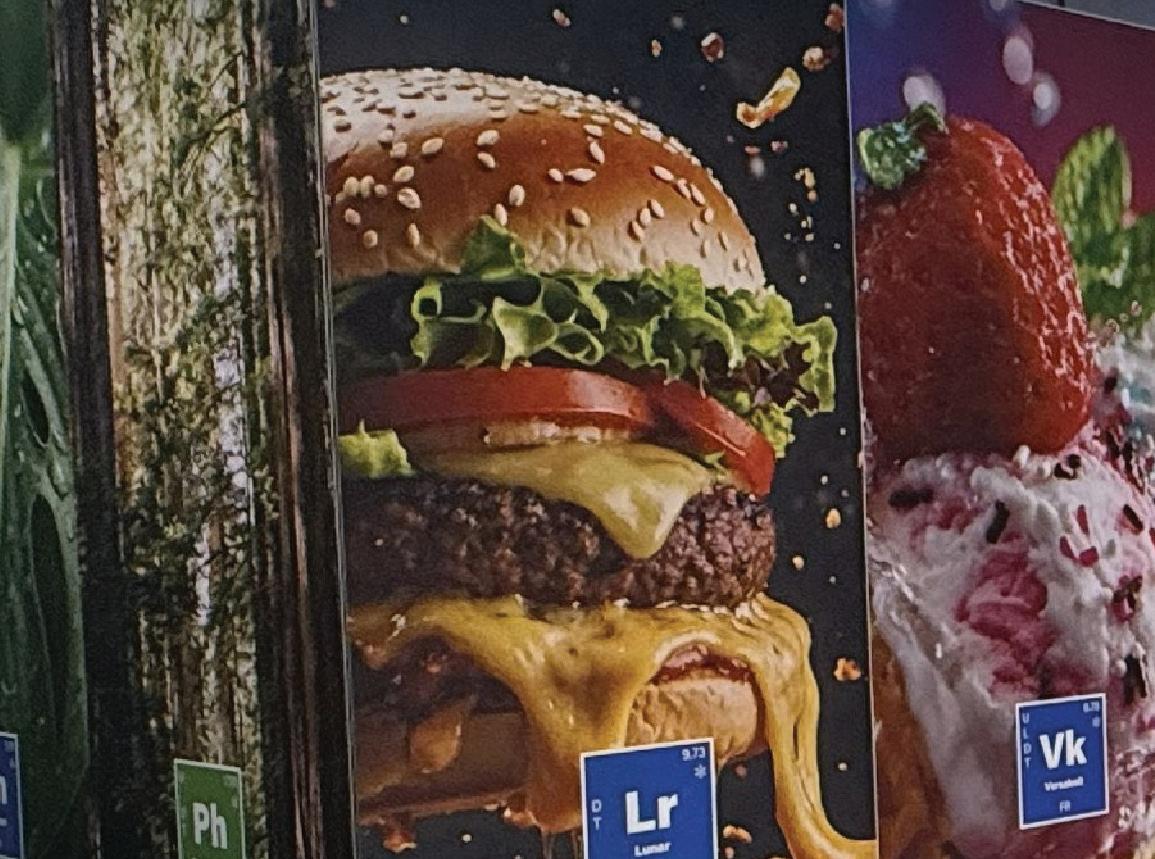
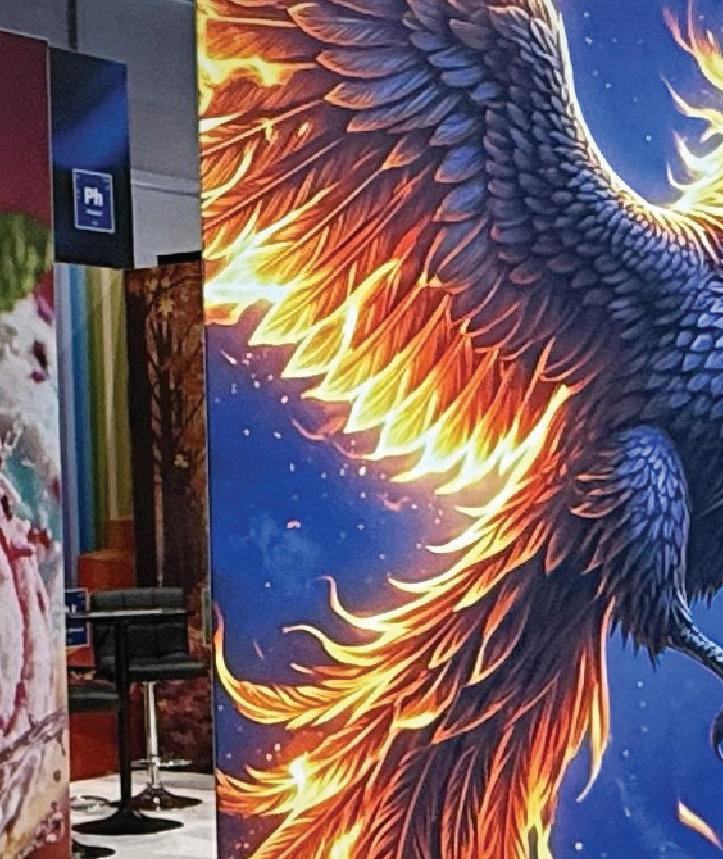
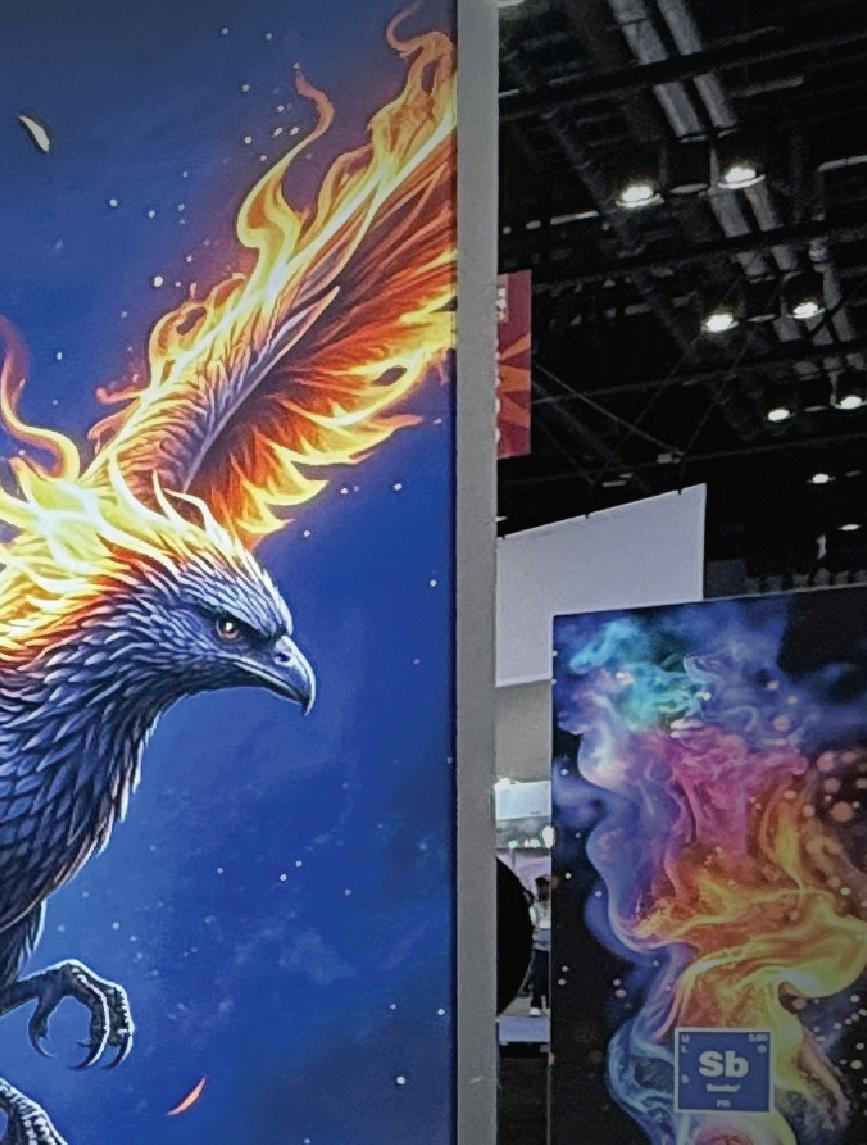


abric-based trade show graphics present opportunities for reusable signage. This yields sustainability, effective messaging, and ease of install—no professionals needed. It’s a no-brainer to offer soft signage to customers. However, there are certain things to look for when determining which fabric
by Melissa Donovan
is right for trade show applications. These include opacity, white point, soft hand, elasticity, and weight. Taking all of these into account leads to an impactful graphic durable for multiple uses.
According to Ken Bach, business development director, Aberdeen
Fabrics, Inc., “when selecting fabrics for trade show graphics, performance, appearance, and reusability are critical. Print quality, durability, and overall presentation are directly impacted by opacity, white point, soft hand, elasticity, and weight.”



Typical fabrics print providers use for trade show graphics are blackback, backlit, and display stretch, lists Joel Willcock, director, UFABRIK. “Textiles that combine strong visual performance with practical handling benefits give reliable performance across display backlit and block out applications.”
How much light passes through fabric, or opacity, is critical for proper viewing. A graphic that isn’t clearly read or seen defeats its purpose.
Larry Ulfig, channel manager, Berger Textiles, Brand Management Group (BMG), believes ample opacity is necessary to ensure that stray light does not effect graphics.
High opacity is preferred, according to Bach, to prevent show through from frames, structures, or lighting behind the graphic. It ensures consistent color density and enables double-sided applications without ghosting.
A completely opaque fabric effectively hides structures or storage behind the graphics. According to Andy Downs, GM, Berger Textiles USA, this is essential for a professional, eye-catching exhibit.
“Opacity is important, as a single layer fabric with good opacity allows you to reduce the number of layers. This helps to minimize shipping costs and the installation time,” shares Jeff Cheatham, VP of sales and
product development, Fabric Printing Solutions.
White point involves brightness and neutrality.
“White point is important more so on the production side of trade show graphics; this is crucial for color management and consistency,” says Downs.
Using a spectrophotometer to measure ensures a high white point, which Ulfig says is best. “Calculating the LAB values with a spectrophotometer ensures the B value is between a -2 and -14.”
“An important aspect is maintaining consistency with white point across production runs and batches to ensure that similar graphics will more easily match without reprofiling fabrics and only running calibration steps,” suggests Kylie Schleicher, VP of business development and product management, Ultraflex Systems, Inc.
Cheatham believes a nice white point helps achieve the desired brightness of a rich color.
“A clean, neutral white point ensures accurate color reproduction, prevents color shifting—yellowing or blue tint, and enhances vibrancy and contrast in printed graphics,” says Bach.
The white point is also a big factor in custom-facing graphics that do not have full print coverage and show off a lot of blank space—think Apple or Samsung, suggests Downs.
A softer fabric offers both practical and aesthetic advantages.
“A soft textile matters for premium display work, especially when the material is handled, folded, packed, tensioned, and installed on site,” explains Willcock.
Schleicher points out that not only are trade show graphics packed and unpacked constantly, but installed by non-specialist laborers. This means they need to be user friendly—crease and wrinkle free. “The materials need to have a good balance of softness and pliability while maintaining structure in the finished application.”
Folding and incidentally packing a softer fabric after use is easier and does not result in creases,
notes Bach. “This presents a premium, wrinkle-free appearance and is particularly important for exhibitors who ship and reuse graphics frequently.”
“This translates into a more wrinkle-resistant product. Customers do not like wrinkles in their graphics,” stresses Cheatham.
Choosing fabrics that won’t retain wrinkles or creases once installed is one of the most important aspects of choosing the right product, suggests Downs.
“But even products that claim to be ‘crease free’ can still occasionally show stubborn creases, and this is where preparation is maybe the most important aspect—working with a reputable exhibit design company

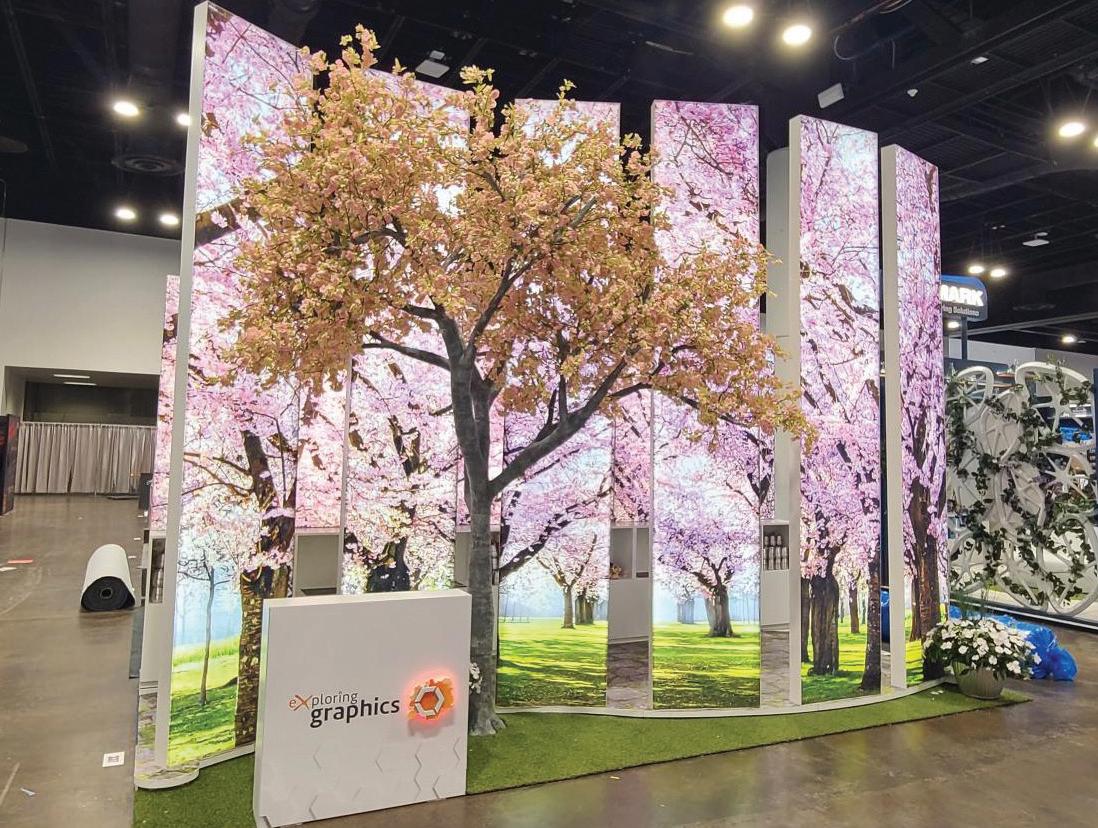
and print provider to ensure precise frame measurements for snug installation of your graphics, because graphics printed on the right textile that are installed properly should not show creases,” continues Downs.
A touch of stretch is helpful for fabrics used in trade show graphics. “Stretch is useful, but uncontrolled it can distort images, logos, and text,” admits Willcock.
A balance needs to be achieved. “It’s important to have graphics that are taut but not overstretched
to the point of losing opacity or yarn breakage,” says Downs.
“Elasticity comes into play with how the print job interacts during every stage—from how the material to your printer is loaded to ink settings and printer codes to any calendaring in the end stages,” shares Leif Kristensen, print media sales consultant, TVF.
Elasticity is useful for silicone edge graphic (SEG) applications and other framing systems.
“Elasticity allows for tight, drumlike tension in frames, prevents sagging over time, and improves ease of installation and reinstallation,” adds Bach.
Ulfig points out that elasticity provides a little forgiveness in case the fabric panel is not the same size as the frame. Also, it helps the product stretch as well as rebound to its original size.
Fabric weight plays a role as well.
“Fabric weight impacts durability, handling, and print performance. Lighter fabrics are easier to ship and install. Heavier fabrics often provide better opacity and structure. The right balance ensures durability without sacrificing portability,” says Bach.
Ulfig cautions that if a material is too heavy it may sag over time.
Weight varies by application, but according to Cheatham most popular items fall into the range of six to 9.5 ounces per square yard.
“Textile weight has become less of a primary factor in trade show graphics, as developments in knitting and weaving, yarn construction, and different coatings have paved the way for lighter weight fabrics to accomplish or exceed the goals of traditional heavyweight fabrics, driving transportation costs down and reducing installation time and effort,” admits Downs.
Opacity, white point, soft hand, elasticity, and weight are top features when considering the best fabric for a trade show graphic, however they aren’t the only things to think about.
Bach lists off sustainability, print consistency, durability, flame retardancy, and supply chain stability as additional factors.
Stretch in warp is another consideration. “Materials should not have too much stretch in the warp because this will cause tensioning issues on the printer. If the material does have a lot of stretch in warp, the fabric must be transfer printed,” recommends Ulfig.
Willcock warns of the potential for “bruising.” “Exhibition graphics are packed, shipped, then unpacked, handled, and sometimes reinstalled many times. They need to be able to resist bruising.”
Trade show graphics are designed to be reused. Thus it makes sense the fabric offers some level of washability.
“Fabric trade show graphics are designed for multiple uses and can be cleaned with proper care. Proper care helps maintain color vibrancy, fabric integrity, and overall appearance across events,” shares Bach.
Tools like magic erasers or brushes with very soft bristles used very lightly are a great starting place, suggests Kristensen. “With any investment as visually prominent as your booth materials, speed is critical and starting as gently as possible is best.”
Beyond hand cleaning on site, care also includes placing the fabric in a washing machine on the gentle cycle with cold water, suggests Bach. Mild detergent is preferred—avoid bleach and fabric softeners—and air dry or tumble dry on low heat. Avoid high heat to prevent shrinkage or damage to the print.
“Depending on the size of the panel, you may need to bring it to a professional launderer or hand wash. It’s important to hang the fabric to dry to avoid mold or mildew, and to also avoid dryers with heat, as this can cause fabric to shrink and/ or alter the performance of the material,” advises Downs.
Proper laundering depends on the ink sets used on the printed graphic. “Coatings designed
for dye-based printing allow for completely permanent and washable textiles that can be laundered or dry cleaned normally,” explains Asher Katz, president, Jacquard Inkjet Fabric Systems, Inc.
“Dye-sublimation (dye-sub) printed graphics can be washed; however, there is a limit to how many times they can be put through a washing machine,” notes Ulfig.
Flame retardancy (FR) isn’t optional—it is necessary in most venues and environments trade show graphics are installed in.
Requirements vary depending on location. Downs suggests checking
with the venue ahead of time to ensure the graphics are compliant with local regulations.
In the U.S., certain states like CA and NY have more stringent codes, advises Kristensen.
“Compliance ensures safety, avoids installation issues, and meets venue regulations,” asserts Bach.
Common standards are TB 1172013, NFPA 701, Title 19 – California Code of Regulations, CAN/ ULC-S109 in Canada, and DIN 4102 in Germany.
“NFPA 701 is one of—if not the—most common FR certification to be aware of. It governs
standards for outdoor materials ranging from draperies and curtains to tents and more. NFPA 701 is often required by fire marshals in almost every state,” shares Kristensen.
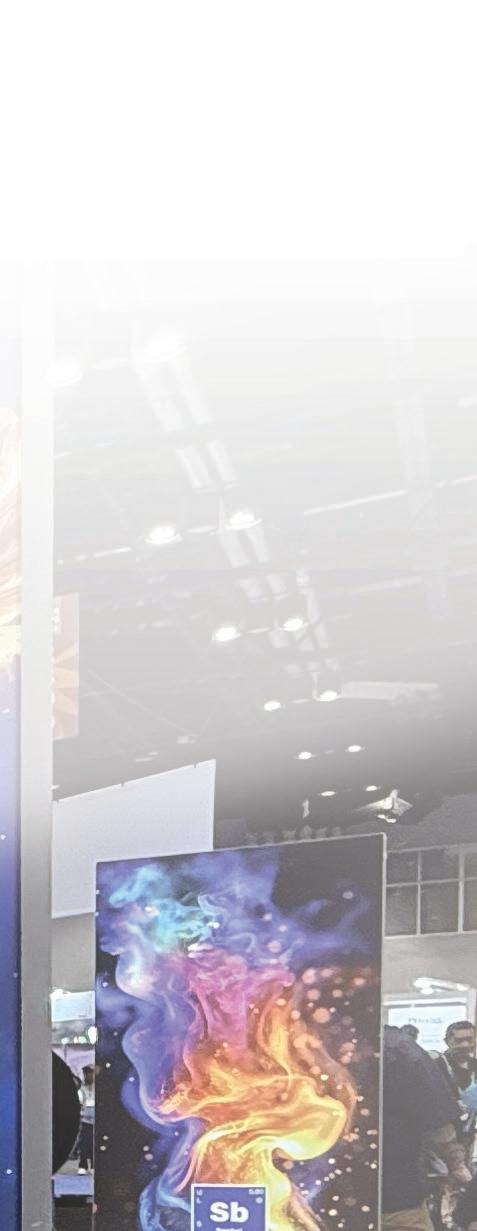
Aberdeen Fabrics offers high-performance textiles engineered for trade show and display applications. Key differentiators include CleanRTex Technology, high-opacity solutions, soft knit construction, elastic performance for SEG, recycled content options, made in the U.S., and an end-of-life recycling program. CleanRTex Technology uses up to 80 percent less energy and over 90 percent less water in production,
no wastewater discharge, and supports full end-of-life recyclability. These features combine to deliver consistent print quality, durability, and sustainability advantages over traditional coated or imported materials.
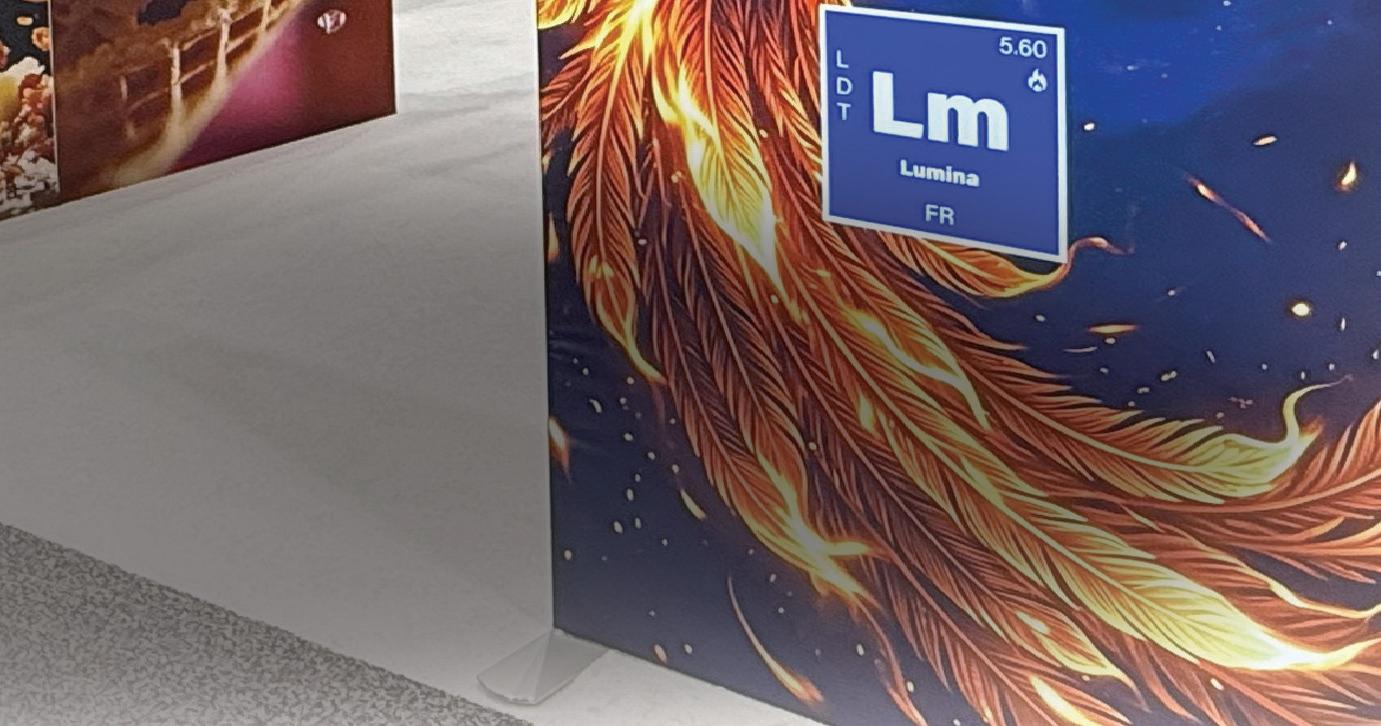
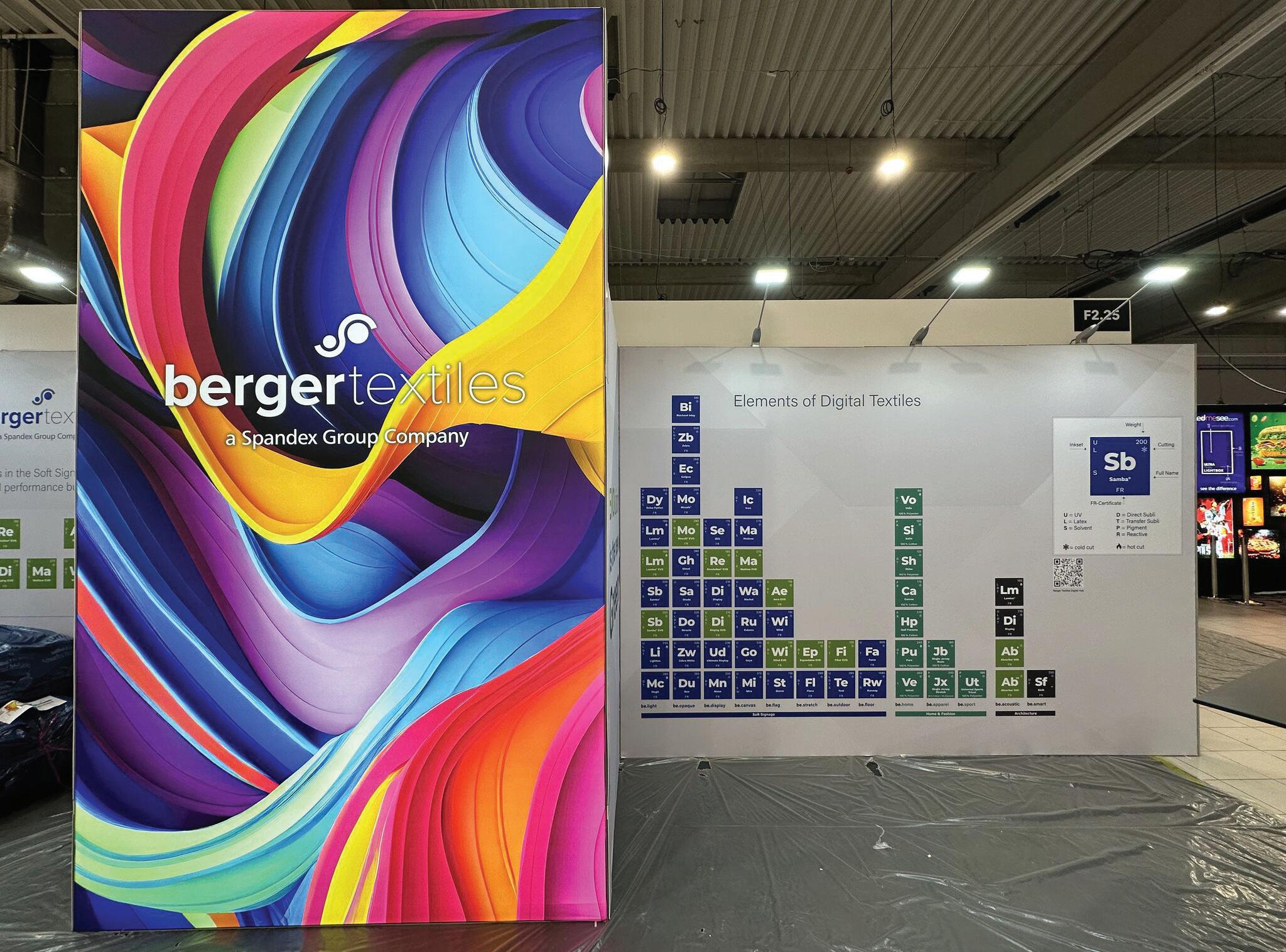
Berger Textiles offers several solutions for trade show graphics. Phantom is a versatile, soft fabric with a completely opaque black-backer with exceptional printability with transfer and direct dye-sub, UV, and latex inks. It is crease resistant. Lunar is a heavy-knit textile with a knit greyback for superior
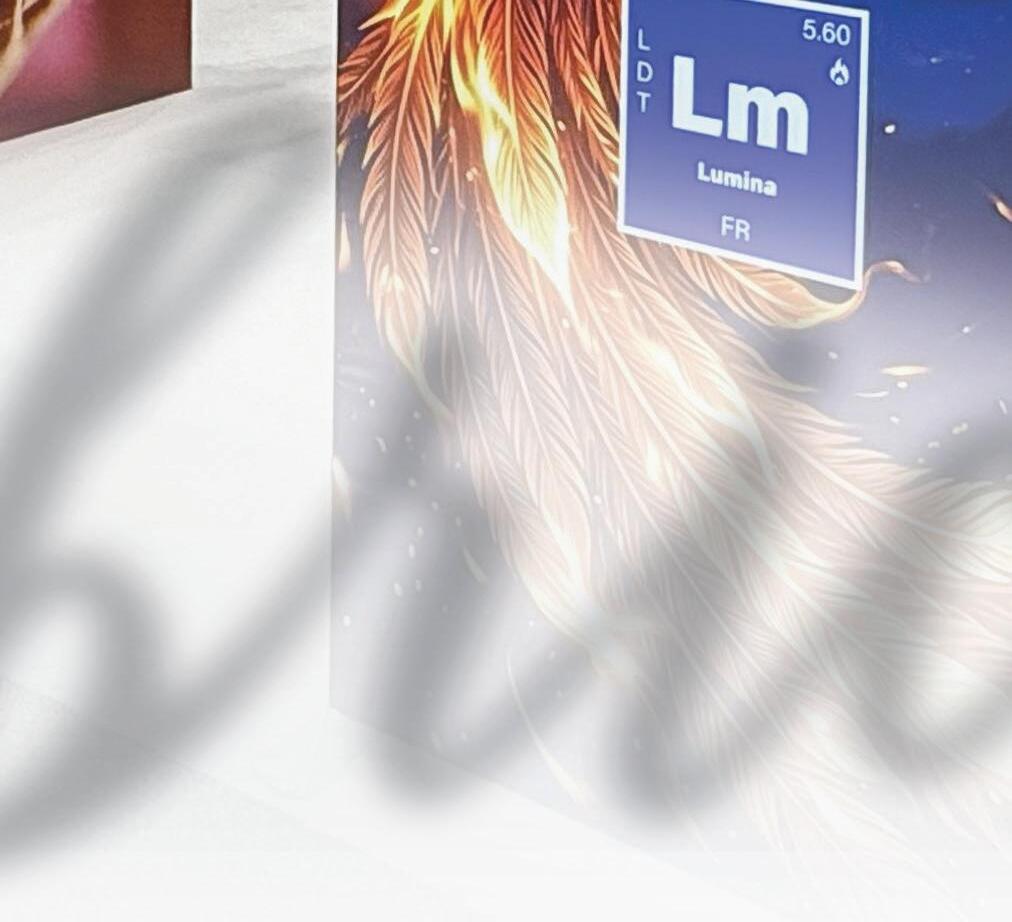
opacity, a soft hand, and a great white point. Xtend is ideal or geometric and three-dimensional frame systems, pillowcase frames, and hanging signage, thanks to its elastic composition, impressive opacity, crease-resistance, and stretch rebound. Lumina is backlit fabric for dye-sub—providing brilliant color reproduction, perfect light transmission, and crease-free installation.
BMG distributes Berger Textiles’ fabric. Its staple product for trade shows is blackback material because it is totally opaque.
Phantom blackback is unique in that it has more stretch than most of the competitors’ products, allowing for an easier installation. Another product is backlit, Lumina. The light dispersion on Lumina is also best in class.
Fabric Printing Solutions’ blackback and white back coated fabrics offer consistent quality—allowing customers to engineer in a specific measurement and setting each time. LFT4000 Knit Vibe is a FR knit backlit fabric with light diffusing yarn construction, ideal for use in SEG light boxes.
Jacquard’s 6.5oz Canvas is ideal for trade show graphics. The company can also treat any fabric a customer sources and sends to the company for coating and/or paper backing.
TVF’s 8.5 oz. PureNight Pro 8668SDWGFS is a high-performance, eco-friendly blockout fabric made from 100 percent recyclable polyester—delivering excellent light blocking without the need for heavy coatings. Lightweight, yet durable, it resists creasing and meets NFPA 701 FR standards. It is dye-sub paper transfer and direct disperse printable and great for frame systems, trade show displays, event backdrops, window graphics, retail signage, and banners.
UFABRIK’s portfolio covers over 95 percent of applications required by the wide and superwide digital print industry. Its products are noted for their stretch, dimensional stability, color vibrancy, blockout, light diffusion, scratch resistance, and crease- and wrinkle-free features.
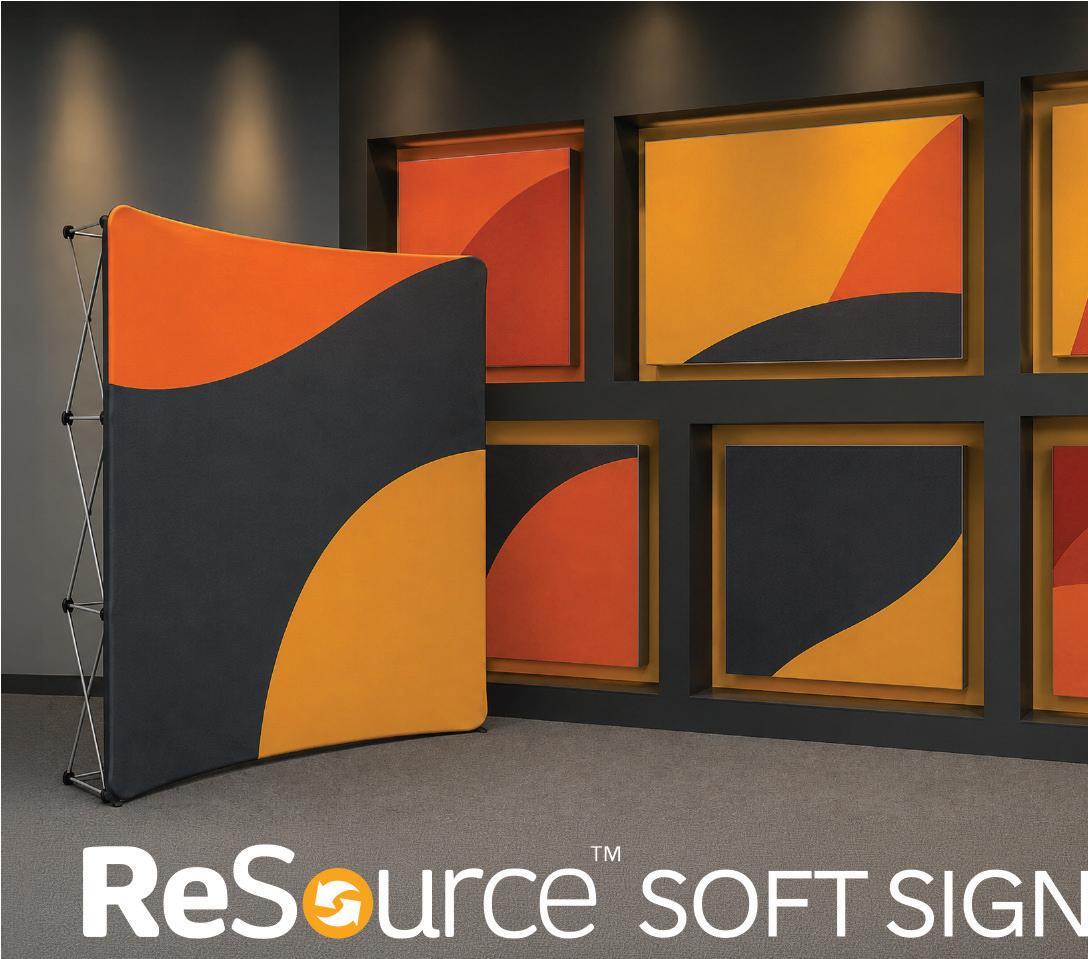
Ultraflex’s VorTex Backlit Event T202 is a woven lightweight backlit for trade show and event applications. There is no spider cracking, which allows the graphic to be folded and installed with ease. The fabric can be printed via dye-sub transfer and is available in widths of 63 and 126 inches. The company also supports its new 100 percent GRS-certified recycled fabrics through its ReSource soft signage line.
While it’s true proper stretch, weight, and even soft hand make for an impactful graphic, other practical considerations like FR certifications and how a product will be washed are essential factors when choosing a fabric for trade show graphics. D