






















Pricing,

Pricing,
Multifunctional, multipurpose tools seem to be the theme of this month’s issue. From our cover story, Engineered for Floors—and Beyond, which looks into wide format media designed for multiple applications with a specific focus on floor graphics; to another feature, Presenting POP, that addresses the importance of finishing equipment that handles a range of rigid, semi-rigid, and flexible substrates.
Investing in a finishing system that supports multiple tools or selecting a wide format media built to perform well on multiple surfaces are two examples of achieving that goal.
Today more than ever print service providers search for ways to integrate flexibility into their business. Investing in a finishing system that supports multiple tools or selecting a wide format media built to perform well on multiple surfaces are two examples of achieving that goal.
If you’re looking for either of these to diversify your print shop, visit the ISA International Sign Expo this April. Several of the vendors that contributed to the aforementioned articles are exhibiting. Make sure to stop by their booths to chat about the possibilities of extending your business model with multipurpose solutions.
Elsewhere in this issue, our annual state of ink article dives into where the industry stands in terms of ink usage. No surprise, UV/UV LED continues to excel mainly due to its flexibility—figuratively and literally, but other ink types are still used today to address specific application needs.
EDITOR IN CHIEF
Thomas Tetreault ttetreault@rockportpubs.com
EDITOR
Melissa Donovan mdonovan@rockportpubs.com
ASSOCIATE EDITOR
Cassandra Balentine cbalentine@rockportpubs.com
WEB EDITOR
Melissa Mueller
ART DIRECTOR
Sarah M. White swhite@rockportpubs.com
CONTRIBUTORS
Marco Boer, Olivia Cahoon, Tim Greene, Melinda Tetreault, Amber Watson
ADVERTISING SALES
PUBLISHER
Thomas Tetreault
NATIONAL ACCOUNT EXECUTIVES
Amanda Doyon adoyon@rockportpubs.com 978-921-7850, Ext. 170
Subscribe online at digitaloutput.net
CORPORATE & PUBLISHING OFFICE
300 Newburyport Turnpike, Ste. 11 Rowley, Massachusetts 01969
ROCKPORT CUSTOM PUBLISHING, LLC
CHAIRMAN
Jeffrey Jensen
PRESIDENT & CEO
Thomas Tetreault
Digital Output is published monthly by Rockport Custom Publishing LLC. ©Rockport Custom Publishing, LLC 2026. Reproduction by any means of the whole or part of Digital Output without written permission from the publisher is prohibited. Views expressed in the editorial pages do not imply our endorsement.
Vendors: We welcome your product news. Include prices, slides, photos, and digital files with your press release. Please forward product samples and media kits to Reviews Editor, Digital Output, 300 Newburyport Turnpike, Ste. 11, Rowley, MA 01969. We cannot be responsible for unsolicited product samples.
SUBSCRIPTION RATES
U.S.: $82.95 per year; $165 for 2 years; single copies: $6.95; Canada and Mexico: $99.50 per year (U.S.D.); Other international subscriptions: $275 per year (U.S.D.)

Cheers, Melissa Donovan, editor mdonovan@rockportpubs.com
POSTMASTER
Please send address changes and form No. 3579 to: Digital Output, 300 Newburyport Turnpike, Ste. 11, Rowley, MA 01969. Periodical Class postage rates paid at Rowley, Massachusetts and additional mailing offices.
CHANGE OF ADDRESS NOTICE
Six to eight weeks prior to moving, please clip the mailing label from the most recent issue and send it along with your new address (including zip code) to: Digital Output magazine, change of address notice, 300 Newburyport Turnpike, Ste. 11, Rowley, MA, 01969. Attention: Circulation Department.
by Digital Output Sta
In a continuation of our March article, this issue includes additional vendors’ plans for the International Sign Association’s (ISA’s) flagship event held April 8 to 10, 2026 in Orlando, FL. The ISA International Sign Expo has something for everyone—from vehicle wrap demonstrations to digitally printed fabric displays.
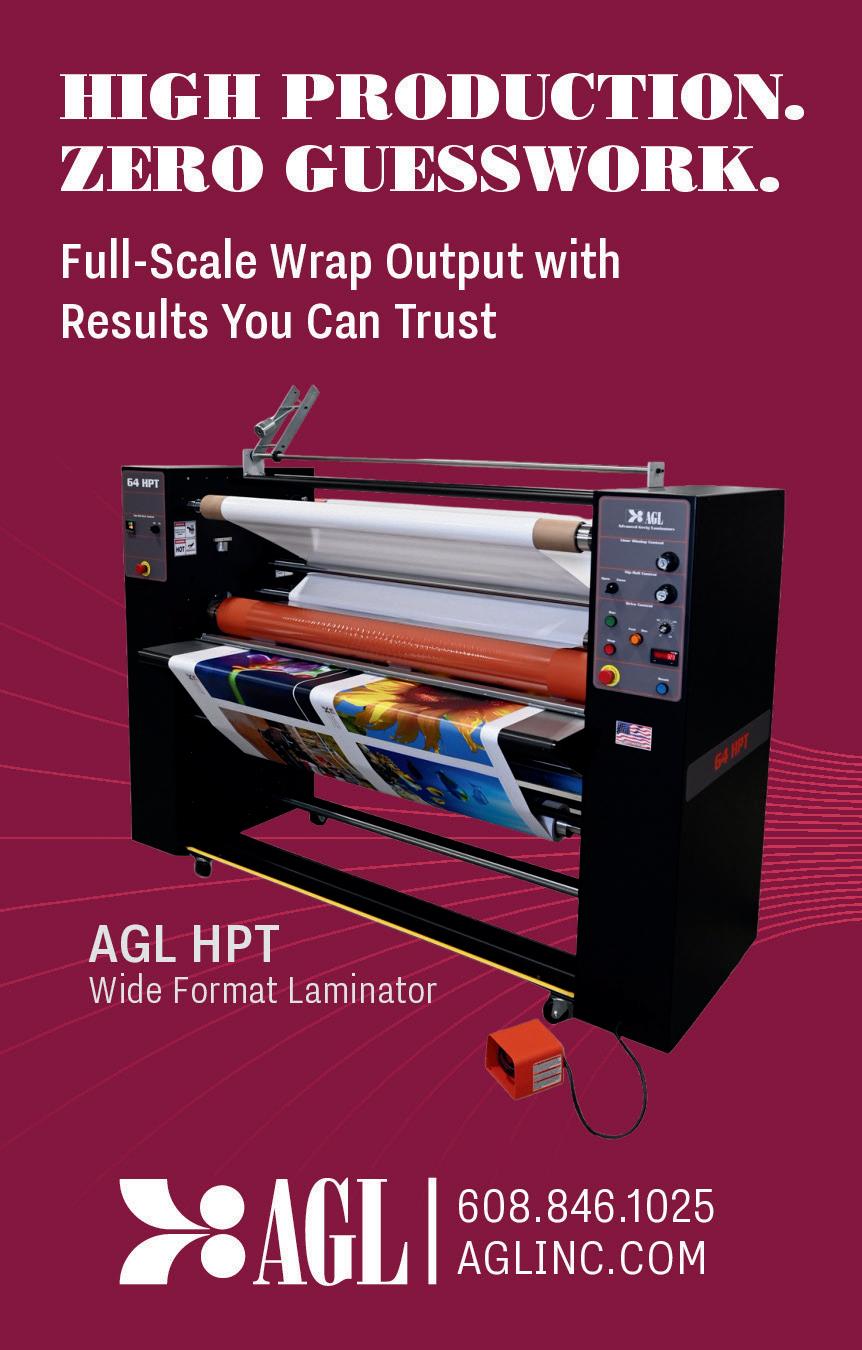
Advanced Greig Laminators, booth 1079, features the 64 HPT High Production Laminator. Designed for laminating PSA overlaminates to printed vinyl media, the 64 HPT combines a compact footprint with true productionlevel performance. Its industrial top-heated nip assembly ensures reliable bonding, while cantilevered unwind and rewind stations streamline material loading and changeovers. Repeatable tension control systems on material stations provide consistent, dialed-in results. INFO# 430
Avery Dennison, booth 929, invites attendees to stop by for a sneak peek of Rehlm, a new textured architectural finishes line and PrismaPro color paint protection films. Live demonstrations by Avery Dennison certified installers showcase the newest cast film, MPI 1903 EZRS and best-in-class MPI 1105 SuperCast Film. INFO# 431
Brand Management Group, booth 2844, the master North American distributor for Berger Textiles, shares its soft signage solutions. Experience Berger Textiles premium fabrics engineered for sublimation, UV, and latex printing, and explore versatile applications—from light boxes and banners to display frame systems. INFO# 432
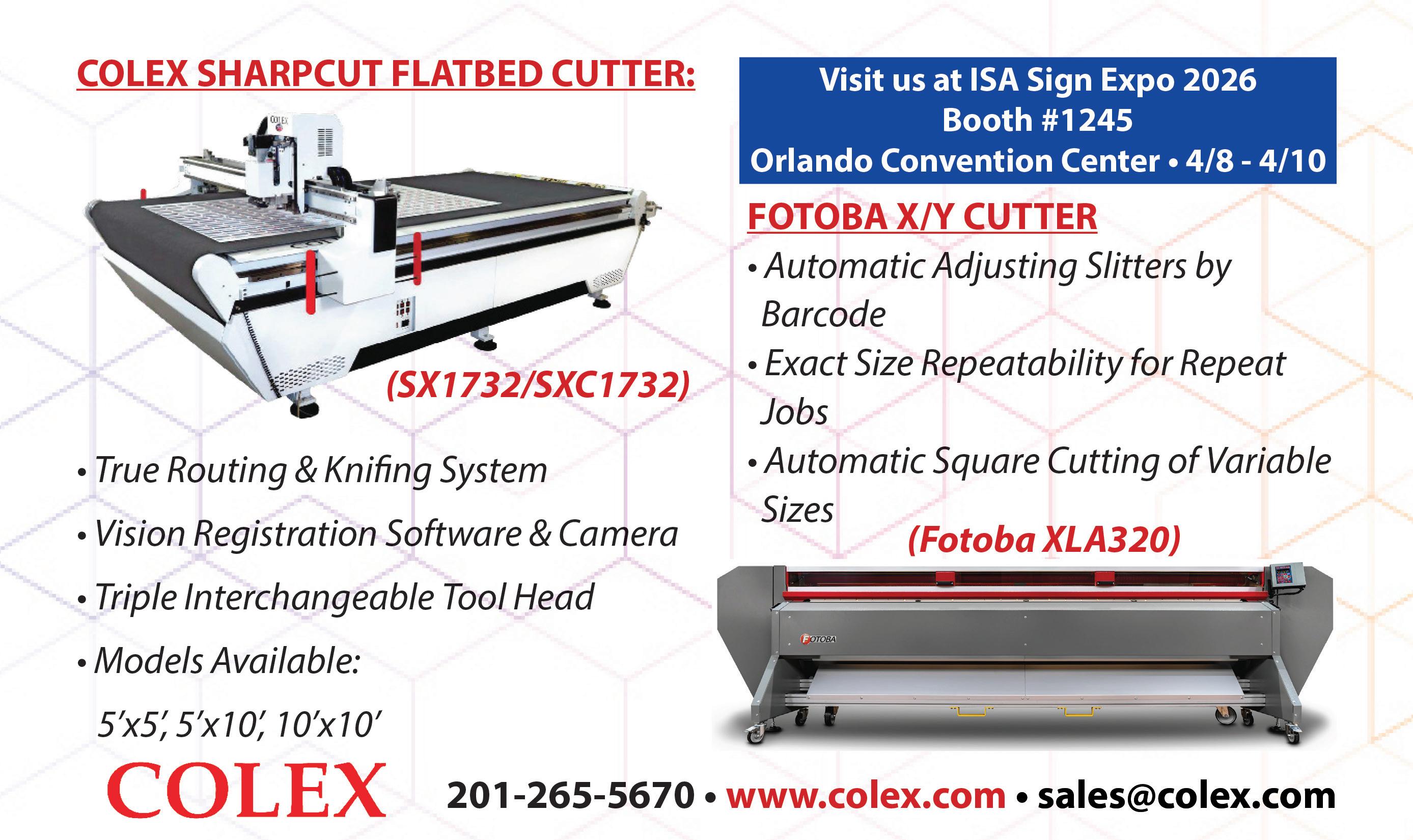
Colex, booth 1245, highlights the Sharpcut Flatbed Cutter, delivering precise digital cutting for rigid and flexible substrates. It showcases the Fotoba X/Y cutter, known for accurate, automated trimming. For mounting applications, the Bubble-Free machine demonstrates fast results without silvering or air pockets. Also on display is a smooth, consistent laminator from Neschen. INFO# 433
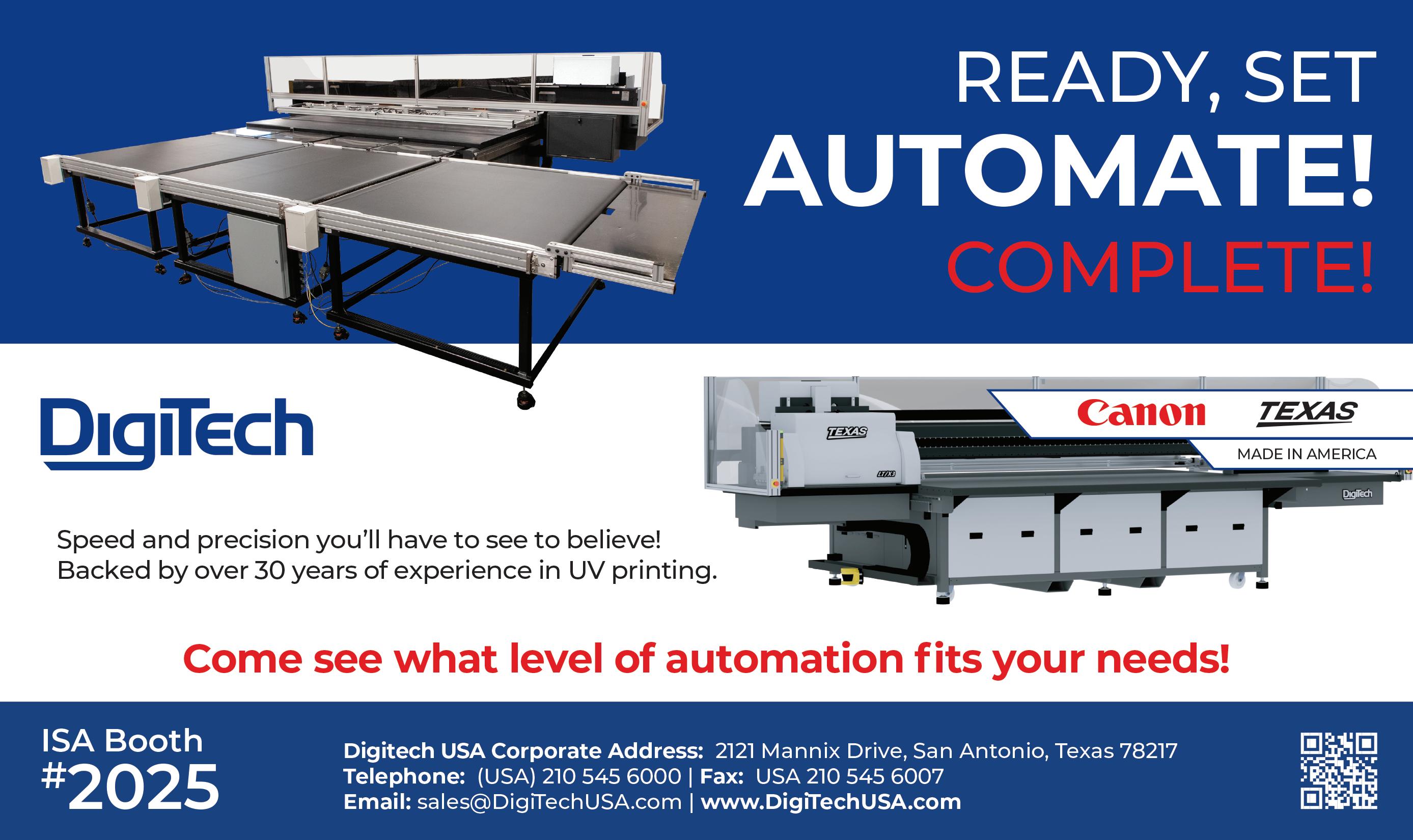
DigiTech, booth 2025, promotes automation. Whether you’re small or one of the largest companies producing wide format graphics, the time to start doing something about automation is now. DigiTech has all levels of automation from automatic offloading to full pallet-to-pallet finished printed product. Single- or double-sided applications are printed, cut, and stacked without human interaction. All on the DigiTech TruFire printer platform. INFO# 434

























Direct Color Systems, booth 547, features live demonstrations of the MP Series and the high-production UV-84DTS Gen 2. Attendees can see real-time printing on a range of substrates, from flexible media to rigid boards, highlighting ADA and braille production, specialty direct to object, and robust white and varnish capabilities. INFO# 435
Epilog Laser, booth 1863, debuts the Fusion Ascent laser for engraving and cutting. The Ascent line introduces enhanced pass-through functionality, 120 IPS engraving, and the IRIS HD+ integrated camera system. IRIS HD+ provides high-definition clarity, improved zoom, and real-time precision, with a closer positioned carriagemounted camera. INFO# 436
Epson, booth 1335, introduces a new solution, as well as showcases its range of professional imaging
solutions for applications spanning indoor and outdoor signage, photography, graphics, and textile. Epson demonstrates the new SureColor G9070 64-inch direct to film (DTF) printer. It touts a userreplaceable PrecisionCore Micro TFP printhead, Nozzle Verification Technology, and UltraChrome DF inks. INFO# 437
FDC Graphic Films, Inc., booth 1290, markets, converts, and distributes top-performing products from reliable brands such as 3M, 3M DI-NOC Architectural Finishes, Lumina by FDC, ASLAN, POLI-TAPE, Nekoosa, and Siser exclusively through distribution channels. The Lumina by FDC portfolio includes digital media, sign vinyl, and heat transfer vinyl product. INFO# 438
Flatbed Tools, booth 2157, specializes in tooling, consumables, and technical support for digital cutting operations. It sells and supports Summa flatbed, laser, and roll
cutting systems, along with premium replacement blades, creasing tools, router bits, and specialty consumables for other popular brands of cutting systems. INFO# 439
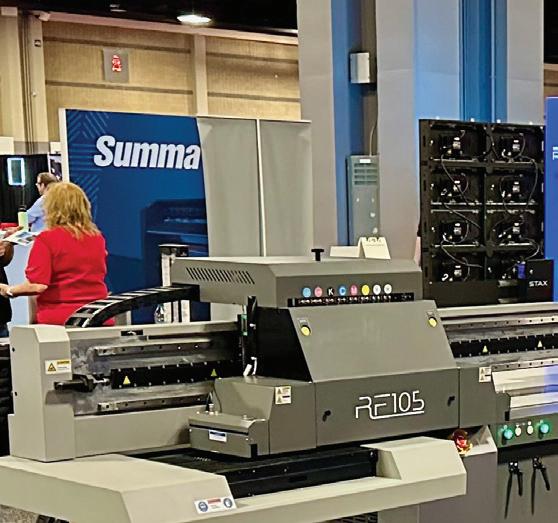
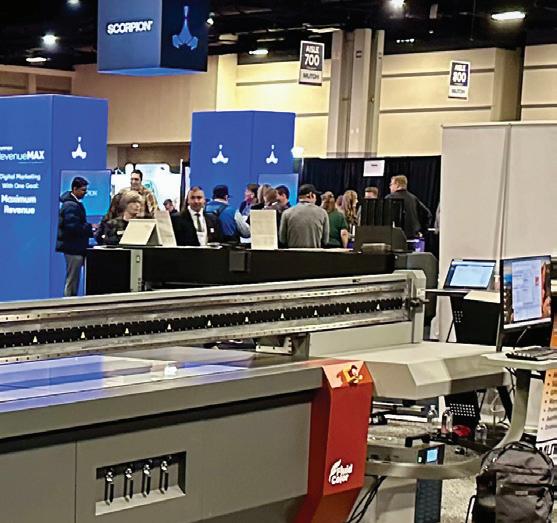
Fluid Color, booth 401, runs its RH98 hybrid—demonstrating roll-to-roll printing alongside flat board production on the RF84 or RF105 flatbed platforms. From flexible media to rigid substrates, see firsthand how its systems deliver speed, precision, and output built for real-world production demands. INFO# 440
GCC, booth 2340, invites attendees to experience the next level of laser and cutting performance. Visit the booth to see the highproductivity Piolas 400SE Laser Engraver. Discover the versatility of the Spirit LS PRO Laser Engraver. It also debuts the Jaguar 6 Vinyl Cutter, featuring a sleek redesigned body and high-speed contour cutting for smooth, accurate results. INFO# 441
General Formulations, booth 1359, showcases its GF Economy Print & Laminate Solutions, offering cost-effective, dependable graphic solutions. Available in gloss and matte finishes, these 3-mil pressure-sensitive vinyl films feature a durable, permanent acrylic adhesive on a smooth, 75# 2-sided poly-coated liner. Engineered for general signage, window graphics, and decals, GF Economy Solutions deliver quality, performance, and affordability. INFO# 442
Graphic Whizard, booth 2111, showcases the power and versatility of its GW Wide Format digital die cutting systems. The flatbed
cutting systems range from 4x5 up to 6x5 feet and—when combined with CNC routing capability—handle substrates up to 25 millimeters thick. The GW Wide Format DH line features a three-tool interchangeable head that supports EOT cutting, kiss cutting, scoring, perforating, fabric cutting, and additional applications. INFO# 443
HP, booth 2535, exhibits the HP Latex 730 and 830 Printer Series, the HP Latex R530 Printer, and the most recent addition—the HP Latex FS70 W Printer. The HP Latex FS70 W Printer delivers stunning results and is powered by a scalable platform that allows for upgrading the printer as business grows. INFO# 444
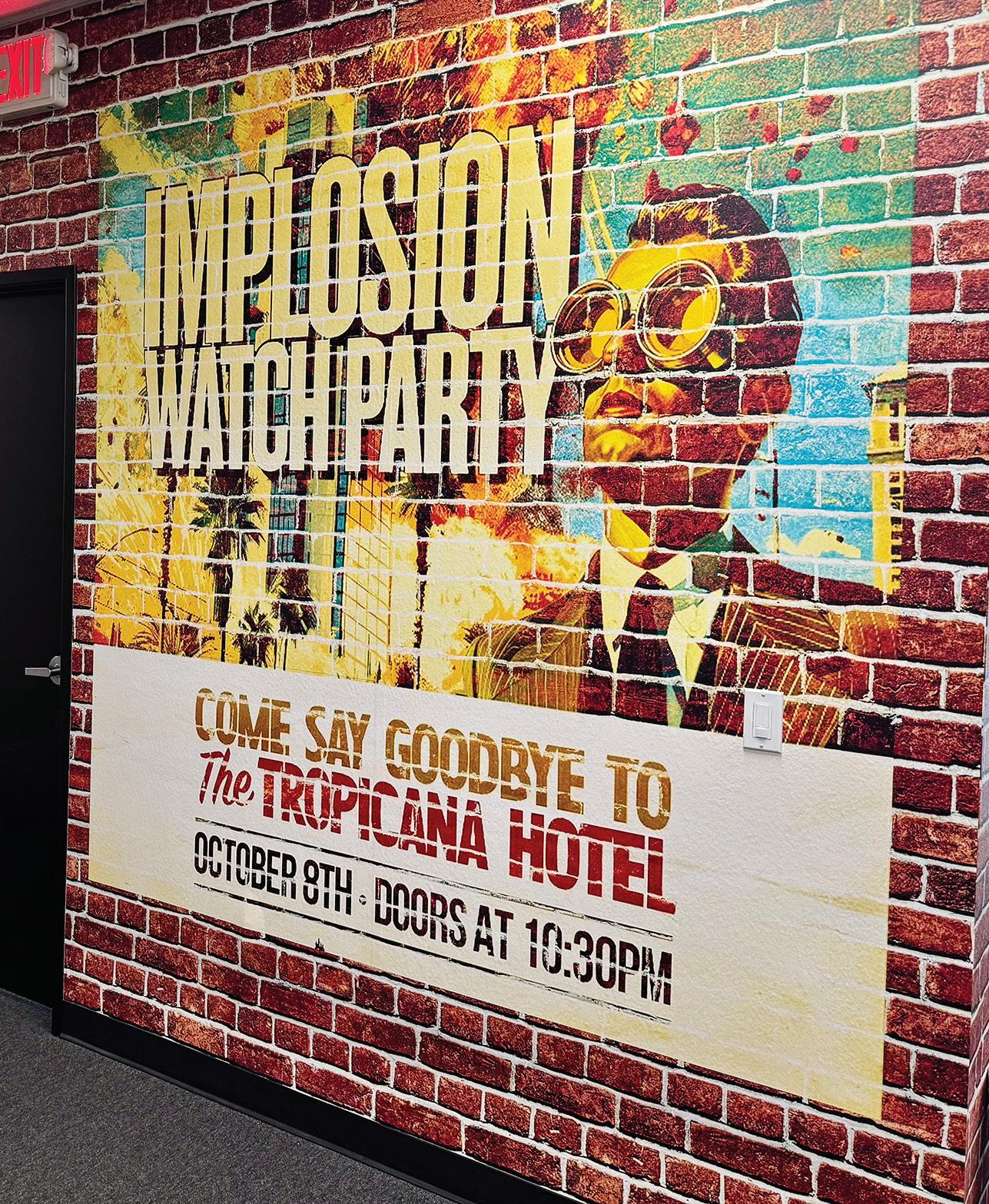
Jessup Manufacturing, booth 870, brings its bold theme to life with an immersive booth environment that demonstrates performance from the ground up. The walls are produced using new Floor2WallPro media. Floor graphics are printed on WallPro 3 and protected with ARMORLam 7 overlaminate for durability. It spotlights TenaciousTac high-tack materials. In addition, Print n’ Go graphics media and trusted safety signage materials are featured. INFO# 445
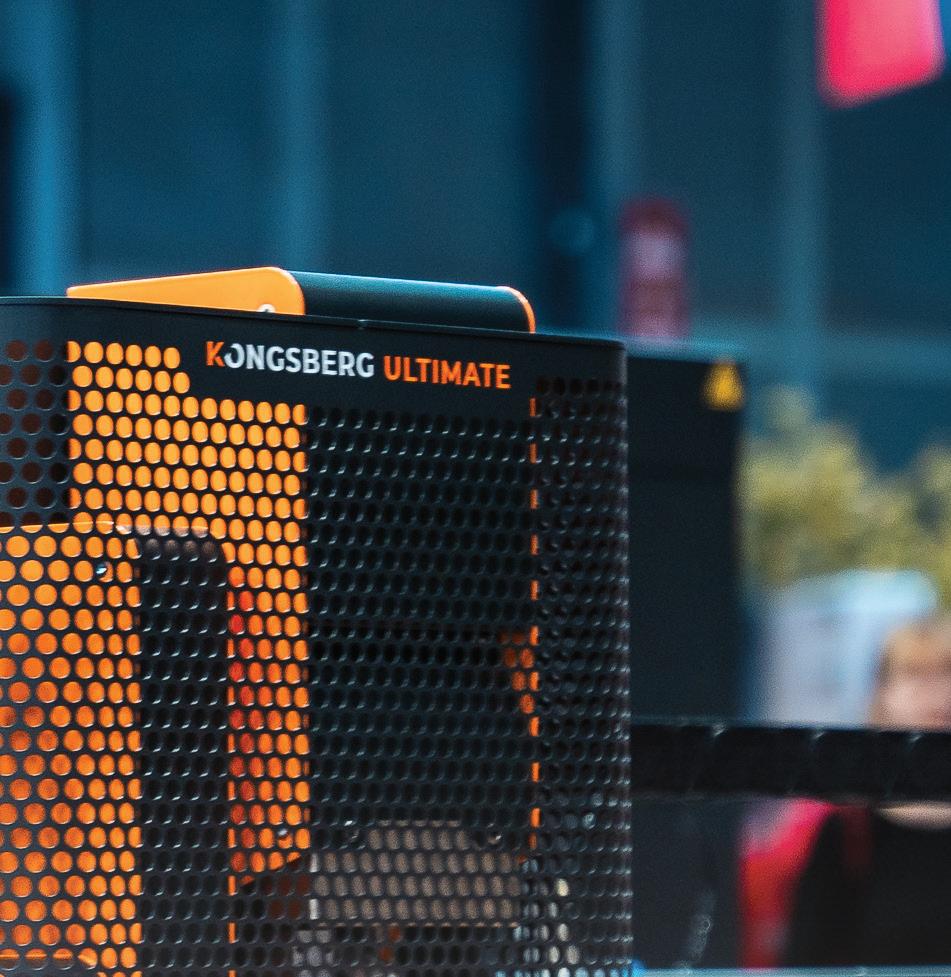
Kongsberg Precision Cutting Systems and MultiCam, booth 1101, debut a new MultiCam solution designed to support operator flexibility and productivity by combining user-friendly operation with high-speed performance and consistent cut quality. The MultiCam Apex3R Evo is a high-performance CNC router designed for superior edge finishes across a variety of substrates. Also on
display, the Kongsberg X, a versatile digital cutting table suitable for signage, packaging, and display applications. INFO# 446
Leister, booth 1291, announces the HG 530 A Car Wrap Kit from Weldy, a Leister brand. The HG 530 A heat gun features Eco-Mode as well as variable digital temperature and airflow control, allowing installers to work with precision and consistency. The complete car wrap kit includes the HG 530 A heat gun, a 16.4 feet cord, heat protection, and air inlet covers. INFO# 447
Lintec of America, booth 708, unveils additions to its ECO product
line—scratch resistant, optically clear polyester films engineered for UV printing. The expanded ECO range includes enhanced UV blocking capabilities, providing added interior protection while maintaining clarity. Lintec also introduces thicker liner constructions designed to improve feeding, alignment, and overall processing consistency across UV printer platforms. In addition, Lintec showcases its optically clear, latexcompatible film. INFO# 448
LogoJET, booth 1971, runs live production demonstrations on its Inspira Series industrial UV printers, showcasing high resolution,
direct to substrate printing. See advanced white underbase, layered textures, and vibrant, durable color produced in real time, all within a compact, production-ready footprint built for modern sign and graphics shops. INFO# 449
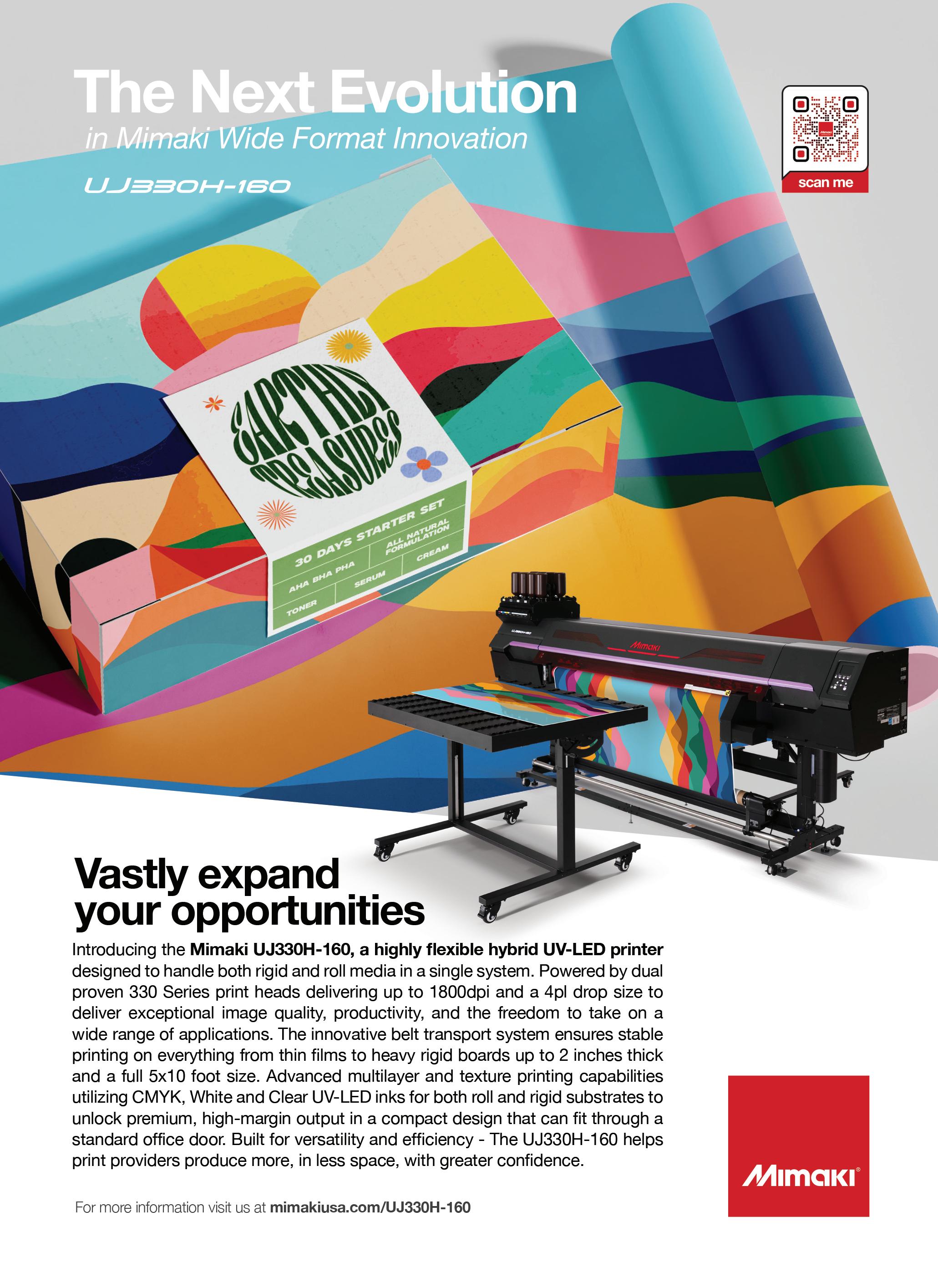
Mimaki USA, booth 2223, promotes the UJ330H-160, a 64-inch UV LED hybrid printer. Attendees get hands-on experience with the Mimaki 200 Series, featuring the JV200-160 eco-solvent printer, the CJV200-160 integrated printer/ cutter, and the TS200-1600 sublimation printer. The display highlights Mimaki’s JFX600-2513 and JFX200-1213 EX UV LED flatbeds,
alongside the UJF-7151 plusII e. For specialty markets, Mimaki features the UJV300DTF-75 for UV DTF transfers and the TS3303200DS for 3.2-meter printed textile applications. INFO# 450
Mutoh, booth 709, introduces its newest eco-solvent printer. Witness all of its printers in action and discover practical solutions. Stop by to see how the XPJ-1462UF helps unlock new revenue opportunities and stand out in a competitive landscape. Through a range of application examples, Mutoh highlights the flexibility and capability that make personalization profitable. INFO# 451
Newlife Magnetics, booth 2711, offers thin, wide, and strong magnet media, including printable wide format magnet rolls up to 60 inches wide and as thin as 12 mil. Newlife’s EM Ultrawide magnet is available in 12-,15-, and 20-mil thicknesses in 54- and 60-inch wide rolls. Newlife EM Ultrawide has a high-quality PET print surface that is solvent, UV, and latex compatible. INFO# 452
ONYX Graphics, booth 2941, spotlights ONYX Align, a quoting, order management, and workflow solution. It helps shops create accurate quotes, manage orders, track production, and connect sales to the shop floor. Attendees can explore ONYX 25, the latest version of ONYX’s RIP software, featuring color management, automation tools, and performance enhancements designed to drive consistent, high-quality output. INFO# 453
Orbus, booth 1745, encourages attendees to connect with the team and learn about its innovative display products designed to help brands stand out, attract attention, and foster genuine connections at every event. INFO# 454
Roland DGA, booth 2034, offers the TrueVIS XG-640 eco-solvent printer/cutter, the VersaOBJECT MO-240 flatbed UV printer for product customization, the DIMENSE DA-640, the TY-300i DTF printer for apparel decoration, and the compact VersaSTUDIO BN2-30 desktop printer/cutter. INFO# 455
SAi, booth 1610, presents the extensive capabilities of Flexi, encompassing print, cut, DTF, UV, ADA, vehicle wraps, and regulatory applications. EnRoute is also prominently featured, showcasing dimensional signage, prismatic
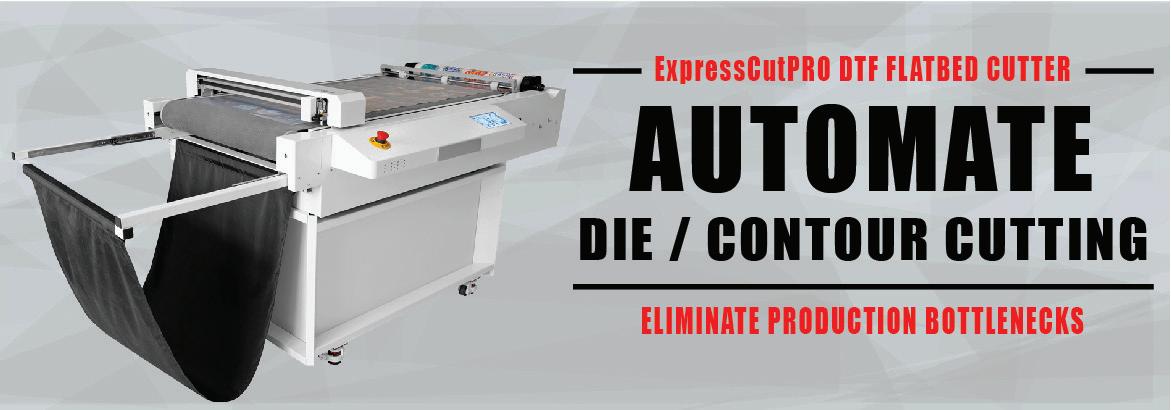
Automate DTF Cutting with the ExpressCutPRO Digital Die Cutter
ExpressCutPRO reduces labor and increases profits by eliminating the time-consuming task of manually cutting direct to film (DTF) or UV DTF transfers. Featuring an integrated conveyor belt and quick response workflow, allows for a fully unattended workflow experience. Increase your output while reducing operation costs with ExpressCutPRO DTF Cutters. For more information visit supply55.com, call 734-668-0755, or email sales@supply55.com. Simplify your cutting operation today with ExpressCutPRO. INFO# 1
and threadmilled lettering, and sophisticated texturing techniques. INFO# 456
Saw Trax, booth 301, showcases the Compact Sign Maker’s Vertical Panel Saws, available in 52 and 64 inches. For corrugated plastic work, it demonstrates the Coro-Claw four- and ten-millimeter cutters, which provide clean, controlled cuts following the flutes rather than crushing them. INFO# 457
SnapPress, booth 985, enables sign and graphics shops to bring labels, decals, stickers, and shortrun specialty graphics in house. SnapPress is the only system purpose-built to combine Print Valet production intelligence with Label Studio design automation, allowing teams to quickly create production-ready labels, decals, and graphics without complex prepress. INFO# 458
StratoJet, booth 1600, showcases the True Print Hybrid Technology – Jaguar (2026 Edition). It comes in a new configuration with up to 16 printheads. The booth also includes the Shark EFB Series with spot colors orange and green and Hawk CleanPrint with upgraded OS technology providing performance and print efficiency. INFO# 459
Trotec, booth 2101, introduces the new SP500 S with advanced smart electronics that unify the laser, exhaust, chiller, materials, and service into one intelligent, connected ecosystem. This upgrade enables central monitoring, automatic extraction adjustments for each material, real-time machine insights, and faster, more precise troubleshooting. INFO# 460
Vanguard Digital Printing Systems, booth 1522, returns with the Radnor, which prints rigid and roll substrates. The Natchez flatbed delivers speed, precision, and performance. The VR6D-HS flatbed delivers vibrant, highresolution output. Showgoers can experience a Durst P5 X flatbed printer as well. INFO# 461
Vision Engraving & Routing Systems, booth 2162, showcases the 25 Series Router/Engraver, 1624 Pro Engraver, and VE 810 Engraver. Vision’s 25 Series offers a 25x25or 25x50-inch work area and has multiple options, including an auto braille inserter, oscillating knife, drag knife, and creasing tool. The 1624 Pro Engraver has a 16x24inch T-slot table and is ideal for light to heavy-duty sign applications. The VE810 has a compact, space-saving form factor. INFO# 462
X-Edge Products, booth 1447, brings its newest high-performance router bits—engineered for speed, precision, and extended tool life across acrylic, ACM, PVC, and aluminum applications. Attendees can also explore an advanced CNC knife lineup designed for cleaner cuts, improved material control, and increased productivity in digital finishing environments. INFO# 463
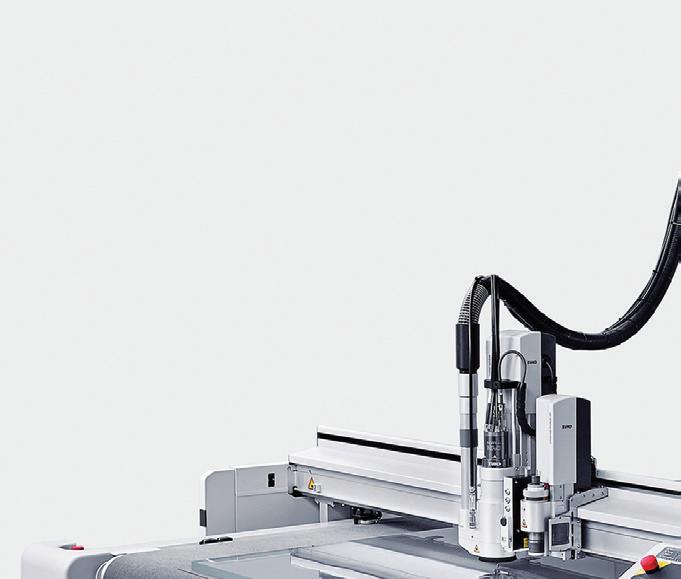
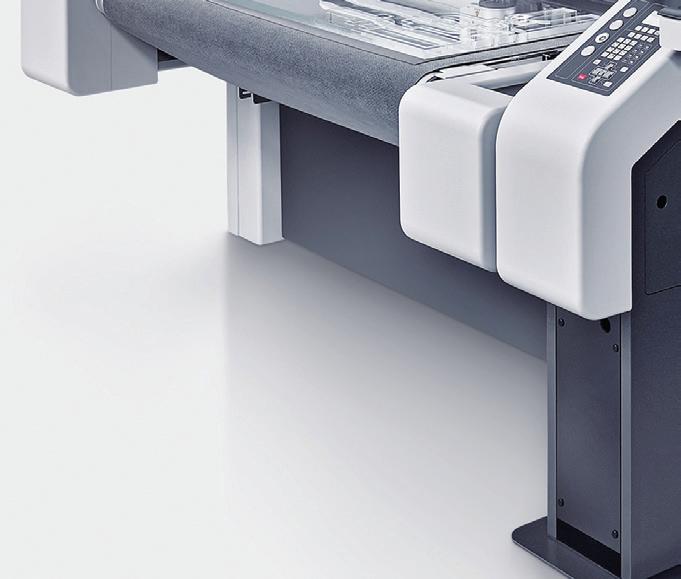
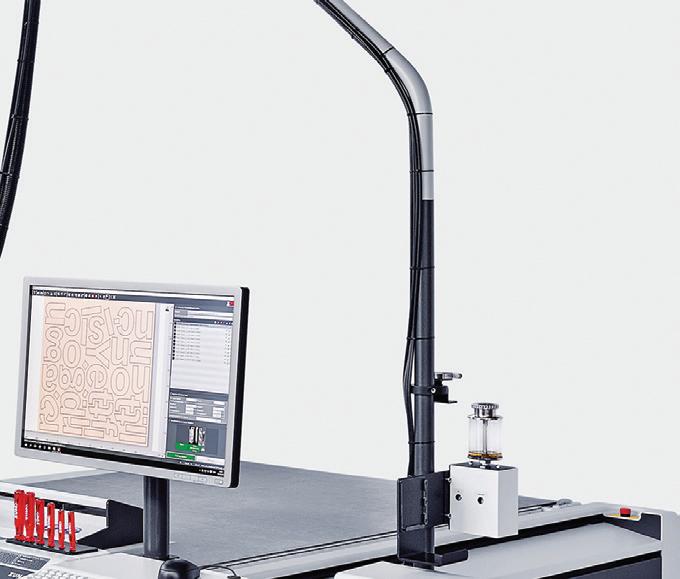
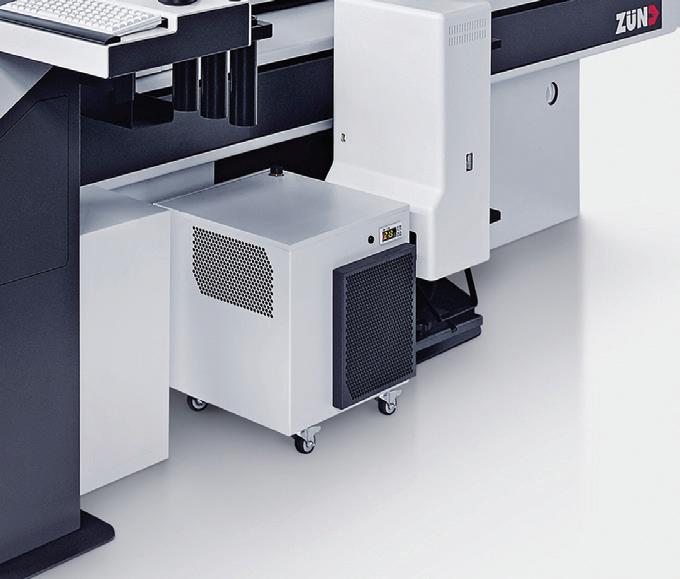
Zünd, booth 1924, features its scalable digital cutting systems. To demonstrate its systems’ characteristic versatility and precision, Zünd has a G3 M-2500 in the booth, in a cutting/routing configuration capable of efficiently processing a variety of substrates. INFO# 464
It’s not too late! Visit signexpo.org to register to attend the event. D
















inishing is an essential step in producing display and point of purchase (POP) signage. Certain tasks are necessary for this type of work, while others offer added value. Versatility is a top consideration when investing in finishing.
Display producers are under more pressure than ever and digital technologies support them to meet their customers’ needs efficiently and







by Cassandra Balentine


profitably. “However, more than that, customers are shifting toward closer collaborations with their cutting and finishing suppliers to help them navigate new materials. It is this combination of technology and support that enables producers to deliver faster work with a broader range of materials and formats, meet expectations for quality without increasing

costs, and expand capabilities. The same provider can diversify to deliver short-term corrugated displays, temporary paperboard signage, structures and displays, textile signage, and wayfinding with braille—all with the same equipment,” attests Dimitri van Gaever, marketing director, Kongsberg Precision Cutting Systems.
“Having the right machine and software that allow for easy completion of repeated and special request jobs is crucial in order to compete within the industry,” agrees Maureen Damato, senior director of channel sales, Colex Finishing Solutions.
A variety of POP/point of sale (POS) applications are trending.
Corrugated displays, standees, contour cut signage, promotional packaging, and short-run retail or event graphics remain among the most produced POP, admits Beatrice Drury, communications manager, Zund America, Inc.
“There is an increase in digitally printed, short-term corrugated freestanding and countertop displays, as well as indoor signage made from white-faced corrugated, solid paperboard, or corrugated display board. For longer term
displays, paper core board materials—such as re-board or honeycomb board—are gaining traction, replacing signage, which was traditionally made from PVC or styrene,” according to van Gaever.
POP applications that include floor displays are popular. “They are often made of cardboard or corrugated material. Small signs on shelves highlighting special promotions, new products, or benefits is one example. Cardboard dump bin boxes, which allow customers to grab products easily for high-volume item sales is another,” shares Mark de Guzman, marketing manager, Vision Engravers.
Angela Harrison, direct sales account manager, X-Edge Tools, sees POP floor graphics, shelf talkers and shelf strips, end cap signage, and die-cut standees as production trends. “Hanging signs, window graphics, and backlit displays are also common, especially for seasonal and promotional campaigns.”
Flexibility is important in retail environments. “Display and POP applications often require complex shapes, fast turnaround, and frequent design changes. Digital die cutters allow operators to move quickly from file to finished piece, making it easy to handle variable designs, rapid revisions,
and one-off jobs,” shares Drew DiPirro, sales and marketing support, Graphic Whizard Inc.
Corey Kelly, marketing manager, Trotec Laser, highlights the popularity of backlit elements and layered, dimensional signage. “Print-and-cut applications play a major role in this market. Having precise registration for accurate print-to-cut alignment can make a difference in the quality and consistency of your displays.”
Textile-based displays and soft signage continue to grow, says Drury, thanks to their lightweight,
portable nature and the need for fast, easy setup.
Drury also notes strong momentum behind eco-friendly display materials—including recyclable boards, PVC-free substrates, and, increasingly, acoustic felt—as brands seek more sustainable and multifunctional solutions for retail and interior environments.
In almost all scenarios, a cutter is necessary. Straight cutters, digital flatbed cutters, CNC routers, laser cutters—options abound. Common tools for cutting include
drag knife, tangential tool, single- and double-edge tools, creasing and scoring wheels, kiss-cut tool, pen tool, V-cut tool, and routers.
“For display and POP producers, a versatile, multifunctional digital cutting system is essential—one that can handle both rigid and flexible materials with reliable precision, speed, and repeatability,” shares Drury.
Large format flatbed cutters that handle both rigid and flexible media are versatile finishing solutions for POS work. “These cutters handle foamboard, corrugated plastic, Gatorfoam, acrylic, vinyl, and magnetic sheets with high accuracy. They enable complex shapes, kiss cutting, perforations, and routing—while increasing throughput and safety compared to manual cutting. Tight integration with UV flatbed printers makes them critical for retail display production,” explains Matteo Muto, product manager, Summa.
Harrison adds that one of the most important finishing investments is a hybrid system that combines knife cutting and routing, whether that’s a router with a knife cutter or a digital cutter with routing capabilities. “POP jobs often mix rigid materials like PVC, ACM, acrylic, and wood with corrugated, foamboard, and flexible media, and a hybrid system allows all of it to be cut, routed, or creased on one table without moving between machines.”
Flatbed cutters with roll-to-roll capability are essential for shops producing rigid displays and flexible graphics. “Roll-to-roll support keeps large graphics straight and wrinkle free during finishing and accommodates heavy rolls and oversized sheets. This is ideal for banners, wall graphics, wraps, and sign faces often paired with POS campaigns,” says Muto.
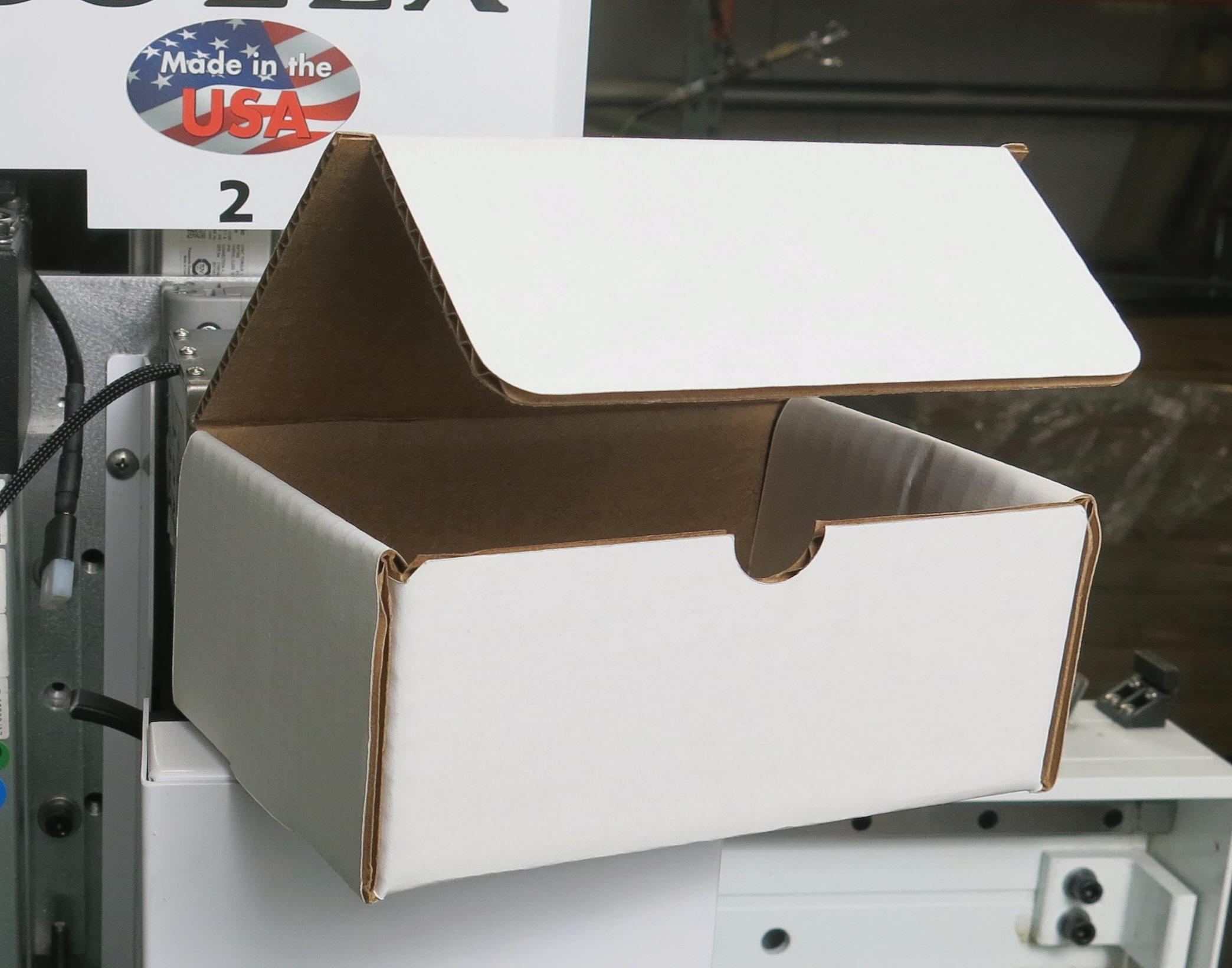
Flatbed cutters for packaging and fulfillment that are suited for POS displays often require custom packaging for safe transport. Cutters configured for packaging tasks—boxing, inserts, labels— speed fulfillment, reduce damage, and protect margins. Offering display production plus packaging as a turnkey service adds value for retail clients, suggests Muto.
Similar to a flatbed cutter, a CNC router is ideal for print providers regularly producing display and POP applications. “A CNC router can repeatedly do quick and accurate work. Expediting production time and enhancing the caliber of the finished product,” advises de Guzman.
For CNC router finishing versatility, essential bits include 0.25- and 0.5-inch downcut spiral bits, for a clean top surface 60 or 90 degree V-bits are used, and for detailing/ engraving and for clean cuts on both sides of laminated materials compression bits are preferred.
Vendors like X-Edge Tools as well as Flatbed Tools are well-known bit suppliers.
Kelly feels that laser systems are necessary when intricate cuts,
fine details, and premium finishing is desired. “A laser system offers the ability for intricate details as well as crystal clear, flame polished edges without the need for post processing.”
Automation is increasingly important. As digital printing speeds increase, automation in the cutting process is imperative for facilitating longer run digital production, reducing errors, boosting productivity, and extending production capacity, shares van Gaever.
Finishing systems are designed to manage high mix, quick turnaround POP production with minimal setup time. “Automated registration, precise cutting and routing, and reliable material hold down help maintain accuracy. Workflow automation streamlines job preparation, tool selection, and parameter settings, reducing the need for human intervention and, when paired with automatic or robotic material handling systems, enabling autonomous, lights out operation,” states Drury.
Multifunction devices, like routers with interchangeable tool heads, benefit those producing POP/POS work.
“Having an interchangeable tool head is integral when working on complex projects. Sometimes we see companies having to work with various materials within the same job. Removing the time it takes for a machine operator to change bits, lessening the need to move materials on and off the machine, and mitigating the time spent making changes in the
software are all game changers,” says Damato.
Multifunction devices—especially routers and digital cutting tables with interchangeable tool heads—are ideal for display and POP production, “because this work demands variety, speed, precision, and flexibility. Instead of dedicating separate machines to each task, one platform can handle many operations end to end,” explains Muto.
A multifunctional cutting machine can switch between routing for acrylic, PVC, ACM, and woodbased media; drag or tangential cutting for foamboard, corrugated, paper, and folding cartons; kiss cutting for decals and labels; creasing and scoring for POP structures; perforating for tearaway elements; and V-cutting for folded box displays.
POP displays are made with various materials that require specific tooling. “A router head for example can be used with rigid materials such as PVC, acrylic, and Dibond. An oscillating knife can cut foamcore, cardboard, and other soft to semi-rigid materials,” explains de Guzman.
The fast-paced, temporary nature of display and POP applications mean that applications produced on recycled, paper-based materials are not easy to finish.
“The ability to achieve high-quality, high-speed cutting on these materials requires specialist tooling and dedicated features, which are not commonly available on all finishing solutions,” offers van Gaever.



On systems with an automatic tool changer (ATC), workflow becomes even smoother because the machine can automatically switch between the routing tools commonly used in POP and display work, like moving from a cut-out bit to an engraving or V-groove bit, says Harrison.
Knife cutting is handled by a separate knife tool, while the ATC takes care of the routing side without stopping the job or requiring manual changes. “This makes it easy to profile, engrave, and add detail in a single setup, saving time and keeping results consistent. Paired with knife cutting on the same table, ATC-equipped systems help keep POP production moving quickly and efficiently,” adds Harrison.
“Multifunctional cutting tables enhance creative opportunities for graphic designers and operators, enabling display producers to expand their capabilities and take on a broader range of jobs. Adding interchangeable tools can also open up new application opportunities without the need for investment in a new piece of equipment,” notes van Gaever.
Modular solutions allow print providers to tailor their tool sets to their specific needs. “That same modularity also enables providers to easily add tooling later on as needed,” shares Drury.
When it comes to finishing for POP/POS, versatility wins. Systems that cut rigid and flexible substrates while easily handling custom shapes, short runs, and rapid prototyping are ideal. D


























rint service providers (PSPs) like choice—printing on materials they pick and with their preferred ink type. Luckily, a number of ink sets are available in the digital space. Digital Output divides the digital ink segment into the following categories—aqueous, with latex/resin included; bio; eco-solvent/solvent; textile, which includes acid, disperse, reactive, pigment, and sublimation; and UV.
The major categories of ink—UV, aqueous, bio, and textile—all experienced upheaval over the last 12 months. There is demand for certain types of ink over others as compositions mature and box out legacy configurations.

According to industry data supplied by Fluid Color, the global UV-curable ink market
exceeded 2.2 billion dollars in 2024 and is projected to grow at approximately five to six percent annually through the mid-2030s.
“Over the last 12 months, UV-curable inks, specifically LED curable UV, have seen the strongest growth and adoption across wide format and industrial digital printing. This growth is driven by production efficiency, instant cure, and lower energy consumption. These capabilities align directly with current demand in signage, packaging, décor, and industrial applications,” admits Adam Tourville, channel manager, Fluid Color.
It comes as no surprise that iterations of UV ink are continually in demand. In sign and display, Marie Lehéricey, inkjet application manager inks, Agfa, believes UV remains a dominant ink technology due to versatility

and performance. “These inks enable printing on virtually any substrate, from flexible materials to rigid boards, supporting the diverse application range demanded by PSPs.”
Water-based ink, Digital Output includes latex/ resin in this category, is an interesting segment to watch as it matures.
Pedro J. Martínez, CEO, AFFORD INKS, believes aqueous inks continue to grow in popularity. Mainly because resin and dispersion technologies continue to improve, which make them suitable for printing onto certain non-porous materials.

“There has been some growth in the proportion of latex inks in this application area, yet not as rapid as expected. Although water-based inks are regarded as ‘green’ and sustainable due


to having water present, we are not seeing as many new printers entering the display graphics market,” admits Paul Edwards, VP of the digital division, INX International Ink Co.
Bio-based inks are relevant, mainly for their sustainability benefits.
“However, their market share remains small and bio-based ink applications are currently somewhat limited. There is no doubt that interest in aqueous and biobased inks will grow as feasibility for applications now employing eco-solvent or UV inks is demonstrated,” suggests Martínez.
In the textile ink space, Alfredo Cruzat, ink business manager, Mimaki USA, Inc., says that acid and reactive are two technologies in the end stages of use.
“In the U.S., there is no significant use of acid, reactive, or disperse dye-based inks, although there has been continued growth in Asia and lower cost manufacturing regions in relation to the amount of digital production,” states Edwards.
Usage of sublimation inks, on the other hand, have remained steady over the last 12 months, observes David McLean, president, Conde Systems.
Edwards agrees that the sublimation market in the U.S. is relatively stable; it’s not growing or rapidly declining. Thanks to direct to garment (DTG) and direct to film (DTF) technologies, pigmentbased ink is seeing growth. “It is mostly due to the sustainable aspect of the product compared to dye-based inks. DTG growth

continues, although some of that market at the low end is being replaced by DTF. DTF continues to develop rapidly as a technology.”
Scott Donovan, North American commercial leader, Dupont Artistri Digital Printing Solutions, admits that the continued demand for customization, on demand production, and short-run manufacturing favors pigment inks due to their versatility, simplified workflows, and compatibility across a range of fabrics.
“With the advent of DTF, DTG and dye-sublimation inks have seen a decline, with DTG being all but a relic of the past. DTF simply performs better in many aspects like machine maintenance costs, piecework margins, startup investment, and final output quality,” attest Emilio Rangel, product manager, and Tony Simmering, product manager, Mutoh America, Inc.
Part of the reason certain inks are in more demand than others, according to Lehéricey, is customer requirements for sustainability and regulation. “With tightening legislation, expanding Corporate Sustainability Reporting Directive (CSRD) obligations, and brand owners demanding transparency and responsible sourcing, the move toward certified sustainable inks is accelerating.”
“Demand for full solvent inks continues to decline in favor of more user- and environmentally-friendly options. Demand will continue until solvent-based printers are retired and print users convert to other options like UV for non-porous substrates,” adds Martínez.
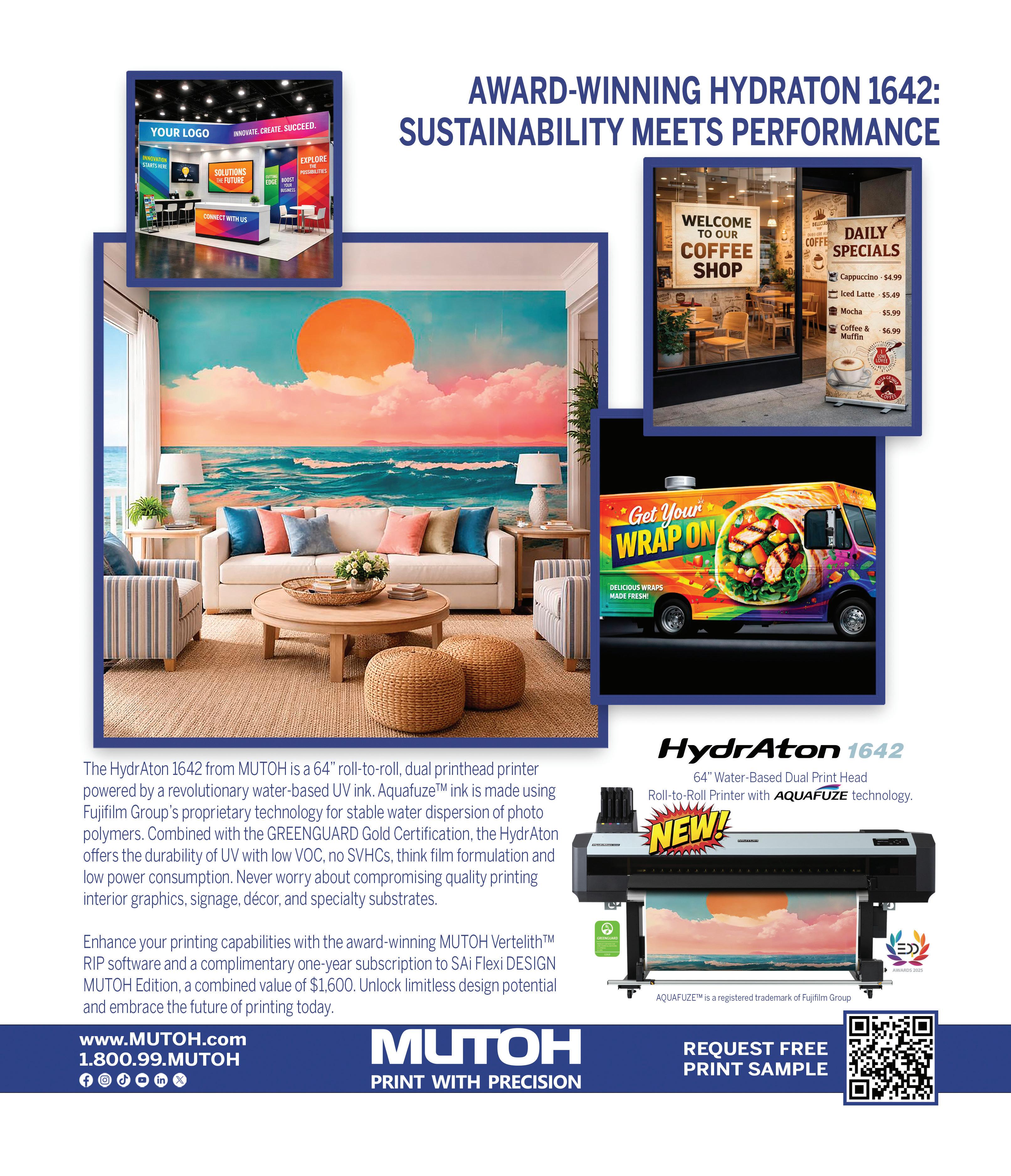
Mutoh America, Inc. launched the HydrAton 1642, a 64-inch roll-to-roll printer equipped with AQUAFUZE ink in February 2026. According to the company, AQUAFUZE ink is a highly safe UV-curable water-based ink, made using Fujifilm Group’s proprietary technology for stable water dispersion of photopolymers. The new system is designed to provide high image quality and substrate versatility while addressing environmental and safety concerns associated with traditional wide format printing.
According to the company, AQUAFUZE ink offers low odor, low volatile organic compound output, and is classified as
Cost is subjective. Despite ink type, factors like tariffs and raw material shortages play into higher costs for all.
As a whole, Martínez says that ink pricing per liter has increased due to higher prices for petroleum, which impacts supply chains. For example, “certain new UV ink ingredients designed to comply with evolving regulatory changes such as the removal of TPO—a specific type of photointiator—from UV ink formulas are more expensive.”
According to Simon Daplyn, product and marketing manager, Sun Chemical, advanced UV and aqueous solutions can demand a premium price due to the value added by regulatory compliance, color gamut potential, and reliability. “It is important to ensure chemical compliance, country registration, and maintenance costs within the purchasing decision.”
2025 presented unusual circumstances in terms of pricing.
GHS hazard free, requiring no hazard pictograms. The formulation also meets GREENGUARD Gold certification standards for indoor air quality.
The printer operates at drying temperatures between 86 and 122 degrees Fahrenheit, enabling printing to heatsensitive media while reducing energy consumption compared to latex- and solvent-based systems. AQUAFUZE ink does not require primers or overcoats, and its thin ink film is designed to provide durability and scratch resistance without additional finishing steps.
AQUAFUZE ink is also available on Fujifilm’s Acuity TR wide format printer.
Edwards cites the impact of tariffs. “The industry generally has attempted to pass on the tariffs to the customers, although not all customers accepted the full tariff impact hikes. Therefore, there was a general increase in ink prices due to this significant impact of raw material costs.”
Lehéricey says pricing is dependent on two factors—raw material dynamics and increasing regulatory demands. “Stricter chemical safety regulations, CSRD reporting expectations, and requirements for traceable, compliant ingredients influence formulation costs across both UV- and water-based technologies. At the same time, fluctuations in pigment, monomer, dispersant, and resin availability can drive cost variability.”
Another point to consider, packaging. “Some solutions only had 220 or 440 milliliter options, with modern systems allowing for one or 2.2 liter capability. The ability to manufacture in bulk brings the cost down,” note Rangel and Simmering.
It is important to remember that cost is not just the measure of the ink itself. “It is a mix of what the market needs, the cost to print for an end user, the cost of the raw materials, as well as the cost to import and distribute. In addition, newer printhead technologies are able to push less ink to do the same image than before so the end
user benefits by just adjusting to newer presses,” admits Cruzat.
The digital ink market continues to grow and develop. It’s no surprise that UV ink and other water-based technologies lead the charge due to their more environmentally friendly nature. D






Key: ✦ Both ✤ Distributor ★ Manufacturer
° This category includes acid, disperse, pigment,
and sublimation ink. Choosing this category does not reflect a vendor carries all options, please contact the vendor for specific product portfolios.






Kao Collins Inc. kaocollins.com
173 Kiian Digital (a brand of JK Group SpA) kiiandigital.com
174 Kornit Digital kornit.com
175 Kothari


179 Mimaki USA, Inc. mimakiusa.com
180 Mutoh America, Inc. mutoh.com
181 Nazdar nazdar.com/en-us
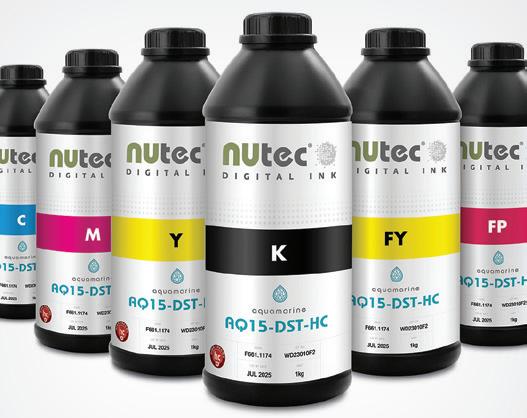
NUtec Digital Ink (Pty) Ltd
Paradigm Imaging Group
Premier Colour, Inc









any print shops aren’t interested in maintaining a vast media inventory. Stocking materials specifically designed to work for one application can take up unnecessary space on the shelf. To combat this, print providers rely on wide format media designed for multiple applications. This means that the same material used on the wall, can also be placed on the floor.
“Multifaceted wide format media offers significant advantages for print service providers (PSPs) looking to simplify operations while expanding capability,” notes Laura Slovensky, segment manager - graphics, Nekoosa.
Floor graphics’ popularity continues to grow. It’s used in both temporary and more long-term scenarios, and


the ability to offer this service to customers is important. Committing to a multipurpose media that not only performs well on floors but walls and counters helps cut down on inventory costs and labor. The newest iterations feature updated adhesive technologies and other enhancements that allow for material to be used across multiple surfaces.
There are advantages to materials designed to work well on multiple surfaces, specifically in terms of floor graphics. These include cost savings, minimizing physical inventory space, and increased printer/ink compatibility.
Above) Floor graphics are placed on a variety of surfaces and spaces to enhance an experience. Pictured here in a yoga studio is Avery Dennison MPI 2600 Textured Floor Film Series in printable Crushed Stone. by Melissa Donovan
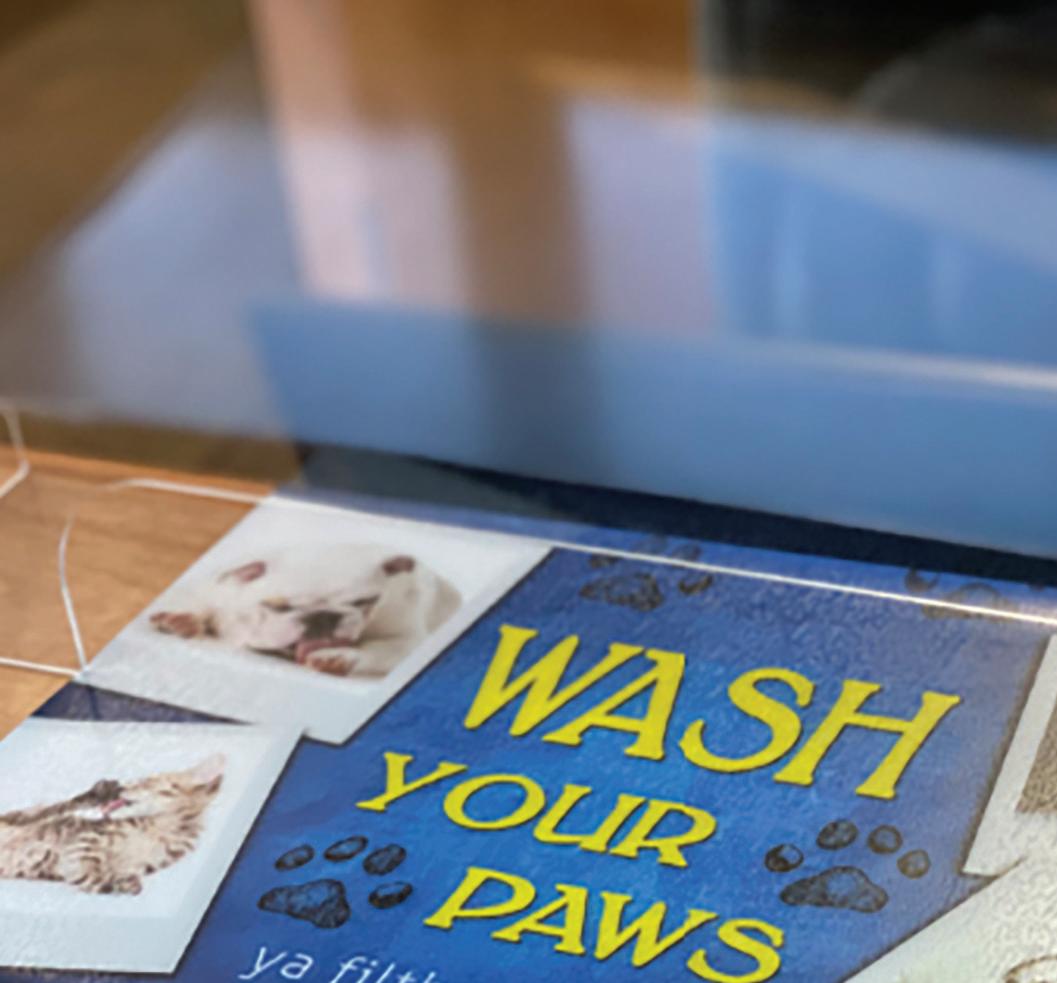
According to Karen Peppel, product marketing manager, GBC & SEAL, “wide format media engineered for multiple applications—especially those that can serve as floor graphics, wall decals, window signage, and even short-term outdoor pieces—gives a print shop a surprising amount of leverage. When a shop doesn’t want to maintain a huge inventory, these multifaceted materials become a strategic advantage rather than a compromise.”
Choosing wide format media that can cover different surfaces minimizes the number of substrates needed in inventory. “This not only saves physical space, but also reduces the risk of scrap since the same material can be used across many surfaces and projects,” suggests Seth Bullock, product manager, branding, Avery Dennison Graphics Solutions.

“When you reduce the number of stocked SKUs, savings occur in other areas like lower overhead, labor, and media profiling. In addition, there’s the potential to gain efficiencies in purchasing via volume discounts,” adds Laura Antenucci, marketing director, Continental Grafix USA.
The operational benefits extend well beyond inventory, states Mike Richardson, business development manager, Jessup Manufacturing Co. “When one material is compatible with a shop’s primary ink platforms and established color profiles, operators spend less time swapping rolls, recalibrating output, or troubleshooting unfamiliar constructions. Jobs can move seamlessly from wall murals to floor graphics to event signage with fewer changeovers and more consistent results.”
PSPs strive for minimal management of their printers and inks.
“When more jobs can be printed on the same media/ink combination,
profiling, color management, and testing are simplified, which lowers setup time, reduces misprints, and supports consistent floor graphic performance,” explains Michelle Oczkowski, product manager, Brand Management Group.
“Multifaceted materials are typically engineered to print reliably across a range of wide format machines. This reduces the need for press-specific materials and allows shops to standardize workflows, profiles, and finishing processes; save time; and reduce errors,” shares Slovensky.
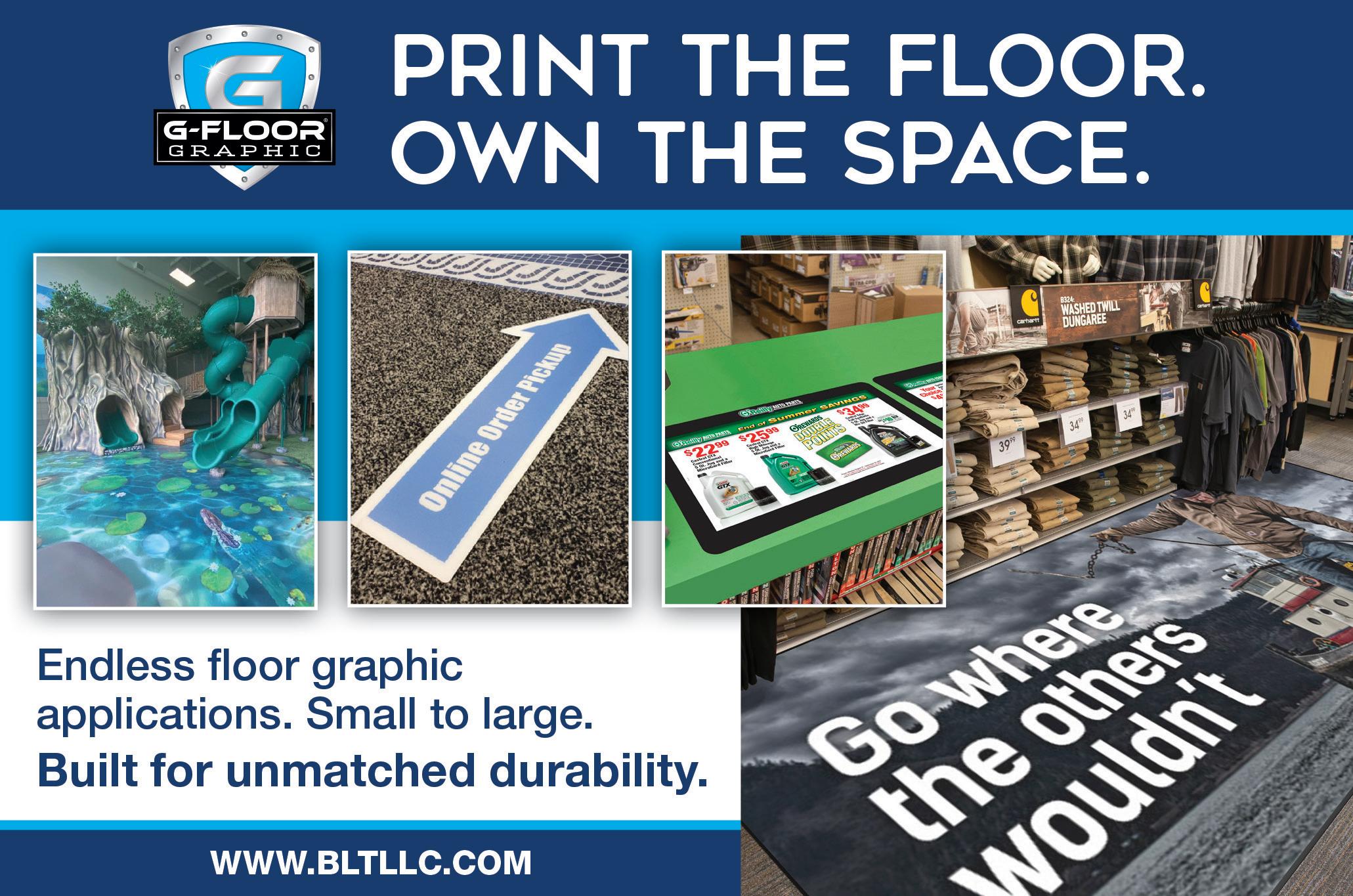
Kristin Swartz, national account manager, Better Life Technology - G-Floor Graphic, believes that “one of the biggest advantages of working with multifaceted wide format media is flexibility without sacrificing performance. Instead of stocking multiple specialty products, print providers can rely on a single material that performs across different surfaces and use cases.”
Antenucci points out that the choice between one- or two-step floor solutions enhances that media’s level of flexibility even further. One-step medias are ideal for use as not only floor decals but also wall murals. Two-step systems—which include a base material and overlaminate—means that the base material might be appropriate for other surface applications like walls or windows.
“There’s no arguing there are advantages to limiting the number of materials a shop keeps on the floor for organization purposes, however, substituting materials for technical applications is less than ideal. Floor graphics will see more physical abuse than most flat graphics. Having a material that could lift prematurely, damage the surface, or that requires heavy equipment to remove can be avoided by choosing the right material for the application,” cautions Jay Kroll, director of product education, General Formulations.
Certain floor graphic applications may benefit more from a multipurpose media versus a floor graphicspecific product. The environment, foot traffic, and surface play a role in deciding which solution to use.
“When you look at real world floor graphic work, there’s a clear divide between the jobs where a versatile, multi-application media shines and the ones where you truly need a purpose-built floor graphic product. The distinction usually comes down to surface type, expected durability, safety requirements, and environmental conditions,” lists Peppel.
Kroll provides a great example. “We regularly see semi-rigid 6-mil materials with a low-tack removable adhesive used for temporary, large, custom printed dance floor graphics on hardwood and smooth floors. For short-term decorative applications, these films are easy to apply and are easily removed a few hours later. Those materials were designed for window and smooth surface graphics and do not include any non-slip warranty, but their thickness, removability, and ease of handling make them ideal for dance floor applications.”
Conversely, that same semi-rigid 6-mil material with a low-tack removable adhesive would not be advised for use on a concrete floor outside. “Understanding the surface type, duration of install, and characteristics of the media can help determine when it’s okay to use a multifaceted product for an atypical application,” explains Kroll.
Retail promotions, pop-up events, seasonal campaigns, and trade show environments where the same message appears on both floors and counters is where multifaceted media excels, “shortterm promotions, dual-surface campaigns, or temporary installations where consistency across multiple touch points is important,” lists Swartz.
“Museums, stadiums, and corporate campuses often require graphics that flow from floors to walls to wayfinding elements. Using one material simplifies quoting and scheduling while ensuring consistency in color, finish, and overall appearance,” says Richardson.
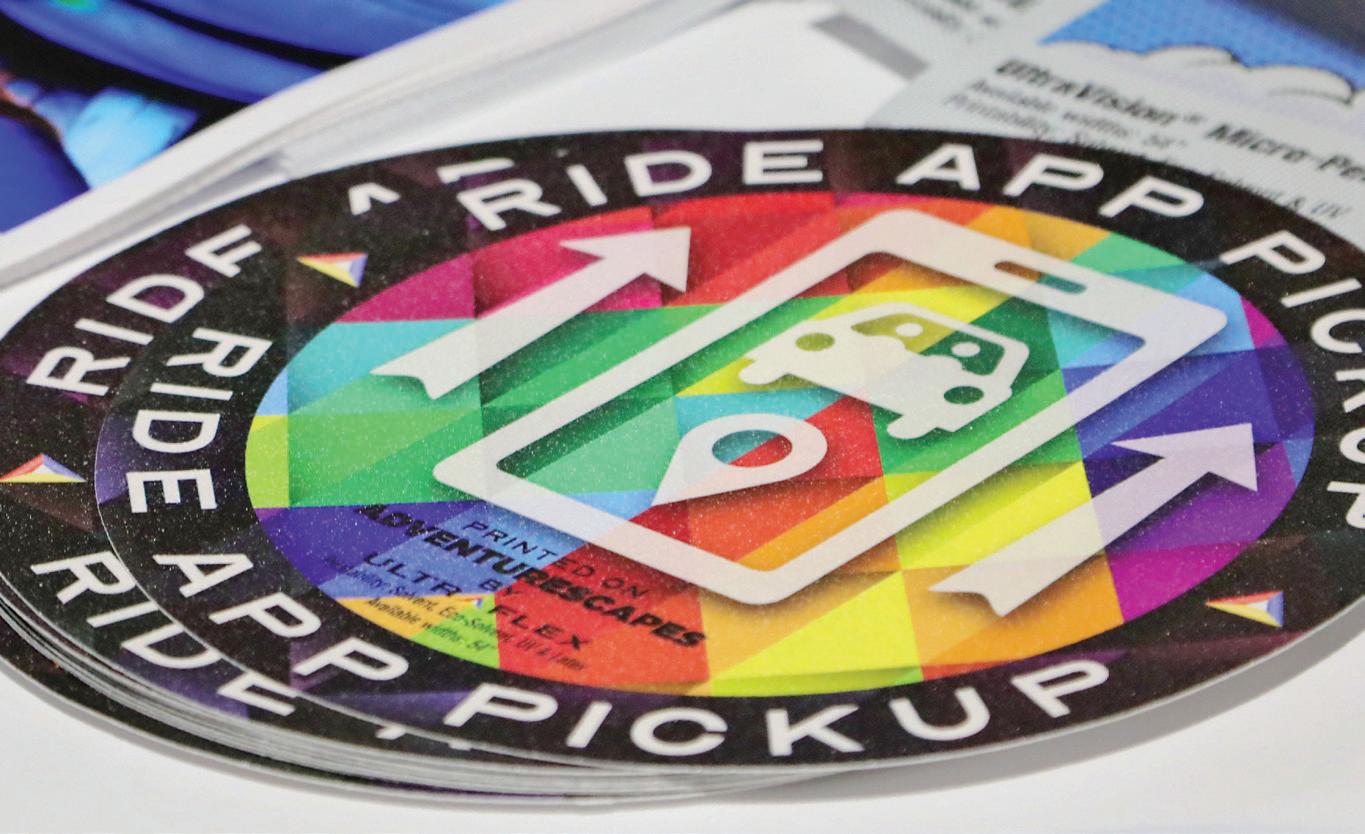
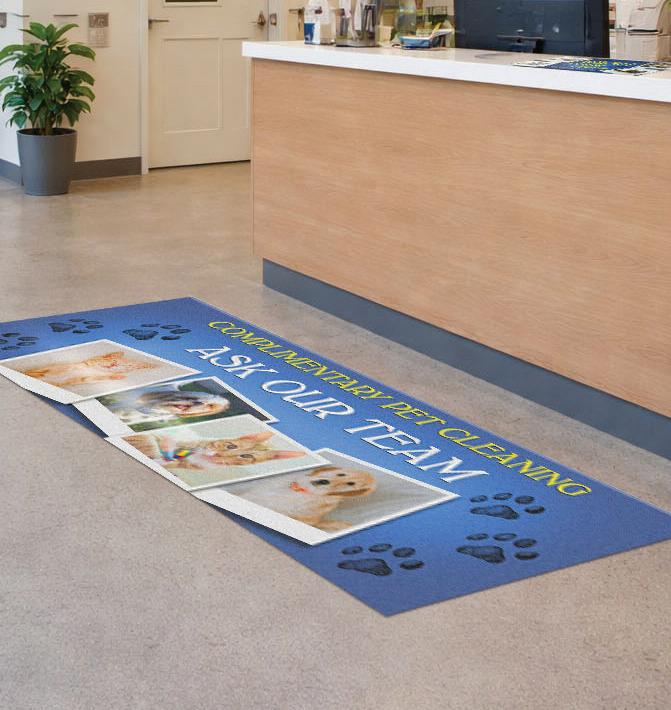
“A convenience store running a promotional campaign could use the same material for a floor graphic in front of a refrigerated case and a cut-to-size counter mat at checkout. The material is strong enough to withstand foot traffic, yet flexible enough for countertop use,” suggests Swartz.
Longer term or higher impact applications benefit from a purposebuilt floor graphic product. “In environments with extreme foot traffic or long-term use, such as airports, stadiums, or industrial spaces, a dedicated product is the safest and most durable option,” advises Audrianna Manee, marketing manager, Ultraflex Systems, Inc.
“Floor graphic performance is heavily contingent on foot traffic,”
seconds Antenucci, citing the need for a floor graphic-specific product in certain scenarios.
Thicker options designed to handle sustained heavy foot traffic provide extended durability and performance over time, notes Swartz.
“Some dedicated floor products remain essential when the job involves long-term, high-traffic areas; exposure to moisture or harsh cleaning; demanding surfaces; or when safety/compliance risks are high and must be clearly documented,” explains Oczkowski.
Industrial settings with heavy mechanical wear or environments with aggressive chemical exposure may require specialized constructions or multi-layer, purpose-built
floor graphic systems. “Facility standards or regulatory requirements may exceed what a single, all-in-one product is designed to address,” says Richardson.
There were once disadvantages to using multipurpose products, but this is not a concern today thanks to improvements in adhesives, material composition, and surface textures and topcoats.
“Earlier generations of ‘all-in-one’ films often required compromise. A material might adhere well to one surface but lift at the edges on another, or provide adequate traction on floors while proving difficult to remove from painted walls,” notes Richardson.
The shift didn’t happen overnight, claims Peppel, “one material for many applications” is now a reality thanks to better adhesives, smarter engineering, and more reliable surface performance testing.
“Advancements in vinyl formulation, material thickness options, and surface textures expanded how media can be used across different applications. Improvements in dimensional stability, print adhesion, and durability now allow a single product to perform reliably on both horizontal surfaces and high-traffic floors,” adds Swartz.
Combined, these improvements enable materials to perform reliably on walls and floors, says Manee. “These balance strong wall
adhesion with the durability and slip-resistant finishing needed for pedestrian traffic.”
New adhesive technology presents features that were previously not possible. “Earlier adhesives lifted at the edges or failed under repeated traffic; newer materials and adhesives are now engineered to stay in place over a longer period. Older adhesives worked on a narrower range of surfaces, left residue, and had poor repositionability,” shares Oczkowski.
Another advancement pointed out by Slovensky is the range of available finishes and patterns. “Print media manufacturers offer a wider variety of finishes, including canvas, sand, and linen, allowing print providers to balance aesthetic preferences and functionality.”
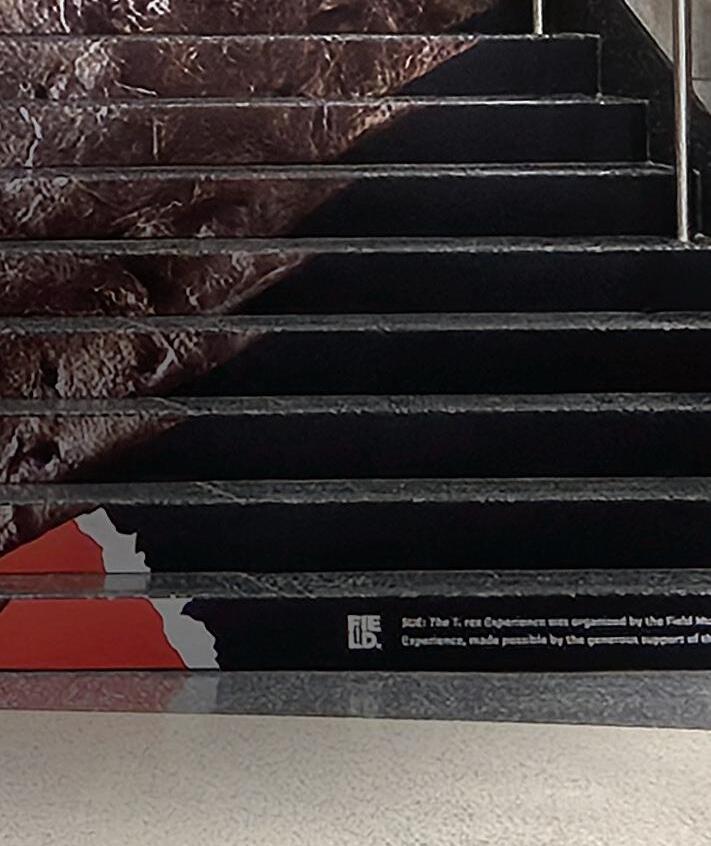
Richardson discusses face stocks and topcoats. “Modern, fabric-reinforced face stocks offer improved dimensional stability, resisting stretch and shrinkage while still conforming to light textures such as stair risers or interior walls. Slipresistant, cleanable topcoats are designed to withstand real-world maintenance routines using everyday cleaners and disinfectants.”
Multifaceted media that works well on floors for shorter term installations is an option for PSPs looking to minimize product inventory but take advantage of lower overhead and less scrap. While it is not well suited for all floor graphic applications—long-term, heavy foot traffic—it does check the boxes for a majority of the work being performed by PSPs today. D