Community unites for RGS Boarders Bash
Festive spirit both on and off the sporting arenas.
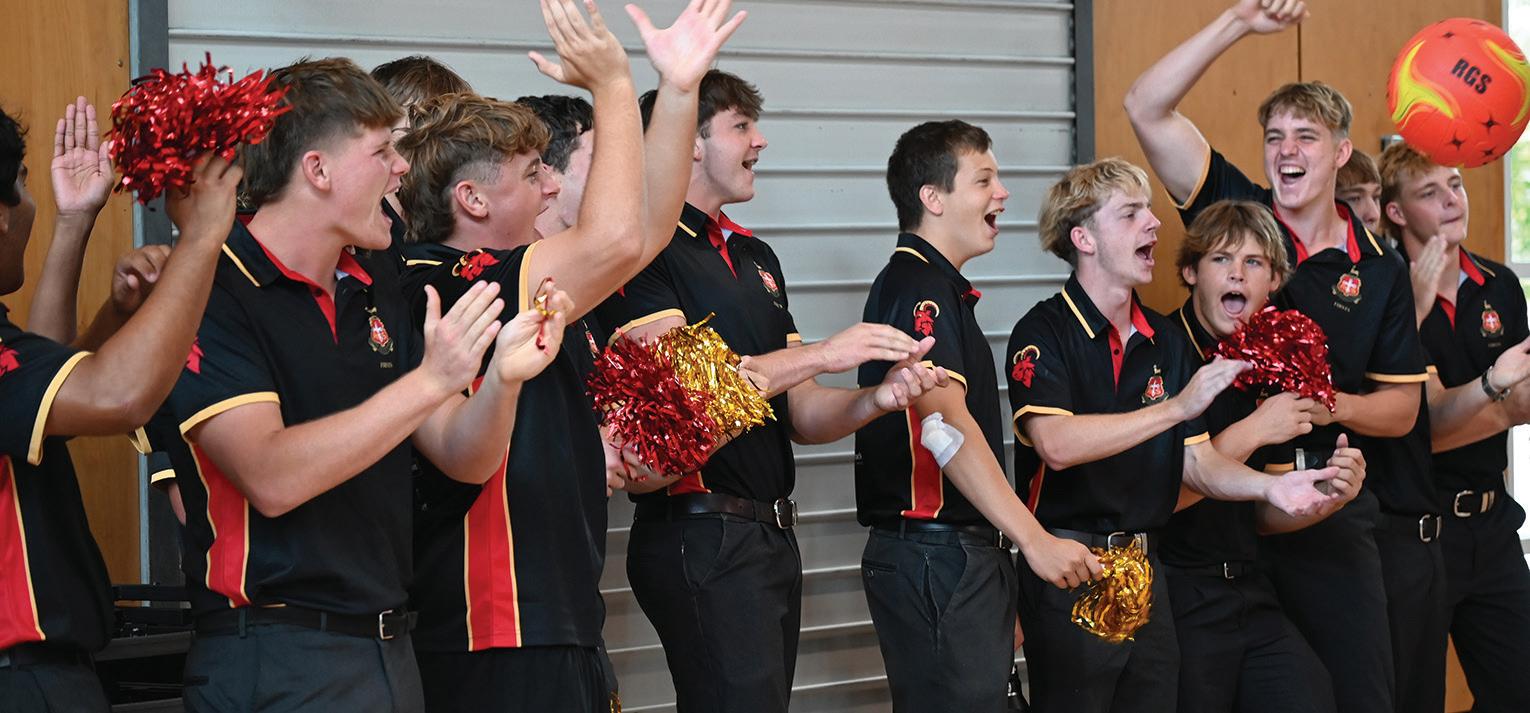
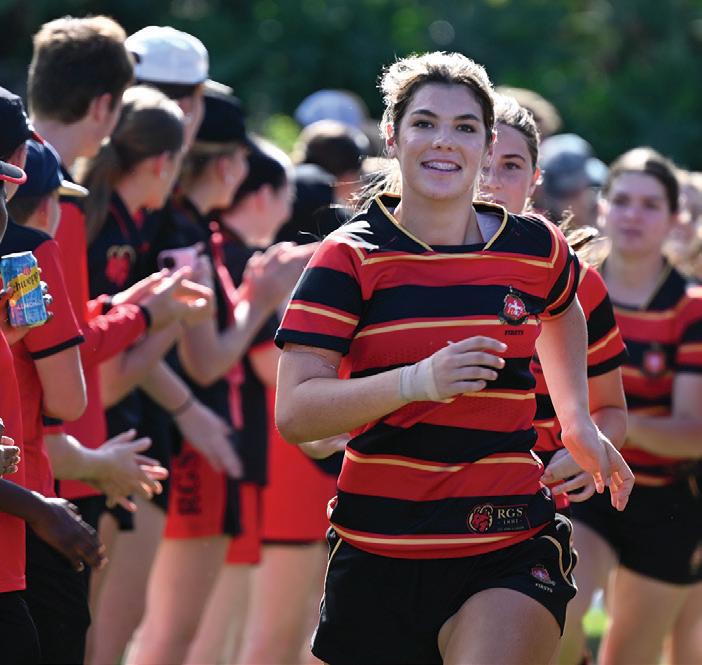
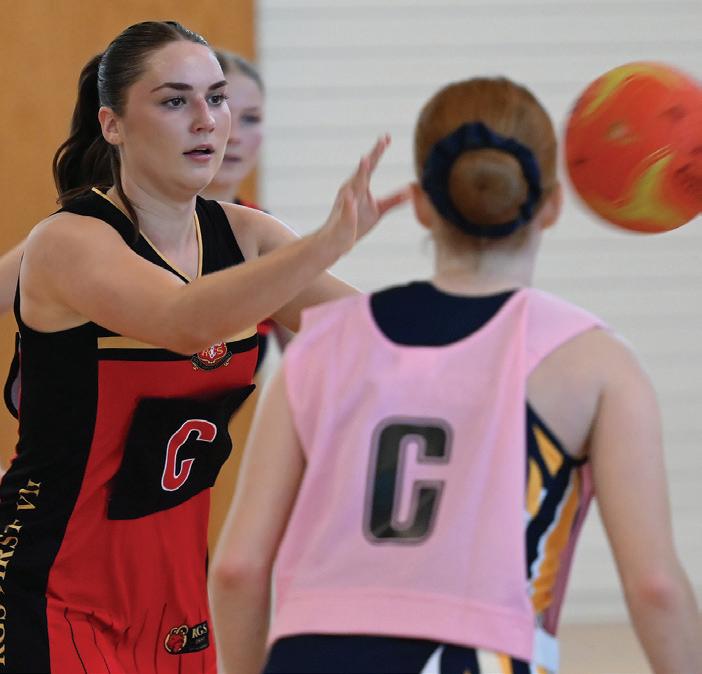
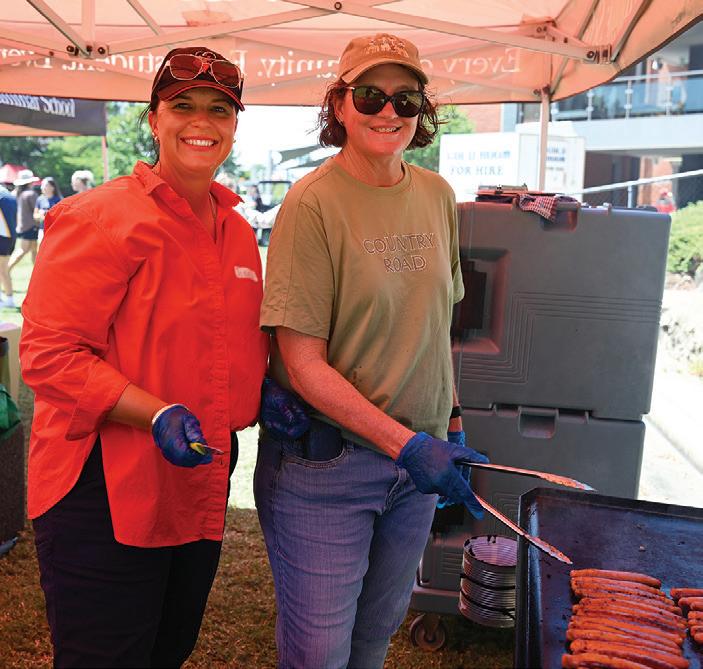
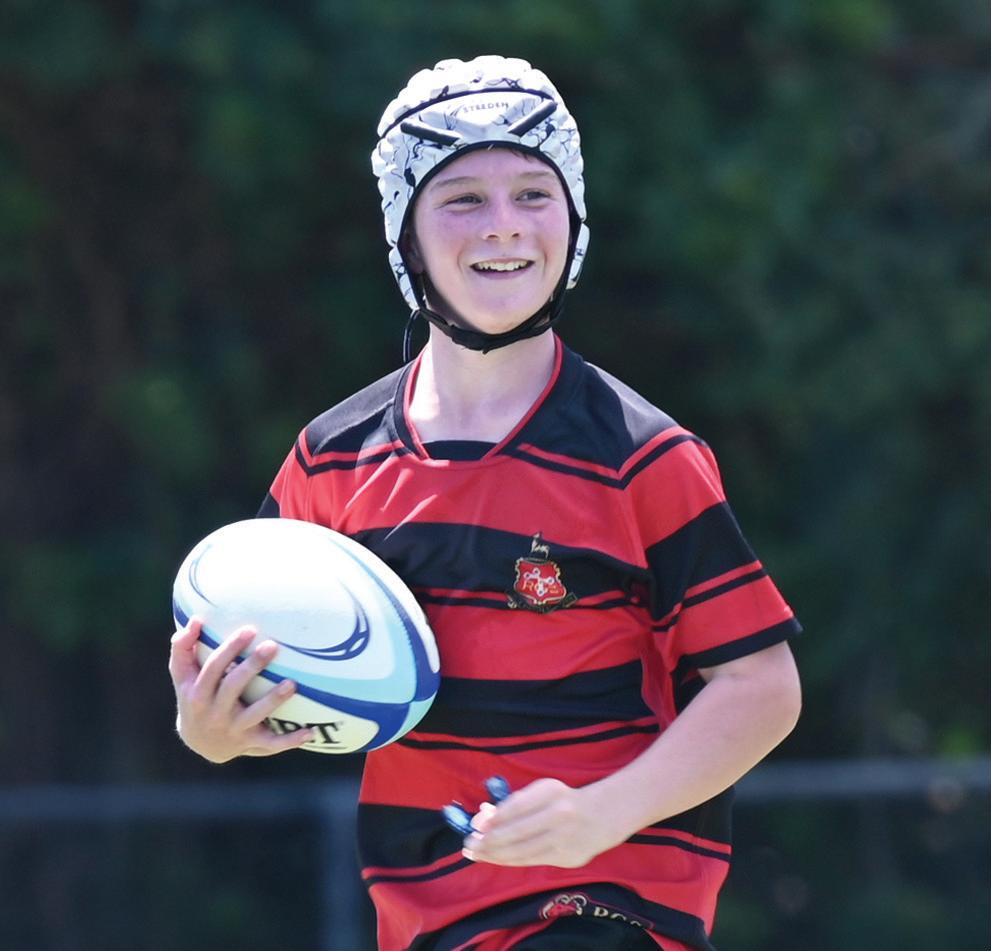
RGS Boarding hosted students, and their families, from Marist College Emerald and Rockhampton Girls Grammar for their second annual Boarders Bash on 1 March. The RGS Bottom Oval hosted the RGS and Marist boys and girls rugby union battles while Duggan Hall was the venue for netball games between RGS and Rockhampton Girls Grammar School. It was a wonderful afternoon with many families, and friends, supporting the event. Thank you to the RGS Boarder Parents Association for coordinating this year’s event in conjunction with RGS Boarding.
Thank you RGS Co-Curricular Sponsors. For sponsorship enquiries contact Todd Wells, Director of Co-Curricular at twells@rgs.qld.edu.au

























Welcome
Term 1 has been a wonderful start to the year and an opportunity to reflect on the energy and momentum that defines our school. From the very first day, there is a sense of purpose and possibility – classrooms alive with curiosity, co-curricular activities in full swing, and our students embracing every opportunity before them. It is always a busy term, but more than that, it is a time when the School feels truly alive.
As we look ahead, our community will come together for a significant milestone – our very first Giving Day on 14 May. This year, our focus is the 1881 Bursary Fund, a programme that sits at the very heart of who we are. Through the generosity of our community, this fund has opened doors for students who may not otherwise have had the opportunity to experience a Rockhampton Grammar education.
Bursary students enrich our school in countless ways. They bring diverse perspectives, talents and stories that strengthen our culture and broaden the experience for all. Beyond our gates, they go on to live meaningful lives, pursuing rewarding careers and giving back to their own communities in ways that create lasting impact. In the coming weeks, we look forward to introducing you to some of these past recipients, whose journeys are a powerful reminder of what is possible through the gift of opportunity.
Giving Day is more than a fundraising initiative, it is a true community event. It is a moment for all of us to come together with a shared purpose and a shared belief in the value of an RGS education. You will hear more about our plans in Term 2, and I warmly encourage every member of our community to be involved. Every gift, no matter the size, makes a difference, and, thanks to the generosity of
our matching donors, every donation on the day will be doubled.
A strong culture of giving is vital to a school such as ours. It reflects who we are, what we value, and the legacy we are building together – for every Grammarian, and for every tomorrow.
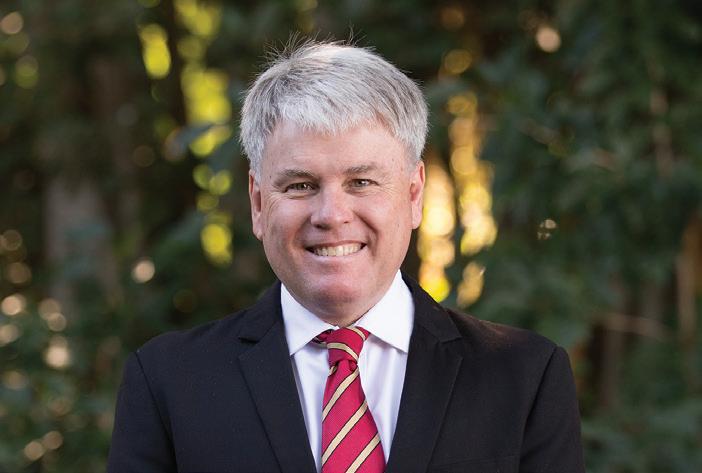
Dr Phillip Moulds OAM Headmaster
The Rockhampton Grammar School takes seriously the challenge of preparing students for today’s world. We treat each student as a whole person through a balance of academic, sporting, co-curricular and social activities. Our School motto is Macte Virtute et Litteris or Grow in Character and Scholarship. Capricornus Quarterly is published by:
The Rockhampton Grammar School Archer Street, Rockhampton QLD 4700, Australia www.rgs.qld.edu.au (+61) 07 4936 0600
Dr Phillip Moulds, Headmaster 07 4936 0615
Headmaster@rgs.qld.edu.au
Enrolment enquiries
The Registrar, Mrs Marissa Holloway 07 4936 0700
Registrar@rgs.qld.edu.au
Editorial & Advertising
Mrs Ashleigh Harvey, Director Development and Communications 07 4936 0668 aharvey@rgs.qld.edu.au
Mrs Rachael McDonald 07 4936 0776 rmcdonald@rgs.qld.edu.au
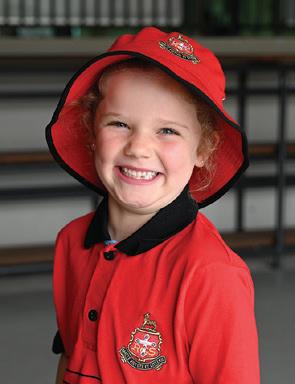
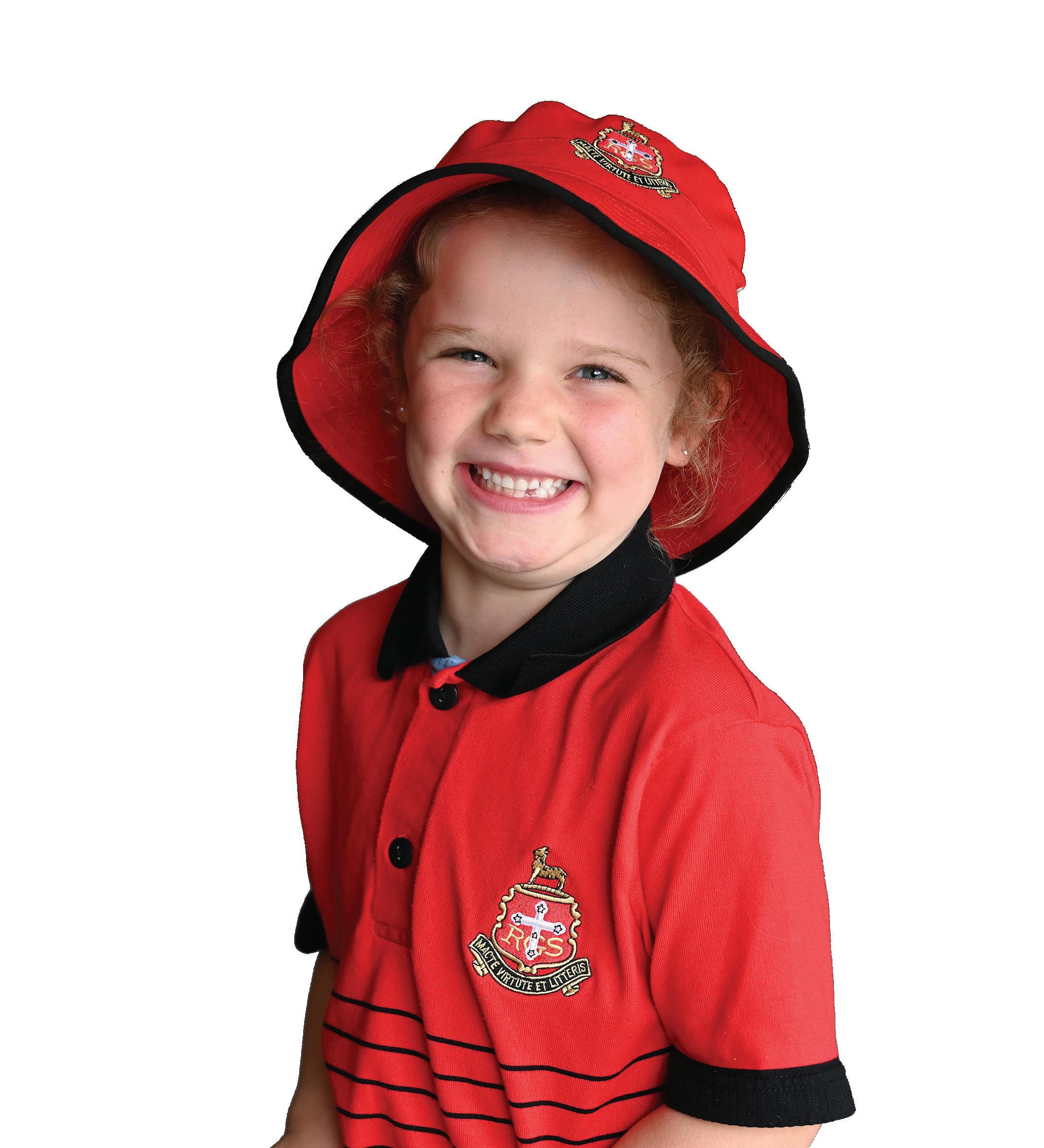
On the cover: RGS welcomed many new students across both Primary and Secondary at the start of the new school year, including Year 1 student Olive.
Community
National Rowing Medal
RGS Year 10 student Archie Becker has proved himself one of the country’s best young rowers, winning a silver medal at the National Rowing Championships on Lake Barrington in Tasmania.
Archie teamed up with Bundaberg’s Max Lee to win the silver medal in the Under 17 Men’s Double Scull final.
Archie also placed third in the B Final of the Under 17 Men’s Single Scull and rowed with RGS Year 12 student Ollie Weyling-Cain to place second in the Schoolboys Double Scull B Final.
Following the nationals, Archie successfully trialled for the Queensland Under-19 regional quad and competed in Sydney over the school holidays.
* More RGS Co-curricular news on pages 20 and 21.
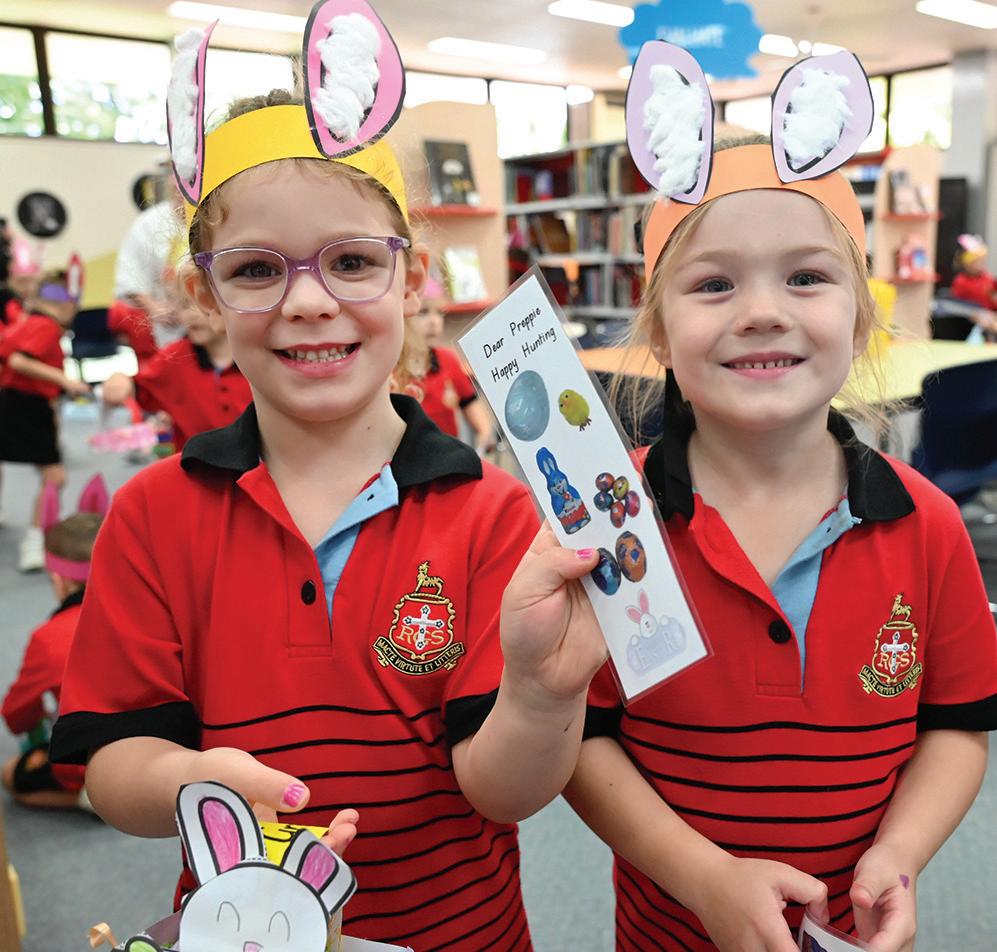
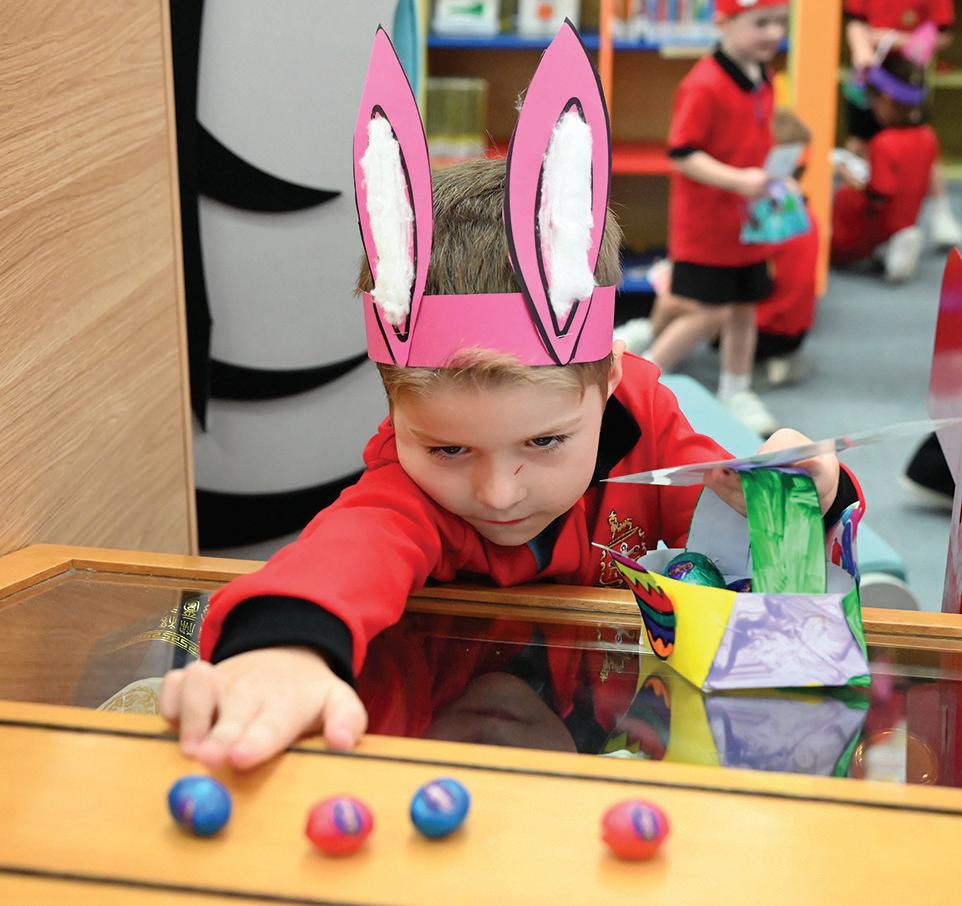
Prep Easter Egg Hunt
The RGS Library had young Prep students bouncing around the bookcases in search of their Easter treats in the last week of school. The students were also delighted to receive a special visit from the Easter Bunny!
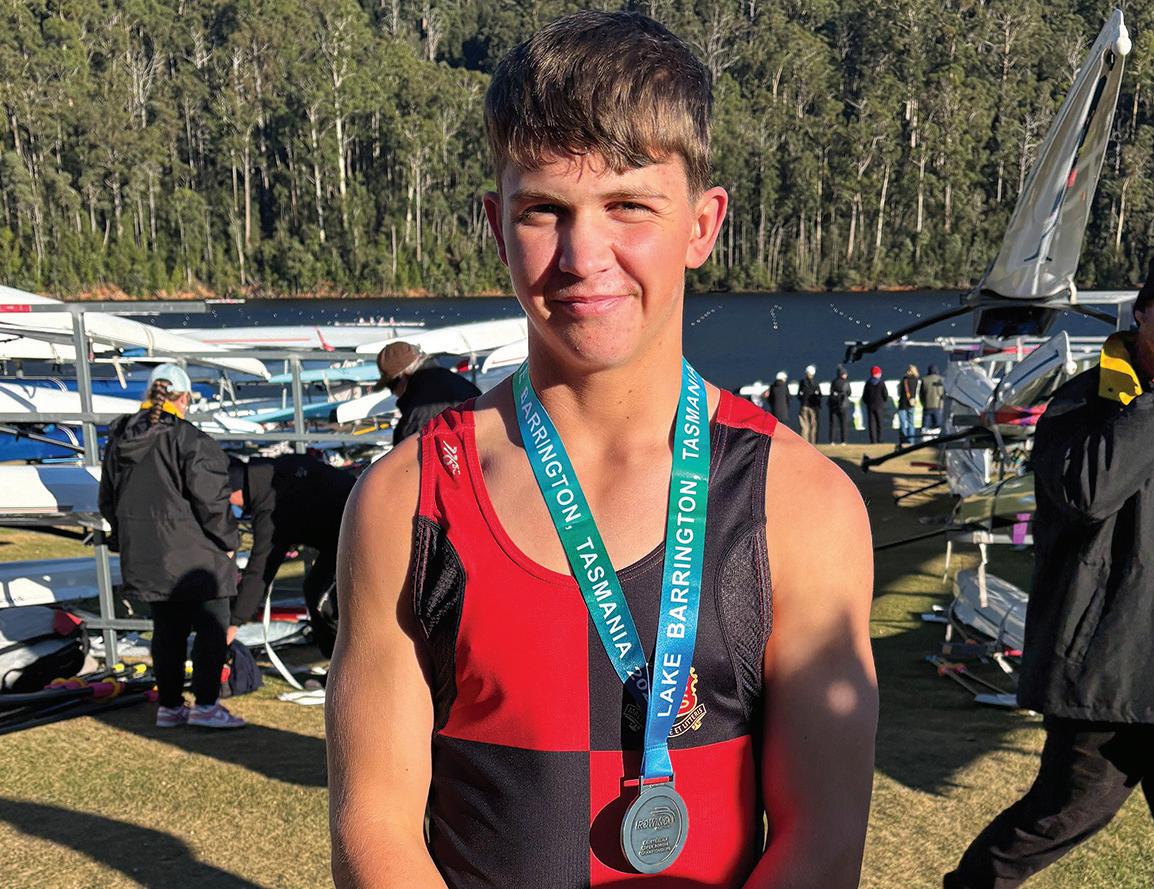
Archie Becker
Students honoured to lead
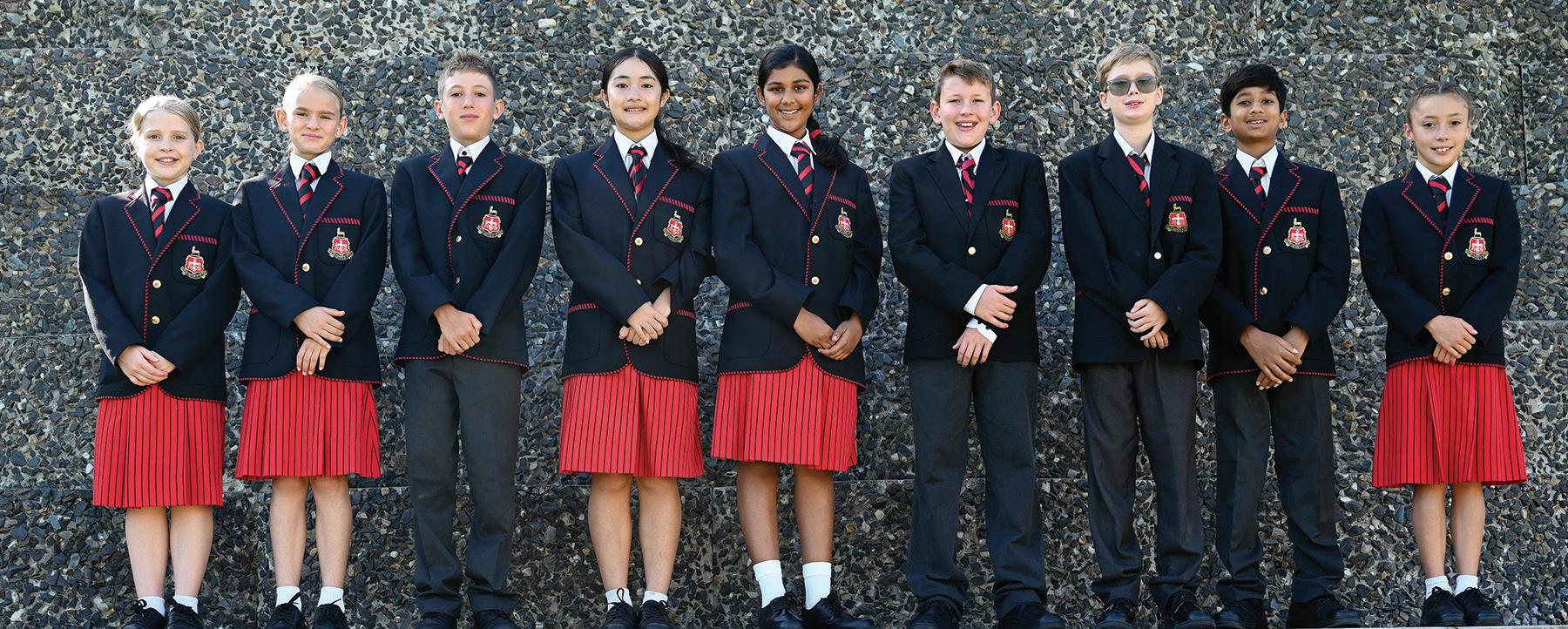
The RGS Primary 2026 Student Leaders collectively agreed that being appointed into this role comes with the feelings of being honoured, appreciative, and proud to represent the School and its community. The students were asked: What does leadership mean to you?
Sophie Kerr – “Leadership means to me that I don’t have to be super loud or bossy, but lead with kindness and inclusivity. I now have the opportunity to be there for everyone and be a role model for the whole school. People are also helping me to grow in this role which can also assist me to help the younger students grow.”
Allie Tippett – “Leaders don’t need to wear a badge or have a title, they show respect through the small actions that mean the most. To me those who show leadership are the ones who say a simple ‘hi’ every morning they don’t have to have the loudest voice, but they do have the most reliable one. It means to help when it is needed, be kind and show respect through their actions as much as their words.”
Angus Ostwald – “I will show integrity, honour, and respect for our School community wherever I go. For me leadership means doing the right thing, with or without a badge.”
Jocelyn Nguyen – “Being a leader for our School means responsibility and endeavour, integrity and honour, courage and resilience, and respect and care. I am ready to take on all these expectations and make a better School community, by listening to ideas and making it happen. Leadership to me can be very scary and challenging at first, but I
strongly believe that to be a leader you must take the first step, keep trying, and never give up. I would like to use this opportunity to always make sure that everyone feels heard, seen and safe.”
Ishika Rathi – “Being a student leader means so much more than wearing a badge or talking at assembly. It means assisting younger students and listening to other people’s voices. I am absolutely honoured to be a leader as I now have the opportunity to give back to the School community. A leader to me is someone who has a reliable voice and great communication skills. They have a cognitive mind and analyse the situation before acting. A leader listens to others and always finds the silver lining in even difficult situations. They encourage others no matter what and always find ways to improve who they are and what they do. They contribute to the team and always give their all. Most importantly they represent the School values of integrity, honour, courage, resilience, endeavour, responsibility, respect, and care. I believe that I am ready to enhance these expectations and use this esteemed position to the best of my ability. I appreciate this chance to be a student leader to help our community thrive.”
Euan Macnaughtan – “From Prep I loved being a leader. A leader to me is not being
the loudest person in the room, it’s about being the person who makes sure everyone feels heard and sometimes the best ideas can come from the quietest of voices.”
Ben Gibbs – “Being a student leader to me is helping and being a role model for the younger primary students and helping others when they are struggling. I aim to show care and act responsibly. I will try my hardest to make sure everyone’s voice is heard. I will set an example for all students by being resilient in everything I do and make sure I always show respect to each member of the RGS community.”
Rishi Roopireddy – “Leadership means consistently demonstrating our School values: respect, care, integrity, honour, resilience, courage, responsibility, and endeavour. It also means setting a good example for my peers. Leadership has tons of meanings, but I believe the reasons above are my core values.”
Holly Bradshaw – “A true leader to me means making everyone feel included and respected. It’s not about being the loudest nor smartest person, it’s about small every day acts that are noticed and appreciated. I will do everything I can to show all of the School values to our RGS community and show respect and kindness to everyone.”
Primary Student Leaders (from left): Sophie, Allie, Angus, Jocelyn, Ishika, Euan, Ben, Rishi, and Holly.
Race Day
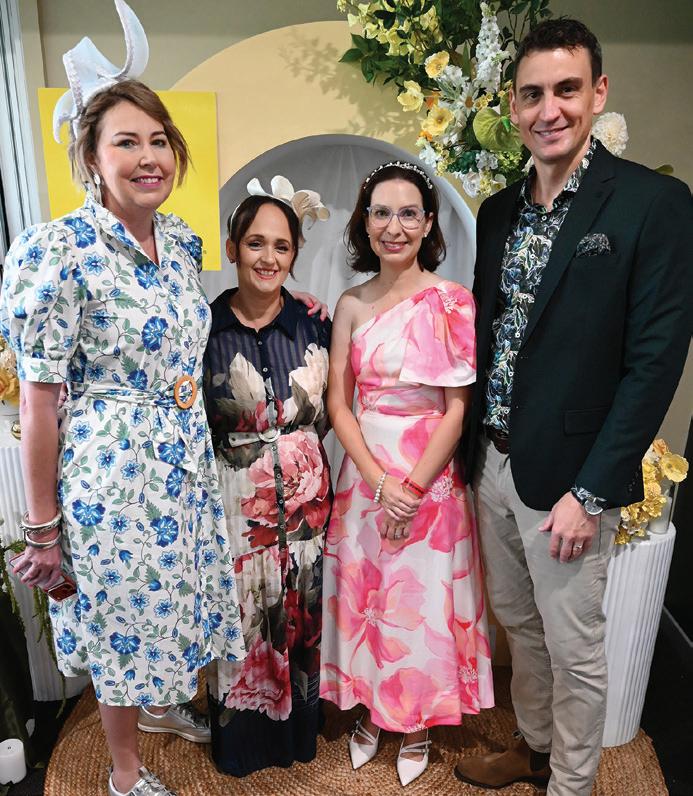
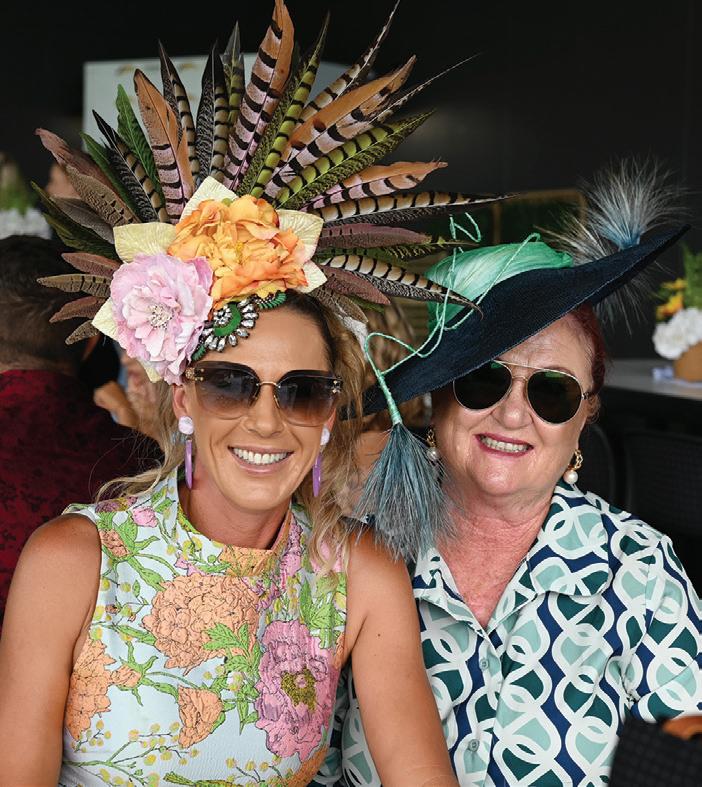
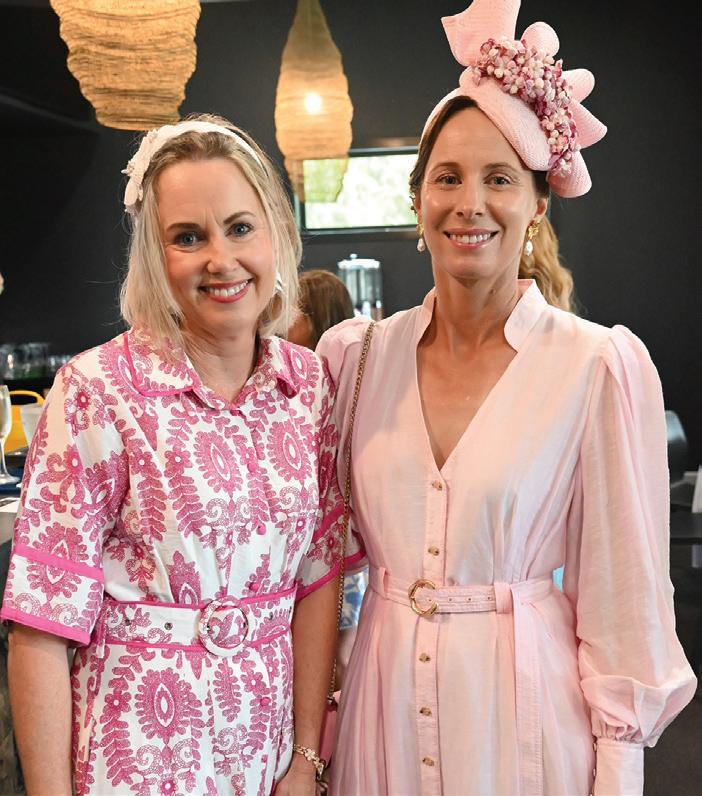
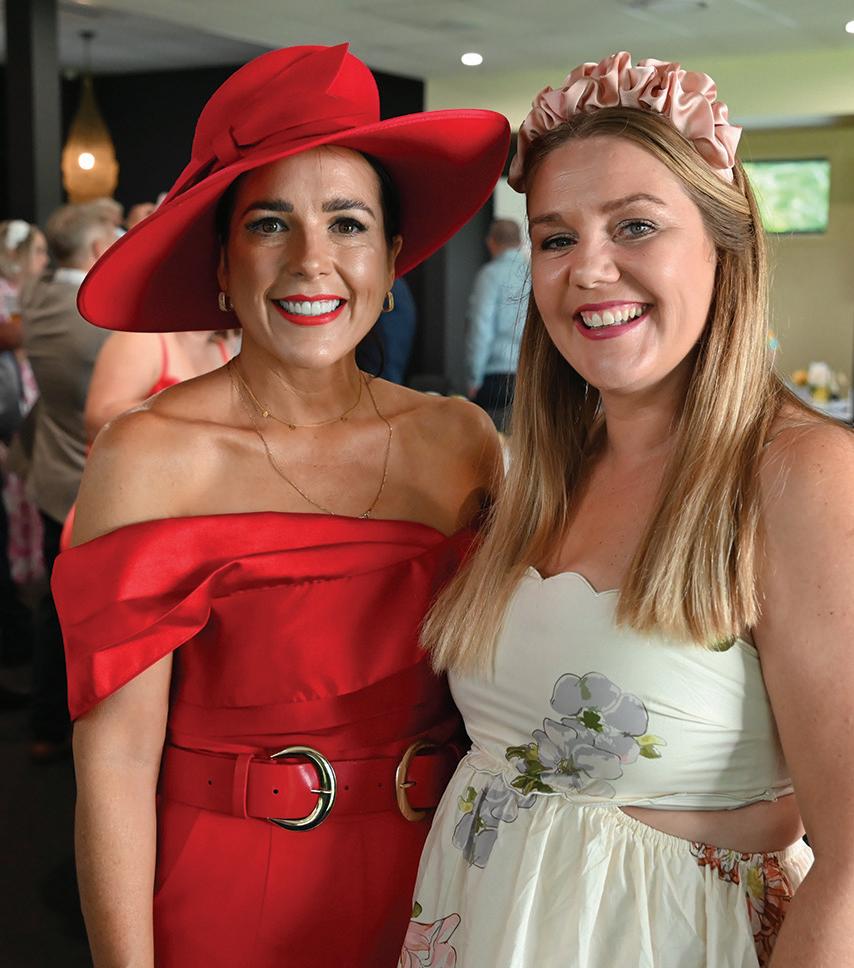
This RGS Parent Association’s Race Day was another successful event on 14 March at Rockhampton’s Callaghan Park, attended by 100 guests. Thank you to Melinda Kirby and the Ray White Rockhampton team for again being the major sponsor of the RGS Race Day.


Top performances
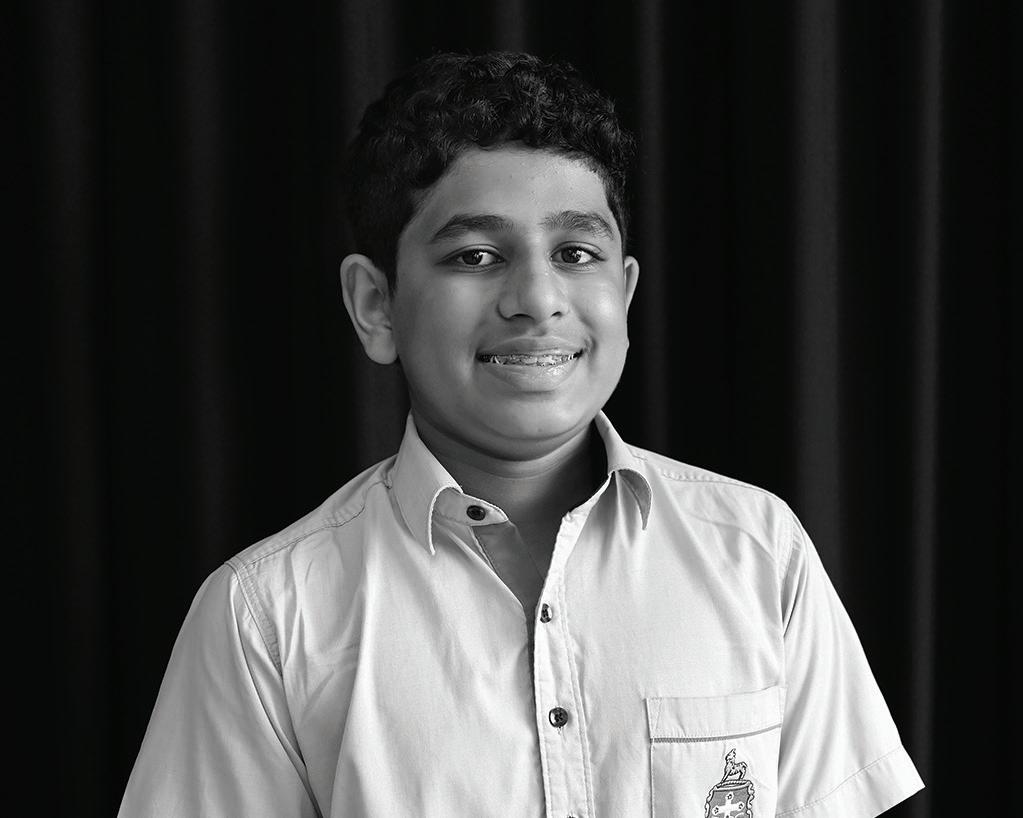
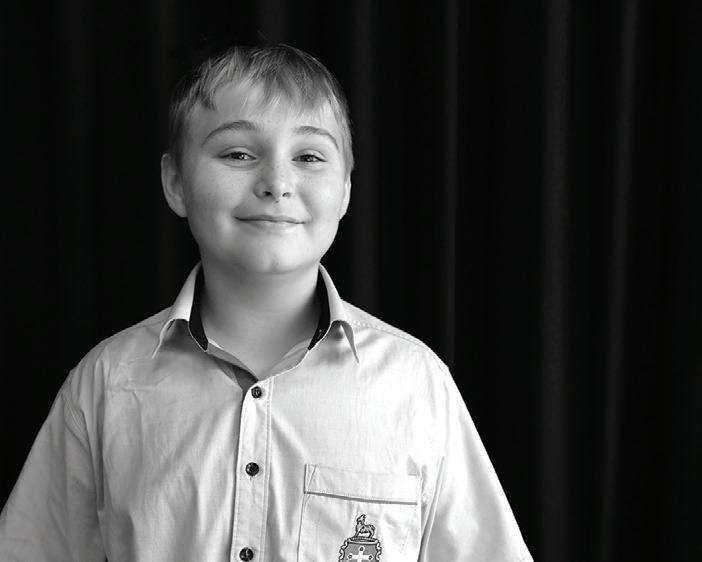
Scarlett Casey, Joshua Attokaran, Tate Casey, and Tonina Nezic-Moon topped their respective AMEB (Australian Music Examinations Board) Speech and Performance examinations in 2025. They will attend the prestigious Barbara Sisley Awards at Parliament House in Brisbane on 6 June. Asenka Jayasuriya (RGS 2025) also topped the AMEB Grade 8 section.
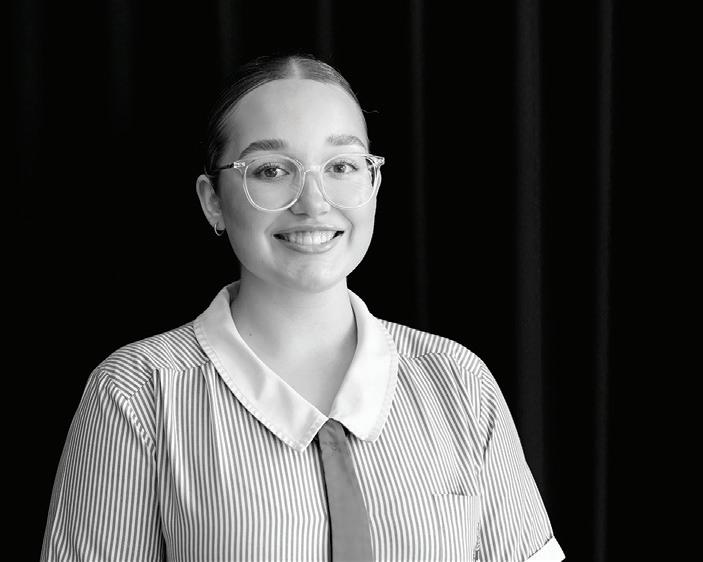
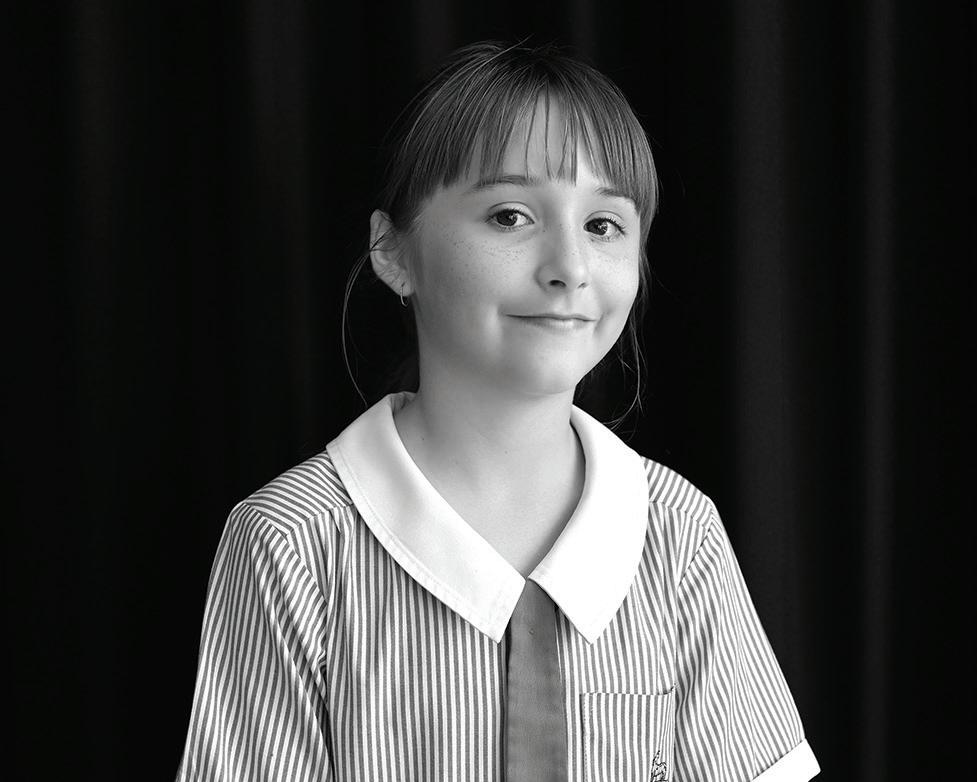
Tonina Nezic-Moon (Year 12): AMEB Speech & Performance Grade 6
Tonina, who is also a regular in RGS School Musicals and is a member of the RGS DMTA (Dance and Musical Theatre Academy) started Speech and Drama in 2024.
Why do enjoy speech and drama?
“I enjoy the fact you get to step into someone else’s shoes, portray their story and share it with an audience, and build a connection with the audience.”
Where do you find the courage?
“I find the courage knowing that I’m sharing someone else’s story and shedding a light on what their life was like.”
Favourite piece you have recited?
“My favourite piece is Witches, from Roald Dahl. It’s a character piece about an evil witch talking to other witches.”
Joshua Attokaran (Year 8): AMEB Speech & Performance Grade 3
Joshua stepped onto the Speech and Drama stage when he was in Year 3.
Why do enjoy speech and drama?
“My favourite part is doing characters because I can do cool things I couldn’t do otherwise.”
Where do you find the courage?
“I think that if you just focus on doing what you
love and doing it well everything else will just vanish and you’ll just be there.”
Favourite piece you have recited?
“Vincent van Stop, a parody on Vincent Van Gough the artist, or Knight in Shining Armour which is fun and active. You get to move around and talk a lot, and connect with the audience.”
Tate Casey (Year 7): AMEB Speech & Performance Grade 2
Tate started Speech and Drama lessons when he was in Year 3. He started at the same time as his sister Scarlett when she was in Year 1.
Why do enjoy speech and drama?
“I don’t really enjoy the practice, but I love performing. It feels nice and I feel proud of myself doing this.”
Where do you find the courage?
“I don’t know. I just do it!“
Favourite piece you have recited?
“The Incredible Bargain. It’s a piece about this guy who gets tricked with an invisible diamond for only $14. It’s really dry humour and I really like it. I usually like humour but with the Rockhampton Eisteddfod I’m going with a more toned-down piece.”
Scarlett Casey (Year 5): AMEB Speech & Performance Grade Preliminary
Scarlett was introduced to Speech and Drama when she was in Year 1.
Why do enjoy speech and drama?
“I enjoy getting up and saying my poems and characters. I mostly like the characters.”
Where do you find the courage?
“I just keep practicing. My mum introduced me to speech and drama and I just did it.
It helps me speak in front of other people.”
Favourite piece you have recited?
“My character in The Bored Princess because I like throwing the ball to the audience. I also like the Ten Commandments because it’s really funny.”
The Bored Princess, Vincent Van Stop and The Knight in Shining Armour are all Character Recitals written by RGS Speech and Drama teacher Mrs Peta Horneman-Wren, who teaches Joshua, Tate, and Scarlett.
Alumni
RGS alumni news
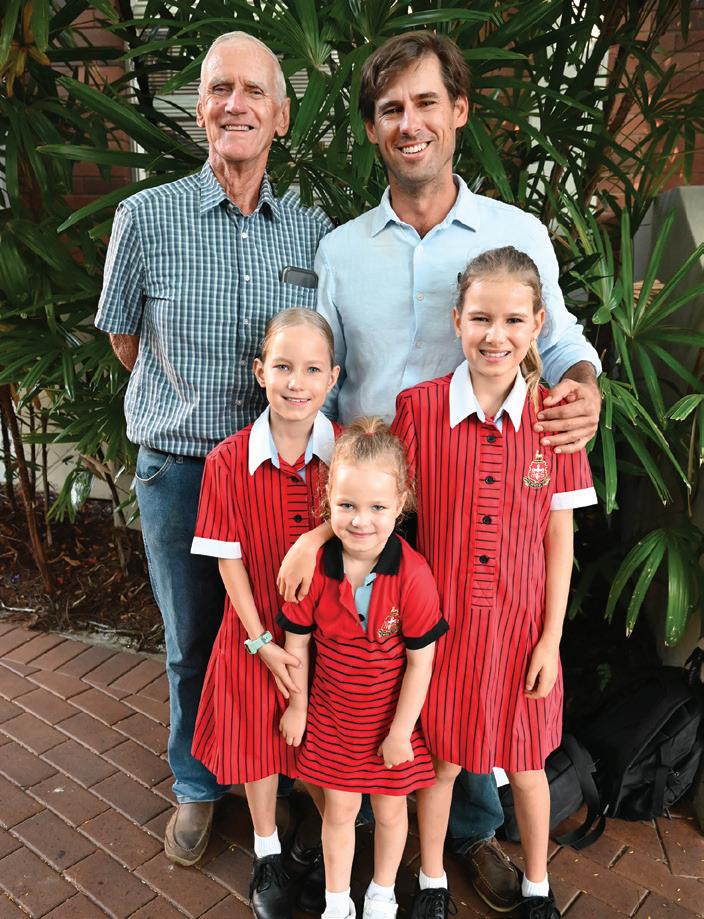
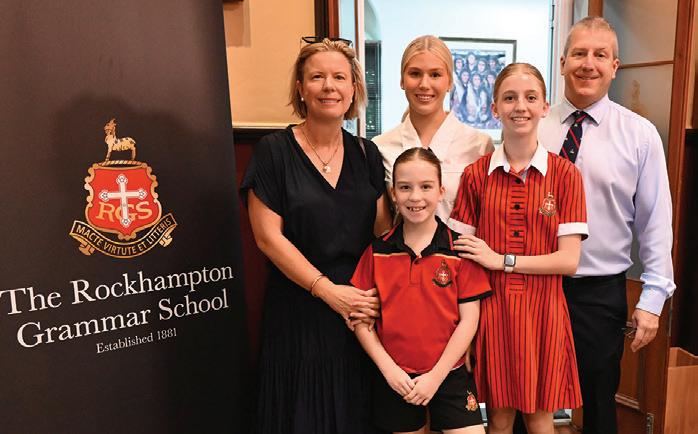
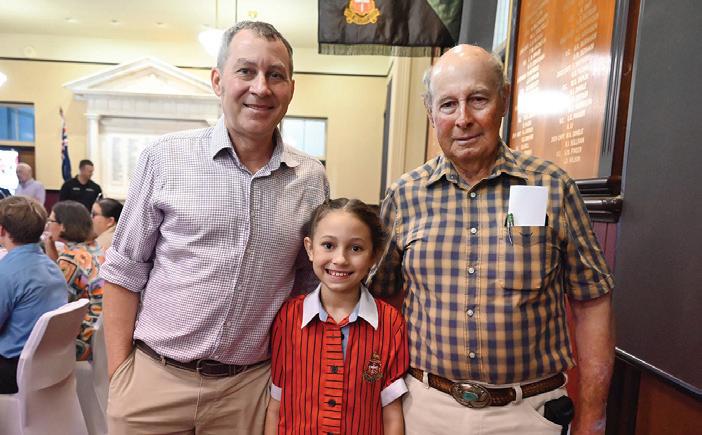
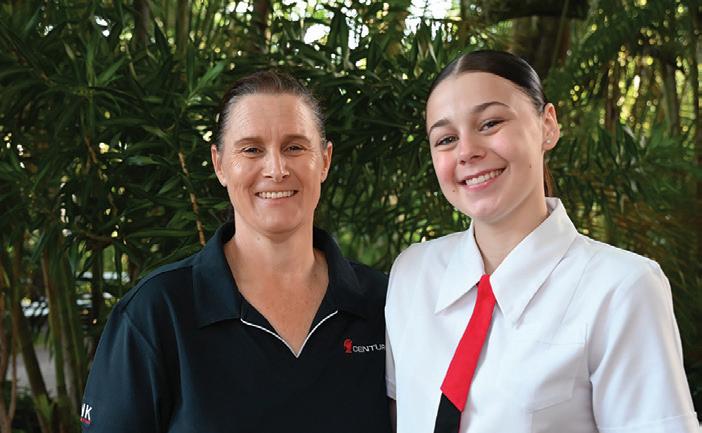
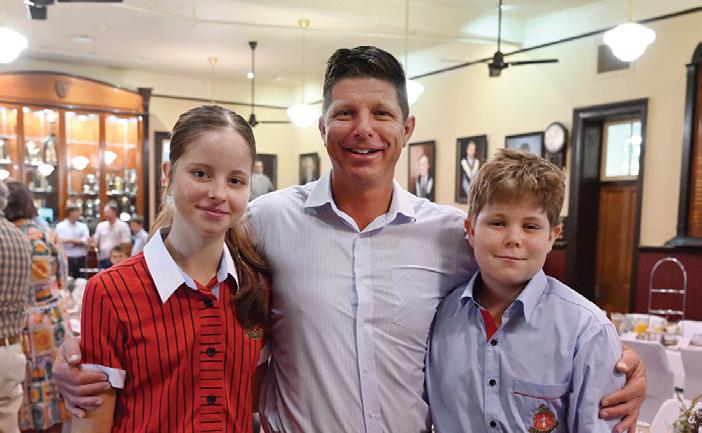
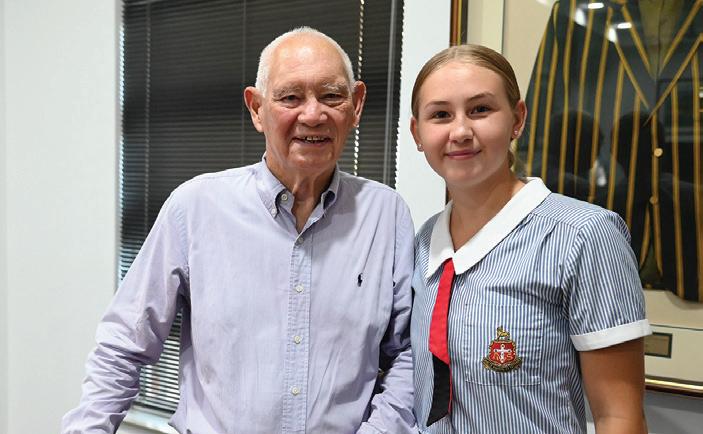
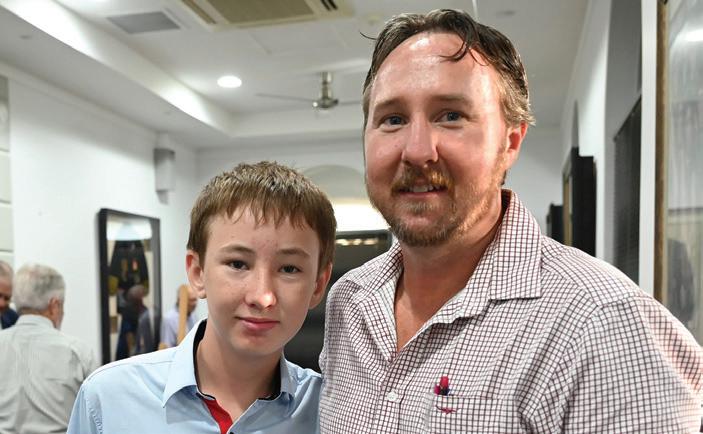
The 4th Annual Generations Breakfast in the RGS Memorial Assembly Hall again provided a special opportunity for connection, stories, and the RGS spirit. Guests spanned the decades and delighted in sharing their school memories.
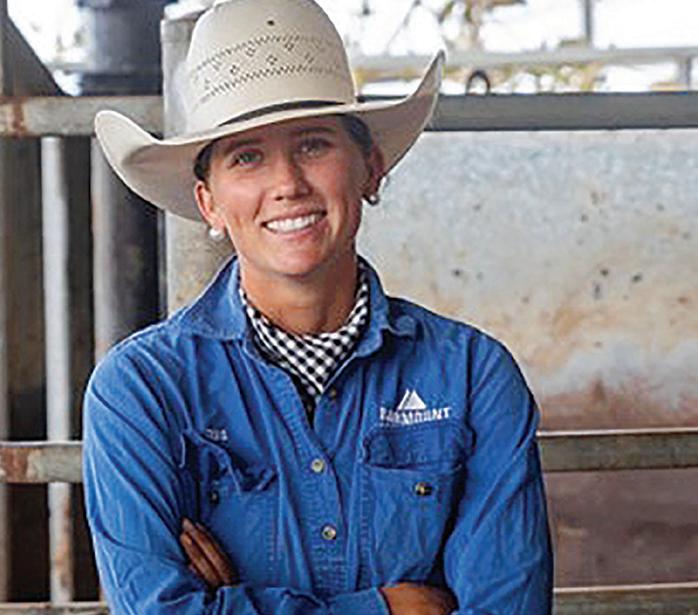
The thought of never returning to Barmount wasn’t an option for Tessa.
“There’s a lot of stigma around students that go straight home after finishing school and work for their parents,’’ Tessa said.
“It’s more than okay for rural students to return home after Year 12 to work in or run the family business – it is essential. For generations, rural families have built livelihoods from the land. These aren’t just “jobs”. They are legacies. We are the next generation and I’m so proud.”
Barmount Feedlot, with Tessa’s parents Phil and Lynise Conaghan joint Business Partners of the team, specialises in custom feeding, producing premium grain-finished cattle for a variety of domestic and international markets. The feedlot is situated on a 7,500 hectare property where the Conaghans also grow and harvest some of their high-quality commodities used within the feedlot.
Tessa, 22, said agriculture is so important and she also loves the opportunity to share this passion for agriculture with her family, including her brothers – Andrew (RGS 2011) and Regan (RGS 2014).
Andrew is the feedlot’s Business IT Consultant. Based in Melbourne, Andrew is also CEO of Livestock Junction, a software company owned by the Conaghan Family that develops and provides livestock and feedlot management software.
Regan is the Feedlot Operations Manager. After pursuing engineering studies following school, Regan was instrumental in developing the feedlot’s mill upgrade and also manages the farming enterprise.
My story
Tessa Conaghan (RGS 2021) always knew she wanted to work in the family business. After finishing boarding at RGS in Year 12, Tessa followed through on her post-school plans and returned home to Barmount, a beef cattle feedlot in the Marlborough district. The Beef 2027 Next Gen Committee member is now looking forward to following her passion for agriculture.
“We’re all so different, but we work really well together to help the family business,’’ Tessa said.
Last year, Tessa was promoted to the position of Livestock Manager, a key role within the feedlot leadership team and is responsible for coordinating and managing the livestock team, satisfying customer requirements and ensuring optimum cattle welfare, performance and compliance.
“It’s awesome leading a team and watching people grow and develop new skills within the feedlot industry. I just keep trying to learn as much about the industry as possible.”
Tessa returned home to Barmount earlier this year after spending six months in Canada, one month travelling and five months working on a ranch near Calgary.
“Going to boarding school at RGS made me truly understand how big the world is. Since then, I have always had an interest in working overseas, especially in Canada and the USA.’’ Tessa said.
Tessa’s Canadian workplace used traditional ranch methods, but she welcomed their care and understanding – especially when it came to working in freezing conditions.
“It was very cold. Temperatures were down to around minus 30 degrees Celsius when I was leaving,’’ Tessa said.
“Working over there, I was part of the crew again. It helped me see leadership from a different perspective. I had the best time and will forever be grateful for the opportunity. The experience was something I’ve now ticked off my bucket list!”
Discover more RGS Alumni stories in The Grammarian: www.rgs.qld.edu.au/community/publications
Beef 2027 – Next Gen Committee
Tessa and the family’s Barmount Feedlot are strong supporters of Beef Australia. At Beef 2024, Barmount fed 180 head and was awarded Most Successful Feedlot.
While Barmount are again looking forward to their feedlot’s involvement in Beef 2027, the next event will plate up another offering for Tessa.
Tessa is one of 12 members selected for the Beef 2027 Next Gen committee. The programme is led by a committee of young professionals with diverse skills, experience, and a shared passion for the future of Australia’s beef industry.
Promoting the Next Gen programme, Beef 2027 was looking for people who were either currently working in the beef industry or looking to break into the beef industry, wanting to contribute further to the beef industry through industry committees and boards, and those who had a passion for the beef industry that they were looking to develop.
Tessa said she was looking forward to working with like-minded people, developing her leadership and industry knowledge.
“Working my way through the industry, I’ve noticed a real shift – there are now more women building careers in agriculture which is fantastic to see,” Tessa said.
Beef Australia will be held in Rockhampton from 2-8 May 2027. RGS will see you there in the Walter Pierce Pavilion.
Alumni
Callum reconnects with home
Central Queenslanders can smile a little brighter with RGS alumni Dr Callum Lupton (RGS 2018) returning home as a local dentist after completing his dental degree at James Cook University in 2023. Callum is now the new owner of Frenchville Dentists.
Being a part of the local community and giving back to “his” city is important for Callum.
Growing up in Rockhampton, Callum’s weeks were full of playing and refereeing soccer and playing saxaphone, which he now continues with the Capricornia Wind Band.
“The confidence I gained at RGS with participation in music, soccer, and other extracurricular activities helped me significantly having to leave home for uni, start a new life away from school mates, and become part of the dental profession,’’ Callum said.
Dentistry offered a career avenue that didn’t mean sitting at a desk all day, instead providing a hands-on job that provides some creativity.
“I enjoy the ability to help people and people feeling they are cared for,’’ Callum said.
“I also get told more than once a day that they (patients) don’t like meeting you. I just keep an open mind and understand that it’s not always easy for everyone to be here.”
Callum has injected new energy and technical expertise with the creation of a fully digital workflow.
“The practice is one of the few in Central Queensland that has the in-house capability to produce dentures, veneers, crowns, and bridges with digital precision and minimal turnaround,’’ Callum said.
Callum, treasurer of the Rockhampton subbranch of the Australian Dental Association, is also bringing a clinical touch to RGS –running on-site mouthguard clinics at the School’s Health Centre where digital mouth scanning eliminates the need for a dental chair appointment and makes life easier for the School’s boarders.
Callum has also enjoyed reconnecting with RGS staff.
“Some of them even trust me to care for their dental needs now which is quite a touching honour,’’ he said.
Frenchville Dentists was previously owned by RGS past parent Dr Greg Moore. The business has also been home to many RGS alumni who studied dentistry including Greg’s son Cormac (RGS 2004), Turna Mandal (RGS 2010), and Liam White (RGS 2015).
Callum said Greg Moore was looking to retire and was looking for someone to take the business over who had similar values.
“It’s hard to find a dentist, let along someone who wants to own their own business,’’ Callum said.
“It’s been a challenge working out priorities each day. I’m seeing patients but I also make sure the business runs properly, and also making sure everyone works together as an integrated team to give the patient the best experience possible.”
HAPPY SMILES FOR EVERY AGE


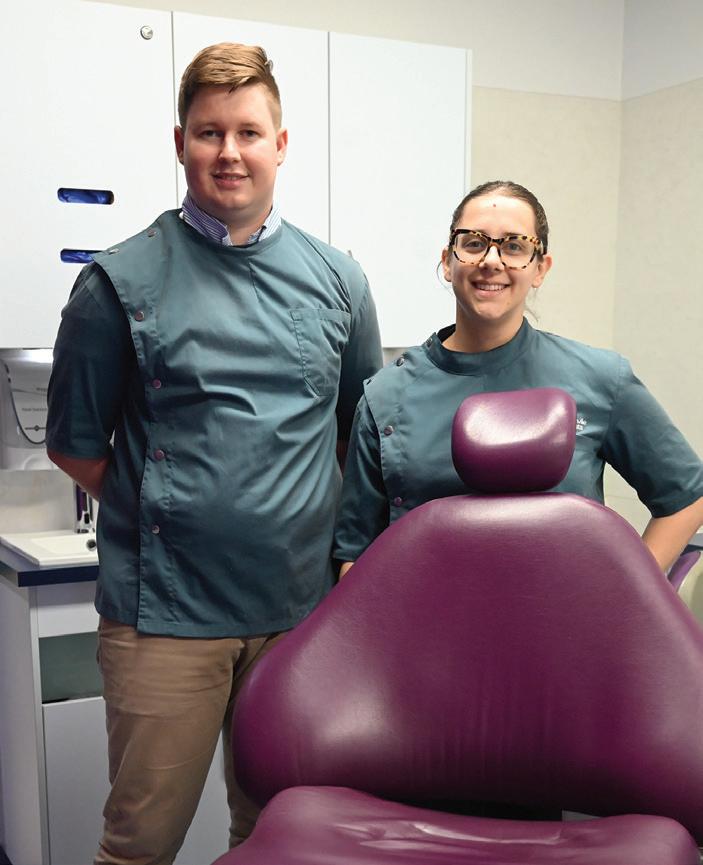
Callum and Frenchville Dentists colleague Dr Aimee Matthews.
From Little Things, Big Things Grow
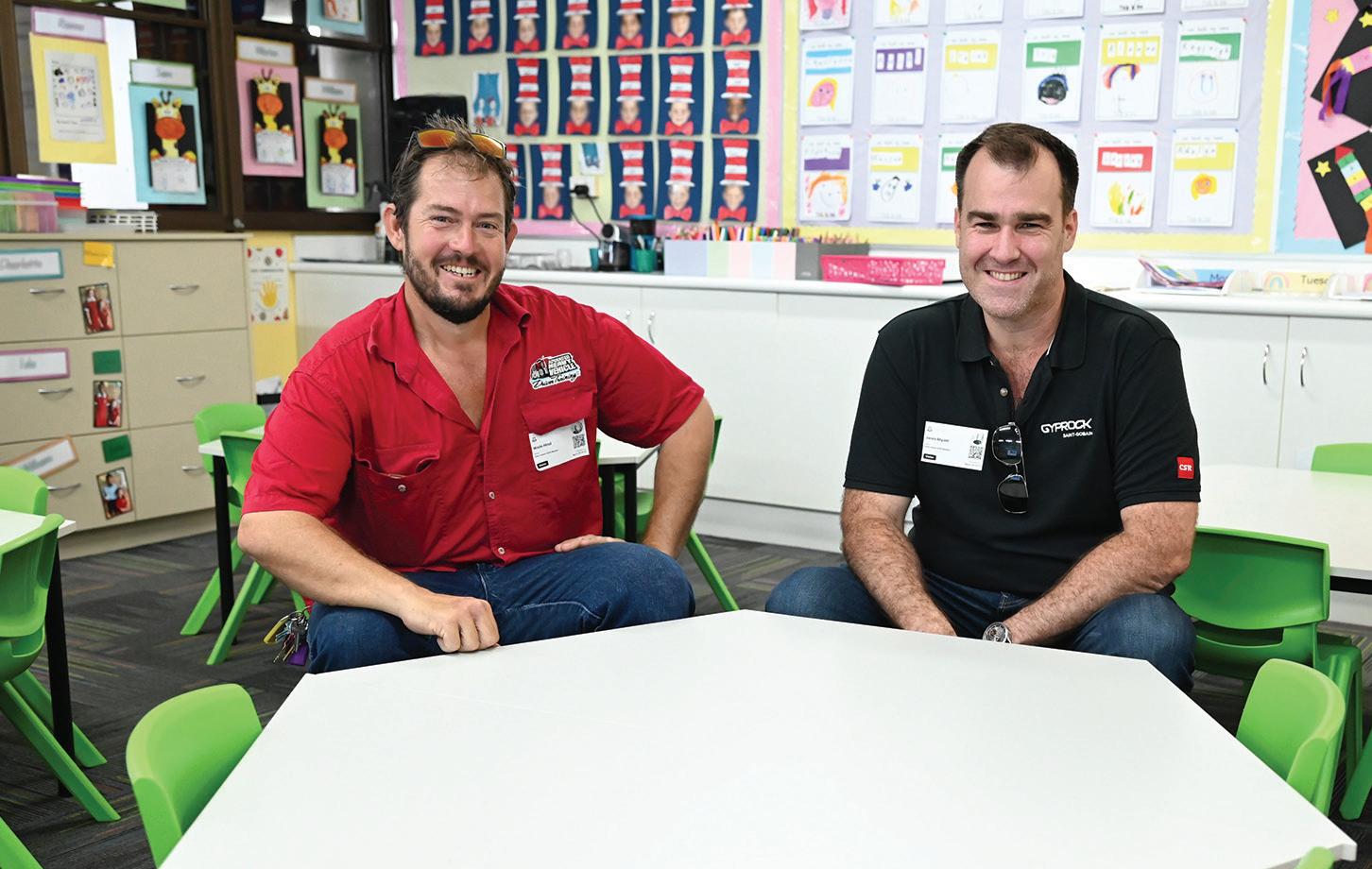
In 1990, Wade Hind and Jarvis Bryant arrived for their first day of school in Year 1 at RGS Primary. Fast forward to 2026, and the Primary memories remain strong. Wade and Jarvis were again seated in that first classroom reminiscing about Primary School during their return to the school to talk with Year 2 students.
Walking around RGS, Jarvis and Wade discovered a very different looking school to the one where they started their education. Student enrolments have grown, as has the footprint of the Primary school.
Wade said it was incredible how the place had changed, seeing the number of students that fitted into the area and the facilities now available.
He said a favourite memory was spending time with friends. “It was so much smaller and we shared a lot,’’ Wade said.
When Wade and Jarvis started at RGS, the Primary school had around 75 students and one block of classrooms where the current Prep and Year 3 classrooms are. All the classes were composite classes. They both graduated from RGS in Year 12 in 2001.
The current Prep C was their first classroom. It was a standalone classroom on that level with the current Prep K the then Primary
Reception and Staff Room while the remaining area was their playground with two classrooms upstairs.
Jarvis said the amount of development was amazing, but returning to RGS also brought back memories of the classrooms and things that were still the same. One of Jarvis’ best memories was having “lots of fun with lifelong friends.”
“Playing before class, and at lunchtimes, going on school camps and dodging plovers on the Bottom Oval,’’ Jarvis said.
“I used to like Fridays with the Friday afternoon sports. I remember one year we used to do home economics (cooking) and PE in the morning as well, which didn’t leave a lot of time for the classroom.”
Jarvis said the new buildings in Primary were quite impressive, and a lot better than the rough bitumen basketball courts they used to play on.
The RGS Year 2 students had plenty of questions about school in the “old days”.
Jarvis said they (Year 2) were a very inquisitive bunch with lots of good questions.
“The one that probably stood out the most for me, and made me feel old, was “what’s a whiteboard / chalk board”?’’ Jarvis said.
“Lucky I didn’t mention overhead projectors.”
Wade had a good laugh at a few questions. “They asked did you ride a horse to school and did you have paper for writing, which really made me feel old and have a laugh!” Wade said.
Jarvis now works in finance in Sydney while Wade is a business manager in Rockhampton.
Wade Hind and Jarvis Bryant in their first school classroom.









School Partnerships
When schools and families work together in partnership and respect each other’s unique roles in a child’s learning and wellbeing journey, students flourish. That’s the message from Queensland Independent Schools Parents Network Executive Director Amanda Watt, who was the guest speaker at the RGS Parent Association’s February general meeting.
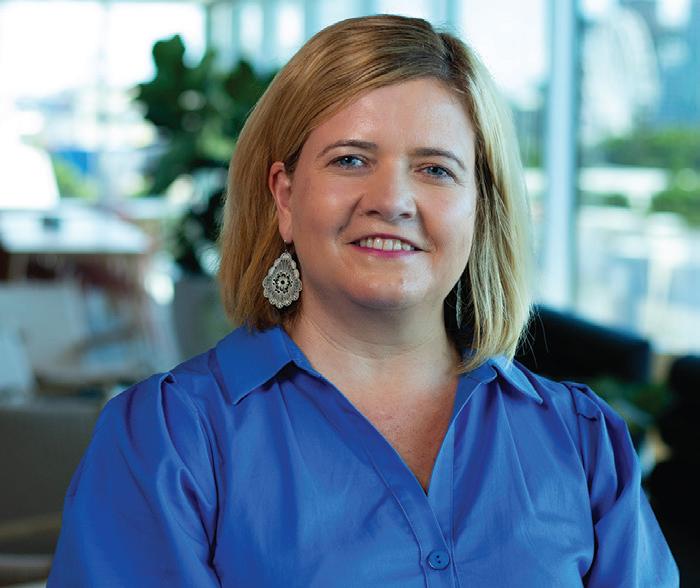
With 239 independent schools across Queensland, the QIS Parents Network is the peak body representing Queensland parents who have chosen an independent education for their child. The organisation also works directly with independent schools, supporting them in ways to “engage’’ families and bring parents closer to their child’s learning journey.
Amanda, herself educated at an independent school and the parent of two school-aged children, said 60 years of research into the practice of parent engagement shows that when the home-school relationship is “humming” and parents are “engaged” in learning, rather than “involved” in school life, children can benefit in significant ways.
“When parents are engaged and scaffolded by their child’s teachers in the ways they might value-add to what is being taught at school, they are given the opportunity to draw on their own life experiences and knowledge of their child to follow through on that request,’’ Amanda said.
“It allows a child’s learning to extend beyond the classroom and continue around the dinner table, in the car, or via phone with their parents if students are boarding.”
Importantly, parent engagement success in a school isn’t measured by how many parents turn up at ‘events’, Amanda said.
“While parents turning snags on a BBQ, volunteering at a fundraiser or sitting in the audience at an information night are important ways for a parent to show their support to a school and which is referred to in the research as ‘parent involvement’, parent engagement initiatives and practices are distinct as they
are tied to a child’s learning and wellbeing. For parents of teenage children, it also gives parents a legitimate way of engaging their child in conversation about their learning and wellbeing at a time when two-way conversations can sometimes be challenging!”
Amanda said the research was clear on the many benefits to students when parent engagement was done in a high-impact way – and those benefits ranged from improved academic outcomes to better attendance and attitude.
There were also great potential gains for teachers, schools and families too.
“Parent engagement is regarded in the research as a vital ingredient in highperforming schools and what we are seeing through our work with independent schools, is that when schools and families value each other, respect each other, and communicate really well, it feels good for teachers and parents, too.
“At a time where teacher workforce and teacher retention is a challenge for schools, any measure that can boost teacher satisfaction and wellbeing is worth paying attention to,’’ Amanda said.
She said the presentation to the RGS Parent Association about QIS Parents Network’s advocacy on behalf of parents and its parent engagement support for schools resulted in a rich discussion and she thanked Association President Dr Michael Kirk for the invitation to attend.
In the independent sector, the structure of parent bodies is diverse – ranging from advisory committees through to incorporated associations running their own budgets and events, she said.
The most effective models are underscored by mutual respect and great communication between the parent body and the school.
“Parent associations are run by passionate volunteers and the events they create not only bring parents together, the funds raised can bring about tangible improvements to school infrastructure, which is to be celebrated,’’ she said.
“But we also know that getting parents to volunteer and attend events is a challenge for many parent bodies and that’s because parenting in 2026 comes with new and unique challenges: contemporary parents are often overwhelmed with information and have competing demands on their time, so the ability to contribute to more traditional school events and activities has changed,’’ she said.
“On the flip side, contemporary parents are heavily invested in their children and they are eager to be engaged; if you can link families into initiatives that can directly benefit their child’s learning or wellbeing and those opportunities are flexible enough to fit into their family’s unique context, they will more often than not respond with enthusiasm.”
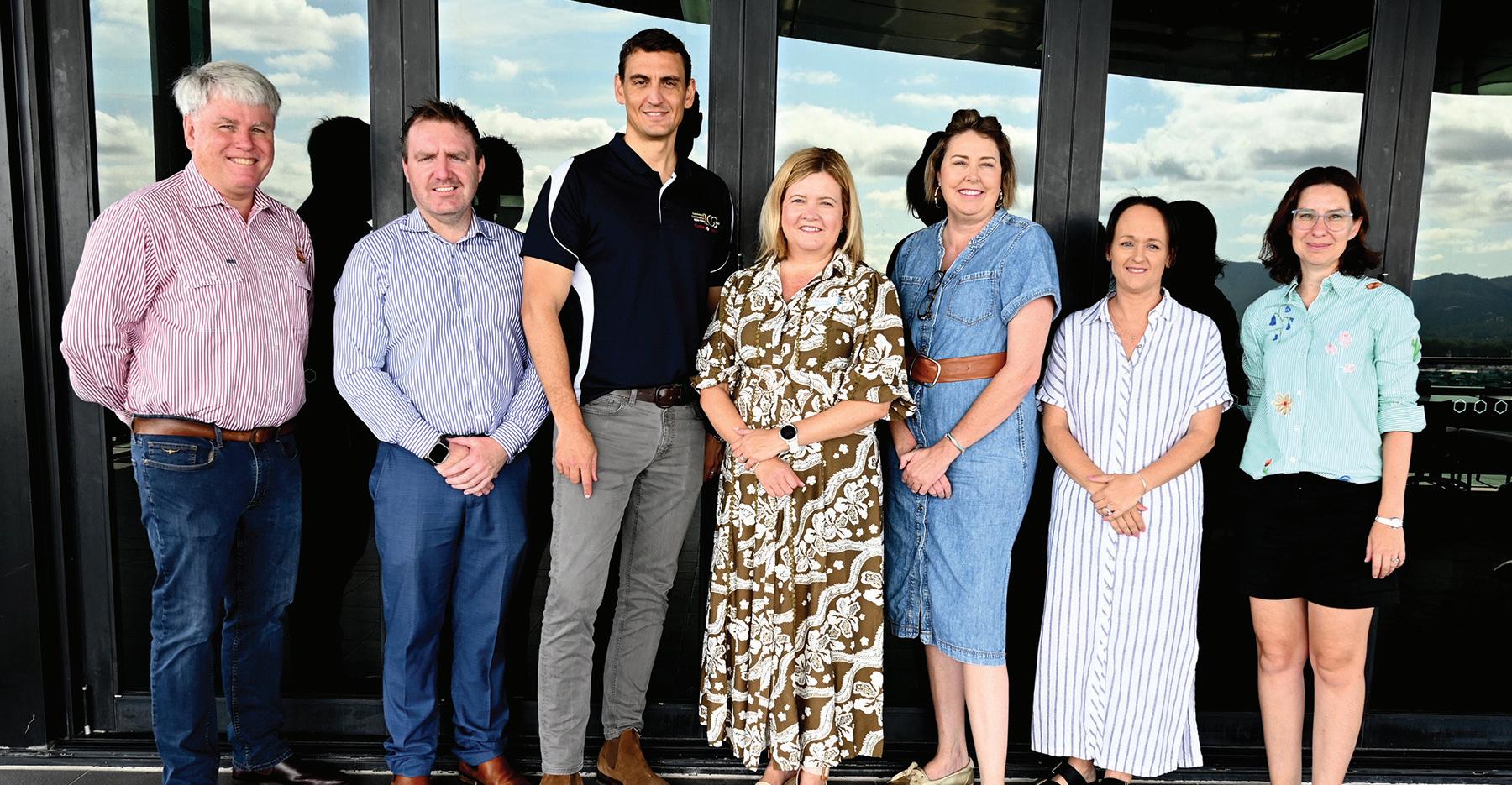
Meeting at RGS (from left): RGS Headmaster Dr Phillip Moulds, Dr Michael Kirk (PSA President), James Fabbro (PSA Treasurer), Amanda Watt, Lisa Lonsdale (PSA Vice President), Cassie Kirk (PSA Secretary), and Hannah Jayraj (PSA Vice President).

G en AI: The future is here
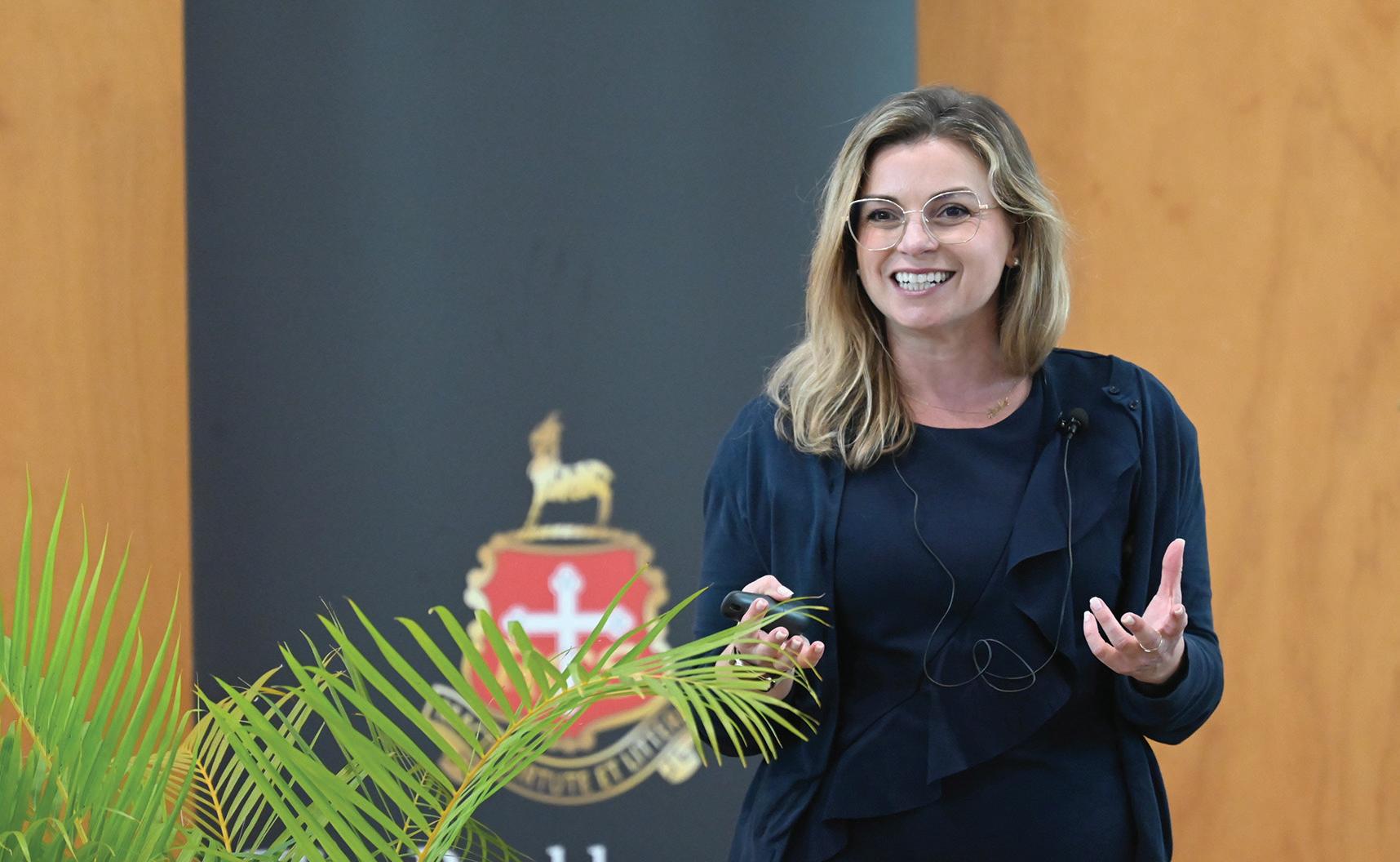
RGS Engages in AI
Generative Artificial Intelligence (Gen AI) is both a great opportunity, but also a great responsibility, which is always true when we’re working with, and educating, young people. That is the message from AI for Education Chief Program Officer Corey Layne Crouch, who visited the School in Term 1 to help the RGS community better understand and plan for the fast moving world of AI.
Meeting with the RGS community, representing various sections of the School including staff, both teaching and non-teaching, students, and parents, Corey is a former secondary school English teacher, school principal, and edtech executive with over 20 years of experience leading classrooms and schools.
“I continue to think about how we design and operate schools that are setting young people up for success in an ever changing and evolving future,’’ Corey said.
Corey said GenAI is a powerful technology, providing both incredible opportunity and incredible risk.
She said it is important to consider what leaders in the classroom, and in the school, need to help maximise the opportunity and benefits while minimising the risk to the School community, especially students.
“I don’t want to push a technology into the hands of teachers, leaders, and students that I can’t confidently say is going to help improve their progress toward goals. You really need to have a strong foundation of AI literacy. It’s not just about the tool. And if you don’t have that understanding it can be harmful and risky,’’ Corey said.
Corey praised RGS for having already established their foundational pillars for responsible GenAI integration including establishing guidelines and governance that provide guardrails informed by the vision and values.
“Having guardrails gives you some confidence in what it looks like for this technology to move us closer to goals. We know that we’re in a space of understanding of what safe and ethical use looks like,’’ Corey said.
Corey said the next pillar was continuing to build foundational AI literacy, in both students and staff, something that grows as you apply your understanding in different and novel applications.
“That also allows you to be grounded in a clearer vision of how to approach this – in a way that we feel like is aligned with our priorities,’’ Corey said.
Corey said AI allows us to reimagine what classrooms and schools can look like.
“There are things that educators can do now that weren’t possible before. Some teachers will say it didn’t save them time creating lesson plans, but the plans are so much better and richer than what they would have been without this. That is the “right now” opportunity in schools,’’ Corey said.
Corey Layne Crouch meets with RGS parents.
Community
She emphasised the need for intentional use, though, there needs to be a benefit to students and staff.
Corey said we, as educators, have a responsibility and a sense of urgency to prepare young people for the future where they will need to be – literate and fluent with this technology, while still, of course, having their critical thinking skills and human skills.
“We’re not entirely sure what the job market’s going to look like in 2030, let alone 2040, 2050, etc, but what we do know is that it’s okay if students can think for themselves and then they know who they are and what their values are and they’re grounded in that. Then they can navigate the technology,’’ Corey said.
Meeting with RGS Secondary students, Corey welcomed the opened discussions about some AI concerns which included how much students were using AI, concerns about making their brain lazy and the addictiveness of AI, and questioning whether concepts were now their own ideas or just AI generated. They also raised the larger issues around the environmental and existential risk.
“There is some awareness from students. We have to help them have the filter of when “I should” or “should not” be using AI,’’ Corey said.
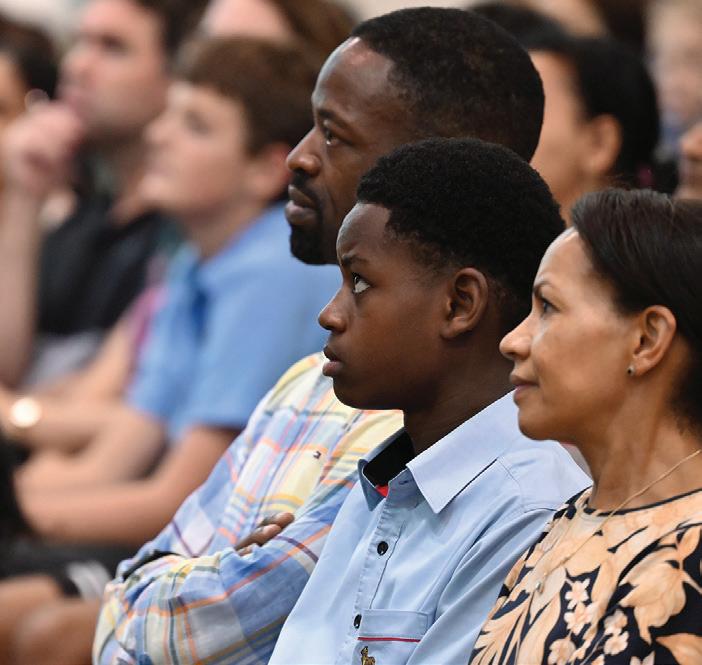
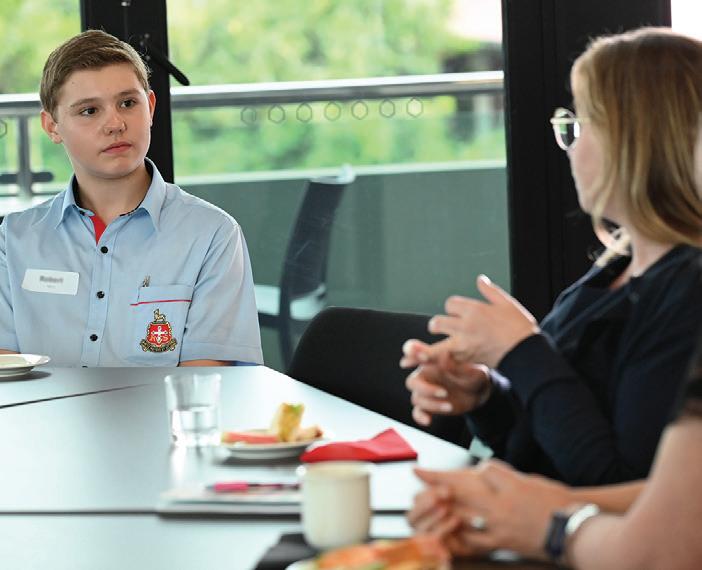
Students regularly use technology. Teachers are now considering how best to build that bridge between new technologies and the best outcome for students.
“It’s interesting, some teachers are super keen to embrace as much in the AI space, and then there is a some reluctance from others as they are a bit worried about the students.
“It’s a tricky space. Bless teachers and school leaders because nobody said, by the way, you know in one year we’re going to release this technology that is essentially an easy essay button, an easy writing button, an easy lab report button.
“We are trying to be proactive and thinking ahead, but also being reactive to the reality that, this technology is designed to create and do work, to produce deliverables for students.”
Corey said the purpose of school was not just to get the work done. It was not to produce something to hand in.
She said the purpose of school was to do the learning and the personal development, and to do that in a community.
“This technology tool has been designed to do the work and the thinking for us, but teachers can help shift it to a learning tool, to make sure it doesn’t replace the learning. That is a real challenge, and students are aware of the challenge too,’’ Corey said.
In a professional development session with teaching staff, Corey provided some practical and fun advice about AI capabilities: creating classroom interactives and songs to help students learn.
“One of the biggest risks of this technology just generally, but especially for young people, is that it pulls us away from one another as humans and it diminishes human connection at a time when we need to be cultivating human connection more than ever.
“Have open conversations about AI.”
“I’m sure people have some different hesitancies, but it’s also really clear that the initial buy-in and trust is there.”
Corey said while RGS is an early adopter and is thinking about instruction, there is also foundation building ahead.
During Corey’s visit to RGS, strategic discussions were held looking at Gen-AI including the possibilities for our youngest of learners, impact on wellbeing, and an examination of priorities for RGS.
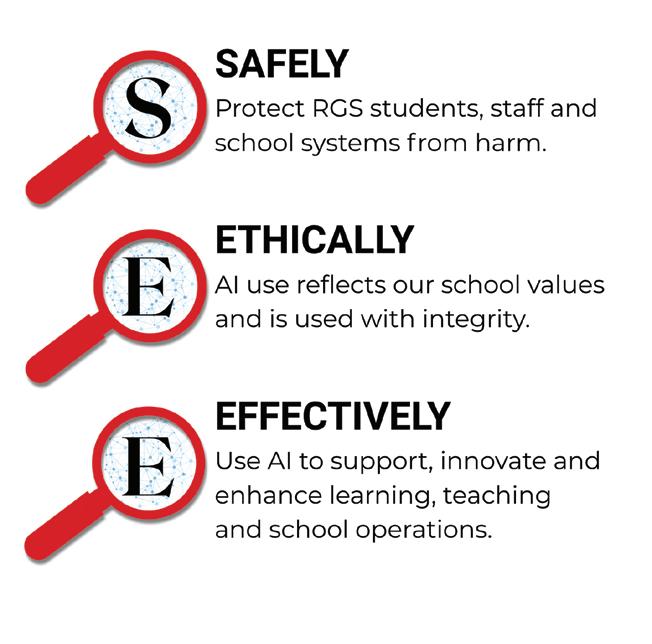
At RGS, our approach to AI is guided by the SEE model — Safe, Ethical and Effective.
This shared framework helps students, staff and families think carefully about how AI is used, not just what it can do. By considering safety first, acting with integrity, and focusing on learning that truly adds value, the SEE model ensures AI use at RGS is thoughtful, human-centred and aligned with our school values.
From this discussion, Corey will co-construct a draft roadmap moving Gen-AI implementation forward.
Corey said she was “inspired” and “optimistic” about the level of thoughtfulness at RGS.
“I have seen this from every person I interacted with, from leadership thinking about their staff to the students being really thoughtful and intentional about what this technology means for them and might mean for the future of society at large, to parents asking what should they do and having conversations with their child,’’ Corey said.
“While there’s a lot of uncertainty in this space, we can be assured that the RGS community is aligned in being intentional and thoughtful about what the next steps are.”
Useful Links:
• AI for Eduction: www.aiforeducation.io/ ai-resources/ai-in-education-101-for-parents
• eSafety:
– www.esafety.gov.au/industry/tech-trendsand-challenges/generative-ai
– www.esafety.gov.au/parents/resources
• RGS AI Guidelines: Found on RGS Parent Lounge
• Common Sense Media: www.commonsensemedia.org/ai
RGS students and parents also had the opportunity to engage in GenAI conversations.
Community
AI Literacy – Test your AI Knowledge
Which of the below statements are fact or fiction?
• AI can give a confident answer even when it doesn’t actually “know” if that answer is correct.
• Two students can ask the same AI tool the same question and receive different answers.
• Using AI responsibly often requires more thinking, not less.
• AI literacy isn’t about becoming an AI expert, it’s about building the knowledge, skills and mindsets to use AI safely, ethically and effectively.
• AI tools don’t understand age, context, or appropriateness unless humans set limits around them.
• Most adults are interacting with AI several times a day!
All of these statements are fact. These statements are designed to open up conversations at home about judgement, boundaries, and what safe, ethical and effective AI use actually looks like in practice.
Some conversation starters:
• Which statement surprised you the most — and why?
• Which statement do you need to know more about?
• Where does AI influence our daily lives?
• Which statement connects most strongly to Safe, Ethical, or Effective use?
• What’s one family rule about using AI that could come from this list?
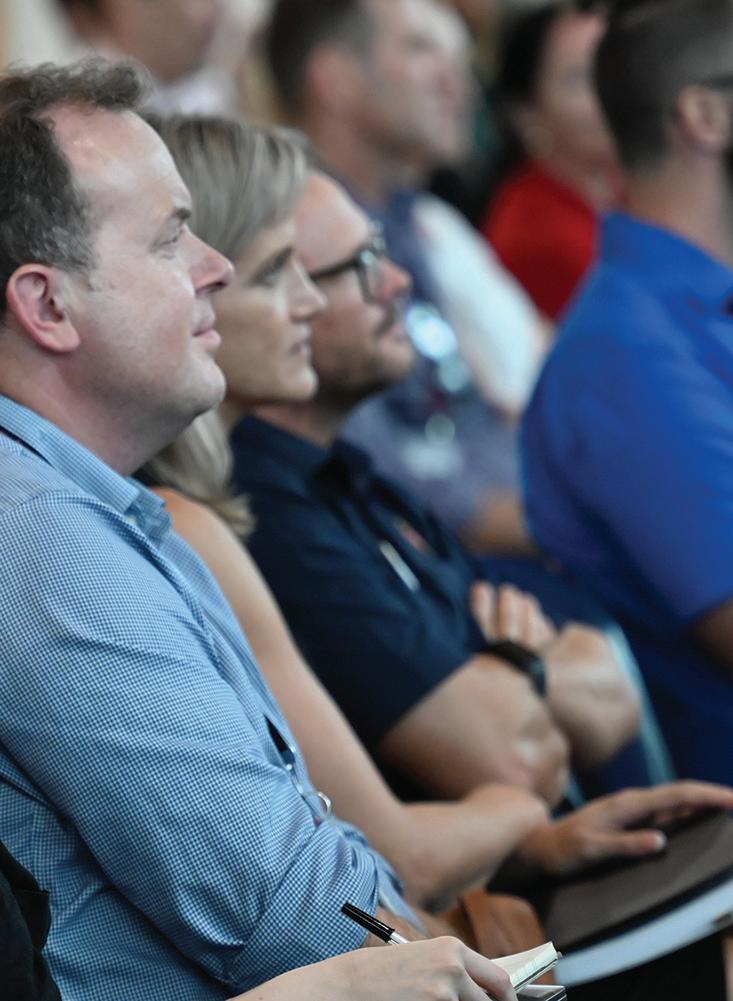
RGS teachers gain a deeper insight into the changing world of GenAI.
Meet the RGS AI Leadership Group
The AI Leadership Group brings together staff from across the School to ensure decisions about AI are thoughtful, balanced and grounded in what is best for students, staff and families.
Mrs Debbie Moulds: Dean of Studies and AI Leadership Group Chair
Dr Phillip Moulds: Headmaster
Mrs Karryn Johnson: Board Secretary and Business Manager
Mrs Donna Grant: Deputy to the Headmaster
Ms Reniece Carter: Head of Secondary School –Academics
Mrs Kate Harris: Head of Primary School

Mrs Ashleigh Harvey: Director of Communications and Development
Mr Matt Davis: IT Manager
Ms Brooke Graff: Primary Teacher
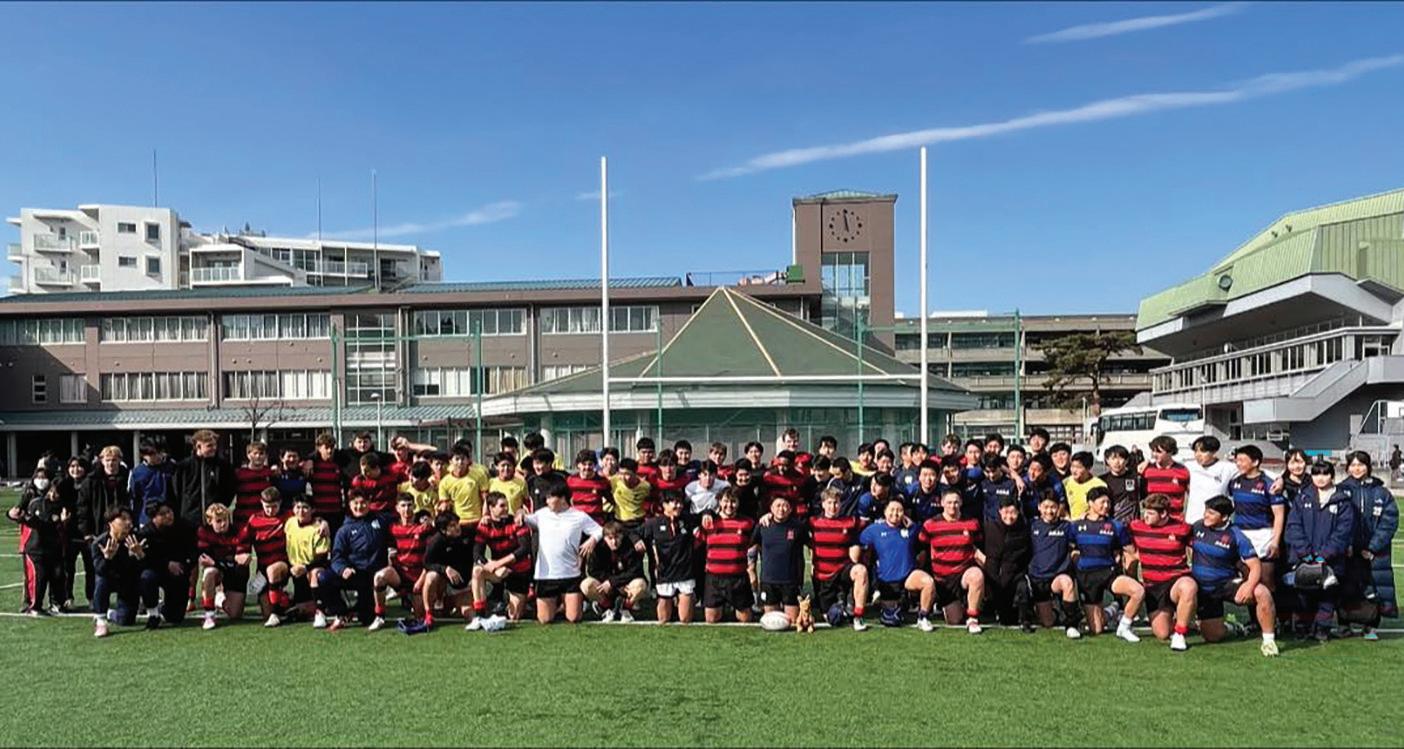
Rugby and Culture Connect
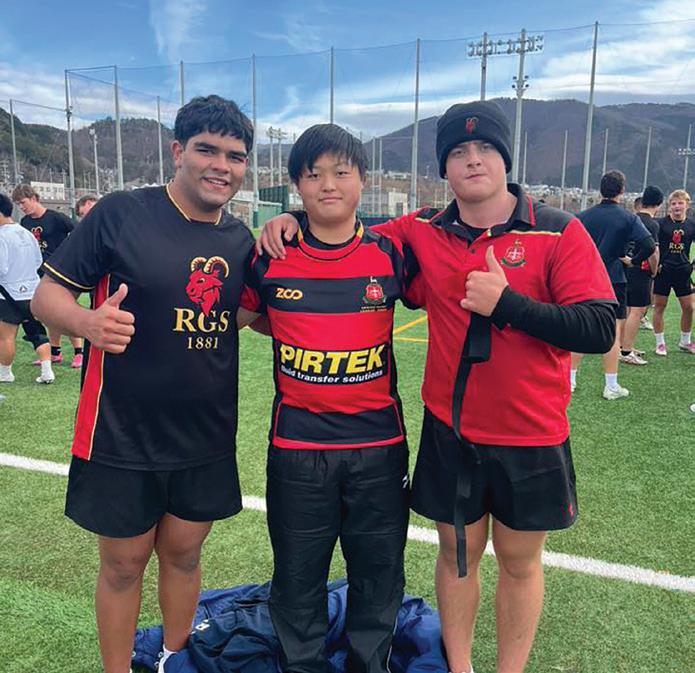
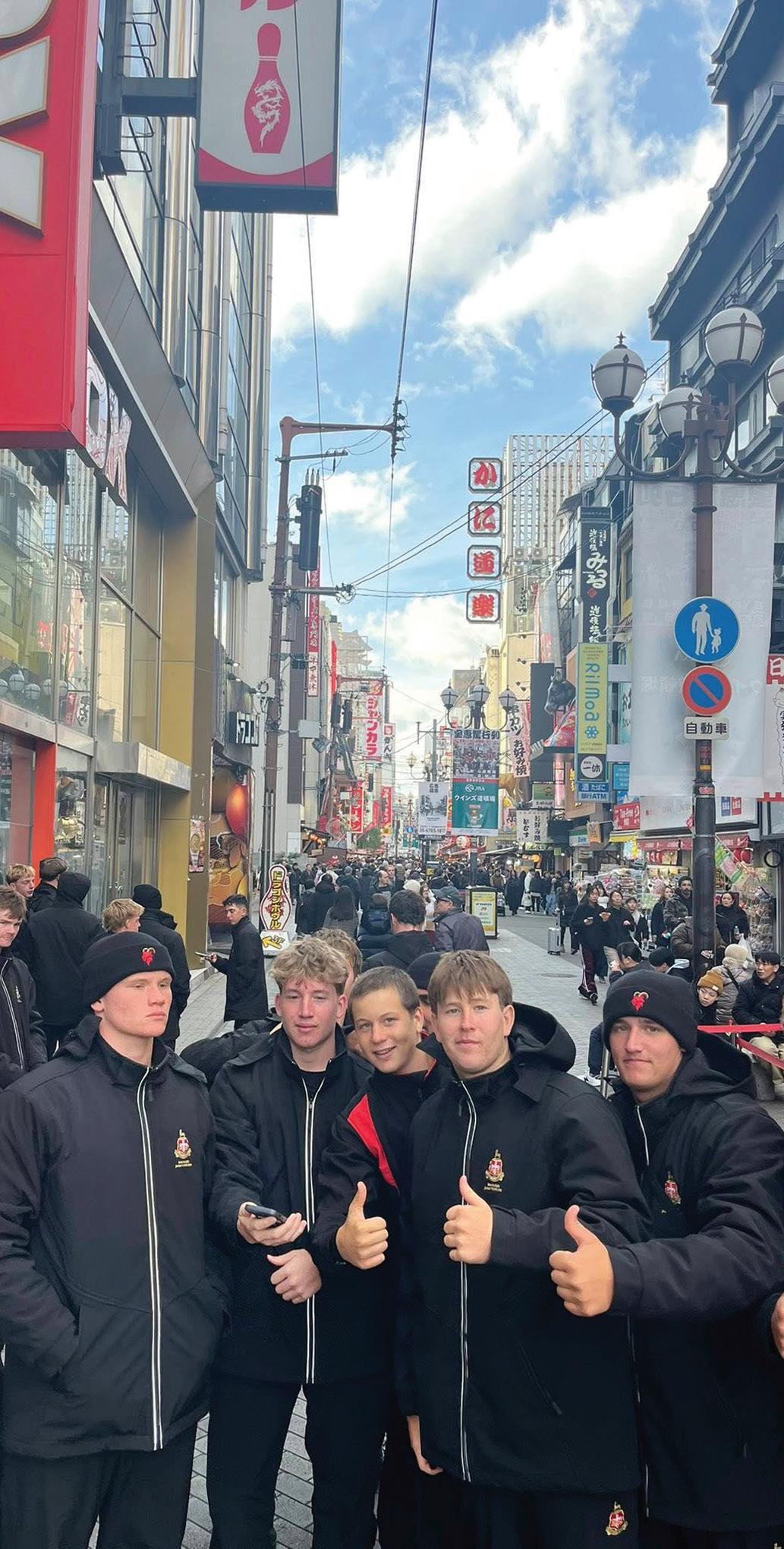
RGS Year 12 student Tom Wass’ childhood memories of rugby union were growing up around the Biloela Rugby Club. It’s a long way from his rugby adventure in Japan. Tom was Tour Captain for the inaugural RGS Rugby Club’s Japan Tour in late December and early January.
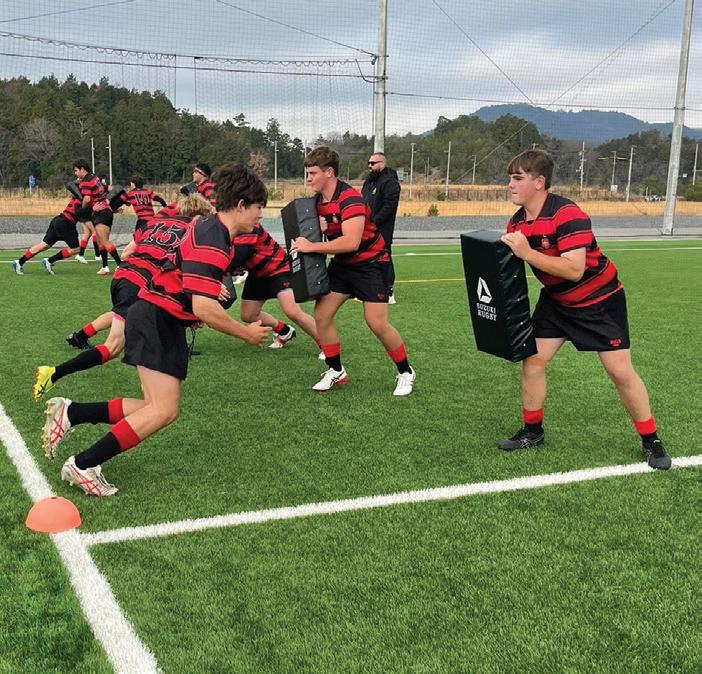
Joining the 25-player squad for the 10-day tour, Tom led the RGS squad that played seven games while also immersing themselves in the Japanese culture. The tour further cemented Tom’s passion for the game.
“What I enjoy most about the sport is the comradery and making new friends along my rugby journey, and knowing that rugby Is more than just about the game,’’ Tom said.
The Japan Tour provided an opportunity for the students, and coaches, to explore professional overseas rugby opportunities and the rugby facilities in Japan while also learning about a different culture.
Tom returned home amazed at the kindness of their Japanese hosts.
“I learnt that kindness costs nothing but means everything,’’ Tom said.
“Every single person we met and talked to was so kind and respectful and always had time to talk no matter what rush or situation they were in.”
Tom said from a rugby player perspective he learnt more about the benefits of playing a structured game.
“I also learnt how to become a better leader after being with all the boys on tour. I learnt how to better communicate, that teamwork is key, and the benefits of being a whole team rather than individuals,” Tom said.
“Being named Tour Captain was a huge achievement and I was very proud and honoured to lead a bunch of great boys on a fabulous tour.
“It was great to really instill the School values overseas as well and, as a group, to set a great example for many more tours to come,’’ Tom said.
On the field, Tom said playing rugby in Japan was also very different to rugby at home.
“The Japanese teams were a lot more physical, especially in their scrums, and they were very structured and well-disciplined.
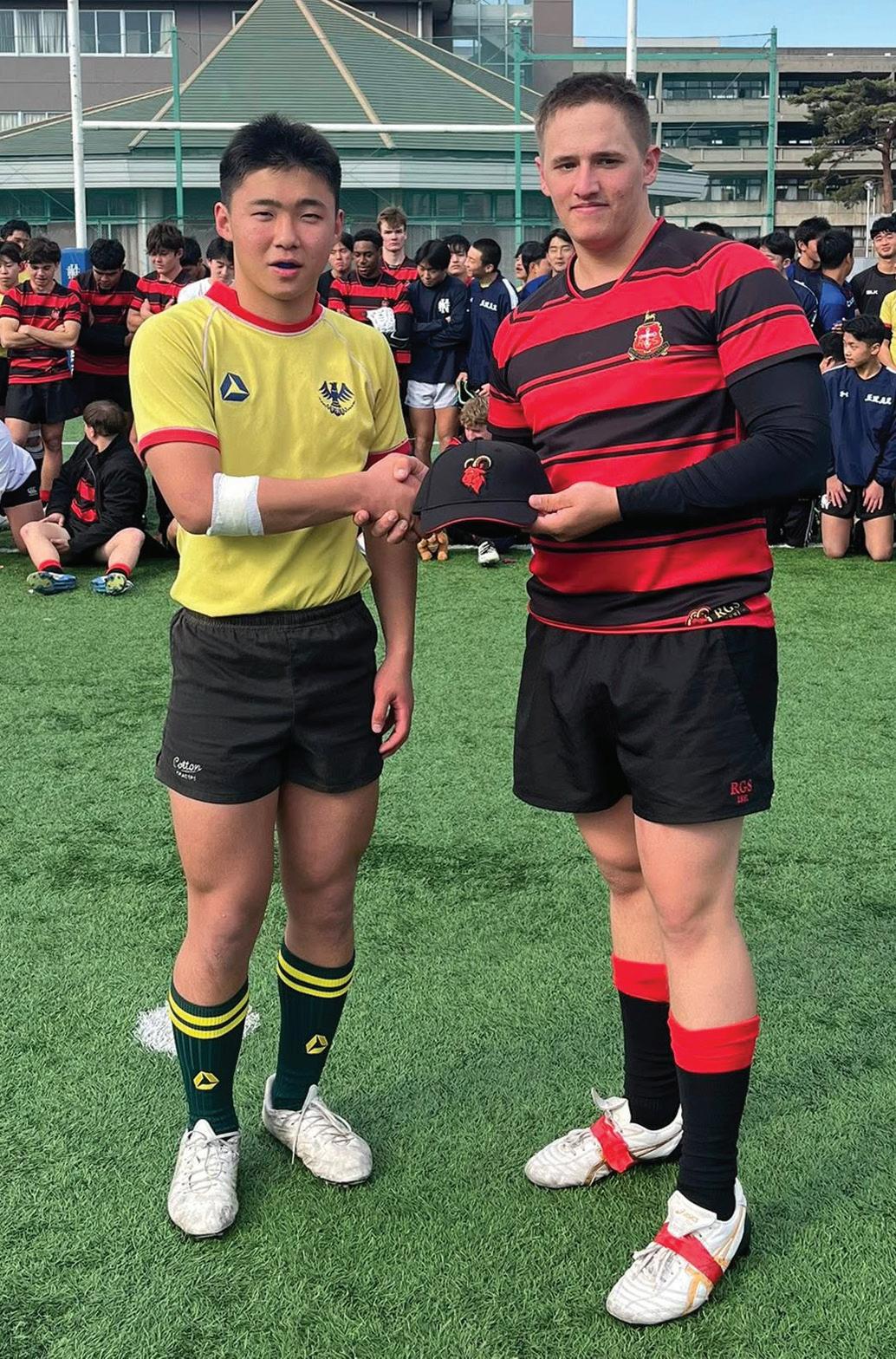
The inaugural RGS Rugby Tour to Japan provided a learning experience, both on and off the playing field.
Tom presents a gift to their opponents in Japan.
They didn’t give away many penalties compared to us as a team,’’ Tom said.
“And their fields were astro turf which we were all expecting to hurt to play on, but it was not as bad as we initially thought. Playing in the cold air was such a huge change as well compared to Rockhampton.”
Tom said a major challenge playing rugby in Japan was understanding the match officials.
“We managed to overcome this by using more hand signals and just focusing on the referee in that moment,’’ Tom said.
The Tour also benefitted from attending a coaching clinic, giving them insights into the world of being a professional rugby player.
Samoan professional rugby player Henry Taefu, who has also played professional rugby in Japan for the Red Hurricanes in Osaka, gave them tips on ball handling and passing.
“Every single person we met and talked to was so kind and respectful.”
Tom said they also had the opportunity to train alongside one of their opposition teams, Riseisha High School in Osaka.
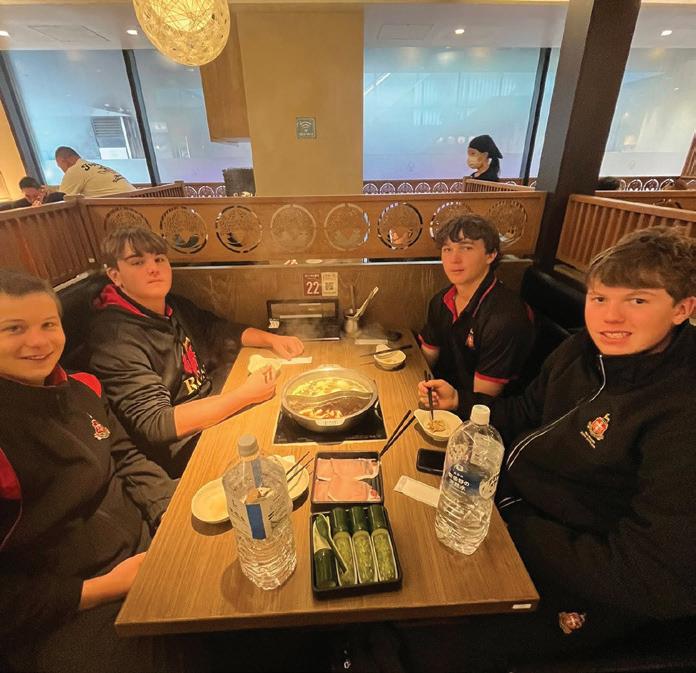
Away from the rugby field, the tour group also had amazing opportunities to discover a new culture, including trying different food and working on mastering chopsticks.
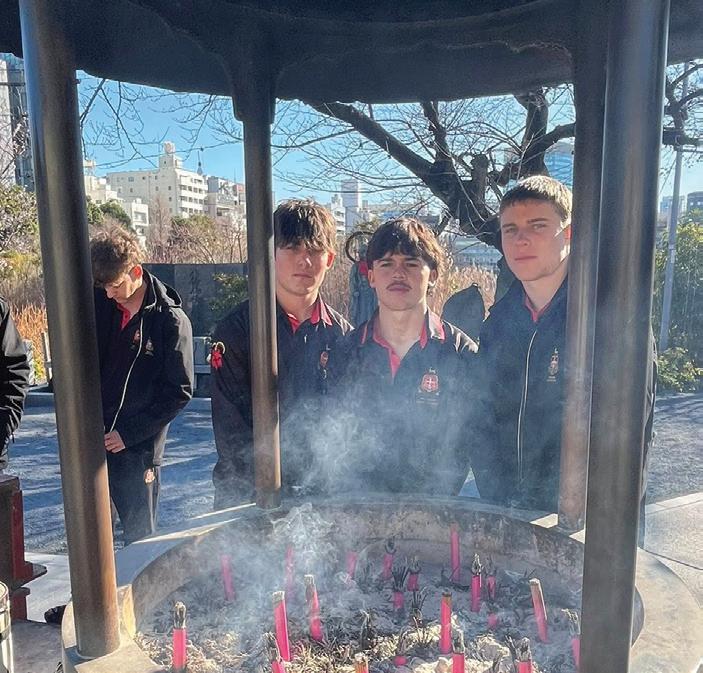
Tom’s favourite day off the field was in Tokyo, when they visited a shrine and discovered more about a different religion.
Seeing snow for the first time was also a highlight for many on tour.
Tom’s advice is simple for any future RGS rugby players who have an opportunity to tour overseas.
“Take this opportunity as soon as it comes,’’ Tom said.
“Try everything, get out of your comfort zones, try food you might not think you’ll like, try new activities, and meet new people. Just do as much as possible because you may never get this opportunity again.”
Co-curricular
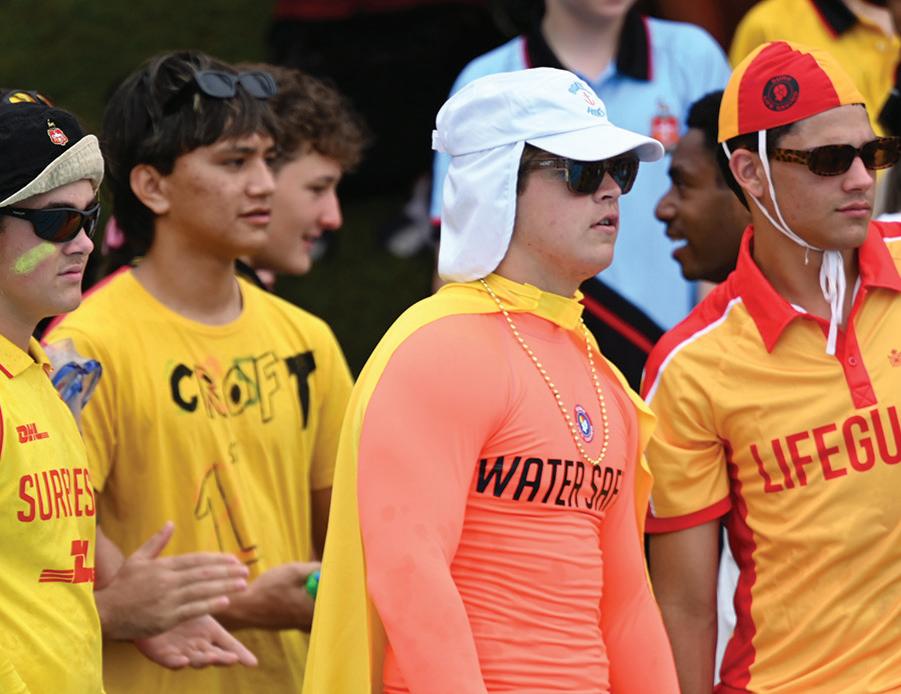
AROUND THE GROUNDS
Basketball
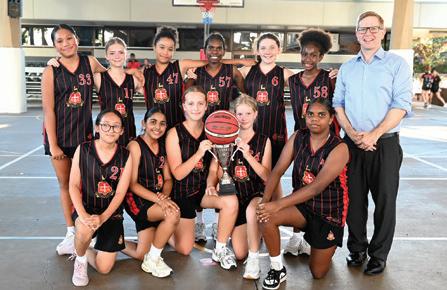
The RGS Junior Girls team won the B Division final in the Rockhampton District Basketball, defeating St Ursula’s College in the final. Year 8 student Elliott Ostwald was named RGS player of the final.
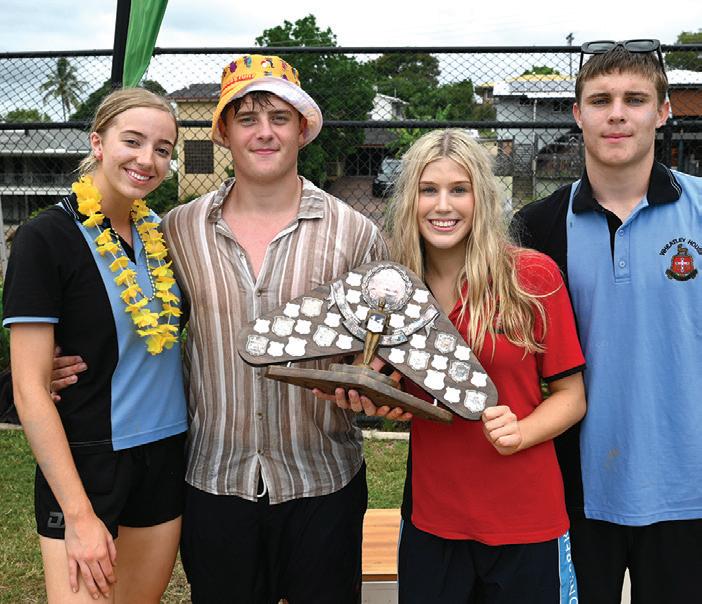
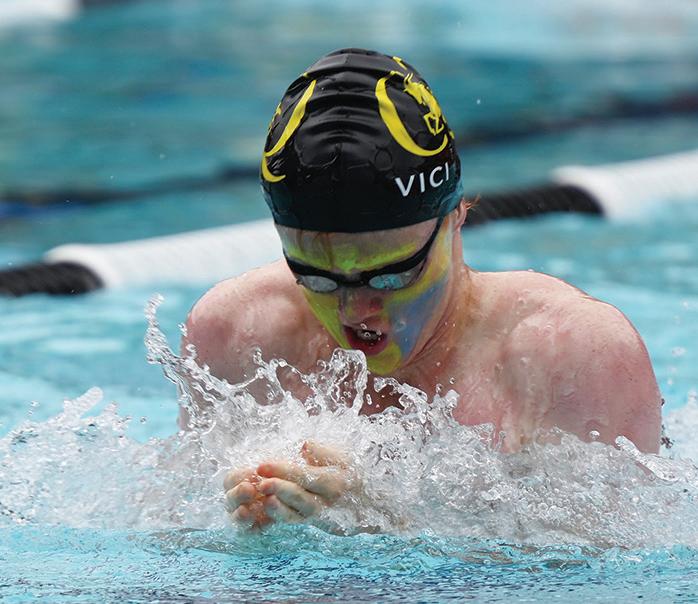
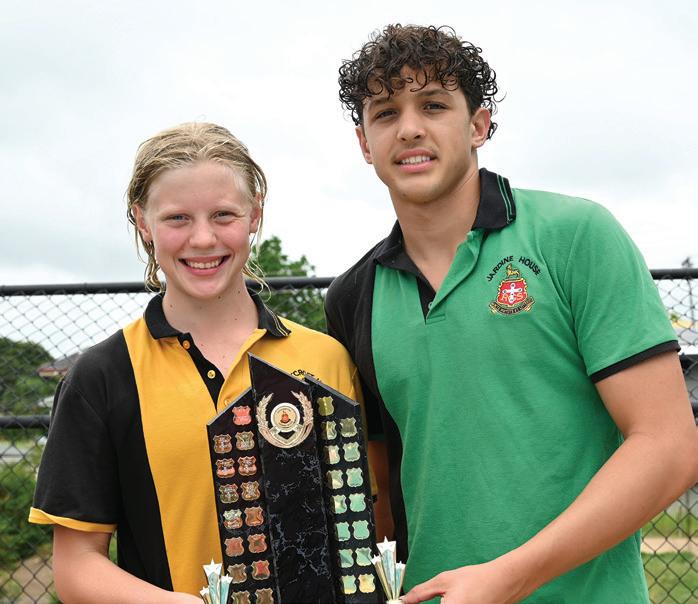
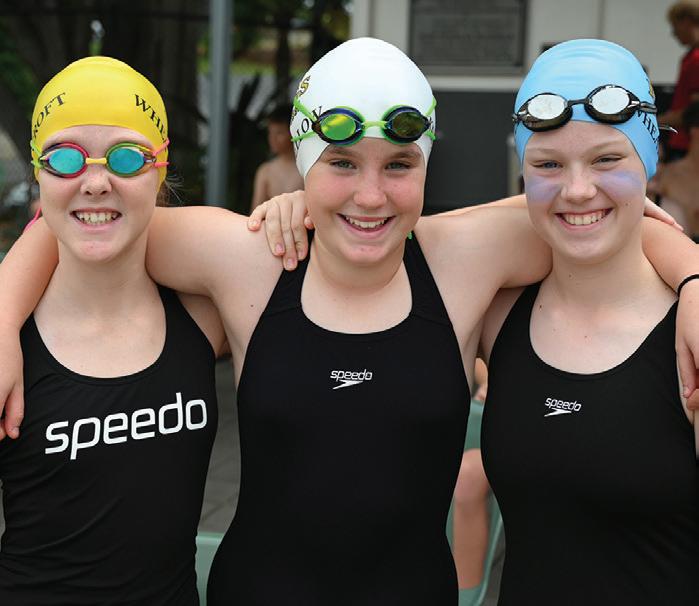
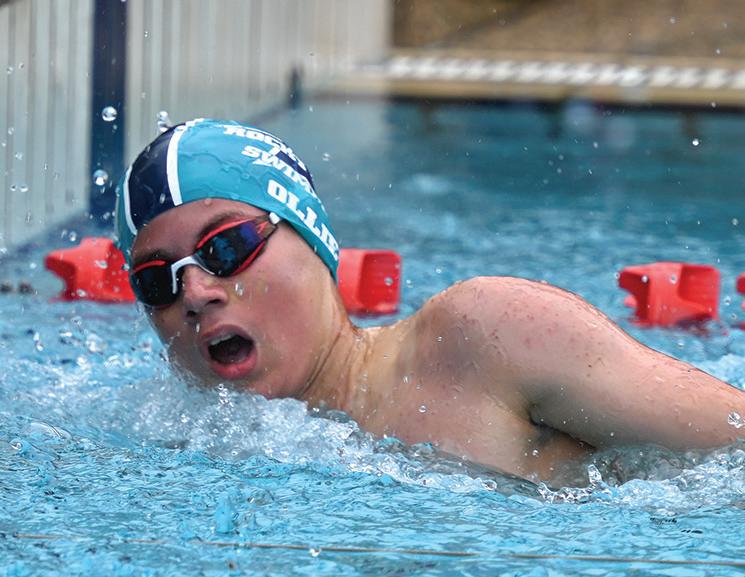
Secondary Swimming Age Champions
12 Years Girls Freyja Harrison
12 Years Boys Sunny Liu
13 Years Girls Emma Hansen
13 Years Boys Oliver Lau
14 Years Girls Evie Francis
14 Years Boys Connor Hill
15 Years Girls Sammie Liu
15 Years Boys Edward Dingle
16 Years Girls Mela Canniffe
16 Years Boys Sam Maurer
Open Years Girls Lauren Moody
Open Years Boys Josh Platten
100m All Age Freestyle Race
Girls – Emma Hansen
Boys – Ashton Rodgers
Champion House Wheatley
State Medals
RGS students won medals at Queensland School Sport Swimming Championships in Brisbane. Oliver Lau (Year 8) won three gold, 1 silver and 2 bronze medals; Ashton Rodgers (Year 11) won 2 silver medals; and Jaime Liu (Year 6) won 4 gold medals and was named 11 years girls swimmer of the meet. All three students qualified to represent Queensland.
Cricket
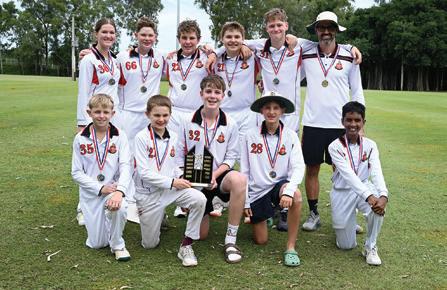
RGS Red (pictured) won the Rockhampton Cricket Division 2 premiership against Brothers. Henry Houghton was named player of the final for his unbeaten half century. RGS also won the Rockhampton District Secondary Schools T20 Open Boys division after defeating St Brendan’s College in the final.
Futsal
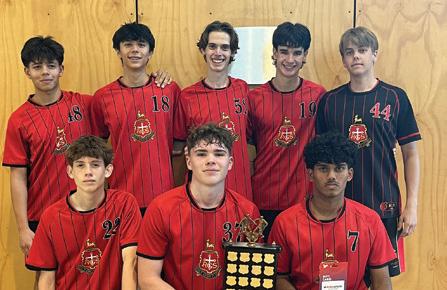
RGS won the Senior A Boys decider after a tight 2-0 win against St Brendan’s College. Nash Mahon scored both second half goals. Player of the final was Shamik Girish. In the Junior A grand final, RGS went down 7-6 to Heights College. Oliver Bryan was named RGS player of the final.
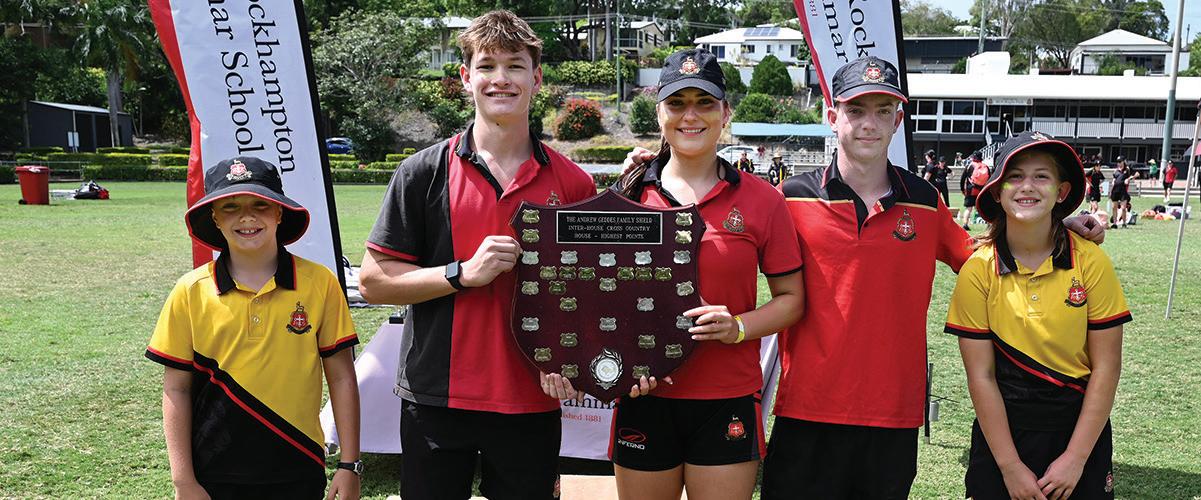
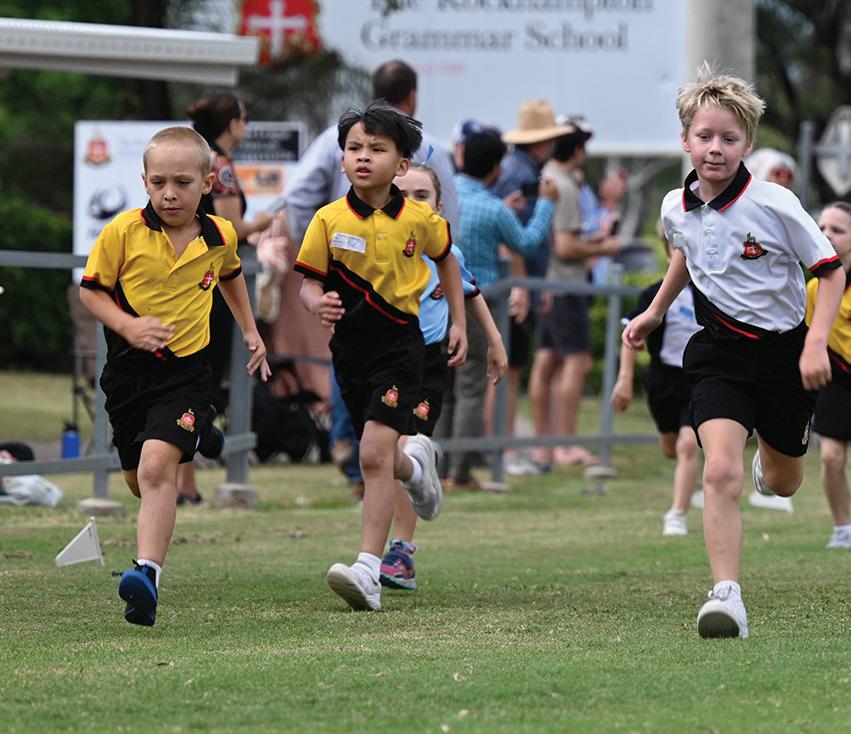
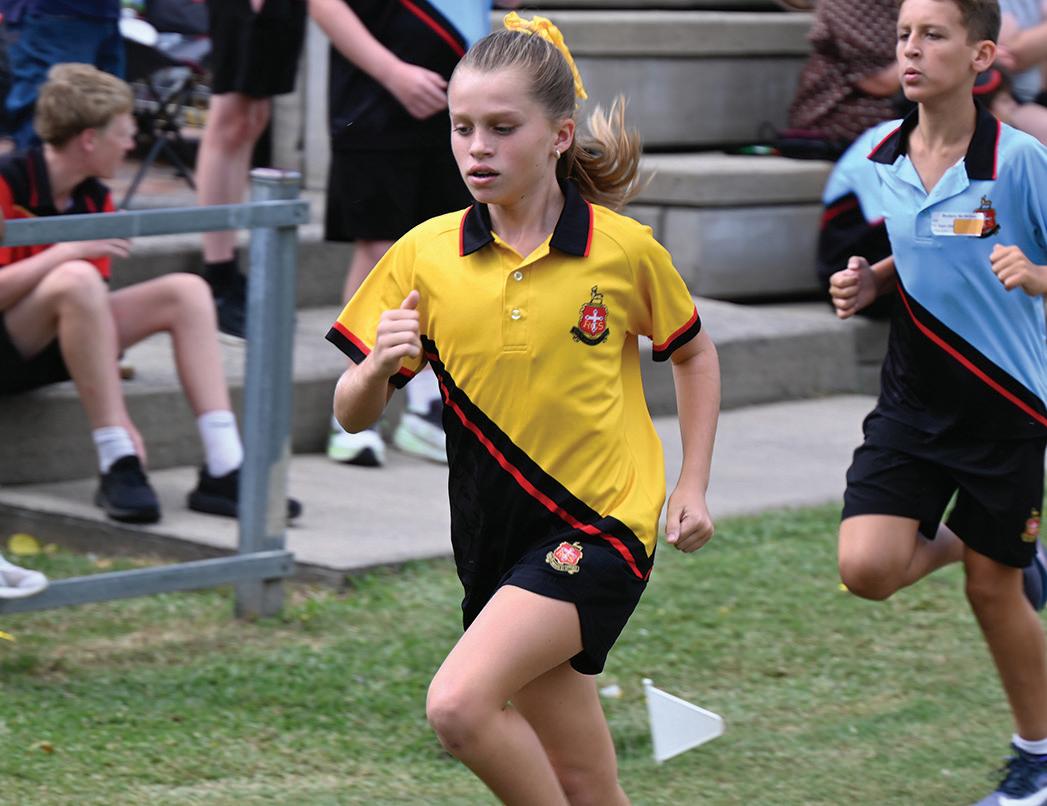
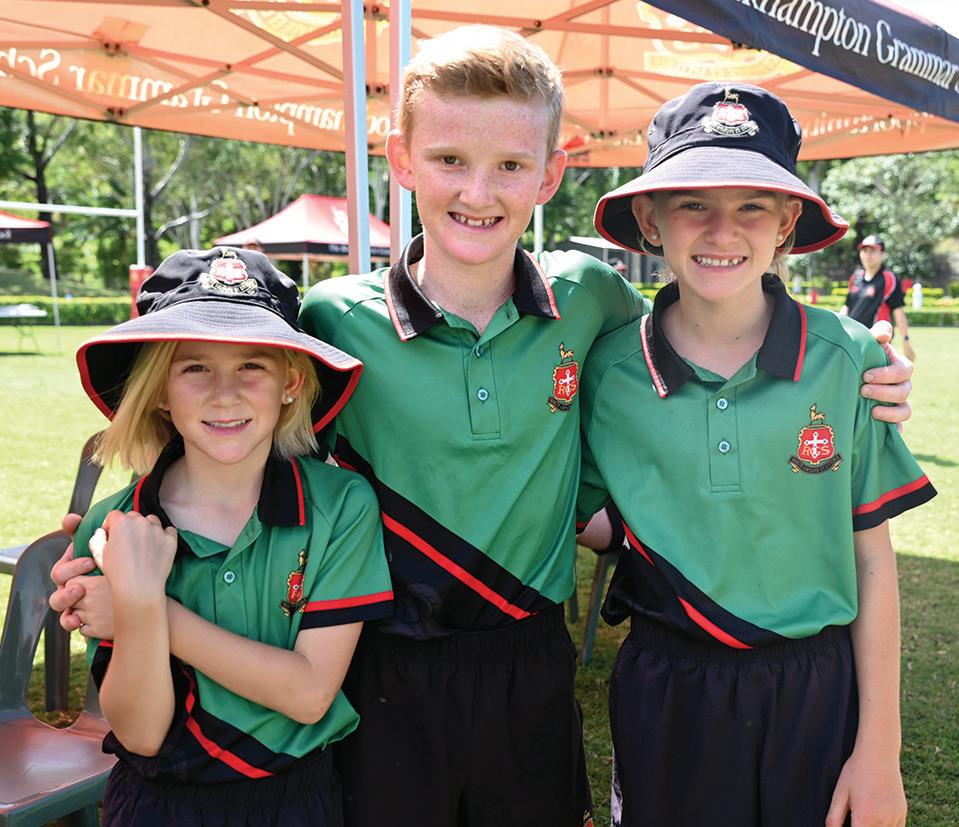
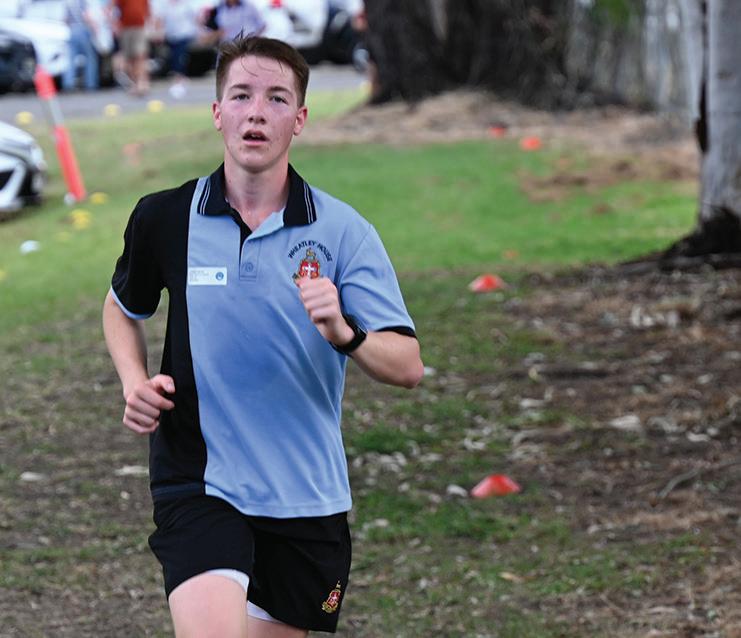
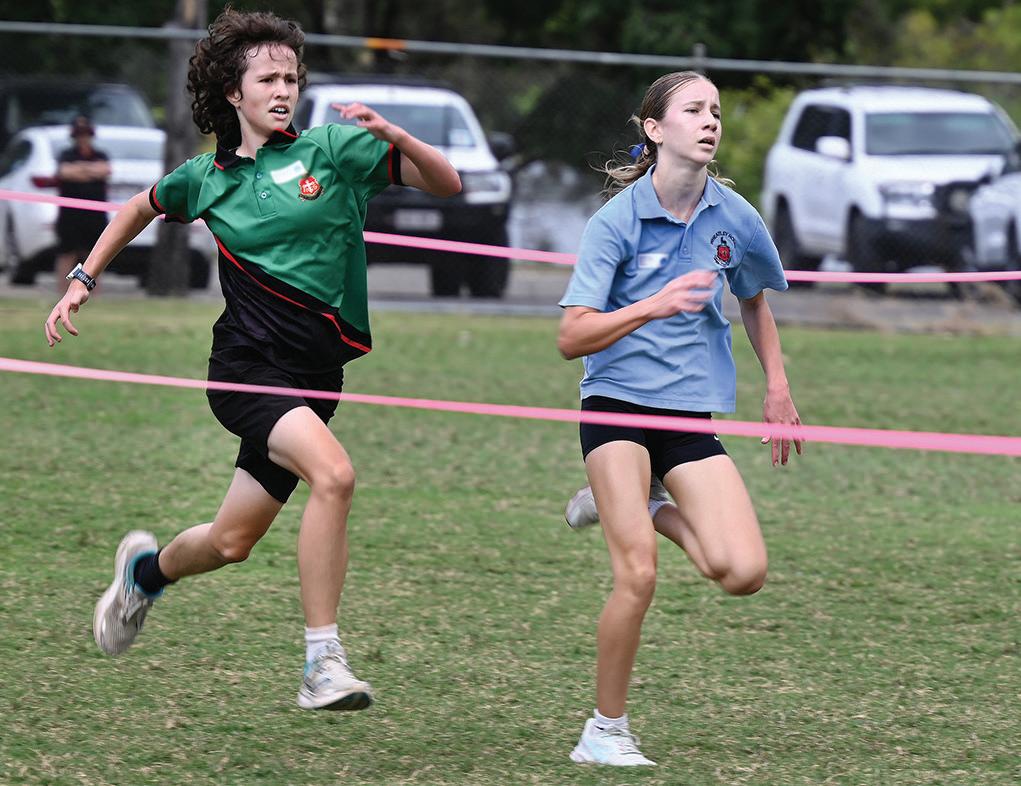
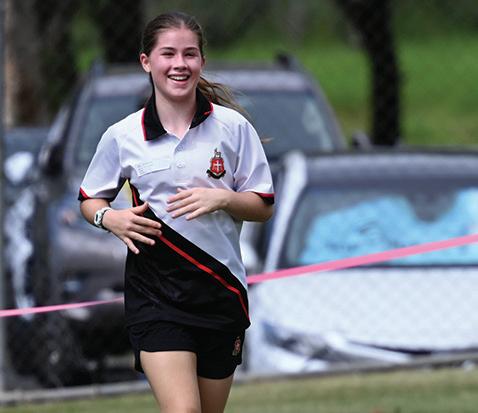
Champion House Wheatcroft
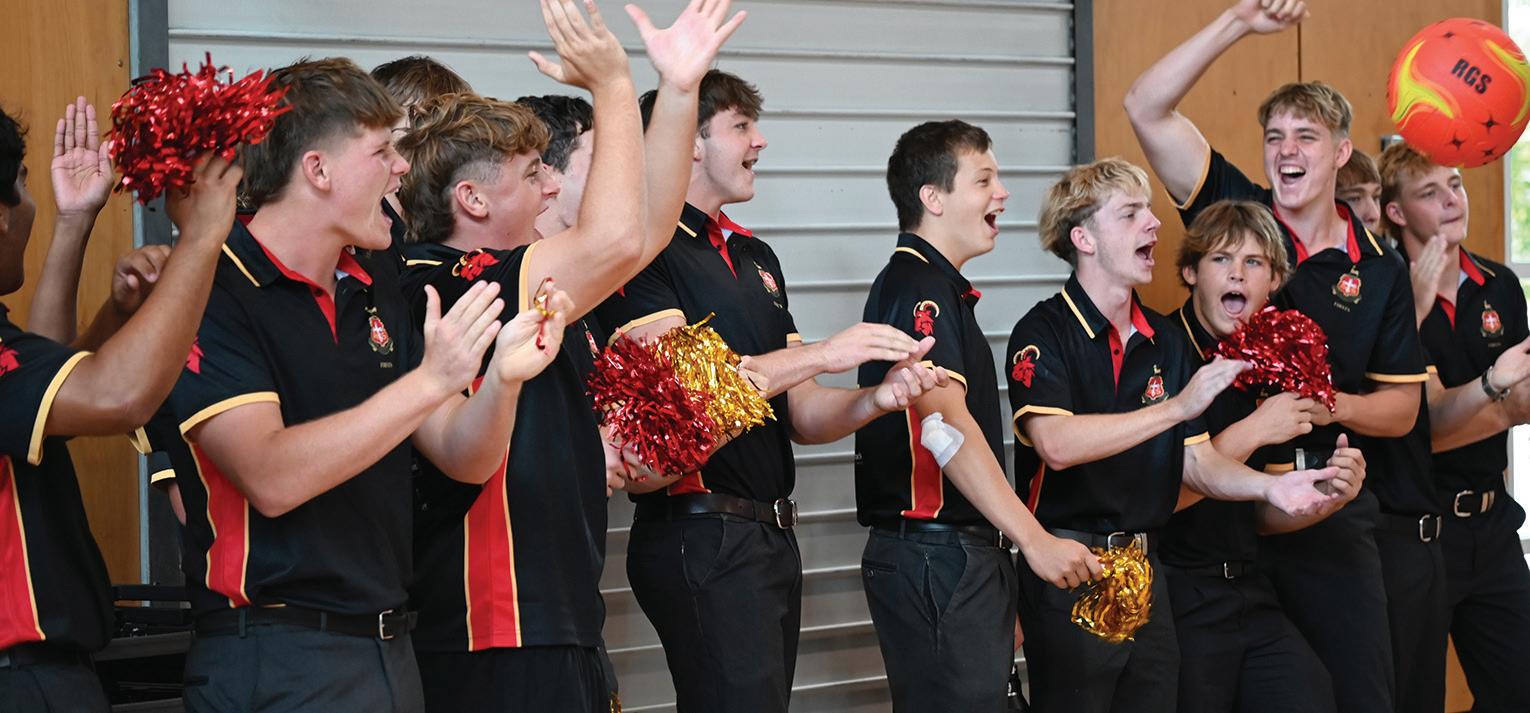
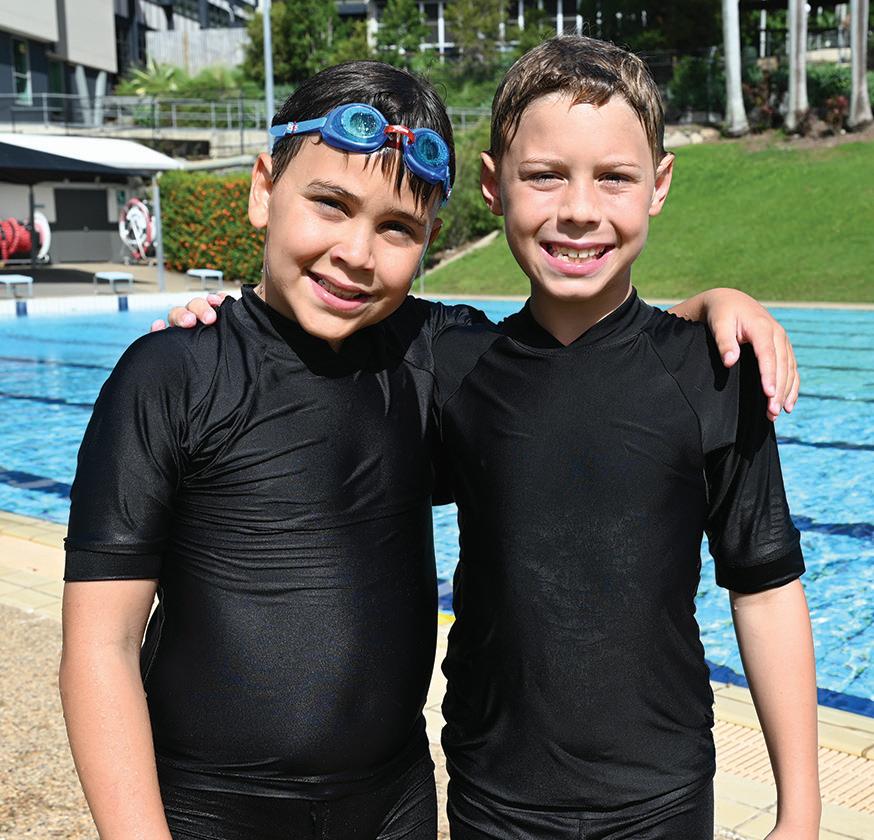
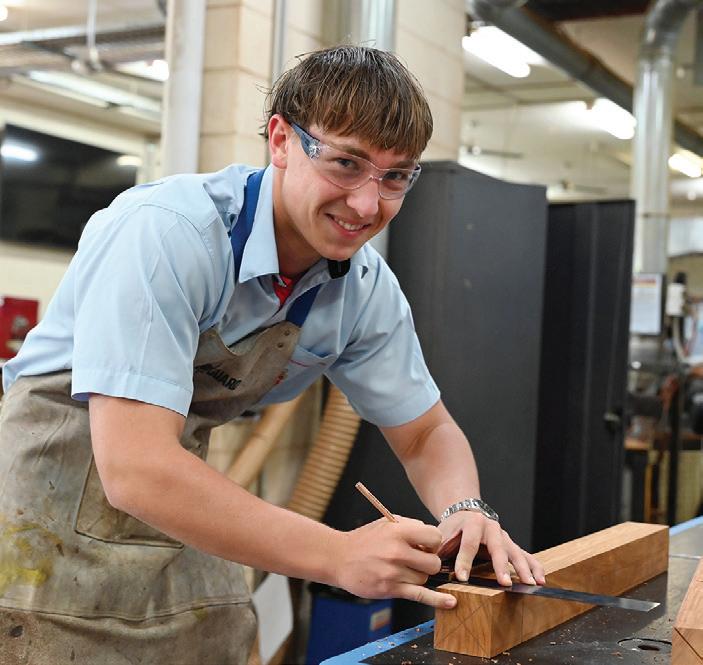
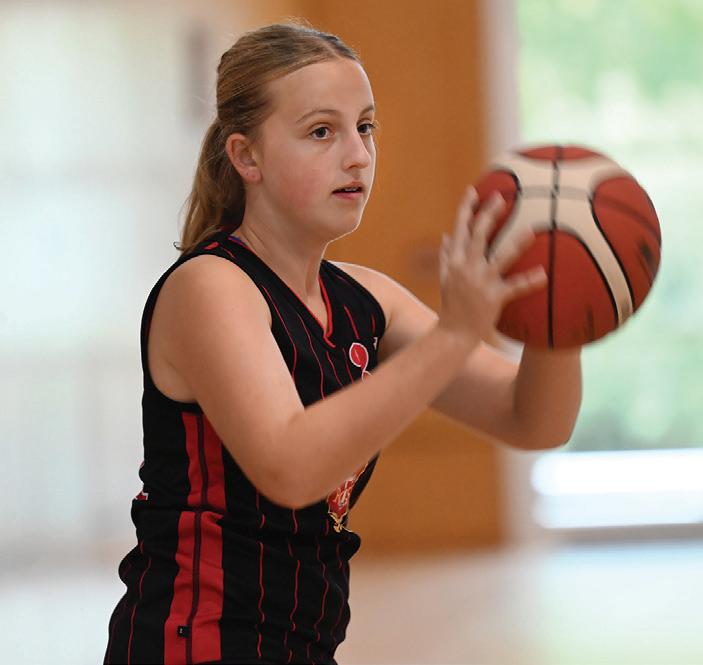
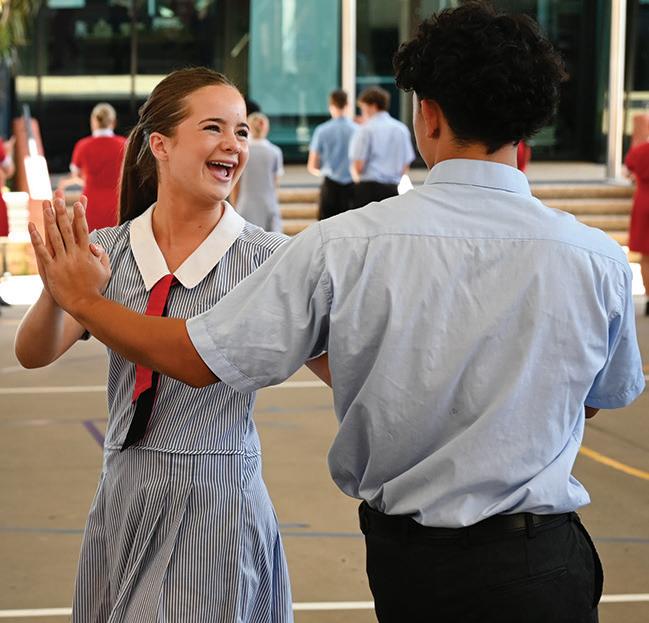
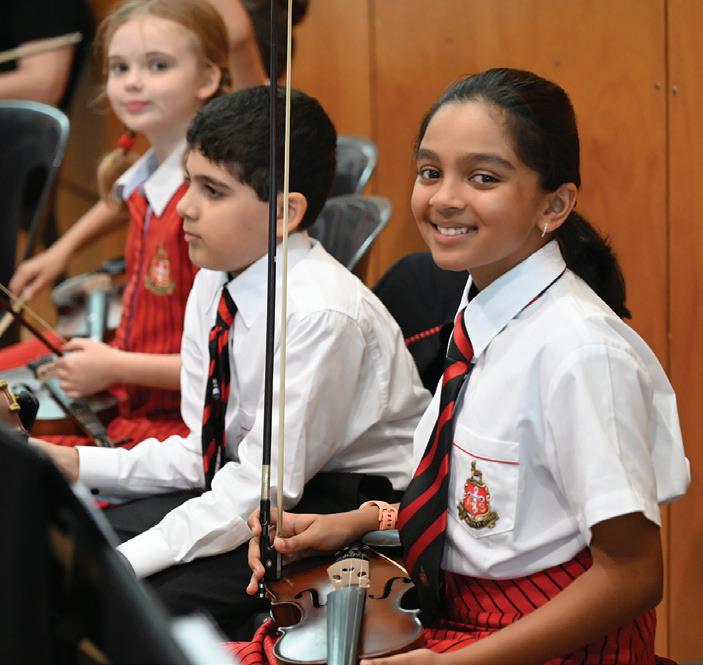
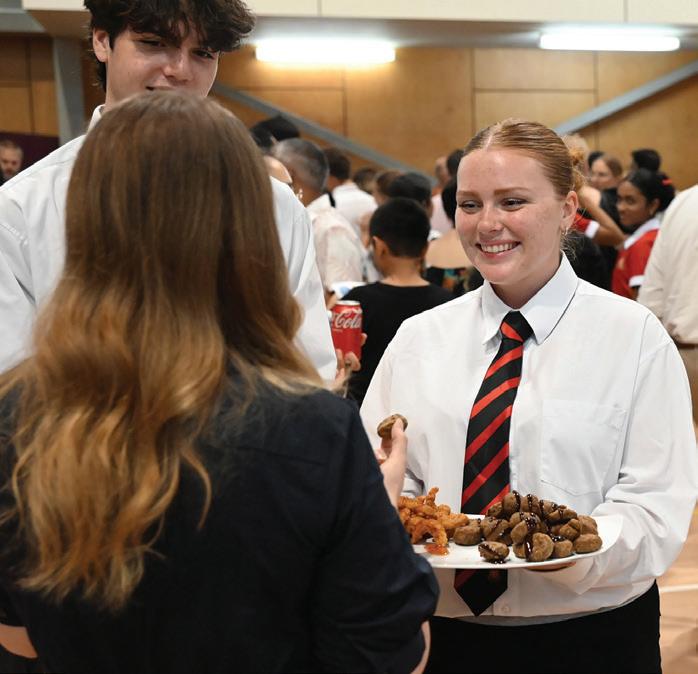
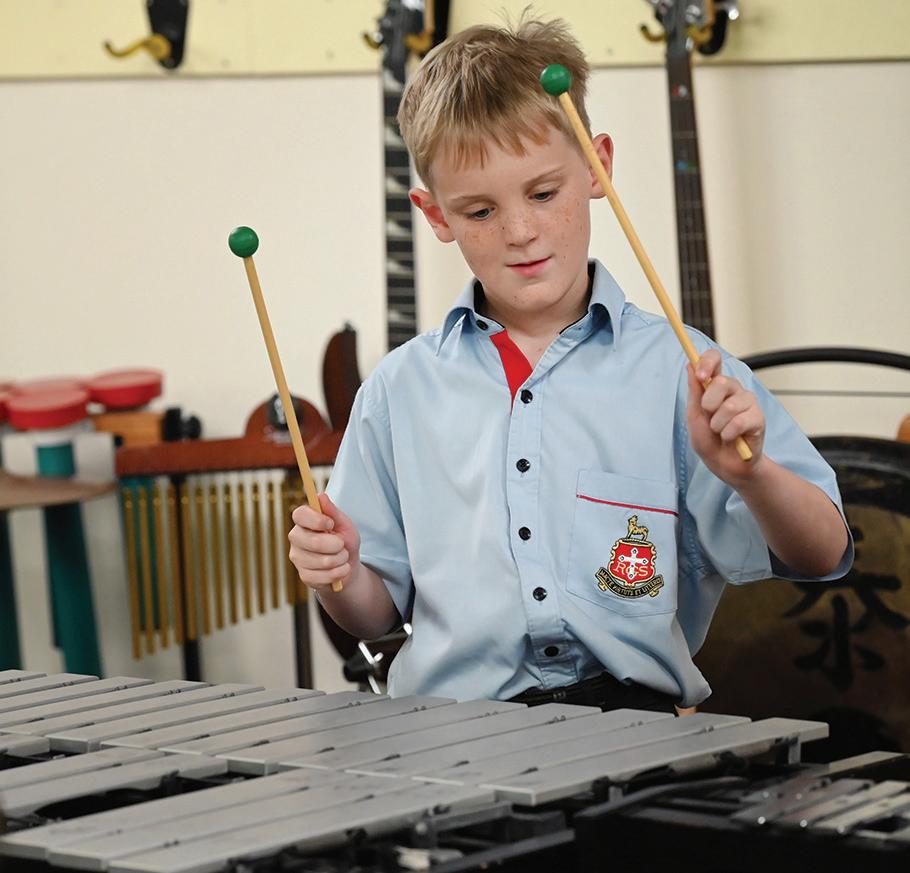
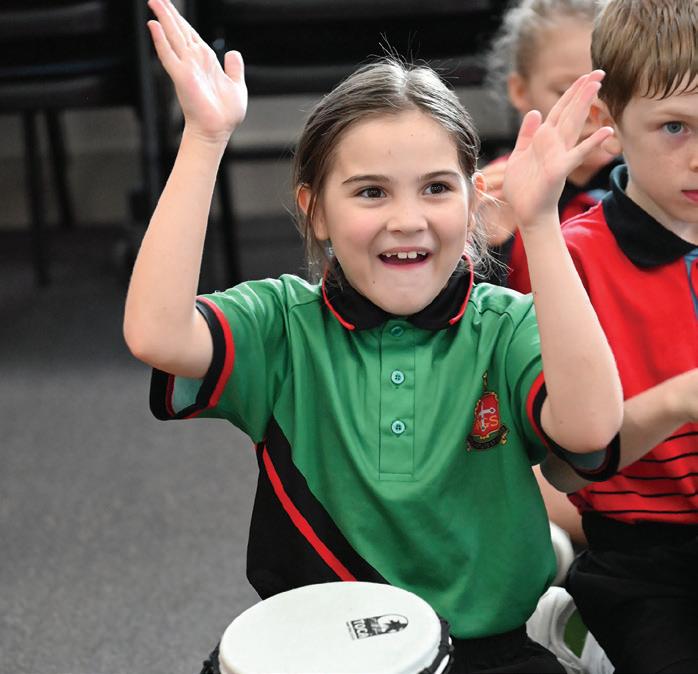
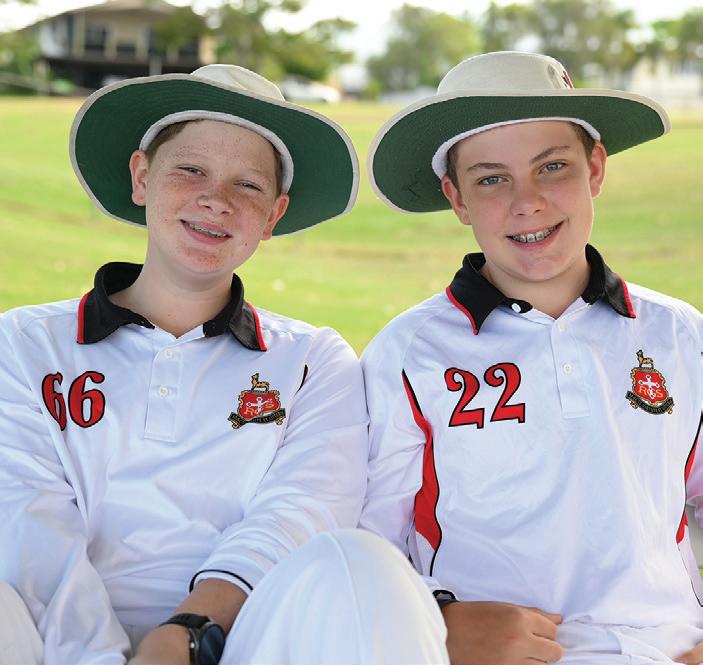
Clockwise from top left:
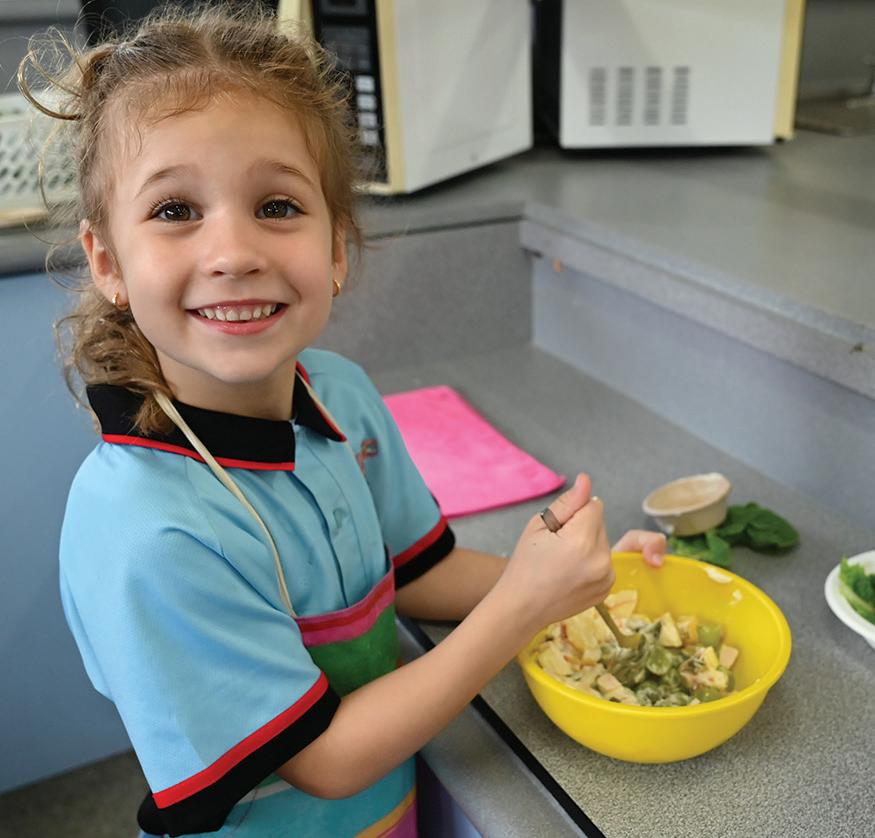
The RGS rugby players cheer on the netball team; Raylan Bray at Year 4 music; Year 2 music was a hit with Aurora Hayes; Catching up at cricket are Year 9 students Orlando Acton and Heston Tranchida; Year 12 students Lucas McDougall and Heidi Chivers help with service at Meet the Teachers; Year 8’s Elliott Ostwald hits the court for the RGS Junior basketball team; Year 12’s Owen Basham gets to work at Industrial Technology Skills; Ready to dip into PE lessons are Year 4’s Ryan Perry-Barr and Jimmy Hansen; Hattie Dingle enjoys Year 12 Formal dancing practice; Year 6’s Pia Dhamsania joins the strings performance at assembly.
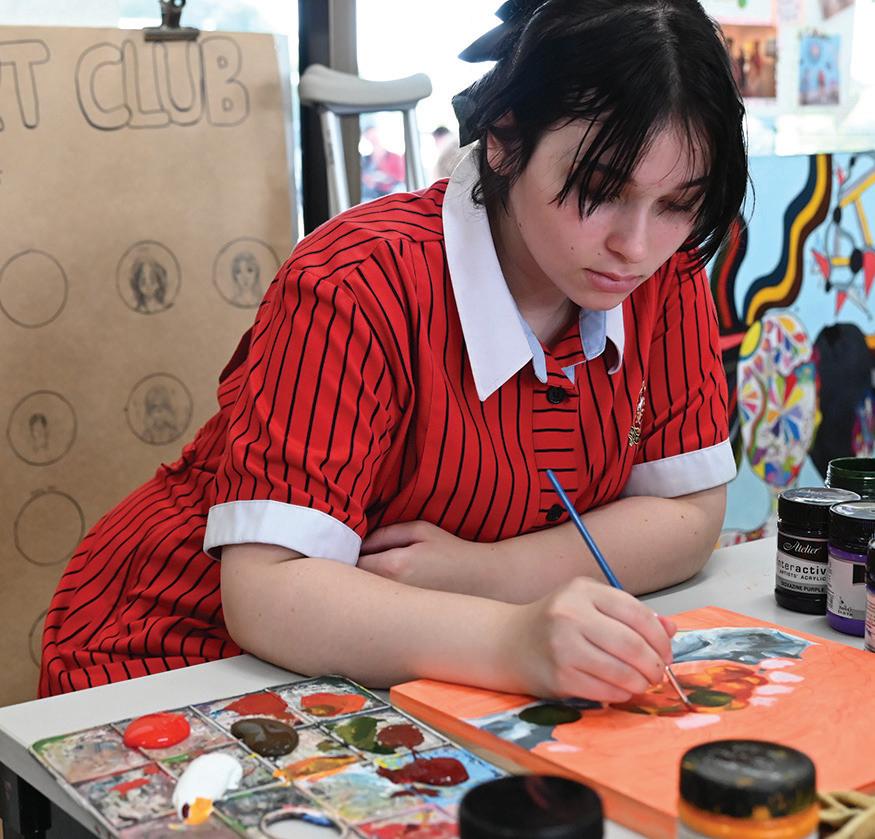
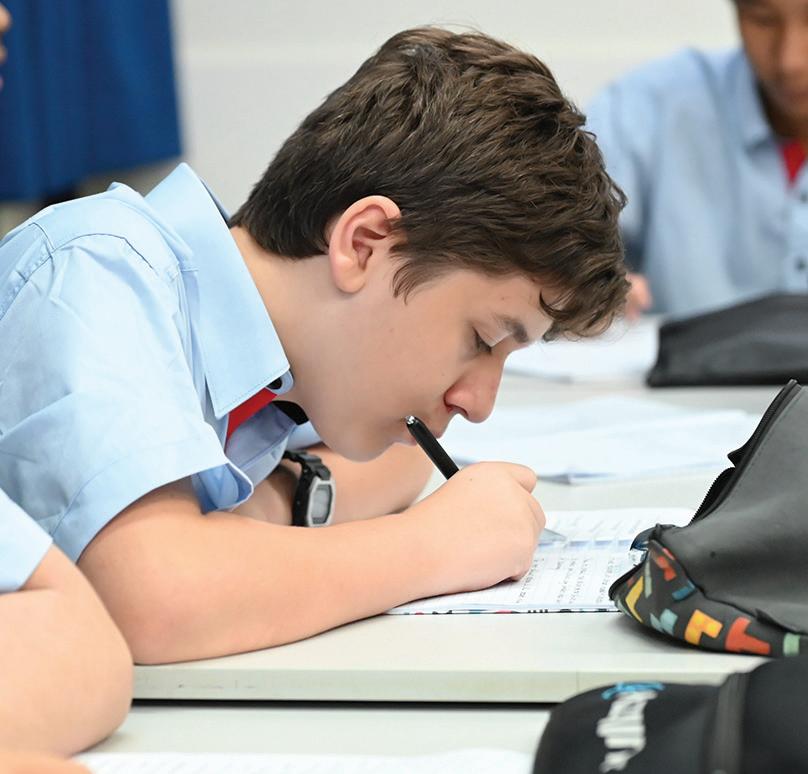
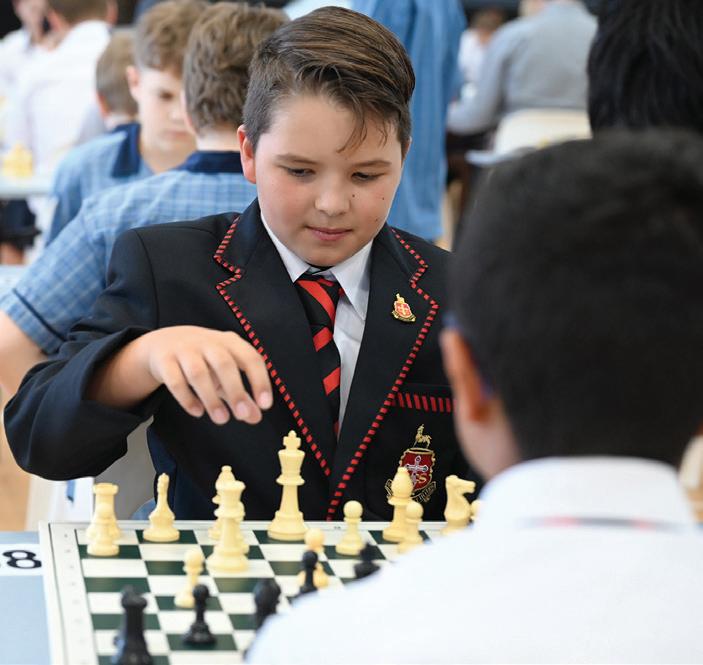
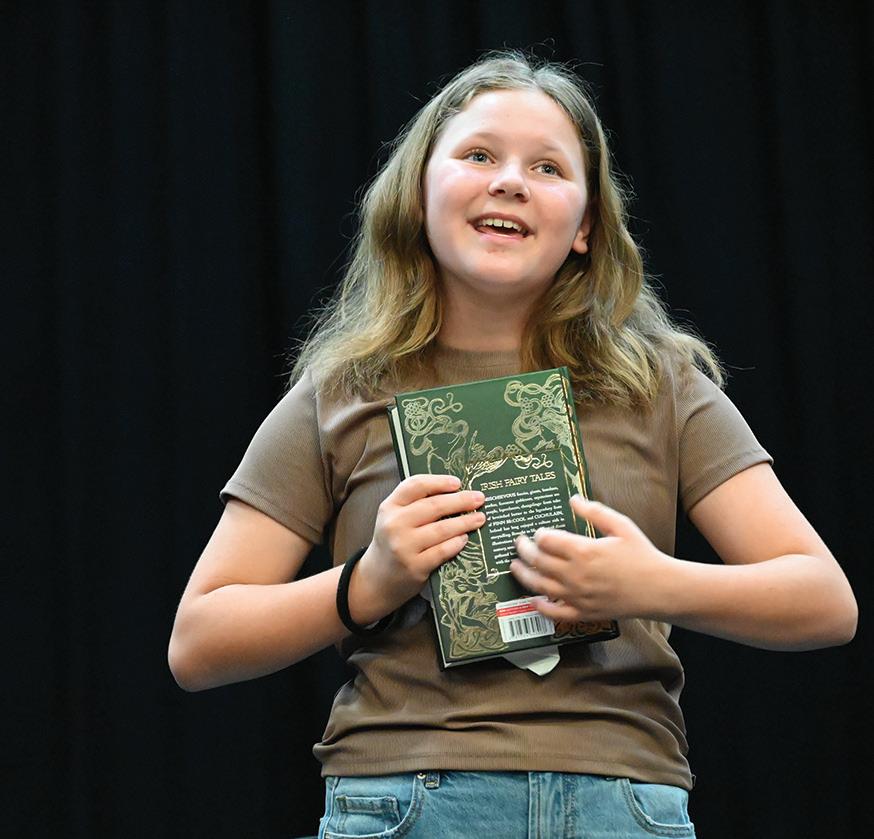
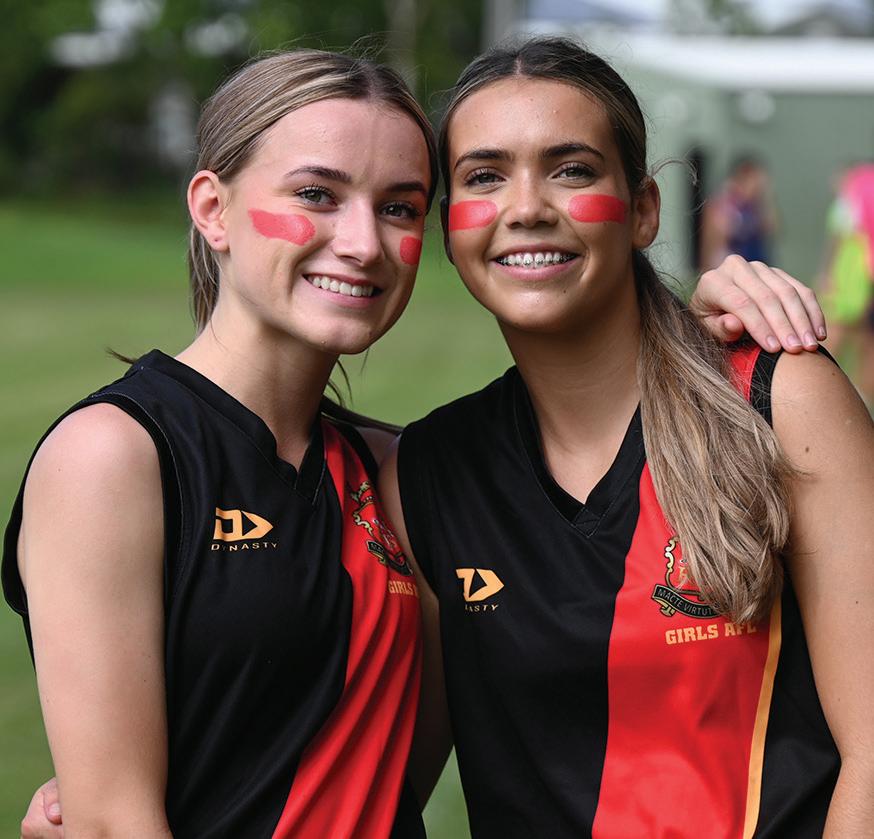
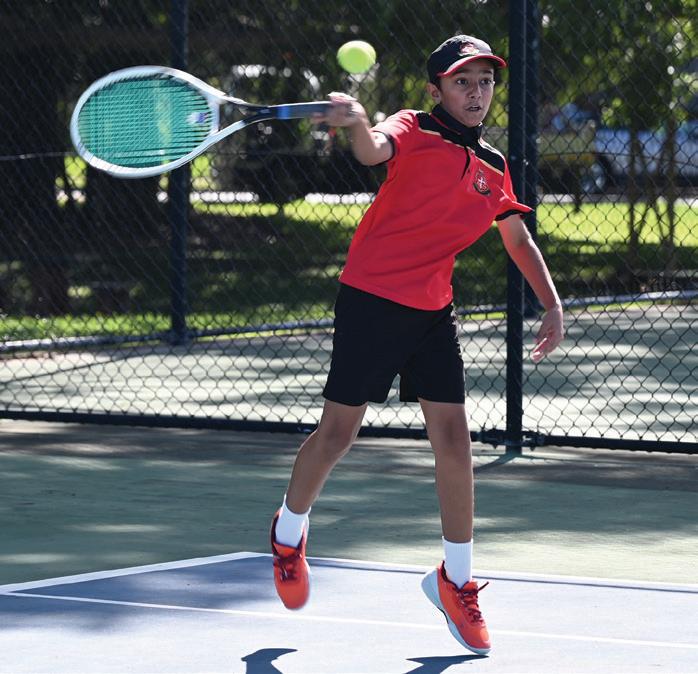
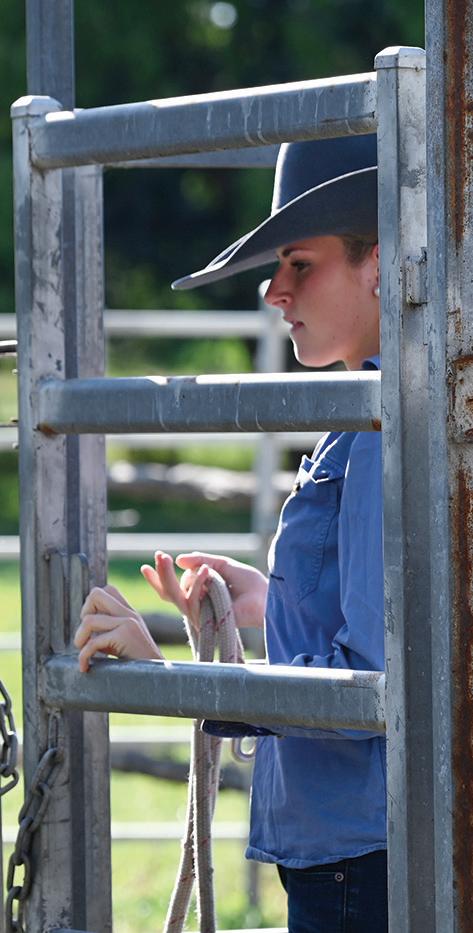
Clockwise from top left: Year 11’s Lahra Rice gets creative in Visual Art; Olli Pullen gets to work in Year 8 Business, Economics and Civics; Prep’s Rory Tresize cooks up a treat; Ready for Year 6 photos are Emmett Munro, Lawson Krebs, and Finley Millers; Year 12’s Annaka Hanson prepares for Show Cattle Team training at Port Curtis Farm; Year 7’s Avi Neupane represents the RGS Junior Boys team at the tennis regional qualifiers; Taylah Tebbatt and Sophia Norway-Hardy, Year 12, join the Senior Girls AFL Gala Day; Year 7’s Jack Rohl plans his next move at chess; Sofia Krakhmatova, Year 6, successfully auditions for the role of Fiona in Shrek Jnr.