Outdoor recreation has become a defining factor in where people choose to visit, live, and invest, and in that competition, the Rockford region holds a distinct advantage. With four rivers, 44 forest preserves, a nationally recognized park district, a state park that is one of the largest in Illinois, three top-ranked botanical gardens, a wake park, and more, the Rockford region is a nationwide standout. Other midsize metropolitan areas cannot claim our scale, diversity, and accessibility of outdoor recreation assets.
That matters.
A Growing Part of the Economy
Outdoor recreation significantly drives the visitor economy globally. In the United States, this economic engine is growing
stronger. Reports by the Outdoor Industry Association show participation in outdoor recreation has grown for nine consecutive years. In 2024, the latest year for which data is available, 58.6% of Americans age six and older reported regularly taking part in at least one outdoor recreation activity. This level of participation, which shows growth in nearly every demographic group studied, is at a historic high. According to the U.S. Department of Commerce’s Bureau of Economic Analysis, spending on outdoor recreation has grown every year since the pandemic and, in 2024, accounted for $697 billion of the nation’s gross domestic product. For Rockford, this promising news is even better, given that the increase in participation is at the highest rate on record across demographic groups.
DRESSED FOR THE ELEMENTS Rethinking outdoor uniforms as a business asset
By Sarene Alsharif, Tad More Tailoring
Your team’s uniform is often the first impression your brand makes. Before a conversation begins, before a service is delivered, people are already forming opinions based on what they see. When your team works outdoors, that impression is constantly being tested by the elements. It’s easy to think of uniforms as a basic operational need. In reality, they are a business asset. The right choices can strengthen your brand, support your team, and extend the life of your investment.
Materials that Withstand the Elements Outdoor uniforms need to perform under pressure. Not all fabrics are created equal, especially when exposed to direct sun, temperature swings, and repeated wear. Look for fabrics that are designed to resist fading. Polyester blends tend to hold color longer than natural fibers like cotton, especially in direct sunlight.
According to industry reports, 66% of households with children participate in outdoor recreation. When children’s participation is high, parents and guardians participate more as well.
Rock Cut, for Example
Hiking is cited as the most popular getaway activity, followed by fishing, camping, bicycling, and running. For each of these activities, the Rockford region delivers offerings aplenty and convenience that is jaw-dropping.
Rock Cut State Park, for example, the largest state park in Northern Illinois, offers opportunities for all these activities and more. At Rock Cut, there are over 40 miles of moderate hiking trails; two lakes for fishing or kayaking; camping at tent
Fabrics with built-in sun protection can also help preserve color while protecting the wearer through long hours outside.
For teams working across varied temperatures, layering becomes essential
As I write this, we’ve gone down to the basement of our old farmhouse three times in the past week. Not to get meat out of the freezer, grab a squash off the shelf, or put salt in the softener, but to shelter from tornados. The twisters are naturally accompanied by strong winds and heavy rain. Rain that has eroded little channels into the gravel lane. Wind that has brought down branches in the yard and along the fields. Rain that will likely delay planting with “water, water everywhere.”
Water is perhaps the most powerful force in nature. It’s certainly a powerful force on the farm. Water is also a powerful force in our region. We are blessed with an abundance of water in the upper Midwest. From thousands of glaciated lakes to extensive river systems, and the massive Great Lakes, we are surrounded by water. Compare this with the west where billions of dollars are spent on water management and conservation.
TAKE ME TO THE RIVER
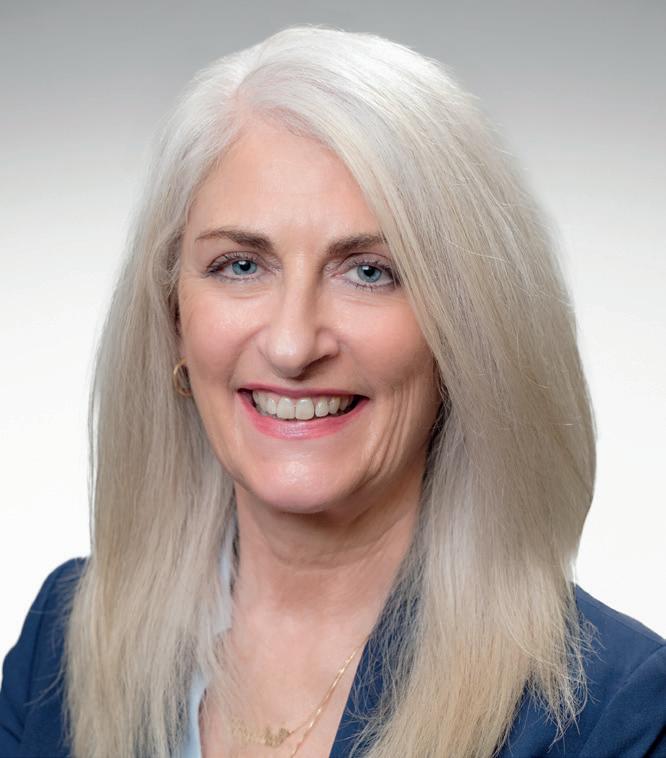
By Angela Kay Larson, chief executive officer, Greater Rockford Chamber of Commerce
Our region is often referred to as the Rock River Valley, defined by the river and its tributaries that run through several regional communities as it flows to the Mississippi River. Historically, our river valley was attractive as a source of water, power, and transportation for manufacturing and industrial activities. Today, our rivers mostly offer natural beauty and recreational opportunities.
In fact, our region’s vision for development as a destination for tourism, talent, and culture is inspired by our rivers. The vision for Thrive2035, the destination master plan for Rockford and Winnebago and Boone Counties reads, “Energized by our rivers, our communities welcome those who seek a bigger life enriched by active adventures and vibrant downtown experiences.”
My favorite part of that vision is “our communities welcome.” That phrase encompasses all our river cities and villages in this vision for a greater place to live, work, and play, and it’s an inspiration for economic development. Winnebago County has four rivers. (Before you continue reading, can you name all four?) Along the Rock River, sit Rockford, Loves Park, Machesney Park, Roscoe, and South Beloit. Rockton is located at the confluence of the Rock and Pecatonica Rivers. My hometown of Pecatonica is situated directly on
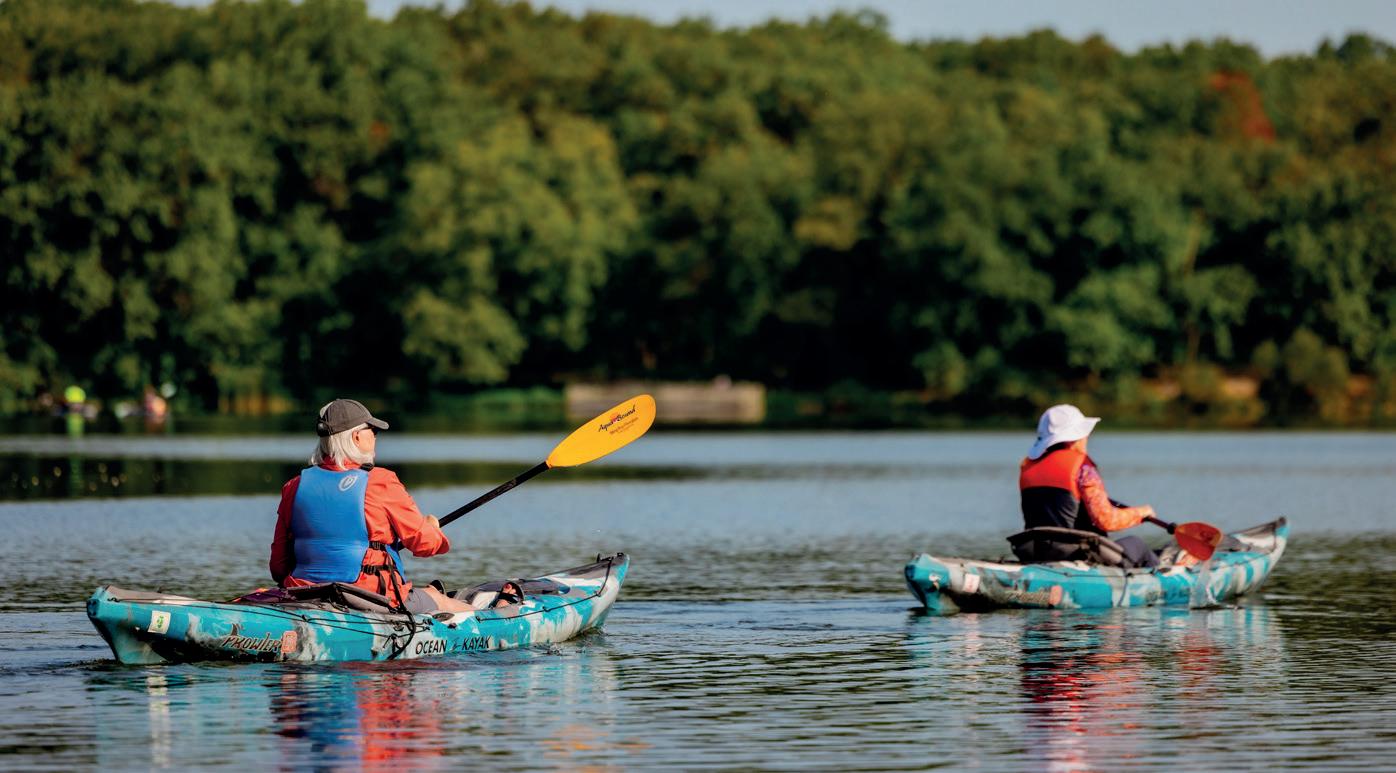
the Pecatonica, aka “Crooked” River. Cherry Valley boasts proximity to the Kishwaukee River. The Sugar River (Did you remember the Sugar?) in the northwest corner of the county flows near Durand and through Shirland. Imagine the possibilities for conservation, recreation, and visitation as we work to shore up our region as a top destination to build your life and build your business. Imagine for example, paddling a kayak down the Kishwaukee River on a sunny Saturday morning and then popping into a Cherry Valley coffee shop for a sip and a pastry. With great abundance of water comes great responsibility. There was a time in our country’s history that we did not protect our rivers as we do today. Locally, we have an amazing utility partner in Four Rivers Sanitation Authority. When we talk to companies about expanding or moving to our region, Four Rivers is part of the story. The Four Rivers Sanitation Authority is our regional public sanitary
sewer system, serving nearly 300,000 customers in eight municipalities. I toured the Rockford facility last year and learned how they honor their mission “to return fresh, clean water to our environment, ensuring balanced ecosystems, human health, and economic prosperity.” They serve as stewards of our environment, and our region is greater because of their dedication to clean water.
More years than not, the spring rains and storms wreak havoc on our region. The alternative is drought and, having survived 2012 as a farm wife and agricultural equipment executive, I’ll happily live with the tornadoes, heavy winds, lightning, and thunderstorms. Stormy weather is simply part of the Midwest lifestyle. Our weather patterns give us a never-ending source of small talk; they force us to maintain a collection of umbrellas and raincoats; and most of all, they give us rivers— beautiful, abundant, life-giving rivers.
Angela Kay Larson, Greater Rockford Chamber of Commerce CEO, grew up in the Illinois River Valley in Central Illinois. She remembers ice skating on the frozen river edges with her father and sisters, learning to water ski from a friend’s boat at the Illinois Valley Yacht and Canoe Club, and driving the river’s length to scout for eagles in the winter.
ABOUT THIS ISSUE …
While researching topics for this issue, I found that organizations are increasingly turning to nature as a productivity tool. According to Growth Market Reports’ “Outdoor Team Building Market Research Report 2033,” the outdoor team-building market is expanding significantly, driven by HR investment in employee engagement, wellness, retention, and performance outcomes.
An article on adrenalineadventures.it, “Outdoor vs indoor team building: Nature wins,” notes that companies are using outdoor environments specifically because they improve learning transfer and recall, not just morale. Studies comparing formats showed outdoor experiences produce 40% higher content retention than indoor activities.
Growth Market Reports research indicates employees prefer “doing together” rather than “sitting together,” whereas passive teambuilding formats are increasingly seen as ineffective or disengaging. Studies consistently show outdoor team activities improve trust, communication, and collaboration. This also aligns with broader workforce preferences, especially among younger employees, prioritizing health, experience, and meaning over traditional socializing.
“(Extremely) out of office: Let nature boost your team’s creativity and performance,” (mckinsey.com), highlights how nature-based experiences can reduce stress and improve cognitive clarity, enabling better group problem-solving and focus. Companies are now deliberately using outdoor settings for strategy offsites, leadership training retreats, and cross-functional alignment sessions, relying on nature as “neutral ground” to reduce hierarchy and improve honest communication.
Based on the articles from our contributors this month, the Rockford Region has an abundance of opportunities to break away from computer screens and windowless conference rooms and enjoy the great outdoors. You’ll find a wealth of ideas for outdoor teambuilding in these pages—volunteer as a group to help with the IRONMAN event, join a foursome of co-workers for GRCC’s Golf Classic, or organize a hike/photo contest at one of our many parks and preserves. Your employees and bottom line will thank you.
— Christine Hand, managing editor
CONTINUED FROM PAGE 1
and RV sites, including an equestrian campground; more than 20 miles of mountain biking trails; and running routes that range from rolling hills to lakeside paths to forested single-track.
Chicago cyclists don’t have to travel far to feel far away. In just 90 minutes, Rockford offers a true escape from congestion. Instead, visitors can quickly transition to open roads and expansive trail systems.
This activity-rich state park also offers horseback riding, boating, kayaking, canoeing, paddleboarding, swimming, snowshoeing, ice fishing, ice skating, and cross-country skiing. And don’t forget the wildlife watching, birding, and photography.
Sports Tourism Success
Our scenic landscapes and local park systems provide a beautiful and challenging backdrop for athletes at all levels. Proof that we have both the outdoor recreation assets and a proven record of hosting amateur sporting events is our partnership with the IRONMAN Group. On June 14, 2026, we will host the second IRONMAN 70.3 race, a globally recognized triathlon. An opportunity no other community in the state has had.
Rockford’s success as an industry leader in sports tourism also includes USA BMX races, the 2026 Illinois High School Association Boys Soccer State Finals, and one of the highest-profile youth sports events in the country: the Baseball for All Nationals, a girls’ tournament that in
July 2026 will draw more 800 athletes and coaches from across the U.S. and other countries. This tournament will be played in Rockford at the same time as the global Women’s Baseball World Cup.
Improvements and Priorities
Despite our unmatched natural assets, impressive outdoor recreation infrastructure, and proven success hosting marquee sporting events, we know we can and must make our great outdoors even greater.
When our team at GoRockford partnered with the Belvidere Chamber of Commerce to compile THRIVE 2035 (the Destination Master Plan for the Rockford Region), elevating the appeal of the rivers running through our communities surfaced as a priority.
Knowing that the Rock River and its tributaries, the Sugar, Kishwaukee, and Pecatonica rivers, serve as catalysts for recreation and are destinations, we envisioned a range of outdoor recreation improvements centered around these assets. These included the development of an outdoor adventure complex on the Rock River south of Davis Park, as well as expanded access sites for kayaks and stand-up paddleboards.
We also see opportunities to improve bike mobility from downtown Rockford to neighborhood parks and to establish connected trails, paths, and greenways linking downtown to surrounding neighborhoods, parks, and communities.
Additional priorities include attracting more adventure tour operators and
outfitters near river corridors and trail systems, enhancing outdoor recreation infrastructure for year-round, multi-use activities, and expanding the Atwood Park Trail System into other public lands along the Kishwaukee River corridor.
The Rockford Region’s strength in outdoor recreation is a pillar of long-term economic resilience and an economic advantage most other midsize cities cannot match. This dimension of our
brand helps us compete for people seeking homes, workers seeking jobs, and investors seeking confidence in a region’s direction, no matter what the broader economy is doing. We will continue to focus on leveraging this advantage.
The views expressed are those of the author(s) and do not necessarily represent those of the Greater Rockford Chamber of Commerce.
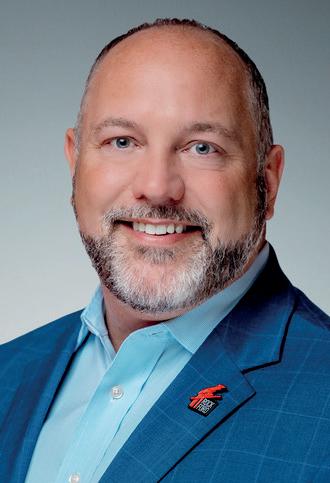
As president CEO of GoRockford and its charitable foundation, John Groh leads integrated marketing, sales, and destination development strategy for Illinois’ second-largest metropolitan region. His work focuses on aligning brand positioning, cross-sector collaboration, and disciplined performance management to drive sustained growth in visitation and long-term economic impact.
THE GOOD, THE BAD, AND THE MISUNDERSTOOD What businesses get wrong about outdoor pest risks
By Brandon Aronica, Grizz Pest Management
There’s no question. Outdoor spaces are having a moment. Patios are bigger. Rooftop seating is more popular. Office campuses are adding green space, walking paths, and places to work outside.
After a long Midwest winter, it’s no surprise that both businesses and customers are eager to make the most of the warmer months. For many businesses, the great outdoors has become part of the experience. But when you invite the outdoors in, you don’t get to pick and choose what comes with it. And that’s where things tend to go sideways.
Most outdoor pest issues don’t start with a major problem. They start with a misunderstanding. Something gets ignored because it seems harmless or overcorrected because it looks worse than it is. Either way, the result is the same—missed signals, poor decisions, and eventually bigger headaches than necessary.
Not everything outside your building is a threat. In fact, some of it is doing you a favor. Pollinators like bees and butterflies, for example, are quietly keeping landscaping healthy and supporting sustainability efforts that many businesses are actively investing in. Seeing a few of them around a property is not a red flag. It’s often a sign that your outdoor environment is working the way it should.
But context matters. That same activity can quickly become a problem, depending on where it is happening. A few insects near a landscaped area is probably fine. The same activity hovering around a dining patio or outdoor event space is now a customer experience issue.
Then there is the misunderstood middle ground. These are the things that are not inherently dangerous but can still create problems in the wrong setting. Take wildlife like opossums. They are often more helpful than harmful, feeding on insects and keeping certain pest populations in check. But that doesn’t mean they belong anywhere near a commercial property. Around dumpsters or building entry points, they can quickly turn from helpful to liability.
This is also where some of the most common issues begin. Flies and cockroaches, for example, are rarely the “main event” at first. They show up quietly, often tied to outdoor waste
areas, shared dumpsters, or neighboring businesses. In multi-tenant spaces, one business’s oversight can quickly become everyone’s problem. What starts as a minor issue outside can move indoors fast, especially when food, foot traffic, and entry points are close together.
The real challenge for businesses is not identifying every species. It’s understanding how outdoor activity connects to business risk. Because the issues that matter most are rarely about the pest itself. They are about what comes next.
A wasp nest near an entrance is not just a nuisance; it’s a safety concern. Mosquito activity is not just annoying. It changes how long customers stay or whether employees want to use outdoor spaces at all. Rodent activity near waste areas doesn’t stay outside for long. Flies and cockroaches, once established, can quickly shift from an outdoor nuisance to an indoor compliance issue.
Most businesses either treat everything as urgent or treat nothing as urgent. Both approaches miss the point.
The goal is not to eliminate everything that moves outside your building. That’s not realistic, and it’s not the point of creating outdoor spaces in the first place. The goal is to understand what matters, what does not, and what deserves attention before it turns into something bigger.
The businesses that handle this well tend to think a little differently. They look at patterns instead of one-off incidents. They pay attention to how landscaping, waste management, and building access all work together. They also recognize the impact of shared spaces and coordinate where needed, rather than assuming the problem starts and ends at their own front door. And they understand that what happens outside their building doesn’t stay outside for long.
Outdoor spaces should feel like an extension of your business, not a risk you are constantly reacting to. When you understand the difference between the good, the bad, and the misunderstood, you’re in a much better position to keep it that way.
The views expressed are those of the author(s) and do not necessarily represent those of the Greater Rockford Chamber of Commerce.
Brandon Aronica is a wildlife technician and sales development director at Grizz Pest Management, delivering industry-specific pest control solutions tailored to the unique needs of residential and commercial properties.
when conditions can shift dramatically from morning to afternoon. Lightweight, breathable fabrics help keep people cool in warmer conditions, while insulated or lined garments provide flexibility when temperatures drop. Breathability should always be a priority. When a uniform traps heat or moisture, it affects comfort, accelerates wear, and shortens the life of the garment.
How Your Branding is Applied
Logos are a key part of any uniform, but how they are applied determines how well that brand holds up over time.
Embroidered logos tend to offer greater longevity. Because they are stitched directly into the garment, they can withstand repeated washing and heavy use without peeling or cracking. This makes them a strong choice for teams whose uniforms are worn daily and cleaned often.
Heat applied decals or screen prints can offer a clean, modern look, but they are more vulnerable to wear. In high friction areas or under frequent laundering, they may fade, crack, or lose their shape. The decision is not just about appearance. It is about how the uniform will perform after months of real use.
Build For Longevity
A well-chosen uniform should last. That starts with how it is made and continues with how it is cared for.
Reinforced seams, quality stitching, and durable closures like heavy-duty zippers or buttons all contribute to a garment’s
lifespan. It’s often the smallest details that determine whether a uniform lasts a season or several years.
Care practices matter just as much as the initial selection. Washing uniforms in cold water, avoiding over drying, and using gentle detergents can significantly extend their life. Clear care guidelines help ensure your team maintains a consistent, professional appearance day after day.
Repair, Repurpose, or Retire
No uniform lasts forever, but that doesn’t mean its value ends at the first sign of wear.
Minor repairs such as fixing seams, replacing zippers, or reinforcing stress points can quickly return a garment to use. In many cases, these small adjustments can double the usable life of a uniform.
When a piece is no longer suitable for front facing use, consider repurposing it. Garments can be reassigned for back of house work, training environments, or less visible roles. This approach reduces waste while getting the most out of your investment.
When a uniform has truly reached the end of its lifecycle, responsible recycling or textile reuse should be the final step. Many materials can be diverted from landfills and given a second life.
A Uniform is More than Clothing
Uniforms represent your brand, your business standards, and your attention to detail. When you choose thoughtfully and care intentionally, your uniforms do more
than dress your team. They communicate consistency, professionalism, and respect for both people and resources.
In the great outdoors, there is nowhere for a uniform to hide. It either performs or it does not.
Tad More Tailoring is a Rockfordbased tailoring and alterations company, and the city’s first Certified B Corporation™. The company focuses on
extending the life of clothing through repair and alterations while advancing workforce development, sustainability, and community education through the Tad More Sustainability Institute.
The views expressed are those of the author(s) and do not necessarily represent those of the Greater Rockford Chamber of Commerce.
Sarene Alsharif is the founder and CEO of Tad More Tailoring in Rockford. Through her leadership, she advances sustainable fashion, workforce development, and responsible business practices, while building community partnerships and supporting education through the Tad More Sustainability Institute.
MIDWEST SPRING Protecting your business from extreme weather
By Ann Fuchs, Rockford Mutual Insurance Company
Spring brings more than just a welcome seasonal change. For those of us who work in or own businesses across the Midwest, it’s also a time to prepare for unpredictable—and often severe—weather. In recent years, we’ve seen a rise in severe storms, flooding, extreme temperature swings, and hail. In 2025, the Midwest saw 312 tornadoes which is 23% above the average.
As I write tonight, storms are rolling through the region, bringing rain, hail, strong winds, and frequent lightning. While spring rainfall can create its own set of challenges, I’ve seen firsthand that the most significant risks to businesses often stem from high winds and hail rather than water alone.
For business leaders, effective risk management isn’t just about controlling insurance premiums— it’s about implementing a proactive and preventative maintenance plan. Preparing today can save your business from the disruption and stress of a claim.
What You Can Do
Preparation starts with consistent property maintenance and smart upgrades, including regular inspections, investing in resilient upgrades, protecting exterior equipment, securing your surroundings and planning for commercial risk.
As part of your preventative maintenance plan, ensure your roof and exterior systems are inspected annually at a minimum. Even minor wear and tear can create vulnerabilities that allow water intrusion during storms.
Seasonal Maintenance Steps
1. Hire a licensed contractor if you don’t have onsite maintenance staff.
2. Check roof edges and flashing to ensure they are secure.
3. Identify any areas that could be compromised by high winds.
4. Identify areas of water pooling on flat roofs due to improper draining, which can lead to other issues.
5. Make any necessary repairs and/ or schedule any appointments as soon as possible.
Resilient Upgrades
Consider strengthening your building against severe weather by upgrading key components such as impactresistant roofing and windows, and wind-rated commercial doors. These
improvements can significantly reduce damage during extreme weather events.
Protect Outdoor Fixtures and Property
Exterior HVAC systems, especially rooftop units, are highly susceptible to hail damage. Install hail guards to protect HVAC units and skylights while evaluating other exposed equipment that may need shielding.
Small preventative actions like securing outdoor items, trimming trees, and moving vulnerable property indoors can all reduce your exposure to damage when severe weather is imminent. If your business operates commercial vehicles or equipment, include them in your emergency planning and notify employees to move their vehicles under cover when hail is expected.
Severe Weather and Insurance
You may also wonder why insurance rates continue to rise. Over the past several years, businesses across the Midwest have seen insurance costs rise, particularly for property coverage. The primary driver behind this trend is straightforward: Weather losses happen more often, and they’re becoming more expensive when they do occur. This is due to frequency of severe weather, with increased costs of materials and labor. Severe storms now generate billions of dollars in losses each year in our region. We can’t control Mother Nature, but we can control our level of exposure. By maintaining your property, investing in preventative measures, and staying weather-aware, you can significantly reduce risk. And when damage does occur, act quickly. Report claims to your insurance agent or carrier in a timely manner, as many policies include strict reporting and repair deadlines. With the right preparation and awareness, your business can remain strong, responsive, and ready—no matter what this spring season brings.
Rockford Mutual Insurance Company was founded in 1896 and provides quality auto, home, farm, and commercial multi-peril insurance products. Policies are written through independent agents appointed throughout Illinois, Wisconsin, Indiana, and Michigan.
The views expressed are those of the author(s) and do not necessarily represent those of the Greater Rockford Chamber of Commerce.
Ann Fuchs, VP of claims at Rockford Mutual Insurance Company, has over 31 years of insurance expertise. Having previously served as president of the Central Claims Executive Association and obtaining her AINS, AIC, and API designations, Ann helps ensure excellence in claims strategy and team management.
BOOMERANG RESIDENT
Back to greater Rockford’s great outdoors
By Alan Branhagen, Natural Land Institute
I got my first job out of grad school in Rockford way back in 1987, working as deputy director of resource development for the Forest Preserves of Winnebago County. I had never been to Rockford before, so I looked it up (pre-internet!) and found the book “Flora of Winnebago County, Illinois” by Egbert W. Fell, published in 1955. I learned about the abundance of forest preserves, park district properties, and the four unique Rivers: Rock, Pecatonica, Kishwaukee, and Sugar. The diversity of nature sounded inordinate for the Midwest. So I made the trip to visit and interview, and the rest is history.
I worked for almost a decade with the forest preserves and really enjoyed living in Rockford, with its parks and forest preserves. I’m an avid birder, and my list of birds seen in Winnebago remains my highest county list anywhere.
Forest Preserve Director Mark Keister (my boss) greatly expanded the forest preserves to protect the area’s river corridors (work that continues to this
day), and Webbs Norman led the Rockford Park District to national acclaim (read his book, “Building a Lasting Dream, A History of the Rockford Park District”).
I changed careers into the botanical garden industry and left the Rockford area for 27 years. When the opportunity to be the executive director of the Natural Land Institute (NLI) in Rockford came across my desk, fond memories of abundant open space came to mind. I had volunteered for NLI and knew its founder, George B. Fell, a nationally renowned conservationist. (His father wrote the flora book I mentioned earlier.) I interviewed for the position, and boomerang, back in Rockford.
I participated in the Greater Rockford Chamber of Commerce’s Leadership Rockford program and was grateful for that immersive experience to get re-acquainted with the community. I was reminded how the area’s parks and green spaces play a vital role.
When Ryan Snider, IceHogs president of business operations, spoke to our Leadership Rockford class, he said
that our region’s outdoor recreational opportunities are extraordinary compared to other places he’s lived. And GoRockford’s president and CEO, John Groh, said that surveys list open space and recreational opportunities as the number one asset of the community.
We should continue to cherish and promote our irreplaceable green spaces and recreational assets for the healthy lifestyle and irreplaceable experiences they provide.
Natural Land Institute, an accredited
land trust, is a 501(c)3, non-profit land conservation organization based in Rockford, Illinois, and has protected 19,000 acres of natural land in Illinois since 1958. NLI’s mission is to create an enduring legacy of natural land in Northern Illinois for people, plants and animals.
The views expressed are those of the author(s) and do not necessarily represent those of the Greater Rockford Chamber of Commerce.
Alan Branhagen is executive director (since July 2023) of the Natural Land Institute in Rockford. He holds a bachelor’s degree and master degree in landscape architecture and is an author of three books: “Midwest Native Plant Primer,” “Native Plants of the Midwest,” and “The Gardener’s Butterfly Book.”
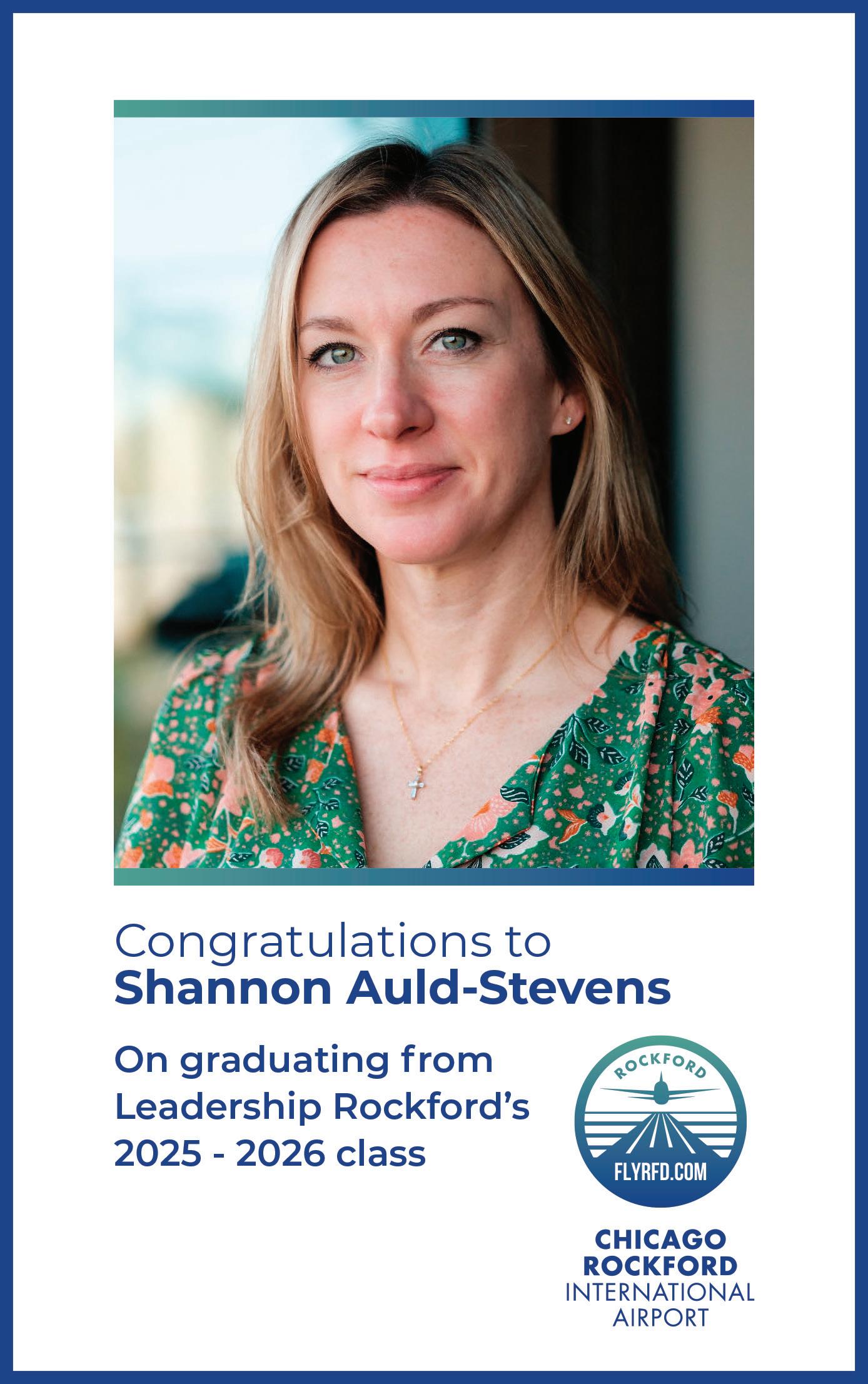
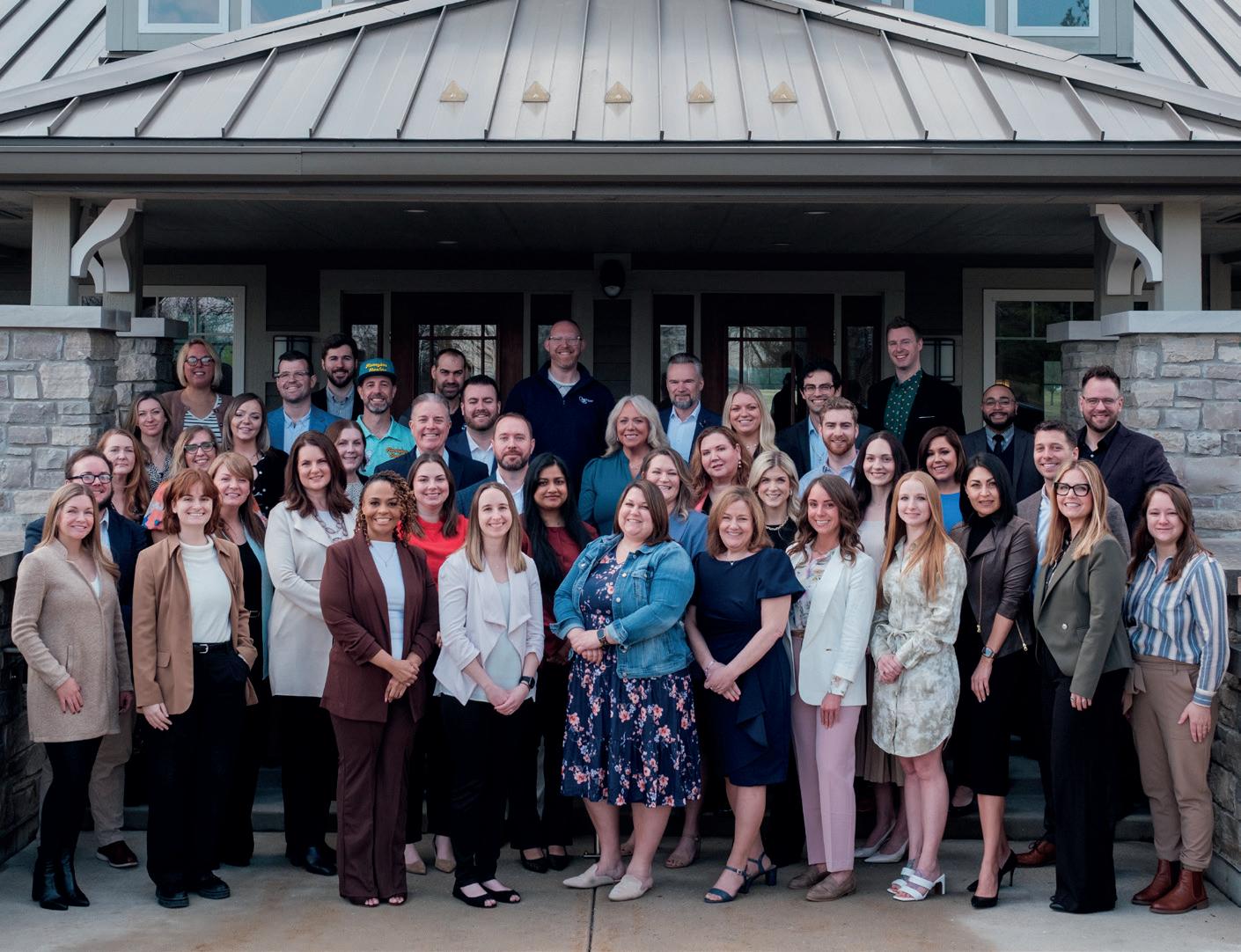
2025/2026 LEADERSHIP ROCKFORD GRADUATES AND THE ORGANIZATIONS THAT SUPPORT THEIR PROFESSIONAL DEVELOPMENT
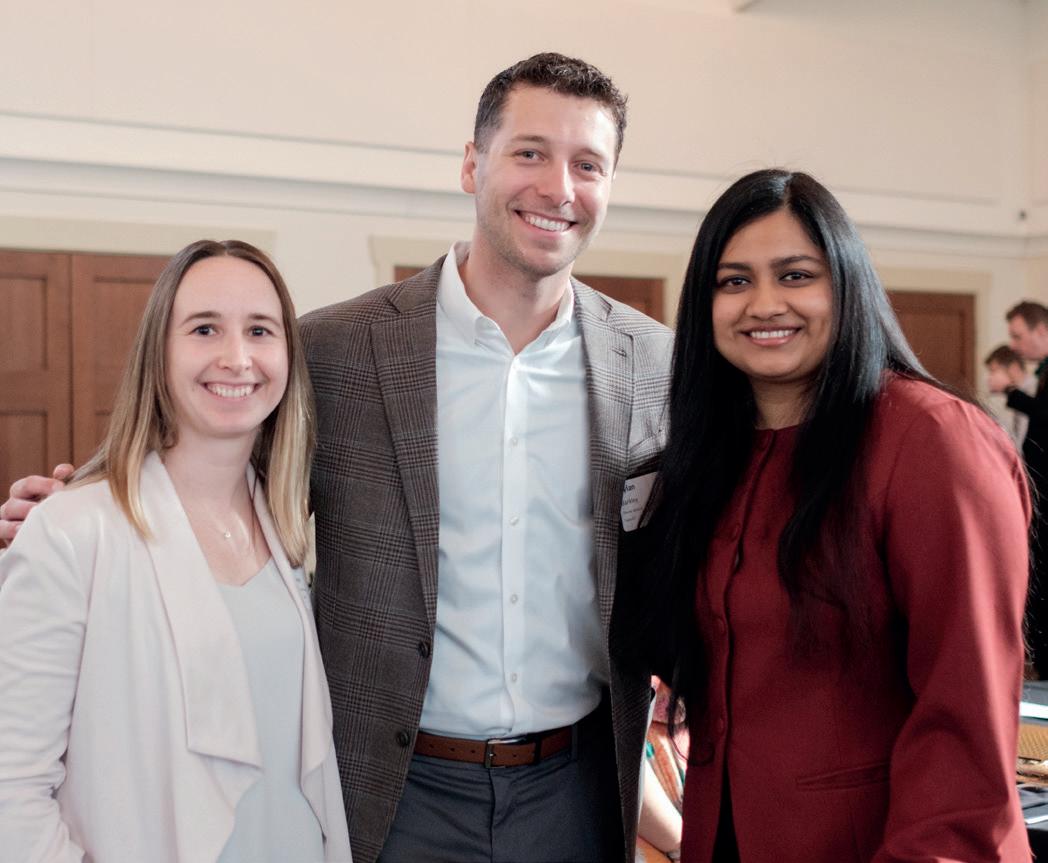
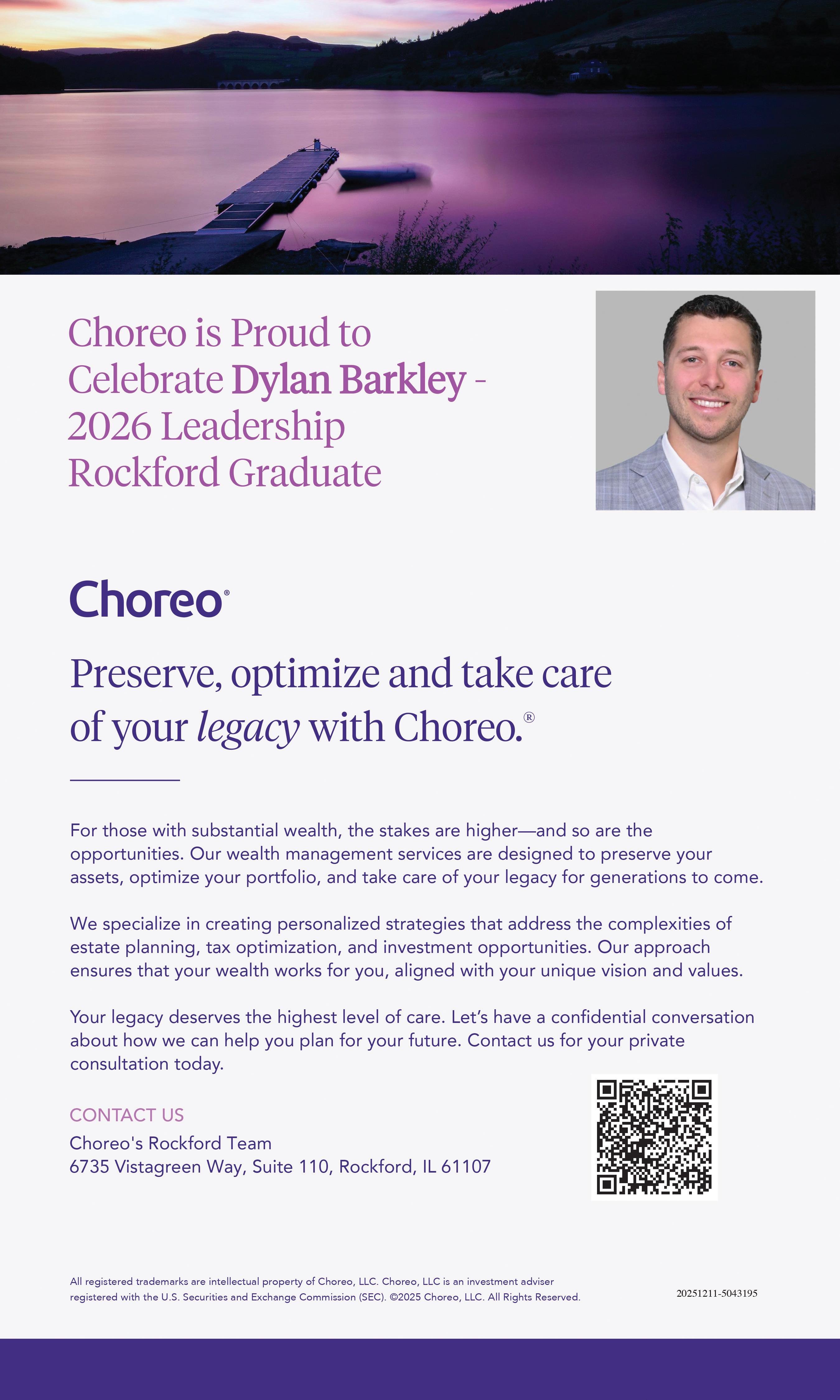
Dylan Barkley, Choreo Advisors
Liz Barnet, Collins Aerospace
Andrew Blevins, State Farm Insurance - Andrew Blevins Agency
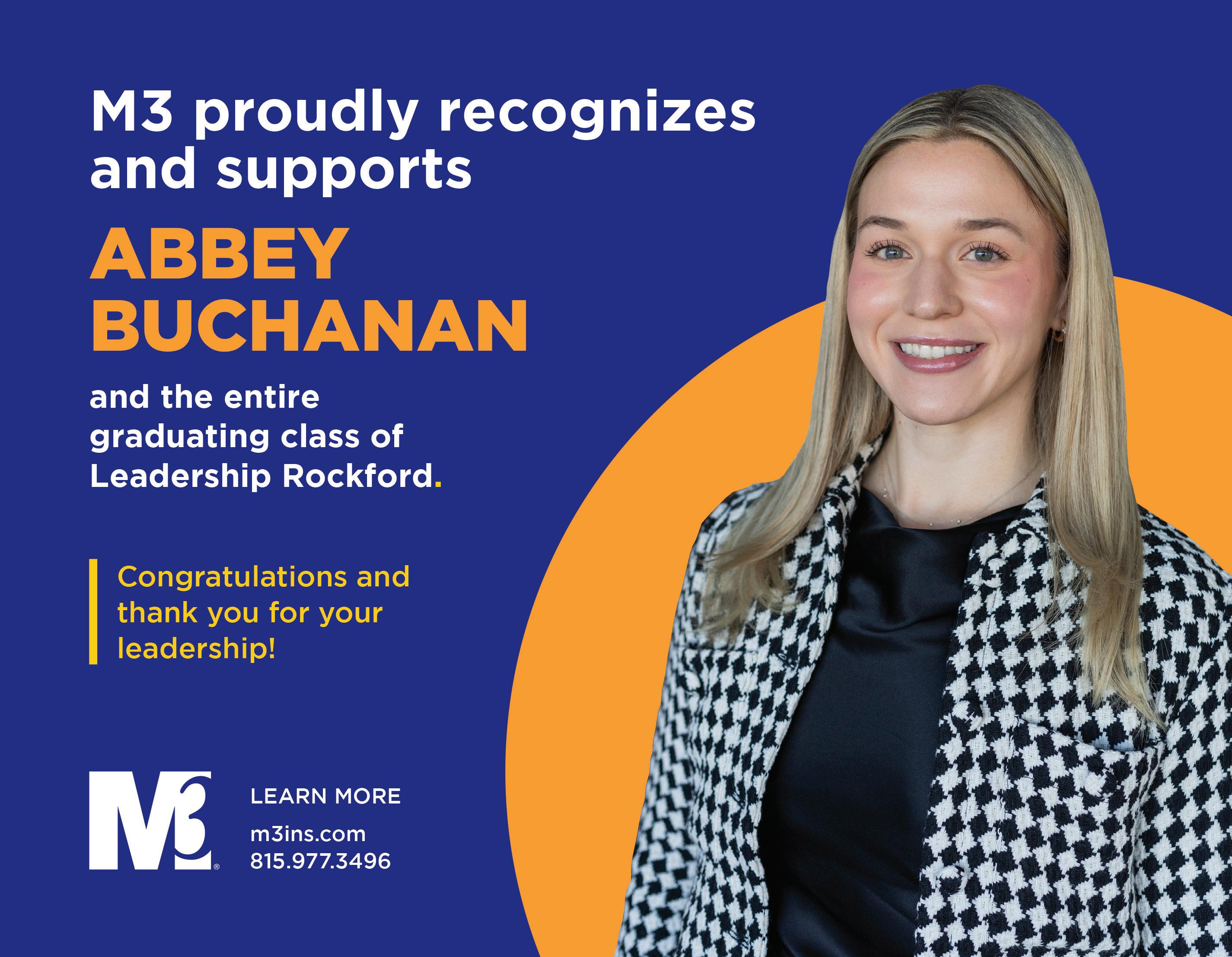
Abbey Buchanan, M3 Insurance
Katie Butchart, Associated Bank
Imelda Campuzano, BHHS Crosby Starck
Tonya Castillo, Collins Aerospace
Tanya Eikstadt, UW Health Northern Illinois Region
Micheal Freeman, LaMonica Beverages
Paige Gors Limberg, Allen Galluzzo Hevrin Leake, LLC
Haley Gorski, Savant Wealth Management
Amanda Gray-Orlando, Discovery Center Museum
Allison Harms, Larson & Darby Group
Amanda Huber, UW Health Northern Illinois Region
Katelyn Hyser, Rock River Valley Blood Center
Wendy Iversen, John Morrissey Accountants, Inc.
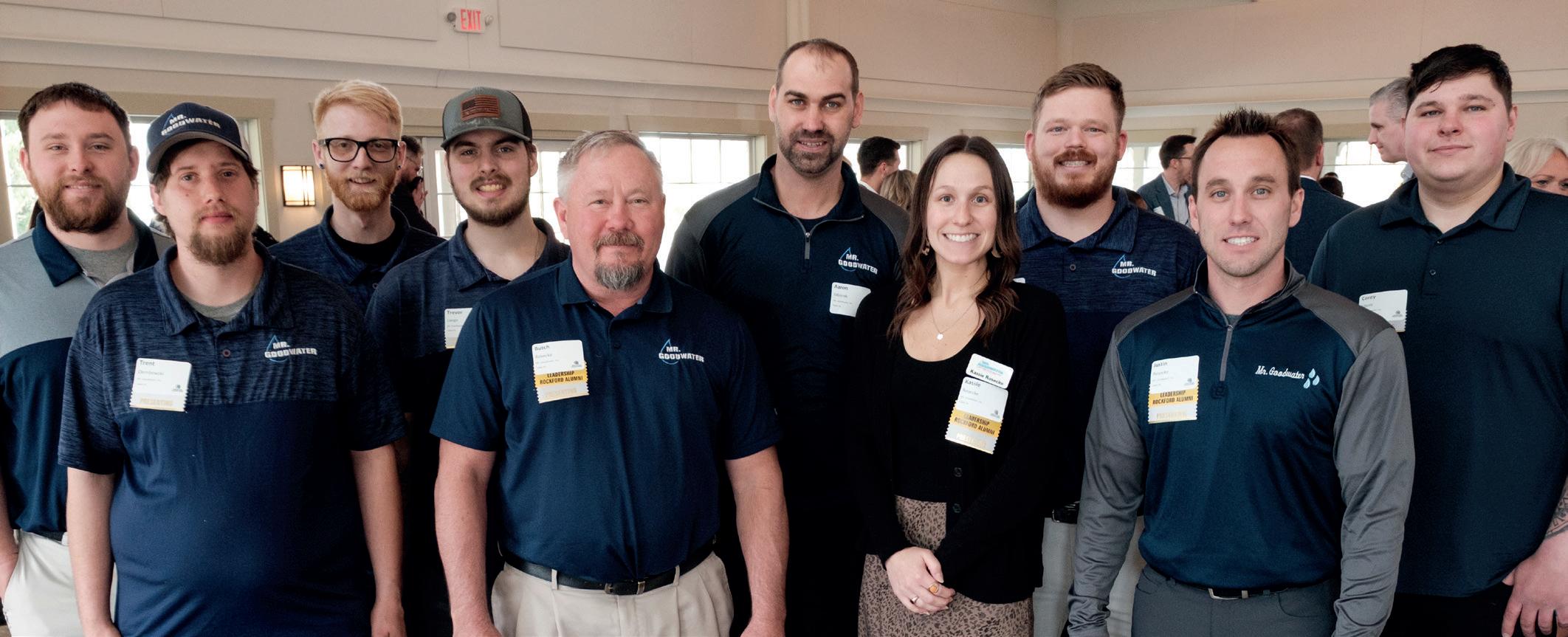
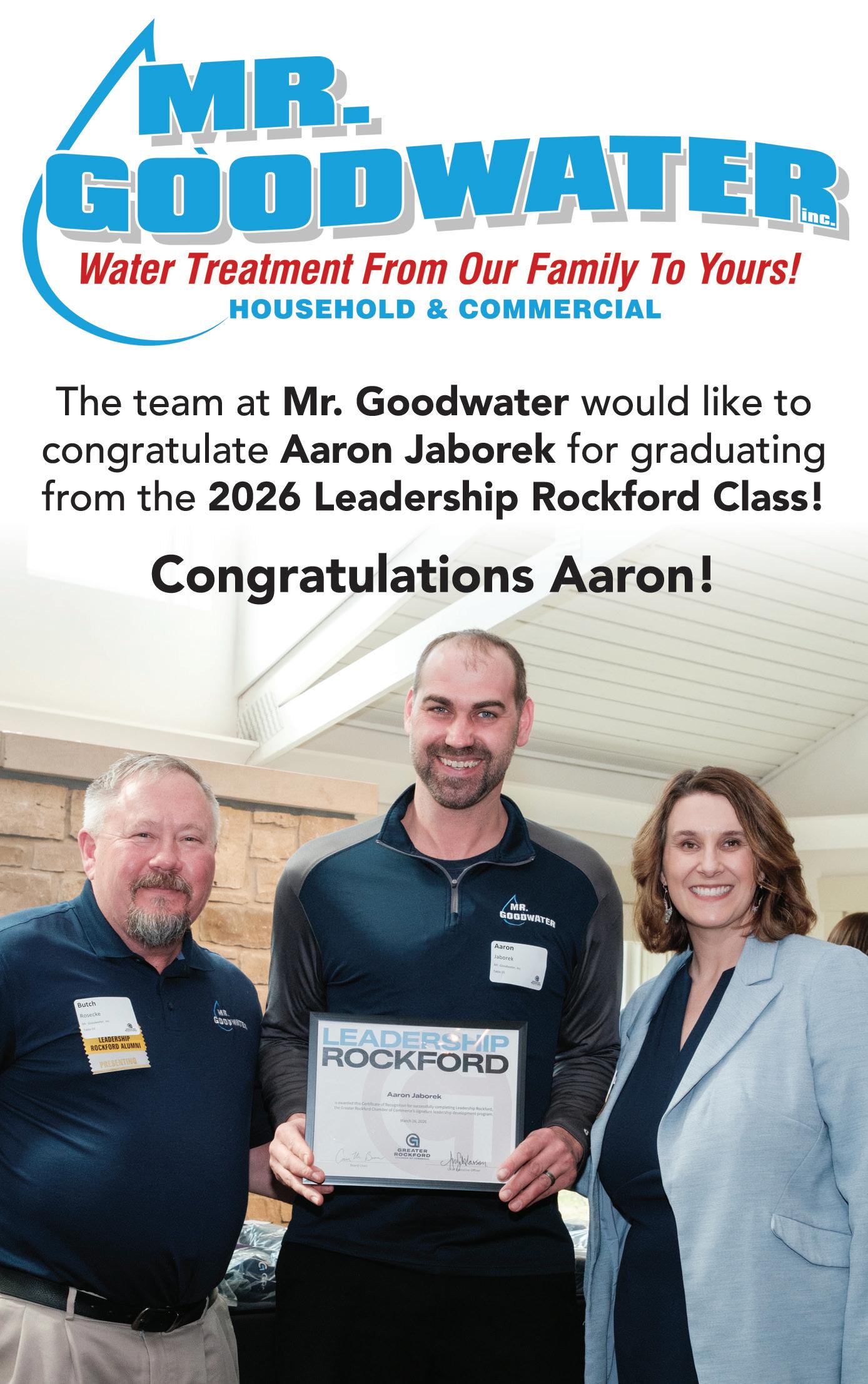
Aaron Jaborek, Mr. Goodwater, Inc.
Shannon Kelly, Rosecrance
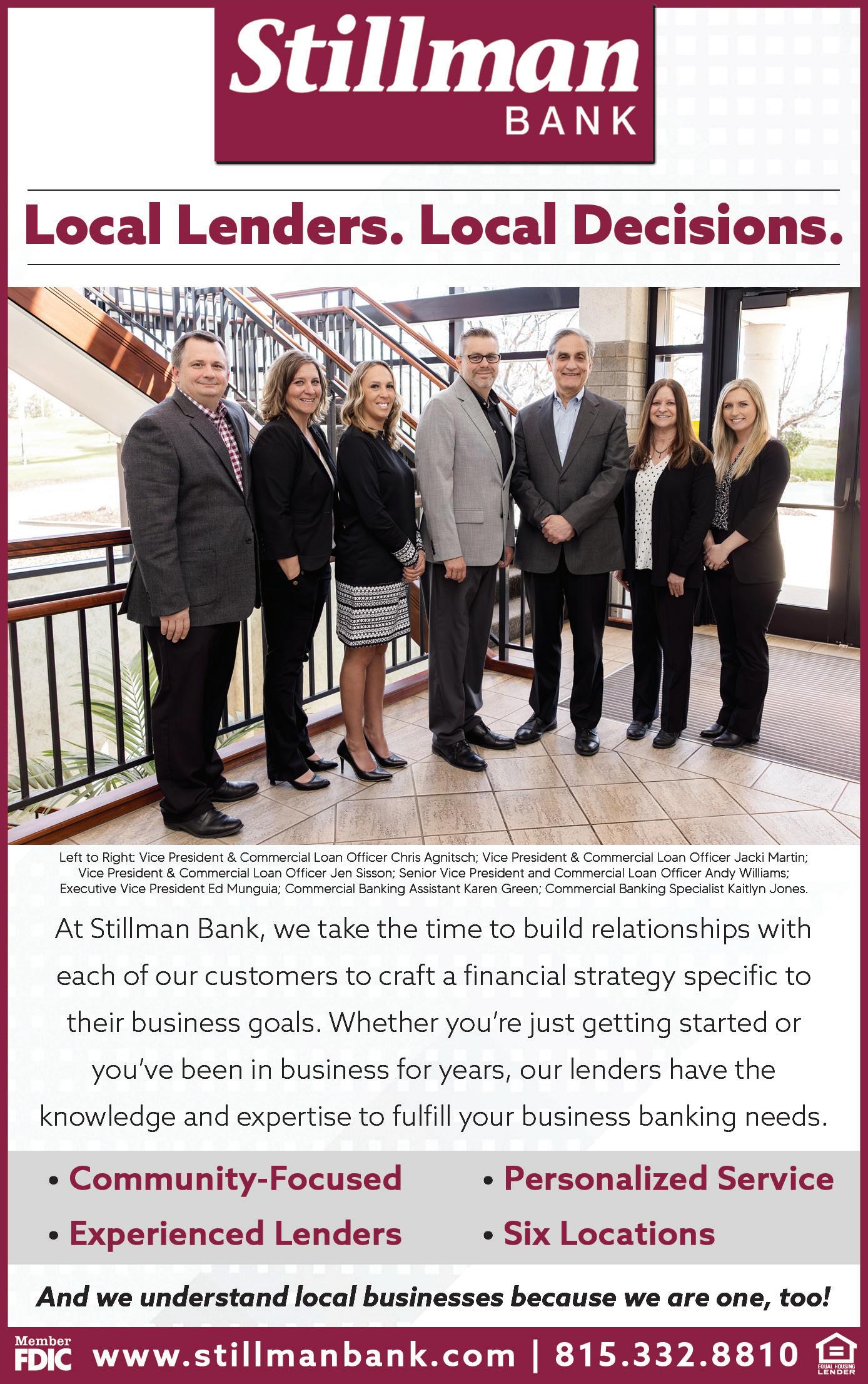
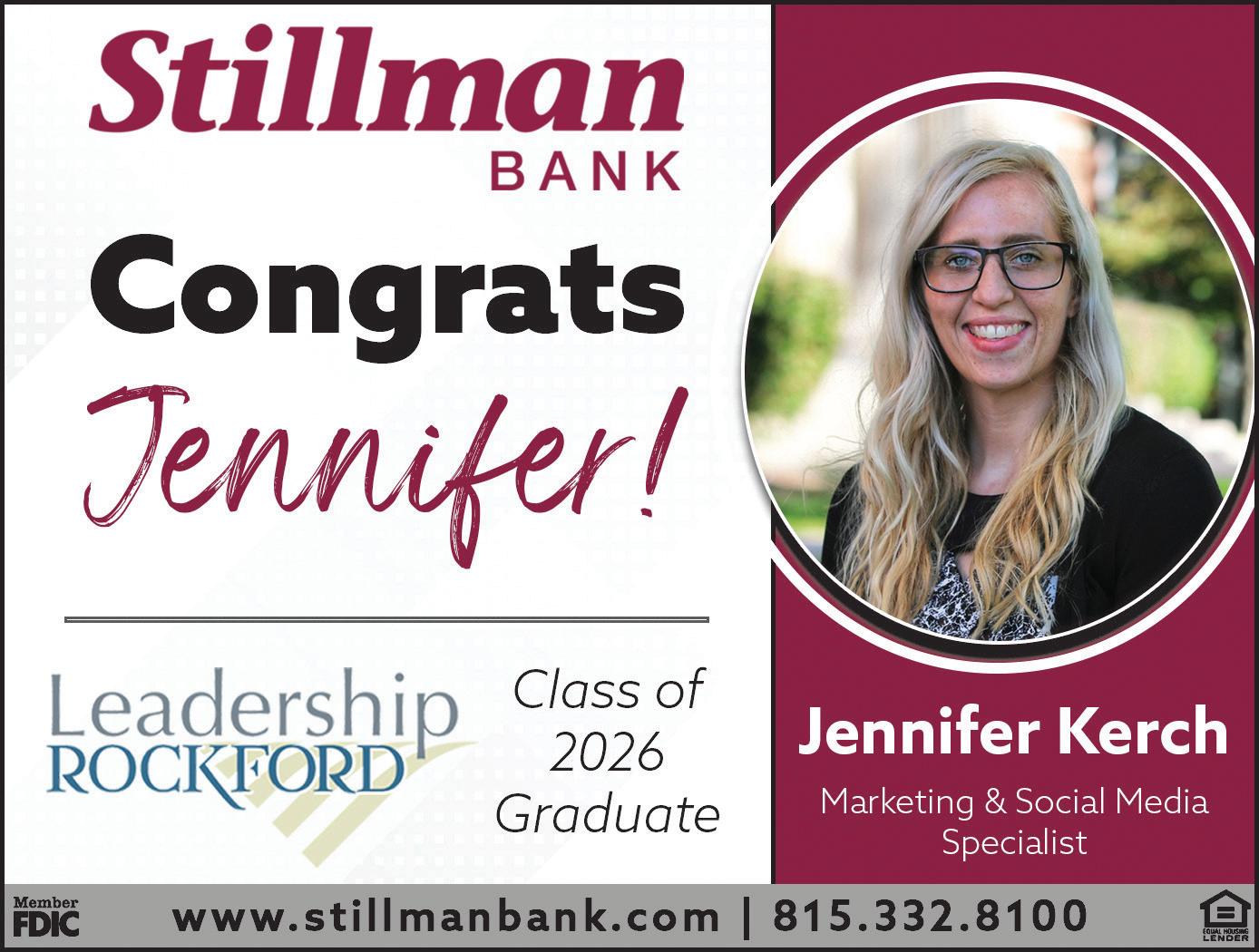
Jennifer Kerch, Stillman Bank
Morgan Knight, WilliamsMcCarthy LLP
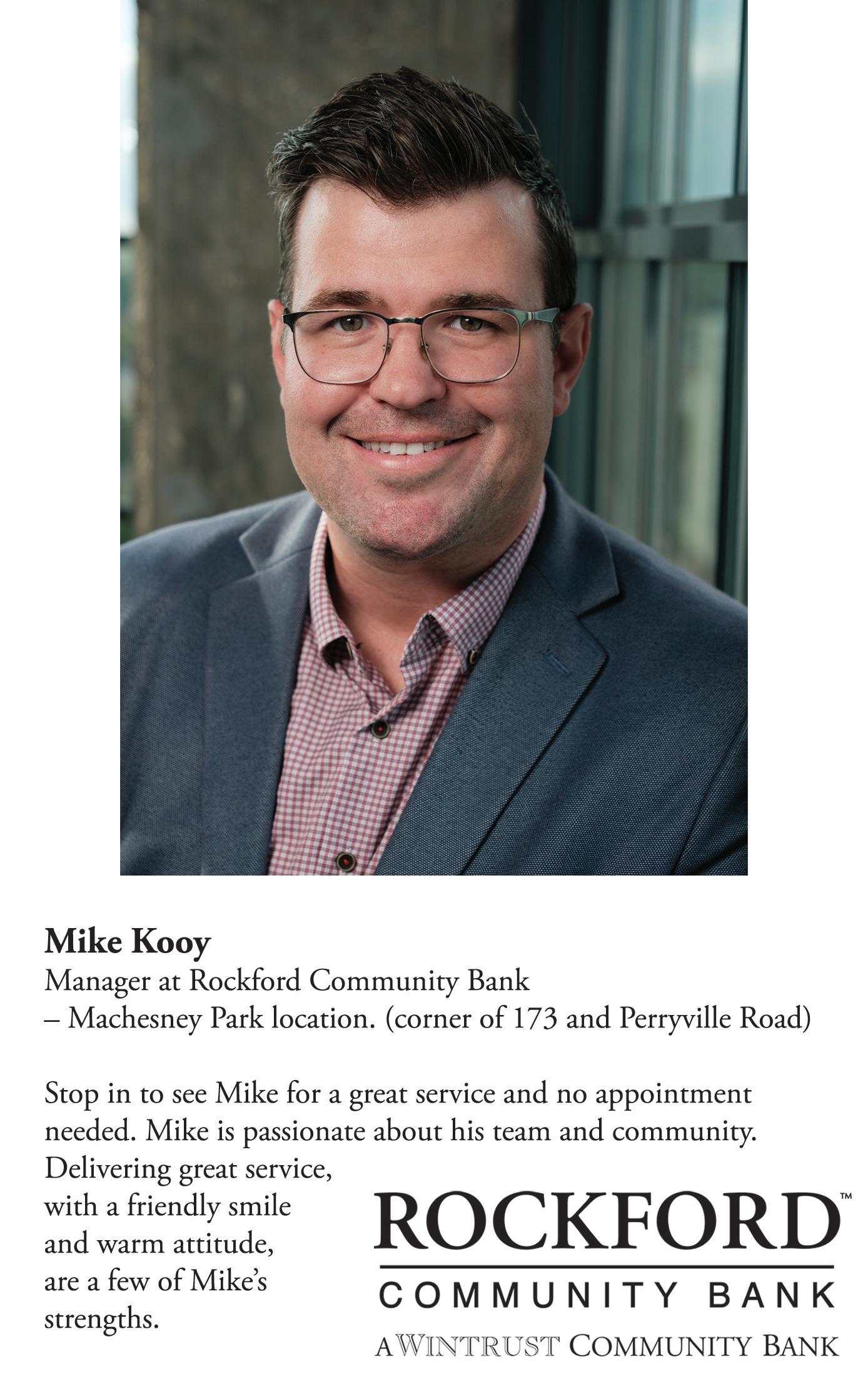
Michael Kooy, Rockford Community Bank, A Wintrust Community Bank
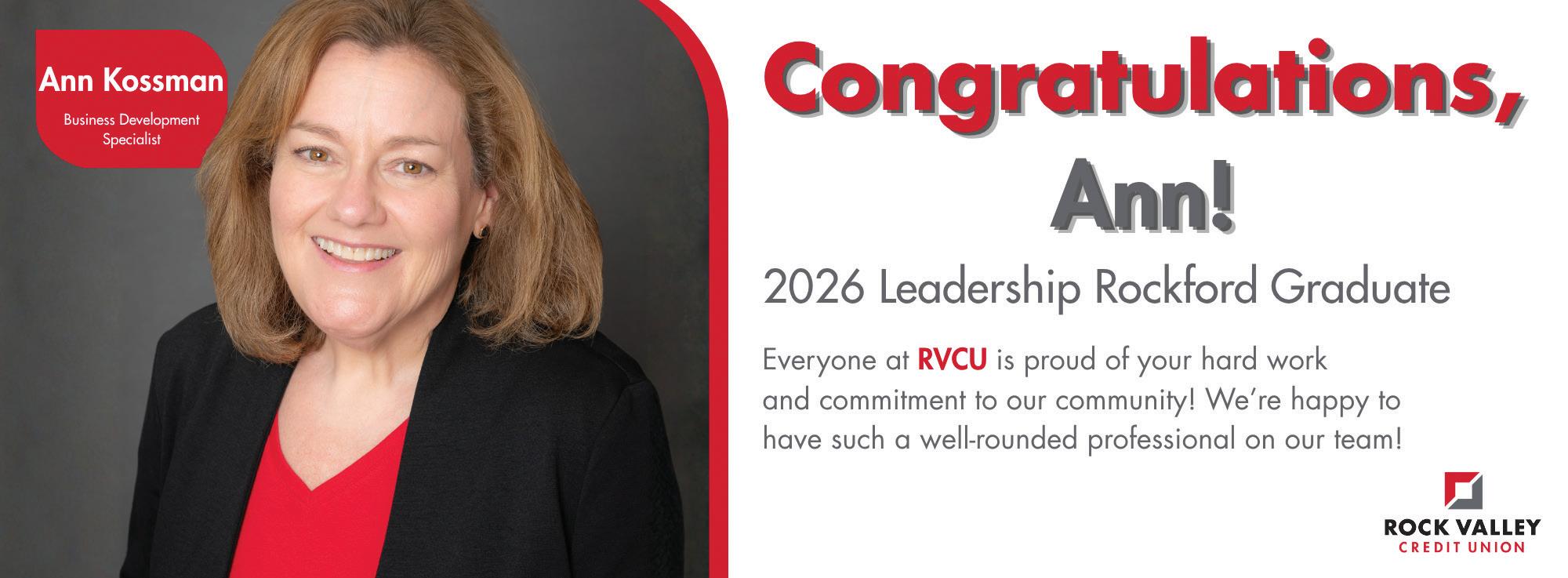
Ann Kossman, Rock Valley Credit Union
Angenette Natkowski, WQRF-TV/WTVO-TV
Rachel Odell, Cord Construction Company
Jack Oliver, Point B
Darrell Polfliet, Comcast
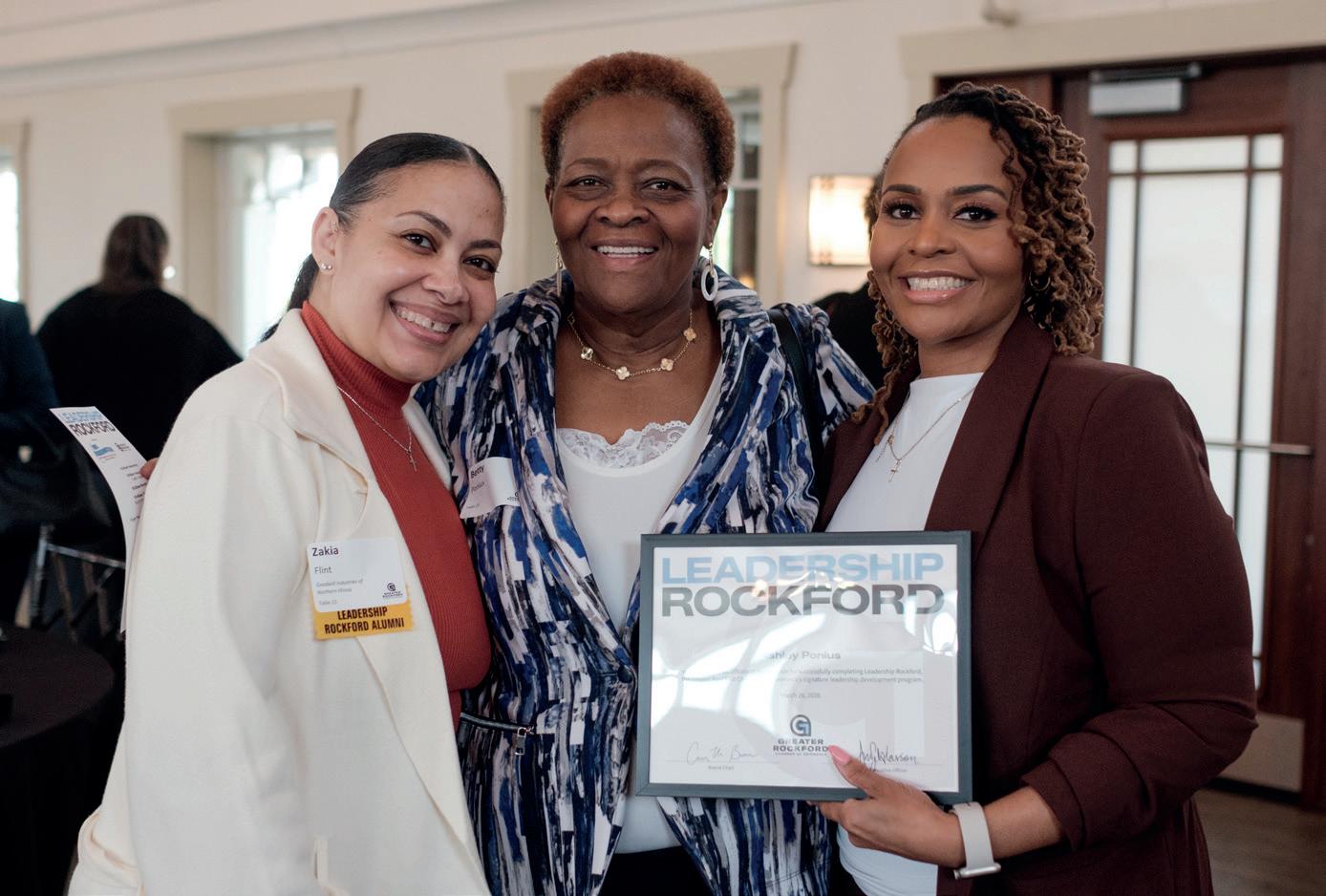
Ashley Ponius, Goodwill Industries of Northern Illinois and Southern Wisconsin
Andrew Blevins, State Farm Insurance - Andrew Blevins Agency
Tanya Eikstadt, UW Health Northern Illinois Region
Shannon Kelly, Rosecrance
Thank you to
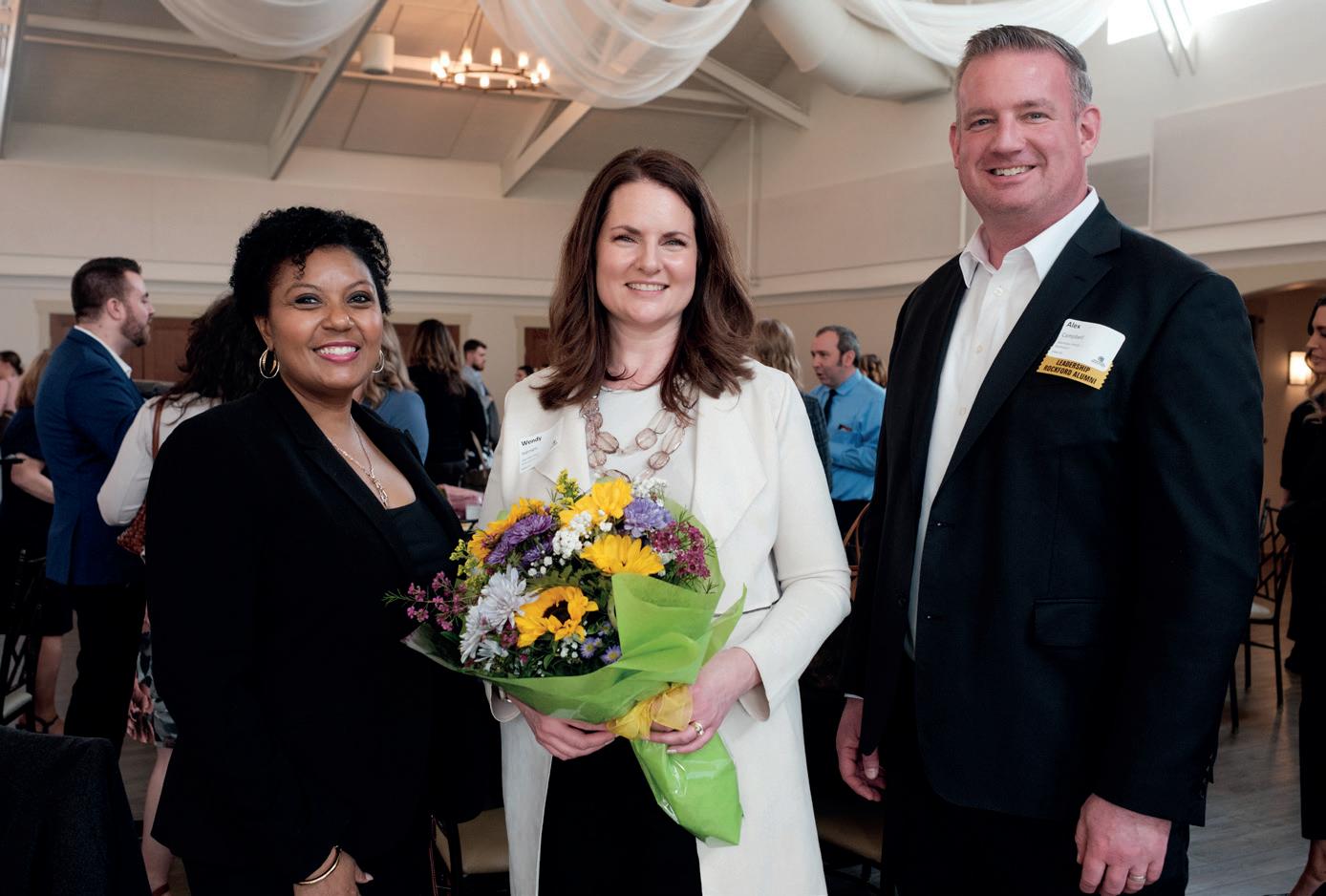
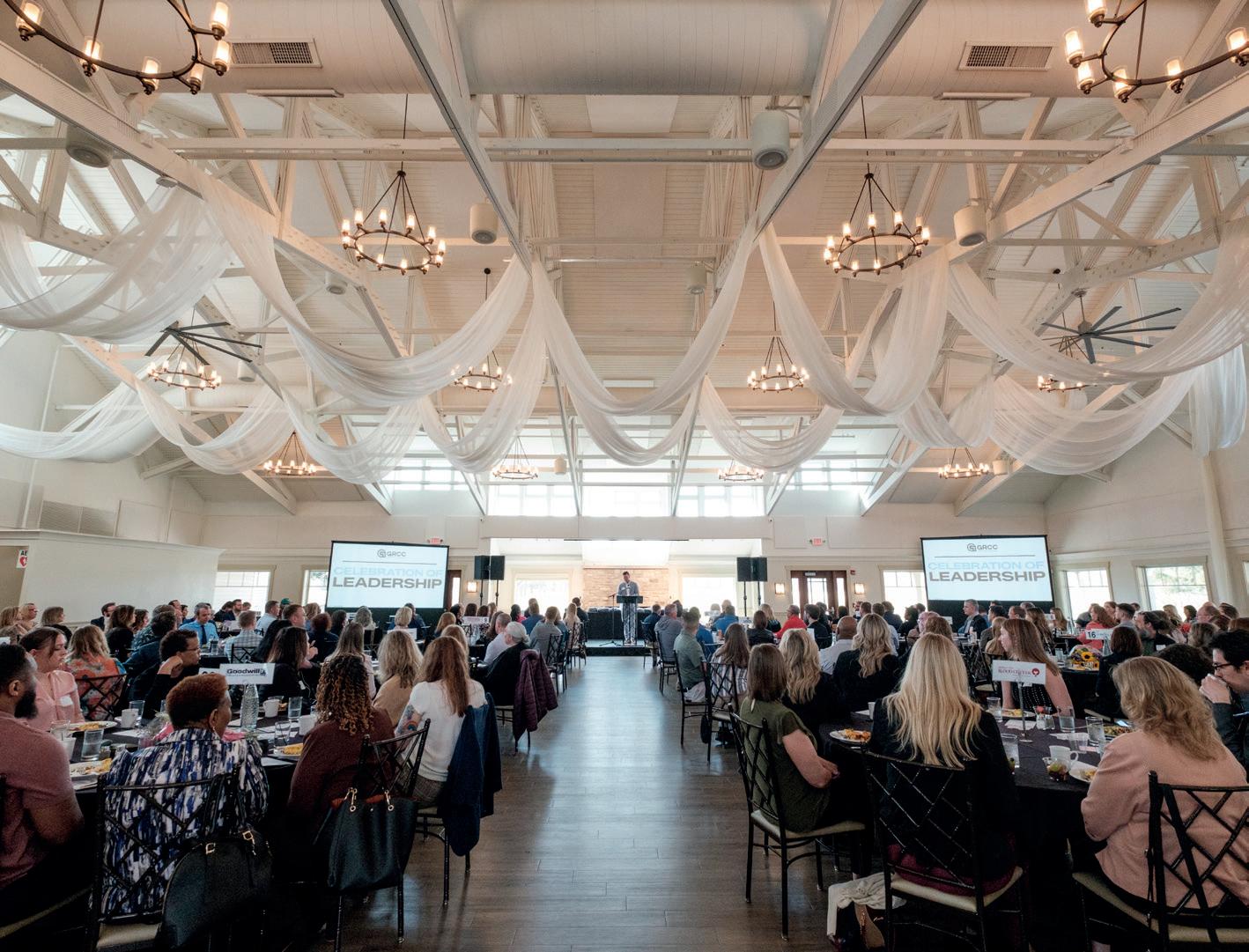
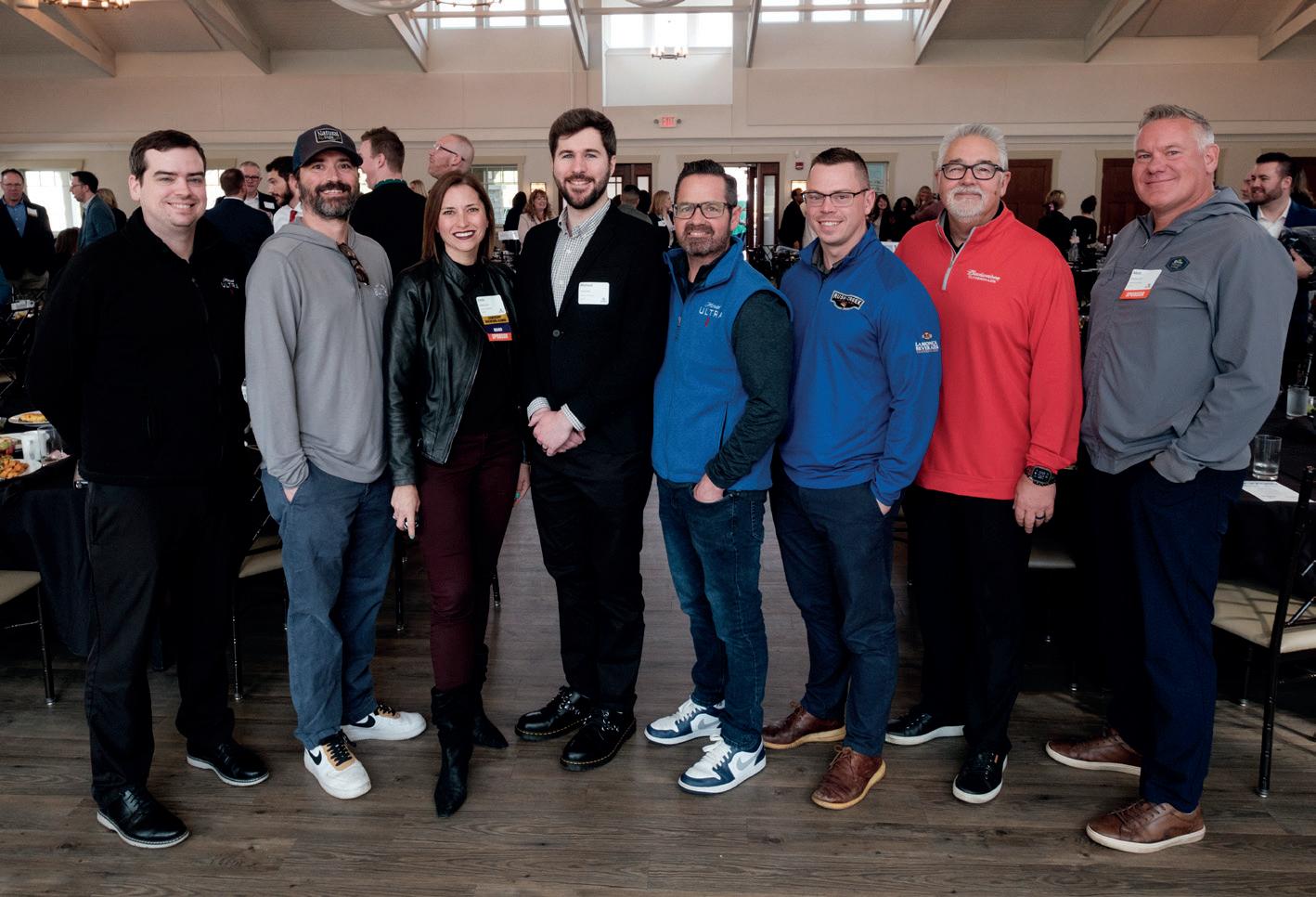
GRCC hosted
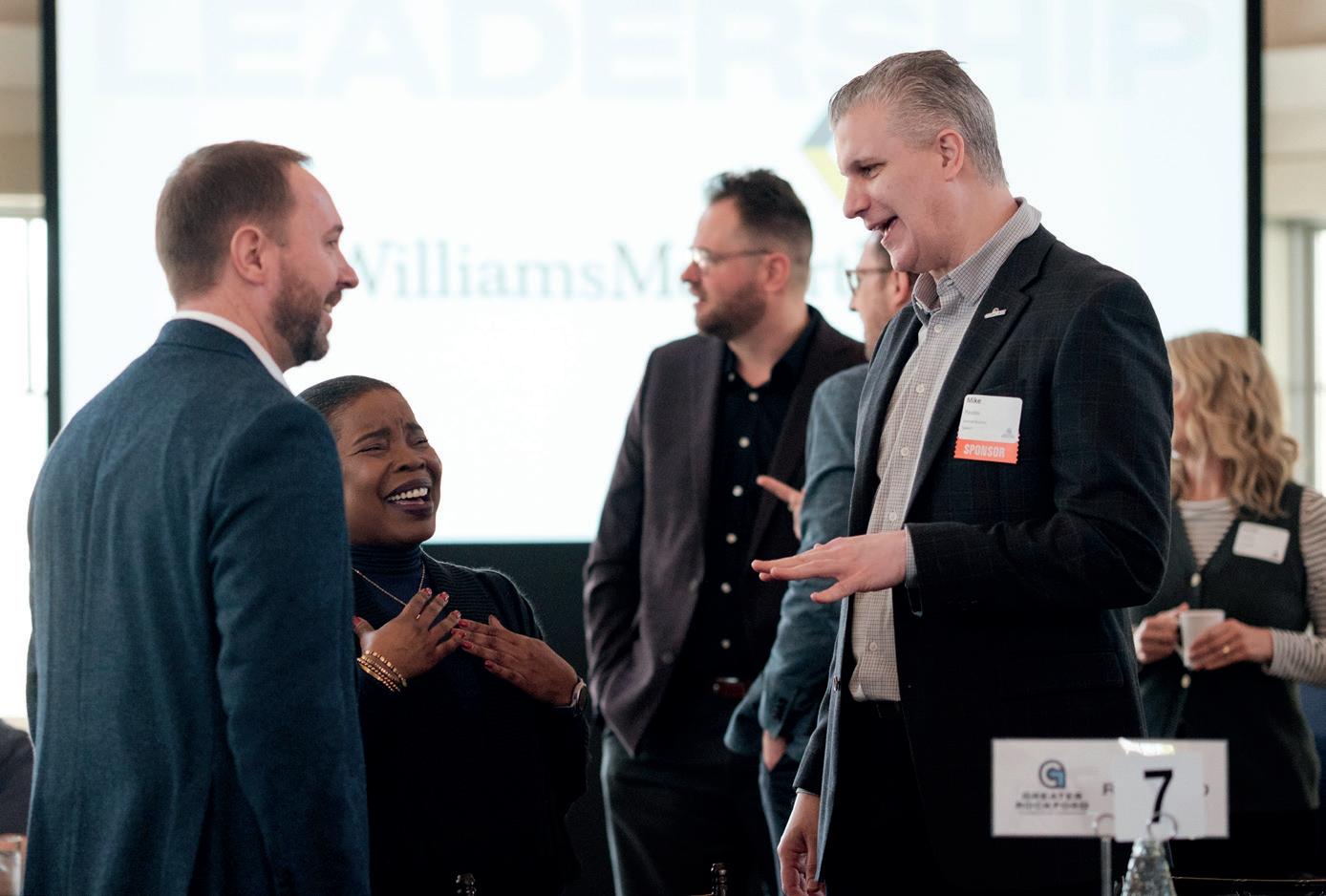
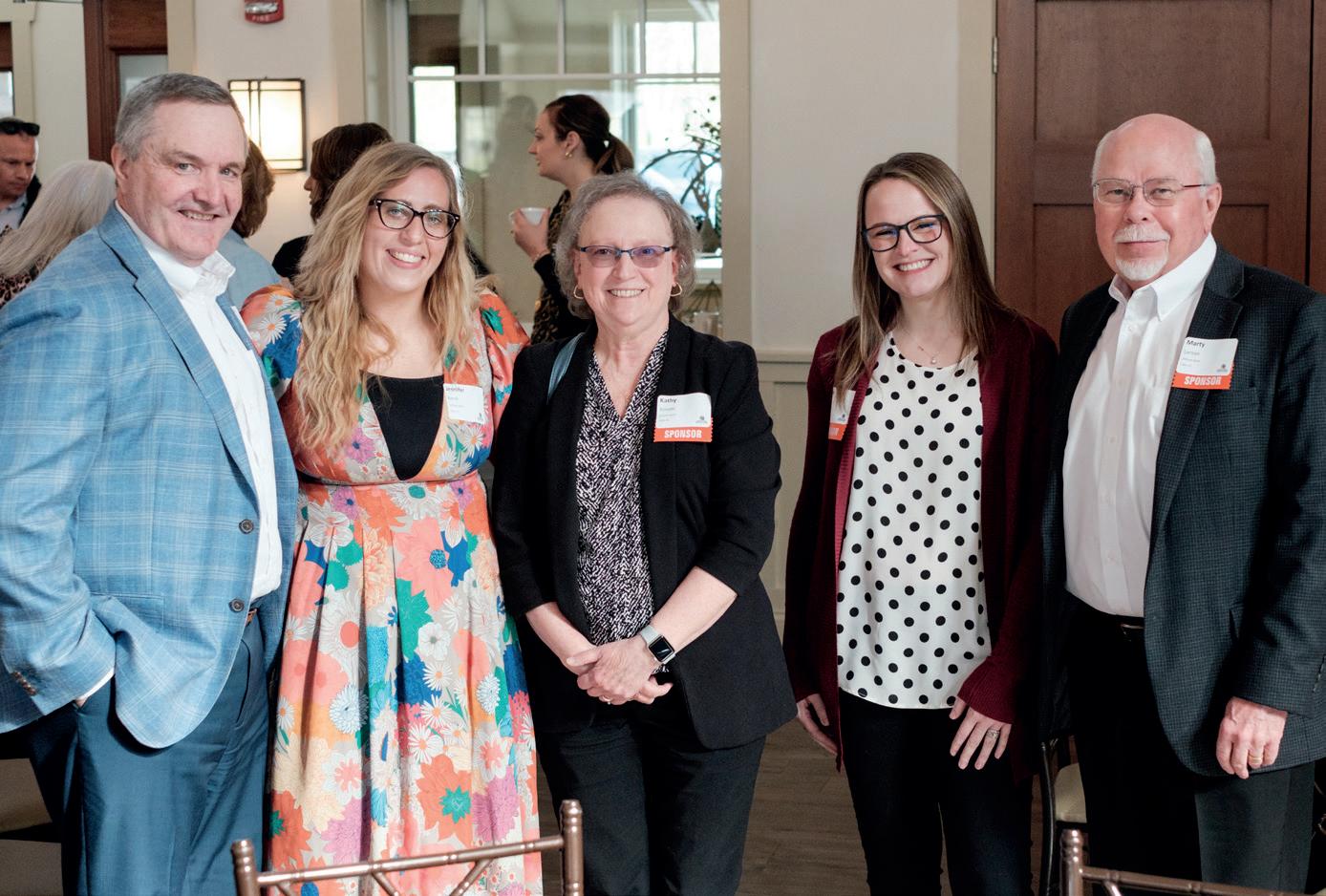
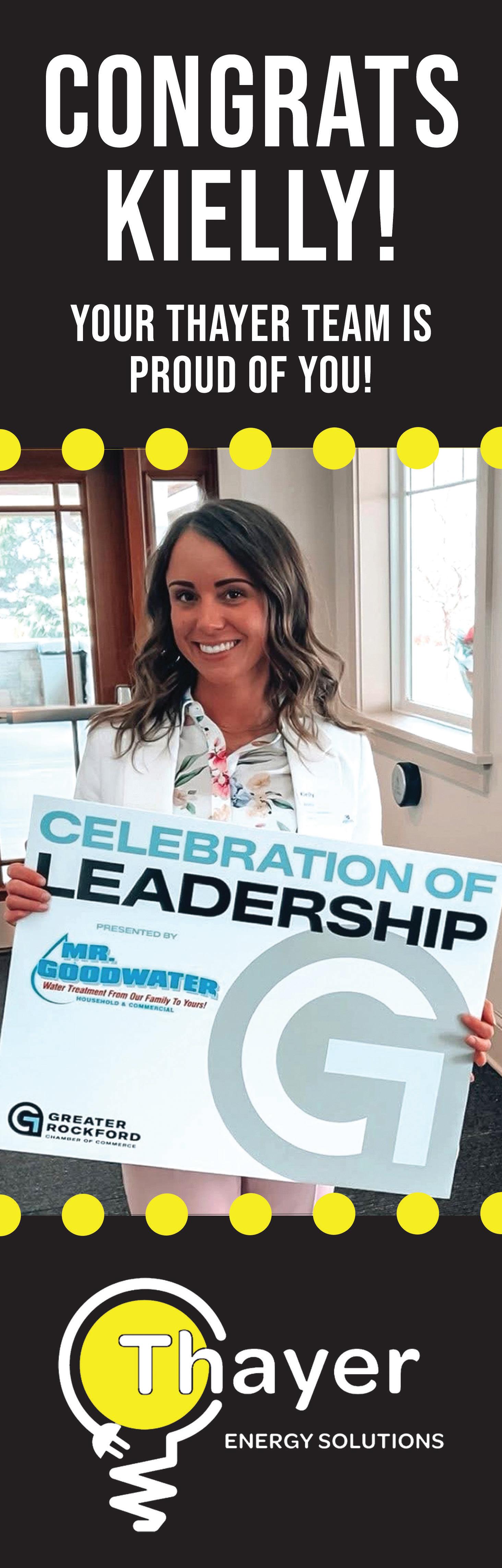
a Celebration of Leadership to honor the 2025/2026 class
Leadership Rockford/Celebration of Leadership Presenting Sponsor
Leadership Rockford Bacon & Eggs Sponsor
CELEBRATION OF LEADERSHIP EVENT SPONSORS
Leadership Legacy Sponsors
Foresight Bank
Schmeling Construction Co.
Thayer Energy Solutions
WilliamsMcCarthy, LLP
Graduate Sponsors
Choreo Advisors
Comcast Business
GoRockford
Hard Rock Casino Rockford
LaMonica Beverages
Mercyhealth
Stillman Bank
Think Big Corporation
Photography Sponsor
Mindy Joy Photography
Leadership Rockford 2026/2027 class registration is now open at rockfordchamber.com/ leadership-rockford
SKILLS FOR A LIFETIME Outdoor activities build community
By Ryan Niffenegger, PGA, Rockford Country Club
Even on a chilly March morning here in Rockford, you can feel the shift. Whether it’s kids running laps in a gym, getting their reps in on the court, or making laps in the pool, that pre-season excitement is building. We’re all just waiting for that first day the weather breaks, and we can finally take what’s been learned indoors and apply it outside. In my experience, these moments aren’t just about athletics; they’re the early lessons in skills that last a lifetime.
Sports like golf, tennis, and swimming provide juniors so much more than physical ability. They’re a masterclass in focus, resilience, and teamwork—the same qualities we look for in effective professionals. For example, golf demands patience and a specific kind of strategic problem-solving intellect, tennis requires quick decision making and adaptability, and swimming builds a level of discipline and perseverance that’s hard to find elsewhere.
When juniors consistently put in the work, they’re learning lessons that translate directly into the classroom and, eventually, their careers.
Building Social Skills
The social element is just as vital. Youth sports give kids the chance to mentor one another and cheer on their peers. They experience cooperation and leadership in a structured environment that mirrors the professional world. We see the change firsthand: Kids leave practice with more confidence and a better way of communicating. Those are the traits we want to see in the next generation of our community.
Our local programs ensure juniors stay engaged even during colder months. These aren’t just athletic drills; they
are investments in Rockford’s social fabric. Between the volunteers, the instructors, and the families involved, organizations like ours offer a space where kids can grow safely and learn what it means to be part of a team.
The Long Game
Ultimately, the goal isn’t to churn out professional athletes. It’s about equipping them with confidence and social awareness to serve our city for years to come. Every lap, every forehand, and every swing is a building block for personal growth.
Whether they’re working through the frustration of a tough drill or the excitement of a breakthrough, they’re learning skills that last a lifetime. It’s more than just development; it’s an investment in the future of Rockford. By fostering this spirit of persistence in our youth, we are building a foundation for a stronger, more resilient community. When we see a young person’s confidence grow after mastering a difficult skill, we see the future of our local leadership take shape right in front of us.
This season, let’s remember why we enjoy the sports we choose and find ways to share that same passion with the next generation. There is a unique kind of fulfillment in watching a young athlete discover the same love for the game that has driven us for years. By sharing our experiences and our enthusiasm, we aren’t just teaching techniques; we’re ensuring the legacy of these sports continues to thrive here in Rockford.
Remember, whether you’re standing on the tee, at the edge of the pool, or on the baseline, every rep is an investment in the person you’re becoming and potentially to the person next to you as well.
Rockford Country Club offers seasonal, member-only programs in golf, tennis, and swimming that help youth develop skills, confidence, and leadership. By providing structured opportunities for learning and teamwork, the club supports the growth of healthy, engaged, and socially-responsible children in the community.
The views expressed are those of the author(s) and do not necessarily represent those of the Greater Rockford Chamber of Commerce.
A seasoned PGA professional with over 20 years of experience, Ryan Niffenegger specializes in the development of Rockford’s youth through comprehensive seasonal programming. He also provides tailored instruction to adult members. Ryan’s approach cultivates confidence, strategic focus, and leadership—core principles that translate into academic, professional, and civic success.
THE CONVERSATIONS YOU’RE NOT HEARING
Moments that shape how candidates and employees perceive your company
By Douglas Wetzel, Ashton North
Many companies believe they have a clear understanding of their employment brand. They invest in defining their culture, refining their messaging, and presenting themselves as a place where people can build meaningful careers. These efforts are important, and in many cases, they are done thoughtfully. However, what often goes unnoticed is that a significant portion of an organization’s employment brand is being shaped elsewhere, outside of formal messaging and beyond the company’s direct visibility. It is shaped in conversations the company is not part of. Candidates speak with peers about their interview experiences. Employees share their day-to-day realities with colleagues across the industry. Leaders compare perspectives within their professional networks. These conversations are informal, but they carry a level of credibility that is difficult to replicate through any official communication. In many cases, they become the most trusted source of insight into what it’s actually like to work inside an organization. Across the Rockford business community, this dynamic is becoming increasingly relevant. Organizations are navigating growth, operational complexity, and evolving workforce expectations, particularly within manufacturing and industrial sectors. As companies expand, introduce new technologies, and respond to rising customer demands, leadership roles are changing. Operational leaders are being asked to think beyond execution, teams are becoming more interconnected, and decisions are impacting more parts of the business than ever before. These
shifts create opportunity, but they also introduce new layers of complexity that are not always fully aligned or clearly communicated internally.
As a result, there is often a gap between how companies intend to be experienced and how they are actually perceived. A hiring process that is designed to be thorough may be experienced as unclear or overly extended. A leadership team that believes it is aligned may still communicate priorities in ways that feel inconsistent across the organization. These are not failures of intent, but they are moments that shape how candidates and employees interpret the company. More importantly, they are the moments that get shared in the conversations happening outside the organization.
Through our work at Ashton North, we have the opportunity to hear many of these perspectives firsthand. We speak regularly with candidates evaluating new opportunities and with leadership teams building organizations to support growth. These conversations provide insight into how companies are being experienced in the market, not through formal feedback channels but through consistent, real-world observations.
We hear when candidates leave a process energized and clear about a company’s direction, and we also hear when they leave with uncertainty about expectations or alignment. We hear when employees describe strong leadership and cohesion, and we hear when they describe environments that feel less defined during periods of change.
What becomes clear over time is that an employment brand is not static, nor is it controlled solely by what an organization communicates. It is
continuously shaped by the experiences people have and the way those experiences are shared with others.
For companies in the Rockford Region, particularly those in manufacturing and growth-oriented industries, this presents a meaningful opportunity. The organizations that take time to understand not only what they are communicating but also what people are experiencing are often better positioned to attract and retain the talent they need for the next stage of growth.
This awareness does not require dramatic change. In many cases, it begins with a willingness to look more closely at how leadership alignment, communication, and decision-making are experienced throughout the organization. It requires recognizing that small moments in hiring, onboarding, and day-to-day leadership interactions can have an outsized impact on how the company is perceived. Most importantly, it requires understanding that the conversations shaping an employment
brand are already happening.
For organizations that choose to pay attention to those conversations, there is an opportunity to strengthen alignment, improve the candidate and employee experience, and build teams that support long-term success. Because in the end, an employment brand is not defined by what a company says about itself but by what others say about their experience when the company is not in the room.
With over 30 years of experience, Ashton North partners with small to mid-sized companies and divisions to accelerate growth by aligning top-tier talent with strategic goals. We build strong leadership teams, shape standout employer brands, and design hiring strategies that create a meaningful candidate experience—across local, regional, and global markets.
The views expressed are those of the author(s) and do not necessarily represent those of the Greater Rockford Chamber of Commerce.
Douglas Wetzel is co-founder of Ashton North. His recruiting methodology combines advanced technology with a relationship-first approach, ensuring every candidate feels valued, seen, and never reduced to just a number. This dedication not only drives results but also enhances his clients’ employment brand.
ILLINOIS POWER OF ATTORNEY ACT
Prepare for the day you get a POA
By Timothy Scordato, Reno & Zahm LLP
Imagine this … A customer walks into your business wanting to conduct a transaction but on behalf of someone else. The customer wields a power of attorney document, which purports to give them the authority to make transactions on behalf of the other. If you refuse to recognize their authority, you could be sued. If you make the transaction with them, you could be sued. So, what do you do?
The Illinois Power of Attorney Act confers a right to individuals to appoint an agent to make property, financial, personal, and/or healthcare decisions for them. This is performed through the execution of a power of attorney (POA) document. The individual conferring the authority to another to act on their behalf is known as the principal, and the person acting on behalf of the principal is known as the agent. Despite popular belief, the principal does not necessarily need to be incapacitated in order for the agent to act on their behalf, and both the principal and the agent can act simultaneously.
A principal may give an agent immense power and authority. For example, a principal may confer authority to their agent to manage finances and investment portfolios, sell the principal’s home and assets, sue on the principal’s behalf, and even potentially run or shut down the principal’s business.
In the legal world, a POA is often called a license to steal, because it is so powerful and easy to abuse. But abuse and bad faith can result in very serious civil and criminal penalties for the agent and third-party vendors. So, when you, a business owner, are presented with a POA document, it is important that you consider your options carefully and proceed with knowledge and care.
Generally, Illinois law provides for the protection of businesses who operate in good faith reliance on a copy of a POA document. However, it is the “acting in good faith reliance” part of the law that sometimes finds businesses in hot water. One way a business can fall short of this standard is if they recognize a power of the agent that the agent does not actually possess. For example, in Illinois, a bank sued a guarantor when the debtor defaulted on a loan. Ultimately, the bank was unable to recover from the guarantor because it was found that
the guaranty was signed by an agent of the guarantor, and the POA under which the agent was acting did not confer the authority to execute the guaranty.
Other ways a business might be found not to be acting in good faith is if the business refuses to perform inquiries, especially when the circumstances surrounding the POA are suspicious-such as if there is reason to believe the POA was procured through fraud or duress, there is reason to believe that the principal is deceased or has revoked the POA, there is reason to believe the principal did not have the capacity to execute the POA, or the agent lacks identification to prove they are the purported agent on the document.
Regardless of whether reasonable suspicions emerge, when dealing with a POA for property, you have a right to request that the agent furnish an affidavit or Agent’s Certification and Acceptance of Authority, stating that the POA document relied on is a true copy of the agency, the named principal is alive, and the powers of the agency have not been terminated or altered.
Also, you may ask the agent to provide a copy of the original POA document that is certified to be valid by an attorney. If the agent refuses, you have reasonable cause to refuse to honor the POA.
So, what should you do when presented with a POA document? Have policies in place to verify the agent and validity of the POA, and consult with an attorney when suspicions emerge or before refusing to recognize a POA.
Reno & Zahm represents a diverse client base, including public and private businesses, organizations, and individuals, regarding appeals, banking services and financing, bankruptcy and debtor-creditor issues, business law, government law, employment law, estate planning, federal and state litigation, intellectual property law, personal injury, real estate, land use, and zoning.
The views expressed are those of the author(s) and do not necessarily represent those of the Greater Rockford Chamber of Commerce.
Timothy M. Scordato is an associate at Reno & Zahm LLP, where his practice focuses on civil and commercial litigation, appeals, elder law, nonprofit, municipal, and employment law. Mr. Scordato is admitted to practice law in the State of Illinois and the Northern District of Illinois.
STRATEGIES FOR GROWTH AND SAFETY
Resources for small business
By Harry (Hap) Hileman, Illinois Department of Labor
As spring breathes new life into the world around us, it serves as a reminder to explore the resources available to help small enterprises thrive. With initiatives like National Small Business Week, Fall Stand-Down, and Mental Health Awareness Month highlighted this May, it’s crucial for business owners and workers alike to engage with the support systems designed to foster development and workplace safety.
The Illinois Department of Labor offers US Small Business Administration (SBA) and Illinois Small Business Development Center (SBDC) resources to help your small business start and grow. The US Small Business Administration provides a wealth of information for small enterprises. Visit sba.gov/nationalsmall-business-week for 10 steps to starting a business and ways to calculate startup costs. The Illinois SBDC supports local centers to help secure financing, coaching and specialized training.
Spring also marks the peak of the construction season, a time when new employees join the crew. Unfortunately, new workers face significantly higher rates of workplace injuries and fatalities. To address this issue, OSHA is collaborating with employer groups and organizations to organize the largest industry-wide construction stand-down ever.
A safety stand-down is a voluntary event where employers can engage directly with employees about safety. Any workplace can organize a standdown to pause and focus on fall hazards, emphasizing the importance of fall prevention. This event can also provide employees with a platform to voice their concerns to management about fall hazards and other job-related risks. Companies are encouraged to participate in this national initiative to raise awareness of fall hazards and collectively work to create a safer, healthier industry. If you are unable to
participate on May 6, we invite you to hold your stand-down any time during the week of May 4-8. Visit osha.gov/stop-falls-standdown/suggestions for a list of ideas or to host your own construction stand-down.
The construction industry is globally known as a hazardous, demanding, and stressful environment. In 2021, the CDC revealed that this sector had the secondhighest suicide rate among all industries, about four times the national average and nearly six times the fatalities. The main causes of stress-related mental health problems are previous workplace injuries and poorly fitting personal protective equipment (PPE), according to the National Library of Medicine: Mental Health in Construction Industry study.
If your jobsite struggles with keeping employees in PPE, it may be time to reevaluate your selection and sizing options. The frustration of ill-fitting PPE often leads people to remove the gear, increasing their risk of injury. If an injury occurs, employees might be less likely to report it due to fear of repercussions
for not wearing PPE, leading to more serious injuries and heightening stress levels in an already demanding field. By leveraging state and federal resources, businesses can thrive while fostering a safe work environment. As you navigate the challenges and demands of running a small business, consider the Illinois Department of Labor’s On-Site program as your partner for jobsite safety and health.
The Illinois On-Site Safety and Health Consultation Program provides free support and guidance to identify hazards, develop a hierarchy of controls, and establish a lasting safety and health program. Visit worksafe.illinois.gov or contact Harry (Hap) Hileman with the Illinois Department of Labor at 217-993-2111 for more information.
The views expressed are those of the author(s) and do not necessarily represent those of the Greater Rockford Chamber of Commerce.
Harry (Hap) Hileman is the outreach and marketing coordinator at Illinois Dept of Labor’s On-Site Safety & Health Consultation Program.
BUILDING STRONG LEADERS
Pilot initiative underway at RPS 205
By Emily Klonicki, Alignment Rockford
Strong, healthy communities start with strong leaders. Strong leaders start with healthy, connected youth. At Alignment Rockford, Strong Schools: The Healingcentered Student Support Initiative is helping Rockford schools become nurturing, restorative environments where students can thrive. The initiative focuses on addressing trauma and emotional health to improve academic performance and social-emotional learning. It collaborates with schools, community organizations, and mental health professionals to provide holistic support for students and their families.
What We Know
Student success is shaped by far more than academics alone. Across Rockford, schools deal with a number of factors that affect learning: persistent academic gaps, the impact of trauma on students and their families, fragmented access to resources, staff stress and retention challenges, and equity disparities. No one entity can solve these challenges alone.
What We Are Doing Driven by Alignment Rockford, the Strong Schools coalition includes RPS 205, Winnebago County Health Department, City of Rockford, Rockford Park District, NAMI, Rosecrance, the local Regional Office of Education, Rockford Regional Health Council, Rockford University, Rockford Barbell, and Eliminate Racism 815. Now in a second-year pilot phase across seven elementary and middle schools in Rockford, Strong Schools assists each school in building its own site-specific implementation plan to improve outcomes across three areas of impact: Seen and Heard (Belonging), Pushed to Grow (Academic), and Ready to Thrive (Resilience).
The Outcomes
Many of our Strong Schools showed gains across the three areas of impact after the first year. Survey data collected from the pilot sites shows meaningful movement. Lewis Lemon Elementary improved in every domain of student
social-emotional well-being, with some areas jumping by double digits. RESA Middle School saw similar across-theboard gains, particularly in students’ belief in their own ability to succeed. McIntosh Elementary and several other sites showed steady, broadbased progress in areas like selfmanagement and sense of belonging. Where results were more mixed, the data is giving school teams clear direction on where to focus next.
Beyond survey data, Strong Schools sites are also moving the needle on state accountability measures. This year, McIntosh Elementary moved from an Intensive Support designation to Comprehensive Support on the ISBE Illinois School Report Card—the first time in the school’s history it has achieved that improvement. Other pilot schools have similarly advanced, with sites moving from Comprehensive to Targeted Support. Importantly, Strong Schools planning and implementation has evolved alongside these shifts, with each school’s
plan adapting to meet the needs that emerge as various areas improve.
What’s Next
There are many changes in store for RPS 205. As we welcome a new superintendent, we will continue to navigate funding challenges and organizational shifts. The strength of Strong Schools is that it is rooted in community, schools, and district leadership. Our pilot is bearing great results and new schools have elected to join the initiative.
We want Rockford to be a city that grows its own leaders and builds a stronger future from within. Strong Schools offers a model for doing just that: practical, collaborative, responsive, and already producing results.
The views expressed are those of the author(s) and do not necessarily represent those of the Greater Rockford Chamber of Commerce.
Emily Klonicki is the executive director of Alignment Rockford. In partnership with Rockford Public School District 205, Alignment Rockford brings together strategic partners from corporate, civic, political, religious, and social entities to improve the academic achievement of students. Learn more about our Strong Schools at alignmentrockford.org.
ACCELERATING ECONOMIC DEVELOPMENT
We have new energy, expanded capacity, and a clear strategy
By Everett Butzine, Greater Rockford Chamber of Commerce
When I joined the Greater Rockford Chamber of Commerce (GRCC) at the start of this year, I came with a clear sense of purpose and an open mind about what I would find. What I did not fully anticipate was just how quickly this region’s energy, its people, and its potential would come into focus. One quarter in, I can say with confidence that the Rockford Region is ready, and the GRCC is stepping up to meet that moment.
I want to share some highlights of my first months here and use this as an opportunity to share what we’ve been working on, why it matters to you as a member of our regional business community, and where we’re headed next.
A New Team, A Sharper Focus
The most significant story of Q1 is the transformation happening within the GRCC itself. Our organization has grown meaningfully, welcoming several new professionals who bring deep expertise in economic development, business attraction, communications, and sales. Welcoming these new team members to support the rest of the GRCC team was a deliberate investment in our capacity to execute.
Over the past few months, we have been building out the workflows, strategies, and relationships that translate vision into results. We are moving from a period of laying the groundwork to one of focused, sustained execution, and the difference is already palpable. Having the right people in the right roles means that when a business prospect asks about our region, we can respond with speed, data, and a compelling story.
Keeping Our Existing Businesses Strong Economic development begins at home. Before we talk about attracting new investment, we must ensure that the businesses already rooted in our region feel supported, heard, and connected to the resources they need to grow.
In Q1, our team completed 13 employer visits across a range of key industry sectors, including automotive, aerospace, and advanced manufacturing. These conversations are invaluable. They surface real-time intelligence about what our businesses need, whether that’s access to capital, supply chain connections, workforce readiness support, or something else entirely. That intelligence, in turn, shapes how we prioritize our programs, our partnerships, and our advocacy.
The list of business retention and expansion (BRE) visits for Q2 continues to grow. If you’re interested in scheduling a BRE visit, please contact me at ebutzine@rockfordchamber.com.
Pursuing New Investment for the Region Business attraction is back on the front burner. After re-establishing our outreach infrastructure in Q1, we now have an active pipeline of business attraction and expansion projects under development. These range across industries and stages of development, and they represent a meaningful opportunity for job creation and longterm economic growth in our community.
We are working closely with site selectors, corporate real estate teams, and state and national partners to ensure the Rockford Region is in the room when location decisions are being made. That means being proactive, responsive, and armed with data,
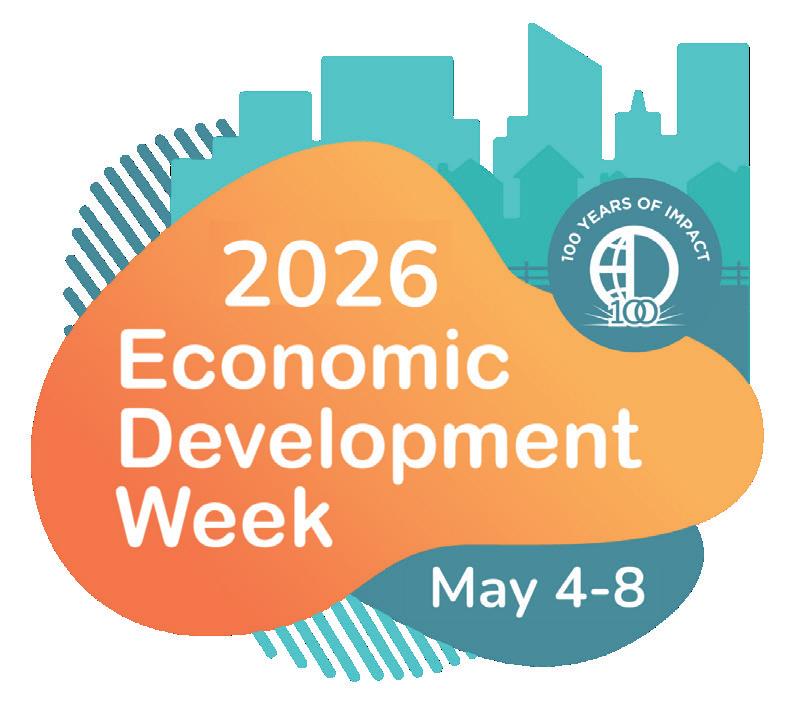
Join GRCC as we mark Economic Development Week, May 4–8, by recognizing the professionals, organizations, and partners who drive economic opportunity and improve quality of life across our region.
which are all areas where we have made real investments this quarter.
Telling the Region’s Story
A region’s reputation is one of its most powerful economic development assets. In Q1, the GRCC hired a director of communications to ensure we are presenting a clear, consistent, and compelling narrative about who we are and what we offer.
In collaboration with GoRockford, we secured more than 50 meetings with national travel, lifestyle, and broadcast media to highlight the Rockford Region’s livability, affordability, and Midwest appeal. The Rockford Region earned prominent features in high-profile national publications. This coverage puts our community in front of exactly the kind of audiences we want to reach: businesses considering relocation or expansion, talented professionals exploring new communities, and investors looking for value and opportunity.
Better Tools, Better Decisions
We’re also investing in the data and intelligence infrastructure that modern economic development demands. Last quarter, the GRCC expanded its suite of market research and site selection
tools, giving our team real-time access to workforce analytics, labor market trends, commercial real estate data, and business growth signals.
These resources allow us to respond faster to business inquiries, build stronger cases for why Rockford should be on any short list, and proactively identify companies that may be on the cusp of growth or expansion. In economic development, speed and precision matter. We’re committed to having both.
What’s Ahead
GRCC CEO Angela Kay Larson and I will represent the Rockford Region at the SelectUSA Investment Summit, one of the nation’s premier forums for foreign direct investment and business attraction. It’s a meaningful platform, and we’ll be there with a strong regional story to tell.
Closer to home, we have several upcoming events that reflect the breadth of our work and the vitality of this business community. For a full list of events, visit rockfordchamber.com.
I’m grateful for the warm welcome this community has extended to me, and I’m energized by what we’re building together. The foundation is strong. The team is growing. And the work ahead is work worth doing.
Everett Butzine is the vice president of business expansion and attraction for GRCC. He is responsible for driving GRCC’s economic development roadmap (released in October 2025) and assisting local businesses with growth opportunities through business retention and expansion (BRE) visits.
WE’RE ALL IN
Rockford’s
talent ecosystem is taking shape
By Caitlin Pusateri, Greater Rockford Chamber of Commerce
Rockford has talent. It has employers. And increasingly, it has the partnerships and infrastructure to bring them together.
Across the region, organizations are deepening their collaboration around a shared goal: building a talent pipeline that keeps the residents of the Rockford Region working locally and brings new talent here to stay. The Greater Rockford Chamber of Commerce (GRCC) is proud to be a part of that work.
This spring, GRCC is announcing several initiatives that reflect both its role in the regional ecosystem and the momentum building across the community.
The Job Board is Here
Let’s start with the most visible piece. GRCC has officially launched an updated regional job board. And while the concept of a job board certainly isn’t new, ours has a few perks worth knowing about.
For GRCC Silver members and above, the board runs automatically. Bots crawl employer career pages and update listings directly, so there’s no manual uploading or ongoing maintenance required. No more managing multiple boards—the technology does it for you.
Any business, member, or non-member can also post positions at an incredibly low fee. All GRCC membership levels include at least one complimentary posting, and many include more.
Beyond full-time roles, the board now filters specifically by seniority level,
which means interested talent can search for regional internships in one, central location rather than hunting across individual employer websites.
Two Audiences: Internal and External
The GRCC job board is also the official job board for Made for Rockford, a regional talent attraction program run by GoRockford that connects new and returning residents to the Rockford Region through relationship building, events, and marketing. Made for Rockford highlights the region’s low cost of living, green space, and career opportunities. And, because a large component of the initiative is targeted marketing, those promotional efforts extend the reach of every job posting on our board.
With marketing support from Made for Rockford—a brand built to address both residential and career moves— employers can reach regional and national talent at a reasonable cost.
The board also lays the groundwork for a future Talent Network, a searchable pool of local candidates that employers will be able to tap into directly. That piece is coming. For now, the board is live and open.
Rockford Promise Internships
One of GRCC’s most concrete contributions to the regional talent ecosystem right now is a straightforward one: connecting local businesses to
Rockford Promise’s internship program. Here’s how the partnership works. Workforce Connection funds the program and serves as its backbone. Rockford Promise works directly with students and Workforce Connection to place them in paid internship positions. Goodwill serves as employer of record, removing a key administrative barrier for businesses that want to participate. GRCC’s role is to be the bridge to the business community— identifying employer partners, making connections, and helping companies understand how to get involved.
This year, the goal is 20 student placements with local employers.
Why internships? According the National Association of Colleges and Employers (NACE), the average full-time offer rate among 2024 in-person interns was 72%. That means nearly three out of four students who completed an inperson internship received a full-time job offer. That’s a clear talent pipeline.
Two New Announcements for Leaders
Building Rockford’s talent pipeline doesn’t stop at entry-level placement. GRCC is also announcing two new leadership development initiatives, both in partnership with Rockford University.
The Institute of Executive Leadership (IEL) will provide executive leadership
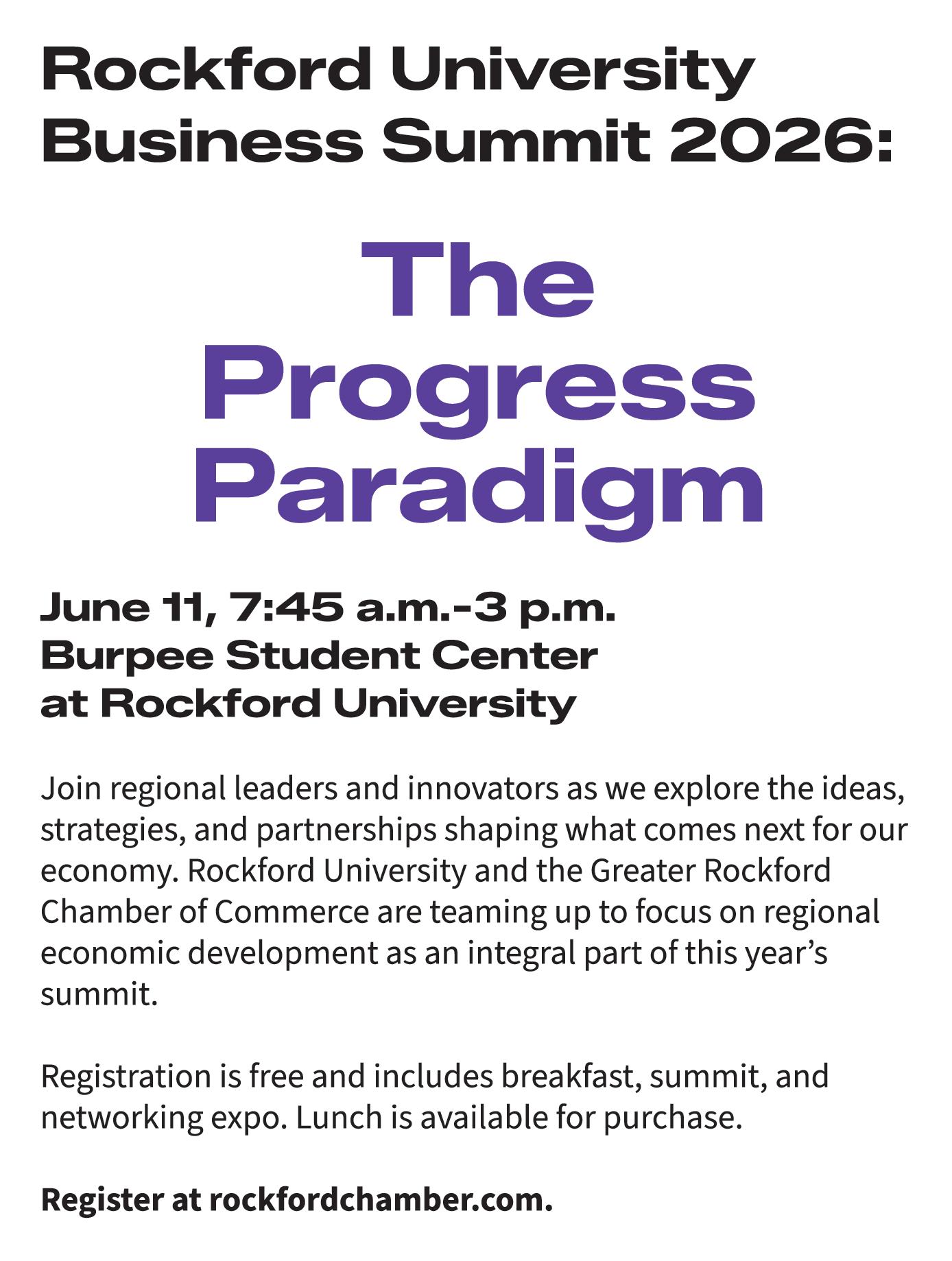
training locally, with a meaningful added benefit: Participants can earn undergraduate or graduate academic credit. High-level leadership development, right here in the Rockford Region. Alongside IEL, GRCC and RU are growing the Business and Economic Development Summit, a conference designed to build awareness and deepen collaboration between regional businesses, institutions, and economic development partners. Both initiatives reflect a shared belief that developing Rockford’s leaders is just as important as recruiting them.
The Bigger Picture
Every one of these announcements is connected, and none of them happened in isolation. The job board, the internship connections, the IEL, the summit—each reflects what’s possible when regional partners stop working in parallel and start working in alignment. GRCC’s role in this ecosystem is to support its partners, connect businesses to opportunity, and help develop the leaders who will carry this region’s momentum forward. The work of building Rockford’s talent future belongs to the whole community. We’re glad to be part of it.
Caitlin Pusateri is COO at GRCC, where she connects strategy to execution and people to purpose. She helped guide the organization through a complex merger and now focuses on strengthening governance, aligning vision, and advancing economic vitality in the Rockford Region. Caitlin is one of only four Certified Chamber Executives (CCE) in Illinois.
THE ADA ACCOMMODATION PROCESS
Mistakes employers make and how to avoid them
By Laurie E. Meyer, Amundsen Davis, LLC
Ensuring compliance with the Americans with Disabilities Act (ADA) and state-level disability laws, which require covered employers to provide reasonable accommodations to qualified employees with disabilities unless doing so imposes undue hardship, remains a critical employer obligation. Despite decades of established guidance, ADA accommodation issues continue to drive a significant volume of claims and enforcement actions from the Equal Employment Opportunity Commission (EEOC) and state agencies. These disputes often arise not because employers refuse or are unable to provide accommodation, but because they mismanage the process or overlook key compliance steps.
Here are some of the most common—and costly—mistakes employers make when navigating ADA accommodation requests.
Failing to Recognize an Informal ADA Accommodation Request
Employees do not need to use terms like “reasonable accommodation” or “ADA” to trigger employer obligations. Even vague comments about difficulty performing job duties due to a medical condition should prompt an interactive process.
An accommodation request can be informal and may come from statements such as:
• “I’m having trouble getting to work on time because of my medical condition.”
“My injury makes it hard to stand for long periods.”
“I need some flexibility because of my treatment schedule.”
Once an employer is on notice that a medical condition may be affecting
an employee’s ability to perform their job, the duty to engage in the interactive process is triggered.
Best practice: Train supervisors to escalate any mention of a medical condition affecting work to HR promptly. While not every condition constitutes a “disability” under federal or state law, it is imperative that HR is aware of medical issues that impact attendance and/or work performance.
Delaying or Ignoring the Interactive Process
Employers often expose themselves to liability by doing nothing. Delays, silence, or informal “we’ll get back to you” responses can be interpreted as a failure to engage in the interactive process in good faith. The ADA requires a timely, ongoing dialogue between the employer and employee to explore reasonable accommodations.
Best practice: Acknowledge requests quickly, document communications, and keep the process moving—even if additional medical information is needed.
Requiring Excessive or Improper Medical Documentation
Overly broad medical inquiries can violate ADA confidentiality rules. Employers may request medical documentation when the disability or need for accommodation is not obvious. However, asking for diagnoses, complete medical records, or information unrelated to job functions frequently leads to legal disputes.
Best practice: Request only information necessary to confirm the existence of a covered disability and understand functional limitations relevant to essential job functions.
Treating All Job Description Tasks as Essential
Employers sometimes assume that if a task appears in a job description, it must be essential and cannot be modified. Courts and the EEOC look to the actual duties performed and whether marginal tasks can be reassigned.
Best practice: Ensure job descriptions accurately reflect essential functions and revisit them during the accommodation analysis.
Rejecting an Accommodation Without Exploring
Alternatives
Denying a request without exploring alternatives is a common error. Employers are not required to provide the employee’s preferred accommodation; rather, they must meaningfully consider other reasonable options.
Best practice: If a requested accommodation is not feasible, explain why and propose other options. Document the discussion.
Defaulting to Leave as the Only Solution
Some employers default to unpaid leave when confronted with an accommodation request, even when the employee could continue working with adjustments. Others improperly deny additional leave once FMLA is exhausted, assuming the ADA no longer applies. Leave can be a reasonable accommodation, but it should not be
the automatic or exclusive response.
Best practice: Analyze whether workplace accommodations would allow continued work before placing an employee on leave, and evaluate post-FMLA leave requests individually.
Failing to Document the Process
Lack of documentation is a silent liability driver. The EEOC and courts often cite poor documentation as evidence of bad faith or discriminatory intent. Common employer gaps include failing to document the interactive dialogue, alternative accommodations considered, and/or the rationale for a denied accommodation request.
Best practice: Maintain clear, confidential documentation of each step of the accommodation process.
Inconsistent Treatment of Similar Requests
Applying different standards to similar accommodation requests without a clear, documented reason can lead to discrimination or retaliation claims. Best practice: Apply consistent standards, while recognizing that ADA determinations are individualized and fact-specific.
The views expressed are those of the author(s) and do not necessarily represent those of the Greater Rockford Chamber of Commerce.
E. Meyer is a partner with Amundsen Davis, LLC. She handles litigation matters involving Title VII, the Americans with Disabilities Act, the Fair Labor Standards Act, the Age Discrimination in Employment Act, the Family and Medical Leave Act, the Occupational Safety and Health Act, as well as other federal, state, and local laws and ordinances.
Laurie
ROCKFORD REGION IN THE NATIONAL SPOTLIGHT
A partnership among the GRCC, GoRockford, and Development Counsellors International (DCI) is generating positive exposure for our region in national media.
“How the Midwest became the place to move” The Atlantic (theatlantic.com)
This March 23 article in The Atlantic highlights how strong housing demand, rising home values, and a price point that remains significantly more accessible than larger metro areas positions Rockford as a bright spot in Midwest migration and one of the most attractive markets in the country right now.
“Particularly attractive are towns that are near a big city but have much smaller price tags. Take Rockford, the most popular housing market from the Zillow report. Although it’s within easy driving distance of Chicago, the average home value is about $170,000, to Chicago’s $300,000. A hybrid worker could conceivably work from Chicago a day or two a week while paying much less for a house than if they lived in the city … As more people have moved there, midwestern home values have also risen: Rockford’s home prices are up nearly 10% year over year, compared with 3.9% in 2020, for example. But because they started at a much lower price point, these homes still seem affordable compared with houses in, say, Miami or Austin.”
“Meet the Midwest’s hottest affordable market” The Playbook (theplaybookmb.com)
Named one of the hottest markets by The Playbook in a March 25 article, the Rockford Region’s affordability, investor momentum, and proximity to major markets are driving a transformation that’s turning heads nationwide.
“Rockford’s affordability has transformed it into one of the hottest markets in the nation.”
“New Place Brand and Marketing Report” City Nation Place (citynationplace.com)
GoRockford’s Made for Rockford initiative was included in a new place brand and marketing report from City Nation Place examining how municipalities around the world approach talent attraction and retention. The report focuses on the evolving strategies for talent attraction and retention and the impact of nation and place brands on the local and global economy. It also includes insights from an international survey and qualitative interviews with place branding, destination marketing, and economic development teams.
“Being recognized alongside programs from Copenhagen, Helsinki, New Zealand, and others is a good sign that our work is being seen as a model worth highlighting internationally,” said John Groh, GoRockford CEO/president. “This is part of how we build the city’s profile and keep it on the radar of people who matter to our future.”
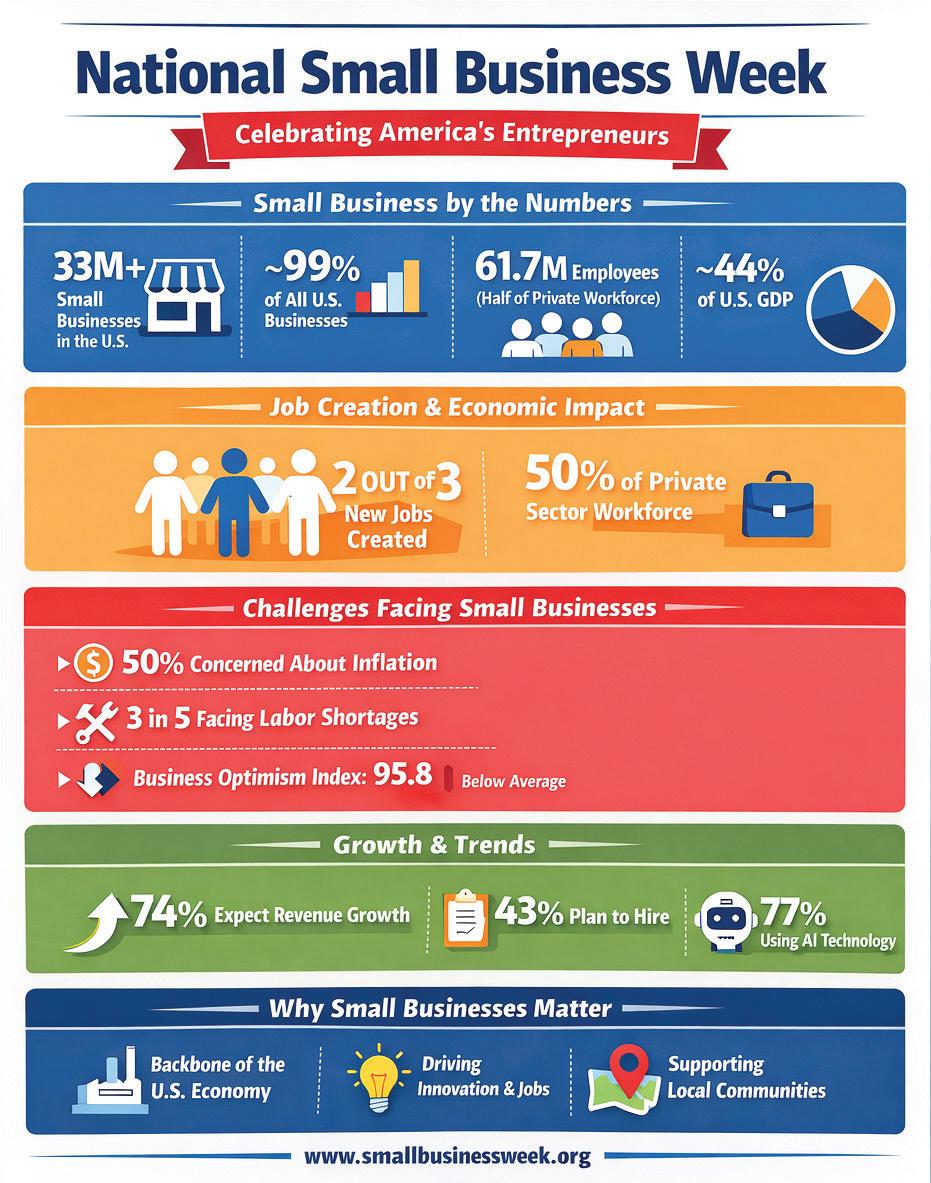
NATIONAL SMALL BUSINESS WEEK: MAY 3-9
NATURE AS A THIRD SPACE
Fostering well-being and community connection
By Ann Wasser, Severson Dells Nature Center
Many of us find our busy lives divided between two primary environments: home and work/school. Sociologist Ray Oldenburg described a missing third realm, what he called the ‘third space,’ as a setting where people gather informally, build relationships, and experience a sense of belonging outside of structured environments.
Traditionally, third spaces have included coffee shops, libraries, and houses of worship. Nature centers are stepping into this role, especially here in the Rockford Region.
Third spaces are community anchors. They are welcoming and informal places where people can show up as they are without any expectation or financial transaction. At a time when loneliness and social fragmentation are growing concerns, third spaces are more than amenities, they are essential for healthy, connected communities.
What makes nature-based third spaces especially powerful is their ability to foster individual health and wellbeing while also cultivating community connection. In these environments, people from different backgrounds cross paths naturally: families share a trail together, volunteers work side by side, or new friendships form during a program. These interactions may seem small, but they are foundational to building trust and a shared sense of place.
Nature centers also offer something increasingly rare: unstructured, screenfree environments where people can simply be present. Whether it’s a child discovering their first frog, a retiree finding purpose through volunteering, or a young professional decompressing after work, these
experiences create a sense of belonging extending beyond any single visit.
For the Rockford-area business community, this matters. Third spaces contribute directly to quality of life, talent attraction, and regional identity. They make communities more vibrant, resilient, and connected, qualities that support both economic development and long-term sustainability.
As our region continues to grow and evolve, investing in places where community and nature intersect will be essential. That’s why Severson Dells, soon to be Wild Roots Nature Center, is developing the former Elliot Golf Course as a new, publicly-accessible natural area. We will restore the land to native habitats and create new opportunities for people to engage in guided hikes, field trips, camps, lectures and other programs that the community has come to expect from our organization. This new location will add to the region’s third spaces at a time when they are needed most. Because sometimes, the most important space in our lives isn’t where we live or where we work; it’s where we come together.
For more than 50 years, Severson Dells Nature Center has served as an essential third space in our region. Now, it is stepping into its next chapter with a new name: Wild Roots Nature Center. This evolution reflects a growing vision, extending beyond a single site and designed to serve the community in deeper and more connected ways.
The views expressed are those of the author(s) and do not necessarily represent those of the Greater Rockford Chamber of Commerce.
Ann Wasser is the executive director of Severson Dells Nature Center. With more than two decades of experience in informal science education, Ann brings a community-centered approach to high-quality environmental learning. She is a board member of the Association of Nature Center Administrators and received GRCC’s 2021 Excellence in Leadership Award.
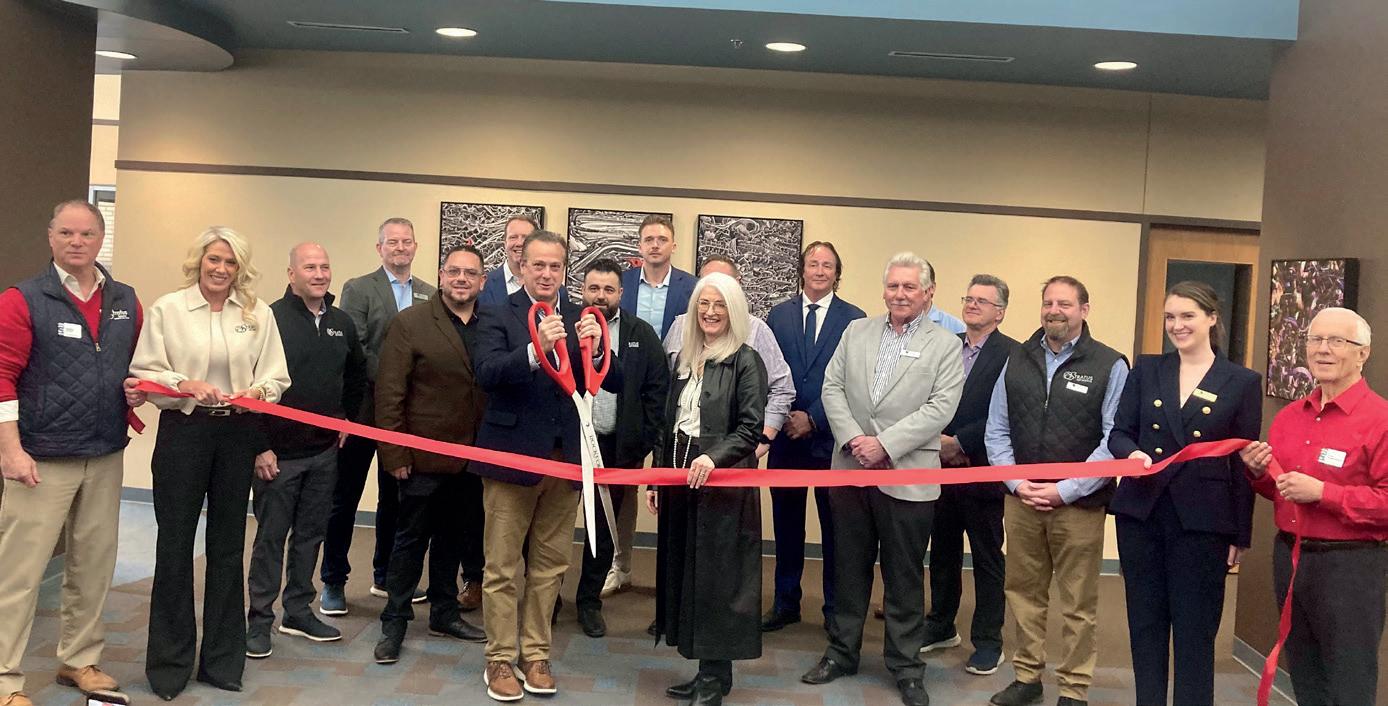
Stratus Networks celebrated the expansion of their business fiber network into Rockford with a ribbon cutting at the GRCC Office on April 8.
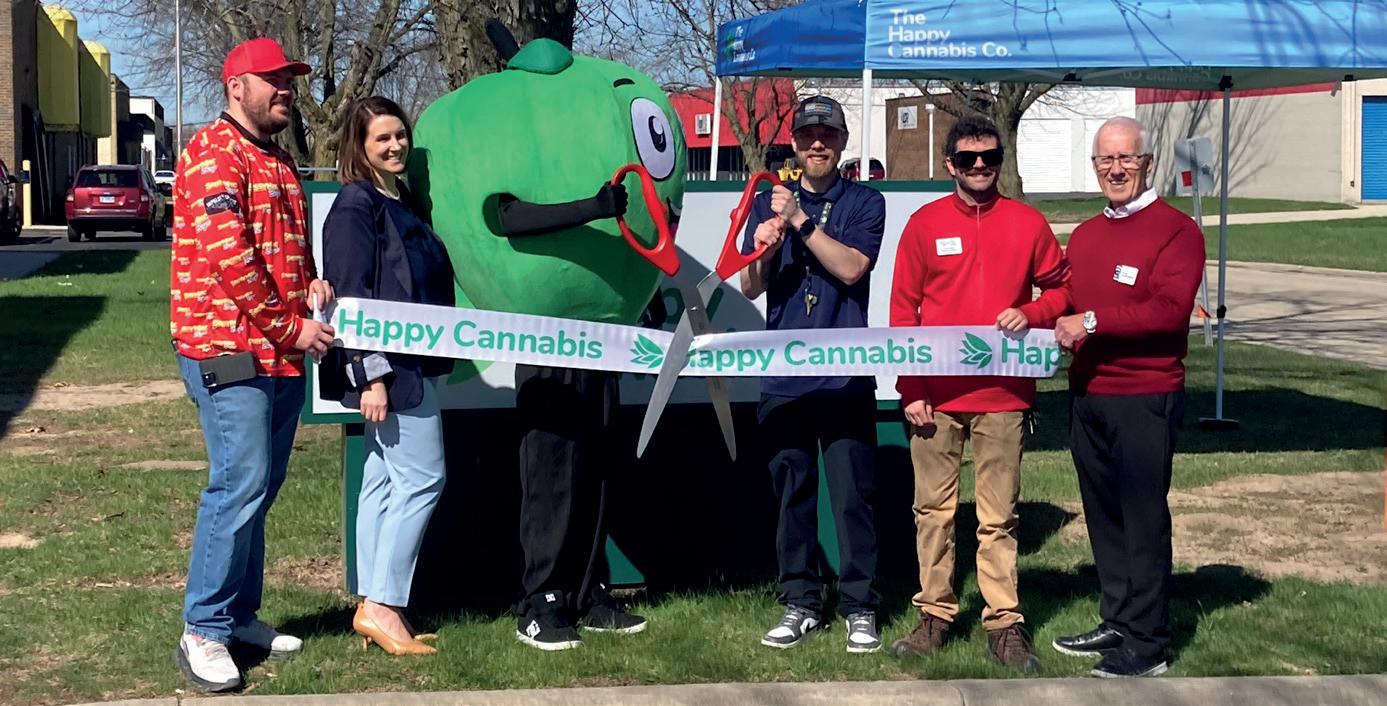
The Happy Cannabis Co. Rockford celebrated their grand opening at 4777 Stenstrom Road in Rockford with a ribbon cutting on April 9.
Aqua-Aerobic Systems, Inc.
J.L.Clark
AT&T
Comcast Business
Rockford Toolcraft, Inc.
Rosecrance Health Network
Sjostrom & Sons, Inc.
University of Illinois College of Medicine Rockford
Willett Hofmann & Associates, Inc.
Forest City Gear Co.
Barrick, Switzer, Long, Balsley, Van Evera, LLP
Area Erectors, Inc.
Van Matre Encompass Health
Rehabilitation Institute
Chartwell Agency
Ingersoll Machine Tools
Midwest Packaging and Container
Berkshire Hathaway HomeServices
Crosby Starck Real Estate
Greenlink Energy Solutions, Inc.
Powertrain Rockford, Inc.
Project First Rate
Chicago Rockford International Airport
Illinois Department of Children & Family Services
Anderson Nissan
Anderson Dodge
Rock River Ford, Kia, Mitsubishi
Winnebago County Board Office
MEMBERS IN THE NEWS
Jordan Beardsley (1) of Forest City Gear earned his level II certification in magnetic particle inspection (MPI) nondestructive testing (NDT), strengthening the company’s inspection capacity and technical expertise.
Byron Bank announced that Sean Considine (2) has acquired Byron Wealth Management as of March 31, 2026.
OSF HealthCare appointed Zach Yoder (3), MHA, RN, NEA-BC, FACHE, as the president of three Western Region OSF hospitals: OSF HealthCare Holy Family Medical Center in Monmouth, OSF HealthCare Saint Luke Medical Center in Kewanee, and OSF HealthCare St. Mary Medical Center in Galesburg.
Harneet Gahley (4), MD, a clinical assistant professor in the University of Illinois College of Medicine Rockford’s Department of Family and Community Medicine, was named the college’s new director of the Hospice and Palliative Medicine Fellowship.
Fehr Graham promoted Brandon Boggs (5) to project manager.
Goodwill Industries of Northern Illinois welcomed Beth Young (6) as vice president of finance.
Rockford Mutual Insurance Company (RMIC) promoted Jesssica Burns (7) to assistant manager of actuarial and analytics, and welcomed Katie Fox (8) as personal underwriting assistant.
OSF HealthCare was recognized at the Illinois State Capitol on March 26 as part of advocacy efforts by OSF nurses (9).
Molly Beckford (10), farm underwriter, celebrated 10 years with RMIC.
Stillman BancCorp N.A., promoted the following bank officers: Phyllis G. Oldenburg (11), executive vice president; Shawn R. Cannova (12), senior vice president operations; J. Joseph McCoy (13), senior vice president and chief trust officer; Andrew G. Williams (14), senior vice president and chief lending officer; Kathleen M. Yocum (15), senior vice president and director of retail banking; and Jenny L. Redington (16), financial advisor and trust officer.
OSF HealthCare welcomed Kelly Plath (17) as a business development employee relations specialist.
Dave Gomel (18), chief executive officer of Rosecrance Behavioral Health, was named a 2026 Notable Leader in Health Care by Crain’s Chicago Business.
OSF College of Nursing (19) held a drive for Carpenter’s Place. Along with a generous monetary donation, nursing students collected shoes, socks, underwear, personal hygiene items, coffee supplies, and hot sauce (a guest favorite).
Rock Valley Credit Union (RVCU) employees Brian Fischer (20), VP of member experience, and Brenden Kittleson (21), member experience manager, received the designation as Certified Credit Union Financial Counselors (CCUFC) through the America’s Credit Union Financial Counseling Certification Program.
UMB welcomed Kimberly Bittner (22), CFP, as vice president/ wealth advisor, private wealth management; and Josh Houghton (23), vice president, business banking.
Rock Valley Credit Union (RVCU) won a Diamond Award in America’s Credit Unions Marketing, PR & Development Council’s annual competition recognizing excellence in credit union marketing. RVCU received recognition for its Don’t Panic campaign in the Best of Humor and Wit Category. The award was accepted by Ana Montoya (24), vice president of marketing at RVCU.
OSF HealthCare Saint Anthony Medical Center (25) received the 2025 Illinois Birthing Hospital Quality Excellence Award from the Illinois Perinatal Quality Collaborative (ILPQC) Illinois Birthing Hospital Quality Designation Program.
Steve Platcow (26) started Armory815, a new advertising agency in Rockford inspired by the city’s creative revival and rising status in design and culture.
Midland States Bank recognized Jannie Delaine (27), customer care specialist in Freeport, and Tarina Garton (28), loan servicing specialist in Rockford, as recipients of its annual One Midland Club award, the bank’s highest employee honor.
Ashton North welcomed Dylan Hopkins (29) as an executive recruiter.
Mercyhealth Foundation awarded scholarships to five local students enrolled in the Mercyhealth School of Sonography and Mercyhealth School of Radiography: Courtney Knox, Milton, WI; Allison Scott, Harvard, IL; Melissa Zavala Villagomez, Belvidere, IL; Jocelyn Flores, Capron, IL; and JoAnn Cuevas, Rockford, IL.
6. Beth Young
1. Jordan Beardsley 2. Sean Considine 3. Zach Yoder
8. Katie Fox
4. Harneet Gahley
10. Molly Beckford
7. Jesssica Burns
5. Brandon Boggs
11. Phyllis G. Oldenburg 12. Shawn R. Cannova 13. J. Joseph McCoy
14. Andrew G. Williams
19. OSF College of Nursing
15. Kathleen M. Yocum 16. Jenny L. Redington 17. Kelly Plath 18. Dave Gomel
9. OSF nurses
MEMBERS IN THE NEWS
The Natural Land Institute acquired 149 acres in Ogle County to help protect its four-acre Beach Cemetery Prairie Nature Preserve containing rare and endangered plants.
The Winnebago County Health Department is offering free trauma trainings for the community. Visit publichealth. wincoil.gov/FreeTraumaTrainings for details and registration.
OSF OnCall, the digital and virtual care division of OSF HealthCare, earned the Outstanding Contact Center Culture Award from Healthcare Contact Center Times for its positive and empowering workplace.
The Rockford Park District’s 2025 Impact Report is available in print and video formats, highlighting the results achieved in alignment with the priorities established by the Board of Commissioners on behalf of the community.
Rosecrance opened its first location in Indiana, expanding its footprint to four states. The new outpatient office, Rosecrance Therapies Dyer/St. John, is located at 14785 West 101st Ave., Suite 203, Dyer, Indiana.
Chartwell Agency received two awards for its work on Regis College’s Rise @ Regis Marketing Campaign and Keith Country Day School’s Summer Care Campaign.
The Regional Office of Education asked KMK Media Group to help it partner with the Greater Rockford Chamber of Commerce in launching the “Partner in Education Award” — shining a spotlight on the businesses, organizations, and individuals
making a real impact on education across Boone and Winnebago Counties.
Alan Zais, executive director of the Winnebago and Boone County Housing Authority, was appointed to the board of the Washington, D.C.-based Moving To Work (MTW) Collaborative.
The Natural Land Institute’s Legacy Tree Program April Tree of the Month is an Elizabeth Magnolia at a private residence.
Beginning July 1, Severson Dells Nature Center will become Wild Roots Nature Center. Its locations will be renamed Wild Roots Nature Center at Severson Dells (the location off Montague Rd.) and Wild Roots Nature Center at Prairie’s Edge (the location of the former Elliot Golf Course).
On National Bookmobile Day, the Rockford Public Library (RPL) unveiled the RPL Mini Mobile, a mobile library designed to expand early literacy, digital access, and bilingual services across Rockford neighborhoods.
Spherion Staffing and Recruiting (Spherion) in Rockford was presented with the Direct Hire Market Area of the Year and Marketing Excellence awards at Spherion’s 2026 National Meeting.
Hard Rock Casino Rockford donated $2,000 to Rockford’s NAACP.
Keith Country Day School 12th graders Jasmine Tang and Mitch Fitton earned superior academic honors from the Illinois Student Assistance Commission, which recognized them as two of Illinois’ top students in academic performance.
First Mid recognized five team members whose dedication to service stands out among their peers. In honor of their commitment, each honoree selects a nonprofit organization to receive a $500 donation from First Mid.
This year’s honorees are:
• Amy Beals, executive assistant, Mattoon, IL
• J.P. Piper, information security administrator, Paris, IL
• Austin Frank, director of investor relations, Matoon, IL
• Bonnie Heaton, wire transfer specialist, Mattoon, IL
• Brittany McLaughlin, commercial loan processing manager, Champaign, IL
Hard Rock Casino Rockford celebrated Cheap Trick Day with a special giveaway of 1,053 limitededition Cheap Trick posters for the casino’s Players Club Unity members. More than 50 lucky guests received autographed posters signed by Rick Nielsen, Rockford native and guitarist for Cheap Trick.
First Mid Bancshares, Inc. (First Mid) earned a 2026 Top Workplaces USA award, marking the third consecutive year the organization has received this national recognition.
Eric Forystek was named executive director of Grand Victorian Independent & Assisted Living
Kurt Larson was promoted to estimating manager at Cord Construction Co
Winnebago County State’s Attorney J. Hanley hired Ashley Kohanyi, a licensed clinical social worker, to provide on-site counseling to staff.
Burpee Museum of Natural History received a $20,000 state tourism grant to help cover the costs of Paleofest, Burpee’s annual weekend-long celebration of dinosaur study.
Comcast Business launched Total Solutions Advantage – a new suite of technology plans built specifically for entrepreneurs and growing companies. It is available to new Comcast Business customers.
The Boone-Winnebago Regional Office of Education #4 (ROE4) was awarded a state grant to improve how students and families access behavioral health support across the region. ROE4 is the only Regional Office of Education in Illinois selected to receive this funding—one of just six organizations statewide chosen to lead this work in their region.
UIC programs located in Rockford earned top 25 rankings from U.S. News and World Report. The graduate program at UIC Retzky College of Pharmacy, which has campuses in Chicago and Rockford, moved up four places to rank 11th nationally and No. 1 in Illinois. The UIC College of Nursing’s doctor of nursing practice, with various focus areas offered at campuses in Chicago, Peoria, Rockford, Springfield and Urbana, rose six spots to 11th in the country.
The Northern Illinois Center for Nonprofit Excellence (NICNE) celebrated the completion of the third year of its Equity in Board Representation (EIB) Program. The EIB program has equipped more than 100 diverse individuals with board leadership skills while bridging connections to local nonprofit boards.
20. Brian Fischer
23. Josh Houghton
21. Brenden Kittleson
24. Ana Montoya 25. OSF HealthCare Saint Anthony Medical Center
22. Kimberly Bittner
26. Steve Platcow 27. Jannie Delaine 28. Tarina Garton 29. Dylan Hopkins
NEW MEMBERS
Love Us Foundation
Location(s): Rockford, IL
Online at: facebook.com/profile.
php?id=61573034385059
What we do: We empower lowincome youth and families through mentorship, mental health support, life skills, holistic healing, and community outreach programs, including shoe drives that restore dignity and confidence.
Our customers/ideal referrals: Low-income youth, families, and individuals facing hardship who need shoes, support, mentorship, healing resources, and community connections. Ideal referrals include schools, sponsors, donors, and community partners.
MAS Mail & Print Center
Location(s): Rockford, IL
Online at: masmailprint.com
What we do: We provide shipping, mailbox rentals, printing, design, notary, shredding, packaging, and business services for individuals, entrepreneurs, and local organizations.
Our customers/ideal referrals: Small businesses, nonprofits, families, and busy professionals needing reliable shipping, printing, mail services, notary, or custom design and marketing support.
Platt Hill Nursery
Location(s): Rockford, IL; Bloomingdale, IL; Carpentersville, IL
Online at: platthillnursery.com
What we do: Platt Hill Nursery is a family-owned garden center offering plants, trees, shrubs, gardening supplies, and expert advice; helping customers create beautiful outdoor spaces through quality products and knowledgeable service.
Our customers/ideal referrals: Our customer is a homeowner or gardener seeking quality plants and expert guidance, ranging from beginners to experienced enthusiasts who value inspiration, service, and wish to grow confidently.
Hall Stewardship Strategies
Location(s): South Beloit, IL (on-site and virtual consulting nationwide)
Online at: hallstewardshipstrategies. com
What we do: Hall Stewardship Strategies helps organizations do more with less by aligning teams, strengthening leadership, and optimizing systems—using Working Genius to unlock productivity and lasting impact.
Our customers/ideal referrals: Ideal clients are nonprofit, church, and business leaders whose teams work hard but lack alignment, clarity, and systems—feeling stuck or burned out—and want to do more with less.
Healing Path of Rockford
Location(s): Rockford, IL
Online at: healingpathrockford.com
What we do: We provide personalized, holistic care focused on root causes, combining gut, hormone, and nutrient testing with chiropractic, acupuncture, and massage to support long term well-being.
Our customers/ideal referrals: Families, including pregnant and pediatric individuals, who value personalized, natural care, deeper answers, a provider who listens, and a more intentional, root-cause approach to their health.
CBI Bank & Trust
Location(s): Roscoe, IL; Beloit, WI
Online at: cbibt.bank
What we do: CBI Bank & Trust provides community-focused banking solutions including mortgage lending, commercial banking, trust and wealth services, and personalized financial guidance to individuals, families, and businesses.
Our customers/ideal referrals: Homebuyers, growing families, entrepreneurs, business owners, nonprofits, and advisors seeking a relationship-driven, locally-rooted bank offering mortgage, commercial, and trust expertise.
The Greater Rockford Chamber of Commerce welcomes member submissions for the VOICE. Deadline is the 10th of the month preceding publication date. Send news releases and people announcements to editor@rockfordchamber.com. For information about advertising contact customer service at 815-987-8100.
The VOICE of the Greater Rockford Business Community (USPS 784-120). ISSN number 1086-0630, is published monthly by the Greater Rockford Chamber of Commerce, 308 W. State St., Ste. 350, Rockford, Illinois 61101. Periodicals postage paid at Rockford, Ill.
POSTMASTER: Send address changes to: The VOICE of the Greater Rockford Business Community, 308 W. State St., Ste. 190, Rockford, IL 61101.
MEMBERSHIP RENEWALS
Thank you to our members who renewed their investment with the Greater Rockford Chamber of Commerce in March 2026.
23WIFR Gray Television, Inc.
American Precision Supply, Inc.
Ameriprise Financial - Studio Wealth Advisory Group
Birch Plumbing Inc.
Boy Scouts of America, Blackhawk Area Council
Byron Forest Preserve/ PrairieView Golf Club
Carpenter’s Place
Cord Construction Company
D.Q. Grill & Chill - Dairy Queen (Perryville)
Dickey Staffing Solutions
Element U.S. Space & Defense
Employers’ Coalition on Health (ECOH)
Fitzgerald Funeral Home and Crematory, Ltd. (Mulford)
Fitzgerald Funeral Home and Crematory, Ltd. (Rockton Ave)
Goodwill Industries of Northern Illinois
GoRockford
Green Meadows Estates
IMEG Corp.
Institute of Languages, Mathematics, & Sciences
Maney’s Lawnscape Inc.
Miller Engineering Company
Next Rockford NFP, Inc.
Nicholson Hardware
Northern Illinois Food Bank - Rockford Branch
OfficePro
Oliver Close, LLC
Partners in Success, AmSpirit
Rockford Area Arts Council
Rockford Mass Transit District/Paratransit
Rockford Rescue Mission Ministries
SJK Enterprises LLC
State Farm Insurance - Solomon Foley
Stratus Networks
The Standard Wilson Electric Co.
MEMBER ANNIVERSARIES
The following companies are celebrating milestone membership anniversaries with the Greater Rockford Chamber of Commerce in May 2026.
45 Years
Hinshaw & Culbertson LLP
40 Years
FurstStaffing
35 Years
Johnson Controls, Inc. SupplyCore, Inc.
25 Years
Belter Machinery Co., Inc.
20 Years
Meg’s Daily Grind Hughes Media Corp.
15 Years
LSP Industries, Inc. New Leaf Remodeling
Sundog
Hulsebus Rockford Chiropractic Cloisters of Forest Hills
10 Years
B & H Office Furniture
MercyCare Health Plans
5 Years
State Farm Insurance - Andrew Blevins Agency
Curran Contracting - Royer Asphalt Paving, Inc.
Storming Crab Rockford IL LLC
GRCC EVENTS ADVERTISERS INDEX
MAY 5 – CMMC COMPLIANCE FOR ILLINOIS MANUFACTURERS
10 a.m., GRCC Office, 308 W State St, Suite 190, Rockford
Don’t lose your DoD contracts. Presenter Nathan Kaufman personally led a Midwest manufacturer through the full CMMC certification process— navigating the audits, gap assessments, and third-party certification audit requirements. He’ll walk you through what’s required, what most businesses get wrong, and the clear path forward. You’ll leave knowing:
• Whether your contracts require CMMC Level 1 or Level 2. Why your current IT provider is unlikely to get you there. How to avoid software tools that claim to do it all for you but leave you exposed. What a realistic compliance roadmap actually looks like. Register to attend in person or watch the full recording after. The event is free, but registration is required.
MAY
12
- ECONOMIC INSIGHT: A CONVERSATION WITH AUSTAN GOOLSBEE
11:30 a.m., Tebala Event Center, 7910 Newburg Rd, Rockford
The Greater Rockford Chamber of Commerce will host Austan Goolsbee, president and CEO of the Federal Reserve Bank of Chicago, for a high-level luncheon conversation on the forces shaping the U.S. economy. Interest rates. Inflation. Labor markets. Manufacturing. Tariffs. Global uncertainty. These are not abstract headlines. They shape hiring decisions, capital investments, expansion plans, and long-term strategy across the Rockford region. In this moderated Q&A session, Goolsbee will offer insight into: The Federal Reserve’s views on inflation and interest rate policy.
• The strength and trajectory of the labor market.
• The outlook for Midwest manufacturing and supply chains.
• The impact of global events and trade policy.
What economic leaders are watching closely in 2026. Registration closes May 7.
MAY 14
– THE POWER OF STYLE
11 a.m., GRCC Office, 308 W. State St., Suite 190, Rockford
Look the part, lead with purpose, and step into your next opportunity—confidently. Join us for a one-hour, in-person style workshop designed for professionals ready to sharpen their image, build confidence, and elevate their personal brand—one outfit at a time. You’ll learn: Why your image is a silent tool of leadership and influence.
M3 page 3
Stillman Bank page 4
Larson & Darby Group page 4
OSF HealthCare page 5
Chicago Rockford International Airport page 6
Rockford Community Bank page 6
Foresight Agribusiness page 7
RU Business Summit page 10
GRCC Annual Dinner page 10
Stillman Bank page 10
Rosecrance Foundation page 12
Thayer Energy Solutions page 13
GRCC STAFF
CHAMBER OFFICE 815-987-8100
Angela Kay Larson, Chief Executive Officer
Caitlin Pusateri, Chief Operating Officer
Melissa Adams, Operations Manager
Mr. Goodwater page 13
Foresight Bank page 14
Rockford Park District page 15
Leading Lawyers page 16
Rock Valley Credit Union page 17
GRCC Economic Insight page 18
Choreo page 19
Fehr Graham page 20
Thayer Energy Solutions page 21
GRCC Investors page 23
UMB Bank page 23
Made for Rockford page 28
Everett Butzine, VP Business Expansion and Attraction
Doug Hessong, Director of Publications & Technology
Christine Hand, Managing Editor, the VOICE
Alex Keedi, Business Development Manager
Carmen Kellerman, Events Manager
Michael Lacny, Director of Sales and Service
Kristin Muehlfelder, Member Operations Specialist
How to identify wardrobe gaps that could be blocking your next career move. Simple style strategies to immediately elevate your everyday presence.
What your outfit says about you before you even speak.
This session is your sneak peek into the transformational journey offered in the Power of Style online course. Walk away with practical tips and a mini style audit.
MAY 14
– RAAN TOUR OF FOREST CITY GEAR
4 p.m., Forest City Gear, 11715 Main Street, Roscoe
The GRCC, in collaboration with Forest City Gear, invites you to the Rockford Area Aerospace Network (RAAN) tour of Forest City Gear’s operation. Enjoy networking and refreshments during the event.
Whether you’re aiming for a hole-in-one, making new connections, or just enjoying a beautiful day on the course, this is your chance to mix business with a little friendly competition. Come for the golf, stay for the laughs, and leave with new relationships that could last a lifetime. Registration closes May 8 or earlier if sold out.
MAY 28 – COFFEE & CONNECTIONS
8:30 a.m., GRCC Office, 308 W. State St., Suite 190, Rockford Coffee & Connections is your monthly morning boost of meaningful networking. Designed with small businesses and entrepreneurs in mind, this meetup helps you make new contacts, find potential partners, and expand your visibility within the regional business community. It’s low-pressure, highROI, and a great way to start your day with conversations that matter. No speakers, no agenda — just genuine connection and great coffee from Ivy House Creative Café. Sponsorships available. Registration closes May 25.