Consistent branding and frequent advertising drive future sales
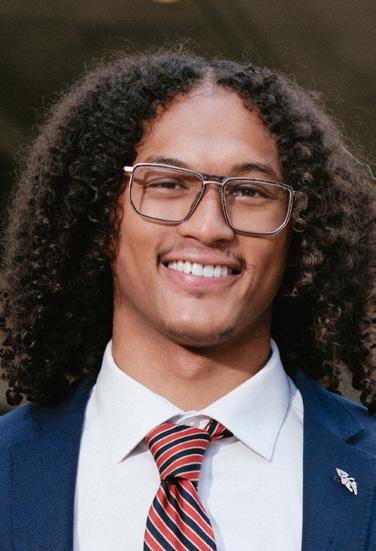
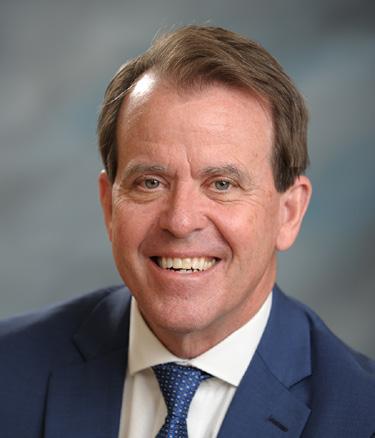
By Taylor Hohn, Digital Hive Mind
A few years back, Professor John Dawes’ 95-5 rule—stating that 95% of B2B buyers aren’t in the market for your goods or services right now—was published by the LinkedIn B2B Institute. It broke that corner of the internet, spurring countless hot-take posts, sprinkled with sentence fragments and optimized to rake in impressions. For B2B business leaders, especially those in manufacturing, this news made an already-bleak landscape bone chilling. If customers aren’t looking to buy, how can we sell to them?
The solution is unexpectedly simple; stay top of mind for the long haul
with a persistent blend of consistent branding and frequent advertising.
The Building Blocks of Your Brand Philosophically speaking, your brand is the meaning and reputation that people— customers, vendors, employees, you name it—attach to your company over time. Strategically speaking, though, you have the ability to influence and direct this meaning. The core elements of your brand are how your company appears to others. A logo is the face and physical representation of your company. The colors that make up your logo should be leveraged for internal
ROCPAC SIGNALS FORWARD FOCUS
New logo captures the vision driving business advocacy in Northern Illinois
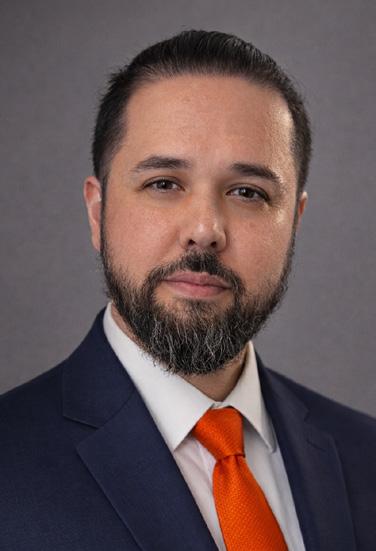
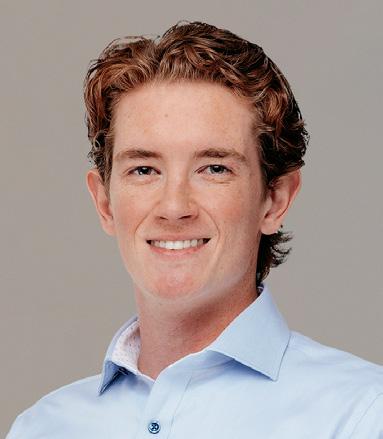
By Conor Brown, ROCPAC, Inc.
The Greater Rockford Chamber of Commerce (GRCC) plays a critical role in supporting businesses, promoting economic development, and serving as a voice for the business community. The Rockford Chamber Political Action Committee (ROCPAC) was recently revitalized as a separate, affiliated organization that strengthens advocacy efforts on behalf of the Rockford Region’s business community.
Voicing Business Priorities
Local government decisions have a direct impact on the business climate, including taxes, zoning, infrastructure, workforce development, and regulations. ROCPAC participates in the political process by supporting candidates who understand and prioritize business issues.
As a separate organization, ROCPAC can support the election of leaders who support policies that encourage economic growth and entrepreneurship. One of the primary benefits of ROCPAC is that it amplifies the collective voice of local businesses. Individual business owners may not have the time, resources, or political experience to engage directly in campaigns or policy advocacy. ROCPAC provides a structured and lawful way for local businesses to pool resources and support candidates who align with shared economic priorities. This collective influence helps ensure that the concerns of employers, small businesses, and industry leaders are heard during elections and legislative debates. ROCPAC plays an important role in responding to referendums that may
IN THIS ISSUE
and external marketing collateral, such as your website, business cards, and social media posts. Print materials, like a brochure, are an excellent physical reminder of your brand for prospects to rediscover after a fleeting meeting or a bustling trade show. And lastly, though invisible, your brand’s voice shouldn’t be overlooked. Informed by your company’s values and differentiators, a consistent voice makes your brand sound trustworthy and relatable. Take our region’s own Forest City Gear for example. Over decades, FCG has garnered an international reputation for
impact the local business climate. When ballot initiatives affect issues such as business taxation, regulation, or economic growth, ROCPAC may choose to financially support or oppose measures based on the interests of our members, as well as the broader business community.
Building Credibility and Relationships
ROCPAC complements the GRCC’s issue advocacy for the local economy. The GRCC often speaks on behalf of the business community when discussing issues such as infrastructure improvements, housing, and workforce readiness. While the GRCC advances these priorities through statements and forums, ROCPAC can
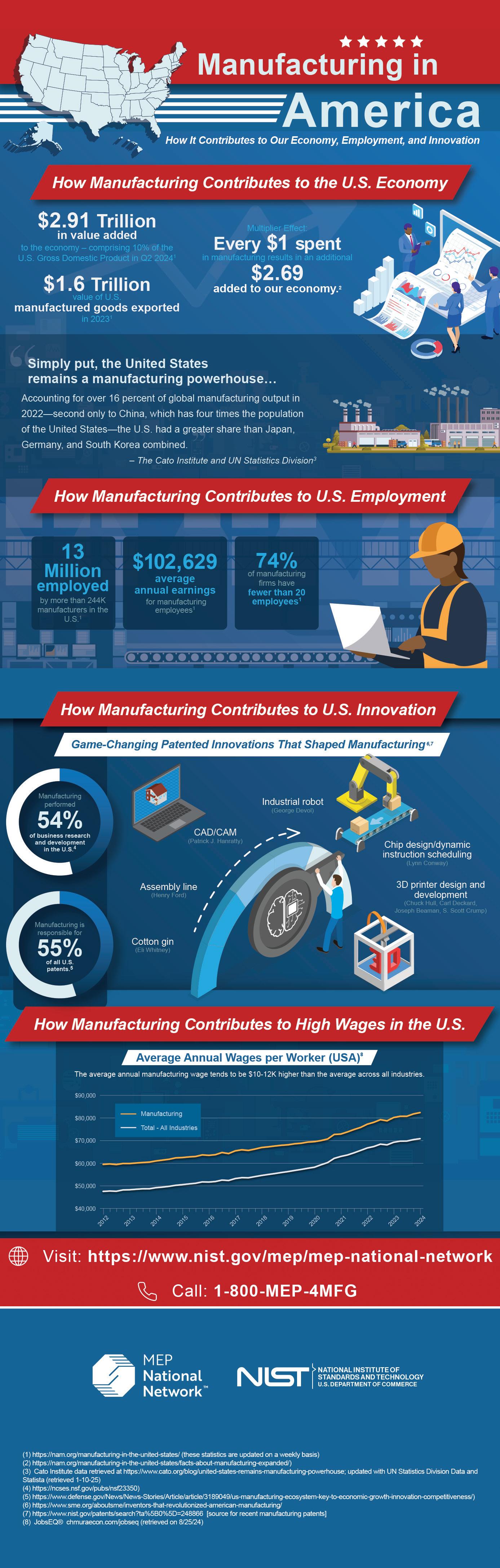
Last month, the Greater Rockford Chamber of Commerce (GRCC) hosted Chicago Federal Reserve Bank President Austan Goolsbee for a conversation on the local and national economies. It was a pretty cool experience to share the stage with him and chat about several aspects of our region. Before, during, and after the event, we talked about the strength of our manufacturing sector and its importance to our local economy. Manufacturing represents 24% of our GDP and 20% of our employment base, and it’s positioned to grow. But it’s also vulnerable to aging owners who may or may not have a plan for their retirement. Our country is entering what many economists are calling the “Great Ownership Transfer.” Analysis from the McKinsey Institute for Economic Mobility suggests that by 2035, roughly six million small and mid-sized businesses in the U.S. will change hands, representing as
MAKERS, MOVERS, AND NEXT-GEN OWNERS
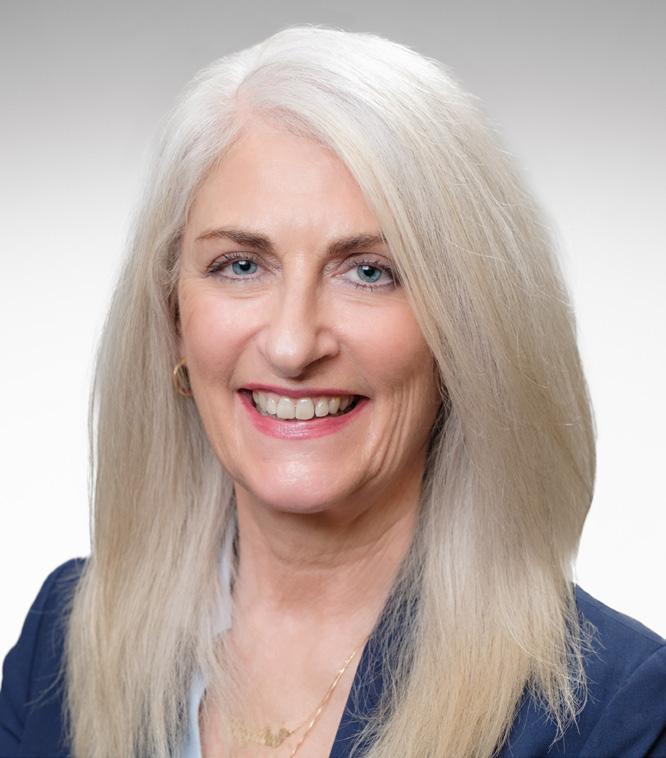
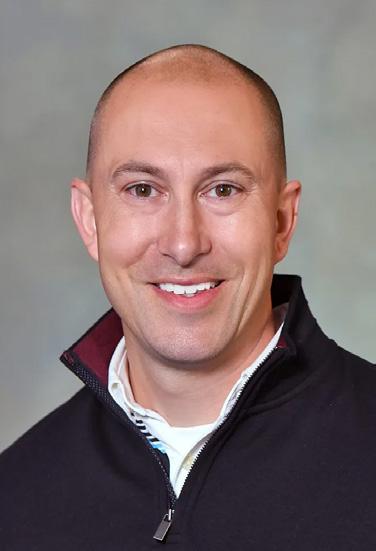
By Angela Kay Larson, chief executive officer, Greater Rockford Chamber of Commerce
much as $5 trillion in enterprise value. In communities like ours, much of that value is embedded in the manufacturing, logistics, and warehousing businesses that have long defined our economy.
In our Q1 2025 Business Sentiment Survey, we asked about preparedness for ownership transfer. More than 55% of respondents indicated they do not have an up-to-date succession or divestiture plan in place. That gap reveals a harsh reality: While many business owners know a transition is coming, the majority do not have a defined path forward.
In the conversations I’ve had with owners, transactional elements matter, but what I hear most often is more personal. They want an exit plan that ensures that what they’ve built will continue. They want the people who have worked alongside them to still have opportunities. They want their business to remain part of the community they care about.
At GRCC, we spend a great deal of time talking about business retention, expansion, and attraction. Increasingly, we’re also talking about business transitions. We’ve convened local experts to explore how we might support business owners as they begin
to consider what comes next. What tools and resources do they need to evaluate their readiness and options? How do we create more awareness of available options? And how can we help them decide what’s most important to them and the future of their company?
When ownership is local, there is often a longer view. Decisions are made by people who are rooted here—people who understand the impact of a hiring decision, an expansion, or a closure, not just on a balance sheet but on a neighborhood, a school district, or a local supplier. When ownership shifts away, that perspective can change. Not always negatively but almost always differently.
And so the question facing our region is not simply whether these businesses will transition but how, and we’ve been exploring that “how” with bankers, lawyers, brokers, accountants, and other
experts. Will companies transition to the next generation of family ownership? Will they be acquired by employees who know the business inside and out? Will they sell to outside buyers whose connection to the community is uncertain? Will they close altogether because a clear path forward was never established? We don’t have the answers, but with our band of local experts, we’re thinking through how we can help companies connect with prospective local buyers, explore employee ownership models, and prepare to transact, long before it becomes urgent. We know that each case is unique and each owner has different needs and expectations. We also know that these transitions will have a lasting effect on our regional economy, and we want to help usher in the next generation of local owners.
Angela Kay Larson, GRCC CEO, has seen firsthand the pride that comes with building a business over time and has been part of the decisions that come with changing ownership. She appreciates that when transitions are done well, they don’t just preserve businesses, they carry them forward for the benefit of the next generation and the community.
ABOUT THIS ISSUE …
This month’s issue is dedicated to makers and movers— those manufacturers and transportation/logistics providers who, in some cases, literally drive our economy.
Transportation has been a consistent thread throughout my career. When I was a student at University of Memphis, I got my first job in transportation as a part-time billing clerk at Arkansas Freightways (which would eventually become FedEx Freight). The “office,” a dilapidated mobile home planted next to the terminal, was perpetually filled with cigarette smoke and swearing—lots and lots of swearing. My coworkers were brusque but kind and patiently taught me the business of trucking.
I even met Elvis’ undertaker while working there. One of the owneroperators had previously run his family’s funeral home in Memphis, and HE HIMSELF embalmed The King of Rock ’n’ Roll. Surprisingly, that funereal brush with greatness doesn’t come up in conversation very often.
In this issue, many of our contributors write about the symbiotic relationship between manufacturing and transportation/logistics. They emphasize how our region’s strength in both these areas is vital to future economic development and good-paying jobs. You’ll also learn about local support systems for these industries, from marketing strategies and employee retirement plans to business expansion loans and start-up capital.
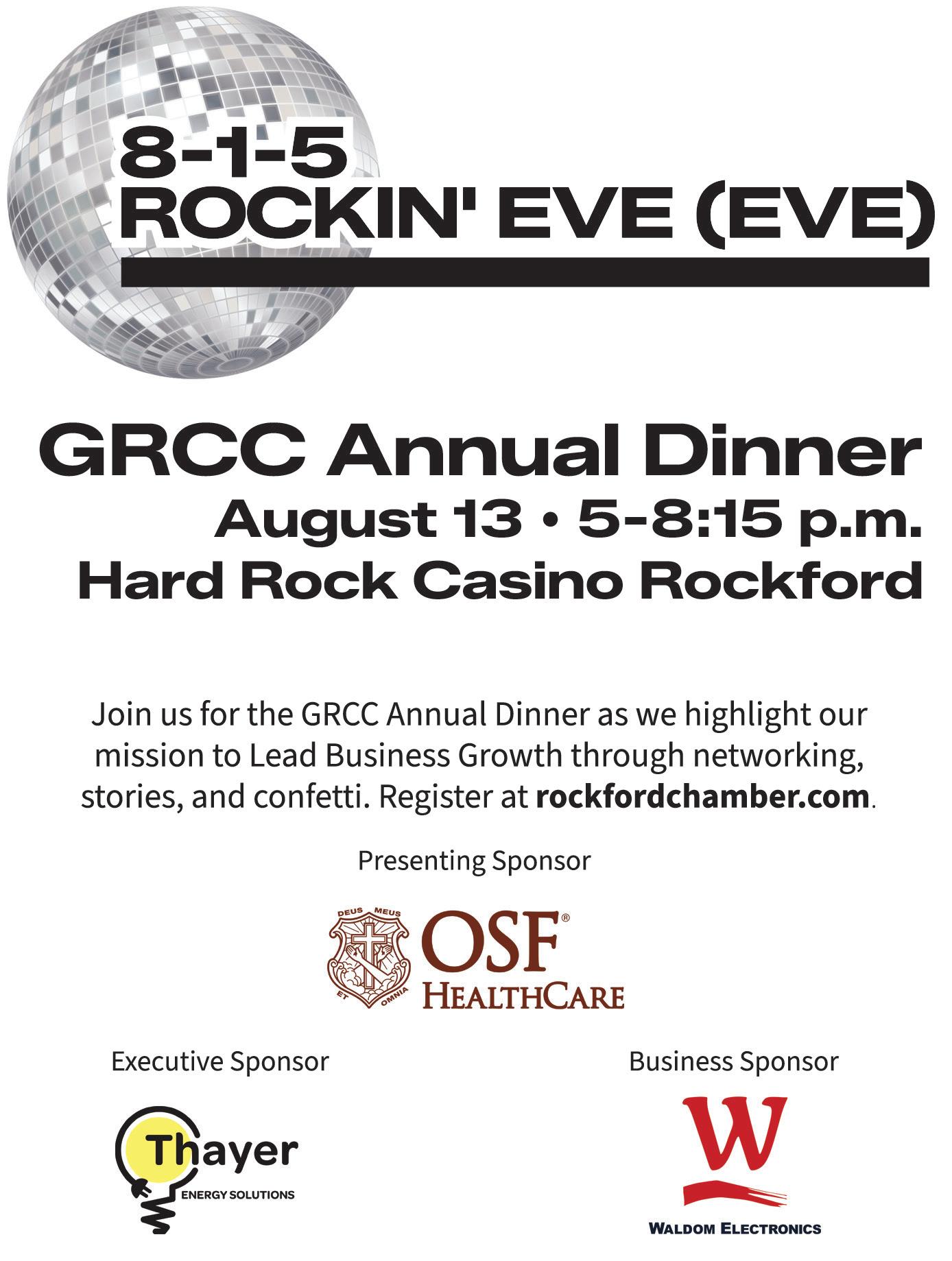
Be sure to check out the story on page 10 about the 2026 Business Summit and our announcement about GRCC’s Annual Dinner: 8-1-5 Rockin’ Eve (Eve) on Aug. 13. Save the date!
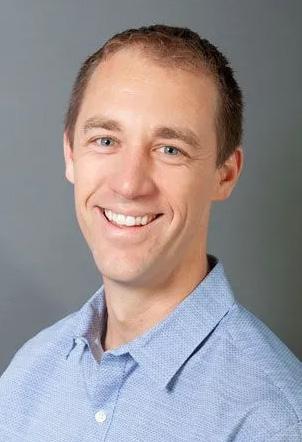
— Christine Hand, managing editor
their expansive design for manufacturing (DFM) expertise and approachable demeanor. A Roscoe-based shop feeling like “your friendly neighborhood gear manufacturer” to a customer across the globe doesn’t happen overnight or even over a few months. FCG’s consistent branding and voice made that happen.
Turning Awareness into Action
So you’ve established your brand. Congratulations! Your home base is built, and you’re ready to invite people in. Now it’s time to advertise.
In this dynamic landscape of daily disruption we call “the digital age,” traditional print advertising is merely one tool at your disposal. Social media marketing and search engine ads direct loads of users to your website. LinkedIn ads are especially effective for B2B, and manufacturers often have success running hiring ads locally on Facebook or on billboards around town. And as the digital age becomes fatiguing, in-person events are proving even more fruitful. When challenged by our client, National Tube Supply, to increase
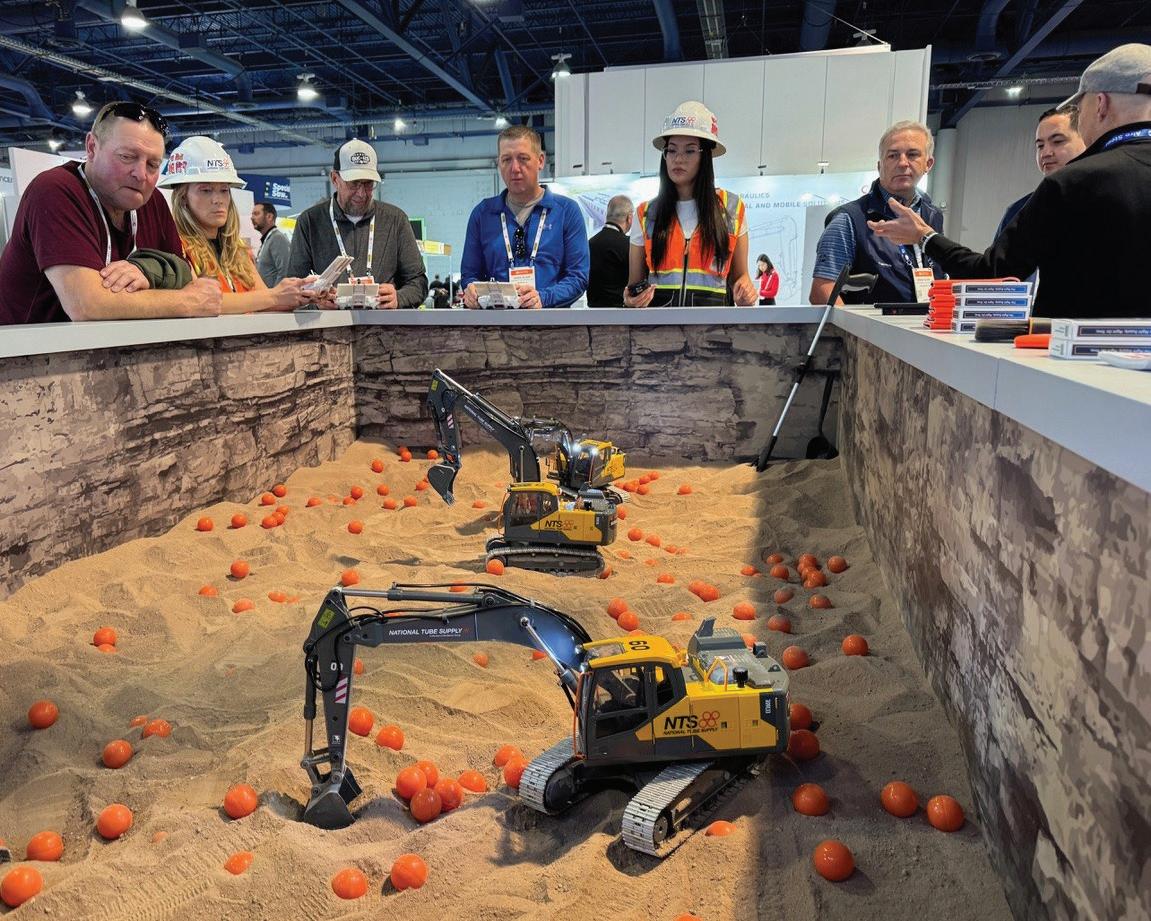
ROI at CONEXPO-CON/AGG in March, we suggested a lead-generating activation. The result was a remotecontrol excavator course in a massive sandbox, creating a unique experience for attendees to linger and compete. The sandbox activation garnered about 1,200 qualified leads and yielded a decrease in cost per lead (CPL) to $120 CPL from 2023’s $1,600 CPL.
Staying Top of Mind
With our help, NTS will continue advertising to these leads in the coming months; that nine-month to one-year sales funnel estimate for B2B is accurate. But having a face to a name, a logo to a brand, and fond memories of a remotecontrol excavator adventure will ensure these potential customers think of NTS when it comes time to source more steel.
For a successful campaign, branding and advertising must work in tandem. Nobody will know about your brand if you don’t advertise it. And alternatively,
nobody will connect you with your advertising if it’s not on brand. To break through the slop and the noise, this pairing of frequency and consistency is key. The companies that commit to both are the ones buyers remember when it’s finally time to make a purchase. Your sale may close months from now, but building recognition starts today.
Digital Hive Mind (DHM) is a fullservice advertising, design, and content development agency located in Rockford. DHM specializes in web development, branding, graphic design, photography, video production, advertising strategy, content marketing, and social media for B2C clients with a focus in industrial, manufacturing, and pharmaceutical markets. www.digitalhivemind.com.
The views expressed are those of the author(s) and do not necessarily represent those of the Greater Rockford Chamber of Commerce. v
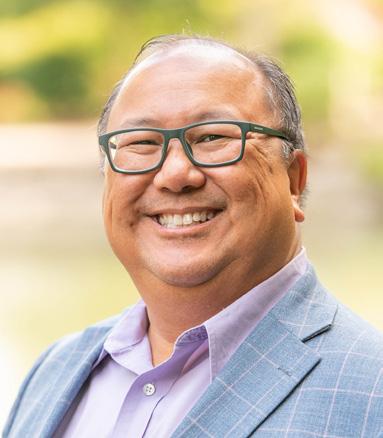
As communications specialist at DHM, Taylor Hohn plans, writes, and edits copy across platforms for clients and the agency. Journalistically trained, Hohn approaches technical content and public relations alike with curiosity and a dynamic writing voice. Hohn holds a B.S. in magazine journalism and sociology from Ball State University.
FROM DOCK TO DELIVERY
How efficient warehousing supports local manufacturing
By Tim Charles, Pierce Distribution
In a region like Rockford, manufacturing isn’t just an industry, it’s part of the community’s identity. From precision components to finished products, local manufacturers keep goods moving across the country and around the world. But behind every successful shipment is something less visible, and often less talked about: the warehouse.
Efficient warehousing plays a critical role in keeping manufacturing operations running smoothly. It’s the link between production and delivery, the place where timing, organization, and accuracy all come together. When it works well, it’s almost invisible. When it doesn’t, everything shows it.
For many manufacturers, the challenge isn’t making the product, it’s managing what happens next.
Once goods leave the production floor, they enter a phase where coordination becomes just as important as craftsmanship. Inventory must be tracked in real time. Orders must be picked and staged accurately. Shipments must go out on schedule. A delay at the dock can ripple through the entire operation, affecting customer timelines, transportation costs, and even future orders.
That’s why warehousing has evolved far beyond simple storage. Today, it’s an active, dynamic part of the supply chain.
One local operations manager recently put it this way: “We can build a great product, but if we can’t get it out the door efficiently, it doesn’t matter.” That sentiment reflects a broader shift in how manufacturers are thinking about logistics. Speed, visibility, and flexibility are essential.
In the Stateline, that shift is especially important. Our region’s central location has long been a strategic advantage, with access to major highways, rail lines, and proximity to Chicago’s transportation network. But location alone isn’t enough. To stay competitive, businesses also need the infrastructure and processes to move products efficiently once they’re ready to ship.
That’s where strong warehousing practices come into play.
Clear organization within a warehouse—well-defined locations, accurate labeling, and streamlined
workflows—can significantly reduce the time it takes to move products from dock to delivery. Real-time inventory systems help teams know exactly what’s on hand and where it’s located, reducing errors and eliminating the guesswork that can slow things down.
Just as important is flexibility.
Manufacturing demand doesn’t always follow a predictable pattern. Seasonal spikes, large orders, or supply chain disruptions can all place unexpected pressure on storage and distribution. Warehousing operations that can scale up quickly—or adapt to changing needs—help manufacturers stay responsive without overextending their internal resources.
There’s also a human element that often gets overlooked. Behind every efficient warehouse is a team that understands the importance of accuracy and timing. Training, communication, and attention to detail all play a role in keeping products moving. In many ways, warehousing is a team sport, requiring coordination across departments and, often, across organizations.
For the Rockford Region’s manufacturing community, this level of coordination is what helps turn strong production into strong performance. It’s what allows local companies to meet deadlines, maintain quality, and build lasting relationships with customers.
As the industry continues to evolve, one thing is clear: The strength of our manufacturing sector is closely tied to the strength of the systems that support it.
From dock to delivery, efficient warehousing isn’t just about moving products, it’s about keeping an entire regional economy moving forward.
Pierce Distribution is a Rockfordbased logistics provider offering warehousing, distribution, and valueadded services. The company supports manufacturers and businesses across the region with flexible solutions designed to improve efficiency, accuracy, and supply chain performance.
The views expressed are those of the author(s) and do not necessarily represent those of the Greater Rockford Chamber of Commerce.
Tim Charles is a salesperson at Pierce Distribution, where they work closely with manufacturers and distributors to support efficient warehousing and logistics operations. With experience in supply chain management and distribution, Tim focuses on helping businesses improve processes, increase visibility, and keep products moving.
support candidates who champion them. This engagement strengthens the business community’s voice with elected officials and policymakers.
Another important benefit is relationship-building. Political campaigns require communication and collaboration between candidates and community stakeholders. ROCPAC seeks to build stronger working relationships between business leaders and public officials before and after elections. These relationships create better access to decision-makers and foster productive conversations about policies that affect local employers and economic development initiatives.
Encouraging Civic Engagement
ROCPAC also encourages greater civic participation among area business leaders. Many business owners are interested in public policy but feel disconnected from the political process. ROCPAC works to educate members about local issues, candidate positions, and upcoming elections in a nonpartisan and professional manner. By increasing awareness and engagement, ROCPAC helps cultivate a more informed and active business community. This participation often leads to stronger advocacy efforts and a deeper understanding of how government decisions influence economic success.
ROCPAC also provides a more unified approach to advocacy. The GRCC represents businesses of different sizes and industries, ranging from retail stores and restaurants to manufacturers and
professional service firms. While these businesses may have different operational needs, they often share common concerns. ROCPAC focuses on these shared priorities and backs candidates and policies that support overall community prosperity.
Promoting Economic Growth
Local governments make decisions every day that shape the business environment. Policies related to infrastructure investment, permitting processes, education, and taxation can either attract new employers or discourage investment. By supporting candidates who value economic growth and responsible governance, ROCPAC contributes to a more competitive and business-friendly climate. This ultimately benefits residents through job creation, increased tax revenue, and improved community services.
Ensuring Non-Partisanship and Accountability
Critics sometimes argue that a chamber should avoid political involvement to preserve its neutrality. But nonpartisanship is a principle the GRCC and ROCPAC apply at both levels. The GRCC takes positions based on issues, not parties, advocating for policies that strengthen the business climate rather than for any political side. ROCPAC, as a separate organization, applies that same standard to candidates: It supports those from across the political spectrum based on their positions on business and economic issues, not party affiliation. This issue-focused approach is what keeps both
organizations credible while they advocate effectively for the business community. Transparency and accountability are also important advantages of operating a formal PAC. Political contributions and expenditures are regulated and publicly reported to the Illinois State Board of Elections, ensuring compliance with campaign finance laws. This structure provides clarity for members and the public while allowing ROCPAC to engage in political activity responsibly and ethically.
Looking Good
Recently, ROCPAC worked with Armory815 to develop a logo that reflects our non-partisan, pro-business focus and establishes our identity as a separate organization. We’re grateful to Stephen Platcow and the team at Armory815 for partnering with us to develop the identity and brand narrative. The logo’s forward-moving ‘A’ perfectly symbolizes our focus on advancement, advocacy, and, of course, action. We’re pleased that Armory815 chose Rockford as its headquarters and look forward to seeing more of their work throughout the region.
How You Can Help
Local businesses need strong representation, and ROCPAC provides an organized, strategic way to financially support pro-business leadership, strengthen community relationships, and encourage civic engagement. It advances shared goals of economic growth, strong business interests, and a better quality of life across the Rockford Region. Business leaders who wish to support candidate and referendum efforts around these issues can do so through voluntary contributions to ROCPAC.
Contributions to the Rockford Chamber PAC (ROCPAC) are voluntary and are not tax deductible for federal income tax purposes. Contributions will be used for political purposes. You have the right to refuse to contribute without reprisal. A copy of ROCPAC’s report filed with the State Board of Elections is available at www.elections.il.gov or for purchase from the State Board of Elections, Springfield, Illinois.
Conor Brown, chair of ROCPAC, Inc., serves as CEO of the NorthWest Alliance of REALTORS®. His expertise in government affairs, tax policy, and the real estate industry is vital in supporting the work of the GRCC.
FUELING THE FUTURE OF MANUFACTURING
Strategic capital and transitions for makers and movers
By Nate Jordan, CMAA, Rock Valley College Small Business Development Center
Northern Illinois has a storied legacy of building and moving the world’s goods.
As our partners at the Rockford Local Development Corporation highlight in this issue, the long-term momentum of our region’s manufacturing sector relies heavily on strategic facility and equipment investments.
But upgrading a facility or expanding a warehouse is only part of the equation. To truly thrive in today’s evolving industrial landscape, our local businesses must also navigate complex capital markets and plan thoughtfully for the future of their ownership. That is exactly where the Rock Valley College Small Business Development Center (SBDC) can help.
Last year, the Small Business Administration launched the Made in America Manufacturing Initiative, a comprehensive effort to restore domestic production dominance, secure supply chains, and empower small manufacturers. The initiative is built on cutting regulatory red tape, supporting onshoring efforts, and, crucially,
expanding access to capital. However, for a mid-sized machine shop or a growing logistics firm, identifying the right financial vehicle can be daunting.
At the SBDC, our primary strategy centers on capital and debt advisory services. We sit down with business owners to map out their growth trajectories and help them identify the precise funding mechanisms that fit their unique operations. While programs like the SBA 504 loan are exceptional for commercial real estate, a manufacturer reshoring its supply chain might also need flexible liquidity to purchase raw materials, retool assembly lines, or take on larger contracts. We guide these businesses through the broader capital stack—from expanded 7(a) Working Capital programs to conventional debt structuring—ensuring they secure the funds they need without overextending their operational reserves. Our goal is to demystify the funding process so local makers can focus on what they do best: producing world-class goods.
MANUFACTURING MOMENTUM IN NORTHERN ILLINOIS
How
strategic investment and longterm financing are supporting
the region’s makers and movers
By Brenten Witherby, Rockford Local Development Corporation
Northern Illinois has long been defined by its makers—companies that design, fabricate, move, warehouse, and distribute the products that keep the broader economy running. While the manufacturing sector has certainly faced its share of challenges over the past several years, one encouraging trend has become increasingly clear: Many businesses are once again thinking long term. Across the region, manufacturers and logistics companies are investing in facility modernization, automation, production efficiency, warehousing capacity, and succession planning. In many cases, those investments are not simply about growth for growth’s sake—they’re about remaining competitive in an environment shaped by higher operating costs, evolving supply chains, and increasing pressure to improve productivity. That reality has also renewed attention
Beyond capital infusion, the most pressing challenge facing our regional industrial base is succession. We are in the midst of a massive generational transfer of wealth and business ownership. Many of the legacy manufacturing and transportation companies that serve as the backbone of the Northern Illinois economy are led by founders who are beginning to look toward retirement.
To address this, the SBDC provides dedicated mergers and acquisitions (M&A) advisory services. Whether an owner is looking to strategically exit and sell their life’s work, or an ambitious entrepreneur is looking to acquire an existing fabrication business or a logistics franchise, we offer the technical guidance to navigate the transaction. We help local buyers and sellers understand business valuation, structure acquisitions, and secure the specialized financing required to fund a buyout. By facilitating these transitions locally, we ensure that these vital businesses— and the jobs they provide—remain right here in our community rather than being absorbed and relocated.
on how growth projects are financed.
In today’s environment, preserving liquidity can be just as important as obtaining capital itself. Businesses that may have previously relied on conventional financing alone are increasingly exploring programs and partnerships that allow them to invest strategically while maintaining flexibility for operations, hiring, and future expansion.
One financing tool that continues to play an important role is the Small Business Administration’s (SBA) 504 loan program, which supports owner-occupied commercial real estate and long-term equipment financing. The program is frequently used by manufacturers and logistics-related businesses, because it offers long-term, fixed-rate financing designed to support substantial capital investment without requiring businesses to overextend working capital reserves. Recent federal initiatives have further
The resurgence of domestic manufacturing is not just a national talking point; it’s a tangible reality happening on the shop floors of the Rockford Region. The Made in America Manufacturing Initiative provides the framework, but it takes tailored, onthe-ground advisors to turn those programs into bottom-line results. If your business is ready to explore capital expansion, navigate the complexities of debt structuring, or take the next step in buying or selling a commercial enterprise, the Rock Valley College SBDC is here to help. Together with partners like the RLDC, we have the strategic tools to keep Northern Illinois making and moving for generations to come. Learn more about federal programs for manufacturers at sba.gov/ priorities/american-manufacturers and manufacturing.gov.
The views expressed are those of the author(s) and do not necessarily represent those of the Greater Rockford Chamber of Commerce.
Nate Jordan is the SBDC director and a Certified Mergers & Acquisitions Advisor. His expertise enables him to tailor strategies that directly address each business’s unique challenges. His commitment to empowering local business owners to thrive in today’s competitive market has solidified the SBDC’s reputation as a trusted consultancy.
emphasized the importance of domestic manufacturing investment. Through SBA’s Made in America Manufacturing Initiative, manufacturers may now qualify for enhanced incentives under the SBA 504 program, including temporary waivers of certain SBA guaranty and annual servicing fees for qualifying manufacturing projects. The SBA also announced expanded support for manufacturing-related lending and working capital programs aimed at strengthening domestic production capacity and supply chain resiliency.
For manufacturers making substantial investments in facilities, machinery, automation, or industrial modernization, those enhancements can create meaningful savings while improving access to long-term capital.
Tony Beall, owner of Plastic Parts Int’l Inc. and FlexCourt Sports Flooring Products in Loves Park said the SBA 504 loan program was “a pivotal component in allowing our family of companies to transition properly and grow successfully.”
Perhaps most importantly, these investments are helping position regional
businesses for the next generation of economic activity. Whether through reshoring efforts, automation, facility upgrades, or business transitions, many companies are making thoughtful decisions today that strengthen longterm resilience and competitiveness.
For a region with deep industrial roots and a strong culture of entrepreneurship, that continued investment in making and moving goods remains an important part of the broader economic story.
Rockford Local Development Corporation (RLDC) is the SBA 504 lender serving the Rockford Region and one of the most active participants in the State of Illinois Advantage Illinois loan program.
RLDC has a long history of supporting manufacturers, logistics companies, and small businesses in Northern Illinois through strategic financing and economic development initiatives.
The views expressed are those of the author(s) and do not necessarily represent those of the Greater Rockford Chamber of Commerce.
Brenten Witherby is executive vice president of Rockford Local Development Corporation (RLDC). For more than 30 years, RLDC has helped businesses throughout Northern Illinois access local, state, and federal financing programs, including the SBA 504 loan program, through practical guidance and economic development lending expertise.
PAUSE BEFORE YOU APPROVE
Protect your business from today’s most deceptive financial scams
By Donald Todd, Midland States Bank
It starts with a phone call. The caller ID says it’s your bank. The voice is calm and professional. They explain there’s suspicious activity on your business account like a wire transfer pending or unusual login attempts. They just need to verify a few details to better assist you.
Across our community, employees are unknowingly handing over the keys to the kingdom: online banking credentials, one-time passcodes, and multifactor authentication approvals.
In late 2025, the FBI’s Internet Crime Complaint Center warned that account takeover fraud, where criminals gain unauthorized access to financial accounts, continues to generate hundreds of millions of dollars in losses nationwide. These schemes often begin with social engineering: a convincing email, a welltimed text message, or a phone call impersonating a financial institution. The victim, believing the contact is legitimate, provides login credentials and passcodes. Within minutes, the criminal controls the account.
What makes the current wave especially concerning is how convincingly criminals impersonate fraud departments or security teams at legitimate financial institutions. They spoof real bank phone numbers. They reference actual products. They understand treasury management services well enough to sound credible. This includes using AI to spoof voices, making them appear more authentic.
Here’s how it typically unfolds.
A caller claims to be from the bank’s fraud or security department. They create urgency by telling the victim, “We need to stop a wire.” They instruct the employee to log in or provide them with a link spoofing the banks login that captures their account credentials. When a one-time passcode or multifactor authentication prompt appears, they ask the employee to read it back or approve it so they can “block the fraud.” In reality, that sequence of events authorizes the criminal’s access.
Funds are quickly transferred out and often go through multiple accounts or are converted into cryptocurrency. Recovery becomes difficult and often impossible.
For business owners, this is not just an IT problem. It’s a governance and internal controls issue that can be addressed by understanding the following questions:
Who in your organization can initiate a wire?
Who has administrator-level access to online banking?
Is dual control required for outgoing transactions?
Would your team know that a legitimate bank will never ask for a password or one-time passcode?
Research published by Microsoft found that enabling multifactor authentication reduces the risk of account compromise by more than 99%. That is a staggeringly strong control. But if an employee is tricked into providing a fraudster sensitive details, even strong technical controls can be undermined.
Physical security matters too—printed wire instructions left on desks, check stock stored in unlocked cabinets, sensitive financial calls taken within earshot of others—criminals gather information wherever they can.
The most resilient businesses treat financial security like workplace safety. They build layers to better mitigate risk: They require dual authorization for wires and ACH batches.
• They limit administrator privileges.
• They prohibit credential sharing. They train employees to pause and independently verify.
Most importantly, they make it acceptable to hang up or question the person on the other end of the conversation.
If someone calls claiming to be from your bank’s fraud department, end the call and independently verify using a trusted number from your statement, an official website, or your relationship manager. A brief pause can prevent significant disruption.
Consider adding fraud awareness to your next leadership meeting. Review your payment processes. Talk with your bank about available safeguards. Encourage your team to slow down when something feels urgent.
With thoughtful controls, clear communication, and a culture that values verification over speed, area businesses can continue to operate confidently and securely.
The views expressed are those of the author(s) and do not necessarily represent those of the Greater Rockford Chamber of Commerce.
KEEPING PACE WITH MODERN TRUCKING
Regulation updates needed to improve safety and competition
By Zach Meiborg, CEO, Meiborg Companies
As a third-generation trucker and the CEO of a Rockford-based transportation company, I’ve spent my career operating within the rules that govern our industry. And I believe in those rules—when they work.
Today, I believe we have a system that, despite being well-intentioned, is no longer aligned with how modern trucking actually operates.
The current hours-of-service (HOS) framework places strict limits on how long drivers can operate, including a long-standing 70-hour rule that effectively caps productivity at roughly 8.75 hours per day. These rules were created decades ago—long before today’s equipment, logistics systems, and supply chain demands.
What we’re seeing now is the unintended consequence of that misalignment: The system is incentivizing non-compliance.
In real-world operations, compliant carriers are often limited to around 2,100 miles per week, while non-compliant, solo drivers can exceed 4,500 miles per week. This gap creates a significant cost advantage for those willing to break the rules, making it incredibly difficult for compliant companies to compete on price.
That’s not just a business problem; it’s a safety problem. When compliance is economically penalized and noncompliance is rewarded, we begin to see a decline in real-world adherence to safety standards. Experienced drivers leave the industry, and the system begins to favor those willing to operate outside the rules.
In my view, the answer is not less regulation; it’s better, simpler regulation that reflects reality.
That’s why I’ve partnered on a proposal to the Federal Motor Carrier Safety Administration (FMCSA) to test a new, simplified hours-of-service framework
through a controlled pilot program.
This pilot would replace today’s complex rule set with a clearer structure: a defined 14-hour, on-duty window combined with a required 10 consecutive hours off-duty, allowing drivers to operate more flexibly while still maintaining a consistent rest period.
Just as importantly, it pairs that flexibility with stronger enforcement against the real problem—intentional fraud and electronic log device (ELD) tampering.
The goal is simple: Create a system where compliance is practical, enforceable, and economically viable. If we can reduce the incentives to cheat while improving real-world adherence, we can strengthen safety outcomes, stabilize the driver workforce, and create a more level playing field for companies doing things the right way.
This isn’t about proving a point. It’s about testing a better path forward. If the current system is truly the best solution, the data will show it. But if a simpler, more modern framework produces better safety and compliance outcomes, then we owe it to our drivers, our businesses, and our communities to pursue it.
Meiborg Brothers delivers dependable trucking and logistics solutions from full truckload and LTL shipping to dedicated routes and temperaturecontrolled freight. Their integrated logistics network combines asset-based trucking with flexible 3PL warehousing, order fulfillment, and distribution services—all supported by advanced tracking and responsive customer care. Learn more at www.meiborg.com.
The views expressed are those of the author(s) and do not necessarily represent those of the Greater Rockford Chamber of Commerce.
Donald Todd, CFE, CIPP, CISSP, is a financial services professional at Midland States Bank with a deep background in risk management, data protection, and regulatory compliance. He brings a strategic, cross-disciplinary approach to safeguarding financial institutions and their business and consumer customers.
Zach Meiborg is the CEO of Meiborg Companies, a Rockford-based logistics and transportation provider serving customers across North America. Follow Zach on LinkedIn to keep up with the progress of his proposed rule change.
THE PROGRESS PARADIGM
What to expect at the 2026
Business Summit on June 11
By Deepshikha Shukla, Rockford University
There is a particular kind of energy that emerges when a region begins to recognize its own momentum.
That is the spirit shaping the Fourth Annual Business Summit, presented by Rockford University and the Greater Rockford Chamber of Commerce.
More than an annual gathering of executives, entrepreneurs, educators, and civic leaders, this year’s summit will reflect a broader shift underway across the Rockford Region: a growing confidence that progress is not only possible but already in motion.
The theme running through the summit is what is described as a progress paradigm—the idea that economic growth, community vitality, and organizational success are no longer driven by isolated efforts. They are built through alignment, partnership, and the willingness to think beyond traditional boundaries. You can expect that idea to come alive throughout the day’s sessions.
The summit will place particular emphasis on collaboration, economic development, and intergenerational leadership, three forces increasingly shaping the future of the region.
Disruption through Collaboration
In past decades, disruption was often associated with technology, competition, or market volatility.
Today, the summit suggests a different perspective: Collaboration may be the most powerful disruptor of all.
When employers work alongside higher education, when public and private sectors align around talent development, when established leaders make room for emerging voices, entirely new possibilities begin to emerge. Collaboration accelerates ideas, shortens the distance between strategy and execution, and creates solutions that no single institution could achieve alone.
That reality will be reflected in summit conversations focused on regional economic development. Expect discussions that move beyond abstract forecasts and into the practical dynamics of growth: workforce pipelines, entrepreneurship, innovation ecosystems, business attraction, and the partnerships required to sustain long-term competitiveness.
Intergenerational Leadership
Perhaps one of the timeliest elements of the 2026 Business Summit will be its attention to intergenerational leadership. Organizations today are navigating one of the most significant leadership transitions in recent memory. Baby boomers, Generation X, millennials, and Generation Z increasingly share workplaces, boardrooms, and decisionmaking spaces. The summit will explore what it means to lead effectively across those generational perspectives, not as a challenge to manage but as a strategic advantage to harness.
That matters because the future of the region will not be built by one generation alone. It will be shaped by experienced leaders who understand institutional memory, by mid-career professionals translating vision into systems, and by emerging leaders bringing new expectations around innovation, purpose, and adaptability.
Leading with Optimism
Underlying all of this is something increasingly noticeable across Rockford and the surrounding region: a swell of optimism. That optimism is not abstract; it’s rooted in leadership.
Across major employers, educational institutions, civic organizations, and public-sector entities, the region is seeing leaders who are willing to think regionally, act collaboratively, and invest
in long-term outcomes. There’s a growing sense that Rockford is entering a period marked by resilience and intentional advancement. The 2026 Business Summit will capture that moment.
The summit will offer more than keynote and breakout sessions. It will offer a window into where the region is headed and who is helping shape that direction. The takeaway is simple but significant: Progress rarely arrives through isolated brilliance. More often, it emerges when leaders across sectors recognize shared opportunity and move toward it together.
That’s what to expect at the 2026 Business Summit.
This is the clearest sign yet that the Rockford Region is not just imagining its
future, it is actively building it. Rockford doesn’t chase progress; we engineer it. Rockford University (www.rockford. edu/about/quickfacts/) is a private, four-year institution founded in 1847 and located in Rockford, Illinois. With a 150-acre campus and approximately 1,100 students, the university offers more than 80 majors and graduate programs grounded in liberal arts education and professional preparation for careers, leadership, and civic engagement.
The views expressed are those of the author(s) and do not necessarily represent those of the Greater Rockford Chamber of Commerce.
Deepshikha Shukla, a theoretical nuclear physicist by training and systems strategist by practice, is associate vice president of business innovation and dean at Rockford University. She advances partnerships among academia, employers, and civic leaders to align education with workforce needs and position the university as a partner in forging regional solutions.
MAKING MINI MAKERS
Introducing students to the realities of manufacturing
By Bethany Mead, Career Education Associates of North Central Illinois
Programs that introduce young people to manufacturing and advanced manufacturing careers have shown measurable success in three main areas: improving perceptions of manufacturing, increasing STEM confidence and interest, and building longer-term career awareness.
A Deloitte/Manufacturing Institute perception study found that after attending events that included hands-on experience and interaction with engineers and technicians:
• 84% of students said they were more convinced manufacturing careers are “interesting and rewarding.”
• 64% said they were more motivated to pursue manufacturing careers.
• 71% said they were more likely to talk positively about manufacturing with others. 90% reported greater awareness and understanding of manufacturing jobs.
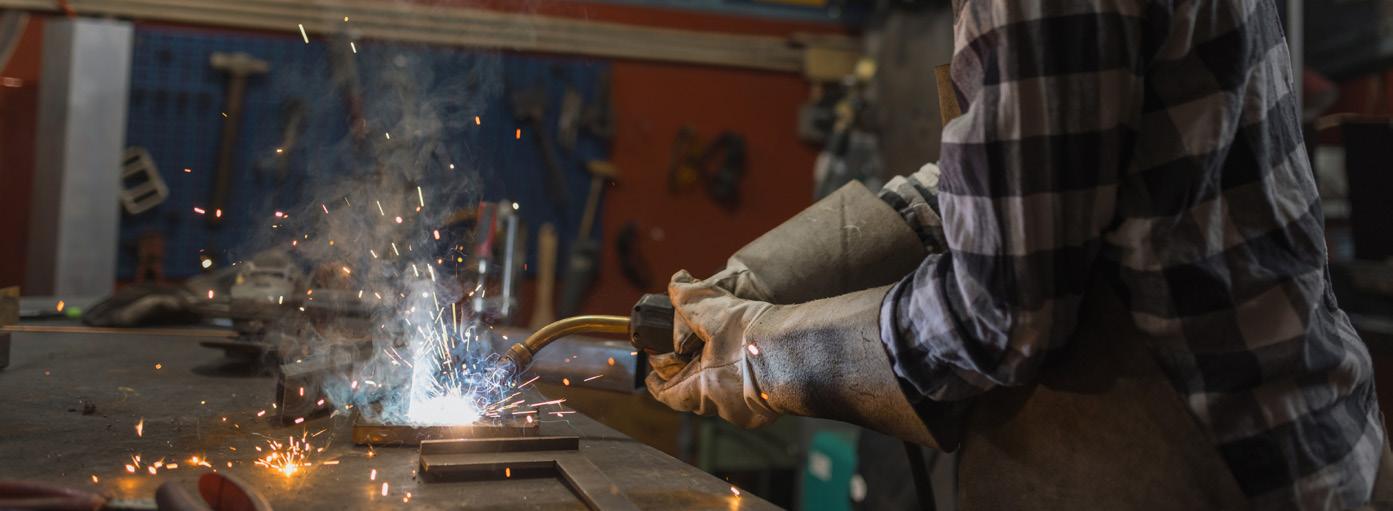
This June, Career Education Associates of North Central Illinois (CEANCI) is launching the Summer Makers Camp with Rock Valley College ATC Campus and the Fabricators & Manufacturers Association. Designed for students entering grades 8, 9, or 10, this program introduces them to manufacturing pathways, focusing on hands-on experience and active learning.
Campers will have the opportunity to learn and practice a variety of welding and safety skills, including welding shop safety, how to identify key welding terms and basic welding joints, and how to make metal cuts using oxyfuel and plasma arc processes. (As a result of that experience, each student will take home a welding project of their own creation.) Students will also tour a manufacturing facility in Belvidere and hear from industry experts about the world of manufacturing.
Another aspect of the camp curriculum will give students insight into the
demands, responsibilities, and day-today operations of being self-employed.
To help address the workforce needs of the Rockford Region, CEANCI strives to guide students toward meaningful high school courses that will ultimately lead to gainful employment. The Makers Camp is designed to help middle school and early high school students prepare for the next steps in their education, while exposing them to manufacturing careers and industry professionals.
Having had conversations with more than two hundred business partners, CEANCI knows it’s important to introduce students to careers at an early age and encourage them to pursue apprenticeships and attain workready skills. This new camp exposes them to trade experience and skills, while shaping them for the future.
CEANCI is grateful for the strong support of our area partners, especially Rock Valley College, whose continuous collaboration benefits both CEANCI and the students we serve. Other partners have donated welding coats, safety equipment, and gloves for this camp and other CEANCI skills competition events. We’re also grateful to Youngberg Industries and Franklin Display for providing facility tours for the campers. Additionally, the Greater Rockford Chamber of Commerce has been an incredible support to CEANCI and the students we serve in so many ways.
CEANCI supports career and technical education (CTE) programs that serve 34 middle schools and high schools in Winnebago, Boone, and Ogle counties. They support CTE instructors and collaborate with business and higher ed to improve student achievement.
The views expressed are those of the author(s) and do not necessarily represent those of the Greater Rockford Chamber of Commerce.
Bethany Mead has an accounting background and serves as community outreach coordinator at CEANCI. She is president of Women of Today’s Manufacturing and secretary for the Elev15 organization. Both organizations fundraise to provide students with scholarships for the trades, military, and post-secondary education. Beth enjoys helping students gain career exposure.
GROWTH AT ALTITUDE
Why the future of aerospace will be won by regional ecosystems
By Everett Butzine, Greater Rockford Chamber of Commerce
The future of aerospace will be built in ecosystems with robust and innovative networks of suppliers, partners, and problem-solvers that are clustered together in ways that elevate and advance one another.
The Rockford Region knows this well. As one of the nation’s leading aerospace and defense manufacturing clusters, the region was founded on innovation, advanced technology, and manufacturing excellence. That foundation is established, successful, and primed for what comes next. The potential for Rockford’s aerospace industry is, quite literally, out of this world.
Fostering our ecosystem, harnessing our collaborative strength, and supporting the innovation, technology, and talent within our cluster is a focus of the Greater Rockford Chamber of Commerce (GRCC). Our role is to convene, connect, and help chart the path forward.
This month, I want to shed some light on the value of our aerospace cluster, what makes it worth investing in, and tell you what we’re doing right now to strengthen it.
Why Ecosystems Outperform Markets
The most competitive aerospace regions are not defined by a single major employer but by network effects. When OEMs, Tier 1 and Tier 2 suppliers, precision manufacturers, educational institutions, logistics assets, and public-sector partners operate in close coordination, the result is exponential value creation—lead times compress, supplier collaboration improves, innovation cycles accelerate, talent pipelines become more responsive, and expansion decisions become easier.
Defense Industry Day
This is the power of cluster economics. Every new firm strengthens the region’s value proposition for the next. That compounding effect is what separates a market from an ecosystem.
Why Rockford Is Built for Aerospace Growth
The Rockford Region’s advantage begins with something many emerging markets cannot replicate, industrial DNA.
This is a region built on making things. For generations, Rockford has been a center of precision manufacturing, machining, tooling, metal fabrication, and advanced industrial production. These are the capabilities that translate directly into aerospace and defense supply chains.
Many regional manufacturers already support aerospace customers, like Tier 2 and Tier 3 suppliers, creating a foundation that is both scalable and immediately relevant to industry expansion.
Meanwhile, the region is supported by strategic infrastructure that moves industry at speed. The presence of the Chicago Rockford International Airport (RFD) provides a differentiator that elevates the region’s national competitiveness. As one of North America’s leading cargo airports, RFD offers aerospace firms direct access to rapid freight movement, supply chain flexibility, and global connectivity.
For manufacturers operating in highly time-sensitive production environments, logistics performance is a strategic asset. The Stateline delivers these assets at scale. We get it right here, and that’s exactly why the Rockford Region is increasingly positioned for national relevance.
Strengthening the Midwest Defense Supply Chain
June 16-17, Embassy Suites Chicago-Naperville
Defense Industry Day gives manufacturers direct access to decision makers, industry leaders, and supply chain experts who can help you unlock new contracts, diversify your customer base, and position your capabilities within the Department of Defense supply chain. Event includes:
• Prime contractor panels.
• Expert presentations and breakout sessions.
• Supplier matchmaking and networking.
• Manufacturing facility tour.
Sponsored in part by the Greater Rockford Chamber of Commerce
Learn more at www.imec.org/defense-industry-day.
A Collaborative Workforce Model
Long-term aerospace growth also requires aligned talent systems. The ability to train, retain, and continuously upskill talent will be one of the defining advantages of successful aerospace ecosystems over the next decade, and we’re building that advantage now.
Partnerships among colleges and universities, public school systems, and employers are creating precisely that alignment in our region. This collaborative workforce model is essential for supporting both current supplier demand and future growth in high-value sectors such as:
• Aerospace components.
• Avionics and systems manufacturing.
Advanced materials.
Defense technologies.
Autonomous systems. Precision machining and assembly.
Where Preparation Meets the Future
As aerospace firms continue to diversify supply chains and seek cost-competitive, highly-capable, regional partners, the Rockford Region is uniquely positioned to attract growth across both legacy aerospace manufacturing and emerging sectors including electric vertical take-off and landing (eVTOL) aircraft, drone systems, defense innovation, and advanced mobility technologies.
Capturing that opportunity will require continued investment in workforce development, industrial site readiness, infrastructure modernization, utility capacity, and national brand visibility among site selectors and corporate decision-makers.
But equally important is strategic storytelling, and this is where the Greater Rockford Chamber of Commerce (GRCC) and our community partners are leaning in.
Our team is actively working to illustrate and amplify the value of this region. The Rockford Area Aerospace Network, operating under the GRCC, is building the connective tissue of our cluster by strategically linking companies, institutions, and leaders across the region to strengthen the industry from within. We will host a familiarization tour designed to showcase the region’s assets to aerospace and defense companies evaluating where to grow, invest, or locate operations.
We’re also expanding the GRCC’s Midwest Aerospace Conference to a full two-day experience. This year, suppliers and manufacturers will have exclusive facility tours, panel discussions, and direct access to Boeing and other major primes, along with dedicated matchmaking sessions designed to forge supply chain relationships. It’s a significant step forward for the conference and a reflection of the growing demand for this kind of intentional, high-value convening.
We’re also proud to sponsor Defense Industry Day on June 16 in Naperville. This day brings together manufacturers, emerging suppliers, defense experts, and technology innovators to strengthen industry-government partnerships and advance supply chain resilience across the Department of Defense manufacturing sector. It’s an event built for manufacturers looking to deepen their defense sector engagement, and the GRCC will be there on behalf of our region.
These efforts are part of a deliberate strategy to ensure the Rockford Region is leading the conversation about the future of the aerospace industry.
Would you like to talk more about this or be a part of our efforts? I’d love to grab coffee. Email me at ebutzine@rockfordchamber.com.
Everett Butzine is the vice president of business expansion and attraction for GRCC. He is responsible for driving GRCC’s economic development roadmap (released in October 2025) and assisting local businesses with growth opportunities through business retention and expansion (BRE) visits.
TRUST US TO DELIVER
Why distribution is one of greater Rockford’s greatest economic
advantages
By Zachary D. Oakley, A.A.E, Chicago Rockford International Airport
The Rockford Region has always been a place that knows how to make things happen. That’s part of our identity. Manufacturers here have built reputations around precision, problem-solving, and the ability to deliver for customers who cannot afford delays or excuses.
But making a product is only part of the equation. The ability to move that product quickly, reliably, and cost-effectively is just as important.
Distribution needs to be part of how we talk about the region’s economic future. It’s not just a support function behind manufacturing. It’s one of the reasons manufacturers, retailers, logistics companies, and suppliers can compete.
For local businesses, distribution shows up in very real ways. It determines whether a replacement part arrives before a production line
slows down, whether a customer receives an order on time, or whether a company can take on more work without stretching too thin. When goods move reliably, businesses have room to grow. When they don’t, delays turn into costs.
The Rockford Region already has assets that many regions are trying to build. We have access to major highways. We’re close to Chicago without carrying the same level of congestion. We have industrial space, logistics experience, and a workforce that understands production, warehousing, transportation, and maintenance. Those assets become more valuable when they are viewed as one connected system instead of separate selling points.
Air cargo is one example of that system at work. At Chicago Rockford International Airport (RFD), more than 3.4 billion pounds of landed weight
moved through the airport in 2025, a 9.25% increase over 2024. That number reflects how much freight is moving through this region and how much trust national and global operators place in the Stateline area as a distribution point.
The bigger point is that no single asset carries the region’s distribution strength on its own. A manufacturer benefits when freight can move efficiently. A logistics company benefits when it is surrounded by producers, suppliers, and customers. A workforce benefits when those industries create steady jobs and long-term career paths.
That’s why distribution should be treated as part of the Rockford Region’s economic identity. It supports existing businesses. It gives site selectors another reason to take the region seriously. It creates opportunities across skill levels, from truck drivers and warehouse employees to aircraft maintenance technicians, operations managers, and
advanced manufacturing workers. The region’s job now is to protect this advantage and make sure more companies understand it. That means continuing to invest in infrastructure, preparing workers for careers in logistics and aviation, and helping companies see Northern Illinois as a place where they can both produce and deliver with confidence.
The Rockford Region does not need to reinvent itself to compete. We already have many of the pieces companies look for: access, space, workforce, and a history of getting difficult work done. Distribution is not always the part of the economy people see first, but it’s often the part that determines whether everything else works.
The views expressed are those of the author(s) and do not necessarily represent those of the Greater Rockford Chamber of Commerce.
D. Oakley, A.A.E, is executive director of the Chicago Rockford International Airport. A Rockford native, he began his career with RFD in 2006. Zack is on the Ken Rock Community Center Board of Directors and an Illinois Airport Council board member. He’s also a graduate of GRCC’s Leadership Rockford program.
Zachary
PROTECT AND SUPPORT
A smarter approach to retirement plans
By Ana Ake, QKA®, AIF®, CPFA®, QKS, UMB Bank n.a. Retirement Plan Services
For many business owners, offering a 401(k) or 403(b) plan is part of the benefits package—a necessary tool to attract and retain talent. What often gets overlooked is that sponsoring a retirement plan comes with significant fiduciary and regulatory responsibility. That responsibility carries real risk, but it can also be an opportunity. Dedicated retirement plan advisors offer services designed to help business owners navigate these complexities. At their core, retirement plan advisors support company-sponsored plans, like 401(k) plans in the for-profit space and 403(b) plans for nonprofits, by helping employers meet their obligations under the Employee Retirement Income Security Act of 1974 (ERISA), the federal law governing retirement plans.
Companies that offer retirement plans have a duty to act in the best interest of their participants, including selecting and monitoring investments, reviewing service providers, managing fees, and ensuring the plan’s design aligns with regulatory requirements and company goals. These responsibilities are ongoing and required by law, and hiring a recordkeeper does not necessarily eliminate the employer’s fiduciary liability.
That’s where a dedicated retirement plan advisor that includes ERISA 3(38) investment fiduciary oversight can make a meaningful difference.
Key Differences Between a 3(38) and a 3(21)
Under a 3(38) arrangement, the advisor assumes full fiduciary responsibility for investment oversight. Unlike a 3(21) advisor, who acts as a co-fiduciary sharing responsibility and providing recommendations the employer must approve, a 3(38) investment manager is delegated the authority to select, monitor, and replace investments. Understanding
what level of fiduciary support the company has is one of the most important questions plan sponsors should ask.
Three reasons to hire a retirement plan advisor with 3(38) investment fiduciary oversight services:
1. Leverage Expertis and Minimize Risk
In practice, few employers have the expertise to manage all fiduciary responsibilities internally. Recognizing their responsibility to act prudently in fulfilling these duties, many plan sponsors will hire a dedicated retirement plan advisor to fill the gap. Specialized advisors can do things like evaluate investments and document every step, acting as a “quarterback,” coordinating among recordkeepers, third-party administrators, and other service providers. They review the plan document for red flags, identify excessive fees, assess whether appropriate oversight is in place, and help reduce overall plan risk.
Plan risk is not theoretical. Litigation related to poor oversight has increased, affecting companies of all sizes. Employers that assume their plan is “fine” because it has been in place for years may be exposing themselves to unnecessary liability.
2. Customize Plan Design to Align with Business Needs
Beyond investments, thoughtful plan design is critical and another reason to consider outside professionals.
Retirement plans are not onesize-fits-all. The provisions inside a 100-plus-page plan document can dramatically affect compliance outcomes and employee experience.
Plans should align with business goals. Whether it’s aimed at enhancing employee retention, managing costs, or supporting a diverse workforce, the plan
should reflect a company’s objectives. It should also promote employee engagement through features like automatic enrollment and escalation that encourage employees to take proactive steps toward their financial future.
A thoughtful plan design should help ensure compliance by staying ahead of regulatory changes. It should also adjust to changing needs to ensure it grows with the company and its employees.
3. Increase Employee Education and Adoption
Even the best-designed plan won’t drive strong outcomes if employees don’t understand how to use it. Many smaller and mid-sized companies lack the internal HR resources to provide meaningful financial education.
Retirement advisors can bridge that gap with customized tools, educational videos, enrollment support, and one-on-one sessions that address financial wellness. They also coordinate with recordkeepers to ensure employers are fully leveraging available participant resources.
Perhaps most importantly, retirement plans are not “set it and forget it.” As companies grow, hire, downsize, or restructure, their plans must evolve.
Everyone Needs this Service
While larger employers, often those with $10 million or more in plan assets, are more likely to have a dedicated advisor, smaller and midsized businesses should also consider this safeguard. Smaller businesses may assume they don’t need help or that the cost outweighs the benefit, not realizing the liability they are carrying.
The reality is simple: Businesses, big and small, don’t know what they don’t know. An experienced retirement plan advisor can scrutinize plans, identify gaps, and help ensure it is working hard for employees while remaining compliant with the law. As companies grow, the stakes only increase. Leaving a retirement plan to chance isn’t just risky; it’s a missed opportunity to strengthen businesses’ and employees’ financial futures.
Retirement Plan Services is a division within UMB Bank, n.a. (a subsidiary of UMB Financial Corporation). Products and services offered by Retirement Plan Services are not FDIC Insured, are not Bank guaranteed and may lose value.
The views expressed are those of the author(s) and do not necessarily represent those of the Greater Rockford Chamber of Commerce.
Ana Ake is a retirement client advisor with UMB Bank n.a. Retirement Plan Services. She advises clients, leveraging her knowledge of plan governance, compliance requirements, and fiduciary best practices to help employers strengthen their retirement programs and improve participant outcomes. She can be reached at Ana.Ake@umb.com.
AMERICA TURNS 250
Celebrating this summer across the Stateline
By John Groh, GoRockford
This summer, communities across the Stateline will celebrate the 250th anniversary of the signing of the Declaration of Independence with festivals, concerts, fireworks, performances, and family-friendly events.
The local America 250 effort is being guided by the Rockford Region 250 Committee, a community-led group convened by Rockford Mayor Tom McNamara and Winnebago County Board Chairman Joe Chiarelli. The committee includes leaders from tourism, education, arts, history, veterans organizations, local government, and community groups working together to create a coordinated regional celebration that reflects the people and communities of the Stateline.
Mayor McNamara recently described the anniversary as “a powerful moment for Rockford” and an opportunity to “showcase the strength and spirit of our community.” Chairman Chiarelli said that the commemoration is about bringing people together through service projects, festivals, educational programming, and community gatherings throughout Winnebago County.
Organizers hope the summer’s events will not only celebrate American history but also highlight the culture, creativity, and hometown pride that define the Rockford Region today.
Beginning in June, residents and visitors can also participate in the new Small Museums Summer Pass, which encourages families to visit local museums and historical attractions throughout the region. Information about participating museums and pass details can be found at www.rockfordregion250.com.
Another featured attraction this summer is “Freedom: A History of US,” a special America 250 exhibit hosted at Midway Village Museum in Rockford. The exhibit explores the people, events, and moments that shaped America’s
story through interactive displays and educational programming.
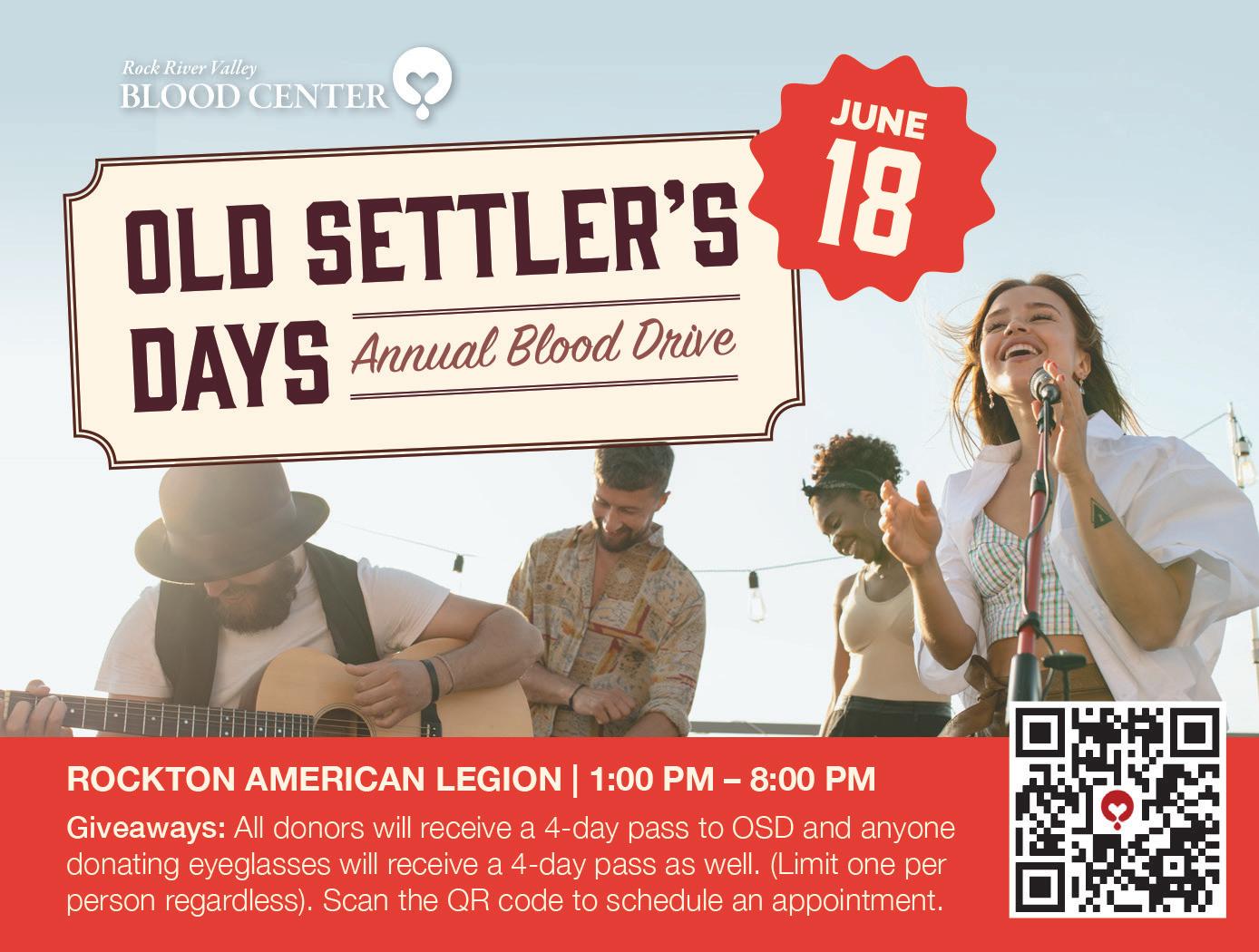
Summer celebrations continue June 18-21 with Old Settlers Days in Rockton, one of the Stateline’s biggest annual festivals. Held at Settlers Park, the fourday event features carnival rides, food vendors, family activities, and live music performances from nationally known artists, including Chris Janson, Ashley McBryde, Lauren Alaina, and Josh Ross.
On Thursday, July 2, Rock Valley College’s Starlight Theatre will present the Tony Award-winning musical “1776” at the Bengt Sjostrom Theatre on the RVC campus. The performance begins at 7:30 p.m. and tells the story of America’s founding through music, humor, and history as the Continental Congress debates independence.
As Independence Day approaches, patriotic celebrations and fireworks displays will light up communities across our area. Rockford’s annual Fourth of July celebration returns Saturday, July 4, with a downtown patriotic parade beginning at 5 p.m., live music and food vendors at City Market, and a fireworks spectacular launching from the Jefferson Street Bridge at approximately 9:30 p.m.
Additional fireworks celebrations are planned throughout the region, including community festivities in Cherry Valley, Durand, Winnebago, and surrounding communities during the holiday weekend.
On Saturday, July 4, Midway Village Museum will also host its Semiquincentennial: 250th Anniversary of Independence celebration from 10 a.m. to 2 p.m., featuring historical demonstrations, family activities, and educational programming tied to America’s founding.
The summer celebrations conclude Aug. 14-15 with the debut of RockYard Music Fest at Davis Park in downtown Rockford. The free, two-day festival will feature live music, food vendors,
family activities, fireworks on Friday night, and a downtown drone show on Saturday evening as part of the region’s America 250 celebrations. Throughout the summer, residents and visitors can enjoy popular weekly community events across the Stateline, including Rockford City Market on Friday nights downtown, the North End City Market on Saturday mornings in Rockford, and the Rockton River Market on Wednesday evenings in downtown Rockton. These markets feature live music, local food vendors, artisan booths, family activities, and opportunities to support local businesses. Additional farmers markets, concerts
in the park, and seasonal community events will take place throughout the region all summer long.
Whether it’s fireworks over the Rock River, a hometown parade, a concert in the park, or a family outing to a museum or festival, there are countless ways to celebrate together this summer. For a full calendar of America 250 events happening in our region, visit www.rockfordregion250.com.
The views expressed are those of the author(s) and do not necessarily represent those of the Greater Rockford Chamber of Commerce.
As president CEO of GoRockford and its charitable foundation, John Groh leads integrated marketing, sales, and destination development strategy for Illinois’ second-largest metropolitan region. His work focuses on aligning brand positioning, cross-sector collaboration, and disciplined performance management to drive sustained growth in visitation and long-term economic impact.
PELL GRANTS EXPANDED TO INCLUDE WORKFORCE TRAINING PROGRAMS
Beginning on July 1, 2026, students will be able to receive Pell Grants for enrollment in high-quality, short-term educational programs that prepare them for in-demand jobs. This new program opens doors for Registered Apprenticeships, career and technical education, and targeted-skills training, helping more Americans rapidly enter the workforce with little-to-no student debt while simultaneously strengthening the nation’s talent pipeline.
The new program advances the vision of America’s Talent Strategy, prioritizing career and technical education (CTE), strengthening America’s workforce, and helping students to enter professions quickly through upskilling or reskilling.
Currently, institutions of higher education award Federal Pell Grants to students with financial need to help them earn undergraduate credentials. Workforce Pell bridges the gap between education and employment by allowing Pell Grants to be used for workforce training programs that prepare individuals for immediate employment in as little as eight weeks. In addition, Workforce Pell requires colleges to limit their tuition and fees based on the earnings of program graduates, ensuring that programs continue to demonstrate value over time.
Workforce Pell was created in response to a simple truth: A great education and a better life do not
necessarily require a four-year college degree. Whether through apprenticeships, hands-on CTE, or certificate programs, pathways that prepare students for high-skill, familysustaining employment are critical to our nation’s success and should have access to the same Pell Grant funding as traditional undergraduate programs.
Governors, in consultation with state workforce boards, will identify high-demand industries and career fields in order to determine which workforce programs are eligible to receive Workforce Pell Grant funds. Eligible programs will then be required to meet certain time and length requirements, completion percentages, and employment metrics. They will also be required to prove they deliver a real return on investment for students as shown by data. This process provides the opportunity for real collaboration between states and governors to identify programs that will greatly impact job outcomes and economic return in their state. Additionally, governors will be able to collaborate on workforce programs through bilateral agreements, allowing an eligible institution in one state to offer an eligible workforce program to students in another state through distance education.
For more information, visit edu.gov.
Brynwood Square
City of Loves Park
Comcast Business
Crusader Community Health
Greenlink Energy Solutions, Inc
J7M Plating, Inc
J.L. Clark
JW Innovative Coaching LLC
Meridian Pro Restoration, LLC
QAI Laboratories
Rockford Mass Transit District
Start Today LLC
Thames Management Resources
TH Foods
FORWARD DEPLOYED
Why distribution is your best marketing strategy
By Sam Kirker, SJK Enterprises
The term forward deployed has a history longer than any logistics company. For over 200 years, the U.S. Navy operated on a simple idea: Don’t wait for the problem to come to you. Ships protected American merchants in the Mediterranean in the early 1800s, and carrier groups were stationed in the Pacific during the Cold War.
The tech industry later borrowed the concept when Palantir pioneered the Forward Deployed Engineer, embedding top technical talent directly inside customer operations.
The principle is unchanged across every context: Put your resources where they are needed before they are needed.
Rockford manufacturers and distributors can apply the same philosophy to inventory.
The Midwest Advantage has a Limit Customer expectations have structurally shifted with the introduction of same and next day delivery from major retailers. On the industrial side, critical components needed to bring manufacturing operations back online are often needed immediately to reduce downtime.
While you can reach roughly 80% of the U.S. population within two days using standard ground shipping, nextday air shipping from the Midwest to the West Coast can erase your profit margin before the customer opens the box. That’s assuming your customer doesn’t find an alternative because they can’t wait a few days for delivery.
Distribution is Marketing
The top three questions customers ask about your product are:
Does it solve my problem?
How much does it cost?
When will it be delivered?
Your product answers the first. Your pricing answers the second. The answer to the third question is where deals are won or lost. No amount of branding or sales effort can persuade a customer to buy from you when they need something on Tuesday and your best option for delivery is Friday.
Delivery speed has become a marketing differentiator as powerful as price, and there are two ways to compete.
Companies with the volume and margin to justify it can build their own regional warehouse network by leasing space in key markets and managing distributed inventory and teams. Other companies can use third-party logistics providers (3PLs) to make the same strategy available on a flexible, pay-as-you-go basis without additional overhead.
Either way, the goal is the same: Get the product closer to the customer before they order it.
The Infrastructure Already Exists
That infrastructure is already built and accessible to companies of any size.
A manufacturer in Rockford ships product into the network; the 3PL positions it geographically. A buyer in California orders Tuesday and receives it Wednesday, because it was in a Nevada warehouse.
A standard box costs $50+ for overnight delivery from Rockford but only costs $6 to $8 to fulfill regionally. You don’t have to lease multiple warehouses or hire a workforce across the country. You pay on-demand for storage and fulfillment.
Keep What’s Yours; Outsource the Rest Manufacturing, quality control, product development, and customer relationships stay in Rockford. You only outsource the commodity portion of last-mile delivery: moving a box from a shelf to a door. That’s infrastructure. Treating it as infrastructure frees capital and attention for the work that actually differentiates your business.
Rockford has a long history of solving problems and building reliable products that last and set the standard for everyone else. Forward deployment is that same principle applied to logistics. Putting your product where it needs to be before it’s needed. The products are already world class. It’s time for delivery to catch up.
SJK Enterprises is the growth engine behind select consumer brands on Amazon and Walmart helping them grow profitably by handling inventory, fulfillment, marketing, and compliance.
The views expressed are those of the author(s) and do not necessarily represent those of the Greater Rockford Chamber of Commerce.
Sam Kirker is the founder and CEO of SJK Enterprises, a Rockford-based e-commerce company focused on scaling brands profitably on Amazon and Walmart.
BUILDING TALENT TOGETHER
Rockford Promise celebrates 20 years of impact
By Kaylene Groh, Rockford Promise
On May 3, our community gathered at the Coronado for Promising Futures, an annual celebration of Rockford Promise Scholars, graduates, and the partners who make it possible.
This year marked a milestone: 20 years of impact and more than 1,000 scholarships awarded. But what stood out most wasn’t the number. It was the people behind it. Nearly 200 new scholars (graduates of Rockford Public Schools District 205 and Boylan Catholic High School) are beginning their college journeys. More than 100 college graduates are completing their degrees.
Together, they represent something powerful for our region: a growing, local pipeline of talent.
At Rockford Promise, our work begins in partnership with our schools. By the time students graduate, the question is no longer if college is an option but where that path can lead.
Through Rockford Promise, qualifying students have access to full-tuition pathways at Northern Illinois University, Rockford University, Rock Valley College, and Saint Anthony College of Nursing. These opportunities remove financial barriers and open doors that might otherwise remain closed.
But access to education is only part of the equation. For our business community, the opportunity continues after graduation.
Across industries, many employers are navigating similar challenges. Growth plans are underway, positions need to be filled, and the pool of experienced talent is limited. Recent data from the Greater Rockford Chamber of Commerce (GRCC) reflects what many are already experiencing: Workforce availability remains a key consideration for future growth.
At the same time, the talent pipeline is not a distant concept. It’s already taking shape here.
Each year, hundreds of Rockford Promise Scholars are pursuing degrees in fields like healthcare, engineering, business, education, and technology. They are building skills and preparing to enter the workforce. The key is to connect with them earlier, before
graduation, so those pathways feel visible and attainable on both sides.
Internships are one of the most effective ways to do that. For employers, they offer a practical way to get to know emerging talent, build relationships, and better understand the future workforce. Many internships lead to full-time roles, creating a more connected path to employment.
Locally, we’re working to make this easier. Through partnerships with the GRCC, The Workforce Connection, Made for Rockford, Rockford University, and others, we are strengthening connections between students and employers through internships, job shadowing, and early career exposure.
These efforts are strongest when employers are part of the process. For organizations thinking about growth or long-term workforce needs, there are several ways to get involved:
• Host an intern.
• Offer a short-term or projectbased experience.
Connect with us to explore students aligned with your industry. Help make career pathways more visible to students.
Even small steps can create meaningful connections over time.
Talent does not stay in a community simply because it started there. It stays where there is opportunity. It stays where relationships are built. It stays where people can see a future.
Promising Futures is a celebration, but it’s also a reflection of what is possible when a community works together. The talent our region needs is already here. The opportunity now is to continue building those connections early, intentionally, and together.
The views expressed are those of the author(s) and do not necessarily represent those of the Greater Rockford Chamber of Commerce.
Kaylene Groh is the executive director of Rockford Promise, a nonprofit providing full-tuition scholarships for RPS 205 graduates. Learn more at rockfordpromise.org.
CLUBBING WITH FRIENDS
Photo highlights from GRCC’s 2026 Golf Classic
MEMBERS IN THE NEWS
First Mid Bank & Trust (1) (First Mid) was named a 2025 Northwest Illinois Regional Lender Award recipient as part of Illinois Housing Development Authority’s annual Lender Awards.
Fehr Graham announced the following promotions:
• Colton Johnson (2), project engineer.
• Yanel Jones (3), project designer.
• Mack Llanas (4), project engineer.
• Braiden Soltow (5), staff designer.
• Margaret Trowbridge (6), project engineer.
• Luke Ziegler (7), project engineer.
Stillman Bank welcomed Taylor Boostrom (8) as retail office manager.
Raymond Garcia (9), MD, FAPA, ABAM, chief medical officer at Rosecrance Behavioral Health, has was named a recipient of the 2026 Exemplary Psychiatrist Award from the National Alliance on Mental Illness.
Kierra Ridder (10), DC, of Spine and Body Renewal, completed Level 2 in the National Upper Cervical Chiropractic Association (NUCCA) certification process. Gabriel Orem (11), OTR/L, completed a specialty certification within John F. Barnes’s Myofascial Release Approach® for fascia of the pelvis.
First Mid Bancshares, Inc. announced a leadership transition as part of its long-term, boardled succession planning process. Effective July 1, Matthew K. Smith (12), president of the company, will become chief executive officer and president of First Mid and its subsidiary, First Mid Bank & Trust, N.A., and will be appointed to the company’s
board of directors. Joseph R. Dively (13), chairman and chief executive officer, will transition to executive chairman of the board.
Trekk, Inc. welcomed Kayla Eddy (14) as content developer, and Jess Koltz (15) as account manager.
Rockford Rescue Mission honored Brad Long (16) as its Volunteer of the Year. Kown as “Chef Brad,” Long serves faithfully in the mission’s kitchen—bringing creativity, care, and dignity to every meal he prepares.
Kaleb Price (17), community engagement specialist i3 Broadband and GRCC Ambassador, was named the executive director of the Algonquin/Lake in the Hills Chamber of Commerce.
The Rockford Public Library announced the selection of Rockford-based writer and director Neil Bloom (18) as its newest Artist in Residence.
project accountant, and Alex Hardt (20), engineering technician.
OSF HealthCare announced that Derrick Frazier (21), FACHE, will assume the role of president of OSF St. Joseph Medical Center in addition to his current position as president of OSF HealthCare Saint James–John W. Albrecht Medical Center in Pontiac, Illinois.
Rachel Vonderheide (22), director of development and alumni relations at Rock Valley College, joined the Golden Apple Foundation of Rockford Board of Directors.
Rockford Mutual Insurance Company named Richards Insurance Agency (23) its Agency of the Year for 2025.
Hard Rock Casino Rockford (24) recognized National Police Week with $1,000 donations to Blue 815 and the Greg Lindmark Foundation in support
5. Braiden Soltow
1. First Mid Bank & Trust
2. Colton Johnson
7. Luke Ziegler
3. Yanel Jones
8. Taylor Boostrom
6. Margaret Trowbridge
4. Mack Llanas
9. Raymond Garcia 10. Kierra Ridder 11. Gabriel Orem 12. Matthew K. Smith
of community trust and mental health resources for local officers.
More than 900 Rockford residents volunteered for the Earth Day Citywide Cleanup, organized by United Way, Go Rockford, the Chamber, and the City of Rockford as part of America’s 250th anniversary celebrations.
The United Way Rock River Valley Books for Brighter Futures book drive collected more than 7,500 new and gently used books, nearly four times the original goal of 2,000.
Per Mar Security renewed its TMA Five Diamond Monitoring Center designation, granted annually by The Monitoring Association to monitoring centers that satisfy all the requirements of five points of excellence.
Northern Illinois Food Bank’s 13th Annual Fight Hunger 10K, 5K & 1-Mile Run, presented by ALDI, raised more than $300,000 to support neighbors facing hunger across Northern Illinois.
Engineering Enterprises, Inc launched a new website (eeiweb.com) and Instagram channel.
Carpenter’s Place guests, staff, and volunteers participated in the City Wide Clean up as a part of Winnebago County’s America 250 celebration to celebrate our nation’s independence through service.
The Natural Land Institute’s Legacy Tree Program May Tree of the Month is a Tulip Tree in Sterling.
Rockford Mutual Insurance Company was named the 2026 #1 Best Place to Work in Illinois by the Best Companies Group and the Illinois SHRM.
Rock Valley Credit Union (RVCU) launched its Choose Kind initiative, a community-driven effort focused on spreading kindness, inclusion, and respect. To bring the initiative to life visually, RVCU invited local artists to help design the official Choose Kind logo.
The Rockford Area Arts Council renamed its microgrant program the Rockford Area Arts Council Marin Mazzie Action Grants. The recipients of the first round of 2026 Marin Mazzie Action Grants are the GoRockford Charitable Foundation, Rachel León, Womanspace, Inscape Midtown Collective, Philip Goudreau, Sheri Poe-Pape, and Nature at the Confluence. The Ron Mertz Action Grant for Visual Arts was awarded to Martin Karl Vanags.
The Winnebago County Community Mental Health Board is seeking enrollment from eligible public or nonprofit higher educational institutions for the Mental Health Workforce Student Support program. For details about this program and eligibility requirements, see the Notice of Funding Opportunity posted at r1planning.org/wccmhb-fundingresources.
Mercyhealth hosted the 2026
Project SEARCH graduation ceremony at Mercyhealth’s Javon Bea Hospital–Riverside. Project SEARCH provides training and education leading to competitive employment for individuals with cognitive disabilities. It is a partnership comprised of Mercyhealth, Rockford Public School District 205, Illinois Department of Human Services, and RAMP. Eight individuals graduated from the program.
The Rockford Rescue Mission celebrated its 62nd anniversary in May.
The Rockford Art Museum is accepting artist and vendor applications for the Greenwich Village Art Fair, Sept. 18-19 Deadline to apply is June 15.
GoRockford, in partnership with Rockford Park District, welcomed the American Belgian Tervuren Club (ABTC) National Specialty to the Rockford area in May, marking the first time the national event has been hosted in the region.
Alpine Kiwanis Club awarded $30,000 in scholarships to 10 local high school seniors ($3,000 each) for their post-secondary and/or continuing education/training:
• Adelyn Arreguin, Guilford
• Madelyn Bennett, Rockford Lutheran
• Thomas Decker, Belvidere North
• Camryn Diercks, Belvidere North
• Haylee Gallas, Belvidere North
• Bridley Harmsen, Guilford
Emily Hernandez, Belvidere North
Emily Meyers, Rockford Christian
Elaina Parnello, Harlem
Kelley Richardson, Belvidere North
Fehr Graham was named to the Engineering News-Record Midwest Top Design Firm list for the third straight year.
The Dr. Louis & Violet Rubin Fund of the Community Foundation of Northern Illinois’ Community Grants Program awarded La Onda, NFP a $20,000 grant for 2026 South Main Mercado.
Wesley Willows in Rockford was named one of Senior Care’s Best Places to Work in 2026 by Activated Insights.
OSF HealthCare announced the recipients of its 2026 Innovator of the Year Awards:
• Research Innovator of the Year
– Colleen Klein, PhD, APRN, research scientist.
• Non-Clinical Innovator of the Year – Nichole Esterdahl, MSN, RN, director of on demand operations, OSF OnCall.
Clinical Innovator of the Year – Tiffany Magallanes, vice president of operations and special projects, OSF HealthCare Saint Elizabeth Medical Center.
The Barbara Olson Center of Hope received a $10,000 grant from the Helen Brach Foundation to upgrade essential technology and safety equipment for its participants and staff. The center also received a $1,000 grant from Rockford Cosmopolitan Club to purchase electronic notepads that will help strengthen communication skills for participants with intellectual and developmental disabilities.
GoRockford and Development Counsellors International (DCI) have been selected to present at the Destinations International Annual Convention in Portland, Oregon, July 21–23, 2026. Their session, “Talent Attraction as Destination Strategy: How DMOs are Driving Workforce Competitiveness,” addresses how visitor intent increasingly connects to resident relocation decisions, what motivates talent to move, and how destinations can compete more effectively in today’s tight labor market.
Healing Path of Rockford, 695 N. Perryville Road in Rockford, celebrated 10 years in business with a ribbon cutting on May 13.
Hidden Creek Estates, 13276 White School Road in Roscoe, cut the ribbon on its new, microresort guest suites on May 21.
NEW MEMBERS
ABCOR HOME HEALTH INC.
Location(s): Rockford, Arlington Heights, Chicago, Lisle, Joliet, Swansea, Springfield
What we do: We provide compassionate in-home care services that help seniors remain safe, independent, and comfortable in their homes through assistance with daily living activities and companionship.
Our customers/ideal referrals: Seniors needing in-home support, families seeking compassionate caregivers, hospitals/ discharge planners, and individuals approved for Community Care Program services wishing to remain independent at home.
CPM RECYCLING SERVICES INC.
Location(s): Rockford
Online at: www.cpmrecycling.com
What we do: Commercial/industrial recycling and document destruction. Coming soon.
Our customers/ideal referrals: Over 15 years of experience in the recycling industry. Providing services up to a 100-mile radius.
NEIGHBORHOOD HAULERS
Location(s): Rockford, Machesney Park, Loves Park, Cherry Valley, Belvidere, and surrounding areas
Online at: neighborhoodhaulers.com
What we do: Junk removal, cleanouts, dump trailer services, mulch delivery, debris hauling, and property cleanup for residential and commercial customers.
What we do: SUMOFIBER is a familyowned fiber internet provider delivering high-speed connectivity, managed Wi-Fi, business phone systems, and failover solutions across 14 cities, backed by competitive pricing and responsive inhouse support.
Our customers/ideal referrals: SUMOFIBER serves growing businesses, multi-location companies, MDU/APTS, and organizations needing reliable fiber internet, managed Wi-Fi, business phone systems, and dependable network support.
THAMES MANAGEMENT RESOURCES LTD
Location(s): Rockford
Online at: www.thames-venture.com
What we do: We offer certified business appraisals, business exit planning, and business broker services for most any industry.
Our customers/ideal referrals: We work with privately owned business whose revenue is typically $2M-$20M. We also work with the SBA, banks, attorneys, and CPA firms to provide certified business appraisals.
TOBIN, RAMON & BARBER LAW FIRM
Location(s): Belvidere
Online at: www.tobinramon.com
What we do: Tobin, Ramon & Barber provides expert legal counsel in estate planning, real estate, and business law, delivering dedicated, personalized solutions to protect your family, property, and corporate interests.
Our customers/ideal referrals: Our ideal clients include families securing their legacy through estate planning, buyers or sellers navigating real estate transactions, and entrepreneurs seeking legal protection and guidance for their business.
VLIXX
Location(s): Rockford
Online at: www.vlixx.com
What we do: VLIXX is a content growth agency dedicated to helping creators and brands amplify their reach through engaging video content and strategic marketing approaches designed to resonate with all audiences.
Our customers/ideal referrals: Our ideal clients include digital content creators, brands seeking authentic engagement, and businesses wanting to improve their online visibility through effective video marketing and influencer partnerships as well as client growth.
Thank you to our members who renewed their investment with the Greater Rockford Chamber of Commerce in April 2026.
Aqua-Aerobic Systems, Inc.
AT&T
Bill Doran Company
Dickerson & Nieman Realtors
International Women’s Baseball Center
JPMorgan Chase Bank, N.A.
LaMonica Beverages
Lechtenberg & Associates LLC
Lincoln Rent-All & Sales, Inc.
Rescue Basics
Robert W. Baird & Co. Incorporated
Rockford Career College
Rockford Park District
Severson Dells Nature Center
Specialty Screw Corporation
Woodward
WQRF-TV/WTVO-TV
80 Years
Winnebago-Boone Farm Bureau
50 Years
Thermo Fisher Scientific
40 Years RAMP
35 Years FIELD
Rockford Tech-Systems, Inc. United Way of Rock River Valley
25 Years
Comfort Keepers MainStreet Financial Group
20 Years
Hilton
Aircraft Gear Corporation (Loves Park) Aircraft Gear Corporation (Rockford) Boys & Girls Club of Rockford Social Kat
The Greater Rockford Chamber of Commerce welcomes member submissions for the VOICE. Deadline is the 10th of the month preceding publication date. Send news releases and people announcements to editor@rockfordchamber.com. For information about advertising contact customer service at 815-987-8100.
The VOICE of the Greater Rockford Business Community (USPS 784-120). ISSN number 1086-0630, is published monthly by the Greater Rockford Chamber of Commerce, 308 W. State St., Ste. 350, Rockford, Illinois 61101. Periodicals postage paid at Rockford, Ill.
POSTMASTER: Send address changes to: The VOICE of the Greater Rockford Business Community, 308 W. State St., Ste. 190, Rockford, IL 61101.
Follow the GRCC on Facebook and Instagram.
Like, comment on, and share GRCC posts. ⌝ Tag GRCC when posting employee announcements or company news.
⌝ Follow and engage with other GRCC members on social media.
The following companies are celebrating milestone membership anniversaries with the Greater Rockford Chamber of Commerce in June 2026.
GRCC EVENTS ADVERTISERS INDEX
JUNE
16
RETHINKING ABILITY IN THE WORKPLACE
9:30 a.m., GRCC Office, 308 W. State St., Suite 190, Rockford
Gain greater awareness of how unconscious bias, stereotypes, and ableism can influence workplace decisions related to hiring, supervision, promotion, and accommodations. The session reinforces ADA principles and equips employers to reduce risk while fostering a more inclusive, high-performing workplace.
JUNE
16
SUMMER MEMBER MIXER
4 p.m., Cahoots, 314 Prairie St., Rockford
Connect with fellow members, make new business contacts, and enjoy complimentary appetizers with a cash bar. It’s the perfect way to unwind after work, share ideas, and celebrate the season in great company. Registration closes June 11.
JUNE 24 HOW BRAND AND MARKETING WORK TOGETHER
2 p.m., GRCC Office, 308 W. State St., Suite 190, Rockford
Neighbor will reveal how to understand, create, and activate your brand so that your marketing works toward accomplishing your goals. This event is tailored to established companies who have hit a wall, need to shake things up, or are invested in future thinking.
JUNE 25
40 OVER 40 RECEPTION
3 p.m., UMB Bank Pavilion, 1902 Reid Farm Rd., Rockford Presenting Sponsor, Workplace; Hospitality Sponsor, Thayer Energy Solutions; Business Sponsor, Orange Horizon Wealth
Join us as we raise a glass to the 40 Over 40 who prove that experience only gets better with time. Enjoy desserts, champagne, and a cash bar. High-top tables make it easy to mix, mingle, and celebrate. Seating will be available if needed, but tables are not available for purchase. Last day to register is June 18.
JULY 23 AN AFTERNOON WITH DR. LARRY HUFF
3 p.m., Rockford Public Library, 215 N. Wyman St., Rockford
Be among the first to welcome the new RPS205 superintendent, Dr. Larry Huff, at this special afternoon event. Connect with fellow education and business leaders, hear the superintendent’s vision for the district, and get a firsthand look at what’s ahead for RPS205. A Q&A session will follow the brief address. (Question cards provided at registration.) Network, mingle, and be part of the conversation shaping the future of education in Rockford. Last day to register is July 16.
JULY 30 COFFEE & CONNECTIONS
8:30 a.m., GRCC Office, 308 W. State St., Suite 190, Rockford
Presented by Andrew Blevins — State Farm
Coffee & Connections is your monthly morning boost of meaningful networking. Designed with small businesses and entrepreneurs in mind, this meetup helps you make new contacts, find potential partners, and stay visible within the regional business community. It’s low-pressure, high-ROI, and a great way to start your day with conversations that matter. No speakers, no agenda, just genuine connection. Enjoy coffee from Ivy House Creative Café.
AUG 13 2026 GRCC ANNUAL DINNER
5 p.m., Hard Rock Casino Rockford, 7801 E State St, Rockford
Presented by OSF
The countdown is on to 8-1-5 Day! Join us for GRCC’s second annual 8-1-5 Rockin’ Eve—a bold, high-energy celebration of all things Rockford Region. Hosted at the Hard Rock Casino, this is not your average annual dinner.
First Community
Credit Union pg. 3
Byron Bank pg. 4
Wesley Willows pg. 4
OSF HealthCare pg. 5
GreenState Credit Union pg. 7
Alpine Kiwanis pg. 9
Widmer Interiors pg. 10
Thayer Energy Solutions, Inc. pg. 11
Stillman Bank pg. 11
GRCC STAFF
Foresight Bank pg. 13
Lawn Care by Walter pg. 14
Rock River Valley
Blood Center pg. 14
Grand Victorian pg. 15
GRCC Annual Dinner pg. 16
GRCC Investors pg. 16
LM Sheet Metal, Inc. pg. 16
GRCC 40 Over 40
Reception pg. 18
Made for Rockford pg. 24
CHAMBER OFFICE 815-987-8100 DIRECT
Angela Kay Larson, Chief Executive Officer
Caitlin Pusateri, Chief Operating Officer
Melissa Adams, Operations Manager
Everett Butzine, VP Business Expansion & Attraction
Doug Hessong, Director of Publications & Technology
Christine Hand, Managing Editor, the VOICE
Lily Zahn, Economic Development Specialist
Carmen Kellerman, Events Manager
815-987-8100
815-316-4337
815-316-4312
920-203-3859
815-316-4338
815-988-3354
919-909-7944
815-316-4302
Kristin Muehlfelder, Member Operations Specialist 815-316-4315