How local collaboration brought Hillwood home to the 815
By Christine Hand, managing editor
It’s often said that luck is what happens when preparation meets opportunity. In the highly competitive world of economic development, however, success requires more than good planning. Projects can take years to come together, margins are tight, obstacles are numerous, and conflicting priorities can stall progress. So how did the Rockford region overcome these challenges to make its newest industrial development a reality? Collaboration.
The Project
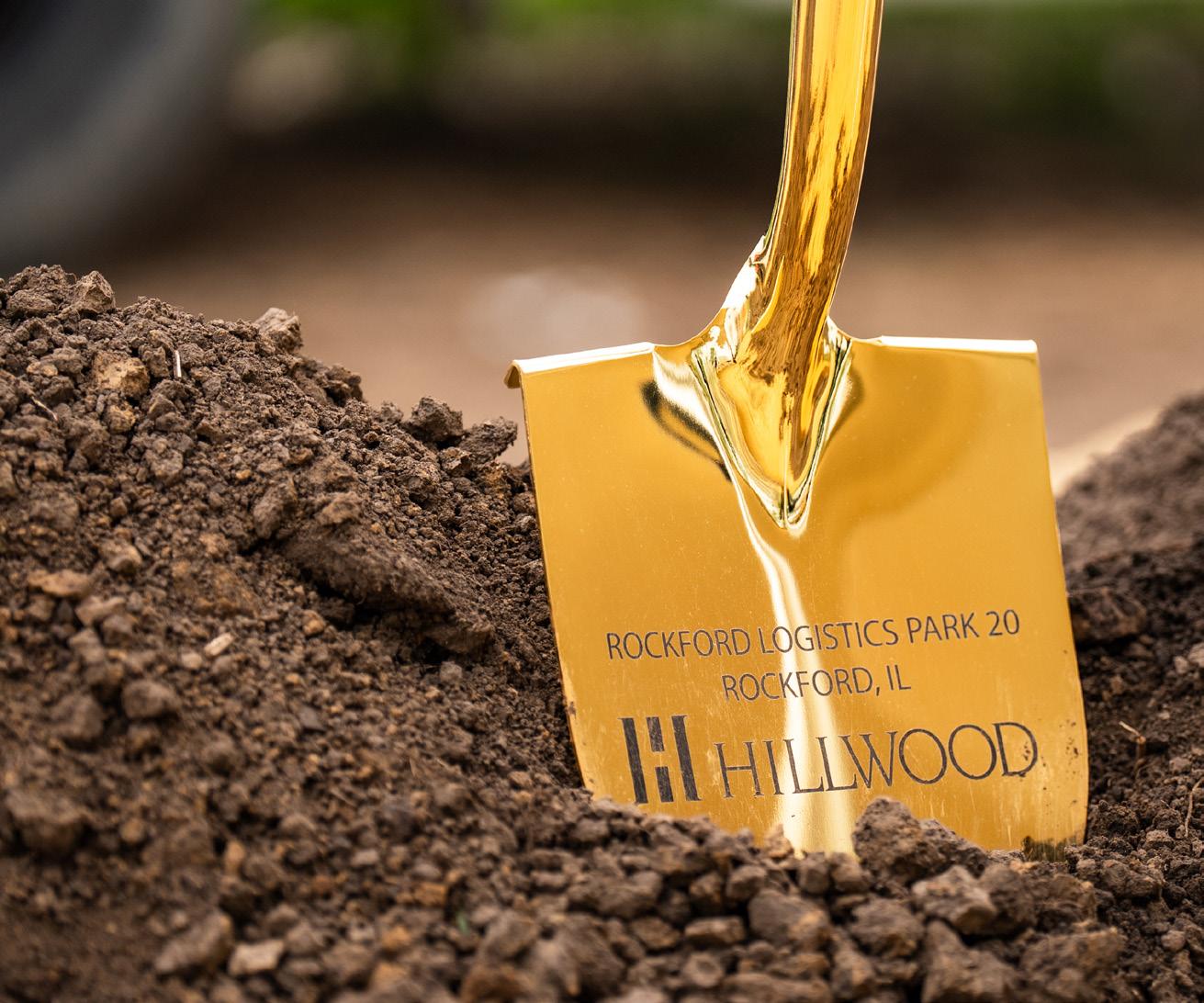
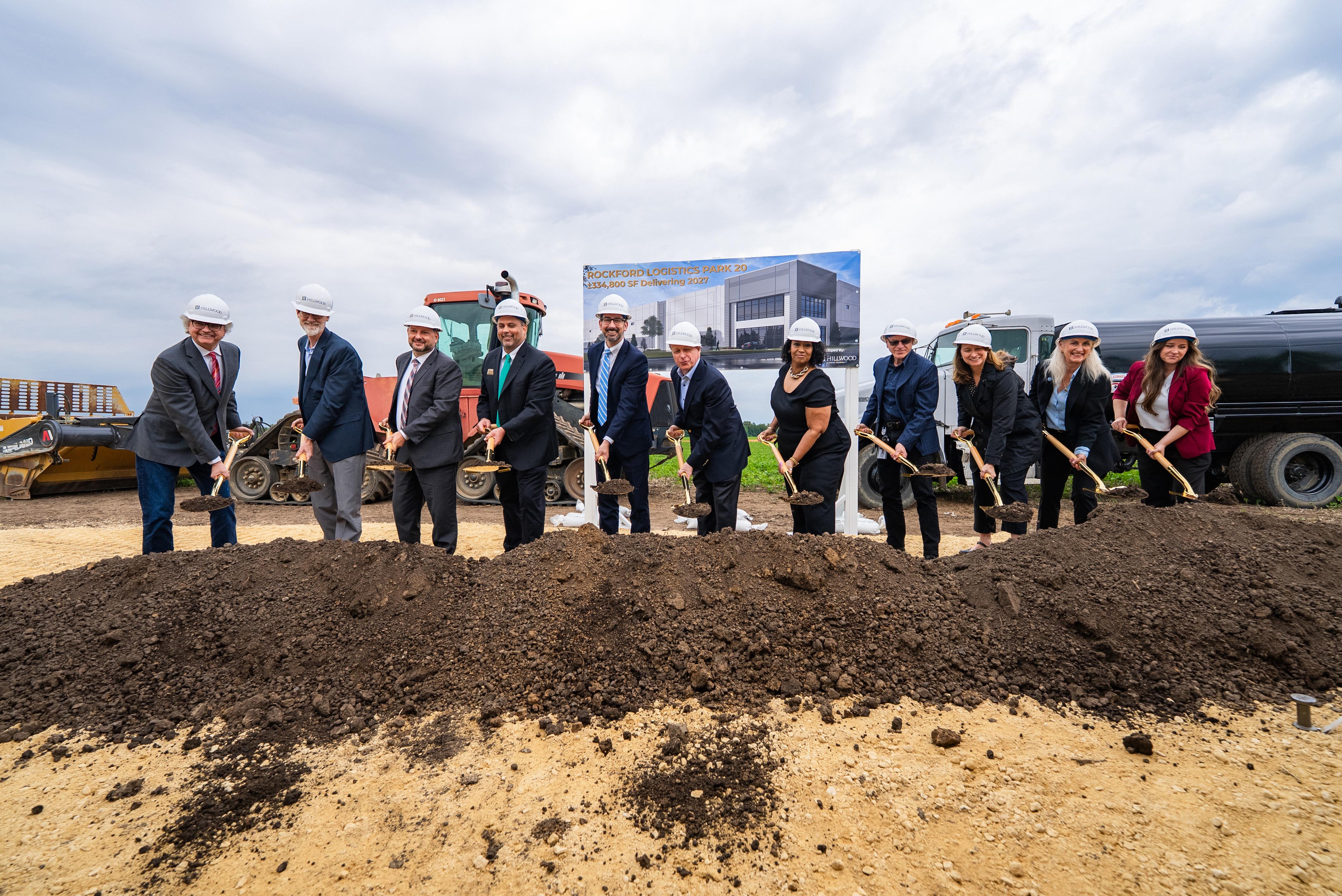
Last month, local leaders broke ground on a major speculative industrial development by Hillwood, a Perot family company based in Texas. Just a mile from Chicago Rockford International Airport (RFD), the project, Rockford Logistics Park 20, is the product of long-term, multi-jurisdictional teamwork among the City of Rockford, Winnebago
County, RFD, and the Region 1 Planning Council (R1). Together, these partners aligned financing, infrastructure, and probusiness policy to convert a 70-plus-acre agricultural site into a logistics-ready asset. The site sits between the airport and the interchange of U.S. Route 20 and Illinois Route 2, a prime corridor for regional freight movement. Hillwood’s first phase is a 334,800-square-foot industrial building designed for cargo, logistics, distribution, light manufacturing, and assembly.
A Long Time in the Making It’s a bit difficult to pinpoint with whom, when, or where it all began. But some of the earliest groundwork for this project was laid several years ago when R1, Winnebago County, and the City of Rockford identified the area around the U.S. 20/Route 2 interchange
for a U.S. Economic Development Administration Site Readiness Study.
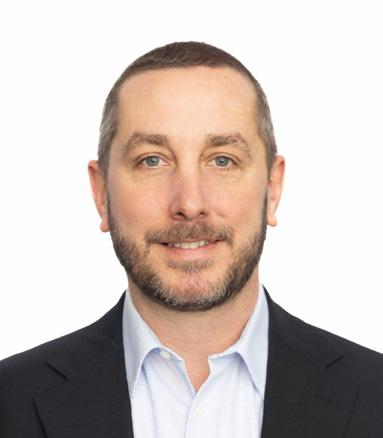
“I felt it worthy to be studied to see if we could attract development and anchor that area for future growth,” Winnebago County Board Chairman Joseph Chiarelli said. “It took courage and foresight for the county to focus on an area that wasn’t on I-90 like nearby counties did,” said Michael Dunn Jr., R1 executive director. “It showed real foresight.”
Meanwhile, Zack Oakley, RFD executive director, had spent years building a relationship with the team at Hillwood, a company with a long history of airportrelated development around the country, including one of the largest air cargo facilities in the country in Alliance, Texas.
“We’ve probably been talking to Zack and the Rockford team for seven or eight
ROCKYARD MUSIC FEST
More than another event on the summer calendar
By John Groh, GoRockford
When people think about what makes a community special, they rarely start with statistics or infrastructure. They remember experiences. A favorite festival. A memorable concert. A weekend spent exploring.
Those moments shape how people see a place, and over time, they shape the place itself.
At GoRockford, we believe signature events are an investment in our community. They do more than entertain. They strengthen our visitor economy, support businesses, build community pride, and help make Rockford and the region a place where
people want to visit, live, work and invest.
As our region’s destination marketing and management organization, our role extends beyond promoting what’s already here. We also work with partners to create the experiences that make the Rockford region a destination worth choosing.
RockYard Music Fest, presented by Foresight Bank, is the newest expression of that approach.
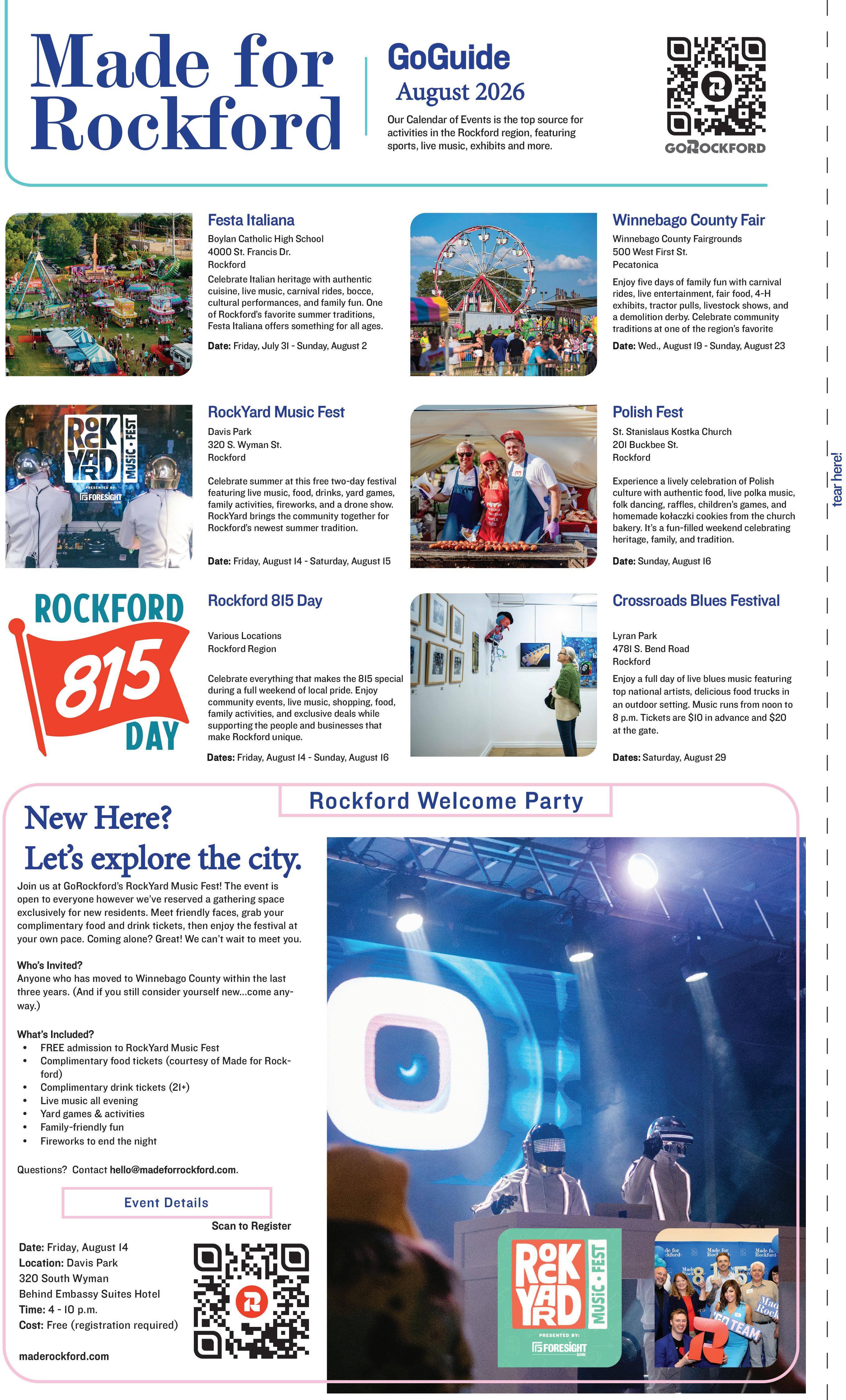
If you’ve ever wished Stroll on State had a summer counterpart, your wish is about to come true. On Friday and Saturday, Aug. 14-15, GoRockford will
IN THIS ISSUE
transform the newly renovated Davis Park into a two-day celebration of music, community, and summertime fun.
Produced by the same GoRockford team behind Stroll on State, RockYard will feature great bands and musicians, interactive art experiences, fireworks, a drone show, and nostalgic all-ages fun like three-legged races, musical chairs, a bags tournament, and a pie-eating contest.
Festival grounds will open at 4 p.m. Friday. On Saturday, activities begin at 7 a.m. with a pancake breakfast and the RAMP
I grew up in the 309 of central Illinois, but I never would have referred to it that way back then. We didn’t attach regional identity to an area code or a zip code. Which makes me wonder, “When did that cultural trend begin?” Did our love of numerical monikers get started in 1990 when Brandon and Brenda Walsh moved from the Midwest to “Beverly Hills 90210?” Or perhaps it started earlier when New York City outgrew their 212 (prestige) area code and added phone numbers beginning with 718 (borough dwellers). Origin aside, the alignment between the numbers eight, one, and five and the Rockford region has grown over the past decade or so and is stronger than ever.
Thanks to the creativity of Jarrod Hennis (and Pepper) at Rockford Art Deli, we display those three numbers with pride. On a t-shirt, on a coffee mug, on a decal in the back window of a truck. We tag our social media posts, organize tours, and plan celebrations. In fact, feel free to pause reading this to register for our second rendition of the Greater Rockford Chamber of
CELEBRATING THE 815
It’s
more than an area code
By Angela Kay Larson, chief executive officer, Greater Rockford Chamber of Commerce
Our regional telephone area code has clearly emerged as a unifying brand and a symbol of local pride—a way of saying, “This is our home and we love it here.” The digits 815 reflect who we are. We’re manufacturers and makers, entrepreneurs and educators, farmers and first responders, politicians and clergy, nonprofit leaders, and neighborhood volunteers. We’re the people who choose every day to invest our time, talent, and treasure to make our community stronger.
At the GRCC, we have the privilege of working with organizations and leaders across the region. What continues to inspire me is that our greatest strength is not any employer, institution, or organization. Our strength lies in our willingness to work together. That may sound simple, but collaboration is often easier to celebrate than it is to practice. In communities like ours, resources are limited. Every organization is balancing priorities, managing budgets, and pursuing ambitious goals with finite capacity. If we approach those challenges independently, we will always be constrained by what our own organization can accomplish. When we work together, however, we multiply our impact. Literacy. Regional talent attraction. Workforce development. Childcare access. Housing. Economic growth. Food access. Mental health. Downtown and neighborhood revitalization. These issues
They require business leaders, governments, educational institutions, nonprofits, and community organizations to align around a shared vision and move in the same direction. #CollectiveImpact
True collaboration is about more than simply showing up at the meeting. It’s easy to be collaborative when we’re sitting around a conference table together. The real test comes after the meeting ends. Collaboration requires trust. It means holding each other accountable. It means respecting confidential conversations. It means giving partners the benefit of the doubt. It means celebrating shared wins instead of competing for individual credit.
Most importantly, it means being willing to ask a difficult question: Am I advocating for what’s best for the community or only what’s best for my organization? That question can be uncomfortable. Yet it’s often the difference between a transactional partnership and a transformational one. The most successful regions in the
country are the ones that align around common priorities and build a culture of trust among their leaders. They understand that progress accelerates when organizations see themselves as partners in a shared mission. We’ve seen that happen here in the 815. We have tremendous momentum. Together, we’re championing efforts to strengthen our schools, enhance our talent pipeline, create opportunities for the next generation, improve our infrastructure, grow our businesses, attract investment, and care for each other. These priorities don’t belong to any one organization. They belong to all of us.
The people of this region have always been fueled by grit and determination. We’re builders, problemsolvers, and innovators. And when opportunities arise, we have a history of rolling up our sleeves and working together to engineer the future.
That’s worth celebrating on Aug. 15 and every day.
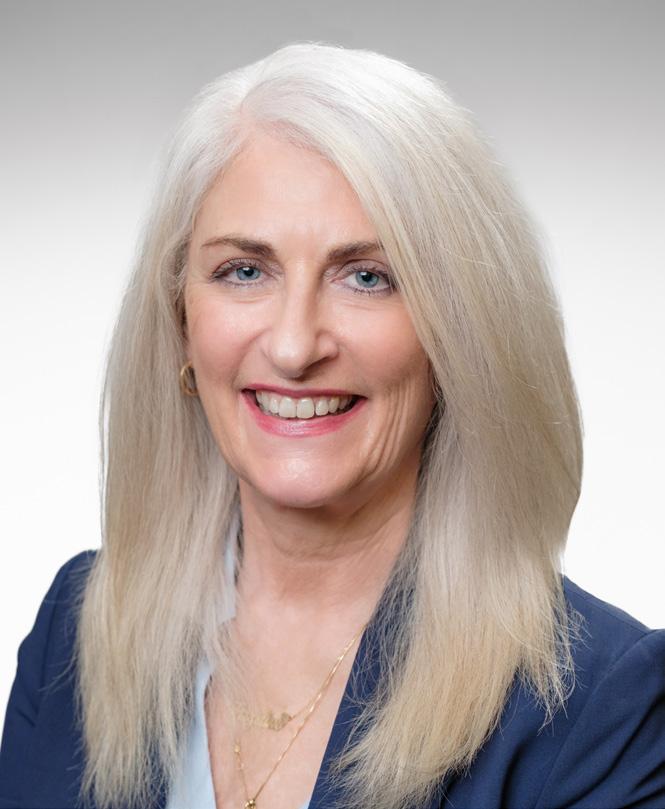
Angela Kay Larson, Greater Rockford Chamber of Commerce CEO, moved from central Illinois to the Rockford region shortly after college and has called the 815 home ever since. This month, she celebrates the completion of her second year as the GRCC’s CEO—her second year of rolling up her sleeves and working together to capture the abundant opportunity in the 815.
ABOUT THIS ISSUE …
Welcome to our August issue celebrating the 815. We’ve got some heavy hitters singing the praises of the Rockford region this month. National brands Hillwood and Famous Dave’s were thrilled to share their love and respect for the 815. And it was a delight for me to work with them on their respective stories; both organizations were so friendly, responsive, and positive.
I have to admit that the page 1 story about the regional collaboration behind the Hillwood industrial development project was a difficult article to write. Not because I didn’t have enough good info, but because there was too much. There are so many interesting aspects to this story that I struggled to stay focused on the teamwork angle and not get distracted by incentives or infrastructure or go on a rant about how great the airport is.
Other highlights from this issue include insights on our region’s competitiveness, future leaders, creative community, and educational opportunities. And be sure to check out the 815 Day advertising special on page 22, offering special pricing for the September issue of the VOICE and digital ads in our weekly e-newsletter, GRCC Connect.
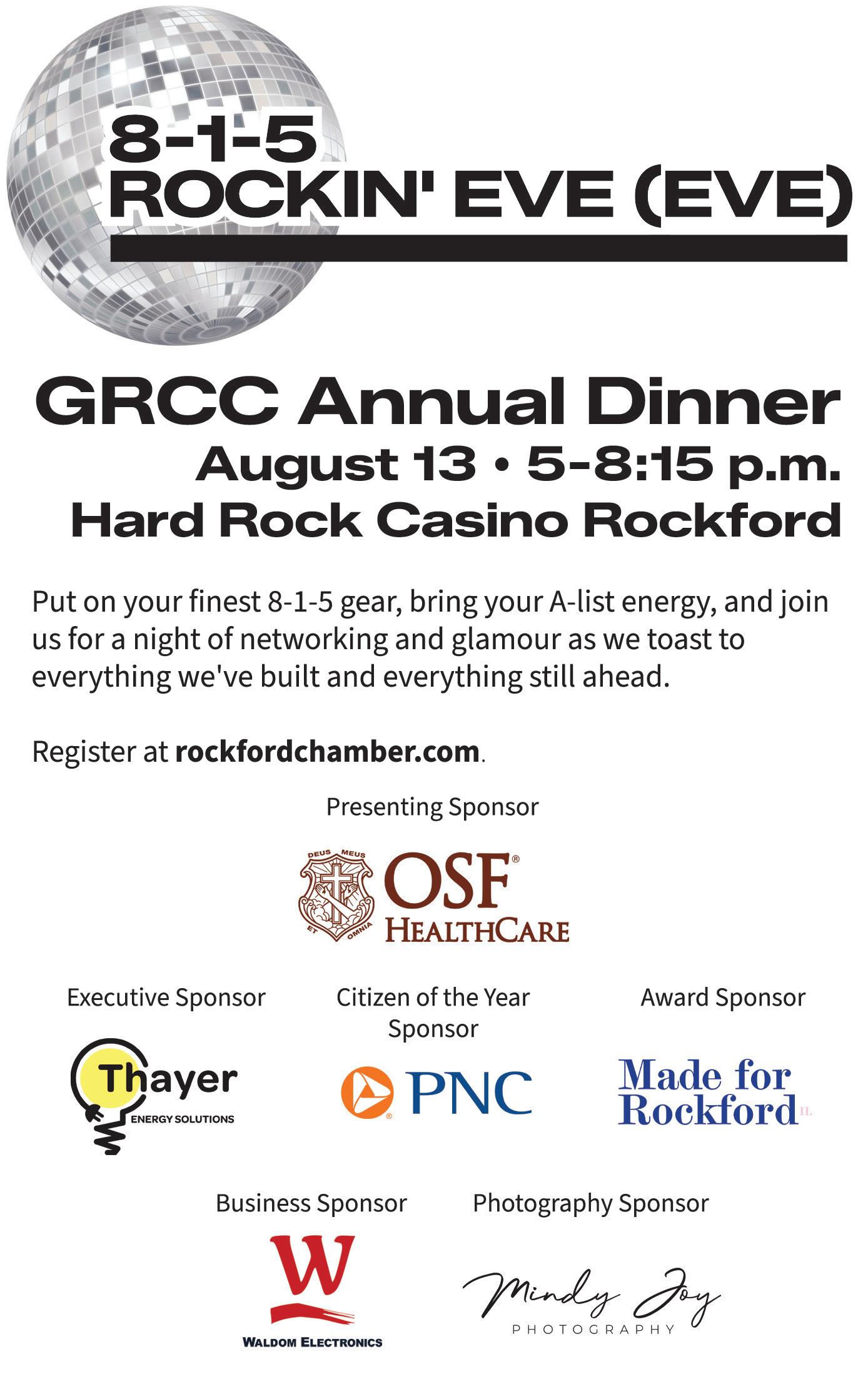
I also want to remind you that time is running out to register for GRCC’s 8-1-5 Rockin’ Eve (Eve) annual dinner, Aug. 13, at Hard Rock Casino Rockford. Ask anyone who attended last year’s event, and they’ll tell you it was one of the most fun and impressive events the region has seen in recent memory. So don’t deny yourself the pleasure of joining us for this year’s event. You can’t go wrong with great food, excellent programming, exceptional company, and champagne for everyone.
In this age of mobile phones and mobile phone numbers, who knows how much longer area codes will remain an identifier of place and belonging. So, let’s make the most of 815 Day while we still can
— Christine Hand, managing editor
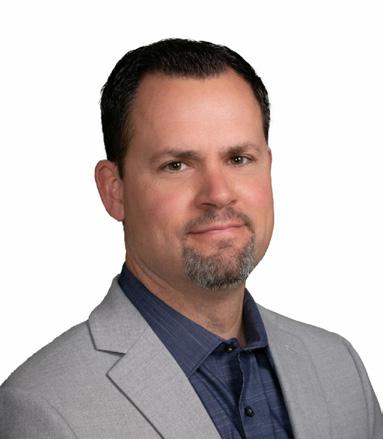
years about strategy, planning, and how we could work together,” said Don Schoenheider, executive vice president and Midwest market leader for Hillwood Investment Properties. “Eventually, the discussions evolved into, ‘Hey, we continue to hear from our air cargo customers that they need off-airport warehouse and logistics space.’ And that’s when things started to take shape.”
The airport brought the lead to the city, but there were financial barriers to advancing the project on the proposed property—primarily related to infrastructure such as water, electricity, and road access—and progress stalled.
Not long after, the Illinois Department of Commerce and Economic Opportunity (DCEO) published a site readiness grant for industrial development.
“It was the first time we were aware of a site readiness grant like this, where there was no end user required to apply for it,” City Administrator Todd Cagnoni said. “We knew we had a great property, so we engaged R1 to prepare the grant for us, and we worked our networks with the state.”
With the regional site readiness study as supporting documentation, the city won the $2,428,000 DCEO grant in 2025.
Why Collaboration Matters
Speculative industrial development is inherently risky. Since there’s no end user at the start, the site must be shovelready and cost-competitive to attract a tenant quickly once the shell is up. That requires upfront public investment in roads, utilities, and drainage—exactly what the City–County–Airport–R1 coalition assembled. By pooling DCEO site-readiness money, local TIF funds, and Enterprise Zone benefits, the partners reduced Hillwood’s initial capital burden
while ensuring the project advanced in step with public infrastructure.
“For a national corporation like Hillwood to have the confidence to invest in our community is just a tremendous win in our economic development activities. And to do it with a spec building is three times as significant,” Cagnoni said. “That’s someone putting millions of dollars into our community, feeling that there’s a strong demand and that they’ll get a return on their investment.”
Equally important is the strategic fit with RFD’s cargo growth. Airport executives have explicitly tied the project to rising demand for logistics facilities that can leverage Rockford’s dedicated cargo infrastructure and efficient access to major markets.
“We need second- and third-line warehousing in close proximity to the airport. Most of the nearby warehouses are retrofit facilities and not designed specifically around air cargo. Getting this type of warehousing designed in proximity is massive for us.” said Zack Oakley, RFD executive director.
“If you look outside of the largest cargo hubs in the world, you’ll find a lot of warehousing and distribution facilities. For our long-term future and success, we have to develop that ecosystem around our airport as well. That’s going to give us the best opportunity to provide the greatest economic impact to the region,” he said.
Cagnoni agrees that the success of the logistics center is an important part of the region’s economic development strategy: “Not only will it drive outside investment into our community, but it will help create opportunities for local businesses to grow.”
“Rockford has a great manufacturing sector and a very diverse economic base. That’s also what attracted
us,” Schoenheider said. “It wasn’t just the airport; it was the regional business community as well.”
The Proof is in the Project
The Hillwood project shows how Rockford can win speculative industrial deals by presenting a coordinated regional front, so developers see one clear path through permitting, infrastructure, and incentives.
“There aren’t a lot of communities that are willing to all roll up their sleeves together and try to get to the end goal the way that Rockford did. It’s a unique circumstance and a unique community,” Schoenheider said.
Oakley says the key to the collaboration was staying connected and transparent with all parties. “Don would have a conversation with Todd. Then we would
follow up with the city to see what we could do on our end to keep the project moving along,” he said. “It just makes sense to keep everyone connected and apprised of what we’re doing and the things we’re chasing as well.”
“It’s a really good day to be involved in government and regional development, because we’re all working well together,” Chiarelli said. “We all understand the issues. We all recognize the barriers that we have to overcome. And we all want what’s best for this region.”
Schoenheider shared a quote from Ross Perot Jr., Hillwood’s founder: “He loves to say, ‘We don’t build buildings; we build communities.’ And he’s so right. We want to be good community partners. We want to leave it better than we found it. And we couldn’t be more excited about doing that in Rockford.” v
RFD MOVES UP TO NO. 12 IN FAA CARGO RANKINGS
The Chicago Rockford International Airport (RFD) announced its 2025 cargo ranking from the Federal Aviation Administration (FAA), highlighting a yearover-year increase in total landed weight and an improved national ranking. RFD recorded more than 3.4 billion pounds of landed weight in 2025, reflecting a 9.21% increase from 2024.
This performance moved RFD from No. 14 to No. 12 among 155 airports nationwide for total landed weight, marking the highest cargo ranking in the airport’s history. The increase further strengthens RFD’s standing as one of the country’s leading cargo airports and a key freight and logistics hub for the Midwest. The scale of RFD’s cargo operations places it alongside major airports, including Chicago O’Hare International Airport at No. 6, John F. Kennedy International Airport at No. 9, and Hartsfield-Jackson Atlanta International Airport at No. 15.
“It’s great not just for Rockford, but it’s great for Illinois. It’s great for the Midwest,” said Don Schoenheider, executive vice president and Midwest market leader for Hillwood Investment Properties. “RFD has surpassed Honolulu’s airport and Hartsfield in Atlanta. That’s a really amazing statistic.”
BE THE CHANGE Building leaders through service
By Nancy Jenkins, The Salvation Army of Winnebago County
Mahatma Gandhi said: “We must be the change we wish to see in the world.” For nearly two decades, that framed quote has sat beside my desk. Whenever I need clarity, perspective, or direction, it delivers. Its message is simple, yet powerful: If we want to see positive change in our communities, workplaces, and lives, we must be willing to take the first step ourselves.
Most people want to leave the world a little better than they found it. We want our work to matter. We want to strengthen our communities, create opportunities for others, and contribute to something larger than ourselves. Purpose is often found where action and service intersect.
When we connect our actions to a greater purpose, even small efforts can have a lasting impact. The true measure of success is not only what we accomplish personally but also the difference we make for others.
Strong communities are built by individuals who believe their efforts matter. They are built by volunteers, mentors, advocates, and leaders who understand that progress happens when people step forward and become engaged.
One of the most valuable ways professionals can contribute to their communities while growing as leaders is through service on a nonprofit board. Beyond supporting important community missions, board service provides a unique opportunity to develop leadership skills that are difficult to gain through traditional workplace experiences alone.
Nonprofit board members are often responsible for helping establish organizational direction, evaluating long-term goals, and ensuring mission success. These responsibilities strengthen strategic thinking by requiring leaders to look beyond day-to-day operations and focus on broader objectives. Board members learn to assess risks, identify opportunities, make decisions with limited resources, and balance immediate needs with long-term priorities.
Another important leadership lesson gained through board service is the ability to lead through influence rather than authority. Unlike managing employees, nonprofit board members must often build consensus among diverse stakeholders who bring different experiences, perspectives, and priorities to the table. Successfully navigating these relationships strengthens communication skills, emotional intelligence, and executive presence.
The networking opportunities
associated with nonprofit leadership are equally valuable. Boards often bring together business leaders, entrepreneurs, public officials, educators, and community advocates who share a commitment to improving their region. Serving alongside these individuals creates opportunities to build meaningful relationships, gain mentorship, expand professional networks, and learn from leaders with diverse backgrounds and expertise.
Nonprofit organizations also operate in an environment that demands innovation and adaptability. Limited resources and growing community needs require board members to think creatively, prioritize effectively, and develop practical solutions to complex challenges. These experiences cultivate resilience and problem-solving abilities—qualities all businesses seek in future leaders.
Perhaps most important, nonprofit service deepens a leader’s understanding of the community itself. Board members gain firsthand insight into issues such as workforce development, education, housing, healthcare, and economic opportunity. This broader perspective helps leaders make more informed decisions and better understand the challenges and opportunities facing the people they serve.
Nonprofit board service is, in many ways, a leadership laboratory. It offers opportunities to develop strategic, financial, governance, communication, and relationship-building skills while creating meaningful community impact. At the same time, it helps shape well-rounded leaders who understand that lasting success includes improving the lives of others. If we truly want to be remembered positively, strengthen our communities, and help future generations succeed, the path is clear: BE THE CHANGE. The communities we value today were built by people who chose to serve. Their example reminds us that leadership is not simply about what we achieve; it is about the difference we make along the way.
The Salvation Army is a dedicated part of the Rockford community, faithfully serving neighbors in need since its establishment in 1888. Today, that legacy continues through a wide range of programs designed to meet evolving community needs while remaining rooted in a commitment to serve with dignity, care, and hope.
The views expressed are those of the author(s) and do not necessarily represent those of the Greater Rockford Chamber of Commerce.
Rockford native Nancy Jenkins, development director for The Salvation Army of Winnebago County, is passionate about strengthening the community and supporting local residents. Young professionals interested in connecting with like-minded peers and making a local impact through The Salvation Army’s Echelon network are encouraged to contact Nancy at nancy.jenkins@usc.salvationarmy.org
River Run, followed by a full day of music, games, and family-friendly activities celebrating Rockford Day, Aug. 15, a tradition GoRockford and many partners have helped build over the past decade.
While RockYard promises to be a fun weekend, its purpose extends beyond entertainment.
Successful communities create reasons for people to gather. Those gatherings encourage visitors to extend their stay, inspire residents to rediscover their own city, and give prospective residents and businesses another reason to choose Rockford.
That’s especially important during mid-August, when visitor activity and downtown business can slow. Much like Stroll on State helps drive commerce during the holiday season, RockYard is designed to bring people downtown during a quieter time of year and encourage them to support local businesses throughout the weekend.
RockYard also opens the next chapter in downtown Rockford’s growth.
This will be the first major public event held at the newly renovated Davis Park following more than $15 million in public investment. The park joins Embassy Suites, the Rock River recreation corridor, and the future return of Metra passenger rail in the continuing growth of downtown Rockford. Public spaces achieve their greatest value when they are filled with people. As the park reopens,
RockYard intends to demonstrate that.
RockYard is also a reflection of what can happen when businesses, nonprofits, government, and community organizations work toward a common goal. The festival serves as the capstone of Rockford’s local America 250 celebrations, recognizing our nation’s 250th anniversary while celebrating the partnerships and community spirit that continue to shape our region. Presented by Foresight Bank, RockYard Music Fest is made possible through support from the City of Rockford, the America 250 Rockford/ Winnebago County committee, and many additional sponsors and supporters.
We believe RockYard can become more than another event on the summer calendar.
We hope you’ll join us at RockYard Music Fest. Every tradition has a first year, and its future depends on the community embracing it. Your attendance won’t simply make for a great weekend. It will help establish an event that brings people downtown, supports local businesses, strengthens community pride, and showcases the best of Rockford for years to come.
The views expressed are those of the author(s) and do not necessarily represent those of the Greater Rockford Chamber of Commerce.
John Groh is president/CEO of GoRockford. He believes every great community tradition starts with someone willing to try something new, and he’s hoping you’ll help make RockYard Music Fest one of Rockford’s newest traditions.
SHOWING UP FOR OUR YOUTH
The future of the 815 requires effort
By Michael Lacny, Rock House Kids
This is no doubt a big topic with many facets. How do today’s youth view the world and their opportunities within it, especially in the 815 region? As an older person who has raised three kids and continues to work with the area’s innercity youth, there is always a common denominator I see across generations of children no matter where they live. Kids need someone to speak truth into their lives—a mentor, teacher, father, mother—someone who can say, “You can do it. I’m proud of you. You’re good at …” Our city has great opportunities like Rockford Promise, Rock Valley College, Rockford University, trade school programs through places like Rockford Career College, and manufacturing companies willing to invest in apprenticeships. In my past life, I worked for a company that sponsored over 300 manufacturing camps in one year to expose kids to careers in manufacturing. What was once viewed as a dirty job, is now filled with technology, automation, and innovation. Exposure to opportunities, experiences, and options increases a child’s sense of wonder and curiosity. Before kids can
venture down one of these paths, no matter their circumstances, there must be someone to invest in “presence” with them. It’s an odd way to say it, but there is a ministry of presence where kids feel seen, heard, and acknowledged. You don’t need any special skills, you just need to show up. The difference between kids living a first-person gaming life behind a computer screen or taking advantage of opportunities to invest in their future is usually that one person who can speak encouragement and truth at crucial points in their life.
I often tell the story of when I was driving kids in a 15-passenger van to an evening program and listening to a conversation behind me between four boys. The conversation was unlike anything I’d heard before. One of the boys said, “Which prison is your daddy in?” I had to process what I was hearing. Did he just say what I thought he said? Then one of the boys said, “My daddy told me to stop writing him in prison.” Not only were these boys dealing with absent fathers, someone who could encourage, guide and direct, but one had the issue of a father rejecting him from prison.
I recently read a quote from a former Chicago gang member, “Don’t judge my choices when you didn’t see my options.”
In an age where our daily phone scrolling and video watching can exceed time spent with our children, the absent father or mother impact can’t be far off from the conversation above. How present are we in an age of extreme connectivity?
So what does the future of our youth look like in the 815 region? We have all the right pieces in place as a community to increase their chances of winning. The future remains with those who can mentor and speak truth into our youth at pivotal moments in their lives. In her book “Worth Seeing,” Amy Williams said, “The essence of mentoring is the sustained human relationship; a one-on-one relationship that shows a child that he/she is valued as a person and is important to society.” Mentoring has more to do with what you build than what you know.
If you’re reading this, you’re probably a member of the Greater Rockford Chamber of Commerce, the largest
network of businesses and professionals in the region. Who spoke into your life to impact where you are today? Which business leaders or professionals encouraged you to be your best? What are you doing to mentor the youth in the Rockford region to connect them, encourage them, give hope, and guide them into the opportunities this region has to offer? Invest in our youth and our region by volunteering your time and your presence.
The views expressed are those of the author(s) and do not necessarily represent those of the Greater Rockford Chamber of Commerce.
Michael Lacny is the new director of outreach for Rock House Kids, where he has served as a volunteer and mentor for the past 12 years. He spent nearly 40 years working in B2B sales, trade show sales, and marketing with the Fabricators and Manufacturers Association.
WHAT MAKES A REGION COMPETITIVE?
It starts with leadership
By Rebecca Epperson, Chartwell Agency
Why do some regions consistently attract new businesses, talented professionals, and major investment while others struggle to gain momentum? The answer isn’t simply geography, tax incentives, or available land. Often, it’s leadership.
The most competitive regions don’t succeed by accident. They succeed because leaders across business, government, education, nonprofits, and civic organizations make intentional decisions that create places where people want to live, companies want to invest, and innovation can thrive.
Over the past 25 years, we’ve had the privilege of partnering with communities and organizations across the country to help attract businesses, strengthen workforce initiatives, and tell stories that inspire investment and opportunity. If there’s one lesson we’ve learned, it’s this: The regions that thrive aren’t always the ones with the most resources. They’re the ones where leaders choose collaboration over competition, think beyond their own organizations, and commit to building something larger than themselves.
The question every leader should ask goes beyond, “How do I grow my business?” It’s also, “How do I help grow my region?”
Talent Chooses Communities Before Companies
For years, economic development efforts centered almost exclusively on attracting employers. Today, many employers follow talent instead.
When people decide where to build their careers and raise their families, they consider much more than a job offer. They evaluate the quality of schools, housing options, parks, arts and culture, healthcare, recreation, walkable downtowns, and whether they feel connected to a community.
As leaders, that means our responsibility extends beyond our own four walls.
Supporting local schools. Serving on nonprofit boards. Investing in downtowns. Mentoring young professionals. Creating workplaces where people want to build careers. These aren’t simply good corporate citizenship; they’re competitive advantages for an entire region.
Every leadership decision contributes to the community people ultimately choose to call home.
Collaboration Is a Competitive Advantage
One of the defining characteristics of successful communities we work with is how well the leaders genuinely work together.
Business leaders, elected officials, educational institutions, workforce organizations, chambers of commerce, and economic development professionals all recognize they’re pursuing the same outcome, even if they approach it from different perspectives.
The reality is that regions compete against other regions.
When organizations share ideas, align around common priorities, and celebrate one another’s successes, they create momentum that’s impossible for any single organization to achieve alone.
As leaders, we have an opportunity to focus on building bridges rather than fences.
Your Reputation Becomes Your Region’s Reputation
One lesson we’ve observed repeatedly is that many communities have exceptional assets but struggle to communicate them effectively.
Today’s investment decisions are influenced by much more than spreadsheets. Site selectors, entrepreneurs, prospective employees, and investors all begin their research online. They read local news, explore community websites, follow social media, and look for authentic stories that demonstrate momentum.
That’s why every business leader becomes an ambassador for the region. The way we speak about our community matters. The stories we share matter. The optimism—or pessimism—we project matters.
Communities that consistently attract investment understand that competitiveness is built through strategic leadership and strengthened through authentic storytelling.
Think Beyond Today’s Quarter Leadership often requires making decisions whose greatest impact won’t be realized for years, such as:
Building workforce pipelines. Supporting entrepreneurship. Investing in infrastructure. Strengthening education. Creating housing options.
• Revitalizing neighborhoods.
These aren’t projects for someone else. They’re investments in the future competitiveness of our region.
The leaders who leave the greatest legacy aren’t simply those who built successful companies. They’re the ones who helped create communities where future generations can succeed.
Leadership Is a Community Responsibility
Every one of us has the opportunity to influence our region’s future. Whether you’re mentoring a young employee, serving on a board, supporting a local nonprofit, welcoming a new business, advocating for workforce development, or simply speaking positively about your community, you’re helping shape how others experience and perceive our region.
Competitive regions don’t happen by chance. They’re built one leadership decision at a time. The question isn’t whether our region has the potential to compete but rather whether each of us is willing to lead in ways that make it stronger.
From economic development organizations, healthcare systems and financial institutions to school and nonprofits, Chartwell Agency combines deep industry insight with integrated communications strategy, creative, and digital execution. Nationally recognized for our work and trusted for more than 25 years, we focus on industries where complexity demands experience—and results matter.
The views expressed are those of the author(s) and do not necessarily represent those of the Greater Rockford Chamber of Commerce.
Rebecca Epperson, founder and CEO of Chartwell Agency, has more than 30 years of corporate communications, public relations, and marketing experience. She works with business-to-business, consumer-oriented, and nonprofit organizations to develop and implement strategic communications programs on a local, regional, national, and global level.
A NONTRADITIONAL PATH TO SUCCESS
Removing barriers to educational advancement
By Danielle Harriott, Rockford Career College
In June, an Illinois elected official, himself the alumnus of a local college in Rockford, delivered the keynote commencement address at Rockford Career College, inspiring a graduating class that, just like him, overcame obstacles to earn a diploma.
Illinois State Senator Dave Syverson, born in Chicago and raised and educated in Rockford, has represented the 35th district since 1993. Across his 33year tenure, he has championed the virtues of vocational and community colleges, advocating hands-on technical training to prepare skilled tradespeople for successful careers that keep the Illinois economy thriving.
The Senator spoke about how much he had in common with the new college graduates in his audience: “I started in a situation that was maybe worse than many of yours,” he said. “I lived in a single-parent home, in government housing, with an abusive father. I worked two jobs to help my mother to keep a roof over our heads.”
“I struggled in school and eventually dropped out of college,” Syverson said, because working so many hours at his job prevented him from getting to class and doing his homework. “I thought life was unfair, and I was being cheated. And it was at that point that I had to make the tough decision. Do I wallow in the bad cards that I was dealt, or do I refuse to let the past define me?”
The Stats Behind the Students
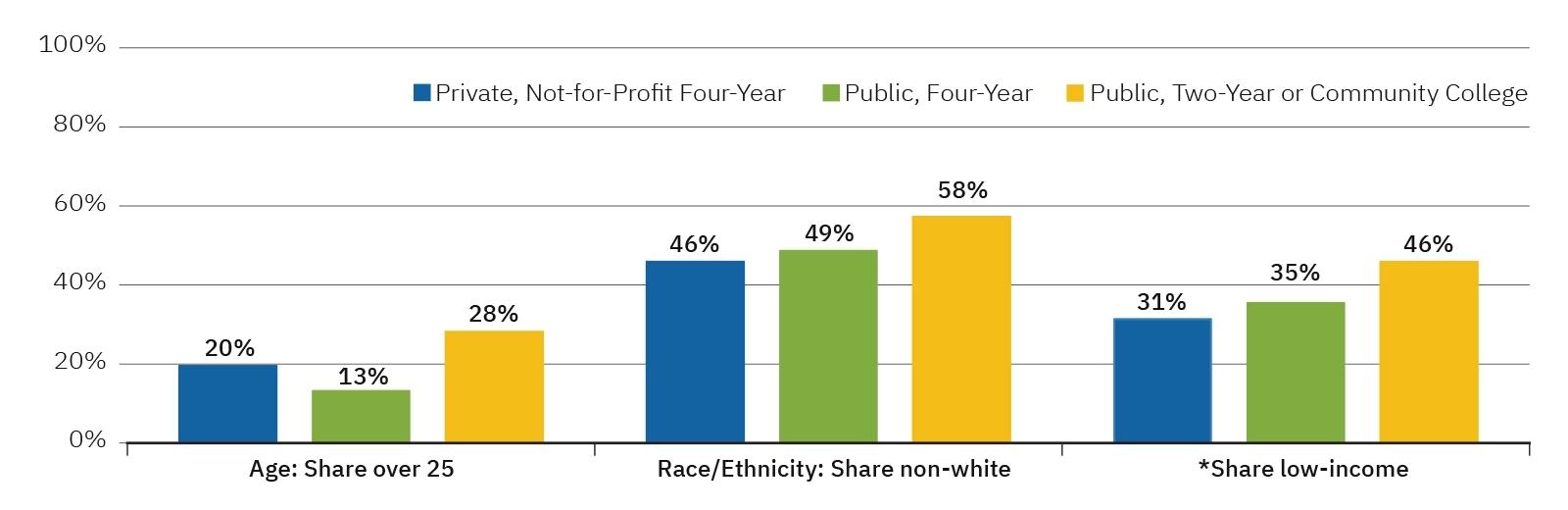
Today, our region’s vocational and community colleges play a critical role in expanding access to higher education and workforce opportunities for students who might otherwise face significant barriers to college enrollment. These institutions provide an affordable, efficient pathway to education and stable employment, especially for
first-generation college students.
Compared to four-year universities, vocational and community colleges serve a disproportionate number of students from low-income families, blue-collar households, and singleparent homes. According to the U.S. Department of Education, approximately 46% of students from these backgrounds choose to enroll in trade schools. This highlights the important role vocational education plays in expanding educational opportunities and helping students develop practical, career-focused skills.
Trade colleges also enroll a greater percentage of high school dropouts and GED holders than four-year universities. Students with high school equivalency degrees and GEDs comprise only 4% to 7% of all undergraduates, but the figure runs much higher at vocational and community colleges, the National Center for Education Statistics reported in a survey.
The higher enrollment of GED holders and high school dropouts should not be interpreted as evidence that vocational schools primarily serve lower-achieving students. In fact, students who graduate from high school and choose vocational education earn an average GPA of about 3.0, virtually the same as the national average. This demonstrates that students pursuing vocational education perform academically at levels comparable to their peers and that choosing a trade-focused education is not an indication of lower academic ability.
In addition to entering postsecondary education with similar academic qualifications, vocational graduates see strong employment outcomes. According to the U.S. Bureau of Labor Statistics, the unemployment rate for graduates in their twenties who completed vocational or community college programs was just 2.1%, significantly
lower than the 15.3% unemployment rate reported for graduates of fouryear colleges. These statistics suggest that vocational education can provide a direct and effective pathway to stable employment, allowing many graduates to enter the workforce quickly with indemand skills and promising careers as nurses, welders, plumbers, machinists, electricians or personal care aides. Importantly, vocational colleges are also more affordable than traditional four-year universities, averaging about
one-fourth the cost, with degrees requiring less time—10 months to two years—quickening return on investment.
“Not only do these students get a degree in occupationally relevant fields, they’re also more likely to stay local and work local. It’s a win for graduates and for the community,” Syverson said.
The views expressed are those of the author(s) and do not necessarily represent those of the Greater Rockford Chamber of Commerce.
Danielle Harriott is a graduate of Rockford Career College and its vice president of community outreach and alumni affairs.
ELECT TO SERVE Running for public office
By Bob Trojan, Rock Valley College Board of Trustees
Recently, I suggested that the Greater Rockford Chamber of Commerce include a section on running for elected office in its Leadership Rockford curriculum. My reason was simple: I’m concerned by the declining interest in public service, particularly among younger generations.
Across northern Illinois, fewer people are stepping forward to run for local offices. I’ve seen this firsthand as a member of the Rock Valley College (RVC) Board of Trustees, where I was first elected in 2015.
The RVC Board consists of seven elected trustees who serve staggered six-year terms. Elections are held every two years, typically for two seats. In my early years on the board, it wasn’t unusual to see 10 to 16 candidates competing for those positions. In recent elections, however, only four or five candidates have run. And since two or three incumbents usually seek reelection, that leaves very few new candidates entering the race.
The story is similar for many other local offices, including school boards, county boards, township offices, municipal councils, and other elected bodies. According to the Winnebago County Clerk’s Office, there are nearly 400 elected positions across all election cycles in Winnebago County alone. Those offices represent hundreds of opportunities for residents who want to make a meaningful difference in their communities.
Most local offices don’t require you to be wealthy, famous, or a career politician. In most cases, you simply need to be a U.S. citizen, meet the age requirements for the office, be a registered voter, and live within the district you wish to represent. Every office has its own eligibility requirements, filing deadlines, and district boundaries, so prospective candidates should check with their local election authority before beginning the process.
The Rock Valley College district is one of the largest local districts in the region, encompassing all of Winnebago and Boone Counties, roughly half of Ogle County, and portions of McHenry and Stephenson Counties. It serves more than 300,000 residents. Many other local districts are much smaller, making it possible for candidates to personally meet many of the voters they hope to represent. Serving in elected office is both challenging and rewarding. Local officials help establish priorities, oversee budgets, safeguard taxpayer dollars, and make decisions that affect education,
public safety, infrastructure, economic development, and the quality of life in their communities. Every vote matters, and every elected official can influence decisions that affect thousands of people.
One of the biggest misconceptions about running for office is that you need special qualifications. While experience is certainly valuable, successful boards benefit from members with diverse backgrounds in business, education, healthcare, agriculture, manufacturing, finance, law, nonprofit organizations, and countless other professions. Good judgment, integrity, a willingness to learn, and the ability to work respectfully with others are qualities that every board needs.
The first step in running for office is qualifying for the ballot. Candidates must collect signatures from registered voters within their district on nominating petitions. The required number of signatures varies by office. For example, Rock Valley College trustee candidates currently need only 50 valid signatures, although collecting substantially more is wise in case any signatures are challenged. Gathering signatures is also an excellent way to introduce yourself to voters and begin building support for your campaign.
Every office has its own filing calendar. Prospective candidates should obtain the official election schedule from their local election authority to ensure they meet all deadlines for petition circulation and filing. For RVC, petition signing begins Aug. 25, filing opens Nov. 16 and closes Nov. 23. Election day is April 5, 2027. Although campaigning has evolved with technology, the fundamentals remain remarkably consistent: Earn people’s trust, communicate clearly, listen carefully, and work hard. More than 2,000 years ago, Quintus Cicero wrote Commentariolum Petitionis (“Little Handbook on Electioneering”) to help his brother, Marcus Cicero, campaign for public office in ancient Rome. The advice still resonates today: Know your community, build relationships, and make your case directly to voters.
Local campaigns may not receive the attention of state or national races, but they often have the greatest impact on people’s daily lives. No matter your passion or background, there is likely a local office where your experience can make a difference.
The views expressed are those of the author(s) and do not necessarily represent those of the Greater Rockford Chamber of Commerce.
Bob Trojan is president/CEO, Rockford Linear Actuation, Inc. and a Rock Valley College Trustee. His community efforts include serving on boards for Growth Dimensions, Abilities Center, Rockford Area Ventures, Community Foundation, and Discovery Center. He was named a 2026 40 Over 40 honoree by the GRCC for his service to the business community.
THE 815 PROMISE Stengthening our community
By Larry Huff, Ed.D., Rockford Public Schools
As I begin my tenure as superintendent of Rockford Public Schools, one truth has become abundantly clear: There is something special about the 815. It’s more than an area code—it reflects a community that believes in itself, invests in its future, and understands that the success of our students is inseparable from the success of our businesses, workforce, and regional economy.
Throughout my career, I have believed that great public schools do more than educate children—they strengthen communities. The strongest school systems are built through partnerships among educators, families, businesses, higher education, and civic leaders who share a common vision for the future. That spirit of collaboration is alive and well in Rockford, and it is one of the many reasons I am excited to be part of this community.
As we begin a new school year, we celebrate our students and staff members, as well as the business partners who help us transform learning and prepare our students for success long after graduation.
One of the most visible examples of what is possible when education and industry work together is The Quad, our college and career education center. Last fall, we opened phase one of this state-of-the-art facility, bringing together high-demand career pathways in healthcare, technology, media, culinary arts, and other industries that are critical to our regional economy. The Quad also provides advanced placement and dual credit opportunities, allowing students from Auburn, East, Guilford, and Jefferson High Schools to pursue rigorous academics while gaining hands-on career experience.
Over the past year, hundreds of community partners have invested their time and expertise in our students through The Quad. They have conducted mock interviews, shared career experiences, participated in college and career fairs, helped students build résumés, and provided valuable insight into today’s workforce. Local manufacturers have also helped shape phase two by advising on future learning spaces for manufacturing, welding, automotive technology, fabrication, and engineering.
These partnerships are creating classrooms that mirror today’s workplaces while ensuring students graduate with the knowledge, technical skills, and professional experiences employers are seeking. As phase two opens this fall, we look forward to welcoming even more businesses into this collaborative effort.
That same spirit of partnership extends
beyond career education through the remarkable work of Rockford Promise. This fall, 191 graduates from the Class of 2026 will begin college as Rockford Promise Scholars at Northern Illinois University, Rockford University, Rock Valley College, and Saint Anthony College of Nursing. More than three-quarters are students of color, and nearly twothirds will become the first in their families to earn a college degree.
Educational attainment is one of the strongest predictors of a community’s long-term economic vitality. These scholars are preparing for careers in healthcare, education, engineering, business, technology, and countless other professions that will strengthen the Rockford region for years to come. Through the generosity of Rockford Promise and its partners, financial barriers are being removed while a stronger local workforce is being developed.
Preparing students for future careers also requires academic excellence. This year, 97 students participated in the National Merit Scholarship Qualifying Test. Of those students, more than 90% met the National Merit eligibility index, and 67 earned National Merit Scholarship awards.
Additionally, our district is projecting an 80% graduation rate for the Class of 2026. If realized, this will mark another year of steady progress, following graduation rates of 74% in 2024 and 77% in 2025. Every percentage point represents hundreds more students leaving our schools prepared for college, careers, military service, apprenticeships, and skilled trades.
Investing in exceptional educators remains vital. We’re especially grateful for the 53 student teachers who have chosen to complete their clinical experiences in our schools. Even more encouraging, 41 individuals who completed their student teaching with RPS 205 this past spring will begin the school year as classroom teachers in our district.
The progress we are celebrating today has never belonged to the school district alone. It belongs to every employer who mentors a student, every organization that opens its doors for career exploration, every volunteer who shares their time and expertise, and every business that chooses to invest in the potential of our young people. That is the promise of the 815. It is a future worth investing in and one worth celebrating.
The views expressed are those of the author(s) and do not necessarily represent those of the Greater Rockford Chamber of Commerce.
Lary Huff, Ed.D., is the new superintendent of Rockford Public Schools. He has nearly two decades of experience in public education, most recently serving as superintendent of Elkhart Community Schools in Indiana. He was named one of the Top 15 School District Superintendents for 2026 by Education Insider Magazine.
THRIVING IN THE 815
Why businesses should keep betting on communities that believe in them
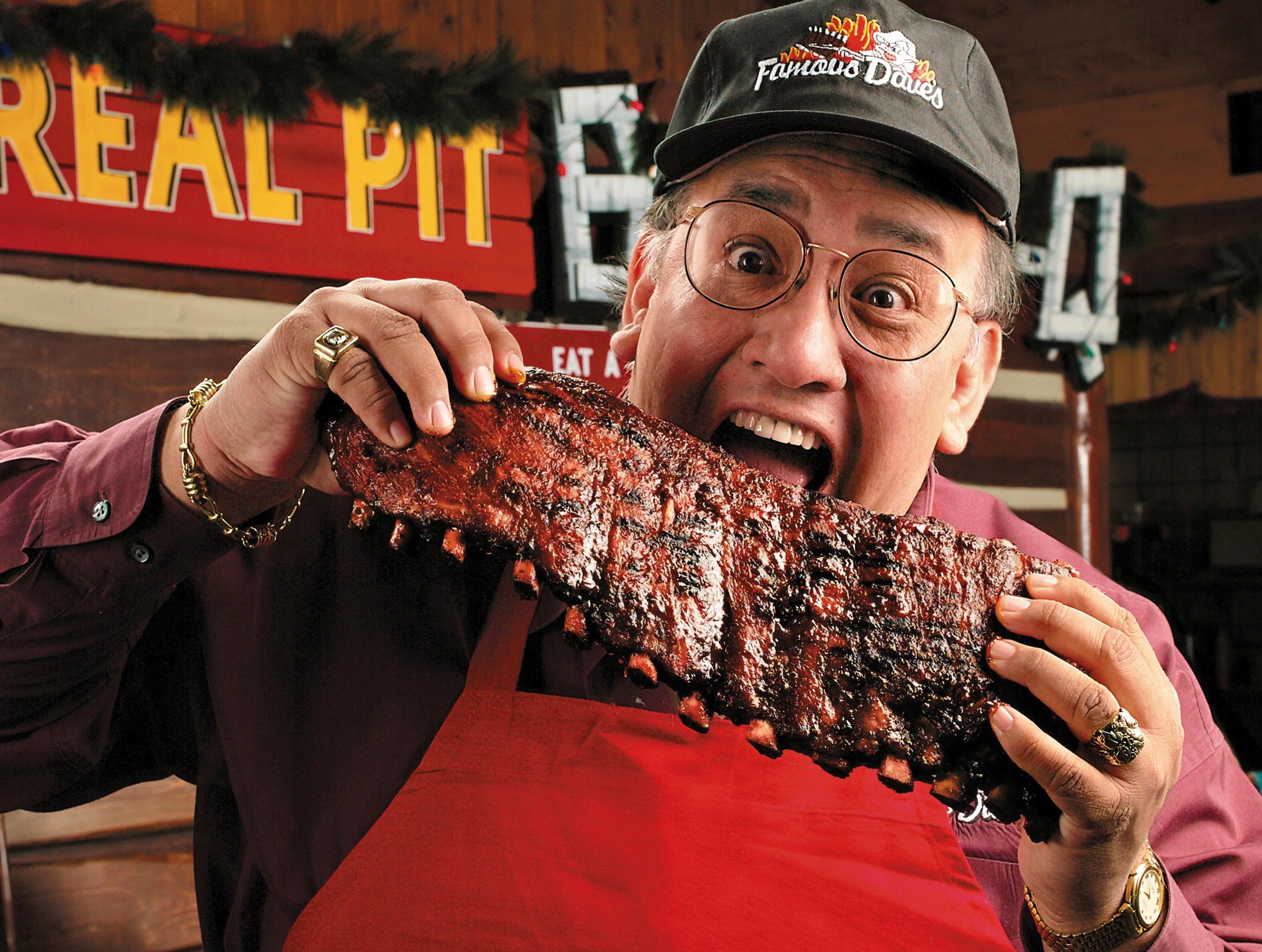
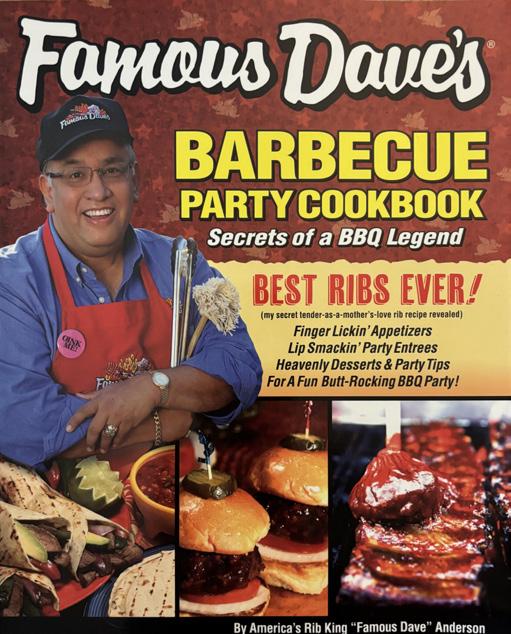
By Dave Anderson, founder of Famous Dave’s
My best day of the year happened in Rockford, Illinois! Folks, I can’t begin to describe the happiness I felt returning to Rockford for the rededication of the Famous Dave’s restaurant on Perryville Road. In business, it’s easy to become focused on what’s next. The next market. The next customer. The next opportunity. But sometimes the most important investment isn’t somewhere new. It’s recommitting, with passion and a greater focus, to the communities that have supported you for decades.
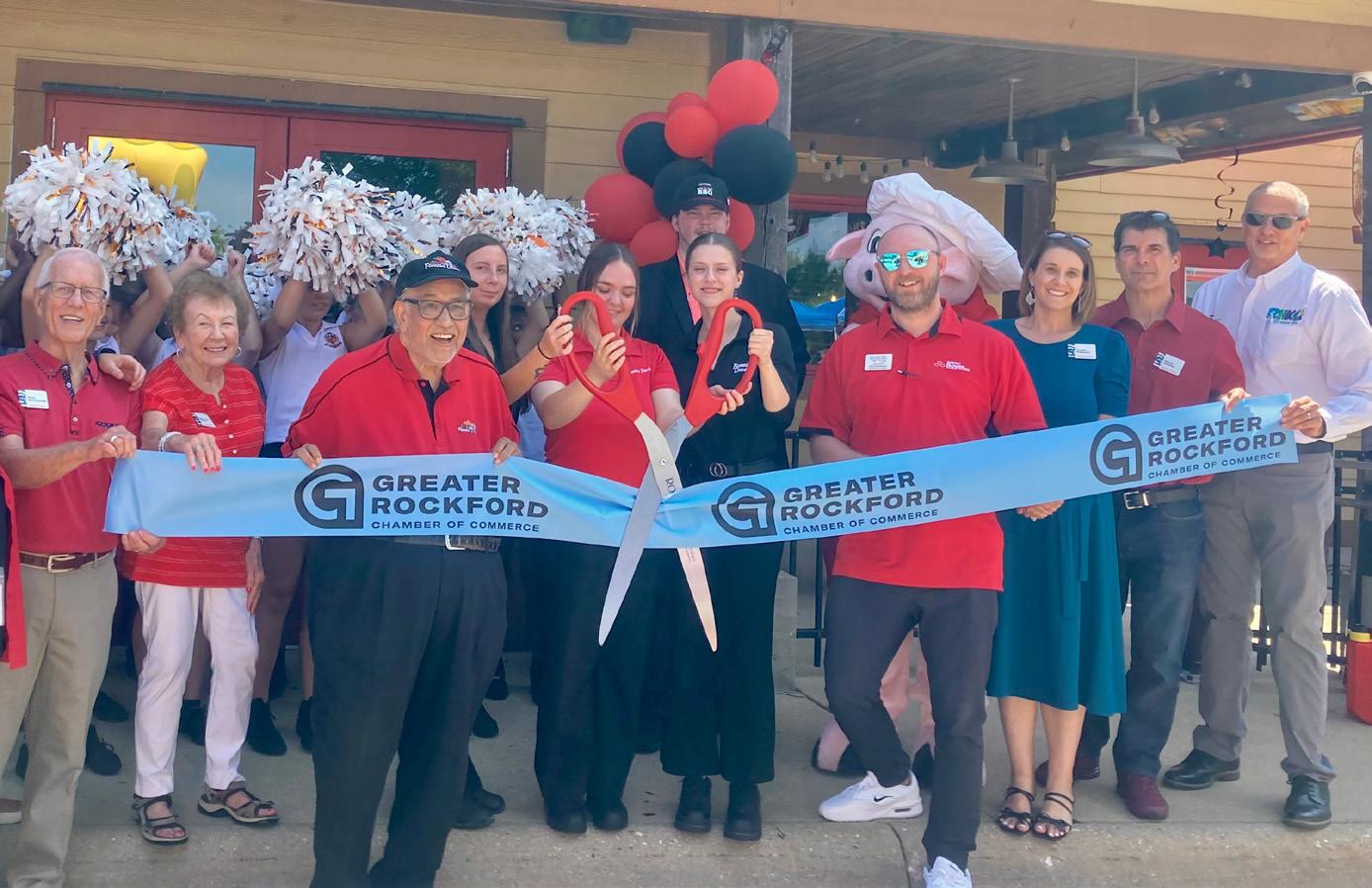
Earlier this summer, I had the privilege of returning to Rockford for the rededication of the Famous Dave’s restaurant on Perryville Road. While there was a ribbon-cutting, plenty of barbecue, and a chance to celebrate with our loyal fans, the day wasn’t really about reopening a restaurant. It was about
story, which is why reinvestment and rededication matter. When businesses refresh facilities, strengthen leadership teams, or recommit resources to an existing location, they send an important message: We value our Famous Dave’s barbecue-loving fans, and we’re planning on staying here for the long haul.
In Rockford, that commitment reaches beyond the restaurant. We’ve worked with local organizations, community leaders, and the Greater Rockford Chamber of Commerce. Those relationships have shown us that businesses thrive when they stay connected to the people and groups working to strengthen the community, and Rockford is one of America’s best thriving towns in the heartland. No company succeeds on its own. Strong chambers, business
“May you always be surrounded with good friends and great barbecue.” -“Famous” Dave Anderson
celebrating an on-going relationship that has lasted more than 20 great years.
The restaurant industry has changed dramatically since we opened in Rockford in 2004. Consumer expectations have evolved, costs have increased, and competition has intensified. Recent years have challenged restaurants in ways few could have predicted.
A restaurant doesn’t last 20 years in a community on its own. Customers have to keep coming back, employees have to care about the work, and the business has to keep improving instead of relying on what worked before.
A neighborhood restaurant becomes part of everyday life, hosting birthdays, Little League celebrations, and family dinners after a long week. Those fond memories become part of a community’s
organizations, nonprofits, and neighboring businesses create an environment where companies can thrive. That’s especially true in cities like Rockford, where collaboration has always been one of the community’s greatest strengths.
After more than 30 years with Famous Dave’s, I’ve seen that history can help a brand, but it can’t do all the work. Customers still expect new ideas and a reason to return. At the same time, they don’t want the quality and hospitality they value to disappear.
That’s true whether you’re running a restaurant, a manufacturing company, a professional services firm, or a family-owned retailer. Communities evolve. Businesses have to evolve with them. That means finding
new ways to deliver on the same promises you’ve always made.
For Famous Dave’s, those promises have always been simple: authentic barbecue, genuine “We love YOU” hospitality, and a place where everyone feels welcome. We strive to be your local community’s barbecue joint.
For other businesses, the promise may look different. But the principle remains the same. Long-term success isn’t built through one grand opening. It’s built through thousands of everyday interactions that earn trust over time.
During the celebration, I spoke with long-time guests who remembered bringing in children who are now adults. Others told me about anniversary dinners, graduations, and family traditions centered around a meal at the restaurant. What really made me smile was a young man who shared that Famous Dave’s was the perfect setting to propose to his sweetheart!
Those conversations were a powerful reminder that a business can become part of people’s lives in ways an owner may not notice at first. That is both an honor and a responsibility. The places we build often become places where people meet, celebrate milestones, and spend time together.
That’s why I believe reinvesting in established communities is just as important as expanding into new ones. Growth and innovation will always matter, of course. But loyalty deserves investment, too. I want to recognize the young, “I can move mountains” general manager, Kyle Fourtounis, of the Rockford Famous Dave’s. This young man and
others like him are why Famous Dave’s has been America’s best loved barbecue restaurant company. His passion, hard work, and inspiration to his team made this rededication a huge success. And the team, the spirit, the smiles, and our famous hospitality has made this Rockford Famous Dave’s a legend.
Rockford has embraced Famous Dave’s for more than two decades, and we’re grateful for that support. My hope is that businesses across every industry continue investing in the communities that helped build them, because those relationships are the foundation of long-term success.
When businesses invest in their hometowns, everyone has something to celebrate.
Famous Dave’s is a nationally recognized leader in the barbecue industry, known for serving awardwinning smoked meats, flame kissed ribs, and scratch made sides. Founded by Hall of Fame Pitmaster Dave Anderson in 1994, Famous Dave’s has become one of the most recognizable BBQ brands in the U.S. and beyond. The brand has 107 locations in 30 states and three countries and continues to expand in communities nationwide. Famous Dave’s has earned numerous accolades and awards for its exceptional BBQ and guest service, solidifying its reputation as a top destination for anyone seeking legendary BBQ with a side of hospitality.
The views expressed are those of the author(s) and do not necessarily represent those of the Greater Rockford Chamber of Commerce.
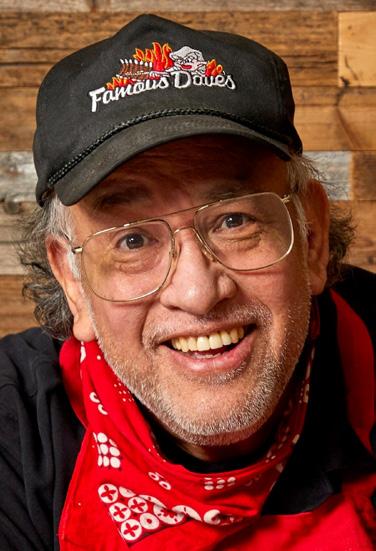
Dave Anderson is the founder of Famous Dave’s and a National Barbecue Hall of Fame pitmaster whose passion for authentic barbecue helped grow the brand into one of America’s best-known barbecue restaurants. He remains an advocate for hospitality, entrepreneurship, and investing in the communities businesses call home.
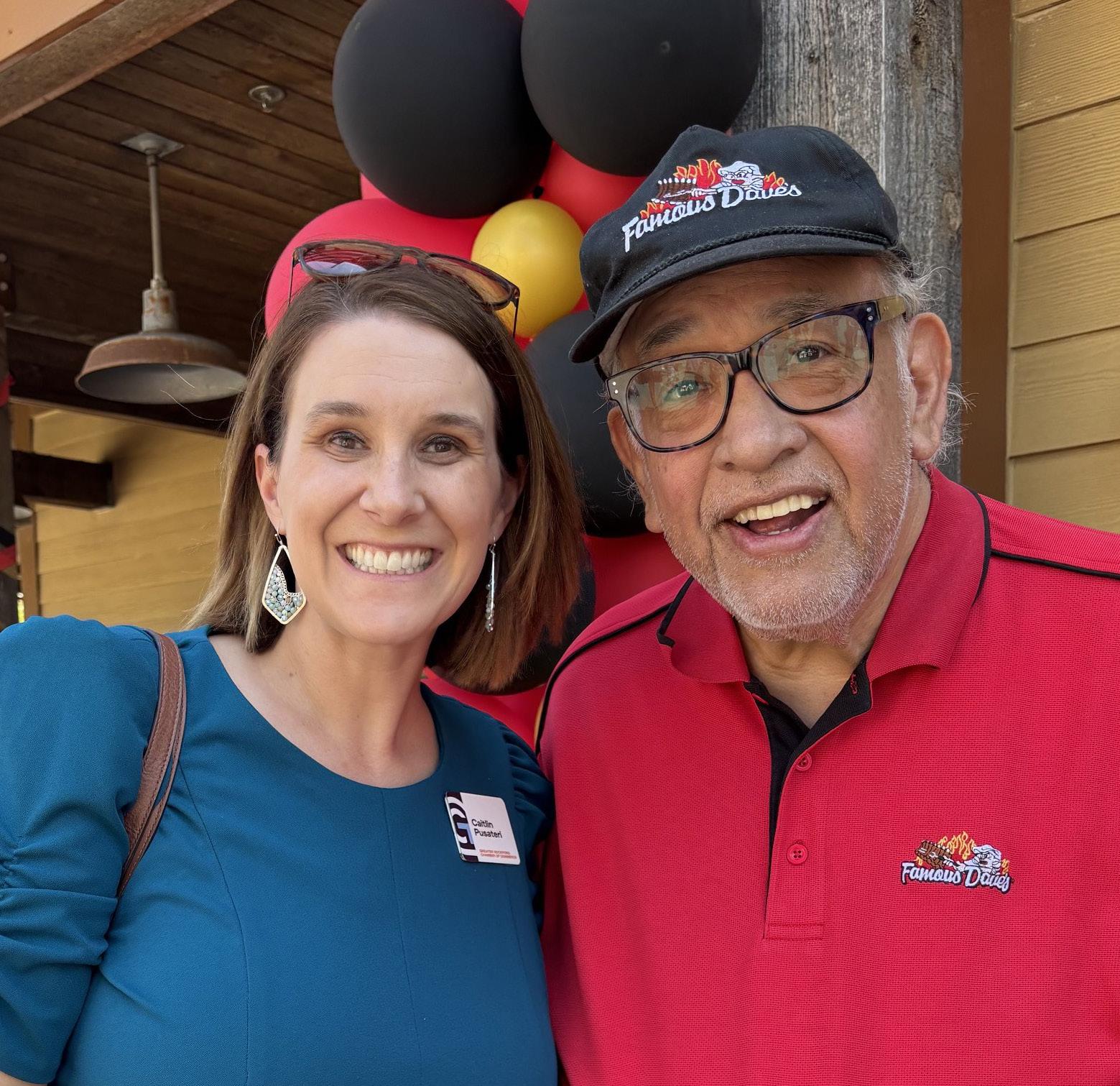
Caitlin Pusateri, GRCC COO, with Famous Dave Anderson.
EDITOR’S
NOTE: HIGHLIGHTS FROM THE LIFE AND CAREER OF FAMOUS DAVE ANDERSON
DID YOU KNOW …?
Dave Anderson, widely known as “Famous Dave,” grew up in Chicago, Illinois, where his love of barbecue began after his father introduced him to slowsmoked ribs from neighborhood barbecue stands.
He is a citizen of the Lac Courte Oreilles Band of Lake Superior Chippewa Indians on his mother’s side and a descendant of the Choctaw Nation on his father’s side.
He spent summers on the Lac Courte Oreilles Reservation, where his mother operated an Indian fry bread stand and taught him traditional cooking methods, blending tribal elements with broader influences.
Dual exposure—to urban Chicago barbecue and reservationbased Native cooking—fostered Anderson’s lifelong passion for smoked meats and regional authenticity.
Before opening a restaurant, Anderson spent more than 20 years traveling across the U.S. studying regional barbecue traditions and perfecting his own recipes for rubs, sauces, and smoking techniques.
He is a member of the Entrepreneurship Hall of Fame, the National Native American Hall of Fame, and the Barbecue Hall of Fame.
Anderson has written more than 10 books on topics including barbecue and grilling, business and leadership, and personal memoirs.
In 2017, Anderson personally competed as a pitmaster on the television series SMOKED, a competition among elite barbecue experts, and emerged the victor.
Famous Dave’s won first place for “Best Barbecue Sauce in America” at the prestigious American Royal Barbecue Sauce Contest in Kansas City.
He served as Assistant Secretary of the Interior for Indian Affairs, overseeing the Bureau of Indian Affairs and the Office of Indian Education Programs. He has served two presidents and three governors in advisory positions and has helped turn around struggling Indian reservations and Native American businesses.
Like many successful entrepreneurs, he experienced two bankruptcies early in his career.
He earned a master’s degree in public administration from Harvard University in 1986, despite not first completing a traditional undergraduate degree.
MOMENTUM AND RELATIONSHIPS
What’s ahead for the greater Rockford region
By Everett Butzine, CEcD, Greater Rockford Chamber of Commerce
The Greater Rockford Chamber of Commerce (GRCC) staff recently submitted Q2’s economic development report to our regional stakeholders to update them on the efforts to attract, grow, and retain businesses in our region.
As I look back on the second quarter of 2026, what stands out most isn’t a single number or headline. It’s the momentum we’ve built together this year through the kind of relationship-building and storytelling that doesn’t always make the news but always moves the needle.
One of the highlights of the quarter was our first-ever Regional Familiarization (FAM) Tour, where we welcomed four site selectors from across the country to spend time in Rockford. Over the course of their visit, June 9-11, they toured the Chicago Rockford International Airport with Zach Oakley and saw firsthand the
REMAINING RELEVANT
region’s strength as a transportation and logistics hub. They met with our talent committee at Rock Valley College’s Advanced Technology Center, getting a close look at how we’re building our workforce pipeline for the industries that matter most here. And because livability is just as important as logistics when a company is deciding where to grow, we made sure they experienced the region the way we do, with stops at Prairie Street Brewhouse, The Music Box, the Laurent House, and Anderson Japanese Gardens. The timing couldn’t have been better, coinciding with IRONMAN weekend and the Rockford University and GRCC Business Summit. That same spirit carried into how we’re marketing Rockford. In Q2, our team built out a stronger library of industryspecific content covering precision
manufacturing, aerospace, logistics, agriculture and beverage manufacturing, and pharmaceutical manufacturing, giving us sharper, more consistent messaging for every conversation we have with prospective investors.
We put that work to immediate use, developing branded packets for the FAM Tour with site-specific one-pagers, utility and infrastructure details, and regional highlights that we can now reuse across future pitches. We also deepened our partnership with Development Counsellors International and GoRockford, sharpening how we frame Rockford’s story for national media. That work is already paying off, with a mention of Rockford in the French publication Le Monde and a feature in Northwest Quarterly
Celebrating tradition and embracing innovation
By Sandy Dingus, Edgebrook Shopping Center
When we celebrate 815 Day, we celebrate more than an area code. We celebrate the places, people, and traditions that have shaped Rockford into the community we proudly call home. And few places tell that story better than Edgebrook.
The History
Long before Edgebrook Shopping Center welcomed shoppers, the land was home to the original Edgebrook Golf Course, a picturesque nine-hole course built in the late 1930s around a live stream called Spring Creek. The neighborhood was envisioned as an attractive residential community with rolling terrain, wooded landscapes, and beautiful homes. Although the golf course closed during World War II, its legacy would inspire the next chapter of Rockford history. As the war ended, architect Raymond Orput recognized the area’s potential. He acquired the Edgebrook development and helped encourage residential growth by donating land that became Marsh School and Marsh Park. Those investments helped establish one of Rockford’s most desirable neighborhoods and laid the foundation for what would eventually become the Edgebrook Shopping Center. Years later, Raymond’s son, architect Alden Orput,
named the shopping center “Edgebrook” in honor of the golf course where he had spent so much of his childhood.
When it opened in 1962, Edgebrook was intentionally different from the typical shopping centers of the day.
Raymond’s brother, Douglas Orput, envisioned a neighborhood destination filled with specialty retailers, attractive landscaping, and architecture designed to complement rather than compete with the surrounding residential community. Warm brick, copper-clad canopies, soft lighting, and abundant landscaping created a welcoming atmosphere that still defines Edgebrook today.
Three generations and more than six decades later, that vision continues. Remarkably, Edgebrook remains under the stewardship of the Orput family. Their commitment to thoughtful design, local business, and community gathering spaces has preserved the character that has made Edgebrook a Rockford landmark while allowing it to evolve with each generation.
The Challenge
But today’s retail environment presents challenges that previous generations could scarcely have imagined. National chains, online marketplaces, shifting consumer habits, and rapidly changing technology have transformed how
spotlighting our aerospace cluster. None of this happens without strong partners, and I’m grateful for everyone, from our regional collaborators to our own team, who helped make last quarter such a success.
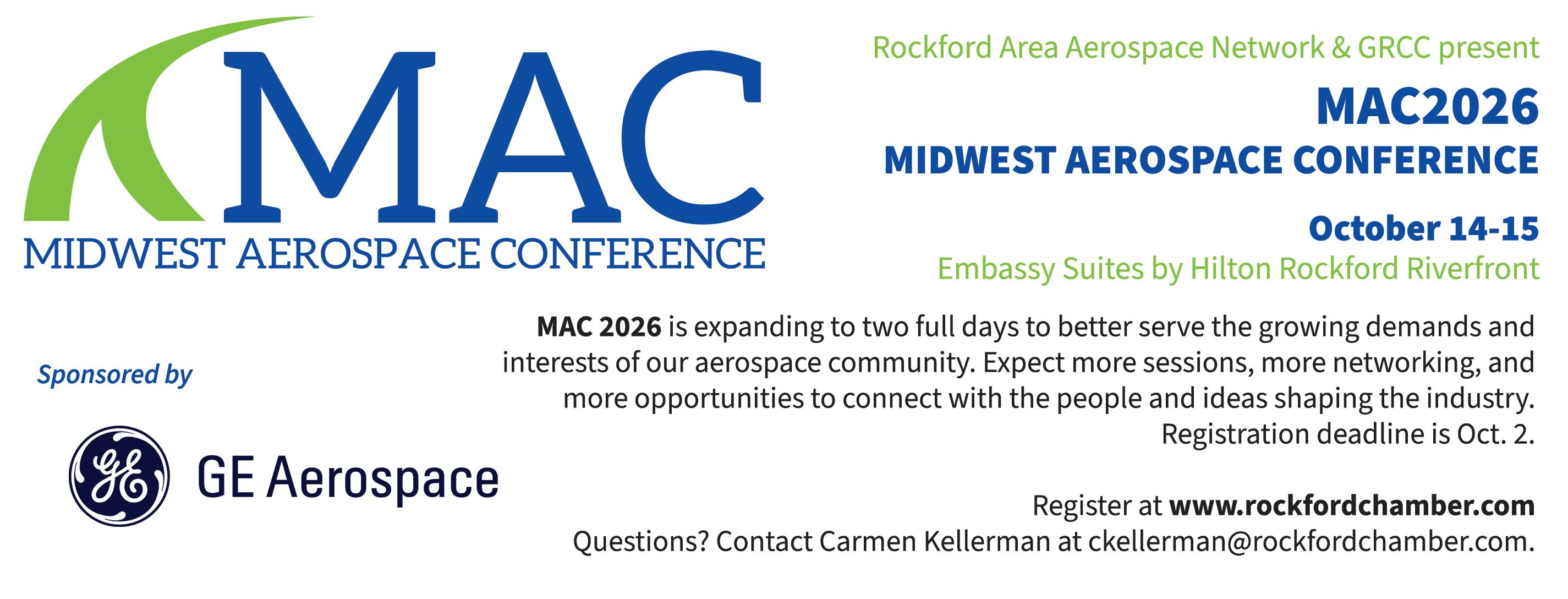
Q3 is shaping up to be just as busy. We’re preparing to rebrand the Rockford Area Aerospace Network (RAAN) into the Midwest Aerospace and Defense Alliance (MASDA), hosting our annual dinner on Aug. 13, welcoming Airbus suppliers to Rockford on Aug. 26, and expanding the Midwest Aerospace Conference to two full days on Oct. 14-15.
I’m proud of what our team and our community accomplished in Q2 and even more excited for what’s next. Thank you for being part of it.
Everett Butzine is the vice president of business expansion and attraction for GRCC. He is responsible for driving GRCC’s economic development roadmap (released in October 2025) and assisting local businesses with growth opportunities through business retention and expansion (BRE) visits.
people discover, evaluate, and support businesses. Family-owned companies and established local brands must continually balance efficiency with personal service, digital innovation with authentic relationships, and long-standing traditions with evolving customer expectations. Success increasingly depends on remaining visible, adaptable, and connected while resisting the temptation to abandon the qualities that made the business successful in the first place. The strongest brands understand that tradition and innovation are not competing ideas but complementary ones.
The Response
As Rockford continues to grow and change, Edgebrook offers an important lesson for established brands and family-owned businesses throughout the region. Longevity alone is never enough. Local consumers reward authenticity, relationships, and consistency. Residents value businesses that support local organizations, create welcoming gathering places, and contribute to the quality of life beyond the products they sell.
At Edgebrook, we’ve evolved beyond shopping and dining to become a place where neighbors come together
for annual holiday events, seasonal farmers markets, free summertime concerts, and our popular arts and crafts fair. By preserving our identity while thoughtfully adapting to changing lifestyles, we’ve remained woven into the fabric of the community.
Edgebrook’s story demonstrates that lasting success is built one generation at a time through careful stewardship, meaningful investment, and a genuine commitment to the people who call the 815 home. The heart of Edgebrook has never been its buildings—it’s the people who gather there. Like many long-lasting institutions in the Stateline, it reflects the entrepreneurial spirit, creativity, and sense of community that define our region.
Owned by the Orput Companies, Edgebrook is an established shopping and lifestyle center located in the heart of Rockford at 1639 N. Alpine Road. Edgebrook offers a unique blend of eclectic boutique shops, excellent restaurants, convenient service-oriented businesses, and seasonal events.
The views expressed are those of the author(s) and do not necessarily represent those of the Greater Rockford Chamber of Commerce.
Sandy Dingus is in her seventh year as marketing and special events coordinator for Edgebrook Shopping Center. With 40 years of marketing experience in radio, national retail, and promotional advertising, she creates events, including Margaritas of the Mall, the Farmers Market, Music on the Mall, and arts and crafts events.
ROCKFORD HQ
Why we chose to headquarter our agency in the 815
By Steve Platcow, Armory815
When Hard Rock International sent me to Rockford to help launch Hard Rock Casino Rockford as director of marketing, I arrived with the perspective of someone who had spent decades in national advertising, including 25 years as CEO of a top 200 privately held advertising agency in Chicago. What I found here was more than potential. It was a creative community already in motion, already producing, and already defining a cultural identity that deserved broader recognition.
My introduction to the region began in the historic Edgewater neighborhood. Walking its streets, we noticed the architectural character shaped by famed architect Jesse Barloga. His work is more than aesthetic. It reflects a community that has long valued design, heritage, and the craft of making things well. That intentionality revealed a city with a deep creative foundation.
As we spent more time here, that foundation became increasingly visible.
The Rockford Art Museum, where I now serve as a trustee, demonstrates a curatorial ambition that speaks to a maturing creative culture. Its exhibitions show a community that produces art while shaping broader points of
view. Cities rise when they cultivate a shared creative language.
The production ecosystem offered another layer of discovery. During the Hard Rock launch, we worked alongside creators whose output meets national and global standards. Our work revealed a depth of talent that is rare for any city. Writers, art directors, digital creators, cinematographers, editors, and web designers joined the Armory815 mission with a level of discipline and craft that deserves national recognition. We are creating world-class work right here in Rockford, supported by an infrastructure that includes City Stage Studios.
Rockford’s creative lineage reinforces this reality. Rick Nielsen’s influence is not simply musical. It is cultural. His career is a reminder that Rockford has long produced talent capable of shaping national conversations. That legacy continues today across new mediums and through new generations of creators.
From a business perspective, these discoveries matter. Creative companies thrive where authenticity lives. Rockford’s creative revival is organic, durable, and accelerating. The region’s talent pool is deep enough that we have been
able to recruit the most capable team of my advertising career. Many of these individuals are from the greater Rockford area. Others are choosing to relocate here (or seriously considering it) because the city’s holistic creative momentum is compelling. The infrastructure that supports us, including City Stage Studios, allows modern creative work to happen at a level that competes with major markets.
This is why we chose to headquarter Armory815 in Rockford. The city’s arts, culture, and production scene are compounding with momentum. This city and its people inspire the highestcaliber work of our careers. Collectively, we are rising in design and culture. We are building and attracting talent. This empowers us to produce accretive work that stands shoulder to shoulder with major markets. Most importantly, it is happening with authenticity, humility, and a sense of civic pride.
Rockford is writing a new creative chapter. It is shaped by architects, artists, musicians, filmmakers, designers, and storytellers who understand that creativity is more than ornamental. It is economic. It is cultural. It is a driver of identity and a catalyst for growth.
Our mission is for marketers—local and across the country—to see what we found and recognize the depth of talent in the Rockford region. Rockford is a city in the midst of a creative revival. It’s an artists’ community, and the truth is that it always has been, from Rick Nielsen to Emily Bear to the creators at Armory815. The opportunity now is to recognize it locally, support it, and build alongside it. The 815 has earned its place on the national creative map. It’s time to celebrate that reality and continue investing in the momentum carrying it forward.
Armory815 is a heritage-driven strategic communications advertising agency headquartered in Rockford. The firm specializes in accretive narrative development, creative execution, experiential design, media strategy, earned and paid media placement, and market intelligence. Armory815 is committed to elevating regional talent and producing work that reflects authenticity and creativity.
The views expressed are those of the author(s) and do not necessarily represent those of the Greater Rockford Chamber of Commerce.
Stephen Platcow is a veteran marketing strategist and advertising executive with decades of leadership experience across entertainment, hospitality, lifestyle, and cultural brands. He serves as president of Armory815 and as a trustee of the Rockford Art Museum. He has guided creative and production initiatives nationwide, most recently for Hard Rock.
ARTS AND COMMUNITY Bringing vitality to the 815
By Julie Thomas, Rockford Symphony Orchestra
When people talk about what makes a community a great place to live, the conversation often begins with schools, jobs, housing and public safety. Those elements are essential, but a thriving community also needs places where residents can convene, create, and feel connected to something larger than themselves. That’s where the arts play an important role.
I love that in 1934, during a time of amazing challenges for our country and world, our community chose to celebrate Rockford’s centennial by creating an orchestra. The Rockford Symphony Orchestra (RSO) formed the framework for the artistic vibrancy we experience here today.
Every year since, the RSO has brought music to the Rockford region. Just last month, we gathered at the Coronado Theatre on July 3 for the America 250 Celebration concert. Against a backdrop of music, community leaders joined the RSO to share messages of bravery, resilience, and hope.
Experiences like that remind us that arts organizations do more than entertain. They serve as cultural anchors, strengthening their communities through outreach, partnerships, and shared experiences.
An April 2026 report from the National Endowment for the Arts found that, in one national survey, arts participants showed a nearly fourfold increase in the likelihood of civic and community engagement. Locally, the Rockford Area Arts Council’s 2024 Rockford Region Cultural Plan noted that arts and culture can celebrate Rockford’s multicultural past and present, foster pride and belonging, attract visitors, and uplift the region.
National research reinforces that point. Americans for the Arts’ 2023 Arts & Economic Prosperity 6 (AEP6) found that 89% of attendees said the event they attended inspired pride in the neighborhood or community. The study also reported that the typical attendee spends $38.46 per event beyond admission, generating additional revenue for local establishments.
The RSO contributes to the local creative economy by employing nearly 200 musicians and staff each year, who spend money in the region and generate payroll tax revenue for the state. As a resident company of the Coronado Theatre and its most frequent user, the orchestra also spends nearly $175,000 annually on rent, fees, and production support, helping preserve the nearly 100-year-old venue.
Community support is essential to sustaining arts organizations. In the case of RSO, ticket sales cover less than a third of the cost of producing a concert. Like many artistic endeavors, most of our support comes from the community.
Businesses strengthen the arts through sponsorships, program book advertising, and ticket purchases for employees and clients. Scores of community members also contribute their time and expertise as board members, volunteers, and ambassadors.
Strong arts organizations collaborate in ways that advance broader community goals. For example, new this year, RSO was invited to partner with Rockford Public Library and United Way Rock River Valley to help advance their efforts to improve literacy in Winnebago County. We’re also offering free Masterworks tickets to youth ages 6-18. The arts are often viewed as something enjoyable but separate from economic and community development. In reality, business and culture strengthen one another. Another 2023 Americans for the Arts survey found that 86% of Americans consider arts and culture important to community quality of life and livability, while 79% believe they are important to local businesses, the economy, and jobs.
That’s why we’re working to introduce more residents to the RSO through inclusive, welcoming experiences, such as our first free Preview Concert, Aug. 21 at the Coronado Theatre. Presented in a casual setting, the concert will showcase the upcoming season and the orchestra’s artistry, appealing to both longtime patrons and first-time attendees.
Nearly a century after Rockford residents came together to establish the RSO, that same spirit of community investment continues to shape our region and gives us even more reasons to celebrate the 815.
The Rockford Symphony Orchestra (RSO) is a leading cultural institution in Northern Illinois, proudly fulfilling its mission to lead in the creation of vibrant music experiences that enlighten, educate and entertain through public performances, and education and outreach programs. The RSO was founded in 1934 to celebrate Rockford’s centennial anniversary and incorporated in 1943.
The views expressed are those of the author(s) and do not necessarily represent those of the Greater Rockford Chamber of Commerce.
Julie Thomas, recipient of the Chamber’s 2020 Excellence in Leadership Award, joined the RSO in 2004 and became executive director in 2009. She earned a bachelor’s degree in communications and journalism, with a minor in applied music, from Truman State University and a certificate in nonprofit leadership from Rockford College.
POWERING THE FUTURE
What utilities mean for regional growth
By Audrey Moon, Greater Rockford Chamber of Commerce
Economic development doesn’t happen without infrastructure. Behind every new facility, every new job, and every new investment is a web of utilities including electricity, natural gas, water, and wastewater that make it all possible. At the Rockford University Business Summit in June, the Greater Rockford Chamber of Commerce (GRCC) hosted a panel on the future of utility infrastructure in the Rockford region, bringing together leaders from ComEd, Nicor Gas, and Four Rivers Sanitation Authority for a candid conversation about what’s coming, what it means, and how the region is positioned to handle it.
Everett Butzine, vice president of business expansion and attraction at the GRCC, moderated the discussion. Panelists included Max Leichtman, director of economic and workforce development at ComEd; Kevin Gadzala, regional community affairs manager at Nicor Gas; and Michael Christensen, director of plant operations, and Matt Campbell, director of engineering, both of Four Rivers Sanitation Authority.
A Dynamic Landscape
The demand for energy sources and infrastructure is accelerating in ways that require constant adaptation from utilities, communities, and businesses alike. The driving force? A new wave of large-scale users—data centers, advanced manufacturers, and high-tech computing operations—that are fundamentally reshaping demand on the grid.
“The supply and demand balance in Illinois is not something we’ve had to worry about for the past two decades,” Leichtman said. “But with the types of businesses that are coming to Illinois, that will put demand on the grid, and we have to think about the right mix of energy, how we bring it on, and how we run our company that makes the energy burden lesser.”
Gadzala echoed the theme. Natural gas, long viewed as a stable and predictable energy source, is also seeing surging demand particularly as an on-site generation option for large facilities on mega sites. The challenge for both utilities is the same: meeting explosive new demand while keeping energy affordable and reliable for the businesses and residents who already depend on them.
Reliability and Affordability
For manufacturers and businesses evaluating a region, two questions dominate the conversation: Can we count on the power staying on, and what will it cost?
On reliability, Leichtman was direct about the stakes. “If power is on at your house 99.8% of the year, it’s fantastic,” he said. “But that 0.2% of the year for your home or your business is hugely
impactful.” For manufacturers running continuous operations, even a brief outage can mean significant losses, making reliability a requirement.
Gadzala identified safety as Nicor’s top priority, followed closely by affordability and reliability, values that mirror what the region’s businesses need most. Both Leichtman and Gadzala acknowledged that rising costs are a reality, and that managing the financial impact of new large-load customers on existing ratepayers is an active area of focus.
Leichtman described specific mechanisms already in place to protect the broader community. Large-load customers bear the cost of their own last-mile connections, and security agreements require them to guarantee revenue projections or pay the difference, ensuring that the cost of serving a major new facility isn’t passed on to existing customers.
“We have worked at ComEd to ensure that the cost of distributing power to large-load customers is contained to that particular type of customer,” he explained.
Our Region’s Competitive Advantage
One of the panel’s most striking takeaways was how the Rockford region’s utility infrastructure, perhaps taken for granted in the past, has become a genuine competitive differentiator.
“Perception is continuing to evolve,” Leichtman said. “We weren’t looking at these sites quite the same way three to five years ago.” What changed?
Large industrial and technology projects increasingly need two things: land and proximity to high-voltage electrical infrastructure. The Rockford region has both. Sites that might have been overlooked in previous economic cycles are now drawing serious interest precisely because of their access to ComEd’s extensive high-voltage network in the area.
For site selectors evaluating where to place a large project, the questions around utilities tend to cluster around three factors: speed to power, reliability, and affordability—roughly in that order for data centers, and with affordability weighted more heavily for manufacturers.
Leichtman was candid that bringing significant new load online isn’t instantaneous.
“A project that brings on a couple hundred megawatts in Rockford might force us to make adjustments near Schaumburg or O’Hare,” he said, adding that engineering, procurement, and construction timelines are real constraints.
Illinois’ regulatory environment, which limits utilities from building infrastructure speculatively ahead of demand, adds another layer of complexity. But it also means that communities with existing
infrastructure capacity, like Rockford, have a meaningful head start.
Wastewater
Michael Christensen and Matt Campbell of Four Rivers Sanitation Authority brought a perspective that is important in economic development. Four Rivers serves a 100-square-mile area, processes roughly 35 million gallons of wastewater per day, and operates within strict Illinois EPA and U.S. EPA guidelines to ensure that water is properly cleaned before it flows back into the Rock River.
Campbell noted that “regionalization” is an emerging concept in wastewater management, and Four Rivers is already ahead of it with plans and concepts for service area expansion well beyond its current footprint. That kind of scale and forward planning matters to large industrial users who need to know that wastewater capacity won’t be a bottleneck for their operations.
Christensen, drawing on four decades of experience in operations and maintenance, emphasized the importance of staff expertise and system knowledge in delivering reliable service. For Four Rivers, success in the next ten years means continuing to provide efficient, reliable service while staying ahead of permitting requirements and evolving regulatory standards.
The panel also touched on an emerging opportunity at the intersection of data
centers and water reuse. Data centers require significant water for cooling, and some are exploring the possibility of treating their own wastewater on-site, a model that could align well with sustainability goals and reduce demand on municipal systems. Christensen noted that the region uses approximately one billion gallons of water annually for cooling purposes, and that finding ways to reutilize what comes in is an active priority.
Looking Ahead
The overarching message from the panel was one of cautious optimism. The Rockford region has the infrastructure, the land, the utility relationships, and the collaborative spirit to compete for and win major projects. The challenges are real: grid modernization, regulatory constraints, managing cost pressures, and keeping pace with demand that is growing faster than anyone anticipated just a few years ago.
But as Leichtman put it, the region is increasingly on the radar in ways it simply wasn’t before. And as Gadzala, Christensen, Campbell, and Leichtman all made clear, the utilities that serve this region are committed to making sure it stays that way.
The future of utility infrastructure, in a word, is dynamic. And in the Rockford region, that’s starting to look like an opportunity.
Audrey Moon has more than a decade of journalism experience and a background in marketing and communications for economic development and manufacturing. She joined the Greater Rockford Chamber of Commerce in February 2026, calling it her dream job. She is a graduate of the University of Missouri School of Journalism.
ILLINOIS EARNS HIGHEST-EVER RANKING IN CNBC’S “TOP STATES FOR BUSINESS”
Illinois recorded its highest overall ranking in CNBC’s “2026 Top States for Business,” a testament to its rising status as a global business destination. Notably, Illinois has jumped 27 spots since CNBC started publishing its rankings in 2007, and 18 spots since 2019.
“Illinois continues to rise in CNBC’s Top States for Business, a clear confirmation that Team Illinois’ efforts are paying off,” said Illinois Economic Development Corporation (EDC) president and CEO Christy George. “With world-class infrastructure, a deep talent base, and a collaborative public-private ecosystem, business is booming in Illinois and companies are taking notice.”
Additionally, the state placed No. 3 in infrastructure, CNBC’s topweighted category in 2026’s list, “as companies pursue strategic locations close to transport hubs, top utilities, access to fresh water, and abundant
energy to power things like advanced manufacturing and data centers.”
CNBC’s rankings build on a wave of recent high-profile corporate investments:
Hyundai Translead is investing $450 million and creating nearly 2,500 jobs to manufacture trailers in Will County.
CSL is investing $1.5 billion to construct a new manufacturing facility in Kankakee County, marking one of the largest life sciences investments in state history.
Incobrasa Industries opened a $250 million soybean processing plant and solar array in Gilman, reinforcing the state’s status as a hub for biofuels, food processing, and advanced agricultural manufacturing.
IBM will establish its FutureNow Chicago delivery center at the Illinois Quantum and Microelectronics
Park, creating 750 new jobs and training City Colleges of Chicago apprentices in high-tech fields.
• Continental Tire is doubling down on its Southern Illinois ties with a new highly-automated finished goods warehouse in Mount Vernon.
AbbVie will construct two new active pharmaceutical ingredient (API) manufacturing facilities
MACHESNEY PARK SENIOR COMMONS AWARDED COMPETITIVE HOUSING TAX CREDITS
The Illinois Housing Development Authority (IHDA) Board has awarded competitive 9% tax credits to a 40unit senior housing project known as Machesney Park Senior Commons to be constructed at 7633 N. Perryville Road. The tax credit award announcement marks a major milestone for the Village of Machesney Park’s highest-priority residential development projects.
The announcement was made by IHDA on July 7 as part of its 2026 funding cycle. Machesney Park Senior Commons, proposed by Bear Development and Greenprint Partners, was one of only 22 housing projects to receive the award throughout the state.
“The award of these tax credits is a tremendous help to our senior citizens. Seniors in need will be able to age in
the community they call home,” said Mayor Steve Johnson. “For years, the village has worked tirelessly to see this development become a reality. We greatly appreciate IHDA for awarding this highly-anticipated project.”
Machesney Park Senior Commons will provide much-needed affordable housing options for income-qualified seniors aged 62 and older, addressing
at its North Chicago campus, investing $380 million and creating 300 new full-time jobs.
In addition to CNBC’s rankings, Illinois recently secured the No. 2 and 3 spots in Site Selection’s top states for corporate investment and workforce development lists, respectively.
a growing need for housing options for the village’s vulnerable senior population. The Special Use Permit to allow the multi-family planned unit development of Machesney Park Senior Commons was passed unanimously by the Village Board in June.
Construction is expected to commence in 2027 with first residents moving into the complex in 2028.
NEW PROGRAM SUPPORTS REGIONAL COMPETITIVENESS
The Illinois Economic Development Corporation’s Economic Research Center announced the launch of the Regional Research Pilot Program (R2P2), a new initiative designed to provide deeper, forward-looking research and economic growth planning support to communities and partners across Illinois.
R2P2 is designed to help communities move beyond individual projects and near-term needs by offering strategic economic analysis that supports longterm regional competitiveness. R2P2 will deliver customized research and analysis to help participants develop proactive, realistic, and data-driven economic development strategies aligned with limited local resources.
“Illinois EDC is committed to helping communities compete in a rapidly changing economy by pairing Illinois’ unmatched assets with rigorous, future-oriented analysis,” said Illinois EDC president and CEO Christy George.
“R2P2 strengthens our ability to support economic developers at the regional level—ensuring that growth strategies are grounded in shared data, aligned with market realities, and focused on long-term opportunity.”
R2P2’s pilot cohort includes eight organizations based across Illinois:
“With R2P2, Illinois EDC is forging a new path in providing impactful research, analysis and strategy to regional partners across our state—opening doors for future growth,” said Illinois EDC Chairman John Atkinson. “When our partners have better data and strategic direction, all of Illinois wins.”
Through R2P2, participating entities will receive analysis examining their region’s current economic trajectory relative to national trends and their long-term economic vision, and the
gaps between present conditions and desired future outcomes. Illinois EDC will then work collaboratively with participants to prioritize industry sectors and develop targeted strategies that reflect both regional strengths and market realities, creating clearer pathways from analysis to action, with the ultimate goal of economic growth. The program is intentionally structured to complement—but remain distinct from—Illinois EDC’s existing pipelinedriven and marketing-focused services.
“The Illinois Department of Commerce and Economic Opportunity is proud to support the Regional Research Pilot Program as part of our ongoing commitment to strengthening economic growth in communities across the state,” said Illinois Department of Commerce and Economic Opportunity Director Kristin Richards. “The insights generated through this program will further inform our approach to strategic economic development throughout Illinois.”
R2P2 is an initiative of Illinois EDC’s Economic Research Center, which launched earlier this year and produces fact-based data sets and analysis of Illinois’ workforce, industries, and economy.
“The Regional Research Pilot Program gives communities the opportunity to think strategically about where they want to go and what it will take to get there,” said Illinois EDC Director of Research and Regional Analysis Kate Lindgren, who is helping to spearhead the program. “By combining statewide analytical capacity with local insight,
R2P2 will help participants align vision, strategy, and action in a way that is both ambitious and achievable.”
“We are grateful to partner with Illinois EDC,” said City of Rockford Mayor Thomas McNamara. “By turning data into action, we can better position Rockford to attract new businesses, expand job opportunities for residents and build on our current momentum.”
“Through our participation in the Regional Research Pilot Program, the Greater Freeport Partnership is strengthening our ability to align datadriven insights with real, actionable economic development strategies,” said Greater Freeport Partnership Executive Director Andrea Schultz Winter. “The Partnership’s mission is to serve as a catalyst for economic growth in Freeport and Stephenson County, bringing partners together to move our region forward. R2P2 provides the analytical foundation we need to better understand our trajectory, prioritize opportunities, and create a more prosperous future for our community.”
“We welcome the opportunity to establish this strategic partnership with Illinois EDC for the Regional Research and Pilot Program to enhance our existing business intelligence resources,” said Grow Quad Cities Chief Economic Development Officer Julie Forsythe. “In today’s data-driven economy, expanding our access to meaningful insights enhances our ability to support the growth and competitiveness of the Quad Cities region.”
MEMBERS IN THE NEWS
Engineering Enterprises Inc recognized the following employees for milestone anniversaries with the company: Emily Conti (1), EI, project engineer (5 years); Rick Carls (2), senior project technician I (5 years); and William Benson (3), PE, senior project engineer I (5 years); Matt Taylor (4), senior GIS analyst (10 Years); Todd Wells (5), PE, CPII, senior project manager (20 years); Chris Peterson (6), PLS, project manager (30 years).
Rock Valley Credit Union (RVCU) welcomed Lauren O’Donnell (7), HR generalist, and Brooke Trousdale (8), loan support specialist.
In June, 22 doctors graduated from the Mercyhealth Family Medicine Residency Program and the Mercyhealth Internal Medicine Residency Program. The programs are accredited by the Accreditation Council for Graduate Medical Education. Mercyhealth Family Medicine Residency graduates (9): Walid Ali, MD; Nikki Brar, MD; Naveed Elahi, MD; Benedict Ikeudenta, MD; Christine Manoj, MD; Sahana Ravindran, DO; Niroashan Srikumaran, MD; Semi Sung, MD; and Shaffiq Yusuf, MD. Mercyhealth Internal Medicine Residency graduates (10): Sultan Ahmed, DO; Furqan Attar, DO; Supriya Bhuvanagiri, DO; Rootul
William C. Lewis (11), a 2026 graduate of Auburn High School, was awarded a Stamps Scholarship at the University of Mississippi, earning one of the nation’s most prestigious merit scholarships for undergraduate students.
Rockford IceHogs president of hockey operations and general manager Mark Bernard (12) was honored with the Bruce Landon Award as the American Hockey League’s outstanding hockey operations executive for 2025-26.
Jacque Schweighart (13), M.Ed., accepted the position of chief development officer and president of OSF HealthCare Foundation.
Rockford Rescue Mission’s (14) “The Way Home” podcast received an Award of Excellence from Citygate Network’s Media Innovation Competition.
Mercyhealth’s Javon Bea Hospital (15) received Silver Milestone recognition from IAC for 25-year commitment to quality echocardiograms.
OSF HealthCare Saint Francis Medical Center in Peoria is the
first hospital in Illinois, and among the first in the country, to install the Medtronic Stealth AXiS™ Surgical System.
Rockford Housing Authority celebrated 75 years of service on July 14.
Rockford and Loves Park are home to two of the nation’s Top 10 sports facilities according to the HUG Sports Tourism Index, a benchmarking tool used in the Rockford Park District’s recent economic impact study.
Think Big was awarded a $150,000 impact grant from Nicor Illinois Community Investment (NICI), a transformational investment that will strengthen entrepreneurship, expand opportunities for small business owners, and advance economic mobility throughout the Rockford region.
Nicor Gas celebrated the completion of the tenth and final phase of the Dubuque pipeline replacement project. This infrastructure investment helps ensure the safe and reliable delivery of natural gas to homes and businesses throughout northwest Illinois.
The Employers Coalition of Health (ECOH) announced its official membership in the Midwest
Business Group on Health (MBGH). This strategic alliance brings a wealth of national-level resources, benchmarking, and enhanced purchasing power directly to the Rockford regional business community.
Carpenter’s Corner thrift store (Carpenter’s Place) at 1715 Rural St. in Rockford is now open on Sundays, 11 a.m. to 5 p.m.
Fehr Graham announced the opening of its Schaumburg office at 1933 N. Meacham Road, Suite 310, expanding its presence in Chicago’s northwest suburbs.
OSF HealthCare Saint Anthony Medical Center achieved numerous distinctions for exceptional clinical performance from Healthgrades, the No. 1 site Americans use when searching for a doctor or hospital: Patient Safety Excellence Award; a 2026 Five-Star recipient for spinal fusion surgery, upper gastrointestinal surgeries, colorectal surgeries, treatment of chronic obstructive pulmonary disease, and treatment for respiratory failure; and named one of America’s 100 Best Hospitals for Spine Surgery in 2026.
The Barbara Olson Center of Hope Center of Possibilities
4. Matt Taylor
1. Emily Conti
6. Chris Peterson
11. William C. Lewis
2. Rick Carls 7. Lauren O’Donnell
12. Mark Bernard
5. Todd Wells
3. William Benson
8. Brooke Trousdale 9. Mercyhealth Family Medicine Residency graduates
10. Mercyhealth Internal Medicine Residency graduates
13. Jacque Schweighart
14. Rockford Rescue Mission’s
15. Mercyhealth’s Javon Bea Hospital
MEMBERS IN THE NEWS
capital campaign received a $100,000 matching gift, from the Goellner Family Foundation (Hennig).
The Illinois Housing Development Authority (IHDA) Board awarded competitive 9% tax credits to a 40-unit senior housing project known as Machesney Park Senior Commons to be constructed at 7633 N. Perryville Road.
M3 announced its integration with Trade Acceptance Group, a specialized trade credit insurance advisory firm.
The International Women’s Baseball Center (IWBC) thanked Mercyhealth, Winnebago County, Enjoy Illinois, the Chicago Cubs, Bucciferro Family McDonald’s, and GoRockford for being the top six U.S. partners of the World Baseball Softball Confederation (WBSC) Women’s Baseball World Cup Group Stage 2026 in July.
Rosecrance introduced Rosecrance Resilience for Union Workers, a specialized treatment
approach designed to support union members and their families with compassionate, evidencebased care tailored to the realities of labor-focused professions.
Barbara Olson Center of Hope introduced new brand, including a new logo and tagline, updated visual identity, and redesigned website.
The Rockford Public Library Board of Trustees released a proclamation in honor of retiring trustee Henrietta DotsonWilliams
M3 Insurance released the 2026 edition of Momentum: An M3 Employee Benefits Trend Report, offering employers a data-driven look at the forces shaping healthcare spend and the strategies gaining traction as organizations prepare for 2027 and beyond.
Fehr Graham was named as a Zweig Group Best Firm to Work For, ranking No. 26 in the civil engineering category and
No. 34 among firms with 200+ employees.
Rockford Famous Dave’s celebrated its grand reopening, marking a renewed investment in the restaurant, its guests, and the community it has served since 2004. The event featured a ribbon-cutting with the Greater Rockford Chamber of Commerce, complimentary food samples, a grill giveaway, and an appearance from Famous Dave Anderson himself.
Rock Valley Credit Union announced its merger with Rockford Municipal Employees Credit Union.
Forest City Gear expanded its advanced inspection capabilities with the purchase of its second Mitutoyo FORMTRACER contour tracer, an FTA-H4C4000-D system.
OSF HealthCare Saint Anthony Medical Center earned cardiac electrophysiology accreditation from the Intersocietal Accreditation Commission.
Natural Land Institute’s Legacy Tree Program named a historic allée of Sugar Maples as the 2026 July Tree of the Month.
First Mid Insurance Group’s Senior Solutions division, which assists Medicare beneficiaries and seniors with their health insurance needs, was recognized by Senior Marketing Specialists with four prestigious awards: the 2025 5 Million Dollar Producer Award, Lives Impacted Recognition, 2025 Top Agency Total Growth Award, and 2025 Top Producing Medicare Advantage Agency Award.
Collier RV, 7373 Harrison Avenue in Rockford, celebrated their 65th anniversary with a ribbon cutting on July 9.
Dream Line Remodeling & Design Studio celebrated the grand opening of their new showroom at 2011 Harrison Avenue in Rockford, with a ribbon cutting May 29.
Famous Dave’s Bar-B-Que, 3303 N Perryville Road in Rockford, celebrated their grand reopening with a ribbon cutting on July 8.
The Discovery Center Museum of Rockford, 711 N. Main Street, celebrated the grand opening of their Enchanted Garden, sponsored by Rose Pest Solutions, with a ribbon cutting on June 30.
MEMBERSHIP RENEWALS
815 ADVERTISING SPECIAL!
August brings one of our favorite local traditions—815 Day. To mark the occasion, GRCC is offering three special 815 Day advertising packages, each priced at $815 for the September VOICE, highlighting Workforce and Talent, and GRCC Connect, our weekly e-newsletter.
⌝ PRINT: ½-page ad in the September VOICE Regular price: $1,100 815 Day price: $815
You save: $285
⌝ DIGITAL: 12 issues of GRCC Connect Regular price: $1,000 815 Day price: $815
You save: $185
⌝ BUNDLE: 12 issues of GRCC Connect + ¼-page ad in the September VOICE Regular price: $1,630 815 Day price: $815
You save: $815
John Morrissey Accountants, Inc.
MainStreet Financial Group
MembersAlliance Credit Union
Mindy Joy Photography
Morgan Stanley - The Custer/Meisch Group
Northern Illinois Optical Co Inc
Rock House Kids
Rock River Valley Blood Center
Windmill Hill LC
⌝ Follow the GRCC on Facebook and Instagram.
⌝ Like, comment on, and share GRCC posts.
⌝ Tag GRCC when posting employee announcements or company news.
Space is limited, so don’t wait to reserve your spot. Ad art is due Aug. 15. Contact Kristin Muehlfelder at KMuehlfelder@ Rockfordchamber.com for more information. THANK YOU FOR YOUR INVESTMENT IN
⌝ Follow and engage with other GRCC members on social media.
MEMBER ANNIVERSARIES
GRCC EVENTS ADVERTISERS INDEX
AUG 13 GRCC ANNUAL DINNER
11th Street Express Printing, Inc.
Laurent House Museum (designed by Frank Lloyd Wright)
The National Alliance on Mental Illness (NAMI) Northern Illinois 5 Years
Hughes Recruiting & Consulting Kaney, Inc.
5 p.m., Hard Rock Casino Rockford, 7801 E. State St., Rockford
Presented by OSF
The countdown is on to 815 Day! Join us for GRCC’s second annual 8-1-5 Rockin’ Eve—a bold, high-energy celebration of all things Rockford region. Hosted at the Hard Rock Casino, this is not your typical annual dinner.
SEP 17 FALL MEMBER MIXER
4 p.m., Rockford Country Club, 2500 Oxford St., Rockford
Presented by Thayer Energy Solutions
Join us for an evening of networking in a relaxed, social setting. Build relationships that lead to new customers, collaborations, and referrals. Whether you’re reconnecting with long-time contacts or meeting someone new, these mixers make it easy to grow your network and stay top-of-mind in the business community.
OCT 14 & 15 MIDWEST AEROSPACE CONFERENCE (MAC2026)
Embassy Suites by Hilton Rockford Riverfront, 416 S. Main St., Rockford
Presented by the Rockford Area Aerospace Network (RAAN) and GRCC
Get ready for a dynamic, two-day conference packed with industry insights, expert-led sessions, and valuable networking opportunities.
OCT 29 COFFEE & CONNECTIONS
8:30 a.m., Greater Rockford Chamber of Commerce, 308 W. State St., Suite 190, Rockford
Coffee & Connections is your monthly morning boost of meaningful networking. Designed with small businesses and entrepreneurs in mind, this meetup helps you make new contacts, find potential partners, and stay visible within the regional business community. It’s low-pressure, high-ROI, and a great way to start your day with conversations that matter. No speakers, no agenda, just genuine connection. Enjoy coffee from Ivy House Creative Café.
NOV 12 POW(H)ER
Embassy Suites by Hilton Rockford Riverfront, 416 S. Main St., Rockford
This conference is for all who support, believe in, and champion the advancement of women. An expansion of our Women-in-Business Luncheon, Pow(H)er is an all-day event that offers women and men the opportunity to dive deeper into issues vital to women in the workplace. The Women-in-Business Luncheon is included in the Pow(H)er registration. For those unable to attend the full conference, separate registration is available for the luncheon only.
The following companies are celebrating milestone membership anniversaries with the Greater Rockford Chamber of Commerce in August 2026. Visit rockfordchamber.com/events for event info and registration.
GRCC STAFF
CHAMBER OFFICE 815-987-8100
Angela Kay Larson, Chief Executive Officer
Caitlin Pusateri, Chief Operating Officer
Melissa Adams, Operations Manager
The Greater Rockford Chamber of Commerce welcomes member submissions for the VOICE. Deadline is the 10th of the month preceding publication date. Send news releases and people announcements to editor@rockfordchamber.com. For information about advertising contact customer service at 815-987-8100.
The VOICE of the Greater Rockford Business Community (USPS 784-120). ISSN number 1086-0630, is published monthly by the Greater Rockford Chamber of Commerce, 308 W. State St., Ste. 350, Rockford, Illinois 61101. Periodicals postage paid at Rockford, Ill.
POSTMASTER: Send address changes to: The VOICE of the Greater Rockford Business Community, 308 W. State St., Ste. 190, Rockford, IL 61101.
DIRECT
815-987-8100
815-316-4337
815-316-4312
Everett Butzine, VP Business Expansion & Attraction 920-203-3859
Doug
Audrey
Christine Hand, Managing Editor, the VOICE
815-988-3354
Lily Zahn, Economic Development Specialist 919-909-7944
GRCC BOARD OF DIRECTORS
EXECUTIVE COMMITTEE
Conor Brown NorthWest Illinois Alliance of Realtors Chair
Wendy Alsteen Hard Rock Casino Vice Chair
Peter Schmeling Schmeling Contruction Treasurer
Lesly Couper Workplace Immediate Past Chair
DIRECTORS
Travis Andersen
UW Health Northern Illinois Region
David Anspaugh
Northern Illinois Building Contractors Assoc.
Dietmar Goellner
Advanced Machine & Engineering/Hennig
Alec Grabowski
OSF Healthcare
Thomas Green
Barrick, Switzer, Long, Balsley & Van Evera, LLP
Troy Haggestad WilliamsMcCarthy LLP
Sheila Hill Think Big Corporation
Jeff Hultman Foresight Financial Group
Nate Jordan Illinois Small Business Development Center