"SPACE IS AN INSPIRATIONAL CONCEPT THAT ALLOWS YOU TO DREAM BIG ”
-Peter Diamandis
INTERSTELLAR
Vol. 02
MARCH/APRIL 2026
Pg. 20 Pg. 15
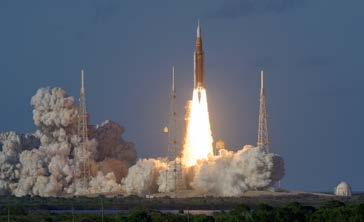
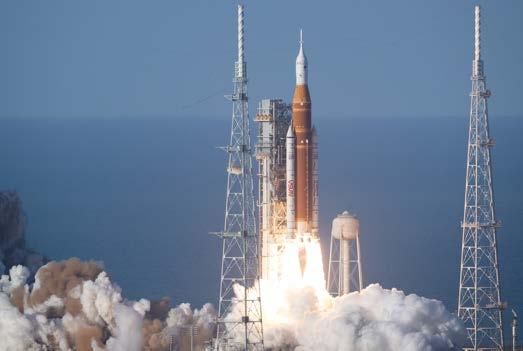
ARTEMIS IGNITES THE FUTURE
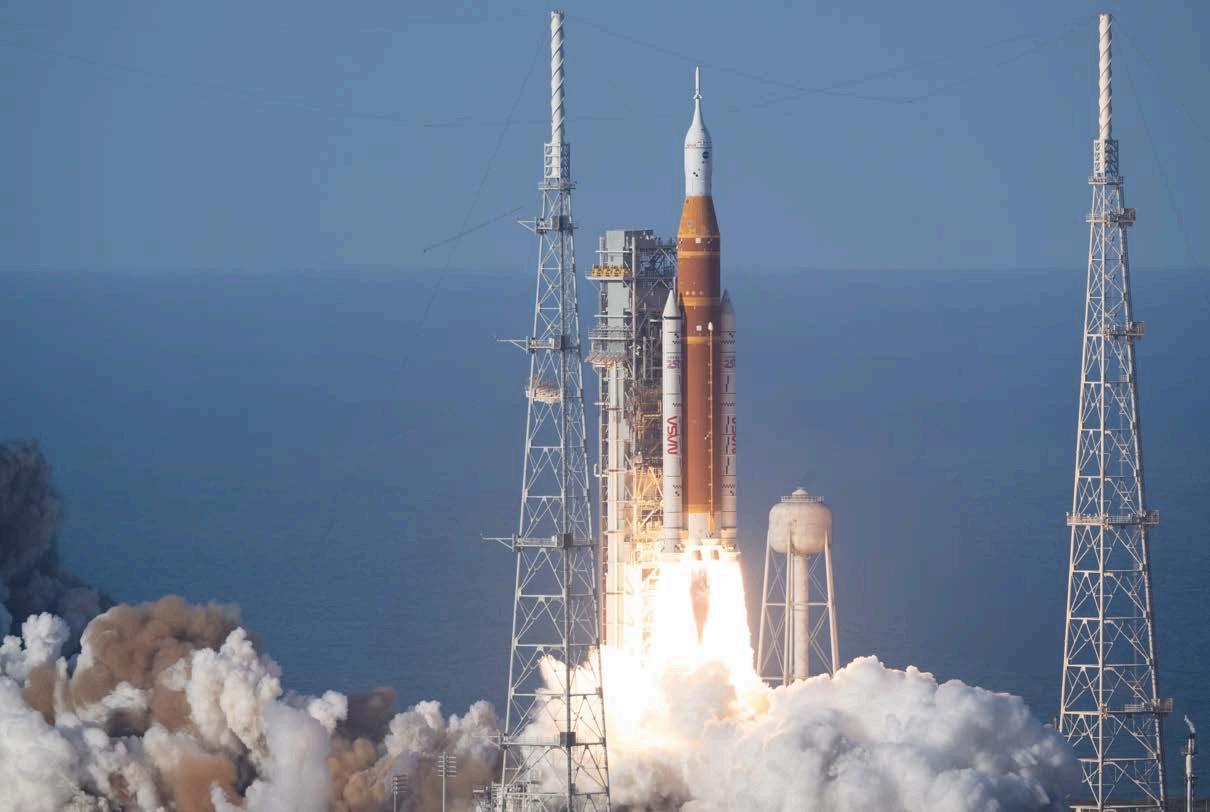
A new era of exploration begins as humanity returns to the Moon
“COPY, MOON JOY”ARTEMIS II
Stunning images of Artemis II Return to the Moon AVATAR
A Virtual Astronaut Tissue Analog Response:The Future of Personalized Medicine
Pg.24
Pg. 29
Pg. 10 Pg. 46
Pg. 53
ENGINEERING THE BRAIN FOR SPACE Space NeuroEngineering: A New Frontier in Human Performance
SPACE BY DESIGN
The tools that changed space storytelling in Hollywood forever
THE FUTURE OF SPACE
Space To Grow, Authors Matthew Weinzierl & Brendan Rosseau’s analysis of the question: Is no longer whether the space economy will grow, instead will you be part of building it? Why it Matters
“The story of space is no longer something we only watch. It is something we are now invited to build.” -Robin McDougal
Robin
EDITORIAL TEAM
Sharon Reed
Space Business Managing Editor
Sharon Reed is a writer and editor with a strong interest in space and technology. Currently, Sharon is the National Business Investment Manage at the Fairfax County Economic Development Authority in Tysons, Virginia. She has a BA and MA from American University, School of International Service, Washington, D.C.
William J. McBorrough
Space and Security Editor
A 20+ year cybersecurity industry veteran and small business cyber risk advisor. He conducts research and teaches graduate and undergraduate courses relating to cybersecurity, cybercrime, cyberterrorism, and information security and assurance.
Certified Information Systems Security Professional (CISSP), Certified Information Systems Auditor (CISA), Certified in Risk Information System Control (CRISC), and Certified
(CCP)
EDITORIAL TEAM
Chimene Davis
Marketing and Media Editor
Founder of Suburban Entertainment Group, a Los Angeles-based film and television production company. A veteran of the entertainment industry for 20 plus years, Ms. Davis has produced: programming, music videos and national advertising campaigns, which include radio, print, and television commercials for Fortune 500 hundred companies.
Congratulations to Artemis II A Giant Leap Forward for Humanity. With immense pride and excitement, we celebrate the Artemis II astronauts, NASA, and the global community of scientists, engineers, and experts who have made this extraordinary mission a success.
This achievement is more than a mission —it is a global milestone, a testament to collaboration, innovation, and the enduring human spirit of exploration.
To the Artemis II crew, NASA, and every contributor behind the scenes, congratulations on this remarkable accomplishment. You are not only returning us to the Moon, you are opening the path to the future of space exploration for generations to come.
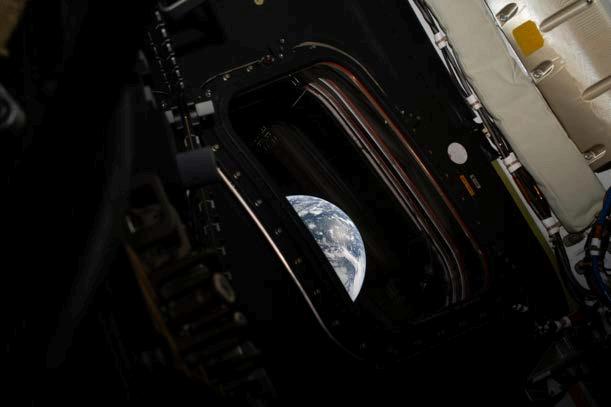
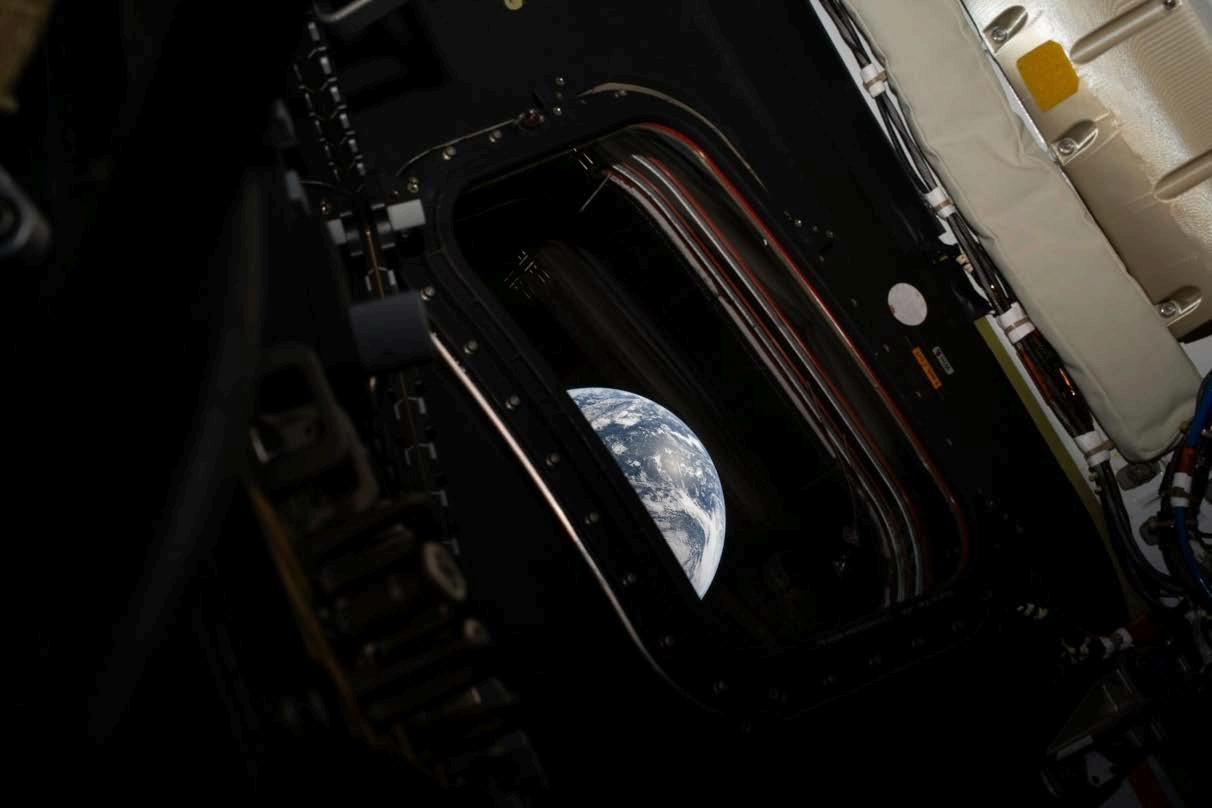
A view of Earth taken by NASA astronaut and Artemis II commander Reid Wiseman from one of the Orion spacecraft's four main windows after completing the translunar injection burn on April 2, 2026.
Image Credit: NASA
From Earth To the Moon
NASA astronaut and Artemis II Commander Reid Wiseman took this picture of Earth from the Orion spacecraft's window on April 2, 2026, after completing the translunar injection burn.
Image Credit: NASA
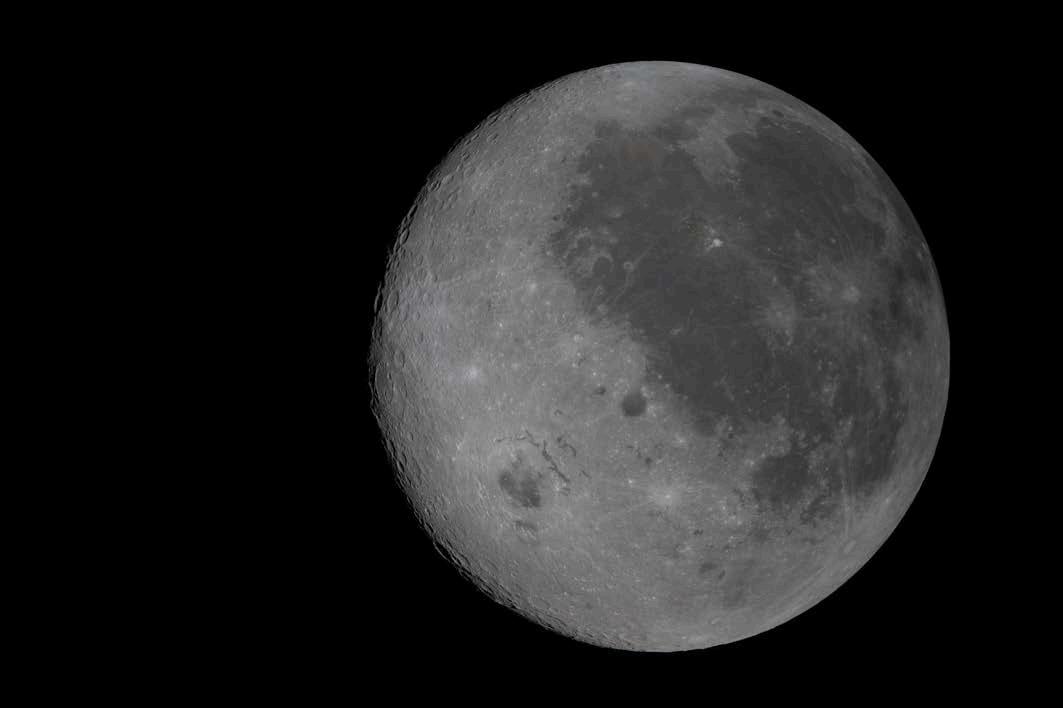
“Copy, Moon Joy”
Artemis II crew during their lunar flyby on April 6, 2026, this image shows the Moon fully eclipsing the Sun. Also visible are stars, typically too faint to see when imaging the Moon
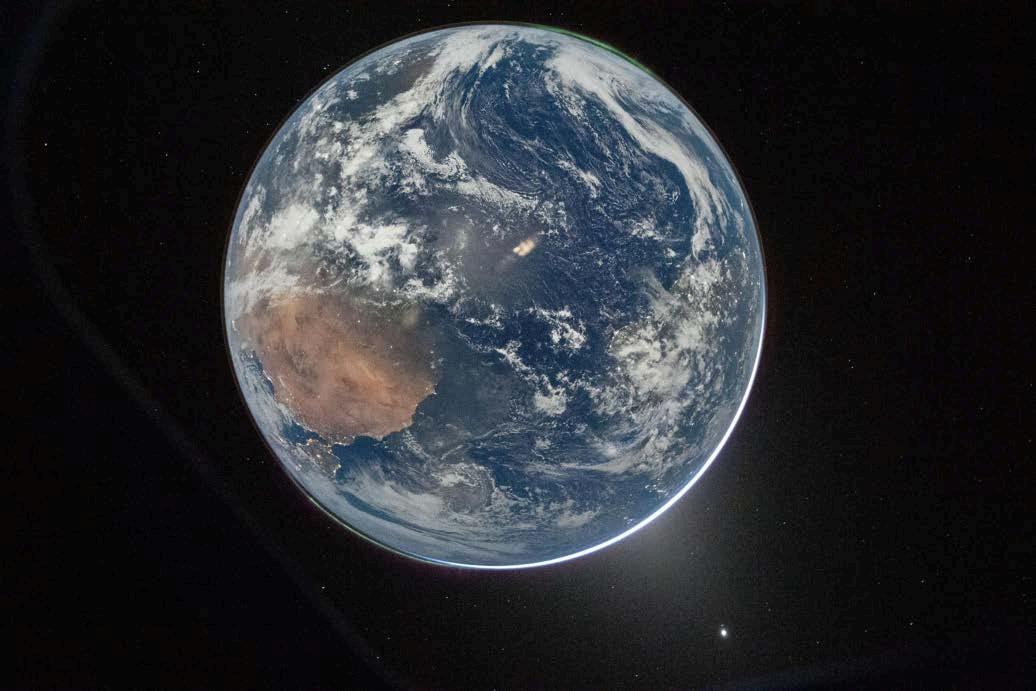
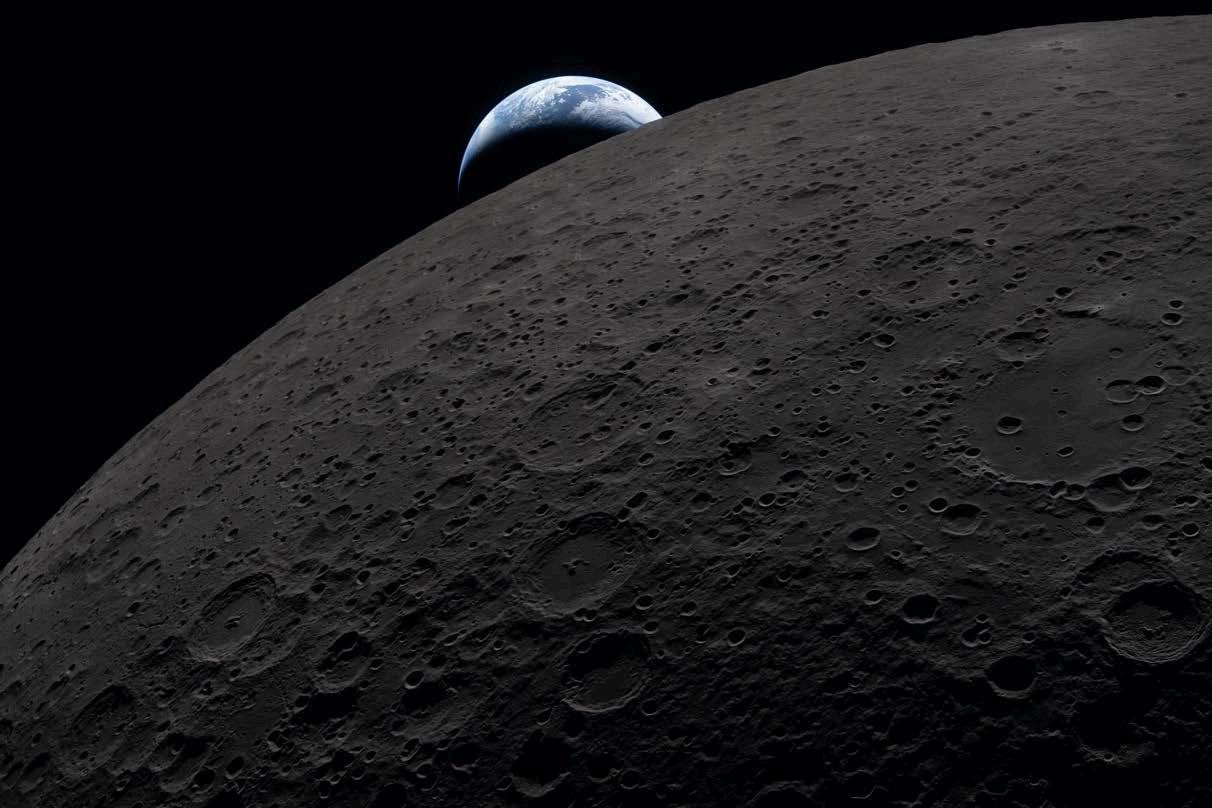
Earthset on the Far Side
(April 6, 2026) – Earthset captured through the Orion spacecraft window. The dark portion of Earth is in nighttime. On Earth’s day side, swirling clouds are visible over the Australia and Oceania region.
Image Credit: NASA
Artemis II in Eclipse
Artemis II crew during their lunar flyby on April 6, 2026, this image shows the Moon fully eclipsing the Sun. Also visible are stars, typically too faint to see when imaging the Moon
Image Credit: NASA
Current, connected, and collaborative are the pillars of our digital magazine. Our mission is to connect you with potential investors, find top-tier workforce candidates, and spotlight lucrative contracts with NASA and emerging commercial space companies. Interstellaris
As the world celebrates the bold return of humans to deep space through Artemis II, a powerful and lesserknown innovation is quietly traveling alongside the astronauts, one that could redefine not only space exploration, but the future of personalized medicine on Earth. It’s called AVATAR—A Virtual Astronaut Tissue Analog Response, and while it may be small in size,itsimplicationsareenormous.
A New Frontier: Your Biology in Space
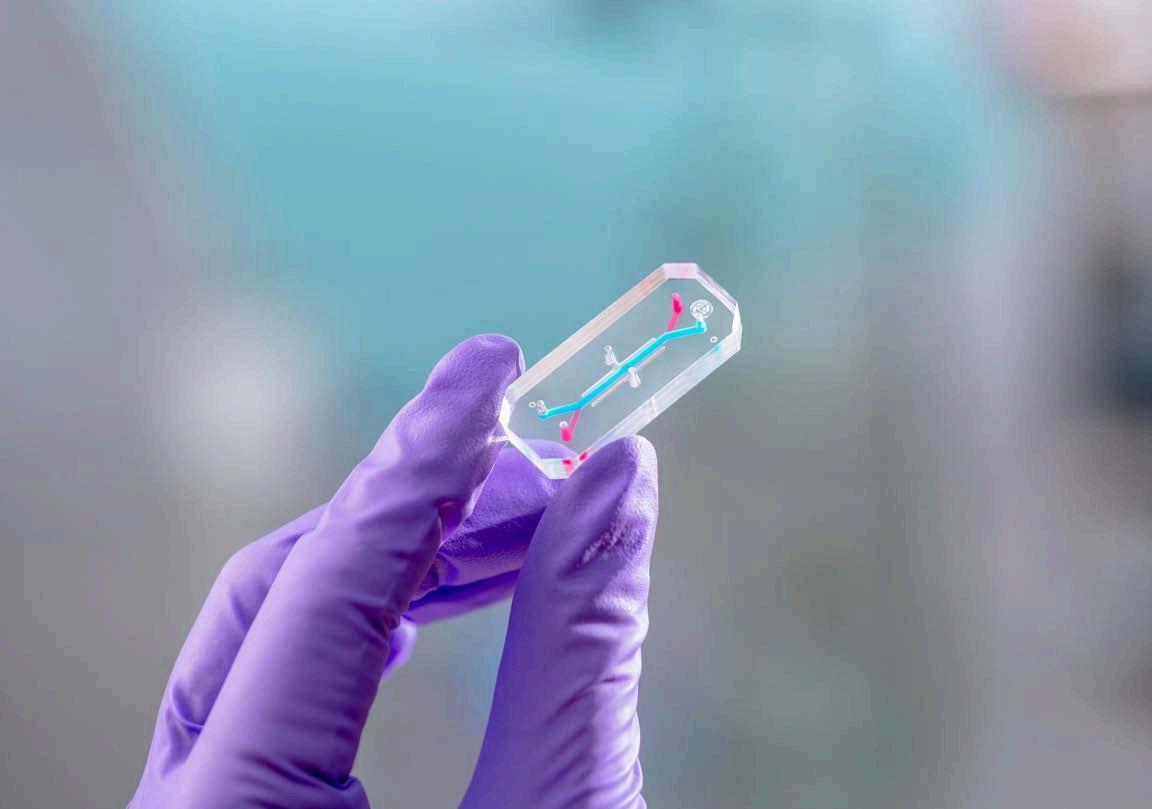
At the heart of AVATAR are organ-on-a-chip devices, also known as tissue chips are tiny, bioengineered systems that replicate how human organs function. These chips are designed to simulate real human biological responses, allowing scientists to study how the body reacts to the harsh conditions of deep space, including increased radiation and microgravity. Butthisisn’tjustscience—it’sstrategy.
“AVATAR is NASA’s visionary tissue chip experiment that will revolutionize the very way we will do science, medicine, and human multi-planetary exploration,” said Nicky Fox, Associate Administrator of NASA’s ScienceMissionDirectorate.
Imagine a future where every astronaut embarks on amissionwith acustomhealthprofile,wheremedical risks are predicted before launch, and where treatments are tailored specifically to the individual. AVATARisthefirststeptowardthatfuture.
Why This Matters for the Space Economy
For emerging space entrepreneurs, AVATAR signals something critical: Space is no longer just about hardware—it’s about human systems, data, and health innovation. As missions extend to the Moon, Mars, and beyond, astronaut health becomes a mission-criticalmarket:
Personalizedmedicine
Space-basedbiotech
Remotehealthcaresystems
Autonomousmedicaldiagnostics These are not distant ideas—they are investable, buildableopportunities.
AVATAR on Artemis II: The Tiny Experiment Powering theFutureofHumanHealthinSpaceandonEarth.
Inside the Mission: Science in Motion SPACE FOR EARTH
DuringArtemisII,theAVATARtissuechipsarehousedwithina custom payload developed by Space Tango, a Lexington, Kentucky-basedcompanyspecializinginmicrogravityresearch, development, and manufacturing services designed to maintain precise environmental conditions throughout the mission.Thisbattery-powered,automatedsystemwill:
TherealbreakthroughbeginswhenArtemisIIreturnstoEarth. Researchers at Emulate will analyze the tissue chips using single-cell RNA sequencing, a cutting-edge technique that revealshowthousandsofgenesbehaveinsideindividualcells. This data will be compared to parallel ground-based studies, offering the most detailed insight ever into how deep space affectshumanbloodcelldevelopmentandimmunesystems.
Artemis II AVATAR is a small experiment flying aboard Artemis II that could lead to big impacts in healthcare, both for astronauts in spaceandcitizensonEarth.
Learn more:ClickHere
As Artemis II pushes humanity deeper into space, AVATAR reminds us that the most important frontier may not be the Moon or Mars.Itmaybeunderstandingourselves. And for the next generation of space entrepreneurs, that insight opens an entirely newuniverseofpossibility.
The future of space is not just about where we go— it’s about how we live, adapt, and thrive when we get there.
Space Neuro-Engineering
I have never quite believed that I belonged to one country. I am a curious, adventurous STEM nerd and world citizen who has travelled to more than 35 countries in search of ideas, culture, and perspective. For years I lived by a personal rule: never visit the same place twice. Yet recently I broke that rule when I returned to Paris, because some places simply feel like home.
Perhaps that restlessness began in childhood. When my family immigrated to Australia, my grandmother sent a care package containing a small activity book about space following a Space Shuttle launch. I was captivated. From that moment I wanted to become an astronaut. But at the time, pathways into space or aviation for women, especially women of color were almost nonexistent. By Year 10 I reluctantly concluded that space was impossible for me. Instead, I turned toward aviation.
A work-experience placement with one of Australia’s major airlines changed everything. At the end of the visit, the captain handed me his wings, and I was completely enamoured with flight. Watching the iconic Boeing 747 carrying the Space Shuttle piggyback across the sky only deepened that fascination. What began as curiosity became a 25-year aviation career.
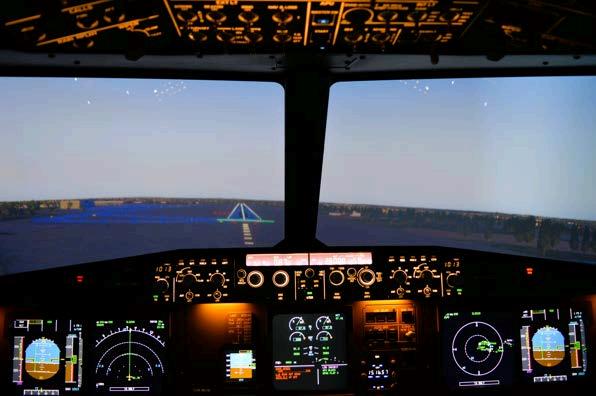
During that time I flew nearly twenty types of aircraft, from single-engine pistons and turboprops to passenger jets and accumulated around 8,000 hours of flight time. I held an Airline Transport Pilot license with instructor, multi-engine, instrument flight and night-vision approvals. Aviation also taught me something fundamental about humans operating in extreme environments. Over my career I successfully managed five inflight engine failures and numerous abnormal situations. Each event reinforced the same lesson: technology matters, but the human brain sitting in the cockpit is the most critical system of all.
PERFORMCE
Space Neuro-Engineering
When my flying career ended unexpectedly through medical retirement, I chose to give adversity purpose. I returned to my childhood fascination with space and pursued a Master’s in Space Science at the International Space University. That experience changed the trajectory of my life. I began asking a simple question: What if the most critical safety system in spaceflight isn’t mechanical, but biological?
Today my work sits at the intersection of neuroscience, nutrition, and human factors. I describe what I do as space neuro-engineering—engineering optimal physiological states for the brain to function in extreme operational environments.
My research explores how what we eat and how we live influence neurophysiology, which in turn determines human performance, decision-making, and error rates.
In operational roles such as astronauts, pilots, surgeons, and military personnel, the brain must perform flawlessly under stress, fatigue, and environmental strain. Yet historically we have treated nutrition, sleep, physical activity, and environmental exposure as lifestyle considerations rather than safety-critical engineering variables.
Space Neuro-Engineering
In spaceflight this challenge becomes even more pronounced. The space environment accelerates biological processes associated withaging,andseveralbiomarkersobserved during long-duration missions overlap with thoseseeninneurodegenerativeconditions suchasAlzheimer’sdiseaseAtthesametime astronauts frequently experience energy imbalances despite the brain requiring roughly 20 percent of the body’s energy supply.
The question becomes: how do we protect and optimise the brain when the environment itself is working against it? Currentlymuchofthespacehealthapproach focuses on monitoring risk rather than preventing it. Astronauts are closely observedforphysiologicalchanges,butonly alimitednumberofcountermeasurescanbe implemented due to constraints of mass, time, crew workload, and diagnostic capabilityinspace.
Invasive procedures such as lumbar punctures are commonly used on Earth to assess neurological biomarkers are impractical in orbit. As a result, we often find ourselves tracking problems rather than engineering solutions upstream. This gap is precisely where space neuroengineering can contribute: integrating nutrition, sleep regulation, cognitive workload management, and environmental design to build neuroprotection directly into mission systems.
Space Neuro-Engineering
Recognizingthisneedledmetoestablishthe InstituteforSpaceHealthandPerformance. The institute advances interdisciplinary research bridging neuroscience, nutrition science, and human factors to support humansoperatinginextremeenvironments. Itsmissionistodeveloppracticalstrategies that protect cognitive health, optimise performance, and enhance long-term neurological resilience for astronauts and otheroperationalprofessionals.
But the implications extend far beyond spaceflight. Alzheimer’s disease is now the leadingcauseofdeathinAustraliaandone of the fastest-growing health challenges globally. Space provides a unique acceleratedlaboratoryforstudyinghowthe brainrespondstostress,isolation,radiation, and metabolic disruption. Insights gained from protecting astronauts may help us design interventions that improve cognitive longevityandhealthspanonEarth.
This is the essence of the “Space for Earth” philosophy: using space exploration to solve humanity’s most pressing problems. As humans return to the Moon and prepare for journeys to Mars, protecting and optimizing the brain will become mission-critical. In doing so, space exploration may help solve one of humanity’s greatest health challenges— demonstrating that the future of brain health on Earth may ultimately be engineered in space. Learn more:
Brain displacement and nonlinear deformation following human spaceflight
Aging and putative frailty biomarkers are altered by spaceflight
A review of alterations to the brain during spaceflight and the potential relevance to crew in long-duration space exploration
Jacinda Cottee, Founder and PhD(c) Space Health Researcher-Neuroscience,NutritionandHumanFactors. FounderofInstituteforSpaceHealthandPerformance, PhD Candidate. She is a space health researcher, and former airline pilot, working at the frontier of space neuroscience,nutrition,andhumanfactors.
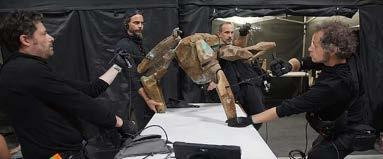
AI, CGI, VFX, and Puppetry Are Rewriting Space Exploration Storytelling
Image Credit SpaceX: shows from left: Eric Philips, a polar guide fromAustralia; Rabea Rogge, a robotics researcher from Germany; Norwegian filmmaker Jannicke Mikkelsen and Chun Wang, a Chinese-born bitcoin investor who orbited the north and south poles for3½daysfromNASA’sKennedySpaceCenter
This is the second in a series exploring the intersection of space, economics, and popular culture.
Chimene Davis, founder/CEO of Suburban Media Partners, Corp., a creative studio specializing in film, television, podcasts, and live events. Guided by the vision: "Nouveau Stories, Planet Reach," the company craftsculturallyresonantcontentwithartisticdepthand aglobalperspective.
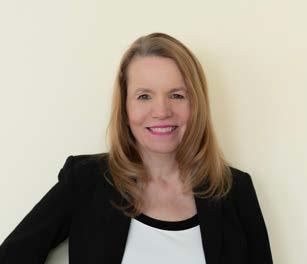
By Robin McDougal, Publisher Interstellar Magazine Opinion Editorial
The New Engine of Growth, Discovery, and Purpose
A Generation of Innovators WHY IT MATTERS?
“The
return to the Moon is not the end of a journey—it is the beginning of a generation of innovators who will use space to improve life on
Earth.”
The Artemis program represents far more than a return to the lunar surface. It is a catalyst for innovation that will shape technologies capable of improving life on Earth. Advances emerging from this new space economy will influence fields such as healthcare, responsible use of artificial intelligence, monitoring the health of our planet, efficient energy systems, and the technologies needed to sustain human explorationtoMarsandbeyond.
Why Space Matters: The New Engine of Growth,Discovery,andPurpose.
Weoftenspeakaboutthefutureofspacein termsofdestinationstotheMoon,Mars,and beyond. We measure progress by distance traveled, rockets launched, and missions completed. But if we pause for a moment andreallyreflectonhowfarwehavecome, webegintoseesomethingdeeperemerging. Space is not just changing where we go. In fact,itistransformingwhowearebecoming.
And in that realization lies one of the most important truths of our time: The most importantfrontiermaynotbetheMoonor Mars. It may be about understanding ourselves.
Business: The Rise of a New Economic Engine
The commercial space economy is no longer a distant concept. it is an active, accelerating force reshaping globalmarkets.Whatwasoncegovernment-ledisnow powered by entrepreneurs, private capital, and crossindustryinnovation.Wewitnesssatellitesaremonitoring Earth’s changes. We use real-time data from orbit to guideandtransformagricultureandurbanplanning.
Everyday we depend on our space-based technologies are driving communications, defense, logistics, and finance. Our most impactful shift is that space is becoming infrastructure for life on Earth. For business leadersandfounders,thissignalsanewreality: Thespaceeconomyisnotaniche—itisaplatform economy
Innovation is increasingly dual-use (space + Earth applications)
The opportunity is no longer just to “go to space.” Itistobuildwithspaceasafoundationallayerofour globalsystems.
2035ForecastMarketSize:USD851.8Billion
Education: Preparing the Next Generation
As the space economy expands, so too must our approachtoeducation.
Next Generation of Leaders WHY IT MATTERS?
“When we look to space, we don’t escape our problems we discover new ways to solve them.”
Today, STEM careers in the growing space economy are abundant. As a result, we are preparing students for S.T.E.M. careers neededforthespaceeconomy,notjustfora handfulofastronautroles—wearepreparing them for thousands of interconnected careers:
Spacehealthandhumanperformance
AIandautonomoussystems
Spacelawandpolicy
ClimatescienceandEarthobservation
Entrepreneurshipandinnovation
The future workforce must be equipped not onlywithtechnicalknowledge,butwith:
How do we care for one another in extreme environments?
What does it mean to be human when we are no longerboundtooneplanet? reflectsnotjustourcapabilities,butourvalues,priorities, andpurpose.
A New Definition of Exploration
We are entering an era where exploration is no longer defined solely by distance, but by depth of understanding. The future of space is not just about where we go, it’s about how we live, adapt, and thrive whenwegetthere.Itisabout:
Designing systems that support human life in the harshestenvironments
CreatingtechnologiesthatimprovelifeonEarth
Building economies that are sustainable, inclusive, and forward-thinking. Why Space Matters?: Expanding Horizons for a Better Planet.
CALLINGALL
INTERSTELLAR DREAMERS
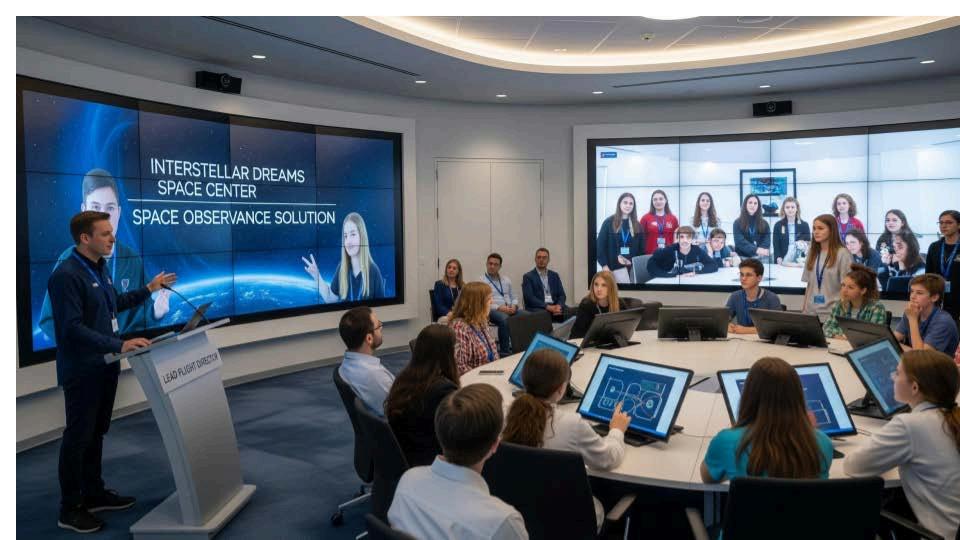
InterstellarDreamsSpaceCenterisacreative, hands-on, immersive STEM experience for teens ages 12–18, where participants become Real-World Mission Specialists tackling challenges like space debris, satellite design, andspacetourism.We’rebuildingapipelineof leaderswhowillshapeEarthandbeyond.
Our goal is to engage 1 million youth with a powerful message: “blend your personal passions with S.T.E.M. careers in aerospace and the new commercial space economy because there is so much more to space explorationthanbecominganastronaut.”
www.interstellardreamspacecenter.org
S P A C E
Charting New Horizons in the Space Economy
B O O K C L U B
Igniting Curiosity. Expanding Space Knowledge
INTERSTELLAR MAGAZINE BOOK REVIEW
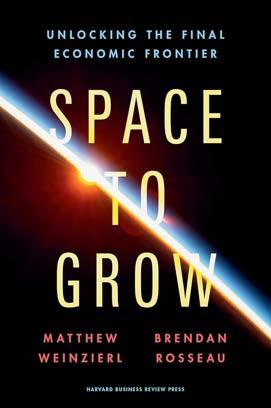
SPACE TO GROW
UNLOCKING THE FINAL ECONOMIC FRONTIER
Space to Grow is more than a book—it is a strategic lens for understanding the next phase of human and economic expansion. It captures a moment where possibility meets practicality, where innovation meets policy, andwhereambitionmeetsexecution.
In Space to Grow, Matthew Weinzierl and Brendan Rosseau deliver a timely, intellectually rigorous, and forward-looking analysis of the rapidly evolving commercial space economy. Praised by The Wall Street Journal as a foundational, research-driven work, the book offers something increasingly rare in discussions about space: informed optimismgroundedineconomicreality.
PerhapsthemostpowerfulaspectofSpaceto Growisitsunderlyingcalltoaction.Thisisnot just a book about what is happening—it is a book about what must happen next.The authorsinvitereaderstomovebeyondpassive observation and toward active participation in shaping this new frontier. Because the question is no longer whether the space economywillgrow,insteadwillyoubepartof buildingit?
By Matthew Weinzierl & Brendan Rosseau
Space to Grow argues that we are entering a “golden age in space”