

The closing of the democratic horizon by neoliberalism and austerity.
The creeping sense that nothing will work, that democracy is corrupt.
The denial of dignity, visibility, and belonging.
When access to housing, infrastructure, mobility, safety, and opportunity becomes profoundly unequal, entire communities experience the future as blocked or inaccessible.
When certain people and communities are displaced, segregated, invisibilised, or excluded from decision making, space itself becomes a mechanism that denies dignity, belonging, and political presence.
When cities are shaped by segregation, privatisation, enclosure, and exclusion, people lose the capacity to imagine alternative urban futures and democratic ways of living together.
Spatial Planning is an activity that helps distribute opportunities, risks, resources, visibility, and belonging across space.
It shapes who belongs, who decides, who is protected, and who is made invisible in the city
A framework for understanding how inequality, exclusion, and power become embedded in space.
Spatial Justice is not a
‘moral preference’ , but an active _ and activist_ analytical framework for design and policy
Who gets what? Who bears the costs?
Who has a seat at the table? But also… who owns the table?
Whose stories and trajectories get to be heard? Who is erased?
Distribution without recognition or procedure:
Clientelism without emancipation
Procedure without distribution:
Tokenism/ Manipulation
Recognition without distribution: Symbolic Performance/ Empty rhetoric
International workshops and a summer school for 100 students every July
The Manifesto for the Just City workshop and book series
Open educational resources
Global academic and civic networks
Advisory work with governments and civil society
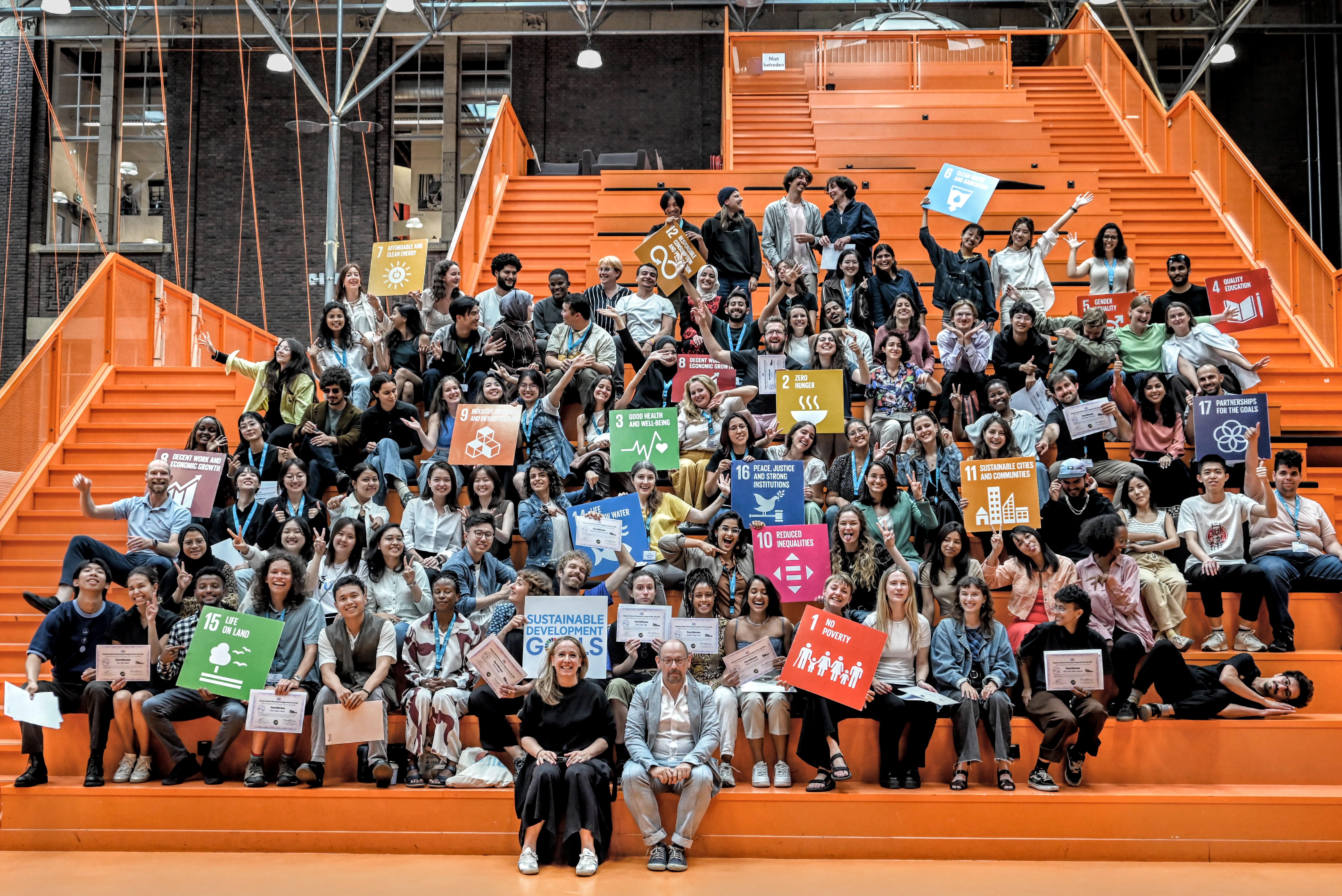
Summer School Planning and Design for the Just City: 12 editions
https://just-city.org/portfolio/manifesto-for-the-just-city/
https://just-city.org/portfolio/manifesto-for-the-just-city/

Adam Paul Susaneck – Segregation by Design
Infrastructure as segregation strategy
Nima Tabrizi – Revitalising Spoorzone Weert
spatial justice in rail-zone regeneration
Marh Echtai – The Right to the Rural
just & resilient rural futures
Seyong Kim–Addressing Vacant Houses in Busan
Spatial Justice & Historical Institutional approaches
Hugo Lopez – Atlantic Forest as an Urban Project Foregrounding alternative territorialities
Marieke Russchen – Spaces for Democracy (Cum Laude)
Winner Leonie Janssen-Jansen Prize 2025
Wiebke Stadtlander – Carescapes (Cum Laude)
Archiprix pre-selection 2025
Marh Echtai – The Impossible Revolution
KHMW J.C. Baak Prijs 2nd prize

Women's spatial strategies, loitering, safety work, and the gendered right to the city
Spatial equity in post-conflict contexts: Syria, Sri Lanka, Lebanon, Palestine
Just futures for rural communities; RURALITIC; Railway regeneration
Queering spatial planning; disrupting heteronormative urban order; Vienna gender mainstreaming
Carescapes; young fluidly housed adults; post-COVID housing; blue space health
Co-creative processes; citizen literacy; community spaces as political infrastructure
Commissioned by the Dutch Ministries of OCW & VRO as part of a series of five tool-books on design research. Caroline Newton co-leads Werkboek 5 with design studio Falsework on the theme of the caring living environment.
A conceptual essay theorising the caring living environment through spatial justice, feminist urbanism, and everyday practices of care. Introduces a three-dimensional triangle (distributive/ procedural/ recognitional) and a four-axis compass as analytical tools for practice.
Selection and analysis of design research projects (2021–2025) demonstrating how spatial design and planning can embed care as a structuring principle.
Part of a broader trajectory bringing together design studios, ministries, an expert panel, and practitioners across three national sessions. The werkboek is a replicable instrument for spatial practitioners.

https://ufmsecretariat.org//wp-content/uploads/2021/09/ UfM_Strategic_Urban_Development_Action_Plan_2040.pdf



About:
The Spatial Justice Benchmarking Tool (SJBT) is a qualitative evaluation tool designed to measure the application of justice considerations in urban governance and planning of a city or region, assisting evaluation and reflection. It defines "levels of justice", from "Low" to "Embedded", by assigning a score of the attainment of what is being assessed against the highlighted components of the Spatial Justice Conceptual Model.
The tool serves to spark discussion and reflection based on Spatial Justice considerations. Using this lens, it is possible to pay greater attention to aspects that redistribute benefits and burdens, engage people and be more responsive in policy and decision-making processes, and recognise the needs and aspirations of disadvantaged individuals, groups, and communities.
How to use this tool:
1) Start by clarifying what you're assessing. Review the vision statement provided above to keep it in mind throughout the process.
2) Go through each column on the right. Each column represents a component of the Spatial Justice Conceptual Model (SJCM).
3) Discuss how well the vision statement aligns with each component and assign it a rating from "Low" to "Embedded".
4) Use post-its to write down any ideas or recommendations discussed by the group. Place these directly onto the relevant component for easy reference.
Contact and more information:
Hugo López (h.lopez@just-city.org)
Roberto Rocco (r.c.rocco@tudelf.nl)
Juliana Gonçalves (j.e.goncalves@tudelf.nl)

Download the online version of the Spatial Justice Benchmarking Tool


Download the Spatial Justice Conceptual Model Download the Spatial Justice Handbook


Benefits and burdens allocated fairly citywide with clear specification of resources (e.g. public goods, basic services, economic opportunities, green spaces, etc.).
Mentions fair allocation of benefits and burdens and specifies some resources.
Considerations about access to benefits and burdens across the city. All dimensions of Spatial Justice are considered.
Evidence of what, how, and who is being considered.
Considerations about access to benefits and burdens across the city. More than one dimension of Spatial Justice is considered. Evidence in specifications of what, how and who is made accessible.
Acknowledges fair allocation of benefits and burdens but does not specify resources.
Considerations for the appropriation of benefits and burdens across the city.
All dimensions of Spatial Justice are considered.
Evidenced in specification of what, how, and who is being considered.
Considerations about the appropriation of benefits and burdens across the city. More than one dimension of Spatial Justice is considered.
Evidenced in specifications of what/how is open.
There are considerations about the access to benefits and burdens across the city. Specifies where or what service or material is being addressed.
Considerations about the appropriation of benefits and burdens across the city. Specification of where or what material and/or service is open to change.
There are considerations on how people are engaged in processes. All dimensions of Spatial Justice are considered. This is evidenced in the specification of what/where, how, and who is being considered.
There are considerations on how internal processes adapt towards justice. All dimensions of Spatial Justice are considered. This is evidenced in the specification of what/where, how, and who is being considered.
There are considerations on how people are engaged in processes. More than one dimension of Spatial Justice is considered. This is evidenced in specifications of how, and who or what/where is being considered.
There are considerations on how internal processes adapt towards justice. More than one dimension of Spatial Justice is considered. This is evidenced in specifications of how and who or what/where is being considered.
There are considerations for aspects of Spatial Justice in the government's actions. All dimensions of Spatial Justice are considered. This is evidenced in the specification of what/where, how, and who is being considered.
There are considerations for aspects of Spatial Justice in the government's actions. More than one dimension of Spatial Justice is considered. This is evidenced in the specifications of what/where, and who or how is being considered.
There are considerations for validating disadvantaged individuals and groups in laws and regulations. All dimensions of Spatial Justice are considered. This is evidenced in the specification of who, what/where, and how is being considered.
There are considerations for validating disadvantaged individuals and groups in laws and regulations. More than one dimension of Spatial Justice is considered, evidenced in the specifications of who, and what/where or how is being considered.
There are considerations to recognise practices of marginalised or non-hegemonic collectives and groups. All dimensions of Spatial Justice are considered, evidenced in the specification of who, what/where, and how is being considered.
There are considerations to recognise practices of marginalised or non-hegemonic collectives and groups. More than one dimension of Spatial Justice is considered, evidenced in the specifications of who, and what/where or how is being considered.
There are considerations for aspirations, values, or livelihood of marginalised or non-hegemonic communities or diverse lifestyles. All dimensions of Spatial Justice are considered, evidenced in the specification of who, what/where, and how is being considered.
There are considerations for aspirations, values, or livelihood of marginalised or non-hegemonic communities or diverse lifestyles. More than one dimension of Spatial Justice is considered, evidenced in the specifications of who, and what/where or how is being considered.
There are considerations about how people are engaged in processes (policies, regulations, standards, etc). It specifies how or who is being engaged.
There are considerations on how internal processes adapt towards justice. It specifies how it is being addressed.
There are considerations for aspects of Spatial Justice in the government's actions. It specifies what, where, how or who is being addressed.
There are considerations for validating disadvantaged individuals and groups in laws and regulations. It specifies who is being validated.
There are considerations to recognise practices of marginalised or non-hegemonic collectives and groups. It specifies who is being recognised.
There are considerations for aspirations, values, or livelihood of marginalised or non-hegemonic communities or diverse lifestyles. It specifies who is being addressed.
There is a general concern about the allocation of benefits and burdens across the city.
There is a general concern about access to benefits and burdens across the city.
General concern about the appropriation of benefits and burdens across the city, with initial eforts to acknowledge people’s agency in usage and programming.
There is no consideration for how benefits and burdens are distributed across the city.
There is no consideration of the access to benefits and burdens across the city.
There is no consideration of the appropriation and agency of benefits and burdens across the city.
There is a general concern about how people are engaged in processes (policy, planning, projects, etc).
There is general concern about how internal processes (procedures, values, standards, etc.) adapt to promote justice inside institutions.
There is no consideration for how people are engaged in processes (policy, planning, projects, etc).
There is no consideration for how internal processes (procedures, values, standards, etc) adapt towards justice inside institutions.
There is a general concern for aspects of Spatial Justice in the government's actions. There is no consideration for aspects of Spatial Justice in the government's actions.
There is a general concern for validating of disadvantaged individuals and groups in laws and regulations. There is an acknowledgment of disparities.
There is no consideration for validating disadvantaged individuals and groups in laws and regulations.
There is a general concern to recognise practices of marginalised or non-hegemonic collectives and groups.
There is a general concern for aspirations, values, or livelihood of marginalised or non-hegemonic communities or diverse lifestyles. There is an acknowledgment of their existence and relevance.
There is no consideration to recognise practices of marginalised or non-hegemonic collectives and groups.
There is no consideration for aspirations, values, or livelihood of marginalised or non-hegemonic communities or diverse lifestyles.

This component highlights eforts to enhance people's ability to reach and benefit from key opportunities. It concerns afordability, availability, connectivity, etc. This component emphasises empowering individuals and groups to actively shape and utilise available resources. It concerns the design, programming, and openness to people’s agency. This component focuses on the ongoing involvement of citizens in decision-making processes. The easeness of people to approach the institution.
This component focuses on the institution's internal flexibility and adaptability to evolving circumstances, incorporating feedback, and adjusting policies, practices, and programs to better reflect justice considerations.
This component focuses on how the institution address external stakeholders. It concerns ensuring that processes are fair, transparent, and sustainable, in views to uphold justice and that it legitimatises social sustainability.
This component emphasises the importance of legal frameworks in recognising and protecting the intrinsic value and dignity of individuals and groups as moral agents.
This component highlights actions to sustain and uplif collective eforts and everyday practices in disadvantaged communities, such as solidarity networks and the management of communal resources.
This component calls for a profound transformation of values to enable novel socioeconomic and institutional arrangements, advocating for considering the values, qualities, and unique socio-spatial dynamics of non-hegemonic cultures and communities.





Outlines the strategic planning phases to integrate Spatial Justice and tools in UP2030.
Rocco, R., Gonçalves, J., & Lopez, H. (2024). The TU Delft Spatial Planning Cycle. TU Delft OPEN. https://doi.org/10.5281/zenodo.12654288


Now, let’s sign our Manifesto!