POND CARE GUIDE
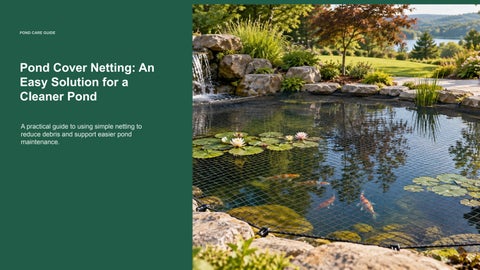
Pond Cover Netting: An Easy Solution for a Cleaner Pond A practical guide to using simple netting to reduce debris and support easier pond maintenance.
WHY IT HELPS
Netting catches debris before it sinks. Pond cover netting creates a simple barrier over the water. It helps catch leaves, twigs, seed pods, and other yard debris before they settle at the bottom.
Blocks surface debris Reduces bottom cleanup Helps protect water clarity
Pond care guide
02
CLEANER WATER
Less organic material means easier care. Leaves and plant matter naturally break down in a pond. Using netting during heavy debris seasons can help reduce the organic load in the water.
Less leaf litter Fewer floating messes A cleaner pond surface
Pond care guide
03
FISH PONDS
Netting can also help protect fish. In koi and goldfish ponds, a well-secured cover can make the pond less open to birds, raccoons, and other common backyard visitors.
Useful for koi ponds Adds a physical barrier Supports safer pond fish care
Pond care guide
04
MESH CHOICE
Choose mesh based on the debris around you. Larger mesh may catch bigger leaves, while finer mesh can help with smaller plant debris. The right choice depends on trees, shrubs, and pond layout.
Match mesh to leaf size Consider pine needles and seeds Avoid mesh that sags into water
Pond care guide
05
RIGHT FIT
Measure beyond the pond edge. Good coverage starts with proper sizing. Netting should reach past the waterline so it can be secured along rocks, soil, edging, or nearby landscaping.
Cover the full water surface Leave extra material at edges Secure corners and curves
Pond care guide
06
COVER STYLES
Flat and raised options solve different needs. Flat pond netting is simple and flexible. Raised or tent-style covers can help keep the mesh above the water, especially during heavy leaf fall.
Flat netting for simple coverage Raised covers for more clearance Frames can reduce sagging
Pond care guide
07
INSTALLATION TIPS
A tight cover works better than a loose one.
Pull netting evenly across the pond Use stakes or edge anchors
Loose areas can collect leaves, dip into the water, or let debris blow underneath.
Pond care guide
Check tension after wind or rain Remove heavy leaf piles quickly 08
SEASONAL USE
Use netting when your pond needs it most. Many pond owners use netting heavily in fall, but it can also help during storms, spring cleanup, and periods when trees drop seeds or blossoms.
Fall leaf drop Spring blossoms and seeds Storm cleanup and windblown debris
Pond care guide
09
POND NETTING OPTIONS
Find pond cover netting for your pond Once you know your pond size, edge shape, surrounding trees, and seasonal debris level, compare netting options that fit your pond and maintenance routine.
Explore pond cover netting: https://easypro.com/collections/pond-tents-netting
Keyword focus: pond cover netting
Pond care guide
10