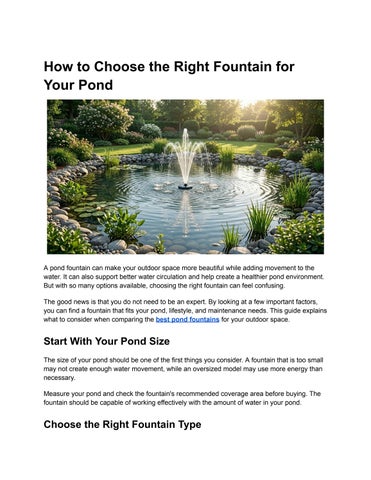
How to Choose the Right Fountain for Your Pond
A pond fountain can make your outdoor space more beautiful while adding movement to the water. It can also support better water circulation and help create a healthier pond environment. But with so many options available, choosing the right fountain can feel confusing. The good news is that you do not need to be an expert. By looking at a few important factors, you can find a fountain that fits your pond, lifestyle, and maintenance needs. This guide explains what to consider when comparing the best pond fountains for your outdoor space.
Start With Your Pond Size The size of your pond should be one of the first things you consider. A fountain that is too small may not create enough water movement, while an oversized model may use more energy than necessary. Measure your pond and check the fountain's recommended coverage area before buying. The fountain should be capable of working effectively with the amount of water in your pond.
Choose the Right Fountain Type
Pond fountains come in several styles, and each one serves a slightly different purpose. Floating fountains sit on the surface and are often easy to install. They can create attractive spray patterns and work well in many decorative ponds. Fixed fountains are installed in a set location and can be a good choice when you want a permanent water feature. Solar fountains use sunlight as their power source and may be useful for areas where running electrical connections is difficult. Aerating fountains are designed to create strong surface movement while helping add oxygen to the water. Think about whether your main goal is appearance, water movement, aeration, or a combination of these.
Check the Water Flow Water flow is another important feature. A fountain with suitable flow can create consistent movement across the pond and help prevent stagnant areas. Look at the pump's flow rating and compare it with your pond size. You should also consider whether you want a tall decorative spray or a wider water pattern. For ponds with fish, plants, or filtration equipment, the right amount of circulation can be especially helpful.
Consider Energy Use A pond fountain may run for many hours, so energy efficiency can affect your long-term costs. When comparing the best pond fountains, look for models designed to provide good water movement without excessive power consumption. Solar-powered options can also be worth considering when sunlight and installation conditions are suitable. An energy-efficient fountain can give you attractive water movement while helping keep operating costs under control.
Think About Maintenance A fountain should be enjoyable, not a constant source of work. Look for a design that is easy to clean and inspect.
Helpful features may include: ● ● ● ● ●
Easy-to-access pump components Simple nozzle cleaning Removable debris screens Durable construction Easy-to-follow maintenance instructions
Leaves, algae, dirt, and mineral buildup can reduce performance over time. Regular cleaning will help keep the fountain working properly.
Look at Spray Patterns The spray pattern affects both appearance and water movement. Some fountains create tall, narrow displays, while others produce wide or more decorative patterns. Choose a pattern that fits your pond and surrounding landscape. A smaller pond may look better with a modest display, while a larger pond may support a wider or taller spray. You should also consider the height of nearby plants, trees, walls, or other landscape features.
Consider Your Pond's Purpose Your pond's purpose can help guide your decision. A decorative backyard pond may benefit from an attractive spray pattern. A fish pond may need stronger circulation and oxygenation. A garden water feature may place greater importance on appearance and quiet operation. Understanding what you want the fountain to accomplish makes it easier to narrow down your choices.
Don't Ignore Durability Outdoor equipment faces changing weather, moisture, sunlight, and debris. A durable fountain can provide better long-term value than a model that needs frequent replacement. Check the construction materials, motor quality, and available replacement parts before making your choice. A well-built fountain should be able to handle regular outdoor use with proper care.
Compare Installation Requirements
Before purchasing, check how the fountain needs to be installed. Some models are simple to place and connect, while others may require additional equipment or electrical planning. Make sure you understand the installation requirements, power source, water depth, and placement recommendations. Proper installation can improve both performance and safety.
Final Thoughts Choosing the right pond fountain is about more than picking the most attractive design. You need to match the fountain to your pond size, water flow needs, power source, maintenance routine, and overall goals. By comparing these factors carefully, you can find among the best pond fountains for your specific space and enjoy a beautiful, functional water feature for years to come.
Frequently Asked Questions What size fountain do I need for my pond? The correct size depends on your pond's dimensions, water volume, and desired spray pattern. Always check the manufacturer's recommended pond size and flow rate.
Are floating pond fountains a good choice? Yes. Floating fountains are popular because they are easy to install and can create attractive water displays while improving water movement.
Do pond fountains help fish? They can help by increasing water movement and surface agitation, which may support better oxygen exchange. Proper fountain sizing is important for fish ponds.
Are solar pond fountains worth considering? Solar fountains can be useful when you want to reduce reliance on electrical power or install a fountain in an area without a convenient electrical connection.
How often should a pond fountain be cleaned? Cleaning needs vary depending on debris and pond conditions. Regular inspection and cleaning can prevent blockages and help maintain steady water flow.