

https://robertday.bhhscooperrealtors.com/

https://robertday.bhhscooperrealtors.com/
SO YOU’RE THINKING OF BUYING YOUR FIRST HOME?
Hello! My name is Robert Day, your local real estate guide. Ready to buy your first home? I'm here to make the process smooth and enjoyable. I have the insights and skills to help you navigate your first home purchase with ease. My focus? Your needs, goals, and timeline. Let's turn your dream of homeownership into a stress-free and successful reality.




Your total monthly home payment (including mortgage, property taxes, homeowner's insurance, etc.) should not exceed 28% of your gross monthly income.
For example: if your annual salary is $60,000 before taxes, your monthly gross income is $5,000. Using the 28% guideline, you should spend no more than $1,400 per month on your home payment
$60,000/12 = $5,000/month
$5,000*0.28 = $1,400/month

However, budget is just one factor. Lenders also review your debt-to-income ratio, the percentage of your monthly income that goes toward debts like credit cards and loans. Ideally, this should be 36% or less, including your future mortgage payment.


Most mortgages require 20% down to avoid private mortgage insurance (PMI). On a $300,000 home, that's $60,000. There are low/no down payment options available as well.
Fees paid to the lender and third parties can range from 2-5% of the purchase price. On that same $300,000 home, budget $6,000 to $15,000.
Property taxes, homeowner's insurance, HOA fees, utilities, maintenance/repairs. Budget 1-4% of the home's value annually for these recurring costs.

For example: for a $300,000 home with 20% down at a 6% interest rate, the total monthly payment could be around $2,000 including mortgage, taxes, insurance, etc. But those "hidden" ongoing costs could add around $300-$1,000+ per month.
GETTING PRE-APPROVED:
Before you start house hunting, secure a mortgage pre-approval—this is stronger than a pre-qualification and shows sellers you’re serious and financially capable. Pre-approval is based on your income, debts, down payment, and credit profile, requiring documents like pay stubs, W2s, and bank statements. For instance, a pre-approval might indicate you can borrow up to $300,000 with monthly payments of $2,000, setting a clear budget limit.
Remember, pre-approval isn’t final approval; it’s conditional and requires a property appraisal and financial reverification once you're under contract. Being pre-approved not only boosts your buying confidence but also strengthens your offers in competitive markets, positioning you on par with cash buyers. The home-buying process is exciting but requires careful financial preparation. By realistically calculating your budget, you'll be in a strong position to land your dream first home within your means.


620+ credit score, 3-20% down payment.
Up to $647,200 loan maximum
Fixed or adjustable-rate; PMI if <20% down.
FHA LOANS 02.
3.5% down payment, 580+ credit score.
Lower income/credit eligibility than conv. loans.
Fixed or adjustable-rate; PMI if <20% down.
VA LOANS
Zero down payment for military members/veterans
No PMI; flexible credit requirements
Funding fees apply, can be rolled into the mortgage


With a fixed-rate mortgage, your interest rate is set for the entire loan term, so your principal and interest payments remain constant. Common terms are 15-year or 30-year loans.
Adjustable-rate mortgages (ARMs) have interest rates that fluctuate over time based on market conditions. They typically start off with lower teaser rates for the first 5-10 years before potentially adjusting higher later on.
Fixed-rate mortgages provide stability but usually have higher initial rates than ARMs. ARMs are riskier but could save money if rates stay low long-term.
ARMs make sense if you plan to sell before the fixed period ends or can absorb potentially higher future payments. Otherwise, the stability of a fixed-rate loan is usually preferable for most first-time buyers.

Let's look at an example:
On a $300,000 30-year mortgage with 20% down...
A 6% fixed rate would mean a $1,199 principal + interest payment
A 5% ARM could start around $1,073 but likely adjust higher over time
Even a 1% difference in mortgage rates can mean tens of thousands paid over the loan's lifetime. On that same $300,000 mortgage, a 5% rate means $279,766 in interest paid over 30 years. At 6%, it jumps to $347,285 - that’s a $67,519 increase!
Mortgage rates also influence how much home you can afford. At 5% on an $80,000 income, you may qualify for a $400,000 mortgage. But at 7%, that maximum may drop to $325,000.
Get pre-approved early and shop multiple lenders to secure the best overall rates and fees. Comparing the annual percentage rates (APRs) on loan estimates is more accurate than just looking at quoted interest rates.
Pre-approval letters show sellers you're a qualified, motivated buyer up to certain loan amounts. But rates can change daily, so keep monitoring and lock your rate once you find the right property.


MORTGAGES & INTEREST RATES
01.
02.
Minimum 3% down payment
20% down avoids PMI
Higher credit score requirements (typically 620+)
FHA LOANS
Minimum 3.5% down payment
PMI required
More flexible credit score requirements
VA LOANS
03.
0% down payment option for military/veterans
Funding fee can be rolled into the loan amount
No monthly mortgage insurance required

As mentioned, you can qualify with just 3.5% down through this government-backed program.
For military members, veterans, and eligible spouses, VA loans provide 100% financing with zero down payment required.
In specified rural areas, income-eligible buyers can get a USDA home loan with no money down
Many states, counties and non-profits offer down payment grants or second low-interest mortgages for first-time and low-income buyers
The one-time $10,000 federal tax credit provides more funds for a down payment
Even with low/no down options, having some reserves for closing costs, prepaid expenses (taxes, insurance) and emergency funds is still advisable.




Set up automatic transfers to dedicated savings accounts
Cut back on discretionary expenses like dining out, entertainment, etc..
Get a side gig or temporary second job
Bank employment bonuses, tax refunds, and cash gifts
Use financial apps to track spending and set saving goals
Consider tapping retirement accounts for a down payment (with cautions)
Look into down payment assistance programs in your area

The more you cut costs and increase your income, the quicker you'll save for a down payment. Remember to budget for closing costs and other buying expenses.

With your budget and pre-approval ready, start the exciting search for your first home!
To find the right fit among many options, make two lists of your must-have features and nice-to-haves. This helps prioritize essentials and identify areas for compromise.
(ex: # of bedrooms, location, home office, etc.)


(ex: fireplace, patio, pool, gym, fence )
Check school boundaries, ratings, and reviews.
Assess distance and traffic patterns to work or public transit.
Visit at different times to observe traffic, parking, and upkeep.
Identify nearby essentials like grocery stores, parks, and hospitals.
Learn about HOA fees and community rules.
Review local crime statistics and safety data online.
Research any upcoming local developments or zoning changes




Regardless of whether it's a seller's or buyer's market, submitting a well-crafted offer from the start puts you in the best position to get your contract considered and negotiated.
Offer a reasonable amount based on the home's value and your budget; lowballing only leads to higher counteroffers
Analyze recent comparable sales to understand the home's likely worth, then make an offer at the price you're willing and able to pay.
If the sellers don't accept or want to negotiate higher, you have to be willing to walk away if their ask exceeds your capability or comfort level. Don't overextend.
But don't be afraid to make your best offer upfront - one that makes sense for your situation. If it's meant to be, the sellers will work with you.
If not, at least you'll know you put your best foot forward without overextending.
Analyze recent comparable sales and offer a competitive price from the beginning.
A standard deposit of 1-3% signals commitment; a higher deposit of 5-10% strengthens your offer.
Offer a fast close of 30 days or less to appeal to sellers needing quick transactions
Reduce contingencies to minimize deal risks and show commitment.
Use an escalation clause to outbid others by a set amount, like $5,000 up to $500k
In competitive markets, offering above asking price is often necessary to secure a home.
Pre-inspect the property to waive inspection contingencies, demonstrating serious intent.

COMMON ITEMS TO FURTHER NEGOTIATE INCLUDE

Ask sellers to pay a portion of loan costs or splitting certain fees is standard.
After inspections, request sellers to make necessary repairs or provide repair credits.
Negotiate for appliances, equipment, furnishings, etc. to convey.
Set rent back or lease back terms if one party needs to remain for a period.
Set reasonable timeframes for contingencies like appraisal and mortgage approval.

Once any negotiations are wrapped up, the final hurdles are likely the appraisal and final walk-through inspection:
Appraisal - The lender will require an independent appraiser to assess the property's market value. If it appraises lower than the sale price, renegotiations may be needed.
InspectionWalk-Through - You or your inspector should thoroughly reexamine the property for any new issues prior to closing. Confirm any agreed-upon repairs were completed.
Stay on top of your lender to ensure you are meeting all deadlines. Sort out homeowner's insurance, change over utilities, and make any required wire transfers for downpayment and closing costs.
Then pat yourself on the back - you made it through the negotiation marathon! The next stop is the closing table
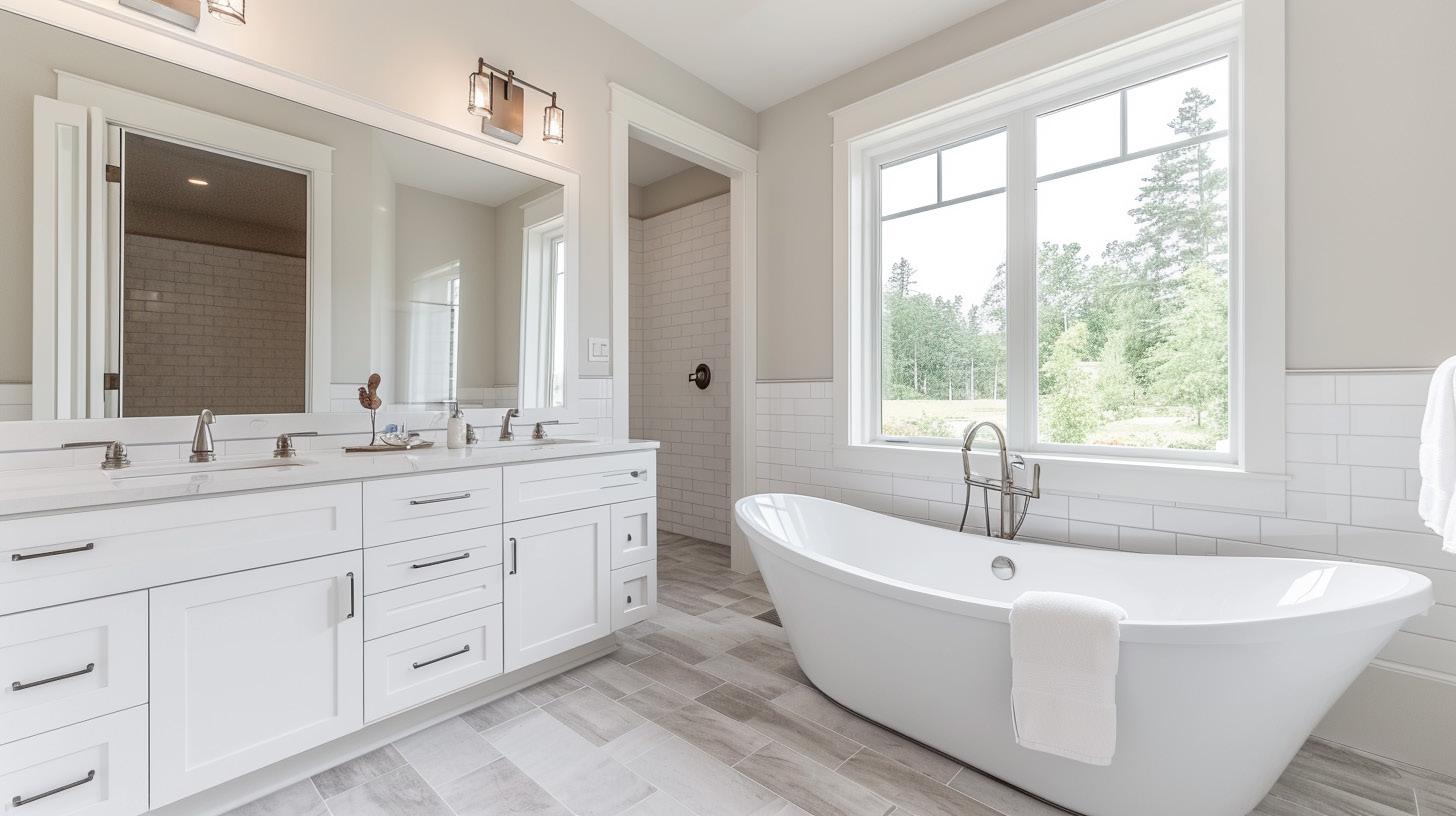
After months of preparation, you've reached the closing stage of your home purchase. Before receiving the keys, it's crucial to understand what the closing process entails.
Besides your downpayment, you'll also need funds for closing costs at settlement, typically 3-6% of the loan amount, which can total thousands of dollars. Common closing costs include:
Lender Fees:
Origination fees
Discount points to buy down rate
Appraisal fee
Credit report fee
Prepaids/Impounds:
Prepaid mortgage interest
Property tax impound (% upfront)
Homeowner's insurance premium
Title/Recording Fees: Title search and examination
Lender's title insurance policy
Transfer taxes and recording fees
Other Settlement Charges: Survey fee HOA fees (if applicable)
Home warranty premium

A few days before closing, you'll get to do one final walkthrough of the property. This is your last chance to ensure:
No new damage has occurred since inspections
All contracted repairs have been completed
All appliances, fixtures and other inclusions are still present
Systems and utilities are operational
The home is vacated and cleaned out by sellers

This walkthrough also allows you to begin planning your move and taking measurements. Bring a camera to document any issues before closing. If there are any major concerns, you can potentially delay or terminate the deal.

On closing day, you'll attend a meeting to finalize paperwork and actually transfer ownership of the property. The closing agent or attorney will review and have you sign the mortgage, deed, transfer documents, and disclosures.
Plan for the closing to take about 1-2 hours as you thoroughly review and sign all documents. The seller may be there too, or you may just be signing separately.
After signing and securing funds, you’ll receive the deed and keys— congratulations on your new home!

You'll need to bring:
Cashier's check or wire transfer for your downpayment and closing costs
Photo ID
Evidence of homeowner's insurance coverage
Copy of sales contract and any amendments
Confirm possession terms in your contract, arrange utilities and movers, update your addresses, and enjoy owning your new home! https://robertday.bhhscooperrealtors.com/