Roan Mountain Magazine























Roan Mountain Magazine
Volume 2, Issue 7
March 2026
STAFF
PUBLISHER/EDITOR
Amy Thurman
amy@roanmountainmagazine.com
ASSISTANT EDITOR
Ericka Hughes
GUN TALK WITH JON
Captain Jon Strydom
NEWS FROM THE ROAN
CeCe Studer
HIGHLANDER HIGHLIGHTS
Cloudland High School Yearbook Staff
THE GRACE PLACE
Reverend Hunter Greene
SHORT STORY AUTHOR
Diana Tolley
THE LAST WORD
Noah Blair
STAFF Writer
Nicole Barnett
STAFF PHOTOGRAPHERS
Faith Lynn
Lilly Forbes
STAFF ARTISTS
Kelly McCollum
Mara Jade Shell
ADVERTISING DIRECTOR
Susie Phillips
susie@roanmountainmagazine.com
SOCIAL MEDIA MANAGER
Colleen Gainey
DISTRIBUTION MANAGER
Jay Rich
CONTRIBUTORS
Park Ranger Marco Rodriguez
Renate Rohmann
Joy Shell
Copyright © 2026
All content herein is copyright protected and may not be reproduced in whole or part without express written permission.
Roan Mountain Magazine is published monthly and can be found at multiple locations throughout the Roan Mountain area, free to readers. For print subscriptions, please contact us for info. (423) 440-9012

Read the Digital Version at: RoanMountainMagazine.com
Visit us on Facebook: https://bit.ly/RMM_Facebook
Roan Mountain Magazine is printed by the Elizabethton Star
Letters to the Editor: We would love to hear from you!
Questions, comments, ideas, or whatever you’d like to share, please send to Amy: amy@roanmountainmagazine.com
www.roanmountainmagazine.com
Editor's Letter
Gun Talk with Jon
Taste of the Roan - Banana Pudding
Highlander Highlights
Essay Contest - Grandparents
News from the Roan
March on the Mountain - A Poem by Ericka Hughes
Supporting our Volunteer Fire Department
Hunting Morels
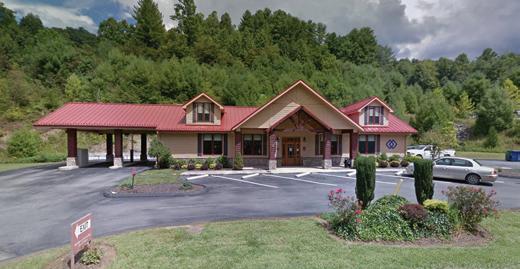
Business Spotlight - Roan Mtn. Animal Hospital
Reckon - A Short Story by Nicole Barnett
The Grace Place
A March Pig - A short story by Diana Tolley
Fun and Games!
Lessons in Life & Landscaping
The Last Word
by Faith Lynn



When I was 12 or 13 years old, I came home from school one afternoon to see fire trucks outside our house with hoses aimed at my brother’s room, the corner opposite from my room. I worried about my mother, my brother and our dog, but was relieved to see them standing outside, safe and sound.
We were lucky. We lived two and a half blocks from the local volunteer fire department and they responded in minutes. Most of the damage was contained to my brother’s room, where a frayed lamp cord had sparked on a rug, during the day, while we were at school and my mother was home.
But I had nightmares for months about it happening while we were asleep and about the kind of damage you don’t think about. I had three plastic horses on a shelf in my room and they melted, even though there was no burn damage in my room, even though my door had been closed, even though it was on the opposite side of the house. Can you imagine the heat? That scared me.
Later in life, I led a Red Cross team in responding to fires to assist survivors with a place to stay, emergency clothing, food, and other necessities. The damage I saw was heartbreaking, at best.
To this day, a house fire is probably my biggest fear. I’m fanatical about cleaning the dryer lint filter, getting rid of cords if wires are exposed, not leaving things turned on or plugged in when I leave the house or go to bed – I won’t even start the dishwasher before I leave the house. I make sure the fire pit and grill are completely out, and keep gas cans, firewood, and other combustibles well away from the house. I only use candles in glass jars and will actually take them with me to another room or put them out if I’ll be away longer than a minute, and I’ve had to rethread oil lamp wicks too many times to count because I turned them down too far in trying to make sure they were completely out. I check the smoke detector batteries, have two fire extinguishers in the house and replace or service them as needed, and I have a plan for what I’ll do in case of fire that I mentally run through on a regular basis.
And the knowledge that all of this doesn’t offer a solid guarantee of safety isn't lost on me. There are no guarantees, only reduced risk.
The one thing that does offer some peace of mind is the knowledge that we have an amazing volunteer fire department right in the heart of our community. Even if they can’t save every house, every time, they selflessly and bravely give us their very best on every call out. And they do it unpaid.
I hope you’ll read the article about our VFD, starting on page 20 and consider how you might be able to help support them, as they support us. I can’t think of too many endeavors more worthy of our time, energy or funds.
A big thank you to those brave souls who put
EDITOR'S LETTER
themselves in harm’s way solely to keep us safe. We’re so very grateful to you all!
On another note, the call we put out for artists and writers has gotten some great response! You'll see some new names in this issue and upcoming issues.
Kelly McCullum and Mara Jade Shell join the team as staff artists and both have work accompanying stories this month.
Lilly Forbes joins us this month as a staff photographer and contributed the photo used in The Grace Place.
Nicole Barnett has also joined us as a writer, kicking things off in this issue with a short story she wrote.
We're so thrilled to have all three join us and share their talent with you, while adding to the home town feel of the magazine. Look for more from them and other additions to the staff in the coming months!
If you like mushrooms, check out the article by Marco Rodriguez and Renate Rhomann on morels, which will start showing up later this month and into April. Marco is a park ranger at Roan Mountain State Park and their resident mushroom guru, and Renate was referred by the park as well for her knowledge on the subject. I'm a little picky about mushrooms, but just reading the article made me want to tromp around in the woods behind my house to see if I can find some morels myself!
Also this month, we're announcing our essay writing contest in honor of grandparents. There are multiple age groups, and the winning entries will be printed in the September issue, in honor of Grandparents Month. See details on page 15.
We hope you enjoy the issue, maybe even while doing a little porch sitting in this lovely spring weather we're having!
See you ‘round the Roan!
P.S. Also be sure to check out Jon's Gun Talk. When I was eight, I tried to run away and join a rodeo so I could be like Annie Oakley.
Amy Campbell Clark Editor amy@roanmountainmagazine.com






Throughout history, women have stepped up in tough times, using guns for protection, survival, or fighting for what they believed in. While guns are often linked to men in stories of the Wild West or wars, many women handled them with skill and bravery. This article looks at four such women: Annie Oakley, Harriet Tubman, Calamity Jane, and Lyudmila Pavlichenko. Their stories show how guns played key roles in their lives, from entertainment to freedom fights.

Annie Oakley, born Phoebe Ann Mosey in 1860 in Ohio, became one of the most famous sharpshooters ever. She started hunting as a kid to feed her family after her dad died. By age 15, she was so good that she won a shooting contest against a pro marksman named Frank Butler, who later became her husband. Oakley joined Buffalo Bill's Wild West show, where she amazed crowds with tricks like shooting a cigarette from her husband's lips or splitting a playing card from 30 paces away. She used rifles and shotguns in her acts, promoting gun safety and teaching over 15,000 women how to shoot for selfdefense. Oakley even offered to train female shooters for the U.S. Army during wars, though her offer was turned down. She died in 1926, but her legacy inspires women in shooting sports today.
Harriet Tubman, born around 1822 as a slave in Maryland, escaped to freedom and became a hero of the Underground Railroad. She made about 13 trips back to the South, guiding over 70 slaves to safety in the North. Tubman always carried a pistol for protection against slave catchers and to keep scared runaways from turning back. During the Civil War, she worked as a spy and nurse for the Union Army, even leading a raid on the Combahee River that freed over 750 slaves, using guns and strategy. Tubman was tough; she once said her gun helped her stay focused on the mission. After the war, she fought for women's rights and lived until 1913. Her use of guns showed how they could be tools for justice and freedom.
Calamity Jane, whose real name was Martha Jane Cannary, was a rough-and-tumble figure of the Old West, born in 1856. She grew up in mining towns and learned to ride horses and shoot guns while scouting for the army and driving stagecoaches. Jane earned her
GUN TALK WITH JON
Women Shooters
By Captain Jon Strydom (aka African Jon)
nickname from her wild adventures, like saving people from dangers where she "brought calamity" to threats. She carried pistols and rifles, using them to protect herself in lawless frontiers. Famous for hanging out with Wild Bill Hickok, she joined Buffalo Bill's show too, showing off her shooting skills. Though her life stories were sometimes exaggerated, Jane was a real survivor who used guns to make her way in a man's world. She died in 1903, remembered as a bold pioneer.
Lyudmila Pavlichenko, a Soviet sniper during World War II, proved women could be deadly in combat. Born in 1916 in Ukraine, she joined the Red Army after Germany invaded in 1941. At first, recruiters wanted her as a nurse, but she insisted on fighting and proved her aim by sniping two enemies right away. Using a Mosin-Nagant rifle, she racked up 309 confirmed kills, earning the nickname "Lady Death." Pavlichenko fought in battles like Odessa and Sevastopol, surviving injuries multiple times. After the war, she toured the U.S. to rally support, befriending Eleanor Roosevelt. She became a historian and died in 1974. Her story highlights women's roles in modern warfare.
These women broke barriers and used guns in ways that changed history. From Oakley's showmanship to Tubman's fight for freedom, Jane's frontier spirit, and Pavlichenko's wartime heroism, they remind us that strength comes in many forms. Their tales encourage us to remember the overlooked heroes who shaped our world with courage and skill.
I used to teach Advanced Handgun Techniques and have found that many of my lady students - when taught correctly - were better shots than the men. Here in Roan Mountain we have young pre-teen ladies taking their first deer as soon as they're strong enough to hold a rifle. One of the 5000 reasons I married my wife was she demonstrated she could "put holes into holes" at 50 feet with her .357 shooting single action! Keep it up, my friends. Train them young to never be a victim.
P.S. I have retooled one of my machines and can now cut thread OM MP5 barrels (previously a factoryonly job). Bring 'em!






INGREDIENTS
Pudding:
1 (12-ounce) package vanilla wafers
5 ripe bananas, sliced
2 cups milk
1⁄3 cup sugar
1⁄3 cup all-purpose flour
3 egg yolks
1⁄8 tsp salt
½ tsp vanilla
Meringue (optional):
3 egg whites
¼ cup sugar
DIRECTIONS
■ Preheat oven to 325.
TASTE ROAN of the
Award Winning Banana Pudding
Submitted by Joy Shell, recipe from her grandmother, Shirley Miller
This smooth and creamy deliciousness surely tops the list of everyone's favorite dessert! And it's not difficult to make from scratch. Whether you fix this for a weeknight treat or to seve after Easter dinner, it's sure to be a hit. Many thanks to Joy for sharing her family recipe!
■ Arrange one third of the vanilla wafers in a medium oven-proof bowl; cover with one third of the banana slices.
■ Repeat layers twice with remaining wafers and bananas.

■ Whisk together the milk and next four ingredients in a heavy sauce pan. Cook over medium-low heat, whisking constantly, 15 minutes or until pudding-like thickness.
■ Remove from heat and stir in vanilla.
■ Pour over vanilla wafers and bananas in bowl.
To make meringue (optional):
■ Beat egg whites at medium speed with an electric mixer, until foamy.
■ Gradually add sugar, beating until sugar dissolves and stiff peaks form.
■ Spread meringue over pudding, sealing to edge of bowl.
■ Bake at 325 for 15 minutes, or until meringue is golden brown.
Serve immediately, or let cool completely then cover and chill for one hour before serving.
PLEASE share your family recipes with us! And if you have a photo of the prepared dish, send that along too! amy@roanmountainmagazine.com








Relay for Life at Cloudland High School is synonymous with October, February, cupcakes, and Cindy Birchfield. Cloudland Relay for Life provides a scholarship for a CHS senior every year. Last year, CHS also provided one for a Hampton High School student. Each year in October and February the Relay for Life club hosts a cupcake sale to raise money for the scholarship for that school year. Faculty, staff, students, parents, and community members donate cupcakes for sale after lunch and at the Pink Out basketball games that night. This year’s sale and game day was February 10.
Through the support of the community, a lucky senior is able to further their education.
Cindy Birchfield was a former teacher at CHS who lost her battle with cancer. She was a beauty queen in the very definition of the word. She cared for her students and all Highlanders. You could always hear her cheering from the stands for all sports. It is in her honor that CHS Relay for Life established the Cindy Birchfield Memorial Scholarship. Ms. Shellie McKinney, CHS Counselor, spearheads the fundraiser every year.
By Cloudland High School Yearbook Staff School News
On March 6, Ms. Holly Houston’s business students went to compete in the Northeast State Community College Business Battle. Two students, Mackenzie Johnson and Adrianne Birchfield, were competing against 18 other students from across the REGION to pitch a business plan. We are so excited to announce that Mackenzie Johnson placed first and Adrianne placed 3rd, winning $2,000 and $500, respectively.
In addition, the following students received Interviewing excellence awards: Allie Miller, Jerrica Oakes, and Jadyn Whitley.
GO HIGHLANDERS!!







Essay Contest
Honoring Grandparents
After reading Brayden Townsend’s tribute to his grandparents (published in the September 2025 issue), we decided to host an essay contest focused on grandparents. Entries will be read by magazine staff and the best essay in each age group will be published in the September 2026 issue, in honor of National Grandparents Month. Depending on how many entries we receive and if space allows, we’ll try to publish all essays on the magazine’s website. Additional prizes may be awarded (to be announced).
We will have multiple age categories:
• 8 – 10
• 11 – 13
• 14 – 16
• 17 and up.
This isn’t just for kids, adults are welcome to enter too! The focus of your essay should be related to your grandparents. It could be about an important lesson, skill, or way of thinking they've taught you, how they live their lives, the role they play in your family, or the community, ways they’ve impacted your life, or any other way you'd care to pay tribute to them. It can be about any grandparent, or all, even those who are no longer with us. Otherwise, what you write is up to you.
Contest Rules:
• No entry fee required.
• All entries must be received by July 31.
• Only one entry per person.
• Your age at the time you send it in is the category you will be placed in.
• You must have written it yourself. No AI submissions will be accepted.
• If you are under the age of 18, parent or guardian permission is required.
• Do your best with spelling, grammar, punctuation, and usage, but consideration will be given to age and no one will be disqualified – it’s important, but your story is of most importance. It’s acceptable to have a parent, teacher or friend read it and recommend minor edits to spelling, punctuation and grammar, but professional editing is not allowed.
• Essays should be about real people, not fictional characters. Grandparents can be referred to however you address them, such as Papaw, Mamaw, Granny, etc.
• You can write about grandparents, great grandparents, or step-grands.
• You may include a photo of your grandparent or you with the grandparent(s), but it is not required and will

not influence judging. Printed photos will be returned.
• Clean language only.
• The essay can be written in essay style (first person) or told as a story. The writing style is up to you.
• Length will depend on age group. Ages 8 – 10 can be any length. Ages 11 – 13 must be at least 400 words, but can be longer. Ages 14 and up must be at least 600 words, but no more than 2,000.
• Essay must have the author’s name, age, and the names of the grandparents the essay is about at the top of the page, and each essay must have a title. If the author is under 18, the name and phone number of a parent must also be included. Over 18, please include your phone number. We will not share your contact information, but may need to contact you for clarification or to notify winners.
Entries can be submitted in the following ways:
• Typed into a word document and attached to an email or typed into the body of an email and sent to amy@roanmountainmagazine.com.
• Handwritten, scanned, and emailed as an attachment.
• Handwritten and mailed to the address below.
• Or message us on Facebook and we’ll meet you to pick up your entry if you live locally.
Please reach out to Amy if you have any questions. We look forward to reading your entries!
If mailing submissions, send to: Roan Mountain Magazine PO Box 132 Roan Mountain, TN 37687
NEWS FROM THE ROAN
NBy CeCe Studer Roan Mountain State Park
ature is full of wonder, and it is never more wonderous than in the spring! Spring transforms the landscape through a combination of blooming flora, returning wildlife, and increasing daylight. In addition to animals waking from their long winter sleep to forage, spring brings the explosion of color from native wildflowers blooming on the forest floor before the trees fully leaf out, capturing the fleeting sunlight. Spring’s warmer temperatures wake insects, including bees and butterflies, which are essential for the pollination of new blossoms. Many beautiful blooms can be found here in Roan Mountain State Park. As warmer air brings you back outside, discover some of these vibrant spring flowers blooming along our trails.
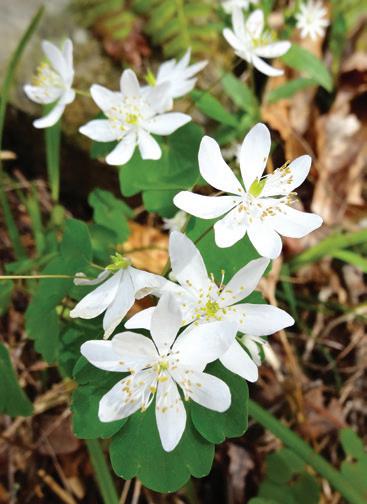
Wood Anemone/Nightcaps (Anemone quinquefolia) These small white flowers don't have any petals. What you see are petal-like sepals, which are leaves that protect the developing flower bud. The best time to view these flowers is from March to June at the Miller Farmstead.
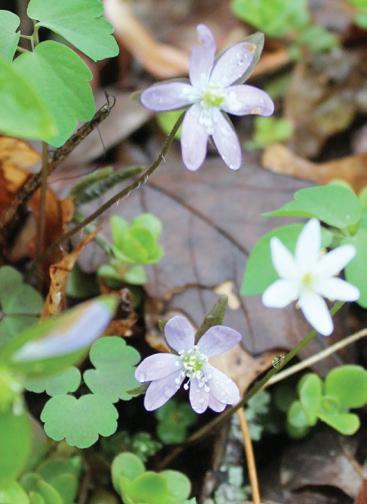
Round-lobed Hepatica (Hepatica americana) The round-lobed Hepatica also does not have any petals. Colors are white to pale lavender. The seeds are dispersed by insects. The main pollinators in spring are bees and flies, and later in the season, seeds are dispersed by ants! The best time for viewing these flowers is in March at our Farmstead and the Moonshiners Run Trail.
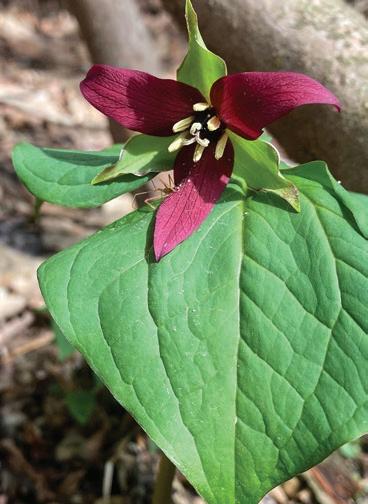
Red Trillium (Trillium erectum) Also called a red wakerobin, and stinking Benjamin due to the pungent odor of the flower, which some say smells like a wet dog. Blooming April-May, these beauties are maroon in higher elevations, but white in lower elevations. They can be found along Tom Gray and Blue 2 Trails.
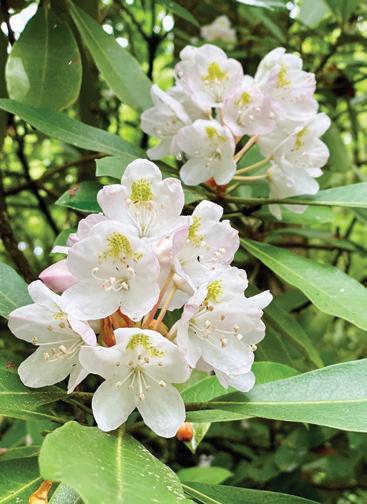
Rosebay Rhododendron (Rhododendron maximum) This evergreen is the largest of the rhododendrons. They bloom late in spring with showy white or pink flowers on a large, broadly rounded shrub with leathery, dark green foliage on red stems. You can view rosebay rhododendron throughout the park.
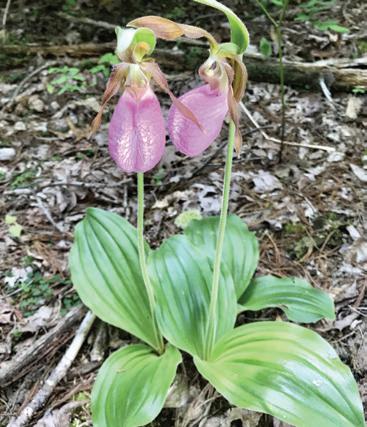
Pink Lady’s Slipper (Cypripedium acaule) Pink lady’s slipper is also called “moccasin flower”. It blooms April-May. This flower is a rare lady's-slipper orchid native to northern North America. You can find these flowers while hiking along our Tom Gray Trail.
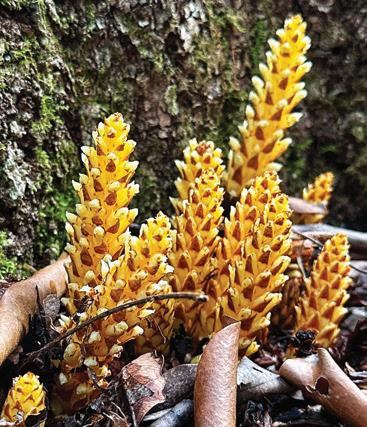
Squaw Root (Conopholis americana)
This yellowish-brown flower is like a parasite, usually located in clumps under beech and oak trees. This plant was collected by Native Americans for food and bears even love it! These are found all over the park.
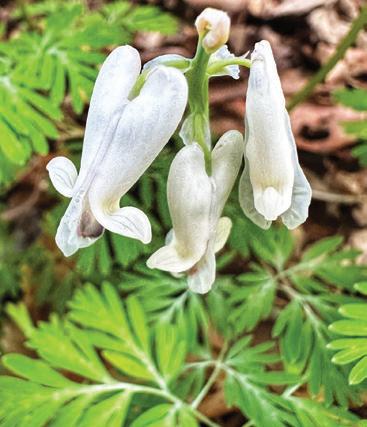
Squirrel Corn (Dicentra canadensis)
These cream to pale pink flowers are very fragrant and derive their name from the shape of their underground stems, which resemble little grains of corn. They attract butterflies, bees and songbirds and bloom from April-May. They can be seen at the Farmstead and Moonshiners Run Trail.
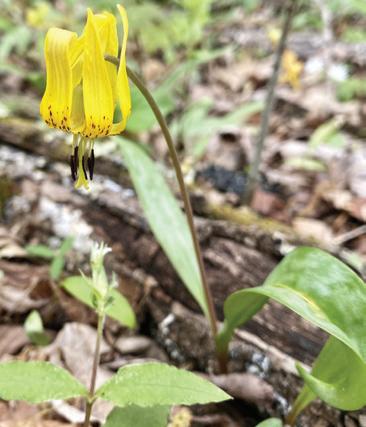
Trout Lily (Erythronium americanum) Can be seen along the Blue 2 and Riverside Trails in March-May. The name refers to the similarity between the leaf markings and those of the brown or brook trout. These plants serve as a food source for bears and white-tailed deer, with the corms often being targeted for their caloric value.
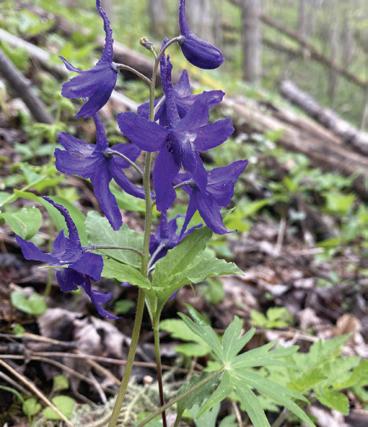
Dwarf Larkspur (Delphinium tricorne)
Also known as Spring larkspur and blooms from April-May, along Blue 2 and Bearwallow trails, and at the Farmstead. Intense, deep blue to violet-purple in color. Bumblebees are attracted to this flower, and can sometimes be heard buzzing inside the tubes. Settlers extracted a blue dye from this flower to make blue ink.
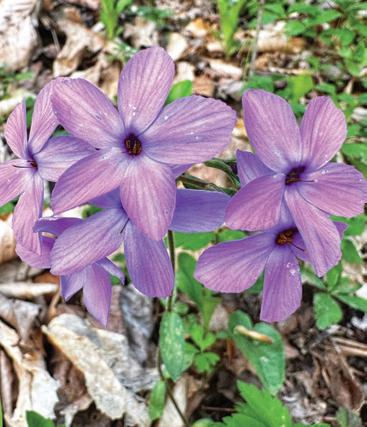
Hairy Phlox (Phlox amoena) Also known as sweet Williams, these flowers have a sweet scent, and are pale pink to lavender, fragrant and extremely attractive to butterflies. They bloom from April-June. These are located on our Farmstead and the Moonshiners Run Trail.
As you traverse the trails this season, take a moment to pause and appreciate the delicate beauty that surrounds you. Each bloom, each fluttering wing, and each ray of sunlight are a reminder of nature’s resilience and renewal. Savor the short-lived wonder of spring—its sights and smells—as motivation to explore, learn, and connect with nature and the world around you. Ready to see it for yourself? Grab your hiking shoes, bring a camera, and start your journey along our trails today!





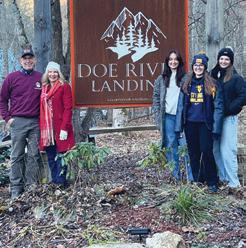
















Event Pavilion
March On The Mountain
A Poem
By Ericka Hughes Artwork by Kelly McCollum
March comes in sideways. Not winter. Not spring. Just wind with an opinion.
Snow shrinks into the tree line. The fields go soft. Boot heels sink. Red clay climbs your cuffs and stays.
The mountain looks stripped down — no leaves to soften it, no blooms to brag. Just bone and slope and whatever made it through.
Fence wire hums in the wind. Tin roofs answer back. Some mornings start silver with frost, by afternoon the yard’s giving way under its own thaw.
You don’t trust March. You work around it. Trucks idle longer.
Barn doors stay open. Chains get unhooked. Engines clear their throats after a winter of sitting still.
Up past Carvers Gap the balds hold cold like a grudge. Down below in Roan Mountain water finds every low place and reminds you what slopes really mean.
Nothing blooms yet. Not properly. But something shifts. You can see it in the way people step outside longer. In the way porches get swept off even if nobody’s sitting there. In the way gravel sounds different under tires when it’s wet instead of frozen.
March isn’t hopeful. It’s honest.
It shows you what winter bent. What held. What didn’t. It doesn’t decorate the mountain. It reveals it.
And somewhere under the mud, under the frost that keeps trying to come back, roots are making decisions no one sees.
By April, it will all look intentional, green and certain.
But March is the argument before that. The in-between.
The working edge. And around here, That counts.


Supporting our Roan Mountain Volunteer Fire Department
By Amy Campbell Clark
Photos provided by RMVFD
We’re lucky to have so many beneficial businesses and services in our small community – a pharmacy, a grocery store, a hardware store, a parts store, tire store, mechanics, nursery, dentist, gunsmith, healthcare services, so many churches, great places to eat, and much more.
But another service at the very top of that list is our volunteer fire department.
The recent home fire in our community highlights that truth for all of us. If we had to rely only on paid county departments, response times would be much longer and losses would be much worse.
What does “volunteer” really mean?
The fact that our local firefighters are unpaid is only part of the picture. They’re still required to go through the same training as their paid brothers, have the same gear, operate the same trucks, and still risk their lives fighting fires. Unlike paid firefighters, our crew have regular jobs. When called out, they usually have leave work or get out of bed to respond.
But in addition to volunteering their time for training, maintaining equipment, being on call, and responding to fires, they also volunteer their time for fundraising. The department gets $90,000.00 annually from the county, which just about covers the cost of required insurances and truck payments. All other funding is the responsibility of the department.
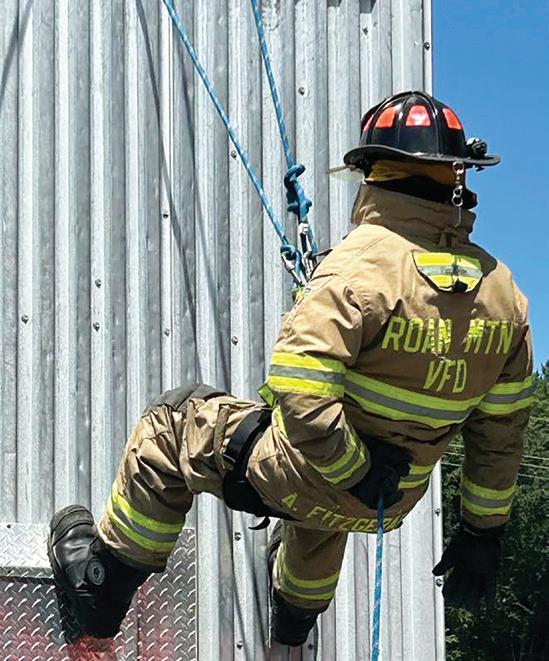
Extensive training is required of all volunteer firefighters. In some cases, classes are led by those volunteering their time, but in other cases, such as for required certifications, the costs are up to individual firemen, out of their own pockets.
What do they need funds for?
The trucks cost money to operate. When a truck leaves the station, it doesn’t stop running until it returns. Pumps, lights and other equipment only function when the engine is running, and in winter, the pumps have to be actively engaged and circulating to prevent freezing. It takes about $200.00 to fill up each of the trucks with diesel. There’s also regular maintenance, such as oil changes, tire replacement, battery replacement, and more. Although the men do the work themselves when possible, there’s still a need for parts. In addition, the trucks each have to be recertified annually.
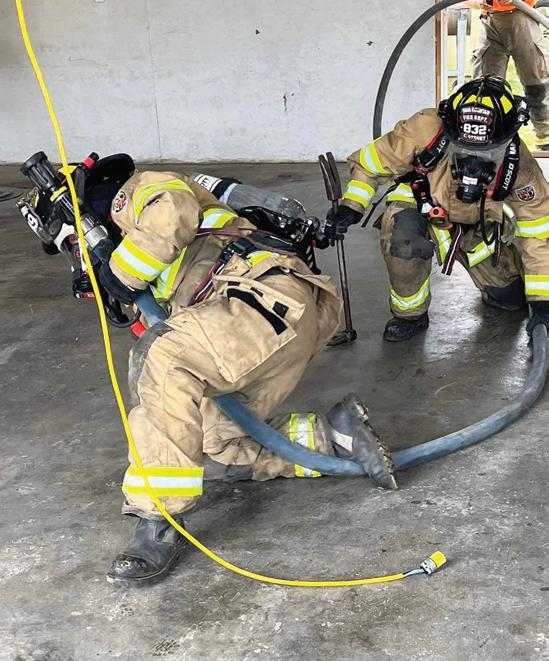
Turnout gear (coats and pants) for the firefighters is expensive and has to be replaced regularly to meet safety standards and keep them safe. Personal Protective Equipment (PPE) is also required, such as air packs, helmets, special boots just for structure fires, extrication gear for wrecks, gloves, and wildland jackets and coats for wildfires. PPE expenses, air mask testing and training costs are paid for out of pocket by each firefighter as the department does not have the budget to cover these expenses.
The station also has to be maintained and has monthly bills, such as water, power and propane heat.
All of which adds up.
So how do they pay for it? Fundraising, private donations, and occasionally grants.
Their biggest fundraising event each year is the sale of fireworks in the weeks leading up to Independence Day. During this time, the station is open during business hours and on weekends, and staffed by firefighters and volunteers. The proceeds of these sales help meet a significant part of budget requirements. Look for notice of this on the Roan Mountain Volunteer Fire Department website and Facebook page, and the magazine’s website and Facebook page.
They also do two “boot drives” each year, during Race Week in April and again during the Rhododendron Festival in June. On these weekends they stand beside the road with their boots, regardless of the weather, and accept donations from everyone passing. These boot drives help and we hope that everyone reading this will make a point of stopping and contributing in any way you can.
Private donations make up a portion of the budget as well. A homeowner recently made a significant contribution after our VFD responded to a fire at his house, in spite of his loss, and many in the community donate as well. The department has established a Venmo account to accept donations (see next page for details). Local businesses also help when possible. Several local businesses provide deep discounts on tools and supplies needed for truck maintenance, and the department has received two grants from Operation Pocket Change.
Grants are especially helpful, but harder to get. The requirements are often very strict and the competition
for them is high. They also frequently have to be utilized in very specific ways, rather than being used for general operating funds.
As you can see, our support, as a community and individually, is so very important to keep our Roan Mountain Volunteer Fire Department funded. Please do give what you can, and if you can’t give, you can still help by spreading the word, sharing their Venmo link, or even volunteering at fundraisers.
And if you’re that special breed of crazy that’s willing to run into a burning building, consider volunteering as a firefighter. Reach out to the department on their Facebook page for information on how to get started.
On behalf of our community, we’d like to offer a huge "Thank You!" to our volunteer firemen for their selflessness, bravery, and dedication, and for keeping us safe. God Bless You!
Want to help with a donation? Use the Venmo QR code below (or type in @RMVFD) to contribute what you can.
Anything is appreciated!

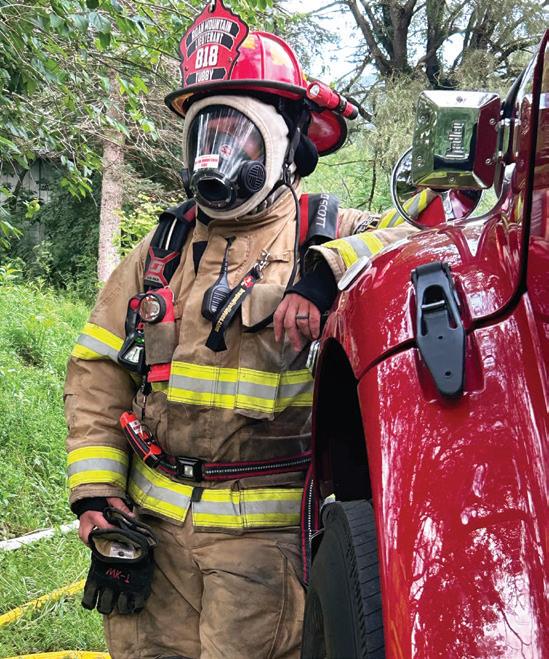
Because the department doesn't have the budget for it, firemen are also responsible for the purchase of their own safety gear.
Other Ways To Help:
• Donate to the boot drive, in front of the fire station on 19E, Saturday and Sunday, April 11-12
• Purchase your fireworks leading up to Independence Day
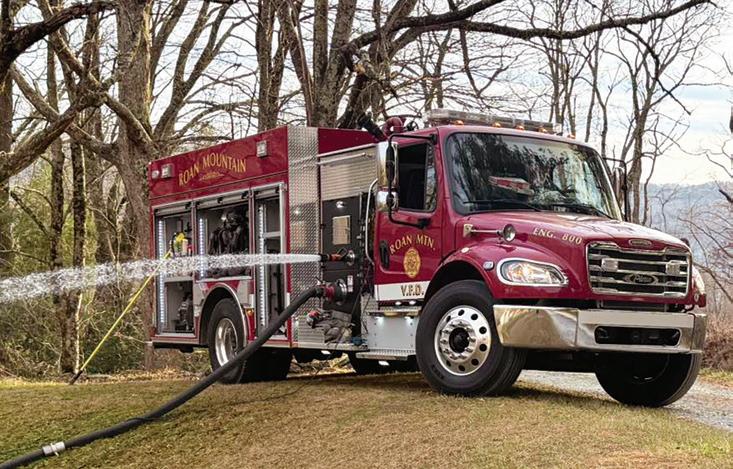
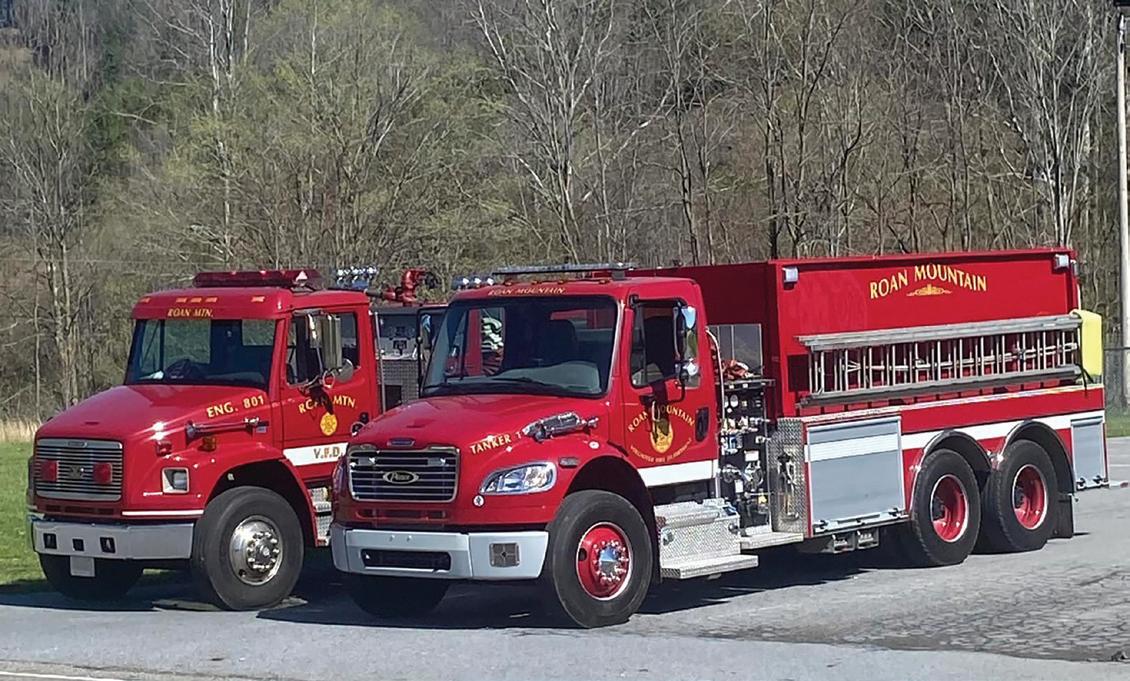
These life- and property-saving trucks are expensive to purchase, certify and maintain. We're lucky to have such a well-equipped and efficiently manned department in our small community.
our Roan Mountain Volunteer Fire Department!
BOOT DRIVE
RACE WEEKEND APRIL 11-12
In front of the Fire Department
8478 US 19-E
Hunting Morels
Locals and mushroom enthusiasts alike are all gearing up and excited for morel season, starting in late March. But what's the big deal?
Roan Mountain State Park Ranger Marco Rodriguez joins us to answer that question, help guide us in the best ways to look for them and how to harvest these tasty mushrooms.
By Park Ranger Marco Rodriguez
Photos by Renate Rohmann
Each spring, the forests surrounding Roan Mountain come alive with awakening wildlife, blooming wildflowers, and for those who know where to look, the elusive morel mushroom. Highly prized in culinary circles, morels are often referred to as “dryland fish” due to their rich, earthy, slightly nutty aroma that can resemble the scent of fresh fish. Their distinct flavor and short growing season make them a coveted find for both seasoned foragers and curious beginners. What Are Morels?
Morels are unique mushrooms easily recognized by their honeycomb textured caps and hollow interiors. Here in East Tennessee, the common morel species found are the yellow morel (Morchella americana) and the black morel (Morchella angusiceps). Unlike many common mushrooms, morels cannot be cultivated commercially on a reliable scale due to their mycorrhizal relationships [symbiotic association of fungi with the roots of plants] in the wild. Foragers value morels not only for their culinary qualities but also for the rewarding challenge of locating these elusive fungi.
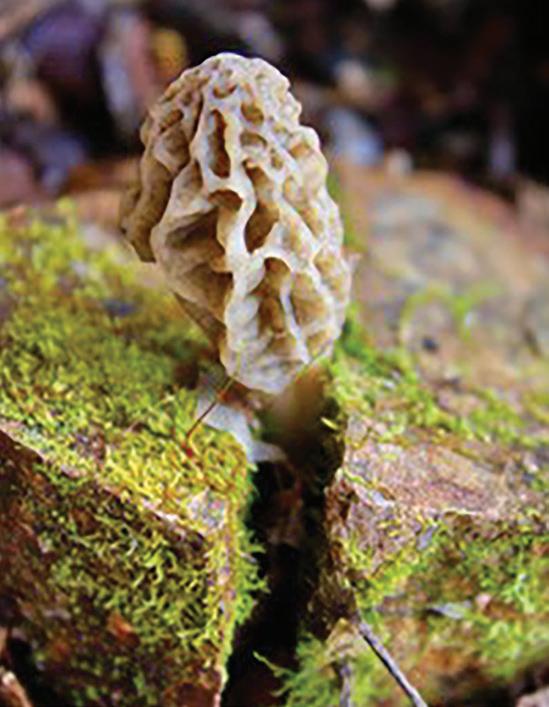
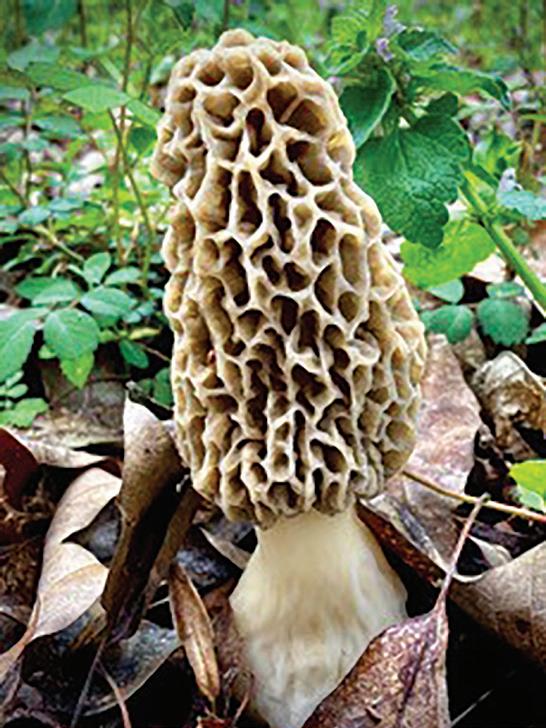
Morels, like the yellow morel shown here, have a distinctive honeycomb cap. And as you can see, they can grow nearly anywhere.
Season and Timing
In the Roan Mountain area, morel season typically begins in late March and extends through April, depending on soil temperature and recent rainfall. While mushrooms overall can appear throughout the year, spring is the only time true morels emerge in this area. This finite window adds to the allure of these mushrooms but also can result in an over harvesting due to the excitement of foragers who may not practice sustainable harvesting.
Preferred Habitat
The diverse woodlands of Roan Mountain provide excellent conditions for morels. They are most frequently found in moist, well drained soils near hardwood species such as tulip poplar, ash, elm, and occasionally old apple trees. Recently disturbed ground, river bottoms, and old burn sites can also provide ideal environments.
While these pro tips can help narrow the search, morels are famously unpredictable and often reward those who are patient, with an observant eye. It is crucial for foragers and eager observers to fully
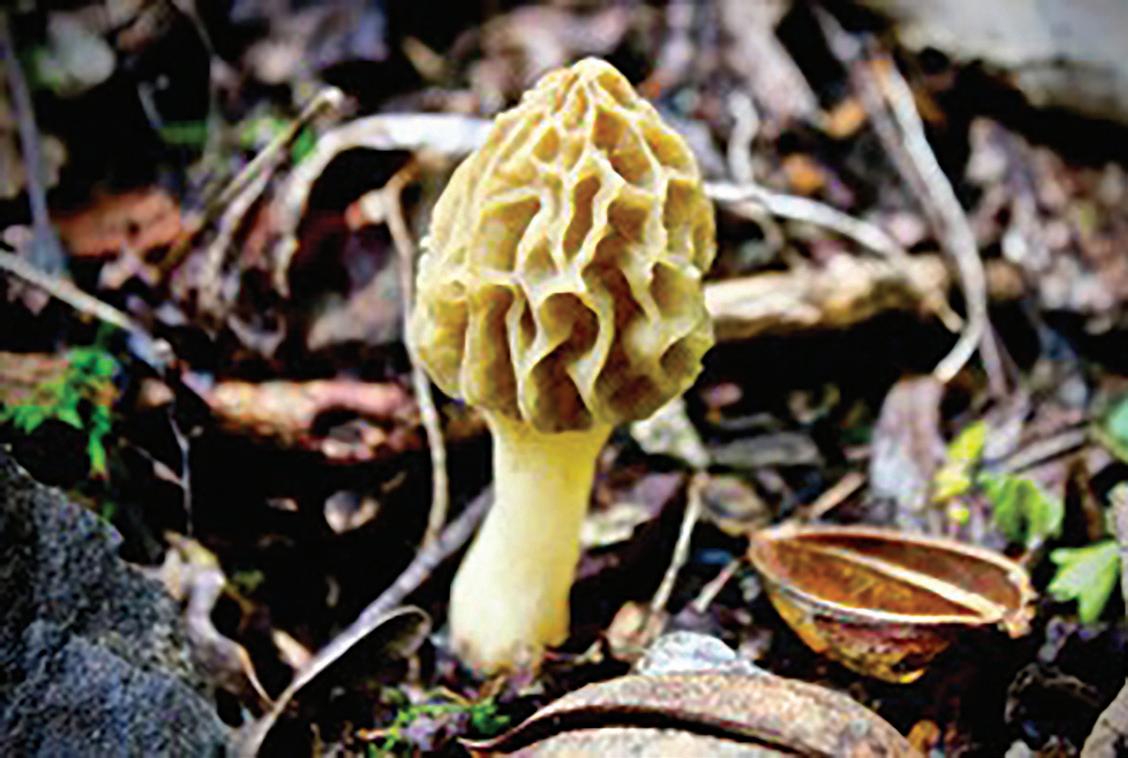
Paying very close attention to the forest floor is a key factor in spotting the elusive morel. Nestled among leaves, and other natural debris, they can be hard to spot.
research the areas they plan to look around as to not trespass on private property or break any land laws. Rules may vary from federal land to state, and it is the forager’s responsibility to ensure they are mushroom hunting sustainably and legally.
At Roan Mountain State Park, foraging of renewable resources, such as mushrooms and fruit, are allowed for personal consumption only so long as the total amount taken fits within two hands cupped together. Additionally, those seeking to forage on state property should follow all park rules and regulations including staying on the marked trail, even when foraging.
Look Alike Species
In the world of foraging, safety is of the upmost importance. Arguably the most important rule of foraging is to know for a fact what something is before ingesting it. The morel mushroom is no exception and although they are one of the easier mushrooms to identify, they do have a toxic look-alike. Foragers must be aware of the doppelgänger, false morels (Gyromitra sp.). False morels resemble true morels but can be harmful if consumed. While some false morels
mimic the wrinkled appearance of true varieties, they often have irregular, brain like folds rather than a structured honeycomb pattern. In addition, true morels are completely hollow from cap to stem, a key identification feature beginners should learn before harvesting.
The mycorrhizal relationships each of these mushrooms have with the trees around them can also be an indicator of a true or false morel. True morels often favor hardwoods such as those listed previously, while the false morel often prefers more acidic soils such as those found near many species of evergreens. Learning the difference between a true morel and a false morel is often described as discerning between a white-tailed deer and an antelope, similar but easy to tell once you know what to look for. Although they may be look-alikes, with a little bit of practice and observation, these mushrooms are easy to identify from one another for even a beginner mushroom enthusiast.
Verifying Your Find and Collecting
Once a mushroom has been located, the next and
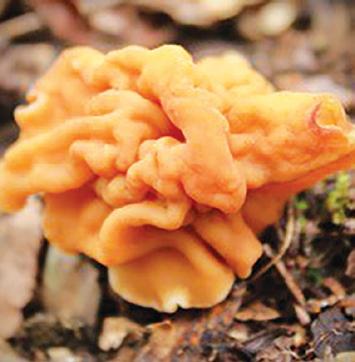
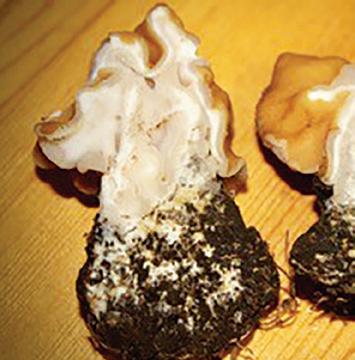
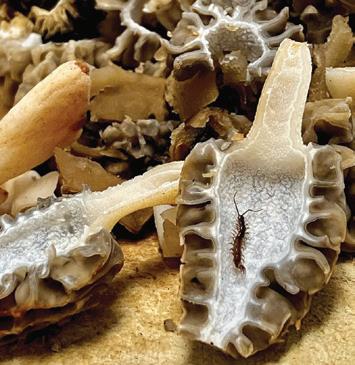
Identifying lookalikes is very important to avoid eating a toxic mushroom instead of a morel. The cap of fake morels (left) looks more like a brain, rather than the honeycomb pattern of morels. Also, when cut open a false morel (center) is meaty inside, while the true morel (right) is hollow inside.
most crucial step is to positively identify it. Many mushrooms are culinary delicacies, but there are also many that are toxic and can even result in death. Some toxic look-alikes are only able to be discerned from their counterparts through spore prints and even needing microscopic tools. For this reason, a great rule of thumb for foragers is to get two expert opinions. Some great resources for budding mycologists can be through mushroom pages online such as on Facebook or MushroomExpert.com, and field guides local to the area. When utilizing online forums, it is imperative to only rely on credible sources and always double check findings. Pictures are a phenomenal way to observe mushrooms, as well as practicing “leave no trace” principles.
Now that the mushroom has been identified, it is time for collection. There is an age-old debate on whether pulling the mushroom or cutting at the base is more beneficial. Neither have more of a negative impact on the fungi than the other, although there are pros and cons to each. Plucking is often better for identification but results in more cleaning of debris before eating. Cutting at the base is the opposite. Foragers often collect their specimens in mesh bags, wicker baskets, or brown paper bags. These are all great options that aid in the spore dispersal of the mushroom as the forager is walking through the woods. When foraging for anything, safety and sustainability are paramount. Another great rule of thumb is to only forage 10% of what is found to encourage future generations of the organism. We
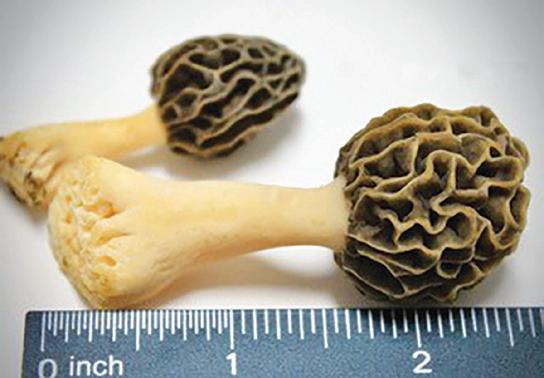
Although those shown here measure in at less than three inches, morels can get significantly larger, sometimes as large as a man's hand.
should always be mindful of our actions and work to leave a better natural world for generations to come.
Conclusion
Morel hunting offers more than a culinary reward; it fosters a deeper appreciation for the natural world. Learning the species that inhabit Roan Mountain enriches your understanding of the ecosystem and encourages a closer connection with the landscape. Enjoy the process, respect the environment, and always prioritize safety through research and expert verification. Bringing a camera out is a phenomenal tool to observe, record, and appreciate the mushrooms you may find. Sometimes the most meaningful discoveries are the ones you capture and leave for others to appreciate.
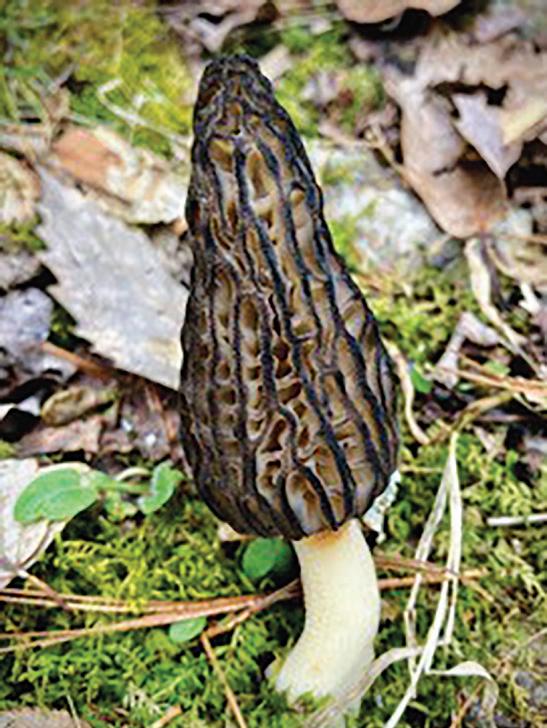
Although these look like different mushrooms, they are different varieties of morel: the image on the left is a black morel and the image on the right is a yellow morel. True morels can be either long and tapered at the top, or more rounded.
After expert confirmation that your mushrooms are definitely morels, it's time to prepare them! Renate Rohmann, morel expert and contributing photographer, offers this advice:
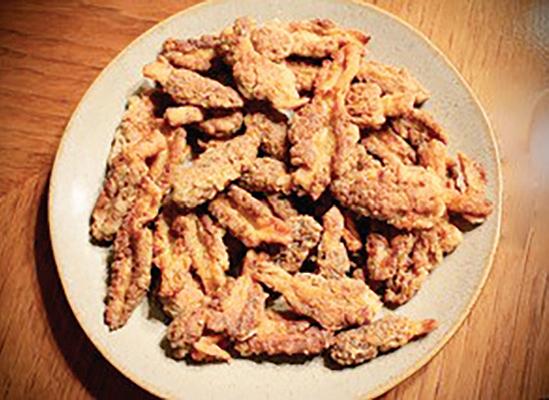
"You can cut them at soil level so you won’t take home a lot of dirt. Even then it’s good to brush off any clinging dirt before you put them in your basket or paper bag. Don’t use plastic bags. You don’t want them to sweat. I don’t wash my Morels unless they are really dirty and full of sand. But I do slice them in half to check if they have any 'inhabitants'. If there are any unwanted parts or dirt, I use my knife or pastry brush on them. Washing or soaking them in water reduces the flavor. My favorite way to prepare Morels is to dip them in egg/ milk and roll them in bread crumbs. Then I fry them in butter. But they can be used in soups and gravies and any other way other types of mushrooms are cooked. Just don’t eat them raw because then they can cause unpleasant symptoms in your body."










Business Spotlight: Roan Mountain Animal Hospital
By Ericka Hughes
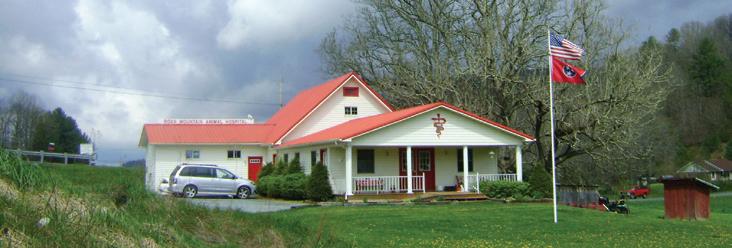
There are some places in Roan Mountain that feel less like businesses and more like family. Roan Mountain Animal Hospital is one of those places.
Ric and Pam bought the clinic in June 1986 — nearly 40 years ago — not just because they wanted a practice, but because they were looking for something deeper. “We were looking for a nice place to live and raise a family where we could enjoy a rural lifestyle and make lasting friendships,” Pam said. “Roan Mountain turned out to be the perfect place.”
And just like that, Roan Mountain gained two doctors who would go on to serve the community for four decades.
In a world where veterinary care can feel rushed or corporate, Roan Mountain Animal Hospital stands firmly on its values.
“As a business, what sets our clinic apart from the others is our emphasis on patient care,” Pam said. “We strive to be up front and honest in all situations and put the needs and comfort of our patients first.”
Today, it remains the only veterinary clinic in Roan Mountain — a vital resource in a rural community where access matters.
They are avid supporters of our local schools — “Go Landers’!” — and work closely with shelters and rescues to provide care for homeless pets. The clinic has quietly supported five local families for the past 40 years.
“We love Roan Mountain,” Pam said plainly. “We appreciate all that the community has done to support us and our clinic families.”
That kind of loyalty runs both ways.
The hospital provides routine wellness exams, surgery, radiology (X-rays), and blood work, with a strong emphasis on preventative medicine. Yearly vaccinations, heart worm and tick-borne disease testing, and flea, tick, and parasite prevention are all part of keeping pets healthy year-round.
But in an age of internet advice and social media remedies, they take a thoughtful approach.
“Thanks to the internet, there’s no shortage of information readily available,” Pam said. “However,
we don’t think that one size ever fits all.” Each pet — and each pet parent — is considered individually. Lifestyle matters. Environment matters. Personal situations matter. Their recommendations are tailored accordingly. Clients can also visit RMAH.org for clinic information and appointments, blending oldfashioned service with modern accessibility.
What truly makes this place remarkable is its staff longevity — something almost unheard of in today’s workforce.
“If there was a contest for the clinic with the most longevity among its employees, we would surely be the winner,” Pam said proudly. Janice Oliver has been there over 35 years. Tabetha Lusk has served for 24 years and earned her Associate’s degree in Veterinary Technology, becoming a licensed Veterinary Medical Technician in Tennessee during her time there. Jessica Oakes joined 23 years ago just after high school and has been indispensable ever since. Keshia Miller , their “newbie”, has been there 11 years. And all are proud graduate sof Cloudland High School and lifelong residents of Roan Mountain.
That isn’t just staffing. That’s family.
The changes over four decades have been dramatic.
“When we began practice, nobody had a computer,” Pam recalled. “We used paper for all record keeping, we didn’t even take credit cards, and developed our own X-rays by hand in a dark room.”
Blood work had to be mailed out or taken to a human hospital, often taking days for results.
Today, records are digital. Radiographs are stored electronically. Diagnostics are faster and more advanced. The clinic has steadily updated equipment to stay current with evolving standards of care.
In the next five to ten years, they see continued growth — updating equipment, expanding testing abilities, and serving an evolving community. They’re also realistic.
“Doc Ric and I might like to retire someday,” Pam said with a smile. “So it would also be nice if some nice young couple with a vision to provide awesome veterinary care to the pets of Roan Mountain would come talk to us!”
In the meantime, Pam is excited about remodeling the kennel and dog food storage rooms this summer — even if Doc Ric may not share her enthusiasm.
For anyone wanting to keep their pets healthy yearround, Pam’s advice is straightforward:
“Please call the clinic for an appointment. We will examine their pets, learn about them and their lifestyles, and make vaccination and preventative care recommendations based on their individual needs.”
After 40 years, Roan Mountain Animal Hospital isn’t just a clinic. It’s part of the fabric of this mountain. A steady presence. A clean exam room. A familiar voice at the front desk. A place where pets are treated with dignity and neighbors are treated like friends.
And in a small town like ours, that still matters.
Reckon
A Short Story by Nicole Barnett
My grandpa wasn’t much on downtime. Not a lazy bone in that man’s body. He never sat down except to eat, or to watch Wheel of Fortune or Jeopardy!. So when I was able to get him to stop for a solid five minutes, I ate it up. I loved having his full attention.
“Papaw, tell me that story about when you was little.”
“Which one? That time the chicken hawk grabbed up the little diddles?” He whistled and cawed like a big bird, his hand curled into a claw as he grabbed my head, and I giggled like I always did.
His hands were so big. They were darkened by the sun, like his face and arms, the only parts of him ever exposed. His daily attire was a pair of navy-blue uniform pants and matching shirt, a white tee shirt underneath, and worn leather work boots.
“No …” I thought for a moment, nose wrinkled, trying to remember the right words. “Tell me about when you was little and you caught that turtle by its tail. You know, them ones that bites that you said not to touch.”
“Snappin’ turtle. I didn’t just say don’t touch, I said don’t even go near it if you run across one. Law’, that was the biggest thing I ever seen. He was bigger than you.”
I couldn’t imagine a turtle as big as me. I’d only ever seen box turtles, and the ones I’d encountered could have fit easily into a shoebox.
“But you caught ‘im anyhow, didn’t you Paw? How’d you catch ‘im?”
“Like this,” he said, and tickled my ribs until I lost my breath.
“No, really!” I whined. “Please, please, please tell me about it, Paw. I promise I won’t go after one. Some people think they’re scary, but I don’t. But I promise I won’t ever, ever try to grab one up. He’ll bite my fingers off, won’t he?”
Paw kept a straight face and said, “Just like gobblin’ up nightcrawlers. He’d bite yer fingers off and when he got done, he’d snap off your toes. This little piggy went to market. This little piggy stayed home. This little piggy had roast beef. And this little piggy got ate by a snappin’ turtle."
He sprang forward and popped his mouth open to mimic a giant, toe-eating turtle. I giggled, but the fleeting thought of a monster reptile that could maim me up something awful turned me serious again in a blink.
“Please, Paw? Pleeeeeease? It won’t take five minutes,” I pleaded, tugging at his sleeve.
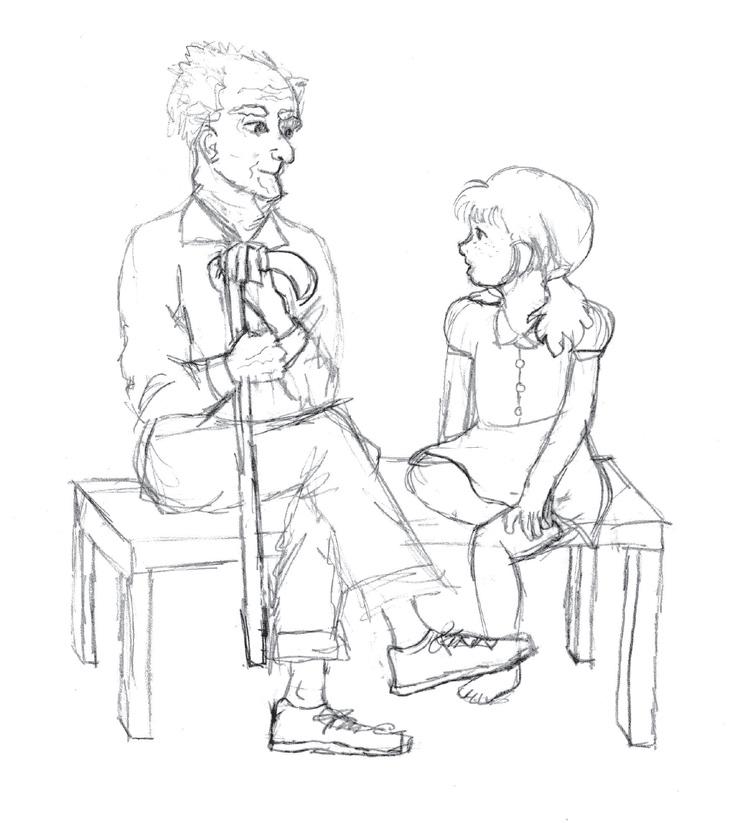
He furrowed his brow, and for half a second I thought he was going to refuse. Instead he lowered himself to an old bench and patted the seat, signaling me to sit beside him. I could hardly contain my excitement. He told the best stories.
“Well, let’s see. I reckon I was about eight or nine years old and it was a hot summer evening. My daddy hadn’t come in from working the fields yet, and mama was finishing up supper. The oldest of my two sisters was keepin’ the other young'uns busy. So, it was the perfect time for me to slip off and get into some mischief. The creek was just past the treeline on the other side of the barn, so I made a show of carrying a pail, makin’ like I was going to do some work. If anybody paid me any mind, I never knew it, because I dropped that pail and took off to runnin’ just as soon as I passed the barn door. Before I ever laid eyes on the water I was slingin’ clothes off left and right. I was down to my drawers by the time my toes touched the creek bank.”
“Paw! You was in your underwear?” I cackled.
“We didn’t have special clothes just for swimmin’. If it’d been a little darker I would have spared my underclothes and just jumped in the way God intended,” he said.
I laughed so hard I snorted.
“Easy now, Little Pig,” Paw said and snorted back at me.
“Paw! You went swimmin’ naked?”
“All the time,” he replied, “but not that time, thank goodness, and never one time after.” His demeanor grew serious, and I sat up straight, knowing we were about to get to the good part of the story.
“I waded in where there was a deep enough hole to swim around a little. It was clear and cool , and I just wanted to soak there ‘til it got dark, but I knew mama would be hollerin’ for me to get back for supper soon, and daddy would have my hide if I was late to the table. I’d just turned to go back to the creek bank when I saw something shiny a few feet down the other direction. I wasn’t about to go off and leave a treasure, so I went to investigate. “
My eyes grew big as saucers. “What was it, Paw? Was it treasure?” I asked in a near whisper.
“You know, I never did find out. ‘Bout the time I got almost close enough to reach out and touch whatever it was, a fish jumped right beside me. It was a big fish, too. I thought about coming back after supper with the little fishin’ pole I’d made, but I was afraid my daddy would have enough chores to keep me busy ‘til bedtime. So, bein’ the boy I was, I figured if I could be
real still and move real quick, I could probably catch that big old fish with my bare hands. “
“But you didn’t catch that fish, did you, Paw?” I snickered, knowing what he would say.
“I reckon I did,” he said as if offended, then smiled and added, “on a different day.”
I pulled my legs up under me as if to hide them from lurking turtles and turned to face him more fully. “What happened next?”
“I watched the ripples in the water fade where the fish had flopped and tried to focus on where he was hidin’. There was a real still spot where two big rocks met and I saw something move in front of ‘em. I waded over as slow as I could and could just make out the outline of where that fish was. It was bigger than I thought. I was so excited I could barely stand it. I started to reach my hands down and grab it, but it was deeper than I thought. So … you still listenin’?”
Paw reached down and tapped me on the head. I’d covered my eyes, imagining what it would be like to reach deeper and deeper into that cool, mountain creek. I lowered my hands and popped my eyes open.
Looking up to meet his eyes, I said, “I’m still listenin’”.
“You ain’t scared, are ya?”
I swallowed and shook my head no. I knew the outcome. Paw was sittin’ right there with me, with all of his fingers still attached. I glanced down at his work boots.
“Okay, then. What was I sayin’? Oh, yeah- the fish. The creek was deeper there than I thought, and that fish was down close to the bottom. If I reached down below the water the way I was standing, I’d lose my balance. I thought if I could just scare him and get him to swim up a little bit further, I could grab him with both hands.”
I could feel my hands creeping up to my face again, and crossed my arms quickly so Paw wouldn’t think I was getting scared and stop talking. He didn’t look directly at me, but I saw him smile slightly.
“I slid my foot down into mud and closer to that fish, but he just barely moved.
It really was bigger than I thought. I couldn’t wait anymore. I don’t know what I was going to do with that fish, but I was determined to grab that fella and take him home like a trophy just to prove that I’d done it. I shoved my foot under the fish, thinking he’d take off, but he just lay there on the bottom, heavy on my foot. You know what kind of fish stays on the bottom like that?”
“Catfish!” I hollered.
“Catfish,” he said, nodding his approval. “Quick as a flash, I shoved my foot further under that fish and kicked up as hard as I could! It was so heavy it just slid sideways off my foot, but it was up off the bottom, so I dove down, both hands in front of me, ready to snatch up that catfish. And that’s when- SNAP!”
I screamed and Paw chuckled. He laughed so hard that I started laughing at him. It was a good minute until he sighed and wiped the tears from his eyes and said, “And that’s how that turtle caught me by the toe. Lucky for me it was just the little one, but I still miss that little piggy.”
“Didn’t you cry, Paw? I would have screamed and cried and pitched a fit, and I’d probably never go swimming again, even if I was wearin’ all my clothes and my shoes, too.” I shuddered at the thought of having a toe chomped off. Even if it was the little one.
“I reckon I fared better than that turtle did,” Paw said and shrugged. “I didn’t have to do any chores for a week and that fall Mama made a big ol’ pot of turtle
“Ewwww!” I screeched. “No! You didn’t eat the turtle that ate your toe!” “You reckon?” he smirked.
“No, you didn’t eat that turtle,” I said. “Well, what do you think really happened?” Paw asked.
I thought for a moment and said, “I think nobody went back and messed with that turtle and he’s still in that creek, guarding the treasure you didn’t get that day.” Paw smiled and ruffled my hair. “I reckon you might be right.”

GRACE PLACE THE
By Reverend Hunter Greene
I hope by the time you are reading this Punxsutawney Phil’s Groundhog Day prediction of more winter has finally run its course. Hopefully the birds are singing again, the flowers are beginning to bloom, and spring has announced its arrival in our gardens and fields. With the cold, harsh winter behind us, we can collectively exhale and look forward in anticipation of the new life that awaits us just around the corner.
I sometimes wonder about the extent to which our spiritual lives, our very souls, imitate nature with similar cycles of seasonal birth, growth, decay, and death. One could certainly argue that Jesus’ own life –the Gospel itself – is an embodiment of God’s seasonal shifts, beginning with a budding incarnation and ending, not with death, but with resurrection and new life.
While it’s obvious that our spiritual seasons don’t usually align with the natural seasons, I do think God’s ordering of the natural world is a helpful guidepost for those of us looking to return to God from our seasons of dryness, despair, and callousness.
One way the church has historically helped us remember the cyclical nature of faith and God’s ever-present invitation for us to return to His arms is with the liturgical season of Lent. I first heard of
Monthly Bible Verse: Joel 2:12-13
“Yet even now, says the LORD, return to me with all your heart, with fasting, with weeping, and with mourning; rend your hearts and not your clothing. Return to the LORD your God, for he is gracious and merciful, slow to anger, abounding in steadfast love, and relenting from punishment.”
Lent during high school and was deeply confused why the excreted dust of one’s clothes dryer would compel them to give up chocolate and social media for a few weeks.
I wish I were joking. I am not. It wasn’t until a few years later that I learned Lent was a season of the Christian calendar meant to help us prepare our hearts for Easter. Lasting 40 days to symbolize Jesus’ testing in the wilderness, Lent is the church’s way of reminding Christians to “return to the Lord your God” with fasting, prayer, and charity.
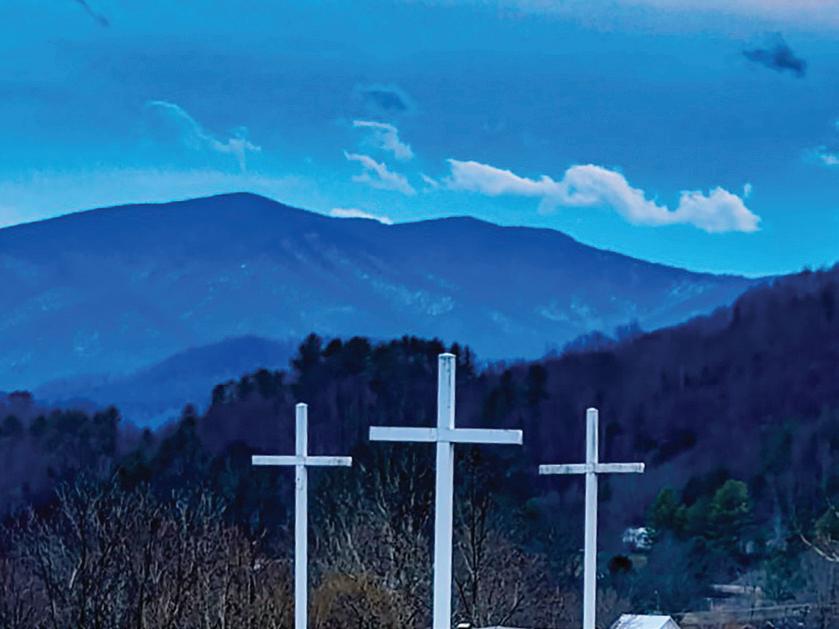
Lent comes from the Old English word “lencten,” which means “spring” or “springtime.” However, most Christians I know don’t seem to have that association with the Lenten season. Traditionally, I certainly haven’t either. For a lot of folks, Lent often carries somewhat negative connotations of sacrifice, lack, and removal. It can become a time of simplifying our days by choosing to live without those things we feel have distracted us from God. While Lent can certainly involve some measure of testing and grieving for our souls, I’m curious how our Lenten journeys, or even our unplanned journeys back to God, might be reimagined in light of the fullness of spring’s beauty. Personally, I don’t associate spring with sacrifice, lack, or removal. On the
Photo by Lilly Forbes
contrary, spring conjures up feelings of excitement, joy, and expectation as well as images of blossoming flowers, budding trees, buzzing bees, and soaring birds. This doesn’t mean our seasons of spiritual return and restoration – whether Lenten or not – have to be exclusively marked with total joy, without any trace of hardship. But it might give us insight into the fact that returning to God is a lot more like being healed from a chronic disease than it is a child being released from time-out.
After doing some research (because Lord knows I’m no scientist), spring is simply a biological process where plants, animals, and insects are responding to the very conditions and elements their natures crave. During winter, plants go dormant to preserve the nutrients and energy to remain alive in harsh, cold conditions. But spring brings increased temperatures, prolonged daytime, and increased sunlight. As a natural response to these favorable conditions, plants release themselves from the imposed self-preservation of survival and they are freed to begin directing their nutrients and energy toward growth once again.
Perhaps our season of returning to God – what we might call repentance – can follow the lead of springtime blossoms, simply allowing our souls to receive the Light, the Love, and the Grace (or we could say the Way, the Truth, and the Life) for Whom we were made. From the words of my Lenten devotional, “We ought to approach Lent as an opportunity, not a requirement. After all, it is meant to be the church’s springtime, a time when, out of the darkness of sin’s winter, a repentant, empowered people emerges … Lent is the season in which we ought to be surprised by joy. Our self-sacrifices serve no purpose unless, by laying aside this or that desire, we are able to focus on our heart’s deepest longing: unity with Christ. In him – in his suffering and death, his resurrection and triumph –we find our truest joy.”
What if God’s calling for our return is simply an invitation to bury our guilt and shame in a dormant winter and redirect our attention, prayer, and energy toward those things that bring us life, namely faith, hope, and love? What if repentance is less about the amputation of our failings and more about the integration of our heart with God’s? What if we gave up trying to be perfect and instead focused our prayer, attention, and energy on God’s cruciform love?
Such questions beckon us to repentance. But our repentance, our springtime journey back to God, need not be one of self-flagellation and hollow attempts to convince others of our moral superiority. It just needs an honest confession and a sincere desire: a confession of our drift toward sin’s cold winter slumber and a desire to be awakened to the warmth and light of God’s love. Made to be filled with God’s glory, our hearts await our step back into the "Son-light" – for there we are most fully awake and fully alive.
Please send all general inquiries, church information, upcoming church events, and special prayer requests to Hunter at hillbillytheology@gmail.com.
Check out Hunter's Hillbilly Theology site: hillbillytheology.com/ (Linktree: https://linktr.ee/hillbillytheology )
Church News
Easter Sunrise Service at Free Holiness Church
Easter Sunday, 6:00 a.m.
504 Durward Julian Drive
Roan Mountain
All are invited to attend!
Prayer Requests
Please pray for:
• Peace for the Clark family.
• Richard Shell in this difficult time
• Jay and his sons
Send your prayer requests to Hunter!
A March Pig
A Short Story by Diana Tolley
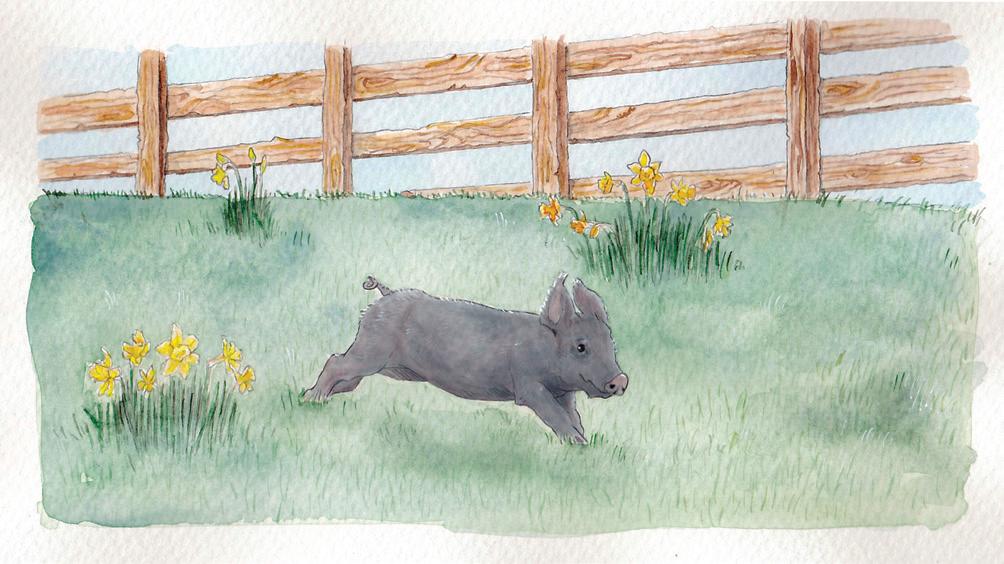
Lindy Lou Wilson woke up bright and early, stretching her arms way above her head and yawning like her old cat, Tiny. The sun was barely peeping through the curtains of her bedroom window but today was gonna be a big day! Lindy sat straight up, clasped her hands tightly against her chest and scrunched up her face in excitement. Today, Granny Tolley was taking her to buy the March pig!
It’d been a tradition in her family as long as the young girl could remember. Every year, Mama and Daddy (with help from Granny) saved up what money they could and, just when spring began pushing out Ol’ Man Winter, they’d buy a pig. Since Granny knew the best ones to choose, it fell to her and Lindy to go and fetch it home. It was always exciting to see the new shoates that had come along that winter, even if the old sows didn’t like her playin’ with them much. Old man Buck, across the ridge, was a right fair man and was always willing to let her granny choose stoutest one.
Yeah, Lindy knew that porky would grow and get big and fat over the next several months and when cold weather hit again next fall, he’d become meat for the winter. That always made her a little sad, but Granny had explained it to her a long time ago; life was a circle and they were all a part of it. It made a lot of sense to the young girl, so she learned not to get too attached to the critters that came her way and she was looking forward to helping Granny pick out just the right pig. It was sort of an adventure, and Lindy Lou was all about adventure.
She jumped up, dressed good and warm, as the air still had a bite to it, and hurried downstairs to the kitchen. Mama had breakfast warming on the back of the wood cook stove, and Granny was sittin’ at the table, sipping her coffee out of a saucer. Lindy grabbed a plate and filled it full of gravy and biscuits before sitting down next to the old woman.
“You’d best eat good now, child. It might be a spell before we eat again,” Granny told her with a smile and a twinkle in her eye. Mama set a tied handkerchief beside her daughter and ruffled her hair. “I’ve done planned on that, Maw,” she said. “I know how hungry a body can get when you’re out buyin’ livestock. It’s a hungry chore and our girl sure likes to eat.”
Lindy eyed the bundle and knew what it held, just by the smell. Biscuits with fried streaked meat; best stuff in the world!
Before long, they set off. The girl carried their lunch, a tin cup and a jar of preserves her mother had sent for Mr. Buck and his missus. Granny Tolley led the way, holding her walking stick in one hand and with the other pulled a small wagon carrying a wooden crate.
The sun was good and warm on their faces, the air fresh and clean. There was nothing quite like springtime in the mountains. Walking along, the young girl looked up at her grandmother.
“Ya know, something, Granny?” Lindy asked. The old woman smiled and waited for her to continue. “I believe this is my favorite time of year. And spending time with you is the best. I’m not ever gonna forget us going to buy a March Pig.”
“Well, Lindy, you and me got us a special relationship. We’re best friends cause we like the same things and can appreciate nature at its worst and best. So I’m right there with you on that, my girl.”
It wasn’t long before they crossed the log bridge onto Mr. Buck’s land and made their way to the house. He stepped out on the porch, wiping his head with a red handkerchief. “Howdy, neighbors!” He called. “I been wonderin’ when ya’ll would show up. Lindy Lou, I swear you’ve growed nine inches since I seen you last. The spittin’ image of yer mama.” The girl laughed at his silliness. She’d only grown an inch and a half over the last year, but she didn’t bother to tell him no different.
“Ms. Tolley, you look like a spring daisy. Winter musta been good to you folks. Yes, sir. Good to ya both.”
Granny stepped over to him and shook his hand. “We’ve come to buy us a March Pig, Elmer. This girl here’s been chompin’ at the bit to come see your new shoates.”
They started down to the barn and the adults talked about things most grownups did: the weather, how so-and-so was, and about the new traveling preacher at the Presbyterian church. Lindy left them to it and took off running. She could hear the grunts and squeals of all the new piglets. Climbing the clapboard fence, she laughed as the young ones chased each other. Their little floppy ears waving as they passed by looked like pink and white butterflies flapping their wings.
Granny and Mr. Buck got to the fence and he began telling them about each of the sows.
“Now that big ole spotted sow over yonder, she’s a might independent and her young’uns all take after her. Might grow up to be runners. That big ole mama over there, she’s missin’ part of one ear cause she had a disagreement with the spotted one. That’s why they’re separated, but her piglets all seem healthy and rambunctious. Might wanna consider that in your pickin’, Lindy,” he said with a grin.
“What about that big, black sow over there? She’s a might bigger than the others I see. How’s her offspring?” Granny asked.
“Well,” Mr. Buck said with one eye squenched up. “That black one thinks she’s queen bee. She’s got black shoats with only one being black and white. She’s a chaser. She’ll run you up and down to get ya away from her young. You’d have to be a might sly and pretty quick to get one away from her. They’re a little older than the rest. She farrowed around the middle of January and thinks cause she was first that it gives her tall standing in the pens.” Lindy laughed when he winked at her.
“Guess she might be right, seein’ as how the others do what she tells them,” Granny said with a grin. They could always count on Farmer Buck to know his business where the hogs were concerned, and to throw in a little fun with it.
As they talked, Lindy made her way over to the black sow’s pen. The hog watched her with beady eyes and scooted her nine piglets to the opposite side. She grunted as the girl climbed up the fence boards. “Ol’ mama hog, you shore got you some beauties there. I love the little black and white feller. Is he your favorite?” she asked.
Apparently the sow understood because she herded the little black and white behind the others.
“Well, girly, whatcha thinkin’? You seen one that strikes your fancy yet?” Granny asked as she walked over. Lindy narrowed her eyes and wrinkled her forehead as she considered.
“I believe we oughta let her keep the little black and white. She’s awfully fond of him. Maybe … what do you think about that big male?” Lindy asked, pointing.
It was Granny’s turn to contemplate the situation. She measured with her hands as if they held an imaginary ruler, then walked around to the other side, looking the livestock over, before coming back to the farmer and her granddaughter.
“I believe that’s a right good choice. He’s got stout legs and big, wide haunches. He’ll grow real big, I’d say.”
Turning to Mr. Buck, the older woman began the ritual of talking price. The two of them had done the same thing, year after year. It was really just for fun but the two old friends seemed to enjoy it.
‘Coming to a meeting of the minds,’ Granny called it.
While they haggled, Lindy walked over to where the big piglet lay in the dirt, watching his siblings frolic around. She knelt, slid a hand through the fence and gently rubbed his back, keepin’ an eye on his mama. His hide felt warm and almost silky and Lindy enjoyed running her hand over it. Apparently so did he. With a mild grunt, the pig’s eyes closed and he rolled onto his side.
“Why you’re just a big, old lazy baby. That’s what you are. Act all snooty then you melt under a good rub.” The pig sighed and rolled over on his back to offer his belly.
“Alright Lindy, we’ve come to an agreement. Let’s let Mr. Buck load him up for us and we’ll go pay our respects to his Missus.”
Before long, Granny and Lindy started for home. When they’d gone half way, they picked a spot to sit and eat the good lunch Mama had packed, sharing their thoughts on the pig, along with the water cup. Lindy kept glancing back at the wagon and grinning. She could almost believe the piglet was grinning back at her.
“Granny, I think we made a fine purchase today. I bet mama and daddy will be real happy.”
“Yes’em, I do believe we did. It’s a beautiful day, we got us just the right porker, and we still got time to enjoy our walk home. It’s been a good day, Young’un.”
As they got up and started on toward home, Lindy Lou grabbed her Granny’s hand. “Yes ma’am,” she said. “Best day ever. Plus, we got us the best March Pig that ever was.”
Swingin’ their hands and enjoying the sunshine, the two walked through the new grass shooting up here and there, while the black piglet laid in the crate, enjoying the ride home.

Fun & Games
(For kids of ALL ages!)



Animal Hospital
Aquamarine
Banana Pudding
Basketball
Blood Moon
Daffodils
Daylight Saving Time
Dr. Seuss
Equinox
Essay Contest
Firefighters
Ides of March
Johnny Appleseed




Help the Leprechaun find his pot of gold!
See how many words can you make from the letters in:
St. Patrick's Day

March is a strange month here in Roan Mountain. Winter still hangs on in pockets of shadow, frost clinging to the hollows, while the first hints of spring push through. It’s a month of quiet tension, of in-between, a reminder that growth rarely happens all at once. And if you pay attention, it whispers the same lesson it teaches in the garden: sometimes, you’ve got to prune to grow.
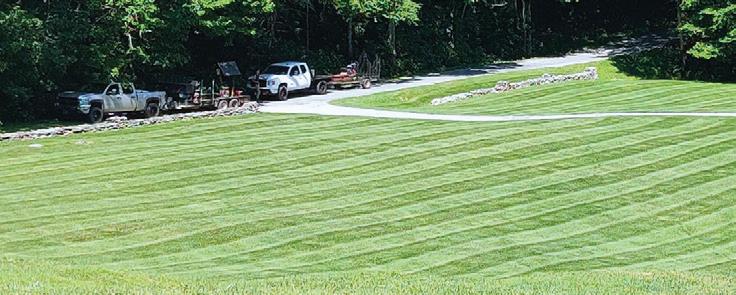
Pruning isn’t glamorous. It’s not planting the first bright pansies or watching a row of tomatoes start to stretch toward the sun. It’s hard work. It’s bending over, snipping, hauling away the dead branches and tangled weeds. It’s dirty, sometimes frustrating, and often feels like you’re taking more than you’re giving.
But here’s the truth: without pruning, nothing thrives. The old, the broken, the unnecessary—all of it—holds back the new.
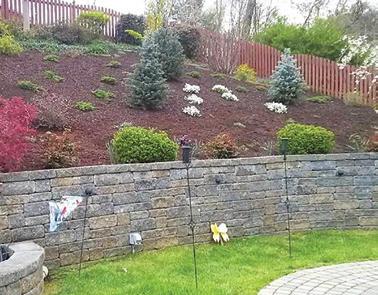
In the garden, this is simple to see. Shrubs that haven’t been trimmed grow wild and tangled, wasting energy on parts that will never bloom. Trees choke themselves with crowded branches, and perennials hide under layers of last year’s leaves. Remove the dead wood, open the spaces, and suddenly the sunlight reaches where it was blocked, the air moves freely, and the roots gather strength for the season ahead.
Life isn’t much different. The things we hold onto— the grudges, the routines, the habits that have outlived their usefulness—become tangled branches in our own growth. They take up space, block the sunlight, keep new energy from moving through us. Letting go can be hard. It can be messy. It can feel like you’re cutting away a part of yourself. But when you do, when you prune with intention, you create room for new opportunities, new connections, and even a little peace of mind.
This March, take a moment to wander through your own landscape. In the garden, yes—snip back the dead shrubs, clear the debris, rake up the old leaves. Let the

LESSONS IN LIFE & LANDSCAPING
Prune to Grow And Letting Go
By Ericka Hughes
sun touch the soil. Let the air breathe.
And in life, consider what you might release. Is it that grudge you’ve been carrying all winter? A habit that no longer serves you? A fear that keeps you rooted in one place? Let go. Make space. Trust that the spring that follows will bring its own rewards.
Pruning is more than maintenance—it’s a lesson. It’s a reminder that growth requires effort, that beauty and strength don’t happen without a little discomfort. It’s the quiet work that sets the stage for a bold, healthy bloom. And here in Roan Mountain, we see it every March, in every branch cut back, every bed cleared, every green shoot daring to rise.
So get your shears. Get your gloves. Work with the land, and in doing so, work with yourself. Remove the dead weight, clear the clutter, open the space. The blooms will come. And when they do, they’ll be brighter, stronger, and a reminder that letting go isn’t losing—it’s growing.
Lessons from the Lawn
Dead branches slow new growth.
Overcrowded limbs block sunlight.
Pruning stimulates stronger shoots.
Early trimming prevents disease.
Cutting at the right angle matters.
Removing weak branches reduces storm damage.
Spring buds appear after dormant pruning.
Clean cuts heal faster than jagged ones.
Tools need to be sharp for efficiency.
Timing affects flowering and fruiting.
THE LAST WORD
These Roots Run Deep: Gardening in Appalachia
By Noah Blair
In the “smoky” mountains and lush valleys of Appalachia, gardening is more than just a pastime—it’s a legacy, a testament to resilience, ingenuity, and the enduring bond between people and the land. From the first Native Americans who called these hills home, to the Scots-Irish settlers to modern-day “mountain folk”, the history of growing gardens in Appalachia is a story as rich as the region’s famed black loam.
Long before the word “Appalachia” appeared on any map, or tractors rumbled in the fields, Native Americans cultivated the land. The Cherokee, Shawnee, and other native nations were masters, growing the “three sisters” (corn, beans, and squash). This is also one of the many reasons why a freshly plowed garden spot produces arrowheads. Their gardens thrived in clearings, fed by careful management of controlled burns, crop rotation, and deep respect for the surrounding landscape.
With the arrival of European settlers in the 18th century, Appalachian gardening took on new flavors, literally and figuratively. Scottish, Irish, German, and English immigrants arrived with pockets full of seeds and heads packed with old-world wisdom. They learned quickly that the mountains demanded creativity: terraces cut into hillsides, clever use of animal manure, and the planting of what would thrive—hearty root vegetables, beans, and cabbage. Garden plots were often fenced with split rails to keep out foraging deer (still a battle fought today, if you
know you know) or wandering livestock.
Up until recently, the garden was not just a source of fresh produce, it was often the difference between hunger and contentment. Isolated by geography and, at times, poverty, families depended on their gardens to fill root cellars and mason jars. Beans were “leather britches” when dried on string, corn became grits, and apples were stored in barrels or dried for pies in the depths of winter. Old-Timer wisdom, like planting by the signs of the moon, guided generations, and neighbors swapped seeds and stories over sagging fences.
The spirit of Appalachian gardening proved especially vital during the World Wars, when “Victory Gardens” flourished. Even children got their hands dirty, growing potatoes and tomatoes to support their families and the war effort. After the wars, as industry and supermarkets grew, some garden plots shrank. Yet the tide turned again in recent decades: a renewed interest in sustainability, heritage foods, and organic gardening has sparked a modern garden revival not only here in the mountains but across the nation. Heirloom seeds are passed down through the generations and are once again prized, and community gardens (just like the one we have here) bring neighbors together just as they did a hundred years ago.
Appalachian gardens are fertile ground not just for vegetables, but for folklore and family traditions. Superstitions abound—plant beans on Good Friday, never transplant on a waning moon, or bury a fish under each hill of corn. Festivals like the Apple Festival in nearby Erwin or our own Rhododendron festival showcase pride in homegrown bounty and the spirit of the mountains. For many, the garden is where children learn to dig, weed, and wait for the first ripe blackberry—a place where stories and values are passed down like seeds.
Today, whether on a terraced hillside, in a backyard, or tucked beside a city home, gardens continue to nourish bodies and souls. They are living museums of a people’s creativity and grit. As long as the hills stand and the soil is turned, the story of gardening in Appalachia will keep growing, season after season.
Remember, Jesus Loves You!