
By Cloudland High School Yearbook Staff School News
owards the end of each school year, Cloudland Future Teachers of America treat their hardworking teachers to a week of appreciation. May 6-10, 2026 is National Teacher’s Appreciation Week. The CHS FTA club works throughout the year selling Lander Grams to raise money to fund the weeklong celebration of CHS teachers.
Each day of the week, teachers will be gifted small tokens of appreciation purchased through the fundraising efforts of FTA and through item donations collected by our counselor, Shellie McKinney. In previous years, donations have been collected from various businesses in our community. FTA also supports a Teacher Tater Tuesday, providing a potato bar for the faculty and staff of the high school.
The club has been blessed in the past by local churches which have stepped up to donate either breakfasts, lunches, or snacks for the entire faculty and staff.
FTA appreciates the support of the community, year after year, to fund this special week. Teachers are often unsung heroes of communities, going above and beyond their jobs for the children of Roan Mountain. It is an honor and a privilege to honor our teachers at CHS every year. If anyone would be interested in helping Mrs. Buchanan with the 2026 Teacher Appreciation Week, please contact her at 423-772-5300 or at mistybuchanan@ carterk12.net.


Jump-start weight loss
Reduce appetite short-term
Clinician-guided plan
Oral mediation Short-term use Regular support
Reduce cravings & portions
Focus on sustainability
Injectable medications
Ongoing medical supervision
Coaching included







The annual Roan Mountain Rhododendron Festival is set to return this summer, bringing with it a vibrant celebration of local culture, craftsmanship, and natural beauty. Scheduled for June 20 and 21, the beloved event will run from 10 a.m. to 5 p.m. each day, offering residents and visitors alike a full weekend of entertainment in the scenic mountain setting of Roan Mountain State Park.
Admission to the festival is free, making it an accessible outing for families and travelers looking to experience one of the region’s most cherished traditions. While there is no cost to attend, organizers note that donations for parking are welcomed and will directly benefit the Roan Mountain Youth Club and the Highlander Band and ensure the continuation of community-driven events like this one.
Festivalgoers can expect a lively atmosphere throughout the weekend, with live music and entertainment scheduled on both days. From traditional Appalachian sounds to contemporary performances, the festival’s lineup is designed to appeal to a wide range of musical tastes. Performers will take the stage throughout the day, enhancing the overall experience.
One of the festival’s defining features is its commitment to showcasing local talent and craftsmanship. Organizers emphasize that there are no commercial sales permitted at the event. Instead, every vendor offers handmade goods, ensuring that each item reflects the creativity and skill of regional artisans. This focus on authenticity has long been a hallmark of the festival and continues to draw visitors seeking unique, one-of-a-kind products, ensuring that there is something for everyone. In addition to shopping and entertainment, the festival will feature multiple food vendors offering a delicious variety of options for attendees throughout the day.
The festival also coincides with the peak blooming season of the area’s famous rhododendrons. Visitors often take the opportunity to explore nearby trails and scenic overlooks, making the event not just a cultural gathering but also a chance to explore the region’s natural beauty.
With free admission, a full schedule of entertainment, and a strong emphasis on local craftsmanship, the Roan Mountain Rhododendron Festival continues to stand out as a highlight of the summer season. Residents and visitors can expect a memorable weekend in Roan Mountain.
By Megan Barnett
Roan Mountain Citizen's Club
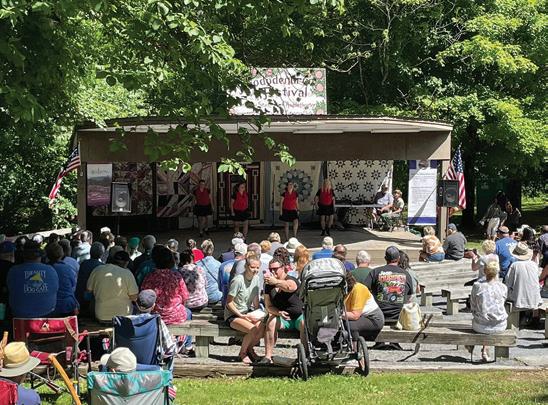
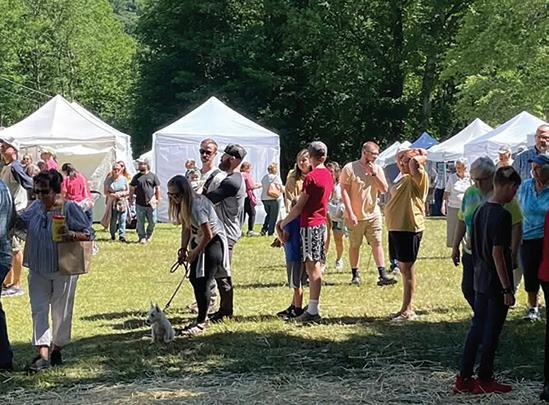
June 20 & 21 10 a.m. to 5 p.m. both days at Roan Mountain State Park

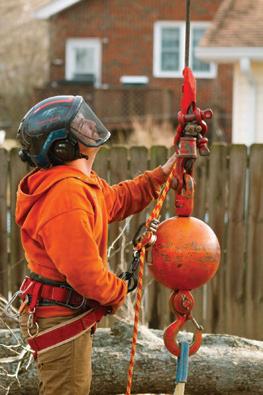



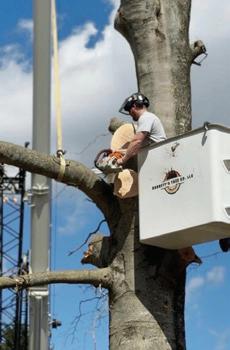




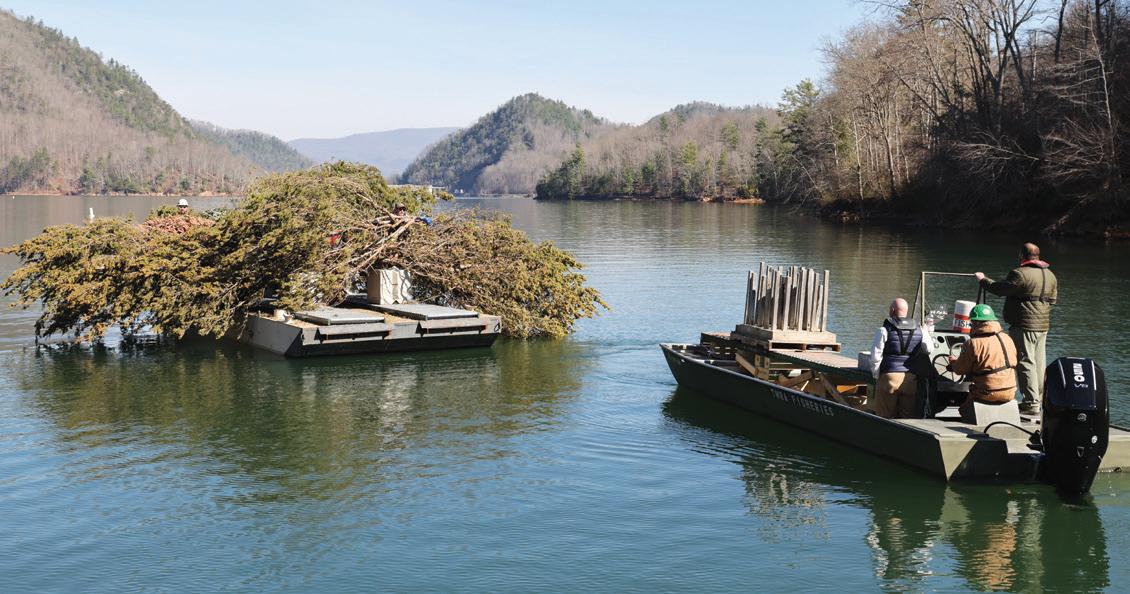
The Tennessee Wildlife Resources Agency (TWRA) is partnering with the Tennessee Valley Authority (TVA) to replace vital fish habitat in Watauga Reservoir following widespread damage caused by Hurricane Helene. TVA contributed $100,000 to support the project, as both agencies work together to restore habitat essential to the health of the reservoir’s fisheries.
“TVA’s support allows us to accelerate this work and ensure that Watauga Reservoir is restored and continues to provide healthy, sustainable fisheries for anglers and future generations,” TWRA Executive Director Jason Maxedon said. “Strong partnerships like this make a meaningful difference for both the resource and the communities we serve.”
TWRA’s Fisheries Division has been constructing new structures to replace those lost during the storm. At least 75 large habitat structures will be installed at approved sites within the reservoir. This initiative will provide long-term, high-quality habitat for a variety of fish species, contributing to the ecological health and sustainability of Watauga Reservoir.
Each new habitat structure will feature one to six trees anchored to a weighted base, such as concrete reef balls or other anchors. The habitat structures will be placed so that the natural brush is elevated off the reservoir bottom, a method shown to be one of the most effective and long-lasting for supporting fish populations. Sunken trees and other structures provide important environments to fish for foraging, shelter and spawning. The weighted anchors also ensure that all components remain submerged and do not pose a hazard to navigation.
“TVA is proud to partner with TWRA to bring our resources together to continue to support this region’s recovery from Hurricane Helene,” TVA Vice President of Environment & Stewardship Michael McCall said. “Watauga Reservoir is one of the Upper East Tennessee region’s most important resources. It’s a recreational treasure to the local communities, home to a variety of fish species and a nationally recognized destination for anglers. Restoring this habitat is another important step to improving long-term aquatic health in the reservoir and the outdoor recreation opportunities it supports.”
By Amy Campbell Clark
I’d like to preface this with a disclaimer: Although I always consult the almanac and calendar for planting, I’m far from an expert. I would encourage all to talk with the elder gardeners in our community and to pick up your own copies of the calendar and/or almanac and read them.
Growing up, large gardens provided much of the food our household consumed throughout the year, along with the chickens, sides of pork (we raised) and beef (Grandpa raised). That little yellow book, The Old Farmer’s Almanac, was consulted for planting times, harvesting, butchering, and preserving, and even things as simple as putting up fences or cutting hair. I’ve always been fascinated by it, even when I didn’t fully understand what it meant, and as an adult, have ordered a copy every year for guidance.
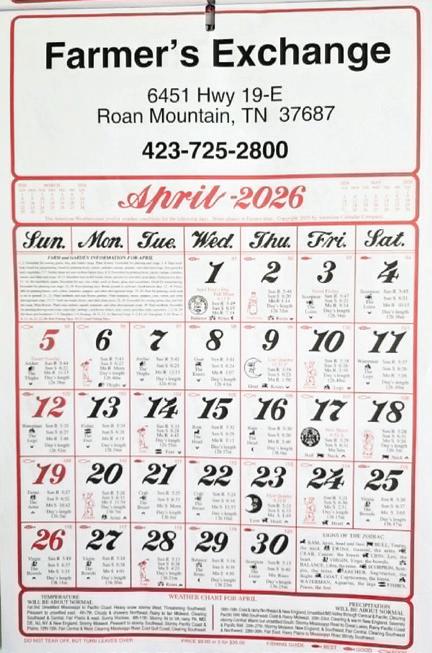
Here, most gardeners who plant by the signs use the red and white calendar you can pick up, free, at the local feed stores, such as Farmer’s Exchange (on 19-E, just before Tiger Creek), or one the Farm Bureau puts
So what does it mean, to plant by the signs? Put simply, it’s the position the moon is in, in the night sky, in relation to the zodiac constellations. We all learned early in life that the moon influences the tides, and it’s believed that the moon and stars impact many other aspects of our lives and the workings of our planet as well. It’s been proven that hair, cut when the moon is “growing” (before the full moon) will grow faster, while hair cut after the full moon will grow more slowly.
As the almanac calendar states, “They [ancient astrologers] have found that certain things occur so often when the Moon is in a certain sign that they feel safe in declaring it to be a rule that this thing will happen again with the Moon returns to that sign in the heavens.”
Which is why planting by the signs seems to yield such success – conditions are the same, year after year, when the moon is in the same position.
The signs of the Zodiac each impact different parts of the body, have masculine and feminine traits, each are considered either wet or dry, and barren or productive, all of which aid in deciding the best days for various activities.
I went and sat with Larry and Paulette Street, who plant by the signs, to get a better understanding of how to best use the calendar for the most successful planting. As Pauline explained it (and the calendars all confirm), the best planting times are in the feminine signs, unless they fall on a new or full moon, which are seldom productive.
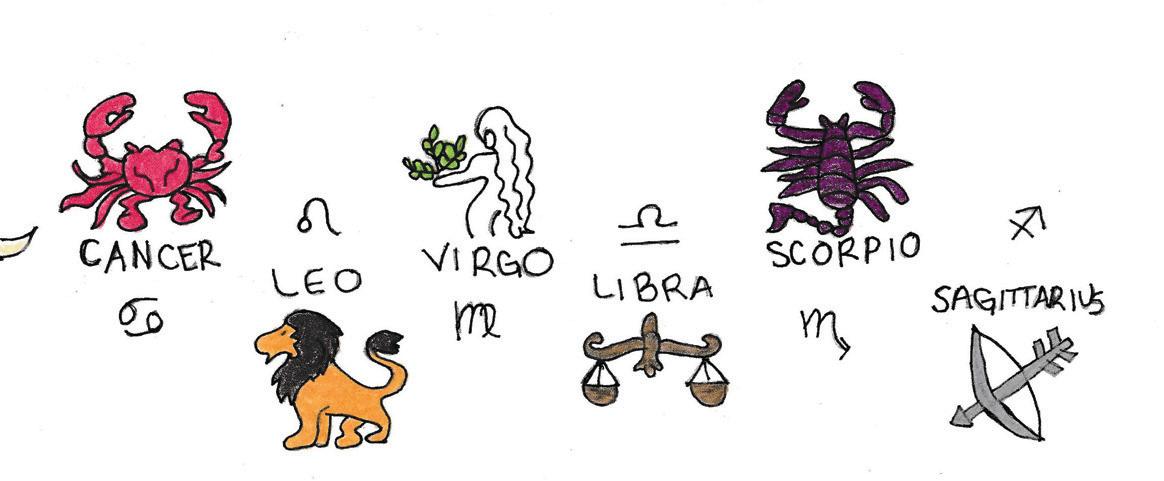
The best general planting signs are Taurus (the neck), Cancer (the breast), Virgo (the bowels), Scorpio (the loins), Capricorn (the knees), and Pisces (the feet). But it also varies with what you plant, as there are different signs for above-ground fruits and vegetables such as squash and corn, and other signs are better for root crops like beets and potatoes. The calendars and almanac provide the best days for specific crops and


Explanations of the signs are on the front cover of the calendar. Each lists the part of the body associated with the sign, whether masculine or feminine, barren or fruitful.


types of crops.
What happens if you plant during the wrong times? It depends on the crop and when you plant it. For example, corn planted in the wrong sign is likely to be blown down in high winds, or will grow too tall and produce fewer or smaller ears. When a plant grows too large, it invests more energy into growing than in producing fruit, resulting in lower or poorer quality yields. Things planted during barren signs may not grow, could rot in the ground, or may develop diseases that thwart production.
But as the old-timers will tell you, those dark moon or barren days don’t go to waste. Those are good days for pulling weeds, working the soil for later season plantings, removing pests, and sometimes (but not always) harvesting.
Harvesting also depends on the plants and purpose. If you plan to preserve or store the produce, such as corn or potatoes, it’s best done during a dry, masculine sign – if done during the wetter, feminine signs, the produce is more likely to rot. Yet canning and pickling are best done during the feminine, fruitful signs. Paulette adds that when pickling and canning, it’s better to use spring or well water, rather than city water, which has added chemicals that alter the flavor and preservation times. And when making sauerkraut, never start a batch when the signs are in the bowels or feet or the fermentation will suffer.
Planting by the signs isn’t just for fruit and vegetables, but herbs and flowers too.
Each month of the calendar gives specific information for what crops to plant on what days, when not to plant, and other helpful information such as when to incubate eggs, hunt, fish, butcher, wean, and other activities practiced for selfsufficiency.
I’ve heard from several people that sometimes the calendars can be a bit off. The Farmer’s Exchange calendar and the Almanac do differ slightly with one changing to a new sign a day before or after the other, but this could be down to where the calendar is produced. The Old Farmer’s Almanac is produced far to the north of us in New Hampshire, while the Farmer’s Exchange calendar is produced in Greenville, Tennessee. But both contain unique and helpful information.
I suppose the real question for some is to the validity of planting by the signs. You’re certainly not the first to question it! But talk to any gardener who follows this practice and most will have plenty of stories about how they’ve tested it themselves over the years, either intentionally or by chance, and saw the results firsthand. Test it yourself. Pick up a calendar and/or almanac and give it a try.

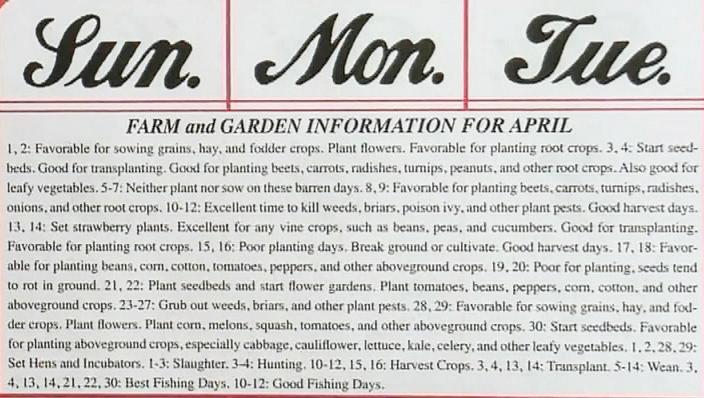
The calendar provides of wealth of useful information, to include what to plant or not plant by day (image at left), as well as daily signs, sunrise and set times (above), weather for each month, and more.
Generation after generation have used this information successfully for kitchen gardens, crops, animal care, and more. Give it a try!
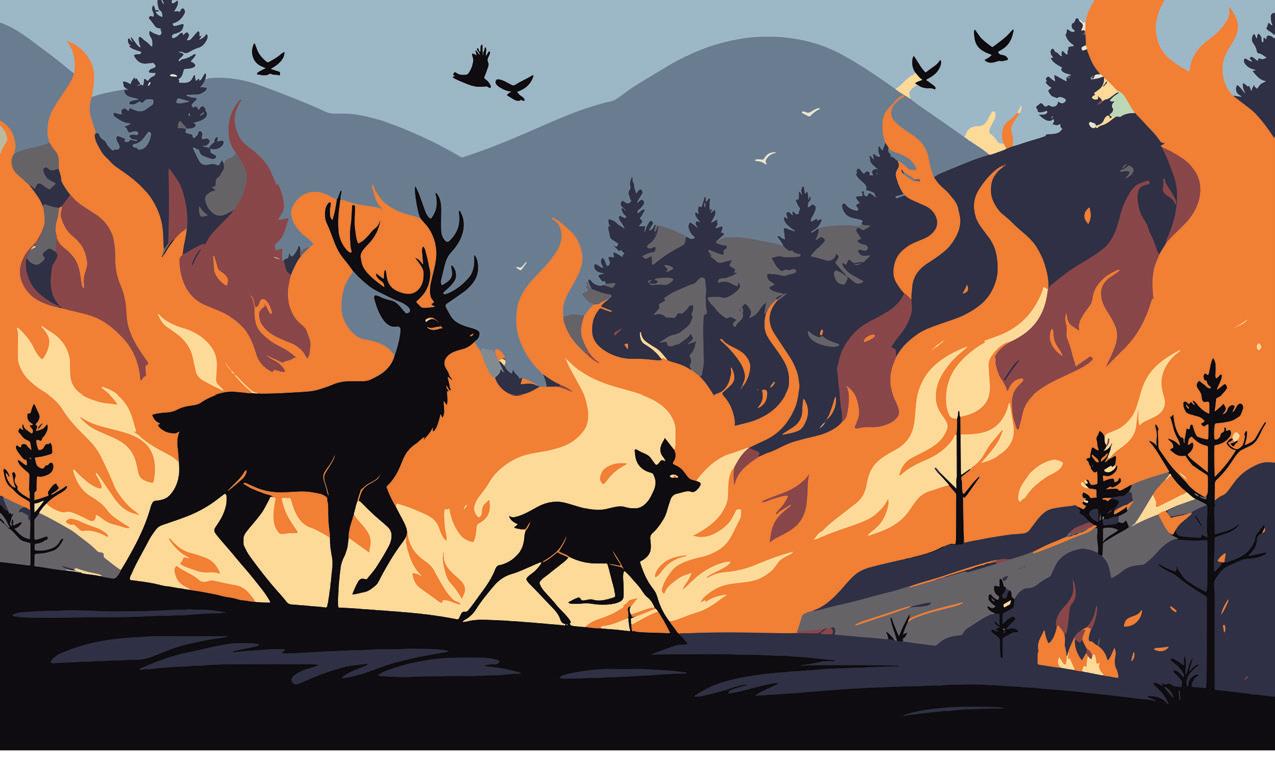
Before a burn permit is issued, four factors are considered:
■ Humidity: Low relative humidity dries out fuels like grass, leaves and timber, making fires more intense, while high humidity keeps things damp and less flammable.
■ Wind: Strong winds can rapidly spread fires by carrying embers and increasing oxygen supply, and making fires unpredictable and harder to control.
■ Precipitation: Droughts or extended dry periods (most common in spring and fall) can dry out soil and vegetation.
■ Seasonal Patters: Peak seasons are March-April and October-November.
ALL FOUR of these factors are weighed before burn bans or burn permits are issued. Be safe and prevent wildfires, call for a permit!

We were thrilled to add artist Kelly McCollum as a staff artist last month and wanted to share more about Kelly and her art here. Kelly does offer her work on commission. If you're interested in having a portrait done of a family member, pet, or anything else, reach out to her via her website: kmillustrates.com/
Although she was born in Baltimore, Maryland, Kelly’s family moved to Greensboro, North Carolina when she was a teenager, which she eventually considered home. In school, she enjoyed both art and political science classes.
“When it came time to apply for college, I opted for what most people would agree was the safer, more stable choice, and majored in political science with my sights set on law school.” But as she drew Christmas cards her first year at school, she realized how unhappy she was; she switched schools and majors to focus on art. Kelly graduated from the University of North Carolina at Greensboro with an art degree.
When asked what she prefers to create, Kelly said, “I’ve always been drawn (ha!) to portraiture because I have a realistic style and I’ve always had a knack for capturing a subject.”
Kelly’s husband was in the Coast Guard and the couple moved around a lot, to include Alaska, Wisconsin, Hawaii, and West Virginia.
“I’ve been fortunate to experience so much, and have been able to take part in art shows in different states.”
Because of the change of locations every few years though, she started an Etsy shop in 2007. Etsy was still a new platform but it allowed her to grow her audience, selling to people around the globe. As the internet evolved Kelly branched out to her own website. She adds, “I still keep my Etsy page active; it’s such a big marketplace!”
Near the end of her husband’s Coast Guard career, they started house hunting and kept coming back to places in East Tennessee. The couple had a long list of requirements, especially after waiting more than twenty years to settle down, and Northeast Tennessee was the best fit. “The land is beautiful, the people so friendly, and we weren’t too far from family,” Kelly said. “We’ve been in Kingsport since 2022.”
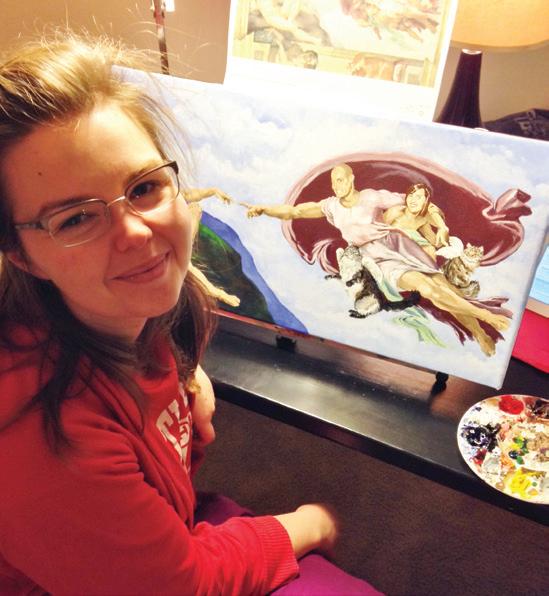
Artist Kelly McCollum with her family-focused recreation of The Creation of Adam.
Kelly’s own taste in art is eclectic. “In our home I have a mix of art and decorations. Photographs, prints from favorite local spots we’ve lived, pieces I’ve made that I can’t part with, unique pottery, art from friends, small abstract pieces I’ve bought online, stained glass, and a line drawing of a kangaroo from a thrift store that was done by a first grader named Bobby! I’m always on the lookout for pieces, but I only pick up what really strikes me, it doesn’t matter the subject, style, or medium. If I like it, I’ll get it. My work is kind of like that too, I use lots of different materials, from screen printing to acrylics on canvas. I make jewelry on occasion, and recently have been working with clay sculpting. All in all though, I favor watercolors, I appreciate how versatile they can be. Layer it to make something deep and strong, or keep it light, soft, and flowy.”
Most of Kelly’s professional art has been from commissions, contacting her through Etsy, her website, or friends of friends. To make those pieces, she asks for multiple photos of the subject and for a detailed personality description or any special quirks to pay
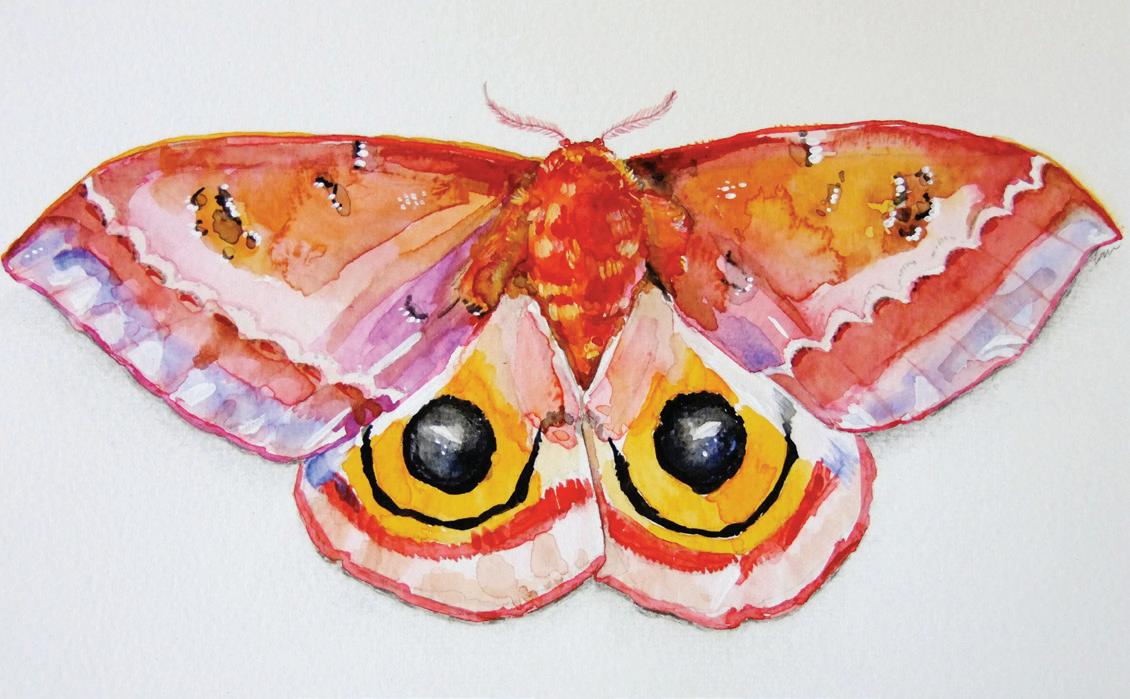
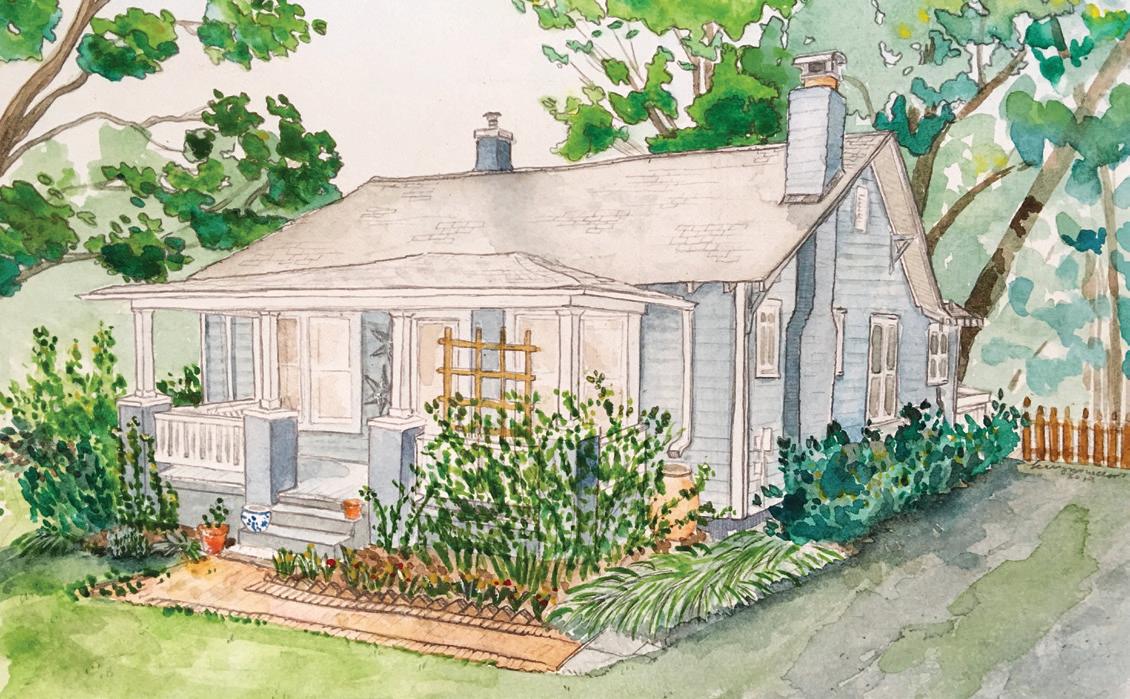
attention to. Sometimes the portrait is a gift, or a memorial of a passed pet. In cases when there might not be many pictures or clear photos to use, she checks in more often during the process to make sure she’s on track. “I always want my clients to love the final result. I don’t typically work quickly, so I haven’t done any in person sittings, but that does have an old-school appeal to it, I think I’d like to try that at some point.”
Some of her most interesting commissions include a charcoal drawing of a skier’s favorite mountain slope, a watercolor of a barred rock hen, and a construction themed nursery wall mural. But Kelly adds, “The one that still makes me laugh to this day is a painting where I was asked to substitute in the client’s brother, sisterin-law, and their cats into Michelangelo’s The Creation of Adam. It’s always fun when I get to collaborate with people with a sense of humor!”
Kelly is happy to take on new commissions from those wanting their favorite people, places, things or memories captured on canvas. “Every time I hear back from a client that their painting brought an emotional response or even tears, it gives me so much joy to know I can make that connection through my art.”
Contact Kelly via her website: kmillustrates.com/

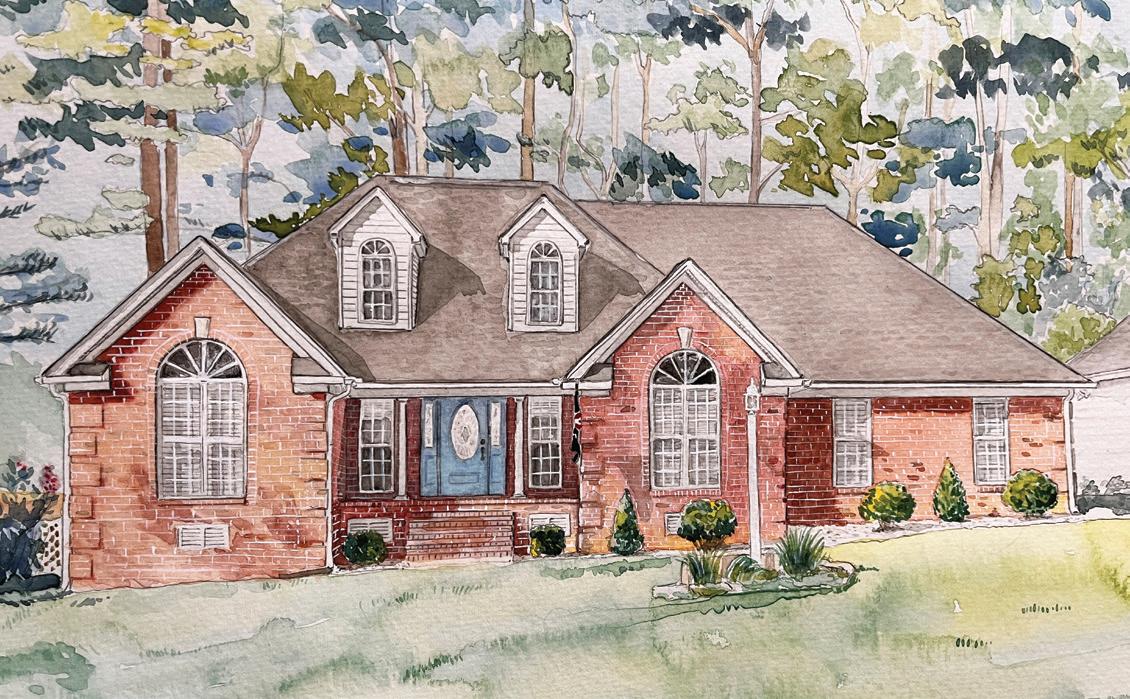

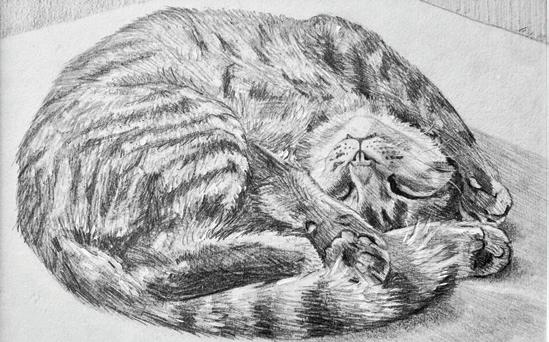

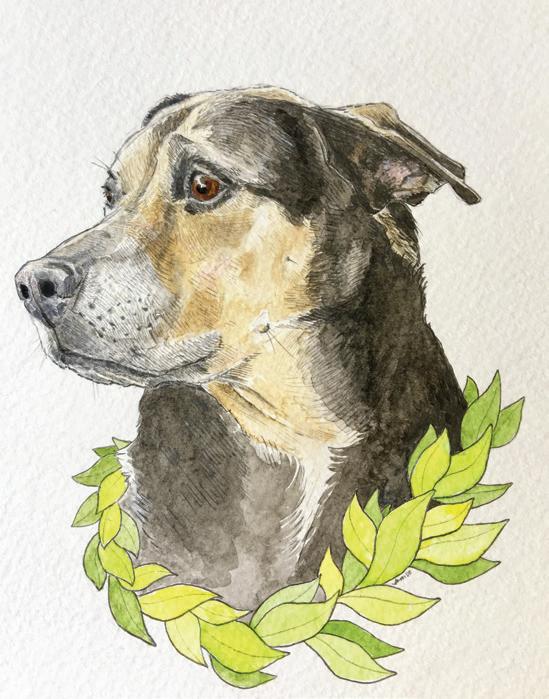
Above and below: Portraits of

By Ericka Hughes
Some musicians chase fame. Some chase the road. And some, after seeing the bigger stages and brighter lights, find themselves drawn back to the place where it all began.
For Tim Decker of The Roan Crows, music has never just been about performing. It’s been about roots, legacy, and a lifelong connection to the mountains he calls home.
“I started playing guitar when I was nine years old,” Decker said. “I grew up listening to Johnny Cash, Earl Scruggs and Lester Flatt. Then The Beatles and Santana. But when I heard Led Zeppelin when I was thirteen, that became my favorite.”
That early passion turned into a serious pursuit. By age fifteen he had formed his first band, beginning a journey that would take him far beyond Roan Mountain and into the heart of America's rock scene. From Roan Mountain to the Big Stage
In his early twenties, Decker formed the band Stone Crow, a group that would eventually find itself connected to legendary music promoter Bill Graham, known for his work with the Fillmore venues and historic concerts including Woodstock.
During that era, Stone Crow opened and headlined shows alongside well-known acts of the time, including Metallica during the period surrounding their iconic Black Album release in the early 1990s. The band also
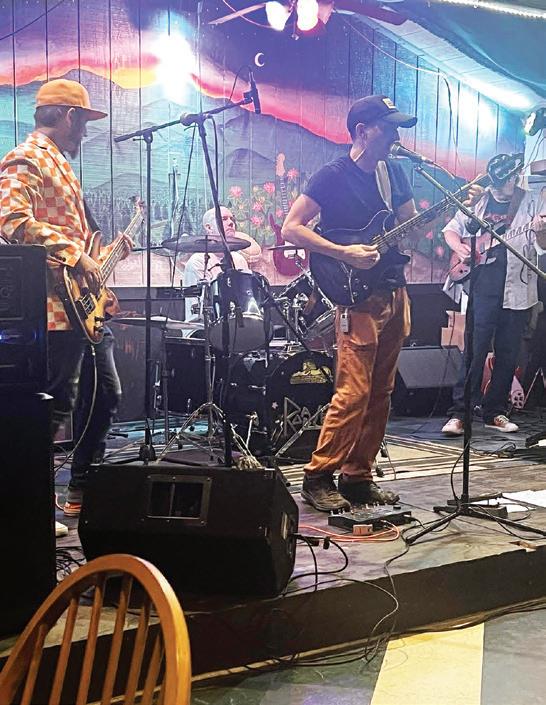
shared stages with Jefferson Starship, Twisted Sister, Foghat, Y&T, and other notable rock and metal acts during the height of the Bay Area thrash movement. But Decker speaks about that time with quiet perspective rather than pride.
“There’s way more people I’ve met and played music with,” he said. “But that was just part of the journey.”
After Graham’s tragic death in a helicopter crash and as musical trends shifted with the rise of grunge, Stone Crow eventually disbanded. Decker continued pursuing music, auditioning even for Ozzy Osbourne following the death of guitarist Randy Rhoads.
“I auditioned for Ozzy Osbourne,” Decker said. “He chose Zakk Wylde and couldn’t have made a better choice.”
He later played traditional blues and performed with a Top 40 group called The Decker Brothers before eventually reaching a turning point.
“It just got ridiculous trying to live in California,” he said. “I couldn’t take it anymore. So I came home.”
Coming home to Roan Mountain was more than a change of address. It was a return to family tradition.
Music runs deep in Decker’s blood. His grandfather, Abe Morgan, who lived in the small house behind the Roan Mountain post office, was a respected local musician who played multiple instruments and helped teach many people in the community.
“My whole family played music growing up here in the 1960s,” Decker said. “My grandfather Abe Morgan taught a lot of people to play. T.V. Barnett would tell me how my grandpa helped him learn. Our roots run deep in these mountains.”
His family connections stretch across the area, from Ripshin where his mother was born, to Roan Mountain where his father also played guitar.
Today, Decker says playing locally carries just as much meaning as any large venue ever did.
“I’m playing where my ancestors played,” he said. “It feels just as good as any big band I ever played with. Same feeling.”
About fifteen years ago, that lifelong musical journey took a new form when Decker joined forces with Jordan Johnson, Shane Hoss, and Anton to form what would become The Roan Crows.
“We first came together just playing music together and having fun,” Decker said.
The name itself carries a connection to his past and his personal interests.
“The name came from my former band Stone Crow and my affection for crows,” he explained.
Over time the group evolved into a tight group of multi-instrumentalists capable of shifting styles and instruments with ease. Today the band operates as a three-piece while continuing their search for a dedicated drummer.
Each member brings a wide range of ability: Tim Decker plays guitar, bass, mandolin, keys, drums and more. Anton plays saxophone, guitar, piano, banjo, drums, and nearly any stringed instrument.
Jordan Johnson, a graduate of ETSUs Bluegrass program, plays bass, guitar, mandolin, drums and additional instruments.
“I’ve watched Jordan grow as a musician over the years,” Decker said. “He’s great.”
A Sound That Crosses Genres
The Roan Crows refuse to be placed into a single musical category. Their sound moves comfortably between alternative rock, pop rock, metal, blues, jazz, country, and classic rock covers.
“It hasn’t been easy because this area is mostly bluegrass, country, and southern rock,” Decker said. “We play all that, but I love to rock. Anton and Jordan love a huge range of music.”
Their versatility allows them to connect with many different audiences while still staying true to their own musical instincts.
“We play a wide range of music and a lot of covers,” Decker said. “Some we put our own spin on and some we play just the way people remember them.”
But their focus isn't just on covers. The band has been writing original material and is currently recording new songs they hope to release soon.
Despite decades of experience and impressive musical history, Decker says what matters most now is much simpler than fame or recognition. “Playing for our friends and family is special,” he said.
That connection to community is something others have noticed as well. JD Westerman, a supporter of the local music scene, praised the band’s performances and character.
“The Roan Crows have played at The Appalachian Station at 19E on several occasions and always put on an excellent show,” Westerman said. “Each band member is skilled on their instruments, which guarantees a high energy performance. They are downto-earth individuals that are a pleasure to hang out with.”
According to Decker, the reward comes in seeing audiences forget their troubles, even if just for a little while. “We hope people had a great time and forgot their worries for a moment,” he said. “We definitely see that after our shows.”
Like many working musicians, The Roan Crows perform more for passion than profit. Decker is quick to remind people just how much time musicians invest into their craft.
“Please support your local bands and musicians,” he said. “We put in hours and years learning and practicing. We’re not making money doing this. We do it for the love of music.”
That message is one he hopes the community continues to take to heart.
“We appreciate everyone that comes out,” he said. “As Ozzy would say — we love you all.”
Right now the band is focused on recording original music and finding the right drummer to complete their lineup. They currently have a performance scheduled at Roan Mountain State Park on August 7th.
After more than five decades of playing music, Decker says his motivation remains simple. The love of music. The love of place. And the love of the people who come out to listen.
Sometimes the longest musical journeys don’t end in stadiums or spotlights. Sometimes they end right where they began — in the mountains, playing songs for neighbors, friends, and family.
And for The Roan Crows, that seems to be exactly where they belong.

By Reverend Hunter Greene
Photos by Faith Lynn
It’s always an interesting predicament to find ourselves in when our eyes – our means of seeing the world around us – are the very reason we are unable to see. That’s why, I think, the foundation of faith is not certainty but rather doubt and the ability to question our assumptions. Of course, too much doubt can lead us into the dark dungeon of despair and pessimism, but using doubt as a form of curiosity is one way we can discern the will of God for our lives and the world.
Contrary to popular preaching on Easter, resurrection is something that shouldn’t immediately strike us as “the answer” to all the world’s problems. A tortured corpse being raised from the dead, especially after three days, should be enough of an absurdity to make anyone scratch their heads and question the validity of such claims. It’s not just that science would refute the possibility of resurrection, but every human that’s ever lived can testify that a life can be summarized as a decades-long process that begins with birth and ends with death. That’s it – at least as far as we know for those of us with breath still in our lungs.
But Jesus always seems to have a way of turning our experiences and the assumptions developed from those experiences on their heads. Throughout the Gospels, we hear Jesus say time and time again, “You have heard it said … but I say…” Much of Jesus’ ministry was about helping his followers reimagine the scope of God’s Kingdom, redefine the aims of God’s Messiah, and redirect the lives of God’s people into God’s ways. With the rule of thumb that “hindsight is 20/20,” it is far too easy to take for granted the radical nature of Jesus’ teaching and living, but as his persecution, arrest, torture, and
13 Now on that same day two of them were going to a village called Emmaus, about seven miles from Jerusalem, 14 and talking with each other about all these things that had happened.
15 While they were talking and discussing, Jesus himself came near and went with them, 16 but their eyes were kept from recognizing him.
crucifixion attest, a life lived in defiance of the status quo is one that leads to much suffering.
It’s hard to imagine anything being more defiant than resurrection. I mean, the most final thing about our lives – our death – is brought into question by the resurrection of Jesus. The Gospels do not portray Jesus as resisting death through advanced medicine and CPR but rather through a metaphysical revolution where even the very nature of the world as we know it is bent by the power of God’s light.
Yet it is exactly the “stumbling block” of resurrection that God chooses to correct our vision. Had Jesus merely lived and died as a treasonous criminal, like
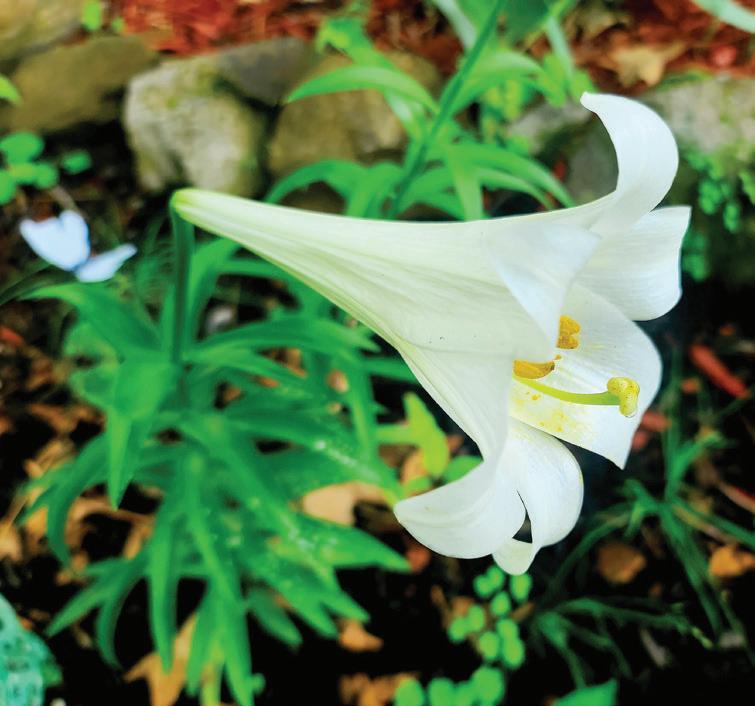
many before and after him had done, it’s more than likely that we would have never heard of him. But his conquering of death through death – meaning his resurrection – was an eternal reminder that God, not death, would have the last word.
While we routinely hear of Christ’s resurrection and have even commemorated it with the season of Easter, we risk becoming like the two traveling to Emmaus if we fail to allow the defiant Christ to open our eyes to the radical work of the Spirit. The two travelers could not recognize the resurrected Jesus because they had become consumed with what they thought they knew. Likewise, if we rely too heavily on our own theologies, traditions, and assumptions, we risk missing out on the resurrecting work of God in all those people, places, and spaces the world has already declared dead.
In this way, resurrection is not just a historical event that occurred within a particular time and place. Resurrection is also an eternal reality that helps correct our vision and align our sight with the work of the Spirit. It is a lens that helps us see all the ways that God is breaking into our reality with his Kingdom –overcoming sin, death and the grave, with the love, peace, and joy of New Creation.
Our struggle this Easter season is not with the Bunny or the eggs; it is with the sin of certainty. Nothing blinds us more than assuming we have all the answers, experience, or resources we need to follow Christ faithfully. But if we allow faith to fracture our pride and allow the light of God’s reality to shine in our hearts, we become blessed with the ability to see Christ as he truly is: Infant Creator, Defiant Lamb, Crucified God, and Resurrected Lord. For it is only when we can see him clearly – truly recognize him – that we are able to walk as he walked, love as he loved, die as he died, and defeat death as he did once and for all.
Please send all general inquiries, church information, upcoming church events, and special prayer requests to Hunter at hillbillytheology@gmail.com.
Check out Hunter's Hillbilly Theology site: hillbillytheology.com/ (Linktree: https://linktr.ee/hillbillytheology )
Please share your church news with Hunter. New pastor? Upcoming events? New programs? Share it with the community here!
Please pray for: • Jay and his sons
Send your prayer requests to Hunter!
A Short Story by Diana Tolley
Watching the weather was a past time that old folks apparently never grew tired of. Mostly, because winters were so long and the spring just seemed to take its time coming. But also, 'cause most of their everyday lives revolved around planting time, harvest; marking their years and the events inside of them, making sure that wisdom and experience would be passed along from generation to generation. Grandparents constantly told stories and explained how things were supposed to be done. That is, when opportunities presented themselves, which they often had, over the years. Spring was also Easter time. A holiday that provided a sense of anticipation of better things to come. There were some really good reasons for that particular celebration to be in the Spring. Renewal, rebirth, the transformation of one season to the next. It was a good time of reflection and thankfulness for new beginnings. And, as most mountain folk seemed to agree, a keen awareness of the meaning of Easter. Not everyone appreciated that particular time of year, but Buddy Fletcher’s family sure did. It was a fact that traditions and points of view changed over time, especially since back in his grandparents' days. But still, there was something to be said for “the old ways.” The good ways.
As Spring ambled in, finally showing its bright, smiling face, to any who cared to look, it was evident that 1949 had finally gotten some reprieve from its rough start in the east Tennessee mountains. Folks had weathered the unusually cold spells of January, February and March well enough, but the warmer weather of April came as a real blessing, one that everyone was thankful for. For most folks, even farm chores had become something to look forward to after being cooped up inside all winter.
That was Buddy’s take on things, anyway. Maybe it had a little something to do with the fact that he didn’t have to put up with his twin sisters feuding over every little thing, seein’ as how he could get outside now. Or maybe it was because after his chores were all done, he could
hit the woods to explore and see what all had changed since the last time he’d been there. Whatever the reason, April sunshine just felt good.
The most recent snow had melted fast and everything had finally started to “put out”, as Mama said. Trees were budding, shoots of grass waking up, green and eager, as the earth began to warm. Even the daffodils that came up year after year, looked like they had begun to yawn, showing a bit of yellow amidst all the brown and green. And the garden spots had readied themselves by soaking up the last of the water from Winter’s moisture. Buddy looked out the back
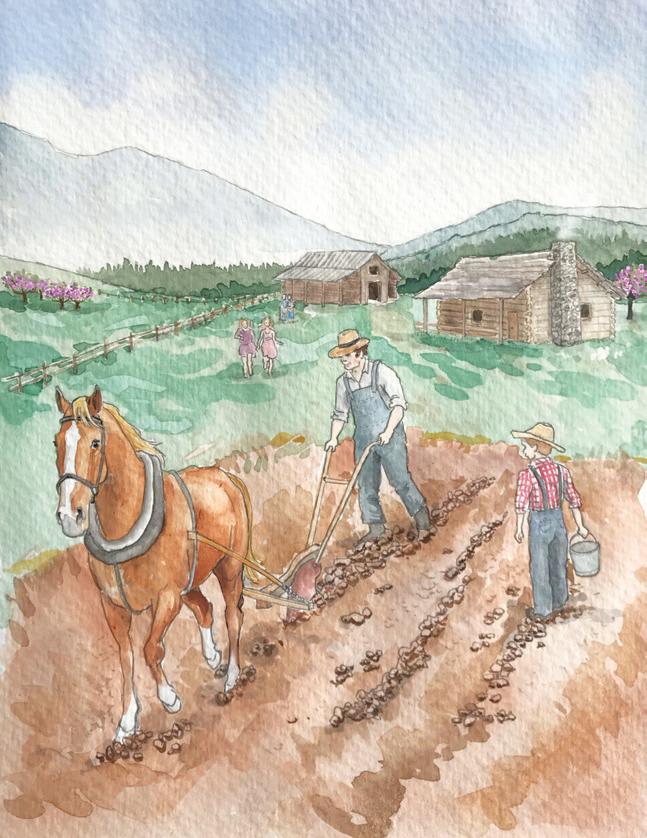

door as he donned his jacket and boots on the stoop. He knew his daddy was gettin’ the plow blade ready for plowing, the hoes ready for hoeing, and the rest of the family had assembled just inside the barn to divide the taters that they’d cut up the evening before. Two buckets, half way full for each of the girls and they’d soon be laying the pieces in the ground soon. ‘That’s an important job’, Buddy thought to himself, as he made his way over to the tool shed. ‘But it won’t do no good unless we got the rows laid out.’ He found his dad buffin’ out the plow blade with a piece of oil cloth. The older man had already taken his flint rock and gently run it along the edge of the metal, to help sharpen and refine it. “Boy,” his daddy said without taking his eyes off the job at hand. “You go fetch ole’ Joe and get him harnessed up. We gotta get to it. Sun’s a-gettin’ higher by the minute.”
“Yes, sir.” Buddy replied. He switched directions and climbed the wooden fence railing, whistling for the big farm horse. Joe had been with the family for more than a couple of years and was as amiable as you’d ever see. He stood about 15-hands high (a right tall feller), and had that easy, steady gait of a Tennessee Walker. The boy remembered his father had saved up about three years-worth of side money to buy the horse. And when he’d rode him home one evening that late Spring, both rider and steed had looked like a proud lot; and rightly so.
Joe came trotting over to where Buddy sat on the rail. “Hey, boy. You ready to get to work this morning?” He asked as he rubbed the horse between the eyes and along his forehead. “Let’s go get you hooked up.” The boy opened the wooden gate and waited for the horse to trot through, then led him over to where his father waited. They harnessed Joe with the halter and bit before walking him out and up to the garden. Daddy carried the plow behind them and, when they moved the big horse into place, he hitched the plow to the horse, throwing the worn leather over one shoulder, around his neck and under his right arm. Buddy watched for a second or two while the man and horse began to dig long, even furrows in the moist earth. The smell of spring came with the breeze that ruffled the boy’s hair and he turned to go grab his manure bucket. It was his sisters’ jobs to drop the potatoes about twelve inches apart as daddy plowed the rows, making sure each piece had at least two eyes (sprouts) to them. Buddy followed the girls, throwing shovels of dried manure around the seed potatoes. Mama and his granny brought up the rear, covering the rows over with dirt.
They worked in tandem for a couple of hours, making good progress. When Daddy finished plowing, he unhooked Joe, led him back through the gate and released him into the barnyard. Grabbing a hoe, he started covering the potato rows as well.
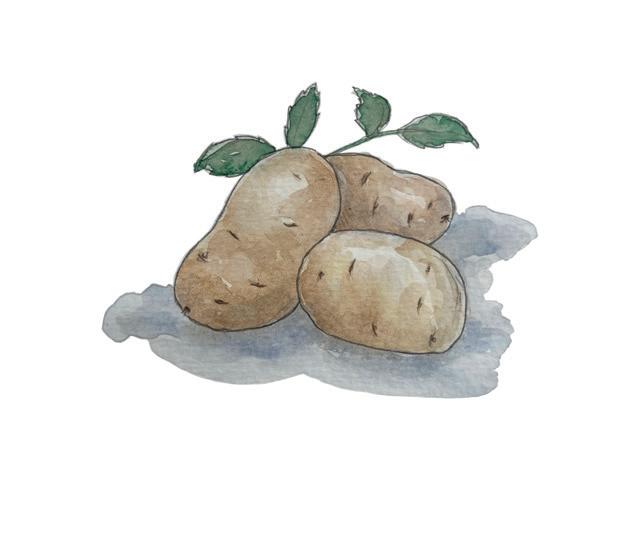
By the time the sun rose high in the sky, the Fletcher family had their spring potato planting done, and stood to look at what would be a main staple, when Autumn came. Buddy had often heard his granny say that, if you had taters to cook, you’d never go hungry. He reckoned that came from the Irish in her.
There would still be work to do for the rows later on. As soon as the potatoes began to sprout, they’d all get together again and “hill up” the rows with more dirt to give good room for growing. It’d also protect them if there came a late frost.
As the women-folk handed over their tools and made their way back toward the house, the boy and his dad went to make sure everything was ready for the next planting. Corn, it’d be; right behind the tater rows. But that was for after lunch time. Buddy’s stomach growled at the thought of food. His gravy and biscuits were long gone by the time they went to the creek to wash up. The icy water felt good as it washed away the mud and dirt from hands and faces. Clapping his son on the back, Mr. Fletcher stuffed his sweat rag back into his overall pocket. “Good job today, boy,” he said as they walked to the kitchen door.

Looking back at the perfectly spaced rows, the budding trees and the sacks of corn waiting to be planted, Buddy Fletcher felt thankful. Thankful that his family could work together on the land that the good Lord had given them. Thankful that Spring came to relieve them of the long, cold burden of winter. And maybe best of all, thankful for growing up in the mountains of east Tennessee, where the culture of planting, growing and providing for your people was greatly valued, rich and rooted in tradition.
Easter was coming. And along with the revival and rebirth of the good, green earth, came the thankfulness for blessings that only had one source. Buddy smiled. ‘Yep,’ he thought. Blessed is what a body called this thing known as mountain life. He’d not forget to be grateful every single day to the One who gave it to him.
“Ya know, daddy? Them taters and corn are shore gonna taste good, come fall.” Chuckling as he opened the door, Mr. Fletcher ruffled his son’s hair. “Yep, Bud, you’re right. They shore will.”
(For kids of ALL ages!)

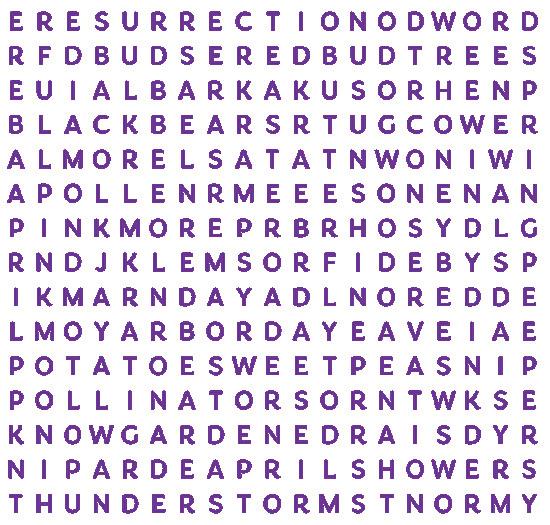
April Word Search
April
April Showers
Arbor Day
Black Bears
Butterfly
Conservation Daisy
Diamond
Dogwood
Easter
Full
Garden
Honey
Morels
Pollen
Pollinators
Potatoes
Ramps
Redbud
Renewal
Resurrection
Spring
Sunshine Sweet
Thunderstorm
Windy

See how many words can you make with the letters in:
Easter Sunday
April in the mountains isn’t just pretty. It’s a working month.
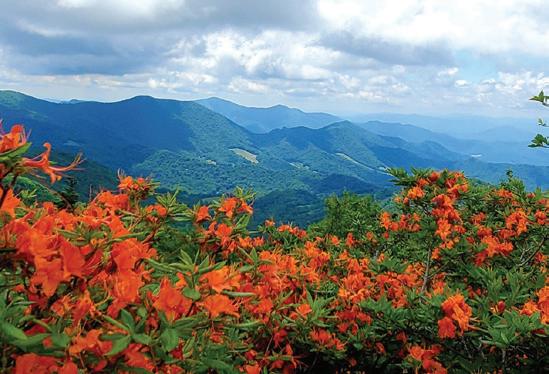
It’s when landscapers stop talking about what they’re going to do and start doing it. Shovels come out. Blades get sharpened. Equipment gets fixed. And if you work in these mountains long enough, you know April is when you move rhododendrons.
Not the little nursery ones. The real ones. Native mountain rhododendrons that have been holding onto a hillside longer than most people have lived here.
You find out real quick those plants didn't get that size by being weak.
Digging
A rhododendron might look like just another shrub to someone driving by, but anyone who's ever tried to dig one knows better. The roots run wide instead of deep; they wrap through rock, they grab hold of whatever they can find. Every shovel full feels like you're negotiating with the mountain itself. You don't rush that kind of work.
You cut a circle. You go wider than you think you need to. You protect every root you can save because experience teaches you something simple: The survival rate depends on what you don’t destroy while you're in a hurry.
There’s a life lesson in that most people learn the hard way.
Balling and burlapping isn't about just getting the plant out of the ground. Anybody strong can rip something out of the dirt. The skill is in getting it out alive. You keep the root ball tight, you wrap it solid, you don't drop it, you don't leave it laying in the sun. You move it like it matters. Because it does.
A lot of things in life get damaged the same way plants do. Not from bad intentions, just rough handling, carelessness, moving too fast. Not thinking about what keeps something alive.
Experience Teaches Timing
You don’t move rhododendrons when summer heat is coming. You don’t move them when they're stressed. Around here you move them when the mountain gives you a window. Moist ground. Cool nights. Spring rain on the way.
Landscaping teaches patience whether you want to learn it or not. Nature doesn't care about your schedule. You either learn timing or you learn replacement costs.
The same goes for life decisions. Some moves fail not because they were wrong, but because they were rushed.
Not Everything Lives
This is the part most people leave out. Sometimes you do everything right and still lose one. Winter damage shows up late. Transplant shock happens. A hidden problem you couldn't see finishes the job. You don't get dramatic about it, you just accept the truth:

By Ericka Hughes
Nothing that grows comes with guarantees. You plant another one. You keep working.
That’s mountain thinking.
The Ones That Take Root Again
But when one does make it, you know it. That next year you see fresh green pushing out. Leaves are thicker. Color is stronger. Roots grabbing new ground. Sometimes a moved plant grows better because now it has a real chance: more light, more room, better conditions.
People aren't much different. Sometimes starting over isn't a failure. Sometimes it's the only reason something survives at all.
April isn't just a planting season. It's the repair season. A reset season. A second chance season. It's when winter proves what it damaged and spring proves what still has fight left in it.
Landscaping will teach you things if you pay attention. It teaches you that strength usually grows slowly, that survival depends on preparation, that carelessness costs more than effort.
But maybe the biggest lesson is this: Anything that survives being dug up, moved, and forced to start again was stronger than it looked to begin with. And if it can root again in different grounds … maybe we can too.
By Noah Blair
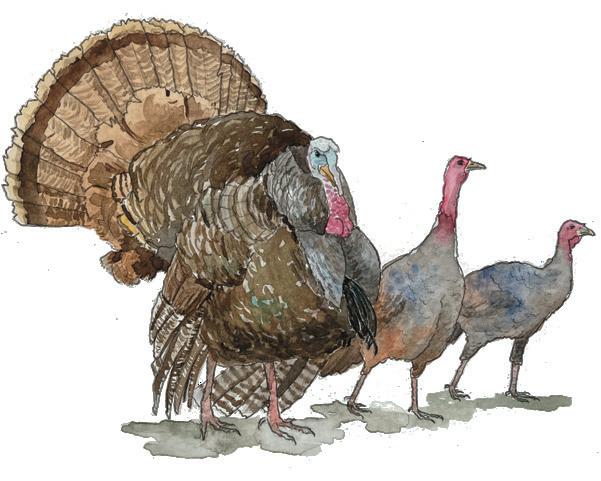
Wild turkeys haven’t always been a familiar sight in East Tennessee. In fact, for much of the early 20th century, the region’s forests and hills were eerily quiet—a far cry from the lively gobbles that echo through the woodlands today. Overhunting and habitat loss had nearly driven wild turkeys out of existence in this corner of Appalachia. Without their presence, the landscape seemed incomplete, missing one of its most iconic occupants.
The absence of turkeys didn’t go unnoticed. Local hunters, conservationists, and wildlife officials recognized the problem and began working together to restore turkey populations. The Tennessee Wildlife Resources Agency (TWRA) launched restoration efforts, including hunting regulations, reforestation, controlled burns to promote healthy habitats, and the reintroduction of wild turkeys from other regions. These efforts restored the balance of nature and required patience, collaboration, and determination.
Slowly but surely, the wild turkey population in East Tennessee began to recover. By the late 1980s and early 1990s, sightings of wild turkeys were becoming more common. Today, the region boasts a healthy population, and the birds have become a symbol of conservation success. Whether you’re a hunter, hiker, or simply someone who enjoys wandering the woods, the appearance of a wild turkey is now a sign that nature is resilient.
Turkey hunting in East Tennessee is much more than a pastime, it is woven into the cultural fabric of
the area. When spring arrives, so does anticipation. Hunters set their alarms for the crack of dawn, gather their gear, and slip quietly into the woods. Part of the challenge lies in the turkey’s keen senses; these birds are famous for their eyesight and wariness. Hunters use specialized calls, camouflage and often spend hours waiting for a chance encounter with a gobbler.
The experience is as much about the pursuit as it is about the prize. Some days, you may not see a single bird, but the thrill of listening for distant gobbles or spotting tracks in the soft earth is reward enough. And when a hunter finally succeeds, it’s not just luck, it’s the result of patience, skill, and respect for the land.
Springtime in East Tennessee is a feast for the senses. Dogwoods and redbuds bloom, birds sing, and the forests come alive. For many, turkey hunting is a way to reconnect with nature, share stories with friends, and pass down traditions from one generation to the next. It’s not just about harvesting a bird; it’s about stewardship, understanding the importance of preserving the environment for future generations and building a sustainable future for the next generation of hunters.
The continued prosperity of wild turkeys in East Tennessee is proof that conservation efforts work. The TWRA, along with local and national organizations like the National Wild Turkey Federation, ensure that hunting regulations are up-to-date, habitats are maintained, and education programs help new hunters learn responsible practices. This spirit of stewardship is at the heart of the region’s hunting culture
The story of wild turkeys in East Tennessee is one of hope, teamwork, and respect for the natural world. Bringing the species back from the brink of extinction required commitment and collaboration, but the reward has been a thriving population and a revitalized tradition. Today, the gobble of a wild turkey is a sound that connects people to the land, to each other, and to the rich history of the Appalachian region. Thanks to ongoing conservation and ethical hunting, the woods of East Tennessee are alive with turkeys and with the promise that future generations will continue to enjoy both the birds and the traditions that surround them.

Remember, Jesus Loves You!