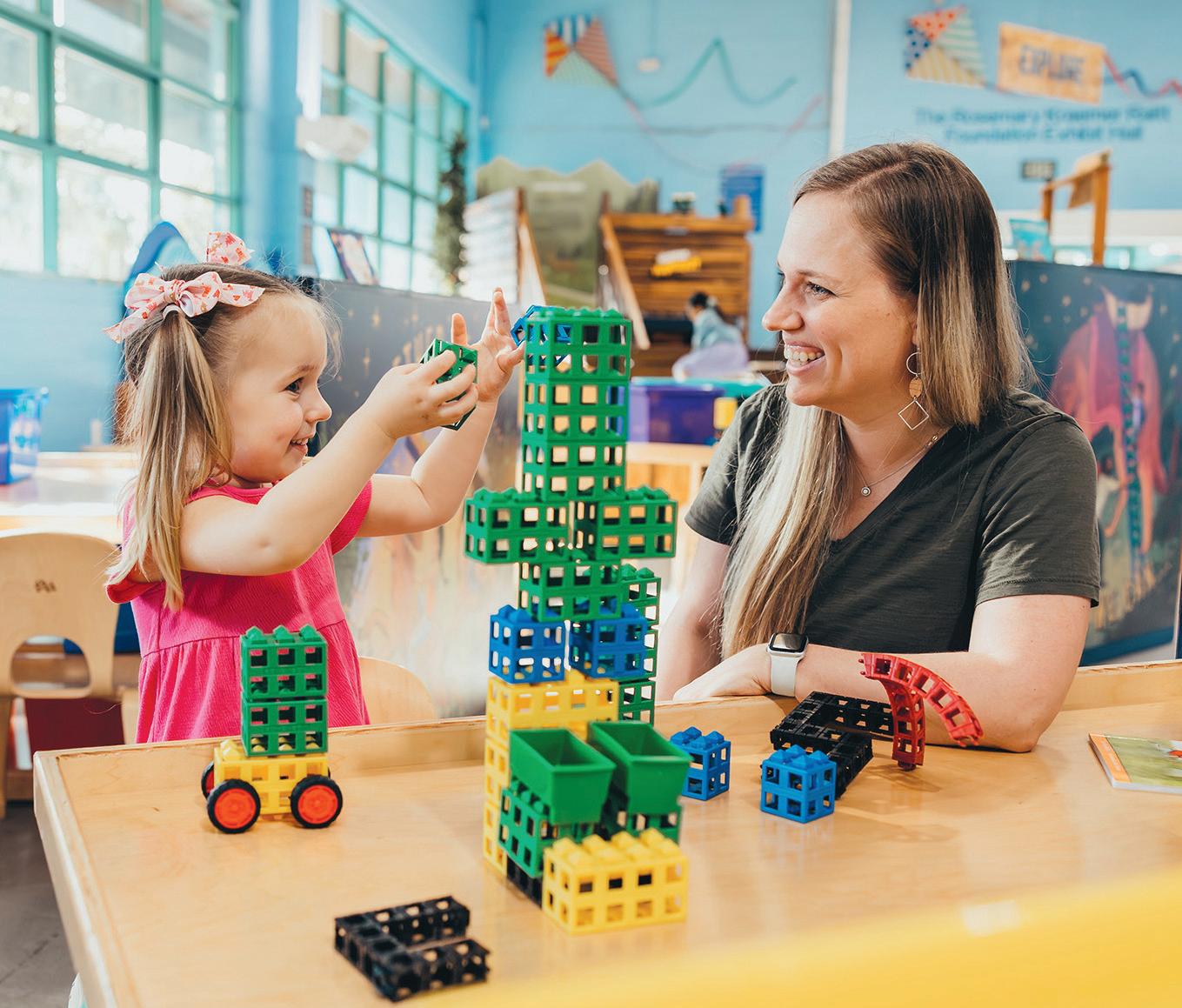
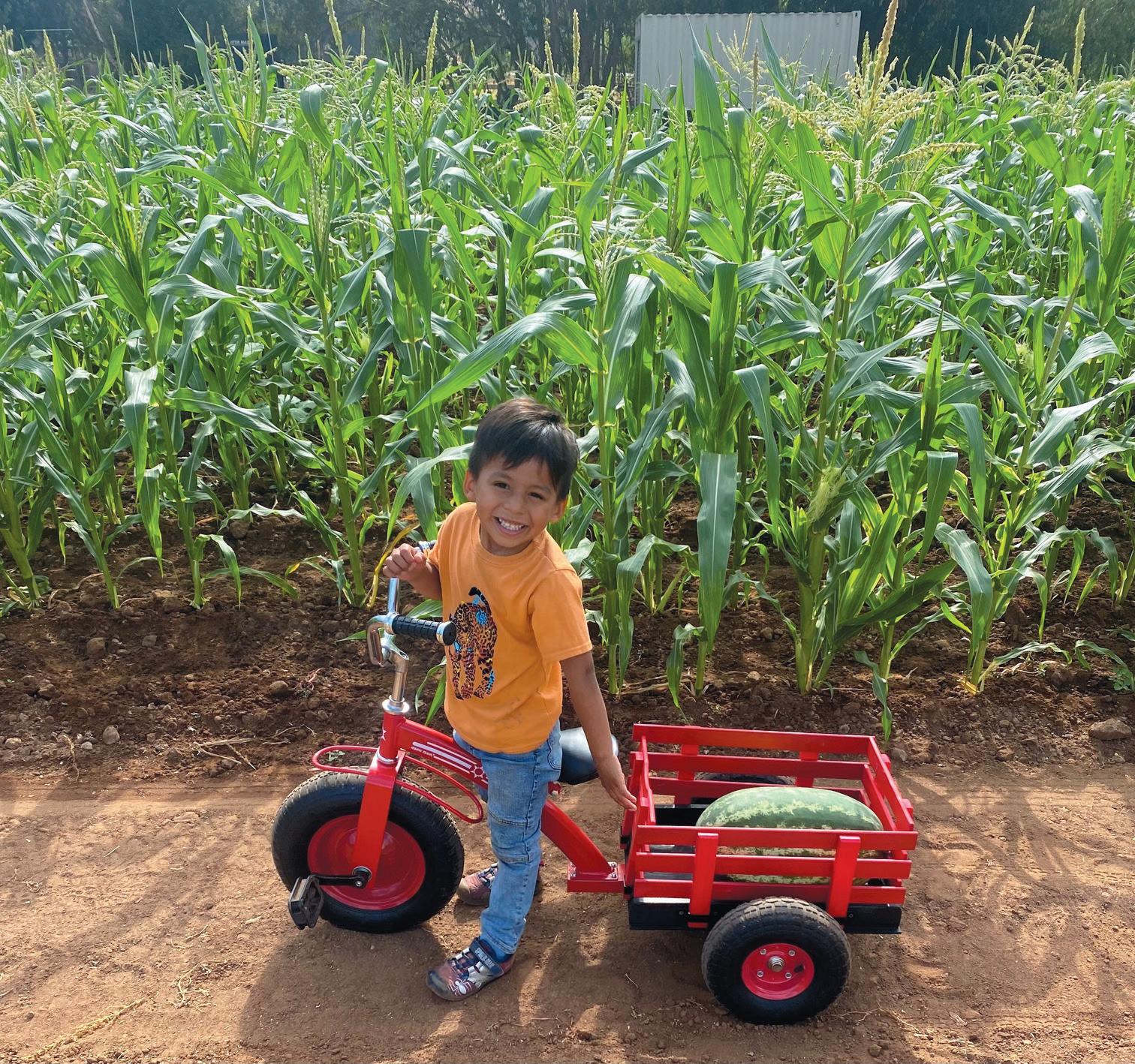
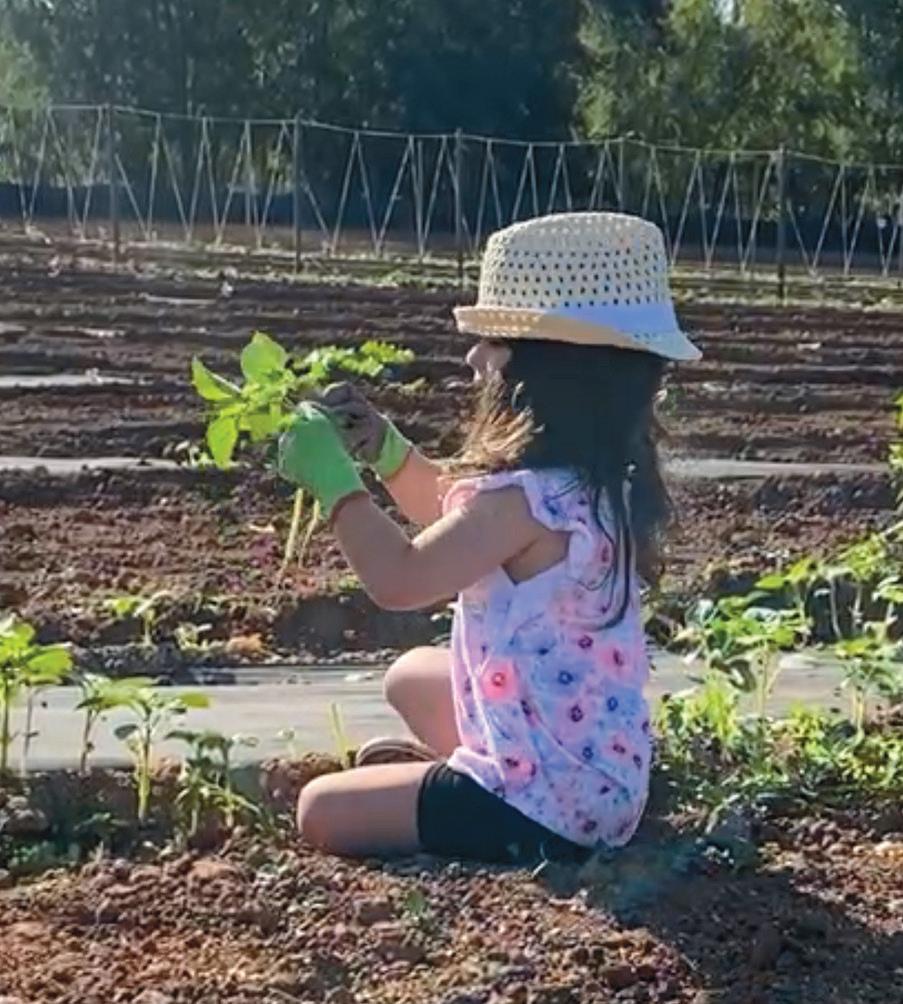
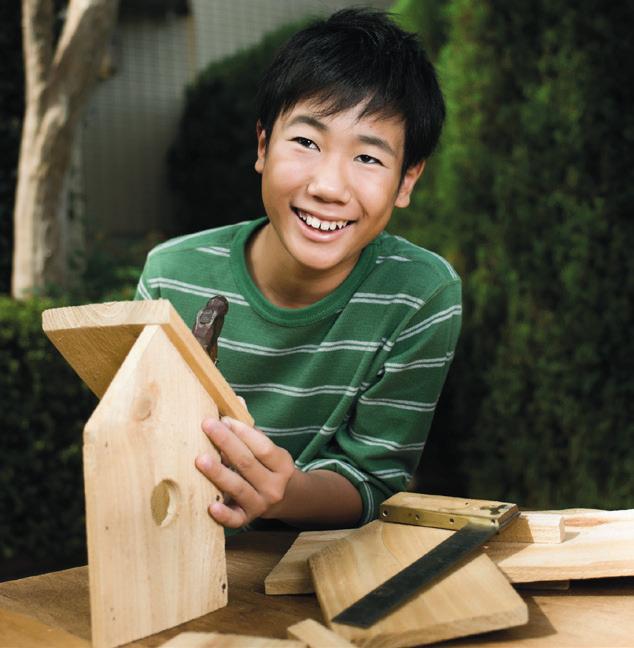
These improvement s have been designed to make the trail safer, more ac tive, and more enjoyable for the whole communit y, and to bring new energy to the Creek Trail corridor through communit y par tnerships and local creativit y.
A communit y gr and opening celebr ation is in the works, and more details will be shared soon.
• Wayfinding and educational signage
• Lighting
• Paving/striping on the Creek Tr ail
• New l andscaping
• Mur al installments and artistic fe atures
• Fitness stations
• Seating and gathering spaces
• Children's pl ay are as
• Tr ash receptacles and water
• Safer pedestrian crossing and r amps where the Creek Tr ail intersects with local roadways
A New Era of Growth and Opportunity
BY YESSENIA MENDOZA, CHAIR OF THE BOARD, 2026–2027 ESCONDIDO CHAMBER OF COMMERCE
Dear Escondido Readers,
As I begin my term as Chair of the Escondido Chamber of Commerce, I am honored, humbled, and energized by the opportunity to serve our members and our community.
For 131 years, the Escondido Chamber has been a champion for local business, a trusted advocate, and a connector of people, ideas, and opportunities. That legacy is something we cherish and something we are committed to carrying forward.
The past year tested our organization in ways few could have anticipated. We faced diffcult realities and were required to make tough decisions to ensure the long-term sustainability of the Chamber. Those decisions were not easy, nor were they made lightly. They were made with one goal in mind: preserving and strengthening the Chamber’s ability to serve Escondido’s business community for generations to come.
While we have made important progress, our journey is far from over.
This new fscal year marks the beginning of a new chapter—one flled with opportunity, innovation, growth, and yes, continued change. Growth often requires courage. It requires thoughtful leadership, strategic planning, and sometimes diffcult decisions. As Chair, I want our members to know that every decision made by our Board of Directors will be guided by our mission, our values, and the long-term interests of the businesses and organizations we serve.
The Escondido Chamber is here to stay.
We remain committed to being the voice of business, an advocate for economic vitality, and a bridge between our members and government leaders. We are dedicated to helping businesses increase their visibility, build meaningful relationships, and fnd opportunities to grow and thrive.
Escondido is a diverse, vibrant, and resilient community. Our Chamber proudly serves businesses of all sizes, industries, and backgrounds. We believe every business deserves a seat at the table, every entrepreneur deserves support, and every organization contributes to the strength of our local economy.
As we move forward together, my commitment is simple: to protect and advance the mission of the Escondido Chamber of Commerce, to serve our members with integrity, and to help build a stronger future for our business community.
The road ahead will require hard work, collaboration, and perseverance. But if the history of this Chamber has taught us anything, it is that Escondido’s business community is resilient. We have overcome challenges before, and together, we will continue to grow, adapt, and succeed.
Thank you for your trust, your membership, and your investment in our community. I look forward to serving alongside you as we begin this exciting new chapter.
Together, we will continue building the future of Escondido.
At Flores Orthodontics, we use a holistic and integrative approach for orthodontic treatment to transform the lives of our patients and achieve a more balanced face, an amazing new smile, a patent nasal airway, and a functional bite! Our role in our patients’ lives is very important, as we enhance their overall health and appearance, and thus, enrich their lives, improve their self confidence and increase their sense of well being!
ESCONDIDO RAISES A GLASS: The 2nd annual Grape Day Wine Competition returns
Mark your calendar: September 11, The Historic Forgotten Barrel Winery in Escondido will host the 2nd annual Grape Day Wine Awards Gala — and this city has never had more reason to celebrate.
Black tie. World-class wines. A landmark venue. And a story rooted right here in the heart of San Diego wine country.
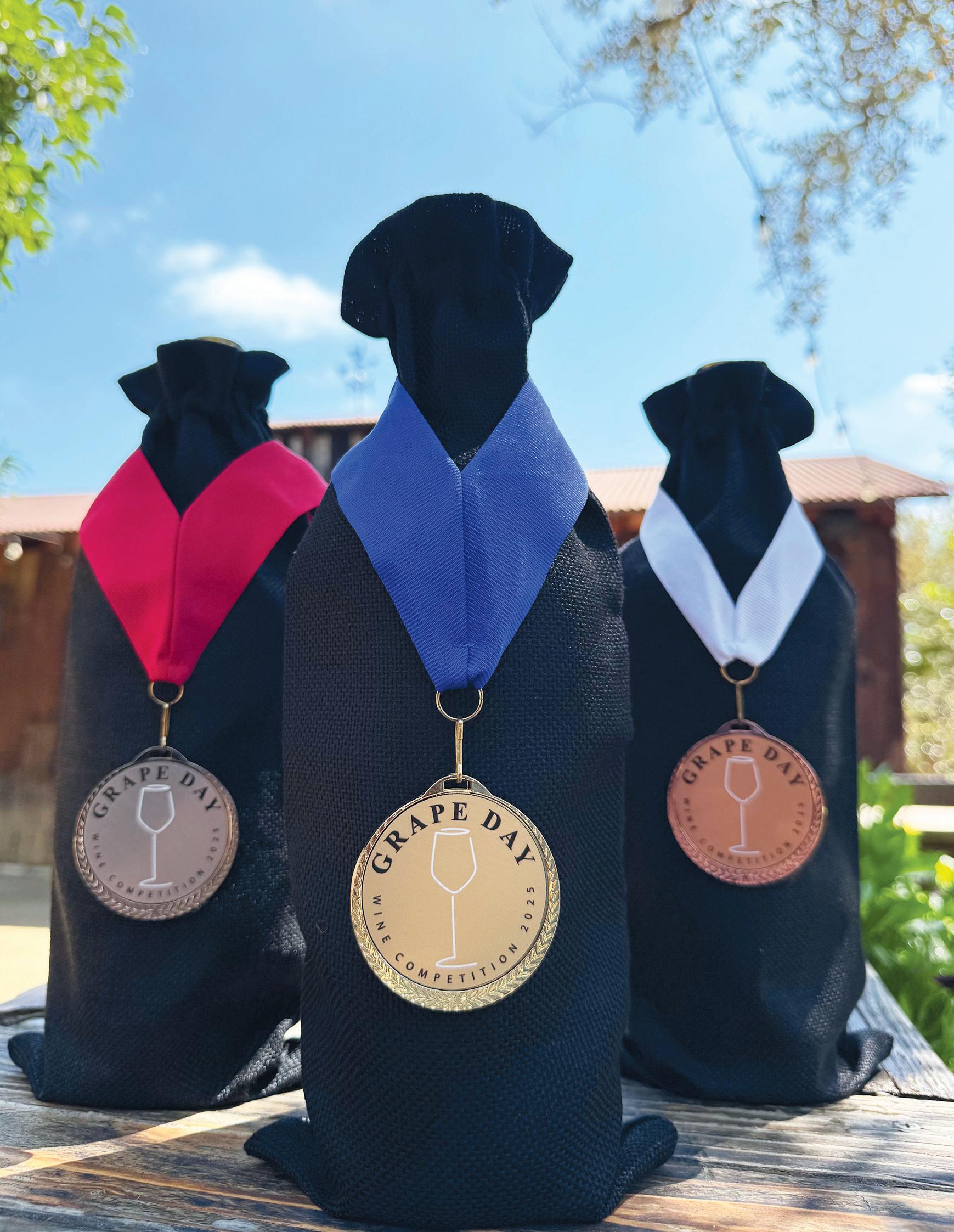
The 2nd Annual Grape Day Wine Competition is offcially underway, and Escondido is proving that it has what it takes to stand alongside the great wine regions of California. What began as a bold idea from Escondido’s own Deanna Smith - a competition that honors the legacy of Grape Day – Escondido’s beloved century-old harvest festival, has grown into one of the most exciting wine events on the local calendar.
A celebration with roots
Grape Day. The name alone carries history. From 1908 through the 1950s, Escondido’s annual Grape Day Festival drew tens of thousands of visitors to celebrate the region’s thriving grape and citrus industry. It was a point of civic pride, a community gathering, and a declaration that Escondido belonged on the agricultural map of California.
The Grape Day Wine Competition was born to revive that spirit and celebrate the success, talents, and dedication of our vintners making excellent wines in our region. This year, the Grape Day Festival returns on September 5, and the wine competition culminates the celebration in grand style on September 11. Today, Escondido stands at the center of a thriving wine community stretching from Ramona and Julian to Fallbrook — and the Grape Day Wine Competition is the proving ground where San Diego County’s fnest vintners earn their place in that legacy.
The judges
The 2nd Annual Grape Day Wine Competition is evaluated by a distinguished panel of fve judges, bringing a depth of expertise seen at a many worldwide competitions:
Marshall Stuart - 50 years of experience shaping the landscape of Temecula Valley spanning construction, wine making and cultivating the rolling hills of his vineyards.
Lisa Redwine - Master Sommelier, Honors Graduate of Culinary Institute of America, Advisor and Head Lead for Sommcon USA, Founder of Women’s Wine Alliance.
Tami Wong - 1 of San Diego’s most respect-
ed Master Sommelier, Educator, Entrepreneur and frst wholesale distributor dedicated to San Diego County wines and ciders.
Christian Garcia - After college joined the Peace Corps teaching in Cambodia, currently teaching high school students and has taken many classes of certifed wine courses. Editor’s note: Garcia is also a member of the Escondido City Council.
Darryl Carson - Traveling around the world has given him extensive experience in winemaking and continues to work with small boutique wineries in San Diego county.
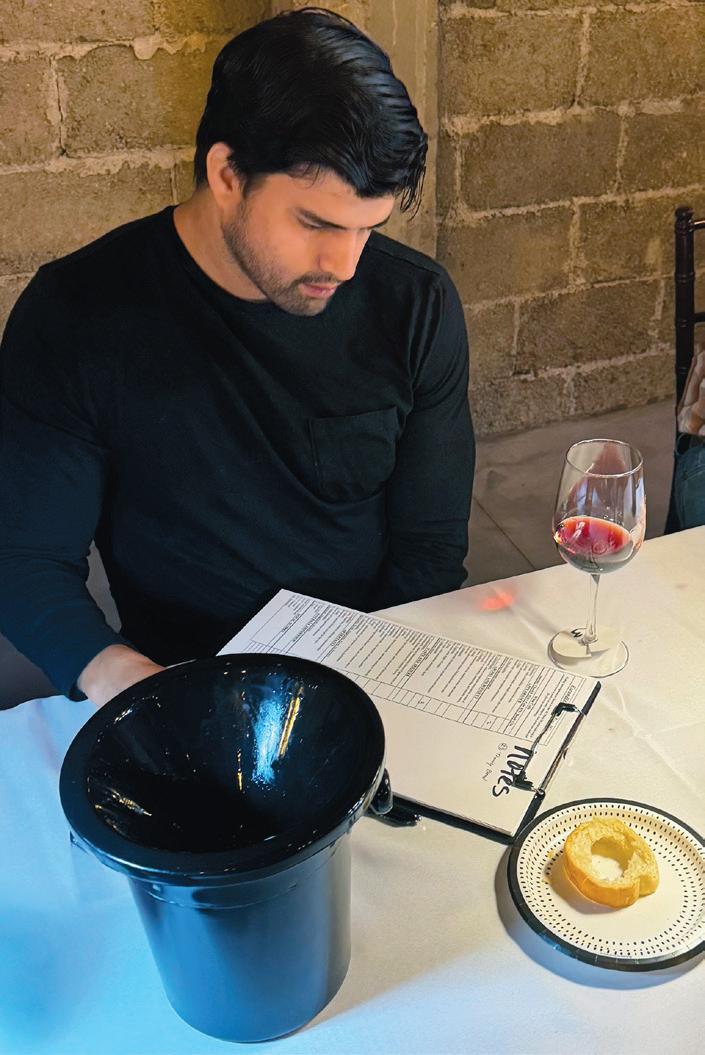
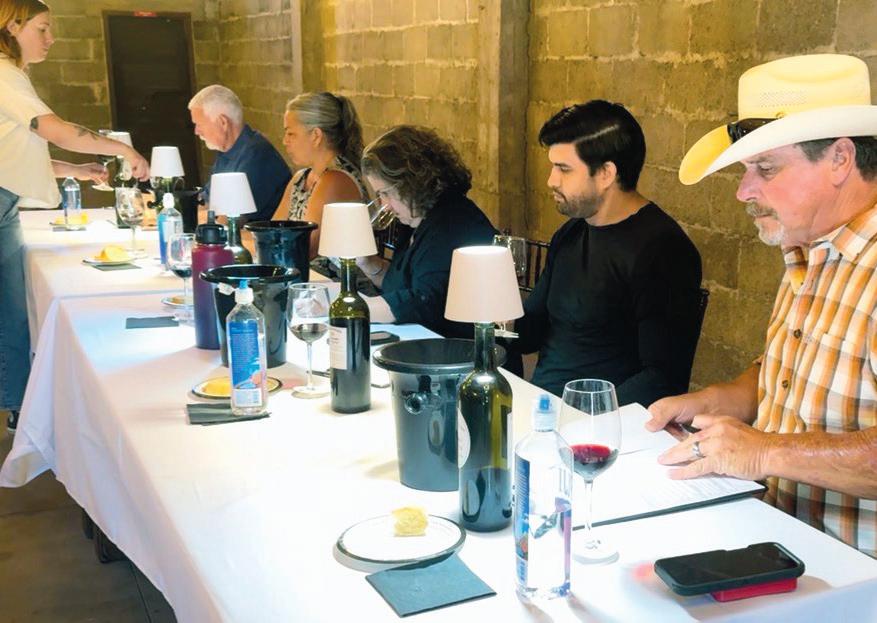
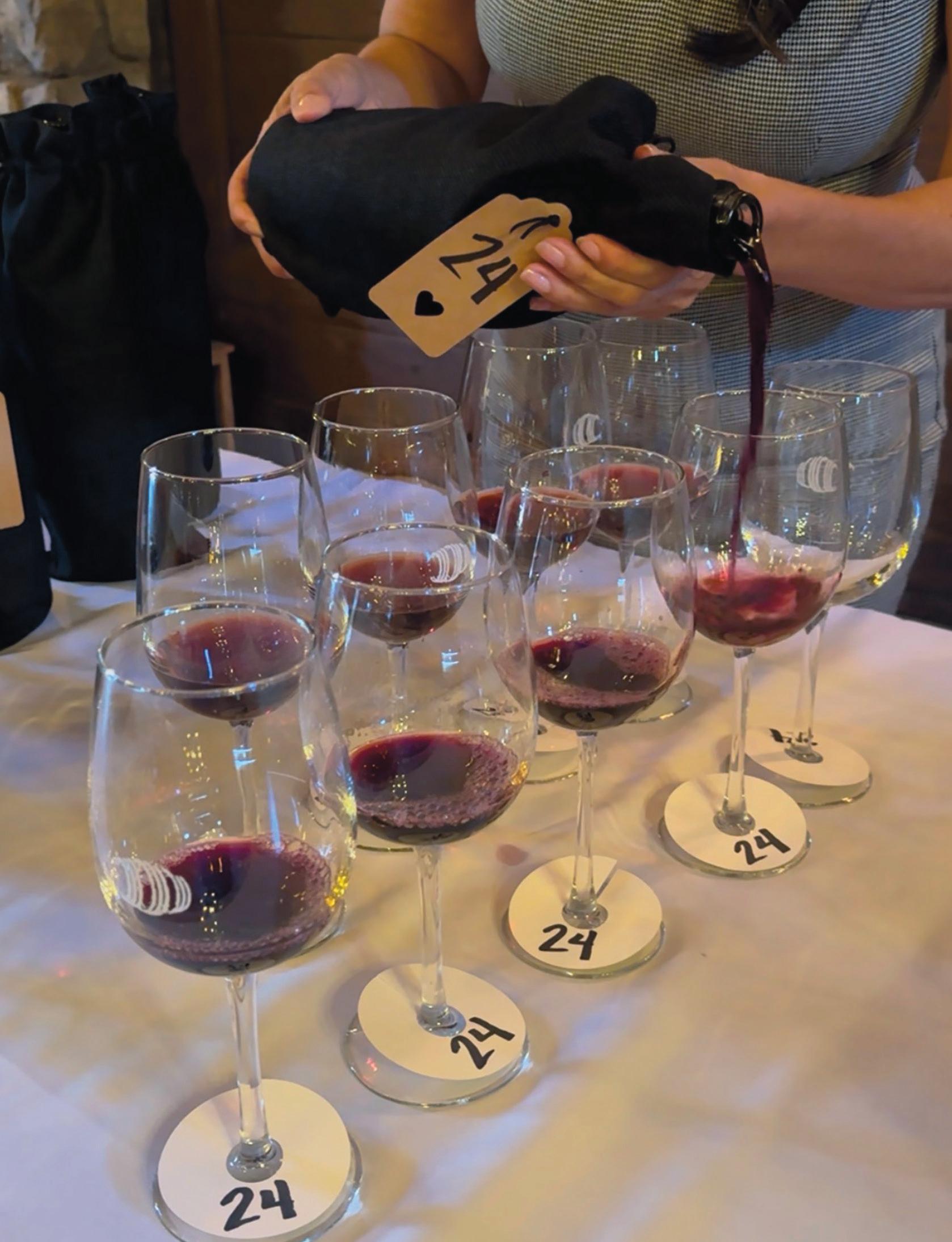
Each entry is evaluated through blind tastings using internationally recognized standards established by UC Davis — ensuring that every medal earned is a mark of genuine excellence.
2026 Competing Wineries
The 2nd annual Grape Day Wine Competition brings together nine outstanding San Diego County wineries, each representing the passion and craft that makes this region’s wine scene so remarkable:
Altipiano Vineyard
Castelli & Pizarro Family Winery
Cordiano Winery
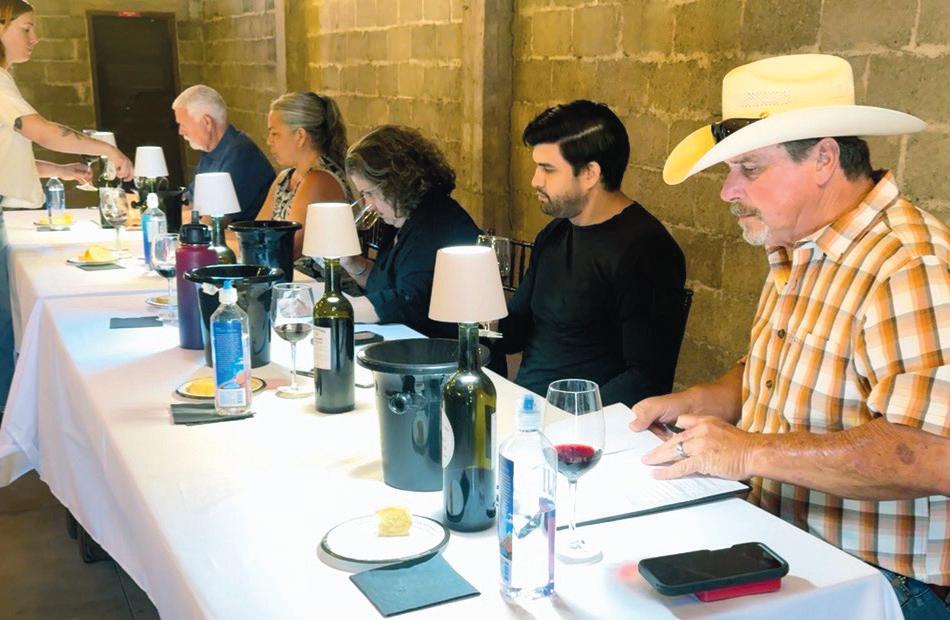
One of the judges: Christian Garcia.
Judges at work.
Eralto Winery
Hungry Hawk Vineyards and Winery
Mia Marie Vineyards
Ramona Ranch Winery
Speckle Rock Vineyards
Uvas Winery
Be sure to visit each one - they are our neighbors! You will fnd them all listed on www.WineCompetition.org
Last Year’s Medal Winners 2025
Gold Medal
Altipiano Merlot 2021
Bastian Red Blend
Bastian Cabernet Sauvignon 2022
Forgotten Barrel Mourvèdre 2022
Forgotten Barrel Syrah 2021
Forgotten Barrel Zinfandel 2021
Hawk Sauvignon Blanc 2024
Hungry Hawk Carmenère 2022
Mia Marie Viognier 2024
Mia Marie Rosé of Tempranillo
Ramona Ranch Sangiovese 2022
Ramona Ranch Merlot 2021
Shadow Mountain Muscat
Silver Medal
Altipiano Barba 2022
Altipiano Syrah 2021
Castelli Pizarro Viognier 2022
Castelli Pizzarro Petit Syrah 2020
Castelli Pizzarro Miscela 2019
Cordiano Cabernet Franc 2020
Cordiano Red Blend
Hungry Hawk Albariño 2024
Mia Marie Tesoro 2022
Ramona Ranch Montepulciano 2022
Ramona Ranch Tuscan Blend 2021
Ramona Ranch Sauvignon Blanc 2023
Sblendorio Cabernet Sauvignon 2021
Sblendorio Cabernet Sauvignon 2022
Shadow Mountain Tempranillo 2019
Shadow Mountain Merlot 2019
Shadow Mountain Red Blend
Shadow Mountain Malbec 2019
Shadow Mountain Syrah 2019
Shadow Mountain Nebbiolo
Bronze Medal
Bastian’s Viognier 2024
Ramona Ranch Cabernet Sauvignon 2020
Shadow Mountain Sauvignon Blanc 2023
Shadow Mountain Albariño 2022
Shadow Mountain White Blend 2022
Shadow Mountain Dry Muscat 2017
Shadow Mountain Cabernet Sauvignon 2019
The Gala: An Evening Worth Dressing For
The competition culminates on a night that Escondido will be talking about long after the last glass is poured.
The 2nd annual Grape Day Wine Awards Gala Thursday, September 11, Forgotten Barrel Winery, Escondido Black Tie
Generously hosted by Roger Grove, owner of The Historic Forgotten Barrel Winery sets the perfect stage for an evening of this caliber. Guests will enjoy an evening of fne food, fne wines, celebration and community as medal winners are announced and honored in style.
This is not just a party. It is a declaration: Escondido is a wine destination. And it deserves a stage worthy of that identity.
More Than a Competition — A Community Investment
Behind the Grape Day Wine Competition (WineCompetition.org) is the vision of Escondido’s own Deanna Smith, Founder and Executive Director of the Grape Day S.T.E.A.M. Foundation, (Science, Technology, Engineering, Arts, and Mathematics). The Foundation delivers hands-on farm-based education to students right here in Escondido through a working ranch partnership with Escondido Union School District — the mission is to equip our youth with life skills, academic enrichment and entrepreneurial thinking.
The Grape Day Wine Competition and Gala are part of a broader mission: to celebrate what makes Escondido extraordinary, invest in its youth, and put this community on the map in ways that last.
When you attend the Gala, buy a ticket, or raise a glass to a Grape Day medal winner, you are part of that mission.
Save the Date
Grape Day Festival: September 5, Escondido 2nd annual Grape Day Wine Awards Gala: September 11, Forgotten Barrel Winery, Escondido, Black Tie
For tickets, sponsorship opportunities, and more information, visit WineCompetition.org. Escondido has always had great wine. Now the world is starting to notice.
Elephant Valley gives the public the chance to see the gentle beasts up close.
The wines are judged with a blind system.
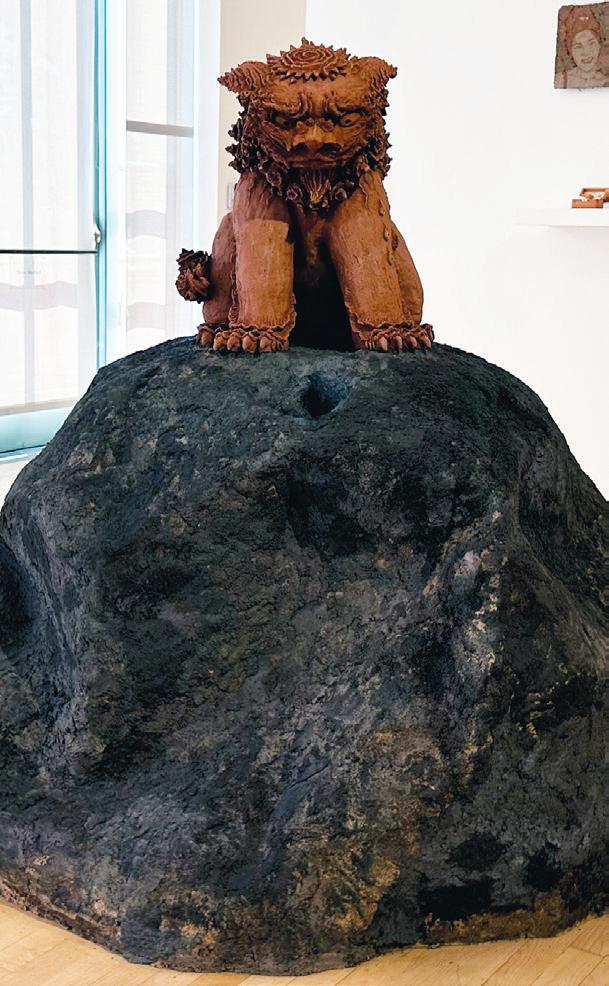
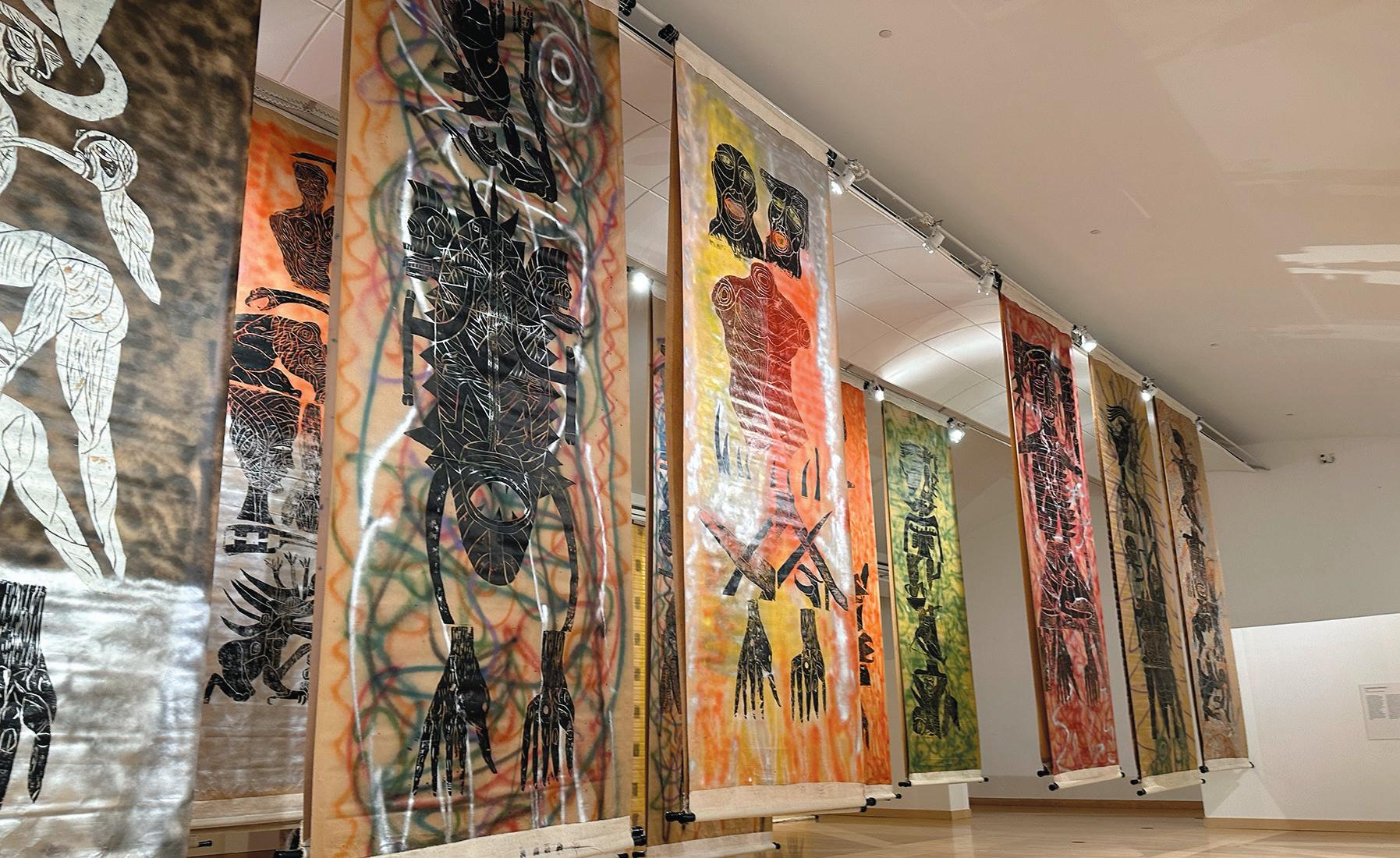
Pieces from Jose Hugo Sanchez’s Amoxtlis exhibit that is at the CCAE museum from now until August 16. Amoxtlis is the Nahuatl word for “codices.” Sanchez’s large scale printmaking practice draws from the visual language of Mesoamerican codices, contemporary Chicano visual culture and mass media.
CCAE CEO
re ects on rst three years
BY DAVID ROSS
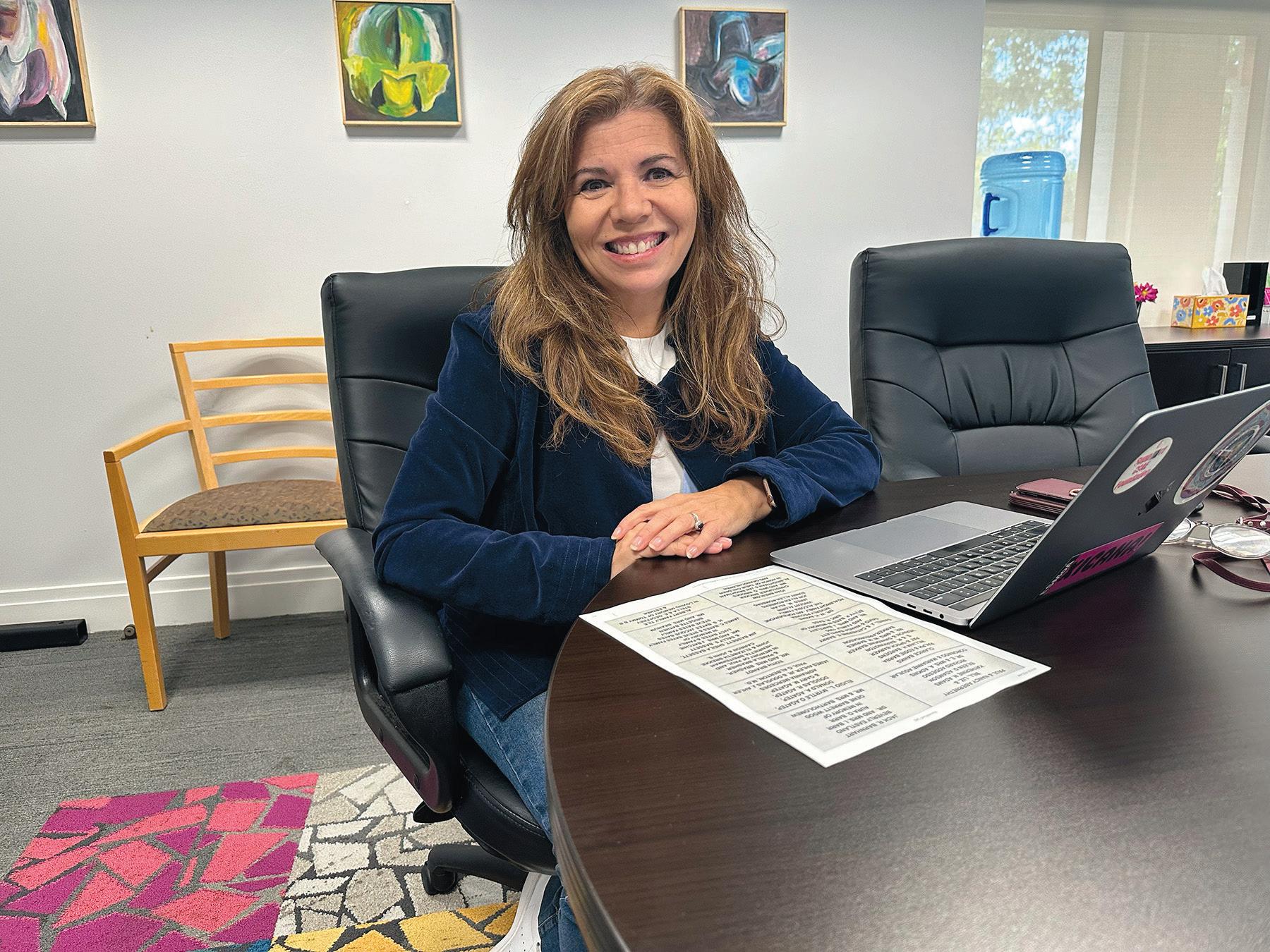
Recently I sat down to interview California Center for the Arts, Escondido Foundation CEO Gina Lopez, who has been at the job for almost three and a half years.
She notes with pride that this is the 3rd year in a row the Center has been in the black. That was not true her frst year.
“I think even during turbulent times, we created with our team a sense of stability that we were able to show the public,” she said. “To invite them into the organization, the facilities. We’ve opened the doors to free public events so there is more accessibility to our organization. I think we have created a sense of stability we can grow from — beyond the chaos that was happening previously.”
During the turbulent times before and after COVID—within the past ten years before she arrived, “Only twice during that time did we even make budget. For me that’s not a stable organization. You have to have
that stewardship of your organization to garner more contributions and get the public to trust you, believe in you and invest in you. That’s the biggest accomplishment I can point to.”
The board did that, “by programming what the people want. By creating programs that are accessible and relevant. That are fun. That are engaging. By trying to reach everyone.”
These included the free concerts in the Lyric Court: “Musica en la Plaza.”
“In my second year we started doing Hidden City Sounds that it is more varied in genres,” she said. “It gives us a place for emerging artists. What was so sad was that the facilities are so beautiful and the stage so tremendous—but it’s not a place where local artists can play. It’s too expensive. As an organization we can’t hire local artists because we won’t get the return from the tickets sales.”
California Center for the Arts, Escondido Foundation CEO Gina Lopez.
ESCONDIDO ARTS
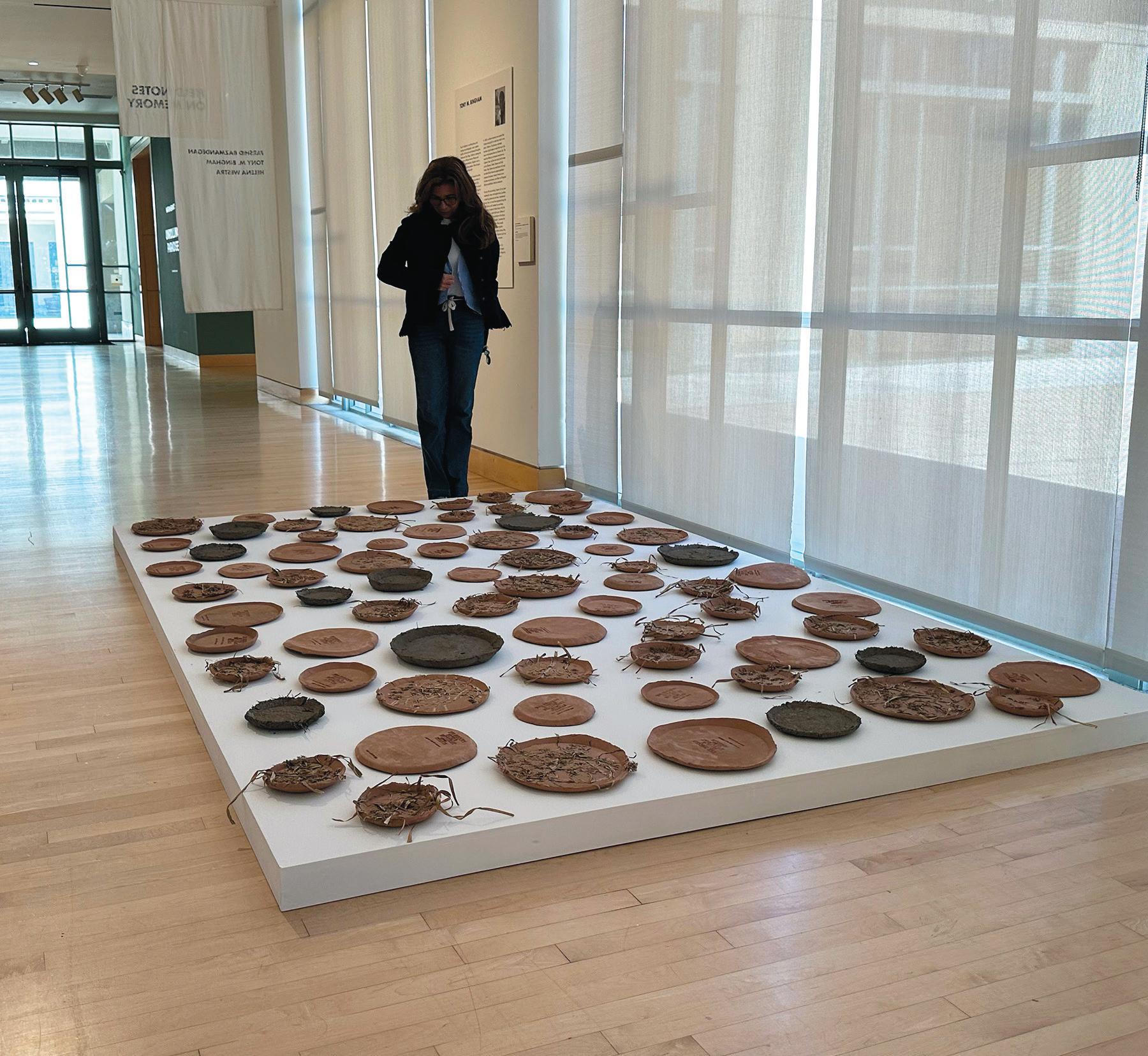
CEO Gina Lopez looks at part of the “Field Notes of Memory” by artist-in-residence Tony M. Bingham. This exhibition approaches landscape as a site for memory. Artists draw on family histories, overlooked narratives, ancestral practices and experiences of migration and exile.
Enter Hidden City Sounds where every other Friday they showcase emerging local artists. “It can be any genre,” said Lopez. “We have jazz, country blues, rockabilly, soul, all kinds of artists and genres represented.”
She added, “We’ve had good support from the general public fnancially. They are investing in concerts like these.” They are sponsored by private donations and county grants.
Where has she been frustrated? “I would really like to make the buildings look more like an arts center,” she said. “People drive by every day and don’t realize it’s an arts center. I hear that all the time, ‘I don’t know that was what that was!’ ”
I suggested calling attention to the center by painting a huge colorful mural on the side.
“I would absolutely love that,” said Lopez. “We could do it with lighting. We could do it with sculptures. But it’s costly. We would need a grant.”
A recent grant from AARP will be used to improve the rose garden right off the conference center—creating a space to read a book, relax and be comfortable.
I pointed out that the Center is getting long in the tooth and asked “Does it need a facelift?”
“We are working with the city on that,” she said. “It has actually been a great relationship. A lot of things are happening. We had some bad plumbing leaks under our kitchen in the conference center. They are fxing it right now. We had to do without the kitchen for a few months, but it’s a big project.”
Additionally, “Last year the city approved $500,000 for orchestra lifts in both theaters. They are original to the building and are 32-years-old. That is the next project, after the kitchen. The big projects are happening now.” More cosmetic projects, like painting the outside of the buildings, the Center is funding. “We are working with them to prioritize to see what needs to happen frst in order to function properly and then looking at more cosmetic things.”
Fortunately the Center has “good bones,” and no structural issues. However, “Back in 1994 there were different ADA (American With Disabilities Act) laws. We are trying to do our best to remedy what we can. Like the handrails we just added to both theaters.”
She added, “It has done really well for a facility this size and this age. I
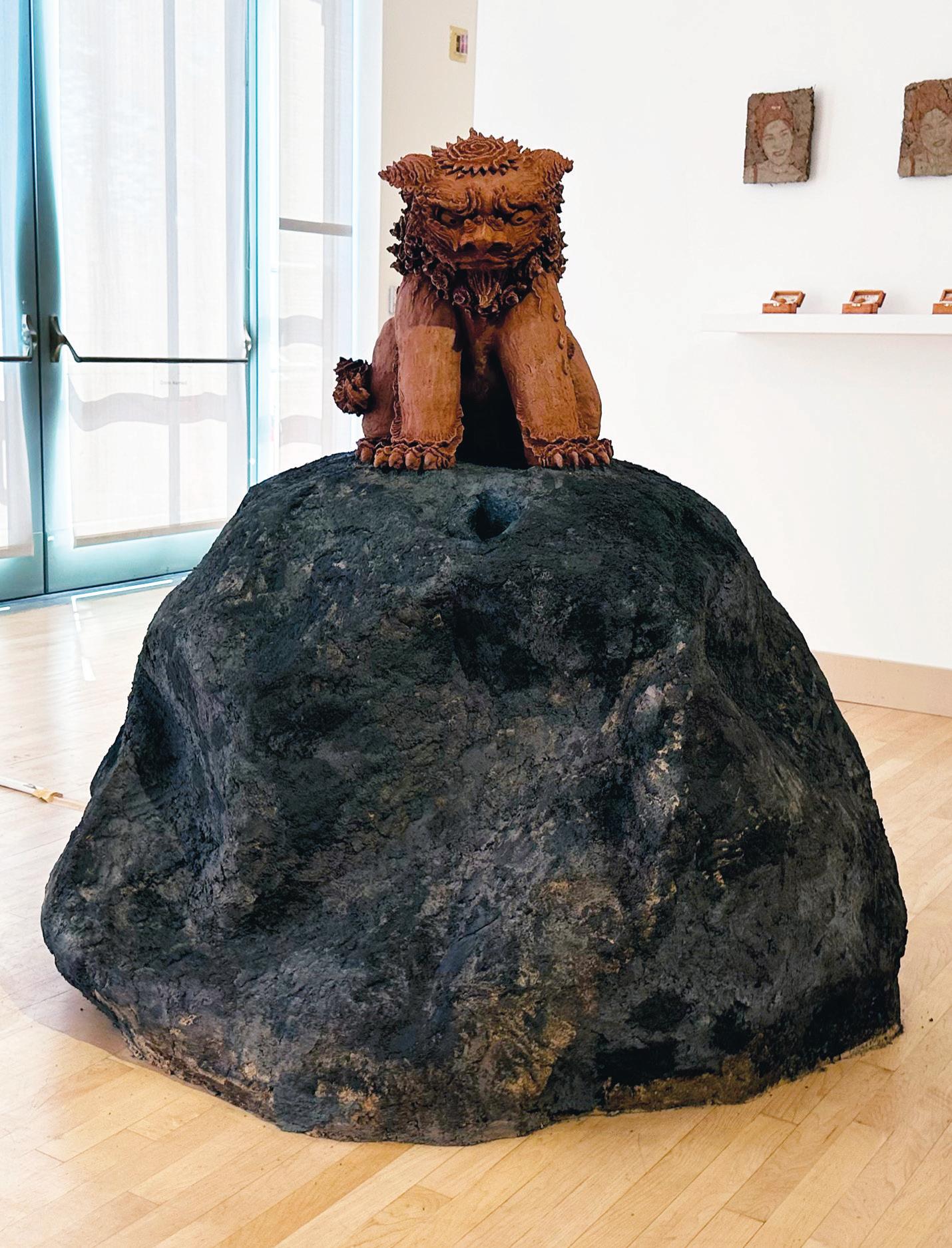
The Field Notes on Memory exhibition at the CCAE Museum. This piece by artist-in-residence Farshid Bazmandegan—whose installation reflects on displacement and collective mourning through sculptural forms, video, and references to Persian cultural traditions informed by memories of Iran and experiences of forced migration.
have little complaints. Mainly cosmetic at this point. We need new carpet. We need new theater seats. At this point that will come, but we have to prioritize.”
We talked about new theatrical technologies. “We need intelligent lighting, LED lighting,” said Lopez. “Moveable lights controlled by an iPad. So you can change colors and change directions. Those units are
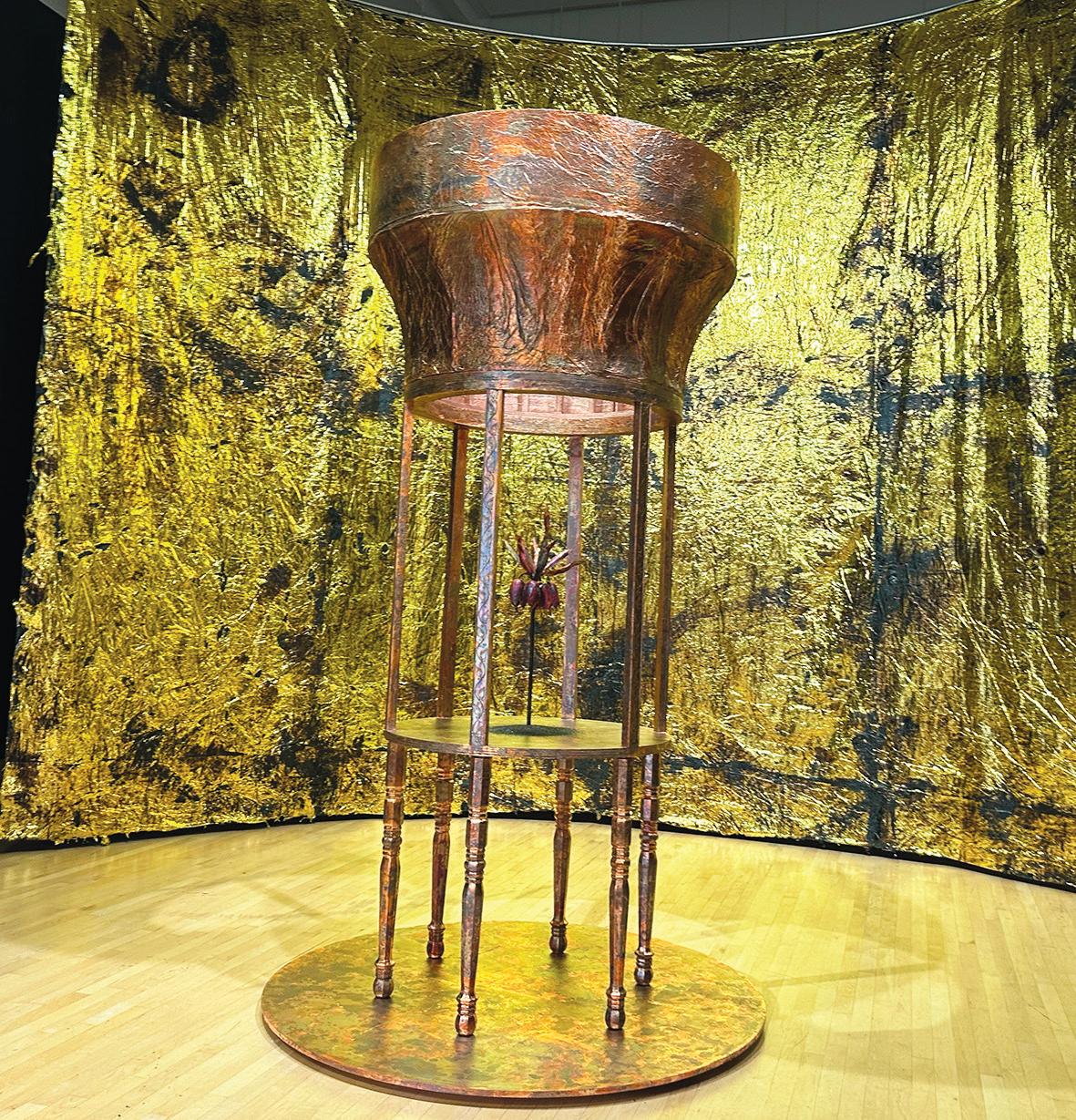
Another part of the Field Notes on Memory exhibition, this piece by Helena Westra.
like $4,500 apiece.”
It would cost about $500,000 to convert each theater. “We’re slowly converting, as we get grant funding, in the small theater right now. We’re maybe a quarter way there. It’s important for the performers who use our space—but it’s also important for the technical interns who learn the most advanced technology.”
Their incandescent lights are obsolete technology. “We had to get something in to train our technicians properly,” she said. “Incandescent lights are so expensive because they use a lot of power. If we were to go all LED we would have a return on investment in fve years. It would be a game changer for us and the city.”
One lesson Lopez has learned: “What hurts art centers the most is complacency. So I’m always looking for new and innovative ways to engage with the public and make arts more relevant. The most important thing you can do is be relevant to your community.”
That means never resting on your laurels.
“That’s dangerous!” she said. “It also means listening to your public. That doesn’t mean we can offer everything for free. It doesn’t mean the public should be able to come in and do whatever they want. It does mean working with different organizations and different groups to create something really meaningful for the community.”
I asked how the portable stage the Rotary Club donated is upping the Center’s game?
“We will be using it for the July 4 celebration and for the Grape Day Festival, and for the upcoming Dragonfy Music Festival [see related story this issue] in September,” she said. “We will be using it for the San Diego Tijuana Jazz Festival, and for events with the YMCA. It’s going to be utilized quite a bit.”
What happens when people make donations? What are they supporting?
“Sometimes it’s unrestricted,” said Lopez. “We love unrestricted, because that gives us an opportunity to see where we have the most need. But other times it’s for our technical internships, because intern development is such a big thing right now. Making sure there are pathways.”
Some donations support the museum and free series. “It’s really important right now that people have outlets,” she said. “The average ticket price right now is $100 and people cannot afford that. So with these options, they can still participate with live music.”
What does the public want more of?
“Right now, what I’m hearing is that they want more summer camp opportunities for youth. Arts summer camps. The schools have a bunch, but for some reason they want it outside of the schools,” she said.
She added, “We don’t want to duplicate efforts. We don’t want to take away from what the schools are doing. We want to complement. To be a solution. That’s what I’m hearing a lot of right now and not every school has it. We have a lot of opportunities we haven’t dived into.”
She continued, “They want more classes for all ages. We are looking at putting in a permanent pottery studio.”
Lopez concluded, “When I frst got here we were a broker for other peoples’ programs. We are now doing our own programs. Contracting with local artists much more than in the past. The schools have a lot covered by their partners and we want to support that. That’s what I hope to do more of.”
ESCONDIDO ARTS
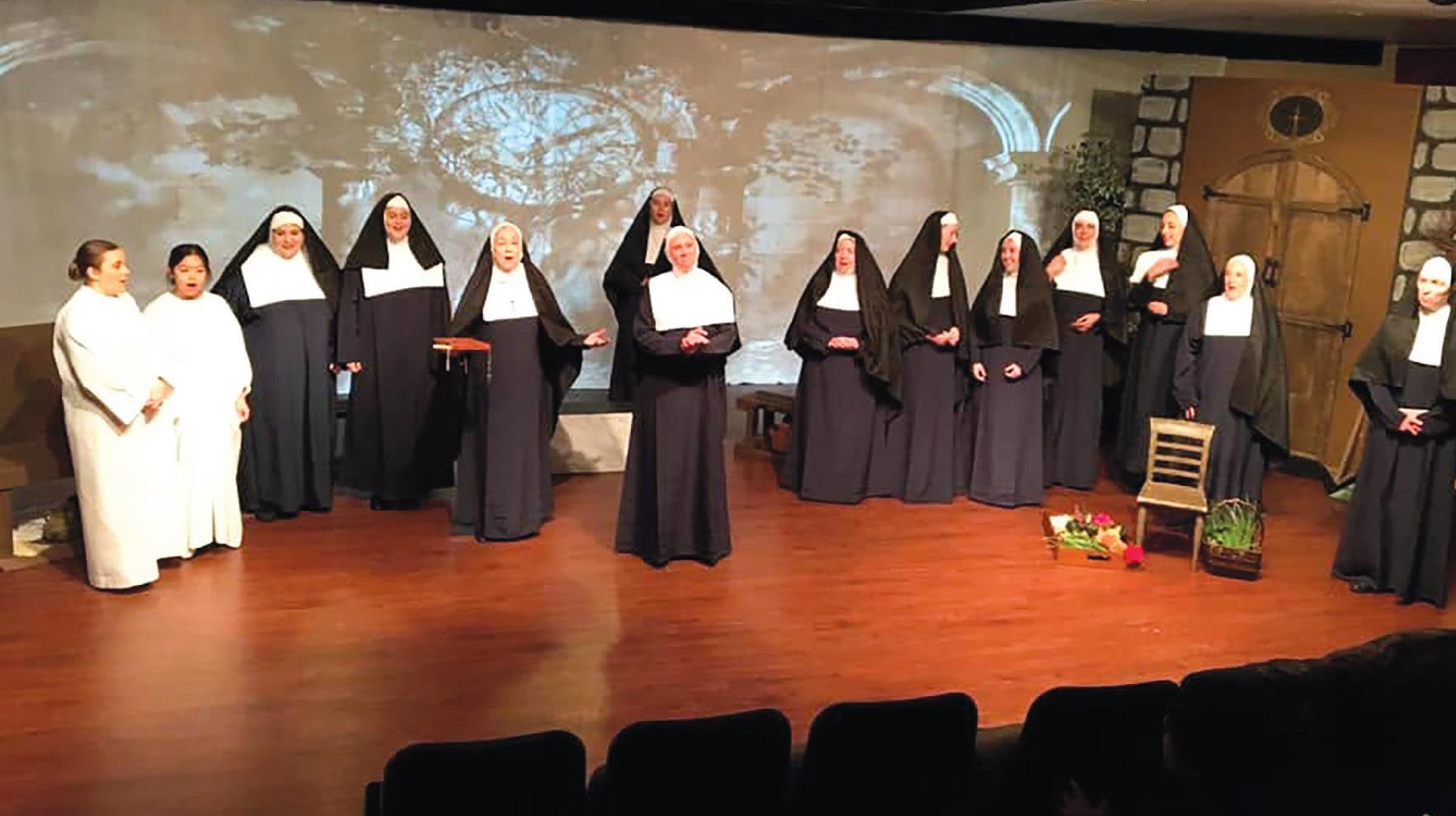
G.O.T. is the G.O.A.T. Opera in Escondido
I grew up listening to rock ‘n roll. All I knew about opera was what I saw on Bugs Bunny cartoons (remember their great “Barber of Seville”?), or when Queen did “Bohemian Rhapsody.”
When I was 10-years-old I saw a movie that blew me away – “Foul Play” (Chevy Chase, Goldie Hawn). Among the many things I loved about it, were two things I had never seen or heard before. One was Dudley Moore (who was already huge in the UK). The other was the music of the operetta “The Mikado” by Gilbert & Sullivan. I was obsessed with how “The Mikado” was woven throughout the story.
It wasn’t until I was 20 that I fnally bought the 2-CD set of “The Mikado” by the D’Oyly
BY JOSH BOARD
Carte Opera Company. And it would be 36 years later, a few months ago, that I’d fnally see Mikado songs done on stage, and it was right here in Escondido.
My mind was blown. First, because…who knew there was an opera company in Escondido?! I think of Mexican restaurants on every corner, not a place to possibly hear “Carmen” or “The Marriage of Figaro.”
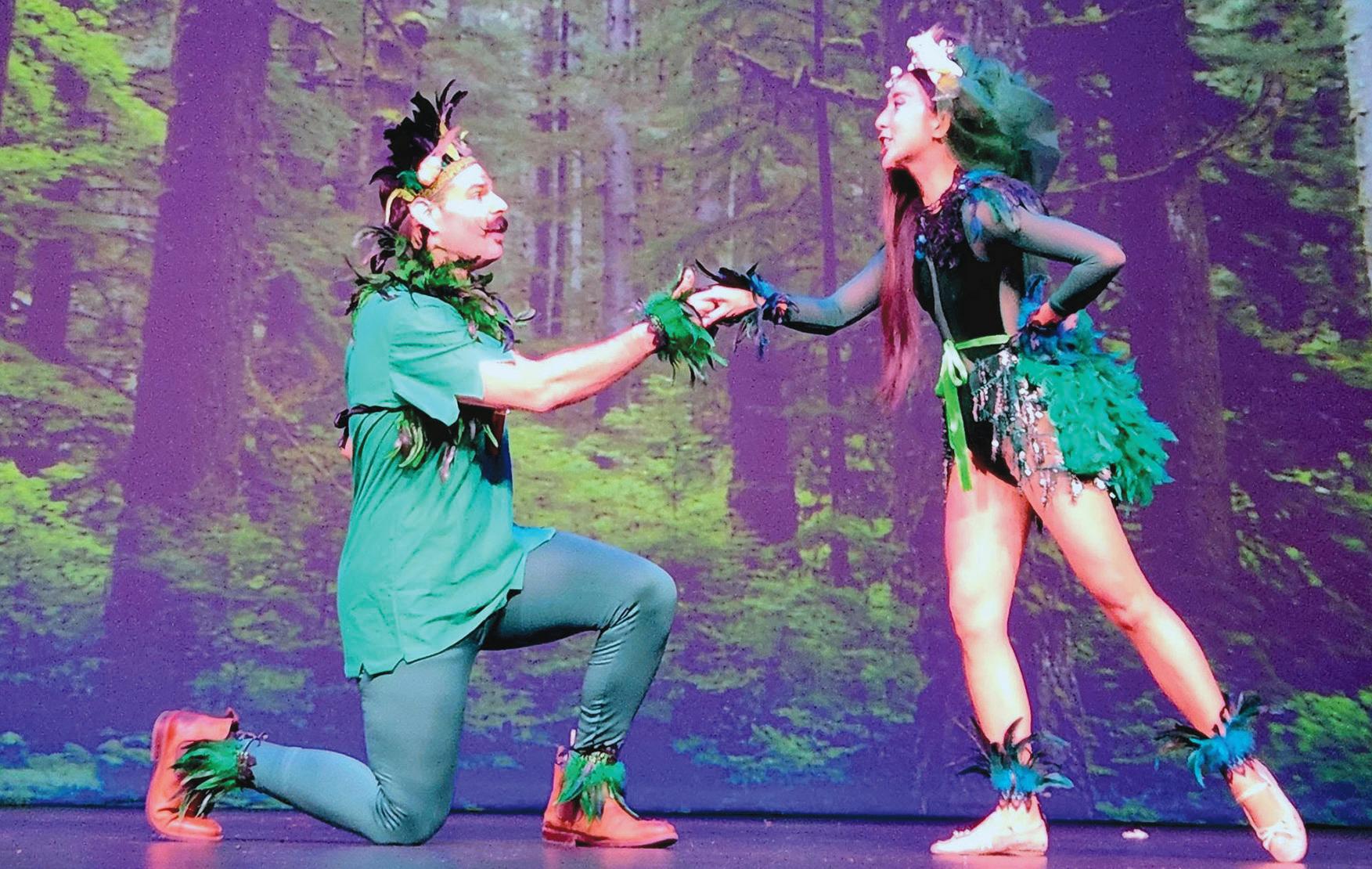
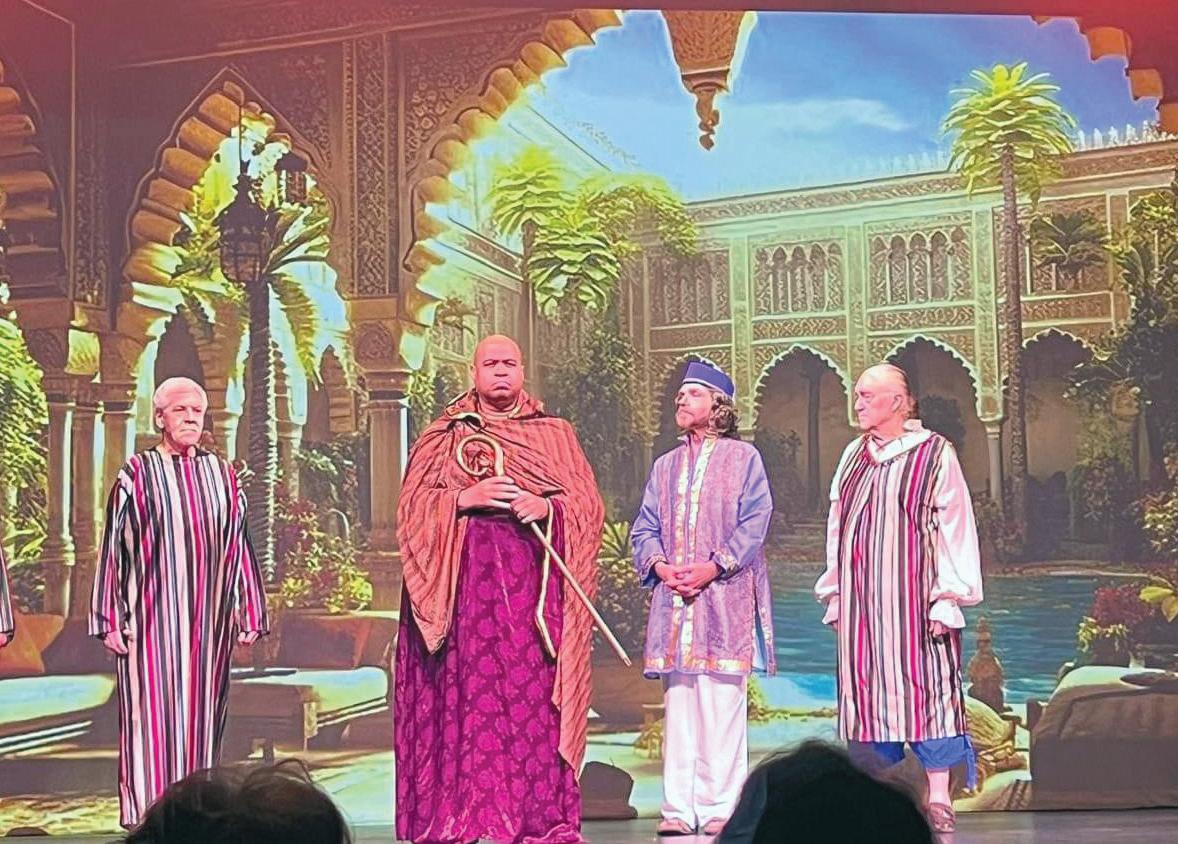
So when I saw an advertisement for a Gilbert & Sullivan piece (“Trial by Jury”) being performed by the Genesis Opera Theatre in Escondido, I was rather intrigued. When I heard they’d also include other G&S pieces, including songs from “The Mikado,” I told my wife to buy a new dress, because we were going to our frst opera.
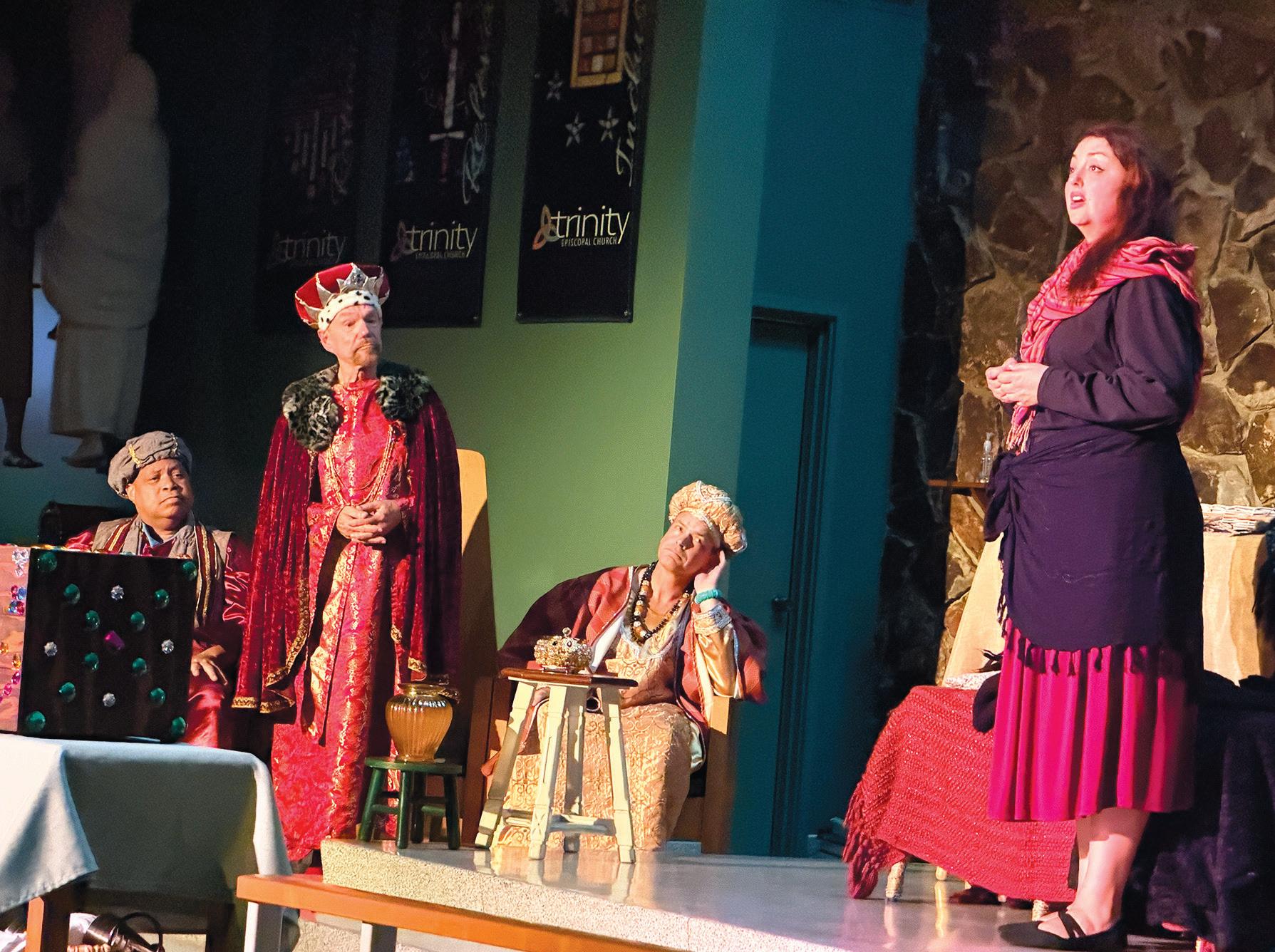
I went to the Trinity Episcopal Church on Chestnut, to see what the G.O.T. could do. “Trial by Jury” was a blast (The Escondido Times-Advocate gave a great review of it).
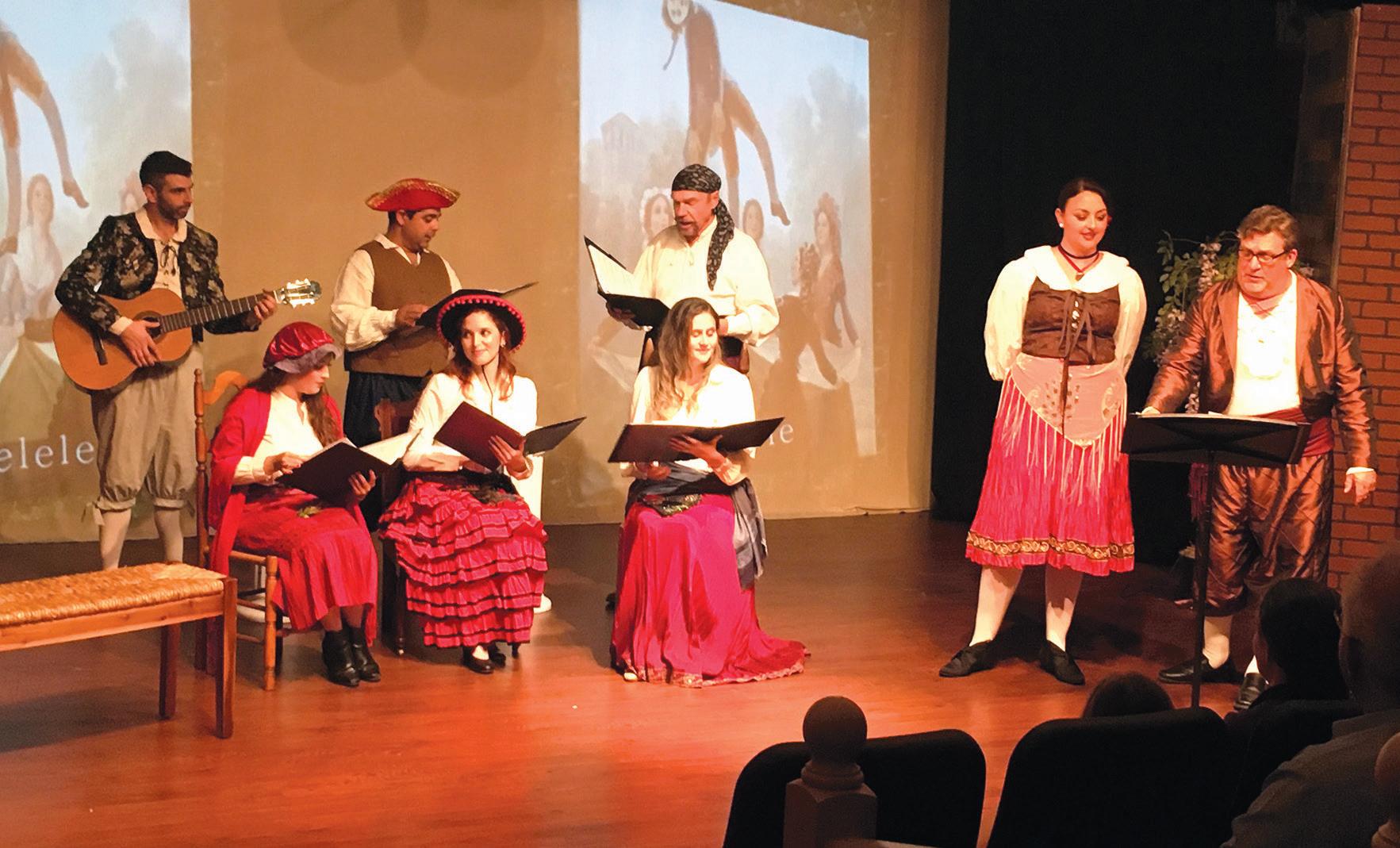
We also heard songs from “The Pirates of Penzance,” “The Sorcerer,” “H.M.S. Pinafore” and a few tunes from “The Mikado” [side note: can you call songs “tunes” in opera?].
I talked to a few G.O.T. members. Vice President Patrick Anderson, the bass-baritone and Judge in “Trial by Jury” sang for many seasons with “Opera a la Carte” in Los Angeles, and performed with the Pacifc Lyric Association Opera.
Josh Board: I loved “Trial by Jury” and the other songs you guys did. How did you decide on performing that, and how much rehearsal
is involved in getting it right?
Patrick Anderson: In addition to our primary staged production, which usually takes place in early fall, for the past few years Genesis has also presented a “lighter” program in the spring. Previously, this program took the form of a “highlights” concert, featuring audience-friendly selections from both opera and Broadway.
This year, we decided to raise the bar a little higher, and present a short staged work that would still fll the requirement of being lighter and more accessible. Gilbert & Sullivan seemed the logical choice. “Trial by Jury” is a show that I know quite well, and it ticked all our boxes: it’s short, sung-through (no spoken dialogue), and above all, hysterically funny. As for “getting it right,” I’d like to think we did, and we pulled the whole thing together in only six rehearsals. That’s one of the joys of working with true professionals –everyone came in prepared and ready to give a great show.
JB: The show was at the Trinity Church, and the venue worked wonderfully. The acoustics were good and there were lots of seats. Is it hard to fnd venues to perform opera?
PA: We have had a wonderful relationship with Trinity Episcopal Church for a number of years. All of our rehearsals are held there, and we love performing in that space. As you noted, the acoustics are excellent for our type of music; and we’ve fgured out how to effectively stage an opera in a rather challenging space.
Of course it’s always nice to be in a traditional theatre environment, but in making the church work for us, we’ve proven that opera is a pretty adaptable art form, and can be performed anywhere. That being said, we’re delighted that our next production, which will be far more complex, will be presented in an actual theatre, with all the technical advantages that come with those surroundings. Our fall production is Mozart’s “The Marriage of Figaro,” on August 28 – 30 at the beautiful Bornemann Theatre on the TERI, Inc. campus in San Marcos. “Figaro” is a perennial audience favorite, and in my opinion contains some of the most beautiful music ever composed. On top of that, it’s very funny – plus its social commentary is just as relevant today as when it was written almost 250 years ago! It was the frst opera I ever saw, and sang in, and it remains my absolute favorite. We have two casts of absolutely stellar singers.
Going forward, Genesis is planning its annual production of Menotti’s “Amahl and the Night Visitors” during the Christmas season, which will be back at Trinity Church. We look forward to continuing our relationship with the Bornemann, too. Of course, our dreams
are always subject to budget considerations, so future plans will be determined by the success of our current endeavors.
Josh Board: That means the folks of Escondido should go see some of their shows, and support local opera. As I mentioned earlier, I know very little about it and had fun.
One of the sopranos in the chorus of “Trial by Jury” was Cynthia Leigh, the founder and President of Genesis Opera Theatre. So I asked her, in a pun way, what the genesis of the opera company was?
Cynthia Leigh: It was the brainchild that came from my own experience in small companies, in musical theater and opera, that I
encountered as a performer and singer over at least the last 25 to 30 years. I had an idea that opera, in particular, could be done not just with good voices; I felt a project could have more production value than I had seen in small companies, and even with a limited budget.
With that, I came up with the name Genesis Opera Theatre. I guess I wasn’t really thinking anything biblical, except that in my mind it was the idea that something artistically important was created with just a dream, or let’s say, a vision.
JB: As a rock ‘n roll fan, I don’t think biblical when I hear the name Genesis, but Phil Collins and Peter Gabriel. Now, how
“The Magic Flute,” 2024. From left: Kevin Williams, Patrick Blackwell, Patrick Anderson, Robert Sheaffer.
“Amahl and the Night Visitors,” 2024. From left: Patrick Blackwell, Patrick Anderson, Chris Anderson, Beth Langlois.
hard is it getting people to fnd out about what’s going on here in the North County in the opera scene?
CL: It takes a village. As Patrick and I have experienced, there is an audience out there for what we do. Built into our mission statement is the goal of exposing new and familiar audiences to this art form. Back in the time of Mozart, well, actually most of the composers, this music was of the day. Anyway, getting the word out there, particularly for new opera companies such as ours, takes a lot of work. Networking, making sure that every outlet is explored. We do a lot of marketing to the media, social media, and word of mouth. I tell people that I meet on the street about what we do. You would be surprised. I value every ticket that we sell, and you never know where that audience member heard about us.
JB: How did you land in Escondido?
CL: It kind of happened by chance. An ex-partner of mine and I had worked with a local theater company, and initially we used it for our productions because of his relationship with them. Most of our early performances were in that space, but it was very small. As we grew, it seemed a good idea to expand into larger venues. Thankfully, Patrick and others saw that, and we were able to grow to where we are today. We found an audience here in North County that is constantly expanding throughout the county. I guess you can say I’m proud of what we have to offer, and I’m so grateful to the team, the singers, and countless others who still help Genesis and its mission.
Details and information are available at www.genesisoperatheatre.com. I wanted to end with that, but couldn’t resist asking Patrick one last question.
JB: What did you think about actor Timothy Chalamet saying that opera and ballet weren’t alive and “no one cared about them anymore.”
Patrick chuckled and said he wouldn’t dignify that statement from Chalamet. I was hoping he’d say something along the lines of: he gets praised for talent, yet he did the singing of a guy that has what is considered the worst voice in music history – Bob Dylan. Oh, and he got more praise for playing ping pong on screen.
But those are my words, not his. And as a movie critic, for my money, I’d rather see/ hear Patrick Anderson singing “Brightly Dawns our Wedding Day” from “The Mikado” than Chamalet warbling through Dylan’s “Maggie’s Farm.”
Josh Board is an Escondido resident and has been a journalist for over 35 years. You can hear his movie reviews and entertainment reports on Newsradio 600 KOGO.
“Suor Angelica”- 2020. Shown are Cynthia Leigh-Suor and Patricia McAfee – Principessa.
“Goyescas”-2021. Shown are Cynthia Leigh- Rosario and Humberto Borboa Beltran – Fernando.
ESCONDIDO MUSIC
Dragon y Music Festival takes ight in Escondido this September
BY GINA LOPEZ
A new tradition is set to take fight in Escondido as the Dragonfy Festival makes its highly anticipated debut on the California Center for the Arts, Escondido (CCAE) campus, September 10-12, 2026.
While Dragonfy frst launched in 2021, its move to Escondido marks an exciting new chapter, made possible through the extraordinary partnership that has fourished between Kenneth Rexrode’s Six String Productions and the CCAE over the past two years.
While both Six String Productions and the CCAE have enjoyed remarkable success independently, their collaboration over the past two years has elevat-
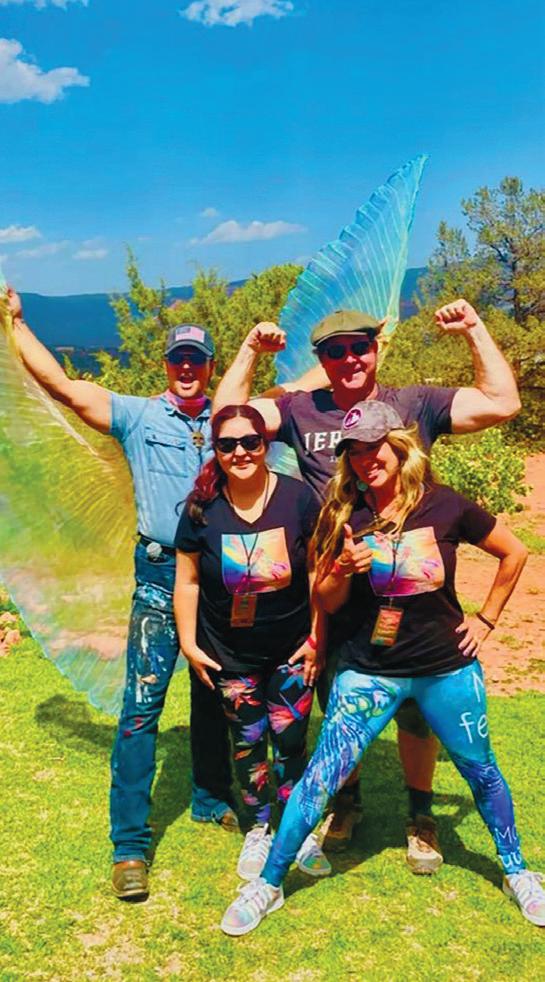
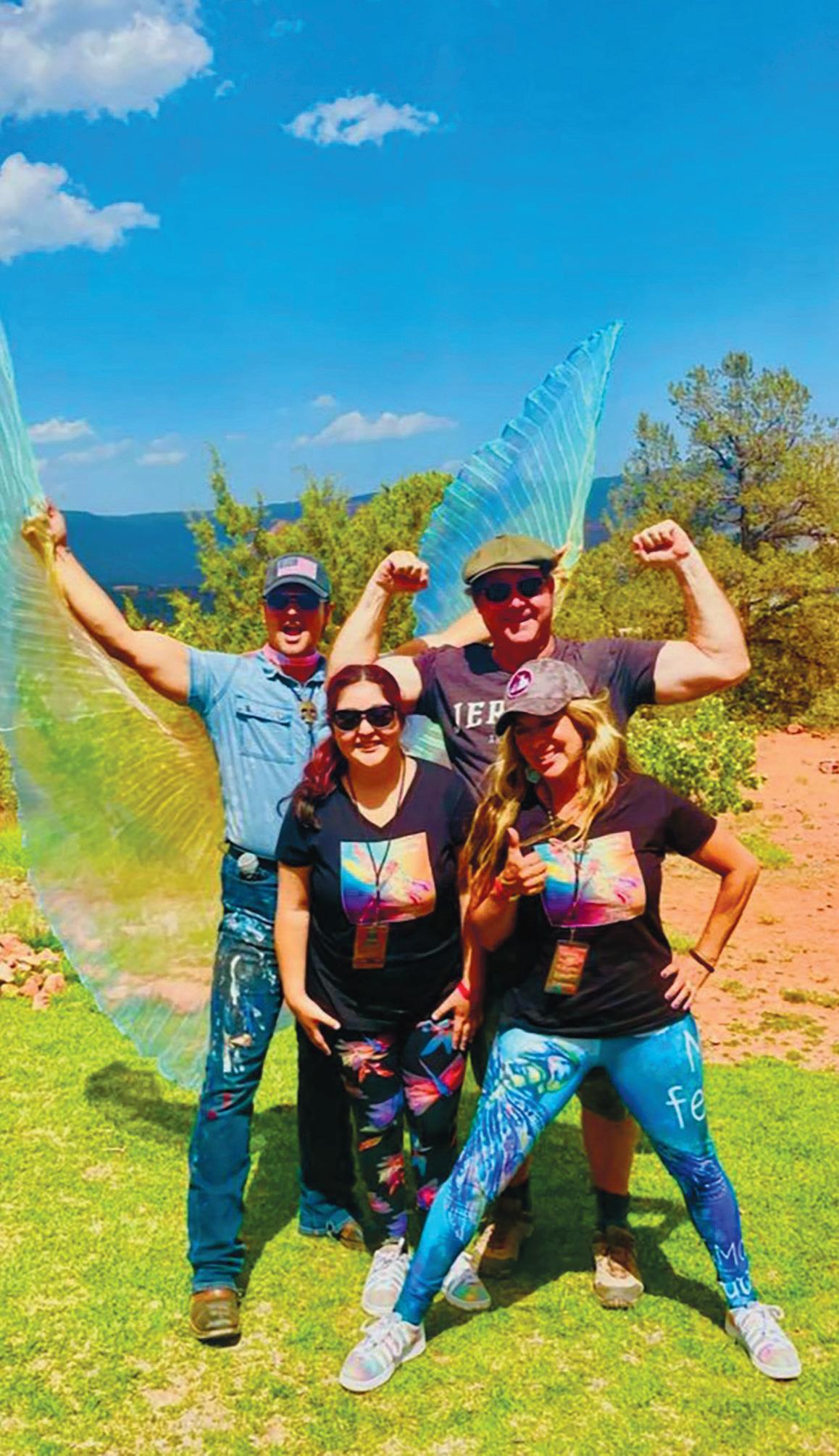
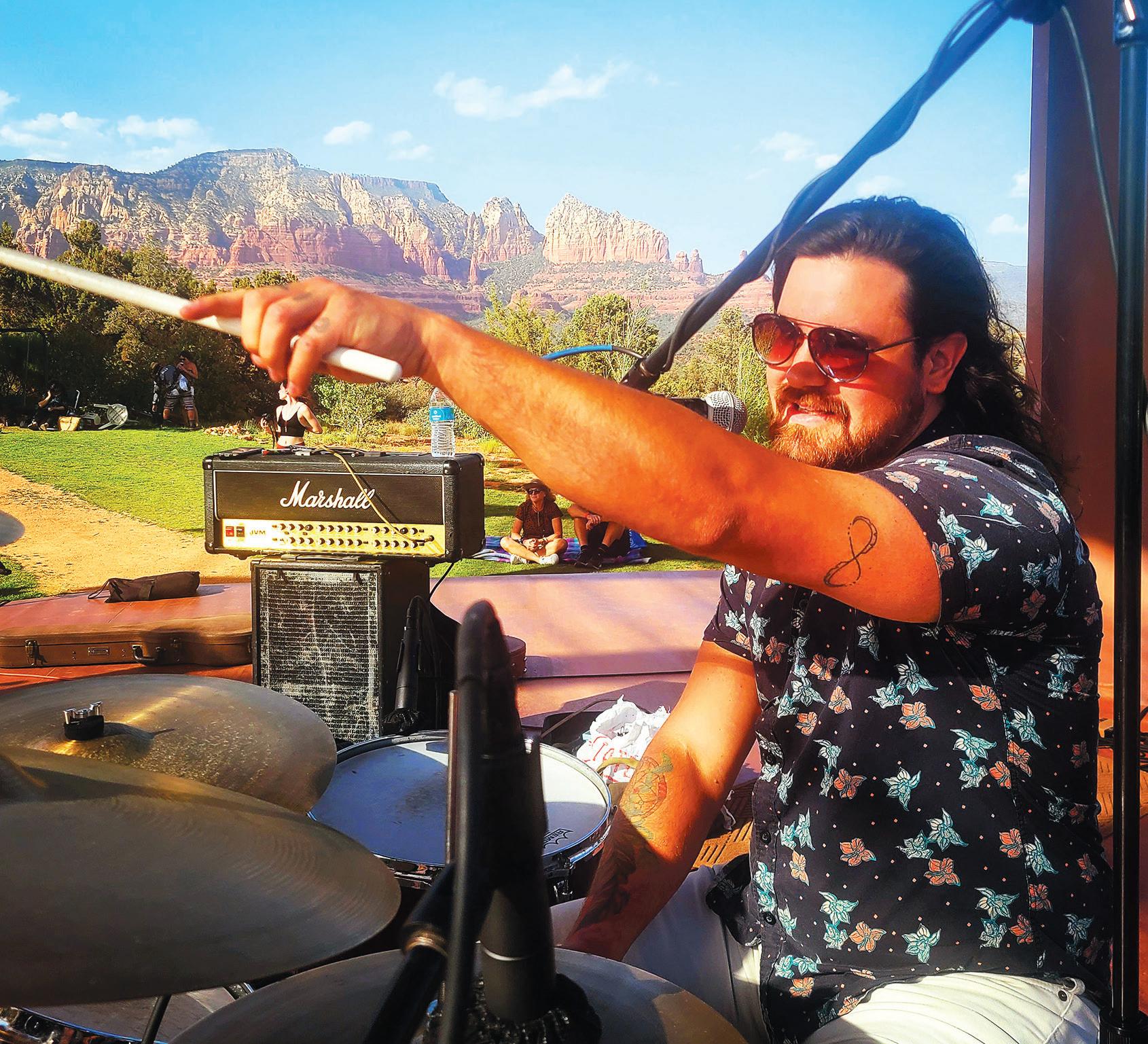
Dragonfly Sedona, 2022, with Brayen Tario of Daring Greatly.
The Dragonfly Music Festival in Sedona, Arizona, 2022.
ed live music in North County to an entirely new level. That proven partnership made the CCAE the natural home for Dragonfy Festival’s next chapter. Thanks to the generous support of the San Pasqual Band of Mission Indians, Valley View Casino, the San Pasqual Economic Development Corporation, and a passionate local arts patron, the three-day festival will transform the campus into a vibrant indoor-outdoor celebration of music. Nationally acclaimed performers, exceptional local artists, and music lovers from across the region will come together for an experience unlike anything Escondido has seen before.
For me, Dragonfy represents more than a weekend of exceptional performances- it signals Escondido’s continued emergence as a regional destination for the arts, culture and live entertainment. As the festival spreads its wings in its new home, it promises to create an unforgettable experience while adding another milestone to the city’s growing cultural legacy.
Because bringing this festival to CCAE was the brainchild of Six String Production’s Kenneth Rexrode and CCAEF’s Director of Events, Benjamin Mann, I thought I would sit down with Kenneth to fnd out more about the festival’s history and what to expect in 2026.
G: How did Dragonfy begin?
K: Emerging from the haze of COVID, the inaugural Dragonfy Music Festival took place in May of 2021 in Sedona, Arizona. After 16 months, it was a chance for both musicians and people to come together to experience a different kind of festival.
G: What makes Dragonfy different?
K: From the onset, the vision was to bring artists and people together through music and hiking. In Sedona, our mantra was “Hike by Day, Music by night” with morning hikes and music in the evenings at different venues throughout Sedona. However, the broader vision of the Dragonfy has always been to manifest new beginnings and positive energy by bringing artists together from all over the world.
Since the festival is not fxed to a certain genre its goal is to bring artists from the blues, Jazz, Soul, Pop, Rock, and World music together in one setting. Also unique to the Dragonfy is the vision to not be tethered to a certain date or venue. This has given the Dragonfy Music Festival a chance to grow organically and we feel wholeheartedly the California Center for the Arts is the perfect ft for the 2026 edition.
G: Will there be a hiking element in 2026?
K: Yes, that is always a part of the Dragonfy experience. Audience members and artists alike will share local beginner hikes such as
Daley Ranch and others highlighting Escondido’s natural beauty and assets. The opportunity to actually spend time hiking with the artists who join in on many of the hikes is one of the elements that make Dragonfy truly unique.
G: You present at venues throughout the area, why did you choose to bring Dragonfy to Escondido in 2026?
K: After last year’s successful one-day Dragonfy Festival in San Marcos, it felt like Escondido and the California Center for the Arts was the perfect landing place for 2026. Besides their world class facilities, the CCAE’s overall sense of community and spirit makes the California Center for the Arts, Escondido the perfect host for the festival.
After putting on over a dozen Six String Society shows with the CCAE since 2024 we felt we could expand on the overall vision by having the festival at multiple venues over multiple days. This year, we’ll actually have 22 musical acts performing in the Concert Hall, the beautiful new outdoor Rotary Centennial Stage along with the Lyric Courtyard.
G: What are you looking forward to most this year?
K: Candidly, I’ll say it’s the sheer scope of
the acts including some of the biggest local, national and international acts the festival has ever seen. This year’s Dragonfy Festival has attracted some of the biggest stars in the blues world including Eric Gales, Sue Foley, Ruthie Foster, and the Danielle Nicole band. Additionally, we have some great Roots music groups including The Paladins, Mitch Polzak, The Beat Farmers and the Texas Headhunters along with top San Diego bands Daring Greatly, Whitney Shay, The Sleepwalkers, Monette Marino, Matthew Phillips and several others.
We’re also very excited to bring the youth of Escondido together with our Dragonfy artistic projects along with the festival’s inclusive vision. As an example, on Friday, September 11, our outdoor concert areas will even be open to the public for FREE as we merge the festival with CCAE’s established Hidden City Sounds series! There will be something for everyone with the common thread being the love of music and community.
With Dragonfy Music Festival preparing to make its Escondido debut, it is clear that this event is about far more than three days of incredible music. It is about what happens when
Dragonfly San Marcos, 2025. With Monette Marino.
vision, collaboration and community Center for the Arts, Escondido has already transformed the region’s live music landscape, and Dragonfy represents the next exciting step in that journey.
As someone who absolutely loves mu-
sic festivals, I can hardly contain my excitement that we now have one quite literally in our own backyard. My favorite part of festivals has always been discovering an artist before the rest of the world catches on. I still remember stumbling across Gary Clark Jr. at a festival long before he became a household name. I’ve danced just feet away from artists like Train, Natasha Bedingfeld,
Trombone Shorty, Pharrell Williams, and even a young Kenny Wayne Shepherd, creating memories I’ll never forget. That’s the magic of a great festival—you come for the artists you already love, but you leave inspired by the ones you never knew existed.
Dragonfy promises exactly that: renowned headliners, tomorrow’s breakout stars, and the unforgettable moments that only live music can create.
After all, just like the dragonfy itself symbolizes transformation, this festival represents the continued evolution of Escondido as a place where creativity, connection, and the arts truly take fight.
Gina Lopez is CEO at the California Center for the Arts, Escondido Foundation. To learn more about California Center for the Arts, Escondido go to artcenter.org.
North County San Diego!
is
We are incredibly honored and humbled to announce that Side Yard Public House and The Market at Hidden Meadows have been recognized with Gold (First Place) honors in the Best of North County San Diego awards!
With Hundreds of Thousands of votes cast throughout North County, being nominated alongside so many outstanding local businesses was an honor in itself. To earn multiple Gold Awards is something we could never have achieved without the incredible support of our customers, friends, family, and community.
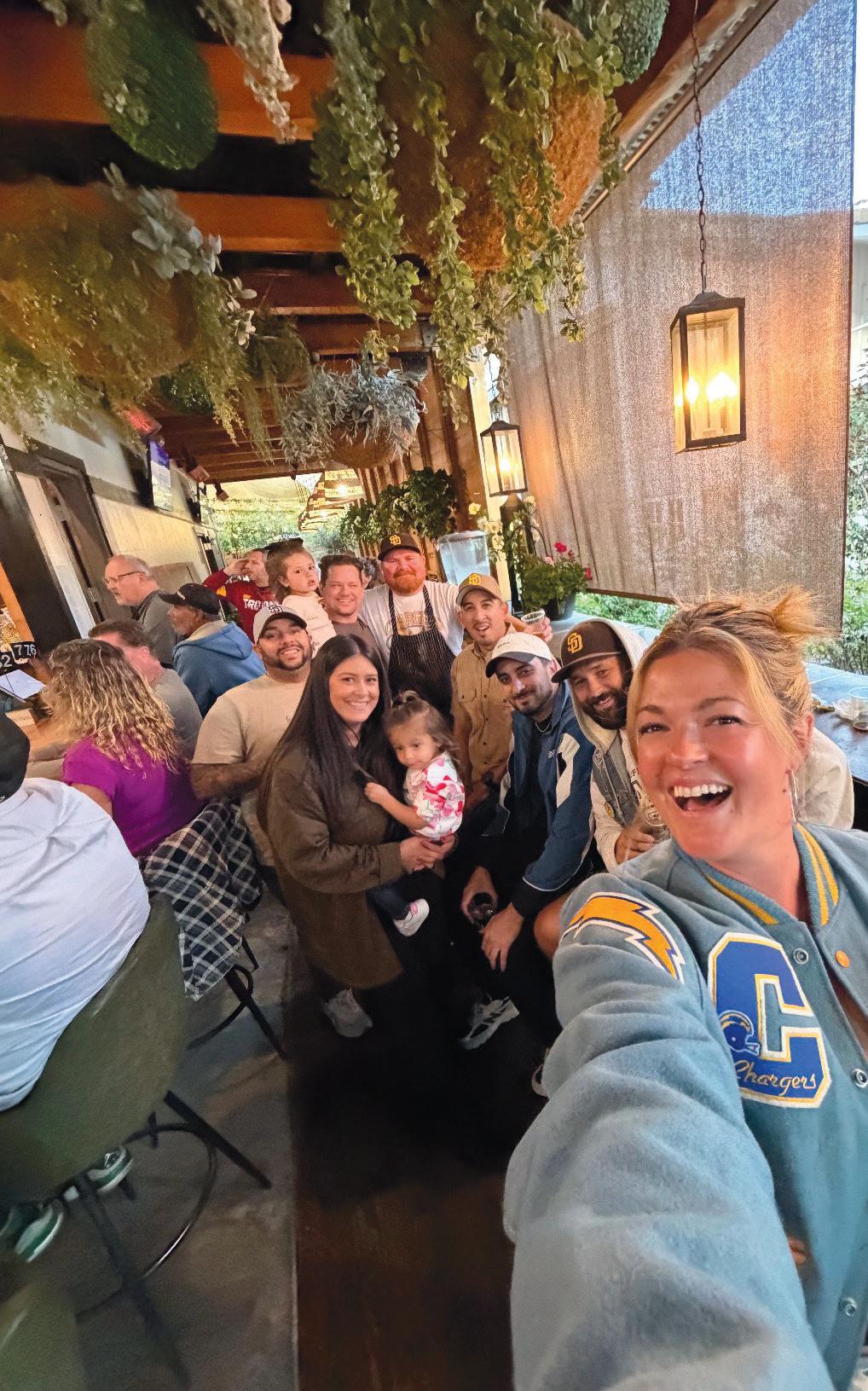
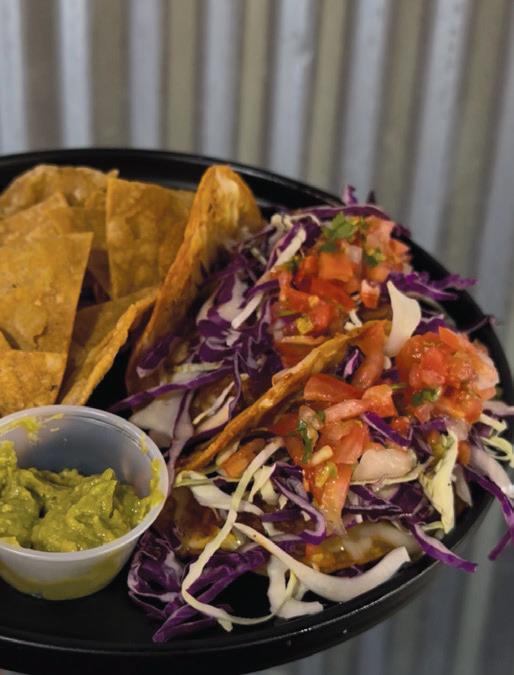
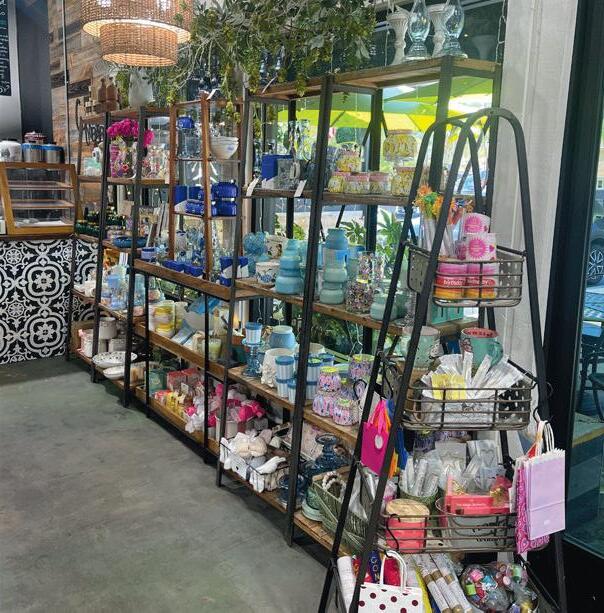
Although we’re two separate businesses, we’re truly one destination. Located side by side, many of our guests enjoy lunch, dinner, drinks, and live entertainment at Side Yard Public House, then wander next door to The Market at Hidden Meadows for handcrafted co ee, fresh deli favorites, gourmet treats, unique gifts, and so much more. Others begin
Escondido brewery features ghting competitions
BY MICHAEL HOWARD PHOTOS BY MIKE HOWELL
What began as a homebrewing hobby rooted in historical reenactment has grown into a two-location brewery that recently celebrated its third anniversary with beer releases, live music, food vendors and armored combat demonstrations.
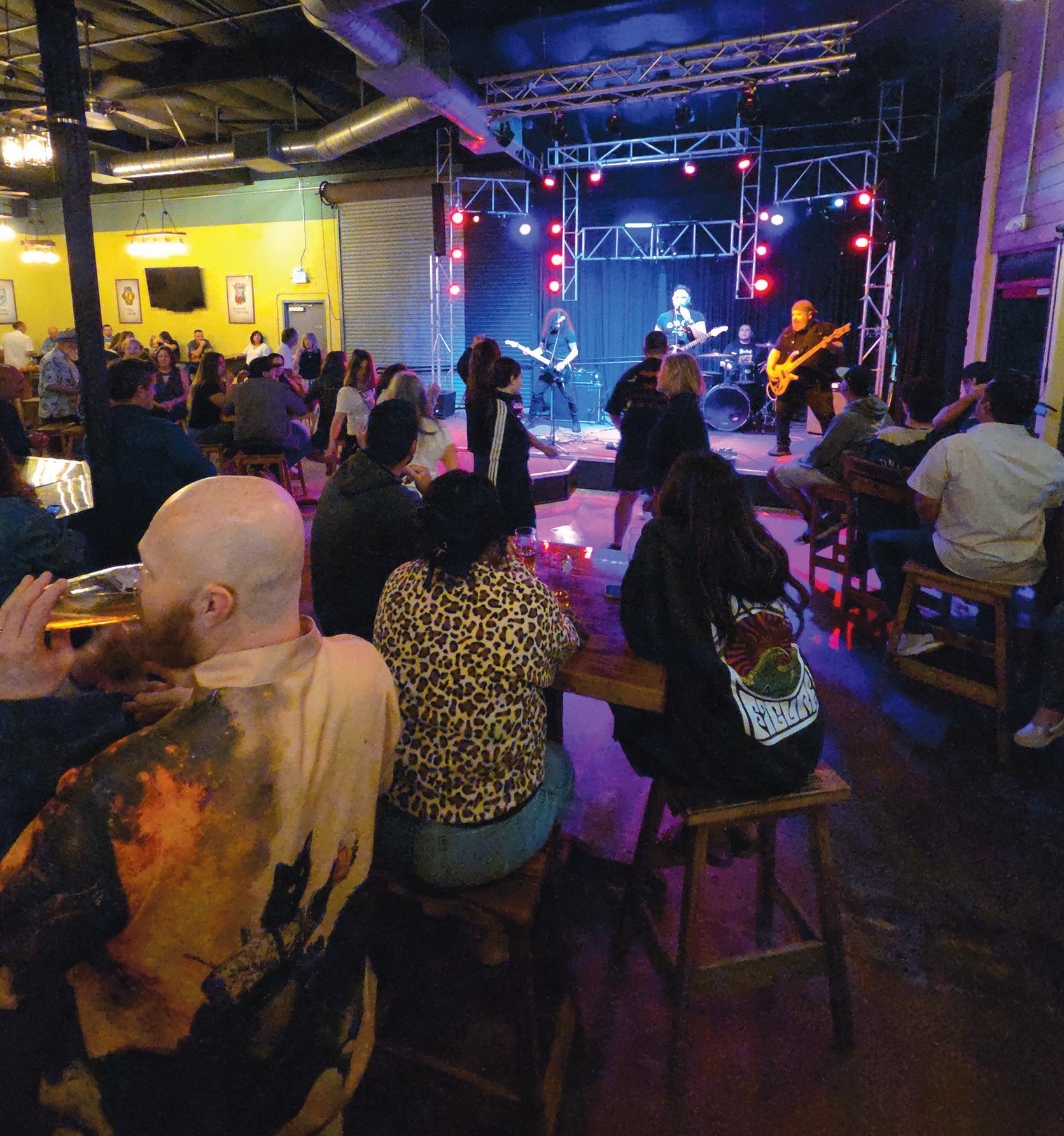
Barley and Sword Brewing Co. marked three years in business on June 13 with events at both its North Park and Escondido locations. Including what owner and brewer Mike Howell describes as a cele-
bration of the brewery’s unique focus on traditional European beer styles.
“Barley and Sword is kind of a departure from your typical breweries in and around Southern California,” Howell said. “We focus and specialize on old world and traditional style beers.”
Unlike many craft breweries that frequently rotate experimental offerings, Howell said Barley and Sword emphasizes consistency and historical brewing traditions.
“The old world style beers are going to be the classics,” he said. “The stuff that you would walk into an English pub or a German beer hall and fnd as opposed to focusing on innovation and what’s known as rotation nation when it comes to a new beer every week type thing.”
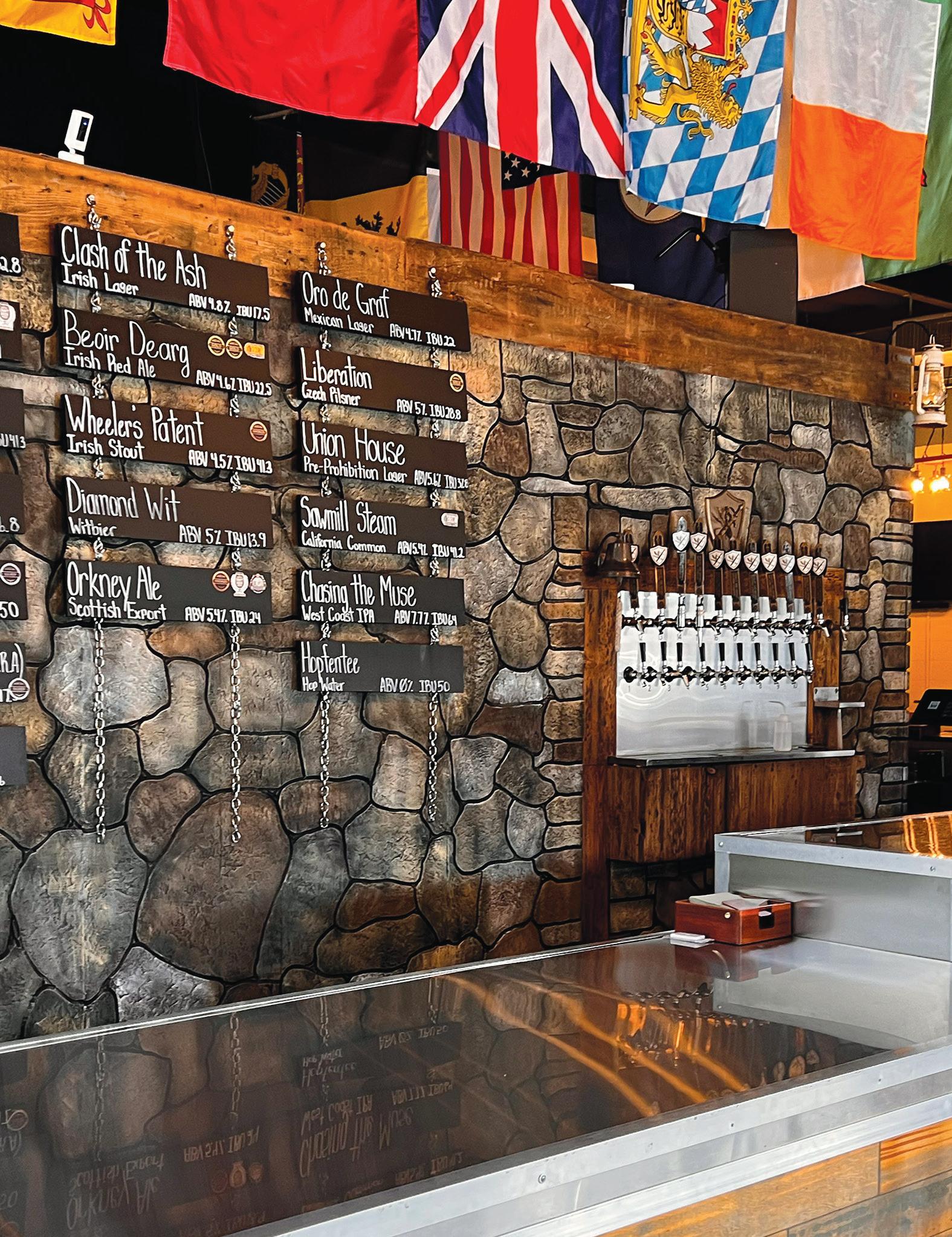
The brewery’s lineup includes an Irish Red Ale, Bavarian Hefeweizen, Irish stout, English pale ale, Czech pilsner, English
The beer tap line-up at Barely and Sword in Escondido.
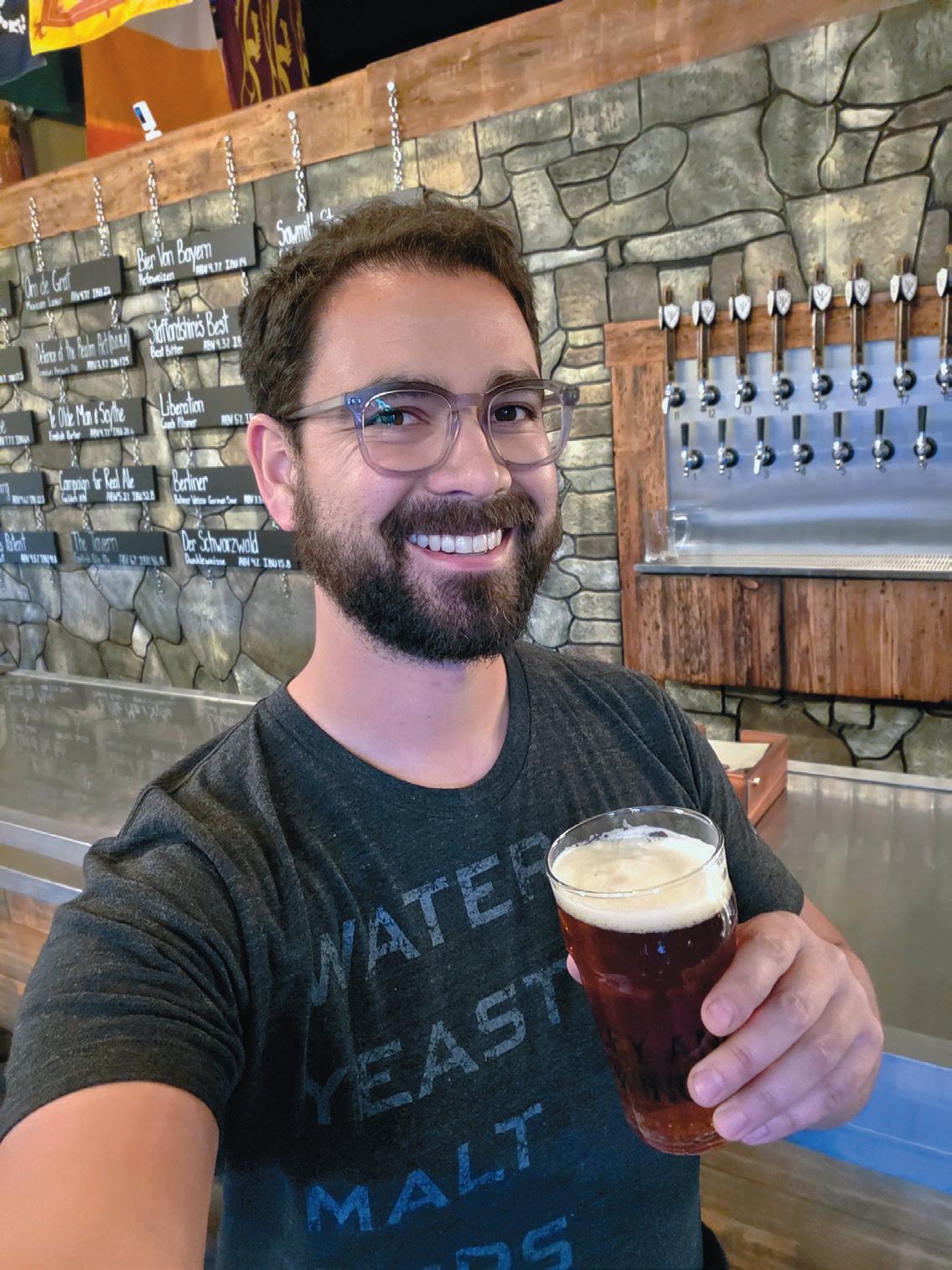
Mike Howell, proprietor of Barley and Sword in Escondido enjoys a cold one.
porter and traditional bitters.
“My number one beer is my Irish Red Ale, which is also my number one awarded beer,” Howell said.
Barley and Sword also offers traditional cask ale, a serving method rarely found in modern San Diego breweries. That’s when they store the still fermenting beer in a cask at a strategic time in its brewing cycle so carbonation forms naturally.
“Barley and Sword is one of the few breweries in San Diego that regularly offers cask ale,” Howell said.
The brewery’s historical theme traces back to Howell’s early interest in Viking-age living history. He began brewing mead, a honey wine, in 2010 while participating in and eventually founding a Viking reenactment group.
“I found myself thoroughly enjoying kind of touching history, recreating history, and then doing a lot of education associated with that in the living history that I was doing,” Howell said. Beer became another way to connect with the past for Howell.
“When you think about it, the act of mak-
ing beer is one of the oldest activities in modern civilization,” he said. “It’s a really cool thing to be able to make something with your hands and go through a process that humans have been doing for thousands of years.”
The idea of opening a brewery moved from dream to reality after Howell brewed one of his recipes at a brewery in eastern Oregon, where a cousin worked as a brewer.
The experience rekindled his enthusiasm. Shortly after returning home, he discussed the idea with friends during a Dungeons & Dragons gathering.
“In a matter of minutes, it went from just a story to, ‘All right, let’s do it,’ ” Howell said. “Three weeks later, we had an LLC and a month and a half after that, we had the lease.”
The brewery opened three and a half months after that.
Historical infuences remain visible in both brewery locations. Viking shields from Howell’s reenactment days hang on the walls. Including one that bears battle scars
from combat demonstrations.
During the three year celebration for the pub one of the featured attractions was armored combat demonstrations presented by Ordo Draconis, a Buhurt organization specializing in medieval-style competitive fghting.
“Take MMA, but give them steel armor from head to toe,” Howell described it. “Give them swords, axes, and other weaponry, dulled, but still weapons. And put them in a ring and they fght.”
Howard likes to describe his business as “a pub for the ages,” Howell said. “There’s little pieces of everything from throughout history.”
After establishing itself in North Park, the company expanded to Escondido, opening its second location March 17 at 800 West Grand Ave.
The North Park location provided valuable exposure but presented limitations. The taproom holds only 48 people and has restrictions on live entertainment. The Escondido site offered signifcantly more space.
“Now we have, not only a tap room that’s four times the size, we also have an event space. We have two patios. We have our own parking lot,” Howell said. “And then I have a brewing space that is bigger than my entire leased space in North Park.”
The brewery also plans to release a new anniversary beer and offer commemorative shirts and glassware.
Regarding future events: “We likely won’t be having the Knight Fights again this year. We’re evaluating the cost/beneft of hosting the fghts,” Howell said. “We do plan on a big Oktoberfest event as well as hosting Punk Rock Saves Christmas in December.”
Looking back on the brewery’s frst three years, Howell expressed appreciation for customers who have supported the business in San Diego’s competitive craft beer market.
“We are incredibly grateful to all of the people that have supported us,” he said. “Even though it’s been kind of an uphill slope in this battleground of beer that is San Diego.”
Howell reserved special praise for the brewery’s Escondido community. “To Escondido specifcally, we are absolutely thrilled and amazed by the welcome reception that the city and her people and community have given us,” he said
Live music at a recent night at the Barley and Sword in Escondido.
Re ections on My Term as Chair of the Escondido Chamber of Commerce
BY KAY BATES, OUTGOING CHAIR, BOARD OF DIRECTORS | ESCONDIDO CHAMBER OF COMMERCE
As I refect on my term as Chair of the Escondido Chamber of Commerce, I am flled with gratitude, pride, and optimism for the future of our community.
Serving as Chair has been one of the greatest honors of my professional and personal life. Throughout this past year, I have had the privilege of working alongside an incredible Board of Directors, dedicated Chamber volunteers, business owners, elected offcials, and community leaders who all share a common goal: making Escondido a thriving place to live, work, and do business. When I accepted the role, I knew it would require commitment, collaboration, and a willingness to tackle challenges. What I did not fully anticipate was just how inspiring it would be to witness the passion and resilience of our business community. Time and again, I saw local businesses step up, support one another, and invest in the future of our city.
One of my priorities as Chair was strengthening relationships throughout the community. I frmly believe that lasting success comes from bringing people together, listening to different perspectives, and fnding common ground. Whether working with local businesses, nonprofts, educational institutions, or city leadership, I focused on building partnerships that would beneft Escondido for years to come.
I am especially proud of the Chamber’s continued efforts to support
local businesses through networking opportunities, advocacy, educational programs, and community events. These initiatives not only help businesses grow but also create a stronger and more connected community.
This year was not without its challenges, but challenges often create opportunities for growth. Together, we navigated important conversations, strengthened organizational processes, and continued to move the Chamber forward while remaining focused on our mission of supporting business and economic vitality.
Personally, this year also reminded me of the importance of perseverance. While facing health challenges of my own, I experienced frsthand the power of community support. The encouragement I received from Chamber members, colleagues, friends, and family reinforced why organizations like the Chamber matter so much. They bring people together not only in times of success but also during life’s most diffcult moments.
As I conclude my term, I want to thank every Chamber member, volunteer, sponsor, board member, and community partner who contributed their time, talent, and resources. The accomplishments of this year belong to all of us.
Although my role as Chair is ending, my commitment to the Chamber and to the City of Escondido remains as strong as ever. I look forward to continuing to serve our community, support local businesses, and help create opportunities for future generations.
Escondido is a remarkable city with remarkable people. Its future is bright, and I am excited to see what we will accomplish together in the years ahead.
Thank you for allowing me the privilege of serving as your Chair.
ESCONDIDO MUSEUMS
Where wonder takes root
Walk through the doors of the Children’s Museum of Discovery on any given morning and you’ll fnd it: a four-year-old, eyebrows furrowed in serious concentration, engineering a tower three times her own height. A toddler shrieking with delight as a scarf shoots ten feet into the air. A bilingual educator leading a group of frst-graders in a STEM (Science Technology Engineering & Mathematics) challenge while a parent nearby watches her child problem-solve for the very frst time. This is what early childhood education looks like when it’s done right. And for more than two decades, it’s what the Children’s
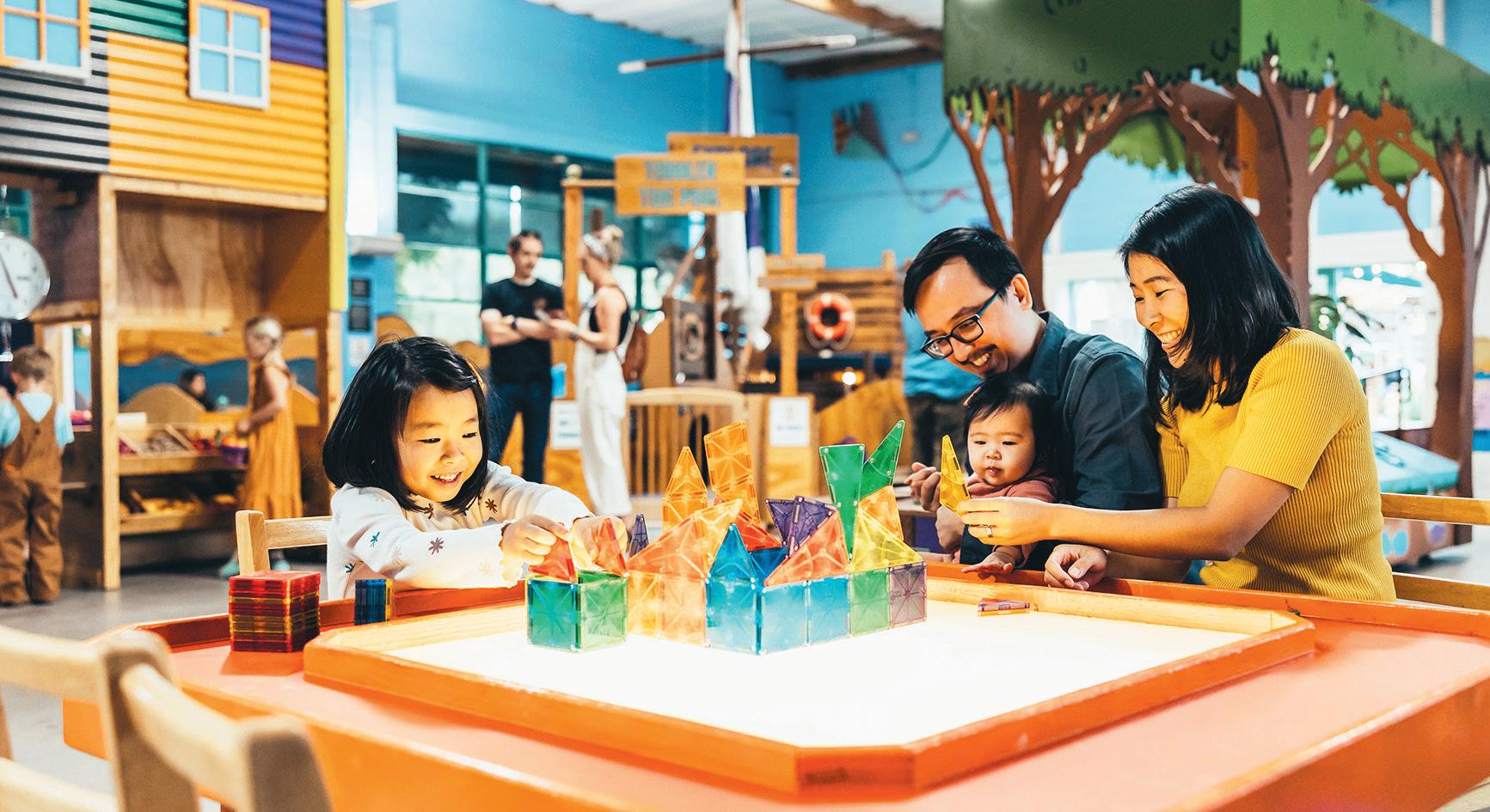
Children’s Museum of Discovery is a gathering place for a community that believes in its children.
Museum of Discovery has been delivering to the families of Escondido and greater San Diego County.
Founded in 2000, the Museum has grown into one of the region’s most vital early learning institutions. Its hands-on exhibits and educator-led programs are intentionally designed around STREAM (science, technology, reading, engineering, art, and math) principles woven together with social-emotional learning and the irreplaceable power of play. Children who visit aren’t just entertained; they’re developing the cognitive and social foundations that research consistently links
to long-term academic success.
The numbers behind the museum are striking. In the last year alone, the museum served 102,480 children and families. Their team logged 5,777 miles across San Diego County bringing the Mobile Children’s Museum to schools, reaching 11,307 children who might never have set foot in the building on North Broadway. New this year: weekly Spanish bilingual programming, a summer camp for four- and fve-year-olds, and a brand-new exhibit celebrating Indigenous culture. ADA-powered entry doors were also installed, a quiet but meaningful signal that
Adults have fun too at the Children’s Museum of Discovery.
the Museum’s commitment to access is more than rhetoric.
That commitment has a name: Access for All.
In a county where one in three children lives in poverty, and where national research shows that half of low-income children arrive at kindergarten without the academic or social readiness their peers have, the window between birth and age fve is everything. It is the single most powerful period for cognitive and emotional development; and it’s the window the museum has committed to keeping open for every child, regardless of their family’s fnancial status.
Through Access for All, families who carry an EBT, SNAP, or WIC card can visit for just $2. Active-duty military and veterans receive $10 admission. Last year, 23,674 families came through the door because of that initiative, and they didn’t come just once. Thanks
to philanthropic support for annual memberships, those families visited an average of nine times each, returning again and again to a place that felt like it was built for their children.
Because it was.
“The Access for All program lives within the very core of our mission. We believe every child deserves the chance to discover who they are as a learner, a creator, and a problem-solver. When a family walks through our doors nine times in a year, we know something powerful is happening. That child is building more than skills. They’re building a sense of belonging, and a belief in themselves that will carry them far beyond these walls.”
—Christina
Piranio, Chief Executive Offcer, Children’s Museum of Discovery
Access for All is not simply a discounted ticket program. It is a statement of values: that a child whose family faces fnancial barriers deserves the same spark of curiosity and wonder as any other child. That early education is a right, not a privilege. That museums, at their best, are pillars of the community where every child deserves to belong. The Children’s Museum of Discovery has set a high bar for what that looks like in practice.
On Saturday, August 29, the museum invites the Escondido community to come together and keep that bar high.
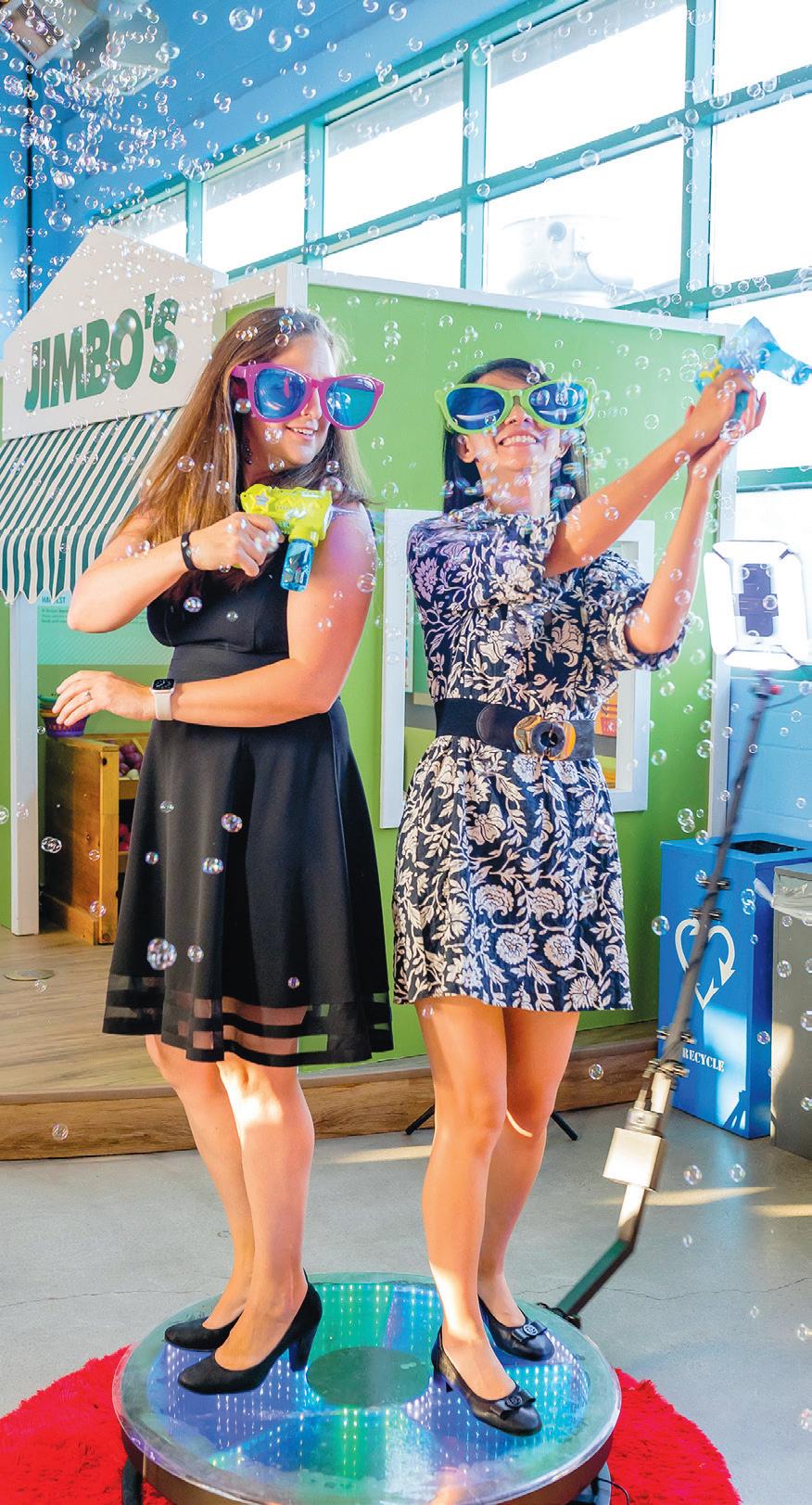
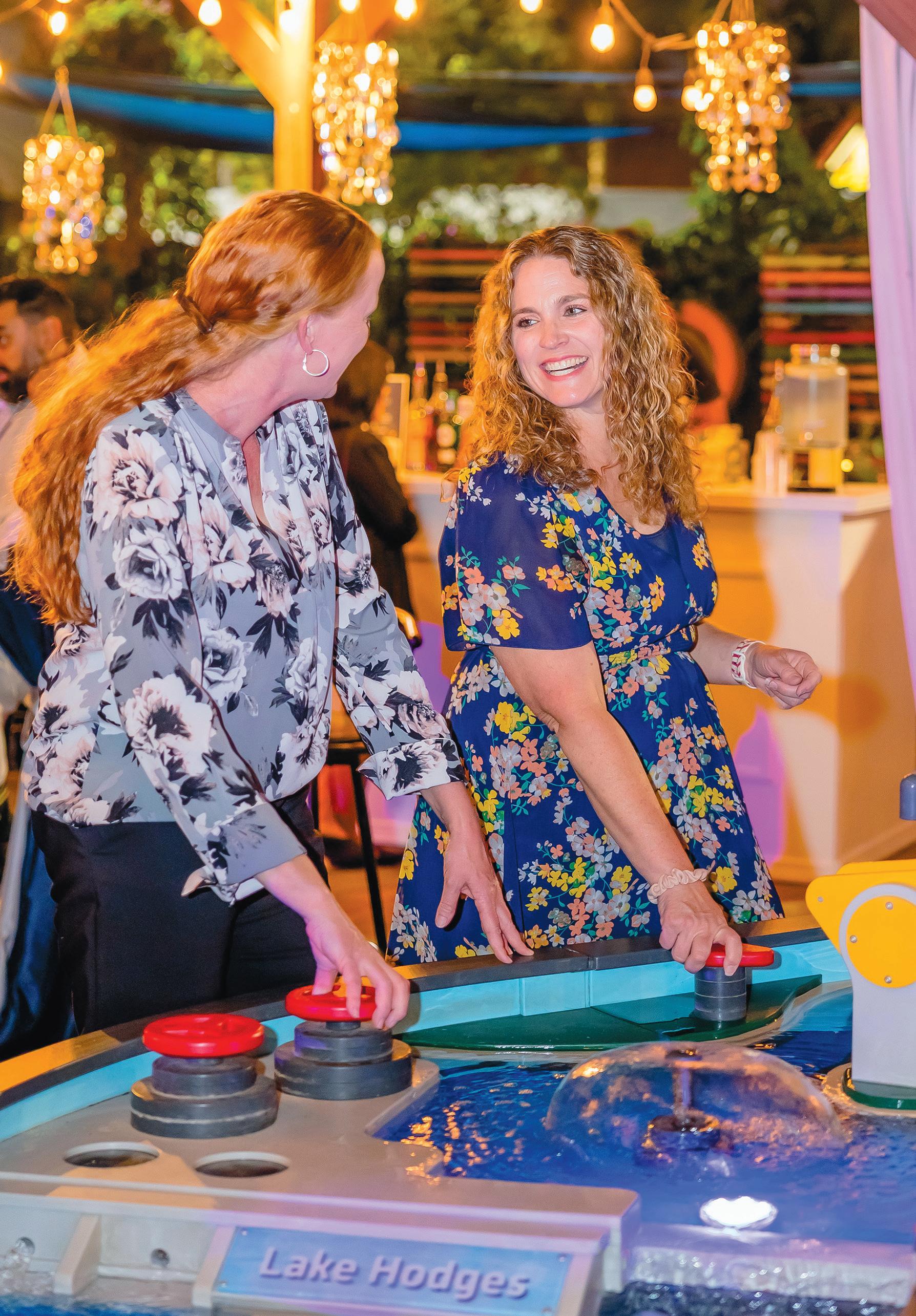
Ignite Their Spark, the Museum’s annual fundraising gala, returns for an unforgettable evening. Guests are invited to mix, mingle, and actually play, navigating through the Museum’s interactive activity stations designed
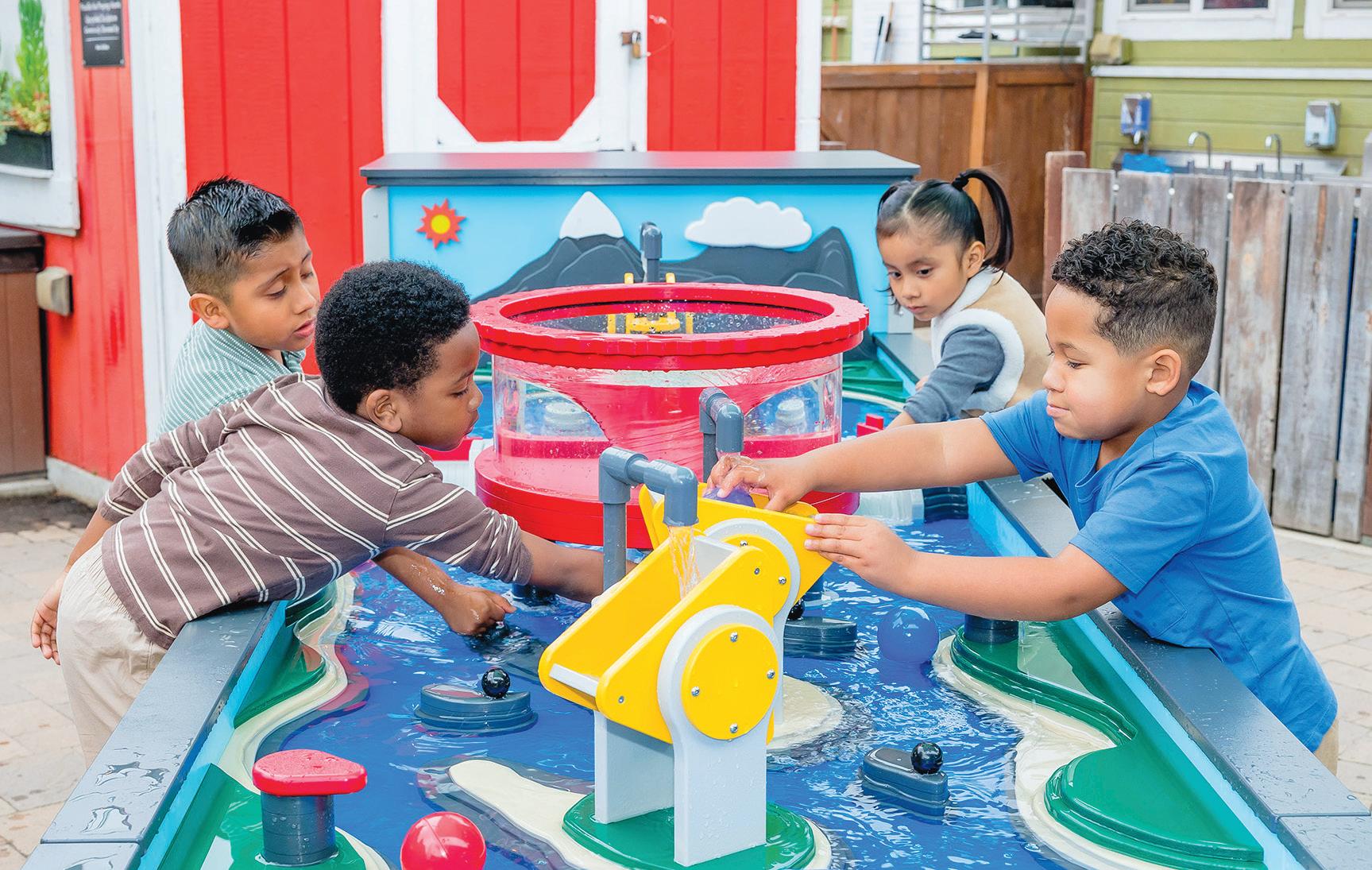
Hands-on exhibits like the Water Ways Table, teach about sustainability.
The Museum is one of the region’s most vital early learning institutions.
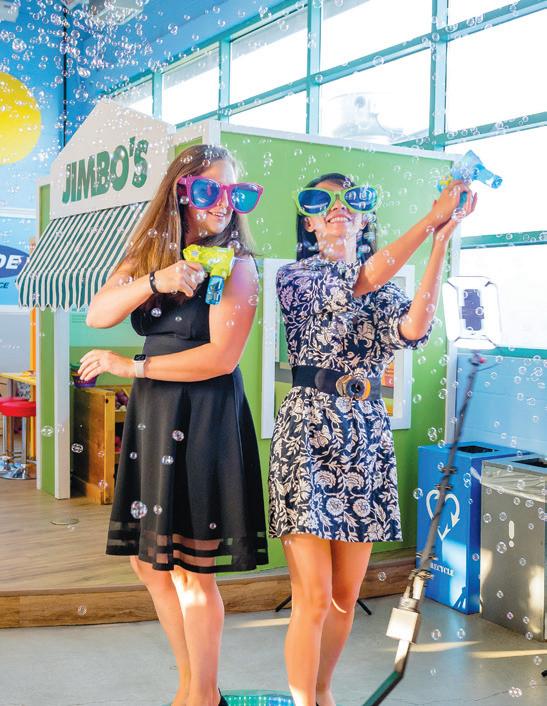
The museum activities are designed to spark curiosity and wonder.
to spark curiosity and wonder. Hand-crafted cocktails, courtesy of Snake Oil Cocktail Co., will keep the evening lively, while Harvest Kitchen’s artisan hors d’oeuvres stations offer a build-yourown strolling dinner experience.
At 8 p.m., the evening shifts into something more meaningful: a Stories of Impact program that puts faces and voices to the numbers, featuring a local Escondido family whose story of grit and determination made it to the museum fueled by the belief that play is transformational.
All proceeds from Ignite Their Spark beneft the Access for All initiative directly. Every dollar
raised translates into another family who can say yes to a morning of discovery, exploration, and imagination without hesitation.
The Children’s Museum of Discovery has never been just a building full of exhibits. It is a gathering place for a community that believes in its children. Ignite Their Spark is an evening to celebrate that belief, and to ensure it endures.
Ignite Their Spark takes place on Saturday, August 29, from 6 to 9:30 p.m. at the Children’s Museum of Discovery located at 320 North Broadway, Escondido. For tickets and information, visit visitcmod.org/IgniteTheirSpark.
Furniture making, says Brian Murphy is ‘both an art and a craft’
BY DAVID ROSS
Making furniture is “both an art and a craft,” says master furniture-maker Brian Murphy of Escondido. “I like to think it is an art frst and craft second.” Which is appropriate, since the style of furniture he prefers to make is the “Arts & Crafts” style that fourished from 1880–1920.
That style, which is both simple and elegant, says Brian, evolved among Americans who needed to furnish their homes but didn’t have a lot of money to do it.
His interpretation of “Arts & Crafts” modernizes it with softer lines and curves that are less austere.
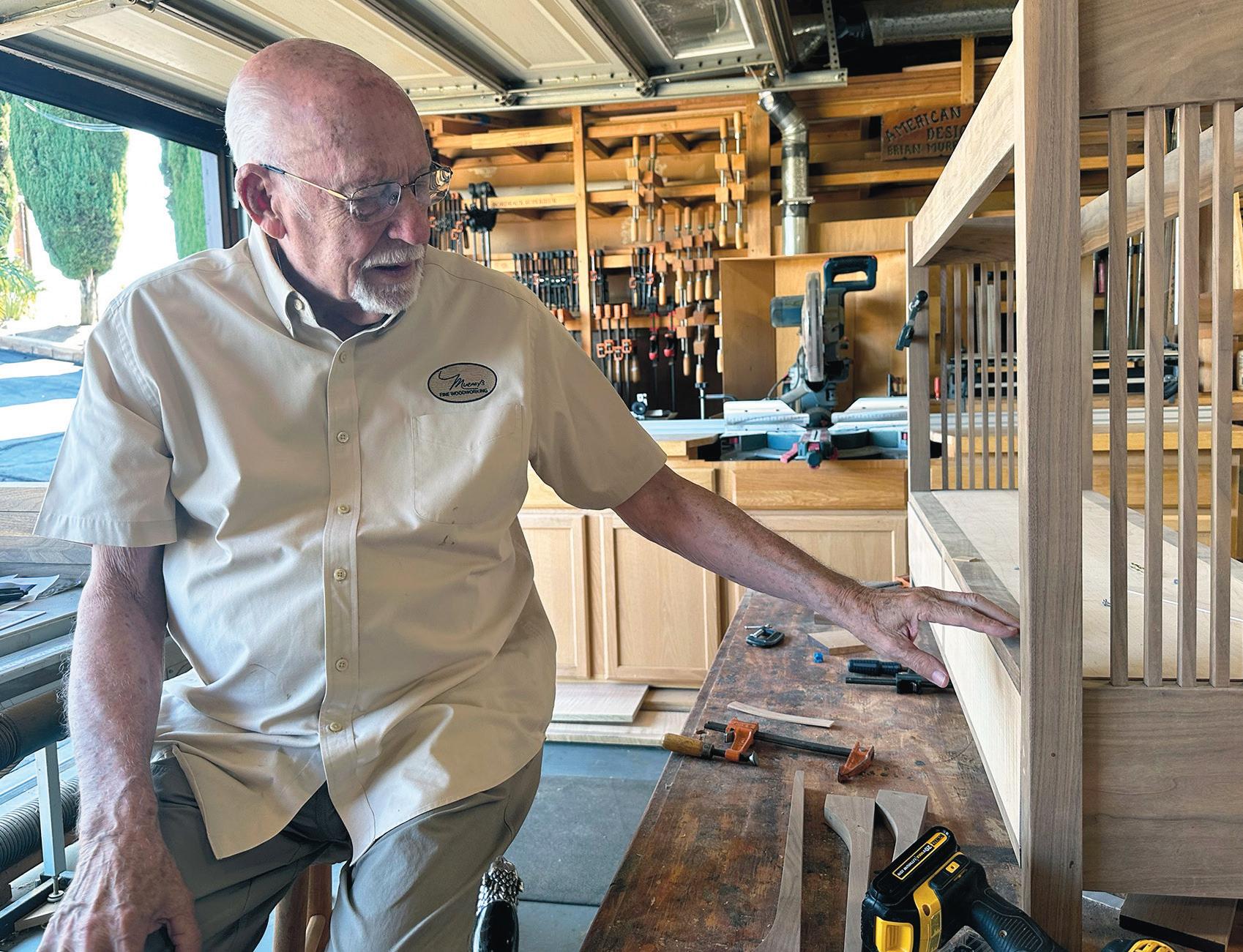
Murphy is the proprietor of Murphy’s Fine Woodworking. As his brochure proclaims: “Each piece is built, from scratch, by the hands of a single, dedicated craftsman, and then
ESCONDIDO BUSINESS
A living room and dining room of Brian Murphy furniture.
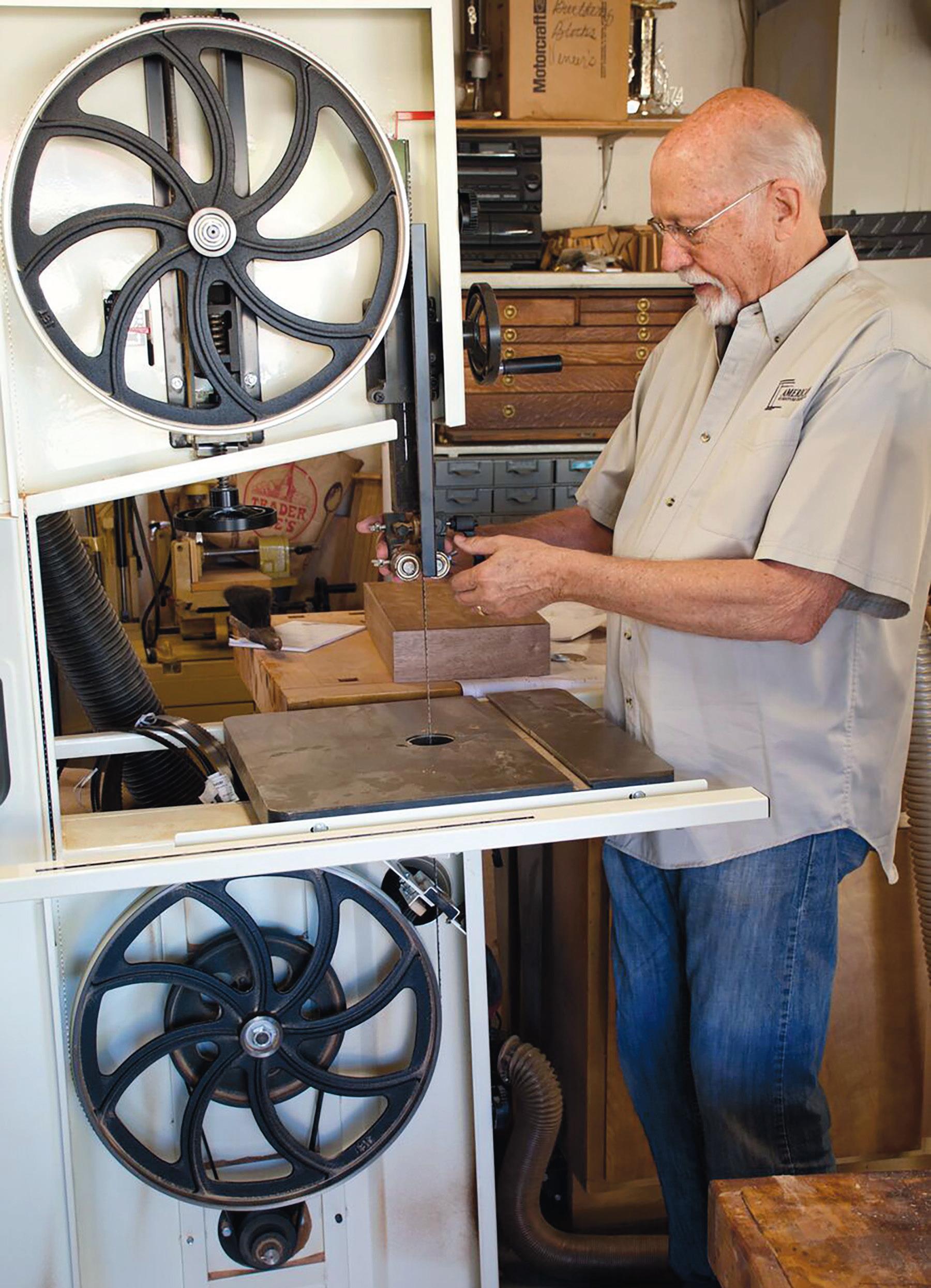
Brian Murphy and one his pieces—which can often take months to complete.
signed and dated.”
Murphy has been involved in furniture building since he was a boy helping his dad with projects. He is still doing it at age 85, although admittedly not to the extent he once did.
He started American Furniture Design and Murphy’s Fine Woodworking over 35 years. He sold the former in 2017 to Lee Valley Tools in Canada.
In the 1980s he owned the “Cutting Edge” chain of furniture stores and American Furniture Design was the 3rd largest woodworking plan company in the states. Recognized as a leader in the Arts & Crafts design discipline, his pieces can be found in galleries from Muncy, Pennsylvania throughout the country.
In 2015 he was awarded the Escondido City Award for “outstanding contributions to the arts.” In 2020 Assemblywoman Marie Waldron awarded him a Certifcate of Recognition. He was chairman of the Escondido Chamber of Commerce 2012-2013 and served on the Escondido Public Arts Commission, from 2004-2020, which he chaired 2014-2019.
He still makes about 10-12 pieces a year. In earlier years he had assistants, but today it’s just him in his garage workshop.
His “process” is “to always design for the customer’s need,” he says. That is unlike the Frank Lloyd Wright school of architecture, where the customer’s needs and desires were secondary to the art.
“Doctors, lawyers, Indian chiefs—I’ve done them all,” says Murphy. “I get a great deal of pleasure knowing I helped someone furnish their home. I love what I do but as I get older I do turn work down.”
Which is probably just as well, since he’s not cheap. But working in a medium that gives him so much pleasure, may explain why he has lived so long, he muses.
Sixteen years ago Murphy founded “Wood: a Furniture Design Show,” based in Escondido, which has increased the number of entries each year until this year there were “seventy-six gorgeous pieces,” as he refers to them. This contest gives encouragement to the region’s many great furniture makers, and helps to create something like a “farm team” that aims pieces to the competition at the San Diego County Fair every summer.
He created this competition hand-in-hand with the San Diego Fine Woodworking Association, the largest woodworking club in America—which he helped to found in the 1980s.
The woods he likes to work with are the white and red oak. “I really like the quarter sawn format,” he says. “Next is cherry as it ages so great—followed by walnut . Then there is curly maple. It is very tough to fnd nice stuff in Southern California, but I have a deal with Strata Forest Products in El Cajon when they have great pieces they call me!”
He uses the fnest hardwoods and traditional joinery techniques to build pieces of rare quality.
He notes one thing with quiet pride: “For the past 16 years Nancy and I have donated one of our chairs to the EAP’s annual auction Panache.. This is their major fund raiser for the year. So there are 16 special chairs foating around.. Just part of the 200 that we have made…”
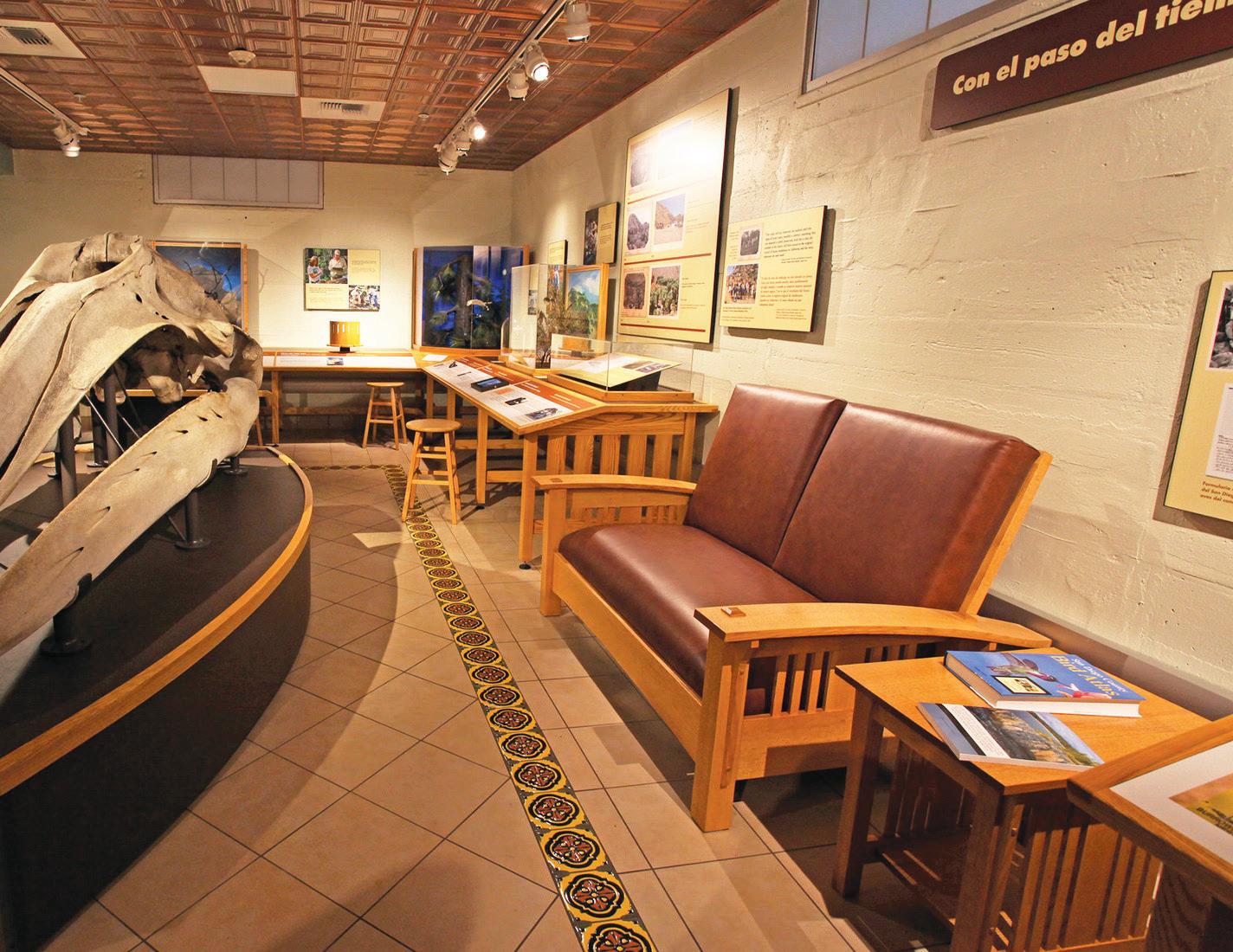
A loveseat created by Brian Murphy at the San Diego Natural History Museum.
Artist and craftsman Brian Murphy in his workshop “where it all happens.”
ESCONDIDO
BUSINESS
California rooftop solar has changed— and
so must the way we think about it
BY PEY SHADZI, CHIEF OPERATING OFFICER, COSMIC SOLAR & ROOFING
For years, rooftop solar in California was a straightforward fnancial decision for homeowners: install panels, send excess energy back to the grid, and watch their meter spin backwards and see their electric bill shrink dramatically. That model worked under earlier policies like Net Energy Metering (NEM) 1.0 and 2.0, which paid homeowners near-retail rates for the energy they exported.
But that era is now over.
In April 2023, California fundamentally reshaped the solar landscape with the introduction of NEM 3.0 (offcially called the Net Billing Tariff). The change didn’t eliminate the value of solar—but it completely changed how that value was created.
The biggest shift is simple but powerful: utilities now pay less for excess solar energy sent to the grid. In practical terms, this means the old system of oversizing a solar system and selling excess energy back to the grid no longer exists. Export compensation dropped by roughly 70–80% compared to previous programs, however, it still makes fnancial sense to go solar because the utilities keep raising their prices.
Under the previous system, solar was about production: Gener-
ate as much energy as possible and export the extra back to the grid. Under today’s system, solar is about control: Use as much of your own energy as possible—and use it at the right time. Because electricity is now worth very different amounts depending on when it’s used or exported. Midday solar power—when panels produce the most—is often worth very little. Evening power—when demand is high—is worth much more. Most solar systems now include smart batteries which store your excess energy and then use it when electricity rates are the highest. Under NEM 3.0, batteries are no longer a luxury add-on—they are a core part of a fnancially optimized system.
Batteries allow homeowners to store excess solar energy during the day, and export it during peak evening hours (typically 6-9 p.m.). Homeowners use their own solar power instead of buying from the electric company’s grid. That helps them achieve a 70-90% bill reduction. In some cases, batteries can even enable “day-one savings,” where system payments are lower than prior electric bills. Batteries also provide whole-house backup power during electricity outages, reduce dependence on rising utility rates, and gives homeowners greater control over household energy.
California homeowners now need to think beyond solar panels and start thinking in terms of Integrated Energy Systems: solar generation, battery storage, time-of-use rate optimization, and smart energy management (Electric vehicles, electric appliances, and heat pumps). State regulators made this shift for a few key reasons. It reduces cost burdens on non-solar customers, better aligns solar exports with grid needs, and encourages distributed storage, which helps stabilize the grid. It is not only more economical for the homeowner but it also rewards grid-supportive behavior.
The new playbook for homeowners is the expiration of the residential 30% Federal Investment Tax Credit at the end of 2025. Today, that direct tax beneft is gone for homeowners, but the solar industry hasn’t lost the incentive. It restructured how it’s delivered. Now it belongs to whoever owns the system. The ITC expired for homeowners, but not for the commercial market. If a third party who is eligible for the tax credit purchases the solar system (temporarily) they can claim the tax credits and then pass the value back to the homeowner through lower costs or payments.
What is now available is these Power Purchase Agreements, and Solar Leases are still available. The PPAs are “no-money-down” models that a third party owns the system. The homeowner pays for the electricity it produces, and the provider claims the tax credit. How it works is that the third party owns the system for the frst 5 years, and the value of those credits is passed on to the homeowner as a discount (typically 30-40%). After the initial period, ownership is passed on to the homeowner. The advantages are that many people didn’t pay tax-
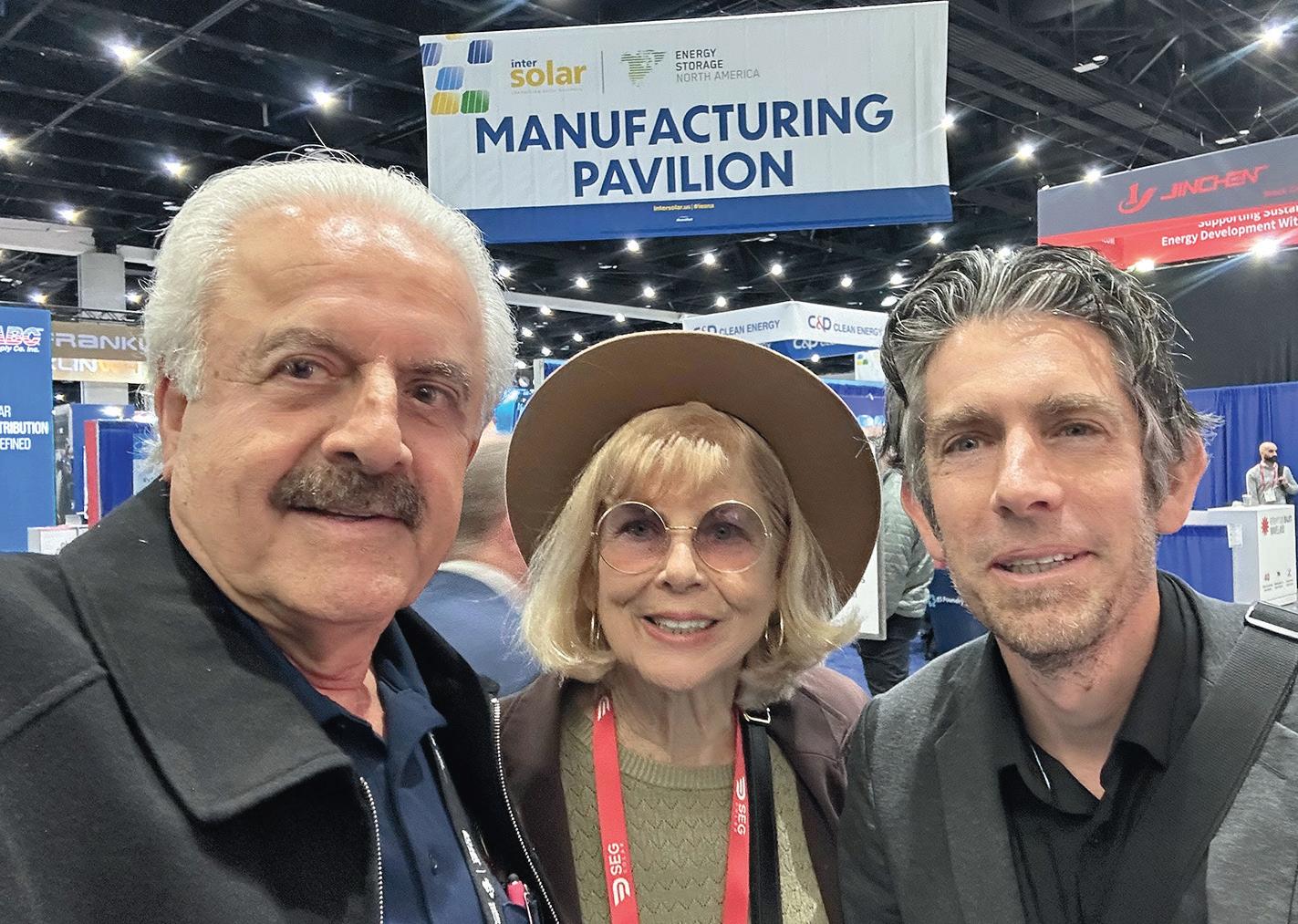
Bahram, President, Judith, VP, and Pey Shadzi, COO of Cosmic Solar, at Inter-solar Convention at San Diego Convention Center.
Roof-top solar system in Rancho Santa Fe.
es so they were not eligible for the tax credit, so now it is no longer reliant on personal tax liability. The customer gets an immediate discount, they fnance less and there is eventual ownership. In effect, this creates the old ITC beneft for them, even if they do not pay federal taxes. The fnancing company claims the tax credit on their behalf and passes the savings on to the homeowner without having to wait until they fle their tax return. So, in conclusion, the new strategy of Integrated Energy Systems is similar to or even better than the old ITC adjusted cost. A $30,000 system can effectively cost closer to $21,000 after embedded incentives. Many homeowners see immediate positive cash fow. The expiration of the 30% ITC didn’t kill solar—it forced innovation. This may be the best time ever to go solar. The cost of electricity keeps rising and the cost of installing solar and batteries continue to go down, creating the best environment for saving energy bills and achieving energy independence.
The homeowner needs to fnd a reputable solar company that is knowledgeable about the right fnancial strategies for the Energy Integrated System that would be the best for them. Any questions can be directed to Cosmic Solar & Roofng at cosmicsolar.com or call at (760)749-1111.
ADVANCING ETHICS
CULTIVATING COLLABORATION
Pey Shadzi on a discussion panel for Franklin Battery Storage.
ESCONDIDO ARTS
Art, heart and hope: How Suzanne Nicolaisen paints positivity
BY KATI COWAN
Some may call Suzanne Nicolaisen a positivity activist. Like a golden thread weaving Its way through the fabric of the community, Nicolaisen, leaves her imprint of love, warmth and friendship on everyone she encounters.
As an artist she has a distinct style, recognizable at a glance, with bold colors and intriguing fgures that fll her paintings rich with inspiring metaphor.
Nicolaisen was raised in South Africa by three women who profoundly shaped her life: Her mother, a single parent and artist who found creative ways to stretch a budget; her grandmother who taught her resilience and
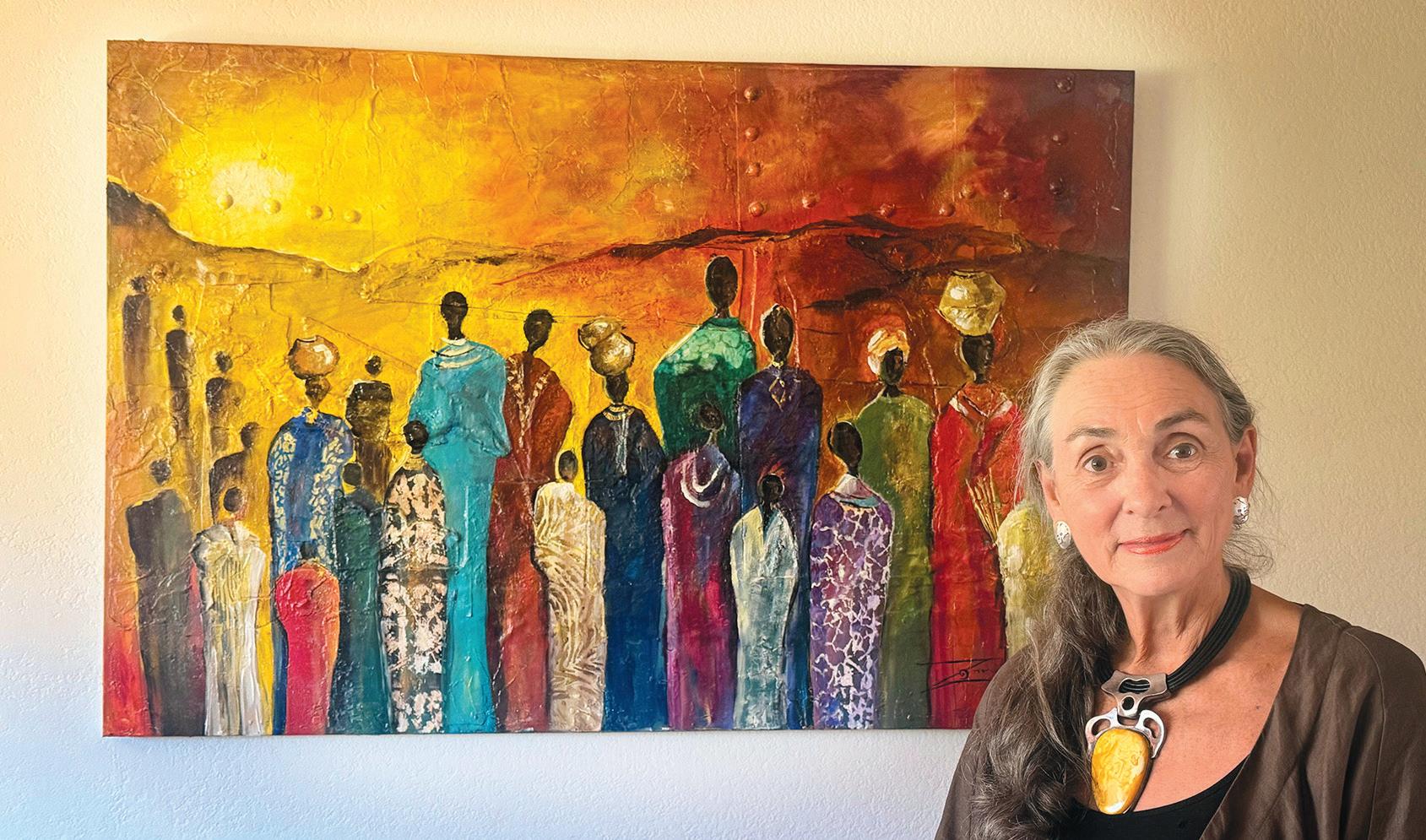
Artist Zanniki (aka Suzanne Nicolaisen) by her International Mingei Museum Award painting titled “Where it all Began”: a painting representing hope with people moving toward the Light.
“The Essence of AllThe Shaman”: Filtering polarities.
resourcefulness and her Zulu nanny, Sophie whose care and rich culture deeply infuenced her artwork.
“I was brought up by a Zulu lady,” shared Nicolaisen. “She would take care of me while my mom went to work. As a result, I was close to African people. Sophie would take me into places under Apartheid forbidden for me to go. But I loved these people.”
This immersion in her nanny’s native culture created a strong impression which to this day refects in her paintings that demonstrate respect and admiration for the Zulu.
“I tell stories with my paint brush using my somewhat primitive
and whimsical style, reminiscent of African artistry,” said Nicolaisen, who is also known by her artist’s name as “Zanniki.”
The name comes from her mother—who would call her “Zannetjie,” an Afrikaans term of endearment. Changing the spelling and replacing the “a” with a spiral, a symbol Nicolaisen loves and relates to, the name evolved into her artist signature.
“Where it All Began” is a prized painting of hers that dominates a wall in her living room, depicting a striking portrayal of fgures in traditional fowing African garments collectively gazing toward the light. It earned her the International Mingei Museum Award at the Del Mar Fair.
“This represents hope,” said Nicolaisen. “We are all moving toward the light, toward something bigger and better. In my paintings, my people have no feet. They are free, like an angel. And they are African. This is my heritage. These are my roots.”
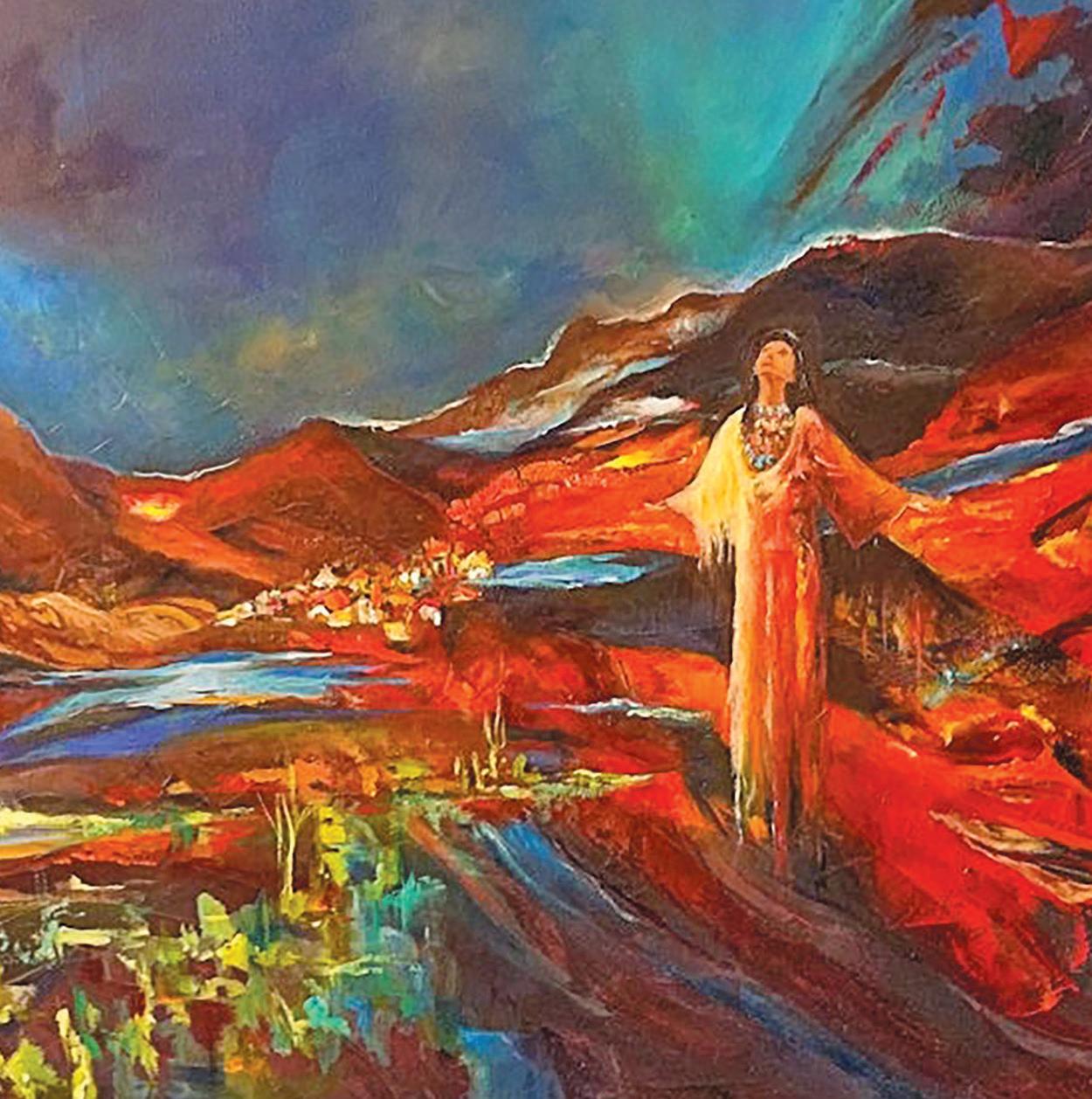
Another favorite is a painting titled “The Essence of All -The Shaman.” An imposing fgure stands amidst a fery landscape in turmoil. It was born of her reaction to the division and negativity that heightened in politics about 10 or 15 years ago.
“It is about fltering the polarities, the extremism and transforming it into something good,” explained Nicolaisen.
One wonders if “The Shaman” isn’t a self-portrait and how she came to this remarkable persona that radiates to the world a message of unity, harmony, love and positivity?
“Meeting in the Middle” hangs in her kitchen.
It is about the unifcation of humanity. There are some who care, symbolized by the heart. Talking to each other they fnd resolution instead of confict. Others look away and represent confict and negativity. The fsh is a symbol for hope and healing and the dove, peace.
“We want these people to fnd something that would bring them together,” said artist Zanniki.
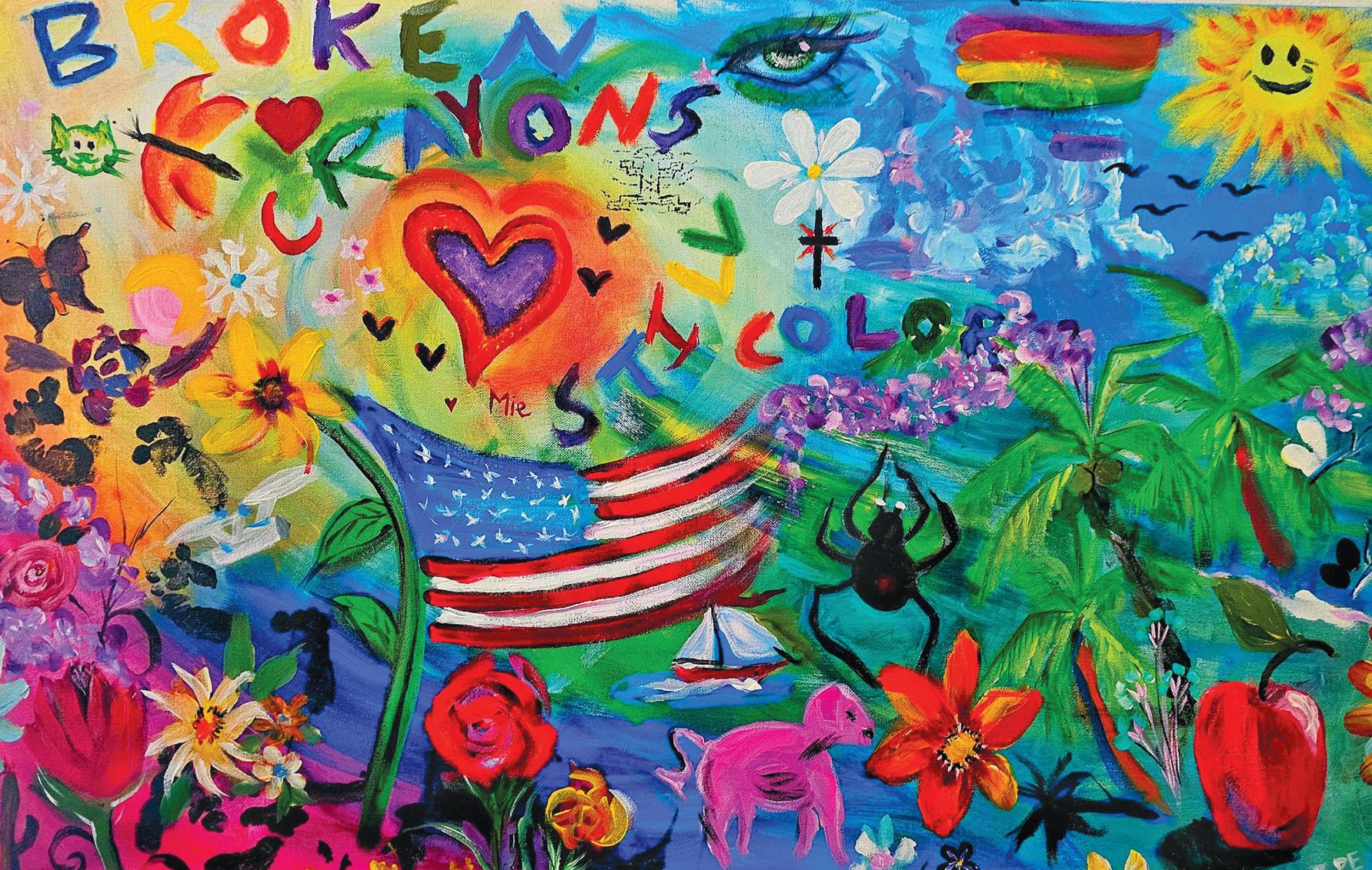
Cooperative painting by veterans and Zanniki at Stand Down titled “Broken Crayons Still Color.”
“Meeting in the Middle” representing unification of humanity.
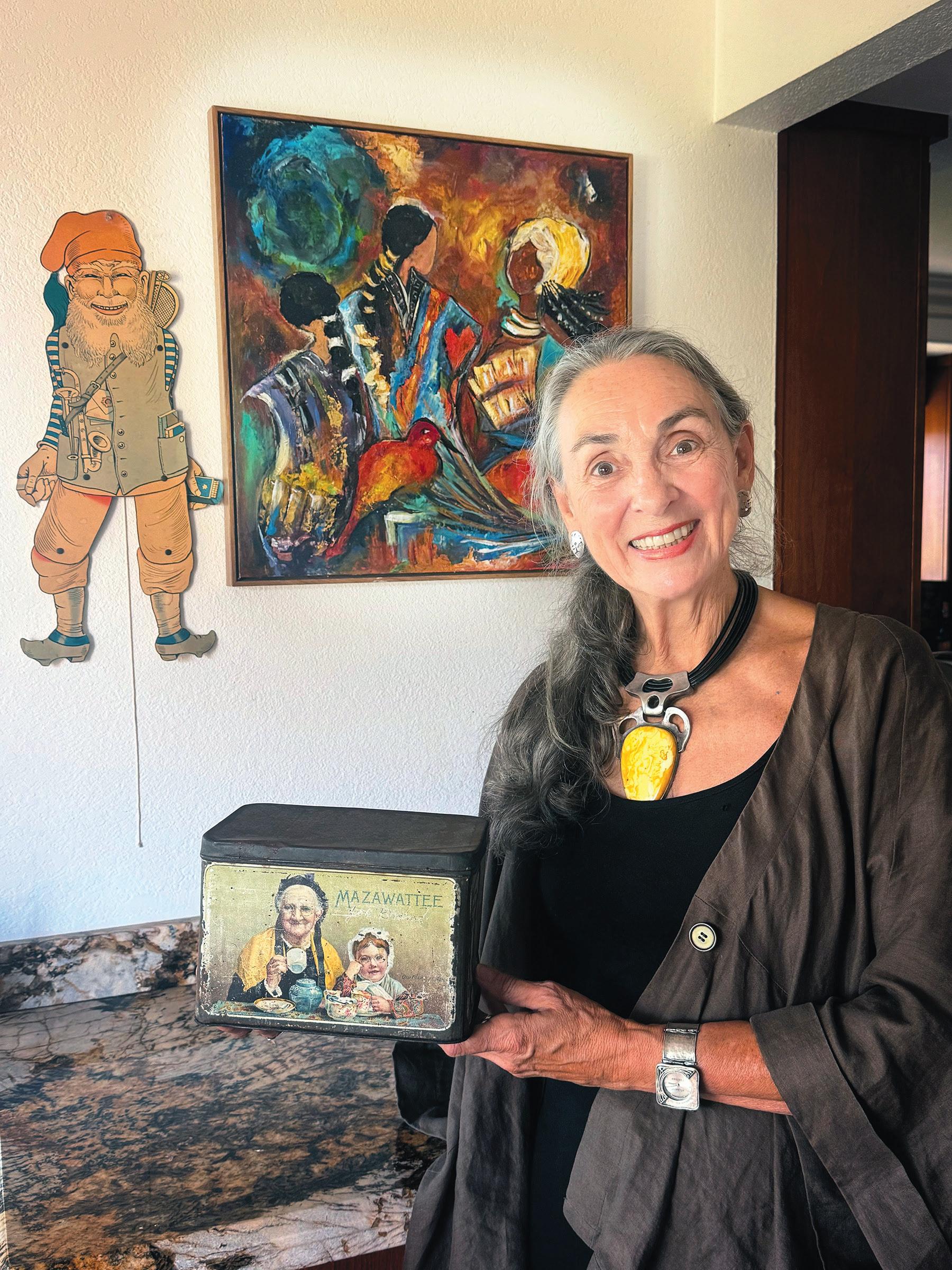
Artist Zanniki is holding the treasured biscuit box that held the biscuits baked by her grandmother.
Nicolaisen learned early the beneft of transmuting the negative into the positive. Uncovering an old tin box she found in the dirt like buried treasure; she cleaned it up and her mom used it from that day on as a container for sugar.
Her grandmother would store her special homemade biscuits that Nicolaisen can still taste in yet another tin box she now cherishes and displays on a shelf in her living room.
When she was a little girl, she would wait for her dad to visit and pick her up. It often turned into disappointment when he did not show.
This experience shaped her into an empath forever reaching out to those in need of encouragement, never wanting to disappoint, converting the painful experience into healing others and by default herself.
Following technical college, she went to work and found herself coordinating social events with the goal of making people happy.
Moving to Switzerland, she married and soon became a stay-at-home mom. Her creative spirit forever strong, she crafted with her kids, recycled and sewed clothes. With her marriage dissolving and her children growing up, she returned to work at a desalination company where she met Bjarne Nicolaisen, a chemical engineer who became her mentor and later her husband and greatest supporter.
Arriving in Escondido, Nicolaisen launched into community work and, motivated by her need to rescue the old and forgotten, she obtained her nurse’s assistant certifcate specializing in Alzheimer’s and Dementia Care.
Hired as an activity director for senior care facilities, she organized events and exercise and art classes for seniors and Alzheimer patients. Where she saw a need, she responded in kind.
“It was beautiful,” said Nicolaisen. “I loved it!”
Organizing and helping comes naturally for her.
In 2007, she joined the then struggling Escondido Art Association (EAA).
Still driven by an innate need to rescue and restore, Nicolaisen, dedicated to the EAA mission statement, resolved to protect it from failure.
She solicited her husband Bjarne’s assistance who has extensive leadership and administrative skills. Together they led fundraisers, recruited volunteers and strengthened its organizational structure to keep the EAA afoat to fulfll its mandate to serve the community.
She reached out to homeless veterans and today still manages an art tent at The Stand Down Resource Event in San Diego that offers healing through art. She proudly displays a collaborative painting produced during one of these events called “Broken Crayons Still Color.”
It is indicative of her fundamental life philosophy: resurrecting and redefning the old, the damaged, the broken.
“I love to re-purpose old clothing, with paint and embroidery” said Nicolaisen. “It has become clear to me: the less we have, the more creative we become.” She applies this outlook to every relationship and endeavor.
Passionate about mentoring and empowering youth, Nicolaisen initiated a variety of EAA children’s programs that included today’s popular Kids Kaleidoscope children’s exhibit and the scholarship program for high school seniors.
In recognition of all her exceptional ability to connect with people and her dedication in promoting the EAA she was given the life title of EAA Ambassador that she values and holds onto with pride to this day.
Nicolaisen is a rare person who offers kindness and encouragement wherever she goes. She is an immediate and supportive friend to everyone she meets.
A creative upbeat spirit, she is a radiating light of positivity and a powerful presence that spreads cheer throughout Escondido and wherever she goes. .
During COVID, she felt compelled to boost morale during a very depressing time. On her block she invited the neighborhood to participate in an impromptu art gallery by having children paste pictures on their front windows for all the neighbors to see. This gave everyone something to look forward to while out for walks—which was a common occurrence to escape the loneliness of isolation during the lockdown. The street became an outdoor art gallery, lifting spirits.
Building on this, she arranged open air art festivals where adults and children sat outside of their homes becoming an audience to kids showing show off their skateboard skills, dancing, singing or whatever they felt inspired to do, demonstrate or display.
The dark and sad was now replaced with light and joy.
Inspired, Nicolaisen joined forces with fellow artist Jinx Lennon and several others and led the movement to paint the gray k-rails placed along Grand Avenue to allow for outdoor dining. Recruiting artists and passersby soon produced a community-made street exhibit, transforming something depressing into colorful frescos. She refers to it as “The Coloring Book of Hope.” This art activism earned the esteemed California Cities Helen Putnam Award for Excellence for the City of Escondido in recognition of outstanding efforts and innovative solutions to improve quality of life in the community.
With COVID lockdowns winding down, Nicolaisen was asked to gather volunteers to expand wall art throughout the downtown core. This blossomed into the now popular Esco Alley Art—which today blankets the city with over 80 stunning murals with Nicolaisen at the helm.
In 2025, Nicolaisen, representing Esco Alley Art, recruited a local school to create a wall painting that empowered the efforts of grades K through 12 to create the “Community Unity” mural that refects Nicolaisen’s philosophical approach to life.
“I get more gratifcation out of seeing something is being done for somebody who might not be able to,” Nicolaisen remarked. “ We all like that pat on the shoulder, the limelight. But what is more important is what you leave behind, doing things for the right reasons.”
Nicolaisen will surely leave behind a powerful legacy of a can-do attitude that encourages, elevates, and unites.
Her canvas is the community, and with every brushstroke, she leaves behind a kinder, brighter and more loving world.
That is doing things for the right reasons.
For more information: www.zanniki.net Facebook.com/Suzanne.Nicolaisen
An interview with Escondido Artist William Sharer
BY ADRIAN STEWART
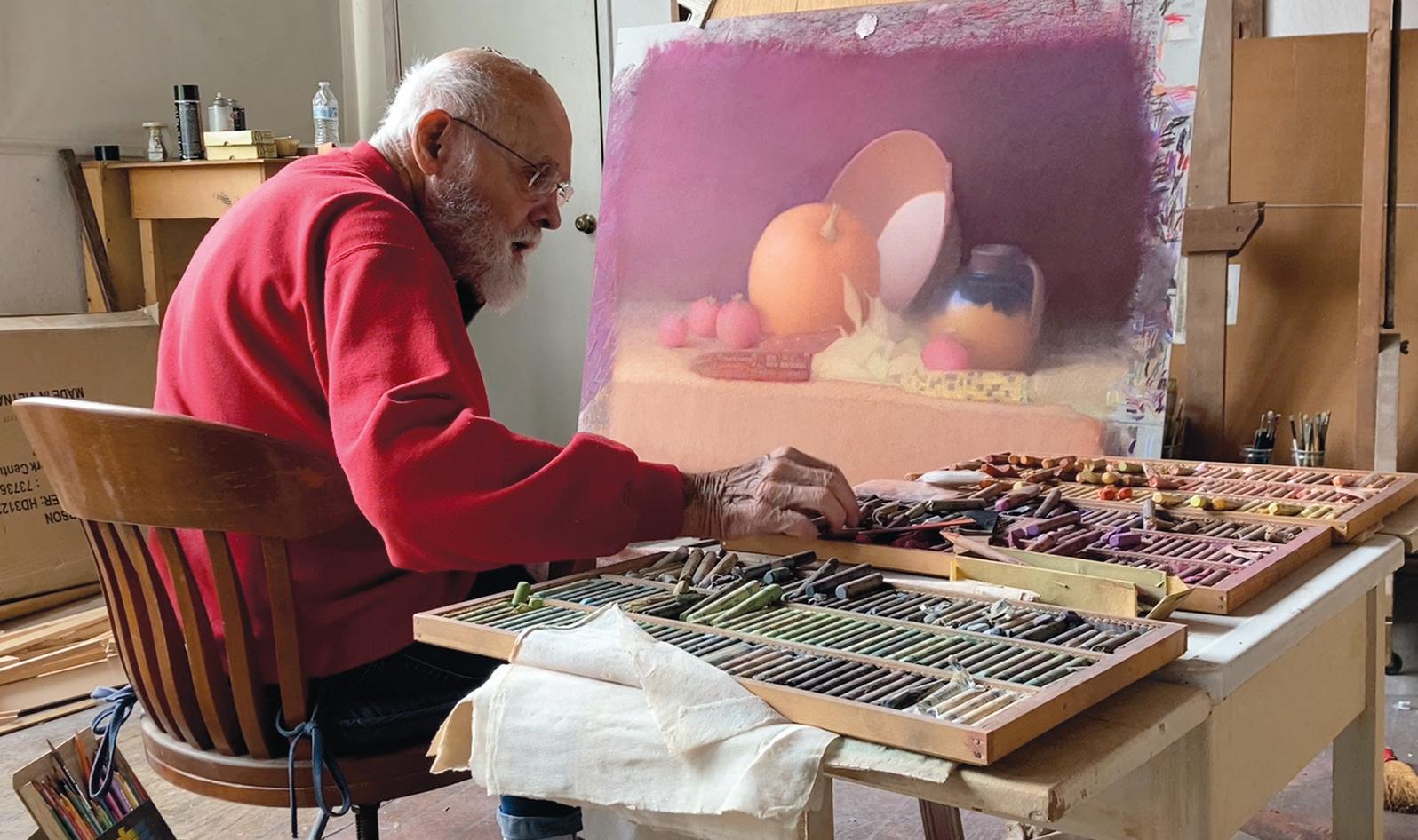
William Sharer is the epitome of the phrase “91 years young.” A talented and acclaimed artist he is still actively painting in his studio in Escondido at the age of 91 years young and exhibiting his skill and talent with award-winning art at exhibitions at The Escondido Art Association.
I recently sat down with him and his wife Nancy at his studio to talk about his long and illustrious art career. As we sat there, we were in the company of the world’s greatest artists, surrounded by shelves lined with Bill’s collection of books and biographies on the world’s most renowned artists from Leonardo Da Vinci to Monet to John Yardley.
Amid all this are also his current paintings, some still in progress, partially fnished, others fnished and framed all with the soft early summer light coming through the windows - in the paintings and the studio both.
William, Bill to his friends, served in the Marines during the Korean War and when he returned home, he took advantage of the GI Bill to begin an entirely new career as a professional artist. That’s a career transition! He completed his studies at The American Academy of Art in Chicago and worked in a blueprint shop for a couple of years eventually moving to Taos, New Mexico where he joined an artist’s colony so he could be with amongst other artists and concentrate on just painting.
“We all shared ideas, thoughts and insights openly, it was a very creative environment, and we were all good friends. We were very much focused on art and learned and grew as artists together. These were formative years for me,” says Sharer.
“In those days I drew from real life and what they call ‘plein air’ painting in front of the landscape or scene. Even if I later worked on the painting in the studio, I relied on the real-life sketches as a vital reference in the process of creating larger paintings.
Today I also work from slides of photographs as additional references for the larger paintings. The slide is helpful since it has light behind it and conveys light and tonal values as well.”
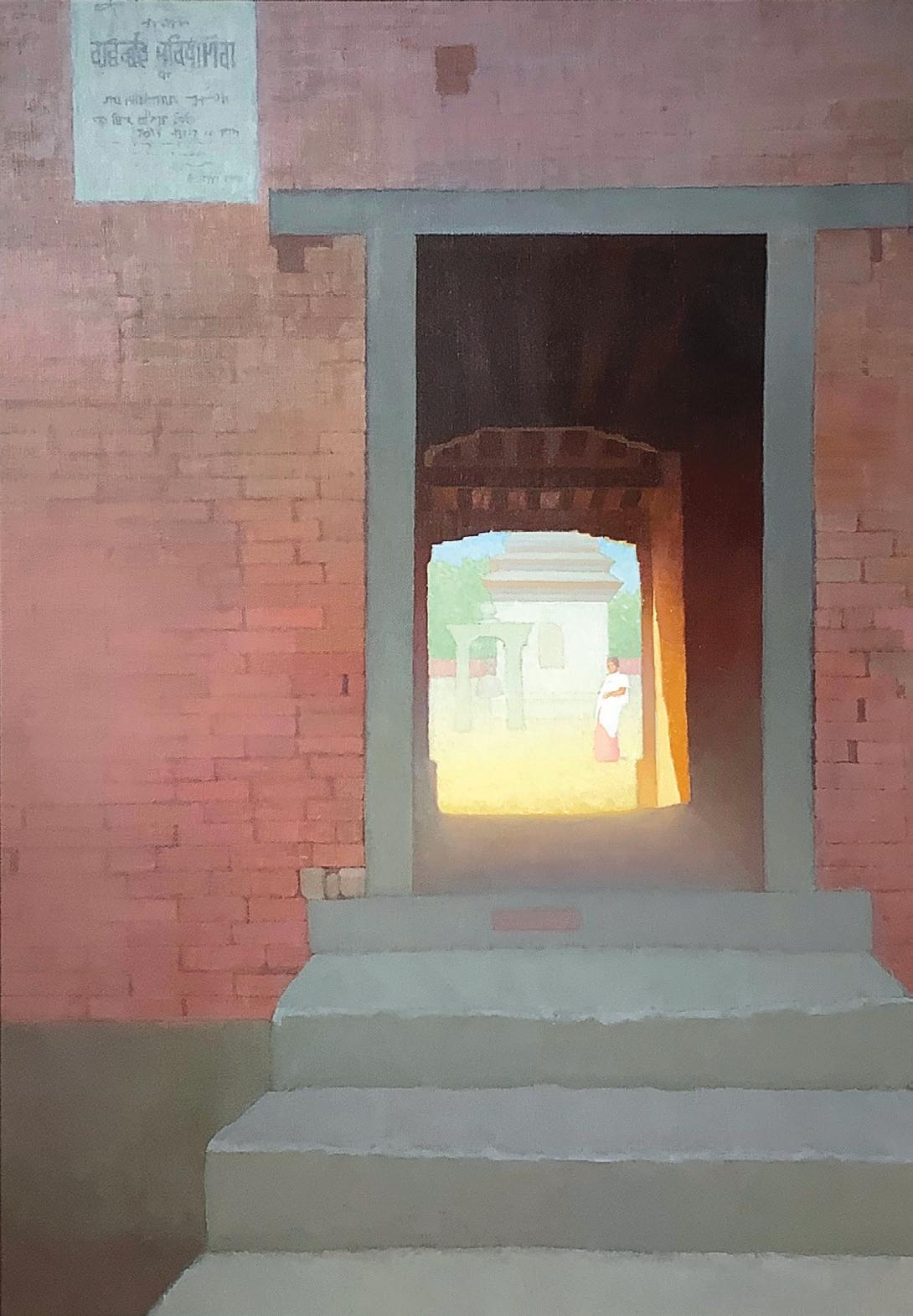
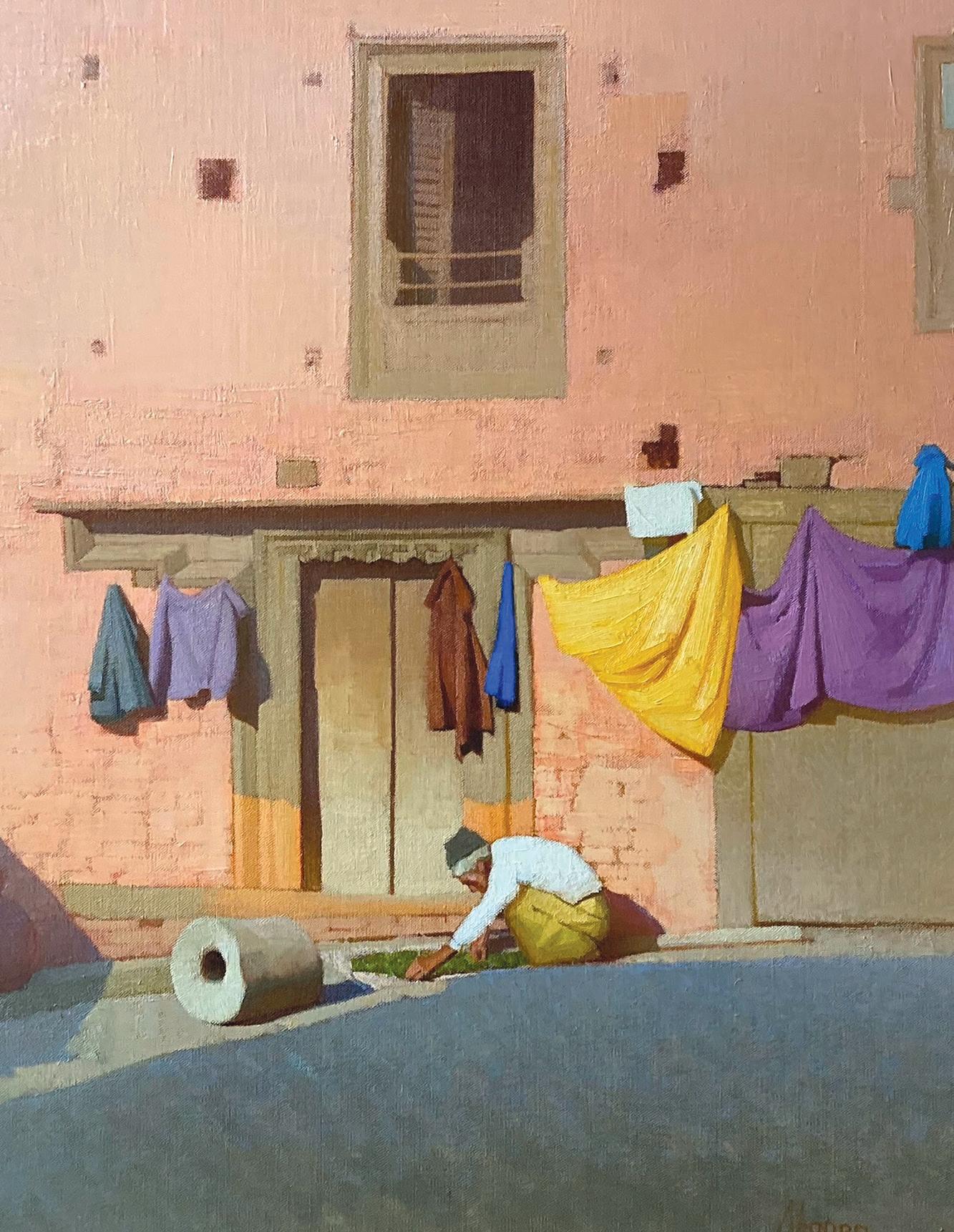
A number of his art works feature scenes from Nepal. I asked Bill where the studies of Nepal came from. “I was making plans with a fellow artist Clarence McGrath, a very well-known western realist painter to make a painting trip together and we had planned to go to Afghanistan and at the last minute we changed it to Nepal instead. The Nepalese people are wonderful people, and the quality of light there somehow seems almost ethereal. Hence my Nepalese paintings.”
Bill’s painting “Man Sorting Peppers - Nepal” was awarded Gold Medal in The Mayor’s Art Contest 2026 and his painting “Nepalese Woman” took Silver Medal in recent juried exhibitions at Esco Arts.
Bill’s work is in the collections of National Cowboy and Western Heritage Museum, Oklahoma City; Eiteljorg Museum, Indianapolis; Museum of New Mexico, Santa Fe.
I asked him what was the secret for such a long and successful art career. He replied “Practice. Practice. Practice. Your skills advance in relation to each square mile you cover with your painting and artwork. Nothing can take the place of practice. As artists we know this deep down. I understand a lot is changing in how art is created and the tools we use whether oil and brushes, watercolor or pastel, even digital now but it is still a singular personal centered process whatever the tools.”.
As president of the Escondido Art Association and a lifelong artist myself there is no question Bill is one of the most accomplished and skilled artists we have living in this community. He is not only a guiding light, but the quality and skill of his work inspire all artists to “paint up,” to continually strive to improve, to grow, to get better and deeper in our art. He is a mentor to us all by his work and we all beneft from his art. Thank you Bill.
Adrian Stewart is president of the Escondido Art Association, a 66-yearold non-proft art institution that supports and nurtures local artists of all
ages with exhibitions in The Esco Arts Gallery, 120 West Grand Ave. and the NICU Partnership Gallery, 1230 Auto Parkway. For further information visit www.escoarts.com or email info@esoarts.com
“Passageway to the sun” by William Sharer.
William Sharer in his studio.
“Man sorting peppers - Nepal” by William Sharer.
As we celebrate 250 years, we honor our nation—triumphs, challenges, and the diversity of peoples who call this
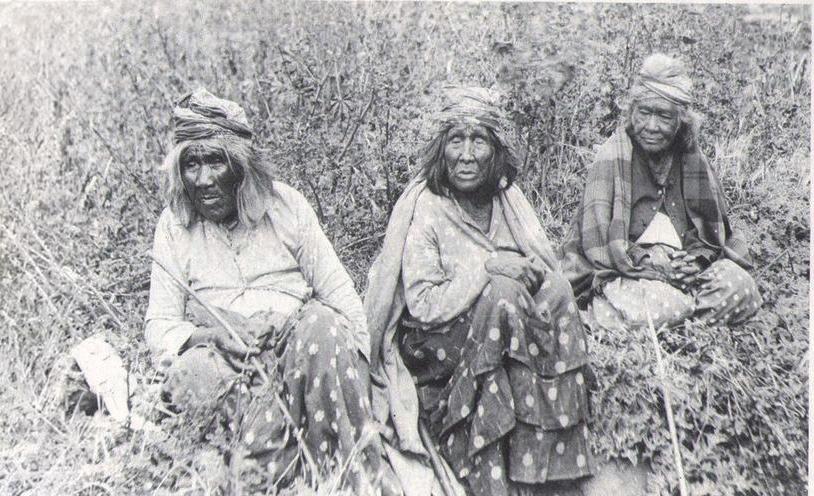
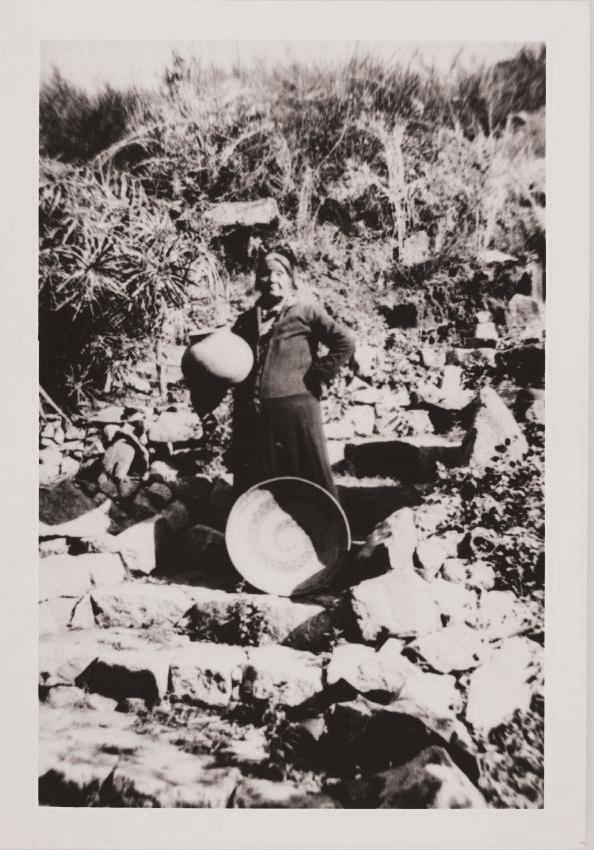
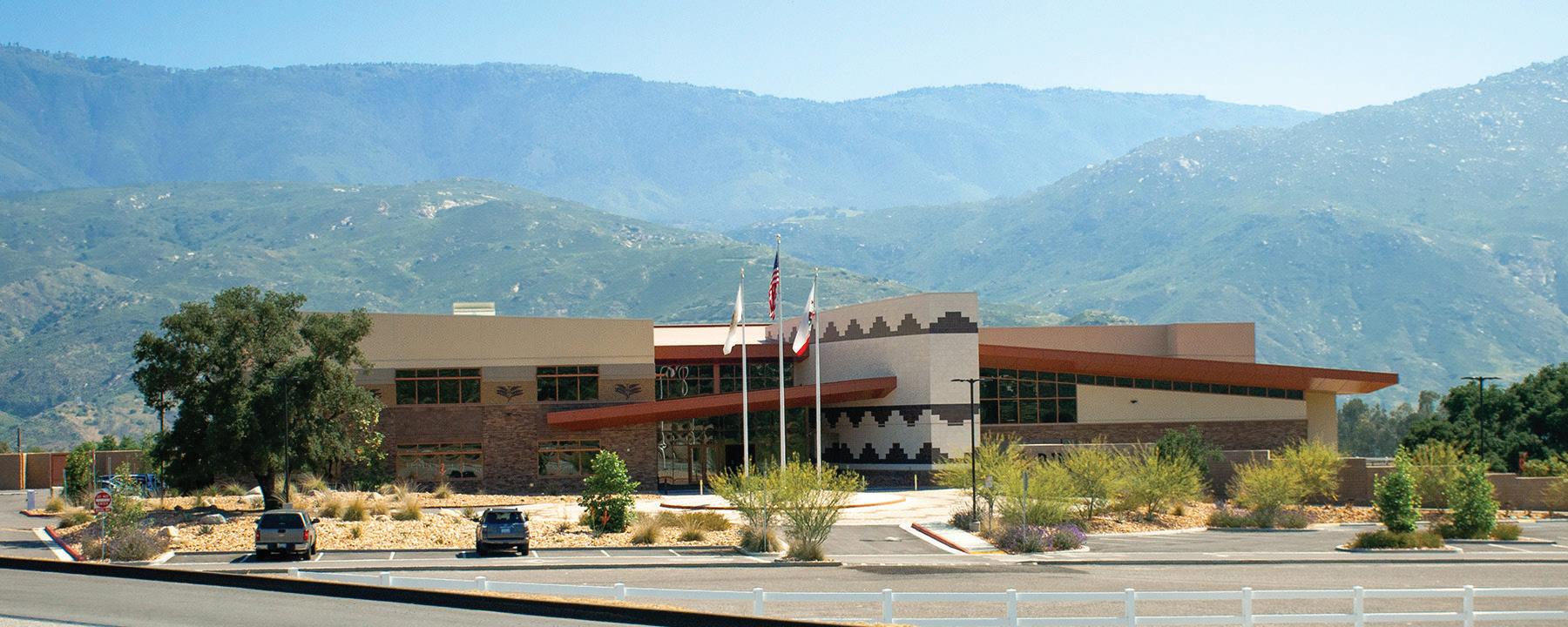
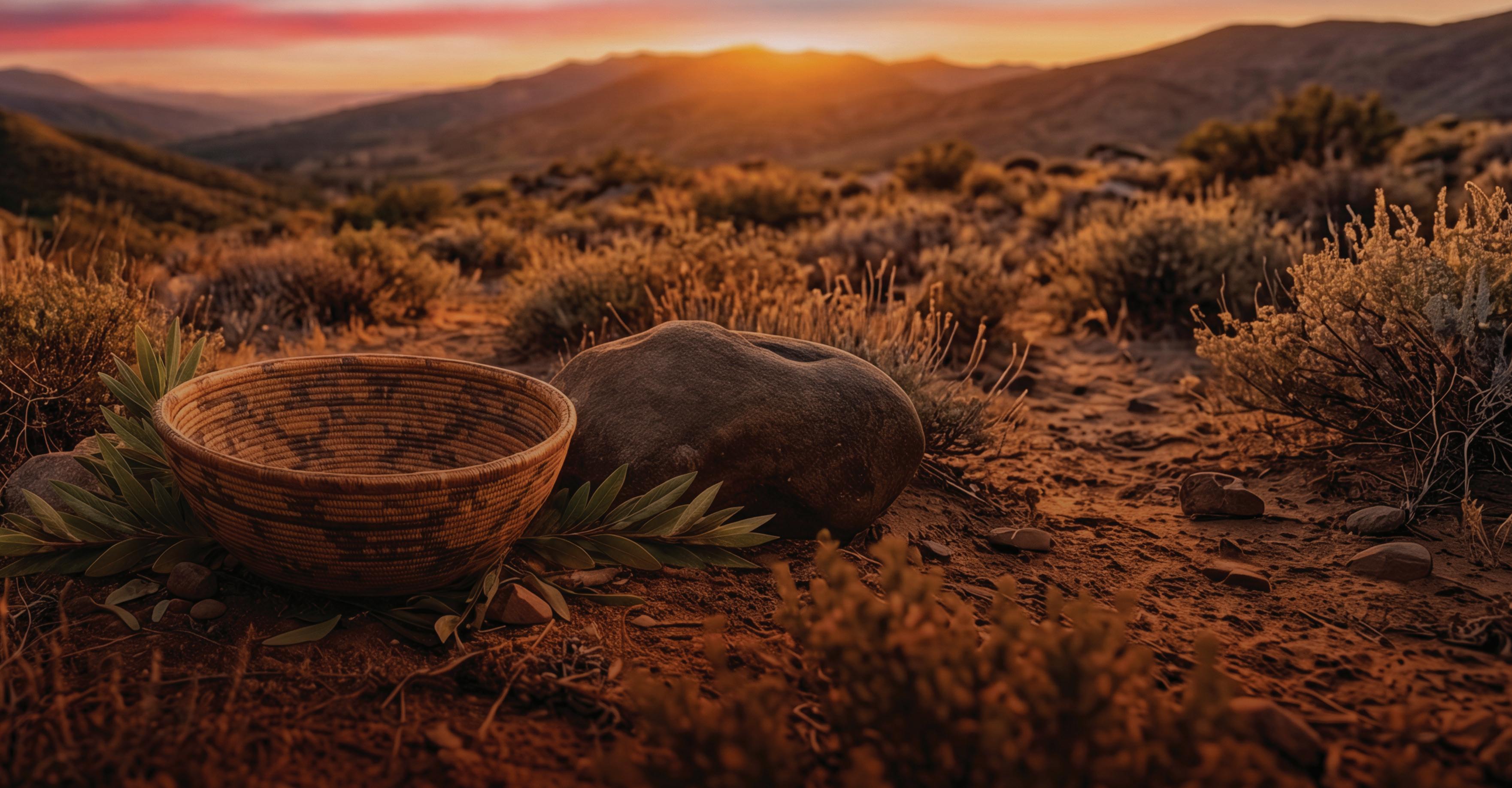
The Rincon Band of Luiseño Indians has lived here since time immemorial. Our history is America’s history. Our future is America’s future. We celebrate together.
The Rincon Tribe thanks all who walk alongside us in respect, partnership, and friendship as we celebrate America’s 250th Birthday. Celebrate the past. Create the future.