ESCONDIDO
Sprng 2026







dellagoacademy.org/joinus








Sprng 2026
dellagoacademy.org/joinus
BY ADRIAN STEWART
“Art is, after all, only a trace – like a footprint which shows that one has walked bravely and in great happiness.” Robert Henri, author of The Art Spirit
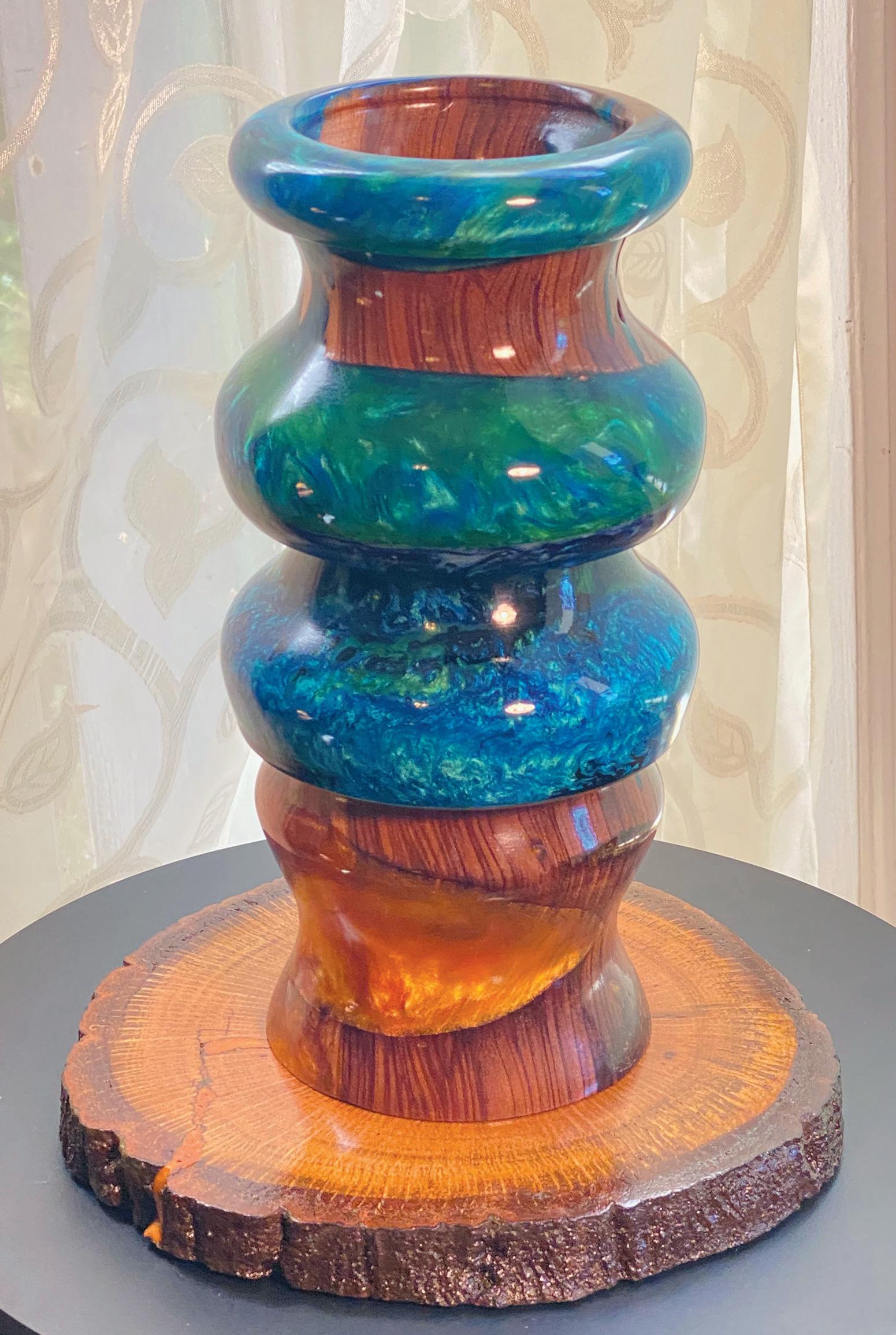
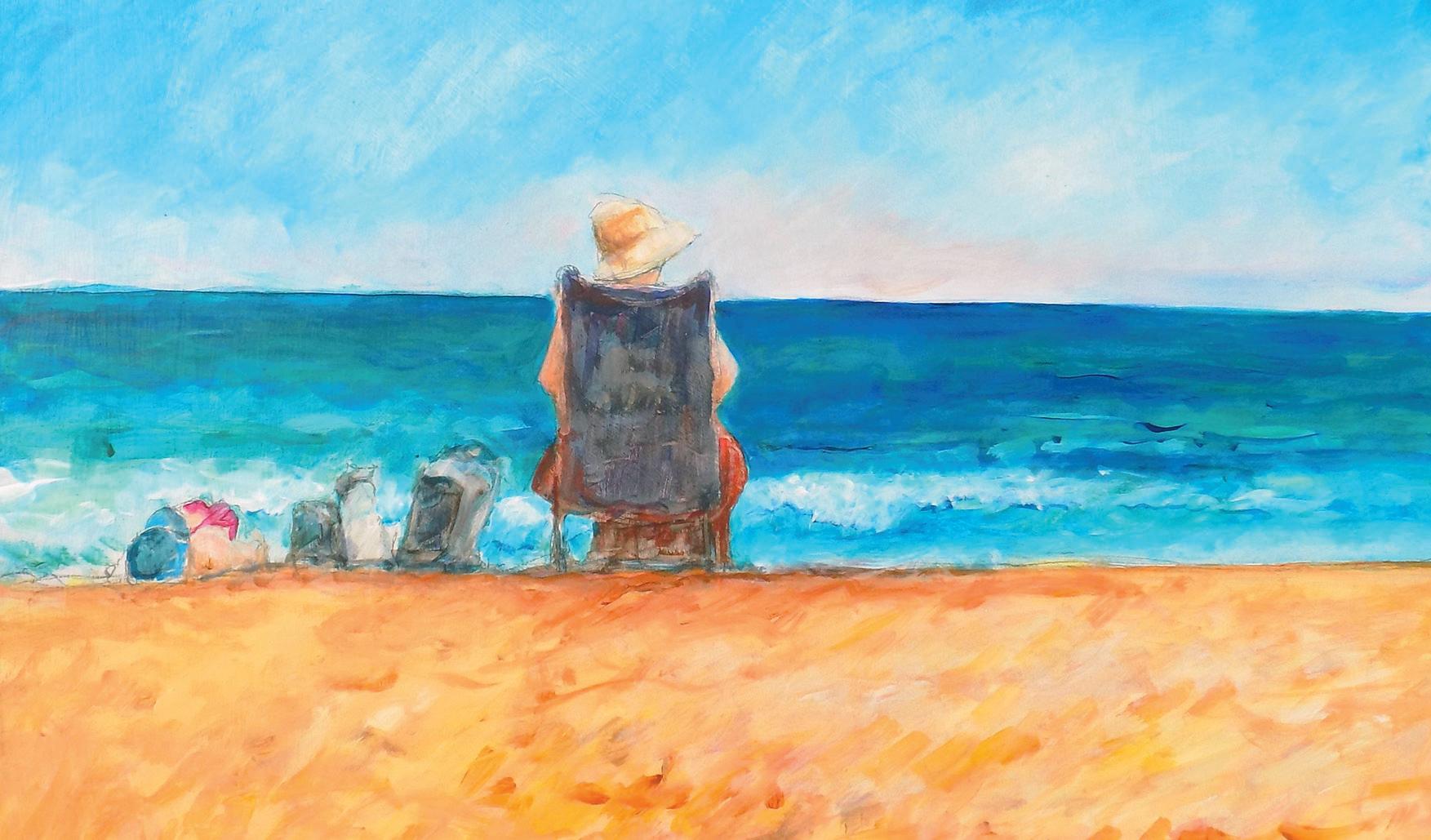
As far back as I can remember I have always loved drawing, painting and wood sculpting. For my entire life art has been my consistent refuge, a sanctuary and healer for my spirit in what has been at times a very challenging life journey.
For much of my life I thought this connection between spirit and art was just me. But now in my later years, as I share more openly with my
“ ART IS , AFTER ALL , ONLY A TRACE – LIKE A FOOTPRINT WHICH SHOWS THAT ONE HAS WALKED BRAVELY AND IN GREAT HAPPINESS .
ROBERT HENRI , AUTHOR OF THE ART SPIRIT
artist friends I fnd we have some similar stories about life and art.
I discover we share the experiences of fnding healing in our art, a salve for our spirit after loss or grief, we discover art as a refuge in diffcult challenging times, as a haven for a troubled soul.
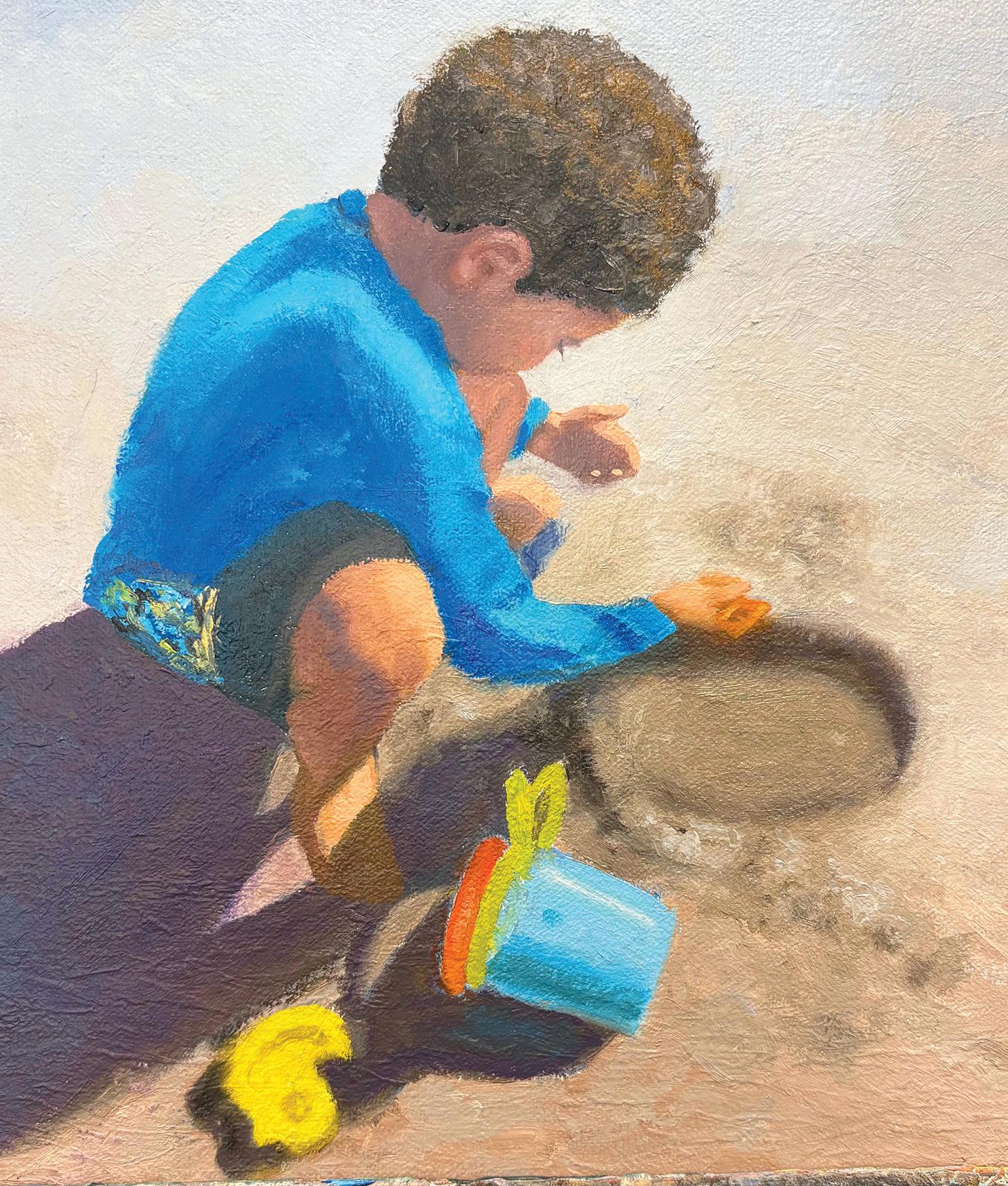
At the Escondido Art Association we recently presented our annual Kids Kaleidoscope Exhibition of local Escondido students’ artwork. What an extraordinary experience! On opening night, the gallery was entirely full of crowds of students and their families with lines stretching out of the gallery and down the Grand Avenue block—all eager to see their own student’s artwork on display in the gallery. Suddenly in that moment we were all connected through the students’ art.
For me this was a full circle for my soul, having been sent away at a
very young age to a brutal boarding school in the UK, now being investigated by a Commission for mental, physical and sexual abuse, it was art that saved my life during my entire adolescence. I started painting
But I have also learned that this connection between art and spirit is not unique to me.
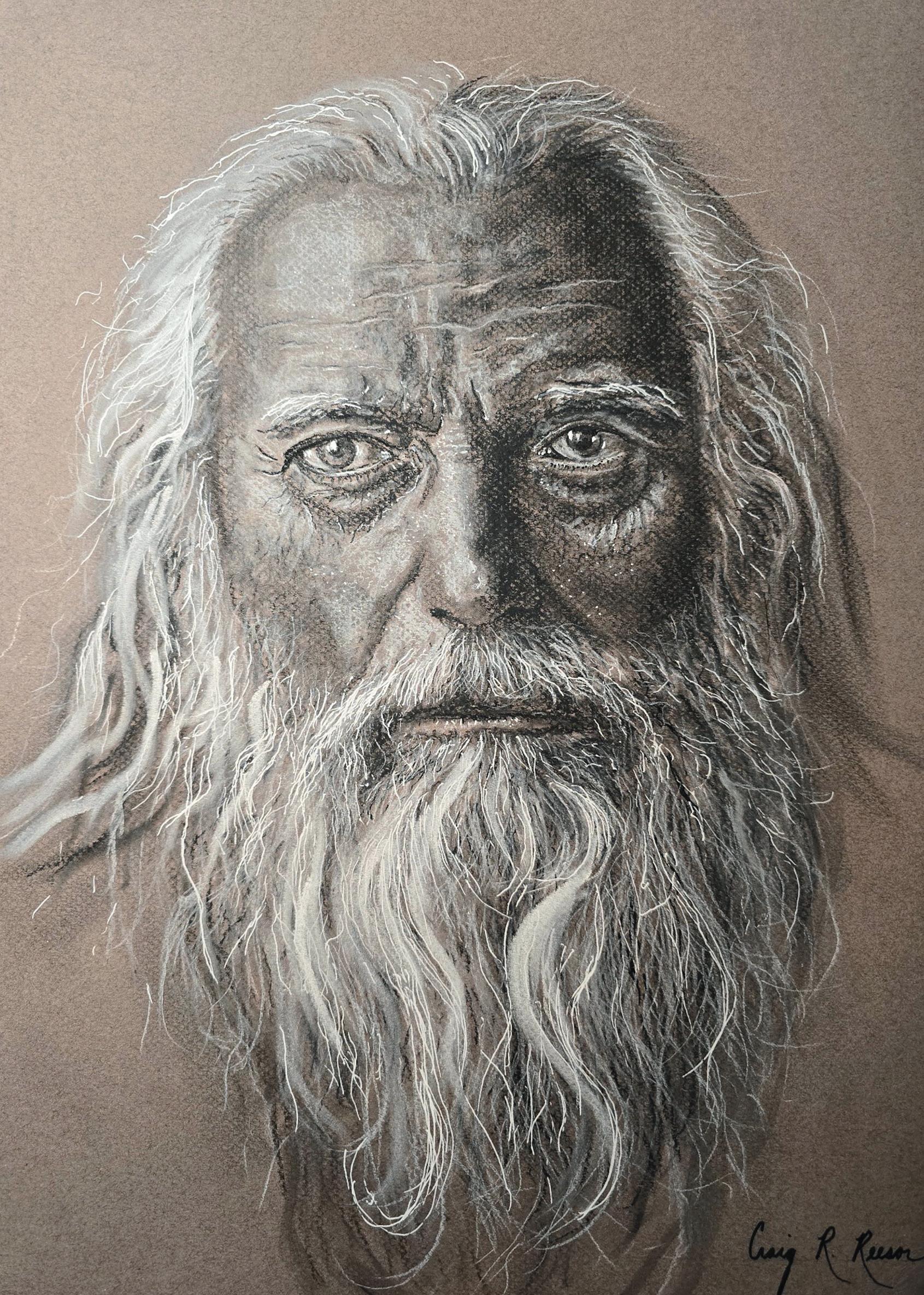
I was talking recently with a valued friend and highly regarded local professional artist Craig and he shared his story. He told me:
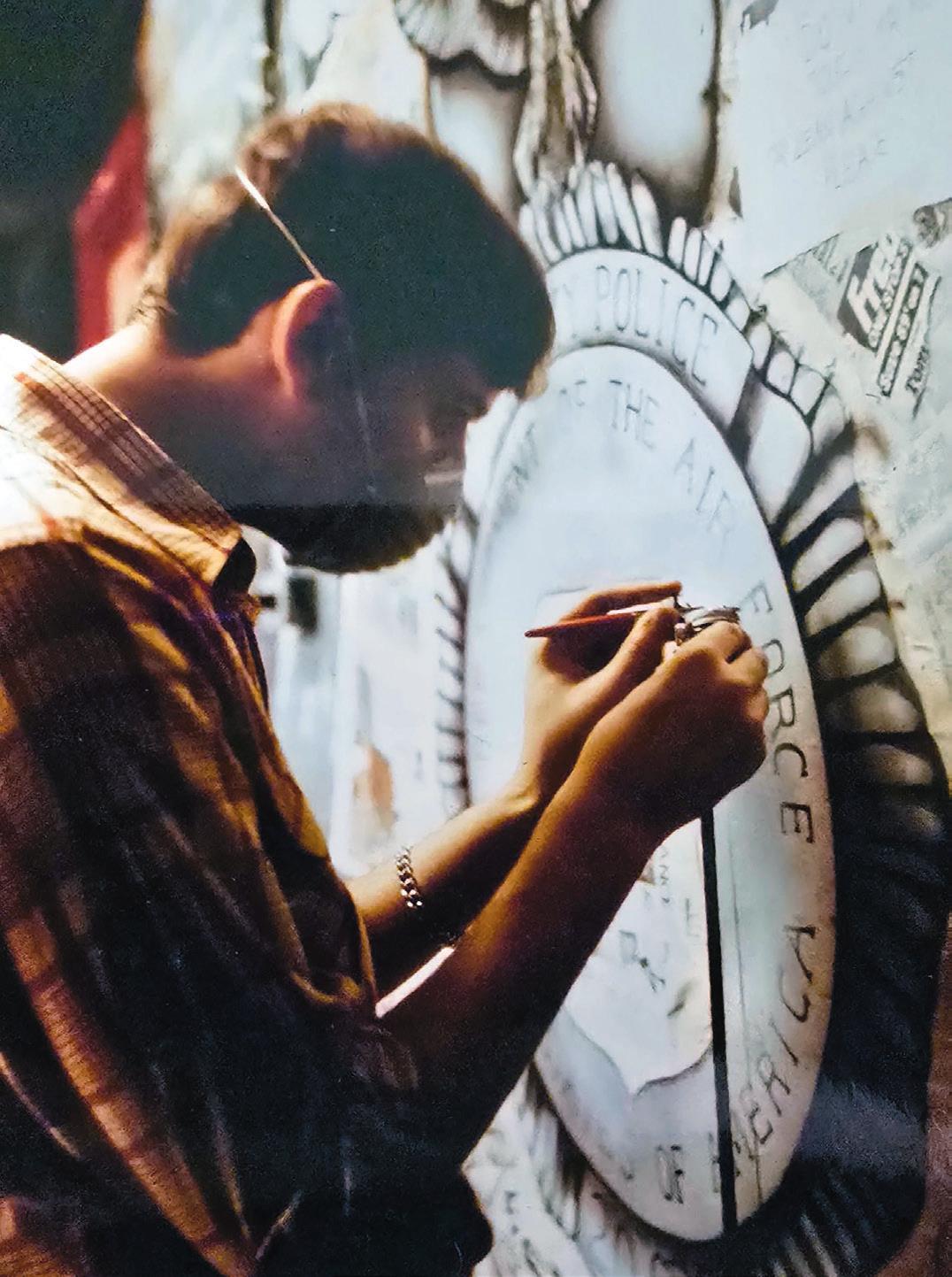
“In my life I have always been involved in art and upon graduation of high school I immediately joined the military. I had a mentor that I worked with as a graphic artist throughout high school and he was a Vietnam vet and he encouraged me to always let the military know that I was an artist and that I could paint and draw.
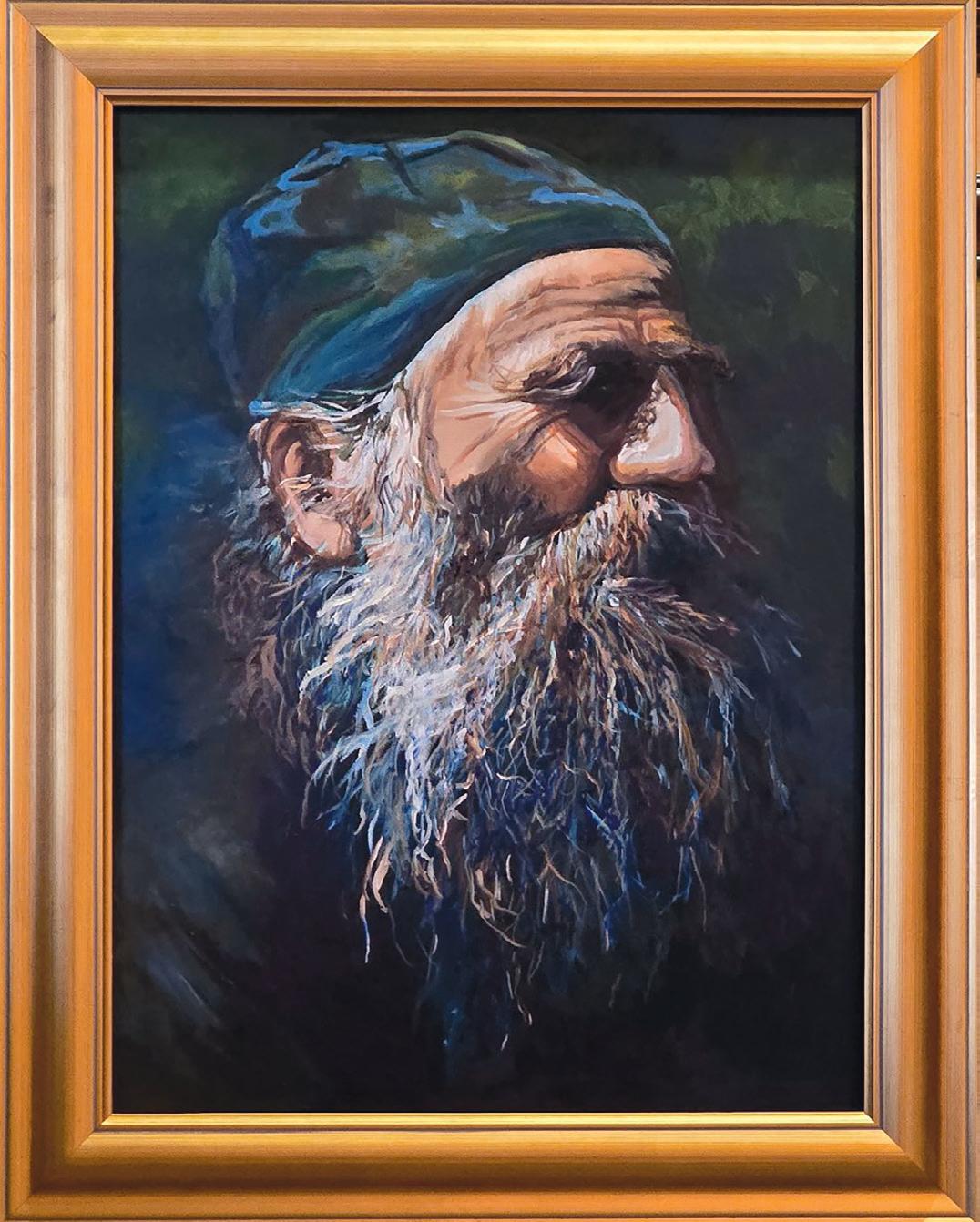
“In the Air Force basic training there are cohorts of roughly 50 trainees that move through 8.5-week program together and that during basic training, we always had in an hour or so to ourselves to work on our boots, do chores or sweep the foor etc. There was an A-frame easel that was in our day room and it had a large pad of paper on it, and I was able to get to the back of that pad, and I worked on a drawing a portrait of our instructor throughout these eight weeks basic training, unbeknownst to him. He’d already been in the Marine Corps as a drill instructor and then he had transferred over to the Air Force, so he was getting ready to retire. He was a tough calloused individual to his trainees.
“Upon graduation on the last day, we were allowed to present to our instructor. My colleagues had me stand up, and I presented to him the portrait that I had completed of him with The American fag in the background. To my surprise this hardened, tough-skinned military man had tears in his eyes when he saw my drawing, he was so deeply touched by it. Seeing a grown man cry at my art has never left me.
“Throughout my military career I was able to continue my art, and it progressed into a full-time role answering to a colonel doing temporary duty assignments to other bases to paint wall murals and paintings in the Air Museums. I teach art and continue to draw and paint to this day.”

But Criag isn’t alone in his experiences either. After I shared my own art and spirit story with another friend and artist Pat, she told me her story.








This is what Pat shared: “I was born in Chicago in a very blue-collar family, and my parents had no arts knowledge or exposure. I started in school doing illuminated lettering like in the old Bibles. I remember a Mother’s Day card I did using that lettering style for my Mom. I still have it. I moved to San Diego and took evening art classes and eventually moved to Escondido with my husband and had my son Michael and continued with some of the art teachers that are still here in North County.





“I just loved painting. I had my own business in real estate, but my life took a different turn and I found myself eventually becoming a single mother, it was a hard time for me. I was struggling trying to make a living and hang onto my home but for me art was a place where I could be so involved that everything else went away. It was my soul place. I was totally immersed in the whole process and became driven to improve my
skill. I wanted to be able to express the beauty that I observed whether it was a mountain or a tree and create a work of art and then hang it up on the wall.
“During that process, my mother died, my dad had died previously. The whole orphan thing hit me. The last year before my son Michael died was pure hell for me. It was soulfully exhausting. I have basically lost all my family. I kept thinking I just want my life back. I just want to go back to painting. I want to have peace in my life to express beauty. I think that the biggest thing for me is that I learned to see when I learned to paint. I learned to see whether it was a butterfy or a gorgeous scene. It still reaches me on a very deep level.”
She continued, “I have so many people who say to me ‘you have such an amazing talent.’ I say ‘No you don’t understand. I do not have an amazing talent. I have learned a skill that I have sought purposefully.’ I tell them you need to have the passion in your soul to want to express yourself in a more beautiful meaningful way. I make art because of the pure joy of making art. I have spent my whole life trying to be a better human being, trying to be better at whatever I do. For me in my art, it’s about getting paint onto the canvas to share beauty, especially nature and animals. Art is healing to my soul.”
These stories of art and spirit connections happen to many people; it is an undeniable connection that we can all make. Next time you open that sketch book, put up that blank canvas on an easel, hold that unshaped piece of wood or lump of clay it is waiting for you to make your connection and your soul is waiting too. Start today.
Adrian Stewart is an artist and wood art sculptor living in Escondido and is president of the Escondido Art Association. He can be reached at adrian@esondidoartassociation.org. The new EAA website is www.escoarts.com.




BY ALLEGRA MUCH
Since it opened in March, Elephant Valley at San Diego Zoo Safari Park lets guests experience the exhibit as the creative team has been envisioning for several years.
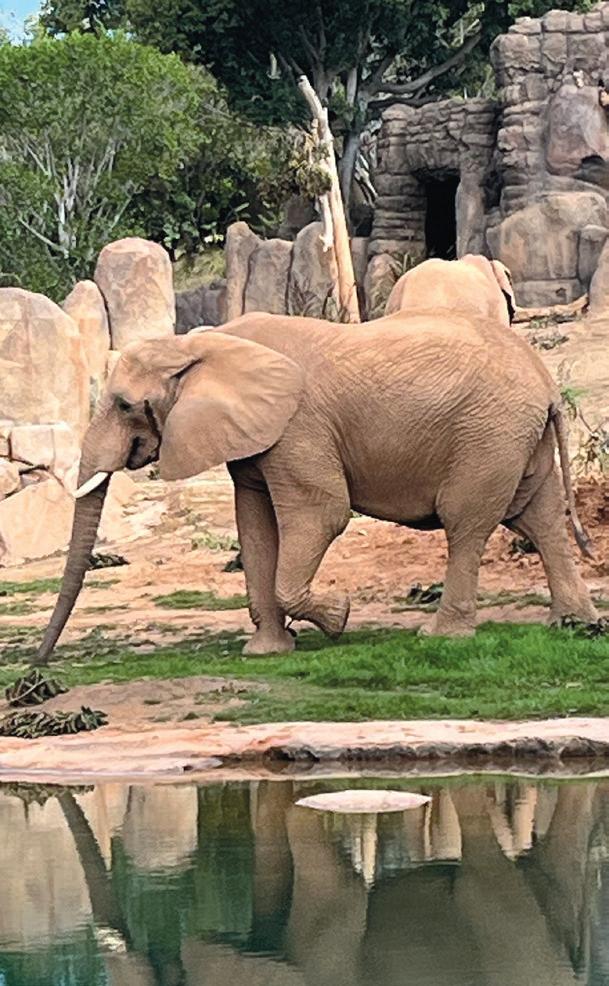
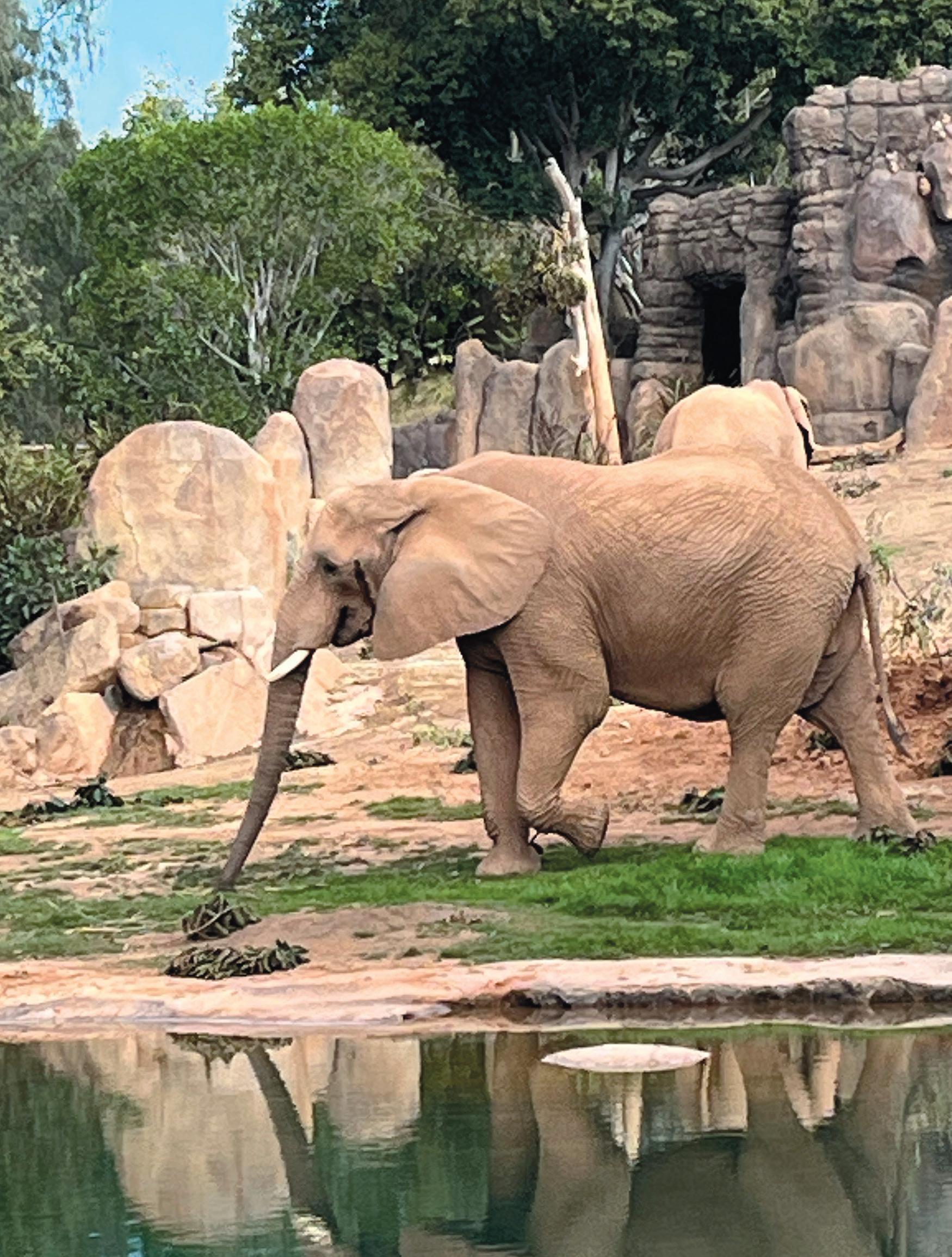
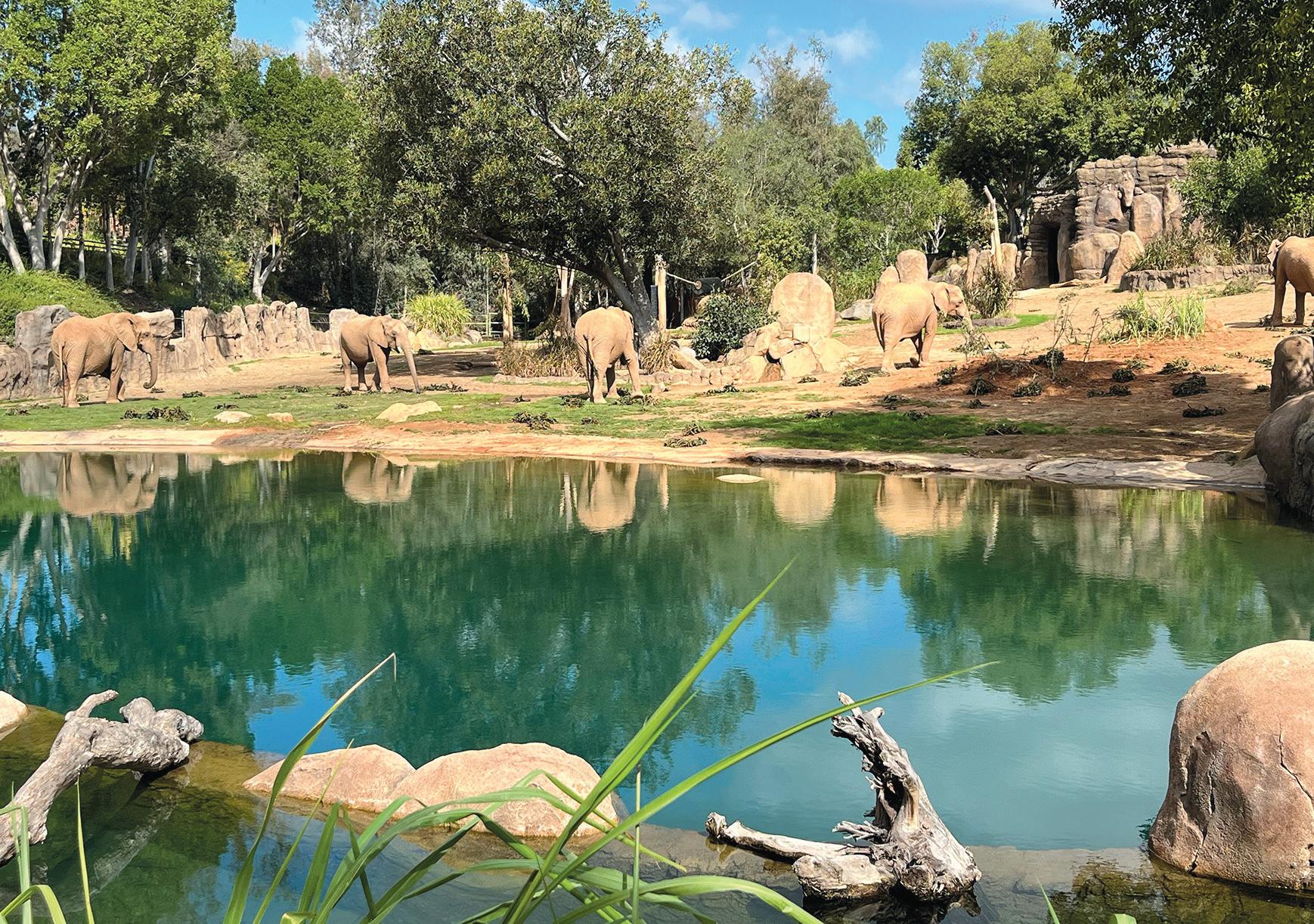
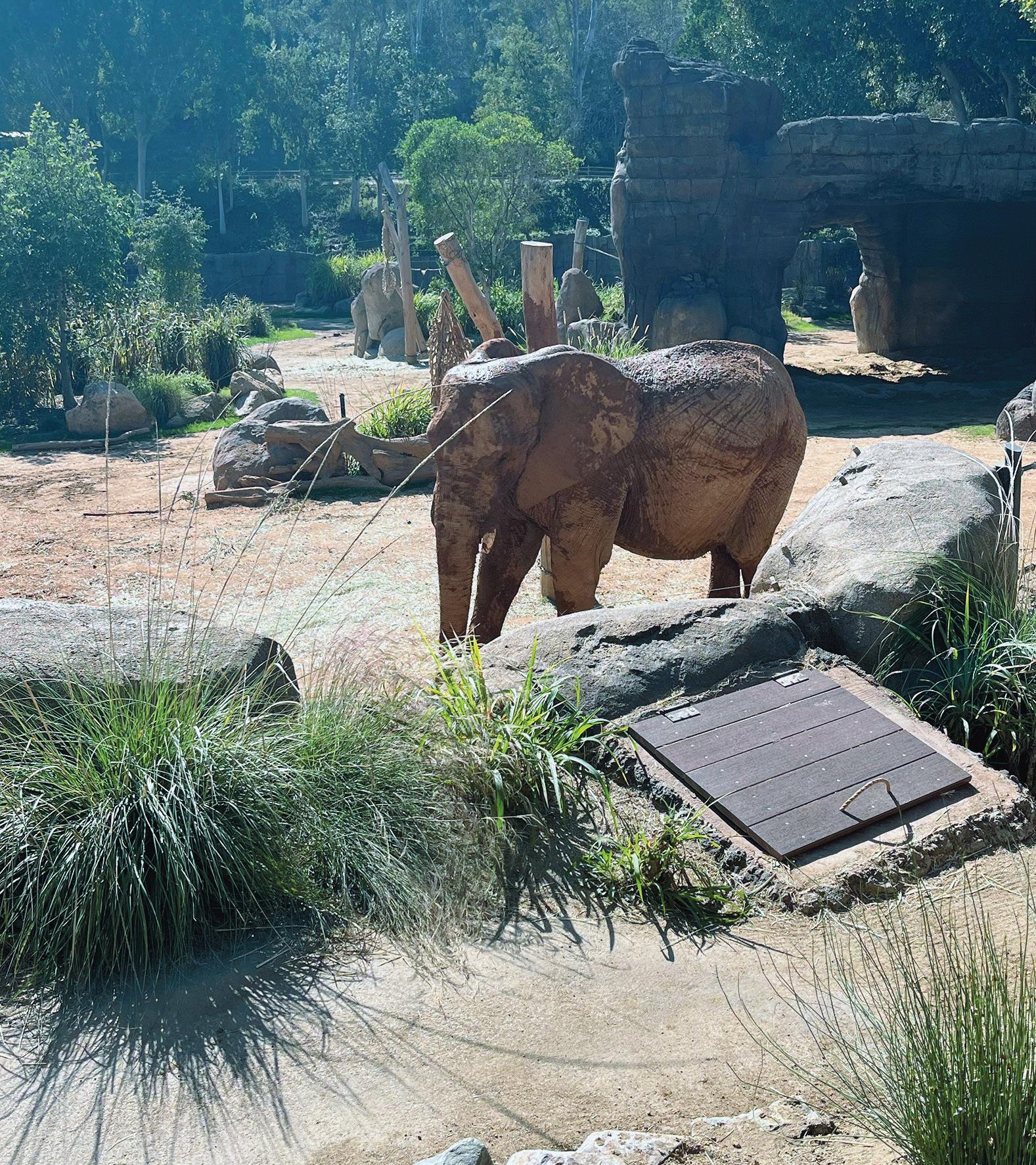
Guests have the opportunity to walk among these gentle giants and experience the beauty and sometimes playful nature of these peaceful pachyderms. The exhibit includes eight African elephants, of which there are seven females, and one young male, who have access to both sides of the walking path, by an animal crossing tunnel.
At the opening ceremony March 5, President and CEO for San Diego Zoo Wildlife Alliance, Shawn Dixon explained the work SDZWA does to care for elephants here and work they do with partners in Kenya in order to continue with their conservation goals.
The goal of Elephant Valley is connecting people with wildlife and sparking a passion and inspiration to help continue conservation efforts in the way they can. Each year, nearly 250,000 students visit the San Diego Zoo and Safari Park. More than 200,000 participate in self-founded feld trips and over 34,000 take part in guided learning programs here at the safari park. These experiences will train them and how they see the world, but how they can take care of this planet for the next generation.
According to Pat McTigue, interim executive director of the San Diego Zoo Safari Park, “Elephant Valley is so much more than a habitat, or a park, or a restaurant. It’s a feeling, it’s an emotion. It’s a complete story of wildlife, and nature, and people, and how we coexist together. You can see Mkhaya’s eyelashes, and the wrinkles on Zuli’s skin, and while you’re immersed in their habitat you can see how expansive it is. It’s a really humbling experience.”
Elephant Valley was designed with the natural habitat of the elephants in mind. The exhibit consists of a walkway between two interconnected sections of habitat, each with their own bathing pool and several interactive elements for the elephants. To allow guests closer viewing, a small cave off the path, allows the elephants to walk right up to the window as they explore their habitat. The animal crossing, underneath the walkway was modeled off of similar animal crossings in Kenya. Volunteers and staff are very knowledgeable about the elephants and regularly share interesting facts with guests.
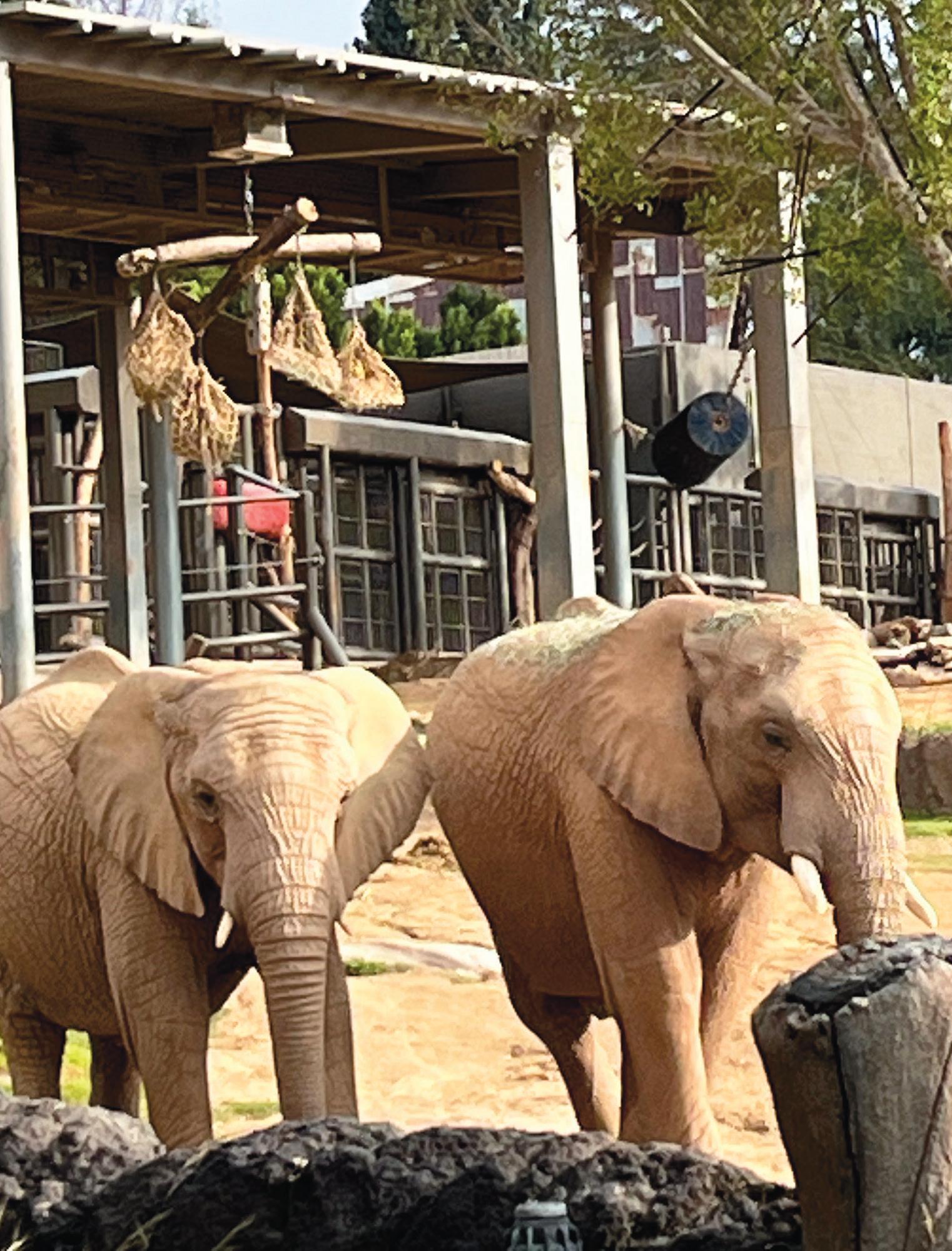
The elephants get a regular diet of alfalfa, and two truckloads per day of woody plant materials, generally Acacia and Ficus. The woody plant materials is all grown at the San Diego Zoo Safari Park. Care staff strategically places the plants to help with enrichment, placing some strewn around the ground, some hung up on the large posts in the enclosure, some hidden, there are also some puzzles.
Elephants are extremely social and curious animals with a complex social hierarchy. Swazi the group’s matriarch, the most in-charge elephant, leads the herd. The two youngest elephants Zuli and Mkhaya play together and learn from each of the older elephants. Male elephants, like Zuli, are eventually kicked out of the herd when they reach maturity to join other herds and fnd females, but female elephants born into a herd remain with that herd their entire lives. All of the older females help with teaching younger elephants, babysitting younger members of the heard, and more.
SDZWA conducts research on the herd’s behavior, which provides valuable insights into the way these animals interact. One fascinating example was during the earthquake in April of 2025, when the elephants formed an alert circle. During the video the older female elephants circled Zuli and Mkhaya, facing outward giving the herd a 360-degree view, and keeping its youngest members safe from potential harm. The video quickly went viral on the internet, but more importantly, for researchers watching the footage, they were able to gather valuable information about the elephants’ behavior.
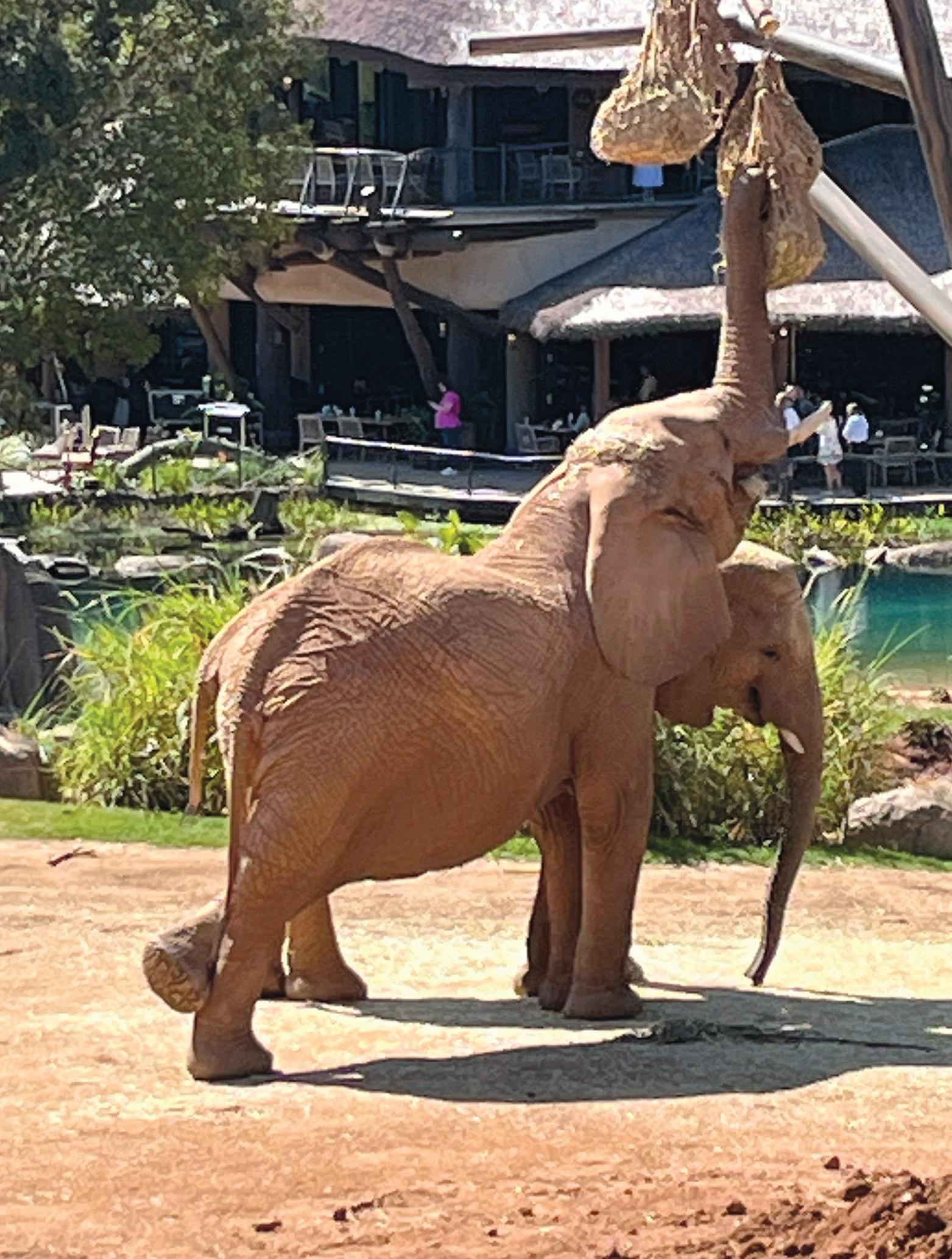
Care staff strategically places food for the elephants to help with enrichment, hanging some on the large posts in the enclosure. Photos by Allegra Much

The young male Zuli almost literally seems to be mugging for the camera after our photographer told him: “Pose!”
The San Diego Zoo and Safari Park is open daily from 9 a.m. to 5 p.m. Tickets can be purchased online or in person. According to their website, “The San Diego Zoo and the San Diego Zoo Safari Park make our mission, conservation work, and partnerships possible. In turn, our conservation work around the world demonstrates the importance and impact of saving wildlife, and provides powerful stories to share with our audiences at the Zoo and Safari Park.” The easiest way to contribute to their conservation efforts is to purchase tickets to the San Diego Zoo and Safari Park, or contribute to their projects. To learn more or to purchase tickets online visit https://sdzsafaripark.org/


At Flores Orthodontics, we use a holistic and integrative approach for orthodontic treatment to transform the lives of our patients and achieve a more balanced face, an amazing new smile, a patent nasal airway, and a functional bite! Our role in our patients’ lives is very important, as we enhance their overall health and appearance, and thus, enrich their lives, improve their self confidence and increase their sense of well being!
• Clear Aligner Treatment (Invisalign)
• Pain Free Orthodontics
• Esthetic Ceramic and Metal Braces
• Vivos Airway Treatment to Improve Sleep
• More e cient and comfortable treatment





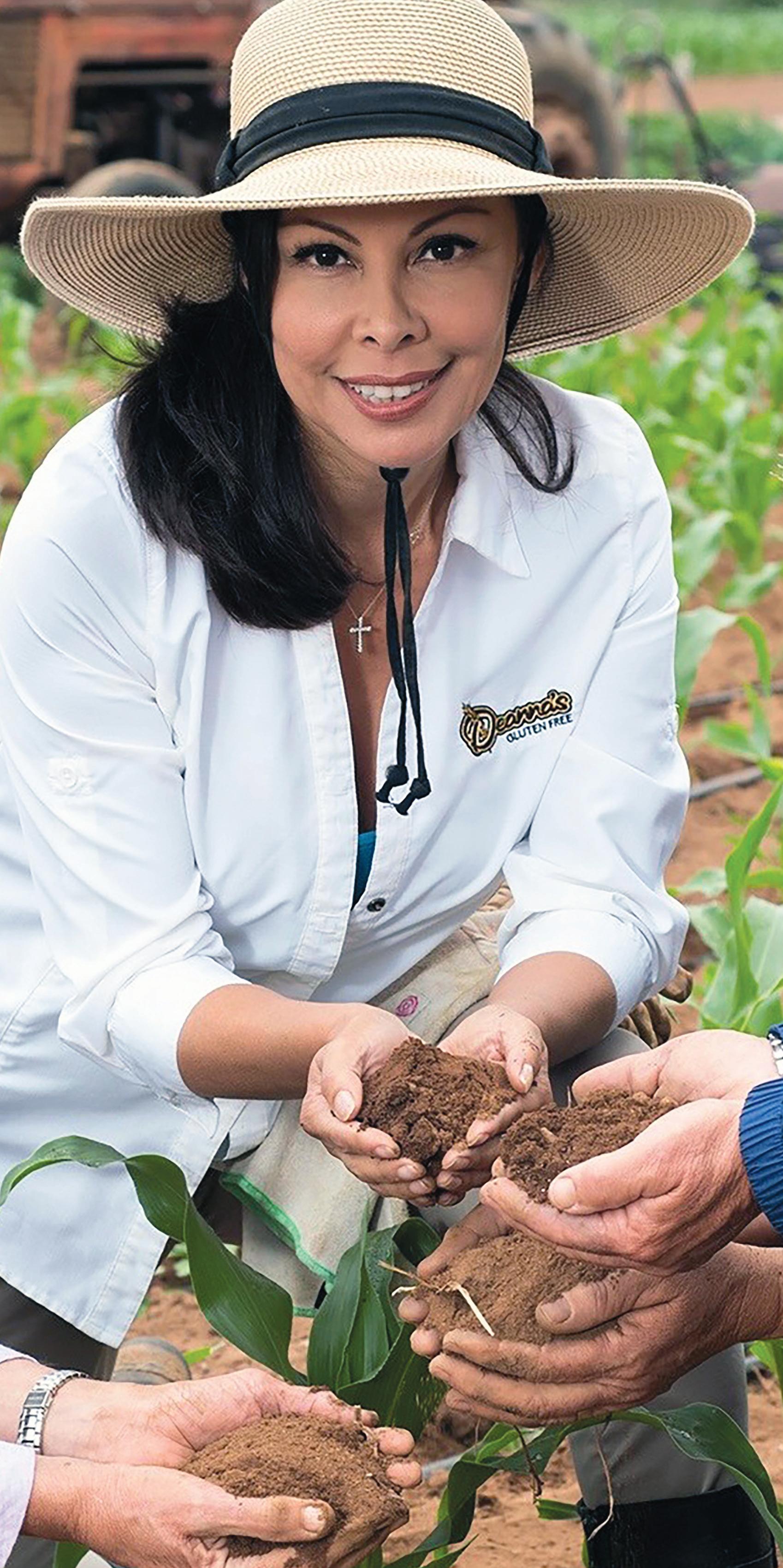

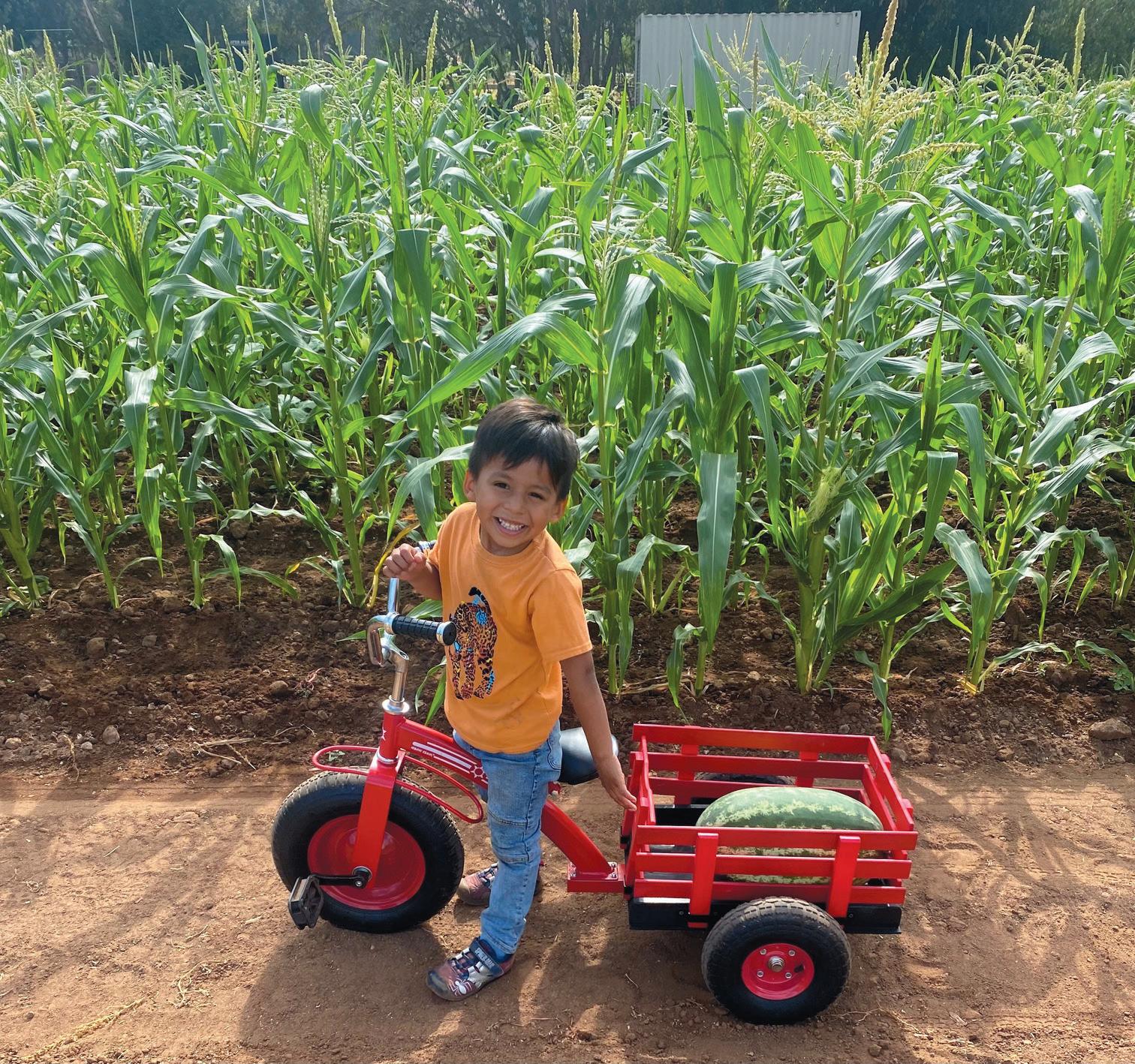
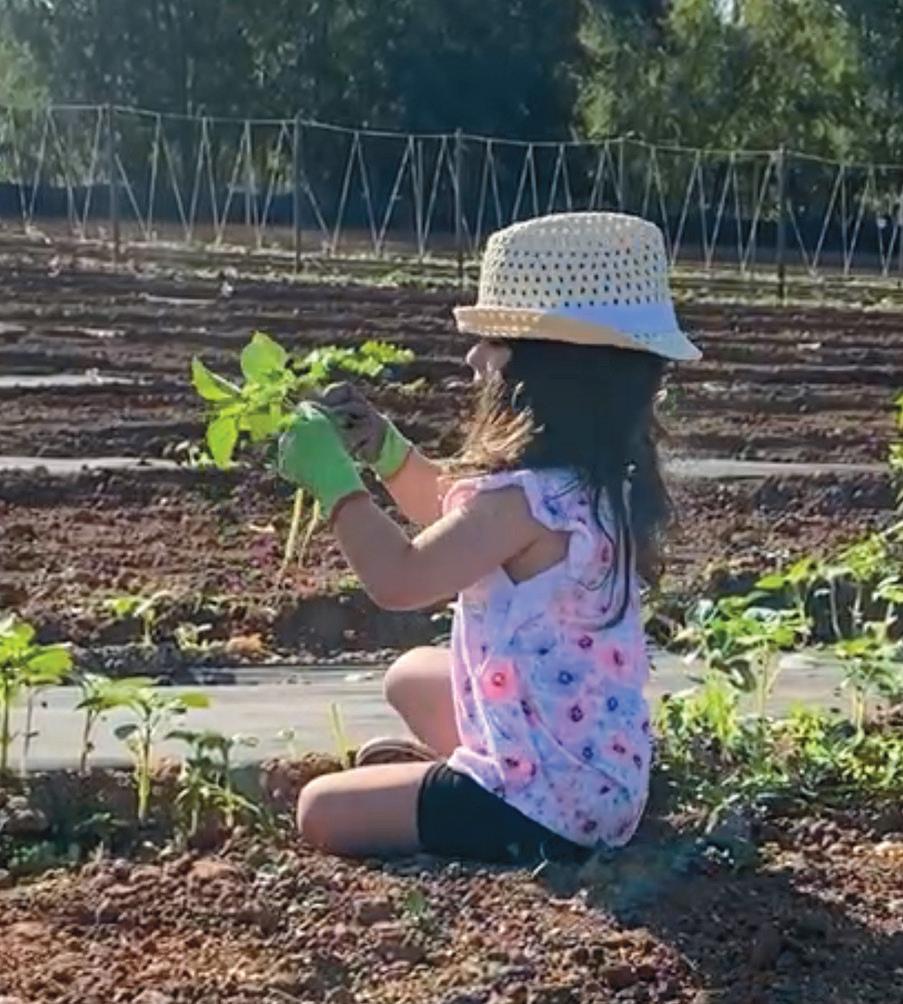
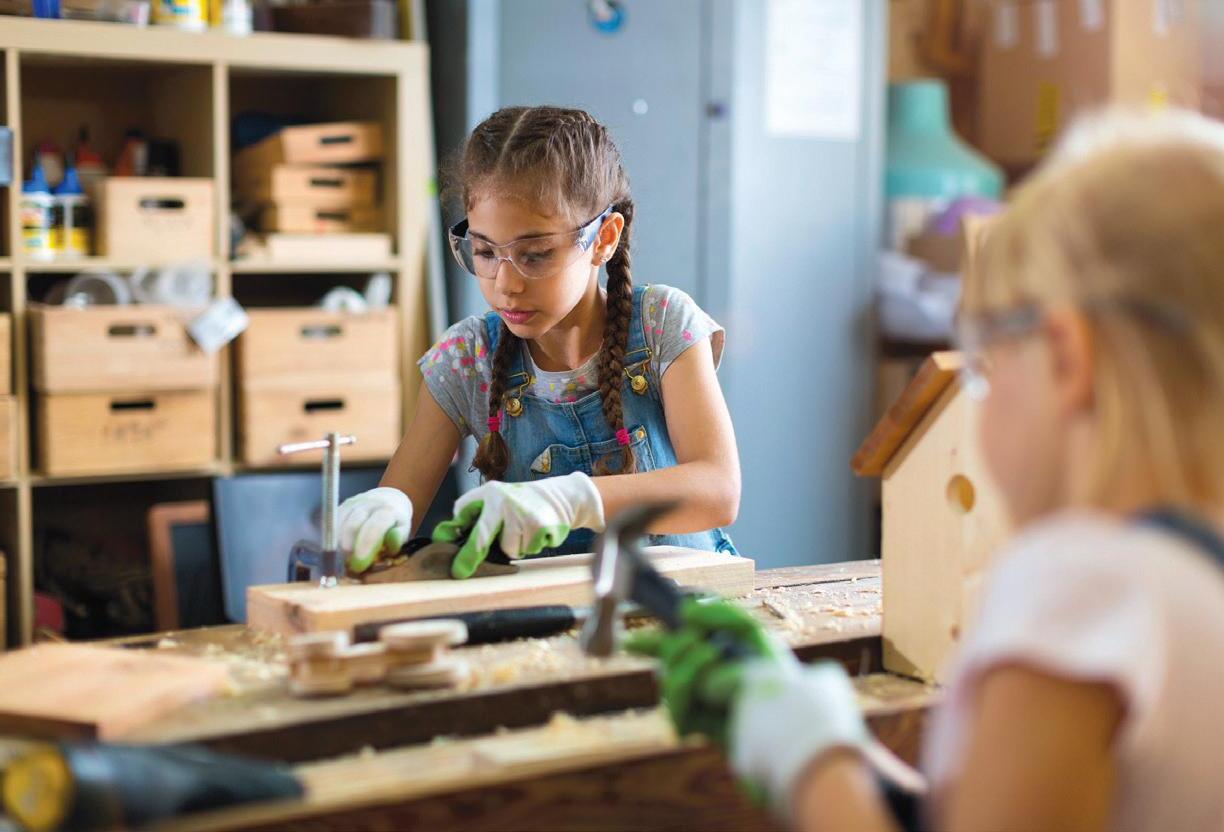
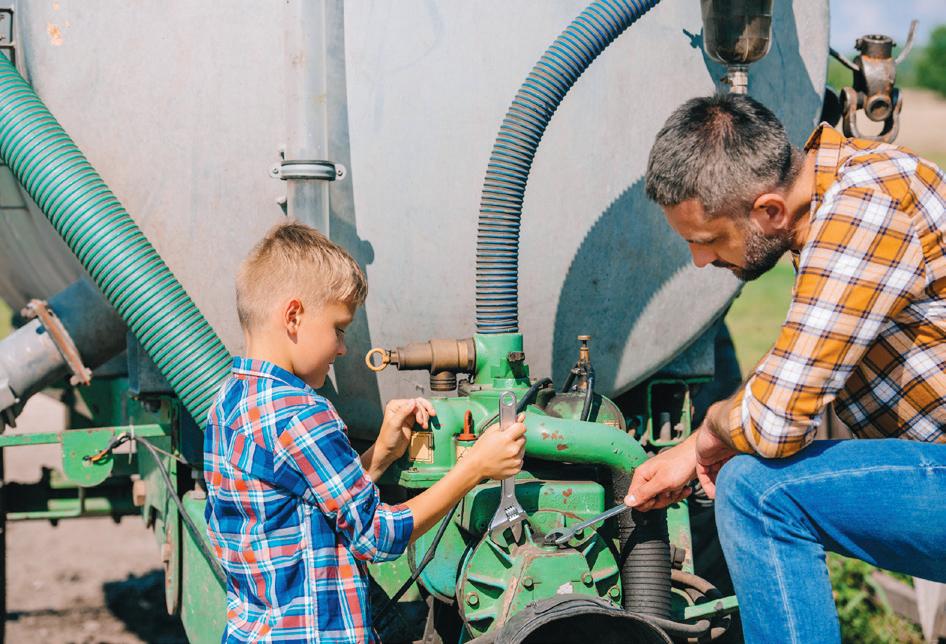
This spring, the Grape Day S.T.E.A.M. Foundation will hold its immersive spring program held at Deanna Smith Ranch — a working farm that becomes a living classroom for students in grades K - 8.
Through direct, joyful encounters with animals, soil, and fber, young learners will discover life skills that connect them to the natural world in meaningful and lasting ways with the living cycles of nature, farming, and fber arts.
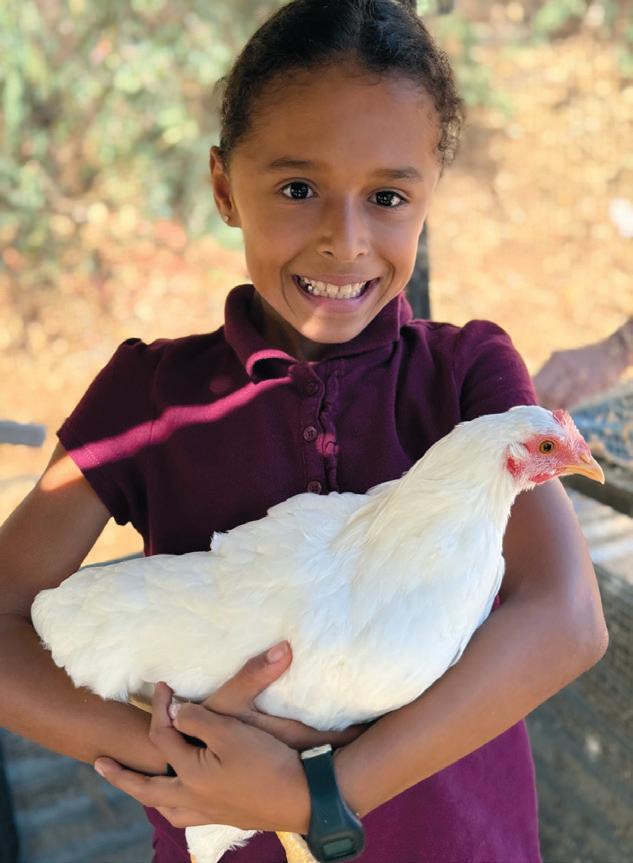
Spring babies — wonder in every encounter There is nothing quite like the magic of spring on a farm. Students will have the extraordinary opportunity to meet baby chicks, Angora rabbits, a mama ewe and her two baby lambs — each one a living lesson in new life, gentle care, and the responsibility that comes with tending to animals. These hands-on encounters aren’t just ador-
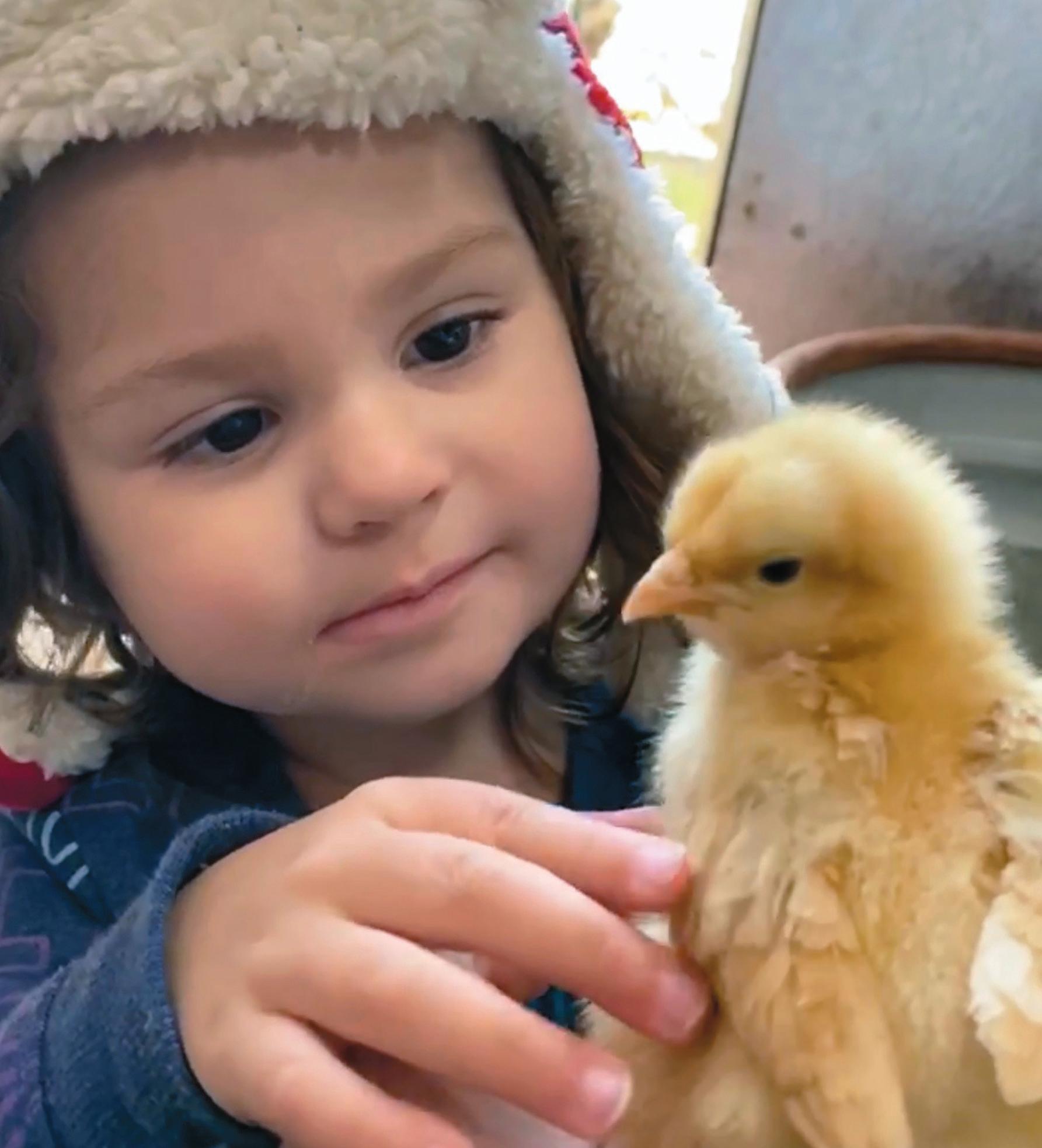
able moments — they teach empathy, patience, and an understanding of animal life cycles that no textbook can replicate.
Preparing the earth — soil, compost & regenerative farming
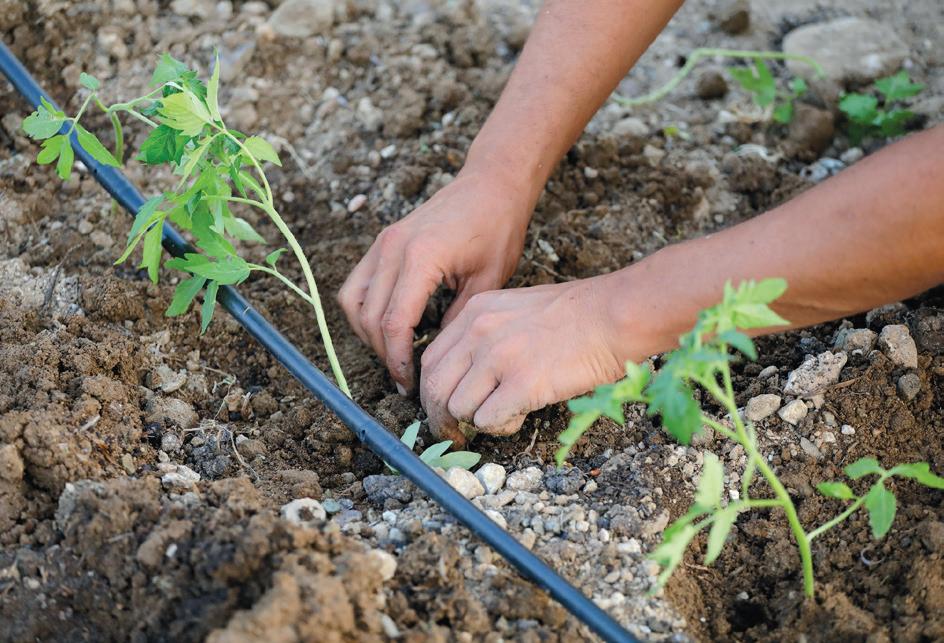
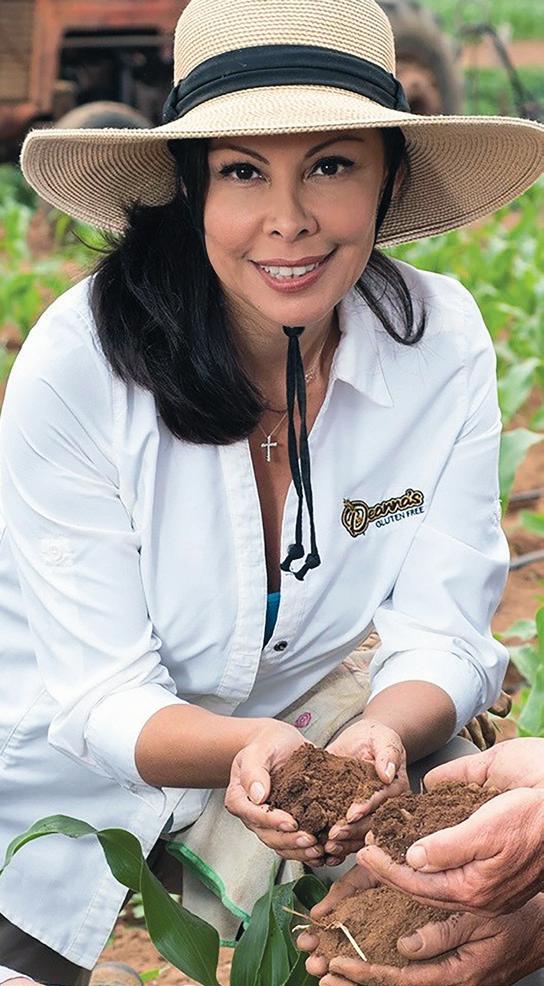
A central focus of this spring program is the soil beneath our feet — often overlooked, but absolutely essential to life. Students will roll up their sleeves and learn how to prepare soil for new crops, exploring the science and art of regenerative and organic farming practices.
The worm farm & why compost matters
Students will be introduced to vermicomposting — the practice of using worms to break down organic matter into rich, living soil. A working worm farm will show students exactly how red wigglers transform food scraps and plant material into what farmers call “black gold.” From the bedding layer at the bottom, to the active worm zone in the middle, to the fnished compost on top, every layer tells a story of decomposition, renewal and life.
Compost is the heartbeat of healthy soil — reducing the need for chemical fertilizers, returning nutrients to the earth, and supporting the biodiversity that makes organic and regenerative farming possible. This knowledge connects directly to the crops they’ll help prepare to grow, giving every student a sense of stewardship over the land.
Fiber to fabric — the story of natural textiles
One of the most exciting elements of this program is the world of natural fbers and textile arts — tracing the remarkable journey from animal and plant to the clothes on our backs.
Wool from lamb & Angora rabbits
Students will meet Angora rabbits, whose extraordinarily soft, cloudlike feece is one of the fnest natural fbers in the world. Alongside lamb’s wool shorn from the ranch’s own sheep, students will touch, feel, and examine these raw fbers — learning how animals contribute not just to our food systems, but to the clothes we wear every day.
Organic cotton grown in Northern California
The program also highlights organic cotton grown in Northern California — a crop with deep regional roots. Students will explore how cotton bolls are harvested and processed, and discover what makes organically grown cotton better for farmers, communities, and the environment.
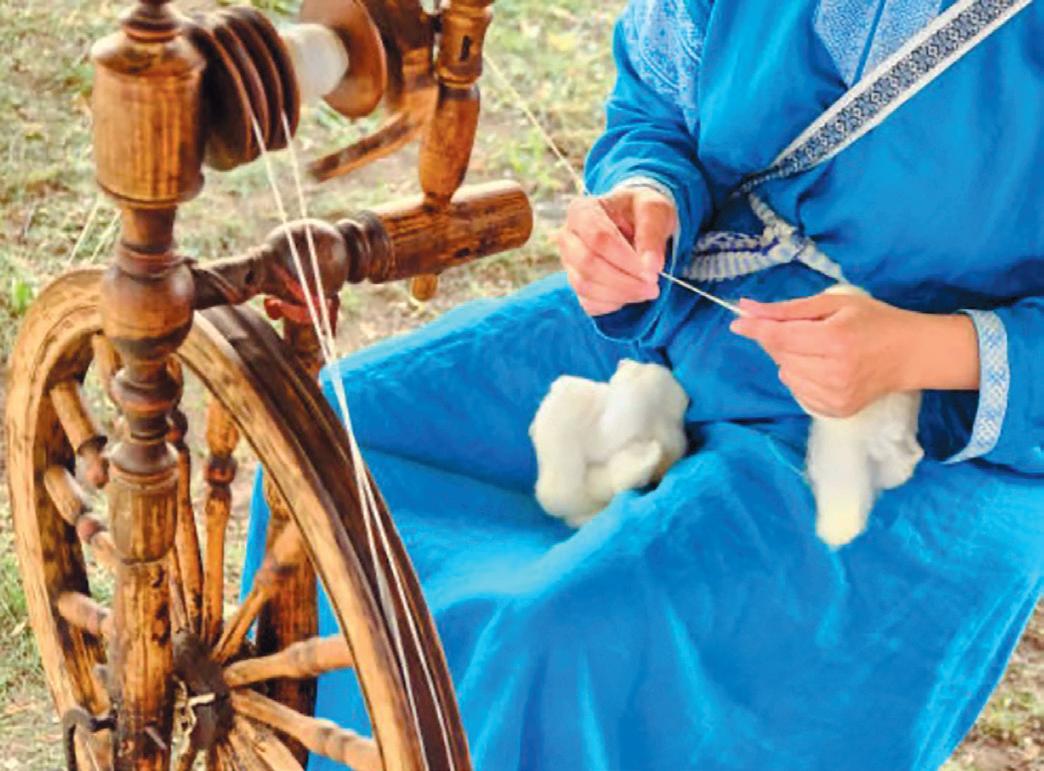
Master spinners at work
In a truly memorable demonstration, experienced cotton and wool spinners will showcase the ancient craft of turning raw fber into yarn — and




yarn into fabric. Students will watch as fuffy feece and cotton fbers are transformed before their eyes, gaining an understanding of how human ingenuity and natural materials have clothed civilizations for thousands of years. This living history moment bridges S.T.E.A.M. — science, technology, engineering, art and math with history — in one spinning wheel.
More than a feld trip — a foundation for life
The Grape Day S.T.E.A.M. Foundation’s spring program at Deanna Smith Ranch is more than a single day of fun. It is an investment in the whole child — building curiosity, environmental literacy, and a deep respect for the cycles of nature that sustain us. Whether a student leaves wanting to be a farmer, a textile designer, an environmental scientist, or simply a more mindful human being, this program plants seeds that will grow for a lifetime.
For more information about the Grape Day S.T.E.A.M. Foundation and upcoming programs, please contact us directly, STEAM@SmithRanch. com or www.SmithRanch.com.

In the 250th year of our republic, it is more vital than ever for our children to learn about how our people and our history came to be. For we are not a people of the land, but a people of a creed. We are what we are and who we are because of what our forefathers believed and sacrifced and bled for.
In January, I wrote in a column for the Escondido Times-Advocate: “As a way of encouraging the study of our heritage, I’d like to profle some local school teachers who
BY DAVID ROSS
are doing a great job telling our next generation about the miracle of the United States. If anyone in the communities covered by this newspaper wants to point at some exemplary teachers of American history I’d love to write about them.”
Coach Denny Synder of the Escondido Charter High School called me up a couple of weeks later and said, “I think we have someone for you.”
So he did. But it wasn’t at the high school
that I got the civics lesson I was dreaming about.
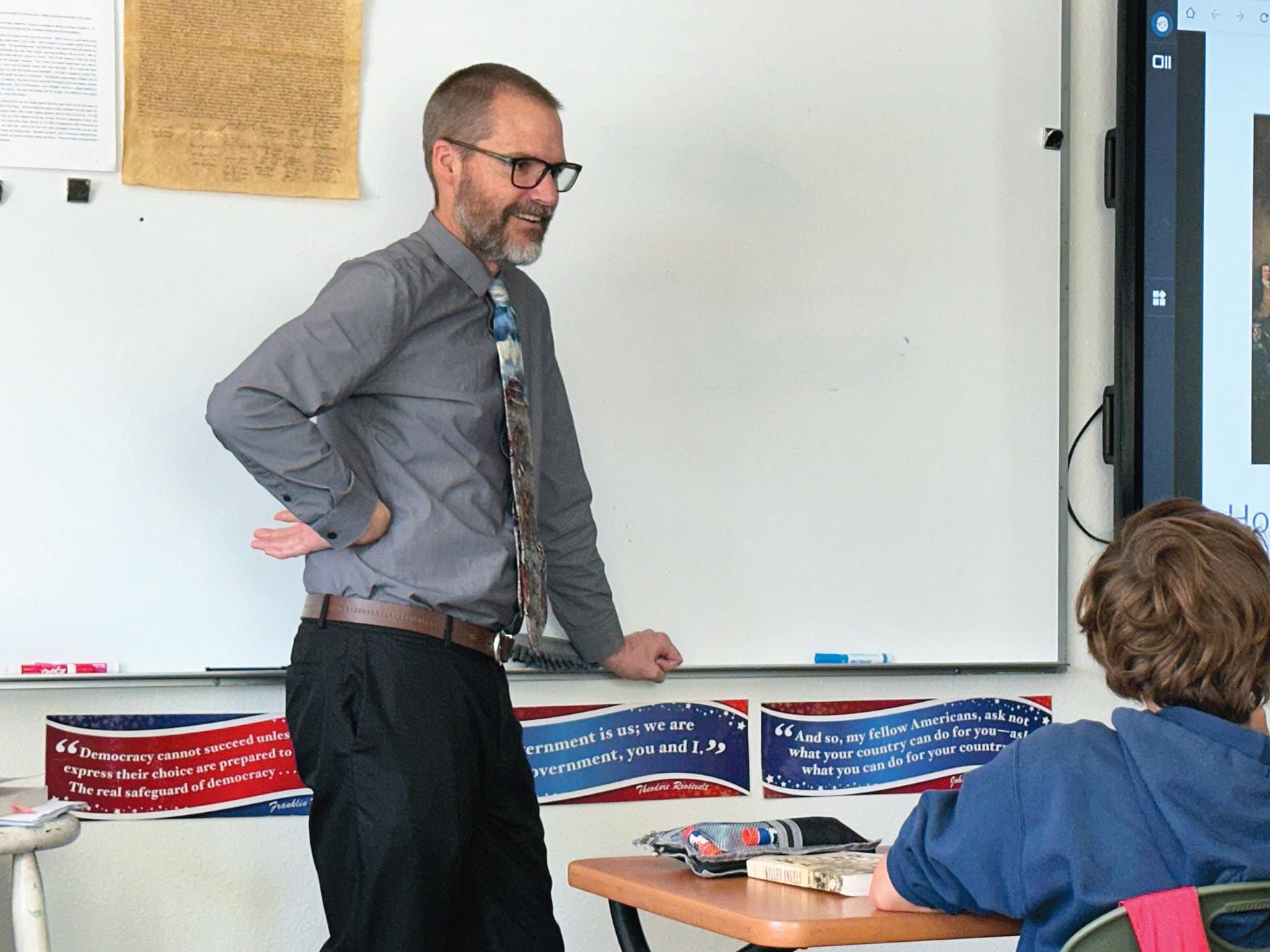
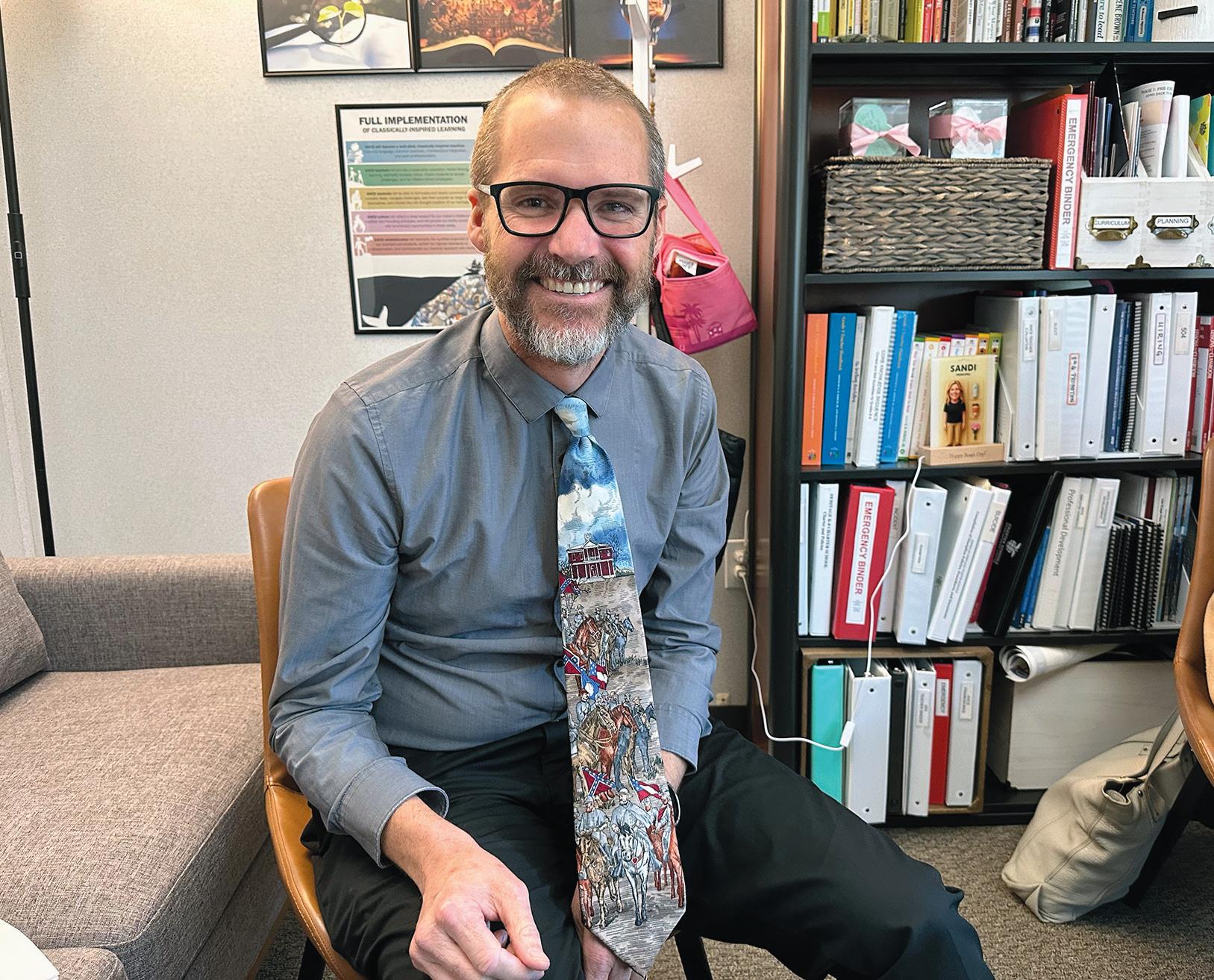
Instead, the teacher was an 8th grade teacher at the Heritage Flex Academy in Escondido. His name is Johnny Class. Yes, a teacher named Class, who teaches a history class.
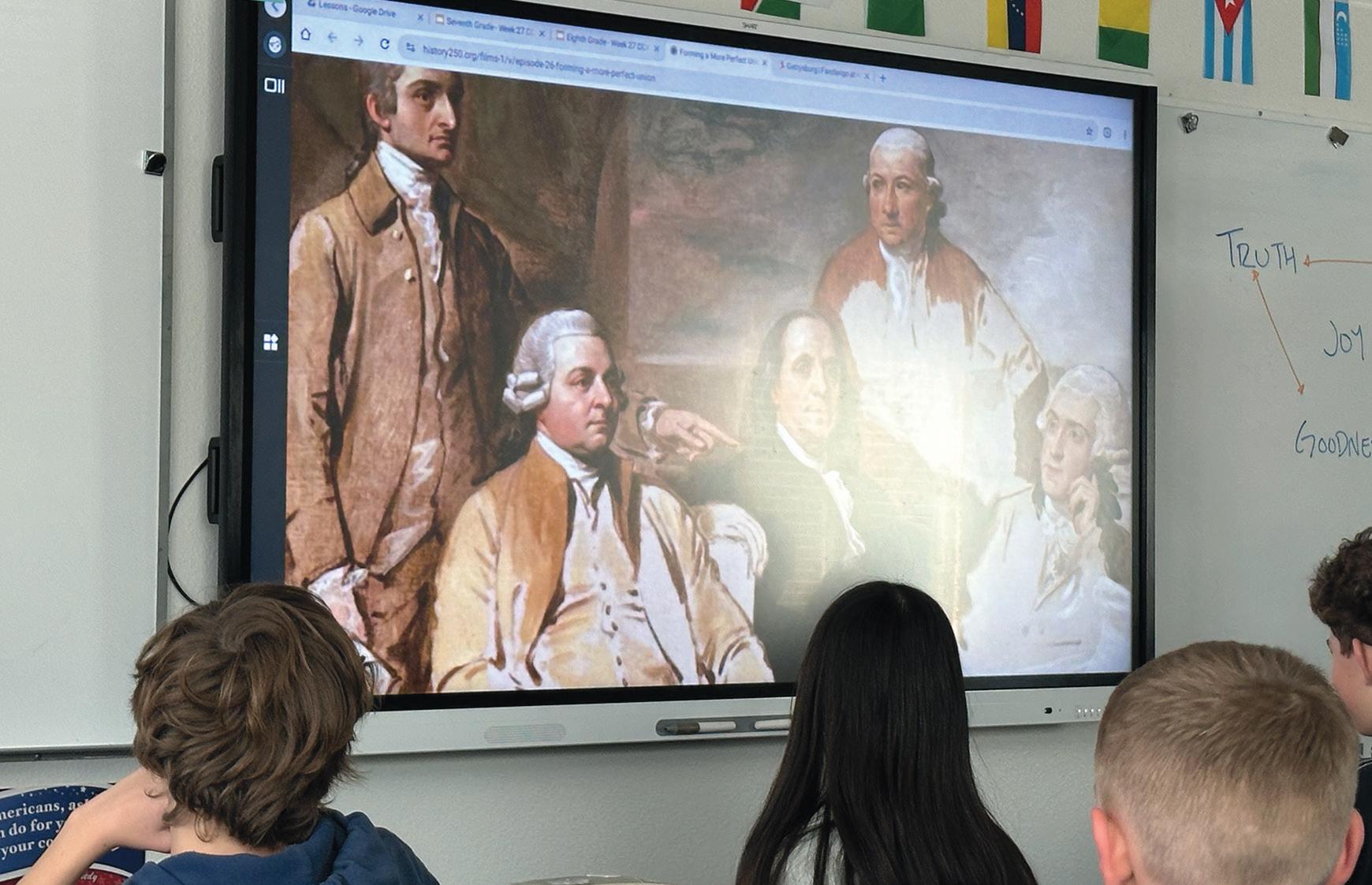
It’s the eighth grade Humanities class, that was, during the day I visited it, learning about the American Civil War and the Battle of Gettysburg.
You might think this didn’t meet my crite-
ria for teaching about the American Revolution, but it did. Because, while talking about the Civil War, and the great issues of slavery and freedom that were being decided on the battlefeld, it also referred back to the Founding Fathers.
Class was working through the Declaration of Independence. Class does a terrifc job connecting the big philosophical ideas to the Declaration. The title of this series of lessons was “The Civil War in Light of the Declaration of Independence.”
It’s part of a larger unit that focuses on the Civil War, and uses as its central text the Pulitzer-prize winning novel “The Killer Angels,” which focuses on soldiers on both the Union and Confederate sides and how they viewed the war.
It includes two speeches from the Northern side and one from the Southern side. One of these is Union Colonel Joshua Chamberlain talking about his idea of the “divine spark” that each person possesses.
According to Class, “Prior to this unit, the students looked at the Declaration of Independence and the ideals it set forth for the nation, investigated how these ideals helped frame the United States Constitution, and how these ideals were tested in light of the arguments over slavery.”
I have to confess that “The Killer Angels” is one of my favorite books of all time. Michael Shaara’s prose is entrancing, the characters are fascinating, the language transports us back to this pivotal moment in our history. I think I’ve read the book at least four or fve times. It’s really one of the fnest American novels of the 20th century and I can’t recommend it enough. It was the inspiration for the flm “Gettysburg,” which every person—especially young person— who wants to understand the Civil War should watch, along with “Lincoln” and “Glory.” And in fact the students in this class also watch “Gettysburg.”
Before the class the teacher and I shared our love of this book. I’m delighted to see it used to engage students. It never occurred to me that one of my favorite books would be the basis for a lesson—but when it was explained to me it seems so right.
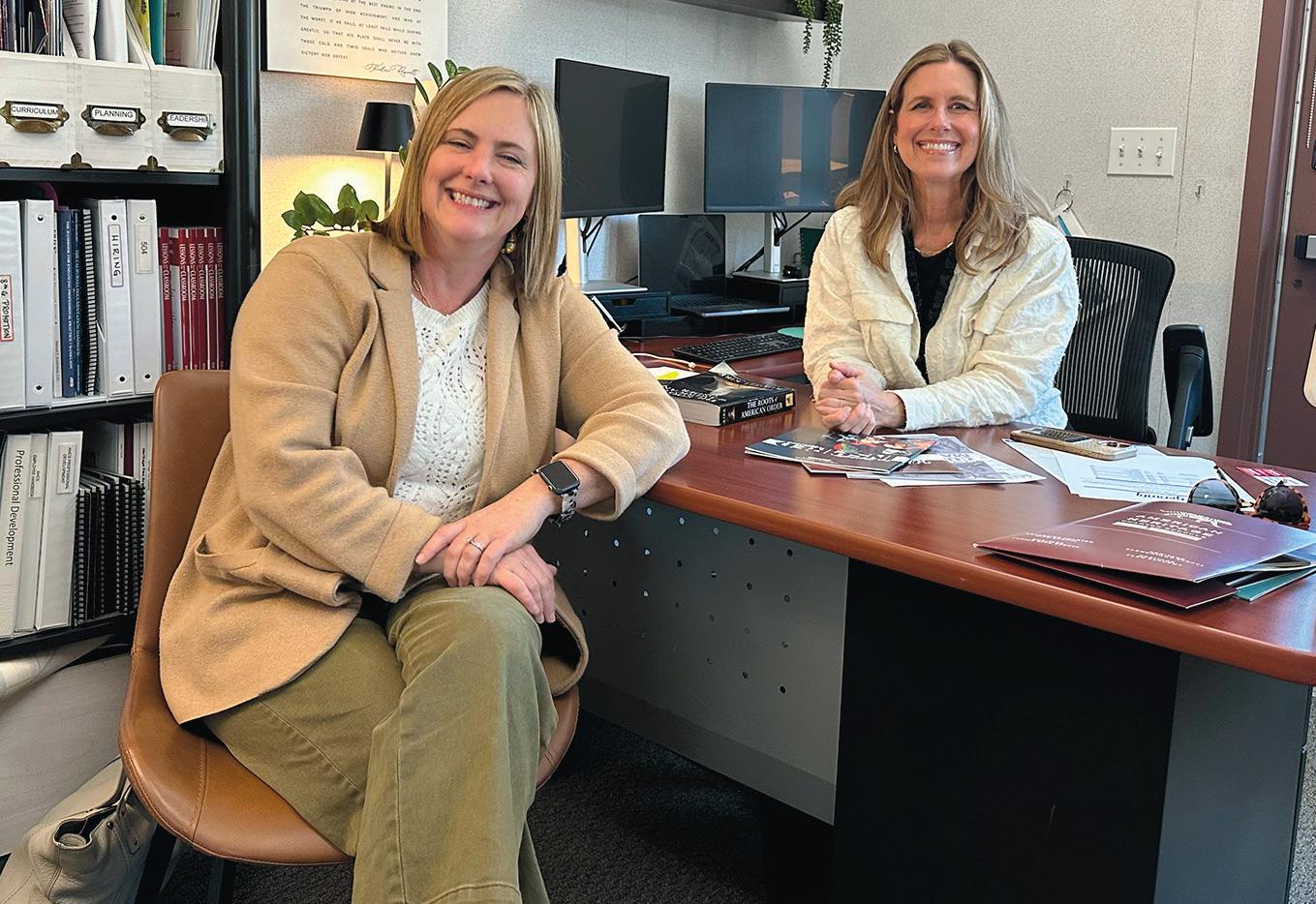
Before visiting Class’s class, I talked to Heritage Flex Academy’s curriculum coordinator, Kelly Beck and Principal Sandi Knapp. They said that their students start studying classical civilization in the 6th grade, including Jerusalem, Athens, Rome, London and Philadelphia. This leads to understanding the founding of America, and the founding documents, such as the Declaration of Independence.
After learning about the Civil War, the students will study the aftermath of that war, including Reconstruction. They are also learn-
ing about such towering fgures as Frederick Douglass. They are also memorizing poems such as “Oh, Captain, My Captain” Walt Whitman’s lament on the death of Abraham Lincoln, and as a capstone project conducting a mock trial of the Dred Scott case where the U.S. Supreme Court ruled that black people were not actual people—a decision that ultimately led to the Civil War. They also learn
about other foundational civil rights legal cases such as Brown Vs. Board of Education and Plessy Vs. Ferguson.
It’s a rich curriculum!
“By the end they have a good understanding of our founding,” said Beck. I asked if this is an honors class and learned that this is a program requirement for all the students, and is one of the reasons that parents enroll their
children in the school.
During the time I spent in Class’s class, I saw students engaging in discussions of the philosophical questions of the Revolution and the Civil War with a sophistication that wouldn’t have been out of place in a college class.
Class is a dynamic teacher whose students are attentive and, judging from the questions they asked, very engaged.
Among the goals of the class are encouraging students to explain how the ideals of the Declaration of Independence inspired Union and Confederate soldiers to fght. Yes, both sides were inspired by the Declaration
and thought they were fghting for freedom, hard as it is for modern Americans to get their heads around that.
The students were encouraged to try to understand each side of the issue and to frame their arguments. After listening to the speech of the Confederate General James Kemper, Class asked a student what he thought. “I don’t think this is a legitimate argument for why the states should leave,” said the student thoughtfully.
After seeing these kids wrapping their brains around some of the foundational questions of our republic, I’m a little less hesitant about leaving the future into their hands.



ESCONDIDO FAITH
BY KATI COWAN
A unique blend of faith, community and the arts have come together in downtown Escondido.
The long abandoned and outdated Ritz Theatre stood empty for years on East Grand Avenue.
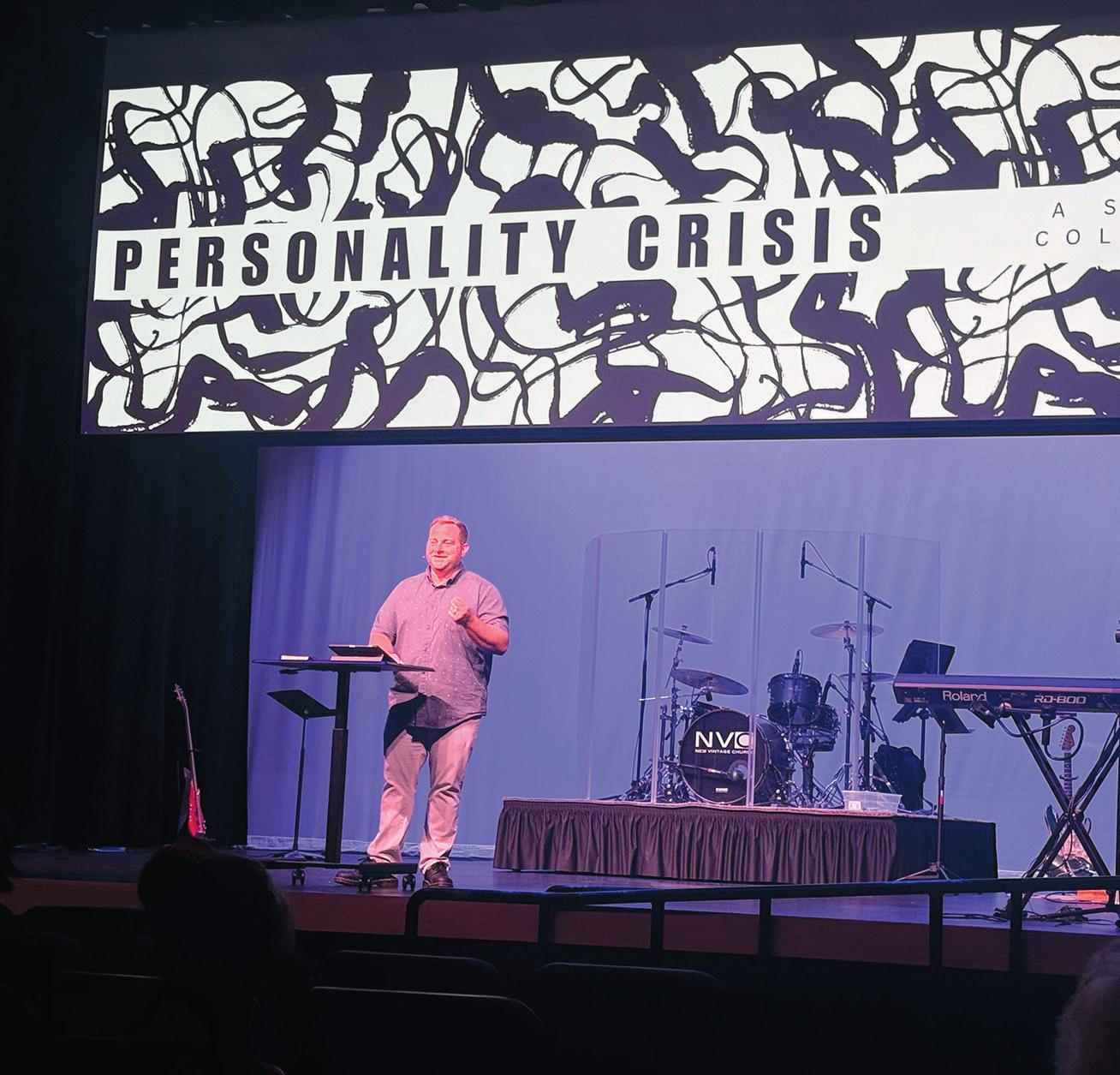
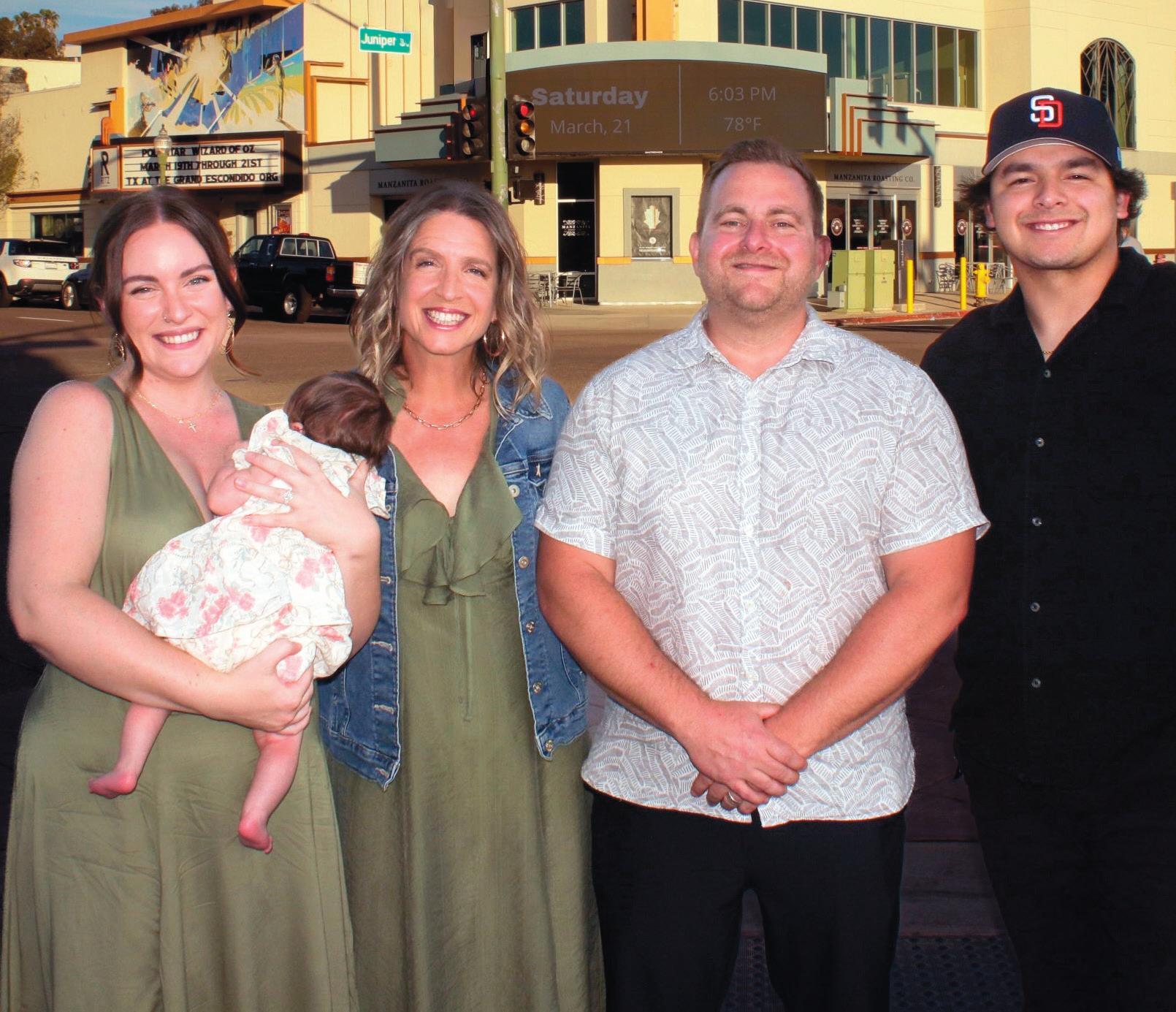
A pastor with inspired vision resurrected and transformed the downtown property into a house of worship, a state-of-the-art entertainment center with fexible event areas, a popular sidewalk cafe and a rooftop lounge.
Following Pastor Tim Spivey’s departure for Pepperdine University, new Lead Pastor Matt Grubb has taken the helm. Grubb sees this as a creative opportunity to transform
rarely used space into a practical and functional faith-based asset.
According to Grubb there are different models that Christian churches are exploring to utilize buildings as both a place of worship and a place to serve the community.
In addition to contemporary worship, the New Vintage facility presents artistic fair through theater, bands, comedy, dance recitals and other family friendly events. It is a key connector to the arts in Escondido and for Grubb a meaningful way to offer spiritual support.
Grubb sees so much potential where he can make a difference and help revitalize the
neighborhood and the downtown core.
His is an artistic family. His wife Sarah Lynn is a classically trained pianist and singer. His daughter is a musician and his son a professional dancer.
“When I look at Genesis, the frst book in the Bible, when God created the world, I see an artist at work,” said Grubb. “When I look at the sunset sitting in the hills of Escondido, I see God’s artwork.”
He recognizes that New Vintage Church (NVC), the Grand / Ritz Theater and Manzanita Roasting Company and Coffee House as an atypical model. But one that offers a rich opportunity for the arts to thrive at a place
that also operates as a church—connecting with residents where they are. He sees it as a direct correlation to the way Jesus constantly interacted with people from all walks of life.
“One of the things I love about Jesus, he didn’t just sit around and say everybody needs to come to me and ft into this perfect box,” said Grubb. “He was constantly going out into the middle of crowds and having lots of different conversations sharing information and demonstrating grace, compassion and forgiveness.”
Grubb said he is frst and foremost a Christian and a pastor. This is how he wants to lead his life as a member of the arts community and resident of Escondido. It is important to him that the community know the Church is there for them as Jesus was for the people he encountered.
Case in point, recently NVC joined Classical Academy High School and Rotary to sponsor a program, “Sleep in Heavenly Peace,” a movement that partners with organizations to build beds for children sleeping on foors in North County.
Grubb loves Escondido and wants to build rapport with the residents, nurture relationships, meet needs and provide a safe, welcoming space for all to belong.
“With this perfect central setting, we want to provide a spot where people can come and have a cup of coffee, plan a dance recital for their kids or have a theater showing,” shared Grubb. “Thankfully, because of our state-ofthe-art sound system and lights and some of the different things we have, we not only get to administer to our church on Sunday mornings but help Escondido day-in and day-out by offering this affordable and appealing venue.”
The renovated theatre has grown in popularity.
It is no surprise that it won Bronze for Best Family Attraction and Best Live Theatre, and Silver for Best Banquet and Best Live Music Venue at the Best of North County Awards ceremony in 2025.
Offering an extensive list of family-friendly shows at reasonable prices, something is happening at the Ritz every week. Line dancing at the rooftop lounge; the Miss Escondido Pageant in April in the main theatre; Comedian Tyrus performing live; dance recitals; musicals; tribute bands like Legend Zeppelin in July; Kenny Hale presenting the music of Neil Diamond and Petty Party celebrating the music of Tom Petty and the Heartbreakers in August—are all part of the line-up.
The facility is also open to host private meetings, birthday parties, weddings and receptions.
Grubb’s hope is that as people get to know
NVC through the theater, meeting and banquet facilities, the church will grow.
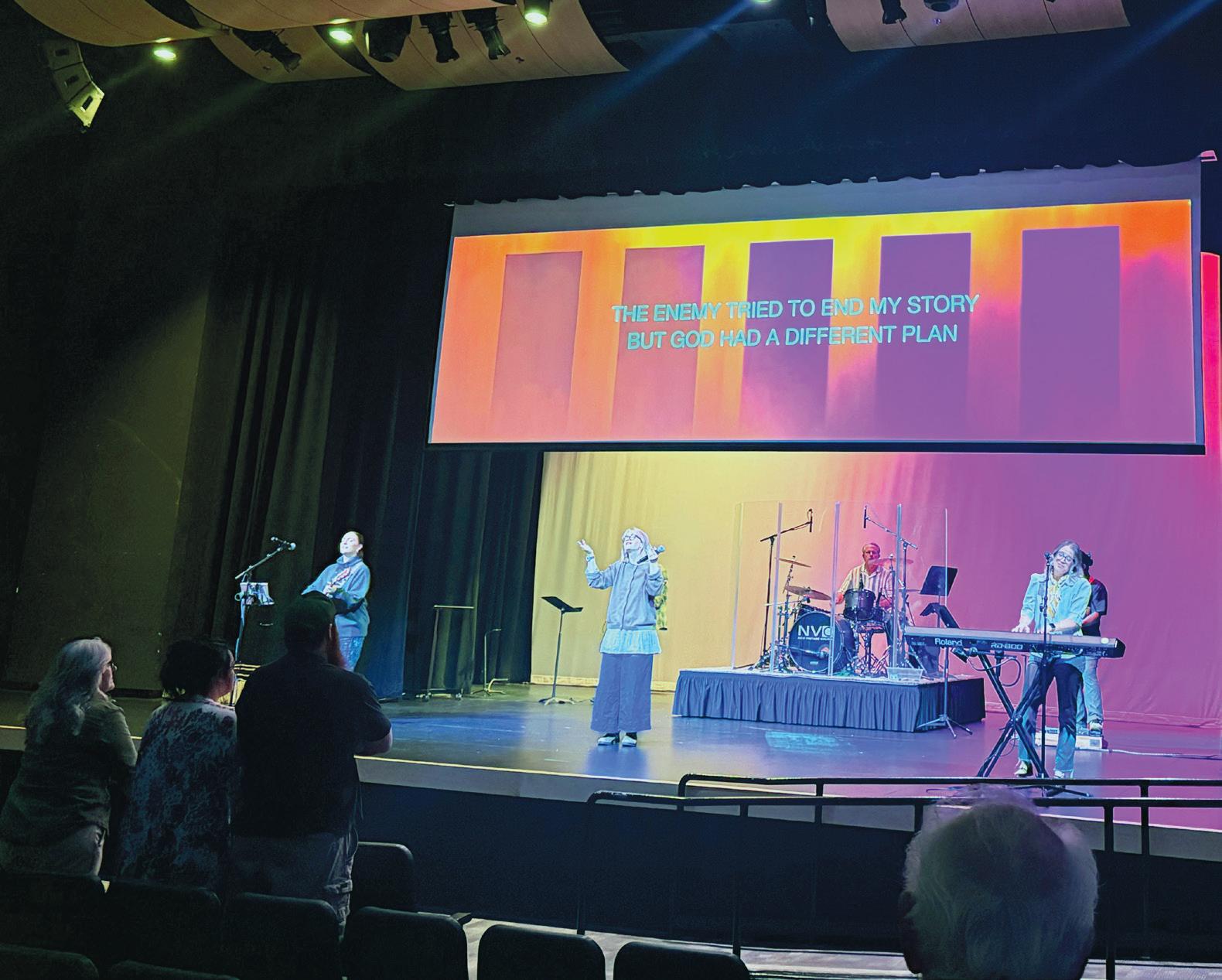
On Sundays, The Grand / Ritz Theater is transformed into a comfortable house of worship.
NVC offers church group programs organized by the pastor’s wife, Sarah Lynn.
Programs include Financial Peace University, a series of classes that assist with debt relief and better money management.
The future schedule will include a marriage conference for the community in collaboration with an experienced counselor.
Yourh Pastor Ricky Rodriguez designs activities for kids and teens on an ongoing basis.
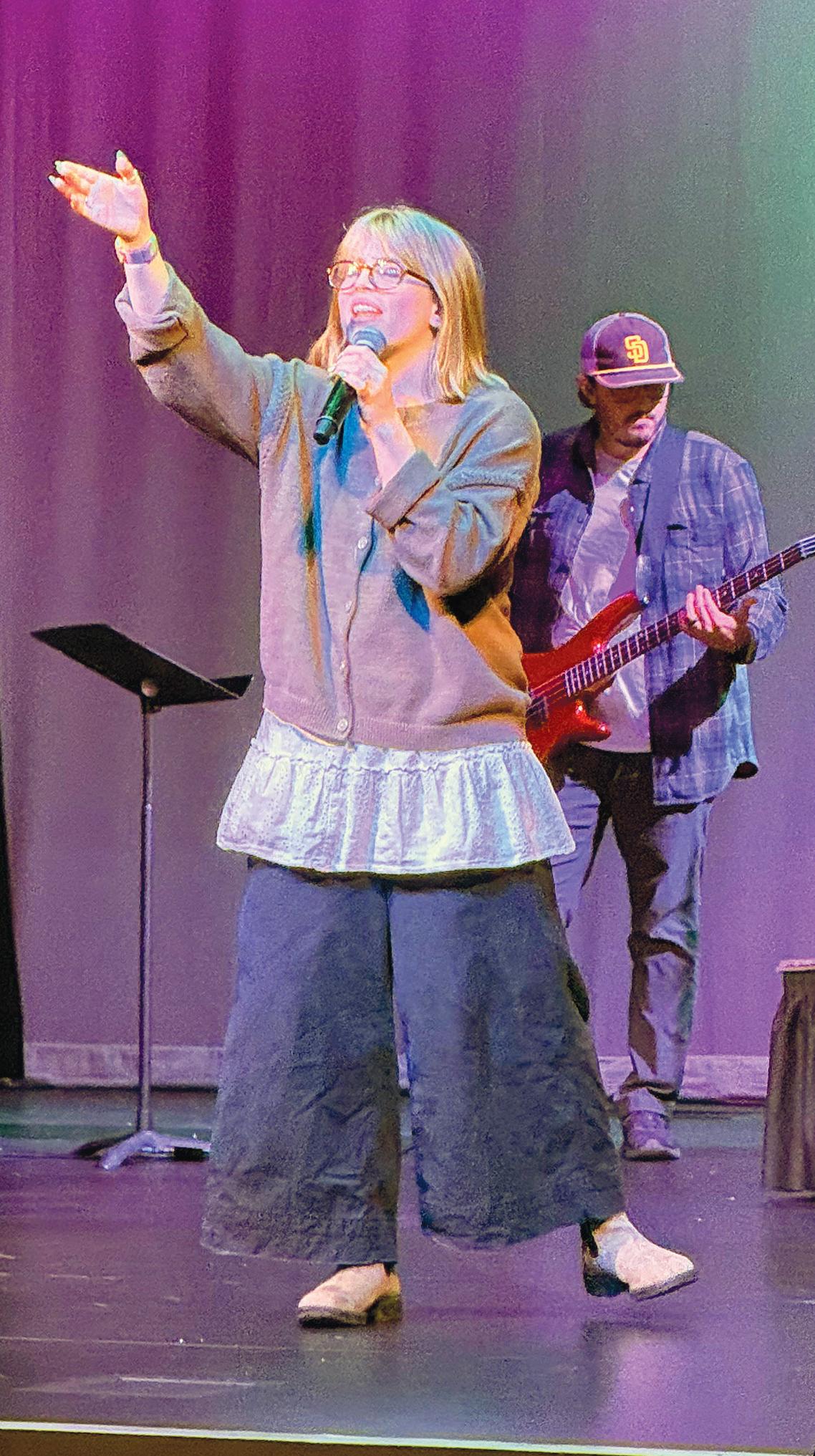
“The old Ritz used to be a place where God was not present and we saw an opportunity to take back that building for God,” said Worship Pastor Rylie Keener.
Keener has been with NVC since its beginning in 2016. She remembers when the church and the theater opened in the middle of the pandemic. With everyone staying in their homes it was a slow start. But now the church is growing, and attendance has tripled in the past two years under Pastor Grubb’s leadership.
For Keener, NVC is more than just a church. She treasures her congregation as her family. They have provided a sacred backdrop to her life’s major events, deeply enriching her personal story.
Keener’s role as Worship Pastor is to set the stage through music, song and prayer to create an encounter with God that honors Him for His unconditional love and grace.
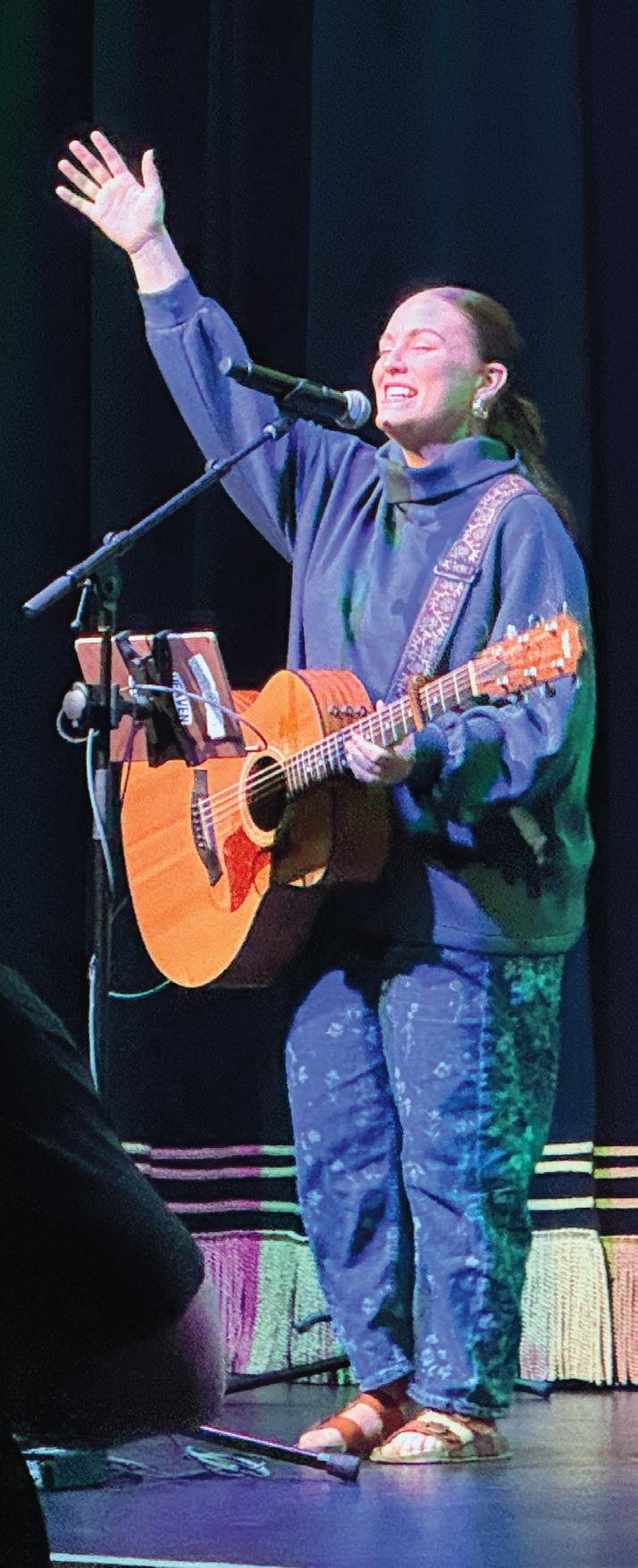
In preparation for Sunday service, she puts together a team of musicians that include drummers, base players, acoustic guitarists, a pianist and singers. Keener’s team leads the ceremony on stage in the main theater and lays the foundation for worship . The talent is exceptional; the voices, professional; and the vibe, rich and contemporary. They pull people higher.
A thought-provoking sermon follows as Grubb applies spiritual principles to everyday problems offering a lifeline and demonstrating the value of biblical wisdom.
As a punk rocker who questioned authority, challenged societal norms and strove to think critically rather than follow trends, Grubb wrestled with church beliefs. Surprised and intrigued to hear a member of his grandparents’ church describe it as “flled with hypocrites,” it shattered his assumption that only perfect people belonged there – a belief that had kept him away, convinced he was too different and not good enough to attend.
What Grubb learned that day and ultimately led him to become a pastor was that church is a place of healing.

“This is why people go to church to get help,” said Keener adding that “the church is like a hospital for the sick and not a place for the perfect.”
Grubb reminded that Christians are people from all walks of life who strive toward lives aligned with Jesus’ teaching but are far from fawless.
He shared the story of Jesus confronting religious leaders about to stone a woman caught in adultery—daring anyone without sin to throw the frst stone. Convicted by their consciences, they all walked away understanding the truth of Jesus’ words who, according to Grubb, knew and owned the law in a different way.
Her accusers gone, exercising compassion and mercy over judgement, Jesus encouraged her to “go and sin no more.”
Pastor Grubb says that NVC is a place for everyone and it is okay to not be okay.
“Here is what I know,” said Grubb. “Following Jesus will make your life better and you will feel better in life. In Texas growing up I was disillusioned with my community at large who acted like they had it all together, but I knew what went on behind closed doors. And when I started listening to God’s words and putting it into practice it started to make my life better.”
At NVC the goal is to help people fnd and follow Jesus.
Like the church on Main Street in small town America, NVC in the heart of Escondido on Grand Avenue strives to be the central hub for spiritual, social and emotional life offering support while establishing itself as a central meeting place for community and cultural events.
Along with The Grand / Ritz Theater, NVC is an impressive testimonial to the power of renewal and transformation in relation to the arts and culture in Escondido, and to Pastor Grubb’s spiritual message.
For more information about New Vintage Church: newvintagesd.org/
For The Grand / Ritz Theater : www.thegrandescondido.org/
BY KATI COWAN
One person’s need to connect with the creative community has sparked a blaze of passion for the arts in Escondido.
Spreading like wildfre, MAGEC, Museums & Arts Growing Escondido Culture, has created a storm of activity living up to its name as an active and vibrant organization now celebrating its 10 years of success.
MAGEC champions “2nd Saturday,” a festival of creativity on the second Saturday of every month along Grand Avenue—with complementary artist receptions introducing new and exciting exhibits at local galleries. It offers an invaluable opportunity to meet the talent behind the artworks while enjoying delectable foods and wine.
Art in The Garden is another MAGEC event offered during two annual street fairs that showcase various artists and makers at Heritage Park.
MAGEC, initiating the frst Small Business Saturday event, helped promote businesses in the downtown core for four years—after which they partnered with the Downtown Business Association to extend their infuence.
In partnership with the Escondido Public Arts Commission, MAGEC is at the helm of the second annual Arts, Culture & Creativity Month, a festival dedicated to the creative spirit presenting a sensational assortment of free and affordable activities throughout the month of April.
When you consider how it started, and continues to thrive, the magic of MAGEC stems from the love and dedication the members have toward each other, Escondido and the arts.
A little over 10 years ago, Carol Rogers, now the chairwoman of Escondido’s Public Art Commission, was looking for ways to connect with the artist community. Born in Escondido and raised in Detroit, she had come home seeking a place where the arts have always thrived and fourished.
Katherine Zimmer, with Visit Escondido at the time, introduced Rogers to some gallery and business owners, as well as
representatives of cultural and history organizations. Together they created an unoffcial group interested in promoting fne arts and Escondido.
Their frst meeting took place in March 2016.
Joining Rogers were artist Brenda Townsend of Brilliant Spectrum Art, Chief Experience Offcer at Operant Media Josie Shepherd, Dante Farenga, the development & marketing director at the San Diego Archaeological Center, Distinction Gallery owner Melissa Walker, and Susann Nowicke of EcoVivarium Reptile Sanctuary and Museum.
They came together to lift Escondido up as an arts and culture destination.
“We were a small but mighty arts community. We just needed to fgure out how to get all of us in one room to amplify this,” said Shepherd. “We started meeting once a month over Peterson’s donuts and coffee.”
In the beginning they believed that only brick-and-mortar operations could be a part of MAGEC.
“But when we realized this was really about the artistic and cultural community, that is when individual artists became part of the organization and MAGEC took off,” said Rogers.
Seeking a creative and catchy name, Nowicke suggested MAGEC, an acronym best describing their goal and mission of Museums and Arts Growing Escondido Culture that included all aspects of the art community. The name was adopted with enthusiasm.
Over time, members came and went according to their needs. Without rules or formalities, it grew into a great place to meet and
network with artists, business owners and any curious onlooker. There were no fees and everyone was welcome. No one was obligated to stay.
It was left open to use the group in whatever way the need dictated. The group’s focus was always endorsing, promoting and growing the arts that contributed to the economic growth and development of the city. It is the same today.
“The city has always been so interested in art,” said Townsend. “In my view, art is connected to the economy.“
Walker agrees.
“I am a huge believer that the arts are the driver of the economy,” shared Walker, the owner of Distinction Gallery on Grand Avenue. “The success of restaurants is due to the arts.”
Walker believes that the murals of Esco Alley Art along with the many others throughout the city draw people in. A full day spent visiting the many murals and Art galleries can begin and end with eating out at one of at least 24 eateries along Grand Avenue or beyond in Escondido.
Because the arts and dining out are becoming integral to the entertainment culture, it has initiated a movement to decorate the walls of local restaurants and coffee bars with artworks. Restaurant owners and managers are invited to attend the MAGEC meetings to connect with artists and to work collaboratively for mutual beneft.
Such is the magic of MAGEC.
Escondido’s Director of Economic Development Jennnifer Schoeneck’s move to place the Public Art Commission under the Department of Economic Development underscores
the value that the arts play in the fnancial growth of the city.
“I want to encourage everyone to come and attend a MAGEC meeting and be part of this movement, even if you do not consider yourself from an arts organization,” said Townsend.
MAGEC is open to everyone because, members see the arts as something that is woven into the tapestry of all aspects of the community where alliance and teamwork are what help promote all industries including the arts.
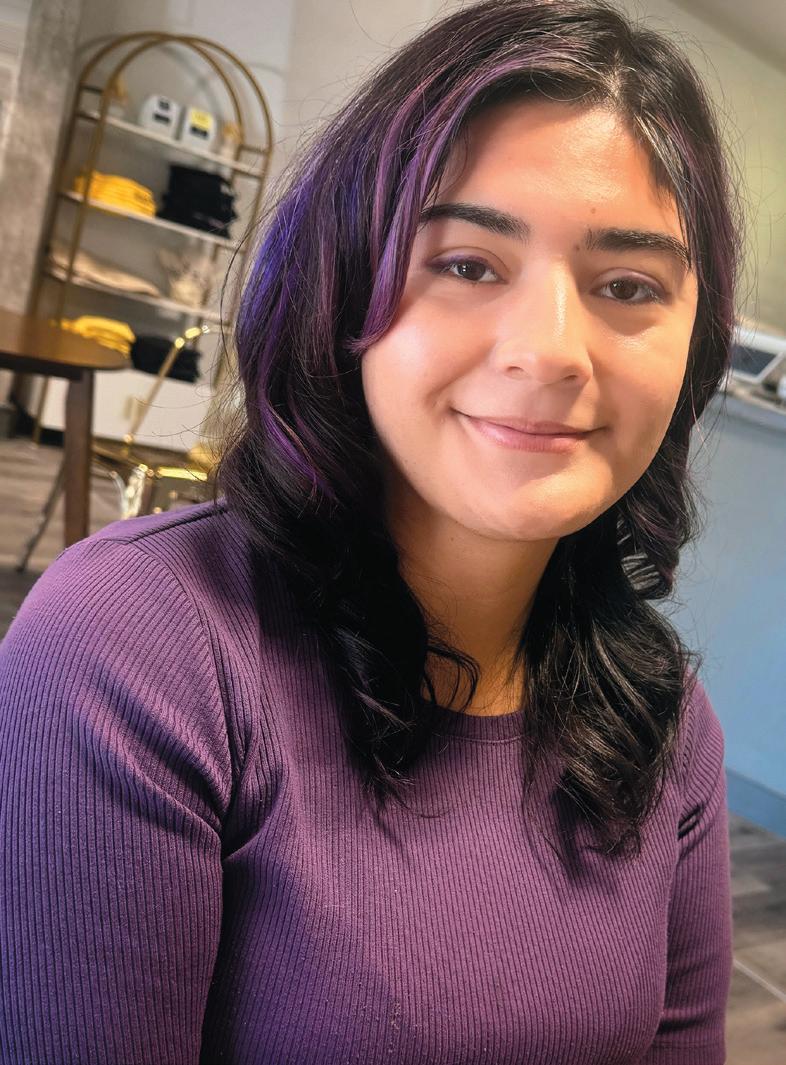
Marlene Gonzalez who prefers to be called by her middle name, Nicole, is a student at John Paul the Great Catholic University. Her passion is art and in particular painting portraits. She works part time at Daydream where the owner and longtime member of MAGEC, Mei Bautista invited Nicole, a budding artist, to a MAGEC meeting. Nicole is now hooked.
“I love the passion everyone there has for the arts,” she told me.
This is what MAGEC is all about, to encourage and embrace new and upcoming artists and bring them into the fold of the arts community.
“We all share this passion, and we want to make our community more hospitable to individuals of all abilities, to those who may be overlooked,” said Nowicke. “They are all welcome.”
MAGEC is a place to connect, get information, present ideas, and look for partners and ways to move initiatives forward in a collaborative atmosphere.
“It’s like going into a place where magic happens,” said Rogers. “Just the energy of thirty to forty people who care about the arts coming together is change.”
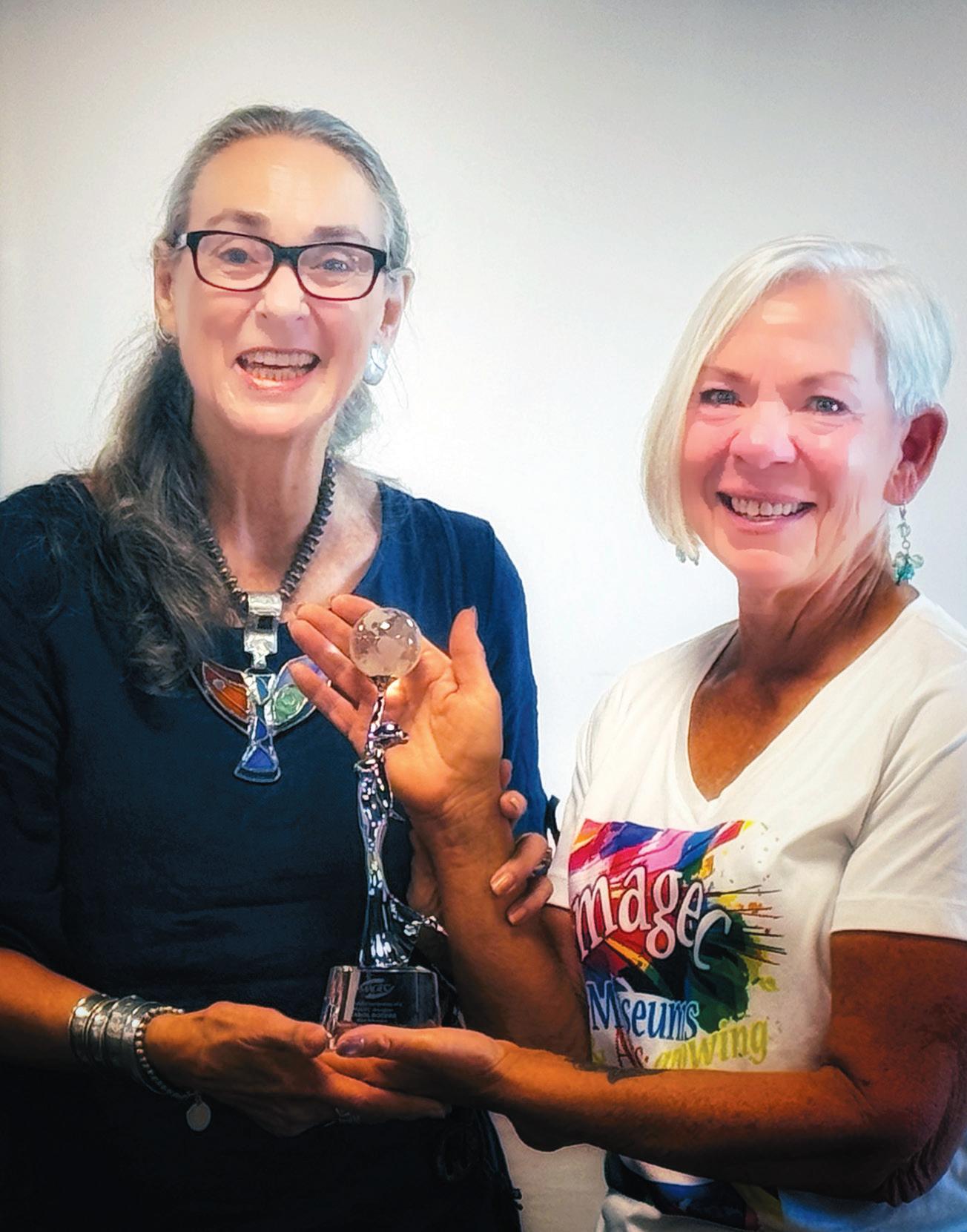
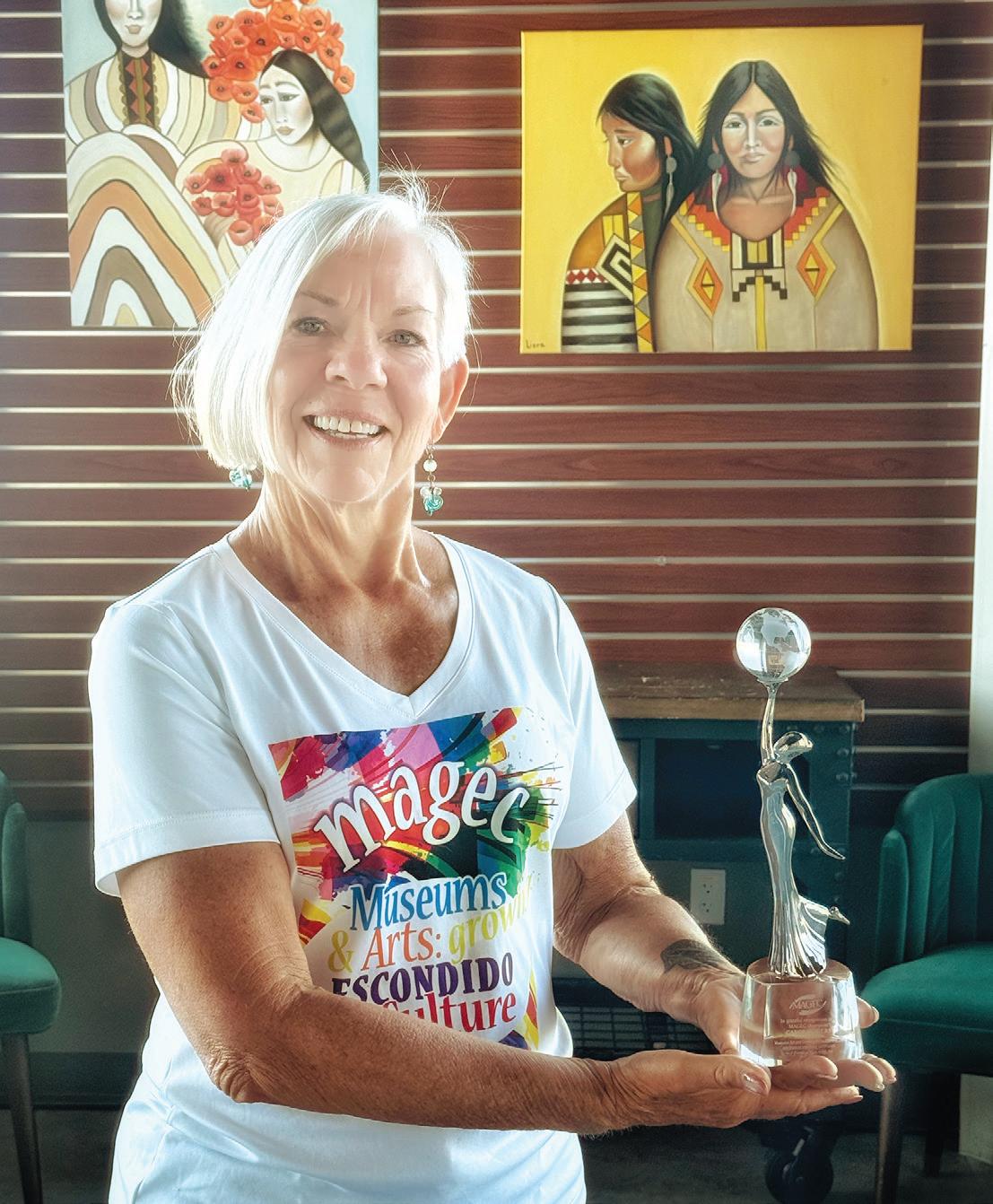
Artist Suzanne Nicolaisen joined the organization a little after it started.
“From the moment I stepped into this association I knew something great will happen and I never doubted that we would be what we are today,” she shared.
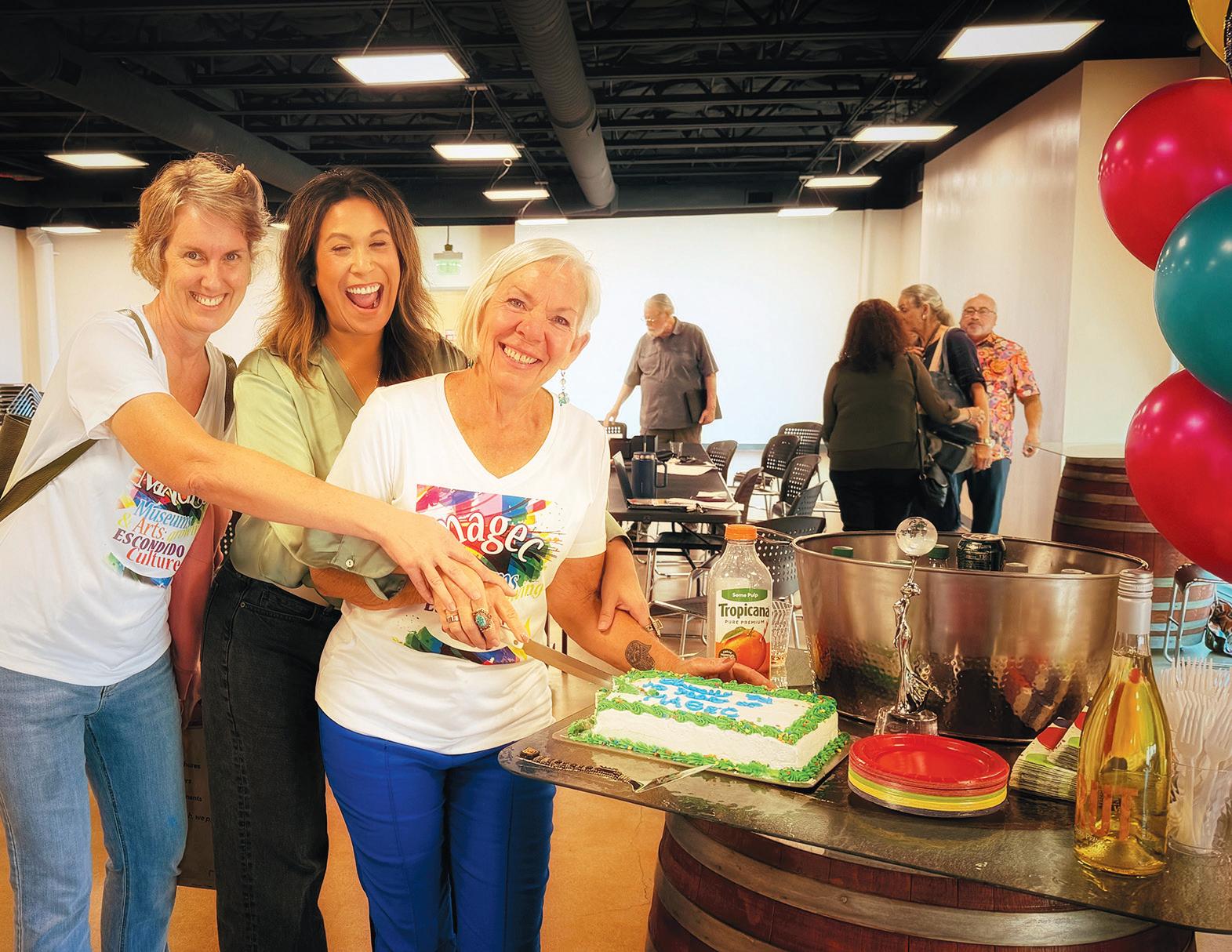
This March, the meeting commemorated the ten-year anniversary of this organization. Nicolaisen, on behalf of the Esco Alley Art Committee, presented Rogers, who was one of the founding members of Esco Alley Art, with a trophy in recognition of all the work she has done for MAGEC and the arts community. The inscription reads: “In grateful recognition of a MAGEC champion, Carol Rogers, whose dedication to Museums Art and Growing Escondido Culture continues to enrich our community. Your Esco Alley Art friends.”
Today there are over 40 active participants who collaborate in all sorts of creativity related activities to bolster and promote Escondido as an arts destination.
Meetings are held at 9:30 a.m. on the fourth Thursday of every month. Contact MAGEC for the location—as it varies.
MAGEC continues to expand the momentum of Museums & Arts Growing Escondido Culture as the members celebrate the magic that has sustained it for ten years.
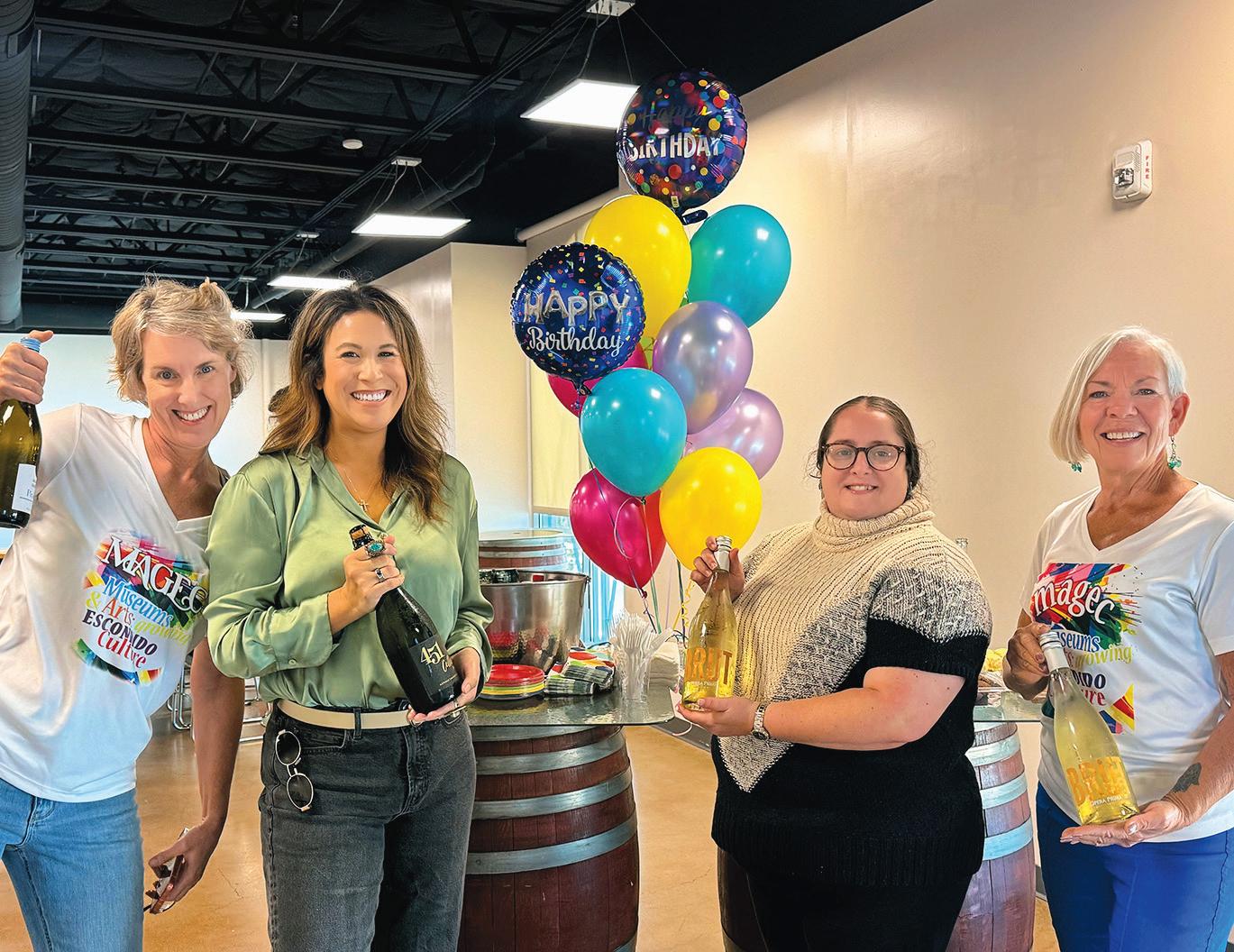
Champagne, cake and balloons marked the occasion. Tears of gratitude fowed.
The magic of MAGEC flled the room to overfowing and continues to spread throughout the city thanks to a woman with vision and a dedicated group who love the arts.
Links: https://www.downtownescondido.com/event https://visitescondido.com/magec/ Instagram @magececsco Email magecesco@gmail.com


BY KATI COWAN
Just a few miles from downtown Escondido, an ancient collection uncovers silent voices, dispels myths and unearths hidden secrets of those who frst called this area home.
Had it not been for The San Diego Archaeological Center (SDAC) advocating for the early residents of our area, these voices might have remained silent, their ingenuity and way of life buried and forgotten.
Located just east of San Diego Zoo Safari Park, (within the city limits of San Diego) the center is the only museum of its kind, a rich and diverse repository of artifacts from the region dating back 10,000 years.
The majority of the collection is indigenous art and historical remnants from before the arrival of Europeans in San Diego County—with
some after they arrived.
According to Development and Marketing Director, Dante Farenga, there are over 30,000 archaeological sites in our region offering artifacts just about anywhere you dig. “Anywhere you stand or dig someone lived there at one point,” she said. “Land disturbed by construction is considered a possible archaeological site.”
With the inevitability of development came the need to protect the artifacts that tell the
stories of people who lived and died here centuries ago.
With the City of San Diego’s frst historic preservation ordinance in 1965, and in 1966 the passing of the federal National Historic Preservation Act, a legal framework was set in place to protect excavated items rich in historical data. In subsequent years, amendments and guidelines followed, becoming part of the Land Development Code extended to the entire county, setting a standard for the way to
care for and curate archaeological fnds.
Now, cultural resource management companies partner with Native American cultural monitors to balance development with heritage preservation.
With permission from the descendant communities to display, the museum’s exhibits are representative of the assembled relics preserved in temperature-controlled earthquake and freproof vaults. These are the pieces with scientifc and cultural value used for residue analysis and diagnostics.
“Our mission statement at the center is to preserve historically and culturally valuable resources and educate the public about its importance in collaboration with tribal and other descendant communities,” said Farenga. ”And cultural resources is a broad term for not just the individual artifacts themselves, but also for the archaeological sites and basically anything from the past that humans have handled.”
A $168,000 fne from an illegally excavated development site allowed professional archaeologists to establish the San Diego Archaeological Center to act as a storeroom for scientifcally and ethically unearthed items.
The center was founded in 1993 and became a non-proft institution in 1998 located in downtown San Diego.
SDAC is not only a state-of-the-art repository; it became a museum in 2002 when it moved to its present location in an old school building.
While some museums may only take perfectly intact objects with great artistic value, SDAC takes everything.
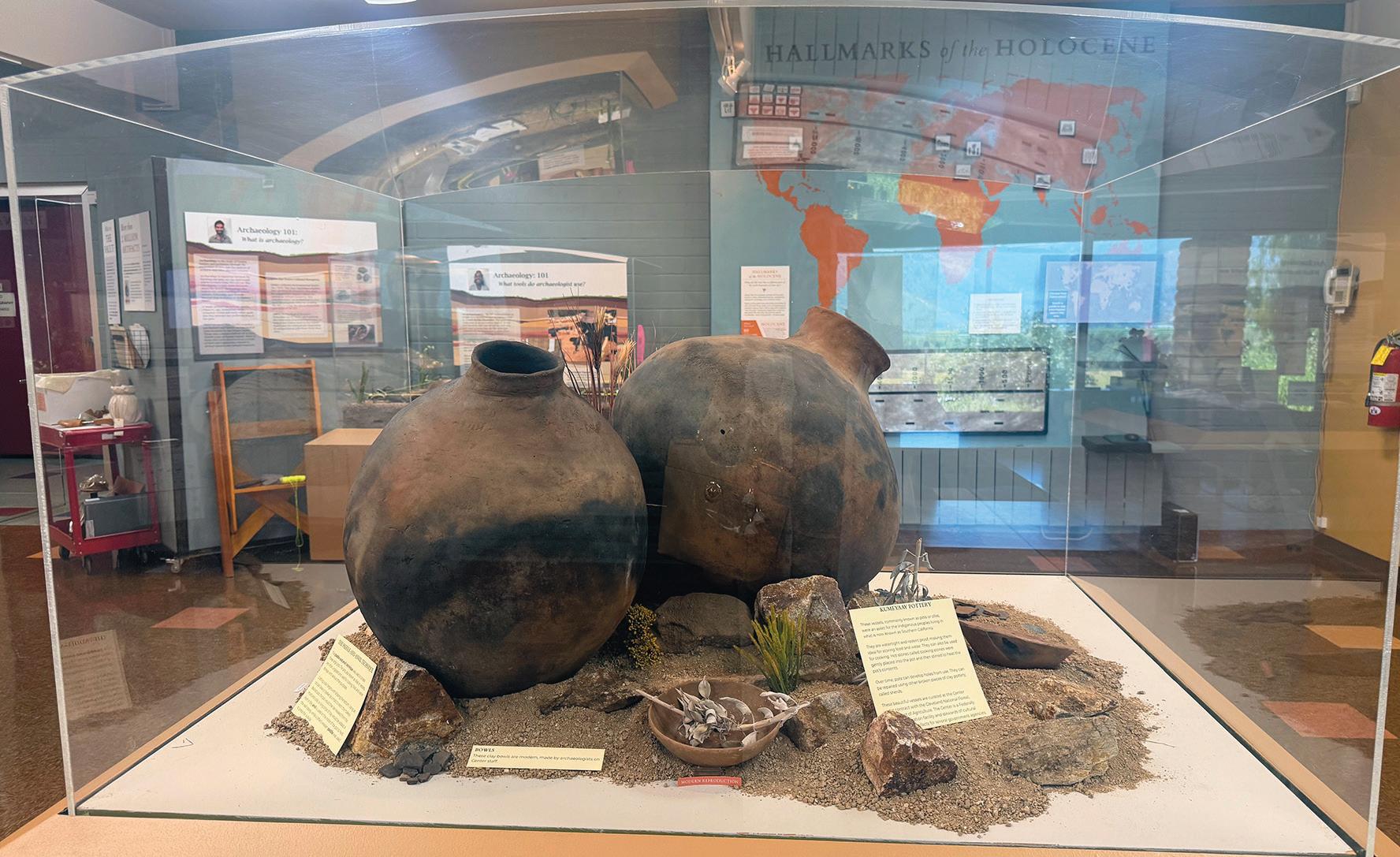
The center’s collection ranges from small prehistoric pottery shards to full size Kumeyaay ollas, clay containers that are intact and that stored food, water and clothing. Also, there are spearheads, grounding stones and tools along with rare items like “spoke shave” stone tools and La Jolla traditional “donut stones” the use of which is still uncertain.
Historic pieces from the late 1800s to the early 1900s include post-European contact glass bottles, fne China, marbles, daguerreotype frames and metal fgures—along with pieces from Mexico, China and Japan, all remnants of early San Diego history.
In addition to the preserving of irreplaceable cultural items, the center is also a facility where visitors can learn about those who lived here 10,000 years ago.
Farenga explained how archaeology is heavily dependent on context and relationship with everything, and while history can be subjective, ancient fnds render objective and scientifc information.
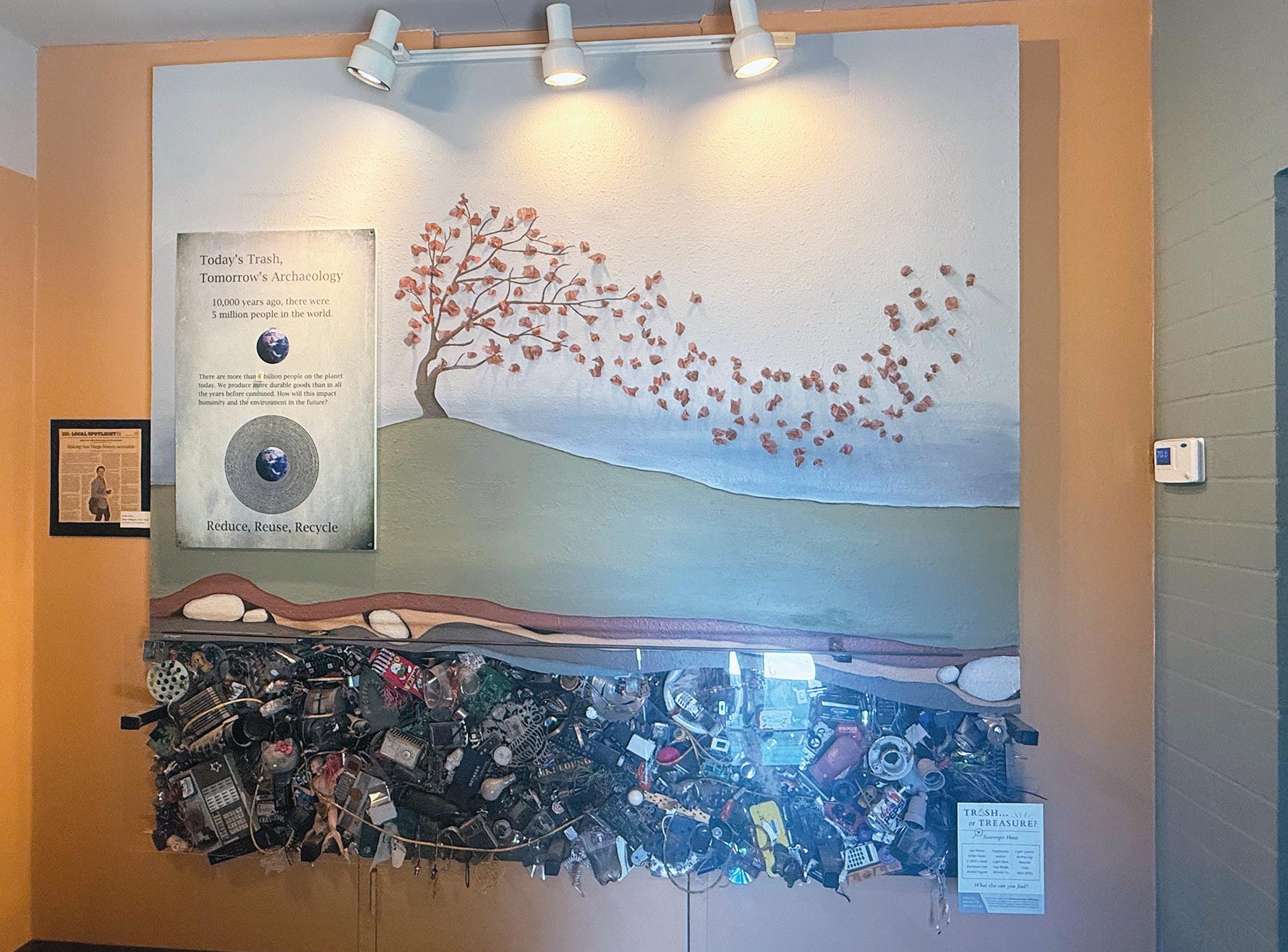
“Things like trash do not lie or misrepresent in the same way written records may,” Farenga added.
Excavated midden sites may refect everyday diet, tools, utensils, clothing or other items that may not have been considered important to record. This helps to identify what took place in certain locations or dwellings, stories that otherwise may never be told. In this way archaeology complements other studies that view the past and the present.
Archaeology informs and cultivates curiosity
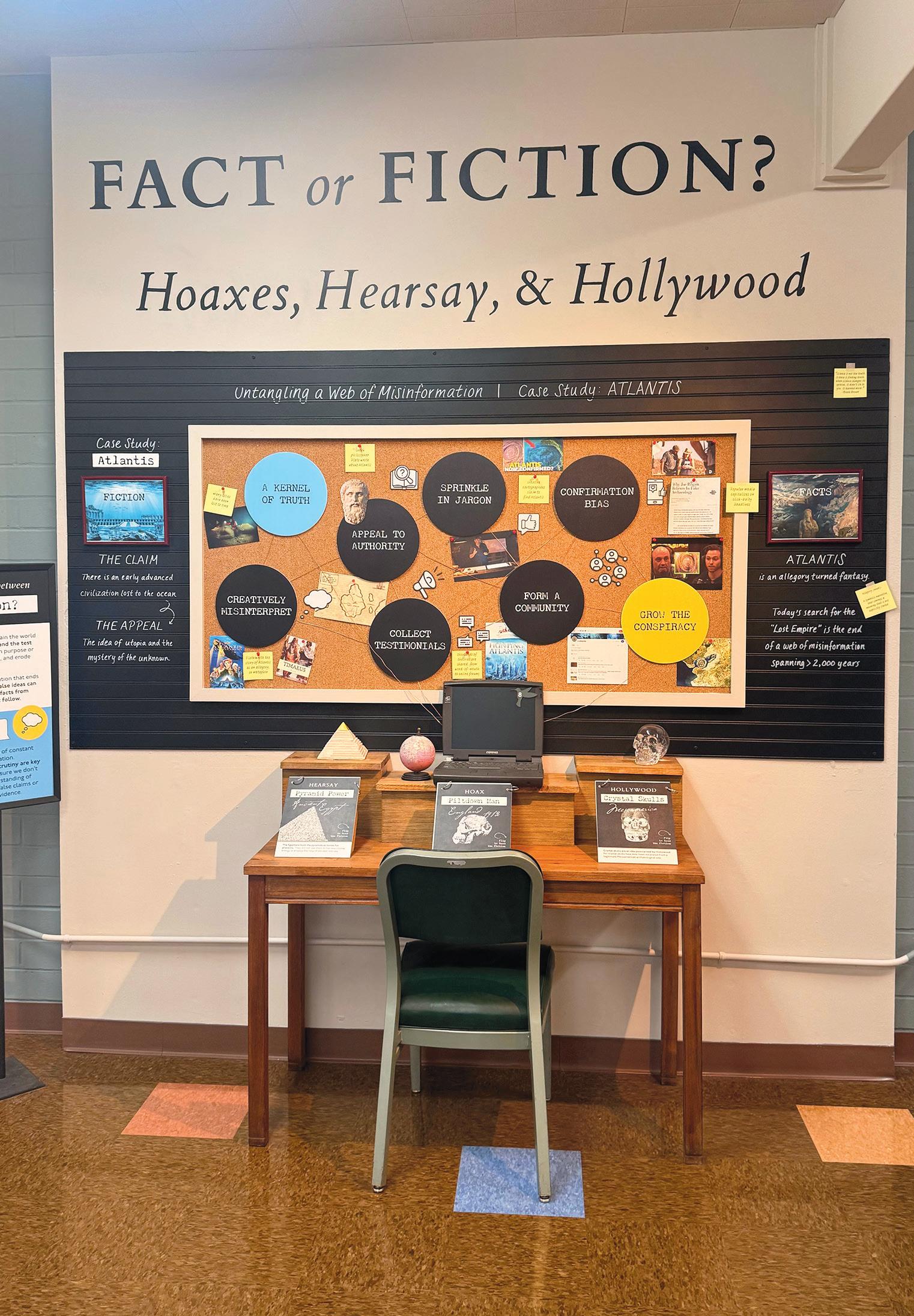
“We’re naturally curious about other people, and about our environment,” said Farenga. “We, at the center, encourage exploration and critical thinking as in our exhibit that questions myths about the power of pyramids or the fctitious advanced civilization of Atlantis.”
Farenga sees the wisdom and value of studying people’s way of life and in that, their shared humanity.
“We might use different tools, but people have had the same needs, desires, wants for thousands of years, said Farenga. “We foster curiosity and appreciation for other cultures, past or current.”
Case in point: a temporary exhibit shows how the Kumeyaay interpret the constellations in relation to their culture and see in the stars what is relevant to them and their way of life. For instance, Americans see a man in the moon while the Kumeyaay nation sees a rabbit that according to legend, was tossed onto the moon by an angry coyote, a victim of the rabbit’s tricks.
These indigenous people used cosmology to determine the timing of planting, harvesting and ideal times to travel.
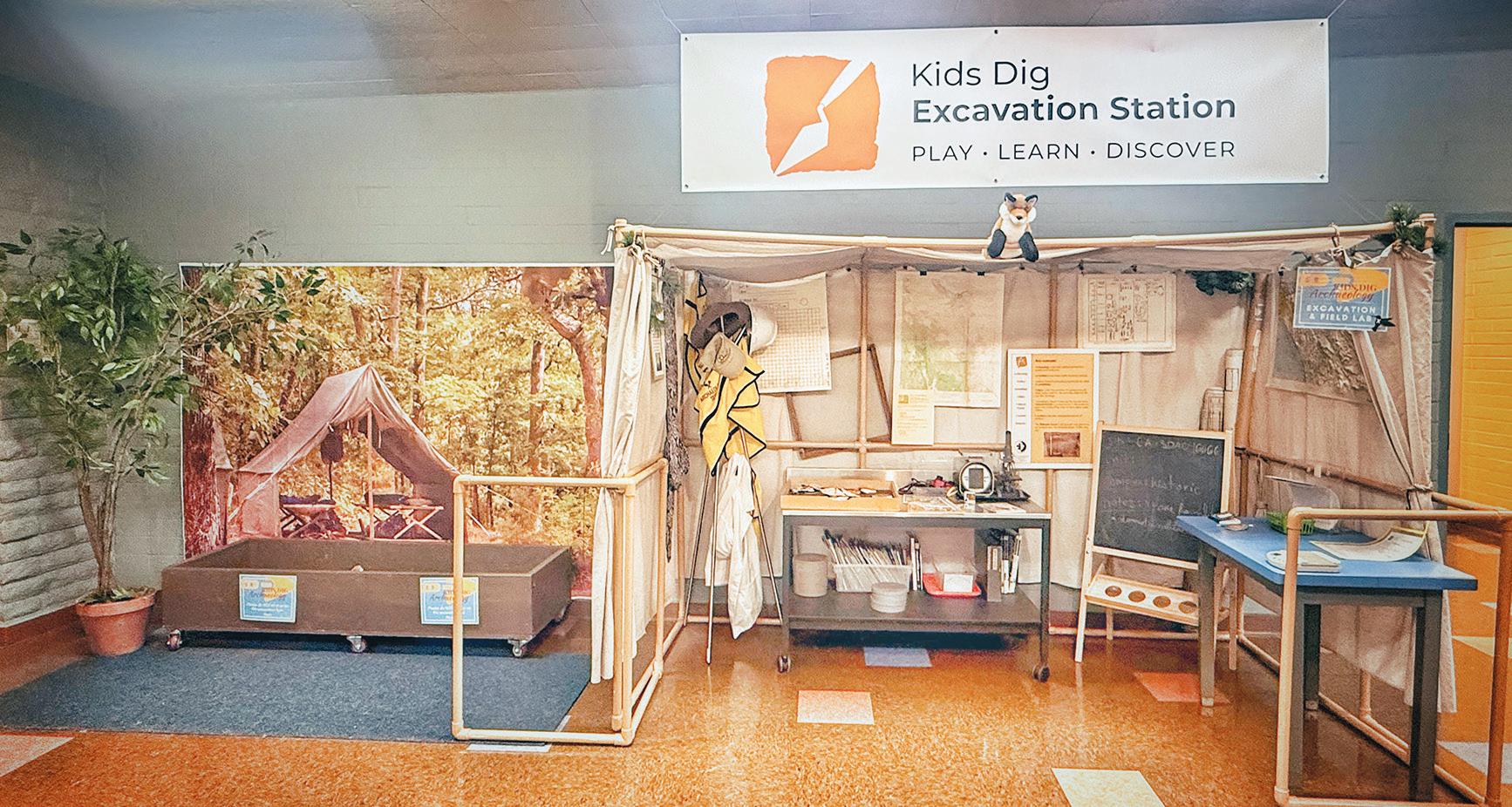
Another popular exhibit is the Kids Excavation Center—where items are placed for children to fnd while digging in dirt. The purpose of the exhibit is to demonstrate why an artifact should not be taken from a site.
Educational programs for kids include an activity where students match, analyze and determine the material and function of local artifacts; they can learn ancient Kumeyaay games, participate in scavenger hunts, story times and art projects.
Partnering with The First Lego League, SDAC mentored students 9 to 16 years of age in archaeological concepts.
The First Lego League is a S.T.E.M. (science technology engineering math) program for middle and high schoolers. Participants are challenged to design, assemble and automate innovative archaeological tool prototypes.
Through this collaboration, students came to appreciate and better understand the many aspects of archaeological processes and the methods used to innovate and fnd solutions to problems.
Aside from tools and basic needs, the arts have always lived in the human imagination and are equally represented in pictographs and the harmonious and aesthetic design of ancient pottery, clothing and accessories.
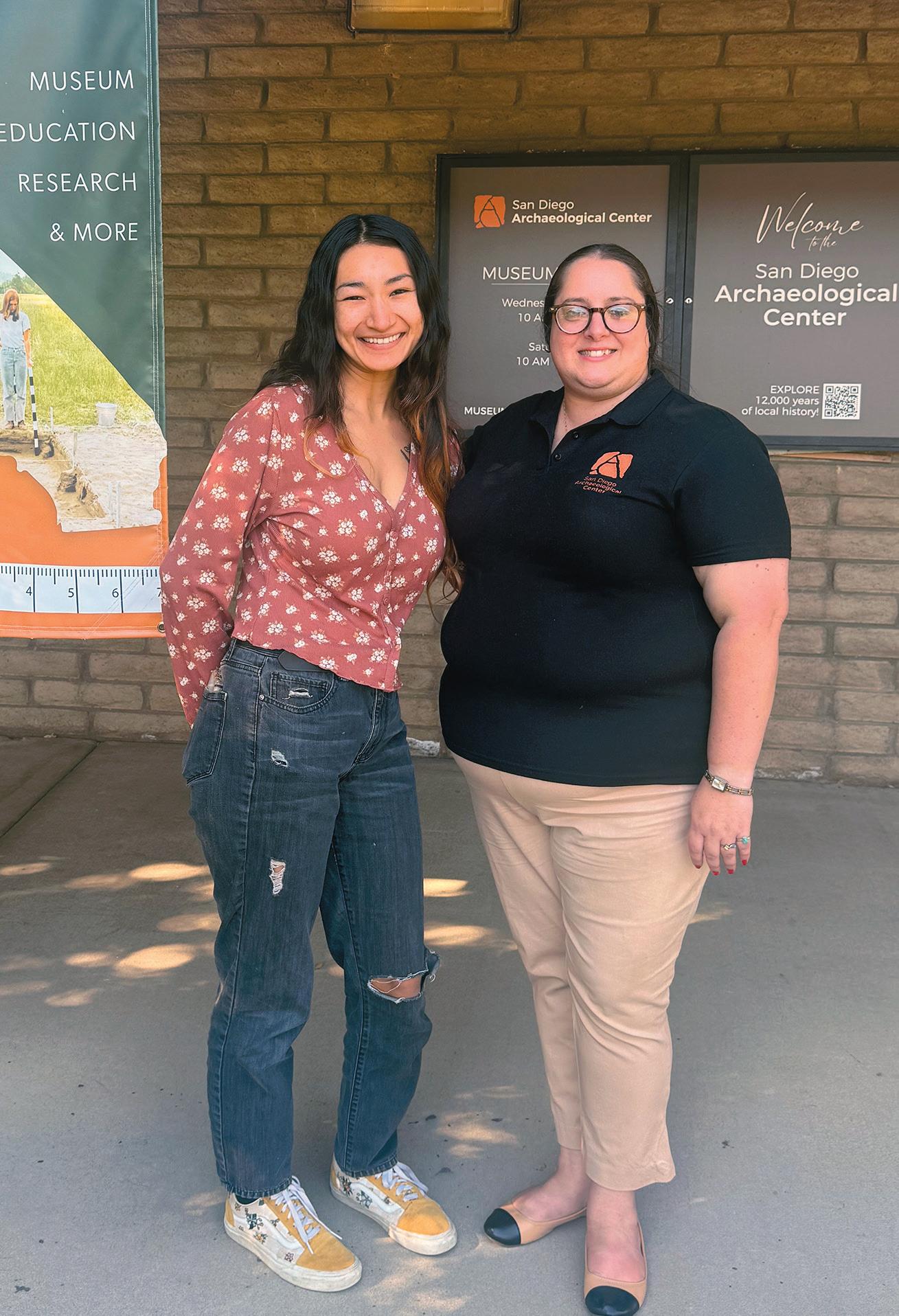
Farenga, as a representative of SDAC is a founding and long-standing member of MAGEC – Museums & Arts Growing Escondido Culture, where the promotion of art in Escondido is the focus.
This year, because of their affliation with the group, SDAC received a grant from the Escondido Public Art Commission for creative projects to be offered to the public free of charge in celebration of the arts during the second annual Arts Culture and Creativity Month (ACCM) in April.
The grant covers an earth pigments workshop, a class on making Gourd Dreamcatchers, one on Flintknapping, a Tasting of Roman Wine event and a Cultural Walk and Talk at Sikes Adobe.
Their website has an extensive list of activities that demystify and explain the many aspects of archaeology. Open Wednesday through Saturday 10 a.m. to 4 p.m. there is something to suit all ages.
To assist them in preserving cultural resources and spark public interest through the museum’s exhibits and programs, SDAC is holding their annual barbecue from 3 to 6 p.m. April 25 at the center. Food, drink, entertainment, live music and games are all part of the line-up. By bringing the past into the present, SDAC gives voice to invaluable stories that would otherwise never come to light, ensuring they continue to be told in the future.
For more information visit https://sandiegoarchaeology.org/
For more information about ACCM visit visitescondido.com/ and click on Events.
BY DAVID ROSS
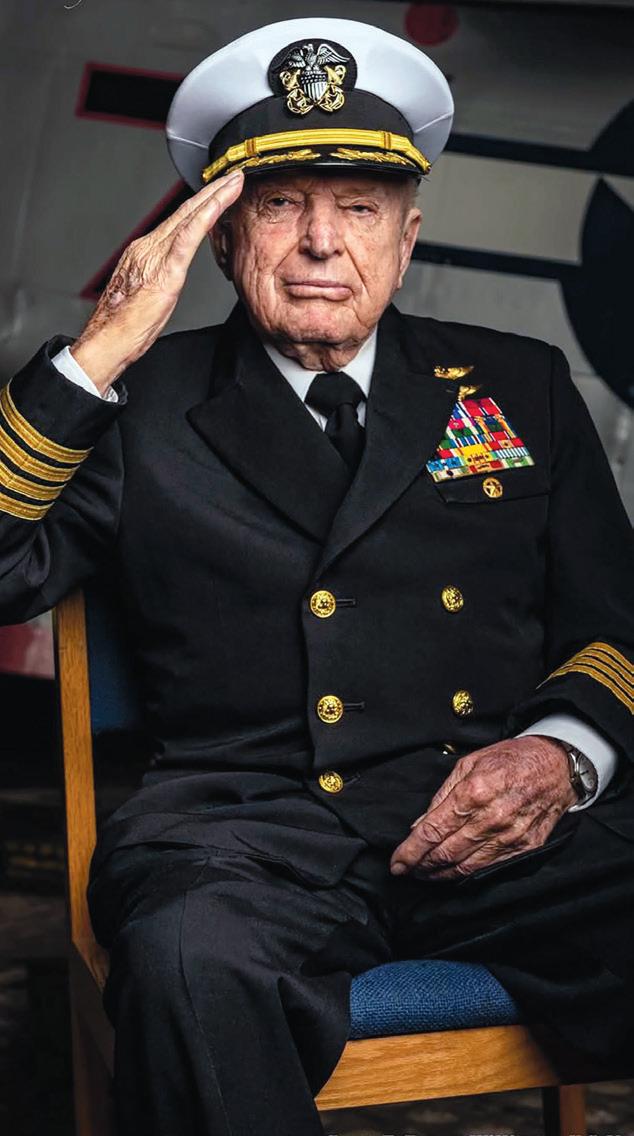
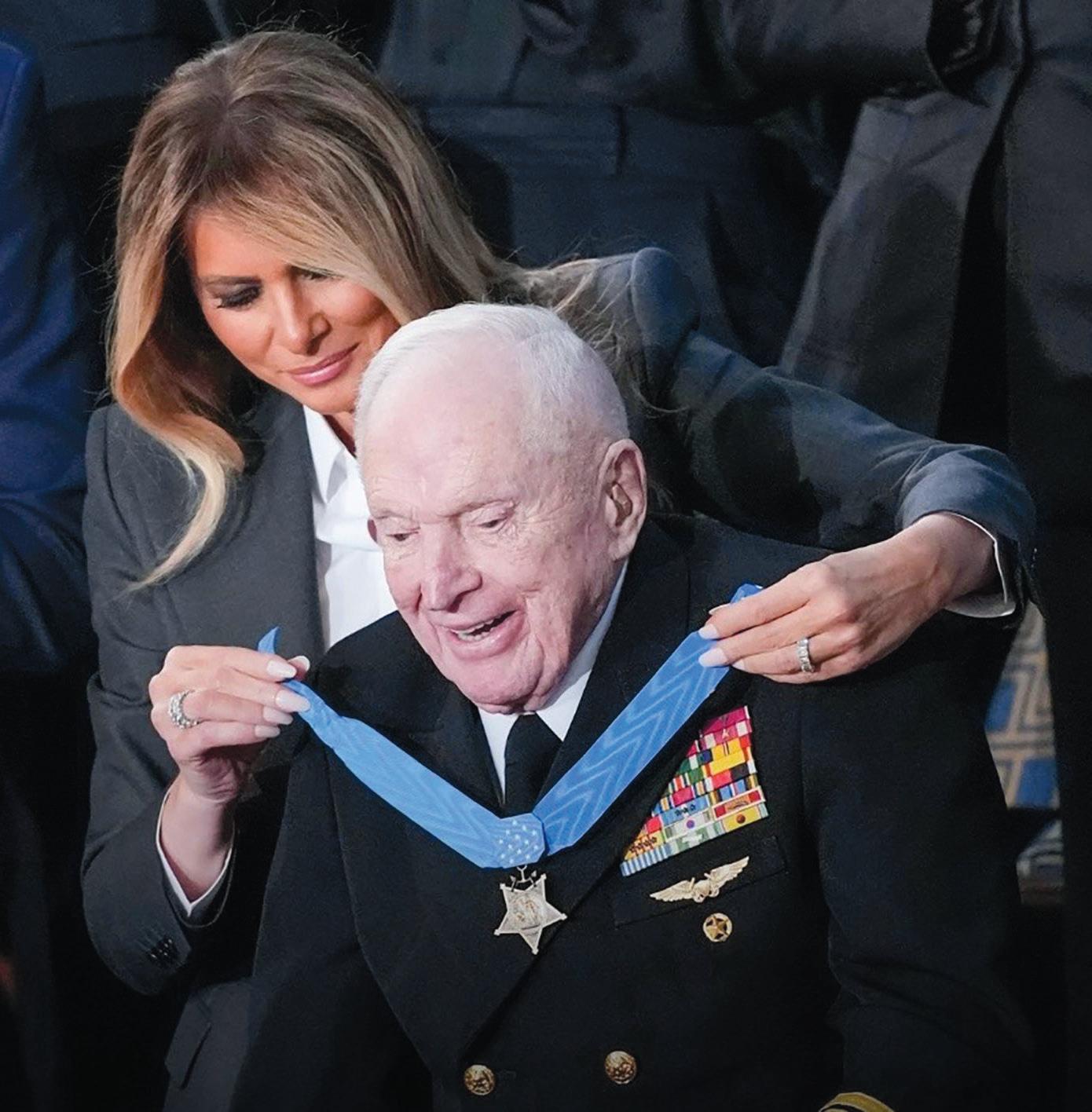
This year’s State of the Union Address by President Trump included a surprise near the end of the speech when he announced that Escondido resident Royce Williams was to be presented the Medal of Honor by the First Lady.
“Tonight we’ve celebrated many truly extraordinary American patriots,” declared the president. “But there is one last living legend to honor before we go. He is one more heroic American aviator, Navy fghter pilot. Royce Williams served in World War II, Korea, Vietnam — fying more than 220 missions. In the skies over Korea in 1952, Royce was in the dogfght of a lifetime — legendary dogfght.
“Flying through blizzard conditions, his squadron was ambushed by seven Soviet fghter planes. It was his frst aerial combat of the war, and despite being massively outnumbered and outgunned, Royce led the takedown of four enemy jets, and almost destroyed the others, vanquishing his adversaries while taking 263 bullets to his own plane, and being seriously hurt.
“His story was secret for over 50 years. He didn’t even want to tell his wife. But the legend grew and grew. But tonight, at 100 years old, this brave Navy captain is fnally getting the recognition he deserves. He was a legend long before this evening. Royce, please stand up, and I will ask the frst lady of the United States to present Capt. Royce Williams with his Congressional Medal of Honor. Thank you.”
With typical nonchalance Williams once described his now legendary encounter to Fox News: “That was a little over an hour and a half out of

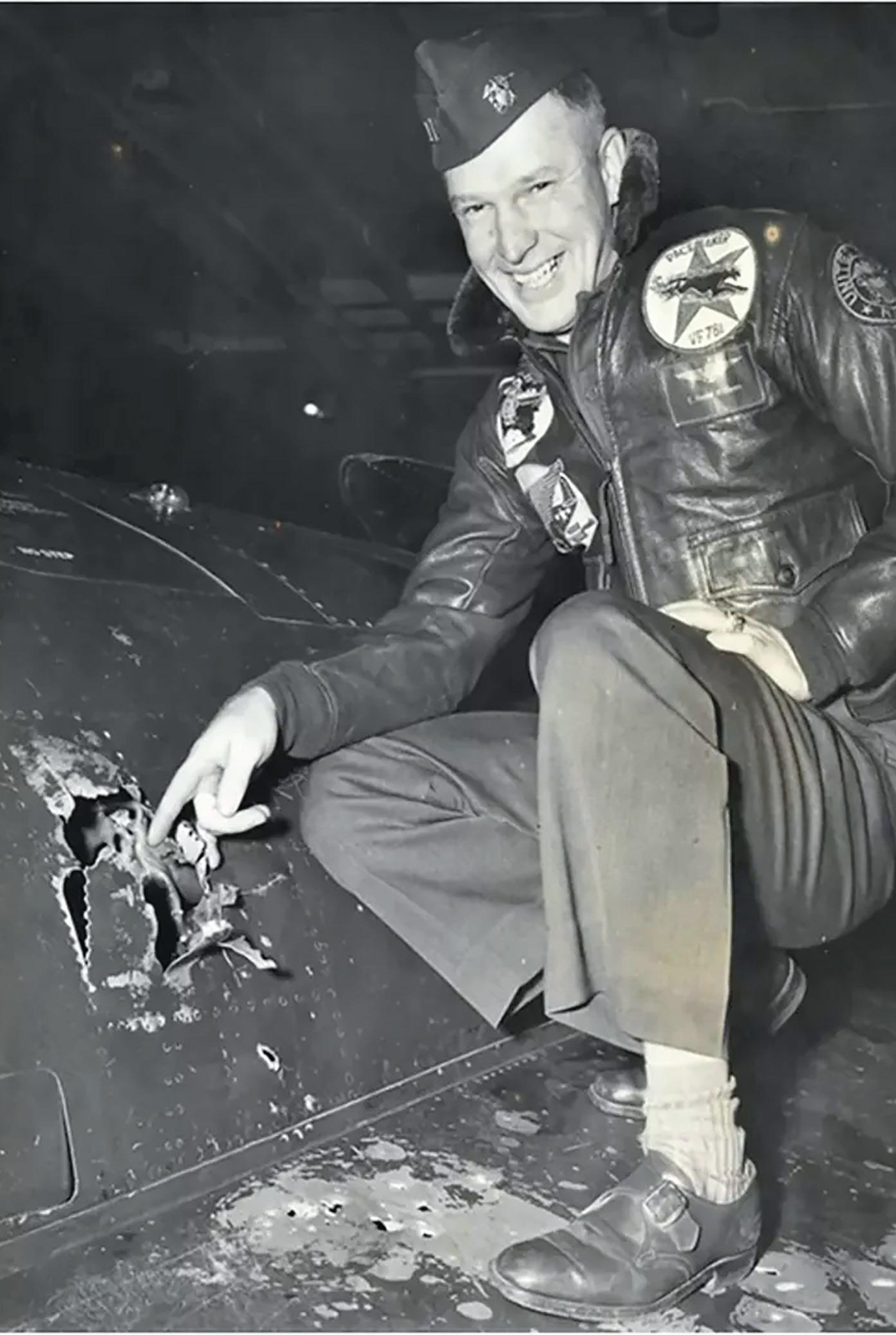

USS Oriskany, the aircraft carrier that Capt. Williams
37 years in the military,” he said. “So it was a brief incident but it seems to have been signifcant.”
The day after the ceremony, Capt. Williams was welcomed back to San Diego County when his plane landed at Palomar Airport and
there were about 400 people to greet him—including a contingent of veterans the American Legion, Veterans of Foreign Wars and Combat Veteran Riders.
Locally, this sparked a series of events and celebrations of the 100-year-old veteran (who turned 101 in April) .
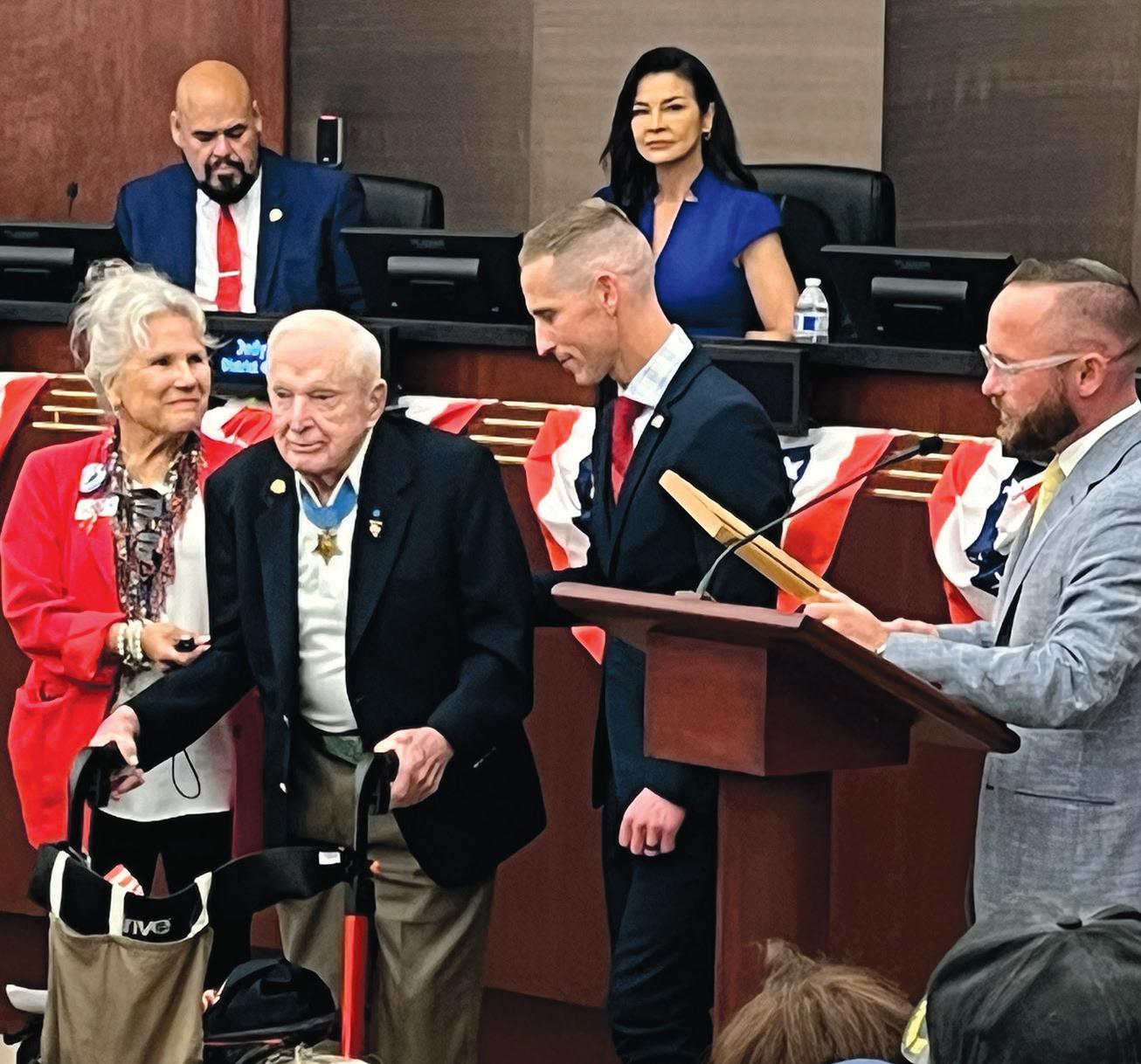
Then, April 1, the City of Escondido held a celebration for the hero at City Hall, with a brass band and a proclamation by Mayor Dane White.
The celebration included a special patriotic performance and a “presentation of colors” an hour before the city council meeting, in the rotunda of Escondido City Hall. Several dignitaries were present including council members Consuelo Martinez, Christian Garcia, Joe Garcia, Judy Fitzgerald, Mayor Dane White and Mayor of Vista John Franklin.
Guests stood as Captain Williams arrived and took his seat in front of the band, which was welcomed by City Clerk Zack Beck, Mayor Dane White, and others.
The presentation of the colors was by the Civil Air Patrol Escondido Cadet Squadron 714, whose cadets range in age from 12 to 21. An invocation was given and the National Anthem was performed by The Escondido Union High School District’s 78th Regiment Band. They continued with a performance of several patriotic songs including the “Stars and Stripes Forever” by John Phillip Souza, and “America the Beautiful.” After the performance and a brief break, guests were encouraged to enter City Hall Chambers for the offcial Proclamation by the City of Escondido
and proclamations by other dignitaries.
Participating organizations included Escondido Union High School District 78th Regiment Band, Escondido Police and Fire Department Color Guards, American Legion Post 149 and Veterans Association of North County.
Later this year Captain Williams will be the Grand Marshal of the Valley Center Western Days parade. The theme of the parade is “Celebrating America.”
One of the most interesting parts of the saga of obtaining this highest military honor for USN Capt. (retired) Williams was the fact that it took so many years for his heroism to even be publicly recognized, much less rewarded with a medal.
Retiring Congressman Darrell Issa admitted that his efforts over the years to obtain the Medal of Honor for Williams had been one of the most rewarding efforts of his career.
Williams has been called “The forgotten hero of the forgotten war.”
Speaking of his labors in Congress, he said, “like most recently gaining the Congressional Medal of Honor for the Secret Soldier of the Korean War, the great Royce Williams.” He added, “A point about our campaign on behalf of Captain Williams: For a decade, my team and I waged a nonstop fght for Royce, and we were turned down on his behalf more times than I can remember.”
During an interview several years ago, Issa said, “The story is right out of ‘Top Gun’ except that it may be better because it’s completely true.” For many years more than 100 senior naval offcers, including fag offcers, recommended that Williams be awarded the Medal of Honor. “However those who make those decisions at the Defense Department, not one of them have downed a MiG or been shot at,” observed Issa. “And so they said,
‘No big thing, he’s just an aviator doing his job.’ Many of us, including admirals have said, “ ‘No, he deserves the Medal of Honor. He earned it, saving his ship, saving his colleague.’ ”
It took Issa years of effort to convince members of the U.S. Senate and the House of Representatives to overrule those Defense Department offcials, and to pass a bill awarding the ultimate medal.


The exhibit will continue until August.
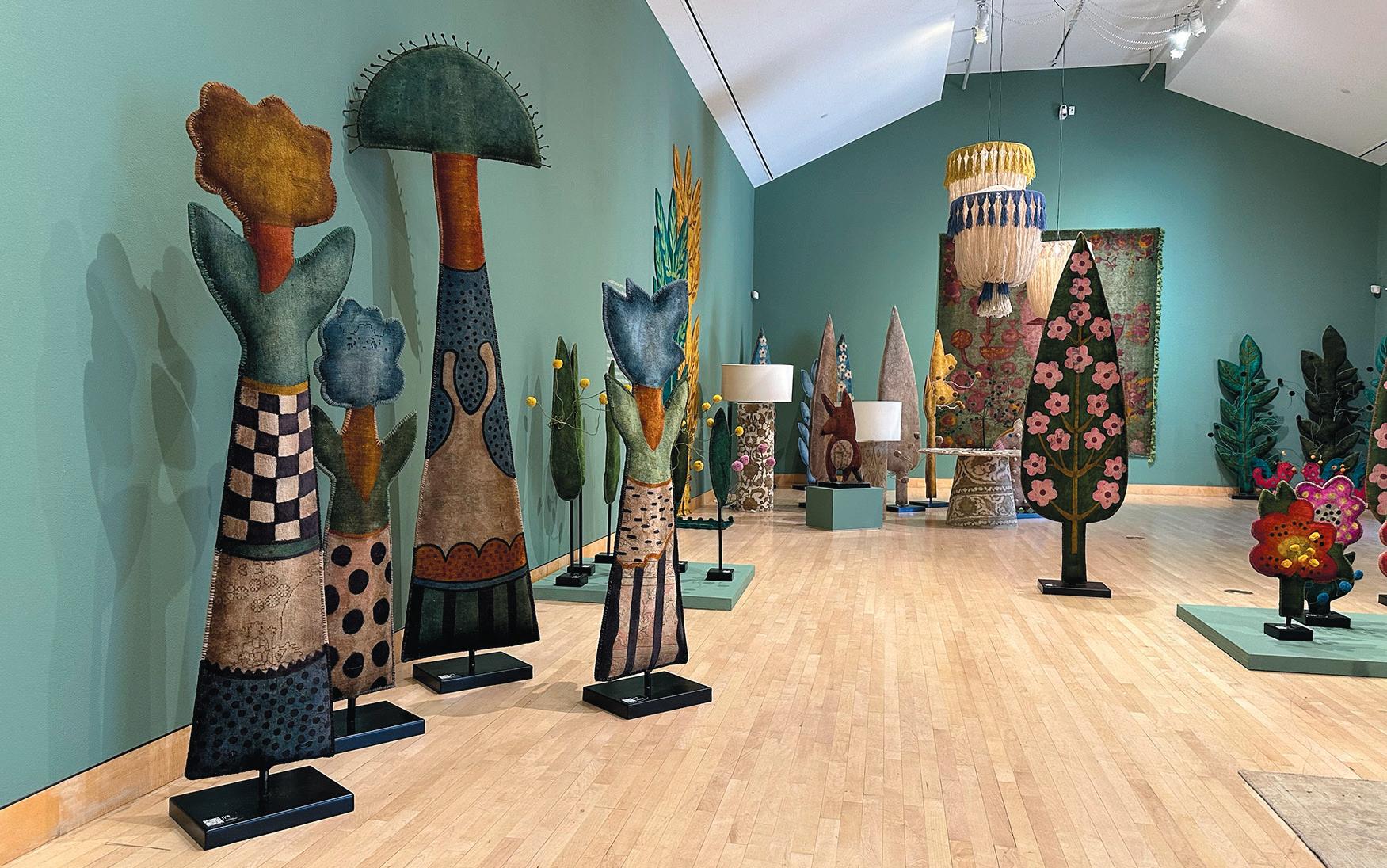
ESCONDIDO ARTS
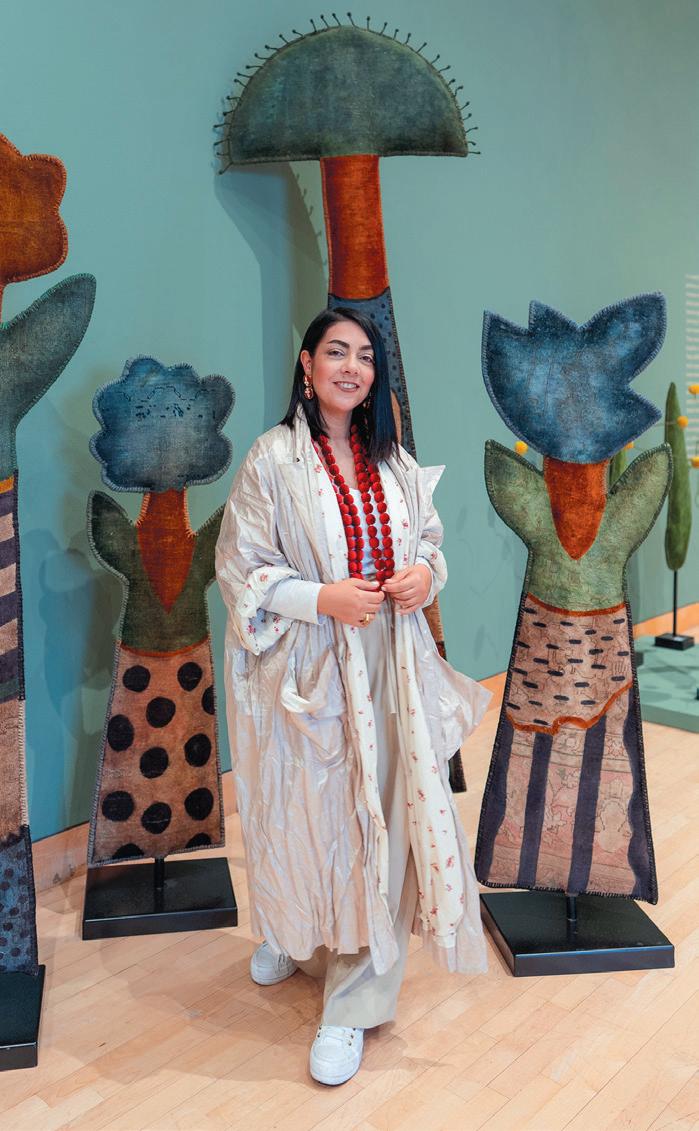
The California Center for the Arts, Escondido (CCAE) Museum in March celebrated Nowruz, Persian New Year, in collaboration with Persian Place, a nonproft dedicated to providing space for artistic experimentation and research with an emphasis on Persian art. It marked the public opening of CCAE’s newest museum exhibition, Maryam Bayat: Unrolling Paradise.
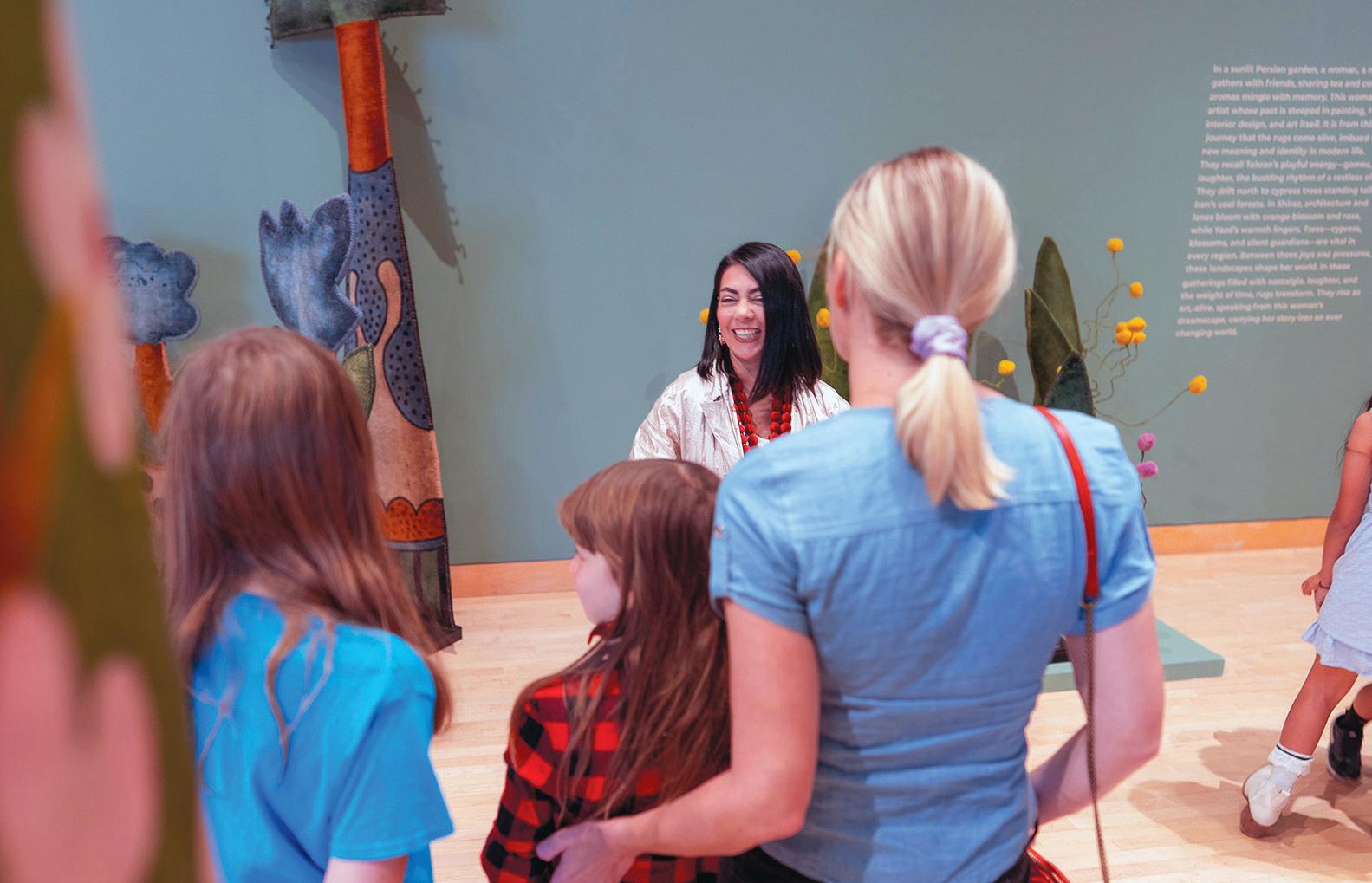
Almost 740 attendees flled the campus courtyard and museum galleries. The atmosphere was lively yet refective, celebrating the arrival of spring while honoring cultural traditions more than 3,000 years old.
Nowruz, “new day,” marks the frst day of
spring and the beginning of the Persian New Year. It celebrates the rebirth of nature and the strengthening of community bonds.
Throughout the afternoon, the Center’s courtyard came alive with live jazz music, traditional Persian dance, artisan vendors, and family-friendly arts activities. A Women’s Artisan Market featured vendors selling handcrafted jewelry, artwork, and cultural goods, while children explored creative activities and a youth art exhibition.
A moving moment came with a symbolic dance honoring mothers who have lost children in the confict in Iran. One dancer dressed in white represented a grieving moth-
er, while fve women dressed in black stood behind her holding candles. Many attendees wore white as a sign of mourning and remembrance.
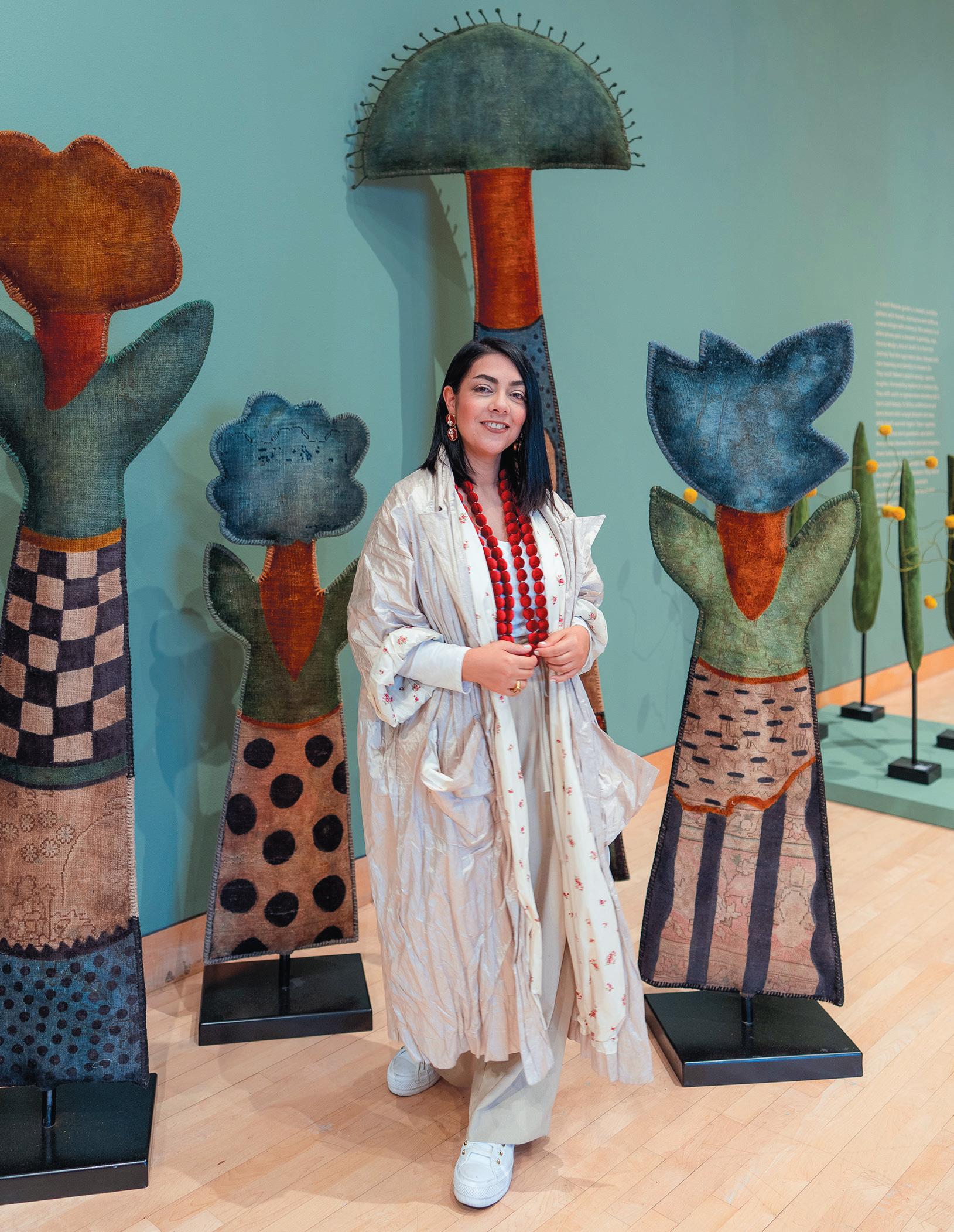
Inside the museum, visitors experienced the new exhibition Maryam Bayat: Unrolling Paradise, which transforms traditional Persian carpets into a dreamlike garden environment. Intricately arranged rugs form sculptural trees, animals, and lush landscapes, creating an immersive space that invites visitors to walk through what feels like a living tapestry.
Visitors can continue exploring the exhibition through a series of upcoming programs connected to Maryam Bayat: Unrolling Par-
adise. The museum plans eight public events throughout the run of the exhibition, offering opportunities for deeper engagement with the artwork, culture, and themes presented in the show. Learn more about these programs and upcoming dates by visiting ccaemuseum.org. Unrolling Paradise runs through August 17.
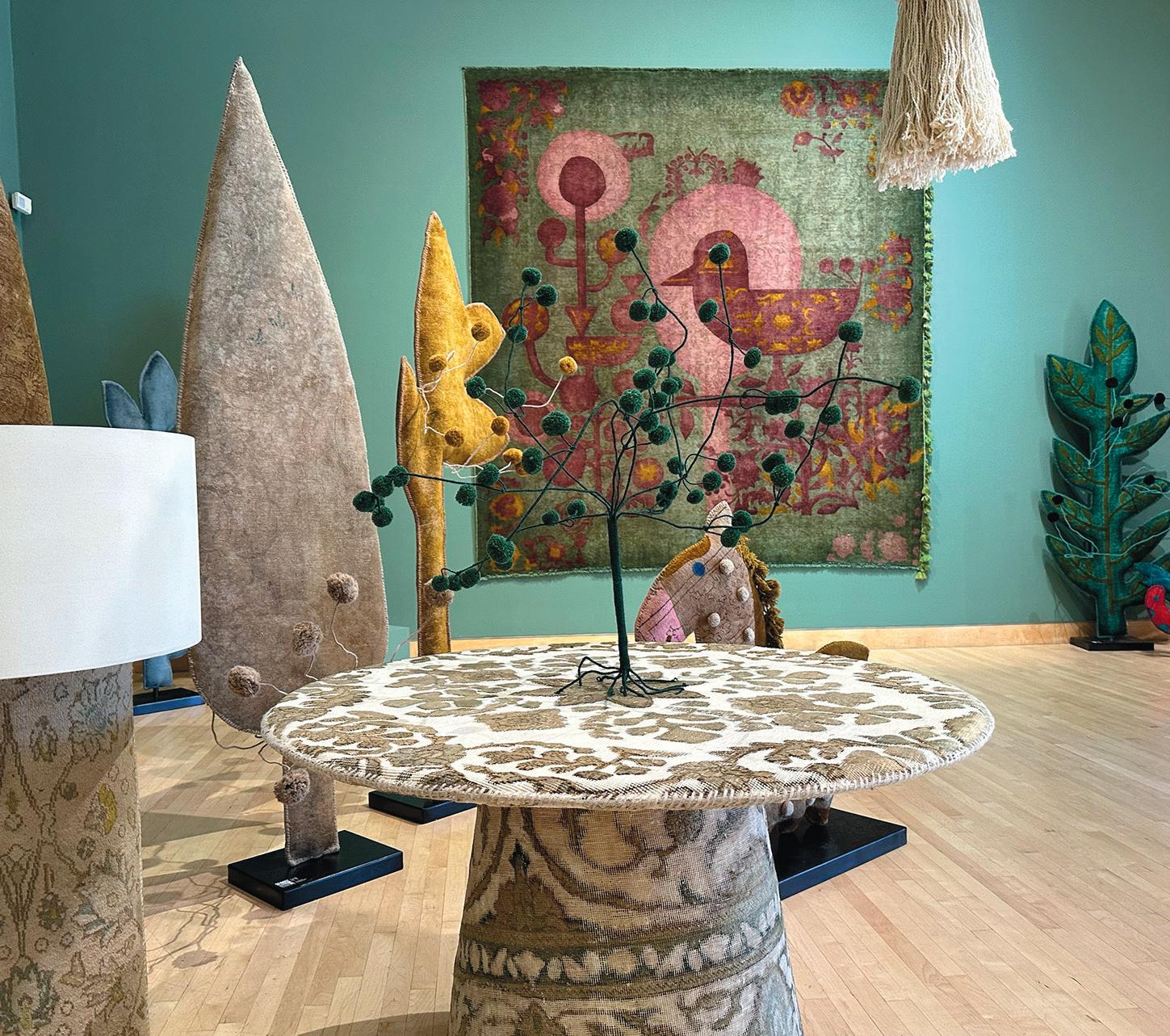
The exhibit includes art works largely derived from rug materials.
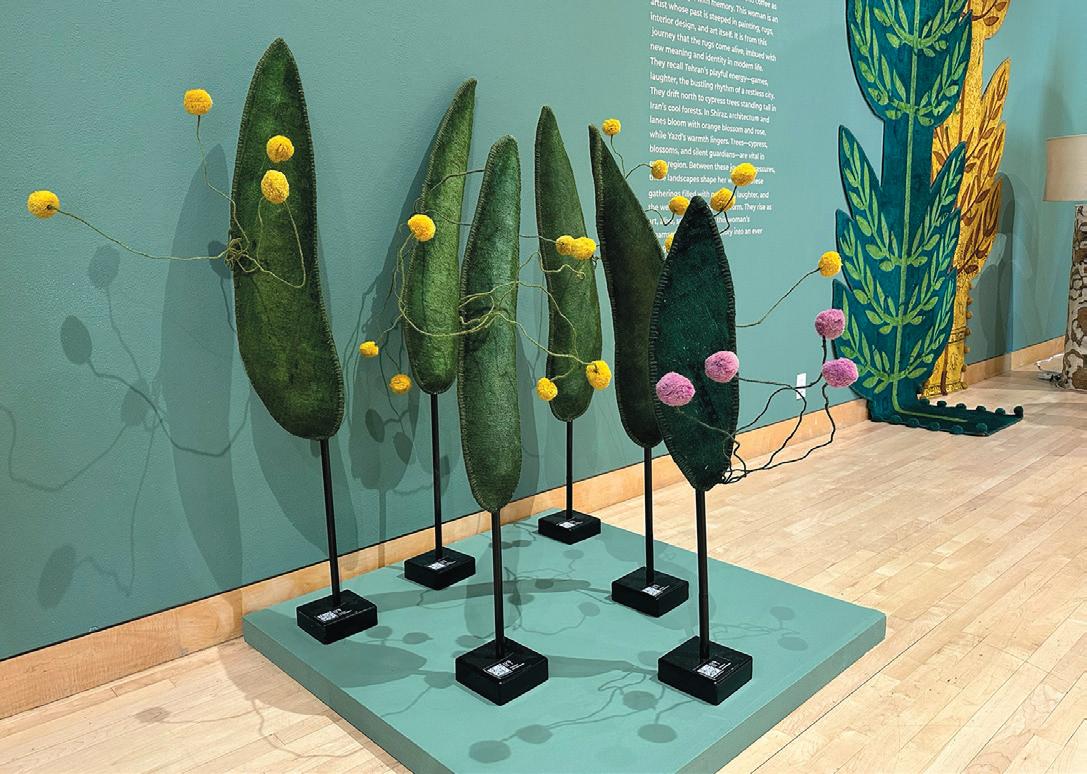
The subjects of Bayat’s pieces are often derived from nature.

Public Notice: The Escondido Chamber of Commerce is a nonpolitical and non-partisan organization. We do not endorse candidates. We do not take political positions. And we do not participate in political campaigns.
That is not the role of a Chamber.
Our responsibility—our core mission—is to be the voice of the business community. We exist to support local businesses, advocate for a strong local economy, and help create an environment where businesses and our community can thrive.
We work with many partners, including the City of Escondido, local leaders, and organizations across our region. Those relationships are built on collaboration and a shared goal: a stronger Escondido. We represent businesses of all sizes, industries, and perspectives. And because of that, it is essential that we remain neutral, inclusive, and focused on economic growth—not politics. Our commitment is simple:
To support our businesses. To strengthen our local economy. And to help our community continue to grow and succeed.
That is who we are. That is what we do. And that is what we will continue to stand for.