Welcome
Thanks to you, thousands of children and young people are going back to school this autumn after a fun and safe summer. Your kindness has helped to equip them with the knowledge and skills they need to stay safe in the water. It’s an incredible feat, and one we couldn’t have managed without you. Please read our heartfelt thank you in full opposite.
Hope is something else you give in abundance. When a family of five got into trouble while paddleboarding, hope of rescue was all they had left. Thankfully, North Berwick lifeboat crew arrived in the nick of time, in a rescue that earned them RNLI Letters of Commendation. Get the whole story on page 6.
Sticking with the back-to-school theme, how’s your RNLI know-how? We’ve answered some of your most frequently asked questions about our charity on page 10 so you can swot up!
And on page 9, meet Your RNLI reader Val, who shares what it was like growing up in Cromer’s closeknit lifeboat community after the Second World War – and her fond memories of lifeboat legend Henry Blogg.
Award for Devon lifeguards
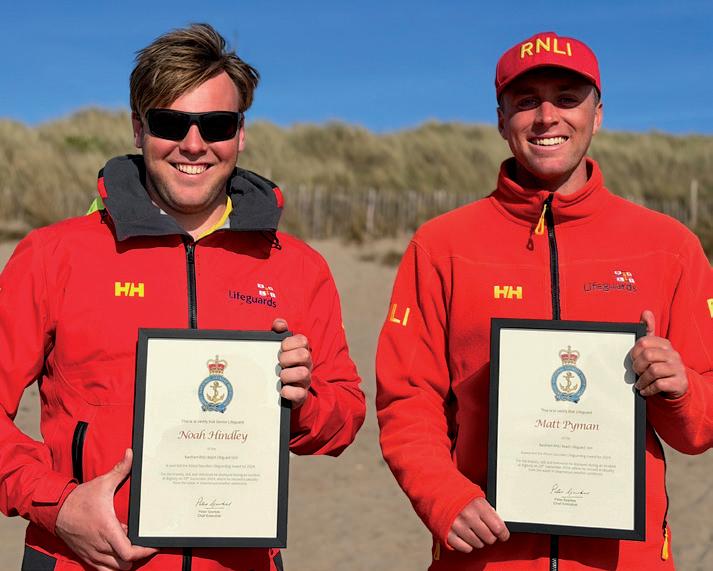
On 16 April, RNLI Lifeguards Noah Hindley and Matt Pyman were presented with the charity’s Alison Saunders Award for their outstanding skill and bravery in saving a swimmer’s life in September 2024.
Battling 2–3m waves, the lifeguards found the swimmer clinging onto rocks near Bantham Beach, but they couldn’t get close enough on the rescue watercraft. So Matt entered the turbulent water with a rescue tube, swam to the casualty and helped him to safety. They were met by Sedgewell Cove lifeguards and Bigbury and Kingsbridge Coastguard rescue teams. Also standing by to help were Salcombe RNLI’s all-weather lifeboat crew and two Coastguard search and rescue helicopters.
Receiving the award during the 25th anniversary year of RNLI lifeguards made it extra special.
Vicki Lovegrove-Fray
Your RNLI Team
Email: your_rnli@rnli.org.uk
WE CAN’T DO IT WITHOUT PEOPLE LIKE YOU: How would you like to hear from us? We’re so grateful for the support you have shown for the RNLI – it all helps save lives. But if you would rather not hear from us, or would like to change how we contact you, please get in touch. Just call 0300 300 9918 (from the UK), 01 511 9837 (from Ireland), or +44 1202 663234 (from any other country) on weekdays, 8am–6pm, go to RNLI.org/preferences or write to our Supporter Experience Team, RNLI, West Quay Road, Poole, BH15 1HZ.
Credit: RNLI/Nathan Williams
RNLI Lifeguards Noah (left) and Matt (right) with their Alison Saunders Award
THANK YOU FOR YOUR GIFT AID TICK
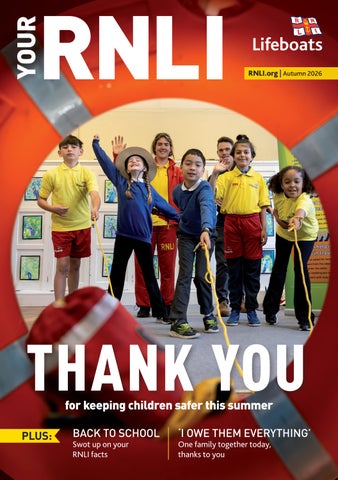
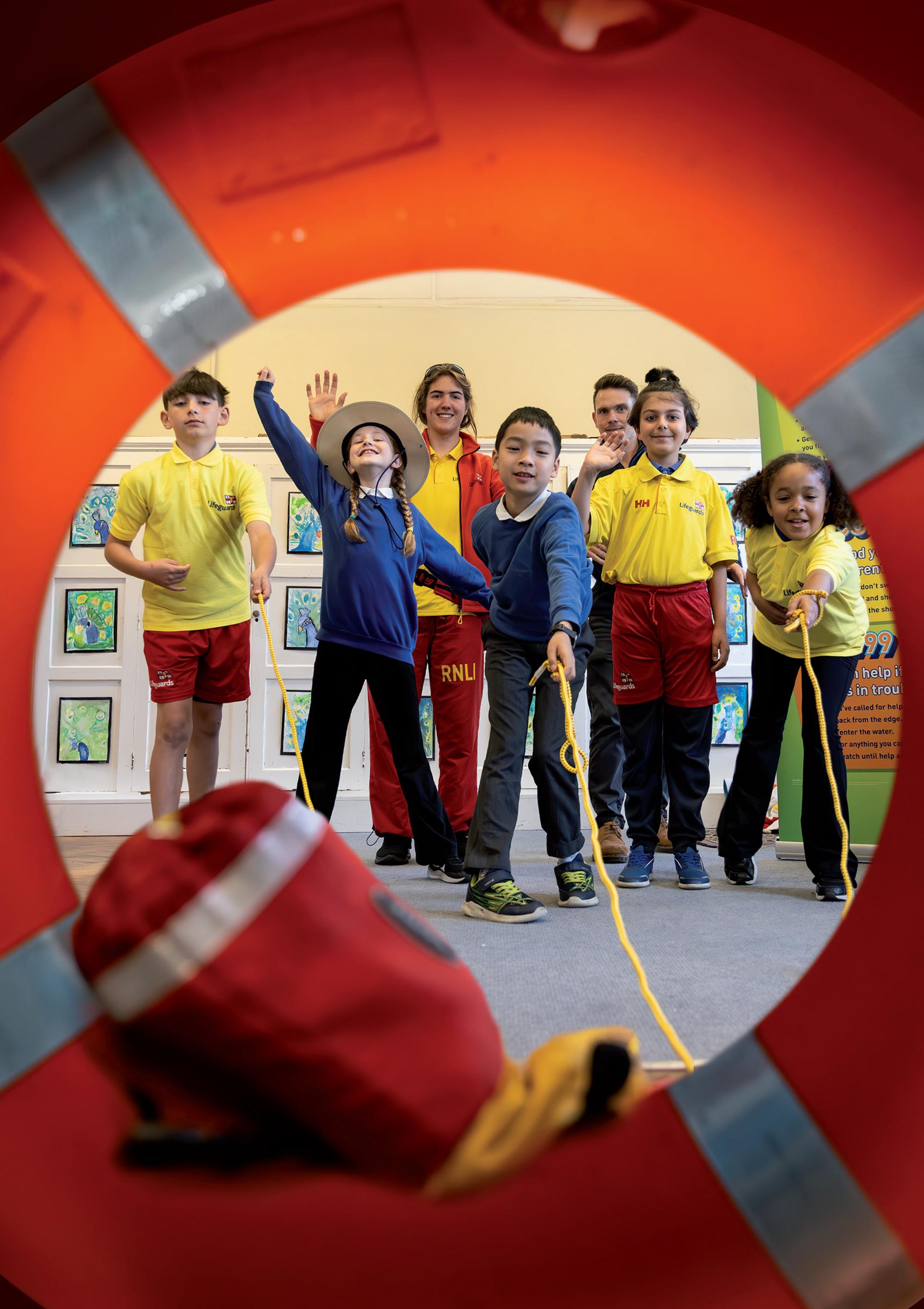
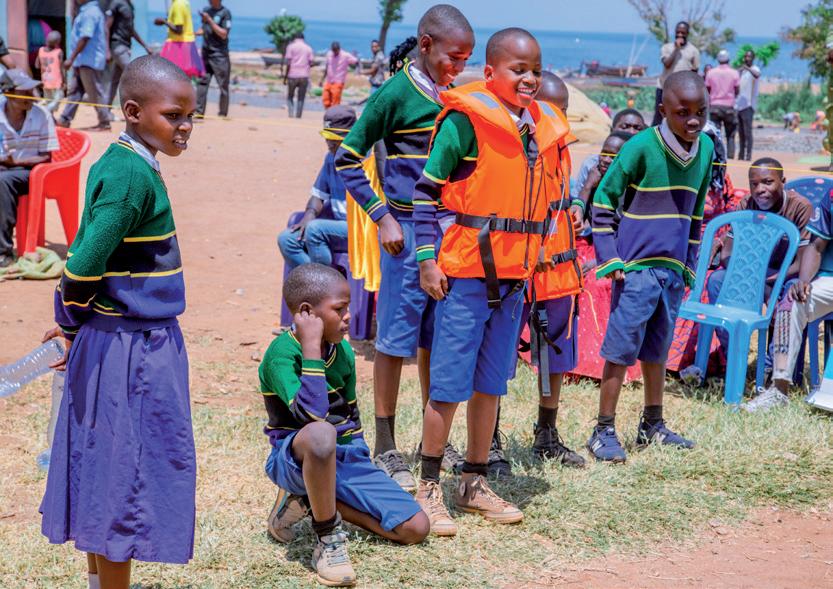
Cover photo: Schoolchildren learning how to use a water rescue throw bag during an RNLI Water Smart session.
Thank you for keeping children safer
More than 175,000 young people were safer at the water this summer – thanks to you.
That’s because your support helped our volunteers and lifeguards share water safety messages at more than 1,800 schools and youth groups.
You helped to fund the resources for Water Smart sessions: fun activities provided by the RNLI that show children how to avoid getting into danger – and what to do if things go wrong. Giving water safety advice and lifeskills to kids and teenagers is critical to preventing tragedies, like those we sadly saw this summer. You have helped to give a school lesson like no other – a lesson that could help a child save their own life.
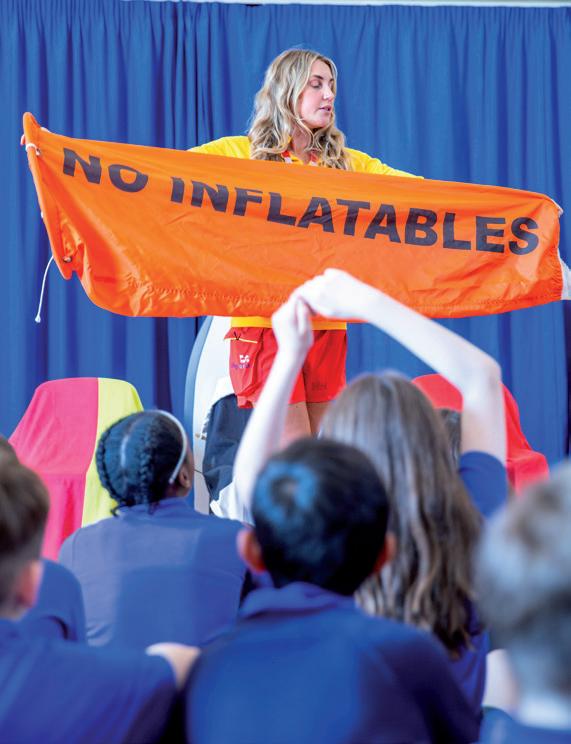
Water Smart sessions in schools run by RNLI lifeguards are only possible thanks to your caring support
You also helped to introduce thousands of children to the RNLI, inspiring future generations of lifesavers. They learned that we’re a charity, and that we depend on courageous, skilful people – and kind supporters like you – to save lives all year round. For everything you do to help save every one – thank you.
INEOS Grenadiers join the fleet
As part of a new lifesaving partnership, INEOS Automotive is providing the RNLI with 20 Grenadier 4x4 vehicles. The robust and dependable Grenadiers will play a crucial role at stations that launch and recover the D class lifeboat from the beach, helping our volunteer shore crews traverse very soft or unstable ground and shallow water.
Minor modifications for lifesaving at sea include the installation of marine-standard radios, a larger front winch, and roof-mounted light bars for launch and recovery in darkness.
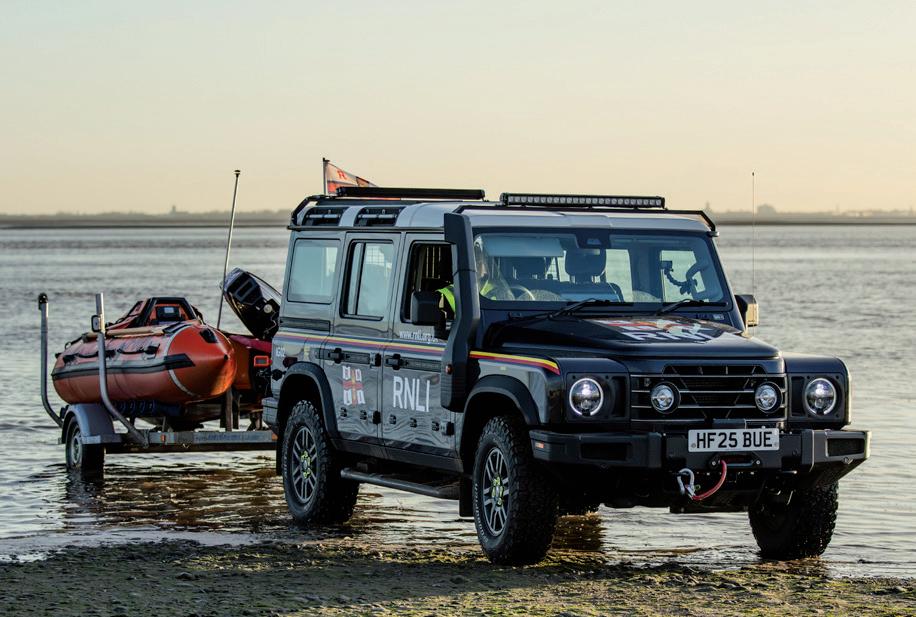
the D class lifeboat at Lytham St Annes Lifeboat Station
In 2025, the RNLI reclaimed £7.9M (25%) on donations, thanks to people like you who ticked the Gift Aid box. Not signed up? If you’re a UK taxpayer, visit RNLI.org/YourTick or call 0300 300 9990 (weekdays, 8am–6pm). It only takes a tick!
Photos (pages 2–3): INEOS/Louis Beausoleil, RNLI/(Harrison Bates, Luke Lane-Prokopiou)
Launching
RNLI TO THE RESCUE
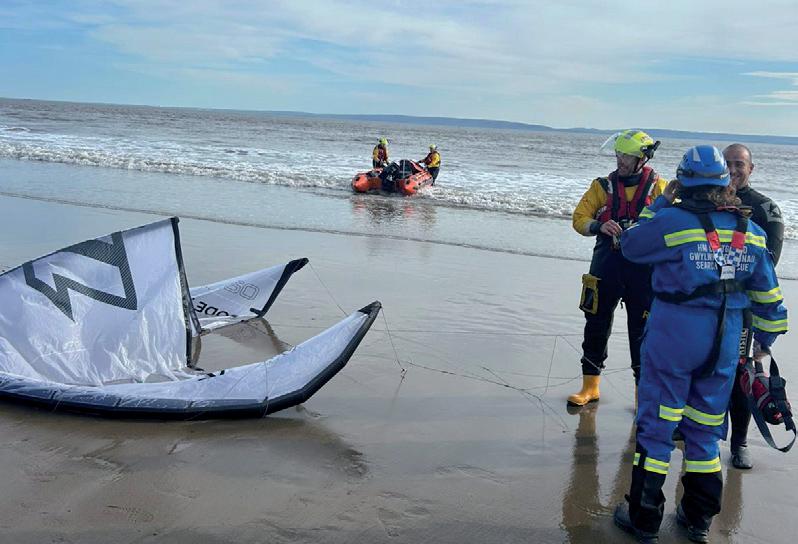
A friend in need
BARRY DOCK | 8 APRIL 2026
When Barry Dock’s D class lifeboat crew launched to reports of a kitesurfer signalling for help, little did Helm Chris White know that it was his best friend, Jon. Jon did the right thing by using his kitesurf as a float and communicating through his watch, before managing to get back on his board and reach the safety of Whitmore Bay. The lifeboat crew checked he was OK and Chris realised who he was! Jon was uninjured but pretty tired.
A ruff passage
BALTIMORE | 25 APRIL 2026
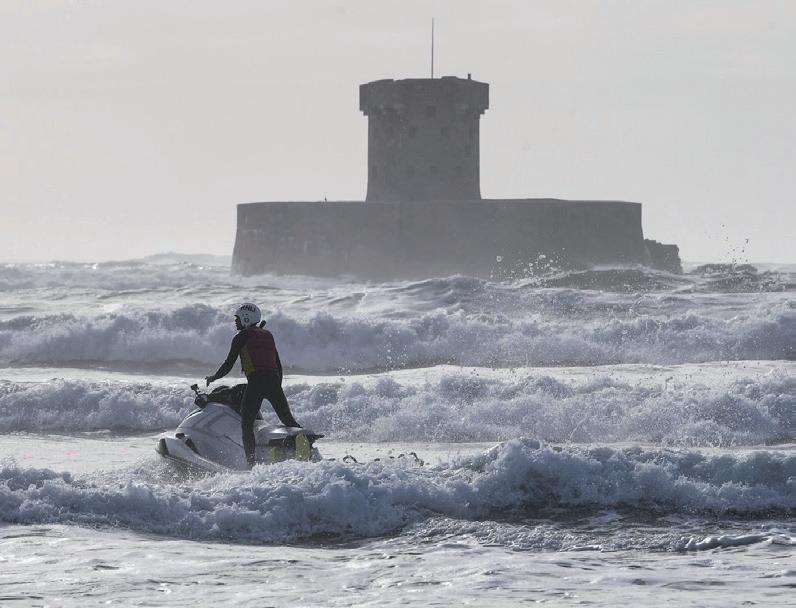
Surfers caught out
LE BRAYE BEACH | 17 APRIL 2026
Lifeguards in Jersey carried out multiple rescues after high spring tides and a large swell caught people out. One surfer was swept up St Ouen’s Bay, from Le Braye to El Tico, in a strong rip current. The heavy surf, backwash against the sea wall and a rapidly incoming tide created the hazardous sea conditions. Luckily, the surfer was rescued by RNLI Lifeguard Jean Barbe-Pinel using a rescue watercraft.
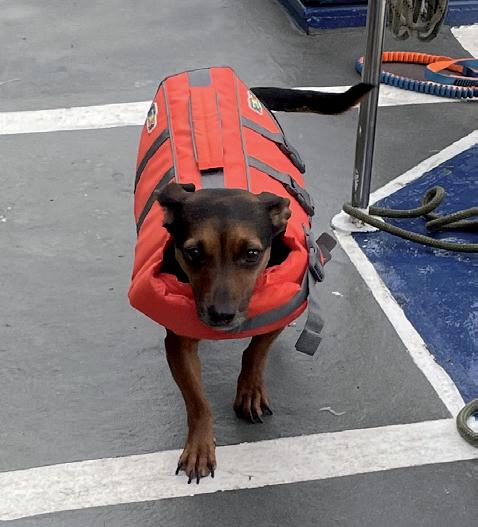
This furry sailor was pleased to see Baltimore lifeboat crew after her human crew called for help. Not only had their yacht’s main sail ripped, but the vessel had suffered engine failure too. An hour later, the yacht and its crew were moored at Baltimore Harbour after being towed to safety by the volunteers and their Tamar class all-weather lifeboat. The skipper and his crew were all wearing lifejackets – including the dog!
Stuck in the mud
HOYLAKE | 24 APRIL 2026
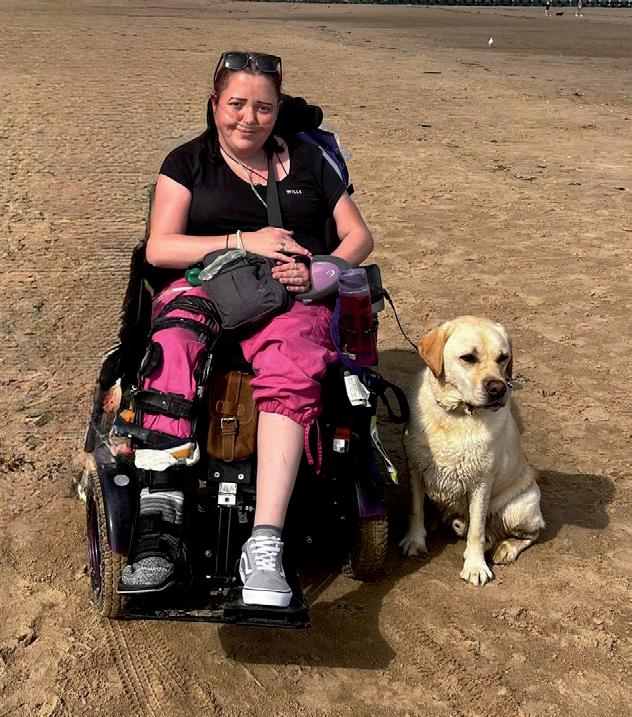
Jo was throwing the ball for her assistance dog, Yoda, when her all-terrain wheelchair got stuck in the soft, muddy sand.
Her carer couldn’t even budge it, and as the incoming tide started to flood around them, they realised Jo was in serious trouble. Her carer called 999 and asked for the Coastguard. Hoylake’s rescue hovercraft crew, Wirral and Flint Coastguard Rescue teams and the Merseyside Fire and Rescue Service were quickly on scene.
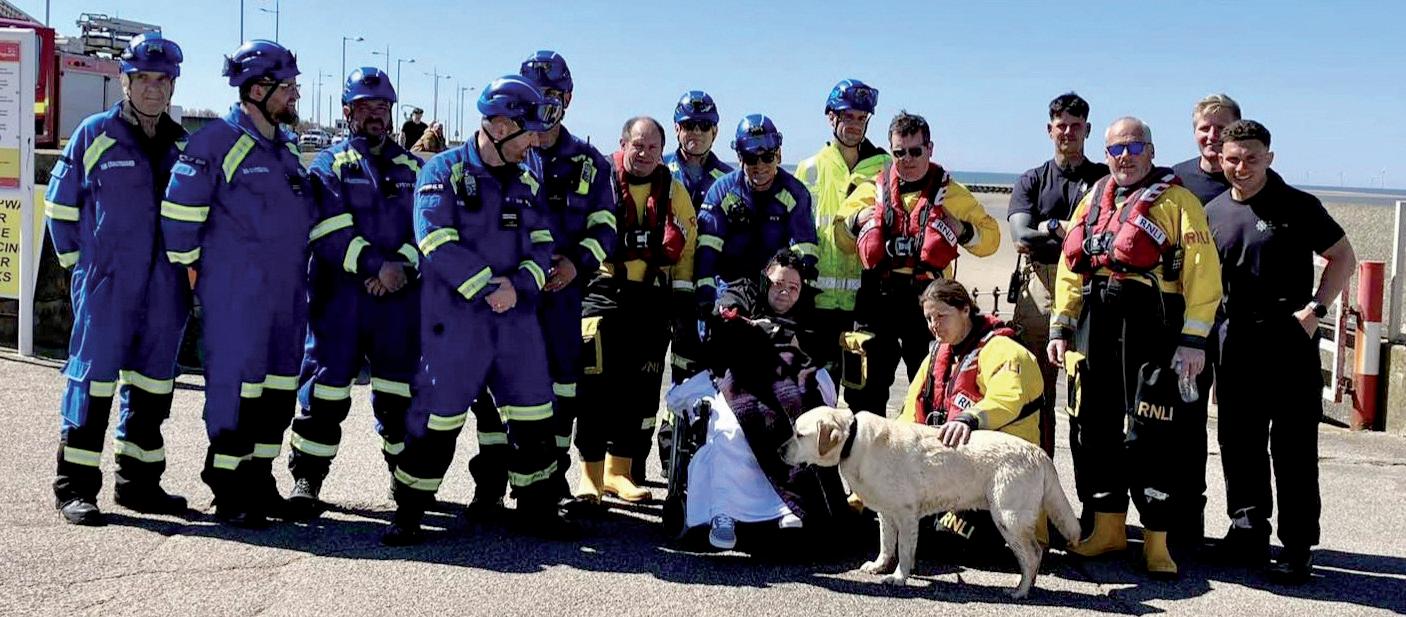
Together, they recovered Jo onto the hovercraft. While Hoylake volunteers flew Jo to the safety of the shore and her carer made her own way back with Yoda, the Coastguard and fire service teams freed the wheelchair.
‘The coordinated response ensured a swift and effective rescue, and it was fortunate the alarm was raised in good time,’ says Hoylake volunteer Chris Gaskin on his first rescue as hovercraft commander.
‘It was absolutely terrifying. In minutes, the water had started to creep in behind me. The coordination between the teams was fantastic. I don’t know what would have happened had they not been there. I’m just so grateful. I’d urge anyone out visiting the coast to carefully check the weather and tides as it’s so easy to be caught out.’
JO JONES, RESCUED BY HOYLAKE RNLI RESCUE HOVERCRAFT CREW
Photos: David Ferguson, Jo Jones, RNLI/(Maria Coleman, Lisa Newberry)
Jo and her dog Yoda with her rescuers
HOLDING HOPE
TO ON
A family of five are at risk of losing each other as three of them are swept out to sea. All they have left is hope of rescue
The day felt just like yesterday – same tide, same weather, same temperature –and siblings Daisy, Oscar and George were nagging their parents to go paddleboarding again.
It was the school holidays, and the family were visiting East Bay in North Berwick.
But later that afternoon, while Laura and Dale watched the children from the beach, conditions began to change.
The offshore wind picked up, whipping up the sea
and pushing the children further out. Daisy and Oscar managed to paddle back to shore, but their younger brother, George, was now completely on his own, drifting further away.
‘It felt like a whirlpool’
With no thought for her own safety, Laura instinctively grabbed a paddleboard and powered out to save her 10-year-old son. Aided by the strengthening offshore wind, she reached him quite quickly. She pulled him onto
her paddleboard, leaving George’s one behind, and tried to head back to shore, but they were overwhelmed by the wind and the waves. The conditions flipped their paddleboard and snatched it from them, leaving them struggling to stay afloat.
‘It felt like we were in a whirlpool,’ recalls Laura. ‘The water was coming at us from all directions. Waves were going over us, and we both went under a few times. I told George to keep swimming – he
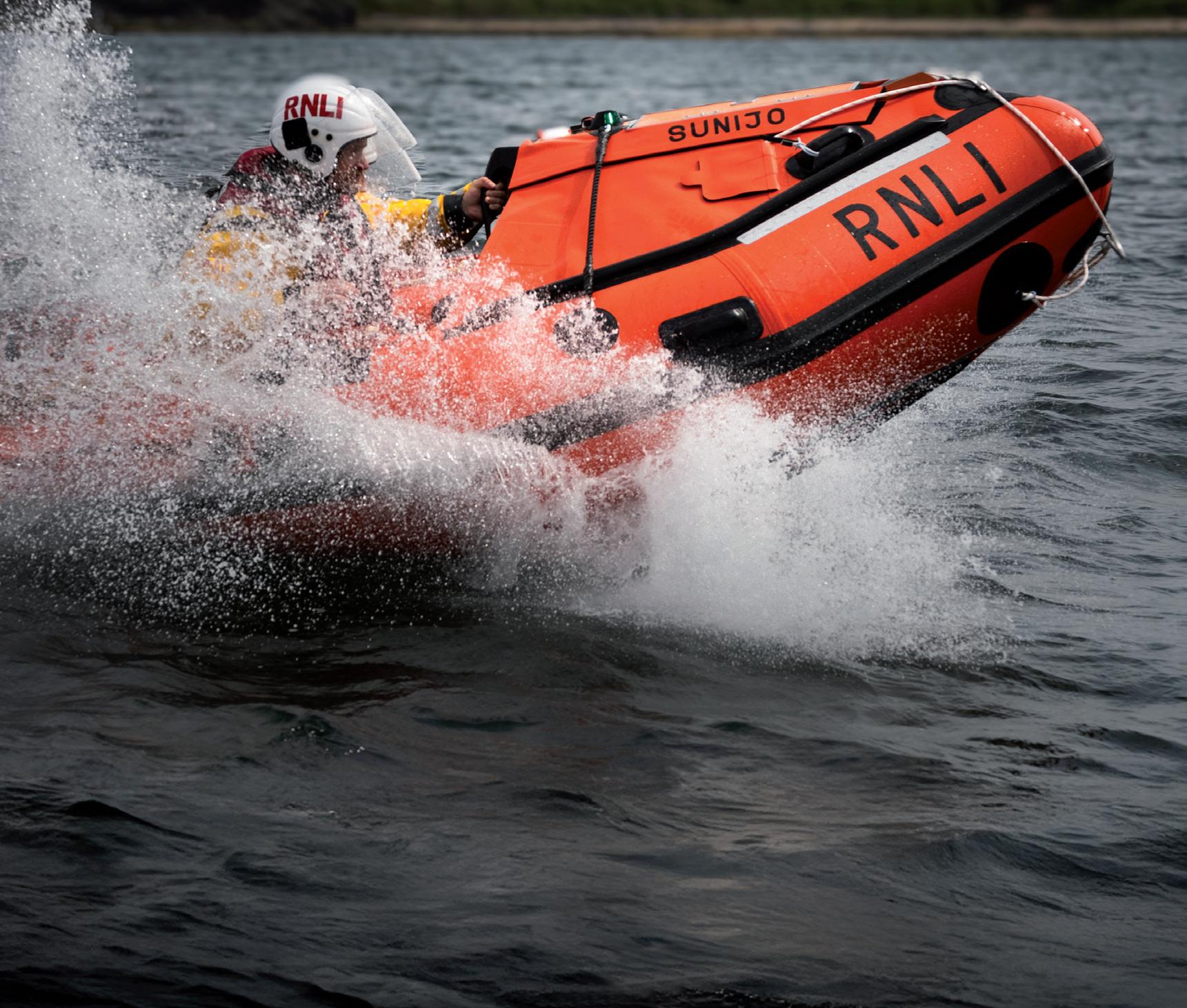
North Berwick’s D class lifeboat SUNIJO
was extremely distressed. I honestly thought we were going to die – but then Dale appeared.’
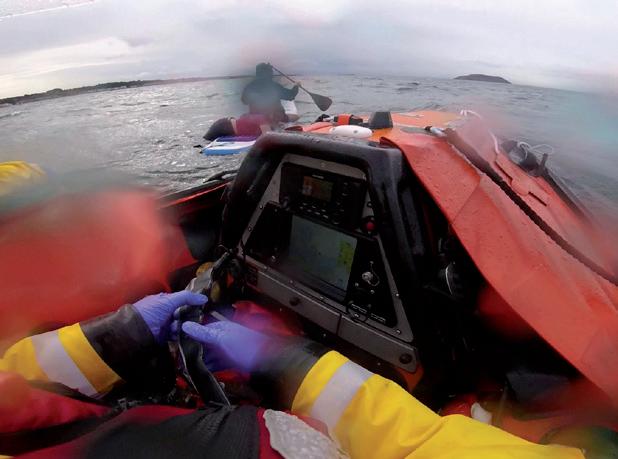
Arriving in the nick of time, Dale had also paddled out to save George. He helped George onto his paddleboard while Laura slumped over it. All three of them were extremely cold, exhausted and at risk of hypothermia. Watching on helplessly from the shore were Daisy and Oscar. Hope of rescue was all the family had left.
A difficult search
Meanwhile, North Berwick’s D class lifeboat crew were on their way after receiving an immediate launch request from HM Coastguard.
‘An immediate launch usually means someone is in the water,’ says Fraser Fulton, who was helm that day. ‘You have to prepare yourself for a life-threatening situation.’
‘Hearing a child was involved put things into perspective, having a young brother myself,’ says Crew Member Vikki Selby.
‘Hypothermia can set in much faster in children,’ explains Fraser. ‘So our safe window of detection is greatly reduced.’
And it wasn’t only time that wasn’t on their side. The unfavourable conditions were hampering the crew’s search too.
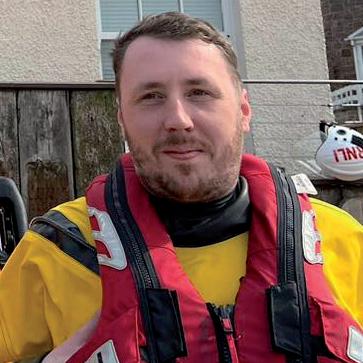
‘The wind was taking them right out into the North Sea. Another 15–20 minutes, the outcome would’ve been much worse’
STEVEN SELBY
‘The wind, the tide and the swell were all going in different directions, making it difficult to control the boat and spot anyone in the water,’ recalls Crew Member Steven Selby, Vikki’s brother.
Spirits are lifted
Seeing the lifeboat heading their way, Daisy and Oscar began shouting and pointing to where they last saw George and their parents.
And after a few minutes of scanning the water in that direction, Fraser finally spotted something in the distance – it was them.
‘The dad didn’t have much fight left in him,’ recalls Steven, ‘and the child was absolutely terrified.’
‘The mum was wearing jeans and a T-shirt, so alarm bells rang straight away,’ says Fraser.
After getting Laura, Dale and George into the lifeboat, the crew gave them survivor lifejackets to put on and survival balaclavas and blankets to help warm them en route to the station.
With all three potentially suffering from hypothermia and at risk of secondary drowning, the crew also requested an ambulance.
‘One of them held my hand all the way back,’ says Laura.
‘I felt immensely safe.’
‘I tried to reassure the wee boy,’ says Vikki. ‘He was being super brave, despite being extremely cold.’
‘I owe them everything’
While the shore crew warmed up the family and reunited them with Daisy and Oscar, the D class crew headed back out to sea to recover the two
paddleboards and prevent any unnecessary call outs.
‘They were really nice!’ says George. ‘They gave me a cup of tea and some biscuits. I put on one of their lifeboat outfits to keep warm. It was way too big for me! I said goodbye and thank you for saving my life.’
‘They are absolute heroes,’ says Laura. ‘I hugged them a lot because what do you say to people who have saved your family from heartbreak? I owe them everything – everything.’
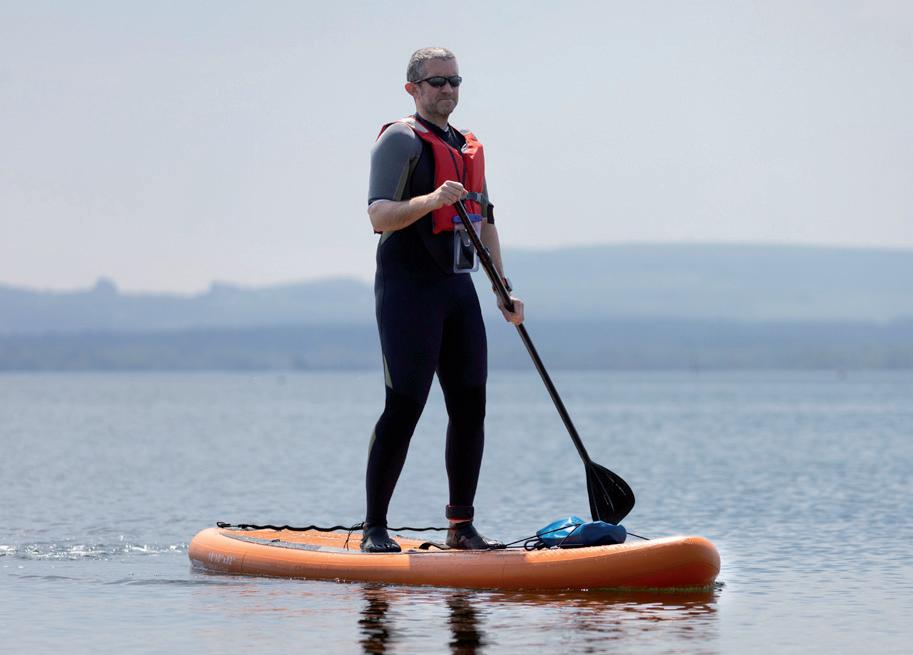
Avoid offshore winds – winds that are blowing from the beach or shore out to sea – even if it feels idyllic and calm.
Wear a buoyancy aid for your chest size and weight to help keep you afloat in the water.
Carry a phone in a waterproof pouch in case you need to call for help. Keep it in your buoyancy aid pocket or around your neck.
Wear the correct leash for your paddling environment to help you stay connected to your board if you fall into the water.
For saving three lives …
and for reuniting Daisy and Oscar with their mum, dad and brother, Helm Fraser Fulton and sibling Crew Members Vikki and Steven Selby each received RNLI Letters of Commendation in December last year.
Thank you for your part in this rescue too. So many families are together today thanks to your kind support.
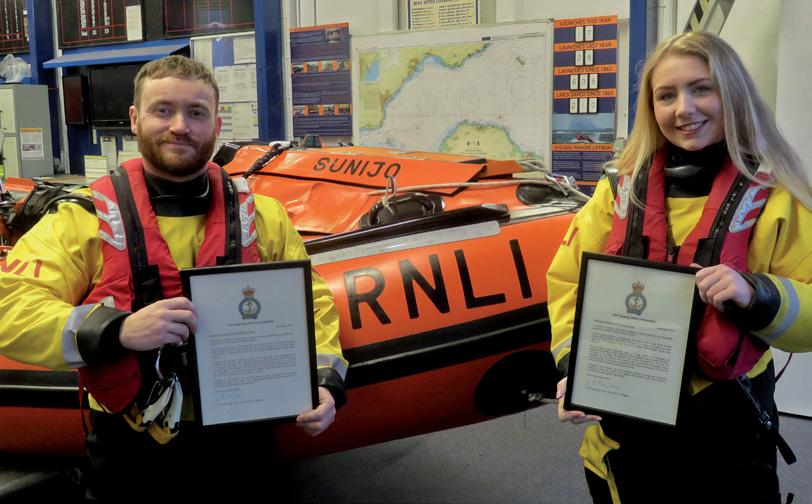
North Berwick lifeboat crew get ready to rescue the paddleboarding family
Family
TIES
Why Your RNLI reader
Val Cossey is proud to be part of our family
What inspired you and Frances to support the RNLI?
My family moved to Cromer on the North Norfolk coast in 1948 when I was 4 years old. Frances and our elder sister, Beatie, were already in their teens.
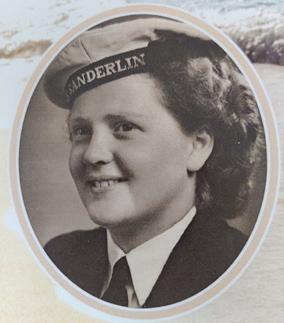
Frances loved the sea. She was in the Wrens [Women’s Royal Naval Service] after World War Two and was a member of the local Royal Naval Association for many years, becoming its Chair at the age of 80.
As a child living in Cromer, life was dominated by the sea and its moods. I remember vividly hearing the rockets summoning the lifeboat crews to their stations at Cromer and Sheringham, and the family huddling around the shortwave radio to hear the lifeboat crew and the Coastguard.
We listened daily to the shipping forecast. The terrible floods of 1953 were a harsh reminder of the dangerous waters along our stretch of coast, and the bravery of those who went out in them to rescue others.
How was growing up with the RNLI’s most decorated lifeboatman?
Cromer was a safe place to grow up – everyone knew everyone else. The whole town felt privileged to know Henry Blogg. I didn’t realise how famous he was beyond Norfolk until I was older.
We saw Henry most often on Cromer’s East Beach, after he’d retired as coxswain. We had
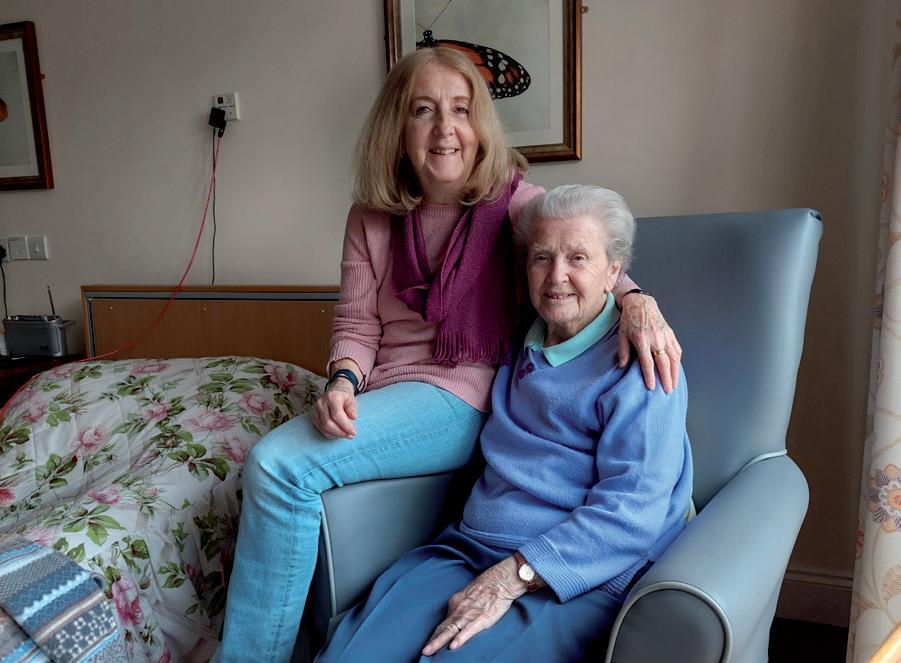
1947: Frances (inset) proudly wearing her Wrens cap 2022: Devoted sisters Val (left) and Frances
a beach hut and rented deckchairs from him. He was a man of few words, but I remember his wry, kindly amusement as visitors tried to erect their deckchairs! His family also had a crab shop at the top of the No. 2 lifeboat house gangway.
What inspires your support today?
My memories. Knowing the dangers the crews face. The way the RNLI cares for the communities it serves. When Frances passed in 2023, Cromer RNLI honoured a request in her Will for her ashes to be scattered at sea. She’d always wanted to launch down the slipway! It was a fitting tribute to someone who had a life-long respect for the RNLI and its work.
We were aware of our dangerous waters, and the bravery of those who went out in them to rescue others
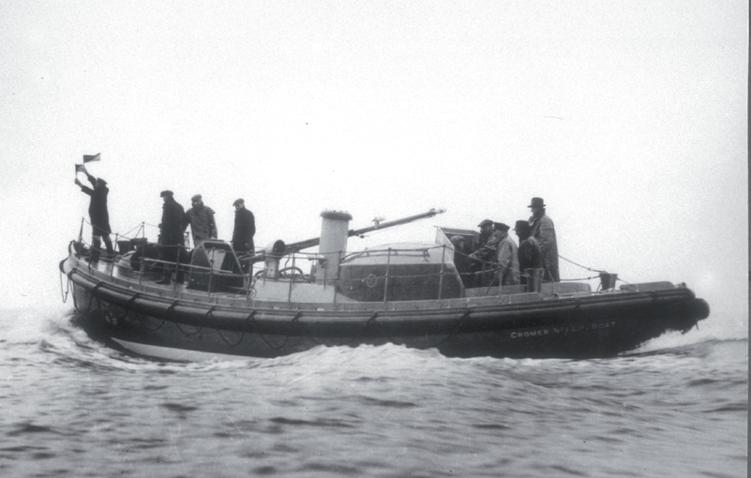
1945–1966: Val grew up with Cromer’s Watson class lifeboat
Millie Walton/Henry Blogg

Learn more about lifesaving legend Henry Blogg at RNLI.org/henry
Photos: The Cossey family, Grahame Farr
BACK TO SCHOOL BACK TO SCHOOL
Why isn’t the RNLI government funded?
Thanks to you and our volunteers, the RNLI is independent. Less than 1% of our charity’s funding comes from government sources. It’s better this way because we ensure that your trusted donations are spent where they can save the most lives. Our service is impartial and without borders: across the UK and Ireland – and helping to prevent drowning around the world. Falling on hard times in the mid-19th century, the RNLI reluctantly accepted a government subsidy to keep afloat. This came at a price: granting the Board of Trade influence over our operations. Thankfully, an uptick in public support meant we were able to cancel the arrangement in 1869 and regain full independence – which remains to this day, all because of you.
Swot up on your RNLI facts with four of your most frequently asked questions 2
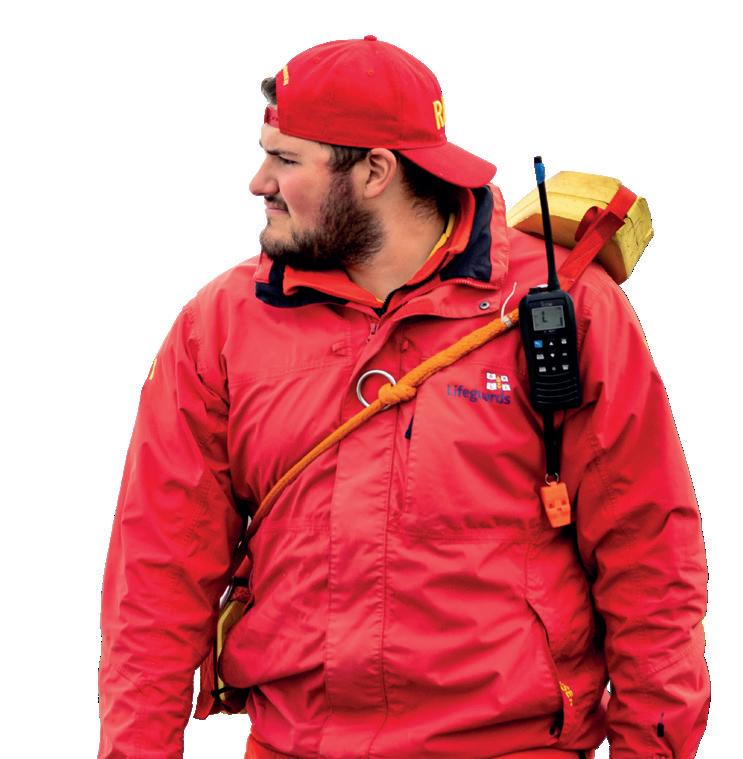
Are lifeguards volunteers?
Some are, but the vast majority are employees. Local authorities contribute to their wages. The RNLI always welcomes volunteer lifeguards, but there wouldn’t ever be enough volunteers to guarantee cover for 8-hour days, throughout the summer. Lifeguard Operations Manager Brett Shepherd explains the set up: ‘We provide a contracted service on behalf of a local authority for a set number of lifeguards to be on the beach. With around 240 beaches, we need to recruit more than 1,600 paid lifeguards every year.’
Some of our lifeguards are also lifeboat volunteers, like lifesaver Ben Colling
The handful of government grants the RNLI does receive support international projects, where we work in partnership to prevent drowning
3
Why are lifeboats orange?
If you’re in trouble at sea, there’s nothing more reassuring than the sight of a vivid orange lifeboat appearing on the horizon. Our lifeboats didn’t always look like this. In the 1800s they were painted ultramarine and, later, a deeper royal blue (now RNLI Blue). Sometimes they had red and white features to match the RNLI flag too. These colours were easy to get hold of. But, by the 1950s, a range of brighter, bolder colours became available. The RNLI chose safety orange (now RNLI Orange) for all-weather and inshore lifeboats, as it proved to be the most visible colour at sea. Similarly, international orange is widely used in the sea and aerospace industries today, for its unique ability to set objects apart from their surroundings.
4
Where do crew pee when at sea?
Until recently, the answer would have been ‘over the side’. That’s fine when you’re all hard-nosed, seadog bros from the 19th century, but lifeboating isn’t like that anymore. Today’s RNLI volunteers deserve a little comfort when at sea for hours on end – especially now that 14% of our crew are women. So, we developed a toilet kit for our Shannon class lifeboats. Easily installed by station mechanics, the loo mounts down below in the bow and sits behind a bulkhead door for privacy. Sadly, it’s not an option for lifesavers on smaller, inshore lifeboats, but the news on lifeboat loos has generally gone down well with the volunteers.
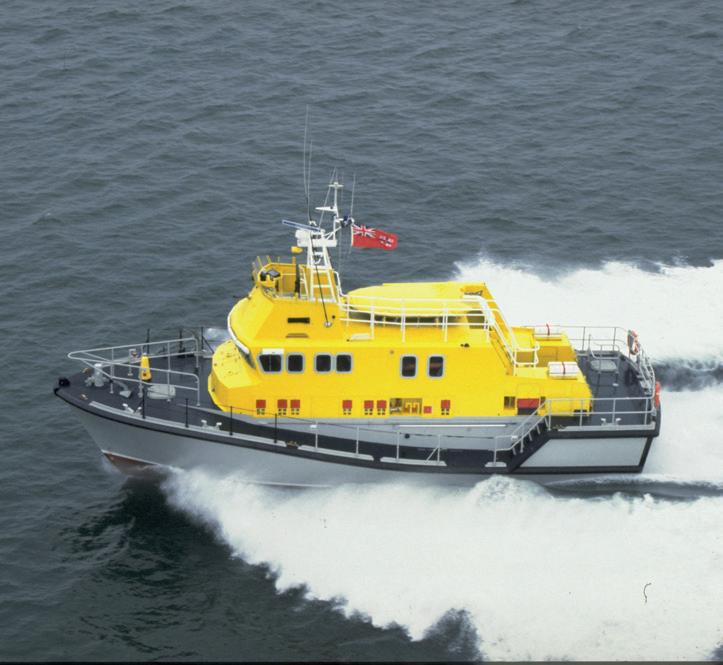
Ever seen a yellow lifeboat? Readers from the ‘90s may remember we experimented with RNLI Yellow on the prototype Severn class lifeboat to see if it was more visible. It wasn’t!
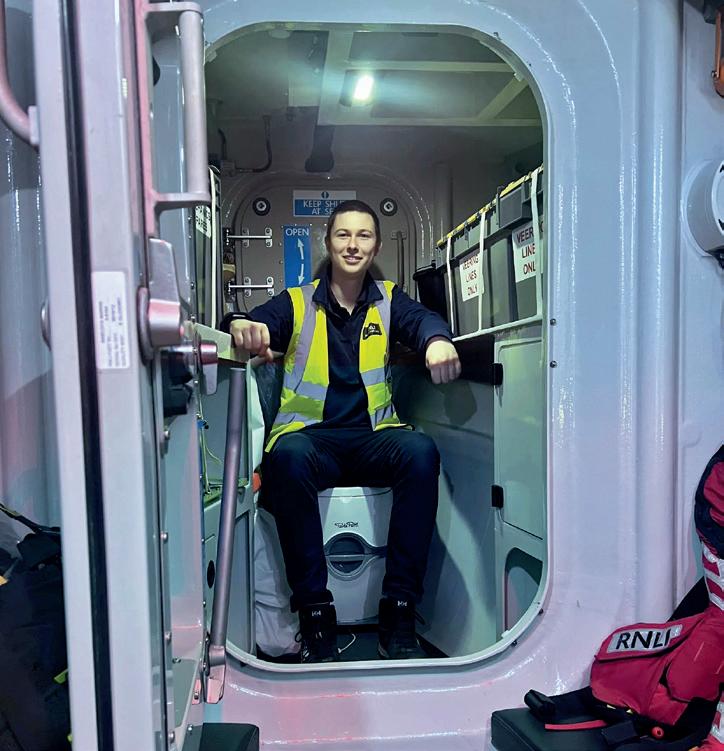
of our engineers tries out the new
Got another burning question? Maybe the answer is at RNLI.org/YourFAQs
One
lifeboat loo for size
Photos: EMEDO, RNLI, RNLI/Nathan Williams


GIFT AN THIS CHRISTMAS RNLI MEMBERSHIP
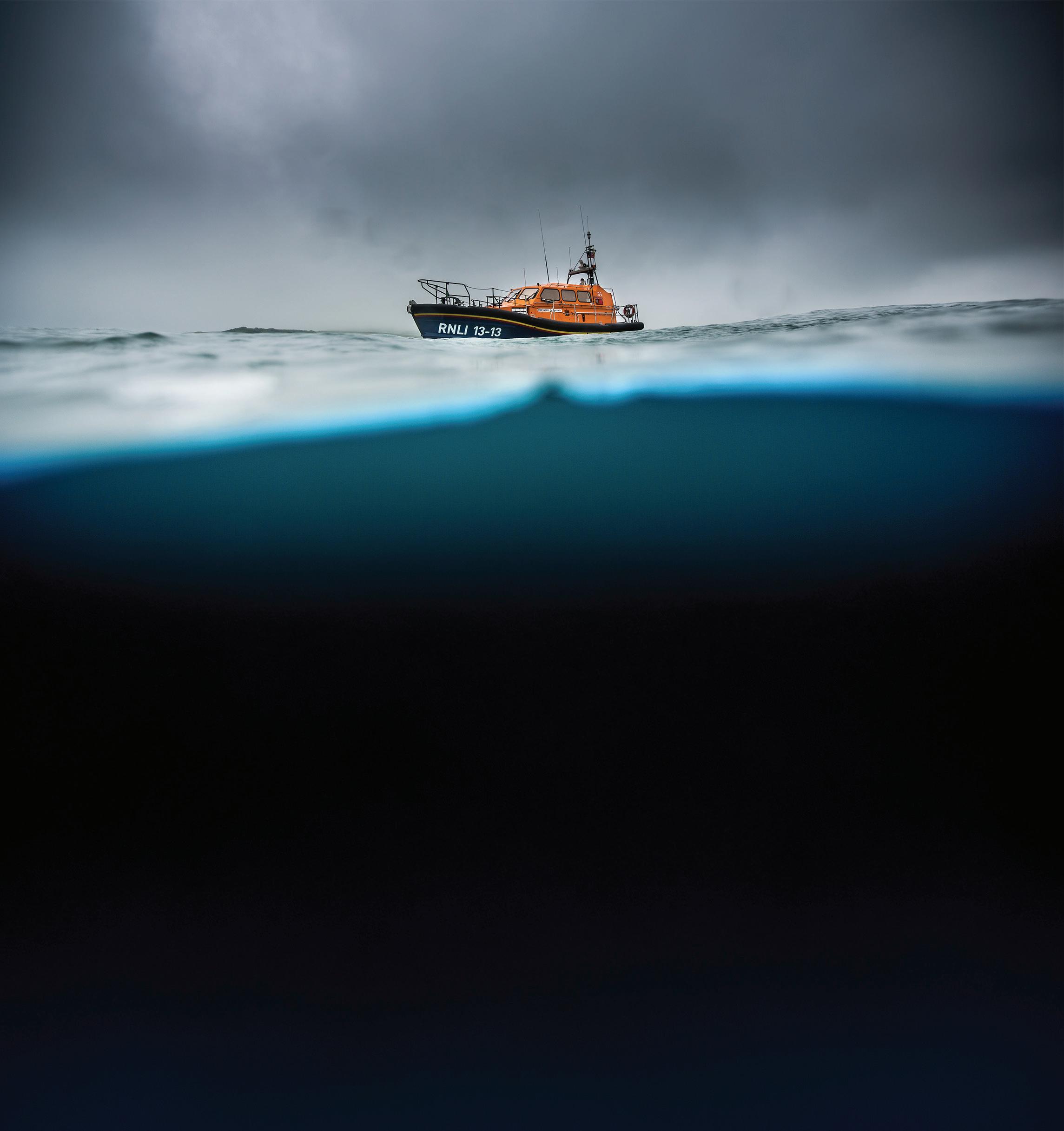
RNLI gift membership is a special way to support our lifeboat crews and lifeguards every single day
When you give this thoughtful gift to a loved one this Christmas, you’ll both be part of a force for good. You’ll be giving hope of rescue to those in danger at sea. And together you’ll be part of our lifesaving family.
Your special gift includes:
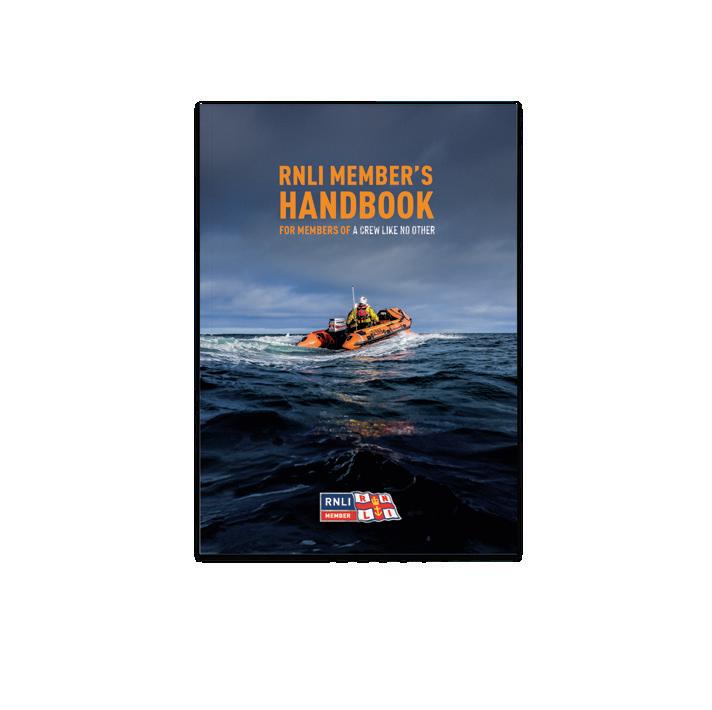
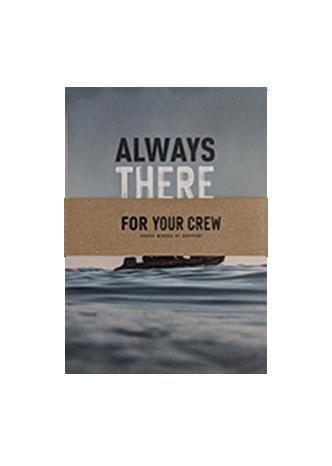
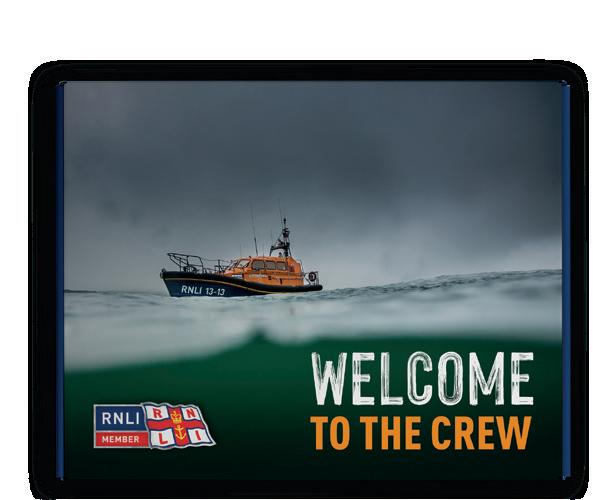
• RNLI members’ pack, with coastal visits handbook
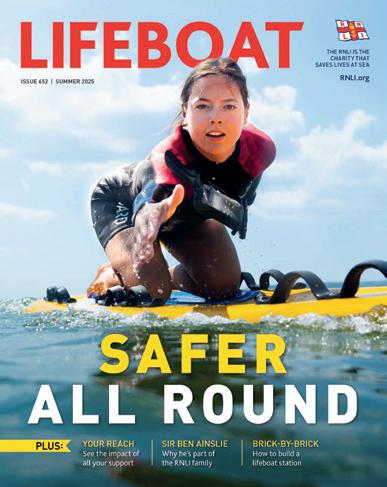
• Lifeboat magazine, packed with epic rescues, four times a year
• set of postcards
• membership card
The perfect
CHRISTMAS GIFT
Find out more at RNLI.org/GiftAMembership or scan this QR code: Your gift is £48/€60 for a whole year.
You can also call us on 0300 300 9990 (from the UK), 01 511 9836 (from Ireland), or +44 1202 663234 (from any other country) on weekdays, 8am–6pm. Please quote ‘MEMBERSHIP’ when ordering by phone.