WELCOME
Dear reader
As the weather warms and beaches fill up, we focus on staying safer all round – and celebrating 25 years of RNLI lifeguarding thanks to the support of Offshore and Governor members.
From Cornwall to Co Donegal, crew and lifeguards share their expertise. On page 4, take a closer look at our rescue watercraft and inshore rescue boat – the agile vessels our lifeguards rely on when seconds count. Then head to page 8 where, from surf breaks to scenic hikes, Bundoran volunteers bring their local coastline to life.
We explore a complex rescue at Bantham Beach (page 11), RNLI Clinical Trainer Leigh walks us through using community-access defibrillators confidently (page 14), and test your knowledge by considering what you’d do if seasickness stopped your crew in their tracks (page 16).
If you’d prefer to read Offshore digitally, please let our Supporter Experience Team know (details below) Wherever this summer takes you, enjoy the water – and stay safe.
dunnāco
dunnāco lee-morikū and the Offshore Team
Email: offshore@rnli.org.uk
those of the publishers. Care is taken to ensure that editorial information is correct at the time of going to press but is subject to change.
Chair: Janet Legrand KC (Hon)
Chief Executive: Peter Sparkes
Offshore Editor: dunnāco lee-morikū
Offshore Designer: Andy Perryman CONTACT US Would you prefer to receive a digital copy of Offshore magazine or not receive it at all? Are you moving house? Do you have another question? Then please email supporterexperience@rnli.org.uk with your request, including your supporter number. You can also call us on 0300 300 9990 (from the UK), 01 511 9836 (from Ireland) or +44 1202 663234 (from any other country), or write to us at RNLI Support Centre, West Quay Road, Poole, Dorset, BH15 1HZ.
'Please talk to teenagers you know about water safety during heatwaves – it will help save lives'
Ross MacLeod | RNLI Water Safety Manager
SUMMER PICKS FROM RNLI SHOP
OSPREY CHANGING BUCKET
A convenient way to change out of your wetsuit or swimwear, this 40L multi-purpose waterproof changing and gear bag has a removable foam base and collapsible design, making it the perfect portable solution.
RRP: £25/€30 Ref: RS2638201BLK
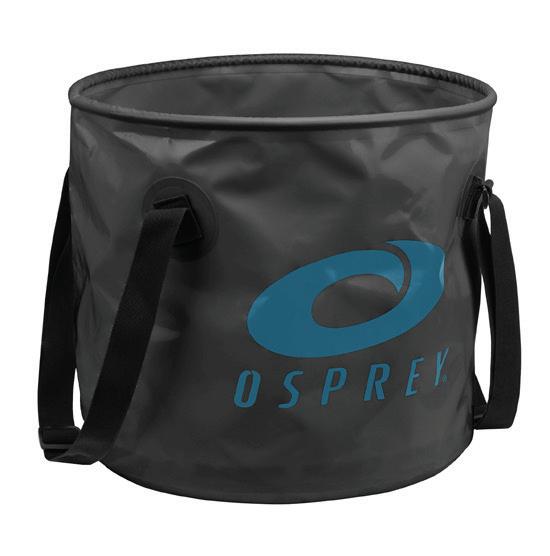
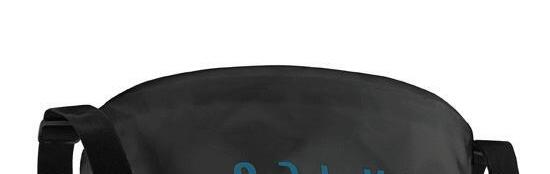
Photo: RNLI/Richard Adams
ON THE RADAR:
WARM WEATHER AND DROWNING
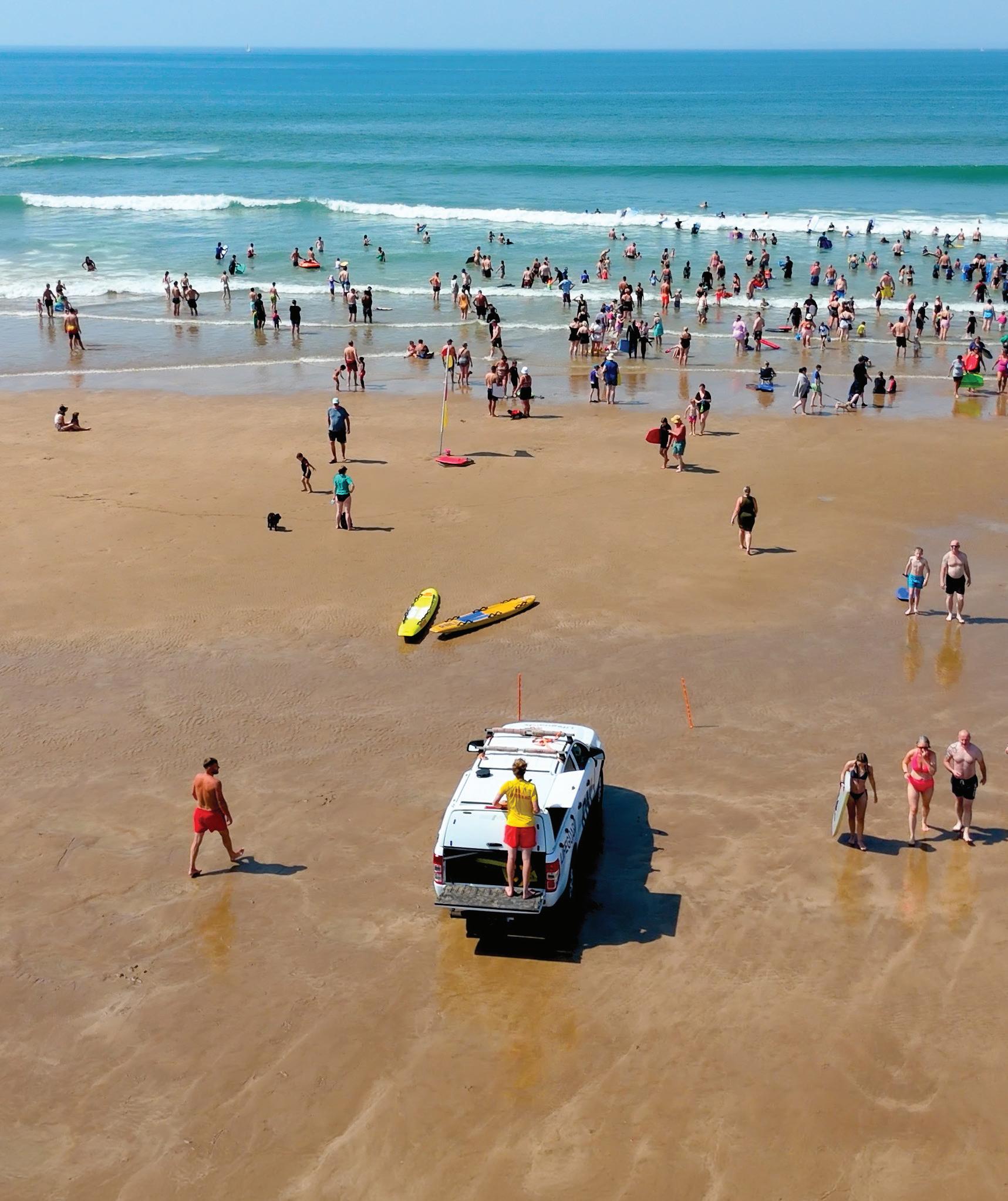
Research shows that when temperatures reach 25°C or higher in the UK, people are five times more likely to drown. Teenagers (13–17 years) and young adults (18–24 years) are most at risk.*
Knowing the dangers and what to do if you or someone else gets into difficulty in the water could save your life and the lives of those you love.
Even during heat waves, sea temperatures can trigger cold water shock and leave you gasping for air. Big waves and strong rip currents can overpower even the most confident swimmers. Swim with a buddy where there are trained lifeguards, such as at a lifeguarded beach. Inland, unsupervised lakes and rivers can have dangerous fast currents, undertows, depth changes and submerged hazards.
Our Float to Live advice is proven to save lives. Following it will help you to relax and regain control of your breathing before you swim to safety, call for help or wait for help to arrive. Remember it. Practise it. And please share it with the children and young people in your life.
TOP TIPS
Wearing a waterproof pouch for your phone and a tow float for buoyancy can also help keep you safe as you dip. For more top tips, visit RNLI.org/safety
*Bournemouth University study by Hills et al, 2024: Association Between Air Temperature and Unintentional Drowning Risk in the United Kingdom, 2012–2019: A Nationwide Case-Crossover Study. Published in the journal Preventive Medicine bit.ly/BournemouthUniversityStudy
RLSS UK research, July 2024: A Headline Exploration of the Relationship Between Air Temperature and Accidental Drowning Fatalities in the UK bit.ly/RLSSUKResearch
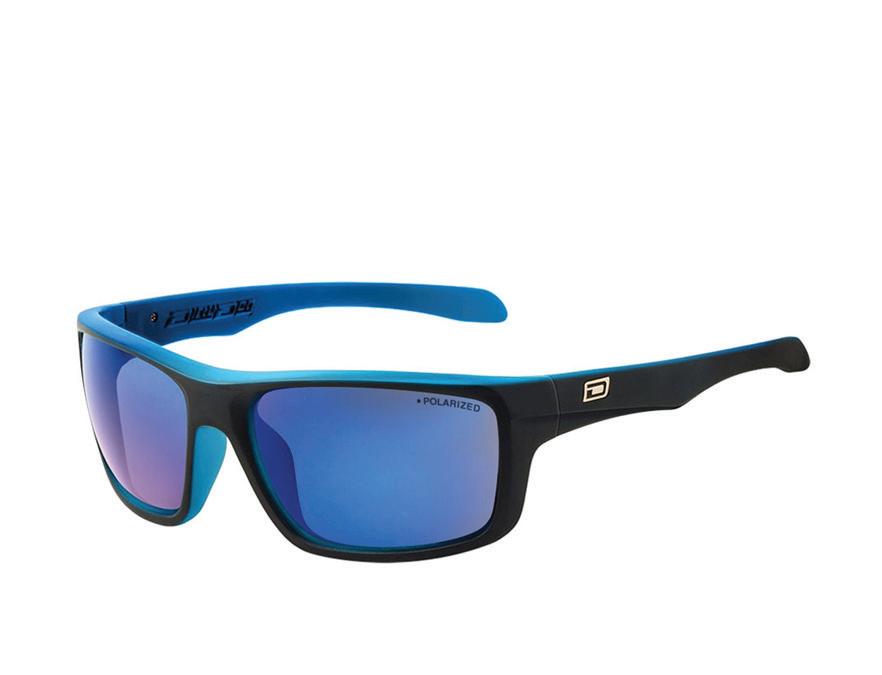
DIRTY DOG AXLE POLARISED SUNGLASSES
Used by RNLI lifeguards and crew, these scratch-resistant lightweight sunglasses offer 100% protection against UV rays, with enhanced clarity of vision in a secure wraparound design.
In this issue of Offshore, quotes, practical advice and lifesaving tips are brought to you by:

ROSS MACLEOD
RNLI WATER SAFETY MANAGER
Ross works with public sector partners and networks to help prevent accidental drowning and water-based suicide.

GORDON DICKENS
RNLI WATER SAFETY ADVISER, RAMSEY RNLI
Sailing instructor and retired GP Gordon helps people stay safe around the Isle of Man.

LEIGH ANDERSON SHEARD
RNLI CLINICAL TRAINER
Leigh is helping to develop lifeguard training resources and serves as an RNLI lifeguard in Padstow.
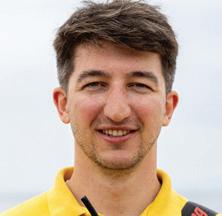
MICHAEL JESS
RNLI LIFEGUARD SUPERVISOR, CO ANTRIM
Michael started as an RNLI lifeguard in 2018 and is now in his ninth season.
shop.RNLI.org
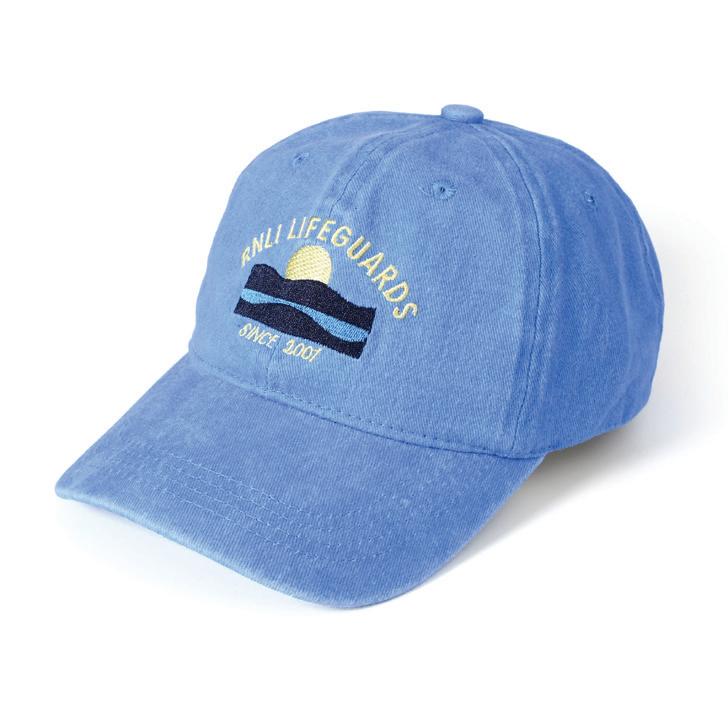
RNLI LIFEGUARDS EMBROIDERED CAP
Show your support for RNLI lifeguards with this commemorative 25th anniversary cotton blend cap. Featuring an embroidered sun setting over the water, designed by Abersoch RNLI Crew Member and Illustrator Jonty Storey. One size, adjustable.
RRP: £15/€18
Ref: RS2642102BLU

TOP GEAR FOR LIFEGUARDS
Take a closer look at two exceptional pieces of lifeguarding equipment and how they’re used: our inshore rescue boat and rescue watercraft
Lifeguards rely on a range of specialised equipment to keep beachgoers safe at the coast: flags, binoculars, rescue tubes and rescue boards. But, when people are in danger and every second counts, they need lifesaving gear that can cut through big surf and get them to the rescue fast.
GETTING TO KNOW THE RESCUE WATERCRAFT
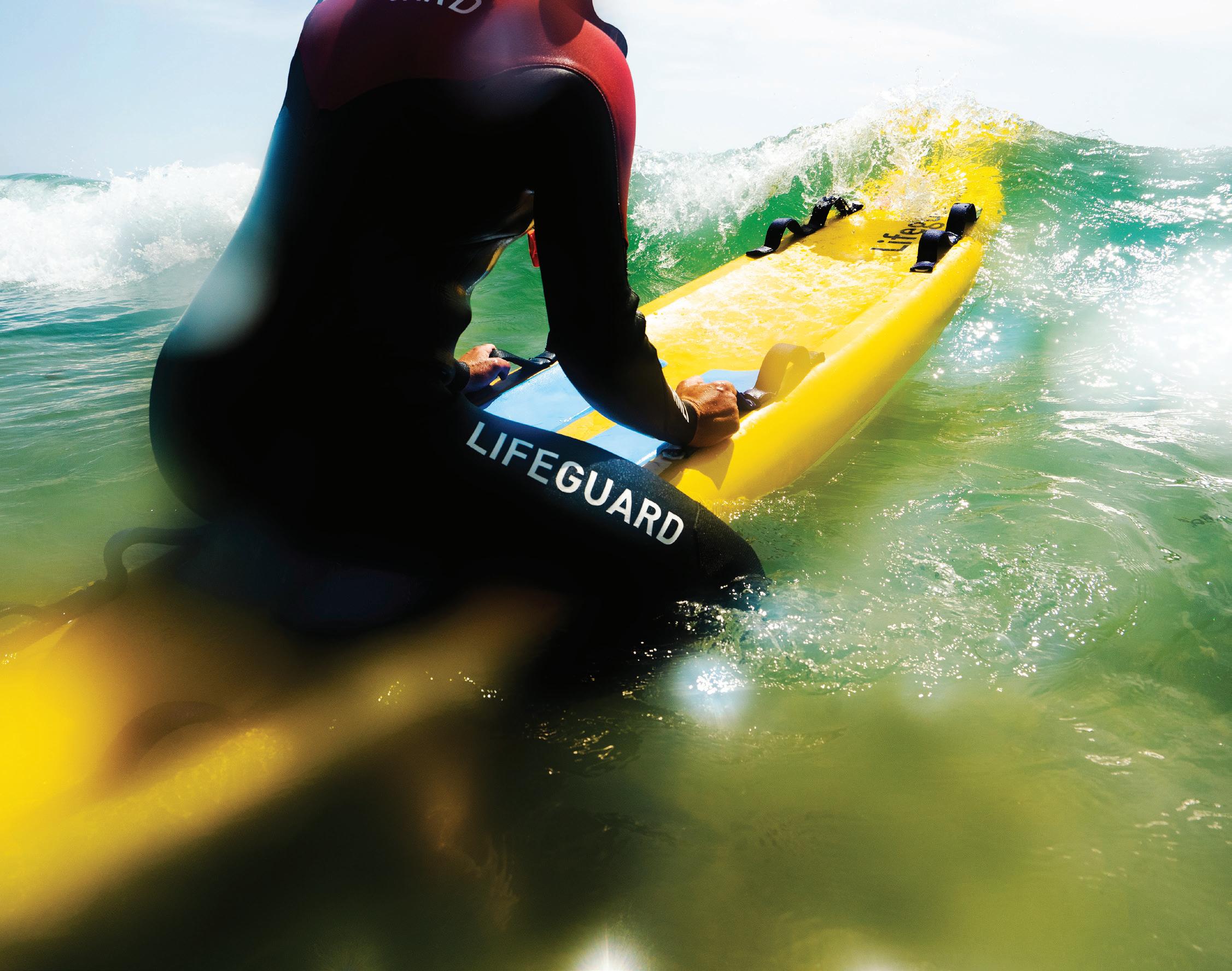
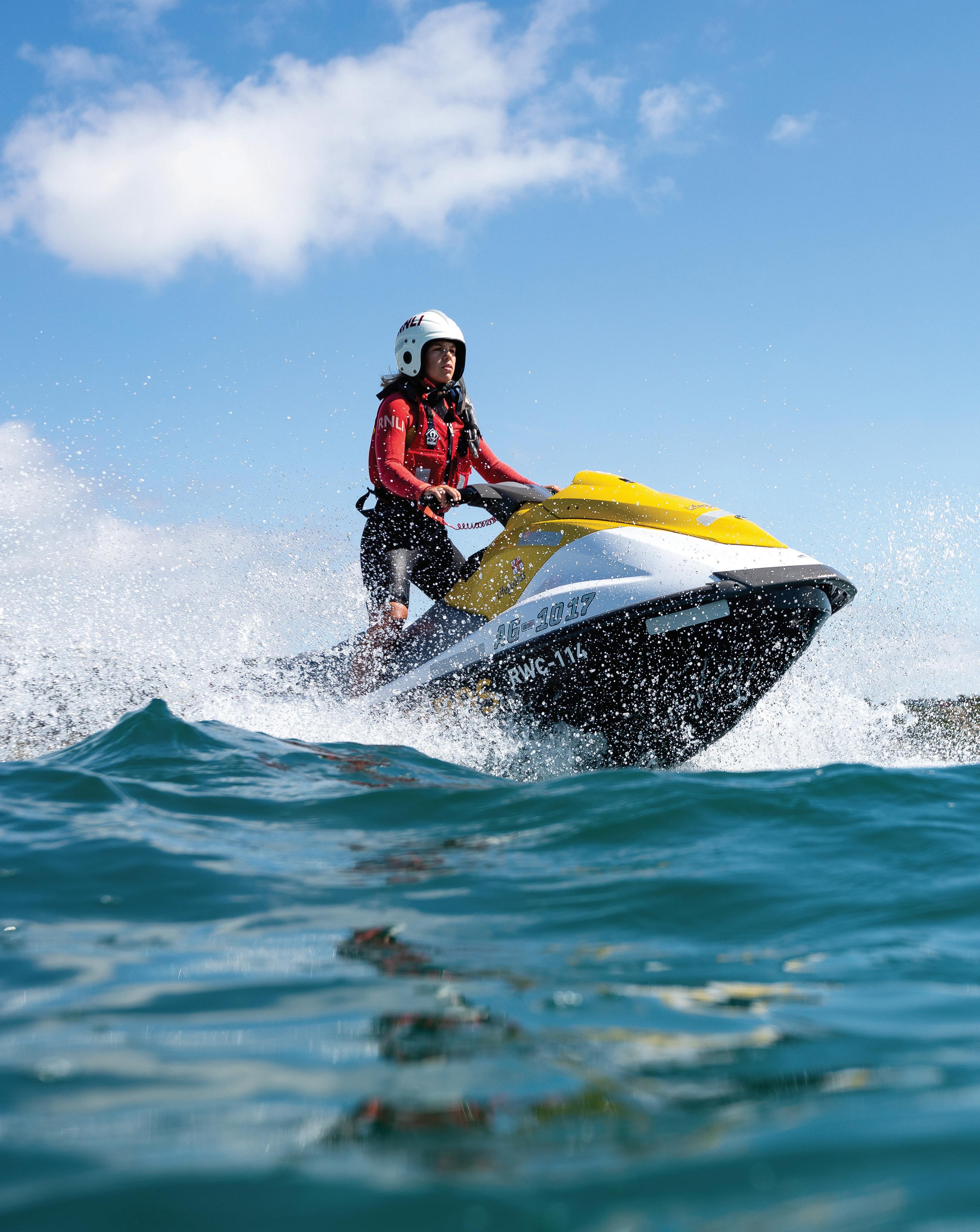
The RNLI’s rescue watercraft (RWC) is a modified personal watercraft, like a jet ski, equipped for search and rescue. They’ve been used by our lifeguards
since 2003 – and they can negotiate almost any conditions. 'They're brilliant for responsive, close-to-shore rescues in surf and shallow water,' says Lifeguard Supervisor Michael Jess.
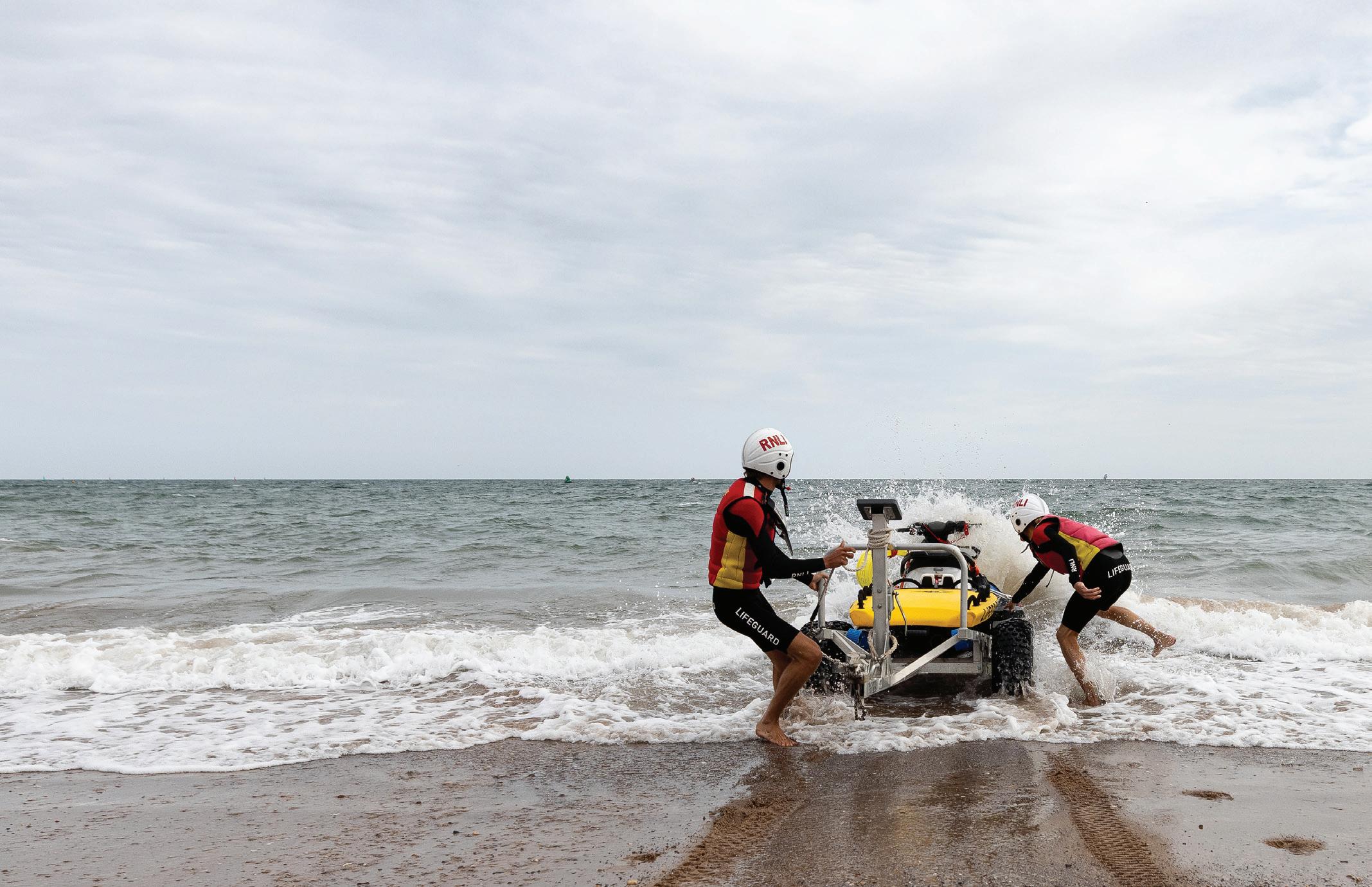
RWCs can be launched or recovered rapidly from the water using all-terrain or four-wheel drive vehicles. And they’re piloted by one lifeguard, with space for another on the sled.
'They use waterjet propulsion rather than an exposed propeller, making them much safer around casualties and in shallow or rocky areas,' says

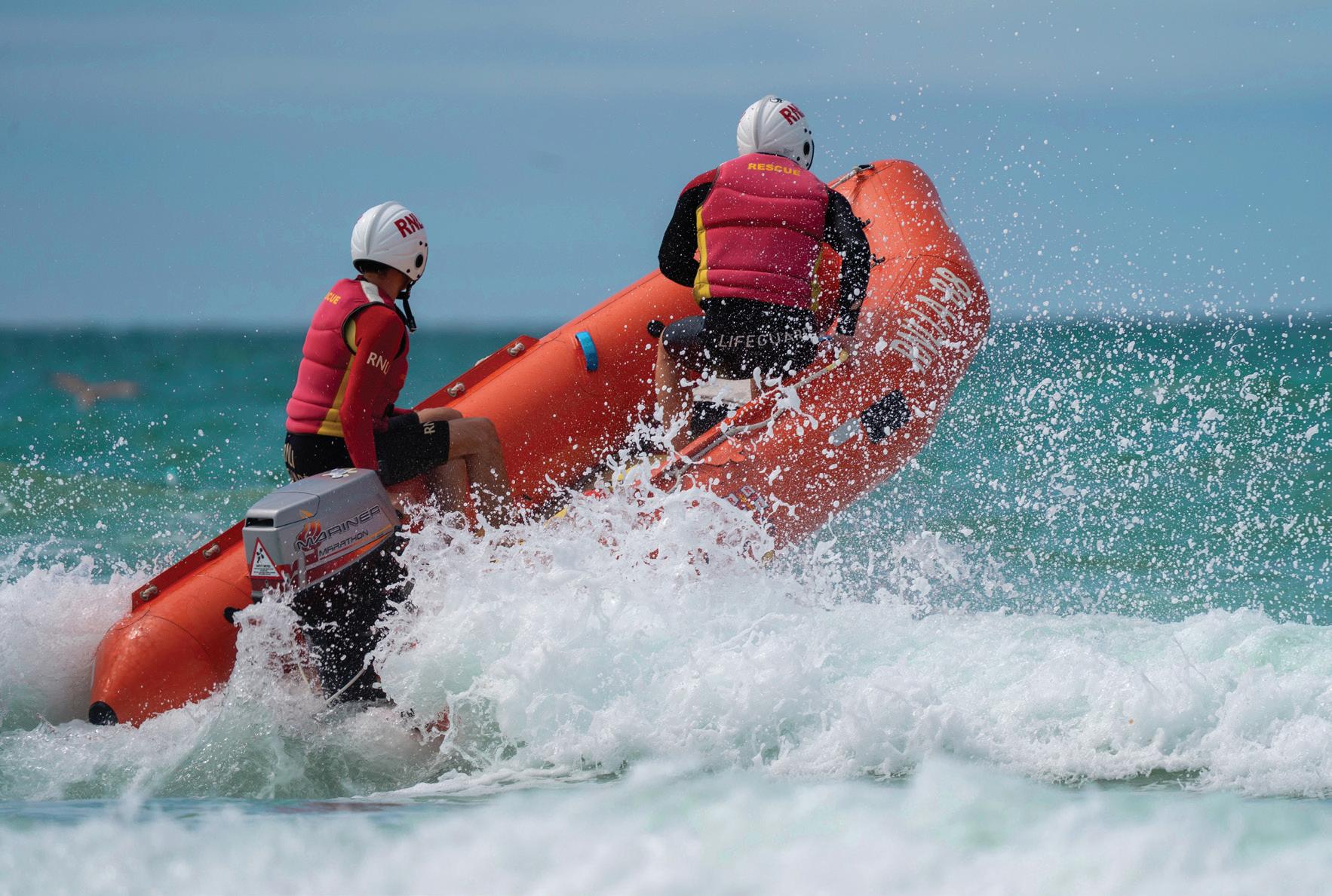
Inshore rescue boats give lifeguards speed and manoeuvrability
lifeboat stations, such as Criccieth and Aberystwyth, also use them.
Michael. 'An RWC’s strengths lie in acceleration and manoeuvrability. And the ability to work in breaking surf where boats cannot. Their short range and limited casualty capacity means they’re designed for rapid rescues near shore – such as swimmers in difficulty and rip current incidents.'
MEET THE INSHORE RESCUE BOAT
The RNLI introduced inshore rescue boats (IRBs) in 2001. These small, inflatable craft are primarily used by RNLI lifeguards – although a few
IRBs give lifeguards the speed and manoeuvrability necessary for getting to the most hazardous rescue scenes as fast as possible. They have a guard around the propeller of the outboard engine, designed to protect those in the water from injury. They are great for rescues in the surf, close to shore or cliffs and among rocks.
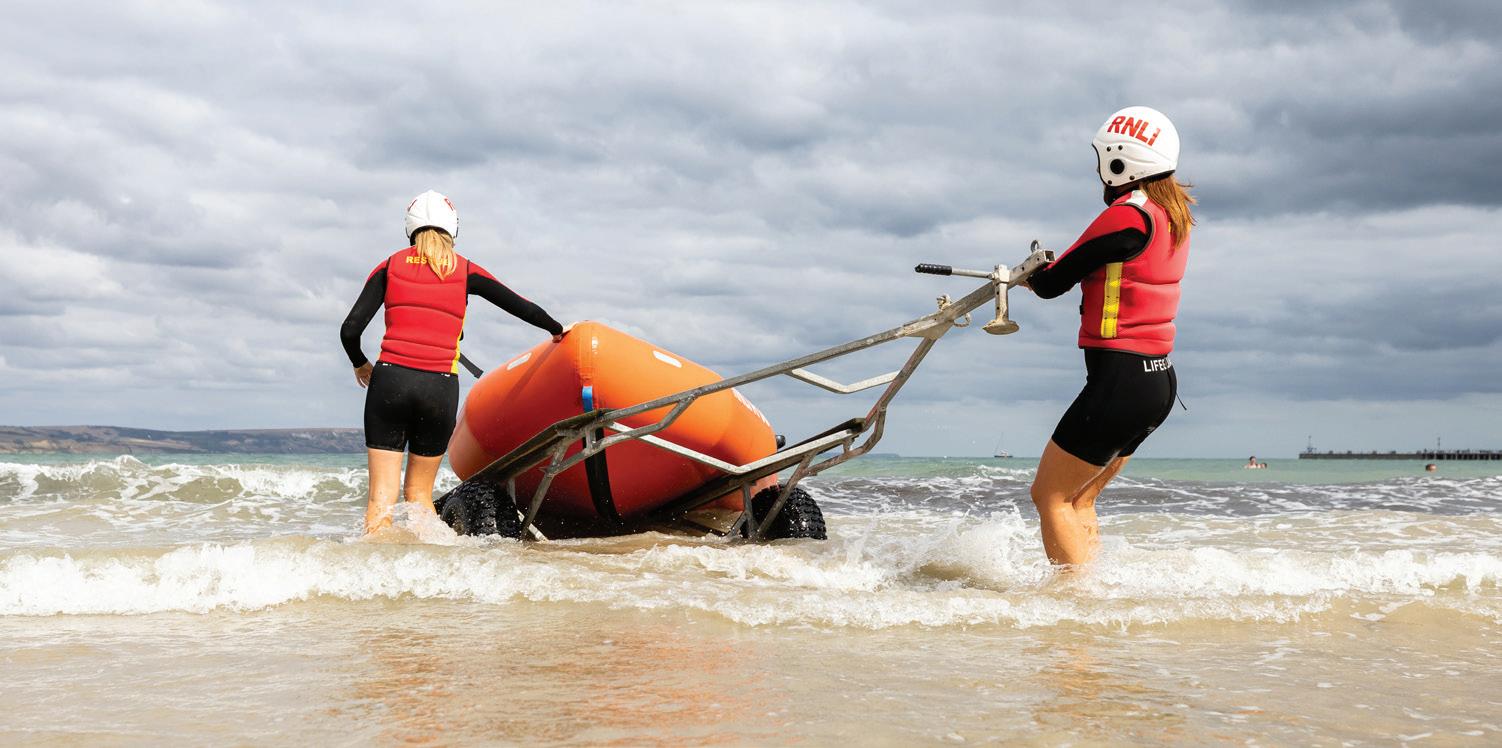
Sturdy enough for heavy surf conditions, IRBs are still light enough to be launched from the shore by two people. They’re generally operated by two people too – the helm and crew member work together, so the craft can be manoeuvred safely in the surf.
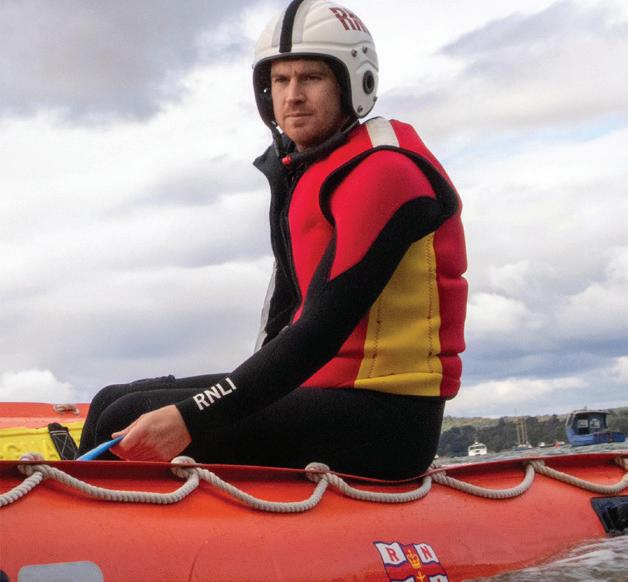
' It takes 3 days to train someone as an IRB helm and it costs roughly £650 per lifeguard'
A lifeguard patrolling the beach onboard a rescue watercraft
Scott Davidson | Lifeguard Assessor Trainer
RNLI lifeguards launching their IRB
RESCUE WATERCRAFT (RWC)
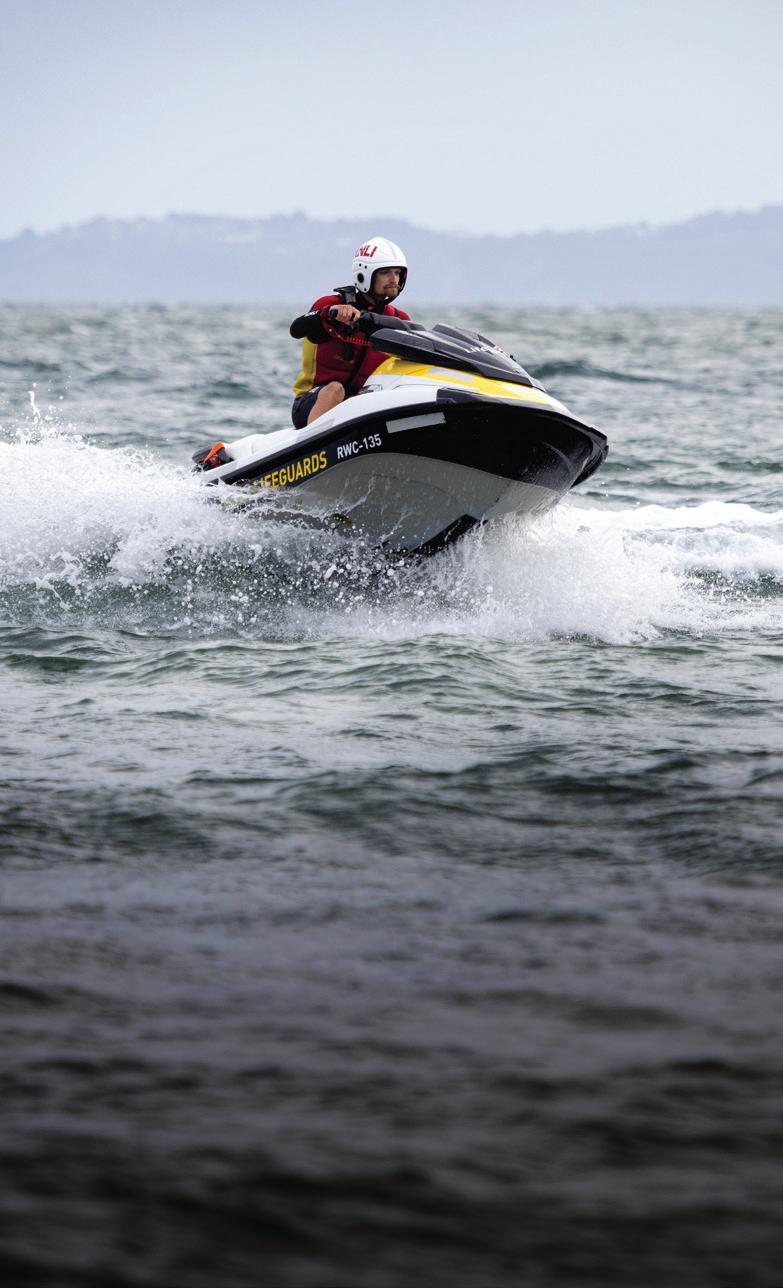
Top speed: 48 knots
Length: 3.37m
Crew capacity: 2
Engine: 1,099cc, 4-stroke, 3-cylinder, water-cooled
Launch: Trailer or trolley, with four-wheel drive or all-terrain vehicle to reach launch location
Construction: Glass-reinforced plastic
RWC TRAINING AND TECHNIQUES
All RNLI lifeguards are highly trained, but there’s even more to learn when it comes to operating rescue watercraft and inshore rescue boats.
The Rescue Watercraft Operator course provides lifeguards with the skills and knowledge they need to handle an RWC safely and effectively. 'The course typically lasts 4–5 days, with the first day learning theory and the rest developing skills within the water,' says Michael. 'First, lifeguards study international maritime regulations, the surf environment, and the techniques required to navigate safely through breaking waves.'
Lifeguards then learn about different search patterns and key manoeuvring techniques, including:
• The punching technique: 'RWCs are designed to perform in big surf,' says Michael. 'Punching is a specialised
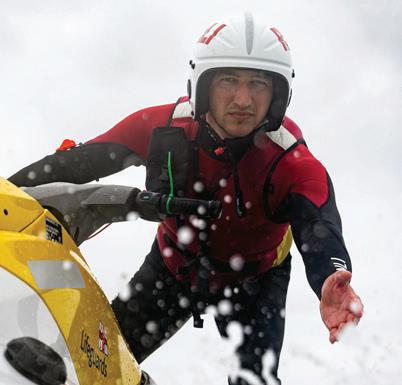
'An RWC’s strengths lie in speed and manoeuvrability. And the ability to work in breaking surf where boats cannot'
Michael Jess | Lifeguard Supervisor
technique. We combine precise timing and throttle power to quite literally “punch” through a wall of oncoming surf, ensuring we either go straight through or gently down the back of a wave to get further out to sea.'
• Route planning: Sometimes the surf can be so extreme that it’s better to avoid punching waves. That’s where route planning comes into play. During the course, lifeguards gain an understanding of how to read waves and anticipate where they will break, so they can adjust their speed and trajectory to avoid approaching an oncoming wave head-on.
• Rescue techniques: Lifeguards practise several RWC rescue techniques, including presenting the sled, assisted pick-ups, solo unconscious rescues and tube rescues near hazards.
IRB TRAINING AND TECHNIQUES
There are two training courses for lifeguards to learn the skills and knowledge to crew or helm the IRB. Lifeguard Assessor Trainer Scott Davidson says: 'It takes around 70 hours to train someone to become both a crew and helm.' The training is usually phased, with lifeguards completing at least one season as crew, to learn the intricacies of how the IRB is operated, before being trained as a helm. 'Before training can even begin, lifeguards are tested to additional fitness standards, developed by the University of Portsmouth, to replicate the demands of launching and operating the IRB or RWC,' Scott adds. 'While these are tough tests, it means the lifeguards that crew, helm and operate the watercraft are able to quickly drag them into water deep enough to start the engine, as well as secure any casualties onboard.'
RNLI lifeguards launching their RWC
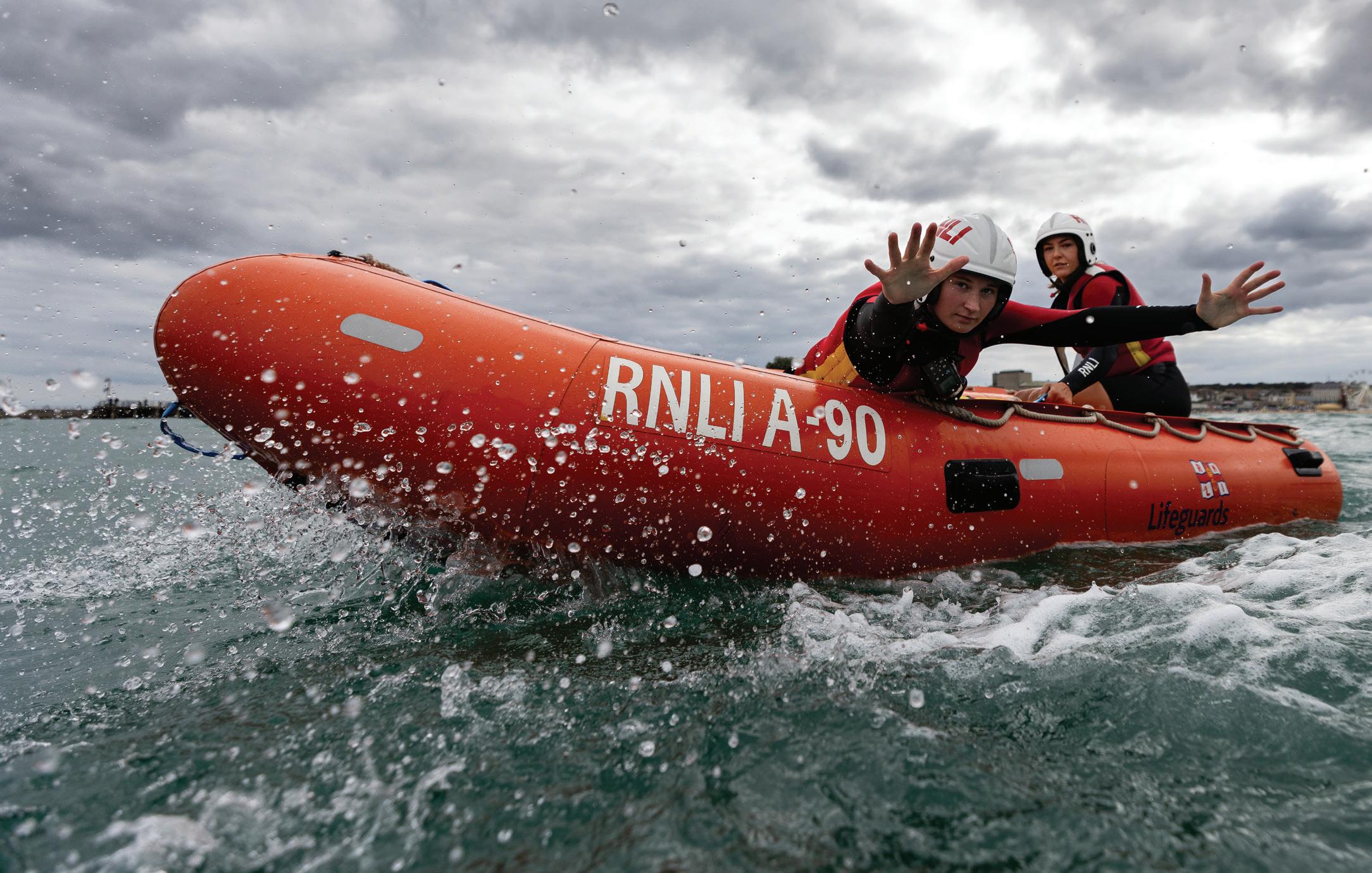
INSHORE RESCUE BOAT (IRB)
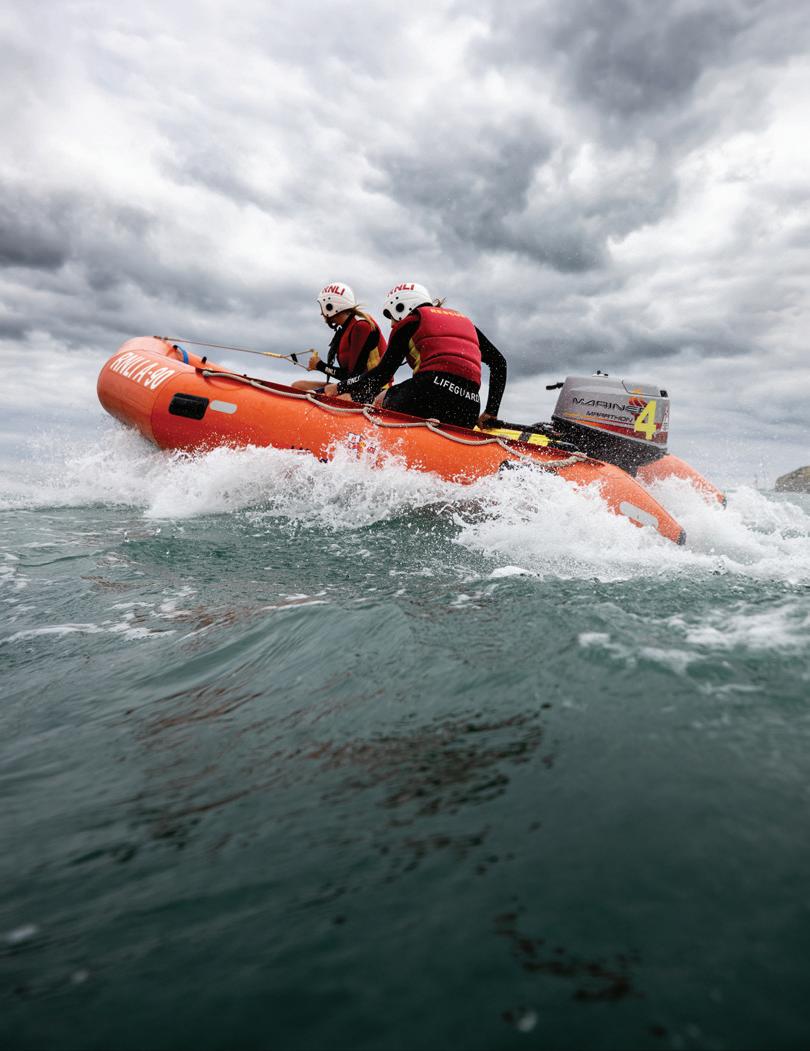
Top speed: 26 knots
Length: 3.9m
Crew capacity: 2
Engine: 30hp outboard, 2-stroke, 2-cylinder, water cooled
Launch: Trailer or trolley, with four-wheel drive or all-terrain vehicle to reach launch location
Construction: Fabric coated with hypalon (synthetic rubber)
During their IRB course, lifeguards learn theory – from search to dynamic risk assessment – and they’re trained to carry out daily maintenance tasks to make sure the craft is always ready to rescue. They also learn vital surf survival skills and techniques, in case the IRB capsizes, has engine failure, propeller entanglement or the helm or crew goes overboard.
'Once the trainer is satisfied that the lifeguard will be safe, they move onto the skills needed to operate the IRB,' says Scott. These include negotiating waves and other conditions, as well as specialised techniques like:
• Parallel running: 'This involves attacking waves in the right way and, crucially, at the right time,' says Scott. It’s a highly skilled manoeuvring technique used to travel along the beach through the surf zone, rather than heading directly out to sea or in toward shore.
• Solo helming: When solo, the helm must try to move their body weight forwards and towards the starboard side, where the crew would be, as much as possible. They also need to take on waves in a much more cautious manner.
• Rescue techniques: 'Finally, the techniques to recover all kinds of casualties can be taught. These might be as simple as a child with a bodyboard – or a swimmer struggling in a rip current,' says Scott. 'Equally, they could be presented with a casualty with multiple injuries or attached to complex and hazardous equipment.'
It’s thanks to the kind support of members like you that our lifeguards are equipped with the best training and equipment to deal with any situation.
BRINGING CASUALTIES TO SHORE
All RWCs are fitted with a rear-mounted rescue sled which casualties can pull themselves onto and hold on as they’re brought to safety. On Bantham Beach, Lifeguard Ben Goffin powered out on a RWC to rescue a wingfoiler with a suspected spinal injury. Lifeguard Noah pulled the wingfoiler safely onto the sled and Ben skilfully manoeuvred back to shore. 'The wingfoiler was in severe pain, so I had to carefully navigate our way back through some surf,' says Ben. 'I kept the ride as smooth as possible to avoid jolting him.'
Read more about this rescue on page 11. ■
Words: Nikki McMullen
Photos: Sam Ellison, RNLI/(Ashton Milton, Nathan Williams)
The IRB is sturdy enough to withstand heavy surf conditions
Love where you live ...
BUNDORAN AND COUNTY DONEGAL
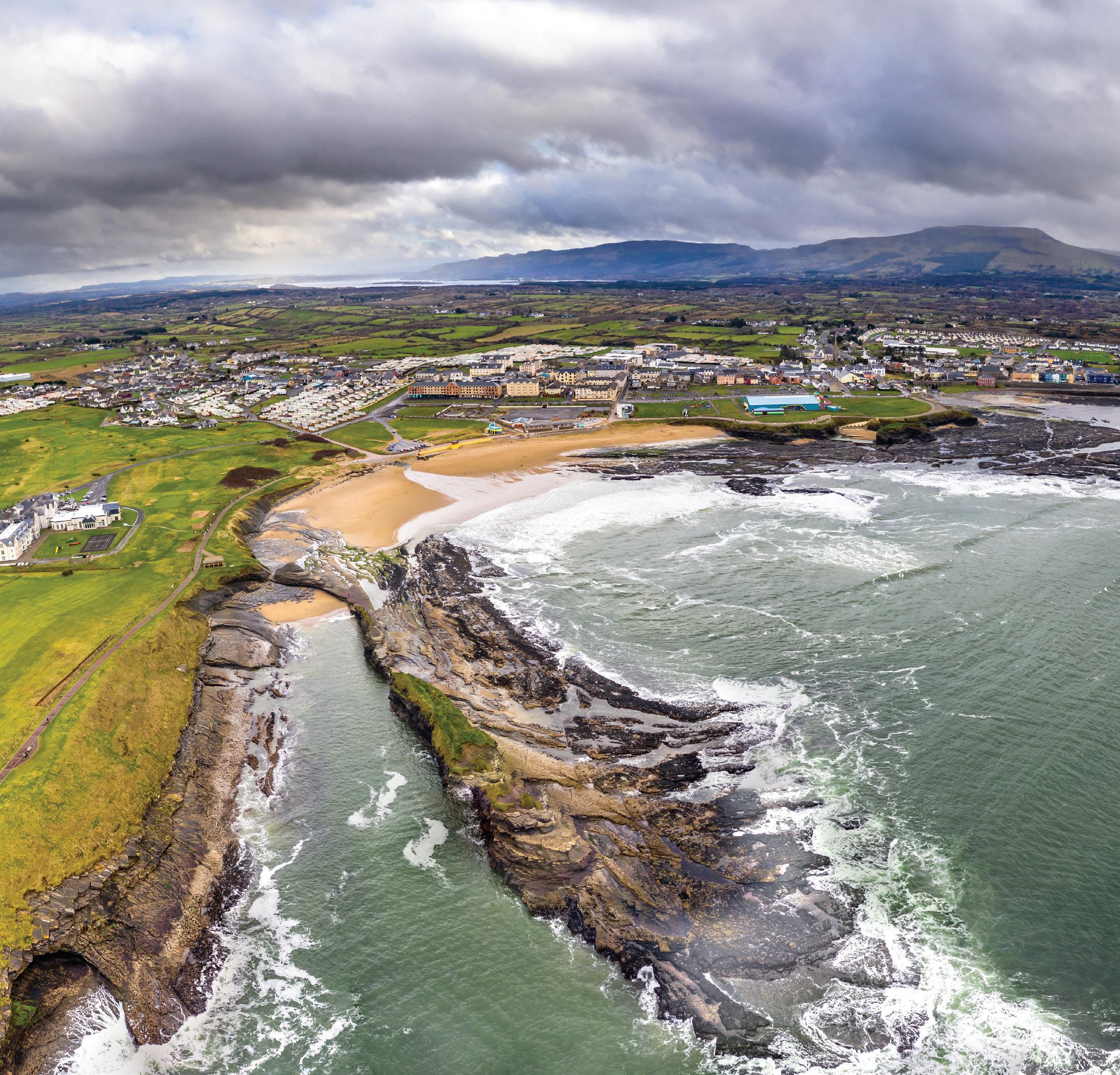
Céad míle fáilte ('a hundred thousand welcomes') await you in this fantastical haven on the Wild Atlantic Way
‘THERE IS PLENTY OF SPACE TO
BREATHE, THINK AND RESET’
CONOR CLANCY
VOLUNTEER CREW MEMBER, BUNDORAN RNLI
What I love most about Bundoran is the community – it’s like one big family, with a perfect mix of energy and calm. Co Donegal is a place where you can feel disconnected from the rest of the world. There is plenty of space to breathe, think and reset.
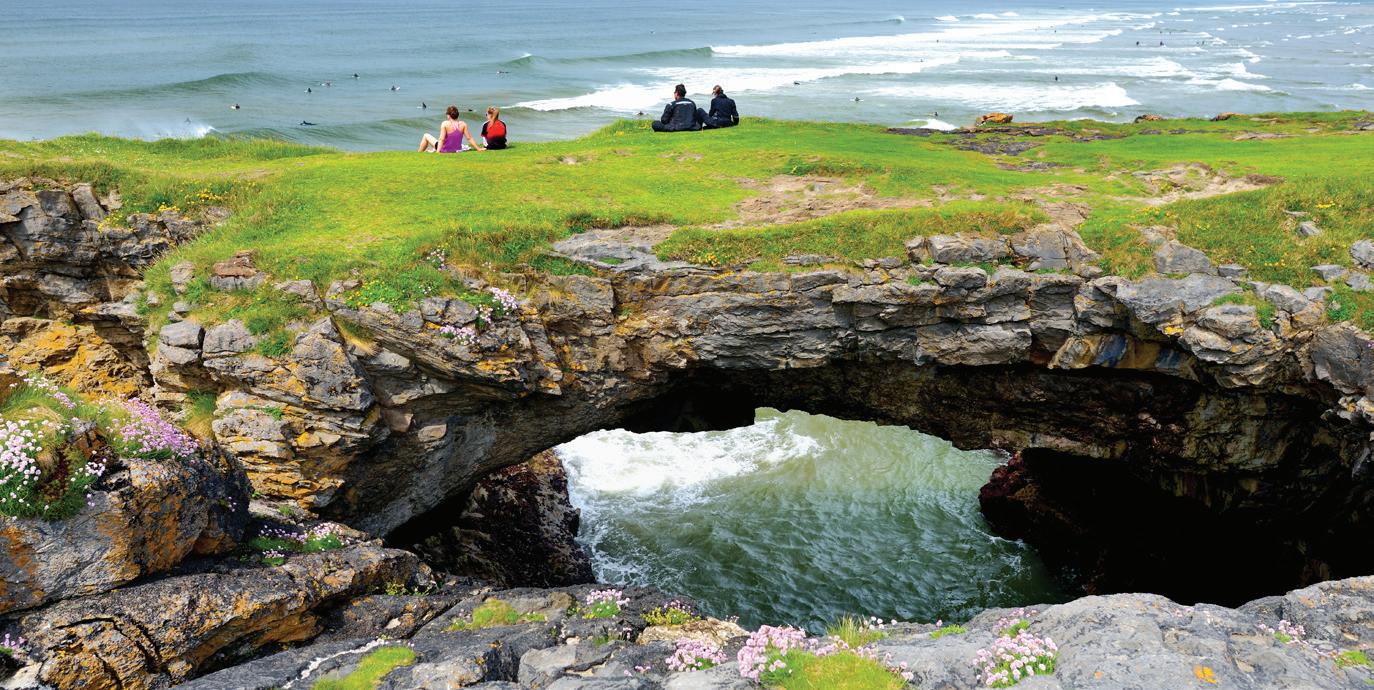
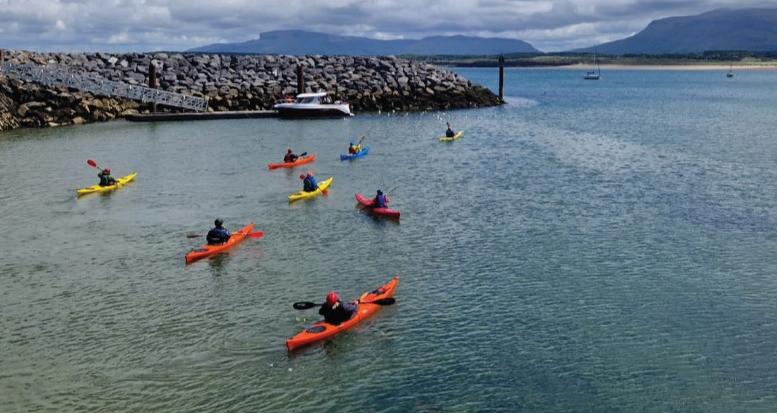
The coastline is part of the Wild Atlantic Way, known for its dramatic and breathtaking scenery. It varies from soft, sandy beaches and surf zones to rocky headlands and sea caves. I enjoy kayaking around it and on the local rivers.
The majestic Sliabh Liag (Slieve League) mountain has some of the highest sea cliffs in Europe with spectacular views. You can spot seabirds nesting in the cliff face. Boat trips from Teelin allow you to experience the cliffs from the water.
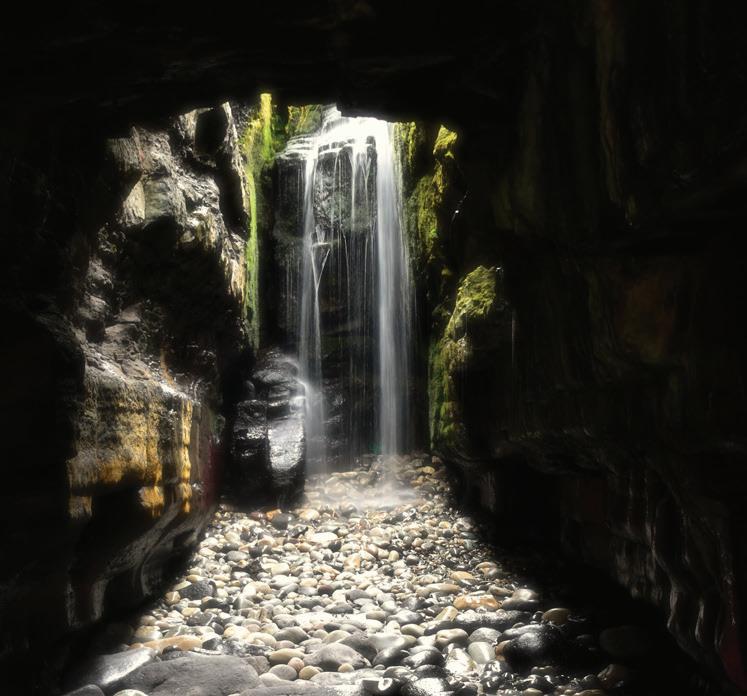
On the Slieve League peninsula is a real hidden treasure: the Secret Waterfall at Largy. Other good hikes are to Malin Head, the most northerly point in Ireland, and to the top of Mount Errigal, the highest point in Co Donegal, where the views are phenomenal.
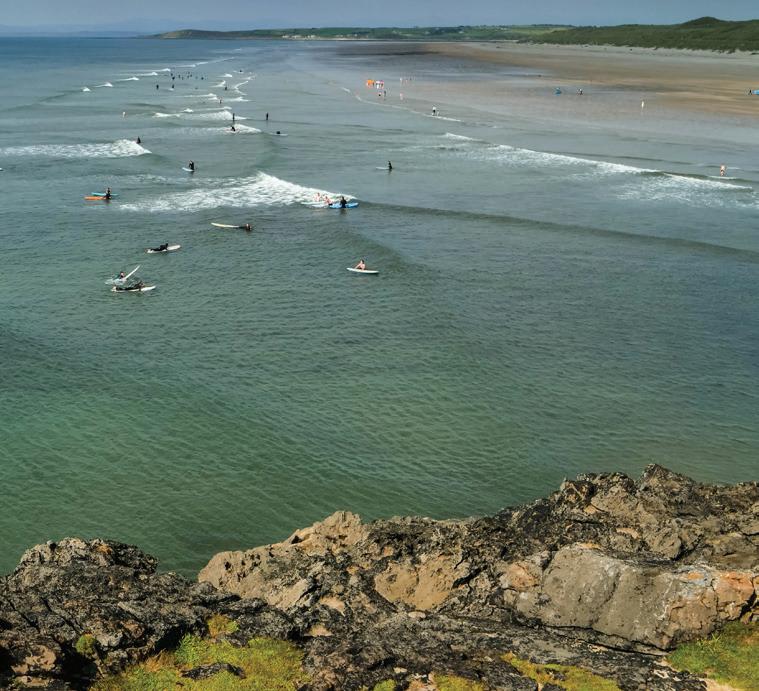
The Rougey Cliff Walk takes in the famous sea stack Fairy Bridges. It offers views over Tullan Strand and Main Beach – both well known for their surf conditions. The long, sandy beaches of Rossnowlagh and Murder Hole are peaceful places to walk.
Fanad Head Lighthouse – voted one of the most beautiful in the world – is a great place to watch the sunrise and sunset. There are also boat trips to the islands scattered off the coast, with Arranmore and Tory being two of the biggest.
VOLUNTEER CREW MEMBER, BUNDORAN RNLI
Bundoran is a real gem on the west coast. Not everyone at our boathouse is originally from here, which highlights the diversity of the town. I grew up inland on the River Shannon.
Co Donegal is renowned for its céad míle fáilte, which translates to 'a hundred thousand welcomes'. The phrase sums up the warmth and hospitality of Irish people. I love the surf music scene and the sense of community.
The surf gets really good here in Bundoran. There are some great surf schools and rentals, including Bundoran Surf Co and Murfs Surf School. The panoramic views over Tullan Strand on the Rougey Cliff Walk are a sight to behold. The West End Cliff Walk is also stunning with views of The Peak – a reef break popular with experienced surfers.
OWEN MURPHY
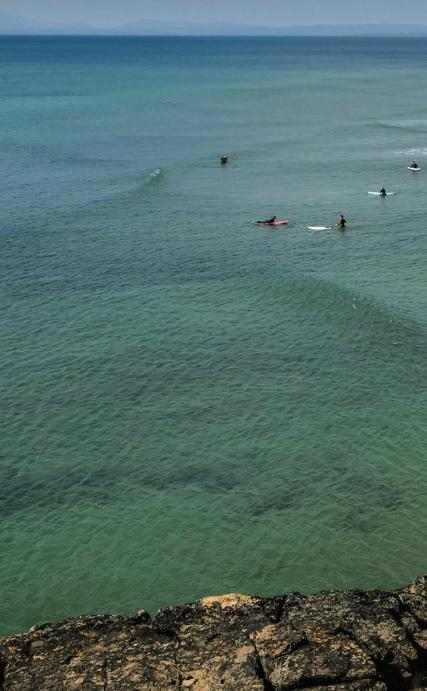
A view of Tullan Strand, one of Co Donegal’s renowned surf beaches, from the Rougey Cliff Walk
The famous Fairy Bridges sea stack on the Rougey Headland
Mullaghmore Harbour is a great, sheltered kayaking spot
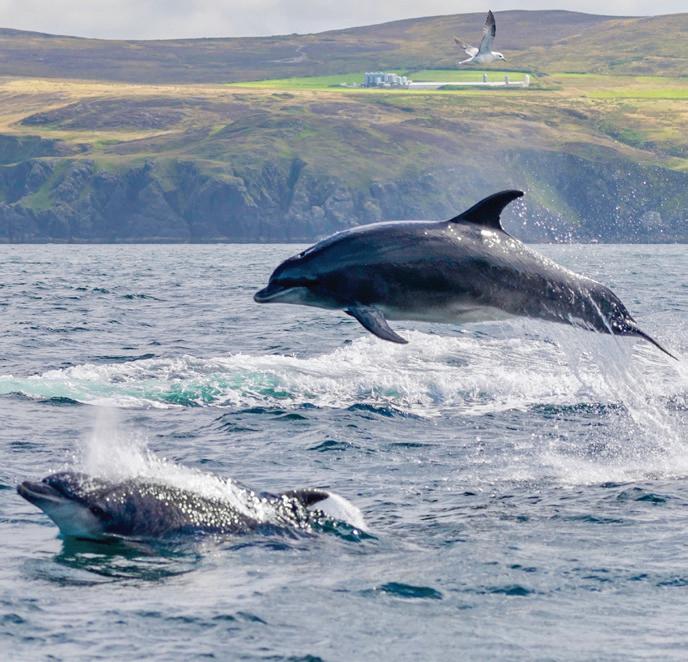
Dolphins at Malin Head
STAY SAFE
Co Donegal is exposed to the full brunt of the Atlantic Ocean.
Be aware of rips and swells and take note of lifeguard safe swim zones and beach safety signage.
· Always check the weather and sea forecasts and enjoy the water with someone who knows what they’re doing. There are some great surfing and kayaking schools. Check tide times so you don’t get cut off by the water. Some places, like the Secret Waterfall, can only safely be visited at low tide.
RNLI.org/safety
Sailing around Donegal Bay is pretty special. The wildlife and natural beauty are so impressive. Mullaghmore Harbour in Co Sligo, nestled behind Mullaghmore Headland, provides sheltered anchorage from the mouth of Donegal Bay.
STAY, EAT, DRINK
Maddens Bridge Bar, Restaurant and Guesthouse is a classic Irish pub with rooms and a great place to catch the sunset across Donegal Bay.
MICHAEL PATTON
VOLUNTEER LAUNCH
AUTHORITY, BUNDORAN
RNLI
Donegal Bay is ranked as one of the top places in the world for sea angling, most notably for Atlantic bluefin tuna. There are plenty of sea fishing trips and charters to choose from.
The Secret Waterfall at Largy is only accessible at low tide

I used to fish competitively and was the first person in Ireland to get two gold medals back-to-back during the Home Nations Boat Championships!
It’s also a hotspot for cetaceans such as dolphins, minke whales and even humpback whales – so a sea safari is a must.
Historically, Erne Estuary was known as the Donegal Corridor because it was the main route into Northern Ireland for allied bombers during the Second World War. Ballyshannon, at the mouth of the River Erne, is thought to be the oldest town in Ireland. My family own the Castle Adventure Open Farm there, which is set in the original farmyard of Wardtown Castle. So, if you’re passing, do pop in to say hi!
Let us know which area of coastline you’d like to see here in future issues by emailing offshore@rnli.org.uk
Other hotels in Bundoran where you can wake up to a stunning sea view include the Allingham Arms, the Great Northern and Fitzgerald’s. Bundoran Surf Co offers self-catering accommodation as well as bed and breakfast.
Bundoran’s cafés are popular with surfers looking for a warming drink. These include Foam and Buoy and Gulls.
The Chasin’ Bull is popular for live music and sports. McGarrigle’s Restaurant is great for family meals.
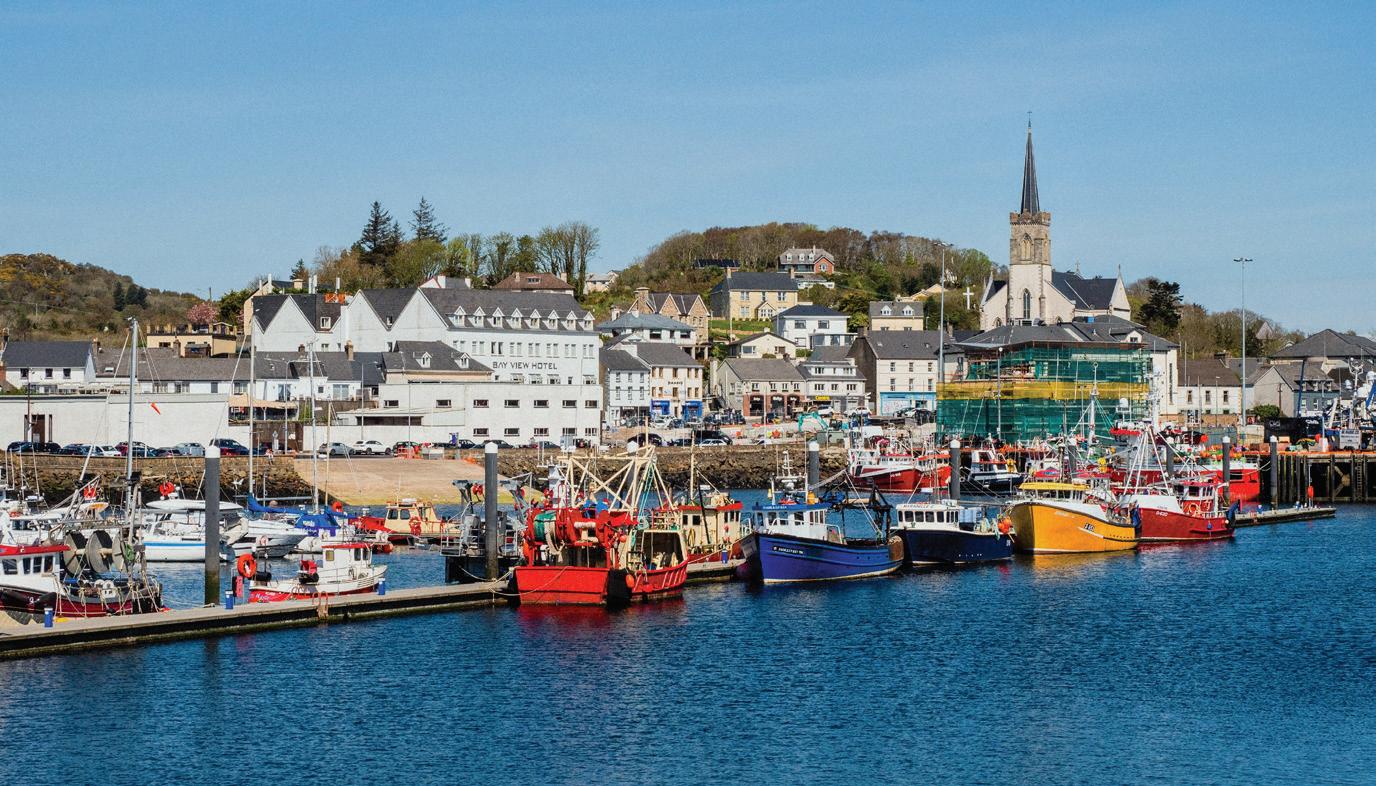
The Rusty Mackerel is the ideal refuelling spot after hiking up Slieve League Cliffs. And in Killybegs, you can enjoy fresh fish.
FIND OUT MORE
• discoverireland.ie/bundoran
• discoverireland.ie/donegal
• instagram.com/MurfsSurfSchool
• bundoransurfco.com
• rossnowlaghsurfschool.com
• sligokayaktours.com
• openfarm.ie
Words: Vicki Lovegrove-Fray
Photos: RNLI/Nigel Millard, Shutterstock.com
Killybegs is the largest fishing port in Ireland
Sunrise at Fanad Head Lighthouse – voted one of the most beautiful lighthouses in the world
A FREAK ACCIDENT
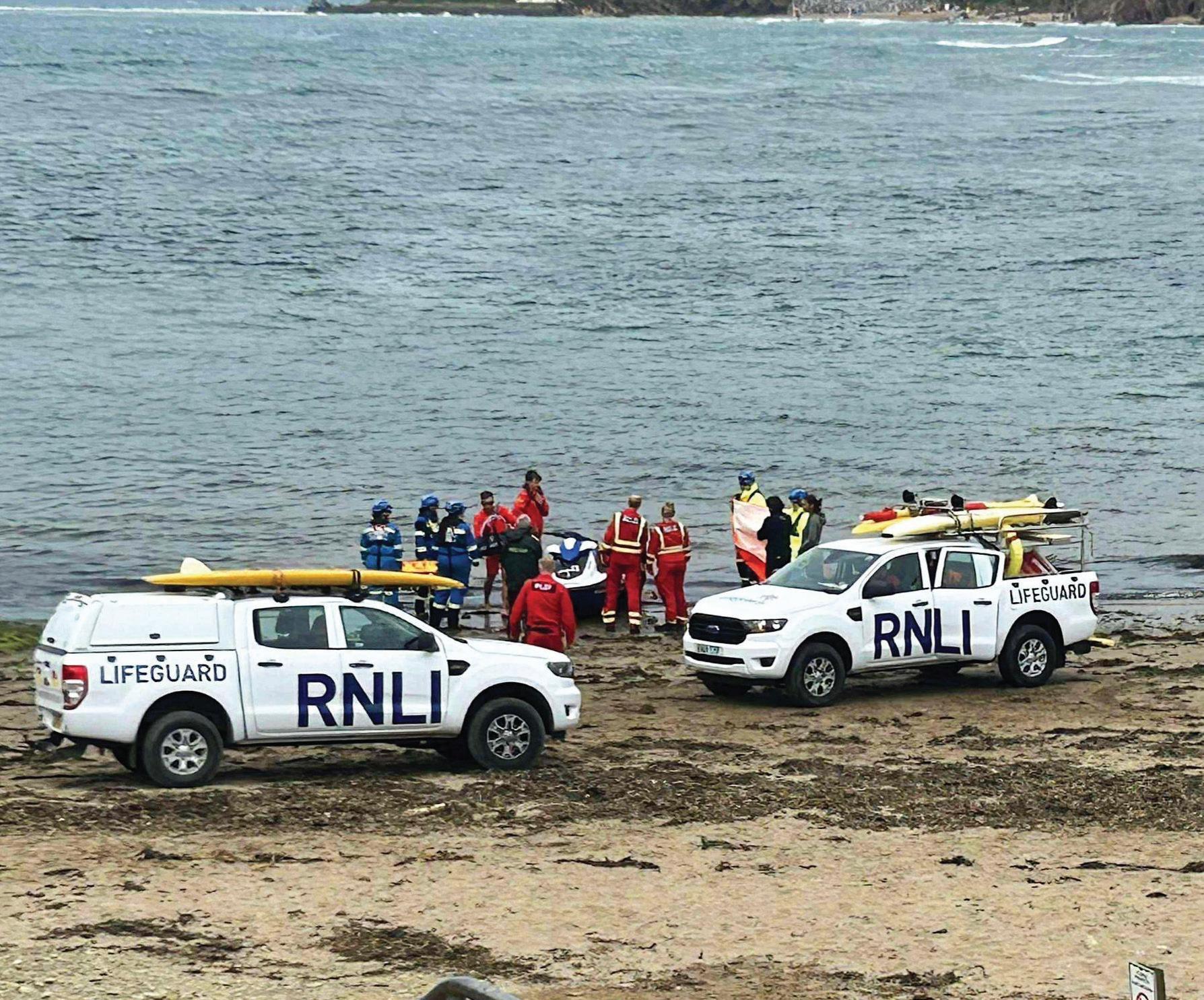
When the lifeguards at Bantham Beach in Devon spotted a wingfoiler waving for help, they launched into action
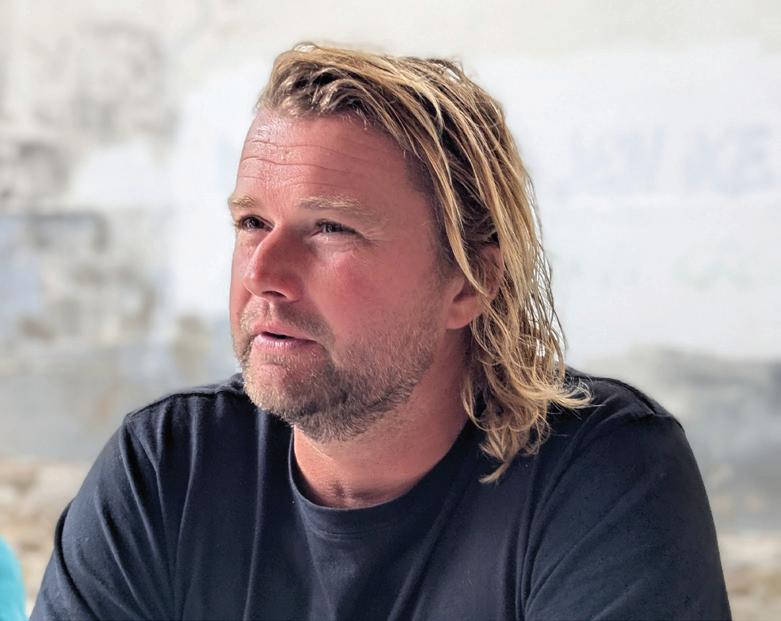
Rich Boughton, a professional product tester and technical editor for foiling and kitesurfing magazines, is a familiar face at Bantham Beach.
On a peaceful Sunday morning in early June, Rich made a trip to the beach to try out some new products – a board and a foil. 'The conditions were extremely innocuous that day,' he says. 'There was probably a foot or two of swell and about 15–20 knots of onshore wind.
'With wingfoiling, you’re essentially propelling yourself with a small inflatable sail and a hydrofoil. You catch waves and glide along.
'I pulled into a small wave, flagged my wing and then hit a patch of seaweed, which happens at that time of year. I was probably only moving about 12–15mph, so not particularly fast, but the way I fell was a freak accident.
'I was in exceptional pain – I thought I was going to pass out. I realised I was in real trouble' Rich Boughton | Wingfoiler
'I went down as the board was lifted by the wave and it smashed me across the base of my spine, on my left-hand side. There’s not much you can do to prevent that. Even if I had been wearing an impact vest, it wouldn’t have covered the lower area of my back.
'I thought I was a bit winded, so I sat in the water for a minute before trying to get back on my board. Then I realised that my left leg wasn’t working at all.
'I tried to get back on my board a couple more times, but I was in exceptional pain – I thought I was going to pass out. I realised I was in real trouble.'
1x rescue watercraft
Force 5 winds
0.6–1m waves
Bantham Beach, Devon
Wingfoiler Rich was on a lifeguarded beach the day that things went wrong
RICH BOUGHTON
ADVICE
ADVICE FROM A LIFEGUARD
'Lifeguards are always watching and making sure everyone is safe – but Rich’s rescue is a good reminder that even the most experienced people can still find themselves needing help.
'To everyone entering the water: make sure you go to a patrolled beach and chat to the lifeguards on duty. We love talking to everyone and sharing vital water safety knowledge – one day, it could save you or a loved one in the water.'
' The lifeguards were brilliant and exceptionally slick'
Rich Boughton | Wingfoiler
Rich eventually managed to pull himself back onto his board. He knew he needed help, fast. 'I know most of the RNLI lifeguards at the beach because I’m there so often,' says Rich. 'I started waving. I’ve said to them repeatedly that if I fall off, I’m all good – but if I’m waving, something is up.'
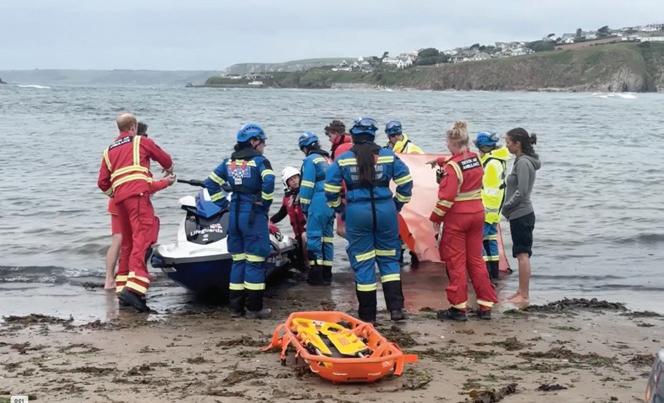
Lifeguard Ben Goffin and Senior Lifeguard Noah Hindley saw Rich waving immediately. Within moments, they were at the water’s edge, launching their rescue watercraft (RWC). They raced toward him.
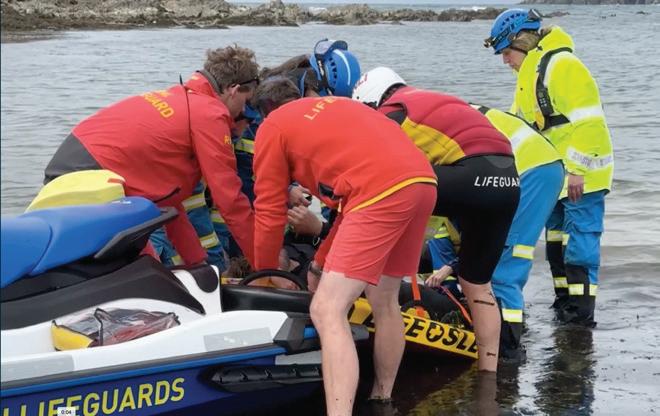
Once there, Noah slipped into the water to help Rich off the board and onto the RWC’s sled.
'I was very glad to see them – they were super quick,' remembers Rich. Ben and Noah carefully brought Rich back to shore, with Ben expertly negotiating the surf on the RWC to make the journey as smooth as possible for Rich.
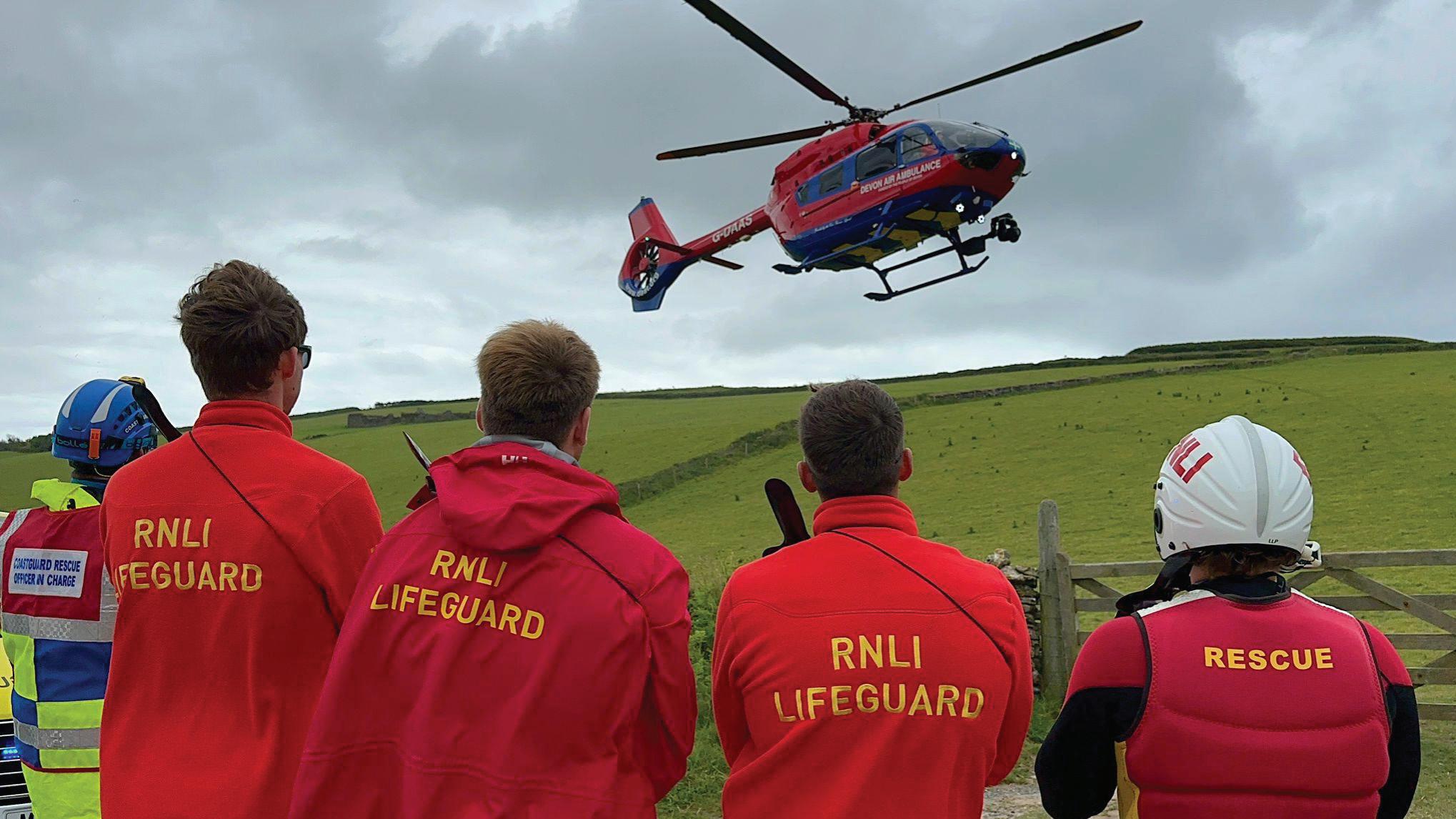
Meanwhile, at nearby Sedgewell Cove, Senior Lifeguard Jess Rendell was calling the Coastguard to request further assets for her colleagues – the ambulance service and an air ambulance were on their way.
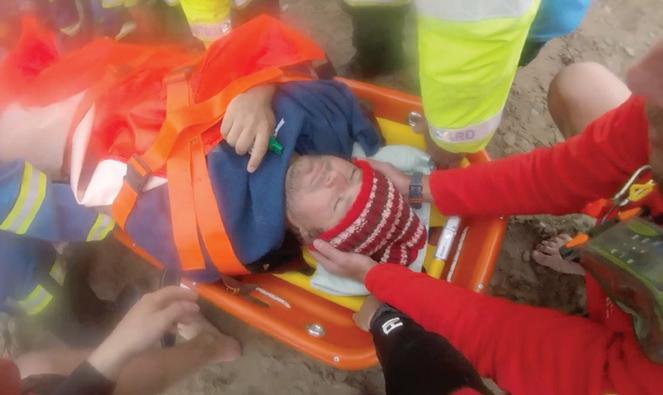
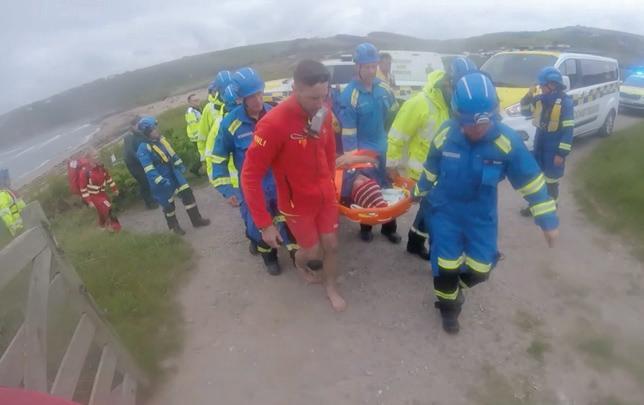
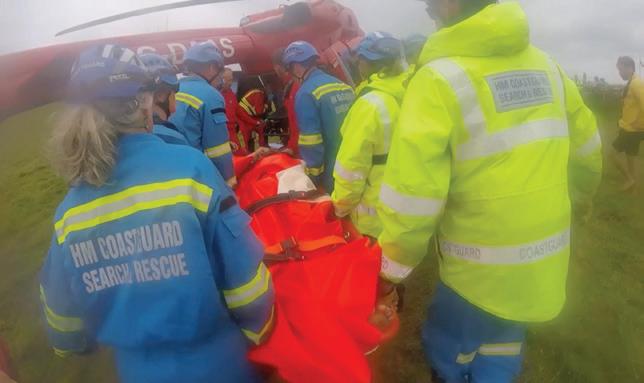
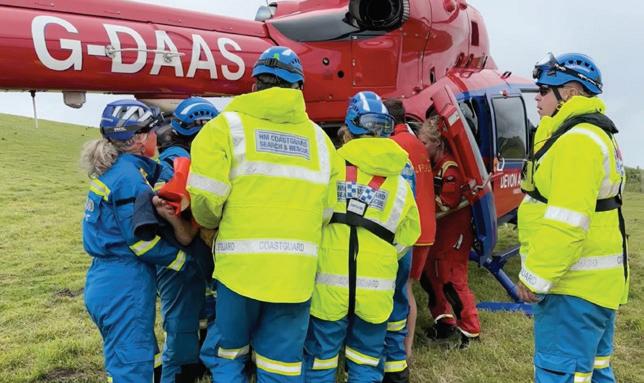
Once Ben, Noah and Rich arrived safely back to shore, they began casualty care: manual stabilisation to minimise movement, pain relief and keeping Rich warm. The whole rescue team – which included lifeguards, paramedics,
SHARE YOUR STORY
the Coastguard and a community first responder – carefully stretchered Rich off the beach and into the waiting helicopter, which took him to hospital.
'From what the medical professional told me, I’d basically taken a severe impact to the QL [quadratus lumborum] muscle that covers and helps protect the lower part of the spine. This affected the nerves on my left-hand side,' says Rich. 'It was a massive internal impact.'
Did Rich’s accident put him off? 'It took about 4 weeks to recover, but I’m back on the water,' he says. 'The lifeguards were brilliant and exceptionally slick. I’d like to thank them enormously for fishing me out and doing it so quickly. I’m a regular water user and the RNLI has always been a reassuring feature of the beach. The RNLI is very important. Now it’s even more pertinent that they’re there.' ■
Stay safe by visiting a lifeguarded beach. Find your nearest at RNLI.org/LifeguardedBeaches
Offshore is a space for sharing our experiences and increasing our knowledge. Do you have a story about a time things went wrong on the water, or news about ways you’re advancing water safety or watersports participation? If so, please email offshore@rnli.org.uk
Words: Nikki McMullen
Photos: Rich Boughton, RNLI/(Bantham Lifeguards, Nigel Millard)
Ben Goffin | RNLI Lifeguard, Bantham Beach
ACCESS AND USE A COMMUNITY DEFIBRILLATOR HOW TO:
Do you know where your nearest community defibrillator is? Would you know how to use it in an emergency? Learn more with RNLI Clinical Trainer Leigh Anderson Sheard
All public access defibrillators are automated external defibrillators (AEDs). They have two jobs. First, they analyse the casualty’s heart rhythm. Then, if the heart is in a shockable rhythm, they deliver an electric shock. This will hopefully stop the heart and allow it to reset into a normal pattern.
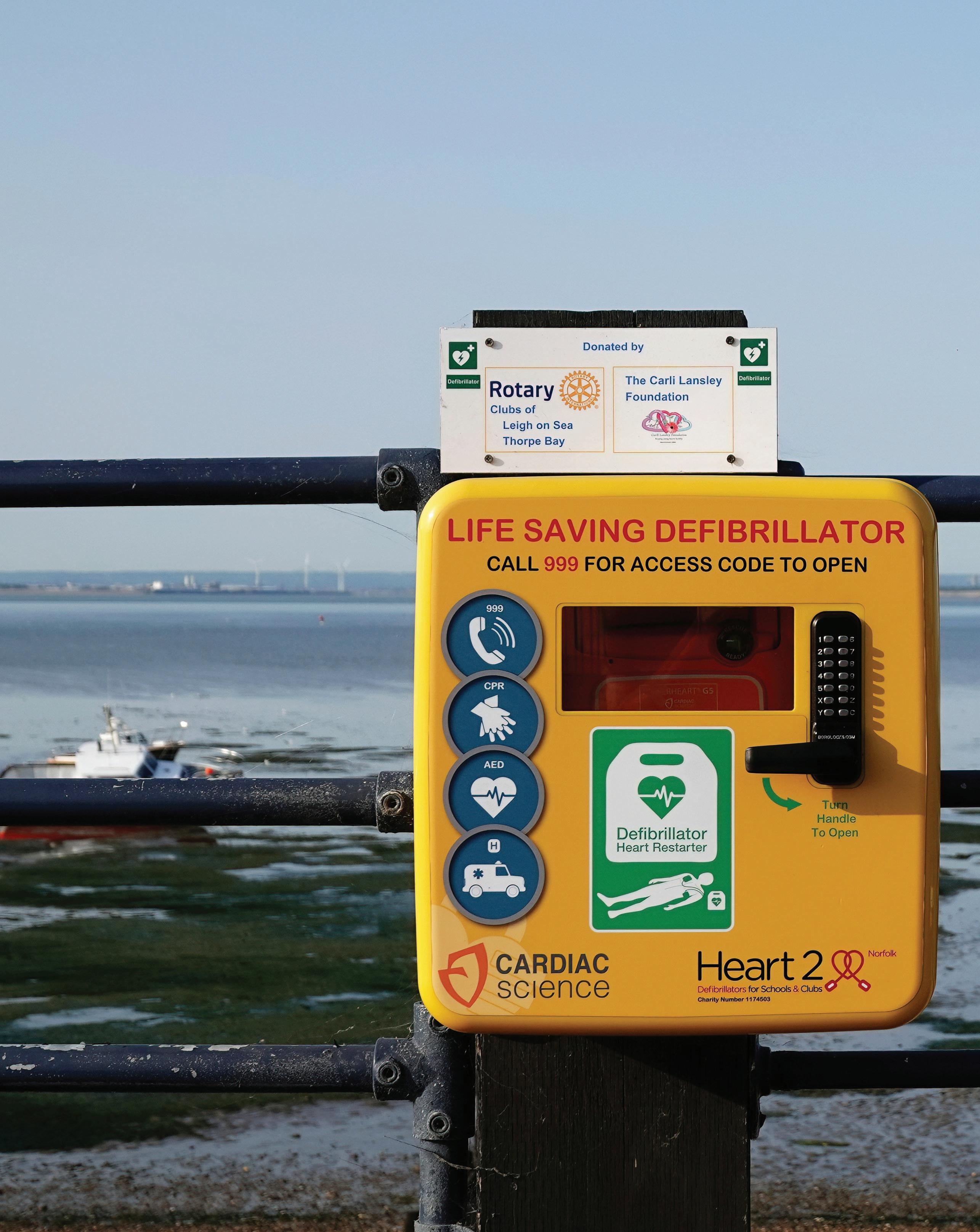
Defibrillators save lives, and you never know when you might need one. Familiarise yourself with where the community defibrillators are in your local area. They’re usually in public places like supermarkets, train stations, or pubs. Many marinas have them. And every RNLI lifeguarded beach has one, so keep this in mind when you’re at the coast.
It’s important to equip yourself with some basic knowledge of how to access and use an AED. Opposite, you’ll find a step-by-step guide.
Remember: in an emergency, always call 999 or 112. The emergency call handler will be able to guide you through these steps while you wait for the ambulance and paramedics to arrive and take over.


1 2 3 4 5

FIND OUT MORE
LEIGH SHARES FIVE STEPS TO REMEMBER IF YOU EVER NEED TO ACCESS AND USE A COMMUNITY DEFIBRILLATOR
If someone is in cardiac arrest, call for help. Start CPR immediately. If anyone there has training, they should do the chest compressions, while someone else gets a defibrillator.
FIND AND ACCESS
If you don’t already know where your nearest community defibrillator is, the emergency call handler will tell you. They’re usually in a protective yellow or clear case. Many are locked – the call handler will give you the keypad code.
PREPARE THE CASUALTY
Take the defibrillator to the casualty. Flip up the lid, and an automated voice will tell you to 'prepare the chest'. Remove or cut clothing and jewellery from the casualty’s chest. Dry their chest if it is wet. Many defibrillators contain scissors and a towel.
PUT THE PADS ON
Follow the instructions on the defibrillator – it will show you where to place the pads. Stand clear while it analyses the rhythm of their heart. If it finds a shockable rhythm, it’ll build a charge. If not, continue CPR – it’ll reanalyse every 2 minutes.
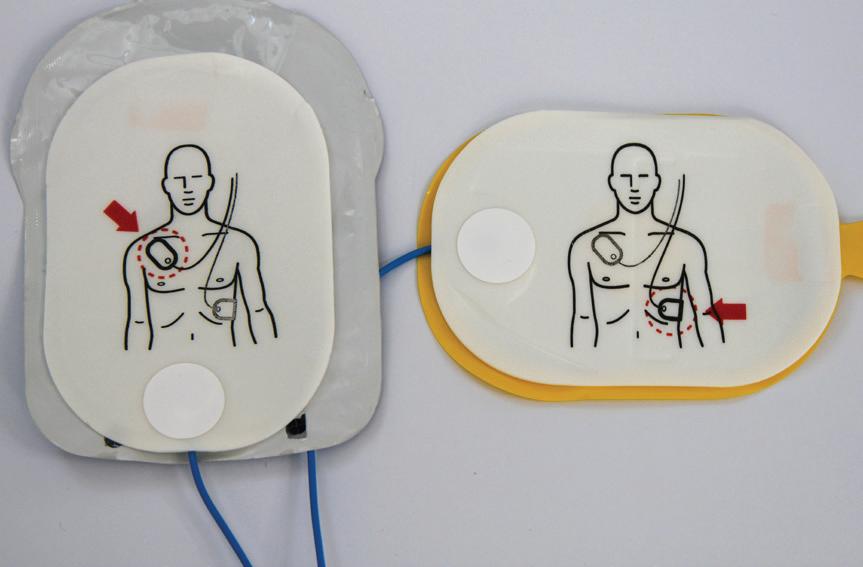
instructions
where
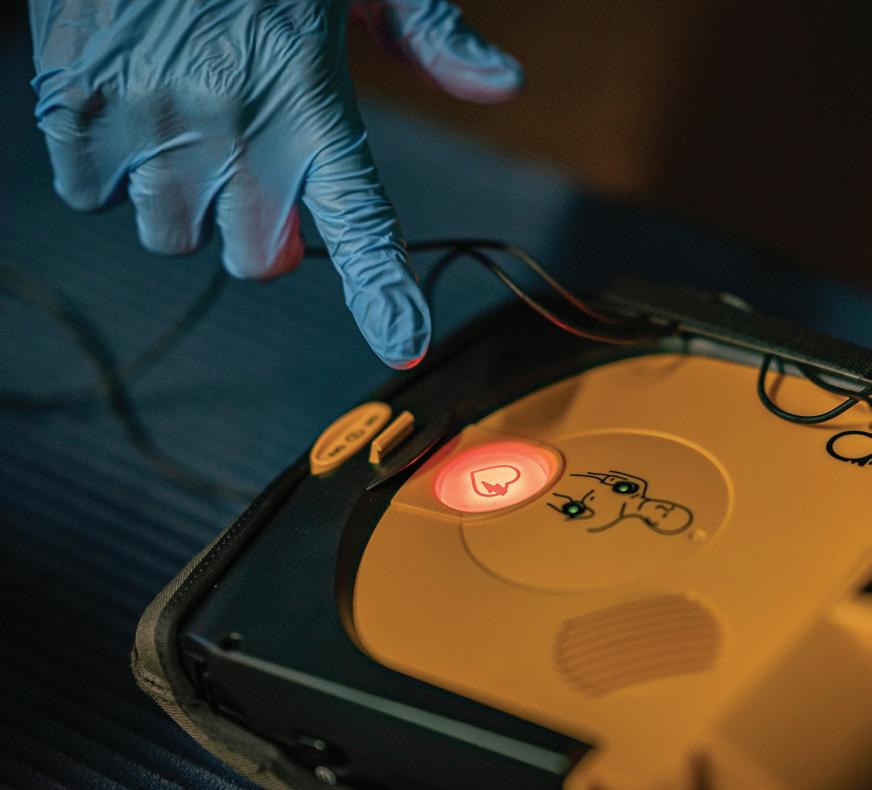
If the defibrillator builds a charge, make sure everyone stands clear of the casualty. Then, press the button (usually red and flashing) to deliver the shock. Continue with CPR, stopping only if the casualty shows obvious signs of life. Keep the pads and defibrillator on until the ambulance arrives.
Familiarise yourself with where your local defibrillators are located at defibfinder.uk ■
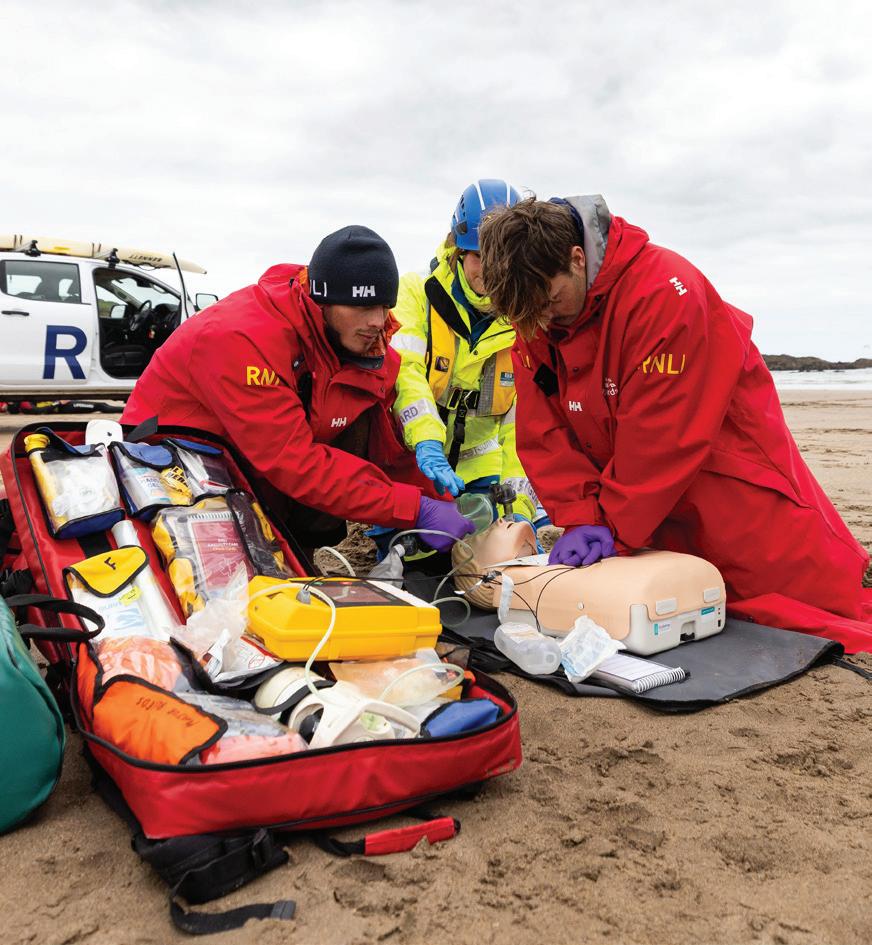
The defibrillator will give clear
on
to place the pads
Stand clear, then press the button to deliver the shock
WHAT WOULD YOU DO NEXT?
DO YOU SCENARIO
Your friend has joined you on a sailing trip. Conditions are choppy, and they’re feeling seasick. They’ve been unwell at sea in the past and now they’re starting to panic. There’s no seasickness medication onboard.
What do you do next?
EXPERT ANSWER

GORDON DICKENS
RETIRED GP, SAILING INSTRUCTOR AND RNLI WATER SAFETY ADVISER
There are three planes of movement: pitching, yawing and rolling. Your body detects these movements in two ways. First, through your vision. Second, through the three semicircular canals in your inner ears. On a boat, your vision can conflict with what your semicircular canals are sensing. This mismatch confuses your body, leading to nausea and vomiting. If someone is feeling seasick, catch it early. Tell them to:
• stand up, feet shoulder-width apart
• take the wheel and focus on the horizon
• bend their knees and ankles like they’re riding a skateboard (C)
• keep their head still and level
They should only go below (A) if necessary – their eyes will see a stationary cabin, while their semicircular canals continue to perceive the movement of the boat. This confusion will make the nausea worse. Ginger biscuits (B) can help a little, but what’s important is not having an empty stomach – eat and drink little and often.
Anyone can get seasick and severe seasickness can be frightening. Never be embarrassed to put out a pan pan call to ask for assistance.
A Suggest that they sit down in the comfortable cabin?
B Give them some ginger biscuits?
C Tell them to ride the boat like a skateboard?
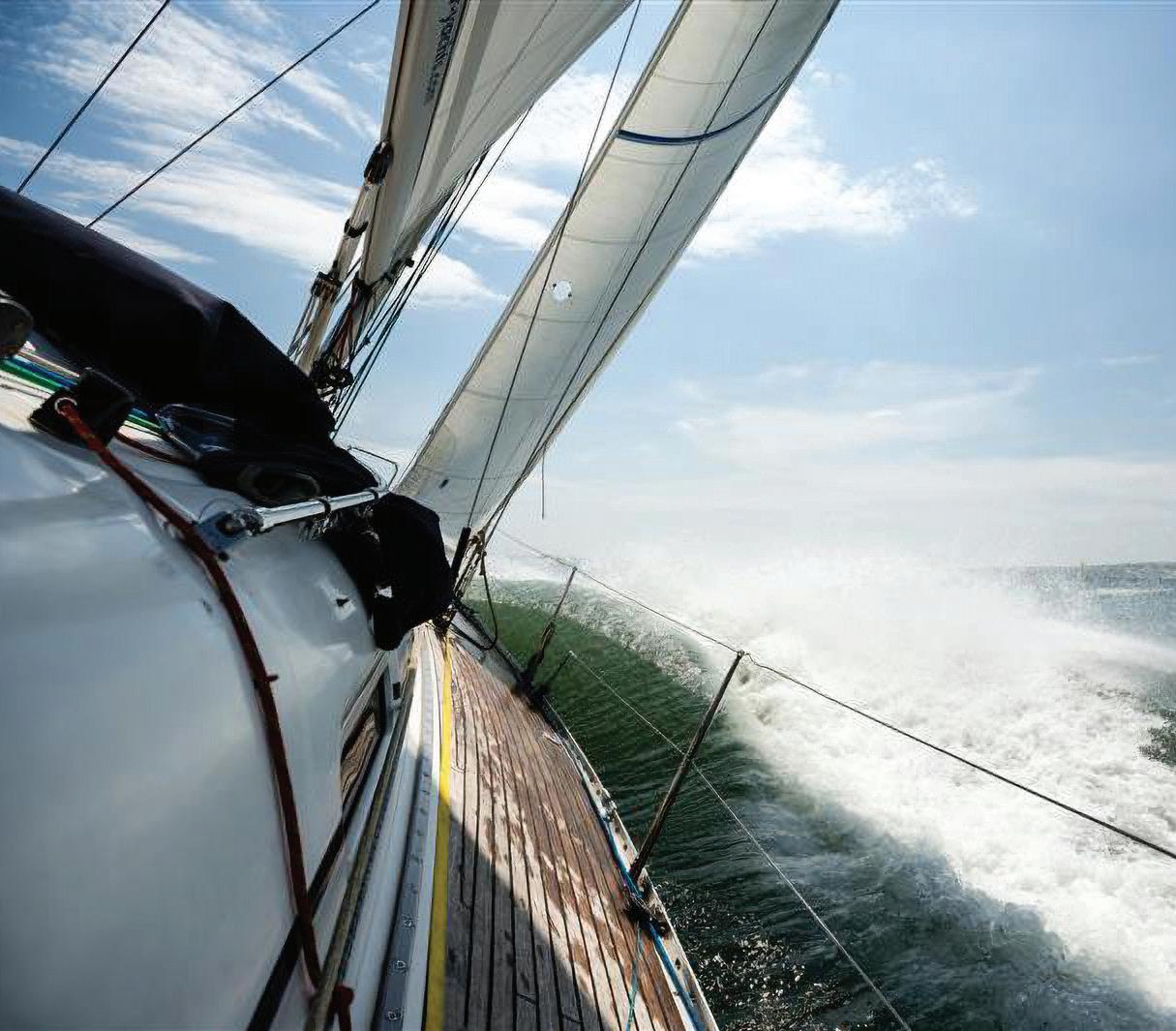
OVERCOMING SEASICKNESS
can be frightening – don’t be afraid to call for help
In Gordon’s experience, most people can overcome seasickness through acclimatisation: 'One of the main factors that makes seasickness more likely is the anticipation and expectation of feeling sick. It becomes a self-fulfilling prophecy. You start to feel anxious in advance, which makes you even more nauseous. But we can unlearn this anxiety. Believe me, I know what it’s like –
I used to get travel sick within minutes on long car journeys as a kid. 'If you or someone you know struggles with seasickness, share the tips opposite and try them next time you go afloat. Practise on frequent short trips, and you’ll start to replace previous negative experiences with positive ones. You’ll feel a sense of confidence begin to creep in. The more you do it, the better it will get.'
TIP: Stay hydrated and avoid alcohol – alcohol has a significant impact on the semicircular canals. ■
Photos: Gordon Dickens, RNLI/Nathan Williams
Seasickness