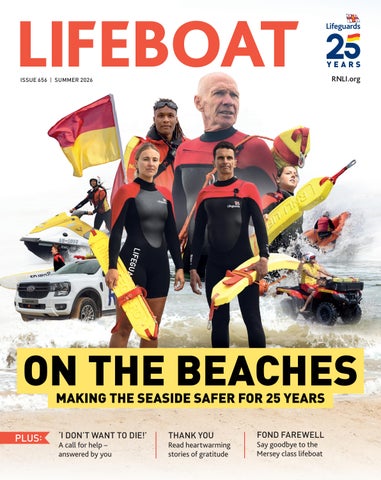
ON THE BEACHES
SUMMER 2026 ISSUE 656
© RNLI 2026. All rights reserved. Reproduction is permitted with the prior consent of the RNLI. Opinions expressed by authors are not necessarily those of the publishers. Care is taken to ensure that editorial information is correct at the time of going to press but is subject to change.
Chair: Janet Legrand OBE KC (Hon)
Chief Executive: Peter Sparkes
Lifeboat Editor: Bethany Hope
Lifeboat Design: David Constant, Lee Hawkins
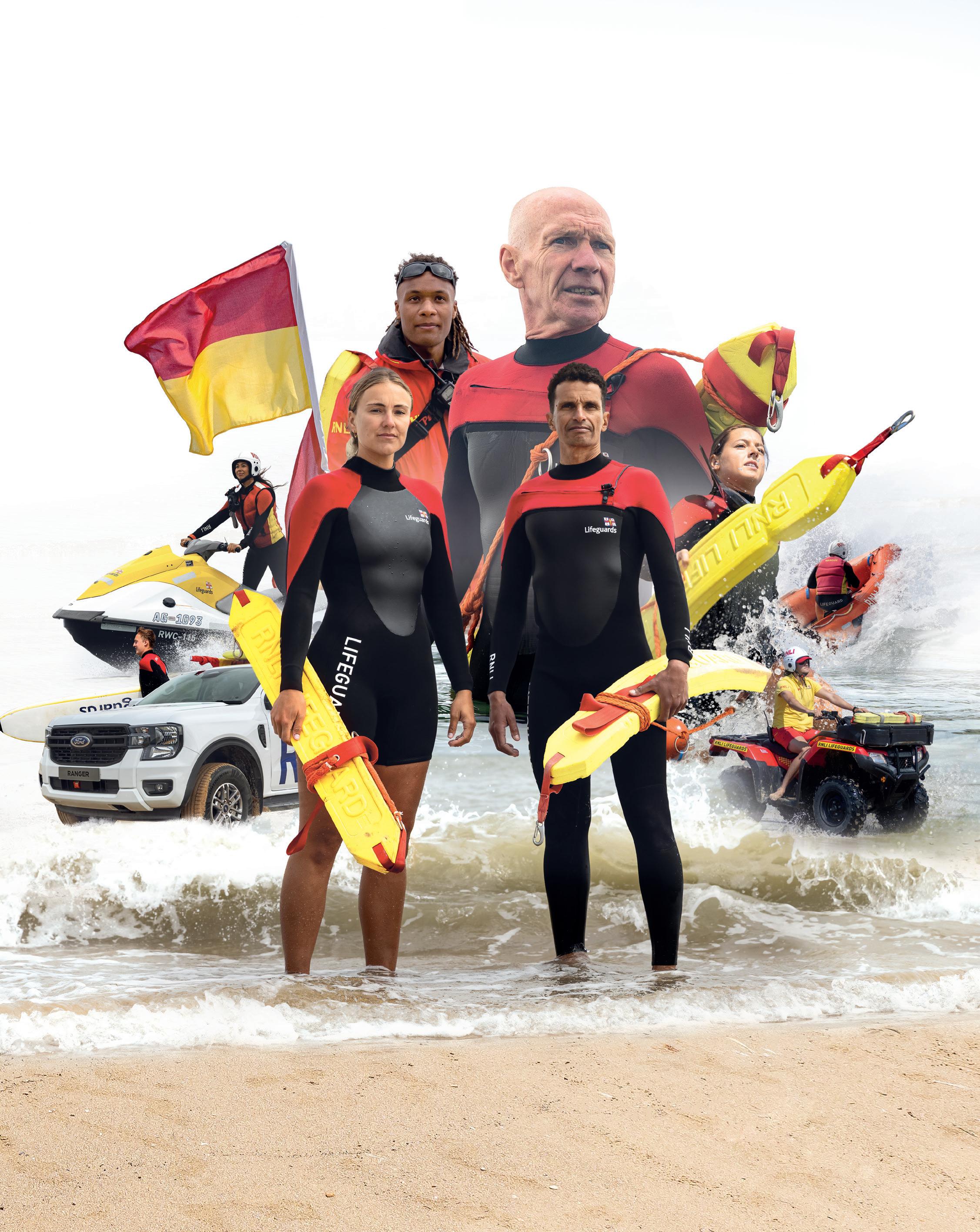
Front cover: Photos of RNLI lifeguards from across the UK and Channel Islands, including (clockwise from top left) Harry Yarbo, John Irwin, Niamh McCabe, Alex Gkosime and Elenie Shotton. Photos: Andy Gallacher, RNLI/(Ashton Milton, Nathan Williams)
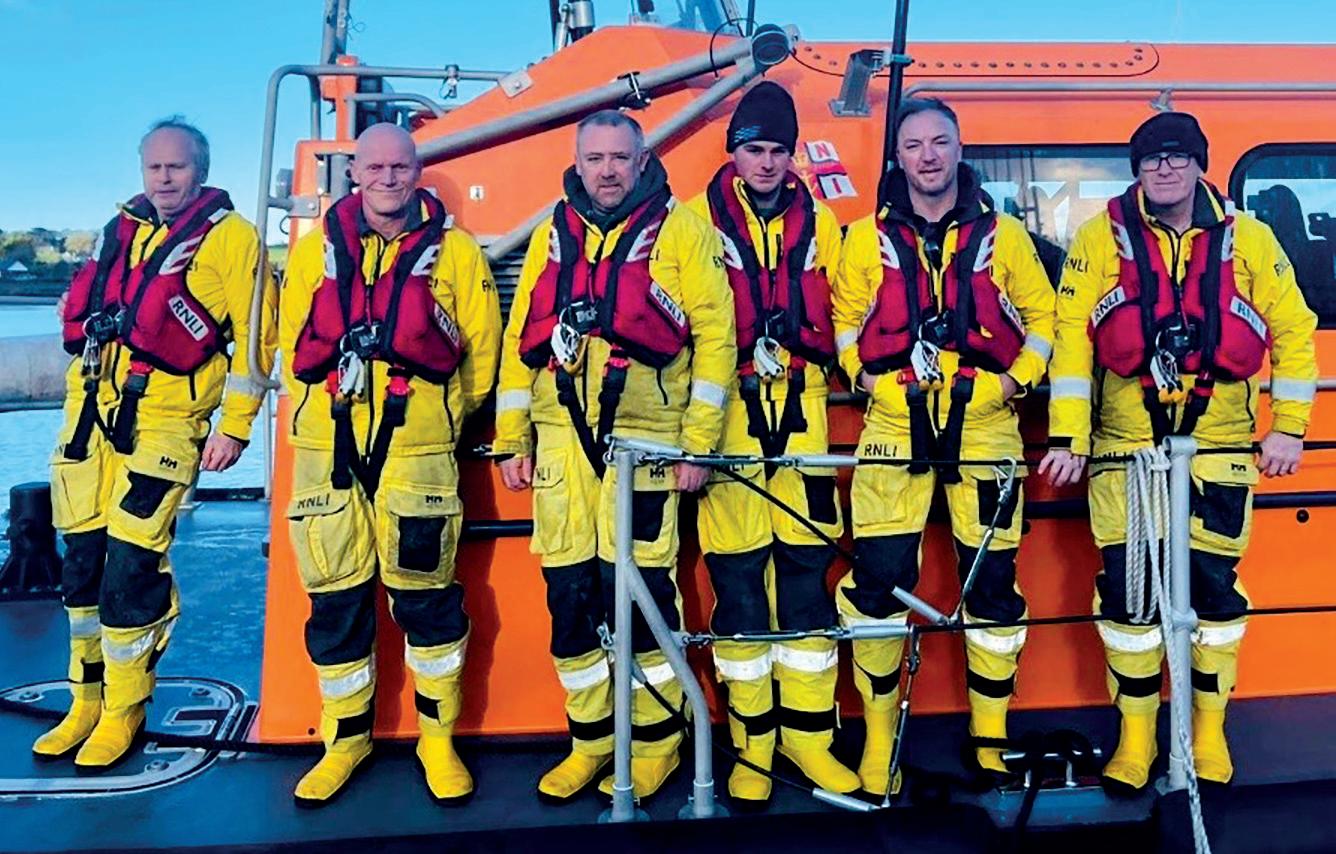
Photo (below): Group shot of RNLI volunteer crew, lifeguards and shore crew. Photo: RNLI/Nathan Williams
Blind and partially sighted people can choose to receive a free CD of the magazine
Contact us
Would you prefer to receive a digital copy of Lifeboat magazine by email or not receive it at all? Are you moving house? Do you have another question? Then please email supporterexperience@rnli.org.uk with your request, including your supporter number. You can also call us on 0300 300 9990 (from the UK), 01 511 9836 (from Ireland) or +44 1202 663234 (from any other country), or write to us at RNLI Support Centre, West Quay Road, Poole, Dorset, BH15 1HZ.
The Royal National Lifeboat Institution is the charity that saves lives at sea. We do so by providing a rescue service, safety education, and supervision on beaches. We also influence other organisations, policy-makers and regulators. Our crews and lifeguards have saved over 146,700 lives since the RNLI was formed in 1824. Our Water Safety Team helps keep people safe at the coast and our International Team works to reduce drowning around the world where it’s a major risk. We are independent from the government and rely on voluntary contributions and gifts in Wills for income. The Royal National Lifeboat Institution, a charity registered in England and Wales (209603), Scotland (SC037736), the Republic of Ireland (CHY 2678 and 20003326), the Bailiwick of Jersey (14), the Isle of Man (1308 and 006329F), the Bailiwick of Guernsey and Alderney

Bethany Hope, Editor Email: lifeboat@rnli.org.uk
Welcome
Celebrate our red-and-yellow lifesavers
What’s your first memory of the RNLI? Mine is a 2p mechanical lifeboat collection box. For many people reaching adulthood now, their first memory of the RNLI will be seeing lifeguards in red and yellow at the beach. In this issue of Lifeboat, we’re bringing out the bunting for our lifeguards, who have been making our beaches safer for 25 years. Since the first beach patrols in 2001, RNLI lifeguards have saved more than 2,000 lives and kept people safe more than 48 million times. We feature two beach rescue stories and you can hear from people who have special reasons to be grateful to our lifeguards (page 18).
Of course, we bring you a range of lifeboat rescues and features too. Find out more about changes to one of our amazing inshore lifeboats (page 24) and join us in saying farewell to the faithful Mersey class lifeboat (page 37). Whether you’re visiting the beach this summer, taking a coastal walk or heading out onto the water, RNLI lifesavers – lifeguards, lifeboat crew and water safety volunteers – are there for you. Thank you for being there for us.
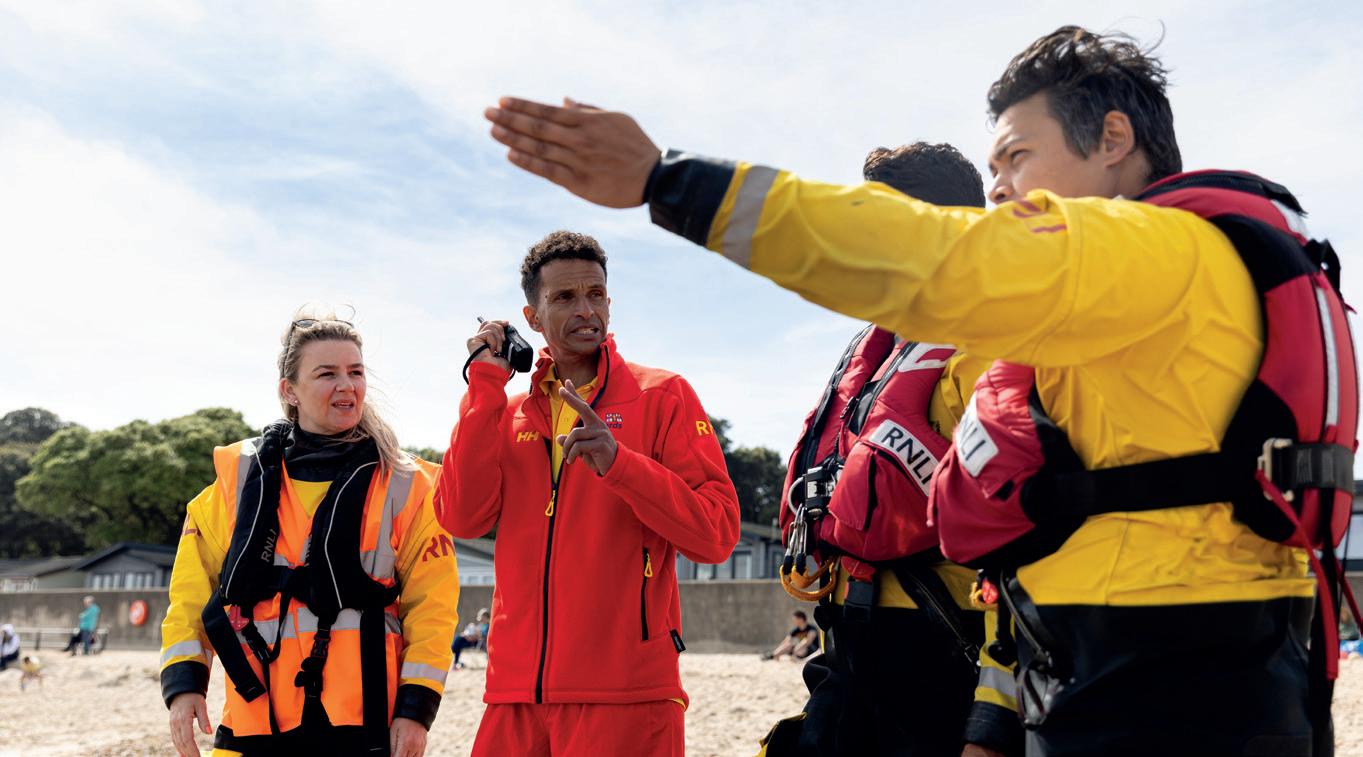
Celebrate with us
Our lifeguards have been making our beaches safer since 2001. So we’re inviting you to join in the 25th anniversary celebrations!
We bring you a brand-new podcast series, We Are Lifeguards –everything you need to know about being an RNLI lifeguard. Head to RNLI.org/WeAreLifeguards or subscribe to the RNLI wherever you get your podcasts.
Or you can gear up for Lifeguard Appreciation Day on 31 July 2026. Choose to wear something red or yellow, take a photo and post it online with the hashtag #LoveYourLifeguard. Please take a moment to thank lifeguards – whether they’re at the RNLI, pool, beach or local lifesaving club.
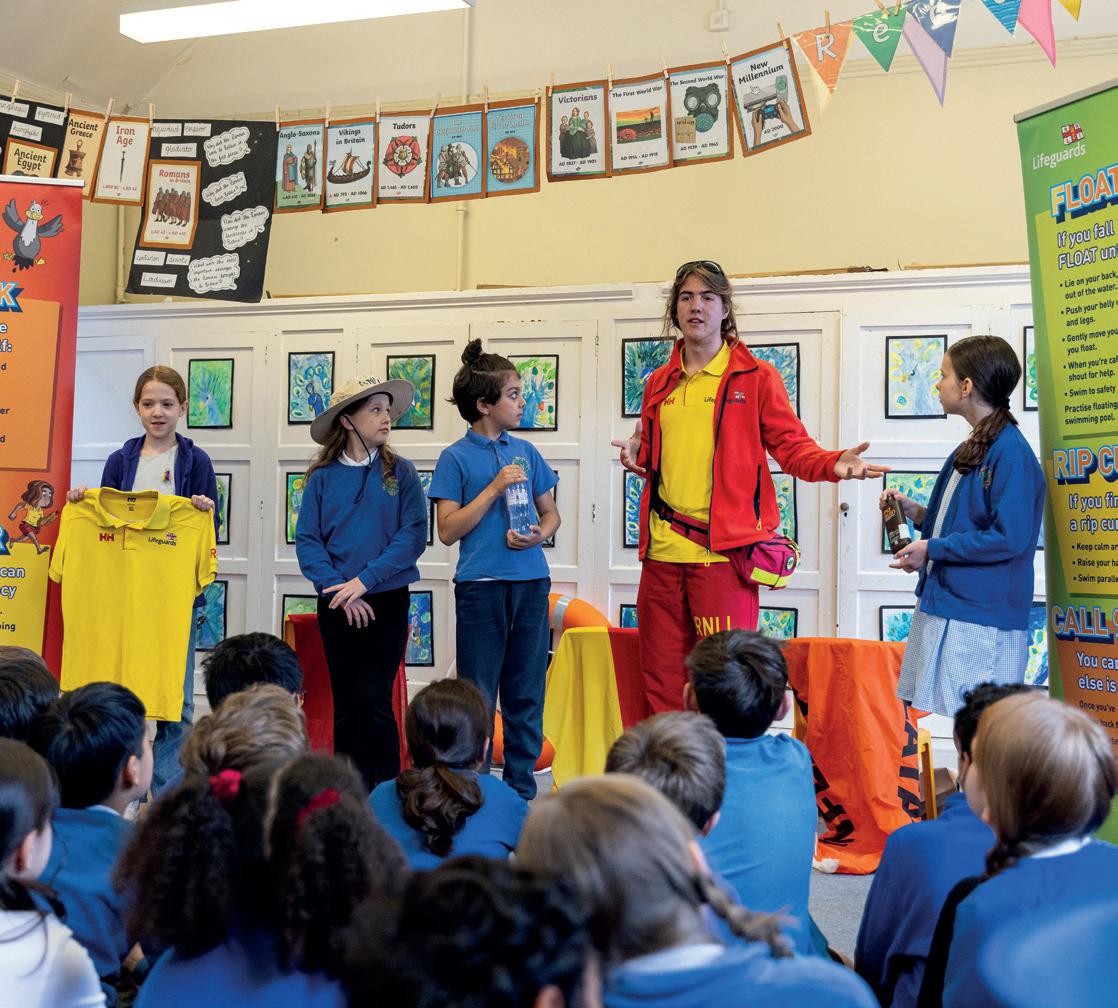
You can also browse our exclusive range of lifeguard products at the RNLI shop (see page 33). And if you have children or grandchildren of school age, they can look out for RNLI lifeguards in the classroom this term. We’re offering schools new, free Water Smart sessions, where lifeguards share their water safety knowledge with children. Find out more at RNLI.org/smart .
Here’s proof that your donations make us safer all round –through lifeboats, lifeguards and water safety.
LIVES SAVED 389 BY RNLI CREWS AND LIFEGUARDS
44,503 BY RNLI CREWS AND LIFEGUARDS
PEOPLE AIDED
9,000+
LIFEBOAT LAUNCHES
PEOPLE REACHED
570K WITH SAFETY MESSAGES
PEOPLE SAY THEY WOULD FLOAT TO LIVE 1 IN 3
On the beaches and in the classroom –helping to keep our children safe
In brief
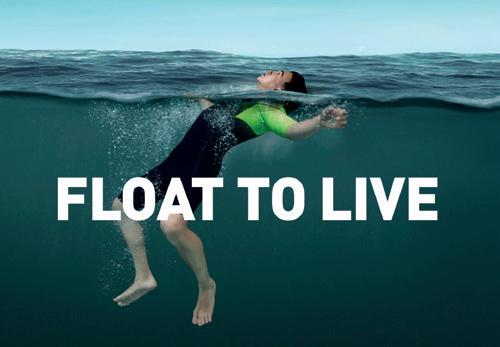
Drowning prevention
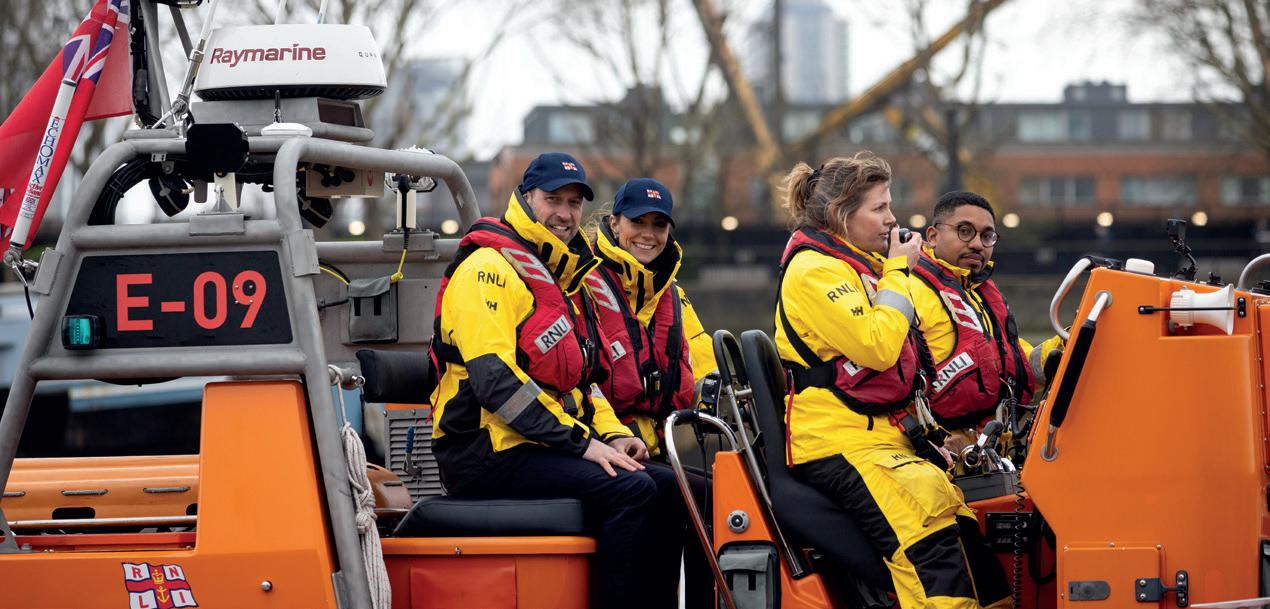
In March, Tower RNLI welcomed Their Royal Highnesses The Prince and Princess of Wales for a special visit, giving them a firsthand look at the lifesaving work of the RNLI’s busiest crew. Arriving at the floating lifeboat station on an E class, the Royal couple met crew members, fundraisers, and lifeguards celebrating the 25th year of RNLI lifeguarding.
Thank you
Royal visit Navigation upgrade
A huge thank you to everyone who’s contributed to our Spring Appeal to fund essential work to our moorings and pontoons across the UK and Ireland this year. So far, you’ve raised more than £500,000/€600,000 – giving our lifesavers confidence that they have safe harbour in even the strongest of storms. Visit RNLI.org/moorings to read more about what’s below the surface of this important work. We’re taking a big step forward for our crews: a fleet-wide move to a new Raymarine navigation system, shaped around what our lifeboat crews tell us they need. The new setup gives them clearer charts, faster access to vital information and an intuitive interface that makes every task onboard feel simpler and more joined up. It’ll debut on the Shannon class and the new Atlantic 85 lifeboats, with more to follow.
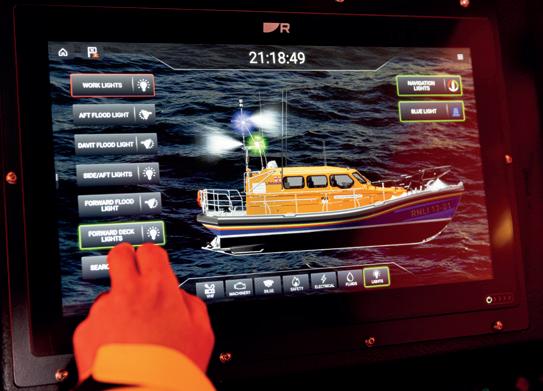
You can see the new technology up close on the Shannon and Atlantic at the Southampton International Boat Show this September. Get 20% off the boat show ticket prices using the code RNLISIBS26. You can also read more about the Atlantic refits on page 24.
Join us in marking World Drowning Prevention Day on Saturday 25 July 2026. Help save lives by spreading the Float to Live message. Head to RNLI.org/float to share tips with your family and friends. See page 13.
Your magazine, your choice
Did you know your Lifeboat magazine is available digitally?
For a sample copy, head to RNLI.org/LB. To switch to receiving it by email, contact the Supporter Experience Team (page 2).
Where crew train
Stay at our one-of-a-kind waterfront hotel at RNLI College in Poole, Dorset. You’ll experience an unforgettable immersion in the world of RNLI training. Rated the number one hotel in Poole on Tripadvisor. Book today at RNLI.org/college.
Fair winds
Farewell and fair winds to the last of our Mersey class lifeboats, Newcastle RNLI’s Leonard Kent
Read our special send off on page 37.
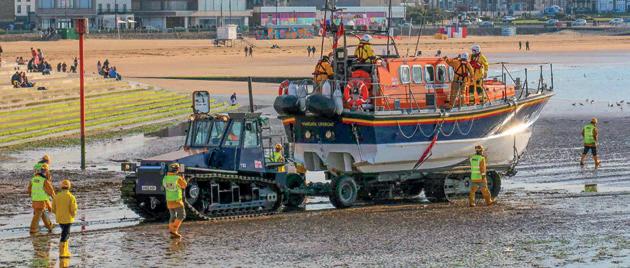
TRH The Prince and Princess of Wales onboard the E class lifeboat Brawn Challenge
The new Raymarine navigation system, with multi-function displays, on the Shannon
Photos: RNLI/(Nathan Williams)
Community
Welcome to a selection of news from your RNLI community. For all the latest from where you are, head to RNLI.org/news
AFRICA Freedom Swim
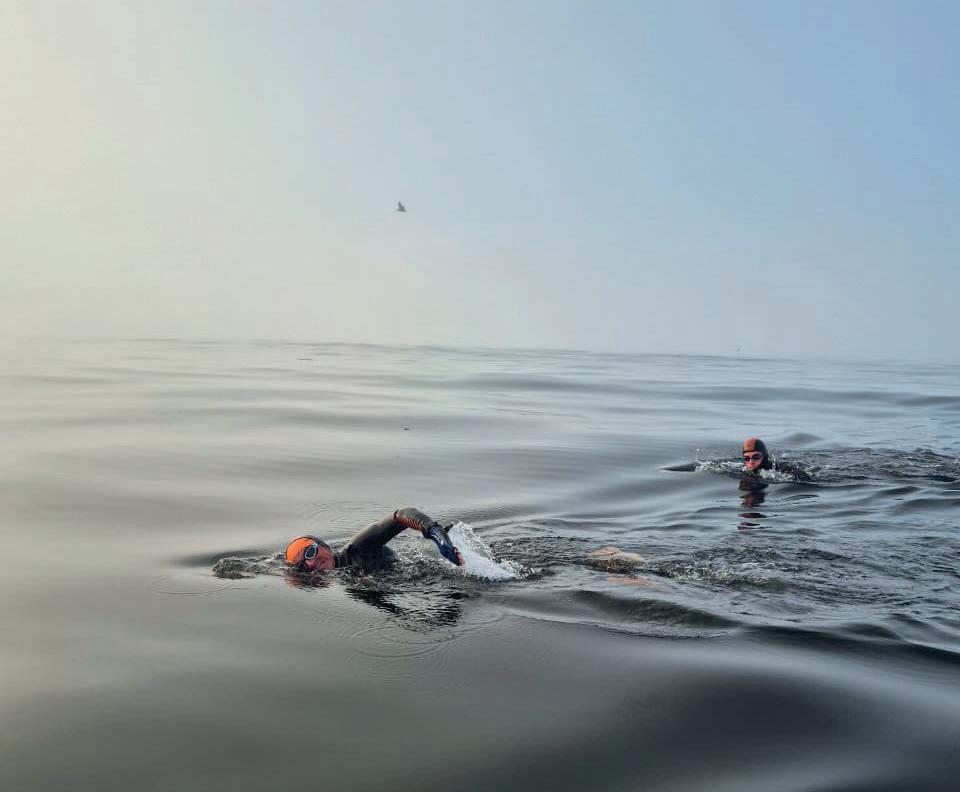
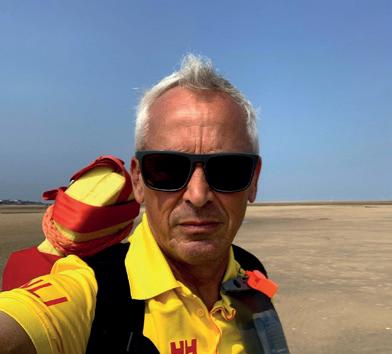
Wirral volunteer RNLI Lifeguard Richard Webster, has completed the Cadiz Freedom Swim – a demanding 7.5km open-water race from Robben Island to Big Bay in Cape Town. He trained for the event at a lifeguarded beach in Cape Town and recommends fellow sea swimmers ‘wear the correct equipment and never go swimming alone. Tell someone what your plans are and when you expect to be finished’.
Enduring bitterly cold Atlantic temperatures, choppy swell and poor visibility, Richard completed the crossing in 3 hours and 7 minutes. He says: ‘This challenge required every bit of resilience I’d developed over my 10 years of volunteering.’
RNLI Lifeguard Supervisor Lucy Tilston says: ‘The whole team send him huge congratulations for completing this endurance event. We look forward to him joining us again this summer.’
Solid as oak
A dedicated group of North Kildare (Cill Dara in Irish, meaning ‘Church of the Oak’) RNLI volunteers has raised €117,000 to fund a new D class inshore lifeboat for Wexford RNLI. The lifeboat will be named Cill Dara, recognising the inland branch’s steadfast commitment to saving lives at sea. The team’s efforts drew strong community support through street collections, a cooking demonstration, an abseil challenge and a concert by the Dublin Welsh Male Voice Choir.
Wexford RNLI Lifeboat Operations Manager David Sherwood says: ‘Sincere thanks to all involved. These are vital funds that will power our next chapter in lifesaving at Wexford RNLI.’
RNLI Lifeguard Richard has completed the Cadiz Freedom Swim
The team fundraise at the All-Ireland Fleadh
Cheesy Tuesdays
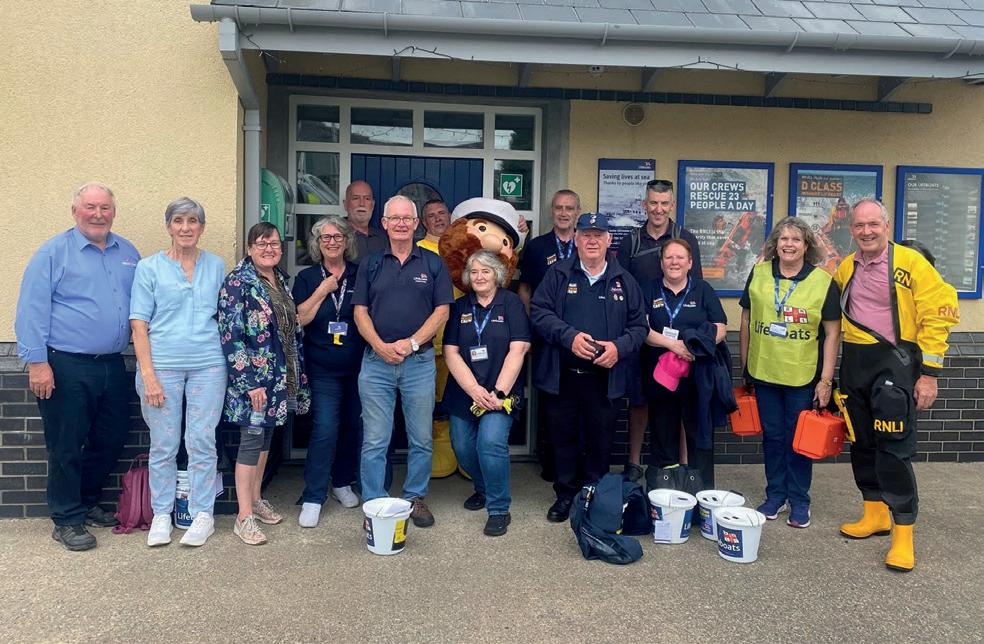
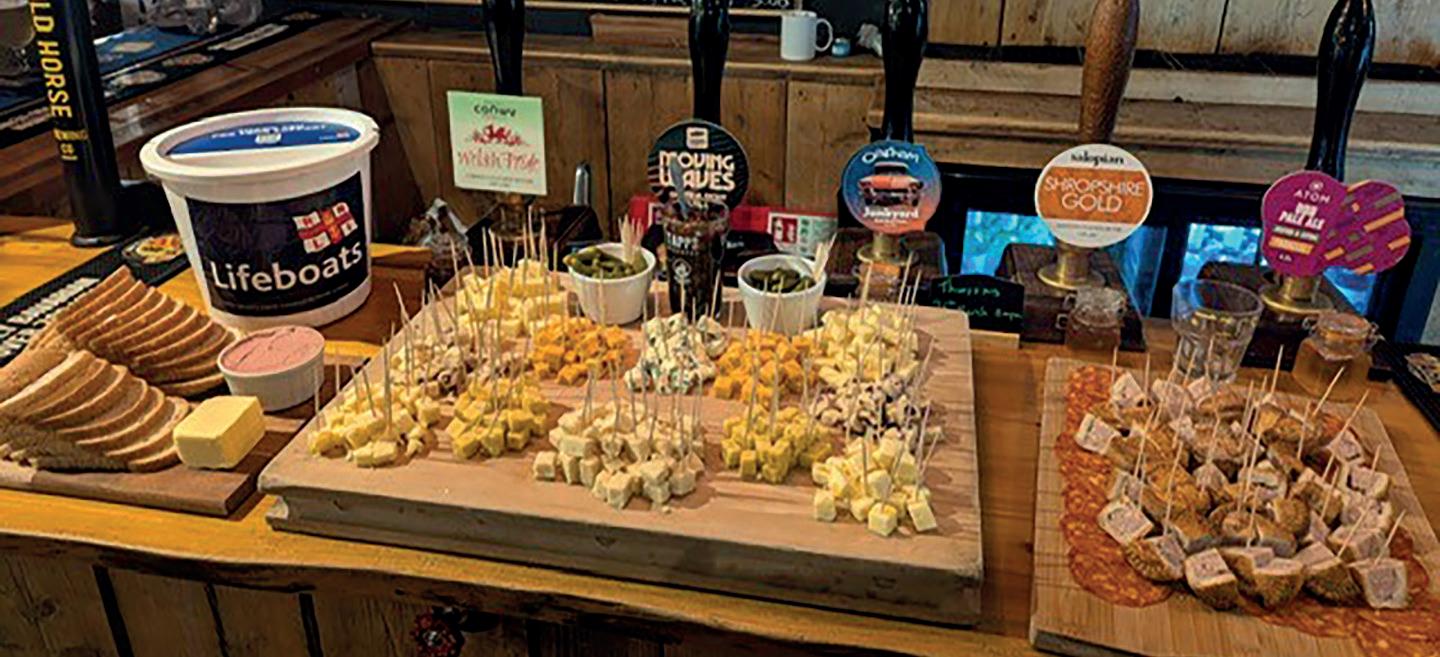
Tapps Bars in Llandudno and Rhos- on-Sea have raised more than £6,000 for the RNLI through their popular Cheesy Tuesdays event. Each venue collected over £3,000 by inviting customers to enjoy a complimentary spread of cheeses, crackers and pork pie chunks in return for donations. Both bars were presented with RNLI Local Business Awards in recognition of their support. Staff and fundraising crew members celebrated the occasion with the Tapps Bar crew, thanking them for their innovative fundraising.
LONDON
20 years of support
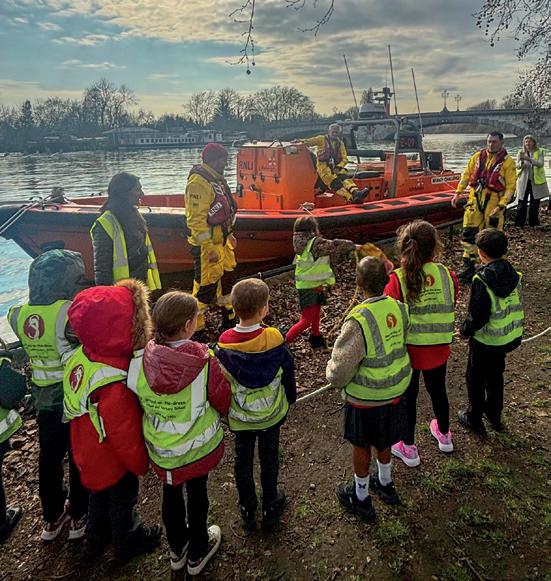
Strand on the Green Infant School has marked 20 years of RNLI visits from the Chiswick RNLI crew, celebrating a longstanding collaboration that teaches pupils about staying safe by the river. In January, Chiswick volunteers David and Elinor led an assembly for 270 children, showing them the crew kit and teaching them what to do if they see someone in trouble in the water.
Chiswick crew returned for a followup visit with the lifeboat, during which the children presented them with £225 that they’d raised through a ‘waterproof’ fancy dress day.
Deputy Headteacher Nav Bhatti says: ‘Our young children absolutely love the RNLI visits every year … there is always a buzz of excitement. We really value the work the RNLI crews do.’
children
Events
Sea Symphony gala evening
Lighthouse Arts and Entertainment, 21 Kingland Road, Poole, BH15 1UG Saturday 11 July, 7.30pm
Bournemouth Symphony Chorus, Salomon Orchestra and Paul Carr present a gala evening in celebration of the sea and in support of the RNLI. Tickets from £23.10 at lighthousepoole.co.uk
Brightlingsea Regatta
Brightlingsea creek, harbour and estuary, CO7 0AX Saturday 18 July, 10am–6pm
Activities on and off the water for all ages. Yacht and dinghy racing, harbour rescue demonstration and a special visit from RNLI mascot Stormy Stan!
RNLI Union Hall Swim 2026
Keelbeg Pier, Union Hall, P81 RD74 Sunday 26 July, 2–4pm
Join Union Hall RNLI’s 12th annual swim! 1km route (11 years and older), 2km route (12 years and older). Check in 12.30–1.30pm.
Advance registration essential: €35.30 on Eventbrite. Parents/ guardians of swimmers under 18 will need to sign a consent form on the day.
GET INVOLVED
To find more events coming up in your area, including lifeboat open days, head to RNLI.org/events .
Tapps Bar’s Cheesy Tuesday spreads are proving popular
Photos: RNLI/(North Kildare, Elinor Rimmer, Richard Webster), Scribante, Tapps Bar
The
meet the Chiswick crew
RESCUE STORIES
As a loyal supporter, you are helping our lifeboat crews and lifeguards carry out thousands of rescues every year. Here are some highlights, and you can read full accounts of other rescues on the following pages:
6 TENBY | PAGE 10
7 KILRUSH | PAGE 14
8 CRANTOCK | PAGE 16 8 7
For more rescue stories, head to RNLI.org/rescues
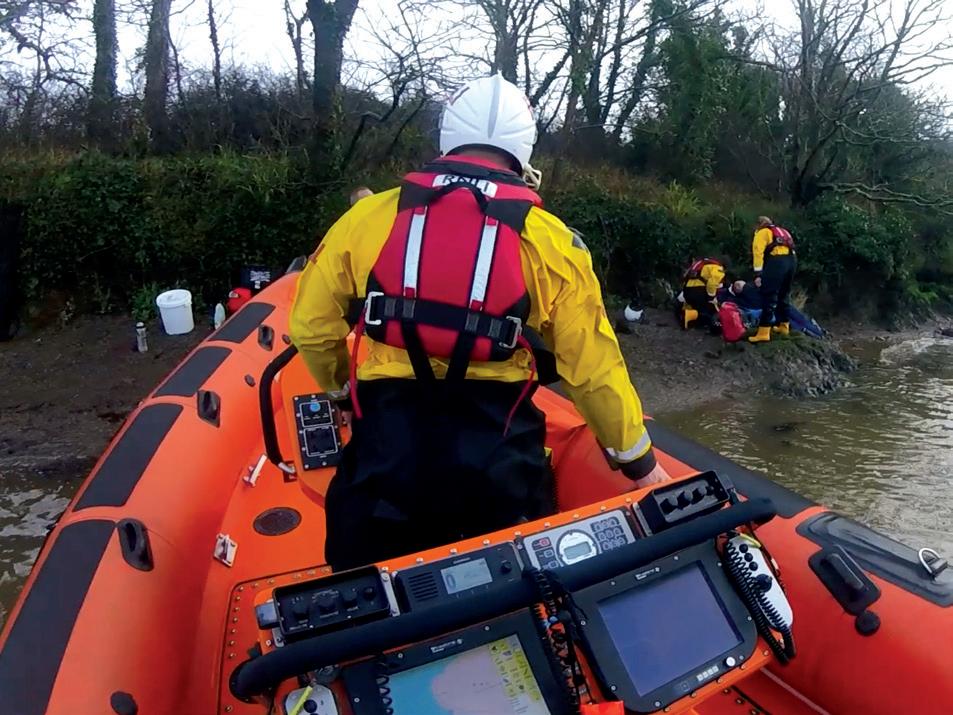
AT THE WATER’S EDGE
PLYMOUTH | 25 JANUARY 2026
RNLI lifeboat volunteers launched their B class lifeboat after a man fell and suffered a head injury close to the water’s edge at Millbrook Lake. Thanks to the high spring tide, the crew were able to reach the man. Two crew members went ashore and assessed his injuries. He was taken aboard the lifeboat, then handed over to Tamar Coastguard Rescue Team and the South Western Ambulance Service.
ON THE ROCKS
NEW BRIGHTON AND HOYLAKE | 27 NOVEMBER 2025
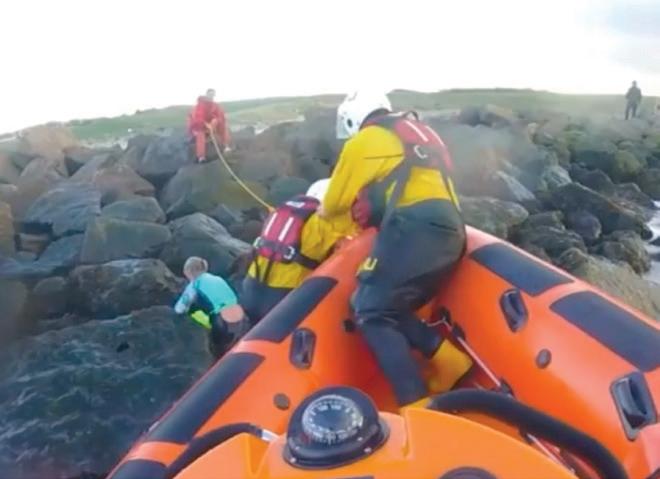
In rough seas, two swimmers were in danger, being washed against rocks. RNLI lifeboats were swiftly on scene, and one crew member entered the water to reach the duo. The RNLI volunteer and an HM Coastguard
Rescue Team member moved the swimmers higher up the rocks, away from the breaking surf. A Coastguard Rescue helicopter later airlifted the two casualties to safety on the beach, where paramedics were waiting.
MEDICAL EVACUATION
FRASERBURGH | 7 NOVEMBER 2025
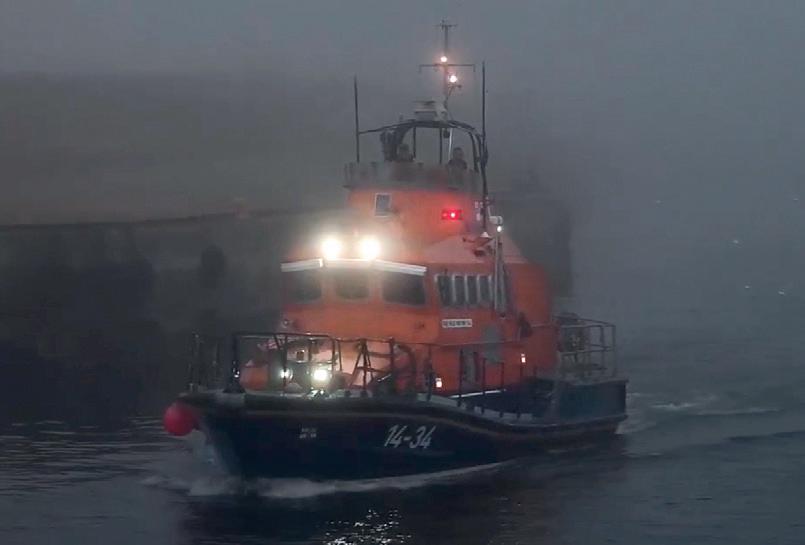
When a fishing boat skipper needed immediate medical attention, thick fog ruled out a rescue by helicopter. Facing deteriorating visibility, Fraserburgh lifeboat crew embarked on a 69-mile journey to the fishing vessel. After the RNLI crew arrived, the fishing boat skipper – despite severe pain – transferred himself to the lifeboat. With the casualty safely aboard, the lifeboat crew returned to Fraserburgh, passing the man into the care of a waiting ambulance team.
SUFFERING SURFER
COURTMACSHERRY HARBOUR | 25 JANUARY 2026
Two surfers escaped a rolling swell and offshore wind to get to the safety of the shore, but a third remained in danger. The casualty, suffering from cramp, was quickly located by RNLI volunteers and taken aboard their lifeboat. The surfer was assessed onboard the lifeboat, which then returned to Courtmacsherry. The crew took the surfer into the station for further care and a change of clothes.
BEFORE DAWN
TOWER | 23 JANUARY 2026
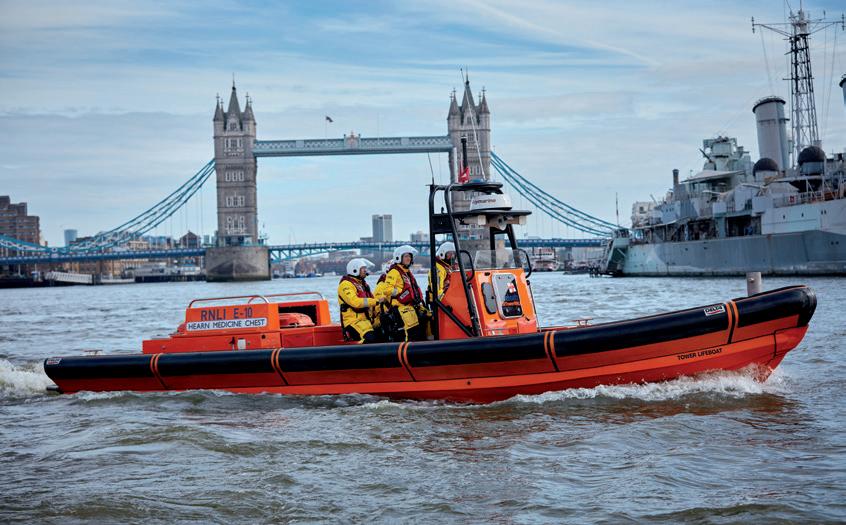
When a Tower RNLI lifeboat crew member spotted a casualty in the water, the person was barely afloat. Taking them onboard the lifeboat, the RNLI crew swiftly returned to Tower Lifeboat Station. It was before dawn, on a winter’s night and the casualty was very cold. At the station, the person was looked after in the casualty care room, before being handed over to ambulance crews.
Photos: RNLI/(Courtmacsherry, Laura Lewis, New Brighton, Plymouth, Billy Watson)
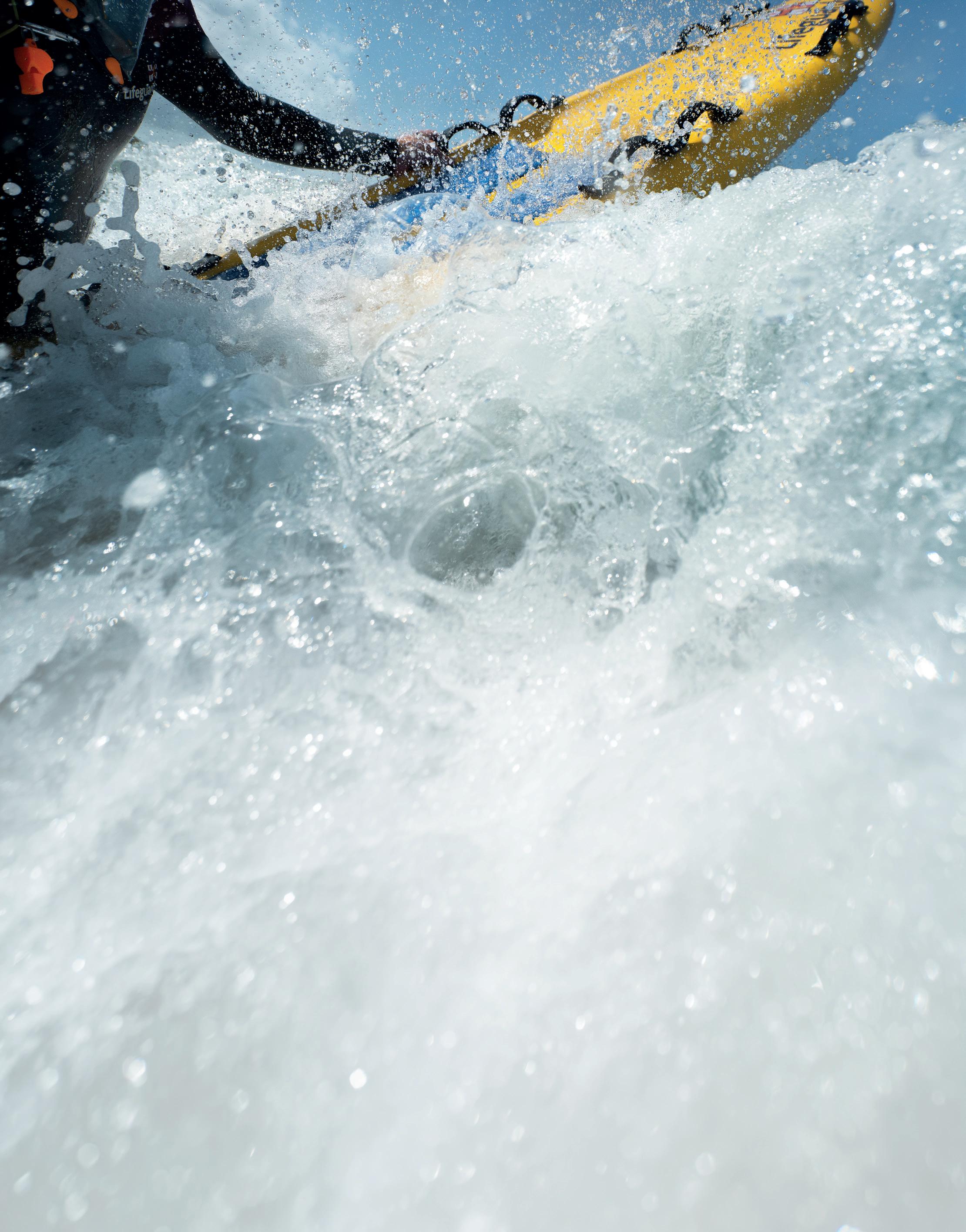
Two teenage boys enter the water, away from the main lifeguarded area, at Castle Beach in Tenby. Within minutes, they’re fighting for their lives
The voice of experience
RNLI Lifeguard Supervisor Carl Amos is entering his 19th season on the beach this year. ‘I was 18 years old when the RNLI lifeguards first came to Pembrokeshire,’ says Carl, ‘and I’ve been involved ever since.’
RACING A RIP
As well as enjoying being outdoors on Tenby’s beautiful beaches, Carl really enjoys being part of the team. ‘I’m a shore crew member at our local lifeboat station, too. I love the team vibe you get when working and volunteering for the RNLI,’ he says.
The importance of experience and teamwork came to light one day last August. ‘It was an unusual set of circumstances,’ recalls Carl. ‘During the summer, Tenby tends to be quite mellow. That day, it was 20°C and sunny, but there was a 5ft [1.5m] swell. We had the summer crowds combined with a yellow weather warning for wind.’
A dangerous stretch
Knowing the forecast and the challenges it would bring, Carl went to Castle Beach to support Lifeguards Liam Nash, Daisy da Gama Howells and Ffion Mabey. ‘There were crowds pouring onto the beach,’ says Carl. ‘We were managing the conditions and trying to make it as safe as possible. We set up a small red-and-yellow flagged area. The team were great, giving out lots of advice –really proactive lifeguarding.’
As the tide drops at Tenby, more sand is revealed between the two beaches. Even in calm conditions, the water can be dangerous in that area.
But on that day, with the heavy swell, the rip currents were particularly strong. ‘It was around lunchtime. We saw a group of boys standing on that stretch of sand, right at the water’s edge, wearing just shorts,’ Carl says.
Lifeguard Liam went over to the group. ‘I explained to them that the water there was very dangerous,’ Liam says. ‘I told them that if they wanted to go in the water, they should come and swim between our red-and-yellow flags.’ Having given them safety advice, Liam headed back to the main beach. From the other side of the beach, Carl glanced over: ‘That’s when I saw them jump in.’
Fighting for their lives
‘Within seconds, they were in the rip current,’ Carl says. ‘It was as though they’d jumped into a river.’ Carl was around 500m away at the time. ‘I grabbed a rescue tube and ran.’ When he reached the water, Carl ran straight in.
‘Between the run and the swim, I gave it everything,’ Carl says.
‘I swam faster than I’ve ever swum in my life’
CARL AMOS, RNLI LIFEGUARD SUPERVISOR
‘It took a good couple of minutes just to get through the swell. I was wearing the rescue tube, and every wave was pulling me back. I remember thinking: “I might not be enough this time.” I could see them going under. It was a horrible feeling. I swam faster than I’ve ever swum in my life.
‘I duck-dived the heavy waves, and eventually managed to get into the same rip current that the boys were in, which helped me get there quicker. I reached the boy who was closest to the shore and saw that Liam was hot on my heels on a rescue board.’
‘I headed straight for the boy who was further out,’ says Liam. ‘He was constantly going underwater. As I got closer, I could see he was in and out of consciousness. But when he saw me, he shouted: “Help me, please! I don’t want to die!”’
‘The casualty I’d reached was also in a dire situation,’ says Carl, ‘but he was conscious.’ Carl clipped him into the rescue tube and swam him back to shore.
Liam helped the second casualty onto the rescue board and took him back to shore as quickly and safely as possible in the challenging conditions. ‘The waves were really powerful,’ Liam says. ‘So, with the other boy now on the beach, Carl came back to help me.’
‘When he saw me, he shouted: “Help me, please! I don’t want to die!”’
LIAM NASH, RNLI LIFEGUARD
A rescue to remember
The rest of the team were ready to help. While Ffion kept watch over the rest of the beach, Daisy brought the responder bag over to the casualties. Then she worked with Carl and Liam to care for them. ‘The casualty who had lost consciousness in the water was struggling to breathe,’ remembers Daisy. ‘So we administered oxygen. We did our first aid checks while we waited for the paramedics to arrive. Tenby lifeboat crew and the Coastguard team also attended. We all worked together seamlessly, which is an ode to the joint training exercises we do.’
‘The paramedics confirmed that one of the boys had lost consciousness in the water for up to three minutes –one of his lungs was completely full of seawater,’ says Carl. Both boys had water on their lungs and needed to go to hospital.
LIFEGUARDS ON DUTY
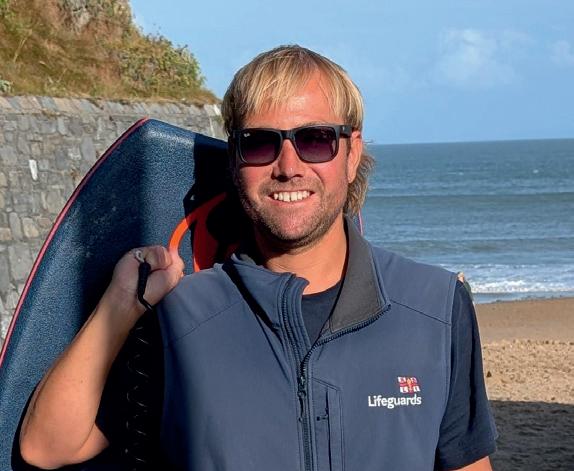
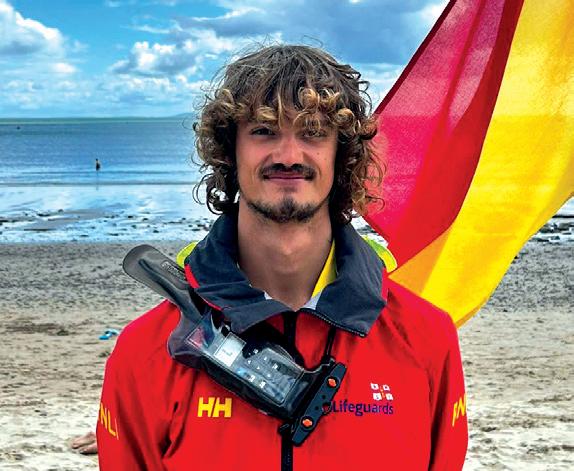
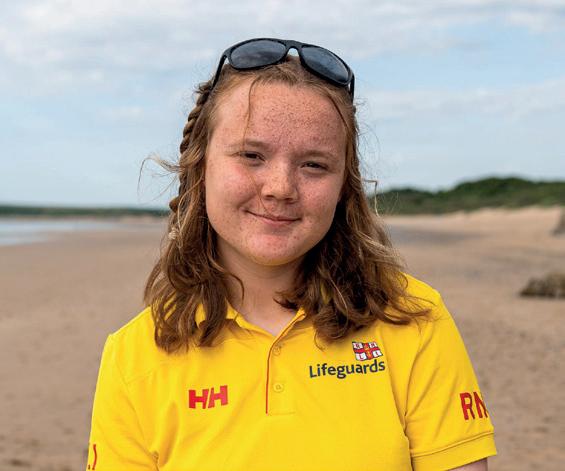
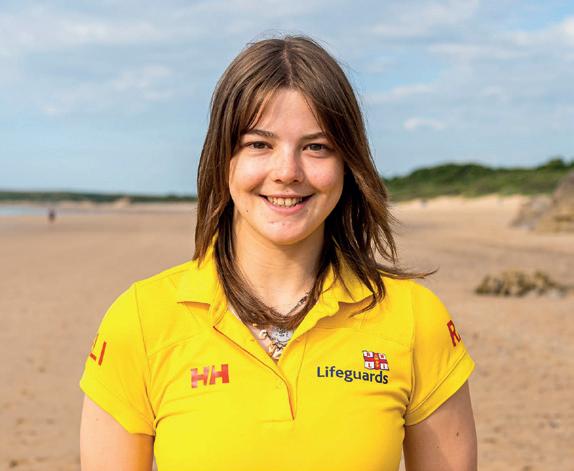
RNLI LIFEGUARD SUPERVISOR CARL AMOS
RNLI LIFEGUARD LIAM NASH
RNLI SENIOR LIFEGUARD DAISY DA GAMA HOWELLS
RNLI LIFEGUARD FFION MABEY
YOUR LIFESAVERS YOUR KIT
Thank you for providing for our lifeguards. Your generosity means they have the right kit and skills in an emergency. As we all know, prices have risen, and durable lifesaving kit doesn’t come cheap.
‘In my 18 years of RNLI lifeguarding, this is definitely up there as one of the closest rescues I’ve ever done’
CARL AMOS, RNLI LIFEGUARD SUPERVISOR
‘It’s one that I’ll remember,’ Carl says. ‘In my 18 years of RNLI lifeguarding, this is definitely up there as one of the closest rescues I’ve ever done. Thankfully, both boys were discharged from hospital later that day.
If it wasn’t for the lifeguard team that day, our whole team effort, those boys wouldn’t be with us anymore. They would never have gone home.’
Your kind support helps make incredible rescues like this one possible. ‘Without people’s donations, I wouldn’t have had the rescue tube I needed,’ says Carl. ‘Liam wouldn’t have had the rescue board. We wouldn’t have had the oxygen the casualties desperately needed. If it wasn’t for people donating, none of this would’ve been possible. Thank you.’
STAY SAFE AT THE BEACH
‘If you’re heading to the beach this summer, choose a lifeguarded one. Make sure you swim between the red-and-yellow flags – that’s the safest place. If you’re in trouble in the water, float to live. And if you’re ever unsure of anything, just ask a lifeguard. We’ll be more than happy to help you.’
£137/€166 like the one Carl wrapped around the first casualty FOR A RESCUE TUBE
£1,550/€1,875 FOR A LIFEGUARD RESCUE BOARD
£7/€8.50 that both boys needed FOR A REFILL OF OXYGEN like the one Liam used to reach the second boy
FIND YOUR FLOAT
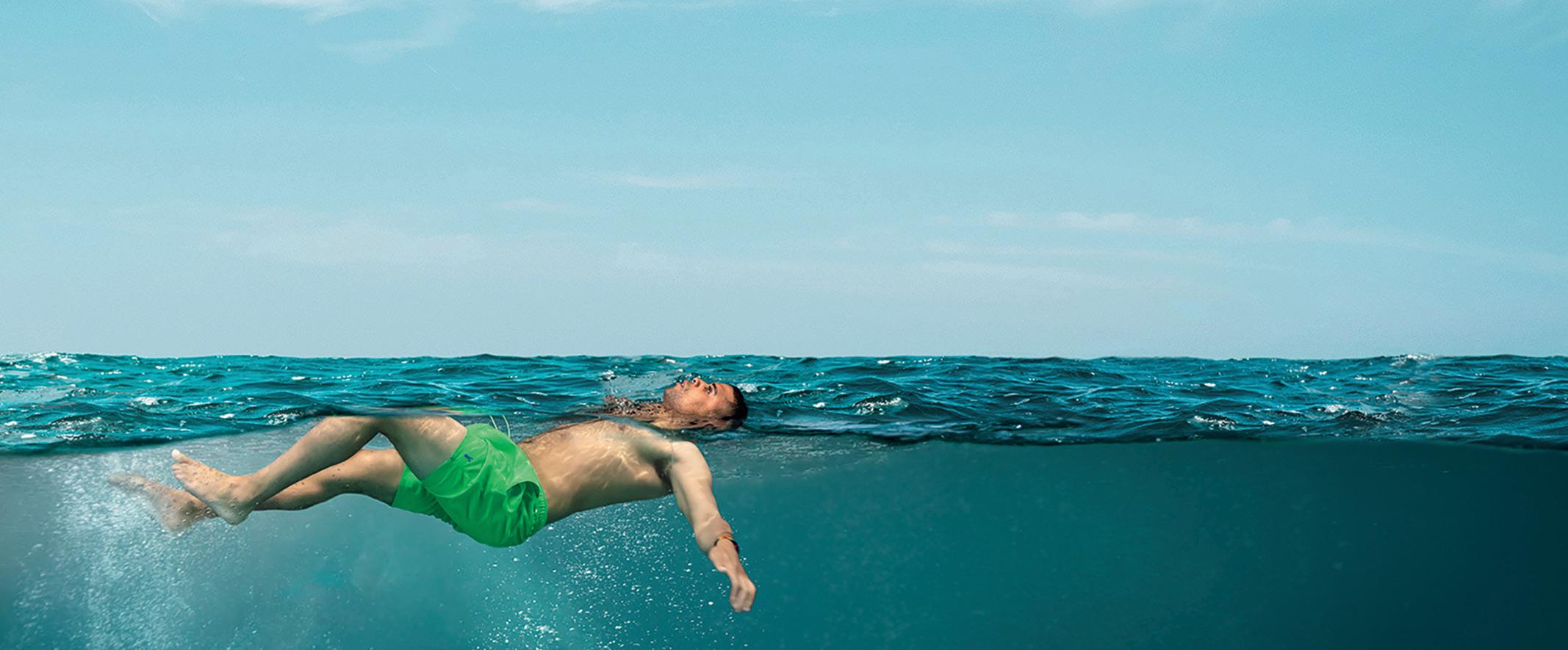
Knowing how to float can be a lifesaver if you’re struggling in the water. Recent research proves that everybody can float – you just need to find the best way for you
The long-standing myth that people of African, Caribbean and Asian heritage have ‘heavy bones’ and therefore struggle to or cannot float, has been scientifically disproven by a recent study.
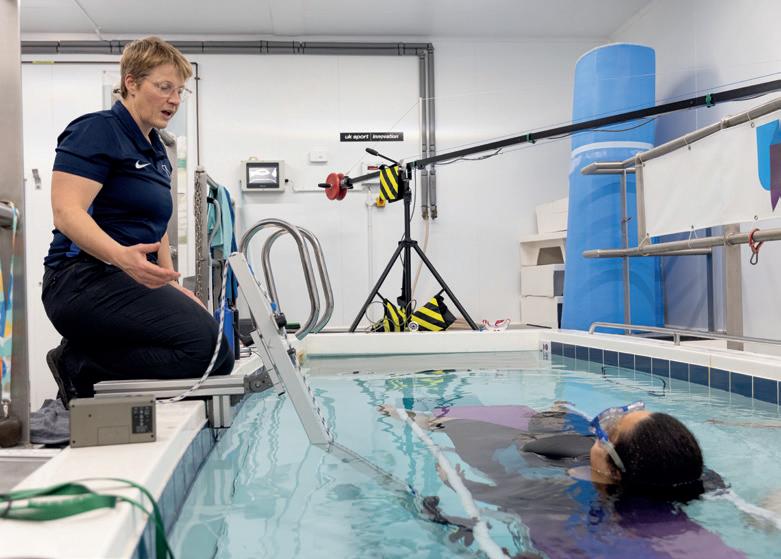
The research, led by the Black Swimming Association (BSA) and the University of Portsmouth, and supported by the RNLI, involved 96 participants. It found no correlation between bone density and floating ability.
In fact, 93% of the participants – most of whom had little or no experience in the water before the study – were able to float unassisted for 2 minutes after being taught how to ‘find their float’.
Everyone is different, so we all float differently. The research found that participants floated at various angles – and it didn’t matter if their legs dropped below a horizontal angle. The most important thing was to find the technique and position that felt most natural for them.
Knowing how to float saves lives. The researchers hope that the findings of this study will break down the barriers and fear that the myth caused, and help to give individuals the confidence to learn how to float and swim in a safe, lifeguarded place. ■

‘From a young age, I had a fear of the water. I believed that I was unable to float. But it’s always been a life goal of mine to be able to swim with my future children. So, when I started working at the RNLI, surrounded by amazing lifesavers, I was inspired to learn. My RNLI colleague, Lauren Williams, started giving me regular lessons at our local pool, which was a really safe environment to learn in. The first thing she taught me was how to float, then how to breathe properly, and the different swimming strokes.
‘A few months later, I went to the beach. I would usually feel nervous near the water. But this time, I felt absolutely calm. I knew what I needed to do. And that was really special. I’d really encourage people who don’t know how to float or swim yet to learn. You’re not too old! And don’t believe the myth that you can’t float – you can!’
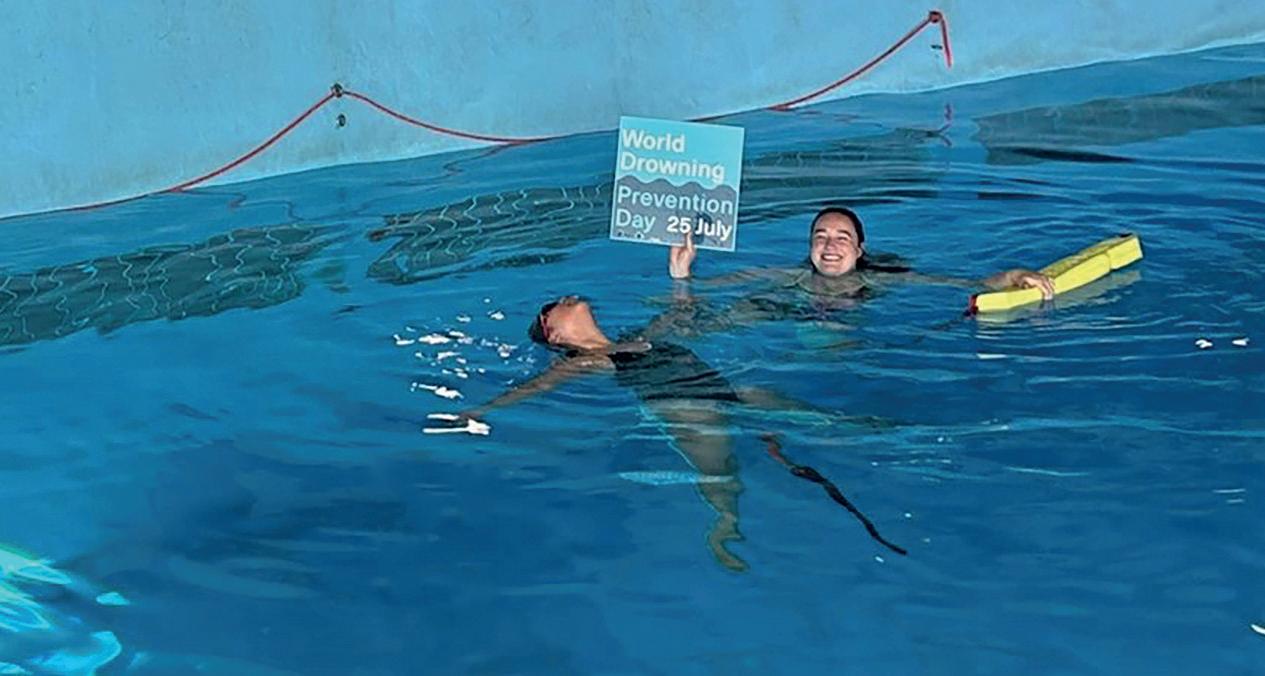
RNLI VOLUNTEERING ADVISER
HANNAH DUCHE RUILOVA
Hannah achieving her goal of learning to float (while holding a World Drowning Prevention Day sign!)
HANNAH’S STORY
Words: Charis Jefferson
Photos: Jack Merrony, Michael Percy, RNLI/(Carl Amos, Oliver Davies-Scourfield, Rebecca Mallaburn, Nigel Millard, Liam Nash, Nathan Williams)
A float research day at the University of Portsmouth with the BSsA and RNLI
‘THE STARS ALIGNED’ ‘THE STARS ALIGNED’
A dinghy overturns in the River Shannon, dumping two people into cold water. Time is against the sailors, but luck is on their side
‘If it had been another 5 or 10 minutes, it would have been very, very difficult to find them’
TOM BLUNNIE, HELM
It’s a chilly February evening. Kilrush RNLI Mechanic Simon McGibney is at home, looking out on the River Shannon, when he spots a dinghy sailing by. Suddenly, it’s swamped by a large wave and capsizes.
‘I wasn’t really alarmed at that stage –that’s what dinghy sailing is all about. You capsize and get the boat back up again. But every time they recovered the boat and tried to get back in, it would capsize again – and I noticed one of them had got separated from the boat. After it capsized for a third time, I decided it was time to give the Coast Guard a call.’
The pagers sound and, within minutes, three highly experienced crew members, Charlie Glynn, Tom Blunnie and Ian Lynch, arrive at the station.
‘From the moment the pager goes off,
your focus is sharpened,’ says Charlie. ‘You hear about two people in the water in February, with light fading, and you know every second matters. The water temperature alone is a serious risk.’
The lifeboat crew launch within 8 minutes of being paged. They begin their search, battling strong south-east winds and challenging sea conditions.
‘We were dealing with white horses –disturbed water,’ says Charlie. Finding the casualties wasn’t going to be easy.
‘It was getting dark – everything was grey and murky,’ remembers Helm Tom Blunnie. But, after 2 minutes, Ian spots a head in the water. ‘The dinghy was submerged,’ says Ian. ‘You could only see part of the hull.’ The two casualties – a man and woman –are hanging off it.
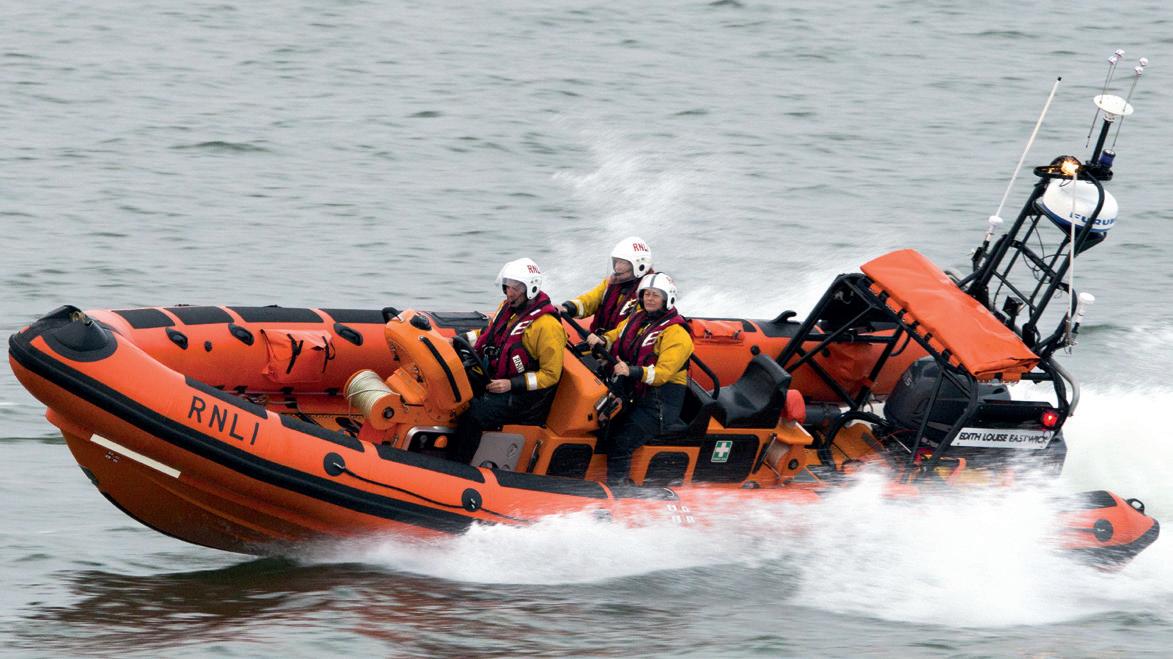
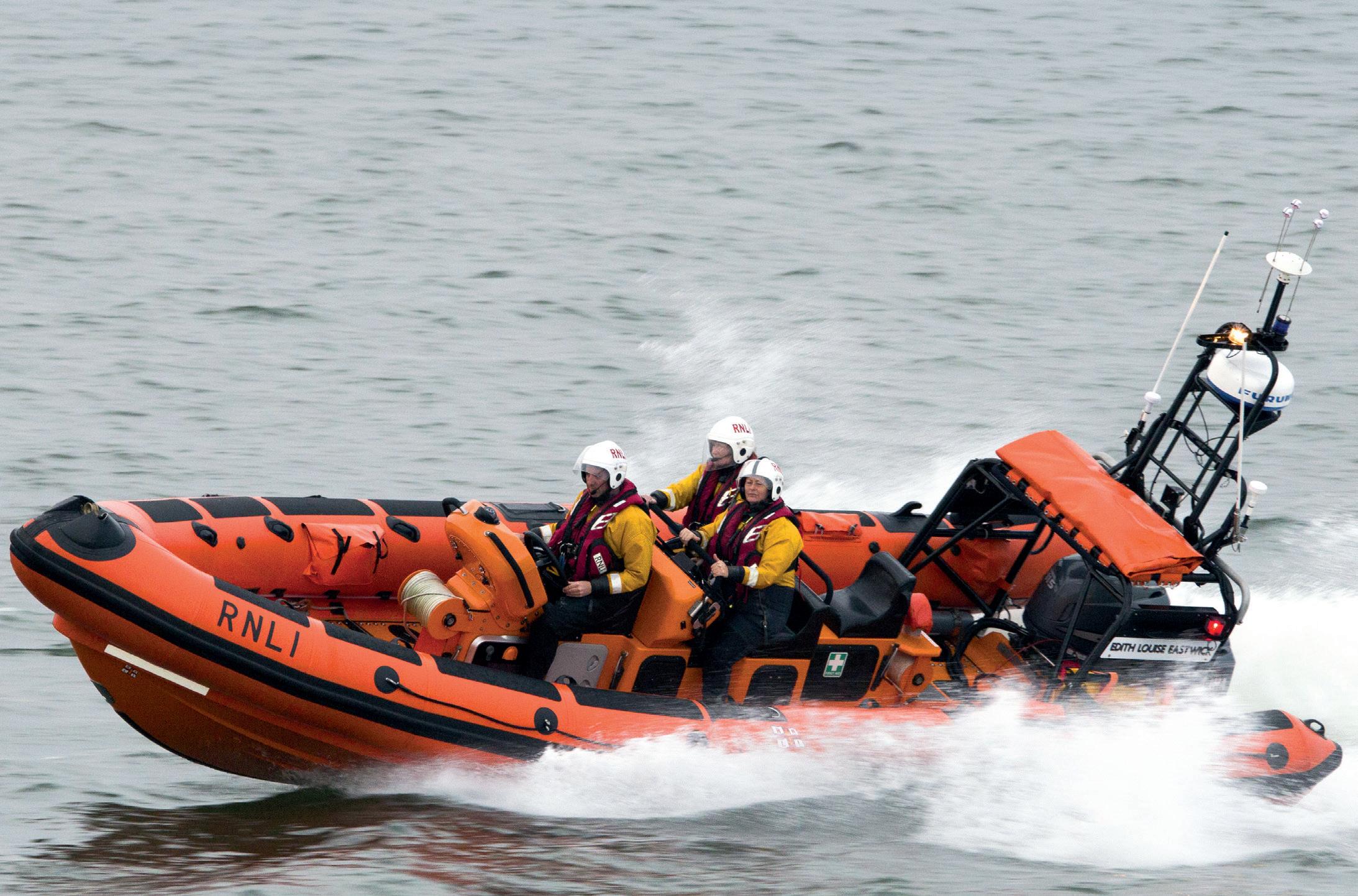
Kilrush B class lifeboat Edith Louise Eastwick
But the crew can’t just move in and pluck the sailors from the water. The lifeboat is being swept towards the casualties by a very strong flood tide, and the casualties are being thrown towards the lifeboat by a strong south-east wind. It’s too dangerous to go alongside the upturned dinghy.
‘I was afraid we were going to wind up on top of them,’ says Tom. ‘We stopped the lifeboat off, prepared a heaving line and threw it to them. Then we held the lifeboat in position and hauled the pair towards us.’
First, they pull the woman onboard. Then the man. With both dinghy sailors safely in the lifeboat, the crew turn their focus to casualty care. The casualties had been in the water for more than 25 minutes.
‘We were pretty confident they had hypothermia – they were very cold. And the woman was very quiet. So we called up the Coast Guard and requested an ambulance be sent to the station,’ says Tom. ‘The station was only 5 minutes away, so we put a weather protection sheet over them, put hats on them, and had them huddle together for warmth.’
Once the crew arrive at the station, they hand the dinghy sailors to their fellow volunteers, who continue casualty care until the ambulance arrives.
‘We went straight back out, intending to tow the dinghy clear of shipping lanes,’
says Tom. ‘It had only been a few minutes, but it had already sunk. It washed up on the shore 3 or 4 days later. The casualties were very lucky. If it had been another 5 or 10 minutes, it would have been very, very difficult to find them.’
Charlie agrees: ‘All the stars aligned on this rescue. There was Simon spotting the dinghy overturning in the water –the earlier someone calls for help, the better the outcome. We had a very quick 8-minute response time. And then we were able to find the casualties within a couple of minutes.’
Shawna Johnson, Kilrush RNLI Lifeboat Operations Manager, says: ‘This was a frightening experience for the casualties. We are delighted to hear they have made a full recovery and we wish them well. The lifesaving work our volunteers do is essential, often challenging, and sometimes dangerous, but they are always prepared to drop everything and respond at a moment’s notice.’
‘Seeing two people go back to their families is one of the reasons why we train. It’s why we give up the evenings and weekends,’ says Charlie. ‘It was certainly a good rescue.’ ■
Staying safe
If you’re heading out on the water, follow these top tips and learn more at RNLI.org/KnowTheRisks
• Wear a suitable personal flotation device – it could save your life.
• Carry a means of calling for help in case you end up in trouble.
• If you’re struggling in the water, Float to Live.
• In a coastal emergency, call 112 if you’re in Ireland or 999 if you’re in the UK, and ask for the coastguard.
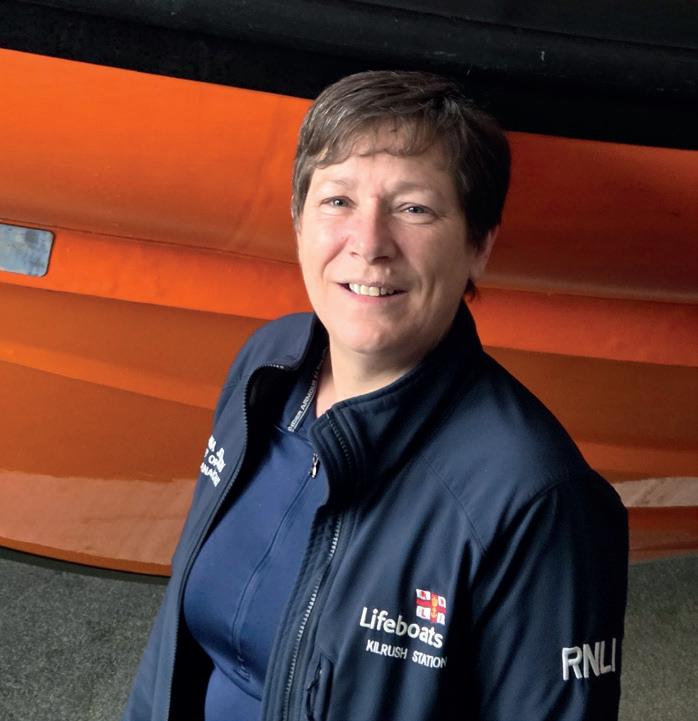
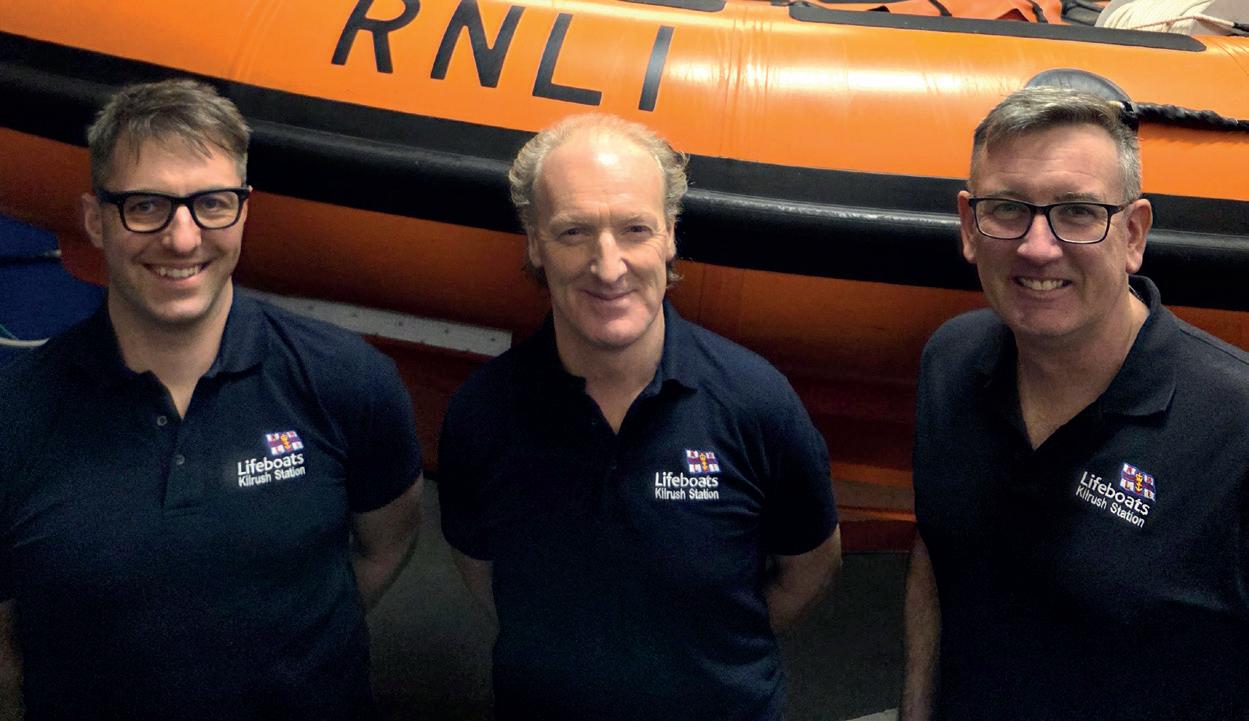
On the lifeboat that night (l–r): Charlie Glynn, Tom Blunnie and Ian Lynch
Shawna Johnson, Kilrush RNLI Lifeboat Operations Manager
Words: Nikki McMullen
Photos: RNLI/(Kilrush, Andrew Walker)
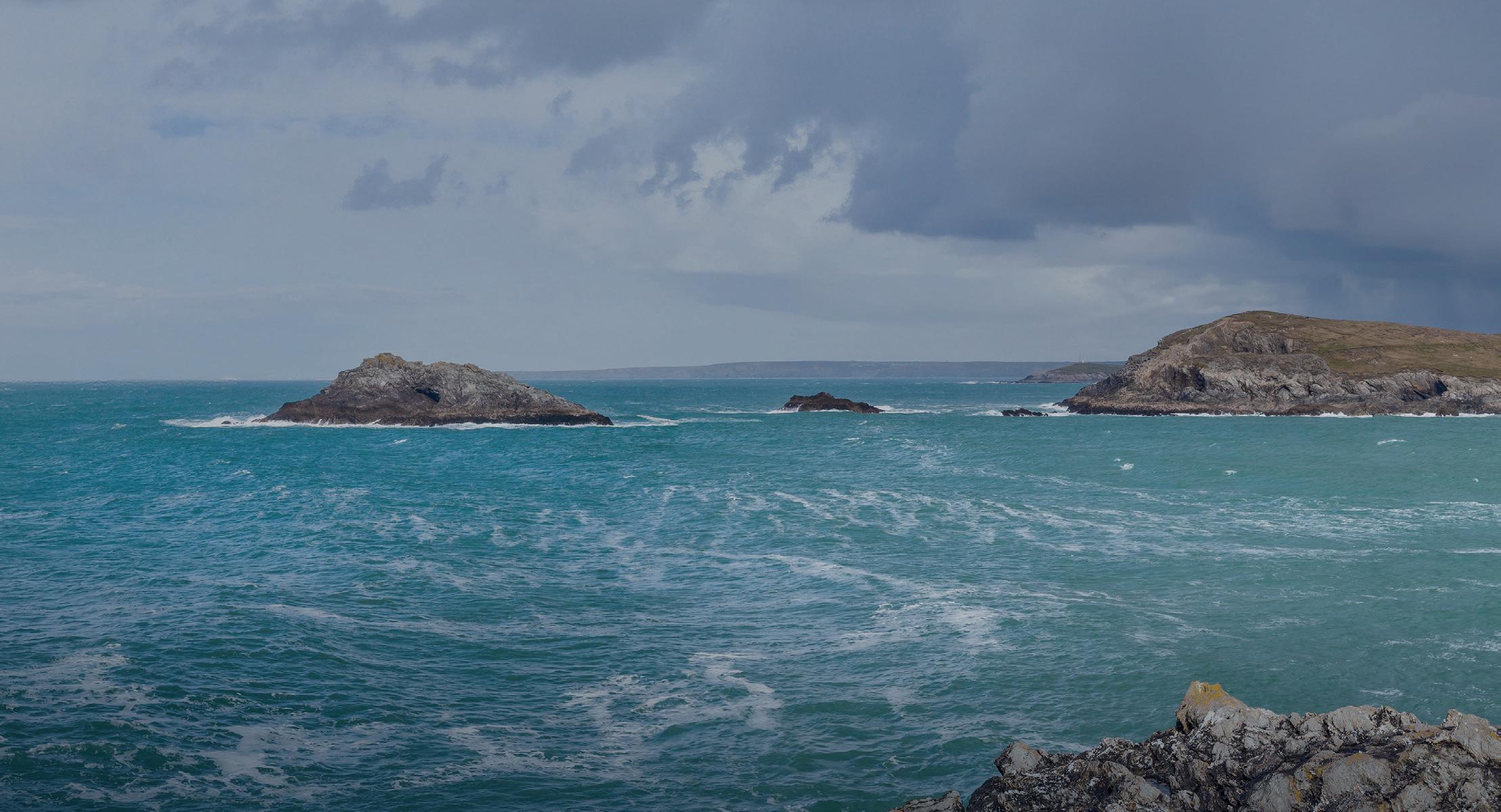
GOOSE ROCK , NEWQUAY
After achieving their late grandad’s ambition, two kayakers get stuck between a rock and a hard place – literally
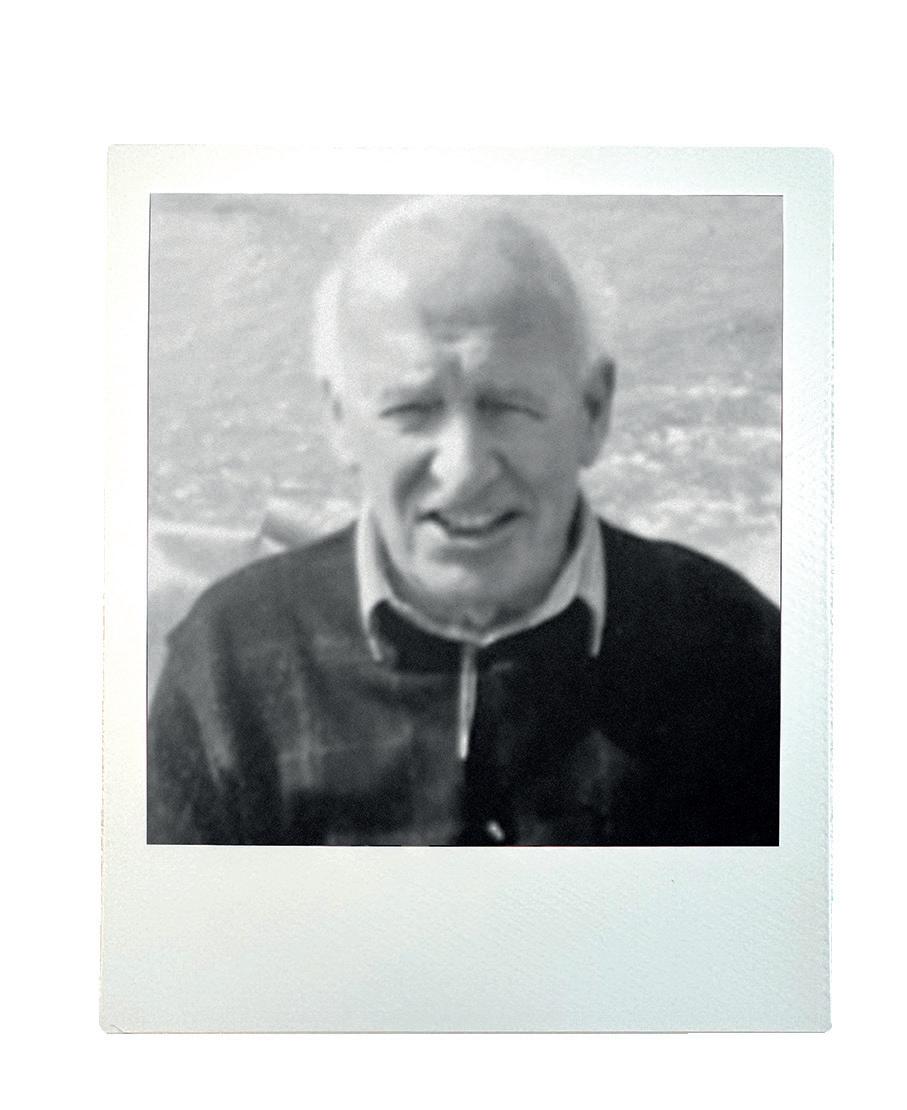
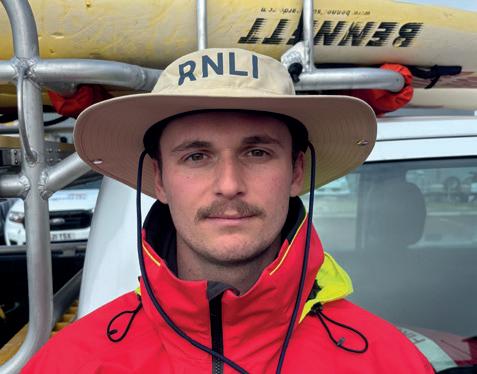
‘Crantock is one of the most dangerous beaches in Cornwall’
HARRY REED, RNLI LIFEGUARD
Jack and Charlie’s grandad, Alan, is their biggest hero. When he died, the two brothers made it their mission to summit Goose Rock in his memory.
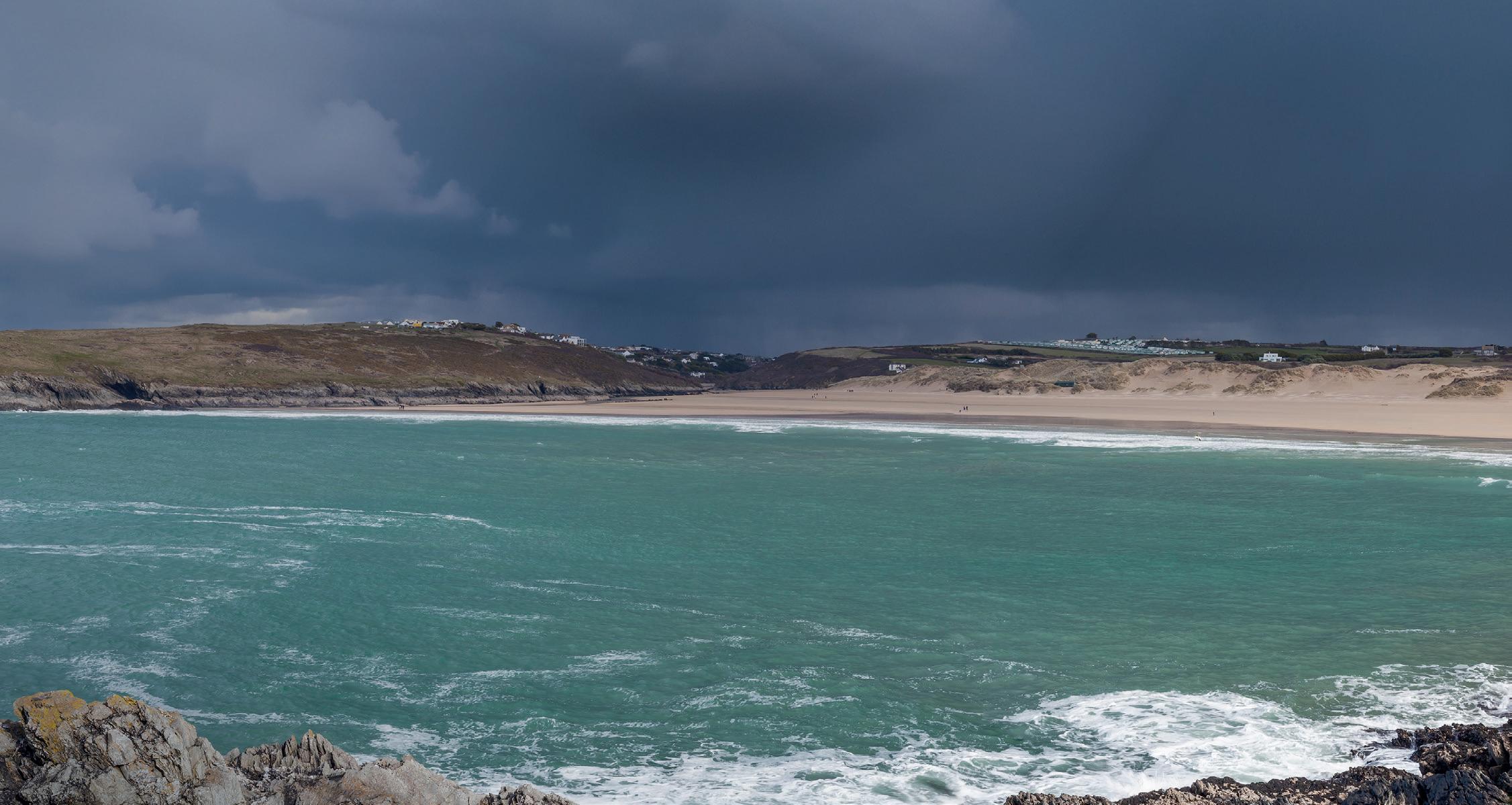
Their grandad had often reminisced about the time he’d swum out to the rock, which is over half a mile north of Cornwall’s Crantock Beach, near Newquay. He’d always wanted to climb onto it, but the sea had been too rough. ‘Grandad loved Crantock Beach,’ reflects Jack. ‘It’s where we have the fondest memories growing up.’
The men set off on their mission in an inflatable kayak on an unusually cold July day. The temperature was just 15°C in the strong westerly breeze.
‘It was very choppy,’ recalls Jack.
‘But we were determined to reach the rock and climb to the top.’ Charlie adds: ‘It was pretty hard to get onto the rock in the big waves. It took us a good 15–20 minutes.’
Once atop the rock, the brothers felt a great sense of accomplishment, and emotions ran high. ‘We spent some time reminiscing about grandad,’ says Jack. ‘It was a very emotional and powerful moment.’
But the pair hadn’t noticed the sea conditions worsening around them. How would they make it back to shore safely?
RNLI lifeguards had spotted Jack and Charlie on Goose Rock through binoculars. ‘People don’t often go to Goose Rock, because of the rough water around it,’ explains Lifeguard Elenie Shotton. ‘And that day, the beach was quiet because of the cool, overcast weather and messy seas.’
‘We were concerned about how they were going to get off the island in those big, rolling waves,’ recalls Lifeguard Harry Reed. ‘They could get smashed against the rocks and seriously hurt.’
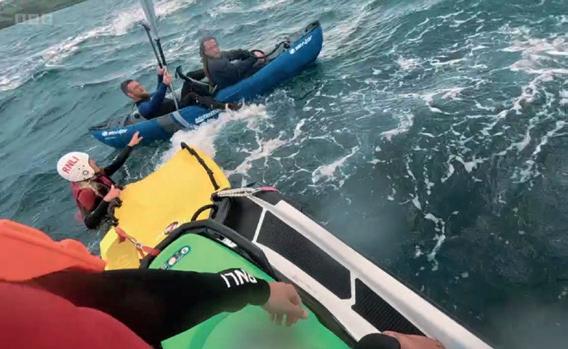
Knowing the brothers were in danger, Harry and Elenie launched their rescue watercraft into the rough seas and battled their way towards them. ‘The closer we got to Goose Rock, the bigger the seas got,’ recalls Elenie. ‘By the time we reached the casualties, one of them was in the water.’
Despite the gnarly conditions, Charlie and Jack had decided to try and kayak back to shore. But as soon as Charlie got into the kayak, he wasn’t so sure. ‘That was when I realised how dangerous it was and I began to panic,’ he recalls.
Alan inspired his grandsons to reach Goose Rock
Then, as Jack scrambled aboard too, a wave crashed against the kayak, capsizing it and hurling the brothers into the churning, cold water. Jack managed to get back into the kayak, but Charlie was drifting away.
Just in time, Harry and Elenie came alongside, and Elenie entered the turbulent water to help him back into the kayak.
The plan was to stand by the brothers as they paddled back to shore, but they were making no headway in the strong winds and big swells. It was time to abandon the kayak and get the brothers to safety using the rescue watercraft’s sled. Elenie entered the water again to help them, while Harry carefully timed each approach with the rolling waves until he’d safely picked them all up.
But as he began the slow tow, conditions proved too dangerous. ‘The sea was just getting bigger,’ says Harry, ‘and the rescue watercraft was very heavy. I was worried about us all being washed off. So I radioed the Coastguard for help.’
While waiting for Newquay lifeboat crew to arrive, Harry and Elenie chatted to Jack and Charlie to keep them alert. Jack was wearing a wetsuit, but Charlie
‘We are always rescue-ready’
ELENIE SHOTTON, RNLI LIFEGUARD
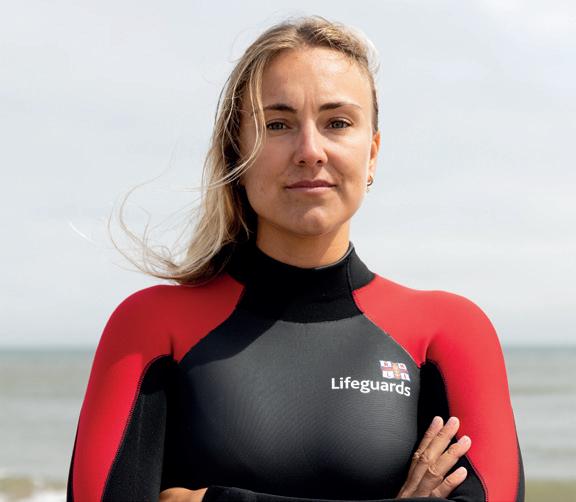
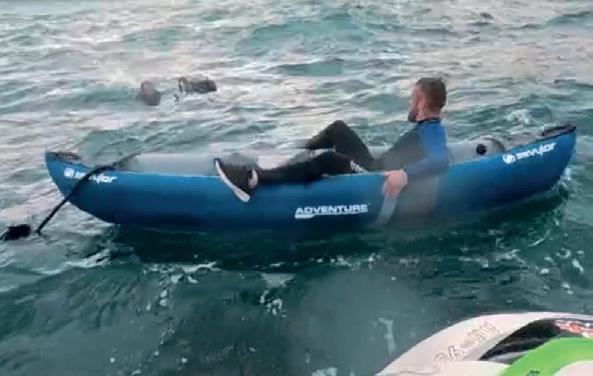
was in clothes. ‘A wetsuit helps to protect against hypothermia, which can be fatal,’ says Harry. ‘Although they were both cold, Charlie was shivering.’
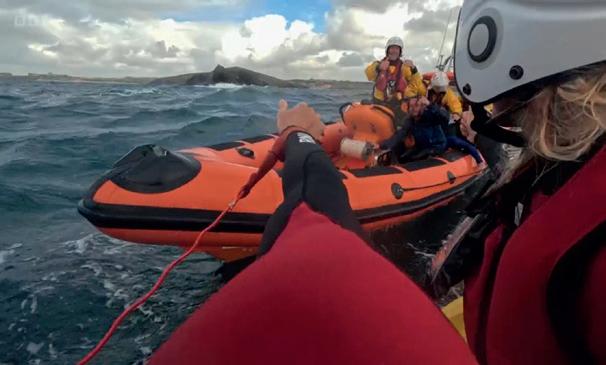
The lifeboat volunteers took the brothers back to the station to get them warmed up, while Harry and Elenie returned to Crantock Beach.
‘We were relieved they were safe and proud that we helped them,’ reflects Elenie on her first major rescue.
Words: Vicki Lovegrove-Fray
One crew
‘This rescue is a great example of teamwork between our lifeguards and lifeboat crews. Conditions at any beach can become dangerous, and without such a quick and coordinated response, the outcome could have been very different.’
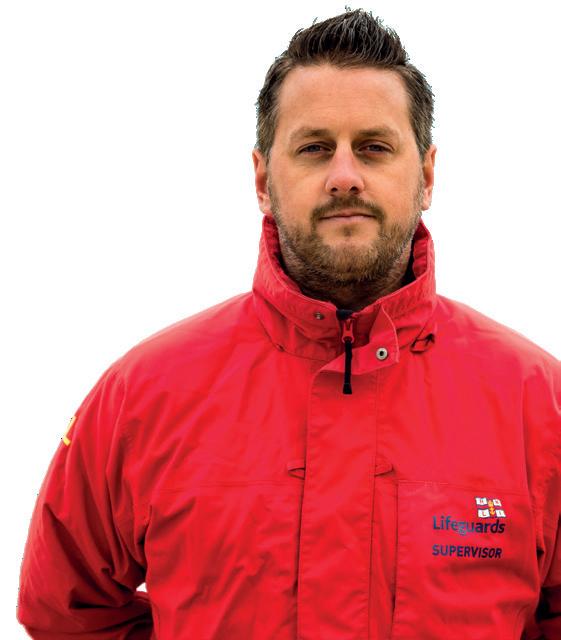
LEWIS TIMSON, RNLI LEAD LIFEGUARD SUPERVISOR FOR NEWQUAY
Photos: RNLI/(Lifeguards Newquay, Nathan Williams), Shutterstock, Lewis Timson
The lifeguards reach the brothers and find Charlie drifting away
Newquay lifeboat crew take the brothers to safety
Elenie helps Charlie get back in the kayak
7 REASONS GRATEFUL TO BE
Find out why the RNLI lifeguard service means so much to so many
For beachgoers, it’s the peace of mind they feel when visiting a lifeguarded beach. For the lifeguards, it’s the pride of protecting a community while doing what they love. And for those who have ever needed their help, it’s the overwhelming relief of being out of danger. Here we share just a handful of heartwarming stories from people who have reasons to be grateful to RNLI lifeguards.
‘They saved our baby’s life’ 1

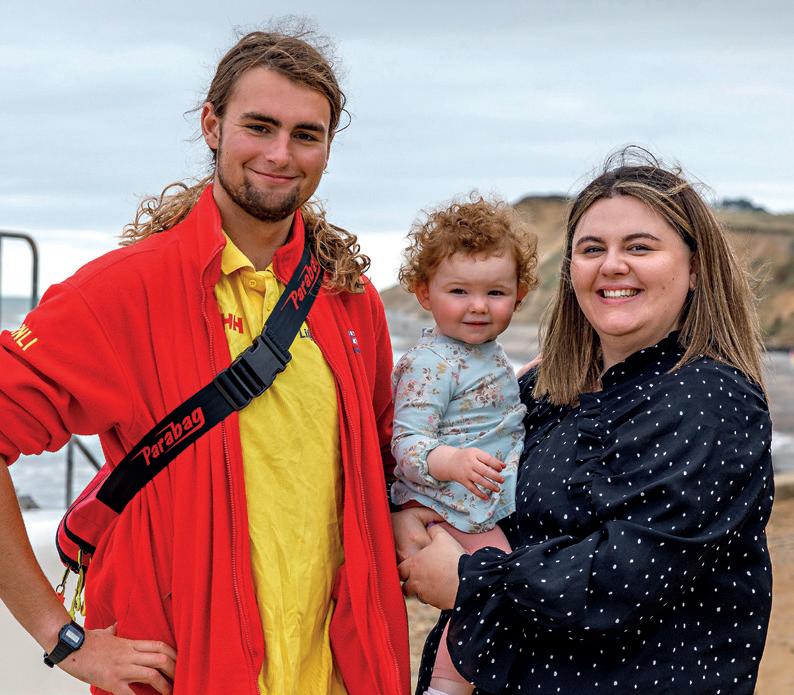

Alice Corbett recalls the terrifying moment her 18-month-old daughter Macie suffered a febrile seizure and became unresponsive. It happened during a get-together at her family’s beach café in West Runton. Thankfully, RNLI lifeguards are trained and equipped to deal with medical emergencies like this.
‘The lifeguards were phenomenal. Despite being so young, they knew exactly what to do. They kept calm and professional. After checking Macie’s breathing and pulse, they gave her oxygen, which helped her to breathe more easily and relax.
‘The oxygen helped Macie come round but she was distressed. The lifeguards spoke to her and tried to make her feel safe – they reassured us all. They stayed until the paramedics arrived and gave them a handover.
‘Now Macie is 4 years old and an all-round happy and smiley little girl. She loves swimming, nursery and is absolutely besotted with her new cat!
‘I always tell people to go to a beach with lifeguards because you never know when you might need them. They’re not just there to watch people on the beach –they’re there for everybody.
‘We’ll forever be grateful to those lifeguards for being first on scene and what they did that day. I honestly don’t know what situation we would have been in without them.’
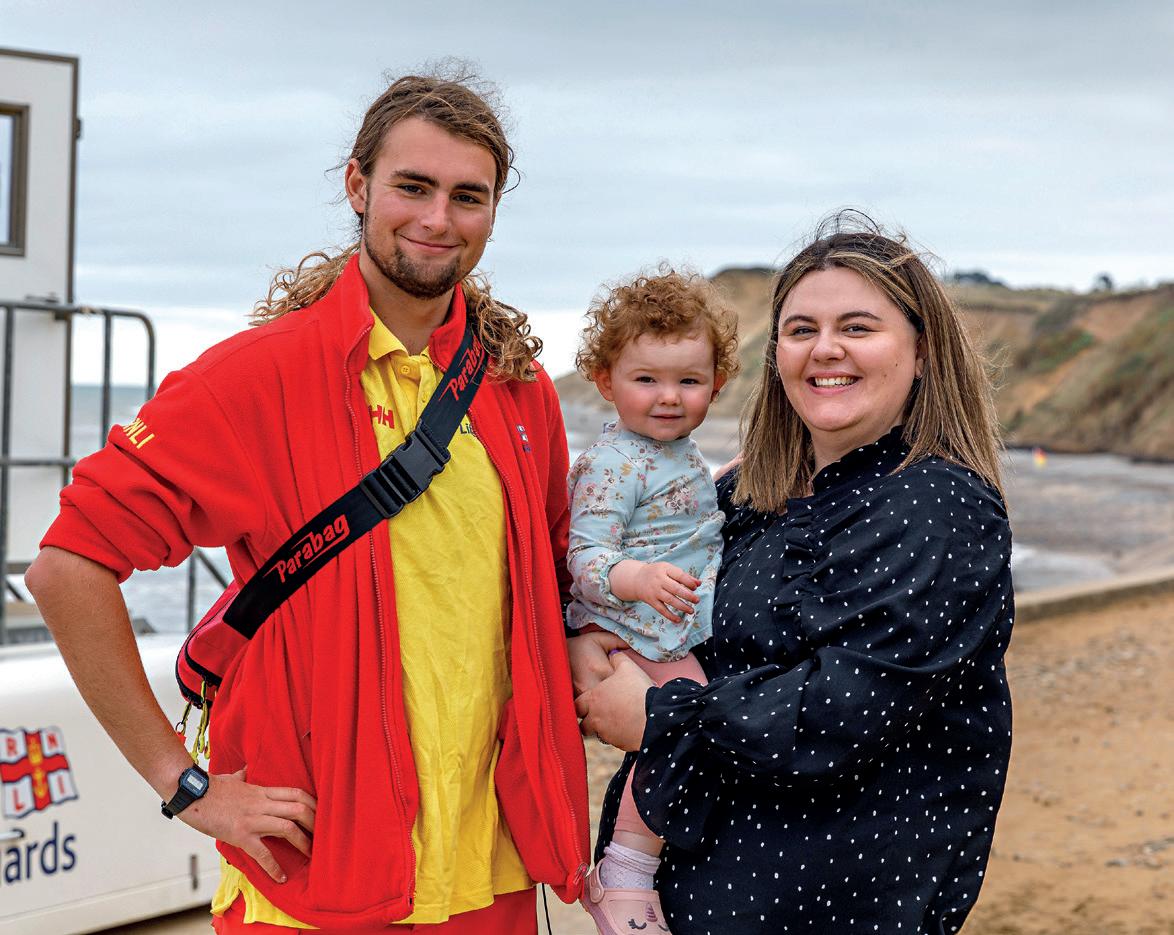
Alice Corbett and her daughter Macie with RNLI Lifeguard Theo Maun
A world of opportunities and life-affirming experiences
When the summer season ends in the UK and Channel Islands, it’s only just beginning in Australia and New Zealand, giving RNLI lifeguards the chance to continue saving lives on the other side of the world. For Lifeguard Harry Barea, this meant using his lifesaving skills not only on Auckland’s North Shore, but in the city’s devastating floods too.
‘When I worked the winter 2022–23 season in New Zealand, Auckland declared a state of emergency due to heavy rainfall and flooding. I helped the flood rescue teams and emergency services ferry 69 workers and shoppers to safety in inshore rescue boats.
‘There was such devastation –abandoned cars, collapsed houses and panicked members of the public. I used
my initiative and adapted my lifeguarding skills to the unfamiliar environment and challenges of operating at night with strong, flowing currents.
‘The RNLI’s outstanding training has equipped me with the skills and knowledge to work anywhere in the world. I’m honoured to represent the charity and its values and be part of the RNLI’s vision to save every one.’
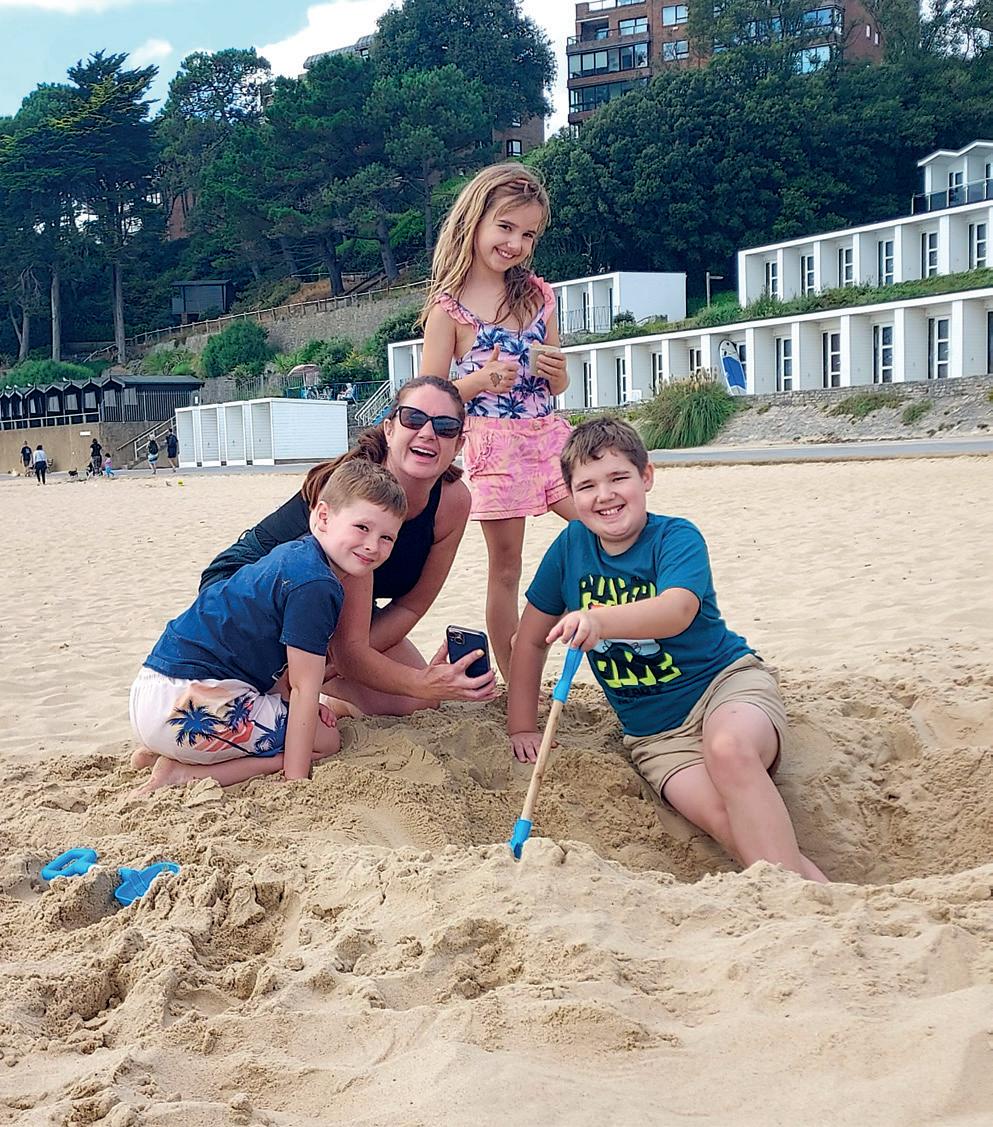
Families like Tracy’s tell us they feel safer, knowing that lifeguards like Ellie are looking out for them 3
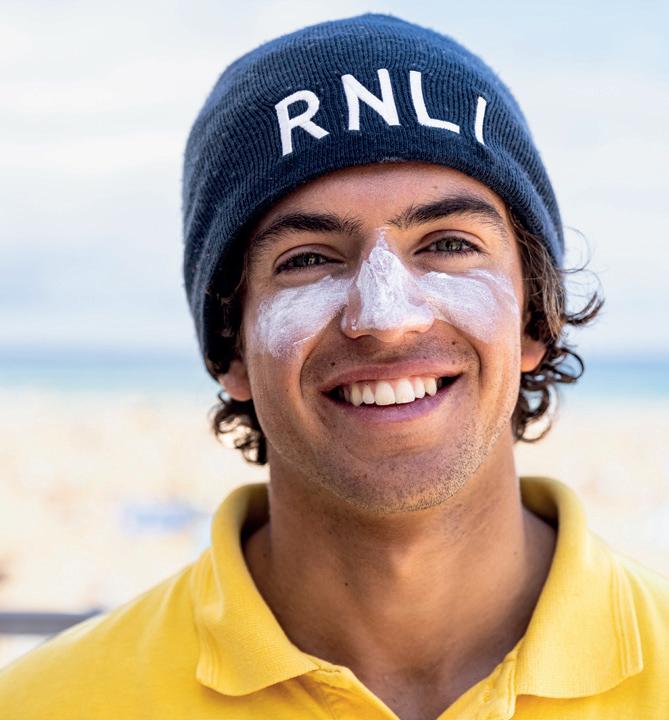
Harry says the RNLI’s lifeguard training is ‘outstanding’, making him ready for anything

‘Their presence is a comfort’
Choosing a lifeguarded beach for your family gives peace of mind that if something goes wrong, you are in the best possible hands.
‘For me, just their presence is a comfort. Knowing that they are there in case we need them. Going to the beach with children can be very stressful, especially during peak season, but I feel reassured knowing the lifeguards are looking out for everyone’s safety.’
Tracy Clark, mum-of-two and RNLI Artworker
‘There’s a reason I keep coming back to this job – protecting people at the beach, making a real difference, and being part of something bigger than myself.’
Ellie Watford, RNLI Lifeguard Supervisor
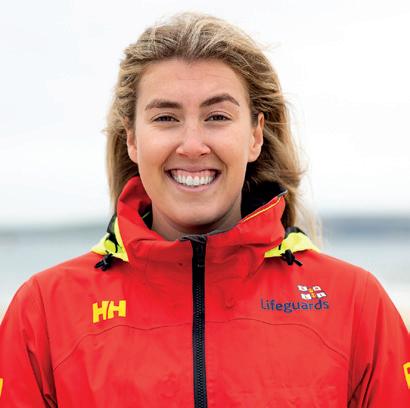
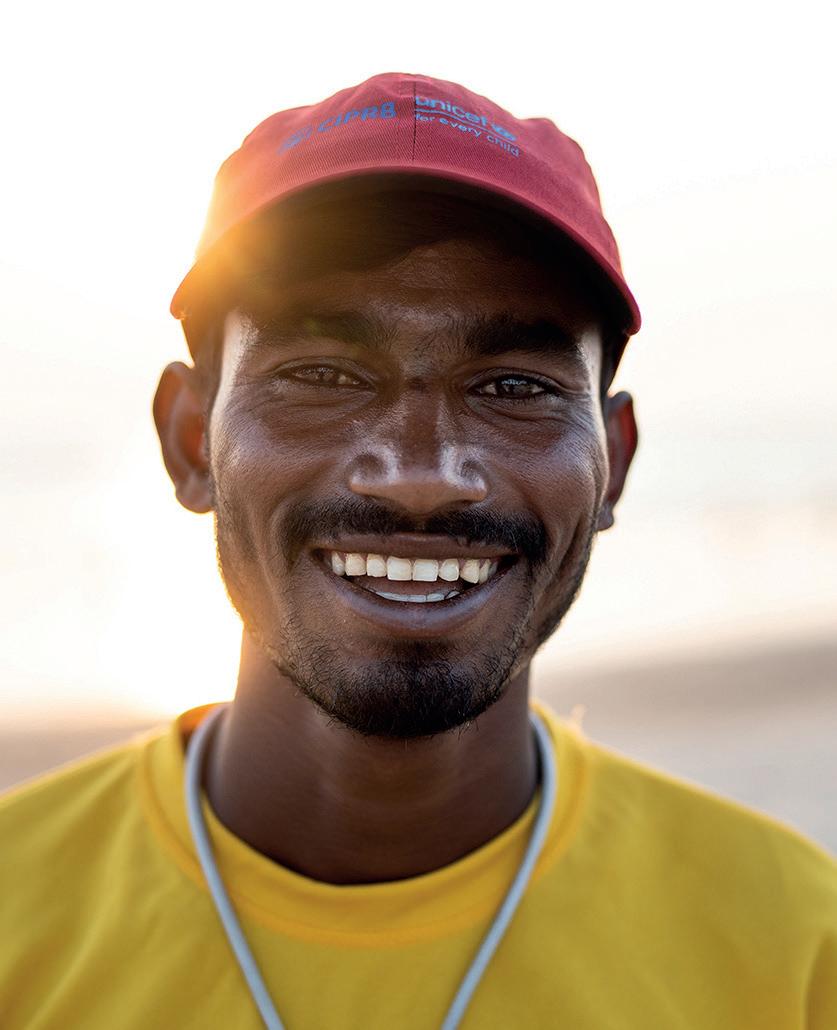
Selim’s life was changed when he became a lifeguard in Bangladesh

‘I can now support my family as well as the community’ 4
By sharing our 25 years of lifeguarding expertise, we have helped communities set up their own lifeguard services, in countries with high drowning risks. In 2012, the RNLI teamed up with the Centre for Injury Prevention and Research, Bangladesh (CIPRB) on its SeaSafe Project, to reduce drowning on Cox’s Bazar Beach. RNLI-trained Lifeguard Selim Mohammad explains what his job means to him.
‘My older sister was a volunteer on the SeaSafe Project and I was inspired by her.
I decided, when I became old enough, I’d join this project and become a lifeguard. Everybody respects the lifeguards. Everybody listens to them. They inspired me, as a young surfer, to become a lifesaver.
‘My life has changed a lot. I have achieved a lot of things. I wanted
‘The service has kept me fit and healthy’ 5
With an MBE and Guinness World Record under his lifesaving belt, RNLI Lifeguard Chris Lewis is the longest-serving lifeguard in the world. Today, at 75 years old, Chris has smashed his 59-year record and continues to keep Bournemouth beachgoers safe.
‘I’ve been lifeguarding since I was 16 and part of the RNLI lifeguard service since it began in 2001.
‘I have total respect for the RNLI because, in a strange, indirect sort of way, they saved my life. As a result of the rigorous lifeguard fitness tests and training, I am so much healthier, both physically and mentally.
‘People ask me: “How long are you going to do it?” And I answer: “Until I fail the fitness
test and can’t pull my weight.”
If you want to do, in my view, the best job in the world and support your community, it doesn’t take a lot to put a bit of effort into training.
‘You’re rewarded with some very proud moments. Being applauded on a beach is one of mine after I rescued a teenage girl and her two younger brothers who were being smashed into a groyne by the waves. I’ll never forget it.’
to be a lifeguard and I became a lifeguard. I got married and have two children. I can now support my family with a permanent income. I’m really happy.
‘I want to thank the RNLI people who came from so far to help our community, the SeaSafe Project and the CIPRB. The lifeguard service on Cox’s Bazar Beach is saving and changing lives.’
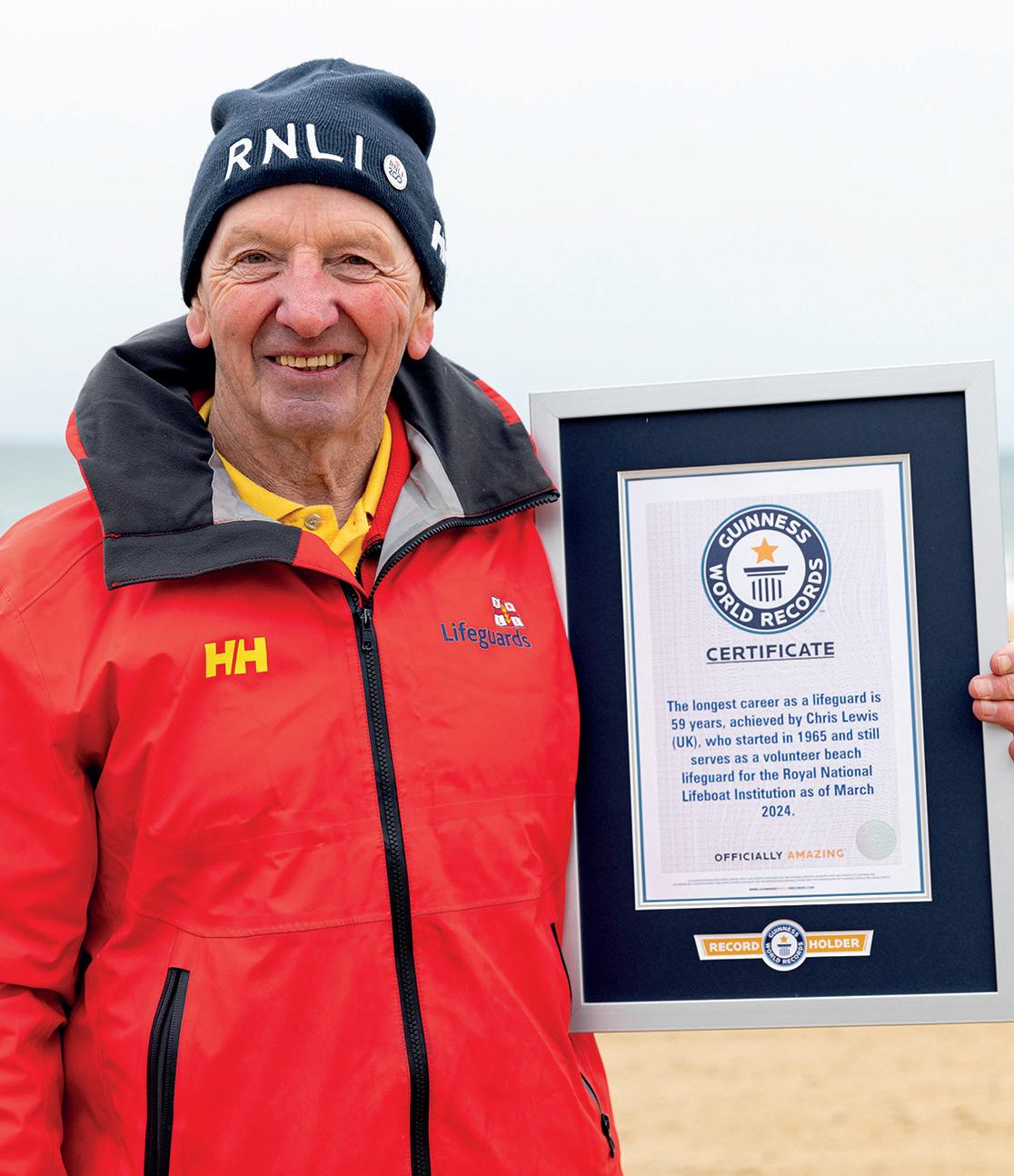
Chris is the longest-serving lifeguard in the world, with a certificate to prove it!
‘A
lifeguard’s advice saved my life’
When surfer Ruth Osborne became separated from her board, she battled breaking waves, then remembered Float to Live.
‘Losing my board was my worst nightmare. I couldn’t swim and I was very scared of being out of my depth.
‘I lost my uncle to the sea when I was 6 years old, so I’d always had a fear of water. But surfing felt different. My board was my flotation device – my sense of security. So when I didn’t feel the usual tug of my leash after coming off it, and saw my board bobbing off to shore, I was terrified.
‘I shouted for help from nearby surfers, but nobody
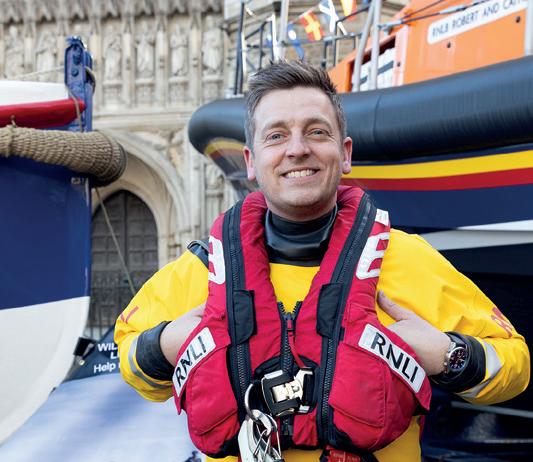
heard me. I was fighting against the breaking waves. It was like being in a washing machine. I thought: “That’s it, that’s me gone.”
‘Then I remembered the advice an RNLI lifeguard had given me just days before – relax and float until you can get to safety or help arrives. And that’s what I did. Eventually, the sea brought me closer to shore and I was OK.
‘After this, I decided to face my fears and learn to swim –an RNLI lifeguard taught me!’
Ruth believes she’s alive today thanks to the Float to Live advice she learned from RNLI lifeguards
‘A big sigh of relief’
Lifeboat volunteer Max Underhill feels reassured when lifeguards are on duty.
‘When RNLI lifeguards start their patrols each season, lifeboat crew like me breathe a big sigh of relief. We are so thankful to have their support, expertise and vigilance, especially during our busiest time of year.
‘When crew and lifeguards train together, lifeguards are always the first to volunteer to get wet! Yet despite their love for and skill in the water, they actually save more lives through their preventative actions, which is just incredible when you think about the thousands of people who visit our beaches.’
A chance to thank the RNLI lifeguards that make a difference in your life, and to celebrate the invaluable contribution that lifeguards across the world make to drowning prevention.

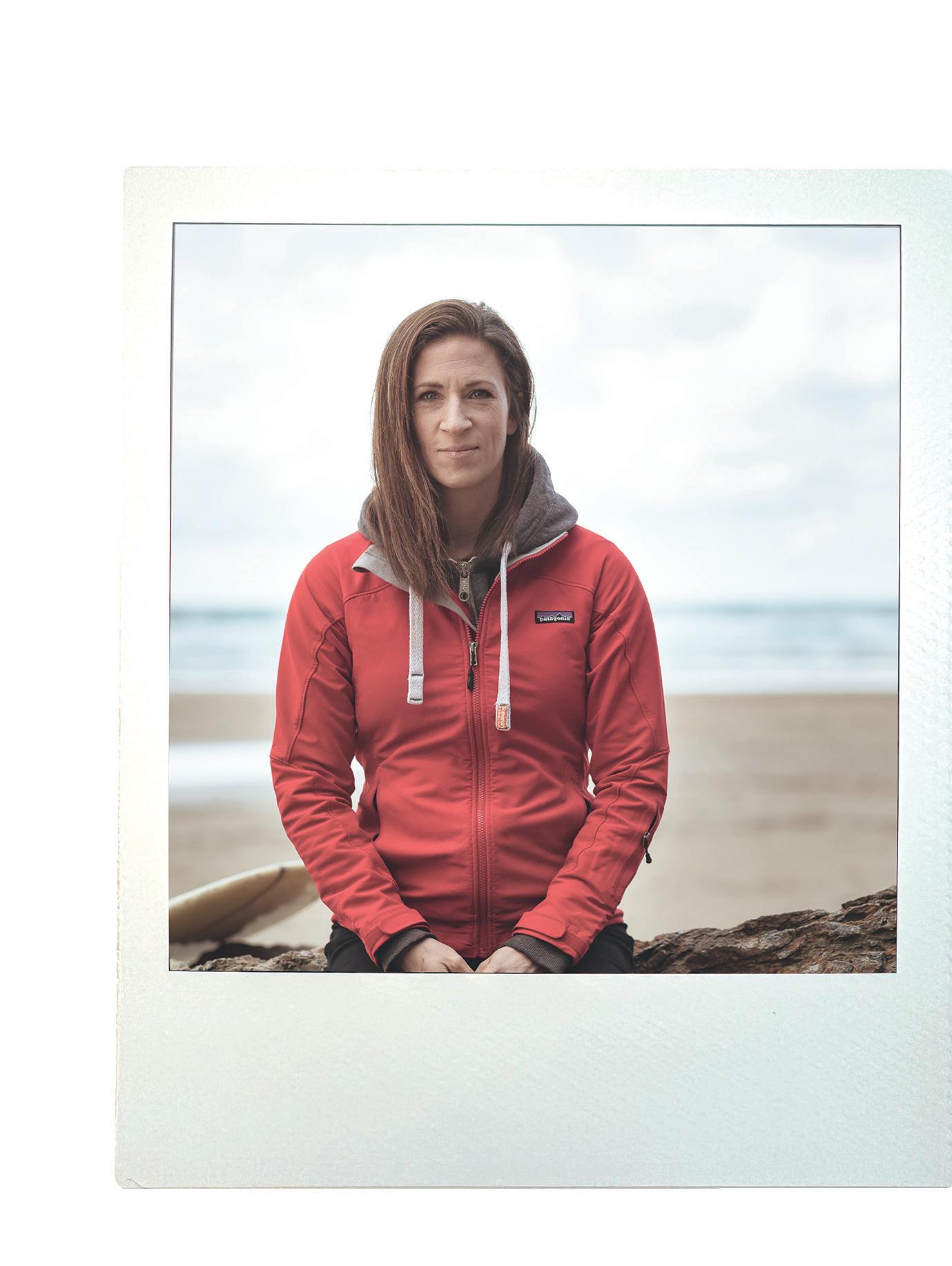
Max values the lifeguard service through the busy season
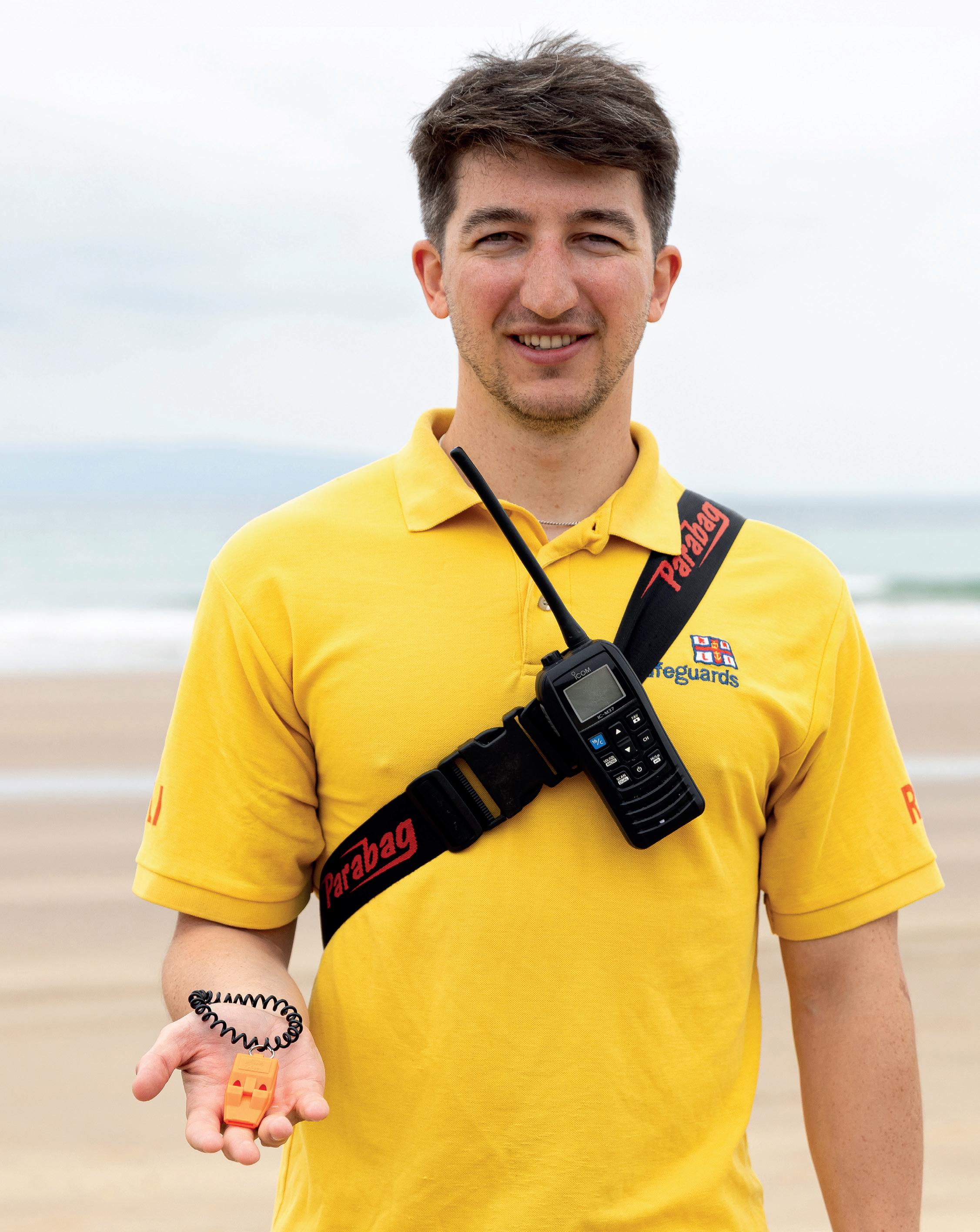
‘That sharp sound is instantly recognisable. It turns heads and, in many cases, helps save lives’
MICHAEL JESS, LIFEGUARD PORTRUSH

Me and my ... whistle
In our latest peek into the world of our lifesavers, Portrush’s Michael Jess reveals how he has a blast at the beach
As technology becomes more advanced, there’s still nothing that matches a simple whistle for getting someone’s attention quickly.
It needs no batteries, it’s small, cheap and always ready to use. I’ve even attached a hair bobble to mine, so I can secure it to my arm and grab it instantly. The whistle’s incredibly versatile and has stood the test of time as a reliable, fast and effective way to communicate –especially on a windy beach.
If someone’s drifting out of the red-and-yellow flags towards a rip current, I’ll use the whistle to alert them. That sharp sound is instantly recognisable. It turns heads and, in many cases, helps save lives.
Hear more from Michael and other lifeguards in the new podcast We Are Lifeguards at RNLI.org/WeAreLifeguards.
Photo: RNLI/Nathan Williams
LIFESAVING, UPGRADED: ATLANTIC 85 MK4
Find out how RNLI engineers and crews are taking this much-loved lifeboat to the next level
Always improving
Innovation has always been part of RNLI lifesaving. Throughout our charity’s history, pioneering people have explored new technologies and combined this with their existing knowledge and experience.
They’ve improved lifeboats and invented new ones. Their purpose has always been to provide brave crews with safer and more effective vessels –lifeboats that protect them as they launch to the rescue.
With over 50 years of service under its belt, the B class lifeboat
has already seen a number of upgrades. The Atlantic 85 is the third generation of B class lifeboat, its predecessors being the Atlantic 21 and the Atlantic 75. While the Atlantic 85 will continue as the current generation, a talented team are working hard on an exciting retrofit upgrade – the Mark 4 (Mk4).
The Atlantic 85 Mk4 Project Team
There are many factors to consider when making changes to a lifeboat, so the project team includes people with a broad range of experience and expertise. Together, they’re producing an upgraded lifeboat that will work smoothly from launch to recovery – and be ready for anything that could happen in between.
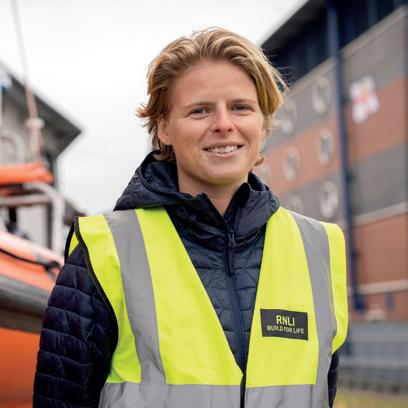
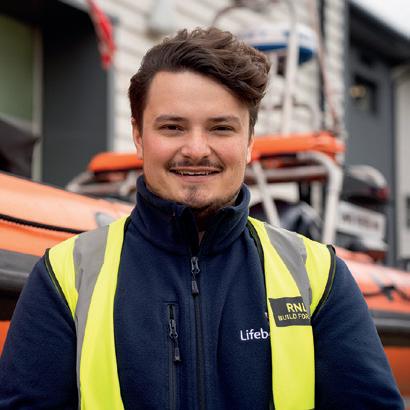
Senior Naval Architect Charley Baxter (right) is part of the team. ‘The B class is a very popular lifeboat among the crew,’ she says. ‘It’s a great boat with a long lifespan – we don’t need to redesign the whole form. But we can make it even safer and reliable with a retrofit upgrade. With this type of upgrade, new decks will be bolted down onto the existing hulls. This will lower costs and save time, so our lifeboat crews can benefit from the changes as soon as possible.’
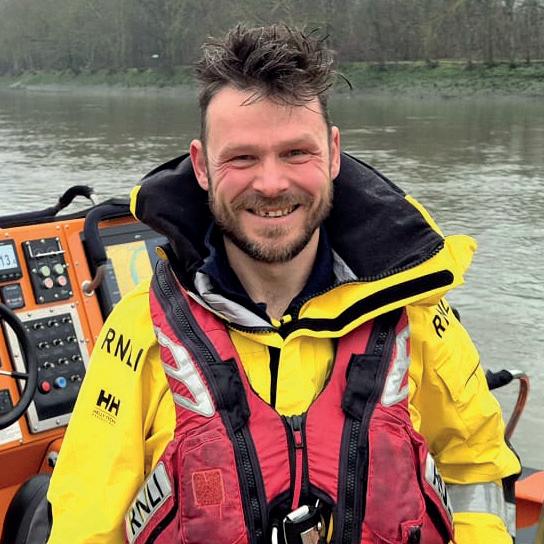
Also on the project team is Senior Engineer Tom Coe (left). He specialises in human factors and whole-body vibration, particularly in small, fast boats. Tom is also a lifeboat volunteer at Chiswick, so he has plenty of first-hand experience. Tom has been guiding the design process and helping to ensure the upgrades meet requirements.
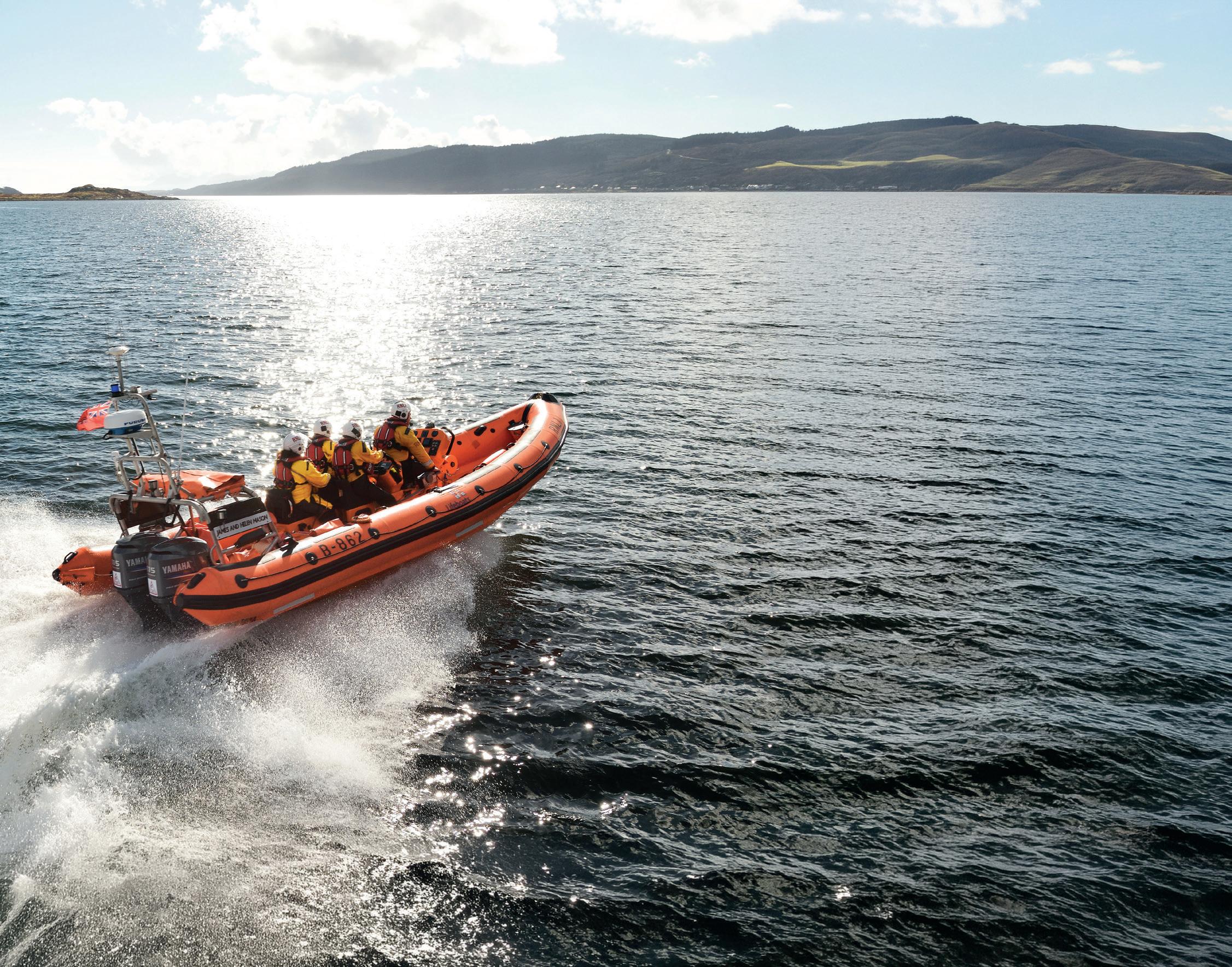
Tighnabruaich Atlantic 85
inshore lifeboat James and Helen Mason B-862
The design process
‘Since the start of the project, we’ve been talking to lifeboat crew members,’ says Senior Engineer Tom Coe. ‘Their opinions and expertise have been key.’
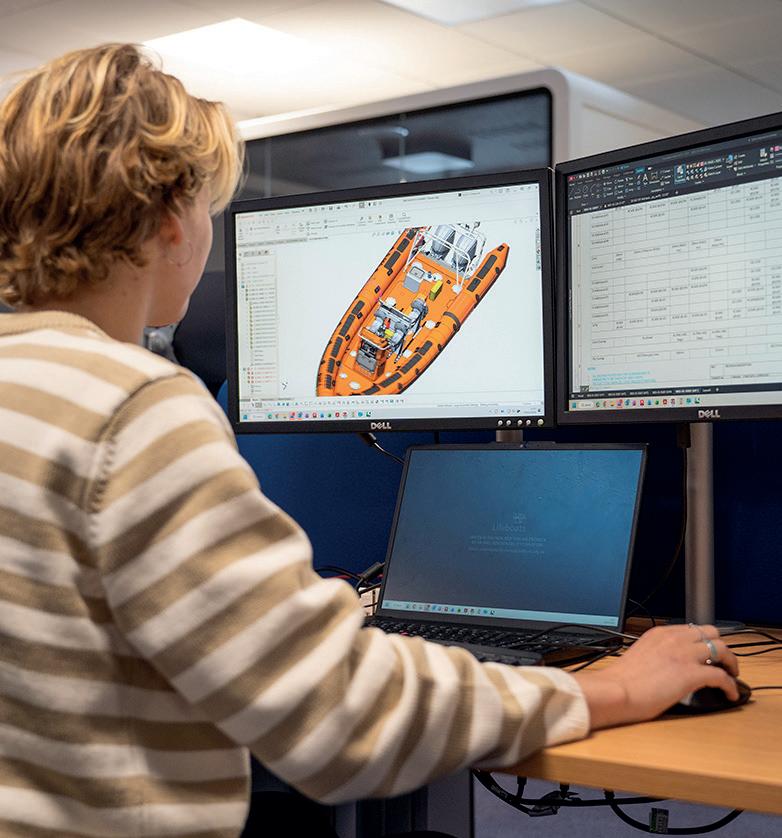
Senior Naval Architect Charley Baxter works alongside the RNLI’s electronic, mechanical and CAD (Computer Aided Design) teams. She says: ‘We use a 3D modelling software to create mock-ups of our hand sketches. Then we use simulations to do finite element analysis.’ That’s a process that predicts an object’s behaviour based on mathematical calculations. ‘We can test our designs and check if they’ll be structurally sound,’ explains Charley. ‘There’s a lot of computer-based work, but I also spend time in the workshop, helping to make sure everything we’re designing works in reality.
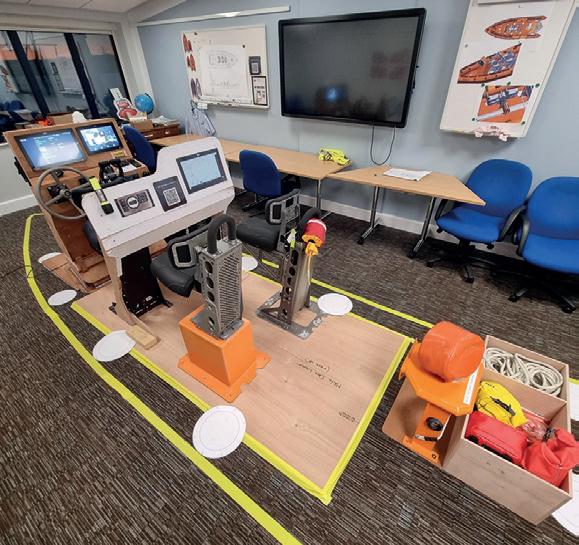
‘We’ve been using mock-ups, too,’ she continues. ‘3D software is great, but it can only take you so far. We put a plywood mock-up of the proposed Mk4 in the RNLI College. Crew members came to test it out and give us their feedback. It might’ve been less technical, but it was just as powerful!’
Fit for future lifesavers
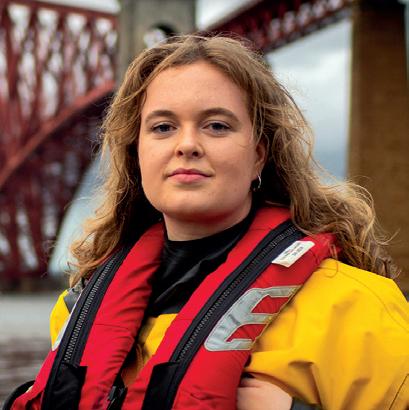
‘I’ve volunteered for 8 years, first at Larne Lifeboat Station and now Queensferry. And I’ve been attending regular meetings about the Atlantic 85 Mk4, reviewing and commenting on design options.
‘My experience across different geographical areas and stations has helped me provide practical feedback on designs. Being part of an upgrade process has been incredibly interesting and exciting. Seeing suggestions being actively listened to has been great to see.’
Tom says: ‘On the current Atlantic 85, if you’re shorter than 5ft 2 [157cm], you can struggle to see over the bow. For the Mk4, we’re designing for a wide range of body shapes, from the 2.5th female percentile up to the 97.5th male percentile.’
‘The mock-up really helped with this part of the design,’ says Charley. ‘For example, we adjusted the steering wheel position because we found taller crew members couldn’t fit their legs underneath it. We want our lifeboats to be accessible to as many people as possible. The RNLI relies on volunteers, and this will help us maintain a wide volunteer base.’
Powered by you
The RNLI has seen a significant shift towards inshore operations and there are currently 136 B class lifeboats around the UK and Ireland. Most of them were funded by generous gifts from people or trusts. All of them are powered to the rescue by kind donations from people like you.
They are already incredibly capable vessels, but this retrofit upgrade will take them to the next level. Tom says: ‘We’ll have a more effective search and rescue capability. That’s a great thing to give our crews! It’s not only safer, it’s better.’ Charley adds: ‘Your support is helping us to provide the crews with an even more effective lifeboat. They’ll be safer every time they launch to the rescue.’
OUR FRIENDS ELECTRIC
‘The Mk4 introduces a significant upgrade to the lifeboat’s electronic systems. Central to this is the new lifeboat management system, built around a suite of multifunction displays. It provides an intuitive interface for navigation, vessel monitoring, power management, and system control.’
The team uses 3D modelling software
100 people tried the Atlantic 85 Mk4 mock-up and gave their feedback to the team
VIEW FROM THE CREW
PETRA SURPLUS, CREW MEMBER
THE UPGRADES
Take a closer look at
how the Atlantic 85 Mk4 is shaping up
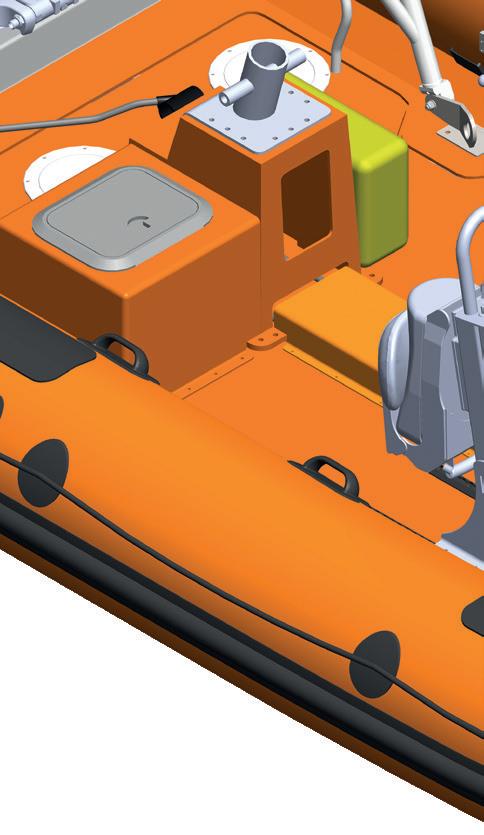
Modified sponsons
‘A casualty in the water – for example, a kitesurfer in their full kit – can be very heavy.
Pulling them up and over the sponson is really hard,’ says Charley. ‘So, we’re altering it so the sponson can open. The crew will remove a washboard and the waterline will be almost level with the deck. It’ll make recovering casualties quicker and safer, and put less strain on the crew.’
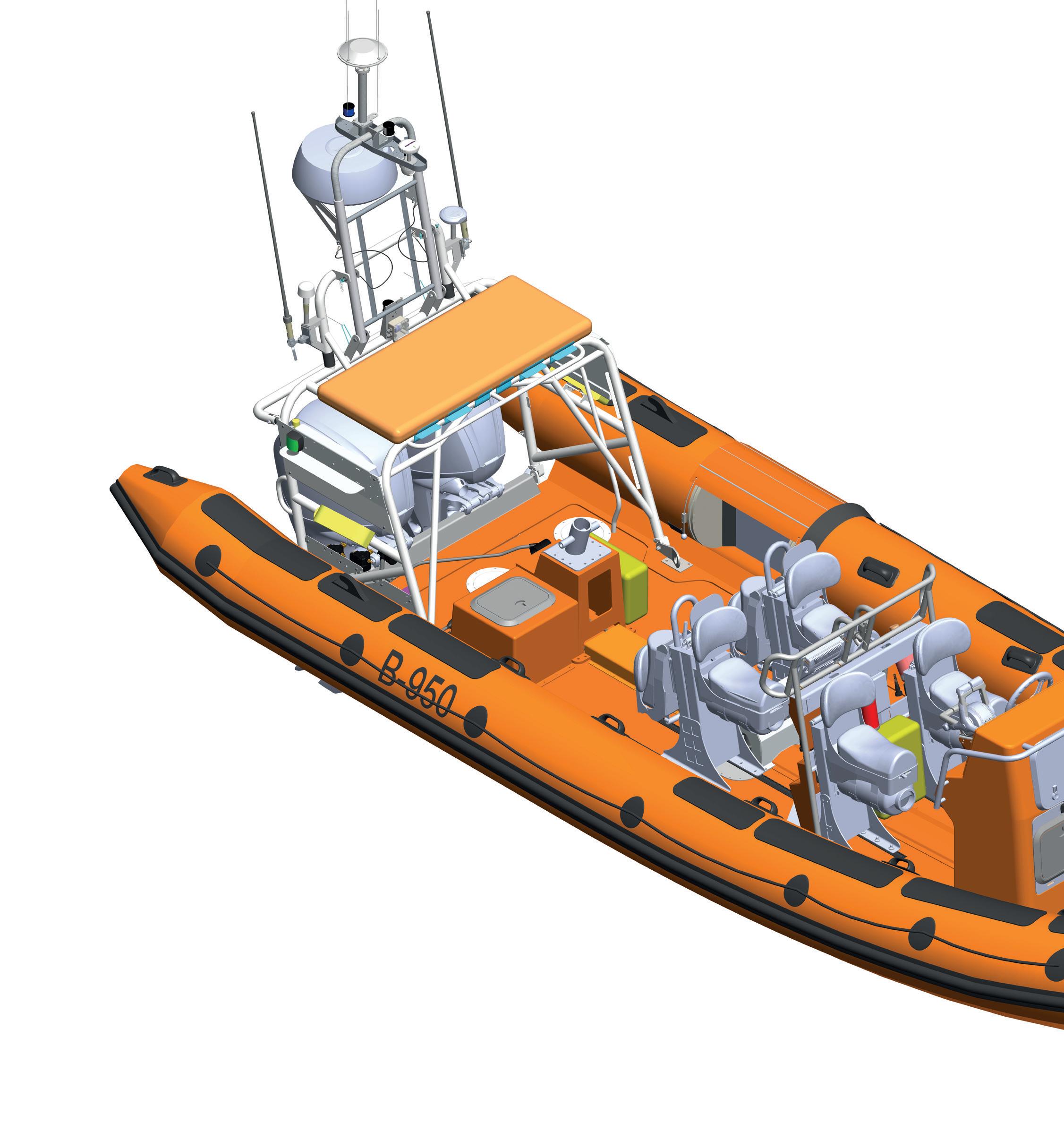
Two-by-two seating arrangement
Currently, the Atlantic 85 has a diamond seating formation (one seat, two seats, one seat). The Mk4 will be improved with a two-by-two arrangement. Drawing on his experience of designing for human factors, Tom says: ‘It’s so much easier and more natural to communicate with someone sat next to you. A huge amount of communication is non-verbal, so being able to see each other is important.’
It will also help the helm, who currently sits alone on the front seat. ‘Now, the helm will have full sight of the screens,’ says Charley.
Two extra seats
Changing the seating arrangement creates more room: ‘We have space for two fold-down jockey seats at the back of the lifeboat,’
Charley reveals. ‘At the moment, casualties usually sit on the middle two seats with crew members either side of them, without seats of their own. Now everyone will have a seat.’
It’s not only on rescues that the extra seats will make a difference. ‘They’ll also improve our training capability,’ explains Charley.
‘Currently, when a lifeboat trainer visits a station, only three crew members can go out to sea with them. But with these extra seats, four crew members can train together.’
4
Suspension seats and active stabilisation
‘You can see up to 12G impact when a small boat comes off a wave and lands on the next one,’ says Tom. ‘The new suspension seats will absorb a lot of the shock, reducing the peak impacts by about 50%. It’s a tough environment out at sea. We want to look after our crews as best as we can.’
Another way the team are working to reduce whole-body vibration is with an active stabilisation system. ‘As the boat goes through the water, it pitches,’ explains Charley.
‘The active stabilisation system can be attached to the transom (at the back of the lifeboat). It reacts to the waves and deploys fins, making the whole boat steadier so crews experience less whole-body vibration.’
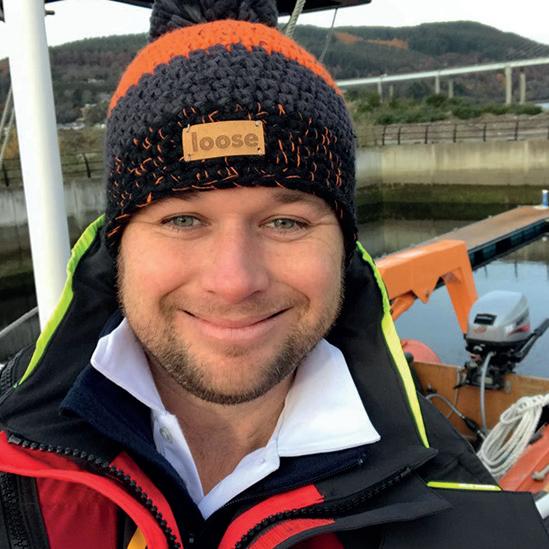
‘The upgrades will enable the crew to work more cohesively and efficiently on search and rescue missions, with more connected technologies, in a more functional layout.’
NATHAN EVANS, RNLI MARITIME STANDARDS LEAD (LIFEBOATS)
5
New Raymarine navigation and communications systems
‘The new lifeboat management system will be user friendly and will be integrated with boat systems,’ says Charley.
‘We’re also improving communications onboard by upgrading to a wireless intercom. The new system has noise suppression, so that the volunteers won’t be contending with the wind.
‘With the new system everyone can be in direct communication with their crew mates at all times. Even if they need to transfer onto a casualty vessel, they’ll still be connected. It will really improve safety and situational awareness.’
View the Atlantic 85 Mk4 at Southampton International Boat Show this September. And you can get 20% off the boat show ticket prices using the code RNLISIBS26.
Words:
Photos:
Charis Jefferson
Paul Downes, Sunny Kang/Blast! Films, RNLI/(Charis Jefferson, Nigel Millard)
SHELF LIFE
Picking your next beach read? Planning a jaunt around the coast? Pack one of these page-turners
Reviews: Becci Jewell, James Dwyer, Hannah Old and Nikki McMullen
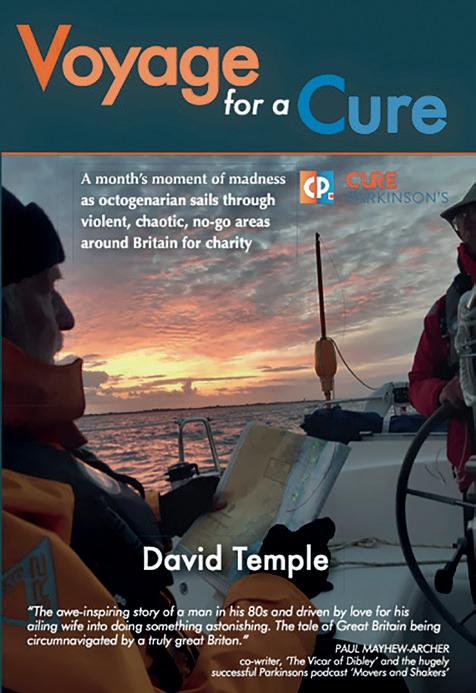
Voyage for a Cure
by David Temple
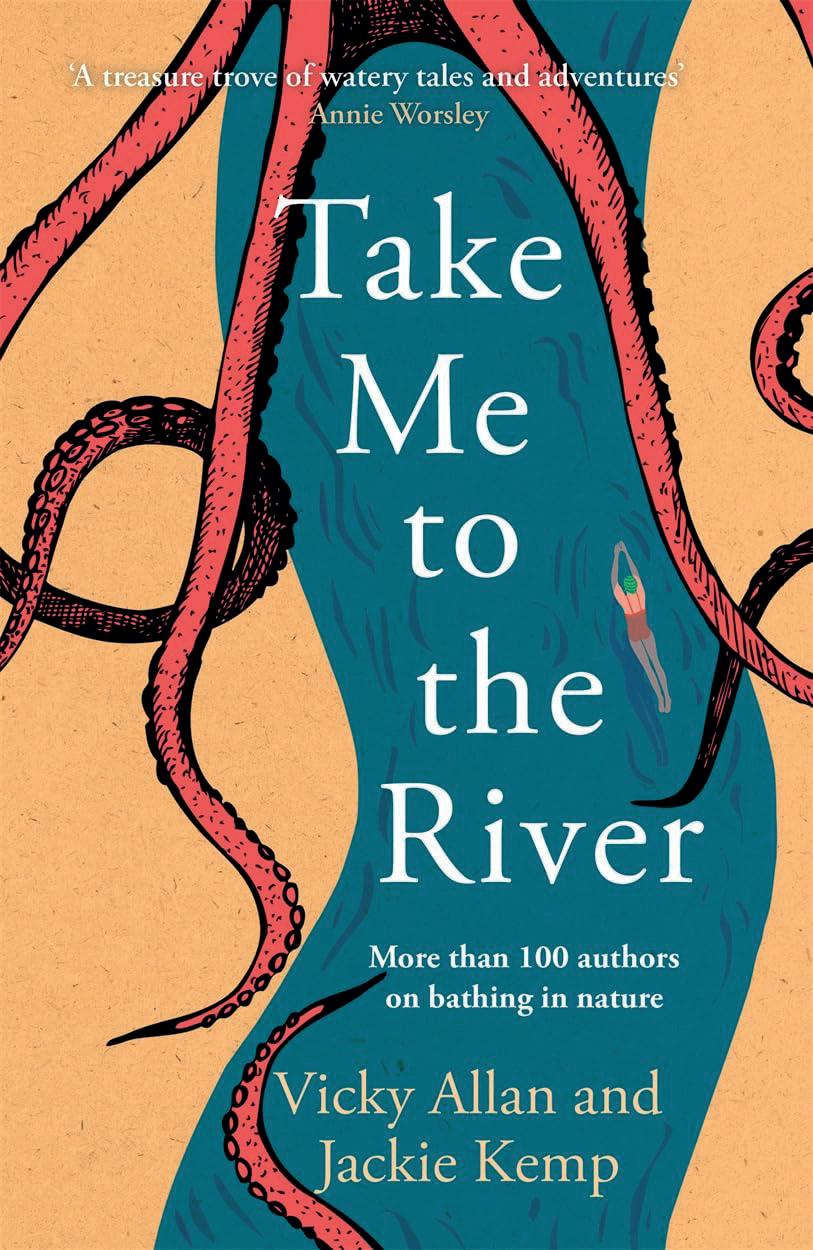
Take Me to the River
by Vicky Allan and Jackie Kemp
In Take Me to the River, Vicky Allan and Jackie Kemp gather the words of more than 100 authors drawn to watery worlds and wild swimming. This carefully curated anthology dives back in time, surfaces in the company of sea monsters, swims alongside endurance athletes, seduces in steamy scenes, and lingers in quieter moments of contemplation and recovery.
Whether you’re an ice-pool plunger, a summer swimmer or a seaside reader, Take Me to the River reaches beyond the joy of wild swimming. Exploring historical accounts, family rituals, personal rites of passage and more, this captivating collection invites you to jump in for a refreshing – and sometimes bracing – dip.
Black & White Publishing | Price: £20 (hardback)
This first-person account of a sailing trip around the coast of Britain is full of warmth, wit and poignant moments, providing an insight into the realities of undertaking such a challenge.
When David’s wife, Hazel, was diagnosed with Parkinson’s disease, he became determined to raise money to help fund a cure. Written in David’s unique tone of voice, you gain a real insight into his character, as he attempts to sail around Britain in his 80s, with the aid of a colourful crew of characters.
All profits from this book are donated to the charity Cure Parkinson’s.
Self-published | Price: £25
Anchorages of the British Isles
by Jane Cumberlidge, Dick Durham, Norman Kean, Jonty Pearce and Dag Pike
Discovering a beautiful new spot for dropping anchor is a wonderful thing, but finding one that’s also safe and sheltered is a sailor’s dream. In this book, you’ll be whisked away to beautiful bays, quiet coves and serene escapes all around the coasts of the UK, Ireland and Channel Islands.
You’ll find breathtaking photography and a useful guide to over 100 anchorages, including safety advice, historical facts, how to get there, and tips for making the most of your visit.
Featuring contributions from seasoned sailors, navigators and cruisers (including an ex-RNLI lifeboat tester!), you’ll be sure to find new special places to spend time on the water – maybe some so idyllic that you’ll want to keep them a secret!
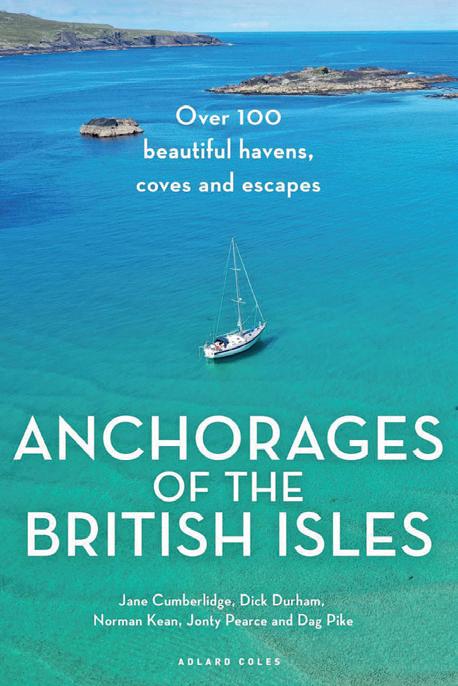
Published by Adlard Coles
Price: £20
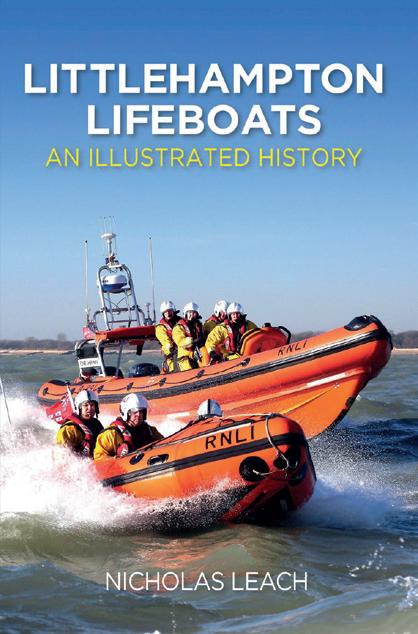
Published by Foxglove Publishing Price:
£12
Littlehampton Lifeboats
by Nicholas Leach
If you have a soft spot for Littlehampton – whether you’re a local or holidaymaker –you’ll love this latest edition of the illustrated history of the Littlehampton lifeboats. It’s a comprehensive history, covering dramatic rescues, the pulling and sailing era of lifeboats, lifeboat building down at the town’s famous William Osborne boatyard, and the first inshore lifeboats – including the Blue Peter-funded lifeboats that served the station for 49 years.
You’ll find plenty of new photographs and details of the latest shouts. This fascinating read is a must for anyone interested in sea rescue or RNLI history.
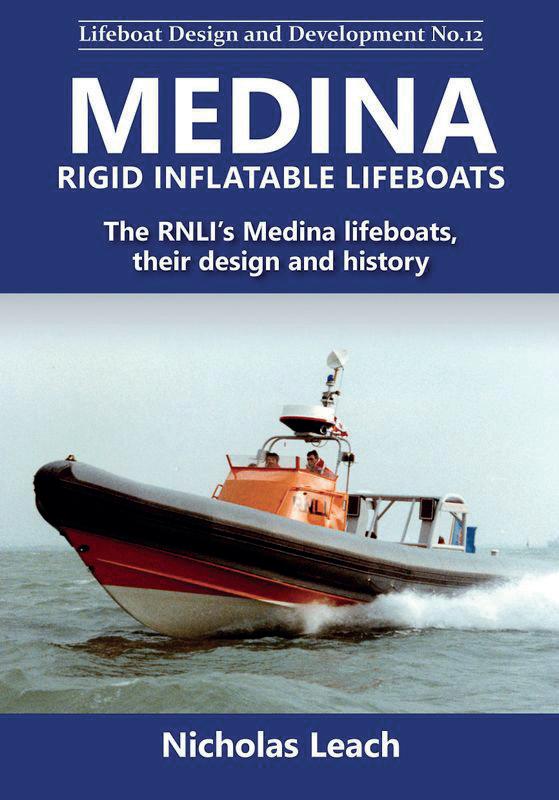
Medina Rigid Inflatable Boats
by Nicholas Leach
This latest volume in Leach’s Design and Development series looks at the Medina class lifeboat. In the 1970s, the RNLI developed and built three large rigid inflatable lifeboats. Despite extensive trials and many different engine configurations, none of them saw operational service.
Published by Foxglove Publishing
Price: £14
This fascinating and thoroughly researched book delves into the background of the design and explores how large rigid inflatables were developed. You’ll also find out how the design was embraced by lifeboat organisations overseas – with plenty of technical information to satisfy the budding lifeboat historian.
Both available online at foxglove-publishing.company.site
Are you an avid reader? Do you love a nautical yarn? We’re always looking for new reviewers for Lifeboat magazine. If you’re interested in penning a 100-word review, please email us.
Friends of the RNLI
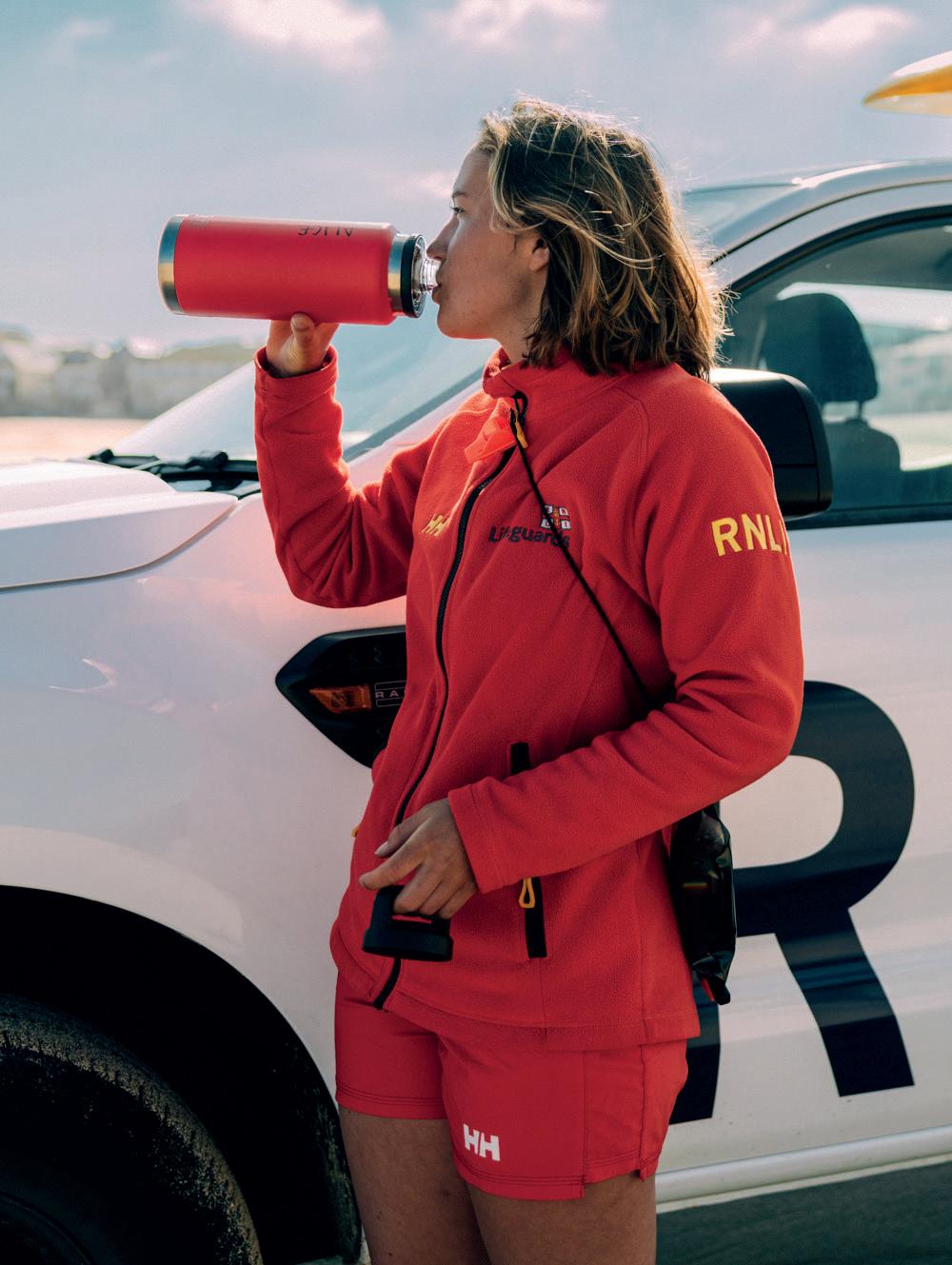
YETI – ensuring our lifeguards stay hydrated and ready for action
It’s thirsty work being a lifeguard! To celebrate 25 years of RNLI lifeguards, premium outdoor gear brand YETI has kitted out every lifeguard unit across the UK with its durable Rambler bottles that keep drinks hot or cold all day long. The bottles are especially welcome at beach lifeguard units without running water and offer a sound alternative to single-use plastic.
YETI’s support extends to the most remote stretches of coastline. By equipping lifeguard trucks with YETI Silo coolers, lifeguards in hard-to-reach locations can stay on the beach throughout their shift with access to a supply of fresh, cold water.
As a supportive partner, YETI provides vital funds, supplies products for RNLI events, and shares our water safety messaging with its passionate outdoor community.
Wordsearch
Can you find the names of 10 beaches (out of more than 240) that RNLI lifeguards patrol around the UK and Channel Islands?
Photo: Jack Johns
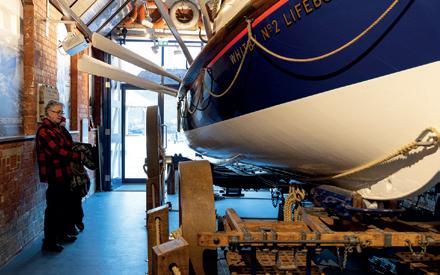
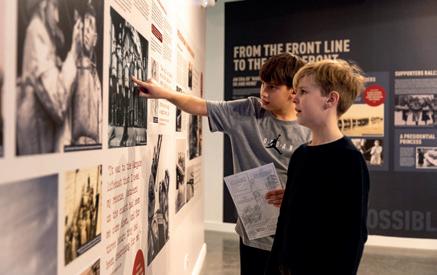
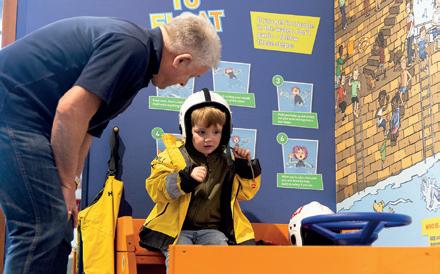
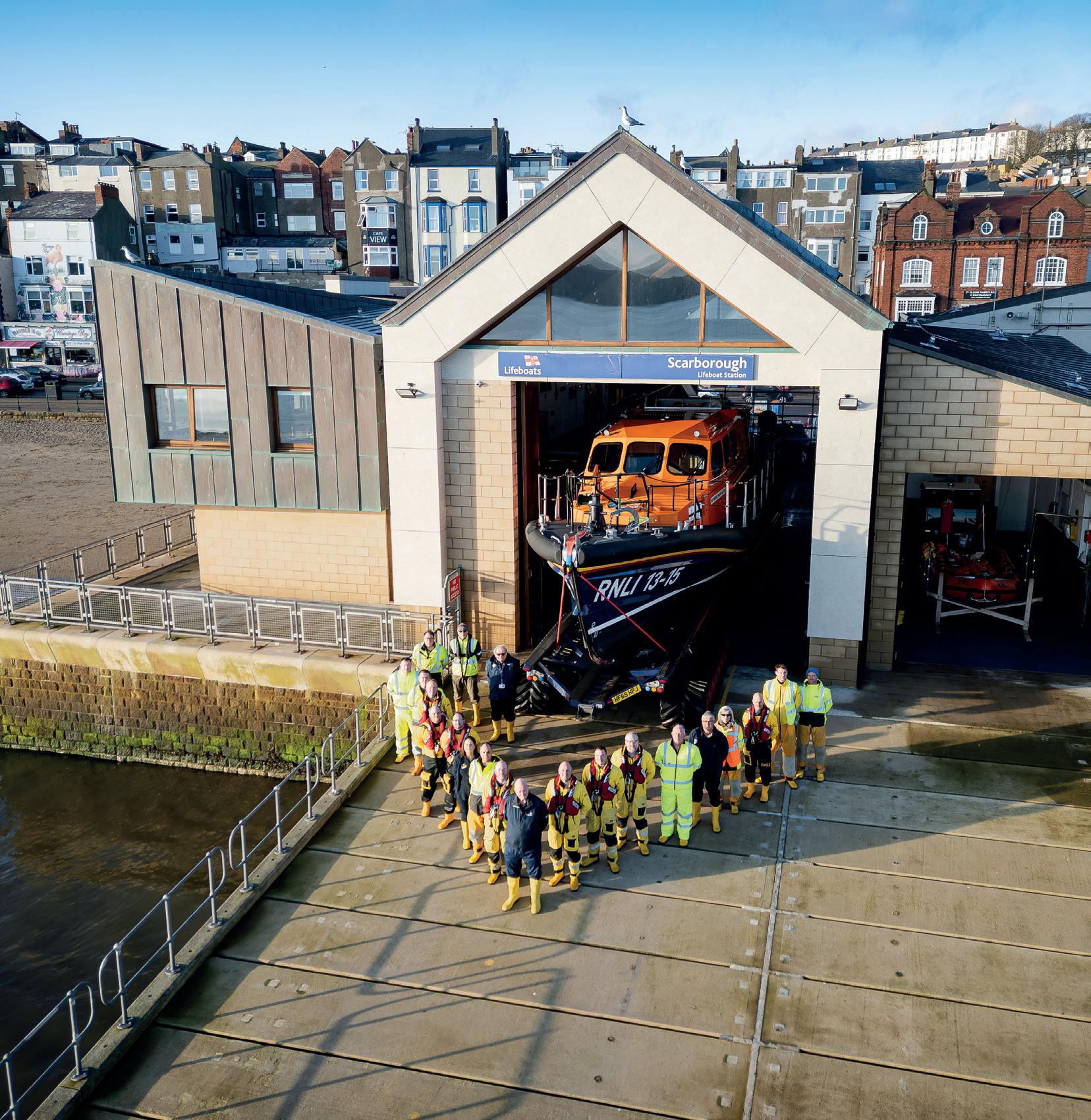
Cut the cost of a day out for your crew this summer with a trip to an RNLI lifeboat station, museum or visitor centre. Immerse yourself in over 200 years of RNLI lifesaving and explore the rich heritage you’ve helped create. Get up close to a lifeboat, dress the kids in crew kit and discover what it takes to be a lifesaving volunteer in the 21st

Photos: RNLI/(James Smerdon, Nathan Williams).
Alex Barthe
His RNLI lifeguard training helped save Alex’s own life – now he volunteers to help save others
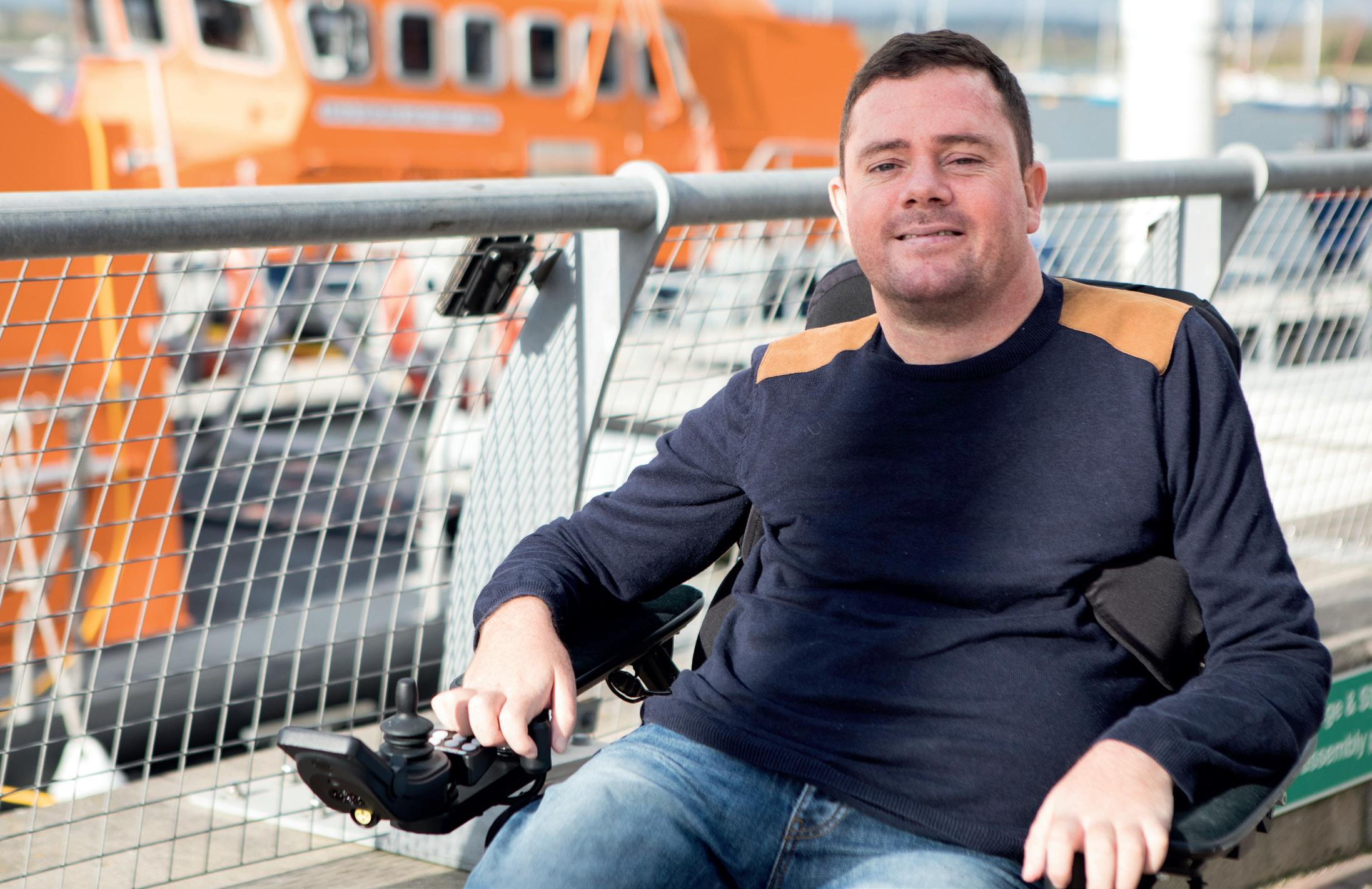
How did the RNLI help to save your life?
I was born in Argentina and started my lifeguarding career there. I researched services around the world and found the RNLI – it sounded amazing. I moved over and became an RNLI lifeguard. During a training exercise, we learned how to rescue a casualty with a spinal injury and I acted as the casualty. Our supervisor told my colleagues to cut my wetsuit – with that injury, pulling it off could cause more damage, or even death.
Shortly after that, I was surfing on holiday in Argentina and I had an accident – I hit my head on the sea floor and was left face down in the water, paralysed. A man rescued me from the water. From that point, I was guiding the first aid, based on what I had learned at the RNLI. In hospital, the nurses tried to pull my wetsuit off. Instantly, I remembered the training and said: ‘No! Cut the wetsuit!’ I was trained to save others, but that training ended up saving me.
How were you able to bring your RNLI training to the lifeguard service in Argentina?
After my accident, I worked hard to recover as much as possible. I needed lots of support, so I stayed in Argentina.
The council I’d previously worked for as a lifeguard offered me a coordination role and I used my RNLI training to help them.
For almost 10 years, I worked to improve their service: standardising the lifeguard training and protocols, providing equipment, coordinating with other emergency services and introducing school talks.
What’s your current volunteer role at the RNLI?
When I moved back to the UK, I saw a volunteer role and wanted to get involved. I help ensure RNLI volunteers receive recognition for long service or other outstanding efforts, as well as carry out research and process information. Volunteers are the core of the RNLI – it’s so important to thank them.
Lifesaving has always been important to me. But since my accident, it’s become my purpose in life. If there’s anything I can do to help keep people safe and improve our lifesaving service, I’m happy to help.
Hear more from Alex in episode 132 of the RNLI podcast series 200 Voices. Search ‘200 Voices’ wherever you get your podcasts.
Photo: RNLI/Barbara Szente
Celebrate 25 years of RNLI lifeguards in style
Discover our exclusive range of products to mark this special milestone, designed to help you show your support for RNLI lifesavers on the beach.
Our lifeguards are loving the new range! Here are RNLI Lifeguard Supervisors Jodie and James proudly sporting some of the 25th anniversary products.
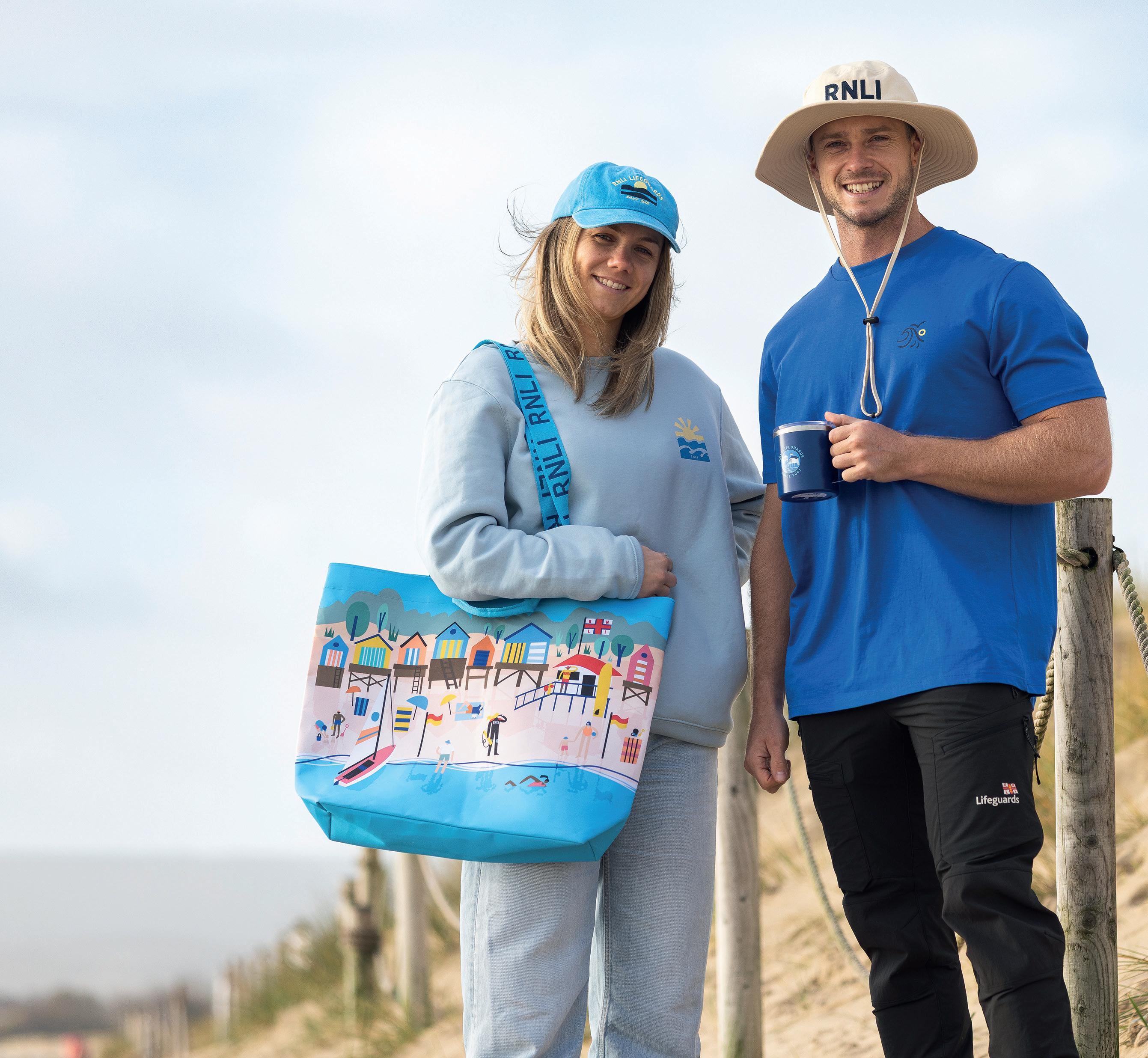
From comfortable clothing to cool accessories, there are so many ways to celebrate RNLI lifeguards with this new collection. Make a statement at the seaside with our colourful beach bag (designed by Crew Member Jonty Storey) or protective boonie hat. Or give a nod to the lifesavers with an eye-catching pin badge or handy travel mug. No matter what you pick, you’ll be waving the flag for our legendary lifeguards who have been making beaches safer for 25 years – thanks to support from kind people like you.
1. Embroidered Cap, Washed Blue RS2642102BLU £15/€18
2. Unisex Sweatshirt, Light Blue RS2640303BLU £40/€48
3. Beach Bag RS2647901VAR £15/€18
4. Boonie Hat RS2642101 £18/€22
5. Unisex T-shirt, Blue RS2640826BLU £22/€26.50
6. Travel Mug RS2636303NAV £12/€14.50
To explore all the products in this range, visit shop.RNLI.org/Lifeguards25 or scan the QR code with your smartphone or tablet.

LAUNCHES
Thank you – you are the force behind the launches listed on these pages. Check out the recent action at your favourite lifeboat station and crack the code to the letters/numbers with the handy key opposite
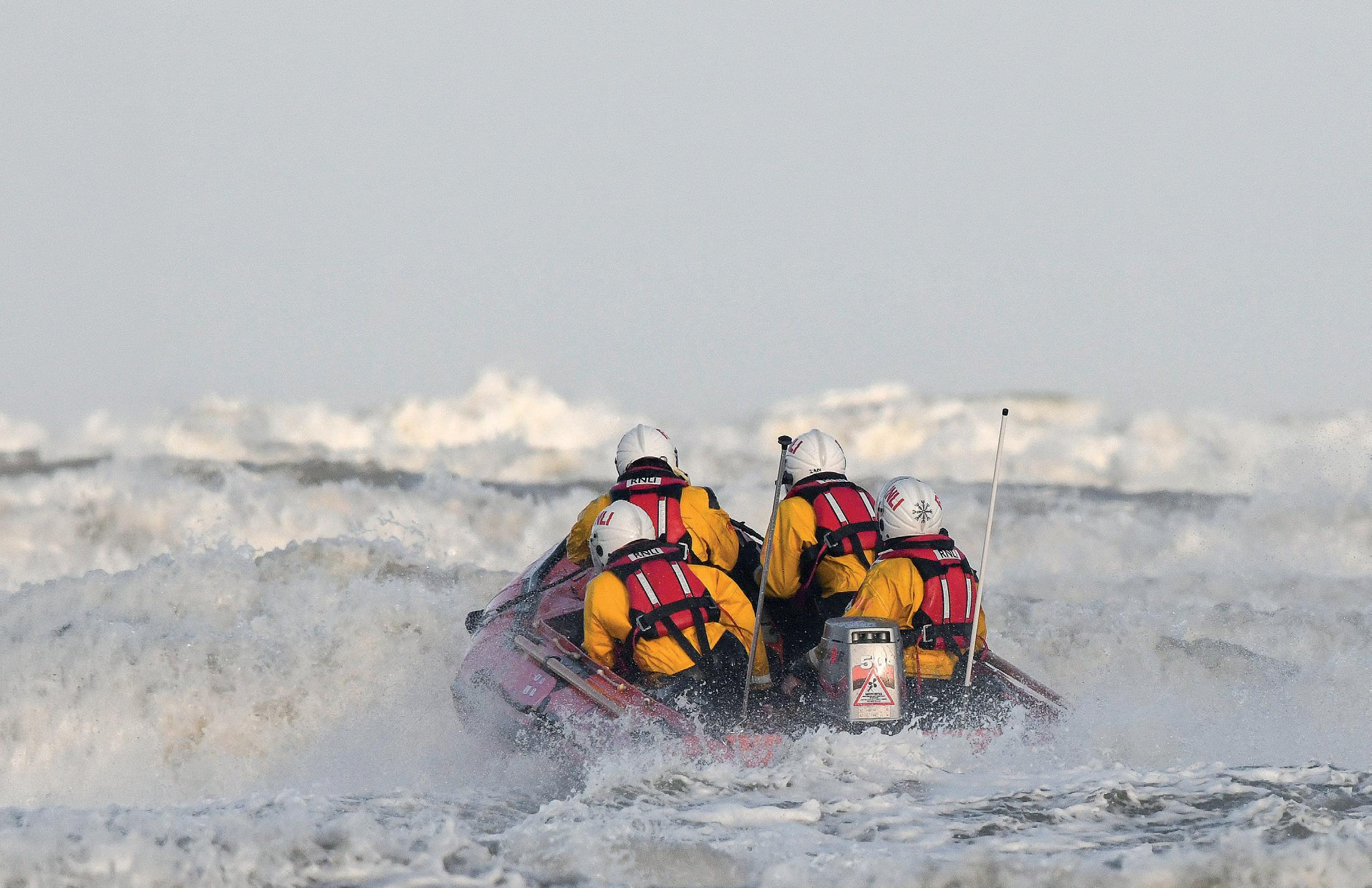
Cardigan D class John Darbyshire
D-845 launching in rough weather
Photo: Stephen Duncombe
A ABERDEEN
D-830: Dec 2, Jan 16
ON1248 (17-24): Dec 2,20, Jan 16, Feb 9
ABERSOCH
B-886: Dec 21, Feb 11
ABERYSTWYTH
B-937: Jan 19, Feb 10
ACHILL ISLAND
ON1240 (14-28): Feb 2
AITH
ON1232 (17-14): Jan 2
AMBLE
D-867: Dec 5,21
ON1323 (13-16): Dec 9, Jan 11
ANGLE
ON1291 (16-11): Dec 4,14, 16,24, Jan 2,3,5,9,31, Feb 3,9,12,16
ANSTRUTHER
ON1354 (13-47): Dec 14, Jan 8, Feb 7
APPLEDORE
B-861: Jan 2,15,25
D-756: Dec 8
D-771: Jan 15
ON1301 (16-21): Jan 13
ARAN ISLANDS
ON1217 (17-06): Dec 3,5, 26, Jan 8, Feb 11(x2),18
ARBROATH
B-954: Dec 8(x2),9,20, Feb 13,24
D-892: Dec 8,9,21, Feb 13,24
ARKLOW
ON1360 (13-53): Dec 10
ARRAN (LAMLASH)
B-876: Dec 15
ARRANMORE
ON1244 (17-22): Dec 7,29, Feb 8,15,19
BALLYCOTTON
ON1233 (14-25): Jan 19
BALLYGLASS
D-823: Jan 18
ON1235 (17-15): Jan 18,27, Feb 18
BALTIMORE
ON1302 (16-22): Jan 31
BANGOR (CO DOWN)
B-944: Dec 6,15,20, Jan 7, 24(x3), Feb 26
BARMOUTH
D-814: Dec 26
BARROW
D-866: Dec 28
BARRY DOCK
D-820: Dec 10, Jan 3, 20,21,22,31
ON1314 (13-07): Jan 3, 22,31, Feb 23
BEAUMARIS
B-838: Jan 17, Feb 13
BEMBRIDGE
D-778: Jan 6
ON1297 (16-17): Jan 1,5, Feb 1,2,9,15,22
BLYTH
B-864: Jan 16
B-923: Dec 7
D-878: Dec 2,3
BRIDLINGTON
ON1329 (13-22): Jan 2,24
BRIGHTON
B-852: Dec 10, Jan 1,13,27, 28, Feb 3,4,5,16
BROUGHTY FERRY
D-834: Dec 4,19,28, Jan 7, Feb 4,21,28
ON1252 (14-31): Dec 4, Jan 7, Feb 21,28
BUCKIE
ON1268 (17-37): Dec 8, Feb 22,25
BURRY PORT
B-915: Feb 23
D-882: Feb 3,23,27
RNLI RESCUE CRAFT LAUNCHES 1 December 2025 to 28 February 2026
The launches listed here are those for which returns had been received at the RNLI Support Centre and processed by 19 March 2026.
CALSHOT
B-860: Dec 16, Jan 2,27, Feb 10,15,18
D-880: Jan 5, Feb 25
CAMPBELTOWN
D-870: Dec 21, Feb 21
CARDIGAN
B-871: Jan 4,7,14
D-845: Jan 4(x2),7,14(x2), 18, Feb 3,12
CARRYBRIDGE
B-904: Dec 22
CHISWICK
E-08: Dec 8,11,16,18, 19,20(x3), Jan 20,24, 25(x2),27,30, Feb 1,2(x2), 6,8,12,13,14,17,18(x2)
E-09: Dec 16,23,26,30, Jan 2,12,15(x2), Feb 25,27,28
E-10: Jan 12
CLACTON-ON-SEA
D-849: Dec 4,17, Feb 2,26
ON1359 (13-52): Jan 13, Feb 27
CLEETHORPES
D-889: Dec 23
CLIFDEN ON1350 (13-43): Feb 18
CLOGHERHEAD
ON1338 (13-31): Jan 2
CLOVELLY
B-872: Jan 13
CONWY
D-898: Dec 3
COURTMACSHERRY HARBOUR
ON1352 (13-45): Jan 2,25
COWES
B-859: Dec 9,11, Jan 5(x2), 16, Feb 2,8
CRICCIETH
A-76: Jan 24
B-938: Jan 24
CROMER
ON1287 (16-07): Dec 6
CROSSHAVEN
B-892: Jan 24, Feb 24,26
CULLERCOATS
B-935: Dec 13,14,19, Feb 17
DART
B-931: Feb 26
DONAGHADEE
ON1225 (14-21): Dec 8, Feb 12
DOVER
ON1220 (17-09): Dec 11,17, 20,29, Jan 17,20,24, Feb 25
DUN LAOGHAIRE
D-865: Dec 1,21,31, Feb 6(x2),15(x3),26,28
ON1200 (14-05): Dec 21, Jan 3, Feb 6
DUNBAR
D-844: Feb 8,27
ON1266 (14-35): Feb 7(x2), 8,27
DUNGENESS
ON1309 (13-02): Dec 17
DUNMORE EAST
ON1348 (13-41): Feb 8
EASTBOURNE
D-869: Jan 31, Feb 25
D-876: Dec 2,17, Jan 5,11, 19(x2),25
ON1197 (14-02): Dec 23, Jan 5,19(x2),21,22,25,31, Feb 28
ENNISKILLEN
B-912: Dec 22
B-918: Feb 13
EXMOUTH
D-805: Dec 2,10,25,27, Jan 25, Feb 1,3,12,24
ON1310 (13-03): Dec 7,25, 27, Jan 21
EYEMOUTH
ON1336 (13-29): Dec 7
FALMOUTH
B-916: Dec 12,15,20,26,27, Jan 3,4,11, Feb 12,19
ON1363 (13-56): Dec 17,20, 26, Jan 8(x7),11 FILEY
B-928: Jan 25
D-859: Jan 25
FISHGUARD
D-789: Dec 11, Feb 11
ON1198 (14-03): Dec 11
FLAMBOROUGH
B-820: Feb 20,24
FLINT
D-795: Dec 2,10, Feb 21,23
FOWEY
B-845: Feb 13
B-956: Feb 21
FRASERBURGH
ON1259 (14-34): Dec 5,7, Jan 11
GALWAY
B-901: Dec 18, Jan 1, Feb 7,18
GIRVAN
ON1330 (13-23): Dec 24, Jan 11, Feb 5,19,27
GRAVESEND
B-827: Dec 7,10,16,20,28, Jan 2,21, Feb 9(x2),27,28
GREAT YARMOUTH AND GORLESTON
B-925: Dec 6,7,8,23, Jan 14, Feb 8(x2),14,23
HAPPISBURGH
D-813: Feb 23
HARTLEPOOL
B-881: Dec 11,12,31, Jan 12,16, Feb 15
ON1361 (13-54): Dec 31, Jan 16
HARWICH
B-907: Dec 4,15, Jan 1,14, Feb 7,18
HASTINGS
D-835: Dec 12, Jan 12
ON1335 (13-28): Feb 22
ON1339 (13-32): Dec 17, Jan 13
HAYLING ISLAND
B-829: Dec 11
B-830: Dec 28, Jan 2,12,17, 18, Feb 8
D-779: Jan 12,17
HELENSBURGH
B-903: Dec 4(x2),7,26,28, Jan 4, Feb 21,28
HORTON AND PORT EYNON
D-824: Dec 30
HOWTH
ON1215 (14-17): Dec 24
HUMBER
ON1216 (17-05): Dec 5
HUNSTANTON
B-848: Jan 1(x2), Feb 26
B-895: Dec 6
H-003: Dec 20
ILFRACOMBE
D-863: Dec 29, Jan 15
ON1319 (13-12): Dec 12
INVERGORDON
ON1344 (13-37): Dec 8, 22(x2), Jan 19,23,30, Feb 21
KESSOCK
B-873: Dec 22, Jan 11,29, Feb 18
KILRUSH
B-844: Dec 12
KINGHORN
B-932: Dec 6(x3),11,25,29, Jan 7,14, Feb 2,7,19,25
KINSALE
B-909: Jan 20, Feb 15
KIRKCUDBRIGHT
B-814: Jan 2, Feb 15
KIRKWALL
ON1260 (17-31): Jan 11,15
LARGS
B-898: Dec 15,16,30
LARNE
D-783: Dec 22,29
ON1246 (14-30): Dec 29, Feb 12
LERWICK
ON1221 (17-10): Dec 6, Feb 19
LITTLE AND BROAD
HAVEN
D-899: Jan 31
LITTLEHAMPTON
B-891: Dec 27,28, Jan 15, 18,22, Feb 4,21
D-902: Dec 27(x2), Jan 15, Feb 3,21
LITTLESTONE-ON-SEA
B-922: Dec 7
LLANDUDNO
D-793: Dec 20, Jan 25
LOCH NESS
B-902: Dec 14
LONGHOPE
ON1284 (16-05): Jan 10
LOOE
B-894: Jan 22
D-872: Feb 14
LOUGH DERG
B-911: Dec 18,28, Jan 24
LOUGH REE
B-920: Dec 8,28, Jan 24
LOUGH SWILLY
ON1315 (13-08): Jan 25
LOWESTOFT
ON1312 (13-05): Dec 13,20, Jan 11
LYME REGIS
B-857: Dec 6,8,25,31, Jan 26,28, Feb 16(x2),25
LYMINGTON
B-880: Dec 11,15, Jan 10
B-882: Feb 7,25(x2)
LYTHAM ST ANNES
ON1331 (13-24): Jan 1
MABLETHORPE
B-887: Jan 2, Feb 26
D-790: Jan 2
MALLAIG
ON1250 (17-26): Dec 30, Feb 26
ON1279 (17-46): Dec 15
MARGATE
B-930: Jan 2, Feb 11,13(x2)
D-812: Dec 4
D-841: Feb 11
MINEHEAD
B-929: Jan 2
D-847: Jan 2,28
MONTROSE
D-897: Dec 9,17,20,28
ON1317 (13-10): Dec 9,17, 20,28
MORECAMBE
D-855: Feb 10
H-002: Feb 17,27
MUDEFORD
B-948: Dec 11,12(x2),13,15, Jan 4,10, Feb 1,12
NEW BRIGHTON
B-837: Dec 19
ON1355 (13-48): Jan 7 N
B-941: Dec 5, Jan 20(x2), 23, Feb 5,22
NEW QUAY (CEREDIGION)
D-886: Jan 25
CRACK THE CODE
Use this simple key to identify the lifeboat/craft in action
inflatable, launches from a trolley
launches from a trolley or davit
ADDITIONAL RESCUE CRAFT:
A-### Inshore rescue boat
RWC-### Rescue watercraft
BB-### Boarding boat
Y-### Y boat
X-### X boat
XP-### XP boat
You power our lifesaving
This is what it costs on average to build the lifeboat, deliver it, and make it ready for service.
NEWBIGGIN
B-864: Dec 7,9
NEWCASTLE
B-955: Jan 1, Feb 28
D-908: Feb 28
NEWHAVEN
D-890: Dec 20,25,30, Jan 26, Feb 4,5
ON1243 (17-21): Dec 16
NEWQUAY (CORNWALL)
B-936: Dec 27(x2),31, Jan 31, Feb 1,4,16
D-907: Dec 3,27,31, Jan 16,31, Feb 16 NORTH BERWICK
D-891: Dec 29, Feb 7
OBAN
ON1357 (13-50): Dec 11, 17,23, Jan 15,27, Feb 3,23
PADSTOW
ON1283 (16-04): Jan 21,31, Feb 10,16
PEEL
ON1342 (13-35): Jan 2, Feb 10
PENARTH
B-839: Feb 6,12,22
PENLEE
B-893: Dec 6, Feb 17
ON1265 (17-36): Dec 6, Feb 1(x2),8,17,18
PETERHEAD
ON1282 (16-03): Dec 5,22, Jan 20, Feb 6
PLYMOUTH
B-908: Dec 1,11,15,20, Jan 1,3,4,5,6,25, Feb 4,18, 19,23,24,28(x2)
ON1264 (17-35): Dec 15,29, 31, Feb 4,18,24,28
POOLE
B-826: Dec 6,20(x2), Jan 20, Feb 4
D-804: Dec 11,14,20,30,31, Jan 24
PORT TALBOT
D-848: Dec 11, Jan 1,4,26, Feb 11
PORTHCAWL
B-832: Dec 8
D-861: Feb 14
PORTHDINLLAEN
ON1304 (16-24): Dec 27
PORTISHEAD
B-845: Feb 22(x2)
B-884: Dec 19, Jan 20,30, Feb 11
PORTPATRICK
ON1332 (13-25): Dec 18
PORTREE
ON1214 (14-16): Dec 7, Jan 13,15, Feb 3,4
PORTRUSH
D-871: Feb 9
ON1257 (17-30): Feb 22(x2) PORTSMOUTH
B-846: Jan 3
QUEENSFERRY
B-851: Dec 21,24, Jan 2,6, 11,26, Feb 2,7,19,22,23,28
RAMSEY
ON1349 (13-42): Jan 13
RAMSGATE
B-878: Dec 6
ON1286 (16-06): Dec 20(x2)
ON1293 (16-13): Dec 19
RED BAY
B-843: Jan 16, Feb 15
REDCAR
B-858: Jan 6,8, Feb 25
D-786: Jan 6, Feb 25 ROCK
D-905: Dec 27, Jan 20
SALCOMBE
ON1289 (16-09): Dec 9
SCARBOROUGH
D-856: Dec 17,28, Jan 13, Feb 8,17
ON1322 (13-15): Dec 28, Feb 17
SEAHOUSES
D-828: Jan 15
SELSEY
D-827: Jan 14,18, Feb 12,23
ON1327 (13-20): Jan 5,14
SENNEN COVE
D-896: Jan 1
ON1294 (16-14): Jan 1
SHEERNESS
D-799: Jan 1,15,16, Feb 14,27
D-888: Dec 7,8
ON1347 (13-40): Jan 21, Feb 15,27
SHOREHAM HARBOUR
D-784: Dec 6,26, Jan 3,
6(x2),16
ON1295 (16-15): Dec 1,21
SILLOTH
B-828: Dec 28, Feb 10
SKEGNESS
D-906: Dec 7, Feb 10
ON1324 (13-17): Jan 2
SKERRIES
B-866: Dec 16, Jan 1, Feb 28
SLIGO BAY
B-888: Jan 16
SOUTHEND-ON-SEA
D-904: Dec 24
H-007: Dec 5
ST AGNES
D-787: Dec 24, Feb 24
ST BEES
B-831: Feb 22
ST CATHERINE
B-841: Jan 4
ST DAVIDS
D-840: Feb 10
ON1306 (16-26): Dec 7(x2), Jan 10
ST HELIER
B-934: Dec 31
ST IVES
D-803: Dec 28, Jan 13,16
D-812: Jan 25, Feb 3,4
ON1318 (13-11): Dec 28, Jan 14,16,25, Feb 4
ST MARY’S
ON1229 (17-11): Jan 1
ON1262 (17-33): Jan 31
ST PETER PORT
B-943: Dec 8, Jan 4
B-946: Jan 31, Feb 8,12
ON1203 (17-04): Dec 8,13, 17,21, Jan 4,7,18, Feb 23
STAITHES AND RUNSWICK
B-897: Feb 10,26
STONEHAVEN
B-919: Dec 20, Feb 22
STORNOWAY
ON1269 (17-38): Dec 2,8
STRANRAER
D-833: Jan 11, Feb 5
SUNDERLAND
D-879: Dec 2(x2),19(x2),21, Jan 1, Feb 27
SWANAGE
D-812: Feb 21
D-884: Jan 1,4,31, Feb 16
ON1320 (13-13): Jan 1,4, 25, Feb 4,21
TEDDINGTON
D-785: Dec 14,23,27(x2), Jan 14,21(x2),29, Feb 1,9, 12,21,22(x3),24,27
D-874: Dec 9,16,23,26,27, Jan 14,29, Feb 1,9,12,14, 24,27
TEIGNMOUTH
B-947: Dec 7,15,25, Jan 5, 10,18, Feb 1
TENBY
D-858: Jan 30
ON1281 (16-02): Feb 20,23
ON1299 (16-19): Dec 7,30
THE LIZARD
ON1299 (16-19): Feb 27 THE MUMBLES
D-895: Dec 16,25,30, Jan 3(x2),13,23, Feb 14
ON1307 (16-27): Dec 30, Jan 3,23,30, Feb 23
TIGHNABRUAICH
B-862: Dec 6
TOBERMORY
ON1270 (17-39): Dec 25
TORBAY
D-857: Dec 2,18,28, Jan 1, 2,7, Feb 28
ON1255 (17-28): Dec 2,5, 25(x2), Jan 5,7,15,23, Feb 18
TOWER
E-07: Dec 9(x2),11,13(x4), 14,16,17,18(x3), Jan 9,31, Feb 1,4,5,6(x2),8,11, 22(x3),28
E-10: Dec 1,3(x2),5,21,27, 28,29, Jan 1(x3),4,6,16, 17(x2),19,21,22,23(x2),24, 26,27,28, Feb 14,15(x4), 16(x2),18(x2),19,22
TREARDDUR BAY
B-847: Feb 16
B-926: Dec 22
D-885: Dec 12
TROON
D-821: Dec 24
ON1362 (13-55): Dec 24, Jan 20, Feb 21
TYNEMOUTH
D-829: Dec 28,31, Jan 16,22
ON1263 (17-34): Jan 11,29
VALENTIA
ON1218 (17-07): Dec 14
WALMER
B-950: Dec 4,17,20, Feb 25,26
D-794: Jan 15,24,25, Feb 26
WELLS
ON1353 (13-46): Jan 15
WEST KIRBY
D-883: Dec 12,24, Feb 5,7,20
WEST MERSEA
B-879: Dec 7, Jan 7,9,27, Feb 5
WESTON-SUPER-MARE
B-875: Jan 12,14
B-929: Feb 21,24
D-832: Dec 7,28,30(x2), Jan 4,12,14, Feb 4,21,23,24
WEXFORD
D-782: Feb 8
WEYMOUTH
B-917: Dec 7,30, Jan 30(x2), 31, Feb 9,14,15,24 ON1261 (17-32): Jan 30,31, Feb 23
WHITBY
D-810: Dec 10,26, Jan 1,12, Feb 8
ON1356 (13-49): Jan 1,16
WHITSTABLE
B-877: Dec 17,21,28, Feb 17 WICKLOW
ON1328 (13-21): Dec 2 WITHERNSEA
D-837: Jan 2,4,10
WORKINGTON
D-901: Dec 18
ON1326 (13-19): Dec 18
YARMOUTH (IOW) ON1249 (17-25): Feb 4 Y
NAMING CEREMONIES
D-911, RNLI-911 Challenge, relief fleet, 21 February 2026
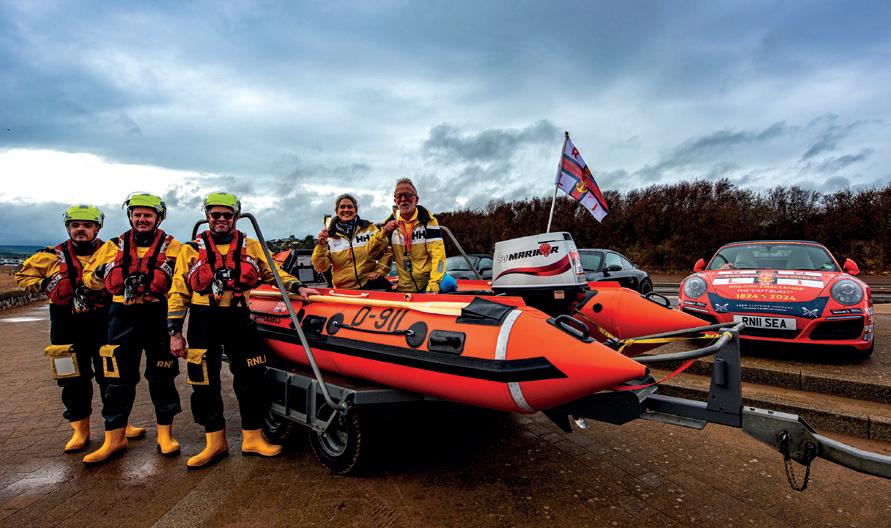
Belinda and James (in the new D class), celebrating with crew
A big thank you to Belinda and James Richardson, who have raised £147,000 to fund a D class lifeboat, named RNLI-911 Challenge. The fantastic contribution more than covered the cost of the lifeboat and helped to fund crew training. The couple fundraised during a road trip challenge in their Porsche 911 that took them all around the coast of the UK and Ireland.
FAREWELL FAITHFUL FRIEND
It’s
the end of
an era as we say goodbye to the last of the Mersey class lifeboats
On 11 January 2026, Leonard Kent, the last Mersey class lifeboat in the RNLI fleet, launched from Newcastle, Co Down, for the final time. It was an emotional day for the volunteers, past and present, who had been proud custodians of a Mersey class lifeboat since 1993. First, the Eleanor and Bryant Girling, followed by the Leonard Kent in 2022. Hundreds of onlookers gathered to say goodbye, as the Leonard Kent made way for its final voyage. Volunteers from Kilkeel RNLI joined a flotilla in their Atlantic 85 and brand-new Shannon lifeboat.
Newcastle Crew Member Brendan Rooney, who has volunteered at the station since he was a teenager, still remembers the day Eleanor and
Bryant Girling arrived at the station.
‘I said to myself: “Wow”. It was unreal – like a flying machine. Our previous lifeboat, an Oakley, had a top speed of 9 knots, but the Mersey could do 17 knots, so it was a real step up. I regarded the Mersey as the best boat in the fleet.
‘I remember the first time I witnessed the lifeboat taking a pummelling from horrendous waves. It was then I realised that she could handle anything. I was always confident she’d get me home.’
The life of the Leonard Kent
Before Leonard Kent arrived in Newcastle in 2022, the steadfast lifeboat powered the lifesavers of Margate RNLI to the rescue. It was an impressive upgrade when, in 1991, the volunteer crew at Margate RNLI took delivery of their brand-new Mersey class lifeboat. And during its 30 years on the south-east coast of England, it responded to 419 call outs, saving 21 lives and helping 599 people.
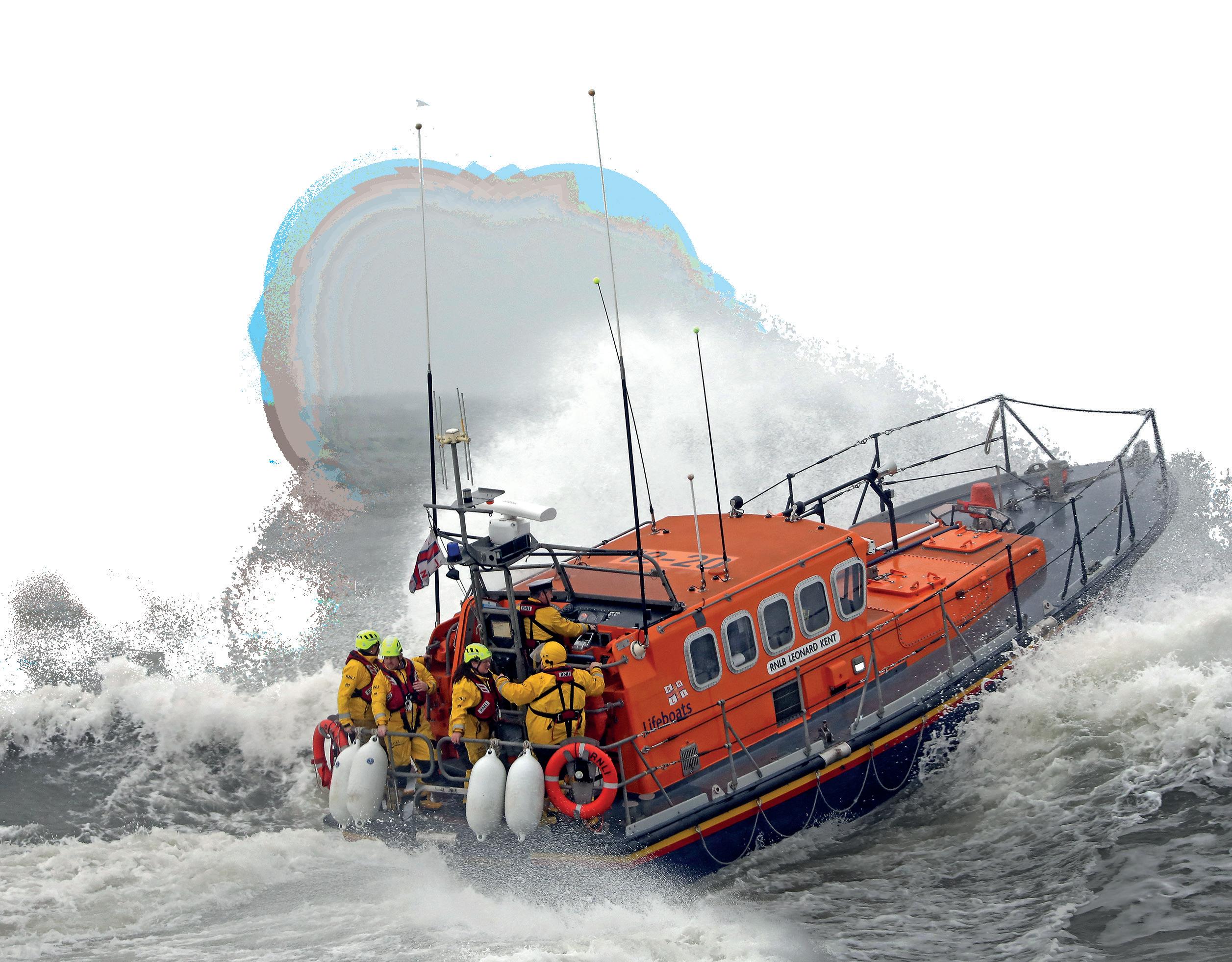

Leonard Kent ’s final launch
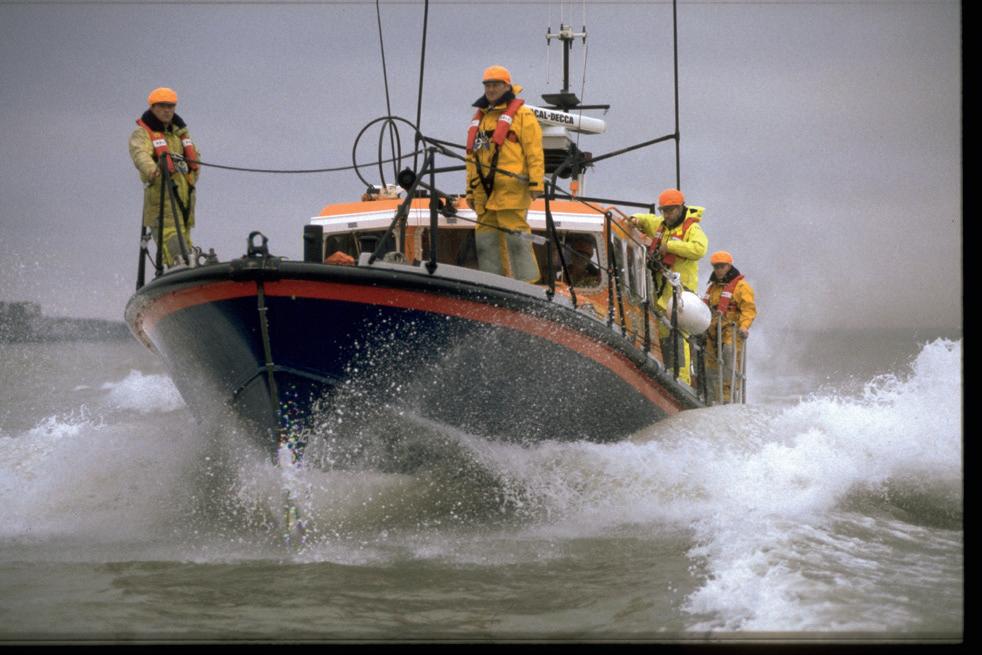
Peter Barker, who was Margate station’s full-time coxswain/mechanic when Leonard Kent arrived, says: ‘The Mersey was a huge change – twice the speed and with more than five times the power of the Rother [Margate’s previous class of lifeboat]. Its capabilities were in a different league. It had an enclosed, watertight and heated wheelhouse with a seat for everyone and, at the time, state-of-the-art navigation equipment.

‘When it left Margate in 2021, Leonard Kent still looked in showroom condition. It’s a tribute to the crew at Newcastle that after 35 years of active service, they have looked after the lifeboat, maintaining it in that same condition. It’s also an honour that our old faithful friend has achieved the role of being the last remaining Mersey class lifeboat in service.’
A new era
When the Mersey was introduced in 1988, the charts were full of optimistic anthems, from Kylie Minogue’s I Should Be So Lucky to Yazz’s The Only Way Is Up. This special lifeboat was yet another positive note.
The Mersey was the final part of the RNLI’s plan to modernise its fleet and complete the introduction of fast lifeboats. With a top speed of 17 knots, the 12m-long Mersey was the RNLI’s first fast carriagelaunched lifeboat. It was light for its size, designed to be launched and recovered from a beach with a tractor and carriage. It was versatile too – it could also be launched from a slipway or lie afloat. This new lifeboat had an aluminium hull. This was later changed to fibre-reinforced composite, making it inherently
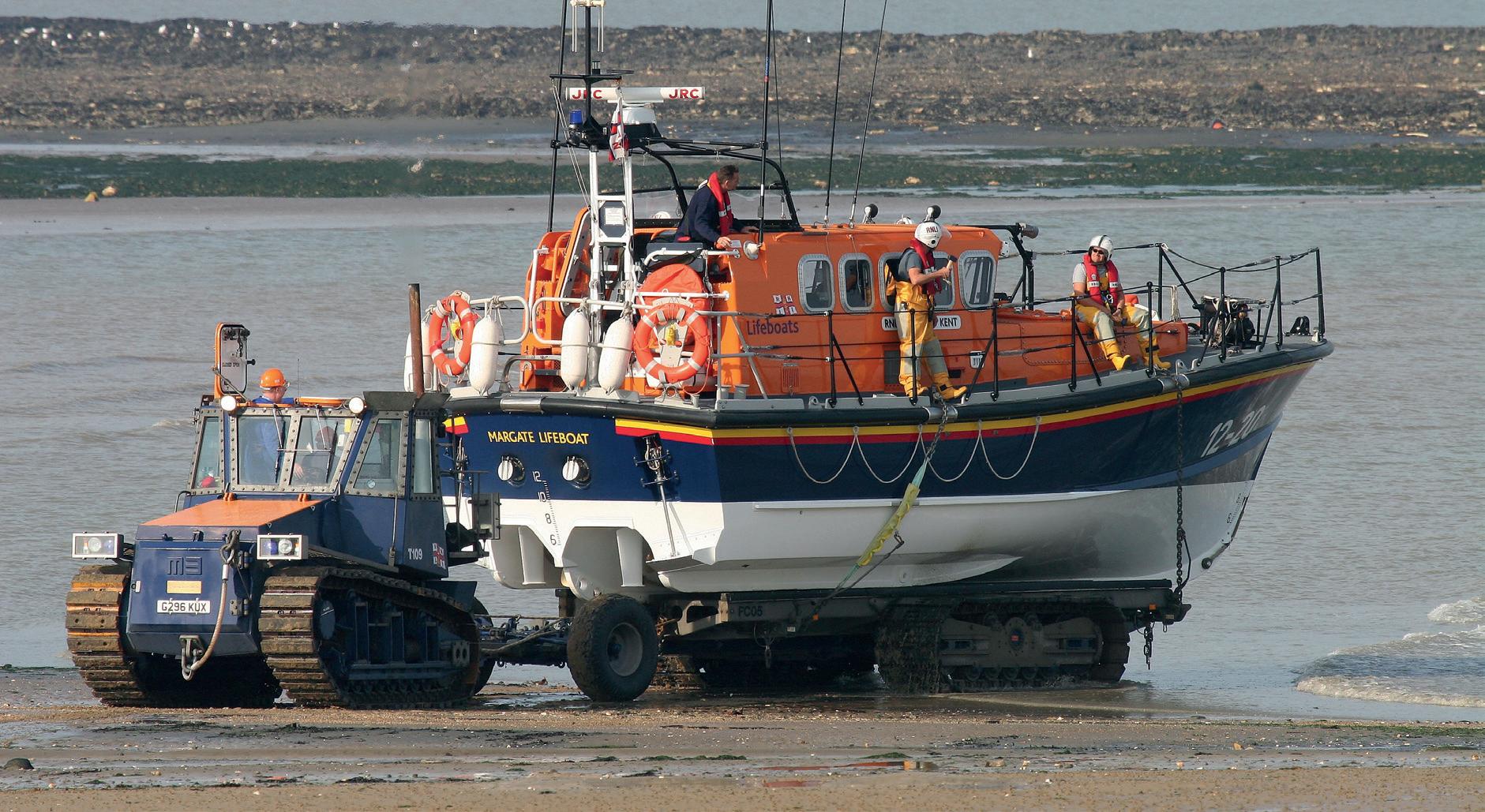
The Leonard Kent served the crew at Margate RNLI for 30 years
The Mersey was the first fast carriage-launched lifeboat
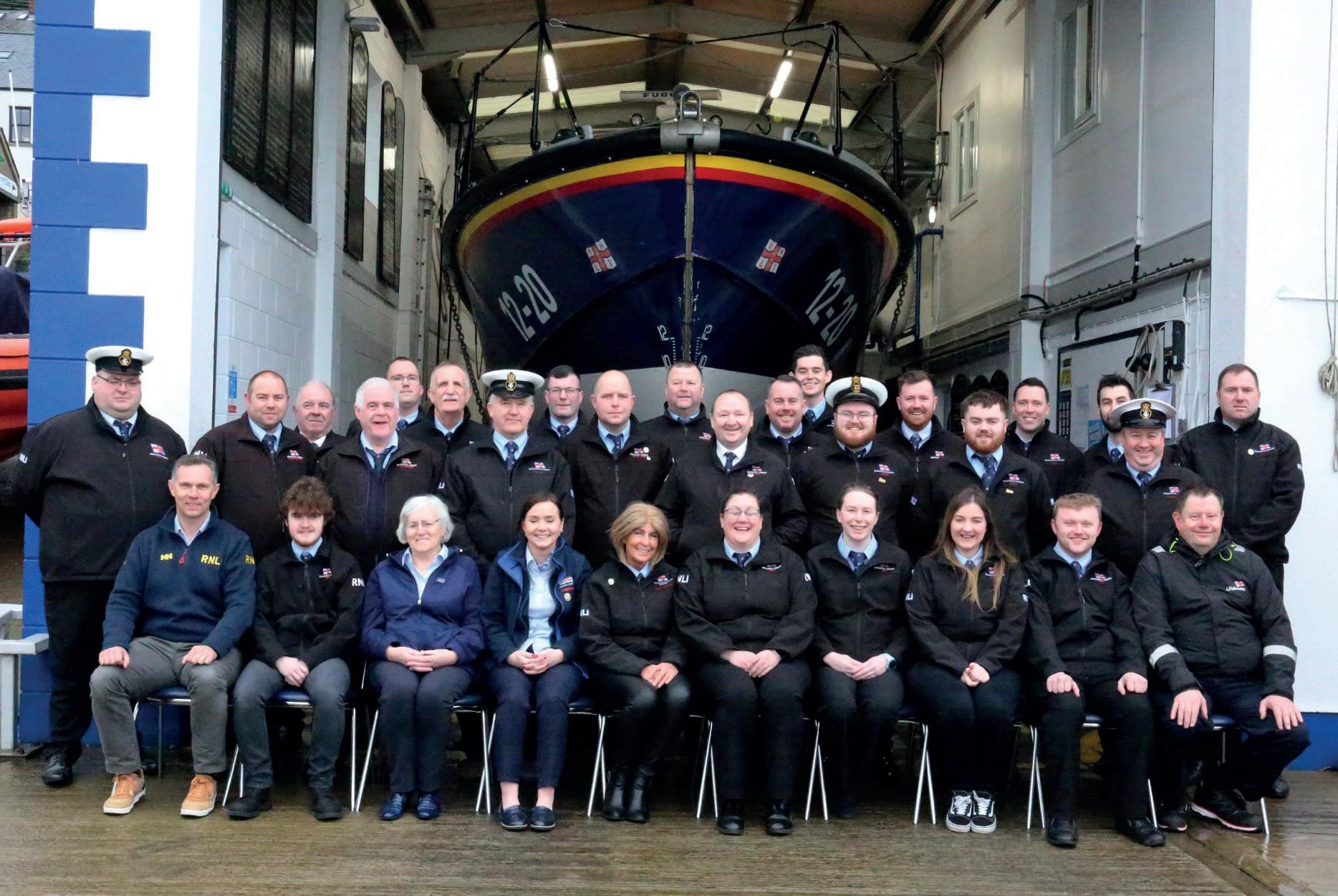
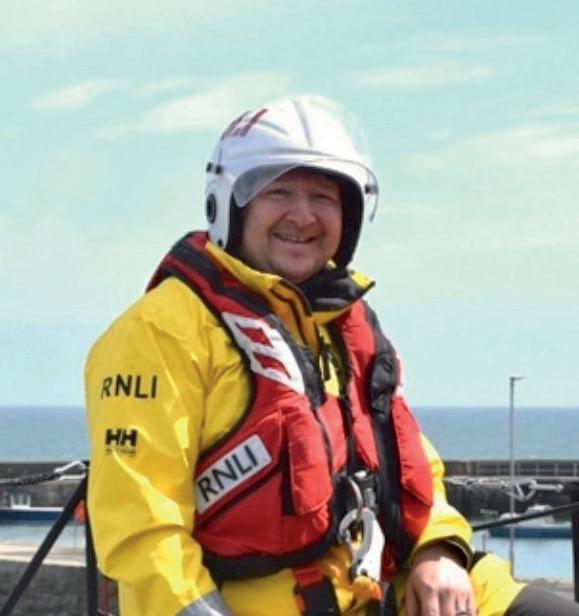
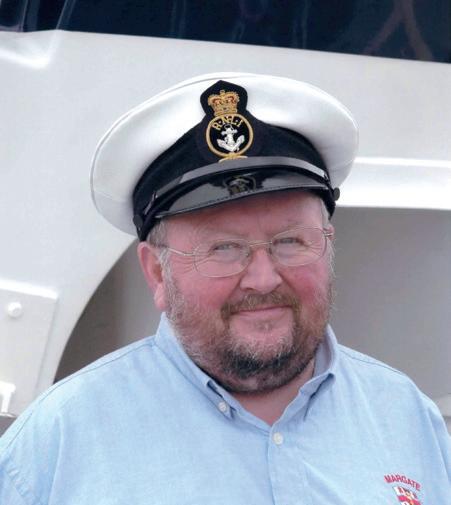
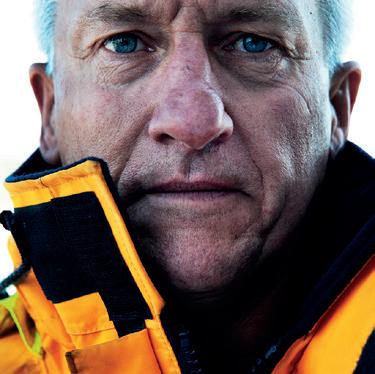

self-righting. Its propellers and rudders lay in partial tunnels set into the hull. These, along with the main and two bilge keels, provided protection from damage in shallow water or on the slipway.
Between 1988 and 1993, 37 Mersey class lifeboats were built, marking a new era in efficiency and reliability in lifesaving. Over nearly four decades, they found homes at 52 stations across Ireland and the UK, including Newcastle, Clogherhead, Girvan, Llandudno and Margate.
Padraig Rath, who served as the mechanic at Clogherhead RNLI for over 20 years, remembers his lifeboat fondly.
‘The Mersey was a lifeboat that could handle weather. Our crews always felt safe when onboard,’ he says.
Padraig was there from the start. He was on the Mersey class Doris Bleasdale when it first arrived in Clogherhead, in 1993.
‘The fact that I was crew, deputy second coxswain and full-time mechanic for the entire duration of Doris Bleasdale’s operational life made it special to me. And for a number of years, one of our daughters and our son were on the crew together too.’
A lifesaving legacy
During their lifetime, the Mersey class lifeboats spent 24,804 hours at sea – they launched 11,813 times, with their volunteer
crews helping 13,784 people and saving 1,254 lives. It’s a remarkable legacy.
Declan Barry, Newcastle RNLI’s Coxswain on the final launch, says: ‘It was a sad and emotional day for all at Newcastle RNLI, and indeed for anyone who has had an association with a Mersey class lifeboat at any point during its almost 40-year history. It has been a wonderful lifeboat which has served us well in helping to bring people to safety while also ensuring the safety of our crews.’
The Mersey’s retirement means the entire RNLI fleet, from inshore to all-weather lifeboats, can now reach 25 knots, so crews can get to people in trouble even quicker.
Declan adds: ‘While we are nostalgic as we bid farewell to the Mersey, we are also excited to be entering a new chapter in lifesaving here at Newcastle, as we look to putting our Atlantic 85 and D class lifeboats to sea to help anyone who comes into difficulty.
‘We are indebted to all those who have helped fund these lifeboats and keep them afloat for so many years and we are equally grateful to all the volunteers, families and supporters behind them, without whom we couldn’t do our lifesaving work.’ ■
Love lifeboats?
If you’d like to learn more about lifeboats – past and present – you might like to join the Lifeboat Enthusiasts’ Society (LBES). LBES membership is perfect for anyone with a passion for the RNLI and its lifeboats. As a member, you’ll get three Lifeboats Past & Present magazines each year, as well as an annual handbook listing lifeboats, stations, launch vehicles and much more. You might even see what former RNLI Mersey class lifeboats are up to now!
If you’re interested in joining, and supporting the RNLI in a unique way, visit lifeboatenthusiasts.org
The crew at Newcastle RNLI bid a fond farewell to the Leonard Kent
Left to right: Crew Member Brendan Rooney, former Coxswain/Mechanic Peter Barker and former Mechanic Padraig Rath
Words: Nikki McMullen
Photos: Kenny Gracey, Colin King, Nicholas Leach, RNLI/(Margate, Nigel Millard)
Special delivery
Your letters, posts and pictures
In tribute
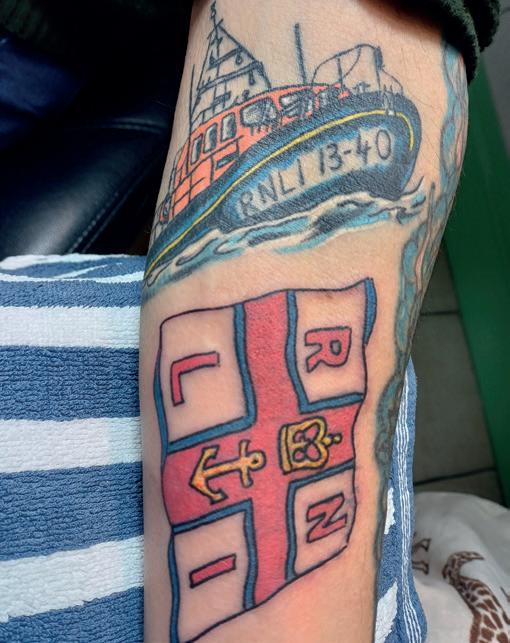
I would like to share a picture of my tattoos. They are a tribute to my late son Stuart and all the men and women of the RNLI, who are the bravest people I know.
PAUL ROBERTS
Editor: For more RNLI-inspired body art, go to RNLI.org/tattoos
City life
Fantastic fundraiser
I thought you’d be interested in my son’s sponsored 200-mile bike ride along the Welsh coast for the RNLI. Jonathan made his epic trip calling in at the nine RNLI stations from St Davids to Pwllheli. The last leg saw him ride through torrential rain, but he arrived safely and managed to complete the challenge.
Jonathan has raised £1,030, so a fantastic achievement. We’re so proud of him and glad he could help support the RNLI in this way.
JAMES BRADLEY
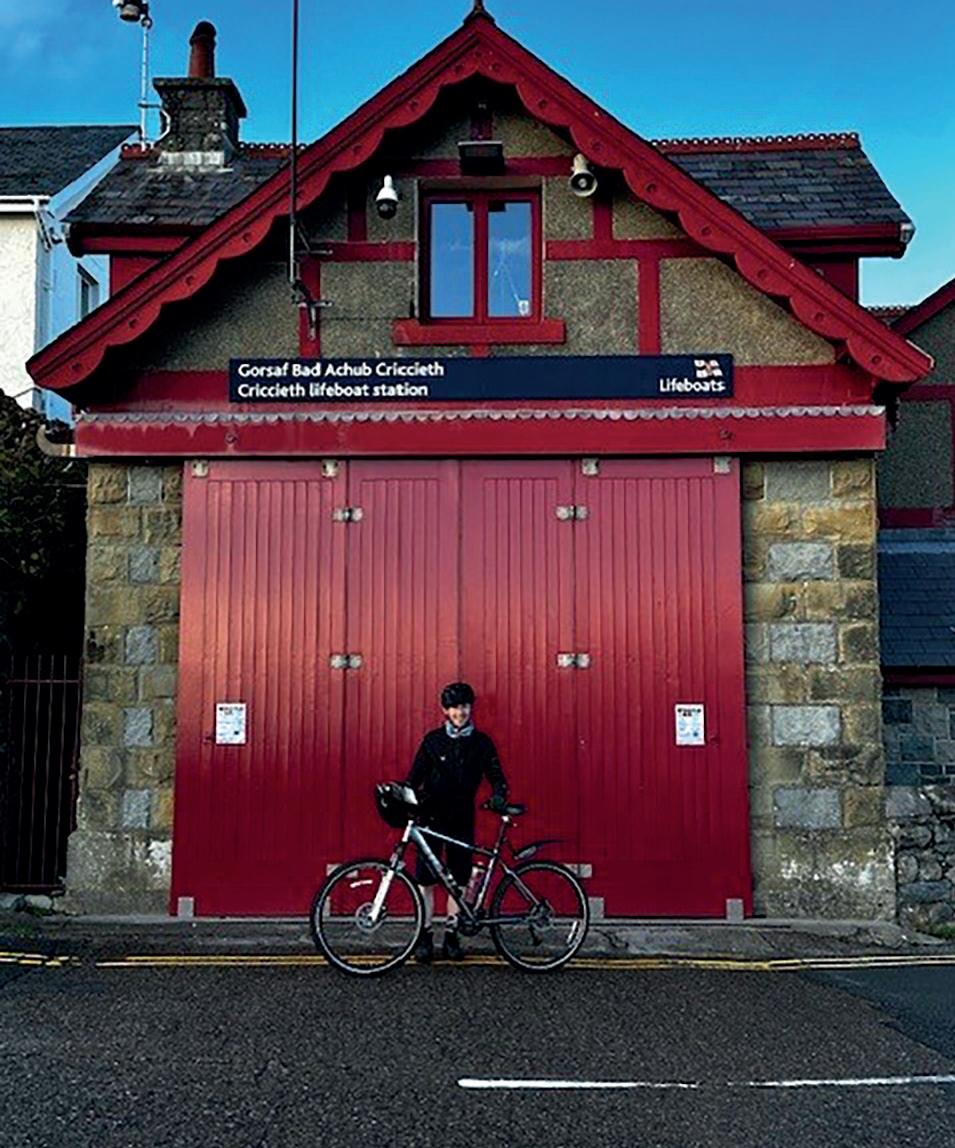
Jonathan at Criccieth. He’s supported the RNLI since he was a child, when he was a member of Storm Force, the RNLI’s club for children
I always turn to the Launches section first in Lifeboat magazine and I check out my favourite stations. The thing that always amazes me is the number of launches from the Thames lifeboats. Could we have an article telling us all about their shouts?
ANN MALTHOUSE
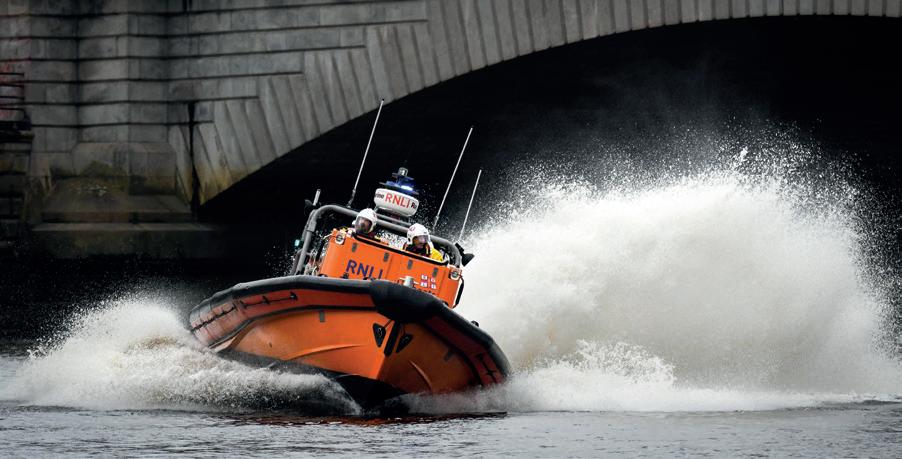
Editor: Thanks Ann. That’s a great idea for an article. The Thames lifeboat stations are some of the RNLI’s busiest, particularly Chiswick and Tower. The river crews may not have to deal with big waves or hideous storms like coastal crews, but they face huge tides, fast-moving water, bridges, piers, vast numbers of people and constant river traffic. Reasons for launches include: machinery/equipment failure, capsize, suspected self-harm and injuries/illness.
Write to us
Were you moved by a rescue story? Do you want to know more about something you’ve read in Lifeboat? We love hearing from you and seeing your photos. Please get in touch with us. Email
Super fan
I just wanted to write and say what a fabulous idea to have your loved one’s name on a lifeboat. My husband Steve worked for British Waterways and was an RNLI supporter. Now I am too. After he passed away suddenly 6 years ago, I thought it would be nice to honour him and his love of water by having his name put on a boat, which would also raise funds for the RNLI.
Currently, he has his name on seven Launch a Memory lifeboats, which I know he would love. I love to think he is all over the country helping to save lives. I hope I can get his name on many more!
ELAINE CROPPER
Lifesaving family
This is a pic of my mum for a wee bit of nostalgia.
My mum Julie was a beach lifeguard at Portrush in 1969, before going to university. She did about nine rescues in her season. There was another female lifeguard at Whiterocks Beach, but it was quite unusual then.
She passed on the lifeguarding bug to me. I was a pool lifeguard as my summer job at university.
Her seagoing dad, my grandad, used to tell me: ‘Never fight the sea as no one could ever win’. ‘Float to Live’ is a lot more catchy, but it’s a familiar message!
SARA RAMSEY
Share your stories on social media
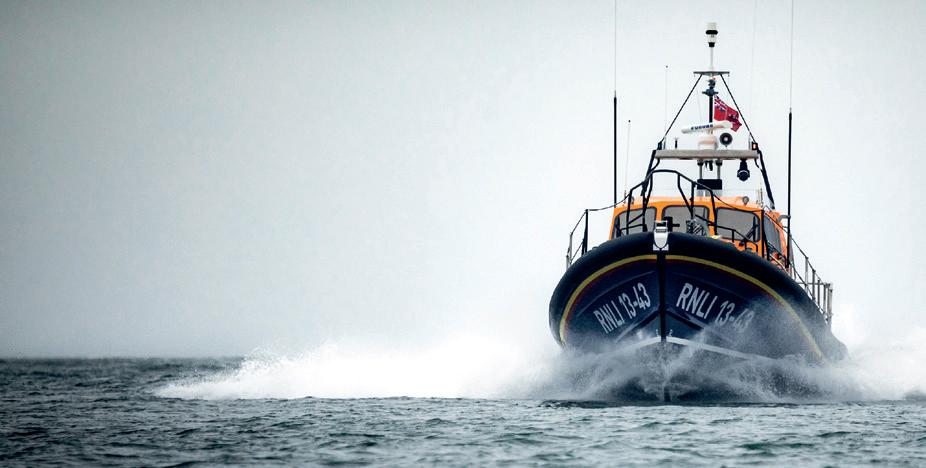
Editor: Thank you, Elaine. That’s amazing that you’ve added Steve’s name to so many lifeboats. It’s a very special thing to do. For information about Launch a Memory lifeboats, and updates on existing ones, head to: RNLI.org/LAM.
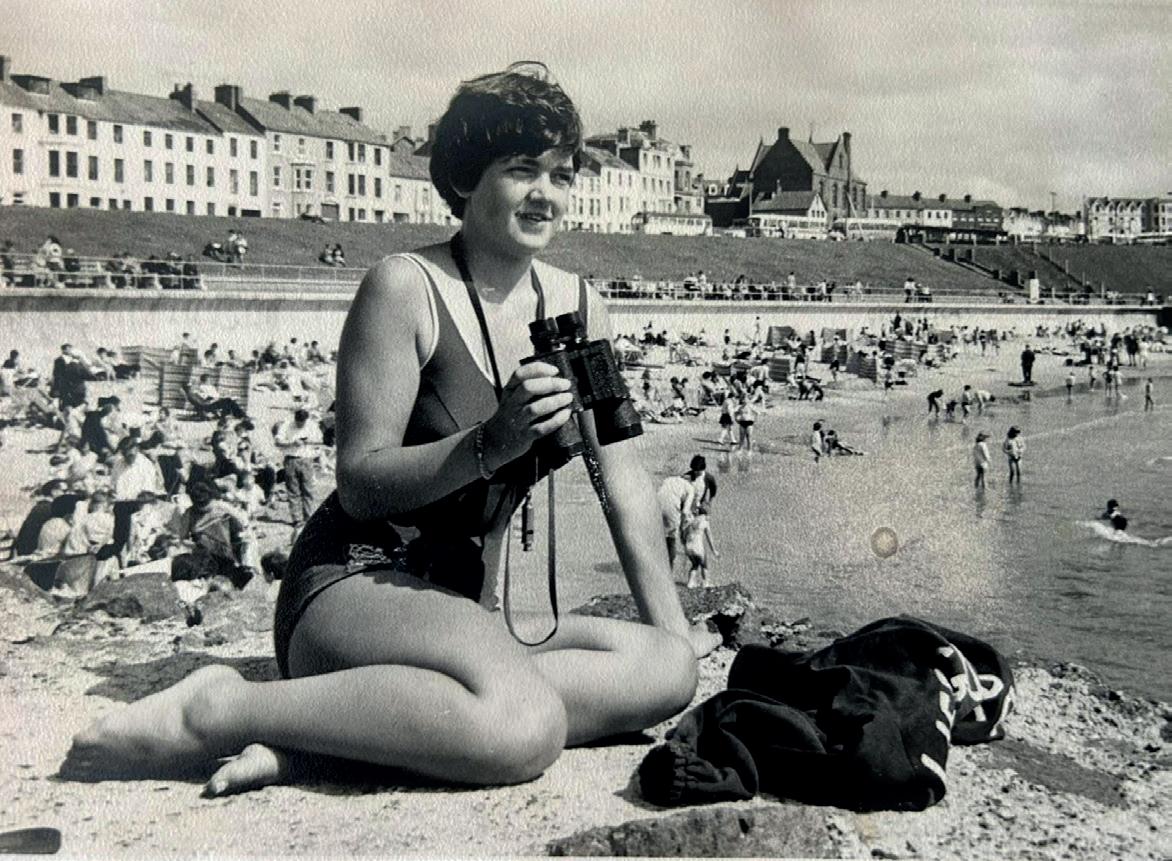
Puzzle solution (page 30):
13=SHANNON, 14=TRENT, 16=TAMAR, 17=SEVERN. ( The number represents the length of the lifeboat in metres .)
Photos: Stephen Duncombe, RNLI/Nathan Williams, unknown
Clifden’s Launch a Memory lifeboat St Christopher, with the names of 10,000 loved ones on the lifeboat
Your RNLI family
The lives and loves of your fellow lifesavers
Meet Coxswain Enzo
Tynemouth RNLI is celebrating the appointment of their new coxswain, Vincenzo (Enzo) Stifanelli.
Enzo has volunteered with Tynemouth RNLI for over 10 years, building up extensive experience at sea. He’s worked with Humber RNLI as a navigator and completed the RNLI’s comprehensive Coxswain Afloat Mechanic training programme last year. You may have recently spotted Enzo on TV’s Guy Martin: Proper Jobs alongside the Humber crew!
Enzo says: ‘Tynemouth RNLI has always felt like a family to me. We’re all volunteers, and we all live and work in this community, so every call out is personal. I’m incredibly proud to take on the role of coxswain and to continue serving the people who use our coastline, alongside such a dedicated crew.’
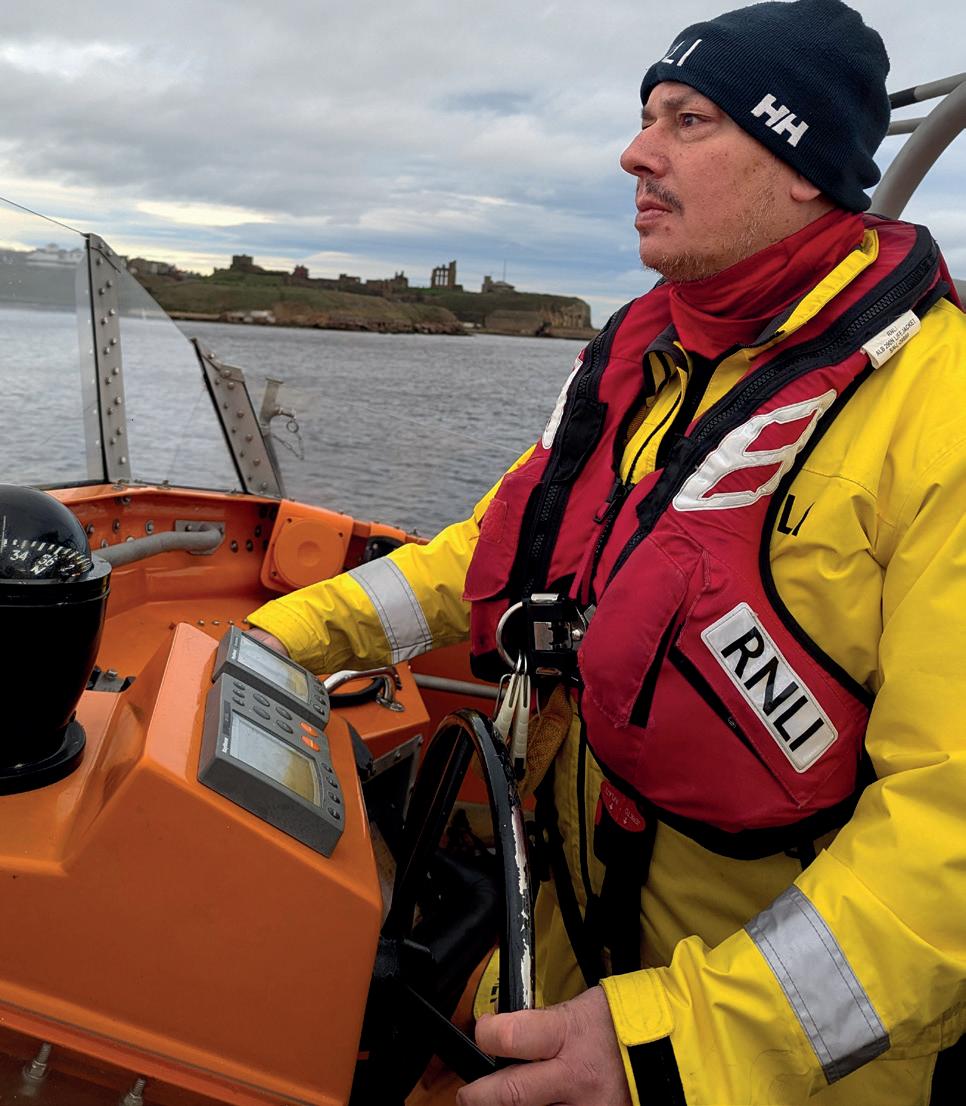
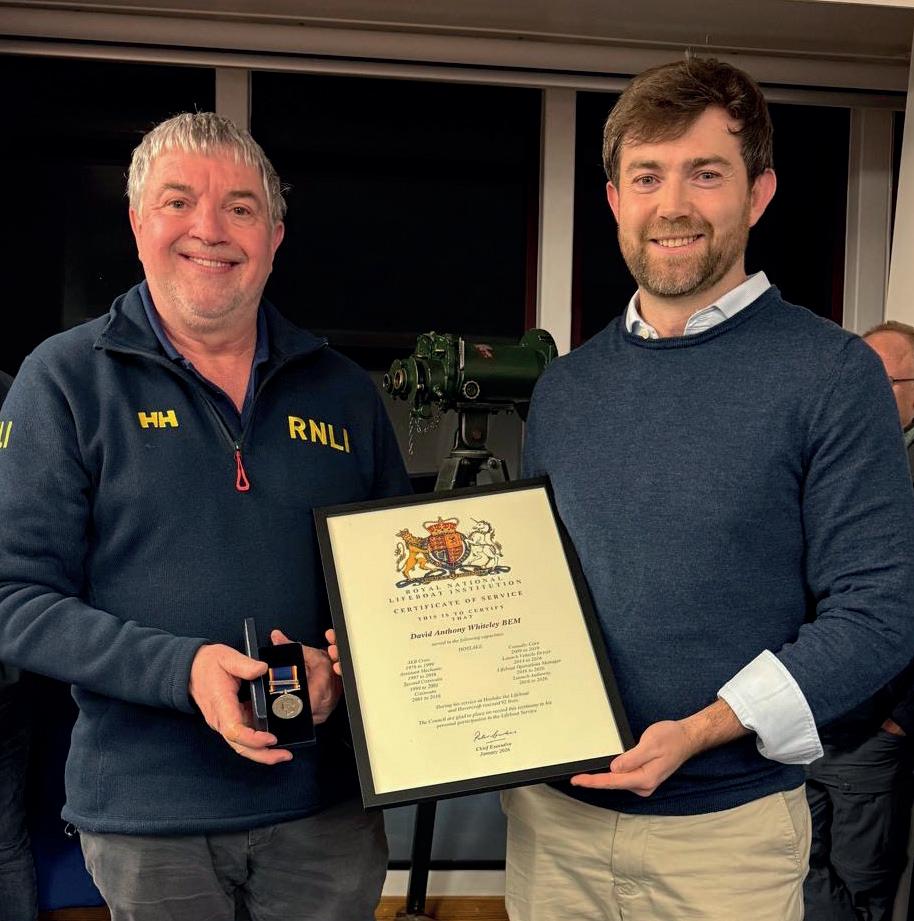
50 years of saving lives
Hoylake RNLI is marking the retirement of Lifeboat Operations Manager Dave Whiteley bem, after an extraordinary 50 years of saving lives at sea.
Dave first joined Hoylake RNLI in 1976 on his 17th birthday, following in the footsteps of his father, Tank Whiteley, who served at the station for 55 years.
Dave held several operational roles, including navigator, assistant mechanic and, from 2001 to 2016, coxswain. As a volunteer, he helped to save 92 lives at sea. His three children are now following in his footsteps at the station.
Dave says: ‘It’s been a real privilege to be part of Hoylake RNLI for so many years. I want to thank my wife Julie and my family for their constant support, which has meant everything to me throughout my volunteering. It’s been an honour to serve with such dedicated people and to help save lives at sea.’
Enzo at the helm of Tynemouth’s Severn class lifeboat
Dave Whiteley (left) receives his Certificate of Service and RNLI Long Service Medal with a 50-year bar, from RNLI Interim Head of Region Sam Holliday
Double celebrations in Cromer
Over in Cromer, volunteers Emma Tuck and Fiona Abbs qualified in some demanding new roles.
Emma, who has volunteered at Cromer for 8 years, recently qualified as a winch operator. She has multiple roles and is the first female volunteer at the station to serve as launch authority, head launcher, tractor driver and winch operator.
Emma says: ‘I’m proud to be the first woman to become a launch authority and to hold all these roles. I couldn’t have achieved it without the support of my crew mates, who are like family.’
Fiona, who has volunteered for more than 5 years, has also recently qualified as a head launcher, alongside her role on the inshore lifeboat (ILB) crew and as a member of the shore crew too.
Fiona says: ‘Passing out as head launcher is a real honour. Whether I’m on the ILB or helping to lead a launch from shore, I’m proud to be part of a team that supports each other on every call out.’
Celebrating life
Join us in remembering our RNLI family members who have recently passed away
Doreen Bowell – December 2025
President of the Downend and Kingswood Fundraising Branch
David Brann – February 2026
Former Fundraising and Communications Director
Lindsay Chivers – November 2025
Former Committee Member of the Medway Fundraising Branch
Pam Ellis – November 2025
Souvenir Secretary of the Chippenham and District Fundraising Branch
John Geddes – December 2025
Former Chair and Member at the Rawtenstall Fundraising Branch
Brenda Graham – February 2026
Volunteer at the Gateshead Fundraising Branch
Eric King – September 2025
Box Secretary and Committee Member of the Guildford Fundraising Branch
John Mackay – December 2025
Former Secretary of the Dumbarton and District Fundraising Branch
John Mayfield – January 2026
Volunteer at Southend-on-Sea RNLI Shop
Linn Munton – January 2026
Three decades of service
Congratulations to Trish Avis, who has been honoured with a long-service award in recognition of her dedication to fundraising with Longhope Lifeboat Guild.
When Trish moved to Hoy from Leicestershire with her husband Iain, she was looking for a change of lifestyle. What she found was a community, and a cause, which would shape the next three decades of her life. She joined the Guild in 1995 and took on key roles before becoming president in 2010 – a role she still holds today.
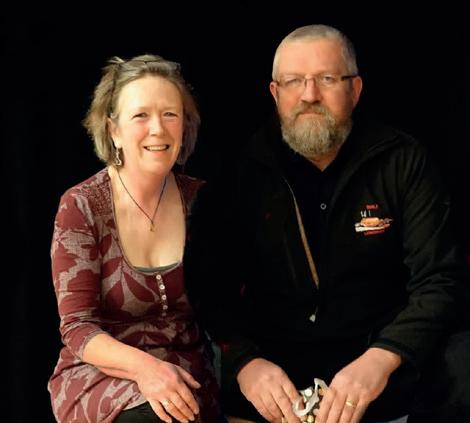
‘Although technology has changed some aspects of fundraising, the reality is that much of it remains unchanged. Our people just come together, give their time, and support their lifeboat station and its lifesaving work. Who could ask for more?’ says Trish.
Former Chair of the Largs Fundraising Branch
Valerie Nuttall – November 2025
Former Chair and Member of the Swindon and District Fundraising Branch
Stephen Renyard – October 2025
First Honorary Secretary of the Historic Lifeboat Collection Volunteer Group and volunteer at Weymouth RNLI
Peter Thomas – November 2025
Former Crew Member and Deputy Launching Authority at Port Talbot RNLI
Jo Tillion – December 2025
Longstanding Member at the Bradford on Avon Fundraising Branch
Derek Townsend – December 2025
Shop Volunteer at Port Talbot RNLI
Victor Williams – January 2026
Former Development Coordinator at the Poole Depot
Congratulations to Emma Tuck (top) and Fiona Abbs (bottom)
Photos: RNLI/(Cromer, Longhope, James Waters, Ros Whiteley)
Trish Avis and her husband Iain


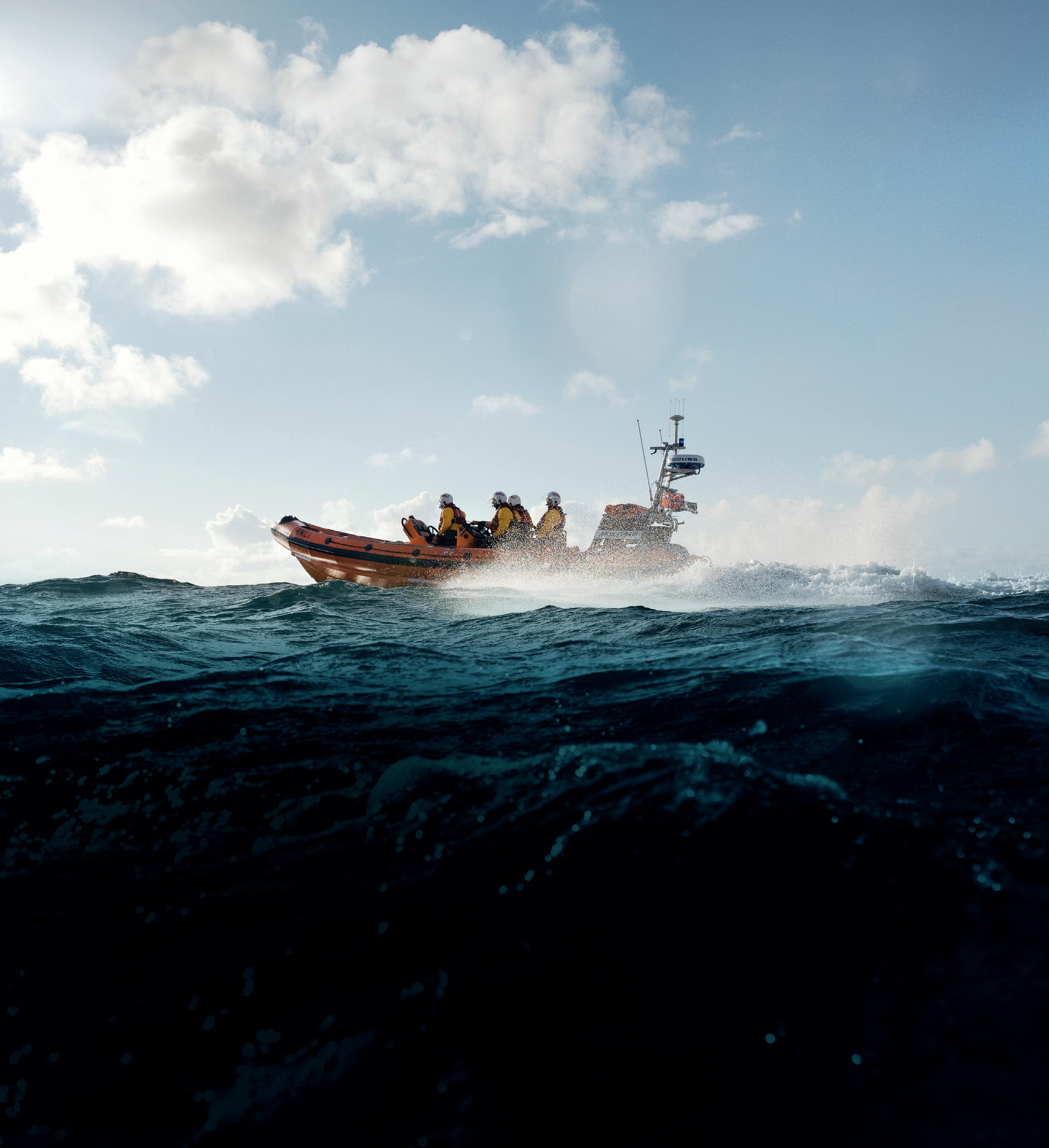
If you’re looking for a meaningful present for someone who loves the seaside, treat them to an RNLI membership.
In summer, when beaches are busier, so are our crews and lifeguards. When you send this kind gift to your loved one, you’ll send hope to our lifesavers when they need it most, so they can bring more people home safe. You’ll be joining a force for good, together.
Your lifesaving RNLI membership gift includes:
• welcome pack, with a coastal visits handbook –great for days out in the UK and Ireland
• Lifeboat magazine, four times a year, packed with epic rescues and RNLI news
• set of postcards, with breathtaking photography
• membership card – a proud reminder of their loyal support.
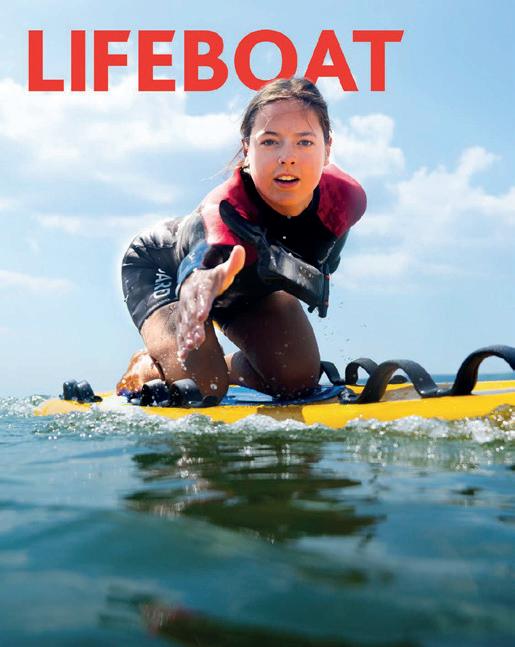
You can buy an adult membership for your friend or family member for £48/€60 per year. Sign them up today at: RNLI.org/save or scan this QR code