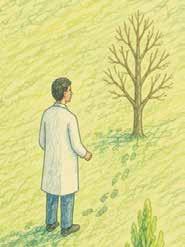
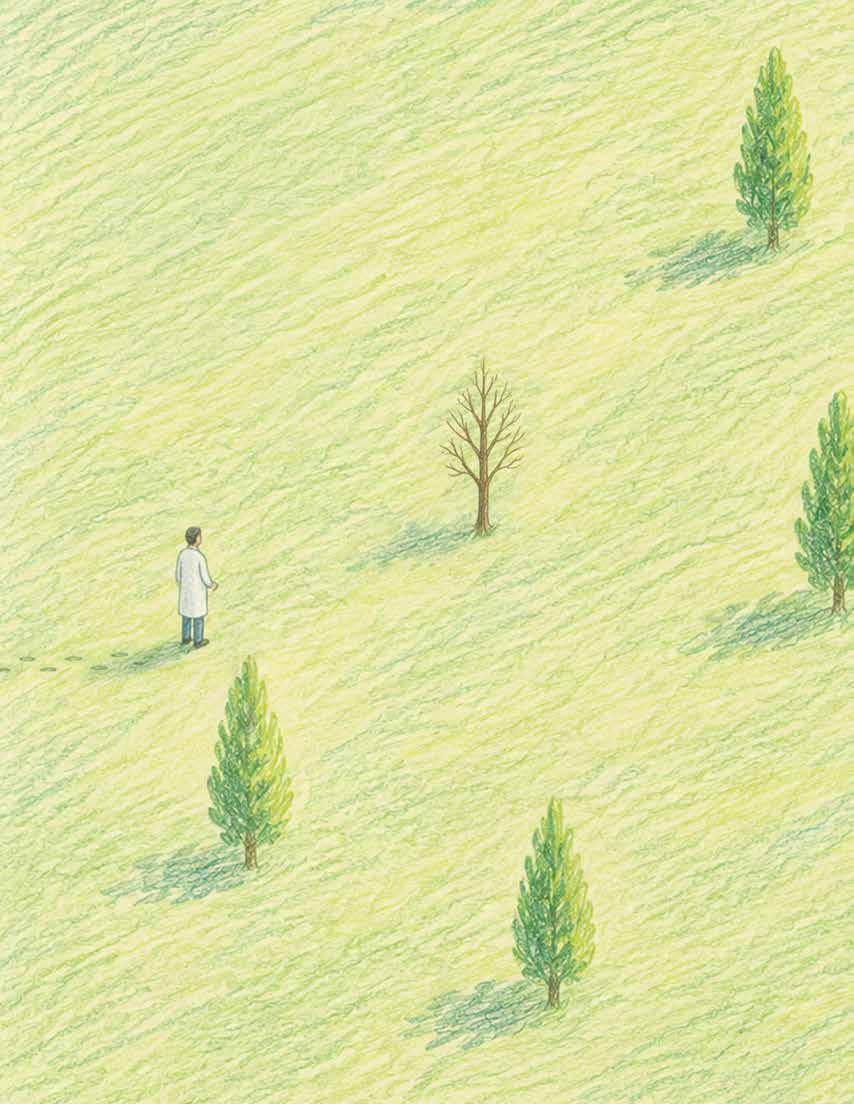
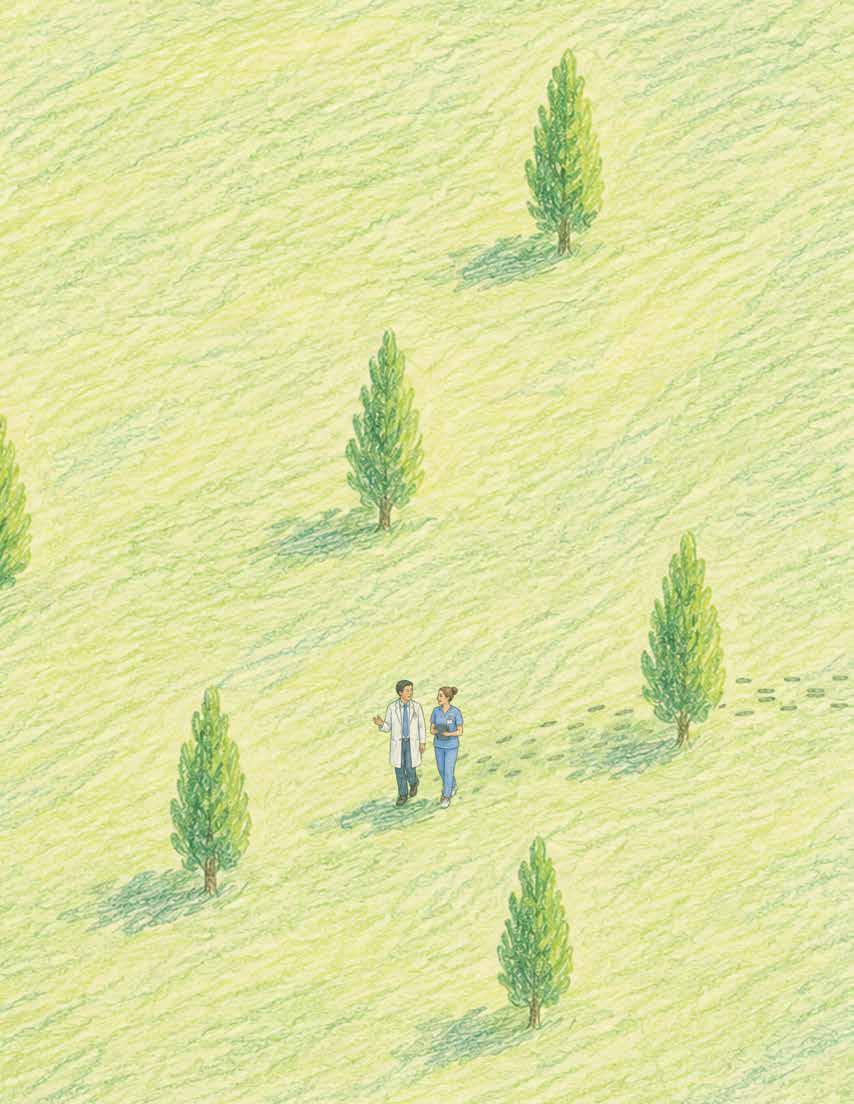
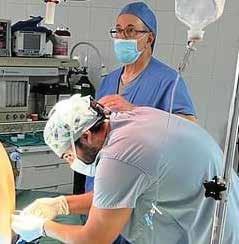
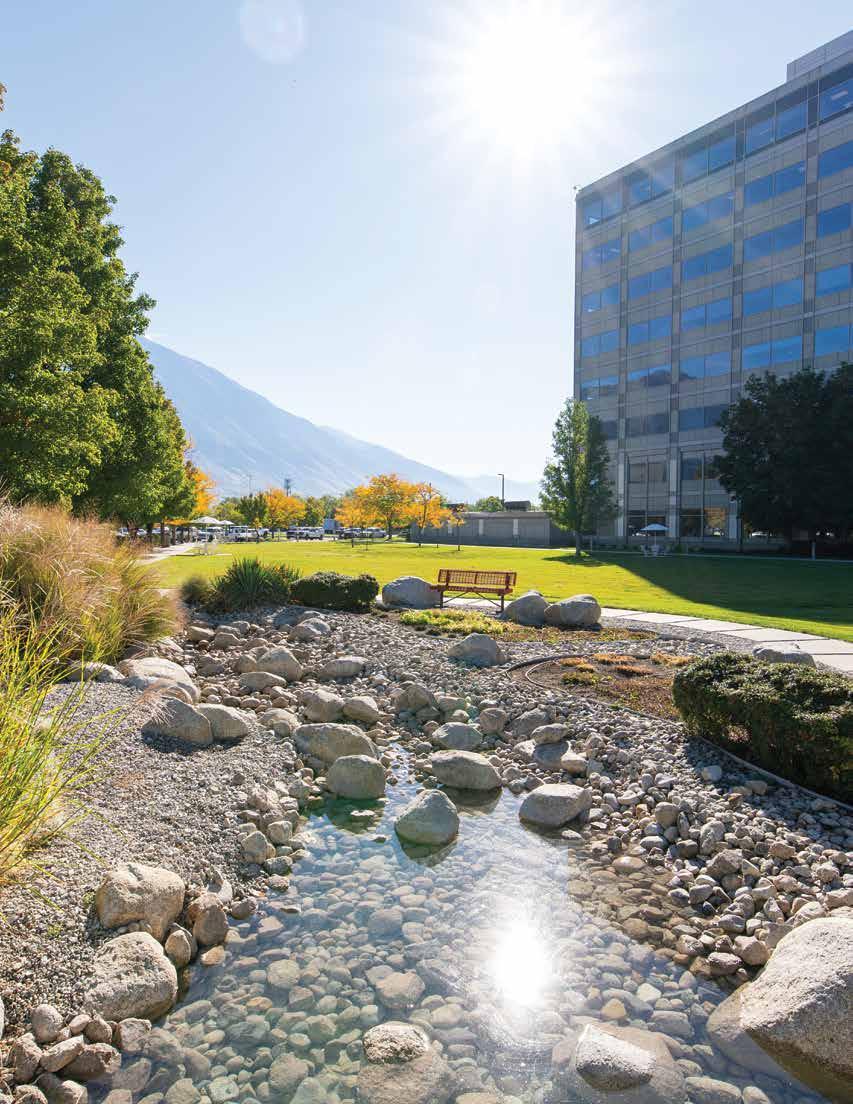
Walk through an aspen grove and you’ll notice something remarkable.
At first glance, it appears to be a collection of individual trees standing side by side. In reality, those trees are connected by a shared root system beneath the surface. What appears separate is actually united. Each tree draws strength from something larger than itself.
As I reflect on Rocky Mountain University of Health Professions (RMU) and the people we serve, I am reminded of that same truth.
None of us arrive where we are alone. Our lives and careers are interconnected.
Every healthcare provider can point to the people who shaped their journey—a faculty member who challenged them to grow, a preceptor who invested time and patience, or a patient who reminded them why the work matters.
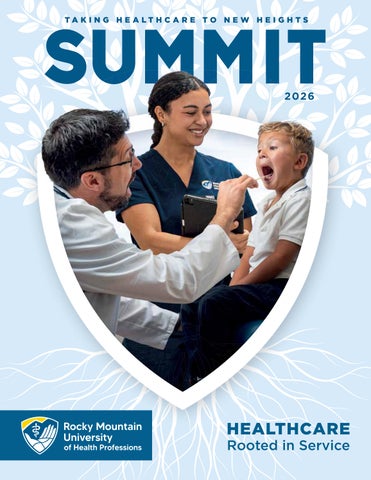
This issue of Summit explores what it means to be “Rooted in Service.” Service begins with recognizing our responsibility for one another. It grows when we choose to use our knowledge and skills to improve the lives of others. It flourishes when those we serve are inspired to do the same.
FROM THE PRESIDENT
Every day, I have the privilege of witnessing individuals who choose to lift others.
In the pages that follow, you will meet people whose lives have been transformed by their opportunities to serve. You will read stories of people making a difference and improving lives.
Together, these stories remind us that service is not simply something we do. It is part of who we are. I am grateful to be part of a community that understands the importance of giving back and investing in others.
Thank you for the many ways you continue to strengthen our community and improve the human condition.
With gratitude,
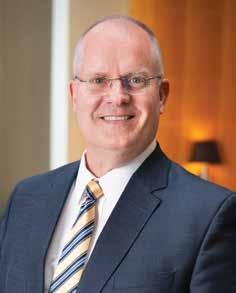
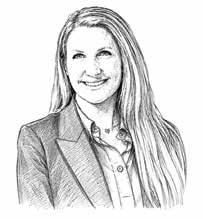
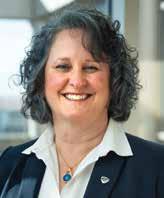
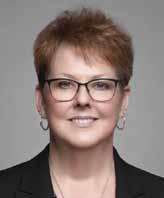
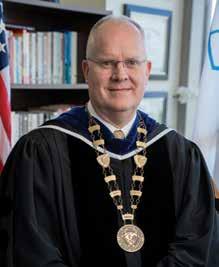
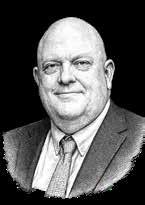
Dr. Cameron K. Martin PRESIDENT & CEO
dr. cameron k. martin
UNIVERSITY PRESIDENT & CEO
dana marsh
VICE PRESIDENT OF ENROLLMENT, MARKETING & COMMUNICATIONS
rachel tynan richards
DIRECTOR OF UNIVERSITY COMMUNICATIONS / MANAGING EDITOR
jody genessy
SENIOR CONTENT WRITER
mia drake
MARKETING SPECIALIST/CONTENT WRITER
shari warnick
ART DIRECTOR
alayna nichols
GRAPHIC DESIGNER/ILLUSTRATOR
dustin winter
UNIVERSITY VIDEOGRAPHER/PHOTOGRAPHER
COLBY SHARP
MARKETING COORDINATOR/PHOTOGRAPHER
contact us
SEND COMMENTS ON THIS ISSUE AND STORY IDEAS FOR FUTURE ISSUES TO:
UNIVERSITYCOMMUNICATIONS@RM.EDU
801.375.5125
nondiscrimination policy
ROCKY MOUNTAIN UNIVERSITY OF HEALTH PROFESSIONS AFFIRMS ITS COMMITMENT TO FAIRNESS AND EQUITY, AND DOES NOT DISCRIMINATE ON THE BASIS OF RACE, ETHNICITY, COLOR, NATIONAL ORIGIN, CITIZENSHIP, PERSONAL APPEARANCE, RELIGION (INCLUDING NO RELIGION) OR FAITH, POLITICAL AFFILIATION, ECONOMIC STATUS, DISABILITY (PHYSICAL OR MENTAL), AGE, MARITAL STATUS, SEX, SEXUAL ORIENTATION, GENDER IDENTITY, GENDER EXPRESSION, PREGNANCY, VETERAN STATUS, PREDISPOSING GENETIC CHARACTERISTICS, DOMESTIC VIOLENCE VICTIM STATUS, OR ANY OTHER PROTECTED CATEGORY OR GROUP UNDER APPLICABLE LOCAL, STATE, OR FEDERAL LAW, INCLUDING PROTECTION FROM THOSE OPPOSING DISCRIMINATION, ATTEMPTING TO PREVENT RETALIATION, OR PARTICIPATING IN ANY RESOLUTION PROCESS.
FOR MORE INFORMATION, VISIT RM.EDU/COMPLIANCE summit
7 Campus Voices
8
Why Service is Ingrained at RMU
“School gets hard, but having constant service opportunities allows me to remember, ‘Oh yeah, that’s why I’m doing this.’”
16 21 The Heart Behind Heathcare
A Diagnosis that Opens Doors
42 Where Service Took Them
Educational Opportunities Expand Through Accelerated Pathway Programs
RMU is opening faster, more affordable pathways into two of healthcare’s most in-demand fields. In 2026, RMU launched accelerated pathway partnerships with Southern Utah University and Utah Valley University, giving students a head start on careers in physical therapy (PT) and occupational therapy (OT).
Under the agreements, qualified students begin RMU graduate coursework during their senior undergraduate year. These opportunities shorten students’ path to a graduate degree, lower total costs, and get them into the workforce sooner.
These innovative partnerships create a more direct pipeline from undergraduate study into high-need PT and OT roles and help meet workforce needs.
President Martin Recognized with Utah Best of State Award
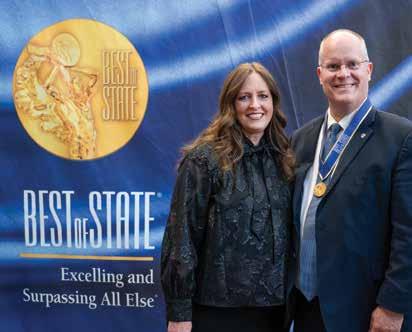
For the third consecutive year, RMU President Cameron K. Martin has been named Utah’s Best University Administrator by Utah Best of State. The award recognizes individuals who demonstrate excellence in their profession while making meaningful contributions to the quality of life in Utah.
Under President Martin’s leadership, RMU has continued to expand academic opportunities, strengthen community partnerships, increase access to healthcare services through RMU Health Clinics, and advance research and workforce development initiatives.
His leadership is rooted in compassion and a deep commitment to student and institutional success. President Martin works to ensure RMU is not just a place of learning, but a community where individuals feel empowered to help others.
RMU Occupational Therapy Programs Earn National Accreditation
RMU reached a major milestone this year as both its entry-level Doctor of Occupational Therapy (OTD) program and Master of Occupational Therapy program earned accreditation from the Accreditation Council for Occupational Therapy Education. The accreditations affirm that both programs meet rigorous national standards for educational quality and prepare graduates for licensure and professional practice in occupational therapy.
RMU’s OTD program is the only hybrid entry-level occupational therapy doctorate program in Utah and one of the few in the western United States. It allows students to complete most coursework remotely while participating in hands-on learning experiences in Provo, Utah.
Kane Counseling Services Comes to RMU Health Clinics
A new partnership between Kane Counseling Services and RMU Health Clinics is expanding the number of mental health appointments available to Utah County residents. Now operating inside the RMU Health Clinics building, Kane Counseling Services offers counseling for individuals, couples, children, adolescents, and families, with support for anxiety, depression, trauma, family conflict, and life transitions.
The partnership increases appointment availability while adding to a growing healthcare hub in Provo, Utah. Kane Counseling is joining the established RMU Physical Therapy Clinic and RMU Eye Institute, with additional health services planned in the months ahead.
RMU Launches New Speech-Language Pathology Leveling Curriculum
RMU launched its new Speech-Language Pathology
Leveling Curriculum, designed to create more accessible pathways into the speech-language pathology profession. The fully online program allows students from non-communication sciences backgrounds to complete prerequisite coursework required for graduate speech-language pathology programs. This helps open doors for career changers and students from universities without communication and speech disorder programs.
LEADERSHIP UPDATES
Ericka P. Zimmerman to Lead College of Health Sciences as New Dean
RMU welcomed Ericka P. Zimmerman, EdD, LAT, ATC, FNAP, as the new dean of the College of Health Sciences. Dr. Zimmerman brings more than 20 years of experience in health sciences education, academic leadership, and clinical practice, most recently serving as director of the School of Health Sciences at Western Carolina University.
Dr. Bryan Nelson Named PA Program Director
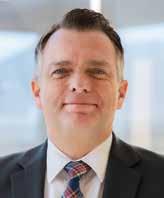
RMU appointed Bryan Nelson, DMSc, MMS, PA-C, as program director of the Physician Assistant/Associate program. Dr. Nelson has been part of the RMU community since 2018 and brings extensive experience in both clinical practice and healthcare education.
Kim Barber Foss to Head the Office
of Research
RMU alumna Kim Barber Foss, PhD, ATC, was appointed director of the Office of Research. A nationally recognized researcher in sports medicine and injury prevention, Dr. Barber Foss brings 35 years of experience in research, grant development, and academic leadership to the role.
“The
Physical Therapy Clinic was a big reason why I came to RMU. When I heard about it, I thought, ‘I want to go to that school because I know they want to help people.’ It’s a really cool thing for the community. It’s been wonderful to connect and give back.”
—
Sarah Krout, RMU PT Student
CAMPUS VOICES
“School gets hard, but having constant service opportunities allows me to remember, ‘Oh yeah, that’s why I’m doing this.’”
— Andrew Perkes, RMU Optometry Student
“Service really is the basic core value of this University.”
— Dr. Richard P. Nielsen, RMU Co-Founder
“Because we value people above all else, we serve each other, our patients and clients, our communities, and the world.”
— RMU Core Values Statement
“People
who perform acts of kindness actually show less expression of stress-related genes and more expression of longevity genes.”
“Education would die without preceptors.” Dr. Amber Collins, RMU PA Program Director of Clinical Education. Read more on page 29.
Mason Bennett, Executive Director, One Kind Act a Day. Read more on page 26.
INGRAINED in SERVICE
By Jody Genessy and Mia Drake
“My mother taught me, ‘It’s not about you, it’s about the world. It’s about what you can do for making humanity better.’”
Live outside yourself.
That’s the lesson Dr. Richard P. Nielsen, RMU founding president, learned from his mother. It is a lesson that not only guided his life but led to the founding of Rocky Mountain University of Health Professions. Those three words directly shaped the culture of an entire University and have impacted people from all around the world.
that
A TIMELESS LESSON
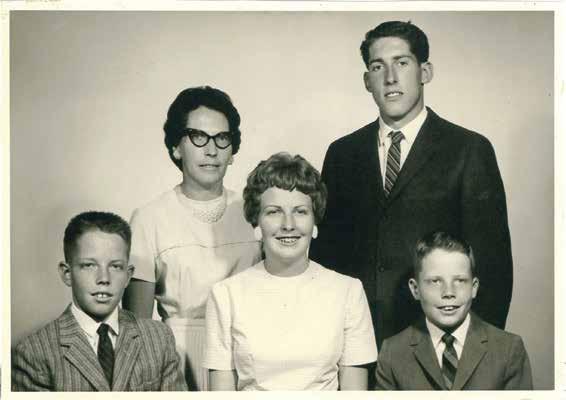
Dr. Nielsen and his three older siblings were raised by a single mother where love and nurturing were abundant, but money was tight in their home in the rural Spanish Fork, Utah, community.
“My mom didn’t have much, but what she did have was wisdom,” he recalled. “In my journal, I have written pages and pages of the teachings of my mother. It all centered around service... around living outside of yourself.”
You couldn’t put a price tag on the value of what he gained.
“My mother taught me that ‘It’s not about you, it’s about the world,” he said.
top left, taught her family the value of service—a lesson
her son, RMU Co-Founder Dr. Richard P. Nielsen, lower right, has practiced his entire life.
“It’s about what you can do to make humanity better.”
The wisdom his mother instilled in him became a guiding principle throughout Dr. Nielsen’s life. From his military service to the founding of RMU and every endeavor that followed, the belief in looking beyond oneself and helping others guided each step of his journey.
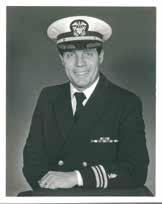
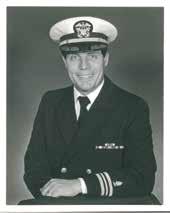
Dr. Richard P. Nielsen served in the U.S. Army National Guard and the U.S. Navy Medical Service Corps for over 25 years.
PLANTING
THE SEEDS
The lessons Dr. Nielsen learned from his mother didn’t remain childhood ideals. They were tested and strengthened during his years of military service, where he met Dr. Michael Skurja, Jr. Together, they witnessed firsthand the power of teamwork, sacrifice, and serving a cause greater than oneself.
That heart of service—first nurtured by his mother and reinforced through military service—became one of the University’s defining principles.
Whether caring for fellow service members or leading others, Dr. Nielsen and Dr. Skurja came to understand that the best professionals are those who see their work as an opportunity to improve the lives of others. That understanding transcended their military careers and helped lay the foundation for RMU.
Building a Vision
When Dr. Nielsen, Dr. Skurja, and Dr. Larry T. Hall began discussing the possibility of creating a graduate health professions university, they dreamed of building more than an academic institution. They aimed to create a university built for healthcare professionals who see their profession as more than just a career but an act of service—a means to help others.
Dr. Nielsen recalled a time in the early days when he and Dr. Skurja envisioned core values. Living outside yourself was an important element.
“When we said, ‘We’re going to build this University,’ one of the first things we talked about was the core values,” Dr. Nielsen said. If you look at our core values now, one of those is service—and it will always remain.
“We try to instill that into the lives of the students and faculty, not just while they’re at RMU, but in their own lives.”
Nearly three decades after Dr. Nielsen helped found RMU, service continues to be an integral part of the institution’s foundation. The wisdom he learned as a youth lives on through RMU, its students, faculty, and staff.
PASSING THE MANTLE
When Dr. Nielsen stepped down as RMU’s founding president in 2023, he wasn’t simply looking for an administrator to lead the next chapter. He wanted someone who would protect and strengthen the culture that had defined RMU from the beginning.
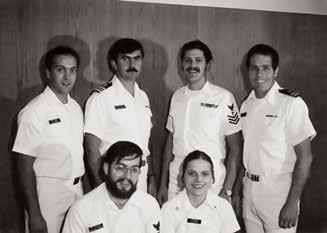
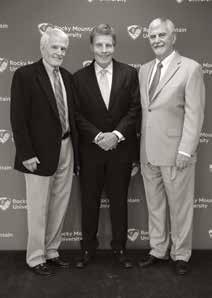
Dr. Michael J. Skurja, Jr. (top, second from left) and Dr. Richard P. Nielsen (top, right) served together in the U.S. Navy Medical Service Corps before co-founding RMU. From left to right, RMU Co-Founders
Dr. Larry T. Hall, Dr. Richard P. Nielsen, and Dr. Michael Skurja, Jr.
“Service is not an extracurricular activity. It is central to the professional identity of an RMU graduate.”
CONTINUING TO CARE
Dr. Cameron K. Martin was inagurated as the second president of RMU in 2023.
He found that person in Dr. Cameron K. Martin.
Long before he became the University’s second president, President Martin had earned a reputation for putting people first. His leadership reflected the same values that shaped RMU’s founding—service and a commitment to helping others thrive.
At President Martin’s inauguration, then-Congressman, now U.S. Senator, John R. Curtis captured what many already knew.
“Cameron Martin’s DNA is all about loving and lifting those around him. Plenty of people are creative and hardworking, but Cameron is all those things, and he cares about individuals enough to make good things happen in their lives.”
That commitment to people made him the natural choice to carry RMU’s mission forward.
“Dr. Martin exemplifies the culture of RMU to put people first, and he strongly believes in the University’s mission and all of our graduate students,” said RMU Board Chair and co-founder Dr. Skurja.
While leadership changed hands, the University’s commitment to service did not. The mantle was passed from one president to another, but the mission remains the same: preparing healthcare professionals who see caring for others not simply as a career, but as a calling.
President Martin has built upon RMU’s pay-it-forward tradition since taking the reins from Dr. Nielsen. He gives back at health fairs, around the community, at church and school, and beyond. Often, he can be found walking around campus sharing candy and a friendly greeting to brighten people’s days. He leads by example, making sure that when volunteers are needed, he and other campus leaders are among the first to show up.
For President Martin, service is not simply something the University encourages—it is the foundation of healthcare education.
“People need and want to be loved,” President Martin said. “Patients want to be seen for who they are, met where they are, and have a voice in their health plans and treatments, which is how RMU students are trained.”
For him, service isn’t a lofty principle mentioned in a mission statement and then forgotten. It is something that must be modeled, practiced, and passed from one generation of healthcare professionals to the next.
“Service is not an extracurricular activity,” President Martin said. “It is central to the professional identity of an RMU graduate.”
That commitment inspired President Martin and his wife, Julie Martin, to launch the Love & Lift Fund through the RMU Foundation.
“It is a call to action for all of us to care, serve, and transform lives,” President Martin said. “It’s a collective effort and mindset to step beyond our everyday roles and embrace opportunities to strengthen individuals and communities.”
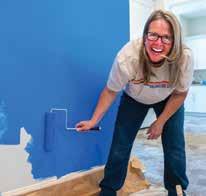
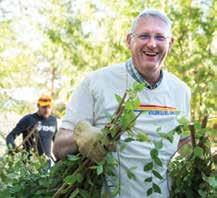
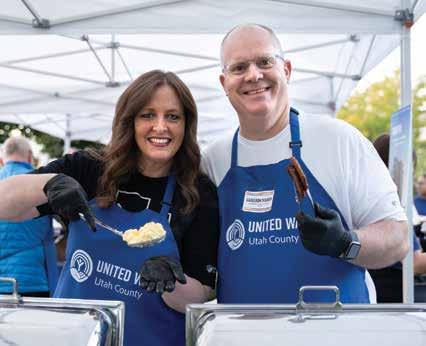
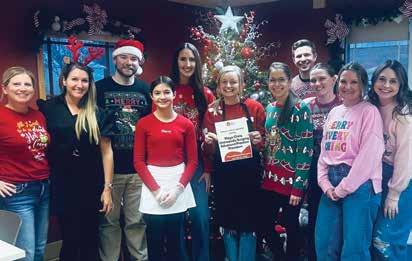
Every year, President Martin works side-by-side with RMU employees during the annual United Way of Utah County’s Day of Caring. In September 2025, RMU staff, faculty, and administrators spent a morning completing service projects at the Now I Can Foundation in Orem, Utah.
“RMU comes in here like a great tornado of goodness and energy and gets so much stuff done,” Now I Can Executive Director Tracey Christensen said. “As a small charity, we just don’t have a lot of people, so to have a group from the community come and transform the place in a day is so awesome.”
SPIRIT OF SERVICE
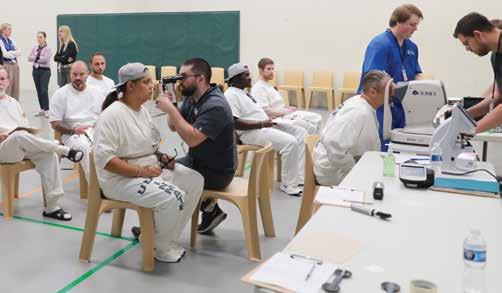
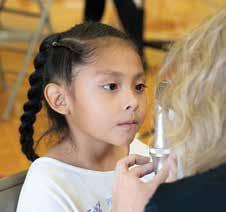
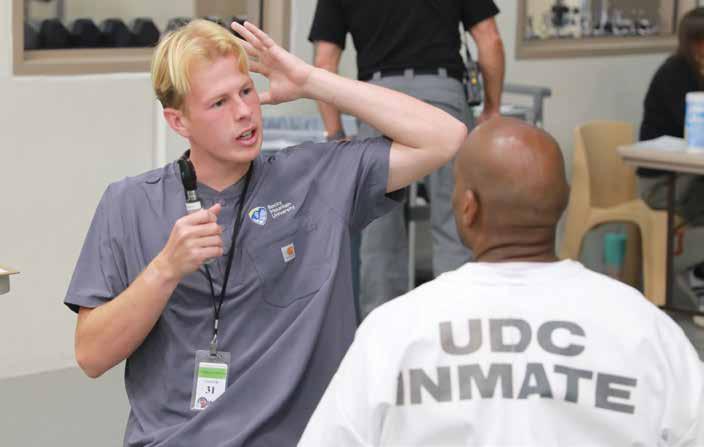
Service at RMU is more than a core value—it is a way of life embraced throughout the University community. In the past year, RMU provided mental health services for those affected by the Utah Valley University shooting, hosted healthcare events for refugees and underserved populations, volunteered at health clinics, and offered vision care to inmates and Special Olympic athletes.
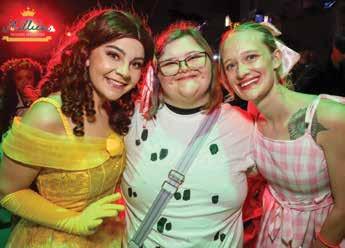
Students uplift others regularly through acts of service, providing care at health fairs, donating blood, cleaning hiking trails, supporting Parkinson’s exercise programs, and helping children with disabilities put on plays. Every January, RMU students assist with the Millie’s Princess Foundation Royal Ball for kids with cancer, terminal illnesses, and other life-threatening conditions.
“I get to help and create some magical moments,” speech-language pathology student Kayla Barker said. “It comes back to our school motto to love and lift.”
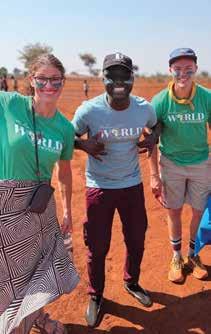
That spirit of service extends beyond local communities and reaches around the world. Since 2013, RMU has fostered a partnership with World of Difference, a humanitarian organization co-founded by Dr. Nielsen and his wife. For a few weeks every summer, RMU volunteers accompany them to train, provide healthcare, and serve in Kenya and Malawi.
“When we take students and faculty from RMU and other providers in the community to Africa, we take a spirit of service with us,” Dr. Nielsen said.
For Dr. Nielsen, watching students serve others is one of the
Service as a Recruiting Tool
RMU’s devotion to selflessness not only aids the community; it also benefits the school. The altruistic atmosphere is a recruiting tool for students, staff, and faculty.
Before enrolling as an optometry student, Andrew Perkes worked for a nonprofit eye clinic. He found out about the College of Optometric Medicine at an outreach event the University was participating in.
“RMU emphasized service, and it aligned perfectly with what I already wanted to do,” he said. “It’s one of the main reasons I chose the program.”
Dr. Miriam Cortez-Cooper, assistant program director of the Doctor of Physical Therapy program, concurs.
“That focus on being a good steward—sharing our resources and expertise—is really important to me,” she said. “It was a major reason I considered the job here in the first place. It reinforces how service-oriented the University is.”
Prospective students get an opportunity to immerse themselves into RMU’s culture before enrollment. Each summer, they are invited to join staff and current students on campus to participate in service projects while learning about their programs of interest and the University.
most rewarding parts of the experience. He sees firsthand how stepping outside themselves transforms the way they view their purpose as future healthcare professionals.
“They quickly understand what it means to live outside of yourself,” Dr. Nielsen said.
“When the students come home, they are changed. They say, ‘My life has never been the same since.’ That’s what RMU was founded on.”
From Dr. Nielsen’s vision of living outside yourself to President Martin’s focus on loving and lifting others, service continues to define the heart of Rocky Mountain University of Health Professions.
Culture of Service
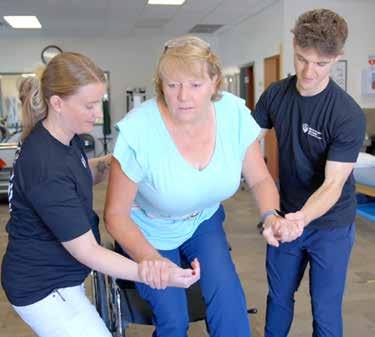
Service is woven into the fabric of Rocky Mountain University of Health Professions (RMU). It happens in classrooms and clinics, in local neighborhoods and communities around the world. It looks like students offering a steady hand to a patient taking difficult first steps, faculty sharing their expertise where it is needed most, and healthcare professionals in training learning that healing begins with compassion. Whether serving across the street or across the globe, the RMU community is united by a simple belief: healthcare is an act of service—one rooted in compassion, connection, and a commitment to lift others.
Healing Beyond Borders
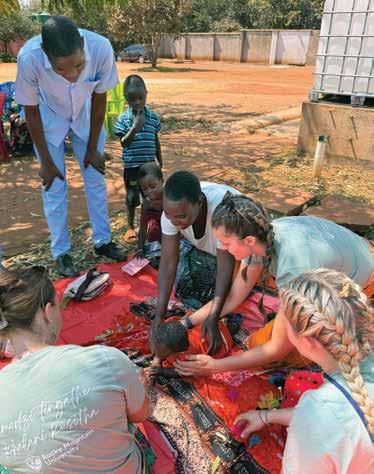
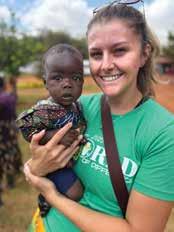
In Malawi, RMU students, alumni, and staff partnered with World of Difference to provide free healthcare and support community service projects. The experience brought care to underserved communities while giving students a deeper understanding of the power of service. Thousands of miles from campus, RMU’s mission to love and lift was put into action.
Caring for Children, One Exam at a Time
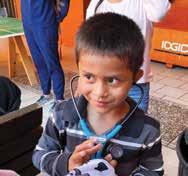
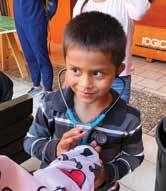
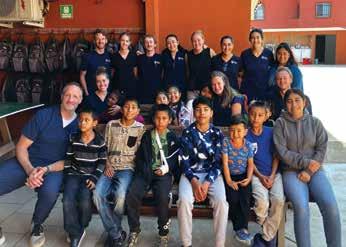
In summer 2025, 25 RMU students and two faculty members traveled to Mexico, where they provided more than 500 physical exams across 15 orphanages. For many children, it was access to healthcare they might not otherwise receive. For students, it was a reminder that compassion transcends culture and borders.
Serving the Community Together
Each year, RMU employees across all programs step away from their desks and into the community for United Way’s Day of Caring. Faculty, staff, and administrators come together to support local nonprofits through hands-on service projects that strengthen community partnerships and improve the lives of those they serve. It’s one more way the RMU community puts its commitment to service into action.
Finding Confidence Through Connection
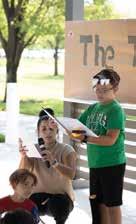
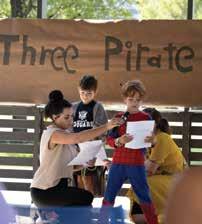
Through Readers Theatre, RMU students help children strengthen communication skills while discovering confidence in their own voices. The program creates a supportive environment where growth happens through storytelling, encouragement, and meaningful human connection, one page at a time.
Impacting the Community
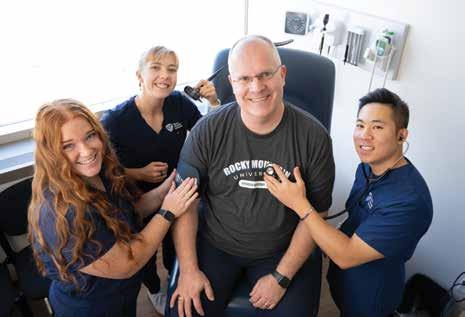
RMU’s Physical Therapy Clinic in Provo, Utah, provides lowcost and specialized care to community members, including those without insurance. Under faculty supervision, Doctor of Physical Therapy students gain hands-on clinical experience while delivering services such as pelvic floor therapy, electromyography, Multiple Sclerosis therapy, and wellness programs.
Students have helped identify serious conditions that might otherwise have gone undiagnosed, expanding access to care while making a meaningful difference in the lives of those they serve.
Helping People See a Brighter Future
Bringing Care to the Community
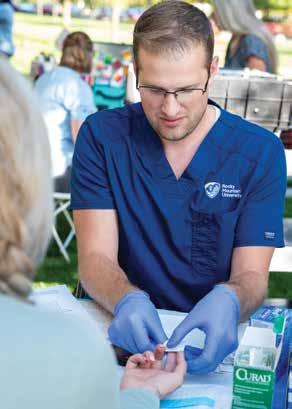
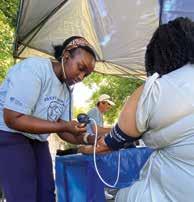
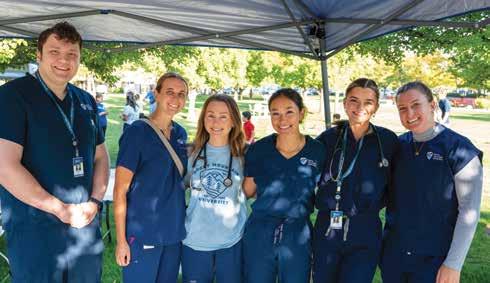
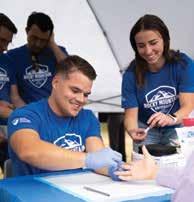
From free screenings to health education and wellness resources, RMU’s participation in community health fairs provides care where it is needed most. By partnering with local organizations, students and faculty help remove barriers to healthcare while connecting hundreds of Utah residents with services that support healthier lives.
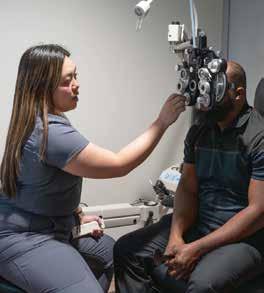
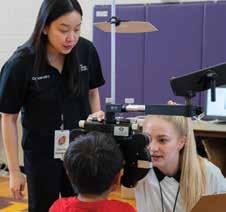
Whether serving refugees, incarcerated individuals, or underserved families, RMU optometry students are helping people see the world more clearly. Through free eye exams, prescription glasses, and referrals for additional care, students restore more than vision; they help restore independence, confidence, and opportunity.
Where Service Becomes Magic
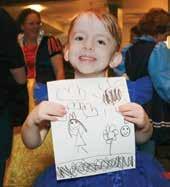
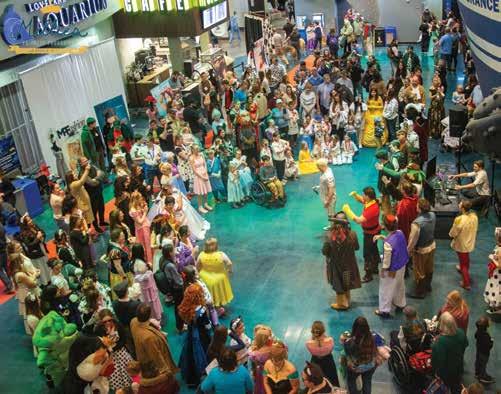
Every year, RMU partners with Millie’s Princess Foundation. The partnership supplies the foundation with student volunteers for their annual Royal Ball, a magical event supporting children facing terminal illnesses. At the 2026 ball, RMU community members helped with setup and activities throughout the evening. Volunteers played a meaningful role in creating a magical, hope-filled experience for the children and their loved ones.
Spreading Light
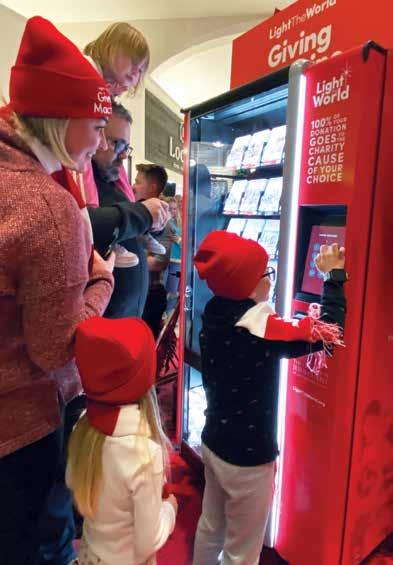
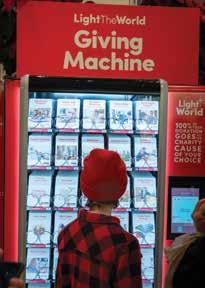
Through the annual Light the World Giving Machines initiative, RMU Health Clinics help extend healthcare access to individuals and families in need. Donations have provided services including eye exams and glasses, physical therapy for children and adults with mobility challenges, counseling, communication devices for nonverbal children, and educational camp experiences.
A Dad with Parkinson’s Inspires His Son’s Career Pathway
By Jody Genessy
“My dad’s diagnosis was a blessing in disguise—it helped me find my calling and showed me exactly how I could support him.”
JJeremiah Edwards’ life changed drastically when he was diagnosed with Parkinson’s disease six years ago. That’s quite understandable, of course, considering how much the incurable neurological disease negatively affects physical mobility and internal functions.
His health wasn’t the only thing altered by this medical development. Unexpectedly, his son’s career also completely changed.
“I was pretty set on becoming a dentist,” Zach Edwards said, smiling. “I was born with really small hands and thought I’d take advantage of that.”
Instead of pursuing dentistry, as he’d planned for years, the Riverton, Utah, native was drawn down a different path in the healthcare industry. Prompted by his dad’s situation, he decided to become a physical therapist (PT), leading him to enroll in the Doctor of Physical Therapy program at RMU.
“When my dad was diagnosed, it opened a door for me,” he said. “I wanted to know as much as I could about Parkinson’s and how physical therapy could help. It became the turning point that led me into PT instead of dentistry.”
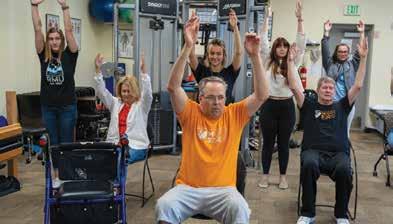
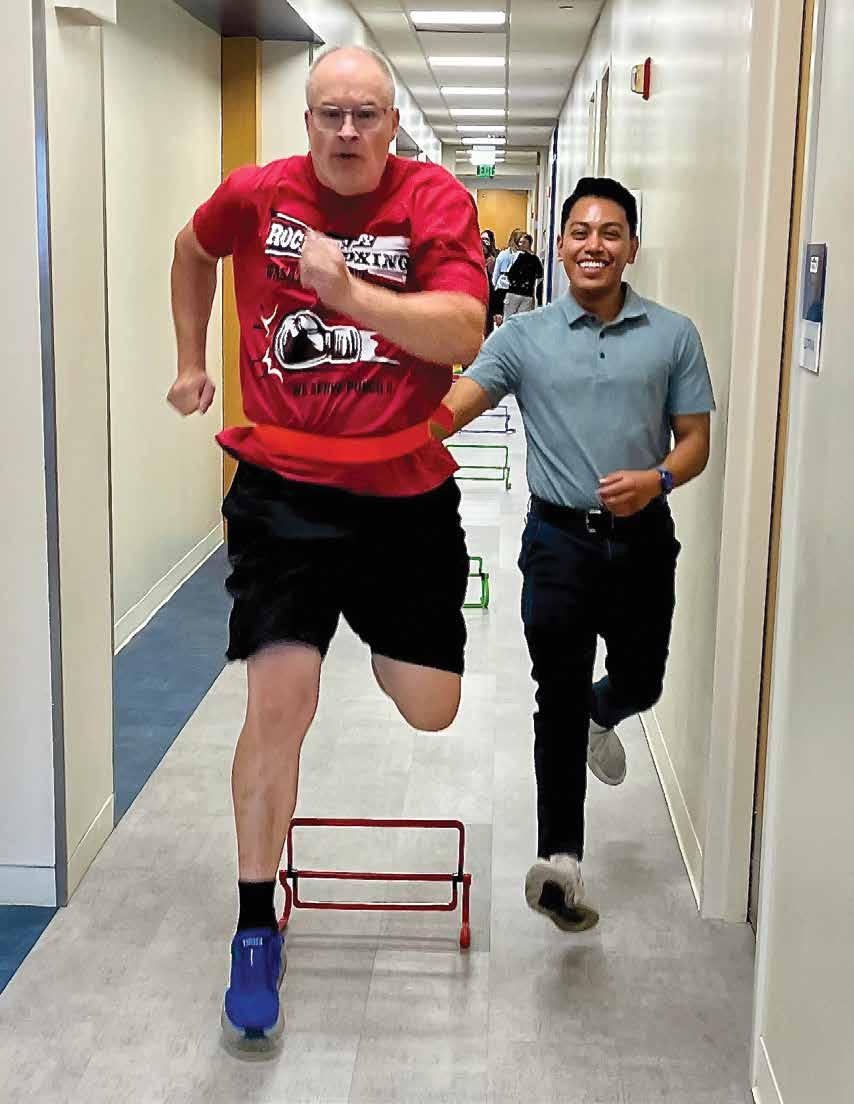
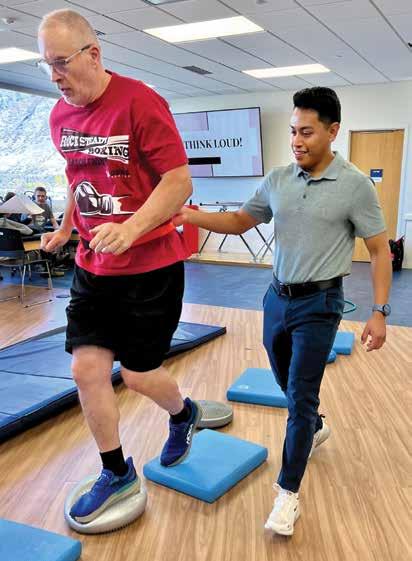
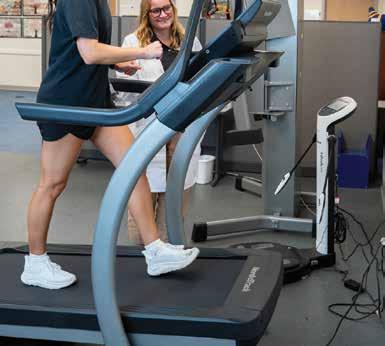
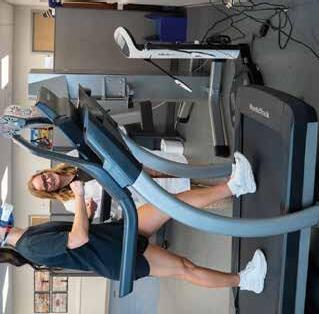
In an uplifting twist of fate, yet another door opened for the family. Serendipitously, Zach Edwards discovered that RMU, based about 30 miles from his parents’ home, hosted a twice-weekly exercise program to help people with Parkinson’s disease. In a supervised lab setting, students from RMU’s physical therapy and speech-language pathology programs collaborate. They create active lessons that provide an integrated clinical experience for patients dealing with a neurological condition that impairs movement, balance, speech, and other bodily functions.
“When my dad was diagnosed, it opened a door for me. I wanted to know as much as I could about Parkinson’s and how physical therapy could help.”
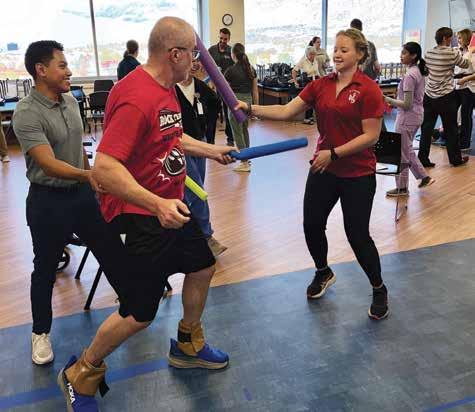
Assisted by RMU students and faculty members, the patients act out fun, practical, and challenging scenarios while repeating sounds and phrases to engage their bodies and voices. They’ll simulate situations like camping, the Olympics, trick-or-treating, holiday decorating, and sword-fighting—or whatever else the students come up with. For an hour, the participants’ muscles and minds get a workout.
“Research suggests that regular, high-intensity activity can slow the progression and improve quality of life,” said Dr. Christa Young, an RMU associate professor who started the Parkinson’s exercise program with PT faculty member Dr. Tyler Luszeck. “This program aims to provide an opportunity for that regular activity while training student healthcare providers to deliver excellent, effective, and evidence-based care.”
When he found out about it, Zach Edwards jumped at the opportunity to take advantage of this experience and helped his dad enroll. Jeremiah Edwards has been a valued, hard-working, and enthusiastically engaged participant ever since. He continues to show up for sessions even though his son is now completing his off-campus clinical rotations in Boise, Idaho.
“I didn’t miss a single session unless my dad couldn’t make it or I had a major test. Tuesdays and Thursdays became the highlight of my week,” the younger Edwards said. “It was always a fun time. By the end of the class, I would be sweating, too.”
A 65-year-old retired schoolteacher, Jeremiah Edwards has embraced exercise and staying active in his battle against Parkinson’s. He’ll box twice a day. He regularly visits his grandson and plays with him at daycare. He remains social. He credits the Parkinson’s sessions at RMU for helping him to improve his balance, short-term memory, safety, and mobility. He appreciates that the program is practical, incorporating equipment and exercises that simulate daily life situations. Bonus: He’s also made friends in a similar life situation.
“He works out more than I do,” Zach Edwards said. “The class taught him techniques he uses, and the students always made sure to include balance work tailored to him. It’s made a real difference. It was a cool coincidence with getting into Rocky Mountain and how everything just lined up.”
Finding the PT path and forging an even tighter father-son relationship have been two silver linings to their family’s unfortunate medical predicament.
“While the diagnosis was devastating, Zach immediately committed to caring for me,” Jeremiah Edwards said. “He has applied what he is learning to work with me directly and has even shared that he is reserving a room for me in his new home for when I may need it.”
“It’s the perfect example of what our profession is about—using knowledge to help people the best we can.”
Jeremiah Edwards kept his condition secret, even from his family, for 2-1/2 years.
“He had a hard time coming to terms with it at first,” his son said. “We saw signs but didn’t fully understand what was happening. Eventually, he told the family because the symptoms were becoming harder to hide.”
Revealing the truth wasn’t easy but has had a beneficial ripple effect.
Zach Edwards was at his dad’s side as often as he could be while attending classes in person at RMU. When he helped teach him what to do during the exercise class, it was a role reversal. Years ago, Mr. Edwards, as he was called at school, was once his son’s elementary school teacher. The former student laughs about how his dad was the only teacher who sent him to the principal’s office.
Jeremiah Edwards has enjoyed seeing his son in action in a teaching role as an aspiring healthcare provider. Working together has been a highlight.
“I was pleasantly surprised by his kindness, but he also made it fun while keeping the expectations serious. I think our relationship has improved. It was fun to see Zach as an adult. He seems to have found his career,” he said. “Our PT sessions are highly effective. If I begin to struggle with a specific skill, he is right there to ensure I perform the movements correctly.”
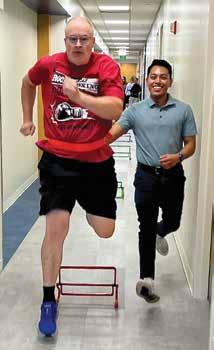
In his fifth semester, Zach Edwards had the opportunity to plan and lead the Parkinson’s class. His Grandpa Edwards and younger brother were Marines, so he created a military-focused workout to coincide with Armed Forces Day. Each participant selected a branch of the military to represent, so his dad, of course, was enlisted in the Marines’ workout session as a tribute to their family members. The exercises included acting like airplanes with arms extended while running down the hallway, throwing fake grenades in a classroom, participating in an obstacle course, and crawling under the tables. They even held
foam pool noodles as pretend guns and carried flags for the branch of military they represented.
“It was a good time,” Zach Edwards said. “It was really special for my dad. He ended up being the only Marine and took pride in that. He was waving the Marine flag like nobody’s business.”
Switching careers was “100% the right decision”, Zach Edwards points out. Leaning on his athletic background, the RMU student would rather help people progress through rehab than perform a root canal.
“I wouldn’t change it for the world,” he said. “Physical therapy fits my personality perfectly. I love science, I love the body, and I love learning how it all works. My dad’s diagnosis was a blessing in disguise—it helped me find my calling and showed me exactly how I could support him.”
The Edwards family will forever be grateful for this unique opportunity.
“Spending that time with my dad has been very special to me. I’ll never forget it,” Zach Edwards said. “I’m really thankful for RMU and especially to Dr. Luszeck, Dr. Young, and Dr. Greg Koberstein and for the work they’ve done. They gave up their lunch hours to make the lab happen. It’s the perfect example of what our profession is about—using knowledge to help people the best we can.”
THE HEART BEHIND HEALTHCARE
When Compassion Inspires Purpose
DBy Mia Drake
r. Megan O’Neil’s career in nursing begins with her mother. As an undergraduate student, Dr. O’Neil, Family Nurse Practitioner program director at RMU, watched her mom battle colon cancer. Through chemotherapy appointments and moments where fear hung in the air, the nurses caring for her mother were a constant presence.
The nursing team administered treatments and checked vitals, but what stayed with Dr. O’Neil wasn’t simply their clinical skills. It was the way they showed up. The way they listened. The way they offered reassurance and comfort when everything felt overwhelming.
“Watching her go through chemotherapy, surgery, and survivorship gave me a firsthand look at the impact nurses have on patients and families during some of the most difficult moments of their lives,” Dr. O’Neil recalls.
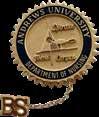
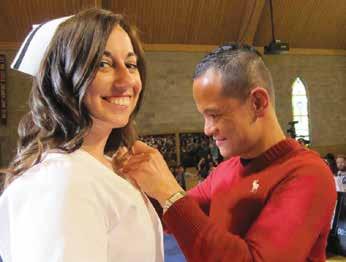
Years later, Dr. O’Neil stood at her nursing pinning ceremony and received her pin from the very nurse who had cared for her mother during chemotherapy.
“It was one of the most meaningful full-circle moments in my career,” she says. “It was a reminder of how profoundly compassionate nursing care can shape lives and inspire future nurses.”
For Dr. O’Neil, nursing was never simply about medicine. It was about service. It was about answering a call to care for others when they need it most.
“One of the most
meaningful full-circle moments in my career was having my mom’s chemotherapy nurse pin me at my nursing pinning ceremony.”
And that calling remains at the heart of the profession today.
More Than a Profession
Nursing occupies a unique position within healthcare because it bridges science and humanity. Nurses are highly skilled clinicians, with multi-disciplinary training, but they are also caregivers asked to see the person beyond the diagnosis.
When asked about nursing, Dr. O’Neil’s answer extends far beyond clinical tasks. She says, “It is not simply providing treatments; it is advocating for patients, educating them, supporting families, and helping individuals navigate some of the most vulnerable moments of their lives.”
Nurses are often the first to respond, the last to leave, and the constant presence during moments of fear, loss, vulnerability, and healing. They serve not only as healthcare professionals, but also as educators, advocates, and sources of emotional support.
Patients will forget the details of a treatment plan or the names of medications they received. But they often remember the nurse who sat with them in times of uncertainty. These moments may never appear in a patient’s medical record, yet they often become the memories patients and families carry with them long after they leave the hospital. It is this kind of compassionate service that transforms healthcare and led Dr. O’Neil to pursue a career in nursing.
A Career of Meaning
The profession requires resilience, adaptability, and emotional strength. Nurses witness heartbreak as well as healing. They shoulder tremendous responsibility. Yet despite its challenges, nursing continues to attract individuals seeking something deeper than a career. They are drawn by purpose.
For those considering a career in nursing, Dr. O’Neil emphasizes that the profession offers far more than many people realize. She explains, “Nursing is a challenging career, but it is also one of the most meaningful and rewarding professions because you have the opportunity to make a difference during some of the most important and life-changing moments in a person’s life.”
In many ways, her own story embodies that message. A young woman who once watched nurses care for her mother during one of her family’s darkest seasons. The nurses’ compassion left such a lasting impression that it inspired her own path into healthcare. Today, she helps educate the next generation of nurses who will one day stand beside patients and families facing their own moments of uncertainty. That is the enduring power of nursing.
Teaching the Next Generation to Care
At RMU, nursing education extends beyond technical preparation. The curriculum integrates evidence-based practice, clinical reasoning, leadership development, and patient advocacy while fostering a culture centered on service and human connection. Students develop the knowledge and technical skills necessary to thrive in today’s complex healthcare environments. RMU’s emphasis on advocacy, resilience, and compassion helps prepare students not only to succeed clinically, but also to sustain meaningful careers grounded in purpose and service.
Service-Minded Occupational Therapy Students Make a Difference
in Their Communities
By Jody Genessy
he late Fred Rogers might be flattered by the endearing way Alison Robison, a doctoral student at RMU, describes her occupational therapy profession.
“We’re kind of the Mister Rogers of the medical world,” Robison said. “We really care about the individual.”
Following the example of the beloved children’s TV host, students in RMU’s Doctor of Occupational Therapy (OTD) program made it a more beautiful day—make that a month—in their neighborhoods by participating in a friendly “Service Off” competition.
For a month during the Fall 2025 semester, RMU’s OTD students teamed up with other classmates to complete service projects in their areas throughout the country.
“As a hybrid program, we wanted to give students the opportunity to impact their community beyond what we could reach by solely focusing on volunteer projects while our students are on campus,” said Dr. Raegan Furman, assistant professor in RMU’s OTD program, who helped oversee the service competition.
Dr. Christen Ellis, who graduated from the OTD program in April, liked how it allowed remote students to participate and bond from afar.
“I really appreciate that RMU is extending meaningful service opportunities to the hybrid programs,” she said. “The residential students have always done a lot of service, but now we get to do it in our own communities, which is one of the great things about the hybrid model.”
Because occupational therapists tend to have service-oriented hearts and habits, this competition was in their wheelhouse.
“We’re kind of the warm-fuzzy healthcare providers,” Robison said. “Occupational therapy is all about helping people to be able to participate in meaningful activities.”
A Childhood Lesson
This is nothing new for Robison. Charity work was instilled into her heart at an early age.
“I grew up in a family that did a lot of service,” Robison said. “That was a big thing for my parents.”
An experience in Robison’s childhood showed her service instincts early on. While attending elementary school in Provo, Utah, she heard about how the famous Osmond family had taken steps to help people experiencing homelessness. At the same time, she wasn’t exactly digging the food her mom packed for her to eat at lunchtime. Those seemingly unrelated things hatched what her third-grade mind believed to be a brilliant win-win idea.
“I did not like these sandwiches my mom made because there was like a salad between bread with just every vegetable you could possibly find,” she recalled. “And when you’re in third grade, that’s not really great.”
Knowing that her classmates wouldn’t trade lunches with her, Robison decided to put her undesired food to another use.
“I didn’t want to be wasteful,” she said. “So, I was like, ‘Oh, you know what? Homeless people get food out of the garbage, right? They’ll be so happy to get a nicely wrapped-up sandwich,’ so I started throwing my sandwiches away, thinking I’m feeding the homeless.”
Soon, Robison convinced others to join in her well-intentioned plot to feed the hungry, which also allowed her to avoid the dreaded veggies.
“I got my friends to start feeding the homeless with their lunches,” she said. “It expanded through the whole third grade—everybody was feeding the homeless.”
Of course, there are holes in this theory. For one, Robison and her classmates went home with empty stomachs. For another, their donations only fed the dump and not people who were actually hungry.
The 9-year-olds’ misguided charitable efforts didn’t last long. Kids eventually explained the situation to their parents, who called school administrators. An assembly was then held to set things straight. The kids’ intentions were (mostly) in the right place even if their sandwiches and actions weren’t.
On the bright side, the situation inspired Robison’s family to begin volunteering at Provo’s Food & Care Coalition, which has provided meals, housing, and integrated medical, dental, and mental healthcare to people in need in Utah County since 1988.
“I learned all about where people can actually get help with homelessness,” she said. “And it’s not in the garbage can.”
Lifting Others
Decades later, Robison continues to find satisfaction in reaching out to lift others, which is why the OTD service competition was right up her alley. Fellow OT students also embraced the opportunity and left a positive impression on their neighborhoods. They volunteered at a community fair, supported special-needs groups, assisted at cleanups and food drives, did activities with kids, and much more.
Collectively, 40 OT students completed 158 hours of service, with the winning team contributing 75 hours. That six-person group did service projects ranging from babysitting to volunteering at a 5K race for individuals with disabilities to taking a walk with an older widow who’s dealing with cancer.
Animals also benefited. One student notched service time by walking dogs for an animal shelter.
Dr. Ellis did service in Ohio and Utah, including helping a youth group for kids with autism and at a Halloween activity.
“As occupational therapists, we work in the community, so it’s important to understand the communities we’re actually living in and the populations we’ll serve,” she said. “Our field is so broad that we can address a lot of different needs, but we won’t know what those needs are if we stay in our academic bubble.”
Getting out in the community allows students to see what actual needs there are in the real world and gives them a chance to find solutions, Dr. Ellis pointed out.
“It prepares us better for when we enter the field,” she said. “Some schools don’t emphasize service until you’re alreadyin clinical practice. I appreciate that RMU keeps it communtybased and service-focused throughout the entire program. Now that I’m entering the field, service is front-of-mind instead of an afterthought.”
Being part of RMU’s youth driving clinic was a highlight for Dr. Ellis. She helped do screenings for teens who want to get a driver’s license but aren’t sure they want to do traditional driver’s education. The program takes specialized needs into account.
“We had a few adolescents with autism come in, and we assessed whether they were cognitively and physically ready for a typical program or if they needed something more specialized,” Dr. Ellis said. “That was my favorite because it’s a little outside my usual practice area, but it’s addressing a really big need—especially in Utah. The program is just getting started, so I’m excited to see it grow.”
Service Off Serves Others
The competition came at a good time for Robison. Her cohort happened to be working with pediatrics at the time, and their final project required logging service hours with children with disabilities. She made fleece blankets for the “Cover with Love” project that helps kids in crisis.
Along with classmates, Robison had a heartwarming time volunteering at a respite night with Kids on the Move. The Orem, Utah-based nonprofit organization helps children with developmental delays and disabilities reach their full potential.
“They dedicate an evening where people bring their kids,” she explained. “It gives the families an opportunity for some self-care for about three hours while their kids get one-onone interactions.”
Robison raced, played tag, and laughed with a child at a playground that evening.
“What I like about it is that the kids can just be themselves,” she said. “Everyone is welcomed and included and just loved for who they are.”
That hits close to home for her. Inspired by her son with autism, Robison hopes to help others through occupational therapy.
“I love the aspect of family-centered, client-centered service that OT provides,” she said. “It’s not like a one-therapy-fitsall. It’s really getting to know people individually and their needs and their interests.”
Though the Service Off has concluded, the Service On light is still illuminated for Robison and other RMU students. She makes little fleece-stuffed hearts for families who experience infant loss. She and her daughter also make beanies for patients at the Huntsman Cancer Institute in Salt Lake City.
“My family believes that serving is a privilege and an opportunity,” she said.
That’s one reason why she’s happy to attend RMU, which encourages students and staff to care for others.
“Rocky Mountain University really does strive to lift communities and individuals,” she said. “It’s not about their own accolades; it’s just about involvement and participation and just showing love to everybody and being inclusive and aware. The service focus of RMU helps us remember our ‘why’ of pursuing our degrees.”
“I appreciate that RMU keeps it community-based and servicefocused throughout the entire program. Now that I’m entering the field, service is front-of-mind instead of an afterthought.”
Service When You’re Already Burned Out
The Science Behind How Caring Can Improve Your Well-Being
By Rachel Tynan Richards
If burnout has started to creep in, it probably isn’t because you’ve stopped caring. It’s because you’ve cared so deeply, for so long, that you’ve started to lose sight of why you began.
And you’re not alone. According to the Centers for Disease Control and Prevention, in 2022 nearly half of U.S. health workers reported feeling burned out. That’s up from a third just four years earlier. The usual reasons get the blame: long hours, paperwork, and emotional exhaustion. But a growing body of research suggests burnout isn’t just about
workload—it’s about something deeper.
Burnout, these studies suggest, isn’t only about how much you do. It’s about whether the work still means anything to you. Research published in Mayo Clinic Proceedings ties burnout closely to a loss of purpose. When delivering care starts to feel like just another task instead of something that matters, you can be drained in a way that no amount of rest seems to fix.
Findings in World Psychiatry point the same way, linking burnout not just to overwork but to feeling detached and losing the sense that what you do matters.
“Burnout isn’t always solved by doing less. Sometimes it’s solved by reconnecting to the meaning in what you’re already doing.”
The Science Behind Service
Your brain is wired to find giving rewarding.
Here’s the strange part: your brain can barely tell the difference between getting money and giving it away. In a study published in the Proceedings of the National Academy of Sciences, researchers used brain imaging to show that people’s brains engaged the same reward system when they donated to a cause as when they received money— both lit up the same circuit, and both felt like a reward.
The effect isn’t just in your head. A study in Health Psychology found that people who spent money on others had measurably lower blood pressure than those who spent it on themselves. It’s early evidence that giving may be good for your heart, literally.
The effect goes deeper still, even all the way to your DNA. As Mason Bennett, executive director of One Kind Act a Day, explained on the RMU Pulse podcast, “People who perform acts of kindness actually show less expression
of stress-related genes and more expression of longevity genes.”
Bennett is pointing to real science. In one randomized study published in the journal Psychoneuroendocrinology, people who spent four weeks doing kind things for others showed lower activity in a group of stress-related genes. People who did kind things only for themselves didn’t see the same change.
Helping others doesn’t just feel good. Your brain treats it like a reward, and your body responds with lower stress, lower blood pressure, even a shift in genes.
None of which means the answer is to add more onto an already overwhelmed workforce. Bennett is the first to say so.
“It’s hard to tell healthcare workers to be more kind, they already do the most amazing selfless acts,” said Bennett. “But if there’s a shift into reframing what you’re doing as meaningful acts of service, it changes everything.”
Bennett’s point cuts against the instinct to fix burnout by adding a wellness
initiative or a new resilience training. He’s not asking healthcare workers to do more. He’s asking them to see what they’re already doing differently and to notice the service already built into the job. Try to build a habit that forces you to reframe things: one sentence, once a day, naming a moment that mattered and who it mattered to. Do it for thirty days. It’s a small enough habit to survive a bad week, and specific enough that you can’t fake it. By the end of the month, you’ll have a written record of meaningful moments.
The benefit comes not from adding more to your plate, but from seeing the care you already give for what it is. Research in the Journal of Applied Psychology shows that when you can clearly see the positive impact of your work, the work feels meaningful again. Burnout isn’t always solved by doing less. Sometimes it’s solved by reconnecting to the meaning in what you’re already doing.
See “Service That Fits Your Life” on the next page for more ways to put this into practice.
Service That Fits Your Life
For healthcare professionals, service is already the job, so finding time to do more can feel impossible. But meaningful service doesn’t have to mean more hours. It can fit the time you already have.
Small Acts: Built Into the Day
Moments that cost little but connect deeply:
• Acknowledging a patient’s progress
• Asking a caregiver how they’re doing—and pausing to hear the answer
• Checking on a colleague after a hard case
• Encouraging a student still finding their footing
Quiet and easy to overlook, these add up, shaping both patient experience and your own well-being.
Higher-Impact Service: Investing in the Future of Care
Meaningful Commitments: Beyond the Routine
When you have a little more to give:
• Mentoring a student or early-career colleague
• Joining a community health fair or outreach event
• Volunteering your clinical skills where they’re needed most
• Sharing what you know through teaching or professional groups
A few hours to you can mean everything to the person on the other end and reconnect you to your purpose along the way.
Some service is less about a single moment than the long game. Precepting is the clearest example.
Students across every discipline depend on experienced clinicians to learn the skills that matter. It takes time, patience, and energy you may feel you don’t have. But today’s students are tomorrow’s providers and one day, one of them may be caring for you.
Precepting isn’t just teaching. It is an act of stewardship for the future of healthcare.
Education in Action
Why Preceptors Play a
Vital
Role in the Future of Healthcare
By Jody Genessy
“Education would die without preceptors.”
That’s a bold assessment by Dr. Amber Collins, director of clinical education for RMU’s Physician Assistant/Associate (PA) program.
And it isn’t hyperbole. It accurately represents how preceptors are an integral part of the accreditation process and essential to training the next generation of healthcare providers.
“Medical training in almost all areas is predicated on the apprenticeship model where someone who knows how to do medicine passes it along to a mentee,” Dr. Collins said. “That’s the only way PA education works.”
Having been the benefactors of clinical education and preceptorship themselves, these service-oriented practitioners willingly help the healthcare system prepare for the future by paying it forward.
What
Is a Preceptor?
Preceptors are practicing professionals—physician assistants, nurses, physical therapists, optometrists, speech-language pathologists, and others—who instruct, supervise, and mentor students in clinical settings.
Preceptor
Dr. Todd Pitts, Orthopedic Surgeon/
Carson Call, RMU PA Student
“Today’s students become tomorrow’s competent, compassionate providers.”
While professors teach in classrooms and labs, trusted tutors in the field pass along their expertise to up-and-coming healthcare providers by demonstrating how theory and practice combine to improve the lives of actual patients. The preceptors’ classrooms—clinics, hospitals, medical centers, and offices— are where the real-world action and hands-on learning happen.
“The preceptor is the key to students’ training,” said Dr. Megan O’Neil of RMU’s Nursing program. “There’s only so much we can do on the didactic [classroom] side of things. The preceptor brings that element that we’re not able to provide like they do in the clinical setting.”
Physician Assistant/Associate
RMU’s PA students spend their first year in classroom settings before heading into the community for clinical training. They complete eight different rotations—seven core areas, including family practice, mental health, and emergency medicine, plus one elective specialty—totaling about 40 weeks. This requires roughly 400 placements each year for each 50-student cohort.
Nursing The Nursing program is largely virtual on the didactic side, so preceptors are relied upon to help prepare nurse practitioners for practical, everyday situations.
Nursing students complete 180 clinical hours per semester with one or two preceptors, often in longer specialized blocks. Emergency room settings especially benefit from this in-person experience.
“When you’re actually intubating a person, as opposed to doing it on a trainer, it’s a lot different,” Dr. O’Neil said.
Physical Therapy RMU’s Doctor of Physical Therapy (DPT) program places students with approximately 400 clinical instructors each school year. Students begin with an introductory six-week rotation followed by three 12-week internships.
RMU’s accelerated eight-semester structure delivers more clinical time than many DPT programs, helping graduates enter the field prepared and confident.
Counseling RMU’s Master of Science in Counseling program requires three semesters of clinical training—one practicum and two internships—for a total of 700 hours.
“The clinical training component qualifies them as soon as they graduate for job placements,” said RMU Counseling Interim Program Director Dr. Tiffany Nielson. “That role helps them develop the skills, so they have the level of competency to adequately serve clients, especially vulnerable populations dealing with mental illness.”
At any given time, about 80 students are in field placements across 300 approved sites. Their unpaid internships include 10-20 hours of supervised work per week.
Occupational Therapy Collaborating with occupational therapy administration, students secure diverse experiences based on clinical interests, goals, and resources to prepare as occupational therapy generalists. They complete two weeklong fieldwork rotations early on, followed by two additional 12-week rotations alongside clinical instructors.
Optometry In the Doctor of Optometry program, RMU offers unique early exposure through outreach clinics, health fairs, and events helping underserved populations. That complements the experiential schooling and patient care opportunities they get from precepting site instructors on their rotations.
“We try to get students into clinical settings even in their first year to observe or participate,” said Dr. Court Wilkins, RMU’s assistant dean of clinical education for Optometry. “By their second year, they’ve learned the skills and need to practice them on real patients.”
Speech-Language Pathology Wendy Chase, director for RMU’s Master of Science in Medical Speech-Language Pathology program, is grateful for the mentors who pay it forward by providing full-semester, one-on-one training.
“They devote countless hours to the benefit of the next
“When students have met all the learning outcomes, we can say, ‘Yeah, you’re ready.’”
generation of speech-language pathology professionals and receive only our gratitude and appreciation,” Chase said.
Why Preceptors Participate Many clinicians precept to give back to the profession and shape the next generation. Others view it as a recruitment opportunity—a multi-week “job interview” to evaluate potential future employees.
“They’re getting more productivity and seeing more patients without having to pay the student,” said Dr. Will Sykes, DPT’s co-director of clinical education at RMU.
Preceptors also gain access to RMU’s online library and continuing education courses.
Many simply participate for the good of healthcare.
“Generally, they’re purely giving back to the profession by supervising,” Dr. Nielson said.
Placements and Reputation For the most part, the University’s clinical education experts recruit qualified preceptors and arrange the practicums. Most RMU preceptors are in Utah because of logistics, but students have opportunities to train nationwide based on availability, preference, and approval.
The University has official agreements with high-profile institutions like NYU Langone Health in New York and the Mayo Clinic in Florida and even has a special arrangement with a men’s prison in Montana.
Some students help select their own approved clinicians, allowing them to choose locations and specialties that fit their needs.
Across the board, RMU programs have honed their curriculums to prepare students to get the most out of their clinical experiences.
Simulation training with standardized patient actors and volunteer opportunities at the RMU Health Clinics also help students hit the ground running.
“Our students are much better prepared than people from other schools,” Dr. Collins said. “We’re building a reputation where a lot of people are starting to realize that our students are valuable to them.”
Over the years, RMU students have become known for being professional, punctual, and ready to put their education to practice.
“It shows that our program is doing a good job in the didactic phase to prep them really well for clinical education,”
Dr. Sykes added.
Preceptors are more than just teachers or supervisors—they are the bridge ensuring today’s students become tomorrow’s competent, compassionate providers.
At RMU, this tailored apprenticeship model delivers the applicable education that sets graduates apart and sets them up for a successful career.
“When students have met all the
A Call for More Preceptors
By President Cameron K. Martin
Across the country, healthcare shortages are leaving communities without the care they need. At RMU, we’re preparing the next generation of healthcare providers to meet those needs—but we can’t do it alone. Clinical education depends on dedicated professionals willing to share their expertise and invest in the future of their field.
Serving as a preceptor is more than a professional duty. It’s a chance to leave a legacy. When you open your clinic to a student, you become the bridge between what they learned in the classroom and the real patients they’ll one day treat on their own.
Our students tell us the same thing year after year: their clinical experiences were the most formative part of their education. The lessons a student learns from a practicing professional tend to outlast everything else.
If you’ve ever thought about becoming a preceptor, I invite you to take that step. Your experience and mentorship can shape far more than one student. It reaches every patient that students will care for, across an entire career.
From Student to Mentor RMU Alumna Still Learning While Teaching
By Rachel Tynan Richards
“I feel like I am giving back to the new generation, which will ultimately keep furthering our profession.”
For Dr. Brynne Gerrard, a 2020 graduate of RMU’s Doctor of Physical Therapy program, becoming a preceptor is a full-circle moment. Her clinical rotation at Bear River Hospital in Tremonton, Utah, stuck with her thanks to instructors who were attentive, enthusiastic, and genuinely invested in their patients and their students.
“Their energy was infectious,” Dr. Gerrard recalls. “They shaped the physical therapist I wanted to become. I decided then that I wanted to bring that same energy to my patients and to the students I mentor.”
As a preceptor, Dr. Gerrard sees her job as more than teaching clinical skills. New clinicians need someone experienced to turn to for advice, encouragement, and perspective in those shaky early days, and she wants to be that person. Her favorite part is watching a nervous student grow into a confident clinician over the course of a single rotation.
Mentoring lets her give back to the profession, but she’s quick to say it gives just as much back to her. “I learn things constantly from students,” she says. “They keep me current on new research and new ideas. It keeps me humble and reminds me that learning never stops.”
That exchange is the whole point. “I feel like I am giving back to the new generation,” she says, “which will ultimately keep furthering our profession.” For Dr. Gerrard, precepting is an investment in the future of physical therapy—making sure the clinicians who come next have role models to learn from, just as she once did.
Become a preceptor today!
Setting our Sights on Service
Improving People’s Health Through Service is a Way of Life for Dr. Court Wilkins
Jody Genessy
When Dr. Court Wilkins was named Utah Optometrist of the Year, he humbly went about his work at RMU without telling anybody about it for months.
“He was afraid I’d brag about him,” a colleague joked. “That is the kind of person he is—always serving people but never wanting to be noticed for it.”
Dr. Wilkins is more focused on teaching and serving others than tooting his own horn. He’d rather focus on administering eye exams to young athletes with unique health challenges, prescribing free glasses to inmates at the Utah State
Correctional Facility, or educating future optometrists than boast about himself.
Having previously served veterans and military personnel worldwide with the Army and the Air Force, Dr. Wilkins has been an integral part of RMU’s College of Optometric Medicine since May 2021.
In addition, Dr. Wilkins volunteers for multiple health organizations. He has donated his services to the Special Olympics for 15 years. As the Utah director of their Open Eyes program, he helps administer countless free eye exams and prescribes thousands of
“He’s constantly looking for new community centers to go to and different organizations to partner with, so that we can find more people to serve and allow these people to see and get eye care. He thinks about that every day.”
glasses to people with intellectual and developmental challenges.
“The guy never stops,” said Special Olympics Utah Senior Director of Operations Luciano Colonna. “He’s always doing something in the community. He’s extraordinary.”
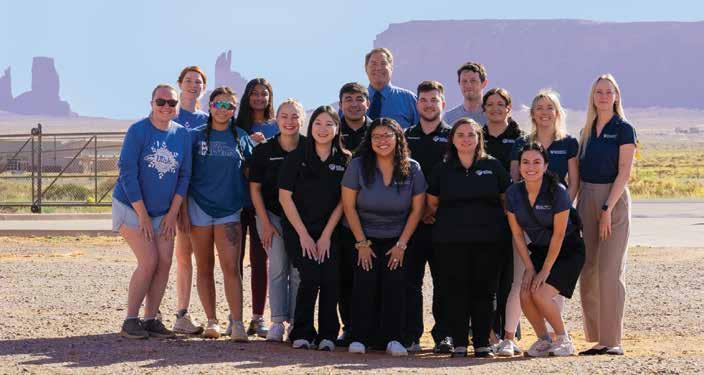
The influential optometrist brings RMU faculty and students, even his wife and kids, to help underserved communities and people in need. They volunteer at events and clinics from northern Utah to the Navajo Nation. In May, they provided services at the 2026 Utah Summer Games in Cedar City, Utah.
“We give students an opportunity to practice their skills while giving back to the community. It’s a great symbiotic relationship.”
— Dr. Court Wilkins
“I just want to make people’s lives as productive as possible,” Dr. Wilkins said. “Without good vision, they can’t function well, can’t learn well, and can’t work. It’s my way of helping make their lives better and giving them opportunities to learn and work.”
Along with their heartwarming athletic competitions, health screenings are a big part of the Special Olympics experience. The Dr. Wilkins-led RMU team delivers free eye screenings to the children (athletes and non-athletes alike) at multiple events each year. Through the Healthy Athletes initiative, eye exams and free prescription glasses, sunglasses, and sports goggles are provided to athletes.
During a 2026 spring health fair at Salt Lake City’s Glendale Middle School, 165 people lined up for eye exams with Dr. Wilkins’ crew. Using four eye-exam stations, the group provided 100 participants with life-changing prescriptions. They scheduled exams for the rest at the RMU-affiliated Parkview Clinic in Salt Lake City.
It’s a positive situation for the participants and volunteers.
“We give students an opportunity to practice their skills while giving back to the community. It’s a great symbiotic relationship,” Dr. Wilkins said. “I hope we instill in them the value of serving their community once they’re in practice.”
“Dr. Wilkins is just an unforgettable human being. I’ve honestly never encountered someone with the expertise and the heart that he has. He’s a good teacher and a good doctor.”
— Special Olympics Utah Senior Director of Operations Luciano Colonna
Over the past year, Dr. Wilkins’ volunteer efforts helped provide 800 free vision screenings through the Opening Eyes program. RMU optometry students enjoy those opportunities. They interact with communities, practice what they’re learning in the classroom, and give eye exams to actual patients in real-world settings instead of classmates in the lab.
“Dr. Wilkins is great. He clearly wants to serve as many people as possible,” said RMU optometry student Andrew Perkes. “He’s constantly looking for new community centers to go to and different organizations to partner with, so that we can find more people to serve and allow these people to see and get eye care.”
Paying it forward comes natural to Dr. Wilkins.
“Service is just inherent in me,” he said. “It’s been part of my entire life—seeing what I can do to help and serve.”
And here’s something you might not hear from Dr. Wilkins himself. He received another honor this year—the 2026 Golisano Health Leadership Award from the Special Olympics for his commitment to advancing inclusive healthcare for people with intellectual disabilities.
“Dr. Wilkins is just an unforgettable human being,” Colonna said. “I’ve honestly never encountered someone
with the expertise and the heart that Dr. Wilkins has.”
Colonna admires how Dr. Wilkins interacts in a compassionate manner with those he works with, teaches, and treats. It takes skills and patience to help patients who can’t always communicate clearly because of autism, Down syndrome, and other conditions. He also teaches students how to help people with unique challenges.
“He’s just amazing to see in action,” Colonna said. “He’s a good teacher and a good doctor. He’s the real deal.”
RMU Student’s Life-Changing Humanitarian Trip to Thailand
By Jody Genessy
“It was awesome. The Thai people were so kind and generous. It wasn’t hard to help them.”
— Dr. Meredith Bailey, RMU PhD student
Dr. Meredith Bailey lives and teaches school in Oklahoma and remotely works on her Doctor of Philosophy in Health Sciences (PhD) degree through RMU in Utah.
But it was on the other side of the globe where Dr. Bailey, a licensed physical therapist, participated in a physical therapy global outreach experience that changed her life.
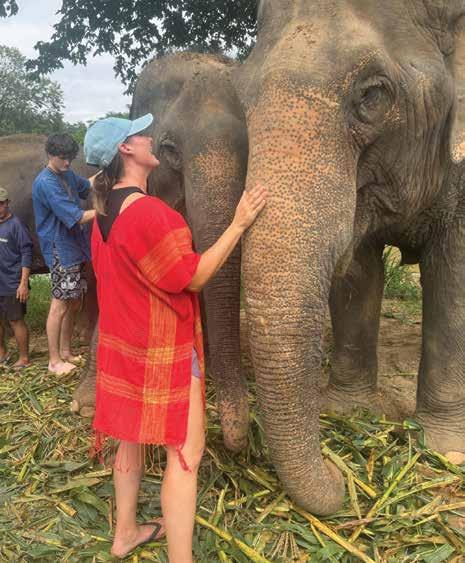
As part of a charity program with Oklahoma Baptist University (OBU), where she teaches, Dr. Bailey headed up a team of students and faculty members on a wheelchair service project in Thailand. For an entire month, the group worked with hospitals and Stronger Together Thailand to provide free wheelchairs and healthcare to people in need.
Dr. Bailey’s versatile group included OBU staff and students with specializations in education and healthcare. Their trip blended hands-on learning, cultural experiences, and outreach opportunities in the second-largest Thai city, Chiang Mai.
The philanthropy focused on helping at a children’s home, building a sensory room, and assisting with wheelchair distribution. Dr. Bailey’s team helped assemble, fit, adjust, and distribute 175 wheelchairs.
“It was awesome,” Dr. Bailey said. “The Thai people were so kind and generous. It wasn’t hard to help them. They were easy to be around and very welcoming.”
She was touched when seeing the impact that the charity had on others and was moved by seeing the sacrifices loved ones made to help their family members get the aid and access to improved mobility they desperately needed.
It warmed her heart that immobilized children and adults would now be able to move around without needing to be carried.
“The access to their community is huge to them,” Dr. Bailey said.
A woman with significant scoliosis received a new wheelchair after being stuck in a broken chair for years. The group figured out how to make the chair fold so it could be placed in and removed from vehicles easily. The woman was moved that they took time to care for her needs.
“It broke my heart a little bit,” Dr. Bailey said. “She’d lived with this for a long time, and nobody had sat down and figured out what would work best for her.”
There were dozens of similar stories, including people receiving therapy from the visiting physical and occupational therapists.
“They are very non-individualistic, and that was really endearing,” Dr. Bailey said. “It felt like a canon event—one of the things in life that shifts your mindset. I know I have a different lens of how I view my choices and actions and how those things affect my family and community.”
Along with her teaching responsibilities, Dr. Bailey will continue working on her doctoral dissertation at RMU,
delving into how spirituality influences resilience in NCAA athletes who are retiring from their sport.
Once her PhD work is completed, she plans to return to Thailand with her husband, also a physical therapist, to continue the humanitarian work.
“It was transformative,” Dr. Bailey said. “I have a deeper appreciation for what we have access to here in the U.S. but also for the culture and the selflessness of the Thai people.”
Dr. Meredith Bailey’s philanthropy group focused on helping at a children’s home, building a sensory room, and assisting with wheelchair
distribution in Thailand.
Every research study starts with a desire to better understand the human experience. At RMU, research is not simply about generating knowledge; it is about understanding people. And that understanding begins with curiosity. The kind that asks, what can we learn if we truly listen?
At RMU, compassionate curiosity is more than a research philosophy. It is a form of service. Beverly Albert, a PhD student in Health Sciences and the research operations manager in RMU’s Office of Research, believes meaningful research is often misunderstood.
“There is a misconception about what constitutes meaningful or impactful research,” she said.
“There is a tendency to focus on a study’s results or findings to determine its value. But regardless of a study’s findings, it establishes a foundation for future inquiries.”
IT IS SIMPLY HAVING A QUESTION AND TRYING TO FIND AN ANSWER.”
Her perspective reflects a culture where questions matter as much as answers. Every study becomes part of a larger effort to understand patients more deeply and improve care for those who come after them.
Dr. Kim Barber Foss, director of RMU’s Office of Research, sees this spirit in the work of students and faculty across the University.
“Research isn’t just formal projects,” she said. “It is simply having a question and trying to find an answer.”
Often, those questions emerge directly from patient care.
For nearly two years, Doctor of Physical Therapy student Steven Landspurg has worked alongside faculty member Dr. Hina Garg in RMU’s Neuro Clinical Innovation Lab to investigate the experiences of people with Multiple Sclerosis (MS) who contracted COVID-19. The project combines quantitative data and qualitative interviews, but the moments that stayed with him most did not come from spreadsheets or statistical analyses. They came from listening.
“We wanted to understand what patients actually went through,” he said.
As participants from across the country shared their stories, patterns began to emerge. Many described feeling isolated. Some struggled to find information relevant to their specific circumstances. Others found themselves navigating unprecedented chal lenges without clear guidance or support.
The research uncovered gaps in care, but it also revealed something deeper—the resilience of people adapting to extraordinary circumstances while managing a chronic neurological condition.
“Our goal is really to get patients’ voices heard,” Landspurg said. “We want to better understand what helped them, what they needed, and how clinicians can better serve them moving forward.”
The study’s findings will help inform future healthcare providers and researchers. Yet for Landspurg, one of the most significant outcomes was personal. Before arriving at RMU, he had little exposure to the MS community. Through countless interviews and conversations, that changed.
“Hearing what people went through absolutely deepened my sense of empathy,” he said. “It helped me understand the resilience of this community and made me a more empathetic clinician.”
That transformation illustrates one of the most powerful outcomes of research at RMU.
“STUDENT-LED RESEARCH CONTRIBUTES TO REAL-WORLD CHANGE NOT ONLY THROUGH THE FINDINGS THEMSELVES, BUT THROUGH THE PROCESS OF DEVELOPING FUTURE CLINICIANS AND SCHOLARS WHO KNOW HOW TO ASK BETTER QUESTIONS.”
Research changes patients’ lives, but it also changes the people conducting it. Students learn how to analyze evidence and interpret findings. Just as importantly, they learn how to listen.
They learn how to ask thoughtful questions, challenge assumptions, and see beyond diagnoses to the individuals living behind them.
“Student-led research contributes to real-world change not only through the findings themselves,” Albert said, “but through the process of developing future clinicians and scholars who know how to ask better questions.”
At RMU, those lessons are cultivated through close collaboration between students and faculty mentors. Research teams work across disciplines to address real healthcare challenges, creating opportunities for students to contribute meaningful work while developing the skills needed to become compassionate healthcare leaders.
At its heart, RMU’s research mission remains remarkably simple.
It starts with a question.
It continues with a willingness to listen.
RESEARCH CHANGES PATIENTS’ LIVES, BUT IT ALSO CHANGES THE PEOPLE CONDUCTING IT.
And it leads to a deeper understanding of the people healthcare exists to serve.
WAYS TO SUPPORT HEALTHCARE RESEARCH
Every study at RMU starts with a question. Here are ways you can help find answers.
Be a research participant. RMU’s research depends on real people willing to share their experiences—the kind of firsthand insight that shaped the MS/COVID-19 study featured in this article. Whether it’s a survey, an interview, or a clinical study, your perspective could directly inform the future of healthcare. Sign up at rm.edu/research.
rmufoundation.org
Give to research through the RMU Foundation. Behind every study is funding that makes it possible—for equipment, student researchers’ time, and the clinics where questions turn into answers. As RMU Foundation Senior Executive Director Jeff Fisher put it, the Foundation’s job is “making sure they have the resources they need to continue exploring solutions, advancing healthcare, and preparing the next generation of healthcare providers.” Learn more about the RMU Foundation starting on page 45.
Where Service Took Them
Alumni Making a Difference
By Rachel Tynan Richards
In a hospital in rural Honduras, a frightened woman waited for surgery—terrified of the anesthesia that would soon put her under. She asked the man beside her to pray with her. He knew only a few prayers in Spanish, but he sat down, said them with her, and held her hand until she fell asleep. That man was Dr. Chuck Frisch, a 2007 RMU graduate, thousands of miles from home, doing the kind of thing he’s done his whole career.
The healthcare field draws people who want to help. But for many RMU graduates, that drive reaches well past the job description. Whether serving, mentoring, volunteering, or advocating for those in need, RMU alumni go above and beyond in their efforts to improve the human condition.
Dr. Lori McGowan and Dr. Frisch have walked different paths. But they share one belief: some of life’s most meaningful moments come from showing up for others.
Lori McGowan DMSC, PA-C Doctor of Medical Science, 2024
In 2026, Dr. Lori McGowan received RMU’s Early Career Alumni Award, a recognition for graduates from the last five years who are making a real difference in their communities. For Dr. McGowan, that difference has been the thread running through her whole career.
“When I look back on my career since graduating from RMU, I can see that service work has been an essential piece of every chapter,” she said. It started early. Volunteer work in the first years of her career showed Dr. McGowan that she wanted more
from medicine than the day-to-day of treating patients. She wanted her work to mean something and so compassion and connection became the foundation for everything she does.
Over the years, Dr. McGowan has served in many ways. As a clinician, it’s caring for patients in their most vulnerable moments. As an educator and leader, it’s mentoring new providers and watching them grow from uncertain to confident. In her community, its organizing donation drives and volunteering alongside her own children.
One moment that stands out for Dr. McGowan reminded her why service is so impactful. After dropping off a truckload of household supplies, socks, and sweatshirts at the Dorothy Day House (a local shelter serving people experiencing homelessness), a volunteer grew emotional. They shared how the shelter was at capacity and low on supplies. Dr. McGowan didn’t just take it in and move on. The encounter pushed her to come back bigger, and the next year she expanded the drive and brought even more people into it.
“That moment stayed with me,” she said. “It reminded me how much a simple act of showing up can matter.”
She’s felt that same pull at the Ronald McDonald House, where a meal and a conversation can steady a parent carrying an unimaginable load. Some of her proudest volunteering, though, happens closer to home. Each year, her children spend much of their own allowance buying toys and supplies for families at the Ronald McDonald House, learning compassion and gratitude in the process.
“Seeing them recognize that some children their age are facing unimaginable challenges is a powerful reminder of the gift of health and the importance of giving back,” she said.
Dr. McGowan credits RMU with shaping not just what she knows, but who she is. The University taught her that service takes humility, emotional intelligence, and a willingness to give beyond what’s required. These lessons still guide how she cares for patients, supports her team, and leads.
She’s also learned where the limits are. “When you care deeply, it is hard to walk away knowing there is still more need than time, resources, or support can meet,” she said. What keeps her
going is a simple idea: even when she can’t do everything, she can still do something that matters.
Her advice to current students comes straight from that belief. “Stay connected to your purpose. Find your ‘why,’” she said. “Don’t be afraid to start small and grow an idea that will help others.”
“When I look back on my career since graduating from RMU, I can see that service work has been an essential piece of every chapter.”
Dr. Lori McGowan
Charles “Chuck”
Frisch
CRNA, DNP, MHA, BS, CH Doctor of Nursing Practice, 2007
“Just do it. You’ll get more out of it than you put into it.”
Dr. Chuck Frisch
For Dr. Chuck Frisch, the drive to serve started with his father.
“My dad always stressed that giving back is more important than receiving,” Dr. Frisch said.
That lesson shaped a whole career. Since graduating from RMU in 2007, Dr. Frisch has gone on 14 mission trips—12 to Honduras, one to Guatemala, and a teaching mission in Cambodia. Closer to home, he has used hypnotherapy to help people struggling with addiction and veterans living with post-traumatic stress disorder. While the places and the work have changed, the goal never has. Use your skills to make someone else’s life better.
His most memorable moments came in Honduras—like the frightened woman
A Life of Service
he prayed beside before her surgery. Another was a young farmer with a severe hernia so painful he could barely do the physical work his family depended on. After surgery, Dr. Frisch watched him stand, move freely, and get his life back. “He was a new man,” Dr. Frisch recalled.
Moments like those showed him how far a provider’s impact can reach. It goes past the patient, into whole families and communities. Dr. Frisch credits RMU with widening his sense of what service could be. Talking with classmates from across healthcare opened his eyes to ways of helping he hadn’t considered, including his later work in addiction recovery and with veterans.
Now retired from clinical practice, Dr. Frisch hasn’t stopped serving. As a capstone advisor and mentor for future nurse anesthetists, he’s helping train the next generation of healthcare professionals—which may be the accomplishment he’s proudest of. By investing in students, he’s found a way to extend his impact beyond the patients he treated and into the future of healthcare itself.
His advice to students is as direct as he is: “Just do it. You’ll get more out of it than you put into it.”
For both alumni, service is not measured by recognition or accomplishments. It is measured in quieter moments—a patient who feels cared for, a student who gains confidence, a family who receives support, or a community that benefits from someone’s willingness to show up and help.
Their stories are a reminder that while careers may begin with a profession, the greatest impact often comes from a commitment to something larger than ourselves.
ALUMNI HIGHLIGHT
The RMU Foundation: Creating Opportunities, Advancing Care
Making an Impact Through Clinical Care, Research, and Student Support
By Rachel Tynan Richards
Every act of service begins somewhere.
Sometimes it begins with a scholarship that lets a student stay in school. Sometimes it begins with a research project that leads to better care. And sometimes it begins with a patient walking into a clinic and getting help they couldn’t otherwise afford.
At RMU, many of those moments begin with the RMU Foundation.
Founded in 2008, the RMU Foundation is a registered 501(c)(3) nonprofit organization with a clear job: to help open doors. It supports students, funds research, and helps run clinics that care for people who need it. In 2025, it put $2.1 million into education, clinics, and community care. The foundation turns RMU’s mission—improving the human condition—into something real, every single day.
“Our mission is simple,” said Jeffrey L. Fisher, senior executive director of the RMU Foundation. “We invest in people by connecting generous donors and partners with opportunities that change lives. Whether it’s a student pursuing their dream, a patient receiving care, or a researcher searching for answers, every investment ultimately improves the quality of people’s lives.”
Helping Students Succeed
Most RMU students aren’t just students. They’re also parents, employees, and caregivers, working through a tough graduate program while juggling the rest of life. Money is often the thing that decides whether they can keep going.
“When we help a student succeed, we’re helping every future patient that student will care for throughout their career. The impact of this multiplier effect lasts forever.”
JEFFREY L. FISHER Senior Executive Director RMU Foundation
2025 Impact
$2.1M
Invested in education, clinics, and community care
$242,500
Financial assistance to future healthcare professionals
400
Students supported
That’s where the generosity of others makes a difference. In 2025, 400 students received support. Some through academic scholarships, others for help with moving for a clinical placement, support from the campus food pantry, finding more spots to train in real clinics. Small things, maybe. But they let a student keep their focus on learning.
“When we help a student succeed, we’re not just helping one individual,” Fisher said. “We’re helping every future patient that student will care for throughout their career. The impact of this multiplier effect lasts a lifetime.”
Research That Changes Care
The Foundation also backs the research that makes care better.
All across RMU, faculty and students are chasing big questions. How do people recover from injury? How do we help someone speak again? How does the body move, and how do we keep it from breaking down? These aren’t questions for a textbook. They come straight from the clinic.
That’s the part that makes RMU’s research different. Many of its faculty are working clinicians, so the questions they ask come from real patients they’ve treated. The Foundation helps give them what they need to find answers.
“We’re fortunate to have world-class clinicians teaching future clinicians,” Fisher said. “Part of our responsibility is making sure researchers have the resources they need to continue exploring solutions, advancing healthcare, and preparing the next generation of healthcare providers.”
Care for the Community:
The RMU Health Clinics
You can see the Foundation’s work most clearly at the RMU Health Clinics. Operating under the RMU Foundation, the clinics serve a dual purpose: they give the community affordable, quality care, and they give students a real place to learn. Last year alone, the RMU Health Clinics saw 12,210 visits. For a lot of people in Utah County, that means care they
rmufoundation.org
thought was out of reach. Many services are free or charge only what a patient can pay, so being uninsured or short on money doesn’t mean going without.
Take the RMU Physical Therapy Clinic. Patients are treated by licensed clinicians working beside students from RMU, Brigham Young University, and Utah Valley University. People get their movement and their lives back and future providers get experience they can’t learn from a book.
The RMU Eye Institute works the same way. Patients get affordable eye exams and vision care, and students learn by doing, alongside licensed providers. The Foundation also supports clinics for communication disorders, occupational therapy, electrophysiology, and counseling.
Together, these clinics reflect RMU’s belief that healthcare education and community service are deeply connected.
“When patients walk through our doors, they’re not just receiving quality care,” Fisher said. “They’re helping educate future healthcare professionals. It’s a partnership that benefits both the individual and the community.”
That reach keeps growing. In 2026, Kane Counseling Services joined the RMU Health Clinics building to bring more mental health care to Utah County.
Every Step Matters
At its heart, the Foundation does one thing: it creates opportunities. A scholarship. A patient’s recovery. A research project that helps a future clinician provide even better care. Each step forward builds on the last, creating momentum that reaches far beyond a single person or moment.
Each investment creates a ripple effect that extends far beyond a single person or moment.
“When people support the RMU Foundation, they’re helping create something much larger than any one program or initiative,” Fisher said. “They’re helping improve lives, strengthen communities, and prepare healthcare professionals who will continue serving others for generations to come.”
42
Licensed clinicians
12,210
Patient visits provided Volunteer hours
5,588
“Part of our responsibility is making sure researchers have the resources they need to continue exploring solutions, advancing healthcare, and preparing the next generation of healthcare providers.”
Ways to Serve
Put What You’ve Read Into Action.
Every story in this issue started the same way: someone decided to show up. In a clinic. A classroom. A Royal Ball. A village outside Nairobi. Service doesn’t require a medical degree or a plane ticket—it just requires a start. Here’s yours.
“Your brain rewards service the way it does a treat.”
(Caring When You’re Already Burned Out, page 26)
Charities featured in this issue also need your support:
Millie’s Princess Foundation: Every January, RMU students help throw the Royal Ball, a night of dancing and dress-up for children facing cancer and other life-threatening illnesses. The foundation welcomes volunteers and donors year-round. milliespf.org
Scenic View Academy: This nonprofit helps adults with autism build independent-living skills. RMU occupational therapy students organize yoga nights and line dancing with Scenic View residents. svacademy.org
Food & Care Coalition: Since 1988, this nonprofit has served meals and provided housing, medical, dental, and mental healthcare to people in need across Utah County. foodandcare.org
World of Difference: Since 2013, this humanitarian organization has partnered with RMU to bring healthcare to communities in Kenya and Malawi. Each summer, RMU volunteers join its founders overseas to serve. worldofdifference.ngo
Stronger Together Thailand: This organization partners with hospitals in Thailand to provide free wheelchairs and mobility care to people who would otherwise go without.
fcfthailand.org/portfolio/stronger-together
Special Olympics Utah: RMU optometry faculty and students provide free vision screenings and glasses to Special Olympics athletes across Utah, helping people see clearly, sometimes for the first time. resources.specialolympics.org/health/opening-eyes
Every gift to the RMU Foundation helps students, healthcare research, or provides a visit to the RMU Health Clinics for someone who couldn’t otherwise afford care. In 2025 alone, the Foundation put $2.1 million into students, research, and community care. Read more about the RMU Foundation starting on page 45.