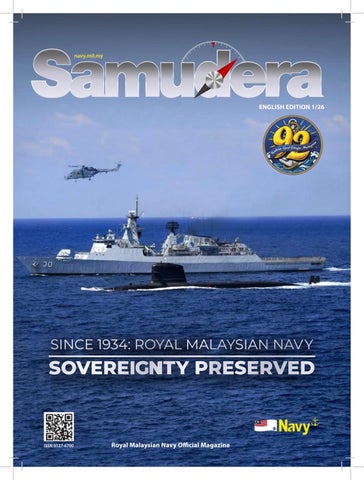
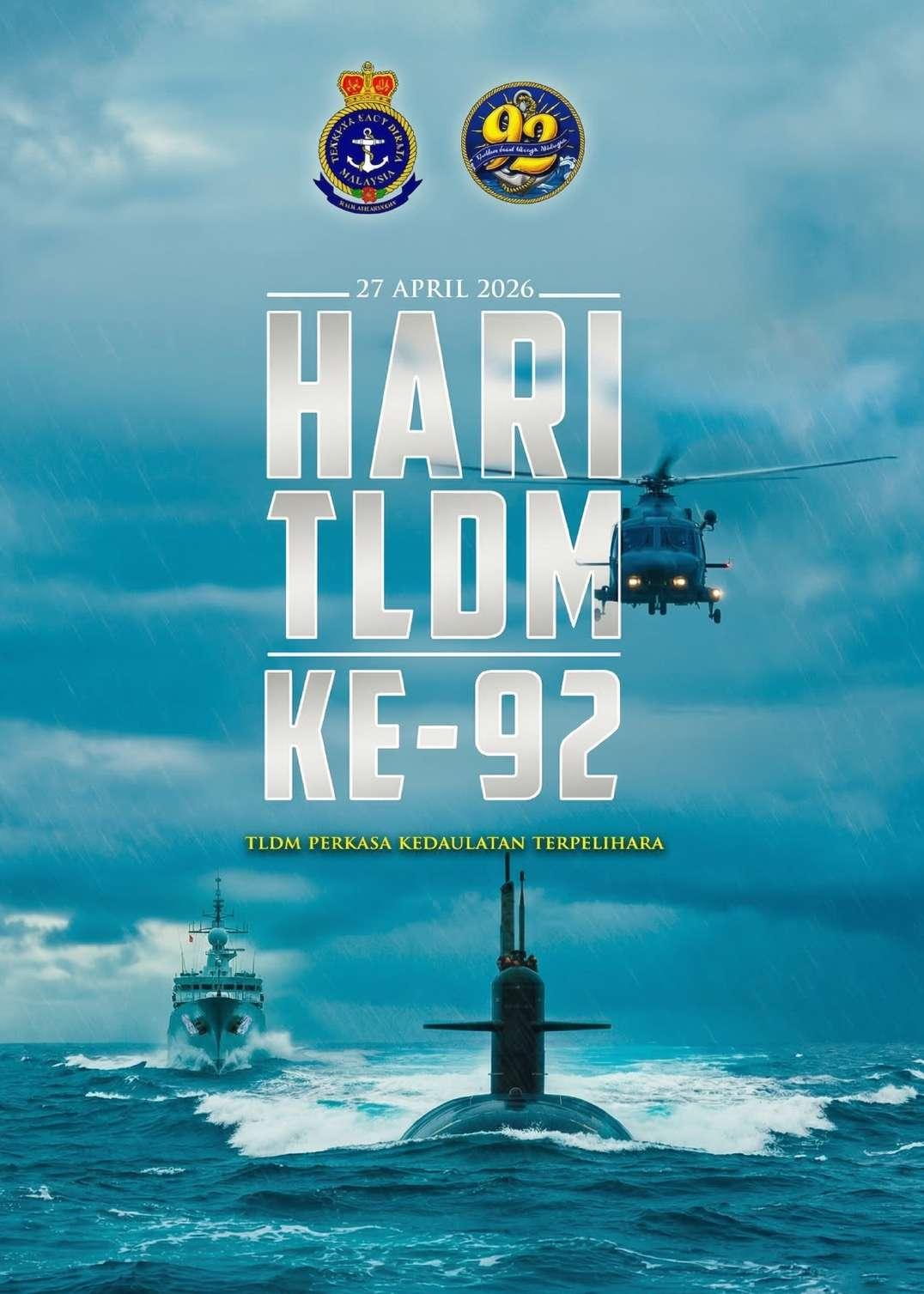
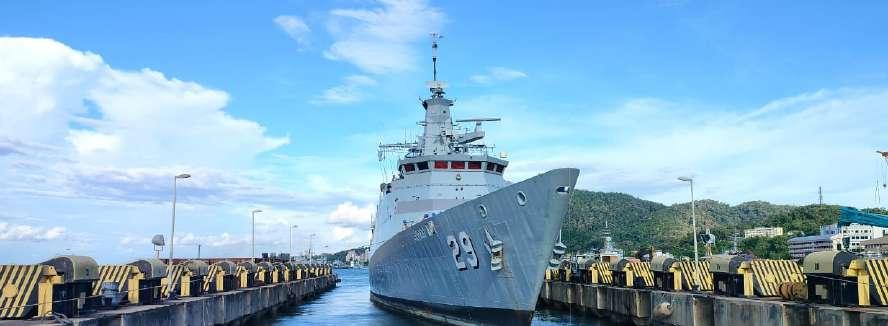
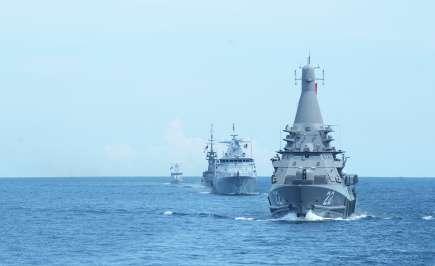
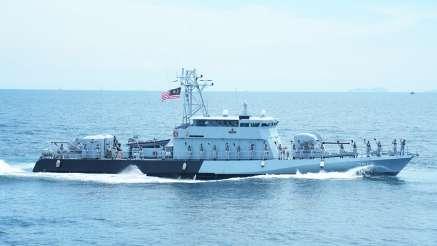
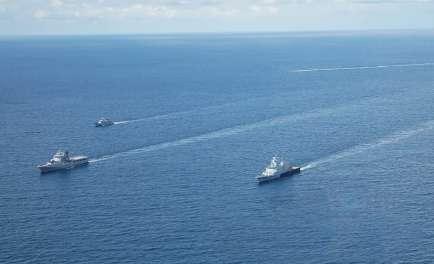
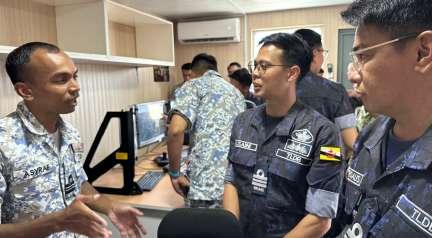
Welcome to SAMUDERA Magazine. 27 April 2026 marks a significant milestone as the Royal Malaysian Navy (RMN) commemorates its 92nd anniversary For more than nine decades, the RMN has stood as a steadfast guardian of the nation’s maritime frontiers, unwavering in its commitment to safeguard Malaysia’s sovereignty, territorial integrity, and maritime interests.
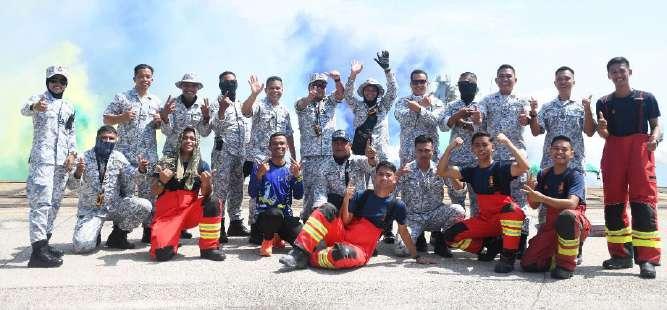
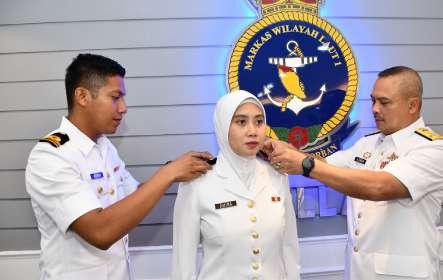
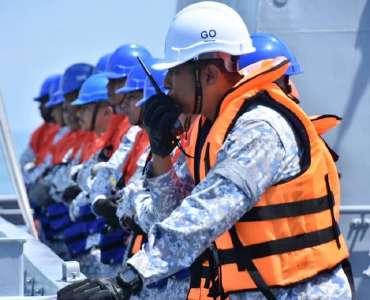
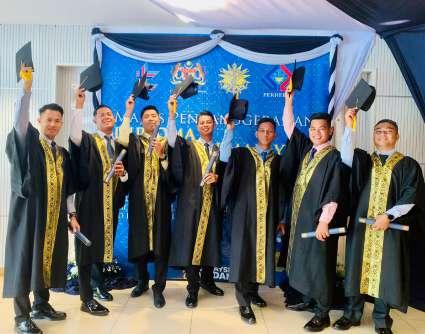
Behind every ship that sails and every mission undertaken lies the dedication, professionalism, and sacrifice of the Navy People. In recognition of their invaluable contributions, SAMUDERA Magazine Edition Series 1/26 is dedicated to the Navy People; the men and women whose service continues to uphold the honour, strength, and legacy of the RMN.
Essentially, this edition is a publication that carries the main essence of the Chief of Navy. The essence of the message is to facilitate the Royal Malaysian navy (RMN) in understanding the intentions and direction of its leadership, as well as those of the Malaysian Armed Forces (MAF).
This edition highlights the main narrative that reflects the professionalism of the RMN and its strong commitment to maintaining the Navy's momentum on the international stage. As the country's main maritime entity, the RMN's presence emphasises its operational readiness, training, and operational efficiency, as well as its ability to respond effectively to evolving maritime challenges.
Moreover, this publication also recognises the achievements of the Navy People, whose dedication, sacrifice, and pursuit of excellence continue to inspire future generations. I sincerely hope that this edition fosters a spirit of patriotism, increases understanding of the RMN's strategic roles, and serves as a valuable reference for all readers.
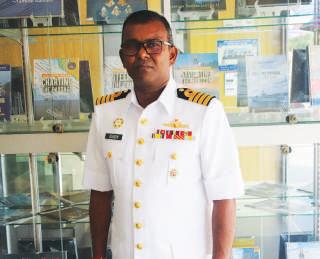
Capt Sugenderan RMN Director General
EDITORIAL BOARD
PATRON
VAdm Datuk Ts. Badarudin bin Taha
CHIEF EDITOR
Capt Sugenderan a/l Nagalan RMN
MEMBERS
Cdr Harulizam bin Haron RMN
Cdr Shahrizal bin Shuib RMN
WO I WTP (H) Mohammad Khan bin Hj Mohd
Newaz
CPO WPG Nurul Ni sya binti Roslan
LR WPG Hidayatul Balqis binti Mohammad
AB STN Che Muhammad Ayraf bin Mohd Zaki
PRINTED BY Zohara Ishak Sdn Bhd
ADDRESS
Sidang Redaksi Majalah Samudera
PUSMAS TLDM (RMN Sea Power Centre)
Jalan Sultan Yahya Petra 54100 KUALA LUMPUR
Tel: 03-4016 0138
Email: majalahsamuderatldm21@gmail com
ROYAL MALAYSIAN NAVY SEA POWER CENTRE
SAMUDERA
RMN ASPIRATION 2026
Transformation: Strengthening the Fleet
STRATEGIC GUIDANCE
1. Restoring People's Trust Towards MAF People
The main focus is to rebuild the MAF's image through greater professionalism and high integrity, not solely for public relations purposes.
2. Combating Corruption
Strengthening governance through periodic unannounced audits and ensuring every ringgit is managed with trust and accountability.
3. Restoring Integrity and Good Governance
There is no practice of intermediaries, cronyism or tender manipulation. Every ringgit of defence allocation must be translated into actual asset readiness.
4. Enforcement of Discipline and Social Ethics
Strict enforcement of ethical standards to address misconduct and regulate social media usage to safeguard organisational reputation.
RMN STRATEGIC FOCUS
1. Prioritise Fleet Readiness
Acceptance and Acquisitions
The main focus is to rebuild the MAF's image through greater professionalism and high integrity, not solely for public relations purposes.
The first Littoral Combat Ship (LCS) is to be operational by the end of 2026 as a key maritime defence asset.
Focus on LMS Batch 2 and MRSS acquisition
Increase Credible Deterrence Capability
Mission launch platforms are implemented in phases
2. Strengthening Alignment of the RMN #15to5 Transformation Programme
The RMN #15to5 Transformation Programme (Realignment) is becoming a transformation compass for RMN
3. Strengthening the Synergy of Integration and Jointness
The main elements are the Malaysian Army (MA), the Royal Malaysian Air Force (RMAF) and the Maritime Enforcement Agencies.
4. Empowering Human Resource Management
Human resources are the most valuable asset in RMN. A system is only as good as the person operating it.
MALAYSIAN
MALAYSIA: A MARITIME NATION A Legacy Shaped by the Sea
By : Capt Sugenderan a/l Nagalan RMN RMN Sea Power Centre
The importance of history lies in identifying a person's and a country's origins. For Malaysia, its history is the main pillar to identify its origins. However, in understanding Malaysia, the maritime history that shaped and connected Malaya in the past cannot be ignored. In this context, Malaysia is, and has always been, a maritime nation, as history unmistakably demonstrates.
Malaysia’s unique geographical configuration further reinforces this maritime identity. The maritime character of Malaysia is emphasised by the country's physical form, divided into two by the South China Sea, which separates Peninsular Malaysia from Sabah and Sarawak. At the same time, Malaysia is strategically positioned to connect the Pacific and the Indian Ocean regions. There are various reasons for the ocean's importance to its surroundings, including the need for sustained economic growth and the preservation of the safety and security of its sea lines of communication.
In recognition of this reality, the Defence White Paper 2020 clearly articulates that Malaysia is a maritime nation with continental roots. Its 'maritime nation' identity is shaped by its proximity to key bodies of water, including the South China Sea, the Straits of Malacca, and the Sulu and Celebes Seas. Conversely, its 'continental identity' stems from its land connectivity to mainland Southeast Asia, wherein Peninsular Malaysia sits on the southernmost landmass of the Eurasia supercontinent. Together, these features create a dual identity that is both maritime and continental, while simultaneously linking Malaysia’s two landmasses, Peninsular Malaysia and Borneo, into a cohesive national entity.
Undeniably, geography, economics, and maritime law all contribute to defining a maritime nation; however, history remains among the most compelling factors. Indeed, history is where Malaysia’s maritime character is best understood. Long before the emergence of modern boundaries, the Malay Peninsula and surrounding archipelagos were at the centre of global maritime networks. The Srivijaya Empire, as early as the 7th century, exercised control over vital sea routes and strategic chokepoints. This legacy was later inherited and expanded by the Malacca Sultanate, which transformed the region into one of the world's busiest trading hubs.
Since the height of the Malacca Sultanate, the Malay Peninsula gained prominence as a centre of international maritime trade. The Straits of Malacca, in particular, became the critical maritime corridor linking East and West. As Duarte Barbosa once observed, “Malacca is the richest seaport with the greatest number of wholesale merchants and abundance of shipping that can be found in the whole”.
Trade activities formed the backbone of the Sultanate’s prosperity and were instrumental in establishing Malacca as a leading maritime kingdom. Founded by Parameswara in the 15th century, Malacca emerged as a premier emporium, attracting traders from China, India, and across East Asia. Its strategic location along major sea routes made it an indispensable node in global commerce.
To safeguard these economic interests, the Malacca Sultanate developed a capable naval force to counter piracy and secure maritime trade. Central to this effort was the Laksamana (Admiral), who was responsible for maintaining order at sea. Nevertheless, the glory of the Malacca Sultanate did not last long, as the Portuguese arrived in the early 16th century and conquered Malacca. It marked the beginning of the fall of the successive Malay empires, coinciding with European naval ascendancy in the region.
Despite shifts in power and the passage of time, the maritime legacy of the Malay world has endured with remarkable continuity. From the dominance of Srivijaya to the rise of the Malacca Sultanate, history clearly illustrates how the sea served not merely as a conduit for trade but as the foundation of political authority, economic strength, and naval capability. Coupled with Malaysia’s enduring strategic geography, this legacy underscores a consistent pattern: the maritime domain has long been central to the nation’s development and relevance.
In this regard, Malaysia’s identity as a maritime nation is neither incidental nor symbolic. It is deeply rooted in history, reinforced by geography, and sustained through continuous interaction with the sea.
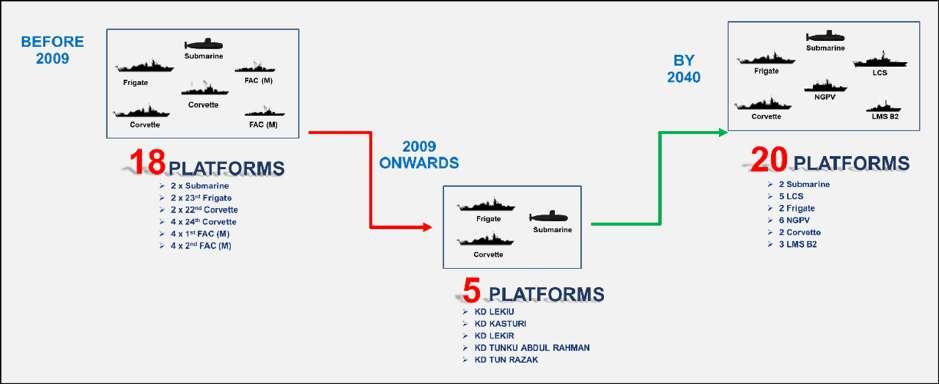
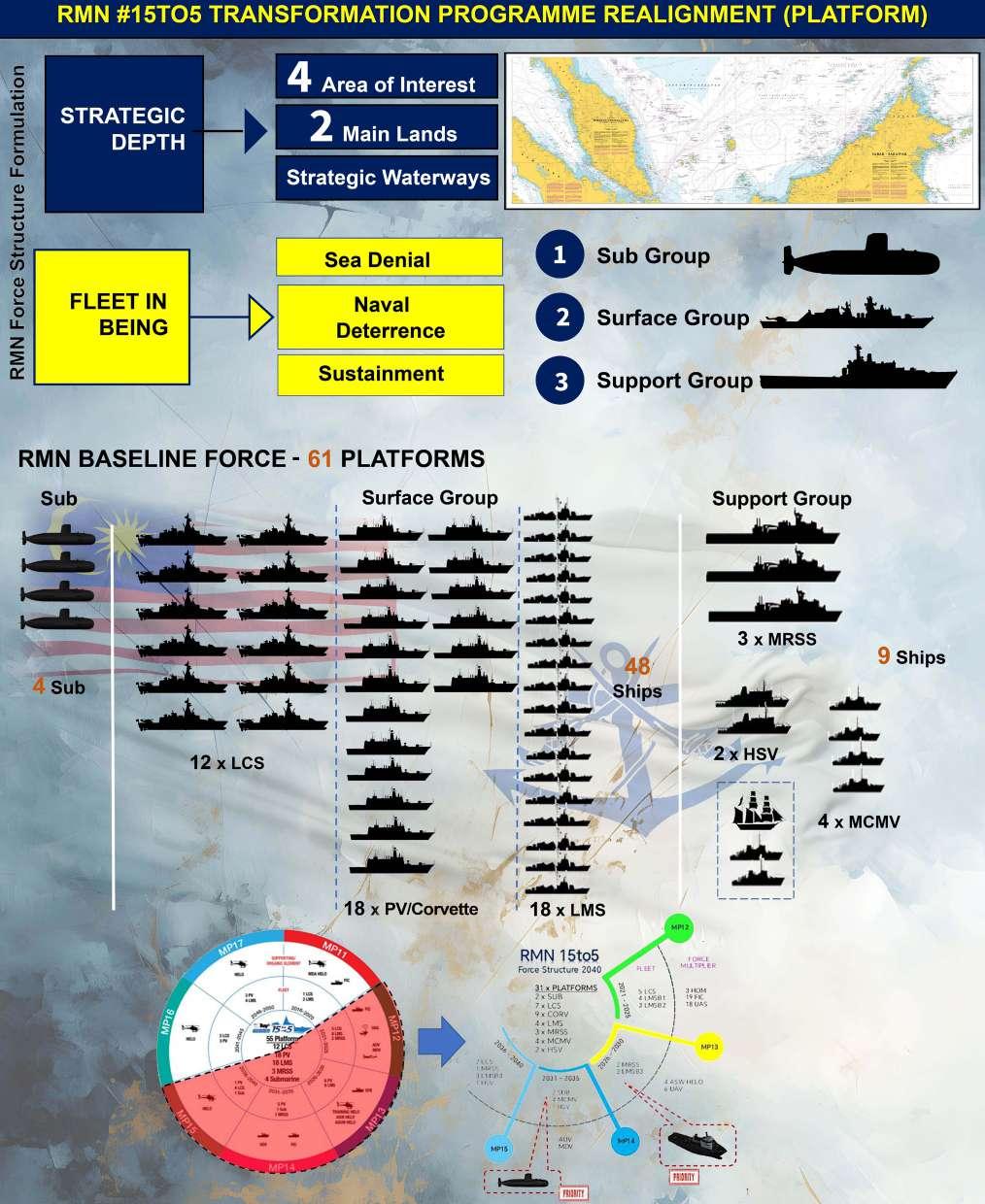
The RMN #15to5 Transformation Programme was launched in 2017 with the objective of reducing the number of ship classes operated by the Royal Malaysian Navy (RMN) from 15 classes to 5 classes of ship. This initiative aims to optimise resources, streamline operations and maintenance, and ensure the RMN remains capable of addressing evolving maritime threats.
Why was it necessary to revise the original #15to5 plan?
Since 2017, significant changes have taken place, including increasingly complex geopolitical dynamics, budgetary constraints, and challenges within the defence industry. Consequently, the original RMN #15to5 Tranformation Plan required revision to make it more flexible, realistic, and better aligned with the current strategic and operational environment.
What is meant by the Realignment of the #15to5 Transformation Programme (Platform)?
In 2024, the RMN introduced a revised and more flexible transformation plan. This realigned plan spans four Malaysia Plans, from the 12th Malaysia Plan (12MP) to the 15th Malaysia Plan (15MP), and is scheduled for implementation by 2040. Its purpose is to ensure that the RMN fleet remains modern, sustainable, and capable over the long term.
What is the new force structure under this transformation plan (FS2040)?
The new force structure comprises:
4 Submarines
12 Littoral Combat Ships (LCS)
18 Patrol Vessels/Corvettes
18 Littoral Mission Ships (LMS)
3 Multi-Role Support Ships (MRSS)
2 Hydrographic Survey Vessels
4 Mine Countermeasure Vessels (MCMV)
2 Training Ships
1 Sail Training Ship
What additional technologies will be incorporated into this transformation?
In addition to naval platforms, advanced technologies will be integrated as force multipliers, including:
Anti-Submarine Warfare (ASW) Helicopters
Unmanned Aerial Vehicles (UAV)
Autonomous Underwater Vehicles (AUV)
Mine Disposal Vehicles (MDV)
What is the main objective of this transformation plan?
The main objective of the realignment #15to5 Transformation Plan is to ensure that the RMN remains modern, agile, and fully prepared to meet increasingly complex maritime security challenges. The plan also seeks to enhance operational flexibility and strengthen technological capabilities in support of long-term maritime defence and security.
LAUNCH OF THE SECOND LITTORAL COMBAT SHIP
RA JA MUDA NALA
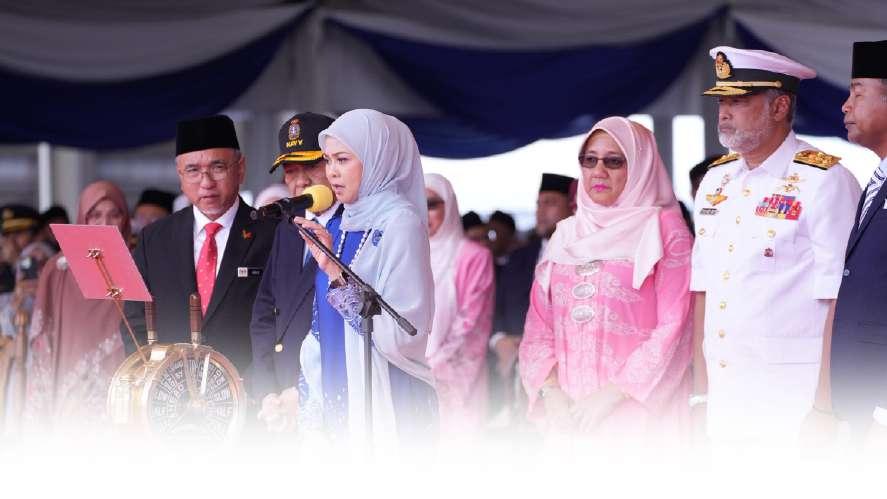
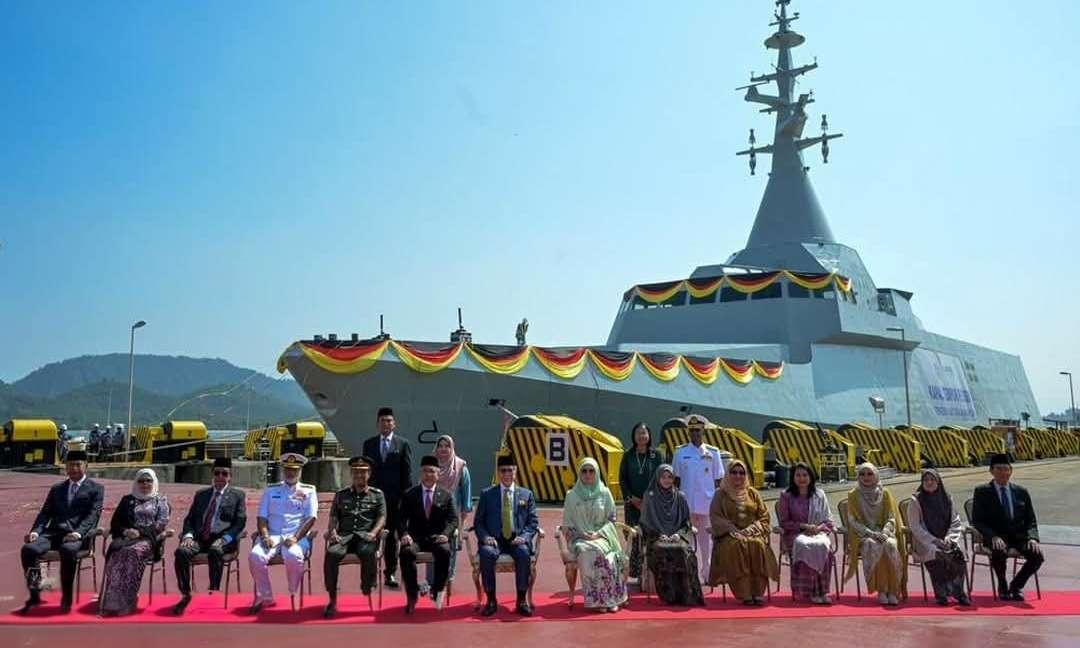
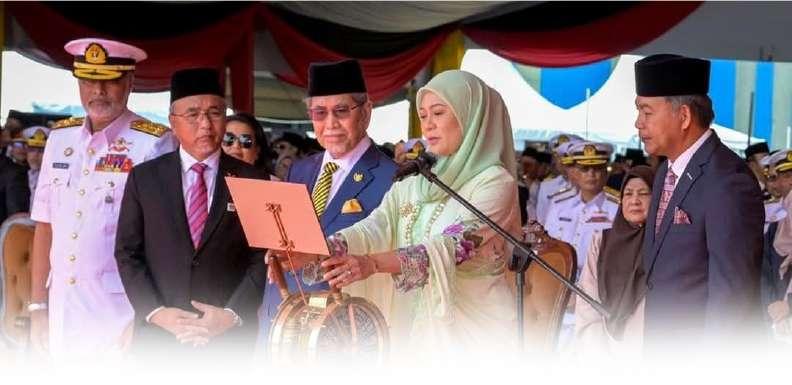
Royal Malaysian Navy (RMN) wait is now becoming a reality Its second Littoral Combat Ship (LCS), which was officially named RAJA MUDA NALA on 3 July 2025. The launch and naming ceremony were held with full military honours and rich naval traditions at the Lumut Naval Shipyard (LUNAS). As the Royal Sponsor, Her Royal Highness Tengku Permaisuri Selangor, Hajah Norashikin, graciously bestowed the name RAJA MUDA NALA upon the vessel, in the presence of His Royal Highness the Sultan of Selangor, Sultan Sharafuddin Idris Shah
The name RAJA MUDA NALA carries a deep historical and symbolic significance. It reflects the determination, courage, and fighting spirit of Raja Muda Nala, who is
known for his steadfast defence of the sovereignty of the State of Selangor This honour continues the proud legacy of the royal heroes while reinforcing the spirit of patriotism and dedication in safeguarding the country's maritime domain, now and in the future.
This historic event is an important step forward in RMN's fleet modernisation programme and underscores the Government's strong commitment to strengthening Malaysia's national defence capabilities. It will undoubtedly enhance the combat capability and operational readiness of the RMN.
LAUNCH OF THE THIRD LITTORAL COMBAT SHIP SHARIF MASHOR
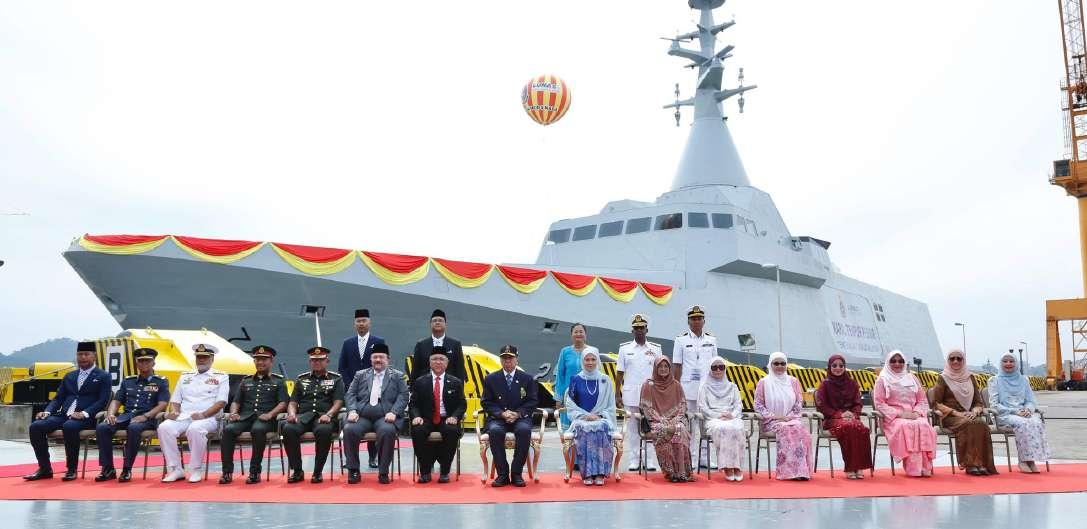
The Royal Malaysian Navy (RMN) has officially launched its third locally built Littoral Combat Ship (LCS) on 10 February 2026.The LCS is named SHARIF MASHOR, at LUNAS, Lumut Naval Base, marking a key milestone in the country’s naval modernisation and defence manufacturing efforts.
The ship is named in honour of SHARIF MASHOR, a legendary 19th-century warrior from Sarikei, Sarawak, celebrated for his bravery, leadership and resistance during the Brooke era. The name and symbolism reflect a desire to carry heritage and resilience into Malaysia’s modern defence posture.
The launch was officiated by Her Most Gracious Toh Puan Datuk Patinggi Fauziah binti Mohd Sanusi, with dignitaries including The Governor of Sarawak, His Excellency Tun Pehin Sri Dr. Haji Wan Junaidi bin Tuanku Jaafar and Deputy Defence Minister Adly Zahari present. Ceremonial elements included a symbolic Engine Order Telegraph demonstration, foghorn sounding, historical recitations, and performances by the RMN Special Forces (PASKAL).
A traditional Parang Ijang was presented as a cultural token to be carried aboard the vessel.
The ship will enter further outfitting, testing and trials before eventual commissioning into active service as part of the RMN’s fleet modernisation (#15to5 Transformation Programme).
THE NAVY OF THE FUTURE: Translating Policies into Strategy
By : FAdm Mohd Yusri bin Yusoff Naval Future Force Office (NFFO)
What does the future Royal Malaysian Navy (RMN) look like? Is it just about new ships, submarines or drones? Or is it about how we think, organise, and fight?
Today’s maritime security environment is no longer simple or predictable. Threats at sea are changing very fast. Malaysia now faces not only traditional military threats but also grey-zone activities, asymmetric attacks, cyber and information warfare, and the growing presence of major powers in our region. In this situation, the RMN cannot continue with business as usual. If the threats change, the Navy must change too.
So, where does this change start?
It starts with national policies. The Federal Constitution prioritises the protection of national sovereignty and territorial integrity as the government's primary responsibility This means that the nation must be defended at all costs. The National Security Council Act 2016 (Act 776) then further strengthens this responsibility However, security is handled not only by the military but also by other agencies. So the National Security Policy 2017 drives further by explaining that security is not only about soldiers and weapons, but also includes economic security, social stability and other related national instruments. These ideas are then reinforced by the Total Security concept introduced in 2021, which emphasises that everyone, including industry and society, plays a role.
How are these ideas turned into defence action?
The Defence White Paper 2020 interprets the changing world and security landscapes into defence strategies centred on three pillars: Concentric Deterrence,
Comprehensive Defence, and Credible Partnerships. Based on this guidance, especially on the pillar of Concentric Deterrence, the Malaysian Armed Forces published the National Military Strategy 2.0 in 2021 to better align its roles and capabilities.
So what does this mean for the Navy people?
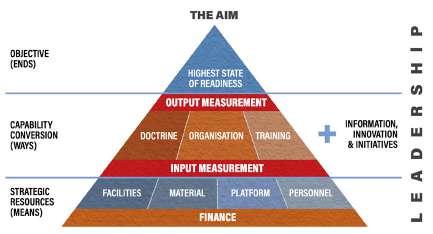
For the Navy People, these policies are translated into the Maritime Domain Strategy and guided by the RMN’s Strategy (BRL1). We adopt the Lykke Model, which explains ‘Strategy = Ends + Ways + Means’
The Ends represent the objectives the Navy must achieve.
The Ways describe the methods to achieve those objectives.
The Means refer to the capabilities or resources required to use the methods.
But capability is not just about the assets. That is just a small part of it. Our strategy defines capability broadly covering doctrine, organisation, training, materiel, leadership, personnel, facilities, platforms, information, innovation and initiatives.
The future of the RMN is about more than just new ships or technology While these are important, they are only physical enablers. The real change comes from how we think, organise, and fight. Our strategy will help us move towards integrated, multi-domain operations with clear structures and doctrines, all dedicated to protecting Malaysia’s maritime interests.
OFFICERS BEYOND THE BRIDGE: Why Strategic Literacy Matters in A Modern Navy
By : Lt Cdr (H) Dr. Tharishini Krishnan RMNVR National Defence University Malaysia
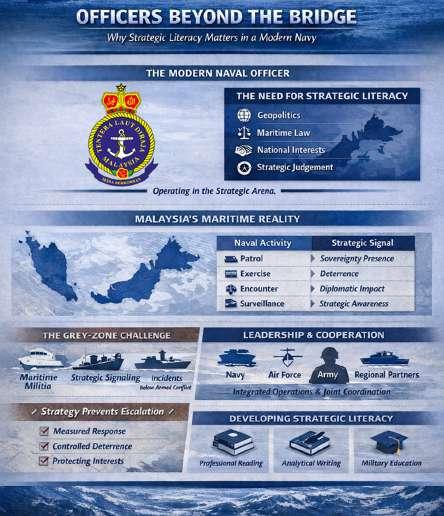
In every navy, competence at sea remains the foundation of professionalism. Seamanship, navigation, tactical execution, and command presence on the bridge or in the operations room are skills earned through experience and discipline. Yet, in today’s increasingly complex maritime environment, these skills alone are no longer sufficient. The modern naval officer must also operate comfortably in the realm of ideas. Strategic literacy is therefore important.
For the Royal Malaysian Navy (RMN), this reality is particularly pressing. Malaysia’s maritime domain is vast, contested, and strategically significant. Our officers operate daily in waters that are not only economically vital but also politically sensitive. Encounters at sea are often shaped less by firepower and more by diplomacy, law, and perception. In such an environment, an officer who understands why an operation matters is as valuable as one who knows how to conduct it.
Strategic literacy begins with understanding that naval operations do not exist in isolation. Every patrol, presence mission, exercise, or encounter at sea is connected to national objectives. These objectives are influenced by regional geopolitics, international law, economic interests, and domestic political considerations. An officer who appreciates these linkages is better equipped to exercise
judgment, especially in ambiguous situations where clear tactical answers may not exist.
Consider the increasing frequency of grey-zone challenges in our region. These are actions that fall below the threshold of armed conflict but still test sovereignty and resolve. In such situations, tactical brilliance without strategic awareness can be counterproductive. A perfectly executed manoeuvre that escalates tensions unnecessarily may undermine national interests. Conversely, a restrained yet firm response, guided by strategic understanding, can achieve deterrence without conflict. The difference often lies not in equipment or doctrine, but in the officer’s ability to think strategically.
Strategic literacy also enhances leadership. Officers are not only operators, but they are also leaders of sailors who look to them for clarity and purpose. When leaders can explain the broader context of a mission, why it matters to the nation and how it fits into Malaysia’s maritime posture, morale and professionalism are strengthened. Sailors who understand the significance of their duties are more motivated and more disciplined. In this sense, strategic understanding directly contributes to operational effectiveness.
Moreover, the RMN operates increasingly alongside other Services, agencies, and regional partners. Joint and combined operations demand officers who can communicate beyond their immediate professional circles. Strategic literacy allows officers to engage meaningfully with counterparts from the army, air force, maritime enforcement agencies, and foreign navies. It enables constructive dialogue, mutual understanding, and trust. Such qualities are essential in multinational maritime cooperation.
It is also important to recognise that strategic literacy is not limited to senior in ranks. While strategic decisions may ultimately rest with higher command, junior and mid-level officers are often the first to encounter emerging challenges at sea. Their reports, assessments, and recommendations shape how situations are understood and addressed. An officer who can frame observations within a strategic context adds far greater value than one who merely reports events in isolation.
Developing strategic literacy does not require abandoning operational excellence. On the contrary, it complements it. Reading widely on maritime strategy, regional security, and naval history sharpens professional judgement. Writing and contributing to professional discussions, whether through internal forums or publications, encourages disciplined thinking and clarity of expression. Engaging respectfully in debate strengthens institutional learning and intellectual confidence.
Navies of other developed countries have long recognised this connection between thinking and fighting. They invest heavily in professional military education, encourage officers to write and publish, and treat intellectual development as a core
component of officership. For the RMN, cultivating such a culture is not about imitation, but about ensuring relevance in a rapidly changing maritime environment.
Ultimately, the effectiveness of a modern navy rests not only on platforms, weapons, or technology, but on its people, particularly officers who can navigate both the physical and conceptual dimensions of the maritime domain. The officer of today must be equally comfortable on the bridge and in the briefing room, at sea and in strategic discussions. This dual competence enables officers to translate national intent into measured action and to convert operational experience into strategic insight that informs future decisions.
Such officers do more than execute orders; they interpret context, anticipate consequences, and exercise judgment in situations where guidance may be limited or ambiguous. By reflecting on their experiences, questioning established assumptions, and engaging in professional discourse, officers strengthen not only their own understanding but also the collective intellectual capital of the service. In doing so, they move beyond routine execution and become active contributors to the evolution of naval thought and practice. This ability to think, articulate, and apply strategy is what ultimately ensures that operational excellence remains aligned with national interests in an increasingly complex maritime environment.
Ultimately, strategic literacy is not about rank or position. It is about mindset. An officer who thinks strategically enhances not only personal professionalism but also the credibility and effectiveness of the RMN as a whole. In an era where challenges at sea are increasingly complex, the thinking officer is no longer a luxury but a necessity.
THE STATE OF THE STRAIT: Strait of Hormuz
By: Adjunct Professor Nazery bin Khalid University Malaysia Terengganu (UMT)
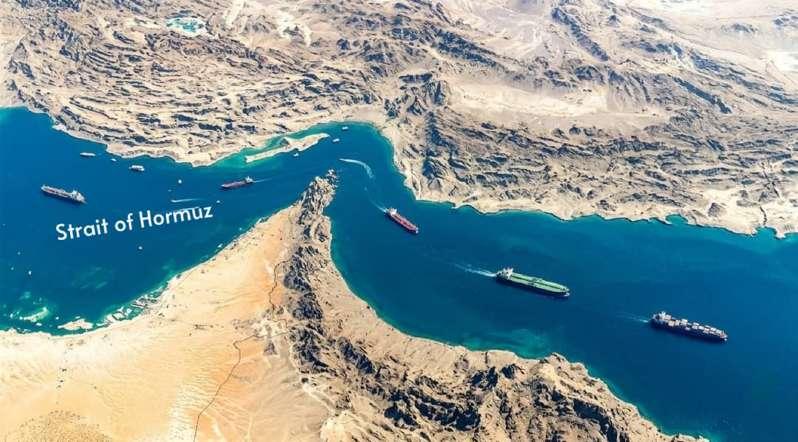
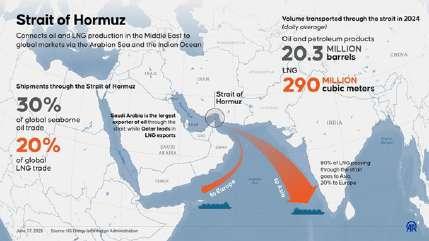
The Strait of Hormuz is the world's most important energy corridor, accounting for 20% of global Liquefied Natural Gas (LNG) trade and 30% global seaborne oil trade. Bordered by Iran to the north and Oman to the south, the Strait of Hormuz connects the Persian Gulf with the Gulf of Oman and the Arabian Sea.
The Strait is known as a maritime chokepoint due to its narrow channel, busy shipping traffic, and extraordinary economic value. This makes the Strait of Hormuz a strategic asset as a vital energy sea route and conduit for global oil supplies. Despite featuring a width of only 33 km at its narrowest point, the Strait is wide and deep enough (200m at its deepest point) to accommodate the world's largest oil tankers. For scale, the largest oil tanker has a maximum deadweight of over 564,000 tons (DWT) and can carry a whopping 4.2 million barrels of crude oil. Between 40 and 100 tankers carrying crude, petroleum products, chemicals and gas pass through the narrow confines of this Strait daily.
These facts underscore the immense importance and strategic value of the Strait to the region’s economies, as well as to supply chains, consumers, businesses, and industries worldwide. The heavy reliance of the global economy towards it puts it in the list of the most important maritime passages. It is therefore understandable that the world is watching the conflict with great anxiety and reacting nervously to its economic implications.
Oil’s not well
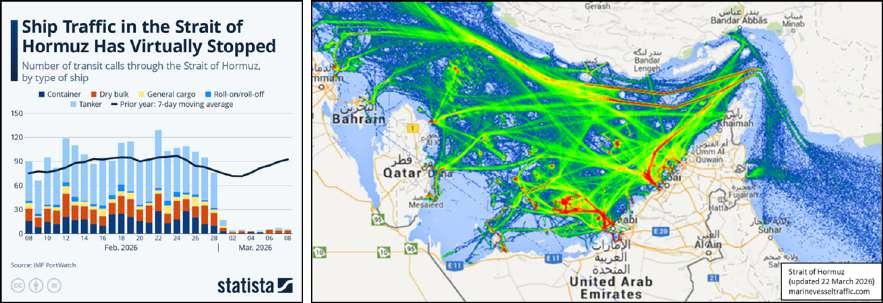
As soon as the conflict broke out at the end of February 2026, Iran began blocking merchant ships from sailing through the Strait of Hormuz. The implications of the closure of this vital energy corridor, which facilitates a fifth of the world's daily oil demand, are predictably dire and worrisome.
The blockade of the Strait of Hormuz and attacks on oil tankers transiting it have directly driven oil prices to stratospheric levels. Oil price touched over US$100 per barrel in mid-March 2026 as the oil market reacted nervously. Iran warned on 12 March 2026 that oil prices could soar to US$200 per barrel, unleashing calamitous effects not only on the economies of oil-dependent Gulf countries but also on the global economy as a whole.
With the maritime passage of oil through the Strait of Hormuz impeded, Saudi Arabia is using alternative routes to ship its oil to buyers. Step Aramco’s East-West Crude Pipeline that cuts across the desert connecting the east and west sides of the country. The 750 km pipeline, also known as Petroline, was built to bypass the Straits of Hormuz in the event of being shut down or traffic being disrupted, as it is now. UAE, which has also halted oil production following attacks on its facilities, is using the Abu Dhabi Crude Oil Pipeline to transport oil from production facilities to loading ports in the western Arabian Peninsula along the Red Sea.
While the Saudi and UAE pipelines can be dubbed the ‘lifeline pipelines’, they provide only temporary relief from the Strait of Hormuz bottleneck and will soon reach their maximum capacity In other words, if the conflict prolongs, widens, and escalates without any concrete prospect of resolution, it would not be realistic to count on the pipelines to help check the spiralling oil prices and save the global economy from recession. The pipelines provide at most a proverbial breather to a world which needs nothing less than a steady intake of air, which would normally be provided by the uninterrupted flow of oil through the Strait.
While the Saudi and UAE pipelines can be dubbed the ‘lifeline pipelines’, they provide only temporary relief from the Strait of Hormuz bottleneck and will soon reach their maximum capacity. In other words, if the conflict prolongs, widens, and escalates without any concrete prospect of resolution, it would not be realistic to count on the pipelines to help check the spiralling oil prices and save the global economy from recession. The pipelines provide at most a proverbial breather to a world which needs nothing less than a steady intake of air, which would normally be provided by the uninterrupted flow of oil through the Strait.
All hands on deck
All hands on deck
It is obvious that Iran is not seeking to match the US-Israel military might but to fight an asymmetrical war on many fronts, including on the strategic, energy and economic fronts. Attacking ships transiting the Strait and preventing them from sailing through are part of Iran’s strategy to make the US, Israel and its Gulf allies pay a high price and to influence global opinion on the unprovoked, unlawful attack. In doing so, Iran is sending a chilling reminder to the aggressors of its intent and capability to cause pain to the global economy in a war of attrition.
Iran recognises its importance in the global economic order, particularly with regard to the global dependence on oil and gas of which the country ia a major supplier and facilitator in energy supply chain. By having a chokehold on this pivotal passageway, Iran is weaponising oil as part of its asymmetrical war against the US-Israel aggression and unlawful assaults.
The double whammy of a global oil production being halted and its transportation being indefinitely impeded could cause severe asphyxiation to the global economy Countries dependent on Gulf oil will introduce austerity measures as oil prices continue to rise. International Energy Agency (IEA), which announced the release of 400 million barrels of oil, or a third of its stockpile, could do only so much to patch the supply deficit until its reserves reach critical levels.
Iran recognises its importance in the global scheme of things, particularly given its need for oil and gas. It is leveraging its strategic location at the mouth of the Strait of Hormuz during this conflict by controlling the strategic chokepoint. By having a chokehold on this pivotal passageway, Iran is weaponising oil as part of its asymmetrical war against the US-Israel aggression and unlawful assaults.
The double whammy of a global oil production being halted and its transportation being indefinitely impeded could cause severe asphyxiation to the global economy. Countries dependent on Gulf oil will introduce austerity measures as oil prices continue to rise. International Energy Agency (IEA), which announced the release of 400 million barrels of oil, or a third of its stockpile, could do only so much to patch the supply deficit until its reserves reach critical levels.
Certainly, prolonged disruption to shipping traffic in the vital maritime energy corridor or attacks on oil tankers would inflict horrendous consequences on the global economy Some oil analysts and traders have projected that sustained attacks on oil-related assets, including tankers, would unleash a wave of cataclysmic effects on the energy shipping and oil markets, especially if the conflict is prolonged. Oil tanker charter rates and insurance premiums for shipping through the Strait will shoot up, disrupting global oil supplies and supply chains as oil supplies are choked. This could send prices of commodities, goods, and services spiralling, resulting in catastrophic effects on the global economy
It is obvious that Iran is not seeking to match the US-Israel military might but to fight an asymmetrical war on many fronts, including on the strategic, energy and economic fronts. Attacking ships transiting the Strait and preventing them from sailing through are part of Iran’s strategy to make the US, Israel and its Gulf allies pay a high price and to influence global opinion on the unprovoked, unlawful attack. In doing so, Iran is sending a chilling reminder to the aggressors of its intent and capability to cause pain to the global economy in a war of attrition.
It is appearing more obvious by the day that the aggressors have grossly miscalculated Iran’s will, resolve and capability and could well pay a high price for their transgression as Iran continues to hit targets that could cause severe impacts to the economies of those attacking it and to the global economy
With this, it is hoped that cool heads will prevail and that, soon, there will be a cessation and, eventually, the formulation of a diplomatic solution to the conflict, leading to a peaceful resolution between the countries involved. Hopefully the stability in the Gulf will be restored, and the global economy will be spared of even more severe impact.
It is appearing more obvious by the day that the aggressors have grossly miscalculated Iran’s will, resolve and capability and could well pay a high price for their transgression as Iran continues to hit targets that could cause severe impacts to the economies of those attacking it and to the global economy.
Certainly, prolonged disruption to shipping traffic in the vital maritime energy corridor or attacks on oil tankers would inflict horrendous consequences on the global economy. Some oil analysts and traders have projected that sustained attacks on oil-related assets, including tankers, would unleash a wave of cataclysmic effects on the energy shipping and oil markets, especially if the conflict is prolonged. Oil tanker charter rates and insurance premiums for shipping through the Strait will shoot up, disrupting global oil supplies and supply chains as oil supplies are choked. This could send prices of commodities, goods, and services spiralling, resulting in catastrophic effects on the global economy.
With this, it is hoped that cool heads will prevail and that, soon, there will be a cessation and, eventually, the formulation of a diplomatic solution to the conflict, leading to a peaceful resolution between the countries involved. Hopefully the stability in the Gulf will be restored, and the global economy will be spared of even more severe impact.
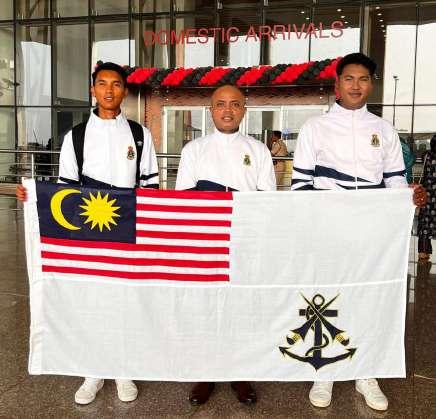
RMN ATHLETES Bring Honour to the Nation at the SEA Games 2025
Royal Malaysian Navy (RMN) Athletes recorded commendable achievements by contributing medals to the nation at the SEA Games 2025, thereby bringing honour and pride to the RMN and Malaysia on the international level.
These accomplishments reflect the athletes’ high level of discipline, resilience, and fighting spirit, which are cultivated through continuous training and a strong sense of duty. Their success demonstrates that RMN personnel can excel not only in safeguarding national sovereignty, but also in achieving outstanding results in the field of sports.
The achievements at the SEA Games 2025 serve as a testament to RMN commitment in developing well-rounded personnel and fostering a culture of excellence. It is hoped that this success will inspire all the Navy People to remain dedicated, motivated, and determined to achieve excellence in every endeavour they undertake.
Congratulations and well done to all RMN athletes for this proud and remarkable achievement. Bravo Zulu!!!
The Royal Malaysian Navy (RMN) Sailing Team participated in the 35th Raja Muda Selangor International Regatta (RMSIR), which took place from 14 to 22 November 2025. The team used two sailboats, URANUS and MARIKH. The RMSIR was officiated by His Royal Highness the Raja Muda of Selangor, Tengku Amir Shah, at the Royal Selangor Yacht Club.
The team is led by Lieutenant Commander Syazrie bin Abdul Rahman of the RMN with 20 officers and sailors. They competed against 28 local and international teams. The nine-day race starts from Port Klang to Pangkor Island on 15 November 2025, continues to Penang, and ends in Langkawi on 22 November 2025.
The Royal Malaysian Navy (RMN) Sailing Team marked a commendable presence at the 14th edition of the Admiral’s Cup International Regatta 2025, held in Ezhimala, India, from 8 to 14 December 2025.
Led by Lt Cdr Syazrie bin Abdul Rahman RMN and his team, which comprised Sub Lt Muhammad Yusri bin Ghapar RMN and Sub Lt Muhammad Akmal Amiruddin bin Arif RMN, competing in the Laser Radial category alongside 30 international naval teams. Their participation in this prestigious championship showcased their professionalism, sailing expertise, and competitive spirit, further elevating RMN's reputation on the international stage. RMN REGATTA
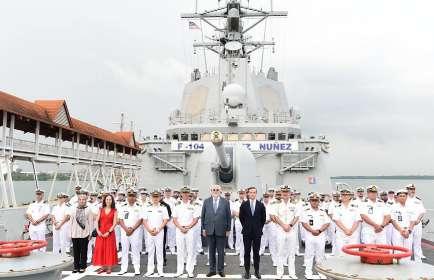
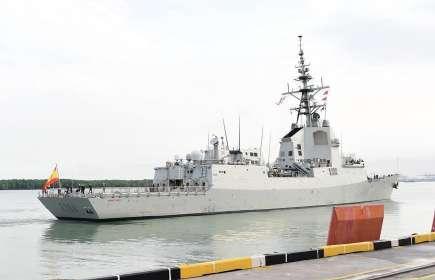
SPANISH NAV Y
FS MÉNDEZ NÚÑEZ
[Álvaro de Bazán-Class Frigate (F-104)]
berthed at the Cruise Terminal, Port Klang 1 to 3 Sept 25
REPUBLIC OF KOREA NAVY
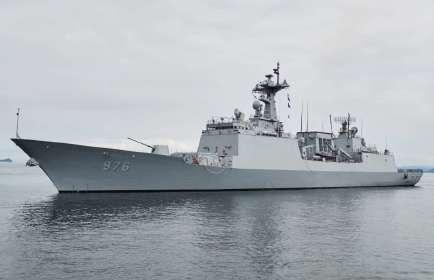
ROKS MUNMU THE GREAT
[Chungmugong Yi Sun-sin – Class Destroyer (DDH-976)]
berthed at the Langkawi Cruise Terminal 15 to 17 Sept 25
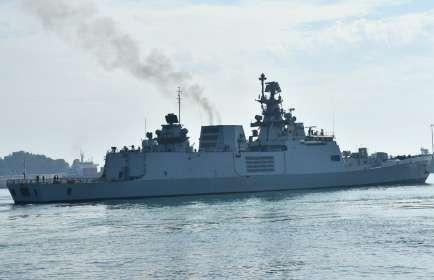
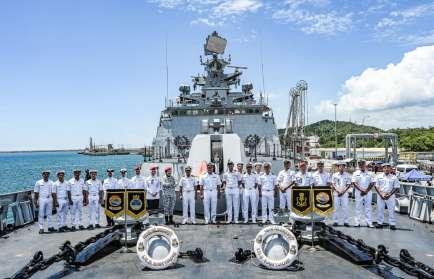
INS SAHYADRI
INDIAN NAVY
[Shivalik–Class stealth Multi-Role Frigate (F49)]
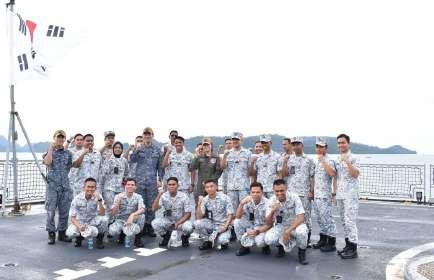
berthed at the Kemaman Port
2 to 5 Oct 25
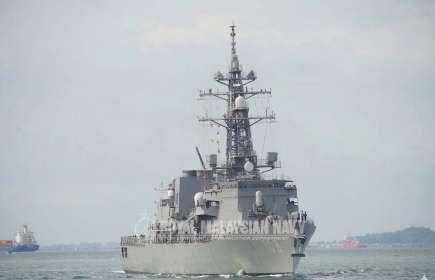
JS AKEBONO
JAPANESE MARITIME SELF-DEFENSE FORCE
[Murasame-Class Destroyer (DD 108)]
berthed at the Kota Kinabalu Naval Base
9 to 12 Nov 25
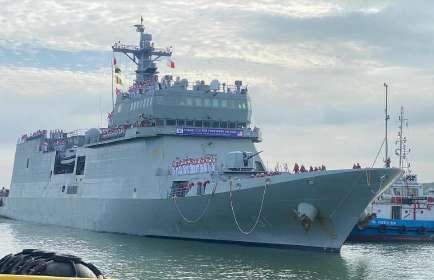
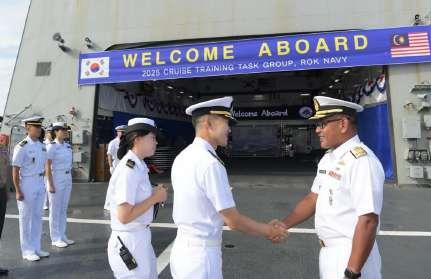
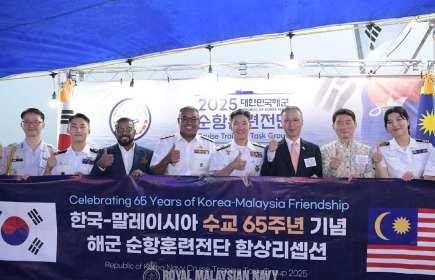
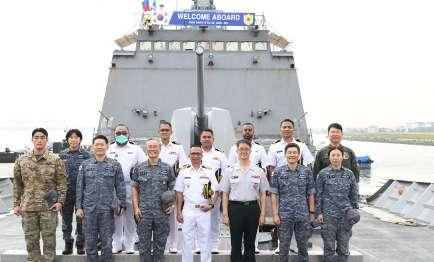
ROKS HANSANDO
REPUBLIC
[Helicopter Training Ship (ATH 81)]
berthed at the Cruise Terminal, Port Klang 14 to 17 Nov 25.
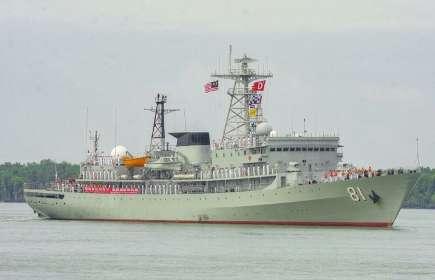
PLAN ZHANG HE
[Training Ship (81)]
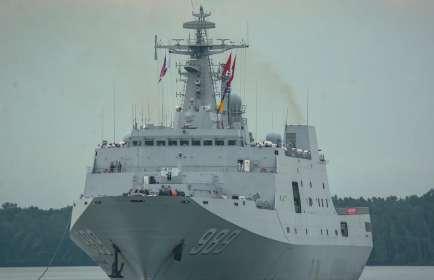
PLAN CHANG BAI SHAN
[Type 071 Amphibious Transport Dock (989)]
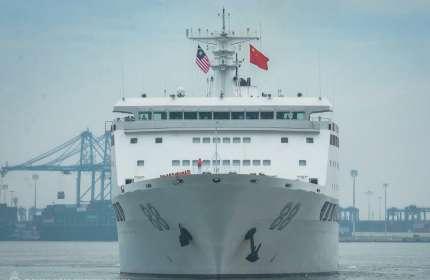
PLAN XIANG QIAN JIN
[Training Ship (88)]
berthed at the Port Klang Cruise Terminal 29 Nov to 3 Dec 25
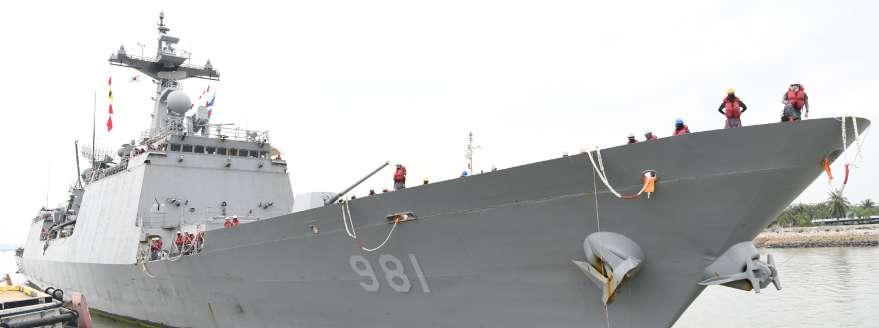
REPUBLIC OF KOREA NAVY
ROKS CHOE YEONG
[Chungmugong Yi Sun-sin – Class Destroyer (DDH-981)]
berthed at the Cruise Terminal, Port Klang
29 Jan to 1 Feb 26
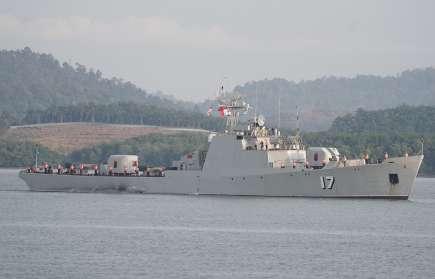
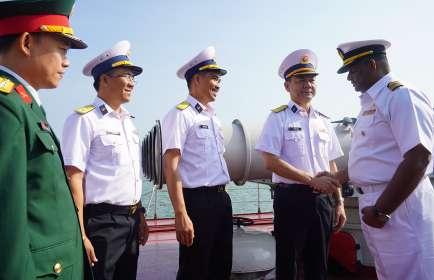
VIETNAM PEOPLE’S NAVY
VIETNAM PEOPLE’S NAVY SHIP 17 (VPNS 17)
[Petya–Class Frigate (HQ-17)]
berthed at the at Lumut Naval Base
2 to 5 Feb 25
ITHE POWER OF PARTNERSHIP RMN’s Strategic Evolution in Naval Diplomacy
In an era influenced by great power politics, increasingly complex maritime security dynamics and the emergence of a new generation of threats, the true frontline of a nation's security no longer depends solely on ballistic capabilities. Instead, it is also strengthened through an active and strategic diplomatic approach with partners who share common interests.
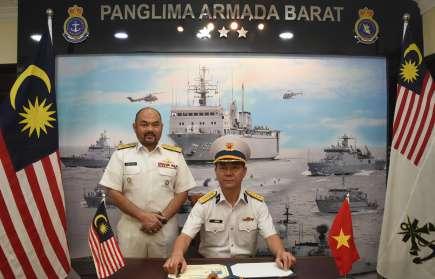
This defence diplomacy approach has the potential to transform the maritime security landscape, particularly through more structured international cooperation. Recognising this notion, the International Relations (IR) Branch of the Royal Malaysian Navy (RMN) serves as the architect in planning and driving the RMN’s maritime diplomacy agenda.
In this role, the IR Branch serves as the primary liaison, shaping the RMN’s international engagement. At the same time, it provides a strategic foundation that ensures the RMN can operate confidently in an increasingly dynamic diplomatic environment in the Asia-Pacific and Indian Ocean regions.
Art of Credible Partnership and Confidence-Building
The dynamics of naval diplomacy have continued to evolve as we move into the new world we live in today. It is no longer just about "showing the flag or presence"; it is about weaving a fabric of resilience and fostering greater cooperation with like-minded navies and similar entities across the region. Through high-stakes multilateral mechanisms such as the ASEAN, ASEAN Defence Ministers’ (ADMM)-Plus, the Western Pacific Naval Symposium (WPNS), and the Indian Ocean Naval
Symposium (IONS), the RMN is gaining its momentum to project a "Credible Partnership". In a series of forums and engagements, the RMN, particularly its top leadership, consistently articulates a clear and consistent view on numerous maritime security concerns and actively promotes suggestions to address those challenges for the greater benefit of the region’s maritime security.
Turning Policy into Action
The Architecture of Dialogue and Mutual Cooperation
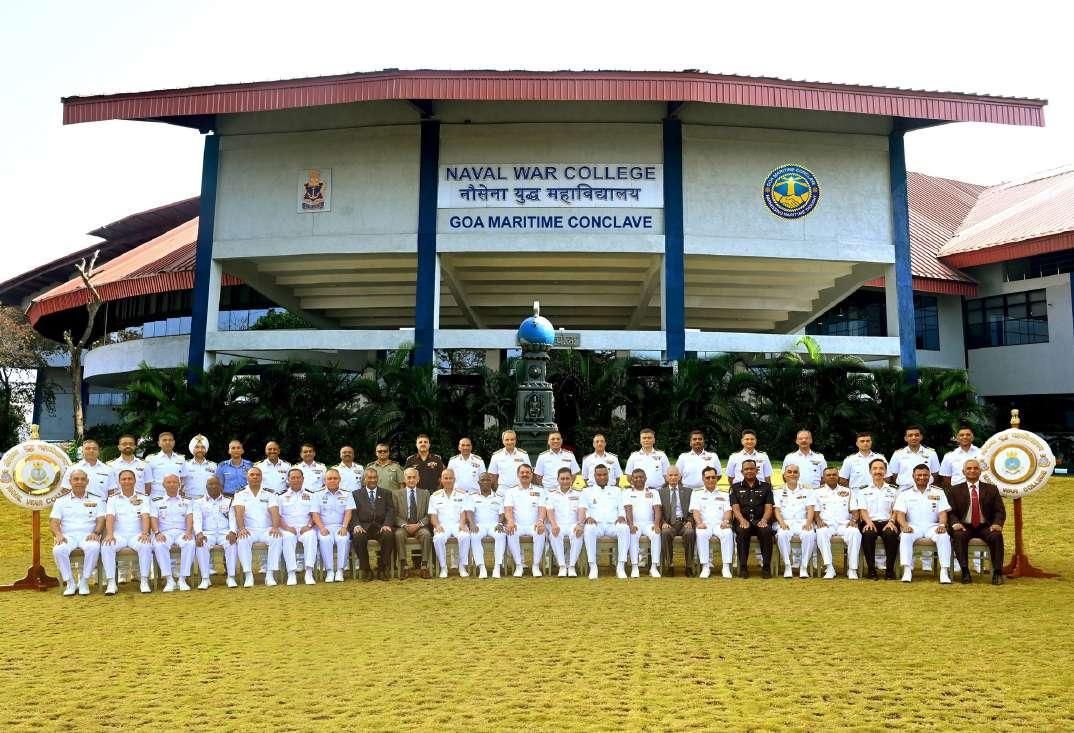
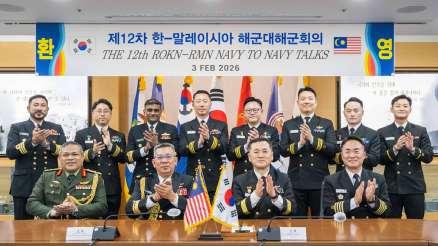
Through the successful institutionalisation of Navy-to-Navy Talks (N2NT) with 16 nations, the RMN has established a dedicated channel for dialogue and discussion. It created a pathway for the RMN to develop a deeper understanding of friendly navies, ultimately leading to cooperation, training, and exchange opportunities across various domains. These are not just formalities; they are the critical circuits that may prevent miscalculations during future crises and serve as Confidence Building Measures (CBMs) within navies themselves.
Enhancing RMN’s Role as a Credible Navy in the Region
Enhancing RMN’s Role as a Credible Navy in the Region
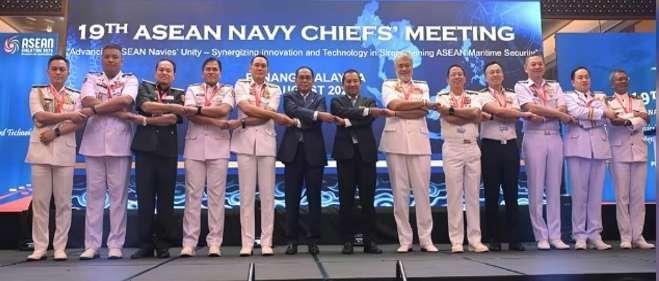
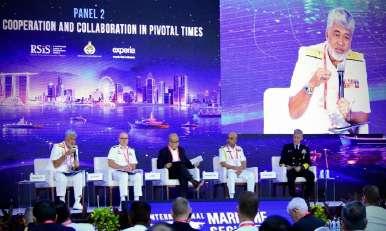
The year 2025 is a testament to the RMN's leadership greatness and capability The RMN successfully organised the 19th ASEAN Naval Chiefs' Meeting (ANCM), the 3rd ASEAN Multilateral Naval Exercise (AMNEX) and the ASEAN Fleet Review (AFR). In addition, several side activities, such as the historic ASEAN Naval City Parade (ANCP) and the launch of the ASEAN Navies Harmony Grove. These activities were meticulously planned and implemented by the RMN and received praise from ASEAN partners. This clearly demonstrates the RMN's credibility and ability to handle complex and critical events.
The year 2025 is a testament to the RMN's leadership greatness and capability. The RMN successfully organised the 19th ASEAN Naval Chiefs' Meeting (ANCM), the 3rd ASEAN Multilateral Naval Exercise (AMNEX) and the ASEAN Fleet Review (AFR). In addition, several side activities, such as the historic ASEAN Naval City Parade (ANCP) and the launch of the ASEAN Navies Harmony Grove. These activities were meticulously planned and implemented by the RMN and received praise from ASEAN partners. This clearly demonstrates the RMN's credibility and ability to handle complex and critical events.
If we regard the policy as the blueprint, then the international relations element is its builder In a nutshell, the RMN translates the abstract of the national strategies and policies into tangible diplomatic wins. This role as a "Strategic Enabler" can be best illustrated through these key achievements:
If we regard the policy as the blueprint, then the international relations element is its builder. In a nutshell, the RMN translates the abstract of the national strategies and policies into tangible diplomatic wins. This role as a "Strategic Enabler" can be best illustrated through these
From Engagement to Integration
Looking ahead, the IR element in the RMN is shifting from simple “engagement” to deep “integration”. Through this “integration” strategy, the RMN remains relevant and serves two purposes. One, physically, as the guardian of Malaysia’s waters and upholding the objectives of defence diplomacy set out in the Defence White Paper (DWP). And second, diplomatically, as the region’s cornerstone of peace, proving that a "Versatile Force" creates stability as effectively as it deters conflict. This strategic pivot is also directly aligned with the RMN’s Mission: “To Protect Malaysia’s Sovereignty and Maritime Interests” and its Vision: “To be a Credible and Versatile Force”.
Looking ahead, the IR element in the RMN is shifting from simple “engagement” to deep “integration”. Through this “integration” strategy, the RMN remains relevant and serves two purposes. One, physically, as the guardian of Malaysia’s waters and upholding the objectives of defence diplomacy set out in the Defence White Paper (DWP). And second, diplomatically, as the region’s cornerstone of peace, proving that a "Versatile Force" creates stability as effectively as it deters conflict. This strategic pivot is also directly aligned with the RMN’s Mission: “To Protect Malaysia’s Sovereignty and Maritime Interests” and its Vision: “To be a Credible and Versatile Force”.
UPGRADING AGING ASSETS Bridging Fleet Operational Readiness Gap
By : Engineering Division, RMN HQ
Introduction
Fleet readiness determines the effectiveness of the Navy in carrying out its daily missions. It influences the deployment speed, the duration of the ship's at sea period, and the commander’s confidence in the planned operations. To date, most of the Royal Malaysian Navy (RMN) ships have served beyond their design life. Ageing equipment, coupled with limited defence industrial support, has significantly affected the operational availability of the ships, while operational demands continue to increase. Despite these challenges, the RMN refuses to accept a gradual decline in capabilities. In the short term, maintaining readiness depends less on acquiring new platforms and more on the structured, goal-oriented management of existing assets. Recognising this reality, the RMN has initiated a series of pragmatic readiness-sustaining and maintenance measures since 2018, aimed at maintaining operational capability while operating within financial and industrial constraints. However, the latest report indicates that fleet readiness is approximately 58.6% (Airtimes News Network, 2024).
The Challenge of Ageing Assets
The Armed Forces Asset Casting Policy has provided clear guidance on managing military platforms throughout their service lives. The policy states that assets should be replaced as soon as they exceed their designated lifespan to ensure safety and effectiveness. However, current data indicate that a significant number of RMN vessels have reached or exceeded this threshold. A comprehensive solution, such as replacing these ships, would resolve the issue, however, the prevailing financial constraints have necessitated a short-term adjustment to that approach. This discrepancy between policy intent and operational reality defines the readiness challenge of the RMN’s main fleet readiness today.
Navies worldwide have undertaken Mid-Life Upgrade initiatives, such as Service Life Extension Programmes (SLEPs), to extend the service life of ageing ships. The RMN successfully applied this method to the 22nd Corvette Squadron between 2009 and 2014. However, SLEP typically requires significant budget and time-consuming. In pursuit of high operational readiness since 2018, the RMN has shifted its focus to more practical initiatives to manage these challenges effectively. The scope of these initiatives extends beyond routine maintenance, including, among others, Repowering, the Re-hull Programme, and a structured Obsolescence Programme (OP).
Engineering-Led Interventions
The RMN brainchild has many new ways of doing things through detailed engineering assessments that align with operational requirements. Each programme was designed to address specific outcomes that fulfil mission reliability and sustainability.
The first initiative was the Repowering Programme, designed to improve propulsion-system reliability, enabling ships to remain at sea longer.
Then followed by a Re-hull through refit to improve structural integrity, which is vital for ageing ships. A notable example of this success is KD LAKSAMANA MUHAMMAD AMIN. After completing its Re-hull Programme, the ship returned to service in August 2024 and subsequently maintained a high state of readiness (Defence Security Asia, 2024). Similarly, the OP is another success story to be proud of. The successful OP on KD PERKASA demonstrated that out-of-the-box interventions can meet operational needs without the high cost of a full replacement.
Over the past five years, ships that completed reviving programmes have achieved longer deployments. As such, Wang et al. (2021) note that out-of-the-box engineering interventions based on actual hull conditions often provide better value than blanket overhauls for constrained fleets. Reliable ships also boost morale as crews can operate systems they trust.
Over the past five years, ships that completed reviving programmes have achieved longer deployments. As such, Wang et al. (2021) note that out-of-the-box engineering interventions based on actual hull conditions often provide better value than blanket overhauls for constrained fleets. Reliable ships also boost morale as crews can operate systems they trust.
Strategic Alignment
Strategic Alignment
Some observers might view these initiatives as out of alignment with the broader RMN 15-to-5 with realignment Transformation Program. This perspective overlooks the transitional nature of the current fleet. New ships require long lead times for procurement, yet operational commitments do not pause. Strategically, the initiatives introduced since 2018 act as a bridge to sustain fleet operational readiness. In other words, these initiatives enable essential capabilities to be retained for at least one RMK while waiting for new platforms, such as the Littoral
Combat Ship and LMS Batch 2, to enter service. In fact, these efforts support the current transformation by ensuring the RMN remains operationally credible today while preparing for future restructuring (Adly Zahari, 2025).
Conclusion
Some observers might view these initiatives as out of alignment with the broader RMN 15-to-5 with realignment Transformation Program. This perspective overlooks the transitional nature of the current fleet. New ships require long lead times for procurement, yet operational commitments do not pause. Strategically, the initiatives introduced since 2018 act as a bridge to sustain fleet operational readiness. In other words, these initiatives enable essential capabilities to be retained for at least one RMK while waiting for new platforms, such as the Littoral
References
Combat Ship and LMS Batch 2, to enter service. In fact, these efforts support the current transformation by ensuring the RMN remains operationally credible today while preparing for future restructuring (Adly Zahari, 2025).
Conclusion
Fleet readiness in the RMN currently depends on how well it manages ageing assets. Financial constraints limit large-scale replacement, but operational demands leave no room for reduced operational availability The initiatives introduced demonstrate how an out-of-the-box approach can sustain fleet operational capability with the best value for money Readiness should be understood as a continuous process rather than a fixed state. The RMN’s journey underscores the importance of aligning sound technical know-how with coherent strategic planning to bridge any operational readiness gap since 2018. Together, these initiatives establish a strong foundation for sustaining a credible fleet that meets current operational demands while remaining prepared for future challenges.
Fleet readiness in the RMN currently depends on how well it manages ageing assets. Financial constraints limit large-scale replacement, but operational demands leave no room for reduced operational availability. The initiatives introduced demonstrate how an out-of-the-box approach can sustain fleet operational capability with the best value for money. Readiness should be understood as a continuous process rather than a fixed state. The RMN’s journey underscores the importance of aligning sound technical know-how with coherent strategic planning to bridge any operational readiness gap since 2018. Together, these initiatives establish a strong foundation for sustaining a credible fleet that meets current operational demands while remaining prepared for future challenges.
Adly Zahari. (2025). Introducing plan to modernize Royal Malaysia Navy. Forward Malaysia. https://forwardmalaysia.my/2025/03/03/introducing-plan-to-modernize-royal-malaysia-navy/ Air Times News Network. (2024). Navy Chief reveals fleet readiness below target, achieving only 58.6 percent. Air Times. https://www.airtimes.my/2024/01/29/navy-chief-reveals-fleet-readiness-below-target-achieving-only-58-6-percent/ Defence Security Asia. (2024). After completing refit, RMN receives KD LAKSAMANA MUHAMMAD AMIN back into service. Defence Security Asia. https://defencesecurityasia.com/en/after-completing-refit-rmn-receives-kd-laksamana-muhammad-amin-back-into-service/ Wang, Y., Liu, J., & Zhang, X. (2021). Ship service life extension considering ship condition and remaining design life. Marine Structures, 78, 102940. https://doi.org/10.1016/j.marstruc.2021.102940
THALAY LAUT 25/25
Strengthening Maritime Partnership
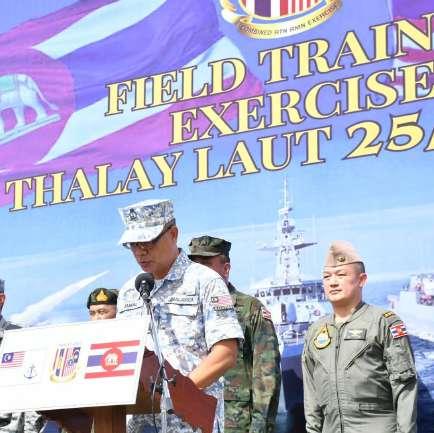
The Royal Malaysian Navy (RMN) and the Royal Thai Navy (RTN) strengthened their long-standing defence cooperation through Exercise THALAY LAUT 25/25, which was held from 22 to 30 August 2025. The exercise involved KD TERENGGANU and KD HANDALAN from RMN and HTMS PRACHUAP KHIRI KHAN, HTMS SATTAHIP, HTMS SONGKLA, and HTMS NARATHIWAT from RTN. The exercise began at Sattahip Naval Base, Thailand, where the seven-day operational phase was carried out.
Both navies' continued participation underscores their high operational readiness, professionalism, and tactical proficiency, while reinforcing their strong commitment to defence diplomacy and regional maritime security Such participation also underlines the RMN's proactive approach in working closely with regional partners to build confidence, enhance operational integration, and promote cooperative maritime security
The continued development of defence cooperation with the RTN remains strategically important in ensuring that the maritime spaces of both countries remain safe, stable and well-protected, while contributing to wider regional peace and stability
MALPHI LAUT 2025
Forging Maritime Cooperation
MALPHI LAUT 2025 took place from 25 to 29 August 2025 as a bilateral maritime exercise between the Royal Malaysian Navy (RMN) and the Philippine Navy (PN). The participating ships, KD KEDAH, KD LAKSAMANA MUHAMMAD AMIN, and BRP ANTONIO LUNA, were involved in this exercise.
Beyond enabling officers and sailors from both navies to share best practices, operational lessons, and innovative approaches to modern naval challenges, these activities enhance tactical coordination, communication, and overall readiness in ensuring effective responses to evolving regional maritime challenges. The RMN and PN officially conclude MALPHI LAUT 2025, marking another successful chapter in the long-standing maritime partnership between the two services.
Enhancing Bilateral Readiness
The Royal Malaysian Navy (RMN) and the Republic of Singapore Navy (RSN) conducted the MALAPURA bilateral exercise from 7 to 17 October 2025. The RMN deployed KD LEKIU, KD TERENGGANU, and KD PERKASA, while the RSN deployed the Formidable-class frigate, RSS STEADFAST, RSS VIGOUR and an Independence-class littoral mission vessel, RSS FEARLESS. In addition, two Su-30 MKM fighter aircrafts from the Royal Malaysian Air Force also participated in the exercise.
Exercise MALAPURA will remain a hallmark of the bilateral exercises between the two navies, demonstrating the deep trust, mutual respect, and unwavering commitment that truly define the relationship between the RMN and RSN. In fact, the ongoing initiative to guide both navies in our efforts to deepen cooperation will continue to serve as a benchmark for future engagements.
The Royal Malaysian Navy (RMN) welcomed the Royal Brunei Navy (RBN), KDB DARULAMAN and KDB BERKAT to the Kota Kinabalu Naval Base (KKNB) for Exercise HORNBILL 30/25, which was held from 21 to 24 October 2025. The exercise continued the tradition of cooperation between the two Navies, which clearly reflects the close and enduring maritime relationship.
With the participation of RMN ships, KD SELANGOR and KD RENCONG, the exercise highlighted the enduring partnership, promoted operational readiness and fostered trust across shared maritime borders. Apart from strengthening bilateral naval cooperation, this exercise also fosters lasting friendship and trust, strengthening the strategic partnership between Malaysia and Brunei.
Advancing Interoperability
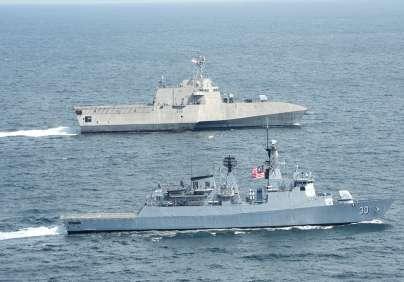
The Cooperation Afloat Readiness and Training (CARAT) Malaysia 2025 exercise was conducted at the Royal Malaysian Navy Base, Lumut, from 4 to 10 December 2025. This annual exercise brought together the Royal Malaysian Navy (RMN) and the United States Navy to enhance maritime interoperability and strengthen bilateral naval cooperation.
Throughout the exercise, various activities were carried out both at sea and ashore. RMN warship KD Lekiu participated in the sea phase, conducting sailing and tactical manoeuvres alongside partner naval assets. Meanwhile, shore-based activities focused on Communication Relation (COMREL) activities, professional exchanges, and community engagement programmes aimed at strengthening relations between military personnel and the local community while enhancing mutual understanding and operational cooperation.
Strengthening ASEAN Maritime Unity
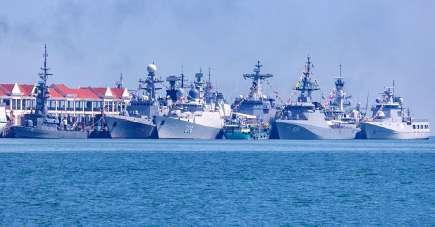
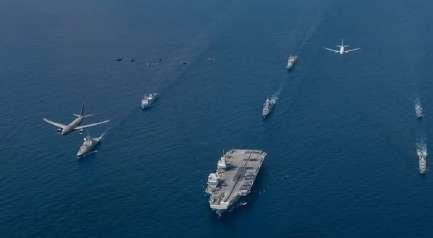
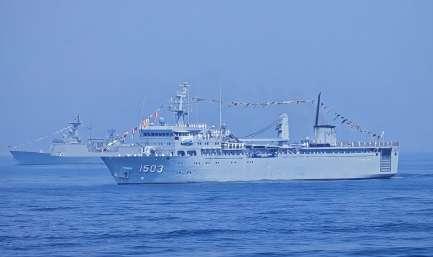
The ASEAN Multilateral Naval Exercise (AMNEX) 2025 had a significant impact, bringing together 10 warships from ASEAN member nations for a large-scale training deployment. Conducted as a Field Training Exercise (FTX), AMNEX 2025 continued to deepen mutual understanding, enhance interoperability, and sharpen collective response capabilities in the face of an increasingly complex maritime security landscape.
Began on 16 August 2025, centred on tactical planning, harmonisation of communication procedures, and professional engagement among officers and ship crews to ensure smooth execution for the ships set sail. The exercise then transitioned to the Sea Phase featuring a series of tactical manoeuvres, threat simulations, and demonstrations of combined operational readiness. The training underscored ASEAN navies' ability to operate cohesively in a dynamic maritime environment. More than a military drill, AMNEX symbolises ASEAN maritime unity
BERSAMA LIMA 2025
Strengthening FPDA Cooperation
Exercise BERSAMA LIMA 2025 (Ex BL 25) continues to be a significant milestone in the ongoing cooperation of the Five Power Defence Arrangement (FPDA). Conducted annually and hosted alternately by Malaysia and Singapore, 2025 sees Malaysia host. Held from 17 September to 6 October 2025, the exercise is coordinated by the Joint Force Headquarters with maritime forces operating from Kuantan Port and within the designated FPDA Training Area.
Ex BL 25 remains a platform to ensure that FPDA forces remain capable of operating together To remain relevant, Ex BL 25 incorporates contemporary and unconventional scenarios, including counterterrorism operations, maritime security threats, and asymmetric threats. This multi-domain approach ensures meaningful participation for maritime, air, land and logistics components while sharpening decision-making in a complex environment.
For the Royal Malaysian Navy (RMN), the participation reaffirmed its professionalism, adaptability and ability to operate seamlessly with international partners when called upon.
The
participation forces are:
AMAN YOUYI 2025
Building Trust Through Cooperation
The Royal Malaysian Navy (RMN) and the People’s Liberation Army Navy of China (PLA-N) conducted a large-scale joint military exercise, Exercise AMAN YOUYI 2025, from 15 to 23 October 2025. This exercise marks a significant milestone in defence diplomacy between the RMN and the PLA-N, demonstrating both nations’ shared commitment to regional maritime peace, stability, and partnership through the Maritime Security (MARSEC) Segment.
The exercise involved KD LEKIR and KD SRI INDERA SAKTI, alongside PLA-N JINGMEN, PLA-N YINGCHUAN, and PLA-N JINGGANG SHAN. The aims to strengthen bilateral military cooperation between the People’s Liberation Army and the Malaysian Armed Forces (MAF), as well as to enhance coordination and operational readiness in addressing humanitarian assistance and maritime security challenges.
RMN’s
KD SRI INDERA SAKTI
KD LEKIR
Fennec Fast Combat Boats (FCB)
PASKAL Fire Support Team (FST)
RMN Diving Team
AUMX 2025
Advancing Multinational Maritime Interoperability
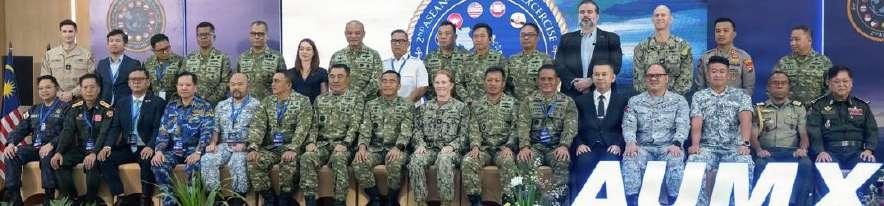
AUMX 2025 refers to the ASEAN-US Maritime Exercise (AUMX), a joint military exercise held from 8 to 12 December 2025, co-hosted by Indonesia (TNI-AL) and the US Navy The exercise brings together ASEAN countries and the United States to strengthen regional maritime security and stability KD LEKIR has participated in AUMX 2025.
The exercise involves Team Building Activities, SME Exchanges, Tabletop Exercises and Pre-Sail Briefings to enhance cooperation and interoperability All participating assets then sailed for the sea phase. RMN’s commitment to AUMX 2025 underscores the readiness of the RMN fleet and its important role in strengthening regional maritime cooperation.
MILAN 2026 On the Global Stage
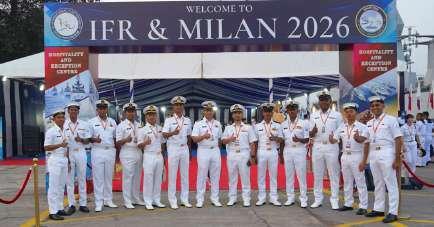
Exercise MILAN is a prestigious multilateral naval exercise organised by the Indian Navy (IN) and held from 15 to 25 February 2026 in Visakhapatnam, India. The exercise involves 72 countries, united to foster maritime cooperation, interoperability and regional security The Royal Malaysian Navy (RMN) represented by KD SRI INDERA SAKTI has successfully showcased Malaysia’s commitment to regional maritime security.
The exercise featured seminars, workshops, and cultural exchanges aimed at strengthening cooperation and mutual understanding among the participating navies. The delegates visited Indian naval ships and facilities, thereby creating valuable opportunities for professional interaction and knowledge sharing. This engagement also helped build trust, improve communication and lay a solid foundation for cooperation before moving on to operational activities at sea.
Several exercises at sea were also conducted, including anti-submarine warfare, air defence, electronic warfare, and search and rescue (SAR) operations. The exercises ultimately culminated in a complex multinational maritime operation that demonstrated the capabilities and interoperability of the participating navies.
WINNING THE INVISIBLE WAR: RMN’s Strategic Edge in Electronic Warfare
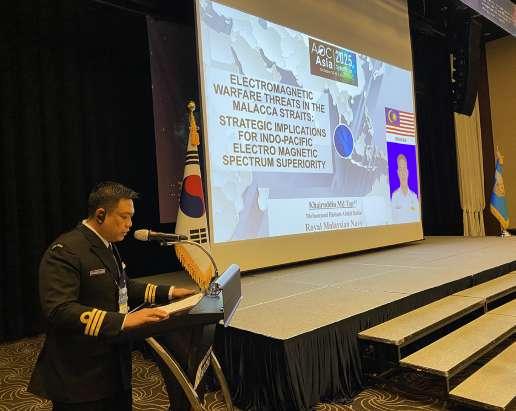
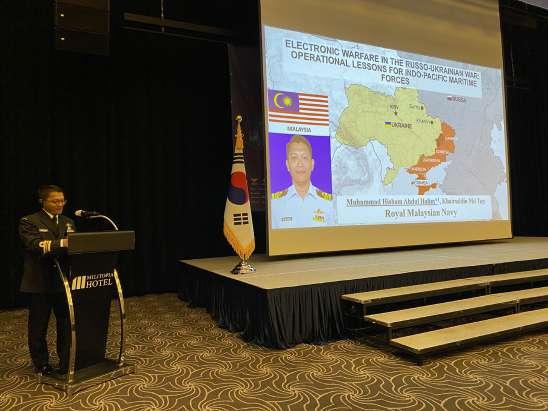
By: Cdr Khairuddin bin Md Tap RMN and Lt Cdr Muhammad Hisyam bin Abdul Halim RMN
While public attention often focuses on hypersonic missiles, ships, and visible firepower, modern conflicts are increasingly shaped long before the first shot is fired—within an unseen domain known as the electromagnetic spectrum (EMS). This “invisible battlespace” underpins communication systems, radar operations, navigation, and surveillance. Whoever controls it holds a decisive advantage.
In this context, the Association of Old Crows (AOC), a global organisation dedicated to electronic warfare (EW) and spectrum operations, provides a platform for military and academic collaboration. The participation of two Royal Malaysian Navy (RMN) officers, Cdr Khairuddin bin Md Tap RMN and Lt Cdr Muhammad Hisyam bin Abdul Halim RMN, demonstrates the RMN’s growing contribution and commitment to the global discourse on EW and EMS. The symposium was held in Seoul on 15 - 16 Oct 25.
Drawing lessons from the Russia–Ukraine war, their research highlights how the growing importance of electromagnetic dominance is shaping modern conflicts. Techniques such as communication jamming, GPS denial, and electromagnetic deception can disrupt command and control systems and sensor networks. The study also identifies maritime vulnerabilities, particularly the reliance on satellite navigation, and calls for frequency-agile communications, satellite-independent backups, and
low-probability-of-intercept techniques to ensure resilience in contested environments.
A major focus of the study is the Straits of Malacca, one of the world’s busiest maritime corridors and a key area vulnerable to EW threats. GPS jamming and radar deception in this region can significantly degrade situational awareness and undermine regional security The research further highlights gaps in spectrum governance and proposes establishing a regional EW Data Centre to enable real-time EMS monitoring, hostile-emission detection, incident analysis, and information sharing among stakeholders.
Moving forward, there is a clear need to enhance national capabilities in EW and EMS management. This includes improving real-time monitoring of the electromagnetic environment, strengthening the detection of hostile emissions, and fostering greater information sharing among relevant stakeholders. Establishing a coordinated framework for EMS governance will be critical in ensuring operational resilience in contested environments.
Ultimately, the battle for maritime security will not be decided solely on the surface or beneath the waves. It will also be fought and won within the invisible realm of the electromagnetic spectrum. For the RMN, success in this domain will be key to maintaining strategic advantage and safeguarding national interests in an increasingly complex security landscape.
IUNLOCKING THE ANCHOR: Malaysia’s Hidden Maritime Strength
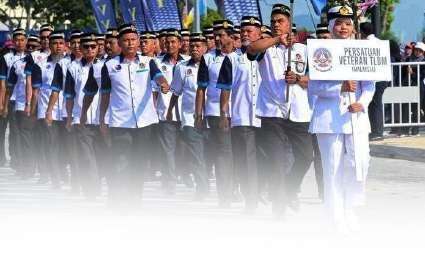
By: Cdr Khairil Hariss Khairuddin RMN (Retired) President of the Royal Malaysian Navy Veterans Association
n the vast often turbulent ocean of the civilian lib, the transition from military service to a second career can feel like being caught in a rising tide without a compass. For many, the shift from the structured environment of the Royal Malaysian Navy (RMN) to the "outside world" is overwhelming. This is where the concept of "Navy People" takes on its most vital meaning, and where the Persatuan Veteran Tentera Laut Diraja Malaysia (PVTLDM) serves as the ultimate lifebuoy
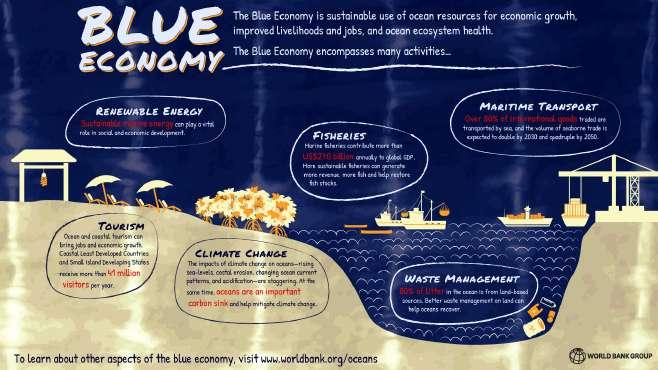
The transition from military to civilian life is often viewed through a lens of "retirement" or "resettlement." In reality, many RMN veterans are not aware that their skills, experience and expertise are in strong demand in the Blue Economy Even more concerning, there is no clear policy or structured pathway to connect this industry demand with the supply of qualified Navy veterans.
Clearing the Misconception: An Untapped Powerhouse
A common misunderstanding is that veterans are a workforce nearing the end of their productivity The data suggests otherwise. Currently, 60% of RMN veterans are aged between 30 and 59 years old, meaning the vast majority remain in their peak productive years.
Rather than being "retired" personnel, these veterans represent an untapped market workforce. They possess highly specialised skills that are in high demand but are often overlooked due to a lack of formal industrial recognition or specific policies to channel them into high-income roles. This is precisely where they fit within Malaysia’s current economic direction. The national strategy of “Raising the Ceiling”, one of the three core
pillars of the Ekonomi MADANI framework that will shape the Development Plans 2026 and the 13th Malaysia Plan. It provides the ideal policy platform to unlock this potential and elevate naval veterans into the nation’s high-value economic sectors.
Capabilities and Strengths in the Blue Economy
The Blue Economy is not just about being at sea; it is a complex ecosystem where RMN veterans already possess "sea legs." Their strengths align directly with five critical pillars of the industry:
Seafaring and Navigation: Years of operational experience in diverse maritime environments.
Shipbuilding & Ship Repair: Technical mastery over complex naval platforms and systems.
Oil & Gas: Discipline and safety-first mentalities are essential for offshore operations.
Port Management: Understanding of maritime logistics, security, and infrastructure.
Coastal Tourism: Expert knowledge of Malaysian waters and maritime safety
The PVTLDM "3K" Initiative: Bridging the Gap
The PVTLDM, the largest single-service veteran association in Malaysia, is leading the charge to bridge the gap between naval service and industrial demand through its 3K Initiative:
Kebajikan (Welfare):
Ensuring that no veteran is left behind. Welfare is not limited to financial assistance; it is a holistic support system that addresses emotional, social and spiritual well-being, especially for the most vulnerable.
1
Within PVTLDM, we recognise four vulnerable groups: single mothers, asnaf, chronic illness patient and Disabled Veterans.
Kerjaya Kedua (Second Career):
2
A second career is the foundation of dignity. Many veterans remain highly competitive, experienced, and disciplined; they simply need a second chance to channel their skills into the civilian workforce. Our goal is clear: to enhance veteran employability.
Keusahawanan (Entrepreneurship):
3
We want veterans not only to seek jobs, but to create them.Through PVTLDM’s entrepreneurship programmes, veterans are trained to build their own businesses across the maritime, technology, security, logistics, modern agriculture, and food industries.
A Call to Action
The term "Navy People" must never be viewed as a temporary status that expires upon retirement. It is a lifelong brotherhood and sisterhood that encompasses both serving members, veterans and their families. To ensure our sailors do not "suffocate" in the complexities of civilian life, the commitment to their well-being must be executed “from cradle to grave”
This is not a task for a single entity To be effective, RMN and PVTLDM must work like hand in glove While the RMN prepares sailors for the front lines, PVTLDM ensures they are prepared for the finish line and everything that comes after
We must work together to ensure the "cradle to grave" philosophy is a reality. When the RMN and the PVTLDM work in unison, we don't just provide a lifebuoy for those who are struggling; we build a fleet that powers the nation’s future.
For serving members, it is vital to realise that your current training is the blueprint for a high-income career in the civilian Blue Economy For policy-makers, the challenge lies in "raising the ceiling", creating the policies and recognition frameworks (such as through the Ministry of Human Resources and the Ministry of Economy) that ensure this specialised workforce is not wasted.
The RMN veteran is not a liability to manage but a strategic asset to deploy As we look toward 2026, the goal is clear: to ensure no veteran is left behind and that their skills are the bedrock of Malaysia’s maritime future.