INK
WINTER 2014
A P U B L I C A T I O N O F T H E C O R E I N S T I T U T E
®
The CORE Institute, Banner Health Set High Academic Standard for Orthopedic Residents New World-Class Clinical Trials Help Patients Runner Goes the Distance Thanks to Dr. Michaelson
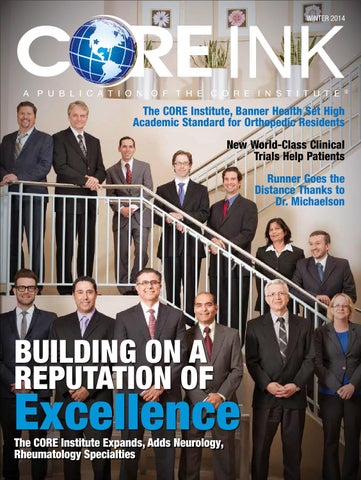
BUILDING ON A REPUTATION OF
Excellence The CORE Don’t Let Joint Institute’s Physical Pain Slow Therapists Play You Down Key Role in The CORE Institute Expands, Adds Neurology, Recovery Process Rheumatology Specialties
Former Marine Back Being Active With Help From The CORE Institute
WELCOME VOLUME 5, ISSUE 4 WINTER 2014
FROM THE MARKET PRESIDENT Innovation, Growth and Dedication.
FROM THE CHAIRMAN
2014 - A Year of Growth
As we wrap up 2014, The CORE Institute Michigan Market has experienced tremendous growth. Since the last issue of this publication, we have expanded our Novi clinic, created a new physical therapy center, broken ground on a new location in Brighton, and begun our future expansions in Grand Blanc. We have had the privilege to welcome three new physicians and one new nurse practitioner to our team this fall, and in early January we will add two well known physicians in our new Grand Blanc facility. In this issue of CORE Ink, we will introduce our newest service line with articles featuring our neurology team. We also profile a patient who was forced to give up her love for running. However, thanks to the expert care provided by the Michigan Market’s Dr. Jefferey Michaelson, this patient has finally returned to hitting her stride. In addition, we showcase a new FDAapproved alternative procedure to spinal fusion that leads to better outcomes, and focus on orthopedic traumatology with articles written by Dr. Ali Araghi and Drs. Benjamin Geer and Emily Squyer. As we at The CORE Institute continue to break national orthopedic news, help lead musculoskeletal healthcare reform and strategies, and grow our comprehensive services, the CORE Ink publication will keep you and our valued patients and fellow medical providers, informed of these changes. Our advances in healthcare are your advances in health.
In 2014, we are grateful for the immense about of growth that we have been able to experience. We expanded our co-management relationship with Banner Health, caring for patients at Banner Good Samaritan Medical Center, and launched new co-management programs in Michigan as well. In addition, we unveiled our National headquarters in Phoenix. Since then, we have hired over 30 additional providers to service our patients in Arizona and Michigan. We have expanded our clinical specialties to now include neurology and rheumatology, and opened a number of new clinic locations across Arizona. We are now part of a number of bundled payment programs that are proving to control cost and improve outcomes. The CORE Institute was recognized as the #1 Orthopedic Group by Ranking Arizona for the second year in a row, one of the Best Places to Work by Phoenix Business Journal for the fourth year in a row and we were the recipient of the IMPACT Award by the Greater Phoenix Chamber of Commerce. Achievements by our providers were further recognized in the Phoenix Magazine and Hour Detroit’s Top Docs issues. In January, we celebrate our 10 year anniversary. 2015 will mark a significant milestone for us. A milestone that has allowed us to provide best-in-class care for patients from across the country. As we continue to celebrate our patients, our staff and our growth, I hope that you join us on the journey to redefine healthcare. On behalf of all of our physicians, providers, and staff, The CORE Institute appreciates your continued support. May you, and your family, enjoy a happy and healthy holiday season.
Keep Life in Motion!®
Keep life in motion!® David J. Jacofsky, MD Chairman & CEO
A P U B L I C A T I O N O F T H E C O R E I N S T I T U T E
CREATED BY REPUBLIC MEDIA CUSTOM PUBLISHING FOR THE CORE INSTITUTE
®
General Manager: Cami Kaiser/ cami.kaiser@pni.com Creative Development Director: Isaac Moya/ imoya@republicmedia.com
David C. Markel, MD Market President, Michigan
Editor: Jim Williams/JLWilliams@republicmedia.com Editorial Coordinator: Nick Kostenko/nkostenko@republicmedia.com Sr. Managing Art Director: Tracey Phalen/tphalen@republicmedia.com Design: Rachel Tullio Photography: Mark Lipczynski Advertising Coordinator: Dominick Galluzzo/dgalluzzo@republicmedia.com
Contents
18 FEATURES
Building on a Reputation of Excellence!
COVER STORY: The CORE Institute Expands Service, Adds Neurology and Rheumatology Specialties. See page 18.
Academic Emphasis on Medical Education
The CORE Institute sets a new standard for orthopedic care through education and training. See page 14.
Spine Surgeons Performing Two-Level Cervical Disc Replacement
PATI E NT C A RE
Going the Distance Michigan patient gets a second chance to realize her passion for running, thanks to Dr. Michaelson. See page 24.
New FDA-approved alternative procedure to spine fusion leads to better outcomes. See page 22.
22 D EPART ME N TS Ask the Expert
24 connect with us
10 D r. Andrew Gorman shares how back and neck pain can reduce a person’s overall quality of life.
What’s New? 12 T he CORE Institute is pleased to introduce new physicians to the team.
Research 1.866.974.2673
www.thecoreinstitute.com
26 T he CORE Institute expands world-class clinical trials.
Community Relations 28 Continuing to raise the bar for community commitment and involvement.
CORE Candid 29 E mployees at The CORE Institute are “Keeping Life in Motion ®.”
Specialty Spotlight 30 Orthopedic Traumatology: The CORE Institute offers a program to treat musculoskeletal injuries.
7
Medication Guide XIAFLEX® (Zī a flex) (collagenase clostridium histolyticum) For injection, for intralesional use Read this Medication Guide before you receive XIAFLEX for the treatment of Dupuytren’s contracture and each time you get an injection. There may be new information. This Important Product Information does not take the place of talking with your healthcare provider about your medical condition or treatment. What is the most important information I should know about XIAFLEX for the treatment of Dupuytren’s contracture? XIAFLEX can cause serious side effects, including: 1. Tendon rupture or ligament damage. Receiving an injection of XIAFLEX may cause damage to a tendon or ligament in your hand and cause it to break or weaken. This could require surgery to fix the damaged tendon or ligament. Call your healthcare provider right away if you have trouble bending your injected finger (towards the wrist) after the swelling goes down or you have problems using your treated hand after your follow-up visit. 2. Nerve injury or other serious injury of the hand. Call your healthcare provider right away if you get numbness, tingling, increased pain, or tears in the skin (laceration) in your treated finger or hand after your injection or after your follow-up visit. 3. Hypersensitivity reactions, including anaphylaxis. Severe allergic reactions can happen in people who receive XIAFLEX, because it contains foreign proteins. Call your healthcare provider right away if you have any of these symptoms of an allergic reaction after an injection of XIAFLEX: • Hives, swollen face, breathing trouble, chest pain , low blood pressure, dizziness or fainting What is XIAFLEX? XIAFLEX is a prescription medicine used to treat adults with Dupuytren’s contracture when a “cord” can be felt. It is not known if XIAFLEX is safe and effective in children under the age of 18. Who should not receive XIAFLEX? Do not receive XIAFLEX if you: • are allergic to collagenase clostridium histolyticum, or any of the ingredients in XIAFLEX, or to any other collagenase product. See the end of this Important Product Information for a complete list of ingredients in XIAFLEX. Talk to your healthcare provider before receiving this medicine if you have any of these conditions. What should I tell my healthcare provider before receiving XIAFLEX? Before receiving XIAFLEX, tell your healthcare provider if you: • have had an allergic reaction to a XIAFLEX injection in the past, have a bleeding problem, have received XIAFLEX to treat another condition, have any other medical conditions, are pregnant or plan to become pregnant. It is not known if XIAFLEX will harm your unborn baby. • are breastfeeding or plan to breastfeed. It is not known if XIAFLEX passes into your breast milk. Talk to your healthcare provider about the best way to feed your baby if you receive XIAFLEX. Tell your healthcare provider about all the medicines you take, including prescription and over-the-counter medicines, vitamins, and herbal supplements. Using XIAFLEX with certain other medicines can cause serious side effects. Especially tell your healthcare provider if you take: • medicines to thin your blood (anticoagulants). If you are told to stop taking a blood thinner before your XIAFLEX injection, your healthcare provider should tell you when to restart the blood thinner. Ask your healthcare provider or pharmacist for a list of these medicines, if you are not sure. Know the medicines you take. Keep a list of them to show to your healthcare provider and pharmacist when you get a new medicine. How will I receive XIAFLEX? • XIAFLEX should be injected into a cord by a healthcare provider who is experienced in injection procedures of the hand and treating people with Dupuytren’s contracture. If you have more than 1 contracture, your healthcare provider may give you 2 injections in 1 of your hands during your visit. • Your healthcare provider will inject XIAFLEX into the cord that is causing your finger to bend. • After an injection of XIAFLEX, your affected hand will be wrapped with a bandage. You should limit moving and using the treated finger after the injection.
o Do not bend or straighten the fingers of the injected hand until your healthcare provider says it is okay. This will help to keep the medicine from leaking out of the cord. o Do not try to straighten the treated finger yourself. • Keep the injected hand elevated until bedtime. • Call your healthcare provider right away if you have: o signs of infection after your injection, such as fever, chills, increased redness, or swelling, numbness or tingling in the treated finger, trouble bending the injected finger after the swelling goes down • Return to your healthcare provider’s office as directed 1 to 3 days after your injection. During this first follow-up visit, if you still have the cord, your healthcare provider may try to extend the treated finger to “break” the cord and try to straighten your finger. • Your healthcare provider will provide you with a splint to wear on the treated finger. Wear the splint as instructed by your healthcare provider at bedtime to keep your finger straight. • Do finger exercises each day, as instructed by your healthcare provider. • Follow your healthcare provider’s instructions about when you can start doing your normal activities with the injected hand. What are the possible side effects of XIAFLEX? XIAFLEX may cause serious side effects, including: • See “What is the most important information I should know about XIAFLEX?” • increased chance of bleeding. Bleeding or bruising at the injection site can happen in people who receive XIAFLEX. Talk to your healthcare provider if you have a problem with your blood clotting. XIAFLEX may not be right for you. The most common side effects with XIAFLEX for the treatment of Dupuytren’s contracture include: • swelling of the injection site or the hand, bruising or bleeding at the injection site, pain or tenderness of the injection site or the hand, swelling of the lymph nodes (glands) in the elbow or armpit (axilla), itching, breaks in the skin, redness or warmth of the skin, pain in the armpit Tell your healthcare provider if you have any side effect that bothers you or does not go away. These are not all of the possible side effects with XIAFLEX. For more information, ask your healthcare provider or pharmacist. Call your doctor for medical advice about side effects. You may report side effects to FDA at 1-800-FDA-1088. General information about the safe and effective use of XIAFLEX. Medicines are sometimes prescribed for purposes other than those listed in the Important Product Information. This Important Product Information summarizes the most important information about XIAFLEX. If you would like more information, talk to your healthcare provider. You can ask your healthcare provider or pharmacist for information about XIAFLEX that is written for health professionals. For more information, go to www.XIAFLEX.com or call 1-877-663-0412. What are the ingredients in XIAFLEX? Active ingredient: collagenase clostridium histolyticum Inactive ingredients: hydrochloric acid, sucrose, and tromethamine. The diluent contains: calcium chloride dihydrate in 0.9% sodium chloride This Medication Guide has been approved by the U.S. Food and Drug Administration. Manufactured and distributed by: Auxilium Pharmaceuticals, Inc. Chesterbrook, PA 19087 Based on PL-1109-001.f Approved: 10/2014
XDC-01024
FOR ADULTS WITH DUPUYTREN’S CONTRACTURE WHEN A “CORD” CAN BE FELT
YOU MAY HAVE MORE OPTIONS THAN YOU THINK, AND THAT’S NO SMALL THING XIAFLEX FOR INJECTION ASK YOUR DOCTOR IF SOMETHING NONSURGICAL CAN BE DONE NOW Dupuytren’s contracture is a disorder of the hand that can worsen over time. XIAFLEX is the only FDA-approved therapy that is administered during an in-office nonsurgical procedure to treat Dupuytren’s contracture where a “rope-like” cord can be felt. A hand specialist trained to inject XIAFLEX performs the procedure, and no general anesthesia is required for administration. Studies show that prescription XIAFLEX may help straighten the affected finger and improve range of motion. These results have been shown in contractures ranging from less severe to more severe. And that’s no small thing. In two clinical studies, 64% and 44% of people receiving XIAFLEX (versus 7% and 5% of patients receiving placebo) had a straight or nearly straight finger after up to 3 XIAFLEX injection procedures. Most people required 1 or 2 injection procedures with XIAFLEX to help “break” the cord. Since February 2010, approximately 50,000 people have had their Dupuytren’s contracture treated with XIAFLEX. Watch a video about one person’s treatment experience, and find more information at XIAFLEX.com. Then, talk with your doctor to see if XIAFLEX may be right for you.
IMPORTANT SAFETY INFORMATION Do not receive XIAFLEX if you are allergic to collagenase clostridium histolyticum or any of the ingredients in XIAFLEX, or to any other collagenase product. XIAFLEX can cause serious side effects including tendon rupture (break), ligament damage, nerve injury or other serious injury of the hand, allergic reaction or hypersensitivity reactions, including anaphylaxis. Surgery could be required to fix the damaged tendon or ligament. Call your healthcare provider right away if you have trouble bending your injected finger after the swelling goes down, pain, tingling, numbness, increased pain, or tears in the skin (laceration) in your treated hand, or problems using your treated hand or if you get hives, swollen face, breathing trouble, chest pain, low blood pressure, or dizziness or fainting. Bleeding or bruising at the injection site can happen in people who receive XIAFLEX. It’s important to tell your doctor about a prior allergic reaction to XIAFLEX, or if you have a bleeding problem or use a blood thinner. Common side effects include hand swelling, bruising, injection site reaction or bleeding, and pain. XIAFLEX should be injected into the cord by a healthcare provider who is experienced in injection procedures of the hand and treating people with Dupuytren’s contracture. You are encouraged to report negative side effects of prescription drugs to the FDA. Visit www.fda.gov/medwatch, or call 1-800-FDA-1088. Please see the Medication Guide on the following page.
Find a XIAFLEX-experienced hand specialist near you. Use the Physician Locator tool at XIAFLEX.com.
© 2014 Auxilium Pharmaceuticals, Inc. All rights reserved. XDC-01024 October 2014
FOR MORE INFORMATION, CALL 1-877-XIAFLEX
ASK THE EXPERT
Battling Back and Neck Pain A herniated disc can lead to balance problems By Andrew Gorman, D.O. Neck or back problems can significantly reduce a person’s flexibility, mobility and overall quality of life. They’re common, since our posture and spinal position are impacted by everything from sitting at a computer to exercising or getting out of a vehicle on the daily commute. A herniated disc can cause localized pain in the area where the herniation occurs. This happens when the rubbery material of the spinal disc, which serves as a spinal buffer between the bones of vertebrae, is worn and ruptured. This can happen over time from years of wear and tear. Pain in the extremities can occur when that protective material of spinal disc seeps through cracks into the harder material around the spine. For example, a herniated disc in the cervical spine can lead to neck pain while a herniation in the lumbar spine can lead to back pain. If the herniated disc is pressing on or pinching a nerve, the patient can feel pain radiating from that spinal position into an arm or leg. It can also lead to numbness or tingling in the neck or lower back, or into the extremities. If the herniated disc is compressing the motor aspect of the nerve, patients often notice their muscle feel weaker. At The CORE Institute, our physicians identify treatment plans to help patients
10
recover from the pain or discomfort associated with herniated discs. Q: CAN A HERNIATED DISC CAUSE BALANCE PROBLEMS? A: A herniated disc in the lumbar region can sometimes cause balance problems if the disc material pinches or compresses on the motor portion of
the lumbar nerve root. That can lead to muscle weakness, which most commonly occurs in the muscles which affect foot dorsiflexion — which is basically a pulling of the toes upward. This results in “foot drop,” which can cause patients to trip on their toes, feel off balance or fall down. This type of weakness in the foot can also cause a slapping of the foot
“A herniated disc in the cervical spine can lead to neck pain while a herniation in the lumbar spine can lead to back pain.” — Andrew Gorman, D.O.
ANDREW GORMAN, D.O.
Andrew Gorman is a board-certified and fellowshiptrained neurologist specializing in epilepsy and clinical neurophysiology. Prior to joining The CORE Institute, Dr. Gorman cared for patients at the Arizona Neurological Institute. He provides his expertise and clinical leadership to the Banner Boswell Medical Center Epilepsy Monitoring Program. Dr. Gorman received his fellowship training from Barrow Neurological Institute. He completed his residency at the University of Arizona College of Medicine.
www.thecoreinstitute.com
ASK THE EXPERT
that results in impaired balance. Patients that experience this type of toe or foot weakness can benefit from an ankle or foot orthotics, or a toe up brace. Q: WHAT CAUSES “FOOT DROP?” HOW COMMON IS IT? A: Foot drop is caused by a pinched nerve in the lumbar region (the L5 nerve root), the knee (the peroneal nerve) or buttocks/upper thigh (sciatic nerve), however this is not very common. Less than 10% of patients with lumbar degenerative disc herniation develop foot drop. Q: HOW DO DOCTORS AT THE CORE INSTITUTE HELP PATIENTS OF HERNIATED DISCS REHABILITATE WITHOUT SURGERY? A: Most patients can recover without surgery with the use of physical
therapy, which focuses on exercises to rehabilitate the motor weakness. X-rays can also help doctors fluoroscopically guide injections into the lumbar spine. That process is known as epidural steroid injections, which are performed by The CORE Institute pain management physicians. If patients do not recover their motor strength or the muscles in their foot or leg gets worse, then surgery may be necessary. But often, patients will not need surgery for foot drop from a pinched nerve resulting from a herniated disc. FOR MORE INFORMATION Please call 1.866.974.2673 or email us at contactus@thecoreinstitute.com.
WHAT’S NEW NEW PROVIDERS
The CORE Institute is pleased to announce the addition of new physicians to our provider team.
ARIZONA OMAR ABDULHADI, MD, MBA
TAMMY J. PENHOLLOW, DO
Interventional Spine & Pain Management
Primary & Revision Joint Replacement Surgery of the Hip and Knee
Clinical Neurophysiology & Neurology
NIRMALA ARYAL, MD
TODD C. HERMAN, MD
JASON C. REINHART, DO
Neurology
Neurohospitalist
Spine & Peripheral Nerve Disease, Headache Medicine, and Neurology
ANDREW L. BLOUNT, MD
HARVINDER KUMAR, MBBS, MD
Plastic, Reconstructive and Hand Surgery
STACY DONLON, MD
Neuroimmunology and Multiple Sclerosis
ERIC J. EROSS, DO
Headache & Facial Pain
EVAN J. FREEDMAN, DO
12
ANDRE HAGEVIK, MD, PHD
MOHAMMAD AL SAWAF, MD
Neuromuscular Medicine & Neurology
Arthroscopic & Reconstructive Surgery of the Shoulder & Elbow
LAWRENCE M. KUTZ, DO
JATIN SHAH, MD
Interventional Spine & Pain Management
Neuromuscular Medicine & Neurology
ALAN H. MALLACE, MD
ATUL SYAL, MD
Rheumatology
Epilepsy and Clinical Neurophysiology and Neurology
GREGORY N. NELSON, MD, MHS
VARDGES VANDIAN, DO
Interventional Spine & Pain Management and Neurology
Arthroscopic & Reconstructive Surgery of the Shoulder & Elbow
Clinical Neurophysiology & Neurology
ANDREW GORMAN, DO
AHMAD NIZAM, MD
FREDERIC B. WILSON, MD
Epilepsy and Clinical Neurophysiology and Neurology
Clinical Neurophysiology & Neurology
Primary & Revision Joint Replacement Surgery of the Hip & Knee; Orthopedic Traumatology; Limb Salvage Surgery
www.thecoreinstitute.com
FEATURE STORY
ACADEMIC EMPHASIS ON MEDICAL EDUCATION The CORE Institute and Banner Health Set New Standard for Orthopedic Care By Meghann Finn Sepulveda As one of the primary focuses of the foundation of The CORE Institute, academic medical education in advanced orthopedic care ranks high on the list. The CORE Institute’s fellowshiptrained orthopedic surgeons are committed to developing the future leaders in musculoskeletal medicine. The CORE Institute, in partnership with Banner Health, is offering orthopedic surgery residency and specialty orthopedic fellowship-training programs that provide unique knowledge and advanced orthopedic care that is utilized in hospital and clinical environments. ORTHOPEDIC RESIDENCY The five-year orthopedic surgery residency program at Banner Good Samaritan Medical Center, an academic teaching hospital in Phoenix, received accreditation in 2007. The program accepts only four residents each year. “In general, orthopedic residencies are extremely competitive Norman Chutkan, M.D. across the board,” said Norman Chutkan, M.D., Director of Education and Orthopedic Spine Surgeon, at The CORE Institute. “The residents selected are typically within the top 10 to 20 percent of their class academically.”
14
Residents participate in all aspects of orthopedic care including hand and upper extremity, musculoskeletal trauma, foot and ankle, spine, adult reconstruction, sports orthopedics, pediatrics and musculoskeletal oncology. “My personal interest falls within the musculoskeletal anatomy, orthopedic mechanics and extremities in general,” said Karan Patel, M.D., a second-year resident. “A residency program at an academic Level I Trauma Center allows me to experience things that I would not necessarily see in the general public.” EDUCATIONAL ENVIRONMENT The program not only educates residents, but benefits attending physicians and fellows who care for patients in the hospital and in the outpatient clinic as well. “It is a very educational environment for all physicians involved in patient care,” Dr. Patel said. “The residents are learning and the attending physicians gain more exposure with patients and stay current with the most up-to-date treatment and research.” Because there is coordinated care and increased communication between the resident, fellow and attending physician, patients can understand their disease process better. “It leads to a better patient experience,” Dr. Patel said. continued page 14 >>
www.thecoreinstitute.com
FEATURE STORY
FELLOWSHIP PROGRAM The majority of the orthopedic physicians at The CORE Institute are fellowship-trained in areas of surgical, non-surgical or rehabilitative musculoskeletal medicine. The Orthopedic Fellowship Program at The CORE Institute gives fellows advanced training in orthopedic subspecialties including hip and knee reconstruction; arthroscopic and reconstructive surgery of the shoulder; hand, upper extremity, and microsurgical; and spine/pain medicine. The 12-month programs are taught by faculty academic orthopedic surgeons and interventional spine physicians; they provide fellows with exposure to a variety of high volume cases, working side-by-side with world-renown physicians, along with clinical scientific research opportunities. “Our emphasis is on training the next generation of orthopedic surgeons,” Dr. Chutkan said. “The advanced training for fellows is highly specialized.” CONTINUING EDUCATION The CORE Institute is striving to develop continuing education for residents and fellows utilizing evidence-based medicine
A residency program at an academic Level I Trauma Center allows me to experience things that I would not necessarily see in the general public.” – K aran Patel, M.D., Second-Year Resident at Banner Good Samaritan Medical Center
and advanced technique. “Education is an important part to all of our offices and various locations,” Dr. Chutkan said. “We want to be the resource for educational programs that feature new orthopedic techniques and surgical skills for the entire Valley.” The CORE Institute has offices across the Valley and collaborates with several Banner Health facilities, including Banner Good Samaritan Medical Center in Phoenix, Banner Del E. Webb Medical Center in Sun City West, Banner Thunderbird Medical Center in Glendale, Banner Estrella Medical Center in West Phoenix, and Banner Desert Medical Center in Mesa. “We are working very hard to become a center that is based on research and education for musculoskeletal medicine,” Chutkan said. “It’s evolving.”
COVER STORY
BUILDING ON A REPUTATION OF EXCELLENCE BY DOLORES TROPIANO
The CORE Institute is now largest provider of integrated musculoskeletal and neurological care in the Southwest
18
West Valley provider of neurological, physical, and rehabilitative services since 1995. NEUROLOGICAL MEDICAL CARE This is the first time since The CORE Institute was established in 2005 that the organization will be able to provide neurological medical care for disorders or diseases of the brain, spine and the nerves that connect them. There are more than 600 diseases of the nervous system, such as brain tumors, epilepsy, Parkinson’s disease, multiple sclerosis, rheumatism and strokes. The institute will now be offering expertise from more than 120 care providers in Arizona. “We are extremely proud to
be able to bring on such an outstanding and well respected group of neurology providers,” added Dr. Jacofsky. “They were well known in the community and are already recognized for excellence throughout the state of Arizona.” CONTROLLING COSTS The expansion will now allow The CORE Institute to provide patients with a continuum of care that will enhance the quality of their treatment while controlling health care costs. This kind of care will have extensive benefits for patients. A patient with a spine condition, Dr. Jacofsky explained, may typically need integrated care including rehabilitation, physical
PHOTO: MARK LIPCZYNSKI
I
n October, The CORE Institu— te expanded in Arizona adding an new specialties, including neurology and rheumatology. With the addition of 15 new providers, they have become what is now the largest provider of integrated musculoskeletal and neurological care in the Southwest United States. The new staff of physicians will be working across all Arizona locations. “There are very few places in the country that can provide this type of comprehensive integrated musculoskeletal care,” said Dr. David Jacofsky, Chairman and CEO of The CORE Institute. The physicians that joined The CORE Isntitute’s elite team were previously on staff at the Arizona Neurological Institute, a major
www.thecoreinstitute.com
19
COVER STORY
therapy, pain management, neurology and sometimes orthopedic surgery. This could typically require a time consuming process of searching out and going to appointments in numerous locations. “Doctors often don’t communicate. Files don’t get passed on. Tests are taken twice,” Dr. Jacofsky said. “From a financial perspective, our new approach is better for everyone and far more cost effective.” Dr. Atul Syal, a longtime Arizona Neurologist who will lead The CORE Institute’s new Department of Neurology, is thrilled to be a part of The CORE Institute team. BUILDING ON EXCELLENCE “We wanted to join The CORE Institute because of what The CORE Institute stands for and what their physicians do,” said Dr. Syal, Neurologist and new Director of the Department of Neurology at The CORE Institute. “They are highly trained physicians, orthopedic surgeons, pain management specialists and more and have established a great reputation.” Dr. Syal is pleased to be a part of an organization that is always stretching to find more successful ways of supplying care. “The main attraction was the model that Dr. Jacofsky has brought to The CORE Institute,” he said. “This is the kind of entity many of my colleagues wanted to align ourselves with. The emphasis is on patient care and how to make it better for patients instead of trying to just see patients from morning to night without trying to change and improve the approach. They have an excellent track record for trying to improve patient outcomes all of the time.”
20
Dr. Syal is certain that patients will benefit from The CORE Institute’s emphasis on multidisciplinary care. “It will curtail unnecessary referrals, going from one doctor to another and getting the run around,” he said. “It will be easy to access between physicians and medical records. We will be able to provide quality care without forcing patients to go from door to door seeking medical care. That’s the advantages of having all these specialists under one roof. We now have a more superior approach in one place. It is a huge help for patients.”
specialties in an array of biomechanical areas including; musculoskeletal anatomy, gait and motion analysis, the mechanical testing of orthopedic devices and more. GREAT OPPORTUNITIES Dr. Marc Jacofsky is the Chief Scientific Officer for The CORE Institute. He manages the development and implementation of all clinical, biomechanical, and motion analysis research studies as well as the patenting and development of new medical devices.
“We wanted to join The CORE Institute because of what The CORE Institute stands for and what their physicians do. They are highly trained physicians, orthopedic surgeons, pain management specialists and more and have established a great reputation.” Dr. Atul Syal
— Dr. Atul Syal, Director of Neurology of The CORE Institute.
RESEARCH AND CLINICAL STUDIES The new neurologists have another significant benefit from The CORE Institute connection. They will now be a part of organization that has a research component. The CORE Institute’s research division, the MORE Foundation, whose staff is dedicating 100 percent of their time to research, is a vibrant community for research and clinical studies. This is key to growing and developing the quality of care that is available for patients. Right now the laboratories at the MORE Foundation are staffed by bioengineers and scientists with
“We have never had this before so it is a great change for us,” said Dr. Syal. “They have an excellent biomechanics lab that we can use with neurology helping patients with gait issues caused by Parkinson’s disease or stokes.” Dr. Syal hopes to attract more trials and studies and he believes that combining research that includes both the orthopedic and neurological disciplines will enhance outcomes. “We can now work together to help our patients,” he said. “There are ample opportunities because of the different subspecialties coming together. I am extremely excited about it.”
www.thecoreinstitute.com
FEATURE STORY
Spine Surgeons Performing TwoLevel Cervical Disc Replacement New FDA-Approved Alternate Procedure to Spinal Fusion Leads to Better Outcomes By Meghann Finn brae — made up of bones — Sepulveda within the spine that allow the People who suffer from spinal neck to move freely. Over time, pain as a result of cervical a disc can become worn, slip or disc disease now have a new rupture, no longer serving as a surgical option offered at The natural shock absorber. CORE Institute. The Mobi-C® “A disc acts as a cushion between the vertebrae,” said two-level cervical disc Araghi. “When it is herniated, it replacement is deemed a safe Ali Araghi, D.O. pushes out on the surrounding and highly effective treatment nerves and causes pain.” by the FDA. The symptoms of a spinal The first procedure in the condition referred to as a herniValley was performed by Ali ated disc vary by patient, but Araghi, D.O., and Director of typically include chronic pain Department of Spine Health at and discomfort, numbness or The CORE Institute, in June. weakness in the lower back and Dr. Araghi was a participating neck that significantly affects surgeon during the investigaHarvinder Bedi, M.D. quality of life and impacts the tional device exemption cliniability to function normally. cal study where he gained valuable expeThe American Academy of rience prior to approval from the FDA. Orthopaedic Surgeons report that spinal Harvinder Bedi, M.D., of The CORE nerves are highly sensitive to pain and Institute also performs the procedure. most patients who experience a herniated disc suffer from sciatica, a sharp, IDENTIFYING A HERNIATED DISC shooting pain that extends from the Discs are soft pads located in the verte-
22
buttocks down the back of one leg. Another place in the body where pain is commonly felt is in the neck, which can then travel through the arm. Pain could also cause headaches usually in the back of the head. TRADITIONAL SPINAL FUSION Spinal fusion is a surgical procedure that permanently joins two or more vertebrae in the spine to stop movement, according to The U.S. National Library of Medicine. “In the past, patients who needed to repair two herniated discs usually required spinal fusion,” Dr. Araghi said. “This is a procedure where we place a
www.thecoreinstitute.com
who undergo the Mobi-C cervical disc replacement require physical therapy following the procedure. “Mobi-C patients will most likely have less recovery time and physical therapy because they have not been immobilized,” Dr. Araghi added.
block of bone between the vertebrae and utilize a plate to fuse them together.” Orthopedic surgeons use screws and rods to hold vertebrae in place. “Following surgery, patients tend to lose motion in their neck,” Dr. Araghi said. “The discs have to work harder and may eventually wear out.” ALTERNATIVE APPROACH The new Mobi-C disc replacement is ideal for patients 50 and younger and can accommodate one and two levels of disc herniation. Once the infected discs are removed, the surgeon implants the device, which consists of two metal
plates and a plastic insert that spares bone. “As opposed to spinal fusion, an artificial disc replaces the block of bone in the Mobi-C procedure,” Dr. Araghi said. “Patients are not limited with motion.” The procedure does not require any bone chiseling or the need for rods or screws. Another benefit is that patients are not required to wear a brace for six weeks to three months following surgery, which is typical for a spinal fusion. “By utilizing the artificial disc, there is no restriction for patients,” Dr. Araghi said. “The outcome is very good.” Like spinal fusion patients, those
CANDIDATE CRITERIA Patients suffering from two-level cervical disc disease should inquire about the Mobi-C procedure and speak with their orthopedic surgeon. Garett Long, 41, a Surprise resident, spent years trying to alleviate pain from spinal stenosis, a condition that narrows the open space within the spine which puts pressure on the spinal cord and nerves. “I had the neck of an 80-year-old,” Long said. “And nothing was working to improve my pain.” In June, Long underwent Arizona’s first two-level artificial disc replacement. “My quality of life is “200 percent better than before,” Long added. When determining if a patient meets the criteria, the surgeon will review symptoms, perform an exam and use imaging technology such as an X-ray, CT scan or MRI to confirm the diagnosis. Together, the patient and orthopedic surgeon will work closely to determine the best plan of care to achieve optimal treatment for cervical disc disease. Garrett is now a few months post-operative and is pleased with the results.
FOR MORE INFORMATION For additional information about the Mobi-C procedure, please visit www.thecoreinstitute.com.
23
BE INSPIRED To watch Karyn’s full testimonial, visit our YouTube channel.
Going the Distance Michigan Patient Has Second Chance to Realize Her Passion for Running, Thanks to Dr. Michaelson By Gremlyn Bradley Waddell | Photo by Benjamin Braman
24
www.thecoreinstitute.com
PATIENT CARE
told her she would never run again. So time, the cells grow and form new cartiWHEN SEVERE KNEE PAIN FORCED she turned to walking and biking and lage very much like the patient’s original KARYN GREY TO GIVE UP RUNNING gave up running for more than a decade. cartilage. Still, results are difficult to predict years ago, the Michigan resident thought when a patient returns to high-impact she’d never lace up her shoes for a big sports. race again. SEEKING A SOLUTION “Under the best circumstances, it’s hard But then she made an appointment About seven years ago, though, Grey to run and complete distance races,” Dr. with Jefferey Michaelson, M.D., a board was pining to run again and figured she Michaelson said. “I caution anyone who certified and fellowship-trained orthowould see if anything else could help has knee surgery about running marathon pedic surgeon with The CORE Institute, her knee. Her curiosity led her to Dr. distance races. I come from a family of and he helped her return to the sport Michaelson, who suggested she start marathoners, and two of us have comshe loves. Although knee surgery and with non-surgical approaches. When pleted the Ironman, so I ‘get’ the mentality the subsequent healing prothose didn’t work, he recomof these patients, but it doesn’t make me cess was not easy, Grey ran mended a cartilage transworry any less.” her first-ever, full marathon in plant, a procedure known October 2013 and recently as Autologous Chondrocyte completed her second. Her Implantation, or ACI. A sucGETTING ANOTHER CHANCE impressive recovery has cessful operation, he said, Grey said recovery was “brutal” and includexceeded both their expectamight allow her to run a couple ed six weeks on crutches and having to rely tions and is something for miles a day for a few days each on her husband, David, and other family which she is immensely members to help with basic errands. During Jefferey Michaelson, M.D. week. She was up for it. grateful. A patient, however, must subsequent physical therapy, she also “Running is a special gift that I have first undergo surgery to determine if found her muscles had atrophied so much been given a second chance at having, she is a candidate for ACI; cells from a that she nearly had to learn to walk again. thanks to Dr. Michaelson,” she said. non-weight bearing part of the knee are “My leg was almost like a noodle,” “I never take one mile for granted.” biopsied and assessed. If the patient she said. is deemed a candidate, as Grey was, But a year and half after her surgery, the cells are grown at a lab for about she went to the gym on New Year’s Day HITTING HER STRIDE six weeks. Then, during a second knee 2011 and ran half a mile on the treadmill. Growing up, Grey played soccer and surgery, dead or damaged tissue is By March, she had run her first 5K, and basketball before hitting her stride when removed and about two million cultured she gradually continued to increase her she discovered running. She thrives on cells grown at the lab are injected under a distance after that. As Dr. Michaelson the sense of accomplishment she gets patch-like piece of tissue made from the advised, she approaches training slowly from the sport, not to mention the camapatient’s shin bone. and methodically. raderie within the running community. So Patients can expect to be non-weight “I never thought that I would get to she was devastated when a bad fall durbearing for six to eight weeks after the marathons after the surgery,” Grey said. ing a cross-country team practice in high surgery, and a nine- to twelve-month “But I also thought, ‘I’ll never know unless school left her with irreversible damage to recovery process is typical. During that I try.’ I owe Dr. Michaelson every mile the cartilage on her left kneecap. I can run.” “My knee was never the same,” said Grey, who works in admissions and marketing for a skilled rehabilitation center. “I never thought that I would get to But she continued to compete after marathons after the surgery. But I high school even though doing so meant she would be “laid up on my couch for also thought, ‘I’ll never know unless the rest of the day,” she said. She also I try.’ I owe Dr. Michaelson every consulted with a different physician and mile I can run.” —Karyn Grey underwent arthroscopic surgery, which relieved some pain, but the doctor also
25
RESEARCH
The CORE Institute Expands World-Class Clinical Trials New Research Designed to Help More Patients 26
By Debra Gelbart When 15 neurology physicians joined The CORE Institute’s Department of Neurology on October 1, the community’s access to and benefit from world-class research multiplied almost exponentially. “The CORE Institute has always been very strong in clinical trials of devices that can help patients with pain or limited movement,” said Marc Jacofsky, Ph.D., Chief Scientific Officer at The CORE Institute. “ANI The new Department of Neurology physicians have been very
www.thecoreinstitute.com
RESEARCH
Another, led by Dr. Syal as principal investigator, is investigating the effectiveness of a new drug, called Solanezumab, in minimizing cognitive symptoms of Atul Syal, M.D. Alzheimer’s disease, compared with a placebo. A third study targets epilepsy, studying the longterm safety of an orally administered CREDIBILITY IN COMMUNITY drug called Eslicarbazepine that in “The CORE Institute and the new physiprevious studies was found to have cians of the Department of Neurology significant short-term benefits for have tremendous credibility in the patients who experience seizures. community,” Dr. Jacofsky said. “The A Phase I clinical trial is studying the Department of Neurology physicians now safety of a new drug in treating will begin recruiting more patients for multiple sclerosis. clinical trials they have been conducting to study the effectiveness of medications INNOVATION BRINGS RESULTS for migraine headaches, epilepsy and “Blending the research component of Alzheimer’s disease,” he said. both medical practices says a lot about Dr. Jacofsky acknowledged that the innovative and entrepreneurial compatients may be wondering why it’s helpmitment of all of the doctors of The ful for neurological conditions such as CORE Institute,” Dr. Jacofsky said. “And movement disorders, headaches, seizure this newly expanded specialty offerings disorders and dementia to be studied in will enhance patients’ access to leadingthe same medical practice with patients edge research.” who have orthopedic conditions. “Many Dr. Syal is especially grateful to join neurological conditions result in impaired an organization with a professional movement or broad effects on the muscudedicated solely to research. Prior to loskeletal system, including pain,” joining The CORE Institute, he said, he explained. “The orthopedic surgeons he was conducting research about at The CORE Institute can help patients 15 percent of the time but primarily experiencing those conditions.” focusing on seeing patients. “By “I’d like to design clinical trials that being in an organization with Marc would study patient outcomes for those (Jacofsky)—who focuses only on who are cared for by both neurologists spearheading research—I can continue and orthopedic specialists,” Dr. Syal said. to see patients as I always have but rely “Now, we are able to take a look at on him to help me conduct more clinical referral patterns between neurologists trials and provide more opportunities and orthopedists,” Dr. Jacofsky added, for patients who may eligible to enroll “to learn which patients can in the trials.” benefit most from care from “The bottom line is that as a united both disciplines.” practice in orthopedics and neurology, “Neurology is currently we want to expand our collaborative conducting several promising research program to be able to help Phase III clinical trials. One is more patients receive precisely the studying the effectiveness of Botox for migraine headaches,” treatment they need for their medical condition,” Dr. Jacofsky said. said Dr. Syal. mobility,” said Atul Syal, M.D., Director of the Department of Neurology at The CORE Institute. “We’re hoping that these studies can be conducted at multiple medical centers around the country.”
strong in medication-based research. This is a great marriage and brings the strengths of both organizations together.” “We hope to be able to design gait and ambulation clinical trials that can be based in The CORE Institute’s Biomechanics Lab, which will help patients with Parkinson’s disease or multiple sclerosis or those who have had a stroke and are coping with impaired
Marc Jacofsky, Ph.D.
27
CORE CANDID
CO M M U N I T Y
Investing in a community By Tiffany Gutierrez The CORE Institute continues its commitment to investing in surrounding communities through creative outreach programs. On August 23, 2014, The CORE Institute, in partnership with DePuy Mitek, Inc. (MiTek), hosted a youth soccer injury prevention clinic, the “FIFA 11+” Injury Prevention Program.” MiTek is the official sports medicine sponsor of the International Association of Federation Football’s 2014 FIFA World Cup™. The program provided a hands-on opportunity for coaches, parents and athletes to learn more about FIFA 11+, a complete warm up program designed to reduce injuries, at Christ’s Church of the Valley. The event also gave The CORE Institute’s Sports Medicine providers a chance to interact with young athletes
outside of the clinic. “MiTeK holds about a dozen of these “FIFA 11+” Injury Prevention clinics across the U.S. and we’re excited to have had a chance to host their visit to Tiffany Gutierrez Arizona,” said Dr. John Brown of The CORE Institute. “Too often our talented sports medicine providers only meet athletes after an injury has occurred requiring surgery or rehab. Hopefully this program designed to teach coaches and youth athletes how to properly warm up before playing will prevent an injury from occurring.” Developed by a group of international
experts, FIFA 11+ is a complete warmup program designed to reduce injuries. Studies show that teams that perform the FIFA 11+ at least twice a week had 30-50% fewer injured players. Event participants attended a speaker series led by The CORE Institute’s sports medicine providers. The program included an injury prevention presentation by Dr. John Brown on ACL injuries, followed by a “Parents’ Corner” Q&A panel hosted by other members of the sports medicine team. The speaker series gave attendees an opportunity to discuss injury prevention topics related to concussion, hydration and other general inquiries concerning sports injuries with experts in the field. While parents were engaged with the “Parents’ Corner” speaker series, The
CORE Institute’s physical therapists and athletic trainers led exercise demonstrations following FIFA 11+ regimen to the young soccer players on the field. Each player was encouraged to perform the warm-up with their team after each demonstration. Following the exercise demonstrations, athletes had the opportunity to listen to a professional soccer player from Arizona United Soccer Club speak about his experience in the league as well as the injuries he has recovered from during his career. There were approximately 600 people present at the event, with about 250 young athletes participating in the FIFA 11+ injury prevention clinic. The CORE Institute was represented by sports medicine physicians, physical therapists and athletic trainers. As The CORE continues to grow, we look forward to future opportunities to immerse ourselves in the community and educate athletes of all ages about injury prevention. FOR MORE INFORMATION or if you have an event you would like us to participate in, please contact us at communityrelations@ thecoreinstitute.com.
CORE CANDID What Does ‘Keeping Life in Motion’ Mean to You STEWART HOERMAN EXECUTIVE VICE PRESIDENT, MICHIGAN MARKET
I keep life in motion by playing on my weekly golf league for the past 30 years. Compared to Arizona however, Michigan has a relatively short golf season, so the one activity that I accomplish every day is walking 4 miles with my 16 month old German Shepherd Maya. Maya is extremely energetic so our long walks often include other higher intensity activities such as chasing a Frisbee, fetching a tennis ball and jumping over streams as part of our daily journey. Maya and I walk each and every day (through rain, hail sleet and snow) so with a record snowfall of 93” in Southeast Michigan last winter, we literally had to wade through knee high snow and climb over 5 foot mounds of snow and ice in subzero weather. There’s really nothing like the quiet solitude of walking in fresh fallen snow and seeing the joy and elation of “man’s best friend” bounding and rolling in all that powder!
ALLISON VASCONCELLOS, VICE PRESIDENT, MARKETING, BRANDING & COMMUNICATIONS
My favorite way to keep life in motion is spending time outdoors, hiking or working out. I especially love to spend time with my nieces who make all of our activities an adventure with their silliness! SUMMER JANSSEN DIRECTOR, MARKETING & SALES
I keep life in motion by always staying active. Being a wife and mom of two young children, there is rarely a dull moment and not many opportunities to slow down. Whether it is taking my son ice-skating, playing at the park with my daughter or doing things I’ve never done before like an extreme obstacle course, I stay busy!
CORE CANDID
SPECIALTY SPOTLIGHT
Orthopedic Traumatology:
A Specialized Surgical Program Dedicated program implemented at The CORE Institute to treat musculoskeletal injuries
By Meghann Finn Sepulveda From broken bones to complex fractures, fellowship-trained orthopedic traumatologists at The CORE Institute are well equipped to care for acute and severely injured patients by providing emergency orthopedic care. The CORE Institute orthopedic traumatologists are raising the platform of evidence-based medicine and standardizing care. UNIQUE SUB-SPECIALTY Orthopedic traumatologists are orthopedic surgeons who complete a one-year fellowship program in orthopedic trauma care following a medical residency. These specialists are prepared to handle emergent orthopedic surgeries. “We typically treat patients who Emily Squyer, M.D have been involved in serious car accidents or experienced work-related injuries and have broken bones,” said Emily Squyer, M.D., Orthopedic Traumatologist at The CORE Institute. “We operate day and night to help people heal fast and get back on their feet.” Patients in need of orthopedic trauBen Geer, M.D. ma care may require additional surgeries unrelated to bone or joint fractures. Orthopedic traumatologists work closely with hospital trauma teams and other specialists to identify injuries and stabilize patients prior to surgery. “We need to be sure that a patient is ready to handle surgery,” Dr. Squyer said. “Technology such as an X-ray Frederic B. Wilson, M.D or CT scan helps us accurately diagnose broken bones so we can treat in the early stages for a positive outcome.”
30
EMERGENCY TREATMENT With all broken bones, it is extremely important to seek care as soon as possible to avoid complications. “We normally perform surgery on patients within the first 24 to 48 hours of an incident,” Dr. Squyer said. “Within a few short weeks, the body will try to heal itself incorrectly, which leads to much bigger reconstruction and complicated surgeries.” Orthopedic traumatologists place screws or rods in the body so the bones don’t heal crooked and cause additional pain. “Patients have several weeks or months of recovery and rehabilitation following surgery which does interrupt their lives,” Dr. Squyer said. “Expectations are much higher and patients want to get back to their active lifestyle as soon as possible.” JOINT PARTNERSHIP In 2013, The CORE Institute began overseeing the orthopedic traumatology program to Banner Good Samaritan Medical Center in Phoenix. “There is a familiarity of the breadth of injuries seen at a Level I Trauma Center,” said Ben Geer, M.D., Orthopedic Traumatologist and Assistant Program Director of the Orthopedic Residency program at The CORE Institute. “It’s the unique ability to care for the multiple-injured patient.” Drs. Geer, Squyer and Wilson , along with one other full-time orthopedic surgeons are dedicated to managing the trauma program. “In addition to working closely with highly experienced and specialized physicians and healthcare professionals, we also gain access to more advanced technology and imaging modalities,” Dr. Geer said. The orthopedic traumatologists at The CORE Institute are collaborating with the hospital on outreach to neighboring communities. “We are launching continual educational events to provide information, resources and support,” Dr. Geer said. The team is also planning on expanding the orthopedic traumatology residency program at The CORE Institute.
www.thecoreinstitute.com