2015
ARIZONA CONSERVATION FACTS
GET TO KNOW THE ARIZONA GAME AND FISH DEPARTMENT
CONSERVATION STORIES OF ARIZONA WILDLIFE
GET INVOLVED WITH WILDLIFE
Page 2
Page 4
Page 8
TO CONSERVE AND PROTECT THE IMPORTANCE OF WILDLIFE CONSERVATION
Arizona’s wildlife is near and dear to the hearts of those who enjoy the
Arizona’s wildlife. And we’re sure you do too. So, we’re working to keep it a
Arizona outdoors. Our passion at the Arizona Game and Fish Department
reality for all of us through wise use of Wildlife Restoration funding.
is to conserve and protect Arizona’s wonderful wildlife so we can all appreciate the everyday magic of it.
The Arizona Game and Fish Department provides benefits for both
Arizona’s wildlife and those who appreciate it. Some of our ongoing efforts To ensure Arizona’s wildlife will be around for future generations to enjoy,
include creating safe passages that bypass highways for bighorn sheep and
we follow the North American Model of Wildlife Conservation—developed,
elk, reestablishing the California condor and Gould’s turkey populations
in large part, by the forward-thinking early conservationists who
in Arizona, and determining suitable relocation habitats for Sonoran
understood the need to conserve wildlife and their habitats. As the world’s
pronghorn.
most successful conservation model, it helps to sustain wildlife species and habitats through well-founded science and active management. We enjoy
2015
ARIZONA CONSERVATION FACTS | 2
Above all else, we’re working to keep the great outdoors great.
IF D L L I W
E
H
A
B
I T A T
AR IZONA
800 SPECIES PROTECTED
ARIZONA GAME and FISH KEY STATISTICS
OVERPASSES
5,700+
REDUCED
97%
POPULATION RESTORED
0 to 1,000
B R E E D I N G A R E A S
FROM
11 74 TO
ELK-VEHICLE COLLISIONS
GameAndFishFacts.com
The Sonoran pronghorn population has declined because of habitat loss, and lack of water. In 1967, the Sonoran pronghorn was listed as an endangered species. A drastic population decline in 2002 left the U.S. Sonoran pronghorn population at about 21 animals. As a species that has been known by Arizonans for its strength, the population count was now weakening. One of the strategies for pronghorn recovery is to establish additional populations to prevent a single regional catastrophic event from causing loss of the species from Arizona. The Arizona Game and Fish Department has a large database of locations derived from intensive research efforts conducted on Sonoran pronghorn dating back to 1994. The Department examines areas used by radiocollared pronghorn to determine which landscape, terrain and vegetation features best explain the pattern of habitat use by pronghorn. Results from the study will guide future relocation sites of Sonoran pronghorn in Arizona and the rest of the U.S. This not only increases the probability of successful translocation; it helps ensure opportunities for current and future generations of outdoor enthusiasts to experience and appreciate this iconic representative of Arizona’s wildlife.
2015
ARIZONA CONSERVATION FACTS | 4
IN THE PUBLIC TRUST WILDLIFE BELONGS TO THE PEOPLE AND IS MANAGED IN TRUST FOR THE PEOPLE BY GOVERNMENT AGENCIES The North American Model of Wildlife Conservation
PROUD TO BE CALLED A TURKEY GOULD’S TURKEYS BACK FROM THE BRINK
One of Arizona’s two native turkey subspecies, Gould’s turkeys were once common in southern Arizona. Plentiful at one time, they were an important food source for those who settled and worked in the rugged lands of southern Arizona. However, by 1930 they had disappeared from Arizona’s landscape. The first efforts to restore the population took place in 1983 in the Huachuca Mountains in southeastern Arizona. Now, the Gould’s turkey population exceeds 1,000 and continues to grow throughout all major mountain ranges in southern Arizona. Today, Arizonans can experience the Gould’s turkey firsthand in its natural environment.
GameAndFishFacts.com
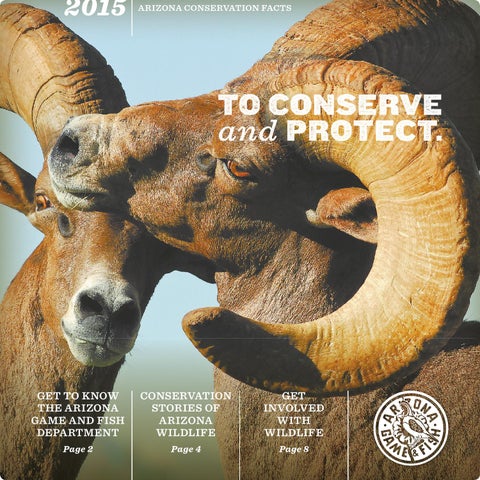
The bighorn sheep population in northwest Arizona is important to outdoor enthusiasts of all types, yet highways have separated this population. As a result, wildlife-vehicle collisions, interference with access to adequate water, and lack of habitat connectivity disrupt bighorn and put their population health at risk. In a historic and innovative collaboration with the U.S. Fish and Wildlife Service, Federal Highway Administration, and the Arizona Department of Transportation, the Arizona Game and Fish Department created a solution that saves the lives of bighorn sheep and enhances motorist safety. To alleviate vehicle collisions with bighorn sheep along a busy 15-mile stretch of Highway 93 north of Kingman, three wildlife overpasses and adjacent funnel fencing were constructed. This infrastructure allows wildlife to cross over the road safely, helping to keep populations connected to their habitat and reducing risk for motorists and wildlife.
2015
ARIZONA CONSERVATION FACTS | 6
“Wildlife and its habitat cannot speak, so we must and we will”
GameAndFishFacts.com
HOW ARE WE FUNDED? THE ACTIONS OF A FEW HELP BENEFIT EVERYONE
HUNTERS — THE ORIGINAL CONSERVATIONISTS
Did you know not a single penny of the Arizona general tax fund is used to pay for the ongoing efforts of the Arizona Game and Fish Department? It’s true. The Department receives no Arizona general tax dollars. In large part, Department funding to support wildlife management and recreation in Arizona is possible because of discretionary spending by the public on purchases including licenses, tags or stamps, and via a federal excise tax on firearms and ammunition. Simply put, the actions of a few benefit all of Arizona. Now imagine the
Arizona hunters are among the largest contributors to the conservation of our state’s wildlife resources. In fact, early conservation efforts were developed by sportsmen more than 100 years ago. Today, those same principles provide the foundation to the North American Model of Wildlife Conservation and the efforts of the Arizona Game and Fish Department. Through a percentage of an excise tax on firearms and ammunition, participants have raised nearly $201 million in Wildlife Restoration Funds for Arizona’s wildlife conservation efforts since 1939. Arizona’s hunters and sport-shooting participants continue to provide key funding for the Department.
possibilities with everyone’s involvement.
SPORTSMEN’S CONTR IBUTIONS TO A R IZONA’S ECONOMY*
$1.2 BILLION/YR
18,200 JOBS
$3.4 MILLION/DAY
SPENT BY SPORTSMEN IN AZ
SUPPORTED
DAILY ECONOMIC STIMULUS
*Congressional Sportsmen’s Foundation, 2013 Sportsmen’s Economic Impact Report - Arizona
YOU CAN HELP Every day, the Arizona Game and Fish Department makes a difference by conserving and protecting our state’s diverse wildlife. The ongoing process of conserving wildlife provides a great opportunity for you to become involved, too. You can learn more about programs and events by visiting us online. If you would like to learn more about our wildlife restoration efforts and how we’re keeping Arizona’s great outdoors great, visit GameAndFishFacts.com.
GameAndFishFacts.com