OUTCROP
Newsletter of the Rocky Mountain Association of Geologists




OUTCROP
Newsletter of the Rocky Mountain Association of Geologists
The Rocky Mountain Association of Geologists (RMAG) is a nonprofit organization whose purposes are to promote interest in geology and allied sciences and their practical application, to foster scientific research and to encourage fellowship and cooperation among its members. The Outcrop is a monthly publication of the RMAG. 730 17th Street, B1, Denver, CO 80202 • 720-672-9898
2026 OFFICERS AND BOARD OF DIRECTORS RMAG STAFF
PRESIDENT Sandra Labrum slabrum@slb.com
PRESIDENT-ELECT Ali Sloan ali@4jresources.com
1st VICE PRESIDENT
Nate La Fontaine nlafontaine@sm-energy.com
1st VICE PRESIDENT-ELECT
Danielle Robinson danielle.robinson@dvn.com
2nd VICE PRESIDENT Lisa Wolff lwolff@bayless-cos.com
2nd VICE PRESIDENT-ELECT
Ashley Castaldo acastaldo@slb.com
SECRETARY
Stephanie Forstner sforstner@diagenyx.com
TREASURER
Walter Nelson wnelson@integratedenergyresources.com
TREASURER-ELECT
Dan Bassett dbassett@sm-energy.com
COUNSELOR
John Benton jhbenton@mines.edu
ADVERTISING INFORMATION
Rates and sizes can be found on page 34. Advertising rates apply to either black and white or color ads. Submit color ads in RGB color to be compatible with web format. Borders are recommended for advertisements that comprise less than one half page. Digital files must be PC compatible submitted in png, jpg, tif, pdf or eps formats at a minimum of 300 dpi. If you have any questions, please call the RMAG office at 720-672-9898.
Ad copy, signed contract and payment must be received before advertising insertion. Contact the RMAG office for details.
DEADLINES: Ad submissions are the 1st of every month for the following month’s publication.
The Outcrop is a monthly publication of the Rocky Mountain Association of Geologists
DESIGN/LAYOUT: Nate Silva | n8silva.com
EXECUTIVE DIRECTOR
Bridget Crowther bcrowther@rmag.org
LEAD EDITOR
Danielle Robinson danielle.robinson@dvn.com
CONTRIBUTING EDITORS
Elijah Adeniyi eadeniyi@slb.com
Nate La Fontaine nlafontaine@sm-energy.com
Bobby Schoen bschoen@sm-energy.com
RMAG CODE OF CONDUCT
RMAG promotes, provides, and expects professional behavior in every engagement that members and non-members have with the organization and each other. This includes respectful and inclusive interactions free of harassment, intimidation, and discrimination during both online and in-person events, as well as any content delivered by invited speakers and instructors. Oral, written or electronic communications that contain offensive comments or demeaning images related to race, color, religion, sex, national origin, age, disability, or appearance are not appropriate in any venue or media. RMAG reminds members of the diversity and mission statements found on our website. Please direct any questions to staff@rmag.org
MEMBERS
EVENT ATTENDEES
WEBSITE VISITORS
OUTCROP READERS
COMMUNITY CONTACTS
EMAIL SUBSCRIBERS
NETWORKING EVENTS
CONTINUING EDUCATION EVENTS
FIELD TRIPS
IN 2025YOUR SUMMIT SPONSORSHIP DOLLARS SUPPORTED: 1,200 1,400 8,000 8,000 7,000 4,000 28 13 8
2 0 2 6

October 24, 2025
Geoscience Community:
We greatly appreciate every Summit Sponsor and Event Sponsor who contributed to RMAG over the last year. Your support is essential to our organization.
In 2025, the Rocky Mountain Association of Geologists was proud to host a dynamic lineup of events, including the North American Helium & Hydrogen conference, which examined the quickly growing field Members explored the beauty and geological wonders of the Grand Canyon and the San Jaun’s as well geology across the state. Volunteers shared their passion for geoscience with students across the region through classroom visits and community festivals. Members also enjoyed numerous opportunities to connect outside the office through monthly lunches, coffees, happy hours, and our annual Golf Tournament.
Looking ahead, 2026 brings new opportunities for RMAG and our partners. Your financial support allows us to start the year off with a luncheon on the State of the Industry before diving into the impacts of new and evolving technologies on industry including in AI’s ever-growing presence. Plans are coming together to host a fundamentals class series throughout the year, two separate symposiums on the research out of USGS and research on the Mowry. Networking in 2026 will include our regular happy hours and coffee hour networking, plus we’ll have Rockbusters, the Golf Tournament and we’re bringing back the Clay Shoot. With your support RMAG Members share the wonders of earth sciences through community and school outreach. Finally, your financial support is crucial to our publication efforts, which include the monthly Outcrop newsletter and the quarterly Mountain Geologist journal.
Your financial commitment includes enrollment opportunities across all the RMAG events, whether joining the educational opportunities and joining the comradery of the golf tournament your employees will gain access. RMAG also recognizes Summit Sponsors through in-person signage, on our website, in our publications, and on social media.
Thank you to our current Summit Sponsors; we look forward to your continued support in 2026. For those not yet sponsoring, now is the perfect time to get involved. Sponsorship with RMAG d irectly supports the geoscience community – fueling education, networking, and professional development opportunities throughout the Rocky Mountain region.
We invite you to review or sponsorship packages and find the level that best aligns with your company’s goals. Whether you choose to become an annual Summit Sponsor or support a single event, your partnership will help us advance geoscience education and keep our community thriving.
Become a Summit Sponsor by contacting RMAG Executive Director, Bridget Crowther at bcrowther@rmag.org or 720-672-9898 to discuss opportunities and reserve your sponsorship for 2026.
Sincerely,
Sandra Labrum
Bridget Crowther 2026 RMAG President RMAG Executive Director

Registration
RMAG 2026 SUMMIT SPONSORSHIP
All sponsor benefits event tickets follow RMAG event registration deadlines. All benefits end 12 months after registration.
Silver
Summit Sponsorship benefit term is for 12 months! Specify type of payment on signed form, and send logo and advertisements to staff@rmag.org
Company:
Company Representative:
Address:
City: State: Zip Code:
Phone: Email:
Payment
Name as it appears on Credit Card:
Credit Card #:
Expiration Date:
Signature:
ACH: contact the RMAG office at staff@rmag.org for directions. Mail Checks payable to RMAG:
Rocky Mountain Association of Geologists (RMAG) 730 17th Street, B1 Denver, CO 80202
RMAG events are subject to change. Cancellation or rescheduling of events does not give the sponsor the right to refund. Summit Sponsors will receive benefits at any new events added into the RMAG schedule.
Thank you for your generous support!
P: (720)672-9898 staff@rmag.org www.rmag.org

730 17th Street, B1 Denver, CO 80202
By Stephanie Forstner, Secretary sforstner@diagenyx.com
If you’ve looked toward the mountains lately, you’ve probably noticed that hazy skies have become an unwelcome part of our Colorado summer. Our thoughts are with the communities displaced by this year’s wildfires and with the firefighters working tirelessly to protect them. If you’re heading outside, whether for work, recreation, or a field trip, take a moment to check the air quality, stay safe, and join me in hoping for some much-needed rain and clearer days ahead.
The RMAG Board of Directors met on June 17 via Zoom to review committee updates and continue planning for a busy second half of the year. As always, one of my favorite parts of these meetings is seeing just how much work happens behind the scenes to keep RMAG thriving. From educational programming and publications to outreach and field trips, there’s a tremendous amount of volunteer effort that makes this organization what it is.
The Finance Committee reported that RMAG remains on solid financial footing, providing a strong foundation for our programs and member services. Looking ahead, the Continuing Education Committee is preparing an excellent lineup of fall programming, including the Mowry Basin Conference, Python, ROGII, and Geomark’s geochemistry short courses, and additional luncheon speakers (FYI, no luncheon in July). If you’ve been thinking about brushing up on a technical skill or learning something outside your usual specialty, keep an eye on the RMAG calendar.
John C. Webb Consulting Geologist Stratigraphy, Sedimentology and Petrography of Clastic and Carbonate Systems
Summer is also one of the busiest times for our Membership and On the Rocks committees. The inaugural Rocky Mountain Discovery Series launches on July 22 with Rob Sterling, beginning what we hope will become an ongoing conversation with geoscientists whose careers have helped shape our region. The July 25 family hike series is headed to Florissant for (optional) camping at 11-mile State Park and fossil hunting.
Registration is also open for upcoming field trips to the Laramie Mountains, the Virginia Dale kimberlites, South Park Basin, and several other Colorado classics. If you’ve never joined an RMAG field trip, I’d encourage you to give one a try.
One topic the Board spent considerable time discussing was RMAG’s relationship with AAPG. Over the past several months we’ve been evaluating how AAPG can best support RMAG, and we are also considering whether continuing that affiliation remains in RMAG’s best interest. We would like to hear from you before any decisions are made.
What value do you want a national organization to provide? Are there services, training opportunities, publications, advocacy efforts, or conference benefits that complement what RMAG already offers? Or are there aspects of the current relationship that you think should change? Please send your thoughts to president@rmag.org. Your feedback will help inform the Board as these discussions continue.
Finally, thank you to everyone who has volunteered at outreach events, attended a luncheon or happy hour, led a field trip, or simply introduced yourself to a new member this year. RMAG has always been strongest when members are willing to share their time, knowledge, and enthusiasm. Here’s hoping our next field photos include a little more blue sky.

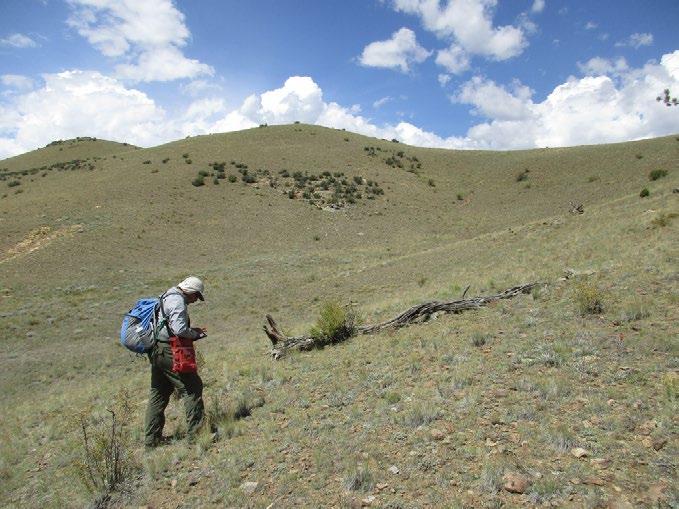
DECAPITATED CALDERAS AND DEVONIAN DIAMONDS
JULY 25
J o i n u s a s w e g a t h e r s o u t h o f t h e C o l o r a d o - W y o m i n g s t a t e
l i n e a n d l e n t e r t h e V i r g i n i a D a l e R i n g - D i k e C o m p l e x . A d e e p l y
e r o d e d , r o u g h l y n i n e - m i l e - w i d e P r e c a m b r i a n g r a n i t i c
s t r u c t u r e , i n t r u d e d a r o u n d 1 . 4 3 b i l l i o n y e a r s a g o . O u t c r o p s
e x p o s e t h e o u t e r g r a n i t e r i n g d i k e , m a f i c h y b r i d z o n e s , a n d
t h e q u a r t z m o n z o n i t e c o r e . A s h o r t d r i v e i n t o t h e S t a t e L i n e
K i m b e r l i t e D i s t r i c t b r i n g s y o u t o t h e N i x K i m b e r l i t e a n d i t s
n e i g h b o r s , a c l u s t e r o f o v e r d i a m o n d - b e a r i n g p i p e s . T h e
k i m b e r l i t e s e r u p t e d r o u g h l y 1 0 0 m i l l i o n y e a r s a g o , a n d h a v e
c o l l e c t i v e l y y i e l d e d o v e r 1 3 0 , 0 0 0 d i a m o n d s m a k i n g t h i s
s t r e t c h h o m e t o t w o o f t h e m o s t e x o t i c r o c k t y p e s
o n t h e c o n t i n e n t .
South Park Basin AUGUST 14&15
T h i s f i e l d t r i p t h r o u g h o n e o f C o l o r a d o ' s s c e n i c g e m s w i l l
e x a m i n e h o w P a l e o z o i c , M e s o z o i c , a n d C e n o z o i c s t r a t a
r e c o r d t h e t e c t o n i c s i g n a t u r e s o f a t l e a s t t h r e e o r o g e n i c
e p i s o d e s . W e w i l l c r o s s t h e E l k h o r n – W i l l i a m s R a n g e t h r u s t

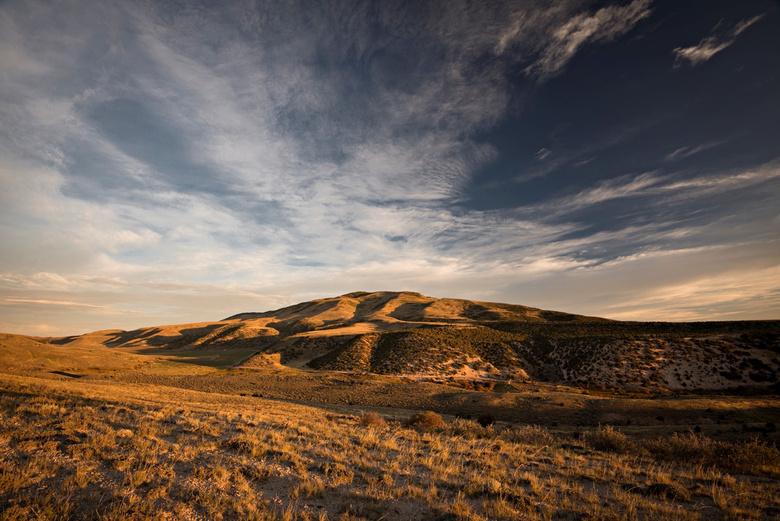
s y s t e m i n t o t h e s t r u c t u r a l b l o c k c a u g h t b e t w e e n L a r a m i d e u p l i f t s p r e s e r v i n g s y n o r o g e n i c s e d i m e n t s f r o m t h e
P e n n s y l v a n i a n - P e r m i a n a n c e s t r a l R o c k y M o u n t a i n t e c t o n i c
e p i s o d e i n j u x t a p o s i t i o n w i t h s y n o r o g e n i c s e d i m e n t s f r o m
t h e s u b s e q u e n t L a r a m i d e t e c t o n i c e p i s o d e .

For details on all of these field trips, and to register, go to: rmag.org/fieldtrips
PRESIDENT’S LETTER
By Sandra Labrum slabrum@slb.com
Summer Field Season is Here
Hi all,
One thing I’ve learned after years of traveling with my family is that geologists make terrible passengers. Somewhere between Denver and our destination, I inevitably spot an interesting road cut and begin providing an unsolicited lecture. This starts a vicious cycle where my especially curious backseat drivers ask about every rock, ridge, and outcrop we pass.
If that sounds anything like your ideal vacation, and you’re looking for ways to enjoy the rest of summer before it slips away, I wanted to highlight a few of the excellent July offerings RMAG has planned.
The On the Rocks Committee has organized a fascinating two-day field trip to the Laramie Mountains and Snowy Range of southeastern Wyoming. Day 1 explores the Cenozoic evolution of the southern Laramie Mountains. Traveling from Fort Collins to Laramie, participants will investigate Eocene to Miocene sedimentary deposits, Neogene tectonics, and landscape evolution preserved in Wyoming’s Laramie Mountains, providing valuable insights into geologic processes that once shaped Colorado’s Front Range.
Day 2 shifts much farther back in time, focusing on the Precambrian geology of the Snowy Range in the Medicine Bow Mountains. Participants will explore the Snowy Pass Supergroup, including world-class stromatolite exposures in the Nash Fork Formation, and examine evidence of ancient sea-level changes, volcanism,
continental collision, metamorphism, and deformation. The day includes a moderate two-mile hike above 10,000 feet and visits to key exposures of the Towner Greenstone, French Slate, and the Mullen Creek–Nash Fork Shear Zone. Together, the trip offers a remarkable journey from Wyoming’s youngest mountain-building events to some of North America’s oldest preserved rocks.
If you’d prefer to stay a little closer to the Front Range and get outside before the kids head back to school, consider joining the Family Hike Series trip to the Florissant Fossil Beds National Monument. During this one-day adventure, participants will begin with a ranger-led program exploring the monument and its remarkable fossil record. After lunch, the group will visit the Florissant Fossil Quarry for an hour of digging at their private quarry. Everyone should expect to find exquisitely preserved fossil insects and plants—an experience that’s sure to inspire geologists of all ages.
Whether you’re interested in unraveling millions of years of Earth history in Wyoming or spending a day hunting fossils with family and friends, I hope you’ll take advantage of these opportunities to get outside, learn something new, and connect with fellow geologists. Summer field season is one of the best reminders of why many of us fell in love with geology in the first place.
See you in the field,
—Sandra
2026 RMAG MOWRY FORMATION SYMPOSIUM

The Rocky Mountain Association of Geologists invites abstract submissions for a one-day symposium dedicated to the exploration and production of the Mowry Formation Join geoscientists, engineers, and industry professionals to share research, exploration insights, and field developments related to one of the Rocky Mountain region's significant unconventional resource plays.
Regional geology and stratigraphy
Geochemistry & source rock characterization
Reservoir characterization & petrophysics
Drilling, completion & stimulation
Production performance & field case studies
Seismic interpretation & subsurface mapping
Basin modeling & resource assessment
Emerging technologies & future exploration
Format
Oral presentation (25 minutes)
Abstract Length 150–300 words
Submission Deadline
Deadline Extended! : July 31st
Acceptance Notification September 15, 2026
How to Submit
Submit your abstract through the online portal by July 15, 2026. Submissions are reviewed for relevance, technical merit, and program balance

THE VALUE OF GEOSCIENCE
BY RASOUL SORKHABI, PhD
“Science is built up of facts, as a house is with stones. But a collection of facts is no more a science than a heap of stones is a house.”
—Henri Poincaré, La Science et l’Hypothèse (1902) [Science and Hypothesis, 1905]
IN 1905 THE FRENCH SCIENTIST HENRI POINCARÉ PUBLISHED A SMALL BOOK
entitled La valeur de la science, whose English translation, The Value of Science1, was published two years later. In responding to a criticism of science by non-scientists that scientists have better things to do than “count the number of ladybugs on our planet,” Poincaré refuted that charge as misrepresentation of what scientists actually do. He commented that scientists find out facts about the world, but they also know that “there is a hierarchy of facts and that among them may be made a judicious choice.” Poincaré went on to suggest that the most interesting facts of science are those that are simple, fundamental, grandeur, and beautiful. He added: “If nature were not beautiful, it would not be worth knowing, and if nature were not worth knowing, life would not be worth living.”
Fifty years after Poincaré’s book, the American physicist Richard Feynman delivered a speech in 1955 on “The Value of Science”2 to the National Academy of Sciences and commented that while
“the question of the value of science is not a scientific subject,” some virtues of science can be emphasized including the scientific basis of technologies we daily use, our intellectual enjoyment and enrichment by scientific discoveries, and that above all, science engages in “a lot of experience with ignorance and doubt and uncertainty, and this experience is of great importance.”
Now a quarter into the twentieth century, the place of science is still questioned in some non-scientist quarters and on various occasions. The erosion of support is particularly serious for geoscience. A recent report3 by UNESCO and American Geophysical Union stated that “though there are more than 400,000 geoscientists worldwide, the profession is going through an identity crisis.” This crisis is evident from the downsizing, slashing or merging of geoscience departments4; it is evident from low student enrollment5 and low employment6 in geoscience fields7. The recent US federal budget cuts8 and dwindling funding in all fields of science have exerted extra stress on geoscience. Oil and gas companies,
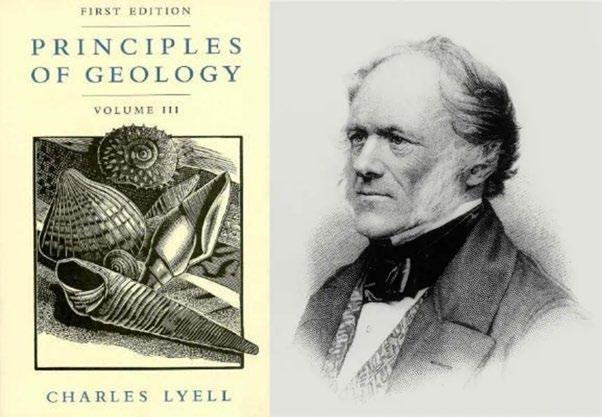
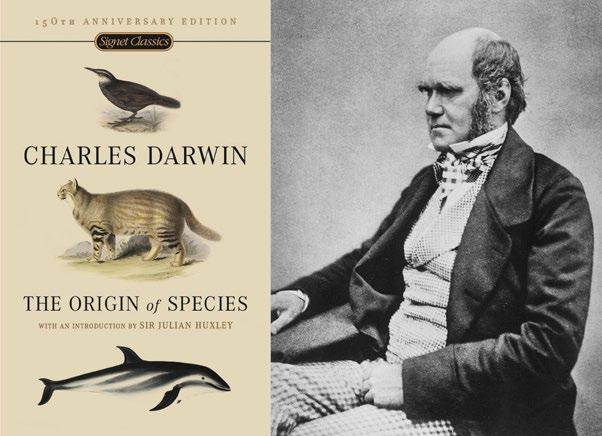
FIGURE 2: (right) Charles Darwin (1809-1882) carried with him a copy of Lyell’s Principles of Geology during his famous voyage on the HMS Beagle from 1831-1836. He formulated the theory of organic evolution in his 1859 book On the Origin of Species by Means of Natural Selection This was a major scientific revolution of the 19th century. Darwin’s book, much like Lyell’s book, was written in an elegant prose and plain English that was readable by a broad community of geologists and non-geologists. (Photo: Wikipedia Commons)
FIGURE 1: (left) Charles Lyell (1797-1875), a British geologist who was born in the year Jamese Hutton died. Lyell continued Hutton’s legacy of founding modern geology and promoting the principle of uniformitarianism – a major revolution in geology at the turn of the 19th century. Lyell’s book Principles of Geology, first published in 1830-1833 in three volumes, was the most influential geology textbook in the 19th century and went through twelve editions until his death in 1875. (Photo: Wikipedia Commons)
traditionally major employers of geoscience graduates, are also going through mergers, consolidation, and layoffs. It is high time to examine whether we as scientists have succeeded in demonstrating the value, necessity, and yes beauty, of science to the public, managers, and policy makers. Or perhaps times are changing, and we as scientists have not been adaptive and innovative enough to safeguard our science.
As someone engaged for four decades in learning, researching, teaching and writing in geoscience, here I share some thoughts and practical suggestions about how to revitalize geoscience in our society –mainly to motivate discussion more than offering final solutions.
NEW NARRATIVES
In the history of geoscience over the past two centuries there have been specific intervals during which geoscience boomed because it was engaged in some groundbreaking research, and its contributions were perceived as essential and transformative. We see these booms, for example, when Charles Lyell published his Principles of Geology in the 1830s (Figure 1), or when Charles Darwin formulated the theory of evolution in his highly readable book On the Origin of Species in 1859 (Figure 2). During the twentieth century, the plate tectonic revolution of the 1960s-70s drew worldwide attention to geoscience because of its fundamental discoveries (Figure
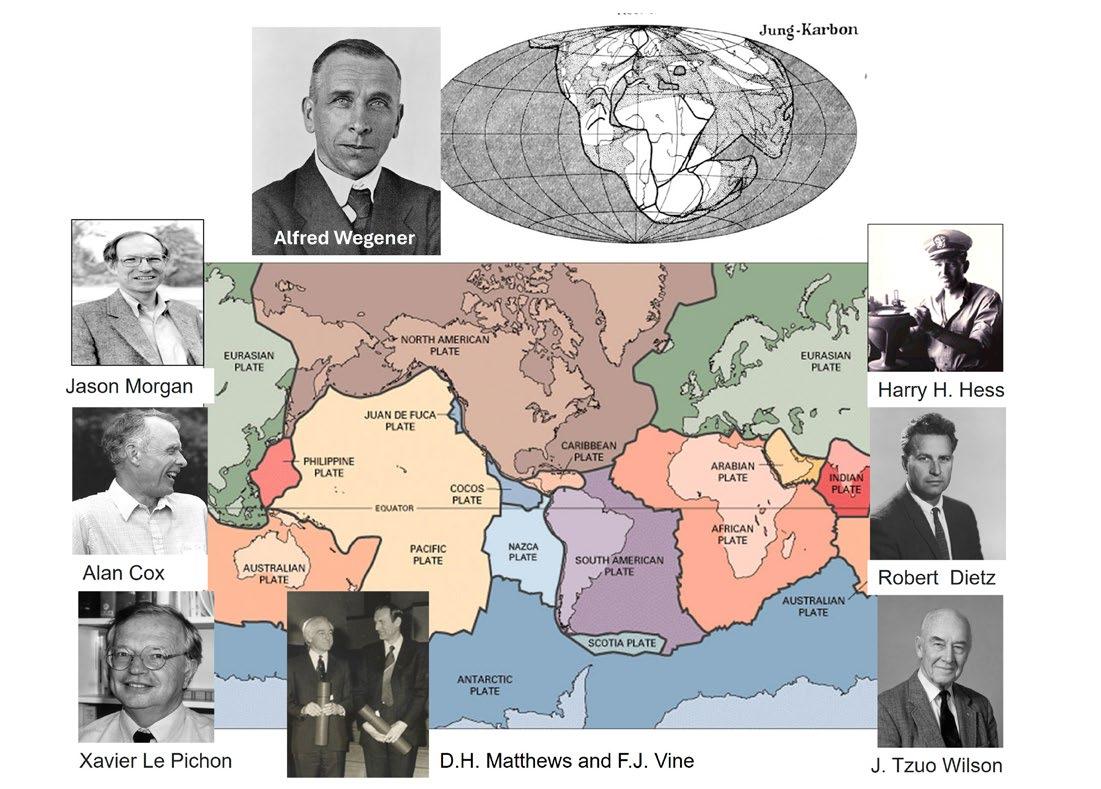
FIGURE 3: Continental drift suggested by Alfred Wegener (1880-1930) in the 1910s and its emergence as plate tectonics in the 1960s-1970s pioneered by geoscientists on both sides of the Atlantic represents a revolution in geoscience in the 20th century. (Figure sources: Wikipedia Commons and USGS map).
3). What are the next frontiers in geoscience? When I was a student, I once attended a talk by Xavier Le Pichon, a French geophysicist who played a leading role in plate tectonics and passed away in March 2025. Le Pichon suggested that the geodynamics of Earth’s interior is the next frontier for geoscientists. I also remember attending a speech by Lynn Margulis, who pioneered the geobiology of the Gaia hypothesis formulated by James Lovelock (Figure 4). She believed that studies of Gaia or Earth as a Living Planet will open new paths in science. More recently, I published the results of a survey on the big questions in geoscience9 (Figure 5). It is important that we think
outside the box and create new narratives for geoscience research. Graduate students will commit to geology if they find their research problems interesting, meaningful, and impactful.
A SENSE OF THE PLACE
Current geoscience education in universities is organized around thematic courses like physical or historical geology, mineralogy, petrology, structural geology, and paleontology. This approach is useful as each course deals with a highly specialized field with its own research tools and techniques. This categorization of geology dates to the 19th century and is still

SATURDAY JULY 25 2026 10:00 AM - 3:00 PM
prevalent in major natural history museums (such as those in London and New York) where they exhibit minerals, rocks, fossils, landscape and so forth in separate archives and sections. It is convenient and useful. However, geoscience education should also adopt a regional approach and bring “a sense of the place” to the learning process. Regional geology integrates various disciplines and makes the subject more intimate and interesting to students (Figure 6). Various schools of thought such as “place-based education10” and “casebased education11” offer novel and helpful methods for geoscience education. In place-based education, geologic education is tied to a particular place where students live (for example a tribal land or a city) and geological topics are taught in that context involving the local community and environment. In case-based education, regional cases are used for teaching and learning. For instance, the question “Why is Mount Everest the highest mountain in the world?” can be a point of departure to teach plate tectonics and mountain uplift. Or the question “Why is Great Salt Lake salty?” can be used to discuss hydrological cycle, lakes, rivers, erosion, and water chemistry.
APPLIED GEOSCIENCE TRAINING
Each generation is different, and difference is good for development. The current generation that is of age for education and training – the so-called Gen Z – is different from baby boomers. Many in Gen Z do not want to spend many years in colleges, but they are willing to focus on a specific, practical field for a relatively short period of time and get a job in that field. The current system of four, six or ten years in higher education does not address this huge need and market.
Geoscience is in an excellent position to attract young people because it has many practical fields –such as hydrogeology, geospatial mapping, mineral technology, environmental chemistry, construction geoengineering, and so forth12 – in which students can spend two years to gain theoretical and hands-on training and then enter the job market.
Given the decline in geology enrollment and graduation (Figure 7), it is high time that universities and colleges design and offer such trade courses (Figure 8)
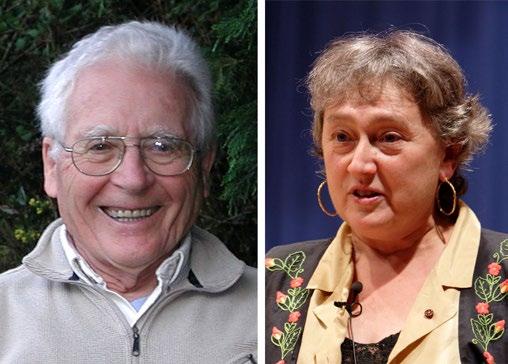
4: James Lovelock (1919-2022) and Lynn Margulis (1938-2011) pioneered the Gaia theory which proposes Earth as a living planet on which geosphere and biosphere coevolved and self-regulating processes keep Earth fit for life. The theory, which may also be called Evolutionary Earth System Science, offers huge opportunities to formulate novel and significant questions for geoscience research.
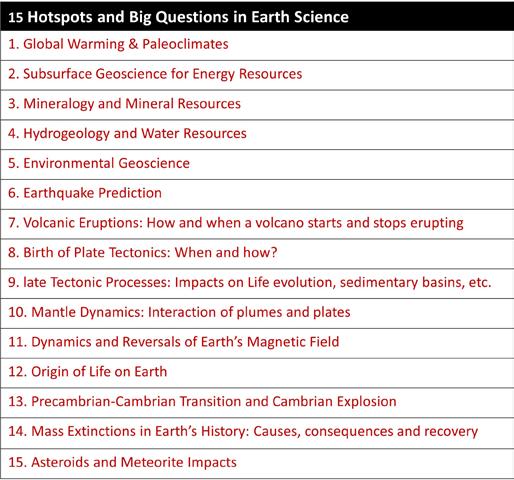
FIGURE 5: A selection of research hotspots and big questions in geoscience (after Sorkhabi, 2022, Episodes, 45: 173-180).
FIGURE

WEDNESDAY JULY 22 , 2026
WEDNESDAY JULY 22 , 2026
WEDNESDAY JULY 22 , 2026
8:30 to 9:30 am 8:30 to 9:30 am 8:30 to 9:30 am
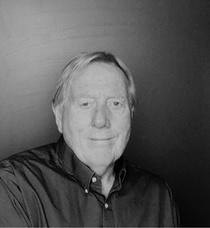


Our inaugural conversation kicks off with the 2025 Michael Johnson Award for Exploration, Rob Sterling He has made influential contributions to shale and tight-oil geology, with widely cited work on plays including the Bakken, Niobrara, Mowry, and Codell . His early core and geochemical studies in the Bakken helped establish workflows that were later adopted across multiple basins and played a key role in launching the tight-oil revolution Rob’s work has been broadly recognized , including the AAPG John W Shelton Award and multiple honors for best papers and presentations
rmag.org /DiscoverySeries
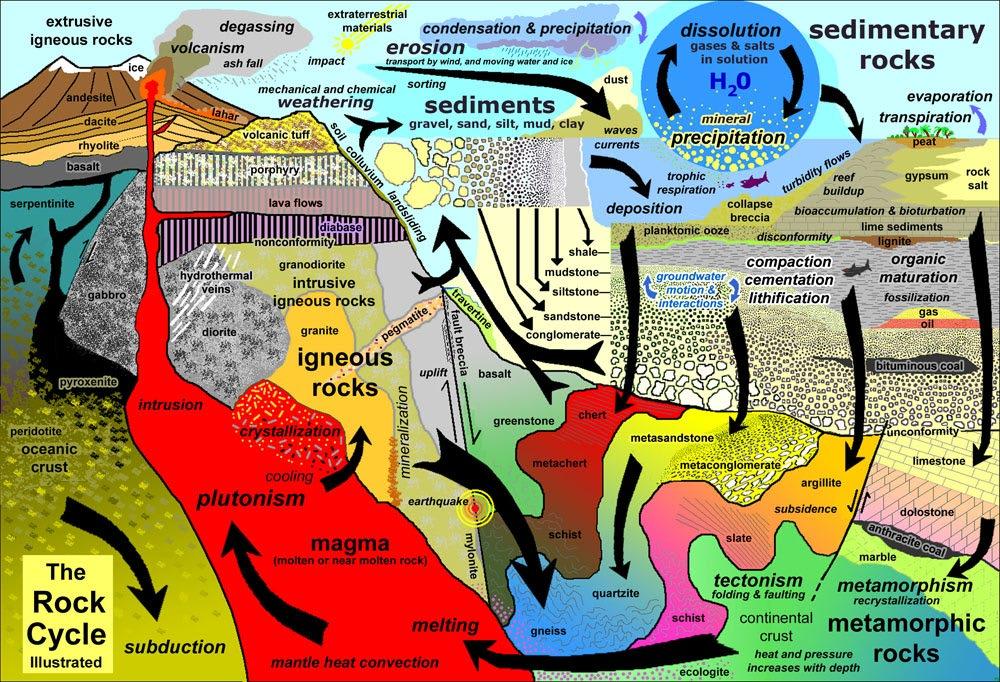
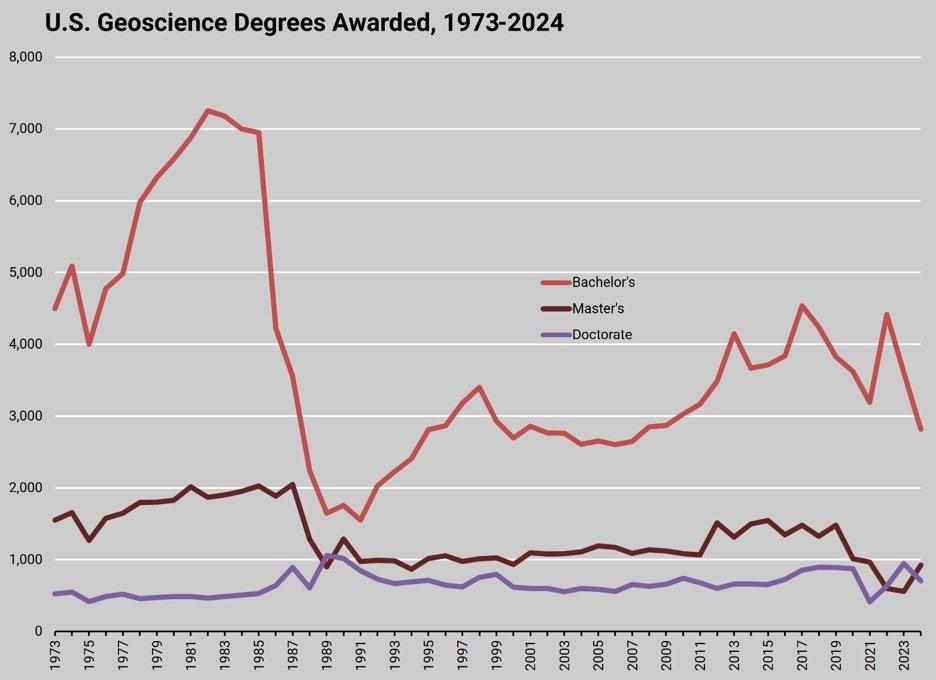
FIGURE 6: (above) An artistic and yet descriptive sketch depicting the rock cycle that integrates various geomorphic, petrological and tectonic processes. (Illustration: GeologyCafe)
FIGURE 7: (left) Geoscience degrees awarded in US colleges and universities, 1973-2024 (American Geoscience Institute)

G O L F
T O U R N A M E N T
2 0 2 6


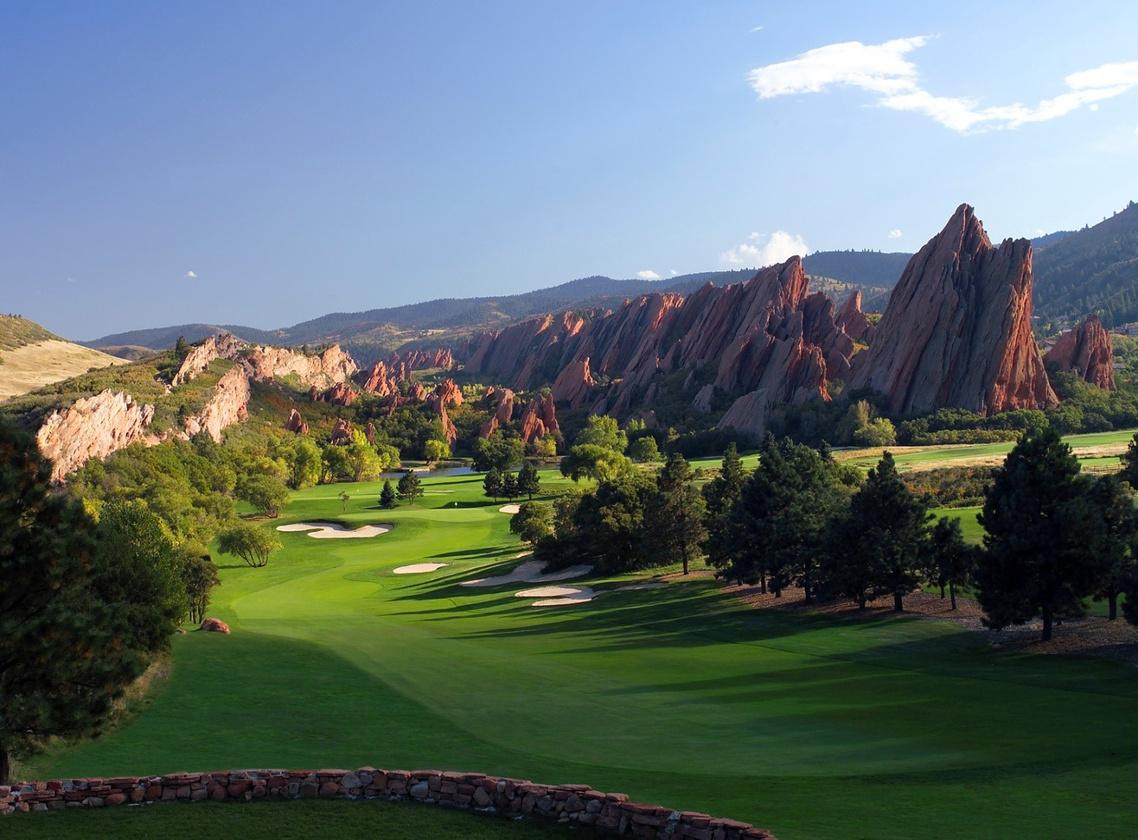
AUGUST 28, 2026 • 2 PM SHOTGUN START
ARROWHEAD GOLF COURSE
REGISTER: RMAG.ORG/GOLF
THANKS TO OUR SPONSORS





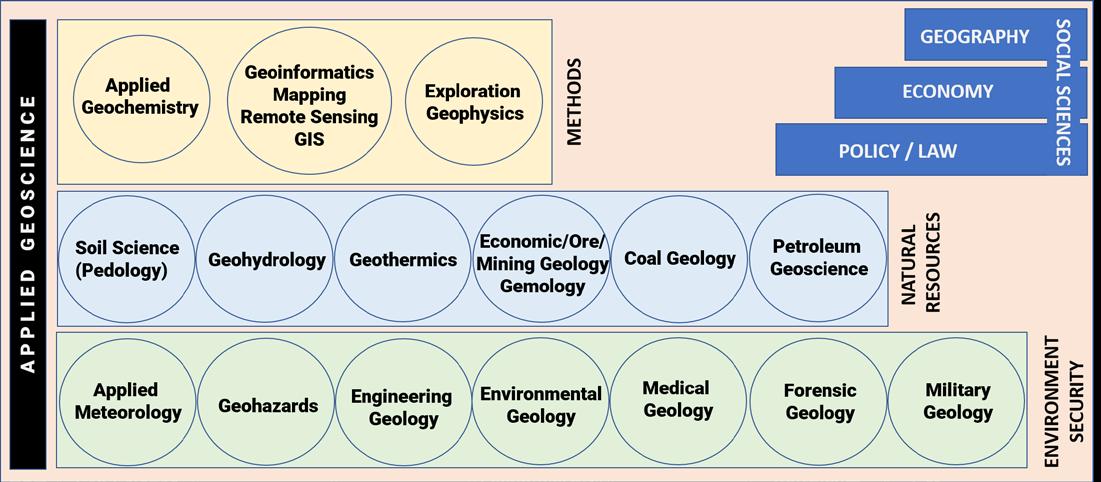
8: Various fields in applied geoscience (after Sorkhabi, 2021, Professional Geologist, 58: 56-61).
NEW IMAGE AND SKILLSETS
What is the image of geology among the public? People often think that all geologists do is dig into the ground for coal or oil, blast rocks for minerals, or chase earthquakes and volcanic eruptions. This is a geology problem in our Age of Image. Meanwhile, geoscience is facing competition from many fields like computer science, bioscience, chemical engineering, business management, and so forth. Of course, not everyone needs to become a geoscientist, but there is a huge space and need to improve the image of what geoscientists do and how geoscience jobs may contribute to the wellbeing of society and human life.
As part of geoscience education, we need to integrate modern skillsets – theoretical, analytical, experimental and instrumental – in various disciplines of geoscience, and ensure geoscience graduates are equipped with GIS mapping, basic computer programming, software uses, AI and machine learning, communication and even business skillsets.
THE MISSING LINK
Higher education in universities and colleges cannot be decoupled from K12 education. Children usually love fossils, minerals, rocks; and people in general
are curious about nature and enjoy outdoor life. These interests should be strengthened in high schools through investing in up-to-date educational materials, trained and passionate science teachers, field trips, natural history museums, documentary films, popular books, and so forth. If a teenager becomes keenly interested in a discipline, he or she will probably follow that as a career.
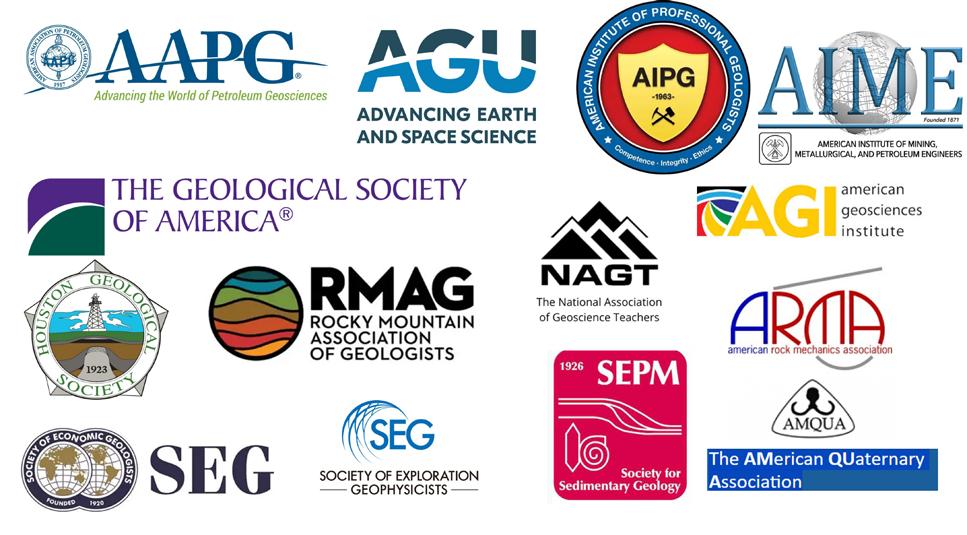
The current situation in K12 poorly serves a geoscience mission. According to a report13 by the American Geoscience Institute, although almost all states in the USA require a science course to graduate from high school, only two states require and only 22 states accept Earth and Space Science courses for high school graduation. In other words, 28 states do not accept Earth and Space Science courses for high school graduation. There are 26,727 public and private high schools14 in the USA. High school geoscience education is the missing link between public interest and university education in geoscience. Professional societies (Figure 9) such as the American Association of Professional Geologists, American Geophysical Union, American Institute of Professional Geologists, Geological Society of American, National Geographic Society, National Association of Geoscience Teachers, Houston Geological Society, and Rocky Mountain Association of
FIGURE
ADVENTURE AWAITS
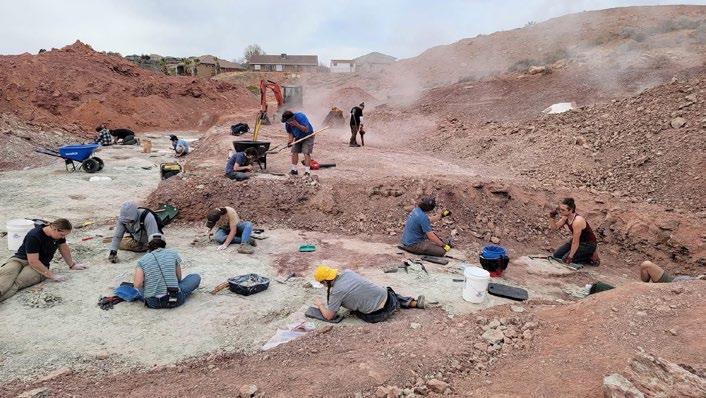
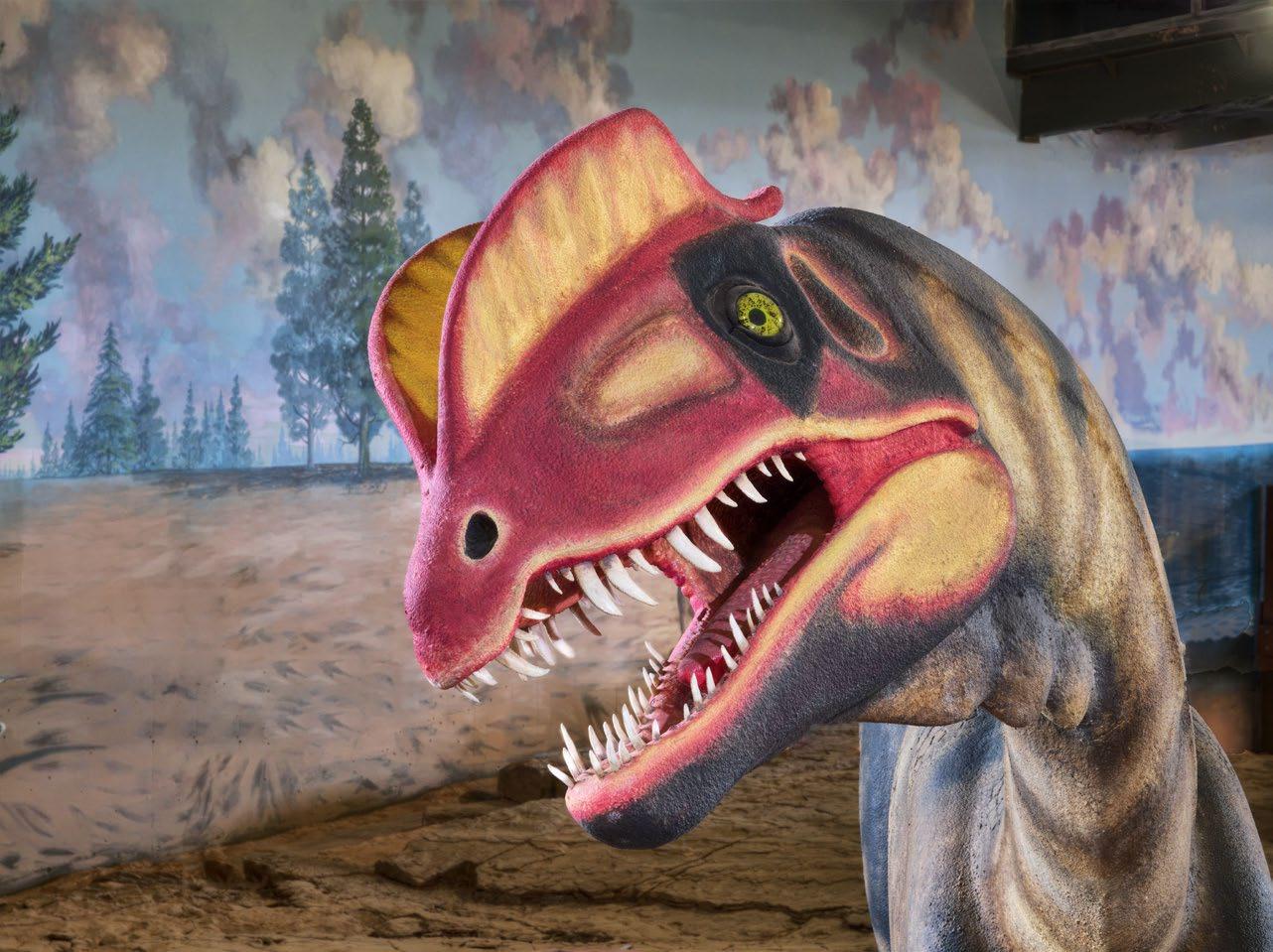
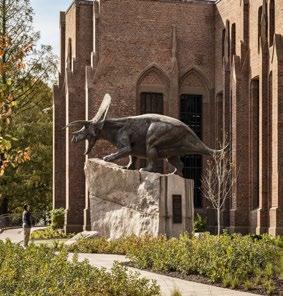
Journey beyond Dinosaur Ridge with our expert-led travel programs. Explore world-renowned fossil sites, visit historical collections, and experience the excitement of discovery firsthand.
2026 TRIPS
Fossil Frontiers of New England October 1 - 6
Travel with Dinosaur Ridge on an immersive paleontology adventure through the museums, dinosaur tracksites, and historic discoveries that shaped our understanding of American Paleontology.
$1,950/person (member rates available)
St. George Tracksites & Quarry October 23-27
Dig for fossils, explore dinosaur tracksites, and uncover Utah's ancient history on an immersive paleontology adventure in St. George at the Nation's #2 Dinosaur tracksites.
$1,600/person (member rates available)



Geologists can play a transformative role in promoting Earth science education in high schools and persuading high schools across the country to offer and improve Earth Science courses.
GEOSCIENTISTS IN SOCIETY
Science deals with data, facts, and discoveries. Feynman was right: The value of science is not a scientific question. However, society, politics, economy and human life function on value, cost, benefit, comfort, happiness, and usefulness. Therefore, scientists as citizens should also factor these in their research, teaching, writing, fund raising, and engagement with the public and policy makers about their work. In other words, the place of science in society should not be taken for granted and the social values of our scientific activities should be continuously created, assessed, asserted, articulated, and communicated. In this regard, geoscientists enjoy enormous advantages as Earth subjects are highly interesting to the public, and many geoscience fields have direct bearings on the wellbeing of society – from the air, water and soil to buildings, minerals, and energy resources.
Scientists should also explain to the public that historically, major scientific discoveries have stemmed from the curiosity, passion, and ingenuity of individual scientists and research groups. Therefore, both applied and pure science are needed for development of society and science. Finally, geoscience is a pursuit to understand our home planet – its history is our history; its resources are vital to our existence; and its beauty is unique. In Conversations with the Earth15, Hans Cloos remarked: “It was during my enchanted days of travel that the idea came to me, which, through the years, has come into my thoughts again and again and always happily-the idea that geology is the music of the Earth.”
Rasoul Sorkhabi is a research professor at the University of Utah’s Energy & Geoscience Institute in Salt Lake City. He covers the latest developments in geoscience in the weekly news bulletin, AAPG Core Elements, and writes the Core Elements monthly column for AAPG Explorer and Educator’s Corner articles for the AIPG Professional Geologist.
FIGURE 9: Major professional societies in the USA can significantly help promote geoscience education in high schools and colleges.
REFERENCES
[1] This book has been republished in The Value of Science: Essential Writings of Henri Poincaré, with an introduction by Stephen Jay Gould (The Modern Library, New York, 2001). The collection includes Poincaré’s trilogy: Science and Hypothesis, The Value of Science, and Science and Method.
[2] This talk is reprinted in The Pleasure of Finding Things Out: The Best Short Works of Richard P. Feynman, with a foreword by Feeman Dyson (Perseus Books, 1999)
[3] Geoscience in Action: Advancing Sustainable Development (UNESCO and AGU, 2023) available online: https://geoscienceinaction.org/
[4] “Geoscience on the chopping block,” Nature Reviews Earth & Environment, vol. 2 (September 2021), 587). Available online: https://www. nature.com/articles/s43017-021-00216-1
[5] “Global geoscience enrollment,” Geoscientist, December 2023. Available online: https://geoscientist.online/sections/unearthed/ global-geoscience-enrolment/
[6] “Geoscience employment sees slight decline in January 2025,” American Geosciences Institute. Available online: https:// www.americangeosciences.org/news/press-releases/ geoscience-employment-january-2025/#
[7] “Status of Recent Geoscience Graduates 2021,” American Geosciences Institute. Available online: https://www.americangeosciences.org/
static/files/GraduateSurvey2021.pdf
[8] “Trump’s proposed budget would mean disastrous cuts for science,” Science, 2 May 2025. Available online: https://www.science.org/content/article/ trump-s-proposed-budget-would-mean-disastrous-cuts-science
[9] “Geoscience: what remains to be discovered?” Rasoul Sorkhabi (2022), Episodes: Journal of International Geoscience, vol. 45 (2): 173-180
[10] “Place-based education: Teaching geoscience in the context of location and culture,” Terri Cook, Earth, July 2018. Available online: https://www.earthmagazine.org/article/place-based-education-teaching-geoscience-context-location-and-culture
[11] “A case-based curriculum for introductory geology,” David Goldsmith, Journal of Geoscience Education, vol. 59: 119-215, 2011.
[12] “New prospects and trends in applied geoscience,” Rasoul Sorkhabi (2021), Professional Geologist, vol. 58 (3): 56-61.
[13] “Earth and Space Sciences Education in U.S. Secondary Schools: Key Indicators and Trends,” Earth and Space Science Report Number 3, November 2018, American Geoscience Institute. Available online: https://www.americangeosciences.org/static/files/education/files/ SecondaryEdu2018Report_20pgPlusCovers_PrintRes_120618.pdf
[14] https://missiongraduatenm.org/number-of-schools-in-the-us/
[15] Conversations with the Earth, Hans Cloos, translated from the German by E.B. Garside (Alfred Knopf, New York, 1953)
HYBRID LUNCH TALK
Speaker: Rachel Stocking
Date: August 5, 2026 | 12:00 pm - 1:00 pm

Fault Activation Behavior in the Austin Chalk of South Texas
Integrating Seismic Symmetry and Completions Diagnostics
Development in the Austin Chalk of South Texas increasingly requires operators to navigate structurally complex reservoirs where hydraulic stimulation interacts with pre-existing faults and fracture systems. These interactions can result in adverse outcomes such as screen-outs, excessive leak-off, fracture-driven interactions (FDIs), and casing deformation, but under certain conditions may also enhance fracture complexity, reservoir contact, and production performance.
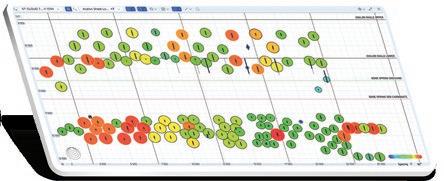
This presentation demonstrates a repeatable multidisciplinary workflow integrating seismic symmetry attributes, resistivity image-log-derived fracture characterization, geosteering interpretation, frac diagnostics, and post-frac evaluation to characterize and differentiate fault activation behavior during hydraulic stimulation. Seismic symmetry volumes were used to identify subtle structural discontinuities and fault trends not readily apparent through conventional mapping, providing a framework for evaluating fault orientation, continuity, and activation potential relative to SHmax.
Two anonymized Austin Chalk case studies are presented with contrasting structural
environments and stimulation outcomes. In the first case, moderately misaligned fault systems created elevated shear potential associated with screen-out risk and potential casing deformation. Integrated diagnostics enabled mitigation through treatment design modifications while preserving wellbore integrity. In the second case, a more structurally complex environment resulted in increased hydraulic and poroelastic interaction, including S-bend casing deformation. Under controlled operational conditions, this interaction remained manageable and contributed to increased fracture surface area, reservoir contact, and significantly improved production performance relative to the first case study.
The results demonstrate that fault activation behavior exists along a spectrum controlled by structural continuity, stress orientation, geomechanical behavior, and stimulation design. This work highlights the critical role of seismic-derived structural interpretation in completions execution and supports a shift from blanket avoidance of structural complexity toward integrated characterization and controlled management of fault interaction in unconventional reservoirs.
RACHEL STOCKING is Vice President of Strategic Growth at Ubiterra Corporation (ZoneVu), where she focuses on connecting drilling, geosteering, geoscience, and completions teams through integrated cloud-based workflows and real-time operational intelligence. Since entering the oil & gas industry in 2011, her experience has spanned reflection seismology, nodal seismic acquisition, microseismic acquisition, and electromagnetic frac fluid monitoring. Rachel began her career at the Long Beach Oil Field, where work in community relations and government affairs sparked a lasting passion for subsurface technology. She holds a BS in Journalism and Spanish from California State University, Long Beach.
D eta ile d a nd ac c ura te g eo lo gy at yo u r fin g ertip s in Pe tra , Ge o Grap h ix, A rc GIS , A cc u Map , ge o S C OU T an d o th er d ig ital ma p pin g a p plica tion s
We ste rn USA
Geol ogi cal Edge Set
Ene rgy Al te rnati ve s & Cri ti cal Mine ral s - USA
We ste rn Cana da
Geol ogi cal Edge Set
Ene rgy Al te rnati ve s & Cri ti cal Mine ral s - Ca nada
Ea ste rn USA & Ea st ern Ca nada
Geol ogi cal Edge Set
Cent ral USA
Geol ogi cal Edge Set
Me xi co
Geol ogi cal Edge Set
Map la ye rs p rov ided in s ha pe file fo rma t fo r ea sy impor t into a ll ma ppin g app lic at ions .
De liv er ab le s inc lude : f orma tion limits , o utc ro ps, su bc rop e dge s , O &G fie ld s, st ruc tu ra l eleme nt s, re ef s, sh ore lin es , c ha nne ls, pro duc tion f airw a ys , s ha le ga s tr en ds, st ru ct ure con tou rs , iso pa chs , g en era l cult ure , r ene w able & no n-r en ew ab le ene rg y pr ojec ts , min era l dep os it s, mine s, Pet ra T he mat ic Ma p pro je ct s, G eoG ra phix G e oA tla s pro je c ts , Ar cG IS M XD a nd La y er f ile s, re giona l c ro ss -s ec tion s, an d full te ch nica l s upp ort .
For mo re inf orma tio n: Joe l H a rding at + 1 4 03 87 0 8 12 2 joe lha rding@ g eoe dg es .c om ww w.ge oe dge s.c om
Meet Gregory Kirkland
(AAPG/DPA 2423) Retired from Cook Inlet Energy
HOW DID YOU END UP INVOLVED IN THE GEOSCIENCES? WHAT WAS YOUR FIRST JOB?
I was a third semester Chemistry major when I joined the Air Force. After nearly four years, while stationed at Clark AFB in the Philippines, I was offered an early out to resume college. While traveling in Igorot headhunter country in the Zambales Mountains, geology caught my attention. I returned to Lamar and majored in geology, receiving my BS on May 28, 1974.
My intro to a career in geology was with Texaco in New Orleans. I worked many of the salt domes in the old Harvey district. My first discovery, Lake Pelto 11-10, hit nearly 300 feet of oil sand. This was during my first year in the profession in 1974 and probably my most prolific discovery. At last count the well had produced over 1.6 MMBO and was still producing.
WHAT JOBS HAVE YOU HAD DURING YOUR CAREER? WHAT DOES YOUR CURRENT JOB ENTAIL?
Following Texaco I worked for Tennessee Gas, Getty Oil, then back to Texaco following the merger, Adobe Resources, and Santa Fe Resources following the sale of Adobe. After that I went to work for Rutherford Moran Oil and Gas working the Pattani Basin, offshore Thailand. This was one of the highlights of my career. We drilled hundreds of offshore wells in Tantawan, Benchama and Pakakrong fields. We had the first offshore oil discoveries in Thailand. Production was from lacustrine sands. Traps were in highly faulted horst and graben structures. This was some of the most challenging geology of my career. The
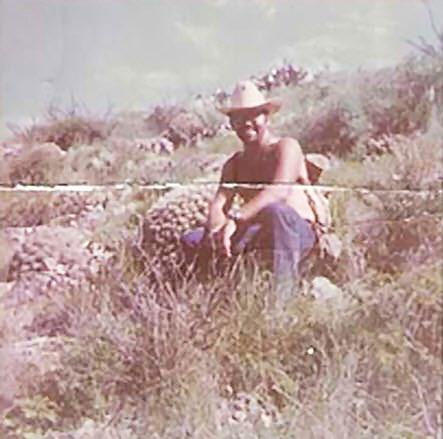
Young Greg doing alpine field work.
productive horizons were very stratigraphic with multiple productive horizons. I prepared subsurface structure maps, isopachous maps, net sand and pay maps, and performed petrographic analysis of hundreds of wells. We eventually sold the concession to Chevron for $750 MM. During this part of my career, I traveled to Singapore, Australia, Cambodia, Thailand and Myanmar.
I retired the first time in 2012 from Forest Oil Corporation in Denver. I immediately moved to Anchorage, Alaska and went to work as the sole geologist for Cook Inlet Energy. With full approval of Forest, I had been working with principles at CIE providing geological input for a period of three years in an unpaid structured agreement. During
this period, we acquired several properties previously owned by Forest Oil and formed Cook Inlet Energy. I worked as Chief Geologist for CIE until 2015 when I retired a second time. My career spanned forty-three years of uninterrupted employment. After retirement my wife of 55 years, Joyce, and I relocated to Bryan College Station, Texas area and began enjoying country living and travel in our RV.
WHAT ARE YOUR HOBBIES OR PASSIONS OUTSIDE OF WORK?
I am currently traveling to differing geologic areas. We have just completed a three week trek across New Mexico, Arizona, Utah, Colorado and parts of Texas enjoying nature’s beauty and millions of years of spectacular geology. Formations from recent to the Precambrian. It was great. My wife and I have visited all fifty states to date, and I
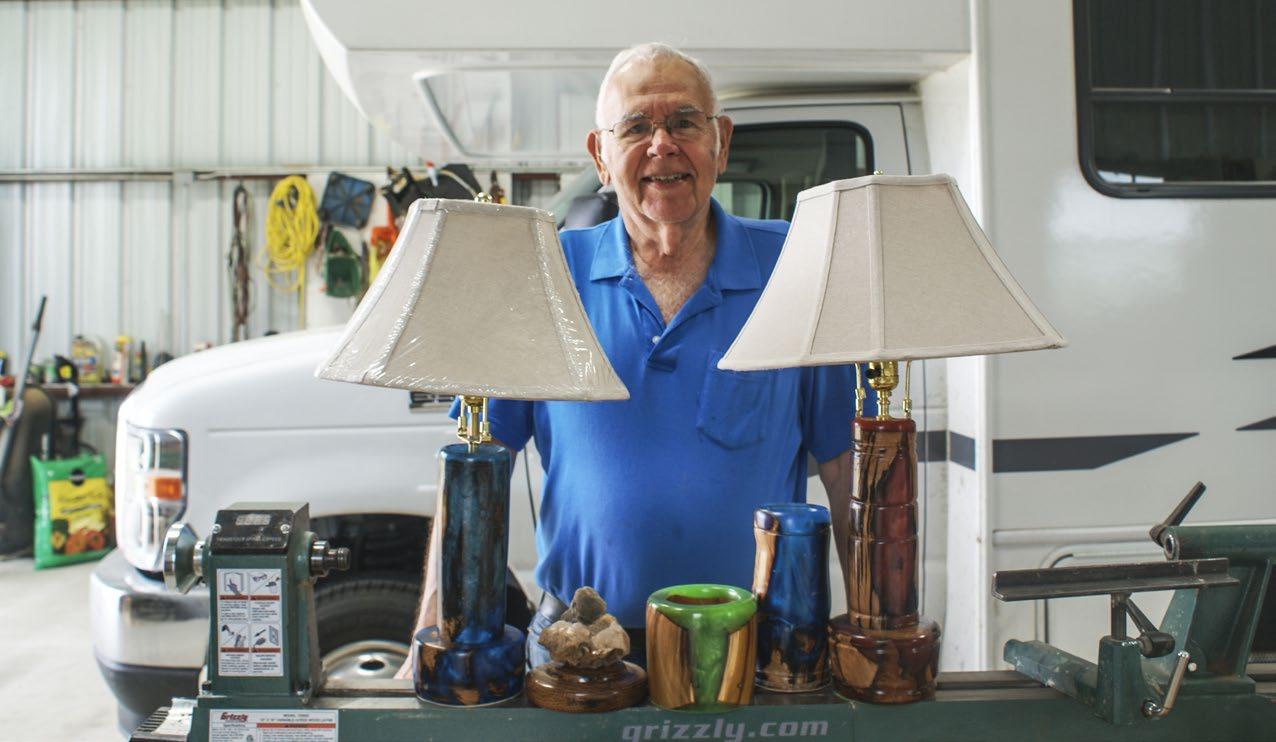
Greg's woodworking hobby creations including lamps, pots, and vases.
have traveled to nineteen different countries. In my spare time I am involved with creating lamps, pots vases and other items in my woodworking hobby.
WHAT ADVICE WOULD YOU GIVE SOMEONE ENTERING INTO THE GEOSCIENCES?
When putting together a prospect or proposal, do everything you can think of to make it better. Don’t take any shortcuts. Be creative in how you prepare. Map multiple horizons if it will strengthen the prospect. Isopachs may help in defining the prospect if the data is available. Do petrophysical analysis of any offsetting wells. Incorporate every piece of data available. In short, be thorough in your work product.
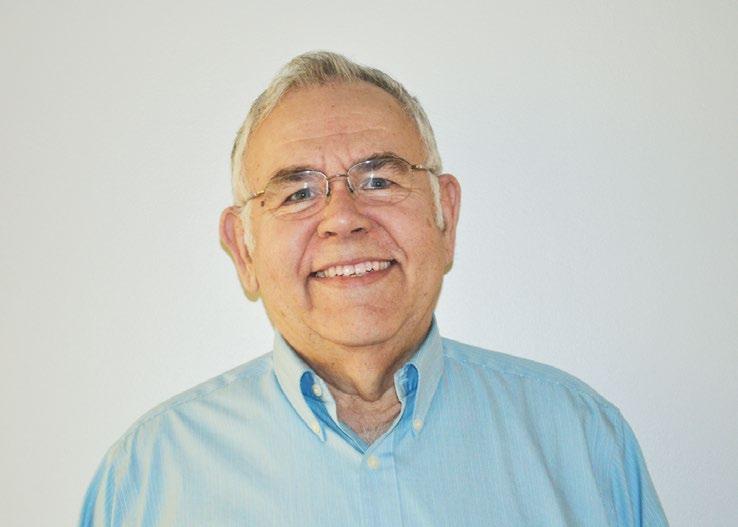
RMAG
Member Greg Kirkland
I’m an old dinosaur when it comes to computers. Don’t rely on a computer or AI to do your thinking. The Mark 1 Mod O brain is still the best bet. That is Air Force parlance for the original human brain. Computers are great for handling lots of data, but they can’t apply that intangible intuition, hunch, and creativity. Some of my best ideas came from very difficult correlations of logs. I actually dreamed of difficult correlation problems and sometimes a solution popped out. Don’t be afraid of using old technology. Always remember, the correlation is the most important part of generating a prospect. No matter whether it’s outcrop, subsurface cores, electric logs and even strip logs, the correct correlation comes first.
WHAT WERE SOME OF THE MORE REWARDING PARTS OF YOUR CAREER?
Training young geologists on some of the oldest but still best techniques. I thoroughly enjoyed
working with and training young geologists. I think one of the things that made my career so exciting was crossing over into associated disciplines. Early on, I learned many of the techniques associated with reservoir engineering. This was invaluable in much of the reserve work I performed later in my career. I worked with landmen, log analysts, core hands, mud loggers and most of all field foremen learning things on the ground. I especially enjoyed working with Production Engineers learning how things worked in the oil patch. During my career I helped perforate wells, set packers, perform backoffs while fishing, calibrate mud weight, titrated mud, and many other exciting facets of oil and gas production. I even nippled up separators, assisted in drill stem tests and once helped change a polish rod on a pumping unit. All outside normal geological duties but each a great learning experience. Don’t be afraid to get your hands dirty in the field, that’s where it all comes together.




JULY 16, 2026
WOGA Lean-In
1:00 pm – 12:30 pm, Financial Power: Earning, Investing, and Planning Like a Leader. Dominion Plaza, 600 17th St., Denver, CO.
JULY 18-19, 2026
On the Rocks: Laramie Mountains and Snowy Range Stromatolites
Trip Leader: Emmett Evanoff and Kelli Trujillo, Trip Coordinator: David
IN THE PIPELINE
Schoderbek. Southern Wyoming, CO.
JULY 22, 2026
Rocky Mountain Discovery Series - Robert Sterling 8:30 am - 9:30 am, Denver Earth Resources Library, 730 17th Street B1, Denver, CO
JULY 25, 2026
RMAG Family Hike Series: Florissant Fossil Beds & Fossil Dig Florissant Fossil Beds
National Monument, 15807 Co Rd 1, Florissant, CO
On the Rocks: Decapitated Caldera and Devonian Diamonds
Colorado Wyoming State Line, CO
JULY 28, 2026
RMAG Happy Hour 4:00 pm - 6:00 pm, Breckenridge Brewery, 2990 Brewery Lane, Littleton, CO
James Jmieff with Navajo Transitional Energy Company from Golden, Colorado
Ryan Weller with Earth Consultants Internations from Livingston, Texas
Kate Peneyra is a student at the Colorado School of Mines from Westminister, Colorado

OUTCROP ADVERTISING RATES
Publish with…

Expanded geologic focus:
• Entire greater Rocky Mountain area of North America
• West Texas and New Mexico to northern British Columbia
• Great Plains and Mid-Continent region
Why contribute?
• Reach a broad industry and academic audience
• Quarterly peer-reviewed journal
• Permanent archiving includes AAPG Datapages
• Quick turn-around time
• Every subdiscipline in the geosciences
Email: mgeditor@rmag.org
https://www.rmag.org/publications/the-mountain-geologist/

ANNUAL MEETING

Call for Abstracts
Session on the following and more:
1 Rocky Mountain Petroliferous Basins
2 Geology and Engineering Challenges and Best Practices in Unconventional and Tight Rock Reservoirs in the Rockies
3 Geothermal Resources and Prospects in Montana and the Mountain West
4 Geologic Hydrogen and Helium Resources Exploration and Production in the West
5 Geologic and Engineering Aspects of Carbon Sequestration and Natural Gas (i e , Energy) Storage
6. The Intersection of Petroleum (Geology and Engineering) and Critical Minerals in the Rocky Mountain Region
7. Issues Around Orphaned and Abandoned Wells, Including Engineering and Remediation
8. Managing Produced Water (e.g., Production Variability, Disposal, and Beneficial Reuse)
9. Sedimentary Rocks and Mine Waste as a Source of Critical Minerals
10. Economic Geology in the Rockies
11. Rare Earth Element Deposits in the West and Related Geochemistry
12. Rockies Regional Mapping Including Belt Supergroup
13. Rocky Mountain Tectonics and Basin Analysis, Including Geophysical Interpretation
14. Structural Geology Topics in Rocky Mountains Energy Exploration
15. Sedimentology and Stratigraphy Topics, Including Lacustrine Systems
16. Posters with Core Displays
17 Student Posters!
Registration Now Open
Early Bird Professional Registration: $300
Early Bird Student Registration: $50
Join cutting-edge discussions, engaging field trips, and contribute to the advancement of geoscience in the Rockies.
Hour Rocky Mountain Discovery Series
RMAG Family Hike Series
the Rocks: Decapitated Caldera