ISRAEL NOW & FOREVER










There are only a handful of times in one’s life that you know for certain your world has changed in a way you will never be the same again. On a personal level, it can be when you get married; when you become a parent; when you lose a parent; and other monumental occasions. On a global level, we can say that life on Earth was no longer the same after 9/11 as it was before 9/11. We now had new fears, new possibilities, new realizations of vulnerabilities and taking a trip on an airplane, would quite literally never be the same again.
The last time I wrote to you was in a magazine dedicated to Yom Ha’atzmaut - Israel@75. I was still on a high from a recent visit to Israel and we focused on Israel’s past and future as we celebrated her milestone birthday. That was before October 7, 2023. Today I write to you as a Jew after October 7, 2023, and our world is not the same. We have been shaken to our core as a nation, as a country, and as people. We have lost so much and as of this writing in the last week of December, we continue to fight, and we continue to lose precious brothers and sisters fighting for our land and we still cry and pray for the return of so many hostages - we hope that our worst fears have not become reality.
In America and across the globe, we are fighting antisemitism on every front. The words “Never Again,” have never felt as important as they do today, while the scenes that unfold around us have only been seen in movies and history books, by most of our generation. But, there have also been other, positive, sometimes miraculous, changes since 10/7 and you
will see many of them talked about in the pages that follow. Our identity and unity as a nation has never been stronger. Our faith has never been greater. Our desire to continue our story as the chosen people in our promised land has never run deeper.
On October 9th we celebrated the bas mitzvah of my youngest child. My extended family had come for the second days of yom tov, my daughter came back from her shana bet program in Israel to be home for the simcha. We considered for just a minute cancelling the simcha, but we decided to go forward. Too much had already been taken from us, we would not allow Hamas to take our simcha as well. As time went on, it was clear that the Jewish people were not giving in- weddings, engagements, bar and bas mitzvahs, wherever and however, they were going to be celebrated. We are a people that celebrate life. When we make a toast, we say L’chayim – To Life. Even when someone passes away, on the tomb of every lost soldier, it will say, – His soul should be bound up in the bond of life. We mourn, but we also keep those who have passed intertwined in our lives, never to be forgotten, but we continue to live.
After a couple of weeks my daughter returned to her program in Yerushalayim. I was a little nervous, but she wanted to return. I told her that she is going to get a front row seat in the ultimate lesson of, “mi k’amcha Yisrael - Who is like your nation Israel?” Israel did not disappoint.
I hope the next time you hear from me it will be from Yerushalyim, and I will be sharing my perspective on

the complete redemption. Until then, my brothers and sisters, I hope and I pray for the safety of our soldiers, our country, and our people – wherever they may be.
B’yedidut, Amy
P.S. Thank you to everyone who contributed large and small to this special magazine. I especially want to thank designer Rivky Schwartz, who can work in Arizona's time zone—even from New York—and can so perfectly put my vision on the page. My husband, Rabbi Michael Dubitsky, for his advice, editing and patience—appreciated as always!—and our kids for putting up with all of my projects.

By: Rivka Segal
The book of Tehillim has always been central to Jewish living. We say chapters of Tehillim in our daily prayers, as well as in times of joy and grief. Now, more than ever, we look to them to console us when we are crushed and bereft, as well as to beseech the Almighty to bring us healing and salvation. The words reassure us in our desperate times and empower us to strengthen ourselves and deepen our connection with God, the ultimate healer and savior.
King David, “the sweet singer of Israel,” composed the songs of Tehillim while experiencing the gamut of human experiences and emotions. He was escaping barbaric enemies and occasionally running from friends and family who became traitors. At times when he was feeling despair and pain, he wrote these words to support and direct him so that he would be strengthened to overcome the challenges and emerge an enhanced individual. There were also times that he felt such joy and satisfaction and shared expressions of hope, gratitude, and elation.
David didn’t only write the songs for himself, but for all K’lal Yisrael, for all time. How often we read through Tehillim nowadays, in our current crisis, and think that these words are describing the exact situation and emotions that we are experiencing now and giving each of us the directives and words of support that we need to hear. As we study and recite these timeless songs, they become our own words, and we become the singer.
Rebbe Nachman of Breslov writes in the Likutei Moharan, that when we contemplate the words of Tehillim, we can easily find ourselves in the songs. As we identify with the words, we deepen our connection with HaShem and then we can beseech Him with our re-
quests. This is why it is critical to not only say the words of Tehillim, but to understand their meaning. It is so important that the Aruch Hashulchan says that “It is better to say fewer Tehillim with kavanah, than more without proper kavanah.” The empowerment and inspiration that comes from Tehillim transforms the singer to desire a deeper relationship with HaShem and live a more meaningful life and that becomes the zchus that the Tehillim provides.
The book of Tehillim begins with the words “Ashrei Ha’Ish”, “Praiseworthy is the man.” Before we even begin to elucidate and elaborate on all the praises of God included in Tehillim, we must recognize how praiseworthy we are. We recognize that we can make a difference and bring merits that can bring healing and salvation to the world.
As each person studies and recites Tehillim, they will find various verses that seem to talk directly to them. People should take note of those verses, for they are talking to the individual to give comfort, support and direction that is needed now. At times we wish we had prophets, or even were prophets, so that we can feel closer to HaShem and know clearly what He wants from us. Tehillim gives us the insight and inner wisdom that we crave. When read with intention, the verses of Tehillim guide us to literally transform ourselves and through our transformation, bring merit to the world. Tehillim is not just something that we say, or even learn; it is something that we live.
Rivka Segal is the author of the Living Tehillim series. To date, Vol. 1, 2, and 4 have been published. The books can be purchased from livingtehillim.com or at your local Jewish bookstore. You can contact the author at rsegal@livingtehillim.com.
Insights into two Mizmorei Tehillim that the rabbis have recommended for this time: Mizmor 121, “I lift my eyes to the mountains, from where will my help come.” We need to envision ourselves lifting our eyes upwards. Focus on the mountains in our lives, those challenges that seem impossible to overcome or dreams and opportunities that seem almost unachievable. We continue to reassure ourselves that we can work towards “climbing our mountains to achieve greater heights,” because Hashem is with us day and night, wherever we may be. The words indicate that there is another voice reassuring us, that we can reach our goals because God is there with us, guarding us. This clearly suggests that we need to surround ourselves with those voices who encourage us. If we can’t find actual individuals, we need to use the words of this song to empower us to climb the mountains instead of seeing them as barriers.
Mizmor 130 states, “From the depths I call out to you Hashem.” We need to feel the despair, the heavy feeling that makes us vulnerable. We should allow ourselves to be in that place for a moment before acknowledging that from this low place, we can call out to Hashem and He will descend to be with in our pain and it elevates us. He is with me and will continue to be to redeem me and all the Jewish people. This song is only 8 verses and takes less than two minutes to recite. In those two minutes it is possible to transform ourselves from a place of depression to a place of hope and freedom.
ךְרבֵּשֶׁ ימֵ
















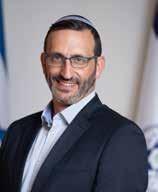
Executive Chairman of the World Mizrachi Movement
The past five years have been arguably the most divisive in Israel’s history.
The rare reality in the history of democracy of five rounds of elections within four years (2019–2022), resulted in unrelenting delegitimization of political opponents and the invalidation of the views of others. The country faced years of paralyzing political stagnation.
It turned out that the years of “Just Not Bibi” versus “Only Bibi” and the
Prime Minister’s unparalleled court case were just a gentle warm-up for what was to follow. Even when the political deadlock was finally broken in the election of November 2022, the situation only worsened.
One side wanted to change the legal system at all costs while the other protested against it at all costs – even if their protests would damage the economy and the IDF reserves. The internal crisis threatened to cause a rift between the State of Israel and many Diaspora communities. Every-
thing became a zero-sum game, and everyone was unequivocally right, in their own eyes. Appalling demonization and the inability to listen to anyone else’s opinion became commonplace. Moderates became extremists and few people were willing to listen to anyone else. We were left with echo chambers of self-righteousness and fundamentalists on both sides who were absolutely convinced that only they possessed the absolute truth.
The two sides were like high-speed
trains hurtling towards a head-on collision, with neither train prepared to change course. I remember asking a government minister whether he was waiting for an assassination attempt before backing down. I sit on the board of the World Zionist Organization and on many occasions called for the board to be a unifying influence and not a divisive one. During a recent board meeting before Rosh Hashanah, one left-wing board member said that it was the right-wing that murdered an Israeli Prime Minister, not the left. I asked for permission to speak and said to him, “Are you waiting for the murder of a right-wing prime minister by someone on the left, so it will be 1-1, and then things will be equal?” What has happened to us?!
The climax came on Yom Kippur. Who would have believed that on the holiest day of the year, in a Jewish state, we would see videos of Jews protesting over Jews praying in public? Almost every red line was crossed – an ominous sign that catastrophe was not far away.
And then came October 7.
We knew it would take something extraordinary to make us rethink it all. But even in our darkest nightmares, we never imagined the wakeup call would come in the horrific and devastating way that it did. On one dark day, everything changed.
On that Shabbat morning, the Gaza Envelope became the most dangerous and unprotected place for Jews on Earth since 1945. We witnessed atrocities on an unimaginable level, with more Jews murdered in a single day than on any day since the Holocaust. As a people, we suffered a terrible blow.
What unites us is not a social contract as articulated by Rousseau and Hobbes, but a totally different and uniquely Jewish idea: covenant. It is one of the most revolutionary principles of the Bible. Covenant means a connection that does not stem from personal interest and the preservation of private rights, but rather from mutual destiny, purpose, trust and eternal commitment to the divine and historic task that we bear. G-d so to speak, bonds Himself to this covenant
and links the Jewish people’s destiny to the spiritual destiny of humanity. G-d enters the covenant and calls on the entire Jewish people to bind themselves to Him and to each other with bonds of mutual care and love, for the sake of the Jewish people and the entire human race.
Within a few nightmarish hours on October 7, our mutual covenant of fate that had been profoundly compromised was renewed once more –through unbearable suffering, horrific scenes, and shared remorse.
No more were we split into camps of supporters and opponents of legal reform. No “Just Not Bibi” or “Only Bibi,” no left and right, no ultra-Orthodox and secular, no reservists and those refusing to serve, no coalition and combative opposition, no Israeli Jewry and Diaspora Jewry.
Once again, we are one people. One national unity emergency government.
Hundreds of thousands of Israelis returned from overseas to defend their homeland, and thousands of global Jewish leaders are coming to support us and to strengthen themselves. Every day, solidarity groups from all around the Jewish global community arrive in Israel. Though people normally flee from war zones, three hundred thousand Israelis have returned during the war, growing the Israeli population by 3%! “Who is like your People Israel, one nation in the Land?” (Shmuel II 7:23).
No longer are we “a people spread out and divided,” as Haman said of us, but one People, united at last. But what a price we have had to pay.
Our own son, Daniel, who fought in the Gaza Envelope on that fateful Shabbat, is one of the hostages presumed to have been taken captive in Gaza.
The world after Shabbat Simchat Torah 5784, October 7, 2023, must not be the same as what it was before. It needs a complete recalibration; a more enlightened Jewish world must rise from this darkness.
We must conduct our political and public interactions in a totally different manner. The culture of mutual denigration must end. Destructive
splits and baseless hatred gave rise to internal implosion and national fragility, which the enemy could sense and identify with ease.
The culture of self-justification, accusations and finger-pointing is a corrosive impulse that only weakens us and eats away at us from within. We’ve experienced it for years in Israel and, to put it mildly, it has not led to any positive results.
The time has come to regroup and press restart, heeding the words attributed to Albert Einstein: “Insanity is doing the same thing over and over and expecting different results.”
Woe to us if we revert to the same belligerent behaviors of self-righteousness and canceling the views of others. This wonderful unity must continue – not only during wartime but, most importantly, thereafter. Creating a new political culture of broad consensus and empathy must dictate all of our country’s major decisions. After the war there will invariably be a commission of inquiry. That will be a big test for Israeli society. The commission should be composed of people free of any political agendas and be void of any pre-ordained outcomes. It must be acceptable to a broad majority, otherwise it will not be trusted. It must be part of our society’s rehabilitation and rebuilding of mutual trust and solidarity, not an encore to its deterioration.
I believe it is possible to usher in a renewal of our national covenant. No one person or sector has the exclusive possession of truth, and no tribe has all the answers.
The motto of Israel facing this conflict is “
, together we will win.” If there is one thing Jewish history has taught us, it is that genuine Jewish unity is our spiritual Iron Dome.
With G-d’s help, we will not only win, but usher in the next stage of Jewish redemption when all of Israel will stand together as one people with one heart. No one knows for sure what the solutions will be going forward. But we do know that the best way to overcome the hurdles ahead is to face them together.
Together indeed, we will win.
By: Sharona Halickman
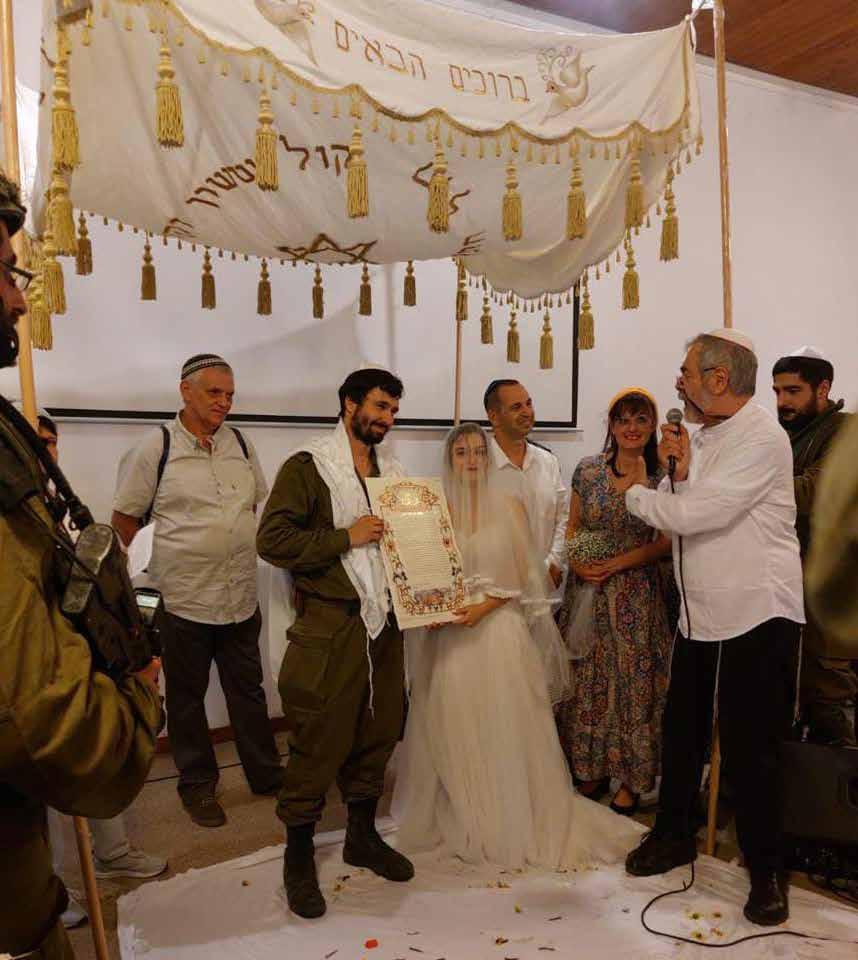
Let the groom go forth from his room and the
The Torah is very serious about not rushing a groom off to war- both while engaged and during the first year of marriage. We learn about a man not going to the army while engaged to be married in Parshat Shoftim, Dvarim 20:7:
Whichever man has betrothed a woman and not married her, let him go and return home, lest he die in battle and another man marry her.
The prohibition of going to the
army during the first year of marriage is found in Parshat Ki Tetze, Dvarim 24:5:
When a man marries a new wife, he shall not go out to the army, nor shall it obligate him for any matter; he shall be free for his home for one year, and he shall gladden his wife whom he has married.
The Talmud, Sotah 44a explains: One might have thought that he doesn’t fight in the army, but he does
go to supply water and food to the troops and to repair the roads for the passage of the army. Therefore, the Torah states: “nor shall it obligate him for any manner.” This teaches us that the army has no claim on him whatsoever, not even for rear echelon duties.
If this is the case then how are Israeli soldiers expected to go back to the army immediately after they get married?
The Rambam in Hilchot Melachim
u’Milchamot 7:4 explains that the groom doesn’t go to the army for a Milchemet Reshut, a voluntary war. However, for a Milchemet Mitzvah, an obligatory war, the entire nation must go out to war- as it says in Yoel 2:16, “Let the groom come out of his room and the bride from her wedding chamber.”
Rambam (5:1) explains that a Milchemet Mitzvah is the war against the seven nations who occupied the Land of Israel, the war against Amalek or a war fought to relieve Israel from an enemy which attacks them.
Fighting for the State of Israel’s right to exist, including all of the wars fought in Israel today, fall under the category of Milchemet Mitzvah, since we are protecting the Land and saving Israel from the enemy. Therefore, the groom is obligated to go to war.
war began, we have seen wedding locations moved with less than a days notice and guest lists cut.
Yakir Abelow and Maya Naftali, both 23, had planned a wedding for 350 people in a big hall in Nes Tziona. When the war broke out a few days before their wedding, they were told that they had to cut the list to 50 people. They found a shul in Modiin, but had a difficult time finding a caterer since so many people were out on miluim, reserve duty. The night before the wedding, they were told that they could add more guests because the rules kept changing depending on location. Their wedding was much simpler than originally planned but ended up being the best and happiest celebration that they could ever have imagined. They weren’t going to give in to our enemies and therefore moved on with the plan to build a new Jewish home in Israel.

The bride also goes to war, if not to fight, then to help out with logistics like supplying food and water to the soldiers.
Despite the war, Israelis don’t want to cancel their weddings. Since the
Brides and grooms want to get married even if there is a possibility that the groom and or the bride would have to go back to the army the next day. Make-up artists, bands, and singers have been volunteering their time to try to make the soldiers weddings as joyous as possible.
Nadav, 33 and Noa, 27 from Rishon LeZion, decided after the war broke out that instead of cancelling their wedding, they would move it to the army base where Nadav was serving. That way all of his friends from the army could be there. They were hoping that the wedding would help raise the morale of the soldiers. Caterers volunteered to donate the food and the famous singer Hanan ben Ari brought his band. After the chuppa, the army informed Nadav that he was needed immediately up north. The groom abruptly left his own wedding, but the celebrations went on. Hanan ben Ari continued to sing and the
soldiers danced. When a siren went off indicating an incoming rocket, everyone had to run for cover in the bomb shelters. However, even the siren couldn’t ruin the party and they all came back out and continued to celebrate with Noa.
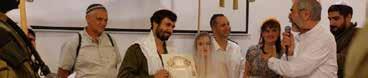
Rav Tsuriel Boublil preformed the wedding of Alexey Itay Kolchin, an Israeli soldier who is originally from the Ukraine and Eden Adina Nardea, a social worker who was born in Israel. The wedding took place at Kibbutz Nachal Oze, a week and a half after the kibbutz was attacked on October 7. The bride and her parents drove down with Rav Boublil and his sonin-law from Emek Dotan who played music. There was a feeling of moral bravery. Soldiers with and without kippot, right and left wing supporters all joined together. Everyone wanted to participate. They all danced like B’nai Yeshiva. The soldiers, the commanders and the rabbi of the battalion recited the sheva brachot. The soldiers danced with gusto and requested brachot before going into Gaza. This all took place with loud booms sounding from the fighting that was happening close by. Rav Boublil felt that this wedding represented the real Israel, united and believing. The wedding was broadcast on the TV news.
Another couple, Tamar and Adir, who are both serving were married at an army base. Both the bride and groom wore their army uniforms. They are looking forward to better days when they will be back together and will able to take a honeymoon.
The Talmud, Brachot 6b praises a person who gladdens a bride and groom:
Rav Nahman bar Yitzhak said: The reward for causing a groom to rejoice is the same as if one rebuilt one of Jerusalem’s ruins, as it is stated later in the same verse: “For I will restore the captivity of the land as it was in the beginning.”
May we return to daily life where we don’t have to worry about sirens, rockets, enemy infiltration, and hostages and may we celebrate weddings peacefully throughout Israel.
Until then, these small wartime weddings will continue.
Jerusalem’s Ramada Becomes a Model in
Accommodating Israel’s Displaced Families

By Ziona Greenwald
IIn Israel, having hotels at full capacity is usually good news – not just for the owners, but for the entire tourism sector, for the local economy, and for national morale, as Israelis feel seen and supported by our brethren in the Diaspora and other pilgrims to the Holy Land.
Right now, hotels in tourist hubs such as Jerusalem, Eilat, and the Dead Sea are bursting at the seams – yet no one is celebrating. That’s because the guests are not tourists, but Israeli families from the South of Israel, including the “Gaza Envelope,” as well as the northern border with Lebanon who have been displaced by the current war and have become refugees in their own country.
Whether evacuated by the IDF or fleeing on their own accord from the incessant rocket fire and devastation around them, as many as half a million Israelis are now staying in hotels, guest houses, and vacant apartments. Those who officially qualify as evacuees – meaning their towns, yishuvim, or kibbutzim have become closed military zones – are receiving either hotel accommodations at the government’s expense or a daily stipend to cover rent and other costs.
In a remarkable transformation from leisure and business hubs to mini villages, hotel managers, aided by tireless volunteers, have marshaled and repurposed their resources to offer families, many with fathers and husbands who have been called up for reserve duty, as much comfort as possible to weather their ordeal. Like travelers on an open plane ticket, none of these guests knows how long their stay at the hotel will last.
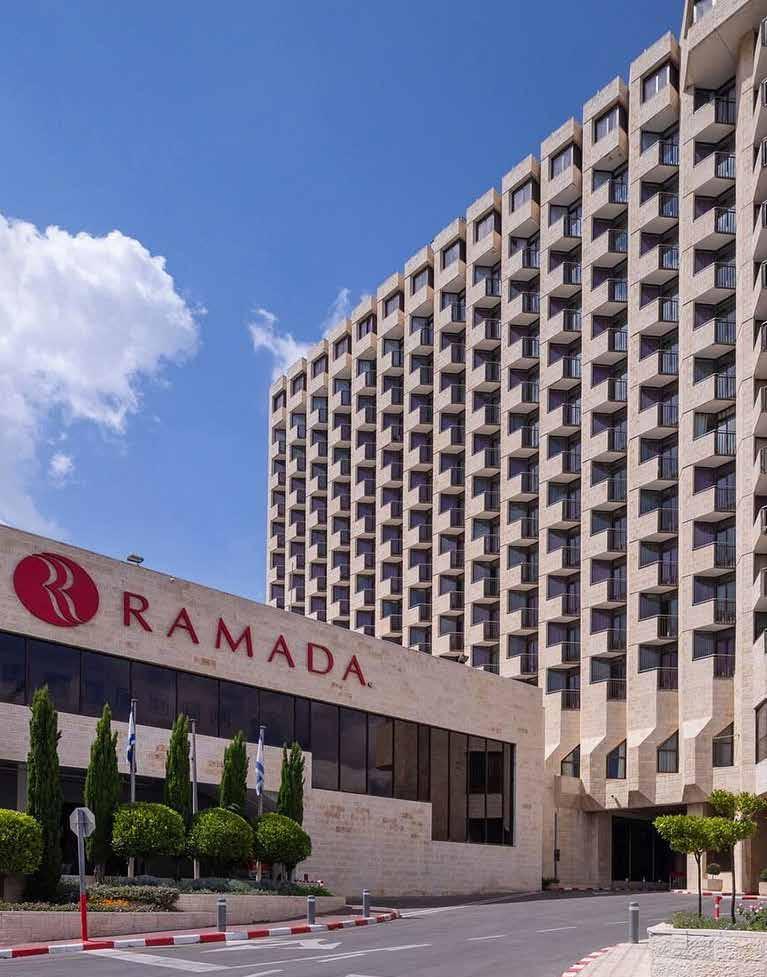
The Ramada Hotel in Jerusalem was the first to open its doors to an entire community of displaced families and has been leading the way in demonstrating how to accommodate them with utmost organization, flexibility, and sensitivity. The hotel has absorbed about 150 young families, about 700 people, from Sderot. Located one kilometer from the Gaza border, it has borne the heaviest onslaught of rocket
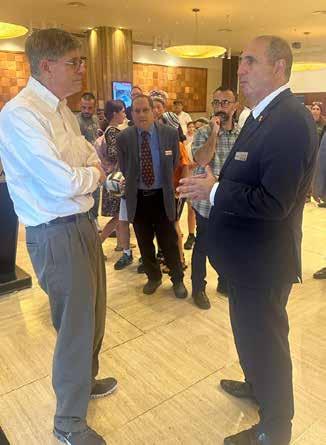
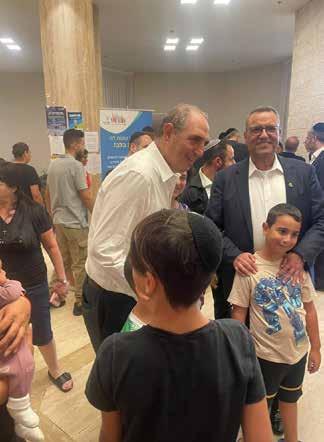
attacks for nearly two decades. The Ramada’s sister hotel, The Royal, has absorbed an equally large contingent from the northern town of Shlomi. Both hotels are led by general manager David Tucker and his team.
With a combined 620 rooms, the Ramada is the second largest hotel in. It has the most event spaces and banquet halls which have allowed it to set up several nurseries, preschools, and game rooms divided by age. Movable walls allow these rooms to be quickly adapted to host the performances, lectures, workshops, and other free events at the hotel to cheer up and support the residents. One room even hosted a Siyum haShas celebrating the completion of Daf Yomi by some of the men from Sderot.
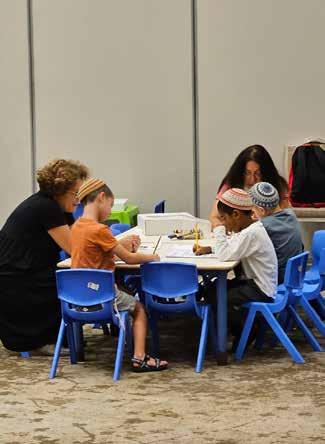
To observe this amazing operation in action, I spent a morning at the Ramada. I walked into one ballroom and saw children sitting on little chairs at little tables, learning and drawing and gathering for circle time. It’s just like any gan (preschool) – except that the kids and teachers are far from home, wearing other people’s hand-me-downs, and all the toys and books and crayons and furniture have come through donations.
In another room used as a makeshift ma’on (daycare), I observe about a dozen cribs and playmats – all donated –accommodating babies and toddlers while their mothers get a break. The teachers and caregivers are themselves part of the community which has temporarily relocated to the Ramada from Sderot. Schooling for the older children staying at the hotel has moved into space provided on the nearby campus of Hebrew University, where the environment is more suitable for serious learning.
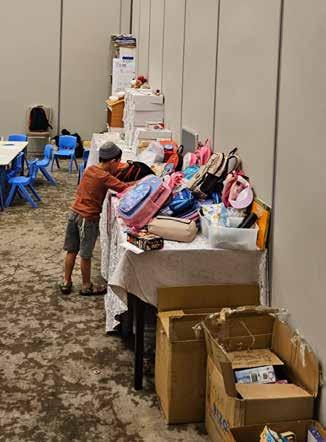
Most of the residents fled with very little time or wherewithal to pack. “It was like Yetziat Mitzrayim,” Shlomo Azoulay, the leader of the group, told me in Hebrew. “Yatzu b’chipazon,” he added, using the Torah’s term for the haste with which the Jews left Egypt. A suitcase or two and that was all. Azoulay, who is staying at the hotel with his own family, evolved from volunteer organizer to the group’s official liaison with hotel management and volunteers; the municipality of Sderot is paying him for his work. Since their arrival just a few days after the war began, he told me, a few of the residents have managed to make a short return visit to their homes to collect belongings.
Everything else has come from the generous hearts of Jerusalemites, as chesed-clearinghouse WhatsApp groups, like the one I belong to, post constant messages broadcasting what is needed where. Most requests are answered in mere hours.
For example, in a storage area just outside the hotel but accessible through the lobby stands a full-size freezer which has one purpose: storing breast milk. Inside are duly labeled bags, pumped by the myriad nursing mothers staying at the hotel. When social service personnel noted the need for a suitable repository for breast milk, the hotel’s events and sales manager, Yaakov Kessler, made a phone call or two, and an hour later the freezer was on its way.
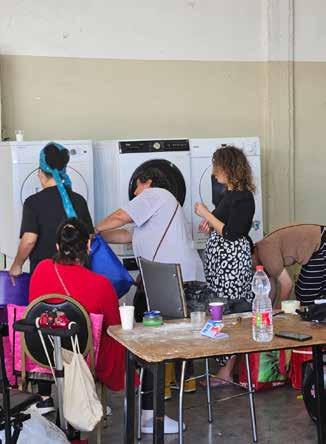
In that same semi-enclosed area are two blocks of wash-
ing machines and dryers, where women were busy washing their families’ limited supply of clothing. The laundry issue has presented a huge challenge for the hotels providing housing: They don’t have the resources or equipment to take on the volume of laundry involved. The first week, Tucker mobilized families from the surrounding neighborhoods to help out. They came in droves, transported the dirty laundry in carefully labeled bags for each family, washed and dried (and in some cases, ironed) the items in their homes, and brought them back, all clean and folded, in separate, duly labeled, bags. That arrangement was obviously not sustainable, however, so the Ramada was the first to install some dozen new machines for residents to do their own laundry, with the hotel bearing the costs of hooking them up to utilities and having them running all day long.
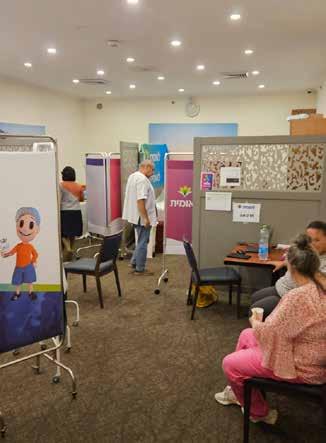
Another first-of-its-kind at the Ramada is the provision of medical care to evacuees. Here, Tucker joked, “[we] have succeeded in what no Minister of Health has done: to unite all four kupot cholim in one clinic.” Normally, the kupot, the health funds which insure citizens under the country’s socialized medicine system, operate in competition with each other to sign up members and providers and establish facilities. At the Ramada, in a clinic complete with examining tables, a phlebotomy station, psychology services, and an ultrasound unit which arrives every evening to attend to the many expectant mothers, health care professionals treat all patients regardless of which kupah they belong to. Indeed, evacuees staying at other hotels located in the strip alongside the Ramada also make use of this clinic.
In the hotel’s humongous dining room, the families receive three meals a day. The Ramada’s kitchen, which has the highest level of kashrut certification and prepares the food served in the Royal’s dining room as well, is churning out some 5,000 meals a day. The government, whose provision of accommodation for evacuees is being handled, rather ironically, by the Ministry of Tourism, presented hotels with a list of minimum requirements for meals, housekeeping services, and other matters – including what food should be served and how often sheets and towels must be changed. The Ramada, thanks to the generosity of its owners, has gone beyond those minimums so that, for example, families staying there get more than sandwiches for lunch.
Families can use all the hotel’s facilities, including the indoor and outdoor pools, which recently added separate swimming hours, and the children’s playground. They’re looking for someone to cover the cost of building a tent over the tennis court to create a workout space.
This is how, as Azoulay put it, “you turn a hotel into a city.”
There’s a reason the focus has been on providing as much programming and resources as possible under the hotel’s roof. “They hardly go out,” Tucker told me, though that is slowly beginning to change. The unfathomable trauma of near-constant rocket attacks that they have suf-
fered – not just since October 7 but since Israel handed over the keys to Gaza in 2005, creating a vacuum quickly filled by Hamas – has made them afraid to venture far outside in an area they’re not familiar with and where they wouldn’t know where to find a shelter should an air raid siren sound. This despite the fact that sirens in Jerusalem, while sadly no longer only a hypothetical threat, are not a regular occurrence. In the beginning, Tucker attempted to organize outings for the families, securing free admission to local attractions like the Israel Museum and the Tower of David, with transportation provided from the hotel. No one signed up.
His leadership in accommodating the evacuees with utmost dedication and discretion is not surprising. Tucker is not only a 45-year veteran of the hospitality industry who previously worked as vice-president of sales and marketing at David’s Citadel and Mamilla Hotels in Jerusalem and the Ritz-Carlton in Herzliya, and before that as a tour operator for 25 years – he’s also chairman of the Hotel Association of Jerusalem. In this group, Tucker and his fellow managers communicate in meetings and on WhatsApp to share ideas and solve problems. “On the one hand, we’re competitors,” he says of the 60 hotel managers, “and on the other hand, we cooperate, especially vis à vis the government.”
Tucker represents the Hotel Association in meetings at the Knesset. Last week, he testified before the finance and economy committees about what is needed to help the hotels continue to provide temporary housing and all that entails for the thousands of families who have descended upon Jerusalem in a sort of emergency aliyah l’regel. Politicians have taken notice. Everyone from Jerusalem Mayor Moshe Lion to numerous members of Knesset and government ministers to newly installed U.S. Ambassador to Israel Jack Lew have visited the Ramada to witness the operation firsthand.
The hotel recently hosted a meeting of major American benefactors of Birthright-Israel who came to meet with government officials and local Birthright leaders. The purpose was for the Israel team to present to the donors their revised mission for the organization now that Birthright tours have been halted: namely, bringing older residents of towns and settlements in the South and North (those who don’t live within the evacuation zones) to the hotel for a few days’ respite from the stress of living in areas under frequent attack. The Ramada has set aside 30 rooms for this purpose.
While you might think that serving as a makeshift city would preclude the hotel from hosting outside events such as weddings, bar mitzvahs, and conferences, the show is still going on at the Ramada. Events manager Kessler showed me the very large hall which has been reserved for outside functions – some which the hotel had already contracted to host, and others which also have a mitzvah aspect in that appropriate event spaces are hard to come by during a war. Weddings scheduled for outdoor venues have had to find alternate, indoor locations;
“We don’t ask those questions,” Tucker answers simply.
“We’re in a war.”
affairs planned in other parts of Israel have been moved to safer regions; huge bashes have been scaled down based on evolving regulations on gatherings.
Still, business is far from usual. “From October through December – from the day before Rosh Hashanah – every day was booked for events here,” Kessler told me. “Now, they’re once in a while. I can’t do an event for 300 people right now,” he adds, noting the banquet halls which have been given over for the makeshift nurseries and kindergartens.
Not every hotel in Jerusalem has agreed to take in evacuees; so far, the government hasn’t issued emergency orders to force them, although that is still possible. In particular, the city’s highest-end, five-star brands have resisted the call, likely trying to protect their cachet or the wear-andtear to their facilities that housing tens or hundreds of families inevitably entails. But that’s not without consequence – one owner of a top hotel who refused to house evacuees received huge backlash in the local media.
The hotels which have opened their doors receive a perguest sum per day from the government, the amount of which depends on the level of facilities and accommodation the hotel can provide. This is not a money-making endeavor, yet it’s not purely altruistic either. “The main issue is for a hotel to be able to keep its employees on,” Tucker explains, “and give them something productive to do.” The alternative – with zero tourism, due to the war and the grounding of most flights – is to shut the place. “You prefer to keep on staff, even if you are losing money, than to close down. Because then you lose your team, and building a team again takes time.”
Hotels, like so many sectors here, are facing staffing issues, with Palestinians from Judea and Samaria (a.k.a. the West Bank) off the payroll due to security concerns, although Israeli Arabs, including those from East Jerusalem, are still coming to work. Tucker, who manages a staff of 450, has a strict policy of keeping all “political talk” outside the hotel. Any employee – Arab or Jewish – who engages in fiery speech, or worse, is immediately shown the door. He’s already fired two employees since the war started. Most of his team, however, have been working together for many years and have continued to do their jobs without incident. To help fill staffing shortages, the government has assigned Filipino workers to serve as housekeepers. Security is tight, with a soldier assigned by the Home Front Command bolstering the hotel’s security. How long will the hotel’s current guests be calling the
Ramada home? “We don’t ask those questions,” Tucker answers simply. “We’re in a war.” The British-born Tucker came here with his family as a young boy, and his own son is now serving with the IDF. “I’ve seen all the ups and downs,” he says. “Never in all my many years in the business have I seen three consecutive years of quiet. There was the intifada, Lebanon, Acchile Lauro… In Israel, in the tourism business more than everything else, you have to learn how to adapt to the situation… Come to Israel, and I’ll explain how to run a business in crisis time, because the crisis is going to come – if not today, then tomorrow; if not tomorrow, then the day after tomorrow.
“You learn to handle it – that’s Israel.”
Although for now moral and financial support will have to suffice, ultimately the best way for Jews in the Diaspora to help Israel is to come here, he says. “Once everything settles down, come and visit us. Support the economy. Support the hospitality business, which provides tens of thousands of jobs. Every dollar that you provide goes directly to the people of Israel.”
Everyone I met at the Ramada that morning amazed me with their dedication and resourcefulness, but these families need to be in their own homes. May the day when everyone can return come soon.
We are gathering donations for our Platoon supplies, Alon Battalion
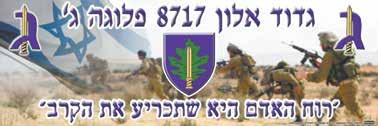
We are an active Reserve unit of soldiers who previously served in the Givati Brigade, we are gathering donations to supplement tactical supplies for our platoon during the continuing war efforts.
https://www.jgive.com/new/en/usd/donation-targets/113741 All donations are Tax Deductible via the website below Any amount of donation will be very much appreciated and go towards our safety, the morale of our soldier's and Israel’s eventual success.
Thank you for your support.


Michlalah Jerusalem College, located in Bayit Vegan, has been educating young ladies from overseas since 1969. When the war began, the school administration immediately set out to see how their beautiful campus and their dedicated seminary students could help.
The Yeshiva in Sderot, has a famous menorah on its roof made out of the shells of rockets fired at Sderot from Gaza. Why would it be appropriate to build a Menorah, such a holy vessel, from rockets that were used for such evil intent? One explanation is that this is symbolic; a way to fight evil and darkness by spreading chesed and light. This in fact, is how Klal Yisrael responded since the outbreak of the war. The sheer magnitude of chesed being done is unbelievable. The enemy might try and destroy us by firing rockets and spreading evil and destruction, but the Jewish nation responds by increasing its chesed and bringing light to the world. Being involved in chesed is one of our most
potent weapons.
When the war broke out on October 7th, life in Israel changed dramatically. Everyone at the Michlalah seminary, including staff, students, and parents, wanted to know what they could do to help. In the weeks since, Michlalah has been spearheading many important chesed projects to help the war effort. This idea, of illuminating the darkness, has been at the forefront of every chesed initiative that Michlalah has run this year. The goal - to bring joy and cheer and assistance to those who need it most.
Following the massacre on that black day in October, tens of thousands of Israeli citizens had to deal
with their new existence of homelessness. Dr. Devorah Rosenwasser, Rector of Michlalah, and the head of the American program, generously invited an entire midrasha – seminary for Israelis - from Sderot; a city located just minutes away from Gaza. Fifty-six students plus staff members shared classrooms, food, and dormitories on the Michlalah campus. Additional displaced families from Sderot that needed housing were also invited on campus by Dr. Rosenwasser.
The students from the Midrasha in Sderot ate lunch in Michlalah’s dining room daily. Over the weeks that they lived on campus, the Michlalah students became close with their “sisters from Sderot.” They joined together
for four separate evenings of song, tefilla, and solidarity. Together they heard divrei chizuk from Rav and Rabbanit Fendel, Rosh Yeshiva of Yeshivat Sderot; did a chesed project together, making candy platters and baking homemade goodies for soldiers and families with relatives in the army; celebrated an inspirational Chanuka Chagiga together with spirited singing and dancing. The unity between these young ladies was felt by all and it was hard to tell which group gave the other more chizuk and encouragement. Esther Franklin, a student from California, said, “Through our effort, I think we can all agree that our connection with Am Yisrael and Eretz Yisrael has never been stronger, as we try to do our part for the nation.”
When another occasion to help presented itself, Michlalah not only seized the opportunity, but went above and beyond. You cannot imagine how delighted Tamar, Avigail, Yasmin, Orelle, and their families were when Michlalah offered to host a bas mitzvah celebration for them. Three of the families are from Sderot and they have been living in hotel rooms since October 7, with no end date in sight. One relative who attended said it was the first time she left the hotel, because she has three children under the age of three, with no day care, and her husband is on reserve duty in the army. The fourth girl lives on the Michalah campus, as her father is a security guard, but her bas mitzvah was cancelled when he was called up for reserve duty.
The photographer, balloon artist, professional cake and cookie designers, and the DJ all donated their goods
and services. A few staff members posted on their neighborhood chats, and they were inundated with mousse cups, frosted cupcakes, cake pops, lemon cups, and more. Four hairdressers volunteered their services and went to each bat mitzvah girl's room to make sure they looked and felt their best before the big party.
The Michlalah girls and staff worked tirelessly- borrowing tablecloths, centerpieces, dancing "shtick," and setting up the dining room, the food, and the dessert table. They designed beautiful invitations and custom bentchers for each of the bas mitzvah girls. They enjoyed a delicious dairy meal complete with cotton candy, iced coffee, fresh popcorn, and a delectable dessert buffet. The Michlalah girls transformed the dining hall into a gorgeous bas mitzvah venue that looked like a fancy wedding hall. At the party, Chanuka cookies were decorated and then given out to hundreds of chayalim. The families of the bas mitzvah girls were thrilled to be on the giving end, and to do a project to benefit others.
Dr. Rosenwasser welcomed everyone and presented each of the bas mitzvah girls with beautiful and meaningful gifts – personalized leather siddurim and sefer tehillim. Every girl also received a beautiful card filled with inspiring divrei bracha. The father of one of the seminary students was visiting, and personally delivered each bas mitzvah girl a beautiful piece of jewelry as well as age-appropriate gifts for the rest of the family. The girls and their families were all so happy to dance the night away, and the Michlalah girls had enough energy to keep that room rocking for hours.
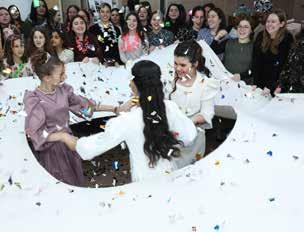
Rebbetzin Dr. Adina Shmidman, Director of the OU Women's Initiative was visiting a niece at Michlalah the night of the bas mitzvah, “I am still captivated by the energy and excitement of the Michlalah young women, dedicating their talents and time into creating an unforgettable joyous experience for four girls and their families.” The bas mitzvah girls and their families were overcome with appreciation and joy that, despite the war, they were each a princess for the night.
The Michlalah students didn’t stop there. Being blessed with a child with special needs can come with all sorts of daily challenges. When the war first broke out and families from the North and South became displaced, not only did these families lose their homes but they also lost the special educational settings for their children and all sense of consistency and stability in their lives. For neurotypical children this is daunting enough, but for a child with special needs this can be especially harrowing.
The Shalva National Center was helping these families and Michlalah approached them to see if they could run a carnival for these displaced children with special needs. After consulting with professionals, the Michlalah students worked tirelessly preparing booths that would be especially appropriate for them. Decorating cupcakes, balloon making, and face painting, were just some of the wonderful activities that were at the carnival. Spirited music played the whole time and Michlalah students each adopted a “buddy” with special needs to interact with throughout the
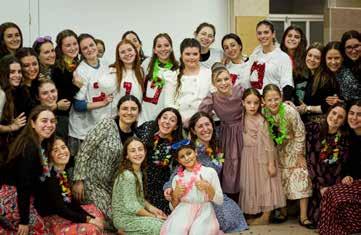
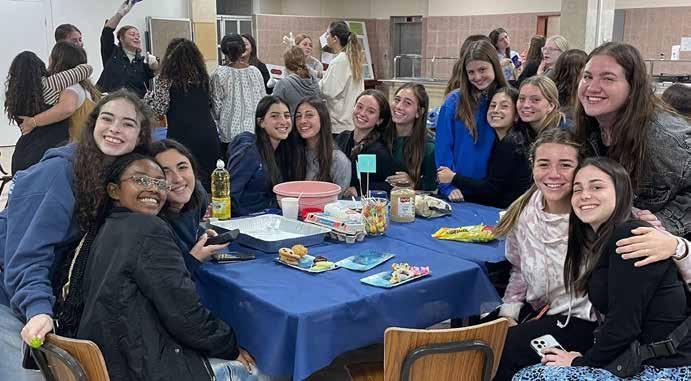
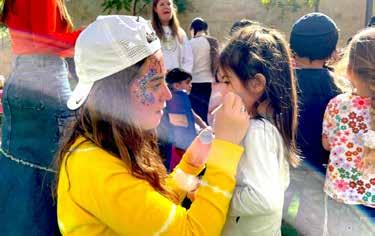
carnival. Additionally, there were two huge bouncy castles for the children to jump on, as well as slush and cotton candy machines for everyone to enjoy. Over one hundred children with special needs participated in the carnival. The Michlalah students brought so much spirit, joy and positive energy to this especially hard-hit population. The bright smiles and delight that the carnival brought to these children’s faces will not quickly be forgotten by anyone in attendance.
Michlalah also hosted a Chanukah concert for displaced families and for families with loved ones serving in the army. The excitement and Chanuka spirit were palpable and pulsated throughout the room as the audience was treated to a meaningful perfor-

mance from the popular Israeli singer, Shmuel. The mothers and sisters of the students were also invited to attend. One of the student’s mother personally distributed Chanukah gelt to our Israeli guest families. The families in attendance were so touched and appreciative of this wonderful Chanuka event.
Other chesed activities at Michlalah included: preparing one thousand pairs of tzitzis for chaylim; volunteering in the children’s ward of Shaare Tzedek hospital; crocheting blankets; supermarket shopping; toy drives; and more for displaced families. These activities are having a deep impact on the Michlalah students, like Ilana Dassa Greenfield, who said, “So when people question why I don’t go back
to New York and why am I staying in Israel if I’m not fighting in the war? I answer with confidence that even though I’m not on the frontlines in the battlefield I am in the frontlines when it comes to tefillah, learning Torah from the most inspirational teachers, and doing chesed for those in need at these difficult and challenging times.”
While this seminary gap year is not going exactly as expected, the students could not have had better lessons in chesed, emunah, achdus, and kol Yisrael areyvim zeh la’zeh – all Jews are responsible for each other.
Rebbetzin Leah Nusbacher is the Director of Chesed at the Michlalah Seminary. She lives with her family in Ramat Bet Shemesh.

By Amy Dubitsky
Elisheva and Chaim Rutenberg made aliyah from America to Bet Shemesh about ten years ago. They both were working regular day jobs when the war started on October 7. “My nephew was called in to serve that day,” explains Elisheva, “a few days later when we asked his wife, how he was doing, she said - he was hungry.” The Rutenbergs thought that beef jerky would be a great food item to send their nephew. It was light, it was a good protein, it tasted good, and it didn’t need refrigeration. They had a hard time finding beef jerky in the stores. When they did locate some, they couldn’t find enough quantity of it, because as has been seen throughout the war, a soldier doesn’t want to get something that the rest of his unit doesn’t have – they needed to send enough packages for everyone.
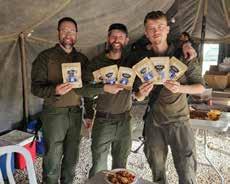
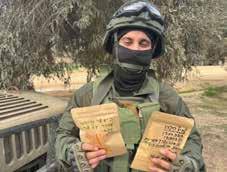
Eventually, the Rutenbergs decided that this was an essential item and the void needed to be filled. They were able to source materials and volunteers and started making beef jerky to send to the troops. The more they made, the more requests they got for it, and they didn’t want to charge the soldiers. The fundraising began and they changed their production model from making their own jerky, to sourcing it elsewhere in bulk and having volunteers cut, weigh, and package the jerky. Every package is labeled with the bracha, in case a soldier doesn’t know which one to make on it, and they have the bags decorated with messages of gratitude and encouragement. The jerky – they also make salmon and mushroom jerky – is under kosher supervision and packaged in compliance with the local health codes.
As of this publication, Beef Up Our Boys, has sent soldiers and other volunteer services over thirty-five thousand bags of jerky. Elisheva explains that the project is not just about providing physical sustenance, “The beef jerky is a real pick-me-up for the soldiers on the field. We have heard so much feedback that when morale was low and the beef jerky came out, everyone’s mood was lifted.” For more information or to donate toward the project, please go to www.beefupourboys.com.
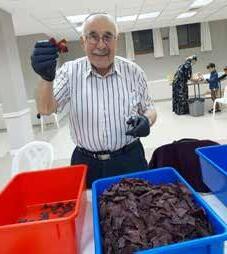
and volunteered to package beef jerky for the chayalim. Dubitsky himself, was a hidden child during the Holocaust and later served as a Golani soldier in the IDF.



By Ziona Greenwald
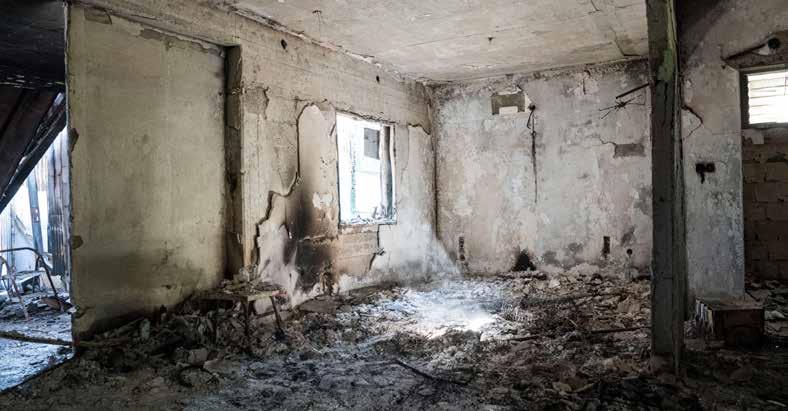
Letters. Books. Telegrams. Notes smuggled through fences or hidden in crevices in the hope of later discovery. Photographs. Grainy film reels. These are the elements that have traditionally made up the mélange of history as we know it. If properly preserved, they will tell the stories of our past for posterity.
In this new digital age, preserving the memory of important events – especially those as cataclysmic as the October 7th massacre and resulting war between Israel and Hamas – has taken on entirely new dimensions. “What is most difficult in this case is that most of the evidence is digital,” explains Dr. Chaim Neria, curator of the National Library of Israel’s massive Judaica collection which includes the world’s largest website of Hebrew and Jewish manuscripts. WhatsApp messages, Instagram posts, TikTok videos… So much is shared online in real time, and so much content is continuously being generated and shared.
The fear, Neria says, is that much of this so-called “digital ephemera,” if not systematically collected, organized, and preserved, will be lost forever. That concern is well-founded. “We know that when Hamas realized that some videos on social media were bad for their name – whatever that means –they took them down,” Neria says.
The fear of critical documentation of Hamas’ attack and all that’s followed disappearing into the ether is what is driving a monumental new initiative at the National Library: gathering documentation of “Swords of Iron,” in all its forms, into a central repository which will serve as the definitive archive of the war.
“This project is fundamentally different from anything the Library has done before,” says Matan Barzilai, head of Archives and Special Collections at the Library. “Archives and libraries usually record history with the perspective of time. We tend to have a problem with real-time documentation because the per-
spective required to determine what is important and what is valuable is missing. Despite this, it is clear to all of us that we are in a historical event, and that if we sit and wait, the documentation will be lost.”
Other organizations, including the USC Shoah Foundation, the Berman Archive at Stanford University, Yeshiva University, and the American Jewish Archives, have begun gathering various types of documentation. The Library is working with them “to be an aggregation of all these initiatives, to give them digital space and catalog space, and eventually to create a huge reliable database of the October 7th massacre,” Neria says. We’re talking terabytes’ worth of digital storage.
“The Library is entrusted with preserving the collective memory
of the Jewish people,” says Neria. “This [new initiative] is part of that same memory… We have an imperative: ‘Zechor yemot olam,’” he notes, quoting the verse from Devarim exhorting us to remember our past. That is a sacred task indeed, as the decades since the Holocaust have taught us that our enemies will not hesitate to take a bludgeon to our history. Deniers of Hamas’ atrocities are already hard at work – witness the recent heinous lie that it was an Israeli pilot who fatally shot the young people at an outdoor music festival on October 7th.
The Israeli government has already transferred about 200,000 photos and videos collected in its military operations to the National Library to be preserved for future generations. But anyone on social
media or with friends and family serving in the IDF or in affected areas – pretty much, anyone invested in the events unfolding in Israel –knows that the volume of documentation is enormous and growing every day. How is the Library coping with the seemingly endless tide?
The plethora of material “is one of our biggest challenges,” Barzilai admits. “We receive material from security cameras, private cameras in real time, GoPro cameras of vehicles and Hamas personnel, as well as Telegram channels and social networks. The challenge is to filter, identify duplicates, and present the information in a structured manner.”
Right now, the focus is on collecting the material. Sifting through it all, cataloging it, and making it accessible is the more difficult and complicated task. That will come later, as will securing any necessary additional staff and equipment, and dealing with legal issues about what may be shared when the virtual archive goes public. The work involved in getting to that endpoint is expected to take about five years. Already it is clear that not everything is appropriate to publicize. For example, says Neria, “some of the videos collected are very humiliating to the victims.”
The curators of this project are interested not in preserving news coverage as media organizations do their own archiving, or private emails and WhatsApp messages, but
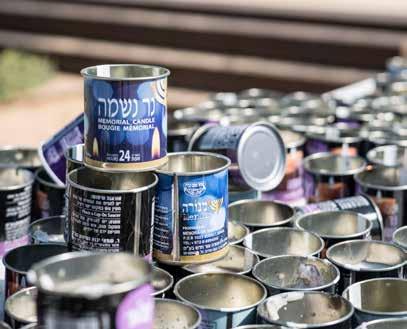
rather first-person accounts and raw materials relating to the brutal Hamas attack and ensuing war. Equally important are the responses of Israeli society and of Jewish communities around the world to the calamity: calls for action and prayer, special prayers composed for the hostages and for Israel, eulogies and memorial booklets about the fallen, public statements by rabbis, documentation of antisemitic incidents, and so on. “All this is part of the same collective memory – not just that day in which we suffered but how we responded and mobilized as a community,” Neria says.
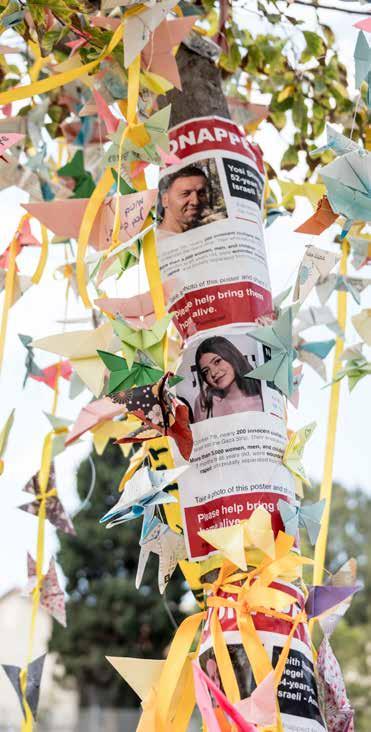
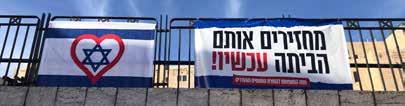
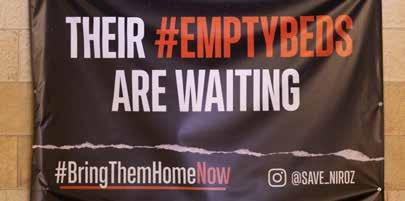
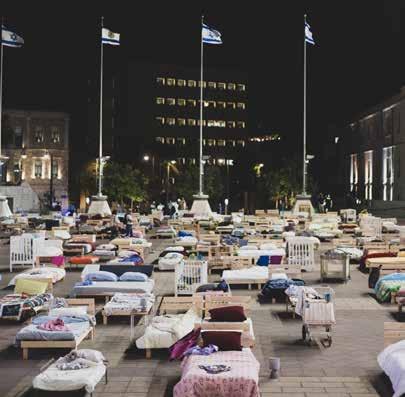
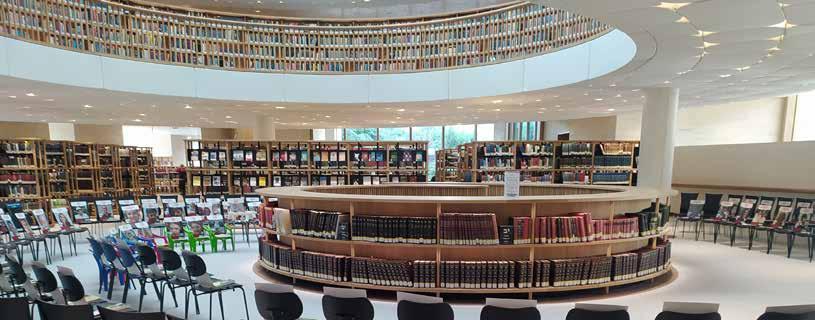
Billboards and media buys, kol koreh, speeches and sermons and songs, photographs of rallies – the Library wants all of it. For example, many communities have staged ad hoc visualizations of the staggering number of hostages, whether rows of empty Shabbat tables in New Jersey or chairs set up along the beach in South Africa. The Library’s reading room contains one such installation – concentric circles of chairs, both adult and child-size, each with a photo of one of the hostages, a book chosen for them by their family or matched to their interests, and a message in Hebrew: “Every one of the hostages has a story… We are waiting for each of them to return safely and continue to read and write the story of their lives. This story must end well!”
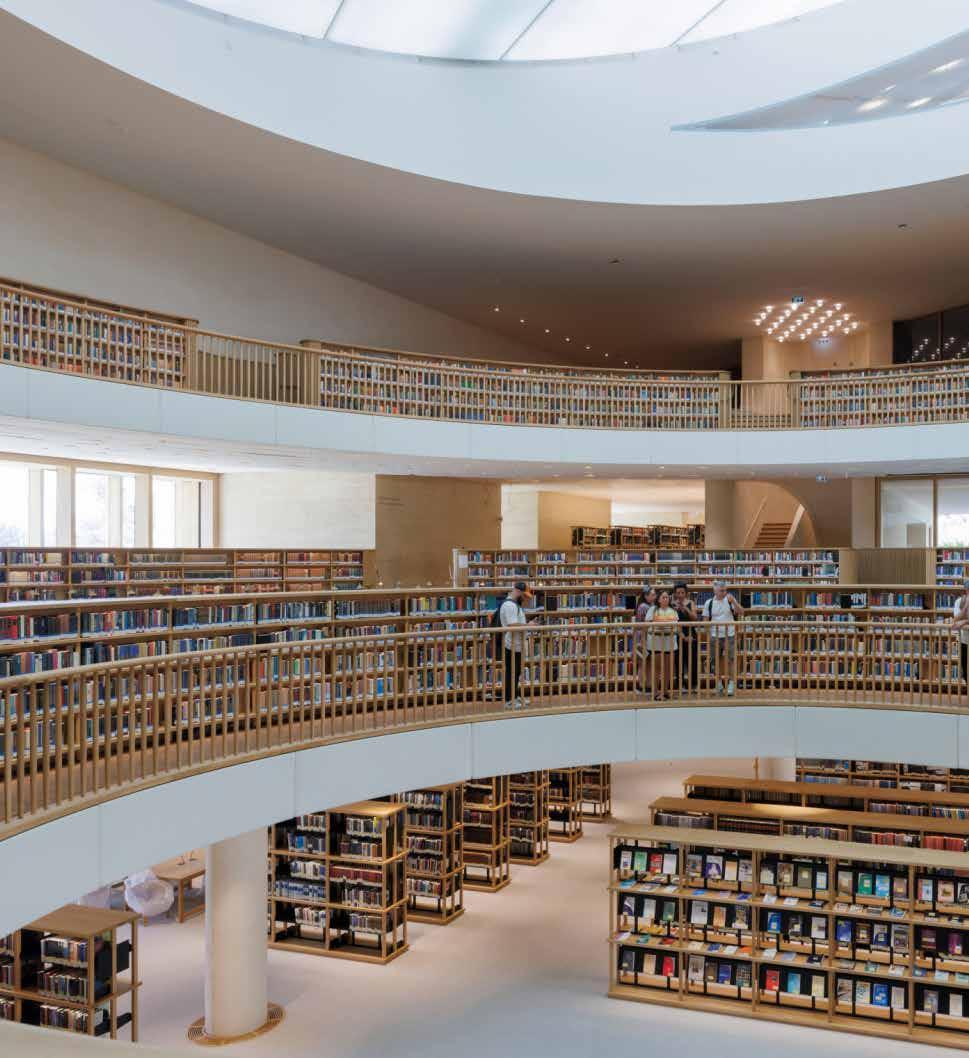
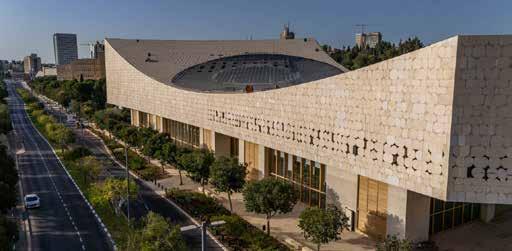
While this gargantuan project is taking place during one of the most painful and difficult periods in Israel’s history, the nerve center for the cutting-edge work could not have a better venue. Although the National Library is one of Israel’s oldest institutions – predating the State –it recently relocated to a brand-new building. The façade is composed of chiseled Jerusalem stones fitted together in a sort of Kotel-inspired monochrome mosaic; from a distance, the building resembles an open book. Unlike its tired-looking predecessor which lacked curb appeal or functional spaces, this building is light, bright, and modern and boasts a welcoming interior, including a four-story circular reading room, exhibit halls, and an auditorium.
It was set for a gala grand opening one week after the chagim, with a ceremony honoring major donors and the unveiling of the Library’s “Treasures” – its most prized holdings – which would for the first time be on permanent exhibit.
After the horrific events of Simchat Torah, the celebration was, of course, indefinitely postponed. But soon afterward, the Library decided to open anyway, sans festivities, so that readers and students and scholars and thinkers and culture mavens and anyone else looking for a reflective place could come and use it.
Everyone can contribute to the National Library of Israel’s unfolding imperative to preserve what is, after all, part of our shared history as a people. If you have any materials that might be of interest, you can send them via email to webarchive@nli.org.il. Include identifying information such as date, name of speaker/writer/photographer, and a brief description of the contents. The Library is also interested in leads on important TikTok, Instagram, or X (formerly Twitter) accounts to follow.


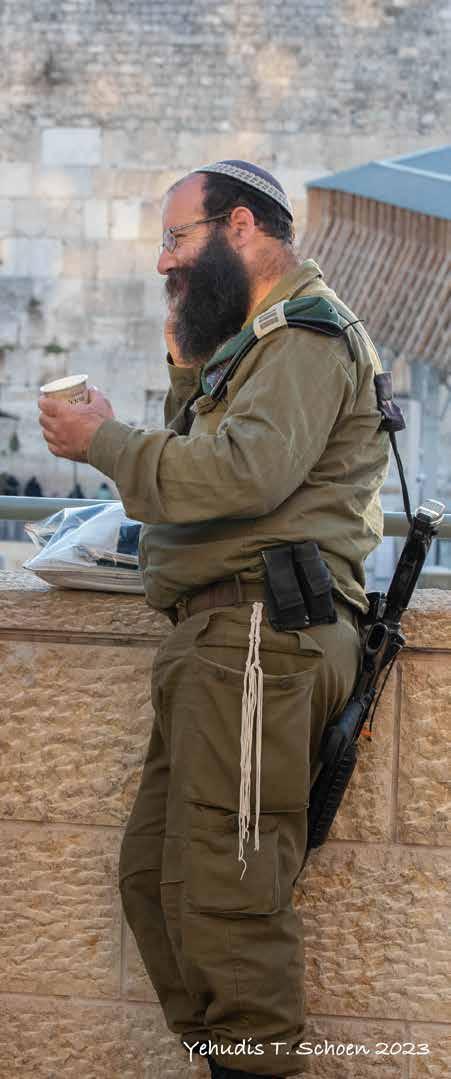
The IDF welcomes an unprecedented influx of religious recruits.
By: Rosally Saltsman
TThe Ultra-Orthodox, or Charedim as they are referred to in Israel are running to volunteer for the IDF, secular women are stopping Chareidi men in the street, tearfully thanking them and blessing them, secular people offering food to Chareidi soldiers - instead of the other way aroundit may seem like a vision from the post-Messianic era but this, in fact, is reality in Israel, November 2023.
The intersection of the induction center at Tel Hashomer, which just a couple of months ago saw enmity between left-wing demonstrators and Chareidi boys seeking an exemption from the army on religious grounds, is now witness to hundreds of Chareidi men aged 26-40 volunteering for army duty during these tense and difficult times.
Netzach Yehuda, the association of the Ministry of Defense that oversees Nachal Chareidi, is supervising the Chareidi draft. Nachal Chareidi is responsible for the integration of the Ultra-Orthodox and assisting them during their military service. There are also non-official initiatives, like the one being conducted by Rav Ram Moshe Ravad, former Chief Rabbi of the Air Force and retired Lieutenant Colonel. Since his retirement from the army, he organizes Chareidi projects, and he is helping collect names for the Chareidi volunteer draft.
Two fast-tracked training sessions of 120 Chareidi men each have graduated as of this writing, but thousands
more have expressed an interest in signing up and are being vetted for enlistment. These Chareidi men had previously received an exemption either because of their commitment to Torah learning or for other reasons. They are now going through an accelerated basic training to take on positions either using their skills and professions, or filling the army’s most pressing needs.
“We don’t want anyone to leave yeshiva,” says Rav Ravad. “We need them learning for the safety of Klal Yisrael.” This enlistment is for people who are no longer in yeshiva and were not later drafted by virtue of their exemption.
When asked whether this will change the way Chareidim view the army, Rav Ravad said he hopes that it will lessen the antagonism that Chareidim feel because of how they are viewed for not serving in the army. Chareidim have always filled other important roles; forming the core of such volunteer organizations as Zaka and Hatzalah, and running other programs that benefit and supplement the country’s soldiers and others. The Chareidim currently being inducted will remain in the army reserves and do miluyim – annual and as needed reserve duty - until the age of military retirement at 40.
Menachem Freedman, 26, from Bnei Brak has recently joined the army Rabbinate, which has the important, but sometimes gruesome
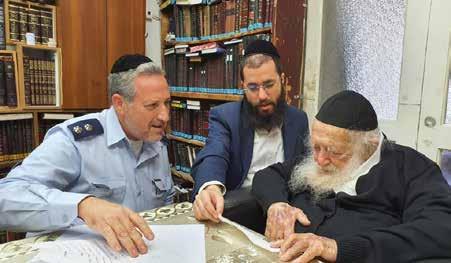
task of locating lost soldiers (dead or alive) and identifying their bodies. Freedman, married with children, left his lucrative real estate business to volunteer. He said that this had been a dream of his and that it provides him with a great deal of satisfaction, happiness, and fulfillment to participate in the important experience of contributing to his nation and his homeland. “Army training was a very emotional experience, and this is a big honor,” he says.
Freedman met up with some friends at induction and he feels a tremendous amount of support from his Bnei Brak community. People have approached him about how they can sign up to serve. The perspective of these new soldiers is different because they are entering the army with more maturity than the average recruit and are sometimes older by as much as a decade.
“I think that this is going a long way in healing the tear in the nation’s fabric,” says Freedman and he sees this as a general shift in how Chareidim see themselves vis à vis the army and, of course, how the army views Chareidim.
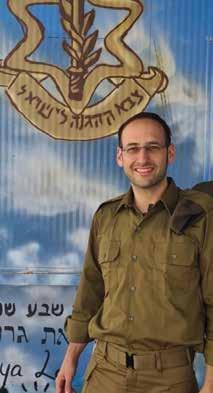
For years there has been tension between the Left and the Chareidim – those who serve in the army and those who don’t - but interestingly, it wasn’t pressure or disdain or politics which finally got such a large response from the Chareidi community. It was the need of their brothers and the call of the hour.
Aryeh Rubinstein is the son of Olim from South Africa and he himself spent several years living there as well as in England. The Rubinsteins’ three other children served in the army, but as Aryeh was in yeshiva, and then in kollel, he had a religious exemption from service. He’s been working part-time in his father’s finance company, as well as studying for semicha. He hopes to earn a master’s degree in genetic counseling and eventually work in the field in connection with halachic concerns. Now, at 34, and married with three kids, he’s decided that the time is rife for him to do his army service and
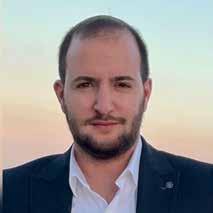
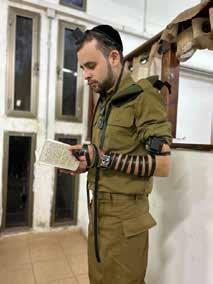
join the many thousands who have answered the call. Rubinstein has a pre-med degree from Hebrew University, and experience working as a medic which would qualify him to work with injured soldiers. Unfortunately, the army currently needs his assistance in Lebanon to do the work that many are being called upon to do - find and retrieve the bodies of soldiers.
“This is a tough job,” he says, “but we haven’t seen anything like this since 1948. We got a rude awakening a month ago by our enemies and I want to be part of protecting the country.” Rubinstein feels that there’s no going back and after this mass wave of Chareidi volunteering, the dynamic of the army will be transformed forever. “There’s a very serious change going on,” he says. All types of Chareidim are volunteering – Chassidic and Litai, Ashekenazi and Sepahardic. Rubinstein says that if you had told him a month ago that this is what he would be doing he would have thought you were being ridiculous. His father, Neil, says he’s very proud of his son, and his wife Elianna has been very supportive.
Yossi Levi is the Director of Netzach Yehuda, the IDF organization that oversees and runs the Chareidi induction into Tzahal. Tzahal established Nachal Chareidi in 1999 and, despite its name, 30% of the soldiers in it are considered National Religious - Dati Leumi. “We’ve found that since National Religious soldiers are savvier
about the army and what it involves, it helps the synergy with the Chareidi soldiers and helps them adapt better,” says Levi.
In Nachal Chareidi, soldiers generally sign on between the ages of 1820 for two years and 8 months. The last 8 months devoted to completing matriculation exams that Chareidim generally do not take. Like other soldiers, they are distributed among combat and para-combat positionssome do a full stint while others serve an abridged service. As part of Nachal Chareidi, the unique needs of the population are attended to, as well as assisting with the sometimes-difficult adjustment into the army framework, which is a natural part of the lives of the general population, whether religious or secular.
The en masse enlistment of the Chareidim is only a small part of the tremendous spiritual revolution going on in the army since the start of the recent war. Tefillin and tzitzit drives are scrambling to meet the demand, as every soldier seems to want to go to war duly “protected” with his spiritual as well as his military gear. Some people have literally given the tzitzit off their backs to passing soldiers on their way to Gaza or Lebanon.
As battalions of non-religious soldiers have taken up the cry of Shema Yisrael as they enter battle, and as Chareidim solemnly sing Hatikvah at their basic training graduation, it is a time of hope for all of Israel and quite noticeably the dawning of a new era.
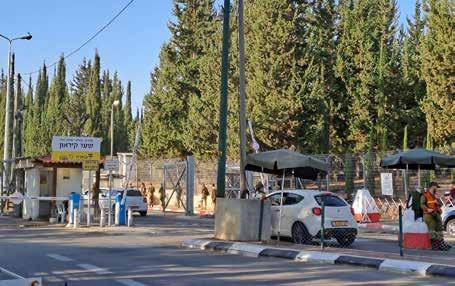

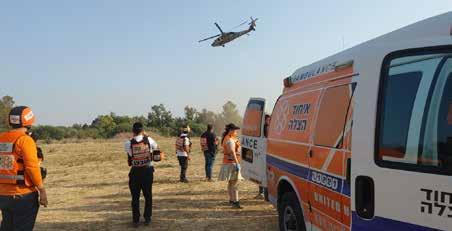
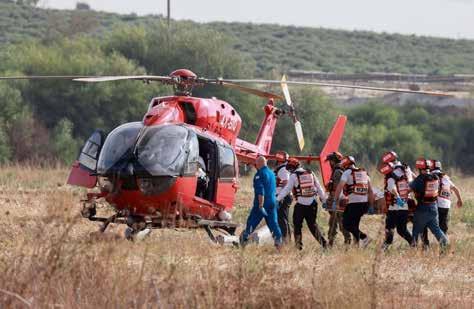
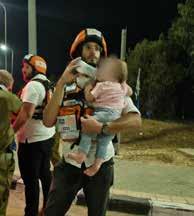
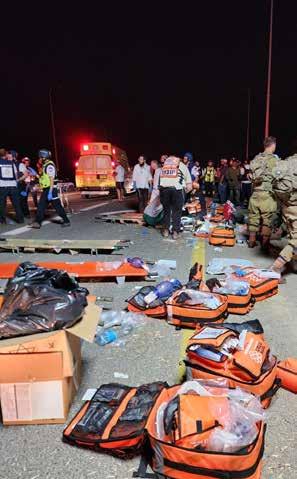
The IDF is using all available manpower to fight this war on multiple fronts. Despite the unprecedented number of reservists, new enlistees, and volunteers who are in uniform, Israel still relies on a different team of volunteers for medical assistance. They don’t wear army fatigues, or capes, but United Hatzalah members have their own gear and vehicles that make them easily recognizable as superheroes. United Hatzalah is made up of men and women of all different nationalities, religions, and political beliefs, who are fully invested in helping with the fight to protect Israel whenever and wherever they can. Volunteer experience runs the range from emergency medical technicians and paramedics to fully credentialed doctors. Many volunteers also have specialized training in psychological first aid and are part of the Psychotrauma and Crisis Response Unit. The exercises that train members to deal with mass-casualty incidents were especially useful on October 7th. From the start of the war through December 12, 2023, this is United Hatzalah by the numbers:
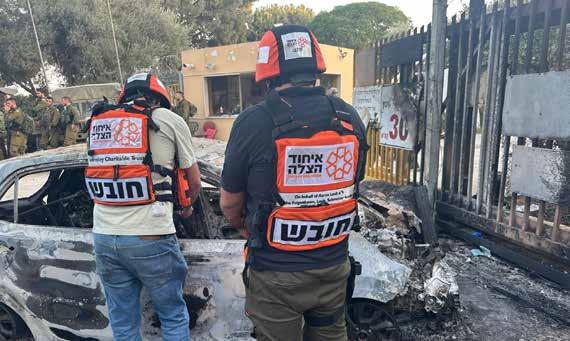
410
Rescue vehicles dispatched to the southern and northern regions.
4,150
United Hatzalah volunteers active in the southern and northern battle zones.
1,250
Patients transported to hospitals for additional treatment.
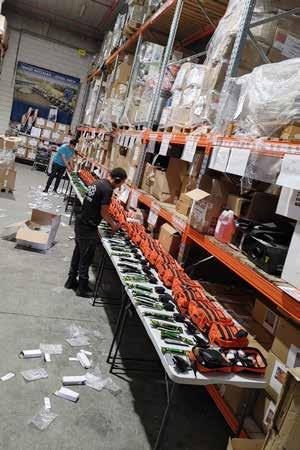
2,600
Medic bags depleted.
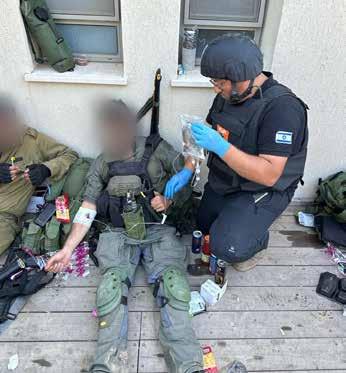
4,720
people treated in the South, North, and Central Israel after rocket attacks.
71 TONS
of medical supplies, food, and personal care items distributed to soldiers, volunteers in the field, and the families that were displaced and evacuated from their homes.
2,710
Soldiers, civilians, and volunteers treated by the United Hatzalah Psychotrauma Unit.
BY HILLEL FULD




CLAIM 1:
“ISRAEL IS COMMITTING GENOCIDE OF THE PALESTINIAN PEOPLE.”
It’s no surprise that people don’t have long attention spans. We have social media to thank for that. Now, in normal, peaceful times, what that means is that you have to take these platforms into account when sharing your thoughts and insights. So, if you’re sharing on X for example, keep it super short. If you are using Instagram, make sure whatever you’re sharing uses visuals that’ll catch the eye of anyone scrolling by.
In a time of war, however, people’s lack of attention span can significantly affect the outcome of the war.
For example, if one side knows how to leverage these platforms and beat the algorithms, while the other side doesn’t, this could lead to diplomatic pressure on the latter side, which could be the difference between winning the war and losing it.
Israel has two armies, the IDF and the online warriors. They are both extremely central to Israel achieving its objectives in this war.
Everyone is aware that the IDF is fighting day and night to destroy Hamas, but not everyone knows of the online warriors who spend day and night defending Israel online.
The list is long but some individuals worth mentioning include: Arsen Ostrovsky, a human rights lawyer who spends countless hours on X battling the lies and hypocrisy of the Israel haters worldwide; Noa Tishby, former Special Envoy for Combating Antisemitism and Delegitimization of Israel; Fleur Hassan, Israel Special Envoy for Innovation and Deputy Mayor of Jerusalem; and Michael Eisenberg, global venture capitalist turned Israel advocate.
Those are only a few names, but the list of online warriors is super long. What these folks have mastered is how to respond to our enemies in a concise and accurate manner. I’ll give you some examples for you to use in your personal debates with anyone criticizing Israel.
The responses, like I said, need to be short and easy to consume, otherwise you lose your audience.
Let’s jump in with some online battle plans.
ANSWER: “How many Palestinians were there in 1948 and how many are there now? Has their population increased or decreased and by how much?”
EXPLANATION: The answer, of course that the Palestinians have increased by hundreds of percentages since Israel was established. So, either Israel really stinks at genocide, or the claim is a total lie.
“ISRAEL IS OCCUPYING GAZA, SO RESISTANCE IS VALID.”
ANSWER: “What did Israel do in 2005 and what did the Palestinians do in 2006?”
EXPLANATION: Israel totally evacuated Gaza in 2005 as part of the disengagement; a highly controversial move that many deemed undemocratic. Regardless of the political opinions, there was not a single Jew in Gaza, dead or alive. In 2006, Gaza elected Hamas to rule them. There was zero Jewish or Israeli presence in Gaza on October 6th.
CLAIM
“ISRAEL DOESN’T HAVE A RIGHT TO EXIST. THEY ARE COLONIALISTS WHO STOLE LAND AND SHOULD GIVE IT BACK.”
ANSWER: “Sorry but where are you writing that from? Should you be living on stolen land? Also, for context, there are 22 Arab states, one Jewish one, 440 million Arabs living in those states, 7.5 million living in Israel, and Arabs have 5 million square miles of land and Jews have 0.008 million. Some occupiers…”
EXPLANATION: Seeing how much land the Arab world has as opposed to Jews, who have one country, is the best way to debunk the colonialist narrative. In fact, if you want to go even deeper, ask how many Arabs live in Israel – over two million - and how many Israelis live in Arab countries? Almost none.
“ISRAEL OCCUPIED THE ARAB PALESTINIAN STATE.”
ANSWER: “When was that state established? Who was the prime minister? What was the national anthem? What was the currency?”
EXPLANATION: Such a state never existed, so none of those questions are possible to answer.
CLAIM
“ISRAEL HAS KILLED TENS OF THOUSANDS OF KIDS IN GAZA.”
ANSWER: “Wow that sounds terrible. How many Hamas terrorists did Israel kill?”
EXPLANATION: The source of those numbers the world quotes is provided by Hamas. According to Hamas, everyone killed is innocent; not one terrorist was killed. Anyone will understand how ridiculous it is to believe Hamas’s numbers.
“ISRAEL IS INDISCRIMINATELY KILLING PEOPLE IN GAZA.”
ANSWER: “Then why doesn’t Israel just flatten Gaza and end the war?”
EXPLANATION: Israel has paid the tremendous price of fallen soldiers because of all the steps and precautions the IDF is taking to minimize civilian deaths. If the IDF wanted to do whatever it can to end the war including killing innocent Palestinians, the war would have been over on October 8th.
“YOU CAN’T JUST EQUATE THE PALESTINIANS AND HAMAS. THEY ARE NOT THE SAME. THE PALESTINIANS ARE INNOCENT.”
ANSWER: “Are they? What percentage of Palestinians publicly support Hamas’s October 7th massacre? Also, does the number of innocent deaths dictate whether a war is justified? Was WWII justified? How many innocent Germans were killed?”
EXPLANATION: According to recent polls, close to 80% of the general Palestinian population support the events of October 7th. 80%! And besides, millions of Germans, not Nazis, Germans died in WWII. Does that mean that defeating the Nazis was immoral?
In conclusion, our enemies have mastered the art of online propaganda, and while we won’t ever win the numbers game, we absolutely can learn how to respond and engage in a more accurate, social media friendly way. We can’t all join the IDF, but we can all fight this war.

The word for victory in Hebrew is lenatzeach – a word which offers a fascinating insight into the Jewish approach to this concept. Victory in the popular imagination is commonly associated with outscoring one’s opponent in terms of goals, points or runs. In the military context it would be equated with demolishing an enemy army or conquering land. For Judaism, however, victory is represented by “nitzchiyus” – eternity. The side which is victorious is not necessarily the one holding a loud and ostentatious victory parade commemorated by arches and architecture, but rather it is the one which remains and returns to its land 2,000 years later to continue its eternal project. The side which maintains its eternal moral and spiritual message for elevating humanity, and continues to be the chosen messengers to convey G-d’s greatest gift to the world while nevertheless being hated and persecuted for doing so.
Rabbi Shmuel Phillips is the author of "Judaism Reclaimed: Philosophy and Theology in the Torah" (from which this is adapted). He also has a new book that just came out called “Talmud Reclaimed”. He lives in Jerusalem with his wife and four children.
Every week The Jewish Press asks 4 individuals to remark on a word or phrase. This week's word is

Netzach is one of my favorite words - Jewish victory. Yet that victory can be understood in a few ways: the simple one is defeating the enemy. And, indeed, sometimes that happens. Like at the splitting of the Red Sea, on Purim, and on Chanukah. But other times the Jewish people do not win in the short term - but win in netzach, in eternity. We outlive our enemies, because the Jewish people are connected to the eternal. So, if we can't beat you now, we can beat you in a thousand years. And there is yet a third meaning to netzach which is song. In Judaism the winner is he who sings last - and sings the praises of G-d. The final victory is the revelation that it was G-d who was behind all the forces of history, and that the Jewish people stood by him through thick or thin - and that revelation will come in song - Lamenatzeach Mizmor LeDavid! May we merit to hear the song of the destruction of evil in our time and thereby create a palace for G-d in this lower world, in Yerushalayim.
[Written while on IDF reserve guard duty]
Rabbi Yishai Fleisher is the international spokesperson for the Jewish community of Hebron. He is an advocate of Jewish rights in Judea. Yishai is an Israeli broadcaster on the Land of Israel Network and a frequent columnist whose work has been featured on CNN, Al Jazeera, Fox, Vice, BBC, and more. He holds a JD from Cardozo Law.

Since Chanukah was only recently over, when we think of the word victory, many think of the victorious Macabees. However, as Israel is presently in a war with Hamas, we are all praying for a great victory.
For me this war is also personal, as I have a number of grandchildren actively fighting in Gaza.
So, what do I do? I say Tehillim, and pray very hard. But I do believe that we will see a great victory and I am getting my tambourine ready, just like Miriam and all the ladies who crossed the Yam Suf did.
To all you precious readers when you are davening please have in mind my grandchildren, among all the rest:
Gavriel Sholom Ben Chana, Talya Tziporah Bat Chana, Gilad Aharon Chaim Ben Yael Tzilla, Yonatan Reuven Ben Yael Tzilla, Amit Gershon Ben Rav Tzvi, Gilad Ben Michal And Yisrael Amichai Ben Nadia
Naomi Klass Mauer is the co-publisher of The Jewish Press.

In Hebrew, the word for "victory" is "Nitzachon". But here's the thing: the source of that word is the Torah and the Torah doesn't use the word Nitzachon for any victory. The word Netzach means eternity and that is what a Jewish battle is about. First used in 1 Samuel (15:29), the Pasuk says that Hashem ("The Eternal One of Israel") will not relent. Our strength is in our confidence that we have been blessed to be an Eternal People in our eternal land. Not because we wish to vanquish the enemy, conquer more land to protect our borders, or even destroy evil - all of which are, arguably, quite valid pursuits. But our strength is in our resolve to uphold what is right - to pursue what is good and just and to continue to thrive as a light unto the nations.
In this war, so many righteous and holy soldiers have sacrificed so much and tragically, in some cases, have made the ultimate sacrifice (HY"D). Who are these "warriors"? Some of the most peaceful people I have ever met have volunteered to join the fight for the eternity of our people. And here, too, we should note that the word for warriors is not found in Tanach: instead, in the Torah, they are men of valor or swordsmen, etc. We are not nor never have we been warriors. We are a nation inextricably linked to the greater good and to one another. We are a people who have never boasted conquest or defeat or victory. We are a people of peace.
May we merit to experience that peace - Nationally, physically, emotionally, and spiritually - very soon.
Avi Ganz is the program Director of Ohr Torah Stone's Yeshivat Darkaynu. He lives with his wife and five children in Gush Etzion where he volunteers for MD"A, plays the blues on his Hohner, and reminisces fondly of his days playing tackle football with the IFL.


4 LOCATIONS

Spacious 1-3 bdrm apts, garden units & penthouses; includes parking.
Walkable to major Anglo & religious services communities intercity trains, buses, light rail, mall, & employment centers.
& AFFORDABLE




Fabulous project featuring a
Projects from Ir Yamim to A TORAH LIFE BY North & South Netanya.

SPECIAL PROJECT within close walking distance of Kiryat Sanz, the separate swimming beach, and all the Kiryat Sanz services.

& religious neighborhood

Fantastic layouts 2 - 6.5 bdrm apts, garden apts, and safe rooms, storage, & parking.


The biggest project - 2, 3 & 4 bedroom apts, garden apts, & and penthouses with stunning views, sukkah

Full services plus Yeshivot, EASY PAYMENT PLAN! balconies, storage and

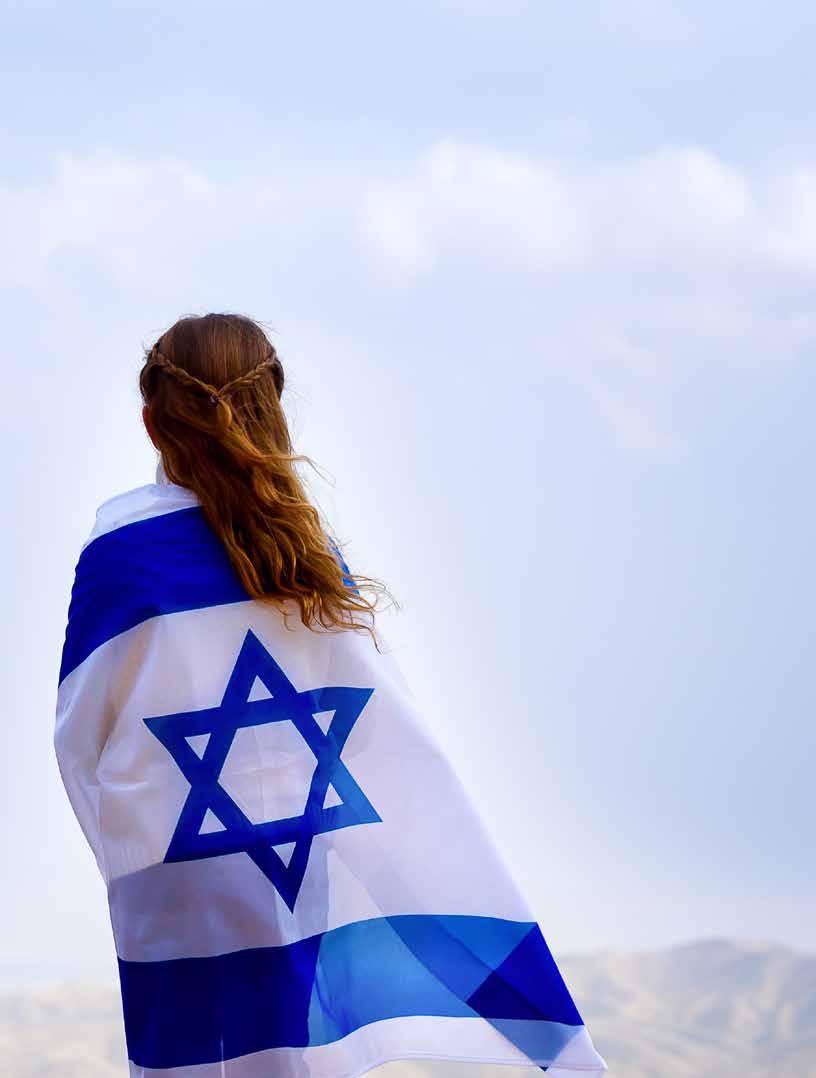
BY: TIFERET SCHAFLER
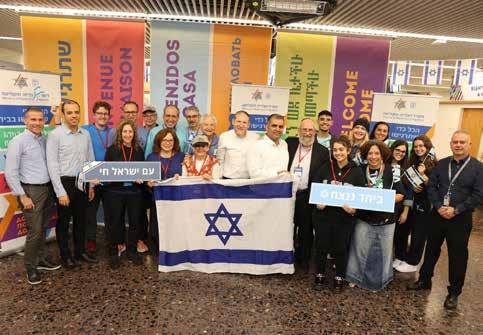
said Gilbert Grant, who made Aliyah with his wife on October 31, 2023 when asked why he feels safer in Israel right now than he did in America. The couple, currently in their 60’s, made Aliyah from White Plains, NY to Tel Aviv. Grant is an anesthesiologist who worked in NYU and Judy is a social worker who specializes in working with children who are victims of sexual abuse. Dr. Grant’s sentiment, and others’ who feel similarly, may be one of the only things to explain the reported 140% increase in interest in making Aliyah since October 7th, according to Nefesh
B’Nefesh. Yael Katsman, Vice President of Public Relations and Communications at Nefesh B’Nefesh, said this percentage is measured by how many people open Aliyah applications through their website. “The interest has been tremendous when compared to this same time last year,” said Katsman, who has also seen this trend in the past, in other times of war, terror, and even COVID-19. “There was a large increase in Aliyah during the COVID-19 years: Because people started using telecommunication more for their work and were commuting less, people were less tied down to
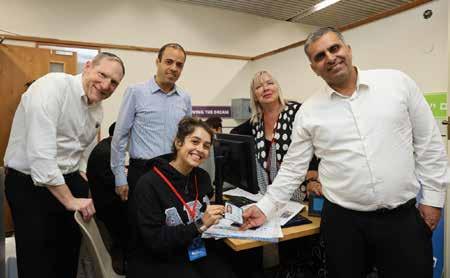
their physical jobs; many couldn’t see their families during that time period, and so there was more acceptance of the fact that there were ways to navigate maintaining relationships with family remotely…it was part of people realizing that the hundreds of obstacles that came to mind when thinking of Aliyah didn’t hold as much clout anymore.” At the height of COVID-19, Nefesh B’Nefesh saw a 206% increase in Aliyah applications.
What stands out about the current increase is the small time span in which it increased. Since October 7th, there have been 265 olim from the USA and Canada alone, and 40 more expected the week of the writing of this article. Included in this number are those that are already in Israel, for example, lone soldiers or those learning in seminary or Yeshiva. Nefesh B’Nefesh only handles Aliyah from the USA and Canada, so this number is likely greater in reality. Katsman reported that the Jewish Agency, which handles Aliyah eligibility and assists with the overall Aliyah process for olim all over the world, also reported an increased interest in Aliyah.
On October 18th Katsman attended the arrival celebration of an Aliyah flight carrying over 20 olim. Katsman recalled, “energetic dancing, singing… the Minister of Aliyah himself came to greet them, as well as the heads of Nefesh B’Nefesh, to show them that every person that comes, especially
during this time, is so important.”
Only ten olim postponed their Aliyah flights in the weeks since the start of the war. Katsman notes that the Aliyah process takes a lot of time and planning - timelines differ based on whether the olim are coming as single, a family, if they are born outside of their country of origin etc., but planning takes a bare minimum of 6 - 8 months. This makes it difficult to push off, even in light of current circumstances. Grant said he and his wife never considered pushing off the move. “We just wanted to be here (Israel)...I found it very challenging to be outside of Israel when it is going through such a difficult time.”
David Weinberg, a 35 year-old engineering teacher from New York City, made Aliyah to Jerusalem on Oct. 11th, only four days after the attack. He said he never considered pushing off his assigned date and was just glad his flight wasn’t canceled. David said after planning Aliyah for a year, he sees it, “just like any good relationship: you have to take the good with the bad.”
Katsman says any bureaucratic difficulties in making Aliyah during this time have their root in the same issuelack of manpower, due to much of the country being called up for army reserve service. For example, new olim must open bank accounts when they arrive, and banks aren’t working their normal hours. “The Ministry of Aliyah does somersaults to keep Aliyah going during times like these, even when half of the agency is called up to reserves...and when you have staffing shortages, you have to get creative to do the same amount of work with
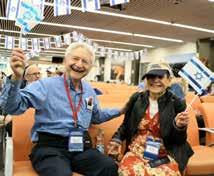
half the amount of people.” To illustrate, Katsman’s PR team is made up of three people. One woman is in the “notifying unit” of soldiers that are sent to personally tell the families of fallen soldiers of their deaths. There is another man, who has been called up for duty and she is currently the only one working on the team, despite having significant personal losses in her own family over the past few weeks. Katsman said that new staff can’t be hired, as it isn’t known how long the replacement staff would be needed. “It's been ‘business is open,’ but not ‘business as usual,’ said Katsman.
Many aspects of Aliyah have been streamlined and therefore not affected by the war. For example, olim are now getting their ID cards, cash grants, and healthcare choices at the airport, as well as a taxi provided by the Ministry of Aliyah to their new home. Many aspects of the move are pre-planned by the olim, like their car and home rentals, schools for their children, jobs, etc. “The process was incredibly smooth, especially despite everything going on,” said Grant. Weinberg said he felt the government went “above and beyond” to make his acclimation smooth; they even made appointments for him at banks and other offices. Additionally, he was assigned a pre-Aliyah advisor through Nefesh B’Nefesh that walked him through the process. Weinberg said that advisor is still in touch with him and has even invited him to the office to chat and offer additional assistance.
In Tel Aviv, Grant said though dayto-day life feels relatively normal now that missiles have decreased in frequency. There are constant reminders of the hostages still in Gaza, through

art forms like displays of empty beds at the plaza of some theaters, and the presence of the hostages' families that have camped out daily in front of the Kirya. Though the sense of pain and turbulence is present, Grant said he has witnessed a sense of resilience and unity that is awe-inspiring, manifested through the many volunteer opportunities in Tel Aviv alone, to help displaced families across the country. Grant and his wife have participated in several volunteer opportunities, one of which is a restaurant called J21 in Tel Aviv that has been preparing over 3,500 meals a day to deliver to families in need all over the country, according to Grant.
Grant said when Israelis hear he has just made Aliyah, he has often gotten a “thank you.” “I think having olim still coming during this time is a morale booster for the country, it shows we are committed to this country despite whatever is going on.”
Though Weinberg planned on studying to be a Rabbi when he made Aliyah, he is currently dedicating much of his time to volunteering. He is currently teaching a displaced Israeli student engineering remotely, helping to tie tzitzit to be sent to soldiers, and is a full-time Ulpan student. Despite Weinberg experiencing his first ever rocket attack – thankfully, intercepted by the iron dome- within his first two weeks of Aliyah, he feels “there was no better time to make Aliyah. I now have been able to truly experience what Israelis have had to deal with for so many years...and despite that, people have been hosting me for meals every single Shabbos since I’ve been here. It’s truly been beautiful.”
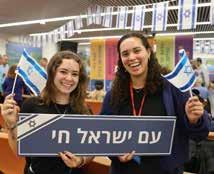
On November 9th, Nefesh B’Nefesh, in conjunction with the Jewish National Fund USA and Friends of the Israel Defense Forces (FIDF), launched “Operation Hug.”
The initiative offers a free, round-trip flight on El-Al for one parent of every lone soldier in active combat units.
The hope is that a “hug” from their loved ones might boost the soldiers’ morale and decrease the fear and loneliness they may be experiencing during this time. In a press release produced by the three organizations, they reported that there are approximately 5,000 lone soldiers; men and women, who currently serve in active and reserve service units without family of their own in Israel. Local transportation, sleeping accommodations, travel insurance, and food expenses are not included. As of writing this article, Yael Katsman, Vice President of Public Relations and Communications of Nefesh B’Nefesh, said there have been over 1,100 parents apply for the tickets through Operation Hug, and hundreds have already come to Israel to visit their children. The only caveat is that the army cannot guarantee the soldier's release, despite the parent’s arrival. Katsman related the story of one soldier’s parent, whose father got a text from his son as he was getting on the plane, stating he was going into Gaza and had to give in his phone. In the end, the son was not released during the duration of the father’s visit. Regardless, the father wrote a thank you letter, relating how enriching the experience was to be in Israel during this time. He was able to volunteer, go to the funerals of many soldiers, and feel a part of the country. He stated that he and his son felt comforted just by knowing they were together on the same ground during this time. “Lone Soldiers have left behind their friends, family, and support systems to serve their Jewish Homeland. Now it’s our turn to serve them and offer whatever measure of comfort we can,” said Russell Robinson, CEO of Jewish National Fund USA.
Thankfully many parents do get to give their hugs to their lone soldiers. Liz Rothstein from Baltimore, MD, said during her visit with her son, Elya, “I am so happy I got to come and see Elya during the war. I was able to bring him much needed army related accessories, such as a flashlight for his gun and an upgraded magazine holder and holster. Being together is giving us both much needed Chizuk during this stressful time.”
Judi Dimbert from Teaneck, NJ posted on her Facebook page, “I just landed back in America from visiting my Lone Soldier in Israel. Thank you @Nefesh b’Nefesh and Operation Hug for giving me this opportunity.” Shifra, her daughter, is serving in the IDF and really appreciated the opportunity to get a hug from home. “Having my mom in Israel was an amazing surprise, even more so given the current situation. She landed exactly when I most needed a hug, and for that I’m most grateful.”
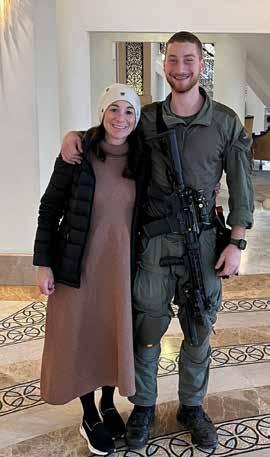
korenpub.com
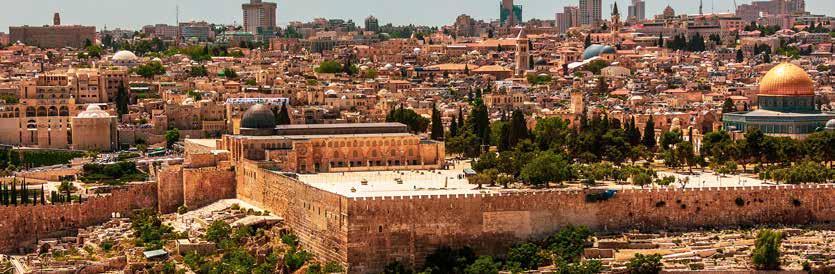
For more than 60 years, Koren Jerusalem has been publishing the finest Jewish books in English and Hebrew. With an eye for beautiful design and a reputation for editorial excellence, Koren is a favorite the world over.
For more than 60 years, Koren Jerusalem has been publishing the finest Jewish books in English and Hebrew. With an eye for beautiful design and a reputation for editorial excellence, Koren is a favorite the world over.
With more than 70 new titles published in 2023, including an expanding bookshelf in Spanish and French , make sure you are up to date for everything still to come.
With more than 70 new titles published in 2023, including an expanding bookshelf in Spanish and French , make sure you are up to date for everything still to come.