Jason Watson, 334.328.5189 jason@riverregionboom.com
The Gift of Presence
This month kept pulling me toward one word: presence
Not the rushed, distracted version we all fall into sometimes. Real presence. The kind that slows down enough to notice people, linger in conversations, show up for family, encourage someone hurting, or simply make room for what matters most. That spirit runs all through this issue.
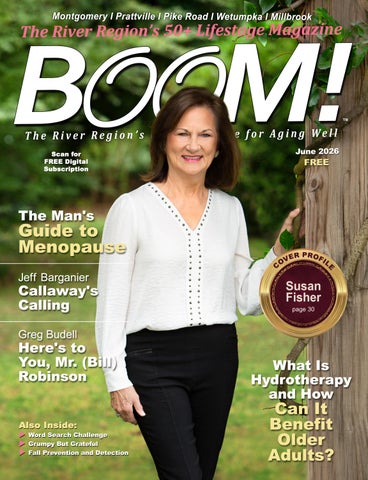
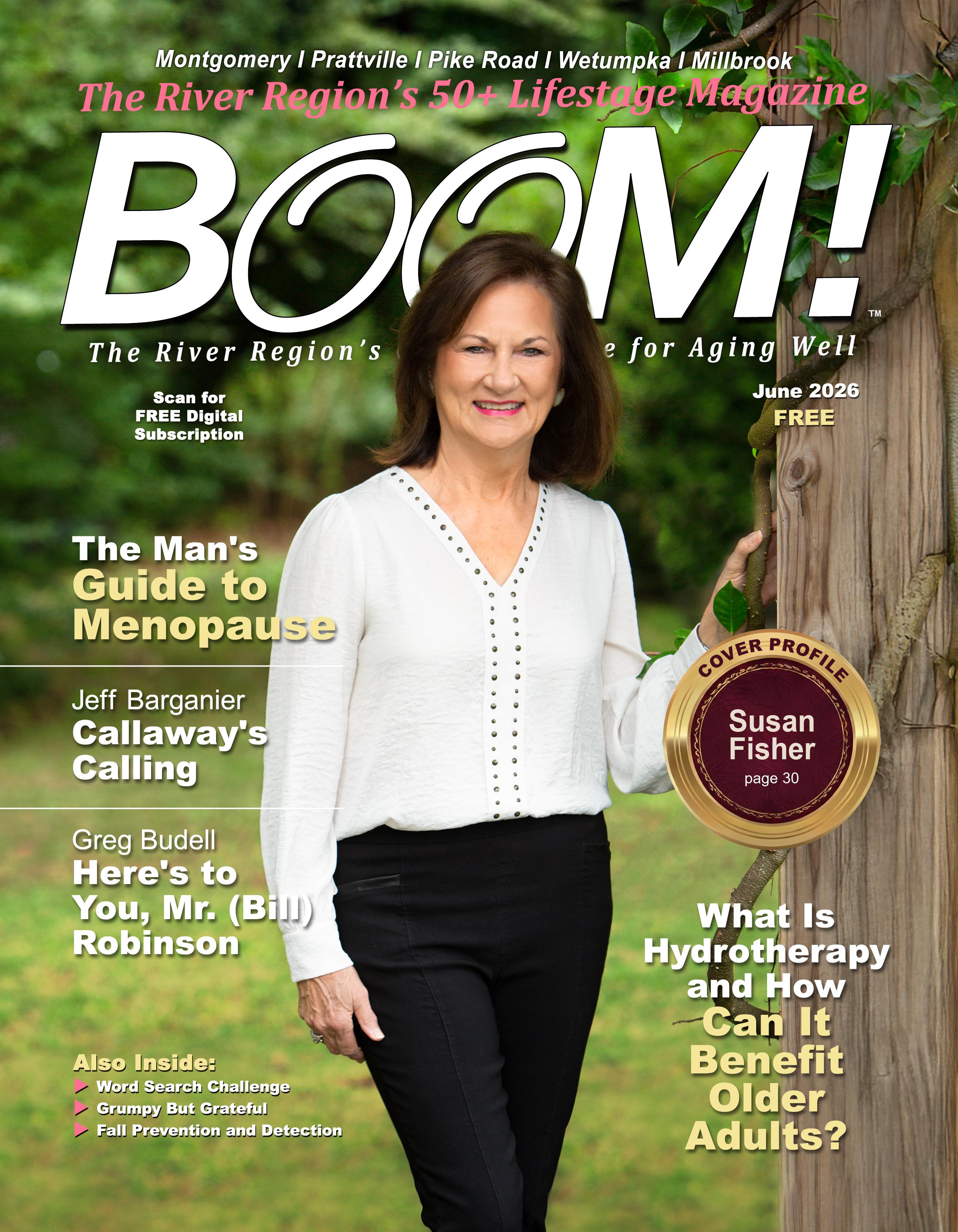
Our cover profile with Susan Fisher is one of the most thoughtful and quietly powerful conversations we’ve shared in a long time. Susan talks openly about faith, family, cancer, retirement, relationships, and learning how to “linger” in everyday moments instead of constantly rushing toward the next thing. There’s such wisdom in her perspective, especially in a culture that often measures life by productivity instead of presence.
What struck me most is that Susan doesn’t describe this season of life as slowing down. She describes it as paying closer attention. That feels important. Because many of us reach this stage of life and realize how easy it is to spend years managing schedules, responsibilities, careers, obligations, and endless to-do lists without fully savoring the people sitting right in front of us. Susan’s story reminds us that some of life’s richest moments happen when we finally stop hurrying through them.
This issue also carries several stories centered around relationships, resilience, and human connection in very different ways. Greg Budell introduces us to Bill Robinson, a Vietnam POW who spent an unimaginable 2,703 days in captivity and somehow emerged with gratitude, humor, humility, and perspective still intact. It’s one of those stories that recalibrates your own frustrations in the best possible way. Jeff Barganier takes us to Callaway Gardens, where beauty, restoration, hospitality, and history all seem woven together into something larger than landscaping alone. His writing always has a way of uncovering meaning beneath the surface.
We’re also sharing a feature called A Man’s Guide to Menopause: What She Needs You to Know. I think a lot of couples will appreciate the honesty and practicality of that piece. One of the realities of aging well is recognizing that every season brings new challenges, adjustments, and opportunities to love each other better. Sometimes understanding alone can change an entire relationship dynamic. And in many ways, that’s what this issue keeps circling back to. Showing up well. Loving people well. Paying attention while we still have time.
As Susan says in her interview, “The soul rarely moves at the pace of a calendar.”
That line stayed with me. Summer has a way of speeding life up — vacations, camps, trips, grandchildren, projects, schedules, heat, and noise. But maybe this month is also a reminder to slow down enough to actually enjoy the people we’re doing life with. To linger a little longer at the dinner table. To answer the phone call. To make the visit. To take the walk. To say the encouraging thing. To dance in the kitchen if the right song comes on. Those moments often become the things we treasure most later.
As always, thank you for reading River Region BOOM! and allowing us to tell stories that celebrate aging well, living fully, and staying connected to what matters most. And if you know someone who would make a great cover profile, I’d love to hear from you at jason@ riverregionboom.com.
Travel Experiences with Jeff Barganier
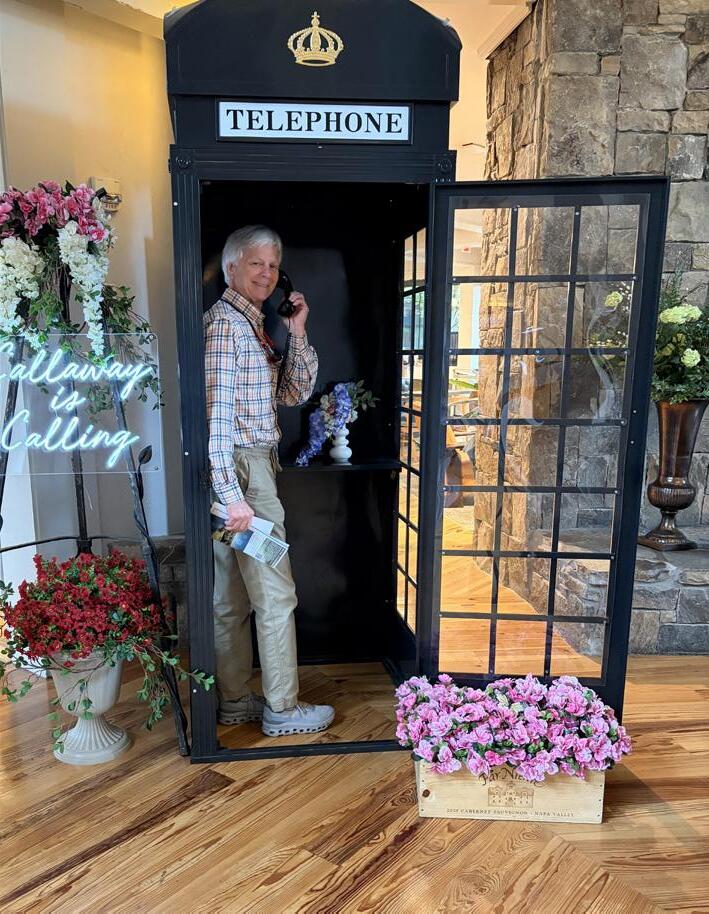
Photography provided by Jeff Barganier
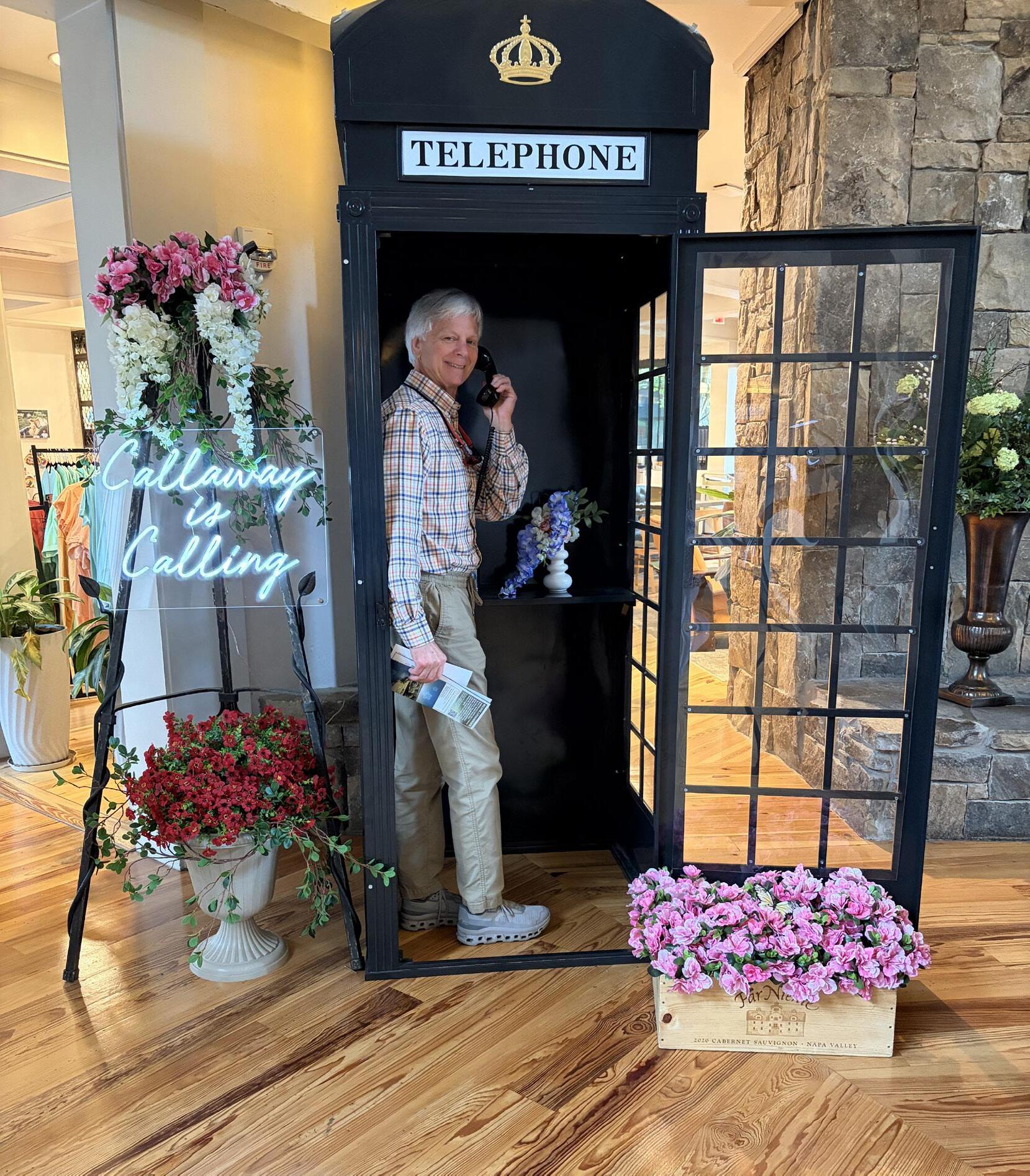
Callaway's Calling
The story of Callaway Gardens is reminiscent of Bible prophecy. Isaiah 35:1 NIV: The desert and the parched land will be glad; the wilderness will rejoice and blossom. According to horticulturist Chris Hall, “Mr. (Cason) Callaway was into conservation. This property was burnt-out cotton and corn production land. He bought it and started immediately trying to rebuild the soil and plant native plants. The garden itself is 2,500 acres. But there are 1,700 acres of native plants.”
Serenaded by an aerator splashing water into a pond below us, we stood on a terraced hill and listened as Chris discussed Callaway’s interesting history and the many facets of managing the gardens. “I got into the horticulture department and started learning as much as I could. I’ve enjoyed learning from past employees, like Patricia Collins. She knows absolutely everything. Patricia was our director of education, here from the very beginning, and knew a lot. I never liked public speaking. But she said, ‘You’re gonna do it. I’m giving you an azalea talk, and you’re gonna do it.’ I appreciate
been here since ‘52. It originally housed a daycare. Families from Atlanta would come. The parents could go out into the gardens and partake in walking on natural trails. The infants—and I’ve seen old pictures—had cribs everywhere in there. They had nannies dressed up in nurse-type uniforms. The pavilion hearkens back to those old days.
“Now, Overlook Garden did not get here until 1971. These oak trees you see around here are white oaks. Mrs. Callaway collected all of the acorns, and when they still lived in LaGrange, she grew them at her house from acorns.
Patrica for pushing me into this and making me learn more.
“Callaway opened in 1952. But construction started in the late forties. The azalea gardens were not here in ‘52. It was mainly an outdoor getaway for people from Atlanta. What’s original is a horseshoe-shaped pavilion that’s
When the Callaways moved to Blue Springs over here in Hamilton, she brought them with her and planted them at Blue Springs. Then, when they bought this property and started to develop it in the fifties, she had someone dig up those oak trees and plant them here. All these oak trees in the median and both sides of the parking lot have
been here since 1952. Mrs. Callaway loved to garden and the quintessential Southern magnolia. She loved the trees and the flowers. She wanted a magnolia tree for her birthday one year, so Cason, who didn’t do anything on a small scale, bought her one large ball burlap magnolia tree and between 3000 and 4000 one-gallon magnolias that she could plant out and about. We have on the property between Blue Springs and here thousands of magnolias. That was Mrs. Callaway’s tree.
“They built the gardens. People started coming. Mr. Callaway wanted to expand it, to bring more people in. In 1971, he started building the original azalea gardens. This azalea garden is about 36 acres. There are roughly four thousand hybridized azaleas in (Overlook Garden). Scattered throughout the gardens are about 1000 to 1200 native
azaleas. They collected azaleas from all over. They took cuttings and built a nursery to house them before they could even build the gardens. (The nursery) was built in the late sixties just to house these plants for this garden.
“The Callaway Brothers Azalea Bowl was in 1999. All those azaleas came from cuttings from this garden. There are two design philosophies between these two gardens. In the seventies, they just randomly planted azaleas out into this (Overlook) Garden. It’s like a kaleidoscope of color. But when they built the Callaway
Brothers Azalea Bowl, they wanted pattern. It was a flow of color. And that’s how the Brothers Azalea Bowl is—whenever you walk down through it, the whites will flow into the light pinks, into the darker pinks, to hot pinks. And it’s really pretty. But the Overlook Garden is also beautiful because of its different colors.
“There are very old azaleas in this garden. Some are getting to the end of life, growing since 1952. Down by the lake, they are absolutely huge—twelve feet tall. We treat the Overlook Garden differently than we do the Brothers Garden. Over here, we do not rejuvenate azaleas.
many bedding plants around here that they eat our flower beds,” Chris said. The biggest problem Chris has is armadillos and deer destroying plants set out at the Butterfly Center. The deer paw the ground and dig up tulip bulbs. Armadillos plow the ground like tillers. One time, the deer set off the water sprinkler and flooded the bed, destroying it. Chris said they have every kind of critter except feral hogs … so far. But practically every day he has to repair deer and armadillo damage and replant.
crossing the road, four little kits behind her. They were just crawling all over each other, playing, starting their day, mother getting out, having fun. And this morning, I saw a little kit on that side of the garden, and he was just playing—so beautiful.”
Callaway’s gracious staff creates a pleasant and inviting atmosphere. They demonstrate a love for guests and for one another. It’s Callaway Resort & Gardens' legacy and the charm that keeps people returning for generations, when they remember and hear Callaway calling.
Photos Provided by CG
We let them grow. These are the originals, so we let them get big as they want. But in the Callaway Brothers Azalea Bowl, we prune them, keep them nice and tidy. Whenever they get too big, we do a rejuvenation cutting to allow them to regrow, to keep them on the smaller size.
“We have tons of deer. They don’t really touch the azaleas. We plant so
“There was a dead tree off the trail. About eighteen feet up was a big hole. Whenever I would find a bat, I’d take it up a
F A E S
Jeff Barganier is a novelist, travel writer and speaker. He travels far and wide upon the slightest excuse for something interesting
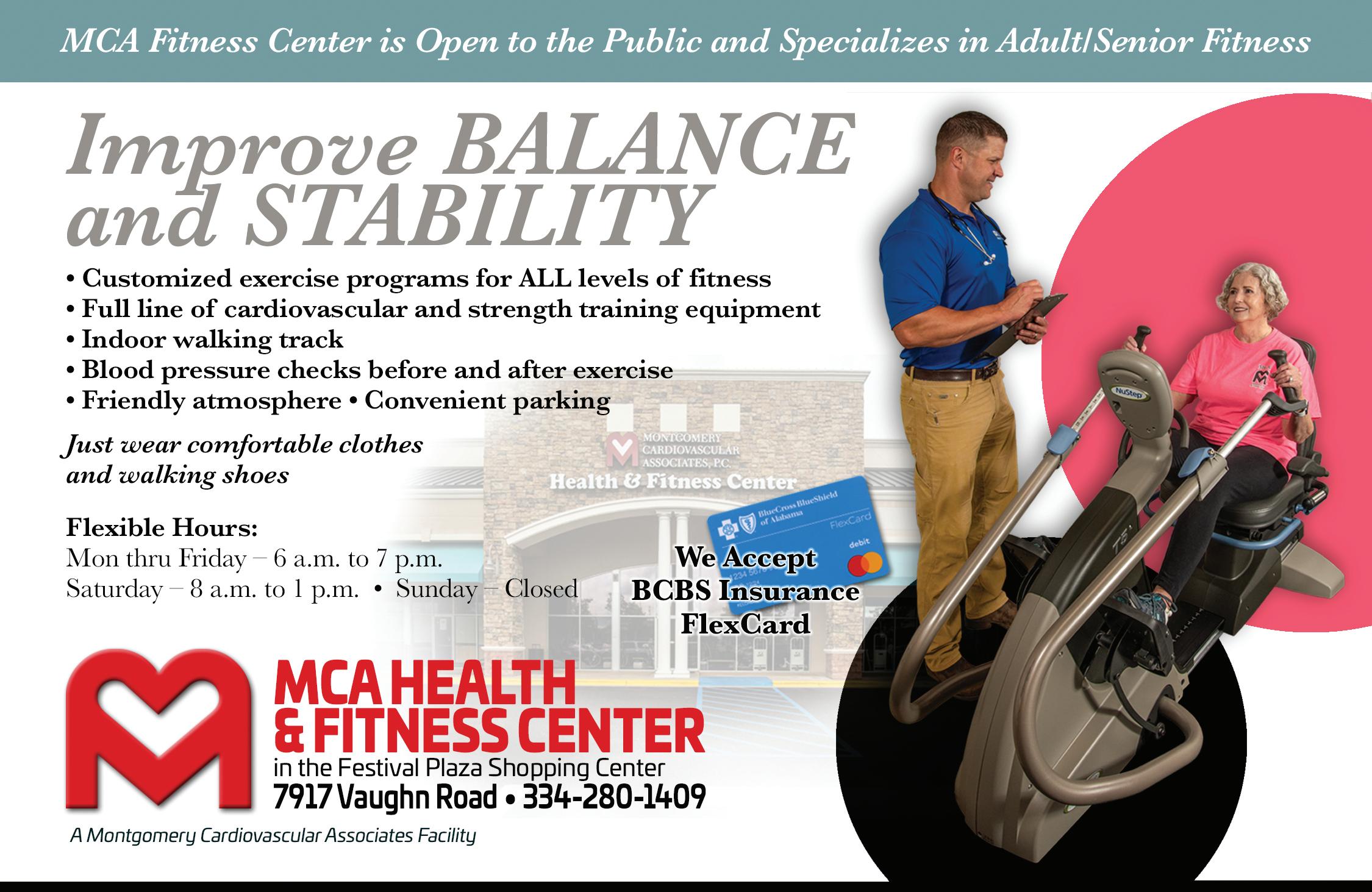
Fall Prevention and Detection
Fall prevention in older adults is a major health priority because falls can lead to serious injuries, reduced independence, and even death. Effective prevention usually involves addressing physical, environmental, and medical risk factors together.
Some key risk factors include muscle weakness, poor balance, vision impairment, medications (such as sedatives, blood pressure medications, pain medications, etc.), chronic health problems (Parkinson’s disease, arthritis, chronic pain, etc.), cognitive impairment (Alzheimer’s disease, dementia, or general memory loss), and unsafe home environments (throw rugs, stairs, high beds, or the need for handrails and other assistive devices).
individual’s needs and abilities, and should be selected in consultation with a healthcare provider. Wearing proper footwear is another important part of reducing fall risk.
There are several strategies that can help manage fall risks. One of the most effective is exercise and physical activity, including strength training, balance exercises, and flexibility training. Regular exercise is one of the best interventions for fall prevention, although the type of exercise may look different for each person. Some individuals may need chair exercises, while others may be able to stand while holding onto a chair for support, and some may even participate in gymbased programs.
Assistive devices may also be recommended, depending on the
Vision care is another important part of fall prevention. Regular eye exams, updated eyeglass prescriptions, and ensuring that living spaces have adequate lighting can all help improve safety and reduce fall risks.
A medication review is always a good idea and should be done periodically by a healthcare provider, preferably the person’s primary care provider. When appropriate, medications that may increase the risk of falls — such as sedatives, blood pressure medications, or pain medications — may be reduced or discontinued, but only under the guidance of a healthcare professional.
Fall detection devices can also help older adults receive assistance quickly after a fall, especially if they cannot reach a phone or press an emergency
button. The best device will depend on the needs of the individual or loved one using it, including whether they spend most of their time at home, are active outdoors, are comfortable with technology, and are willing to wear the device consistently.
Important features to consider in fall detection devices include automatic fall-detection accuracy, GPS tracking, battery life, waterproof or water-resistant design, and 24/7 monitoring services. Modern systems often use sensors that measure acceleration, vibration, and movement patterns to identify falls and alert caregivers or emergency services. Some devices also offer two-way communication so that the individual is not left alone while waiting for help to arrive.
The risk of falls presents many challenges, but there are strategies that can be implemented now to help prevent falls and ensure that help is available quickly if a fall does occur.
Senior Law Solutions, LLC offers a variety of opportunities to assist individuals and their families with aspects of Elder Law Care, Estate Planning, and Life Care Planning with individualized plans.
If you have questions or want to learn more, visit www.seniorls.com or call 334. 758.9400. Senior Law Solutions is located at 1043 Ambassador Court, Montgomery, Alabama 36117.
If you hear the word "hydrotherapy” and immediately think, “expensive spa treatment,” you might be forgiven. The word itself sounds luxurious—like one you’d use while lounging on a yacht off the coast of Santorini.
Yes, hydrotherapy can be luxurious. No, it’s not just for people with boundless budgets. In fact, in its most basic form, hydrotherapy (from the Greek words for “water” and “treatment”) can be as simple as taking a hot bath in a jetted tub in your own home.
“For centuries, health and wellness practitioners have pointed to the soothing and healing powers of water,” explained Gretchen Dueñas-Tanbonliong, Associate Director of Health and Wellness at NCOA. “From the early Roman baths to Japanese hot springs and beyond, people all over the world, and from of all walks of life, have enjoyed the many benefits of hydrotherapy.”
People of all ages, too. And, as you’ll learn in this article, hydrotherapy can be particularly helpful for those of us who are dealing with the many aches, pains, and illnesses that come with getting older. Medicare may even pay for it if a doctor says your hydrotherapy is medically necessary.
That said, it’s important to know that hydrotherapy is a naturopathic (alternative) treatment that isn’t regulated by the U.S. Food and Drug Administration. And there are some key safety considerations to be aware of, too. We cover it all below.
What is hydrotherapy?
Simply put, hydrotherapy uses water to address a variety of health conditions and symptoms. You might see other words for it, like “aquatic therapy” or “pool therapy.”
Does hydrotherapy work?
Yes, it can. A lot depends on what you’re using it for—and how you personally judge its effectiveness. Hydrotherapy treatment won’t cure you of anything. But it can help you feel better, physically and mentally.
“I like to advise people to be realistic about it and to set their expectations accordingly,” Dueñas-Tanbonliong said.
For example: let’s say you get your knee replaced. Hydrotherapy won’t magically erase your need to do intensive physical therapy. When it’s used as part of your overall care plan, however, it might help you recover more quickly between sessions or help you progress faster and with less discomfort.
Or, perhaps you have low back pain that keeps you from sleeping well. There are many potential causes for your pain—like a slipped disc; osteoporosis; poor spinal alignment; diminished
core strength; and even chronic stress. Hydrotherapy will not address these underlying issues. On the other hand— much like upgrading to the best mattress for back pain would—it can ease the associated aches, soreness, and spasms. It can also help you relax. And both of these things can help you sleep better.
“Ask your doctor, licensed physical or occupational therapist, or other trusted health care provider whether hydrotherapy can benefit you,” said Dueñas-Tanbonliong. “If the answer is ‘yes,’ then you can move forward with a treatment plan under their supervision. This increases your chances for a positive outcome.”
Which leads to a final point: be wary of claims about hydrotherapy that seem outlandish. They probably are.
“Because the FDA doesn’t regulate the treatment or its practice, there are a lot of questionable wellness influencers out there who are eager to make a buck off false promises,” Dueñas-Tanbonliong warned. “Hydrotherapy won’t regrow your hair, restore your virility, or repair your gut. You can protect your wallet, health, and peace of mind by checking any shadysounding claims with your physician.”
How does hydrotherapy work?
Alone or together, hydrotherapy takes advantage of four principles:
• Water temperature—to soothe inflammation, ease stiffness, and promote relaxation.
• Water pressure—to target specific areas of the body that are sore or tight.
• Buoyancy—to provide additional support and ease strain on joints and muscles.
• Resistance—to help build strength, coordination, and balance.
Depending on the situation, hydrotherapy may use hot water, cold water, or both. You might stand under or in front of the water (as in a shower or hose)—or you might get into it (as in a tub or pool). During hydrotherapy, you might be completely still and relaxed—or you might perform gentle movements on your own or with a trained facilitator. It all depends on your individual needs and goals.
your balance, adding aquatic therapy to your rehabilitation plan may be a good idea. Building up your strength in the pool allows you to focus on control and stability without the fear or risk of falling and injury.
The most typical forms of hydrotherapy use: soaking tubs, jetted whirlpools, and specially equipped therapy pools.
Hydrotherapy benefits
With a few exceptions (more on this below), hydrotherapy is available to nearly everyone. In contrast to prescription or over-the-counter drugs and devices—which may cause negative interactions—it’s often easily paired with treatments you’re currently using. And if you can’t get to or afford the cost of paid sessions, you can even do some forms of hydrotherapy at home.
Its many benefits include:
Pain relief: Cold water can soothe inflamed muscles and promote their repair. Hot water can help relax and loosen sore muscles and joints. And pressurized jets can offer targeted massage for cramped, tight, or spasming areas.
Improved mobility: For many of the same reasons listed above, hydrotherapy can promote easier movement. This can be especially helpful if you’re recovering from joint replacement surgery or have a neurological condition that affects your gross motor function.
Improved balance: If you’ve had a surgery or a medical event that affected
What conditions can hydrotherapy help?
If you live with an illness or injury that causes pain, affects your balance, or reduces your mobility, you likely can benefit from hydrotherapy. These conditions include—but certainly aren’t limited to:
Arthritis: There are more than 100 different types of arthritis. Most involve inflammation, swelling, and tenderness in the joints and surrounding tissues. Arthritis can make it difficult to move around and nighttime pain can interfere with sleep. (See also: The Best Mattress for Arthritis)
Fibromyalgia: Fibromyalgia is a chronic condition most often experienced as “everywhere pain.” Muscles, joints, and soft tissues throughout your body seem always to ache, which leads to fatigue, poor sleep, and other disturbances. (See also: The Best Mattress for Fibromyalgia) Parkinson’s disease: Parkinson’s disease (PD) is a progressive brain disease that affects movement and coordination. Common symptoms include muscle stiffness, difficulty walking, loss of balance, tremors, insomnia, and depression.
Stroke: Physical therapy is crucial for regaining function after a stroke. Thanks to water’s buoyancy and resistance,
doing these exercises in a pool can help patients more safely and confidently work on their strength, balance, and coordination.
Types of hydrotherapy
Aquatic therapy: This type of hydrotherapy typically happens in a specialized pool that can accommodate and support people with a range of abilities. For instance, the pool may have an assistive lift to help you into and out of the water; grab rails to support your balance; and a variety of exercise equipment to help you build strength and stamina. You may work oneon-one with a licensed physical therapist or in a group as part of an exercise class. Aquatic therapy is helpful for people recovering from surgery or injury, as well as for those who want to stay fit and need a low-impact way to do it.
Immersion therapy: This type of hydrotherapy can happen anywhere there’s a tub—whether at home, at the gym, in a physical rehabilitation center, or somewhere else. You can use a regular bath tub, a deep soaking tub, or a jetted whirlpool. The water can be hot or cold; you might add Epsom salts or a scented “bath bomb.” A therapist or doctor may help you design a program, though it’s not necessary. Immersion therapy is helpful for people seeking relief from joint and muscle pain, inflammation, or overall soreness. Because it can promote relaxation and a sense of calm, it also may improve sleep.
How can I access hydrotherapy?
“The easiest way is to do it at home,” NCOA’s Dueñas-Tanbonliong suggested. “And the most affordable way is to do it at home, using a tub you already have in your bathroom. You can use ice cubes or packs to get the water really cold; you can fully open the tap and blast water on sore feet and lower legs; you can add scents. And the tub is always there—you don’t have to travel to enjoy its benefits.”
Still, standard home tubs can be limited. Maybe you want or need deeper water, whirlpool jets, or both. If your
space and budget allow, you might consider upgrading your bathroom. Many of the best walk-in tubs include hydrotherapy features; this might be a smart investment if you live with arthritis or chronic pain. (Keep in mind, however: Medicare does not cover walk-in tubs).
If home hydrotherapy isn’t practical, you can type “hydrotherapy near me” into your internet search engine for a list of gyms, aquatic centers, and other locations that offer sessions for the general public. Prices can vary widely, so it pays to shop around before signing up.
Finally, if you’d like a structured rehabilitation program, ask your doctor for advice and a referral. Your local hospital may include or contract with a hydrotherapy facility specifically for this purpose. If not, some physical therapy clinics may offer it in-house or send their certified practitioners to communitybased aquatics centers where they conduct sessions with their patients. And Medicare may even cover it. If your doctor says your hydrotherapy is medically necessary, Part B will pay for a set number of sessions as outlined in your policy.
Hb wthermia (body temperature that’s too low). That’s why it’s a good idea to limit the time you spend in heated or chilled tubs.
Are there certain people who shouldn’t do hydrotherapy?
Yes. Some people may be at higher risk for side effects like dizziness, shortness of breath, or infections. Talk to your health care provider before trying hydrotherapy if you:
• Recently had a joint replacement
• Have an open cut, wound, or incision
• Have asthma or lung disease
• Have high or low blood pressure
• Have vertigo
• Take medications that make you drowsy or lightheaded
• Are sensitive to chlorine or other common pool chemicals
Still, many of these restrictions are temporary. Others may simply require an accommodation to make sure you can safely take part in hydrotherapy.
Courtesy of ncoa.org.
Here's to You, Mr. (Bill) Robinson
Before I introduce you to Mr. Robinson, ponder this number: 2,703.
2,703 would make for a nice take-home paycheck. For purposes of this story, let’s convert the dollars into days.
What can happen in that span of time? 2,703 days - roughly 7 years and 4 months (or about 7.41 years). To put it in perspective, this duration represents more than a quarter of many people’s adult working lives, a full cycle of primary education plus some extra, or enough time for profound personal transformation. Breaking it down:
* 7 years and 148 days (accounting for typical calendar years).
* In hours: approximately 64,872 hours.
* In minutes: over 3.89 million minutes.
* In seconds: roughly 233.5 million seconds.
That’s long enough for a child in kindergarten to finish elementary school and enter middle school. It’s the span in which many people complete a university degree and start a career, or where couples build a home, have children, and watch them grow from infants into school-aged kids. Someone who exercises consistently could dramatically transform their physical health, perhaps running the equivalent of circling the Earth multiple times. Historically, 2,703 days covers events like entire U.S. presidential terms
(1,461 days each) plus extra time for transitions and new administrations. It’s longer than many major wars or economic cycles. In technology, it’s enough time for smartphones to evolve through several generations, for social media platforms to rise and mature, and for breakthroughs in AI, medicine, or renewable energy to move from concept to widespread adoption. In short, 2,703 days is neither fleeting nor endless—it’s a formative chapter. It’s long enough for significant achievements and meaningful change, yet short enough to feel like it passes in the blink of an eye when looking back. Whether it’s a period of patient waiting, steady building, or unexpected adventure, those roughly seven and a half years shape identities, legacies, and futures in ways both visible and invisible. Wow!
My new buddy, William “Bill” Robinson, spent 2,703 days as a POW in the
infamous Hanoi Hilton and North Vietnam prison camps.
Bill was one of 9 honorees at this year’s Gathering of Eagles event in Montgomery.
Each year, I narrate brilliantly produced videos (by local wizard Larry Carter) to honor Eagles selected for extraordinary service to America. Bill earned his wings this year along with Fred Haise of Apollo 13 fame, Jessica Cox (born without arms but against all odds became the first armless pilot), and other flyers, test pilots, and astronauts of extraordinary accomplishment.
Another local hero, Colonel Joe Panza, brought Bill to my radio studio for an interview recently, and it became an hour of mesmerizing testimony to the human spirit and humility. I was in awe of this man!
First, from the GOE program- Robinson and his crew had flown many rescue missions before they were shot down on September 20, 1965, while trying to rescue Capt Willis Forby, an F-105 [F One Oh Five] pilot who had been shot down while attacking a railroad bridge near Ha Tinh, North Vietnam.
Robinson’s pilot was killed while trying to evade capture, but the rest became prisoners of war. Together, they endured
more than seven years of captivity in North Vietnam, being routinely moved, being held in multiple camps, and finally in the prison known as the Hanoi Hilton; surviving torture, starvation, and psychological brutality.
Life in captivity demanded resilience, discipline, and moral courage. Robinson relied on faith, humor, and the quiet support of fellow prisoners. Through shared hardship, small acts of defiance, and mutual support, they preserved their dignity and sense of purpose.
When at long last released on February 12, 1973, instead of bolting for civilian life, Bill Robinson served our country another 12 years, becoming an accomplished Huey helicopter pilot before retiring.
Since then, Bill has been in demand as a motivational speaker focusing on resiliency, survival, and other lessons learned during
7+ years of captivity. Jeff Probst will never talk to a Survivor of Bill Robinson’s pedigree.
What struck me most was Mr. Robinson’s utter lack of regret over any of what he endured. He retains the great sense of humor that helped him make it through 2,703 days. When I asked what he chose for his first real meal in 7 years, he chuckled and said, “Whatever we wanted. We asked for 12 eggs, and the cook said,‘We’ll start with 6 and have the next 6 ready in a few minutes.’ Waiting a few minutes for Bill? No big deal!
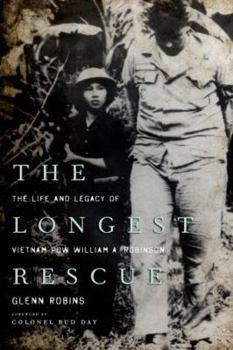
Robinson’s story is chronicled in a bookThe Longest Rescue: The Life and Legacy of Vietnam POW William A. Robinson.
His 2,703 days of captivity remain the longest of any enlisted man in American history.
At the end of the interview, Bill’s love of life was exploding through the radio. Me? I was choking back tears of gratitude to be in the presence of this remarkable man.
Next time you’re delayed a few minutes by traffic or slow service, please think of Bill. Better yet, next month, when we’re celebrating America’s 250th birthday, pop something cold with your friends and family and lift a toast to this man and his fellow Eagles and all who served.
We owe them a debt of gratitude bigger than any number.
Greg Budell has lived in Montgomery for 20 years. A 50+ year veteran of radio, TV and writing, Greg hosts the Newstalk 93.1FM Morning Show with Rich Thomas and Jay Scott, 6-9 AM Monday - Friday. He returns weekday afternoons from 3-6 PM for Happy Hour with Pamela Dubuque and a variety of sidekicks. His favorite topic is life! Greg can be reached at gregbudell@aol.com.
At some point, you may start to notice changes in your wife. Maybe she’s not sleeping well. Maybe she’s more tired than usual, or more easily overwhelmed. You might notice shifts in mood, energy, or even memory, things that don’t quite add up or feel out of character.
And if you’re like many men, you may not be entirely sure what’s going on or what to do about it. That’s where menopause comes in.
It’s something every woman goes through, yet it’s often misunderstood, under-discussed, or dismissed altogether. And while there’s a growing amount of information available for women, many men are left trying to figure it out on their own. If that’s you, here’s a simple place to start.
What Menopause Actually Is
Menopause isn’t a single moment—it’s a transition. Most women go through a phase called perimenopause first, which can begin in their 40s (sometimes earlier) and last for several years. During this time, hormone levels, particularly estrogen, start to fluctuate. This can bring a host of changes for your wife physically, emotionally, and mentally.
Eventually, menopause is reached when a woman has gone 12 consecutive months without a menstrual cycle. After that, she is considered postmenopausal. But for most couples, the changes you notice happen during perimenopause, not just after menopause itself. And those changes can be significant.
What She May Be Experiencing
Menopause doesn’t look the same for every woman, but there are some common symptoms that can affect daily life in real ways.
Physically, she may be dealing with things like poor sleep, night sweats, hot flashes, headaches, or fatigue that doesn’t go away with rest. She may feel different in her body, navigating less energy, more discomfort, or changes she didn’t expect. Even things like the way her body metabolizes food and sex drive can change.
Emotionally, it can be just as challenging. Hormonal shifts can impact mood, leading to increased anxiety, irritability, or a sense of feeling overwhelmed. Some women describe brain fog or difficulty concentrating, which can be frustrating and discouraging.
From the outside, these changes can be confusing. But from her perspective, they’re very real, frustrating, and often exhausting.
Why This Matters for Your Relationship
Without understanding what’s happening, it’s easy to misinterpret these changes. You might assume she’s stressed,
distracted, or upset about something specific. You might take mood shifts personally or feel unsure how to respond when things feel off.
But menopause isn’t about a lack of effort or interest. It’s a biological transition that affects both body and mind. Understanding that can shift the way you respond from frustration to empathy. And that shift matters.
A Simple Game Plan
You don’t need to become an expert on menopause overnight. But a few intentional steps can make a meaningful difference for both of you.
1. Start by learning the basics. Taking the time to understand what menopause is and how it affects women shows that you care. It also helps you respond more thoughtfully instead of reacting out of confusion.
2. Pay attention to what she’s experiencing, and take it seriously. Even if you don’t fully understand it, acknowledging that it’s real goes a long way. Dismissing symptoms—even unintentionally—can create distance.
3. Instead of trying to fix things, ask what would help. Some days she may want to talk. Other days, she may just need patience, flexibility, or a little extra support. A simple, “What do you need right now?” can open the door to connection.
4. It also helps to stay flexible. Plans may change. Energy levels may shift. What worked before may not always work now. Adapting together without frustration can reduce stress for both of you.
5. Don’t underestimate the value of helping with everyday responsibilities. When sleep is off and energy is low, even small tasks can feel overwhelming. Stepping in where you can without being asked shows support in a very tangible way.
What Not to Say
Sometimes, what you don’t say matters just as much. Comments like “You’re overreacting,” “It’s not that big of a deal,” or even joking about mood swings can feel dismissive, even if that’s not your intention. A better approach is simple: listen, acknowledge, and respond with care.
You’re In This Together
Menopause is a natural part of life, but that doesn’t mean it’s easy. For many women, it’s a season of significant physical and emotional change. And for couples, it can be a time that requires more understanding, communication, and patience than usual. The good news is, you don’t have to navigate it perfectly. You just have to stay engaged.
When you make the effort to understand what she’s experiencing and show up with empathy and support, you strengthen your relationship in a way that lasts far beyond this season. At the end of the day, this isn’t just about menopause. It’s about showing up for each other when it matters most.
Rebecca Hastings is a freelance writer and frequent contributor.
We invite her to reconnect with nature, while enjoying a
• Arts & Crafts • CIT Program • Campfires every night
• Riverview Refinement & More!
Vince Gill: 50 Years from Home 2026 Tour
June 22 at 7 PM I Montgomery Performing Arts Centre
One of the most popular and most recorded singers of the past thirty years, music icon Vince Gill today announced a portion of his upcoming tour dates. The 22-time Grammy winner and highly acclaimed musician, songwriter, vocalist, and producer will embark on a summer tour beginning June 18 and including a six-night residency in Nashville at the historic Ryman Auditorium. Ticket Prices: $66 - $136 Additional fees may apply. Visit https://mpaconline.org/vince-gill/.
Prattville Cruise In I June 20 from 4–7 PM I 124 W Main Street
The City of Prattville and the Heart of Dixie Mustang Club present the Prattville Cruise In, a lively car show packed with classic and unique rides. A free concert begins at 6:00 p.m. For more information, contact Greg Bixler at 334-313-3852 or bixlerslawnservice@gmail.com. Visit https://prattvilleal.gov/departments/special-events/prattville-cruise-in/.
Montgomery Hosts 12th Annual Dragon Boat Festival
June 13 I 8:30 AM to 3:30 PM
We are excited to welcome our past teams back to the water and introduce new teams to Dragon Boat racing. The festival will be held on Saturday, June 13th in Riverfront Park on the beautiful Alabama River from 9am til around 3pm. The festival is free to attend for spectators and fans. The highlight of the festival is the exciting dragon boat races. Long, narrow boats decorated with dragon heads and tails are paddled by teams to the beat of a drum. Visit montgomerydragonboats.com for more information.
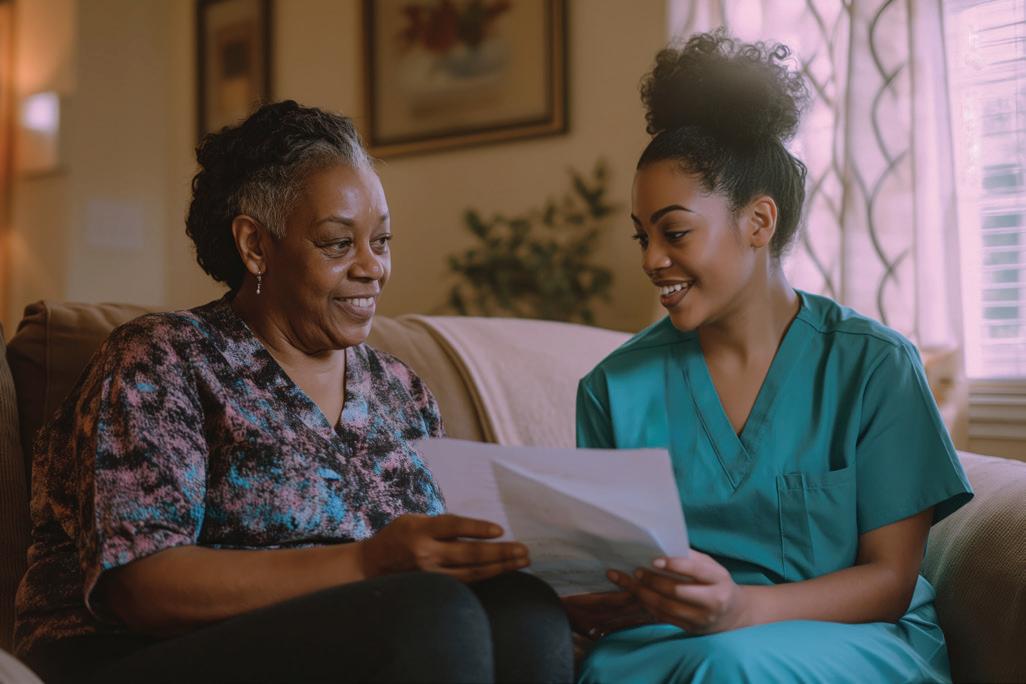
Caregiver of the Month Spotlight: Natishia Montgomery
It is with immense pride that we recognize Natishia Montgomery as our Caregiver of the Month! Since joining our team on December 29, 2025, Natishia has consistently demonstrated what it truly means to deliver exceptional, person-centered care. Her compassion is genuine, her reliability is unwavering, and her kindness creates a sense of comfort and trust for every client she serves. Natishia’s dedication goes far beyond the expected. Through her selfless acts, quiet sacrifices, and steady support, she plays a vital role in enhancing the well-being and quality of life for our clients and their families. She shows up each day with heart, strength, and a commitment that does not go unnoticed. Natishia, your impact is meaningful, your presence is powerful, and your care makes a difference in ways that truly matter. We are incredibly grateful to have you on our team.
Please join us in celebrating Natishia Montgomery and the outstanding work she brings to our community every single day.
Creekwalk Concerts I Spillway Park, Prattville
June 9 & 23, July 14 & 28 I 6:30 PM
The concerts will feature different artists or bands and food trucks to create a fun environment for the public to enjoy. Attendees are encouraged to bring blankets or chairs, and friends for a wonderful evening out!
Move MGM Color Run/Walk 5K
June 13 I 7-11 AM I Emory Folmar Soccer Complex
Get ready to move, celebrate, and add some color to your summer at the Move MGM Color Run/ Walk 2026! A fun and active community event designed for all ages and fitness levels. Participants can run, walk, or move at their own pace while enjoying a colorful, high-energy experience focused on health, wellness, and community.
Registration for the event is FREE! There will be a run shirt available for the first 600 registrants to pick up their shirts prior to the run. While registering for this colorful event, please take a moment to make a donation to the Heart of Alabama Food Bank to fight food insecurity!
There will be a shirt pick-up on Friday, June 12th, from 2 till 5 at Emory Folmar YMCA Soccer Complex. Day of event registration and shirt pick-up will begin at 7 AM, warm-up exercises at 7:30 AM, and the start of the color run at 8 AM. Visit experiencemontgomery. com for more information.
The Prattville Farmers Market
Saturdays, June through August I 7 a.m. till noon
The market will feature fresh, locally grown fruits and vegetables, along with local honey, homemade baked goods, jams, jellies, eggs, handmade bath and body products, plants, and more! Follow us on Facebook to find out what will be happening each week at Prattville Farmers Market. The market is on Doster Street in the Grove across from Pratt Park, which makes it a wonderful place for a family outing.
“Colonial America in Song”: Gene Davis with Madrigal Voices of Montgomery
June 23 I 5:30pm - 7pm I The NewSouth Bookstore, 105 S. Court Street
Madrigal Voices of Montgomery comes to The NewSouth Bookstore for a truly special evening celebrating our nation’s 250th anniversary, titled “Colonial America in Song.” Join us to hear such iconic early American tunes as “Goin’ to Boston,” a song with Appalachian roots, and “Chester,” a Revolutionary War song by William Billings. We will be outdoors on the bookstore patio. It’ll be wonderful, tuneful fun. Visit https://www.newsouthbookstore.com/events/2026/06.
Easy Grilled Corn Salad
Ingredients:
5 ears corn, shucked and rinsed
1 cup cherry tomatoes, halved
1 avocado, halved, seeded, peeled and diced
½ cup fresh basil leaves, chiffonade
¼ cup diced red onion
Kosher salt and ground pepper, to taste
For the vinaigrette:
3 tablespoons olive oil
3 tablespoons apple cider vinegar
1 tablespoon freshly squeezed lemon juice
Kosher salt and ground black pepper, to taste
Instructions:
In a small bowl, whisk together olive oil, apple cider vinegar, lemon juice, salt and pepper, to taste; set aside.
In a large bowl of water, soak corn for 30 minutes; drain well.
Preheat grill to medium high heat. Add corn to grill and cook until grill marks appear, about 3-4 minutes on each side; let cool before cutting the corn kernels off the cobs.
In a large bowl, combine corn, tomatoes, avocado, basil, red onion, salt and pepper to taste. Stir in vinaigrette and gently toss to combine. Serve immediately. https://damndelicious.net/2013/07/14/grilled-corn-salad-and-recipegirl-
A smoky corn salad loaded with cherry tomatoes, avocado and basil leaves tossed in a refreshing vinaigrette –perfect for a summer picnic!
guy outside in flip-flops lighting fireworks while holding a beer and making decisions his homeowner’s insurance agent would strongly discourage.
Summer has officially arrived. The flags start appearing too. Front porches. Mailboxes. Golf carts. Somebody down the street inevitably turns their entire yard into a patriotic display so aggressive it looks like Uncle Sam and Hobby Lobby had a baby. And then come the community events. Out come the folding chairs that have been sitting in the garage collecting sand, spider webs, and bad memories since last summer. You haul them to a park where the humidity feels medically concerning and sit shoulder-to-shoulder with people fanning themselves using church bulletins and fast-food napkins. There’s always patriotic music playing through speakers that sound like they survived three hurricanes and a church lock-in from 1994. Somebody’s grilling hot dogs nearby. Somebody’s kid is sticky for reasons nobody fully understands. And somebody’s grandfather is already
course. Sometimes it feels like the entire country is one giant family cookout where nobody agrees on politics, somebody burns the hamburgers, and one cousin has said something that started an argument near the potato salad. And yet somehow, we keep showing up. That’s the part I find myself appreciating more as I get older. Not perfection. Persistence.
The idea that generation after generation keeps gathering together under the same hot summer skies believing there’s still something worth celebrating. Worth protecting. Worth trying to get right. Maybe that’s what
secretly making memories they’ll talk about twenty years from now.
It’s messy. It’s loud. It’s imperfect. But somehow, it’s still beautiful too.
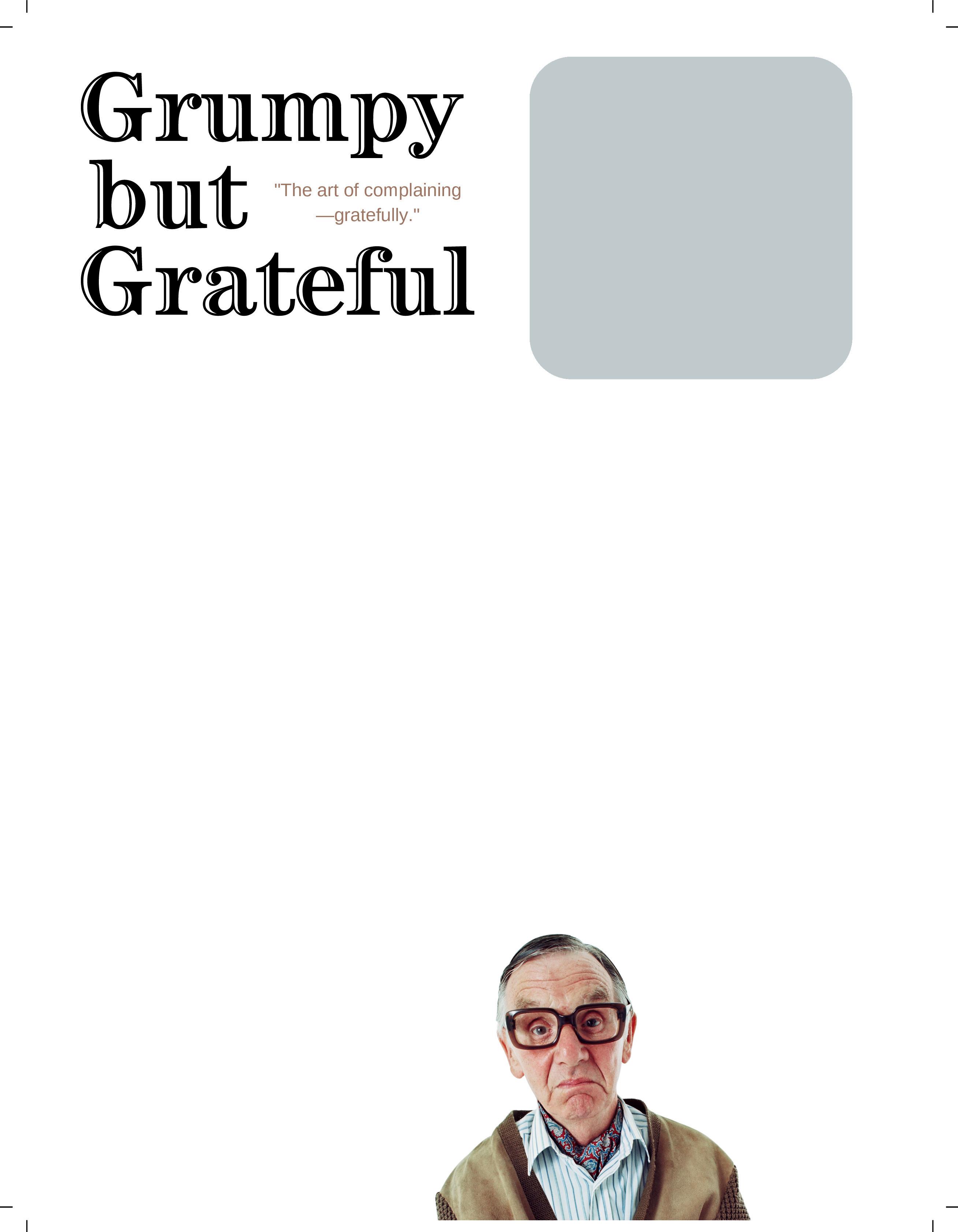
So yes, I’m grumpy. I’m going to complain about mosquitoes, humidity, folding chairs, and whatever child in my neighborhood apparently has access to military-grade fireworks three weeks before July. But I’m grateful too.
Grateful for summer nights that still bring people together. Grateful for a country that keeps trying, even when it stumbles. And grateful that after 250 years, there are still families gathered outside under humid Southern skies believing there’s something worth celebrating together. Even if the dog completely disagrees.
- Archie Grumbleton
Back pain has a funny way of sneaking up on you after 50. One day you’re dancing all night and up the next morning ready to tackle the yard. Then suddenly, one wrong move—like bending to pick something up— and you're out of commission for a week.
Many things can aggravate back pain, and a poor night’s sleep is at the top of this list. If you’ve ever tossed and turned all night only to wake up stiff, sore, or achy, we have some good news: A few small tweaks to your sleeping position can help you wake up rested and pain-free.
Let’s look at some strategies you can put into action—starting tonight.
Understanding back pain after 50
As we get older, our bodies go through various changes—and so do the structures that support our spine. Some reasons back pain becomes more common after 50 include:
Degenerative disc disease: This a condition where the cushioning between spinal discs naturally wears down over time.
Osteoarthritis: This is a common joint condition that occurs when the protective cartilage that cushions the ends of bones wears down over time. In the spine, the discs between vertebrae lose water and become narrower, causing pain and inflammation.
Sleep and back pain: FAQ
What if I wake up in pain during the night? Try gently changing positions or using pillows to support your back and legs. Even a slight shift in angle can relieve pressure points.
How do I roll over or get out of bed without straining? Use the log-roll technique: Bend your knees, roll to your side, and then push up with your arms as you swing your legs off the bed.
Do specialized pillows or mattresses really help? They may. A sleep setup that’s tailored to your personal sleep style and health needs can greatly improve your comfort and back pain. Take the time to explore your options and read product reviews before you buy. Many mattress sellers will let you try out their products at no cost.
Are there any home remedies that actually work for back pain? Yes—heat therapy, gentle stretching, and topical creams can help. Just be sure to talk to your doctor before using over-thecounter medications regularly.
2. Side sleeping with a pillow between the knees. Sleeping on your side can align your spine when done properly.
Osteoporosis: Loss of bone mass and weaker bones can lead to small fractures, especially in the spine.
Spinal stenosis: This is a narrowing of the spinal canal that puts pressure on the spinal cord and surrounding nerves.
Spondylolisthesis: With this condition, one spinal vertebra slides out of position and puts pressure on the vertebra below it.
Muscle stiffness or strain: This can be the result of decreased flexibility or repetitive movements.
What are the best sleeping positions for back pain relief?
Your sleep position can either support your spine or strain it. Here are some of the best sleeping positions for back pain relief, especially if you’re over 50:
1. Sleeping on your back with a pillow under the knees. This position helps maintain your spine’s natural curve and reduces pressure on your lower back.
How to do it: Lie flat with a firm pillow under your knees to keep them slightly bent. You can also place a rolled towel under your lower back for added support.
* Tips: Take your time easing into this position to avoid muscle strain. Try a wedge pillow for better elevation and support.
How to do it: Use a supportive head pillow to keep your neck in line with your spine. Place a firm pillow between your knees to prevent your top leg from twisting downward.
* Tips: An adjustable bed can help elevate your upper body slightly. This is especially helpful if you have acid reflux or trouble breathing while lying flat. If you sleep with a partner, finding the best split-king adjustable bed for you can help you both.
3. Fetal position. This curled-up posture can benefit those with herniated discs or spinal stenosis, as it opens up space between vertebrae.
How to do it: Lie on your side and gently pull your knees toward your chest. Use a pillow to support your neck.
* Tips: Avoid curling your body too tightly. Aim for a relaxed curve to avoid putting strain on your back or hips.
4. Semi-reclined position. For some people, sleeping in a reclined position can reduce pressure on the spine.
How to do it: Use an adjustable bed or a supportive recliner. Place a cushion behind your lower back for lumbar support.
* Tips: This sleeping position for back pain may be especially helpful if you have hip discomfort. It can also ease lower back pain that worsens when lying flat.
Courtesy of ncoa.org.
Susan Fisher
In this heartfelt conversation, Susan Fisher reflects on a life shaped by faith, family, service, and intentional presence. From her years in retail leadership and ministry at Frazer Church to the quieter joys of retirement, Susan shares the wisdom she has gained through seasons of joy, difficulty and transition. She opens up about learning to “linger,” loving people well in everyday moments, navigating cancer twice, and embracing a slower, more meaningful rhythm of life. As she and her husband Sam prepare for a new chapter closer to family in Pike Road, Susan offers a refreshing perspective on aging well, staying active, and living with an eternal focus.
BOOM!: You’ve described this season of life as being centered around “loving well”—God, family, friends, and even strangers. What does loving people well look like to you in everyday life?
Susan: Time and presence. We are all given the same minutes in a day, and it is so easy to build our days around what makes us happy or what we want to do, sometimes making no space for what really matters. Loving well in everyday life often looks smaller and quieter than we imagine. It is less about grand gestures and more about how I give my time, a steady presence, attention, and care woven into ordinary moments.
It looks like listening without interrupting. Remembering what someone said that mattered to them and asking about it later. Sitting down instead of rushing past. Making room for another person’s story, even when I had other plans. When a need arises, being willing to change my plans and go or make that call.
It is the power and presence of the Holy Spirit in me that enables me to love well in everyday life.
I love the quote by Vincent DePaul, “If God is the center of your life, no words are necessary. Your mere presence will touch hearts.”
It looks like patience in the middle of inconvenience – answering kindly when the other person doesn’t, offering grace when someone disappoints us, choosing understanding over being right.
BOOM!: You and Sam have built a beautiful life together with four adult children and grandchildren. What has been one of the greatest joys of this stage of family life?
Susan: Being spontaneous! I know that may sound strange, but I have always been a planner and paper calendar person, and that has carried over in retirement. The joy comes from unexpected opportunities to spend time with family that I would not have had before because of my work schedule. For example, a day trip with my daughter to Scotts in Atlanta for fun, volunteering at our grandson’s school,helping with the set-up of our daughter-in-law’s spa, discipling our young adult grandchildren, birthday lunches, and last-minute trips to Birmingham for activities or a meal with our son and his family. Early morning
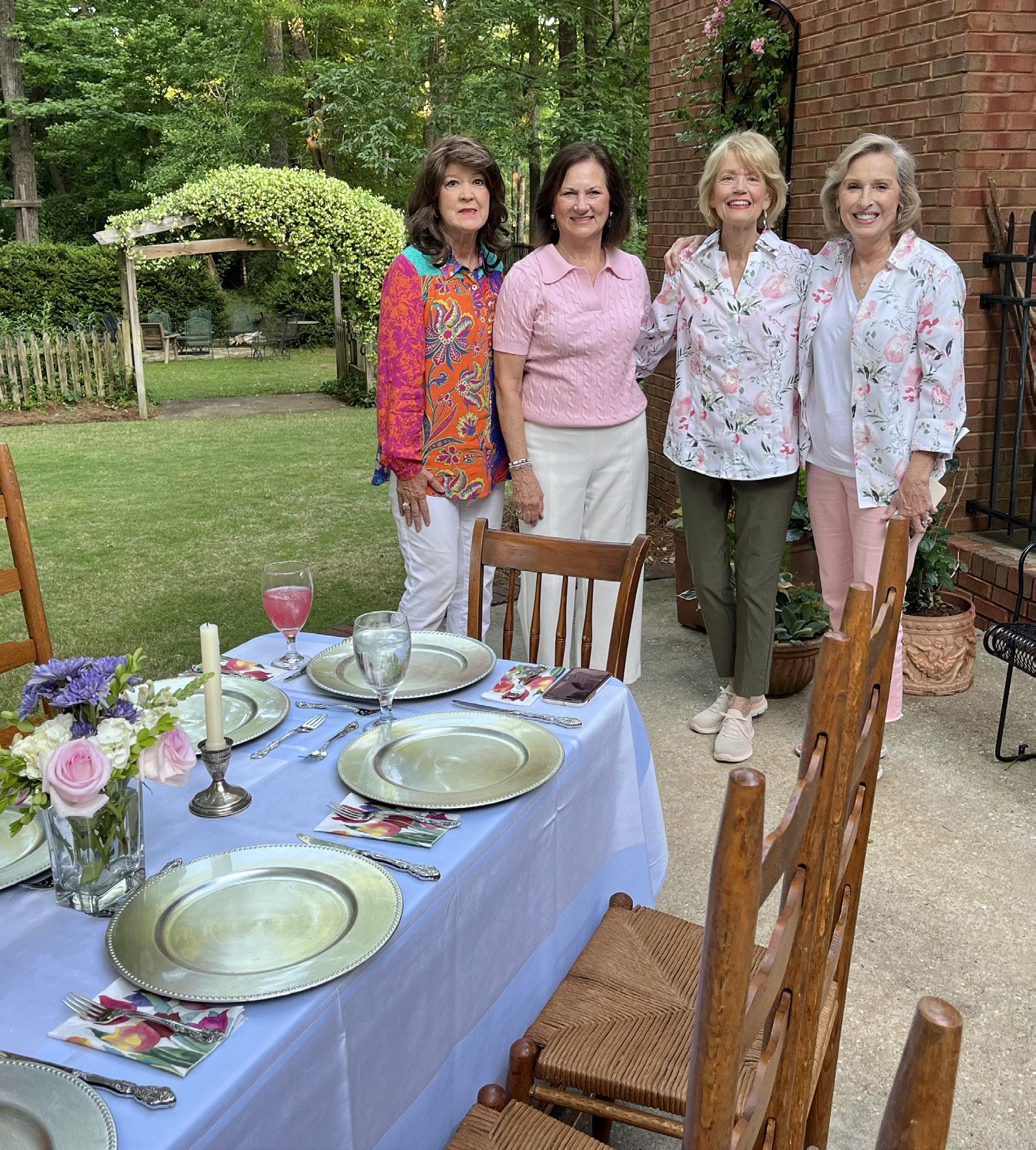
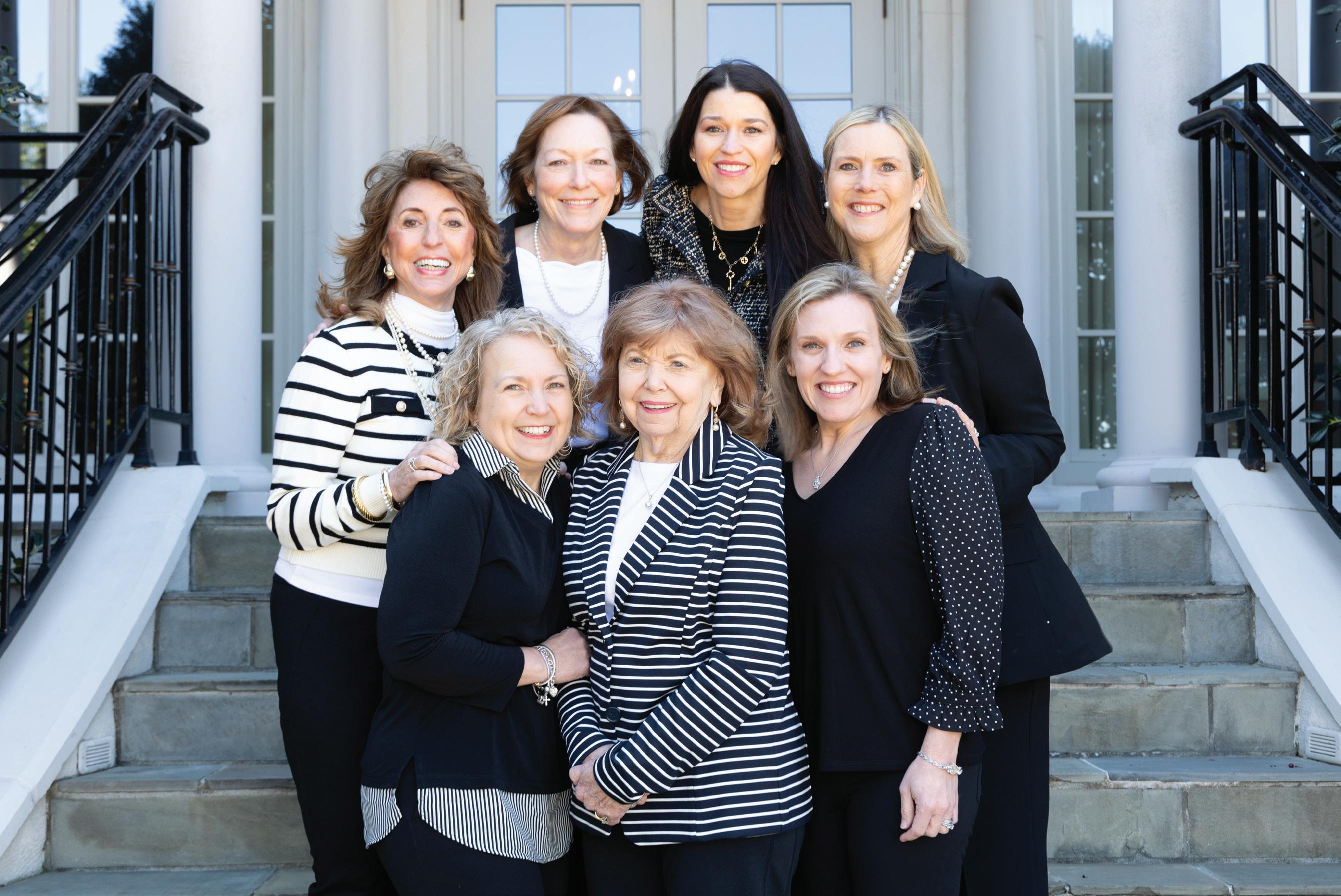
With her small group sisters of more than 20 years.
drop-ins for a hug, a listening ear, or prayer. These are a few of the things that fill my cup and bring me joy in our family life.
BOOM!: You are preparing to move to Pike Road to be closer to family. What are you hoping to gain from living nearer to them, and are there other things drawing you to this next season and community?
Susan: Our kids have been begging us to move for a while. I think part of the push for them is that they don’t want to clean out our house of 30 years if something happens to us. I say that jokingly, but there is truth there. Two of our four adult children live in Pike Road with four of our grandchildren. The ten-year-old twins say all the time, “Susi and Sampaw, we could come see you any time for a snack, visit, or sleepover if you lived in The Waters.” We want to downsize the yard and space. Sam loves to fish, so all the lakes are enticing to him. We also have many friends who live in this community, and it would make it easier for us to spend time with them, as well as build new relationships.
BOOM!: You had a successful career in retail leadership before eventually transitioning into ministry work at Frazer Church. Looking back, what prepared you for that shift?
Susan: Everything I did God used to prepare me for ministry. I say that with a humble and grateful heart. In the 20 years of retail (10 years, two different times), I had some amazing mentors, bosses, and peers who taught me a great deal
about business, leadership, and people. The company I worked for no longer exists, but they made training and leadership development a priority for their upper-level leaders. They also appreciated us with recognition for a job well done and annual working retreats that refreshed and gave us the opportunity to interact with leadership from all over the country. The work I did as Operations and Regional Human Resources Director helped me know myself better and the importance of recognizing and adding value to people. Those whom I supervised and those I served in any of my positions were a gift to me. My priority was to help them be all God envisioned for them by knowing them, praying for them, speaking truth, encouraging, having hard conversations, supporting, and being present.
waste what He allows us to walk through, and He will use it for His glory when we offer it back to Him. My pastors and leaders in Frazer saw something in me and knew where God was leading me before I did. Every aspect of my work in ministry shaped me and led me into a deeper relationship with Jesus Christ. Meetings, visioning, events, Bible Studies, committees, serving… were all meaningful, but nothing surpasses the relationships….the people, especially the women that I met along the way that I got to speak life into. Some needed help seeing the things in their lives that were keeping them from “living free” and learning how to let them go. Oh, what fulfillment there is in helping others take steps towards true freedom in Christ!
BOOM!: Whether in retail leadership, ministry, family, or friendships, you’ve always been known as someone who encourages and lifts others up. What drives that in you?
BOOM!: What was it about ministry work that felt meaningful and fulfilling to you in that season of life?
Susan: I knew I was being obedient to God’s calling on my life. A work in progress, leaning on the promises in Scripture, my own trials and experiences….God doesn’t
Susan: I believe God created masterpieces. Unfortunately, many people carry baggage, shame, poor self-esteem …and don’t realize the unconditional love of God. My dad was a beautiful example of showing kindness and loving all people. I like to listen more than talk and try to find out what people need and what they are going through. Tell them what I am hearing them say, and seek wisdom in how to respond. Meet them where they are, sit with them. I really try to put others before myself. Everyone can use a genuine word of encouragement on any given day.
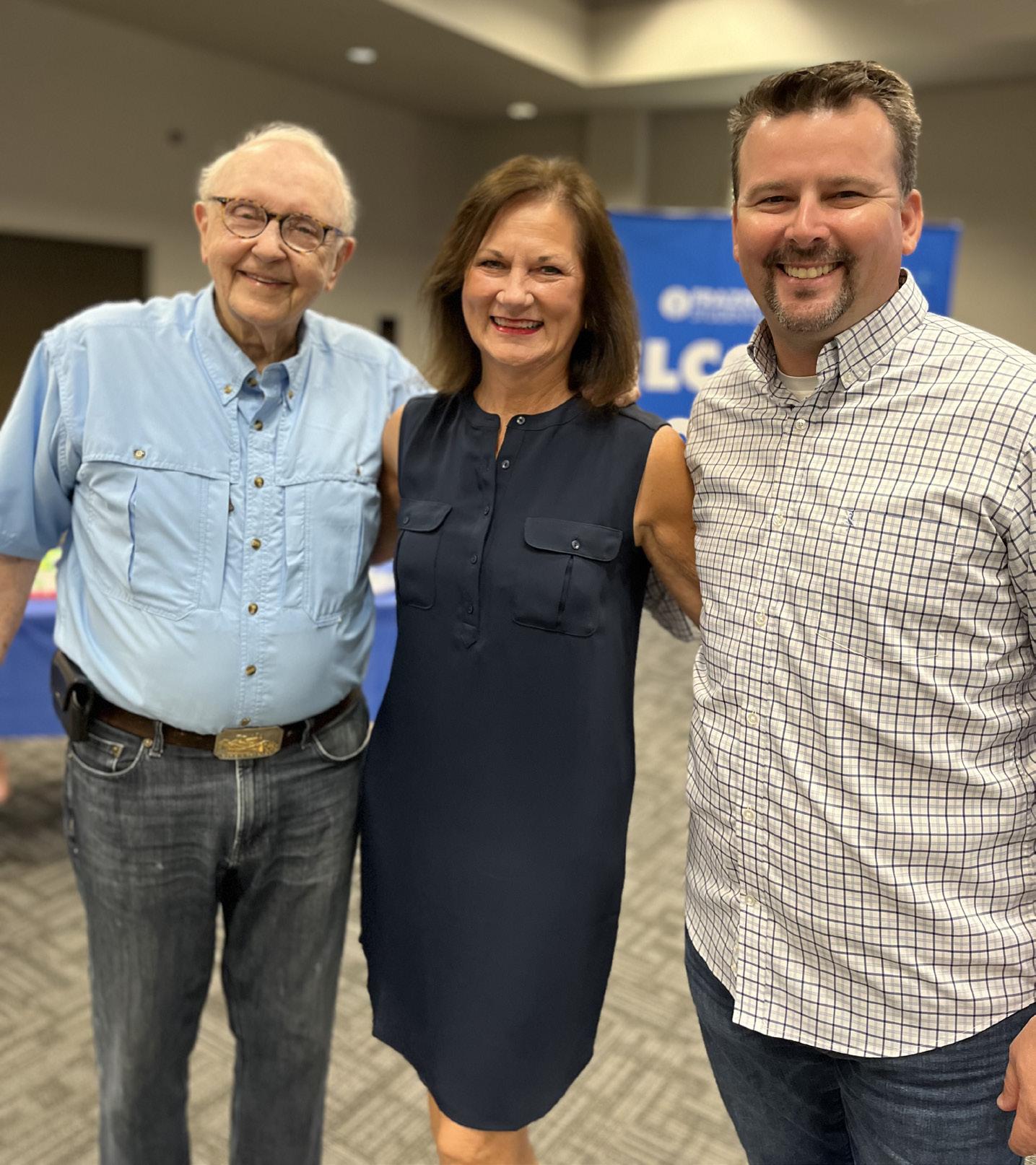
Susan's first boss, John Ed Mathison, and last boss, Chris Montgomery, prayed and celebrated her retirement.
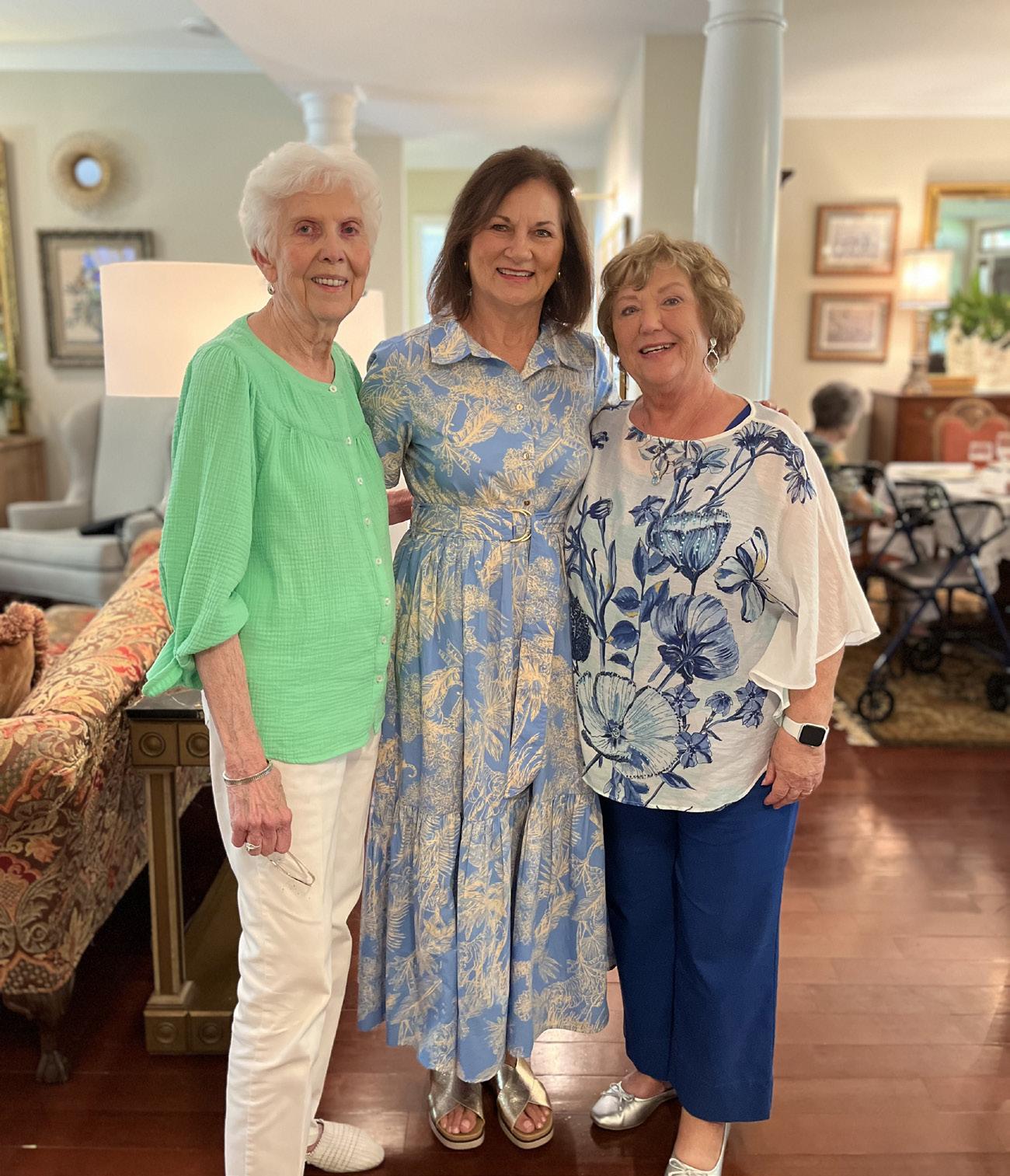
With her mentors, Betty Henry (left) and Annette Jeter (right).
Gathering for Thanksgiving is a family tradition.
BOOM!: You’ve battled cancer twice and come through it healthy and strong. How did those experiences reshape your perspective on life and what truly matters?
Susan: If anyone had asked me if I thought cancer would affect my life, I would have responded no… because I always felt good, even with the symptoms that led to my diagnosis both times. Both times, I felt my healing would come through surgery and treatment. In my spirit, I felt an assurance that this cancer would be part of my testimony and a platform to help and encourage others. It has opened doors for me to meet with strangers and friends. To share what I learned about food and our body’s ability to fight sickness. I know my part is to control/change the things that I can and to surrender it all to Jesus. We need to hold all things loosely…they are just on loan. My days are written in His book, my responsibility is to live them to the fullest by loving God, loving others, and keep an eternal perspective. No regrets.
prefer to be done eating by 5:00 pm. I drink herbal teas and have added a cup of mushroom coffee. I make sure I am getting enough fiber and protein from a variety of foods.
Unfortunately, my weakness is sugar, and I am a work in progress, experimenting with healthy recipes to satisfy that desire. I try to do some form of exercise every day.
BOOM!: You’re a strong believer that our bodies were created for movement. What role have exercise and staying active played in your physical and emotional health over the years?
skills, and improves your overall health. I know if we don’t move our muscles and bones, they will deteriorate at a faster rate as we age.
BOOM!: One thing you said when we first spoke was, “I have learned how to linger.” What have you discovered in slowing down enough to truly enjoy conversation, beauty, friendship, and everyday moments?
Susan: There is something quietly sacred about lingering. Not feeling the need to move every moment toward productivity or purpose. Lingering is allowing life to slowly unfold without hurrying. When afternoon coffee grows cold because conversation is too rich to leave, when silence between a friend or loved one feels full instead of empty. These are the spaces where connection deepens.
BOOM!: You said aging well means being “a good steward of your mind, body, and soul.” What are some intentional ways you care for each of those areas today?
Susan: I start my day sitting with the Lord, talking to him, and reading Scripture. I keep my lists of prayers for others by my chair and pray through those. A few years ago, I added reading or listening to the Wake Up Call, and it starts with, “Jesus, I belong to you, I lift up my eyes to you, I set my mind on you, I fix my eyes on you, I offer my body to you as a living sacrifice.” That covers every part of me and prepares me for the day as I listen and worship.
I am much more aware of how food and water impact my mind and body. I drink 90 ounces of water a day, more than half my body weight. I drink a cup of warm lemon water most mornings, and I usually do a 12-16-hour food fast. I
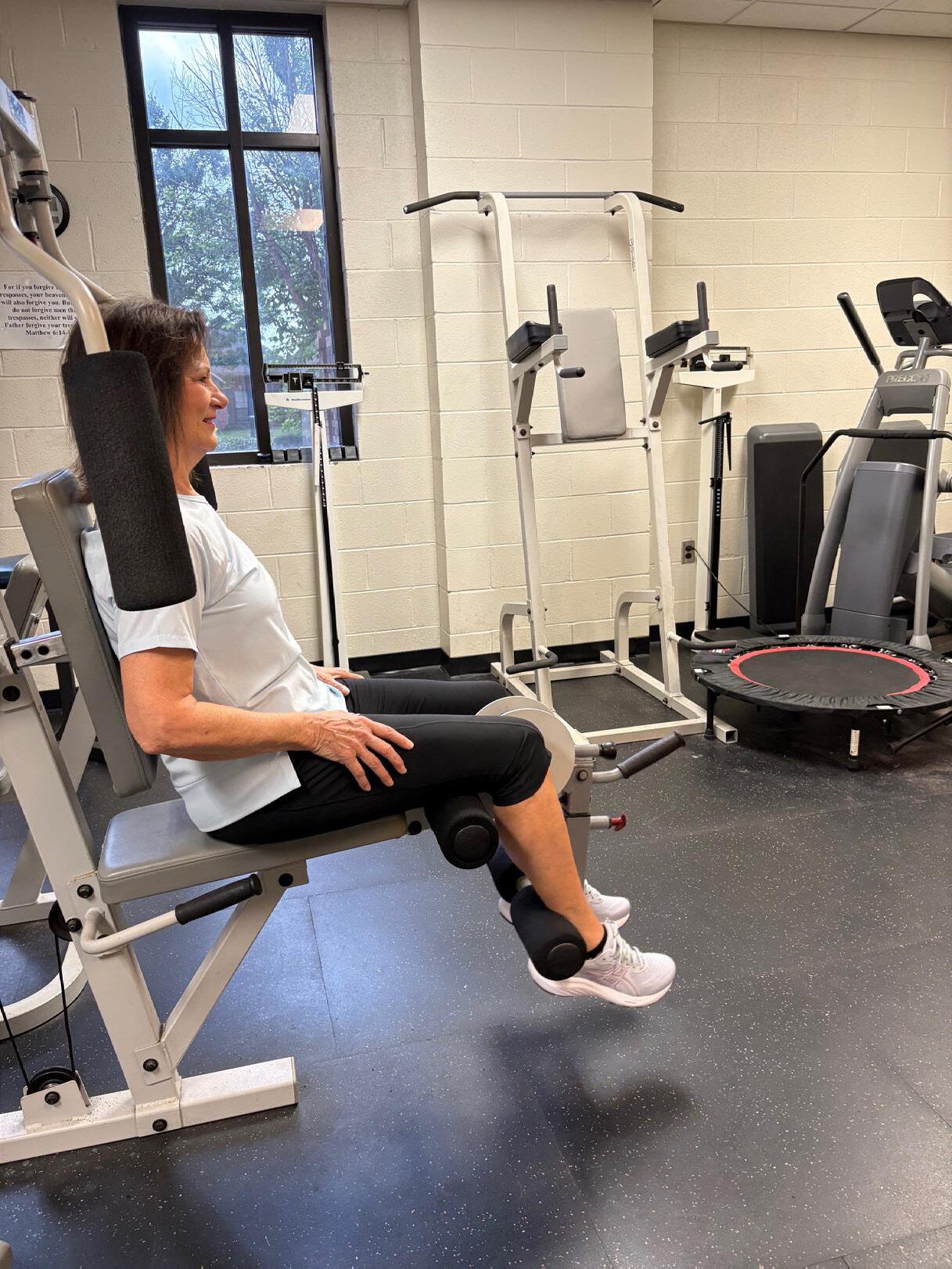
Susan: I have always loved different kinds of physical activity. Movement helps me think better, feel better, and sleep better. I choose to exercise daily. Sometimes it is a 5-7 minute low-impact cardio routine. I have a goal of walking 10,000 steps a day. It’s motivating to walk with a friend because there is accountability, it goes faster, and we encourage one another.
The soul rarely moves at the pace of a calendar. Beauty asks us to slow down long enough to notice it: the early morning sounds of birds singing, rose buds ready to burst into color, the sun breaking the early morning sky at its own pace, a familiar voice telling a familiar story, quietness…
Incorporating weights several times a week is important for building strength, especially in my hands. Sam and I love to dance, and if a song we like comes on, we will just get up and dance together. I like that it works the mind and body and lots of different muscle groups. What I am saying is that movement should be fun; it increases your heart rate, improves your cognitive
Friendship grows in lingering moments. Some in grand celebrations, but also in ordinary afternoons stretched beyond my expectations. Sitting on a porch after sunset. Walking gingerly without a destination. Long conversations at dinner because no one is in a hurry to leave.
The slowing down has helped me to savor life instead of simply managing it.
BOOM!: A lot of people dream about retirement for years, but then struggle to know how to actually enjoy it. What has relaxation or rest looked like for you in this season? Have you learned to enjoy slower mornings, longer lunches, or a different rhythm of life?
Susan: Let’s say I am still a work in progress. July will be my one-year mark. I
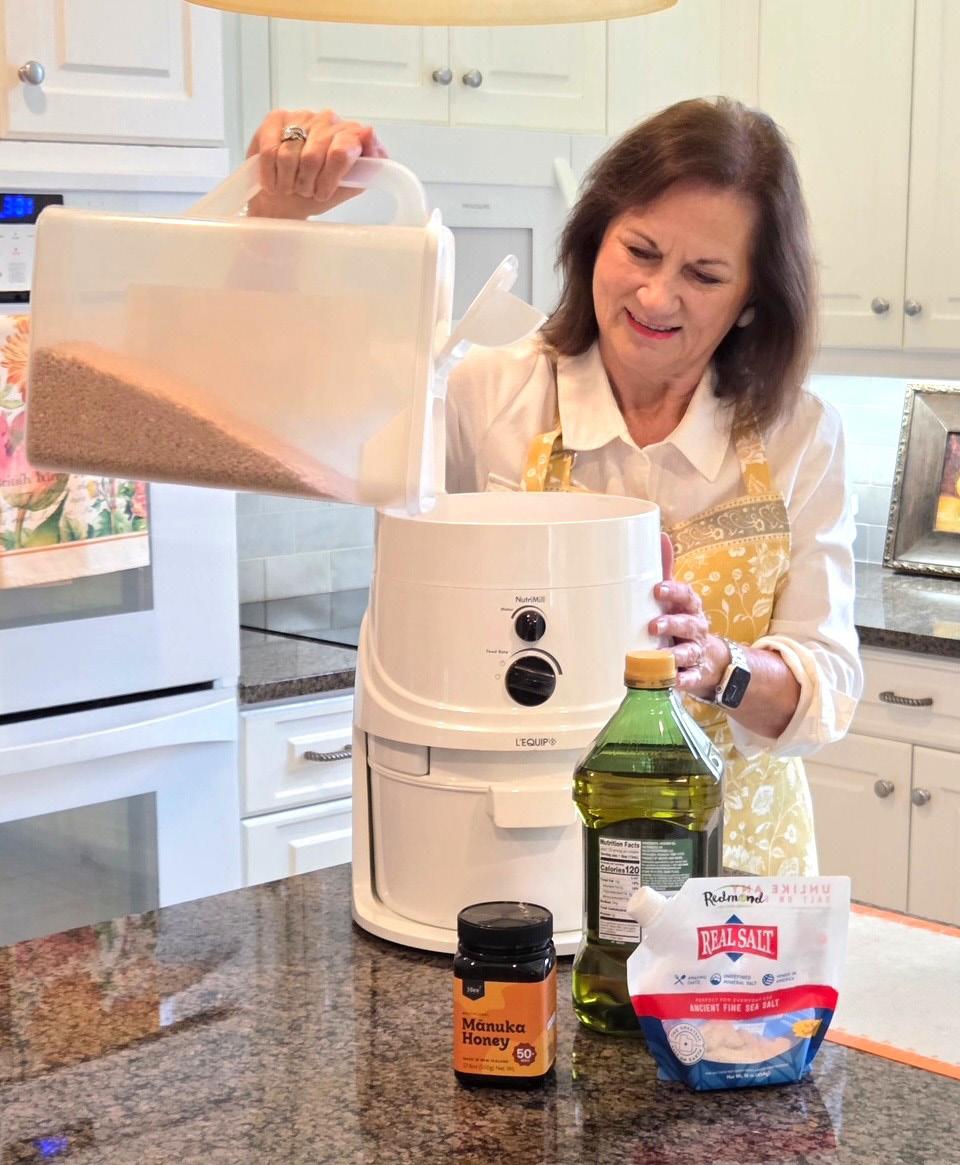
Susan bakes her own bread using freshly ground wheat berries to capture the most nutrients.
Working out with weights has always been part of Susan's exercise regimen.
said earlier that I am a scheduled person and I like being productive. It has taken me almost a year to not feel guilty about reading for several hours at a time for no reason but enjoyment. I finally finished a few books I wanted to read. One of my biggest delights has been the slower mornings with my cup of tea, catching up with friends, and not rushing our conversation or writing notes to someone God put on my heart. I am enjoying sidewalk visits with our neighbors without watching the time.
BOOM!: You mentioned there were three things you wanted to do in retirement that you still haven’t started because life unfolded differently than expected. What has God been teaching you through that?
Susan: Yes, I had on my list…learn to play the piano, learn Spanish, and paint. I realize now those were all about me. I set up my paint and canvas a few months into retirement and still haven’t touched it. Clearly, God had a different plan. Family needs, friends to love and encourage, funerals, sickness, and starting a neighborhood prayer group, to name a few. I could hear God chuckling at me and saying tear that list up for now, I have a greater one that will impact lives for My glory. It made me reflect on Proverbs 19:21: “Many are the plans in a person’s heart, but it is the Lord’s purpose that prevails.” I am content to walk in His plan and purpose now and always.
BOOM!: What are some fun or unexpected things you’ve done in retirement that maybe you wouldn’t have made time for earlier in life?
Susan: I honestly enjoy every day; some are just better than others. The newest adventure is working estate sales with a new friend. This gives me an opportunity to help someone, meet new people, and learn more about antiques. While on staff at Frazer, most of my time was spent ministering to people in the church. This enables me to encounter people outside of my normal routines and encourage them. I also thought I would already be playing pickleball with a team, but I'm still looking forward to that happening.
BOOM!: After so many years in the River Region, what do you love most about living here and being part of this community?
Susan: I love the centrality of the River Region to places Sam and I like to go. We prefer to travel by car, so driving distance is key. Our favorite beaches and mountains are easily accessible. Family is close. The dear friendships we have developed. Frazer Church, where we have been actively worshiping and serving for almost 50 years. The diversity of cultures and people. The southern hospitality. The history.
you enter. The warmth around our table open to old and new friends, the ease of being fully known, the feeling of belonging without performance or pressure. Through our faith in God, our love, and the gift of hospitality, friends and strangers will know and be known in a deeper way.
There is still so much to see and do in our country. When we married in 1978, we began a bucket list to visit all the states. We have 6 left, mostly in the Midwest, so travel and the time to do it excites us.
Quick Take with Susan
Favorite way to start the morning: Thanking God for the new day He has given me and going to my chair to meet with Him.
A book you’ve lingered over recently: Theo of Golden and Beautiful Resistance
Favorite local place to walk or unwind: The trail at AUM
Best advice you’ve ever received: Add value to everyone I come in contact with.
A simple joy you never take for granted: Family
Favorite family tradition: Making a big deal out of birthdays
Favorite way to spend a slow afternoon: Outside in the sun and fresh air, either working in my flower beds or reading a good book.
Something retirement has taught you: Linger in the everyday moments.
BOOM!: What excites you most about the years ahead?
Susan: We want to continue living in such a way that our lives make a difference in someone else’s life. That our home will be a place of peace where the presence of the Spirit is felt from the moment
A word that describes this season of life: Abundant
Quick Take with
We thank Susan for sharing her story with us! If you know someone who would make a great cover profile, please email jason@riverregionboom.com.
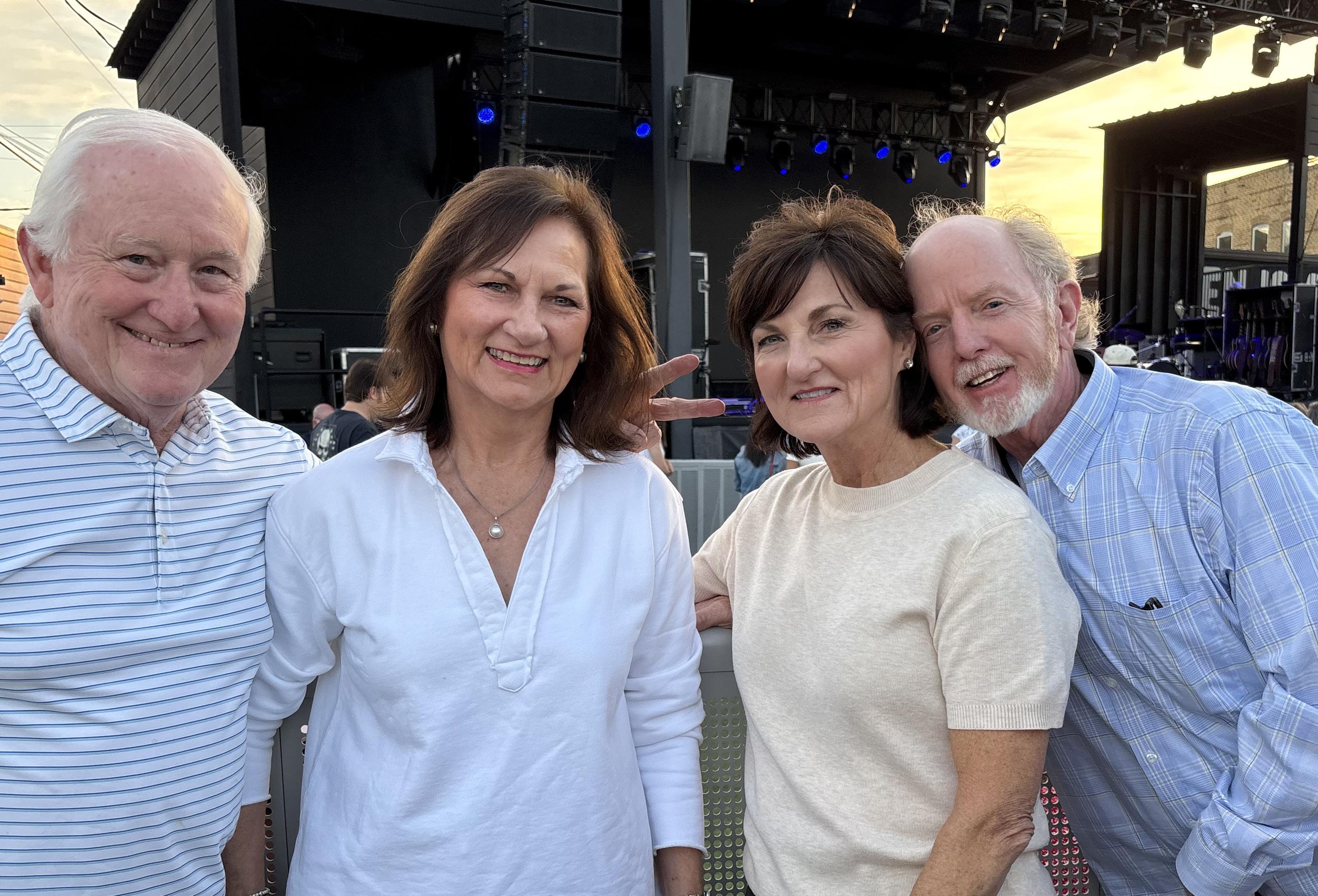
Outdoor concert adventure with her favorite travel companions: Sam, Cheryl and Bruce.
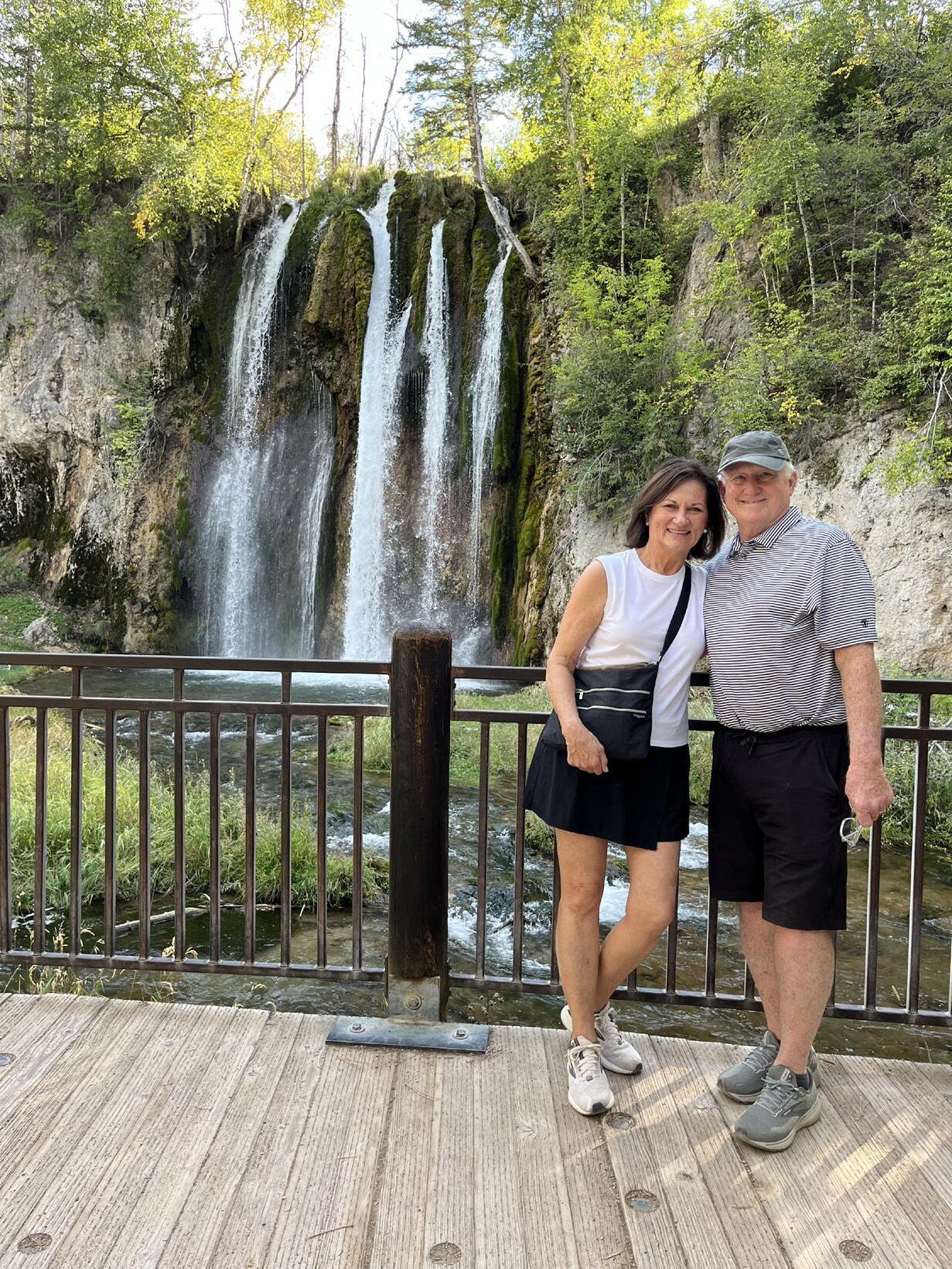
Traveling the 50 states with Sam.
Helping Widows and Widowers Move Forward On Their Own
The loss of a spouse can be devastating, both emotionally and financially, especially if it was unexpected. The stress of handling all the legal and financial issues can be overwhelming, even for women or men who are financially savvy.
Widows are one of the fastest growing demographic groups in the United States. In addition, some of the statistics about widows are startling. The average age that women are widowed is 59 years old. In addition, 70% of Baby Boomer wives will outlive their husbands; 80% of women will be single at death. Half of women over age 65 will outlive their husbands by 15 years.
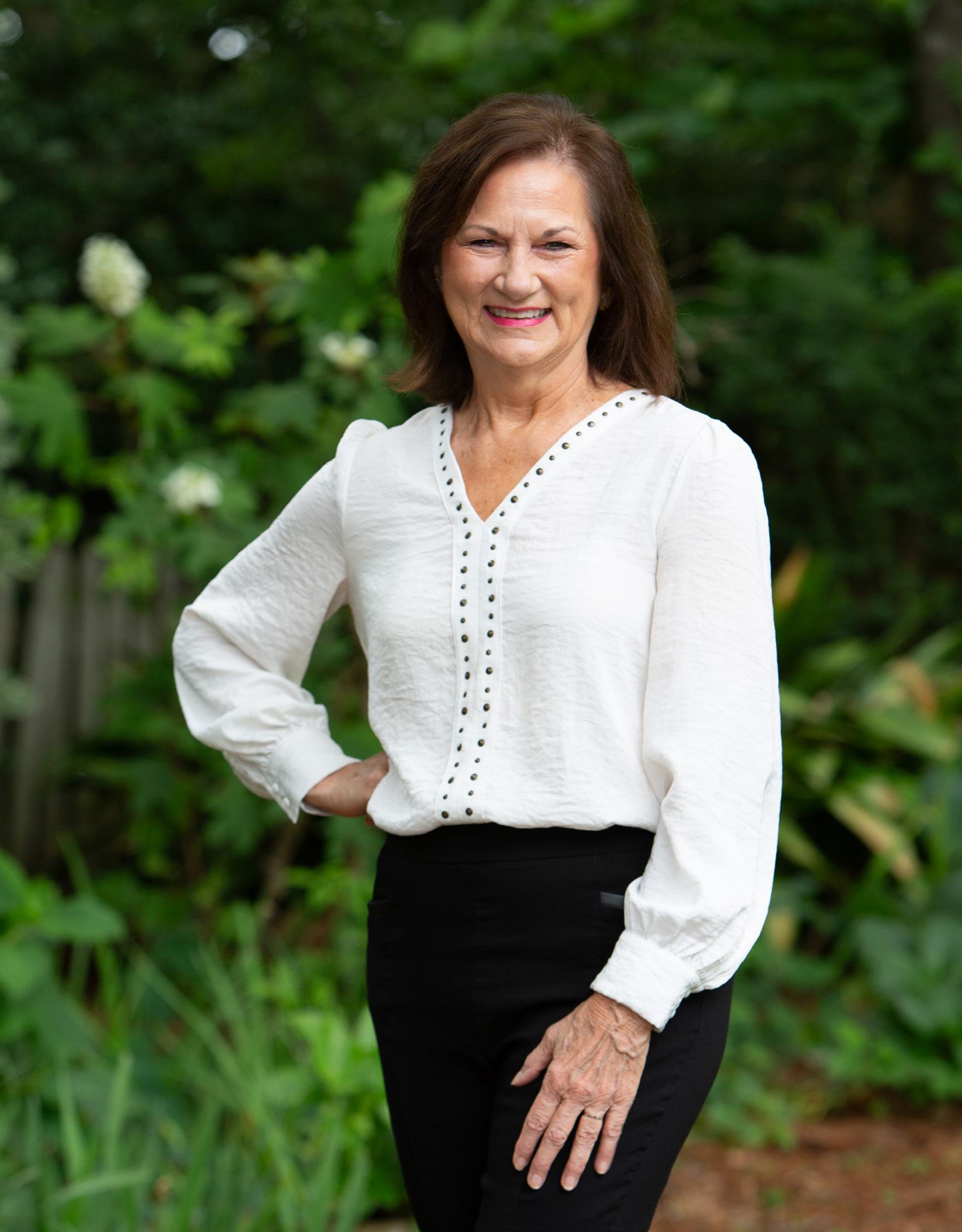
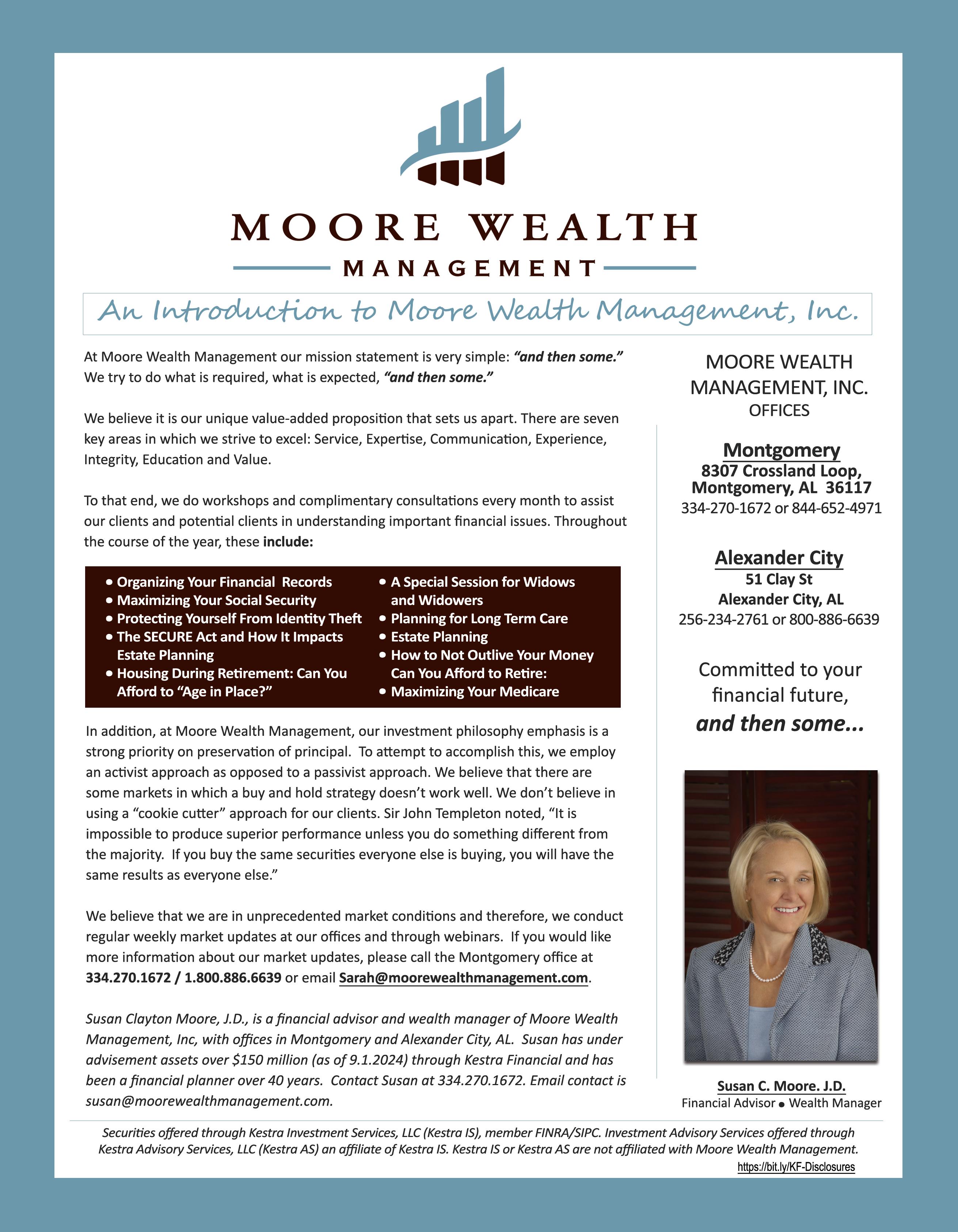
Every June, Susan Moore of Moore Wealth Management, Inc. (MWM) conducts two free workshops in Montgomery. One is designed especially for widows and their supportive friends, another one for widowers. The workshop for widows was produced by Kathleen M. Rehl, PhD, CFP, in conjunction with the Protective Life Insurance Company. The workshop covers the following topics: the impact of grief and emotion, the 3 stages of widowhood, avoiding common financial mistakes and next steps to take. The workshop will be conducted in a webinar format. The June 2026 workshop for widows will be on Wednesday, June 24th at 12 p.m. Please call 334.270.1672, or email Sarah@ moorewealthmanagement.com for more information and reservations.
Kathleen Rehl is a financial advisor who was widowed at the age of 60.
Financial Thoughts with Susan Moore
Although she and her husband had been financial advisors for a number of years and she had helped various clients go through the financial and legal issues after the death of a spouse, it was a more difficult experience for her than she would have expected.
“For me personally,” she said, “I didn’t remember my Social Security number. I couldn’t recall where I put my car keys. I wondered if I was going crazy. I wasn’t. It was just a normal part of being a new widow.”
Attendees to the workshop receive a free copy of Rehl’s book, Moving Forward on My Own, A Financial Guidebook for Widows, in addition to other valuable educational materials.
In addition, Susan will conduct a webinar for widowers on Thursday,
June 25th at 12 p.m. The workshop for widowers is based on the book The Widower’s Journey: Helping Men Rebuild After Their Loss, by Herb Knoll, Deborah Carr, Ph.D., and Robert Frick. Please call 334.270.1672, or email Sarah@ moorewealthmanagement.com, for more information and reservations.
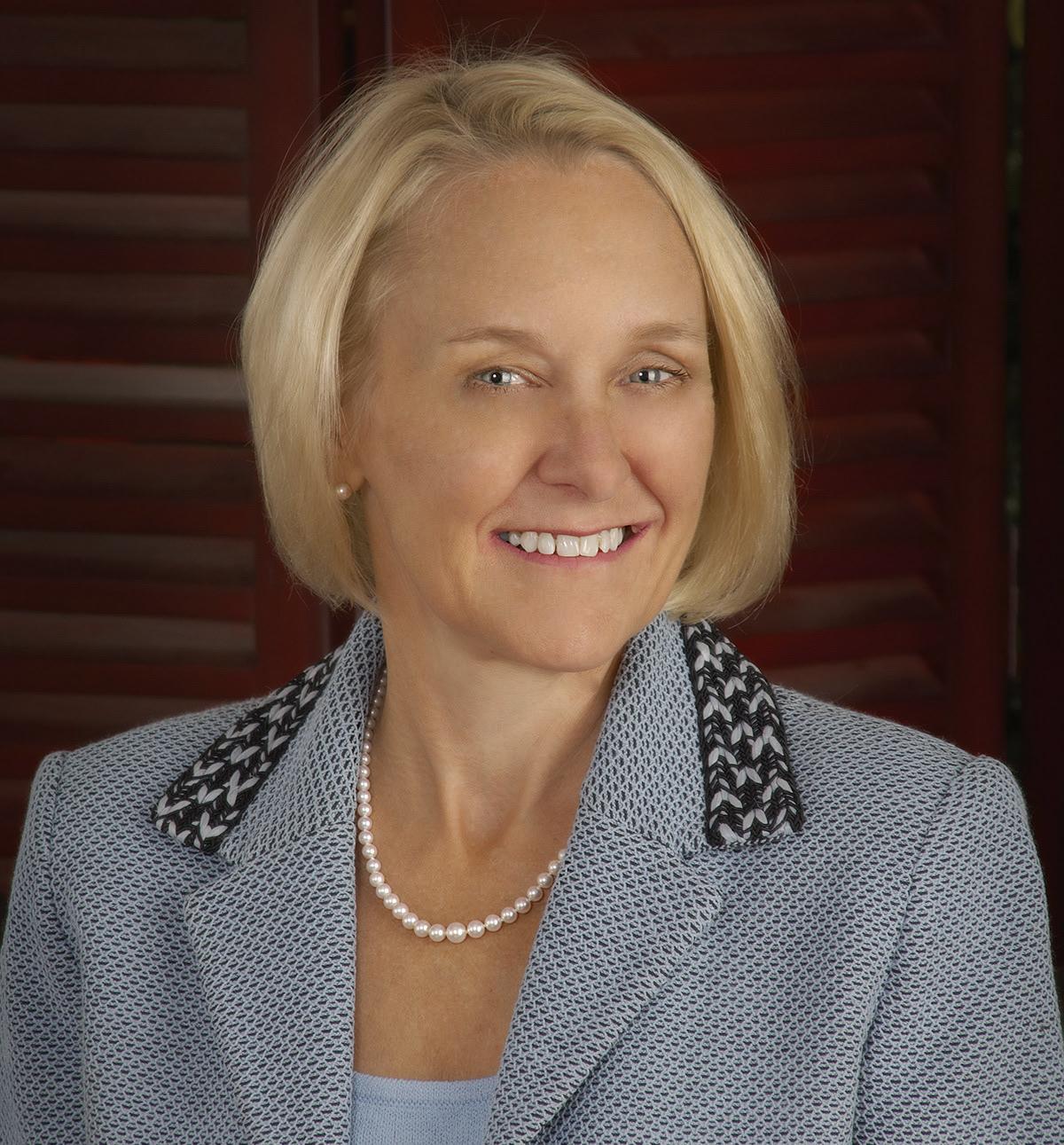
Susan Clayton Moore, J.D., is a financial advisor and wealth manager of Moore Wealth Management, Inc., with offices Montgomery and Alexander City, AL. Susan has over $150 million in assets (as of 9.1.24) under management through Kestra Financial and has been a financial planner for over 40 years. Contact Susan at 256.234.2761. Email contact is susan@moorewealthmanagement.com.
The opinions expressed in this commentary are those of the author and may not necessarily reflect those held by Kestra Investment Services, LLC or Kestra Advisory Services, LLC. This is for general information only and is not intended to provide specific investment advice or recommendations for any individual. It is suggested that you consult your financial professional, attorney or tax advisor regarding your individual situation. Securities offered through Kestra Investment Services, LLC (Kestra IS), member FINRA/SIPC. Investment Advisory Services offered through Kestra Advisory Services, LLC (Kestra AS), an affiliate of Kestra IS. Kestra IS or Kestra AS are not affiliated with Moore Wealth Management, Inc. https://www. kestrafinancial.com/disclosures
Kathleen M. Rehl, PhD, CFP, CeFT, Protective Life Insurance Company, Moore Wealth Management and Kestra are all separate entities.
*Rehl, Kathleen M. PhD, CFP, CeFT, Moor, Carolyn C. Leitz, Linda Grable, and John E. (2016, January) Widows “Voices: The Value of Financial Planning.” Journal of Financial Services Professionals.
By Susan Clayton Moore, J.D. Moore Wealth Management, Inc.
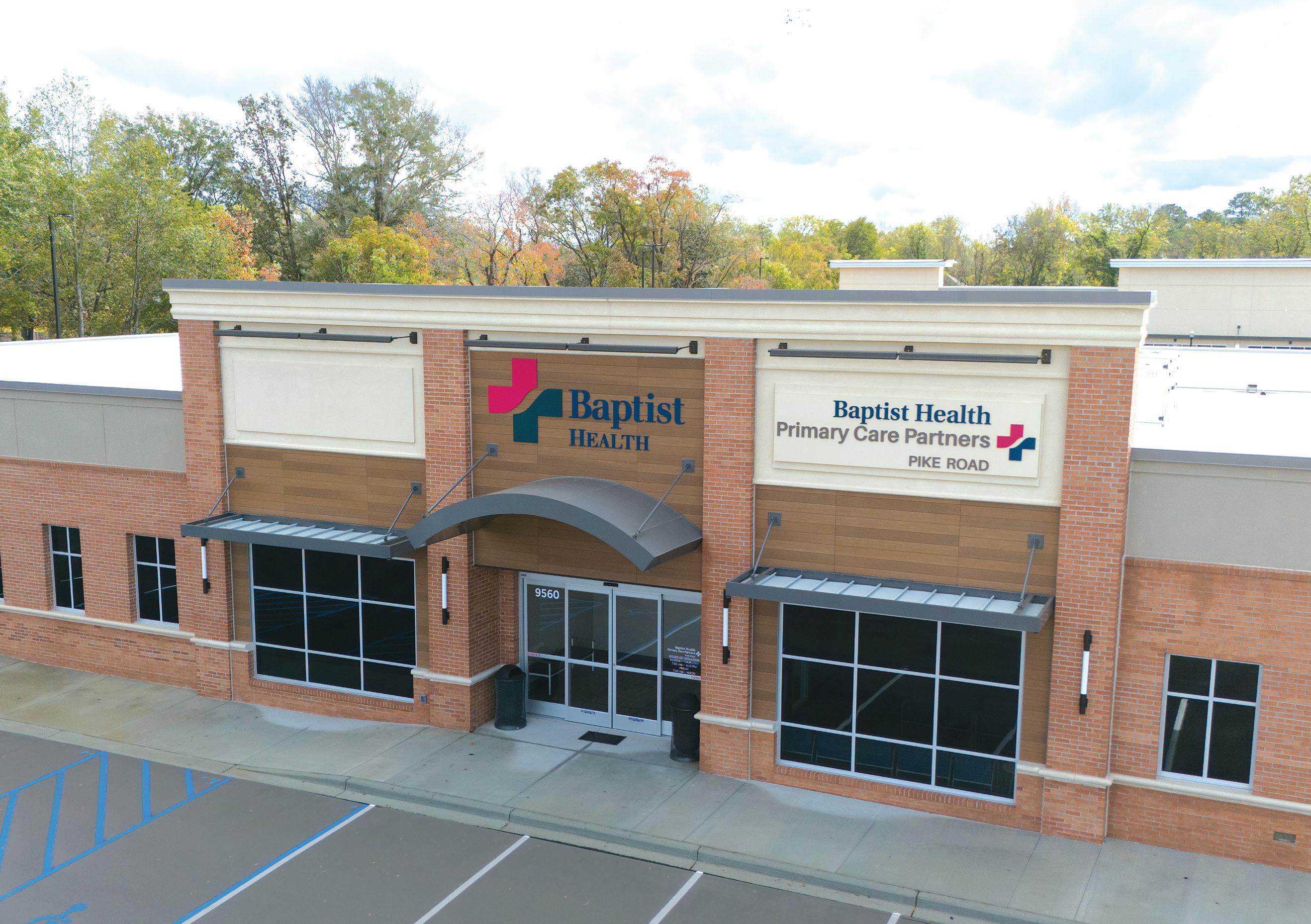
New Pike Road Location Now Open.
Our brand new facility is located at 9560 Vaughn Road
From annual checkups to ongoing care for your family, we’re here to help you stay healthy close to home. Our newest Baptist Health Primary Care Partners office offers convenient, compassionate care supported by the region’s most trusted health system.
— Comprehensive primary care for patients 18 and older
— Accepting new patients
— Connected to the Baptist Health network
Schedule your first appointment today! 334-747-CARE (2273)