West Iceland
The Westfjords
North Iceland
East Iceland
South Iceland
The Reykjanes peninsula
The Capital Area

West Iceland
The Westfjords
North Iceland
East Iceland
South Iceland
The Reykjanes peninsula
The Capital Area
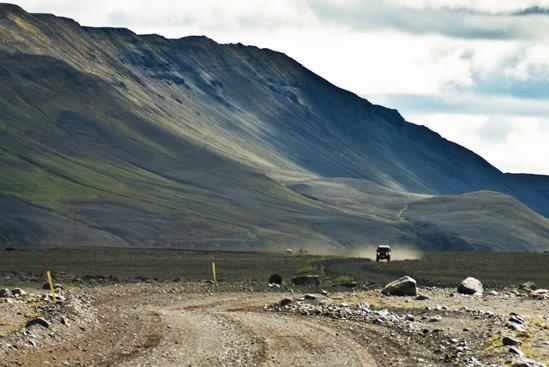
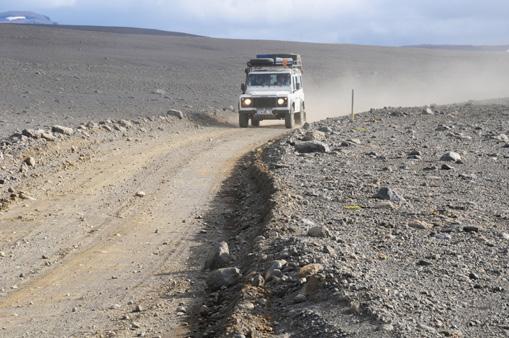
As beautiful and tempting as the Icelandic highlands are, they can also be dangerous. Far away from any human traffic, and even at times out of cell phone range, it is necessary to take full precautions when travelling in uninhabited areas. You should always prepare your trip and examine conditions beforehand.
Always look at the weather forecast and adjust your travel plans accordingly. Icelandic Met Office: www.en.vedur.is
ICE-SAR runs the Travellers Reporting Service, where travellers can register and be safe with the knowledge that if they don’t report back by a scheduled time, they will be searched for. The ICE-SAR rescue teams operate emergency shelters around the coastline and in the interior of Iceland. These may only be used in emergencies. www.icesar.com
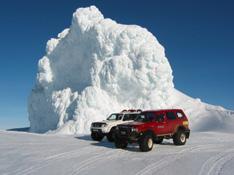
Cell phones are important safety tools for those travelling far from populated areas – although they might not always be in range, they do cover quite a large portion of the country. If you have a GPS positioning system, you can have free access to a programme on the website of the National Land Survey: www.lmi.is
Crevasse areas on glaciers are continuously changing and are very dangerous. Do not attempt to travel on glaciers without local knowledge and experience. Great care must be taken with rivers, and fords should be investigated. Glacial rivers can carry huge boulders with them, changing the clear path across the river in seconds, so don’t put too much trust in old tracks.
The emergency number in Iceland is 112.

ISSN 1670-892x
Outdoors is available for free at most Tourist Information Centers. June 2026.
Publisher: Ritform ehf. Brekkutröð 4 605 Akureyri
Designer: Guðmundur Þorsteinsson gulli@ritform.is
Advertisements: Inga Ágústsdóttir, inga@ritform.is
Cover image: Hiking in Icelandic nature gives meaning to life.
Photo: Visit North Iceland.
Printing: Prentmiðlun í Lettlandi
Grab a bite and fill up the tank 95 locations around Iceland, N1 is always nearby


Close to the capital yet away from the bustle, the west of Iceland is a world where culture, nature and history complement each other, creating a unique Icelandic experience. This vast area consists of fjords, valleys, craters, glaciers and volcanoes. Travel through historical Borgarfjörður, home to most of the Icelandic sagas and their heroes, or venture close to the centre of the earth at Snæfellsjökull glacier on the Snæfellsnes Peninsula before crossing over to Dalir, the cradle of the great explorers Eirikur the Red and his son Leifur the Lucky.
The short distances between popular destinations make it possible to enjoy the area at a comfortable pace, so hurry up and slow down in west Iceland.
Useful links
West Iceland information centre www.west.is
Snorrastofa, culture and medieval centre www.snorrastofa.is/en
Snæfellsjökull National Park : www.snaefellsjokull.is
The Icelandic Settlement Centre: www.landnam.is
The Agricultural Museum of Iceland: www.landbunadarsafn.is/en
Official travel guide to Iceland www.visiticeland.com
Promote Iceland www.islandsstofa.is/en
Road conditions www.umferdin.is/en
Weather forecast www.vedur.is
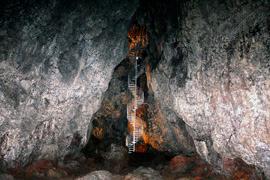
The cave Vatnshellir is a 100 m long lava-cave in the south slopes of Purkhólahraun lava flow, 10 minutes drive west of Arnarstapi and 25 minutes south of Hellissandur. A spiral staircase has been put into the cave to enable access but entrance is only allowed with guides from the National Park.
We recommend booking online as soon as you have decided you want to go, tours regularly sell out and availability can be limited. Warm clothing is necessary and gloves recommended. Helmets and headlights are provided. A cave tour takes about 45 minutes. Don’t hesitate to ask if you have any questions: Phone +354 787 0001 or Email info@summitguides.is
www.summitguides.is
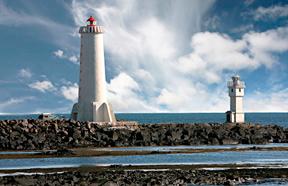
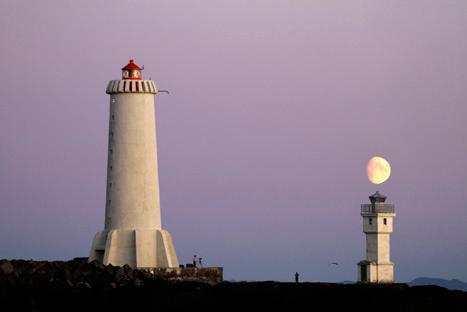
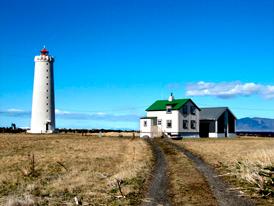
The Akranes lighthouse is a delightful place to visit, any time of year. Away from the bright lights, tourists and residents flock to the site in winter to catch a glimpse of the northern lights dancing and flickering in the sky. In the summer, you can see locals having a picnic outside the lighthouse, and guests are often invited in where they can climb to the top. Built in 1947, the larger of the two lighthouses has been used in recent years to host concerts and art exhibitions and thousands of travelers have visited over the last few years. The smaller lighthouse, built in 1918, is one of the oldest concrete lighthouses in Iceland. It served the fishing town until it was deactivated in 1947, in favour of a larger structure.
Opening hours:
Summer opening from June 1st to Sept 15th.
Everyday from 10am to 4pm.
Winter opening from Sept 16th to May 31th. Monday to Friday from 10am to 4pm. Closed on weekends.
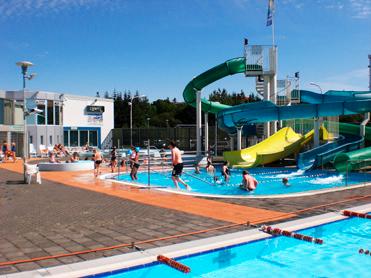
There are swimming pools all over West Iceland large ones and small ones, and all are heated. Most are outdoor pools but a few are indoors. Extremely popular with locals and visitors alike, Icelandic pools are open throughout the year.
In West Iceland you can find a lot of beautiful, breathtaking Waterfalls in various sizes and shapes.
West Iceland is one big Sagaland with many resting places and services dedicated to telling the stories of the settlement
of West Iceland. You can also experience a troll walk, numerus amount of jumping balloons and playing grounds that make the trip for the kids unforgettable and exciting.
West Iceland has many possibilities to offer for you to stay and enjoy, refresh body and soul and get a deeply relaxed.
Most populated areas in West Iceland have at least one pub and the more populated areas have more pubs and also some clubs, ranging in price and quality.
Visiting the Westfjords is surely a different experience. It is Iceland, but yet a different Iceland altogether. Looking like an enormous claw stretching out to sea, the Westfjords are known for sheer sea cliffs, some rising to a height of over 440 metres, and long, narrow fjords. A slender strip of land about 8 km wide connects the southernmost area with the rest of the country.
The northwest tip of the Westfjords is Hornstrandir, a now uninhabited 600-km2 nature reserve of inspired natural beauty and undisturbed wildlife where nature lives in peace with itself. It is truly a privilege to experience such splendour.
Useful links
Official travel guide for the area www.westfjords.is
The Westfjords Way: www.vestfjardaleidin.is/en
The Gisla Saga Project www.westvikings.info
Official travel guide to Iceland www.visiticeland.com
Promote Iceland www.islandsstofa.is/en
Road conditions www.umferdin.is/en
Weather forecast www.vedur.is
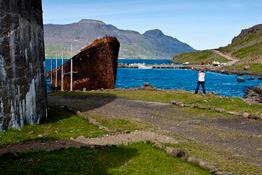
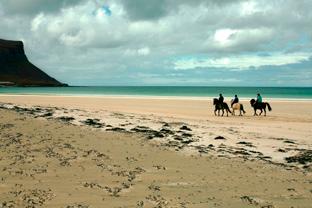
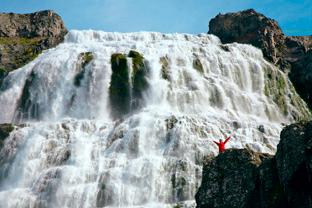
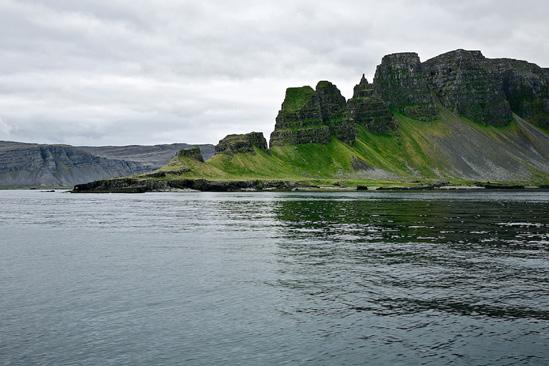
One of the most impressive and leasttalked-about natural features in all of Iceland, Drangaskörð are a series of seven rocky peaks jutting out into the sea in the
Árneshreppur municipality in Strandir. Like a jawful of jagged teeth, the peninsula emanates from Skarðafjall mountain and
Göltur and the pass next to it is called Litlaskarð. The next pass is called Signýjargötuskarð where a popular route once
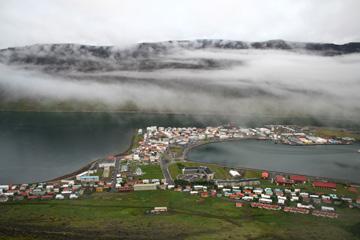
As the largest town on the peninsula, Ísafjörður serves as a central hub for exploring the rugged landscapes and pristine wilderness of the surrounding areas, including the untouched Horn strandir Nature Reserve. Accessible by car, bus, or flight, it provides visitors with unparalleled access to outdoor adventures ranging from hiking and kayaking to bird watching and skiing, inviting a deep connection with nature.
Visitors to Ísafjörður can expect a warm welcome and a chance to immerse themselves in a community where the wilderness of Iceland is always just a step away, and the cultural experiences are as enriching as the landscapes are breathtaking.
the Westfjords.
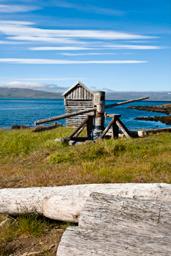
Neðstikaupstaður is a group of 18th century buildings down by the harbor. One of the houses is home to the Westfjords Heritage
There is plenty of wildlife in the Westfjords but most visitors get excited over the arctic foxes, whales and birdlife.
There are many places in the Westfjords of Iceland that are ideal for bird watching. Látrarbjarg cliff is the largest bird cliff in Europe and gives you fantastic views over the puffins.
The Westfjords are small, with not that many people but of course we have a professional theater!
Museum where you can get a unique insight into the rich history and culture of the area.
The Westfjords are of course known for their amazing fish, but there is so much more to the region regarding food and local produce. Visit the local brewery and taste the local seaweed beer, try the sea harvested, geothermal salt or see the chocolatier in Súðavík.
Kayaking is an exhilarating experience, the Westfjords have sheltered fjords and are for that reason excellent for sea kayaking.
The north of Iceland is a true natural paradise, offering a multitude of adventurous activities, attracting people of all ages. From the country’s largest geothermal fields to beautiful islands exuding folklore and one of Iceland’s most popular skiing resorts, the north of Iceland offers a myriad of possibilities for outdoor recreation.
Akureyri is the centre of culture, education and leisure activities in north Iceland. The town is by far the largest outside the Reykjavík capital area. We also recommend going on organized excursions or outdoor activity tours taking you from town to town, out to the islands or into the highlands – allowing you the chance to see the magnificent landscape the north has to offer. Nearly every area has an outdoor swimming pool, and facilities for tourists are top-notch.
Useful links
Official travel guide for the area
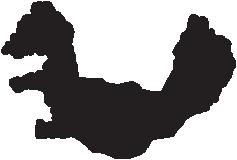
www.visitnorthiceland.is
Akureyri tourist guide www.visitakureyri.is/en
Akureyri Art Museum www.listak.is/en
Hof Cultural and Concert Centre www.mak.is/en
Whale Museum in Húsavík www.whalemuseum.is
Akureyri Museum www.minjasafnid.is
Grímsey island www.grimsey.is/en
Hrísey island www.hrisey.is/en
Official travel guide to Iceland www.visiticeland.com
Promote Iceland www.islandsstofa.is/en
Road conditions www.umferdin.is/en
Weather forecast www.vedur.is
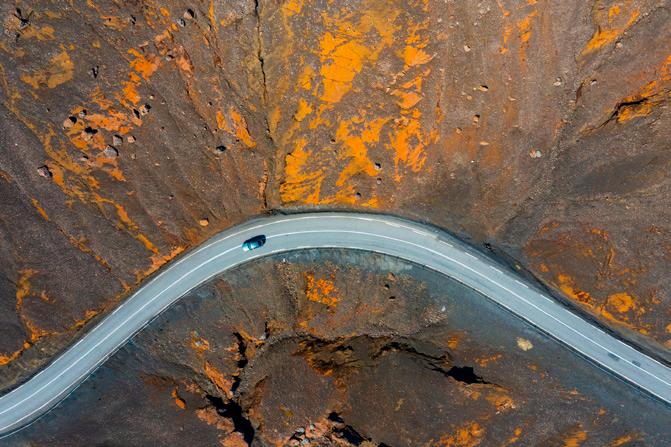
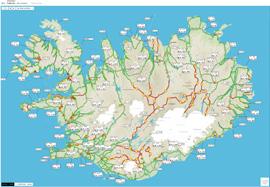
The Icelandic Road and Coastal Administration (IRCA) provides consistent information on both road conditions and weather at www.road.is, where you can find an interactive map of Iceland in English.
The map provides information on what state the country’s roads are in; whether they are clear, iced, snowed over, or closed. Automatic weather stations with traffic counters are located all around the country, providing real-time updates on conditions, along with temperature and wind speed, as well as the number of cars which have passed on the road, both over the course of the last 10 minutes and from midnight.
At www.road.is you will also find over 200 live cameras, where you can see road conditions for yourself.
The Traffic Service is reachable from 6:30 am to 10:00 pm, every day, year-round.
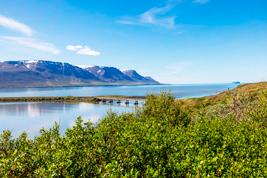
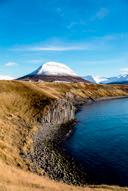
For those who want to experience Iceland at a slower pace, Skagafjörður is an essential destination. Here, culture, nature, and well-being intertwine, creating an atmosphere that practically demands you stop and stay a while.
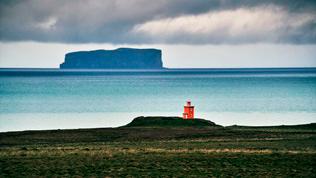
In Skagafjörður, history breathes from every stone and every mountain—whispering tales of tragic destinies, elves, and hidden people. To the north, the island of Drangey rises majestically from the fjord, forever tied to the outlaw Grettir the Strong. Looking out at Drangey from the shore, or sailing out to it on a clear day, feels like stepping into a mythical world. It is easy to imagine the legendary hero lighting his fire there after his historic swim to the mainland to fetch embers for himself and his brother, Illugi. It is a timeless story of isolation, perseverance, and human strength against the elements.
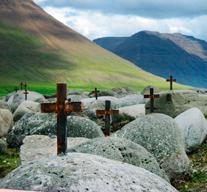
Yet, the region’s history is shaped by more than just battles and heroism; faith and education also run deep. For nearly seven centuries, Hólar in Hjaltadal served as a bishop›s seat and the primary cultural hub of Northern Iceland. Walking through Hólar, you can still feel the profound energy of the site. Hólar Cathedral, built from local red sandstone, is the oldest stone church in the country and houses priceless historical artifacts.
Throughout Skagafjörður, a variety of museums and exhibitions bring this rich Icelandic heritage to life in diverse ways.
» Horses: Widely known as the «cradle of
rentals offer everything from short rides to multi-day tours.
» River Rafting: Rafting through the glacial rivers is an unforgettable, adrenaline-fueled experience.
» From Shore to Summit: The region features an abundance of diverse hiking and cycling routes. For seasoned hikers, Mælifellshnjúkur and the Tröllaskagi peninsula offer spectacular challenges.
» Swimming pools can be found in every villæage or town. The pool at Sauðárkrókur has undergone extensive renovations in recent years, the Varmahlíð pool is a family favorite, and the Hofsós
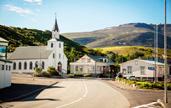
pool offers world-class view where the water seems to blend right into the ocean.
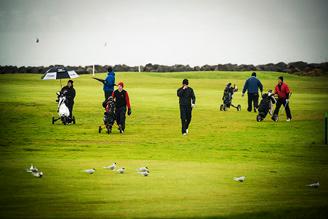
» Golf: Golfers can enjoy Hlíðarendavöllur in Sauðárkrókur, one of the country’s finest 9-hole courses, which now features a brand-new, state-of-the-art clubhouse.
Skagafjörður is one of Iceland’s premier food production regions, driven by a robust fishing industry, thriving agriculture, and a vibrant community of artisan micro-producers. Across the region, you will find a wonderful selection of restaurants and cafes serving delicious dishes made from high-quality, locally sourced ingredients.
Treat yourself and your loved ones to an unforgettable stay in Skagafjörður.


The tunnel bypasses the precipitous Víkurskarð Mountain Road, a hazard for drivers in bad weather.
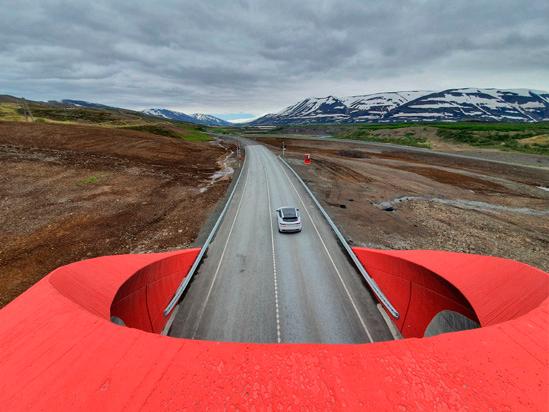
Vaðlaheiði tunnel is a 7.5 km (4.7 miles) on the Icelandic Ring Road, close to the town of Akureyri, the capital of North Iceland.
The tunnel bypasses the precipitous Víkurskarð Mountain Road, a hazard for drivers in bad weather. The tunnel shortens the Ring Road by approximately 16 km (10 miles), saving drivers up to 12 minutes in good weather conditions.
Drivers need to pay road toll when driving through the Vadlaheidi tunnel. Travellers can pay for a single trip by visiting the website www.tunnel.is and pay for each single trip via card. To avoid an extra charges from the Car Rental travellers can pay for each trip through the tunnel 24 hours before entering the tunnel or max 24 hours after driving through the tunnel.
In the summer of 2026, card payment machines will be installed on both sides of the tunnel so travellers can pay for each trip by card.
All further information on www.tunnel.is
Laufás in Eyjafjörður is a renowned church site and chieftain‘s residence from the settlement (874-930). Laufás church was built in 1865, among its special items is a pulpit from 1698. The current farmhouse is a good example of a wealthy vicarage from 1853-1882 furnished with household items and utensils from the period.
At the Visitor Centre you will find plenty of information about nature and history of the countryside, a handcraft and souvenir shop and a café in a cosy atmosphere. Laufás is part of The National Museum‘s Historic Buildings Collection and managed by Akureyri Museum. The ticket is valdi throughout the year to Akureyri Museum, Laufás, Nonni’s house, Akureyri Toy Museum and Davids house.
www.minjasafnid.is
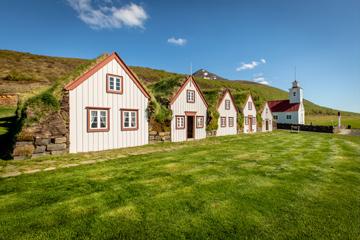
Laufásbær is a stylish brush farm, typical of Icelandic farming at the time, but considerably larger.

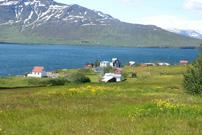
Þrístapar. Here you can see a monument to the last execution in Iceland.
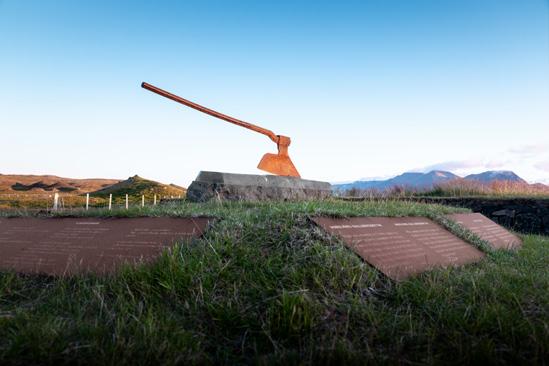
Þrístapar, also known as Triple Hillocks, is the site where the last public execution in Iceland took place in the year 1830. Two people were beheaded as punishment for their crime of double murder. The execution site is just a five-minute walk from the Ring Road in the northwestern region of Iceland.
The legendary bathing spot, Grettislaug at Reykir in Skagafjörður in North Iceland, is the bathing place of Grettir the Strong from Saga lore but he was an outlaw that lived in Drangey island. According to the Saga Grettir is said to have warmed himself up in the pool after the famous Drangeyjarsund, a 7,5 kilometers long swim in the ocean from Drangey island.
On a cold day at the beginning of January in 1830, a double beheading took place at Þrístapar, when Agnes Magnúsdóttir and Friðrik Sigurðsson were executed. They had been sentenced to death for murdering two people at the farm Illugastaðir, located on the west side of the Vatnsnes Peninsula. After the beheading, the two heads were put
on a stick-on top of Þrístapar for display, and the corpse buried in the field nearby.
Located by the seaside with amazing views, the geothermal pool has been constructed with natural stones. Grettislaug is about 39°C (100°F) year round, though of course weather can influence the water’s temperature. There are dressing rooms and since the pool in on a private property, there is a small entrance fee.
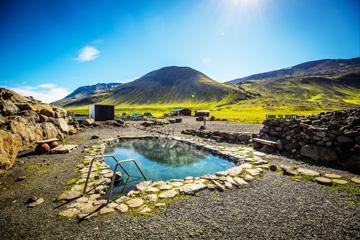
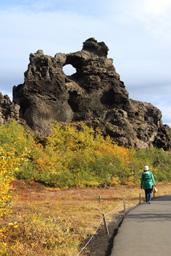
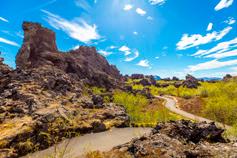
The dramatic structures at Dimmuborgir are one of Iceland’s most popular natural tourist attractions.
Dimmuborgir or Dark Cities is an area of Mývatn, randomly strewn lava rocks and cliffs, surrounded by vegetation such as low bushes and plants. Dimmuborgir is a place of surprises with its myriad forms and images, small caves and towering volcanic rock, pierced by natural apertures. The most famous of these formations is the cave “The Church„, aptly named for its dome-like ceiling.
It is not only in summer that Dimmuborgir exerts its charm; a winter visit is also an invigorating experience which must include popping in to see the Yule Lads (Santas) who have settled there and made it their home.




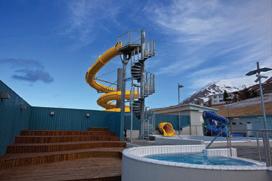

The swimming pool in Siglufjörður
Hvanneyrbraut 52
Tel: +354 464 9170
The swimming pool in Ólafsfjörður
Tjarnarstíg 1
Tel: +354 464 9250


TOURIST INFORMATION

Contact https://evanger.is/en/info
evanger@evanger.is
+354 416 0580
Siglufjörður, Ísland
Opening Hours
Campsite: May 15 – September 15
Info Center: May 15 – Sept 15, 10:00–22:00
Akureyri is one of Iceland’s most popular destinations.
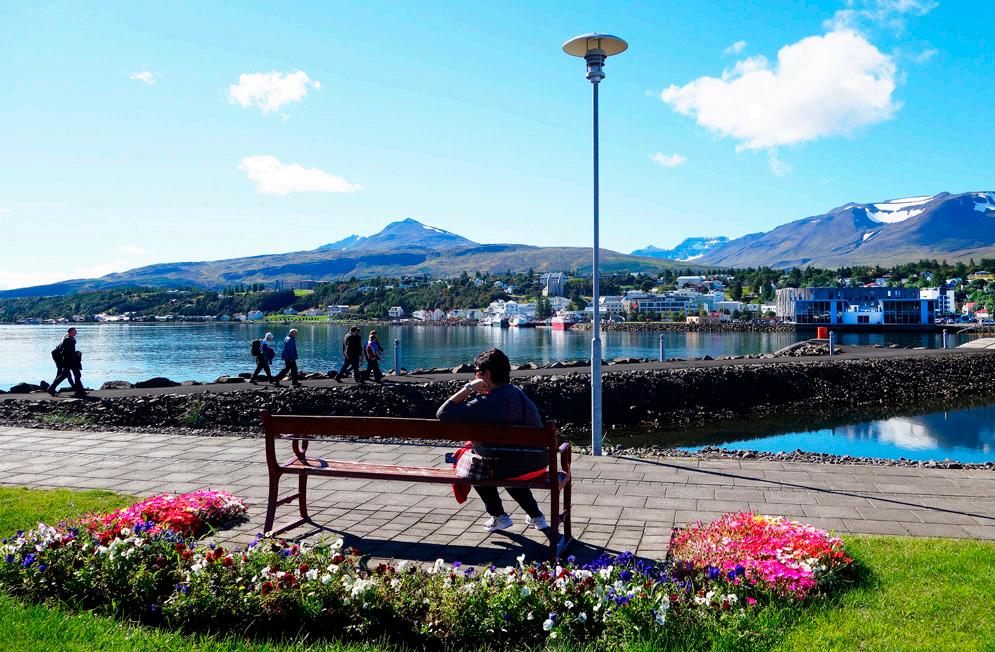
Akureyri has a lot to offer!
Below we list some attractions and activities that we recommend for our guests while in Akureyri
Get to know us and our little town What's on
» The Botanical Garden – most of the Icelandic flora as well as about 7000 foreign plants
» The Art Museum and Art Street (Kaupvangsstræti)
» Sundlaug Akureyrar – outdoor geothermal swimming pool, 3 pools, hut tubs, play areas and waterslides
» Whale watching from the pier below center of town
» Restaurants – promoting local food
» Kjarnaskógur – wood, trails and playgrounds
» The old town – old houses and several museums
» Golf course – The northern most 18-hole golf course and the competition “Arctic Open”
» Glerárgil – canyon and trails
» Hrísey island, the charming village and hiking trails (30 min drive and 15 min ferry sailing)
» Akureyri Town Festival – end of August each year
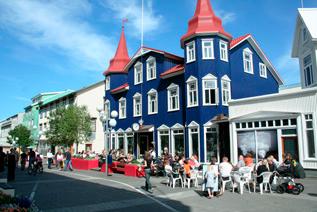
There aren’t many places that equal Akureyri in being popular as a place to visit, at any time of the summer or winter. The town has a bustling community, a colourful cultural scene, a variety of museums, one of the finest swimming pools in the country, all kinds of events taking place and restaurants to suit every taste, and much, much more. On top of that, this is a place where the weather is kind, there’s some magnificent nature on every corner and endless opportunities to enjoy the outdoors!
To make it easier for visitors to keep track of events in and around Akureyri, the www.visitakureyri.com website lists information for all of the events taking place in the town, opportunities for relaxation and services, all in one place.
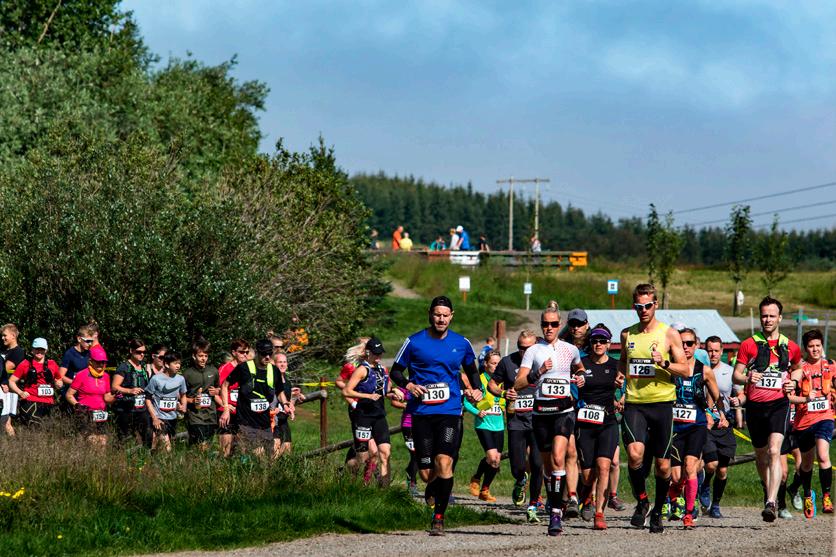
We pay special attention to events listed for the Bank Holiday weekend in August and for the Akureyri Town Festival weekend at the end of the same month. The trail running event Súlur Vertical takes place in Akureyri, August 1 and August 2 this summer and the centre of town is the ideal place to see this year’s runners as the hit the finishing line.
TOURIST INFORMATION CENTER Í FJALLABYGGÐ
Campsite: May 15 - September 15
Info Center, Siglufjordur: May 15 - Sept 15, 10:00-22:00
Website: https://evanger.is/en/info
Mail: evanger@evanger.is
Tel: +354 416 0580
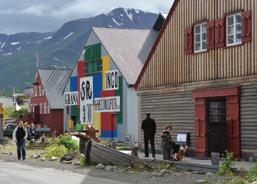
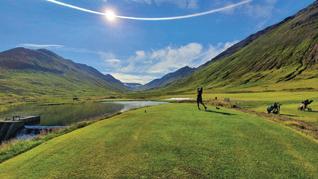
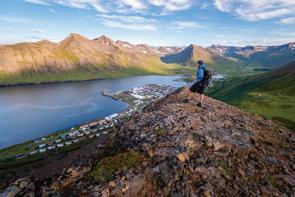
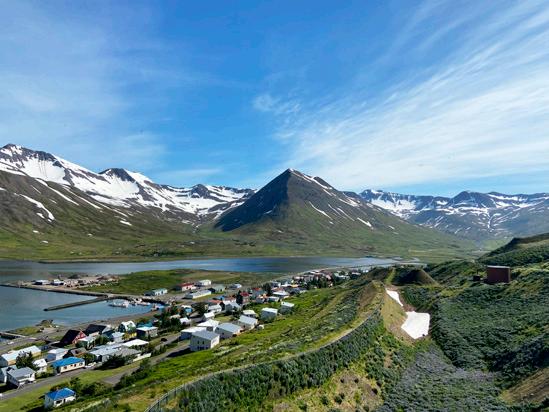
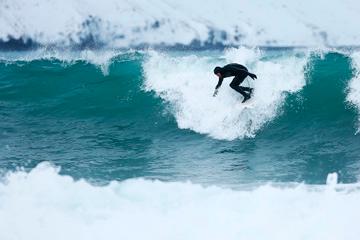
The municipality Fjallabyggð in North Iceland has a backdrop of natural beauty bringing together magnificent mountains and fjords. The proximity to nature is always at hand, whether you’re looking for a walk, a round of golf, a swim in the sea, windsurfing, kayaking or a trip on a jetski, or would simply prefer to relax in one of the quiet communities.This most northerly community in Iceland is one of the finest places to take in the midnight sun at its best.
The Fjallabyggð region is home to a thriving cultural scene. There are many restaurants and plenty of accommodation options. Museums include the Herring Era Museum in Siglufjörður, Ólafsfjörður’s Pálshús which is home to a unique natural history collection, the reverend Bjarni Thorsteinsson’s folk music centre in Siglufjörður,
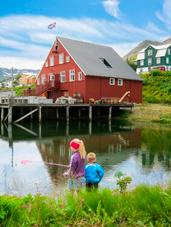
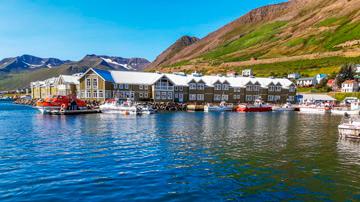
where there is also the Saga Fotografica photography museum.
This isn’t a place where the younger generation are going to be bored. There’s the excitement of the beaches, horse riding, or fishing from the town’s quays. Our woodlands are a natural delight that offer orienteering challenges, greta places to
two swimming pools (one of which is open-
two water slides.
Welcome to Fjallabyggð!
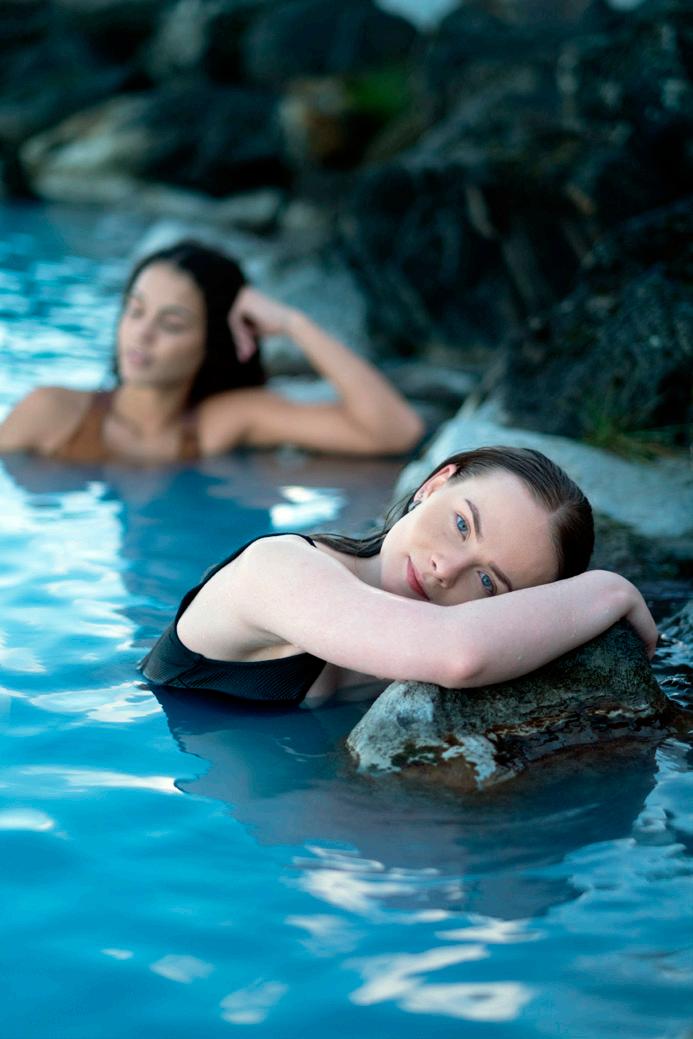
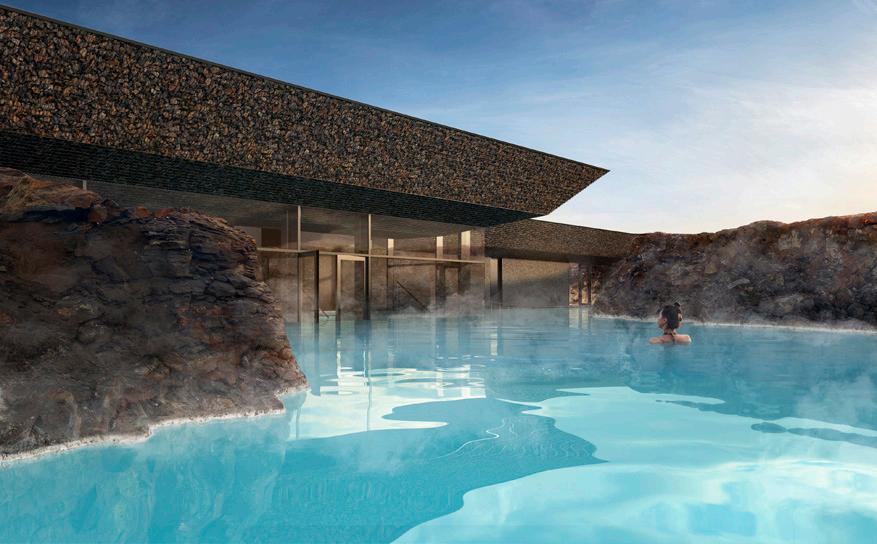
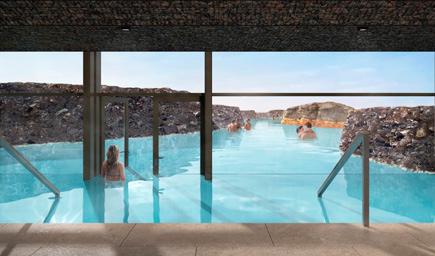
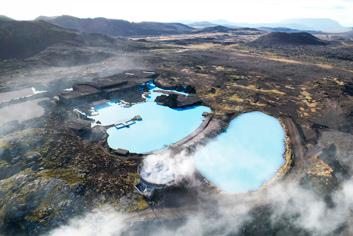
The new Earth Lagoon Mývatn, formerly Mývatn Nature Baths, is opening in the summer of 2026. The design of the building - both inside and out, along with the lagoon - has been shaped by the unique nature of the Mývatn area. The connection to the environment and the surrounding natural formations is reflected throughout the design.
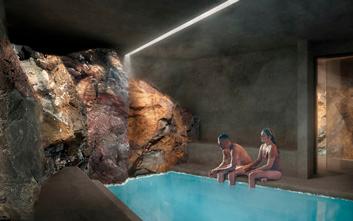
The building, which is just under 4,000 square meters, is blended into the landscape, using local stones as roof ballast, roof edging, exterior cladding, interior walls, and terrazzo flooring. It will sit east of the current lagoon and be connected to it by a new lagoon formed around a tuff pillar island, a fissure, and lava-rock walls. Visitors will be able to walk directly into the water from the changing rooms and explore three different sections of the lagoon.
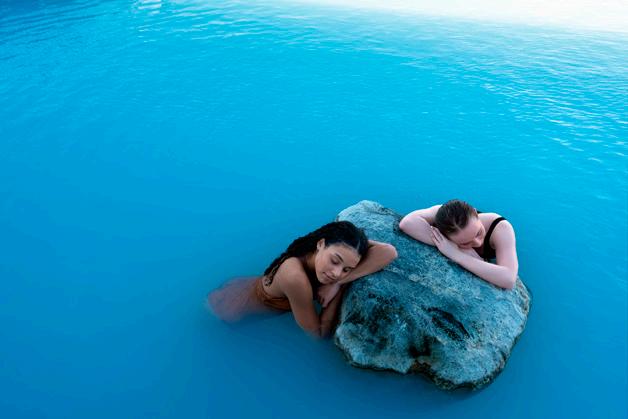
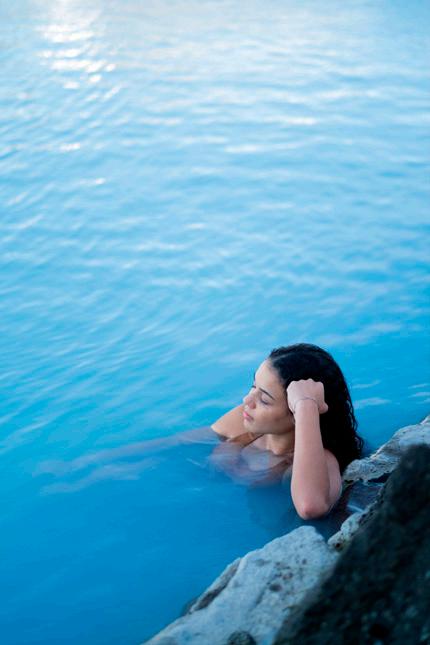
Two new hot tubs, a new and larger bar, expanded seating areas, and improved access to the steam bath. The new lagoon will add experiences such as a rock steam room you can swim into, a waterfall, a new lagoon bar, and a fissure/cave passage where guests will travel through the gap to reach a larger, more open part of the lagoon.
The new building has been designed so that all guest facilities are as high-quality as possible. Visitors will be able to choose between three different access packages, each offering different changing rooms and experiences.
Earth Essential - (package 1)
Changing rooms are divided into sections for comfort and spaciousness. There are private showers, and guests can store towels/phones in a personal locker before entering the lagoon.
Earth Signature - (package 2)
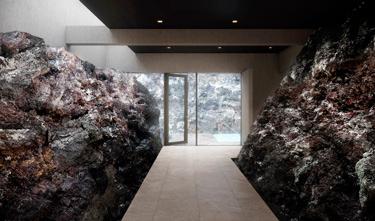
Access to the Lava Changing Rooms, where natural lava-rock walls form the exterior, and a lava wall divides the men’s and women’s areas. Towel is included but please note that there are no private showers in the Lava changing rooms.
Guests walk through an impressive lava-walled corridor into the lagoon.
Earth Exclusive - (package 3)
A private changing room for two, with the option to order food and wine from the lounge’s menu. Access to a relaxation room and a private lagoon area exclusively for guests who choose this entrance.
With this new facility, around 600 guests can be welcomed at once—an increase of about 33% from the current capacity. The lagoon itself will also expand by roughly 35% in surface area. A new bistro, Earth Lagoon Bistro, offering fresh dishes made from local ingredients, along with a light menu, will be one of the new additions.
The dining area will seat 150 people, the same capacity as the previous restaurant. The reception and restaurant open to the west with views over the lagoon and Lake Mývatn. An outdoor seating area will be available for bistro guests during the summer.
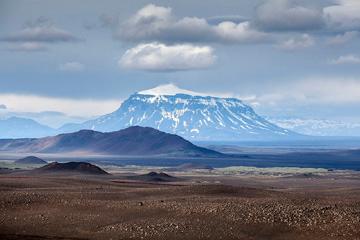
Mt. Herdubreið on the Öskjuleið Route is a 1682m high table mountain. It is the national mountain of Iceland and often called the “Queen of Icelandic mountains”. There is a hiking trail to the top of the mountain, but due to loose rock it´s difficult and steep. In 2002, Icelanders voted Herðubreið as the “national mountain” of their country.
Near the mountain lies an oasis called Herðubreiðarlindir with a campground and hiking trails. In former times, outcasts who had been excluded from Icelandic society because of crimes they had committed lived at the oasis. One such outlaw was Fjal- winter of 1774–1775. – The road to summer.
The Siglufjörður Folk Music Centre is located in one of the oldest houses in Sigufjörður, Madame House where the pastor Bjarni Þorsteinsson lived from 1888 to 1898. The centre brings to life the world of Icelandic folk music. Visitors can see video recordings of people of all ages chanting epic poetry (rímur), singing quint-songs (tvísöngur), reciting nursery rhymes, and playing folk instruments such as the langspil (similar to dulcimer) and the Icelandic violin (fiðla).
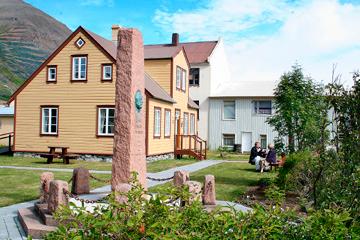
Set in Raufarhöfn where the Arctic Circle lies just off the coast, the Arctic Henge (Heimskautsgerðið) is under construction. Similar to its ancient predecessor, Stonehenge, the Arctic Henge is like a huge sundial, aiming to capture the sunrays, cast shadows in precise locations and capture the light between aligned gateways.
North Iceland is an ideal destination for families, offering a variety of unique natural experiences that cater to children of all ages. The region boasts diverse wildlife and birdwatching opportunities, where kids can learn about different species in their natural habitats.
There are more than 100 churches in North Iceland, each one has its own charm and character and they are all certainly worth a closer look. Christianity in Iceland can be traced back to the settlement and Icelanders officially became Christians in the year 1000. An episcopal see was founded at Hólar in Hjaltadalur valley in 1106.
The rocky island Drangey in the middle of Skagafjordur is a flat topped mass of tuff, rising almost 200 meters out of the ocean. The cliffs serve as nesting sites for around million sea birds and have been used throughout Iceland´s history for egg collection and bird netting. Grettis Saga recounts that both Grettir and his brother Illugi lived on Drangey, for three years and were slain there.
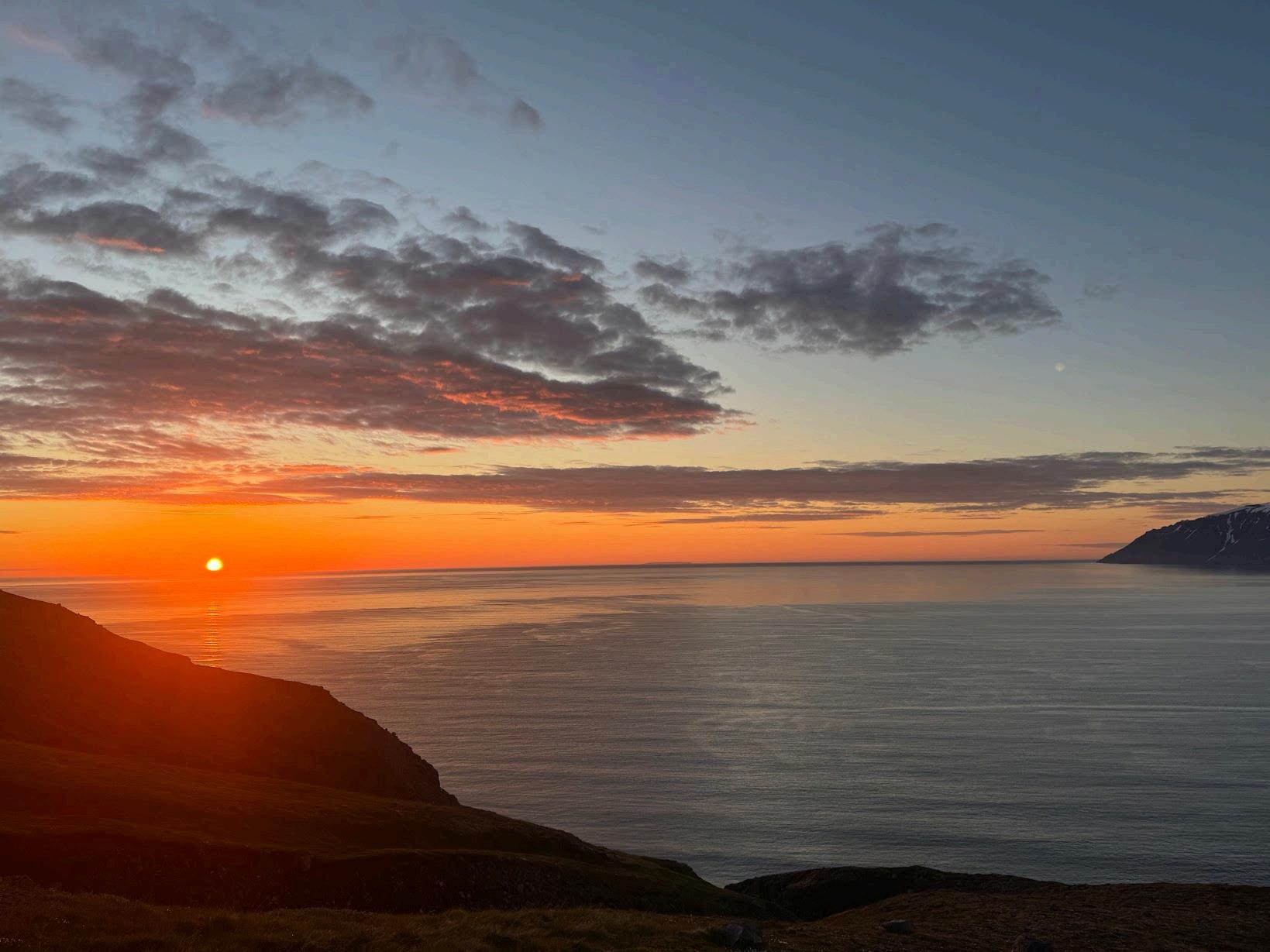
During summer, in June and July, when we have endless days, you can see the sun go down and then rise again in a matter of minutes. It is a genuine Arctic experience to witness this, especially recommended along the Arctic Coast Way, where visitors can see the sun setting on the horizon over the sea. Bright nigths last from the first week of May until mid August.



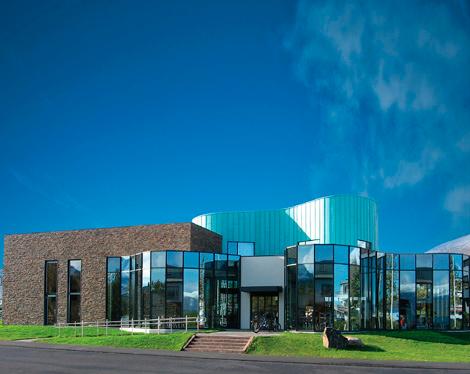
Cultural house Berg is in the town centre of Dalvík. The Public Library is located there and a Coffie House. Art performances, concerts, conferences and cultural tourism also have their place in the house and a multi-purpose hall is availble. Various events are scheduled all year round.
Open Monday to Friday from 11:00 to 17:00, Saturdays from 13:00 to 16:00.
www.dalvikurbyggd.is/berg
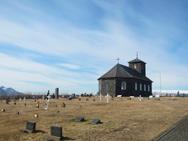
The Þingeyrachurch was consecrated in 1877.
The church at Þingeyrar is one of the most remarkable in the country and is located where there was a chieftain’s residence and a local meeting place in the past. The first monastery in Iceland was established at Þingeyrar in 1133.
The church was consecrated in 1877 and the rocks for the building was taken from the Ásbjarnarnes cliffs and dragged eight kilometres on sleds across the frozen estuary to the site. The church is built in Roman style and there are seats for a congregation of a hundred inside. Its cupola is rounded and painted blue, and studded with approximately a thousand gold stars and there are a thousand panes in the church windows. The church is well endowed with old and remarkable artefacts.
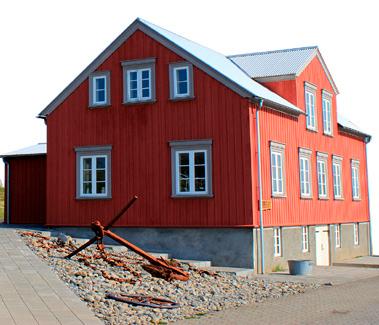
In the oldest house on the Island a museum has been set up where you learn about the history of shark fishing in Iceland and the settlement in Hrísey. It also houses the Tourist information which is open 2 pm to 5 pm from the start of June until the end of August.
The historic settlement of Grenjaðarstaður in Aðaldalur is one of Iceland’s largest turf houses, situated 30 km south of Húsavík. In its heyday Grenjaðarstaður was a prosperous vicarage and the oldest part of the existing turf house was built in 1865 and inhabited until 1949. The house is unique, primarily insulated with lava rocks, which are abundant in the surrounding area, and the interior is panelled with driftwood.
The museum is open between 1 June to 15 August: Every day 11-17.
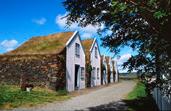
The turf homestead at Grenjaðarstaður.
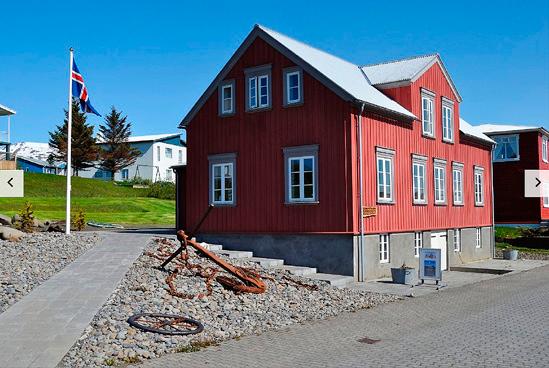
Hrísey is the gem of Eyjafjörður and it has a flourishing community, magnificent panoramic views of the fjord and a rich birdlife. Sailing to the island with the ferry Sævar only takes about 15 minutes. Departure is from the small harbour at the community Árskógssandur (35 km from Akureyri).
Hrísey has plenty to see and do. There is a shop and a restaurant, a chance to go for a swim, or a visit to the house of SharkJörundur which is home to a fascinating museum dedicated to the shark fishery off the coast of Iceland in years gone by. The history of the islands is also presented in a series of displays with both text and pictures. The museum is open every day through the summer.
The island has a variety of delightful walking routes and the eastern shore of Hrísey is said to offer some of the most magnificent and inspiring views to be found in Iceland. Peace and tranquillity flow across the fjord from Kaldbakur, the mountain that watches over the eastern side of Eyjafjörður. The route is marked with signs for visitors.
www.hrisey.is
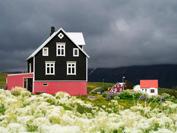
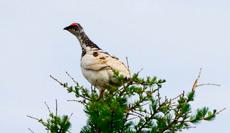
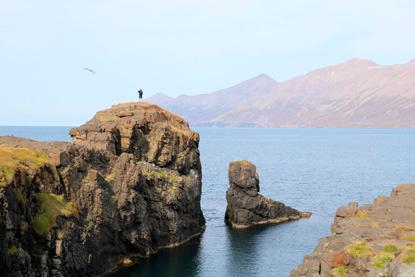
The Eyjafjarðarsveit district has much to offer visitors. It’s largest village is Hrafnagilshverfi, which has a swimming pool open all year round and a camping site with excellent facilities. There are roughly 1200 inhabitants in Eyjafjarðarsveit and agriculture provides the main employment, plus a variety of services for tourists has been built up in recent years.
There is a wide choice of accommodation in the district and various recreational offers.
Hælið at Kristnes hosts the ‘White Death’ exhibition of the history of tuberculosis in Iceland. This exhibition is thoroughly unique among Iceland’s many museums and exhibitions, providing a moving account of this illness that in its time deeply marked so many families in Iceland. The exhibition and the Hælið café are open daily through the summer.
Among other interesting destinations in the Eyjafjarðarsveit is Holtssel, which offers wonderful home-made ice cream. Beef can also be bought direct from the Holtssel farm.
The Jólagarðurinn (Christmas Garden/ Santas house) and Bakgarðurinn (Back garden) shops have long been known to everyone in Iceland for the variety of goods on display that can’t be found anywhere else. These are both an experience and a shopping opportunity for visitors.
Sverrir Hermannsson’s Smámunasafnið (smallexhibits) in Sólgarður is another place that is entirely unique. Sverrir was a collector of everything imaginable, and his museum has collections of agricultural items, tools, household items, nails, blacksmiths’ tools, keys, and more.
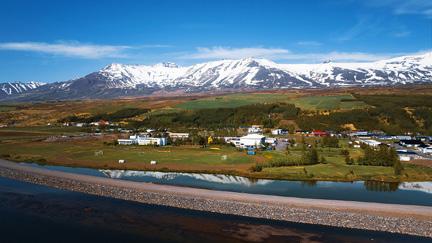
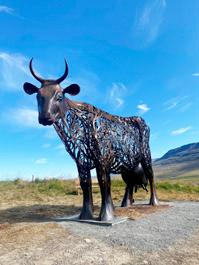
A visit to Sólgarður is also an ideal opportunity to take in the region’s latest artwork – Edda the cow, sculpted in iron by
local blacksmith and artist Beate Stormo. Edda is no small installation, measuring three metres in height and five metres in length, and it’s entirely fitting that from her position she has a fine view over the blooming agriculture in Eyjafjarðarsveit.
For those looking to put the focus on staying healthy during their travels, there are mumerous walking and cycle routes, both in low-lying areas and in mountain regions. One of Iceland’s newest resorts, Skógarböðin, is to be found in the Eyjafjarðarsveit, and comfort and healthy living are at the top of the agenda at the Vökuland Wellness.
Information about all these and many more facilities for visitors to the Eyjafjörður district can be found at the Hrafnagil swimming pool’s reception area.
esveit.is
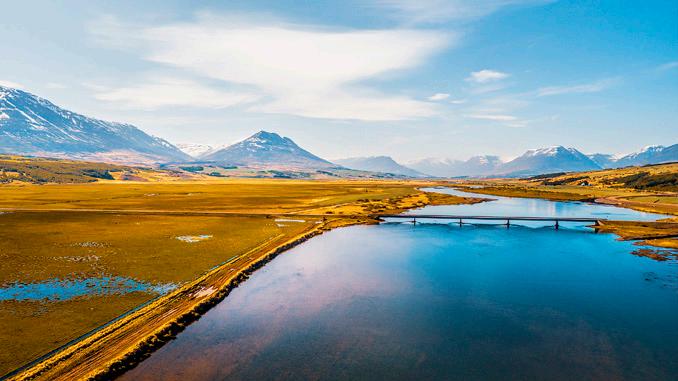






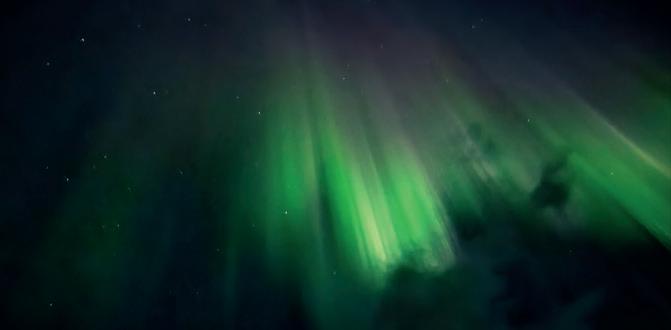
The east of Iceland – a magical region of natural phenomena. Glaciers, forests, bird cliffs, vast expanses, deserts, majestic mountains and narrow fjords. Waterfalls, rivers and the sea. The east of Iceland is a gem of natural wonders and history. It is a region rich in relics from times long past, vestiges of work methods, culture and life’s eternal struggle. It is home to around 16,000 people, who enjoy the relatively still weather of the fjords that makes the water an ideal reflector of the surrounding mountain landscapes.
Villages of varying sizes dot the fjords. Loðmundarfjörður Fjord is ideal for travellers interested in walking peacefully where no one lives.
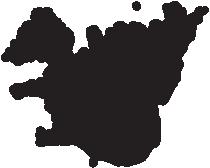
Fog is common in the stillness of east Iceland’s fjords, and the name “east Iceland fog” has become part of the weather terminology.
Useful links
Official travel guide for the area www.east.is
Vatnajökull National Park www.vatnajokulsthjodgardur.is/en
Official travel guide to Iceland www.visiticeland.com
Promote Iceland www.islandsstofa.is/en
Road conditions www.umferdin.is/en
Weather forecast www.vedur.is
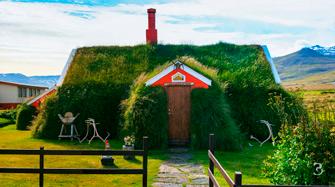
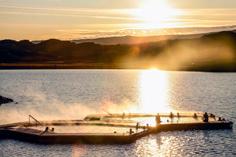
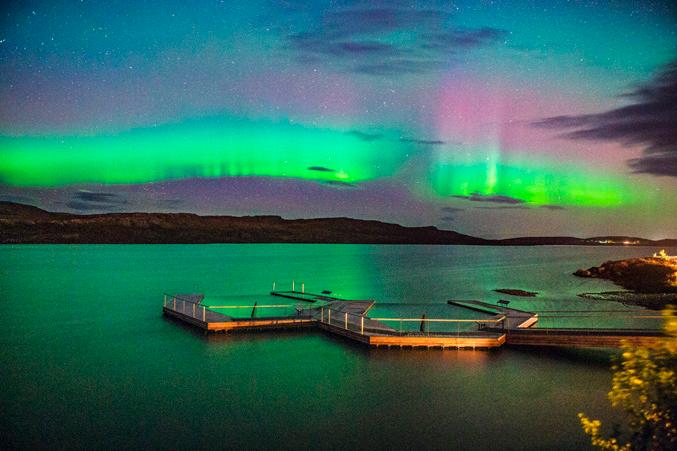
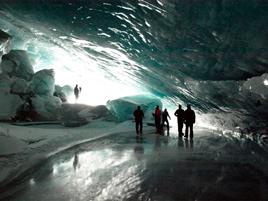
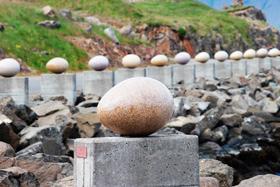
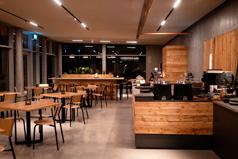
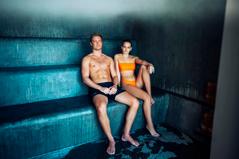
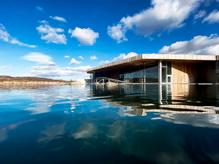
www.vokbaths.is
30
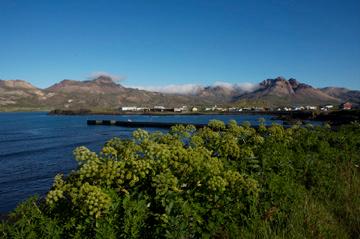
Múlaþing is the second largest municipality in Iceland by area The biggest town in the municipality is Egilsstaðir, with a population of around 2,500. The second largest town of Seyðisfjörður is one of the oldest towns in Iceland.
The nature in the area is both remarkable and unique. The 25 km long coastline has fascinated many a traveler with its coal-black sand, rough landscape, varied birdlife, and curious seals playing right off the beach. We recommend that travelers take their time in discovering the hidden treasures of the area, which has something to suit every taste. There are marked hiking routes leading to 30 of the area’s main attractions, leading people to unique places where they can enjoy nature in peace and quiet.
For a long time Stuðlagil canyon was hidden underwater or until the
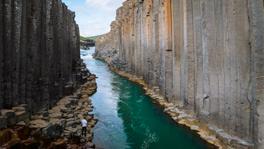
knew about until recently.
hydroelectric plant Kárahnjúkavirkjun was built and the water flow in the glacier river Jökulsá á Dal, a.k.a. Jökla, was remarkably reduced.
visitegilsstadir.is
The Borgarfjörður region, on the coast about 70 km from Egilsstaðir in East Iceland is known for its great natural beauty. The village has around 100 inhabitants.
Borgarfjörður is famous for the good hiking trails named Víknaslóðir„ leading to the deserted fjords and coves, Víkur, and to Loðmundarfjörður. The area has become a hiker´s paradise with local people marking numerous trails, comfortable hiking huts and a good hiking-map. In Borgarfjörður are also excellent facilities for bird-watching.
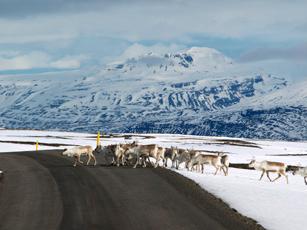
Reindeer in Iceland are mostly confined to East Iceland but once lived wild around most of Iceland. There are around 3000 wild reindeer in Iceland, and their population is
controlled with seasonal reindeer hunting permits. This ensures they do not damage the fragile highlands or grow to unsustaina
Stuðlagil is a unique basalt canyon located in Efri-Jökuldalur in Fljótsdalshérað, which in recent years has established itself as one of the most exciting destinations in East Iceland.
Stuðlagil canyon is located roughly 52 kilometres (about an hour’s drive) from Egilsstaðir.
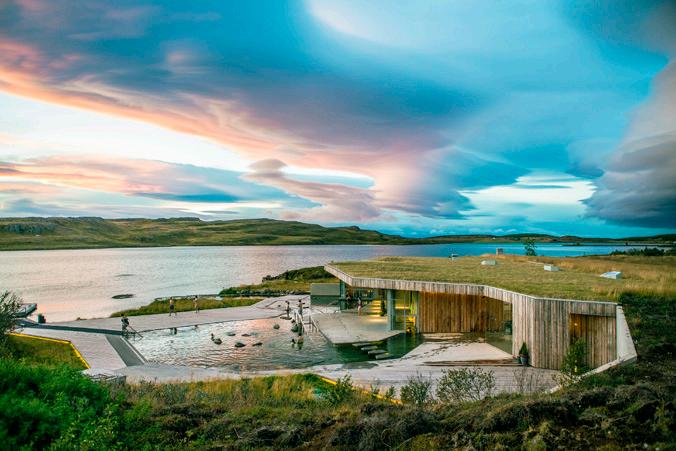
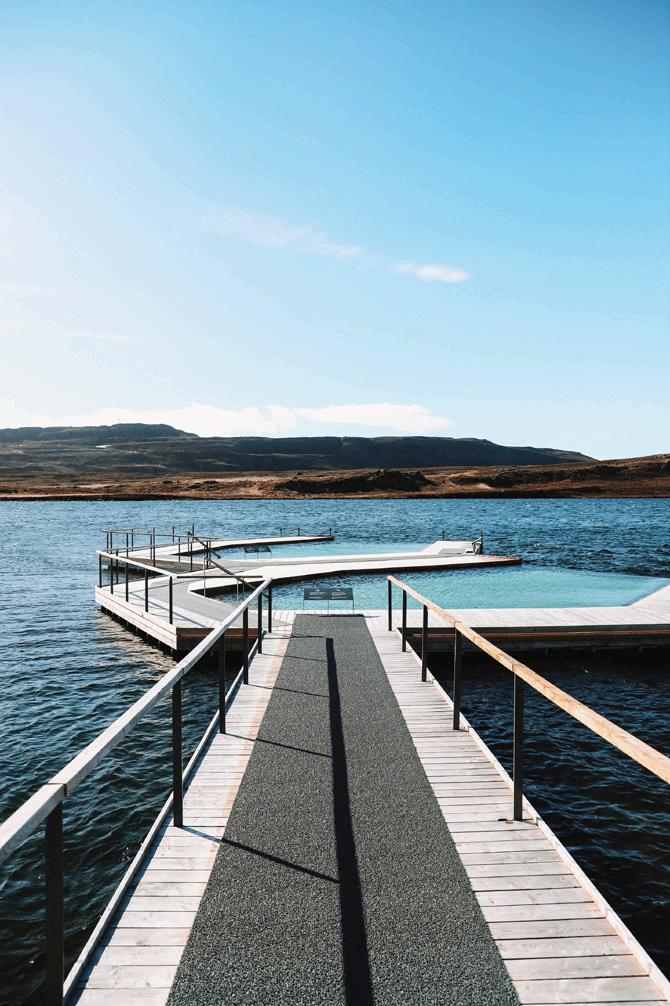
For a change from the classic swimming pools, check out the natural pools that East Iceland has to offer. Located in only a 5-minute drive from Egilsstaðir, the largest settlement in the East, Vök Baths is an essential stop on any visit to this part of the country.
In the southern pocket of East Iceland, life moves at an
unhurried pace. The scenic town of Djúpivogur is part of Cittaslow, ‘an international network of cities where living is good’. Dominating the landscape is the pyramid-shaped peak named Búlandstindur, reaching 1069 meters. All year round, it fulfills the wishes of hikers looking for interesting trails.
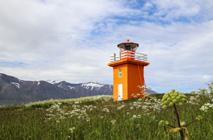
Lighthouses are both interesting and visual buildings that can be fun to explore. Due to their part, lighthouses are prominent, as they need to be seen from the sea, and they are a symbol of safety and hope. In addition, lighthouses are closely associated with the history of Austurland, more than many other types of buildings because settlements in Austurland formed around the fishing industry.

NATURES EMBRACE YOUR ESCAPE NATURES EMBRACE YOUR ESCAPE



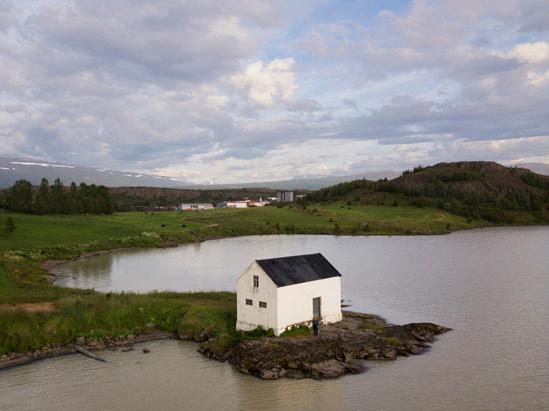
The magnificent Lagarfljót river passes through the area – home of a mythical beast called Lagarfljótsormurinn (e. Lagarfljót’s-Worm).
Múlaþing is the second largest municipality in Iceland by area The biggest town in the municipality is Egilsstaðir, with a population of around 2,500. The second largest town of Seyðisfjörður is one of the oldest towns in Iceland.
The nature in the area is both remarkable and unique. The 25 km long coastline has fascinated many a traveler with its coal-black sand, rough landscape, varied birdlife, and curious seals playing right off the beach. We recommend that travelers take their time in discovering the hidden treasures of the area, which has something to suit every taste. There are marked hiking routes leading to 30 of the area’s main attractions, leading people to unique places where they can enjoy nature in peace and quiet.
For a long time Stuðlagil canyon was hidden underwater or until the hydroelectric plant Kárahnjúkavirkjun was built and the water flow in the glacier river Jökulsá á Dal, a.k.a. Jökla, was remarkably reduced. visitegilsstadir.is
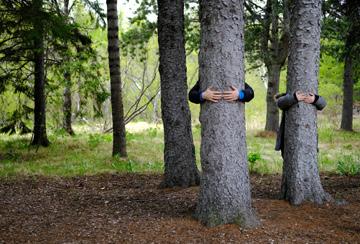
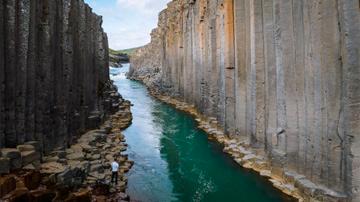

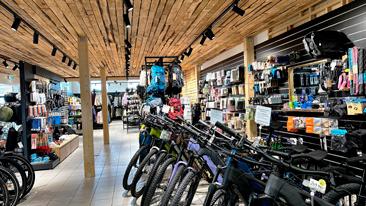
For travellers exploring East Iceland, preparation often means being ready for rapidly changing weather and long distances between services. In Egilsstaðir, the region’s main service centre, Vaskur has become a practical stop for both locals and visitors looking for outdoor equipment, clothing, and travel essentials.
The store offers a broad selection of products aimed at outdoor life in Iceland, including waterproof clothing, hiking boots, camping equipment, sleeping bags, and accessories for hiking and travel. Many visitors stop in to replace forgotten items, add an extra layer for colder conditions, or prepare for camping trips in the Highlands and East Fjords.
Cycling is another important part of Vaskur’s business. Alongside bicycles and cycling accessories, the store operates a repair workshop that serves both local riders and travellers making their way around the country by bike. During the summer months, when cycle tourism is at its peak, the workshop is a valuable resource for those needing maintenance or repairs.
While outdoor equipment is a major focus, Vaskur is not exclusively an outdoor store. Visitors will also find a range of household goods, gifts, toys, and seasonal products, reflecting the store’s role as a long-standing retailer for the local community.
For travellers spending time in East Iceland, Vaskur offers a convenient opportunity to stock up on equipment and supplies without needing to travel further afield. Its location in Egilsstaðir makes it particularly
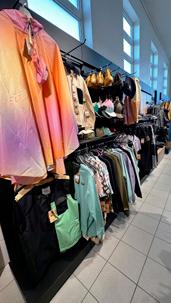
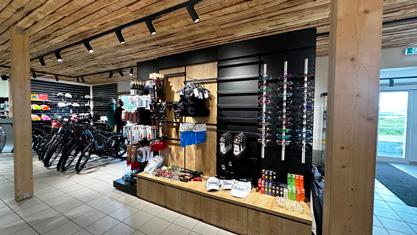
useful for those beginning journeys into more remote parts of the region, where shops and services can be limited.
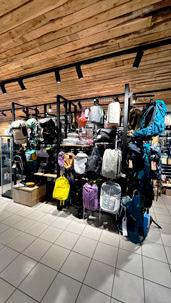
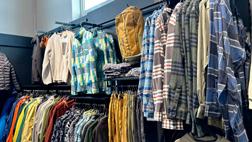
As tourism in East Iceland continues to grow, Vaskur remains a practical link between the needs of visitors and the realities of outdoor travel in one of Iceland’s most varied and sparsely populated regions.
Vaskur - Sólvangur 5 - 700 Egilsstaðir -Tel. +354 470-0010 - vaskur@vaskur.is
Open: Monday – Friday 11:00 – 17:00. Saturday 10:00 – 14:00
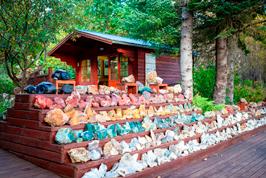
For more than 60 years, Petra Sveinsdóttir devoted her spare time to searching for beautiful and unique stones. A childhood hobby she continued throughout her life, never losing her curiosity or passion.
Her collection and former home in Stöðvarfjörður now welcome guests with warmth and wonder from the moment they enter. The house has remained unchanged since Petra lived there, making her home itself a part of the museum.
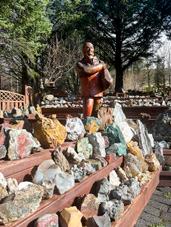
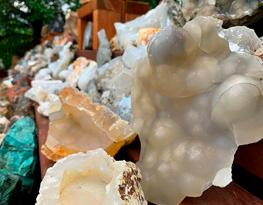
The exhibits in Petra’s Stone Collection are truly unique. The collection includes thousands of stones. Most are from East Iceland, but you will find specimens from all parts of the island here. Stone collectors from abroad have also donated pieces from their private collections. The diversity of the stones is astonishing. One never ceases to marvel at how many different colors can appear within a single jasper, or how varied different types of zeolites can be. Captivated by nature’s beauty, Petra took every opportunity to share it with others.
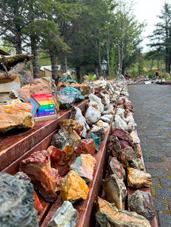
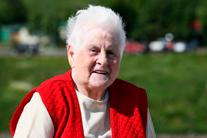
Located in the garden, an educational exhibition presents different types of stones alongside informative panels explaining how they were formed and how varied their appearances can be.
Among the many stones on display are quartz crystals, agates, calcite in its diverse forms, jaspers in countless colors, and opals with their soft hues and patterns. The vast majority come from East Iceland, many of them collected in and around Stöðvarfjörður itself. The geological diversity of this area is remarkable.
Collection truly worth visiting! steinapetra.is
Get up close to the rich geological marvels of East Iceland by visiting Petra’s Stone Collection, a hom turned into a museum in scenic Stöðvarfjörður
Fjarðarbraut 21 755 Stöðvarfirði Tel. 00354 4758834 steinapetra.is info@steinapetra.is
Open hours: May 1 – October 15 Daily 9:00 am to 5:00 pm
Café Sunnó Open: June 1 – August 31 Daily 9:00 am to 5:00 pm
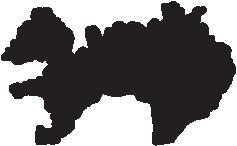
The South of Iceland is unique and that part of the country which by far the greatest numbers of foreign visitors come to. Here history follows you at every footstep, there is creative art, culture and flourishing trade and endless possibilities to enjoy the outdoor life in all seasons. Above all there is the awesome and rugged nature from the mountains to the sea.
The south of Iceland is a nature traveller´s daydream, a sampling of all that is Icelandic, including some of the country´s most treasured natural attractions. Many are not far from the capital while others are more adventurously located, requiring 4-wheel-drive vehicles and a map of the southern highlands. Or hiking boots.
Useful links
Official travel guide for the area www.south.is
Þingvellir national park www.thingvellir.is/en
Landmannalaugar highland www.landmannalaugar.info
Official travel guide to Iceland www.visiticeland.com
Promote Iceland www.islandsstofa.is/en
Road conditions www.umferdin.is/en
Weather forecast www.vedur.is
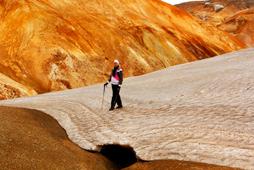
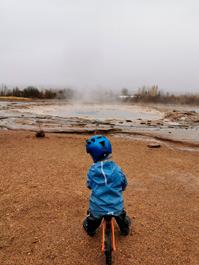
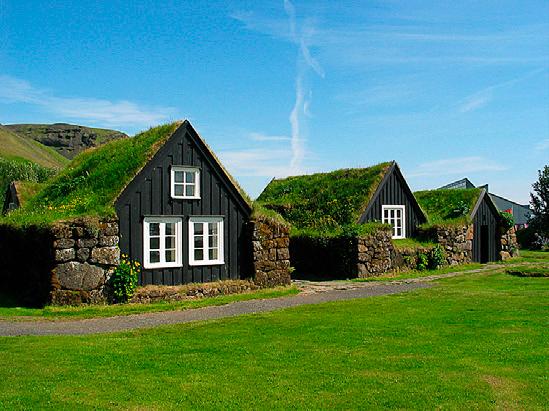
Skógar Museum is one of the oldest museum in Iceland and altogether it has more than 18 thousand exhibits. There’s every reason to stop at Skógar Museum
when travelling around the country and to take in all the fascinating things to be seen there.
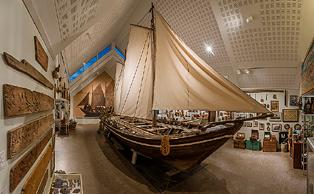
The Folk Museum is the oldest part of the collection as a whole and it offers three floors of exhibition space. These include maritime, agriculture and natural history sections, including examples of weaving, ancient manuscripts and books, including a Guðbrandur Bible dating from 1584, as well as items dating back to the Viking age. In the Open Air Museum visitors can experience
how Icelanders lived through the centuries in houses made from turf and stone.
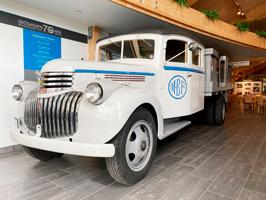
The Technical Museum traces the evolution of transport and technology in Iceland through the 19th and 20th centuries. This covers the changeover from horses to motor vehicles, the development of Iceland’s telephone systems, the origins of electricity, the history of the postal services and much more. The Technical Museum also houses a souvenir shop and a café.
www.skogasafn.is
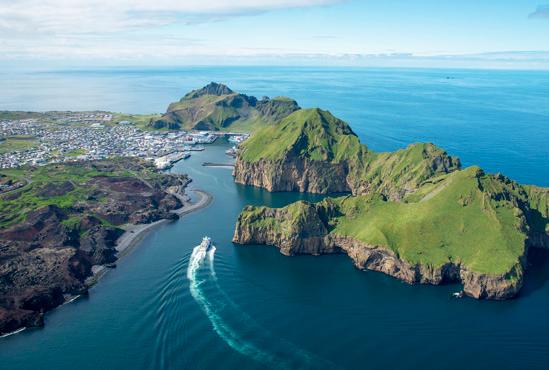
Around 30 types of bird nests are in Westman Islands
Surtsey is the youngest island in the world, from 1963
Eldfell mountain is the youngest volcano in the world, from 1973
When pirates invaded the island in 1627 around 230 people was kidnapped and sent into slavery
The highest mountain in Westman Islands, Heimaklettur is 283m high
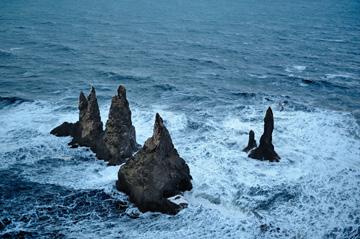
Reynisdrangar are basalt sea stacks situated under the mountain Reynisfjall near the village Vík í Mýrdal, southern Iceland which is framed by a black sand beach that was ranked in 1991 as one of the ten most beautiful non-tropical beaches in the world.
On Reynisfjöru beach, very beautiful basalt formations in the south part of the mountain can be seen, and there you will find an exceedingly beautiful cave called Hálsanefshellir. Please keep in mind that although Reynisfjara black sand beach shares it stunning beauty, visitors must be aware of the sea currents and sneaker waves at Reynisfjara beach.
Westman Islands is the largest puffin colony in the world
About 400 houses was destroyed in the volcano eruption year 1973
The Westman Islands have often been referred to as The Pompeii of the North!
Hjörleifshöfði was probably an island in the sea in the past, now surrounded by black sands that have collected after repeated glacial runs from Katla volcano.
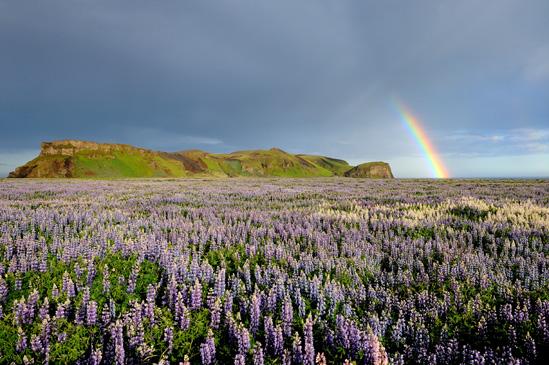
Hjörleifshöfði is a 220-meter tuya cliff, flat-topped, steep-sided volcano formed when lava erupts through a thick glacier or ice sheet. Hjörleifshöfði is on the southwest side of Mýrdalssandur. It is believed it formed during the last cold period of the ice
age when the eruption took place under the glacier.
South of Hjörleifshöfði, a spit is named after Katla and is called Kötlutangi - the Katla spit. It was formed from a large eruption in 1918
where an enormous amount of sediment came with a large glacial run from Katla. Kötlutangi - the Katla spit is the southernmost point of mainland Iceland before the eruption it was Dyrhólaey.
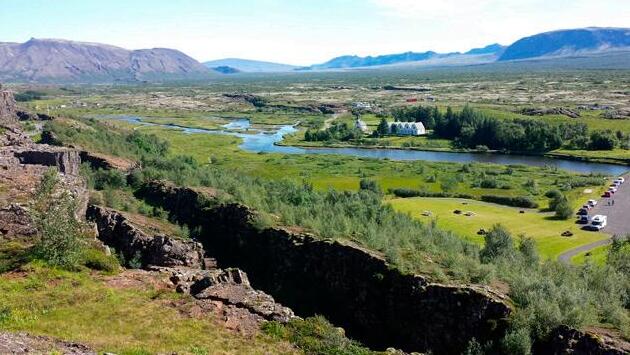
Together with the waterfall Gullfoss and the Geysir of Haukadalur, Þingvellir is part of the most famous sights of Iceland, the Golden Circle.
The history of of Iceland has nowhere more visible than at Þingvellir on the Öxará river. Iceland’s Parliament, the Althing, was established here in year 930 and it was the scene of many momentous events in the country’s history. It’s safe to say that Þingvellir is the place that hold a special position in the Icelandic psyche. Þingvellir is a UNESCO world heritage site.
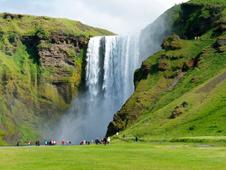
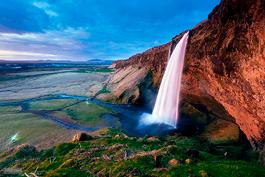
The South Coast is one of Iceland’s most scenic travel routes, combining dramatic waterfalls, black sand beaches, glaciers, and charming coastal villages in one memorable journey. Along the way you can walk behind Seljalandsfoss, feel the spray of Skógafoss, explore the famous black sands of Reynisfjara near Vík, and enjoy sweeping views of glaciers and volcanoes.
The best viewing window for puffin watching is usually from May through mid August, when the birds are actively nesting, socialising on the cliff tops, and commuting back and forth with small fish. South Iceland offers several excellent puffin spots: Dyrhólaey (near Vík), Ingólfshöfði Nature Reserve (between Skaftafell and Jökulsárlón) and Vestmannaeyjar (Westman Islands).
South Iceland offers a broad dining scene, from small,
Bergmál Music Festival will take place on the summer solstice, June 20, 2026, set within the extraordinary landscape of Þingvellir National Park – just 40 minutes from Reykjavík. The world-renowned band KALEO will headline the festival at Þingvellir, joined by a handpicked group of artists.
family-run restaurants to larger venues and hotel dining rooms. Many places specialise in seasonal menus and Icelandic food traditions. For a more local experience, visitors can enjoy cosy countryside dining, including farm-based restaurants and homemade treats such as flatbread, twisted doughnuts, pancakes with jam and whipped cream, and hot chocolate.
Skálholt is one of Iceland’s most historical places and the capital of Iceland for over 700 years. It was the scene of the most dramatic events which shaped the political, spiritual, and cultural life in Iceland. Skálholt´s early history is traced back to the 11th century when religious disputes were at their sharpest in Iceland. Within two centuries of the settlement of Iceland, the first bishopric in Iceland was founded at Skálholt in 1056.
May 1st - September 30th:
Open daily from 11:00 AM to 5:00 PM
Open for groups outside normal hours by prior agreement
For more information, call +354 846 6497.
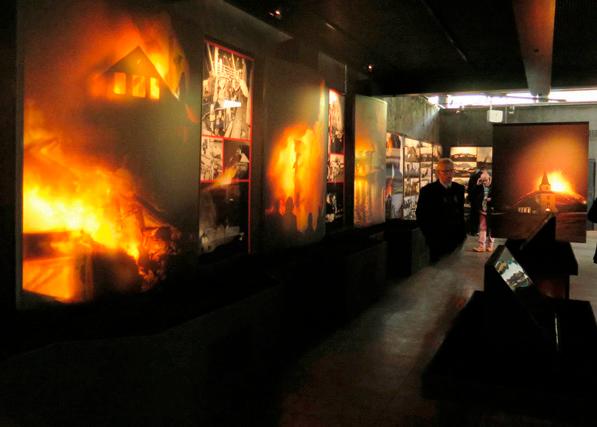
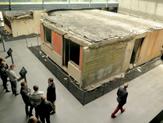
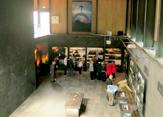
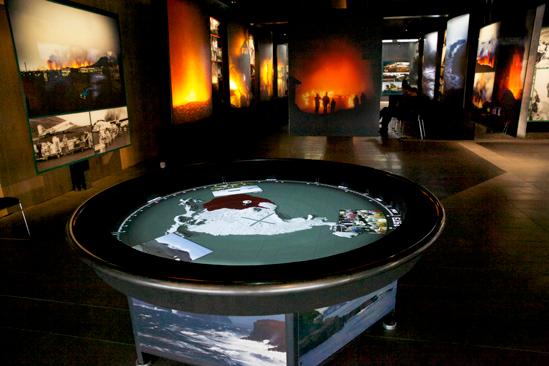
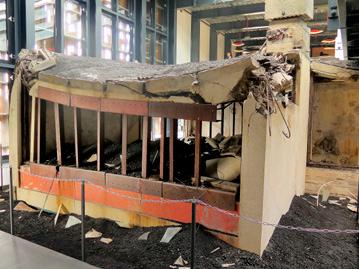
Eldheimar in the Westmann Islands is devoted to the 1973 volcanic eruption and the process of rebuilding afterwards. The centrepiece of the exhibition is the house at Gerðisbraut 10 that was buried beneath the ashfall nearly fifty years ago and which has not been touched since. It provides a moving display of how this natural disaster affected people’s homes and Eldheimar
shows just how significant a threat the eruption was to the future habitation of the Westmann Islands.
Other significant volcanic activity is also part of the Eldheimar exhibition, including the Surtsey eruption that started in 1963 and lasted almost four years. Following the eruption, Surtsey was declared a protected
nature reserve, which gave the scientific community its first opportunity to observe how new life and a new ecosystem appear. Surtsey is on the UNESCO World Heritage List.
www.eldheimar.is
Þakgil campsite is located in a beautiful valley, surrounded by mountains, 20 km from Vík by road 214. These conditions make the weather in Þakgil very mild and calm, and a lovely little freshwater stream trickles though the camping site. Hiking routes to interesting places of variable difficulty are all around, including to the Mýrdalsjökull Glacier.
In Þakgili there are campsites and small cabins to rent with sleeping-bag accommodation for 4, WC and kitchen with a gas stove and refridgerator. There is a shower with warm water, at the campsite, next to the cabins.
Getting to Þakgil is also part of the adventure itself. You will see all manner of weird and wonderful rock formations, scenic panoramic views that go on forever and even the remains of no less than two movie sets, parts of the television show
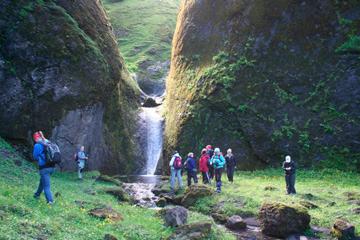
In Þakgil there is a dining room in naturally formed cave with a grill and a fireplace.
Game of Thrones were filmed here. The gravel road is well maintained and an
average passenger car can make it all the way to the campsite in about 30 minutes.
The northern lights over Jökulsárlón are a magnificent spectacle.
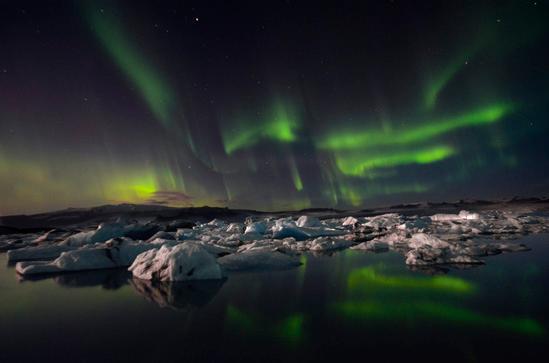
Jökulsárlón is a glacial lagoon by the ring road and was recently designated as a part of Vatnajökull National Park. It’s still blue waters are a sight not to be missed, as it is dotted with icebergs from the edge of Breiðamerkurjökull, a part of the Vatnajökull glacier.
The lagoon is accessible from the beach all year round, and so is the café on the banks of Jökulsárlón. During the summer, the national park offers interpretive tours with a ranger. Check for information on the park homepage or social media.
A word of warning - don’t jump onto the ice floating in the lagoon. Some tourists think it’s okay to do it, but it is dangerous to play, and the ice can capsize, leaving you stuck beneath it in the ice-cold water. So let’s be very careful here!
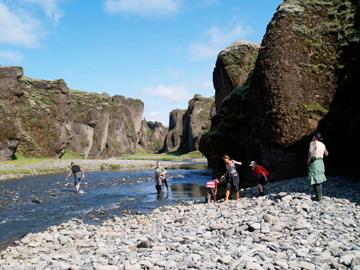
Fjaðrárgljúfur is a magnificent and massive canyon, about 100 meters deep and about two kilometres long. People can travel by small cars to Fjaðrárgljúfur all year round and to get there take road F206.
The canyon has sheer walls, and is somewhat serpentine and narrow. The bedrock in Fjaðrárgljúfur is mostly palagonite from cold periods of the Ice Age and is thought to be about two million years old. The river Fjaðrá has its source in the mountain Geirlandshraun and falls off the heath edge in this stunning canyon until it makes it down into Skaftá river. Fjaðrá has changed a lot in the course of time. Deep in the canyon there are waterfalls so one needs to walk the same way back.
Reykjanes Peninsula is most often the beginning of a traveller’s Iceland adventure. As the Reykjanes coastline draws closer and the plane prepares to land at Keflavík Airport, the wrinkled lava, naked hills and mountains, yawning craters, spirals of geothermal steam and virtually treeless environment are probably an exciting contrast to memories of home.
Iceland is a nature paradise, and Reykjanes is a cross section of all that is Iceland. It is the first step into a wonderland, a region that beckons to be explored and enjoyed, that has its own geological drama, its own personality.
Reykjanes is your corridor into and out of Iceland, a place you must experience, a place where there is so much to experience.
Useful links
Tourist site for the area
Grindavík tourist site
www.visitreykjanes.is
www.visitgrindavik.is
Viking World www.vikingworld.is
Blue Lagoon
www.bluelagoon.com
Official travel guide to Iceland www.visiticeland.com
Promote Iceland www.islandsstofa.is/en
Road conditions www.umferdin.is/en
Weather forecast www.vedur.is
www.visitreykjanes.is
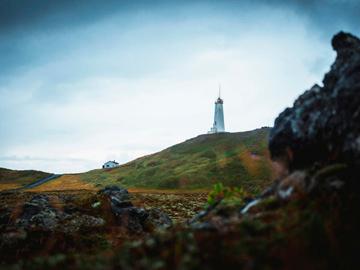
Reykjanesviti is Iceland’s oldest lighthouse, located on the tip of the Reykjanes Peninsula. The tower is a 31 metres (102 ft) tall construction. The original structure was built in 1878; just eight years later the building was destroyed by an earthquake. In
1929 the current Reykjanesviti lighthouse, a concrete construction yet with traditional looks, was illuminated.
The Reykjanes Lighthouse Friends Association has set up an exhibition in a
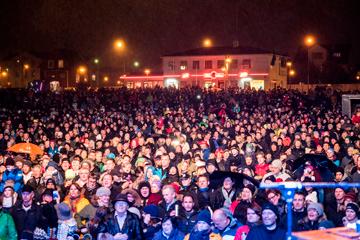
Ljósanótt, cultural and family festival Night of Light is held in Reykjanesbær on the first weekend in September every year, and the focus is on extensive events from Thursday to Sunday, although the festival sometimes extends beyond that framework. It always reaches its peak on Saturday evening with a big concert on the outdoor stage, the illumination of the Berg and a spectacular fireworks display.
Various regular events characterize the festival, including an opening ceremony where the children of the town play a central role, the opening of new art exhibitions organized by the Reykjanesbær Art Museum and exhibitions throughout the town as a result, a grand carriage drive, a big concert on the outdoor stage, firework displays and more.
www.ljosanott.is
small building east of the visitor center. It is in the so-called engine house, which is used to power the lighthouse’s lights if the electricity goes out. The exhibition is called Guidelight to Life Harbor and describes the fate of hundreds of crew members, ships and boats that have been in danger at sea off the Reykjanes Peninsula.
Open from 12:00-17:00 Saturday and Sunday. During the opening hours the Icelandic flag is raised next to it at Flaggstangarhól, south of the lighthouse keepers’ quarters.
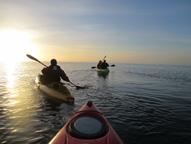
A normal trip is a 1-2 hour row to the Gerðistangi lighthouse, although group trips to other locations can be requested.
Reykjanes Seakayak offers guided tours on seakayaks in the vibrant and safe environment in Reykjanes bay in the period 1st of May- 30th of September, from our farm, Þórustadir.
Sit on top Kayaks are easy and safe, our visitors have been from 6 years to 70 years . We supply: Dry suits – warm and comfortable, Rubber shoes and Life west. You can wear your own clothes underneath, what you feel comfortable to wear.
Driving from Keflavik on the road, Reykjanesbraut ( Road 41 ) you turn right into Vogar ( town is on your left ) , then turn right into Vatnsleysuströnd ( Road 420 ), drive until you see the church on your left side. Our farm ( Þórustaðir ) is the last left drive in before the church.
Bookings and further information on seakayak@seakayak.is
A tour with Discover Grindavík is more than a traditional sightseeing excursion—it’s an immersive journey into the living history of Grindavík and Iceland.
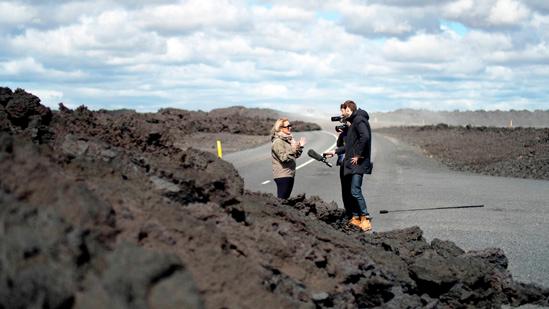
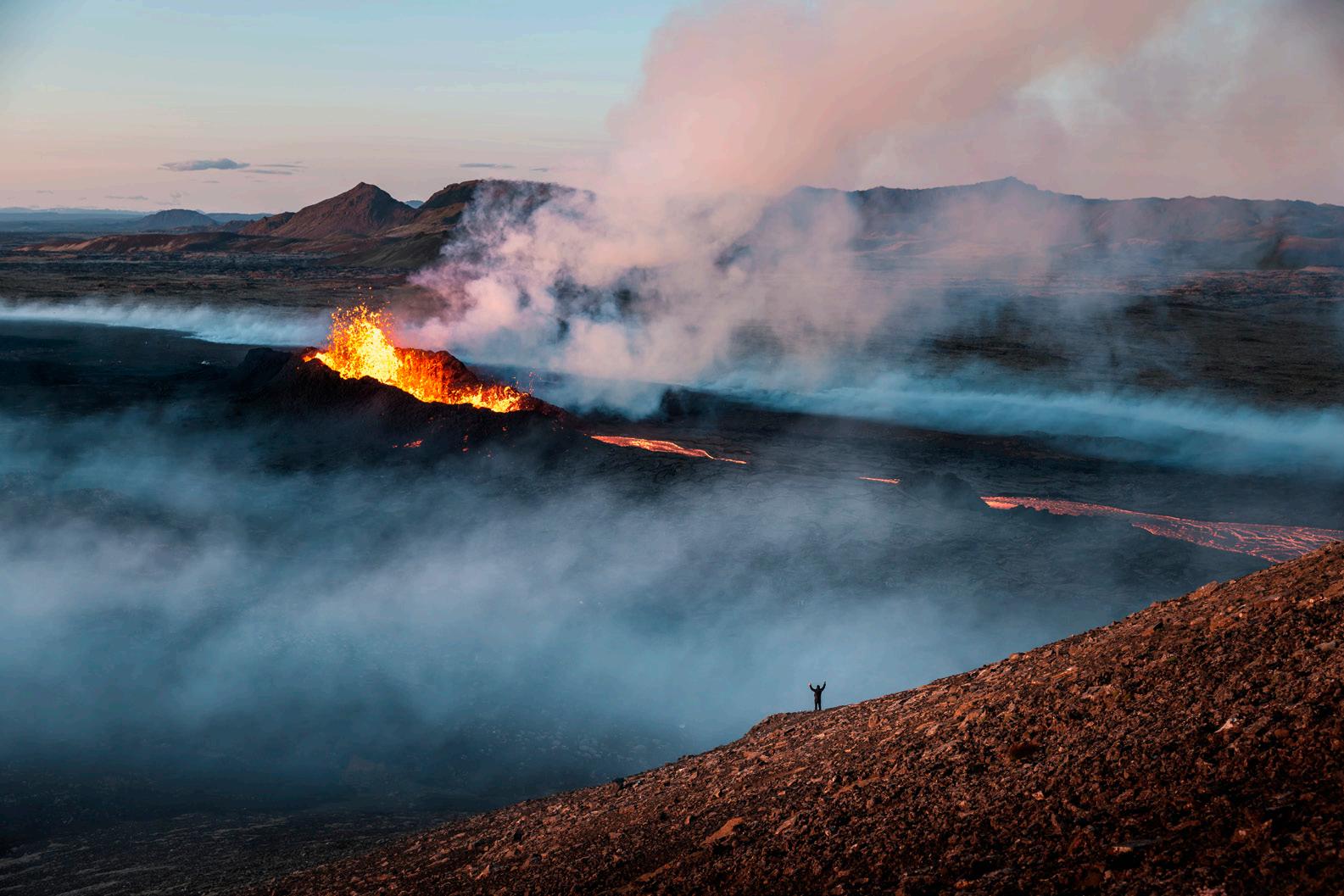
At Discover Grindavík, visitors gain a unique insight into the town’s extraordinary journeythrough one of Iceland’s most remarkable natural events. The story begins with the first signs of magma intrusion in January 2020, followed by the volcanic eruptions at Fagradalsfjall in March2021, August 2022 and July 2023. Then came the calm before the storm.
Grindavík is a story that must be experienced
Few places in Iceland have attracted as much international attention over the past two years as Grindavík.
Millions of people around the world watched dramatic images of volcanic eruptions, glowinglava flows and a town that had to be evacuated within just a few hours. The headlines told thestory of nature’s immense power. The images showed fire, lava and destruction.
A visit to Grindavík is more than a sightseeing tour – it is an experience. founder and owner of Discover Grindavík.
Behind the headlines is a community. A fishing town where generations built their lives beforeeverything changed almost overnight. A community whose people were forced to leave their homes, yet have faced unimaginable challenges with remarkable resilience, strength and unity. Today, they continue to write the next chapter in Grindavík’s story.
Today, visitors have the unique opportunity to return to Grindavík. To gain first-hand insight intothe events that reshaped the town. To walk its streets with a local guide
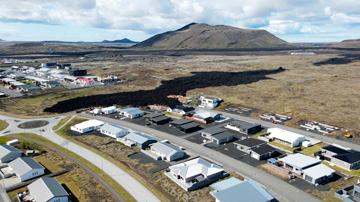

who knows every corner, every landmark and every story. To witness where fresh lava now meets a long-establishedcommunity. To understand what truly happened – and how life continues.
A tour with Discover Grindavík is not a traditional sightseeing tour. It is a journey
into the livinghistory of both Grindavík and Iceland. You will visit the very places that millions watched on livetelevision, while discovering the people, culture and community behind the news stories.
Grindavík remains one of Europe’s most extraordinary natural destinations.
But what makes a visit truly unforgettable is not only the lava or the eruptions. It is the people.
Welcome to Grindavík.

Guided by
RESILIENT COMMUNITY UNFORGETTABLE EXPERIENCE
Experience the resilience of the people of Grindavík.
An experience you'll remember long after you leave.
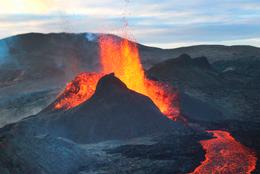
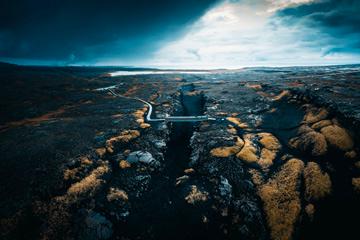
The lava-scarred Reykjanes peninsula lies on one of the world’s major plate boundaries, the Mid Atlantic Ridge. According to the continental drift theory the Eurasian and North American tectonic plates are continuously drifting apart with great forces under the gaping rifts.
The Bridge between two continents at Sandvík is a small footbridge over a major fissure which provides clear evidence of the presence of a diverging plate margin. The bridge was built as a symbol for the connection between Europe and North America. This must-see spot is easy to reach and requires little effort to reach.
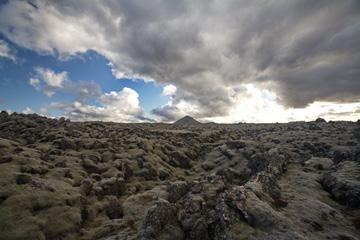
Keilir is a beautiful, pyramid-shaped mountain clearly visible from Reykjavík on a clear day. It is not very high, a mere 379 m above sea-level. Keilir is the most distinctive landmark of Reykjanes and a symbol of the Reykjanes peninsula. On top of the mountain is a concrete table with a view direction map on a metal plate.
Keilir was created during subglacial eruptions during the ice age. It´s shape makes it distinctive and according to geologists, it probably is a crater plug. In spite of its steep slopes, it is not too difficult to climb, and the view from its top on a fine day is to be remembered.
Mt Þorbjörn is a free standing, hyaloclastite mountain north of Grindavik. It offers great panoramic view over most of the Reykjanes Peninsula on fine days. The northeastern part of the mountain depicts thermal activity an to its north and northeast is an extensive high temperature area.
On the Reykjanes peninsula, there is a great verity of options for dining out, from fast food diners to high-quality restaurants. The restaurants have made their own unique taste on the local products whether it is a burger, sandwich or fresh seafood from the local seafood markets.
Reykjanes has all kinds of interesting museums that have a deep connection to the area. Most of them are pretty standard but others are dedicated to more abstract things, such as Vikings, nature and other curious phenomena.
Brimketill is a small, naturally carved pool, by marine erosion, at the lava shore edge west of the town of Grindavík. The viewing platform overlooking Brimketill is just a few steps away from the parking lot starting with a small set of stairs, making the platform inaccessible to wheelchairs. Standing on the platform you risk the possibility of getting soaked as the waves can almost reach the parking lot.
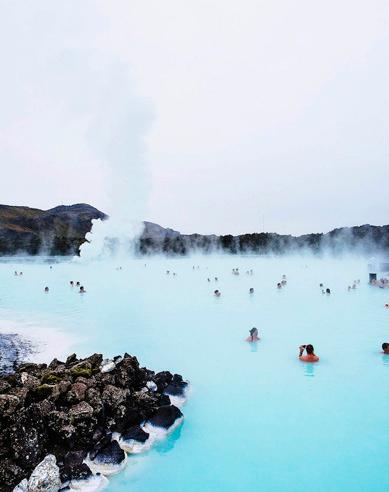
The Blue Lagoon is a health and geothermal spa on the Reykjanes Peninsula. A visit to the Blue Lagoon Iceland geothermal spa is an important part of your stay in Iceland. It is no surprise that the readers of Conde Nast Traveller voted Blue Lagoon as the best spa worldwide and voted one of 25 wonders of the world by National Geographic.
There are a plenty of hiking trails on the Reykjanes peninsula.
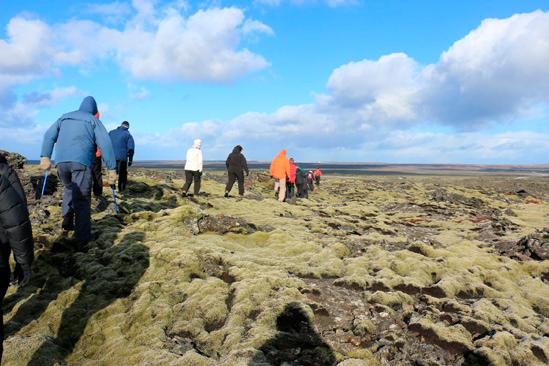
If you’ve come to Iceland to indulge your passion for hiking, or simply want to stretch your legs somewhere scenic while you’re away, then you should check out our recommendations for the top five:
This hiking trail is a coast to coast walk which links Vogar to Grindavik. The route is about 11 miles long and you can expect to cover the distance in around 4 to 6 hours.
Keilir is a small cone-shaped hill which you
On the Reykjanes peninsula, there is a great verity of options for dining out, from fast food diners to high-quality restaurants. The restaurants have made their own unique taste on the local products whether it is a burger, sandwich or fresh seafood from the local seafood markets. Many of the restaurants have made their own unique taste on the local products whether it is a burger, sandwich, or fresh seafood from the local seafood markets.
Reykjanesbær is a multinational community and that is clear from the number of restaurants and the diversity of them. Here you can find the cuisine of different nations, about 20% of the population is Polish. If you have not tried Polish dumplings then we highly recommend you do!
might notice as you drive along route 41 between Keflavik and Reykjavik. You can pick up a gravelly trail which leads you up to the summit of this 378 metre high volcanic plug in two to three hours.
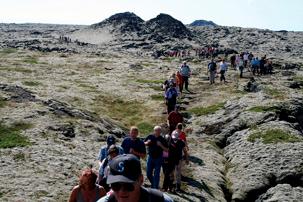
The hike to the volcano which erupted spectacularly throughout 2021 is still worth doing, even though the lava flows have ceased. Two main routes skirt either side of the eruption zone, opening up a view of cooled, blackened lava cones stained yellow with sulphur deposits.
It is easy to hike from the village of Hafnir to the low-lying cliffs at nearby Hafnaberg. As you hike, keep an eye out for a plethora of seabirds and you might also catch a glimpse of whales, seals and dolphins swimming close to the shore.
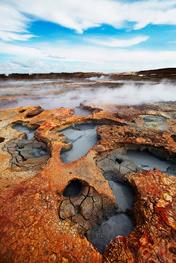
Begin at Gunnuhver, a geothermal area of mud pools, from there head in the direction of Reykjanes Lighthouse, follow then a trail down to the shoreline where the Mid-Atlantic Ridge meets the mainland. Littered with boulders and sea stacks sculpted from lava, it’s a beautiful place to stop and watch the waves.
There are plenty of good restaurants
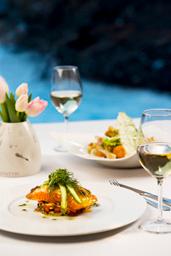
Reykjavík Capital Area must be on the must-do list of anyone looking for fun and adventure in a world of Spa wellness. It has most of the advantages of big-city life and virtually none of the disadvantages.
Comprised of six municipalities – Reykjavík, Hafnarfjörður, Kópavogur, Garðabær, Mosfellsbær and Seltjarnarnes – the Capital Area is the hub of the Icelandic nation. It is where about two-thirds of country’s population of 395,000 live and work, and exists in close harmony with pristine nature and renewable energy resources.
It is the biggest little metropolitan area in the world, a good-time environment with plenty of healthy oomph to spare – and share. It’s Pure Energy.
www.visitreykjavik.is
Useful links
Official travel guide for the area
www.visitreykjavik.is
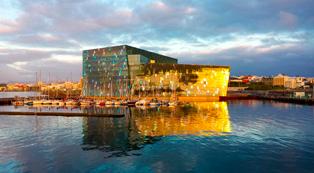
Harpa Concert Hall www.harpa.is/en
Public buses www.klappid.is/en
National Museum of Iceland www.natmus.is/en
National Gallery of Iceland www.listasafn.is/en
Reykjavík Art Museum www.artmuseum.is/en
Airwaves Festival www.icelandairwaves.is
Road conditions www.umferdin.is/en
Weather forecast www.vedur.is
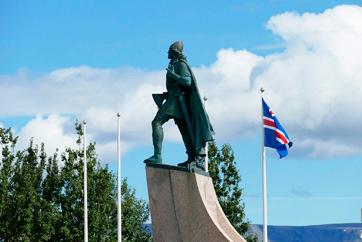
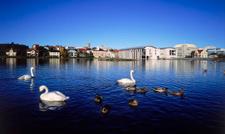
On two wheels, Reykjavík feels wonderfully open. Scooters and bikes are part of daily life in the city - quick to rent, easy to use, and kind to the planet. Glide along the coastline, roll through quiet streets, and stop whenever something catches your eye. It’s a playful, sustainable way to explore Reykjavík your own way.
Sæbraut in the centre of Reykjavík.
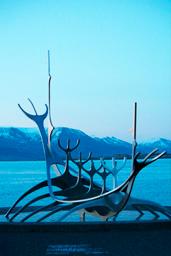
Sólfar (The Traveler/Voyager of the Sun) is sculpture by Jón Gunnar Árnason (1931-1989). Sólfar is a dreamboat, an ode to the sun. Intrinsically, it contains within itself the promise of undiscovered territory, a dream of hope, progress and freedom. The sculpture is located by Sæbraut, by the sea in the centre of Reykjavík.
Jón Gunnar Árnason (1931-1989) was an sculptor and after studying at the University of Iceland Reykjavík Arts and Crafts from 1944 to 1946 and the School of Visual Arts, he graduated as an engineer from the Technical University of Reykjavík in 1952. From 1965 to 1967 he continued his studies of the Fine Arts at the University of Hornsey in in London. His works have been exhibited in prestigious galleries in Iceland, Norway, the Netherlands and Germany.
Reykjavik has an extensive, interconnected system of paved walking and biking paths designed for safe commuting and leisure, covering the city and connecting to neighboring municipalities like Seltjarnarnes, Kópavogur, and Hafnarfjörður. The goal of Reykjavík City’s walking and biking
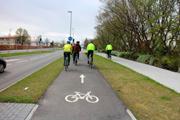
It’s easy to rent a bike in Reykjavík and explore the city.
path system is to enable residents and visitors to travel around the city in a safe, enjoyable, and environmentally friendly way.
Reykjavík is a small city, the northest capital in the world. What Reykjavík lacks in size it makes up for in character and colour. The houses of downtown Reykjavík keep charming visitors and these diverse coulour schemes take place on the corrugated iron plates that clad the old timber houses, built in the years 1870-1915, in particular.
Icelanders started importing corrugated iron from England in the mid-1800’s. The locals then quickly learned that the corrugated iron made for highly effective insulation and durable building material in the harsh Icelandic climate. It also became a solution to the shortage of timber construc tion materials given that there is no forest in Iceland.
Are you wondering what to do in Reykjavík? Summer or winter, it doesn’t matter. It is always a good time to visit Reykjavík. If you’re feeling adventurous you can easily action-pack your stay in Reykjavík. From boat tours, hiking, skiing, and helicopters, to theatres, golfing, horse riding, and music venues.
Elliðaárdalur is an urban oasis: a lush, green valley where salmon leap in the river, waterfalls tumble over lava rock, and walking trails wind through woodlands. The valley suits families, hikers, runners, and anyone who loves being outdoors, offering a mix of nature and local history.
Downtown Reykjavík is the beating heart of Iceland’s capital – a compact hub where culture, history, creativity and nightlife meet against a backdrop of colourful neighbour-
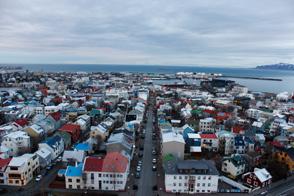
From the Hallgrímskirkja bell tower, the houses look like Lego pieces.
hoods and scenic views. By day, it’s a lively cultural and shopping district; by night, it transforms into a hotspot for music, cocktails and celebration.
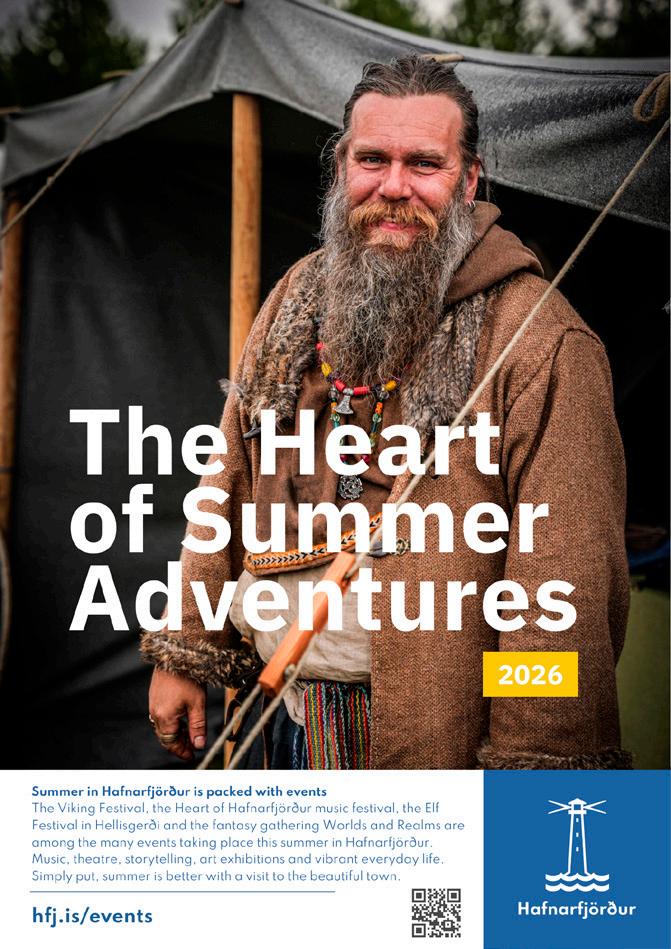
Welcome to Hafnarfjörður, a harbour town known for its Viking heritage, lava landscapes and cosy charm. Easy to explore on foot and full of little surprises, the town’s known for its art scene and festivals (kids love them), plus there’s a fun folklore angle - ask locals about the elves.
Kópavogur is home to one of Iceland’s most talked-about wellness destinations: the Sky Lagoon. Opened in 2021, this oceanside geothermal spa offers stunning views from its infinity-edge pool, and a luxurious seven-step ritual that includes a sauna, cold mist, and steam room.
House concerts are held every Sunday at 16.00 from June – August. Unique atmosphere where guests can expect to hear classical and modern music by excellent musicians.

ADMISSION AND OPENING HOURS 2026
Gljúfrasteinn
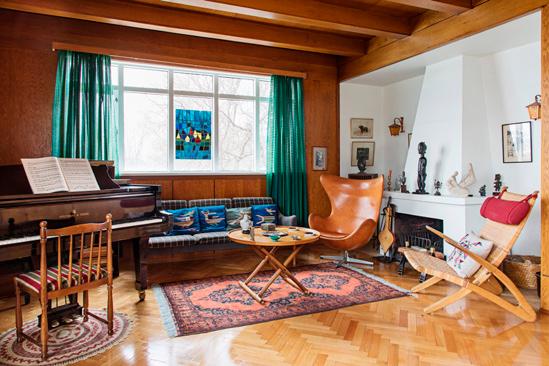
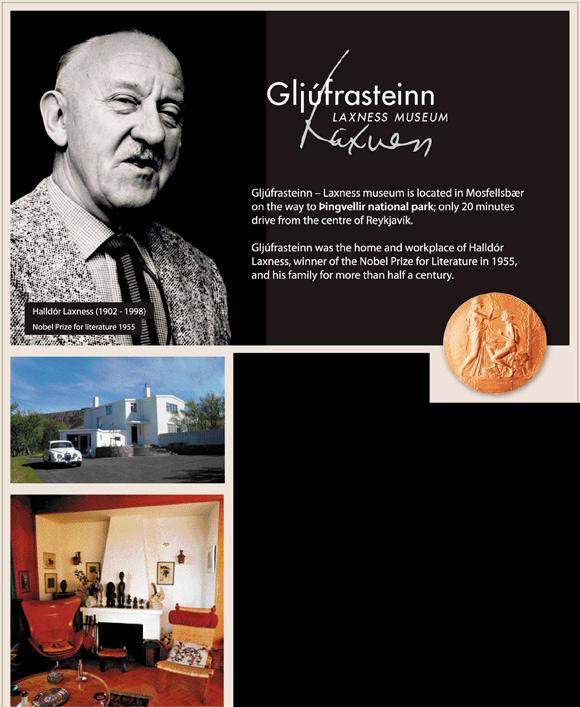
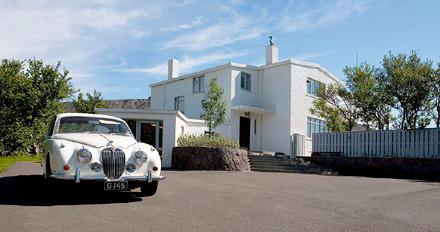
Gljúfrasteinn-Laxness museum in the valley of Mosfellsdalur is only 20 minutes away from Reykjavik on the way to Thingvellir
national park. Gljúfrasteinn was the home and workplace of Halldór Laxness, winner of the Nobel Prize for Literature in 1955 and his
family for more than half a century. It is open to the public as a museum, unchanged from when Laxness lived there.
Halldór Laxness (1902-1998) stands head and shoulders above the other Icelandic writers of the 20th century and his books have been translated into 43 languages and published in more than 500 editions. His first book Barn náttúrunnar was published 1919 when Laxness was only 17 years old.
Tours of the house are available in Icelandic, English, German, Swedish and Danish, and an illustrated guide in French. For further information or booking of tours tel: 586 8066 or e-mail: gljufrasteinn@gljufrasteinn.is
www.gljufrasteinn.is
“My dream is to see people enjoying the nooks, paths, caves and hidden corners of Hellisgerði throughout the day, just like I did as a child,„ says chef Knútur Hreiðarsson, who, together with his wife Theódóra Ingibergsdóttir, has opened a café in Hellisgerði, Hafnarfjörður’s botanical garden.
“I would like to see children spending time in the park. To recreate the atmosphere I remember, and to build a small world of adventure for the whole family. A place where families come together to play, explore and share a meal.„ Through the café and its guests, he gets to relive those childhood memories.
It´s important to do justice to the park and its history.„ The couple have spent considerable time restoring Oddrúnarbær, the historic house at the heart of Hellisgerði, while also bringing back objects that once belonged there.
“For example, we’ve recovered a painting by Oddrún Oddsdóttir grandson, which he painted behind the house when he was just ten. We want to preserve the history and the
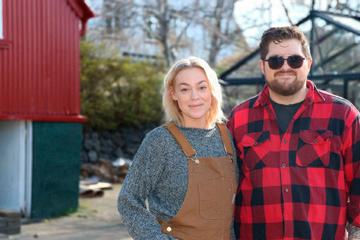
together in Hellisgerði.
memories,„ says Knútur, who aims not only to serve excellent food, but also to give visitors the chance to sit inside Oddrúnarbær, built in 1924.
“Our goal is to make Hellisgerði lively as a whole again and create an experience that feels natural to the park, it’s history and its quiet sense of mystery.„
What does it feel like to open a café in such
Hellisgerði, Hafnarfjörður’s botanical garden, lies within Iceland’s largest preserved residential heritage district. A stroll through the West Town, with a stop at the local heritage museum, before ending in Hellisgerði makes for a truly memorable experience.
“It is unique to spot elves among the rocks, instead of being glued to your phone,„ says Knútur Hreiðarsson the owner of Helliskaffi. Yes, elves live in Hellisgerði. Has he sensed their presence?
“Well, a tool or two may have gone missing and reappeared during our preparations, he says with a grin. “But overall, we’ve felt nothing but goodwill.„
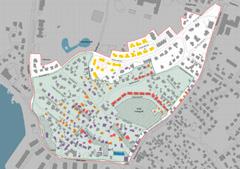
Photo/ Boundaries of the protected area in Hafnarfjöður’s West Town.
a unique setting? “Surreal,„ Knútur says with a smile. Ever since I was a boy, I imagined opening a café in this house. Back then it felt enormous. Now I realize it´s even smaller on the inside than it appears from the outside. But it´s a dream come true.„
I’m so excited to see families coming here to eat and spend time together. To see people gathering and simply enjoying the place.„
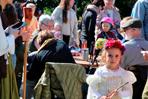
The annual Elf Festival will take place in Hellisgerði, Hafnarfjörður’s botanical garden, on Sunday, August 16. Children dressed as elves are especially welcome.
The festival celebrates the connection between Hafnarfjörður and its elves, where their stories intertwine. It´s a family event where the children and those who are young at heart can play, laugh and dream. Come and join us. goodwill.


Your journey to Iceland starts here