


By Rachel Gerke ’27
With the 2025-2026 school year coming to an end, two students have been recognized for their academic excellence.
Daniella Lainez ’26 has been awarded the title of Valedictorian, and Marko Mindeguia ’26 was named Salutatorian.
Both attended Saint Veronica Catholic School in South San Francisco, where Mindeguia was Valedictorian and Lainez was Salutatorian. Their high achieving legacies were carried on into Riordan.
Lainez will speak at graduation on May 23 and Mindeguia at Baccalaureate Mass on May 22.
To Lainez, family has been a big influence and motivating factor. Inspiration predominantly came from the hard workers around her.
She has developed skills that she’s applied throughout high school, as she stepped into more leadership roles and involvement with each year.
“At one point, I was taking community college classes on
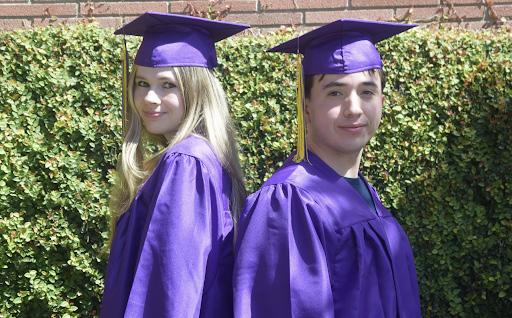
Archbishop Riordan’s 2025-2026 Valedictorian Daniella Lainez and Salutatorian Marko Mindeguia wear colors purple and gold while celebrating the accomplishments they have made throughout their high school careers.
top of my high school classes, as well as being involved with the newspaper, club volleyball, and internships. My biggest priority was staying on top of things because once you fall behind, it’s hard to catch up,” she commented.
Susan Sutton, newspaper adviser and English teacher, said, “She is a diligent worker, and her
work ethic inspires others. She is the kind of leader that does not leave others in the dust, but rather, lifts them up and walks with them to the finish line.”
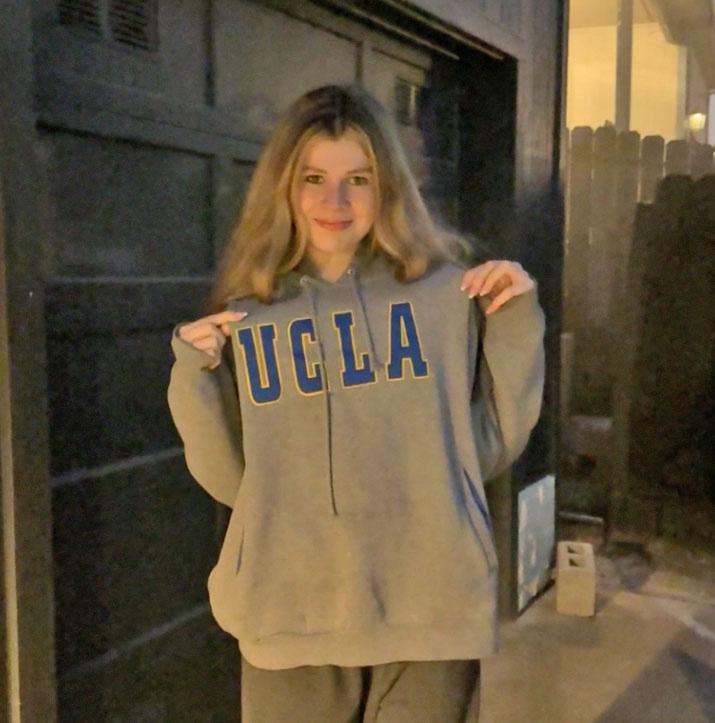
Lainez will be going to UCLA, majoring in environmental science on a pre-law track.
Mindeguia has also had to balance a multitude of
responsibilities across his time at Riordan.
“I have a job as a host at a restaurant, and I get a lot of my work done there. I have to balance a lot of hours with my schoolwork,” he stated.
At Riordan, he has taken advantage of multiple opportunities, notably within the Biomed Capstone course. He has carved a reputation for himself as a focused student who goes above and beyond.
“It has been my pleasure teaching Marko this year,” said science teacher Dr. Caroline Gochoco-Tsuyuki. “Mark my words, he will change the world.”
Mindeguia will be studying engineering at Cal Poly in San Luis Obispo.
As both students prepare to start a new chapter, they leave behind legacies of hard work, commitment, and what it truly means to be a Riordan Crusader. Their messages to students include seeking out opportunities whenever possible and always being your own best advocate.
By Miles Witte ’27
On April 15, the Riordan Administration announced a new brand deal with the global clothing brand Adidas. With this partnership, Archbishop Riordan will join a select group of high schools from across the nation chosen to partner with the brand.
Meanwhile, Adidas continues the trend of partnering with popular high schools as a way to increase brand exposure.
In August 2025, they announced a sponsorship deal with over 41 Florida high schools. In a world where Name, Image, and Likeness (NIL) deals have exploded onto the NCAA college athletics scene, extensions are entering into high school sports as well.
This sponsorship brings new opportunities for the entire school community.
As Vice President of Enrollment & Strategy, Danny Curtin ’08 said, “We’ve never had a brand deal
this impactful. It’s a recognition of a lot of hard work and effort from our coaches and athletes.”
He added, “This type of brand deal gives you exclusivity, new and innovative apparel, and it allows everyday families to receive significant discounts from a worldwide recognized brand.”
In addition to fresh clothing to choose from on a day to day basis, athletic-wear is also getting a rebrand. For the last several years, the Crusader athletes have been wearing jerseys designed by Nike, which received mixed reviews from students, especially participants in less mainstream sports.
As Varsity tennis player James McDonnell ’27 said, “Well for one, the jerseys (mainly the tops) seem kind of bland with only … a Nike symbol and a Riordan insignia on the shirt.”
But, he also added, “Maybe to improve the ‘blandness’ we can add last names to the back of the
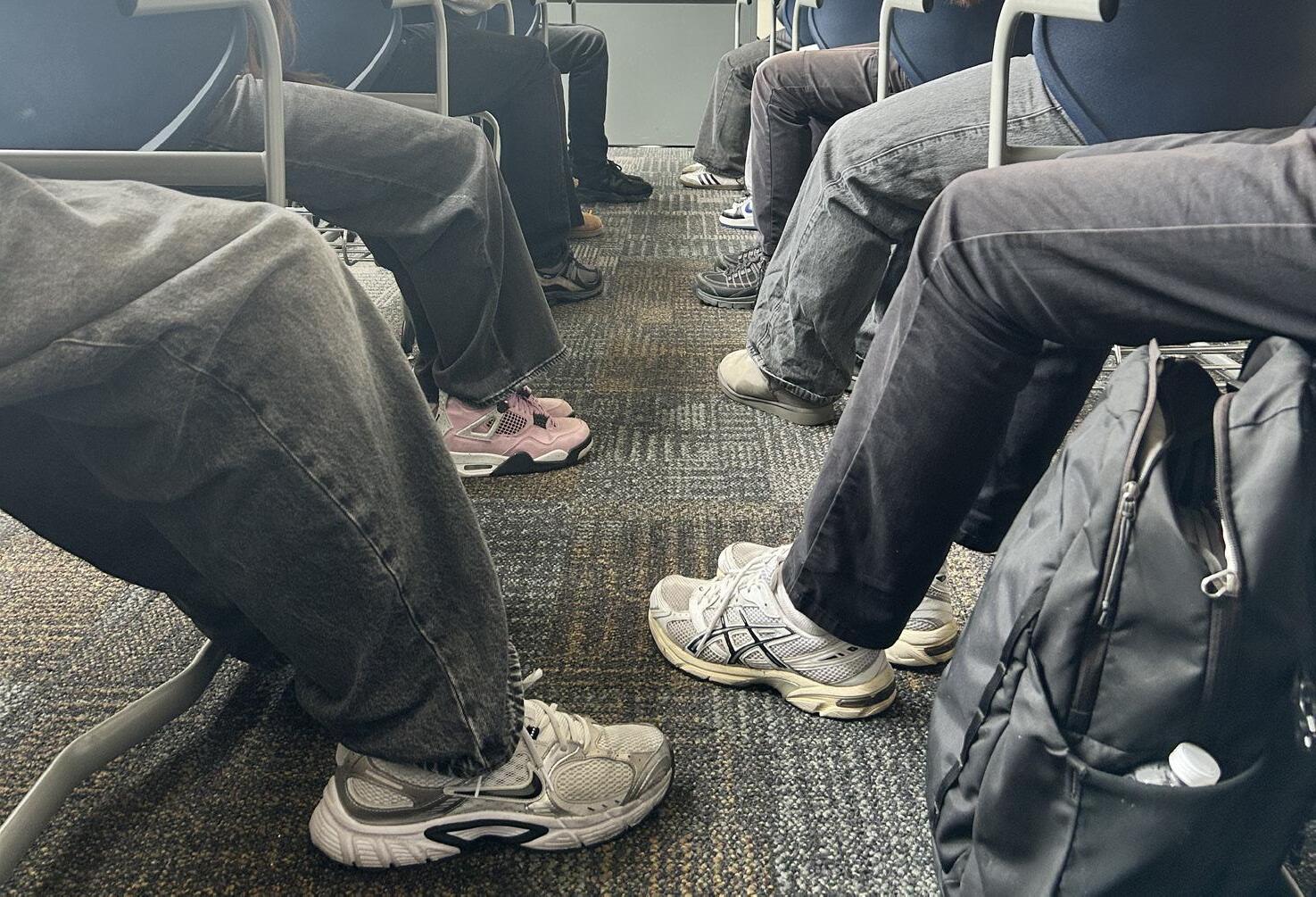
jersey like what SI does or add more colors so it looks more interesting.”
All of these perspectives will be taken into consideration as the redesign process begins.
Please see “Administration institutes new
code for fall” on page 6.
By The Crusader Staff
Dress code–it’s what keeps students neat and uniform. It is an essential part of daily life, so why change it when the students are content? In April, Archbishop Riordan High School announced changes to its dress code, resulting in much backlash from students. This caused students to create a petition quickly, challenging the decision of the administration.
What could possibly have caused this reaction from the students? Well, it is simple, no black clothes. The new dress code states no black pants or tops at all. Only white, gray, and khaki pants allowed.
As students, we see that the majority of the school population wears black jeans and black tops almost daily. It is an essential part of the Riordan outfit.
The new dress code knocks out plenty of club hoodies and options. This effectively kills school spirit by eliminating what allows us to

Many students are confused by the new dress code rule that will be instated next year, which bans black clothing, including pants, jackets, and shirts. express ourselves through clubs.
The reaction alone should have been an indication of the displeasure about the changing dress code. Not even an hour after
Mission Statement for the Archbishop Riordan High School Newspaper
the announcement, a student created a petition form aimed to gather students’ signatures and opposing opinions on the new regulations.
The mission of The Crusader is to inform, educate and entertain the readers—students, teachers, parents, members of the community—about issues that affect the students as well as citizens of San Francisco and the nation. We hope to instill a sense of understanding, responsibility, and curiosity in our readers that results in an eagerness to learn more about their peers and the world around them.

175 Frida Kahlo Way San Francisco, CA 94112 RCrusaderNews.com RCrusaderNews@riordanhs.org
Editor-in-Chief
Daniella Lainez ’26
Managing Editor
Ishaan Gupta ’26
Opinion Editor
Keira Wallace ’26
Campus News Editors
Emmanuelle Ng ’26
Hailey Ferrer ’26
Local & State News Editor
Erin Quan ’26
National & World News Editor
Rachel Gerke ’27
Boys Sports Editor
Miles Witte ’27
Girls Sports Editor
Emilia Ross ’26
Sports Features Editor
Isaiah Sanchez ’26
Arts & Entertainment Editor
Robert Bennett ’27
Ciarra Mangibuyat ’27
Environment Editor
Vincy Huang ’27
Religion Editor
Logan Dee ’26
Health Editor
Isabelle Abad ’26
Science Editor
Joshua Lee ’26
Business & Technology Editor
Isabella Thumas ’26
Features Editor
Lorelai Keating-Curran ’27
Food Review Editor
Loghan Hwang ’27
Photo Editors
Loghan Hwang ’27
Ethan Ly ’26
Copy Editors
Aarav Agrawal ’28
Rose Baik ’26
Hazel Nagata-Rampata ’26
Graphic Artist
Jupiter Bruneman ’26
We believe the new dress code is unjust. Black is such an important color for clothes that many students wear daily.
In addition, by introducing the new dress code, it forces students and parents to buy more clothes, which could be a financial issue for some families, who will have to buy a new wardrobe just to cater to an already expensive tuition.
The new dress code is not beneficial to students and should be reverted to the old dress code. While we understand that rules are necessary to ensure that the school day runs smoothly and that all members of the community are safe, we also feel that a compromise is necessary.
Although the original dress code was less strict, people will be breaking the new dress code more because there will be more dissent. Therefore, we ask the administration to reconsider the ban on black clothes in the Riordan uniform.

Reporters and Photographers
Alyssa Abaunza ’26
Avery Agbunag ’26
Briana Alvarado ’26
Katherine Baez Orellana ’26
Jonah Berg ’28
Jupiter Bruneman ’26
Kaia Burris ’27
Brianna Cabezas ’26
Sasha Feliciana-Chan ’26
Mikayla Cheng ’26
Donatella Cirelli ’28
Bhagvat Daraji ’27
Julian Davis ’26
Chloe DeCastro ’26
Brayden Dizon ’27
Dylan Dubriwny ’26
Niko Escudero Faba ’26
Amaya Farmer ’28
E’moni Ferdinand ’26
Jordyn Flores ’27
Dylan Garcia ’27
Claude Garde ’26
Lainey Gerke ’28
Ophelia Doma Gyalzen ’28
Alexander Kentworthy ’27
Alessandra Leon ’26
Ashley Li ’27
Exchange Editor
Ashling Greene ’26
Reporters and Photographers
Rhianna Mallory ’26
Taylor Manalo-La Verne ’26
Miki Maloney ’26
Isaac Martin ’26
Isaiah Mateo ’26
Benjamin McClure ’26
Nathan Molinari ’27
Elliott Ng ’28
Collin Noguera ’27
Sara Noguera ’27
Martin Novoa ’26
Jackson Padilla ’27
Aliyah Pasion ’26
Sofia Peña ’26
Mila Penn ’27
Carill Reifsteck ’26
Benjamin Reyes ’26
Catherine Rold ’27
Natalia Sanchez ’26
William Saunders ’26
Aiden Sommerfield ’28
Jayden Tamboury ’26
Elizabeth Walsh ’26
Crystal Wei ’26
Luna Weng ’28
Cole White ’27
Charlottie Yip ’26
Adviser
Susan Sutton, MJE
Letters to the editors will be accepted with the same deadlines as ads. These letters may come from students, staff, parents, board members, or other members of the community. The Crusader reserves the right to edit the letter for grammatical and spelling errors, as well as length, but not content unless it includes foul language, plagiarized material, or libelous content. If the claims or assertions are incorrect, The Crusader reserves the right to refuse publication of the letter.
By Jupiter Bruneman ’26
As the 2026 California Governor primary quickly approaches, voters are facing one of the most crowded and unpredictable races in recent years. As current Governor Gavin Newsom is unable to run again due to term limits, candidates such as Xavier Becerra, Katie Porter, Tom Steyer, Matt Mahan, Antonio Villaraigosa, Tony Thurmond, Steve Hilton, and Chad Bianco all compete for the state’s top position.
Senior Andy Siu Jr. said, “Honestly, the race seems kind of confusing right now because there are so many runners, so I think people need to actually look into what each person stands for.”
Polls show that so far the race has been very tight, which illustrates California voters are still undecided about which direction they want to go. Recent debates have shown that candidates constantly challenge each other over major issues, such as homelessness, water issues, housing costs, and gas prices, but never fully explain their plan for solving the problem.
In my opinion, this election is more than just party labels or what one candidate is saying about another runner; California is dealing with these major issues that need fixing. Runners should

focus more on those problems rather than criticizing their peers. At the same time, voters should turn their attention to those who have spoken fully about their plans for the future.
“It feels like a lot of the people are just going back and forth with each other,” said Jo Campero ’26.
Some candidates, like Becerra and Porter, bring years of
experience in the government, while others, like Steyer and Hilton present themselves as newcomers with fresh ideas. However, experience matters when you want to lead a state as big and complex as California. This election will impact millions of Californians, so voters must think beyond party lines and campaign arguments. The
Dear Reader,
As another year of The Crusader newspaper comes to a close, there are a few people I would like to thank.
First, thank you to our readers. Whether you picked up an issue in the hallway, clicked on an article online, or stopped one of us in the hallway to talk about a story, your support is what keeps student journalism alive here at Riordan. Every article, interview, photo, graphic, and production cycle ultimately comes back to one sole purpose: serving our community. So I thank you for allowing us to do that.
Next, I want to thank The Crusader staff.
This year brought extreme transitions, growth, and honestly a lot of figuring things out as we went.
From redesigning our website and navigating the transition into a completely new logo, to simultaneously continuing meaningful coverage, I could not be prouder of what this staff accomplished together. Our logo has always represented more than just a design or label. It represents prior years of student journalists who built this
publication into what it is today.
Change can be extremely difficult, especially when it involves something people care deeply about, but what made this transition so meaningful was that students still remained at the center of it.
Watching our staff adapt while continuing to produce thoughtful coverage reminded me exactly why our newsroom, 207, means so much to so many people including myself.
Somehow despite the rough deadlines, last minute changes, long production hours, and the constant chaos that always comes with journalism, we still found a way to make it all work together.
I also want to say how incredibly grateful I am for Riordan’s journalism program as a whole.
This program gave me opportunities I never imagined I would have in high school. Through this journalism program, I found my voice, confidence in my writing, and a caring community that pushed me to grow both as a student and as a person.
It gave me experiences I will carry with me forever.
From interviewing public officials like the mayor and
traveling across the country to national conventions, this program shaped such a huge part of who I became during high school, and I will forever be thankful for that.
Of course, none of this would be possible without our exceptionally hard working journalism adviser, teacher and my personal mentor, Ms. Sutton.
There are not enough words to fully explain everything she does for this publication. Beyond teaching us journalism, she taught us how to lead, collaborate, communicate, and care deeply about all the stories we tell.
People see the final products in the newspaper, magazine, website, and numerous awards but they do not always see the countless hours behind the scenes that make all of it possible.
This year also reminded me why student journalism matters now more than ever.
In a time where misinformation spreads quickly with the rise of AI, student journalism continues to play an important role in keeping communities informed.
To the incoming Editor-in-Chief Rachel Gerke ’27, I know you will continue leading this publication
focus needs to be on experience, strong leadership skills, clear solutions, and a genuine understanding of the challenges the state faces.
All in all, choosing California’s next governor should be about thoughtful decision-making and informed voters making choices based on actions rather than political conflict.
with creativity, passion, and dedication.
You care very deeply about this publication and the people in it, and I cannot wait to see where you take The Crusader next.
To Loghan Hwang ’27 and the future staff of The Shield magazine, I am so excited to watch your publication continue growing and evolving.
Thank you to everyone who contributed to The Crusader this year. Thank you for your hard work, your patience, your dedication, and your belief in the importance of student journalism. Keep asking questions. Keep telling stories. Keep writing boldly.
Your voice matters more than you know.
With sincere love and gratitude, Daniella Lainez ’26
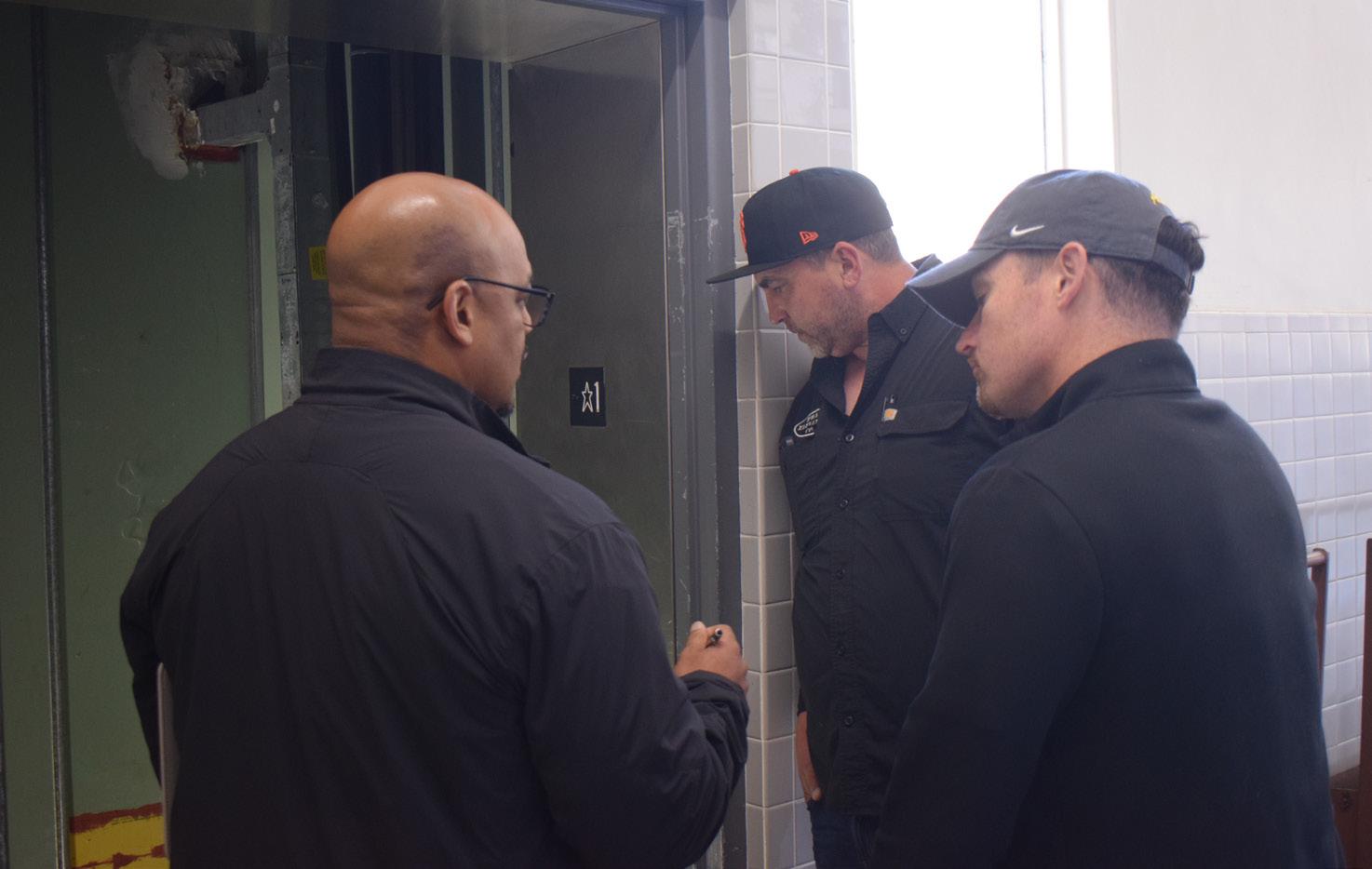
Photo by Aarav Agraval ’28
On April 29, the elevator located inside the school building was finally reopened after it was closed down for several months for careful repairs and renovation.
By Aarav Agraval ’28
People experience many ups and downs throughout life. For elevators, this takes more literal meaning.
The elevator in the main building reopened on April 29 after its closure caused several months of downs for students and faculty.
It broke down because the door communicator in the machine room stopped communicating with the panels inside the elevator, Andrew Colville ’08, the
Director of Facilities, revealed.
“It’s a lot older than it looks,” he said. “When you start to have breakdowns with panel boards and electrical malfunctions, then it opens up a whole other can of worms.”
Colville served as a liaison between the school and the contracted company, Dwan Elevator Co., during construction.
He sought the quickest solution after receiving conflicting information from other elevator companies.
“There were some adaptations that were unforeseen. But not unsolvable,” Nicholas Moore, a contractor, said.
They special ordered specific parts that were delayed in shipping, Maintenance Associate Michael Mikovich ’16 added. Inaccurate blueprints further lengthened construction.
The contractors modernized the elevator, replacing the controls and safety items and reengineering the door system a few times. The R logo was also added.
It was the “fourth rendition” of the elevator, Moore said.
Its state certification and inspection occurred on April 28.
“Can’t say we were not feeling pretty frustrated,” Moore said. “I feel good about turning it over to you guys.”
Total costs of the modernization were in the low six-figure range, Colville said.
President Timothy Reardon revealed the William G. Irwin Charity Foundation bestowed a $75,000 grant to cover some costs. Exact numbers were undisclosed.
The elevator can only be used when absolutely necessary and for people unable to take the stairs,
Colville said.
Gianna Abaunza ’28, a wheelchair user, said, “Before you use it, don’t just think of yourself. And be considerate of others because if you don’t need it, I don’t know why you’re taking advantage of that resource… it’s kind of selfish in a way.”
The construction period caused various issues for students and faculty since its closure in January 2025, so the school provided accommodations. Facilities helped teachers transport bulky items between floors.
“I’m in RSP, so I haven’t been able to… get the full help that I need,” Abaunza said. “Obviously, all my classes are down here, so I can’t take DV Art. I can’t have a Spanish class with [Armando] Castillo… Those things are all required to be upstairs.”
However, “They were very willing to help,” Abaunza added. They moved her classes downstairs, let her take private classes for DV Art, and sent updates during construction.
Please visit rcrusadernews.com to read the full version of this story.
By Dylan Dubriwny ’26
Winter Percussion, Winter Color Guard, and L Pattern drum majors all competed in Winter Competitions this past spring.
Consisting of precise drum work, dancing with flags, rifles, and sabers, and rigorous routines on the field, these teams have not only been through tough challenges, but stellar victories.
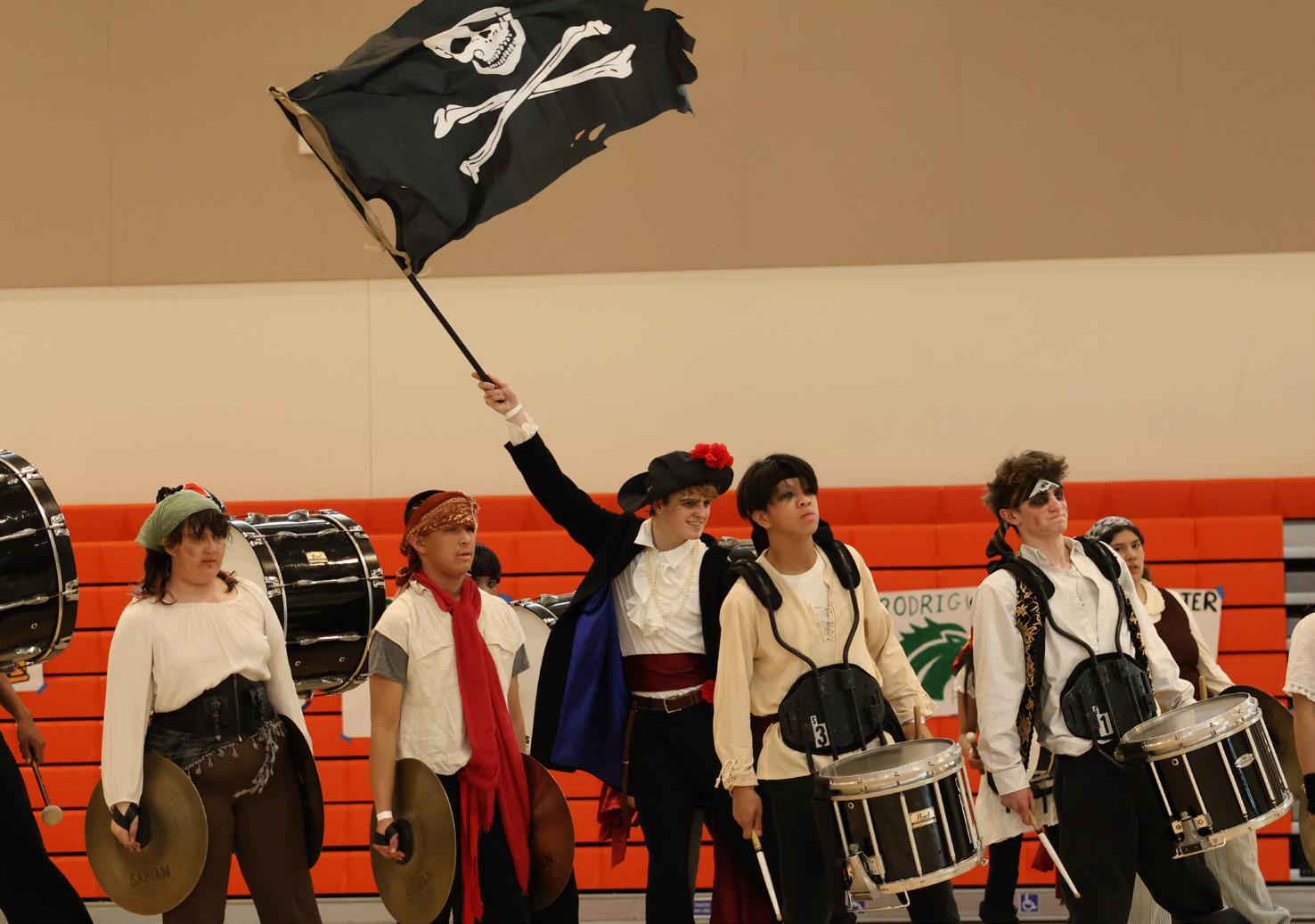
The show theme for Winter Percussion this season was “A Pirate’s Life for Me,” a three movement piece telling the story of a little girl’s dream of evil pirates.
Their highest score was 73.8 out of 100 at Northern California Band Association (NCBA)
Championships, and their highest placement was 2nd at the Granada High School Winter Show.
Sophie Sage ’28, the drumset player for the line, shared her experience this season.
“I extremely enjoy being in Winter Percussion. It’s a nice opportunity to get to play the drum set. This season had some ups and downs, but overall I had fun and would do it again.”
Not so similarly, Winter Guard’s show theme this season was “Jazzercize with Me,” parodying 80s TV broadcasts with jazzy moves.
Their highest score was 76.52 out of 100 at NCBA Championships, the highest color guard score in
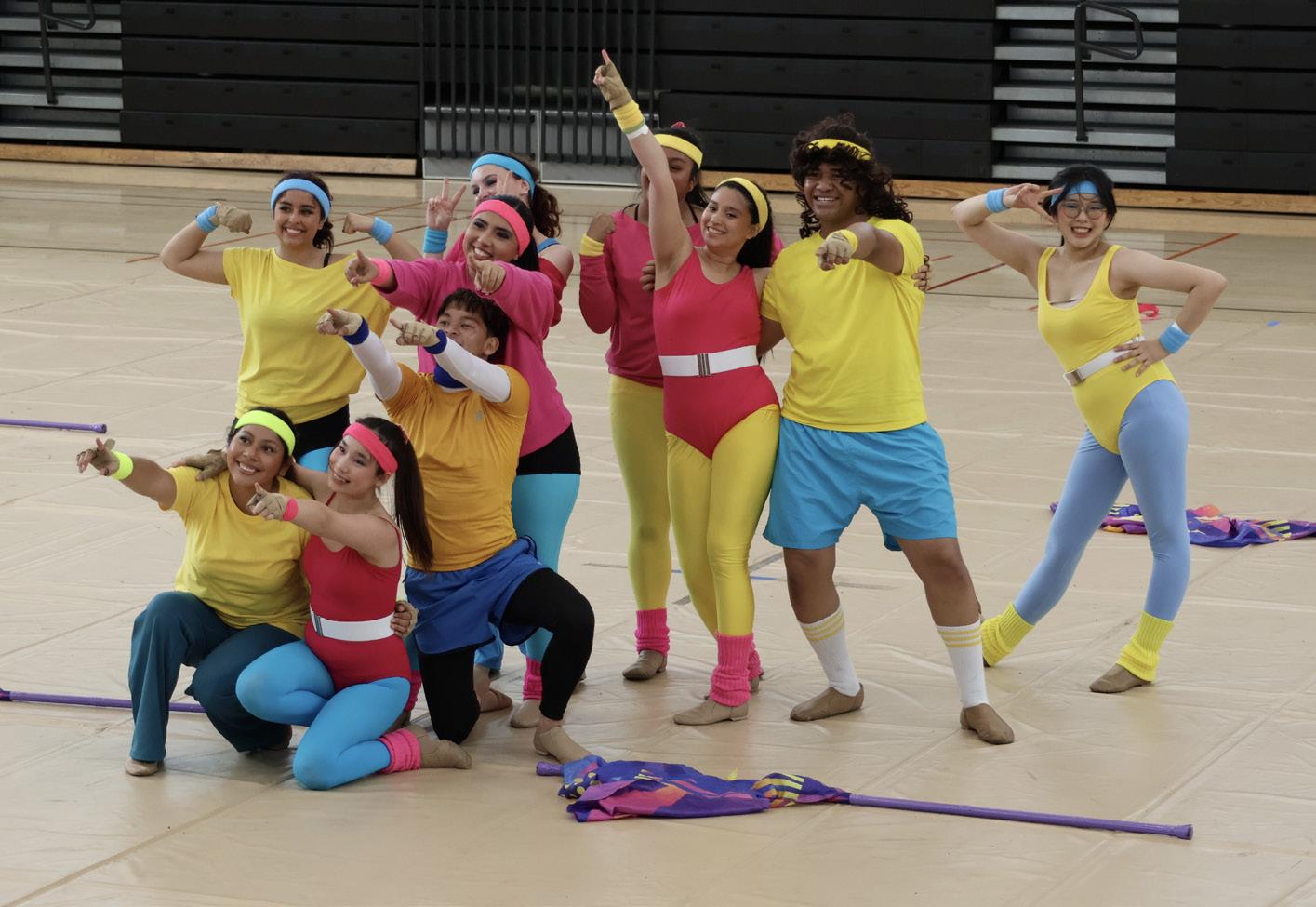
Riordan history, and their highest placement was 2nd at the San Mateo Winter Show.
Kaitlyn Juhl ’27, the color guard captain and triple threat flag, rifle, and saber user, talked about her season.
She said, “The experience overall this year was extremely enjoyable and successful.”
“We were able to make such strong bonds with each other and worked so hard to be able to create an outstanding and rewarding show,” she added.
Drum Majoring was the last sector of the Winter Activities season. The team of 13 drum majors set out on the field for L
Pattern and Field Conducting competitions.
Notably, Logan Dee ’26 and Ally Greebaum ’29 placed first and third at the San Mateo Winter Show, respectively.
Band Director Lance Ohnmeiss commented that “L Pattern is very important in choosing next year’s drum majors” and that he’s “very proud of the competitors this season.”
Through it all, this team’s effort and hard work, from rehearsals to their successful performances, highlight the band program’s dedication and commitment to their students, both on and off the floor.
By Ashling Greene ’26
The National High School Journalism Convention took place from April 15-19 with 15 members from the journalism program attending, including members of The Crusader newspaper, The Shield magazine, and The Grail literary magazine.
This year’s Journalism Education Association & National Scholastic Press Association (JEA/NSPA) Convention was held in Minneapolis, Minnesota.
Upon arriving in Minneapolis, the Crusaders visited the Mall of America. On April 16, students were taken on a trip to the Mississippi River and learned about the history of the river.
On April 17, the convention was officially underway with students participating in various sessions pertaining to their field of interest in journalism.
At the outset, the Quiz Bowl participants competed in the first online Quiz Bowl test in preparation for the live competition between finalists on April 18.
The remainder of the convention attendees attended their choice of sessions until the afternoon, when they then all gathered to
From
prepare to participate in the writing competitions.
The focus of the competitions was on different aspects of journalism such as feature writing, news writing, media law and ethics, and photojournalism.
Reflecting on their experience, Elizabeth Walsh ’26 said, “This wasn’t like a school retreat, it was a chance to represent Riordan in a professional manner.”
On April 19, the live rounds of the Quiz Bowl began and Archbishop Riordan’s Quiz Bowl Team performed admirably and displayed tremendous sportsmanship.
Later, many Riordan attendees
participated in a session in which journalists who covered Immigration and Custom Enforcement (ICE) issues in Minneapolis presented their stories of coverage.
“It was really cool to hear the journalism side of ICE and how they stayed unbiased,” said Donatella Cirelli ’28.
Following this session, The Crusader conducted two breakout sessions: the first was a session on headline writing and the second was on increasing readership for their publication; both of these sessions were well attended and very successful.
At the end of the day, the
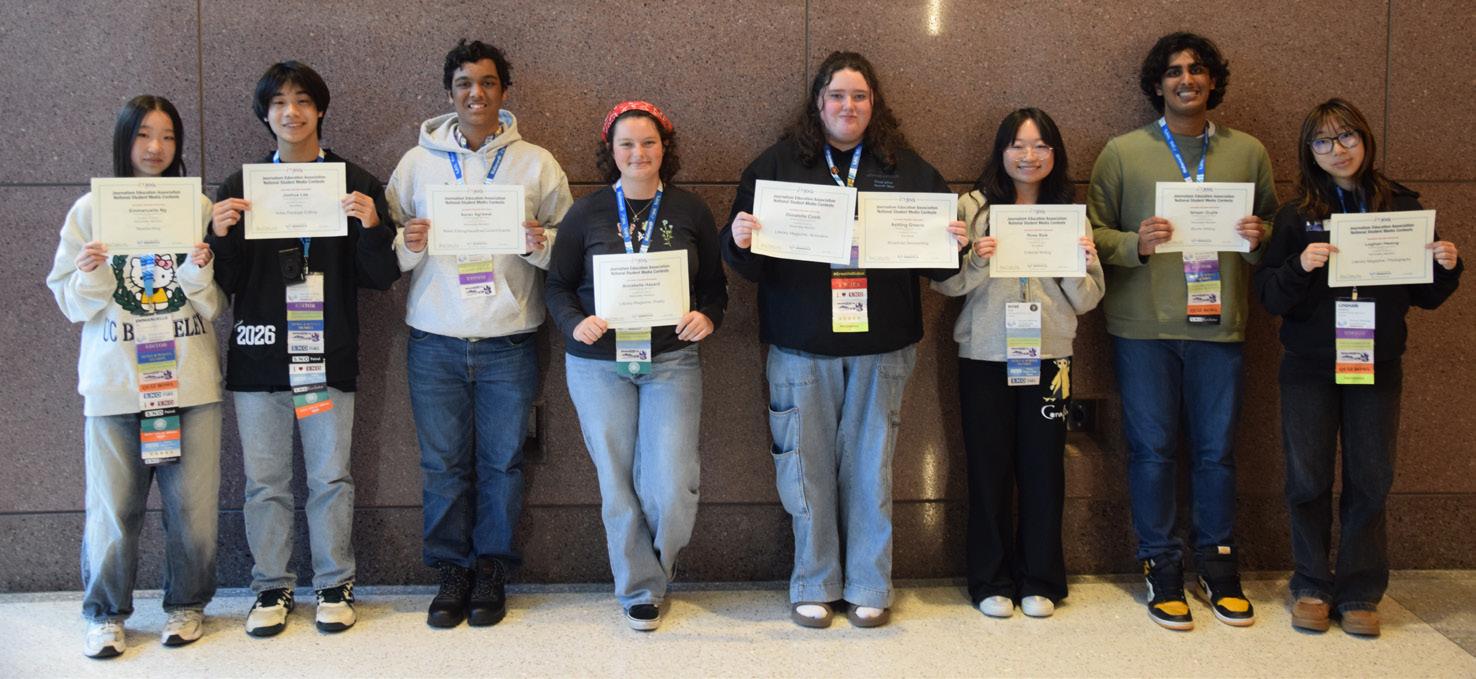
attendees went to the awards ceremony where students won multiple awards at the convention, including nine individual awards, breaking a school record.
The winners included: Emmanuelle Ng ’26 (Honorable Mention, News Writing), Josh Lee ’26 (Excellent, Video Package Editing), Aarav Agrawal ’28 (Honorable Mention, News Editing/Headlines/Current Events), Annabelle Hazard ’27 (Honorable Mention, Literary Magazine Poetry), Donatella Cirelli ’28 (Honorable Mention, Literary Magazine Illustration), Ashling Greene (Excellent, Broadcast News Writing), Rose Baik ’26 (Excellent, Editorial Writing), Ishaan Gupta ’26 (Honorable Mention, Sports Writing), and Loghan Hwang ’27 (Honorable Mention, Literary Magazine Photography).
In addition, The Crusader website won 6th place in the best of show category as well as The Grail winning 9th place for literary magazine. Through this convention, students were acknowledged for their hard work, while also spending time with their peers and representing the school.
By Keira Wallace ’26, Aliyah Pasion ’26, and Chloe de Castro ’26
Over Spring Break, a group of 15 students and four teachers embarked on a 10-day trip across the Pacific Ocean, journeying to the Philippines. It was the first immersion trip that Riordan participated in.
Theology teacher Dr. Oliver Meneses first proposed the idea of an immersion trip.
He expressed how “inspiration was drawn from SERVIAM, our school’s service program, which provides students with opportunities to serve various organizations, even beyond our country.”
The trip began in Pampanga, a province north of Manila, landing at Clark International Airport. There, students began their first immersion experience, meeting with Mary Help of Christians School in Mabalacat.
Together, they explored the many different celebrations and traditions practiced around Pampanga.
During Holy Week, immersion students saw firsthand the celebrations that Filipinos practice on Good Friday.
Full of immense dedication to their faith, these Filipinos practiced flagellation, carrying of crosses, and even re-enactments of the Crucifixion.
While shocking, these drastic
displays of faith were a testament to the intense devotion that the people in Pampanga have.
This lesson taught students the importance of their faith and how their dedication can be shown in stronger ways.
“It was truly an amazing experience,” said Sienna Lee ’26.
“I got to experience firsthand the extreme faith this community had; it taught me a lot.”
Students, along with their buddies from the Mary Help of Christians school, also saw
“I believe that this experience was truly life-changing for most of the participants, if not all, especially in practicing their faith and having a life of service.
- Dr. Oliver Meneses,
Theology Instructor
the Aeta Community in the more rural mountain area of Pampanga. This indigenous group welcomed Archbishop Riordan with kindness and hospitality, providing both food and dance to the Crusaders.
In return, Riordan students shared performances of their own and helped serve meals.
“Preparing the dance was so fun to do, and I’m glad we got to offer something in return for
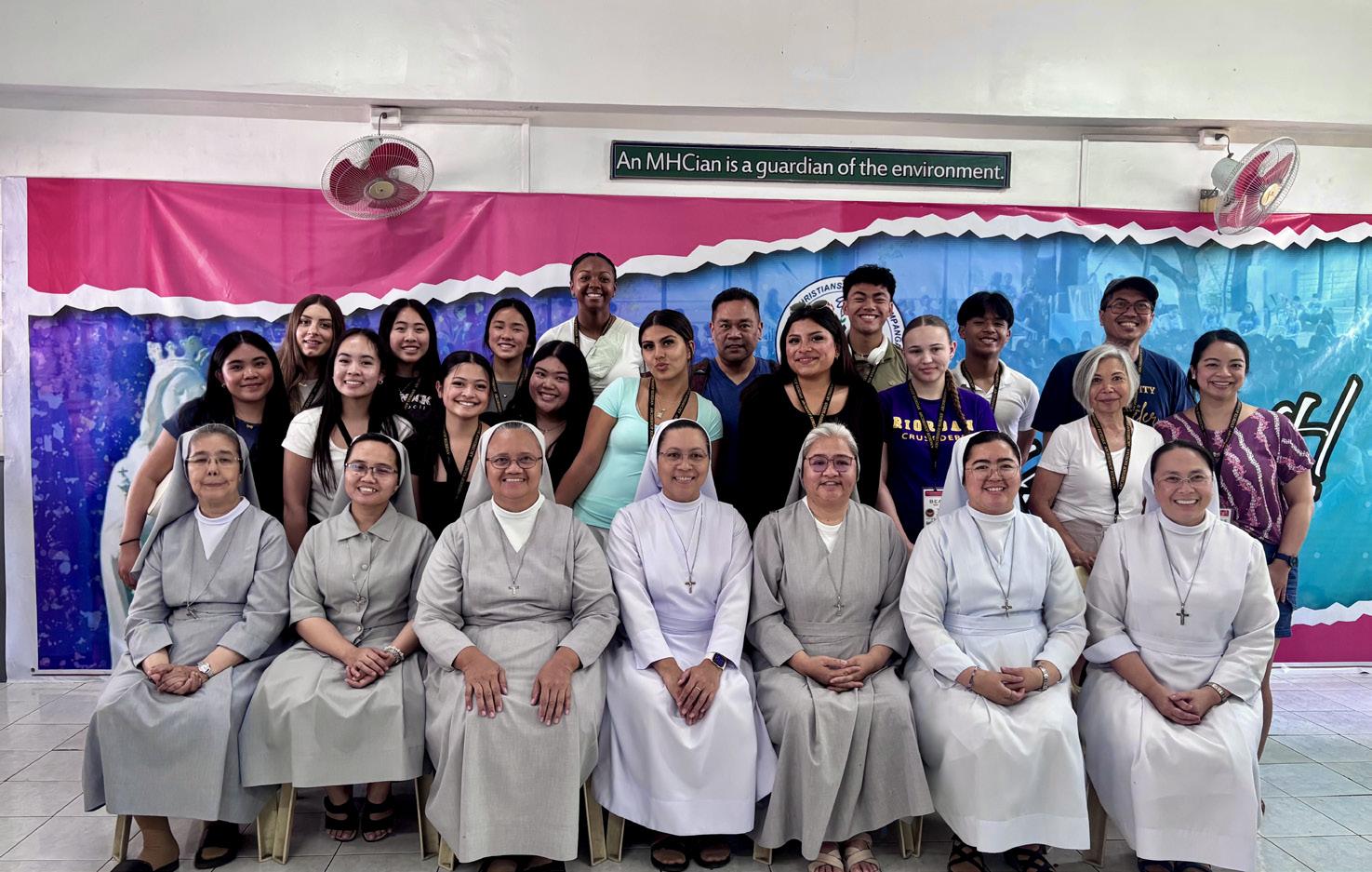
Members of the Riordan Community journeyed to the Philippines
in the school’s first immersion trip, where they performed numerous acts of service, including a partnership with the
the Aeta community after how generous they were towards us,” said Khloe Wu ’26.
The trip included outreach work with underserved communities, time spent with host families in Manila, and visits to organizations like Tuloy sa Don Bosco, which supports street children in Manila.
Throughout the trip, daily reflections helped students process what they learned. From witnessing deep faith traditions to building relationships across cultures.
One of the faculty leaders, Melanie Aguas, expressed that “the immersion trip was eye opening and life changing for students
Help of Christians School.
and chaperones alike. Being immersed into the community helped us to experience cultivated attitudes and inspired us to live intentionally in service to others.” By the end of the immersion trip, students returned with a deeper understanding and perspective of the world and their values.
Meneses shared, “I believe that this experience was truly life-changing for most of the participants, if not all, especially in practicing their faith and having a life of service.”
The trip emphasized that faith is not something we believe in but something that can be lived out through service.
By Brayden Dizon ’27
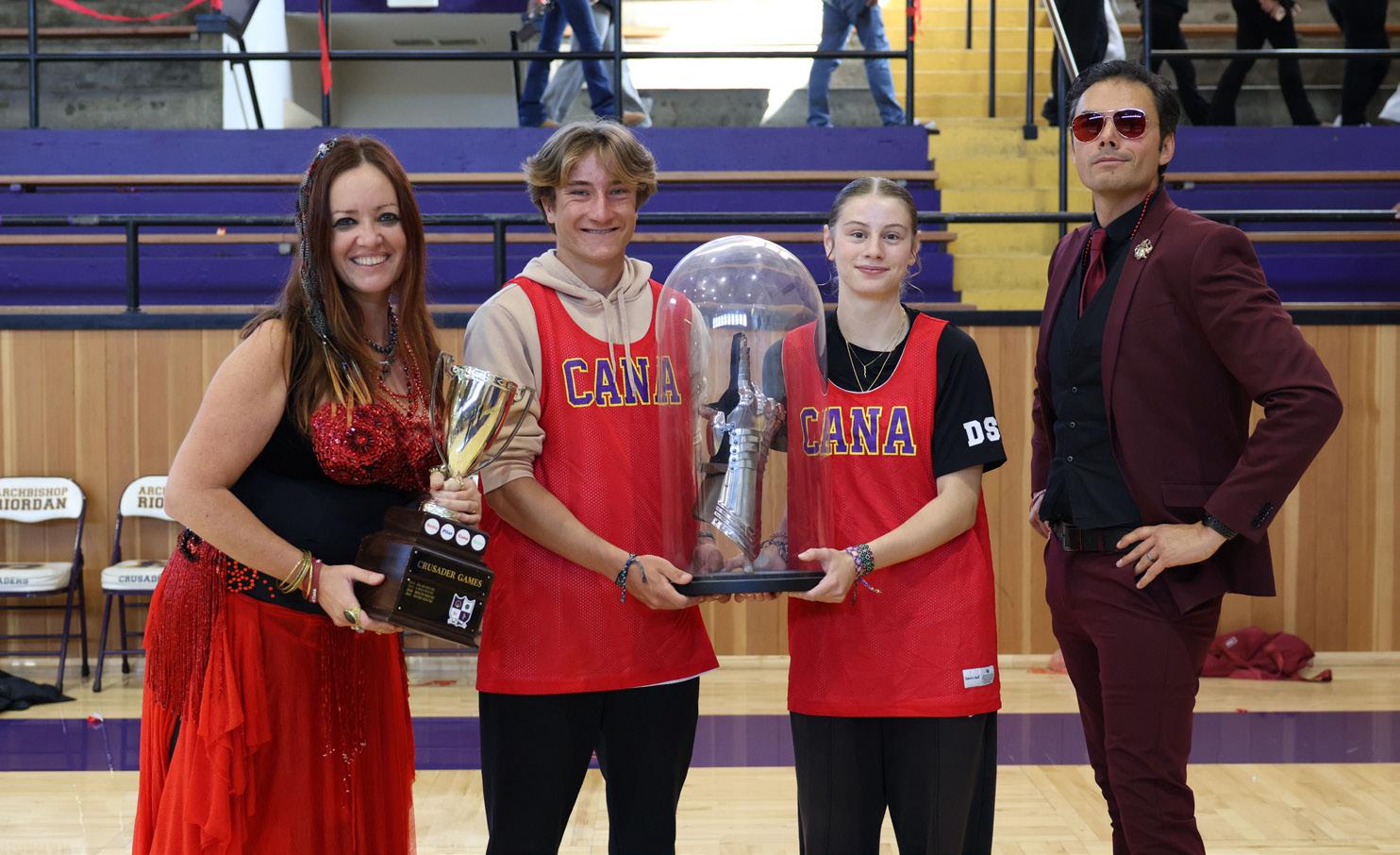
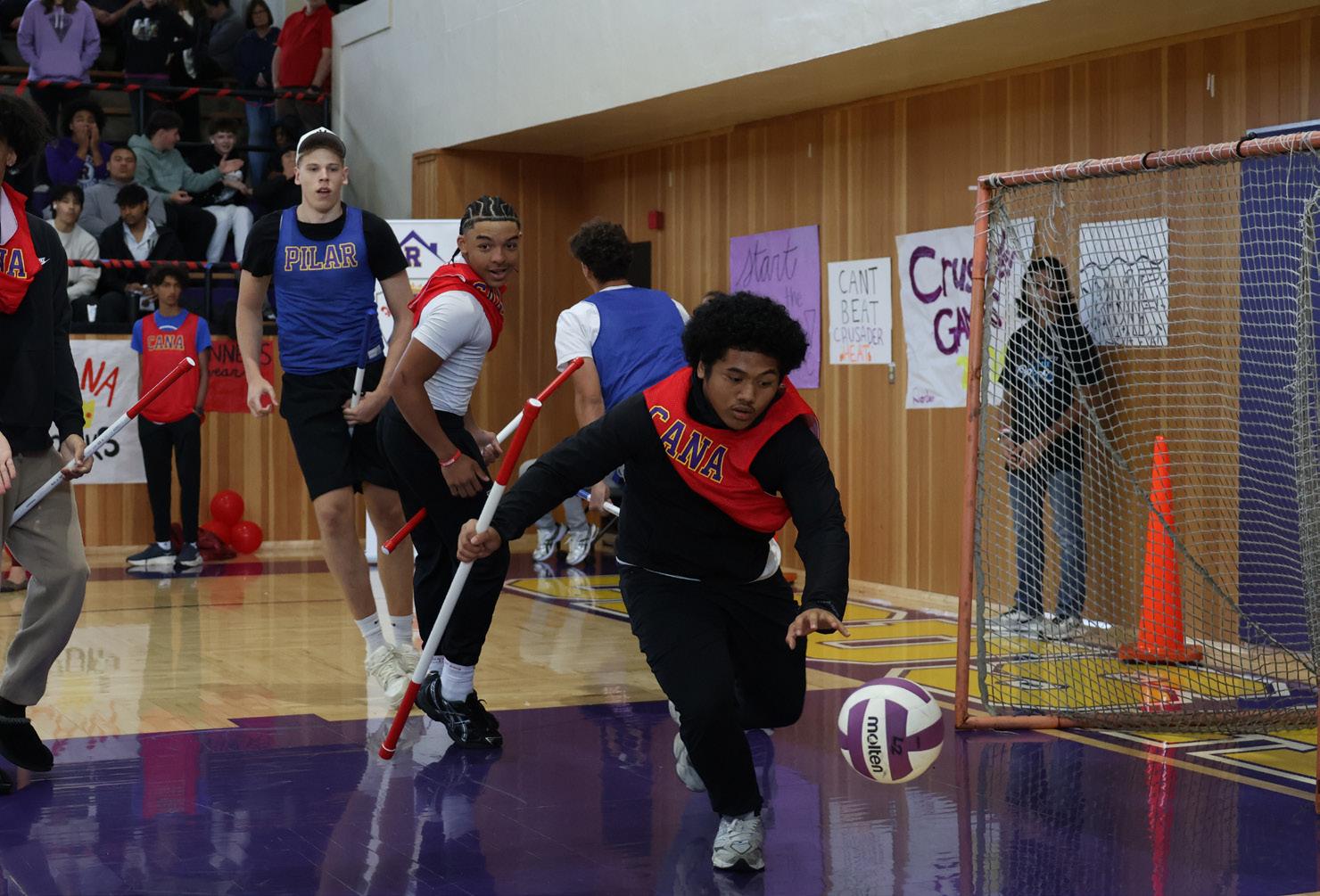
From April 20-23, Riordan school spirit came alive during the Crusader Games, where students from Russi, Cana, Pilar, and Bolts competed in a variety of events for the Chaminade Cup.
Throughout the week, students filled the campus with energy, teamwork, and competition as each house fought to earn points and represent their community.
The games featured a wide range of activities that allowed different students to participate and showcase their strengths.
Director of Student Activities
Benny Willers ’08 shared, “The goal of having the Crusader Games is simple–bring our school together for a week with the mission to build school spirit, strengthen our community, and give our students a chance to represent their House.”
Willers emphasized that the games are about more than simply winning. He explained, “We hope that students walk away with stronger friendships, pride in their House, and new memories from being a part of something bigger than themselves.”
Bolts earned victories in wig snatching and the teacher mini
game, while also tying with Cana in Family Feud. Pilar showed strong teamwork by winning Mingle and the relay race. Cana dominated many of the major events, taking first place in Quidditch, the Gauntlet Finals, Musical Chairs, and the SingAlong. Russi also made their mark by winning the spirit dress competition and showing strong house pride throughout the week.
Student participant Isaiah Sanchez ’26 said his favorite part about competing in the Crusader Games was “playing with my friends and the competitive energy that filled the building.”
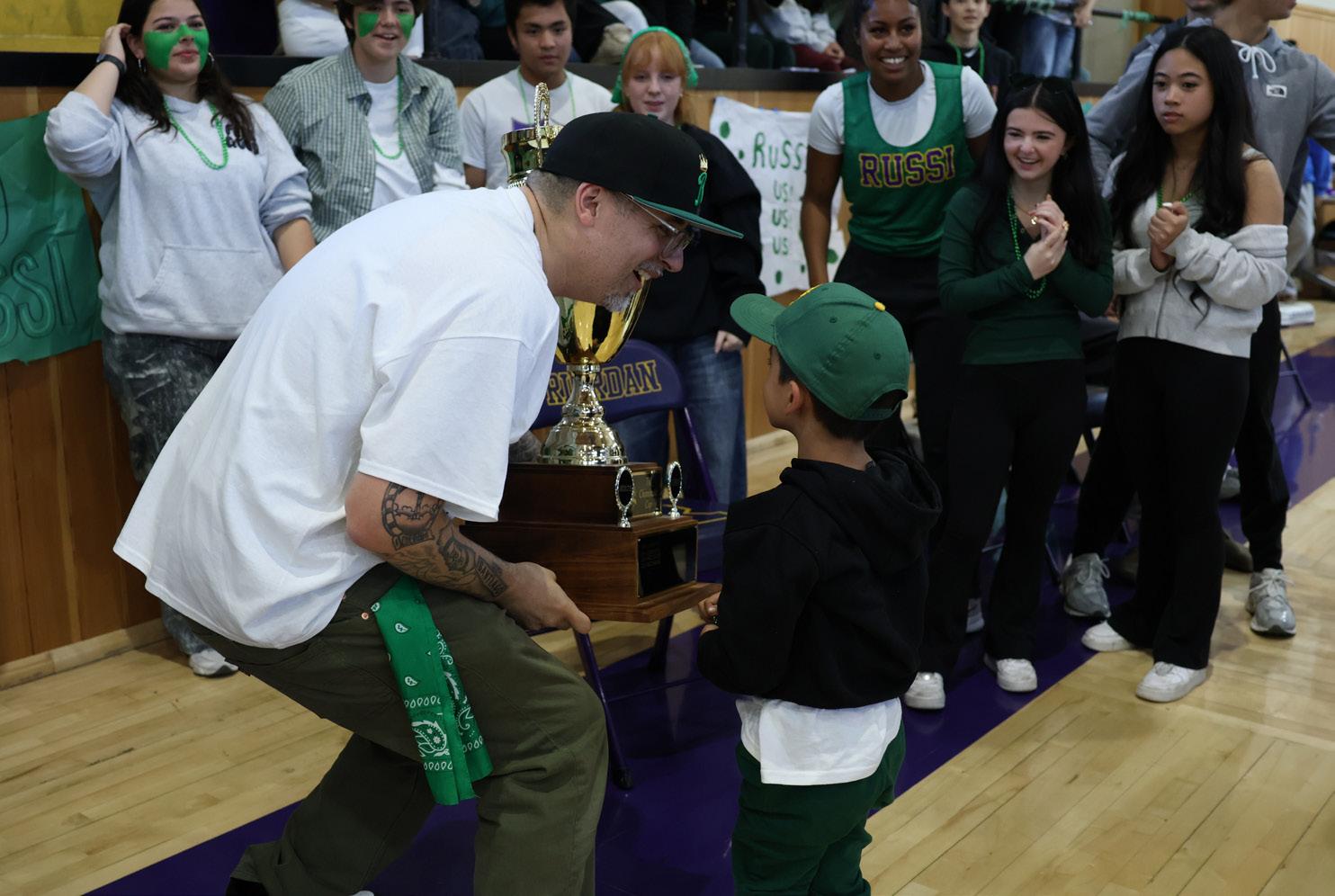
One of the biggest achievements of the week occurred when Cana won the overall Crusader Games after strong performances across multiple events. However, the final and most important award was the Chaminade Cup, which ultimately went to Russi. Their consistency, spirit, and teamwork throughout the competition helped them secure the title.
For Student Body President Benjamin Parker ’26, this year’s games carried special meaning because they marked his final experience with the house system.
He explained, “I’m sad to be
done with the house system but I’m very pleased with how far spirit and the houses as a whole have come.”
Looking back on his time at Riordan, Parker said, “I have a million memories but one of my favorites might just be this year with the teacher’s surprise dance on Thursday of the games.” Parker also added, “The Crusader Games and race for the Chaminade Cup isn’t about
winning, it’s about the process of coming together.”
The Crusader Games once again showed how the house system creates a sense of pride and unity across campus. More than simply a competition, the event gave students the opportunity to connect with each other, represent their houses, and create memories that will stay with them long after the games ended.
continued from page 1
With the new uniform designs comes a reform to the dress code. This topic has stirred up controversy over the last few weeks. Administrators have advocated for it as a way to improve safety, while students and parents have cited economic concerns, and consider the change unnecessary.
Curtin said, “There’s two main reasons. From the administrative side, teachers and safety team, it’s really hard to identify who’s a Riordan student and who’s not. By
having more identifiable Riordan items, it will make it easier for the people who are responsible for the kids’ safety.”
He added, “Our school colors are purple and gold. There’s a social benefit of being Riordan students; we really want to make sure that what we wear is our best representative of who we are as a school.”
Dean of Students Jennifer Niemeyer reiterated the sentiment, saying, “It will create a better sense of unity and make it much easier to manage students
and faculty.”
She added, “The new dress code will make us look more distinct as a school, and allow us to embrace our school colors.”
Inversely, Angelene Amann ’28 stated, “I understand that the student body is going to be more unified, but it’s gonna cause a lot of discomfort.”
This discomfort prompted Amann and other impassioned students to create a petition to garner support.
“My goal is to make a difference. We need support and combined
with another form we have about 450 supporters. Having enough support will help us make a difference.”
This situation has led to discussions between students and administrators, with hopes for a compromise, specifically in regards to banning black pants.
Amann said, “Even some faculty agree that banning black is super unnecessary, and Mr. Curtin is open to hearing us out.”
The administration sees this deal as bringing a new era to Archbishop Riordan High School.
By Logan Dee ’26
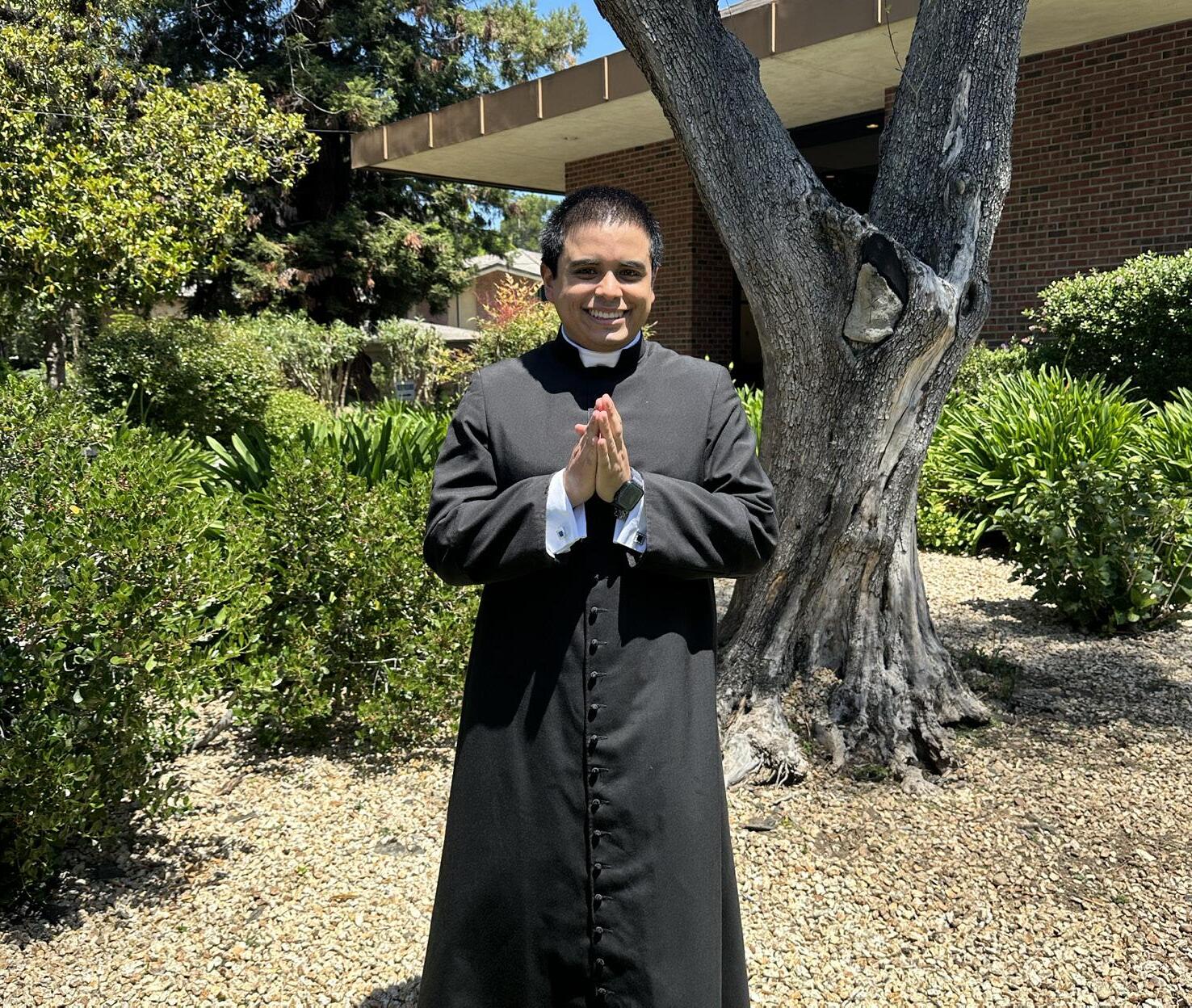
Jimmy Velasco ’17 received his first ordination on May 9 in Menlo Park at St. Patrick’s Seminary and University.
Ordination is the process where individuals are consecrated and authorized to perform distinct religious rites and ceremonies.
Velasco was an active member of the Riordan student body, and his love of working with God was evident then. He was a part of Campus Ministry as a Liturgy and Life team member.
In addition, he was an altar server, lector, and extraordinary minister of communion for the school Masses, and he was also an editor for The Crusader newspaper. Many people felt Velasco’s presence in the Riordan hallways during his time here.
Riordan Deacon Chris Mariano said, “He just loved his faith, and he loved sharing it.”
Riordan taught him to put God first in all endeavors, and he felt his community when he went to Riordan.
Even now, in the places he
He just loved his faith, and he loved sharing it.
-Riordan Deacon
Chris Mariano
goes, he always runs into fellow Crusader alumni and feels such a present, special connection.
After graduating Riordan, he attended University of San Francisco for a year before switching to seminary in 2018; he attended Bishop White College Seminary and studied philosophy at Gonzaga University in Spokane, Washington for the rest of his undergraduate program.
After his graduation in 2021, he entered St. Patrick’s Seminary in Menlo Park, which
was a seminary established by Archbishop Patrick Riordan, and now, he is graduating. His journey taught him how much of a resilient person he is as he faced many challenges but
“Ordination means to me that I am preparing to give my life over to God out of love and preparing to be more united to God.
-
Jimmy Velasco ’17
stayed true to his faith and kept going. Although ordination has a generalized definition, ordination has a more personalized definition to Velasco.
He said, “Ordination means to me that I am preparing to give my life over to God out of love and preparing to be more united to God.”
He continued, “It is a difficult path, but it is one that has given me the most meaning and happiness.”
After his diaconete ordination, he will be at St. Patrick’s parish in Larkspur for his diaconate assignment for six months.
Then, in December, he will begin his preparation for his priesthood ordination.
The last Riordan alumnus to be ordained was Fr. Mike Quinn ’70 in 2009.
Matthew Nicholas ’29, a member of the liturgy team, stated, “I think this man not only embodies what it truly means to be a follower of Christ, but a Crusader as well.”
He added, “He personified the Riordan motto of ‘Be more, think more, and do more’ through pursuing the priesthood.”
Velasco’s journey will be a Riordan story many will continue to admire and respect for the amount of dedication, focus, and spiritual maturity one needs to unite with God.
By E’moni Ferdinand ’26
As the 2025-2026 school year approaches its closing, the outgoing Riordan LIFE Team class of 2026 passes their torches to the incoming team of 2027.
This is a full circle moment for the team, as a year ago, they were in the same position taking that next step to further their faith, and spread it to the Riordan community.
Each applicant was carefully selected based on their leadership qualities, mission to grow their faith, and ability to work together as a team.
These new members will now take on the responsibility of strengthening campus ministry efforts, bringing students and faculty together to celebrate and evolve their faith, and outline just what it means to be a Lifer.
Keira Cabuntala ’27 said, “When I found out that I made the LIFE team, I was ecstatic. I couldn’t wait to grow more in faith with a new community of people, as well as leading MLCs for our school!”
Looking back at past LIFE Teams, the impact they have had on not only the Riordan community, but themselves as a team who grew a connection is merely an aspect of this leadership.
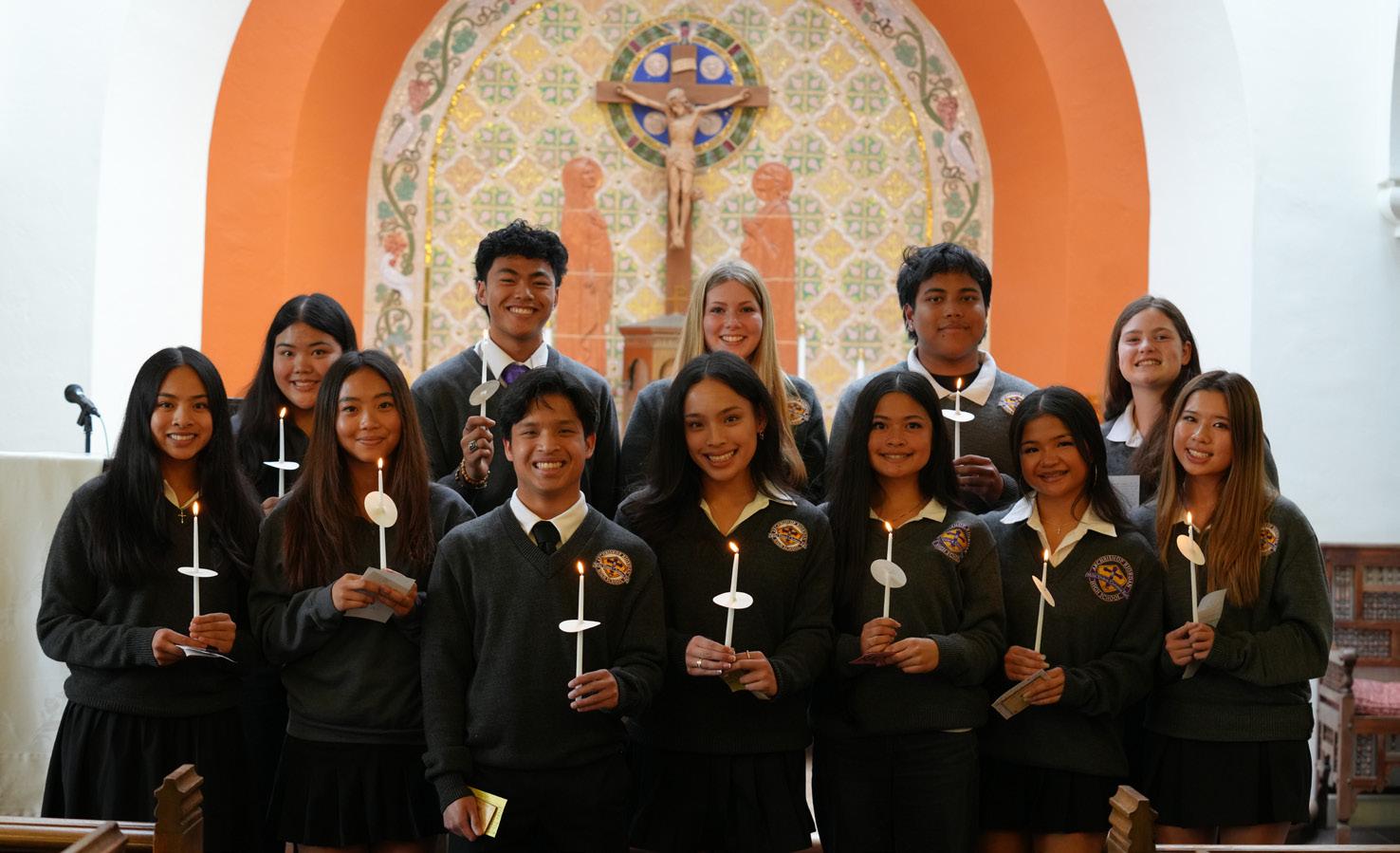
LIFE refers to “Living in Faith Experience,” and for decades, each team has successfully met this standard and even exceeded it, with no doubt that the next team will do so as well.
A consistent part of LIFE Team is the monthly Marianist Life Community events that combine faith, food, and fun. A huge part of these MLCs are the activities included that are based on the theme.
“My favorite MLC was the one in April. The Easter related activities and it being our last one made it very memorable and fun,” LIFE Team member Lucas Libran ’26 said.
Beyond planning events, LIFE Team members also serve as role models on campus. Whether they are participating in Mass, leading retreats, or simply creating a positive atmosphere around school, they play a critical role in shaping the CMEs of Riordan.
LIFE Team focuses on creating spaces where students can feel seen, heard, and supported by encouraging them to reflect on their experiences, values, and journeys.
These moments allow students and even faculty to take a step back from academics, athletics, or other extracurricular activities, and instead focus on personal
growth and connection.
The bonds that form through retreats, meetings, and the teamwork for events continue long after closing out as a LIFEr.
Past members have described the experience as one that has helped them to grow confident in themselves and their faith, and grow bonds with people they haven’t spoken to throughout the three years they’ve attended Riordan.
LIFE Team moderator Melanie Aguas stated, “Being a comoderator has been one of the biggest blessings of my life. I love seeing all the creative ways the LIFE team brings the mission to life through personal testimonies, interactive activities, and scripture reflection.”
As the class of 2026 prepares to graduate, they leave behind a legacy of faith, service, and community. Concurrently, the class of 2027 steps into a new chapter of opportunity and responsibility.
It is their turn to bring new ideas, dedication, and teamwork. It is their turn to carry on the flame of spreading faith through the Riordan community to set the stage for the class of 2028, and continue the fire from the LIFE Team class of 2026.
By Erin Quan ’26
A member of the California State Assembly has authored a new, statewide bill set to honor Bay Area-born martial arts icon Bruce Lee on May 17.
Bruce Lee, a San Francisco-born Chinese American, is one of the first leading men in Hollywood, known best for his roles in “Enter the Dragon,” “Fist of Fury,” and “The Way of the Dragon.” As the “first true Chinese global superstar,” Lee became famous for revolutionizing martial arts in the world of cinema, presented by his insane physical speed and powerful presence on screen.
The bill, if passed, would claim May 17 as Bruce Lee Day. This will serve as an opportunity to represent Lee and his work in the public eye; his cultural contributions are to be incorporated into school lessons, cultural exhibits, and public events.
This bill would mark the first time a Chinese American will be honored with their own holiday in California.

growth and self defense.
Supporters say Lee is worth honoring because of his multitude of achievements in both the film industry and martial arts world.
Isaiah Mateo ’26 said, “Bruce Lee is one of the most known Asian celebrities of modern day. He laid the groundwork for other Asian actors to follow in his footsteps and his films unknowingly helped the Asian community as a whole by having a figure to look up to.”
May 17 is also the day 18-year-old Lee came back to San Francisco after spending the majority of his childhood in Hong Kong to claim his U.S. citizenship. May is also known in the U.S. as Asian American, Native Hawaiian, and Pacific Islander (AANHPI) month.
As a polished actor, Lee established a prominent role for martial arts in movies through his self-developed technique, laser
David Canales ’02 stated, “Bruce Lee is a San Francisco icon. He was a Chinatown staple and was active with the community in Oakland as well. He unified different groups of people to fight against oppression through the themes in his films and his expressive philosophies.”
focus in battle, and insane speed where if his opponent blinks for even a second, they will have already gotten knocked out.
As an educator of martial arts, Lee established several martial arts studios in Seattle, Los Angeles, and Oakland. Rather than prioritizing the traditional ways of martial arts, he taught his own style: Jeet Kune Do, or, “the way of the intercepting fist.” His goal was to teach his students skills and techniques that are practical and efficient for their
Mikayla Cheng ’26, a student who does Hapkido, stated, “Bruce Lee is a global icon who emphasized the importance of adaptability and spirituality, increased the popularity of Asian representation in western media, and still serves as a revolutionary figure for modern MMA to this day.”
Bruce Lee has left a major impact on the Bay Area and around the world. He has helped promote martial arts as a whole. The proposed bill to honor him will serve as a bridge between his historical achievements and the future successes of individuals who strive to be just like him.
As Lee once stated, “Be like water making its way through cracks. Do not be assertive, but adjust to the object, and you shall find a way around or through it.”
By Julian Davis ’26
The 2026 California Governor race is leading up to be one of the biggest state elections in California history.
With many candidates running from both parties, the competition is intense, and has only heated up further following exits from candidates Rep. Eric Swalwell and former State Controller Betty Yee.
Swalwell’s exit has been gaining much media attention, as his departure stems from the collapse of his campaign due to sexual assault and misconduct allegations reported to the San Francisco Chronicle.
“I’m terribly happy that Swalwell dropped out,” said AP Government teacher Jeff Isola ’98. “...because to me, he has been the epitome of the career politician, using power and influence for personal gain – the consummate opportunist who sought the spotlight so that he could rise through the ranks –I think we have enough of those already.”
Remaining in the race includes former U.S. Rep. Katie Porter, billionaire and environmental activist Tom Steyer, former Fox News host Steve Hilton, former Secretary of Health and Human Services Xavier Becerra, San Jose Mayor Matt Mahan, Public Instruction Superintendent Tony Thurmond, former LA mayor
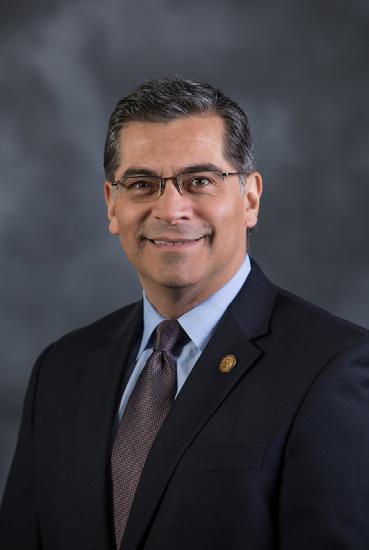
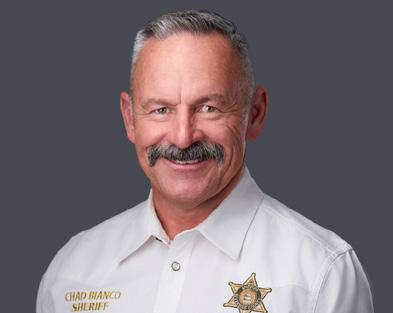
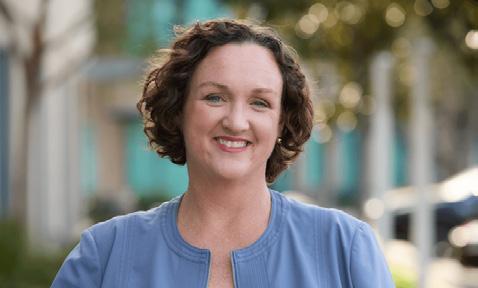
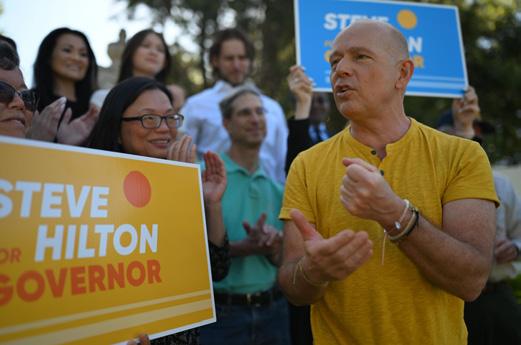

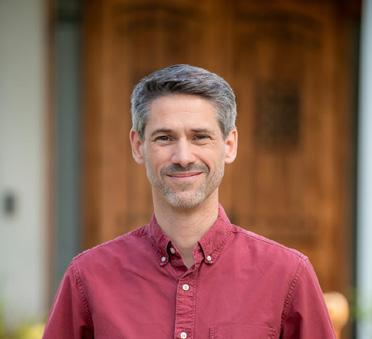

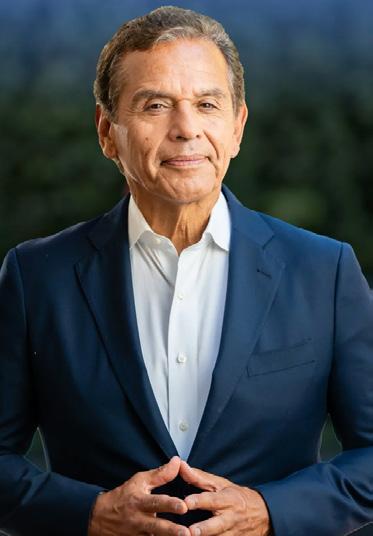
Among the candidates vying for Governor of California, these eight are considered the front runners. The California primary takes place on June 2.
Antonio Villaraigosa, and Riverside County Sheriff Chad Bianco.
“I feel like it is anyone’s race and that there is not a clear front runner,” said Miriam Donner ’26.
With only two candidates able to make it past the June 2 Primary, the split loyalties of voters may play the most imperative role within the governor’s race.
Bella Miraglia ’26 described her process on how she’ll vote. “Since there are quite a few Democratic representatives, I take my time and choose who I want to vote for based on their values and how I align with them.”
Baron Siu ’26 also weighed in on how he feels about the concern
of the Blue Tribe being too big. “I think having so many Democratic candidates could make the race more unpredictable, but I would not say it automatically helps Republicans win.”
Siu continued, “California is still a very Democratic state, so a Republican winning would depend on low turnout and votesplitting though.”
There is also a lot of concern and speculation amongst many of the candidates.
While Porter is known for grilling corporate executives with her trademark “whiteboard of justice,” she gained negative attention after incidents involving CBS Sacramento’s Julie Watts in
“-Baron Siu ’26 California is still a very Democratic state, so a Republican winning would depend on low turnout and vote-splitting though.
2025 and in a 2021 Zoom call with staffer Jennifer Granholm.
Steyer has also been making a considerable splash in the scene. Having spent $132 million on his campaign so far, Steyer advocates closing the corporate tax loophole, making free school lunches permanent, and most notably, “demolishing” ICE.
Bianco is another noteworthy candidate, as he is one of two Republican candidates (the other being Hilton) who is pro-Law Enforcement and eliminating state income taxes through increasing oil productions. Bianco claimed to be the “antithesis to (the) California state government” who plans to destroy failed progressive policies while marketing himself as battling a corrupt Sacramento. With many candidates from drastically different backgrounds all vying for the final two spots, the California Governor’s race will continue to be a fiery one.
By Rachel Gerke ’27
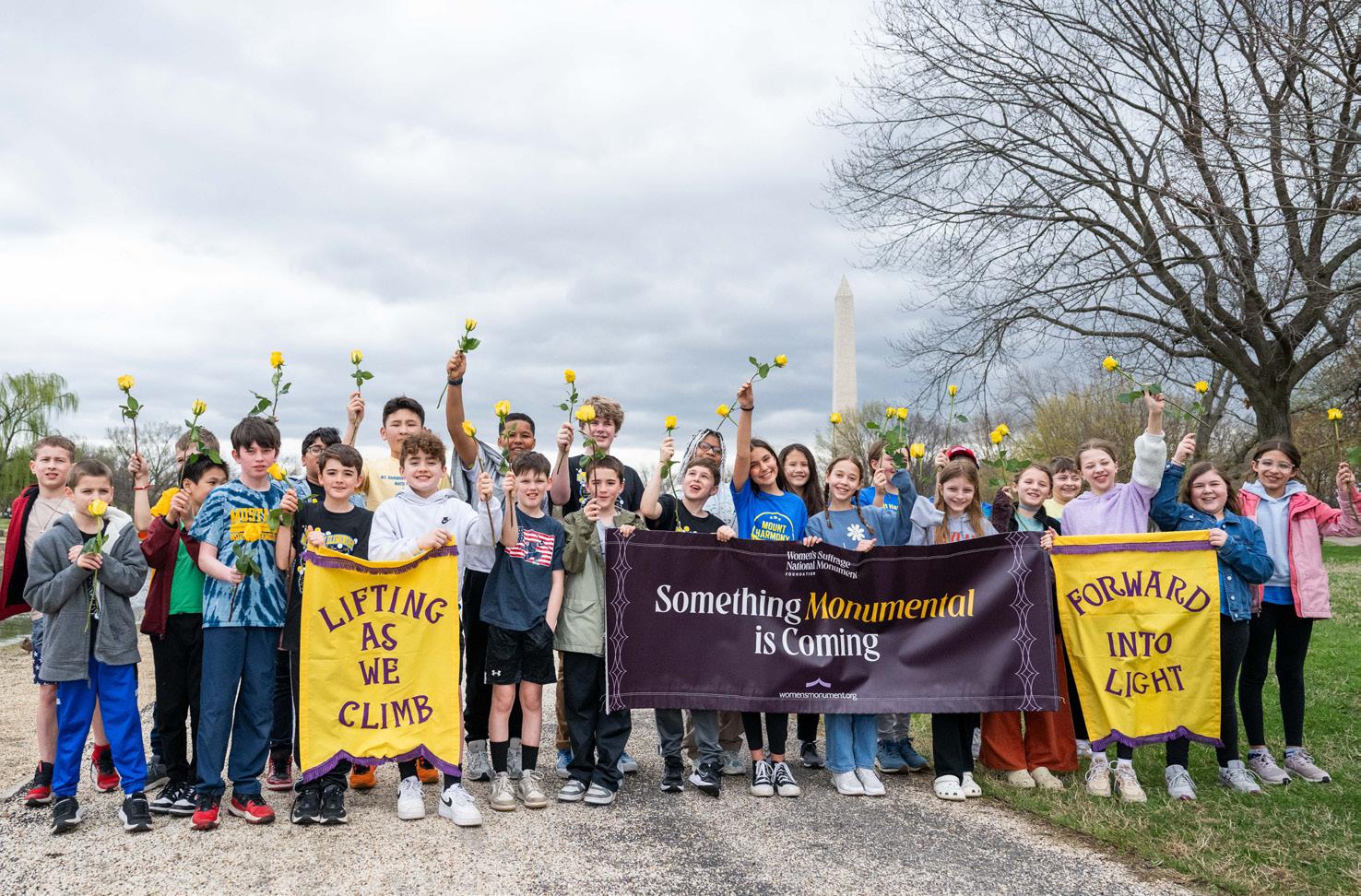
The Lincoln Memorial, Washington Monument, and Jefferson Memorial are all examples of monuments on the National Mall in Washington, D.C., which contain diverse emblems of historical significance.
However, there is one aspect of American history noticeably absent: there are no current monuments exclusively dedicated to the representation of women’s history. That is something the Women’s Suffrage National Monument Foundation is currently aiming to change.
The Women’s Suffrage National Monument Foundation, a nonpartisan organization, is dedicated to honoring the legacy of the suffrage movement in America through the creation of a monument on the National Mall. Led by President and Chief Executive Officer Anna Laymon, the foundation combines the influence of a multitude of women. Every living first lady currently holds a title of honorary chair.
Still steadily underway, the process of bringing the monument to life has been an extensive one. On Dec. 17, 2020, Public Law 116-217 was signed by President Donald Trump, charging the monument to be built, with unanimous bipartisan support from Congress. On Dec. 20, 2024, the monument was authorized to be built on the National Mall.
The monument will be located within the Constitution Gardens, on a 2.5 acre site, and is set to be finished in 2033.
This monument aims to
champion the women and suffragists who have forged the path for democracy in America, particularly those who’ve been pushed to the sidelines.
While many are aware of the significant contributions by prominent female figures in American history, representation is often skewed, and gaps still remain in the perception of it.
For instance, influential political movements such as nonviolent resistance, the origin of which is often attributed to male leaders, have actually had their roots with female leaders such as Elizabeth Cady Stanton and Lucretia Mott, who led the Seneca Falls Convention of 1848.
“Women have been the backbone of many historical developments, more so than we’re aware of, because history has commonly been portrayed in a male-centered light,” said Kaia Burris ’27.
Many are aware of the
fundamentals of the suffrage movement, such as the ratification of the 19th Amendment, which officially prohibited sex-based discrimination in voting.
However, stories of the women who’ve paved the way and who’ve been the backbone of such movements are still lacking in representation, and many of their stories have been lost in the footnotes of history.
“I think what’s really inspiring is that the engine of the suffrage movement was the thousands of women whose names will never appear in a textbook… They were everyday mothers, teachers, and neighbors, who through conversations on their front porches or in women’s clubs, changed minds, and they did the invisible work,” commented Vice President of Communications Amanda Hunter.
In creating the first monument on the National
Mall to honor these countless women throughout history who have tirelessly worked toward a future full of opportunities, the foundation not only propels these stories into the public eye, but creates an environment where young girls see themselves in positions of power, influence, and change.
English teacher Beth Fergus stated, “Preserving women’s history through monuments, archives, museums, oral histories, and curricula serves several purposes... It provides future generations with a fuller understanding of how the country was actually built. It creates a sense of belonging, legitimacy, and pride for women and girls who see themselves represented.”
A unique aspect of this monument in particular is the inclusion of voices across the country, as the foundation is currently accepting submissions regarding ideas for the construction of the monument.
An integral part of the foundation’s mission is to highlight the voices of women throughout history, but also to shape the voices of future generations through direct contributions to this historical feat.
“Shirley Chisholm once said that if they don’t give you a seat at the table, bring a folding chair,” said Hunter. “And so, the lesson of this monument for the next generation is that if there isn’t a monument there, you secure the land, and if the history isn’t written, you write it yourself… progress is not a given.”
By Logan Dee ’26
Starting December 2026, eligible men between the ages of 18-25 will be entered into the automatic registration process for the Selective Service.
Currently, this group is required to manually register through the Selective Service System (SSS) online, where they input their full name, home address, date of birth, and Social Security number. With automatic registration, this process will be altered. Instead of registering online, eligible men will be registered using federal records.
On March 30, 2025, the Selective Service system proposed a rule for automatic registration. As a result, Selective Service changes to automatic registration with the Military Selective Service Act.
Jeff Isola ’98, AP United States Government and Politics teacher, stated, “In the grand scheme of things, I don’t think it makes that big of a difference… I think the positive of making it automatic is that you don’t have to track down who hasn’t registered. It makes
it so that by default everybody is eligible for federal aid and federal services.”
This rule was approved by Congress for the fiscal year 2026 under the National Defense Authorization Act, and President Donald Trump signed it into law in December 2025.
In the event of a military draft, men registered in the SSS will be entered in a lottery based on birthdays and numbers to determine when an individual will be inducted.
Some have expressed concern that automatic registration for the Selective Service sets a precedent for the draft to be reinstated. Concerns have also been expressed regarding the use of federal data, and privacy issues which come alongside this. Others simply view it as a more efficient method of registration.
While on Fox News, White House Press Secretary Karoline Leavitt said, “Bringing back the draft is not part of the current plan right now… [but Trump] keeps his options on the table.”


The last active military draft was between 1948 and 1973. In 1980, former President Jimmy Carter reinstated registration for the military draft under Presidential Proclamation 4771, which was met with significant push-back, mostly in the form of protests.
Many view the move as another disagreeable change initiated by the Trump administration.
Some also note that when
considering the impact of developments such as these, it is vital to look upon the issue from the perspective of what will be beneficial toward the country, and the citizens who are affected. George Gamarra ’26, AP United States Government and Politics student, commented, “With the conflicts our nation has faced, we should always try to find diplomatic means and solutions no matter what the cost is.”

By Hazel Nagata-Rampata ’26
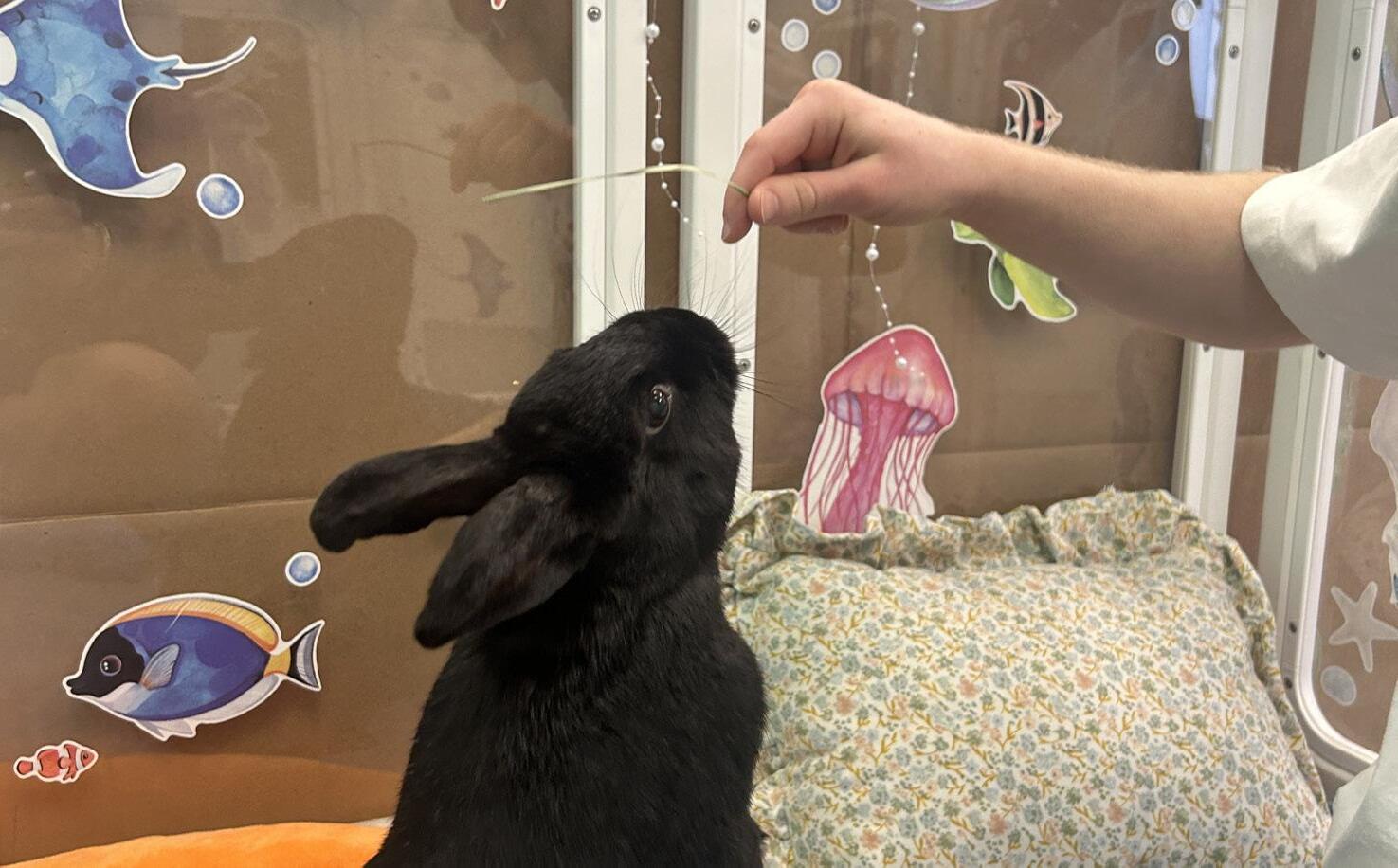
Tucked on a quieter street near the Ghirardelli Square sits the Bunny Cafe SF–a new and adorably fluffy cafe with fun drinks, food, and most importantly, bunnies!
This cafe is a new and unique spin on animal cafes, with San Francisco being a hub for a few, like cat cafes such as Whiskerwood Heaven and KitTea Cat Lounge.
Georgie Michalchuk ’26 commented that, “I thought the concept of the cafe was really cool! The environment was very
welcoming and I was very grateful for the opportunity to interact with the bunnies. Having the cafe aspect also adds to the comforting space by providing refreshments and treats.”
On their website, bunnycafesf. com, they state that the “Bunny Cafe San Francisco is a reimagined pet adoption space focused on rabbits, in collaboration with local rescue organizations. Our goal is to create a safe, welcoming, and approachable environment for potential adopters, foster families, and rabbits.”
The cafe typically houses 1012 bunnies, with reservations to meet with them available online for $25 for 30 minutes or $36 for 60 minutes for those 9 years or older and $15 for 30 minutes or $22 for 60 minutes for those under 9 years old.
Stepping into the cafe, warm smiles greet customers and small squeals come from people petting bunnies. The cafe is filled with a sweet aroma as pastries and desserts line the display cases in the front.
After entering the cafe, if making a reservation to pet the bunnies, visitors change into provided socks, watch a short informational video, and then enter the bunny room.
The bunnies are both undeniably
very fluffy and cute, with most bunnies in their own gated area. The staff actively monitors their food intake, so treats for them are often given to you for feeding the bunnies.
Michalchuk said, “I would definitely recommend going to the cafe if you get the chance! The workers are very nice, the bunnies are adorable, and the drinks and pastries are delicious. It is an amazing business to support.”
This cafe was not only a unique experience, but also one memorable in its mission, as it combines a comforting cafe atmosphere with rabbit rescue and adoption efforts. For animal lovers looking for a fun outing in San Francisco, Bunny Cafe SF is definitely worth a visit.
Food blogger asks ‘Where’s the food at?’
By Alexander Kenworthy ’27
Behind the camera of a fastpaced, mouth-watering food video – cracking jokes, reacting in real time, and sharing his latest Bay Area find – is a familiar kind of personality. The kind you’d expect walking through the halls of Archbishop Riordan High School.
John Montoya ’11 has turned that same energy into a growing social media presence through his Instagram account @_wheresthefoodat, where he highlights food, fitness, fashion, and lifestyle across San Francisco and the Bay altogether.
What began as a personal interest has grown into a platform followed by more than 26,000 people.
But Montoya’s content isn’t built on trends or internet personality; rather, it’s built on being himself, something he traces back to his time at Riordan.
“My time at Riordan influenced what I do now by allowing me to just be myself,” Montoya said. “Being around all guys meant I could just be me… the humor I developed at Riordan still shows up in my videos.”
That authenticity is what separates his content. Whether
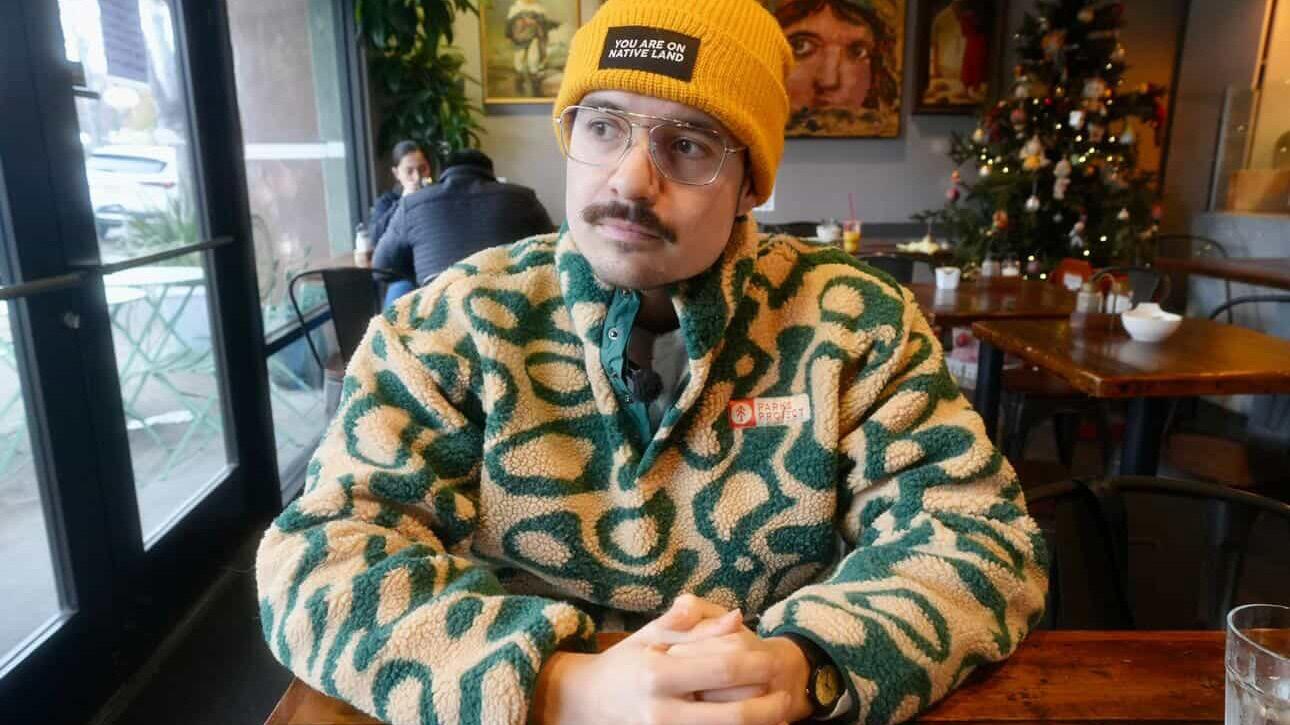
he’s trying a new restaurant or sharing a quick thought midvideo, Montoya’s approach feels natural – more like a conversation with the viewer rather than a performance.
Montoya explained the idea: “If you allow yourself to be genuine and honest, the rest will follow.”
While it may not seem like it, Riordan may have played a role in his interest in food, and it started in an unexpected place.
Owner of Ocean Subs, Lee Opelina ’95, believes that authenticity is exactly what makes Montoya’s content stand out.
“What I like most about John’s food blog is his perspective,” Opelina said. “He doesn’t come off arrogant, in your face, or pretentious… when he tries new foods it feels like we’re learning alongside with him.”
“Honestly, the class that changed me the most was P.E.,” Montoya said. “I started lifting weights and learned more about nutrition, which led me into cooking… and my love of food, fitness, and culture.”
Like many social media creators, Montoya didn’t immediately jump into posting. The ideas were always there, but
hesitation held him back.
“I would have started sooner,” Montoya said. “I’ve always had ideas, but I was timid and my own biggest critic… I wish I had just stayed consistent and kept going.” Now, looking back, that’s exactly what he encourages current Riordan students to do.
“My biggest piece of advice is to just pick up your camera and start,” Montoya said. “I truly believe everyone has talent and a personality worth sharing… just do it.”
That message reflects a bigger theme behind his journey: growth comes from taking risks, regardless of the conditions.
And while his account continues to grow, one thing hasn’t changed: the mindset he developed years ago.
“Heeeckkkk no!!!” Montoya replied when asked if he expected to build a following in high school. “I never thought I’d be making food, cooking, and fashion content for 26K followers… I’m so proud of myself.”
From the Riordan hallways to thousands of screens around the world, Montoya’s story shows how far authenticity and passion can take you.
By
Cultural Night was an amazing evening that showed Riordan’s diversity and community. The performances were exciting and the food was delicious.
The night opened with Music Club performing a medley of traditional American songs, including “American Pie” and “Sweet Caroline” among other songs.
Katelyn Tzang ’28 said her favorite part was “Just being able to represent American culture as a Chinese person from an immigrant household.”
Next, Latinos Unidos walked onto the stage energetically, and performed their dances. After their performance they invited everyone to join them on stage and learn a simple dance.
The next performance got everyone out of their seats dancing along. The unforgettable Zumba performance by Riordan teachers Dr. Caroline TsuyukiGochoco and Karina Mathisen was one of my favorite parts.
Another amazing performance was when a student named Zitong Tommy Tang sang a Chinese love song. He then invited the audience to the stage to learn a phrase in Chinese.
Maggie Connard, the dance class teacher, attended her first Cultural Night. She said, “Seeing so many different cultures represented made me extremely proud of the diversity of our school.” Connard especially

enjoyed learning dances from students. Connard also said she plans to return next year. The Irish Heritage Club performed Irish dances while the audience clapped and cheered. When the group finished, they brought people up on stage to learn a simple group dance. This performance was fast paced and brought the energy up before the opportunity to try foods from around the world. Then there was a chance for everyone to indulge in delicious food provided by the community. There was everything from Irish soda bread, Spanish rice, pupusas, and spam musubi. After eating incredible food, everyone headed over to watch more performances.
The PAC performed a Tinikling dance, which was enchanting and impressive to watch.
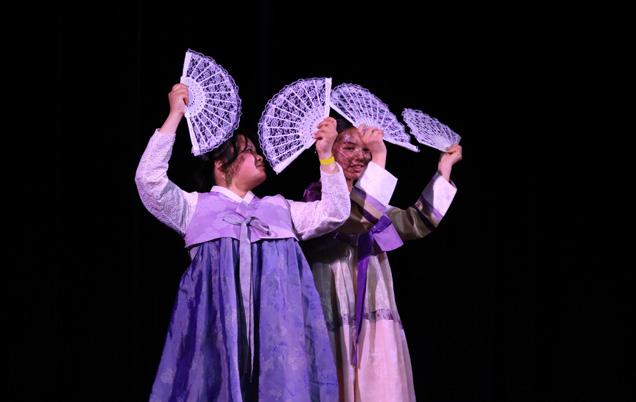
Next, there was a performance where two dancers showcased a Korean fan dance. The Arab club showed their pride, waving flags and performing a dance that was fast paced and exciting. This was their first time performing at Cultural Night. Diana Awwad ’28 said, “This performance was very special to me and my club as it was our first year participating.” She said it was “a chance to share my culture.” Pasifika, the Polynesian Heritage Club, closed the night with dances from different Polynesian cultures. Cultural Night celebrated the many cultures represented at Riordan through dance and food.

By Alex Kenworthy
Based on Andy Weir’s novel, “Project Hail Mary” is a sci-fi adventure directed by Phil Lord and Christopher Miller, starring Ryan Gosling as Ryland Grace.
Released in March 2026, the film combines mystery, survival, humor, and heart into a story that feels both massive in scope and personal in tone, focusing on friendship, sacrifice, and hope.
Ryland Grace wakes up alone on a spaceship far from Earth with no memory of who he is or why he is there. He learns Earth is in danger as the sun is being drained by a mysterious microorganism, and he is sent on a mission to stop it before it’s too late. The film explains complex scientific ideas in a clear and accessible way through clever dialogue and humor.
Ryan Gosling delivers a strong performance as Ryland Grace, balancing fear, intelligence, and sarcasm in a way that keeps the audience grounded even when he is alone for most of the film. His expressions carry much of the emotional weight, especially in quieter and more intense moments.
Space is presented as an endless canvas of black, silver, and deep
blue stretching endlessly, with the sun acting as both a source of life and danger. The spaceship feels alive, reinforcing the film’s sense of isolation.
The special effects are polished and realistic. The silence of space crashes louder than thunder, which makes even the smallest sounds—a tap on the glass, a whining alarm, or a deep breath— feel significant.
One of the strongest elements of the film is the unlikely friendship Ryland develops during his mission. This relationship becomes the emotional core of the story, turning a survival film into something more human and warm. The pacing allows time to reflect on the mission, supported by a shifting soundtrack that moves from quiet piano to sweeping orchestral tension. The film builds toward an ending that feels earned rather than reliant on twists or spectacle.
“Project Hail Mary” proves science fiction doesn’t need constant action to be powerful. Strong writing, emotional stakes, and sharp visuals make it one of the most memorable sci-fi films of the year, with a lasting message about hope and survival.



Photo by The Crusader Staff
of other priorities like Rodriguez mentioned. The more accessible snacks to grab between classes, sports practices are usually the processed ones.
Ultra processed foods go through several stages and possess ingredients that are rarely used in home cooking. These ingredients contain artificial flavors, colorings, stabilizers, etc. These additives are used by food scientists for the purpose of improving appearance, texture, and most of all, taste.
increased risk of heart disease, obesity, and type 2 diabetes. Alden added, “Young adults are often exposed to strong messages about diet and fitness through social media, advertising, and branding. It can be easy to feel pressure to follow trends. A helpful approach is focusing on fundamentals rather than trends. Simple foods like fruits and veggies provide the necessary nutrients.”
By E’moni Ferdinand ’26
Frozen dinners, chips, soda, even granola bars. What do they all have in common? They’re all processed foods, part of many people’s regular diets.
They are super convenient, super affordable, and super easy to grab throughout the day. However, scientists have stated that there is much more going on within these convenient foods than people actually realize. Understanding the complex science behind processed foods can help people make better choices rather than convenient ones.
Processed foods face alterations from their original state before they are sold or eaten. This “processing” includes canning, baking, freezing, or even adding
ingredients and preservatives like sugar and salt. It is important to realize that although the outcome is unhealthy, not all food processing is considered harmful.
Some of the methods help food in terms of staying safe, even extending its shelf life. Unfortunately, this is not the case for many foods often referred to as “ultra-processed.”
Athlete Nykol Rodriguez ’26 said, “The hardest part about avoiding processed food as an athlete is the busy schedules. Between working out, extracurriculars, and school work, it’s really hard to find time to make my own meals. So the easiest option would be to order some fast food.”
Many students struggle with prioritizing healthier food options due to the lack of intent because
Processed foods are appealing because they’re curated to trigger the brain’s reward system. The high levels of salt and sugar within them can activate pleasure centers that are in the brain. This is referred to as “hyper-palatable” foods as they satisfy people and make it extremely easy to overeat, resulting in people eating more than planned.
Scientific concerns include the nutritional content of these foods. “In a fast paced society, it can be difficult to prioritize nutrition while keeping up with school, activities, work, and social commitments. However, maintaining energy and performance requires consistency,” said Priscille Alden, a staff member at Riordan who is passionate about body health.
Some natural nutrients are reduced or completely eliminated during processing. Concurrently, scientists add extra sodium, sugar, and unhealthy fats for the sole purpose of improving flavor. Diets that are high in ultra processed foods are explained to have an
Scientists consistently study processed foods because they make up a great portion of the average diet, with some studies estimating that in the United States, over half the calories consumed come from ultra processed foods.
This doesn’t mean all processed foods are to be strictly avoided. Some still give great options for nutrients, such as yogurt, canned beans, frozen fruit, and more.
Varsity basketball player Zion McGuire ’26 stated, “Start easing into eating healthy little by little. You don’t need to cut everything off all at once because that’s hard. It’s okay if you fall short sometimes, just find what you want to focus on and prioritize.”
With the ever growing technology regarding food, scientists continue to explore ways to make healthier processed foods while maintaining their affordability and convenience. Ultimately, it’s important to understand processed foods as it can help people think more critically and carefully about what they consume. Simple food choices may support healthier futures.
By Kaia Burris ’27
PepsiCo launched a new line of dye free Cheetos and Doritos called Simply NKD, which came out on Dec. 1 in stores across the United States as part of the company’s push toward cleaner, readable ingredients. The line removes all artificial colors and flavors, giving the famous snacks a much more natural look.
For Cheetos, this marks a huge visual shift from a look that has been part of the brand since its debut in 1948, when its bright orange seasoned coating became their instantly recognizable trait. Doritos followed in the 1960s with its own bold hues of reds and blues.
The inaugural NKD lineup includes Cheetos Puffs, Cheetos Flamin’ Hot, Doritos Nacho Cheese, and Doritos Cool Ranch. Instead of the neon coloring of red and orange, the chips will appear closer to their natural corn shade from the absence of synthetic

with a more ingredient-conscious approach,
dyes. It’s a prominent difference, especially for flavors like Flamin’ Hot, which have long been characterized by the fiery color of the chips. Even the packaging is showing this shift, swapping out the flashy designs for simpler white bags.
Despite this change in appearance, the new NKD snacks
are designed to taste the same as the classics. Recent testing shows that most people struggle to tell the difference in blind tastings, suggesting that the visual transformation won’t compromise the flavor that made the original products so popular.
However, the company isn’t replacing the originals. Instead,
the NKD line sits alongside the classic versions for people who want a cleaner option without fully giving up the snacks they love.
“Rest assured, our iconic Cheetos and Doritos remain unchanged. NKD is an additive option, not a replacement, introduced to meet consumer demand,” said Rachel Ferdinando, CEO of PepsiCo, in an interview with United Press International.
This change is especially noticeable among the brand’s main demographic of younger consumers.
“I really do think this is something that young adults are gravitating towards,” remarked Rachel Gerke ’27. “You just look on social media and clean eating is something that everyone is trying to accomplish…people want to be eating healthier, and it’s seen as cool.”
Please visit rcrusadernews.com to read the full version of this story.

The San Francisco garter snake has faced near extinction due to loss of its environment and food sources, but conservationists are working to repopulate its once flourishing numbers in its historic habitat in San Mateo County.
By Vincy Huang ’27
Called one of the most beautiful snakes in the world by some, the SF garter snake can be very rarely spotted crawling along the grassy terrain near San Mateo County, with its distinct, mesmerizing pattern of red, teal, and black scales flashing through blades of grass as it hunts for prey.
Alejandro Salazar ’26 recalled, “I remember learning about them in outdoor-ed and found them interesting. They aren’t venomous to humans and have a unique pattern on their scales.”
The San Francisco garter snake has been listed as on the endangered species list since 1967 and had only five existing populations left last year. However, on Sept. 11, 2025, organizations such as the Midpeninsula Regional Open Space District (Midpen), San Francisco Zoo, and Golden Gate National Parks Conservancy (GGNPC) created a head-start project for the San Francisco garter snake.
The goal of this critical recovery program is aimed at increasing
populations of the snake in the San Mateo County area by collecting pregnant female snakes from the wild, housing them at the San Francisco Zoo while ensuring their eggs are hatched, and caring for the baby snakes until they are matured.
According to the Midpen website from 2025, “... its Conservation team reared an estimated 120 neonate snakes this year for release in 2026 when they reach a large enough size to evade predators. Their mothers were recently returned home.”
The snake has historically lived along the San Francisco-San Mateo County line along the base of the Santa Cruz Mountains.
SF Zoo volunteer Megan Wong ’27 stated, “One thing most people don’t know is that they are actually native to San Mateo.”
They dwell near both freshwater aquatic habitats and grassy areas. The SF garter snake uses its aquatic habitats for foraging during the day, and moves towards grassy areas to regulate body temperature and find cover from predators.
Over the years, their range of living has not lessened; rather, the population sizes of the snake has shrunk significantly due to issues such as habitat loss from urban development, invasive species, and illegal collection from humans.
According to the GGNPC website, “…these endangered creatures are quickly losing ground…they need the help of humans to protect their few remaining habitats.”
Snake owner Marcus Appleby ’26 remarked, “They are very pretty and are basically nonexistent in the city anymore, which is very sad.”
With this new head-start initiative, the SF garter snake continues to grow in numbers with the help of humans. Hopefully in the future, the snake will once again live in its original numbers throughout the San Mateo County
By Emilia Ross ’26
As of Jan. 1, California state law demands that all grocery stores, pharmacies, and retail stores will be banned from providing customers with plastic bags, and must resort to providing paper bags instead.
While this new law intends to reduce plastic waste in California, consumers are unhappy with the design details of new paper bags. For example, many store provided bags do not have handles, which annoys consumers.
Jovanna Malouf ’26 stated, “It’s just frustrating when you have a lot of groceries, you are more likely to drop your stuff and make more trips back and forth.”
Along with the fact that it is difficult to carry multiple bags at once, many find it unstable to carry certain bags.
Isaiah Mateo ’26 explained, “As much as I believe paper bags are the environmentally responsible thing to use, they feel terrible. I always feel like my groceries are going to rip out from the bottom. On top of that, many stores are removing the handles, making buying in bulk a hassle.”
People have reached the overall consensus that paper bags in the market currently are awkward
and a bit inaccessible.
Environmental advocate Armando Castillo echoed the same sentiment, saying, “The concept is good but the alternative isn’t the best. Now we have bags that nobody can carry, and it is a hassle. It is better to give people more options, because not everybody is able to always bring their own bag.”
While it is true that many people are upset at this sudden change, it is acknowledged that the idea of moving away from plastic bags is good, because of how much waste they produce.
The city of Thousand Oaks, California, even writes that “the average use time of a plastic bag is just 12 minutes — yet it can persist in the environment for up to 1,000 years, breaking down into microplastics that contaminate soil and water.”
By accepting the new ban on plastic bags, Californians are able to help reduce the amount of plastic in the environment. However, that does not mean that the current paper bags should be here to stay. Instead, consumers hope businesses listen to the complaints of the people, and change their designs to be more accessible to all.

By Joshua Lee ’26
On April 23, Archbishop Riordan High School hosted former NASA astronaut Dr. Leroy Chiao, who shared his experience as the International Space Station commander with students and teachers in the Lindland Theatre.
As a veteran of four space missions totaling over 229 days above Earth, the information Chiao offered was interstellar. Presenting a variety of footage and images from his time in space, students got to see what the life of an astronaut was like firsthand.
“When I usually think about space traveling it’s always this big thing that’s far out of reach because I don’t really understand what astronauts are doing in space,” said Crystal Wei ’26. “But with Chiao’s explanations I got to understand more about how human life is like in space, helping me form a better connection with the human side of astronauts.”
Growing up during the Space Race competition between the Soviet Union and the United States, Chiao had always known he wanted to be an astronaut.
“Watching the Apollo 11 moon landing on TV as a kid, I was inspired to become just like the astronauts aboard that spacecraft,” said Chiao.

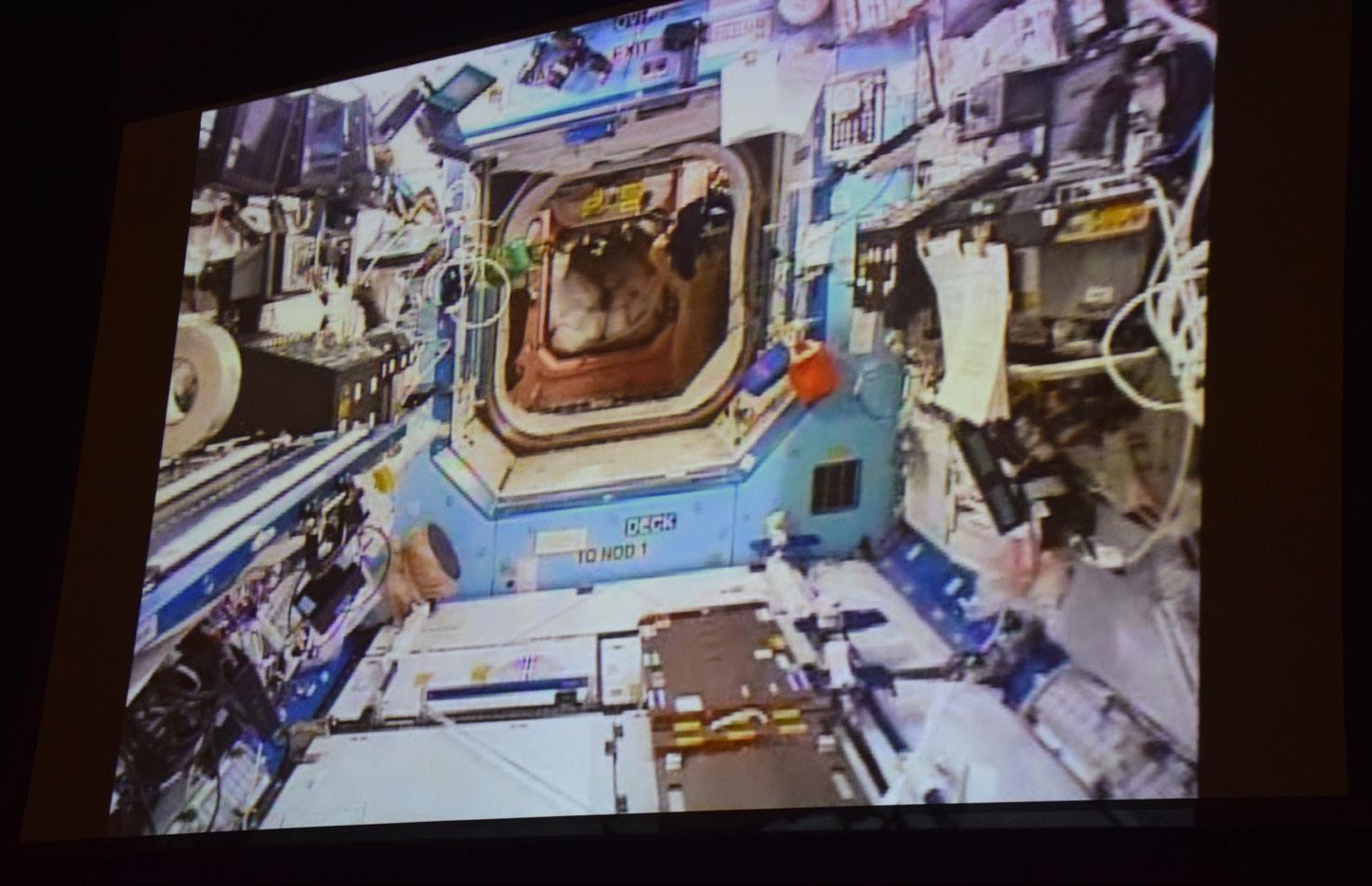
Becoming captain of the International Space Station and a full-fledged astronaut, he accomplished his dream. However, training for this mission was most definitely, rocket science.
“The training was grueling,” admitted Chiao. “...not only do you have to learn everything about U.S. modules, malfunctions and emergency procedures–then you have to learn the same thing on the Russian side. Doing homework at night on systems, language, being expected to keep in good physical shape– you know you’re ready to fly when you’re completely exhausted.”
Many who came to listen to his presentation were astounded by his experience.
Francis Chang ’26 said, “They train for years to live in space just to adapt to the living conditions, spending months to years at a time away from home. They sacrificed a lot of their life for the betterment of human society and it is highly admirable what they do to help us explore.”
Retired from his time as an astronaut, Chiao is now a professional international speaker and space educator, continuing to spread his expertise and knowledge about how the universe works.
By Julian Iaconetti ’26
After a semester’s worth of work, select students in Archbishop Riordan’s biomedical science program were ready to showcase their final projects. Students were tasked with an independent semester round research project where each student developed an original solution to a real-world medical problem.
In its development stage, students were to decide between writing an in depth research paper or invention and fabrication of an original prototype. To accompany projects, production of a professional poster was required to feature a summary of their findings.
Students were to take full ownership with minimal guidance from Riordan Biomed Capstone instructor, Dr. Caroline Gochoco-Tsuyuki, to test student innovation and research. To maintain a general structure for students to follow, students were expected to share their findings with Dr. T in a brief report but much of the responsibility falls on the student.
Balancing the project’s independence adds an extra obstacle for its students. “It’s a very disciplined class, no one’s going to hold your hand,” stated Biomed student Riley Guajardo ’26.
In Biomed’s first iteration in Spring of 2025, three student
groups produced a published research paper just before graduation. Building off that success, Dr. T remained optimistic about the program’s future.
“This year, even better topics are being explored. One student has already submitted work on 3-D drug modeling for publication. Others are working on patentable ideas having to do with dosing or monitoring therapy for several medical conditions,” said Dr. T.
Since the introduction of the Biomed program, students have been guided from the basics of biomedical sciences to difficult topics in medical innovation and research, aiding students who want to further pursue a future that requires a background in biomedical studies like student Amisha Shankar ’26 who’s working her way towards the dentistry industry.
“Being in this program taught me how to manage rigorous course load, how to gather material science data, and how to construct scientific hypotheses, all which is necessary when in dental school.”
A select number of Biomed students had the opportunity to feature their projects at a showcase joined by the engineering program in May at Archbishop Riordan for the student body to view. The program further proves new opportunities for students to bring innovative ideas to life as part of Riordan’s academic fabric.
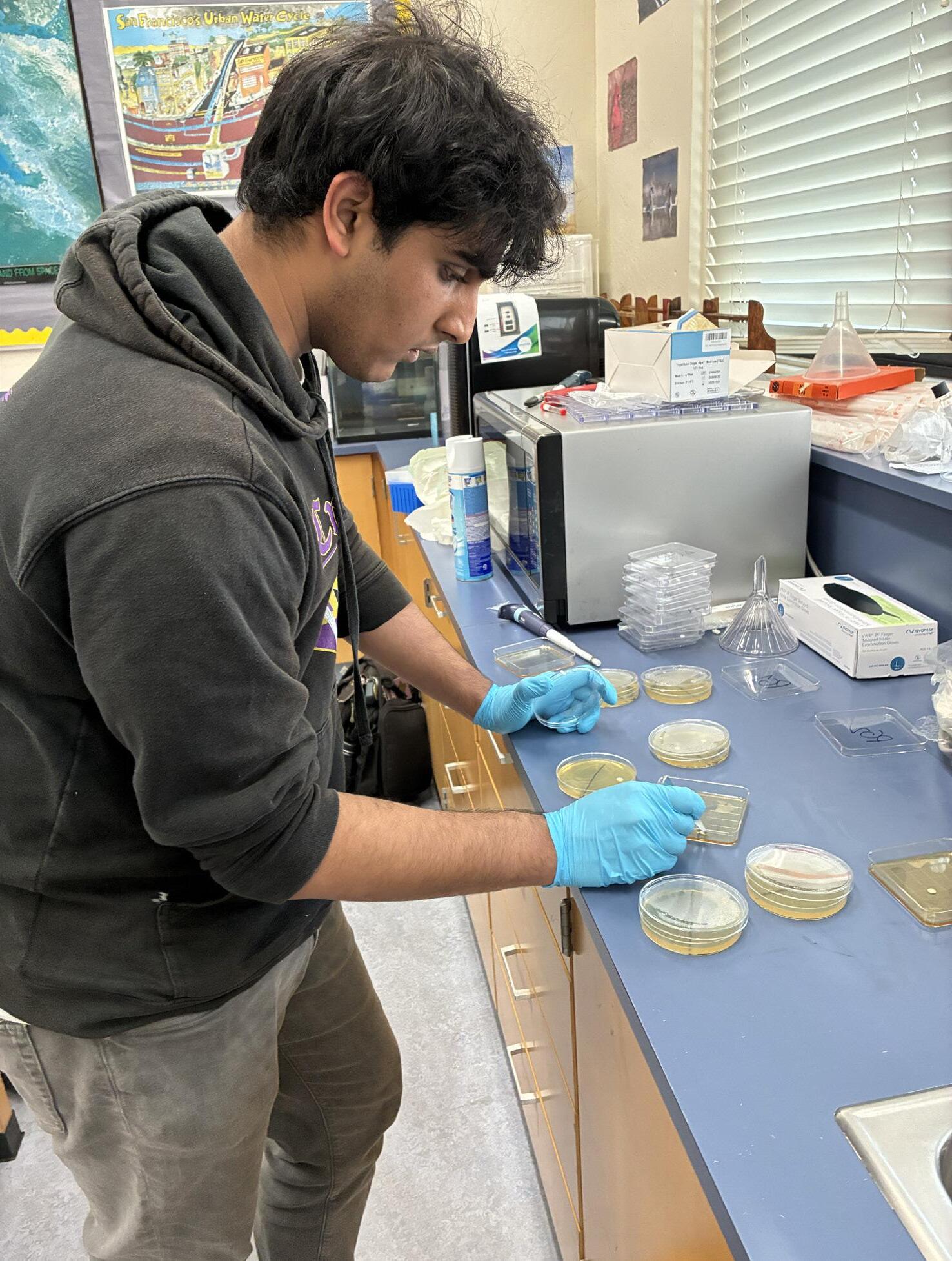
By Ciarra Mangibuyat ’27
Just over two decades ago, Barnes & Noble opened up a location at the well known Bay Area mall—Tanforan. With heavy hearts, the chain book store announced its closure of the San Bruno location with its last day in business on May 2.
This foreseen closure was bound to happen after news of the mall being turned into housing and offices was decided in 2022. Alexandria Real Estate bought the 44-acre property for $328 million and will begin transformation of the area in the near future.
Many people have expressed their feelings about the closure. Rachel Gerke ’27 said, “It’s sad to see, because that location is really nostalgic for me, but in this business climate, closures have become really common.”
From the years 2010 to 2019, the chain bookstore experienced closures of hundreds of locations. However, under new ownership of Elliot Investment Management, the company has expanded greatly and plans to expand even more in coming months with around 60 new locations opening across the
United States. This expansion hopes to mark a comeback after years of a slow decline for the company.
Before 2019, Barnes & Noble was owned by Leonardo Riggio. The bookseller acquired the trade name and merged it with his own successful bookselling business in 1971, according to Barnes & Noble Inc. Through the decades of the 1970s and 80s, Riggio greatly expanded
the company, opening up new locations; it eventually became the largest chain bookstore in all of the United States and still is to this day.
Barnes & Noble can date back to 1873 when Charles M. Barnes started a small book selling business from inside his own home in Wheaton, Illinois.
Despite the history of the company going back over a century and half ago, it has faced
many changes and even developed to fit the modern world. As the rise of mobile devices really started flourishing, Barnes & Noble entered the eBook market and had other ways to digitally read products.
Even though these modernized developments have helped benefit the company and the plan for expansion is underway, many Bay Area residents are met with sorrow as they no longer will have a local Barnes & Noble to visit.
For many, the bookstore wasn’t just a place to buy books, but also acted as a place where they can go to relax, study, or get coffee. The notable tree-themed kids reading area with wooden benches was also a staple in many children’s childhoods.
Josephine Andre ’27 reminisced, “I loved going there when I was a kid. I would always find good books to read and have many fond memories there.” She continued, “It’s sad to see it’s closing.”
While the community is spending these last few weeks visiting the beloved Tanforan Barnes & Noble, the cherished memories of flipping through books, attending story-times, and browsing through hundreds of genres will forever live in the hearts of many.
By Alyssa Abaunza ’26
In 2003, Philz Coffee started brewing its creations in the Mission District of San Francisco. Since then, their success has continued to grow, with coffee shops expanding across Northern and Southern California, as well as implementing locations in Chicago.
What started as a small, familyrun Bay Area coffee shop, has become an emerging franchise with hopes of eventually reaching customers all across the United States.
With several locations scattered throughout San Francisco, Philz has become a convenient stop for many locals looking for their daily caffeine fix.
The Ocean Avenue location, just a 10 minute walk from Archbishop Riordan High School, is a popular spot for students and staff to grab a coffee before or after school.
Whether customers order their signature Mint Mojito or stick to a simple cup of Philtered Soul, according to the Philz Coffee website, they have “built a loyal customer base through its… community-focused approach.”
Student Annelise Hall ’26 has been loyal to Philz Coffee, even ordering the same drink year after year.
Whether she’s there to do homework, hang out with friends, or enjoy a cup of coffee, she expressed, “It’s super convenient to school…and the perfect pit
It’s a great place to spend some time before school or after to do some homework.
-Annelise Hall ’26
stop. It’s a great place to spend some time before school or after to do some homework.”
Science Teacher Jack Reardon also visits often. “I have supported the business on a regular basis ever since I started working at Riordan, a little over three years ago,” said Reardon.
He added that Philz has become part of his once-a-week routine whenever he needs a quick pick me up.
For many students and staff, Philz has become more than just a coffee shop, but rather a familiar place to start or end the school day. But while it continues to be a local favorite, big changes are brewing for the company.
This past summer, Philz Coffee was sold to a private equity firm, Freeman Spogli & Co., for $145 million. The sale marked a major shift for the company, which had been independently owned for more than two decades.
While this could mean more stores, more jobs for others, and greater accessibility for coffee lovers across the country, some customers have mixed emotions about the change.
One Riordan parent shared, “I think it’s good that the business
is growing, but when companies get bigger the quality often goes down.”
As the company continues to expand, there are growing concerns that Philz may lose its signature handcrafted flavor and small business charm that originally set it apart from larger and more popular coffee chains.
As Philz enters their next chapter, the business faces the challenge of expanding while staying true to its Bay Area roots. Some customers are excited to see Philz reach new areas, while others hope it doesn’t lose what makes it unique to the community.
Only time will tell if the company can balance its growth with the same personal touch that first made it a local favorite. No matter what happens next, Philz Coffee’s journey from a single shop in San Francisco, California to a growing national brand shows just how far a local favorite can go.




“Better
By Alexander Kenworthy ’27
North America will host the world’s largest sporting spectacle this summer, and there is no doubt that this year’s event is bound to create new memories.
From June 11 to July 19, the 2026 FIFA World Cup will be held in 16 cities across North America: 11 cities in the United States, two in Canada, and three in Mexico.
This tournament marks a milestone in many aspects, as not only will 48 nations take part in the World Cup—16 more than in Qatar—but it will also last for 39 days, which makes it the longest World Cup in history.
The 2026 World Cup isn’t just different from its large scale alone. It is the first time ever that three countries will organize the event collectively. Also, the total number of matches reaches 104, allowing more fans to participate and see their sport live in person.
Soccer, unlike other major sports played in North America, is not native to the U.S. culture. It is always interesting for those who grew up playing and watching this game to attend a World Cup in such a large country, like the United States.
Riordan Boys Varsity Soccer Coach Rado Stefonav noted the atmosphere of the tournament, saying, “Our brains memorize special moments. And the atmosphere can amplify everything, especially the intensity and the desire to show skill.”
He also realizes that the extent
of the World Cup’s reach can see people from all parts of the world watching the best players represent their country.
“It (World Cup) gives different perspectives. It’s the most prestigious tournament in the world and you get to see the best players compete for their nations.”
While the majority of players are open to the idea of having a larger number of teams in the tournament, others are concerned that expansion to 48 nations will weaken the competition level and make it easier for less skillful teams to join.
Because of the nature and scale of the tournament, it is not a surprise that fans all around the world choose to watch the World Cup. In 2022, over 5 billion people tuned in to at least one stage of the World Cup, with the final alone pulling in 1.5 billion people. It is expected that this year will be even more popular.
An important part of this viewership is a large demographic of the world. Young people, such as students or youth players, often get involved in the event, watching, playing, and learning about the sport. As evidence of this, Spanish teacher Armando Castillo, discusses the importance of the World Cup and soccer as a whole in student culture, and how his curriculum encourages engaging in the sport.
“The World Cup finals and qualifiers are of extreme importance to many students and incorporating elements of this in the school curriculum

dramatically increases the interest of many students to participate more.”
Castillo also mentioned the importance of soccer to Spanish speaking countries, which is integral to his class. “In many Spanish speaking countries Futbol/soccer is more akin to religion than a sport. Unlike in the USA, teams are integral parts of the community and can represent ethnic, religious, geographic and class divisions.”
There is no denying that the most important aspect about the
World Cup in 2026 is its scale. Matches will be held in 16 cities throughout the region; some of them even will be played locally in the Bay Area. The opening match will take place at the legendary Estadio Azteca in Mexico City, and the final game will be hosted by MetLife Stadium in New Jersey with a halftime show similar to the one at the Super Bowl.
Although the 2026 World Cup isn’t the biggest sporting event in the United States, it might be in position to challenge the Super Bowl some day.
By Aarav Agrawal ’28
The Golden State Valkyries began their second season with their first games against Seattle Storm on April 25 and May 8. The Valkyries won 78-76 and 91-90 against the Storm in the preseason and first game, respectively. They rank first in the Western Conference as of press time.
This season is more competitive, jumping up with higher salaries, two new expansion teams, and strengthened team spirit.
The Valkyries soared high with returning WNBA Coach of the Year Natalie Nakase and Most Improved Player Veronica Burton.
“The energy on the court is really good,” Mackenzie Whitted ’28, a Junior Varsity Girls Basketball player, said. “I think it’s better than the Warriors. The atmosphere is a lot better.”
This season features a new Collective Bargaining Agreement for the next three years, substantially raising salaries for the players. Salaries start at $270,000, a significant increase

from $66,079, according to the WNBA’s new CBA.
Greg Callaghan, a teacher who holds season passes, said, “I also hope [students] learn about the pay disparity. WNBA players are not paid anything close to NBA players and I think that should change.”
The Valkyries traded Flau’jae Johnson to Seattle Storm for Marta Suarez and another 2028
pick, stirring controversy. Suarez was waived along with five other players on May 2, and Kate Martin was also waived on May 7.
“I was devastated… [Martin] was a crucial part of the team,” said Teagan Radcliffe ’26, a girls Varsity basketball player.
As the Bay Area’s only women’s basketball team, students feel there is still more to go for women representation in sports.
and key players
The Valkyries had a tremendous impact on the school community since their first season. Students and faculty members alike wear their merch during rallies.
“Someone has said ‘Go Valks!’ every single time I have worn my Valkyries sweatshirt anywhere around the Bay,” Callaghan said. “It feels amazing that so many people have rallied around the team.”
By Ophelia Gyalzen ’28
The Archbishop Riordan boys golf team spent the spring season quietly building momentum in one of the Bay Area’s toughest leagues.
The team ended their season with a 1-13 record. Even after a rocky start to the season, the team showed excellent improvement in many different areas.
Competing in the WCAL, the team has focused on consistency and growth, resulting in a spot at the CCS Championships—an opportunity to prove themselves against the region’s best.
With new players on both the JV and Varsity teams, came more changes. Some players were new to the sport as well. The chemistry of the team developed over the season as their skills developed. They continue to improve consistency in their game, rather than just a win/loss record.
“The biggest change in the season was definitely our camaraderie. A lot of new kids, so a lot of people didn’t really know each other and we really helped step up and form a team that is really unmatched compared to other teams,” said Carrick Moriarty ’28.
Both players and coaches agree
that one of the most challenging aspects of the season was the team’s mental toughness.
As Moriarty put it, “Golf is a mental game and one bad shot can make you go down. Being able to keep calm under pressure and focus in and dial in is a big part of the team.”
JV boys golf Coach Abe Paranal ’95 added, “Golf is like life. You can’t dwell on the bad shots that just happened. You have to move on and play the next shot where it lies.”
Golf is a mental game and one bad shot can make you go down. Being able to keep calm under pressure and focus in and dial in is a big part of the team.
-Carrick Moriarty ’28
Their season closed with a win against Sacred Heart Cathedral and a close match with Archbishop Mitty. Their progress this year offers something more important than wins—a foundation.
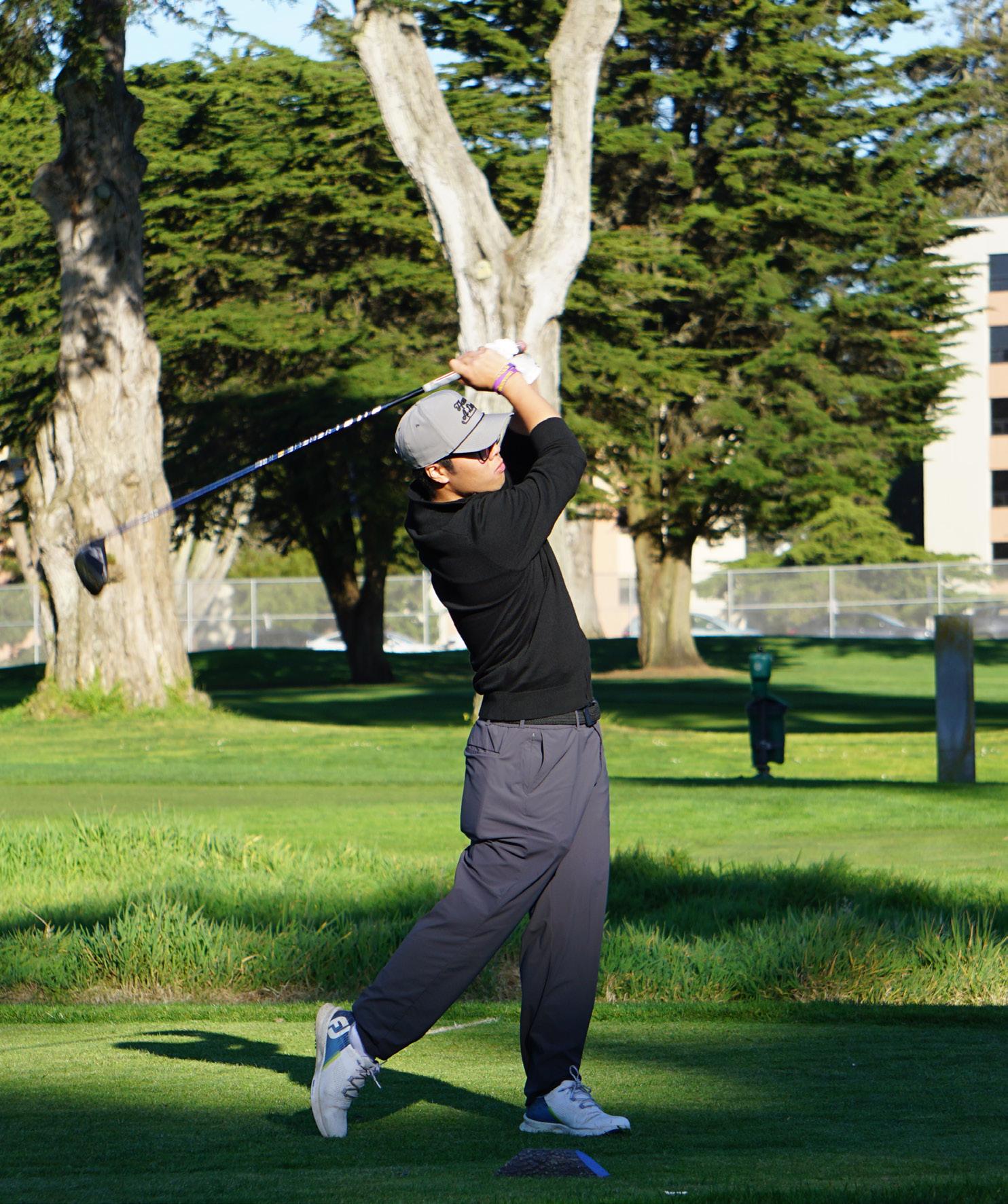
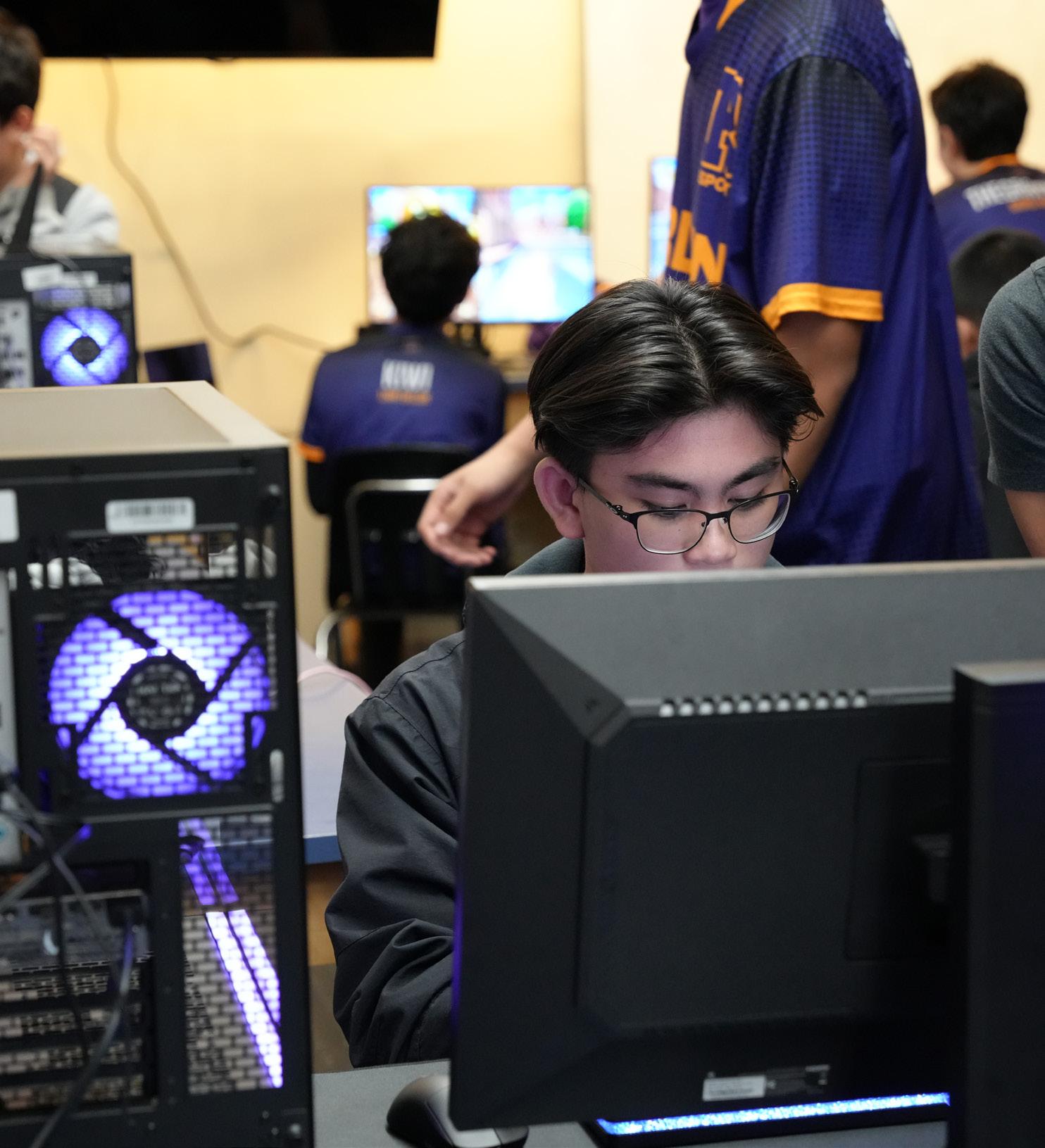
By Niko Escudero Faba ’26
Archbishop Riordan’s esports program wrapped up one of its best seasons, with several teams finishing in the top 10, and players across five games making the postseason.
“The team did very well this season with multiple teams in the top 10 all year,” head coach Cory Nelson told The Crusader. “The biggest highlight was League of Legends winning their championship, Valorant making the playoff bracket after narrowly missing last year, Mario Kart continued to dominate all season.”
Jack Snyder ’26 also stated, “I think the team really shined in its ability to work together and have everyone get along.”
Three players had standout seasons. Nelson said Tony Moreno took both Marvel Rivals and Valorant to the playoffs, Ryu Jose did the same with Super Smash Bros. and League of Legends, and Ben Estrada stepped up as team captain on both the Smash and Mario Kart teams.
The season was not without disruption, however. When the tuberculosis closure hit, the team had to shift to playing from home, much like everyone else at Riordan. Nelson credited assistant coach Tyler Reeder with keeping things running.
“Coach Reeder was extremely beneficial and communicated
“I think the team really shined in its ability to work together and have everyone get along.
-Jack Snyder ’26
effectively to get people playing at the correct times on the correct days,” Nelson said.
Building team chemistry was a separate but ongoing challenge.
“We have a lot of teams that haven’t played together and the biggest challenge is to create synergy, communication, and friendships so they play well together,” he said.
On the equipment front, Nelson said the school’s computers gave players better setups than most had at home, which helped the team practice together in person consistently.
Heading into next season, Nelson wants more players involved and more accountability around practice. “We practice the same amount as all physical sports, we compete four days a week, we play in the spring, we have a lot of fun,” he said.
“Come out and join even if you have a lot or not that much experience.”
By Chloe De Castro ’26
Every season brings new accomplishments, challenges, and athletes who contribute to the team’s identity.
For this year’s track and field team, the runners have played a major role in the program’s success, with seniors paving the way and younger athletes starting to establish themselves.
Nicholas Pellegrino, boys sprinters and mid-distance runners coach, commends the seniors for their leadership throughout the season.
“What made this year’s runners unique was the balance between strong veteran leadership and the emergence of exciting young talent,” Pellegrino said.
He added, “They showed the younger athletes what commitment and accountability look like on a daily basis.”
Among the seniors is Aidan Alday ’26, who will continue his track career at the College of San Mateo, reflecting his individual success and dedication.
As his season, alongside other seniors, comes to an end, a wave of emotions takes place.
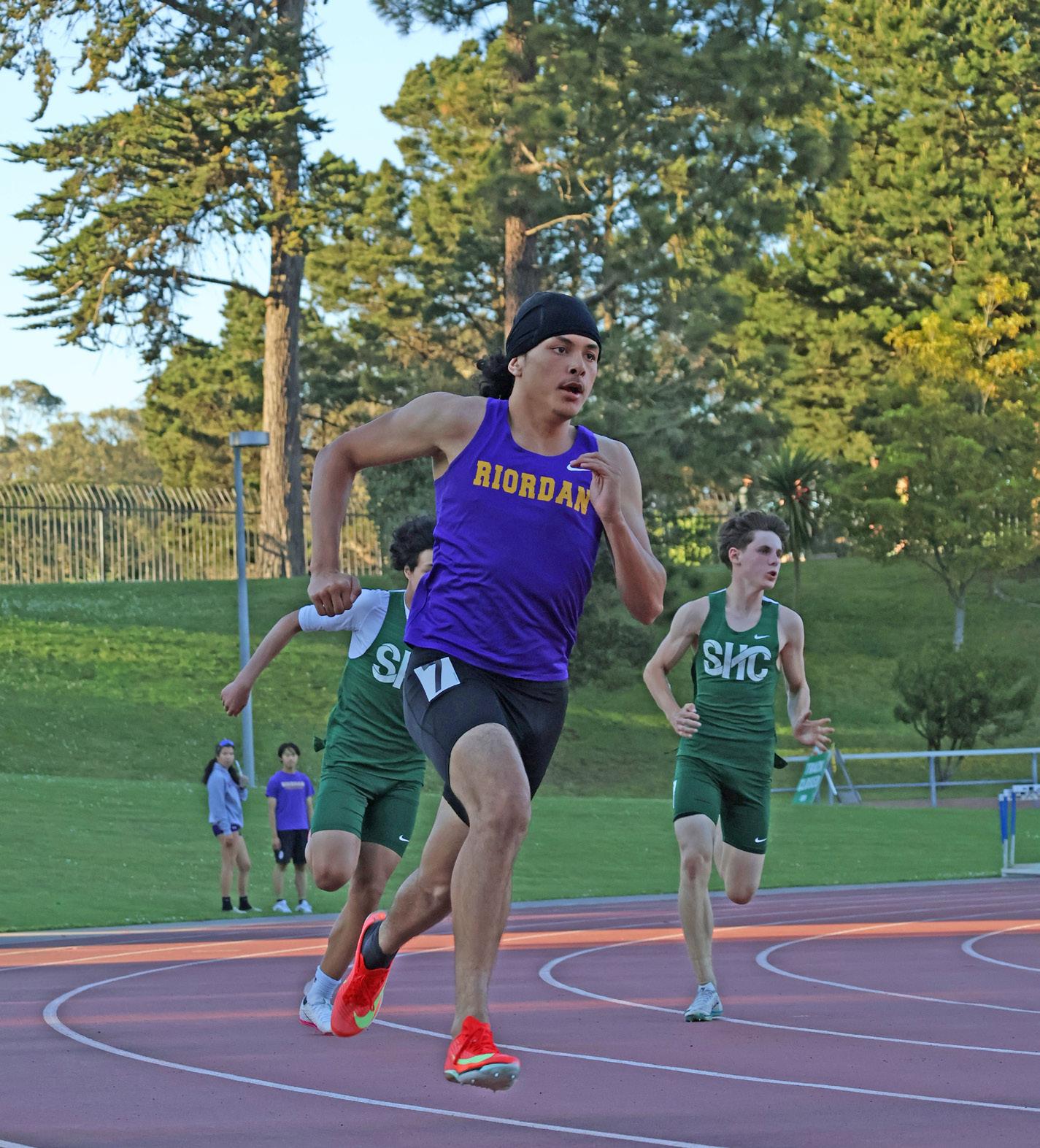
“The emotions that come when finishing your last track season will always be full of regret, as even with success there’s always more work that could’ve been
done,” Alday said. This season has captivated the meaning of teamwork, grit, and
resilience, with many athletes taking on both collective and personal achievements.
While the seniors leave behind a lasting impact on the program, the younger runners have taken on larger roles and continue to bestow hard work into the program’s culture.
Sophomore runner Greta Wang ’28 reaffirmed this, stating, “As a sophomore, I have to take on the role of upperclassmen and act as a leader for the younger, upcoming generation of runners.”
She added, “It is very important to be a good role model for them and show them how important it is to put in the miles and hard work.”
Coach Pellegrino reiterated the impact of the underclassmen runners, saying, “At the same time, younger athletes really found their spark and dedication this season. Watching them grow in confidence and become more invested in the team’s success was one of the most rewarding parts of the year.”
He added, “Their development gives lots of excitement and optimism for the future of the program.”
By Jupiter Bruneman ’26
While track and field is often recognized for its sprinting events and distance races, Riordan’s jumping and throwing athletes have quietly become part of the team’s strongest contributors.
Throughout the 2026 season, athletes have continued to triumph on the field, showing that track and field isn’t only about speed, but also strength and technique.
Athletes have focused on improving field techniques such as long jump and shot put as they get ready for some of the toughest competitions for the year.
The jumping and throwing events call for a different type of discipline than the running events.
Jumpers spend countless hours perfecting their approach, foot placement, and timing for takeoff, while throwers work to build power and sharpen their release techniques.
For many athletes, their progress is measured in inches rather than seconds, which makes every practice and every small improvement even more impactful.

This season the Crusader jumpers and throwers have developed a strong sense of teamwork.
Although many events are individual competitions, athletes are constantly supporting one another.
Brock Garcia ’26 said, “Our season as throwers is significantly different than the sprinters. We get to be close and talk with all the other throwers during the downtime.”
He added, “We create such close relationships not only with our own team but with other teams,
and it cultivates a welcoming environment where everyone can get excited and throw their best.”
This time is also melancholy as seniors play their last games of the season.
Daniel Salee ’26 said, “I was a little disappointed because I wasn’t able to qualify for the next round. But I know it’s not the end because I will be throwing at the next level for Dominican University of California.”
Athletes continue working on
“Our season as throwers is significantly different than the sprinters. We get to be close and talk with all the other throwers during the downtime. We create such close relationships not only with our own team, but with other teams, and it cultivates a welcoming environment where everyone can get excited and throw their best.
fundamentals while balancing the pressure of competition and school responsibilities.
That determination has helped keep the team focused as they continue through the season and keep the future bright for upcoming seasons.
While medals and placements are important, the team’s dedication and growth within just one season reflects what high school athletics is truly about.
For each winning jump and throw is one more step closer to reaching their full potential.
Review and photo by Isaiah Mateo ’26
Craving flavorful, Filipino food, I found myself waiting in line in a place I would never expect–a gas station. Located at 1216 Hillside Blvd., Daly City, Russ Fam Kitchen serves up savory, street-style Filipino dishes.
Before they even began taking orders, a line was rapidly formed by hungry customers and open wallets, which gave me time to look over their menu and decide what to order. After taking a glance, I decided to order their Dinakdakan and an Ilocos Empanada.
Their kitchen was open for customers to watch as their orders were prepared, and mine came out before I even knew it. My Ilocos Empanada was piping hot inside its foil wrap, so I decided to
Russ Fam Kitchen 1216 Hillside Blvd., Daly City, CA 94014
start with the Dinakdakan.
Their Dinakdakan is a crispy, pork dish that’s covered in a creamy mayonnaise sauce and topped with fragrant vegetables such as peppers, red and green onions.
Upon first bite, it blew me away. The crunchy exterior with the tender, melt-in-your-mouth pieces of pork delivered such a memorable texture. The flavors were savory and spicy, with a slight sweetness from the sauce to smoothen the powerful, initial bite of the pork. Enjoying each spoonful with their fluffy, white rice balanced out the entire dish.
With my empanada cooling down, I finally got the chance to dig in. The fried, orange exterior was crispy and faint of taste–
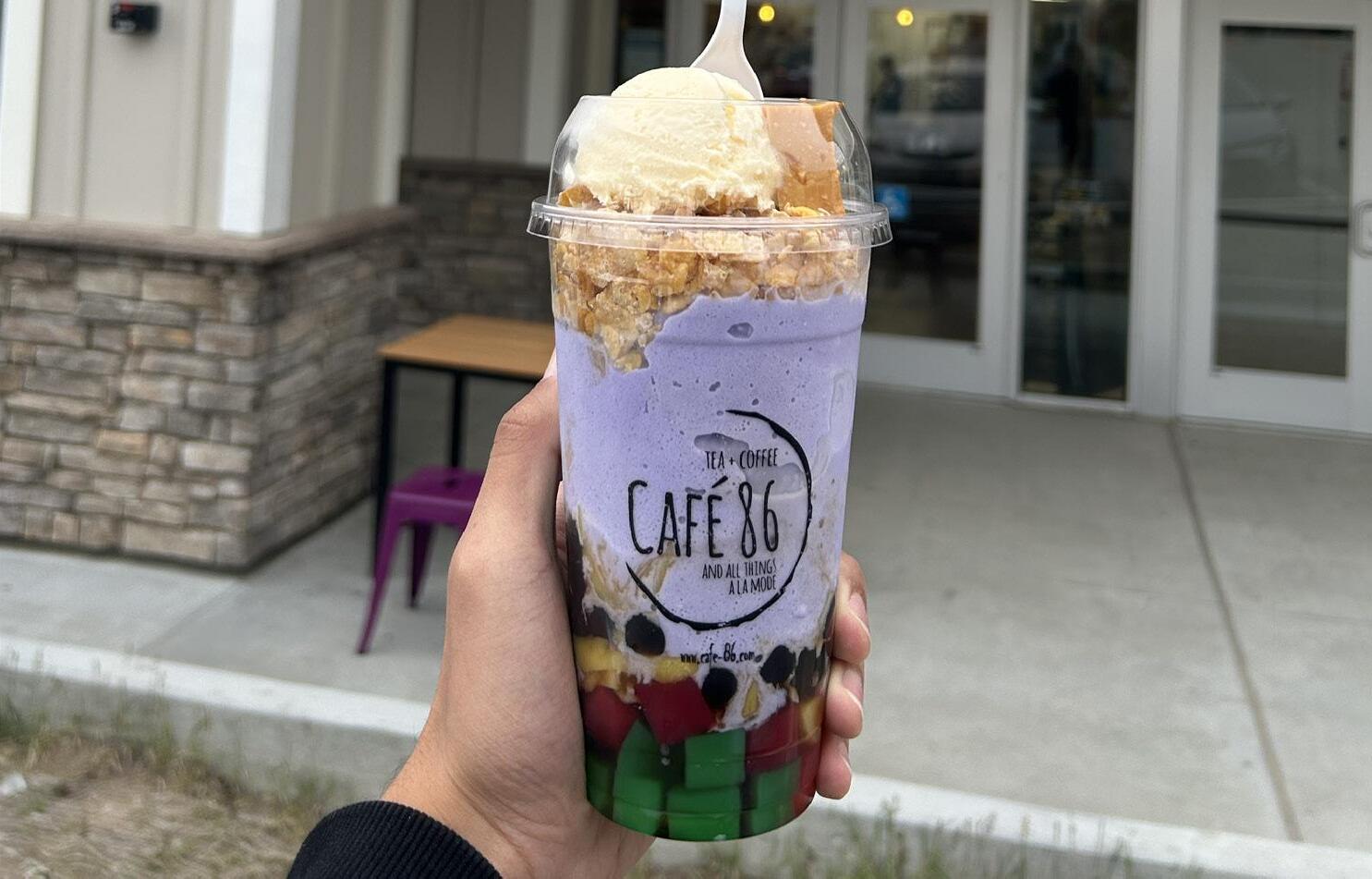
Review and photo by Chloe De Castro ’26
My family couldn’t decide where to eat for dinner, so we ended up at Isla Restaurant. Located in San Bruno, Isla restaurant has become a familiar spot for comforting Filipino meals.
Walking in, the restaurant was full of chatter with different families gathered around tables. The restaurant’s structural atmosphere mimics a traditional neighborhood in the Philippines.
A server who was carrying a plate of sizzling sisig walked past me, and the smell made me eager to eat. Looking over the menu a couple of times, my family and I ordered a couple of dishes–Kare Kare, Pancit, Miswa, Adobung Hipon, Chicken Wings, Crispy Binagoongan, and Kalderetang Liempo.
As all of the food came to our table, a flavorful palette began to form in front of us. I started with the Kare Kare, paired with rice. At first bite, the Kare Kare delivered a hearty flavor. Its rich
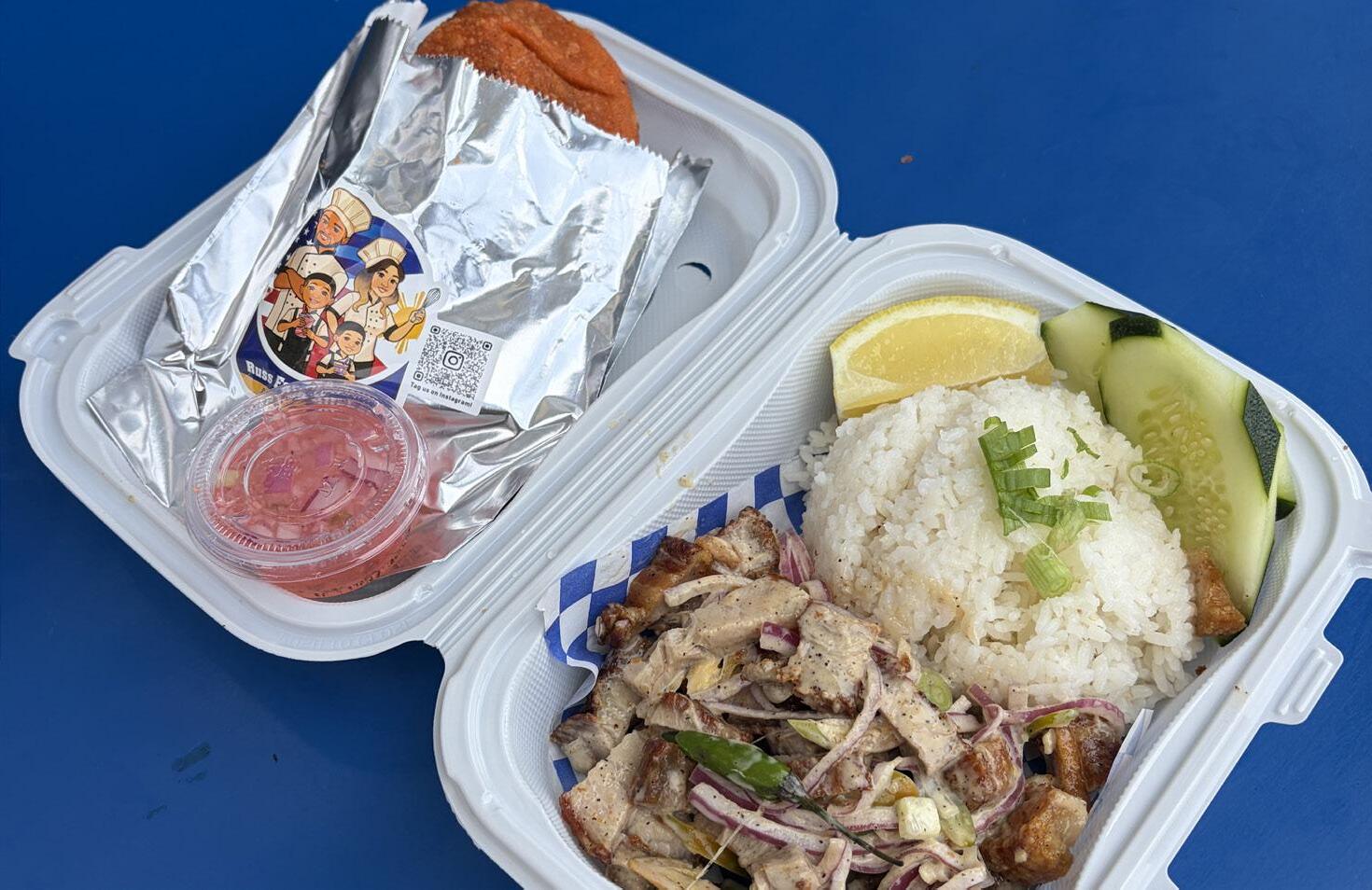
which was quickly overshadowed by their unique mixture of ground beef, papaya, and egg. The combination of the crunchy shell and soft, meaty inside was once again very memorable in terms of both taste and flavor.
Review and photo by Isaiah Sanchez ’26
Located in the heart of Daly City, Cafe 86 is a Filipino restaurant that specializes in creating Filipino desserts and treats, such as Halo Halo and a variety of Filipino-inspired beverages.
Coming into a gas station, I didn’t know what to initially expect, but now that I have experienced Russ Fam Kitchen’s food, I can safely say I will be returning back. I give Russ Fam Kitchen a 4/5.
Cafe 86 - Daly City 11 St. Francis Square, Daly City, CA 94015
Restaurant 448 San Mateo Ave., San Bruno, CA 94066
peanut sauce, balancing both savory and slightly sweet, coated soft vegetables and tender meat in every bite. On the side, I had a bowl of Miswa, a soup with soft noodles and ribbons of egg, that brought a soothing contrast to the other dishes.
One of the most shareable dishes was the pancit, as its flavorful combination of perfectly stir-fried noodles and vegetables caused everyone at our table to keep returning to it. The chicken wings had a crispy texture on the outside while remaining juicy on the inside.
Although I wasn’t able to try everything, the meal I had was very filling. Walking out, the restaurant has a bell that customers ring if they are satisfied with their meal. By the end of the night, my family and I gladly added another ring, adding to the many others that were heard throughout the restaurant. I’d rate Isla restaurant a 5/5.
Their entire menu is inspired by flavors of the Philippines, consisting of items like ube monster milkshake, dragonberry calamansi iced tea, and turon pop tarts. In Daly City, where there is a large population of Filipino-Americans and a strong presence of Filipino culture, Cafe 86 brings a sense of home to the community of Daly City.
Right when I entered Cafe 86, I was welcomed with smiles and greetings from all the staff members as they helped me decide what to order. I decided to order one of their most popular menu items and a well-known Filipino dessert, which was their upside-down Halo Halo. My order came out in seconds, which I was
pleasantly surprised by because I knew that Halo Halo was a complicated dessert to prepare. My Halo Halo consisted of various components: vanilla ice cream, boba, Frosted Flakes, leche flan, jackfruit, a variety of jello, and ube milkshake, all stacked together to make an incredible mixture. As soon as I tasted the Halo Halo, I was instantly reminded of my Filipino roots as I tasted the rich and smooth flavor of ube. Alongside the several sweet flavors, I was met with multiple different textures all at once, including the crunch from Frosted Flakes and the chewiness of the boba and different jellies. The Halo Halo was a perfect, cold dessert for a hot summer day. This was one of the best Halo Halos I’ve ever had! If you are looking to try something new, I would rate Cafe 86 a 4.5/5 because they have creative menu items and substantially represent Filipino culture.