I S S U E 1 1 7 ———— F E A T U R E S
CONTENTS March-April 2018
THE LAST DAYS OF DISCO
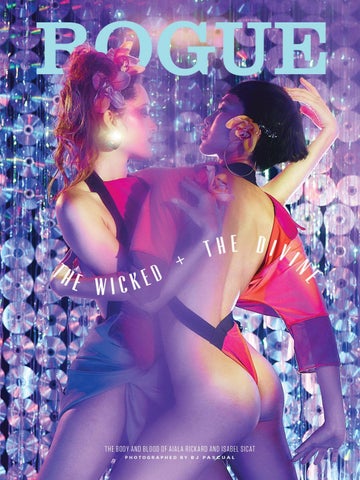
FORGET ME NOT
After transforming their artistic explorations of Manila into their debut clothing collection, designers Isabel Sicat and Aiala Rickard only want one thing: to get everyone to join them on the dance floor. Sam Potenciano attempts to keep up.
In life, Dr. Eleuterio “Teyet” Pascual possessed one of the most prized private collections of Philippine and European art in the country. Here, his legacy and menagerie live on, captured by the lens of his grandson, BJ Pascual.
48
78
SAY MY NAME
PHANTOM THREAD
As the boundaries of the local art scene continue to expand and blur, so many new faces have gotten lost in the crowd and in the rising market. By finding their own ground, these young artists are striking out to create an indelible mark.
In an era where everything is political, one has to wonder what separates artist Pio Abad’s work from the rest. The London-based artist tells Carina Santos the answer, and tackles the criticisms against his art.
58
“We ended up dancing
98
and drinking too much and
ACT OF FAITH The artistry of Ishmael Bernal’s Himala has stood the test of time. Over three decades later, theater director Ed Lacson, Jr. is returning us to the town of Cupang to strip it down to its very core. Emil Hofileña traces its journey from classic film to modern theatrical tour de force.
70
Aiala got way more money
than the strippers.”
ISABEL SICAT
PHOTOGRAPH BY BJ PASCUAL
HOME IS A BLANK CANVAS After winning award after award in Manila’s art scene, Charles Buenconsejo packed his bags and left for greener pastures in New Zealand. The acclaimed artist documents the longsought solitude he’s found in his newly adopted home.
108
I S S U E 1 1 7 ———— S E C T I O N S
CONTENTS March-April 2018
AG EN DA
S PAC E
For graphic designer Oliver Munday, all art is political and no amount of scrutiny should be spared; Modelab curators Claudia Arozqueta and Rodrigo Azaola display art outside the white cube at the Manila Biennale; frozen in time under the shadow of one of Hong Kong’s busiest expressways, the abandoned Ma Wan village is a postcard to its not-so-distant past.
Forty years since its rise in the Marcos era, we revisit Leandro Locsin’s Brutalist magnum opus as an architectural marvel; a new wave of small, unconventional luxury hotels makes a new case for visiting the Eternal City of Rome; Paul Teutul, Sr. touches down in Manila with to custom-built rides brimming with Orange County Choppers’ signature flair.
13
25
“They wanted to say,
‘Hoy! The Philippines
has arrived!’”
ROBERTO GARCIA
THE EYE
TH E S LA NT
Tucked into a quiet corner a few steps from the Seine, Musée Yves Saint Laurent reads like an intimate letter to the Parisian couturier; John Lobb takes its 150-year heritage of excellent shoemaking to Manila; Magnus McGlashan tells us how the safest bag in the world was born from a travel nightmare.
Philbert Dy ponders over the flaws and potential growth in our local grant-giving film festival system; Mariah Reodica takes to the streets of Berlin to trace David Bowie’s footsteps in the making of the best work of his career; Jacs Sampayan recounts first encounters and unexpected affairs.
37
43
PHOTOGRAPH BY RENZO NAVARRO
SPRING BREAKERS Tumi’s Spring 2018 Men’s collection launches new designs while revamping their classics for the next generation WORDS BY ICA RIVERA
MORE AND MORE is demanded from us in our fast-paced world, and our gear can’t lag behind either. Since 1975, Tumi has equipped on-the-go style enthusiasts with their sophisticated and functional bags. Their Spring 2018 Men’s collection was inspired by California’s laid-back culture and rugged landscape, catering to the modern traveler. It includes the Alpha Bravo collection, which was updated with a logo plaque, leather detail, and gunmetal zippers, for a refined military aesthetic. On the other hand, Harrison collection features lightweight and unfussy nylon material, perfect for work and commutes. They are also launching the Merge collection, an easygoing alternative to their staple aluminum luggage. Their bags boast of well-structured interiors and handy front pockets, as well as pops of Sunset Red or Green Camo for some freshness. It comes in a range of three sizes and styles, such as the International Expandable Carry-On, Short Trip Expandable Packing Case, and Extended Expandable Packing Case. But if you can’t let go of the classic, Tumi is introducing seasonal Ivory Gold versions of their 19 Degree Aluminum luggage. Whether you’re shuffling around the city, headed outdoors, or flying out of the country, Tumi’s latest collection has something for every personality and every lifestyle. See it for yourself at their branches in Solaire Casino and Resort, Greenbelt 5, Ayala Center Cebu and selected The Travel Club stores.
ON THE COVER Unstimulated for 32 Weeks, Isabel Santos, Editor-in-Chief JONTY CRUZ! Managing Editor JACS T. SAMPAYAN!Features Editor PHILBERT DY!! Senior Editor SAMANTHA POTENCIANO!Style Editor MANO GONZALES Copy Editor NANA CARAGAY!Staff Writer EMIL HOFILEÑA!
Acrylic on Canvas, 2018. Photographed by Luis Santos
_ Isabel Sicat and Aiala Rickard Photographed by BJ Pascual Makeup by Slo Lopez
Editorial Assistant PATRICIA CHONG
Hair by Mycke Arcano
ART
Shot on Location at Solution Super Disco
Set Design by Princesss Anne Barretto Junior Designers PIA SAMSON, MARK SANTIAGO! Online Art Director MAGS OCAMPO!Online Junior Art Director ANDREW PANOPIO
Contributing Writers CHARLES BUENCONSEJO, MARIAH REODICA, CARINA SANTOS, RENEE ULTADO Contributing Photographers & Artists ANDREA BELDUA, CHARLES BUENCONSEJO, MARY ANN COLLANTES, JELLO ESPINO, RALPH MENDOZA, RENZO NAVARRO, BJ PASCUAL, CARINA SANTOS Intern ICA RIVERA
PUBLISHING Publisher VICKY MONTENEGRO / vicky.montenegro@roguemedia.ph Associate Publisher ANI A. HILA / ani.hila@roguemedia.ph Senior Advertising Sales Director MINA GARA / mina.gara@roguemedia.ph Account Managers DENISE MAGTOTO, TRICIA QUINTERO Marketing Manager TRIXIE DAWN CABILAN Publishing Assistant MADS TEOTICO / mads.teotico@roguemedia.ph
5F Jose Cojuangco & Sons Building, 119 Dela Rosa St., Legaspi Village, Makati City, 1229 Telephone: (+632) 729-7747 Telefax: (+632) 894-2676 Email: mail@roguemedia.ph Online Presence:
Advertising Traffic Officer & Production Coordinator MYRA CABALUNA
rogue.ph
Associate Circulation Manager RAINIER S. BARIA
Facebook.com/rogue.magazine
Circulation Supervisor MARK ROLAND LEAL
Twitter: @rogueonline
Circulation Assistant JERICO ALDANA
Instagram: @rogueonline
Dispatch Supervisors ERIC GARCIA, JIMUEL TATAD
Tablet version available at:
Controller EDEN G. ARGONZA!Finance Analyst JEMMALYN LUCERO
Zinio.com/Rogue
Credit & Collection Officer MISCHELLE MOLA HR Supervisor RUSCHEL REYES Administrative Supervisor DEANNA GUEVARRA
Official Internet Service Provider:
This issue would not have been possible without the help of PORTIA GRANADOS CABIAD OF PICC, SIMON FRESCHARD, JENNY GAPAN OF VISIONS AND EXPRESSIONS, MONICA LICHAYTOO For subscriptions, back issues, bulk orders, and other circulation concerns please contact: Rainier S. Baria (+632) 729-7747 rainier.baria@roguemedia.ph ROGUE MAGAZINE IS PUBLISHED BIMONTHLY, SIX TIMES PER YEAR. THE EDITORS AND PUBLISHERS OF THE MAGAZINE MAKE NO REPRESENTATIONS OR WARRANTIES IN RELATION TO THE ACCURACY OR COMPLETENESS OF THE CONTENTS OF THE ADVERTISEMENTS, PRODUCTS, AND SERVICES ADVERTISED IN THIS EDITION. OPINIONS EXPRESSED IN THIS MAGAZINE ARE SOLELY THOSE OF THE AUTHORS AND DO NOT NECESSARILY REFLECT THE VIEWS OF ROGUE MAGAZINE. THIS MAGAZINE IS FULLY PROTECTED BY COPYRIGHT, AND NO PART OF THIS MAGAZINE MAY BE USED OR REPRODUCED IN ANY MANNER WHATSOEVER WITHOUT THE WRITTEN PERMISSION FROM THE EDITORS AND PUBLISHERS.
ISSUE 117
THE EDITOR’S NOTE March-April 2018
All Good Things GRAYDON CARTER’S FINAL editor’s letter was four pages long. I don’t think I have four words in me. I’ve been the editor of Rogue for eight months. That’s basically a blink. My younger self would hate me for seemingly coming up so short, or at the very least, worry and wonder why the tenure was so brief. If I could really talk to my younger self, the first thing I’d tell him would be, “Stop hating on people who go to the gym and work out as soon as possible.” Second, I’d calm his worries and say that I wouldn’t trade these last eight months for anything. Magazines were the dream. Back in high school, I’d gobble up reading editorial mastheads as lovingly as I did the actual stories. I’d imagine the life of an editor, how cool it would be to spend night and day in an editorial bullpen with the best of the best. To me, there would be no greater privilege than sharing stories, and no greater responsibility than a byline. It was something I never thought I’d get to be a part of. This dream, like all things, is only possible with the help of other people. And during my time in Rogue, it was the people who made my job better than anything I could’ve ever hoped for. From the slew of creatives and art directors I’ve gotten to work with, like Karl Castro and Chesca Gamboa, to our junior designers, Pia Samson and Mark Santiago, Rogue’s pages came alive from cover to cover.
To be completely honest, I always wanted to join Rogue mainly because of its stunning visuals and design, once headed and established by former Creative Director Miguel Mari and Miguel Lugtu. While I still hope for that collaboration one day, I never felt shortchanged by the designers I got to work with and learn from. Speaking of learning, I couldn’t have gotten to where I am in Rogue without the help of our more senior editors. Jerome Gomez and Jacs Sampayan have been my secret and not-so-secret mentors in Rogue whom I always went to for guidance or sometimes a hit in the head. The same could be said of our editors and staff writers, Sam Potenciano, Eric Melendez, Mano Gonzales, Emil Hofileña, and Patricia Chong, who’ve provided the brand with a fresh vibrancy and pushed all of us to do better. While I am incredibly proud of our print team, it is to say nothing short of what our online team has accomplished the last few years, spearheaded by former Digital Content Editor and Strategy Director, Andrea Ang, together with Mags Ocampo, Philbert Dy, and Andrew Panopio. Their hard work and dedication to the editorial craft is something I’ll always strive for in or outside this industry. Publishing has gone through many drastic changes these last several years— just as much if not more than in any other industry. While there were worries, our
JONT Y CRUZ Editor-in-Chief
publisher Vicky Montenegro kept the ship stable. It was a huge risk on her part to give the reins to someone who just turned 28, but the trust she and Mr. Eric Recto gave me is a debt I don’t think I’ll ever be able to fully pay. Before I leave you to read the rest of this issue—and it’s a terrific one at that—I’d like to thank one last person. My time in publishing literally began with Erwin Romulo, perhaps the greatest editor of our time. He was the one who saw something in me—something that, to this day, I haven’t quite figured out—and brought me in to this industry. Since then, not only has he become my most trusted mentor, he’s also been one of my closest and dearest friends. I find it only fitting to end my time in publishing with him as well. The other day, as I was stressing over this final editor’s letter, I messaged him early in the morning and asked why he chose to get interviewed instead of writing his last editor’s note. While he shared that he had no regrets with regard to the interview, after one of the most historic runs in publishing, I was still wondering why he didn’t feel the need to write it. He replied with something so simple yet so uniquely him and why it’s never easy to say goodbye. “Honestly,” he said, “I didn’t know what to say.”
ISSUE 117
THE GUEST LIST March-April 2018
CHARLES BUENCONSEJO is a photographer and an artist currently living in Auckland, New Zealand. He studied Fine Arts at the University of the Philippines, and from his first show in 2012, he has since exhibited prolifically and won numerous awards.
PRINCESS ANNE BARRETTO is a production designer whose work has made it into television commercials, fashion editorials for both print and digital publications, and events. Here, she sets the scene for our cover shoot.
MARTINA BAUTISTA is an interior designer, an event and shoot stylist, and a selfproclaimed explorer of the universe. Recently, she’s also been taking on the role of production designer at shoots— which she does in this issue in our young artists portfolio.
PHOTO OF MARTINA BAUTISTA BY ANDREA BELDUA
ANDREA BELDUA is a photographer from Quezon City. She shoots everything from fashion and lifestyle to art and portraiture, and her work has appeared in numerous publications.
BJ PASCUAL is one of Manila’s most in-demand photographers, with over 100 magazine covers and an immense body of work from local and international publications under his belt.
MARIAH REODICA is a scriptwriter, researcher, video artist, and an independent musician with a number of musical projects such as The Buildings, Good Knife, and Brain Twins. Eerie, a horror film she cowrote with Mikhail Red, is set for release later this year.
CARINA SANTOS is a contributing editor for CNN Philippines Life and a columnist for Young Star, but there’s a good chance you’ll know her better for her work as an interdisciplinary artist. She’s an indoorsman and a part-time design witch for Visual Editions.
March-April 2018
Edited by
SAM POTENCIANO
AGENDA
Issue
117
F O O D + E N T E RTA I N M E N T + C U LT U R E + T R AV E L
More than just a compilation of Oliver Munday’s work, Don’t Sleep sets the stage for the graphic designer’s revolt WORDS BY ICA RIVERA
T H E A R T WAR of
R
AGENDA BOOKS
WE JUDGED THIS book
by its cover. Don’t Sleep: The Urgent Messages of Oliver Munday (rizzoliusa.com) is bright red, and dead center are masked men holding up a scene-of-thecrime chalk outline of a body. The title above reads in black and white, sans serif, straightforward in its command, giving potential readers a taste of what’s to come. This book is primarily a social commentary, but it also reveals the background of one of the freshest minds in graphic design today. This is a man who’s made a name for himself through daring book covers and politically charged illustrations for The New York Times, The New Yorker, Time, and The Atlantic. Munday’s philosophy is simple: all art is political. At present, his protests are staged on the pages of the first ever compilation of his artwork, exploring largely American issues that include school violence and the country’s peculiar relationship with Israel. All of these are captured in arresting work: toy soldiers are gruesomely manipulated to form the letters of the alphabet, school textbooks are stacked so that the spines recall the image of a gun, and red and white pills are set against a blue background arranged to look like the American flag. Closer to the graphic designer is the issue of race. Munday grew up in Washington, D.C. in the aftermath of the Civil Rights Movement. Back in high school he often found himself the only white kid among his peers, opening his eyes to the divide between him and his black friends—differences that go beyond the color of their skin. “My family’s tax bracket was emblematic of other disparities between my black friends and me. Our home and its abundance of rooms were hard to explain,” he says. In university, Munday began his career illustrating health research to povertystricken East Baltimore for the Johns Hopkins School of Public Health. Since then, he has come to handle his art like a gun: deliberately and with care. His work recalls previous periods of unrest, from the sharp slogans and vivid colors used to rally the proletariat during the Bolshevik Revolution to the violent protests against capitalism and imperialism—the latter staged by graphic designer Emory Douglas on the pages of the 60s-era newspaper, The Black Panther. Employing contemporary techniques in illustration, typography, and manipulated photography, Munday wields his arms wisely 14 M A R C H -A P R I L 2 0 1 8
TAKE NO PRISONERS
The techniques that Oliver Munday utilizes are as varied as the political issues and figures he places under scrutiny. He has used illustration, typography, and manipulated photography to rage against everyone from Bush to Trump.
in the social media age. He consciously makes art that is not just easy on the eyes, but a reflection of the times—renouncing violence in the age of Bush, scrutinizing the politicking of Obama, and, today, attacking Trump’s actions that pose a threat to the American dream. People are no longer struggling to overthrow Russian monarchs, and black people have (legally) gained equal rights. But all the same, from the proletarian revolution to today’s cry for social reforms, from The Black Panther to Black Lives Matter, art has been used as a weapon for revolution. Graphic design—which, per Munday, is “everywhere, omnipresent to the point of invisibility”—fights on the front lines, and on the front page. n
DON’T SLEEP: THE URGENT MESSAGES OF OLIVER MUNDAY IS PUBLISHED BY RIZZOLI (RIZZOLIUSA.COM).
R
AGENDA ART
HOLE IN THE WALL Stone walls and fortresses are eroded as two curators who participated in the Manila Biennale take art outside the “white cube” and into the Open City WORDS BY ICA RIVERA
BEHIND MANY ARTWORKS is a white wall, sterile and unremarkable. Its neutrality makes it the backdrop of choice for the typical gallery—a white cube. Just like the walls, the viewers are neat and comfortably surrounded by other well-kept visitors in the confines of a secure building. The earliest museums were the private homes of the wealthy, many of whom maintained their own collections. Present-day museums don’t stray far from their roots. And yet, art is everywhere, beyond the “white cube.” It’s disguised as graffiti on the sidewalk, or as a person’s outrageous outfits. It’s in that song you always skip for being either too pop or too angry. If you look hard enough, anywhere can be a gallery. Modelab, a curatorial initiative, puts this idea into practice. It has mounted exhibits all over the world—in the parks of Sydney, the halls of Mexico, the streets of Paris, the shorelines of New Zealand. “Modelab is an artistic initiative that emerged from a necessity to challenge our practices outside the white cube, which is isolated from the external world,” says curator and prolific arts writer Claudia Arozqueta. She co-founded the initiative with artist Rodrigo Azaola, the founder of art collective HCRH in Mexico City. Last February, Modelab took their advocacy to the Manila Biennale with Ways of Solitude, an exhibit and series of interventions in the Baluarte de San Diego Gardens of Intramuros. Ways of Solitude contemplates and examines three periods of Manila’s history:
16 M A R C H -A P R I L 2 0 1 8
the colonial era, the post-war period, and the present. During the colonial period, solitude shaped the neighborhood of Ermita, which derived its name from the word “eremite,” as in hermit. “This eremite, if it ever existed, was the living image of an early-globalized world, connected by maritime trade,” they explain in an online statement. “The Manila Galleon not only brought wealth and new ideas, but also scattered multiple solitudes along faraway shores.” After the Second World War, Manila was devastated and isolated. And though the landscape has evolved, solitude still plays a role in our dense and urbanized city, particularly amongst the OFWs. The idea was born out of a visit to Acapulco, Mexico in 2014, where the duo surveyed the city’s colonial architecture. Since then, Azaola shares, they entertained the possibility of a project linking the colonial cities of the Pacific. In 2017, they did a residency at Mabini Projects and met people who responded to that interest. This prompted them to embark on further research on the Philippines, and the rest is history. In their Biennale show, Azaola and Arozqueta explore the concept of solitude in the curation of artworks across different mediums. Mexican artist Dulce Chacon depicts the futility of war and the transience of life in “Vanitas Potus,” a ninemeter mural made with Mexican cochineal, a material widely commercialized in the Galleon Trade. Known for her mixed media work, artist Brisa Amir dialogues with the Baluarte de San Diego’s garden through
TAKE IT OUTSIDE
Azaola and Arozqueta explore solitude using the Baluarte de San Diego Gardens, showcasing the works of artists such as Dulce Chacon, Brisa Amir, and Tad Ermitaño.
With any luck, opening the gates of the historic Walled City will remind us that there are still more gates to open, rules to break, and walls to tear down.
her site-specific installation, “The Green Arrow.” Also part of the exhibition are Arca Ceramics’ clay objects and sculptures, all of which are reminiscent of the porcelain trade, and an imaginary route from Ermita Church to Intramuros. Completing the viewing experience is the distinct sound art of Tad Ermitaño, a pioneer of that particular field. As with their previous projects, Modelab delves into the history of the host city. “We seek projects that appeal to us because they nurture our knowledge,” says Azaola, “and we make projects that we consider can have a wider appeal by engaging different collaborators to look at a particular idea or place from a novel point of view. In this sense, our projects have led to different countries and historical periods.” Likewise, they involve the local community by collaborating with various artists, taking things out of the white cube—quite literally in the case of the Manila Biennale. Once upon a time, only the elite could enter Intramuros. You could say that not much has changed, but with any luck, opening the gates of the historic Walled City will remind us that there are still more gates to open, rules to break, and walls to tear down. “We are interested in making subtle, non-commercial, and ephemeral projects in public space,” says Arozqueta, “outside of the enshrined spaces for the arts, because they require a certain humility that is very necessary in these times.” n
M A R C H -A P R I L 2 0 1 8
17
R
AGENDA TRAVEL
THE TOWN THAT HONG KONG FORGOT An abandoned village, frozen in time under the shadow of one of Hong Kong’s busiest expressways, is a postcard to its not-so-distant past WORDS BY SAM POTENCIANO PHOTOS BY RALPH MENDOZA
UNDERNEATH THE BRIDGE that connects the populous Hong Kong with neighboring Disneyland in Lantau is a forgotten island that seems to exist in a gap in time. From the main terminal of Tsing Yi, a modest queue of families can be seen waiting to board the bus toward Park Island, a luxury housing estate on Ma Wan Island that is most often dwarfed by its more eccentric neighbor, the Noah’s Ark evangelical theme park. A touristic oddity in its own right, the attraction features the only full-sized replica of the biblical vessel in the world, complete with a line of 67 pairs of life-like animal passengers. To add to the surreality of its existence, Ma Wan is also home to an abandoned fishing village that seems to be hidden in plain sight. There are no visible traces of its existence once you arrive, but it is completely accessible by cutting through an unmarked path that diverges from the island’s Solar Observatory. Once home to a thriving fishing community of over 2,000 indigenous islanders (evicted and rehomed by Park Island’s Sun Hung Kai Properties), the town now sits uninhabited, yet seemingly frozen in time. Traditional stilt houses crumble into the ocean at the mouth of the village, while all throughout, remnants of its past occupants still haunt the empty streets. Posters of ice cream bars and protest signs and dilapidated shrines litter the narrow main road; the decaying tiled houses only ever attract the company of urban explorers, photographers, and wayward fishermen. Untouched for over a decade, Ma Wan Village exists as an eerie reminder of pre-urban life in one of the busiest cities in the world. n
M A R C H -A P R I L 2 0 1 8
19
R
AGENDA FOOD
FAMILY AFFAIR A year since Bruce Ricketts opened the doors to his take on the modern day taqueria, the celebrated chef finds himself contemplating what expansion truly means with the second La Chinesca branch WORDS BY SAM POTENCIANO PHOTOS BY MARY ANNE COLLANTES
“IT’S FUNNY, BUT after a year of being open,
whenever we were there on Sundays, it came to a point where we just felt redundant,” Jae Pickrell of La Chinesca says matter-of-factly, adding: “which is a good problem to have.” In April, she and her husband, chef Bruce Ricketts, will see their fledgling taqueria joint go from beloved, not-so-secret hole in the wall in BF Parañaque to the heart of one of Makati’s most prominent shopping malls. As part of the illustrious roster of local chefs selected for Power Plant’s elevated food hall concept, The Grid, Ricketts sees this second branch as a way of providing La Chinesca fans far and wide the gift of accessibility. “I think what’s exciting for us is that we finally get to bring our food closer to our customers who travel all the way from Quezon City or Greenhills—and hopefully, that means they get to see us more often,” he says. How does he feel about making such a drastic shift, going from the self-professed
“freedom of falling on your face in BF” to the confines of a major shopping center? “It’s actually a luxury!” Pickrell admits. Ricketts agrees, adding, “We don’t consider it a restriction because you have to understand that at The Grid, while we’re working with a similar floor space, the entire 20-squarefeet is our kitchen. At our original branch, 18-square-feet was the whole restaurant. So imagine what we can do with that space—how much further we can go. To actually build a professional kitchen that complies with a mall’s requirements is an advantage for us. It’s the first time we’ll actually have our own tortilla machine.” He goes on to reveal that the backbone of his confidence in their latest plans for expansion owes to none other than La Chinesca’s staff—many of whom have worked behind the counter with Ricketts for years, some even as far back as when he first opened Sensei Sushi. “Working with a team like that
“It’s like going into battle knowing someone has your back.”
ROCKWELL DRIVE COR. ESTRELLA ST., MAKATI
WHAT TO EXPECT WHEN YOU’RE EXPECTING
With an eye for expansion, a lot is riding on La Chinesca’s team and the staff seems to be ready for the challenge. “They don’t need him or me to hover around and teach them things anymore,” says Pickrell. Above: Chicharon Taco, Lamb Barbacoa, and Campechano Taco. Opposite (left to right): Bruce Ricketts, Remy Cabudoy, Jhake Toyco, Daisylyn Aljas, JR Dayola, and Marie Gaite.
makes it so much easier for us to expand, especially from a palate perspective, because they truly understand the nuances of how I work. From a craftsman perspective, they’ve been seasoned with years of service. For me, it’s like going into battle knowing someone has your back.” “Because Bruce has taught them so well, they can do everything themselves,” Pickrell concurs. “They don’t need him or me to hover around and teach them things anymore.” “Which was the whole point of it,” Ricketts chimes in. “For me as a cook, the idea was to first train all of them and then let them do their thing, so that eventually I learn more about the whole process from them as the craftsmen. I’ve seen our chefs go from working a tiny griddle to being able to handle 20 tacos at the same time. I find myself watching and just being really impressed by them. You end up emotionally reminiscing about the days when they weren’t at that level yet—when they were just cleaning the vegetables or scrubbing the floors—and next thing you know, I’m the one who has a question for them!” he relays with a laugh. “To have that relationship with cooks that you’ve worked with from the bottom up is such a genuine experience. You’ll get teary-eyed. It’s given a deeper meaning to things.” Ricketts also maintains that it is because of this fundamental trust in his staff that, despite its new residence at a bustling food hall, La Chinesca’s second branch will continue to serve up the sort of à la minute style of cooking that he has become famous for. “The way I see it is, our staff allows us to be hands-on without being physically present all the time,” he says. “I can be there physically, just when people aren’t around yet: making the long stews, seasoning the meat, making the masa, really touching the dough. That’s the beauty of Mexican cuisine: the longer you let it brew, the tastier it gets. It’s one of those things where we knew from the get-go that I don’t have to be the one to make thousands of tacos, but there will be someone from my team who will do that one million times better than me.” “I think for Bruce, ultimately, when you’re talking about the staff and how he’s nurtured this culture within the people he’s worked with, it really goes beyond the food. The food just happens to be the product of that,” Pickrell says. “But I mean, it doesn’t hurt that it tastes so good.” n M A R C H -A P R I L 2 0 1 8
21
TH E N EI G H BOR H OOD . PH
SWEET DREAMS ARE MADE OF THESE.
March-April 2018
SPACE
Edited by
MANO GONZALES
Issue
117
DESIGN + INTERIORS + ARCHITECTURE + TECHNOLOGY
B
A
O
F
P
O
L
W
A
N
C
E
E
R
In its four decades of Brutalist glory, National Artist Leandro V. Locsin’s magnum opus has played host not only to delegations and conventions, but also a fabled collection of art WORDS BY PATRICIA CHONG!PHOTOS BY RENZO NAVARRO
R
SPACE DESIGN
26 M A R C H -A P R I L 2 0 1 8
THE PHILIPPINE INTERNATIONAL Convention Center (PICC) has
HISTORY MAKER
Top: The Plenary Hall in construction back in November, 1975. Opposite, clockwise from top left: The ceiling of PICC’s main lobby, decked out with over 3,000 lights; a bridgeway and reflecting pool, from the Plenary Hall building; details of a staircase in the main lobby; the Reception Hall’s wide balcony. Previous: Details from the convention center’s Brutalist architecture.
the uncanny ability to make you feel like a microscopic speck in the universe. Looking up at the massive stone slabs of exposed concrete, so heavy they ought to have their own gravitational pull, it registers that in the eyes of many, this is architect Leandro V. Locsin’s magnum opus. In his hands, what should be a textbook case of Brutalism looks and feels impossible: sinewy curves and endless volumes float seemingly unsupported over the water in the reflecting pools outside. Here, there is lightness in a design language primed to communicate the weight of power. “In Marcos’s time, the thrust for the Philippines was global acceptance,” explains Deputy General Manager Roberto Garcia. “That’s why he invited heads of state here. That’s why Imelda invited all the artists. They wanted to say, ‘Hoy! The Philippines has arrived!’” The story goes, General Manager Renato Padilla tells us, that upon the International Monetary Fund inspection team’s request to see the venue for their presitigous annual meeting, Imelda Marcos took them to the Cultural Center of the Philippines. “Mrs. Marcos points to Manila Bay,” Padilla narrates, “and says, ‘That is where your convention center will be built.’” In a frankly ridiculous 23 months, the land was reclaimed from the water, and on it stood a colossal monolith owned by Bangko Sentral Pilipinas (BSP). “You have to experience this architecture,” says Garcia. “From massive spaces, it narrows down—like a tunnel—in the bridgeways and halls, and expands again to more space. Each room inside has its own character.” The cold functionality gives way to an opulence right out of another time. Navigating the four modules that make up the convention center, you encounter the lavish Reception Hall’s plush red carpets and vintage chandeliers, the Plenary Hall’s endless rows of green seats and wooden wall details. You walk on marble, tile, parquet, and cement; pass unfairly stylish glass-walled fire escapes, meeting rooms decorated with capiz shell screens. But before all that, you enter the main lobby, where you are accosted not by the sterile feel of today’s glass and steel designs, but the warm light of 3,068 bulbs reflected off the glossy tile floor. The lights stretch down from the high ceiling on rods of varying lengths to form shapes and patterns at an almost-dizzying scale. Off to one side, visitors snap photos (and post them online with the omnipresent free WiFi) of an enormous abstract painting in yellows and oranges entitled “Pagdiriwang.” “That,” says Padilla, “was painted by Jose Joya on-site because it was too big to fit through the doors.” Incidentally, the only sculpture that Joya ever made—a snail shell crafted out of molave—is just down the hallway from Padilla’s office. Go the opposite direction, and you’ll run into two bright green H.R. Ocampos and a Manuel Baldemor. Step out onto the courtyard (its bright red flooring patterned after “Pagdiriwang”), and at its center is “Anito”, a solid rock sculpture carved, also on-site, by Arturo Luz. Take a roundabout route there, and you’ll pass another of his works, an abstract painting spanning a stretch of wall near Amorsolo, the PICC’s fine dining option. Actual Amorsolo paintings, we’re told, only come
M A R C H -A P R I L 2 0 1 8
27
R
SPACE DESIGN
“You have to experience this architecture. From massive spaces, it narrows down—like a tunnel—in the bridgeways and halls, and expands again to more space.”
POWERS THAT BE
From left: An example of architect Leandro Locsin’s floating volumes over a bridgeway; Jose Joya’s “Pagdiriwang,” one of the finest pieces in the PICC’s extensive collection of art. Opposite, from top left: A look out into a bridgeway, a view of the Plenary Hall Building and its adjoining bridgeway from the gardens; a lobby conference table dating back to the 90s (perhaps earlier).
out for high-profile events. The garden-variety visitor will have to settle for the works from the likes of Albor, Kiukok, Galang, Castrillo, and Imaw. The wooden benches seen throughout the premises are all by Abueva, because why not? “We have just a fraction of the BSP art collection here,” says Padilla. Said collection has been a work in progress for decades, beginning with Jaime C. Laya’s turn as Central Bank Governor back in the Marcos era. More art is set to migrate to PICC over the next year, with the BSP Museum on the rise and set to be fully functional by 2019. “Wala kang makikitang ganito,” says Garcia. “Nowhere else in the world would you find a convention center with the works of national artists. And there’s so much history here.” The PICC’s concrete volumes have taken on a certain weight over decades, both on personal and international scales. Offices once occupied by Senators and Vice Presidents have been converted into meeting halls where foreign delegates and extended families alike have gathered over the years. COMELEC officials walked out of the Plenary Hall in the aftermath of the 1986 Snap Elections—but so have college and high school graduates, concertgoers, and recipients of various awards. “It was brand new then, and it looks brand new today, doesn’t it?” jokes Padilla. “It has become the center for the exchange of knowledge. People come here to meet and discuss issues. But it’s also available to all—big, medium, and small.” He recounts stories of conventions, reunions, and weddings, and puts it simply: “It has stood the test of time.” n M A R C H -A P R I L 2 0 1 8
29
R
SPACE DESIGN
ROME SWEET HOME Rome is known for its historic attractions and vibrant culture, but a new wave of small, unconventional luxury hotels presents yet another reason to visit the Eternal City WORDS AND PHOTOS BY MANO GONZALES
RUGGED ROME: G-ROUGH HOTEL JUST OFF ROME’S most famous square, Piazza Navona (notable for its stunning baroque fountains), G-Rough Hotel looks every bit like the typical 17th-century Roman palazzo. It still bears its original arches and beams inscribed with the Latin words Satis Ampla Quae Securitate Rideat on the façade, which roughly translates to “large enough to make one feel secure.” But this classical impression is instantly broken once you enter the lobby—the walls are clad in mirrored bricks, while the halls are decked out with mid-century furniture awash in cozy ambient lighting. Aside from the original wall fountain installed in the hallway, everything else is up-to- date. “To connect the past with the present is our language,” says Roman entrepreneur Gabriele Salini, who considered the structure’s own unique attributes when developing the hotel. The walls have been sanded to reveal a gorgeous patina and the original wood-beam ceilings have been exposed. “I am a collector of art. I started from my passion because I wanted to keep the soul of the building. I moved forward from there.” Salini’s attention to detail didn’t end with the restoration of this centuries-old apartment. In lieu of numbers, each room is named after Italy’s best artists and designers from the 20th century, such as Gio Ponti, Ico Parisi, Silvio Cavatorta, Paolo Venini, and Archimede Seguso. Interior design aficionados will spot pieces from each placed in every room, all from the private collection of Salini himself. The result: 10 suites that are equally indulgent, yet look nothing alike. The windows are wide and boast views of the piazza nearby, bringing in a flattering Italian light. The glamorous bathrooms are covered in golden mirrored tiles, and the sheets are luxurious to the touch. This is a place where rugged meets refined. “In coming up with the name of the hotel, my partners and I were inspired by the rough-luxury philosophy,” says Salini, who sees luxury as being less about consumption and more about relishing a moment in time. “It’s more than a golden watch or a precious thing. More about the time you spend or the space you’re living in. That kind of new luxury inspired G-Rough Hotel. Everything here reveals a whole story about the building.” Hotels all over the world run the risk of looking the same and offering similar services. As a lifelong resident of Rome, Salini wants to impart new experiences to every traveler. “In Rome, you’ll always find a reason to come. But the reason why you choose this place is because you are looking for something authentic,” he says. “This was a home of a Roman, and I am a 9th-generation Roman as well. I know everything about this area and the city, so staying here is seeing Rome through my eyes.”
30 M A R C H -A P R I L 2 0 1 8
G-ROUGH HOTEL, PIAZZA DI PASQUINO 69, ROME, ITALY; G-ROUGH.IT
R
SPACE DESIGN
VIA PACENZA 4, ROME, ITALY; VILLASPALLETTI.IT
DOLCE VILLA: VILLA SPALLETTI TRIVELLI “OUR SERVICE IS what my great-great-grandmother would
offer to her guests when she was living here,” says owner Andrea Spalletti Trivelli. “It’s an appreciation for an elegant home-style experience.” Built in 1901, Villa Spalletti Trivelli was the private residence of his ancestor, Countess Gabriella Rasponi Spalletti. An aristocratic lady-in-waiting to Queen Margherita and also the President of the National Council of Italian Women, she was one of the earliest suffragettes who fought for women’s rights. Because of this, the villa became an important social, political, and cultural building and frequently hosted Italy’s most important people. The Domenico Avenali-designed residence is still owned by the same family and has been restored into a 14-room boutique luxury hotel, retaining its neoclassical grandeur inside and out, with a focus on authentic modern Roman living. Enviably situated in Via Pacenza—a quiet street a few blocks from the Trevi Fountain and next to the Quirinal Palace (previously the residence of the monarchy and among the current homes of the President of Italy)—the hotel is for travelers looking for the feeling of having their own villa in Rome. “You still have the advantage of being very close to all the sights that you need to see as a tourist, but at the same time, it gives you the opportunity to see what Rome really is now,” he says. “If you walk toward the Monti neighborhood 100 meters from the hotel, you’ll find a lot of locals hanging out, shops that have been there for 150 years that haven’t changed. It’s a good way to have an idea of what life is like here in this city, giving you a completely different experience. It’s impossible to see what modern Rome really is by staying in the touristic areas.” All accommodations are adorned in rich fabrics and bear family heirlooms and antiques—oil paintings by the old Masters and 15-foot-tall tapestries are displayed against soft yellow walls, while the private book collection is one of the best in Rome. The floors are original, made of oak and walnut. The rooms are spacious, with views of either the gardens of the villa or those of the Quirinal Palace. While most luxury hotels offer a dozen wait staff at your disposal, Villa Spalletti Trivelli does the opposite and focuses on privacy. “The hotel has only a number of staff; you can barely see us. There’s no one around you,” he says. “You press a button if you need something and someone will come to help you, but other than that, you can pour yourself a drink from the bar, pick up a book, go to the garden for hours on end, and no one will bother you.” If you end up feeling like an Italian nobleman walking through these rooms, that’s the whole point. Villa Spalletti Trivelli is a luxury hotel with authenticity in mind. “Our clients have gone through the usual five-star hotel treatment all over the world—all great, but all the same. What they’re looking for now is a different experience,” he reiterates. “They’re looking for hotels that are closely linked to the city they’re in. That helps you have a deeper connection and a closer look of the modern city, especially for a city that’s most famous for its past. Villa Spalletti Trivelli couldn’t be anywhere in the world but Rome.” n M A R C H -A P R I L 2 0 1 8
33
R
SPACE MOTORING
TROPIC THUNDER As biker culture gains a steady following, Paul Teutul, Sr. touches down with two custom-built motorcycles brimming with Orange County Choppers’ signature flair WORDS BY PATRICIA CHONG
BEFORE THE KARDASHIANS or any real housewives blew up the appeal of the docusoap, we lived in the testosterone-fueled age and rage of American Chopper, where Paul Teutul, Sr. and his son built custom motorcycles to the soundtrack of shouting, cursing, and welding. With over 200 episodes in the show’s run, it’s hard to recall the specifics of its signature infighting. Many, however, will remember the bikes. “We’ve been doing this for a long time,” says Teutul, who had been building motorcycles decades before he founded Orange County Choppers (OCC) in 1999. “We’ve done so many bikes, and every one of them has been different.” That’s an understatement; anyone who’s seen the long, low-riding beasts knows that. But Googling their iconic dragon bike or the 24-karat gold ride made for Donald J. Trump doesn’t quite prepare you for actually seeing two of Teutul’s creations sitting prettily in a glitzy casino by Manila Bay. The Okada and Cove Bikes are the first OCC choppers to have finally ended up on our shores, custom-built at the behest of (surprise, surprise) Okada Manila. The former takes after the resort itself, the chrome engine details echoing the complexity of the grounds, and the logo’s seven circles making an appearance on the headlight and wheels. It is, of course, done in plum—the paint job glinting like you could scratch it simply by staring too hard. The Cove chopper, based on Okada’s beach club, is bright turquoise and mirrors the dizzying size of the space’s dome with its shiny chrome
rims. “I guarantee if you put it next to the nicest car,” says Teutul, “people will still walk to the bike first.” The two choppers are the fruits of only four weeks’ labor, from design, fabrication, and wiring to assembly and painting. It makes the five weeks that would typically go into a bike look like a cakewalk. “There were 12 people total working on the bikes,” says Joannie Kay, a member of OCC’s advisory board and Teutul’s partner. “Literally, they worked 24/7. There were two shifts coming in, nonstop.” The results are, to say the least, impressive. Those among the steadily growing band of bikers may be pleased to know that these softail choppers are equipped with highpolished EVO V-Twin engines and six-speed transmission. You could actually take them out for a ride and live to tell the tale. You probably wouldn’t want to, but you could. “We built them so that anybody can ride them,” explains Teutul. “They’re designed— from the handles to the foot controls—from the experience of people who’ve pretty much got it down to a science.” Even with that assurance, one does wonder how the lucky bastards who win the two choppers (they’re being raffled off in June) could maneuver themselves through traffic on Manila’s narrow, potholed streets. “The roads here are bad too, huh?” asks Teutul. “New York is the same.” He doesn’t look particularly perturbed. Then again, these are the same people who managed to build a Man of Steel-themed behemoth that dwarfs Shaquille O’Neal. Maybe they’re on to something. n
“If you put it next to the nicest car,” says Teutul, “people will still walk to the bike first.”
ORANGE COUNTY CHOPPERS’ OKADA AND COVE BIKES ARE THE GRAND PRIZES OF OKADA MANILA’S WHEELS & FORTUNE 3: AMERICAN GRAFFITI RAFFLE PROMO. LEARN MORE AT OKADAMANILA.COM.
R
SPACE DESIGN
TINKERING WITH TOMORROW James Dyson and his massive company are solving problems one gadget at a time WORDS BY JACS T. SAMPAYAN
TWO AND A half billion pounds. That’s
how much money British technology company Dyson, Ltd. is pouring into research and testing work for batteries, robotics, and artificial intelligence. That’s a staggering amount in any currency and by any standard, especially since it doesn’t guarantee any payoff. This makes the company the UK’s biggest investor in this type of research, employing over 3,500 engineers and scientists. That’s one of the first few things that Dyson advanced design engineer Sam Twist said at the regional launch in
Bangkok of their newest cordless vacuum cleaner, the V8 Carbon Fibre. “Since 1999, we have invested 320 million pounds in our motor platforms alone. We have 240 engineers working on this,” says Twist, who joined the company shortly after his university work in prosthetics was funded by the company’s foundation. It is a product category that is at the very core of the brand and the heart of its brilliant head, James Dyson, who catapulted to futurist status with his pioneering work in bagless vacuum cleaners in the late 1970s. Since then, Dyson and his enormous team of engineers have managed to produce technology after technology, everything from washing machines to bladeless cooling fans. They also developed the popular Supersonic hair dryer, which launched two years ago. Twist says they’re less about novelties and trends, but more of solving problems. “If you start with the problem, you don’t need to try hard to sell or advertise the machine. It will sell itself,” he says. “We just kind of let the technology talk for itself. We don’t set out to make a sexy product. It just so happens that the technology we’re working on is pretty cool. It’s more of designing a solution to the problem and not hiding the technology that you work with.” The V8 Carbon Fibre represents a refinement of its strong handheld vacuum range. With 155 watts, it has more suction power,
and high efficiency filtration. Its carbon fibre brush bar pulls in deep on both carpets and hardwood floors for a more thorough clean. Its new nickel-cobaltaluminum battery allows for a longer power time, up to 40 minutes on low mode. And with its whole machine filtration, it actually captures allergens and expels cleaner air. “The air that comes out of the machine is cleaner than the air you breathe. It’s something that we’re proud of,” says Twist. There are more in the Dyson pipeline, not least of all an electric car, which is a natural culmination of the technology that they have. It is set for release by 2020, but they are not in any hurry as they like to perfect rather than launch for launching’s sake. “We have projects that take years. Ten years, 12 years, and still going on. But they’re not quite there yet. Two and a half years is probably the fastest project I’ve ever seen,” Twist shares. “At the moment, we have 200 live projects. If you can just imagine how many categories and how many areas that you could possibly explore. We can do so many things without motors and batteries.” n The Dyson V8 Carbon Fibre as well as its other range of products are available at their shop in Century City Mall, Kalayaan Avenue, Makati; 570-1071 local 112. They are also at SM Aura, Greenbelt 5, and Rustan’s, True Value, Anson’s, and Abenson.
M A R C H -A P R I L 2 0 1 8
35
March-April 2018
Edited by
MANO GONZALES
THE EYE FASHION + ST YLE + GROOMING
T H E H O U S E O F Y V E S The Musée Yves Saint Laurent in Paris reads like an intimate letter to the French couturier
WORDS BY RENEE ULTADO
Issue
117
R
THE EYE STYLE
ALL ABOUT YVES
Clockwise from left: The Yves Saint Laurent pieces on display; s cabinet featuring YSL jewelry collected over the years; the famed YSL Mondrian dress; a collection board for Spring Summer 1988 haute couture collection.
TUCKED IN A quiet corner somewhere in the 16th arrondissement, a
few steps from the Seine and several cartwheels from the Crazy Horse, towers a discreet building housing the Musée Yves Saint Laurent. Where other museums in Paris would have winding queues of impatient tourists, here, there is a red carpet. I stand outside finishing a cigarette, long enough for me to spot a trio of chicly dressed Asian women exiting the doors. A minute later, an old lady in a fur coat and metal forearm crutches limps her way out, a paper bag from the museum souvenir shop slung over one shoulder, and on the other, a patent leather Chanel Boy bag. Uncanny. Except, the house knows these women. For more than two decades, this building served as Saint Laurent’s atelier where his collections took form, fleshed out from the drawing board to the salon presentations. It witnessed rolls of plush fabric being trafficked in and out, with the designer and his team toiling for hours as these women slid into dresses made specifically to their measurements. Today, it’s a spatial homage to the French couturier and his impressive body of work. On the way to the cloakroom is the haute couture salon where I am greeted by a crowd seated on golden cabaret chairs, eyes fixed on a television screen streaming an Yves Saint Laurent fashion show. The setup is not unlike the opulent room’s original purpose: here, clients, buyers, and editors from all over would gather to see the house’s latest offerings. Years after operations in this showroom ceased, his designs still sashay down a runway—albeit digitally—but always toward an audience riveted by his genius. While Saint Laurent began setting aside runway pieces for “posterity” in the 1960s, the museum features only a few key articles from his career: the phallic wedding dress from 1965, a Toreroinspired combinaison, and his revolutionary smoking suit for women, among others. The streamlined curation was probably favored so as not to overwhelm the visitor with a surplus of beauty, but also to create a more intimate experience. To be alone in a room with a single Mondrian dress fosters a deeper introspection and invites one to zoom in on the details. Moreover, this particular dynamic allows a periodical rotation of pieces between the floor and the archive room. “The Musée Yves Saint Laurent Paris has chosen to present its collections outside of display cases, allowing visitors to view the works in close proximity and immersing them in the private world of the haute couture house. Since
38 M A R C H -A P R I L 2 0 1 8
textiles are among the most sensitive organic materials to conserve, it is necessary to limit their exposure to light, dust, and the excessive strain of being displayed on mannequins,” says Aurélie Samuel, the museum’s Director of Collection. Of course, upkeep should be a core value to any museum, but in an era where exclusivity and the ephemeral is king, this only serves to heighten the audience’s desire. As of this writing, more than a dozen new samples have been swapped into the inaugural display, with a double-breasted smoking tuxedo replacing her classic sister and a cape embroidered with a Bracque still life. As I make my way around, I imagine all of the facets and contours of Monsieur Saint Laurent. The perfectly symmetrical pleats on a skirt reveal someone rigorous and exacting. A dress heavy with feathers and jewels hints at his joie de vivre. The accounts of Pierre Bergé, his partner in every way imaginable, painted a very human portrait of Saint Laurent: someone anxious but also deeply talented, equally consumed with vices and an unbearable desire to create. Full communion with Saint Laurent is achieved upon entering his old studio. Flooded with natural light and bound with mirrors from floor to ceiling, it was the main atrium of the entire couture house; exacting measures were taken to keep it as authentic as possible. Polaroids, drawing materials, and handwritten notes are scattered on the work table, a roll of pink Indian silk lies like a corpse on the floor, shelves are overflowing with art books, and in a corner stands a mannequin dressed in a safari jacket toile. It’s arranged to look as if it were business as usual, just another work day, and Monsieur Saint Laurent has only stepped out for a quick smoke. Toward the exit past the souvenir store, I feel like the visit is not over yet. If anything, the whole museum is a subliminal invitation to go to Morocco and visit its predecessor, the Musée Yves Saint Laurent in Marrakech—to mimic the way he escaped to the arid and colorful North African country in between collections so he could breathe, restore, and once again be inspired. It is where he went to enjoy all of life’s pleasures, and where his ashes were scattered after his death in 2008. In the speech Bergé delivered during the funeral, he shared a Marcel Proust quote to illustrate the Yves Saint Laurent legacy: “Most of the grand things we have in the world came from nervous people. It’s them, and not other people, who founded religions and created masterpieces. Never will we fully know exactly what we owe them.” In a way, the museum is a tally of everything he has given us, and an opportunity for us to try and pay him back. n
R
THE EYE STYLE
LOCK AND LOAD “The world’s safest bag” was borne out of a traveling nightmare INTERVIEW BY JACS T. SAMPAYAN
AUSTRALIANS MAGNUS MCGLASHAN and Rob Schlepper met on a Carribean cruise back in 1989. McGlashan was just finishing a business and marketing degree while Schlepper, an engineer, was in the middle of developing technology to prevent bags from being slashed and stolen from. Agreeing that there was something potentially big in a line of impenetrable carryalls, the adventurous duo took nine years to finally launch the venture, Pacsafe, in 1998. Today, the brand is in 33 countries all over the globe, from Canada and Malaysia to Japan and, of course, the Philippines. McGlashan flew in to Manila for the launch of Pacsafe’s fourth store.
Can you tell us about the brand’s origins? It’s our 20th anniversary this year. Rob is a big traveler, as well as I, and we actually met while traveling in 1989. He was in a country that was in crisis, and they were evacuated from the country and his bags followed him later. When he received the bags, they were empty. They were full of newspapers and bricks. He lost all of his stuff, and that got him thinking. You see all these backpack travelers around the world, and they’re always relying on their bags. They can’t leave them on the train. You’re always worried about your gear. So he set about working to find a solution. I was going through Hong Kong one time, and he was living there. He asked me if I wanted to join him. We decided to give it a go. So Rob, who is the CEO, invented the original Pacsafe, which had a wire mesh that went on the outside of the backpack. It was also the first backpack that could really lock. His invention could lock to a fixture. You could lock it closed. You could prevent people from slashing it open, and taking stuff out. We still sell that first bag. How do you see things before versus how you see them now? Quite early on, I saw a lot more than what we had. We could see that there’s a lot more need for this niche than what was available. Security is a personal choice. Everyone thinks about it. I’ve traveled for seven years. Rob still hasn’t stopped. We were really born in travel. We want people to remember their adventures for the right reasons, not to be worrying 40 M A R C H -A P R I L 2 0 1 8
SENSE OF SECURIT Y
For 20 years, Pacsafe has been all about lessening worries. “We want people to remember their adventures for the right reasons, not to be worrying about their stuff,’ says co-founder Rob Schlepper.
about their stuff. When we offer something that makes them feel comfortable, it makes us happy. We achieved what we set out to achieve. This year, we think more for everyday use, and not just for travel. It’s mobile security. Really, it’s going from the office to home, on the train, and thinking “I want to go off to another country!” You should be able to with that bag. It should be functional and full of purpose. We do make specific bags that fit maximum carry-on so you can be relaxed that every airline will take it on. But we don’t want a bag that you take on a trip and use for two weeks, then don’t use again. Where do you see this brand, moving forward? There’s a lot of great stuff coming out. Waterproof category coming out this year, which is great, especially in the Philippines with
the rain and the beaches. We will have some special editions for the anniversary. We’re also doing some collabs, like with Quiksilver. What does security mean to you? It’s just about feeling relaxed. It really hit me when I was in Italy. I had a wheel bag because I was carrying around a lot of samples. I had a shoulder bag crossed over my body. I was in this large and crowded station, and I was looking up at the board. I knew my train was going soon but I was tired and it was all in Italian. I had my zippers clipped off and my bag wired. I’ve heard a lot about people cutting and taking your computer, and I stopped and thought, “I don’t have to worry about that. I need to focus on what I need to do, and get on that train.” Wow, what a great feeling. We’re providing a function to get on what you should be getting on with and let us help you not worry about the other stuff. n
PACSAFE IS AVAILABLE AT SM THE BLOCK NORTH EDSA, GLORIETTA 5, MALL OF ASIA, AND SM SEASIDE CEBU. FOR MORE INFORMATION, VISIT PACSAFE.COM, OR FOLLOW @PACSAFEPH ON FACEBOOK AND INSTAGRAM.
R
THE EYE STYLE
THE CRAFT The luxury heritage shoe brand and footwear of choice for London’s elite opens its first shop in the Philippines WORDS BY MANO GONZALES
ENGLISH LUXURY BRAND John Lobb has come
a long way since setting up shop in London. It debuted in 1866 under the English shoemaker for whom it was named, who once held the title of official bootmaker to the Prince of Wales. Initially catering to the aristocracy and the political and business elite, the brand has since created a collection of leather shoes that attracts a wide range of international clientele, changing the way men wear shoes. Over 150 years later, one thing hasn’t changed: pure craftsmanship. Today, the London bespoke workshop is still being managed and operated by the founding family. As part of the Hermès Group, the brand also has a bespoke atelier in Paris, along with a ready-to-wear collection and boutiques all over the world. And for the first time, John Lobb has arrived in Manila. The store offers classic pairs such as Oxfords, Derbies, monk straps, and the iconic Lopez Loafers that have been around for half a century. All of these are made with great creativity, fine materials, and utter precision. And with Artistic Director Paula Gerbase currently at the helm, the brand that was once known for its classic
creations has also developed into one that creates shoes for modern men the world over. “I have admired John Lobb for many years,” says the Savile Row-trained Gerbase. “I am honored to be entrusted with the artistic vision of the brand and to be part of its future, preserving its ethos of purity and innovation.” Over the last few years, John Lobb has offered iterations of their iconic pieces for the everdynamic male. The Spring/Summer 2018 season sees the introduction of a new set of updated styles inspired by traveling and sporting—the Chelsea boot and Oxford shoes were presented with hyper-lightweight soles for a more casual feel. As part of its annual Artisans’ Series, Gerbase’s team also launched their most extensive development of lighter-than-air shoes made with a single sheet of leather, showing off seamless construction techniques. “The ultimate goal is to have shoes that fit like gloves, with no restrictions on the foot and a true celebration of the skill present in the Atelier and passed down through generations.” n Greenbelt 3, Makati; johnlobb.com
March-April 2018
Edited by
JONTY CRUZ
THE SLANT
Issue
117
OPINIONS + IDEAS + PERSPECTIVES
01
Under Pressure MARIAH REODICA When David Bowie sought refuge, it was the city of Berlin that gave him peace and perhaps the best records of his enigmatic career
02
Circuit Training
PHILBERT DY An examination on the current state of the film festival, its worsening faults, and what can be done to save it
03
About a Boy J A C S T. S A M P AYA N Recalling how two people separated by more than a decade in age can connect by way of chance encounters
ART BY MAGS OCAMPO
01
Mariah Reodica
on exploring the streets of David Bowie’s Berlin
UNDER PRESSURE Armed with a vast knowledge of David Bowie lore, Mariah Reodica travels to Berlin to follow in the footsteps of the enigmatic artist and rediscovers the history of his career
DAVID BOWIE KNEW that if he didn’t kick
his cocaine habit, it was going to kill him. He was struggling under the pressure of the glitz and glamour of Los Angeles, immersed in the occult, and living on a diet of milk and red peppers. His memory of recording his last album, Station to Station—an ambitious adrenaline rush of a record—was buried under a narcotic haze. He had been reeling from the scandal caused by a photograph of him raising his hand in a Nazi salute in London. He claims he was caught mid-wave. Deeply rattled and desperate for peace of mind, he needed somewhere new to go. He fled to Berlin to face his inner demons, creating the best work of his career in the process. Known as The Berlin Trilogy, the albums Low, Heroes, and Lodger were released over a span of two years in a prolific burst of creativity, which some bands spend entire careers trying to achieve in vain. Not to mention the bastard sibling Bowie produced, The Idiot by Iggy Pop—a nightmarish delight in its own right. Bowie was an inadvertent Virgil, leading his audience into the very abyss of desolation and despair to the sound of a proto-electronic future. In true Bowie fashion, he took to arguably the most extreme place to be isolated in: a city torn apart by the Cold War, whose only connection to the “democratic world” was a tenuous 110-mile stretch of road linking it to the border of Germany. West Berlin, with echoes of its once glorious past, was teeming with groundbreaking art of its own. The dynamic work of Die Brücke expressionists and the digital sheen of krautrock bands like Kraftwerk infused his music with a frenetic energy, pushing him to create sonic landscapes that were just as inventive and dramatic. He also relished the anonymity, using it is an opportunity to frequent dive bars and gay cabarets undisturbed. There are companies that do tours of David Bowie’s favorite spots, but I didn’t take them because they were a little too steep for my 44 M A R C H -A P R I L 2 0 1 8
indio wallet. In fact, I should be confined for the borderline insane knowledge of Bowie obscura I’ve gleaned from everything I could ever get my hands on. So instead, here I was, embarking on a fantastic voyage of my own. Despite the city’s hard-earned reputation for parties straight out of Naked Lunch, its streets are surprisingly calm in the daytime. The Berlin Television Tower looms over the city, a retro-futuristic feature of the skyline that marks an effort to create iconography both East and West Berlin can proudly embrace. Otherwise, Berlin has changed drastically since Bowie and Iggy Pop drove around parking lots in circles, almost crashing in the same car over and over. I began in Schöneberg, the quiet neighborhood where Bowie and Iggy Pop once shared a flat. I ran out of time trying to locate their former apartment, distracted by the boutique shops and gay bars around the area. It’s a visual architectural feast, where modern concrete blocks stand juxtaposed with the intricate faÇades of Gründerzeit buildings. In the adjacent area of Kreuzberg, I passed by the legendary punk venue SO36, where a roller skating match was being held. Another nearby neighborhood, Neukölln, was also the namesake of a song on Heroes. Many of the immigrants who arrived to find labor amidst Berlin’s growing economy came to settle here. These formerly poverty-ridden parts of Berlin have been revived as a culturally rich concentration of neighborhoods with an eclectic range of subcultures. The modest lifestyle must have been refreshing for an artist trying to get away from the indulgence of show business. On an unassuming street a few blocks away from the Potsdamer Platz station, I searched for building number 38. From a distance, I could spot the flamboyant structure that housed the legendary Hansaton Studios, informally called “Hansa by the Wall.” Its triangular roof and Roman columns stood out from its rather corporate
On one of the front windows is a modest homage: a large portrait of David Bowie in his latter years, grinning madly.
neighbors. The studio’s list of clientele is illustrious: R.E.M., Depeche Mode, Siouxsie and the Banshees, Nick Cave and the Bad Seeds. On one of the front windows is a modest homage: a large portrait of David Bowie in his latter years, grinning madly. The studio’s environment was conducive to the unusual process he undertook with producer Tony Visconti and his then-collaborator, pioneering soundsmith Brian Eno. They employed Eno’s Oblique Strategies, a deck of cards with esoteric statements like “Honor thy error as a hidden intention” and “Ask people to work against their better judgment.” These seemingly non sequitur commands were meant to break creative blocks, or at least prompt forays into new territories. The process, along with the ingenious recording techniques employed
by Visconti, resulted in haunting, ambient soundscapes. The best of these, perhaps, is on the second half of Low: “Warszawa,” an electronic tragedy of Shakespearean proportions unlike anything Bowie had done before. The inclusion of Low in The Berlin Trilogy is somewhat misleading; it was recorded primarily in France. Heroes was the only album that was fully recorded in Hansaton, which inspired one of the most enduring lines of Bowie’s career. The studio’s mixing room was famous for being under the vantage point of a watchtower from the other side of the border that ran right beside the building. While writing lyrics, Bowie watched Visconti kiss a German jazz singer in the shadow of the wall. It inspired one of Bowie’s most iconic lines: “I can remember / standing by the wall / and the guns shot above our heads / and we kissed as though nothing could fall.” This anthem about the radical potential of love still endures. My favorite Bowie story, however, took place at the Reichstag, a massive marvel of Neo-Baroque architecture fronting a vast field. Here, he played for the 1987 Concert for Berlin, the wall standing only meters away from the crowd. On the other side
02
of the border, a crowd of East Berliners gathered, eager to hear some hazy cosmic jive despite mounting tensions with the surrounding authorities. Onstage, Bowie said in German, “We send our wishes to all our friends who are on the other side of the wall,” before breaking into Heroes. It was one of the most poignant performances of his career. Later that night, police suddenly blasted water guns into the crowd, resulting in over 200 arrests. The ensuing chaos captured in news reports showed how deprived people were of music, tired of clinging onto radio signals being broadcast from the other side. While it would be a stretch to say that Bowie was responsible for the wall’s collapse, the riot was a portent of events to come. A week later, Reagan said, “Tear down this wall!” Then came the inevitable time for Bowie to find a new city. Lodger, the last of the trilogy, pales in comparison to the groundbreaking avant-pop of Low and the continued refinement of his newfound sound on Heroes. His collaborative partnership with Brian Eno was losing steam. Bowie went on a brief sabbatical in Kenya before setting up camp
once more in New York. He followed up the trilogy with Scary Monsters (and Super Creeps), imbued with the cosmopolitan spark of the Big Apple, where he was once again at large in the public eye. He followed that up with Let’s Dance, one of the biggest commercial successes of his career, somewhat disappointingly conventional compared to the masterpieces that preceded it. But really, who else ever really knew where he was going but the man himself? As hallowed as Berlin is in the annals of David Bowie lore, he was still another stranger in a strange land that was caught up in its own political entanglings. The combination of a drastic change in environment, new technology, and a personal sea change broke new sonic grounds. He captured the jagged, fragmented nature of the times and the creative energy thriving in the underbelly of city life through innovative songwriting and recording techniques. The Berlin Trilogy is more than a portrait of a troubled man entrenched deep in the abyss he once merely gazed into; it’s a document of a city at the forefront of a crucial time in history, a potent sonic portrait of liberation and redemption. n
Philbert Dy
on the problem with the local film festival system
CIRCUIT TRAINING The rise of the film festival is not without its faults and shortcomings. Philbert Dy ponders on its struggle and its potential salvation
MANY OF THE best Filipino films of the last
decade or so have come out of a system that is completely unique to the Philippines: the grant-giving film festival. Cinemalaya, Cinema One Originals, QCinema, Sinag Maynila, CineFilipino, and TOFARM have produced hundreds of digital movies, outpacing the output of what most would consider the mainstream of Filipino cinema. In our cinema’s fallow years, these festivals were a real boon, providing an avenue for film production for young professionals who couldn’t find a way into the industry. But it is 2018, and we are still doing the same thing. What at first felt like a real gift now feels like somewhat of a burden, keeping
the industry from growing into something healthier and more sustainable. This is not to downplay the significance of this system in the development of our new cinema. Just the fact that the festivals became the breeding grounds for the likes of Sigrid Bernardo, Antoinette Jadaone, Jerrold Tarog, Eduardo Roy, Sherad Anthony Sanchez, Bagane Fiola, Ara Chawdhury, Remton Zuasola, Arnel Mardoquio, and too many others to name should be evidence enough of the value that they’ve added to our film industry. It is a system that drew the eyes of international festival programmers to a cinema that was proving to be strange and vital. And it gave rise to the development of
What at first felt like a real gift now feels like somewhat of a burden, keeping the industry from growing into something healthier and more sustainable. M A R C H -A P R I L 2 0 1 8
45
It feels as though the festivals have grown comfortable where they are, and perhaps a little complacent. regional cinema, creating a structure where young artists from all over the Philippines could be granted resources to tell their stories. The grants also provided a safety net for new, smaller producers, nurturing their growth and helping them get a foot in the door of this challenging business. More festivals popped up, more grants were given, and more films were produced. And while this is undoubtedly a good thing, one does have to weigh the volume of product against the greater effect it’s having. Working within this system necessarily means that productions have to be small, as the grants aren’t very large. This has led to an environment of compromised ambitions, of young artists shaping projects into the mold of the three-million-peso film, with the added general understanding that everybody will be paid less than they’re actually worth. If one gets access to the scripts that float around during submission season, one might be struck by the sameness in them. There are a lot of talky romantic films and a lot of talky crime films. It is a credit to the festival that
46 M A R C H -A P R I L 2 0 1 8
their lineups usually turn out to be somewhat diverse, but having experienced the actual process, this comes from a culling of dozens of unambitious works. The system has never really addressed its own flaws. The production windows remain small, leaving many filmmakers scrambling to make their festival premiere. To be fair, this is pretty much what it’s like working in the Filipino film industry, anyway. But these festivals were supposed to provide an alternative to the established way of doing things. In some ways, these tight production windows have actually reinforced some of the bad practices. And to this day, none of the festivals seem to have a very clear plan of what’s supposed to happen to these films after the festivals are through. Commercial successes are still few and far between, and even working within the more moderate expectations of a low-budget picture, it just doesn’t feel we’ve created a sustainable environment. It is still a system that lives on the fringes of our cinema, in spite of their apparent ubiquity.
And over a decade in, the ability of these festivals to provide a platform for new filmmakers should be reassessed. Because at this point, there is a whole slew of filmmakers who have made these festivals their home. They have become veterans of the system, adept at the processes that can get one accepted into one of these lineups. You end up seeing a lot of the same names over and over again, and while this doesn’t diminish their ability to create quality cinema, they are in fact taking up a slot that could be given to someone more untested. That we still see new filmmakers at all seems to be more a product of the fact that there are so many grants, rather than a conscious effort to find new voices in this crowded field. Should the festivals go away? Probably not, but they could stand to evolve. It feels as though the festivals have grown comfortable where they are, and perhaps a little complacent. The focus of growth in recent years has been in assembling international programs, showing some of the best festival films from all around the world. And while this effort is certainly appreciated, and perhaps it draws more audiences to the cinemas, it doesn’t address the core problems of their established way of doing business. If anything, it makes the newly produced Filipino films feel less important, the festival becoming the event rather than the cinema they’ve created. If showing international films is going to be a priority in these festivals, then they might as well start acting like a real film festival. Separate the grants from the structure of the festival itself, giving the filmmakers the leeway to make their films without the pressure of having to shoot an entire film within a few months. Demand the right to the premiere, but give everybody their rights so they can have more leverage in seeking outside funding. It just feels like there’s a need to explore, perhaps a need to think beyond the borders of what we’ve been doing for over a decade now. There is certainly merit to the comfort of this established structure, to the security that the routine provides, but the system itself was built on taking the risks that the industry was no longer willing to take. It might just be time to start taking risks again. n
03
Jacs T. Sampayan
on living through uncertainty
ABOUT A BOY Can a hopeless un-romantic find love with a younger man? In this day of dating apps and digital webzines, the answer is: yes, no, and maybe
YOU DON’T REALLY get a lot of firsts
anymore when you’re my age. But I did on Valentine’s Day. It was only a few short weeks ago. I remember coming down from our office on Palanca Street, carrying a gift for the guy I was seeing. He mentioned that he wanted to check out the Big Bad Wolf Book Fair in Pasay and I happened to have tickets to the preopening. “What are you doing? Can you go down to meet me now?” I messaged. His firm was just a couple of streets away, so it took only minutes for us to meet up somewhere nearby. We greeted each other with quick one-armed hugs and, as I handed him the tickets, his other hand popped out from behind him, holding a single stem pink rose. I was taken aback. I have never gotten a flower—unironically, at least—in my life. Naturally, I couldn’t say anything right away, but I thanked him once I got over that mini-stroke of disbelief. Suddenly, I became hyperaware that I was at a not-so-invisible corner of Dela Rosa, holding on to a not-soinvisible pink rose, turning a not-so-invisible shade of red, and hugging a boy in the middle of the lunch-hour rush. I use the term “boy” there, not for condescension, but more for accuracy. The guy—let’s call him K, a random letter for the sake of this piece and to avoid any Facebook sleuthing—is 14 years younger than me. Now that’s not so bad when you think about it. May-December affairs happen all the time, without much fanfare. The world continues to turn, even to the tune of halfhearted protests against the icky crime-toeing mugs of Woody Allen, Freddie Aguilar, ad infinitum. But half-a-decade or so ago, I’d swear to anyone who cared to ask that I wouldn’t date anyone younger than me. I was kind of iffy about those who are only a few years younger, and definitely averse to ones that had a pre-K12 high school sophomore between our ages. But attraction is immediate and sometimes inexplicable. Suddenly, you find yourself gifting random slices of cheesecake in the wee hours, or shooting PMs that toggle between pedestrian and revolting. (Somewhere along the lines of “who’s that singer again?” and “sayote is life.”) How we met is as normal as “normal”
comes these days: there wasn’t a bar or club to walk into, only a sparse profile on an app. Yes, an app. It sounds equal parts unromantic and inelegant, but definitely demographicbridging and convenient. You know, the kind that you wouldn’t normally admit to. K is a rookie auditor brimming with optimism (as opposed to my tired, jaded magazine editor) and lives in the building behind my condo. Since we both had responsibilities and activities until late at night, he usually came over to my place to hang out near midnight. Most of the time, we were content to stay in and talk about our completely unremarkable days filled with deadlines and spreadsheets. K came into the picture at a rather confused period in my life. The digitization and democratization of media has left print a bloody mess in the gutter of all this “advancement.” This has left longtime stalwarts of the medium, like myself, shell-shocked and slightly desperate. “Evolve or die” is a mantra that becomes more paramount as the days pass. Past- and presentgeneration colleagues are left wondering whether that means jumping ship and going corporate, or trying to keep up with the kids this late in the digital game. While I found myself choosing the latter—taking on the surprising task of running a website targeted at millennials—it would be singularly offensive to imply that K is merely some sort of adrenaline boost. Also, untrue. But unexpected choices and unusual tendencies that come during somewhat trying times are reflections that you sometimes cannot avoid. On one of the many nights we hung out, K told me about this song by someone named Birdy. (“Who’s she? She’s a she,
right?”) “Come on, let’s dance,” he said, getting up to his feet, pulling me along with him. “I’ve never done this before,” I protest, and I imagine myself spontaneously sprouting braces and developing teenage acne as the words leave my mouth. Only the glow of the TV—playing something insipid and forgettable on CNN—lit the room as he played the song while we slow-danced. Another first. I don’t know if whatever this is, whatever K and I have, will last. Or where I will be in a couple months’ time. In 2018, relationship statuses and career paths can be as disposable as Tweets. Right now, I have to be content with a rambling introspection that is punctuated by a lot of imperfect, annoying clichés. Like “dancing like there’s no one watching.” Or “leaping without looking.” n
M A R C H -A P R I L 2 0 1 8
47
“I’m getting my ass glittered,” Isabel Sicat tosses nonchalantly over her shoulder, her lower body twisting toward the strip club’s makeshift audience of shoot crew members to provide the makeup artist better access to her exposed skin. “It’s a Monday morning,” she deadpans with a grin. It’s only 9 am, but you would hardly guess based on the high concentrations of sweat and glitter scattering light across the planes of her face. The more I look at her, bathed in the acid glow of Solution Super Disco’s illuminated dance floor, the more I find myself thinking of Grace Jones. Not just due to the day’s neo-disco set and styling, but because of her commanding physicality: a combination of endless limbs and exquisitely fluid features coupled with an innate confidence and openness that summons your attention from across the room. Though she apologizes that a lack of caffeine has left her less articulate than she’d like to be, she proves unsurprisingly sharp despite the early call time. “I tell everyone that they need to meet Aiala because they don’t really know me until they know me and her together,” she says right off the bat. “People are intelligent in different ways, but our intelligences truly complement one another.” The aforementioned Aiala is sprawled out on the ground, projecting her attention toward two of the three camera crews that have inexplicably shown up to film them that day. In the wings, the video team behind a new MGMT music video has dropped in unexpectedly, causing a minor on-set disruption when they attempt to simultaneously film the cover shoot. Between takes, people step in to adjust Aiala’s lighting, or fasten orchids into Isabel’s hair, or wipe dance floor soot off of her freckled face. Despite the constant flurry of action surrounding them, neither girl misses a beat of Baccara’s “Yes Sir, I Can Boogie.” The two trace their collaborative roots back to their time as students at the Apparel Design program of the Rhode Island School of Design. “We were in every single class together,” Isabel recalls. “We learned from the very beginning that we both have very different ways of getting to the same end point,” Aiala adds. “Isabel takes existing clothes and cuts them up, whereas I like to draw and then create. Everything we do complements the other person.” “Eventually, it just made sense that we completed each other,” Isabel finishes. So much so that when Aiala got wind of the “mini-Art Renaissance,” as Isabel described it, that was taking place in Manila, she didn’t think twice about booking a flight and uprooting herself to join her. “Before I came to Manila, I’d never been clubbing before,” Aiala admits with a laugh. “I’m from Oahu, where everyone wakes up with the sun then goes swimming or hiking. So, personally, being exposed to this city—particularly its dance culture—was very new for me.” It was over the idea of a shared “Island Girl Struggle” that the two originally struck up a friendship, a concept that later grew to become the basis for their creative body of work. “When you think about the ‘Island Girl,’ there’s a stereotypical image that comes to mind that’s very limiting and inauthentic to the truest extent of what exists, both in Manila and Hawaii,” says Isabel. “So, what we’re trying to do each year is work on an in-depth exploration of one island and interpret that through our own personal experiences and aesthetics. Our first stop is Manila.” This frustration over identity and representation manifests itself in the form of Toqa, the pair’s first clothing collection, presented 50
at the country’s inaugural Biennale. “Our idea was to rescue deadstock, local fabric and then manipulate it as inspired by our own experiences. For example, one of our main fabrics, power mesh, we found a way to dye with Tang. Because who didn’t drink a shitload of Tang growing up?” Isabel says with a grin. “Don’t you think it speaks so much about the character of Manila? It’s oversaturated, super sweet, but beautiful, and there’s just something instantly gratifying about it. I thought that was a good way to distill some truth and authenticity from a part that feels very much about my growing up here.” She goes on to elaborate that despite appearances, Toqa was conceptualized as an artistic exploration of a city rather than a traditional clothing line. “We have this finite amount of material that we’re turning into a full collection which will go on to exist as art objects. It’s not a commercial venture. It’s more like us masquerading as a fashion company. Toqa sort of exists as performance art. It just so happens that we’re using clothing as our medium.” Of today’s location, she notes, “This gay strip club in Pasay is very much in line with the new parts of Manila that we’re discovering together. Outsiders only ever hear about Palawan or Boracay, but there’s just so much magic that exists within Manila. One of the most compelling things about being here is all this creativity and the way that it meshes with and is so reflective of the chaotic, beautiful energy that exists in Manila itself. And we’re tying to translate that, both through the clothing and performatively.” She goes on to narrate that the first time they set foot in Solution was on a night out with this shoot’s photographer, BJ Pascual. “We ended up dancing and drinking too much and Aiala got way more money than the strippers!” she laughs. “This place is a fucking gem. And now it’s a larger part of our whole experience because it informs our collection, too. A lot of Toqa is inspired by us discovering Manila on the dance floor.” Their first collection blurs the sartorial line between highperformance activewear and contemporary club kid uniform. “We’re always off dancing somewhere or running from one place to another, so to us, design-wise, nothing is frivolous. The central tenet of each piece is that it always has to be functional.” “There’s a lot of motocross in this collection,” Aiala adds. “Like this swimsuit that I’m wearing right now. It’s a result of us seeing so many motorcyclists in the city and wanting to channel that into this idea of a girl-on-the-go.” “That’s what we mean when we say we’re trying to find ways of interpreting Manila that haven’t been done before,” Isabel says. “Because it doesn’t make sense for us to just go and take the dyeing techniques of some indigenous tribe that we don’t have an actual dialogue with. We want to be able to do something without it seeming like we’re piggybacking off of something that we don’t have a real connection to.” Two weeks before the Biennale, Toqa’s official website goes live. There you will find grainy images of Isabel laughing and posing with a cyclist in matching patchwork tops and shorts and candy-colored shades. Along with the details for the presentation at Intramuros’s Puerta Real, a straightforward pre-party reminder seems to embody the brand’s ethos succinctly: “Wear shoes you can dance in.” n
TOQA.TV
pull quote
Everyone seems to be an artist these days—and in the vast scene stretched over every corner of Metro Manila, it’s gotten harder to rise above the crowd. These young artists, however, are carving out their own spaces, and on their own terms PHOTOGRAPHED BY ANDREA BELDUA
STYLED BY CARLA VILLANUEVA
“So then I had the idea, paano kung nagpasa na lang ako ng blank sheet of paper, pero crinochet ko siya?”
KATHERINE NUÑEZ Visual Artist
Katherine Nuñez traces back much of her current work to an experience all too familiar to many young artists: rejection at the academe. She submitted a particularly difficult paper to a professor, only to have it turned down. “So then I had the idea: paano kung nagpasa na lang ako ng blank sheet of paper, pero crinochet ko siya?” she recalls. This image of a seemingly ordinary object woven with painstaking care would go on to inform the rest of her work: mostly crochets and embroideries that reflect the often understated demands of everyday life. Nuñez recognizes that her art has always been concerned with contemporary sociocultural ideas, an interest that would lead her to becoming an active member of the artistrun initiative 98B COLLABoratory. Working with them in the historic district of Escolta, Manila, she has expanded her craft to help document spaces and build communities. Given the power art has to affect the real world, Nuñez believes more artists should try stepping outside to connect their work with their immediate surroundings. “It’s a site for experimentation, for the artist to grow,” she explains, “to consider himself or herself a part of society.” —EMIL HOFILEÑA 60
“Art is a form of masturbation.”
KAY ARANZANSO Multimedia Artist
Kay Aranzanso would be the first to tell you: “Art is a form of masturbation.” Having jumped from being a children’s illustrator with artists collective Ang Ilustrador ng Kabataan to pursuing a career in erotica, she acknowledges that the move appears selfserving. But for Aranzanso, there was no other choice. “It’s therapy. I really didn’t want to feel repressed anymore,” she explains. “‘Yung goal for me is to own my sexuality and my fantasies and desires.” These desires manifest in a very specific kind of erotica: illustrations of heterosexual sex from a woman’s perspective. But in choosing this path, some very
public concerns have come into conflict with Aranzanso’s personal desires. The fact that she illustrates erotica in a conservative, Catholic country like the Philippines means her career might never be truly lucrative. In addition, some have criticized her work as serving the male gaze, a fact she doesn’t deny. “Kailangan ko talagang i-consider kung paano ko inire-represent ’yung heterosexual woman in these times. Sensitive siya ngayon,” she says. “At least nakikita [ng mga tao] na it’s not as taboo as before.” Yet despite the complications that naturally arise in this specific line of work, Aranzanso has never felt more fulfilled. —EH
61
JEM MAGBANUA
“I always try to incorporate movement within a static space.”
The self-portrait that Jem Magbanua sends in is that of a houseplant. After seven years of studying Fine Arts in Singapore and doing three residencies in Japan, she’s more or less equated herself with one. “I haven’t fully grown roots in a specific place,” she explains, “so I feel like I can move around anywhere.” The entire concept of keeping tiny, artificial landscapes is one that fascinates her, with natural and built environments featuring heavily in her drawings of plants, various structures and objects—things that may otherwise be seen as mundane—all done in such deep, precise detail that the interior
designer on set that day declares that she must have some background in architecture. (Magbanua does not. She does, however, have one in ballet; her toes are pointed all throughout the shoot.) “I always try to incorporate [a sense of] movement within a static space,” she says. And this has resonated with people in and out of the country (thanks, Instagram) who’ve looked at her art and seen the familiar coming to life. “With my work, there’s no specific location. And I always hope it’s like that: an empty vessel you can put your own memories into, that you can dialogue with.” —PATRICIA CHONG
Visual Artist
62
“Art makes me look again at things, but there are times that it looks at me: it makes me look at myself again.”
LOU LIM
Multidisciplinary Artist “Naninibago ako,” says Lou Lim, who has changed back into her own clothes while the shoot is still ongoing in the next room. “With your own art, unless it’s collaborative, you’re the only one who gets an opinion. Isa ka lang. Whereas dito, andaming nakatingin sa ’yo.” Her creative process as well has mostly been solitary, based entirely on her own instinct. “I’m not a planner. My process differs depending on the present time: accumulated events, what I’ve read, what I’ve learned, what I’m feeling. I lay out my materials and then I experiment.” Her choice of images, references, or objects is always deliberately familiar, and it’s a relationship each work contests and reflects upon. Through simulations, she’s flayed human skin, uprooted sections of the home, merged bread and vessels, casted off models, and most recently, materialized the horizon— all to examine human constructs and spiritual truths, not as an authority, but as an individual who also seeks to understand. “I wrote a note a couple of years ago,” she recalls. “And sabi ko, ‘Art makes me look again at things, but there are times that it looks at me: it makes me look at myself again.’” —PC
63
“I never want to stop learning.”
VERONICA PERALEJO Painter and Sculptor
On her path from painting to sculpture and back to painting again, Veronica Peralejo (also known by the moniker Veronica Pee) has maintained one constant variable: a love of science. “I never want to stop learning. And with science, there’s always something new,” she explains. When taking aesthetic cues from everything from the cosmic to the microbiological, Peralejo’s end goal isn’t to represent these forms and concepts perfectly. Instead, she finds the poetry in scientific phenomena—say, Neptune’s gravity disrupting the orbit of the planet Uranus— and distills these into more relatable, universal images, bridging the gap between intellect and emotion. But if the art of science aids Peralejo in creating her work, the art of business is something she regularly struggles with, as most (if not all) artists do. “Whenever I do shows, feeling ko there’s pressure to sell,” she says. “Someday ang goal ko ay matuloy ko ’yung pagiging artist ko, pero hindi necessarily siya ’yung source of income ko.” Nevertheless, Peralejo has her feet planted firmly on the ground, understanding that she is only one part of the ecosystem that is the local art scene—but it is one she can survive. —EH
64
“Mas concerned ako sa pure expression ng thought or idea.”
ISSAY RODRIGUEZ Visual Artist
What becomes clear after just a few minutes of speaking to Issay Rodriguez is how philosophically connected she is to the practice of making art. So much so that she finds it difficult to classify herself. She quotes Bruce Lee: “I do not believe in styles.” For Rodriguez, who has already exhibited in Indonesia, Vietnam, India, Italy, and France, content takes precedence over form. “Mas concerned ako sa pure expression ng thought or idea,” she says. After understanding what must be said, she then seeks out the best way to communicate it. This has led to her becoming a master at blending a wide range
of media, from illustration and photography to cyanotype prints, light, and various physical objects. Unburdened by the politics some young artists may inevitably find themselves embroiled in, Rodriguez asserts they should focus less on “getting into” the scene and more on what they’re bringing into it. As for the intimidating task of creating uniquely Filipino art and the pressure to live up to a national identity, she assures that it’s nothing to worry about. “We’re not avoiding the task,” she states. “It’s our task. We’re already doing it along the way.” —EH
65
ALEAH ANGELES Painter
“Siguro maraming klaseng artist, pero ‘yung mga painting ko, parang diary.”
Aleah Angeles was probably a botanist in another life. But as it is, she only started collecting plants last year—some of them pitcher plants and wild orchids, the rest, vibrant succulents. Flora have come to occupy a special place in her life, and by extension, the otherworldly realm of her canvas. “Siguro maraming klaseng artist,” she says. “Pero ’yung mga painting ko, parang diary.” Personal experience (along with a healthy admiration for the pain and passion of Frida Kahlo) is at the root of her art, which has been the case since she first unveiled her work nearly eight years ago. Sunflowers, in particular, have made more
appearances alongside the muted portraits of girls that populated much of her early pieces, growing wildly on riverbanks and fields in her explorations of innocence and the afterlife. “When my father passed away, lagi may three sunflowers ako na nakikita,” Angeles recalls. “Sa hospital, naka-display, and sa wake, for him.” Over time, there have been monochrome roses painted across skin and vibrant purple morning glories blooming into existence from hallucination. “Noon, mas morbid ang art ko. Ngayon, mas mature at mas positive na siya,” she says, lips pulling up into a smile. “Meron nang flowers.” —PC
66
“If there’s something raging inside of you, something you want to put forth into the world—it’s enough in itself to get it out.”
PAM CELERIDAD Painter
“My friends tell me it’s a bad habit,” says Pam Celeridad. She’s outside having a smoke, but that’s not what she’s referring to: “I’m notorious for painting over paintings.” It’s been a while since she’s done it, though. In fact, it’s been three years since her work last appeared in a gallery. “These past few years have been rocky, personally,” she admits. “It’s been murals, portraits, just to pay the bills. I forgot why I got into art in the first place, and now I’m trying to get back there.” Her return could mean more of her signatures: water droplets, Oreos, cups of coffee blown up to hyperreal proportions on huge canvases, spiders and Pacman’s ghosts laid out over disorientingly accurate portraiture, all suggesting a necessary perfectionism. But for Celeridad herself, it’s meant to relive the ritual of creating personal work. The materialization of her ideas is straightforward; birthing them is the hardest part. “It’s like mental labor. Parang you’re constipated sa utak,” she describes it. But once it’s out, it’s out; she’s kicking the habit of scrapping her work. “If there’s something raging inside of you, something you want to put forth into the world— it’s enough in itself to get it out.” —PC
67
“It’s picking iyong anumang object na may meaning in the community.”
NATHALIE DAGMANG Visual Artist
68
Nathalie Dagmang uses the word “ethnography” seven times over the course of our interview. Is it because she’s working toward a Master’s degree in anthropology? Not quite. It’s simply a part of how she’s always worked. “‘Yung aesthetic ko, mahirap i-describe,” she says. “Ang constant sa art practice ko is really community engagement, ethnography, and fieldwork.” It’s the springboard to Dagmang’s process: gathering and coaxing out the stories of found objects. “It’s picking iyong anumang object na may meaning in the community. Dino-document ko sila o ginagamit ko as is with minimal intervention.” In exploring a riverside
barangay in Marikina, she showcased loose furniture made of found wood and objects residents saved from floods. During her residency in the United Kingdom, she looked at the traces of home that Overseas Filipino Workers would take with them, from Last Supper paintings to giant spoons and forks. All of these, she arranges in galleries to provide a glimpse at another way of life. “Pero ano ba talaga ang impact?” Dagmang finds herself asking. “For a time, naging skeptical ako sa sarili ko. Ano ba ang benefit nito sa community? So gusto ko eventually, ma-develop ko ang practice.” That, in itself, is a work in progress. —PC
“If I have something to say, iyon ang ilalagay ko.”
ISABEL SANTOS
ART DIRECTION MAGS OCAMPO AND PIA SAMSON SET DESIGN MARTINA BAUTISTA MAKEUP JOHNSON ESTRELLA , ANJU DARGANI AND ALEX LISBONA FOR MAC COMESTICS HAIR DOROTHY MAMALIO
Painter
Seated on a bench with her dogs Noah and Benny, Isabel Santos recalls asking her father a question she often gets asked herself: “’Di ka ba naiinis? Kasi lagi lang tawag sa ’yo, anak ni ganyan-ganyan?’” she remembers saying. She’s alluding to a lineage that includes her grandfather, cartoonist and illustrator Malang, and her parents, artists Mona and Soler. “Sabi niya, ‘Hindi naman. Privilege naman iyon.’” Santos shrugs. She’s settled into that same frame of mind and, like the rest of her family, has gone on to do her own thing in the art scene: express herself, and just herself. “Dati, lagi akong stuck with that, na ’yung work ko dapat may higher purpose,” she says. “What does it say about this or that? Ako, it expresses me, kung ano ang na-feel ko, sa time na iyon.” Her affinity for comics and vintage films are the foundation for her aesthetic, with the artist manipulating imagery with collage and, over time, exploring illustration and abstraction. Words and layers convey her most personal thoughts and emotions, from what keeps her up at night to what people will remember her for. “If I have something to say, iyon ang ilalagay ko. Pero minsan, gusto ko lang ng outlet for my emotions. Minsan, gusto ko ring maganda lang aesthetically. Iyon lagi, depende sa mood ko,” she laughs. “Napaka-moody akong artist.” —PC 69
A C T of
F A I T H By confronting the climate of the martial law era, Ishmael Bernal and Ricky Lee’s legendary 1982 film Himala helped bring to public consciousness questions of belief, identity, and authority. Now, 36 years later, several artists are bringing Filipinos back to the town of Cupang at a time we need it most. Emil Hofileña speaks to the architects of the film’s latest revival to discover how they created the quintessential theater experience
PHOTOGRAPH BY MAINE MANALANSAN COURTESY OF THE SANDBOX COLLECTIVE
PHOTOGRAPHED BY JELLO ESPINO
In the beginning, there is darkness. An eclipse has fallen over the dusty, drought-stricken barrio of Cupang. As the townspeople scatter in fear, a young woman named Elsa—an outsider in her already underprivileged community—hears a voice speak her name. She follows it to the foot of a dead tree on a hill and she falls to her knees. The eclipse passes and Elsa discovers that she has been blessed with the power to heal any affliction. But as she begins to perform her own miracles, the town only becomes increasingly divided, and Cupang plunges into hysteria. As unflattering as this portrayal of a Filipino society may be, many of our greatest films are just as fiercely critical of the Filipino identity. Lino Brocka’s Maynila sa mga Kuko ng Liwanag follows a provincial boy looking for greener pastures in the city, only to end up a victim himself. Eddie Romero’s Ganito Kami Noon, Paano Kayo Ngayon? questions a farmer boy’s transformation into a “civilized” member of society. Ishmael Bernal’s Manila by Night reveals a city rife with addiction and poverty. And in 1982, Bernal’s Himala brought us to Cupang, a godforsaken land blinded by both faith and desperation. Of course, one cannot remove these films from the context in which they were created. Struggling against a dictatorial regime that sought to mask suffering with progress, filmmakers under Ferdinand Marcos’s rule exposed what was being hidden. “I was in prison, 1974. 1976 ko sinulat ‘yung script ng Himala,” screenwriter Ricky Lee recalls. “Kaya it was full of anguish and suffering and injustice and questioning. Idolatry sa isang autocrat, sa isang magnified figure na susundan ng lahat ng tao—that’s very Himala. That’s very Elsa.” So the films released during the Philippines’ second golden age of cinema weren’t exactly critiques of the common Filipino. Rather, they were acts of defiance against a state that suppressed the people. In 1986, the collective voices would grow loud enough to unseat Marcos once and for all. But instead of being filed away as relics of the martial law era, these films have remained active parts of our cultural conversation. They continue to be cited as seminal works for our cinema, while remastered editions continue to pop up at local film festivals. And Himala, in particular, has gained unlikely popularity over the last 36 years. Something about Lee’s script and Bernal’s vision tapped into a universal experience, and Filipinos everywhere continue to be given opportunities to see the film for themselves. Himala has inexplicably become a staple of Holy Week telecasts. Ten years ago, it was named the Best Asia-Pacific Film of All Time at the Asia Pacific Screen Awards. And in 2003, Lee returned to barrio Cupang to continue the story. Lee’s original plan was to write a sequel with Nora Aunor reprising her role as Elsa, who, it would have been revealed, had not died at the end of the first film. But plans fell through due to Aunor’s schedule, and the sequel was shelved. Instead, Herbie Go, artistic director of Tanghalang Pilipino at the time, approached Lee with plans to adapt
72
Himala into a stage musical for the National Theater Festival. Go had brought along with him composer Vincent de Jesus from Philippine Educational Theater Association (PETA). Together, Lee and de Jesus would write the libretto. “Ricky didn’t have a copy of the original manuscript na e,” de Jesus remembers. “So he gave me a VHS [of Himala] at trinanscribe ko siya on a typewriter. Line per line.” From there, Lee and de Jesus sat down to discuss which parts of the story would be sung and which would be spoken. For Lee, this was a chance to finally delve deeper into the characters he created over three decades earlier. “Sa film, what I had to do was put down all the urges inside me to express. Kasi si Bernal wanted it minimalist,” Lee explains. “Sa pamamagitan ng pagtanggal, sa pamamagitan ng pag-emphasize sa wala, I think naging mas klaro ‘yung meron. Pero noong ginawa ko ‘yung libretto, to some extent, I was able to express myself again.” While the film relied on Aunor’s performance to convey everything about Elsa’s character, the musical would clearly verbalize her intentions, her desire to belong, and her manipulation of Cupang. This was Lee’s first time writing a musical, and de Jesus’s first time feeling confident writing a musical. “I had been with PETA since I was 15. But I was more of a composer,” de Jesus says. “‘Yung Himala ‘yung nag-push sa akin na—kaya ko pala.” While helping Lee bring out his characters’ voices, de Jesus understood that this didn’t mean Himala had to be any less challenging for the audience. “It’s not your typical musical. Himala is practically screaming, ‘Treat me another way,’” he states. So when de Jesus got around to composing the score for the musical, he knew better than to aim for catchy melodies or upbeat, spirited numbers. “My chord progression is weird. Lagi siyang diminished, unpredictable,” he explains. “Actually, kundiman ito e. It’s a contemporary sarsuela. Pero tinweak ko lang siya na hindi predictable ang chords, kasi I love jazz. So pinagsama ko ‘yung jazz chords and ‘yung kundiman melodies.” After about two months of writing and “probably 10 boxes of red wine,” the production team now had a revamped version of the classic story accompanied by an uncommon score that would only have to be stripped down even further as the production continued. They wanted a chamber orchestra to help perform the music, but funding for the show wouldn’t allow it. De Jesus’s musical arranger, Jed Balsamo, suggested they stick to a single piano, to be joined only by the voices of the 15 or so cast members they had recruited. “‘Pag orchestrated,” de Jesus reasons, “parang masyado nang maganda. Masyado nang lush. Masyado nang rich.” The score had to somehow reflect Cupang’s barrenness, no matter how unappealing that might have sounded on paper. The idea paid off. Directed by Soxie Topacio and starring May Bayot as Elsa, Himala found success on its first stage at the Tanghalang Huseng Batute, or Studio Theater of the Cultural Center of the Philip-
“‘Yung injustice, suffering, drought ng kaluluwa... parang andun pa rin lahat.” pines (CCP). In 2004, the intimate production moved to the CCP’s Little Theater, where the set and choreography were allowed to expand. The show would go on to be staged in Shanghai in 2008, and back in the Philippines at the PETA Theater Center for a 10th anniversary concert in 2013. Through the combined efforts of Ishmael Bernal, Ricky Lee, Vincent de Jesus, and everyone involved with both incarnations of Himala over the years, the Filipino people now had two different incarnations of the story to go back to. Bernal’s film offers arguably the more intense experience, while Lee and de Jesus’s original musical offers additional insights that the medium of film couldn’t then provide. Himala had more than earned a lasting legacy. But Himala is a story born from social unrest. So long as the Philippines resembles Cupang in any way, the material has power. And for Lee, despite the success of both incarnations of Himala, not much has changed. “‘Yung injustice, suffering, drought ng material na bagay, drought ng kaluluwa, drought ng puso, parang andun pa rin lahat,” he laments. “Lalo na sa ngayon, naghahanap ulit ang tao ng ia-idolize, susundan, ng single figure na magsasabi kung saan ang daan, rather than maghanap siya ng sarili niyang responsibility sa puso niya.” It was clear that Himala still had to be seen by more people, and in a way that would renew popular interest like never before. Enter Ed Lacson, Jr., theater director and set designer, and assistant stage manager and page-turner for the original Himala musical once upon a time. De Jesus saw an opportunity in Lacson’s trademark minimalism—a 180-degree turn from the relatively large scale that
74
the last production enjoyed. So in 2016, he approached the young director and asked if he would help revive Himala for a new audience. The team slowly came together: Jed Balsamo hopped back on board as musical arranger, Perky Parong was production manager, and both 9 Works Theatrical and The Sandbox Collective eventually committed to producing the show. Like de Jesus before him, Lacson understood that there was no easy way out with Himala. Reimagining the show would entail taking the kind of risks that wouldn’t work for other musicals. So this was what he arrived at: Lee’s libretto and de Jesus’s score would remain more or less intact, but he would direct Himala like a straight play. No choreography. No lapels. The stage would be set up arena-style—that is, with the audience seated on all sides. As much as these decisions made sense for Lacson, he acknowledges how difficult it was to make them. “I had to part with my memories [of the show],” he explains. “I’m one of those [people] na gustung-gusto ‘yung musical. It’s hard to detach yourself from a really good memory because you’re emotionally there. That’s the first thing I needed to get over.” And so Lacson began a rigorous process of questioning every line and every song in the source material, choosing which elements to retain and which to change. The objective was to reconcile Bernal’s barebones approach with the detail that the 2003 musical possessed. Anything unnecessary or unhelpful to returning to the essence of the story was removed. The first major cut that Lacson made had to do with the character Orly. In Lee’s original screenplay, Orly is a filmmaker who arrives at
IT TAKES A VILLAGE
There’s no lead in this new rendition of Himala; no one person carries the story. “I wanted the characters to have their own character arcs,” says Lacson. As such, the play lives or dies by the ensemble and becomes greater than the sum of its parts. Opening spread: The final scene of Himala brings the entire cast out on stage. Previous spread: Lead actress Aicelle Santos rehearses the opening scene. Opposite and above: The cast goes through group vocal rehearsals hours before each show. Below: Merchandise created by Himala’s characters to profit off of Elsa’s miraculous powers.
Cupang to document Elsa’s miracles, but becomes torn between his instinct to capture a story and his responsibility to help the people he films with his camera. In the 2003 musical, Lee and de Jesus turned Orly into the story’s narrator as well. This was a storytelling device Lacson firmly disagreed with. “When I saw the film, I realized it’s nobody’s point of view,” he says. “Madedefeat lahat ng character choices if they are all under the gaze of an outsider. I mean, as an outsider, it makes sense that he’s the one telling the story. But I will lose the individuals if I do that.” With the loss of a narrator, Lacson’s Himala gained direction. He saw more clearly that this was an ensemble piece, through and through—no dominant perspective, no extraneous characters, and not even a protagonist. After all, Himala was never just about Elsa, but about Cupang as a community with a collective soul. “I wanted the characters to have their own character arcs,” Lacson says. “I hate it when a group of people nods at the same time. It always bothers me—that kind of moving en masse.” To achieve this tricky balance of unified individuality, Lacson had to find actors who would be willing to undergo particularly difficult preparation before every show. After an arduous audition process, Lacson had assembled a group about twice the size of the original cast. Aicelle Santos stepped into the lead role of Elsa, but the director ensured that everyone would be given the same treatment, no matter how small their role. After two days of rehearsal, he realized that something was off. “They were so light. Ang gaan ng balikat. Walang baggage,” he observed. “Ang gutom, ang pagod, ang init, hindi nila magawa.” So from day three onward, Lacson changed the tone of their warm-ups. Instead of pumping them up, he wanted to calm them down, to center them and synchronize their energy with one another. In addition to vocal warm-ups, they would do silent movement exercises: some involved the cast moving in unison, some had them moving individually along their own orbits, bouncing off of the people and the things they would come into contact with. Then Lacson decreed that, an hour before every show, none of them were to speak to each other. “This is the hardest project I’ve done, vocally, physically,” attests Sandino Martin, who played the lovesick Pilo. “If one person is shaky, is not focused that day, it will ruin the whole thing. That’s how crazy the show is.” However, even if it was imperative that the cast occupied the same general headspace, the last thing Lacson wanted was groupthink. He encouraged everybody to empathize with their characters completely, so that this version of Himala would no longer have heroes or villains. “Ang general note namin,” Lacson explains, “is if you think your character is good, find the evil. If you find your character evil, find the good. We’re very mindful of whether they’re judging their characters.” Kakki Teodoro and Neomi Gonzales, who played Nimia and Chayong, respectively, had their work cut out for them. As Elsa’s childhood friends, Nimia and Chayong fall on very distinct sides in relation to the miracles being performed in Cupang. The latter defends Elsa, while the former thinks her old friend is being ludicrous. The temptation to play either character a certain way could only be rejected through constant rehearsal. “‘Yun ‘yung maganda sa original material. Ikaw ‘yung nagbibigay ng life sa character. Naggo-grow kami habang nagsi-scene work kami,” Gonzales says. Teodoro agrees, saying, “We have to make sure we are in character, and not performing the character. It really is such a delicate balance, especially when you know the audience is beside you.” By this, she means every second they were on stage. Thanks to the immersive, arena-style space provided by the Power Mac Center Spotlight in Circuit, Makati, there was no more distance between audience and actor. Bleachers on all sides bordered a bare central area, with five passageways serving as entrance and exit points for the actors. The result was a constantly active environment, with townspeople running on and off stage, only to reappear somewhere else. The chaos might seem like a good place to hide one’s mistakes, but this simply wasn’t possible. “You cannot cheat here,” David Ezra, who played the filmmaker Orly, emphasizes. “You can be seen on all sides, so even if your back is to one part of the audience, your front can be seen by another part.” Add to this incredibly precise, almost obsessive blocking from Lacson, and every actor had to make sure to land every beat in sync. And so they rehearsed. Over and over, Nimia would return 75
“I think it’s the best version of Himala so far.” GHOST TOWN
The arena-style set-up inside Circuit Makati’s Power Mac Center Spotlight means viewers experience Himala’s tragedies with more intimacy and intensity. Opposite: Elsa and Chayong are assaulted by two men. Above: The townspeople of Cupang carry Elsa’s lifeless body after she is shot by an unknown gunman.
from the city to find her hometown destitute. Chayong and Pilo’s love would be stolen away by crime and violence. Orly would be consumed by his own inaction. Over and over, Cupang would celebrate the arrival of a miracle, only to trample over each other and wonder if God could really exist here. And over and over, Elsa would die for speaking the truth. The new Himala, which marked the 15th anniversary of its stage debut at the CCP, was as finely tuned a machine as it could have possibly been. Lacson maintained constant communication with Vincent de Jesus and Ricky Lee, who both gave notes to help the director achieve his vision for the material. The cast had been rehearsing for what seemed like an eternity at that point. Still no choreography. Still no lapels. The bleachers were ready to be filled. It was preview night, February 9, 2018. The original cast of the musical had arrived, and Nora Aunor herself was being led to her seat. Backstage, Lacson couldn’t relax. “I cannot even explain how bad my
anxiety attacks were. You doubt na baka mali ‘yung decision na walang choreography. Baka mali ‘yung decision na nag-arena,” he says. “At the end of the day, paninindigan mo siya.” In the beginning, a little boy runs onstage and looks toward the ceiling. The black walls of the theater reflect the eclipse Lee and Bernal conjured up 36 years ago. Soon, dozens of townspeople enter from all directions. A spotlight shines on a single piano nestled in a corner, and the haunted voices of the ensemble fill the entire space. And for the next three hours, the audience is transported to a town called Cupang. Those seated in the front rows are treated to almost uncomfortably intimate encounters with the townspeople, while those seated toward the back get to see chaos envelop the town as a whole. Lacson’s objective is met: these people are experiencing Himala in ways no one else has before. “By making it minimalist, and at the same time, by involving us sa buhay ng bawa’t tao sa Cupang,” Lee proclaims, “hindi lang ‘yung major characters ang lumutang. Lumutang ngayon ang mga ordinaryong tao. So it became our suffering, our experience. We became members, townspeople of Cupang.” He calls Lacson’s revival a re-reckoning— another opportunity to let the messages of Himala strike a deeper chord. “I think it’s the best version of Himala so far,” Lee says, without hesitation. “For the young people, for them to see this, it’s important,” de Jesus says. “Shake them sa core, immobilize them. Or at least try to make them think. It’s always good when, after a show, rather than singing my songs, people ask, ‘What was that?’ ‘Why did they do that?’ When they start questioning, na-achieve ko ‘yung trabaho ko.” At the end, after the rain returns to Cupang, after the final gunshot sounds out, after the townspeople wail at Elsa’s lifeless body, the stage lights come back on, and the audience is on their feet, cheering and applauding. The actors stand facing different directions. None of them are smiling. Several are still crying. Himala would go on to more performances, to sold-out shows and rave reviews, but this first night seems to last forever. The words continue to hang in the air, unresolved, confrontational, beckoning us: “Ang himala ay nasa puso ng tao. Ang bawat tao ay pugad ng himala.” n 77
forget
me
not
Known for possessing one of the most prized private collections of Philippine and European art, Dr. Eleuterio “Teyet” Pascual’s legacy lives on as captured through the lens of his grandnephew, BJ Pascual
“MY PAINTINGS ARE my children,” Dr.
Eleuterio “Teyet” Pascual said of the dazzling collection covering his walls and ceilings in a profile published in Rogue November 2010. “There is no favoritism. I live with them as they are. It is through them that one can see my serious side.” The side of the man more publicly displayed was that of event stylist and arbiter of Philippine society; he threw a memorable fête to mark the 60th birthday of his dear friend, Pitoy Moreno, and decorated the nuptial celebrations of Mikey Arroyo, Irene Marcos, Ingrid Chua-Go, and his nephew Court Administrator of the Supreme Court Midas Marquez. While he was undoubtedly a force to be reckoned with, he was so famously low-key that many of the articles pertaining to him that can be found online were published on the occasion of his death, from cardiac arrest, in late 2012. Yet his extraordinary assembly of masterpieces lives on—one that counts among its members Felix Resurreción Hidalgo’s “La Banca” and “Mother Nature’s Bounty Harvest,” a collaboration between Victorio Edades, Carlos “Botong” Francisco, and Galo Ocampo that was once loaned to the Singapore Art Museum. Though he described himself as a “soldier of beauty,” his appreciation for the finer things went far beyond what meets the eye. “Do not confuse what is amusing with the unique,” he told Rogue, “and the amiable with the sublime.” —NANA CARAGAY
WOOD WOOD JACKET, AVAILABLE AT ASSEMBLY POWER PLANT MALL , ROCKWELL CENTER
O N L Y E S T E R D A As the weather gets warmer and the sun gets brighter, stepping out in this season’s luxury casualwear is the perfect way to spend the long, slow days STYLED BY MANO GONZALES ART DIRECTED BY PIA SAMSON
Y
88
LAZY OAF JACKET, BEAMS PLAID SHIRT, AVAILABLE AT ARCHIVES D’HOMME ET FEMME OPPOSITE: RAF SIMONS SHIRT, CARVEN TROUSERS, AVAILABLE AT ARCHIVES D’HOMME ET FEMME
LEON DENIM CHORE JACKET, LEON DENIM LD WORKER PANTS, AVAILABLE AT @LEONDENIMPH OPPOSITE: BEAMS PLAID SHIRT, GANRYU DENIM PANTS, AVAILABLE AT ARCHIVES D’HOMME ET FEMME
92
LEON DENIM TYPE 2 JACKET, DRIES VAN NOTEN LOBSTER-PRINT SHIRT, AVAILABLE AT ARCHIVES D’HOMME ET FEMME, LEON DENIM JEANS OPPOSITE: KOLOR SWEATER, BEAMS PLAID SHIRT, GANRYU DENIM PANTS, AVAILABLE AT ARCHIVES D’HOMME ET FEMME
RAF SIMONS PLAID SHIRT, AVAILABLE AT ARCHIVES D’HOMME ET FEMME OPPOSITE: LEON DENIM USN CHAMBRAY SHIRT AND PANTS, BEAMS SCARF
95
96
JACKET AND SHIRT FROM ASSEMBLY, BEAMS TROUSERS, AVAILABLE AT ARCHIVES D’HOMME ET FEMME
MODEL MARCO YULO
In an era where everything is political, what then separates Pio Abad’s work from the rest? A unique interpretation of history, for one, as the London-based artist talks to Carina Santos about the criticism that his work is luxury, contextualizing his political upbringing, and why it gets boring spending too much time thinking about Imelda Marcos
98
99
HISTORY AS TAPESTRY
“I think it’s less about luxury and more just about objects,” says Pio Abad about his aesthetic choices. The artist is know for mixing different techniques as well as perceptions to both portray and critique history. Above: Every Tool Is A Weapon If You Hold It Right No. 45, Unique acid dye print tin silk twill,2017. Opposite, from top: Every Tool Is A Weapon If You Hold It Right No. 41, Unique acid dye print tin silk twill, 2018; Every Tool Is A Weapon If You Hold It Right No. 44, Unique acid dye print tin silk twill, 2018.
100
PIO ABAD IS very interested in history. This might not be the most surprising aspect of his personality, as he hails from a political family. The fascination might come with the territory—his father, Florencio “Butch” Abad, is a lawyer who has been involved with politics since 1987—but in his case, the curiosity appears genuine, rooted not only in his art but also in his personal fixations. For the duration of our conversation, for example, he flits around his studio, each time reaching for an object as he makes a connection in his head. Abad’s studio at Gasworks (a gallery in London, where he has been one of their studio artists since 2015) seems very neat and spartan at first glance. The all-white space is perforated with the city’s gray-tinged light streaming in through a few small windows, some of the artist’s new, old, and unresolved pieces, and smartly selected articles of functional furniture. When you look a little bit closer, though, you see past what seems like an artist’s usual studio fare—drawers for paper, a laptop, books, Post-it notes scribbled with deadlines and reminders—and you begin to notice a few oddities. “It’s funny because, whenever I have people over and you start unpacking everything, before you know it, you’ve kind of like, unpacked the history of the world,” he says, pointing to different objects scattered across the expanse. “Like, Manila, Russia . . . I even have these photos that my dad took in ’89 of North Korea.” Abad shuffles through a stack of old photographs that he seems to instinctively know where to locate. “I don’t know what to do with them, but yeah.”
Following a story about his aunt, famed artist Pacita Abad, the subject of a show he is co-curating later in the year with Joselina Cruz at Benilde’s Museum of Contemporary Art and Design, Abad opens a book about her that he’s been referring to and unveils a dedication. “To dearest Pio, good luck in Glasgow. All my love, Pacita,” he reads aloud with a laugh, reminding him of another story. “The reason that I actually ended up in Glasgow, where I did my BA, was because one of her assistants had just started studying, doing her MFA in Glasgow. So she was the one who kind of told me to leave, basically. To leave the Philippines and kind of just expand horizons. A bit cheesy, that’s true, but in the end you need to be able to look outside yourself, take yourself out of it.” This is, perhaps, what it’s like to be in his head. Seemingly disparate notions gel together and form a narrative that slowly makes sense once you piece everything together. Although immediately visually arresting, Abad’s work is the type one needs to spend time on in order to fully grasp. You understand that, yes, it’s telling a story, but you realize eventually that the story isn’t being fed to you. You have to make the connections yourself. The decision to print his drawings on silk, for example, may seem like an on-the-nose connection between luxury and excess, but what one must realize when approaching his work is that it’s less about the material and more about the history that the objects themselves contain. “I think it’s less about luxury and more just about objects,” he says. “And inevitably, when you’re dealing with narratives about
101
STUDIO SESSION
It was in Abad’s artist studio where the writer, Carina Santos, saw an intimate and behind-the-scenes side of his approach to his work. “It’s funny,” says Abad of his space in London, “whenever I have people over and you start unpacking everything, before you know it, you’ve kind of like, unpacked the history of the world.”
power, luxury comes into play, but actually the choice of material has more to do with storytelling than anything.” Silk, he explains, is interwoven with histories of various empires, mentioning a few keywords as a sort of abridged history of trade, expansion, and exchange: “Horses, cavalry, colonialism, silk.” Abad is decidedly intentional with the work he puts out, and the meanings he imbues them with. A piece hung in a place of prominence in his studio, for example, is one he’s been working on for four years but hasn’t quite resolved. “I don’t really know how to talk about this yet because it’s more to do with a particular African-American artist who did the designs for Hermès,” he says. “It’s based on an actual Hermès scarf called ‘Les Amériques,’ so ‘The discovery of America.’” The scarf is saturated both in color and imagery with the graphic linear drawings one has come to expect from Abad. “The narrative is really dense, because it involves Hermès,” he starts. “It involves an African-American artist, it involves the death penalty, it involves religion, and then it involves Rick Perry, who is now the Secretary of Energy under the Trump administration, who’s actually in charge of taking care of the nuclear weapons in America.” How do you fit so many stories and connections on what Abad calls “a 130-by-130 piece of fabric?” He admits with a laugh that he’s not sure yet, but he’s doing a bit of writing to work his way toward the story he wants to ultimately tell. “If a sculptor produces an armature before sculpting, the way I produce the ‘armature’ is I write,” he explains. “So that’s how I structure images, by writing the history of the images. And sometimes the writing gets published, and sometimes, it’s just for me. Often, it’s just for me, actually.” A graduate of three art institutions—the University of the Philippines, Glasgow School of Art, and London’s Royal Academy— with his family hailing from Batanes, one of the most isolated northernmost provinces in the Philippines, Abad’s worldview is informed by multiple perspectives. This is something that extends to his work, which is inarguably largely political. Having been quite literally removed from some of the histories he’s reacting to, as he’s been based in the United Kingdom for well over 10 years (he still lives there with his wife, the jeweler Frances Wadsworth Jones), offers a different perspective. “When people talk about politics in art, they always talk about it in the context of activism, and it would be very disingenuous of me to claim that position because I’m not, you know, boots on the ground in Manila or wherever,” he says. “So having that distance allows you to kind of see the other relationships that maybe, if you’re too close,
you won’t be able to see. The other kind of relationships with other histories, or other geographies, or other people that you would be able to see, or you wouldn’t feel equipped to deal with this when you’re the subject of your subject, you know?” It’s clear that Abad has given this a lot of thought—opening himself up to criticism by those who don’t necessarily share his family’s political views—and ultimately appears to be at peace with it, somehow. “If my family is in the political limelight, the need to be clear, to be concise, to be eloquent is optimum,” he says. “But I think my political view has always been informed by the upheavals that my parents in particular have gone through, particularly in the last few years. So, you know, it’s part of why I make work, and it’s part of why I’m passionate about the particular kind of subjects that I deal with. It also becomes difficult when certain people who don’t agree, say, with positions that my family have taken, let it interfere with the actual work.” Referring to an old exhibit at UP’s Vargas Museum in 2014, The Collection of Jane Ryan and William Saunders, Abad recalls a few incidents of active engagement from the audience. The main piece was an installation of postcards— postcards printed with the Marcoses’ collection of old paintings by Masters were displayed in stacks, on the backs of which were historical texts. The idea was for the public to engage with it, taking one away and learning more about an aspect of history that may have been swept under the rug. Instead, people added comments on the postcards. “I’m open to that kind of engagement, but it still kind of shakes you a little bit when the work is kind of interfered with in that way,” he admits. “But at the same time, I know that when you show anything in public, and when you show it in a context where you have heightened political views, then that’s what happens, so…” he ends with a resigned laugh. “I think kakapal din mukha mo. And it’s okay, but it doesn’t mean that you go, ‘Oh my God.’ You go, ‘Well… actually, you asked for it, right?’” The Collection of Jane Ryan and William Saunders is an ongoing project, one that he will revisit this month in a lecture for the Asian Art Museum in San Francisco. Organized in part by the Kadist Art Foundation, he mentions that they have been generous in supporting research and finding venues for sharing it. “This is the first time I’ll be talking about this whole project, which has been a five-year-long project,” he says. “It’s nice to be able to kind of structure it.” Ultimately, that he grew up around politics and history isn’t the reason why he’s interested in telling these stories that seem reactionary, or volatile, or overly critical. Asked if he feels artists
“If my family is in the political limelight, the need to be clear, to be concise, to be eloquent is optimum.”
103
“You need to be able to look outside yourself, take yourself out of it.”
have the responsibility to be political, Abad immediately disagrees. “I wouldn’t tell other artists how to do their work,” he says. “I mean, for me, that’s just the context that I grew up in, and what really interests me [with regard to] objects is the political history embedded within them. And that’s kind of important. That’s what makes me want to investigate something. Other artists have other reasons, and that’s also valid.” A few of his drawings—particularly a series of 12 large renditions of collections of objects taken from five different auctions that he made as part of a show at the Centre of Contemporary Arts in Glasgow—are arranged around his studio. Abad takes out the auction catalogs he’s acquired from scouring London’s many secondhand bookshops, beginning with a Christie’s auction of Marcos silverware in ’91 done on behalf of the Presidential Commission on Good Government, the basis of an earlier work he did for Gasworks. “I don’t really want to be known as the artist who makes work about the Marcoses. Because it’s not really… it’s the starting point of my work, but it doesn’t really stop there, because it’s boring and I don’t really want to spend that much time thinking about Imee and Imelda,” he says wryly. So the initial idea expanded to the idea of “mapping” these auctions and these interests in the wider context of the history of the world. The rest of his investigations include a Lehman Brothers auction (“Christie’s again, inevitably”) after the 2008 collapse, one of Margaret Thatcher’s after her death, one by Jeffrey Archer (“He was a conservative politician who went to prison for fraud, and after he was released, he had this charity auction, I guess to kind of get back into the good graces of society”), another by Ronald Reagan, and finally, the Ceaușescu’s collection (“They’re the Romanian dictators who were deposed in ’89”). These auctions became the basis for Abad’s series of drawings, which he thinks, again, of expanding. “The idea is that every drawing contains a whole history of the world through these sold-off items. But then, you know, I think it worked, but I also thought maybe it was too broad, so how do I narrow it down again?” He mulls over doing a series of 185 drawings of Margaret Thatcher’s possessions, relating it to the piece he did for Art Basel Hong Kong’s Encounters last year: an installation of Marikina-made counterfeit handbags
104
“If the form is compelling, the generosity you give with context can kind of only make the visual experience a more fulfilling thing.�
105
LEGEND HAS IT
Art is a statement and like all opinions, there lies a responsibility to be clear and informed. “If you’re dealing with very specific histories na medyo malapit o medyo mahapdi,” begins Abad, “you have to make sure that it’s saying what you want to say, but also that the facts are accurate.” Above: Malakas & Maganda (1986 - 2016), 2016. Opposite: Untitled (1986), Achival inkjet print on Hahnemuhle pearl paper, 2014. 106
“You have to be aware of the structures that you’re against, but also, you have to be aware of the structures that you’re complicit in,” he explains. “I think that’s how you become honest with yourself.” called “Not a Shield, but a Weapon,” a commentary on “the effects of trade liberalization.” Although some might shy away from the constant insertion of politics and family and the involvement of his own kin in the workings of the political system, there appears to be no trace of embarrassment or sheepishness on his part. “Patty [Eustaquio, Gasworks’ Filipino artist-in-residence at the time of this interview] and I have been talking about this a lot—this self-awareness na… you have to be aware of the structures that you’re part of, you have to be aware of the structures that you’re against, but also, you have to be aware of the structures that you’re complicit in,” he explains. “And I think that’s how you become honest with yourself.” What Abad wants most, it seems, is to get it right, no matter how many times he thinks he has to undo the webs he’s woven, or at least rearrange them to reflect the history he sees unfolding before him. “There’s always a kind of renaming and recontextualizing. Especially now, because the kind of objects and images I deal with, nag-iiba ’yung meaning,” he says. “Some of them, the political agency has become heightened... because I’m dealing with people or stories that are now urgent again, for various reasons. You’re always negotiating, renegotiating why you’re making work and what the art is telling the audience. “I’ve always produced texts for shows,” he continues. “If you’re dealing with very specific histories na medyo malapit o medyo mahapdi, you have to make sure that it’s saying what you want to say, but also that the facts are accurate. I had some people over the other day, and
they were asking me how growing up in a political family has affected or informed what [I] do, and in that sense, there’s always been a need for clarity and also to be generous with the story you’re telling. Because I know some artists are averse to giving all the details out, because then, the art bit goes away, and you’re being just didactic. But in the end, if the form is compelling, the generosity you give with context can kind of only make the visual experience a more fulfilling thing, you know?” From the provision of textual and contextual material to accompany his work, it’s clear that while Abad is enamored with objects and their materiality and tactility, he is most deeply interested in what they mean and represent—something that he wants to share with, or be shared with, whatever willing audience. Talking about his experiences in the UK’s educational system and observing that many students from first world countries tend to be more outspoken, he says, “You realize that, actually, your voice is as strong, if not stronger, but there will just be people who are louder and more persistent.” In some ways, the same can be said about this slow and deliberate weaving and interweaving of the narratives he witnesses and keeps coming back to. “That aspect of being clear [is important], but I guess also when you deal with actual politics, you know that art isn’t politics,” he says. “You know, it’s different. So then, that allows you to play with nice material, spend time drawing, actually get obsessed with surfaces. Because art and politics, you know, they do work together, but an artist is not a politician.” n 107
PHOTOGRAPHED BY CHARLES BUENCONSEJO
After skyrocketing to the top of the country’s art scene, acclaimed artist Charles Buenconsejo packed his bags and left for greener pastures. Here, he documents his newly adopted home in New Zealand and the struggle to find a better life
AS RECENT MIGRANTS to New Zealand, my wife and I took note of people’s most frequently asked questions: where did you come from? Why did you move here? Can you tell us more about your country? When I’m not in the mood, my answer is always short: we moved here because we wanted a lifestyle change. But when I am in the mood, I am brutally honest. I say that my country is like a Hollywood depiction of the apocalypse. Coming from a third world country is like being a time traveler from the future because you’ve already experienced living in a dystopian world. Living in Manila feels like living inside prison walls where you’re repeatedly being subjected to physical and mental torture. The Philippine capital currently ranks third on the list of places with the worst city traffic in Asia. When you’re inside your car, you spend most of your time stuck in traffic. There is no fresh air, and it’s difficult to breathe. The poor street vendors are like zombies roaming EDSA when traffic is at a complete standstill. The shopping malls, advertising billboards, and condominiums are perpetually expanding and spreading fast, like a virus. More homeless people are living on the streets, and inequality is on the rise. The rich are getting richer while the poor are getting poorer. When I had an artist residency in Australia in 2015, my sister-in law, who had just moved to New Zealand together with her husband, asked us to visit them in Auckland. After that trip, we were enthralled. It had a relaxing vibe and you didn’t need to go far to experience nature. Most people just hang out at the parks. There were fewer malls and plenty of wide spaces to contemplate and meditate. It was the complete opposite of Manila, where we felt like the quality of life was slowly diminishing, with nature vanishing along with it. So we decided to move, leaving behind good careers and the comfort of our friends and family. We felt we could no longer handle Manila’s chaos. We started applying for a Resident Visa under the Skilled Migrant category. Luckily, the process took less than six months because of my wife’s line of work, and we had extra points since my sister-in-law and her husband were already residents of New Zealand. After being granted our visas, we took the risk, left everything behind, and started all over again. There were mixed emotions when we first arrived. We landed in Auckland in the winter; I remember feeling really cold, both inside and out. There was a familiar sense of uncertainty in the chill of the weather and the fear of not knowing what the future would hold. We found ourselves disoriented and lost. We thought that after being granted visas it was going to be all smooth and easy, but it was only the beginning of a bumpy ride. My neurosis started to kick in when neither of us had found a job
109
It was winter when we landed. I remember the feeling was really cold both inside and outside.
110
The complexity of nature here in New Zealand reminds me of the contrast with the chaotic life in Manila.
111
after three months, our savings slowly evaporating due to New Zealand’s high cost of living. We found ourselves competing against thousands of other migrants and locals who were just as desperate and hungry for work. It felt like an Olympic marathon, the only goal being to reach the finish line. Because we were broke, we started looking for a cheap place to stay. But since we were new, we could not tell a good place from a bad one, and ended up moving into one of the dodgiest apartments in Auckland. The place was like a correctional institution; our neighbors were like inmates, mostly from lower socio-economic groups—people on government benefits with criminal records and psychological problems. Every time we stepped outside our unit’s door and walked into the long, gloomy corridors, we were reminded of how ironic our life had turned out to be. Though reality was hitting us hard, we refused to back down. We decided to befriend and deal with discomfort, face to face. We went with the flow and made the most out of the situation, hanging out with our neighbors and learning from their stories rather than ignoring them and judging them based on appearances and social background. We found out that most of them were on parole and couldn’t get a job because employers tend to automatically discriminate against those with a criminal history. Some of them were sad, living alone, and dealing with broken relationships. Some were also migrants experiencing financial difficulties, working twice as hard to survive and chase their New Zealand dream. After a series of rejections, unanswered job applications, and failed interviews, my wife finally hit the jackpot and received a job offer. We decided to be practical and stay at the apartment for a while to help save money and recover our finances. The last straw that finally convinced us to move was when we witnessed a manhunt, with a pair of gangsters carrying shotguns entering the building. Looking back at the experience, I remember what my Maori friend Wal said to me when he was teaching me how to drive along the busy streets of Auckland’s CBD. In a state of panic and ready to give up, he pumped me up by saying, “It’s the only way you’re going to learn, bro! You have to learn it the hard way!” Things did not turn out great in the beginning, but knowing this was just a phase made us choose fighting over fleeing, believing that it would all become better in the end. As cliché as it may sound, when you’re exposed to the hardest things in life and you’ve managed to survive, everything becomes easier and you can’t help but become more appreciative and grateful. After a year and a half of living in New Zealand, we’ve come to realize that settling down in unfamiliar territory isn’t an easy task, nor will it happen overnight. It takes time to immerse yourself. Everything is new to your eyes, and you are basically displaced. Like a blank canvas that slowly gets filled as time moves forward, the process may be long and tiring, but a new version of you emerges in the end. n 112
Marsaye was one of our neighbors at our old apartment. Originally from Invercargill, he and his girlfriend moved to Auckland in search of a better life but had difficulty finding a job.
Our bed became our place of comfort during the first three months of our stay here when everything was cold and uncertain.
114
“Treat Nature well and Nature will treat you well. Hurt or destroy Nature and Nature will soon destroy you.” ―Aldous Huxley, “Island”
115
Our uncertainty reminded me of the choice between the blue pill and the red pill in The Matrix: “You take the blue pill—the story ends, you wake up in your bed and believe whatever you want to believe. You take the red pill—you stay in Wonderland, and I show you how deep the rabbit hole goes.”
The kitchen became my happy place at home. Inspired by the fresh produce here, I have trascended my cooking and turned it into mental therapy. ― We found a small but strong Filipino community with whom we can share our common interests in art, music, food and life. ― After a year and half of suffering from self-doubt and uncertainty, we’ve finally realized that we are in a good place.
ISSUE 117
FAMOUS ROGUE March-April 2018
IT’S 1985, AND masked avengers have taken to the streets of downtown Manhattan, slapping up hundreds of bright yellow posters of an unclothed woman in a gorilla mask. “Do women have to be naked to get into the Met. Museum?” the posters read— signed, simply, “conscience of the art world.” The absence of female artists in the scene has fueled the ire of anonymous activist art collective The Guerrilla Girls for over 30 years. Since then, they’ve found plenty of ways to keep the conversation going—from a Complaints Department at the Tate Modern and lectures slamming the Whitney (held at the Whitney) to an active YouTube channel and their signature posters. Although their examinations of discrimination have extended to politics and pop culture, the language of protest hasn’t changed: hard facts, served up with provocative humor, outrageous design, and, if in public, a few gorilla masks. The Guerrilla Girls have made it their business to aestheticize resistance. They have, after all, turned it into an art.
PHOTO VIA GET TY IMAGES
THE GUERRILLA GIRLS art activists
Dear Art Collector: Art is sooo expensive! Even for billionaires! We completely understand why you can’t pay all your employees a living wage!