The Edwin O. Reischauer Institute of Japanese Studies at Harvard University supports research on Japan and provides a forum for related academic activities and the exchange of ideas, bringing together Harvard faculty and students, as well as scholars and visitors from other institutions, to create one of the world’s leading communities for the study of Japan.
Our Goals
• Cooperate with the Asia Center and other related programs at Harvard to increase the public’s understanding of Japan and Asia in the United States and abroad
• Expand and enrich research and teaching on Japan throughout the University
• Strengthen the ties between Harvard University and Japan
Edwin O. Reischauer Institute of Japanese Studies
Harvard University Center for Government and International Studies, South Building 1730 Cambridge Street, Cambridge, Massachusetts 02138
Phone 617.495.3220
Fax 617.496.8083
Email rijs@fas.harvard.edu
Website https://rijs.fas.harvard.edu/
Abbreviation Key
CES Minda de Gunzberg Center for European Studies
CGIS Center for Government and International Studies
CSWR Center for the Study of World Religions
Davis Davis Center for Russian and Eurasian Studies
DRCLAS David Rockefeller Center for Latin American Studies
EALC East Asian Languages and Civilizations
EALS East Asian Legal Studies Program
EAS East Asian Studies (Undergraduate Concentration)
Fairbank Fairbank Center for Chinese Studies
FAS Faculty of Arts and Sciences
GSAS Graduate School of Arts and Sciences
GSD Graduate School of Design
GSE Graduate School of Education
HAA History of Art and Architecture Department
HBS Harvard Business School
HBSF Harvard Buddhist Studies Forum
HDS Harvard Divinity School
HEAL History and East Asian Languages (Ph.D. Concentration)
HKS Harvard Kennedy School
HSPH Harvard School of Public Health
HSS Harvard Summer School
HUAC Harvard University Asia Center
HYI Harvard-Yenching Institute
HYL Harvard-Yenching Library
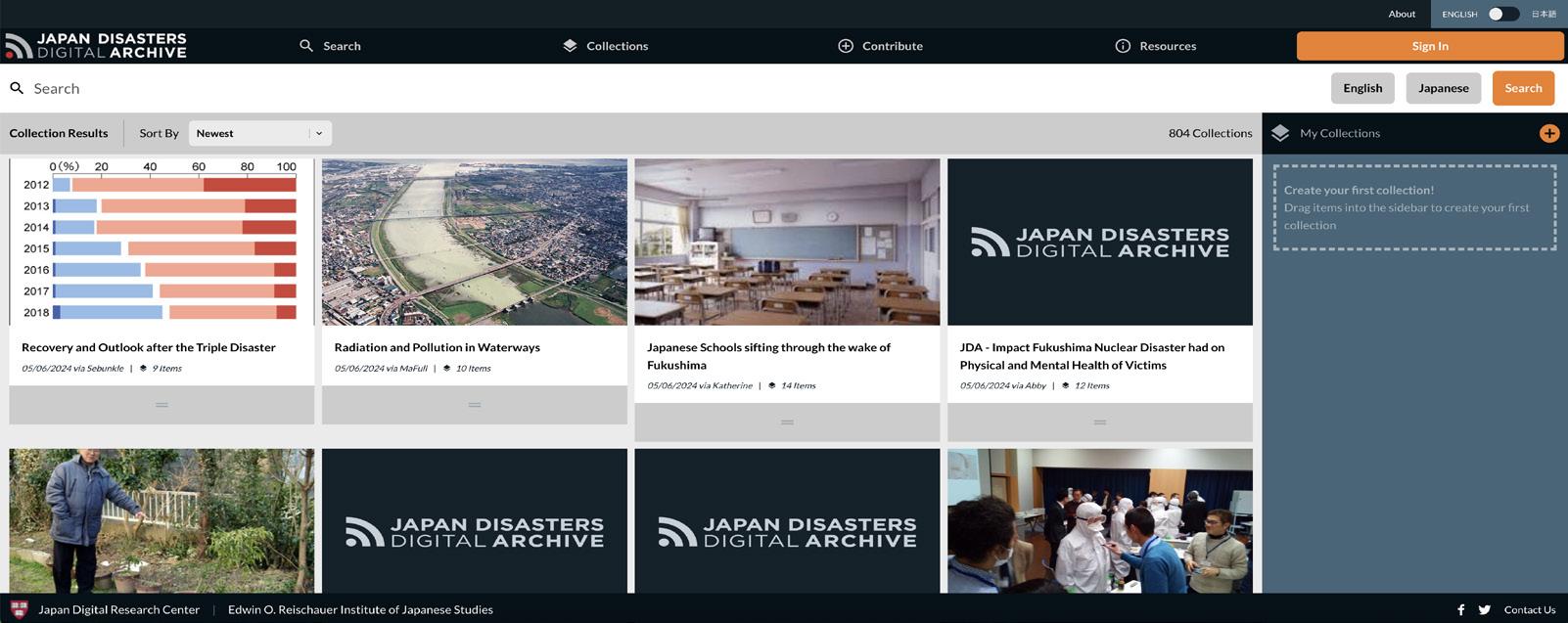
JDA Japan Digital Disasters Archive
JDRC Japan Digital Research Center
KI Korea Institute
RIJS Reischauer Institute of Japanese Studies
RSEA Regional Studies-East Asia (A.M. Program)
SAI South Asia Institute
USJP Program on U.S.-Japan Relations
VES Visual and Environmental Studies Department
WCFIA Weatherhead Center for International Affairs
About the Institute
The Reischauer Institute of Japanese Studies (RIJS) was established in 1973 as the Japan Institute and renamed in 1985 to commemorate the retirement of Edwin O. Reischauer. One of Harvard’s international and regional centers, the Institute reports to the Dean of the Faculty of Arts and Sciences and operates under a mandate to contribute to the university as a whole. Since 1997, the Institute has been part of the Harvard University Asia Center (HUAC) and has coordinated closely with HUAC and other associated units. Members of the RIJS Executive Committee also serve on the HUAC Executive Committee and Steering Committee.
Edwin O. Reischauer
October 1910-September 1990
Edwin Oldfather Reischauer was born and raised in Tokyo, the son of Presbyterian educational missionaries. At sixteen, he left Japan for Oberlin College, later taking up graduate work at Harvard where he studied East Asian history, including a five-year world study tour to Paris, Tokyo, Kyoto, and Beijing. He returned to Harvard with his wife Adrienne in 1938, received his Ph.D. in 1939, and taught in the Department of Far Eastern Languages until 1941, when the State Department and the Army recruited him to serve variously as a research analyst, organizer of Japanese language programs for the military, and translator of intercepted military intelligence. After his return to Harvard in 1946, Reischauer guided the development of a new curriculum in East Asian Studies and began his career as a prolific writer. During this “golden age” of teaching (to use his phrase), he began his collaboration with John K. Fairbank to teach a course on East Asian Civilizations, nicknamed “Rice Paddies,” which is still taught today as part of the General Education curriculum.
An article written by Reischauer in 1960 analyzing current tensions between the US and Japan caught the attention of U.S. President John F. Kennedy, who appointed Reischauer as ambassador to Japan (1961-1966). Key to Reischauer’s ambassadorial outlook was the notion of “equal partnership” between Japan and America. He and his second wife, Haru Matsukata, a journalist from Tokyo whom he had married after Adrienne’s death in 1955, gave priority to their ties with ordinary Japanese citizens and were enthusiastically received. Both professionally and personally, Haru was a supportive companion to her husband and a strong partner to him as ambassador and scholar.
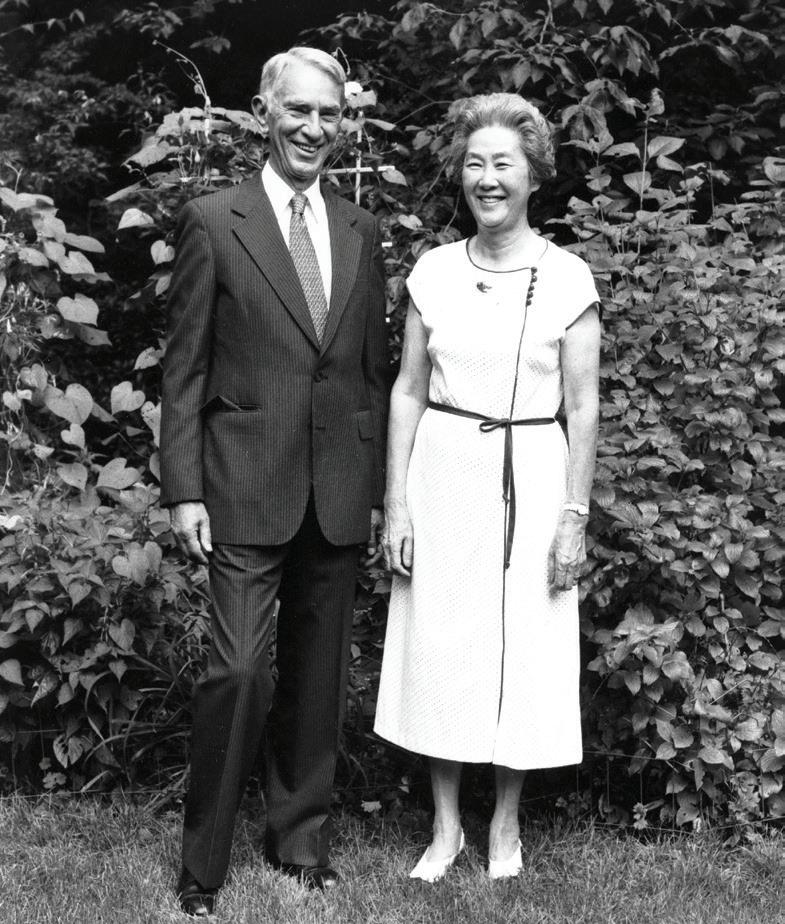
Edwin O. Reischauer, pictured here with his wife, Haru.
Returning to Harvard in 1966 as a University Professor, Reischauer continued to teach “Rice Paddies” and, reflecting his growing interest in contemporary issues, developed a course on Japanese Government and Politics in the Government Department and participated in a course on The United States and East Asia in the History Department. Reischauer wrote many books, including East Asia: Tradition and Transformation (1973), co-authored with John K. Fairbank and Albert M. Craig. He was the prime mover in establishing and funding the Japan Institute, later renamed in his honor, and he served as the director from 1974 to 1981. Until his retirement in 1981, he continued to teach, write, and initiate a variety of projects to enhance relations between the US and Japan, including producing a series of lectures on Japanese History on videotape for the University.
Reischauer was instrumental in expanding not only Harvard’s curriculum but the field of East Asian Studies as a whole, deepening American consciousness of Japan and the outside world. All of these contributions continue today to guide the Institute that gratefully carries his name.
Home in CGIS
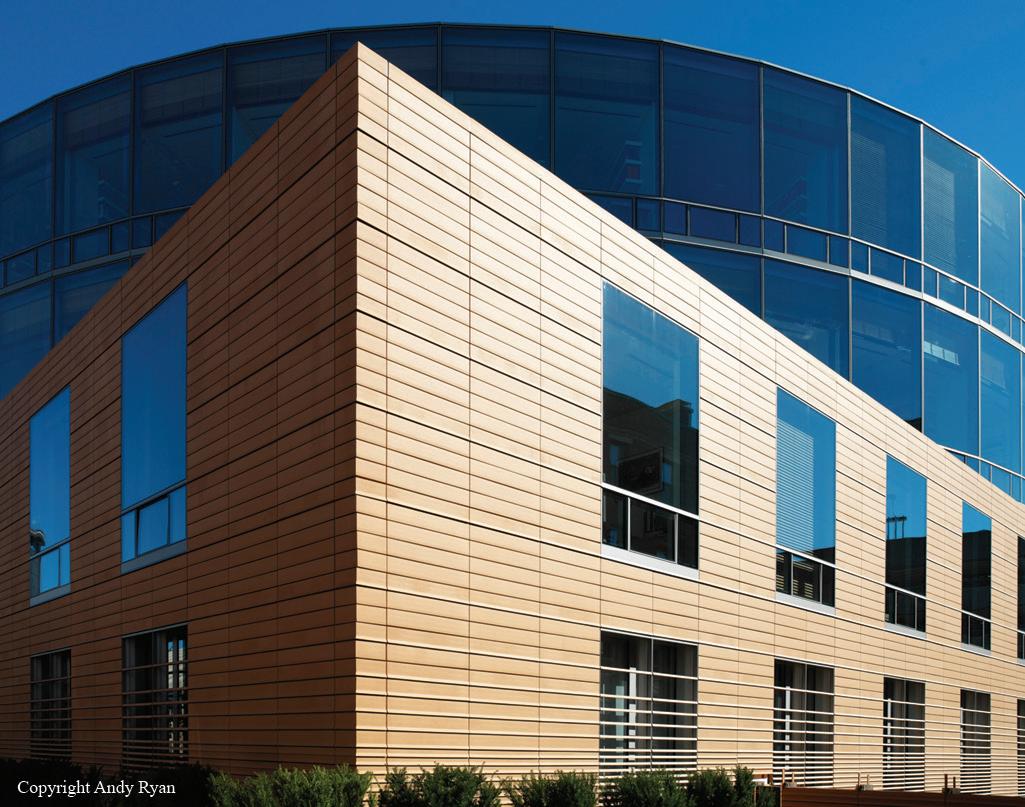
Since 2005, the Reischauer Institute of Japanese Studies has been housed in the Center for Government and International Studies (CGIS), a complex designed to promote the crossing of boundaries and the forming of connections. RIJS shares the second floor of the CGIS South Building with the Korea Institute (KI) and the David Rockefeller Center for Latin American Studies (DRCLAS), and the Asia Center and many other Asiarelated programs are located nearby. Through CGIS, faculty, students, postdoctoral fellows, visiting scholars, and staff are seamlessly integrated into the dynamic international studies community at Harvard.
The spaces in CGIS South provided to graduate student associates-in-residence (GSAs), postdoctoral fellows, and visiting scholars promote interdisciplinary and cross-regional interaction. Each of the building’s four floors contains space with carrels assigned to graduate students affiliated with a regional studies institute and/ or department. GSAs from different centers are mixed together, allowing for exciting academic exchange. RIJS postdoctoral fellows share office space with “postdocs” from other centers who have similar research interests. The postdocs enjoy a broader intellectual environment, and those who study more than one Asian country greatly benefit from proximity to other programs. Occupying a shared space, RIJS visiting scholars also have the opportunity to exchange ideas on various research topics, from political science to visual arts, literary studies to technology.
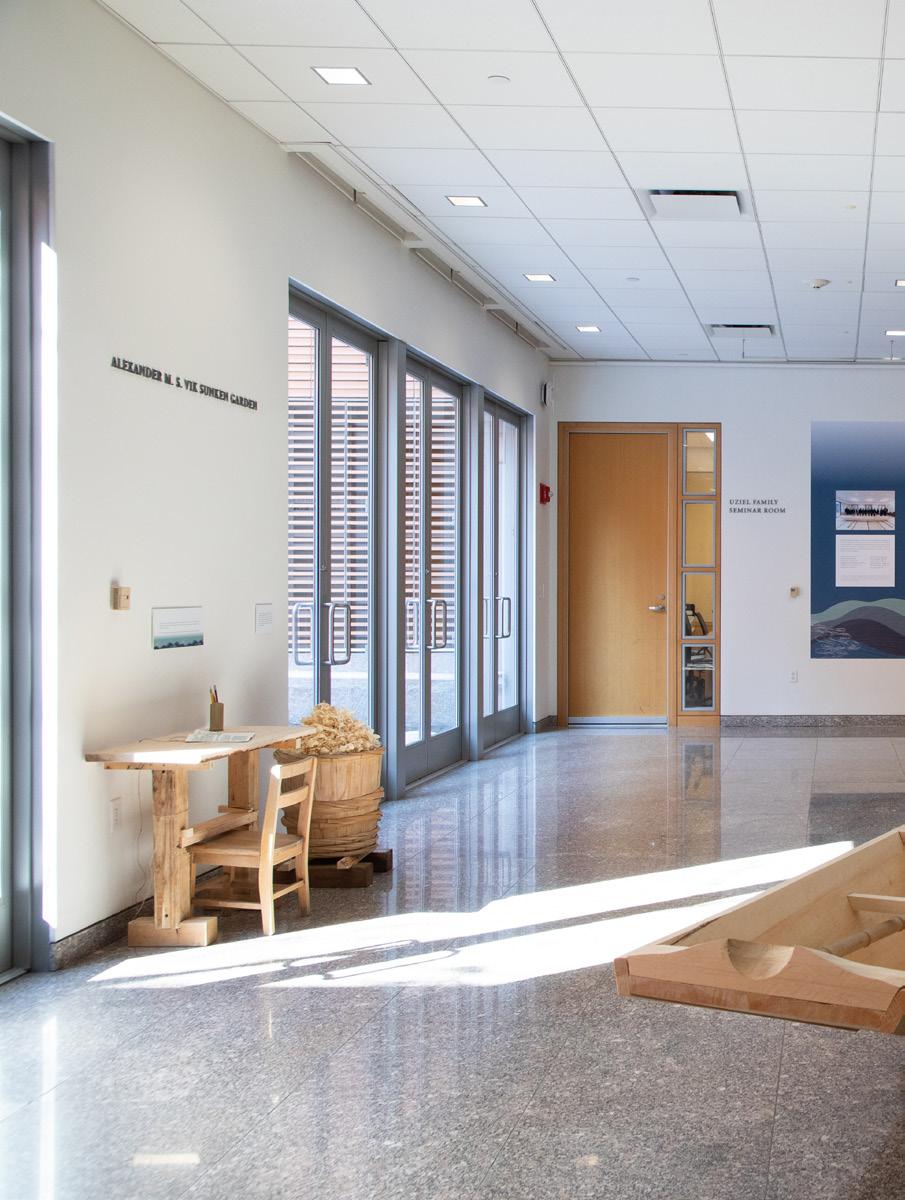
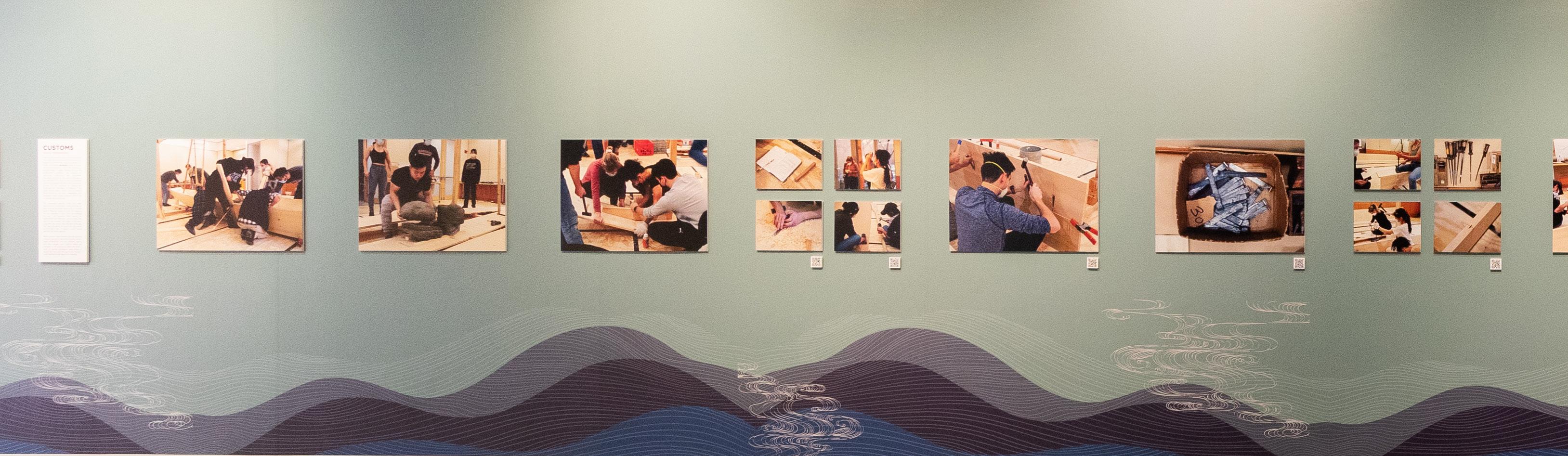
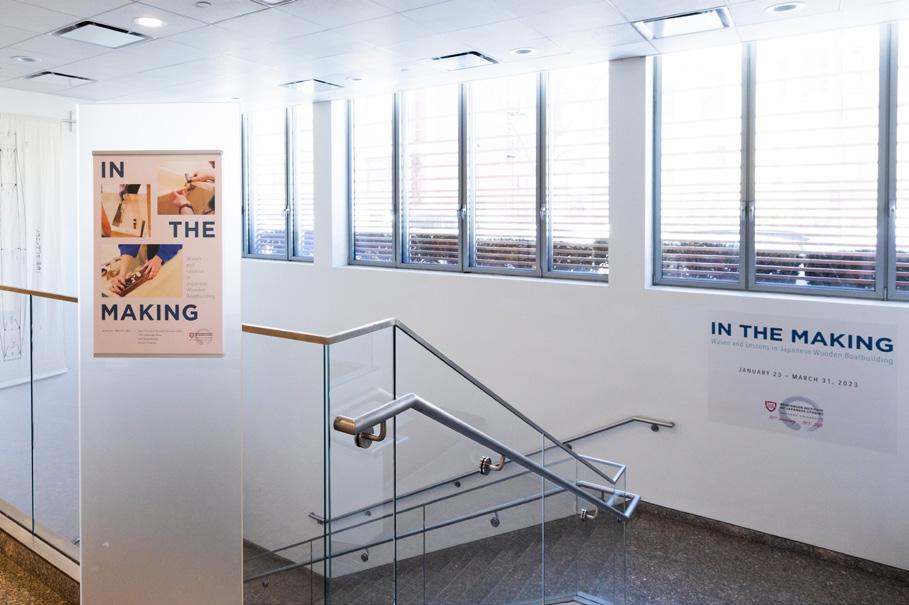
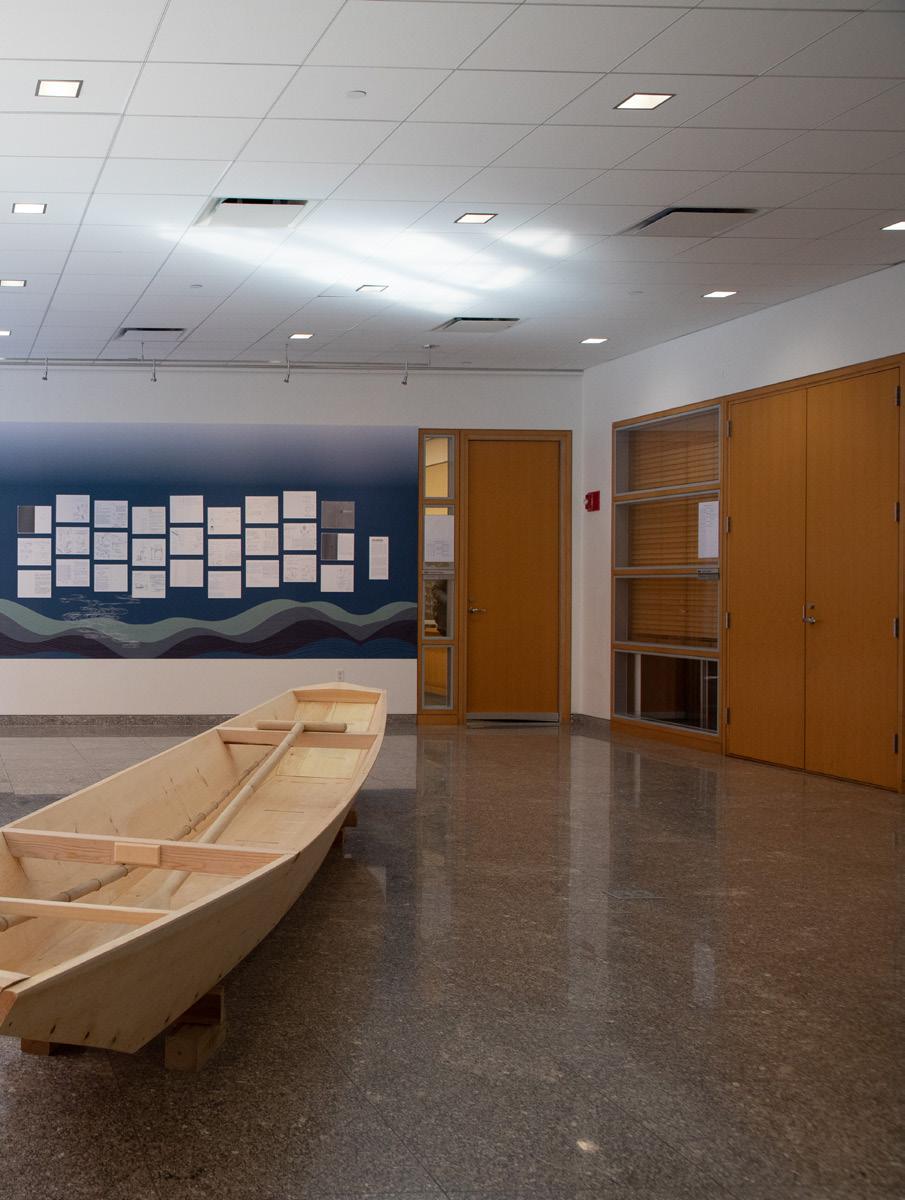
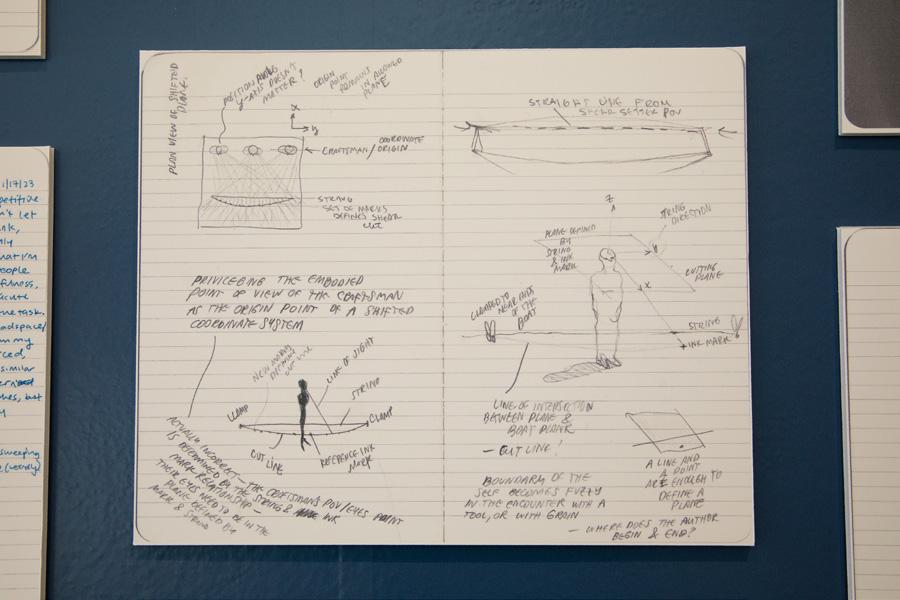
In addition, CGIS South regularly features contemporary and traditional art exhibitions on the Japan Friends of Harvard Concourse. Those hosted by RIJS include: In the Making: Wasen and Lessons in Japanese Wooden Boatbuilding (2021), Irresolution: The Paintings of Yoshiaki Shimizu (2017), From Artistry to Ethnography (2015), The Thinking Hand: Tools and Traditions of the Japanese Carpenter (2014), Tomokazu Matsuyama | Palimpsest (2013), Mizue Sawano | Eternal Return (2011), and Mitsuko Asakura | Tapestry in Architecture: Creating Human Spaces (2008).
RIJS Director
During 2022-24, the Institute was led by two Faculty Directors; Mary C. Brinton and Shigehisa Kuriyama.
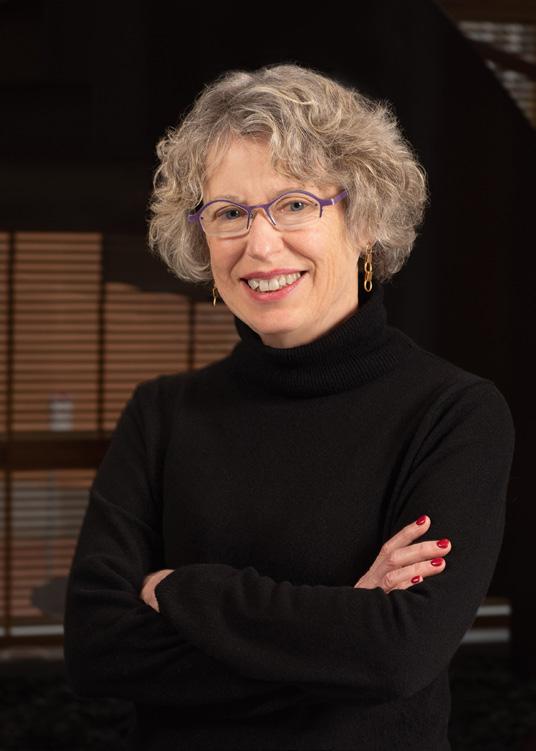
Mary C. Brinton, Reischauer Institute Professor of Sociology, served as RIJS Director from 2018 to 2023, followed by her retirement in July 2024. Professor Brinton is also a Faculty Associate at the Weatherhead Center for International Affairs and former Chair of the Department of Sociology (2010-16). She joined the Harvard faculty in 2003, having previously taught at the University of Chicago for twelve years and at Cornell University for four years.
Professor Brinton’s research and teaching focus on gender inequality, labor markets and employment, social demography, and contemporary Japanese society. Her research combines qualitative and quantitative methods to study institutional change and its effects on individual action, particularly in labor markets. She generally engages in primary data collection for her research projects and has designed social surveys, interviews, and observational studies in Japan and Korea. Professor Brinton earned her B.A. in Sociolinguistics at Stanford University, and she earned an M.A. in Japanese Studies and an M.A. and Ph.D. in Sociology at the University of Washington.
Shigehisa Kuriyama, Reischauer Institute Professor of Cultural History, has served as RIJS Director since 2023. Professor Kuriyama is also currently the Director of Undergraduate Studies of the Department of East Asian Languages and Civilizations, and he has previously served as Interim Chair in the Department of East Asian Languages and Civilizations and Faculty Director for the Humanities at the Radcliffe Institute for Advanced Study (2017-23). He joined the Harvard faculty in 2005, after teaching at the University of New Hampshire, Emory University, and International Research Center for Japanese Studies in Kyoto, Japan.
Professor Kuriyama’s research probes broad philosophical issues through the lens of specific topics in comparative cultural history (Japan, China, and Europe). His book The Expressiveness of the Body and the Divergence of Greek and Chinese Medicine (Zone, 1999) received the 2001 William H. Welch Medal of the American Association for the History of Medicine, and has been translated into Chinese, Greek, Spanish, and Korean. Since 2005, Professor Kuriyama has been active in promoting the creative use of digital technologies to expand the horizons of teaching and scholarly communication. His most recent publication, Fluid Matter(s) (2020), is an experimental e-book the explores the expressiveness of narratives unbound from the fixed images and words of the printed page. Professor Kuriyama earned his A.B. from the Department of East Asian Languages and Civilizations, A.M. from the Committee on Regional Studies East Asia, and Ph.D. from the Department of the History of Science from Harvard University.
Committees of the Institute
The Full Committee (FC), which carries out the core mission of the Institute, is composed of senior, junior, and emeritus faculty from across the University whose research and teaching relate to Japan, as well as leaders of Japan-related centers, programs, libraries, and Japanese language faculty. The committee meets at least once annually, and its members participate actively in RIJS activities and subcommittees.
The Executive Committee (EC), the governing body of the Edwin O. Reischauer Institute of Japanese Studies, is composed of 15 tenured faculty members in the field of Japanese studies appointed by the Faculty Director. The Reischauer Institute EC typically meets in-person four times during the academic year (twice a semester) to consider new initiatives, approve the annual budget, make formal and informal appointments, award fellowships and grants, and establish Institute policies and procedures. Ad hoc EC meetings may be added. EC meetings are convened and led by the Faculty Director and are attended and supported by the Institute’s executive administrative leadership in a non-voting, ex-officio capacity. In addition to participation at EC meeting, EC faculty may also be asked to serve on grant, post-doctoral fellowship, and special subcommittees organized by the Institute.
The RIJS Full Committee 2022-24
Please see below for the names and titles of RIJS Full Committee members, which appear throughout this report. An asterisk (*) indicates members of the Executive Committee.
Ryūichi Abé, EALC*
Reischauer Institute Professor of Japanese Religions
Naomi Asakura, EALC
Preceptor in Japanese
David C. Atherton, EALC
Assistant Professor of East Asian Languages and Civilizations
Mary C. Brinton, Sociology*
Reischauer Institute Research Professor of Sociology; Director of RIJS (2022-23)
Christina L. Davis, Government*
Edwin O. Reischauer Professor of Japanese Politics; Director of USJP, WCFIA
John M. Doyle, Physics
Henry B. Silsbee Professor of Physics
Theodore J. Gilman, WCFIA Executive Director of WCFIA
Andrew D. Gordon, History* Lee and Juliet Folger Fund Professor of History
Helen Hardacre, EALC*
Reischauer Institute Research Professor of Japanese Religions and Society
Takao K. Hensch, MCB Professor of Molecular and Cellular Biology; Professor of Neurology, Children’s Hospital
Asako Higurashi, EALC
Language Instructor in Japanese
Saki Hirozane, EALC
Language Instructor in Japanese
David L. Howell, EALC*
Robert K. and Dale J. Weary Professor of Japanese History
Akira Iriye, History
Charles Warren Professor of American History Emeritus
Kosuke Imai, Government Professor of Government and Statistics
Wesley M. Jacobsen, EALC*
Professor of the Practice of the Japanese Language; Director of Japanese Language Program
Geoffrey G. Jones, HBS
Isidor Straus Professor of Business History
Yuko Kageyama-Hunt, EALC
Senior Preceptor in Japanese
Ichiro Kawachi, HMS / HSPH
John L. Loeb and Frances Lehman Professor of Social Epidemiology
Susumu Kuno, Linguistics Professor of Linguistics Emeritus
Shigehisa Kuriyama, EALC*
Reischauer Institute Professor of Cultural History; Director of RIJS (2023-24)
Yukio Lippit, HAA*
Jeffrey T. Chambers and Andrea Okamura Professor of History of Art and Architecture
Melissa McCormick, EALC*
Andrew W. Mellon Professor of Japanese Art and Culture
Kuniko McVey, HYL
Librarian for the Japanese Collection
Ian J. Miller, History* Professor of History; Faculty Dean, Cabot House
Toru Momii, Music Assistant Professor of Music
Toshiko Mori, GSD
Robert P. Hubbard Professor in the Practice of Architecture
Maiko Nakatani, EALC
Language Instructor in Japanese
Susan J. Pharr, Government*
Edwin O. Reischauer Research Professor of Japanese Politics
J. Mark Ramseyer, HLS*
Mitsubishi Professor of Japanese Legal Studies
Michael R. Reich, HSPH
Taro Takemi Professor of International Health Policy Emeritus
James Robson, EALC
James C. Kralik and Yunli Lou Professor of East Asian Languages and Civilizations; Director of HUAC
Jay Rubin, EALC
Takashima Professor of Japanese Humanities Emeritus
Yuki Sakomura, EALC
Language Instructor in Japanese
Victor Seow, History of Science
Associate Professor of the History of Science
Chikako Takehara, EALC
Language Instructor in Japanese
Hirotaka Takeuchi, HBS
Professor of Management Practice Emeritus
Karen L. Thornber, Comp Lit*
Henry Tuchman Levin Professor in Literature; Professor of East Asian Languages and Civilizations
Danica Truscott, EALC
Lecturer on Classical Japanese (Bungo) and Kanbun
Mihoko Yagi, EALC
Language Instructor in Japanese
Tomiko Yoda, EALC*
Takashima Professor of Japanese Humanities
Michael Y. Yoshino, HBS
Herman C. Krannert Professor of Business
Administration Emeritus
Alexander Zahlten, EALC
Professor of East Asian Languages and Civilizations
New Faculty
Professor Toru Momii joined the faculty as Assistant Professor of Music in the fall of 2022. His research explores topics of musical interculturality, racial and colonial politics of US/Canadian music theory, performance analysis, gagaku, and popular music of Japan and the Japanese diaspora. His article “A Transformational Approach to Gesture in Shō Performance” (2020) was awarded the 2021 Outstanding Publication Award from the Society for Music Theory. His research has been recognized by the SMT-40 Dissertation Fellowship from the Society for Music Theory and the Junior Fellowship in Japan Studies from the Weatherhead East Asian Institute. His writing appears in Music Theory Online and Circuit.
Professor Momii holds a Ph.D. in music theory from Columbia University (2021), an M.A. in music theory from McGill University, and a B.A. in music and economics from Vassar College (Phi Beta Kappa). Before joining the Department of Music at Harvard, Toru has taught music theory and aural skills at Indiana University Jacobs School of Music and Columbia University. Prior to pursuing academic research, he worked in the investment banking industry in Tokyo, Japan.
Dr. Danica Truscott joined the Department of East Asian Languages and Civilizations as Lecturer on Classical Japanese (Bungo) and Kambun in the fall of 2023, following a Reischauer Institute Postdoctoral Fellowship in Japanese Studies. Dr. Truscott is a scholar of premodern Japanese literature who specializes in works from the early and classical periods (710-1185). Her general research interests include women’s literary history, gender performance, and the reception and translation of premodern texts in Japan and abroad. Her current book project is a feminist rereading of Japan’s oldest poetic anthology, the Man’yōshū (Collection for a Myriad Ages, late eighth century), that centers its most represented woman poet, Lady Sakanoue.
Dr. Truscott received her Ph.D. in 2022 from UCLA’s Department of Asian Languages and Cultures. She also holds an A.M. from the Regional Studies–East Asia program at Harvard University (2014) and a B.A. in Japanese Language from UC Berkeley (2011).
In Memoriam
With great sadness, the Reischauer Institute notes the passing of Henry Rosovsky (November 11, 2022).
Professor Henry Rosovsky (1927-2022), served as Lewis P. and Linda L. Geyser University Professor and Dean of the Harvard Faculty of Arts and Sciences. Since joining Harvard in 1966, he also served as Chair of the Economics Department, Acting President of the University, and Fellow of the Harvard Corporation; and during these many years of dedicated service to the University, in addition to his significant work in Economics, he founded the Center of Jewish Studies, drove the creation of an Afro-American Studies concentration (predecessor to the Department of African and African American Studies), and developed the nation’s first undergraduate Core Curriculum (predecessor to the Program in General Education).
Professor Rosovsky will always be remembered for his numerous contributions to Harvard, to the Reischauer Institute, and to Japanese Studies, including the Reischauer Institute grant named in his honor that supports undergraduate students to pursue summer thesis research in Japan each year. He will be greatly missed.
In 2022, Kosuke Imai launched a research project to apply redistricting computational algorithms to Japan’s House of Representatives. With Reischauer Institute support, Prof. Imai was able to work with several Harvard undergraduates and a Keio University undergraduate. To date, they have completed analysis of 10 prefectures with the goal of expanding their analysis to all remaining prefectures in the near future and assessing the partisan bias of the newly enacted districting plans.
The initial results of the group’s analysis of their first 10 prefectures are publicly available on the project website, which features a map of Japan that allows users to click on each prefecture and view each prefecture’s results. The code and data used to produce these results are also publicly available on Harvard Dataverse, which allows other researchers to replicate and extend the project’s results. Prof. Imai and two undergraduate students, Kento Yamada (Harvard) and Sho Miyazaki (Keio), also gave a poster presentation on this research at a conference hosted by the Japanese Society of Quantitative Political Science at Waseda University in July 2022. The project was later covered in an article titled “‘Ippyō no kakusa’ wa saisentan no arugorizumu de kaizen dekiru” (“The ‘One-Vote Gap’ Can Be Improved with Cutting Edge Algorithms” in The Nikkei Shimbun in September 2022.
Andrew Gordon featured in The Asahi Shimbun
In August 2022, Andrew Gordon was interviewed by The Asahi Shimbun for the article “77-nen… ano sensō no na wa” (“77 years… The name of that war”) in a section titled “Rekishi ninshiki, kokumin gōi michi nakaba” (“Halfway to historical recognition, national consensus”). In the article, Professor Gordon discusses the reasons why the Japanese government has been unable to settle on an official name for the war that took place from 1939 to 1945, comparing the issue to the naming of the Civil War in the US.
Mary Brinton conferred Order of the Rising Sun, Gold Rays with Neck Ribbon
In November 2022, Mary Brinton received the Order of the Rising Sun, Gold Rays with Neck Ribbon by the Government of Japan. Professor Brinton was honored for her contributions to the field of Japanese Studies, and the citation also commended Prof. Brinton’s observations and insightful arguments of Japanese society, including her research on labor markets and gender mainstreaming measures, which have had impact not only on Japanese scholars but also on policy makers and the broader public of Japan.
Earlier this year, Professor Brinton published a monograph in Japanese titled Shibarareru Nihonjin: Jinkō messhō o motarasu “kihan” wo uchiyabureru ka (Tied Up in Knots: Can the Norms Leading to Population Decline Be Broken?) through Chūō Kōron Shinsha in September 2022. In this publication, Professor Brinton investigates the link between Japan’s low birth rate and persistent gender inequality in the labor market and in the household. Containing interviews from the child-rearing generation in Japan, the US, and Sweden, this book offers a comparative analysis of issues prominent in Japanese society.
Melissa McCormick interviewed by Japan Foundation about The Tale of Genji exhibition at Metropolitan Museum
In November 2022, Melissa McCormick was featured in an article titled “American Scholar Revealed the Profound World of The Tale of Genji,” as part of a series of special stories in celebration of the 50th anniversary of the Japan Foundation. Professor McCormick, a two-time Japan Foundation Japanese Studies
Fellow (1995 and 2013), co-curated “The Tale of Genji: A Japanese Classic Illuminated,” a 2019 exhibition at the Metropolitan Museum that showcased nearly 150 objects, including two National Treasures and nine Important Cultural Properties, among a variety of other media depicting scenes from The Tale of Genji.
Ian Miller develops new “Quad Lab” history course as Faculty Dean of Cabot House
As Faculty Dean of Cabot House, Ian Miller developed a new course HIST 15B “Quad Lab: Histories of Technology, Society, and Everyday Life at Harvard,” which investigates the people and places of the Radcliffe Quadrangle, formerly the residential campus of Radcliffe College, now containing the three Houses Currier, Pforzheimer, and Cabot. Run like a scientific laboratory, this course has provided students with the opportunity to investigate and understand the history behind a beloved space on campus. In December 2022, Professor Miller was featured in The Harvard Gazette for this course, and in April 2023, he was interviewed by The Harvard Crimson about his pursuit of Japanese history, his experiences as a Harvard faculty member, and his time within the Cabot House community.
Mary Brinton featured on several international news platforms about research on Japan
In January 2023, Mary Brinton was interviewed by British Broadcasting Corporation’s “The World Tonight” program and by the Australian Broadcasting Corporation’s “NewsRadio” to discuss Prime Minister Fumio Kishida’s promise to take urgent steps in response to Japanese declining birth rate. The audio segments can be found on the BBC website (at 35:00-40:30) and on the ABC website
In March 2023, Professor Brinton was featured in The Yomiuri Shimbun for a presentation that she gave earlier that month at the Economic and Social Research Institute, Cabinet Office of Japan. In April 2023, she was interviewed by The Asahi Shimbun to discuss solutions to population decline based on her research on gender roles in parenting.
Toshiko Mori receives 2023 Philip Hanson Hiss Award from Architecture Sarasota
In March 2023, Toshiko Mori was honored by Architecture Sarasota in an award ceremony for the Philip Hanson Hiss Award, recognized for her “her ecologically sensitive, site-responsive design philosophy and inventive use of materials.” The announcement and ceremony can be viewed here. Professor Mori has won numerous awards and received global acclaim for her ability to serve society and humanity while respecting the natural environment.
Later in the year, Professor Mori was also interviewed for NHK’s Direct Talk “An Architect’s Mission: Mori Toshiko / Architect,” which originally aired in August 2023 and remains available on demand on the NHK website.
David Odo publishes article with Isabella Stewart Gardner Museum, named Director of Georgia Museum of Art
In March 2023, David Odo published an article with the Isabella Stewart Gardner Museum about Gardner’s travel albums from a trip through Japan in 1883. The article discusses what these photos, purchased from commercial studios and pasted into albums, reveal about 19th-century global tourism.
In April 2023, Dr. Odo was named the next director of the Georgia Museum of Art at the University of Georgia. Succeeding their former director William U. Eiland, Dr. Odo brings his research, teaching, and leadership experience with the Harvard Art Museums to “build further on the [Georgia Museum’s] legacy and mission to be accessible and engage with the public.” He officially began his new position in June 2023. The announcement can be found here.
David Atherton interviewed by The Harvard Crimson in “Fifteen Questions Series”
In April 2023, David Atherton was interviewed by The Harvard Crimson as part of their “Fifteen Questions” series. In this article, he answered questions about his journey from Harvard to Japan and back, particularly his pursuit of Japanese literature.
Rachel Saunders co-edits publication on Harvard Art Museums exhibition on Prince Shotoku
In May 2023, in collaboration with Abe Yasuro (Nagoya University), Abe Mika (Nagoya), Chikamoto Kensuke (Nagoya), Seya Ai (Toyo National Museum) and Seya Takayuki (Kanazawa Bunko), Rachel Saunders co-edited a publication titled Hābādo Bijutsukan Namubutsu Taishi zō no kenkyū (The Sculpture of Prince Shōtoku at Age Two at the Harvard Art Museums), based on the 2019 exhibition of a similar title. Essays were contributed by Dr. Saunders, Angela Chang, Penley Knipe, and Greg Lin of the Harvard Art Museums, with significant contributions from Melissa McCormick and Ryūichi Abe of EALC, as well as participants of a 2016 advanced graduate Japanese History seminar, Daniel Borengasser, Jesse LeFebvre, Eric Swanson, Yuxin Qin, and Xingyi Wang. Dr. Saunders also spoke on this work at the Asia Society’s “Art for Breakfast” series, hosted at the International House of Japan in Tokyo.
Alexander Zahlten interviewed in NHK “J-Flicks” on Japanese film
In May 2023, Alexander Zahlten was interviewed in a broadcast by the NHK program “J-Flicks” on Japanese films featured in the Berlin International Film Festival, Osaka Asian Film Festival, and International Film Festival Rotterdam. The interview can be found here.
James Robson establishes Harvard’s first Tagalog language program
Over the course of the 2022-23 academic year, James Robson, as Director of the Asia Center, established the University’s very first language program in Tagalog through the Department of South Asian Studies. This initiative includes hiring a new Preceptor in Filipino Languages to teach Tagalog beginning in the fall of 2023 for a three-year term appointment renewable for up to five additional years. In May 2023, Professor Robson was featured on NBC News to share how the program came about and what they hope to accomplish.
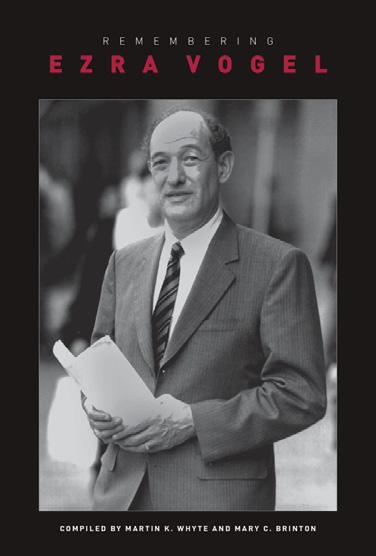
Christina Davis, Kousuke Imai, and James Robson present at 1st Ezra Vogel Memorial Forum at Aichi University
In July 2023, Christina Davis, Kousuke Imai, and James Robson participated in a panel discussion on “Asian Studies: Past, Present, and Future” at the 1st Ezra Vogel Memorial Forum held by the International Chinese Studies Center at Aichi University. During this event, Prof. Davis also delivered a commemorative lecture “Remembering Ezra Vogel: The Transmission and Development of Asian Studies,” and on the same day, Professor Robson presented a talk titled “Asian Studies at Harvard” at the Aichi University International Chinese Studies Center’s 4th Research Forum.
Mary Brinton interviewed by South Korean newspaper Asia Business Daily
Mary C. Brinton was interviewed by The Asia Business Daily, a South Korean newspaper, in an article discussing the issues of gender inequality and low birth rate. This was the first interview based on her recently published book Shibarareru Nihonjin: Jinkō messhō o motarasu “kihan” wo uchiyabureru ka (Tied Up in Knots: Can the Norms Leading to Population Decline Be Broken?) (Chuo Koron Shinsha, 2022) to appear in a Korean news source.
Victor Seow wins multiple awards for
his
recent book Carbon Technocracy
Since the publication of Carbon Technocracy: Energy Regimes in Modern East Asia (University of Chicago Press, 2022), Victor Seow has received numerous awards including: the 2022 Walter Channing Cabot Fellowship from Harvard Faculty of Arts and Sciences, the 2023 CHUS Academic Excellence Award from Chinese Historians in the United States, the 2023 John Whitney Hall Book Prize from the Association for Asian Studies, and the 2023 Michael H. Hunt Prize for International History from the Society for Historians of American Foreign Relations. Using the story of the Fushun colliery to chart how the fossil fuel economy emerged in tandem with the rise of the modern technocratic state, Carbon Technocracy is an exploration of how the mutual production of energy and power came to define industrial modernity and the wider world that carbon made.
Christina Davis awarded Foreign Ministers Commendation by Ministry of Foreign Affairs of Japan
In March 2024, Christina Davis was awarded the Foreign Minister’s Commendation by the Ministry of Foreign Affairs of Japan, in a ceremony at the official residence of Consul General Kotaro Suzuki. She was recognized for “contribut[ing] to the promotion of Japan research in the US and to the mutual understanding between Japan and the U.S. by providing young leaders of Japan’s next generation with opportunities for intellectual exchange with the U.S. and for deepening their knowledge of Japan’s international role.” The announcement from the Consulate General of Japan in Boston can be found here.
Toshiko Mori receives 2024 Asia Arts Game Changer Award from the Asia Society
In May 2024, Toshiko Mori was named a recipient of the Asia Society 2024 Asia Arts Game Changer Award, in recognition of her significant contributions to contemporary art. The award ceremony, focused around the theme “Fierce Imagination: Women Artists and the Environment,” will take place on Thursday, May 16. Prof. Mori’s recent honors also include the Philip Hanson Hiss Award from the Sarasota Architecture Foundation (2023), the Isamu Noguchi Award in (2021), and the Louis Auchincloss Prize in (2020) from the Museum of the City of New York. The full announcement can be found here.
Yukio Lippit recognized by Faculty Sabbatical Program
In May 2024, Yukio Lippit was recognized by the Faculty Sabbatical Program of the Harvard Faculty of Arts and Sciences, which awards members of the faculty with an extra semester of paid sabbatical leave in recognition of their extraordinary contributions and remarkable dedication to their students, colleagues, and the University.
Shinju Fujihira named a 2024 Harvard Hero
In June 2024, Shinju Fujihira was named a Harvard Hero in a ceremony held at the Sanders Theater. The Harvard Heroes Recognition Program “celebrates the accomplishments of Harvard staff whose work supports the mission of Harvard at the highest levels of contribution, impact and excellence,” and Dr. Fujihira was recognized by Harvard Human Resources for his leadership of the various activities and affiliates of the Program on US-Japan Relations as well as his contributions to the university as a whole.
Dr. Fujihira’s segment from the livestream of the recognition ceremony can be found here
Ryūichi Abé named Walter Channing Cabot Fellow
In June 2024, Ryūichi Abé was was named a Walter Channing Cabot Fellow by the Harvard Faculty of Arts and Sciences, which annually honors faculty members for their contributions to the advancement of scholarship in the arts and humanities. Professor Abé was awarded the fellowship for his recent publication Hyōden Ryōkan – Wakehedate no nai yo wo kiraku kotsujikisō (Ryōkan, A Biography: the beggar monk who created a world without divisiveness), (Kyoto: Mineruva shobō, 2023).
Shigehisa Kuriyama featured in Science Journal’s “10 Must Read Books”
In June 2024, Shigehisa Kuriyama had his book The Expressiveness of the Body and the Divergence of Greek and Chinese Medicine (Zone Books, 1999) named among the “10 Must Read Books” by Science Journal. In the article, the book is commended as “a classic in multiple fields” and “not only a valuable contribution to our understanding of Greek and Chinese medicine but also a work of methodological brilliance that invites readers to question where we ourselves stand in the world and how that might prompt us to reevaluate what we take for granted in the body.” The Expressiveness of the Body also won the William H. Welch Medal from American Association for the History of Medicine in 2001.
RIJS Website
Established in 2005 and renewed in 2018, the RIJS website provides an overview of the Institute’s faculty, scholars, and students; grants and fellowships; events, programs, and activities; digital initiatives; publications; and other resources.
Visit the RIJS website at: https://rijs.fas.harvard.edu.
Advancing Research in Japanese Studies Advancing Research
Since its founding in 1973, the Reischauer Institute of Japanese Studies has sought in a variety of ways to promote and support research on Japan in all fields and disciplines across the University.
In addition to supporting Harvard faculty, RIJS creates professorships to bring in faculty from new or underrepresented fields. The research community built at Harvard includes not only faculty and students, but also leading visiting scholars, postdoctoral fellows, and, since 2005, graduate student associates-in-residence. RIJS organizes and/or sponsors seminars, conferences, colloquia, collaborative projects, and other activities that contribute to the exchange of ideas, while also supporting the WCFIA Program on U.S.-Japan Relations, which fosters social science research that bears on Japan’s role in the world as an advanced industrial society. Finally, RIJS maintains a dynamic publications program that has produced a number of prize-winning books, provides major support to the Japanese language collection in the Harvard Libraries, and undertakes numerous initiatives including the Japan Digital Research Center.
Support for Faculty Research
Professorships
Over the past two decades, the Institute has played a prominent role in building Harvard’s intellectual infrastructure for the study of Japan through creating professorships in the Faculty of Arts and Sciences (FAS). No other Japanese Studies program in the world has done more to create or support new faculty positions. These positions are intended to be incremental and are normally funded through the Institute’s endowment. Thus, the Institute owes much gratitude to its many friends in Japan who provided the original endowment funding in support of building Japanese Studies at Harvard.
The current RIJS faculty appointments are as follows:
›› Edwin O. Reischauer Professor of Japanese Politics: Susan J. Pharr
›› Reischauer Institute Professor of Cultural History: Shigehisa Kuriyama
›› Reischauer Institute Professor of Japanese Religions: Ryūichi Abé
›› Reischauer Institute Professor of Japanese Religions and Society: Helen Hardacre
›› Reischauer Institute Professor of Sociology: Mary C. Brinton
›› Professor of East Asian Languages and Civilizations: Alexander Zahlten
Edwin O. Reischauer Professorship in Japanese Studies
The terms of the Institute’s endowment also provide for a professorship, named for Edwin O. Reischauer following his retirement in 1980. Intended to contribute directly to faculty research and to the educational mission of the University, the professorship allows FAS senior faculty in Japanese Studies to devote up to one academic year to full-time research at some point during their tenure at Harvard. Normally, in alternating years, the Institute offers appointment as a visiting professor to a leading scholar in Japanese Studies.
Visiting professors divide their time between research and teaching, offering two courses over the academic year, including at least one lecture course at the undergraduate level.
There were no Edwin O. Reischauer Professors in 2022-24.
Visiting Scholars
Visiting scholars are a vital part of the Reischauer Institute of Japanese Studies and the research community at Harvard. Their appointments vary widely from a few months to two years, with most staying for one year. During their stay, they collaborate with faculty or contribute directly to ongoing research projects at RIJS; advise students and provide contacts for Harvard undergraduate and graduate students preparing to conduct research abroad; give lectures and speak in classes; and participate in seminars and other research activities.
The Visiting Scholars for 2022-24 are listed below, along with their institutions, research topics, and faculty sponsors.
2022-23
Cynthea Bogel, Kyushu University
Healing Buddha at Yakushuji Temple
Faculty Sponsor: Yukio Lippit
Kaori Fairbanks, Bunkyo Gakuin University
Shi-shosetsu Novels in a Global Context
Faculty Sponsor: Tomiko Yoda
Ryoko Mizuno Kondo, Japan Women’s University
Gender in Japanese Medieval Art
Faculty Sponsor: Melissa McCormick
Yuko Nakama, Ritsumeikan University
Landscapes in Japanese Art
Faculty Sponsor: Yukio Lippit
Nobuyuki Yamada, Komazawa University
Historical Sociology of Industrial Relations in Japan
Faculty Sponsor: Andrew Gordon
2023-24
Martin Fackler, Journalist
March 11 and Fukushima Nuclear Disaster
Faculty Sponsor: Andrew Gordon
Keisuke Kitano, Ritsumeikan University
Narratives in Film and Media Culture in Japan
Faculty Sponsor: Tomiko Yoda
Akinobu Matsumoto, Waseda University
Radio Documentaries in East Asia during the US Occupation
Faculty Sponsor: Alexander Zahlten
Jennifer McGuire, Doshisha University
Sign Language Interpretation and Deaf Media in Japan
Faculty Sponsor: Shigehisa Kuriyama
Hitomi Yoshio, Waseda University
Women Writers in Modern Japan
Faculty Sponsor: Tomiko Yoda
Postdoctoral Fellows
The RIJS Postdoctoral Fellowship Program provides recent graduates with the opportunity to continue their doctoral research at Harvard and produce publishable work from their dissertations. Former RIJS Postdoctoral Fellows occupy leading positions in Japanese Studies in universities all over the world.
Each year, the application process opens to a large pool of candidates in all fields and disciplines. Applicants must be within five years of earning their doctoral degree, in Japanese Studies, in any area of the humanities or social sciences. Selected fellows spend their year at Harvard actively involved in the Japanese Studies community at Harvard, work with faculty and students, and present their research in the Japan Forum lecture series at some point during their stay. RIJS also provides support for each fellow to host a manuscript workshop and participate in other research activities such as conferences and travel.
The Postdoctoral Fellows for 2022-24 are listed below, along with their Ph.D. institutions, fields, degree years, and research topics.
2022-23
Emily Cole
University of Oregon, Modern Japanese History, 2022
Re-Imaging Japan: Photographing a “Neew Cultural Nation” under the Allied Occumpation, 1945-1952
Evan Koike
University of British Columbia, Anthropology, 2022
Raising Smiling Fathers: The Construction of Masculinity in Japanese Nonprofit Organizations That Promote Engaged Parenting
Kyle Peters
University of Chicago, East Asian Languages and Civilizations (Philosophy), 2021
Kyoto School and Totality
Emily Simpson
University of California Santa Barbara, East Asian Languages and Cultural Studies (Religion), 2019
Crafting a Goddess: Divinization, Womanhood and Genre in Narratives of Empress Jingū
Danica Truscott
University of California Los Angeles, Japanese Literature, 2022
Assembling the Man’yō Woman: Paratext and Persona in the Poetry of Ōtomo no Sakanoue
2023-24
Caitlin Casiello
Yale University, Japanese Film and Media Studies, 2023
Sex on Screen in Japanese Cinema 1950s-1990s
Michelle Hauk
Columbia University, Modern Japanese History, 2023
Dwelling with Water: Tokyo Waterworks and the Remaking of the Urban Home, 1890–1990
Matthew Keller
University of Southern California, Religion, 2022
The Appeal of the Fox: The Cult of Inari and Premodern Japan
Daniel Said Monteiro
Université Paris Cité, Early Modern Japanese History, 2023
Monitored Connections: Transnational Nagasaki and the Circulation of Hybridized Cosmologies in Early Modern Japan (1630–1720)
Japan Digital Fellow
In 2021, RIJS created a new position, the Japan Digital Fellow, to lead and facilitate digital scholarship initiatives. This position was for two years commencing in August 2021. The Japan Digital Fellow was intended for individuals working in the field of Japanese studies with an interest and commitment to the promotion of digital scholarship and digital methods of inquiry, publication, and research and preservation, particularly within the humanities and social sciences. Through their own projects and support of faculty and student research, the Japan Digital Fellow was expected to help define and implement future directions for digital scholarship on Japan at Harvard.
For the 2021-23 appointment term, the Japan Digital Fellowship was awarded to:
Jungeun “June” Lim
University of Toronto, MI in Human-Centered Data Science, 2021
Graduate Student Associates-in-Residence
RIJS is surrounded by an extensive community of scholars which prominently includes graduate students enrolled in a number of departments and programs. Space in the CGIS Building makes it possible for RIJS and the other Asia-related centers to provide carrels or other space to a small number of Harvard Ph.D. students completing their dissertations. Designated as graduate student associates-in-residence (GSAs), these students are encouraged to attend events hosted by RIJS and other international centers and invited to various functions hosted by RIJS. This development offers an important new way of bringing advanced graduate students more fully into the Japanese Studies research community.
In 2022-24, the following graduate students in Japanese Studies were designated as GSAs, occupying inperson office space in CGIS South.
2022-23
Jesse LeFebvre
EALC (Religion/Philosophy)
2023-24
Daniel Borengasser
EALC (Japanese Art History)
Jesus Solis
History
Helen Swift
History of Art and Architecture
Jonathan Thumas
EALC (Religion/Philosophy)
Japan Forum
Established in 1974 in response to growing interest in Japanese Studies at Harvard, the Japan Forum lecture series provides scholars from a variety of fields and disciplines with an opportunity to present their research before a diverse audience that includes faculty, students, fellow scholars, and the general public. Assembling each Friday afternoon throughout the academic year, each forum is hosted by a Harvard faculty member and is followed by a reception at which attendees have an opportunity to interact with the speaker and with each other. After the reception, a smaller number of interested Harvard faculty, students, and other guests share dinner with the speaker. In addition, since 2010, RIJS has occasionally invited speakers to informal lunch gatherings with graduate students.
Since 1974, RIJS has sponsored more than 750 Japan Forum talks. In chronological order, the 2022-24 presentations are as follows:
2022-23
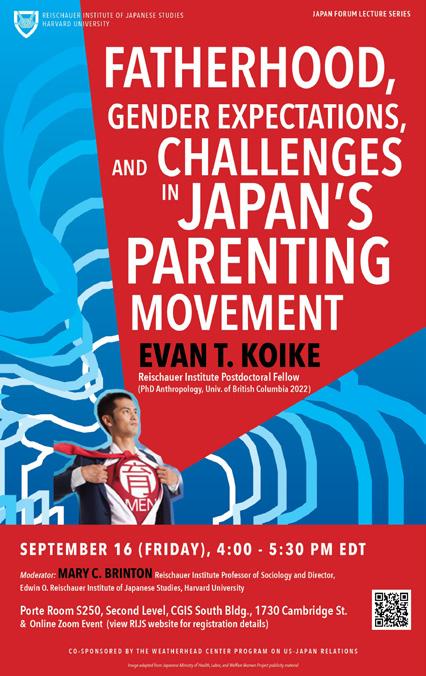
Evan Koike, RIJS Postdoctoral Fellow
Fatherhood, Gender Expectations, and Challenges in Japan’s Parenting Movement
Faculty Host: Mary Brinton (co-sponsored by USJP)
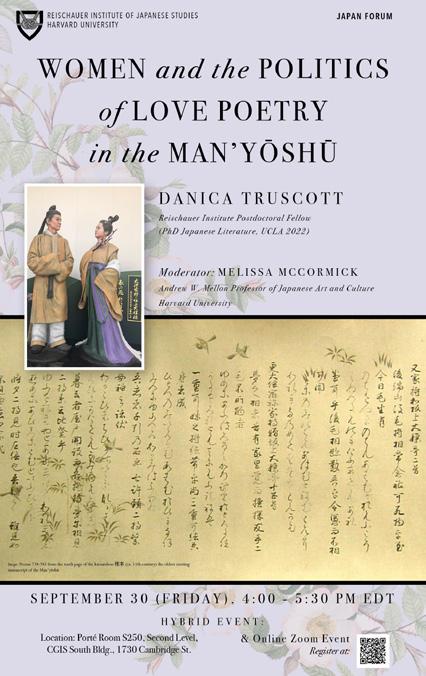
Danica Truscott, RIJS Postdoctoral Fellow
Women and the Politics of Love Poetry in the Man’yōshū
Faculty Host: Melissa McCormick
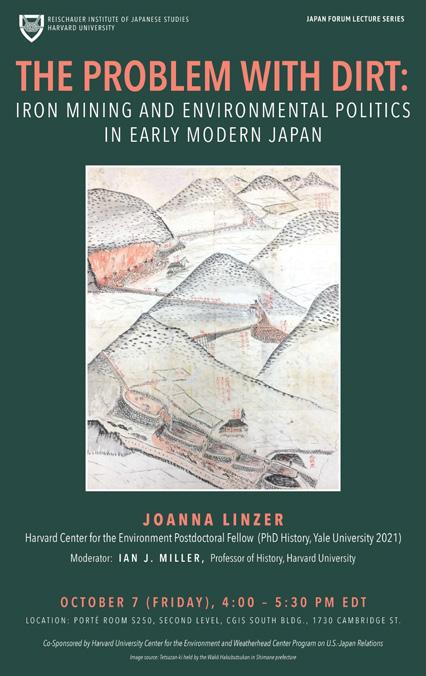
Joanna Linzer, Center for the Environment Postdoctoral Fellow
The Problem with Dirt: Iron Mining and Environmental Politics in Early Modern Japan
Faculty Host: Ian Miller (co-sponsored by Center for the Environment and USJP)
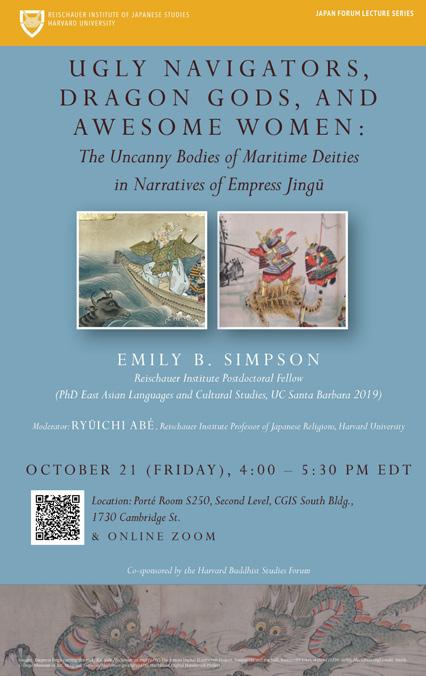
Emily Simpson, RIJS Postdoctoral Fellow
Ugly Navigators, Dragon Gods, and Awesome Women: The Uncanny Bodies of Maritime Deities in Narratives of Empress Jingū
Faculty Host: Ryūichi Abé (co-sponsored by HBSF)
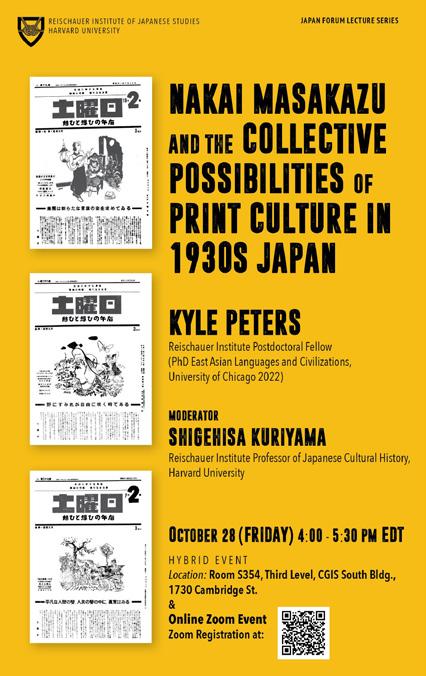
Kyle Peters, RIJS Postdoctoral Fellow
Nakai Masakazu and the Collective Possibilities of Print Culture in 1930s Japan
Faculty Host: Shigehisa Kuriyama
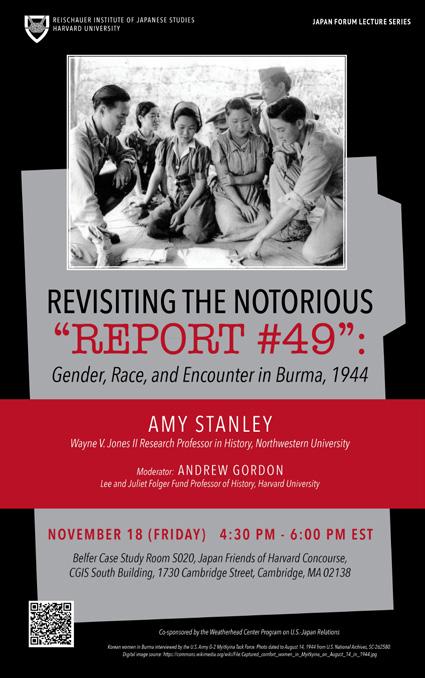
Amy Stanley, Northwestern University
Revisiting the Notorious “Report #49”: Gender, Race, and Encounter in Burma, 1944
Faculty Host: Andrew Gordon (co-sponsored by USJP)
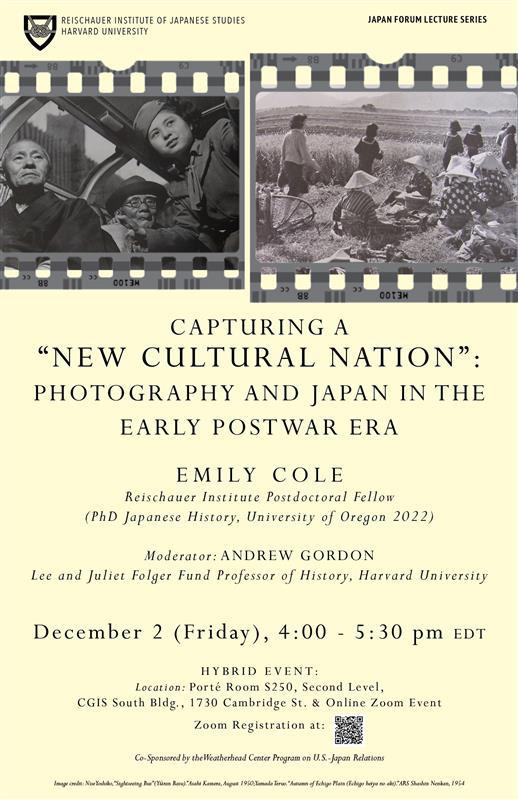
Emily Cole, RIJS Postdoctoral Fellow
Capturing a “New Cultural Nation”: Photography and Japan in the Early Postwar Era
Faculty Host: Andrew Gordon (co-sponsored by USJP)
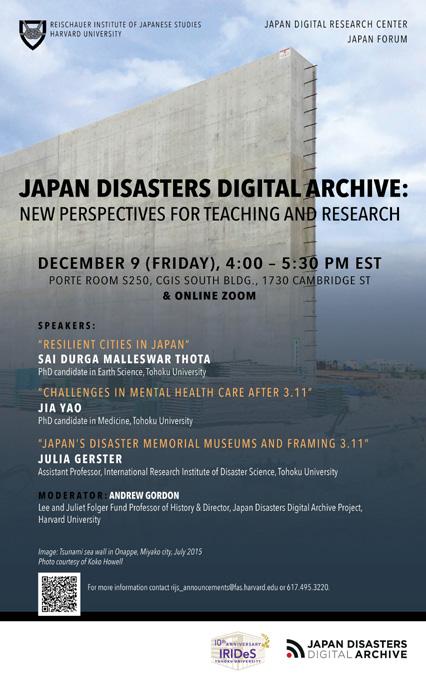
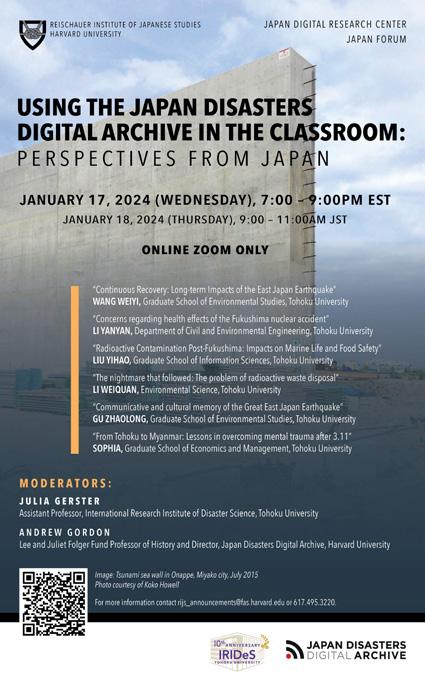
Sai Durga Malleswar Thota, Jia Yao, and Julia Gerster, Tohoku University
Japan Disasters Digital Archive: New Perspectives for Teaching and Research
Faculty Host: Andrew Gordon (co-sponsored by JDRC)
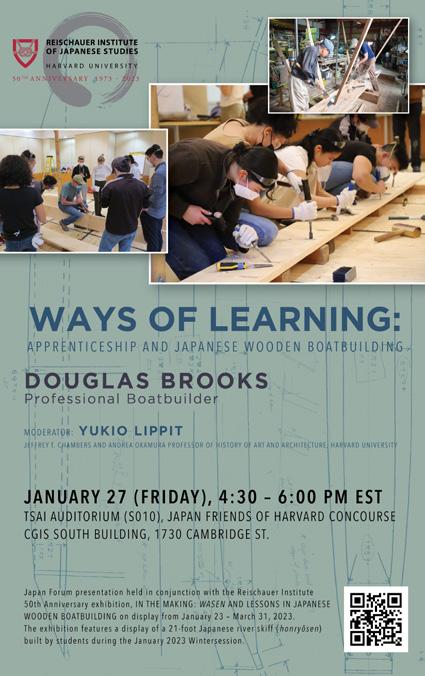
Douglas Brooks, Professional Boatbuilder
Ways of Learning: Apprenticeship and Japanese Wooden Boatbuilding
Faculty Host: Yukio Lippit
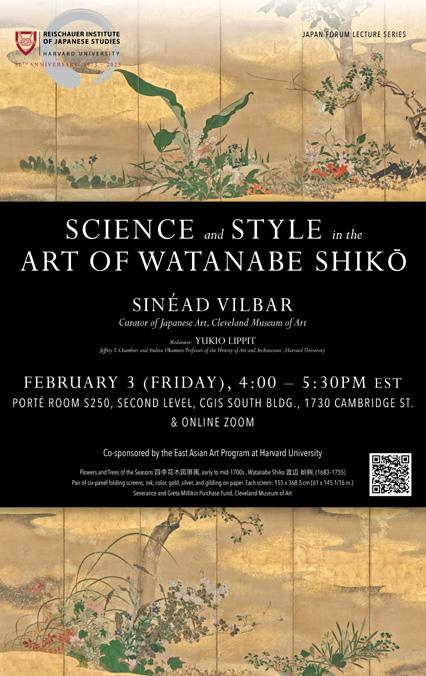
Sinéad Vilbar, Cleveland Museum of Art
Science and Style in the Art of Watanabe Shikō
Faculty Host: Yukio Lippit
(co-sponsored by HAA Department, East Asian Art Program)
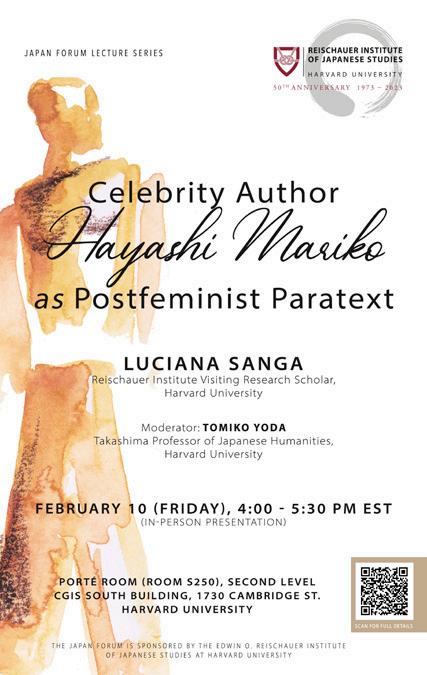
Luciana Sanga, RIJS Visiting Research Scholar
Celebrity Author Hayashi Mariko as Postfeminist Paratext
Faculty Host: Tomiko Yoda
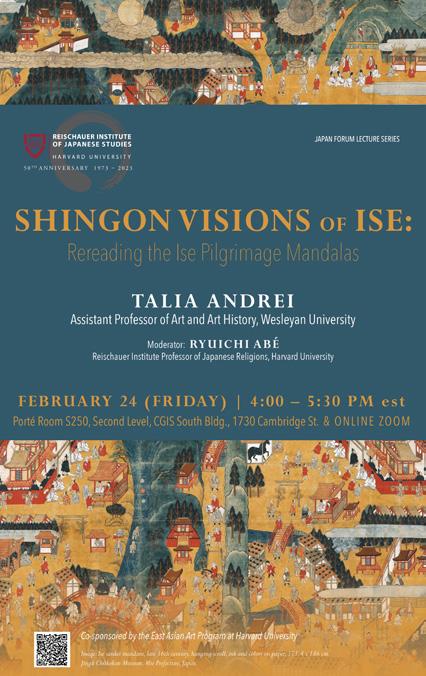
Talia Andrei, Wesleyan University
Shingon Visions of Isa: Rereading the Ise Pilgrimage Mandalas
Faculty Host: Ryūichi Abé
(co-sponsored by HAA Department, East Asian Art Program)
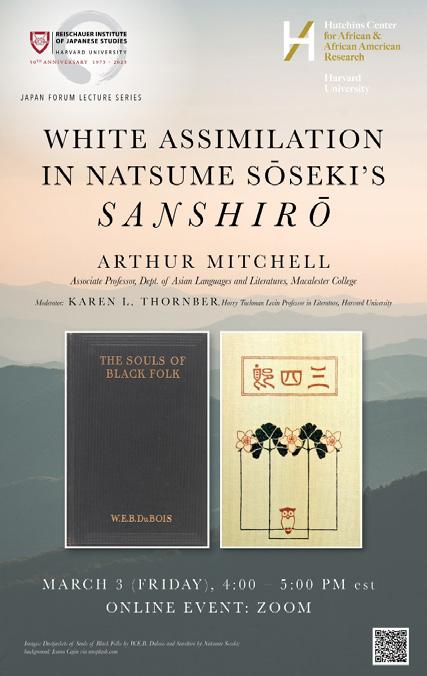
Arthur Mitchell, Macalester College
White Assimilation in Natsume Sōseki’s Sanshirō
Faculty Host: Karen Thornber (co-sponsored by Hutchins Center for African & African American Research)
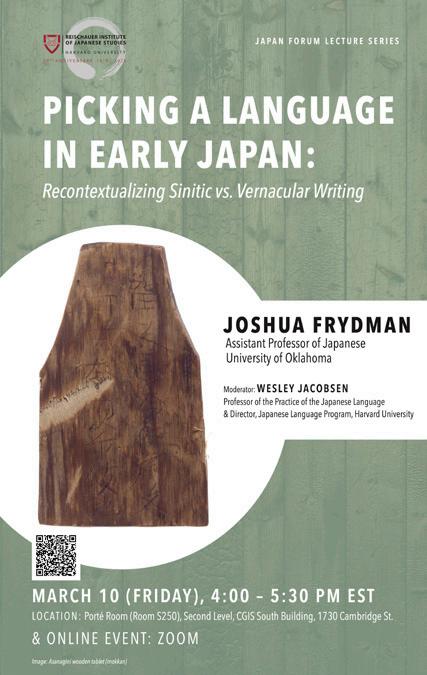
Joshua Frydman, University of Oklahoma
Picking a Language in Early Japan: Recontextualizing Sinitic vs. Vernacular Writing
Faculty Host: Wesley Jacobsen
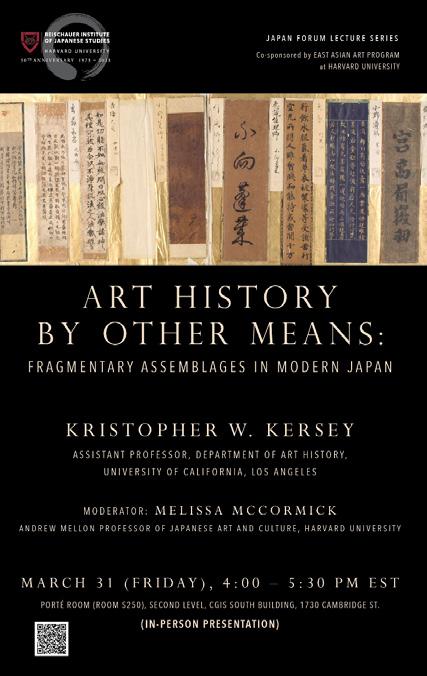
Kristopher Kersey, University of California Los Angeles
Art History by Other Means: Fragmentary Assemblages in Modern Japan
Faculty Host: Melissa McCormick (co-sponsored by HAA Department, East Asian Art Program)
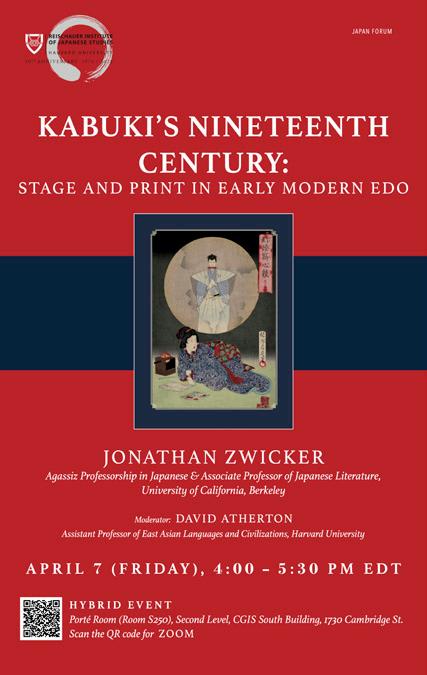
Jonathan Zwicker, University of California Berkeley
Kabuki’s Nineteenth Century: Stage and Print in Early Modern Edo
Faculty Host: David Atherton
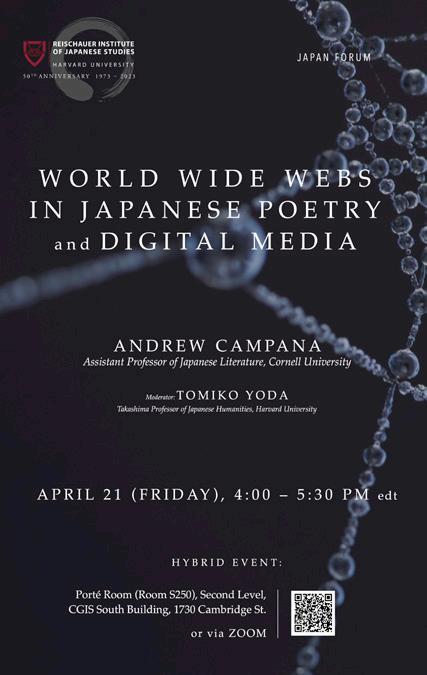
Andrew Campana, Cornell University
World Wide Webs in Japanese Poetry and Digital Media
Faculty Host: Tomiko Yoda
2023-24
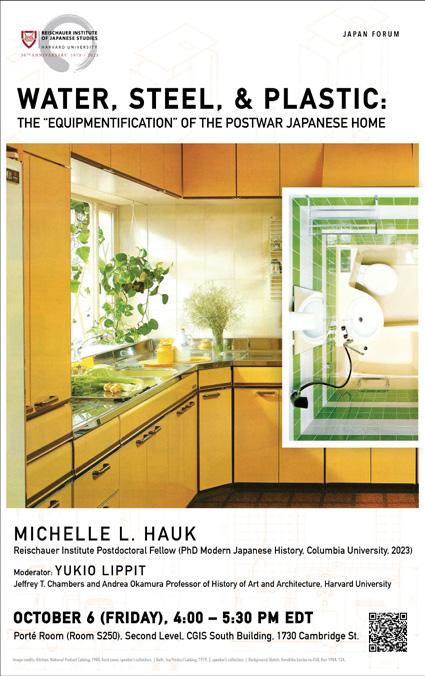
Michelle Hauk, RIJS Postdoctoral Fellow Water, Steel & Plastic: The “Equipmentification” of the Postwar Japanese Home Faculty Host: Yukio Lippit
Matthew Keller, RIJS Postdoctoral Fellow
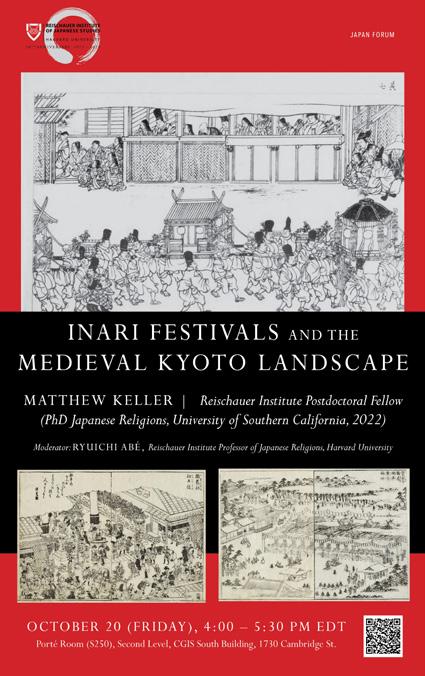
Inari Festivals and the Medieval Kyoto Landscape Faculty Host: Ryūichi Abé
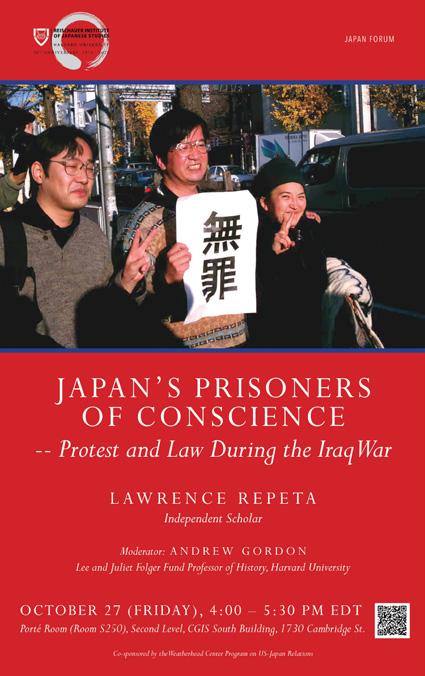
Lawrence Repeta, Independent Scholar Japan’s Prisoners of Conscience – Protest and Law During the Iraq War Faculty Host: Andrew Gordon (co-sponsored by USJP)
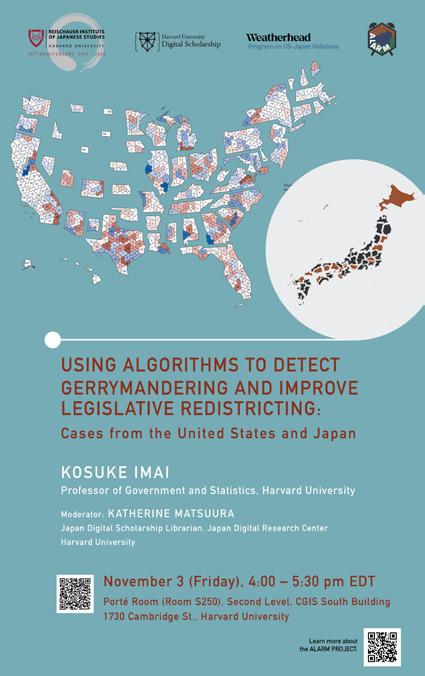
Kosuke Imai, RIJS Postdoctoral Fellow
Using Algorithms to Detect Gerrymandering and Improve Legislative Redistricting: Cases from the United States and Japan
Moderator: Katherine Matsuura, JDRC (co-sponsored by Digital Scholarship Support Group, ALARM Project, and USJP)
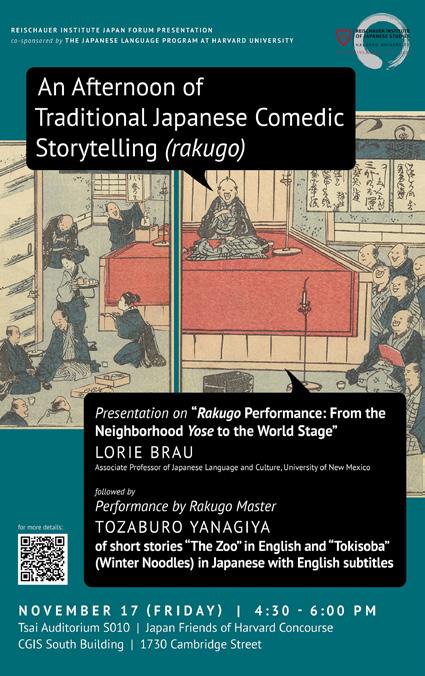
Lorie Brau, University of New Mexico
An Afternoon of Traditional Japanese Comedic Storytelling (Rakugo) followed by Rakugo Master Tozaburo Yanagiya performance of short stories “The Zoo” and “Tokisoba” (“Winter Noodles”)
Faculty Host: Shigehisa Kuriyama (co-sponsored by EALC Department, JLP)
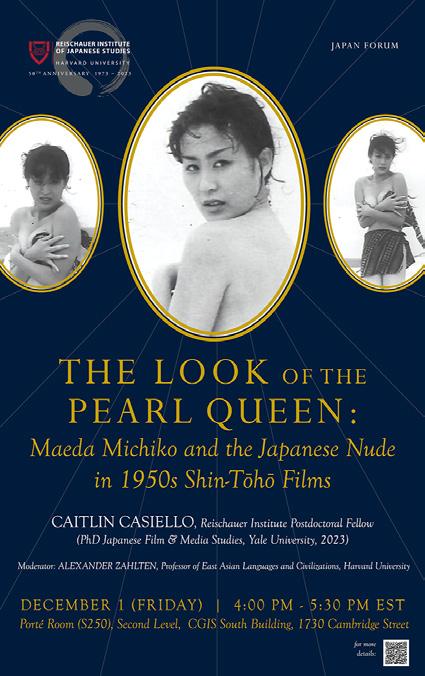
Caitlin Casiello, RIJS Postdoctoral Fellow
The Look of the Pearl Queen: Maeda Michiko and the Japanese Nude in 1950s Shin-Tōhō Films
Faculty Host: Alexander Zahlten
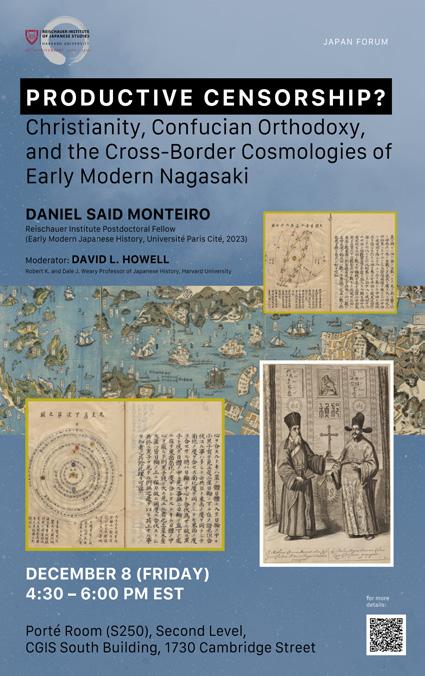
Daniel Said Monteiro, RIJS Postdoctoral Fellow
Productive Censorship? Christianity, Confucian Orthodoxy, and the Cross-Border Cosmologies of Early Modern Nagasaki Faculty Host: David Howell
Masaski Arakawa, Columbia University Visiting Professor, Gakushuin University
Fusing East and West in Clay: Itaya Hazan, A Master Ceramicist of Modern Japan
Faculty Host: Yukio Lippit (co-sponsored by JDRC)
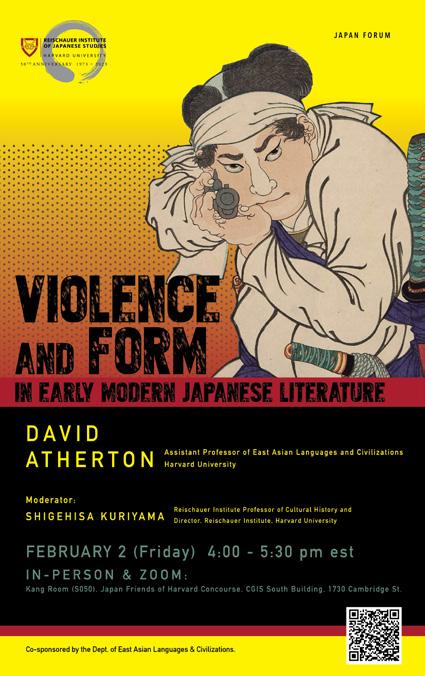
David Atherton, Harvard University Violence and Form in Early Modern Japanese Literature
Faculty Host: Shigehisa Kuriyama (co-sponsored by EALC Department)
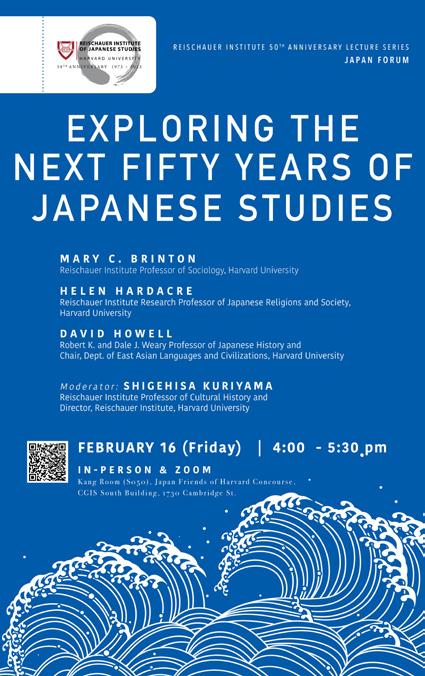
Mary Brinton, Helen Hardacre, and David Howell, Harvard University
Exploring the Next Fifty Years of Japanese Studies
Moderator: Shigehisa Kuriyama
(Reischauer Institute 50th Anniversary Lecture Series)
Mary Brinton, Harvard University
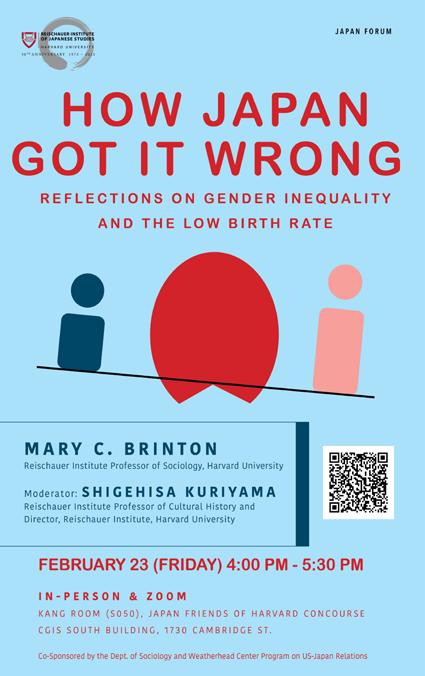
How Japan Got It Wrong: Reflections on Gender Inequality and the Low Birth Rate
Faculty Host: Shigehisa Kuriyama (co-sponsored by Sociology Department and USJP)
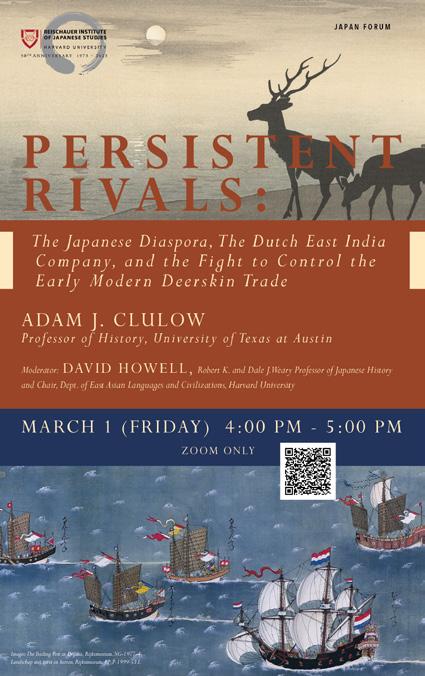
Adam Clulow, University of Texas Austin
Persistent Rivals: The Japanese Diaspora, The Dutch East India Company, and the Fight to Control the Early Modern Deerskin Trade
Faculty Host: David Howell
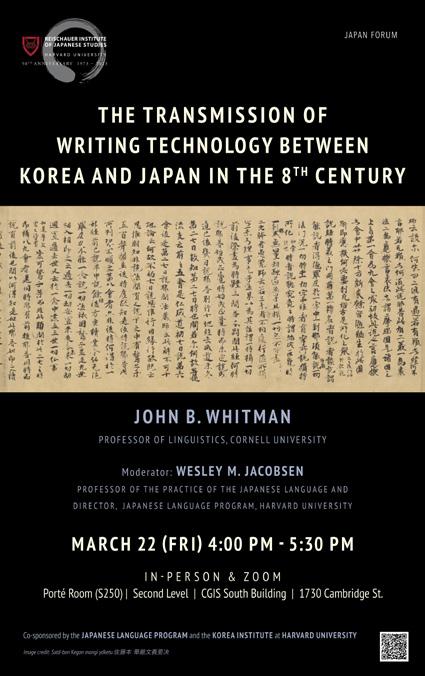
John Whitman, Cornell University
The Transmission of Writing Technology between Korea and Japan in the 8th Century
Faculty Host: Wesley Jacobsen (co-sponsored by EALC Department, JLP and KI)
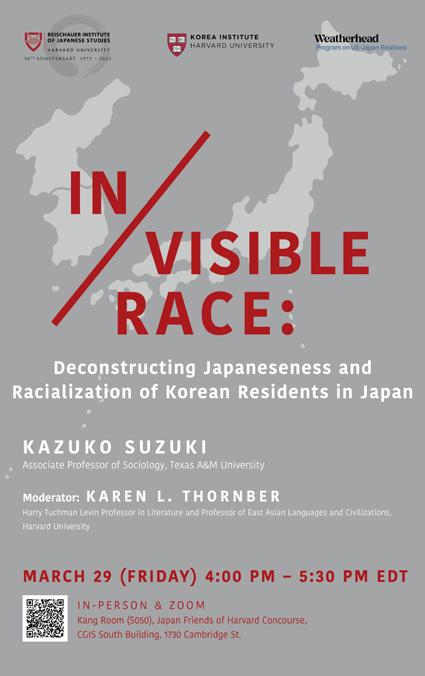
Kazuko Suzuki, Texas A&M University
Invisible Race: Deconstructing Japaneseness and Racialization of Korean Residents in Japan
Faculty Host: Karen Thornber (co-sponsored by KI and USJP)
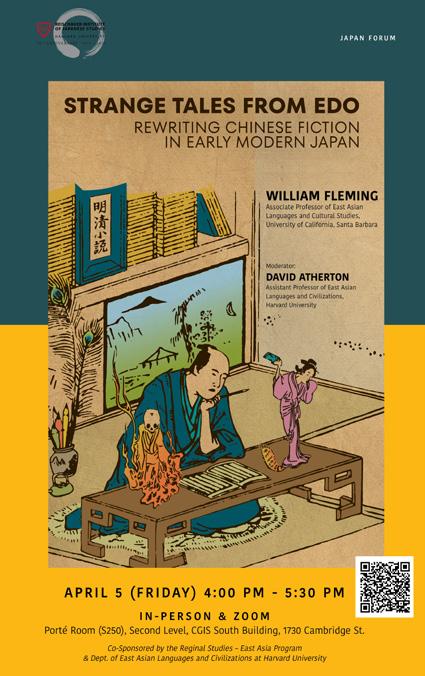
William Fleming, University of California Santa Barbara
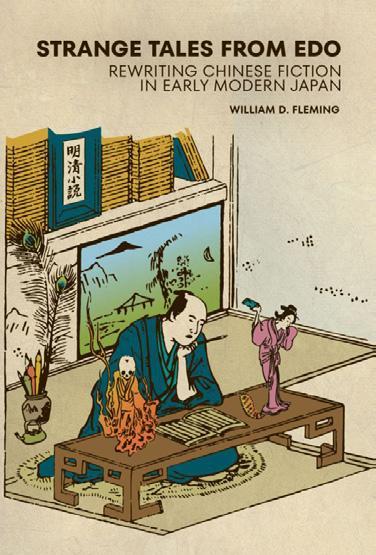
Strange Tales from Edo: Rewriting Chinese Fiction in Early Modern Japan
Faculty Host: David Atherton (co-sponsored by EALC Department and RSEA)
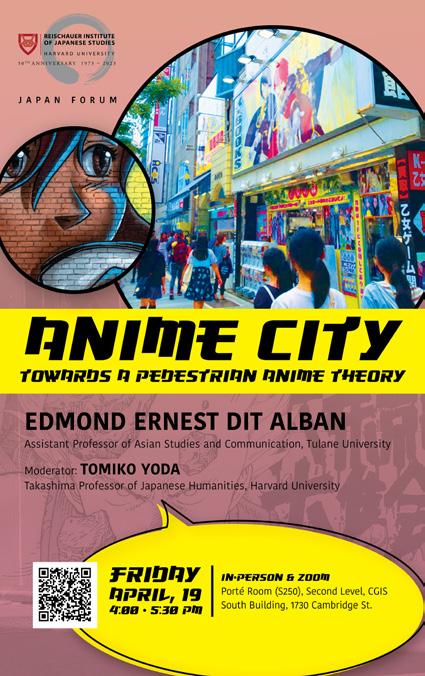
Edmond Ernest dit Alban, Tulane University
The Anime City: Towards a Pedestrian Anime Theory
Faculty Host: Tomiko Yoda
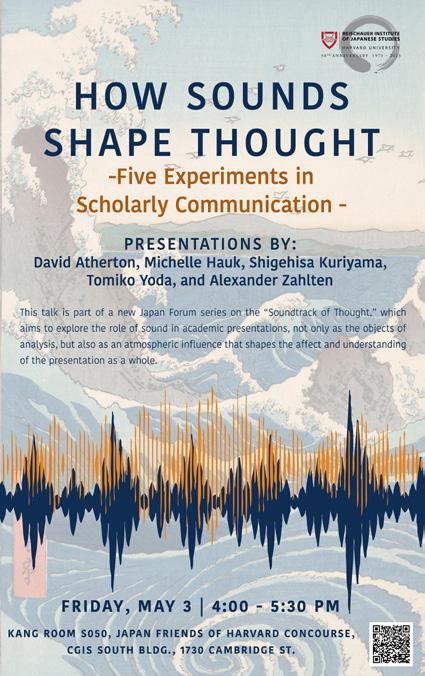
David Atherton, Michelle Hauk (RIJS Postdoctoral Fellow), Shigehisa Kuriyama, Tomiko Yoda, and Alexander Zahlten, Harvard University
How Sounds Shape Thought – Five Experiments in Scholarly Communication Moderator: Shigehisa Kuriyama
(Reischauer Institute Japan Forum Sound Series)
Other Seminars
Each year the Institute organizes and/or sponsors a variety of seminars and lectures on topics related to Japan. A number of these events are co-sponsored with other departments and centers, as indicated below. In chronological order, the 2022-24 seminars are as follows:
2022-23
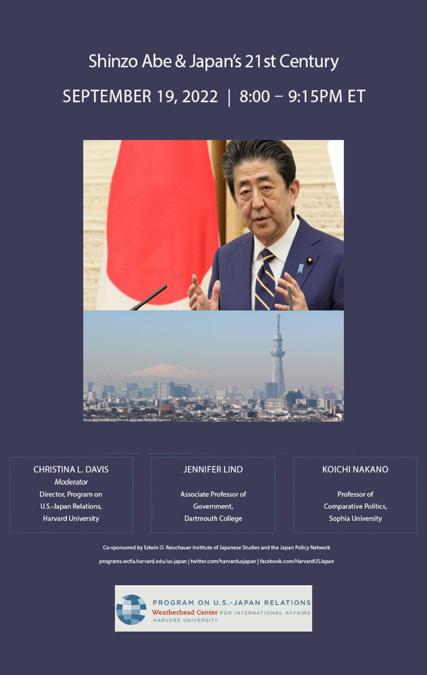
Jennifer Lind, Dartmouth College
Koichi Nakano, Sophia University
Shinzo Abe & Japan’s 21st Century
Faculty Host: Christina Davis (USJP Seminar Series co-sponsored by RIJS)
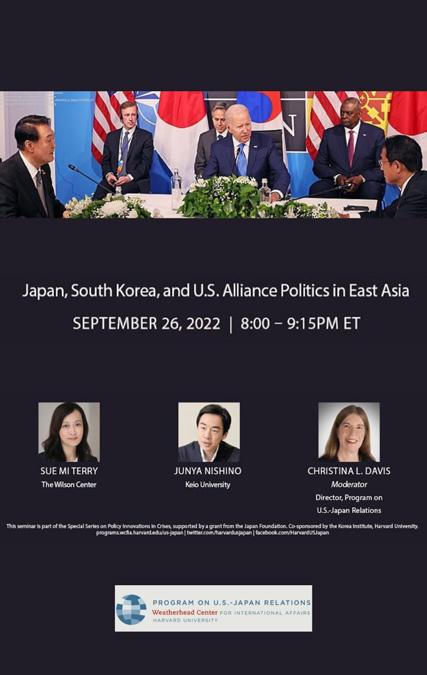
Sue Mi Terry, The Wilson Center
Junya Nishino, Keio University
Japan, South Korea, and U.S. Alliance Politics in East Asia
Faculty Host: Christina Davis (USJP Seminar Series)
Jae-Jung Suh, HYI Visiting Scholar, International Christian University
Diatribes and Dialogues over the Past: “History Problems” and Regional Orders in Northeast Asia
Faculty Host: Paul Chang (HYI Visiting Scholar Talk co-sponsored by FC, HUAC, and RIJS)
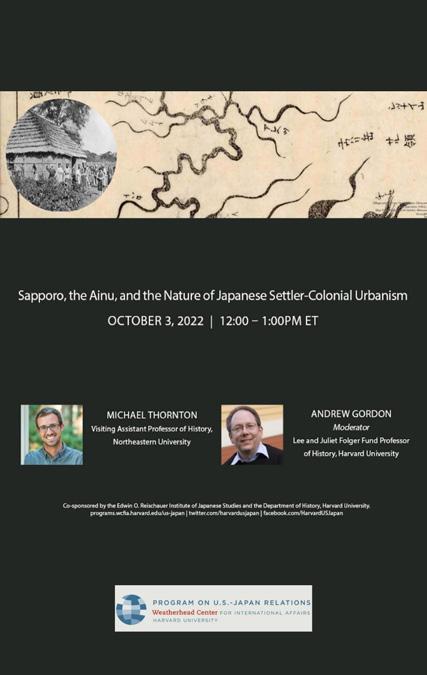
Michael Thornton, Northeastern University
Sapporo, the Ainu, and the Nature of Japanese Settler-Colonial Urbanism
Faculty Host: Andrew Gordon (USJP Seminar Series co-sponsored by RIJS)
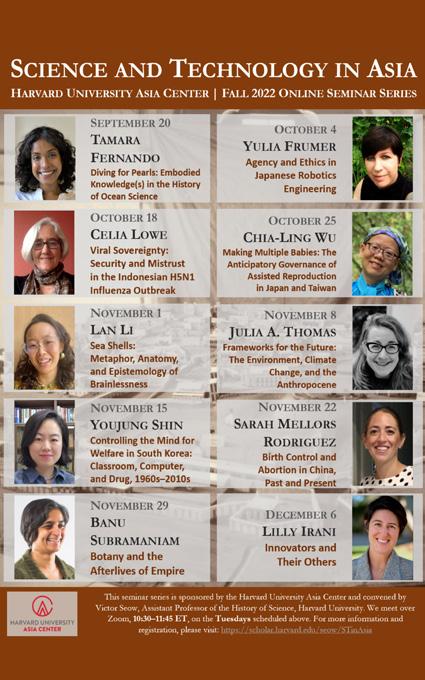
Yulia Frumer, Johns Hopkins University
Agency and Ethics in Japanese Robotics Engineering
Faculty Host: Victor Seow (HUAC Science & Technology in Asia Seminar Series co-sponsored by RIJS)
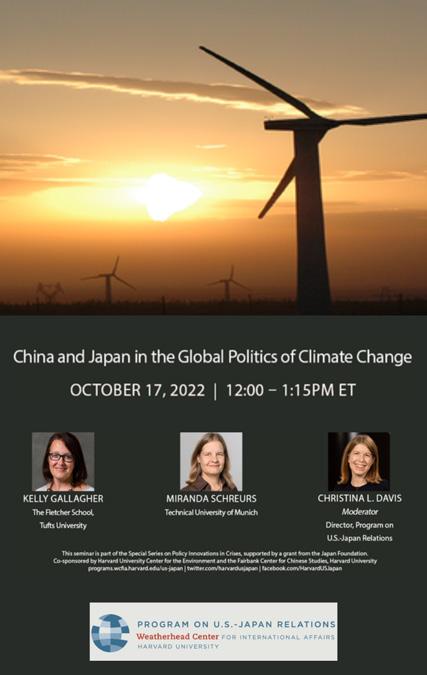
Kelly Gallagher, Tufts University
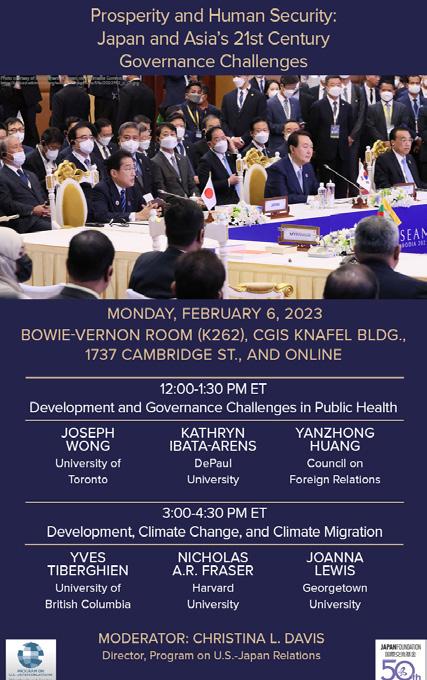
Miranda Schreurs, Technical University of Munich Panel: China and Japan in the Global Politics of Climate Change
Faculty Host: Christina Davis (USJP Seminar Series)
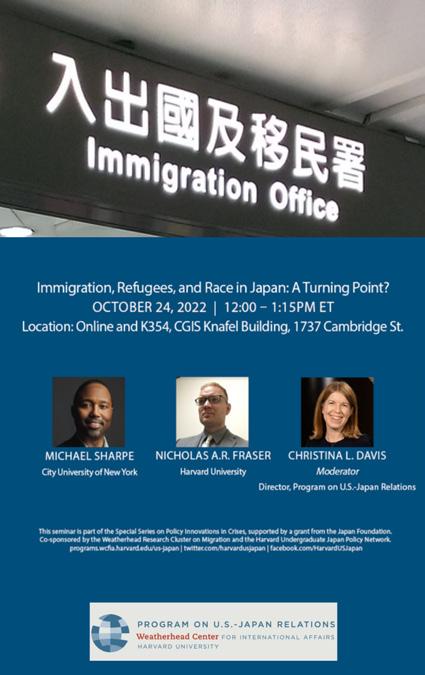
Nicholas A. R. Fraser, USJP Policy Innovations Fellow
Michael Sharpe, York College (CUNY)
Panel: Immigration, Refugees, and Race in Japan: A Turning Point?
Faculty Host: Christina Davis (USJP Seminar Series)
Chia-Ling Wu, National Taiwan University
Making Multiple Babies: The Anticipatory Governance of Assisted Reproduction in Japan and Taiwan
Faculty Host: Victor Seow (HUAC Science & Technology in Asia Seminar Series co-sponsored by RIJS)
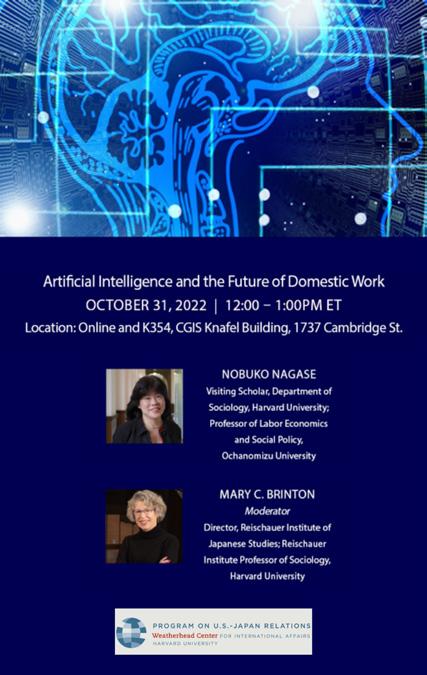
Nobuko Nagase, Ochanomizu University
Artificial Intelligence and the Future of Domestic Work
Faculty Host: Mary Brinton (USJP Seminar Series)
Hikaru Yamagishi, USJP Postdoctoral Fellow
Kentaro Yamamoto, USJP Academic Associate, Hokkai-Gakuen University
Opposition Party Coordination and Japanese Democracy
Faculty Host: Christina Davis (USJP Associates Panel)
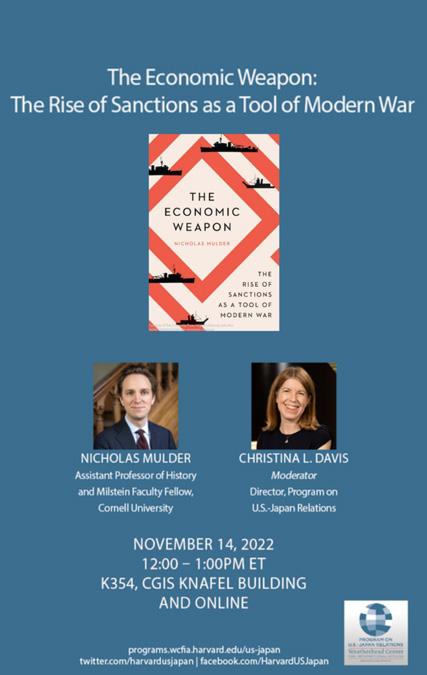
Nicholas Mulder, Cornell University
The Economic Weapon: The Rise of Sanctions as a Tool of Modern War
Faculty Host: Christina Davis (USJP Seminar Series)
Takeshi Matsui, HYI Visiting Scholar, Hitotsubashi University
“Sushi is the Japanese Counterpart of the European Sandwich”: The Introduction and Acceptance of Japanese Cuisine in the United States
Faculty Host: Michèle Lamont
(HYI Visiting Scholar Talk co-sponsored by RIJS)
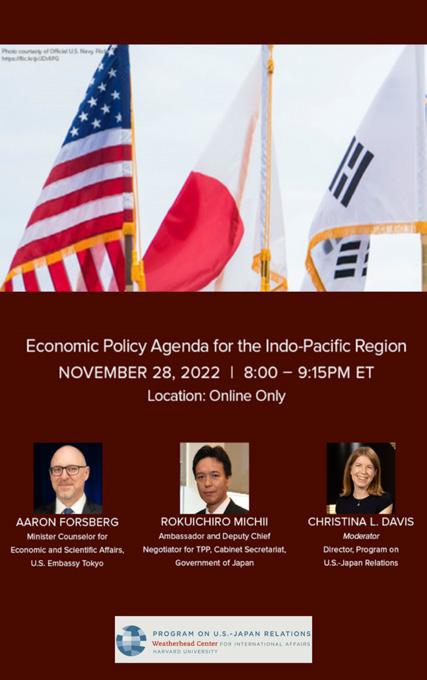
Aaron Forsberg, US Embassy Tokyo
Rokuichiro Michii, Cabinet Secretariat, Government of Japan
Economic Policy Agenda for the Indo-Pacific Region
Faculty Host: Christina Davis (USJP Seminar Series)
Jesse LeFebvre, RIJS Dissertation Completion Fellow and Graduate Student Associate
Taking Refuge in Karma: The Pilgrimage to Hasedera and Kannon’s Miraculous Communities of Everlasting Disaster (Harvard Buddhist Studies Forum Lecture Series co-sponsored by RIJS)
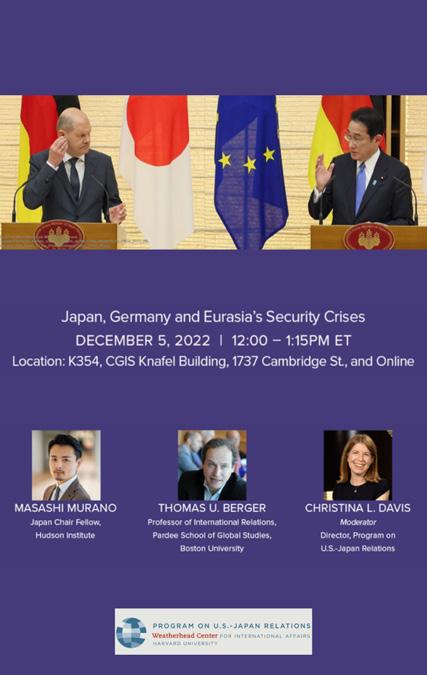
Masashi Murano, Hudson Institute
Thomas Berger, Boston University
Japan, Germany, and Eurasia’s Security Crises
Faculty Host: Christina Davis (USJP Seminar Series)
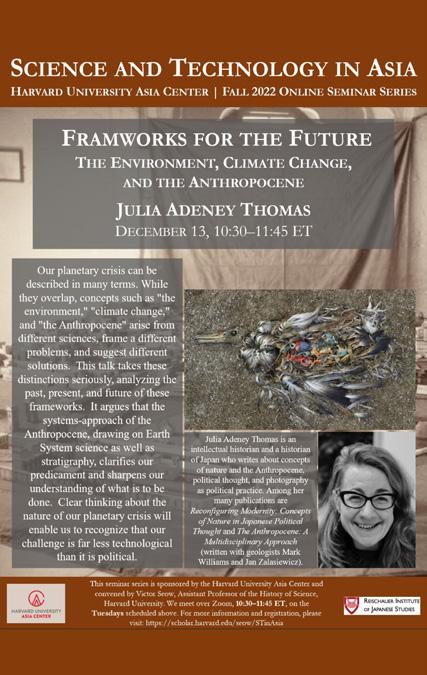
Tsuyoshi Namigata, HYI Visiting Scholar, Kyushu University
Frameworks for the Future: The Environment, Climate Change, and the Anthropocene
Faculty Host: Victor Seow (HUAC Science & Technology in Asia Seminar Series co-sponsored by RIJS)
Mary Brinton, Harvard University
Why Does Japanese Fertility Remain So Low? Lessons from a Misguided Policy Approach
Faculty Host: Christina Davis (USJP Seminar Series co-sponsored by RIJS)
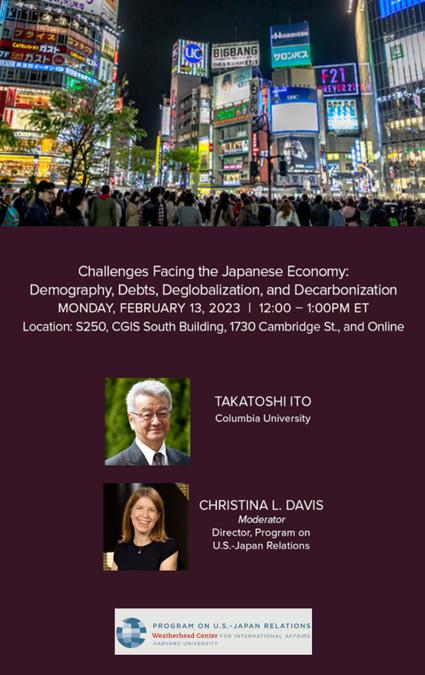
Takatoshi Ito, Columbia Business School
Challenges Facing the Japanese Economy: Demography, Debts, Deglobalization, and Decarbonization
Faculty Host: Christina Davis
(USJP Seminar Series co-sponsored by the Harvard Undergraduate Japan Policy Network)
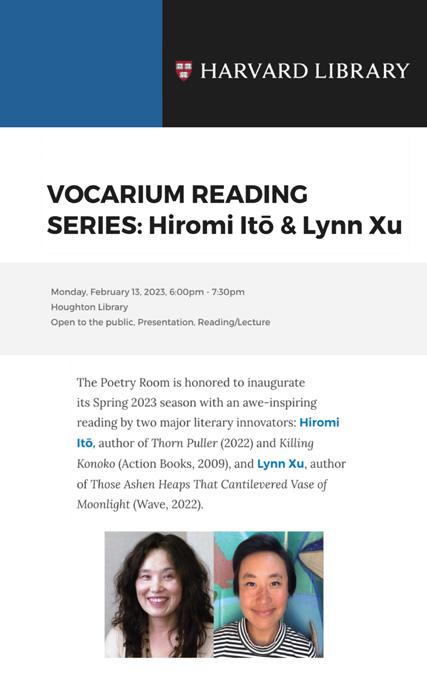
Hiromi Itō, Author Lynn Xu, Author
Vocarium Reading Series: Hiromi Itō & Lynn Xu
Introducer: Sawako Nakayasu, Author
Translator: Jeffrey Angles, Western Michigan University
(Houghton Library Woodberry Poetry Room Vocarium Reading Series co-sponsored by RIJS)
Aya Homei, University of Manchester
The Japanese Population between Science and State Faculty Host: Victor Seow (HUAC Science & Technology in Asia Seminar Series co-sponsored by RIJS)
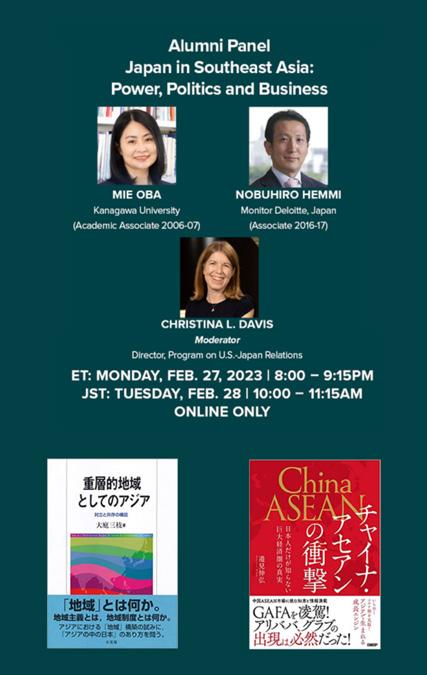
Mie Oba, Kanagawa University
Nobuhiro Hemmi, Monitor Deloitte Alumni Panel: Japan in Southeast Asia: Power, Politics, and Business
Faculty Host: Christina Davis (USJP Seminar Series co-sponsored by HUAC)
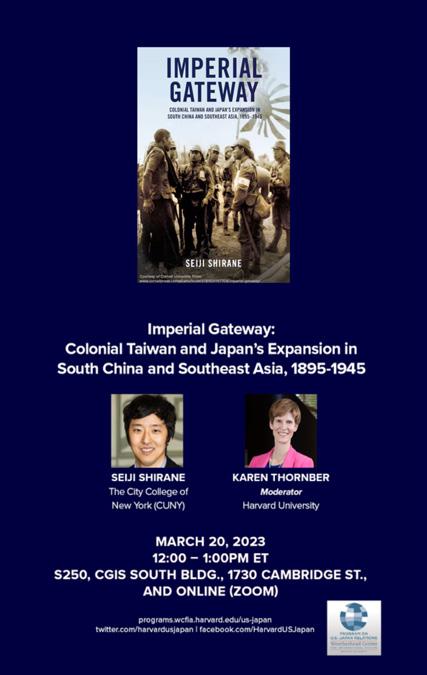
Seiji Shirane, The City College of New York (CUNY)
Imperial Gateway: Colonial Taiwan and Japan’s Expansion in South China and Southeast Asia, 1895-1945
Faculty Host: Karen Thornber (USJP Seminar Series co-sponsored by HUAC and RIJS)
David Fedman, University of California Irvine
Dai-Ōji: The Ōji Paper Company and Japan’s Pulp Pipeline in Asia
Faculty Host: Victor Seow (HUAC Science & Technology in Asia Seminar Series co-sponsored by RIJS)
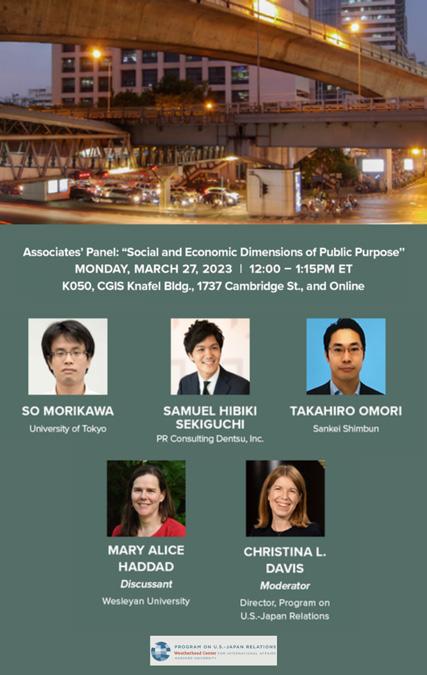
So Morikawa, USJP Academic Associate, University of Tokyo
Samuel Hibiki Sekiguchi, USJP Associate, PR Consulting Dentsu, Inc.
Takahiro Omori, USJP Associate, The Sankei Shimbun Social and Economic Dimensions of Public Purpose Faculty Host: Christina Davis (USJP Associates Panel)
Petros Mavroidis, Columbia Law School
Mark Wu, Harvard Law School; Director, Fairbank Center
Industrial Policy in the Name of National Security: What Role for the WTO?
Faculty Host: Christina Davis (USJP Seminar Series co-sponsored by EALS, the Harvard Undergraduate Japan Policy Network, HKS Japan Caucus, and HKS Mossavar-Rahmani Center)
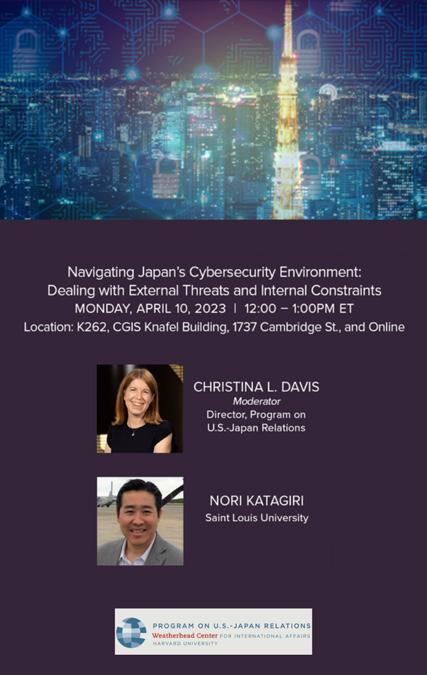
Nori Katagiri, Saint Louis University
Navigating Japan’s Cybersecurity Environment: Dealing with External Threads and Internal Constraints
Faculty Host: Christina Davis (USJP Seminar Series)
Mikael Bauer, McGill University
Under the Gaze of Jion: Kōfukuji’s Heian Period Internal Ritual Network (Harvard Buddhist Studies Forum co-sponsored by the Committee on the Study of Religion, Mahindra Humanities Center, and RIJS)
Kate McDonald, University of California Santa Barbara
The Labor of Transport: Body and Machine in Japan’s Postwar
Consumer Society
Faculty Host: Victor Seow
(HUAC Science & Technology in Asia Seminar Series co-sponsored by RIJS)
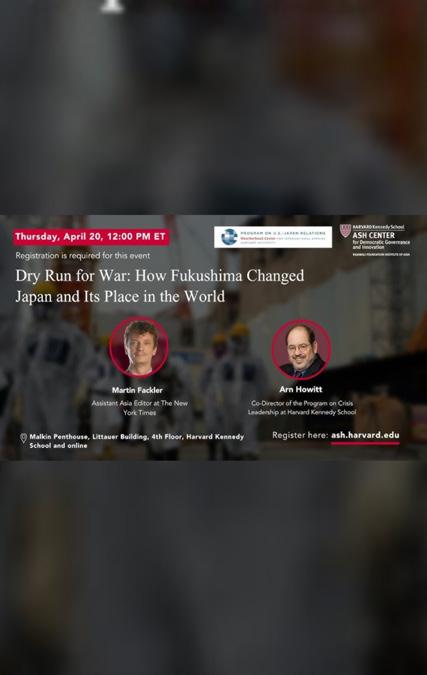
Martin Fackler, HKS Ash Center Research Fellow, The New York Times
Dry Run for War: How Fukushima Changed Japan and Its Place in the World
Faculty Host: Arn Howitt, HKS (HKS Ash Center Rajawali Foundation Institute Event co-sponsored by RIJS
Jaehwan Hyun, Pusan National University
Entangled Genetic Histories of Bionation Building in Japan and South Korea
Faculty Host: Victor Seow (HUAC Science & Technology in Asia Seminar Series co-sponsored by RIJS)
Hitomi Yoshio, HYI Visiting Scholar, Waseda University
Women’s Voices in Modern Japan: Translation, Canonization, and Literary History
Faculty Host: Tomiko Yoda
(HYI Visiting Scholar Talk co-sponsored by RIJS)
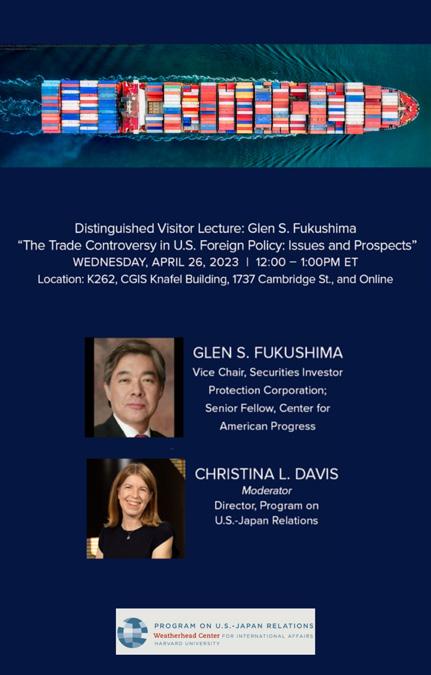
Glen Fukushima, Former Deputy Assistant U.S. Trade Representative for Japan and China
Distinguished Visitor Lecture: The Trade Controversy in U.S. Foreign Policy: Issues and Prospects
Faculty Host: Christina Davis
(USJP Seminar Series co-sponsored by the Harvard Undergraduate Japan Policy Network)
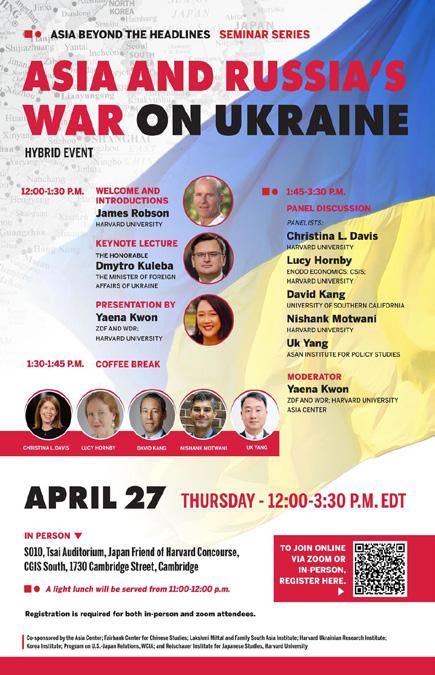
James Robson, Director, Harvard University Asia Center
The Honorable Dmytro Kuleba, Ukraine Minister of Foreign Affairs
Yaena Kwon, HUAC Fellow, ZDF and WDR Broadcasting Companies
Christina Davis, Director, Program on U.S.-Japan Relations, Harvard University
Lucy Hornby, FC Visiting Scholar, Enodo Economics
David Kang, University of Southern California
Nishank Motwani, MPA Student, Harvard Kennedy School
Uk Yang, Asan Institute for Policy Studies
Asia and Russia’s War on Ukraine
(Asia Beyond the Headlines Seminar Series co-sponsored by FC, Harvard
Ukranian Research Institute, HUAC, KI, MI, USJP, WCFIA, and RIJS)
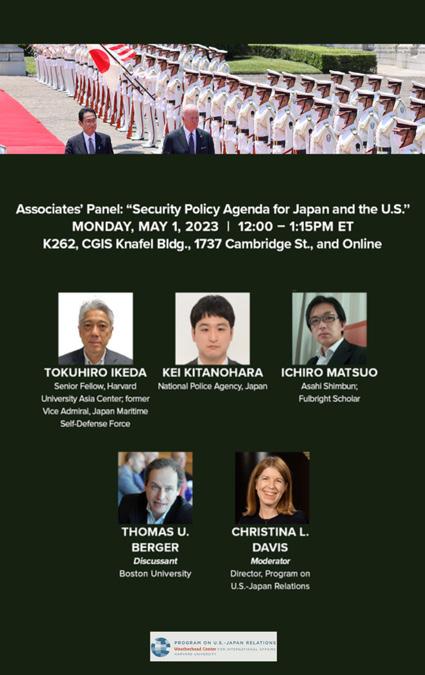
Kei Kitanohara, USJP Associate, Japan National Police Agency
Ichiro Matsuo, USJP Associate, The Asahi Shimbun
Security Policy Agenda for Japan and the U.S.
Faculty Host: Christina Davis
(USJP Associates Panel co-sponsored by HUAC)
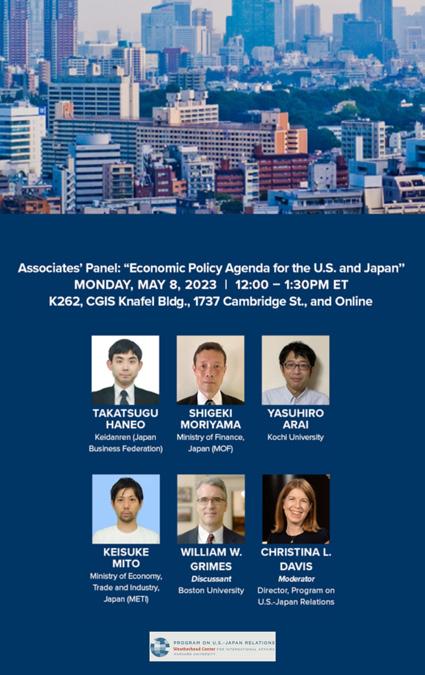
Takatsugu Haneo, USJP Associate, Japan Business Federation
Shigeki Moriyama, USJP Associate, Japan Ministry of Finance
Yasuhiro Arai, USJP Academic Associate, Kochi University
Keisuke Mito, USJP Associate, Japan Ministry of Economy, Trade, and Industry
Macroeconomic and Innovation Policis in the US and Japan Discussant: William Grimes, Boston University
Faculty Host: Christina Davis (USJP Associates Panel)
2023-24
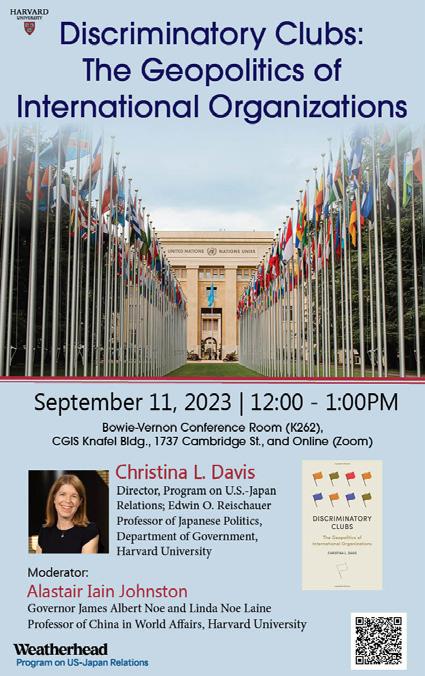
Christina Davis, Harvard University
Discriminatory Clubs: The Geopolitics of International Organization Faculty Host: Alastair Iain Johnston (USJP Seminar Series co-sponsored by RIJS)
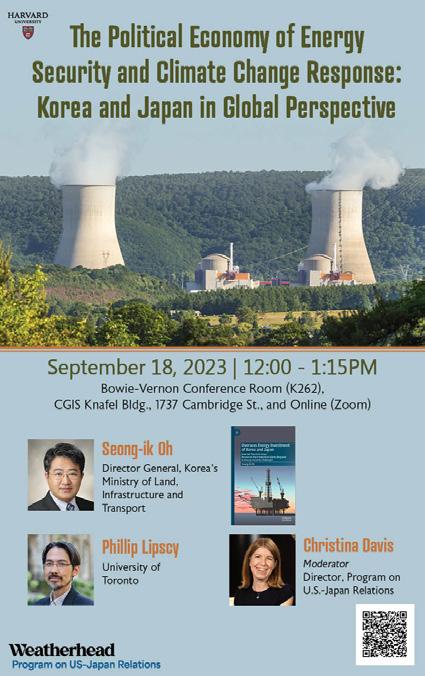
Seong-Ik Oh, Korea Ministry of Land, Infrastructure, and Transport
Phillip Lipscy, University of Toronto Panel: The Political Economy of Energy Security and Climate Change Response: Korea and Japan in Global Perspective Faculty Host: Christina Davis (USJP Seminar Series)
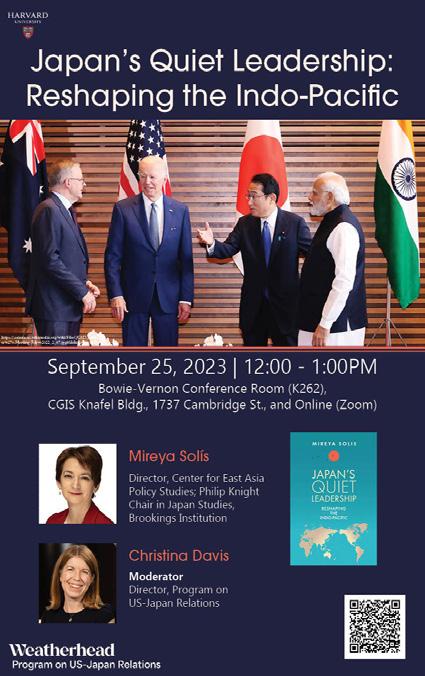
Mireya Solis, The Centre for Policy Studies
Japan’s Quiet Leadership: Reshaping the Indo-Pacific Faculty Host: Christina Davis
(USJP Special Series on Policy Innovations in Crises, supported by the Japan Foundation, co-sponsored by the Harvard Undergraduate Japan Policy Network and HUAC)
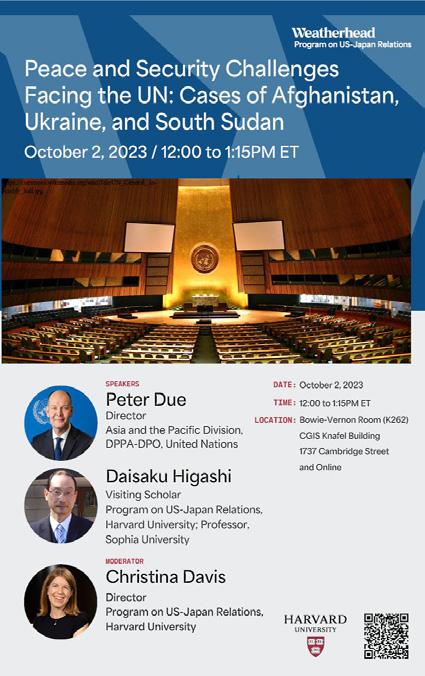
Peter Due, United Nations
Daisaku Higashi, USJP Visiting Scholar, Sophia University Panel: Peace and Security in Asia: A Perspective from the UN Faculty Host: Christina Davis (USJP Special Series on Policy Innovations in Crises, supported by the Japan Foundation, co-sponsored by HUAC)
Norihisa Baba, University of Tokyo Buddhist Canon as Open Text Collection: New Approach to the Four Āgamas (Harvard Buddhist Studies Forum co-sponsored by RIJS)
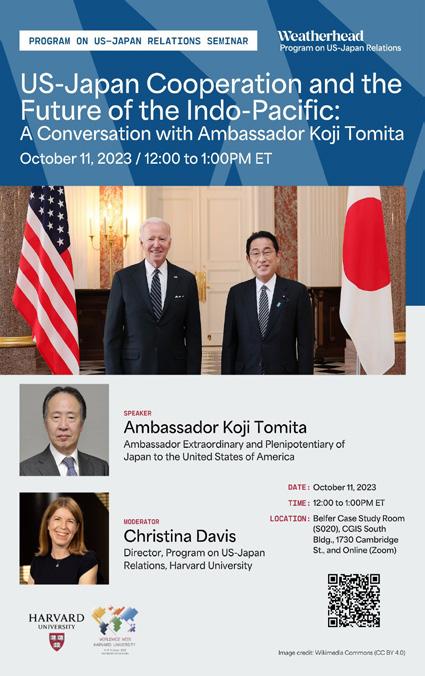
Ambassador Koji Tomita, Ambassador Extraordinary and Plenipotentiary of Japan to the United States of America
US-Japan Cooperation and the Future of the Indo-Pacific: A Conversation with Ambassador Koji Tomita Faculty Host: Christina Davis
(USJP Seminar Series co-sponsored by the Japan Society of Boston, Harvard Undergraduate Japan Policy Network, and RIJS)
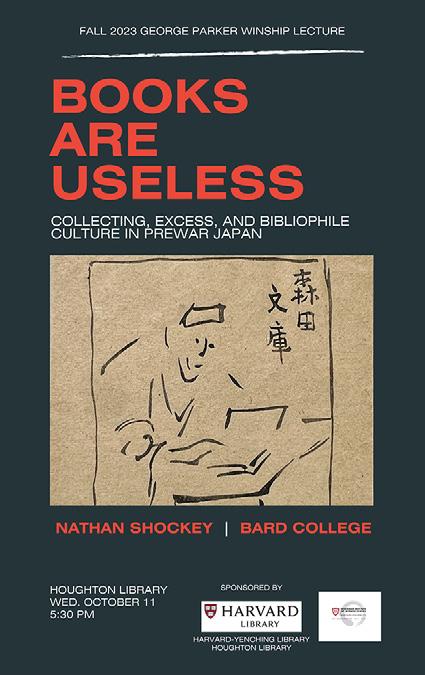
Nathan Shockey, Bard College
“Books are Useless”: Collecting, Excess, and Bibliophile Culture in Prewar Japan
(Houghton Library Winship Lecture co-sponsored by HYI and RIJS)
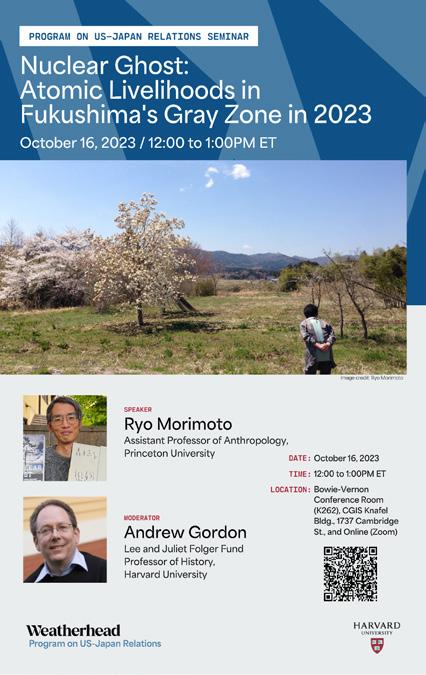
Ryo Morimoto, Princeton University
Nuclear Ghost: Atomic Livelihoods in Fukushima’s Gray Zone in 2023
Faculty Host: Andrew Gordon
(USJP Special Series on Policy Innovations in Crises, supported by the Japan Foundation, co-sponsored by the Harvard Undergraduate Japan Policy Network and RIJS)
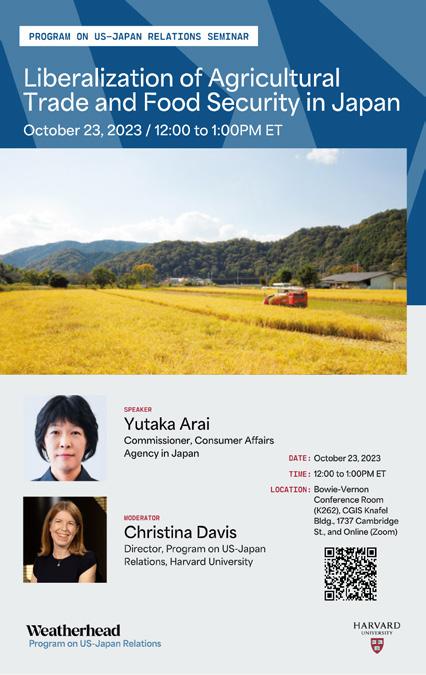
Yutaka Arai, Japan Consumer Affairs Agency
Food Security and U.S.-Japan Agricultural Trade
Faculty Host: Christina Davis
(USJP Seminar Series co-sponsored by the Japan Society of Boston and HKS Mossavar-Rahmani Center)
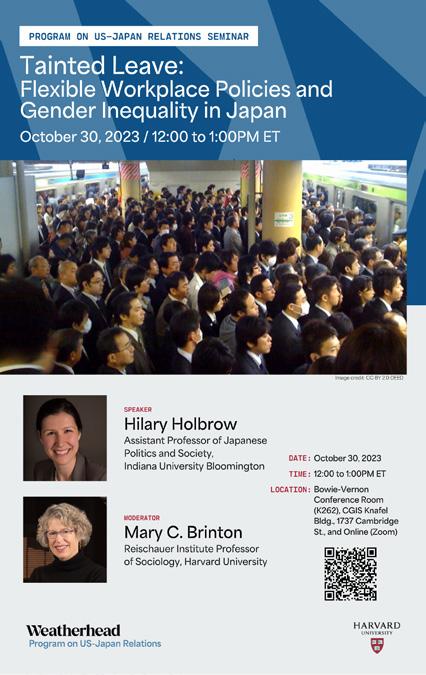
Tainted Leave: Flexible Workplace Policies and Gender Inequality in Japan
Faculty Host: Mary Brinton
(USJP Seminar Series co-sponsored by the HKS Wiener Center, Sociology Department, and RIJS)
Michael Berman, Brown University
Heart of a Heartless World: Compassion, Alienation, and the Politics of Listening in the Making of Contemporary Japan (Harvard Anthropology Seminar Series)
Hiroko Kumaki, Oberlin College
Becoming Fūkei: Living Well while Reasonably Exposed after Fukushima (Harvard Anthropology Seminar Series)
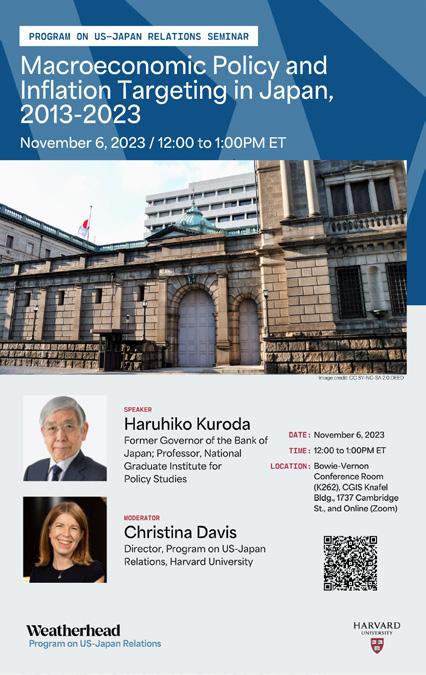
Haruhiko Kuroda, National Graduate Institute for Policy Studies
Macroeconomic Policy and Inflation Targeting in Japan, 2013-2023
Faculty Host: Christina Davis (USJP Special Series on Japan Economic Statecraft co-sponsored by the Japan Society of Boston, HKS Mossavar-Rahmani Center, Harvard Undergraduate Japan Policy Network, and RIJS)
Eric Haruki Swanson, Loyola Marymount University
Animating the Salvific Resonance of the Virtuous Prince: Jien (1155-1225) and the Worship of Prince Shōtoku in Medieval Japan (Harvard Buddhist Studies Forum co-sponsored by RIJS)
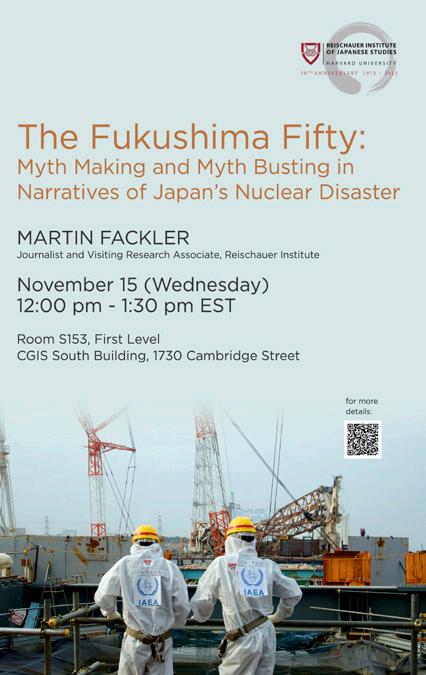
Martin Fackler, Journalist and RIJS Visiting Research Associate
The Fukushima Fifty: Myth Making and Myth Busting in Narratives of Japan’s Nuclear Disaster
Faculty Host: Andrew Gordon (Special RIJS Lecture)
David Wolff, Hokkaido University
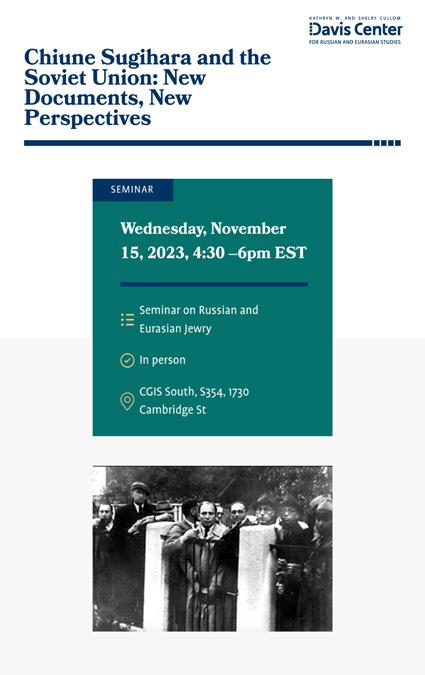
Sugihara Chiune and the Soviet Union: New Documents, New Perspectives
Moderator: Maxim D. Shrayer, Boston College
(Davis Center Seminar on Russian and Eurasian Jewry co-sponsored by the Center for Jewish Studies and RIJS)
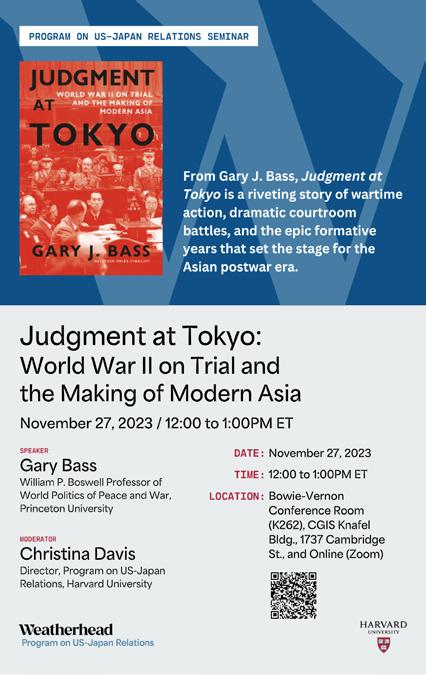
Gary Bass, Princeton University
Judgment at Tokyo: World War II on Trial and the Making of Modern Asia
Faculty Host: Christina Davis
(USJP Seminar Series co-sponsored by EALS and HUAC)
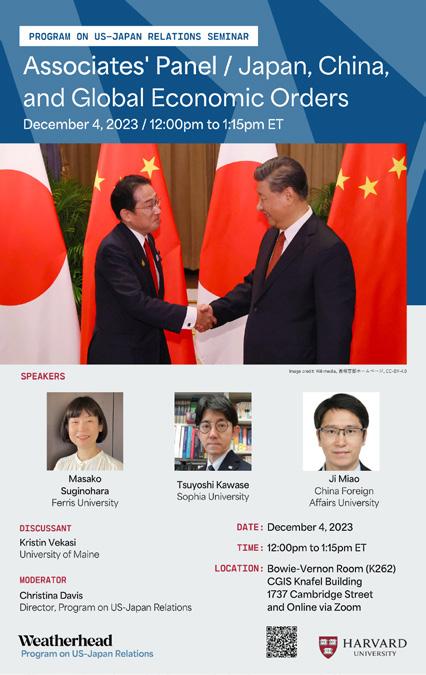
Tsuyoshi Kawase, USJP Visiting Scholar, Sophia University
Ji Miao, USJP Visiting Scholar, China Foreign Affairs University
Masako Suginohara, USJP Visiting Scholar, Ferris University
Japan, China, and Global Economic Orders
Discussant: Kristin Vekasi, University of Maine
Faculty Host: Christina Davis (USJP Associates’ Panel on Japanese Economic Statecraft)
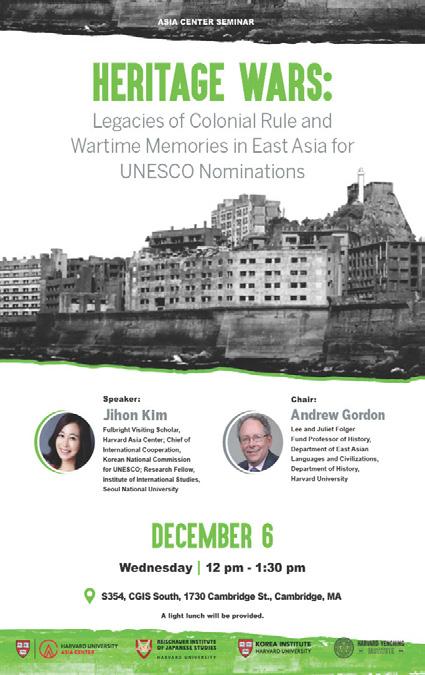
Jihon Kim, HUAC Visiting Scholar, Seoul National University
Heritage Wars: Legacies of Colonial Rule and Wartime Memories in East Asia for UNESCO Nominations
Faculty Host: Andrew Gordon
(HUAC Seminar Series co-sponsored by HYI, KI, and RIJS)
He Wenkai, Hong Kong University of Science and Technology
Book Talk: Public Interest and State Legitimation: Early Modern England, Japan, and China
Faculty Host: Elizabeth Perry (HYI Book Talk co-sponsored by FC, HUAC, and RIJS)
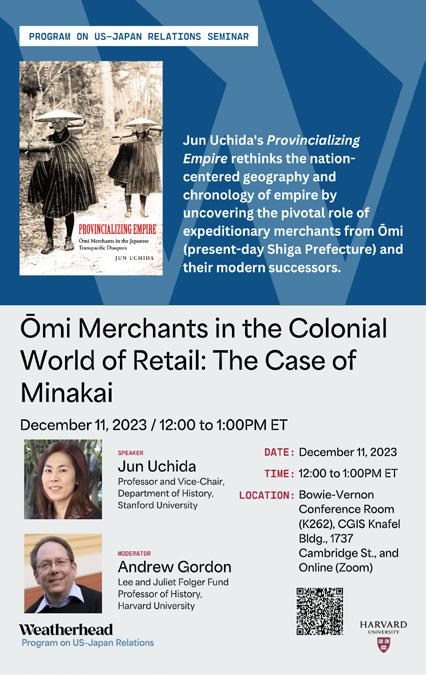
Jun Uchida, Stanford University
Provincializing Empire: Omi Merchants of the Japanese Transpacific Diaspora
Faculty Host: Andrew Gordon
(USJP Seminar Series co-sponsored by the History Department, Harvard Academy, HUAC, and RIJS)
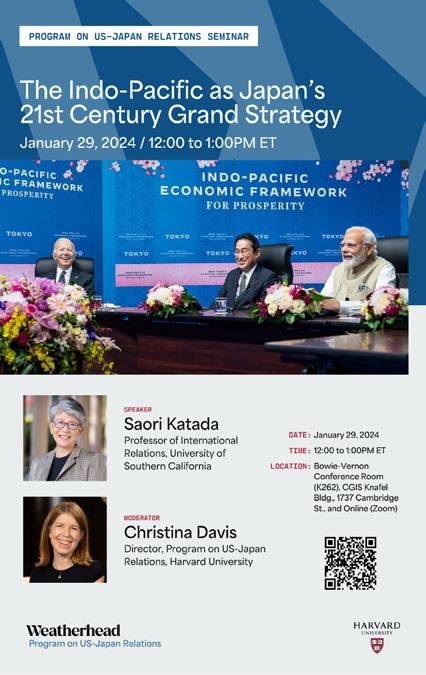
Saori Katada, University of Southern California
The Indo-Pacific as Japan’s 21st Century Grand Strategy
Faculty Host: Christina Davis (USJP Special Series on Policy Innovations Crises, supported by the Japan Foundation, co-sponsored by HUAC)
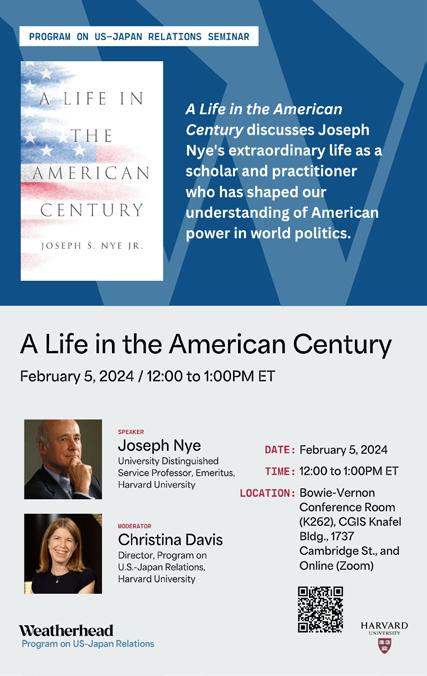
Joseph Nye, Harvard University
A Life in the American Century
Faculty Host: Christina Davis
(USJP Seminar Series co-sponsored by the HKS Belfer Center International Security Program and WCFIA Scholars Program)
Paul Kreitman, Columbia University
Guarding the Exits: Toward a History of Emigration Control in Japan, 1587-1981
Moderator: Izidor Janžekovič, Fulbright Scholar, Harvard University & Central European University
(Harvard International & Global History Seminar co-sponsored by RIJS)
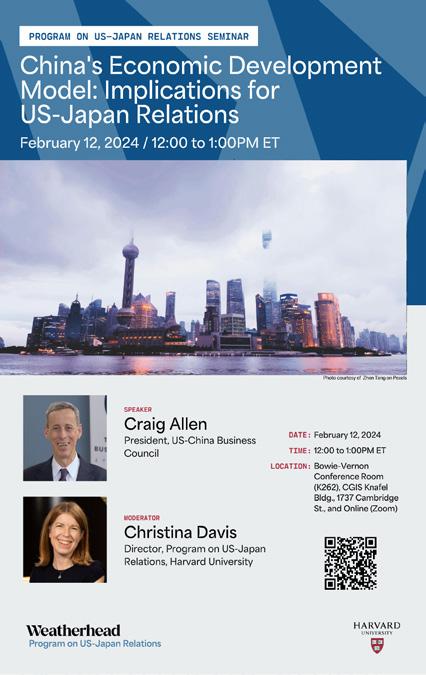
Craig Allen, US-China Business Council
China’s Economic Development Model: Implications for US-Japan Relations
Faculty Host: Christina Davis (USJP Seminar Series co-sponsored by the HKS Ash Center Rajawali Foundation Institute and FC)
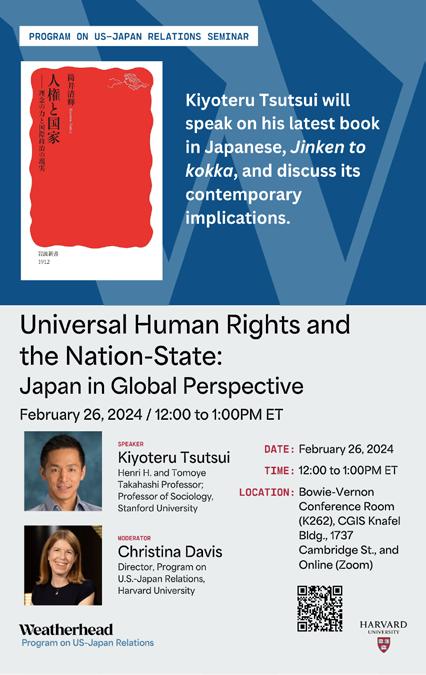
Kiyoteru Tsutsui, Stanford University
Universal Human Rights and the Nation-State: Japan in Global Perspective
Faculty Host: Christina Davis
(USJP Special Series on Policy Innovations Crises supported by the Japan Foundation, co-sponsored by the HKS Carr Center)
Hiroshi Ota, HYI Visiting Scholar, Hitotsubashi University International Education and ICT During and Post-COVID-19: Japan’s Experiences and Perspectives
Faculty Host: Christina Ciocca Eller
(HYI Visiting Scholar Talk co-sponsored by RIJS)
Satoshi Narihira, HYI Visiting Scholar, Kyushu University
Platform Governance after the Pandemic and Other Crises: From a Japanese Perspective
Faculty Host: Jonathan Zittrain
(HYI Visiting Scholar Talk co-sponsored by RIJS)
Ma Ran, HYI Visiting Scholar, Nagoya University
Un/bounding the Great Wall–Sino-Japanese Documentary Media
Connections in the Long 1980s
Faculty Host: Jie Li
(HYI Visiting Scholar Talk co-sponsored by RIJS)
Julie Tian Miao, HUAC Visiting Scholar, University of Melbourne
State Inc. and Asian Diasporas in Knowledge Spaces
Faculty Host: Anthony Salch
(HUAC Seminar co-sponsored by FC, KI, and RIJS)
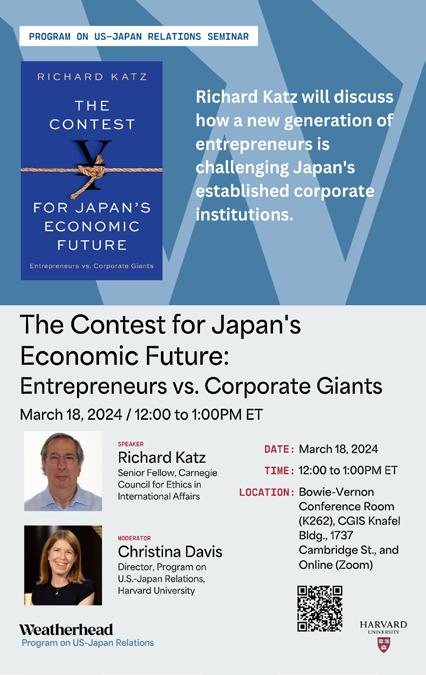
Richard Katz, Weekly Toyo Keizai
The Contest for Japan’s Economic Future: Entrepreneurs vs. Corporate Giants
Faculty Host: Christina Davis
(USJP Seminar Series co-sponsored by the Japan Society of Boston and HKS Mossavar-Rahmani Center)
Jordan Sand, Georgetown University
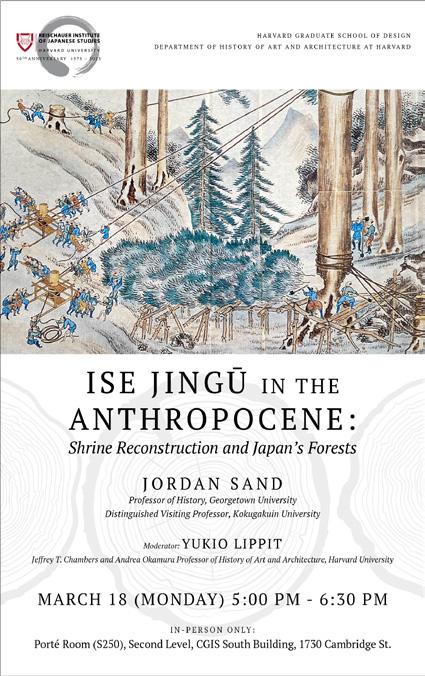
Ise Jingū and the Anthropocene: Shrine Reconstruction and Japan’s Forests (Special RIJS Lecture co-sponsored by GSD and HAA Department)
Hyaeweol Choi, University of Iowa
Iza Ding, Northwestern University
Tanika Sarkar, Jawaharlal University and Ashoka University
Chizuko Ueno, University of Tokyo
Gender and Nationalist Populism in Asia
(HYI Annual Roundtable co-sponsored by FC, HUAC, and RIJS)
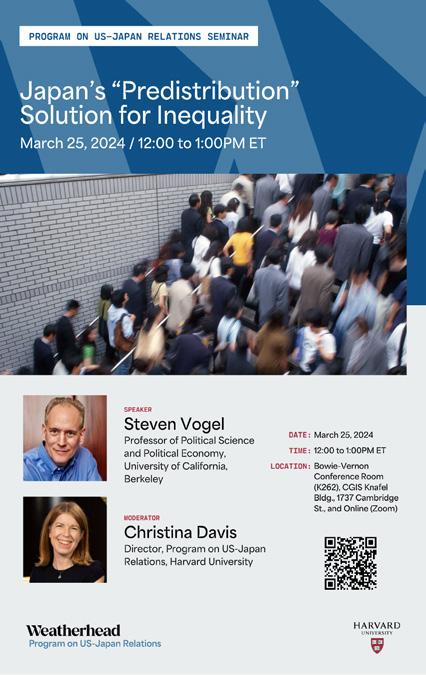
Steven Vogel, University of California Berkeley
Japan’s “Predistribution” Solution for Inequality
Faculty Host: Christina Davis (USJP Seminar Series co-sponsored by the HKS Mossavar-Rahmani Center)
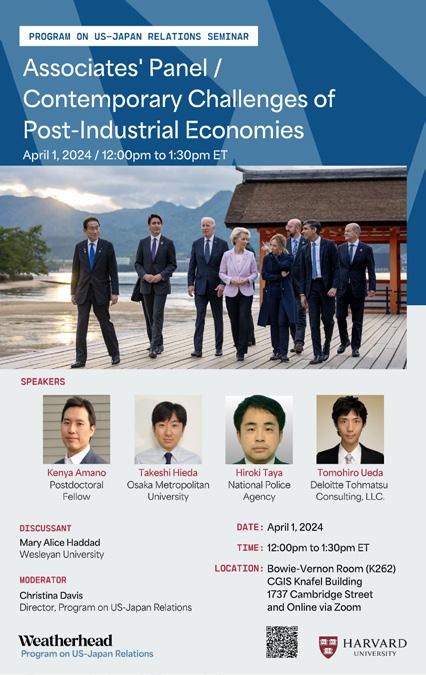
Kenya Amano, USJP Postdoctoral Fellow
Takeshia Hieda, USJP Visiting Scholar, Osaka Metropolitan University
Hiroki Taya, USJP Associate, Japan National Police Agency
Contemporary Challenges of Post-Industrial Economies
Discussant: Mary Alice Haddad, Wesleyan University
Faculty Host: Christina Davis (USJP Associates Panel)
Glen Fukushima, Former Deputy Assistant US Trade Representative for Japan and China
US Trade Policy, Japan, and China (EALS Talk co-sponsored by RIJS)
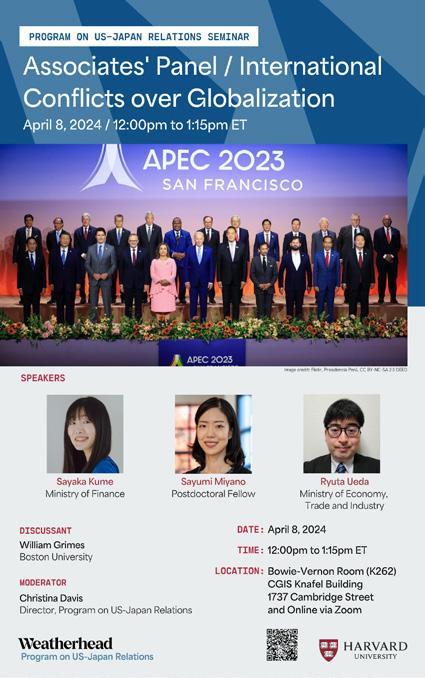
Sayaka Kume, USJP Associate, Japan Ministry of Finance
Sayumi Miyano, USJP Postdoctoral Fellow
Ryuta Ueda, USJP Associate, Japan Ministry of Economy, Trade, and Industry
International Conflicts over Globalization
Discussant: William Grimes, Boston University
Faculty Host: Christina Davis (USJP Associates Panel)
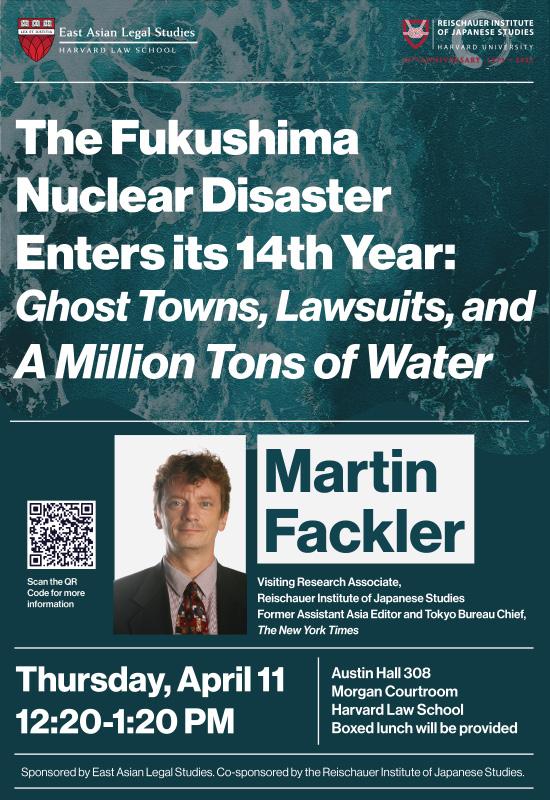
Martin Fackler, Journalist and RIJS Visiting Fellow
The Fukushima Nuclear Disaster Enters its 14th Year: Ghost Towns, Lawsuits, and a Million Tons of Water (EALS Talk co-sponsored by RIJS)
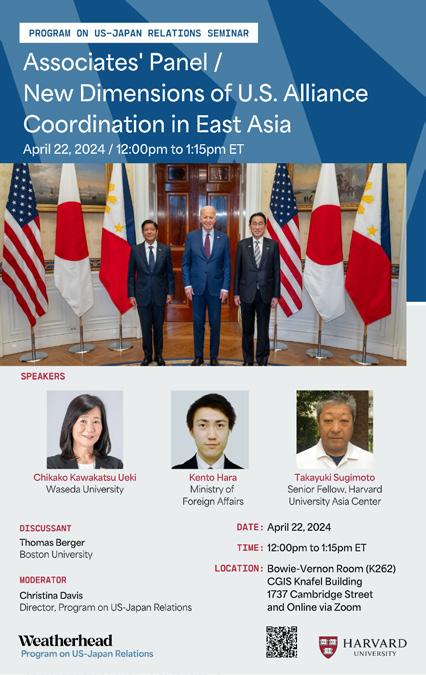
Chikako Kawakatsu Ueki, MIT Visiting Scholar, Waseda University
Kento Hara, USJP Associate, Japan Ministry of Foreign Affairs
Takayuki Sugimoto, USJP Associate, HUAC Senior Fellow, Japan Maritime Self-Defense Force
Japan’s Responses to Global Security Challenges
Discussant: Thomas Berger, Boston University
Faculty Host: Christina Davis (USJP Associates Panel)
Alexander Zahlten, Harvard University
Soft Power in the Age of AI and Immersive Media
Faculty Host: Christina Davis
(USJP Seminar Series co-sponsored by the Harvard Undergraduate Japan Policy Network, EALC Department, RSEA, and RIJS)
Sheila Smith, Council on Foreign Relations
Uncertain Boundaries: Northeast Asia’s Postwar Settlement and the Northern Territories
Faculty Host: Christina Davis
(USJP Seminar Series co-sponsored by the HKS Belfer Center International Security Program)
Conferences, Symposia, Workshops & Events
2022-23
Conference
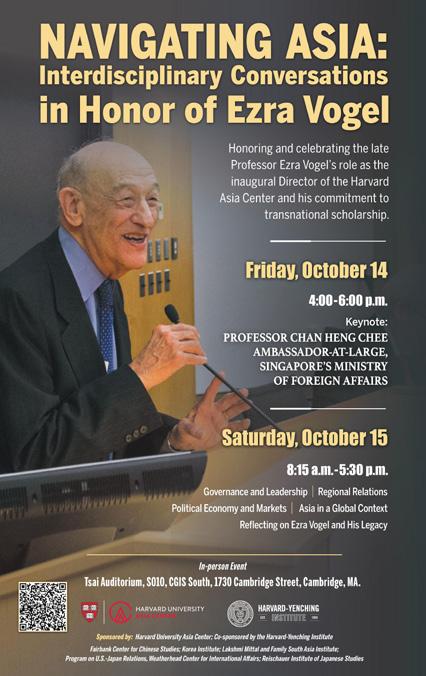
14-15 OCTOBER 2022
Navigating Asia: Interdisciplinary Conversations in Honor of Ezra Vogel
This conference was organized to honor and celebrate the late Professor Ezra Vogel’s role as the inaugural Director of the Harvard University Asia Center and his commitment to transnational scholarship throughout a career spanning sixty years, including over fifty years as Henry Ford II
Professor of the Social Sciences at Harvard University, as well as several directorships, including the Program on US-Japan Relations, Fairbank Center, and Asia Center. A playlist of the conference panels can be viewed on the HUAC YouTube channel.
DAY 1
Welcome
James Robson, HUAC Director, Harvard University
Opening Remarks
Neil Rudenstine, Harvard University
Keynote Address
“Why America Needs an Ezra Vogel for Southeast Asia”
Chan Heng Chee, Ambassador-at-Large, Singapore Ministry of Foreign Affairs
DAY 2
Panel 1: Governance and Leadership
Christina Davis, Harvard University
Cheng Li, Brookings Institute
Eun Mee Kim, Ewha Woman’s University
Koichi Nakano, Sophia University
Doreen Lee, Northeastern University
Moderator: Elizabeth Perry, HYI Director, Former FC Director, Harvard University
Panel 2: Regional Relations
Selina Ho, National University of Singapore
Andrew Mertha, John’s Hopkins University
Kenichiro Hirano, Tokyo University and Waseda University
Tingjiang Li, Chuo University and Tsinghua University
Moderators: Anurabh Ghosh and Carter Eckert, Harvard University
Panel 3: Political Economy and Markets
William Overholt, Harvard Kennedy School
Kristen Looney, Georgetown University
Meg Rithmire, Harvard Business School
Steven Vogel, University of California Berkeley
Moderator: Mark Wu, FC Director, Harvard University
Panel 4: Asia in a Global Context
Manjari Chatterjee Miller, Boston University
Aniket De, Ph.D. student, Harvard University
Engseng Ho, Duke University
Ambassador Shyam Saran, Indian Ambassador to Myanmar, Nepal, and Indonesia
Karen Thornber, Former HUAC Director, Harvard University
Moderator: Sugata Bose, Harvard University
Panel 5: Reflecting on Ezra Vogel and His Legacy
Charlotte Ikels, Case Western Reserve University
Richard Dyck, TGK-Japan
Mary-Jo DelVecchio Good, Harvard Medical School
Mary Brinton, RIJS Director, Harvard University
Chunli Li, International Center for Chinese Studies, Aichi University
Moderator: James Robson, HUAC Director, Harvard University
(HUAC conference co-sponsored by FC, HYI, KI, MI, USJP, WCFIA, and RIJS)
Workshop
2 NOVEMBER 2022
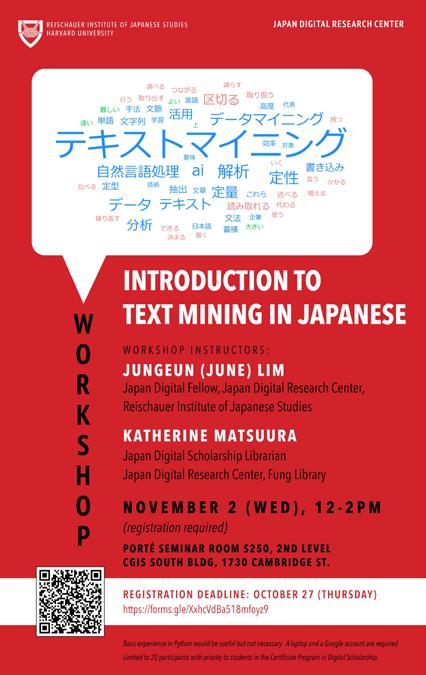
Introduction to Text Mining in Japanese Organizers: Jungeun Lim, Katherine Matsuura
Led by Jungeun “June” Lim and Katherine Matsuura of the Japan Digital Research Center of the Fung Library and Reischauer Institute, this workshop introduced participants to Japanese text mining for research in the humanities and social sciences. Participants learned and practiced common text mining methods – including text classification, text clustering, word embedding, and topic modeling – and their applications. Completion of this workshop and a supplementary assessment would qualify graduate students for elective credit toward the Certificate Program in Digital Scholarship.
(RIJS and JDRC workshop co-sponsored by the Harvard University Digital Scholarship Group)
Workshop
9-20 JANUARY 2023
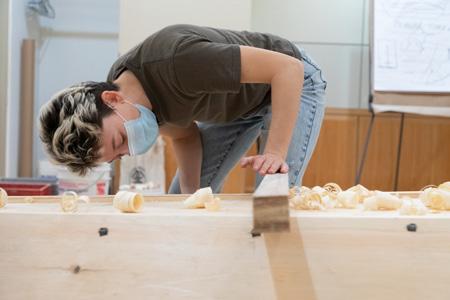
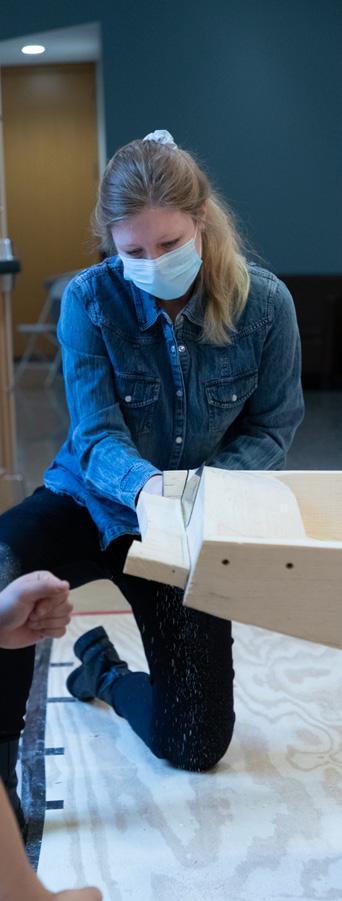
Wasen Wooden Boatbuilding Workshop
Organizers: Gavin Whitelaw, Stacie Matsumoto, and Wei Hsuan Jenni Ting
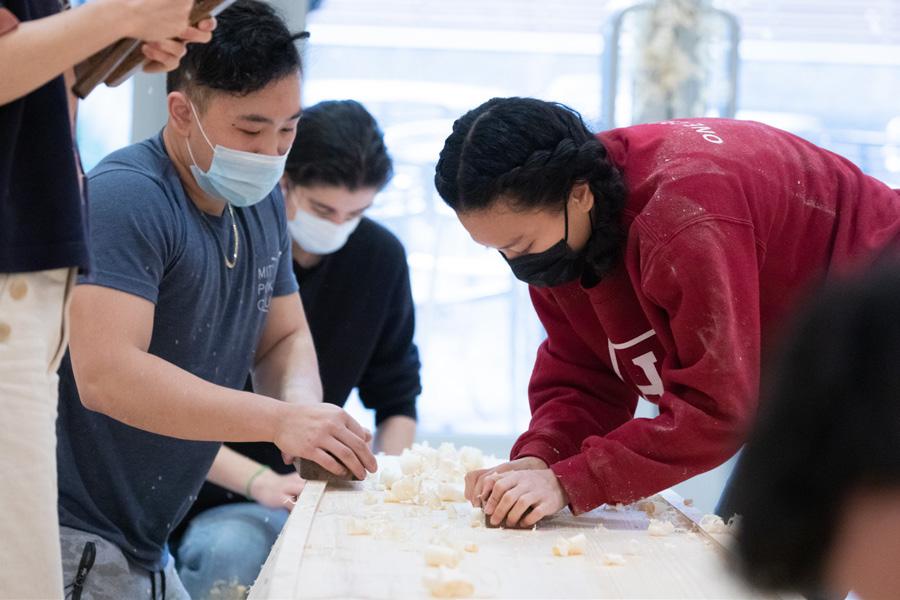
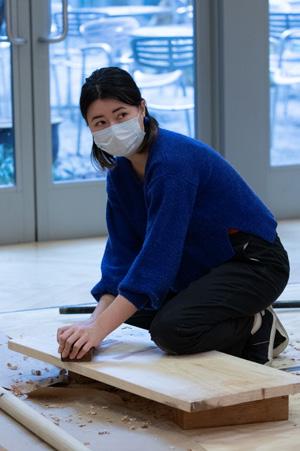
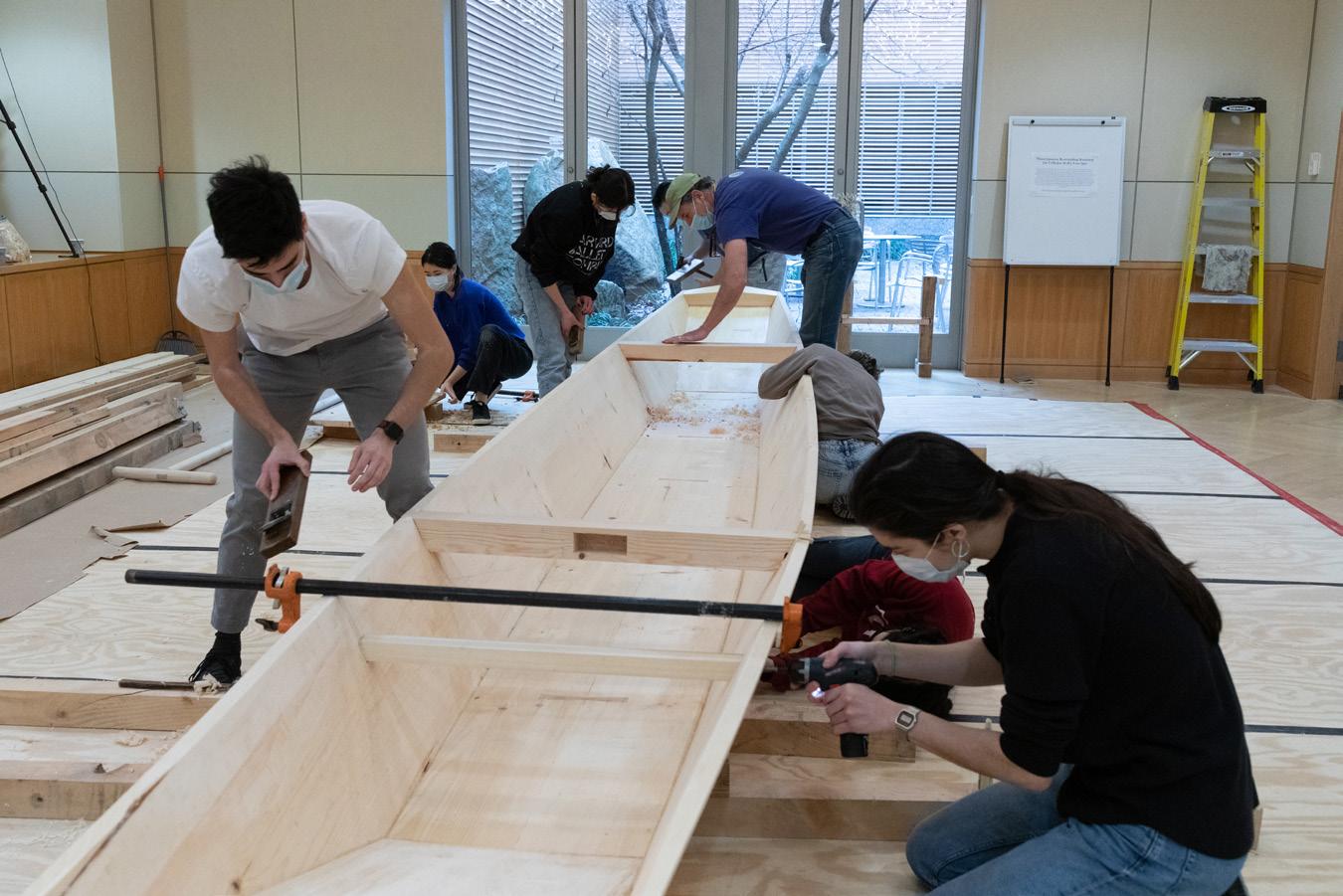
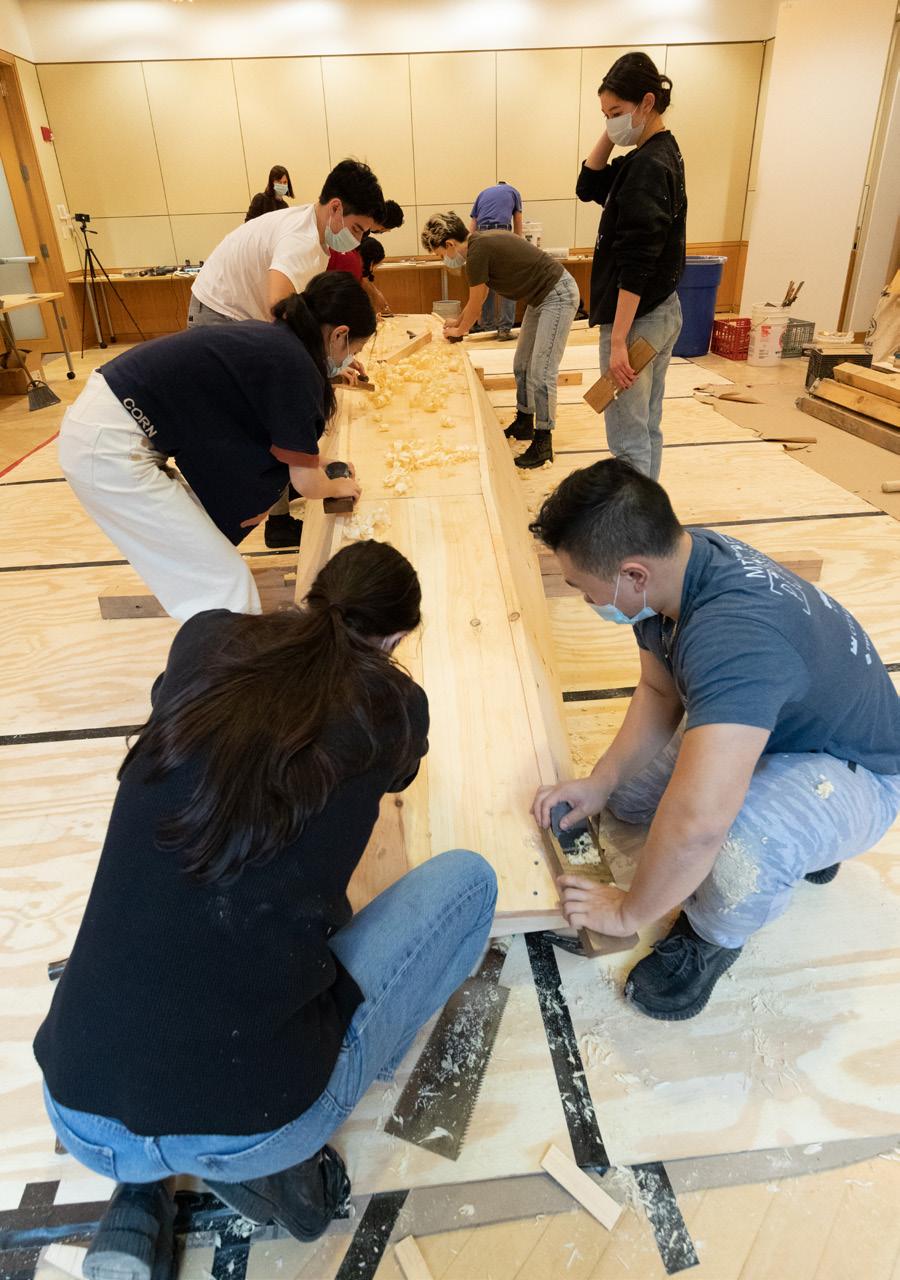
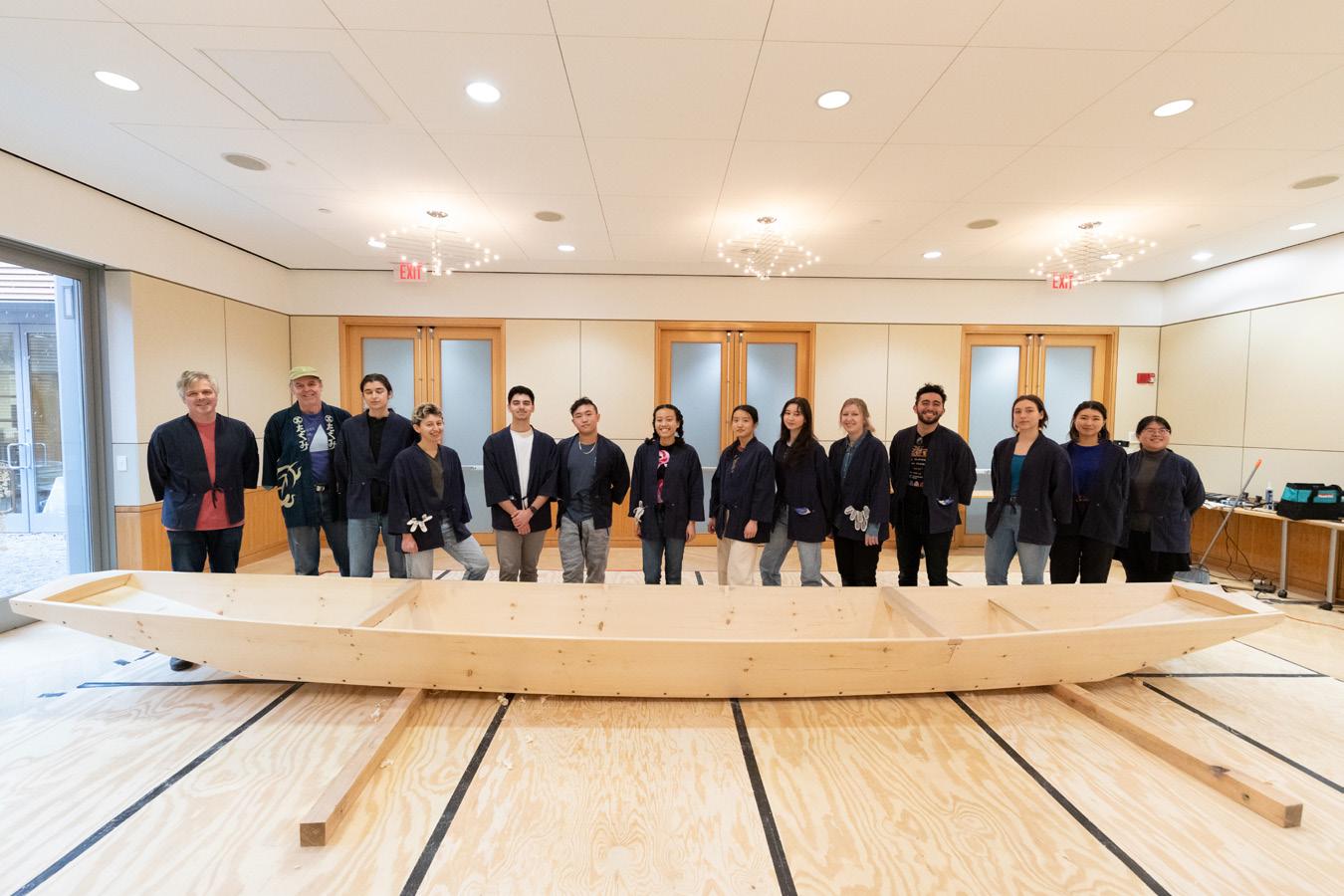
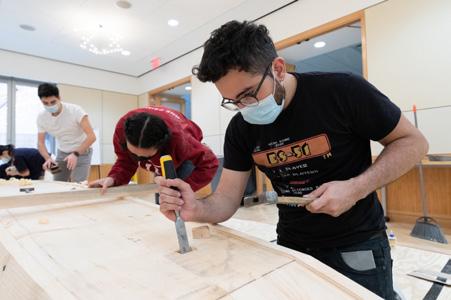
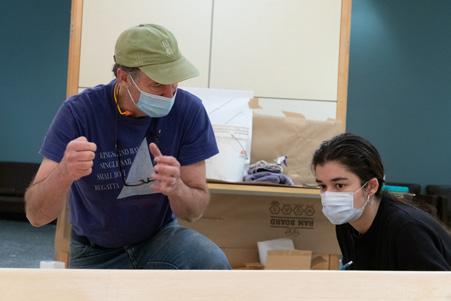
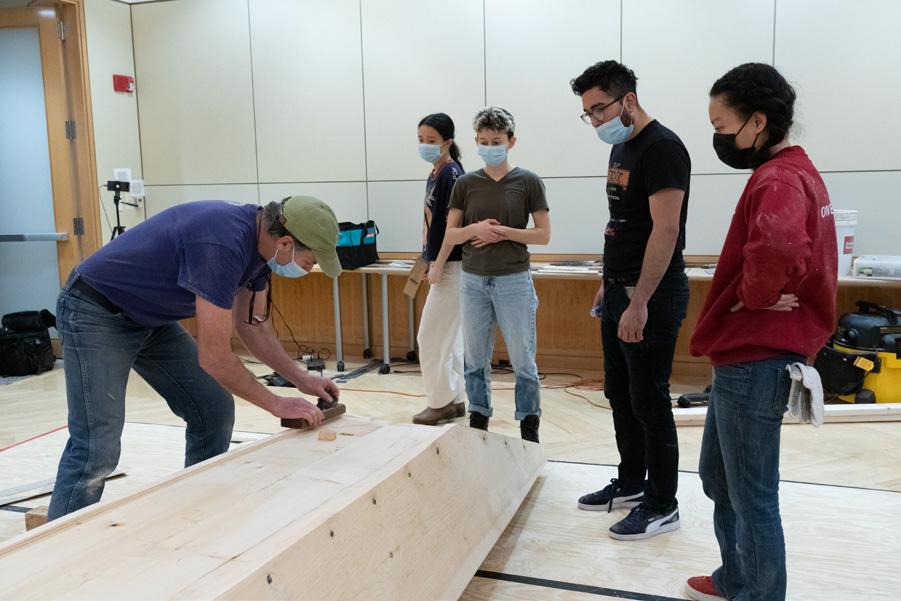
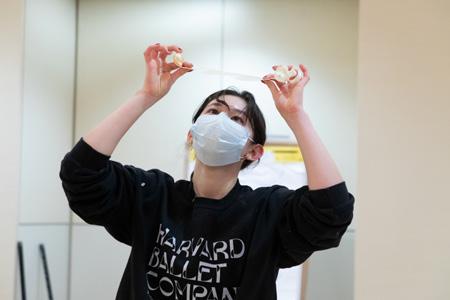
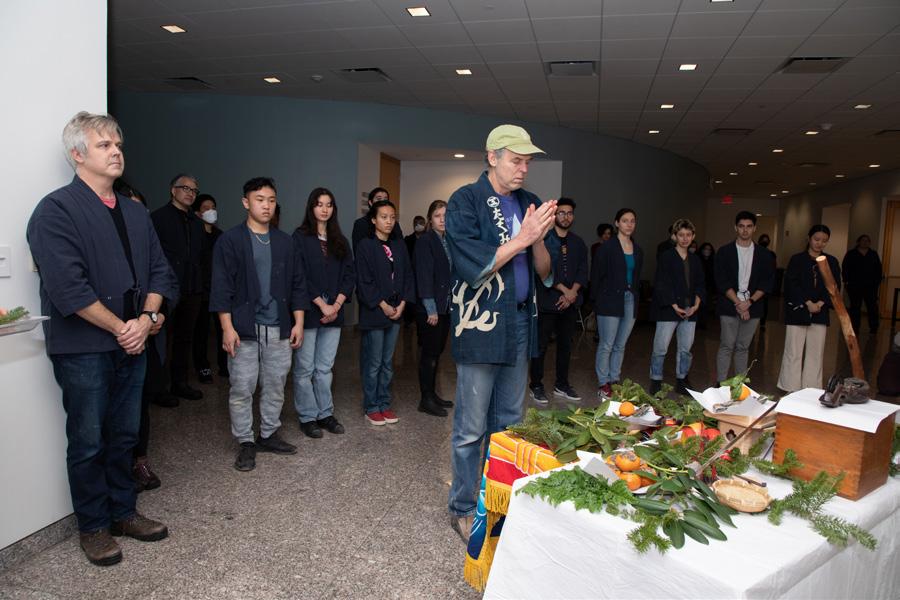
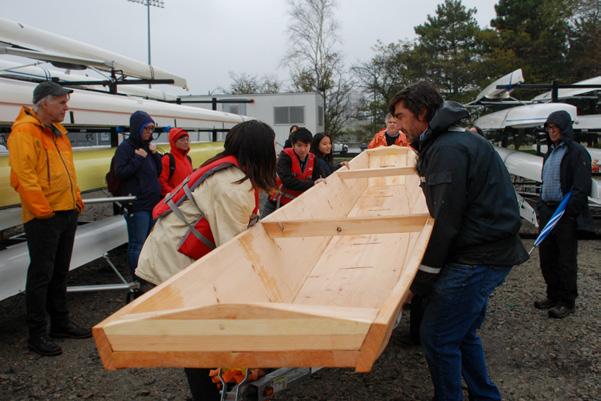
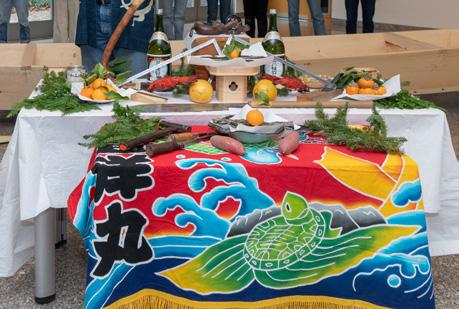
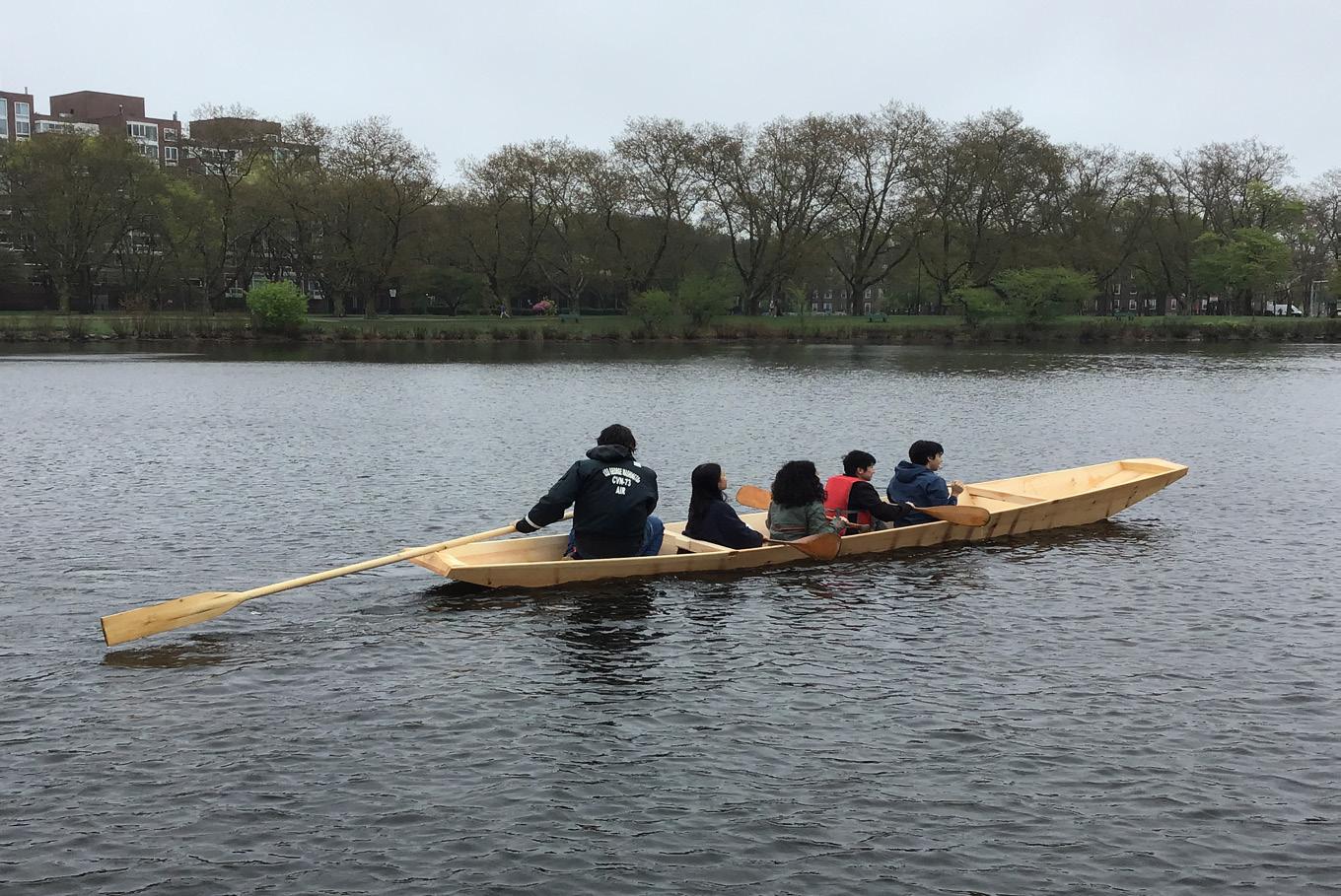
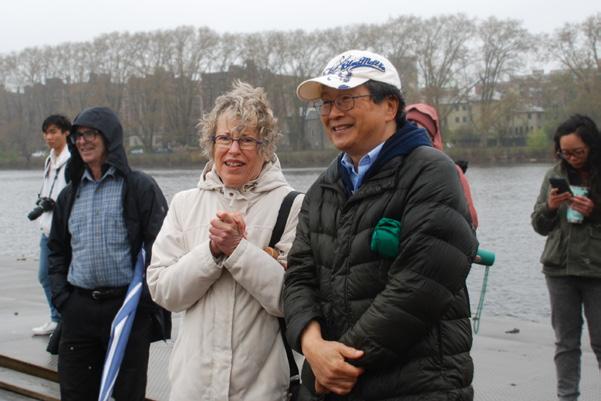
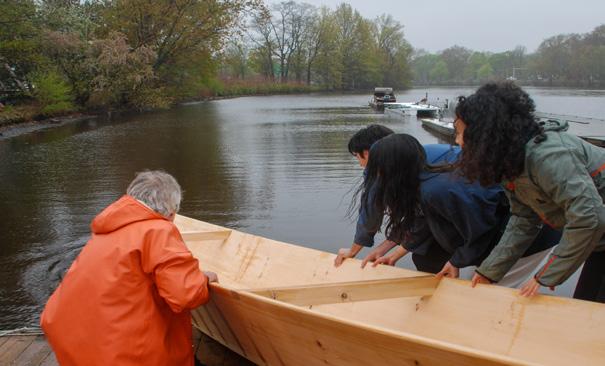
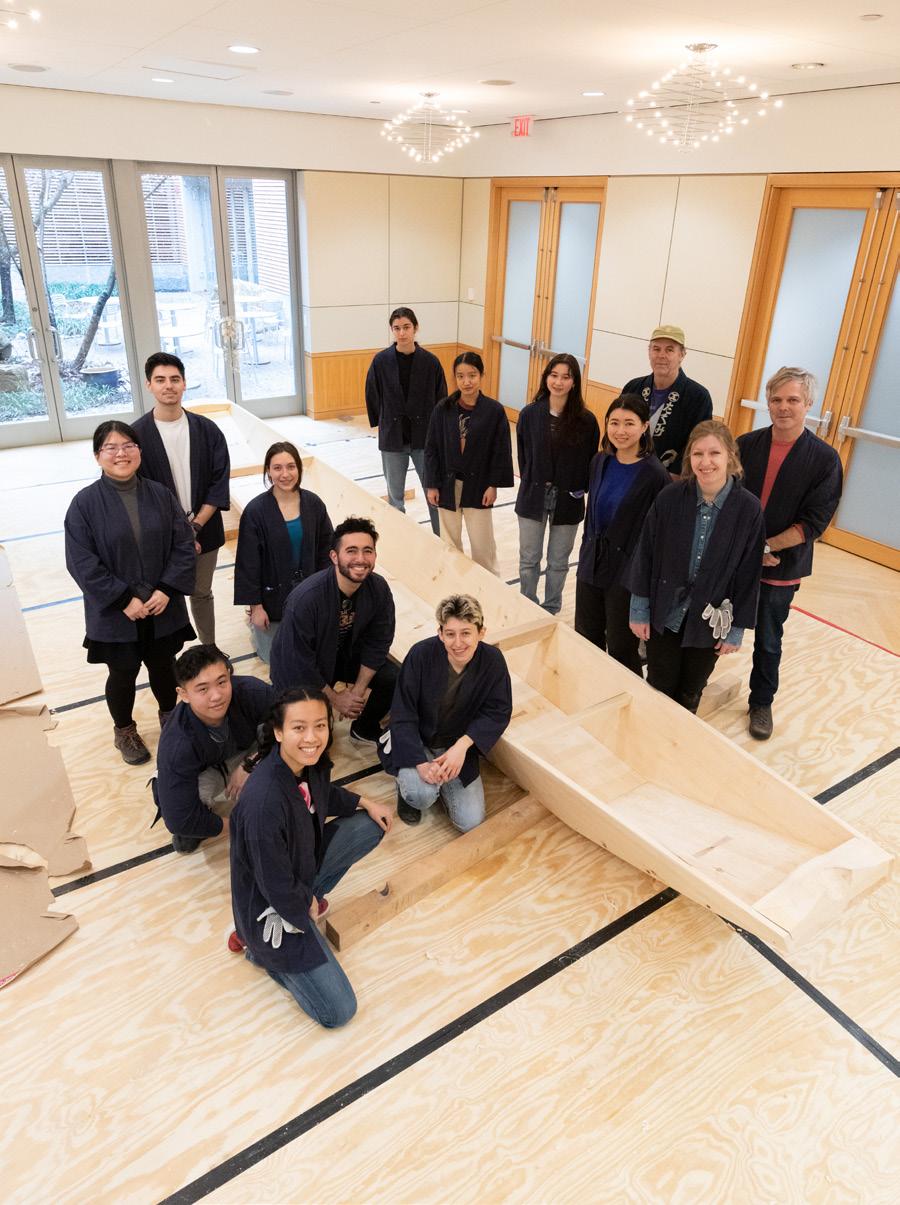
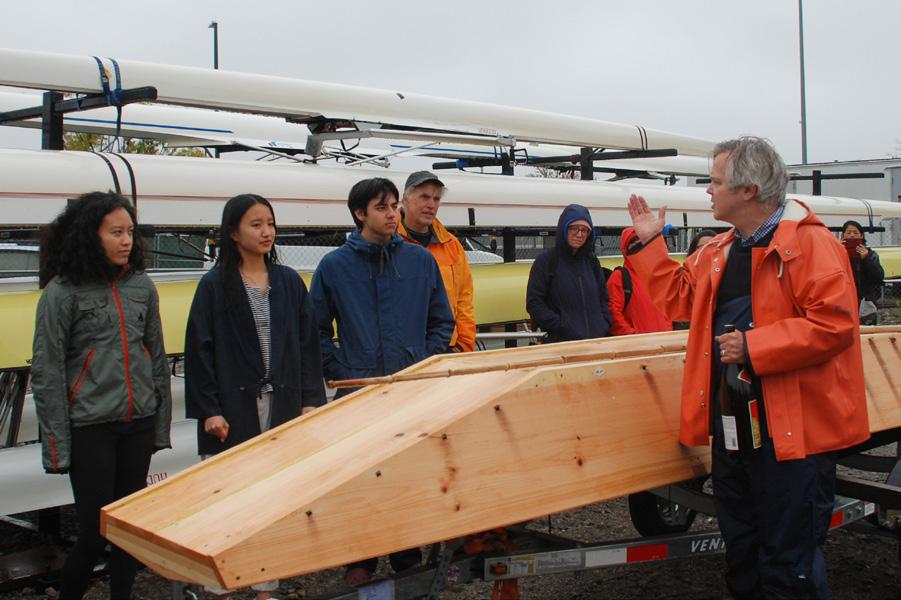
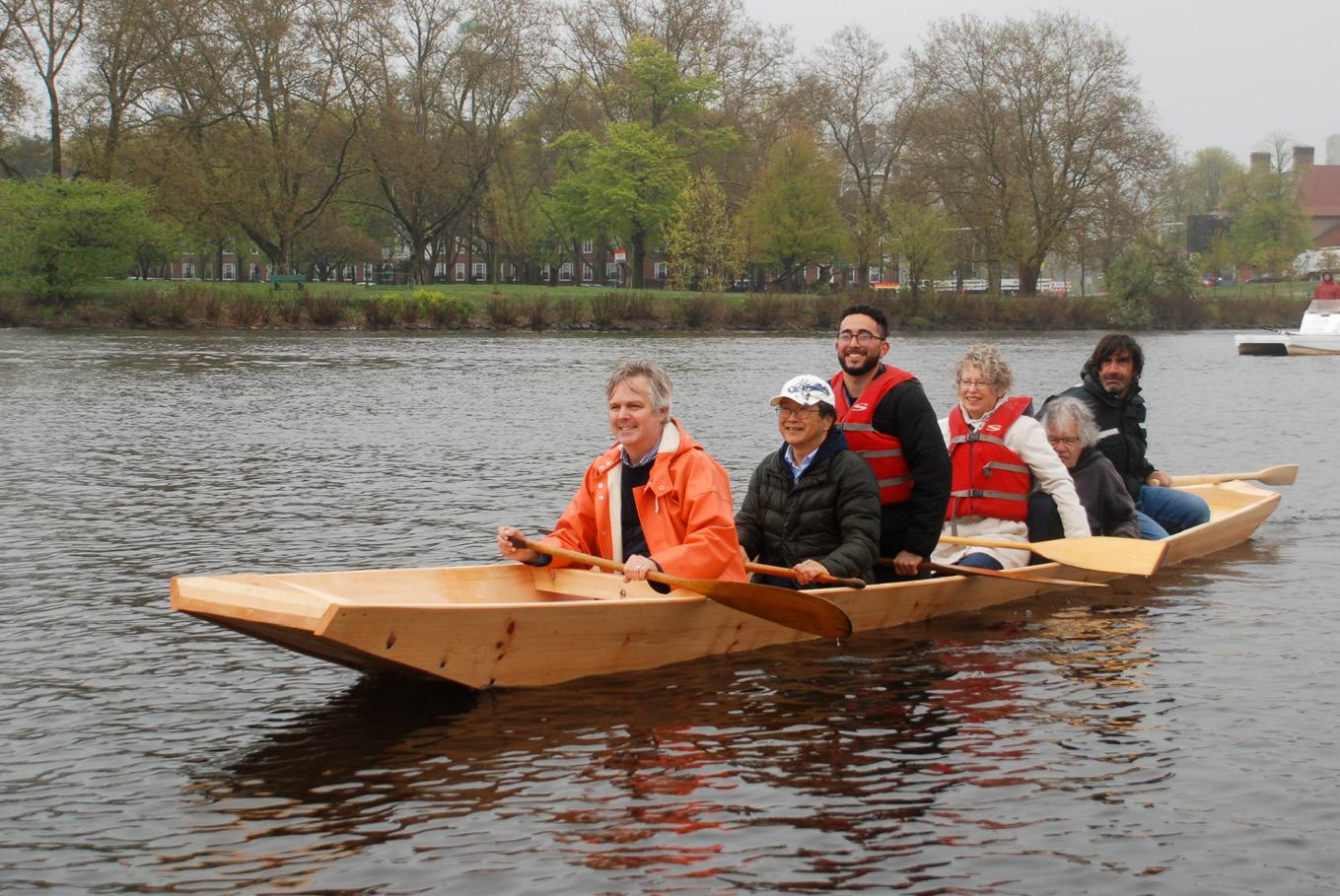
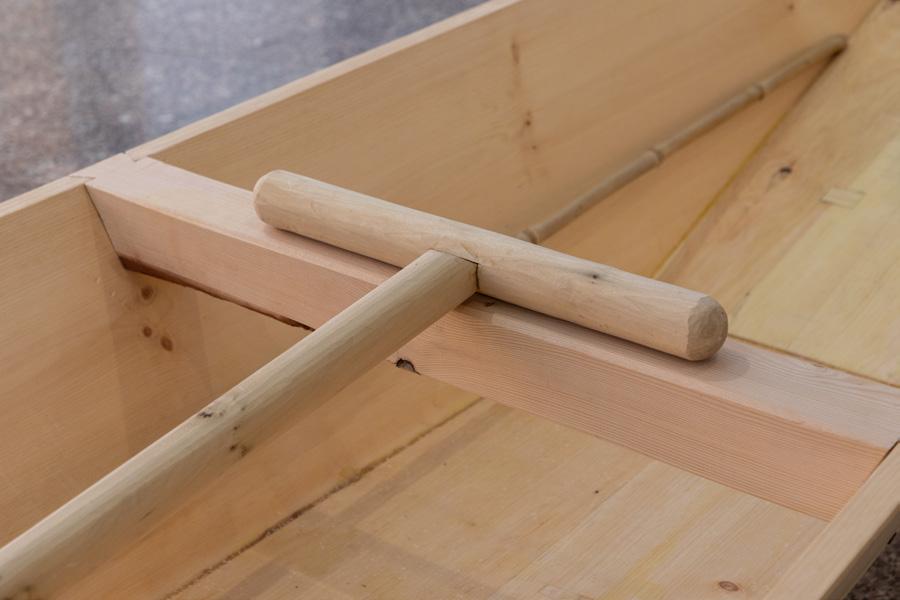
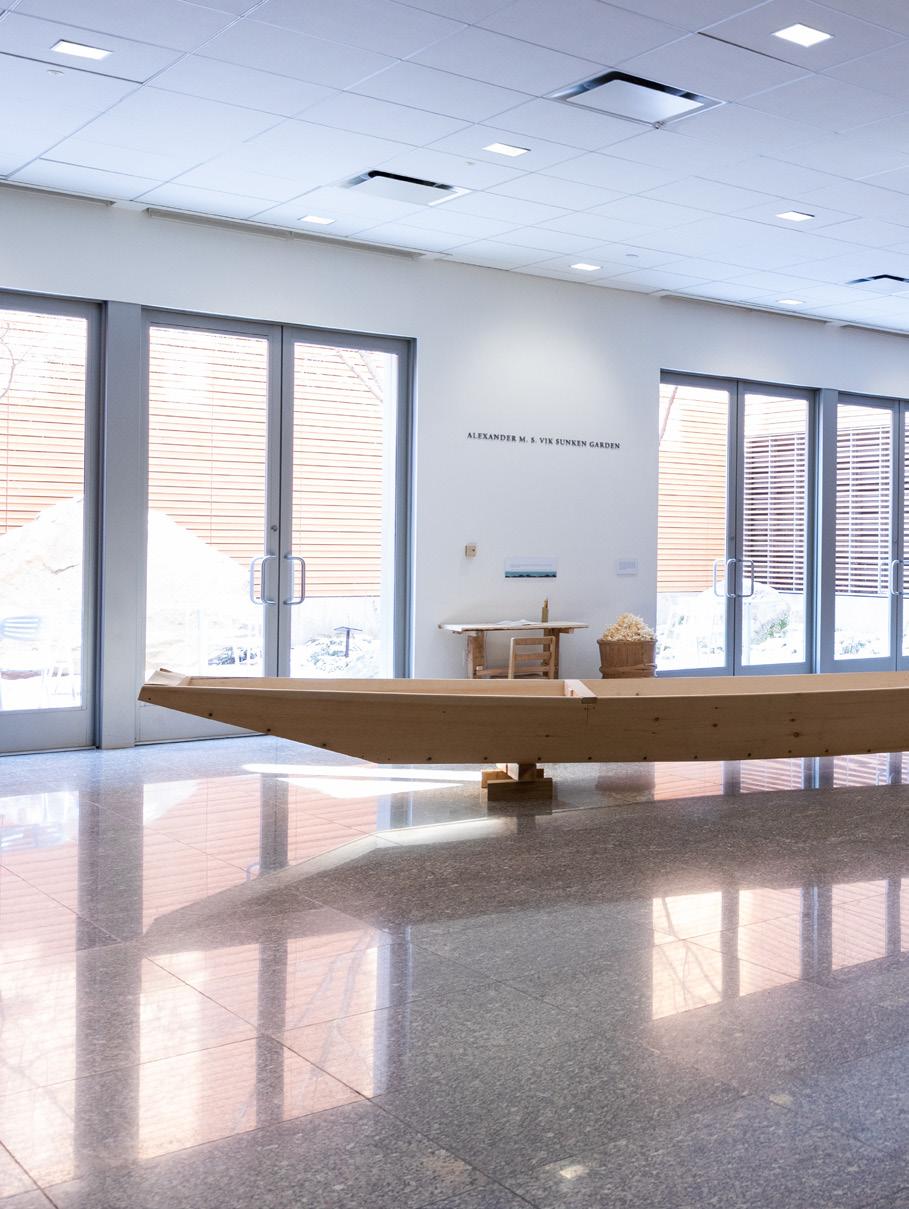
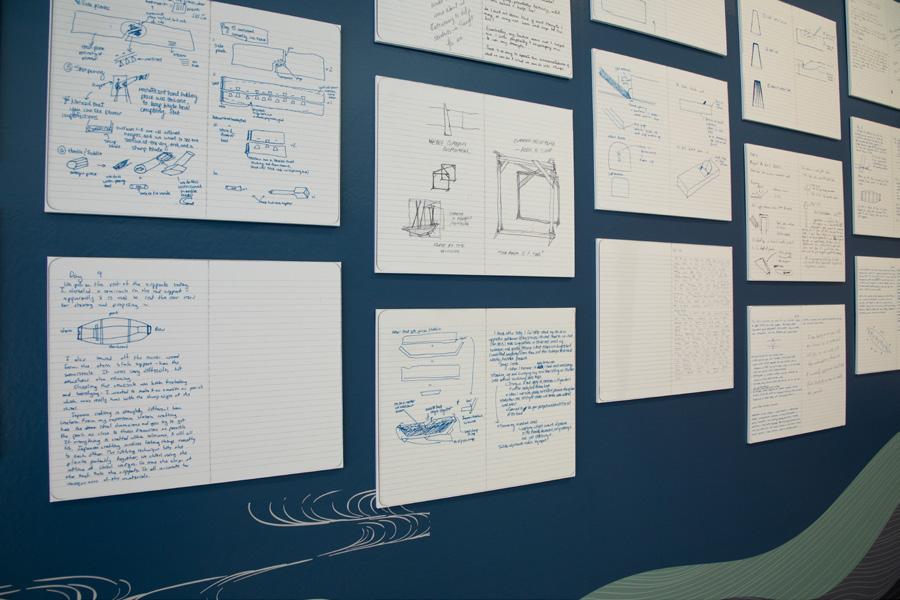
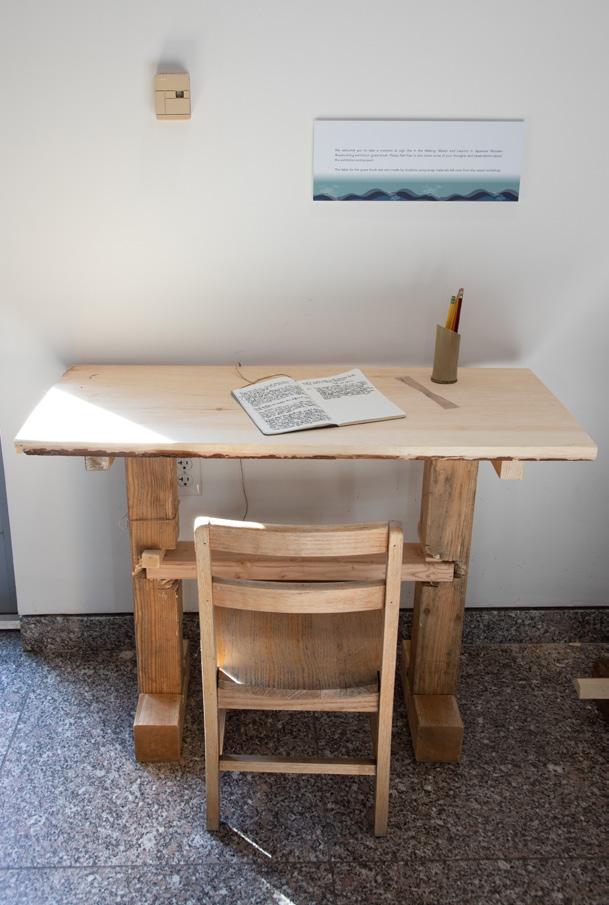
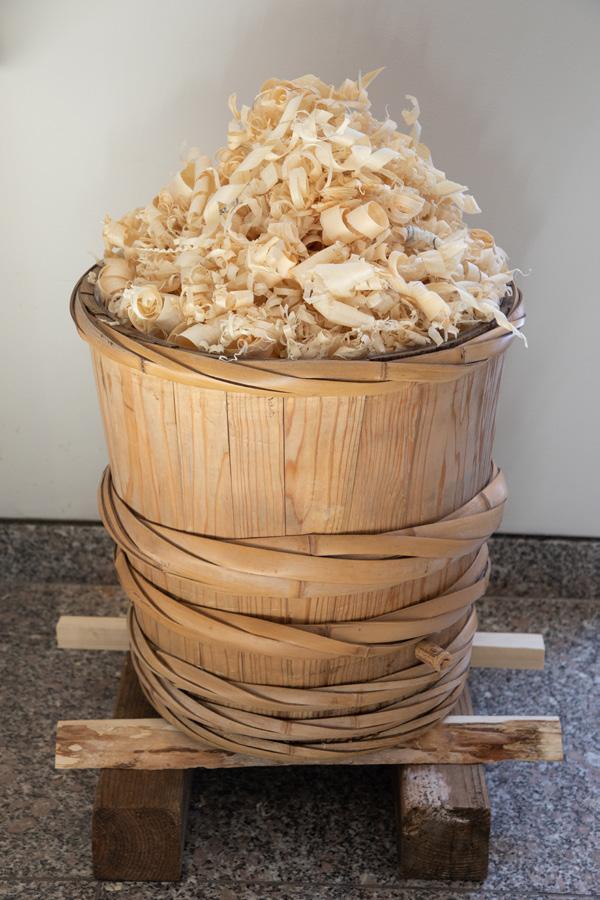
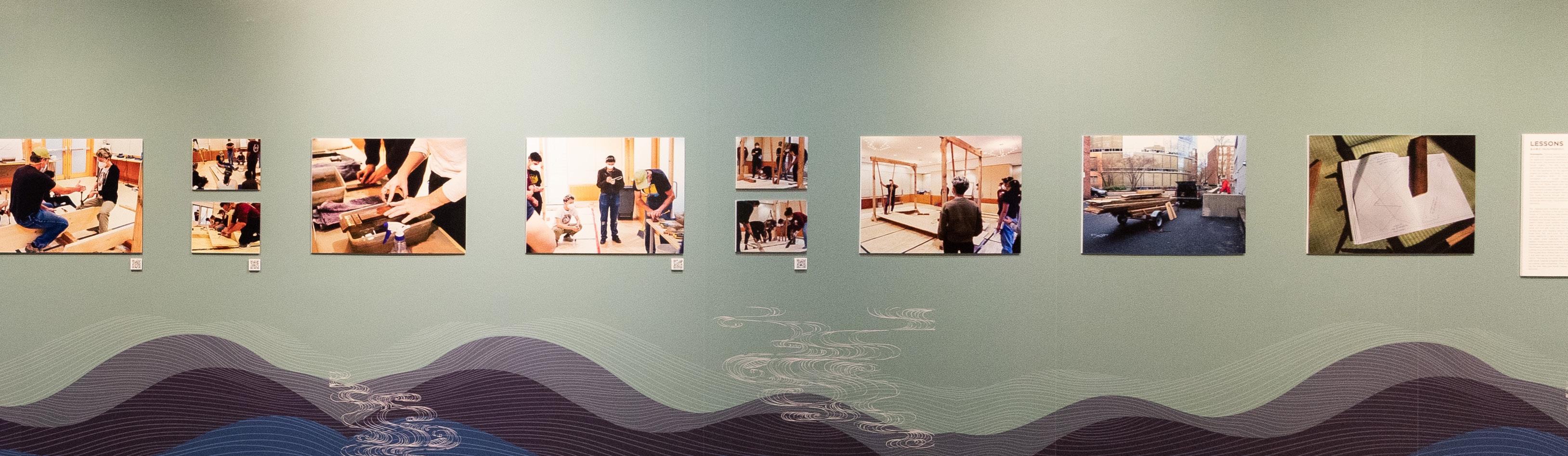
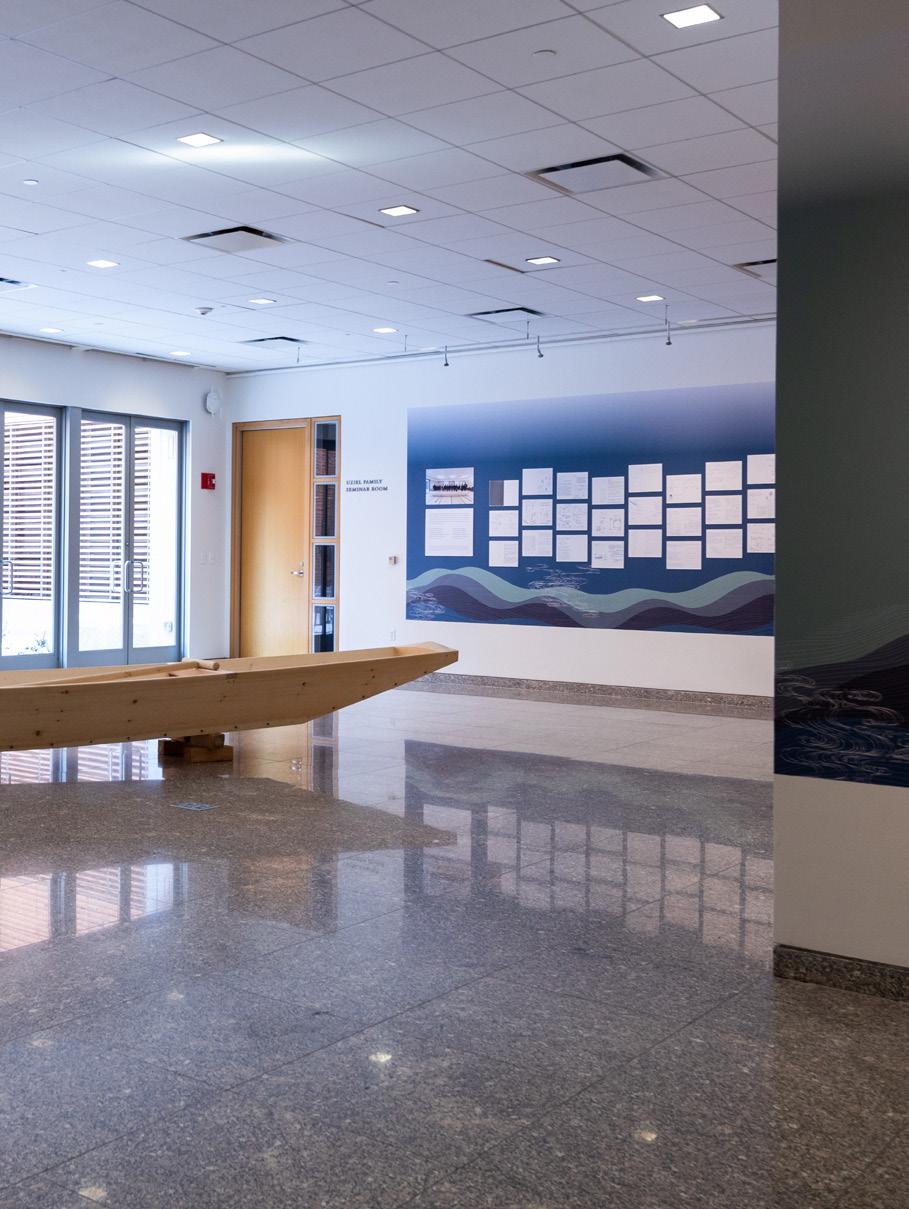
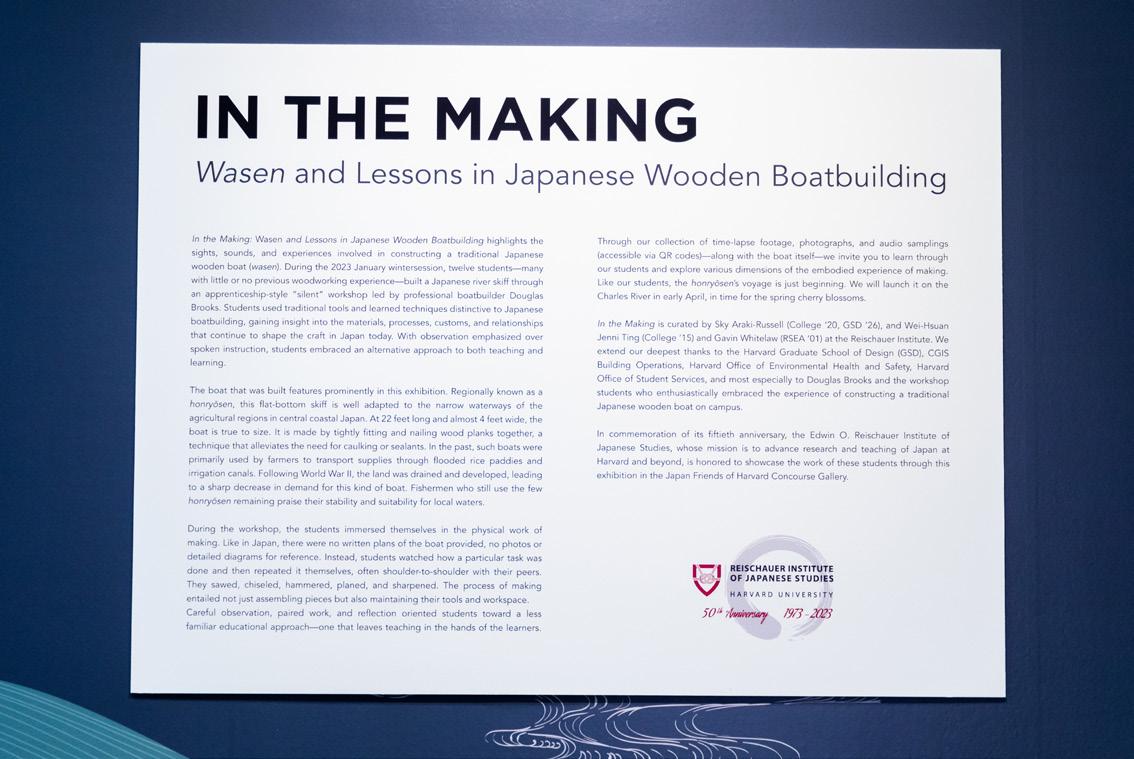
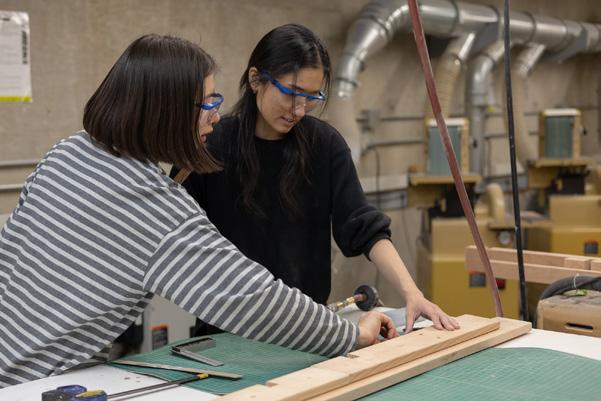
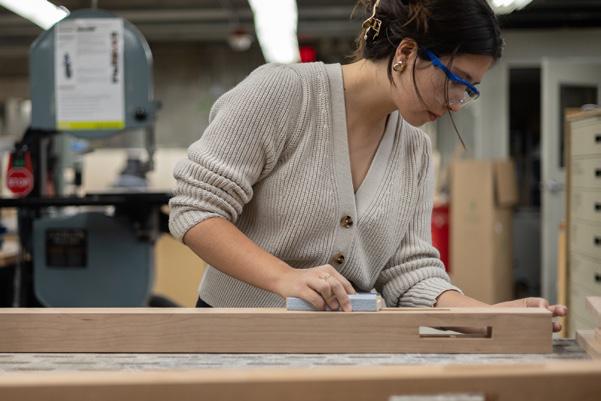
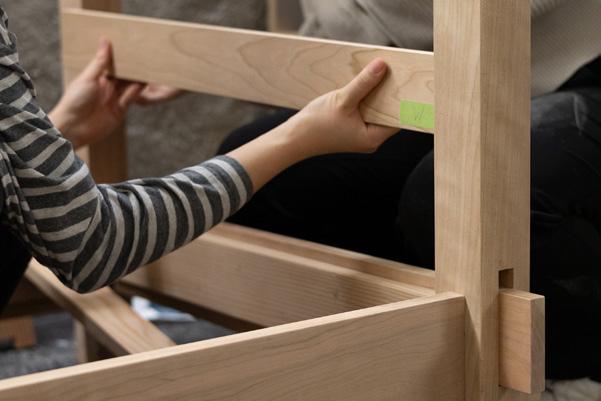
Organized in conjunction with the Reischauer Institute’s 50th Anniversary, this two-week workshop was led by master boatbuilder Douglas Brooks and assisted by Sky Araki Russell (College ’20 and GSD M.Arch. student). Twelve students came together to undertake the construction of a 21-foot honryōsen, a working skiff native to Niigata Prefecture’s Shinano River basin. Using traditional tools and techniques taught in an apprenticeship-inspired “silent” learning environment, participants gained deeper insight into the materials, customs, and relationships that shape the art and craft of Japanese wooden boatbuilding today. At the end of the workshop, participants ceremoniously carried the honryōsen from the workshop space into the Japan Friends of Harvard Concourse on 20 January 2023 for a special exhibition (see below), and following the exhibition, participants came together again at the Newell Boathouse to launch the honryōsen in the Charles River on 30 April 2023.
See page x for workshop details and photos.
(RIJS Workshop supported by GSD, CGIS Building Operations, Harvard Office of Environmental Health and Safety, and Harvard Office of Student Services)
RIJS 50th Anniversary Exhibition
23 JANUARY – 13 MARCH 2023
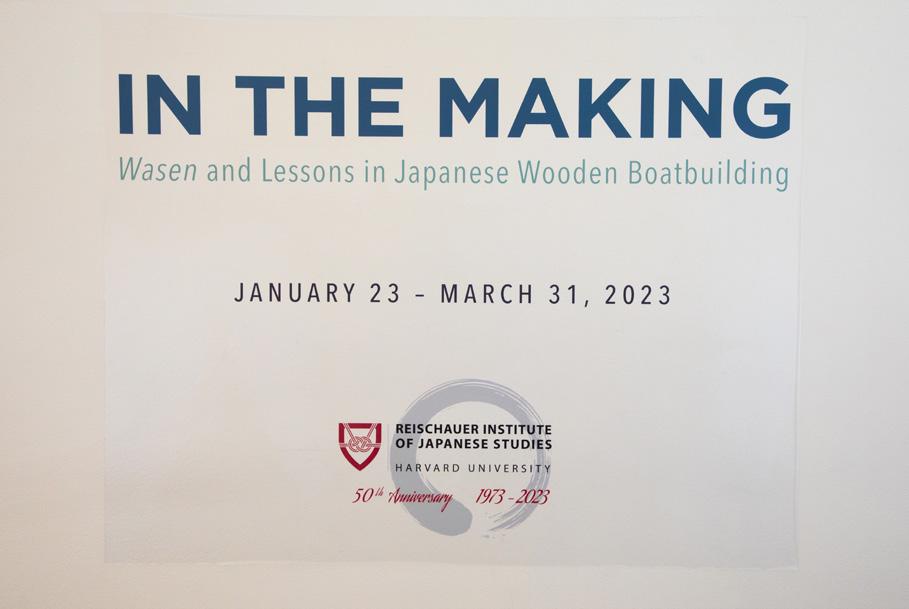
In the Making: Wasen and Lessons in Japanese Wooden Boatbuilding Curators: Gavin Whitelaw, Sky Araki-Russell, and Wei Hsuan Jenni Ting
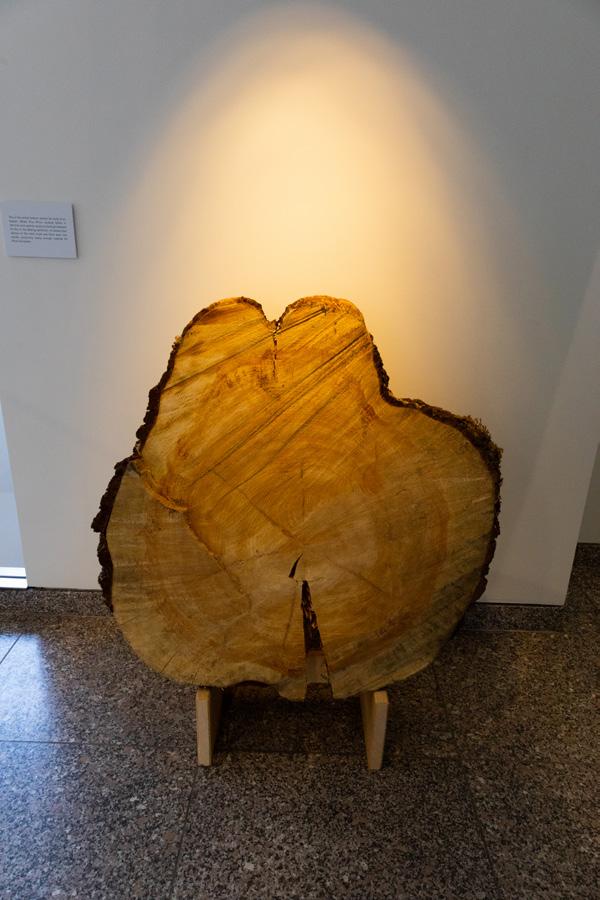
Celebrating the Reischauer Institute’s 50th Anniversary and the wintersession work of twelve students under the guidance of professional boatbuilder Douglas Brooks, this exhibition highlights the sights, sounds, and experiences involved in constructing a traditional Japanese wooden
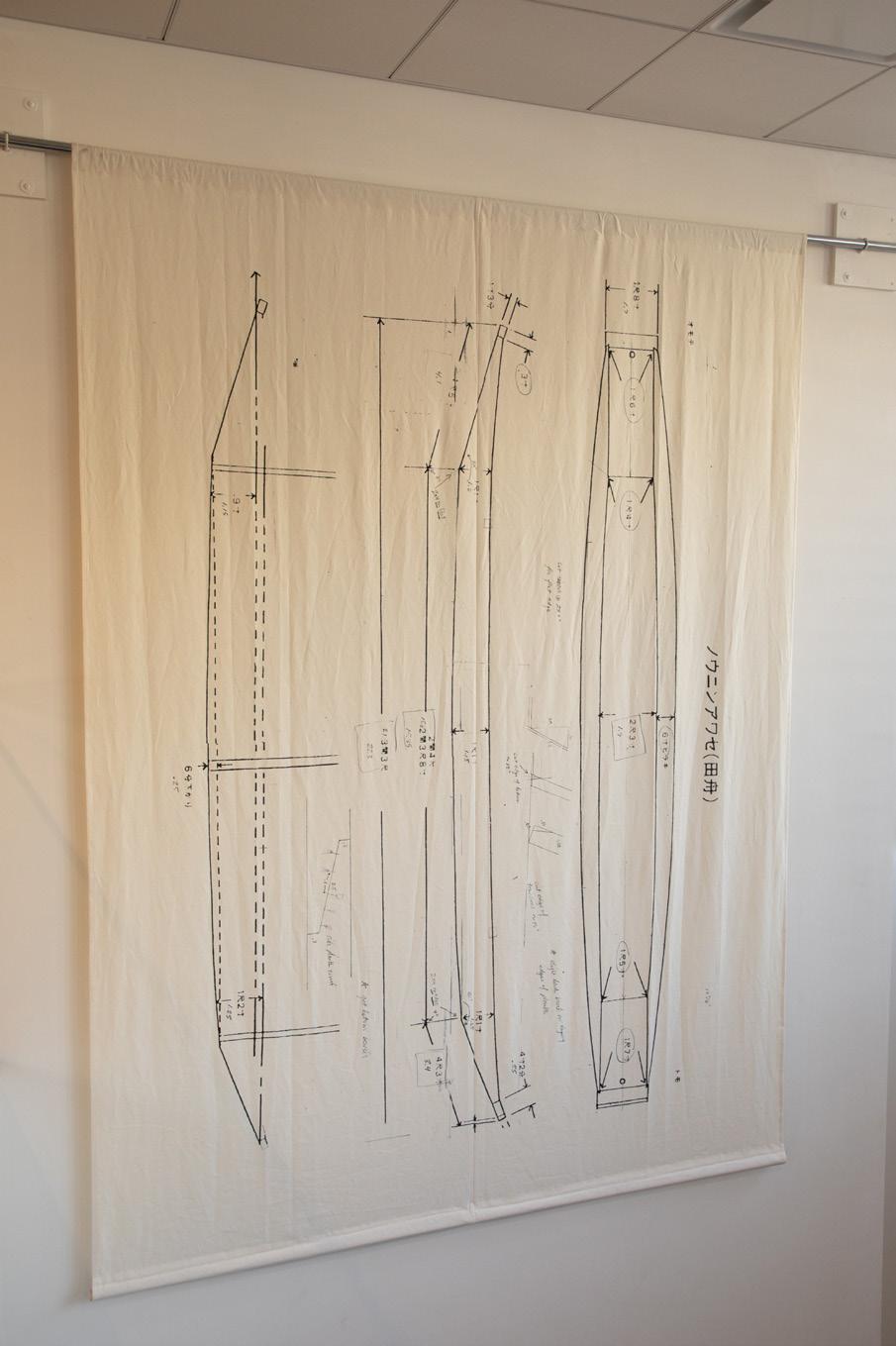
boat (wasen). The boat built during the workshop, regionally known as honryōsen, is featured prominently in exhibition, true to size at 22 feet long and almost 4 feet wide. Through a collection of time-lapse videos, photographs, and audio samplings (accessible via QR codes), the exhibition invited guests to learn through the perspectives of the students and explore various dimensions of the embodied experience of making.
See page x for exhibition details and photos.
(RIJS Exhibition curated by Sky Araki-Russell, Wei-Hsuan Jenni Ting, and Gavin Whitelaw; supported by GSD, CGIS Building Operations, Harvard Office of Environmental Health and Safety, and Harvard Office of Student Services)
A legend of the Japanese cinema, Kinuyo Tanaka (1909 –1977) brought her luminous presence and incomparable talents as an actress to an extraordinary number of landmark films, including key works by renowned directors such as Heinosuke Gosho, Keisuke Kinoshita, Kenji Mizoguchi, Mikio Naruse and Yasujiro Ozu. Although Tanaka played a wide range of leading roles during her long and storied career, she is best remembered for portraying women who find courage and dignity in the face of severe adversity. In this film series, the Harvard Film Archive presented all six of Tanaka’s features accompanied by a showcase of her work as an actress from the same years she was also directing, giving the rare opportunity to explore, on the big screen, the rich dialogue active across her work before and behind the camera.
(Description by HFA)
JAN 20 Love Letter (Kinuyo Tanaka, 1953)
JAN 21 Flowing (Mikio Naruse, 1956)
JAN 22 Flowing (Mikio Naruse, 1956) and The Wandering Princess (Kinuyo Tanaka, 1960)
JAN 23 Ugetsu (Kenji Mizoguchi, 1953)
JAN 27 Forever a Woman (Kinuyo Tanaka, 1955) and Ugetsu (Kenji Mizoguchi, 1953)
JAN 29 Love Letter (Kinuyo Tanaka, 1953) and The Moon Has Risen (Kinuyo Tanaka, 1955)
JAN 30 Sansho the Bailiff (Kenji Mizoguchi, 1954)
FEB 4 The Life of Oharu (Kenji Mizoguchi, 1952)
FEB 5 Forever a Woman (Kinuyo Tanaka, 1955) and Equinox Flower (Yasujiro Ozu, 1958)
FEB 12 Girls of the Night (Kinuyo Tanaka, 1961)
FEB 19 Girls of the Night (Kinuyo Tanaka, 1961)
FEB 20 Love under the Crucifix (Kinuyo Tanaka, 1962)
FEB 24 Mother (Mikio Naruse, 1952) and Where Chimneys are Seen (Heinosuke Gosho, 1953)
FEB 26 Mother (Mikio Naruse, 1952) and Where Chimneys are Seen (Heinosuke Gosho, 1953)
(HFA Film Series co-sponsored by RIJS)
Conference
6 FEBRUARY 2023
Prosperity and Human Security: Japan and Asia’s 21st Century Governance Challenges
Organizers: Christina Davis and Shinju Fujihira
Gathering a group of scholars to examine two major policy issues in Japan, this conference provided a unique opportunity to investigate public health and climate change together as ongoing challenges for global governance, and consider how states like Japan, China, and the US have important leadership roles to play. Most speakers highlighted the geopolitical dimension of managing pandemics and climate change. No government pursues any policy without some consideration of its impact on short- and long-term geopolitical interests, as well as its effect on relations with its own citizens in either democratic or authoritarian contexts. In this sense, effective global leadership on issues like public health and climate change demands policymakers to learn from previous policy failures and successes, while confronting new geopolitical and domestic political environments. The two conference panels can be viewed on the USJP YouTube channel, here and here
Panel 1: Development and Governance Challenges in Public Health
“Universalism and Governance in the Post-Pandemic Moment”
Joseph Wong, Munk School of Global Affairs, University of Toronto
“Japan Innovates: Improving Health and Medicine in the Developing World”
Kathryn Ibata-Arens, DePaul University
“China, Covid-19, and Global Health Governance”
Yanzhong Huang, Council on Foreign Relations
Moderator: Christina Davis, USJP Director, Harvard University
Panel 2: Development, Climate Change, and Climate Migration
“Making Sense of the Climate-Green Tech Acceleration Under Suga and Kishida”
Yves Tiberghien, Institute of Asian Research, University of British Columbia
“Deservingness Criteria and Public Support for Refugee Admission”
Nicholas A.R. Fraser, USJP Policy Innovations Fellow, Harvard University
“The Global Geopolitics of China’s Low Carbon Transition”
Joanna Lewis, Georgetown University
Moderator: Christina Davis, USJP Director, Harvard University
(USJP Special Series on Policy Innovations in Crises, supported by the Japan Foundation, co-sponsored by the Harvard Undergraduate Japan Policy Network, Harvard University Center for the Environment, HSPH Takemi Program, and HUAC)
Conference 17-18 FEBRUARY 2023
Mirrors: Contemplating Asia
This conference was organized by the Harvard East Asia Society with support from the Regional Studies East Asia Program. The theme of this year’s conference was “Mirrors: Contemplating Asia.” The committee selected “mirrors” as a motif to invite reflection, introspection, retrospection, discussion, etc. about Asian Studies. As papers were not limited to explicit studies of the mirror as an object or concept, the conference welcomed scholarship contemplating Asia from fresh perspectives while also reflecting upon conventional frameworks and methodologies from various perspectives and disciplines.
DAY 1
Opening Remarks
Karen Thornber, Harvard University
Keynote Address
Dingxin Zhao, University of Chicago
Session 1
Panel A: Chinese Politics
Discussant: Meg Rithmire, Harvard University
Moderator: Yuyang Shi, RSEA student, Harvard University
Presenters: Pangyue Cheng (Yale), Yuan Xi (Virginia), and Yabin Yin (HKUST)
Panel B: Cultivation and Exploration
Discussant: Michael Szonyi, Harvard University
Moderator: Houyi He, RSEA student, Harvard University
Presenters: Luan Tian (Columbia), Valentina Yang (KU Leuven), and Yuanhang Zhu (Yale)
Session 2
Panel C: Reflections of the Ancients
Discussant: Michael Puett, Harvard University
Moderator: Didier Natalizi Baldi, RSEA student, Harvard University
Presenters: Jason Hagler (UPenn), Suiyun Pan (Harvard), Chen Wu (Harvard), and Xinyu Zhang (McGill)
Panel D: Narrating and Legitimating through Religion, Ritual, and Memory
Discussant: Nicholas Harkness, Harvard University
Moderator: Tianlen Chen, RSEA student, Harvard University
Presenters: Hongmin Ahn (Harvard), Peng Hai (Harvard), Zikun Liu (Tsinghua/Yale), and Praveen Rajendran (IIT Bombay)
DAY 2
Session 3
Panel E: Chinese Politics (continued)
Discussant: Zhang Changdong, Harvard University
Moderator: Yuyang Shi, RSEA student, Harvard University
Presenters: Junliang Xu (Stanford), and Guanchi Zhang (Harvard)
Panel F: China and the Globe
Discussant: Steven Goldstein, Harvard University
Moderator: Cindy Di Xin, RSEA student, Harvard University
Presenters: Jinxue Chen (Northwestern), Alexandre Coelho (Sao Paulo), Yifan Xu (Stanford), Alston Li (Peking), and Tianran Charlotte Ye (Chicago)
Panel G: Cross-cultural Art, Artifacts, and Architecture
Discussant: Shuishan Yu, Northeastern University
Moderator: Gunn Chaiyapatranun, RSEA student, Harvard University
Presenters: Haochen Bai (Chicago), Xi He (Stanford), Boxi Liu (Bard), Yifei Wang (BU), and Jingni Zhang (Tianjin/Harvard)
Session 4
Panel H: Unstable Surfaces: Redefining Asia through Art and Media
Discussant: Eugene Wang, Harvard University
Moderator: Qinlin Li, RSEA student, Harvard University
Presenters: Yulong Hu (SUNY Stony Brook), Hanyun Jiang (Tsinghua), Chiawei Lai (National Taiwan), and Meixu Zhan (Chicago)
Session 5
Panel I: Early Modern Literature in East Asia
Discussant: Thomas Kelly, Harvard University
Moderator: Kent Bowen Zheng, RSEA student, Harvard University
Presenters: Tianjun Chen (East China Normal), Xinmeng Guo (CUHK), and Kuan Liu (Minnesota)
Panel J: Mirror or Hammer: Documenting into Reality
Discussant: Jie Li, Harvard University
Moderator: Feifan Li, RSEA student, Harvard University
Presenters: Kavya P. G. (Indian Inst. of Tech.), Wenxi Hu (CUHK), Yilun Li (Columbia), and Tienwen Lin (Harvard)
Panel K: Medicine, Media, and Others in East Asia
Discussant: Karen Thornber, Harvard University
Moderator: Song Han, RSEA student, Harvard University
Presenters: Kassandra Diaz (Harvard), Chang Liu (NSSR), Ke Qin Loh (Stanford), and Xinche Zhang (CUHK)
Closing Remarks
Jie Li, Harvard University
(HEAS Conference supported by RSEA, co-sponsored by GSAS Student Council, FC, HUAC, KI, WCFIA, and RIJS)
Conference 16 MARCH 2023
The Shōsōin Imperial Treasury: New Directions in Research
Organizers: Yukio Lippit and Melissa McCormick
The Shōsōin Treasury, located near the Tōdaiji monastery in Nara, Japan, houses over 9000 objects and ancient documents dating to the eighth century or earlier. These diverse objects showcase the cultural traditions of not only Nara Japan, but also Silla Korea, Tang China, the Central Asian kingdoms, Sasanian Iran, and beyond. This inaugural conference engaged specialists to discuss new trajectories in the Shōsōin studies. Hosted in conjunction with the Association for Asian Studies Annual Conference in Boston, the conference featured an opening lecture by Professor Yukio Lippit, panel discussions with renowned scholars, an interview with Natsuki Kitazawa, the curator of the Nara National Museum, and three lightning talks on Shōsōin objects by Harvard graduate students.
The Shōsōin Treasury: New Directions in Research
Yukio Lippit, Harvard University
Shōsōin Treasures: Three Case Studies
“The Shōsōin Go Gameboard,” Joy Wu, Ph.D. student, Harvard University
“The Shōsōin Silver Incense Burner” April Peng, Ph.D. student, Harvard University
“The Shōsōin Twelve-Lobed Oblong Green Glass” Sophie Lei, Ph.D. student, Harvard University
Panel 1: The Shōsōin and the Man’yōshū
Yukio Lippit, Harvard University
David Lurie, Columbia University
Melissa McCormick, Harvard University
Danica Truscott, RIJS Postdoctoral Fellow, Harvard University
Panel 2: The Shōsōin and the Tōdaiji Great Buddha
Ryūichi Abé, Harvard University
Cynthea Bogel, Kyushu University
Bryan Lowe, Princeton University
Akiko Walley, University of Oregon
Public Interview: The Shōsōin Annual Exhibition and its History
Natsuki Kitazawa, Nara National Museum
Rachel Saunders, Harvard Art Museums
Yukio Lippit, Harvard University
Panel 3: The Shōsōin and the Silk Road
Jun Hu, University of California Berkeley
Debora Kilmburg-Salter, University of Vietnam
Eugene Wang, Harvard University
(HAA Conference supported by the Japan Society for the Promotion of Science, co-sponsored by RIJS)
Conference 14-16 MARCH 2023
Tools of the Trade: The Way Forward
Leading up to the Association for Asian Studies Annual Conference in Boston, Harvard University hosted an international conference on the transition from print to digital tools, databases, and platforms in Chinese, Japanese, Korean, Vietnamese and Buddhist studies, sponsored by the several research institutes and libraries concerned with East Asia at Harvard. The conference offered plenary sessions, at which leaders of libraries and research centers in China, Taiwan, Japan, Korea, Vietnam, Europe, North America, and Buddhist Studies addressed their respective strategies for development and considerations of improving connectivity across national boundaries. The conference also included workshops that discussed new technologies and methods not language specific, center presentations by leading digital humanities/scholarship centers and libraries, and exemplary projects that introduced particular tools, databases, and platforms.
DAY 1
Plenary: Library Visions of the Future
Martha Whitehead (Harvard Lib.), Shu-Hsien Tseng (Nat’l. Central Lib., Taiwan), Thu Hang Bui (Vietnam Nat’l.), Tahee Onuma (Nat’l. Diet Lib., Japan), Suejeong Kim (Nat’l. Lib. of Korea), Lauran Hartley (Columbia), and Wei Liu (Shanghai Lib.)
Chair: Jidong Yang, HYL Director, Harvard University
Library Sessions
National Central Library, Taiwan: Shu-Hsien Tseng, Hui-Ju Chuang, ChingJu Cheng, and Po-Yueh Wu; Moderator: Jidong Yang, Harvard University
National Diet Library, Japan: Tahee Onuma; Moderator: Kuniko McVey, Harvard University
National Library of Korea: Suejeong Kim; Moderator: Kuniko McVey, Harvard University
Libraries of Vietnam: Thu Hang Bui (Vietnam Nat’l.), Thi Minh Trung Nguyen (Vietnam Ac. for Soc. Sci.), Minh Hoa Truong (Fulbright, Vietnam), and To Tam Ha (Vin, Vietnam); Moderator: Cindy Nguyen, University of California San Diego
Plenary: Overview of Digital Humanities for East Asian Studies
Jieh Hsiang (Nat’l. Taiwan), Kiyonori Nagasaki (Int’l. Inst. for Dig. Hum., Japan), Javier Cha (Hong Kong), Jen Jou Hung (Dharma Drum Inst.), Yongming Xu (Zhejiang), Thi Minh Trung Nguyen (Vietnam Ac. for the Soc. Sci.), and Paul Vierthaler (William & Mary)
Chair: Si Nae Park, Harvard University
Exemplary Projects
China: Chirstian Henriot (Aix-Marseille), Hsiang-An Wang and Sophy
Shu-Jiun Chen (Academia Sinica), Hilde de Weerdt (KU Leuven/Int’l. Inst. of Soc. Hist.); Moderator: Hsiyuan Chen, Academia Sinica
Japan: Bettina Gramlich-Oka (Sophia), Yuta Hashimoto (Nat’l. Museum of Japanese Hist.), Helen Hardacre and Katherine Matsuura (Harvard), Keiji Yano (Ritsumeikan); Moderator: Paula Curtis, University of California
Los Angeles
Korea: Wayne de Fremery (Dominican, California), Hyeok Hweon Kang (WUSTL), Maya Stiller (Kansas); Moderator: Hyeon Kim, Academy of Korean Studies
Buddhism: Kiyonori Nagasaki (Int’l. Inst. for Dig. Hum., Japan), Edward
Slingerland (UBC), Ven. Huimin Bhikshu (Dharma Drum Inst.); Moderator: James Robson, Harvard University
Collection Discovery: He Yan (Cambridge, UK) and Dinghe Xinzi (Capital Normal, China), Ann Marie Davis (OSU) and Katherine Matsuura (Harvard), Matthias Kaun (Staatsbibliothek Berlin), and Wenyi Shang (Illinois); Moderator: Sharon Li-Shiuan Yang, Harvard University
DAY 2
Plenary: Research Centers, Visions for the Future
Hsiyuan Chen (Academia Sinica) Asanobu Kitamoto (Ctr. for Open Data/ Nat’l. Inst. of Informatics, Japan), Jun Wang (Peking), Junbeom Ryu and Myungjoon Ha (Nat’l. Inst. of Korean Hist.), and Ven. Huimin Bhikshu (Dharma Drum Inst.)
Chair: Michael Szonyi, FC Director, Harvard University
Center Sessions
Mainland China and Taiwan: Fu Yaming (Shanghai Lib.), Jieh Hsiang and Hsieh-Chang Tu (Nat’l. Taiwan), Jun Wang and Qi Su (Peking); Moderator: Peter Bol, Harvard University
Japan: Asanobu Kitamoto (Ctr. for Open Data/Nat’l. Inst. of Informatics), Kiyonori Nagasaki (Int’l. Inst. for Dig. Hum.), Nobuhiko Kikuchi (Nat’l. Inst. for Japanese Lit.); Moderator: Katherine Matsuura, Harvard University
Korea: Junbeom Ryu and Myungjoon Ha (Nat’l. Inst. of Korean Hist.), Hyeon Kim (Ac. of Korean Studies); Moderator: Javier Cha, University of Hong Kong
Buddhism: Ven. Huimin Bhikshu, Jen Jou Hung, and Yu-Chun Wang (Dharma Drum Inst.), Jann Ronis (Buddhist Digital Resource Ctr.);
Moderator: Lauran Hartley, Columbia University
Taiwan: Hsiyuan Chen, Hsiang-An Wang, and Sophy Shu-Jiun Chen (Academia Sinica), Ling-Ling Lien (Academia Sinica); Moderator: ShuHsien Tseng, National Central Library of Taiwan
Workshops
Text Analysis: Zhou Liu (Northeastern), Queenie Luo (Harvard), Wayne de Fremery (Dominican, California), Jeffrey Tharsen (Chicago), Cindy Nguyen (UC San Diego), Andrew Nelson (Stanford), Aliz Horvath (Eotvos Lorand), Lance Pursey (Waseda), Yu-Chun Wang (Darma Drum Inst.), Chao-Lin Liu (Nat’l Chengchi), Yenhsuen Li (Airiti Inc.); Moderator: Donald Sturgeon, Durham University
Geographic Information Systems: Mark Henderson (Northeastern), Jiang Wu (Arizona), Shih-Pei Chen (Max Planck Inst.), Peter Bol (Harvard), Lingbo Liu (Harvard), Lin Xu (Private Researcher), Lili Xia (Princeton), Stefan Huebner (Nat’l Univ. of Singapore), Ting-Chih Wu (UPenn); Moderator: Mark Henderson, Northeastern University
Oral Histories: Bui Dieu Linh Mai (HKS), Haihui Zhang (Pittsburgh) and Rongqian Ma (Indiana), Wen-Shuo Liao (Academia Historica); Moderator: Lauran Hartley, Columbia University
Exemplary Projects
China: Hongsu Wang (Harvard), Donald Sturgeon (Durham), Yongming Xu (Zhejiang), Grace Fong (McGill), Shih-Pei Chen (Max Planck Inst.);
Moderator: Jieh Hsiang, National University of Taiwan
Japan: Raja Adal (Pittsburgh), Tahee Onuma (Nat’l Diet Lib., Japan), Paula Curtis (UCLA), Kaoru Kay Ueda (Hoover Inst. Lib.), Carrie Cushman (Hartford) and Steven Geofrey (HKS); Moderator: Kiyonori Nagasaki, International Institute for Digital Humanities, Japan
Korea: Hyunjoo Yang (Sogang), Hyoungbae Lee (Princeton) and Dae Chul
Son (Kong & Park Inc.), Queenie Luo (Harvard), Jamie Jungmin Yoo (Yonsei), Javier Cha (Hong Kong); Moderator: Si Nae Park, Harvard University
Buddhism: Alex Amies (West), Maya Stiller (Kansas), Darui Long (West), Wan-Chun Chiu (Nat’l Taiwan), Jen Jou Hung (Dharma Drum Inst.);
Moderator: Masahiro Shimoda, University of Tokyo
DAY 3
Plenary: National Directories
Natsuko Nakagawa (NINJAL), Lifeng Li (Ctr. for the Editing of the Great Dictionary of Chinese), Daeseong Lee (Nat’l Inst. of Korean Langauge), Masahiro Shimoda (Tokyo)
Chair: Ronald Egan, Stanford University
Workshops, Morning Session
Relational and Graph Databases and Linked Open Data: Michael Fuller (UC Irvine), Ian Johnson (Sydney), Donald Sturgeon (Durham), Edward Slingerland and M. Willis Monroe (UBC), Joe Dennis (Wisconsin), Jing Chen (Hong Kong Poly.); Moderator: Michael Fuller, University of California Irvine
Novel Applications of Social Network Analysis: Song Chen (Bucknell), Hsuanlei Shao (Nat’l. Taiwan Normal), Maya Stiller (Kansas), Jamie Jungmin Yoo (Yonsei), Christian Henriot (Aix-Marseille), Wenyi Shang (Illinois); Moderator: Song Chen, Bucknell University
Digital Directories: Daesong Lee (Nat’l. Inst. of Korean Lang.), Natsuko Nakagawa (NINJAL), Noriyuki Takechi (NetAdvance Inc.), Lifeng Li (Ctr. for the Editing of the Great Dictionary of Chinese), Masahiro Shimoda (Tokyo), Ash Henson (Outlier Inc.); Moderator: Michael Love, Pleco, Inc.
Workshops, Afternoon Session 1
Platforms and Cyberinfrastructure: Jeffrey Tharsen (Chicago), Andrea Nanetti (Nanyang Tech. Singapore/Dumbarton Oaks), Shih-Pei Chen (Max Plank Inst.), Hilde de Weerdt (KU Leuven/Int’l. Inst. of Soc. Hist.), Matthias Kaun (Staatsbibliothek Berlin), Minghui Hu (UC Santa Cruz), Hsieh-Chang Tu (Nat’l. Taiwan), Yongming Xu (Zhejiang), Tracy Miller and Clifford Anderson (Vanderbilt), Qi Su (Peking), Jun Wang (Peking); Moderator: Jeffrey Tharsen, University of Chicago Biographical Databases: Eugenio Menegon (BU), Cecile Armand (Aix-Marseille), Thorben Pelzer (Leipzig), Alexander Gardner (Treasury of Lives), Jen Jou Hung (Dharma Drum Inst.), Ian Johnson (Sydney); Moderator: Grace Fong, McGill University Databases for Contemporary Social Science: Shuming Bao (China Data Inst.), Haining Zhao and Richard Hoover (Pittsburgh), Zhaojin Zeng (Duke Kunshan), Maisy Byerly (East View Inc.); Moderator: Christian Henriot, Aix-Marseille University Workshops, Afternoon Session 2 Syllabi for the Digital Humanities: Aliz Horvath (Eotvos Lorand), Javier Cha (Hong Kong), Daqing Yang (GWU), Paul Vierthaler (William & Mary), Kwok Leong Tang (Harvard) and Calvin Yeh (Max Planck Inst.); Moderator: Paul Vierthaler, College of William & Mary Doing Research with Digital Techniques: Steven Geofrey (HKS), Hyunjoo Yang (Sogang), Maciej Kurzynski (Stanford), Ying-Hsiu Chou (Washington), Yan He and Peichao Qin (Cambridge, UK), Jiajun Zou (Emory); Moderator: Hilde de Weerdt, Katholieke Universiteit Leuven/ International Institute of Social History (Harvard Library Conference co-sponsored by the Chiang Ching-kuo Foundation, the Digital China Initiative, EALC Department, FC, HCF, HUAC, HYI, KI, and RIJS)
Film Screening
18 MARCH 2023
Nuchi nu Miji – Okinawa’s Water of Life
Nuchi nu Miji (2022), directed by Jon Mitchell and Natsuko Shimabukuro, portrays Okinawans’ struggle for justice in one of the worst environmental catastrophes in modern Japanese history. Since 2016, the drinking water for 450,000 residents, roughly one third of the population, has been contaminated with military PFAS “Forever Chemicals” – but the Japanese and US governments have refused to resolve the problem. Featuring interviews,
archive footage and documents obtained via the US Freedom of Information Act, this documentary uncovers the truth about what has been happening on Okinawa and reveals why so many residents feel abandoned by both Tokyo and Washington. The film screening was held in conjunction with the Association for Asian Studies Annual Conference Film Expo and was followed by a Q&A session with the Directors.
(Association for Asian Studies Annual Conference Film Expo co-sponsored by RIJS)
Workshop
19 MARCH 2023
Expanding the Range of Japanese Buddhist and Religious Studies
Organizer: Ryūichi Abé
Hosted in conjunction with the Association for Asian Studies Annual Conference in Boston, this workshop brought together scholars from Japan, North America, and Europe to explore new directions in the study of Japanese religion. Through panels on the medieval period, interdisciplinary approaches, gender roles, and the relationships between religion, art, and syncretic traditions, the workshop showcased methodological breadth transforming the field, fostering dialogue across institutions and disciplines while honoring the contributions of numerous scholars.
Opening Remarks
Ryūichi Abé, Harvard University
Emily Simpson, RIJS Postdoctoral Fellow, Harvard University
Panel 1: Epigraphic Research on Medieval Japanese Religion
Hiroki Kikuchi, Tokyo University
Hideyuki Uesugi, Nara National Research Institute for Cultural Property
Mitsumasa Hattori, Gangoji Institute for Research of Cultural Property
Discussant: Bryan Lowe, Princeton University
Panel 2: Japanese Religion Across Disciplines and Discourses
Mikael Bauer, McGill University
Fumihiro Okada, Minobusan University
Discussant: Ryūichi Abé, Harvard University, with dedication to Kensuke Chikamoto (Nagoya University)
Panel 3: Gender in Religious Writing and Memorial Practices
Julia Cross, Stanford University
Halle O’Neal, University of Edinburgh
Kassandra Diaz, Ph.D. student, Harvard University
Discussant: Emily Simpson, RIJS Postdoctoral Fellow, Harvard University
Panel 4: Shinto, Art, and Syncretism in East Asian Religious Contexts
Youn-ni Kim, Ewha Women’s University
Bernhard Scheid, University of Vienna
Talia Andrei, Wesleyan University
Discussant: Yukio Lippit, Harvard University
Roundtable Discussion
Other Participants: Rachel Saunders (Harvard Art Museums), Natsuki Kitazawa (Nara National Museum), Masatomo Kawai (Keio University), James Robson (Harvard University), Melissa McCormick (Harvard University), Norifumi Sakai (HYI Visiting Scholar, Keio University)
(Workshop hosted by RIJS)
Film Series
9 JUNE – 13 AUGUST 2023
OZU 120: The Complete Ozu Yasujiro
Curator: Haden Guest
Presented by the Harvard Film Archive and Shochiku, in partnership with the Reischauer Institute of Japanese Studies and the Japan Foundation, this complete Ozu Yasujiro (1903-1963) retrospective offered the rare opportunity to see all of Ozu’s extant films screened on 35mm. Five new prints were created for this occasion as the first installment of a multi-year partnership with Shochiku to create a legacy 35mm collection at the HFA, a partnership later celebrated with a special event in September 2023. Seen together, Ozu’s impressive oeuvre demonstrates the industrial method of a prolific artist who distilled cinema to its most essential elements over three decades of filmmaking. (Description by HFA)
Unless otherwise noted, all films listed below are directed by Ozu Yasujiro.
JUN 9 Late Spring (1949)
JUN 10 Tokyo Story (1953)
JUN 11 Late Spring (1949) and I Was Born, But… (1932)*
JUN 12 Early Summer (1951)
JUN 16 Passing Fancy (1933)*∆
JUN 17 Dragnet Girl (1933)*∆
JUN 18 Tokyo Story (1953) and A Story of Floating Weeds (1934)*∆
JUN 19 Days of Youth (1929)*
JUN 23 The Flavor of Green Tea Over Rice (1952)
JUN 24 Record of a Tenement Gentleman (1947) and The Munekata Sisters (1950)
JUN 25 There was a Father (1942) and A Hen in the Wind (1948)
JUN 26 Early Spring (1956)
JUN 30 The Munekata Sisters (1950)
JUL 1 Walk Cheerfully (1930)** and The Only Son (1936)
JUL 7 Floating Weeds (1959), preceded by The Lion Dance (1936)
JUL 8 Good Morning (1959) and Record of a Tenement Gentleman (1947)
JUL 9 Equinox Flower (1958) and That Night’s Wife (1930)**
JUL 10 Good Morning (1959)
JUL 14 Woman of Tokyo (1933)** and Tokyo Chorus (1933)**
JUL 15 The Only Son (1936) and There was a Father (1942)
JUL 16 Floating Weeds (1959) and An Inn in Tokyo (1935)*
JUL 17 Late Autumn (1960)
JUL 21 Tokyo Twilight (1957)
JUL 22 The Brothers and Sisters of the Toda Family (1941)
JUL 23 Tokyo Twilight (1957) and The Lady and the Beard (1931)*
JUL 24 I Flunked, But… (1930)*, preceded by I Graduated, But… (1929)*
JUL 28 Late Autumn (1960)
JUL 29 A Mother Should Be Loved (1934)* and A Hen in the Wind (1948)
JUL 30 Early Summer (1951) and What Did the Lady Forget? (1937)
JUL 31 Where Now Are the Dreams of Youth? (1932)*
AUG 4 The End of Summer (1961)
AUG 5 An Autumn Afternoon (1962)
AUG 6 The End of Summer (1961) and Tokyo-Ga (Wim Wenders, 1985)
AUG 7 Early Spring (1956)
AUG 11 Café Lumière (Hou Hsiao-Hsien, 2003)
AUG 12 Tokyo Story (1953)
AUG 13 An Autumn Afternoon (1962)
* With live musical accompaniment by Robert Humphreville
** With live musical accompaniment by Martin Marks
∆ Kataoka Ichiro benshi performance
(HFA Film Series supported by the Japan Foundation and Shochiku Co., Ltd., co-sponsored by RIJS)
Exhibition
9 JUNE – 1 DECEMBER 2023
Surrogate Nature
Curator: Rachel Saunders
This exhibition presented in the East Asian Art Gallery of the Harvard Art Museums brought together a selection of works illustrating the coexistence of humans and nonhumans (“nature”). Our most recent attempts and failures to respond to this relationship have brought us face to face with climate change and the devastating results of extractive use of nonhuman beings in a destructive equation that pits humans against “nature.” Can looking for other paradigms help us reconceive our ongoing relationship with the environments that sustain us?
Japanese culture is often characterized as closely affiliated with nature. The pervasive use of seasonal imagery in Japanese literature and painting is built upon centuries of aesthetic tradition that symbolically encodes the emotions and concerns of the human world in emblems such as seasonal flowers and birds. This kind of recreated or “surrogate” nature evolved and proliferated in urban centers. The results, while beautiful, are not mere decorative representations of flora and fauna. Most of the paintings exhibited here were originally intended to produce an auspicious environment when displayed, others to invoke the moral purity of contemplation of certain symbolically charged plants. However they are read, these works provide an opportunity to reflect on the gap between environment and culture and to ask: What is obscured? What is illuminated? And what new views can we experience in this encounter with paintings from a place and time so different from the here and now?
(H/AM Exhibition co-sponsored by RIJS)
Conference 1 JULY 2023
The 1st Ezra Vogel Forum at Aichi University
Hosted and organized by the International Center for Chinese Studies (ICCS) at Aichi University in honor of Ezra Vogel, Henry Ford II Professor of the Social Sciences at Harvard University, this conference brought together scholars from the US and Japan, including several Harvard faculty, to share presentations around the topic of “Asian Studies: Past, Present, and Future.” Christina Davis, James Robson, Richard Dyck, and Kosuke Imai were in attendance as panelists, and Christina Davis delivered a
commemorative lecture titled, “Remembering Ezra Vogel: The Transmission and Development of Asian Studies.” The full event can be viewed here
(Conference organized by Aichi University ICCS, co-sponsored by Chunichi Shimbun, HUAC, and USJP)
2023-24
Exhibition
5 SEPTEMBER – 19 DECEMBER 2023
Chinese, Japanese, and Korean Holdings at Yenching and Houghton Libraries
This collaborative exhibition featured a diverse selection of Chinese, Japanese, and Korean language materials curated from the collections of both the Harvard-Yenching Library and the Houghton Library. From depictions of 18th- and 19th-century cross-cultural encounters to video games and playing cards, this display, hosted in the Houghton Library Lobby Gallery, gestured towards the breadth of East Asian holdings across the two repositories. Items on display included: a poem written in Chinese for Harvard president Charles W. Eliot by Ge Kunhua, Harvard’s first instructor of Chinese; a Japanese scroll illustrating the arrival of Matthew C. Perry’s naval fleet to Japan; and the first Korean translation of The Pilgrim’s Progress (1895).
(Houghton Library Exhibition co-curated by EALC Department and HYL)
Film Series
14-16 SEPTEMBER 2023
Shochiku Centennial Collection, Part 1
Curator: Haden Guest
The Harvard Film Archive has established an important new partnership, a collaboration with legendary Japanese motion picture studio Shochiku, to create a legacy collection of new 35mm prints of classic films from Shochiku’s impressive catalogue. As part of the HFA Collection, these prints will be vital resources for research, teaching and study at Harvard for years to come. Shochiku prints will also, of course, be regularly featured in the HFA’s cinematheque program. The Shochiku Centennial Collection is a multi-year project, the goal of which is to strike fifty new prints of studio titles dating from the silent era through the 1970s, selected by HFA Director Haden Guest and Alexander Zahlten. Welcoming Shochiku CEO Jay Sakomoto and Shochiku General Manager Meri Koriyama to the HFA, this compact program combined newly struck prints, an encore from the summer-long Ozu retrospective The Flavor of Green Tea Over Rice, as well as vintage prints of Yamada’s Tora-san, Our Loveable Tramp and Oshima’s The Sun’s Burial. Also included was a new 4K version of Shinoda’s Demon Pond, showcased as a prime example of Shochiku’s superlative restoration work. (Description by HFA)
SEP 16 The Flavor of Green Tea Over Rice (Yasujiro Ozu, 1952) and The Sun’s Burial (Nagisa Oshima, 1960)
(HFA Film Series supported by Shochiku Co., Ltd., co-sponsored by RIJS)
Conference
12-23 OCTOBER 2023
Asia-Africa Relations: Its Status and Possible Trajectories
Gathering scholars from all over the world, this crosscontinental and interdisciplinary conference began on the first day with a panel featuring conversation about the diaspora experiences and identity formation as seen through the lens of two authors and their works, Paper Sons and Daughters: Growing up Chinese in South Africa (Ohio University Press, 2012) by Ufrieda Ho and Unbelonging (Mango & Marigold Press, 2021) by Gayatri Sethi. The following panels on the second day sought to explore globalization within the context of Asia-Africa relations, historical ties that bind the African and Asian continents, the concept of “agency” in shaping African and Asian societies, and the influence of everyday infrastructures on the societies and relationships within and between Asian and African nations. The two conference panels can be viewed on the HUAC YouTube channel, here and here
DAY 1
Opening Address
Emmanuel Akyeampong, Harvard University
Panel: Diaspora and Identity in Asia-Africa Relations: A Conversation with Authors
Ufrieda Ho, Journalist and Author
Gayatri Sethi, Educator and Author
Moderator: Duncan Yoon, New York University
Reception and Performance by The Kuumba Singers of Harvard College
DAY 2
Panel 1: Globalization Beyond the West
Annette Skovsted Hansen, Aarhus University
Isaac Odoom, Carleton University
Marlous van Waijenburg, Harvard Business School
Moderator: Geoffrey Jones, Harvard Business School
Panel 2: Africa-Asia Historical Connections
Seifuden Adem, Doshisha University
Lina Benabdallah, Wake Forest University
Maria Adele Carrai, New York University Shanghai
Idriss Fofana, Harvard University
Moderator: Emmanuel Akyeampong, Harvard University
Panel 3: Reconceptualizing Agency
Kumiko Makino, Institute of Developing Economies, Japan External Trade Organization
Xiaoyang Tang, Tsinghua University
Veda Vaidyanathan, Institute of Chinese Studies, Delhi
Moderator: Maria Adele Carrai, New York University Shanghai
Panel 4: The Vernacular of Everyday Infrastructures
Daniel Agbiboa, Harvard University
Gaurav Desai, University of Michigan
Pedro Machado, Indiana University Bloomington
Moderator: Annette Lienau, Harvard University
Concluding Remarks
(Conference co-organized by HUAC and Harvard University Center for African Studies, co-sponsored by FC, HYI, MI, USJP, and RIJS)
Film Screening
30 OCTOBER 2023
Revolution + 1
Extending the mode of politically outspoken activist cinema refined in the films made by veteran Japanese filmmaker Masao Adachi (b. 1939) since his return Japan after almost thirty years in Lebanon as part of the Popular Front for the Liberation of Palestine, Revolution+1 addresses the motivations guiding the assassin of former Japanese Prime Minister Shinzo Abe. Responding immediately to the July 8, 2022 murder of the rightwing nationalist, known both for his aggressive economic policies and stubborn denial of Japanese war crimes, Adachi set out to make a film that could tell the untold story of the young assassin—named Kawakami Tatsuya in the film—who had been pushed into a life of extreme deprivation after his mother was pulled into an extreme and predatory religious cult, the notorious Unification Church, which was once a staunch Abe supporter. Making even harder-hitting his intervention against the non-critical assessment of Abe’s legacy by the political establishment, Adachi set out to direct his film in record time so it could, in fact, be released on the same date as Abe’s state funeral that September. Both controversial and well-received, Revolution+1 was impressive for its crisp, sympathetic and nuanced account of Kawakami’s life and fatal act. This film screening was presented with live video conversation with Director Masao Adachi, which can be listened to here
(Description by HFA)
(HFA Film Screening co-sponsored by RIJS)
Film Screening
7 NOVEMBER 2023
Perfect Days
This film screening of Perfect Days (Wim Wenders, 2023) was organized by the student interest group JapanGSD of the Harvard Graduate School of Design. A work of fiction in the style of a documentary, Perfect Days follows a man named Hirayama, a toilet cleaner in Shibuya, Tokyo, who reflects on finding beauty in the world as he goes through daily life. The production is a companion to The Tokyo Toilet Project, which has brought together Japan’s leading architects (including Kengo Kuma, Tadao Ando, and Shigeru Ban) to design 17 public restrooms across the city.
(Film Screening organized by JapanGSD with support from Harvard GSD, co-sponsored by RIJS)
Film Screening and Talk
16 NOVEMBER 2023
2011 Earthquake and Shin-Godzilla: What have we learnt?
This event, organized by the members of the Harvard Kennedy School Japan Caucus, included a Special Movie Night Show screening of Shin Godzilla (Hideaki Anno and Shinji Higuchi, 2016), followed by a talk by Martin Fackler, The New York Times Journalist and RIJS Visiting Research Associate. The Great East Japan Earthquake that occurred on March 11, 2011, caused not only damage from the earthquake itself, but also serious damage to the nuclear power plant in Fukushima, resulting in extensive soil contamination from leaked radiation. Using the 2016 Japanese blockbuster movie “Shin Godzilla” as a model
case, this talk examined the pros and cons of the Japanese government’s disaster response and leadership taken by the cabinet at the time (i.e. the way of public communication taken then), and the lessons to be learned by those of us involved in public policy in the future.
(Film Screening organized by HKS Japan Caucus with support from HKS, co-sponsored by RIJS)
Film Series 18 NOVEMBER – 1 DECEMBER 2023
Under the Underground: The Visionary Cinema of Kanai Katsu
Curator: Haden Guest
Virtually unknown in the West, radical cinema pioneer Kanai Katsu (b. 1936) remains one of the most vital and inventive filmmakers in the history of Japanese underground film. After studying film at the College of Art, Nihon University, Kanai worked briefly in the film industry, joining a major studio company and freelancing as a commercial cinematographer. Dedicated to constant and intensive imaginative reinvention, Kanai continues to conjure entirely new, surprising visions with little resemblance to previous works. A thorough re-examination of the world of Kanai Katsu is long overdue, and the Harvard Film Archive is one of the few US venues to host this extraordinary retrospective. (Description by HFA)
NOV 18 The Deserted Archipelago (1969), preceded by Holy Theater (1998) NOV 27 Good-bye (1971), preceded by Super Documentary: The AvantGarde Senjutsu (2003)
DEC 1 The Kingdom (1973) and The Stormy Times (1991)
(HFA Film Series, with support from the Asia Culture Center, co-sponsored by RIJS)
Film Screening
4 DECEMBER 2023
The Oath of the Sword
Considered lost until its discovery in 2016, The Oath of the Sword (Frank Shaw, 1914) was produced in 1914 by a company described by Moving Picture World as the “first company in America to be owned, controlled and operated by Japanese.” The earliest known Asian American film production, The Oath of the Sword illuminates a largely unknown chapter in American film history, telling the story of young lovers separated as the ambitious young man, Masao, leaves his lover Hisa to study abroad at the University of California, Berkeley. Masao becomes a success at the university, a popular student and a star athlete who dominates in track and swimming competitions. Left to care for her ailing father and unable to cope with her solitude, Hisa eventually betrays Masao and marries another man. Upon Masao’s return to his native Japan, Hisa fulfills “the oath of the sword” (katana) and kills herself. This screening was presented with live musical accompaniment by Robert Humphreville and in conversation with Denise Khor (Associate Professor of Asian American Studies and Visual Studies, Northeastern University) and Alexander Zahlten. (Description by HFA)
(HFA Film Screening co-sponsored by RIJS)
Exhibition
9 DECEMBER 2023 – 2 JUNE 2024
Journeys, East Asian Paintings and Decorative Arts
This exhibition at the Harvard Art Museums was a captivating exploration of the rich artistic traditions of East Asia. Displayed within the East Asian Art Gallery, the exhibition featured a diverse range of artworks that span centuries and reflect the cultural and aesthetic diversity of the region, from scroll paintings portraying natural landscapes to glazed stoneware created for and used by elite members of society. Curated with a focus on both the visual qualities and historical contexts of the artworks, this exhibition invited viewers to embark on a visual and cultural journey through China, Japan, and Korea, aiming to deepen appreciation for East Asian art and foster a deeper understanding of its significance in the world
(H/AM Exhibition co-sponsored by RIJS)
Film Screening
29 JANUARY 2024
PLAN 75
PLAN 75 (Chie Hayakawa, 2022) is a dystopian film that explores a possible future in which the Japanese government incentivizes adults over 75 into voluntary euthanasia, offering insight into Japan’s challenges with the limits of social welfare for its aging population. The film screening was followed by a panel of scholars and medical practitioners to discuss the ethical dilemmas raised in the film.
Susan Nathan, VA Boston Healthcare System
Jeremy Nobel, Harvard School of Public Health & Harvard Medical School
Karen Thornber, Harvard University
Maud Jansen, M.D./Ph.D. student, Harvard University
Moderator: Sara Press, SSHRC Postdoctoral Fellow, Harvard University
(Film Screening co-organized by Countway Library and the History of Science Department)
Conference 16-17 FEBRUARY 2024
Knots: Complex Legacies and Imagined Futures in East Asia
This conference was organized by the Harvard East Asia Society with support from the Regional Studies East Asia Program. The theme of this year’s conference was “Mirrors: Contemplating Asia.” The committee selected “mirrors” as a motif to invite reflection, introspection, retrospection, discussion, etc. about Asian Studies. As papers were not limited to explicit studies of the mirror as an object or concept, the conference welcomed scholarship contemplating Asia from fresh perspectives while also reflecting upon conventional frameworks and methodologies from various perspectives and disciplines.
DAY 1
Opening Remarks
Alexander Zahlten, Harvard University
Keynote Address
Karen Thornber, Harvard University
Session 1
Panel A: Contemporary Challenges and Innovations
Discussant: Ya-Wen Lei, Harvard University
Moderator: Ava Bush, RSEA student, Harvard University
Presenters: Jocelyn He (Columbia), Yanping Ni (Princeton), Jiyeon Lee (Harvard), and Dawon Oh (Harvard)
Panel B: Visions of Tomorrow: East Asian Techno-Futurism
Discussant: David Wang, Harvard University
Moderator: Wei Lin Tan, RSEA student, Harvard University
Presenters: Nijun Zhang (Pittsburgh), Yueming Li (UC San Diego), Zerui Pan (USC), and Siqi Li (UC San Diego)
Panel C: Historical Legacy and State Governance
Discussant: Daniel Koss, Harvard University
Moderator: Shuhuai Zhang, RSEA student, Harvard University
Presenters: Elizabeth Jae (London), Yongkang Tai (Harvard), and Leo You Li (Stanford)
Session 2
Panel D: Writing and Weaving: Between and Beyond Texts
Discussant: David Atherton, Harvard University
Moderator: Wei Lin Tan, RSEA student, Harvard University
Presenters: Heng Xie (Edinburgh), Yuhan Zhang (Renmin/UC Davis), Shuting Lu (Korea), and Selina Wang (Columbia)
Panel E: Weaving and Unraveling Religious Tapestries
Discussant: Charles Hallisey, Harvard University
Moderator: Marissa Hauser, RSEA student, Harvard University
Presenters: Jusung Lee (Yale), Hongmin Ahn (Harvard), Axl Cheng (Harvard), and Youheng Wong (Illinois)
Workshop: Contemporary Music and Theater in Asia
Discussant: Cecilia Kim, Sangmyung University
Moderator: Chaoliang Liu, RSEA student, Harvard University
DAY 2
Session 3
Panel F: The Texture of Border Crossing: Medium, Message, Methodology
Discussant: Shigehisa Kuriyama, Harvard University
Moderator: Lanna Gao, RSEA student, Harvard University
Presenters: Honggui Zhu (Trinity), Chang Liu (Nanyang Tech.), and Shweta Arora (Nat’l. Univ. Singapore)
Panel G: Across and Within Borders: Politics of Identity and Nationhood
Discussant: Chan Yong Bu, Harvard University
Moderator: Zelin Wang, RSEA student, Harvard University
Presenters: Shunsuke Tanaka (Tokyo), Joshua Fernandez (Harvard), Sue Hyon Bae (Arizona State), and Shuhao Liang (UPenn)
Session 4
Panel H: Seeing and Imagining: The Visual Arts of East Asia
Discussant: Eugene Wang, Harvard University
Moderator: Ava Bush, RSEA student, Harvard University
Presenters: Boxi Liu (Bard), Jiayin Yuan (UPenn), Ye Zhu (Harvard/ Peking), and Jiahn Jeong (Fudan)
Panel I: Knots of Memories: Reimagining the East Asian Past
Discussant: Alexander Zahlten, Harvard University
Moderator: Yunzhi Li, RSEA student, Harvard University
Presenters: Youyun Ye (Tokyo), Hechen Liu (Duke), Yongkang Chen (Duke), and Weiyu Yang (Shanghai Jiao Tong)
Session 5
Panel J: Perceiving Gender in East Asia
Discussant: Wai-Yee Li, Harvard University
Moderator: Jacqueline Yu, RSEA student, Harvard University
Presenters: Doris Tang (UCLA), Xi He (Stanford), Yinghua Luo (Harvard), and Junho Yoon (NYU)
Panel K: Silk Road and Textiles: Interconnected Histories and Materiality
Discussant: Deborah Klimburg-Salter, Harvard University
Moderator: Wendy Xu, RSEA student, Harvard University
Presenters: Xiao Liu (Yale), Xiyao Zhang (Donghua), Chenyang Li (Harvard), and Yan Yan (Hong Kong Polytechnic)
Closing Remarks
Alexander Zahlten, Harvard University
Tour of Harvard FAS CAMLab
(HEAS Conference supported by RSEA, co-sponsored by GSAS Student Council, FC, HUAC, KI, WCFIA, and RIJS)
Student Project and Exhibition
9 MARCH – 31 MAY 2024
Soup and Ideology
Over the spring break, Sky Araki Russell and Ann Tanaka (both M.Arch. ’26), representing the Harvard Graduate School of Design’s JapanGSD student group, along with Sasha Hitachi (College ’25), current president of the Harvard-Radcliffe Chado Society, conducted a special collaborative project to build a mobile chashistsu (traditional Japanese tea room) to be displayed in Harvard Yard as a public art exhibition in the Harvard ARTS FIRST Festival. Following the festival, the structure was moved to the space behind the GSD Advanced Studies Program building on 40 Kirkland Street, where the team hosted a number of chado (tea ceremony) demonstrations. (JapanGSD and Harvard-Radcliffe Chado Society Project supported by the GSD Fabrication Lab and GSD Dye, co-sponsored by Harvard ARTS FIRST Festival and RIJS)
Film Screening
25 MARCH 2024
Soup and Ideology
Soup and Ideology (Yonghi Yang, 2021) is a documentary of the 4:3 Jeju Uprising examined through the lens of a family story of zainichi Koreans in Japan. One day in Osaka, Yonghi invites her Japanese fiancé to meet her mother, who prepares the traditional chicken soup that is only served to sons-in-law in Korea, in a home decorated with photos of Kim Il-Sung on the wall. After some time, daughter and fiancé finally hear the story of the 4:3 Jeju Uprising and learn about her mother’s escape to Japan. As Yonghi’s mother starts to lose her memories from Alzheimer’s disease, the three of them take a trip together to Jeju Island, 70 years after the massacre. Ultimately, the title “Soup and Ideology” expresses the director’s belief that even people who have different values should eat and live together without conflict. The film screening was followed by a discussion with film director Yonghi Yang moderated by Alexander Zahlten.
(Film Screening co-organized by KI and RIJS, co-sponsored by USJP)
Publications
The Harvard East Asian Monograph Series
Along with other Asia centers, RIJS plays an active role in publishing outstanding research in the prestigious Harvard East Asian Monograph (HEAM) series. Books on Japan sponsored and funded by RIJS are produced through the Publications Office of the Harvard University Asia Center. The series plays a vital role in making the research of scholars available to a broader audience, and many leading academics in Japanese studies today, including numerous Harvard Ph.D. recipients, began their academic careers with books that appeared in the series. Of the approximately 425 books that have been issued to date, over 150 deal with Japan. The works concern all aspects of Japan with particular emphases on Japan’s history, culture and society, and literature. In 2022-24, the following books on Japan were published in the HEAM series, listed in chronological order:
2022-23
Martin White and Mary Brinton, eds. Remembering Ezra Vogel
Takahiro Yamamoto Demarcating Japan: Imperialism, Islanders, and Mobility, 1855-1884
Miya Qiong Xie Territorializing Manchuria: The Transnational Frontier and Literatures of East Asia
Matthieu Felt Meanings of Antiquity: Myth Interpretation in Premodern Japan
William Fleming Strange Tales from Edo: Rewriting Chinese Fiction in Early Modern Japan
2023-24
Gustav Heldt Navigating Narratives: Tsurayuki’s Tosa Diary as History and Fiction
Xiaolu Ma Transpatial Mdernity: Chinese Cultural Encounters with Russia via Japan (1880-1930)
Judith Vitale The Historical Writing of the Mongol Invasions in Japan
Program on US-Japan Relations
Founded in 1980 based on the belief that the United States and Japan have become so interdependent that the problems they face require cooperation, the Program on US-Japan Relations (USJP) strives to foster research on Japan’s relationship with the US and the rest of the world, as well as the domestic issues that bear on the country’s international roles and evolving regional context to which it belongs.
Housed at 61 Kirkland Street, USJP is administered by the Weatherhead Center for International Affairs (WCFIA), cosponsored by RIJS, and overseen by a Harvard Faculty Advisory Committee. Since January 2020, Christina L. Davis has served as Program Director.
The Program’s intellectual mandate includes a wide range of issues and problems in US-Japan relations; contemporary Japanese culture, economy, politics, and society as viewed from a comparative perspective; common problems of advanced industrial democracies; international relations of Asia and Asian regionalism; the globalization of Japanese popular culture; the rise of civil society in Asia; and global governance of issues such as energy, environment, and public health.
The Program and its activities reach a wide audience of faculty and students in the social sciences and throughout Harvard’s professional schools. As the seminar series of USJP and RIJS have surprisingly little overlap – two-thirds of attendees join one, but not the other – this partnership creates new synergies and connections.
Each year with support from RIJS, USJP hosts 2-3 Postdoctoral Fellows whose research focuses on US-Japan relations and 12-15 scholars and outstanding professionals in government, business, finance, journalism, NGOs, and many other fields. While in residence, they conduct research, speak in classes, participate in Japanese language tables hosted by Harvard’s undergraduate houses, and serve as resources for faculty and students, both graduate and undergraduate. In 2021, USJP developed a new Visiting Policy Innovations Fellowship with support from the Japan Foundation Center for Global Partnership (CGP).
The USJP Postdoctoral Fellows for 2022-24 are listed below, along with their Ph.D. institutions, fields, degree years, and research topics.
2022-23
Nicholas A. R. Fraser
University of Toronto, Comparative Politics and Public Policy, 2019 When Does the Japanese Public Support Refugee Admission?
Trevor Incerti
Yale University, Political Science , 2022
Revolving Door: Government-Business Connections in Contemporary Japan
Hikaru Yamagishi
Yale University, Political Science, 2022
One-Party Dominance in Japan Through Structural Opposition Weakness
2023-24
Kenya Amano
University of Washington, Political Science and International Relations, 2023
Political Economy of Democratic Governance and Economic Policy in Japan
Sayumi Miyano
Princeton University, Political Science, 2023
The Political Economy of Information in International Organizations and International Relations
Matthew Brummer
University of Tokyo, International Relations, 2020
Binding, Wedging, and Hedging in Japanese Science and Technology Policy
Japanese Politics Online Seminar Series (JPOSS)
Starting in the 2020-21 academic year, the Japanese Politics Online Seminar Series (JPOSS) was launched as an inter-university initiative by Amy Catalinac (NYU), Charles Crabtree (Dartmouth), Christina Davis (Harvard), Shinju Fujihira (Harvard), Yusaku Horiuchi (Dartmouth), Phillip Lipscy (University of Toronto), and Dan Smith (Columbia). The goals of JPOSS have been to: (1) promote discussion of works-in-progress, especially for early career stage scholars; (2) invite political scientists who do not specialize on Japan to serve as discussants and engage them with theories and evidence discussed in the Japanese political context; and (3) promote networking among scholars at different career stages, as well as those based in different countries and world regions. Since its inception, over 100 scholars have participated as paper presenters and discussants.
During the years 2022-24, JPOSS hosted 17 sessions, with blog posts written by Jiajia Zhou (Department of Political Science, University of Toronto).
The Program also coordinates closely with RIJS to provide summer internship opportunities for Harvard College students and maintains a well-organized and active alumni group in Tokyo. Please view USJP’s SoundCloud and Vimeo channels for further introduction.
The USJP staff for 2022-24 was as follows:
Executive Director Shinju Fujihira
Program Coordinator Jennifer Crist
Staff Assistant Megan Hodge
Research Assistant Sophie Welsh
Harvard’s Libraries
Harvard has one of the world’s leading research collections on Japan, and RIJS plays a major role in providing the necessary support for its maintenance and development.
Harvard-Yenching Library
In 1978-79, RIJS established a special fund to support Japanese language acquisitions by the HarvardYenching Library (HYL). Since then, this fund contributes yearly income to HYL and is used to acquire Japanese-language books and materials incremental to Harvard’s library budgetary allotments. Kuniko Yamada McVey serves as Librarian for the Japanese Collection.
Library Travel Grants
Through the Harvard-Yenching Library Travel Grant Program, scholars from other institutions throughout the US and Canada have been able to visit Harvard and consult the Japanese collections at the Fung Library and HYL, which are supported by the Institute.
Digital Initiatives at Harvard
Evolving with the times, RIJS has embarked on several initiatives in collaboration with its faculty and in partnership with the university and other institutions and organizations in the US and Japan, with the objective of bringing digital scholarship to the field of Japanese Studies.
Japan Digital Research Center (JDRC)
The Japan Digital Research Center was established in 2017 for the purpose of developing new modes of support and collaboration amongst librarians, faculty, and students working in an increasingly digitized and networked environment. The JDRC is focused on meeting the opportunities and challenges that international and multilingual digital scholarship presents, and the emphasis is on identifying, building, and sharing innovative and evolving digital resources that advance scholarship for Japan both today and into the future.
Formerly known as the Documentation Center of Contemporary Japan (DCJ), the JDRC has been one of three libraries housed in the Fung Library. Although originally focused on the collection of Japanese social science journals, newspapers, and ephemera of postwar Japan, over time the rapid expansion of digital resources became increasingly central to the mission and purpose of the DCJ. In keeping with these changes, RIJS redefined the mission of the DCJ and introduced the JDRC.
Led by Katherine Matsuura (Japan Digital Scholarship Librarian), the JDRC currently serves as the home of two distinctive digital projects on ongoing significance that precede its own establishment: The Constitutional Revision in Japan Research Project and the Japan Disasters Digital Archive. Over the course of 2022-24, both projects underwent major upgrades and revisions.
Constitutional Revision in Japan Research Project (CRJP)
The older of the two projects, the Constitutional Revision in Japan Research Project (CRJP) was founded by Helen Hardacre in 2005 to examine and preserve contemporary initiatives aimed at revising the postwar constitution. Although this was a relatively early age of the internet, most of the debates were already taking place online and this project represents one of the earliest Harvard initiatives to capture and archive this debate for future scholars and students. While the CRJP has always retained value as a repository of borndigital materials, the road to success has been mired with difficult lessons on the fragility of digital materials and evolving technology. In response, the project has evolved and moved beyond the mere selection and preservation of websites, turning its focus towards building upon these materials and expanding services so they can better serve the needs of researchers, instructors, and students.
Leadership of the project was formalized through the creation of an Advisory Council, which currently includes Alexis Dudden (History, University of Connecticut), Timothy George (History, University of Rhode Island), Helen Hardacre (EALC, Harvard University), Keigo Komamura (Law, Keio University), and Franziska Seraphim (History, Boston College). This group convened regularly to set directions and plan future activities for the project.
In 2023, a new project site was launched, offering a variety of new ways to engage with materials in both English and Japanese. In rethinking its origins as a web archive, the CRJP is moving beyond the curation of digital artifacts and moving towards the curation of knowledge derived from these collections. This new website invites the user to explore a myriad of voices, topics, and constitutional drafts representing the full spectrum of views that touch most layers of civil society. Although constitutional revision is often placed in the context of Japan’s military defense and Article 9 (the clause renouncing war), proposals for revising the constitution also include issues such as: (1) the emperor’s gender; (2) the emperor’s abdication of the throne; (3) marriage equality; (4) freedom of press and religion, and so much more.
Japan Disasters Digital Archive (JDA)
With similar origins as a web-archiving project, the Japan Disasters Digital Archive (JDA) is a product of its own time and history, one that was born from the extreme urgency of the Japan triple disaster of March 11, 2011: earthquake, tsunami, and nuclear meltdown at Fukushima. Over time, the archive has served as a site of shared memory and a crucial digital networking portal for 16 partner archives. The JDA does not, in fact, own or possess most materials that can be viewed within the archive, but instead connects a federation of partners via APIs (an Application Program Interface), allowing users to find various shared usages of the massive data that has been preserved in Japan, all as if they are in one place.
The JDA not only facilitates the searching of materials but also serves as an interactive space that thrives on user participation. Users are actively encouraged to submit new resources, while an innovative map provides visualization of materials that are tagged with geographic information in real time. With the added ability to create curated collections, a user can both share and exchange information with an ever-expanding network. It is a public space of information sharing, collaboration, and conversation for citizens, researchers, students, and policy makers, while also servicing as a model for greater accessibility and the opportunity to make immediate and practical use of disaster materials, rather than keeping them proprietary and closed.
The vastness, transiency, and instability of digital material requires deliberate preservation efforts and continuous investment in human and technological resources. This means that effort and attention is given not only to preserving the content within the JDA, but also the archive itself and the security that surrounds it. In recent years, it was necessary to rebuild the JDA due to end-of-life support for its Drupal 7 platform and begin a large migration to Drupal 8 and 9. While this took more time than initially anticipated, most of the maintenance and development work was invisible to users and took place behind the scenes.
Multiple new features have also been introduced to this latest version of the JDA. This includes the ability to contribute photographs, PDF files, and websites in bulk (up to 10 materials at one time). Attention was also given to Collections, a feature of the JDA that enables users to curate materials around a specific theme or interest. By curating a Collection, a user may establish connections between items according to their own criteria and offer a new perspective on the disasters. Based on user feedback, the JDA has added 3 new features: (1) the ability for multiple people to collaborate within a single Collection; (2) the ability to add Topic slides that assist in organizing materials around specific and varying themes within a Collection; as well as (3) the ability to add more information and short essays using Text slides. Materials can be sorted and arranged in any order using a drag-and-drop feature, drop-down menus for Topics, as well as grey arrows located at the right of each item. Non-visible upgrades of the JDA include enhanced searching ability, as well as ongoing attention to security.
Supporting Harvard’s Educational Mission
No goal of the Reischauer Institute of Japanese Studies (RIJS) is more important than advancing the educational mission of the University. The Institute pursues this task in a number of ways: providing opportunities for undergraduates to study, conduct research, and hold internships abroad; funding grants to support the research and training of graduate students; and enriching the Harvard curriculum by promoting the development of courses on Japan.
Programs for Harvard Undergraduates
International Experience
Harvard is engaged in a concerted effort to give every undergraduate a significant international experience during his or her time in the College. A longtime leader in this area, RIJS has increased its offerings over the past decade to allow more undergraduates to study, conduct research, hold internships, and pursue other related activities in Japan. During the academic years 2022-24, RIJS funded or facilitated 74 such opportunities for Harvard College students and provided support for a wide range of Japan-related student activities. These programs are made available to students through various funding sources at the University.
In 2017, in partnership with the Harvard School of Engineering and Applied Sciences (SEAS) and sciencerelated departments within FAS, RIJS developed the Japan Summer Science Undergraduate Research Program (JSSURP), a new grant opportunity in response to the increasing interest in research experience abroad in the life, physical/natural, engineering, and applied sciences. This opportunity provides support for non-credit, independent laboratory research at host institutions in Japan.
In cooperation with other international and regional centers at Harvard, such as the Office of Career Services (OCS), the Office of International Education (OIE), and Harvard Summer School (HSS), RIJS offers informational events for undergraduate students designed to introduce grants, internships, and study abroad programs. These include the OCS Freshman Open House, OIE Open House, Study Abroad Programs & Perspectives Student Panel, International Education Week/Photo Contest, HSS Study Abroad Fair, and OCS Summer Funding & Programs Fair.
Each fall, RIJS organizes its own meetings for students to introduce programs and opportunities in Japan, and each spring holds a pre-departure meeting required for all summer and fall travelers, as well as orientations for participants of certain programs. RIJS also continued to offer virtual office hours for students to learn about Japan-related opportunities, as well as hybrid and recorded information sessions for undergraduate summer opportunities, including support for language study and internships.
Academic Year Study in Japan
A number of well-established programs in Japan accept applications from Harvard students. All of them offer Japanese language instruction and courses in English. They include, in Tokyo: International Christian University, Keio University, Sophia University, University of Tokyo, and Waseda University; and in the Kansai region: Kobe University, Kyoto University, and Nanzan University.
In addition, some American colleges and universities run year-abroad programs in Japan that admit students from other institutions. In collaboration with the Japanese Language Program (JLP) at Harvard, RIJS assists students in identifying programs suitable to their interests and language preparation.
Kyoto Consortium for Japanese Studies
Harvard College students with two years of language study may spend an academic year or semester at the Kyoto Consortium for Japanese Studies (KCJS). KCJS, formerly the Kyoto Center for Japanese Studies, offers courses in the Japanese language, humanities, and social sciences. Initially based at Kyoto University from its inception in September 1989, the program moved to its current home at Doshisha University in 2009.
The Consortium is currently headquartered at Columbia University and is sponsored by the following universities: Boston University, Brown University, University of Chicago, Columbia University /Barnard College, Cornell University, Emory University, Harvard University, University of Pennsylvania, Princeton University, Stanford University, Washington University in St. Louis, and Yale University, in association with University of Virginia. RIJS contributed start-up funds and, along with other sponsoring institutions, has made annual financial contributions to the Consortium since it was established. In 2022-24, the Harvard faculty representative was RIJS Executive Director Gavin H. Whitelaw.
The Inter-University Center for Japanese Language Studies in Yokohama
The Inter-University Center for Japanese Language Studies (IUC) is administered by Stanford University and the Freeman Spogli Institute for International Studies and is currently sponsored by a consortium of sixteen universities, including Harvard. RIJS contributes annually toward its support.
Summer Grants and Programs
RIJS was among the first of Harvard’s international and regional centers to offer summer funding for undergraduate research abroad, beginning in 1980. In addition to travel grants for senior thesis research, RIJS now awards grants in support of Japanese language study and internships, as well as supplementary grants for Harvard College students attending the Harvard Summer School Kyoto or pursuing other science research opportunities in Japan. See end of section for a detailed list of grant recipients and program participants.
Henry Rosovsky Travel Grant
conducting research and/or fieldwork in Japan directly related to a senior honors thesis in an area of Japanese Studies, primarily humanities or social sciences. This prestigious award is made with funds from an endowment established by an anonymous donor to commemorate the retirement of Henry Rosovsky, a distinguished economic historian of Japan, from the post of FAS Dean. Funds from this endowment are divided between the Center for Middle Eastern Studies and RIJS. In 2013, RIJS expanded the range of support covered by this grant to include supplementary funding for students attending Harvard Summer School in Japan.
In summer 2023, RIJS supported 1 student, and in summer 2024, RIJS supported 2 students conducting research in Japan.
Harvard Summer Language Study Grant
Created in 2007, the Harvard Summer Language Study Grant is intended to provide students with the opportunity to study the Japanese language in its home country and explore Japanese culture. This grant was initially available for students with two years of Japanese or equivalent and subsequently available for those with one year of study at Harvard. In addition to KCJS and IUC, mentioned above, students receive funding to study at accredited programs such as Princeton in Ishikawa (PII) and Hokkaido International Foundation (HIF).
In summer 2023, RIJS supported 6 students, and in summer 2024, RIJS supported 3 students pursuing language study in Japan.
Harvard Summer Internship Program in Japan
For nearly four decades, Japanese Studies at Harvard has provided opportunities for undergraduates to hold internships in Japan, following the university-wide mission to give every College student a significant international experience. Through this program, eligible students are selected for placement in organizations in Japan, where they learn about local society and culture while gaining professional experience in the workplace. Each year, such opportunities for students continue to diversify with the growing ties of RIJS. The main objectives of the Japan summer internship program are as follows:
• Increase the total number of internship opportunities in Japan and the funding necessary to support them;
• Extend opportunities to students from various backgrounds and experience levels;
• Monitor and coordinate the numerous efforts of the College that offer research, study, and internship opportunities in Japan;
• Organize orientations to provide students with the necessary preparation to derive maximum benefit from their stay;
• Provide a Summer Student Program Coordinator in Tokyo to serve as a resource over the summer for students in Japan.
Established in 1988 by Tazuko Monane, then director of the Japanese Language Program (JLP), the internship program continued to grow with the vital support of JLP, under the guidance of Wesley Jacobsen, program director since 1993. Initially, the program was open only to undergraduates with two years of Japanese, but in 2005, RIJS began a major initiative to extend its internship opportunities to a wider circle of students, creating additional internships for students with little or no Japanese language. And in 2017, RIJS extended eligibility to first-year students in the Regional Studies East Asia (RSEA) Master’s Program.
In cooperation with JLP, USJP, OCS, Rotary Club of Okayama, Harvard Club of Japan, Harvard Business School Japan Research Center, several Harvard science departments, and other programs on campus, RIJS has significantly increased the number of internships, coordinating closely to maintain relationships with existing host organizations and identify new ones. Since its inception, Harvard has sent more than 500 undergraduates to intern in locations such as Tokyo, Kyoto, Osaka, Hiroshima, Hokkaido, Ibaraki, Iwate, Miyagi, Okayama, and Okinawa.
In summer 2023, RIJS supported 11 students, and in summer 2024, RIJS supported 7 students pursuing internships in Japan. For both years, internships included those placed directly into organizations by RIJS and those who self-arranged internships through different channels, including, but not limited to, faculty, departments, and alumni networks. Working alongside Harvard’s student service and resources offices, RIJS also supports students by providing small supplementary grants and by including them in orientation activities.
Harvard Summer School in Japan
In 2007, under the leadership of RIJS, Harvard Summer School developed a credit-based, 8-week summer program in Japan. The HSS program is currently directed by James Robson, James C. Kralik and Yunli Lou Professor of East Asian Languages and Civilizations. Initially hosted by Waseda University in Tokyo, the program moved to Doshisha University in 2010. Students typically enroll in two courses, which are also open to Doshisha students. Non-credit Japanese language instruction with Doshisha staff is also provided for students with no previous Japanese language training.
In summer 2023, RIJS supported 12 students, and in summer 2024, RIJS supported 13 students attending the HSS Program in Kyoto, Japan.
Japan Summer Science Undergraduate Research Program
Launched in 2018 in response to the increasing interest in research experience abroad in the sciences, the Japan Summer Science Undergraduate Research Program (JSSURP) provides support for non-credit, independent laboratory research at host institutions in Japan. This opportunity is designed to prepare Harvard College students in life, physical/natural, engineering, and applied sciences for post-baccalaureate research positions, graduate/doctoral study, and postgraduate fellowships. Successful applicants receive a grant package put together by RIJS and the host institution, which primarily supports travel and accommodation.
This program also includes non-credit internships at various RIKEN centers, established through the efforts of Takao Hensch, and the Japan-U.S. Undergraduate Research Exchange Program (JUREP), a physics research opportunity founded and directed by John Doyle. Participants of either program are eligible to apply for funding through RIJS.
In summer 2023, RIJS supported 8 students, and in summer 2024, RIJS supported 11 students pursuing science research opportunities in Japan.
Enrichment at Harvard
Noma-Reischuaer Undergraduate Prize in Japanese Studies
Each year, RIJS conducts a competition to award the Noma-Reischauer Prize of $1000 to the best Harvard College student essay on a Japan-related topic. The Prize was established and supported from 1996 through 2010 by Kodansha Publishers in honor of Sawako Noma, then President of Kodansha, and Professor Edwin O. Reischauer. Since 2011, the prize has been funded by RIJS and awarded in conjunction with the Tazuko Monane Prize for Language Study, given by the Japanese Language Program. In 2022-23 the Prize winner was Kento Yamada ’24 (Government), for his essay “Meaningful Contact with Immigrants and Support for Immigration: Evidence from Japan.” In 2023-24, the Prize winner was Maya Simkowitz ’23 (HAA), for her essay “Pika Don: Memorializing the Body through the Lens of Postwar Japanese Photography.”
Japanese Language Table
Since fall 2008, RIJS has hosted a monthly Japanese language table at CGIS. Now co-hosted with USJP, the language table provides a space for an enthusiastic group of undergraduate and graduate students, postdoctoral fellows, faculty, RIJS visiting scholars, and USJP research associates to converse in Japanese and discuss a wide range of topics over lunch.
Support for Undergraduate Activities
Harvard-Radcliffe Chado Society
A student group dedicated to learning chanoyu (“Japanese tea ceremony”), this organization strives to learn the traditional ways to prepare, serve, and drink tea. While officially an undergraduate organization, the Chado Society also welcomes graduate students, non-student Harvard affiliates, and non-Harvard students. Participants study the Way of Tea in the tradition of the Urasenke School, and the instructors are all members of Urasenke Boston, the local affiliate of the Kyoto-based Urasenke organization. The head of the international organization is Sen Soshitsu XVI, a direct descendant of one of the first Japanese tea masters, Sen no Rikyu. In 2022-24, RIJS supported weekly meetings as well as occasional tea ceremony events, and in spring 2024, RIJS supported a collaborative project undertaken by the Chado Society and the student group GSDJapan for the Harvard ARTS FIRST Festival.
Harvard Aikido Club
RIJS provides support to the Harvard Aikido Club, which brings together Harvard students to practice aikido and to study the principles and techniques behind the sport. Harvard’s oldest martial arts club, the group holds practices, classes, and seminars at the Malkin Athletic Center and the Quadrangle Recreation and Athletic Center. In 2022-24, RIJS provided support to club activities and events.
Harvard-Radcliffe Kendo Club
Founded in 1990 by four undergraduates, the Harvard-Radcliffe Kendo Club is one of the oldest collegiate kendo clubs in North America. Open to both undergraduate and graduate student members, the club maintains close ties with the Keio University Kendo Club, whose leader, Fumio Ueda, 7th dan kyoshi, is also the head coach of the Harvard team. Former RIJS Visiting Scholar Junji Himeno, 7th dan, coached this team during his time at Harvard, and in 1997 former Prime Minister Ryutaro Hashimoto, a leading kendo player, practiced with the club on a visit. Wesley Jacobsen serves as Harvard faculty advisor. RIJS provided support to the 25th Annual Invitational Shoryuhai Intercollegiate Kendo Tournament, held on the weekend of 18-19 March 2023 (for the first time since 2019), and the 26th Annual Invitational Shoryuhai Intercollegiate Kendo Tournament, held on the weekend of 16-17 March 2024.
Workshop & Exhibition
23 January – 30 April 2023
In the Making: Wasen and Lessons in Japanese Wooden Boatbuilding
Curated by Sky Araki-Russell (College ‘20, GSD ‘26), Wei-Hsuan Jenni Ting (College ‘15), and Gavin H. Whitelaw (RSEA ‘01).
In the Making: Wasen and Lessons in Japanese Wooden Boatbuilding highlights the sights, sounds, and experiences involved in constructing a traditional Japanese wooden boat (wasen). During the 2023 January wintersession, twelve students—many with little or no previous woodworking experience—built a Japanese river skiff through an apprenticeship-style “silent” workshop led by professional boatbuilder Douglas Brooks. Students used traditional tools and learned techniques distinctive to Japanese boatbuilding, gaining insight into the materials, processes, customs, and relationships that continue to shape the craft in Japan today. With observation emphasized over spoken instruction, students embraced an alternative approach to both teaching and learning.
The boat that was built features prominently in this exhibition. Regionally known as a honryōsen, this flatbottom skiff is well adapted to the narrow waterways of the agricultural regions in central coastal Japan. At 22 feet long and almost 4 feet wide, the boat is true to size. It is made by tightly fitting and nailing wooden planks together, a technique that alleviates the need for caulking or sealants. In the past, such boats were primarily used by farmers to transport supplies through flooded rice paddies and irrigation canals. Following World War II, the land was drained and developed, leading to a sharp decrease in demand for this kind of boat. Fishermen who still use the few honryōsen remaining praise their stability and suitability for local waters. During the workshop, the students immersed themselves in the physical work of making. Like in Japan, there were no written plans of the boat provided, no photos or detailed diagrams for reference. Instead, students watched how a particular task was done and then repeated it themselves, often shoulder-to-shoulder with their peers. They sawed, chiseled, hammered, planed, and sharpened. The process of making entailed not just assembling pieces but also maintaining their tools and workspace. Careful observation, paired work, and reflection, oriented students toward a less familiar educational approach—one that leaves teaching in the hands of the learners. Through our collection of time-lapse videos, photographs, and audio samplings (accessible via QR codes)—along with the boat itself—viewers were invited to learn through our students and explore various dimensions of the embodied experience of making. As with our students, the completion of the honryōsen was just the beginning of its voyage. The exhibition was kicked off with an opening ceremony on 20 January 2023 and a Japan Forum talk by Douglas Brooks on 27 January 2023, titled “Ways of Learning: Apprenticeship and Japanese Wooden Boatbuilding.” The boat was later launched on the Charles River on 30 April 2023, just in time for the spring cherry blossoms.
The Reischauer Institute extends its deepest thanks to the Graduate School of Design, CGIS Building Operations, Harvard Office of Environmental Health and Safety, Harvard Office of Student Services, and most especially to Douglas Brooks and to the workshop students who enthusiastically embraced the experience of constructing a traditional Japanese wooden boat on campus.
The Workshop
The Launch
The Exhibition
Workshop and exhibition photos by M. Stewart
Launch photos by H. Perry
Undergraduate Japan Experience 2022-24
Hokkaido International Foundation (Hakodate) = HIF
Kyoto Consortium for Japanese Studies (Kyoto) = KCJS
Princeton in Ishikawa (Kanazawa) = PII
RIKEN Center for Brain Science = CBS
Kavli Institute for the Physics and Mathematics = IPMU
2022-23
Summer Language Study Grant
Yung-Chih Mollie Cheng ’25, Undeclared, KCJS
Henry Kuo ’24, CS and Neuroscience, PII
Aldo Stefanoni ’25, CS and Economics, PII
Matthew Thompson ’26, Undeclared, KCJS
Meagan Walker ’25, CS, PII
Ruoxi Linda Zhang ’26, Undeclared, KCJS
Summer Intership Program
Shaina Adams ’26, Undeclared
Harvard Business School Japan Research Center
Lauren Baehr ’24, EAS and History & Literature
Asia Pacific Initiative
Larissa Barth ’25, Comparative Literature
Keizai Koho Center
Abiba Imam Dyuti ’24, Economics
Showa Women’s University
Jonas Hansen ’24, Engineering Physics and CS
Kyoto University
Carlo Hensch ’24, History of Art & Architecture
Kengo Kuma and Associates
May Jung ’25, Biomedical Engineering
University of Tokyo Amgen Scholars Program
Alexander Karbowski ’25, Mathematics and CS Techouse, Inc.
Azusa Lippit ’26, Undeclared a+u
Pei Yao Simon Ma ’26, Undeclared
P&E Directions
James Strong ’25, Neuroscience Keio University
Chemical & Physical Biology = CPB
East Asian Studies = EAS
Environmental Science & Public Policy = ESPP
Human Developmental & Regenerative Biology = HDRB
Molecular & Cellular Biology = MCB
Visual & Environmental Studies = VES
Women, Gender, and Sexuality Studies = WGSS
Summer Science Undergraduate Research Program
Alison Chan ’25, Neuroscience, University of Tokyo
David Ditton ’25, Mathematics, Okayama University
Airi Furui ’26, Undeclared, Hiroshima University
Jay Iyer ’25, MCB and Statistics, RIKEN CBS
Sofia Pérez Casillas ’25, Mechanical Engineering, University of Tokyo
Jordan Robbins ’24, Neuroscience, RIKEN CBS
Tyler Sakamoto ’24, MCB, RIKEN CBS
Kyle Stevenson ’25, Engineering Sciences, University of Tokyo
Harvard Summer School in Kyoto
Karla Aguilar ’25, Psychology
Florentina Dragos ’26, History & Science
Jara Emtage-Cave ’25, Chemistry & Physics
Sebastian Garcia ’24, Integrative Biology
Delaney Ignace ’25, History & Science
Andrew Jing ’25, Social Studies
Ida Kozuchowska ’25, Applied Mathematics
Amber Levis ’25, History & Literature
Julian Li ’25, Neurobiology
Cindy Phan ’24, History & Science
Isabella Tran ’24, History & Literature
Sophia Weng ’24, Social Studies
Henry Rosovsky Summer Research Grant
Eura Choi ’24, EAS and Governement
On the Unique Interplay Between History and Politics in Modern Japan and South Korea
2022 Noma-Reischauer Undergraduate Prize in Japanese Studies
Kento Yamada ’24, Government
Meaningful Contact with Immigrants and Support for Immigration:
Evidence from Japan
2023-24
Henry Rosovsky Summer Research Travel Grant
Sachiko Kirby ’26, History of Art & Architecture
“Preserving a Legacy: Use of Traditional Colorant and Kimono Production in Modern Japanese Textiles”
Maya Simkowitz ’22, Social Studies
“Remembering the Trauma of Our Ancestors”
Summer Language Study Grant
Sachiko Kirby ’26, History of Art & Architecture, PII
Aidan Smith ’27, Undeclared, PII
Enrico Antonio Jose Yao-Bate ’27, Undeclared, HIF
Summer Intership Program in Japan
Christian Liu ’26, CS
Sony Interactive Entertainment
Bohzen Peng ’25, CS
Asu Capital Partners
Aldo Stefanoni ’25, CS Timewitch
Eshaan Vakil ’25, ESPP and CS
RIKEN and University of Tokyo
Jeffrey Yang ’26, Social Studies and Psychology
Intellect
Megan Yeo ’25, Economics
Harvard Business School Japan Research Center
Ruoxi (Linda) Zhang ’26, Government and EAS
Keizai Koho Center
Summer Science Undergraduate Research Program
Alin Asim ’26, MCB and Anthropology, University of Tokyo
Diamante Balcazar ’25, Neuroscience, Hiroshima University
Avinashi Bhandari ’26, Physics and Chemistry, Hiroshima University
Bruna Biz ’26, Astrophysics and Physics, RIKEN and University of Tokyo
Jonathan Chen ’26, CPB and Statistics, University of Tokyo
Noah Eckstein ’26, Physics, University of Tokyo
Mira Jiang ’26, Computational Neuroscience, RIKEN CBS
Amav Khambete ’27, Undeclared, University of Tokyo
Shawn Mobley ’26, Applied Math and Physics, University of Tokyo IPMU
Hannah Niederriter ’26, Neuroscience and WGSS, Hiroshima University
Anthony Rodriguez-Miranda ’26, Mathematics and CS, University of Tokyo
Harvard Summer School in Kyoto
Cagla Bayraktar* ’27, Undeclared
Chase Bourbon ’27, Undeclared
Alyssa Cai ’27, Undeclared
Arlette Duran ’27, Undeclared
Lang Le ’25, HDRB
Sola (Trinity) Lee ’25, EAS, Brown University
Kelly Liu ’25, Sociology
William Liu ’27, Undeclared
Nyla Nasir ’27, Undeclared
Aryenne Ysabelle Rodrigo* ’27, Undeclared
Michael Shaari ’27, Undeclared
Shir Somech* ’27, Undeclared
* RIJS and HUAC grant
Henry Rosovsky Summer Research Grant
Andy Kim ’25, Applied Mathematics
Case Studies in Audience Engagement and Marketing:
Japanese Museums and Temple Sites
Larissa Barth ’25, Comparative Literature
Liminality in Haruki Murakami’s Magical Realism
2024 Noma-Reischauer Undergraduate Prize in Japanese Studies
Maya Simkowitz ’23, HAA
Pika Don: Memorializing The Body Through The Lens of Postwar
Japanese Photography
Support for Graduate Student Training
Research and Training Support
RIJS supports GSAS and the future development of Japanese Studies by providing a range of fellowships and grants to Harvard graduate students. During 2022-24, RIJS was able to support 78 opportunities.
The Albert and Teruko Craig Fellowship in Japanese Studies
The Albert and Teruko Craig Fellowship in Japanese Studies is a two-year fellowship awarded to A.M. degree candidates with a focus on Japan within the RSEA Program. The Craig Fellowship provides tuition and stipend support for two years of enrollment in the RSEA Program, and the awardee is eligible apply for summer funding. The Reischauer Institute and the Regional Studies East Asia (RSEA) Program gratefully acknowledge John J. Stephan (A.B. 1963, A.M. 1964) and Barbara B. Stephan for their generosity in establishing the Craig Fellowship. The Craig Fellowship honors Professor Albert M. Craig (1927–2021), Harvard-Yenching Professor of History, and Mrs. Teruko Craig, Senior Lecturer Emerita, Tufts University, and Reischauer Institute Associate-in-Research.
The inaugural Craig Fellowships were awarded to Tabreya Ryan (2022-24, A.M. 2024), studying Japanese contemporary literature and film, and Ava Bush (2023-25), studying Japanese and Buddhist art history.
Dissertation
Completion/Supplementary
Dissertation Research Grants
RIJS awards Dissertation Completion Grants to support advanced graduate students in the full-time write-up of their dissertations and Supplementary Dissertation Research Grants to provide graduate students with the opportunity to continue year-long research in Japan and to support continued research after initial support by external funding sources. In the case of non-US citizens, thus ineligible for many of the major fellowships that support fieldwork in Japan, these grants provide the core funding for their fieldwork.
In 2022-23, RIJS awarded Dissertation Completion, Dissertation Writing, or Supplementary Dissertation Research Grants to 19 doctoral students. In 2023-24, RIJS awarded grants to 13 doctoral students. Grant recipients represented a cross-section of academic departments: Comparative Literature, EALC, EALC/ HEAL, History, History of Art and Architecture, Music, Religion, and Sociology.
Summer Research Travel Grants for Graduate Students
RIJS awards Summer Research Travel Grants to allow graduate students to deepen their knowledge of Japan, maintain and improve their Japanese language skills, and develop ideas, investigate sources, and build contacts in Japan for future dissertation research. In the case of comparative projects that include Japan, graduate students also may apply for funding to conduct research in another country.
In summer 2023, RIJS funded 3 students, and in summer 2024, RIJS funded 11 students conducting research in Japan.
Wintersession Research Travel Grants were not awarded in 2022-23, but RIJS funded 1 student in the wintersession of 2023-24.
Summer Language Study Grants for Graduate Students
RIJS also provides grants to graduate students (both Ph.D. and A.M.) to support summer language study in programs in Japan and elsewhere. Especially in the social sciences, some students develop their interest in Japan only after entering graduate school and need additional time to build their language skills to research-
level competence. Normally the language is Japanese, though applications for other languages are encouraged from students whose research would be furthered by another language or students who are engaged in comparative research that involves Japan.
In summer 2023, RIJS funded 8 students, and in summer 2024, RIJS funded 4 students pursuing language study in Japan.
The Inter-University Center for Japanese Language Studies in Yokohama
Graduate students with at least two years of Japanese language training who want to devote an academic year to full-time advanced Japanese language study may apply to the Inter-University Center for Japanese Language Studies Program (IUC), located in Yokohama. On behalf of Harvard, RIJS supports the IUC by providing a yearly membership fee of $10,000.
Noma-Reischauer Graduate Student Essay Prize
Each year, RIJS conducts a competition to award the Noma-Reischauer Essay Prize of $1500 for the best Harvard graduate student essay on a Japan-related topic. The Prize was established and supported from 1996 through 2010 by Kodansha Publishers in honor of Sawako Noma, then President of Kodansha, and Professor Edwin O. Reischauer. Since 2011, the prize has been funded by RIJS and awarded in conjunction with the Tazuko Monane Prize for Language Study, given by the Japanese Language Program.
In 2022-23, the Prize winner was Mayako Shibagaki Liu, RSEA, for her essay “Envisioning and Enacting Imperial Integration: Colonial Tourism in ‘Northern Korea,’ 1931-1945.” In 2023-24, the Prize winner was John (Hayashi) Kanbayashi, Ph.D. History 2023, for his essay “Down from the Mountains: Water, Rice, Dispossession, and Disease, 1920-1936.”
See end of section for a detailed list of grant recipients and program participants.
Professional and Write-up Support
Professional
Development
RIJS seeks to contribute to the professional development of graduate students in a variety of ways. Beginning in 2005 with the construction of the CGIS buildings, RIJS made space available for doctoral students engaged in dissertation write-up (see Advancing Research). RIJS provides funds for graduate students to meet and discuss their research in progress, and graduate students are also encouraged to interact with RIJS visiting scholars, either informally or through the Student Host Program (see Advancing Research).
In addition, RIJS provides small grants to graduate students for paper presentations at conferences or professional meetings, for the purposes of professional development and dissemination of dissertation research. Students in relevant fields may also apply for small grants that cover travel costs for job interviews held at professional meetings. RIJS awarded 8 conference attendance grants in 2022-23, and 13 in 2023-24.
Support for Dissertation Writers Groups
RIJS recognizes that dissertation writing can be a lonely pursuit and that many students benefit from support and comments from their peers. In 2022-24, the Institute continued to make funding available to groups of graduate students in Japanese Studies looking to meet on a regular basis to discuss their dissertations.
Support for Student Groups
Harvard Buddhist Studies Forum
The Harvard Buddhist Studies Forum (HBSF) is a long-standing lecture series hosted by the Mahindra Humanities Center (MHC) that invites scholars to present on a topic related to the field of Buddhist Studies, while promoting a wide range of disciplines, geographical areas, and methodologies. As Buddhist Studies is a highly interdisciplinary and cross-regional field, RIJS joins with other programs at Harvard in supporting scholarly activities in this area of research.
In 2022-24, the Institute contributed support to the following lectures:
30 November 2022
Jesse LeFebvre, Ph.D. Candidate, Harvard University Taking Refuge in Karma: The Pilgrimage to Hasedera and Kannon’s Miraculous Communities of Everlasting Disaster (co-sponsored by MHC and RIJS)
12 April 2023
Mikael Bauer, McGill University Under the Gaze of Jion: Kōfukuji’s Heian Period Internal Ritual Network (co-sponsored by CSR, MHC, and RIJS)
4 October 2023
Norihisa Baba, University of Tokyo Buddhist Canon as Open Text Collection: New Approach to the Four Āgamas (co-sponsored by MHC and RIJS)
8 November 2023
Eric Haruki Swanson, Loyola Marymount University Animating the Salvific Resonance of the Virtuous Prince: Jien (1155-1225) and the Worship of Prince Shōtoku in Medieval Japan (co-sponsored by MHC and RIJS)
Harvard East Asia Society
The Harvard East Asia Society (HEAS) is organized by students in the RSEA program and is open to all those with an interest in East Asian cultures, history, and society. Students organize individual talks and an annual spring conference designed to provide an interdisciplinary forum for graduate students from the US and elsewhere to exchange ideas and discuss current research on East Asia with peers, professors, and professionals. In 2023 and 2024, the conference was co-sponsored by the GSAS Student Council, Asia Center, Fairbank Center, Korea Institute, Weatherhead Center, RSEA, and RIJS.
The 26th annual HEAS graduate student conference was held on 17-18 February 2023 on the theme, “Mirrors: Contemplating Asia.” Opening remarks were given by Karen Thornber, the keynote address was given by Dingxin Zhao (University of Chicago), and closing remarks were given by Jie Li. The 27th annual HEAS graduate student conference was held on 16-17 February 2024 on the theme, “Knots: Complex Legacies & Imagined Futures of East Asia.” Opening remarks were given by Alexander Zahlten, and keynote addresses were presented by Karen Thornber and James Robson.
Japan Ethnography Reading Group
Since 2021, the Japan Ethnography Reading Group (JERG) has gathered postdoctoral fellows, graduate students, and scholars to read and discuss current ethnographic monographs in the field of Japanese Studies.
Led by RIJS Executive Director Gavin H. Whitelaw, JERG deepens scholarly exchange and connections within the RIJS scholarly community while encouraging greater engagement with the theories, research questions, methodological approaches and fieldwork that animate anthropology, sociology, and the qualitative social sciences more broadly. See below for a list of readings covered by JERG in 2022-24.
2022-23
Jennifer Prough, Kyoto Revisited: Heritage Tourism in Contemporary Japan (Hawaii 2023)
Ian Reader, Pilgrims Until We Die: Unending Pilgrimage in Shikoku (Oxford 2021)
Daniel White, Administering Affect: Pop-Culture Japan and the Politics of Anxiety (Stanford 2022)
Chris McMorran, Ryokan: Mobilizing Service (Hawaii 2022)
2023-24
Ryo Morimoto, Nuclear Ghosts: Atomic Livelihoods in Fukushima’s Gray Zone (UC Press 2023)
Jun Uchida, Provincializing Empire: Ōmi Merchants in the Japanese Transpacific Diaspora (UC Press 2023)
Heather Anne Swanson, Spawning Modern Fish: Transnational Comparison in the Making of Japanese Salmon (Washington 2022)
Susanne Klien, Urban Migrants in Rural Japan: Between Agency and Anomie in a Post-Growth Society (SUNY 2020)
Anne Allison, Being Dead Otherwise (Duke 2023)
Graduate Research and Training 2022-24
2022-23
Summer Language Study Grants
Hongmin Ahn, HDS, IUC Modern Japanese Program
Carolyn Bell, EALC, IUC Summer Professional Tutorial and University of Cambridge Summer School of Japanese Early Modern Palaeography
Gunn Chaiyapatranun, RSEA, IUC Modern Japanese Program
Kassandra Diaz, EALC, University of Cambridge Summer School of Japanese Early Modern Palaeography
Kwan Woo Hahn, EALC-HEAL, IUC Modern Japanese Program
Tabreya Ryan, RSEA, IUC Modern Japanese Program
Xiaolu Wu, Religion, KCJS Classical Japanese Program
Jingyi Yuan, RSEA, IUC Modern Japanese Program
Summer Research Grants
Menglan Chen, EALC
Photo-Sensitivity: Learning to See with Machines in Wartime East Asia
Jiayu Gui, RSEA
Referees, Literary Contributions, Gender, and Warfare: Reading
Japanese Women’s Magazine Shin Joen
Merle Kartscher, History
Patriotic Women for Empire: The Aikoku Fujinkai and Japanese
Colonial Rule in Korea
Supplementary Dissertation Research Grants
Patrick Chimenti, EALC
Grasping for the Periphery: Ethnographic Media and Environmental Imaginaries of Postwar Japan
Charlotte Ciavarella, EALC-HEAL
Proletarian Seas: A Labor History of the Nomadic Fishers in Japan and Korea
Leah Justin-Jinich, EALC
Ties that Bind: Exploring Complex Social Relationships within Japanese Inscribed Paintings
Mari Kishi, EALC
Girls as Mobile Media Technology in Contemporary Japan
Joshua Linkous, EALC-HEAL
Seeds of Precarity: Development-induced Scarcity in Northern Tohoku, 1570-1970
William Sack, History
4-H Clubs between the US and East Asia
Jeremy Woolsey, EALC
After the New Left: Mass Media Critique in 1970s Japan
Dissertation Completion Fellowships
Daniel Borengasser, EALC
Hall of the Lotus King: Sculpture and Multiplicity in Early Medieval Japan
Holly Hummer, Sociology
Women Without Children: Cultural Perspectives on a Demographic Phenomenon
Juhee Kang, EALC-HEAL
From Numbers to Personhood: Psychological Testing in Twentieth-century Japan
Sara Kang, History
Operation Relax: Empires of Sex in Japan and the Asia-Pacific
Lingling Ma, EALC
Creative LifeAesthetic Evolution and Japanese Modernism
Yuxin Qin, Religion
Practitioners in Action: The Power of Lay Buddhists in Contemporary Japan
Jesus Solis, History
Black Market Empire: Shadow Networks, Illicit Goods, and Drug Trafficking in Postwar Japan
Helen Swift, HAA
Wisdom, Impression, Sentiment: Academy, Self, and Nation in the Oeuvre of Kuroda Seiki, 1880-1900
Jonathan Thumas, EALC
Places Apart: Buddhist Hermitage in Medieval Japan
Catherine Tsai, EALC-HEAL
Development at the Ends of Empire: Migrantions and the Making of the Southern Ryukyus, 1900s-1970s
Botagoz Ussen, Comparative Literature
Red Feminisms: Transnational Perspectives & Hybrid Identities
Conference Attendance Grants
Jeonghun Choi, EALC-HEAL
Society for the History of Authorship, Reading, and Publishing –Power of the Written Word Conference (Amsterdam, Netherlands)
Jiayu Gui, RSEA
30th Annual Meeting of the Association for Japanese Literary Studies (Pittsburgh, PA)
John Hayashi, History
History of Science Society Annual Conference (Chicago, IL)
John Hayashi, History
Association for Asian Studies Annual Conference and the American Society for Environmental History Annual Conference (Boston, MA)
Jesse LeFebvre, EALC
New York Conference on Asian Studies (Brockport, NY)
Mei Mingxue Nan, Comparative Literature, 5th Annual Convention of Rocky Mountain Modern Language Association (Albuquerque, NM)
Yingxue Wang, HAA
Medieval Academy of America Annual Meeting (Washington, DC)
Yunyao Zhai, South Asian Studies
XIXth Congress of the International Association of Buddhist Studies (Seoul, South Korea)
Graduate Dissertation Writing Grant
Catherine Tsai, EALC-HEAL, Spring Term 2023, Development at the Ends of Empire: Migrantions and the Making of the Southern Ryukyus, 1900s-1970s
2022 Noma-Reischauer Graduate Prize in Japanese Studies
Mayako Shibagaki Liu, A.M. Candidate, RSEA
Envisioning and Enacting Imperial Integration: Colonial Tourism in ‘Northern Korea’ 1931-1945
2023-24
Albert and Teruko Craig Fellowship in Japanese Studies (Academic Year)
Tabreya Ryan, RSEA, 2022-23 and 2023-24
Carolyn Bell, RSEA, 2023-24 and 2024-25
Wintersession Grant Research Grants
Gangsim Eom, Anthropology
Outliers of Colonialism: Korean Company Towns and Corporate Citizenship in Post-Colonialism
Summer Language Study Grants
Ava Bush, RSEA, IUC Modern Japanese Program
Mei Fujie, Comparative Literature, University of Lisbon, Portuguese Summer Course
Wenxin Xiao, RSEA, IUC Modern Japanese Program
Nan Zhang, History of Science, IUC Modern Japanese Program
Summer Research Grants
Yu Shan Mark Chen, EALC-HEAL
Counting through Modernity: Numeracy and Calculation in Early Modern Japan
Kassandra Diaz, EALC
Botched Miracles, Potato Hells, and Human Marionettes: Religion and Entertainment in Edo Gesaku
Sijin Lanna Gao, RSEA
NOT A Study of Translation - Provincial Compilers and the Narrative of Agency in Global Hegemony
Dina Hassan, History
Prewar Japanese Views of Ethiopia and the Second Italo-Ethiopian War
Young Ju Reika Ku, RSEA
The Stickiness of Institutionalized Cooperation of the US-Japan-ROK Security Triangle
Mayako Liu, EALC-HEAL
Development of Heritage Tourism in Wartime Colonial Korea
Yunzhi Liu, RSEA
Navigating the Waters of Whaling, Science, and Identity in Modern Japan
Wei Lin Tan, RSEA
The Discourse of Disappearance in Japan
Ami Tanahashi, EALC
Dojinshi, Fans, and Comic Conventions: A Study of Self- Published Internet Novels
Emily Yu Wan, EALC
A Social Reading of Poetry: Chemistry, Conflict, and Commentary in Medieval Japanese Linked Verse
Xiaolu Joy Wu, Religion
Transcendent Medium: A Transregional Study of The Incised Mirror
Supplementary Dissertation Research Grants
Jeonghun Choi, EALC-HEAL
Formation of Historical Knowledge and Ignorance in Bakumatsu and Meiji Japan
Christina Nikitin, Music
Gei Worldmaking: Queer and Trans Musicking in Tokyo
Dissertation Completion Fellowships
Patrick Chimenti, EALC
Grasping for the Periphery: Ethnographic Media and Imaginaries of Place in 1970s Japan
Leah Justin-Jinich, EALC
Ties that Bind: Exploring Complex Relationships within Japanese Inscribed Paintings
Sara Klingenstein, Religion
The Form Will Set You Free: Pedagogy and Self-Cultivation in Japanese Tea Ceremony
Naohito Miura, Religion
Transnational New Religious Movements: Ethnography of Sekai Meshia Kyo in Angola
Jeremy Woolsey, EALC
On the Rise and Fall of Telepolitics in Japan: The Case of Tahara Soichiro
Conference Attendance Grants
Carolyn Bell, EALC
Comité International d’Histoire de l’Art World Congress (Lyon, France)
Mark Yu Shan Chen, EALC-HEAL
Association for Asian Studies Annual Conference (Seattle, WA)
Charlotte Ciavarella, EALC-HEAL
Association for Asian Studies Annual Conference (Seattle, WA)
Juhee Kang, EALC-HEAL
Society for the History of Technology Annual Meeting (Long Beach, CA)
Merle Kartscher, History
Association for Asian Studies Annual Conference (Seattle, WA)
Mari Kishi, EALC
The Society for Cinema and Media Studies Annual Conference (Boston, MA)
Joshua Linkous, EALC-HEAL
Association for Asian Studies Annual Conference (Seattle, WA)
Trevor Menders, HAA
Third Conference of the European Association for Asian Art and Archaeology (Ljubljana, Slovenia)
Mei Mingxue Nan, Comparative Literature Association for Asian Studies Annual Conference (Seattle, WA)
Christina Nikitin, Music Society for Ethnomusicology Annual Meeting (Ottawa, Canada)
Yuxin Qin, Religion
Association for Asian Studies Annual Conference (Seattle, WA)
Wei Lin Tan, RSEA
East Asian Studies Graduate Student Conference, “Genders and Sexualities in East Asian Cultures” (Tempe, AZ)
Catherine Tsai, EALC-HEAL
Association for Asian Studies Annual Conference (Seattle, WA)
Graduate Dissertation Writing Grant
Patrick Chimenti, EALC, Spring Term 2024, Grasping for the Periphery: Ethnographic Media and Imaginaries of Place in 1970s Japan
Leah Justin-Jinich, EALC, Spring Term 2024, Ties that Bind: Exploring Complex Relationships within Japanese
Inscribed Painting
Reed Knappe, History, Spring Term 2024, title here
William Sack, History, Fall Term 2023, 4-H Clubs between the US and East Asia
Maria Salvador-Cabrerizo, HAA, Spring Term 2024, title here
Jeremy Woolsey, EALC, Spring Term 2024, On the Rise and Fall of Telepolitics in Japan: The Case of Tahara Soichiro 2023 Noma-Reischauer Graduate Prize in Japanese Studies
John (Hayashi) Kanbayashi, Ph.D. History, 2023 Down from the Mountains: Water, Rice, Dispossession, and Disease, 1920 - 1936
Project & Exhibition
9 March – 31 May 2024
Public Art: Chashitsu
Over the spring break, Sky Araki Russell and Ann Tanaka (both M.Arch. ’26), representing the Harvard Graduate School of Design’s JapanGSD student group, along with Sasha Hitachi-Kizziah (College ’25), current president of the Harvard-Radcliffe Chado Society, embarked on a special collaborative project to build a chashistsu, a traditional Japanese tea room, to be displayed in Harvard Yard as a public art exhibition in the Harvard ARTS FIRST Festival.
With resources and mentorship from the GSD Fabrication Lab, they completed a free-standing, mobile structure using both modern and traditional techniques; wooden beams were modeled through computeraided design (CAD) and cut using computer numerical control (CNC), and these interlocking components were held together primarily with mortice and tenon joints, as well as precisely placed dowels and wedges, without the use of nails.
Before the chashitsu’s debut, the GSD Dye student group held a fabric dyeing workshop to create pieces for the mobile tea room. With the goal of making their process completely natural, they began with an excursion around the GSD neighborhood to collect plant materials, from which the dyeing pigments would be extracted.
At the opening of the Harvard ARTS FIRST Festival, the team installed the chashitsu in the Tercentenary Theater in front of Memorial Church. Although the festival activities were postponed due to the ongoing protests and resulting closure of Harvard Yard, the structure was moved to the space behind the GSD Advanced Studies Program building on 40 Kirkland Street, where the team hosted a number of chado tea ceremony demonstrations until the structure’s relocation at the conclusion of the academic year.
Curriculum and Teaching
Curriculum Enrichment Grants
In the educational experience of Harvard College students, General Education (Gen Ed) courses, formerly Core courses, play a crucial and central role. As such, RIJS mounted a major initiative to increase the number of these courses dealing with Japan. The Institute also supported non-Japan specialists to add material on Japan to Harvard College courses they already offered or were developing. Cumulatively these courses have played an important role in bringing Japan more fully into the undergraduate educational experience.
Harvard College Core/Gen Ed Courses Developed under the Curriculum Enrichment Grant Program
Ryūichi Abé, EALC
Core: Foreign Cultures, Buddhism and Japanese Culture
Gen Ed: Aesthetic and Interpretive Understanding, Buddhism and Japanese Culture
Mary C. Brinton, Sociology
Gen Ed: Societies of the World, Inequality and Society in 21st-Century East Asia
Christina L. Davis, Sociology
Gen Ed: Societies of the World, Inequality and Society in 21st-Century East Asia
Andrew D. Gordon, History
Core: Historical Study, Tradition and Transformation in East Asian Civilization: Japan
Gen Ed: Societies of the World, Japan in Asia and the World
Shigehisa Kuriyama, EALC
Gen Ed: Culture and Belief, Medicine and the Body in East Asia and Europe
Ian J. Miller, History
Core: Historical Study, Japan’s Modern Revolution
Gen Ed: Societies of the World, Japan’s Modern Revolution (2010-11) / Japan’s Samurai Revolution (2011-12 and beyond)
Support for Departmental Teaching
RIJS encourages faculty and departments to invite outstanding scholars or other specialists of Japan to Harvard in order to enhance the educational experience in their particular field. Typically, visitors appear in classes and meet with faculty and students. RIJS also supports course excursions, travel, and other related activities. The Institute provides funding to these visits and activities, as well as funding for Harvard faculty to travel to Japan for purposes that will ultimately contribute to the educational experience of students. The interest in Japan is broad among Harvard faculty and students and among the general public, extending to numerous art forms associated with Japanese culture, including film, kabuki, Noh drama, martial arts, tea ceremony, ikebana, and many others. RIJS plays an active role in sponsoring activities in which these cultural forms are linked to the educational mission of the University.
Harvard Graduate School of Design
In the spring of 2024, Toshiko Mori led a group of 12 GSD students to Japan in an Advanced Design Studio course titled “Mingei and its Future,” exploring the idea of finding beauty in the ordinary, instead of seeking the extraordinary through exclusive aesthetic value, represented in the philosophy of Mingei, (“People’s Art”). This studio course researched and analyzed the development of this philosophy and its trajectory over the last 100 years, while simultaneously locating connections with other cultures for further engagement.
The assignment of this studio course was to design an addition to the Japan Folk Art Museum in Meguro, on their parking lot across the street from the existing building, to serve a new role of engaging contemporary culture, technology, and global engagement through the philosophy of Mingei. Students studied the history and impacts of Mingei and looked at examples of artefacts to analyze the techniques, aesthetics, and the methodologies of fabrication, as well as the cultural potential of the museum with a new mission oriented toward a global future and ongoing engagement, in prepraration for a moment when the institution ceases to be a mere archive of objects and artefacts. In crafting the building itself, students also looked at how the technique, material, and fabrication of their designs would reflect or embrace the philosophy of Mingei in our time.
During this trip, the group visited various museums in Tokyo which helped inform students’ research and analysis of the form of museum they were proposing for their assignment. Their itinerary included the Japan Folk Art Museum (Meguro, Tokyo), Kusakabe Folk Art Museum (Takayama, Gifu), Mosaic Tile Museum (Tajimi, Gifu), and local, traditional craft ateliers in Japan Alps area. During this travel period, they also visited a number of exhibitions on display, including an exhibition and discussion with Yoichi Ochia, media artist and head of the Tsukuba University Digital Nature Lab, a panel on the Intersection of Art and Ordinary Objects hosted by Art Collaboration Kyoto, an exhibition by thirteen designers and architects titled “Design Museum Japan” in the National Art Center, Tokyo.
In addition to visiting an exhibition by ceramic artist Theaster Gates at the Mori Art Museum and his pottery studio in Tokoname, Aichi, the studio also invited Theaster Gates to be hosted at the International House of Japan in Tokyo to engage in dialogue on the potential and future of Mingei. The International House also connected the group to Naoto Fukusawa, a globally recognized industrial designer, now head of the Japan Folk Art Museum, who offered a discussion about the potentials of a new building for the museum. Students also made multiple visits to the Issey Miyake Design Studio to learn about their cutting edge digital weaving methods used at APOC Able, which is strongly based on tradition of Japanese textile tradition.
Rethinking Metabolic Rift: Tokyo Architecture Between Scales and Typologies
Mohsen Mostafavi
Harvard Law School
HLS 2136
Introduction to Japanese Law
J. Mark Ramseyer
Harvard Extension School
HIST E-1851
Japan in Asia and the World
Andrew Gordon and David Howell
HIST E-1900
Americans as Occupiers and National Builders
Andrew Gordon and Erez Manela
HUMA E-160
Buddhism and Japanese Artistic Traditions
Ryūichi Abé
JAPA E-1
Elementary Japanese I
Ikue Shingu
JAPA E-2
Elementary Japanese II
Ikue Shingu
Ties to the Community
Building Social and Intellectual Networks on
Campus
Like all of Harvard’s regional and international centers, the Reischauer Institute of Japanese Studies has a university-wide mandate—to build ties with the broader Harvard community through collaboration with other Harvard centers and departments to sponsor programs and activities relating to Japan. RIJS serves as a clearinghouse for Japan-related endeavors; collaborates in the planning and organization of events and/or research programs; funds the Japan component of activities organized by other units or other cost-sharing; and advertises events and/or suggests participants. Such collaborations create and sustain social and intellectual networks around the University, across the country, between the US and Japan, and all over the world.
RIJS/USJP Annual Fall Reception
To create contexts within which people with common interests can meet and share ideas, the Institute holds a series of annual activities. Every year, RIJS holds a Fall Reception together with the Weatherhead Center Program on U.S.-Japan Relations (USJP) to introduce new faculty and affiliates, visiting scholars, postdoctoral fellows, graduate students, staff, and members of the wider community whose research relates to Japan.
On 8 September 2022, RIJS and USJP were very pleased to host the first Fall Reception since 2019. On 14 September 2023, RIJS and USJP celebrated the Institute’s 50th anniversary with a special Fall Reception held concurrently with a screening of Tora-San, Our Lovable Tramp (Otoko wa tsurai yo) with introduction by Jay Sakomoto, CEO of Shochiku Film Co., Ltd., and video introduction by director Yoji Yamada, as part of the Shochiku Centennial Collection at the Harvard Film Archive (HFA). Later that weekend, RIJS and HFA cohosted a screening of The Flavor of Green Tea over Rice (Ochazuke no aji) with introduction by Jay Sakomoto, also part of the Shochiku Centennial Collection.
RIJS on Instagram
In September 2020, RIJS created an Instagram account under the name @harvard_rijs_japan to continue connecting with the greater Japanese Studies community through an online platform. A colorfully curated collection of graphics and hashtags, this page shares upcoming events, student and faculty news, and other related activities and initiatives. Over the course of 2022-24, the RIJS Instagram exceeded 1000 followers (gaining nearly 250 new followers), reached over 15,000 accounts primarily from the U.S. and Japan, and fostered about 2500 interactions.
RIJS x Onigiri Action
During the fall semester of 2022, RIJS collaborated with Table for Two USA and Debra Samuels at WaShokuiku to participate in Onigiri Action, a social good campaign during the month of October to celebrate World Food Day and raise awareness of food and health-related issues around the world. For one month in October, RIJS took to Instagram to share onigiri photos and nominate other individuals and organizations to participate, including Harvard’s Japanese Language Program and MIT’s International Science and
Technology Initiatives (MISTI) Program, while also spreading word about Japan-related language and research opportunities for undergraduate students. This time, the Japanese Language Program and RIJS staff organized rice ball making demonstrations for several language classes.
Fostering Networks in the Boston-Cambridge Community and Beyond
One of the greatest resources for Harvard’s faculty and students is the sheer concentration of knowledge and human resources relating to Japan in the greater Boston-Cambridge area. Because RIJS has long included area institutions’ scholars in its research activities, the networks linking Harvard faculty and students to scholars at nearby institutions are exceptionally vast. Harvard graduate students seek out faculty at local institutions for advice on their work and benefit from these scholars’ inclusion in RIJS activities. These networks lead to new ideas, academic jobs for Harvard graduate students, new faculty for Harvard, advice for Harvard College thesis writers, and access to data or archival resources elsewhere.
Associates in Research
Because of the mutual benefits for the research community at Harvard and the local Japanese Studies world, RIJS offers informal Associate-in-Research status to scholars and experts in various disciplines and fields relating to Japan. These scholars are based at MIT, Tufts University, Boston University, Boston College, the MFA, and many other institutions, mainly in the Northeast region. Informal appointees receive library privileges and may attend Institute activities. These informal appointments are approved by the Executive Director after submission of a written application and curriculum vitae. Further, the appointments must be renewed annually.
At the annual Associates Dinner, Associates in Research are able to come together for a meal and conversation with RIJS faculty, visiting scholars, postdoctoral fellows, and staff. On 18 November 2022, this event coincided with Japan Forum presentation by Amy Stanley, Wayne V. Jones Research Professor in History at Northwestern University, “Revisiting the Notorious ‘Report #49’: Gender, Race, and Encounter in Burma, 1944.” During the dinner, Professor Stanley spoke on “Why Edo?: The Case for Early Modern Japan in the Age of ‘Global History.’” On 17 November 2023, the Institute celebrated its 50th anniversary with a special Japan Forum event during which Rakugo Master Tozaburo Yanagiya III performed two short stories, “The Zoo” in English and “Tokisoba” (Winter Noodles) in Japanese with English subtitles, preceded by a lecture titled, “Rakugo Performance: From the Neighborhood Yose to the World Stage” by Lorie Brau, Associate Professor of Japanese Language and Culture at the University of New Mexico. At the dinner, Tozaburo Yanagiya performed “Shinigami” in Japanese with English subtitles for dinner guests. There were 247 Associates in Research during 2022-24. They are indicated on the following pages, along with their affiliations and research topics.
Associates in Research 2022-24
Scott W. Aalgard
Wesleyan, Asst. Prof. of East Asian Studies
Singer-songwriters and critical praxis in modern and contemporary Japan
Marié Abe
UC Berkeley, Assoc. Prof. of Music
Intersection of sound, public space, and social difference in contemporary Japanese urban life through ethnographic analysis of chindon-ya
Michael T. Abele
UNC Chapel Hill, Research Collaborator, Dept. of Asian Studies
History of status and outcastes in early modern Japan
Barbara R. Ambros
UNC Chapel Hill, Prof. of East Asian Religions Animals and religion in contemporary Japan; the life and teachings of a contemporary Shinshu healer
Galen D. Amstutz
Independent Scholar; Inst. of Buddhist Studies, Adj. Faculty
Transition of Shin Buddhism from Tokugawa to Meiji
Marnie S. Anderson
Smith, Assoc. Prof. of History
Emergence of women’s activism in modern Japan
Anna V. Andreeva
Ghent, Research Prof. of Japanese Language & Culture, Dept. of Languages & Cultures
Childbirth in medieval Japan, religion and women’s health in pre-modern East Asia, Esoteric Buddhism, medieval Shinto
Yuko Aoyama
Clark, Prof. of Geography; Assoc. Provost and Dean of Research & Graduate Studies Platform Economy; globalization; innovation
Bruce P. Baird
UMass Amherst, Assoc. Prof. of Japanese Butō, Japanese theater
Mikael Bauer
McGill, Asst. Prof. of Japanese Religions
Relation Buddhism and state in pre-modern Japan
Jeffrey P. Bayliss
Trinity, Assoc. Prof. of History; Chair, Dept. of History
History and perception of Korean athletes who participated in Japanese sports during the colonial period
Thomas U. Berger
BU, Assoc. Prof. of Int’l Relations; Chair, Dept. of History
The U.S. alliance system in Europe and East Asia in comparison
Rosemarie Bernard
Waseda, Assoc. Prof. of Anthropology and Japanese Studies
Anthropology of religion and ritual; legal anthropology; Shinto; Ise Jingū; emperorship
Joanne R. Bernardi
Rochester, Prof. of Japanese and Film & Media Studies
A monograph on Itami Juzo for Rutgers Univ. Press; ReEnvisioning Japan: Japan as Destination in 20th Century Visual and Material Culture (ongoing Digital Humanities project)
Laura E. Bernhart-Wong Independent Scholar; FFD Koordinatorin, German Foreign Ministry
Informal Sino-German diplomatic relations
Victoria Lyon Bestor
North American Coordinating Council on Japanese Library Resources, Exec. Director Library resources; development of new internetbased Open Source materials on Japan in support of undergraduate education
Phyllis Birnbaum
Independent Scholar; Writer, Editor Japanese women of the 20th Century
Herbert P. Bix
SUNY Binghamton, Prof. Emeritus of History and Sociology
America’s path to perpetual war, 1820s-present
Thomas S. Blackwood
Tokyo International, Prof. of Sociology; Inst. for Int’l Strategy
Asylum seekers, visa-overstayers, and foreigners convicted of crimes in Japan
Verena K. Blechinger-Talcott
Free Univ. of Berlin, Prof. of Japanese Politics & Political Economy
Patterns of modernity in East Asia; collaborative project on the emergence of global governance due to epidemics
Mark L. Blum
UC Berkeley, Prof. of Buddhist Studies and Shinjo Ito Distinguished Chair in Japanese Studies
Nenbutsu history; Edo-period Tannisho commentaries; seishinshugi philosophy in modern Japan
Robert Borgen
UC Davis, Prof. Emeritus of East Asian
Languages & Culture
Dazaifu Anrakuji Tenmangū: from Buddhist Temple to Shinto Shrine
Daniel Botsman
Yale, Prof. of History
Emancipation in 19th-century Japan; translations of recent work on Tokugawa social history
Ethan D. Bushelle
Western Washington, Asst. Prof. of East Asian
Religions & Cultures
Religion and society in classical Japan
Anne C. Buxton
Market Insights Director, EF Education First History of Japanese Americans who weathered the years of WWII on Japanese soil
Patrick Caddeau
Princeton, Dean of Forbes College
Study of ways in which environmental factors and critical inquiry have shaped national identity
Gavin J. Campbell
Doshisha, Prof. of American Studies
Transnational history of Japanese menswear, 1600-1935
Matthew M. Carlson
Vermont, Assoc. Prof. of Political Science
Campaign finance; political corruption; scandals
Haeng-ja Sachiko Chung
Okayama, Assoc. Prof. at Discovery Prgm., Inst. of Global Human Resource Development
Superdiversity, migration
Emily Cole
BC, Visiting Asst. Prof., History Dept. Postwar Japanese photography
Ian Condry
MIT, Prof. of Comp. Media Studies/Writing
Music and musicians after the end of the recording industry
Thomas D. Conlan
Princeton, Prof. of East Asian Studies and History
Mining, metallurgy and trade in medieval Japan
Theodore F. Cook
William Patterson, Prof. of History; Director, Asian Studies Pgrm.
Japanese war memory and memorialization-interview and questionnaire preservation
Teruko Craig
Tufts, Sr. Lecturer Emerita in Japanese
Translating essays by Fukuzawa Yukichi
Michael P. Cronin
William and Mary, Assoc. Prof. of Japanese Studies
Alternate histories; Kansai region; 1995 in literature and popular culture
Julia Cross
Yale, Postdoc Fellow, Council on East Asian Studies
Buddha relics, mummies, medieval Japan, nuns, women, art history, and visual culture
Jennifer Cullen
Northeastern, Adj. Prof., Dept. of Cultures, Societies, & Global Studies
Japanese popular culture; shojo manga and incest
Michael A. Cusumano
MIT Sloan, Distinguished Prof. of Management, Sloan Management Review
Japanese corporate entrepreneurship
Shayne Dahl
Lethbridge, Banting Postdoc Fellow
Contemporary Shugendo (mountain asceticism) in Dewa Sanzan, Yamagata and its global transmission
Brett de Bary
Cornell, Prof. of Asian Studies and Comparative Literature
Completed book Tawada Yoko’s Brother-In-Law
In Bordeaux with Translation and critical essay by Brett de Bary
Wiebke Denecke
MIT, Prof. of East Asian Literatures
History of East Asian Japanese literary culture; diplomacy and literature in early modern East Asia
Jennifer F. deWinter
WPI, Assoc. Prof. of Rhetoric; Director, Interactive Media & Game Development Prgm. Japanese game studies, game development; Urban renewal and sustainability in Kyoto
Frederick R. Dickinson
UPenn, Prof. of History
Global history of modern Japan
Rachel DiNitto
Oregon, Assoc. Prof. of Japanese Literature
Cultural responses to the 2011 triple disaster in literature, film, manga
Eric G. Dinmore
Hampden-Sydney, Elliot Assoc. Prof. of History
Monograph on resource anxieties in 20thcentury Japan, legacies of the co-prosperity sphere in Japan’s aid to Indonesia’s oil industry; monograph on Kurobe Dam
Sharon H. Domier
UMass Amherst, East Asian Studies Librarian
Reading techniques that will enable students to read authentic foreign language materials more confidently
James Dorsey
Dartmouth, Assoc. Prof. of Japanese
Japan in the 1960s, with a focus on politicallymotivated folk singers
John W. Dower
MIT, Prof. Emeritus of History
U.S.-Japan relations; recent publication The Violent American Century: War and Terror Since World War II
Fabian Drixler
Yale, Prof. of History
Demographic history and history of mentalities, especially with regard to social change in the 17th century
Edward R. Drott
Sophia, Assoc. Prof. of Japanese Religions Buddhist medicine in premodern Japan; religion and the senses
Alexis Dudden
UConn, Prof. of History
The current trend toward territorialization of sovereignty through Japan’s island disputes
Steven J. Ericson
Dartmouth, Assoc. Prof. of History
Zaibatsu dissolution and business deconcentration in occupied Japan
Margarita Estévez-Abe
Syracuse, Assoc. Prof. of Political Science
Demographic aging, gender, social policy, electoral politics
William R. Farrell
Honorary Consul, Japan for Rhode Island
Currently representing Japan and lecturing at RI universities and colleges on Japan
Matthieu Felt
Univ. of Florida, Asst. Prof. of Japanese Reception of classical Japanese literature
William D. Fleming
UC Santa Barbara, Asst. Prof. of Japanese Literature
Early modern Japanese literature and reception of Chinese fiction in Japan
Lawrence A. Fouraker
St. John Fisher, Assoc. Prof. of History Political economy of interwar Japan
Matthew P. Fraleigh
Brandeis, Asst. Prof. of East Asian Literature & Culture
Theorization of Sinitic poetry in 17-20c Japan; Sinitic poetry in postwar Japan
Sarah A. Frederick
BU, Assoc. Prof. of Japanese and Comparative Literature
Biography of Yoshiya Nobuko; GIS mapping and modern literature
Nicole Freiner
Bryant, Assoc. Prof. of Political Science
Local responses to the repeal of the seed law in Japan
Naomi Fukumori
Ohio State, Assoc. Prof. of Japanese Literature & Culture
Depictions of ritual and ceremony as mise-enscène in mid-Heian period vernacular texts
Terence Gallagher
Independent Scholar; Translator
Translation of Japanese texts to English (business, finance, legal, literary)
Timothy S. George
URI, Prof. Emeritus of History
Toroku arsenic poisoning
Ryan S. Glasnovich
Brandeis, Instructor, Dept. of History
Development of Japanese police identity in the late nineteenth century
Carol Gluck
Columbia, George Sansom Prof. of History
Comparative postwars
Janet E. Goff
Independent Scholar
Famous fox characters in classical Japanese theater and their literary, religious, and historical impact
Yoshie Gordon
Boston Higashi School, Director of Development & Corporate Relations
Autism education in Japan and in the U.S.
Robert D. Goree
Wellesley, Assoc. Prof. of Japanese
Modes and styles of learning throughout Japanese history
Peter Grilli
Japan Society of Boston, President Intercultural exchange
William W. Grimes
BU, Prof. of Int’l Relations & Political Science; Assoc. Dean for Academic Affairs
Economic cooperation in East Asia, middle power diplomacy of Japan and South Korea
Tristan R. Grunow
Pacific, Visiting Asst. Prof. of Modern Japanese History
Empire by Design: Engineering Networks of Modernity in Tokyo, Taipei and Seoul
Christine M. E. Guth
Independent Scholar
U.S. and Japan culinary relations, 1853-1920
Mary Alice Haddad
Wesleyan, John E. Andrus Prof. of Government; Prof. of East Asian and Environmental Studies
City diplomacy and environmental politics with a focus on East Asia, especially China, Japan, Korea, and Taiwan
Kenneth Haig
Hokkaido, Research Associate; Sr. Director, Oracle Japan
Energy policy and and market innovation
William M. Hammell
Independent Scholar
Scholarly publishing, voiceover narration, international school culture
Jeffrey E. Hanes
Oregon, Assoc. Prof. of History; Director, Ctr. for Asian & Pacific Studies
Social history of occupied Japan
Walter F. Hatch
Colby, Prof. of Government
Politics of U.S. military alliances with Japan and South Korea
Tom Havens
Northeastern, Prof. Emeritus of History
History of astrophysics/cosmology in Japan and East Asia
Kenji Hayao
BC, Assoc. Prof. of Political Science
Changing impact of the prime minister in Japanese politics
Robert Hegwood
Independent Scholar
Role of Japanese Americans in U.S.-Japan cultural and commercial relations
Robert I. Hellyer
Wake Forest, Assoc. Prof. of History
Research on the history of bread in modern Japan
Mariko I. Henstock
BU, Sr. Lecturer Emerita of Japanese
Assessing Japanese text readability for collegelevel Japanese language learners
Money L. Hickman
Independent Scholar
History of Parinirvana Imagery Japanese painter Myoyo Kokan (1653-1717)
Junji Himeno
Keio Medical, Assoc. Coach of Kendo Club
The concept of kendo; purpose of instruction
Shiori Hiraki
Independent Scholar
Art and power in the shogunal visits in the Edo period
Hosea Hirata
Tufts, Prof. of Japanese Literature
A study of Kobayashi Hideo
Allen F. Hockley
Dartmouth, Assoc. Prof. of Art History
Visual histories published during the Meiji Period
Hilary Holbrow
Indiana, Asst. Prof. of Japanese Politics & Society Gender and ethnicity in Japanese workplaces
Todd J. M. Holden
Bentley, Lecturer in Sociology
Japan 3/11
Yukari Honda
Tokyo Univ. of Foreign Studies, Research Fellow Japanese language education, corpus linguistics, L2 lexicography, assessment
Saburo Horikawa
Hosei, Prof. of Sociology
Place, Preservation and Politics: A U.S.-Japan
Comparison
Yusaku Horiuchi
Dartmouth, Prof. of Government and Mitsui Prof. of Japanese Studies
Public opinion about Japan’s self-defense force; public attitudes toward refugee resettlement; measuring policy preferences via conjoint analysis
Christopher W. Hughes
Warwick, Prof. of Japanese Studies and Int’l Politics; Pro-Vice-Chancellor
Japan’s international relations and security policy
Takaharu Ichimura
Harvard Medical School, Instructor of Medicine Study of Minakata Kumagusu and Miyatake Gaikotu
Kimberly H. Icreverzi
Loyola Marymount, Lecturer in Film, TV, & Media Studies
Gendered labor in postwar Japanese cinema
Evan S. Ingram
Chinese Univ. of Hong Kong, Asst. Prof. of Japanese Studies
Chogen and Shunjo’s interpretation and transference of Chinese Buddhism and culture to Japan
Charles S. Inouye
Tufts, Prof. of Japanese
New book on the attractiveness of things (mono), a study of neo-animism
Rei O. Inouye
Northeastern, Teaching Prof. of Japanese, World Languages Ctr.
Integrating popular culture into Japanese language pedagogy
Mari Ishida
Wake Forest, Asst. Prof. of Japanese
Roles of Japanophone Literature in the discursive production of multiethnic ideologies in the Japanese Empire
James P. Ito-Adler
Association for Central Asian Civilization & Silk Road Studies, Exec. Officer
Adoption in Japan: A case study of fictive kinship
Christopher A. Ives
Stonehill, Prof. of Religious Studies
Buddhism, nature, and environmental ethics
D. Colin Jaundrill
Providence, Assoc. Prof. of East Asian History
A multi-layered history of the 1868 battle of Toba-Fushimi
William D. Johnston
Wesleyan, Prof. of History
History of disease, epidemics, and public health disasters in modern Japan
Colin P. Jones
Max Planck Inst., Postdoc Fellow
History of modern Japanese legal history from the perspective of political economy
Mark A. Jones
Central Connecticut State, Prof. of History
Romantic love and marriage in interwar Japan
Jason A. Josephson Storm
Williams, Prof. of Religion; Chair of Science & Technology Studies
Japanese religions; East Asian philosophy; science and technology; philosophy of social science; magic
Kara Juul
Oxford, Nissan Inst. of Japanese Studies, Research & Teaching Associate
Barriers to girls’ engagement with STEM in Japan
Naoki Kamimura
Nanzan, Prof. of British & American Studies
Japan-US security relations; alliance, deterrence and nuclear disarmament
Ikumi Kaminishi
Tufts, Assoc. Prof. of Art History
The history and politics of Japanese medieval emakimono
Miki Kaneda
BU, Asst. Prof. of Music
Transpacific musicology: race/gender/power in 20th- and 21st-century music
Nikhil Kapur
Rutgers-Camden, Asst. Prof. of History
Book manuscript on 1960 U.S.-Japan Security
Treaty protests and their aftermath
Taizo Kato
Waseda, Prof. Emeritus of Psychology
Unhealthy nature of Japanese addictive relationships
Sachiko Kawai
Nat’l Museum of Japanese History, Asst. Prof. Medieval Japanese royal women and their estate management; history of premodern Japanese hot spring cultures
Terry Kawashima
UMass Boston, Prof. of Asian Studies; Chair, Dept. of Asian Studies
Discourses of rebirth in premodern Japan
Adam L. Kern
Wisconsin, Prof. of Japanese Literature & Visual Culture; Director, Ctr. for Visual Cultures
Japanese literature and visual culture from 1600 to 1900
Masato Kimura
Kansai, Visiting Prof.
The effects of the Great Kanto Earthquake on September 1, 1923 on Japanese business world
Takako Kishima
Waseda, Assoc. Prof. of Political Science
Gender equality and empowerment in the heteropatriarchal capitalist system: Mothering against motherhood and queering families
Aleksandra Kobiljski
Nat’l Ctr. for Scientific Research, Assoc. Prof. of Modern & Contemporary History
Engineering the Restoration: Envirotech History of Steel in Japan
Gabriele Koch
Yale-NUS, Asst. Prof. of Anthropology
Gender and sexuality; labor, rights, care
T. James Kodera
Wellesley, Prof. of Religion
Takashi Paul Nagai (1908-1951): radiologist, Roman Catholic convert, Hibakusha and Pacifist
Evan Koike
Tokyo, Proj. Asst. Prof.
Fatherhood and masculinities in contemporary Japanese society
Takeshi Kokubo
UMass Boston, Lecturer Emeritus on Japanese
A history of the Musashi Koku with emphasis on the influence of the Uesugi Clan
Keigo Komamura
Keio, Vice President; Prof. of Law
Constitutional law; constitutional politics; historical development of the Japanese constitution
Yukinori Komine
American Public, Assoc. Prof. of Int’l Relations
U.S.-Japan-China security relations over Senkaku/Diaoyu Islands disputes
Kimberly T. Kono
Smith, Assoc. Prof. of Japanese Images of Japanese women in colonial Manchuria
Hiroko Kumaki
Oberlin, Asst. Prof. of Anthropology
Environmental health, medicine and psychiatry, environmental justice, science and technology, risk governance, disaster, ethnographic methods
Thomas LaMarre
McGill, James McGill Prof. of Japanese Studies and Media Studies
Sciences and literature in Meiji Japan, on Sōseki, Ōgai, Tōson
Jinhee J. Lee
Eastern Illinois, Assoc. Prof. of Japanese History Border-crossing women in transnational Japan and Koreans in the Japanese empire
Gary P. Leupp
Tufts, Prof. of History
Editing a large compilation of papers on Tokugawa Japan for Routledge Publishers
Andrew Levidis
Central Lancashire, Asst. Prof. of East Asian History
International history of the Japanese right-wing, historical rise of militarism, imperial thought
Youjia Li
Chinese Academy of Social Sciences, Inst. of Historical Theory, Research Fellow
Organic technologies in Japan and Southeast Asia 1850-1950
Adam P. Liff
Indiana, Assoc. Prof. of East Asian Int’l Relations The U.S.-Japan Alliance; Japan’s security policy; Japan-Taiwan relations; U.S. allies and Taiwan
Mark E. Lincicome
Kyoto Consortium for Japanese Studies, Director Comparative study of national and regional identity formation in Japan and Australia, 1850-1950
Jennifer M. Lind
Dartmouth, Assoc. Prof. of Government
How countries develop economic and military power
Joanna Linzer
Holy Cross, Asst. Prof. of History
Environmental and social history of early modern and modern Japan, especially Japan’s iron industry
Andrew Littlejohn
Sainsbury Inst., Robert & Lisa Sainsbury Fellow Post-disaster reconstruction and local identity in Northeast Japan
Angus Lockyer
Independent Scholar
Japan: A History in Objects, based on the collection of the british museum
Japanese religions, new religious movements, Tenrikyo, social work, secularization, Serizawa Kojiro
Terry E. MacDougall
Stanford, Director Emeritus, Japan Ctr. Bing
Overseas Prgm.
Immigration, ethnicity, and citizenship in contemporary Japan
Edward T. Mack
Washington, Prof. of Japanese
Japanese-language literacy activities in Brazil prior to the Second World War
Tamaki Maeda
Independent Scholar
Sino-Japanese artistic exchange
Ayu Majima
Meiji, Sr. Asst. Prof.
Socio-cultural history of modern Japan; cultural anthropology
Federico Marcon
Princeton, Asst. Prof. of East Asian Studies and History
Introduction of Western philosophy in 19thcentury Japan
Andrew L. Maske
Kentucky, Assoc. Prof. of Art History
Preparing an exhibition on Japanese women artists for Denver Art Museum, Sept. 2021
Thomas Mason
ALLEX Foundation, Exec. Director
Chinese and Japanese pedagogy, study abroad
Yoshihisa Tak Matsusaka
Wellesley, Prof. of History
Meiji nationalism, IJA in Meiji and Taishō
Reo Matsuzaki
Trinity, Assoc. Prof. of Political Science
Statebuilding in Meiji Japan
Trent E. Maxey
Amherst, Assoc. Prof. of Japanese History
Cultural history of the automobile in 20th-century Japan
Hiram James McLendon, Jr.
Independent Scholar
Japan’s political economy, Ministry of Finance, and general trading companies
Sean H. McPherson
Bridgewater State, Asst. Prof. of Art History
Architecture and social history of spaces for Buddhist worship constructed by JapaneseAmerican communities; directing project “In Search of AAPI Architects and Designers”
Matthew Mewhinney
Florida State, Asst. Prof. of Japanese Japanese literature; the aesthetic experience of reading
Jennifer M. J. Milioto Matsue
Union, Assoc. Prof. of Music, East Asian Studies, and Anthropology
Cross-cultural comparison of religious dance in Bali and Japan; research on iconic Icelandic avant-garde artist Bjork
Richard H. Minear
UMass Amherst, Prof. Emeritus of History Tokyo University in the 1930s
Shigeru Miyagawa
MIT, Prof. of Linguistics
Syntax of Speaker-Addressee, AI and learning, Future of Workplace
Kuniko Miyanaga
Independent Scholar/Researcher
Editing second edition of The Iconic Action for publication in book form
Jiro Mizuno
Ritsumeikan Asia Pacific, Visiting Prof. of Japanese Diplomacy & Int’l Law Japan and Iran, two friendly states and Iran’s nuclear policy
Robert H. Morehouse
Chairman, The December Inst. Career of Tsuji Masanobu; Manila war crimes trials of Generals Yamashita and Homma
Tufts, Lecturer Emerita in Japanese Traditional Japanese way of enjoying incense during the Covid-19 pandemic
Carolyn A. Morley
Wellesley, Prof. of Japanese Literature & Theatre
Buddhist nun plays in Noh and Kyōgen
Anne Nishimura Morse
Museum of Fine Arts, Boston, William and Helen Pounds Sr. Curator of Japanese Art
Buddhist art and ritual practice; Japanese sheet music, contemporary photography 1900-1950
Samuel C. Morse
Amherst, Howard M. and Martha P. Mitchell
Prof. of Art & History of Art
History of the sculpture of the Kamakura period, with a focus on its ritual context
Mark Mulligan
WIT, Assoc. Dean, Sch. of Architecture & Design
Modern/contemporary Japanese architecture and urbanism
Alexander S. Murphy
Clark, Asst. Prof., Dept. of Language, Literature, & Culture
Aesthetics and politics of the voice in interwar Japanese literature, media, and performance
Andrea Murray
Independent Scholar
Book manuscript on tourism and environmental problems in Okinawa
Hiromu Nagahara
MIT, Assoc. Prof. of History
Cultural history of modern Japanese diplomacy, with focus on the inter-war period
Susan J. Napier
Tufts, Goldthwaite Prof. of Rhetoric
Finishing book on Japanese animation director
Hayao Miyazaki
Jeffrey Niedermaier
Brown, Mulberry Essence Asst. Prof. of Japanese Literature
Japanese and Chinese poetics in premodern Japan
Emer S. O’Dwyer
Oberlin, Assoc. Prof. of History and East Asian Studies
Boss Rule and Democracy in Post-Defeat Japan, 1945-1960
Misako Ohta
Kobe, Assoc. Prof., Grad. Sch. of Human Development
Music and empathy during the occupation of Japan: A bicultural perspective
Halle O’Neal
Edinburgh, Chancellor’s Fellow; Lecturer of Japanese Art History
Buddhist palimpsests, medieval epistolary; death ritual; memory and embodiment; sacred paper
Keyao Pan
Florida Int’l., Asst. Prof. of Digital History
“Human Rights” and the “History Problem” in Modern Japan and Asia
John C. Perry
Tufts, Henry Willard Denison Prof. of History
An imperial history of the China Seas
Samuel E. Perry
Brown, Assoc. Prof. of East Asian Studies / Comparative Literature
The Korean War in Japan
Kyle A. Peters
Chinese Univ. of Hong Kong, Asst. Prof. of Japanese Studies
Modern Japanese philosophy, literature, print culture, and media studies
Lizbeth H. Piel
Lasell, Assoc. Prof. of History
Japanese childhood during the Second World War
Joan R. Piggott
USC, Gordon L. Macdonald Prof. of History and East Asian Languages & Cultures
Book manuscript Visions of Heian Kyoto and collection of annotated translations Obe Estate and its Residents—the World of a Medieval Estate
Tamae K. Prindle
Colby, Oak Prof. of East Asian Languages & Literature
Shintoism in Nakamura Ryūtarō’s anime, (shinrei-gari 2007-08)
Aaron P. Proffitt
SUNY Albany, Asst. Prof. of Japanese Studies
East Asian and Japanese Buddhism, Esoteric Pure Land Buddhism in medieval Japan
Ronald Richardson
BU, Assoc. Prof. of History
Popular Movements and the Opening of Japan
Amanda Robinson Independent Scholar
Japanese animal cafes, human-animal relations, sociality in Japan, affect economy
Paul Roquet
MIT, Assoc. Prof. of Japanese Studies
Cultural politics of virtual reality and immersive media in Japan
Jonas Rüegg
Zurich, Sr. Research & Teaching Fellow
Global and environmental history of Japan and the Pacific
Brian D. Ruppert
Bates, Hirasawa Prof. of Japanese Studies; Chair, Asian Studies Prgm.
Cultural history of Buddhist scripture in Japan
Atsuko Sakaki
Toronto, Prof. of East Asian Studies
Train as experienced space-time; Sports narrated, sporting narratology; Writing to, on, and for the likeminded
Richard J. Samuels
MIT, Ford Int’l. Prof. of Political Science; Director, Ctr. for Int’l. Studies
How hostage taking/kidnapping stimulates political activity and shifts trajectory of national policy in democratic states
Luciana Sanga
Yale, Lecturer and Researcher, MacMillan Inst.
Contemporary Japanese literature, in particular women writers, love novels, and book format
Ernesto F. Sanz
UMass Lowell, Prof. Emeritus of Economics
Trade changes between the European Union and Japan
Minae Savas
Bridgewater State, Prof. of Japanese Studies Monogurui or madwoman motif in the Japanese Noh Theatre
Janine T. A. Sawada
Brown, Prof. of Religious Studies and East Asian Studies
Translation of the mid-19th century Zen Buddhist apologetical treatise, Zenkai ichiran
Ellen Schattschneider
Brandeis, Assoc. Prof. of Anthropology and Women’s, Gender & Sexuality Studies
WWII memorialization and ritual processes; material culture; trauma theory
Sachi Schmidt-Hori
Dartmouth, Assoc. Prof. of Japanese Literature Representations of gender, sexuality, class, and (pseudo-) kinship in premodern Japanese prose narratives
Frank J. Schwartz
Showa Boston Inst., President Emeritus International education in Japan
Amanda C. Seaman
UMass Amherst, Prof. of Japanese Language & Literature Illness narratives in modern (post Meiji)
Japanese literature
Vyjayanthi R. Selinger
Bowdoin, Assoc. Prof. of Asian Studies
Current book project, The Law in Letters, examines how medieval writings exploit the dramatic tension of legal disputes
Franziska Seraphim
BC, Assoc. Prof. of Modern Japanese History Geographies of Justice: Japan and German war criminals in the postwar world, 1945-1958
James M. Shields
Bucknell, Prof. of Comparative Humanities & Asian Thought
Modern Japanese Buddhism and progressive politics; comparative Buddhist ethics and politics
Yumiko Shimabukuro
Columbia, Lecturer of Int’l & Public Affairs; Director of Urban & Social Policy Prgm. East Asia’s brewing social welfare crisis and the decline in human capital/labor
Toru Shinoda
Waseda, Prof. of Social Sciences
Trans-pacific history of industrial democracy among Japan, China, and the United States
Emily Simpson
Wake Forest, Asst. Prof. of the Study of Religions
Divinization and gender in Empress Jingū narratives, Shinto deities in medieval Japan
Eiko M. Siniawer
Williams, Prof. of History
History of Tokyo; Global history of 1973
Daniel M. Smith
UPenn, Asst. Prof., Dept. of Political Science Electoral institutions, elections, voters, and parties
Kerry Smith
Brown, Assoc. Prof. of History
Disasters, earthquake prediction and uncertainty in postwar Japan
John P. Solt
Independent Scholar
Contemporary Japanese Buddhism and the Tilt towards Using Artificial Intelligence
Amanda M. Stinchecum
Independent Scholar; Hosei, Research Assoc., Inst. for Okinawan Studies
Changing parameters, expressions, meanings of a sash from the Yaeyama Islands: legend, history, identity
Bruce Stronach
Showa Boston Inst., President
Japanese-American higher education and university administration, globalization and contemporary Japan
Sarah M. Strong
Bates, Prof. Emerita of Japanese Language & Literature
Ainu oral traditions, animism in the works of Miyazawa Kenji, haikai traditions
Shizuko Suenaga
Seattle, Assoc. Teaching Prof., Modern Langages & Cultures
Japanese war brides today
Noriko Sugimori
Kalamazoo, Assoc. Prof. of Japanese Language ideology, language policy; sociolinguistics, honorifics; critical discourse analysis; corpus linguistics
Ronald Suleski
Suffolk, Prof. of History, Language, & Global Culture
Completed a book manuscript of Seventy-Two Ways to Save Lives: Chinese Folk Remedies
Rebecca M. Suter
Sydney, Assoc. Prof. and Chair of Japanese Studies
Comparing Australian and Japanese beverage consumption cultures
Paul L. Swanson
Nanzan, Inst. for Religion & Culture, Permanent Research Fellow
Translating 6th-century Tiantai Buddhist texts
Paul D. Talcott
Independent Scholar
The spread of market mechanisms in health care policy in Japan and East Asia; the relationship between economic development, democracy, and the introduction of market principles into social insurance systems
Wako Tawa
Amherst, Prof. of Asian Languages & Civilizations; Director of Language Study
Two book projects: grammar for Japanese language learners; place for grammar in language learning
Elizabeth ten Grotenhuis
BU, Prof. Emerita for Japanese Art History
Middle school materials related to Asia and Japan
Sarah Thompson
MFA, Curator of Japanese Art
Japanese prints in the MFA collection, especially ukiyo-e woodblock prints
Michael Thornton
Northeastern, Visiting Asst. Prof. in History
Urbanization and colonialism in modern Japanese history
R. Kenji Tierney
SUNY New Paltz, Lecturer of Anthropology
Sumo; food; globalization; sports; the body
Maria Toyoda
Suffolk, Dean of Coll. of Arts & Sciences
Macroprudential financial regulation; material attributes and infrastructure complexity
Alice Y. Tseng
BU, Prof. of History of Art & Architecture; Chair, Dept. of History of Art & Architecture
Japan on display at international events, such as world’s fairs and Olympics
Yolanda A. Tsuda
Kobe, Prof. of Global Studies
Religion and migration in Japan
Mary E. Tucker
Yale, Sr. Lecturer and Sr. Research Scholar
Religion and ecology; book “Thomas Berry and the Arc of History” (2019)
Timothy J. Van Compernolle
Amherst, Prof. of Japanese
The creative exchanges between literature and cinema in interwar Japan
Floris van Swet
Northumbria, Postdoc Research Fellow
East Asian migration and technology transfer; Tokugawa social and institutional change
Elena Varshavskaya
Rhode Island Sch. of Design, Sr. Lecturer
Ukiyo-e prints as historic documents
Alexander M. Vesey
Meiji Gakuin, Assoc. Prof. of Global & Transcultural Studies
Early modern Japanese Buddhist social history
James K. Vincent
BU, Assoc. Prof. of Japanese and Comparative Literature
Natsume Soseki and Masaoka Shiki; haiku and the novel
Louise E. Virgin
Independent Curator of Japanese Art
Shijo surimono with emphasis on their included haiku and the haiku poets who composed them
Mitsuyo Wada-Marciano
Carleton (Ottawa), Prof. of Film Studies
Post-Occupation Cinema, especially the 1950s Japan; “Japan” in the cultural discourses after 3.11
Mariko N. Walter
Independent Scholar, Exec. Director of ACANSRS
The Silk Road: Interwoven History, vol. 2 Buddhism
Garrett L. Washintgon
UMass Amherst, Asst. Prof. of History
Social impact of urban, built, and social spaces of Japanese Protestant Churches, 1879-1923
Takeshi Watanabe
Wesleyan, Assoc. Prof. of East Asian Studies
Japanese food and literature
Robert J. Weiner
Naval Postgrad. Sch., Lecturer in Political Science
Comparative/domestic politics of Japan, the Koreas, East and Southeast Asia
Victoria Weston
UMass Boston, Prof. of Art & Art History
Okakura Kakuzo, intellectural roots
Merry White
BU, Prof. of Anthropology
Japanese food workers; corporate ethnography of Japanese whiskey industry
Ellen B. Widmer
Wellesley, Mayling Soong Prof. of Chinese Studies
17th century Chinese women; Missionary and gender; Heroic biographies from America in Japan and China
Michael A. Witt
INSEAD, Sr. Affiliate Prof. of Strategy & Int’l
Business
Varieties of capitalism, deglobalization, decoupling
David Wittner
Utica, Prof. of East Asian History
Meiji industrialization, visual and material culture
Aida Y. Wong
Brandeis, Assoc. Prof. of Asian Art
China-Japan relations and transnationalism; Nakamura Fusetsu and his circle of Japanese calligraphers who popularized metal-and-stone aesthetic in late 19th and early 20th centuries
Tadashi Yamamoto
Independent Scholar
Japanese mythology and coronations; computational intelligence; food culture
Emi Yamanaka
BU, Master Lecturer in Japanese
Second language acquisition, language pedagogy, sociolinguistics
Kikuko Yamashita
Brown, Assoc. Prof. of Japanese Studies
Historical background of Buddhist writings used in the medieval temple schools
Midori Yoshii
Albion, Prof. of Int’l Studies
Japan’s role in the JFK/LBJ era U.S. policy toward Taiwan
Anna M. Zielinska-Elliott
BU, Master Lecturer in Japanese; Director, BU Translation Initiative
History of translation of Tanizaki’s “Kagi” around the world
Eve Zimmerman
Wellesley, Assoc. Prof. of Japanese Trope of girlhood in modern Japanese literary culture
Administration
Through 2022-24, the Institute was administered on a day-to-day basis by the individuals listed below.
Reischauer Institute Staff
›› Director
Mary C. Brinton (2022-23)
Shigehisa Kuriyama (2023-24)
›› Executive Director Gavin H. Whitelaw
›› Assistant Director Stacie Matsumoto
›› Assistant to the Director/ Emma Duncan (2022-23) Event Coordinator Tiziana Carpi (2023-24)
›› Graduate Program Coordinator Catherine Glover
›› Undergraduate Program Coordinator Wei-Hsuan Jenni Ting
›› Project Coordinator Hannah Perry
›› Financial Assistant Yitsy Ooi (2022-23) Christopher Fong (2023-24)
›› Japan Digital Scholarship Librarian Katherine Matsuura (2022-23)
Summer Student Programs, Japan
›› Shigehisa Kuriyama
Harvard Summer School Japan Director
›› James Robson
Harvard Summer School Japan Faculty
›› Mayako Shibagaki Liu
Summer Student Programs Coordinator
Cover image: “Crossing Paths” (Togetsukyō Bridge, Arashimyama, Kyoto, Japan) James Strong, Harvard Class of 2025