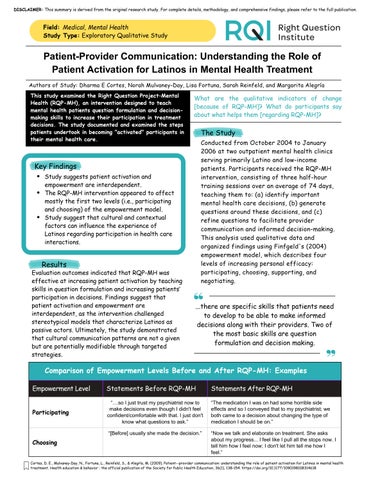

Patient-Provider Communication: Understanding the Role of Patient Activation for Latinos in Mental Health Treatment
AuthorsofStudy:DharmaECortes,NorahMulvaney-Day,LisaFortuna,SarahReinfeld,andMargarita
This study examined the Right Question Project–Mental Health (RQP-MH), an intervention designed to teach mental health patients question formulation and decisionmaking skills to increase their participation in treatment decisions. The study documented and examined the steps patients undertook in becoming "activated" participants in their mental health care.
KeyFindings
Studysuggestspatientactivationand empowermentareinterdependent
TheRQP-MHinterventionappearedtoaffect mostlythefirsttwolevels(ie,participating andchoosing)oftheempowermentmodel Studysuggestthatculturalandcontextual factorscaninfluencetheexperienceof Latinosregardingparticipationinhealthcare interactions.
Results
EvaluationoutcomesindicatedthatRQP-MHwas effectiveatincreasingpatientactivationbyteaching skillsinquestionformulationandincreasingpatients’ participationindecisions.Findingssuggestthat patientactivationandempowermentare interdependent,astheinterventionchallenged stereotypicalmodelsthatcharacterizeLatinosas passiveactors.Ultimately,thestudydemonstrated thatculturalcommunicationpatternsarenotagiven butarepotentiallymodifiablethroughtargeted strategies
Alegría
What are the qualitative indicators of change [because of RQP-MH]? What do participants say aboutwhathelpsthem[regardingRQP-MH]?
TheStudy
ConductedfromOctober2004toJanuary 2006attwooutpatientmentalhealthclinics servingprimarilyLatinoandlow-income patients.ParticipantsreceivedtheRQP-MH intervention,consistingofthreehalf-hour trainingsessionsoveranaverageof74days, teachingthemto:(a)identifyimportant mentalhealthcaredecisions,(b)generate questionsaroundthesedecisions,and(c) refinequestionstofacilitateprovider communicationandinformeddecision-making. Thisanalysisusedqualitativedataand organizedfindingsusingFinfgeld's(2004) empowermentmodel,whichdescribesfour levelsofincreasingpersonalefficacy: participating,choosing,supporting,and negotiating.
therearespecificskillsthatpatientsneed todeveloptobeabletomakeinformed decisionsalongwiththeirproviders.Twoof themostbasicskillsarequestion formulationanddecisionmaking.