
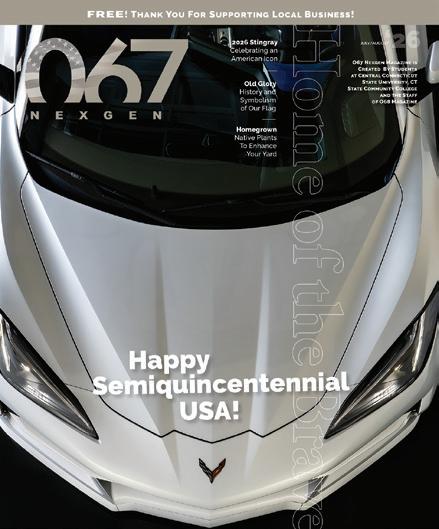
Photography by Dylan Miller



Noted by Greg
Mursko
Noted by Greg
Mursko

This magazine has been a long time coming for us, and we are proud to welcome you to the inaugural year of 067 Nexgen, a magazine made for the community, by the community. It’s not your standard small town publication, as it is part of a college course at Central Connecticut University where it is designed by students to deliver a real product where community, business, and education merge in your mailbox. As a lifelong resident of the area, I’ve always enjoyed working with students, guiding them, and helping them hone their conceptual art and design skills. In 2021, along with Dee Dee Colabella, I founded RPAC Art Center with the mission to meet students where they are, guide them toward their goals, and teach strong creative fundamentals. We launched 067 Nexgen as a handson publication studies program to teach graphic design and journalism students every stage of magazine production from concept to print. We wanted to give these talented young people real-world experience and work they can add to their portfolios. I have been so proud of the talent, hard work, and dedication of these students. As you explore this issue, you’ll see that their writing and design skills are top-notch. I am so excited for their future and how 067 Nexgen will grow, and invite you, the community, to engage with us and offer feedback on how we can continue to offer this publication and tie together everything that makes us great.
Greg Mursko Co-Founder of the RPAC Art Center Publisher, 068 Magazine and 067 Nexgen
Dee Dee Colabella Owner info@colabellamedia.com
Greg Mursko Publisher publisher@colabellamedia.com
Dylan Miller Chief Operating Officer dmiller@rpacartcenter.com
Julia Bruce Editor-In-Chief editor@068magazine.com
Contributing Writers
Julia Bruce, Dee Dee Colabella, and Erik Ofgang
Student Graphic Designers
Vida Goncalves, CT State Alanny Perez, CT State Max Perez, Central Connecticut State University
Contributing Photographers
Dylan Miller and Badge and Bark Photography
Advertising Sales
Laura Lippman | 203.394.1706 Advertising Sales Manager MCaseMedia, Inc. www.mcasemedia.com
David Gursky | 914.646.9141 sales@colabellamedia.com
Erica Shillingford | 914.844.5602 eshillingford@colabellamedia.com
067 NEXGEN is a publication of Colabella Media LLC. ©2026. All rights reserved. No part of this publication may be reproduced without permission of the

Stephanie Dee
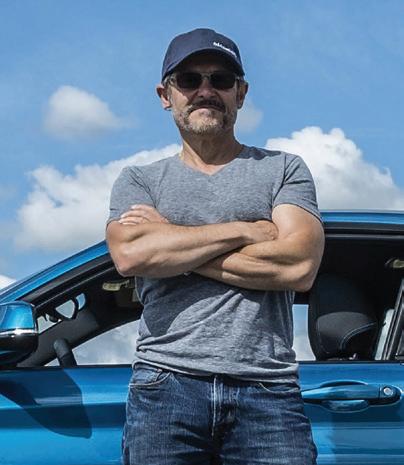
Stephanie Dee got her start writing for area weekly newspapers, including the Wilton Bulletin, and now is a freelance writer who writes feature stories on people and businesses all over Connecticut. She especially enjoys writing on arts and antiques topics. On page #8, Stephanie explores the art of photojournalism through the work of Bryan Woolston.

Roger Garbow
Roger Garbow is the founder of Full Throttle Marketing, a Connecticut-based automotive marketing and PR firm. A member of the International Motor Press Association, he’s a contributing writer to numerous outlets including Road & Tracks and the DRIVE.com. Roger has driven some incredible vehicles, but he prefers lightweight sportscars with three pedals. On page #24 Roger shines a light on the Corvette, the iconic American sports car.
Vida Goncalves
Vida Goncalves is a recent CT State Community College graduate with an Associate Degree in Digital Arts Technology and a certification in Print and Screen Designs. She is currently a design intern and sales representative for Colabella Media. In this second issue of 067 Nexgen that she has been involved in, Vida writes about the ecological importance of using native plants when designing your landscape. You can find her story on page #30.
Joey Macari
Joey Macari is a freelance writer and content creator who writes bespoke copy for multiple media publications in the Northeast, in addition to social media copywriting for multiple non-profit arts organizations, NY Times best-selling authors, and more. On page #46, Joey takes a humorous look at raising chickens in your backyard with the assistance of the company, Rent The Chicken.



by Stephanie Dee
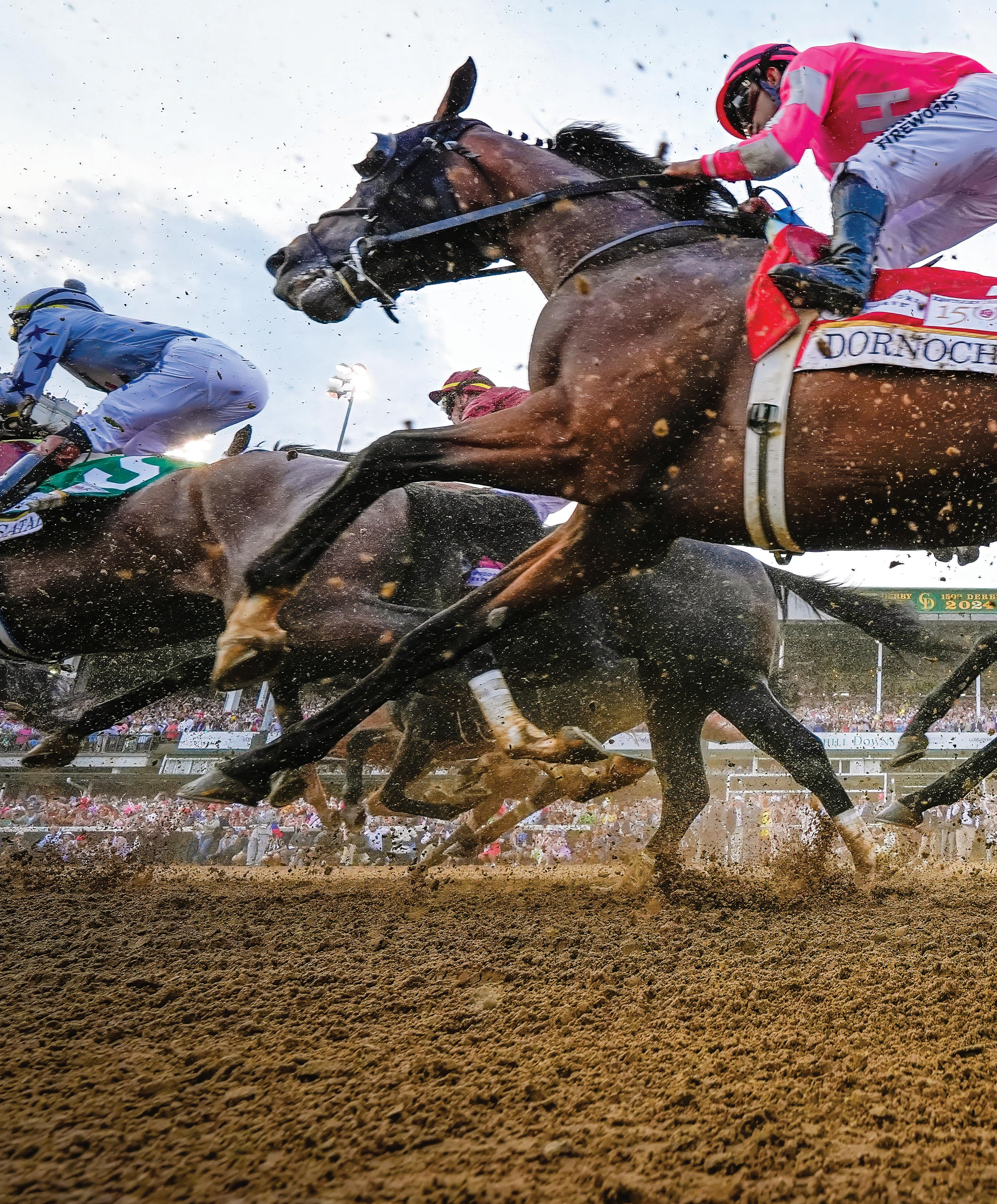
Some say that artists are born with a fascination with capturing the world round them. For Bryan Woolston, a local photojournalist, this rings true. Woolston started photography in school, using film to learn the ins and outs of taking a striking photo. His hobby continued into college and during his career in the United States Army, where he worked parttime for his city newspaper. Woolston continued his career in photojournalism, finally leading to major publications such as The New York Times, The Wall Street Journal, The Philadelphia Inquirer, The Washington Post, The Baltimore Sun, London’s Daily Mail, Time and Newsweek magazines, NBC News, Reuters News Service, The Associated Press, and more.
While every photojournalist has their niche, Woolston takes pride in not specializing in a certain type of photography. “My work captures the moment in its purity without fingerprints,” he says about the common thread in his work. He believes a photojournalist’s job is to capture a moment in its true form, without using Photoshop or preset lighting.
Photojournalism differs from artistic photography by its code of ethics and regulations. “Our job is to inform people who can’t be where we are and show them exactly what we saw,” says Woolston. In the search for snapshots of fleeting moments, he has traveled around the world. From early conflict at the Polish-Ukraine border and humanitarian efforts in Haiti, to the Kentucky Derby and NFL games, his mentality is to report only what he sees, nothing more and nothing less.
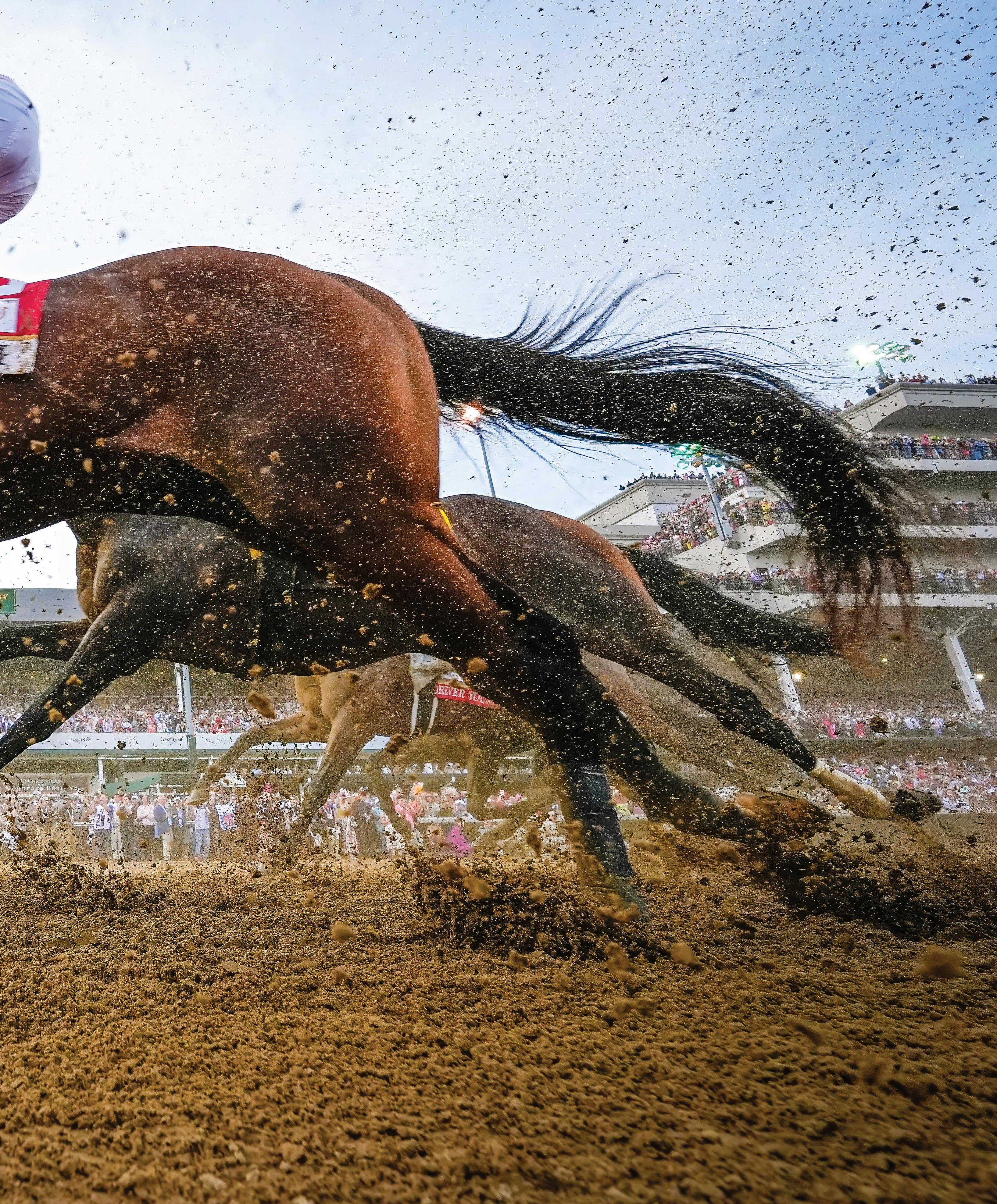
Getting the perfect photo to embody these moments takes a lot of skill and technology that can match the speed and sensitivity of the event. At the Kentucky Derby, Woolston used a complex remote system to control five cameras at points on the track while keeping three cameras on his person. At other times, he stood atop a 12-foot ladder at the back of a crowd with a telephoto lens.
Time is of the essence after the photo is taken. Using his camera’s technology, he transmits his photographs straight from his camera to
Capturing events that are happening in real time, such as the Kentucky Derby, takes technology and skill.

computers at his contracted company. The photo is only slightly edited to ensure highquality printing by adjusting lighting and can be published within minutes.
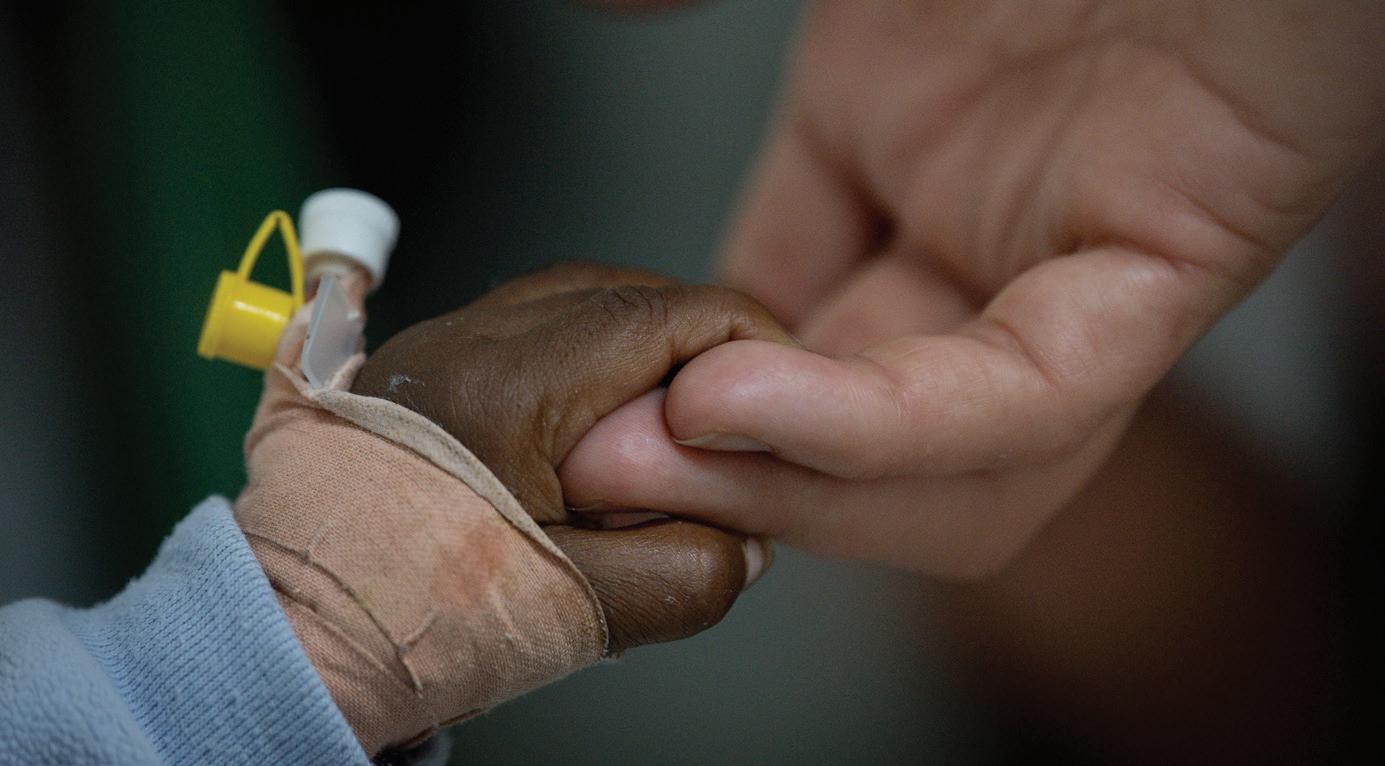
“It’s humbling to have trust in me to photograph these events,” says Woolston. While many of his past assignments have significantly impacted him, he is especially motivated to share the stories of US Military members, humanitarian efforts, and to teach new journalists how to stay safe.
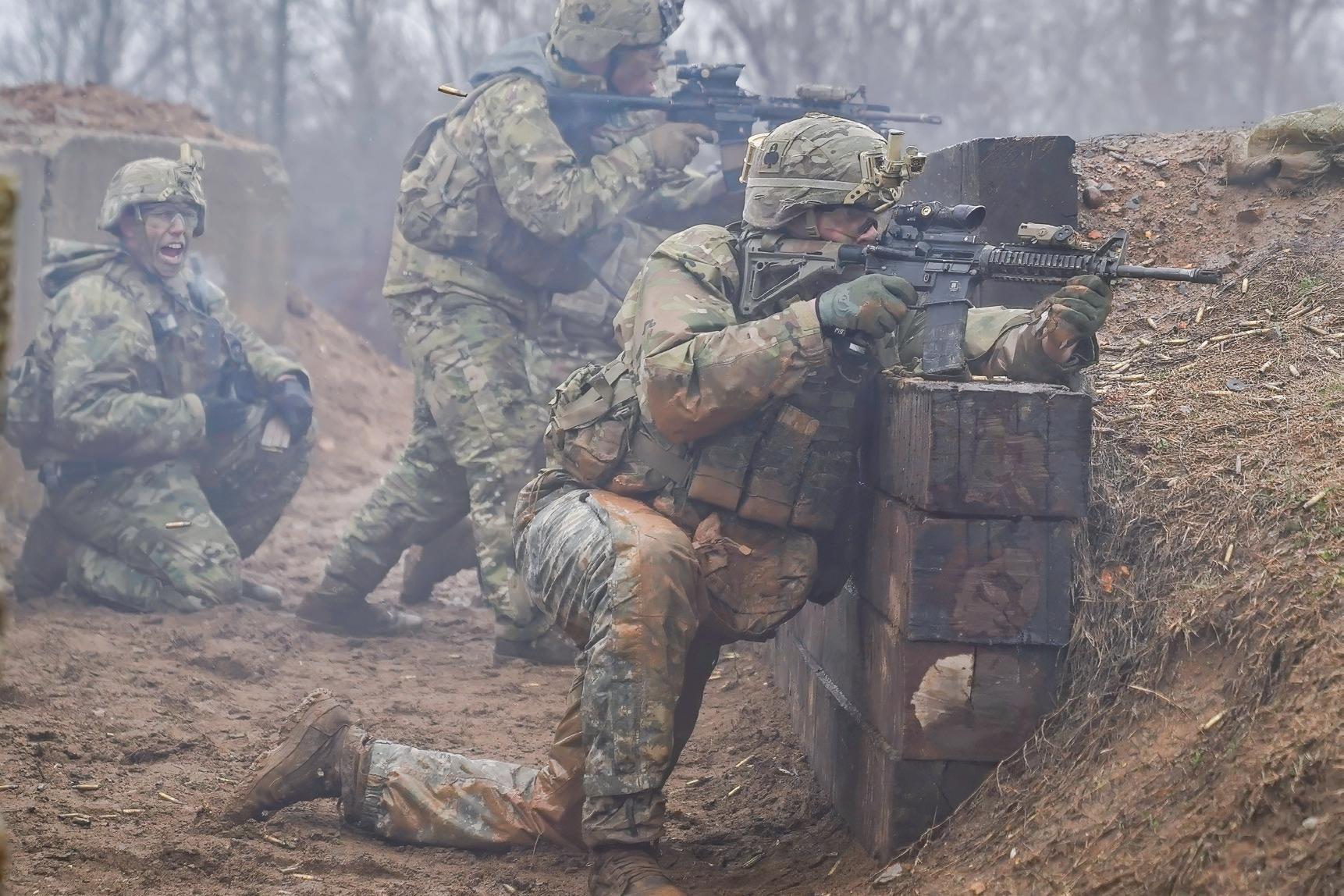
As a former member of the US Army, Woolston has a passion for ensuring that American citizens know what happens when we send soldiers overseas. By photographing training and preparation sessions of the Army, Woolston hopes to shine a light on their hard work and sacrifices.
Blending his passion for helping others with wanting to show the best of humanity, Woolston started Journey Press, Inc. This nonprofit organization “seeks to raise public awareness of positive, life-changing work and advance the causes of nonprofit partners through independent, ethical journalism.” He values telling the stories of those making a positive change in the world while also inspiring others to become more active in their humanitarian efforts.
In a time where it is dangerous to be a journalist, Woolston has first-hand experience with being in unsafe situations. He has documented riots, protests, natural disasters, and more. Woolston’s other mission is to teach the next generation of photojournalists how to stay safe through a program called Crisis Ready Media. “Journalists on the frontline are no longer innocent bystanders; they are targets who face unthinkable dangers. Crisis Ready Media equips them with the tools and support to report safely,” states Woolston.
Time and honesty are the pillars of successful photojournalism. “I believe it is the photojournalist’s responsibility to combine the art of photography with the ethical responsibility of honest journalism.”
To see more of Bryan’s work visit bryanwoolston.com or @woolstonphoto. •

by Julia Bruce
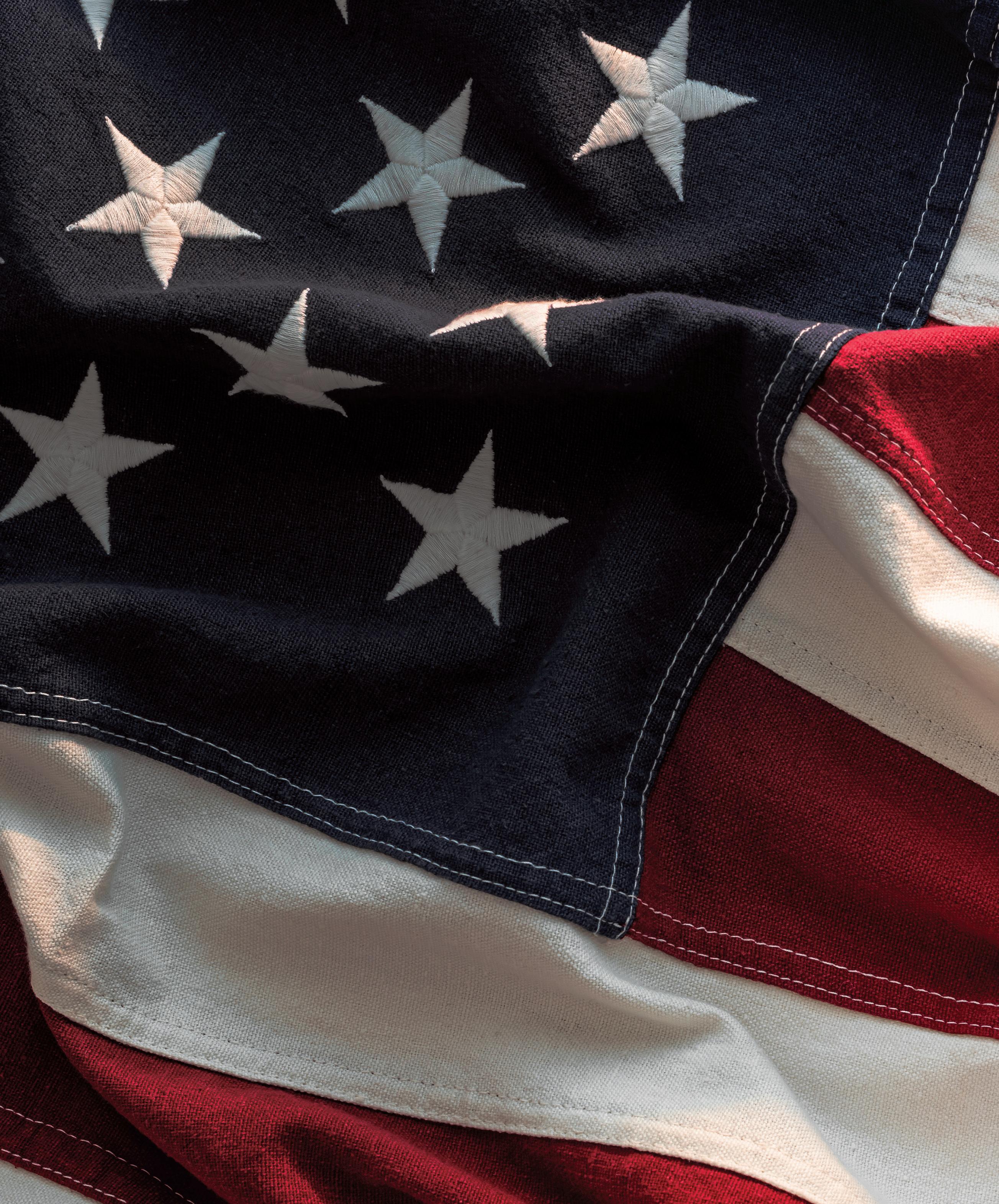
haven’t always given much thought to my relationship with patriotism. Sure, when I was a child, I said the Pledge of Allegiance every morning in school. As a mom, I regularly dressed my children in red, white, and blue for the annual Fourth of July parade. And, as a grieving daughter, I accepted the folded flag handed to me by a soldier at my father’s military honors funeral. At each of these events, the American flag was prominently featured. Known under many names –Stars and Stripes, the Red, White, and Blue, Old Glory – the flag of the United States of America is more than just a national symbol; it is a historical and cultural icon. This year, as we celebrate our nation’s 250th anniversary, we have the opportunity to reflect on the symbolism of that flag and what it says about our feelings about our country.
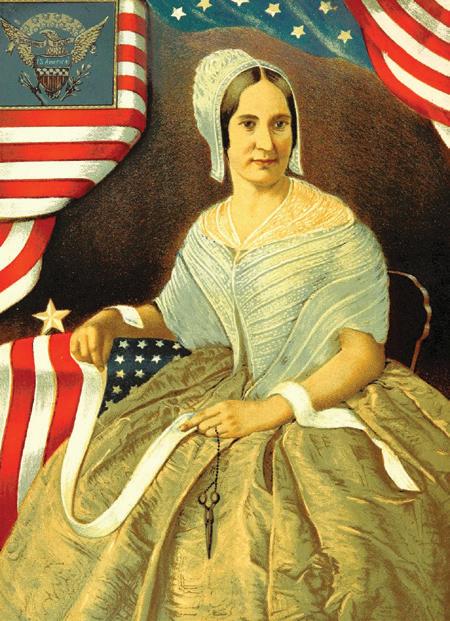
Historical lore claims the first flag was designed by New Jersey Congressman Francis Hopkinson and sewn by Philadelphia seamstress Betsy Ross – although in reality, there is no written documentation to support this beloved legend. The American flag’s story officially began on June 14, 1777, after the Continental Congress passed the Flag Resolution, defining the design of the American flag with the following declaration: “That the flag of the thirteen United States be thirteen stripes, alternate red and white; that the union be thirteen stars, white in a field of blue, representing a new constellation.” The colors of the flag are symbolic as well: red for hardiness and valor; white for purity and innocence; and blue for vigilance, perseverance, and justice. On August 3, 1949, President Harry S. Truman officially declared June 14th as Flag Day. The flag has since been updated 27 times to include new states. The current 50-star version was designed by a high school student for a history project and was adopted on July 4, 1960, after Alaska and Hawaii achieved statehood.
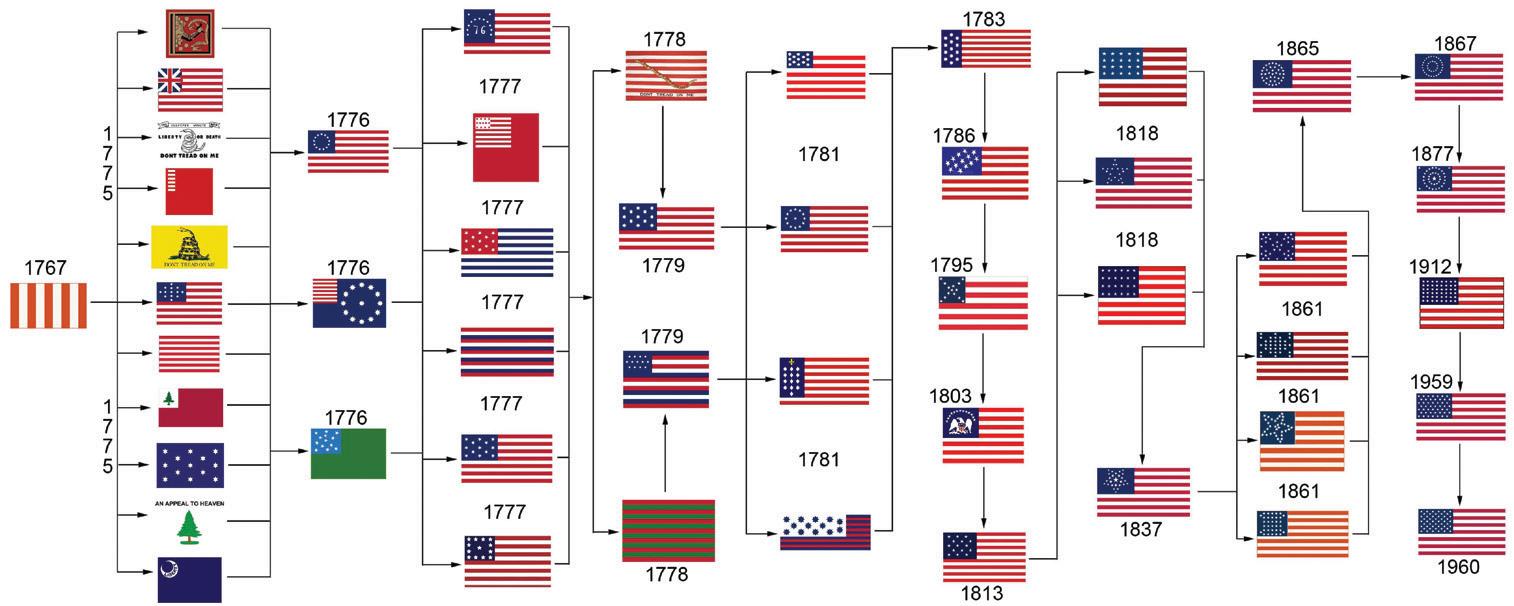
Throughout American history, in times of celebration as well as crisis, our flag has been a steadfast symbol representing our country’s resilience and unity. As a nation, we have witnessed our flag displayed at Olympic medal ceremonies and draped over returning soldiers’ coffins. It has been a constant presence in significant and also everyday events – from inaugurations of presidents to high school football games. The flag rose from the rubble of 9/11 and was planted on the surface of the moon. And while our country may sometimes seem divided, the American flag can stand as a reminder of the nation’s shared ideals and evoke a sense of national pride and collective responsibility. The values that the flag stands for – freedom, democracy, and justice for all –should be viewed as goals that we as a country must continually strive to achieve.
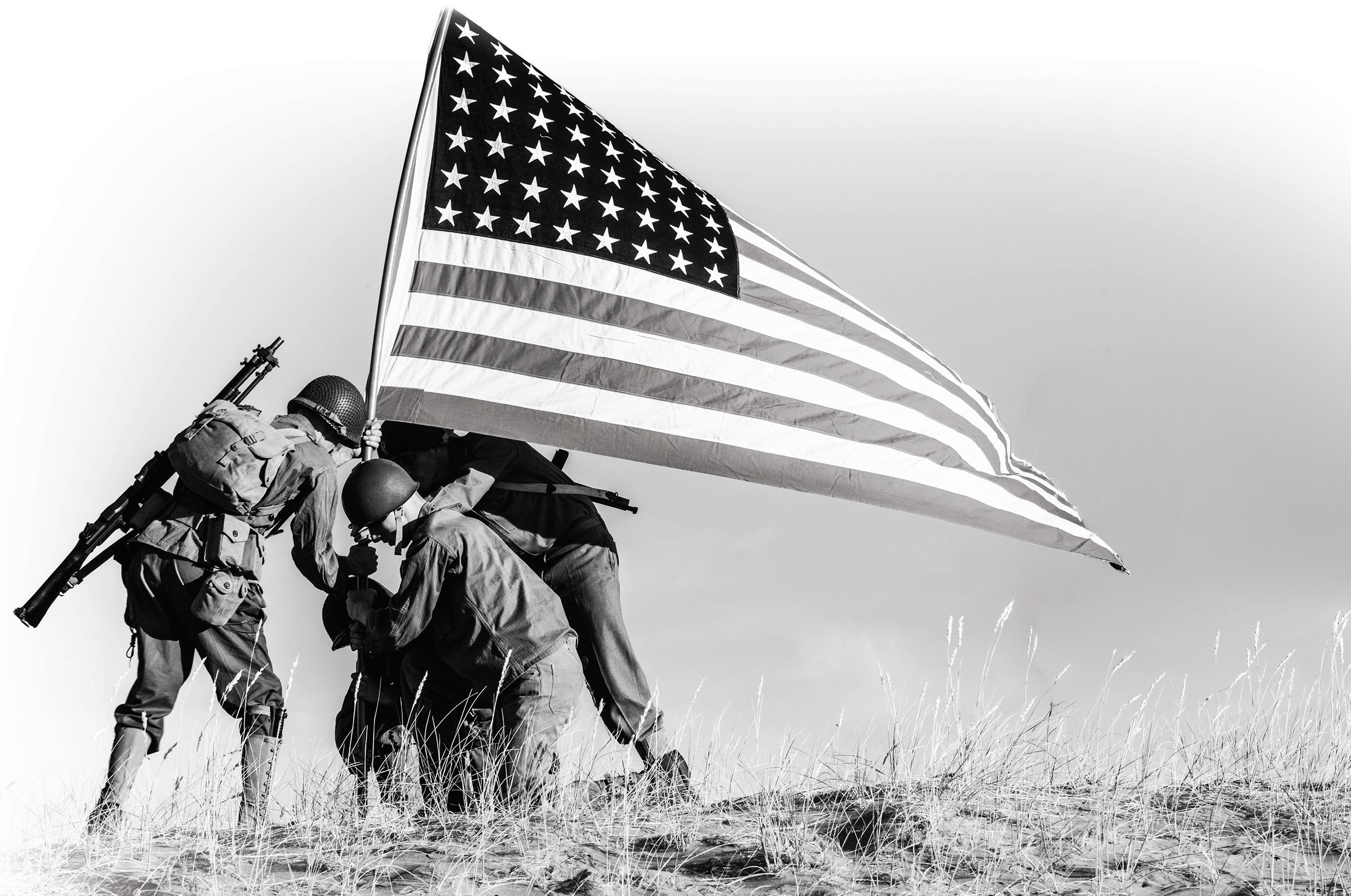
Since the birth of our country, the American flag has been featured in paintings, photographs, and sculptures – artistic statements that either celebrate or oppose current political situations. Notable pieces of artwork include Childe Hassam’s “The Avenue in the Rain” (1917), which currently hangs in the White House. Painted months









Display the flag from sunrise to sunset. Flags flown at night need to be illuminated.










Do not display the flag in inclement weather.
Do not let the flag touch the ground.
When not on display, the flag should be respectfully folded in a triangle.
When flown at half-staff, the flagshould be first hoisted to the peak for an instant and then lowered to the half-staff position. The flag should be again raised to the peak before it is lowered for the day.
before America entered World War II, this painting depicts a large flag and several smaller flags reflected on the wet street and sidewalk. Another famous piece of artwork is Jasper John’s “Flag,” which was made on a cut bedsheet using oil paint and then encaustic, a method involving pigmented melted wax. John’s work is celebrated for its textured, painterly surface and its ambiguous, neutral stance between patriotism and critique. The flag has also been featured in defining moments in American history, from Joe Rosenthal’s photo of the American flag being raised atop Mount Suribachi at Iwo Jima to Neil Armstrong’s photograph of his colleague, Buzz Aldrin, standing next to the American flag on the Moon. More recently, Keith Haring’s “American Music Festival - New York City Ballet” (1988) is a contemporary piece that features his signature bold, energetic figures interacting playfully with an American flag, with characters leaping, tumbling, and nudging the stars and stripes.
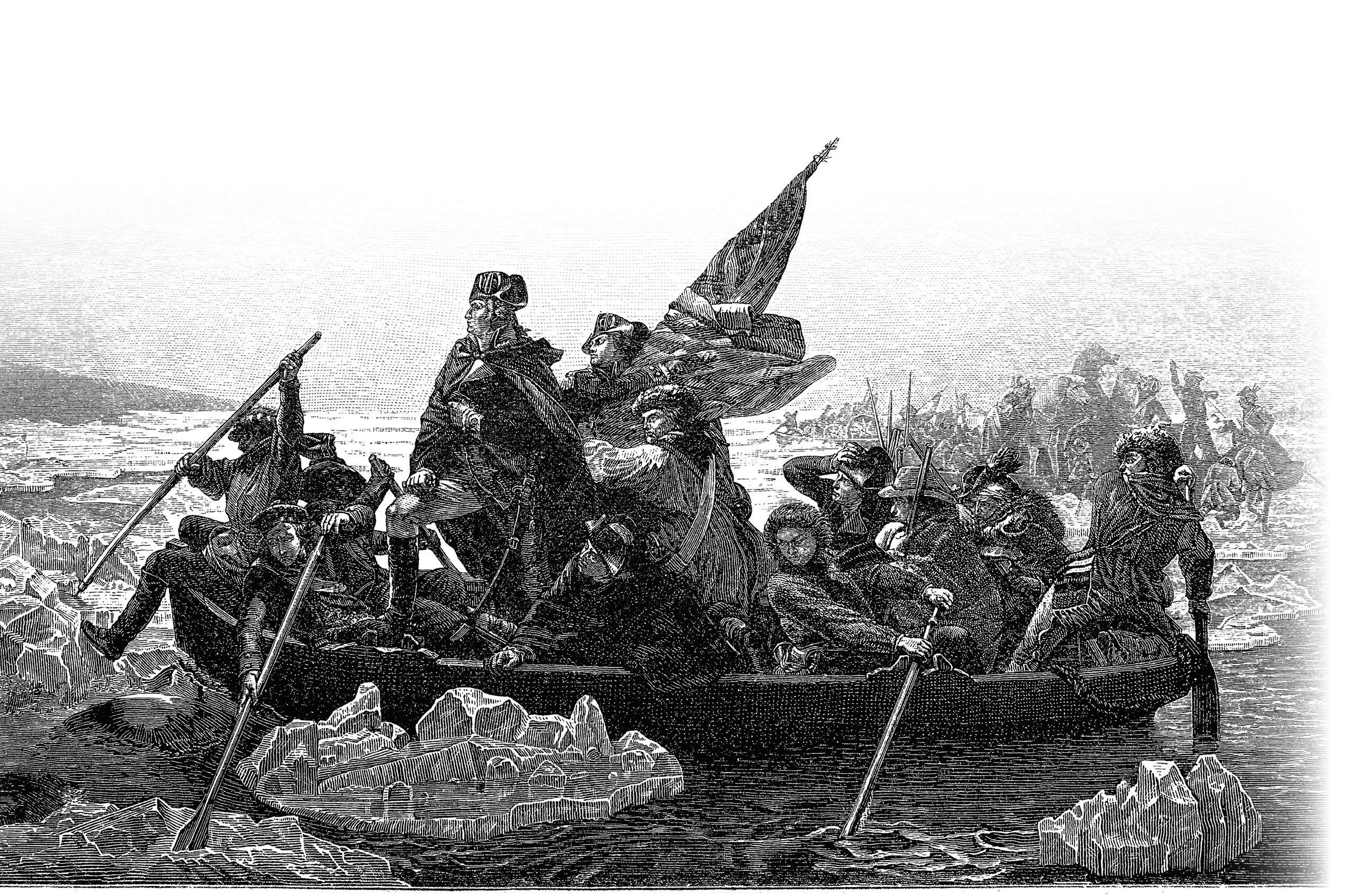
In honor of America’s 250th, the National Gallery of Art is hosting an exhibition entitled “American Icon – The US Flag in Art” from June 6th through December 6th. The installation will feature artworks from the late 1800s to the present day, exploring what the flag represents and how people connect with it. •


by Dee Dee Colabella
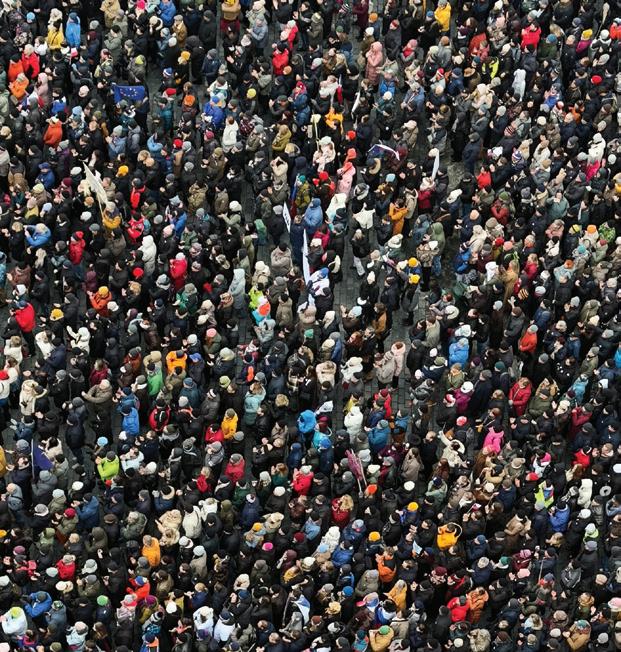
To say that the United States itself was born from protest is not unfair. The American Revolution began with growing dissatisfaction among colonists who believed they were being unfairly taxed and denied representation by Great Britain. What started as resistance to British rule eventually led to independence and a new nation built on democracy and individual rights.
The desire for change has always been part of the American story. The right to speak openly, organize around shared beliefs, and advocate for a better future is deeply connected to the freedoms protected by the United States Constitution. Throughout history, ordinary citizens coming together around a common cause have helped shape the nation’s laws, culture, and identity.
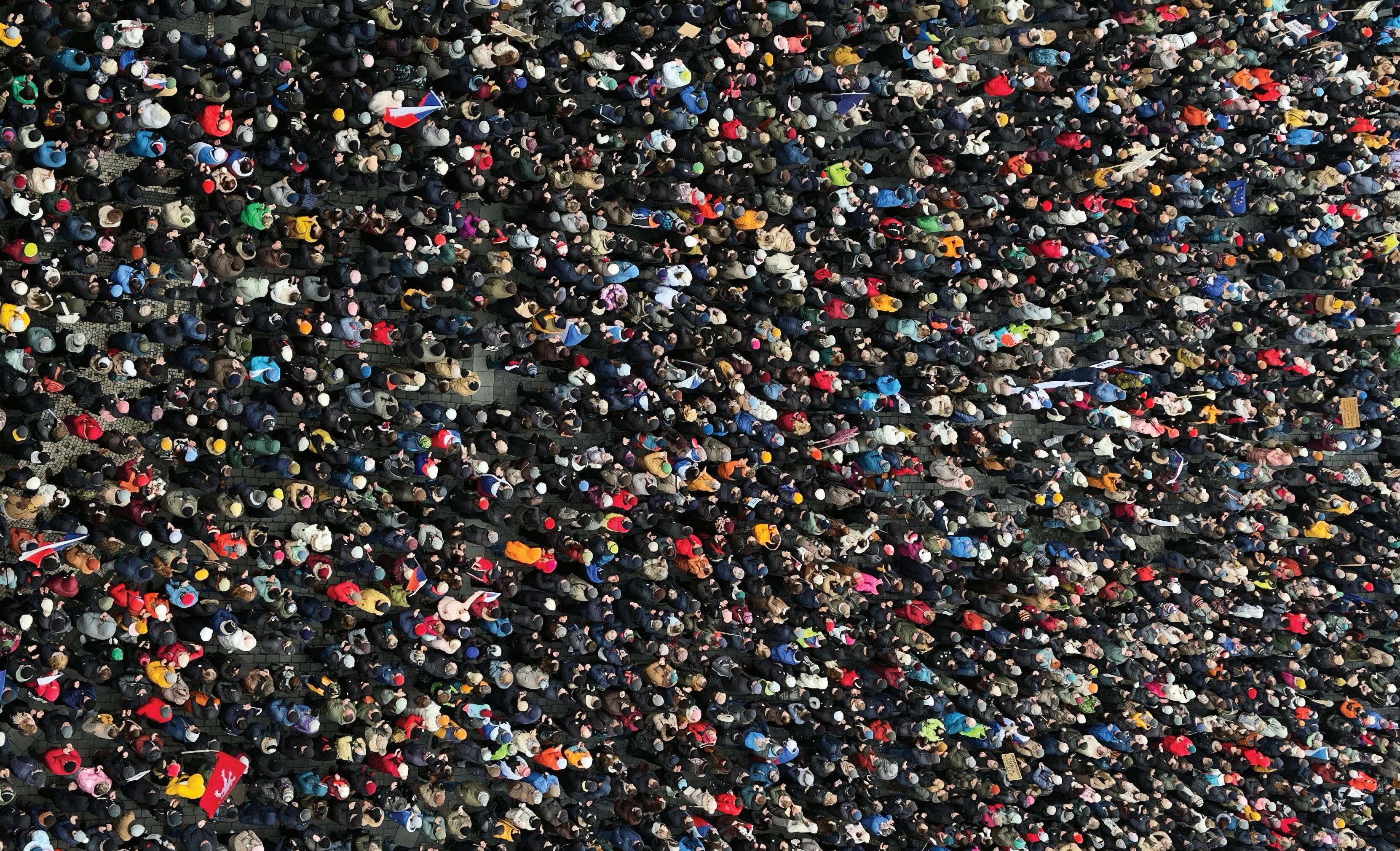
Because protest and public activism are woven into the country’s origins, grassroots movements have played a major role in defining the United States. These movements often begin with everyday people who believe something in society needs to change. Over time, many of these causes have grown into national conversations that reshaped the country’s perspectives and have continued to influence politics, culture, and the course of our nation.
The abolitionist movement was driven by activists, formerly enslaved people, churches, and local organizations working to end slavery in the United States. Through speeches, publications, protests, and political activism, the movement brought national attention to the injustice of slavery.
The movement’s efforts contributed to the Civil War and the adoption of the Thirteenth Amendment to the United States Constitution in 1865.
The abolitionist movement also laid the groundwork for future civil rights efforts. While major leaders became symbols of the cause, the movement was powered by ordinary citizens who believed the country needed to live up to its ideals of freedom and equality.
The women’s suffrage movement centered on two core beliefs: women deserved representation in government and the right to vote.
One of the defining moments of the movement was the Seneca Falls Convention in 1848. Organized by activists including
Elizabeth Cady Stanton and Lucretia Mott, it was the first major convention focused on women’s rights in the United States.
The movement grew over decades with influential figures such as Susan B. Anthony advocating for equal political rights and social equality.
The movement achieved a historic victory in 1920 with the ratification of the Nineteenth Amendment to the United States Constitution, granting women the right to vote nationwide.
The mid-20th century saw several powerful grassroots movements that reshaped American society.
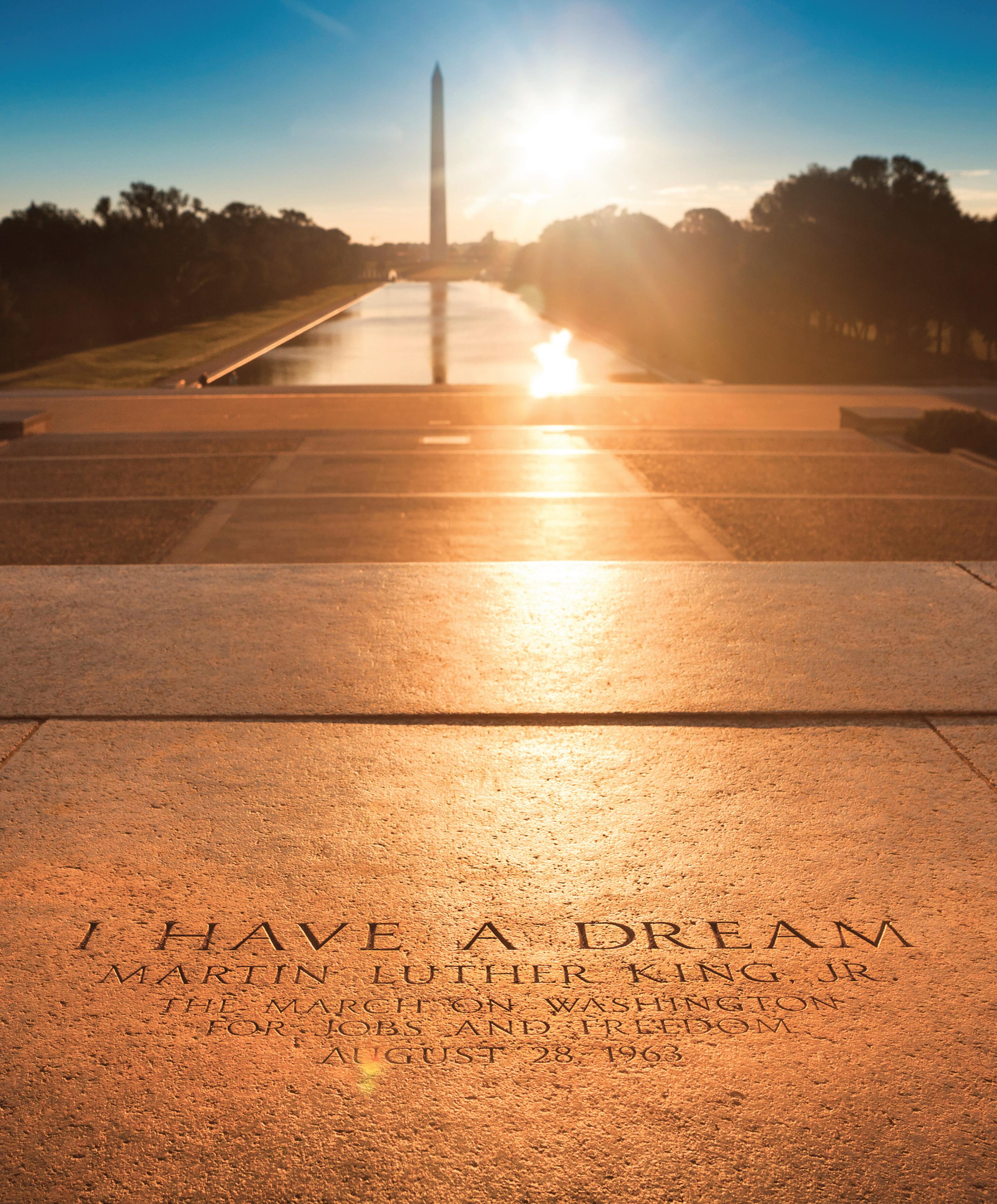
The Civil Rights Movement challenged segregation and racial discrimination through marches, protests, and acts of civil disobedience. Leaders such as Martin Luther King Jr. became lasting symbols of the movement’s push for equality and justice.
At the same time, opposition to the Vietnam War sparked protests across college campuses and cities throughout the country. Many Americans questioned U.S. involvement in the war and organized

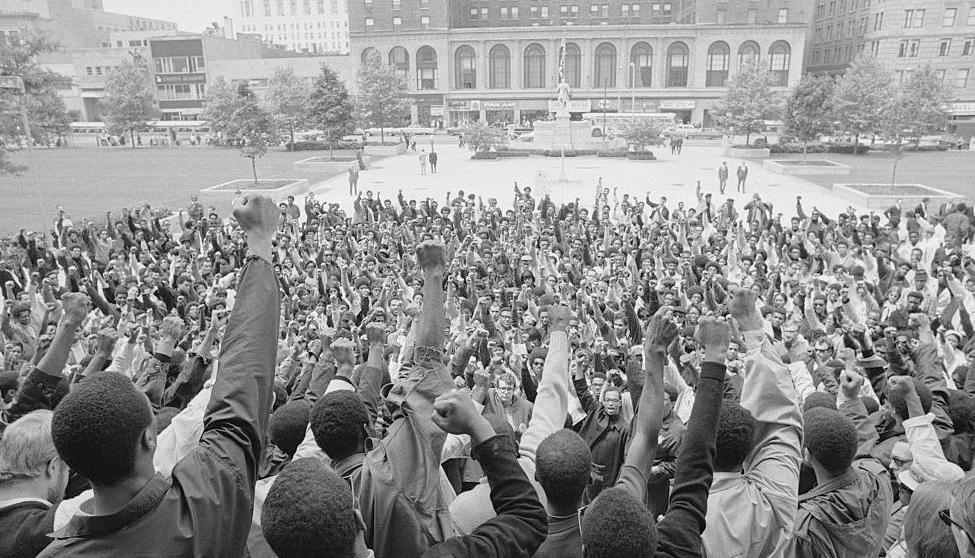
demonstrations calling for peace.
Environmental activism also gained momentum during this era, leading to increased awareness about pollution and conservation. These efforts contributed to the creation of the United States Environmental Protection Agency and major environmental protections still in place today.
Modern Political Movements
Grassroots activism continues to shape modern American politics.
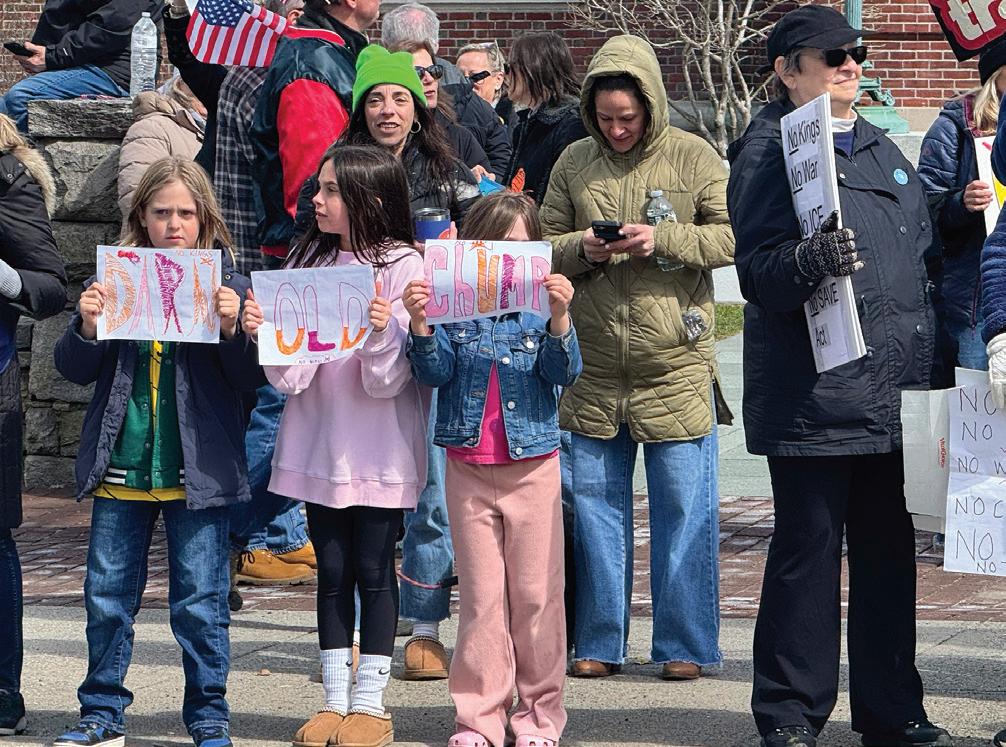
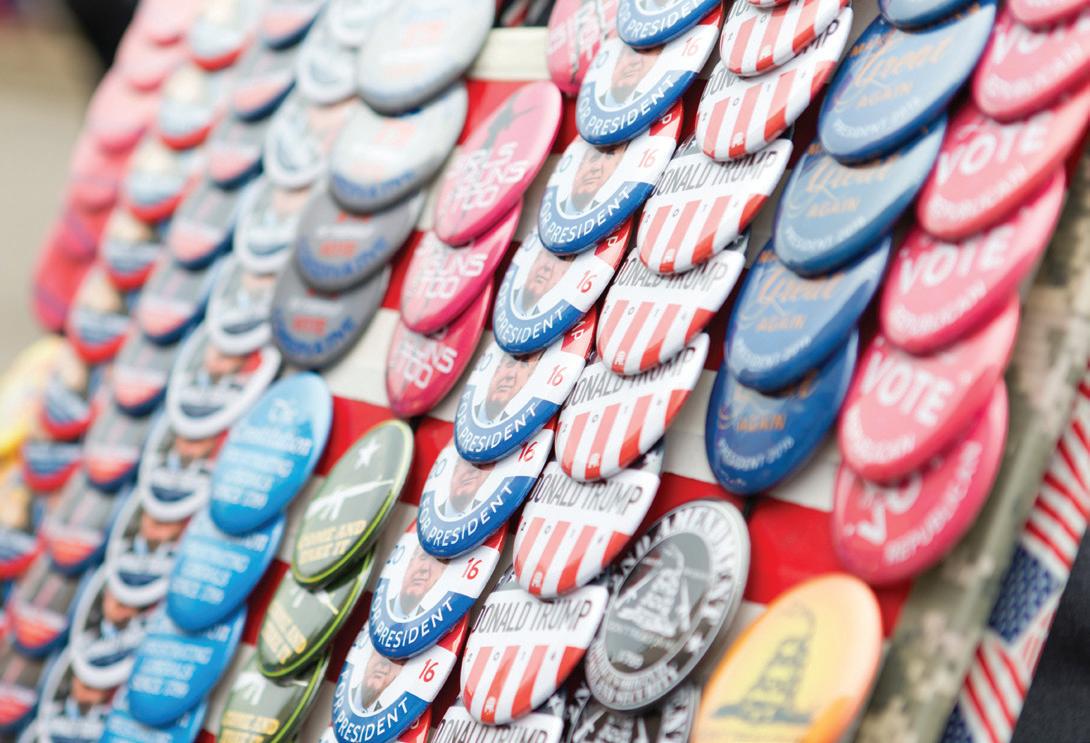
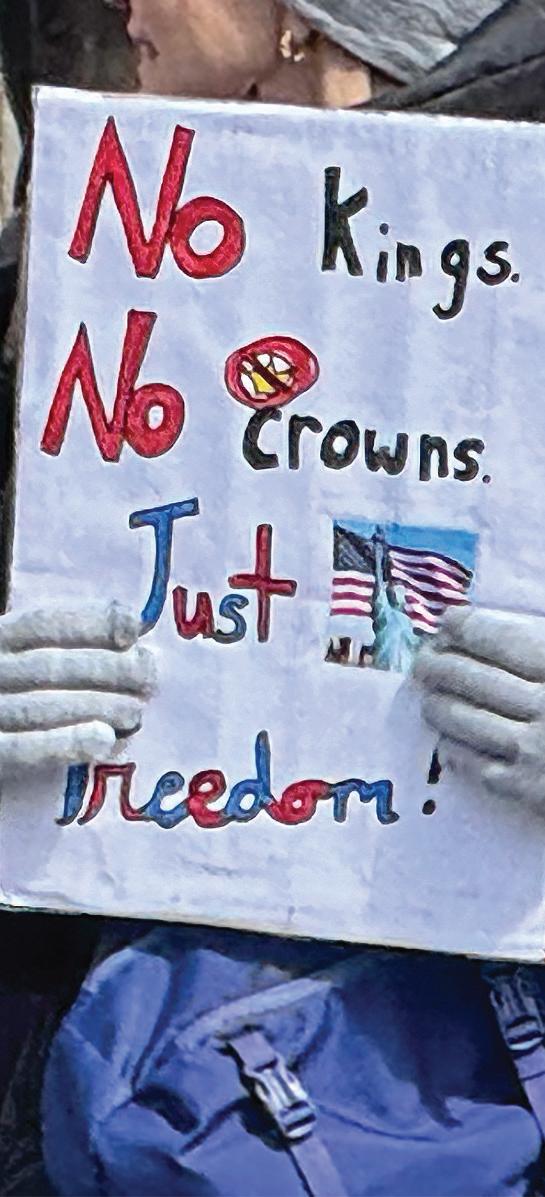
The Make America Great Again (MAGA) movement grew around the political rise of Donald Trump. Combining rallies, online communities, and grassroots fundraising, the movement focuses on themes including economic nationalism, border security, and national identity. Supporters often describe the movement as representing Americans who feel overlooked. On the other side of the political spectrum, the phrase “No Kings” has emerged in protests opposing concentrated political power or government overreach.
Unlike organized political movements, it functions more as a symbolic message used across different demonstrations and causes. It is important to note that the phrase “No Kings” actually originated in the American Revolution, opposing King George III’s control of the Americas.
The Continuing Role of Protest
The United States has a long history of protest movements influencing public opinion, elections, laws, and cultural values. Some movements achieved change quickly, while others took generations. In nearly every case, change was driven not only by famous leaders, but also by the grassroots movements who believed their voices mattered. The freedoms protected by the First Amendment, including freedom of speech and the right to assemble — continue to give Americans the ability to advocate for change and help shape the future of the country. •
Exhibits, 2026 & Beyond
• 2026 - The Revolutionary War
• 2027 - The Raid on Danbury / Rochambeau
• 2028 - 250 Years of Service & Sacrifice
2026 Patriotic Quilt Raffle
We’ll be having a wonderful quilt raffle - thanks to the Fabric Friends of the Danbury Museum - of a red, white, and blue patriotic quilt! Tickets are on sale at the museum NOW!
Scouting Badges
Looking to get your Scouting America 250 or Girl Scouts merit badge for the semiquincentennial? Book a free tour for your troop and learn about Danbury’s role in the American Revolution!
Book Club
Join us for 250th-related literary adventures reading books collectively documenting the Indigenous, Black,
and immigrant experiences of Americans over the last 250 years.
Charles Ives 152!
Charles Ives - Connecticut State Composer, Pulitzer Prize-winner, and son of Danbury - is recognized as the Father of Modern American Music. Celebrate American Music as we celebrate our country’s 250th birthday.
Celebrating American Song
A red, white, and blue extravaganza celebrating the beautiful legacy of American song and showcasing our own Marian Anderson, the famous Black contralto and Civil Rights activist who broke the color barrier at the Metropolitan Opera.
Réveille 2027
Join us in April 2027 for two days of community song, dance, and celebration as we commemorate the spirit that has infused Danbury for the past 250 years.

by Roger Garbow
Designed by Max Perez
Central Connecticut State University
If there’s one American automobile that truly defines the unabashed independence, feisty determination, and innovative spirit of our fledgling nation, it’s the Corvette. America’s sports car, now in its eighth generation, has often been considered an underdog, yet it continues to fight, and win, against much pricier and more prestigious European brands. Chevrolet’s philosophy of “win on Sunday, sell on Monday” has been a credo of the Corvette for decades, with wins in major sports car races since the early 60s, including nine class victories in the 24 Hours of Le Mans from 2000 to 2023.
On the consumer side, there are few vehicles in history that have generated a more loyal fanbase. Long before I could drive, a 1966 convertible, owned by my pal Tony’s dad, put me under the Corvette’s spell. During my daily Bridgeport Post newspaper delivery route riding my red Schwinn Sting-Ray, I would stop to stare at Tony Sr’s red Corvette Stingray. Tony, Jr got hooked as well. Jr. has owned 16 Corvettes and currently has a 1967 Coupe and a 2019 ZR1, with an order in for a 2027 ZR1X.
Chevrolet introduced the Corvette in 1953 in response to the influx of European sports cars brought back by GIs returning after WWII. While the convertible-only first generation (referred to as the C1 Corvette) had sexy styling, its large size, underpowered six-cylinder engines, and primitive suspension delivered mediocre performance. Later, V8 engine updates would improve acceleration, but the solid rear axle hampered handling.
Everything would change with the introduction of the completely redesigned C2 Corvette Stingray in 1963. The styling by Larry Shinoda is perfection,

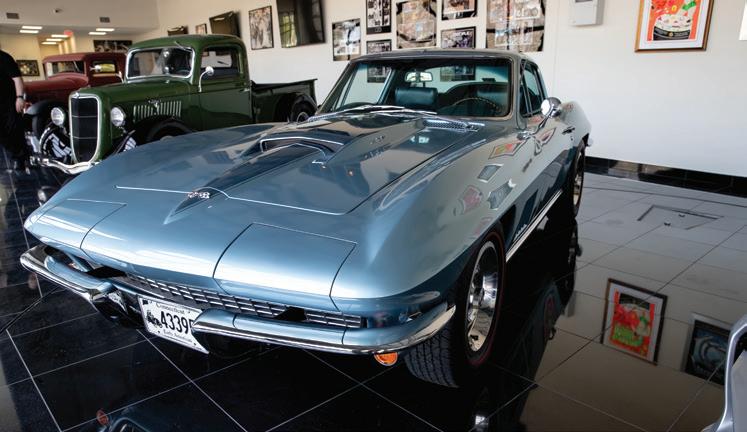
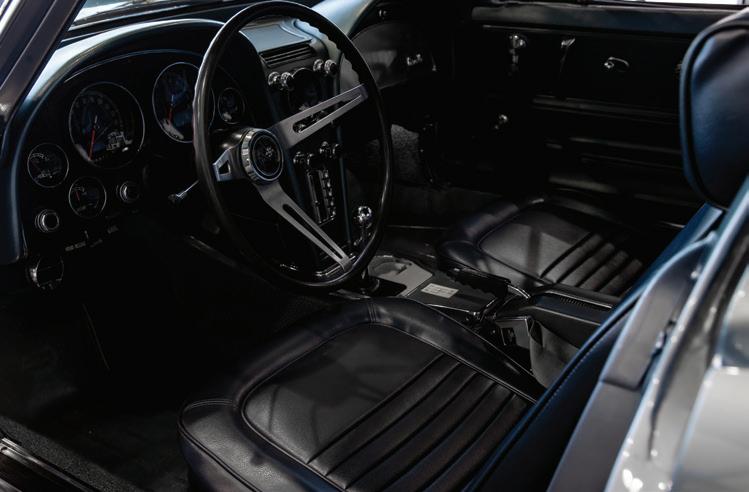
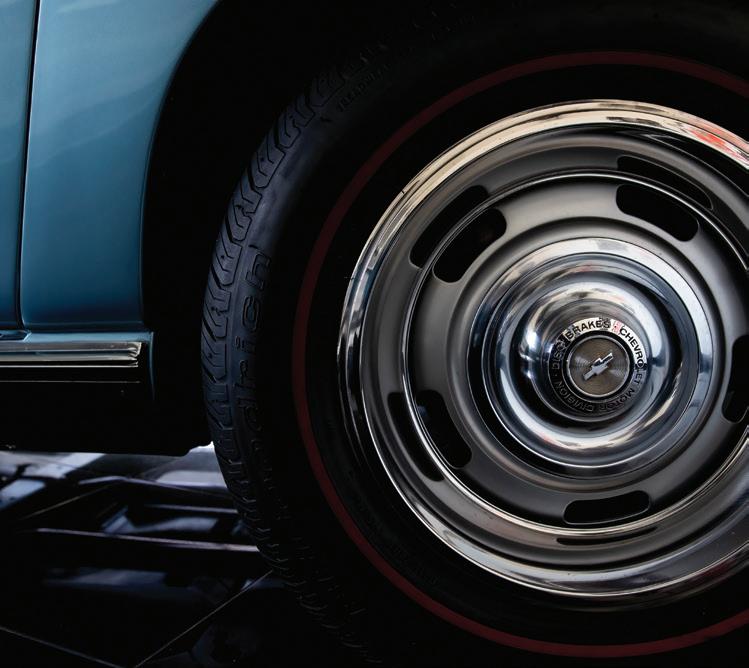
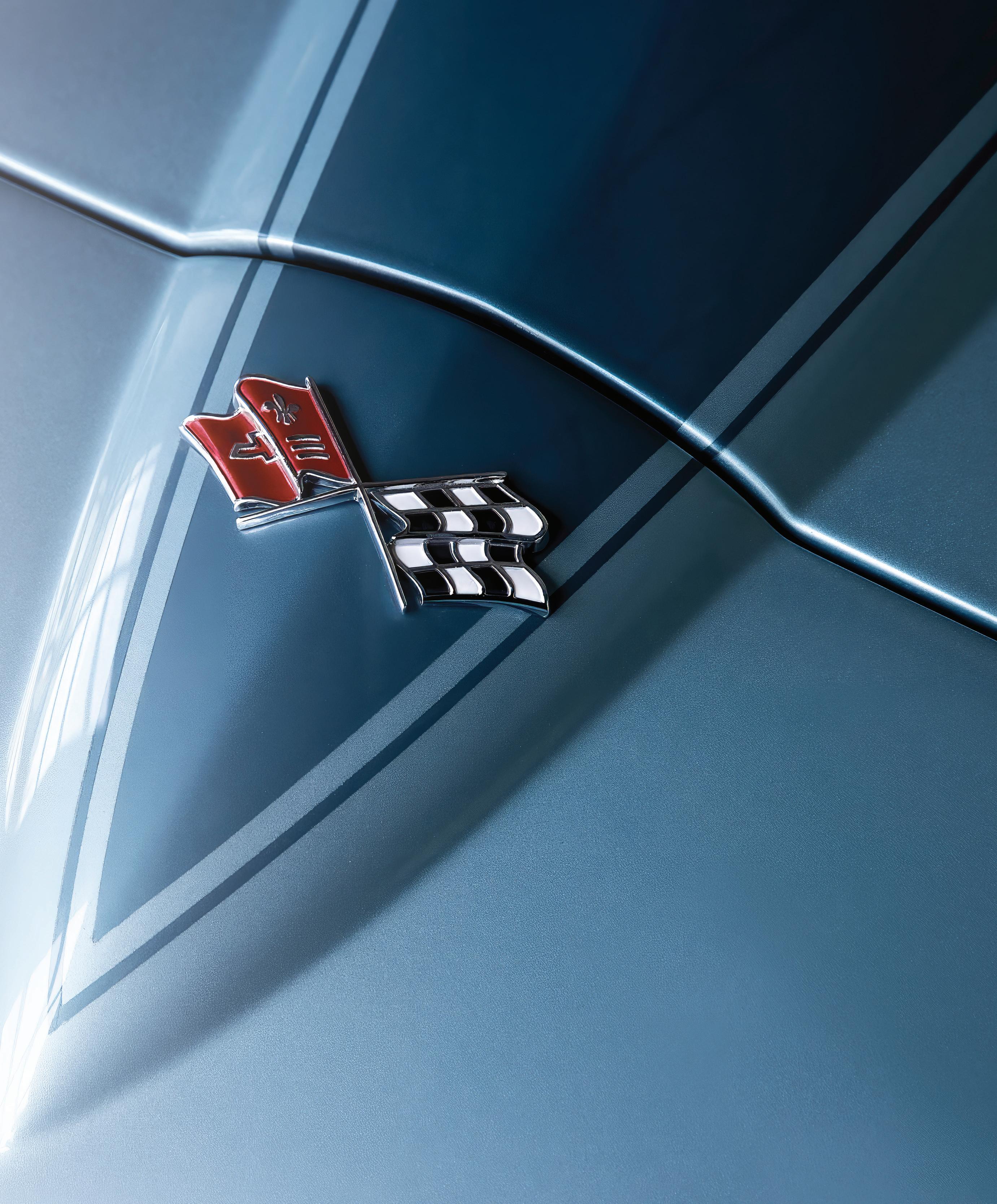

with the C2 often considered one of the most beautiful production cars in the world. With the C2, a coupe was now offered alongside the convertible. An independent rear suspension and smaller dimensions combined with a more aerodynamic exterior, finally enabled the Corvette to take on Europe’s best, both on the road and on the track. Today, C2 Corvettes are still popular at the world’s most renowned vintage races.
In a brilliant PR move, early NASA astronauts were offered $1 per-year leases on the Corvette, adding hero status to the car’s already impressive allure. After six decades, the appeal is just as strong. American Metal Customs in Danbury gave us access to a customer’s all-original, 1967 427 Coupe. Finished in Elkhart Lake
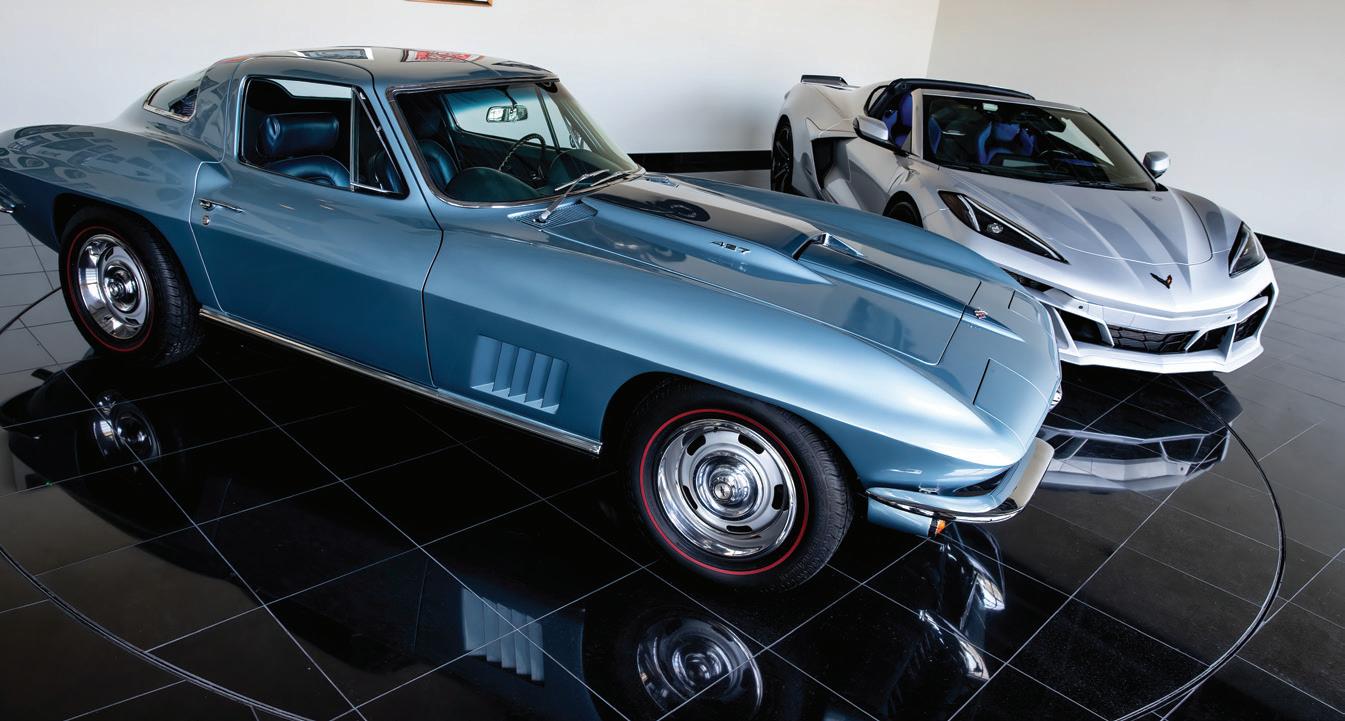
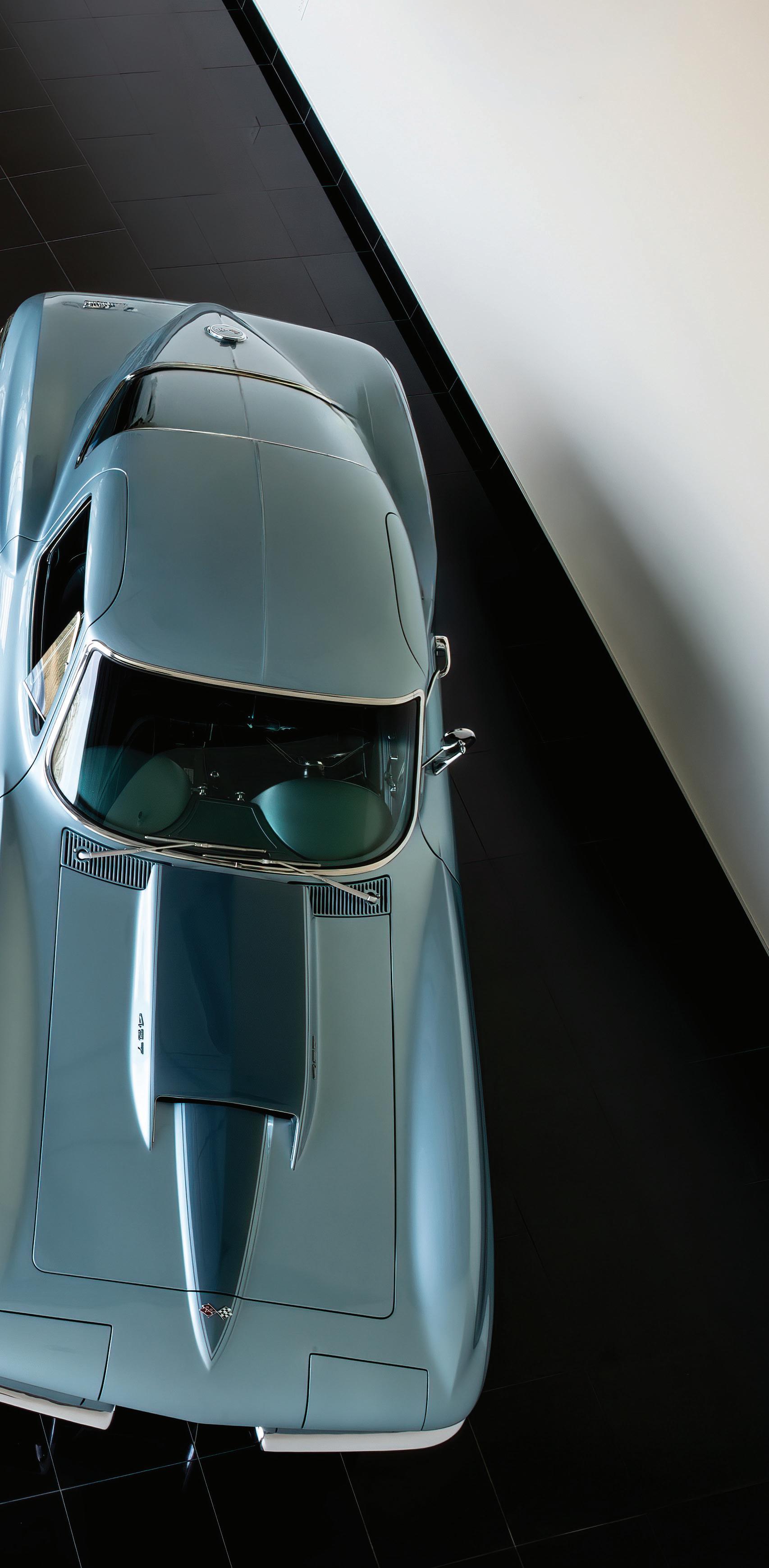
Blue with a blue interior, the C2 Coupe looks fast even when parked. The proportions and detail are spot on, rivaling the legendary Jaguar XKE in the beauty department, not just in performance.
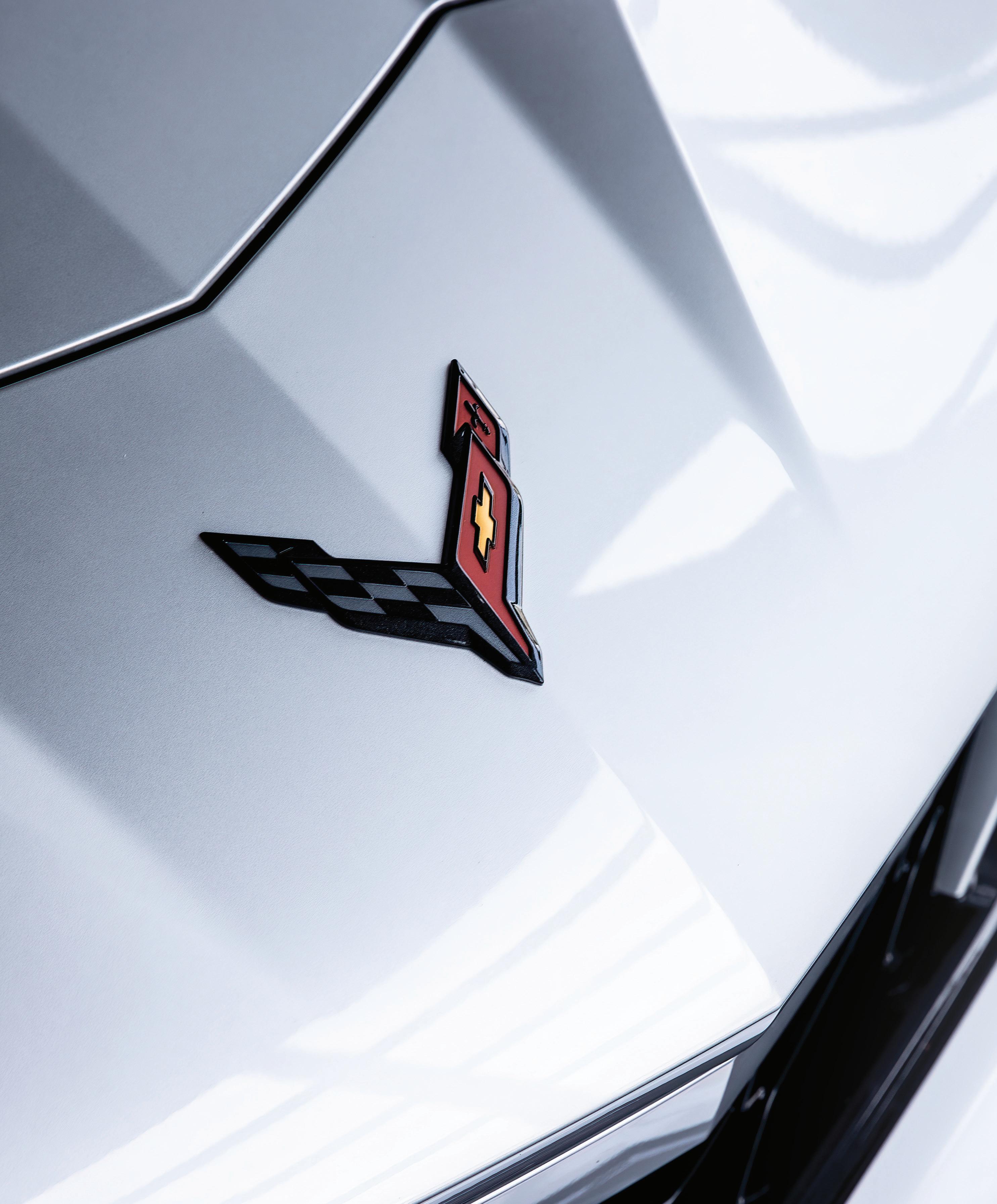
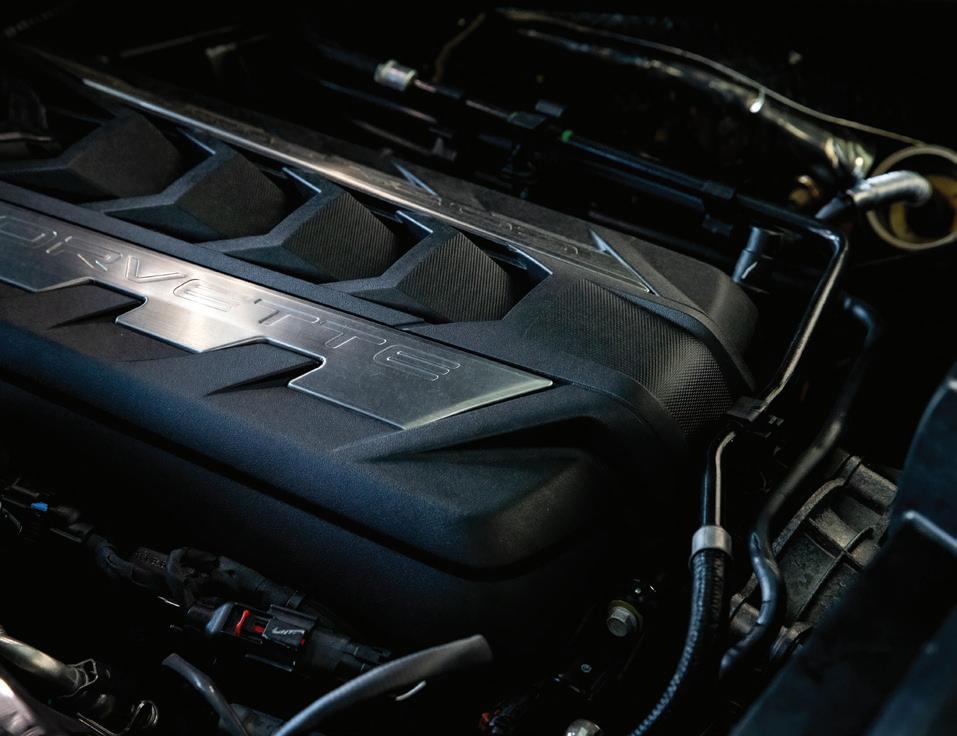
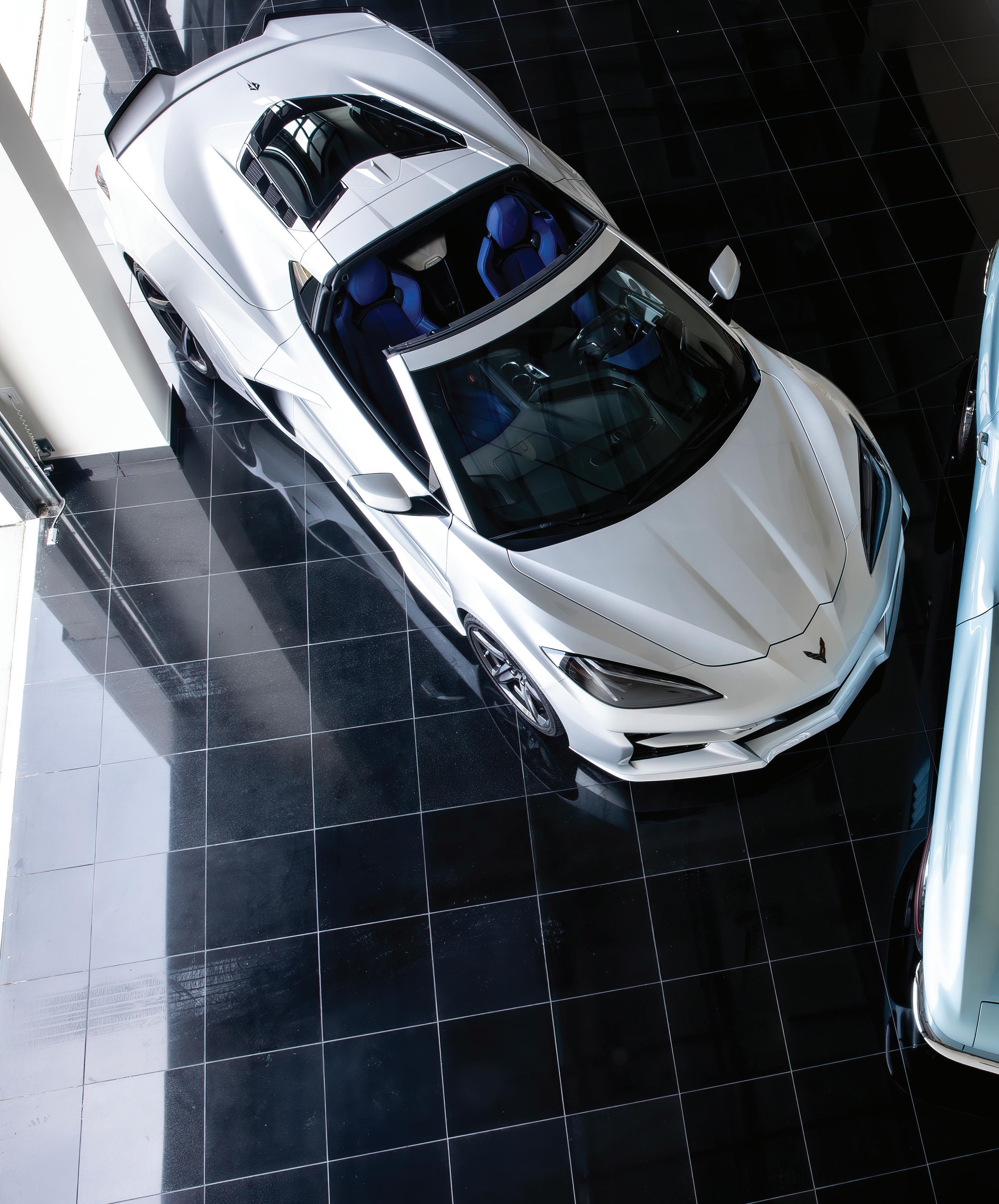
For over 65 years, and through seven generations, the Corvette retained a front engine, rear-wheel drive layout. While a midengine design had been rumored for decades, in 2019 Chevrolet finally introduced an entirely new platform for the C8, available in red, white, or blue. The long hood was gone and replaced with a frunk, while the engine was moved back behind the driver, visible under a clear panel. The side profile is much closer to a Ferrari or McLaren than any previous Corvette. It didn’t take long for the Corvette faithful to come onboard as there was no denying the performance improvement. But Chevrolet was not done sacrificing sacred cows. In 2024, they released the hybrid Corvette E-Ray. With an electric front motor complementing the rear V8, the Corvette now had all-wheel drive. While some called it heresy, the numbers don’t lie. With all four tires able to put down power, the E-Ray can accelerate to 60 mph in only 2.5 seconds.
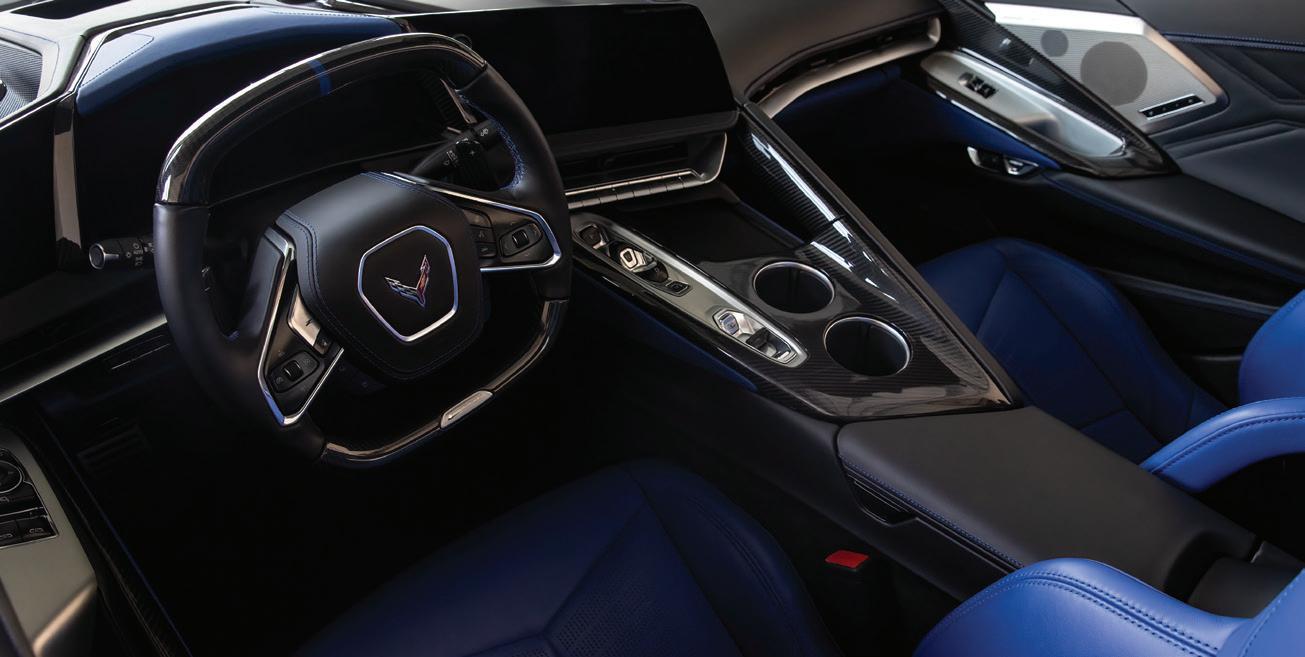
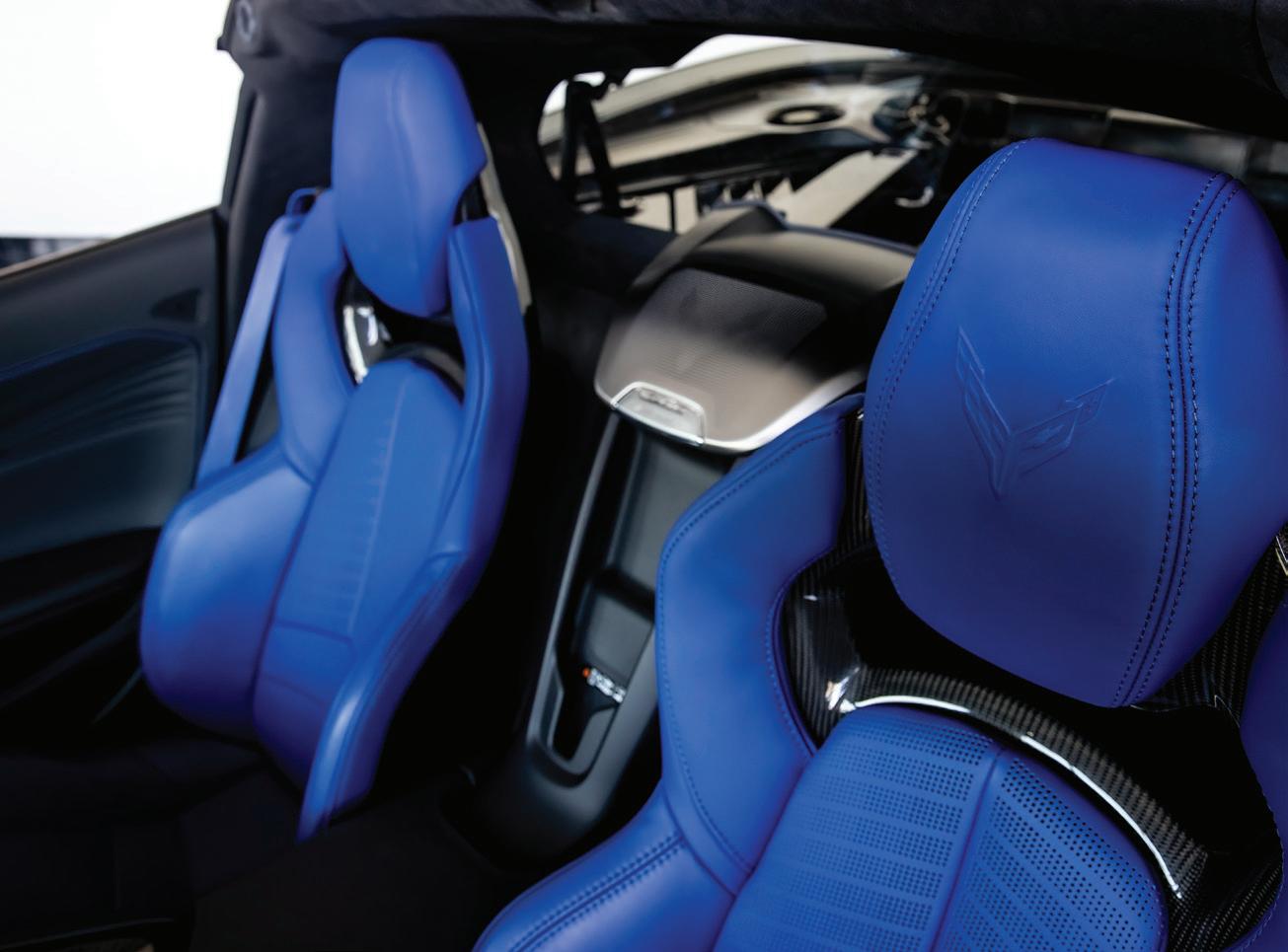
I recently spent a week with a 2026 Blade Silver Metallic E-Ray. The E-Ray, like all 2026 Corvettes, includes a redesigned and much-improved interior. A better layout and improved ergonomics benefit driver and passenger alike. My test vehicle featured Santorini Blue leather and oodles of carbon fiber trim, a far cry from the C2’s vinyl. One of the C8’s best features is the targa top, which is easily removed by one person and stores in the rear trunk. In Tour mode, the ride is comfortable, and the GT bucket seats offer ample support. The E-Ray’s hybrid system is geared towards performance, not efficiency, but it will still deliver up to four miles on electric power alone. That’s enough to sneak out of the house early without waking the neighbors. My test car also had the optional front-end lift, recommended for the low nose to clear speed bumps and steep driveways.
While a mid-engine, AWD, hybrid Corvette may seem radical, the C2 was no less revolutionary in its day. As we celebrate our nation’s 250th birthday, let’s also celebrate America’s sports car. After 73 years, the Corvette is showing no signs of slowing down. •
by Vida Goncalves
We’re amid the Connecticut summer season, a time that rivals our coveted fall foliage. Our humid summers foster a period of intense biological productivity, filling the landscape with deep emerald hues and a complex array of flowers. Connecticut is colloquially known as the “Nutmeg state” meant jokingly, since nowhere in CT does nutmeg grow naturally. This nickname originated from 19th-century peddlers who were rumored to sell wooden “nutmegs” to trick unsuspecting buyers. However, what our soil lacks in tropical spices, it more than compensates with a plethora of native flowers and fauna to boast about. These species are not merely ornamental; they are the cornerstone of the local ecosystem, providing essential nutrition, pollen, and nesting habitats for native avian species, pollinators, and small mammals.
State flower: Mountain Laurel
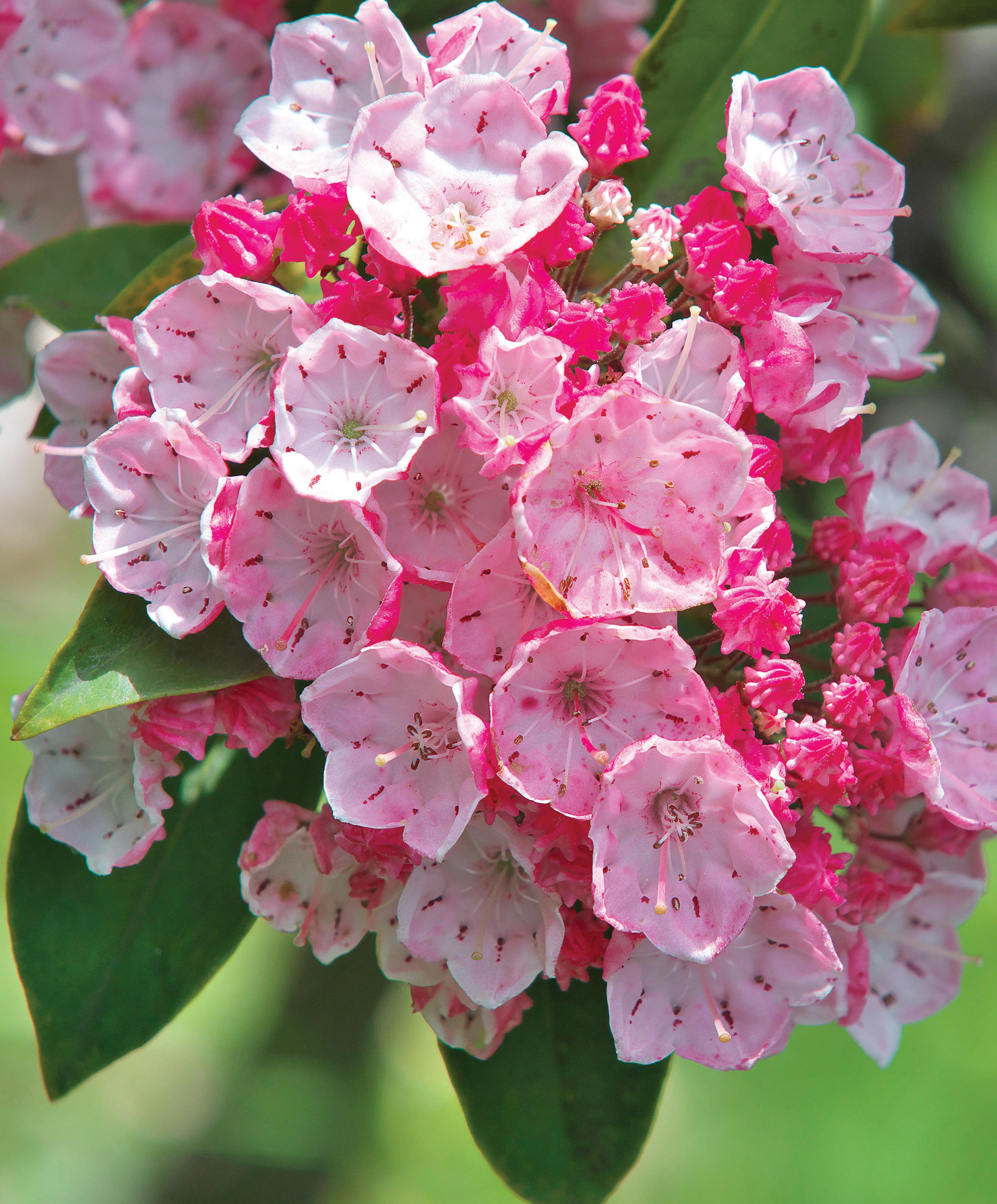
We cannot discuss native Connecticut plants without mentioning the Mountain
Laurel (Kalmia latifolia). Designated as our state flower by the General Assembly in 1907, the Mountain Laurel is a robust, flowering shrub with perennial flowering blooms. According to Dawn Pettinelli of the UCONN Home & Garden Education Center, the wild form of the plant provided exceptionally dense wood used by early settlers for crafting tool handles, clock gears, and furniture. Indigenous peoples also utilized the wood to carve spoons, leading to its alternative name, “Spoon wood.” Note that all parts of this plant are poisonous to consume, however one of the most interesting aspects of the Mountain Laurel is the “catapult” mechanism it uses to spread its pollen. As the flowers develop, the stem of the male stamens (the part of the flower responsible for reproduction) is bent and under tension. An insect landing on the flower will cause the stamen to be released, flinging pollen onto the insect as well as neighboring flowers. They also are able to self-pollinate and produce small brown seeds as the flowers wither.



I
f you live in Connecticut, you are familiar with ticks and the diseases they carry. Experts warn this could be the worst tick seson in decades. Several factors can cause an increase in ticks, such as a mast season in which trees produce an abundance of acorns (food for deer, mice, and squirrels who carry ticks) and, ironically, an especially snowy winter (the snow acts like a blanket keeping them warm).
So, what can you do to prevent ticks from wreaking havoc on your spring and summer outdoor plans?
n Spray your yard
n Avoid tall grasses
n Walk in the middle of the trail when hiking
n Use EPA-approved insect repellent
n Wear light colored clothing
n Keep a lint roller in your car to remove ticks
n Take off clothing and do a full-body tick check when you get home
n Safely remove any tick foun; ticks can be sent out for testing to local health departments
n Monitor for symptoms: bulleye rash, achiness, and fever
Bloom in Summer:
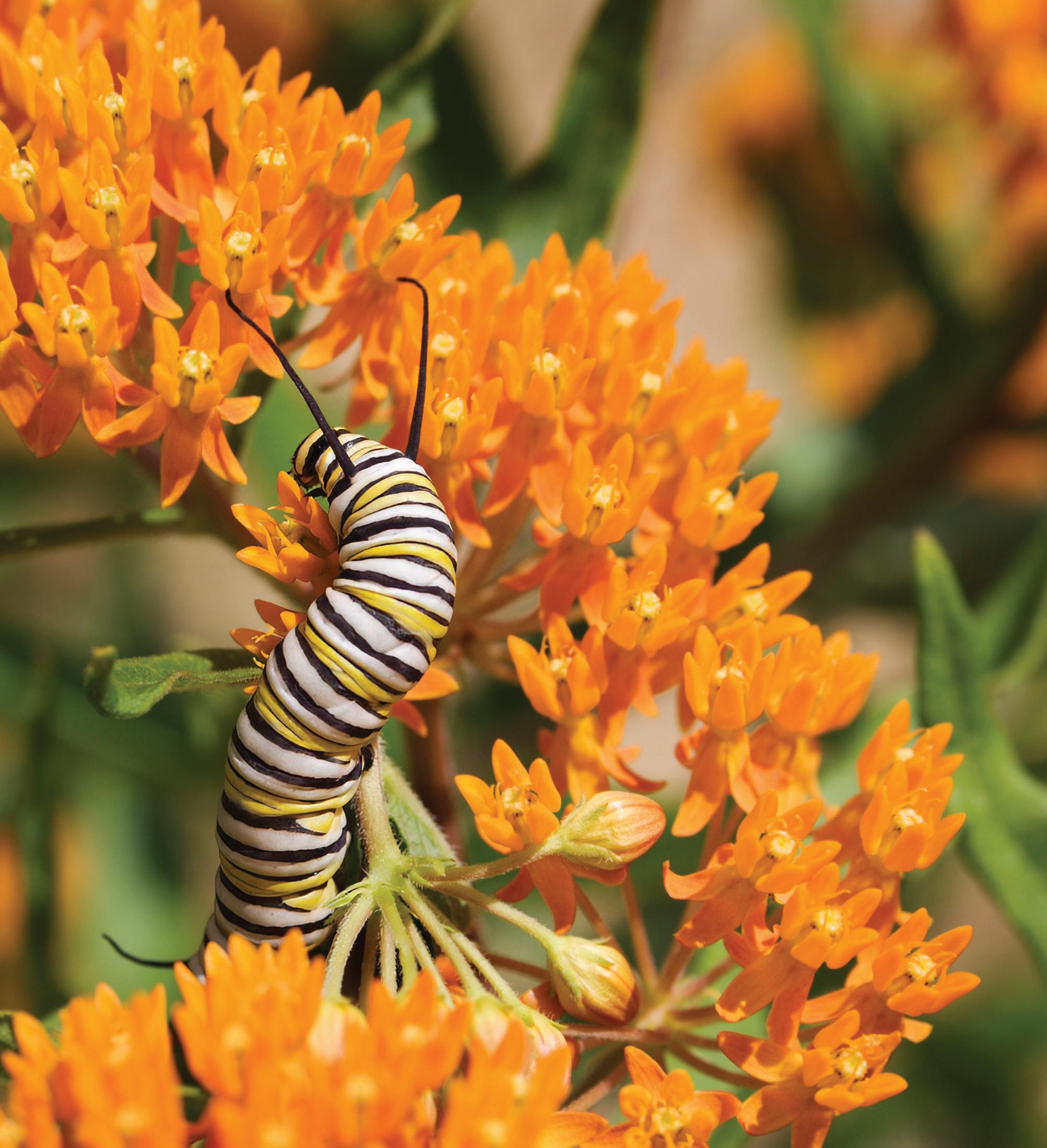
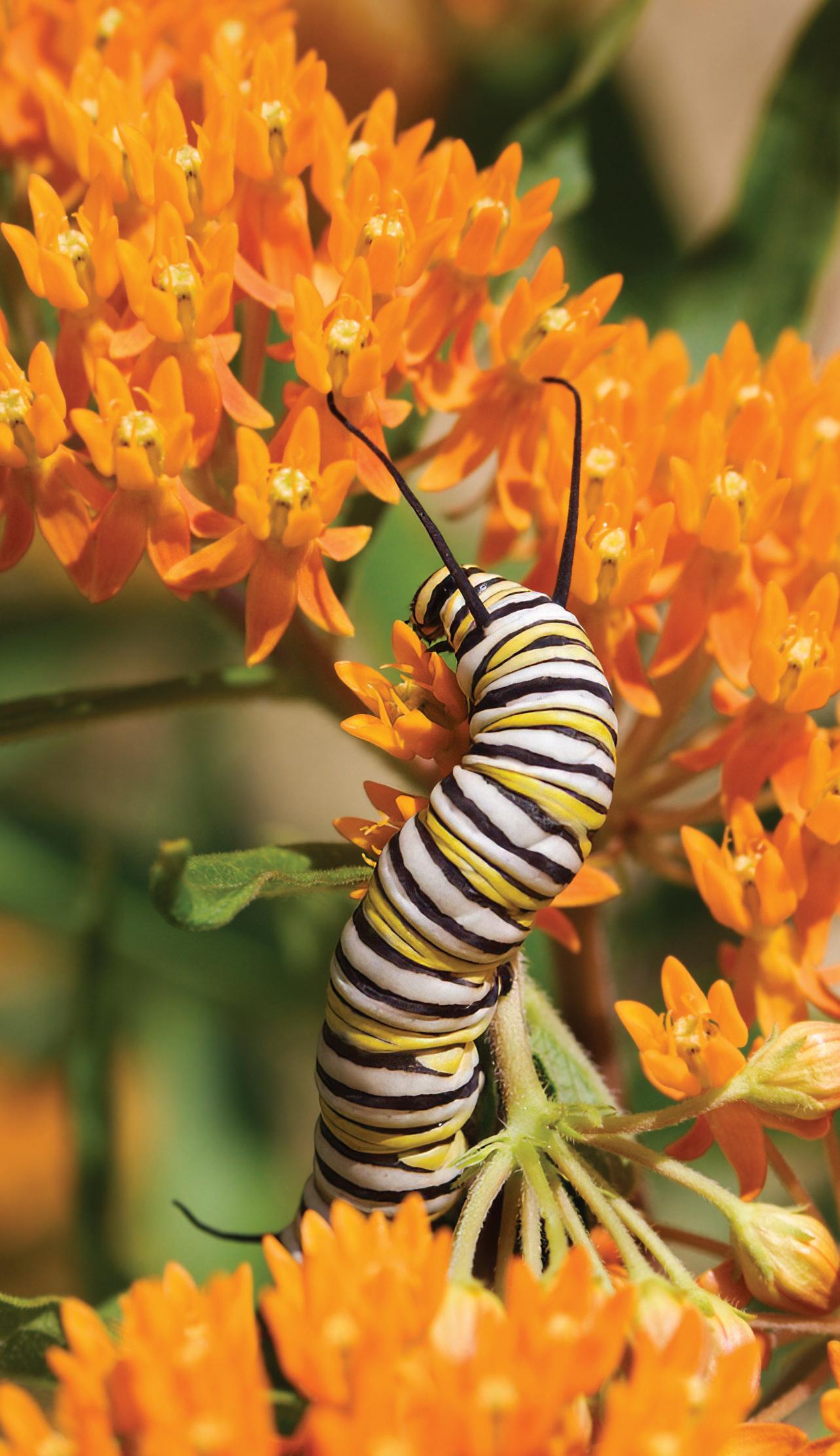
The mid-summer months in Connecticut can be punishing, characterized by high humidity and intermittent drought. Native species like Butterfly Milkweed (Asclepias tuberosa) are essential in these conditions. Unlike non-native ornamentals that require constant irrigation, Butterfly Milkweed features a deep taproot system that allows it to thrive in nutrient-poor, dry soils while providing a vibrant orange accent to the garden. It serves as a vital host plant for the Monarch butterfly, a species whose life cycle is entirely dependent on milkweeds.
Furthermore, the integration of Black-eyed Susans (Rudbeckia hirta) and Purple Coneflowers
(Echinacea) provides a secondary defense for the homeowner. These species are largely deer-resistant. By discouraging deer from congregating in the immediate garden area, homeowners can indirectly reduce the prevalence of deer ticks, which are a significant concern in the Northeast.
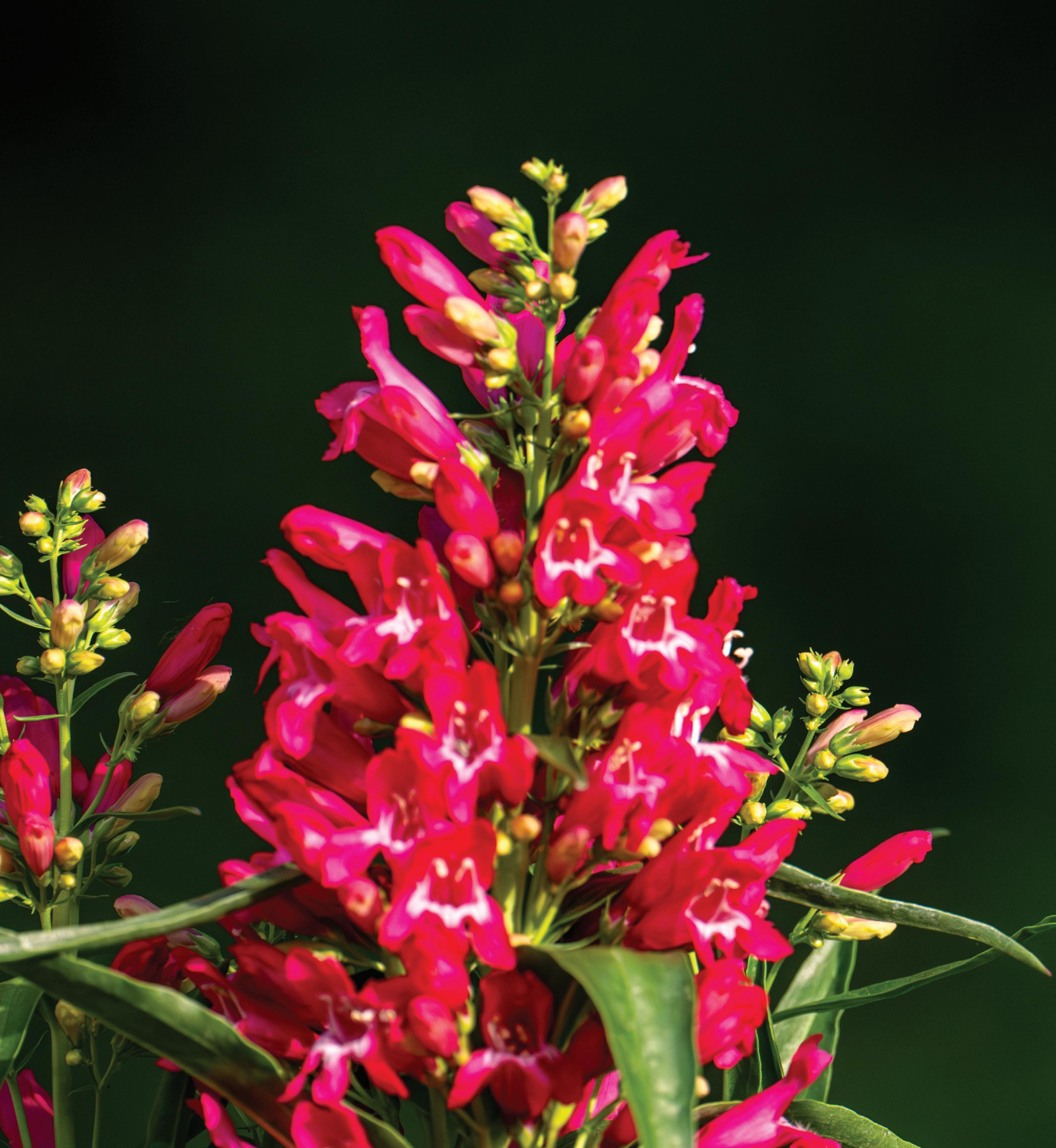
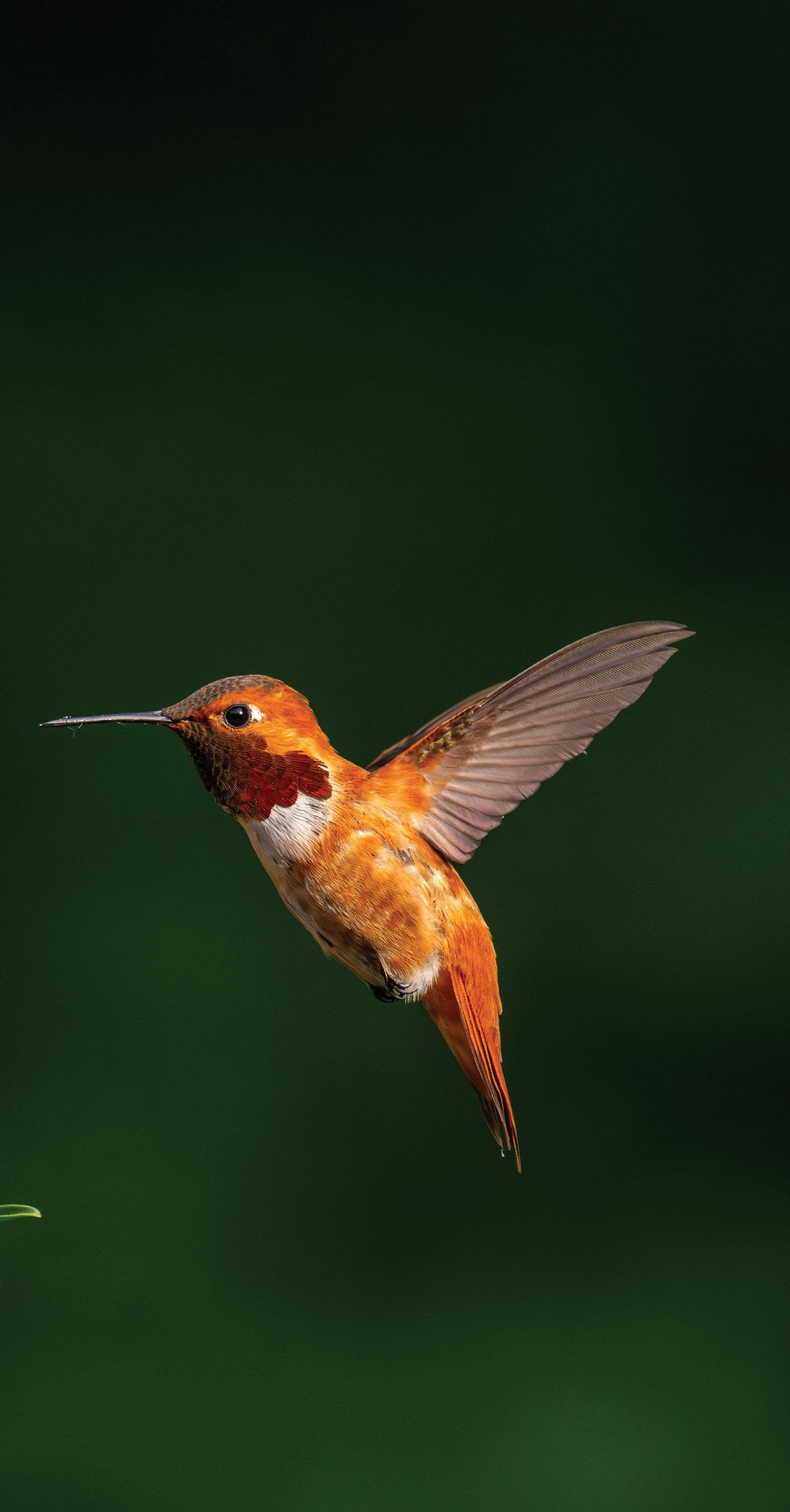
Connecticut has a diverse range of ecosystems because of our coastal location. Because we have such different blocks of ecosystems, it also changes what native flowers species will thrive on your land and gives us a variety of different flowers to choose from. For our great brooks, you’ll find some more visually striking natives. Such as the Cardinal Flower, with its intense reds, it attracts hummingbirds and butterflies, allowing your garden to become a vibrant oasis with beautiful visitors and creates an evolutionary partnership in your yard! For marshier areas of Connecticut, we can see the Blue Flag Iris – a vibrant purple and indigo flower that thrives in shady wetlands – as well as Swamp Milkweed – a variation that grows in more marshy areas but is a host for just as many butterflies.
In August, we can see a new variation of perennials with Joe-Pye-Weed, a towering plant that can reach over six feet in height with vanilla-scented mauve flowers that are loved by the Eastern Tiger Swallowtail butterfly. However, it requires strategic management to prevent spreading in smaller garden plots. Simultaneously, the New England Aster begins to bud. Though often categorized as a fall flower, its blooming period frequently begins in late August. These asters act as a “final feast,” providing the high-energy nectar necessary for pollinators preparing for long-distance migration.
Not only aesthetically pleasing, the official USDA website says planting native flowers helps in: “conserving water” and “protecting soil from erosion.” They also add that “native plants are easy-to-grow and require minimal maintenance.” Because these plants have evolved over millennia in Connecticut’s acidic, glacial soils, they are uniquely acclimated to our specific
weather patterns from heavy downpours to humid heatwaves. By planting native flowers, you create a hardy garden that will last you years compared to different species that lack the longevity and easy management their native counterparts boast. Once established, a native garden requires significantly less fertilizer, pesticide, and supplemental water, making it a professional and practical choice for the modern Connecticut resident. By choosing native flora, you are doing more than just gardening; you are participating in a larger conservation effort, creating a more sustainable Connecticut. These flowers are the bridge between the beauty of our state’s past and the ecological health of its future. •


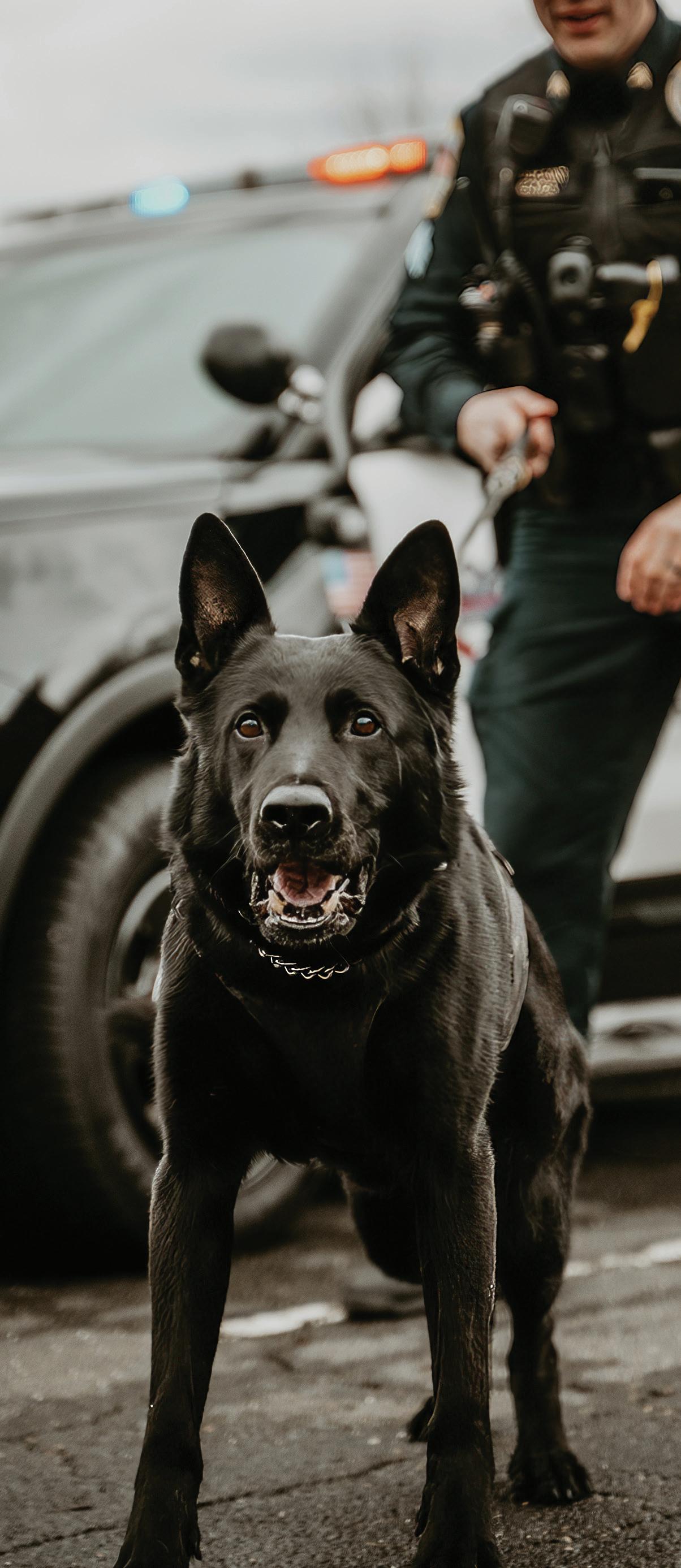
Police officers notoriously have a special bond with their patrol partners and rightfully so, because sometimes their very lives depend on those relationships. That connection is a strong one, whether your partner has two legs, or, when it comes to K-9 units, four.
K-9 police units first were used in Belgium in the late 1800’s. Since then, canine officers have become an integral component of many police forces – working alongside their human partners to keep communities safe.
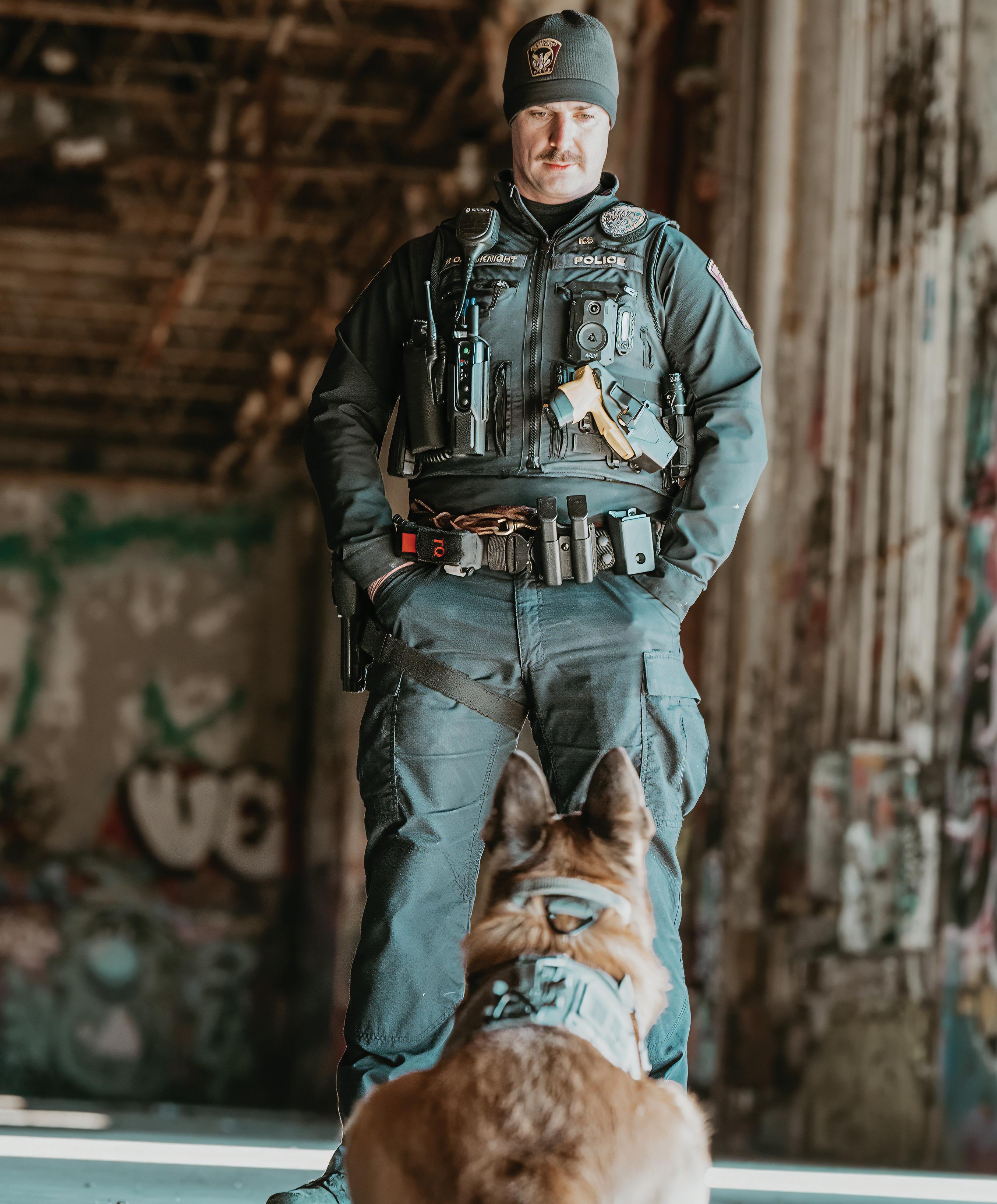
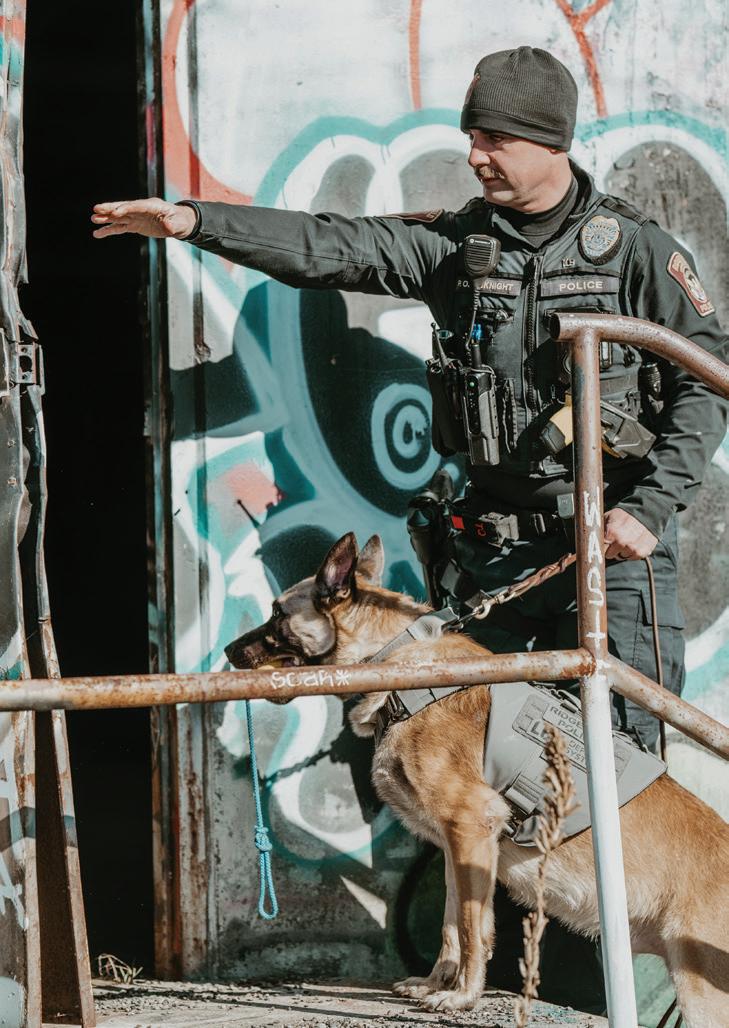
Ridgefield Police Officer Michael McKnight, who grew up in town, always knew he wanted to be a part of the K-9 Unit. McKnight’s high school football coach was Shawn Murray, who was responsible for reviving Ridgefield’s K-9 unit in the early 2000’s and served with his dogs Zeus and Loci. Lt. Murray worked alongside Officer McKnight, offering advice and support with this training.
Officer McKnight had seven years on the job before joining the K-9 Unit. He was matched with Odin, a German Shepherd Belgian Malinois mix, who came from a Slovakian breeder that specializes in police and military dogs. “He has both the herding trait as well as a little of the crazy energy,” says McKnight.
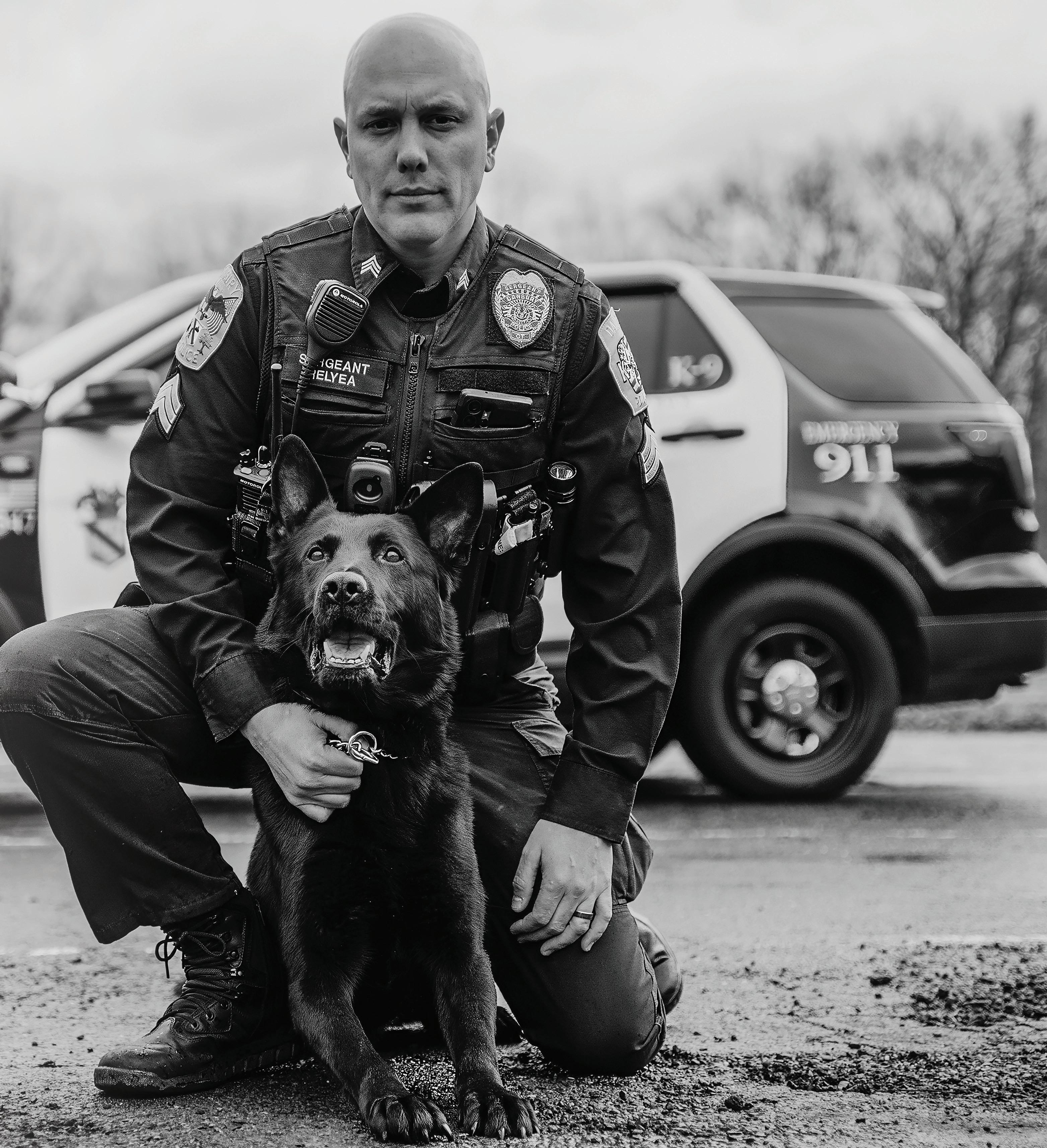
Danbury Police Sergeant Alex Relyea’s dog Gunner is a black German Shepherd that originally was trained in the Czeck

A Look at Local K-9 Units
by Julia Bruce
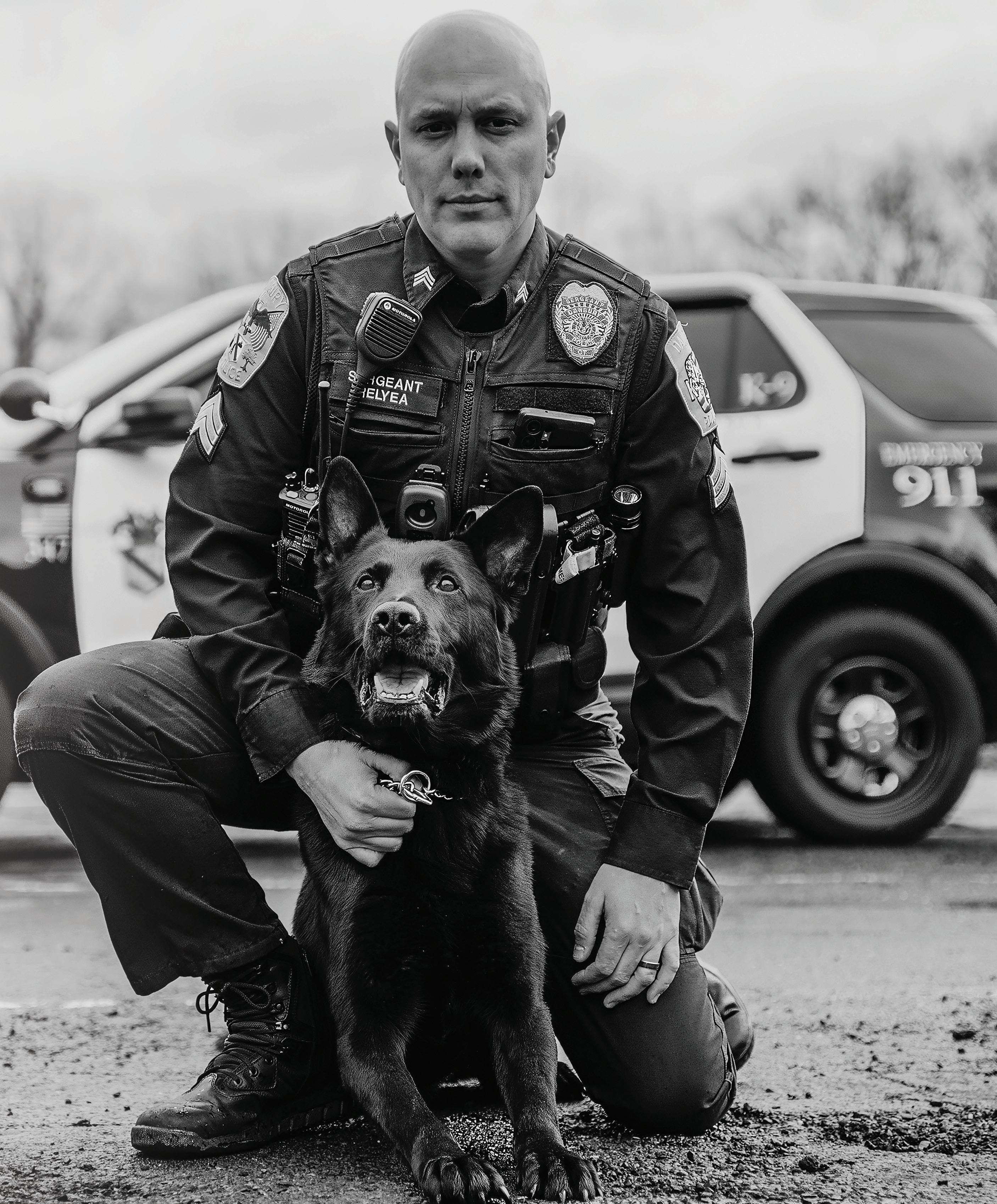
Republic. “We’ve been together eight years now. His performance has been extraordinary,” says Relyea.
Dogs and their handlers attend months-long training academies to build their relationship and to work on obedience, skills (such tracking, detection, and apprehension), and commands. Training is constantly being reinforced in order to stay sharp and ready for work.
“Mainly we use Odin for tracking missing persons, whether it’s either a mental health crisis, a dementia patient, or a lost child. We want to find that person as soon as possible,” says McKnight. The dogs follow what McKnight calls the ground disturbance. “They can follow the scent from grass to pavement back to grass,” he says.
Additionally, police dogs are skilled in suspect apprehension. “I continue to reinforce the bite command, so the dog will continue to hold, until we have the person in custody. I can then give him the out command,” says McKnight. While bite work training is important, Sergeant Relyea is proud of the fact that he has never had to utilize his dog in that mode. “Gunner’s presence has had a deescalating effect in many situations. It’s amazing how many fights haven’t occurred or chases haven’t happened because he’s with me,” says Relyea.
Building searches are another dangerous task for the dog – they literally are the first ones
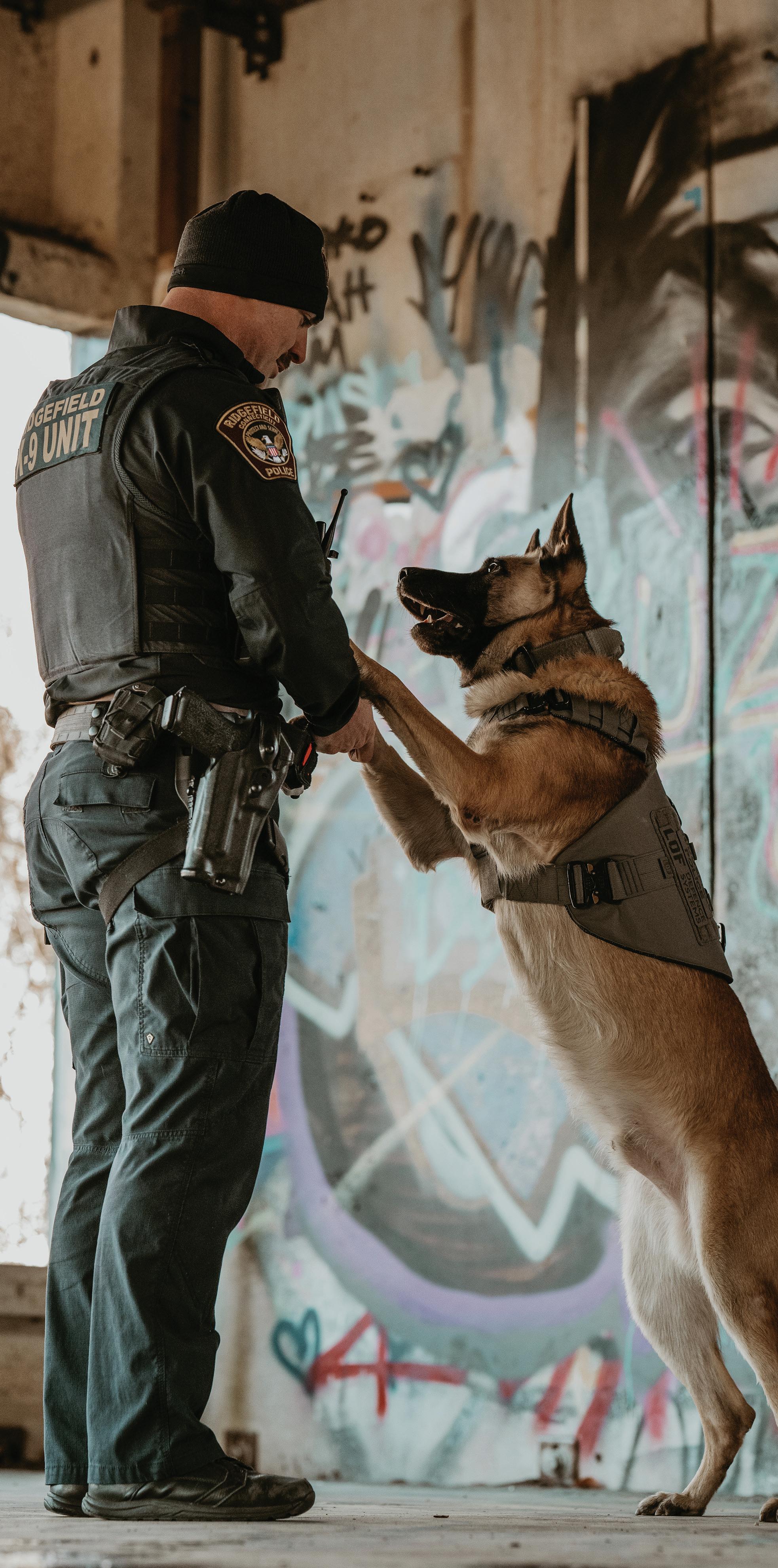
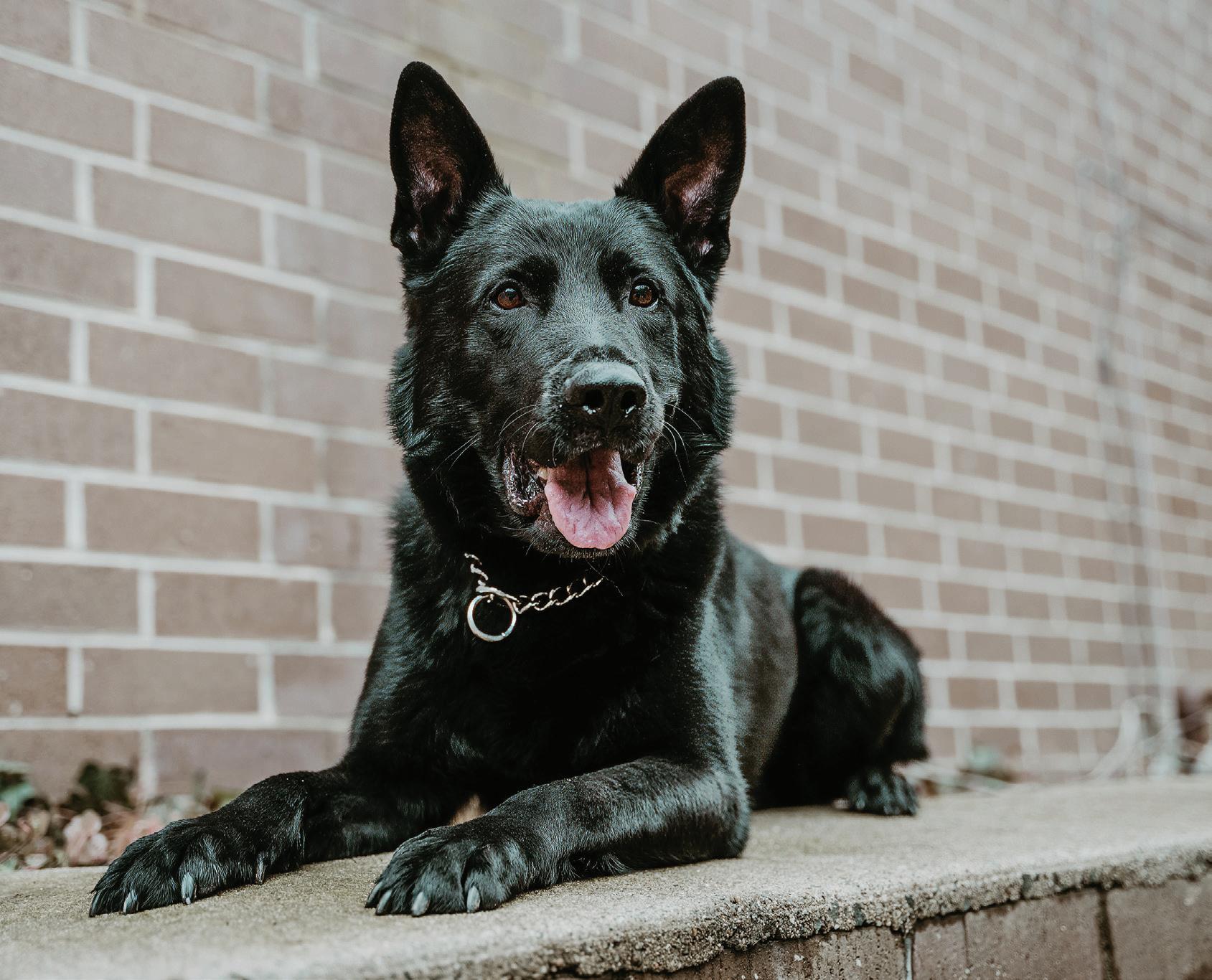
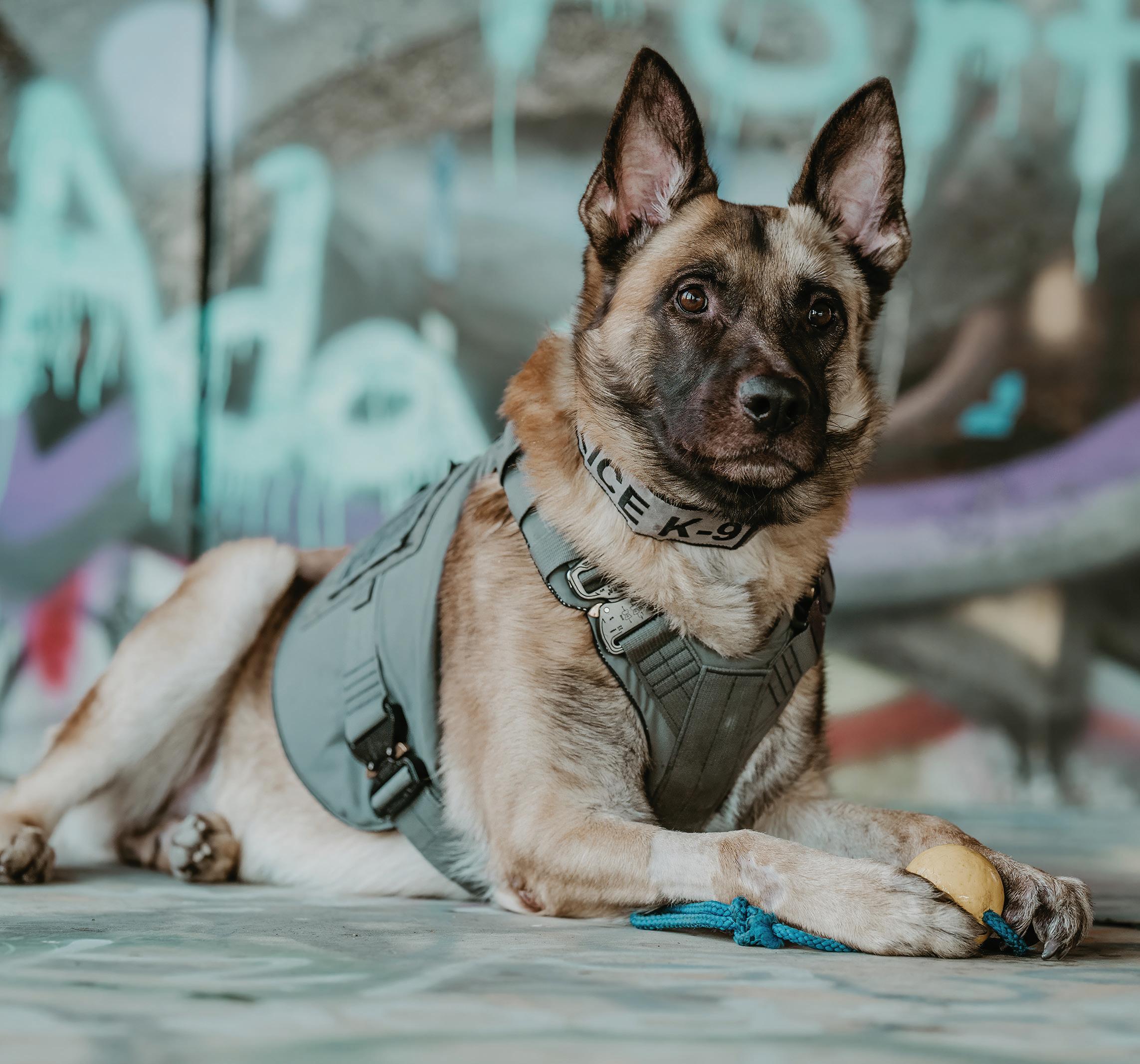
While these K-9 dogs are beautiful, remember they are not regular pets. Always ask permission before approaching them, especially if they are wearing their vests, which means they’re working.
to enter a building to find an intruder. “Then we give a search and bite command,” says McKnight. While there isn’t a huge drug problem in the area, the dogs are trained to detect narcotics such as fentanyl and meth - it doesn’t take much for them to smell it.
The dogs wear custom-fitted bullet-andknife-proof harnesses that offer protection. Should the police dog get injured, they are given the same honors and respect as their human counterpart. The harnesses are also used by their partners to give signals to the dog. “If I clip his leash on the rear hook, we’re in tracking mode. If we use the front hook, he’s more in aggression mode and he knows that it’s on,” says McKnight.
Being a K-9 officer is a 24-hour job – Odin and Gunner both live at home with their officers. Transitioning from work to home is important. “At the end of the day, I take off his e-collar and that is the signal that he’s off-duty,” says McKnight. “When we leave in the morning, I turn it on, and he perks up because he knows he’s back to work.”
While at home, the dogs can interact with the officer’s family but not often with other dogs. “You need to remember that they aren’t the same as regular pets,” says Relyea. Both officers use dog crates at home – it gives the dog a safe space to decompress.
Working dogs have a ton of energy. “I live on 12 acres that Gunner can run on. It’s almost impossible to tire him out,” says Relyea.
Police dogs usually serve about ten years, but it really depends on the dog’s health – any sign of a decrease in performance or injury can signify that it’s time to retire. Once retired, the dogs live out the rest of their lives at home with the partners. “Gunner is ten years old and isn’t showing any signs of slowing down,” says Relyea. Neither officer likes to think about their dog’s retirement. “Our bond is indescribable. He hasn’t left my side for eight years.”•

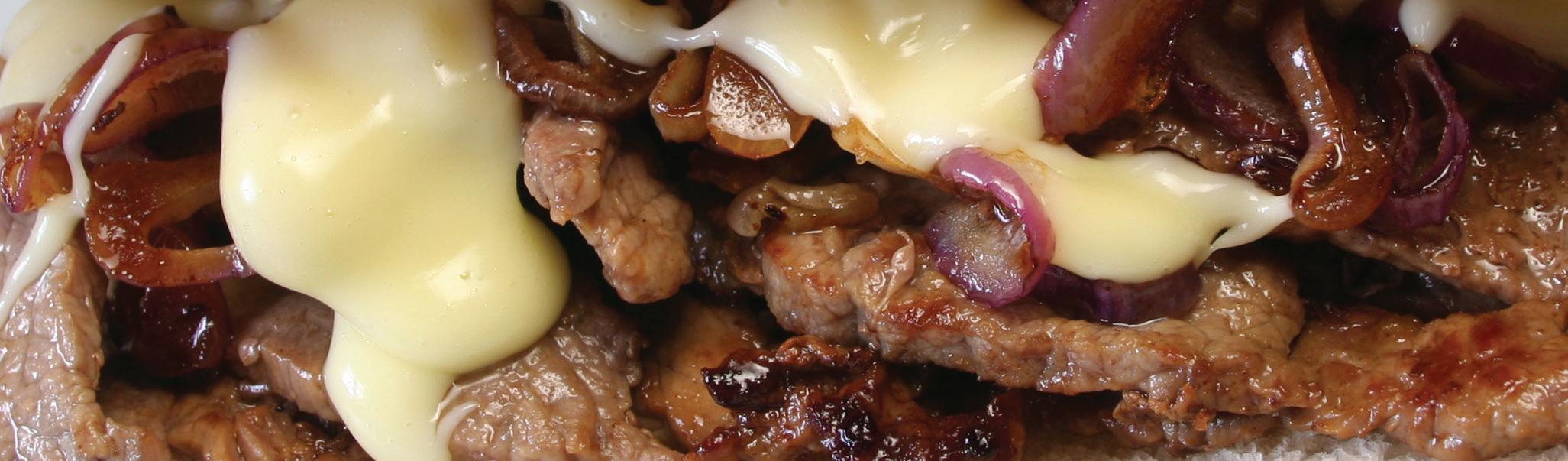
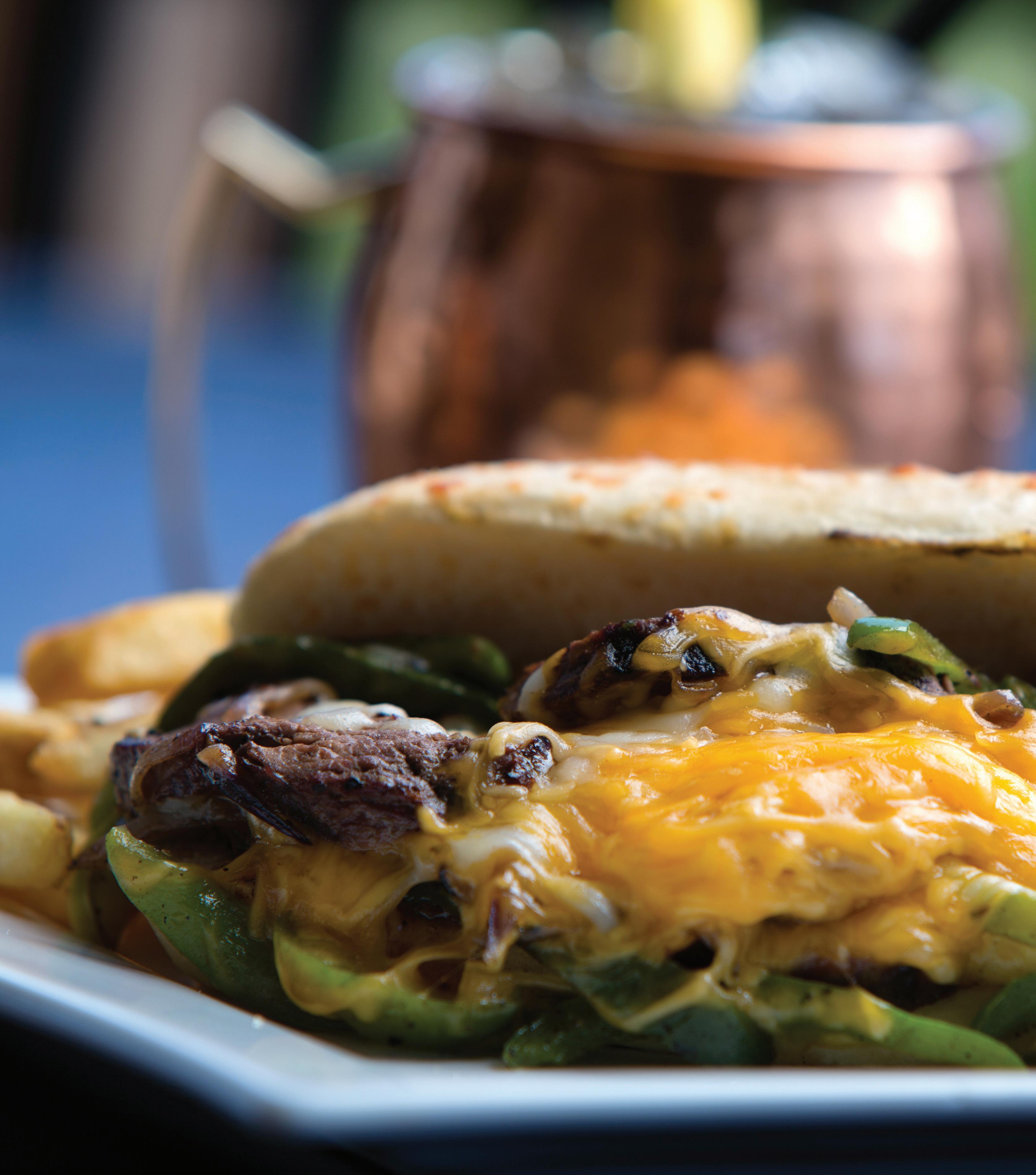
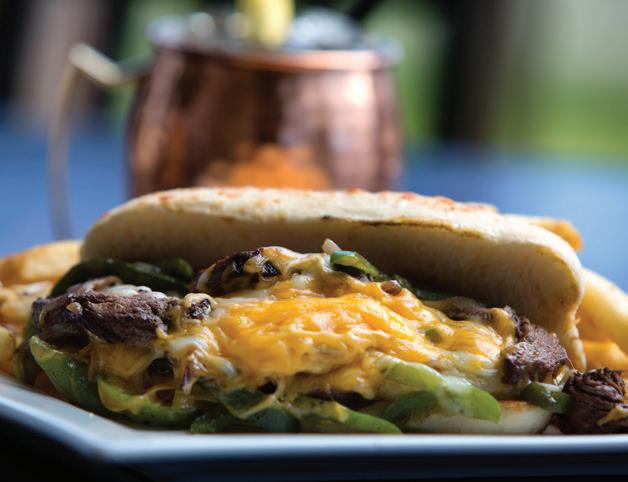
First developed in South Philadelphia, the not-so-humble Philly cheesesteak sandwich, or as it is more commonly called, the “cheesesteak,” is having a moment. Here in Connecticut, it’s long been a standard deli item available at most meatcentric sandwich shops. The sandwich traditionally consists of thinly sliced steak strips and onions (sometimes peppers too), all topped with a cheese of some type (usually provolone or cheese whip). This is then served in a soft Italian bread roll. However, variations and twists on these building blocks are nearly limitless.
It’s easy to see why this has been a popular sandwich since the 1930s, when it was developed. Cheesesteaks are relatively simple to make, and they are comfort food crowd pleasers. For sandwich fans, there are few better combinations of meat, cheese, and bread than a well-made cheesesteak.
I recently went on a quest to find some excellent spots to enjoy cheesesteaks in the area, focusing on the grab-and-go establishments. The type of places serving cheesesteaks to workers on lunch breaks which you can grab to enjoy at the start of a long ride.
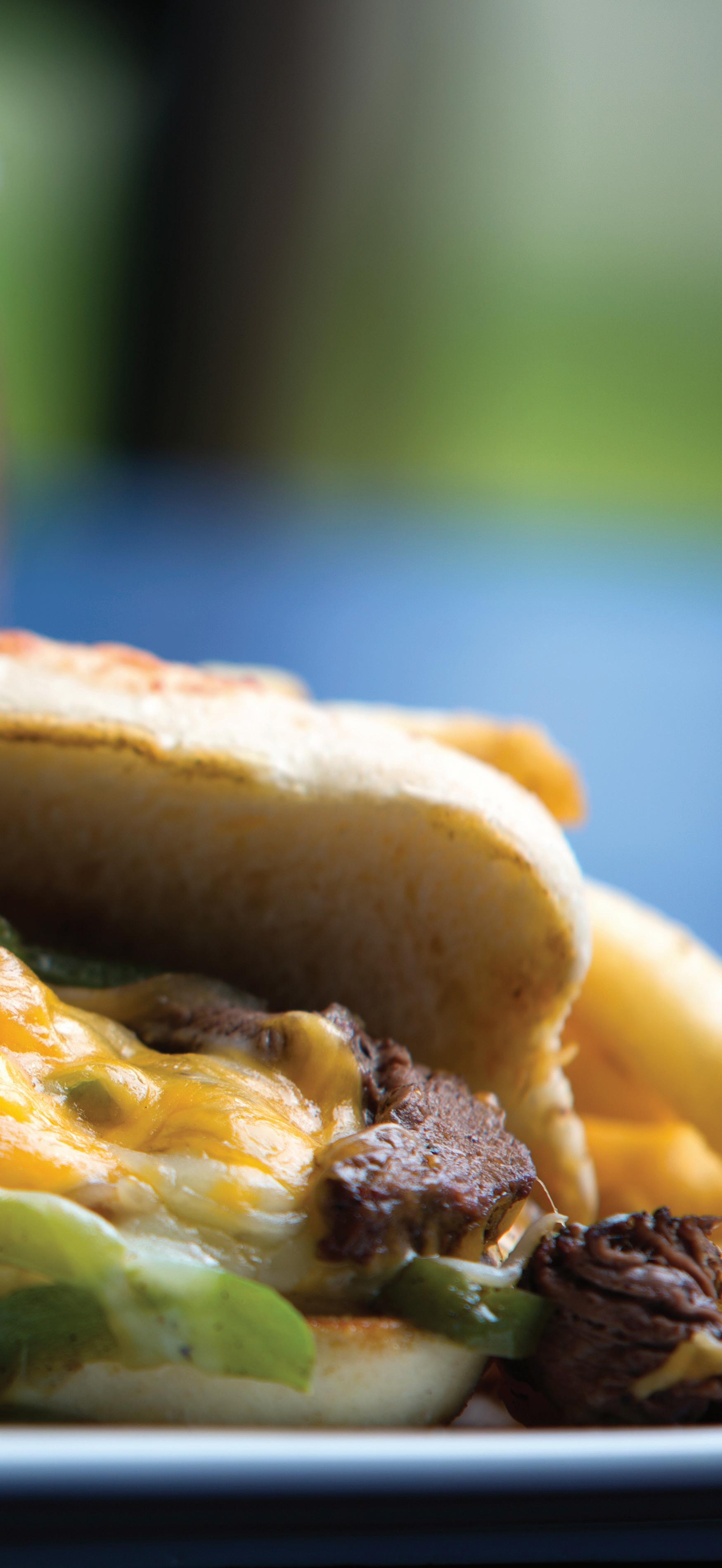
Johnny’s Food Center, 1 Brush Hill Rd, New Fairfield, 203-746-2255, johnnysfoodcenter.com
Johnny’s Food Center in New Fairfield is an underrated gem. It’s been a longtime favorite of mine. From the classic Italian combo to the fried eggplant sandwich they call Blue Eyes, this spot always delivers big flavors. Johnny’s also offers an excellent cheesesteak. Simplicity is the name of the game. Steak and onions combine with an unassuming hero roll to create a mouthwatering option that is one of my favorites anywhere. Peppers are not included, but you can add them on request. Even though I like peppers in my cheesesteaks, I don’t do that here because there’s something to leaving them out, as it allows for more of the steak and cheese flavor to shine through.
Sand-Wedge Deli & Catering
1 Ethan Allen Hwy, Ridgefield, 203-544-8074, thesandwedge.com
One of the few places in the area to truly specialize in cheesesteaks, Sand-Wedge Deli devotes an entire section of its menu to different takes on the sandwich. First, there’s the classic Philly cheesesteak, made with American cheese, mayo, and peppers in addition to the onions and steak. There are also cheesesteak variations featuring Sriracha Mayo and jalapenos as well as fried eggs and hash browns. I tried both the classic Philly and the El Camino, which features onion, cheddar, and avocado on garlic bread; both are great! The Philly was perfect for those looking for the original with great cheese whip and meat flavor. The El Camino added some intriguing spice and though I was skeptical, the avocado’s presence was subtle and didn’t overpower things. In other words, it all worked really well.
40 Danbury Rd, New Milford, 860-799-6336 with additional locations in Brookfield and Danbury
C&C Deli is well-liked with locations in New Milford, Danbury, and Brookfield. They do a nice job when it comes to their Philly cheesesteak, keeping things simple and traditional with beef topped with melted cheese and mixed with onions and peppers served on a sub roll. The menu warns that this is spicy, and I found just a touch of welcome heat in the flavor, but nothing close to overpowering.
The New Milford C&C is found in a small storefront on a busy stretch of Route 7, and it’s a nice place to add to your itinerary if you’re heading up to Litchfield County for a hike and are craving a steaming hot Philly cheesesteak on the way. •

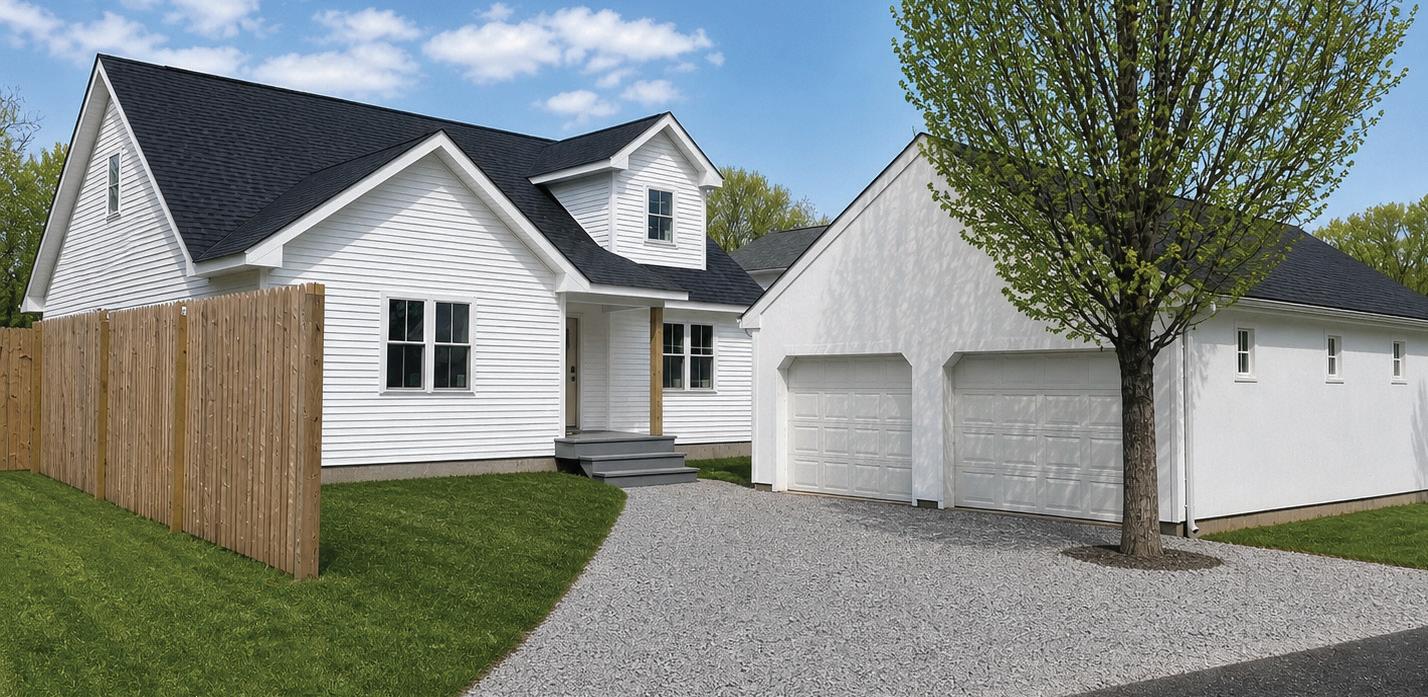
On May 28th, the Greater Danbury Chamber of Commerce Women’s Business Council awarded Jill Rae the 2026 Heart of Women Award, an annual award to recognize women who have made a difference, inspired others, and forever positively impacted the lives of those in the community. Jill embodies these qualities, contributing her time and talent to a variety of charities in the area, including Ann’s Place, Make-A-Wish, RVNA, and the Housatonic Habitat for Humanity.
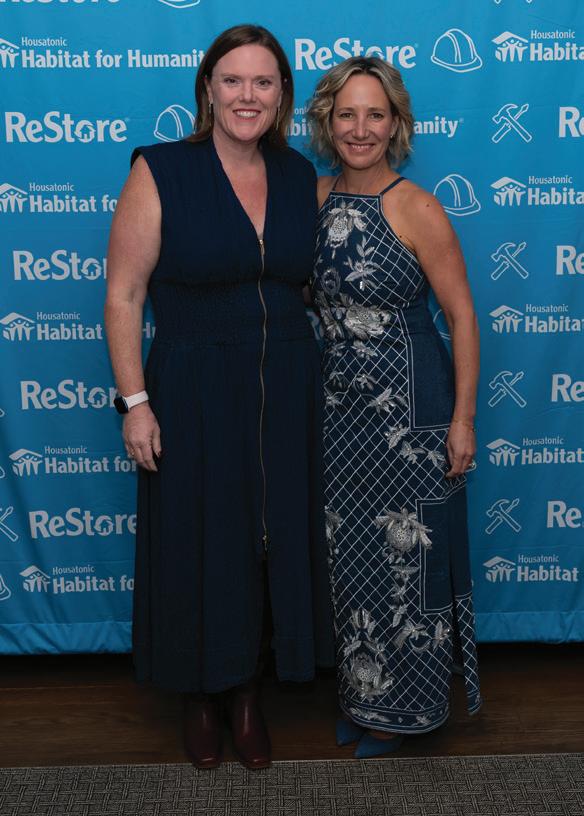
“When I launched Jill Rae Designs, I knew it was going to involve community-based initiatives. Pairing with Habitat for Humanity seemed like a natural fit,” says Jill. Housatonic Habitat for Humanity empowers individuals and families by providing comprehensive housing solutions and essential support services. Habitat provides about six houses a year. “Our clients are first-time homeowners. We support and educate them so they can pay their bills, maintain the house, and stay in their home,” says Jill.
As a member of the board of Habitat for Humanity for last five years, one of Jill’s biggest contributions has been the launch of the Blueprints and Denim Dreams gala as Habitat’s major fundraiser. Jill is also part of the Rae of Hope house, being built in New Preston and one of the first ADA compliant Habitat homes. “So many of our incredible partners have stepped up, volunteering their time and generously donating services and products to help make this truly special for a deserving family,” says Jill. When completed, the Rae of Hope house will go to the new owner fully furnished and decorated. “I’m looking forward to working with the new owner, making decisions based on their style how and they want to feel when they are home,” says Jill.
If you’re interested in either supporting or volunteering with Habitat for Humanity, visit housatonichabitat.org.
Danbury ReStore – a premier thrift store who’s profits directly support Habitat programs – is always looking for help as well as donations of furniture and household items. •

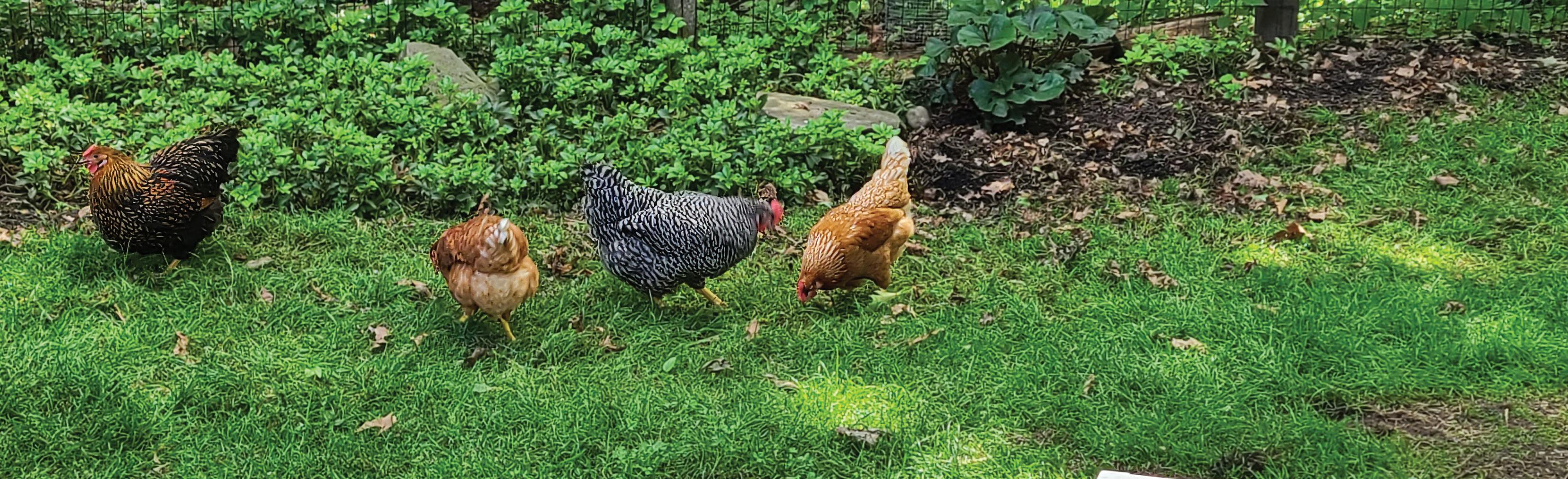
In the heart of modern homesteading and community camaraderie lies a unique venture hatched from the age-old desire for simplicity and a closer bond with nature – Rent
The Chicken. With Jenn Tompkins and her husband Phil at the helm, this quirky endeavor sprang to life during their migration from city living to Pennsylvania countryside bliss – igniting a passion for renting feathered friends that would soon have communities clucking with excitement.
“Our start-up story is a unique one,” says Tompkins. “We moved from the city to the country to enjoy a slower pace and to implement a homesteading lifestyle.” Inspired by the discovery of chicken rentals in distant locales like Alabama and Australia, Homestead Phil’s simple question, “Do you want to rent some chickens?” laid the groundwork for Rent The Chicken’s inception in 2013.
In the early days of the pandemic in 2020, the Tompkins’ witnessed an unexpected surge in renters as people sought solace in backyard activities. “We had a renter who had people stopping by to say hello to the chickens during that time,” says Tompkins. “She got to know more neighbors that summer than any summer prior.”
By providing a pathway to sustainable living, Rent
The Chicken empowers renters with the knowledge and tools to embrace a more self-sufficient lifestyle. “We have so many success stories that highlight the positive influence Rent The Chicken has had on community bonding and empowerment,” Tompkins explains, reflecting on the lasting

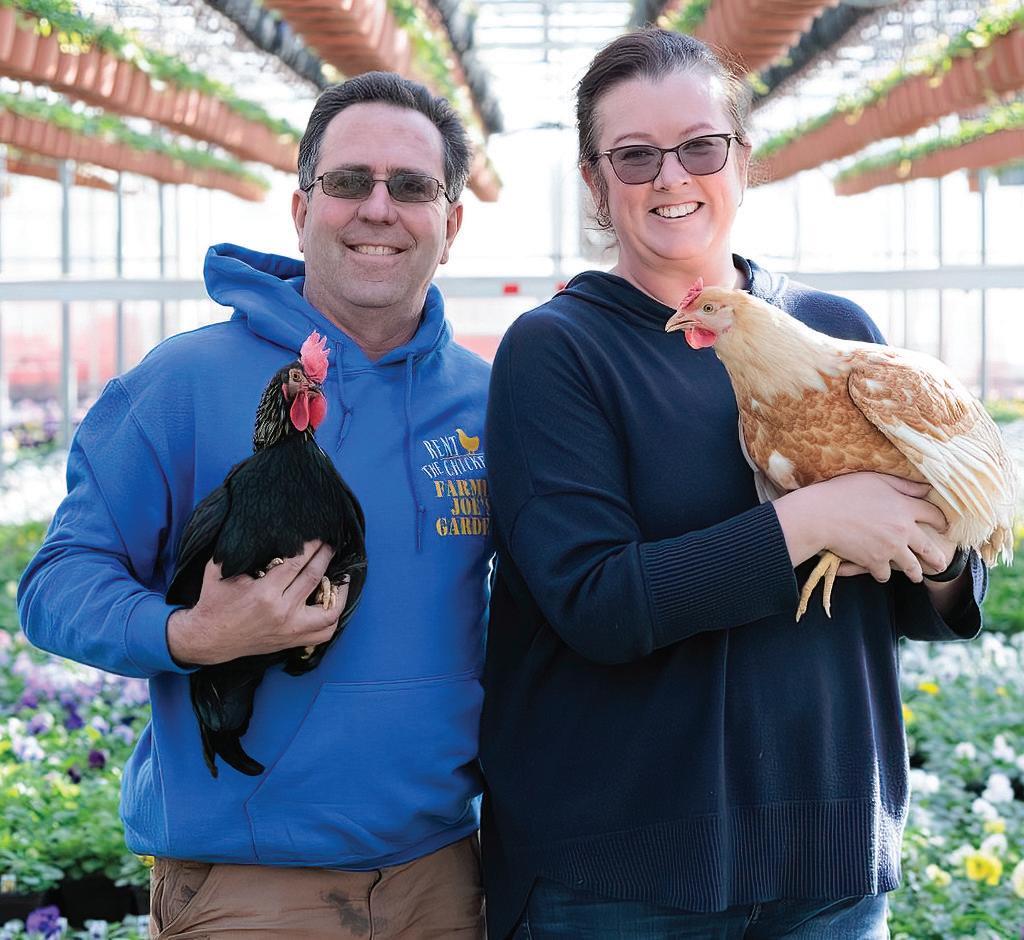
impact of their rental program. “Each local Rent The Chicken Affiliate Partner is a small business owner,” Jenn explains, emphasizing their commitment to community engagement. Through partnerships with schools, senior care homes, and families, Rent The Chicken offers tutorials and programs like “Hatch The Chicken” that inspire and educate participants of all ages.
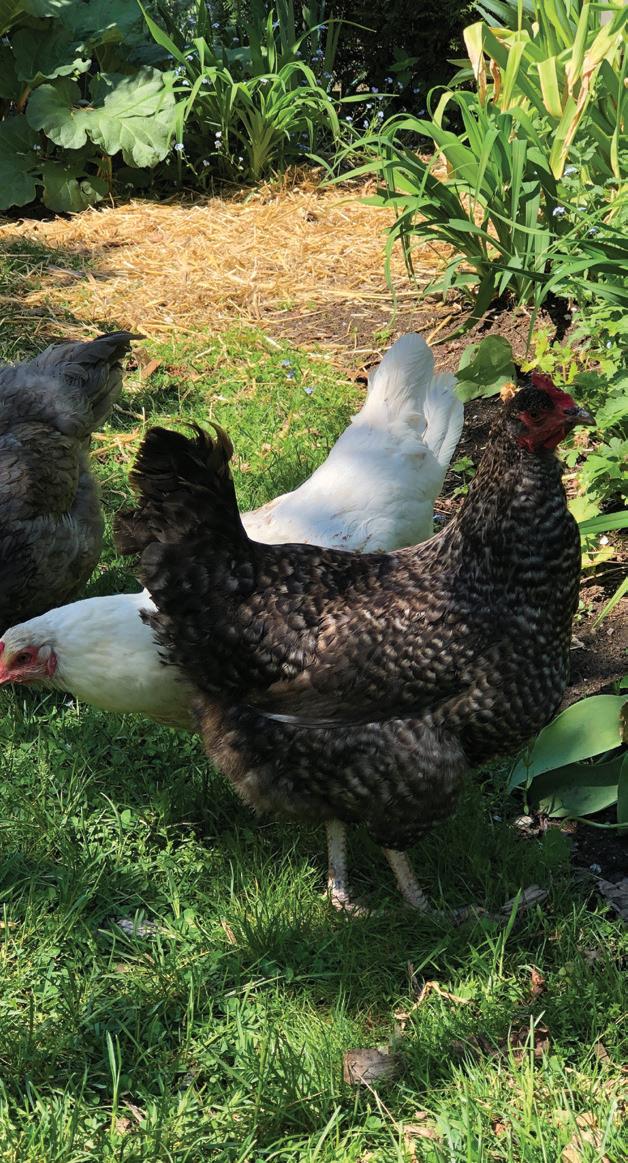
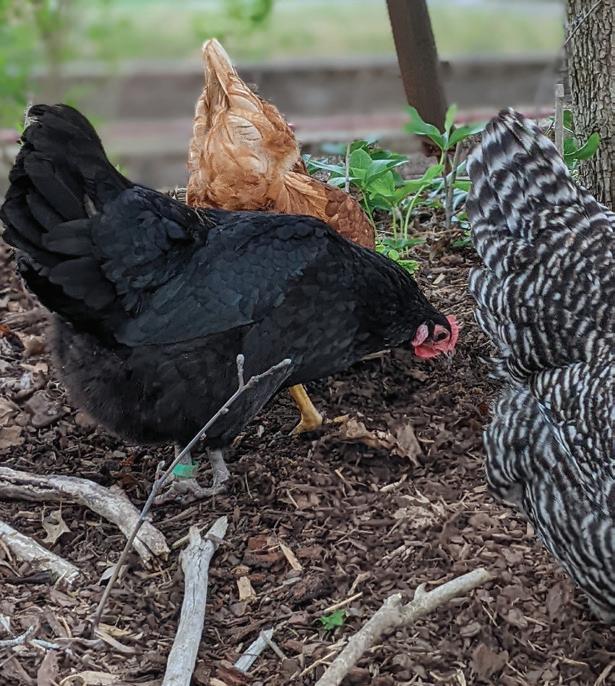
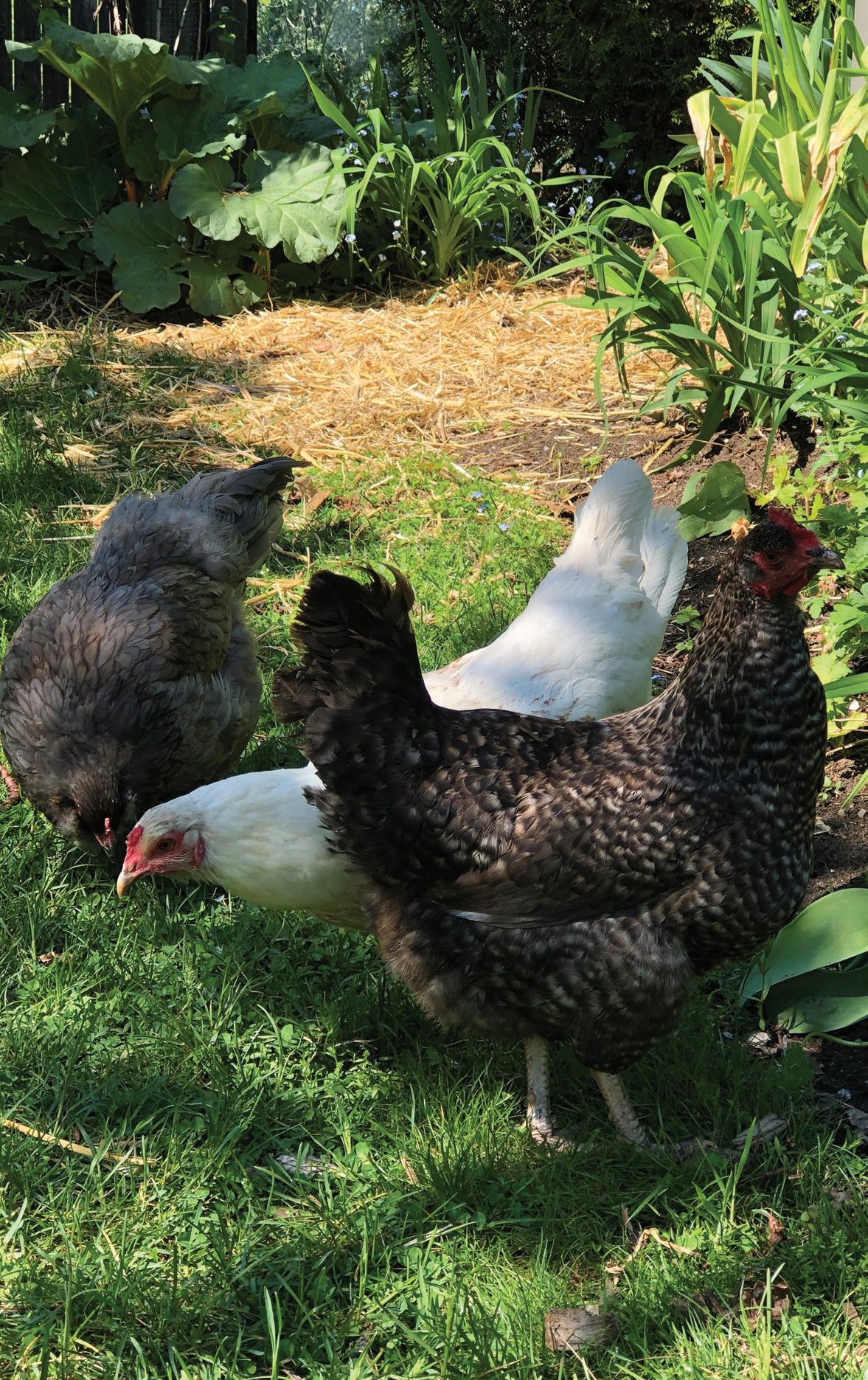
For those who want to take a crack at the hobby, renters can book a reservation on the website or over phone and a delivery person brings everything you need right to your home—which includes a portable coop, two to four egg-laying hens, and all necessary supplies. At the end of the rental period, renters can choose to adopt their feathered friends along with their coop and supplies if they’ve developed a passion for backyard chicken keeping. Otherwise, Rent The Chicken schedules a pickup.
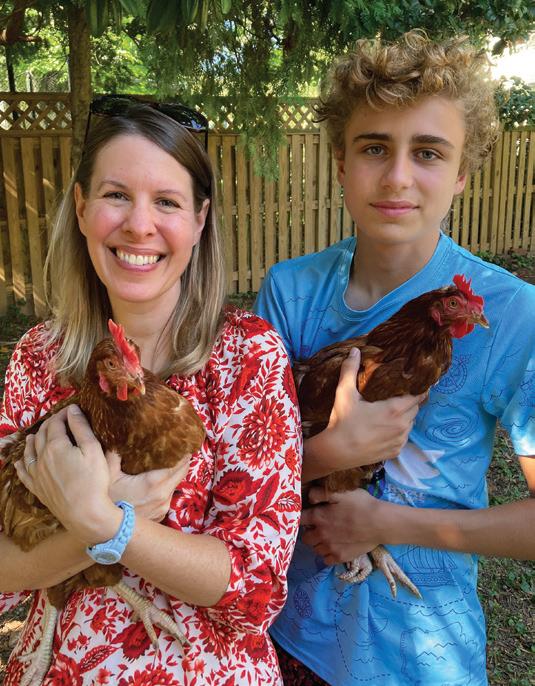
From shy children finding their voice through chicken keeping to families embracing a more sustainable way of life, Rent The Chicken’s impact on community bonding and empowerment in the surrounding areas is tangible. Tompkins reflects on the sense of accomplishment felt by renters as they master the art of chicken keeping, fostering connections that transcend backyard fences. “It’s lovely to hear how our renters connect with other folks at the bus stop, grocery store, work environments, and even doctor appointments all over discussing their chickens,” Tompkins says.
The impact goes beyond the coop, as one renter turns into a local celebrity—putting smiles on the faces of neighborhood kids who can’t wait for her feathered friends to make their seasonal comeback. “She didn’t even know her neighborhood had that many kids until she started renting chickens from Rent The Chicken,” says Tompkins. Another heartfelt story: a single mom found unexpected avenues for her son’s development through the coop, as he not only honed his fine motor skills but also blossomed socially. “He also came out of his shell (see what I did there?) with adults that he wouldn’t normally engage with,” Tompkins shares playfully.
This summer Rent The Chicken hopes to be a part of local camp programs or simply families looking to bring the hens home, because, according to their website, “even chickens need a vacation.”
As Rent The Chicken continues to spread its wings, it’s clear that its impact on communities is nothing to cluck at.
To learn more or make a reservation to bring your own chickens home, please visit rentthechicken.com.•