Has Prescription Monitoring Reduced Opioid Misuse?
Researchers Find That Only the Broadest and Strictest Prescription Monitoring Programs Reduced Opioid Use In The Long-Term
By Rae Lynn Mitchell
Opioid misuse has become a serious public health problem, with more than 800,000 overdose deaths during the last two decades in the United States alone.
To help health care providers make better-informed decisions about patient drug use, policymakers in nearly every U.S. state implemented electronic databases where pharmacists provide information about each controlled substance dispensed.


These prescription drug monitoring programs (PDMPs) vary from state to state, however. The most comprehensive programs have “must access” provisions that require physicians to review the prescribing history, and the research to date has found these to be the most effective at reducing opioid use.
Benjamin Ukert, PhD, assistant professor at the Texas A&M University School of Public Health, and Johns Hopkins University researcher Daniel Polsky, PhD, built on the existing PDMP research by further examining the mechanisms by which PDMP policies are effective in reducing opioid prescribing in the long-term.
Their study, published in the Journal of American Health Economics, used nationwide health insurance claim data from 2010 to 2014 to analyze opioid prescription use following emergency department (ED) visits.
In their analysis, Ukert and Polsky grouped state PDMPs into three categories: “limited” states where the laws applied only to pain clinic care and the dispensing of methadone; “discretionary” states where providers were required to access monitoring data only if they suspected opioid abuse; and comprehensive, “broad” states where review was required in all care settings
and for all controlled substances.
In addition, the researchers divided patients into those who had not received opioids within six months
and strictest PDMPs were the most effective at reducing long-term opioid use, which they defined as a patient using a 180-day supply or more within a year of visiting the ED. They also found that hassle cost accounted for the majority of opioid prescribing reductions within seven days of an ED visit.
prior to their ED visit—referred to as opioid naive—and non-naive patients who had taken opioids during that period. They did this to further delineate previous research findings that identified two factors that have a role in reducing opioid use and misuse with PDMPs: the “hassle cost” of having to access monitoring data, and the information within the monitoring data that can point to opioid misuse and affect prescribing actions.
Like previous researchers, Ukert and Polsky found that the broadest
When looking at long-term effects, however, they found that PDMP information had a far greater effect than hassle cost. These effects were even stronger when focusing on non-naive patients and in states with higher rates of opioid use.
While this analysis shows how broad PDMPs can reduce opioid prescribing in both the short term and long term, especially for non-naive patients, it found little effect on the supply and strength of opioids prescribed. This points to a possible need for further development of PDMPs to focus on the quantity and
see Opioid Misuse ...page 14 HOUSTON August Edition 2023 Volume 13 | Issue 8 PRSRT STD US POSTAGE PAID PERMIT NO 1 HOUSTON TX Are You Prepared for a Medicare RAC Audit? See pg. 8 Inside This Issue Memorial Hermann Cypress Hospital Earns Primary Stroke Center Designation See pg. 10 INDEX Legal Matters pg.3 Oncology Research pg.5 Healthy Heart pg.9 Hospital News pg.10 Financial Forecast pg.11
the broadest and strictest PDMPs were the most effective at reducing long-term opioid use




Houston Medical Times Page 2 medicaltimesnews.com August 2023 Now Leasing 3 & 4 Bedrooms 844.828.2126 willowsierravista.com 10211 Alpine Lake Ln, Rosharon, TX 77583 20 minutes South of the Texas Medical Center Located in Cypress Brand New Single-Family Homes for Rent 2 Locations Same Great Amenities • Lawn Maintenance • Appliances Included • Professionally Managed 3, 4 & 5 Bedrooms 866.617.9113 willowmarvida.com 21054 Montego Breeze Lane Cypress, TX 77433 Now Leasing
Legal Matters
CMS Proposes $9B Lump Sum Payment in Relief For 340B Hospitals
remedy amount between CY 2018 –September 27, 2022 was $10.5B among 1,649 CEs.
By Kyle A. Vasquez, J.D. Mary H. Canavan, J.D. Polsinelli, PC
340B
Covered Entities (CEs) are getting a glimpse into what they can expect to be repaid due the fallout from CMS’ unlawful 340B payment reduction that was struck down by the U.S. Supreme Court in June 2022. CMS discussed a potential budget neutral lump sum payment process in its highly anticipated Hospital Outpatient Prospective Payment (OPPS) Remedy for the 340B-Acquired Drug Payment Policy Proposed Rule (“Proposed Remedy Rule”) published on July 7, 2023. CMS calculated that the overall

The Proposed Remedy Rule outlines CMS’ plan to pay CEs a lump sum payment of the difference between what they were paid and what they should have been paid applying the statutory default rate of ASP + 6 percent at 42 U.S.C. 1395w–3a. Although the Proposed Remedy Rule is framed to be for 340B CEs, there is a component that will impact all OPPS providers for the next several years. CMS outlined a corresponding budget neutrality adjustment that will apply to non-drug items starting in CY 2025. CMS utilized an extended timeline in attempt to balance the interest of all hospital stakeholders. Providers will want to analyze the net impact of this payment reduction and submit comments on the methodology and proposed remedy to CMS.

CMS expects to finalize the

NowLeasingDeliveringClassAOfficeSpaceNovember2023

Proposed Remedy Rule prior to finalizing the CY 2024 OPPS rule this fall, with potential lump sum payments in late 2023 / early 2024. However, due to the budget neutral impact to all OPPS providers, it’s unclear if CMS will finalize the rule according to its intended schedule. We’ve summarized the major points from the Proposed Remedy Rule and areas where providers should consider submitting comments below. Comments are due by September 5, 2023.
Given the budget neutral adjustment presented by CMS, and the large volume of data used by CMS to project lump sum repayments, we anticipate significant feedback from a

variety of stakeholders impacted by the Proposed Remedy Rule.
Major Points from the Proposed Remedy Rule
1. CEs Can Except to Receive a Lump Sum Repayment for 2018 – 2021 Claims. CMS proposed to pay CEs lump sum payments, which were published by CMS in Addendum AAA. The total repayment amount for the lump sum accounts for $9B of the total $10.5B proposed. As proposed, neither CMS nor CEs would need to pursue adjusted coinsurance payments. CEs should verify the amounts published align
see Legal Matters ...page 14
Houston Medical Times Page 3 medicaltimesnews.com August 2023 +1 713 835 0050 Doug Pack | Sam Hansen Parc Binz II is a 5-story Class “A” boutique, office/medical building. The floorplates are approximately 8,600 SF where a tenant can have full floor privileges with minimal square footage. The building features 4,672 SF of retail space on the first floor with surface, garage, and underground parking.
Center 1802 Binz St
Located
in the historic Museum District adjacent to world-class Texas Medical
Mental Health Substance Use Linked to Long-Lasting Brain Changes and Cognitive Decline

Research Underlines the Relationship Between Substance Use and Significant Modifications To An Inhibitory Brain Circuit, Resulting In Decreased Cognitive Flexibility
By Grayson Kotzur
Anestimated 50 million individuals in the United States struggle with the challenges of cocaine or alcohol use disorders, according to the National Institutes of Health (NIH). Beyond the well-documented health risks, addiction to these substances detrimentally affects our cognitive flexibility, which is the ability to adapt and switch between different tasks or strategies. Although previous research has hinted at this connection, the underlying reasons for this cognitive impairment remain elusive. Cognitive flexibility is a crucial element in various domains of our life, including academic achievement, employment success and transitioning into adulthood. As we age, this flexibility
plays an important role in mitigating cognitive decline. A deficiency in cognitive flexibility, however, is linked to academic deficits and a lower quality of life.
A groundbreaking study led by Jun Wang, PhD, associate professor in the Department of Neuroscience and Experimental Therapeutics at the Texas A&M University School of Medicine, provides new insight into the damaging impact that chronic cocaine or alcohol use has on cognitive flexibility. The research, published in the journal of Nature Communication, emphasizes the role of the local inhibitory brain circuit in mediating the negative effects of substance use on cognitive flexibility.
Substance use influences a specific group of neurons called striatal
direct-pathway medium spiny neurons (dMSNs), with projections to a part of the brain known as the substantia nigra pars reticulata (SNr). Conversely, cognitive flexibility is facilitated by striatal cholinergic interneurons (CINs), which receive potent inhibitory signals from the striatum.
“Our hypothesis was that increased dMSN activity from substance use inhibits CINs, leading to a reduction in cognitive flexibility,” Wang explained. “Our research confirms that substance use induces long-lasting changes in the inhibitory communication between dMSNs and CINs, consequently dampening cognitive flexibility. Furthermore, the dMSN-to-SNr brain circuit reinforces drug and alcohol use, while the associated collateral dMSN-to-CIN pathway hinders cognitive flexibility. Thus, our study provides new insights into the brain circuitry involved in the impairment of cognitive flexibility due to substance use.”
Wang and his team are optimistic about the potential therapeutic applications of their findings and anticipate that they could inform new treatment strategies for substance-induced cognitive decline. The research receives support from the National Institute on Alcohol Abuse and Alcoholism (NIAAA) and an X-grant from the Presidential Excellence Fund at Texas A&M University.
Houston Medical Times Page 4 medicaltimesnews.com August 2023
Oncology Research

The Four C’s for Balancing Cancer Treatment and the Classroom
 By Deepa Sashital, M.D., Ph.D. Texas Oncology


You’ve got notebooks, pens and pencils, an updated wardrobe, a new schedule. And cancer.
Heading back to school with all of the stresses that come with managing a cancer diagnosis is a daunting challenge.
No matter if you’re a student or parental guardian of someone in elementary or high school, college, or beyond, proper planning and support can help make it possible to create the right balance between successfully continuing one’s studies and undergoing cancer treatment.
Communication: Seeking support in the classroom
You don’t have change your major to communications, but being an open communicator about your illness is one of the most important steps that students who have cancer can take. To get needed support, make sure teachers, administration, nurses or medical staff, and classmates (if you wish) are informed of your cancer care plan, any anticipated challenges you might be facing, and special accommodations you may need. Chances are they do not know all you are dealing with and will be more likely to offer assistance and understanding if you are able to be more transparent about your situation. Be sure to communicate your specific needs with trusted school staff, such as a counselor or student services teams. Find out what resources are available and put them to use to help you maintain academic success during treatment. Options such as tutoring, extensions on assignments or exams, or modified assignment requirements may be allowed, enabling students to
keep up with studies without being overwhelmed or penalized due to scheduled treatments.
Calendars: Be realistic with academic and treatment schedules
Cancer treatment can cause your energy level to fluctuate. You may have days where you feel like you can check everything off your school list, and other days when you don’t want to get out of bed. It is important to create a realistic schedule that allows time to rest and recover while still focusing on your studies. When you get your syllabus, plan ahead for assignments or exams that may fall on the same day as treatment. Think ahead to the possibility of unexpected health changes that could impact schoolwork
and attendance in the classroom. Make your health a top priority, allocating time for treatments, doctor appointments, and important self-care activities or therapies. Set realistic goals when it comes to your studies and share them with teachers and school administrators. It is okay to ask for help or even take a leave of absence if needed to prioritize your health.
Connections: Use technology keep up with assignments and classmates
The technology supporting education in and out of the classroom is vastly different than ten years ago. Technology can be a valuable and
see Oncology Research...page 13
Houston Medical Times Page 5 medicaltimesnews.com August 2023
New AI Technology Shows Promise in Early Detecting Diabetes Using X-Rays and Medical Records
Aground breaking study by researchers at the University of Texas Medical Branch published in Nature, reveals exciting progress in using artificial intelligence to predict type 2 diabetes early on. The study shows that an advanced deep learning system, trained with large sets of X-rays and medical records, effectively detected type 2 diabetes with high accuracy.

“Early detection and interventions are crucial in managing type 2 diabetes and preventing complications,” said Dr. Jorge Rodriguez Fernandez, co-author, and professor in the Department of Neurology at UTMB. “The results offer new opportunities for AI to harness disease discovery and health initiatives based on existing data.”
Diabetes, especially type 2 diabetes, has been increasing in the U.S population, leading to higher healthcare costs and health problems.
Current methods for screening rely on blood glucose which can have limitations, often leading to late detection.
The research team leveraged the vast amount of X-ray images and medical records available to teach the AI system how to identify type 2 diabetes. The learning model was trained on more than 270,000 X-rays from over 160,000 patients and then tested it on 9,943 X-rays. Based on the results, the AI model correctly assigned a higher risk for type 2 diabetes 84% of the time, based solely on the frontal X-ray.
Moreover, the study highlights its far-reaching potential, particularly for underserved populations with limited healthcare access. Since chest x-rays are one of the most common radiologic exams, the AI model’s capabilities can provide screenings in patients who


might lack primary care providers. This research showcases how AI technology can revolutionize disease detection and improve public health efforts. By using existing X-ray and medical data, healthcare providers can use this AI system to find individuals at higher risk for type 2 diabetes and provide targeted care early on. Early detection can lead to better health outcomes and reduced healthcare expenses.
“We plan to continue improving and testing the AI system to make sure it works fairly and effectively in real-world medical settings,” says Dr. Ayis Pyrros, lead author of the study and Section Head of Neuroradiology at Duly Health and Care. “Our goal is to implement this system on a larger scale to benefit more people in the future.”

Houston Medical Times Page 6 medicaltimesnews.com August 2023 45 59 242 1314 8 99 HARDY TOLL RD. 17590 ARTAVIA Pkwy. Conroe, TX 77302 Rolling Out SOMETHING WE’RE NEW! ARTAVIATX.COM HOMES FROM THE $280s-$600s + \ 15 MODELS OPEN DAILY NEW! BEAZER HOMES & CHESMAR HOMES • COVENTRY HOMES • DAVID WEEKLEY HOMES HIGHLAND HOMES • LENNAR • J. PATRICK HOMES • PERRY HOMES • RAVENNA HOMES • WESTIN HOMES Realtors Welcome. No representations or warranties of intended use, design or proposed improvements are made herein. Maps not to scale. Prices, specifications, and details concerning homes are established by the builders who are not affiliated with ARTAVIA Development Company and are subject to change without notice. NEW MODELS \ NEW BUILDERS \ NEW SAVINGS Discover what's new at ARTAVIA®, a 2,842 acre master-planned community north of Houston! We’ve expanded our model home village with new models by Beazer Homes and Chesmar Homes, and now open with limited opportunity of the Nuvo Vista series by J. Patrick Homes. ARTscape Trails • 24/7 FitCenter • Splash Pad • 13-Acre Dapple Park with 5-acre Lake • Paddle Boats • Palate Cafe and more! Visit today to find up to $40,000 in builder savings!*


Houston Medical Times Page 7
Professional Science Master’s UNCONVENTIONAL Career Path


Are You Prepared for a Medicare Recovery Audit Contractor (RAC) Audit?
By Kathleen Stillwell, MPA/HSA, RN, Senior Patient Safety Risk Manager, The Doctors Company
Themission of the CMS Medicare Fee for Service (FFS) Recovery Audit Program is to identify and correct improper payments made on claims for healthcare services provided to Medicare beneficiaries. In January 2010, the Social Security Act authorized the Recovery Audit Program expansion nationwide and extended it to Medicare Parts C and D.
Any medical practice submitting claims to a government program can

on Improper Payment Rates and Additional Data, between 2012 and 2022, RAC identified improper payments under the Medicare Fee-for-Service program ranging from a high of 12.7 percent in 2014 to a low of 6.26 percent in 2021. Improper payments may include fraud or abuse. Most improper payments are from unintentional errors or insufficient payment documentation.
The RACs detect and correct past improper payments so that CMS can implement actions to prevent future improper payments. CMS anticipates the following benefits:
• Providers can avoid submitting
be subject to a Medicare Recovery Audit Contractor (RAC) audit. RAC audits—which may be triggered by an innocent documentation error— are not one-time or intermittent reviews. They are part of a systematic and concurrent operating process created to ensure compliance with Medicare’s clinical payment criteria and documentation and billing requirements. The RACs are charged with finding “improper payments”— which could be either an underpayment or an overpayment.
The RACs use proprietary software programs to identify potential payment errors in areas such as duplicate payments, fiscal intermediaries’ mistakes, medical necessity, and coding. RACs also conduct medical record reviews and are required to employ a staff consisting of nurses, therapists, certified coders, and a physician medical director.
According to the CMS report
claims that do not comply with Medicare rules.
• CMS can lower its payment error rate.
• Taxpayers and future Medicare beneficiaries are protected.
Who Is Subject to a RAC Audit?
The following entities are subject to RAC audits:
• Hospitals.
• Physician practices.
• Nursing homes.
• Home health agencies.
• Durable medical equipment suppliers.
• Any provider or supplier that submits claims to Medicare or a government program.
Who Is the RAC Auditor?
CMS contracted with RAC auditors for five regions in the United States and designated one for each region. It is important to identify the RAC auditor in your region so you
Houston Medical Times Page 8 medicaltimesnews.com August 2023
APPLIED CHEMICAL SCIENCES BIOSCIENCE & HEALTH POLICY ENVIRONMENTAL ANALYSIS SUBSURFACE GEOSCIENCE SPACE STUDIES
Learn more profms.rice.edu see RAC Audit...page 13
Develop advanced technical and professional skills to make a difference in your career!
When This Therapist Recommends Self-care, It’s Not Self-Indulgence
By Michael Merschel American Heart Association

Asa psychotherapist and wellness consultant with clients all over the world, Aishia Grevenberg is happy to recommend self-care. But don’t expect it to include a day at the spa.


“I think ‘self-care’ is a watered-down term, in the sense that it has almost become like ‘bubble baths and manicures,’” Grevenberg said. It’s much more intense than that, she said, “and it’s not always pretty or easy or fun.”
For Grevenberg, self-care is about being aware of your feelings and addressing them honestly. “If a client tells me, ‘I felt rejected’ or ‘I felt upset,’ I’m always looking for the underlying meaning.”
According to the National Institute of Mental Health, self-care is an important part of overall health. And Grevenberg, who is based out of Playa Del Carmen in Mexico, practices what she preaches. She explained how for “The Experts Say,” an
AHA news series where specialists discuss how they apply what they’ve learned to their own lives. (The conversation has been edited.)
What does self-care look like to you?
It’s really a mindfulness meditation, and being with yourself and your emotions in a gentle and loving way. The term gets thrown around a lot these days.


It’s ubiquitous. And because it has lost its meaning, it can be used for anything.

The idea of doing hair, nails, that kind of thing – that’s a way of doing things for yourself, but it’s not necessarily being with yourself. Self-care is about being, not doing.
When self-care is about being, it often is extremely uncomfortable. But when you are dealing with your sadness, guilt, disappointment – that is self-care.
The problems I see in individuals I work with come from the avoidance of the self and our fear of being consumed by

the depth of our feelings. My work is to help them have the courage to sit with whatever comes up and allow it to pass.
You have to be able to notice when you’re not feeling like yourself, then check on yourself to see what’s been going on.
Is it time-consuming?

It doesn’t take a long time. I don’t ask my clients to sit somewhere and meditate for hours on how they feel. It really is a simple check-in: “You know, I’m noticing that I’m feeling something. I’m just going to pause in this moment, maybe take a couple of deep breaths, and welcome whatever’s going on. I can manage this.”
How else do you practice this kind of self-care?
Like I said, it doesn’t take a lot. When I wash my hands, it’s definitely a meditation for me. I’m plugged in.
Making sure that I am grounded and aware of what’s going on, for me, is the very best thing I can do for my clients. If somebody reading this says, “I need to do a better job of actually knowing myself and taking care of myself,” where do they begin?
All I would ask that person to do is perhaps add five minutes in the morning to whatever it is they do. Sit with an


awareness of who you are and where you are. Add one loving statement: “I’m going to try to see myself today. I’m going to try to be loving to myself today. I’m going to try to be gentle to myself today. I’m going to be aware. I’m willing to try.”
Be aware of what you’re feeling, where you’re feeling it in your body. And from that, the direction that each person needs to take for themselves will become clear.
Houston Medical Times Page 9 medicaltimesnews.com August 2023 9779 Fannin Railway, Houston, TX 77045 | 346.263.0129 | www. CharlestonAtFanninStation.com LUXURY 1 & 2 BEDROOM APARTMENT HOMES 346.263.0129 • Elite Penthouse Suites Available* • Downtown Houston, Pool & Courtyard Views • Many State-Of-The-Art Amenities, including an Elegant Clubroom w/ Fireplace, Social Lounge w/ Catering Kitchen! • Stop By Or Visit Us Online Today! NOW LEASING BRAND NEW
Healthy Heart
Aishia Grevenberg M.S.W, L.C.S.W
Memorial Hermann Cypress Hospital Earns Primary Stroke Center Designation
TheTexas Department of State Health Services has designated Memorial Hermann Cypress Hospital as a Primary Stroke Center.
According to the State, a Primary Stroke Center provides advanced technology, infrastructure, staff and training to receive and treat patients of all ages with all types of strokes.
“This designation is a result of hard work by affiliated physicians and staff at Memorial Hermann Cypress who ensure patients receive exceptional stroke treatment,” said Jerry Ashworth, CEO of Memorial Hermann Cypress and Memorial Hermann Katy Hospital.
Memorial Hermann Cypress joins sister hospitals Memorial Hermann Greater Heights Hospital, Memorial Hermann Katy Hospital, Memorial Hermann Northeast


Hospital, Memorial Hermann Pearland Hospital, Memorial Hermann Southeast Hospital
see Hospital News ...page 13
Menninger Again Receives Best Hospital Ranking in Psychiatry
Since inception of U.S. News rankings, The Menninger Clinic consistently places in top 10, ranking 7th this year
In a nationwide survey of psychiatrists, The Menninger Clinic is again ranked among the top psychiatric hospital on U.S. News & World Report’s annual selection of Best Hospitals, increasing Menninger’s position three spots to 7th. Menninger has ranked consistently among the top 10 national psychiatry leaders by U.S. News & World Report for 33 years.
In psychiatry, the U.S. News & World Report’s rankings recognize the best hospitals for patients experiencing complex disorders using the most recent
three years of survey results (2021 to 2023) from physicians nationwide who are board certified in psychiatry.
“Menninger is committed to remaining at the forefront of providing precision treatment for mental health issues, substance use and addictions in our quest to deliver the best treatment for each patient we serve,” said president and CEO of The Menninger Clinic, Armando E. Colombo. “As the need for mental health care continues to grow, we are grateful
see Menninger ...page 13

Houston Medical Times Page 10 medicaltimesnews.com August 2023 2319 N. GRAND BLVD., PEARLAND, TX. 77581 www.hmps.net | 281-485-2500 WHAT WE OFFER: • Integrating the Montessori method into the public school curriculum • Currently offering Pre-K thru 4th • Open enrollment until positions fill • Comprehension Stem Program • Character & Leadership Development • High Tech – 7 computers per classroom Hospital News
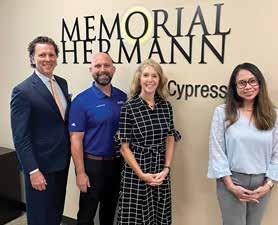
Photo (left to right): Jerry Ashworth, SVP & CEO MH Cypress & Katy Hospitals, Justin Thompson, Manager Memorial Hermann Cypress, Marci Holub, VP & CNO Memorial Hermann Cypress and Angelica Antaran, Stroke & Chest Pain Coordinator, Memorial Hermann Cypres
Financial Forecast
Planning for Age 65 and Beyond
Healthcare and Retirement
By Grace S. Yung, CFP Midtown Financial Group, LLC




As you approach age 65, there are many things you should consider. For example, healthcare in retirement. This is one of the most important things that need your attention as it is vital that you know how it may impact your retirement if you don’t have proper planning in place.

Planning for Age 65 and Beyond

Age 65 is a big milestone. That’s
services). That’s why Medicare Parts A and B are often referred to as Original Medicare.
To add prescription drug coverage, you can do so by purchasing a stand-alone Medicare Part D plan. Unlike Part A and B of Medicare, which are offered through the government, Part D prescription drug plans are sold through independent insurance carriers.
An alternate option for receiving your Medicare Benefits is by going with Part C, or Medicare Advantage. These plans offer the similar coverage as Medicare Parts A and B, but they may also include additional items such as vision and/or dental. Medicare
100% financing available for doctors
because it is the age where people qualify for Medicare. Traditionally, 65 is also the age where many people either retire or make serious plans to do so soon.
Healthcare can be one of your biggest costs in retirement. It is estimated that an average 65-year-old in 2023 may need approximately $157,500 saved (in today’s dollars, after tax) in order to cover healthcare expenses… and this figure does not include the cost of any long-term care needs.
Medicare is a federal health insurance program in the U.S. for individuals who are age 65 and older, as well as for some who are under the age of 65 and have certain disabling conditions.
There are two main options for receiving Medicare benefits - Original Medicare and Medicare Advantage. In the past, there was only Medicare Part A (for hospitalization coverage) and Part B (for doctors’ services, equipment / supplies, and certain preventive care

Advantage plans are sold through insurance companies. So, the actual list of covered benefits, as well as the premium cost, can differ from one Medicare Advantage plan to another.
Medicare Enrollment Periods
There are various Medicare “enrollment periods,” which can help you narrow down what, if anything, you should do in order to secure the coverage that you need. These are the:
Initial Enrollment Period
General Enrollment Period
Special Enrollment Period
Open Enrollment Period
The initial Medicare enrollment period lasts for seven months. It starts three months before the month you turn age 65, includes the month of your 65th birthday, and concludes three months afterwards. If you miss the initial enrollment, you can sign up during the General Enrollment Period. However, because you’ll be considered “late,” you will be penalized with a
see Financial Forecast ...page 14
You’re making a difference; now it’s our turn. Medical doctors don’t have to wait to buy a home. With up to 100 percent financing options available and no private mortgage insurance, you can be a homeowner now.
Program details:
• Loan amounts up to $2M
• Credit scores as low as 680
• Up to 100% financing with no mortgage insurance

• Primary purchase and refinance options only

• Fixed- and adjustable-rate options
• State restrictions apply*
Eligible borrowers include Medical Doctors who have a minimum of a M.D., D.O., D.D.S, or D.M.D degree and an employment contract. Medical doctors including Dentists, Podiatrists, Ophthalmologists are permitted. Veterinarians are permitted.
Houston Medical Times Page 11 medicaltimesnews.com August 2023
PRT-00000-0000 Tracking #0-000000 (Exp. 00/00) The Financial Consultants at <DBA Name> are registered representatives with, and securities and advisory services are offered through LPL Financial (LPL), a registered investment advisor and broker-dealer (member FINRA/SIPC). Insurance products are offered through LPL or its licensed affiliates. [Credit Union name] and [DBA name] are not registered as a broker-dealer or investment advisor. Registered representatives of LPL offer products and services using [DBA name], and may also be employees of [credit union name]. These products and services are being offered through LPL or its affiliates, which are separate entities from, and not affiliates of, [credit union name] or [DBA name]. Securities and insurance offered through LPL or its affiliates are: DBA Name Located at Institution Name Agent Name, Desig 1, Desig 2, Desig 3, Desig 4 Title 1 Title 2 or Insurance Lic#xxxxxxxx Address line 1 Address line 2 City, State XXXXX (000) 000-0000 xExt or Description (000) 000-0000 xExt or Description (000) 000-0000 xExt or Description email.address@email.com www.webaddress.com Your Logo Here Not Insured by NCUA or Any Other Government AgencyNot Credit Union GuaranteedNot Credit Union Deposits or Obligations May Lose Value PROOF LOCKUP A V2 MKT-06048-0122 Tracking #1-05228930 A successful retirement in the future can often depend on having a solid plan now. If your money isn’t working as hard as you are, it may be time to act—there are no do-overs in retirement planning. Now is the time to consider developing a strategy that can help you work toward your financial goals. I specialize in providing comprehensive, personalized financial guidance with the goal of maximizing every remaining moment of the retirement countdown. PLAN WISELY. YOU WON’T GET A DO-OVER. Call today to learn more or to schedule a consultation. S laicnaniF nwotdiM dna laicnaniF LPL .CPIS/ARNIF rebmeM ,rosivda tnemtsevni deretsiger a ,laicnaniF LPL hguorht dereffo secivres yrosivda dna seitiruce G.seititne etarapes era CLL ,puor nwotdilaicnaniF,puorGCLLM G.SecarYgnuC®PF MrotceriD gnigana 3081 .etS ,.tS amabalA 553 Hnotsuo TX 7 8907 7 3389-553-31 O ecfif 1 9683-464-558- T eerF g moc.lpl@gnuy.ecar wmoc.gfnwotdim.ww
Scan Me Reach out today! I am authorized to do business in the state of Texas. Guild Mortgage Company; NMLS #3274; Equal Housing Opportunity; www. nmlsconsumeraccess.org. All information, loan programs & interest rates are subject to change without notice. All loans subject to underwriter approval. Terms and conditions apply. Always consult an accountant or tax advisor for full eligibility requirements on tax deduction. *This program is not available in all states. For more information, contact a Guild Mortgage loan officer or visit: https://www.guildmortgage.com/mortgage-loans/doctor-program/. Anna Babineaux Branch Manager NMLS ID# 266791 306 W Edgewood Dr., Suite F Friendswood, TX 77546 O: 832.569.2878 | M: 713.907.5365 ababineaux@guildmortgage.net Apply Online guildmortgage.com/annababineaux
Excessive Heat and Its Impact On Mental Health

Extremeheat this summer is affecting people across the country – mentally as well as physi-cally. While heat can make anyone irritable, the impact can go beyond that, especially for people with mental health conditions. A Baylor College of Medicine psychiatrist explains how heat af-fects mental health.
Excessive heat causes changes in emotions and behavior that can result in feelings of anger, irritability, aggression, discomfort, stress and fatigue. Heat alters those behaviors because of its impact on serotonin, the primary neurotransmitter that regulates your mood, leading to de-creased levels of happiness or joy and increased levels of stress and fatigue.
The most vulnerable groups affected by heat and mental health include people with preexisting
your head covered when going outside. In addition, pour some water on your head to cool down and try doing things in the shade. If you normally go for walks outside, move them inside by walking in the mall or a large space with air conditioning.
If you take medications, consult with your provider before mixing your dose with excessive heat. Some medications for mental health, such as lithium for bipolar patients, might not pair well with heat. Lithium goes through the kidney, so if you sweat more, levels of lithium fluctuate.
“If you are out in the heat and using lithium, levels may fluctuate. In that scenario, we have to be very careful and either adjust the dosage of lithium or avoid heat,” he said.
Climate changes, including droughts and extreme changes in
conditions and people who use substances like alcohol. People who already suffer from stress, anger or anxiety will experience increased serotonin. If people use substances, especially alco-hol, they need to be more hydrated. Combining substance use with heat requires even more hy-dration.
“All mental illnesses increase with heat because it results in more fatigue, irritability and anxiety, and it can exacerbate depressive episodes,” said Dr. Asim Shah, professor and executive vice chair in the Menninger Department of Psychiatry and Behavioral Sciences at Baylor.
Signs of heat impairing mental health start with irritability, decreased motivation, aggressive be-havior and sometimes mental fogging. In worse cases, it can cause confusion and disorienta-tion. While avoiding the heat may not be possible, Shah recommends hydrating with electrolytes and keeping
temperature, can cause negative effects by increasing pollutants and allergens and worsening air quality. These worsen mental health issues like depression, anxiety or PTSD. Some studies show that exposure to any natu-ral climate disaster can increase the risk of depression by more than 30%, anxiety by 70% and both by over 87%.
“Children are a vulnerable population due to their physical and cognitive immaturity. They are exposed to more pollutants and allergens as they spend more time outdoors,” Shah said.
Previous studies on emergency room visits explore hospital visits due to heat and mental health. A study in JAMA Psychiatry reported about an 8% increase in emergency visits due to the effects of heat on mental health. If you feel affected by severe heat, speak with your primary care provider or mental health specialist.


Houston Medical Times Page 12 medicaltimesnews.com August 2023
Oncology Research
Continued from page 5
flexible learning tool. From online teaching platforms to more accessible educational materials and remote learning, technology is helping
RAC Audit
Continued from page 8
can promptly address correspondence from them. CMS has awarded FFS RAC contracts to the following organizations:
Region 1: Performant Recovery, Inc.
Region 2: Performant Recovery, Inc.
Region 3: Cotiviti, LLC
Region 4: Cotiviti GOV Services
Region 5: Performant Recovery, Inc.
The RAC auditor for Region 5 has a national contract to perform audits of durable medical equipment, prosthetics, orthotics, and supplies claims, as well as home health and hospice claims.
CMS provides Medicare FFS RAC contact information and a map outlining the regional division of states. What Does the RAC Review?
The RAC, which reviews claims on a post-payment basis paid within the past three years, conducts three types of reviews:
• Automated—no medical record needed.
• Semi-automated—claims review using data and potential human review of a medical record or other documentation.
• Complex—medical record required.
CMS provides a sortable list of RAC
Hospital News
Continued from page 10
and Memorial Hermann Sugar Land Hospital as a Primary Stroke Center. The health system’s Comprehensive Stroke Centers include Memorial Hermann-Texas Medical Center, Memorial Hermann Memorial City Medical Center, Memorial Hermann The Woodlands Medical Center, and Memorial Hermann Southwest Hospital.
“Our network of accredited
students communicate with teachers and classmates even when they can’t be there in person.
This extends to making and maintaining connections with classmates who can provide much-needed emotional support and a sense of normalcy and belonging during your cancer treatment. Celebrate: Small victories and big
audit issues on its Approved RAC Topics and Proposed RAC Topics pages. The information on these pages is updated regularly.
What Can You Do to Prepare for a RAC Audit?
Assess your risk for coding and billing issues by performing an internal audit of your own practices. Check that all billing codes are supported with appropriate documentation in the medical record. Additionally, follow these strategies when performing your audit:
• Consider hiring a contractor or assigning a knowledgeable member of your staff to review your coding and billing processes and develop a compliance plan.
• Identify coding and billing issues, track denied claims, look for patterns, and determine what corrective actions are needed to avoid improper payments.
• Review for circumstances that can lead to common coding and billing errors, including:
∆ Inadequately trained staff.
∆ Lack of time.
∆ Not following recommendations in the Federal Register.
∆ Not consulting the U.S. Department of Health and Human Services bulletins.
∆ Misinterpreting rules.
∆ New staff/new billing
Primary and Comprehensive Stroke Centers work together to provide timely care for patients, reduce the burden of stroke and improve survival outcomes in the greater Houston community,” said Sandi Shaw, Memorial Hermann Neuroscience Service Line Stroke Program Director.
Stroke is the fifth leading cause of death and a leading cause of serious long-term disability among Americans. There are more than 7 million stroke survivors living in the United States.
milestones
You’re taking a journey that most of your teachers and classmates cannot imagine. Managing school and your health is not easy. Sometimes it is okay to celebrate even the smallest victory like finishing an assignment, making it to class two weeks in a row, or passing a test. Acknowledge each milestone as it can boost motivation and resilience.
company.
• Include these areas in your assessment and monitoring plan:
∆ Review the categories of claims denied in earlier RAC audits.
∆ Keep abreast of notifications on the CMS website, including approved and proposed audit topics.
∆ Review the Office of Inspector General (OIG) annual Work Plan to identify audit areas.
∆ Monitor RAC progress on regional RAC web postings.
Potential Issues With EHRs
The OIG is studying the link between EHR systems and coding for billing. The concern is that some EHR systems may generate upcoded billing through automatically generated detailed patient histories, cloning (when examination findings are copied and pasted), and templates filled in to reflect a more thorough or complex examination/visit. Review these issues with your EHR vendor and determine if your EHR program has the potential to automatically upcode billing based on EHR documentation.
Fundamentals for Compliance
Establish compliance and practice standards and conduct internal monitoring and auditing to evaluate adherence. Medical coding and billing are complex, and
Menninger
Continued from page 10
for the trust that psychiatrists place in The Menninger Clinic in referring their clients to us.”
Over the past year, 47 percent of Menninger patients were Texans, with the remainder coming from coast to coast.
Colombo added, “We collaborate with each patient, addressing their priority mental health issues. Our clinicians stabilize symptoms and guide
Balancing schoolwork and cancer treatment can be a challenge, but the four C’s can help you manage both successfully. Know that you are not alone and your commitment to education while fighting cancer may very well inspire others on their own educational path.
staff must be knowledgeable about many areas pertaining to billing and reimbursement.
Be sure that your coding and billing staff understands local medical review policies and is knowledgeable about practice jurisdictions. Staff must stay current on coding requirements, keep up with industry changes, understand the denial and appeal processes, and be able to identify resources for support.
The RAC auditor can request a maximum of 10 medical records from a provider in a 45-day period. The time period that may be reviewed is three years. Responses are time sensitive, and significant penalties may result if they are not handled properly. RACs are paid on a contingency basis for overpayments and underpayments. If a recoupment demand is issued and you agree with it, you have the choice of paying by check within 30 days, allowing recoupment from future payments, or requesting an extended payment plan.
You can appeal if you do not agree with the audit findings. Do not confuse the RAC Discussion Period with the appeals process. If you disagree with the RAC determination, detail why you disagree in a discussion letter and file an appeal before the 120th day after the demand letter. Send correspondence to the RAC via certified mail.
our patients in learning and applying new skills which allow them to handle real-life situations that have previously been problematic.”
In early 2024, Colombo noted, Menninger is introducing an Addictions Medicine and Recovery Center to offer expanded treatment options for individuals with difficulties resulting from substance use or behavioral addictions.
Menninger also offers adults and adolescents more treatment options than ever before and a spectrum of services that accept insurance.
Houston Medical Times Page 13 medicaltimesnews.com August 2023
Opioid Misuse
Continued from page 1
types of opioids being prescribed and for guidelines that inform acceptable dosages.
For policymakers, the study results imply that “must access” PDMPs increase the time cost of prescribing to physicians for new and established patients and provide an objective information system on the extent of historic opioid use of patients.
“This suggests substantial
Legal Matters
Continued from page 3
with their internal claims data and comment on / dispute any apparent discrepancies. Keep in mind that some or all of the 2022 projection has likely been paid as discussed below. 340B CEs who submit comments to CMS regarding the payment amounts should request that future data regarding repayment amounts or the claims impacted remain confidential to the extent the CEs exchange claim-level detail.
2. CMS Has Reprocessed and Repaid Many 2022 Claims. CMS states that it already reprocessed most claims with dates of service between January 1, 2022 – September 27, 2022 to be paid at ASP + 6 percent. This accounts for roughly $1.5B of the total $10.5B proposed remedy. CEs should verify whether they received accurate payment amounts at ASP + 6 percent for these claims.
3. CMS Continues to Push Budget Neutrality Argument. CMS proposed decreasing
Financial Forecast
Continued from page 11
higher premium cost.
In some circumstances, if you were covered by health insurance by an individual plan or an employer-sponsored one, you could enroll during a Special Enrollment Period in the future. There is also
room for improvement in clinical prescribing guidelines in the ED, and more generally for individuals with a history of opioid use,” said Ukert.
“For health systems, the implications of this study are that despite efforts by state officials, many PDMPs are ineffective. More importantly, providers can implement policies that require access to the system, even when no state mandate exists.”
Having more effective tools to decrease the odds of opioid misuse could help reduce future overdoses and deaths while still allowing the use of these drugs for effective pain management.
reimbursement for non-drug items and services to all OPPS providers, except new providers noted below, by 0.5% each year for the next 16 years until the increased amount paid to CEs between CY 2018 –2022 is sufficiently budget neutral. CMS spends a significant portion of the Proposed Remedy Rule discussing its obligation to remain budget neutral and how it will prospectively offset the lump sum payment. This budget neutral rate adjustment does not apply to CEs who enrolled in Medicare after January 1, 2018.
4. Payments from Medicare Advantage Organizations (MAOs) Not Addressed in the Proposed Remedy Rule. CMS had previously issued a memo to MAOs in December 2022, which explained that the non-interference clause prevents CMS from opining on reimbursement between MAOs and CEs because of the contractual nature of the relationship. Many MAOs have stalled issuing
repayments until CMS issued this Proposed Remedy Rule, so CEs should now resume pursuing repayments from MAOs based on the terms of their contracts. Of significance, the Proposed Remedy Rule clearly confirms CMS’s position that the default payment rate for all 340B drugs from 2018-September 27, 2022 is none other than the statutory ASP + 6 percent rate. MAO contracts apply the “then Medicare rate” or similar rate language should be closely analyzed in light of CMS’s recognition that there is no other alternative to the statutory ASP + 6 percent rate.
an annual Open Enrollment Period for Medicare from October 15th to December 7th when you may change from one Medicare plan to another.
With all these decisions to make before retirement, it is recommended that you talk with a Medicare specialist
and work with your CERTIFIED FINANCIAL PLANNER™ to plan for the next phase in of your life.
Houston Medical Times Page 14 medicaltimesnews.com August 2023 HOUSTON Published by Texas Healthcare Media Group Inc. Director of Media Sales Richard W DeLaRosa Senior Designer Jamie Farquhar-Rizzo Web Development Lorenzo Morales Distribution Robert Cox Brad Jander Accounting Liz Thachar Office: 713-885-3808 Fax: 281-316-9403 For Advertising advertising@medicaltimesnews. com Editor editor@medicaltimesnews.com Houston Medical Times is Published by Texas Healthcare Media Group, Inc. All content in this publication is copyrighted by Texas Healthcare Media Group, and should not be reproduced in part or at whole without written consent from the Editor. Houston Medical Times reserves the right to edit all submissions and assumes no responsibility for solicited or unsolicited manuscripts. All submissions sent to Houston Medical Times are considered property and are to distribute for publication and copyright purposes. Houston Medical Times is published every month P.O. Box 57430 Webster, TX 77598-7430




Houston Medical Times Page 15 medicaltimesnews.com August 2023 SCAN ME ELEVATED LIVING above the Green 808 Crawford Street Houston, Texas 77010 346-815-2296 www.ParksideAtDG.com Easy Access to Metro Rail Studios - 3 bedroom apartments, townhomes & penthouses available

August 2023 Houston Medical Times medicaltimesnews.com Join 225,000+ medical professionals who get free CME with Texas Health Steps Online Provider Education. Choose from a wide range of courses developed by experts, for experts like you. Quick courses and case studies on topics such as Medicaid guidelines, ethics and mental health, and more are all available 24/7. Learn more at TXHealthSteps.com CME courses that work around your work. Content on the Texas Health Steps Online Provider Education website has been accredited by the Texas Medical Association, American Nurses Credentialing Center, National Commission for Health Education Credentialing, Texas State Board of Social Worker Examiners, Accreditation Council for Pharmacy Education, UTHSCSA Dental School Office of Continuing Dental Education, Texas Academy of Nutrition and Dietetics, Texas Academy of Audiology, and International Board of Lactation Consultant Examiners. Continuing Education for multiple disciplines will be provided for some online content.
