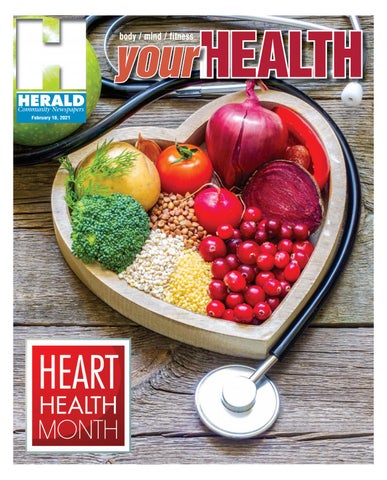
your HEALTH body / mind / fitness
February 18, 2021
February 18, 2021 — HERALD
2
LONG LIVE LONG ISL AND
™
Because it’s your rich and vibrant lives that breathe life into our island. So, at every Catholic Health hospital, practice, and care facility, we’re able to provide the highest quality, most innovative care for your body because our culture cherishes your humanity.
For more information, visit LongLiveLongIsland.org
1119384
When we see Long Island, before all else, we see you— every unique, astounding one of you.
3
HERALD — February 18, 2021
Be good to your heart
F
Don’t miss a beat for cardiovascular health
ebruary is about far more than conversation hearts and romantic rendezvouses: the month of love also marks American Heart Month, which calls major attention to heart health. And for good reason: as the fifth largest and most important organ in your body, your heart beats a hundred thousand times a day, pumping blood to all of your organs and enabling you to perform everything from driving a car to performing downward facing dog. In other words, when your heart is in jeopardy — of the physical sort, mind you — so is your life. Indeed, heart disease — which affects more than 43 million American women per year —is the number one killer in both men and women, rendering it a greater hazard than breast and prostate cancer. While genetics may play a role in your predisposition to heart disease, a quarter of deaths from cardiovascular failure are preventable. Lifestyle changes can reduce your risk of heart disease by a whopping 80 percent. What’s more? Key tweaks to your daily activities allow for a richer, more fulfilling existence. Here are some leading changes you can implement today to keep your ticker safe tomorrow. Skip the pasta Italian might be more your thing, but the point is this: eating more fish — specifically low-mercury fish—can be a boon for your heart, thanks to its healthy doses of omega-3 fats. Take it from the American Heart Association: “Omega-3 fatty acids fatty acids benefit the heart of healthy people, and those at high risk of—or who have —c ardiovascular disease. Research demonstrates that omega-3 fatty acids decreases the risk of arrhythmias (abnormal heartbeats), which can lead to sudden death.” Further, upping your consumption of fish supports normal blood pressure. Low-mercury is critical here, however. Mercury — a heavy metal found naturally in the environment and absorbed by fish — can irritate the lining of your blood vessels and serve as a potential cause of atherosclerosis, a hardening of the arteries that may render you more susceptible to stroke. Salmon, freshwater trout, herring, tilapia and tuna are all excellent choices, while high-mercury choices like ahi and tuna, King mackerel and swordfish should be minimized. Floss your teeth Studies have shown that periodontitis raises your risk of heart disease, in part because of inflammation and the increased thickness of blood vessels in the neck. While further research remains to be done, oral health — accomplished by brushing after meals and flossing once a day, preventative care and cleanings — is often indicative of how well a person takes care of themselves in general. Forgo the salt Let’s get one thing out of the way: salt is critical for life. It’s an essential mineral for every cell in the body — it helps regulate your heartbeat, blood pressure, nerve transmission, muscle contraction, stomach acid and pH balance. The problem, however, rests in the average American’s consumption of salt, which exceeds the daily recommendation of 1,100 to 3,300 mg of sodium each day for adults. (To picture this, one teaspoon of salt gives you 2,300 mg of sodium.) And, as you probably know, high amounts of salt in the
diet have been associated with high blood pressure, which can cause ischemic heart disease. The solution lies not in removing salt from your diet completely but in finding the right balance of sodium to potassium — two components that work together in a unique way to regulate your water balance, which, in turn regulates your blood pressure. Indeed, studies demonstrate that when sodium is decreased and potassium is increased, blood pressure can drop. In short, aim to increase the potassium in your diet by eating plenty of fresh fruits and vegetables, which are rich in potassium and low in sodium. At the same time, be mindful of the type of salt you consume. Commercial salt goes through a dramatic metamorphosis before it reaches your dinner table — it’s heated, bleached, stripped of its minerals and oftentimes treated with anticaking agents that contain aluminum. Reach for unrefined salt that comes from the sea instead, and use it sparingly. Dine early A wholesome diet is crucial for maintaining (or improving) heart health. But recent research suggests that it isn’t just what you eat but also when you eat that matters. According to the American Heart Association, eating more calories earlier in the day and fewer calories at night may decrease your chances of stroke, heart attack or other heart and blood vessel diseases. Take it from Marie Pierre St. Onge, a nutrition researcher at Columbia University. “We may not process sugars as well at night as we do during the day, and studies of shift workers have linked this schedule with a greater risk of obesity and heart disease than a typical day job,” she says, going on to cite that 30 percent of Americans skip breakfast. Which is a shame, given that eating breakfast is associated with lower weight, a healthier diet overall and a lower risk of heart disease. Join the healthier side of the statistic by making your morning meal a priority. Aim to eat protein, fruits and/or veggies, and some heart-healthy omega-3s. One dish that hits all three? A slice of chia-seed or whole wheat toast topped with nut butter and a sliced banana. Schedule in some ‘me time’ The link between chronic stress and heart disease cannot be underemphasized. Such negative stress has a profound impact on your body, from higher levels of stress hormones like adrenaline and cortisol, to changes in the way your blood clots. What’s more, chronic stress — whether derived from a grueling work schedule or troubles at home — tends to spur lifestyle changes that may further increase your risk for heart disease, including over-eating, under-exercising, smoking and over-imbibing. To mitigate the stress in your life, it’s imperative that you carve out time for you —and you alone. “Me time,” however that may be defined, allows you to catch your breath, decompress, assess where you are (physically, spiritually and emotionally) and enjoy life’s riches. Above photo: Caring for your heart through a healthy diet and regular physical activity is the secret weapon. While many may assume that popping a few pills that your healthcare provider prescribed is enough to quell symptoms or prevent a heart attack, the real preventative power lies with real changes to your lifestyle,
Exercise matters Find a routine you’ll stick with
Exercise, along with heart healthy eating, is essential if you want to keep your ticker at its best. To get heart-healthy benefits, you need to get your heart rate up. There are dozens of activities you can do to help your heart. Whether it is a structured exercise program or just part of your daily routine, all physical activity adds up. Consider these tips from personal trainers to get the most out of your exercise program. Pick up your pace Aerobic exercises done 30 minutes a day is excellent for increasing your heart rate. Climbing the stairs, a brisk walk, cross trainer exercise machine or treadmill, anything to get your heart rate up. Any moderate-intensity exercise like swimming, jogging, zumba and yoga is good. Exercising your heart muscle means exercising your body. You don’t need a gym, just a bit of motivation and a good pair of walking shoes. Tone up Strength training is a great complement to aerobic training and helps to prevent age-related bone and muscle-mass losses. Keep in mind that strength training doesn’t increase heart rate but does increase stamina. Use it to target areas where muscletone is needed and don’t forget the other muscle groups. If you already do a vigorous aerobic routine or enrolled in an exercise class, then three days a week for 20 minutes a day is good.
For adults that are 65 and older or anyone with chronic conditions or limited mobility, you need the same amount of exercise as younger people — the activity can be less intense. Use good judgment and follow your doctor’s advice. Stick to a schedule If you “don’t have time” then fit shorter but more frequent periods of time, like 5-10 minutes several times a day throughout your day. Take the stairs, park your car further away from the door, and definitely count in those house chores such as mowing the lawn, vacuuming, or a short brisk walk around the block at lunch or for a break. With any plan, start strength training slowly and build up to heavier weights and repetitions especially if you are new or out of shape. The old adage “no pain, no gain” is more often inappropriate and can be dangerous. Stretching exercises done twice a week helps keep flexibility, which is very important. Consider 10 minutes of stretching twice a week to improve your flexibility With any exercise program, it’s good to start slowly by warming up, then increasing the pace. A good cooling down afterwards is also equally important. Above photo: It’s easier than you might think to improve your health with exercise. You don’t have to jog for an hour a day. In fact, some studies have shown greater health benefits from light to moderate exercise simply because people are more likely to stick with it.
HEALTH MEMO
Y
Neurosurgeon Yusef Mosley joins NSPC Brain & Spine Surgery
usef I. Mosley, M.D., a Dr. Mosley uses the most neurosurgeon innovative procedures to ensure specializing in that his patients recover faster, complex and minimally invasive experience less post-operative spine surgery, has joined NSPC pain, and return to their normal Brain & Spine Surgery. With lives as soon as possible. seven offices on Long Island, When he’s not treating and 22 neurosurgeons available patients on Long Island, Dr. to see patients, NSPC is one of Mosley has a passion for the country’s largest private volunteer work. Each year, he brain and spine surgery joins a group of neurosurgeons practices. who spend two weeks providing “Dr. Mosley is an operative care to adults and outstanding addition to our children at the Black Lion Hospital Yusef I. Mosley, M.D. practice,” says Michael H. in Addis Abba, Ethiopia. Dr. Brisman, M.D., Chief Executive Mosely has also traveled to Officer (CEO) and a senior partner at NSPC. “He’s hospitals in Guatemala, China, Tanzania, and an experienced neurosurgeon who most recently Ghana to perform complex pediatric and adult was Associate Director of Complex & Minimally spine cases. Invasive Spine Surgery at the Saint Luke’s Marion Dr. Mosely sees patients in Rockville Centre. He Bloch Neuroscience Institute in Kansas City, MO. Dr. will perform surgery at Oceanside’s Mount Sinai Mosley’s arrival further enhances our group’s South Nassau and Mercy Medical Center in ability to provide,” he notes, “highly-specialized, Rockville Centre. university-level care in a community setting.”
About NSPC Braine & Spine Surgery Founded in Freeport in 1958, NSPC Brain & Spine Surgery has grown to become one of the largest, private neurosurgical practices in the U.S. with seven conveniently located offices on Long Island. The practice’s experienced neurosurgeons and interventional neuroradiologists are experts in “Bloodless” brain and spine surgery, including laser spine surgery, ultrasonic spine surgery, endoscopic spine surgery, vascular coiling, stereotactic radiosurgery, and other advanced minimally invasive techniques which are used to treat brain tumors, brain aneurysms, trigeminal neuralgia, herniated disc, spinal stenosis, chronic back pain, and other neurosurgical conditions. Please visit www.nspc.com to learn more.
100 Merrick Road, Suite 128W, Rockville Centre, NY 11570 • 844-NSPC-DOC Health memos are supplied by advertisers and are not written by the Herald editorial staff.
IT TAKES A SPECIAL PERSON TO SAVE A SPECIAL PET YOUR MONTHLY PET SPONSORSHIP WILL: Help fund major operations and provide ongoing medical care.
Ensure that abused, neglected, or abandoned animals receive constant love and attention.
Make you an essential part of a grateful pet’s life!
HEALTH MEMO
At the heart of your hearing It may seem unlikely, but your heart and your hearing are connected! Increasingly, studies show that people with compromised cardiovascular health are at increased risk for impaired hearing and even decline of cognitive function, underscoring the need for broad scale health and wellness management. Because both your hearing and your heart rely on healthy blood vessels, individuals with poor circulation, cardiovascular disease, diabetes or high blood pressure, should be particularly vigilant about checking their hearing and sharing this information with their audiologist. In fact, nearly 70 percent of adults with diabetes over the age of 40 have some level of hearing loss, which can be well-managed when found and treated early. Optimal heart and hearing health can be maintained with
regular exercise, a balanced diet, proper sleep, good hygiene, and no smoking. At Comprehensive Audiology, we thoroughly review your cardiovascular history and are committed to helping you achieve your best self — heart and hearing included. Appointments can be scheduled by calling 516-387-4000 or at comprehensiveaudiology. com/make-appointment/. Follow us on Facebook, Linkedin, Google, or Instagram @comprehensive_audiology, or visit us at www.comprehensiveaudiology.com.
DON’T WAIT - ACT NOW! Choose a special pet to sponsor today! 1.877.BE.MY.PAL (1.877.236.9725) sponsor @ animalleague.org animalleague.org/sponsorapet
1120081
February 18, 2021 — HERALD
4
261 Broadway, Lynbrook 516-387-4000 www.comprehensiveaudiology.com
Dr. Esther Fogel Owner/Director, Comprehensive Audiology
Health memos are supplied by advertisers and are not written by the Herald editorial staff.
5
HERALD — February 18, 2021
MOUNT SINAI HEART CARE, WITHOUT THE COMMUTE. You can get quality heart care without going to Manhattan or the North Shore. Mount Sinai South Nassau is the only Long Island hospital associated with The Mount Sinai Hospital, which has a U.S. News Top 10 cardiac care department. Offerings include: -
Life-saving angioplasty Full catheterization lab Nationally-accredited electrophysiology lab Vascular lab for minimally invasive procedures
Get virtual and in-person care, with strict COVID-19 screening and safety protocols in place. If you need heart care, don’t wait.
1108791 1118494
Schedule your visit today at southnassau.org/heart
HEALTH MEMO
February 18, 2021 — HERALD
6
Ranked “High Performing” in heart failure by U.S. News & World Report, Mount Sinai Heart at Mount Sinai South Nassau’s team of accomplished specialists includes (L to R) Dr. Kanner, Dr. Athan Smyrlis, Dr. Jason Freeman, Dr. Sherry Megalla and Dr. Pilar Haynes.
A healthy heart
Know your symptoms and do not delay lifesaving cardiac care
J
ust before Valentine’s Day 2019, as her husband prepared a cozy fire, Linda McCabe, 74-year-old grandmother of three, felt short of breath. She went to the local urgent care center, which called 9-1-1 to transport her to Mount Sinai South Nassau’s Emergency Department. Linda was admitted to the ICU with a rapid pulse, shortness of breath, sweating, and vomiting. Cardiologist Dr. Sherry Megalla ordered an angiogram that revealed she had heart failure and an EKG showed an irregular heart rhythm. Dr. Lawrence Kanner, Chief of Cardiology, Director of Electrophysiology/ Arrhythmia Services, performed an ablation to restore her heart to a normal rhythm. Feeling better than she had in months, Mrs. McCabe went to a follow-up appointment that fall, where Drs. Kanner and Megalla diagnosed her with a coronary branch blockage, which delays the delivery of electrical impulses that make the heart beat efficiently. A defibrillator and pacemaker were implanted by Dr. Kanner to correct what could have resulted in worsening heart failure or even a fatal heart attack. “This has changed everything…I feel really good,” said Mrs. McCabe. “I have to thank Drs. Kanner and Megalla. They are great doctors.” In addition to Drs. Kanner and Megalla, the Mount Sinai Heart program at Mount Sinai South Nassau features a roster of accomplished cardiologists and cardiovascular specialists. This includes specialists from Mount Sinai Heart’s program at The Mount Sinai Hospital in Manhattan, including Noah Moss,
MD, heart failure specialist; Robin Varghese, MD, cardiovascular surgeon; William Whang, MD, electrophysiologist; Ali Zaidi, MD, adult congenital heart disease specialist. In addition to the expanded staff, Mount Sinai Heart at Mount Sinai South Nassau uses the latest advancements in cardiovascular technologies and procedures, including: Rotational atherectomy, a revolving diamond-tipped instrument that spins at a high speed to effectively break up complex calcified plaque in a clogged coronary artery, restoring blood flow to the heart. The Impella is the world’s smallest temporary assistive heart pump for patients with severe coronary artery disease and diminished heart function who are undergoing a coronary intervention, such as stenting to unblock a clogged artery. CardioMems is a small receiver placed in the pulmonary artery for patients with congestive heart failure that transmits vital data of the heart’s function back to the cardiologist that can be used to adjust the prescribed treatment plan, without a visit to the hospital. Requiring no radiation or surgery, cardiac MRI is 3D imaging technology that helps cardiologists pinpoint exactly where the heart is not pumping well and diagnose what is causing the problem. The information produced by the cardiac MRI results in treatment plans tailored uniquely for each patient. Mount Sinai Heart at Mount Sinai South Nassau is among the nation’s leaders in providing balloon angioplasty in an emergency.
Mount Sinai Heart at Mount Sinai South Nassau’s cardiovascular specialists, including Dr. Sherry Megalla, left, provide advanced care that patients such as 74-year-old Linda McCabe need to overcome debilitating and potentially life-threatening heart diseases. It consistently completes the procedure in approximately 58 minutes, 32 minutes faster than the national standard door-to-balloontime benchmark of 90 minutes. (Door-toballoon time is the time measured in minutes from the moment the patient walks in the door to the point the artery in the heart is reopened with a stent procedure). Designated a 4-star achiever by the American College of Cardiology and ranked “High Performing” in heart failure by US News & World Report, Mount Sinai Heart at Mount Sinai South Nassau is accredited by the Intersocietal Commission for Accreditation of Echocardiography Laboratories; is designated an Aetna Institute of Quality for interventional cardiology and rhythm disease diagnosis and
Health memos are supplied by advertisers and are not written by the Herald editorial staff.
treatment; and has The Joint Commission’s Gold Seal of Approval® for its heart failure program, For more information or to schedule a consultation, call 516-632-3670.
One Healthy Way Oceanside, NY 11572 877-SOUTH-NASSAU (877-768-8462) www.mountsinai.org/southnassau
YOUR MONTHLY PET SPONSORSHIP WILL: Help fund major operations and provide ongoing medical care.
Ensure that abused, neglected, or abandoned animals receive constant love and attention.
It’s pretty safe to say that many people fell off the healthy eating wagon during 2020 — stress from the pandemic to remote learning at home for the kids to actual quarantining left lots of us reaching for the chips and cookies. Regularly scheduled meal times also fell by the wayside as Zoom meetings and Google Classrooms took over the house. As we settle in to 2021, let it be a reset for all kinds of things, including nutrition. Jessica Crandall, registered dietician, says this is a great time to get back to the basics of healthy eating. And, she adds, if you’ve gained weight during the past year for whatever reason, it’s important not to be tempted by fad dieting. “Trendy things to avoid include keto, fasting and cleanses,” she said. “There is no quick fix! And there is little data to support longterm benefits for any of these trendy diets. A high-fat diet (like keto) is not recommended for anyone with cardiac issues. And the keto diet is often low in fiber, which has long studied and proven health benefits! “Fasting can have a negative effect on your metabolism, making it harder to lose weight in the long term,” said Crandall. “It can make it difficult to get your nutritional needs met as well. And there is no scientific research to support the benefit of most cleanses. The best way to detoxify your system is to eat a balanced diet with as little processed foods as possible! We all know that improving our diet can drastically improve overall health. Maintaining a healthy, balanced diet can reduce your risk for heart disease, reduce your risk for many types of cancer, and can help you experience a better quality of life and even live a longer life. Unfortunately, when many people think of improving their diet, they think of “going on a diet.” They imagine something similar to a New Year’s resolution where they cut back on everything and make sweeping changes to their lifestyle. And while it is definitely a good idea to want to change your lifestyle and eating habits, most of us realize that “going on a diet,” as we tend to think about it, is really difficult and can even make us feel worse about
ourselves if we fail. Instead, those drastic, sweeping changes should be thought of as an end-goal of a healthy nutrition plan, and instead of changing everything about your diet all at once, it’s much more manageable to make small improvements along the way to help reach that end goal of a healthier diet. Consider these some important tips to get back on track and focused on a heart-healthy lifestyle. Drink more water. Water helps as an aid in digestion, and helps to flush bacteria from the bladder, normalizes blood pressure, stabilizes heartbeat, as well as maintaining hydration. Eat more fiber. Don’t fear carbs! A highfiber diet helps you feel full, lowers cholesterol, helps control blood sugar levels and maintains bowel health/regularity. Good sources of fiber include whole fruits, vegetables, potatoes (especially the skin), beans/legumes, whole grains (such as brown or wild rice, quinoa, barley, farro and whole grain pasta). Eat more plants. Purchase whole fruits and vegetables in their natural state and prepare as desired (raw, roasted or sautéed). Include bean/legumes and nuts. Try to include at least one fruit or vegetable with each meal. Eat enough for breakfast. Think of it as fueling your day! Having a good (as in balanced, with some fiber and protein) breakfast will help control your appetite throughout the rest of the day. Eat fewer processed foods. Processed meats are high in sodium and usually high in saturated fat. Processed plant-based meats are also high in sodium and often high fat also. Snack foods, sugary cereals and candy are nutritionally void and do not satisfy your hunger. Prepared foods — such as boxed, flavored rice mixes, instant potatoes and canned soups — have added sodium. Above photo: Every choice you make to improve your nutrition matters. You don’t have to be perfect and you don’t have to completely eliminate foods you enjoy to have a healthy diet. The long term goal is to feel good, have more energy, and reduce the risk of heart disease, among other health risks.
Choose a special pet to sponsor today! 1.877.BE.MY.PAL (1.877.236.9725) sponsor @ animalleague.org animalleague.org/sponsorapet
1120081
Feed your heart well
DON’T WAIT - ACT NOW!
LOVE WHAT YOU HEAR.
Call today to book your appointment!
Lynbrook • 261 Broadway • 516.387.4000 Superior Service. Patient Education. Comprehensive Care. 1120192
Keep that ticker in tip-top shape
Make you an essential part of a grateful pet’s life!
ComprehensiveAudiology.com | Dr. Esther Fogel, Au.D.
HERALD — February 18, 2021
IT TAKES A SPECIAL PERSON TO SAVE A SPECIAL PET
7
February 18, 2021 — HERALD
8
WE’VE GOT YOU COVERED NSPC is proud to announce that all of our world-class physicians are now in-network, participating providers with the New York State Health Insurance Program (NYSHIP). We’re available for expert treatment of all brain and spine conditions.
Scan with your mobile device to schedule an appointment
In-Network with The Empire Plan (NYSHIP)
1120692
nspc.com | (844) NSPC-DOC