September 9, 2021
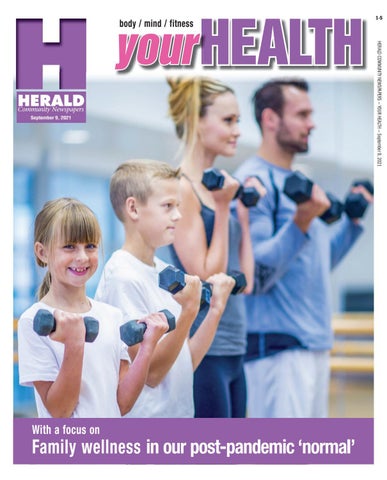
With a focus on
Family wellness in our post-pandemic ‘normal’
HERALD COMMUNITY NEWSPAPERS — YOUR HEALTH — September 9, 2021
your HEALTH body / mind / fitness
1-S
MEET LONG ISLAND’S TEAM FOR BRAIN & SPINE CARE Nassau Neurosurgeons Michael H. Brisman, M.D. Trigeminal Neuralgia Brain Tumors
Suffolk Neurosurgeons William J. Sonstein, M.D. Spine Surgery
Ramin Rak, M.D. Spine Surgery Brain Tumors
Alan Mechanic, M.D.
Jeffrey A. Brown, M.D.
Artem Y. Vaynmen, M.D.
Neuropathic Facial Pain
Spine Surgery
General Neurosurgery Spine Surgery
Stephen T. Onesti, M.D.
Donald S. Krieff, D.O.
Spine Surgery
Spine Surgery
Sachin N. Shah, M.D.
Zachariah M. George, M.D.
Spine Surgery
Spine Surgery
Vladmir Y. Dadashev, M.D.
Alexandros D. Zouzias, M.D.
Spine Surgery
Spine Surgery
Benjamin R. Cohen, M.D.
Daniel M. Birk, M.D.
Spine Surgery
Spine Surgery
Xavier P.J. Gaudin, D.O.
Raymond Baule, M.D.
Spine Surgery
Spine Surgery
Jonathan L. Brisman, M.D. Neurovascular Neurosurgery Endovascular Neurosurgery Brain Tumors
Brian J. Snyder, M.D. Parkinson’s Surgery Epilepsy Surgery Pain Surgery
John A. Grant, M.D. Pediatric Neurosurgery Neurovascular Neurosurgery Brain Tumors
Paolo A. Bolognese, M.D. Chiari I Malformation Syringomyelia
Robert N. Holtzman, M.D. General Neurosurgery Spine Surgery
Neuropsychology
Yusef I. Mosley, M.D. Spine Surgery
Gad Klein, Ph.D.
Neuroendovascular Surgery
John Pile-Spellman, M.D.
Neuropsychology
Neuroendovascular Surgery
Neuro-Oncology
Sundeep Mangla, M.D. Neuroendovascular Surgery
Jai Grewal, M.D. Neuro-Oncology
(844) NSPC-DOC | nspc.com Scan here to request a consultation
In-Network with The Empire Plan (NYSHIP)
Jae Choi, M.D. Aneurysm Neurology
1142153
September 9, 2021 — YOUR HEALTH — HERALD COMMUNITY NEWSPAPERS
2-S
3-S
HERALD COMMUNITY NEWSPAPERS — YOUR HEALTH — September 9, 2021
Become a better version of yourself Healthy habits you should hold on to post-pandemic
I
t’s easy to feel like we’re never going to get our lives back from what Covid-19 has wrought. While the Delta wave continues to impact our well-being, try to look at what might considered a silver lining to this pandemic. Have you noticed you’ve developed healthier habits in the past year and half? Spending more time outside? Talking more with your partner, or re-connecting with old friends? You’re not the only one. Many are reporting a better connection with family and friends, picking up new hobbies and even increasing their physical activity. Some changes — including positive ones — came into our lives by necessity during the pandemic. Here are some healthy habits to come out of the pandemic, that you will want maintain for the long haul. Appreciating nature As many workplaces temporarily closed or moved to a working-from-home model, people found time to take meaningful breaks, often spending their lunches, mornings or evenings accompanied by green scenery. Connecting with nature is one of the key pillars to supporting your mental health. If you’re returning to your workplace, why not try and start a new habit of walking at lunchtime? Or when meeting with a friend or colleague for coffee, opt for sitting outside. Getting physical While some of us found that our fitness goals took a bit of a hit from the pandemic, many actually increased their physical activity. Reports indicate that globally, those who exercised one to two times per week before Covid19 have now increased their activity by 88 per cent. A return to normality and an office schedule can be daunting if you’ve recently picked up a new healthy habit. Time can be a big factor in delaying exercising, so make an effort to schedule your exercise routine into your work day, just like a meeting or a lunch break. As restrictions lift on in-person classes, you can return to gyms or yoga studios for regular solo or group workouts if that appeals to your or continue with your at-home exercise routine. Making time for ‘me’ When we were in shutdown mode last year, we suddenly realized we had some time to kill. A lot of time. Many folks took this ample opportunity to learn new skills or refresh old ones, sometimes even starting a project they’d be putting off for a few years. Mental health experts tell us that taking on these tasks in the middle of a pandemic was actually more beneficial than just killing boredom. Psychiatrist Dr. John Reilly says that doing regular mental challenges trains our mental pathways, improving their effectiveness. “Your ability to reason and make good decisions depends on how well your brain interprets and processes information. By challenging yourself, you improve the effectiveness of your mental pathways, and refresh old or unhelpful
thought patterns.” “If you’ve found something you enjoy doing during the pandemic, try keeping it up for 30 minutes twice a week,” he says. “Or if you find you’re short on time, instead of watching TV in the evenings, try a Sudoku or a crossword, or even a documentary instead of your regular show.” Connecting more Anecdotal evidence indicates that many are connecting on a more emotional level with their housemates, partners and families. Psychologists are telling us that people have become more tolerant of each other — despite some initial frustration of being in close quarters during lockdown. Dr Reilly says that the uncertainty of the future has forced us to re-evaluate the foundations of our own lives, and that’s led to some relationships coming closer together. “Quality time,” says Dr Reilly, “is crucial to keeping this increased connectedness going.” You can adapt what we began at the start of the pandemic. For those living with their partner, you could schedule a regular date night at home where you make each other dinner or complete a puzzle together. For those looking to maintain their positive relationships with friends and family, if you are not able to do an in-person visit, try staying in touch over weekly calls or video chats. Being adaptable While change can be uncertain, chaotic and challenging — it does have a silver lining. It teaches our body to combat stress. There’s a reason why so many news reports are comparing the current circumstances to World War II. Those who lived through the Great Depression and World War II faced all kinds of challenges that younger generations are only now beginning to get a glimpse of. Coming out of the Depression led our ancestors to adjust to a different kind of life, and psychologists believe that the coronavirus could do the very same for younger generations. “Simple things like the way we greet each other are likely to change, but more impactful changes like the way we connect with each other on a deeper, more authentic level are likely to come out of the pandemic,” says Dr Reilly. While this change to being more resilient will likely happen naturally, there are some steps you can take to support your personal growth. “Think positively; consciously change negative thoughts if they cross your mind,” says Dr Reilly. “You can also try listening to a guided meditation and anchoring yourself in the present.” Above photo: The Covid-19 pandemic will eventually come to an end, but that doesn’t mean you should give up on healthy habits you adopted during these trying times.
It all starts at home Health boosters you may already have on hand When it comes to good health, everyone knows the steps to take, whether it’s making time to get to the gym, researching the latest superfoods, and so forth. While these avenues to health certainly can be beneficial, everyone — and that means both kids and adults — also can turn to many health boosters in their own homes to help them achieve their goals of living healthier lifestyles. Lemon water: Lemon water is now being touted as a beneficial addition to one’s daily diet. Lemon water can help reduce acidity in the body, including removing uric acid, a main cause of inflammation. Lemons contain pectin fiber, which can aid in weight loss by helping to fight hunger pangs. Lemons also contain a load of vitamin C, which can give the immune system a boost.
are you waiting for? Cycling is an excellent form of cardiovascular exercise, and riders can tailor their intensity levels to correlate to their ages and abilities. Many folks — kids and adults — find cycling an enjoyable form of activity because it gets them outside and often doesn’t feel like exercise. Fruits and vegetables: Most of us don’t eat nearly enough of fruits and veggies! Produce offers many of the vitamins and minerals people look to supplements to provide. Including diverse fruit and vegetable choices in one’s diet can improve health in various ways, including providing a boost to the immune system.
Yogurt: Probiotic pills can help return healthy bacteria to the digestive system, but so can eating yogurt regularly. Look for yogurts that contain live and active cultures for optimal benefit.
Honey: Honey is a valuable superfood that can boost overall health. In addition to soothing sore throats, it can serve as an antibiotic and wound healer, provide allergy protection, increase calcium absorption, and provide a source of energy without the insulin spike associated with other forms of sugar. Just remember, not to give honey to infants under one year old.
Cycling: If you haven’t yet during the pandemic dusts off that bicycle that has been hiding in your garage, what
Above photo: Lemon water is all the rage these days. It’s a simple habit that can yield big results, medical experts say.
September 9, 2021 — YOUR HEALTH — HERALD COMMUNITY NEWSPAPERS
4-S
HEALTH HEALTHMEMOS MEMO
P
What you should know about Trigeminal Neuralgia (TN) and dentists
eople routinely visit their dentist for evaluation of suspected dental disease. Trigeminal neuralgia (TN), a facial nerve compression syndrome, frequently causes pain in the mouth and teeth. “As such,” according to neurosurgeon Michael H. Brisman, M.D., NSPC Brain & Spine Surgery, “there are commonly overlapping concerns between the TN patient and the dentist.” How is TN similar to other dental problems? TN can cause pain anywhere in the face, from the top of the head to the bottom of the jaw. TN most often causes pain in the cheek and jaw areas, including the gums and teeth. How is TN different from other dental problems? The critical difference in symptoms is that TN patients will experience attacks of pains that are sudden, brief, sharp, and excruciating, usually described as either “electric shocks” or “stabbing.” These pains usually radiate to include a much larger area than just one tooth.
Is TN frequently confused with dental disease? Yes. TN patients often experience severe pain in their teeth and gums, which frequently leads them to visit a dentist. Dentists may suspect a dental cause for the pain and offer various procedures to try to help. Can TN be caused by problems with the teeth or gums, or by dental procedures? No. TN is usually caused by a small blood vessel compressing the trigeminal nerve at the root entry zone, an area where the nerve enters the brain. Can dental work cause nerve pain syndromes? Yes, but very rarely. Signs that suggest a procedure may have caused a nerve pain syndrome include: (1) the pain syndrome occurs soon after the procedure; (2) the nerve affected was in the region of the procedure; (3) the pain is predominantly dull or achy in nature, and (4) there may be numbness in the affected area. Such nerve injury pain usually improves with time.
Michael H. Brisman, M.D., Attending Neurosurgeon, NSPC
To request a consultation with Dr. Michael Brisman, call (516) 255-9031 or visit nspc.com
100 Merrick Road, Suite 128W, Rockville Centre, NY 11570 • 844-NSPC-DOC Health memos are supplied by advertisers and are not written by the Herald editorial staff.
HEALTH MEMO
H
When is the best time to treat my hearing loss? A.S.A.P.
earing loss is associated with increased rates of diabetes, heart disease, kidney disease, thyroid disease, falling, and the development of dementia. The longer you wait, the more you are depriving the brain of proper auditory stimulation, often referred to as auditory deprivation. Your brain is not getting the proper auditory stimulation and auditory cues that it needs to run at 100 percent. The brain is a very simple “use it or lose It” mechanism, and auditory input can help to provide the proper, constant stimulation our brains are accustomed to and designed to receive. Hearing is not a sense to take for granted. Yet the statistics are alarming — it is estimated that only 20 percent of individuals with hearing loss actually seek medical treatment. Without the proper treatment of hearing loss, the brain is being asked to work on overload, constantly. I often use the analogy “living with untreated hearing loss is like asking your brain to drive sixty miles per hour in second gear.” In neuroscience, we call this “cognitive overload” — asking the brain to process
auditory, visual, and other cues just to put together a simple sentence. This cognitive overload is hypothesized to be one of the leading reasons that individuals with hearing loss can be five times more likely to develop dementia.
(516) 788-7830 ilovehearing.com
Health memos are supplied by advertisers and are not written by the Herald editorial staff.
HEALTH MEMO
I
How can you improve your financial fitness?
t’s always smart to stay physically fit, at every point in your life. But financial fitness is important too. Are you doing everything you can to boost your financial well-being? Getting regular check-ups is essential for your physical health – and the same principle applies to your financial health. So, periodically review your investment portfolio to ensure it’s still well-balanced and providing you with the growth potential you’ll need to help reach your goals, such as a comfortable retirement. Also, just as you take medicines to prevent illnesses, you’ll need to follow preventive measures to keep your financial situation healthy. Make sure you’ve got adequate life and disability insurance. And consider seeing a financial advisor for suggestions on dealing with the potentially huge costs of long-term care. Finally, avoid “unhealthy” financial moves, such as dipping into your retirement accounts early. Such a move can incur taxes and penalties and leave you with less money during your retirement years. It will take consistent effort to maintain your financial fitness – but it’s worth it. This content was provided by Edward Jones for use by Marie L.Taylor, your Edward Jones financial advisor at 365 Hempstead Ave., West Hempstead.
Member SIPC. Edward Jones is a licensed insurance producer in all states and Washington, D.C., through Edward D. Jones & Co., L.P., and in California, New Mexico and Massachusetts through Edward Jones Insurance Agency of California, L.L.C.; Edward Jones Insurance Agency of New Mexico, L.L.C.; and Edward Jones Insurance Agency of Massachusetts, L.L.C. California Insurance License OC24309
Marie L. Taylor, Edward Jones Financial Advisor 365 Hempstead Ave., West Hempstead (516) 538-4338 Health memos are supplied by advertisers and are not written by the Herald editorial staff.
HEALTH MEMO
Age is just a number: Hearing loss myths and facts
1143088
any people think hearing loss is a simple consequence of getting older, but the truth is that it affects people of all ages. According to the World Health Organization, an estimated 466 million people live with disabling hearing problems, including about 34 million children. It’s never too early, or too late, to keep your hearing healthy. To help you embark on your journey to better hearing, we’ve busted a few common myths about hearing loss: Myth: Hearing impairment is inevitable for seniors and only affects older people. Fact: Age is a common contributor to hearing loss, but it’s not a foregone conclusion. For some, hearing loss is acquired at birth or early in life, through heredity, disease, injury, or other causes. Plus, noise-induced hearing loss, a growing yet preventable public-health problem, affects all ages. Myth: Hearing loss is an isolated problem that doesn’t affect overall health. Fact: On the contrary, the effects of untreated hearing loss reach beyond communication difficulties. Studies have linked hearing loss to numerous conditions, including dementia, cardiovascular disease, diabetes, kidney disease, and depression. Myth: Normal hearing in one ear is sufficient.
Fact: Just as two healthy eyes are better than one, you hear best with both ears. The brain needs this dual input to help you balance, pinpoint where sounds are coming from, and understand what you’re hearing amid background noise. Fall has arrived, meaning many of us are returning to our jobs and sending our children back to school. This is the perfect time to schedule a checkup with your local audiologist to ensure that you and your family are hearing and living your best. At Comprehensive Audiology, we provide adult and pediatric hearing evaluations, along with complete preventative care. Don’t wait, call us today! Appointments can be made by calling (516) 387-4000 or emailing info@comprehensiveaudiology.com. Follow us on Facebook, Linkedin, Google, or Instagram @comprehensive_audiology, or visit us at www.comprehensiveaudiology.com.
Dr. Esther Fogel
Owner/Audiologist Comprehensive Audiology
261 Broadway, Lynbrook (516) 387-4000 comprehensiveaudiology.com
Health memos are supplied by advertisers and are not written by the Herald editorial staff.
1142069
HERALD COMMUNITY NEWSPAPERS — YOUR HEALTH — September 9, 2021
M
5-S
Self-care
September 9, 2021 — YOUR HEALTH — HERALD COMMUNITY NEWSPAPERS
6-S
An essential part of your wellness lifestyle By Kristen Castillo Self-care was once considered slightly self-indulgent. Now, in our pandemic-altered reality, it’s becoming an essential part of our new normal. It’s not selfish to take care of yourself and your wellbeing. “Self-care is vitally important because if you don’t take the time to stop and care for yourself, your body will stop you,” says mental health advocate Mark Henick.“If you never let your foot off the gas, you won’t keep driving forever — you’ll either run out of gas or crash. The same is true for the body and mind.” Henick says self-care is a choice to re-balance your internal resources so you can bounce back from stressors. Loving yourself Self-care can range from taking “me time” breaks in your day or chatting with a friend to taking a soothing bath or crafting. “Often, we posit that self-care is about doing less, but sometimes it is about doing more —at the end of the day, it is about responding to the needs of ourselves before others,” says Darren Pierre, Ph.D., author of “The Invitation to Love.” He says self-care is all about being honest with yourself. “The work is difficult because we can become easily distracted from focusing on ourselves,” Pierre says, urging people to “remain disciplined in the practice of self-care.” Honoring your life “Self-care is choosing to honor your inner wants and needs in order to fulfill your potential,” says Kimberly Hershenson, a therapist specializing in eating disorders, anxiety, depression and relationships. One of her self-care recommendations is to make a daily gratitude list.“Focusing on what is good in your life as opposed to what is ‘going wrong’ helps relieve stress,” says Hershenson, who also suggests reading positive affirmations every morning.
Snooze Self-care isn’t necessarily tough to do, but finding the time to take care of yourself can be challenging. “Sleep is one of the best forms of self-care because it gives your body and mind some uninterrupted time to simply repair itself,” says Henick. Write it down Author Carrie Aulenbacher is a busy working mom. She uses journaling as a self-care tool. “Making time to take care of me is hard,” she says.“But journaling helps me unload and address issues that affected me but got pushed aside throughout the day.” She says everything ranging from serious writing to doodling to making lists is helpful and counts as journaling. The business of self-care This increased interest in self-care is a business boom, too. According to the Global Wellness Institute, the global wellness industry is a $3.7 trillion market, including fitness, mind and body; healthy eating, nutrition and weight loss; and spa treatments. That means increased opportunities for consumers to invest in themselves and their wellbeing. The wellness industry features countless self-care options, ranging from buying vitamin infused waters to planning wellness retreat vacations to scheduling fitness classes like yoga, dance and cycling. Try meditation, too. You can find guided meditations on YouTube or download apps such as “10 Percent Happier.” Calendar item “Schedule self-care time on your calendar,”says Anza Goodbar, a coach, speaker and trainer for entrepreneurs. “If it is not scheduled, it most likely won’t happen.” She suggests starting a self-care routine in small steps, such as getting up 15 minutes early to start your day with meditation or a quiet cup of coffee.
Restore Your Hearing
“The bottom line is to be intentional about taking care of yourself through the different stages of life,” Goodbar says. Author, certified life and business coach Celia Ward-Wallace has two steps to self-care: “First, carve out time for yourself in the morning or evening for regular rituals such as exercise, reading, walking, meditation or prayer,” she says. “Second, don’t over-extend yourself. Set healthy boundaries with family, friends and co-workers.”
Above photo: Taking time for yourself, such as meditating or even getting a massage, is healthy, not selfish. Your body and mind will be recharged.
MEET OUR TEAM
it comes to at I When Love Hearing
your to-do list, put your future first. Dr. Amy Sapodin,
Au.D., F-AAA, CCC-A
Hoffmann, To find out how to getDr.Au.D.,Alison your F-AAA, CCC-A 3 Hearing aid fitting 3 Hearing aid repair financial goals on track, 3 Hearing testing 3 Hearing protection 3 Tinnituscontact therapy 3 Ear management uswax for a 3 Auditory therapy & rehabilitation complimentary review.
When it comes to your to-do list, put your future first.
Seth Dank,
Clinical Audiologist, M.A., F.A.A.A
To find out how to get your financial goals on track, contact us for a complimentary review.
-A
Jessica Gibson, Clinical Specialist
IRT-1848F-A
30 Merrick Avenue North, Suite 109, East Meadow, New York 11554
1141155
(516) 788-7830 Marie L Taylor, AAMS®, CRPC® ilovehearing.com Financial Advisor 365 Hempstead Avenue West Hempstead, NY 11552-2042 516-538-4338
Marie L Taylor, AAMS®, CRPC® Financial Advisor
edwardjones.com
Member SIPC
edwardjones.com
365 Hempstead Avenue West Hempstead, NY 11552-2042 Member SIPC 516-538-4338
1142261
At I Love Hearing, we use a special process to ensure that our clients receive the ideal hearing loss solutions for their needs.
7-S
HERALD COMMUNITY NEWSPAPERS — YOUR HEALTH — September 9, 2021
Personalized care, advanced technology, and the power of...
hearing 516.387.4000 261 Broadway • Lynbrook ComprehensiveAudiology.com 1142256
Healthy strategies to live by
Despite the unease brought on by the Delta variant, we are all striving to move forward with our daily lives post-pandemic. Now, more than ever, a healthy lifestyle is essential to our wellbeing (and if your family is still over-indulging in pandemic comfort foods, cut back, way back!) Involve the kids in attaining a healthier lifestyle. Here are some ideas to incorporate into your family goals. Preschoolers • I will brush my teeth twice a day, and wash my hands frequently, especially after going to the bathroom and before eating. • I won’t tease dogs — even friendly ones. I will avoid being bitten by keeping my fingers and face away from their mouths.
• I’ll never give out personal information such as my name, home address, school name or telephone number on the Internet. Also, I’ll never send a picture of myself to someone I chat with on the computer without my parent’s permission. Ages 13 and Up • I will eat at least one fruit and one vegetable every day, and I will limit the amount of soda I drink. • I will take care of my body through physical activity and nutrition. • I will wipe negative “self talk” (i.e. “I can’t do it” or “I’m so dumb”) out of my vocabulary. • When I feel angry or stressed out, I will take a break and find constructive ways to deal with the stress, such as exercising, reading, writing in a journal or discussing my problem with a parent or friend. • When faced with a difficult decision, I will talk with an adult about my choices. • I will be careful about whom I choose to date, and always treat the other person with respect and without coercion or violence. • I will resist peer pressure to try drugs and alcohol. • When I notice my friends are struggling or engaging in risky behaviors, I will talk with a trusted adult and attempt to find a way that I can help them.
Ages 5-12 • I will drink milk and water, and limit soda and fruit drinks. • I will apply sunscreen before I go outdoors. I will try to stay in the shade whenever possible and wear a hat and sunglasses, especially when I’m playing sports. • I will try to find a sport (like basketball or soccer) or an activity (like playing tag, jumping rope, dancing or riding my bike) that I like and do it at least three times a week! • I will always wear a helmet when bicycling. • I will wear my seat belt every time I get in a car. I’ll sit in the back seat and use a booster seat until I am tall enough to use a lap/shoulder seat Courtesy of American Academy of Pediatrics belt. • I’ll be nice to other kids. I’ll be friendly to kids Above photo: The path to a lifetime of good health who need friends —like someone who is shy, or involves guiding the kids to make smart choices early is new to my school. on.
Hy p n o s i s Can Help!
one-on-one Hypnosis for Adults and Children in a safe & Comfortable Environment Weight • Smoking • Stress • Anxieties Fears • Phobias • Grieving • Unwanted Habits Self Esteem • Confidence • Starting Over Dating • Clutter • Study Habits • Memory Procrastination • Menopause • Sleep Issues Sports Improvement and More
Terry Biener, CCH
Certified Clinical Hypnotist in practice since 1992
Easy Changes Hypnosis
516-791-6174
HypnoShe@aol.com www.easychanges.com Lo Cat e d i n Va L L e y St r e a m
Gift Certificates Available
FlExiblE Hours • by AppointmEnt only CAll For A FrEE pHonE ConsultAtion
1081740
All in the family
H E A LT H C A R E FOR EVERY LIFE ON EVERY JOURNEY LONG LIVE LONG ISL AND™
We know that every person, every path, and every experience is important to life on our island. That’s why at every Catholic Health hospital, practice, and care facility, you’re far more than just another patient. So, we’re able to provide the highest quality, most innovative care because we know how much your humanity means to all of us.
For more information, visit LongLiveLongIsland.org
1142279
September 9, 2021 — YOUR HEALTH — HERALD COMMUNITY NEWSPAPERS
8-S