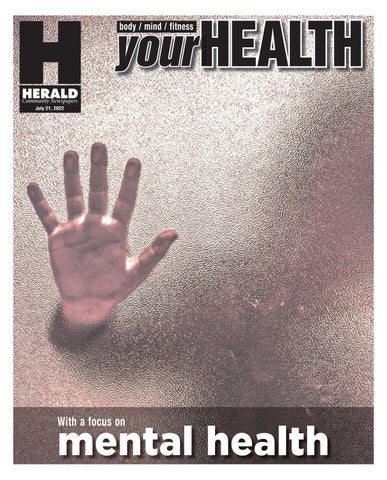
your HEALTH body / mind / fitness
July 21, 2022
With a focus on
mental health
HEALTH MEMO
S-2
July 21, 2022 — Your Health - Herald Community Newspapers
Parker Jewish Institute offers unparalleled care, comfort for older adults
F
ounded in 1907, Parker Jewish Institute for Health Care and Rehabilitation is headquartered in New Hyde Park. The facility is a leading provider of short term rehabilitation and long term care. At the forefront of innovation in patient-centered health care and technology, Parker Jewish Institute is a leader in teaching and geriatric research, serving as a teaching affiliate of Albert Einstein College of Medicine and Long Island Jewish Medical Center. Parker features its own medical department, and is nationally renowned as a skilled nursing facility, as well as a provider of community-based health care, encompassing Home Health Care, Medical House Calls, Palliative Care and Hospice. Parker’s Indian Cultural Unit is the first of its kind serving South Asian and Indo-Caribbean older adults in Nassau and Queens. It is staffed by medical team members fluent in Hindi, Punjabi, Malayalam, Gujarati and Bengali. Here, residents and patients stay connected with their traditional lifestyle and traditional Indian vegetarian cuisine is always served. Parker At Your Door provides Medical House Calls to patients in Nassau, Queens and Brooklyn. With this service, patients receive the medical care they need, right in the comfort of their home so that they can achieve the best level of health possible. Parker is also home to Queens-Long Island Renal Institute, providing safe, comfortable hemodialysis treatments in a relaxed setting. Through the unprecedented pandemic, Parker remains a leader. As mandates changed rapidly, Parker continues to drive new policies ahead of regulatory protocols. This includes Parker’s Infection Control Patrol, through which a multidisciplinary team rounds the facility’s care areas, ensuring that team members comply with
includes a regular concert series, during which residents sing, dance and clap along to the music. Through Virtual Reality experiences, residents can see Broadway shows, visit new cities, or even stop by an animal exhibit at a world-class zoo. And there are arts and crafts and other activities that remain popular year-round, promoting engagement and overall wellness. Today’s Parker is well positioned to continue its leadership in patient care, teaching and research, on the wings of compassion, excellence and innovation. Learn more about Parker Jewish Institute by visiting parkerinstitute.org, or call (718) 289-2100.
meticulous standards. It includes Parker’s virus-killing ultraviolet light system for its HVAC units, and upgraded generator system. Parker also launched a COVID 19 testing center and vaccination site. And with Parker’s Family Call Center, staff communicate regularly with families, providing resources as needed. During the height of the pandemic, Parker’s Family Call Center played an important role in enabling families to stay connected. “It is so important for families to see and speak with each other to stay in touch and enjoy companionship,” said Michael N. Rosenblut, Parker’s President and CEO. “Parker’s new Family Call Center continues to extend our ability to help families get the information they need, quickly. And the ability to connect family members through virtual technology helps to foster family relationships.” Parker continues to offer programs that residents enjoy. This
About Parker Jewish Institute for Health Care and Rehabilitation Parker Jewish Institute for Health Care and Rehabilitation, which is headquartered in New Hyde Park, is a leading provider of short term rehabilitation and long term care. At the forefront of innovation in patient-centered health care and technology, the Institute is a leader in teaching and geriatric research. Parker Jewish Institute fea-tures its own medical department, and is nationally renowned as a skilled nursing facility, as well as a provider of community-based health care, encompassing Social Adult Day Care, Home Health Care, Medical House Calls, Palliative Care and Hospice.
Parker Jewish Institute • (718) 289-2212 • lscacco@parkerinstitute.org Health memos are supplied by advertisers and are not written by the Herald editorial staff.
Restore Your Hearing
HEALTH MEMO
at I Love Hearing At I Love Hearing, we use a special MEET OUR TEAM process to ensure that our clients receive the ideal hearing loss solutions for their needs. Dr. Amy Sapodin,
3 Hearing aid fitting 3 Hearing aid repair 3 Hearing testing
3 Hearing protection
3 Tinnitus therapy
3 Ear wax management
Au.D., F-AAA, CCC-A
3 Auditory therapy & rehabilitation Dr. Alison Hoffmann, Au.D., F-AAA, CCC-A
(516) 788-7830 ilovehearing.com 30 Merrick Avenue North, Suite 109, East Meadow, New York 11554
Seth Dank,
Clinical Audiologist, M.A., F.A.A.A 1178512
The relationship between hearing loss and dementia
A
ge-related hearing loss is a progressive and degenerative disorder resulting from the loss of receptor cells (i.e. the hair cells) in the ear. Consequently, there is a significant reduction of the quantity and quality of neural connections from the ear to the brain. This slow-onset disorder can have a significant impact on several key brain areas, including the memory, hearing, speech and language portions of cognitive function. Several key research studies have pointed to the potential links of hearing loss and dementia, including the groundbreaking work from Dr.
Frank Lin and his colleagues at Johns Hopkins Medical Center that indicate hearing loss can increase the risk of dementia by 200-500%. The initial report first published in 2011 by scientists at Johns Hopkins Medical Center and the National Institute on Aging found that individuals with hearing loss (when compared to participants with normal hearing) are at a significantly higher risk of developing dementia as they age. The relationship of hearing loss and increased risk was rather simple: the more hearing loss they had, the higher the likelihood of developing the
memory-robbing disease. “A lot of people ignore hearing loss because it’s such a slow and insidious process as we age,” Dr. Lin (of Johns Hopkins Medical Center) says. “Even if people feel as if they are not affected, we’re showing that it may well be a more serious problem.” Three risk factors associated with hearing loss and dementia include social isolation, cerebral atrophy and cognitive overload.
(516) 788-7830 ilovehearing.com
Health memos are supplied by advertisers and are not written by the Herald editorial staff.
Mental health reset
S-3
T
he Covid-19 pandemic has led to an uptick in depression, anxiety, stress and other mental health conditions. In a recent poll conducted by USA TODAY and Suffolk University, the vast majority of respondents reported feeling like the country is experiencing a mental health crisis. As people grapple with how to manage this challenging environment, our mental health takes on new importance to overall well-being. Start with the basics You’ve heard it before, but we’ll say it again: prioritizing our basic needs like eating, sleeping and getting physical activity is important for our mental health. Taking care of our bodies can improve our mood, stress levels, self-esteem and help reduce anxiety. Go through “The Basics” checklist of food, water, sleep, air, and shelter. Often when these basic needs are unbalanced, we have a greater risk of escalating into a state of panic or feel negative health effects. Simply eating a snack, drinking a glass of water, or taking a nap, may be helpful to at least get you to a better baseline to approach any other challenges you may be experiencing. Not sure where to begin? Here are a few strategies you can use to address the basics. Sleep: Aim to get 7 to 9 hours of sleep each night. Turn down your thermostat to the optimal temperature for sleep: between 60 and 67 F. Set a timer on your phone as a reminder to start shutting down your electronics at least one hour before bed. It’s time to correct the pandemic habit of being attached to our devices non-stop. Instead of scrolling on your phone, opt for relaxing activities like reading, journaling, coloring, yoga or listening to a meditation to help your body unwind. Eating: Honor your hunger cues, and try to eat at least one meal distraction-free (that means no phones, no computers, no TV, etc.). If you find yourself feeling tired or hungry by the end of class, consider preparing snacks in advance to keep yourself full and focused. For example, a square of dark chocolate contains small amounts of caffeine that can help you stay alert. Physical activity: Make physical activity more enjoyable by choosing activities that you like and are excited to do. Working out doesn’t have to be strenuous or burn a lot of calories. Moving your body through walking, yoga or low-impact exercises is just as beneficial for your mental and physical health.
Could it be depression?
Your ‘bad mood’ may be something else Being unhappy isn’t the same as being depressed. Depression is a term often used loosely to describe how we feel after a bad week at work or when we’re going through a breakup. But major depressive disorder — a type of depression — is much more complicated. There are specific symptoms that determine whether it’s depression or the sadness we all sometimes experience in life. Determining if persistent, unshakable dark feelings are a result of depression can be the first step toward healing and recovery. Hopeless Outlook Major depression is a mood disorder that affects the way you feel about life in general. Having a hopeless or helpless outlook on your life is the most common symptom of depression. Other feelings may be worthlessness, self-hate, or inappropriate guilt. Common, recurring thoughts of depression may be vocalized as, “It’s all my fault,” or “What’s the point?” Lost Interest Depression can take the pleasure or enjoyment out of the things you love. A loss of interest or withdrawal from activities that you once looked forward to — sports, hobbies, or going out with friends — is yet another telltale sign of major depression. Another area where you may lose interest is sex. Symptoms of major depression include a decreased sex drive and even impotence.
tice listening, empathy, and care. So, set a regular date with your friends, family, community members or pets and have some fun together! It can be helpful to discuss your feelings to realize you are not alone, and to carve out time for individual and community self-care so your loved ones can embark on the intentional journey together.
Spend time outdoors Few things make us feel better than getting some fresh air outside and noticing our natural world. In addition to exercise, Try to spend at least two hours outdoors each week and see if you can work up to 30 minutes of outside time each day — whether that is throwing a ball for your dog, sitting in your yard or a park, taking a walk in your neighborhood, or going on an outdoor adventure. You are guaranteed to feel better after you slow down, stay present and feel your senses taking in the world around you.
Practice what you know We live in a culture that emphasizes quick fixes and easy solutions. However, mental health is a complex issue, and it may take time, patience and practice to feel better. One important factor in working to improve your mental health is to stick with it. For instance, if you know that going to bed early or disconnecting from the news is helpful for you, continue to do those things over an extended period of time. Similarly, if you’re in therapy, it’s important to do the homework or exercises provided by your therapist. These are just a few examples of how you can put what you already know to good use. It’s also important to know that there’s no shame in looking for alternative strategies, but remember not to neglect the tools that already work for you. Talking about mental health challenges needs to be as easy and normal as talking about physical health challenges and concerns. No one has to stay stuck in an endless loop of anxiety and stress. By focusing on what’s most important — you, your health and your loved ones — you can help prevent more serious mental health issues. If stress and anxiety begin to feel overwhelming no matter what you do, talk to your primary care provider. And always, if you or someone you know may be considering suicide, contact the National Suicide Prevention Lifeline at (800) 273-8255 or call 911.
Connect with others So sorely missed the height of the pandemic, this added to the stressors we’ve been dealing with since Covid turned our world inside out. When we spend time with others, we often feel better because we turn the focus away from ourselves and prac-
Above photo: It might seem like anxiety has become the pay-to-play price for living in our Covid-19 altered world. It’s a universal health condition many of us experience to varying degrees at varied times. However, anxiety and stress are tricky friends to manage — a little of either is okay, but too much can blossom into a host of unwelcome consequences.
Express yourself with words or movement If you like to write, journaling can be a great way to release thoughts that may feel like a burden. Keep a journal nearby and spend some time each week free writing. Your journal is just for you, so you can write whatever you want as a way to process things and increase your awareness. A quicker way to do this is to use the voice memo feature on your cell phone. Just record yourself talking and you’ll be amazed at how great you feel afterwards. You can keep what you’ve written or spoken for later, or just tear it up or delete it. The main point is to safely and comfortably express your challenges and your joys so that you can move forward with greater awareness.
Increased Fatigue And Sleep Problems Part of the reason you might stop doing things you enjoy is because you feel very tired. Depression often comes with a lack of energy and an overwhelming feeling of fatigue, which can be among the most debilitating symptoms of depression. This could lead to excessive sleeping. Depression is also linked with insomnia, as one might lead to the other and vice versa. They can also make each other worse. The lack of quality, restful sleep can also lead to anxiety. Anxiety While depression hasn’t been shown to cause anxiety, the two conditions often occur together. Symptoms of anxiety can include: √ Nervousness, restlessness, or feeling tense √ Feelings of danger, panic, or dread √ Rapid heart rate √ Rapid breathing √ Increased or heavy sweating √ Trembling or muscle twitching √ Trouble focusing or thinking clearly about anything other than the thing you’re worried about Uncontrollable Emotions One minute it’s an outburst of anger. The next you’re crying uncontrollably. Nothing outside of you prompted the change, but your emotions are up and down at a moment’s notice. Depression can cause mood swings. Getting Help Recognizing that you’re depressed is essential to getting the right help. Depression affects millions of people, but there are varying treatments available, from lifestyle changes to medications. No matter the path of treatment you choose, asking for professional help is the first step to getting back to feeling like yourself again. Depression is a very treatable condition. Psychotherapy (talk therapy), medications or a combination thereof can be very effective in managing symptoms. Mental health professionals can work with individuals to find the right therapy based on symptoms and severity of the depression. Also, it may take some time to find the right medication or treatment; therefore, people are urged to remain patient and hopeful. The sooner action is taken, the more quickly the condition can be addressed. Above photo: It’s normal to experience feelings of sadness and grief from time to time. But when these feelings are prolonged or interfere with daily life, it may be time to seek professional help.
July 21, 2022 — Your Health - Herald Community Newspapers
Move forward and reclaim your emotional equilibrium
HEALTH MEMO
July 21, 2022 — Your Health - Herald Community Newspapers
S-4
T
Queens Long Island Renal Institute provides dialysis patients care, safety and convenience
he award-winning Queens Long Island Renal Institute focuses on care, safety and convenience for kidney dialysis patients in the New York metropolitan area. Located in the lobby level of Parker Jewish Institute for Health Care and Rehabilitation with its own entrance, the center provides care to Parker’s residents and patients as well as to the general public. Queens Long Island Renal Institute offers the finest quality of care, state-of-the-art technology and uncompromised dignity, in a bright, ultramodern and comfortable setting. The center is a certified 5-Diamond Status Facility, and is recognized for its demonstrated commitment to quality improvement by building and promoting a culture of patient safety. To earn this status, dialysis facilities must apply for the recognition each year. They must complete the program’s Culture of Safety module each year. A facility’s entire staff - including dieticians, management, nurses, medical directors, social workers and technicians - must participate in the program in order to qualify. Licensed by the New York State Department of Health, QLIRI is led by a dedicated, interdisciplinary team of experienced nephrologists and dialysis registered nurses, a
About Parker Jewish Institute for Health Care and Rehabilitation Parker Jewish Institute for Health Care and Rehabilitation, which is headquartered in New Hyde Park, is a leading provider of Short Term Rehabilitation and Long Term Care. At the forefront of innovation in patient-centered health care and technology, the Institute is a leader in teaching and geriatric research. Parker Jewish Institute features its own medical department, and is nationally renowned as a skilled nursing facility, as well as a provider of community-based health care, encompassing Social Adult Day Care, Home Health Care, Medical House Calls, Palliative Care and Hospice. renal social worker, and a registered renal dietitian. The team is ready to meet the individual needs of dialysis patients and families, and provides individual and family health education, as well as nutritional counseling and social work services. QLIRI is outfitted with an in-center chronic hemodialysis. It features comfortable, state-of-theart, private treatment stations with personal TVs. There is also a homelike reception area with a large-screen TV as well as free wireless access. It
accommodates stretchers, and offers valet parking. “With Queens Long Island Renal Institute conveniently located in Parker’s first-floor lobby, we continue to safely and comfortably meet the needs of our patients and residents, as well as members of the New York community who also benefit from our services,” said Michael N. Rosenblut, President and Chief Executive Officer of Parker Jewish Institute for Health Care and Rehabilitation.
Queens Long Island Renal Institute • 271-11 76th Ave., New Hyde Park • (718) 289-2600 Health memos are supplied by advertisers and are not written by the Herald editorial staff.
HEALTH MEMO
A
fter 30 years in practice as a Clinical Hypnotherapist, Terry Biener still believes that the key to using hypnosis as a helpful tool — often referred to as Hypnotherapy — is knowing what to say, how to say it, and which techniques to use. Each person processes information differently. So, origins of habits, fears, and other challenges vary greatly. Sessions are private, tailored to the person’s lifestyle, personality, triggers, and sometimes, the past. In March 2020, everything changed. As her clientele canceled appointments, Biener abruptly shut down her practice. Uncertainty prevailed. Months passed, and it was apparent that safe distancing and masks would continue indefinitely. Since her work entailed up-close communication, and talking through a mask was a muffled no-go, reinvention was necessary. She used her time to research, take online courses and even attend virtual hypnotherapy conferences, worldwide. Embracing online technology was clearly a solution. After all, many health providers and therapists were going virtual. While most clients lived locally, distance is no longer an issue. By summer of 2020,
Hypnosis reinvented Biener was offering Zoom hypnotherapy sessions, allowing extra time to help people find the most effective environment, both physically and technologically. “I was skeptical at first,” she admits, having worked in person for so long. “But once I retrained, I realized that online sessions were not only successful, but many people prefer it. Scheduling was always a challenge. Now a person can set aside an hour of their time rather than three, and they can contact me from anywhere. I recently helped a former client with test anxiety, while he attended college, out of state.” Having had phobias and panic attacks herself, which were ultimately eliminated with hypnosis, Biener chose fears and trauma as her niche. By combining NeuroLinguistic Programming (NLP) techniques with hypnosis, she reduces unwanted, and sometimes devastating anxiety. Since the pandemic, new concerns have surfaced — health-related fears, life’s uncertainties, grief, procrastination, weight gain, sleep issues, etc. “Ignore what you’ve seen in movies; that’s entertainment. A hypnotic trance is a natural state we visit frequently — daydreaming, reading, playing a video game.
A hypnotist induces this type of trance to “reframe” the subconscious mind, which rules how we respond. A good subject is strong-willed, intelligent and creative. The person being hypnotized never wloses control.” A thorough intake session is done first. The number of hypnosis sessions recommended varies. Motivation and willingness to work on a conscious level are important. Trust and a good rapport with the hypnotist are important. Formerly a New York City teacher, Biener is certified though the American Board of Hypnotherapy and the National Guild of Hypnotists. She has done speaking engagements for local organizations and wellness centers. Call for a free phone consultation or visit the website.
W
”
hat I always thought was laziness, was actually a fear of failing at whatever I did. I was traumatized by past experiences and was ‘stuck’. I couldn’t move forward. Since Terry specializes in fears, she easily recognized this in me. In just a few sessions, she helped me remove these fears and I was able to get on with my life. Now I’m more productive than I’ve been in ages.”
...
- Ben W. Floral Park,NY
L
”
osing 70 pounds in less than a year was amazing..and easy! Thanks, Terry. You changed my life.” Terry Biener, CCH (516) 791-6174 www.easychanges.com
Health memos are supplied by advertisers and are not written by the Herald editorial staff.
- M.A. Long Beach, NY
S-5
July 21, 2022 — Your Health - Herald Community Newspapers 1179088
PARKER CARE. THE BEST. FOR THE BEST.
THEY GAVE YOU THE BEST
Short Term Rehabilitation | Long Term Care | Home Health Care | Hospice | Palliative Care Inpatient And Outpatient Dialysis | Medical House Calls | Managed Long Term Care | Medicare Advantage Plan 271-11 76th Avenue New Hyde Park, NY 11040 | 877-727-5373 | parkerinstitute.org
1174597
NOW IT’S YOUR CHANCE TO GIVE THEM THE BEST
HEALTH MEMO
July 21, 2022 — Your Health - Herald Community Newspapers
S-6
T
Mount Sinai South Nassau Offers Comprehensive Mental Health Care Right on the South Shore
he stressors of modern life are challenging for most of us, and even more so when one is also coping with emotional and mental health symptoms. Anxiety and depressive disorders in the United States have increased threefold during the COVID-19 pandemic. Depression among adults has climbed past 30 percent of the population, while the World Health Organization recently reported a 25 percent increase in anxiety and depression worldwide since the start of the pandemic. “People are struggling to cope with so many aspects of their lives affected by the pandemic and are not always sure who to turn to for help. The key to knowing when to seek out help is to determine how one’s symptoms are affecting overall functioning,” said Clinical Psychologist Michele Lucero, PsyD, Administrative Director of Behavioral Health Care at Mount Sinai South Nassau. “Marked decreases in functioning at work, school, and/or home should be evaluated by a professional.” Mount Sinai South Nassau’s Behavioral Health Program offers comprehensive behavioral health care that respects and honors the dignity and privacy of each individual, in a convenient location near home. Symptoms of behavioral health disorders include: • Persistent sad mood • Lack of motivation/interest/loss of pleasure • Fatigue • Excessive worry • Frequent negative thinking • Racing thoughts • Isolating oneself • Increased heart rate, shakiness, chest tightening, rapid breathing • Difficulty concentrating • Sleep disturbances • Changes in appetite If you or someone you know is experiencing one or more of these symptoms, Dr. Lucero recommends the following self-care strategies: • Regular physical exercise • Routine socialization • Deep breathing, meditation, and other relaxation strategies • Hobbies and enjoyable activities • Talking to a trusted friend or loved one about your thoughts, feelings, and stressors • Keeping a journal or writing out realistic personal goals • Challenging and changing negative thoughts
If your symptoms persist and interfere with daily life, don’t wait to call on Dr. Lucero and Mount Sinai South Nassau’s team of behavioral health professionals. Treatments and techniques include psychiatry, psychology, social work, advanced nursing practice, and art therapy. “Getting the most out of therapy requires a commitment to change and the identification of goals for treatment,” says Dr. Lucero. “Therapists work with their clients to establish goals that are realistic, time-based, and attainable, and that focus on the specific areas of functioning that are being negatively impacted.” Mount Sinai South Nassau offers behavioral health services at its Mental Health Counseling Center in Baldwin as well as its Center for Primary and Behavioral Healthcare in Hempstead. It is home to one of the state’s most comprehensive inpatient and outpatient behavioral health programs, staffed by more than 45 professionals representing the disciplines of psychiatry, psychology, social work, and art therapy.
families along with child psychiatric services. • Partial Hospitalization Program—Intensive therapy, support, and medication monitoring for patients who need acute daily psychiatric treatment in a supportive environment. • Intensive Outpatient Program—An intensive therapeutic program for patients with psychiatric symptoms who would benefit from group and/or individual therapy and medication several days per week. Specialized services for crime victims, people dealing with trauma, depression, anxiety, and childhood emotional disorders are also available.
For more information or to schedule an appointment, call (516) 377-5400.
It also provides a variety of modalities including individual, group, and family psychotherapy. These include: • Adult Psychotherapy and Psychiatry—Medication management and psychotherapy are available on an individual and group basis. • Child and Adolescent Psychotherapy—Individual, group, and family psychotherapy for children and their
One Healthy Way Oceanside, NY 11572 • 877-SOUTH-NASSAU (877-768-8462) • www.mountsinai.org/southnassau Health memos are supplied by advertisers and are not written by the Herald editorial staff.
Feed your mind
S-7
brain function. Vitamin K has been found to reduce your chances of developing age-related dementia.
Oily Fish Numerous studies have revealed that “oily” fish like salmon, mackerel and trout promote optimal brain health. These fish contain high levels of the Omega-3 fatty acid DHA. The study, spearheaded by Professor Welma Stonehouse, at New Zealand’s Massey University, revealed that DHA-rich fish improved both short-term “working” memory and long-term memory in the 176 healthy adults who participated in the study. Findings also reveal that DHA is a key nutrient that has the power to actually prevent the development of Alzheimer’s Disease. Other “oily” fish that are high in DHA include pawns and sardines. High levels of DHA are also found in certain shellfish, such as mussels.
Blueberries Blueberries, which are rich in antioxidants and compounds called polyphenolics, have been found to improve short-term memory and concentration, while also delaying the onset of conditions such as dementia and Alzheimer’s disease. Studies performed at Tufts University’s Human Nutrition Research Center on Aging have revealed that the antioxidants successfully cleared away toxins that had accumulated in the brain.
Strawberries Like blueberries, strawberries contain polyphenolics and flavinoids, which have been found to cleanse the brain, eliminating the toxins that serve to inhibit an array of functions, including memory. According to a study published in the Annals of Neurology, researchers discovered that women who ate strawberries (and blueberries) saw a delay in the on-set of age-related
mental decline. The 36-year study involved 16,000 women who ate lots of strawberries; seeing a 2.5 year delay in the on-set of memory problems and the development of agerelated conditions such as Alzheimer’s disease and dementia.
Sage Sage is commonly used to add flavor to a wide range of different culinary dishes, but it also contains powerful antioxidants and compounds. Sage has also been found to improve the “interconnectivity” among the different regions of the brain, which serves to improve comprehension speed, concentration and problem-solving speed. Improving memory isn’t the only benefit that sage offers; it also has anti-inflammatory properties and it’s high in Vitamin K (which is also known as a brain-friendly vitamin!)
Broccoli Broccoli is high in Vitamin K, which has been found to enhance
Pumpkin Seeds Pumpkin seeds are high in zinc, which serves to boost your memory, problem-solving skills, and mental speed. They also contain niacin, which serves to enhance GABA activity in the brain (while also reducing LDL cholesterol levels); this results in decreased anxiety. They also contain lots of protein, antioxidants and essential minerals like copper, iron, magnesium and selenium.
Walnuts Walnuts are another source of polyunsaturated fats and omega-3 fatty acids, particularly alpha linolenic acid or “ALA.” Multiple studies have found that just a handful of walnuts per day will improve memory function, cognitive abilities and concentration. Walnuts also contain Vitamin E, which according to a study published in the American Journal of Epidemiology, serves to prevent mental decline,
Spinach Spinach (and other leafy greens) is high in lutein and folic acid, which cleanses toxins from the brain. Deficiencies in folate as well as other B vitamins have been linked with higher rates of depression, fatigue and insomnia.
Avocados Avocados are another popular superfood high in omega 3 fatty acids and Vitamin K (among more than 20 other nutrients), which promote better brain function, while lessening the chances that you’ll develop age-related brain health problems. Avocados contain Vitamin E, which has the power to actually reverse the effects of Alzheimer’s disease by improving memory, attention span and cognitive abilities. Avocados also contain folate, which prevents nerve fibers from becoming “tangled” — a condition that has also been associated with Alzheimer’s disease.
1174607
We all know the important of eating well to improve our physical health, but the all-important superfoods can do wonders for a mental health as well. Recent research indicates that dietary changes may improve cognitive function and reduce symptoms of depression, anxiety and other mental health dis orders.
July 21, 2022 — Your Health - Herald Community Newspapers
Superfoods that can soothe your anxiety
July 21, 2022 — Your Health - Herald Community Newspapers
S-8
When Jimmie rang the Victory Bell to signify his final cancer treatment at Mount Sinai South Nassau in Oceanside, our team celebrated with him. Our cancer experts were able to be at his side every step of the way because we offer the full spectrum of cancer care, from chemotherapy to radiation therapy to surgery. We’re also the only Long Island hospital to be part of the National Cancer Institute (NCI)-designated cancer center at Mount Sinai. With this multidisciplinary approach, we help you overcome not only the cancer, but whatever else cancer brings with it. Learn more at southnassau.org/cancer
1174018
Cancer care you can trust, right here on Long Island.