Donations aim to meet student needs
By Michelle Mullen mmullen@riverdalepress.com
Back-to-school shopping is already well underway for some residents, and while the classic school supply checklist hasn’t changed much over the years, the price tag attached to it has.
The U.S. Bureau of Labor Statistics found that prices for educational books and school materials were up nearly 10 percent in May compared with a year earlier. Shoppers are pinching pennies where they can this year, with the National Retail Federation reporting that nearly half plan to purchase only the essentials needed for the start of the school year. In the Bronx, where many families are already stretched
thin, these rising costs have turned neighborhood school supply drives into something closer to a necessity.
As of 2024, the Bronx’s poverty rate stood at 28.8 percent, well above the citywide rate of 18 percent, according to the New York University Furman Center, and median household income in the borough was about 43 percent less than the citywide median.
At The Bronx Burger House, located at 5816 Mosholu Ave., head bartender and social media manager Andi el-Saieh is running the restaurant’s fifth annual “Burgers and Backpacks” drive to meet the community’s needs. The drive collects backpacks, notebooks, pencils, erasers and markers, plus occasional big-ticket items like calcu-
lators, before distributing them to children through community organizations. The restaurant’s commitment to education is personal. El-Saieh, like many employees there, worked at the Bronx Burger House while paying her way through college, and owner Andre Gounardes has long prioritized educational giving after leaving college himself to support his family.
“We’ve been doing it for quite a while, mainly to give back to the neighborhood,” el-Saieh said. “It is hard to be present and learn in school when you’re going home, knowing that your family is struggling.”
Three years ago, el-Saieh connected with Julissa Pereira, owner of La Escuelita de Sofia at 5720 Mosholu Ave. — a familyrun, dual-language school for children
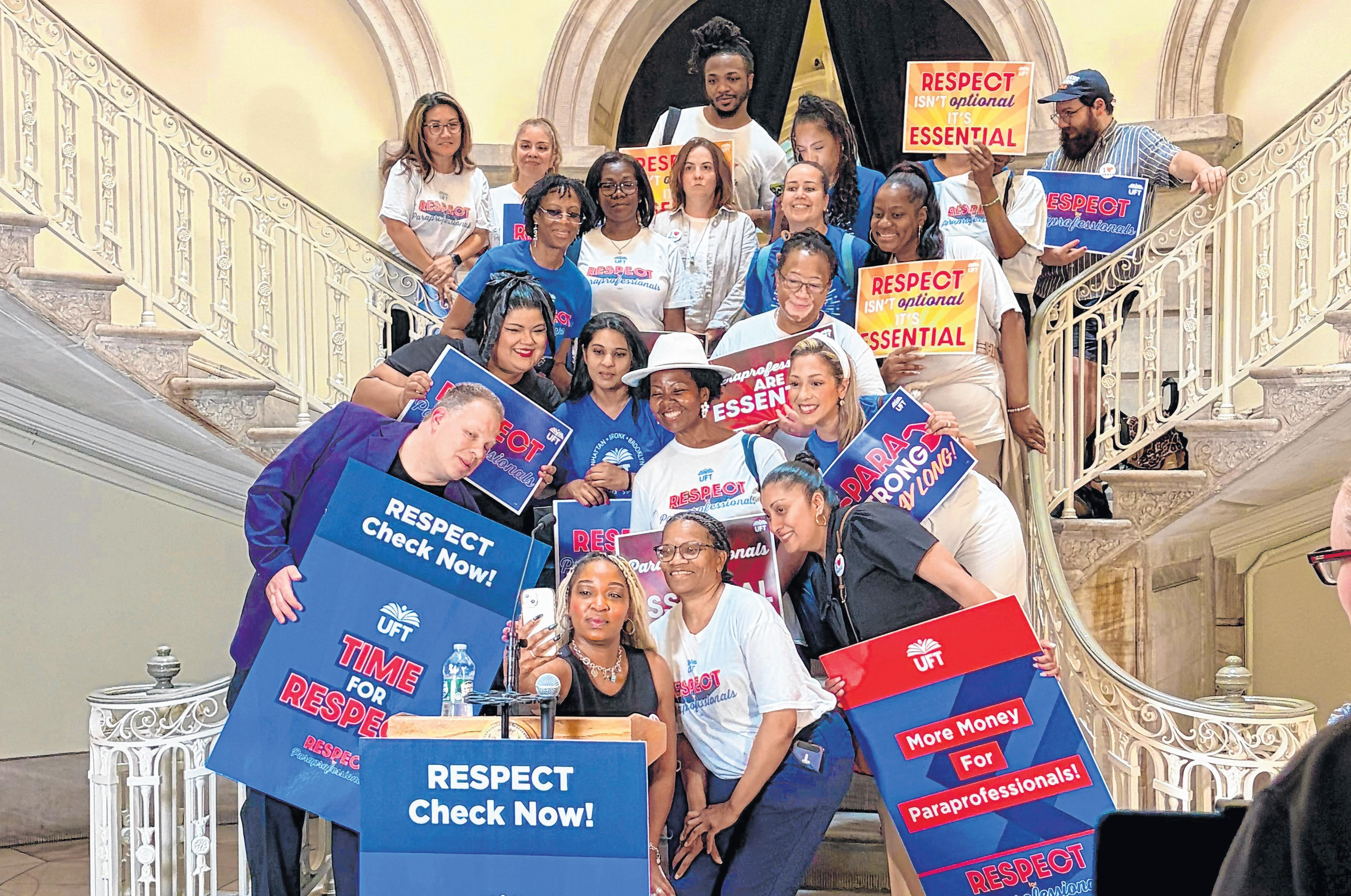
The New York City Council unanimously approved the “Respect Check”
NYC paraprofessionals eye $10k ‘Respect Check’ bill
By Michelle Mullen mmullen@riverdalepress.com
For years, paraprofessionals watched as colleagues left the profession, picked up second and third jobs to cover their bills and wondered whether they could afford to stay in the work they loved. Now, after a year-long legislative battle, they’re finally set to get a pay boost, but Mayor Zohran Mamdani has yet to sign it into law.
Paraprofessionals, often called paras, work alongside teachers to provide critical individualized support for students with disabilities and other specialized needs. Their wide range of responsibilities span from academic support to assisting with communication, mobility and behavioral crises, ensuring a safe learning environment.
On July 16, the New York City Council voted 49-0 to approve the “Respect Check,” legislation that will give roughly 26,000 department of education paraprofessionals a total of $10,000 in four quarterly payments of
$2,500 during the 2026-27 school year. Despite the unanimous vote, Mayor Mamdani has signaled he may not sign the bill, arguing it conflicts with the Taylor Law — a state statute that reserves public employee pay decisions for collective bargaining rather than legislative action.
The one-time payment would cost the city about $244 million and is meant to stabilize a workforce where salaries start at roughly $32,000 a year, while the city and the United Federation of Teachers continue contract negotiations.
The legislation aims to address decades of widening pay disparities within the DOE. While salaries increased across the school system, paraprofessionals saw smaller gains than many other employees. Between 2005 and 2025, starting paraprofessional salaries rose by about $12,000, while the city’s highestpaid principals saw their pay climb by $87,000 over the same span, according to DOE salary schedules.
For Jenny Ramos, an educational parapro-
A baseball revival blooms across greater Riverdale
By Michelle Mullen mmullen@riverdalepress.com
Greater Riverdale is experiencing a wave of youth baseball successes, with wins piling up for local little leagues and high school teams this summer.
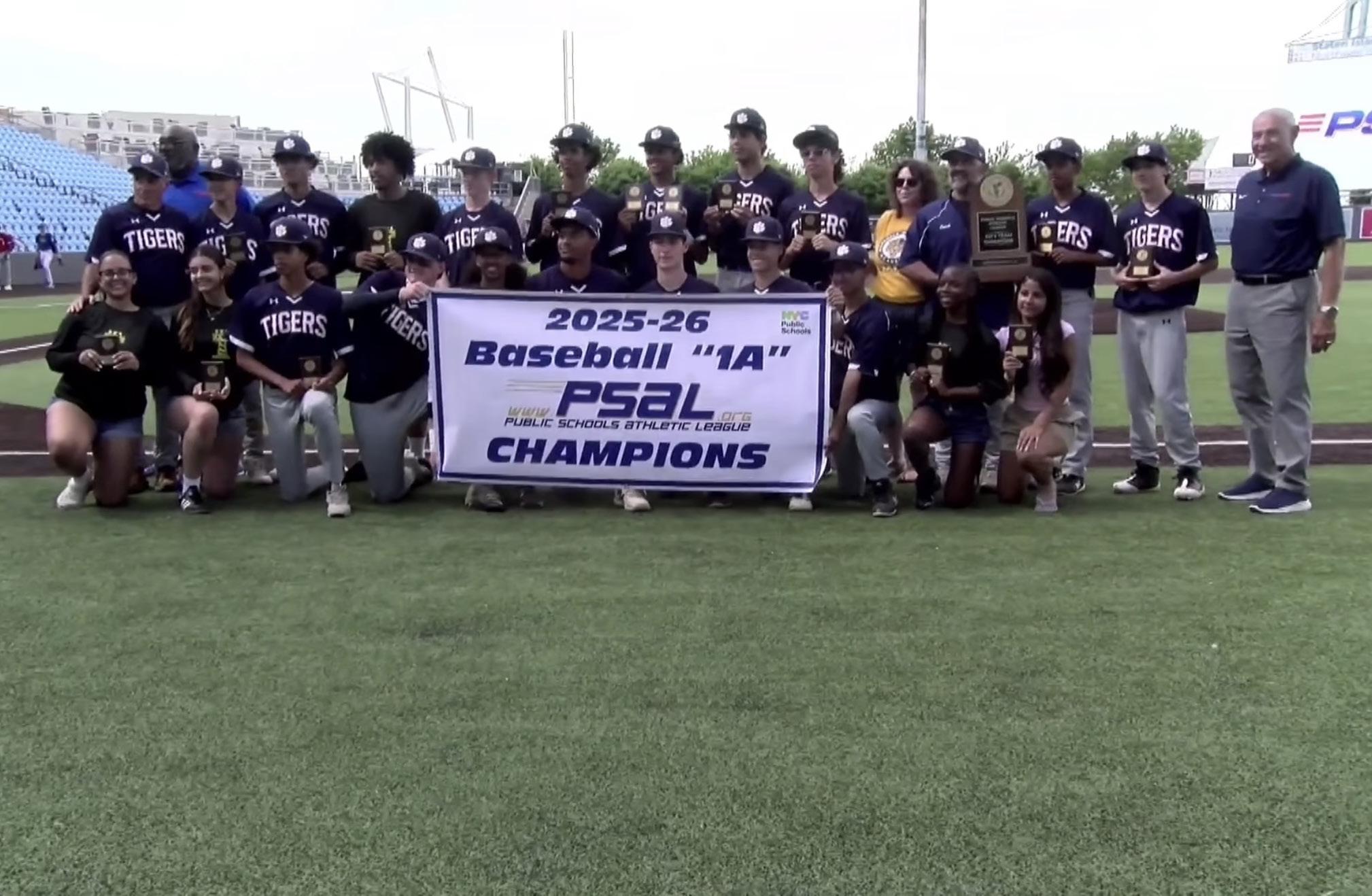
Riverdale Kingsbridge Academy, or RKA, captured the Public Schools Athletic League Class A city baseball championship after an undefeated 19-0 season — the varsity baseball team’s first city title since 2010. South Riverdale Little League claimed its first District 23 juniors title, while North Riverdale Baseball and Softball celebrated championships across multiple baseball and softball divisions.

The victories, coaches said, reflect years of building neighborhood programs where the players grow up together and stay local.
“You have the community kind of helping build that culture,” RKA’s varsity baseball co-coach Rob DiCanio said.
To longtime RKA varsity baseball coach John Reingold, who retired after the championship season, the victories carry extra significance because Riverdale has rarely been viewed as one of New York City’s baseball strongholds.
“Winning a city championship is a big deal,” Reingold said. “Riverdale is
fessional of more than eight years at Bronx High School of Law and Finance, the vote landed as a relief after years of financial uncertainty.
“I’ve contemplated leaving this line of work quite a few times, I mean it,” Ramos said. “I’ve been at work crying over how hard life is, because I can never cover all my bills.”
A single mother of three making $44,000 a year, the 38-year-old said she recently drove her son to college, but couldn’t afford a laptop for him. Instead, he walks to the campus library to get his schoolwork done. For necessities, such as toiletries, she scrounged up what she could from home for him to use at school.
“As a mom, you don’t have to give them luxury, but you have to give them what they need,” she said. “He needs that, and I cannot provide it.”
The legislation grew out of a staffing crisis the city has faced for years. The department of education has publicly acknowledged around
ages 2 to 5 — after recognizing her as a regular customer. The two have run the drive together ever since.
Before donations are collected, Pereira has her preschoolers decorate collection boxes and talk about why some children may need help getting school supplies.
“It’s the lesson of life that we’re so fortunate and we have to give to others,” Pereira said. “We teach them when they’re little, so that when they grow up, they continue helping the community.”
Once donations come in, Pereira’s students help pack them into backpacks before they’re handed off to local organizations. In past years, goods have gone to
By Olivia Young
oyoung@riverdalepress.com
Residents are pushing back against a proposed six-story building at 3232 Oxford Ave., the latest dispute amid increasing development in greater Riverdale.
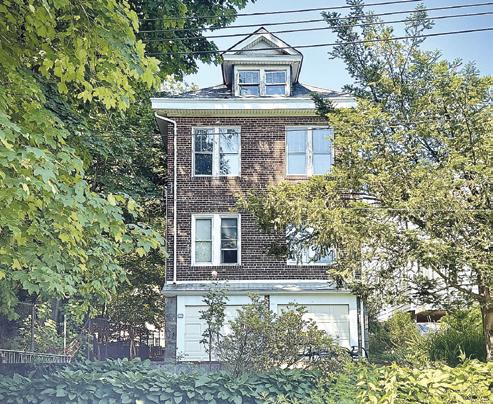
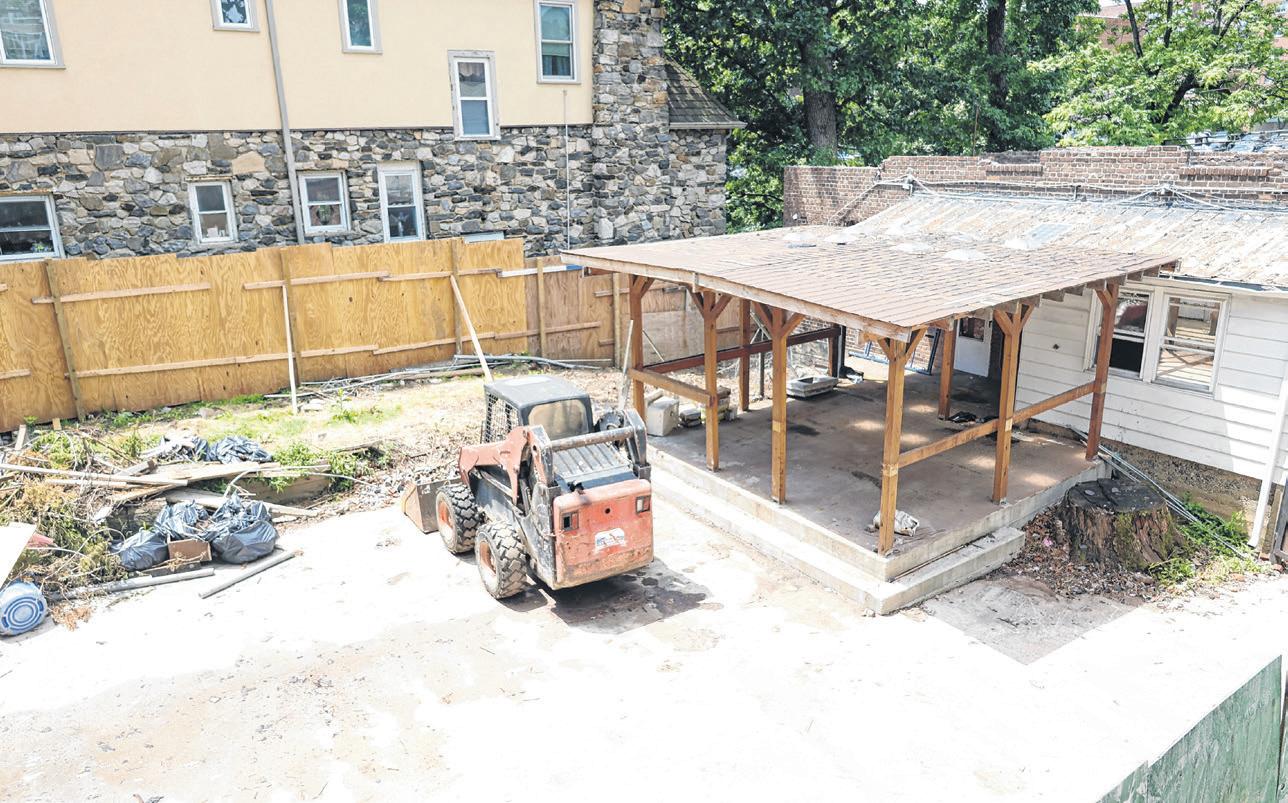
The former three-story brick house on the property was built in 1922, and is in the process of undergoing a full demolition, according to city records. Next door is William Kozy, a resident of 60 years. He and 25 others in a Google Group have been filing complaints about the current site to the city, while Gjergj Bujaj — who is listed on the deed for the property, and is leading construction — maintains that he has a right to build and the creation of more housing is essential.
A partial stop work order was issued July 14 for housekeeping after a complaint alleged unsafe conditions at the site, the city’s department of buildings told The Press. This means demolition had to stop, but maintenance and cleanup could continue. The order was issued because department inspectors found demolition debris and combustible materials were being improperly stored on the site, and that a section of glass left standing insecurely on one side of the building created a debris fall hazard, the department said. The site failed reinspection July 22, city records show. The department’s construction safety enforcement unit also issued $3,750 in violations.
Bujaj, a construction superintendent who lives on Greystone Avenue, bought the property in January for more than $1.6 million, according to city property records. He said it isn’t final how many units the proposed building will have, but they will all be onebedrooms or studios.
As of July 27, the building plan filed in June had not been approved by the city’s department of buildings.
Meanwhile, Kozy and another involved neighbor, Jared Skolnick, are concerned the proposed building will undermine the residential character of the neighborhood.
Compared to smaller, private homes on the block, a six-story building would “stick out and just look very awkward,” Skolnick said. He also expressed concern about the possible future tenants as well, since onebedroom and studio apartments are intended for individual people, not families, he said.
Skolnick and Kozy believe mobilizing


Courtesy United Federation of Teachers
for paraprofessionals.
Courtesy John Reingold Riverdale Kingsbridge Academy took home the Public Schools Athletic League
baseball championship trophy in June.
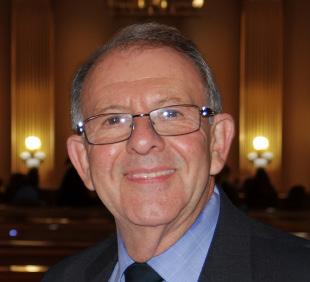
known for his sharp intellect and his warmth toward everyone who came before him, died unexpectedly July 13. He was 85. Born in New York City Sept. 1, 1940, Walter Tolub grew up on the Lower East Side of Manhattan and attended Stuyvesant High School before enrolling at New York University, where he met his wife, Marjory. After earning his law degree at NYU Law School, he served as Assistant Counsel to the New York City Department of Relocation. He later served as law secretary to New York State Supreme Court Justices Michael Dontzin, Harold Baer, Sr. and Harry Nussbaum. Shortly after his election to New York City Civil Court in 1990, Judge Tolub was designated an acting justice of the Supreme Court, First Judicial District, a role he held for 18 of his 20 years on the bench, presiding over thousands of civil matters addressing nearly every area of New York law.
During his career, Judge Tolub presided over public high-profile cases. His most meaningful and memorable cases, however, involved those with issues that directly impacted the lives of everyday New Yorkers. These include, but are not limited to decisions he issued in the late 1990s and early 2000s which changed how the courts weigh nonfinancial spousal contributions in marriage and led to the creation of New York’s equitable distribution law, and his decisions in two different condemnation cases later in his tenure which played a key role in the longawaited construction and completion of the Second Avenue Subway and the Fulton Street Transit Center, both of which he often said he never expected to see completed
in his lifetime.
Members of the Bench and bar knew Judge Tolub for his judicial temperament, his patience, his thorough decisions, and his sense of humor. He was also known for his ability to announce his presence before entering any room, whistling cheerfully through the halls of 60 Centre St.
Outside of the courts, Walter Tolub was a longtime member of Congregation CSAIR in Riverdale, serving two terms as president over more than 50 years of active involvement in synagogue life. He was proud of his heritage, his family and his community. Those who knew him describe him simply as a mensch, a man who treated no request as unworthy, no question as unintelligent, who told people what they needed to hear rather than what they wanted to hear, and who had a rare gift for making everyone around him always feel seen, heard, included and remembered.
Walter Tolub is survived by Marjory, his wife of 61 years; his sons, Benjamin (and Rachel) and Joshua (and Tabitha); his sister, Gloria Friedland; and his grandchildren, Eliana, Sammy (and Hannah), Hadassah (and Jacob), Robin and Tovah.
Should you wish to donate to a charity in Walter’s memory, the family requests that you consider CSAIR at CSAIR.org.






By Olivia Young oyoung@riverdalepress.com
Luis Rojas Cabrera, a 55-yearold man from New Jersey, was charged with reckless endangerment and unauthorized practice of profession in connection with 27-year-old Riverdale resident Elizabeth Baron’s death, police said. Cabrera works at Bereshit Lifestyle Center at 3190 Riverdale Avenue, according to the center’s website. He allegedly infused Baron with nicotinamide adenine dinucleotide — also known as NAD+ — without a medical license or any other legal authority to do so, according to the criminal complaint from the Bronx District Attorney’s Office.
NAD+ is a molecule in every cell of the body that helps turn food into energy, repairs DNA and supports metabolism, according to nonprofit academic medical center Cleveland Clinic. NAD+ levels decline with age, according to Cleveland Clinic, which has been linked to age-related illnesses such as glaucoma and arrhythmia.
Baron died July 19 around 1:09 p.m., the complaint states. Accord-
ing to police, Cabrera was arrested the same day around 9 p.m.
According to the complaint, Cabrera said he gave Baron a NAD+ IV, she immediately passed out and he called 911. He said that he is a doctor in the Dominican Republic, and has a physician assistant license in Puerto Rico, but is not a licensed doctor in New York, the complaint states. He said his application is pending, and he only has an esthetician license, according to the complaint.
“I made a very big mistake,” Cabrera said, according to the complaint. “I need to call my family because I have a feeling I will not be home for a while.”
Cabrera was released without bail, and the prosecutor did not request bail because he wants to await the autopsy results, according to the district attorney’s office.
Cabrera’s attorney is a part of nonprofit Bronx Defenders, which declined to comment on the case.
According to Bereshit Lifestyle Center’s website, Cabrera, or “Dr. Rojas,” is a doctor of medicine, a surgeon and a naturopath, which is a doctor that focuses on lifestyle changes and natural remedies.
Assembly member Jeffrey Dinowitz and Council member Eric Dinowitz urged in a July 20 letter to the New York City Department of Consumer and Worker Protection Commissioner Samuel Levine that he renew a program that allowed Mosholu Montefiore Community Center to offer free tax preparation services to constituents.
According to the Dinowitzes, the community center applied for the program — called the New York City Annual Tax Season Initiative — in August 2025, and the department did not provide an update until recently when it told the community center via email the grant would not be renewed.
The Dinowitzes said since the community center has not received an “official denial notice,” its legal right to submit a formal appeal is being stalled. The Annual Tax Season Initiative is a program that helps build assets among low- and moderateincome New Yorkers, and increases the number of people eligible for tax credits.
The lack of future funding would have a negative impact on
constituents who rely on the community center’s tax preparation program, the Dinowitzes said. The community also has another tax program for young adults that does not rely on city funds, but the subsequent hands-on internship is conducted through the annual tax season initiative program. The Dinowitzes stated it “makes no sense to defund programs that are expanding the future workforce that the city relies on.”
The Dinowitzes emphasized the positive impact of the community center on the district, adding the department’s decision is forcing the community center to make “consequential adjudgements to its programs,” which will have “detrimental effects and may include staff layoffs.”
“MMCC has consistently excelled in serving and meeting our constituents’ needs, particularly through the work of its tax initiative program,” the Dinowitzes stated. “We fully support MMCC in appealing the decision made by [the Department of Consumer and Worker Protection], and urge the agency to award MMCC with the full funding requested.”












Older adults connect with vital resources at annual health fair
By Olivia Young oyoung@riverdalepress.com
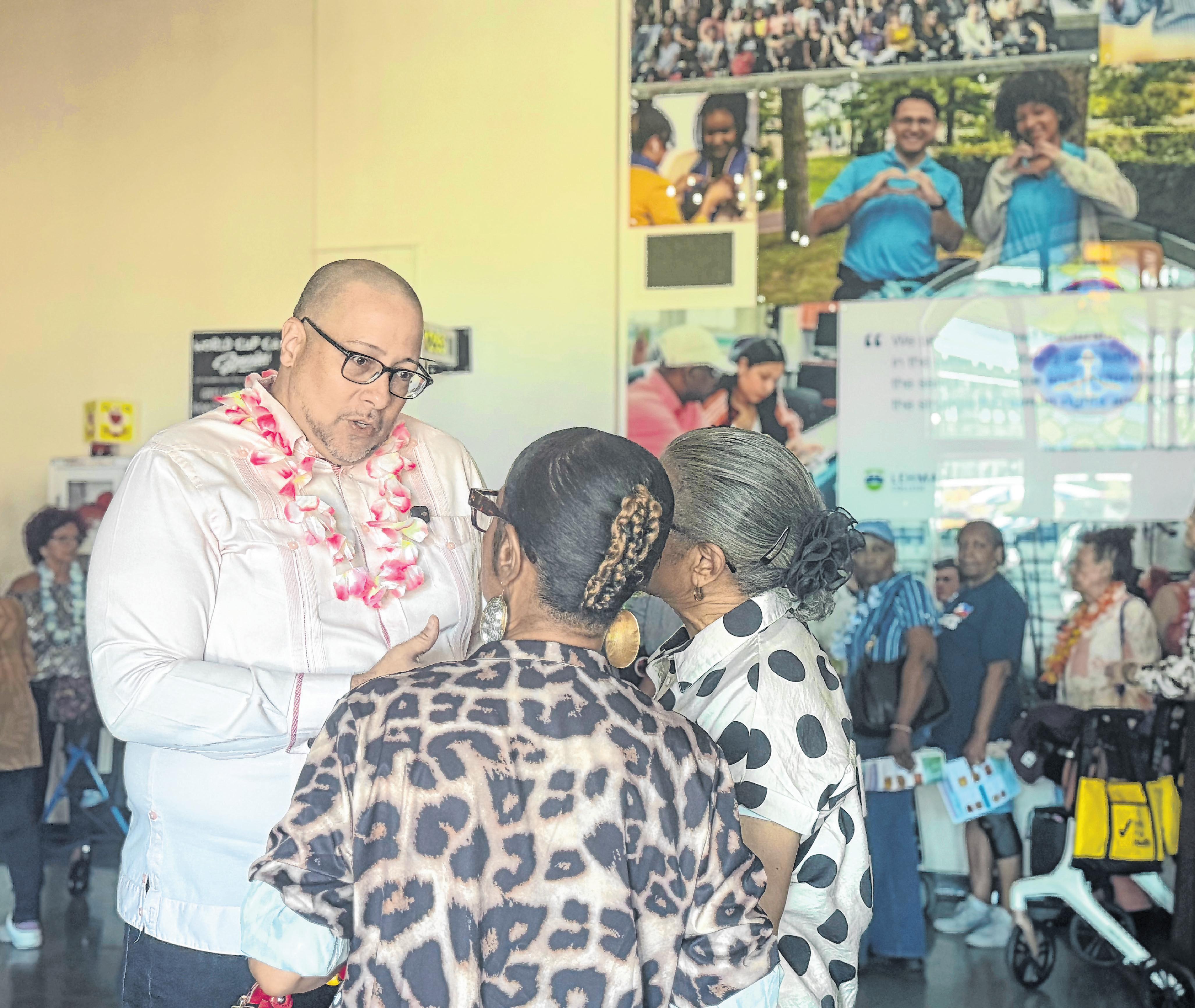
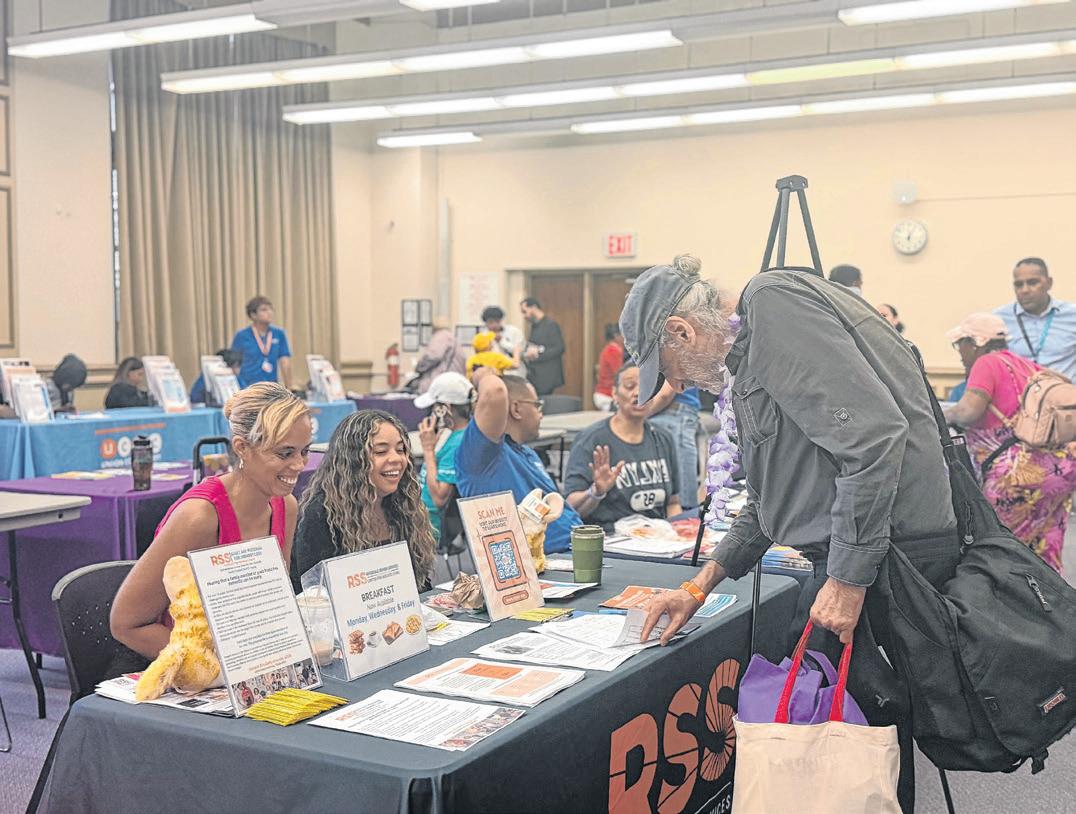
More than 200 older adults gathered at Lehman College July 23 for state Sen. Gustavo Rivera’s 10th Annual Senior Health Fair and Luncheon.
Greater Riverdale is home to more than 13,000 older adults, according to the New York Academy of Medicine, making up 29 percent of the neighborhood’s population, the highest share in any Bronx neighborhood. The health fair involved about two dozen nonprofits, city agencies and community organizations, including Riverdale Senior Services, all highlighting vital resources for community members.
Some organizations that were present offered information on the Supplemental Nutrition Assistance Program, formerly known as food stamps, as well as legal services and housing support.
For local older adults, the event served not only as an opportunity to connect with resources, but as an opportunity to get out and gather. Robert Ackerson, a former city public school teacher who teaches poetry at the Riverdale Y community center, said he was not personally struggling with access to resources, but that the event is important for those in the community that do need help.
Josephine Vrazzier, who lives in University Heights, has been attending the event since it started. She described it as a “wealth of information,” adding it is “vital for the constituents.”
“People have to be informed,” Vrazzier said. “A lot of people do not know the services that are available for them.” Rivera said older adults in the Riverdale area and beyond are currently struggling to access affordable housing and healthcare, and often find themselves not only alone, but lonely.
“It’s particularly sensitive when we’re talking about seniors who have fixed incomes, who may not have family members who can be supportive of them, and who may have medical conditions that require an extra amount of care,” Rivera said. According to the Center for
an Urban Future, a thinktank that aims to reduce inequality, about 64 percent of older adults in the Bronx did not report any retirement income, the highest share citywide. Across all five boroughs, nearly 19 percent of older adults also did not report any social security income.
Concerns around isolation and affordability were echoed by Wilson Guzman, the associate state director for national nonprofit American Association for Retired Persons, which provided resources at the event.
In some instances, not being able to meet the cost of living becomes a health risk, Guzman said. He offered the example of an older adult with an oxygen tank who can’t afford their electricity bill. Other older adults are also cutting their medication in half to make it last longer as the price of prescriptions increases, Guzman said.
“Here we have our older adults who built this city, live in the communities,” Guzman said. “But meanwhile they can’t afford to stay in their communities, and they’re not having the resources to meet their needs.”
The city’s budget also does not adequately provide for older adults’ needs, which has been worsened by inflation, Guzman said. According to a July release from the association, this year’s executive budget included a $12 million investment in home-delivered meals for seniors, but the amount still falls short of the $30 million needed to provide meals seven days a week.
The affordability crisis older adults face is also worsened by technology advances giving way to more convincing scams as well as the rise in caregiving costs, he said. Between 2019 and 2024, the median cost of home care and assisted living increased 50 percent, according to a March report from the association’s public policy institute.
These challenges make events like the senior health fair all the more crucial, Guzman said.
“There’s resources, there’s information, there’s pamphlets and they’re also being fed,” he said. “It’s very important that we’re here today, serving our older adults.”
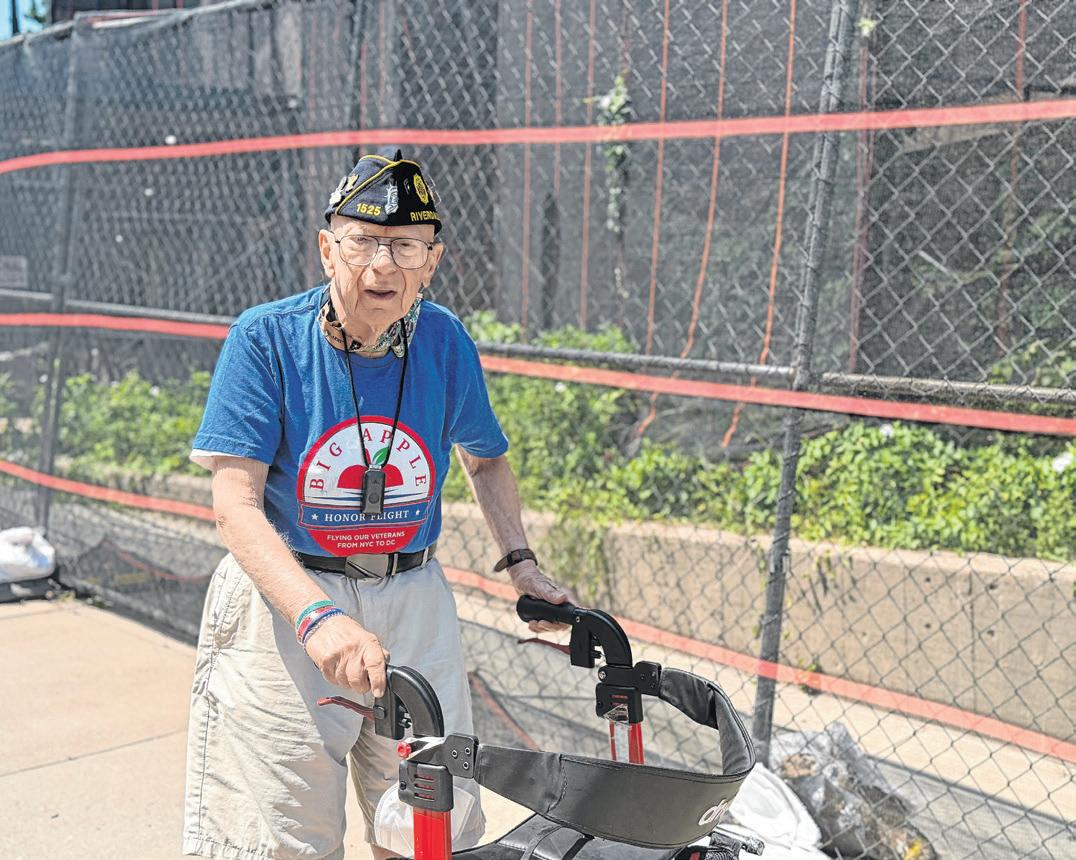



In Riverdale, supply donations help students in need
CONTINUED from page A1
nonprofits like Bronx Works, which provides supportive housing services to hundreds in the borough.
Pereira and el-Saieh are still deciding where this round’s supplies will go.
This year, donors can also purchase supplies through an Amazon wish list, which el-Saieh said helps build complete backpacks rather than receiving large quantities of a single item. While notebooks, pencils and markers arrive en masse, she said, one item consistently proves hardest to collect.
“Backpacks are always a big-ticket item because they’re so expensive,” el-Saieh said. “Nobody ever wants to donate them due to the price.”
At Kingsbridge Riverdale Van Cortlandt Development Corporation, or KRVC, the goal is to distribute 450 backpacks to children living in Bronx shelters through its seventh annual backpack drive.
KRVC Executive Director Laura Levine-Pinedo said the organization is
roughly halfway to its goal, with donations made through an Amazon wish list or directly to the nonprofit.
Levine-Pinedo said KRVC buys backpacks in solid colors rather than character-themed designs, so children of different ages all have options they feel comfortable carrying. Families are invited to pick out the backpack they want rather than simply being handed one.
“We actually let the kids pick their book bags,” Levine-Pinedo said. “In a world where people living in shelters lack choices, it’s very important for us.”
The need for school supplies extends beyond community organizations and into classrooms, educators say.
Spuyten Duyvil resident Suzanne Likeness is a reading intervention teacher at a Title I charter school in the South Bronx. Title I is a federal program that provides additional funding to schools with a high percentage of students from low-income house-
holds. She said her school routinely keeps classrooms stocked with basic materials. Rather than asking why a student doesn’t have supplies, teachers simply make them available to everyone.
“We try to level the playing field,” she said. “If they need a notebook, index cards, pens, pencils, that kind of thing, we’ll provide.”
Likeness said having supplies readily available prevents unnecessary disruptions and spares students any embarrassment about asking for help.
“We don’t want families to have that expense,” she said, adding that having what students need is important for morale.
Similarly, for el-Saieh, the goal of the Bronx Burger House drive is to remove at least one barrier before students walk through the school doors.
“It’s not solving every problem they have,” el-Saieh said. “It’s helping bridge the gap in one little way and helping set them up for success just a little bit more.”

Council passes $10k check bill for paraprofessionals
CONTINUED from page A1
1,600 vacant paraprofessional positions, but the United Federation of Teachers said it believes the real number is far higher.
Every vacancy represents a student who may not be getting a service they are legally entitled to, said Michael Mulgrew, the union’s president.
The department of education did not respond to a request for comment before press time.
New York City Council member Carmen De La Rosa, the bill’s lead sponsor, said the issue first came into focus for her during oversight hearings on the Carter cases — special education lawsuits filed by parents whose children were not getting mandated services.
The Carter cases take their name from Florence County School District Four v. Carter, a 1993 U.S. Supreme Court ruling that gave parents the right to sue when a school district fails to provide legally required special education services. Under that decision, the city must reimburse families who win for private school tuition or outside services.
According to the New York City Office of Administrative Trials and Hearings, filings rose from more than 14,000 due process complaints in the 2020-21 school year to more than 21,000 in 2022-23.
“The salaries were too low — $32,000 as the starting salary, and after 10, 15 years, they were still making less than $60,000 a year,” she said. “In a city as expensive as ours, people weren’t signing up
to be paras, and those that were saw it as a temporary move and were leaving the profession at a time where the need is ever growing.”
The bill was first introduced during the previous council term but never got a floor vote; then-Speaker Adrienne Adams declined to bring it forward, according to Mulgrew, who said advancing the bill became a priority when Julie Menin became speaker this year.
Mulgrew said the union had already tried twice to raise paraprofessional pay through collective bargaining, instead resorting to asking other union titles to give up portions of their own raises to help close the gap.
A 2024 union membership survey counted nearly 1,900 vacancies before the DOE later put the real figure closer to 3,000, according to Mulgrew, and he said the staffing gap has left students without services while exposing the city to a growing pile of lawsuits.
Council member Eric Dinowitz, who chairs the city council’s education committee, said the payment would be “a bridge, but not a permanent fix.”
The immediate goal, he said, is to retain experienced paraprofessionals while broader contract talks continue, especially as schools struggle to support students with disabilities and English language learners.
Despite the council’s unanimous vote, the bill’s future is uncertain. New York’s Taylor Law generally requires that public employee wages and benefits be set
through collective bargaining rather than legislation — a distinction Mamdani’s administration says the council’s bill fails to respect.
“Every day, paraprofessionals ensure that our most vulnerable students get the support and care they deserve in our public schools... I have been clear that questions of compensation are best resolved through the collective bargaining process that respects workers and their unions,” Mayor Mamdani said in a statement to the Press.
His administration, Mamdani said, is reviewing the final language and working to determine the appropriate next steps.
In the meantime, Ramos said she is currently the only permanent paraprofessional at her high school, and although she is assigned to specific students, she ends up helping many more because there are not enough adults to go around.
“It’s very upsetting to see,” she said. “There are kids where little things just don’t click sometimes, and it’s unfair to watch them go through their upperclassmen years struggling because they don’t have that extra help.”
At P.S. 24 in Riverdale, Vivi Polanco said low pay discourages people from ever making the leap from substitute to permanent paraprofessional like she did.
Before becoming a paraprofessional, Polanco left a higher-paying job at Citibank for the classroom after her daughter was diagnosed with ADHD, trading income for a schedule that let her be present at home. The trade-off still costs her, she said.
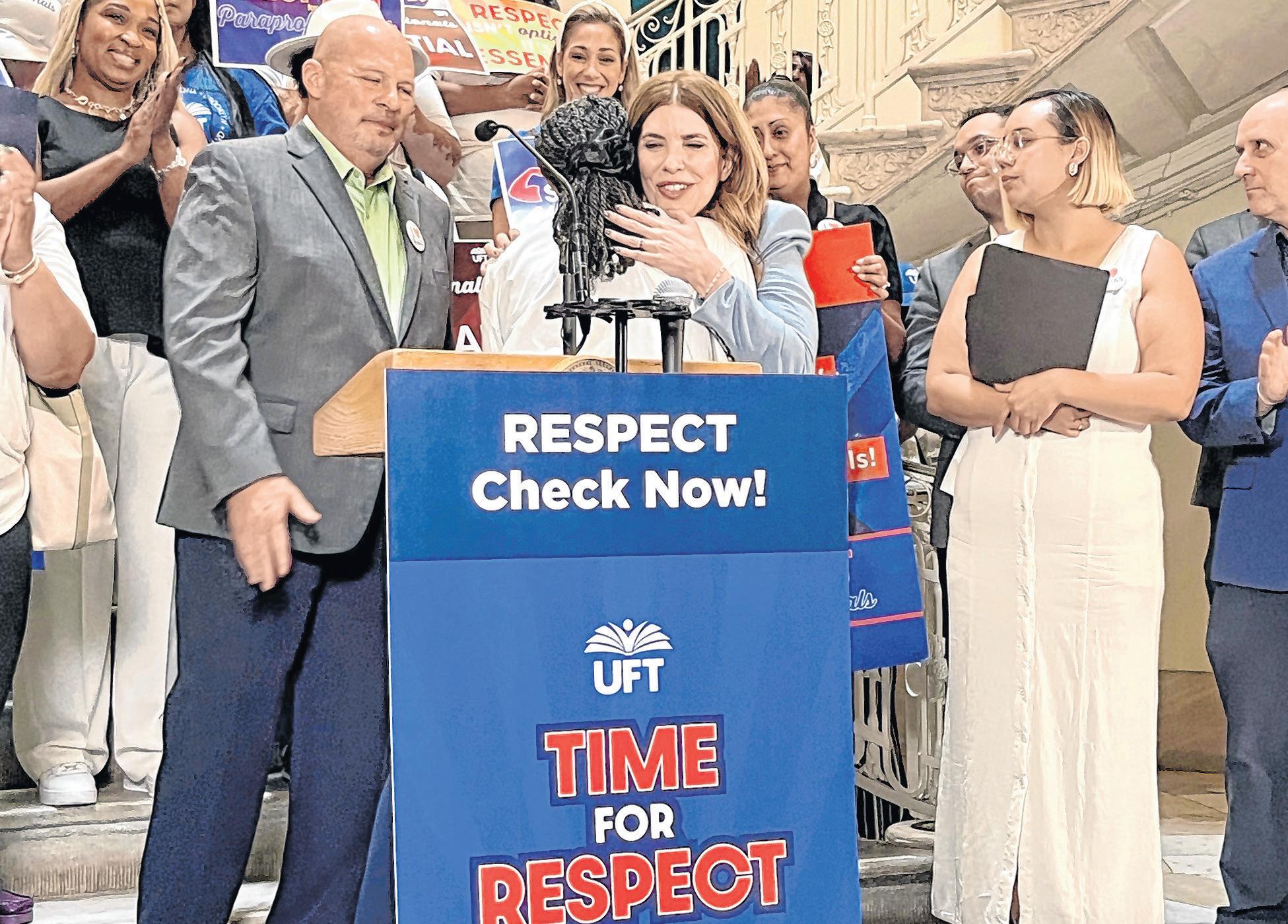
Paraprofessionals provide support to teachers, assisting students with disabilities, behavior issues and other special needs to ensure a safe learning environment.
She still works at an after-school program every day to make ends meet, and her husband works multiple jobs as well, she said.
“Even as a para, we have a second job,” she said. “We have a family to feed, we have bills to pay.”
As the future of the Respect Check remains uncertain, De La Rosa said the bill was never meant to replace collective bargaining.
“We’re using this bill as a motivation to say this is a workforce in crisis,” she said. “But in the meantime, for the paras coming back to work in September, this is an encouragement to say: we see you.” For Ramos and Polanco, the vote was a milestone, but say there is still a long way to go for a salary that lets the people who support the city’s most vulnerable students stay in the job without falling behind on their own.
Amid local pushback, project lead says ‘we have to build’
CONTINUED from page A1
residents can make change, evidenced by the partial stop work order. The goal is to either deter construction, or at least mitigate the impact construction and a new building would have on community members, they said.
Complaints filed to 311 about the site include unsafe demolition and possibility of asbestos — which the site is free of, according to the department of environmental protection.
“I’ll say this over and over — our complaints are working,” Skolnick wrote in a July 20 email to the group of concerned neighbors. “Keep reporting violations as you see them!” A neighbor who lives in an apartment building down the block, Donald Boyce, called the proposed building “ridiculous.” Boyce wasn’t involved with the Google Group, but said a six-story structure would “break up the neighborhood.” If it were two or three stories, Boyce would have less of a problem with it, he said. Skolnick also said he’s worried about whether Bujaj will cut down trees in the back of the property. Bujaj told The Press he has no plans to do so. Another concern was that Bujaj would expand
Riverdale
CONTINUED from page A1
not really the hotbed of baseball in New York City. There were literally several hundred teams in New York City in the three divisions, and only three teams are crowned city champs.”
The foundation for this year’s success was laid years earlier, he said. The team’s five seniors entered RKA together as freshmen, most of them having played in Riverdale’s youth leagues.
At the Academy, they inherited a program that recently graduated one of its strongest classes, players told The Press. However, even as they advanced to the playoffs year after year, the group fell short of taking home the championship trophy.
Over time, Reingold and DiCanio said, leadership became one of the team’s greatest strengths, giving players confidence that carried them through the biggest moments of the season.
beyond the 3232 Oxford Ave. property, as he has asked Kozy to consider selling. For Kozy, the Oxford Avenue site represents a greater fear that could reach farther than the house next door.
Developers recognize Riverdale as an attractive, not overly-developed place to live, and are now “jumping on that bandwagon,” Kozy said. “I don’t know how long it would take,
Senior player Brian Torres, whose game-winning hit completed RKA’s dramatic triumph, said the relationships within the team extended beyond baseball. After four years together, players trusted one another because they had grown alongside the same coaches and teammates.
“Our coaches were always hard on us, but they also made sure, since we were freshmen, to build real connections with us,” Torres said. “It wasn’t just some random person yelling at me. It was somebody we could actually sit down and talk with. We built bonds with our coaches, and we built bonds with each other.”
Senior third baseman Luca Salanto watched the team’s transformation from early playoff exits to finally lifting the city championship trophy in his final game.
After growing up playing in South Riverdale Little League, he arrived at RKA just as the program was beginning to rebuild.
but Riverdale won’t be Riverdale anymore,” Kozy said. But for Bujaj, the Oxford Avenue site presents an important opportunity.
An immigrant from Albania, and a Riverdale resident for 16 years, Bujaj said he’s not happy with the current situation either. Some residents don’t like change, but “we have to build,” Bujaj said, in order to make a living and pro-
“We definitely had the best chemistry that I’ve been a part of,” Salanto said. “Being with those guys was definitely the best part. We could have lost, we could have won. It wouldn’t have mattered. Playing with those guys was easily the best part of it.” Salanto is one of several team members who got their start with South Riverdale Little League, which has served neighborhood families for more than 40 years and just experienced a championship run of its own. League President Jason Baum, who played in the league himself before returning as a coach and volunteer, said this year’s District 23 championship was the culmination of years of patience.
“It was emotional because it’s been so much work,” Baum said.
“Watching these kids win for us and play so well, it was enjoyment for the kids, the coaches and everybody who’s put in the time.” As for the North Riverdale Base-
vide housing. According to the department of city planning, greater Riverdale produces the third lowest amount of housing in the Bronx. From 2010 to 2025, the district’s number of net housing units created was 2,344.
Bujaj questioned residents’ efforts, and said he was working to achieve his dream of building in New York. Bujaj
ball and Softball League, which plays on Van Cortlandt Park’s Kelly field, getting to this year’s victories was not a simple journey. League president David Lipnitsky said participation had dropped to roughly 120 baseball players a decade ago, while the softball program had disappeared entirely.
Through volunteer coaching, affordable travel teams and a renewed emphasis on community, the league has grown to roughly 370 players while rebuilding its softball program from scratch. This spring, the North Riverdale league celebrated championships in multiple age divisions, including baseball and softball Memorial Day tournament titles.
“We’re just really proud,” Lipnitsky said. “While other little leagues are seeing decline, we are seeing a resurgence. That’s something to be proud of.” Keeping players in neighborhood programs has become a priority, he said. North Riverdale
also said once the building is finished, he wants to have a screening process for prospective tenants, involving background checks and recommendations. He said he is open to good-faith communication with residents. If a compromise is not able to be reached, Bujaj said residents could buy the property from him.
Baseball and Softball League extends this view to its travel teams. Liptnitsky said he tries to keep fees for travel teams on the lower side by having the teams be volunteerrun, allowing children to continue playing alongside classmates and friends.
That same community effort has extended to softball. This spring, the 12-and-under team won the New York City Memorial Day Tournament, a milestone for one of the city’s smaller leagues.
For coaches and volunteers alike, the wins across the area represent more than a successful season. They see them as a sign that greater Riverdale has entered a new era for baseball and softball — one where children can begin on neighborhood diamonds, grow alongside the same teammates and compete in championships for years to come.
Michelle Mullen
School supply prices have been steadily rising for several years, according to the National Retail Federation.
GARY JEAN-JUSTE photos
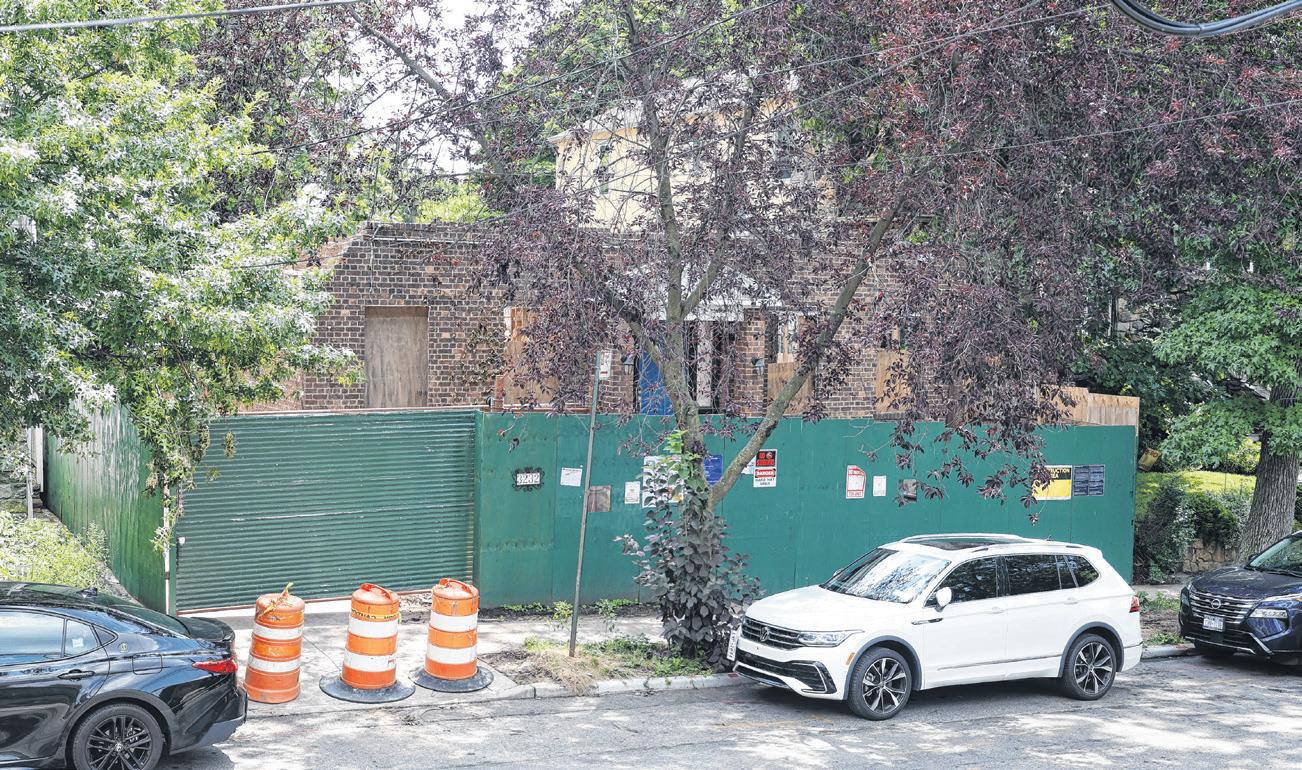
Riverdale resident Gjergj Bujaj bought 3232 Oxford Ave. in January for more than $1.6 million, according to city property records.
The site is set to undergo a full demolition and become a six-story apartment building, city records show.
Invasive water chestnuts are no match for Wetland Wednesdays
By Michelle Mullen mmullen@riverdalepress.com
For most of the year, Van Cortlandt Park Alliance volunteers, New York City Parks and Recreation Department staff and teenage interns join together week after week to wade through Hester and Piero’s Mill Pond, formerly Van Cortlandt Lake. It’s part of the alliance’s Wetland Wednesdays program, which centers on removing an invasive plant from the waterway during the summer season.
Water chestnuts form dense mats across the water’s surface that block sunlight from reaching native plants, said Christina Taylor, deputy director of the Van Cortlandt Park Alliance. When the invasive greenery dies in late summer, she added, oxygen levels in the lake can drop dramatically, sometimes killing off fish.
The work is timed to remove water chestnuts before they produce seeds, which can remain viable up to 12 years, said Taylor.
“If we weren’t doing this, basically the entire pond would be covered with it,” said Taylor.
The problem is a relatively recent one, she said, explaining water chestnuts have only been an issue in the area for the past 10 to 15 years.
Taylor said the plant’s spread most likely traces
back to Tibbetts Brook upstream in Yonkers, which flows downstream through the connected waterway. The removal effort is also tied to a larger plan to eventually “daylight” Tibbetts Brook, or unearth a buried portion of the brook and connect it to the Harlem River. This makes it important to keep the invasive plant from getting further established before the project moves forward.
Helping lead the work are 17 students in the alliance’s paid “Urban Eco-Teens” internship, a seven-week summer program that introduces high school students to ecological restoration and careers in natural resource management.
“It’s basically our job to try and to reverse some of the damage that the invasives have done.” said 17-year-old Aryel Pinero, who is participating in the program for a second summer.
Volunteer coordinator Noel Hefele said the Wetland Wednesdays initiative has steadily expanded since he first joined as a volunteer in 2020, growing from two boats to four while attracting a loyal group of returning volunteers.
“It’s been very much learning in real time how we engage with the plant,” Hefele said. “Each successive year, our efficiency and scope has gotten better.”
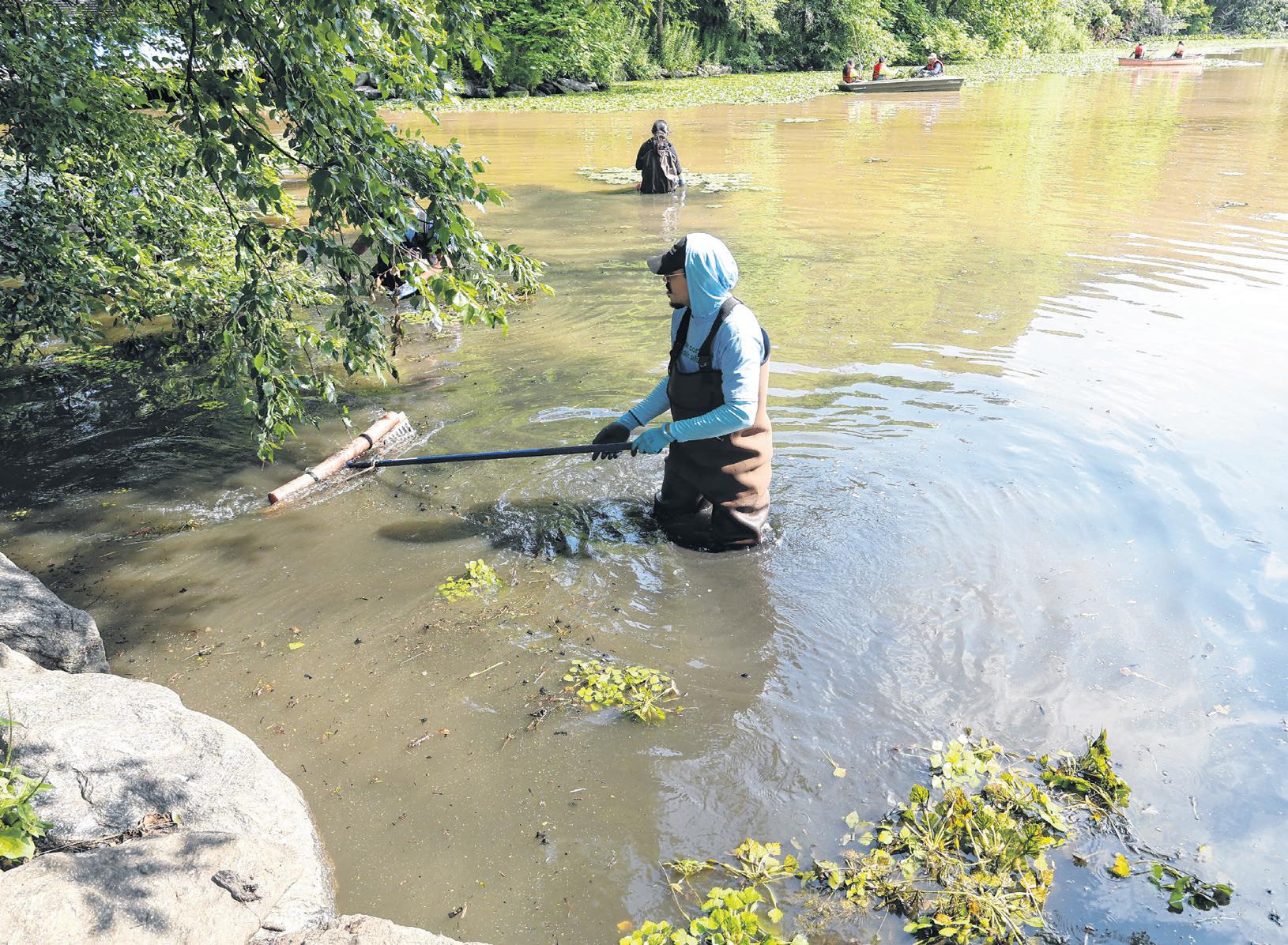
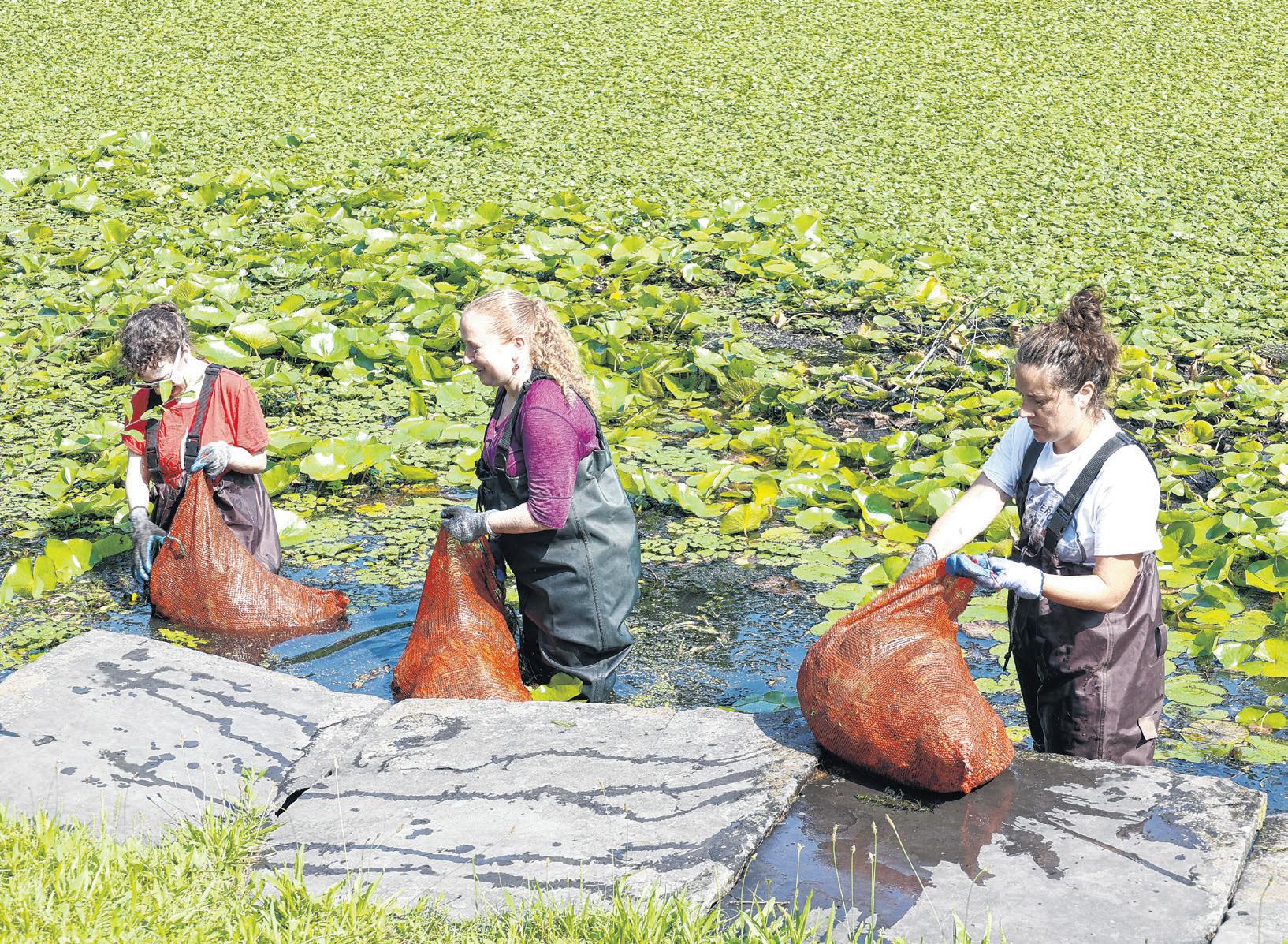
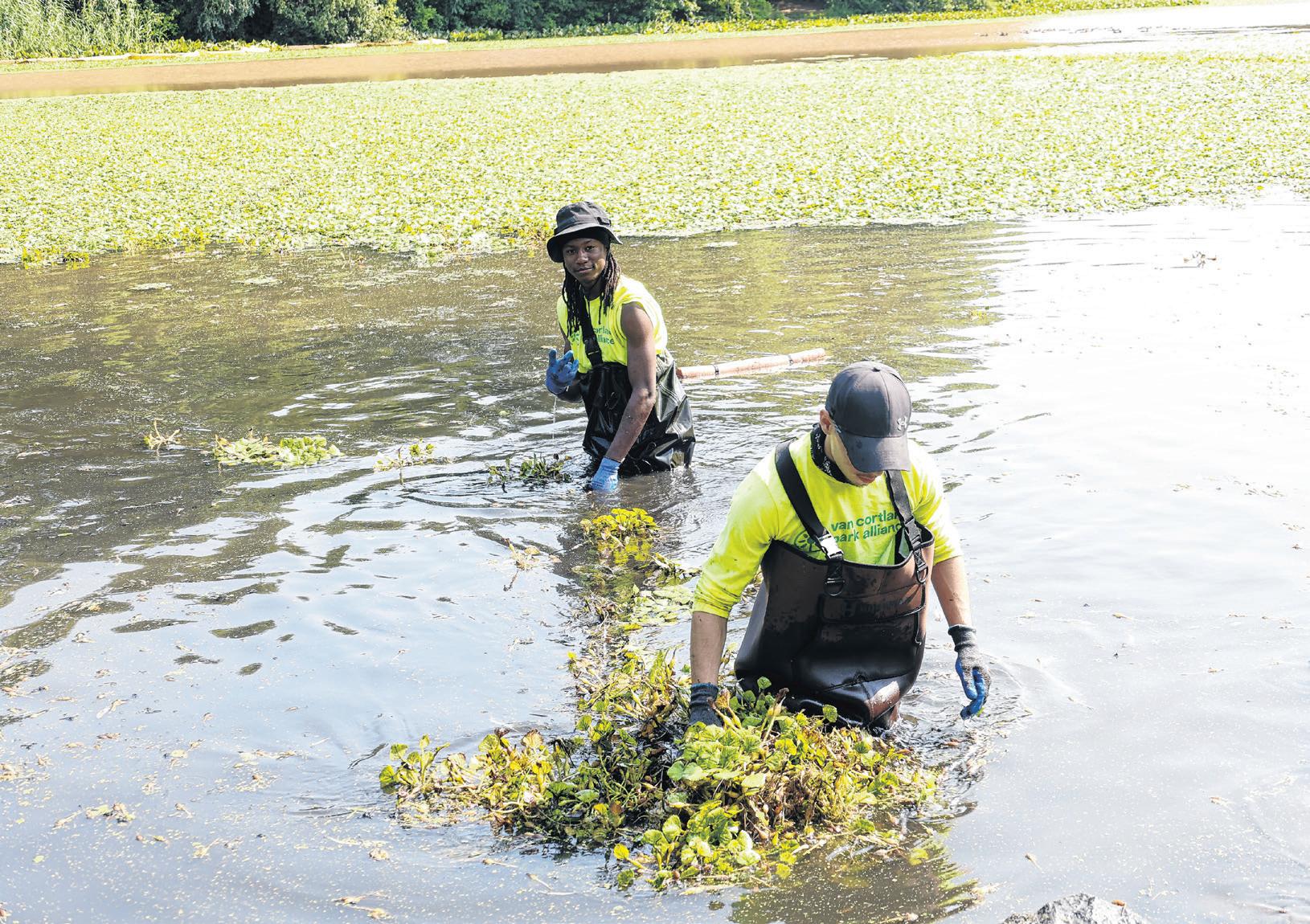
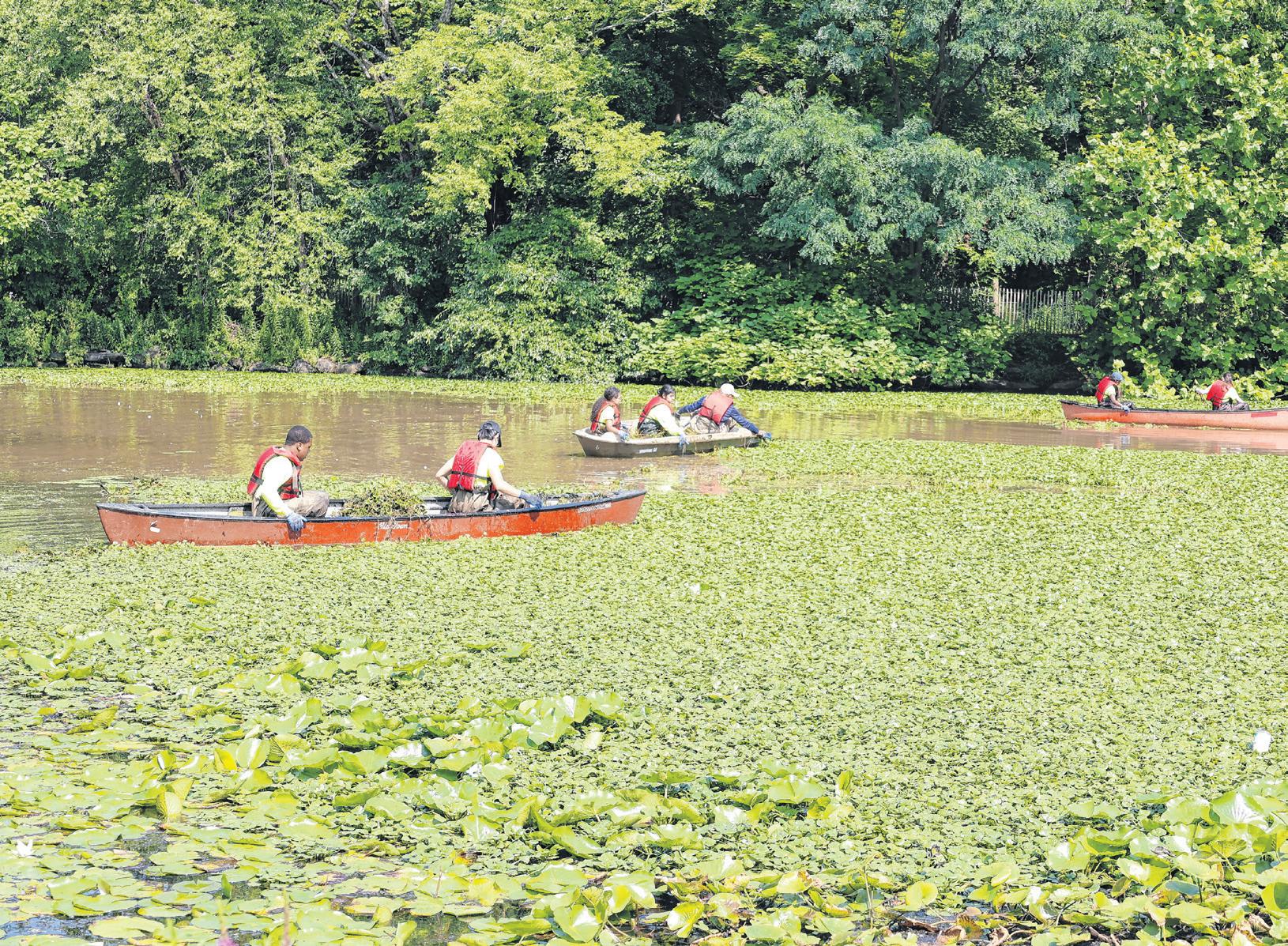
Participants used a floating rake to pull water chestnuts toward shore. Some volunteers experimented with new collection methods this year, including mesh onion bags, allowing crews to gather larger quantities of invasive plants before transporting them away from the water.
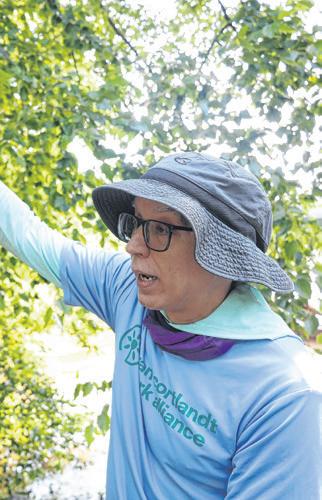
Urban Eco-Teen interns Aryel Pinero, right, and Jordan Smallwood-Jackson helped remove invasive water chestnuts, with Smallwood-Jackson saying the internship changed how he sees the park. “You wouldn’t think that it would be invasive or damaging until you actually learn about what they are,” he said. “Once you identify the plant, you see it everywhere.”
Volunteer Kennedy Hill, right, and fellow participants carried orange mesh bags filled with water chestnuts from the pond. Hill traveled from Chelsea for her first volunteer event after learning community service hours could help qualify her for an upcoming trail-running race. “I love it,” she said. “It’s just nice to experience something kind of new and be a little bit more in nature.”
Participants paddled canoes through Hester and Piero’s Mill Pond, reaching patches of invasive water chestnuts that cannot be accessed from shore. The additional boats allowed crews to spread out across the pond and collect plants from areas where volunteers working on foot cannot safely reach.
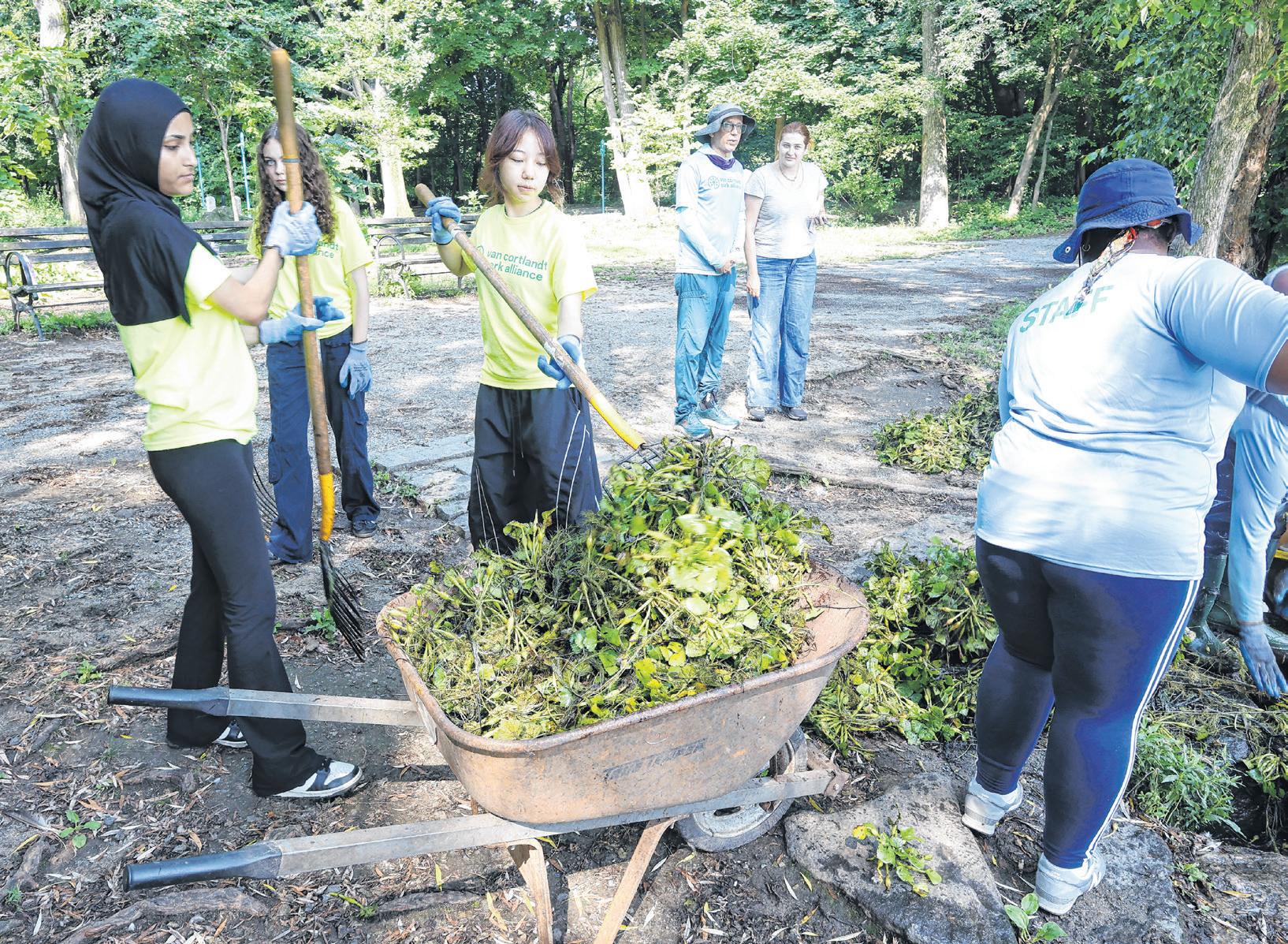
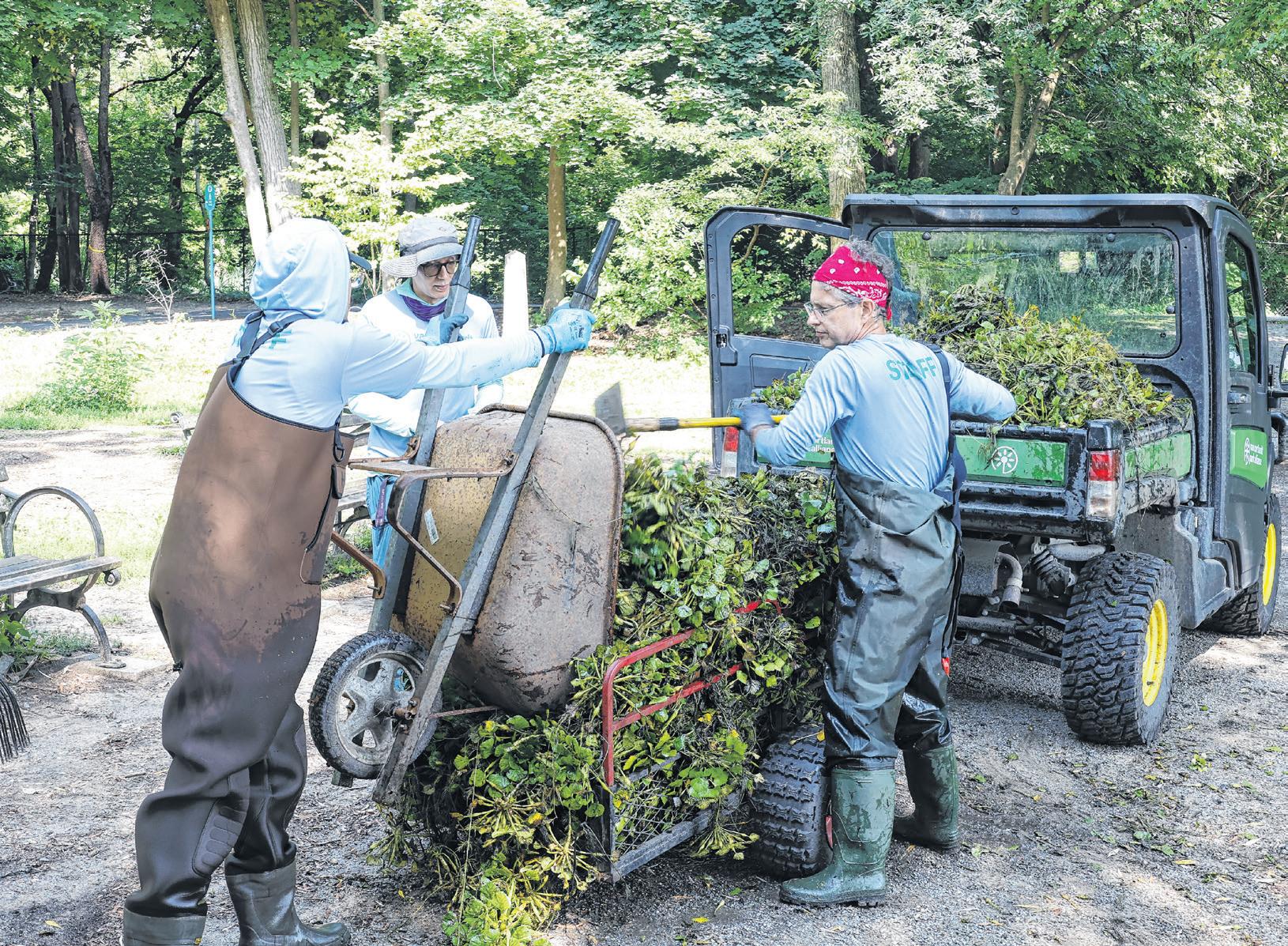
Urban Eco-Teen interns unload wheelbarrows overflowing with water chestnuts after returning from the pond. The paid seven-week internship prepares rising high school juniors and seniors for college and careers in environmental stewardship through hands-on restoration work, scientific field studies and leadership opportunities.
Van Cortlandt Park Alliance staff transferred cartloads of freshly harvested water chestnuts into a utility vehicle after a morning of restoration work. Once loaded, the invasive plants were driven to a designated disposal area away from the pond, where they can decompose without reentering the connected waterway.
GARY JEAN-JUSTE photos
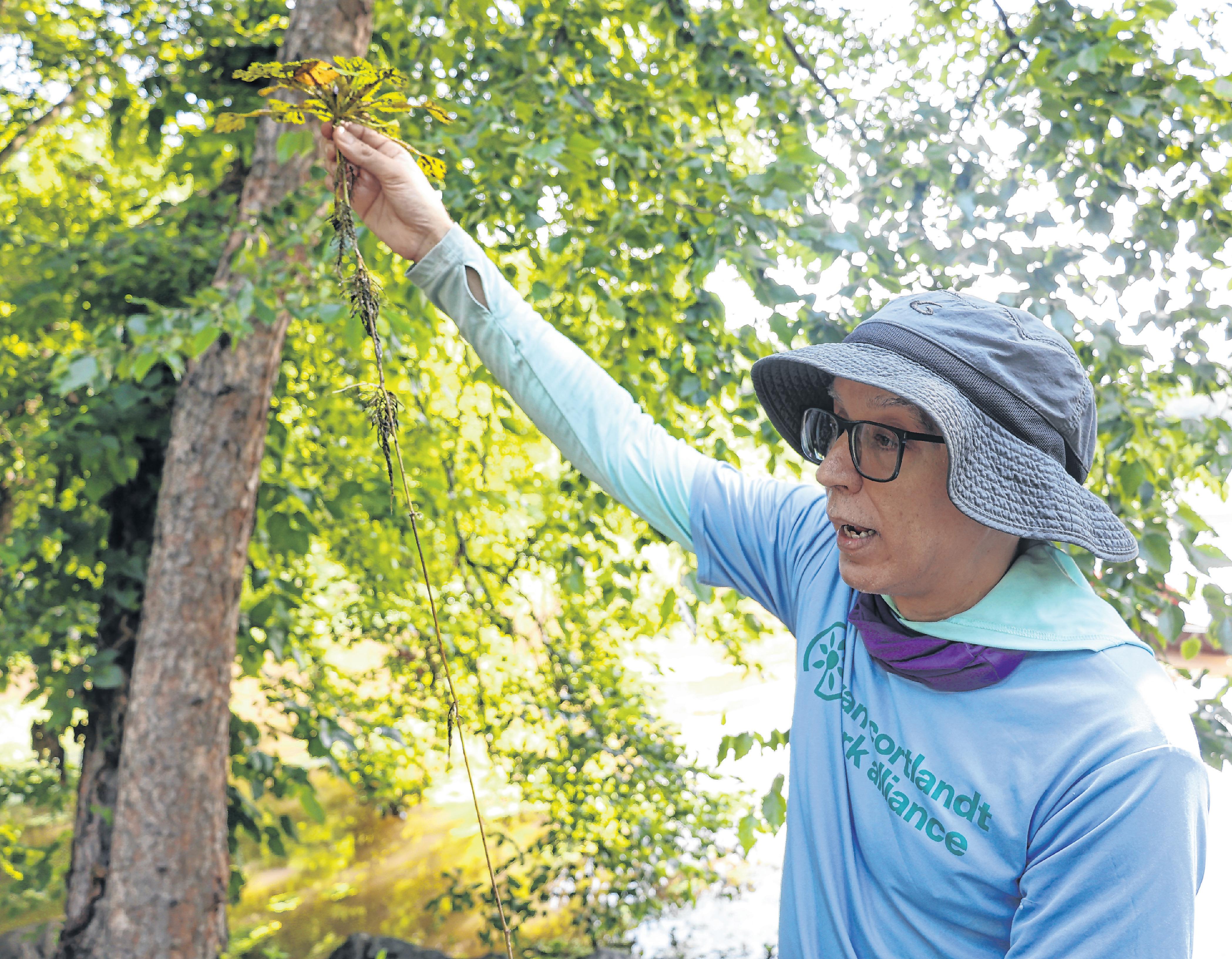
Holding a freshly pulled water chestnut, Noel Hefele pointed to groups of leaf clusters, known as rosettes. A small flower on every rosette produces as many as two dozen seeds that can remain viable for more than a decade. “It self-pollinates, which is part of why it can explode so intensely,” Hefele said. “We end up having a pretty intimidating game of numbers that we’re engaged in here.”
Gary Axelbank, host of BronxTalk, reflects on 50 years in the industry
By Olivia Young oyoung@riverdalepress.com
Today, Gary Axelbank is a 72-year-old veteran journalist, best known for his longtime role as the host of BronxNet’s talk show BronxTalk. But 50 years ago — before he was awarded the 2025 Bronx Walk of Fame People’s Choice Award, or became a regular on City and State’s Bronx Power 100 list — his career launched as a disk jockey at WETT, a Maryland radio station, during a hurricane.
Axelbank grew up in Van Cortlandt Village, first in the Amalgamated Housing Cooperative and then in Park Reservoir, Amalgamated’s sister co-op. The middle child of three boys, he spent his days the way most of his peers did — basketball in the park, stickball in the schoolyard and blaring The Beatles’ “Sgt. Pepper’s Lonely Hearts Club Band” on the radio. His dad was a principal at a Bronx high school, and his mom the director of Marble Hill Nursery School, Axelbank said.
“I was just a kid from the Bronx,” Axelbank said. “Went to school. Didn’t play by all the rules. Wasn’t particularly brilliant. Wasn’t particularly stupid.”
In the late ‘60s and early ‘70s, a broadcast style called progressive rock emerged, where DJs picked music attuned to the listener’s lives. A sunny day meant “Summer in the City” by The Lovin Spoonful. A rainy day was “Riders on the Storm” by The Doors. Throw in some Bob Dylan, “Subterranean Homesick Blues” or “Like a Rolling Stone,” and this era was transformative for Axelbank. It taught him how to live and how to think, he said. In middle school, while Axelbank was a student at P.S./M.S. 95 The Sheila Mencher Van Cortlandt, he recalled the school needing an announcer for its dance festival. Donning a white shirt and a little tie, oversized microphone in hand, Axelbank recalled asking himself, “‘Why am I not nervous?’”
Axelbank initially wanted to be a gym teacher, and spent a year at the State University of New York at Cortlandt as a physical education major. It was there that he got his first taste of reading the news on the campus radio station. He soon transferred to Lehman College and eventually — following the advice of his parents, who were urging him to figure out his life path, he said — attended Announcer Training Studios, a
broadcaster school that used to be in Midtown.
In August 1976, after sending out audition tapes across the country, Axelbank landed a job in Ocean City, Maryland, at a radio station called WETT. Axelbank drove five hours in the pouring rain, accompanied by a pet cat, who laid on his shoulder and watched as the rain started to come down harder and harder. When Axelbank finally arrived at the studio, he stepped out of the car into a foot of water — Hurricane Bell, a tropical cyclone that hit much of the East Coast, had made its way to Ocean City.
“Well, welcome to broadcasting,” Axelbank said, recalling that first day.
He bounced around East Coast stations for the next few decades, at one point working under broadcaster Howard Stern, years before “The Howard Stern Show” launched. In the early ‘90s, Axelbank was DJing at night and teaching during the day at The Center for the Media Arts, a former New York City-based trade school. An executive director walked in one day, Axelbank said, seeking interns for a new cable network in the Bronx that would become BronxNet.
The first story aired on the new network on July 1, 1993,

was Axelbank’s. It featured 13-year old Victor Vargas Jr., a national chess champion from the Bronx. BronxTalk launched the next October, and Axelbank has been the face of the talk show since. BronxTalk has no primary focus, but instead spans the wide range of issues that touch the borough — politics, education, arts, the economy and nonprofits or community leaders leaving


their mark. In 2016, Axelbank also launched Bronx Buzz, which hosted journalists, writers and other local figures with insight on news in the Bronx. The program ended in June 2025 due to budget cuts, Axelbank said. Axelbank said the philosophies between radio and television broadcasting are similar, allowing him to make the transition with ease.
“I used music and being a
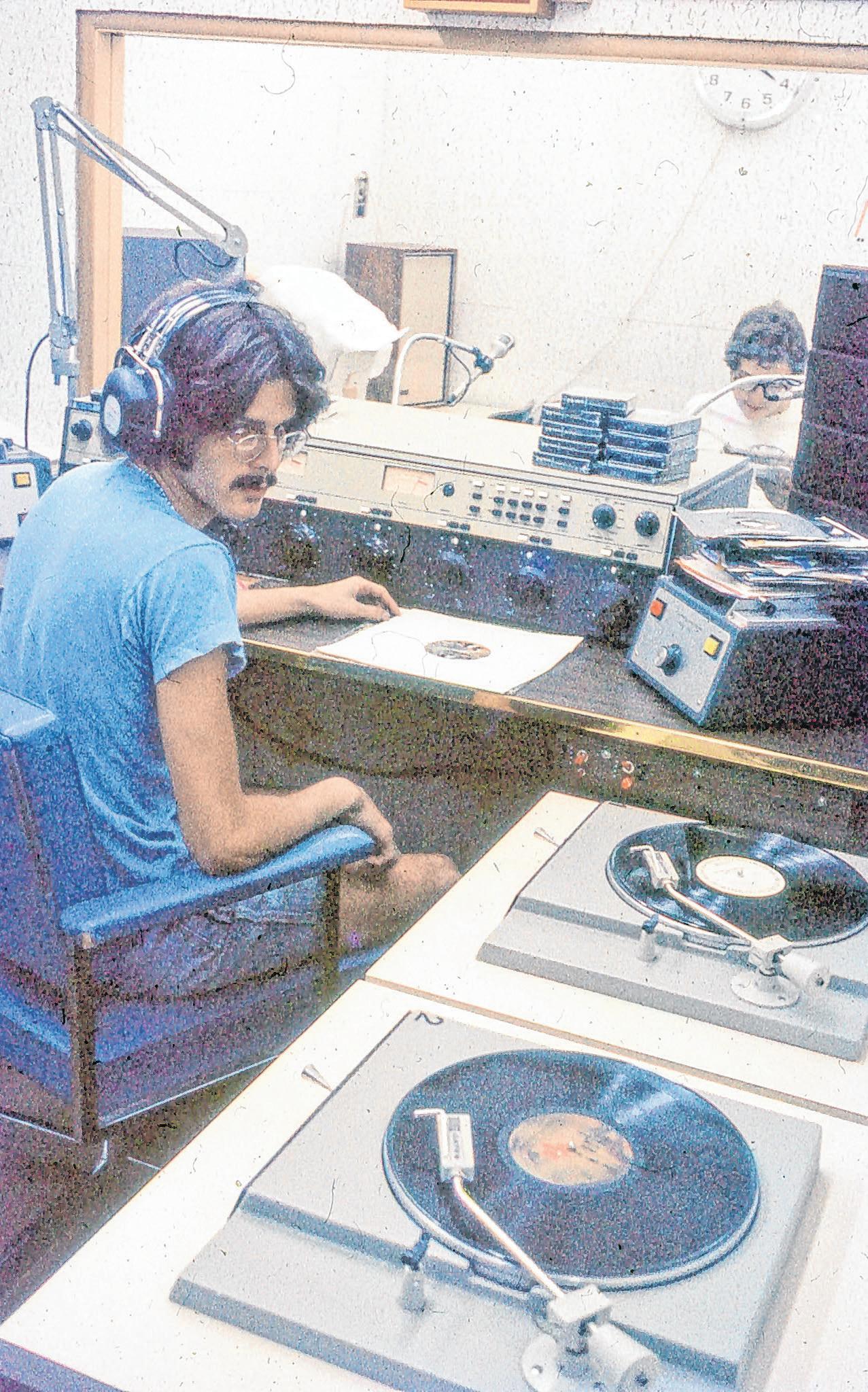
DJ to help people understand their lives better, to entertain them when necessary, and to support whatever ideas they have,” Axelbank said. “I’m doing the same thing every week on BronxTalk.”
With more than 1,500 episodes under his belt, it’s difficult to pinpoint a moment he is most proud of, Axelbank said. But, the episodes that show debates between local, state and federal political candidates representing the Bronx is what Axelbank feels has been most impactful to the community. It gives constituents the chance to see their potential elected officials in a fair light, Axelbank explained, and it is a responsibility he does not take lightly.
Another source of pride have been stories that highlight the borough’s community. Axelbank pointed to an obituary piece on Mickey Mantle, a longtime player on the New York Yankees and Baseball Hall of Fame inductee. He also recalled a profile on John


Insurance Auto Auctions, 65 Kaufman Rd. Monticello, NY 12701. New York State Garageman’s Lien Law: 2012 HYUN VIN 5NPEC4AC5CH377606 RE J LEYDEN 2007 HOND VIN 1HGCM56317A135560
Remembrance
Securing Your Eternal Legacy
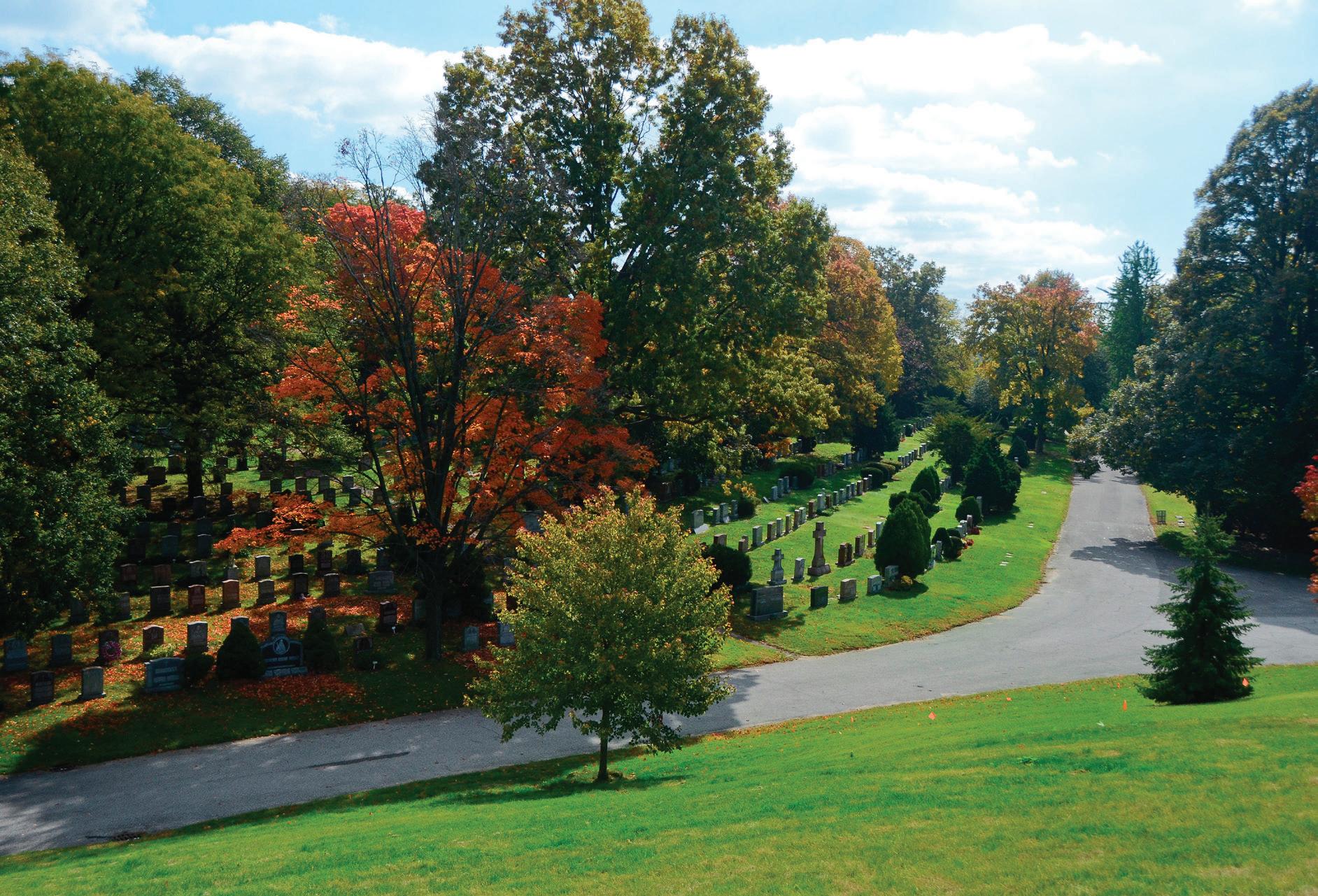
Advance planning for final arrangements is a thoughtful, loving gift for your family. Woodlawn, a National Historic Landmark and a Level II arboretum with over 6,500 trees, offers families a unique setting to honor and celebrate their lives.

Since 1863, Woodlawn has been the preferred choice to memorialize family legacies in New York City. Woodlawn is the final resting place for some of America’s most influential figures. From retail pioneer F.W. Woolworth to the writer Dorothy Parker, jazz legend Duke Ellington, author of Moby Dick, Herman Melville, and many more recognized leaders in industry, the arts, entertainment, politics, medicine, and every profession you might name. There are also more than 8,000 veterans buried at Woodlawn. Woodlawn’s 300,000 memorialized residents represent NYC’s history, vibrancy, and impact.
At Woodlawn, there are many types of property available to suit a variety of preferences and needs. You can create a memorial that reflects the unique details of your life. Woodlawn is easily accessible by car, NYC subway, and Metro-North Railroad, with ample parking available on-site.
We will help you create a lasting legacy. Call us today to learn more.






5 things to know about NYC flooding during severe rainstorms
By Michelle Mullen mmullen@riverdalepress.com
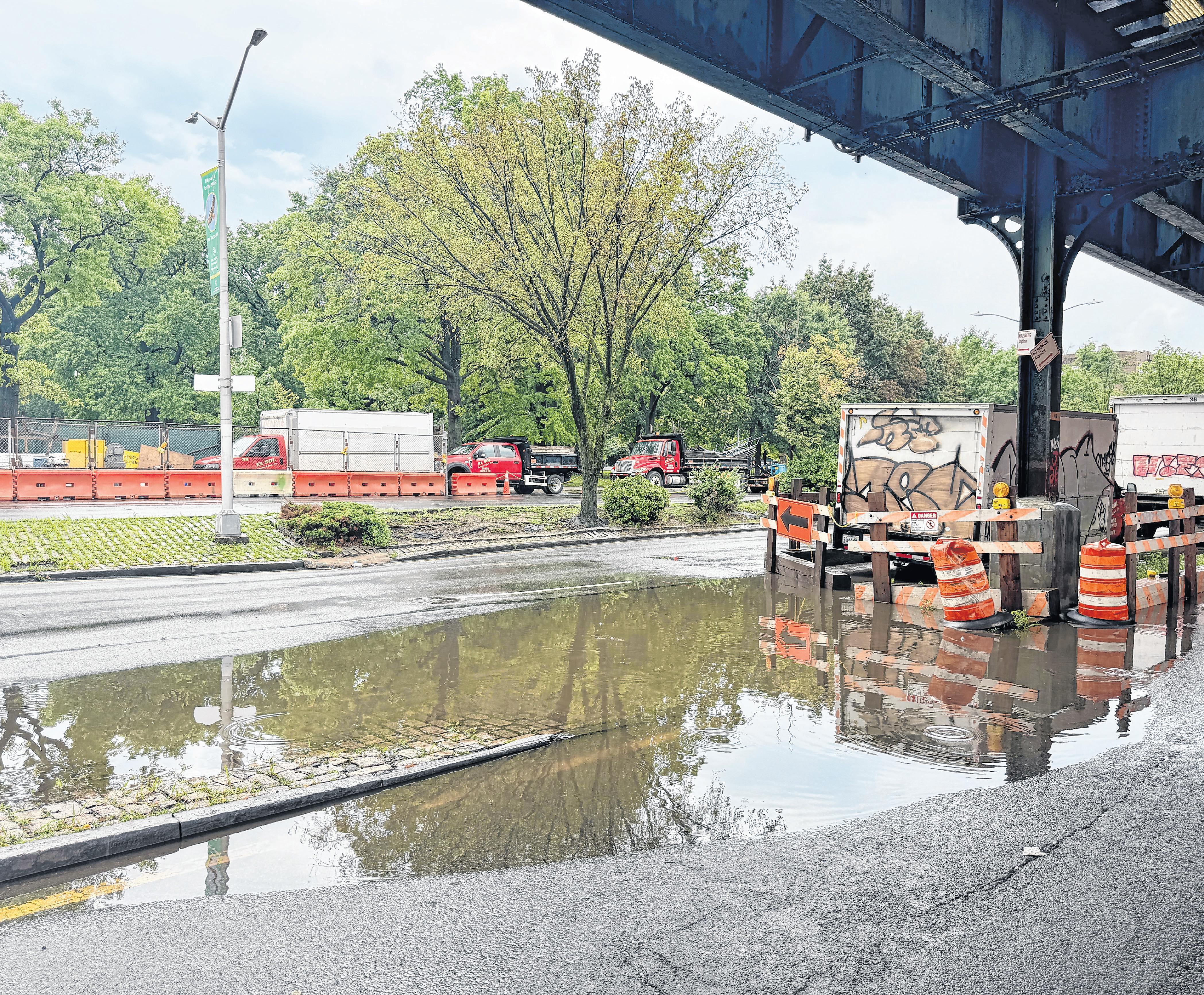
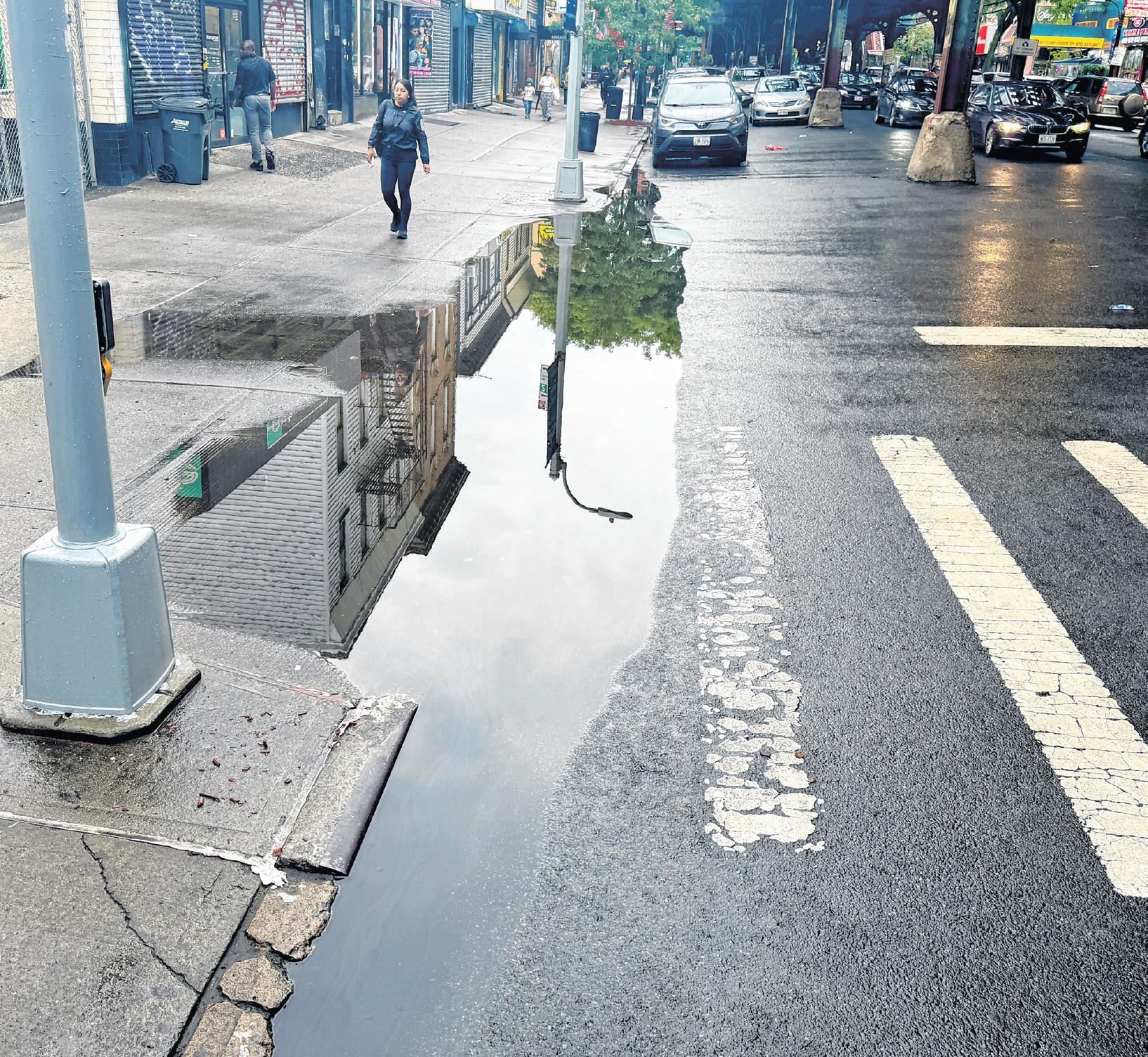
A deluge of rain has fallen across New York City in recent weeks, prompting repeated flash flood warnings and leaving standing water in parts of greater Riverdale, particularly in lowlying neighborhoods.
The latest flash flood warning as of press time was issued July 22 for the Bronx, Brooklyn and Queens as heavy thunderstorms moved through the region. The warning, originally set to expire at 7:15 p.m., was extended until 7:45 a.m. the next day for the Bronx. According to the National Oceanic and Atmospheric Administration, nearly an inch of rain fell near Fordham during the storm.
The New York City Mayor’s Office of Climate and Environmental Justice reports climate change is expected to bring heavier and more frequent rainstorms to the city. By the end of the century, annual rainfall could increase by as much as 30 percent, while the number of days with more than an inch of rain could rise by 150 percent. With heavy rainfall becoming more common, here’s what residents should know.
Know how to stay safe
Flash flooding can develop quickly, especially in urban areas where pavement prevents rainwater from soaking into the ground. The city advises residents living in basement apartments to know their exits and be prepared to move to a higher floor if water begins entering their home.
Emergency officials also recommend identifying a safe location in advance, preferably an interior room away from windows, keeping emergency alerts enabled on mobile phones and monitoring weather conditions before and during storms. Residents can also visit FloodHelpNY.org for information about flood risks, insurance and recovery resources.
Sign up for emergency alerts
Notify NYC is the city’s official emergency communications system and provides real-time updates on flooding, severe weather, transportation disruptions and other emergencies. Residents can receive free text alerts by texting NOTIFYNYC to 692-692 and replying with their ZIP code for localized notifications. Alerts are also available through email, phone calls, the Notify NYC mobile app, the program’s website, RSS feeds, X and American Sign Language videos. During major emergencies, Notify NYC can also activate the federal Emergency Alert System and Wireless Emergency Alerts, which send notifications directly to televisions, radios and cell phones within affected areas.
Flood damage
Residents with flood insurance should document any damage through photo or video before beginning cleanup, and contact their insurance provider
as soon as possible to begin the claims process. When surveying flood damage in a building, the city urges homeowners and renters to look out for mold, any newly formed cracks along the wall and signs of foundation damage, such as bulging walls. Wet features should be dried quickly to reduce the risk of mold, and damaged electrical systems should be inspected before being used again. City officials also recommend avoiding contact with floodwater whenever possible because it may contain sewage, chemicals or other contaminants.
Some areas hit worse than others
The Bronx’s geography plays a significant role in where flooding occurs. Rainwater naturally flows downhill from the higher elevations of Riverdale and Spuyten Duyvil into the lower-lying neighborhoods of Kingsbridge and Marble Hill. During intense storms, nonpermeable paved streets and sidewalks prevent much of that water from soaking into the ground, sending runoff flowing downhill and into storm drains that can quickly become overwhelmed. Many portions of the city’s stormwater and sewer
infrastructure were built decades ago, before today’s increasingly intense rainfall events. When the system exceeds capacity, water collects on streets and highways, the city said.
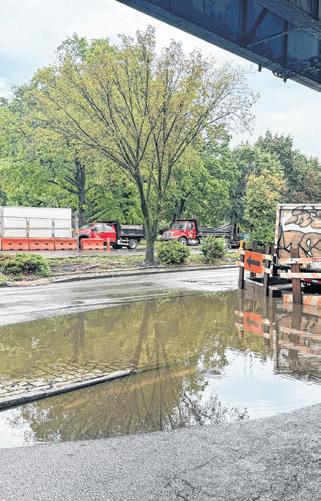
Drivers should avoid flooded underpasses and should never attempt to cross water-covered roads.The National Weather Service warns that low-lying roadways are especially vulnerable — such as the Major Deegan Expressway, which has a long history of flooding.
Greater risks
Flooding does not affect everyone equally. According to the New York City Mayor’s Office of Climate and Environmental Justice, older adults, people with disabilities and residents with limited mobility may face greater challenges evacuating during flash floods. People with limited English proficiency may also have difficulty receiving emergency information if alerts are not available in their preferred language. Officials encourage residents to check on vulnerable neighbors before and after severe weather, particularly those living alone or in basement apartments, and to have an emergency plan in place before the next storm arrives.
Professional Services Directory
Audiology/heAring Aids
Advanced Care Audiology
Dr. Yehudis Hoch, aud, ccc-a Hearing Evaluations, Treatment of Hearing loss, Treatment of Tinnitus, Wax Removal, Hearing Aids. Now at Our New Location: 545 West 236th Street, Bronx, ny 10463 718.980.7700 www.advancedcareaudiology.com
mentAl heAlth
Sarah Andrew-madison, LCSW, psychotherapy pLLC local licensed Clinical Social Worker who provides private, virtual psychotherapy to adults (18+) across ny and CT. Specialization in trauma and EMDR. Areas of focus include sexual trauma, life transitions, grief and ambiguous loss, pregnancy, prenatal and postpartum issues. Self-Pay, Out of network and insurance accepted: Cigna, Evernorth, Oscar, Oxford, UnitedHealthcare. Call or email today for a free consultation. (646) 859-2028. Website: www. sarahandrewmadisontherapy.com
D.O.
Pain
Cambridge podiatry Center Dr. Donald Spector Board Certified, Diplomate in ABPOPPM Practicing over 30 years Podiatric Medicine & Surgery laser treatments available Medicare/Most insurances Accepted 259 W. 231st Street, Bronx, ny 10463 718.548.3080 podiAtrists
pm&r,
Leon G. Tsinberg, esq. Wills, Trusts, Estates, Power of Attorney, Disability, Health Care Directives, Probate & Estate Disputes www.riverdalelegal.com 3265 Johnson Ave. #201 Tel: (646) 228 0976 / Tel: (888) 887 - 8886 leontsinberg@gmail.com
Michelle Mullen photos
Kingsbridge saw
Broadway and West 243rd Street was among the intersections where crosswalks flooded.
What’s on?
At Riverdale Senior Services
Get Fit with Stuart
Get Fit with Stuart Riverdale Senior Services invites you to workout with Stuart, the RSS exercise expert. Participants at any fitness level are welcome. This is a general fitness class that can be done seated or standing.
The instructor is in the center. Classes are held on Mondays and Fridays from 10 to 11 a.m. at 2600 Netherland Ave. To register for classes and for more information visit rssny.org.
Poetry group Robert Ackerman returns to lead poetry group at Riverdale Senior Services, 2600 Netherland Ave. Open to anyone who loves to write and listen to poetry.
This class is about reading, writing and discussing poetry. It is an open class, as less structure allows for more creativity. The class is open for all members. For more information visit rssny.org.
At Van Cortlandt Park
Running Group NYC Parks hosts a running group every Friday from 10 to 11 a.m., open to runners of all experience levels. Runners will start with active running/walking intervals that gradually build to more time running than walking. This program is designed for anyone starting their running journey, anyone with a goal to run a 5K and for anyone coming back to running after some time off. Led by running coach Tonya Montero.
The running group entrance is on Broadway and West 251st Street and will meet by the Tortoise and Hare Statue. To register and for more information visit nycgovparks.org/events.
At Spuyten Duyvil Playground
Kids in Motion NYC Parks’ Kids in Motion Program engages children in active, outdoor play. A parks department staff member will lead four to seven hours of free activities including organized sports, games, fitness, demos, board games, water games and more. This is a free, dropin program without registration. Runs on Friday, July 31 from 10 a.m. to 6 p.m. at the Spuyten Duyvil Playground, located by Douglas Avenue and West 236th Street. It is recommended that guardians accompany participating children. Kids in Motion is not a childcare program and NYC Parks is not responsible for the well-being of attendees. Visit nycgovparks. org/events for more information or contact Renee.Taylor@parks.nyc. gov.
Summer Sports Experience: ‘End Zone Renegades’
Join NYC Parks for a day of flag football drills and games at Spuyten Duyvil Playground, located by Douglas Avenue and West 236th Street. Flag football is a fun and fast-paced sport where players build skills, learn teamwork and train for competition. Level up your game and join “End Zone Renegades” on Wednesday, Aug. 5. Ages
Gerald
For
Kung-Ming
david
ronald
dylan
Ballet Fit
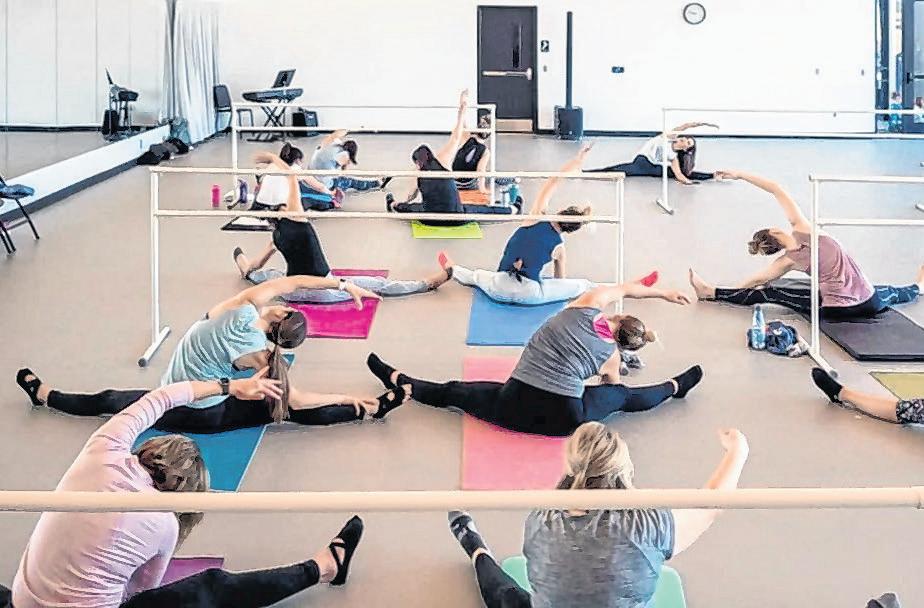
Riverdale Neighborhood House, at 5521 Mosholu Ave, presents Ballet Fit, Tuesdays from 6:30 to 7:30 p.m. This fitness class incorporates elements of ballet exercises and cardio for individuals of all movement abilities. Work on toning and strengthening, coordination, balance and flexibility. Led by accomplished dancer and performer, Azucena Rollan Mas. For more information visit Riverdaleonline.org.
eight to 10 are invited to join from 11 a.m. to 1 p.m., and Ages 12 to 15 from 2 to 4 p.m. Registration is not required. Visit nycgovparks.org/events for more information or email Marcus. Riley@parks.nyc.gov.
At Seton Park
Movies Under the Stars
Grab a blanket and come enjoy a movie in Seton Park on Tuesday, Aug. 4 from 8 to 10:30 p.m., with a free screening of “Small Soldiers.”
The film has been rated PG-13 and some material may be inappropriate for young children. Parents may wish to consider whether it should be viewed by those under 13. Glass bottles and alcoholic beverages are strictly prohibited. In the event of heavy rain or extreme weather, the screening may be canceled. The decision to cancel the event will be made prior to the screening and will be prominently posted on our website. There are several entrances to Seton Park, including on West 232nd Street, Independence Avenue and West 235th Street. For more information visit nycgovparks.org/events or call 311. Contact 212-360-1430 or accessibility@ parks.nyc.gov for more information regarding accessibility.
At Wave Hill
Sunset Wednesdays
Wave Hill, at 4900 Independence Ave., invites you to Sunset Wednesdays from 7 to 8 p.m. on the
Great lawn. Picnics, blankets and chairs are welcome starting at 4 p.m. Every week there will be performances from different artists.
Sunset Wednesdays end Aug. 5. To buy tickets and for more information visit wavehill.org.
Brilliance of Seeds and Weeds
Head to Wave Hill, 4900 Independence Ave., Saturday, Aug. 1 and Sunday, Aug. 2 to learn and learn about seeds and weeds. Children will use the plant parts as materials to make paper and learn more about germination and the seed dispersal process.
Runs 10 a.m. to 1 p.m. At 11:30 a.m. families can enjoy a storytime program in the Gund Theater. All ages welcome. For more information visit wavehill.org. Registration is not required.
At Spuyten Duyvil
Library
Magic: the Gathering for Adults
Adults are invited to the Spuyten Duyvil Library, 650 W 235th St., to learn how to play Magic: the Gathering, or MTG. Ready to stretch your strategic muscles, meet new people and dive into a world of deep fantasy? MTG is the world’s premier trading card game, combining the tactical depth of chess with the customization of a tabletop role-playing game.
Whether you played years ago or have never held a card, this night is built entirely for adult beginners. No pressure, no judgment, just gre-
at company. There will be a clear introduction to the game. Join Tuesday, Aug. 4 from 4 to 5 p.m. Analog board games
Come to Spuyten Duyvil Library, 650 W 235th St., for an afternoon of analog board games. No tech is allowed in this entertaining after-school club. Join library staff as they guide children and their grown-ups through the strategy and fun of educational board games every Thursday from 3 to 6 p.m. Are you a Pokémon fan too? Come meet up with other players to show off, trade cards and Pokébattle! For ages 5 and up.
At Yoga Muse Chair Yoga
This chair yoga class at Yoga Muse, 2735 Henry Hudson Parkway W #202, is based on the Lakshmi Voelker Chair Yoga Method and offers a supportive, accessible yoga practice done fully seated and using a chair for support. No experience necessary. Runs Thursdays at 10:30 a.m. Visit yogamuse.co for more information.
Yoga for Kids
Yoga Muse, 2735 Henry Hudson Parkway W #202, is rolling out a kids program this fall and registration is now open. Classes start in September for children ages 5 to 8 and 9 to 12, and in October for children ages 2 to 4 with a parent. Visit yogamuse.co/Yoga-for-Kids for more information.
Prenatal yoga series
Join Melissa Ramirez at Yoga Muse, 2735 Henry Hudson Parkway W #202, for a four-week prenatal yoga series designed to support you through every stage of pregnancy. Your birthing partner is welcome at no additional cost. Begins Sunday, Aug. 2 at 4 p.m. Visit yogamuse.co. for more details.
At the New York Botanical Garden
‘Flower Power’
The New York Botanical Garden, located at 2900 Southern Blvd., invites you to immerse yourself in a groovy and colorful flower show spotlighting the ways in which hippie culture advanced closer relationships with the natural world in the “Flower Power” exhibition. The exhibit runs until Oct. 18. To get tickets visit nybg.org.
‘Summer Of Moomin’
The New York Botanical Garden, located at 2900 Southern Blvd., presents the beloved inhabitants of Moominvalley, who arrive at the Garden for “Summer of Moomin,” a celebration inviting audiences of all ages to step into the imaginative universe created by Finnish artist and author Tove Jansson. The exhibit runs until Sept. 13, to get tickets visit nybg.org.
Opinion Editorial
Show your local library some love
Picture this: you walk into your local library branch. Outside, the July sun beats down and the sounds of traffic echo through the streets, but inside those walls it is cool and quiet. You find yourself surrounded by walls of books, the smell of paper thick in the air. Maybe you’re there to look for a book, or to print something out in a digital world that, for many, has made owning your own printer impractical. Whatever the reason, you may be surprised by the other resources that await you there. You may feel the urge to linger in that space, and explore. Today, libraries are one of the few institutions that encourage you to do just that.
When you walk into your local library, there is no expectation that you will spend money. In fact, the expectation is often that you will not. Nobody is rushing you out the door to free up a table for the next customer, or requiring that you purchase an overpriced beverage just so you can get the bathroom code printed at the bottom of your receipt. When the doors to our local libraries are open, we have the freedom to wander or to sit, to socialize and collaborate or to enjoy our own company. They allow us all access to education, stories and resources, regardless of our backgrounds or financial situations. Through these libraries, we can enjoy classes, internet access, films and even after-school programming — all free of charge. But these community institutions are not a resource we should take for granted.
Funding cuts, book bans and
other threats have risen against libraries in the United States, especially in recent years. New York City is fortunate to have such a robust system of public libraries, but this does not mean their presence is a fact of life that exists beyond us. Even here, many library branches do not have the resources necessary to provide service seven days a week. Even here, the future of our libraries, and the attention paid to them in city budgeting decisions, depends on our engagement with them.
Libraries do not ask for our money or our labor or for us to offer anything grand in return. All they ask of us is our time. Attending an event, securing a library card, checking out a book or making use of the many resources available at the library helps boost the library’s numbers — numbers that matter the next time discussions about the allocation of resources arise. It shows decisionmakers that there is demand for what libraries have to offer. Of course, you can also look for volunteer opportunities, or chances to advocate for funding and legislation to keep your local library branch healthy. But even the small act of stopping in at the library to check out a summer read on your way home from school or work can make a difference in the community’s future. In a world that demands so much of us — our attention, our purchases — it is rare to find an oasis that demands so little. Next time you happen to pass by a local New York Public Library branch, take a moment to step inside. Take a look around. You just might want to stay for a while.
Riverdale is fractured
To the editor, For years, the Riverdale farmers market, established by the Riverdale Y, was one of the few places where our entire community came together. It was more than a place to shop — it was where neighbors met, friendships were renewed, local musicians and artists shared their talents, and families spent time together. During the Covid-19 pandemic, the market became an even more important symbol of community, and we appreciated the leadership that sustained it through those difficult years.
However, a separate market was created in response to the timing of opening day, management concerns and the economic realities facing the small business owners who depend on these markets.
While the reasons may be understandable, the result has been unfortunate. Our community is now divided between two locations in north and central Riverdale. Many residents do not have the time or ability to visit both, and neighbors who once gathered in one place are now separated. Riverdale has lost something special. I respectfully urge the Riverdale Y and Cravings & Crafts to come together, set aside their differences, and find a compromise that allows our community to once again enjoy a single, unified farmers market. The greatest beneficiaries would be our residents, our local businesses and the sense of community that has always made Riverdale unique.
BETSEY KNAPP
Point of view
The leadership pipeline colleges keep cutting
By Suzette Ramsundar
A little over 10 years ago, a small group of Lehman College student leaders confirmed what we at the Student Life Building already suspected: their peers were going hungry. We had no space for a food pantry, no budget and no real plan. What we had were students willing to build one anyway.
That pantry is now our Basic Needs Center and when Covid-19 hit, it became a lifeline for students and their families. The students who helped build it didn’t just solve a problem; they led us to a solution. One of them was featured in “Hungry to Learn” (Gandbhir, 2019), a documentary produced by Soledad O’Brien about college food insecurity, and went on to present at a national conference on the subject. Another student leader told me she felt personally responsible for 14,000 students.
After more than a decade working in student life at Lehman, a Hispanic-Serving Institution in the Bronx, I’ve seen stories like these again and again and was compelled to examine why first-generation student leaders get involved on campus for my dissertation. What I learned confirmed what I’d witnessed for years: involvement isn’t just an extracurricular activity. For many students, it’s where leadership begins.
That’s why it worries me how often student affairs is the first thing cut when a college’s budget gets tight. Clubs, leadership programs and the staff who support them get filed under “nice to have” rather than essential. At a time of real financial and political pressure, that instinct may be understandable, but it’s also shortsighted.
The students I interviewed weren’t leading in spite of being first-generation, low-income or juggling jobs and family obligations. They were leading through those experiences, using skills and resilience they already possessed. One student told me running his own club taught him more about management than his coursework did. Another
Poetry
who told me she used to be too shy to talk to strangers, helped organize a busload of students to advocate before state legislators in Albany.
None of that shows up on a transcript. Yet those experiences help students develop confidence, build networks and discover their ability to make a difference. That’s the kind of growth that often determines whether a student leaves college with just a degree or with the capacity to lead.
This matters especially at commuter campuses and Hispanic-Serving Institutions, where students often lack the built-in social networks that come with residential college life. If colleges don’t intentionally create spaces for connection, responsibility and leadership, those opportunities may never materialize.
Colleges are increasingly asked to justify their value through graduation rates, job placement and return on investment. Those numbers matter. But higher education isn’t only about earning credentials. It’s also about developing leaders, people who can organize, solve problems, advocate for others and strengthen their communities. Those skills are rarely developed in the classroom alone.
If we’re serious about first-generation student success, we need to stop treating student involvement as optional. We should fund it, staff it and protect it as carefully as any other essential part of the college experience.
Ten years ago, a handful of students built a food pantry. What they were really building was their own capacity to lead. They didn’t just create a resource for their peers, they became leaders. Colleges can’t afford to lose the places where that transformation happens.
Suzette Ramsundar is director of campus life at Lehman College, CUNY, and an adjunct faculty member in the college’s graduate programs in school counseling and organizational leadership.
New York City Dreamin’
By Michael Colon
New York City dreamin’ on a brisk day.
I’d be safe and warm if not left astray.
A poor kid in a big city, finding a way— tales from the concrete getaway.
All the leaves are brown, and the sky is grey.
Oh, the bright lights of this town make me float down Broadway.
In the capital of the world, I stand on the subway platform. Being in the right place at the right time is an urban art form.
Screeching down the tunnels, I am content to write fresh new content, sitting next to a laborer and businessman talking about the due rent.
New York City dreamin’ on a brisk day.
I’d be safe and warm if not left astray.
A poor kid in a big city, finding a way— tales from the concrete getaway.
All the leaves are brown, and the sky is grey.
Oh, the bright lights of this town make me float down Broadway.
About letters
I get off at my stop— to a stream of stop signs and bustling traffic, where the poor and rich share a jungle. The core of the Big Apple is filled with breaking news. An island of innovation on strong bedrock, the city of dreams that stays awake around the clock. Different seasons shapeshift scenic avenues; the core of the Big Apple is filled with breaking news.
New York City dreamin’ on a brisk day.
I’d be safe and warm if not left astray. A poor kid in a big city, finding a way— tales from the concrete getaway.
All the leaves are brown, and the sky is grey. Oh, the bright lights of this town make me float down Broadway. On the road, no
The Riverdale Press welcomes letters to the editor. It is committed to providing an open forum for opinions. Send letters via e-mail to letters@riverdalepress.com. The Press also occasionally publishes longer columns, as well as some works of creative writing. Your submission should be signed and include your home address and daytime phone number. This information is for verification purposes only and will not be published. Anonymous letters are not considered. Letters are subject to editing for reasons such as length and clarity.


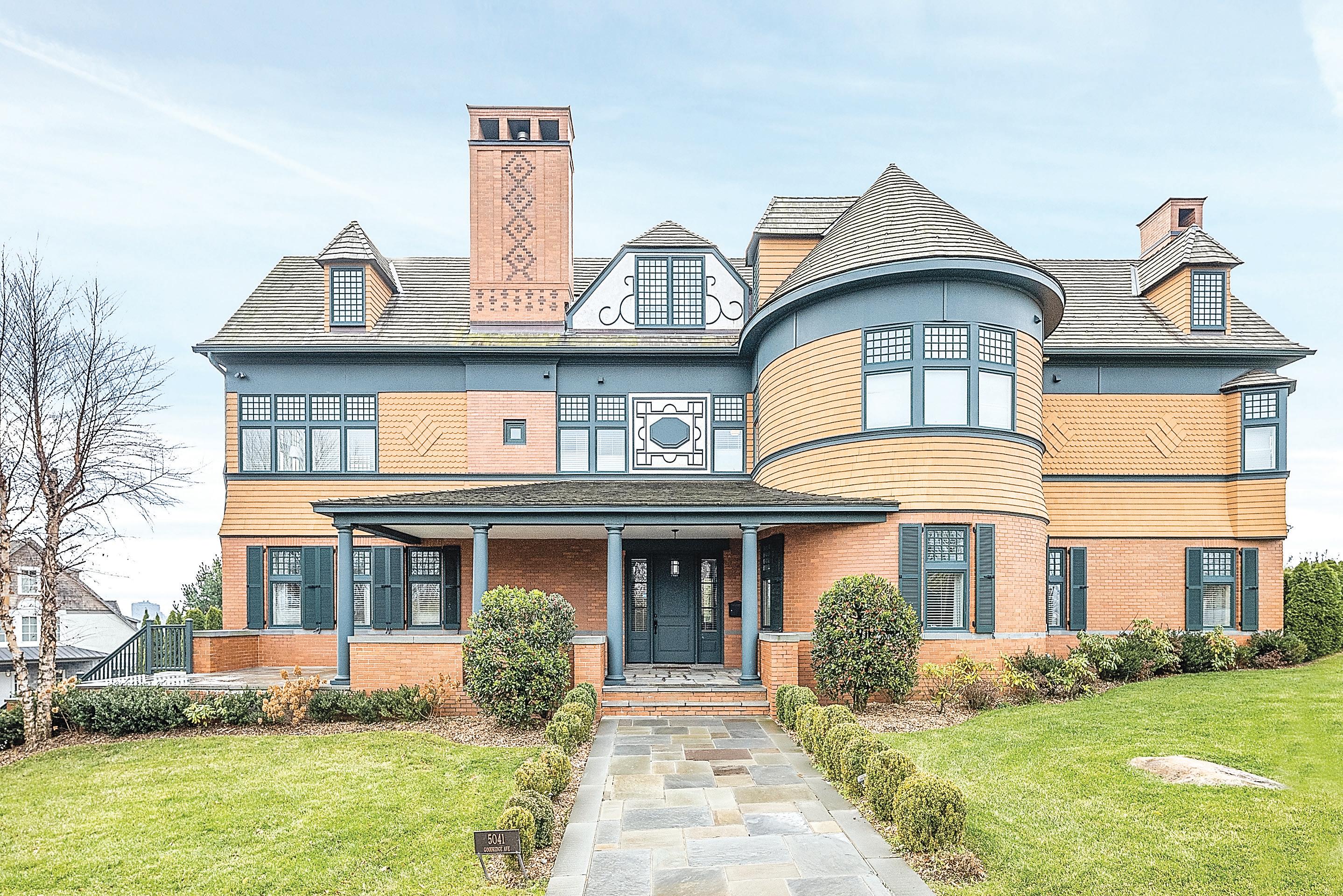
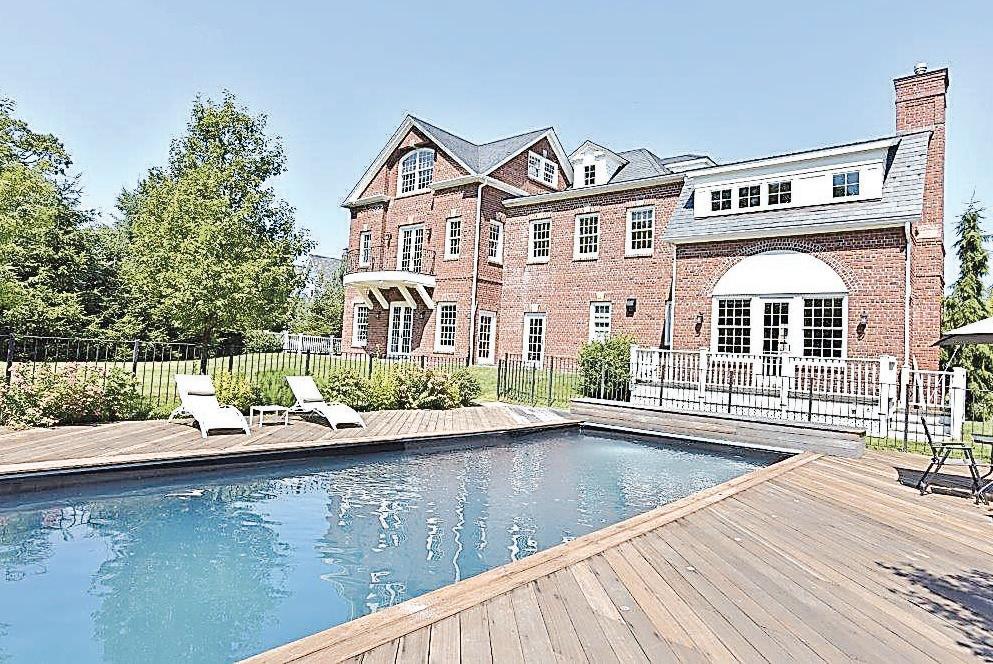
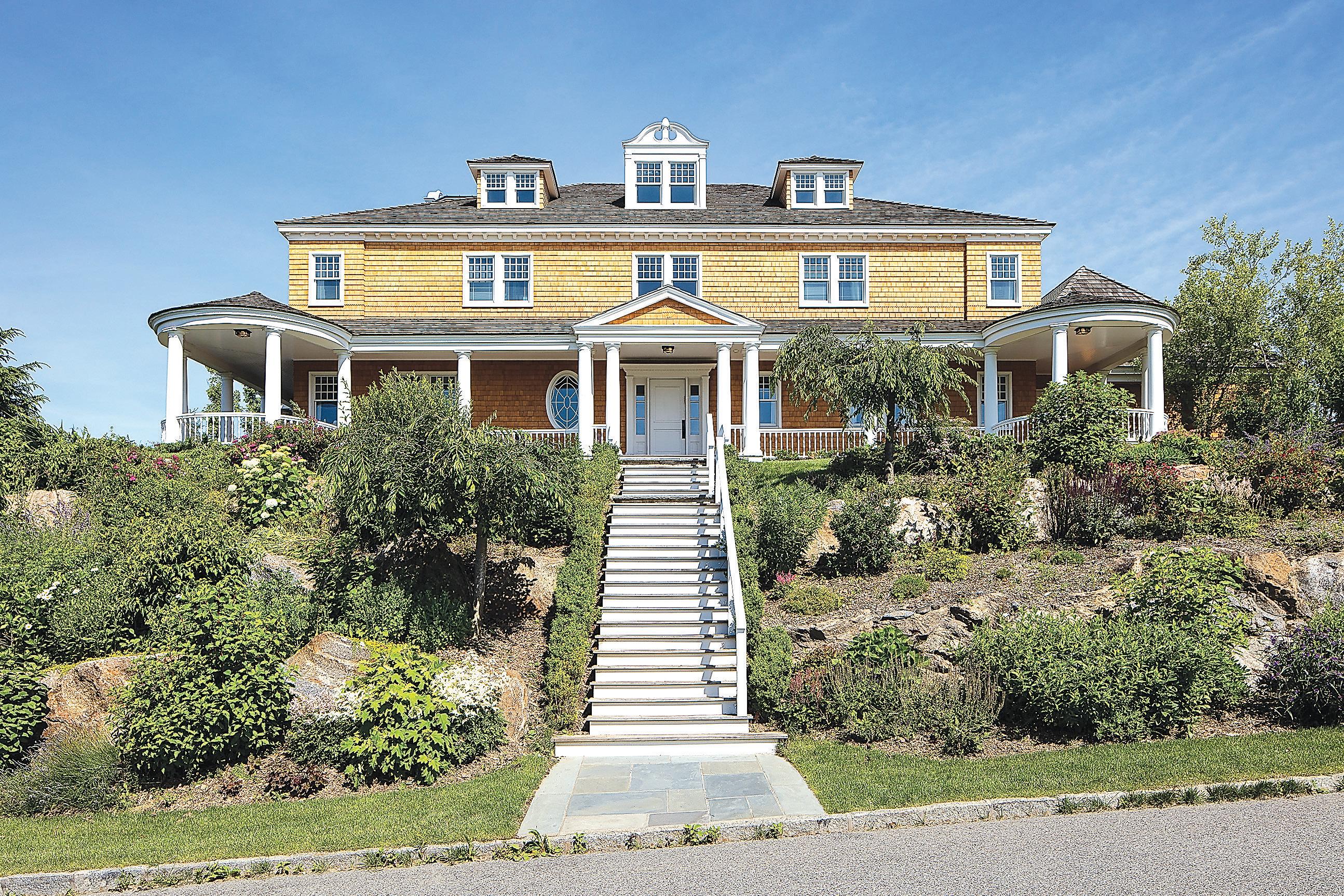
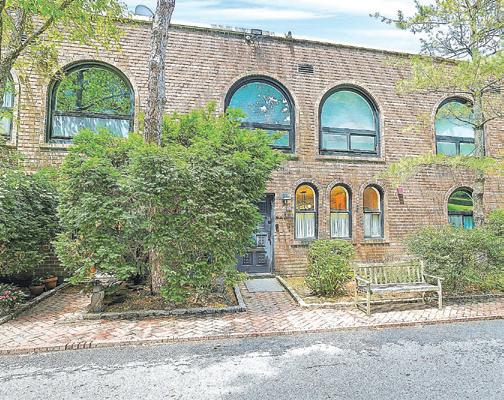
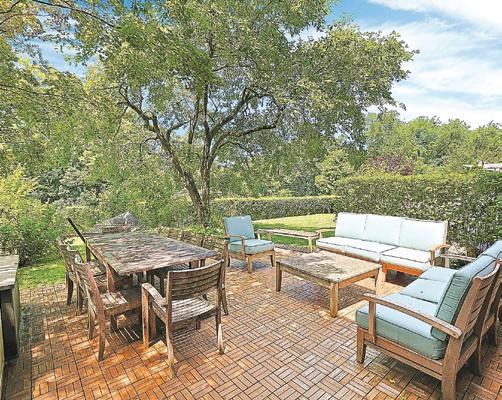
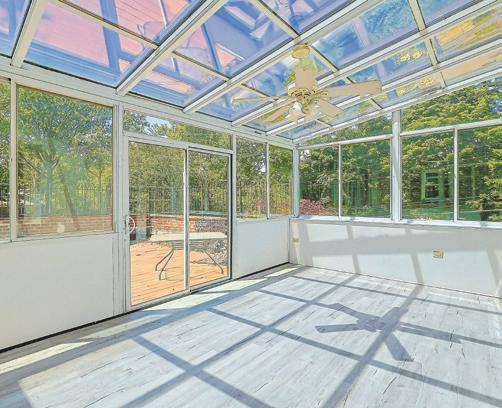
NOTE: Each week’s featured home is chosen at random from among houses and apartments offered by Riverdale Press advertisers. The opinions expressed are those of the advertiser and not The Riverdale Press news department. For further information, write to advertising@riverdalepress.com.
Spacious Riverdale luxury condo with panoramic views
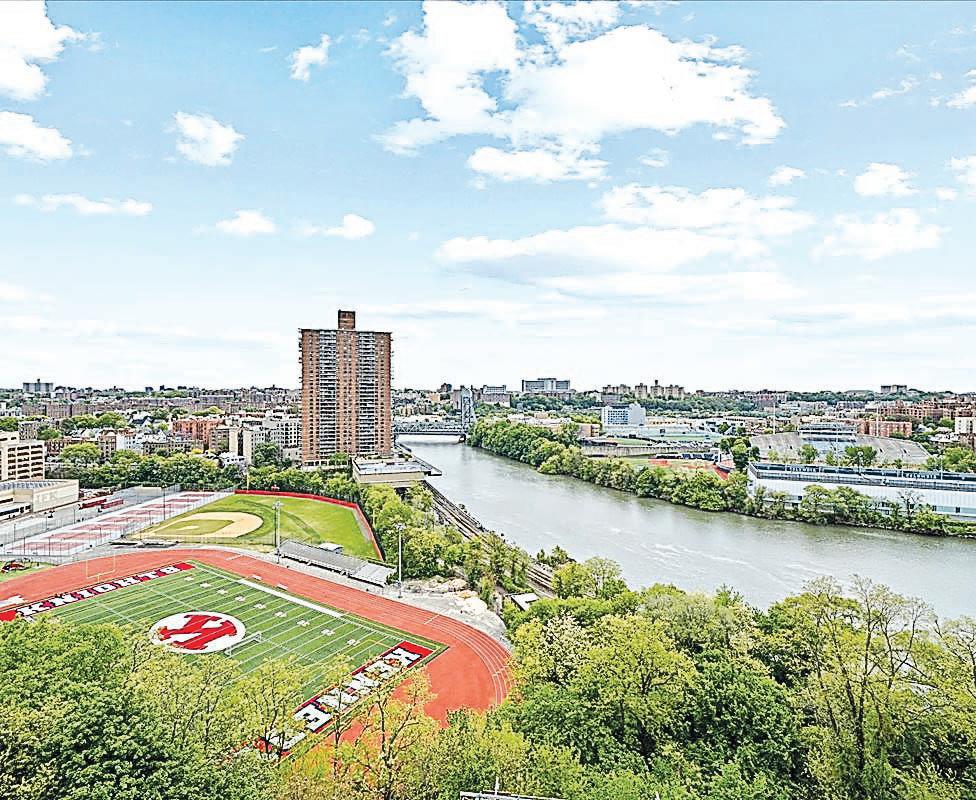
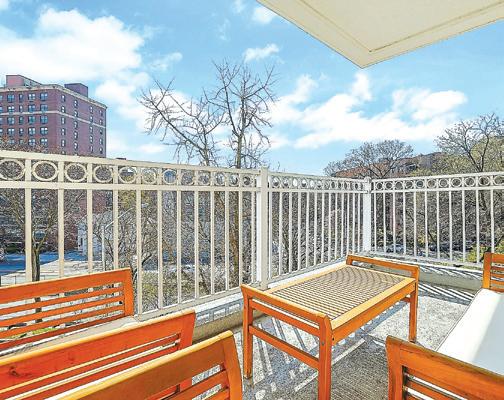
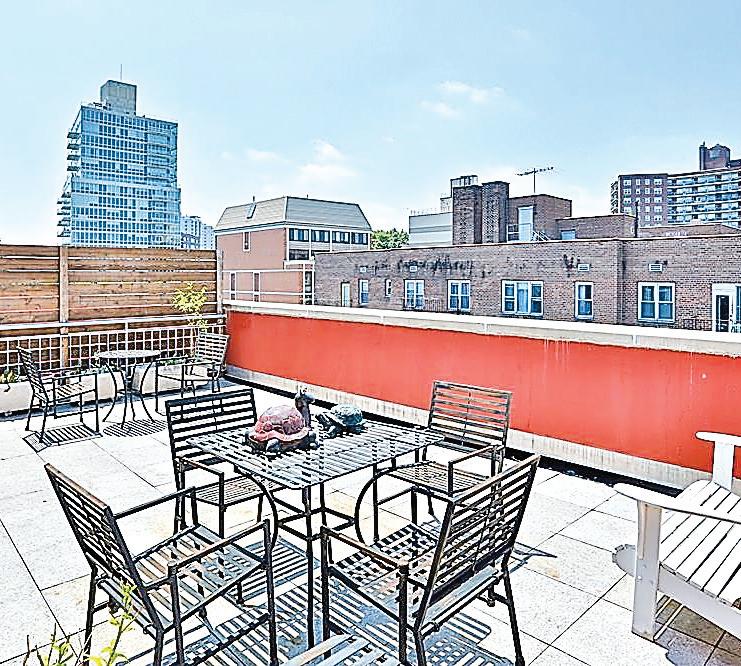
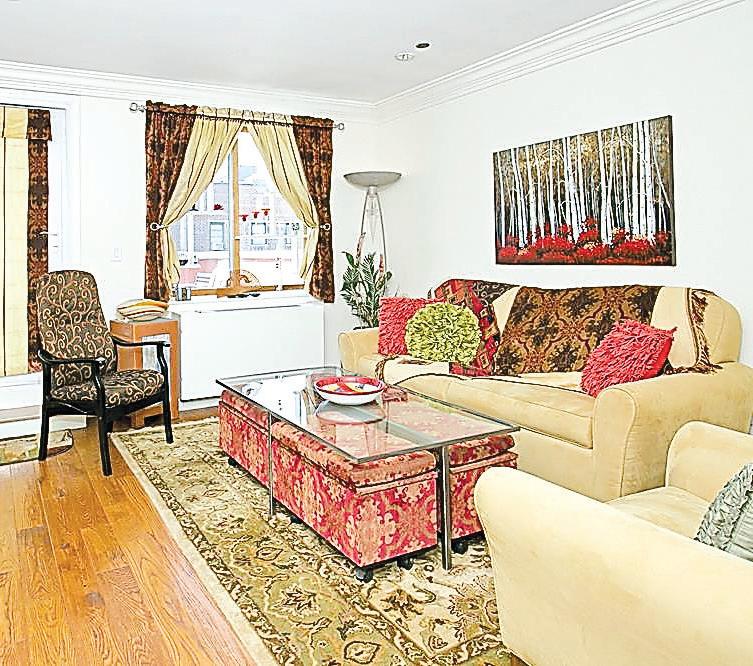
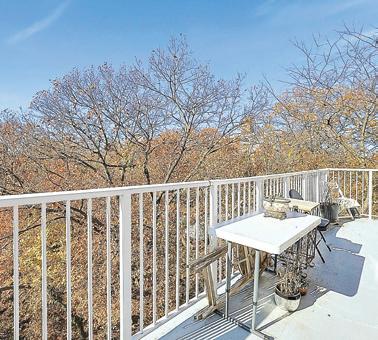
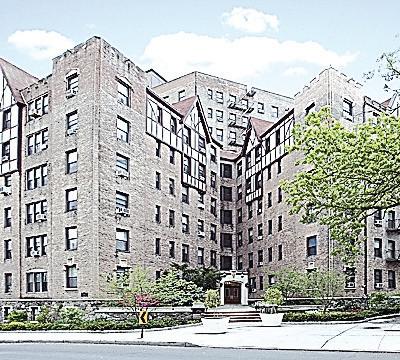
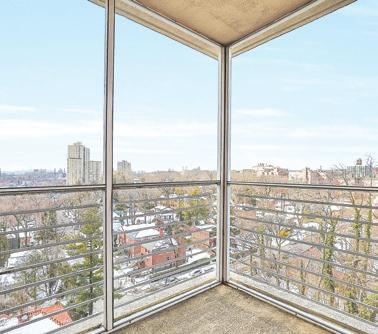
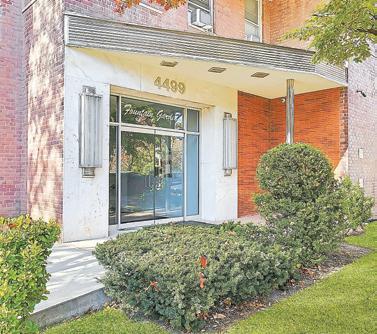
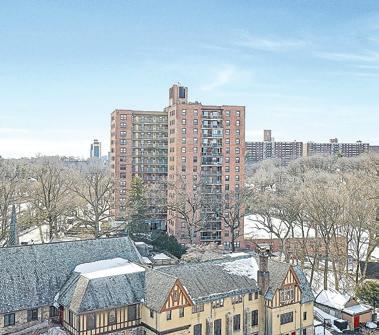
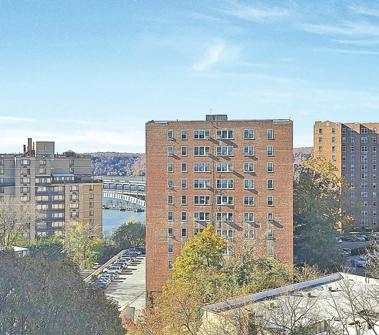
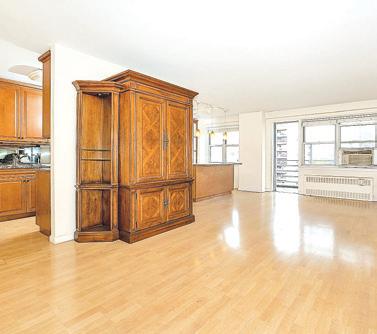
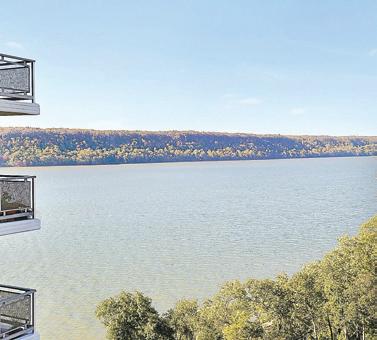
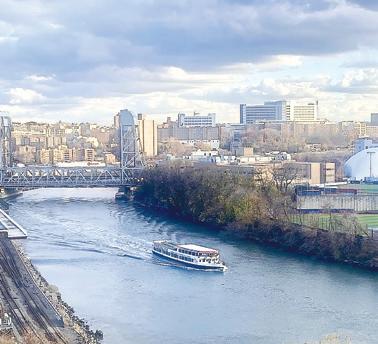
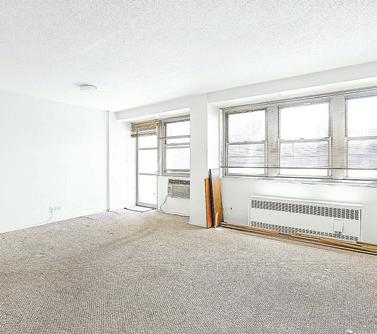
Aspacious two-bedroom condominium with sweeping views and luxury amenities is available at The Winston Churchill, one of Riverdale’s premier full-service residential buildings. Located at 2500 Johnson Avenue, Apt. 11P, the home is listed for $659,000. Positioned high above Spuyten Duyvil, the residence offers panoramic vistas of the Spuyten Duyvil Creek, the Broadway Bridge, Inwood Hill Park and Columbia University’s Baker Athletics Complex. Oversized windows throughout the home flood the interior with natural light while framing the picturesque surroundings. The two-bedroom, two-bathroom layout features an expansive living and dining area designed for both everyday comfort and entertaining. Oversized windows fill the space with natural light, while a private terrace provides a relaxing setting to take in the surrounding waterfront and park views.
A renovated open-concept kitchen anchors the living space and is outfitted with stainless steel appliances, generous cabinetry and a functional layout ideal for preparing meals or hosting guests. The primary bedroom suite includes its own private terrace, an en-suite bathroom and abundant closet space. A generously sized second bedroom and an additional full bathroom provide flexibility for guests, a home office or family living. Residents of The

Convenient access to the Metro-North station, local and express bus service, neighborhood shopping, restaurants and nearby parks further enhances the property’s appeal. Whether commuting into Manhattan or enjoying Riverdale’s outdoor attractions, the location offers a balance of accessibility and tranquility. With its spacious floor plan, modern updates, private outdoor space and spectacular views, this residence offers an appealing opportunity for buyers seeking comfortable living in one of Riverdale’s most established luxury buildings.