What’s inside?

What’s inside?
By Olivia Young oyoung@riverdalepress.com
Along Stevenson Place in Van Cortlandt Village, trimmed shrubs line the street and lush greenery towers overhead. As a soft breeze rustles the leaves, with it comes the foul odor of sewage water.
Van Cortlandt Village is a historic neighborhood that sits between the south end of Van Cortlandt Park and above the Jerome Park Reservoir. The 15-block community is known for its small homes, brick apartment buildings, including the 99-year-old Amalgamated Housing Cooperative, and being a quiet, verdant section of the Bronx — something residents say has changed amid recent development. The stench of sewage has lingered since
early April, at times bubbling up or appearing as a green sludge, residents said. Its source: a “plumber’s line,” or a temporary connecting pipe installed by a private contractor when the block was first developed, according to the New York City Department of Environmental Protection. Over time, as more people started moving in and bigger buildings were constructed, the pipe couldn’t keep up with the amount of water and waste, the department said.
Debra Travis, a resident of the apartment building across from the leak, explained the water tends to spread a couple of feet along the road’s surface, and glides to the curb underneath tenants’ parked cars. Some days it follows the natural slope of the road down to Sedgwick Avenue and toward the commercial

Pantry provides self-care items for all Page A5
corridor. When the weather warms, the smell becomes more putrid, she added. Longtime tenant Michael Stoller described the smell as sometimes nauseating. He said living in an area with a fair amount of construction, noise comes with the territory, but typically sewage does not. A spokesperson for the department of environmental protection told The Press it plans to install a new sewer on the block, and will reconnect any pipes they find in the process. A contractor was hired, but a start date has not been scheduled.
In the meantime, Stevenson Place tenants said the sewage is the result of a much larger issue — the sharp rise of development in Van Cortlandt Village. Two properties are connected to the sewer
All-girls coding team are borough champs Page A5
By Michelle Mullen mmullen@riverdalepress.com
Northwest Bronx residents are urging Citizens Bank to cut financial ties with forprofit private prison companies operating dozens of Immigration and Customs Enforcement detention facilities.
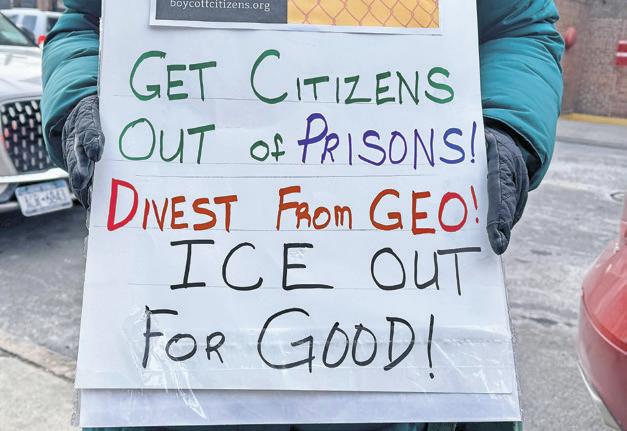
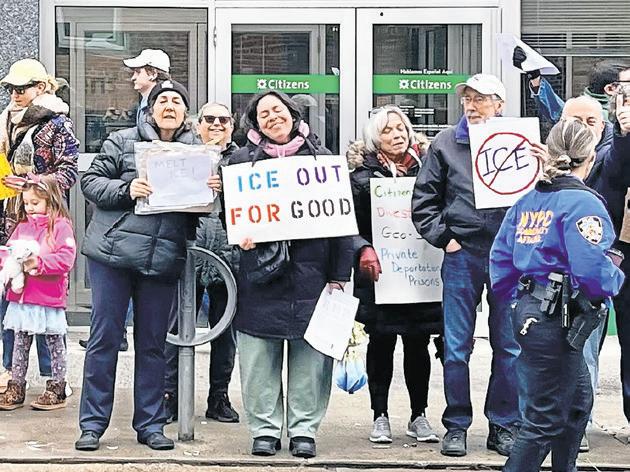
Since January, residents and members of Northwest Bronx Indivisible have fervently gathered outside the bank’s West 235th Street branch, holding handwritten signs, distributing flyers and urging customers to reconsider where they keep their money.
The protests are part of the De-ICE Citizens Bank Coalition, a national campaign accusing Citizens Financial Group of helping sustain the private immigration detention industry through loans provided to The GEO Group and CoreCivic, two of the nation’s largest private correctional firms.
For many involved in the campaign, like longtime Riverdale resident and Northwest
Bronx Indivisible member Lois Harr, the issue became deeply personal after the detention of then 20-year-old Dylan Lopez Contreras in 2024, who was arrested after appearing for a mandatory immigration hearing at 26 Federal Plaza.
Contreras, a student at Marble Hill’s ELLIS Preparatory Academy, spent roughly 10 months detained at the Moshannon Valley Processing Center in Pennsylvania before his release in March of this year.
“We knew that Dylan was in Moshannon, and that Moshannon was run by The GEO Group,” Harr said of what sparked her involvement in the campaign. “Then somehow one of us found out that Citizens Bank was still funding GEO and CoreCivic.”
Reports published by Citizens Financial Group indicate the bank provided more than $1 billion in credit to The GEO Group in 2024 and served as a lender on a $1 billion credit facility for CoreCivic. On CoreCivic and The GEO Group’s May 6 earnings call, both com-
By Olivia Young oyoung@riverdalepress.com
English Language Learners and International Support Preparatory Academy, ELLIS, raised more than $65,000 in scholarship funds for its 62 seniors graduating this June — a crucial need in the wake of rising college tuition costs and reduced federal aid.
Principal Norma Vega launched the Marble Hill school in 2008 with the intent of designing a space for newly arrived immigrant students. Eighteen years later, the energy is “exponential,” Vega said, as volunteer support from the community, as well as the amount of money donated, rises each year. Funds can go toward gaps in college tuition, dorm supplies or transportation, among other things.
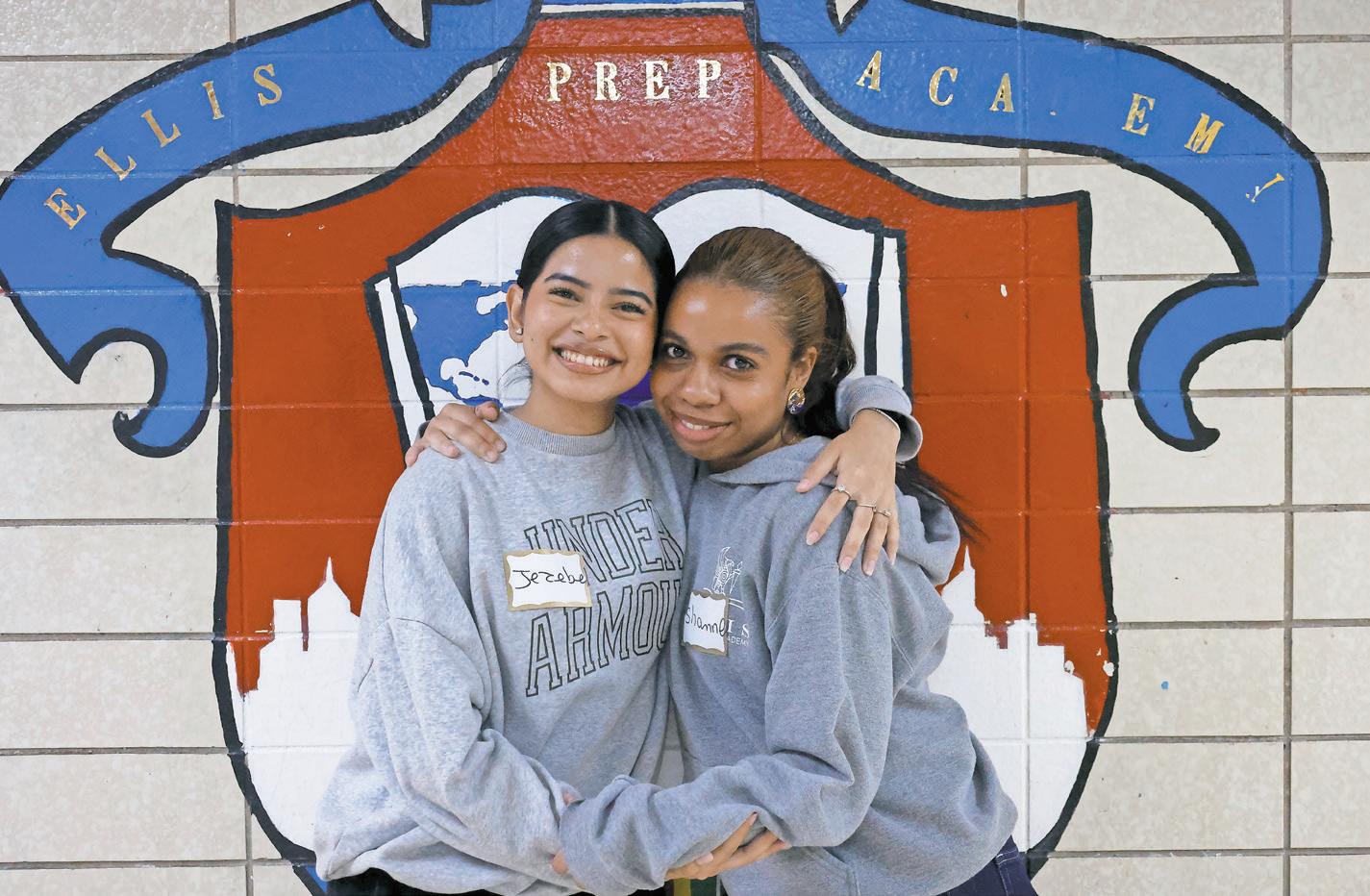
One student, 19-year-old Jezebel Macias, said she is attending Baruch College in the fall to study business. Three and a half years ago, she came to the Bronx from Ecuador, and soon found a community at ELLIS. She said she spoke little English and had never left her home before, but being among supportive staff and other students with similar life circumstances made her more comfortable.
Macias said she is especially proud of her progress with Regents exams. The test involves a heavy amount of reading, and when she took it, Macias was still working on her English. On her third attempt, she emerged with an 83 out of 100, a 20-point jump from the
panies reported rising revenues last year tied to increased immigration detention.
The GEO Group, which operates 19 ICE detention facilities, reported $2.6 billion in revenue and said it was working to reactivate facilities previously phased out under the Biden administration to meet growing ICE detention demands.
CoreCivic, which operates at least 10 ICE detention facilities, reported $2.2 billion in revenue and said the number of immigrants detained in its facilities increased nearly 60 percent in 2025.
The GEO Group did not respond to requests for comment.
CoreCivic defended both its role in the immigration detention system and its relationships with financial institutions. While declining to discuss specific financial arrangements beyond public disclosures, Ryan Gustin, senior director of public affairs for CoreCivic, said it plays “a limited but important role in
By Michelle Mullen mmullen@riverdalepress.com
A study presented during an April full board meeting of Bronx Community Board 8 is shedding light on the changing commercial landscape across greater Riverdale.
The report was conducted by Kahdija Jabbi, a Community Planning Fellow and Baruch College MPA candidate. It examined retail composition, development patterns and commercial vacancies across Community District 8, which includes Riverdale, Kingsbridge, Marble Hill, Kingsbridge Heights, Spuyten Duyvil and Fieldston.
Using field observations, interviews, focus groups and data from Live XYZ, Jabbi’s research found an overall storefront vacancy rate of about 6.9 percent across the district, though some corridors faced significantly greater challenges than others. Jabbi was unavailable for comment.
Constance Barnes-Watson, chair of Community Board 8’s Economic Development Committee, worked closely with Jabbi throughout the fellowship and said the study helped quantify issues community members had been discussing for years.
“One of the things that I know Kahdija talked about is what may seem to be a small number to somebody on one part or in one par t of town could actually be a very large vacancy or have a larger impact to someone on another side of town,” Barnes-Watson said.
She said the study also revealed how differently residents experience commercial conditions depending on the neighborhood.
In Knolls Crescent, Jabbi documented low foot traffic, limited shopping alternatives and the absence of essential services like pharmacies and banks. Residents described the area as “desolate” and said they wanted more community-oriented spaces, including diners, urgent care facilities and gathering spaces.
Other corridors showed stronger commercial activity. Kingsbridge and University Avenues were identified as high foot traffic areas with strong transit access and a wide variety of businesses, though affordability concerns and vacancies remained ongoing issues.
Barnes-Watson said one major takeaway was the need for the community board to strengthen its own visibility and outreach.
“We also learned that, you know, as a community board, we should do more outreach,” she said. “A lot of folks are like, ‘Oh, we are par t of the community board?’ especially when you go toward Lehman and Kingsbridge.”
Since the study began, members of the Economic Development Committee have in-


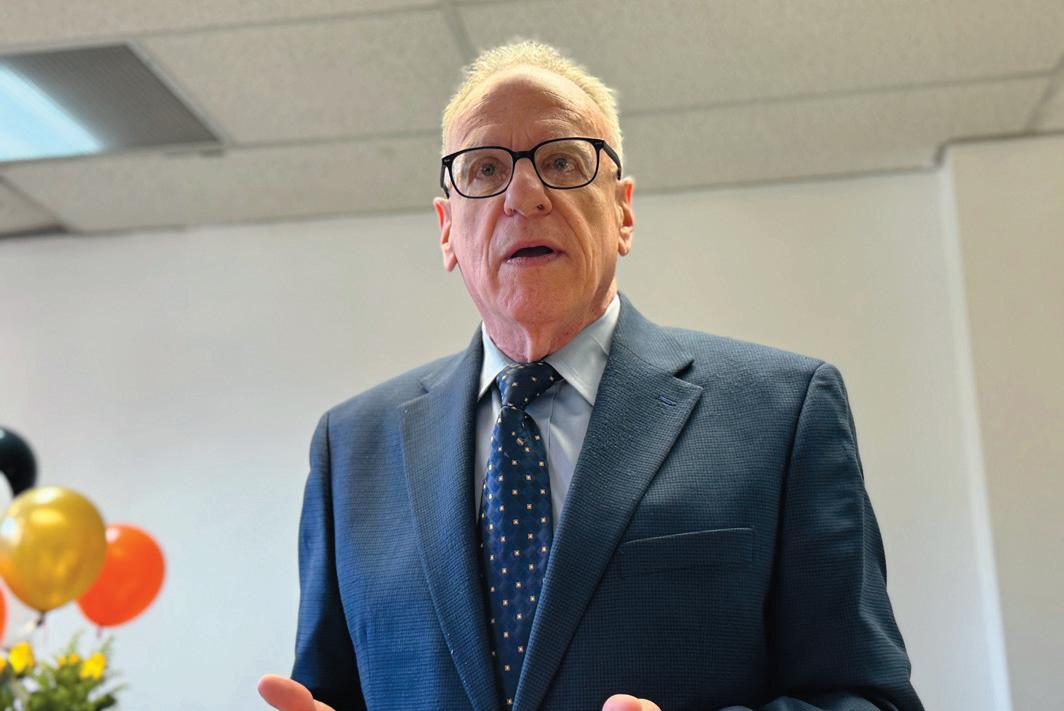


Assembly member Jeffrey Dinowitz restored the A101 bill to its original version May 5 after advocates said the amended version would not protect victims. The bill aims to close what he and supporters refer to as a voluntary intoxication loophole in sexual assault cases.
In New York, those accused of rape and sexual assault can use a defendant’s voluntary intoxication as a defense. This legislative session marks the seventh time the bill has been introduced.
Dinowitz told The Press he chose to file the original version of the bill after consulting with advocates and the district attorneys.
Jane Manning, a former sex crimes prosecutor, previously told The Press the amended version of the bill included language that has, in her experience, been interpreted narrowly in court as the victim being unconscious or asleep. She said it would not account for victims that are conscious, but incapacitated to the extent they are visibly incapable of consent.
Advocates were also pushing for Dinowitz to push the bill forward to reach the Codes Committee, which Dinowitz chairs. As of May 11, the original bill was in the committee.
The amended version of the bill already passed in the Senate.










U.S. Rep. Ritchie Torres announced in a press release May 4 he secured endorsements from three organizations that aim to advance LGBTQ+ rights.
These include the Equality PAC, which is part of the Congressional LGBT Equality Caucus, LGBTQ+ Victory Fund, also a political action committee that looks to increase the number of LGBTQ+ representatives in office, and the Stonewall Democrats of New York City, a citywide Democratic organiza-
tion that advocates for legislation that ensures equality for the LGBTQ+ community.
The Stonewall Democrats said in a statement it was pleased to announce its endorsement.
“Congressman Torres has been a fearless voice for LGBTQIA+ communities, especially queer and trans youth, while advocating for housing justice, healthcare access, and protections against discrimination,” the Stonewall Democrats stated.
Council member Pierina Sanchez, along with 20 other organizations spanning street vendors, immigrant advocates and bodegas, to name a few, called for a $10 million investment in the city’s fiscal year 2027 budget.
Last legislative session, Sanchez introduced a package of bills aimed at expanding access to licenses for street vendors.
Former mayor Eric Adams vetoed it, and the City Council
overrode it earlier this year, according to a May 5 statement from Sanchez. But the law needs funding to effectively be implemented.
The money would support city agencies as vendors become newly licensed, and build out the recently established Office of Street Vendor Services within the Department of Small Business Services to educate vendors on their rights.
Assembly member Jeffrey Dinowitz, who is running for reelection against educator and activist Morgan Evers to represent Assembly District 81, secured another major endorsement.
New York State Attorney General Letitia James announced her support for Dinowitz in a May 12 press release, saying Dinowitz is an advocate for constituents.
“He has been a partner to me in protecting New Yorkers, including our workers and immigrants, confronting antisemitism, and ensuring we put more money in our pocketbooks,” James stated. “He is proud to
call the Bronx home and has never stopped fighting for our progressive values as we push back against the Trump administration.”
Dinowitz said in the release he was honored to receive the endorsement, and lauded James’ pushback against large corporations and the Trump administration.
Dinowitz is also endorsed by state Sen. Jamaal Bailey, Bronx Borough President Vanessa Gibson, U.S. Rep. Ritchie Torres, U.S. Rep Adriano Espaillat and the Bronx Democratic Committee, among others.



















By Michelle Mullen michellemullen@riverdalepress.com
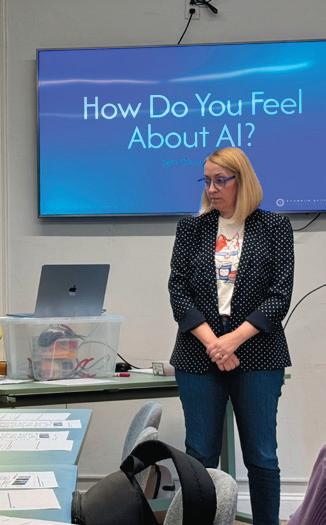
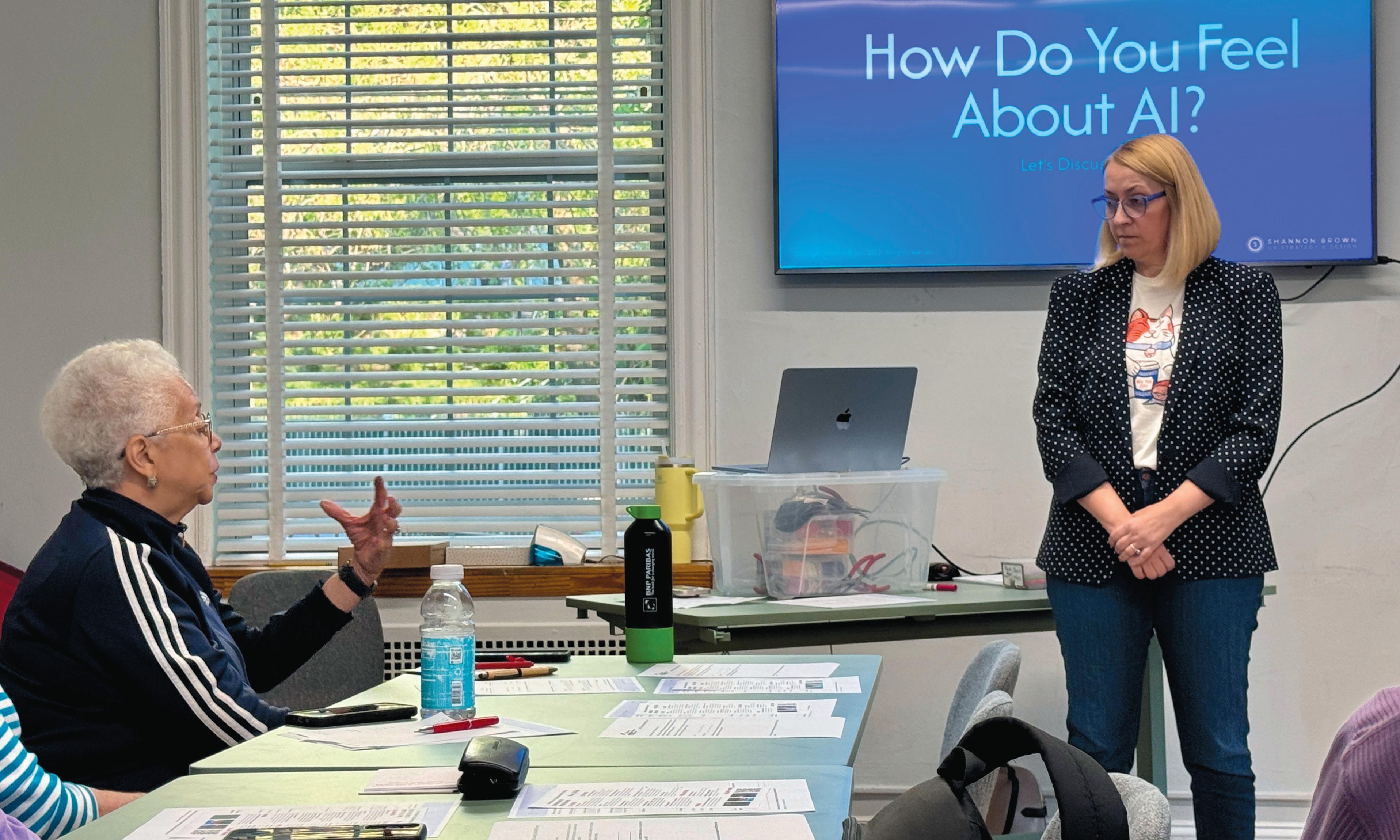
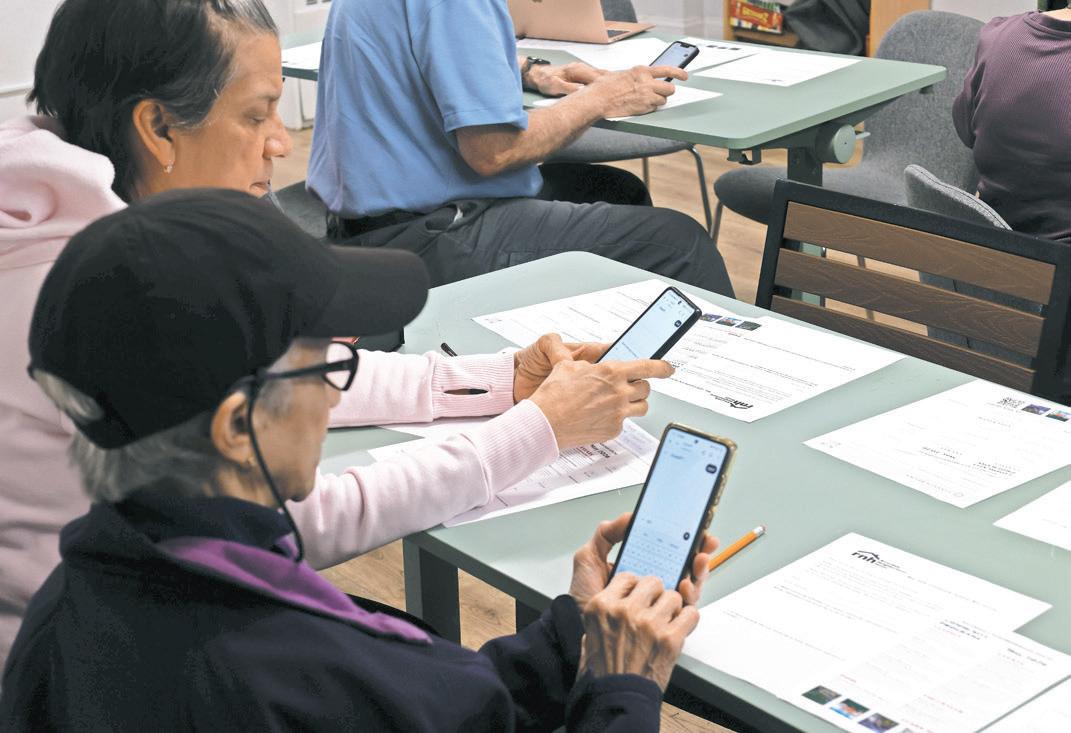
At the Riverdale Neighborhood House on May 7, a room full of older adults leaned over phones and laptops, testing artificial intelligence prompts on Claude and ChatGPT for the first time.
One participant used AI to help write a birthday message. Another asked questions about online trust and misinformation. Several admitted they arrived intimidated by the technology itself, like 76-year-old Ginette Sengose, who attended the workshop after hearing more and more about AI in daily life.
“I came with knowing nothing, and left with knowing quite a lot, I think I’ll be able to use it,” she told The Press at the end of the workshop.
Across greater Riverdale, organizations are responding to a growing demand for technology education, particularly among older adults trying to navigate systems that increasingly require digital fluency — from online medical portals to Zoom appointments and AI-powered tools.
At the Riverdale Neighborhood House, that demand surfaced through a survey sent to more than 900 people on its mailing list. Technology workshops emerged as one of the most requested topics, leading the nonprofit to organize an “AI Basics” session led by local UX designer Shannon Brown. Brown structured the session less like a lecture and more like a guided conversation. Participants were encouraged to bring their own devices and try AI tools in real time while discussing both the possibilities and anxieties surrounding the technology.
“You don’t have to love it, but you do need to know about it,” Brown told attendees. “This is a huge thing. It’s not going away.”
Brown explained how she uses AI in her own workflow to reduce repetitive tasks and streamline projects. She also addressed fears surrounding AI, including concerns about jobs, privacy and how rapidly the technology is evolving.
For Sengose, the workshop offered something more
immediate: a sense of confidence.
“I’m going to be less scared,” she said. “We need this kind of help.”
Sengose added the class helped demystify concepts she had previously only heard discussed in fragments online or in the news. One of the most valuable parts, she said, was learning how to navigate prompts and identify trustworthy sources of information.
“My favorite part of today [was] when I discovered how to use [AI],” Sengose said. “The browser, where to go, the different prompts for Claude to get exactly what I need.”
Lidia Torres, director of community strengthening at the Riverdale Neighborhood House, said many adults approached the organization seeking help with devices family members set up for them, but they do not know how to fully use them.
“There’s a lot of fear around the topic of tech and AI,” Torres said. “You turn on the news, you turn on the radio, everybody’s getting bits and pieces of this.”
The organization is now discussing creating an intergenerational technology club that would pair teenagers with older adults for hands-on support with computers, phones and AI tools. Torres said many older adults rely heavily on children or grandchildren for help, but those family members are not always available.
That kind of intergenerational learning has already become central to programming at Riverdale Senior Services.
At the nonprofit’s recent tech expo, students from Horace Mann School sat sideby-side with older adults, helping them navigate laptops, Zoom, patient portals and online systems that have become increasingly necessary in everyday life.
Representatives from Senior Planet, a nonprofit tech literacy program from AARP, also attended to provide oneon-one support and answer questions about devices and online tools.
The event drew more than 70 attendees, including stu-
dents, volunteers and vendors. Workshops ranged from online healthcare technology to AI-generated art and music, shared Riverdale Senior Services Program Specialist Barbara Denson.
In one session, older adults created digital artwork on tablets with the help of student volunteers. Another focused entirely on teaching participants how to use Zoom, something organizers said continues to frustrate many seniors.
“We certainly always keep the one-on-one tech help,” Denson said. “Our older adults really do appreciate having that time.”
Riverdale Senior Services has offered recurring technology classes for years, but its annual tech expo remains its largest resource. Workshops cover topics including email, photo sharing, online doctor appointments and patient portals like MyChart — systems that have become increasingly essential as healthcare providers move more services online.
“A good portion of it is that more and more of anything that they need to access,

they’re asking people to do online,” Denson said. “They need to be able to take care of a lot of things online.”
As part of the expo, representatives from the New York Public Library’s Kingsbridge Branch highlighted the library system’s growing range of tech-help services, part of a broader effort to expand digital literacy resources in branches citywide.
T.J. Woods, New York Public Library Director of Technology Training Programs, said the library system is also rolling out AI-focused public panels and technology classes that range from beginner introductions to advanced coding and creative workshops. Topics include intellectual property, AI in education, mental health applications and music production.
At their core, Woods added, the library’s Wi-Fi resources and neighborhood outreach programs are designed to reach residents who may not feel comfortable entering a traditional classroom.
That role has become increasingly important in the Bronx, where the Center for
an Urban Future reports more than one in five households still lacks broadband internet access and nearly one in three households does not have a computer at home.
The report described public libraries as being “on the front lines” of expanding digital access, noting Bronx libraries recorded more than 430,000 Wi-Fi sessions in fiscal year 2024.
“Everyone interacts with technology,” Woods said. “The lack of digital literacy, as tech-
nology is evolving, creates systems where people are left behind.” After her workshop, Sengose said the larger takeaway was not simply learning how AI works, but realizing that older adults still have a place in a rapidly changing digital world.
“I don’t want technology to really close up,” she said. “Older people, we need to know about computers and all the new technology coming out. Everybody needs to know it.”



CONTINUED from page A1
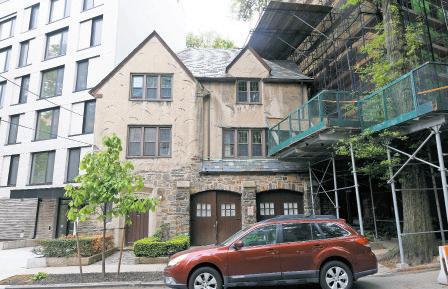
The Denishawn House is owned by Van Cortlandt Jewish Center, and is part of a lot that is under contract as of June 2025 to be sold to Barone Management, a real-estate development and construction firm based in Roslyn, New York, according to city property records. Residents’ concern with the Denishawn house stems from fear a building with cultural significance will be converted or demolished.
The center’s president, Stuart Harris, and vice president, Jack Spiegel, said the deal has not gone through yet. The lot includes a synagogue, so it must be approved for sale by the Office of the New York State Attorney General. Harris and Spiegel said they don’t know what Barone will do with the property, and Barone could not be reached for comment.
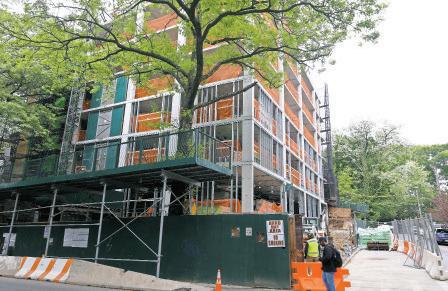
In between Stevenson Place and Sedgwick Avenue is an active construction site, where the whir of machinery is heard often. It is set to be a seven-story building, following the erection of another sevenstory building on Sedgwick, called The Rowan, which is described on StreetEasy as “refined luxury living.” The company associated with these properties, Innovative Development & Construction, declined to comment. Sandwiched between these properties is Patricia Klarl, who has lived in her family’s stone house for more than 20 years. She expressed disappointment for the houses that were torn down to make room
for new development.
“We all understand in the neighborhood the need for housing,” Klarl said, noting the size of the new buildings. “It just changes the characteristics of the neighborhood … But you can’t stop progress.”
The recent rise in development is due to a few factors, according to Charles Moerdler, a former city buildings commissioner and chair of the Bronx Community Board 8 Land Use Committee. It goes back to moves by former mayors Bill de Blasio and Eric Adams — especially Adams’ landmark City of Yes initiative — that aimed to address the city’s housing shortage through zoning reform and other measures. In the last mayoral election, there were also three proposals on the ballot that looked to fast-track affordable housing by limiting the number of parties needed to approve a building site, which critics said took away community input. Van Cortlandt Village is also zoned in a way that lets developers build taller buildings.
In the last few months, Van Cortlandt Village residents have mobilized over concerns about rapid development. Natalya Girshman, who lives in Park Reservoir, wrote a letter along with neighbors to Bronx Community Board 8 and the New York City Planning Commission April 14, expressing strong opposition to the development trajectory. It cited narrowing streets and rising traffic, aging sewage infrastructure, a perceived increase in

crime, and alleged harassment of homeowners to sell their properties.
“The rapid replacement of single-family homes with multi-story, high-density units is not development” the letter reads. “It is the destruction of our community’s character and safety … Our neighborhood is turning into a city within a city, and we deserve a say in our future.”
The letter proposed a temporary suspension of development until a comprehensive study could be done to address neighbors’ concerns. It was sent with 150 signatures.
The city’s planning commission told The Press it would review the letter with sister agencies, and keep lines of communication open with the community. It also said that as the city faces an unprec-
edented housing shortage, it’s vital every neighborhood does its part. Van Cortlandt Village has built less than 300 new homes since 2010, the commission said, and greater Riverdale has generated a net gain of 2,336 homes in that time, which is the third lowest in the borough.
Residents emphasized opposition to the “Not in My Backyard” phenomenon, when individuals are against development in their neighborhood due to the proximity. Instead, they stressed the importance of housing, but with more input from the community. The sewer may be the most potent side effect of development cited by concerned neighbors, but it is certainly not the
for community members who
have been sounding the alarm for
CONTINUED from page A1
America’s immigration system.”
“CoreCivic does not enforce immigration laws, arrest anyone who may be in violation of immigration laws, or have any say whatsoever in an individual’s deportation or release. CoreCivic also does not know the circumstances of individuals when they are placed in our facilities,” Gustin said in a statement to The Press.
The company also said it is not informed about the circumstances of detainees placed in its facilities and that its responsibility is “to care for each person respectfully and humanely while they receive the legal due process that they are entitled to.”
On May 5, Harr sent a letter to Richard Stein, Citizens Bank’s executive vice president and senior risk advisor, urging the bank to “immediately end its financial relationships with CoreCivic and The GEO Group” and publicly commit to ending their financing of private prison or detention companies.
In the letter, Harr criticized comments made by Citizens CEO Bruce Van Saun during the company’s April shareholder
meeting, where he suggested some reports of abuses in detention facilities “might be exaggerated.”
The letter also cited years of federal inspections, congressional investigations and oversight findings documenting alleged medical neglect, unsanitary conditions and inadequate mental health care in facilities operated by The GEO Group and CoreCivic.
In response to the protests, Citizens defended its broader corporate record and declined to discuss specific clients.
“Citizens respects the right to peaceful expression and operates through close client relationships supported by rigorous due diligence, regulatory compliance, and responsible risk management,” Rory Sheehan, head of enterprise communications, said in a statement to The Press.
The bank said it was unfair to view Citizens “under a single issue lens,” pointing to what it described as significant community investment efforts, including $2 billion in equity and loan commitments in 2025 to finance the construction or revitalization of more than 8,000 affordable housing units.
In Riverdale, the chorus of calls on Citizens has broadened since the first demonstration in the winter, which consisted of only a small group of protesters standing outside the branch in freezing temperatures. Since then, turnout has steadily grown, with Harr estimating more than 40 people attended the most recent protest.
The gatherings are intentionally structured as peaceful community actions rather than confrontational demonstrations. The De-ICE campaign’s guidelines for protesters state to avoid blocking entrances or harassing customers, and instead focus on conversations with residents passing by.
That neighborhood-level organizing reflects the structure of the broader coalition itself. Peyton Flemming, a spokesperson for the De-Ice Citizens Bank coalition, said the campaign began only months ago among activists in Massachusetts and Connecticut, following a successful effort to pressure Avelo Airlines to stop operating deportation flights for ICE.
The coalition’s first coordinated day of action in January included several dozen protests across multiple states, including
one led by Harr in Riverdale. By March, organizers said that number had more than doubled, with demonstrations spanning 12 states and Washington, D.C.
Among those attending the Riverdale demonstrations was Cathy Mulvaney, an NWBI member and longtime Citizens Bank customer, who said learning about the bank’s financing prompted her to reconsider where she keeps her money.
“I don’t want my money going toward that,” Mulvaney said. “It starts with one person. We can all do something.” Mulvaney said many who pass by the protests initially know little about the issue, but often stop to ask questions or take informational flyers distributed by demonstrators.
For Harr, the importance of the protests lies partly in their persistence. “You never know exactly which straw is the one that breaks the camel’s back,” she said. “Therefore all the straws are really important.”
CONTINUED from page A1
creased efforts to walk commercial corridors, speak directly with business owners and distribute information about community board meetings and resources.
The report arrives as some sections of Riverdale are beginning to see renewed commercial activity.
In South Riverdale, tapas bar Tin Marin recently expanded into the neighboring storefront, effectively doubling its footprint, while nearby restaurant Bokagua also expanded over the past year. In North Riverdale, several eateries, salons and specialty businesses have opened in previously vacant storefronts, particularly around Mosholu Avenue and Riverdale Avenue.
Chintan Trivedi, a broker with Re/ Max who specializes in commercial and residential real estate in the Bronx, said Riverdale Avenue has become one of the strongest retail corridors in the district.
He attributed that growth partly to newer restaurants that have drawn residents who previously traveled outside the neighborhood for dining and nightlife.
“People invested money in a restaurant like Tobalä and all of the restaurants, they
CONTINUED from page A1
first time. Another graduating senior, Shannel Figueredo, 19, said she will be joining Macias at Baruch and is looking to study political science. Figueredo moved three years ago from Cuba, and said a new language, new culture, new city and new friends were daunting. She expressed similar gratitude for the environment she found at the school.
“This school and this country made me realize how strong we are,” Figueredo said. “As a woman, as a student, as immigrants. It showed me another side of the world, another perspective. Each day I learn something new that I know is going to come with me in the future.” Macias and Figueredo said they want others to know the extent of immigrants’ dedication and capabilities. Macias explained that even though it was intimidating at first, she was able to find her own journey, be a part of communities and take advantage of opportunities.
“We are the future of this country too,” Figueredo said. “We came here to support this country — to get a new life, a better life, and to be better each day.”
The money raised at ELLIS truly goes a long way, as two alumni — 28-year-old
brought in a different kind of culture, different kinds of patrons,” he said. “They don’t have to go to Manhattan to get a similar ambience or food and service.”
Trivedi also pointed to demographic changes and increasing demand from younger residents and families as drivers of growth in some corridors, particularly in North Riverdale.
At the same time, both Trivedi and Barnes-Watson said high commercial rents remain one of the biggest barriers facing local businesses.
“I think just in general, the cost to rent some of these places is so high,” BarnesWatson said. “If you’re a small business just trying to get started, it’s going to be really hard to drop $10,000 a month.”
The two said construction projects, inflation and increasing operating costs have also strained many longtime businesses.
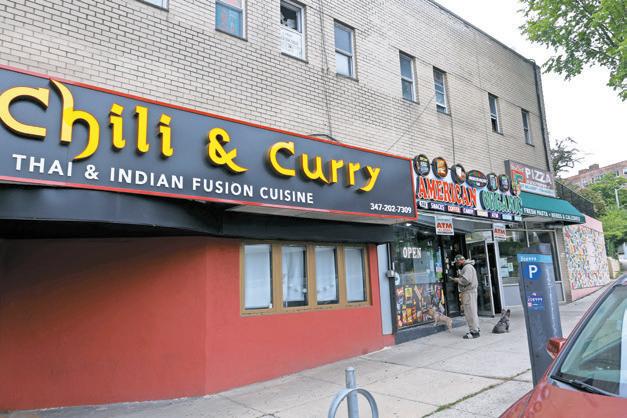
Trivedi added landlords often hesitate to offer lower rents and provide flexible leases, especially in corridors where businesses have struggled in the past. He pointed to the closure of Chili and Curry on Kappock Street, one of his clients, as an example of a business that faced mounting financial pressure despite significant
Ouma Diop and 27-year-old Emely Lopez
— shared they relied on the funds provided while they were in college. Lopez, who said she worked over 25 hours a week as a full-time student, still struggled to cover costs before receiving money from ELLIS.
“For undocumented students, doors are often closed before we even have a chance to knock,” Lopez said. “Education can quickly become something that felt out of reach.”
Lopez received her green card last December. She said a diploma is a ticket, not just for her but for her family. Her husband, who she met at ELLIS, was also formerly undocumented and obtained a green card in order to join the military. They are celebrating their eighth anniversary in a few weeks. Diop is a first grade teacher, and also became a mom while she was a student at ELLIS. She said support from the school, and a financial cushion, was critical.
“When someone believes in you like that, it hits differently,” Diop said. “It makes those late nights studying feel purposeful. It makes the exhaustion feel temporary. It makes you realize that your dream didn’t just die.”
ELLIS counselors Jackie Peña and Heidin Bernard emphasized this belief is
investment.
The study ultimately recommended stronger small business outreach, increased collaboration with city agencies and support for proposed state legislation that would impose taxes on long-vacant storefronts.
If passed, Senate Bill S6804 and Assembly Bill A669 would create a commercial vacancy tax on storefronts left vacant for extended periods in cities with populations over one million, largely aimed at New York City. The measure is intended to discourage landlords from warehousing commercial spaces while neighborhoods struggle with empty storefronts and rising rents.
“We are glad to see that this is something now actually trying to move through legislation,” Barnes-Watson said.
She argued the proposal could create more pressure for landlords to negotiate with prospective tenants rather than leaving spaces empty indefinitely.
GARY JEAN-JUSTE photos
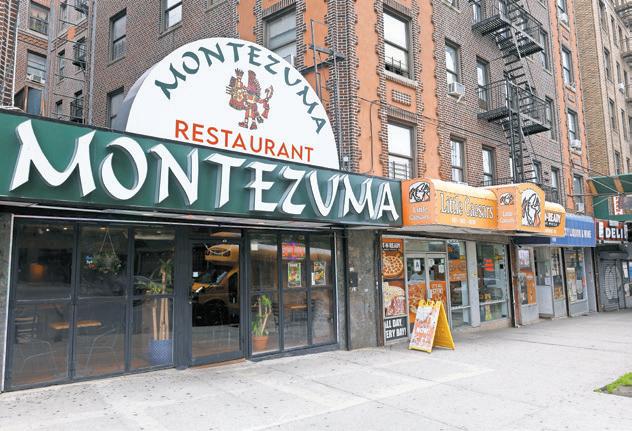
In some areas, like Kingsbridge Avenue and University Avenue, high foot traffic is helping businesses flourish.
Trivedi said some longtime property owners view vacancies as less risky than repeatedly cycling through struggling businesses, particularly when they can offset losses against income from other properties.
“They’d rather wait for the right tenant who has deep pockets than keep turning spaces over again and again,” he said.
Both Barnes-Watson and Trivedi said they believe a vacancy tax could help push landlords to bring rents closer to market realities and make commercial corridors more accessible to independent businesses.
“We sometimes have to legislatively get involved,” Trivedi said. “You have to
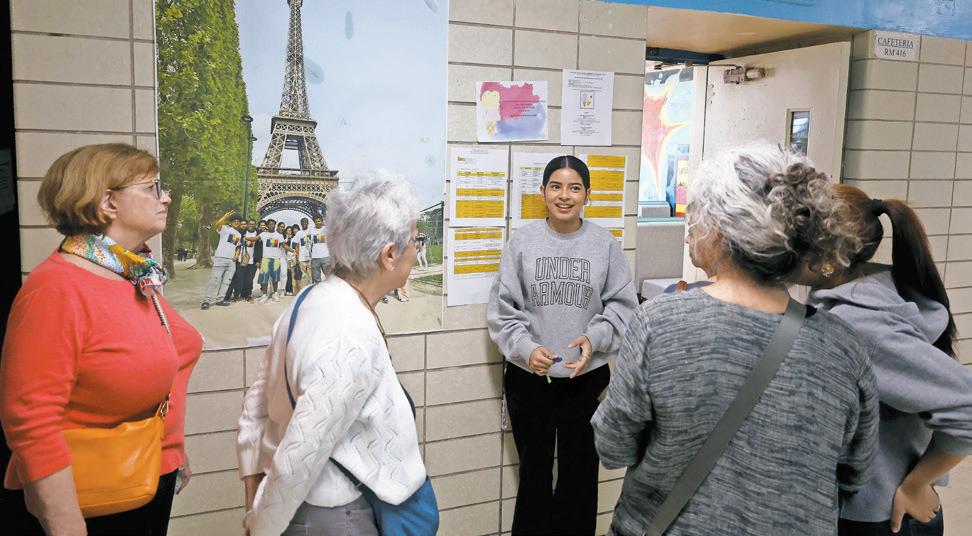
core to their teaching approach. Peña said the level of determination and resilience in her students is incredibly rare. Bernard said that a lot of their students are immediately dismissed by others, and ELLIS staff works to create a space where students can become leaders in the arts or sciences, among other subjects. He added there is a misconception that as an international transfer school, the students are rushed through classes and into the closest community college or GED prep program, with little ongoing support.
push landlords to come to the table and make deals with somebody.”
Despite the challenges outlined in the report, Trivedi believes parts of the northwest Bronx are beginning to evolve commercially.
“This will not go on forever — it will change, but it’s a slow change,” he said. “We’re on that cusp of transformation in awesome parts. I think when it turns around again, Riverdale will probably see the best light it deserves.”
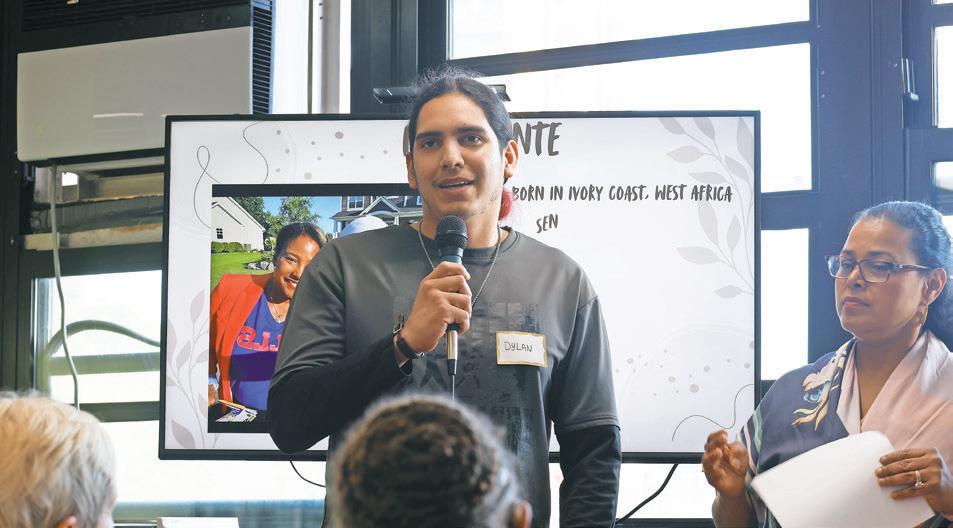
That’s far from the truth, he said, and the staff at ELLIS works to ensure students harness their potential.
By Michelle Mullen mmullen@riverdalepress.com
A Bronx food pantry is expanding its efforts through a hygiene and personal care drive, but organizers say the initiative is about more than collecting basic necessities.
In a borough where more than a third of residents are foreign-born, Montefiore’s Project Bravo in Fordham asks donors to contribute “culturally responsive” items that reflect the needs and backgrounds of the communities it serves.
The drive, launched in April, is collecting shampoo, soaps, hair products and other hygiene items for families visiting the pantry. Tynisha Malone, director of Prevention Programs and the Project Bravo Food Pantry, said the effort grew out of a recognition that many donation campaigns focus on generic necessities while overlooking the realities of different hair types, skin types and cultural grooming practices.
According to data from the NYU Furman Center, the Bronx has the city’s largest proportion of nonwhite residents, with 55 percent identifying as Hispanic and 29 percent as Black. The area Community Board 8 represents, which includes Riverdale, Fieldston, Kingsbridge, Marble Hill, Kingsbridge Heights and Spuyten Duyvil is 43.5 percent Hispanic and roughly 11 percent black. Former Riverdale resident Sara Ghassemzadeh, an attending psychologist in Montefiore’s adult outpatient psychiatry clinic with Middle Eastern roots, first suggested the hygiene drive to Malone after noticing similar unmet needs among many of the patients she worked with, particularly with self-care and access to products suited for different hair and skin types.
Drawing from both her clinical work and years of bringing donated items to Project Bravo from friends and neighbors, Ghassemzadeh helped organize the drive and shape its focus on culturally responsive donations.
“There are so many different needs when people are living in poverty,” Ghassemzadeh said. “Project Bravo has contracts that provide food, but pretty much everything else relies solely on donations from the community. Toiletries are something that just accumulate in people’s houses, but they’re also such a major need.”
The hygiene drive Amazon wishlist, for example, included products such as an “International Women’s Multicultural 13-piece Travel Kit,” alongside culturally specific hair products, like bonnets and durags.
Among the donated brands was SheaMoisture, a company whose products are marketed toward curly and textured hair. On its website, the brand describes its products as helping create a “protective layer” for “kinky + curly hair” and states that it is committed to “bringing the solutions to our melanin-rich community.”
“I think hair and being able to take care of yourself physically are a huge part of dignity and identity, and I don’t think that often gets considered,” Ghassemzadeh said. “A lot of folks at shelters or hospitals will have basic hygiene products, but the cultural considerations of different hair textures and skin needs don’t really get factored in.”
In response to the call for donations, Spuyten Duyvil resident Shantel Watson, an esthetician and former salon owner, donated skincare products, hair accessories and beauty supplies geared toward skin of color and textured hair.
“Culturally responsive items
recognize the unique needs of textured hair, melanated skin and cultural beauty practices,” Watson said. “Those are things that people don’t always think about, and they’re often more expensive too. You want people to be able to present their best selves and to feel good about themselves and have the things that they need.”
Watson said many products commonly viewed as luxuries are actually necessities for maintaining certain hair types or skin conditions. She pointed to items like satin bonnets and pillowcases, which help prevent dryness and breakage in textured hair but are often more expensive and less likely to appear in donation drives.
She also donated products formulated for sensitive skin, saying people often misunderstand the skincare needs of darker skin tones.
“The more melanated the skin is, actually the more sensitive it is,” Watson said. “A lot of the products you find will cause a breakout or are too harsh for skin of color.”
The hygiene drive is part of Project Bravo’s broader effort to make community members feel recognized rather than treated as interchangeable recipients of aid.
“We try to make the need for the clients — either food or hygiene items — something that they actually want to take,” Malone said. “Because I use Dove doesn’t mean you want to use Dove. Not everyone uses the same products.”
Items like Vicks VapoRub, she added, are used in some communities for everything from bug bites to inflammation rather than solely for congestion relief. It’s a reminder, she said, that even familiar household products can carry very different cultural uses and meanings.
The drive expanded rapidly through social media and


word of mouth. Donations have ranged from unopened beauty products and travel-size toiletries to wigs, makeup and first-aid supplies. For Mother’s Day, Project Bravo packed and distributed purses and pock-
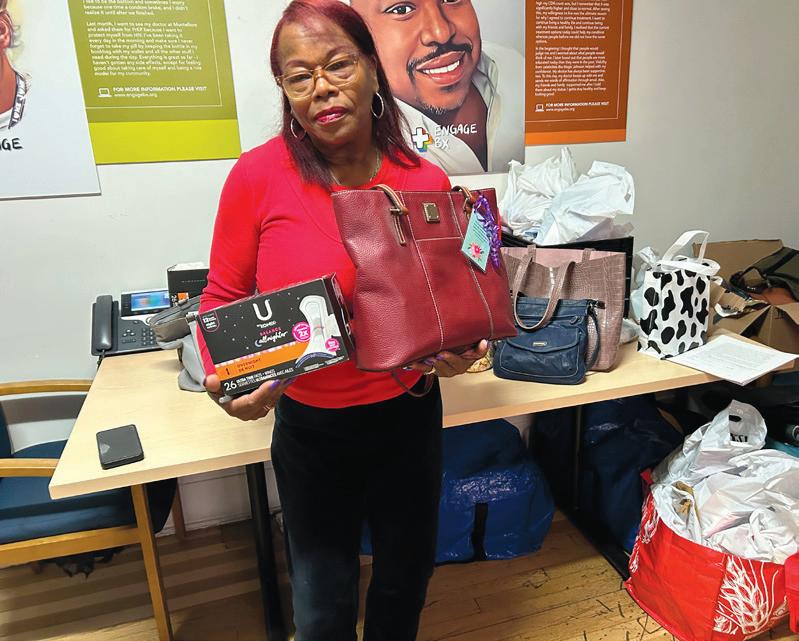
etbooks stuffed with some of those donations.
Ghassemzadeh said the response has shown how eager people are to contribute when they understand the need.
“I think on a systems level,
folks don’t always have agency and choice,” she said. “You get what you get, and you have to be happy with what you got. People don’t always consider how those systemic pieces can further isolate people.”
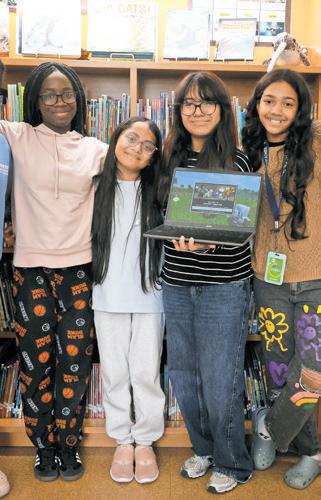
A group of six girls from the P.S. 86 Kingsbridge Heights School are the reigning elementary Bronx champions in the Minecraft Education “Battle of the Boroughs,” a competition where participants build a Minecraft world that imagines a more sustainable version of city spaces.
The fifth graders were among 3,395 students that took part in the battle, according to the Mayor’s Office of Media and Entertainment. Of the thousands of students, who make up 679 teams, the Kingsbridge Heights School was one of 15 that advanced to the Mayor’s Cup Final. An elementary, middle and high school team are chosen for each borough.
Teams are given a prompt by judges, and then have a limited amount of time to work together — with help from a coding program — to create the world. They are ranked based on communication with one another, presentation and having design features that are solution-driven, accessible and on-topic.
The competition is part of the New York City Video Game Festival, and is a collaboration between the mayor’s office, New York City Public Schools, the NYC Collegiate Esports Circuit Finals and Video Game Amateurs. It was launched in 2021 with the goal of engaging students in shaping the future of their city, according to NYC Public Schools.
On May 9, the girls competed in the Mayor’s Cup Final. While they didn’t win the final, computer science teacher and instructor of the club Kim Judin said throughout
the season, the girls transformed. Those that were shy became more self-assured, and others that were already outgoing harnessed their skills in leadership roles. As a team, they also learned how to complete tasks under a tight deadline.
In the regional competition back in March, the girls had 30 minutes to research and 30 minutes to create a cleaner, safer and faster version of the Hunts Point Food Distribution Center, a major distribution hub in the South Bronx that struggles with pollution. Down to the wire, the girls worked together on a Minecraft world that had additional lanes to decrease traffic, solar-powered lighting, green spaces and a farmers market. Eleven-year-old Leeah Gonzalez was the one to present the world to the judges — a role known as the speaker.
“I felt very proud of myself,” Leeah said, noting she was confident the team would win. “It took a lot of guts to be speaking up there.”
Learning how to code came quickly to the girls, through a Microsoft block coding program called MakeCode, where the user can drag and drop color-coded boxes to build their code. For Yafatou Bayo, 12, the team’s primary coder, the concept was familiar.
Yafatou said when she was younger, she started using Scratch, an online program that teaches coding basics. Her skills improved while working with the team, but that wasn’t her only motivation for joining.
“The whole reason why
I joined the club was to kind of gain confidence,” Yafatou said. “I feel like I’ve cracked a little bit out of my shell.”
Zurisadai QuirogaVazquez, 10, was the team’s “driver.” When the others were presenting, Zurisadai was at the computer, guiding viewers through the Minecraft world. Zurisadai said she appreciates how even in the face of a challenge, the team still knows how to get along and have fun with one another. They also benefit from the expression Minecraft allows.
“It’s a game that doesn’t have limits,” Zurisadai said. “You can express your creativity in any way that you want.”
The same sentiment was shared by Joselyn Castrejon, 10, who was another speaker on the team. Joselyn has an interest in art, and said she enjoys building freely on Minecraft.
The team was not only judged on the content of the world, but on teamwork too. The judges paid attention to how team members spoke to one another, Leeah said. The girls admitted they do run into conflict from time to time.
“Sometimes we do argue, like a lot,” Joselyn said, explaining that tensions rise when the team members disagree on if they have the time to build certain things. “But then we end up talking it out.”
The girls took The Press through one of their worlds — a variant of their school, complete with the face of a tiger, the school’s mascot, built in the sky. Outside was a gated garden with water flowing in between rows of plants.
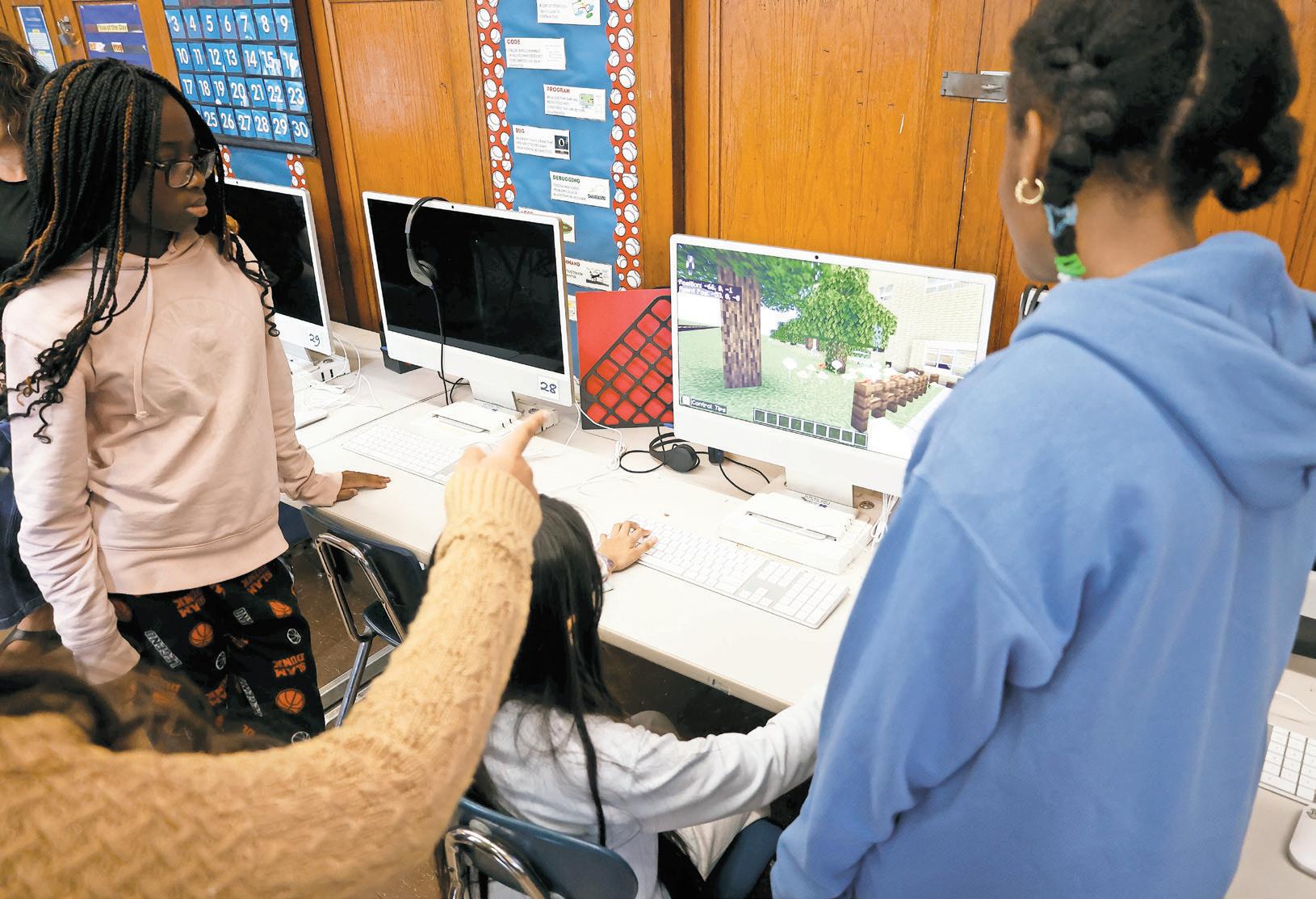
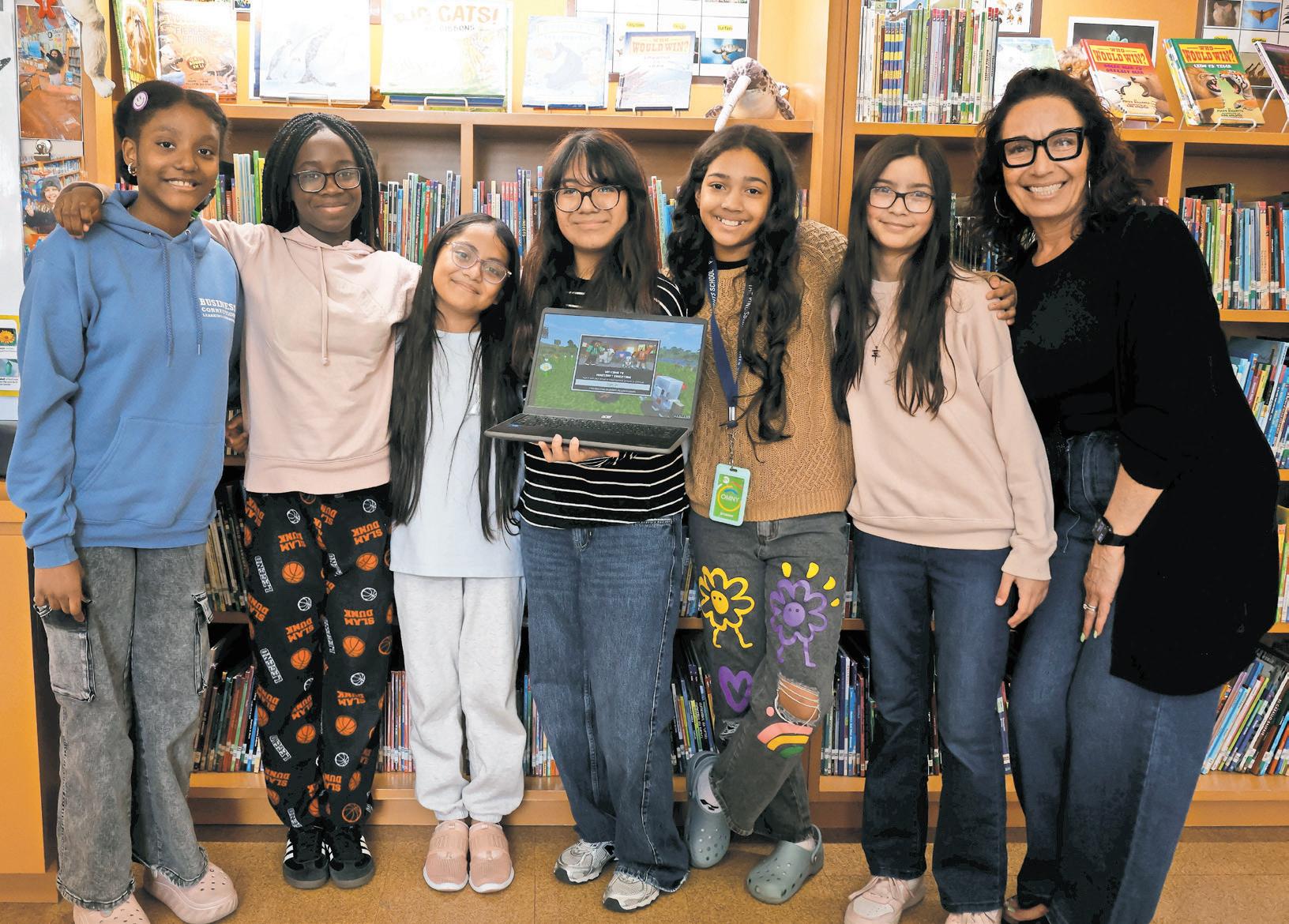
Inside was an auditorium, a library, a cafeteria and classrooms with virtual versions of their teachers.
The lighting was powered by Redstone, a resource in Minecraft. Gracie Deleon, 11, was responsible for the electricity in the worlds, an important factor when considering how to make a world sustainable. The girls previously incorporated automatic doors and ramps to prioritize accessibility as well.
Adriana Cortes, 10, was the team’s alternate, meaning she would sub in for a team member if they were unavailable.
Though she did not participate in the regional competition, she said she enjoys Minecraft and being around her friends during practices.
As the girls prepare to graduate and move onto middle school, many going their separate ways, Judin hopes they will carry with them the sense of confidence they’ve developed, and the importance of working together.




By Olivia Young oyoung@riverdalepress.com
Fourteen trafficked toucans have fully recovered at the Bronx Zoo after federal authorities confiscated the birds at the United StatesMexico border last summer.
The keel-billed toucans, known for their yellow bibs and vibrant, multicolor bills, were found hidden in the dashboard of a vehicle, the zoo said. They arrived in the Bronx last July, where they underwent months of rehabilitation. The species is considered near threatened, and the news of their recovery comes on the heels of another positive development for at-risk species at the zoo — the birth of two endangered collared lemurs, announced May 4. At just three to four months old, the rescued toucans were found sedated and bound at the Otay Mesa Port of Entry in California. All showed signs of severe stress, metabolic issues and malnutrition, prompting the U.S. Fish and Wildlife Service to contact the Bronx Zoo. Now, Chuck Cerbini, ornithology curator at the zoo, said the birds have transformed.
“They went from these sunken, stressed animals to behaviorally normal toucans — calling, displaying to each other, throwing their heads up,” Cerbini said. After they first underwent physical exams, Cerbini noted that amid other health challenges, the toucans were extremely dirty — the result of improper housing without the opportunity to bathe, and inability to clean their own feathers. This took weeks to correct, Cerbini said, with help from a simulated rain shower.
Another visible improvement was in their bills, which originally appeared wrinkly due to a lack of calcium and Vitamin D. Baby toucan bills are especially pliable, making them susceptible to trauma, Cerbini said. But with the proper nutrition, the beaks were able to grow larger and stronger.
Keel-billed toucans are in demand in the global pet trade, an illicit industry that is only growing, the zoo said. Cerbini noted it is worsened by social media, where some users normalize keeping exotic animals as pets, and can easily advertise them online.
According to the Center for Biological Diversity, the U.S. exports more than 17 million live animals each year, and imports more than 90 million — encompassing mammals, reptiles, amphibians, arachnids, birds and fish. Aside from risking the wellbeing of animals, the trade contributes to the extinction crisis, introduces invasive species and spreads diseases.
Four of the rescued toucans will remain at the zoo, two of which can be seen at the “World of Birds” exhibit. The remaining birds are a prospective breeding pair, and are off exhibit to see if they hit it off.
The other 10 were transferred to institutions accredited by the Association of Zoos and Aquariums, which the Bronx Zoo collaborated with. As part of the Species Survival Plan Program, the toucans will contribute to educational programs and conservation breeding.
Also a part of this plan are the endangered collared lemurs. The baby lemur twins were born March 15, and recently made their debut in the “Madagascar!” exhibit.

For the first few months of their lives, young lemurs cling to their mother, and hide in her fur, the zoo said in a social media post.
The process behind their birth was deeply scientific, and involves an organized team of veterinarians, animal care specialists and reproductive biologists, said Keith Lovett, vice president and director of animal programs at the Bronx Zoo. Lovett added

it’s critical to develop what is called an assurance population, or a biological backup to avoid extinction if the wild lemur population continues decreasing.
The breeding program involves matchmaking the Bronx Zoo’s collared lemur with an outside lemur from another accredited zoo, making sure their genes are different from one another. Zoos do so by keeping studbooks, which are registries that track the family history and population changes of endangered species.
“Basic rule of thumb is, the more genetically diverse the population is, the more robust it’s going to be — usually a healthier population,” Lovett said.
Collared lemurs are also threatened by the pet trade, as well as bushmeat hunting — when humans hunt wildlife to eat their meat — and habitat loss due to slashand-burn agriculture, according to the Duke Lemur Center. This is a method that involves cutting and burning forests to create fields, something that is required for traditional rice farming, among other things.
For the Bronx Zoo, helping threatened species survive and thrive is part of an ongoing mission. The zoo was established by the World Conservation Society with the goal of advancing wildlife preservation and promoting the study of zoology, according to the society. It is also responsible for the Central Park Zoo, Queens Zoo, Prospect Park Zoo and New York Aquarium.









The Riverdale Block Party returns for its fourth annual outing on Sunday, May 17. Get ready to indulge in local eats and handmade crafts from an array of vendors, walk the doggie parade with your pup, groove to a live DJ and much more. Takes place on Riverdale Avenue and West 259th Street from noon to 4 p.m.
Emergence
The Kingsbridge Historical Society hosts artist Daniel Hauben’s exhibit, “Emergence,” until June 30, at 2570 Independence Ave. It features the Bronx painter’s monumental cityscapes, sculpted oil reliefs and landscapes, both real and imagined, including the 21-foot “Reflecting on the Familiar” and the 9-foot “Emergence.”
At Wave Hill
Atom Moore: Second Nature
Still life and product photographer Atom Moore presents “Second Nature,” an exhibit centered on the anatomy of plants in Wave Hill’s living collection. View the series at Wave Hill through July 12.
Kids on the Move! Rainbow Dancing
Move through the colors of the rainbow at Wave Hill on Sunday, May 17 from 1 to 2 p.m. Explore the grounds with guest educator Corinne Flax and discover all the garden’s different and beautiful colors.
After a guided nature walk, move through a series of relaxing and energizing yoga-inspired postures to express the many colors around you. Recommended for ages 3 to 8.
At the RiverdaleYonkers Society for Ethical Culture Spring Concert On Sunday, May 17, the Riverdale-Yonkers Society for Ethical Culture will host its spring concert, “Travel and Stillness: A Celebration.”
The warm, lively performance includes engaging songs spanning time, cultures and musical genres. The event will include music by Dan Cohen, Mun-Tzung Wong and Eve Weis, encompassing classical, Broadway, jazz and pop, as well as concluding with a rousing sing-along.
Runs from 7 to 8:30 p.m. Donations are $20 per adult and $10 per youth.
At Riverdale Neighborhood House Ballet Fit
The Riverdale Neighborhood House invites you to join its Ballet Fit class on Tuesdays at 6:30 p.m. The class is a training program that combines ballet exercises with fitness exercises. Open to ages 13 and up, it is designed for individuals of all movement abilities. Participants will work on toning and strengthening, coordination, balance and flexibility.
Taught by Azucena Rollan Mas, dancer, performer and certified American Ballet Theatre and Ballet Fit instructor. Register at riverdaleonline. org/classes.
Sing Like A Star
This Riverdale Neighborhood House singing workshop runs every Wednesday at 6:30 p.m. It will introduce participants to vocal techniques such as breathing, posture, tone and singing on key.
Students will learn basic music theory, vocal warm-ups, expanding vocal range and developing stage presence. They will sing both acapella and accompanied by live instruments.
Taught by Mike Flanagan, a musician and singer with over 40 years of experience, the workshop is open to anyone over the age of 15, and is desig-
ned for all levels. Register at riverdaleonline.org/classes.
Creative Nonfiction
Ready to unlock the power of your words? Taught by Anna Purves, a local writer and professor, this creative nonfiction workshop will give you the tools to craft rich and impactful writing that captures your story. Open to anyone over 18, this Riverdale Neighborhood House workshop is the perfect place to refine your voice and explore your experiences. Runs every Thursday at 6:30 p.m. Register at riverdaleonline.org/classes.
Belly Dance Riverdale Neighborhood House’s new belly dance class is open for enrollment. Belly dance is a group improvised style with deep folkloric roots. This class is designed for individuals of all movement abilities and it focuses on restorative movement that will increase mobility. The teacher’s approach focuses on cultural literacy and on empowering students to take the risk of trying a new experience for the first time. Open to ages 13+, participants can sign up for one class or the whole series. Classes are on Wednesdays from 6:30 to 7:30 p.m., through June 10. Register online at riverdaleonline.org/ classes.
Learn Guitar
The Riverdale Neighborhood House’s spring session guitar class has begun. Learn key guitar skills such as chords, scales, music theory and playing songs.
This weekly class runs on Monday nights at 6:30 for beginner and intermediate players ages 8+. Register online at riverdaleonline.org/classes.
Riverdale CSA
The Riverdale CSA, Community Supported Agriculture, is accepting members for its 2026 season. Deliveries of organic and biodynamic vegetables from Hawthorne Valley Farm are made weekly on Thursdays from 3:30 to 7:30 p.m. from early June to November to the Riverdale Neighborhood House.
Full shares and partial shares are available and include seven to 10 vegetables each week. Fruit shares can be purchased that include organic strawberries, blueberries, stone fruits, apples and pears.
Also available are a wide variety of local dairy products, baked goods, meats, poultry and eggs. CSAs are mutually beneficial for farmers and communities.
For more information about this and the current Winter-Spring CSA
with Clatter Valley Farm, go to riverdalecsa.org or email riverdalecsa@gmail. com.
Stretch and Strengthen
Start your mornings with a light movement class at the Riverdale Neighborhood House. Classes are held on Wednesdays from 10 a.m. to noon. A social hour with refreshments follows, offering a chance to chat with neighbors. Visit riverdaleonline.org to register.
At Inner Space Yoga Modern Dance Workshop
This hour-long workshop follows the format of a traditional modern dance technique class, led by a former member of the world-renowned Paul Taylor Dance Company, Annmaria Mazzini.
The class will take place on Friday, May 15 from 6:30 to 7:30 p.m. and costs $35 per participant. Register at innerspaceyogastudio.com.
Sun Salutations
Join Kendra Jackson for an hourlong workshop that will take place on Saturday, May 16 from 12:30 to 1:30 p.m. The class explores the Sun Salutation yoga sequence through breath-centered movements and concludes with an introduction to the Moon Salutation as a grounding complement. $45 per person. Register at innerspaceyogastudio.com.
Self Mastery: Reiki & The Chakras
In this 90-minute workshop, learn how to use Reiki — a Japanese term translating to ‘universal energy’ — to bring healing energy into the energy centers located throughout your body, called the chakras.
The workshop runs from 6 to 7:30 p.m. on Sunday, May 24 with instructor Ben Alpern and costs $45 per person, or free with a monthly class membership. Register at innerspaceyogastudio.com.
Anniversary Celebration
On Sunday, May 31 from 8 a.m. to 5 p.m, enjoy free classes all day in celebration of Inner Space Yoga’s third anniversary. An open house will follow from 3 to 5 p.m., where light refreshments will be served.
Registration is required. Visit innerspaceyogastudio.com.
At Lehman Center for the Performing Arts Dance Theatre of Harlem Dance Theatre of Harlem presents its annual family matinee, “Harlem Mouse/Country Mouse,” an enchanting retelling of Aesop’s “City Mouse and Country Mouse.”
Referencing the rich traditions of the Black South and the vibrant energy of modern-day life in Harlem, this joyful story-ballet celebrates the unique expressions of dance, music and poetry that arise when cultures meet. The performance takes place on Sunday, May 17 at 3 p.m. Tickets are available at lehmancenter.org.
At Derfner Judaica
Museum
Envisioning the Sacred: Modern Art from the Collection
“Envisioning the Sacred: Modern Art from the Collection” features 49 prints, paintings and drawings from the museum’s permanent collection by
20th- and 21st-century artists working in a range of modernist styles — from figurative to abstract.
These 21 artists explore stories and characters from the Bible, represent Jewish observances and traditions, or take inspiration from language and legend. Many of the artists express their Jewish identities and relationships to Jewish communal experience through their work.
For some, mysticism and quests for spiritual connection are essential features of their art. It runs until Sunday, June 21.
Join New York Botanical Garden on Saturday, May 16 from noon to 5 p.m. for this year’s 10th annual Spring Uncorked event.
This perfect wine-lover’s event features local wineries from the Hudson Valley, Brooklyn and Long Island. Enjoy wine samples, dance to live music, join a Paint and Sip activity, and kick back with a variety of crafts and games. Local lunch options and bottles will be available for sale. Tickets for this event are for adults 21+. Visit nybg.org to register.
In the event of inclement weather, Spring Uncorked will occur on Sunday, May 17 from noon to 5 p.m. Ticket holders will be informed of any changes on Friday, May 15.
At the New York Public Library
Baby storytime Join baby storytime at Kingsbridge Library on Thursdays at 11 a.m. Join for a special time to bond with your little one and meet other caregivers. The program will explore the joy of movement, books and songs in addition to building early learning skills you can practice at home. Come prepared to sit with your child on your lap. Best for children who are pre-walkers or crawlers.
Mixed media art for pre-teens
Join every Tuesday at the Riverdale branch for a session of arts and crafts using different mediums such as acrylics, watercolors, clay, beads, paper and others, such as photograms.
You’ll be simultaneously listening to podcasts like “Stuff You Missed in History Class” and “Night Vale” or just jamming to your favorite playlists. Related books and resources will also be available for checkout to spark your creativity and help you dive deeper into techniques and other crafts. Runs every Tuesday from 3 to 4 p.m.
Writing Circle Kingsbridge Library hosts weekly writing circle meetings in an intimate setting where participants can share unpublished drafts and give and receive feedback. Attendees must be at least 18 years old. Registration is available at nypl.org; the Google Meet code will be emailed the day before the session. The group meets every Thursday from 10 a.m. to noon.
Relax and Recharge: For Young Adults
This event will take place in person at the Riverdale Library. Relax and Recharge is a restorative space for middle school and high school students to relax after a long day. It features various activities that are proven to relieve stress, such as journaling, collaging, gaming, singing, watching movies and various DIY
crafts. Related books and resources on creativity and wellness will also be available for checkout.
Runs Thursday, May 14, from 3 to 4 p.m.
Spring Houseplant Exchange
Bring a plant you no longer want or have room for, and leave with a new one to add to your home collection. Discover new plants and connect with others who share your passion for houseplants. There will be a display of books on houseplants available for check-out. This event will take place at the Riverdale Library on Saturday, May 16 from 11 a.m. to noon. Visit nypl.org/events to register.
Waiting for Summer
The Riverdale Art Association presents “Waiting for Summer,” featuring artworks by members Diana S. Catz, Olga Manthos and Danny Steiner. The exhibit is on view until July at the Riverdale-Yonkers Society for Ethical Culture, at 4450 Fieldston Road.
Diana Catz’s theme is “Exuberance,” Olga Manthos’ theme is “Grillin’ and Chillin’” and Danny Steiner’s is “Flowers of Summer.”
Reduce, Renew and Recycle
The Riverdale Art Association invites you to its exhibit, “Reduce, Renew and Recycle.” Member artists used recycled materials to create unusual artworks that challenge how you see the environment, as well as mixed media, photography, acrylics, watercolor and oils.
The show takes place at the parish
hall of Christ Church Riverdale, 5040 Henry Hudson Parkway, and is open Monday through Thursday, 10 a.m. to noon. It runs until the end of August.
At Yoga Muse
Prenatal yoga
Join Melissa Ramirez in a Yoga Muse class designed to cultivate calm, focus and resilience, preparing both body and mind for labor and delivery.
Runs Saturdays at 9:45 a.m. Visit yogamuse.co to register.
At Van Cortlandt Park
Super Seedlings
Play and plant with your little one on Saturdays at 10 a.m. Super Seedlings is a free, drop-in gardening program for kids ages 3 to 7 and their caregivers.
Explore a fun and fabulous theme at each session with nature crafts, planting, soil digging and more. Come once, twice or all five weeks for some playing and planting.
Overlapping Empires Van Cortlandt House Museum presents “Overlapping Empires,” an exhibition by Jamaica-born, Bronx-based artist Samantha Box, on view through August 2026.
Installed throughout the historic house, the exhibition brings contemporary art into direct dialogue with one of New York City’s earliest colonial sites.
“Overlapping Empires” will be accompanied by a series of free public programs, including artist-led walkthroughs, talks, focused tours and panel discussions.
At the Kingsbridge Heights Community Center
Group meditation over Zoom
Join the Kingsbridge Heights of Community Center for online group meditation sessions in collaboration with the Temple of Enlightenment. It’s a great way to relax and let go during this stressful and uncertain time. This class is free and runs ever y Monday and Wednesday, from 7 to 8 p.m.
Forde Concert Series
The Forde Concert Series presents “A Band Called Honalee: A Folk Trio Celebrating Peter, Paul & Mary.” Join to celebrate the power and inspiration of American songs of resistance with this modern-day folk trio. Reception to follow.
Sunday, May 17 at 4 p.m. at 5040 Henry Hudson Parkway.
Community Board 8
Meetings
Bronx Community Board 8 is in session. All meetings held at the CB8 office are located at 5676 Riverdale Ave., Suite 100. Unless specified, all hybrid meetings will be in the office or via Zoom. To access the Zoom link for CB8 meetings, visit their website, cbbronx.cityofnewyork.us/cb8.
ColumbiaDoctors
Ava B. Anklesaria, MBBS
Jennifer Caceres, MD
David S. Lee, MD Enad M. Dawod, MD 3050 Corlear Avenue, Suite 204 Bronx, NY 10463 For appointments, please call: 212.932.4534
ColumbiaDoctors
Gerald Neuberg, MD, FACC
For appointments, please call: 646.317.0130
Kung-Ming Jan, MD
For appointments, please call: 718.601.4800
David I. Sahar, MD For appointments, please call: 718.601.3700
Ronald Weissman, MD
Dylan Marshall, MD
For appointments, please call: 844.311.1234
3050 Corlear Avenue, Suite 204
Bronx, NY 10463
Affiliated with NewYork-Presbyterian Allen
Affiliated with NewYork-Presbyterian Allen Hospital
St. John’s Medical Group
Ana Androne, MD - board certified
Thomas Apuzzo, MD - board certified
Kiranprit Kaur, MD – board certified
Klaudia Nowakiwskyj, MD - board certified
Accepting new patients & most insurances Call (914)
ColumbiaDoctors
Talitha Bruney, MD
Reyna Payero, MD
Shinelle Caldwell,
Doreen Kramer, CNM
Alison Gruber, MD
Berdichevsky, MD - (914) 848-8640
Every May, Celiac Disease Awareness Month urges us to confront persistent problems: many people still do not know what celiac disease is, or they confuse it with a preference or trend.
“Gluten-free” has become a marketing category, a lifestyle label, a shorthand for being “healthy.” Meanwhile, for people with celiac disease, gluten is not an indulgence or a guilty pleasure. It is a trigger for an autoimmune reaction that damages the small intestine, interferes with nutrient absorption and can unravel a person’s health in ways that are slow, cumulative and not always immediately obvious. Complications can include anemia, osteoporosis, infertility, neurological problems and increased risk of certain cancers if left untreated.
In Riverdale, this reality is intensified by an issue many residents already know too well: food access. When grocery stores close, when prices rise and when local shelves carry limited gluten-free options, managing celiac disease becomes far more than a matter of willpower or careful eating. City data shows 22.6 percent of Bronx residents struggle to access enough affordable food, and a Hunter College New York City Food Policy Center analysis in 2022 revealed more than 14 percent of Riverdale-Fieldston area residents struggle with food insecurity. For those with celiac disease, challenges with food access can hit even harder.
While inconsistent and sometimes quiet symptoms can make identifying celiac disease a challenge, the battle does not end with a diagnosis. The only current treatment for celiac disease is a strict, lifelong gluten-free diet. Even trace exposure to gluten can cause symptoms and intestinal damage in celiac patients. Obtaining the gluten-free food necessary to live a normal, painfree life can pose a challenge to many suffering from the disease. Not only does cultural framing often reduce the seriousness with which the disease is treated in some dining settings, but the simple act of shopping for grocer-
ies each week can become a challenge. Gluten-free staples are more expensive than their gluten-filled counterparts, and they can also be harder to find. In fact, The Celiac Disease Foundation reported in 2024 that gluten-free products can cost up to 139 percent more than gluten-containing alternatives. When patients are impacted by food insecurity, or when grocery shopping options disappear, like with the closing of Riverdale’s Key Food, obtaining necessary gluten-free foods becomes all the more difficult.
This is not a rare problem. Estimates suggest celiac disease affects about one percent of the global population, and in the United States, it is often cited as affecting about one in 33 Americans. By these numbers, a significant portion of greater Riverdale’s community likely suffers from the disease — whether they know it or not. NYU Langone Health reported in 2015 that an estimated 83 percent of people who suffer from celiac disease are misdiagnosed or undiagnosed. These facts make awareness of the disease and ensuring food access to celiac patients in every corner of our community incredibly important. For individuals with celiac disease, this month of awareness is not about trendy recipes or cheerful social media posts. It is about urging others to take the disease seriously enough to recognize its weight. It is necessary that we all understand that undiagnosed celiac disease is not just discomfort, but risk, and that people with persistent unexplained symptoms should get tested before invisible damage has the chance to set in. Above all, it is important to remind schools, restaurants, workplaces and communities at large that this is a medical condition, not a preference. In our community discussions about food security and access — as advocates rally to fill vacant storefronts and neighbors keep an eye on the anticipated arrival of a Fine Fare Supermarket — it is important to maintain medically necessary dietary restrictions as a prominent part of the conversation.
Trump’s ballroom is an unnecessary waste of money
To the editor,
The Trump ballroom is totally unnecessary and would be a colossal waste of money — so far, money from corporations seeking favors from the president or, if Sen. Lindsey Graham, Acting Attorney General Todd Blanche and other Republicans have their way, $400 million in taxpayer money. Its use as a bunker for the president in case of an impending attack is contrary to typical evacuation plans devised for the president, which require him to be whisked
away from the White House to a safe place at a secret location. Moreover, if the ballroom is under Trump’s control, he would determine which guests would be invited there. How many journalists are apt to be on his guest list for the White House Correspondents’ Dinner, were it to be held there?
The Great Hall of the National Building Museum in Washington, DC — called the Pension Building until 1980 — was the site of inaugural balls seven times, for Presidents Grover Cleveland, Benjamin Harrison, William McKinley,
The Corinthian columns in the Great Hall are 8 feet in diameter and at a height of 75 feet, are among the tallest indoor columns in the world — far higher than the outside columns Trump has proposed for his ballroom.
“Buffer zone” bill threatens right to peaceful protest
To the editor,
For the past three months, our City Council District 11 representative Eric Dinowitz has been pushing legislation that could dismantle the right to peaceably protest in New York. For the sake of his future political career, unless he has plans to move to Florida or Texas, he should know that the majority of his constituents in the Bronx will not tolerate any restrictions on our First Amendment rights.
At the end of January, Mr. Dinowitz introduced his “buffer zone” bill, 175-B, which legally requires the NYPD to develop plans around setting up security perimeters in front of and around any “educational facility” where a student or community-based protest is taking place. He used the generic term “educational facility” which could be interpreted to include community centers, museums, libraries, and teaching hospitals as well.
dani in April vetoed the legislation, citing the repressive effects it would have on not only politically active college students but also labor and community organizers. His principled and intelligent decision is to be commended; it is why many of us campaigned for him in 2025.
But Council member Dinowitz is not done with his campaign that would degrade our First Amendment rights. It would also put in the shredder a half-century of CUNY bylaws, in particular Article XV, which states explicitly that all CUNY campuses “must protect students’ rights to free speech and peaceful assembly,” as long as these demonstrations “do not disrupt scheduled academic or administrative activities.” At the moment, he and other Council members are considering an override of Mayor Mamdani’s veto, for which the bill needs four more votes — a supermajority in City Council is 34.
To the editor,
As election season rolls around, we should be careful to fully appreciate what we have. Many will speak well of Congressman Torres for his support of their issue, whatever that may be, but what’s more remarkable about Ritchie, as everyone calls him, is his concern for
all his constituents. From working to clean up The Hub and its open-air drug markets, to protecting bodega owners, trying to find ways for families to be able to save and achieve home ownership, or taking on Con Ed’s overcharging of Bronx residents, Ritchie conscientiously seeks to serve all his constituents.
In our divided times, we should be careful to support someone who is trying to bring us all closer together, by meeting as many of our needs as possible. Instead of turning to a candidate who says what we want to hear, and ignores those others out there who, to many candidates, don’t count.
GIDON ROTHSTEIN
After two months of lobbying his colleagues on the City Council, Mr. Dinowitz’s bill was passed, by a 30-19 margin. However, Mayor Zohran Mam-
As everyone knows, encircling peaceful student demonstrators with a phalanx of police officers and corralling them behind heavy iron barricades is the opposite of pro-
tection: it makes them feel like delinquents or even criminals, simply for standing up for their moral beliefs and political convictions. Even worse is that it kills their hope that through civic engagement their city and country could become a better place. It is a great way of taking them out of politics. If you like the First Amendment, and believe that the government’s role is to protect free speech and peaceful assembly rather than disable it, give Mr. Dinowitz a call or email him and tell him to please stop what he’s doing: 718-549-7300 or dinowitz@council.nyc.gov. It’s probably the case that Council member Dinowitz agrees that the Trump regime is trying to turn America into a totalitarian state, under which the Trump family and their billionaire friends have complete impunity to further plunder the federal treasury and carry out more of their criminal schemes. So we must ask: Why would someone representing the Bronx, not Florida or Texas, want to make it easier for them to achieve their evil plan?
JONATHAN SCOTT
To the editor,
A community is defined by its values; what it speaks up to protect. What injustices it ignores.
Dr. Hussam Abu Safiya is a man who dedicated his life to caring for babies and children’s health, who served as director of Kamal Adwan Hospital, refusing to leave even after the murder of his own son and constant danger due to war.
Over a year ago, Dr. Safiya was kidnapped by Israel. The
UN reports he has been subjected to cruel and degrading treatment, lost more than a third of his body weight and is denied medication. Days ago, Israel extended his detention without charges. Some in the Bronx may be horrified, but still wonder: “How does it affect us?”
Because our representatives are complicit. Ritchie Torres, Kirsten Gillibrand and Chuck Schumer all call Israel an ally, voting to send weapons overseas to hurt those who Dr.
Safiya lost his liberty protecting. As U.S. “leaders,” they are positioned to put pressure on Israel to free Dr. Safiya now. Yet they remain silent as he’s tortured. If this continues, he will die. As a community, we in the Bronx must call Torres, Gillibrand and Schumer out. If our supposed “representatives” won’t protect a man like Dr. Safiya, then their values are not ours.
JANET GOODMAN-CLARKE
It’s easy to place your ad online, by phone, by fax, by mail or e-mail and reach thousands of readers in next week’s paper — or instantly on our website.
Contact us:
Online: www.riverdalepress.com
Call: 718 543 6200
Fax: 718 548 4038
E-mail: classified@riverdalepress.com
Send mail or stop by , Bronx, NY 10471

Place an ad:
Our Ad-visors are available Monday thru Friday from 9 a.m. to 5 p.m. to help you word your ad. Contact us by Monday at noon and your ad will be in that week’s paper. Please make cancellations or changes by the preceding Friday at 4 p.m.
The longer you run your ad, the cheaper it will be.




Rates:
1-5 WEEKS:
$4.30 per line, per week 5-9 WEEKS:
$3.85 per line, per week 10-25 WEEKS:
$3.30 per line, per week 26+ WEEKS:
$3.05 per line, per week
Minimum order is 5 lines for one week.
Terms:


































































































John J. Fitzgerald of Villanova Heights
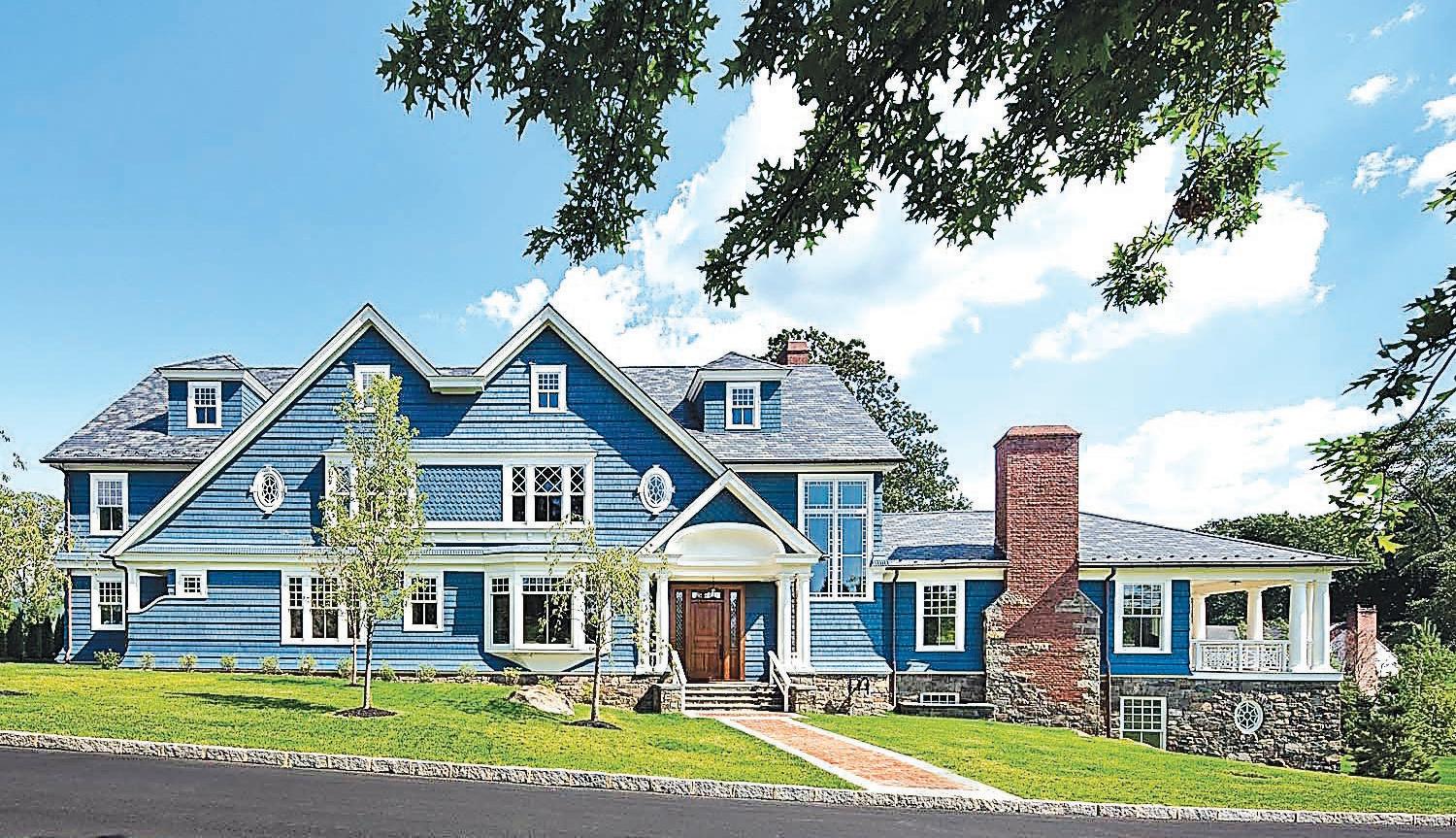
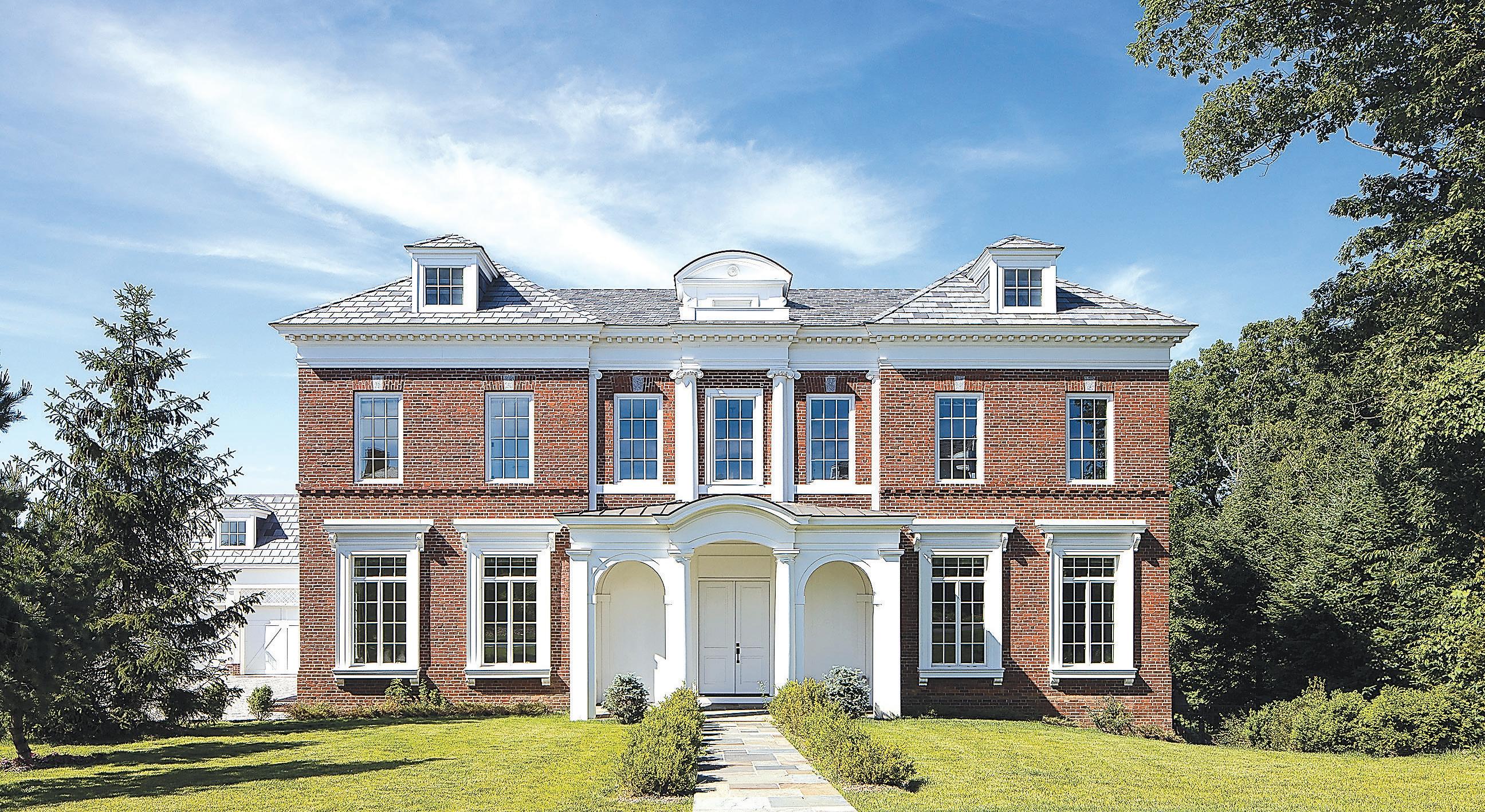
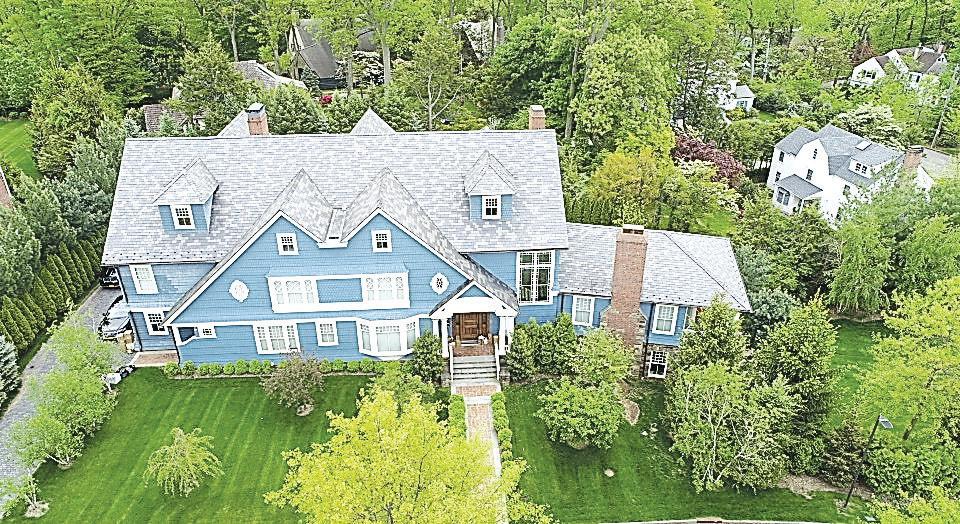
Tucked away in Northwest Riverdale, Villanova Heights is redefining luxury living in New York City with a private collection of fifteen custom-designed estate homes offering suburban tranquility just minutes from Manhattan.
Located five miles north of the George Washington Bridge and immediately off the Henry Hudson Parkway, Villanova Heights combines the privacy and spaciousness often associated with Westchester County with the convenience of city living. Midtown Manhattan is approximately a fifteen-minute drive away, while Metro-North service from nearby Riverdale and Spuyten Duyvil stations reaches Grand Central Terminal in about twenty-three minutes.
The exclusive community features homes ranging from approximately 7,500 to 15,000 square feet, each situated on expansive 25,000-square-foot lots. Every residence includes luxury amenities such as outdoor swimming pools, elevators, multiple-car garages, large private yards, and premium appliances from brands including Viking, Sub-Zero, and Wolf.
Designed in classic American architectural styles, the homes feature high-end craftsmanship and materials including slate roofs, cedar shingles, spray foam insulation, and wide-plank hardwood floors. Large primary suites, private decks, extensive closet space, and panoramic views are also common throughout the development.
According to information provided by the
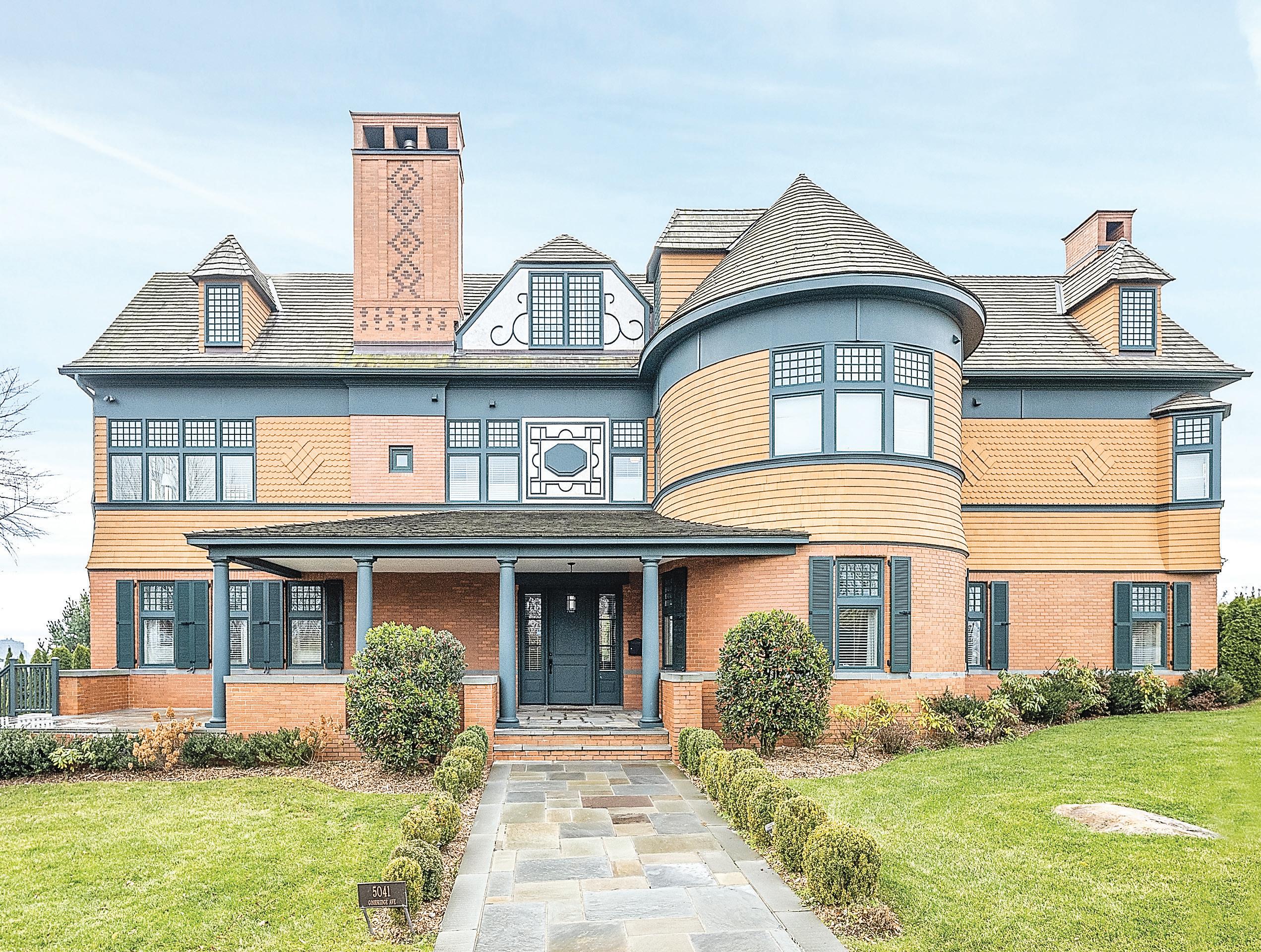
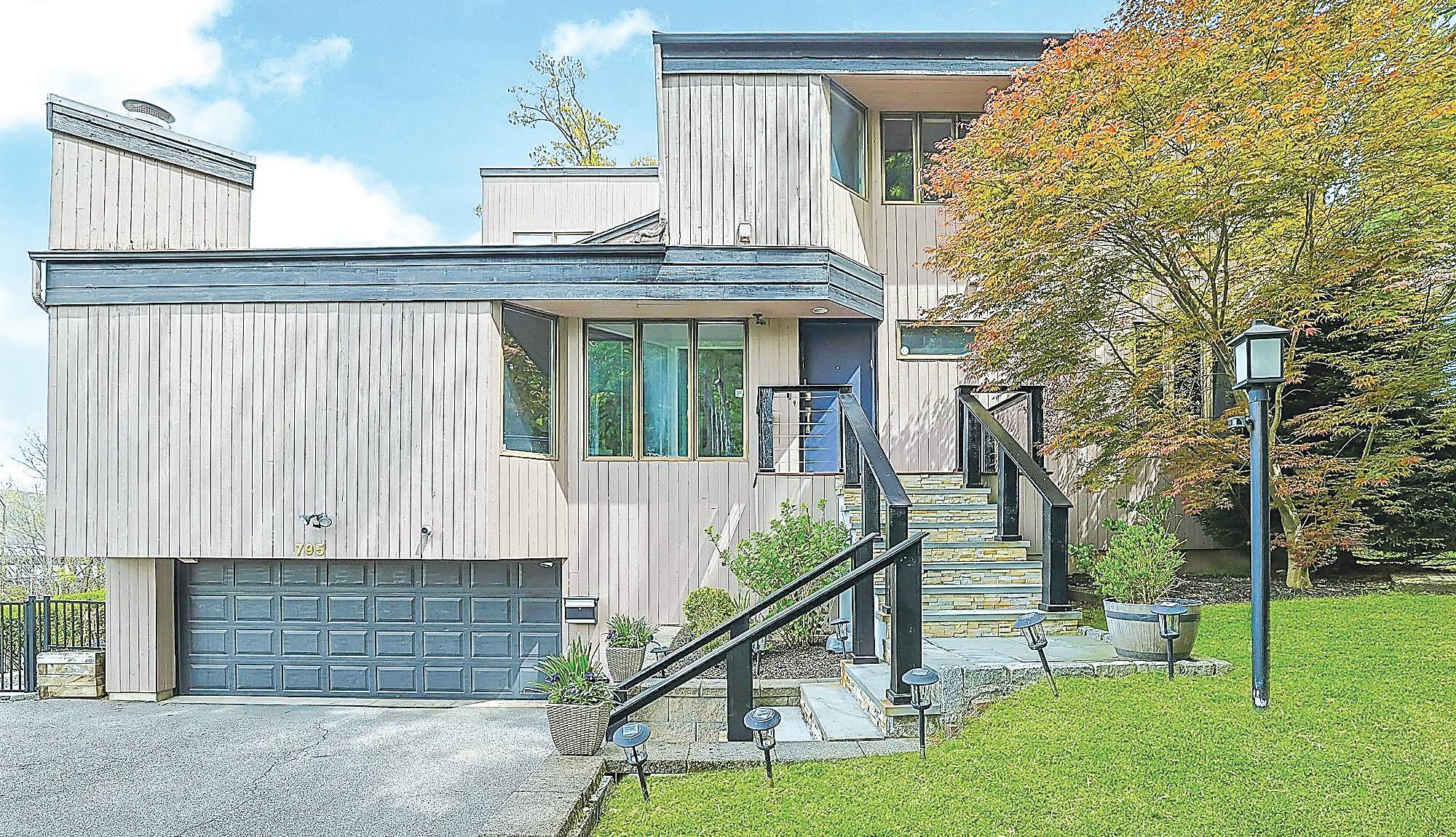

community, the New York City Real Estate Tax Department has assigned market values exceeding $7 million to the homes, while some independent appraisals have reportedly reached as high as $9 million. Villanova Heights also offers leasing opportunities in addition to sales. Residents who lease properties receive full outdoor maintenance services, including landscaping, snow removal, and pool upkeep. Indoor maintenance is handled by the community’s staff, creating a low-maintenance luxury lifestyle for homeowners and tenants alike.
Beyond the homes themselves, Riverdale remains one of New York City’s most sought-after residential neighborhoods due to its combination of greenery, top-ranked schools, and strong sense of community. The area is home to prestigious private schools including Horace Mann, Riverdale Country School, and Ethical Culture Fieldston School, all located less than half a mile from Villanova Heights.
Residents also enjoy access to cultural and recreational landmarks such as Wave Hill, the renowned public garden and cultural center overlooking the Hudson River. For buyers and renters seeking estate-style living without sacrificing access to Manhattan, Villanova Heights offers a rare opportunity within New York City limits — blending luxury, privacy, and convenience in one of the Bronx’s
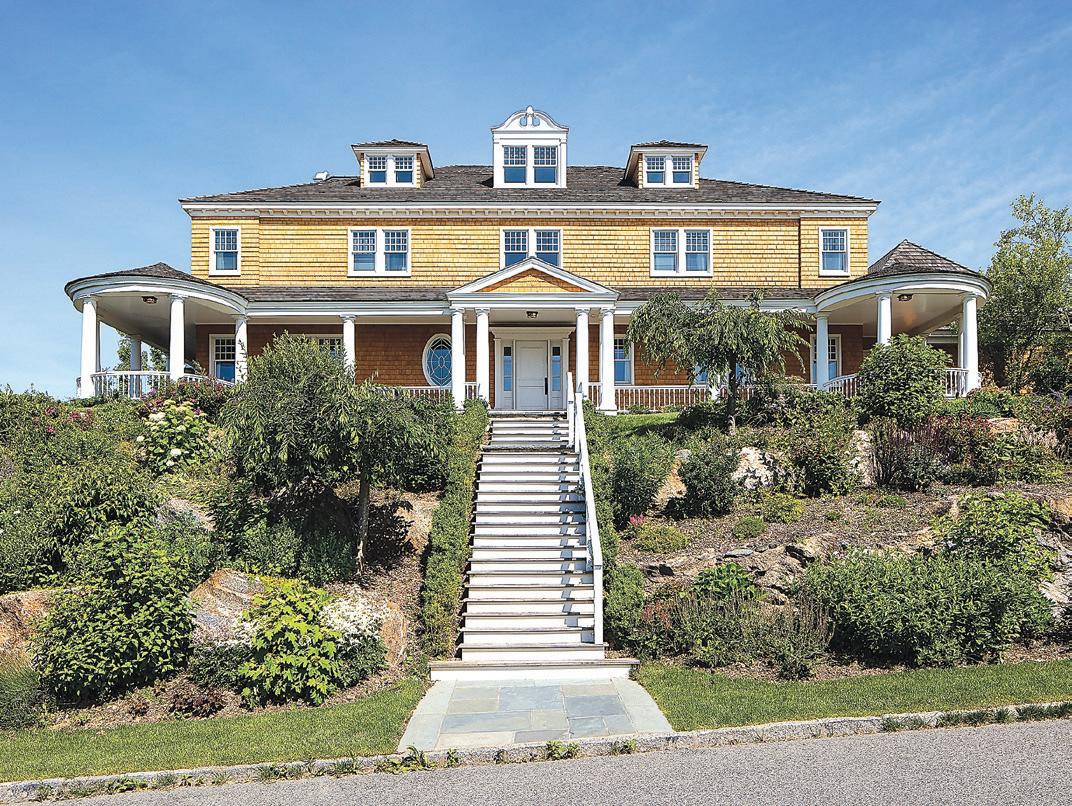
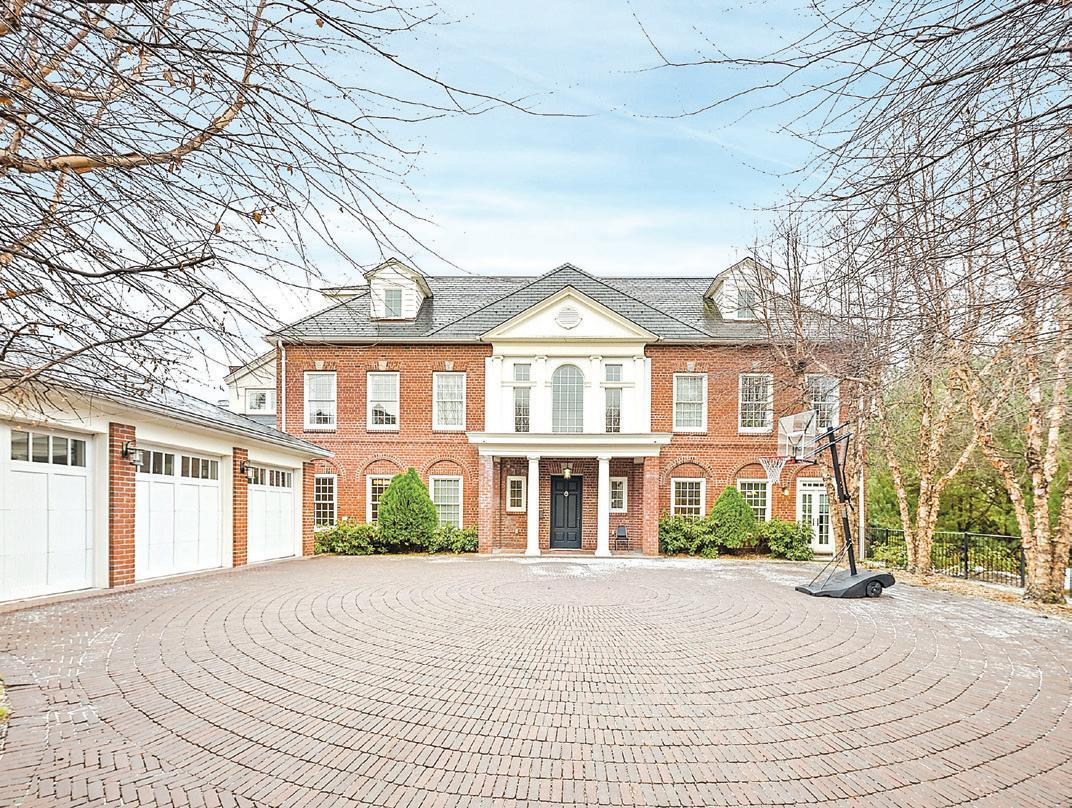


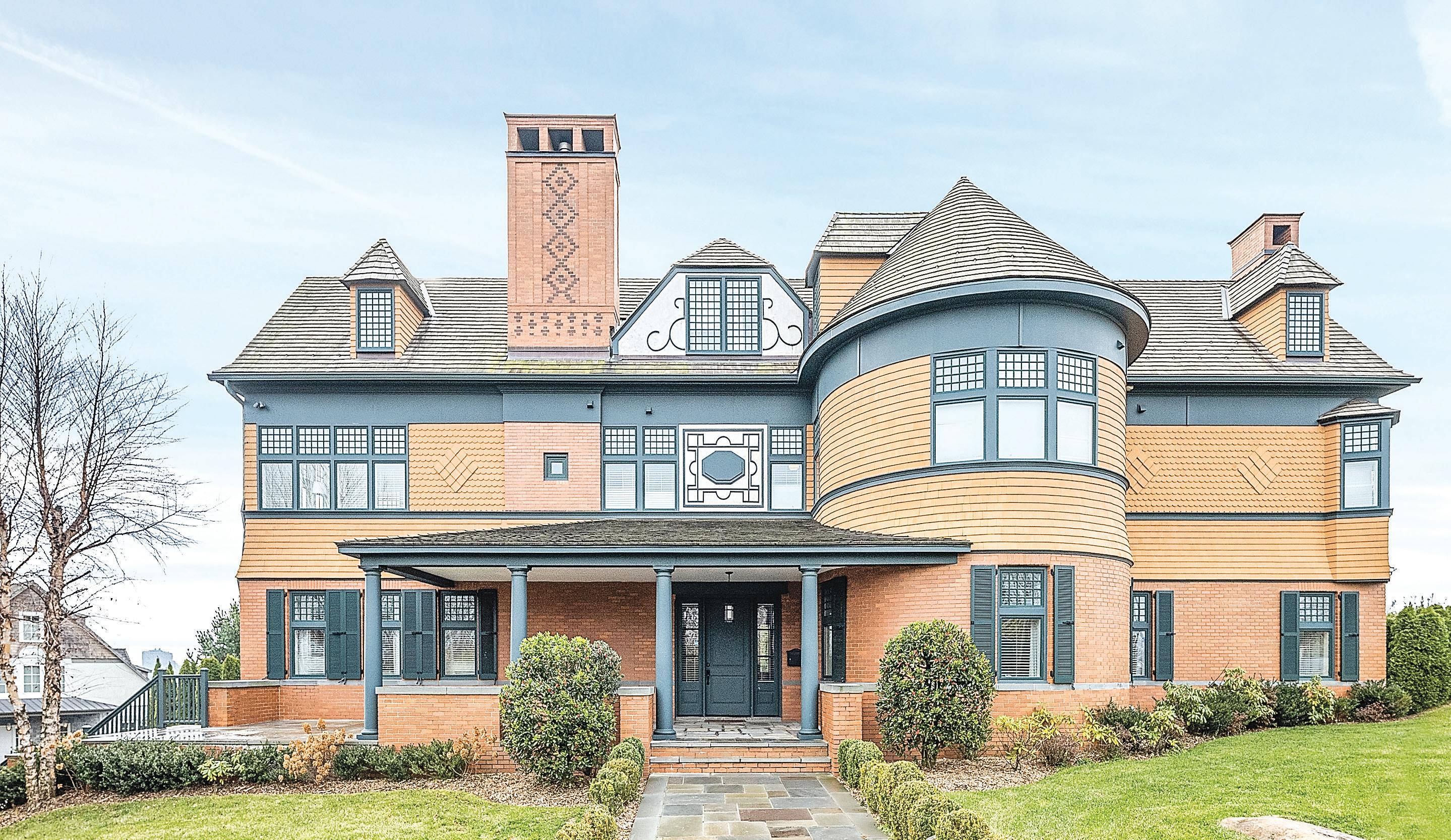
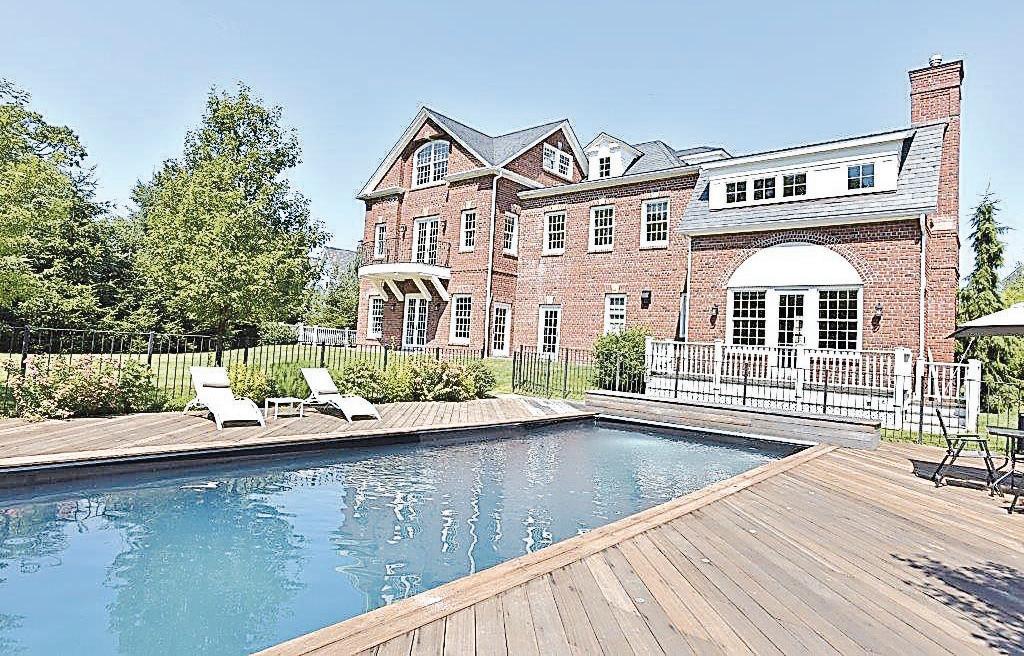
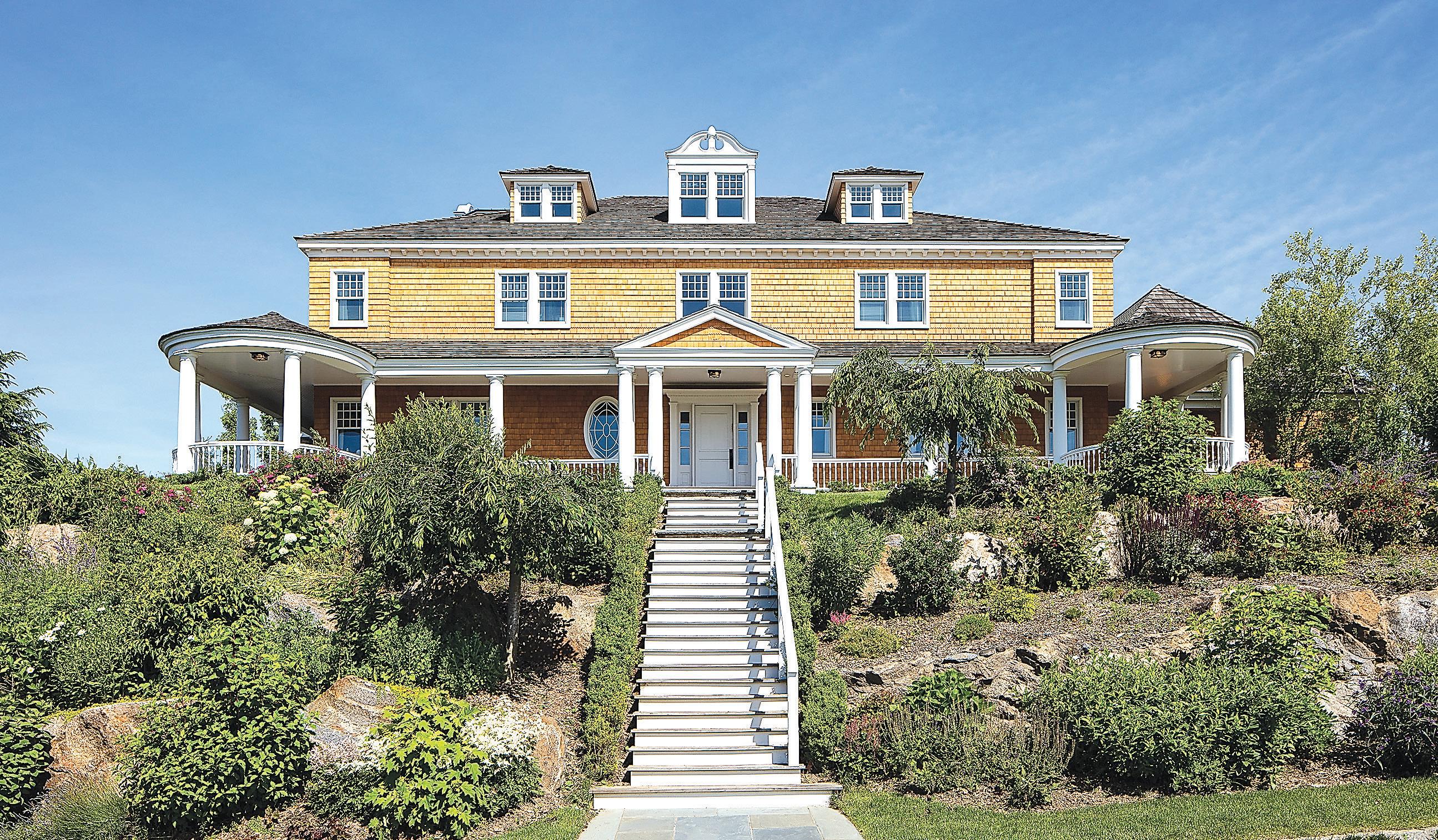
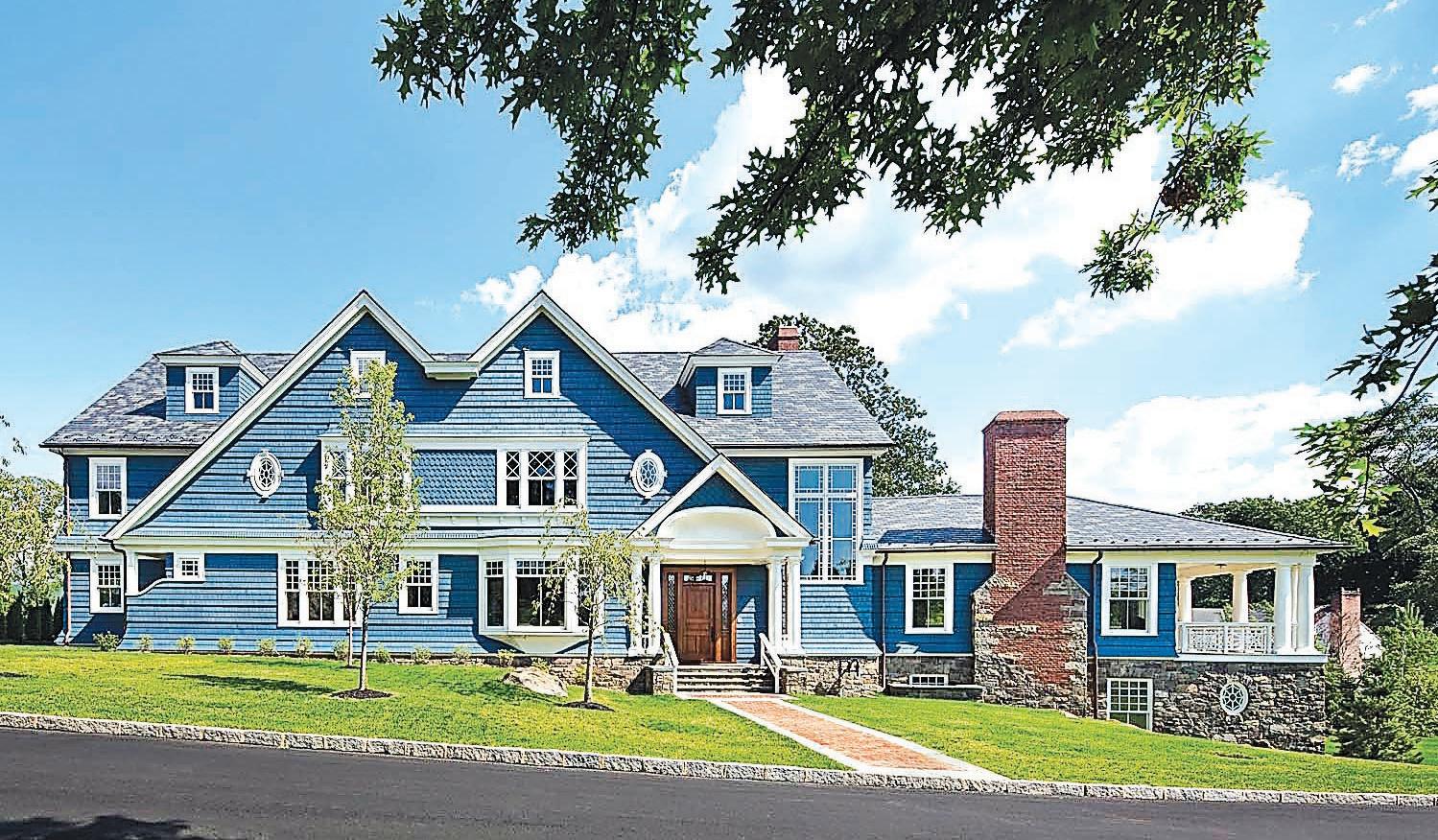
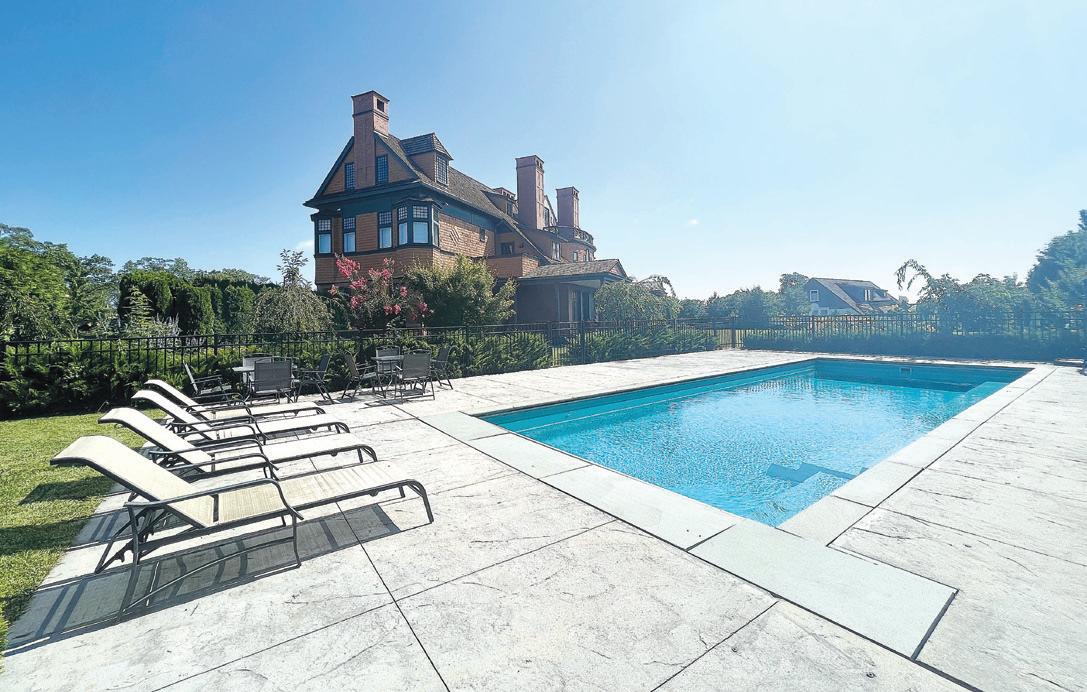
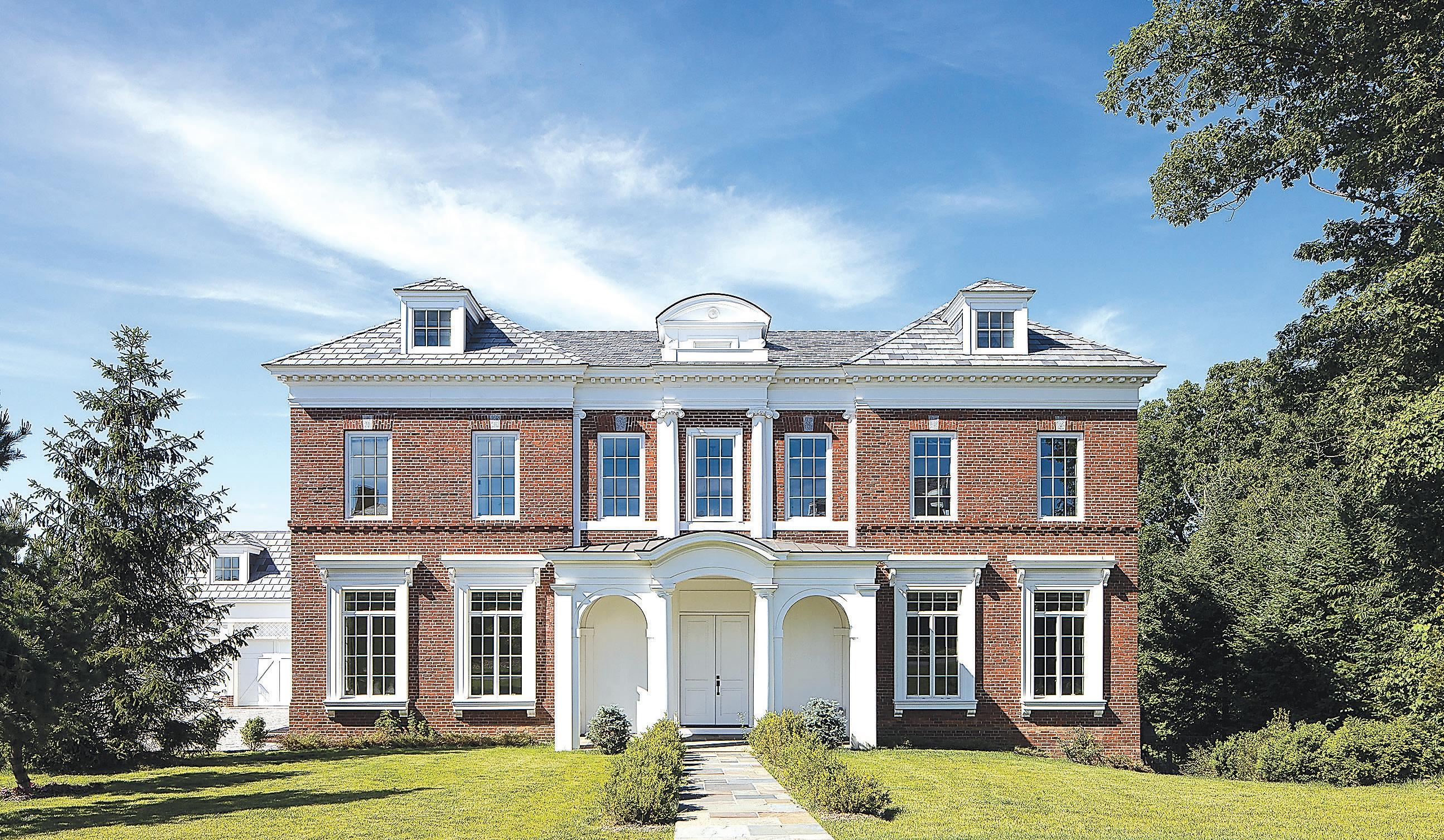




















official notices of
but not limited to: