
VCP Stadium slated for demolition
By Michelle Mullen mmullen@riverdalepress.com
Once a central gathering place for school sports and community events, the city has determined the long-shuttered stadium building at Van Cortlandt Park is beyond repair, with demolition now considered inevitable — even as funding to carry it out remains uncertain.
The conclusion follows a comprehensive planning study by the New York City Parks Department, which found the structure to be unsound after a yearlong engineering review. While the building has been closed to the public for years, officials say its deterioration has reached a point where continued maintenance is only
a temporary measure. Parks officials outlined both the building’s decline and the difficult reality facing the city. Jessenia Aponte, the Bronx borough commissioner for the department, said the building’s fate is sealed, though no timeline has been set.
“Those efforts led to a clear and difficult conclusion that the building has deteriorated beyond repair and will need to be demolished,” Aponte said. “At this point, the question is not if, but when.”
Constructed at the park’s southwest corner between 1937 and 1939 as part of a Works Progress Administration project — a federal initiative that funded public works during the Great Depression — the 3,000seat stadium opened with a track meet
and a football game between Manhattan College and Fordham University, presided by Robert Moses and Mayor Fiorello LaGuardia.
Over time, it evolved into a hub for recreation, with handball courts, baseball diamonds and a running track surrounding the stadium. But the land beneath it has contributed to its decline. Before the park was established, the area was largely wetland, later filled to make it usable. Those conditions continue to affect the site today, influencing drainage, soil stability and the long-term durability of any structure built there.
Marlisa Wise, director of architecture for the parks department, said the building’s foundation reflects that mismatch be-

P.S. 81 Robert J. Christen School celebrates 100 years of learning
By Olivia Young oyoung@riverdalepress.com
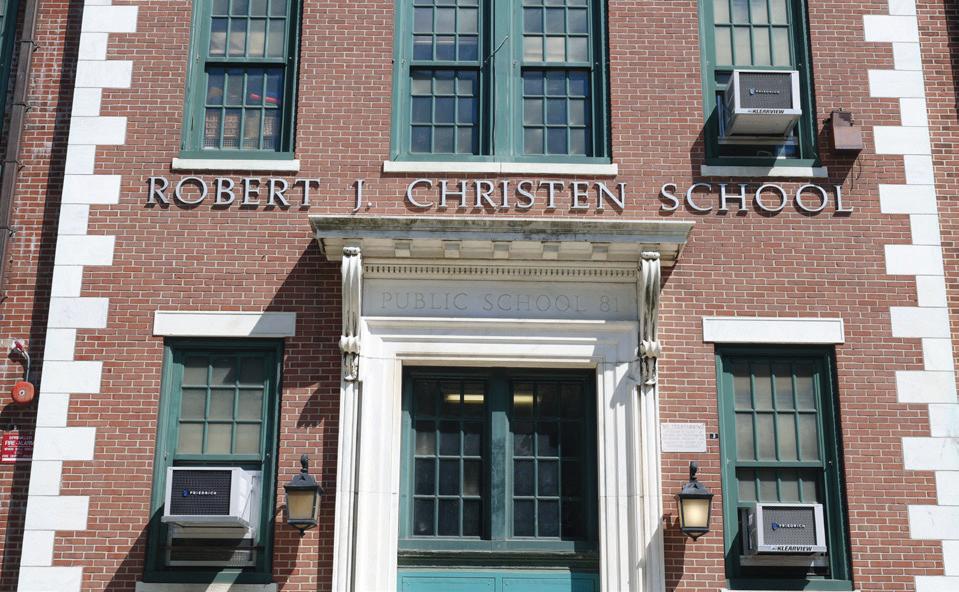
P.S. 81 Robert J. Christen School has been embedded in the community for a century, touching the lives of thousands.
More than 50 years after graduating, some alumni still remember the names of several of their teachers.
The elementary school broke ground in 1925, and was designed by awardwinning architect Dwight James Baum.
The school’s namesake, Robert J. Christen, was the former president of the New York City Board of Education and a lifelong Bronx resident. Today, P.S. 81 has 87 teachers, paraprofessionals and support staff who work with a total of 703 students, according to Principal Anne Kirrane.
Inside the school, the entry hallway is lined with bright, handmade bulletin boards. Familiar sounds echo, such as
the quick footsteps and bursts of chatter among schoolchildren, or the heavy thud of a classroom door closing and the patient voice of a teacher.
Years after they last strolled the halls, former students reminisced on P.S. 81 with fondness.
Ande Hecht Endewardt, 66, is now based in Los Angeles working on production finance for film and television, but P.S. 81 stays with her despite the years and miles between them. She remembers vividly dancing the Bossa Nova, an afterschool activity at P.S. 81. The memory sparked recently while she was taking a Zumba class, and the same melodies began playing.
“It really was the days of the neighborhood school,” Hecht Endewardt said, noting her mom was the president of the parent association at the time. Sometimes for lunch, the kids would walk to what was then Ken-Ed’s on Mosholu Ave-
Local Jewish advocacy groups demand change
By Olivia Young oyoung@riverdalepress.com
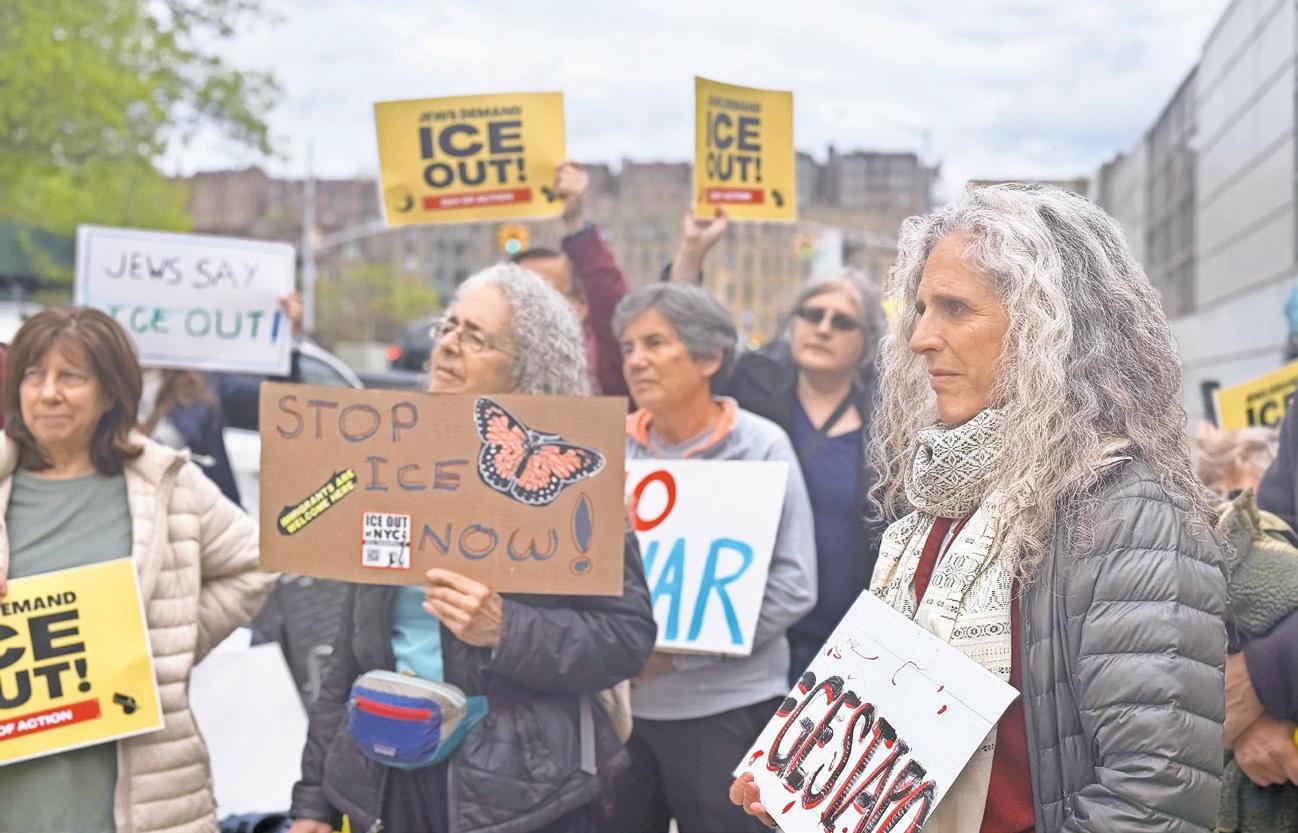
More than 30 local members of Jewish advocacy groups rallied outside the West 225th Street Target in Marble Hill April 30, demanding the chain end its alleged cooperation with U.S. Immigration and Customs Enforcement. Protesters from Bend the Arc, Jews for Racial and Economic Justice, and T’ruah: The Rabbinic Call for Human Rights, also called for Target to restore diversity, equity and inclusion initiatives, and for Congress to stop funding ICE. The gathering was part of a nationwide day of action called “Jews Demand ICE Out!” that organizers said drew participants from 17

cities. The protest comes in response to a video from January circulated by media outlets showing ICE agents tackling and detaining two Target employees at a store in a suburb of Minneapolis, with one employee saying “I’m literally a U.S. citizen.” NPR reported at the time that Target told its teams in a memo it does not have cooperative agreements with ICE or any other immigration enforcement agency. Last January, when Trump was reelected, Target also came under fire for rolling back its diversity programs. These incidents led to public backlash and boycotts. In Marble Hill, ralliers bore printed
nue. They’d pay $1 for two slices of pizza and a can of coke, she added.
The sentiment of a “neighborhood school” was shared by 62-year-old Bob Resch, who lived in an apartment building kitty-corner to P.S. 81, and remembers seeing the school he attended from his window. Resch — now living in New Hampshire working in pharmaceutical research — was able to list six of his former instructors who left lasting impressions.
“That time in history was a great time to grow up in Riverdale and New York City,” he added. Earlier, in the 1950s, former editor of The Press Bernard “Buddy” Stein was a student at P.S. 81. Before eventually leading The Press, he was the editor of the P.S. 81 Live Wire, the school’s newspaper. Also a staff member of the Live Wire was the late Lars-Erik Nelson, longtime
tween design and environment.
“The current building foundation is on a shallow foundation, which is not what any architect or engineer would design to date for this kind of swampy soil,” she said. “In all honesty, the foundation is really not appropriate for the soil that the building sits on.”
That instability, combined with decades of exposure to the elements, has led to widespread structural damage. Engineers documented extensive cracking, water infiltration and corrosion throughout the building.
“The concrete is severely deteriorated, and you can see that the structural steel re-
Riverdale Temple to launch bridge program
By Michelle Mullen mmullen@riverdalepress.com
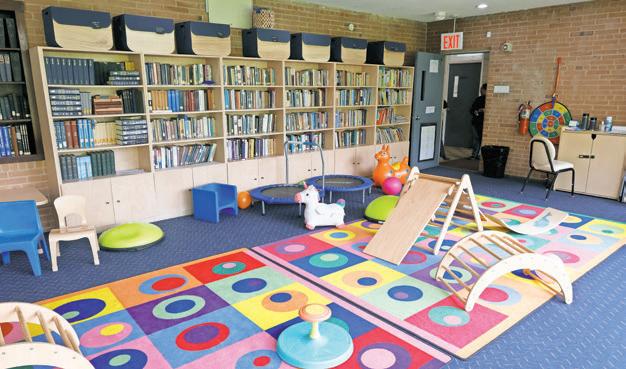
A new program at Riverdale Temple Nursery School is aiming to ease the shift from preschool into kindergarten.
Set to begin this fall, the school’s Kindergarten Bridge program is designed for children who may benefit from an additional year in a smaller, play-based setting before entering a more structured classroom. Administrators say the initiative reflects both developmental concerns and logistical challenges families face when navigating school systems.
Differences between public and private school cutoff dates can leave children caught between timelines, sometimes forcing families to decide whether to advance a child who may not be ready or have them repeat a year in a new setting. The bridge program offers a third option — one that prioritizes readiness over rigid progression.
“We are doing this kindergarten now because we’ve had a lot of families who were just like, ‘oh, we’d so much rather repeat kindergarten than send them early,’” said Alexandra Abikzer, director of the nursery school.
Beyond those structural concerns, educators say the program is rooted in how young children actually learn. While preschool classrooms emphasize play-based, hands-on learning, Abikzer said many kindergarten environments have become increasingly academic, with longer periods of seated instruction and higher expectations for reading and writing.
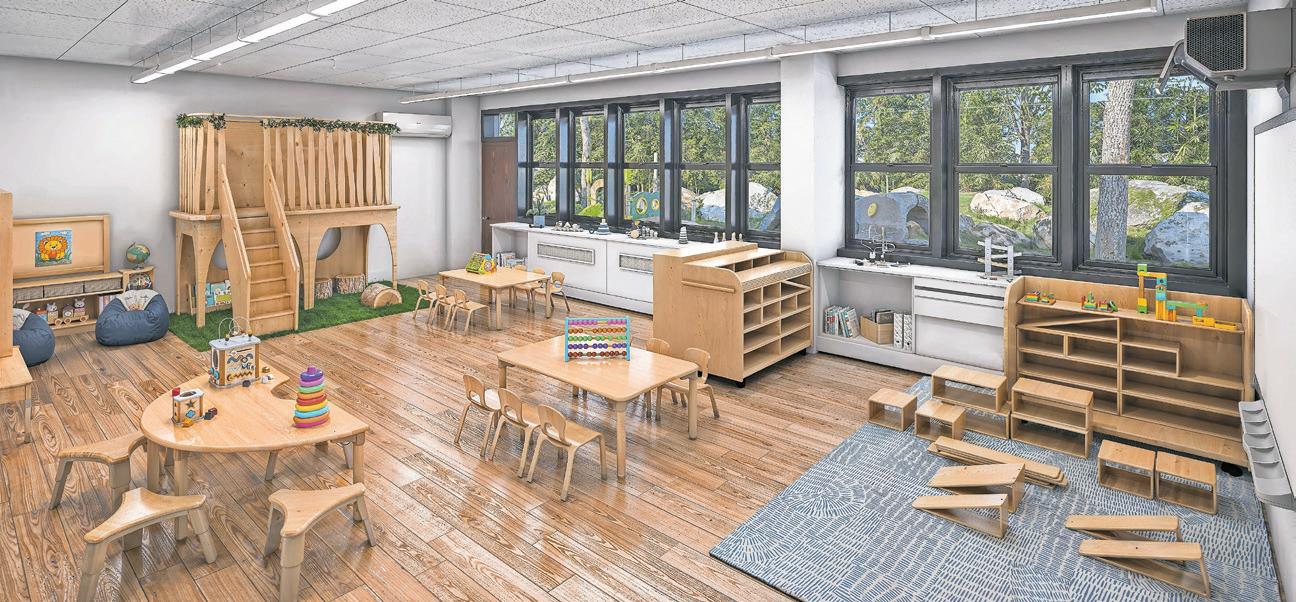
The new class is designed to preserve that earlier education approach while gradually introducing structure. With a projected enrollment of 12 to 15 students, the program will offer more individualized attention than typical classrooms, allowing teachers to tailor instruction and pacing to each child.
Students will be introduced to literacy, math and writing using curricula aligned with local schools, but those subjects will be taught through interactive, hands-on methods rather than rote memorization. Teachers will also incorporate smallgroup instruction and flexible learning centers, giving children opportunities to



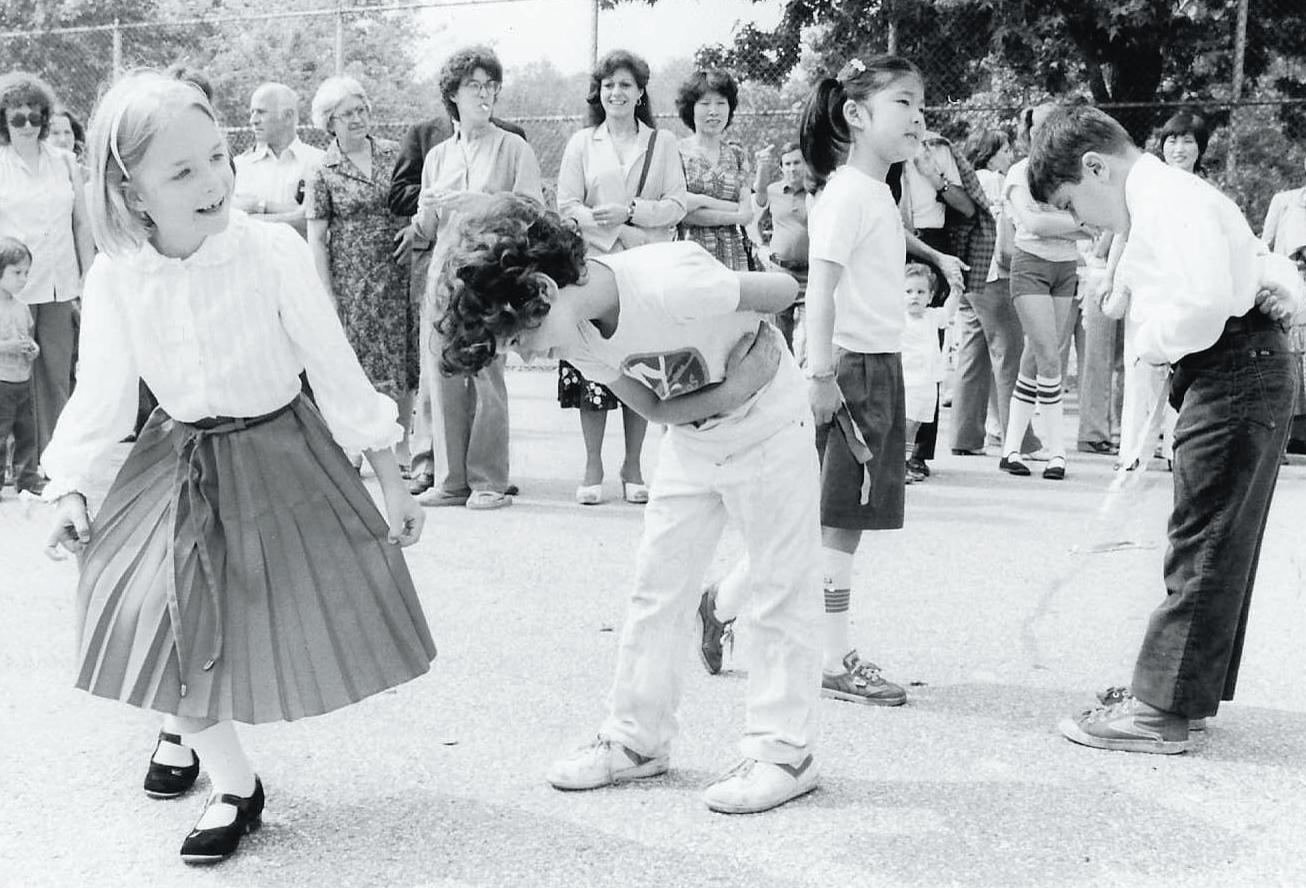
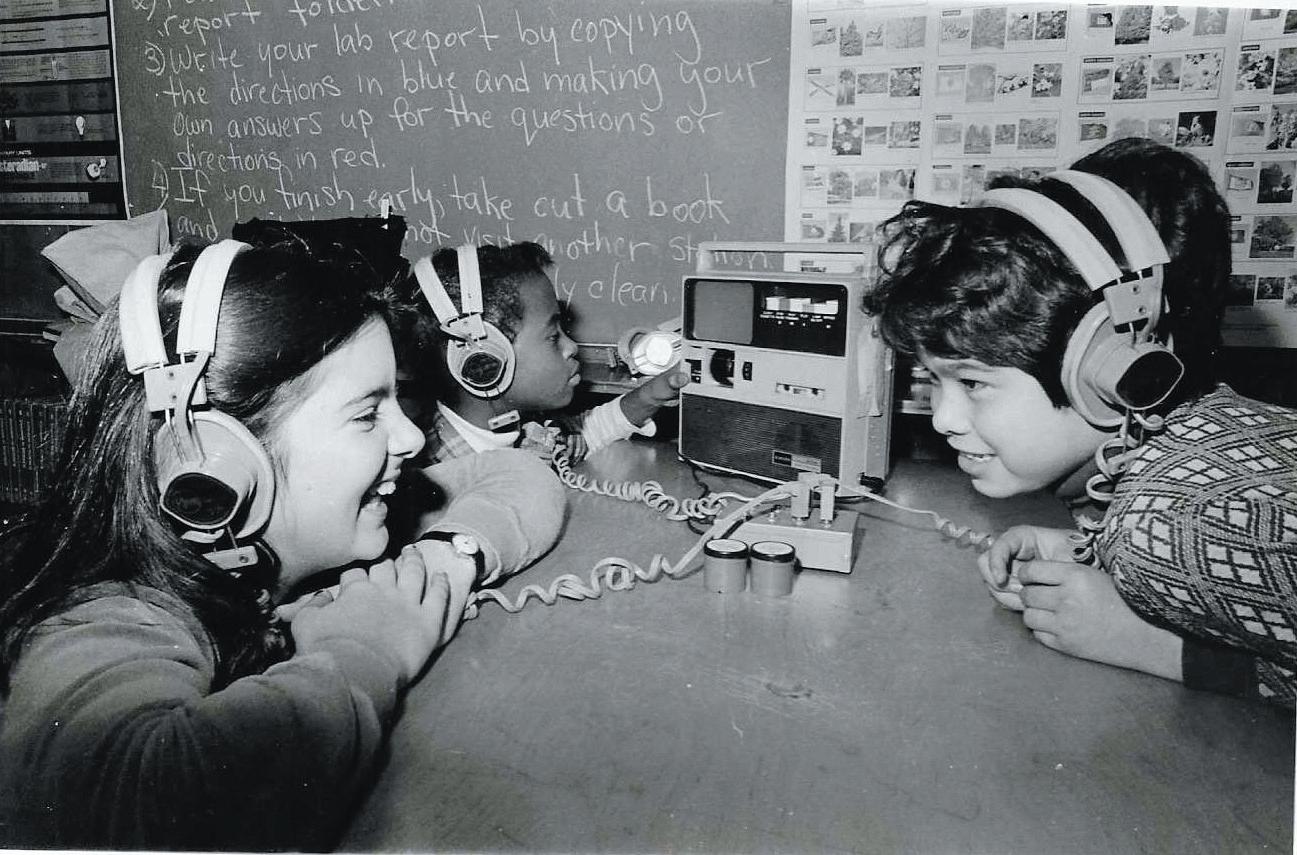
A photo of students in the schoolyard at P.S. 81 appeared in a July 1981 issue of
Olivia Young
Protesters led chants and joined together in song outside of Target on West 225th
POLITICAL ARENA
Mayor
Mamdani and U.S. Rep. Torres announce $2 million for high-speed internet in low-income areas
Mayor Zohran Mamdani and U.S. Rep. Ritchie Torres came together May 4 to announce a $2 million expansion of the Neighborhood Internet program, which provides faster internet to residents in the South Bronx and Upper Manhattan.
According to a press release from the mayor’s office, the South Bronx and Upper Manhattan have among the lowest rates of broadband access across five boroughs. The $2 million, secured by Torres, will cover microtrenching, rooftop network equipment installation, internet access infrastructure and in-unit connectivity for 50 buildings, the press release said.
“The digital divide is not abstract, it is a daily barrier for so many families in the


South Bronx,” Torres stated in the release. “In 2026, being offline means being locked out of opportunity.”
The program is a collaboration between the city and the New York Public Library, with funding from the New York City Department of Housing Preservation and Development, according to the mayor’s office. The pilot program will serve over 700 lowincome households by the summer, and over the next two years a federally-funded expansion of the program will reach thousands more across the Bronx, the mayor’s office said.
“Internet access allows New Yorkers to access jobs, find no-cost child care and explore the city they love,” Mamdani stated.

Assembly member Dinowitz introduces resolution in former U.S. Rep. Engel’s honor, two bills passed in Assembly
Assembly member Jeffrey Dinowitz introduced a resolution in honor of former U.S. Rep. Eliot Engel, a longtime Bronx congressman who died April 10 at 79 years old.
The resolution, titled K01198, says it is custom for the New York State Legislature to pay tribute to citizens whose work enhanced the quality of life in their communities, as well as the state. Engel was born in the Bronx from humble beginnings, the resolution reads, noting he was the son of an ironworker and lived in a New York City Housing Authority development. He served as an Assembly member from 1977 to 1988, and as a congressman from 1989 to 2021. The resolution states that for more than 44 years, Engel fought tirelessly for his constituents, and for peace and security worldwide.
“His legacy consists of hard work on issues and


kindness to all,” the resolution reads. “He exhibited commitment, conviction and service, and he understood that public office was a responsibility to speak up, to stand firm, and to deliver for the people.”
The resolution was adopted April 27.
A day later, two of Dinowitz’s bills passed in the Assembly. One, A3254, requires all staff and children enrolled in camps to be vaccinated. Dinowitz said in a newsletter it is critical to implement measures that promote public health. The other, A1441A, aims to hold utility companies accountable by requiring timely and transparent responses to customer complaints, which Dinowitz said primarily center around disputed billing charges.
Both pieces of legislation still need to make it through the Senate before reaching Gov. Kathy
desk.

Hochul’s
Courtesy U.S. Rep. Ritchie Torres
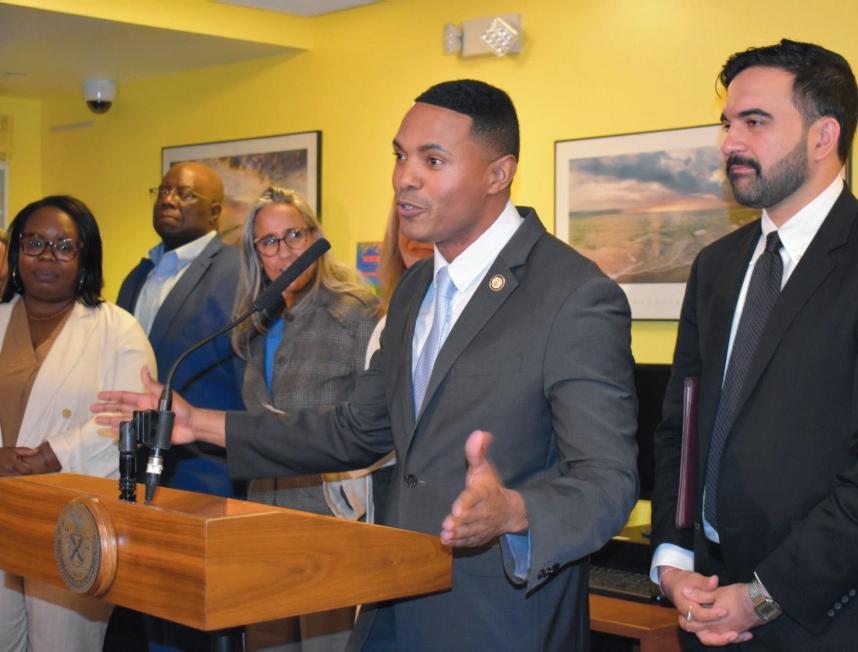
Mayor Zohran Mamdani and U.S. Rep. Ritchie Torres spoke at 355 East 165th Street in the South Bronx May 4.
One of Assembly member Jeffrey Dinowitz’s bills that made it through the Assembly requires immunizations for children attending camp.
By Michelle Mullen michellemullen@riverdalepress.com
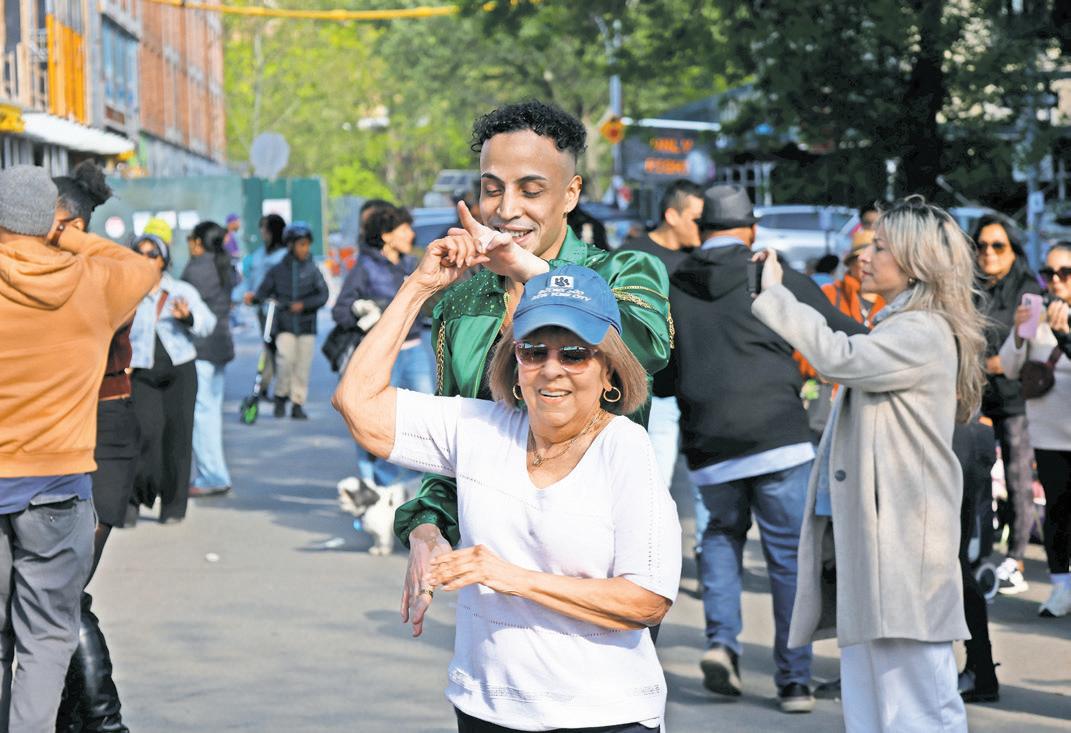
On May 3, music spilled into the intersection at West 239th Street and Broadway, where “Salsa in the Streets” turned an ordinary block into a dance floor — couples spinning, strangers stepping in time, the sound of horns and percussion echoing against storefronts.
The event, part of Bronx Week, brought a genre closely tied to the borough’s identity into a neighborhood that does not often host large-scale street programming. Salsa took shape in New York in the mid-20th century, blending Afro-Cuban rhythms, jazz and Caribbean traditions, and grew alongside Latino communities across the city. The Bronx became one of its central hubs, shaping both its sound and its cultural presence over decades.
The Kingsbridge celebration was organized by Laura Levine-Pinedo, executive director of the Kingsbridge Riverdale Van Cortlandt Development Corporation, who had been planning a street activation before it became tied to Bronx Week.
“People really love events on that street,” Levine-Pinedo said. “I actually grew up on Review Place right around the corner. So it’s just really an honor, and it’s so much fun for me, personally, to activate that street.” Bronx Week had initially been canceled by Bronx Borough President Vanessa Gibson due to funding constraints before being revived in part through smaller, communityled events. Gibson encouraged local organizations to host their own programming, extending the festivities across neighborhoods that do not always take part.
“When we were looking to reactivate Bronx Week, I said to my team, call Laura, because I want to ensure that the northwest Bronx has some sort of event during Bronx week,” Gibson said. “It’s about variety, it’s about diversity, and it’s also about making sure that all residents can experience different culture, different music.”
On the ground, that ap-
proach brought together a mix of residents — families, longtime neighbors and visitors from other parts of the borough — creating a crowd that ebbed and flowed throughout the afternoon.
“It’s playing good music, and it’s a free event, and it has people getting together,” said Julio Casado, a Bronx resident who traveled from another neighborhood. “Well, the Bronx is a don dada of salsa, to my understanding, so I think it’s the perfect place to be doing it.”
Nearby, Rita Gonzalez said she had not originally planned to attend but changed course after hearing about the event.
“Beautiful people, just everyone coming together, unity, having a great time,” Gonzalez said. “It’s just nice to see people come together and just forget about the world.”
At the center of the afternoon was Arturo Ortiz, the headlining performer, who took the stage as Arturo Ortiz y Los Impostores, one of several ensembles he leads.
Born and raised in Puerto Rico, Ortiz began playing music at a young age before receiving formal training. By the time he moved to the Bronx in the mid-1980s, he had already established himself on the island.
In New York, he built a decades-long career as a performer, arranger and bandleader, working across genres while remaining rooted in salsa. Over the years, he has performed alongside major artists, including Marc Anthony — experience that he said informs his work leading his own groups.
Rather than performing with a single fixed band, Ortiz rotates between multiple ensembles depending on the style and repertoire he wants to highlight. Each group has a distinct sound, allowing him to move across different eras and approaches within salsa.
“There are at least 300 songs that have been hits in the history of salsa,” Ortiz said. “Why do you keep on picking from the same 25 or 30?”
He said the goal is to bring audiences back to the depth of the genre, not just its most familiar selections.
“I like to push people to look further into the salsa repertoire, which is immense,” Ortiz said. “And bring songs that they haven’t heard in a long time — songs that were hits that people recognize, but don’t get to hear live anymore.”
That approach shaped the Kingsbridge performance, where familiar rhythms were paired with less frequently played selections. The result was a set that felt recognizable without becoming repetitive, keeping dancers engaged and
extending the life of the dance floor well into the afternoon.
The event was supported in part by Council member Eric Dinowitz, who said programming like this reflects the character of the community he represents.
“Salsa really speaks to the culture of so many who live in the northwest Bronx, particularly Kingsbridge,” Dinowitz said. “It’s a destination for community activity and for culture.”
Alongside the music, the
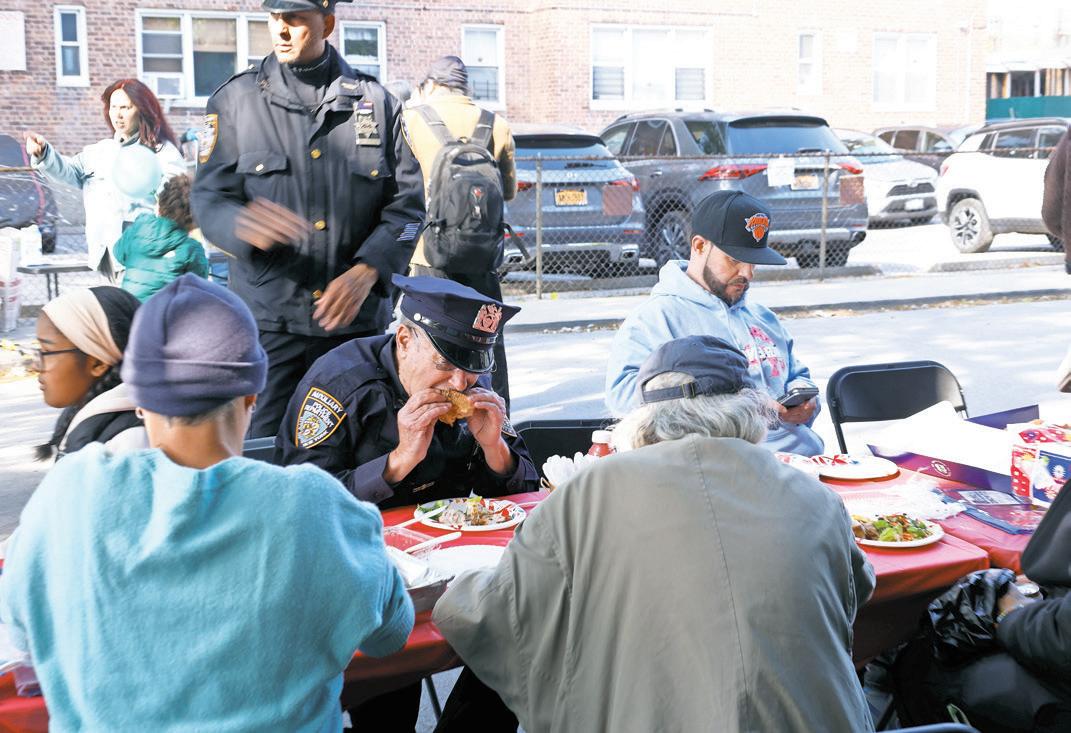
event also included the “Longest Table,” a communal dining initiative designed to bring neighbors together over shared food. A long row of tables stretched along part of the block, where attendees sat with people they had not met before, sharing dishes and conversation.
The setup created a rhythm within the event that emphasized staying put rather than moving on. Some participants arrived with food prepared in advance, while others joined
with what was available, filling seats as they opened. Conversations carried between songs and the tables remained active even as the crowd shifted around the stage. In a borough known as “El Condado de la Salsa” — the Borough of Salsa — the afternoon reflected a piece of that identity. The event marked one of the early celebrations of Bronx Week, which continues with programming across the borough through May 17.









GARY JEAN-JUSTE photos
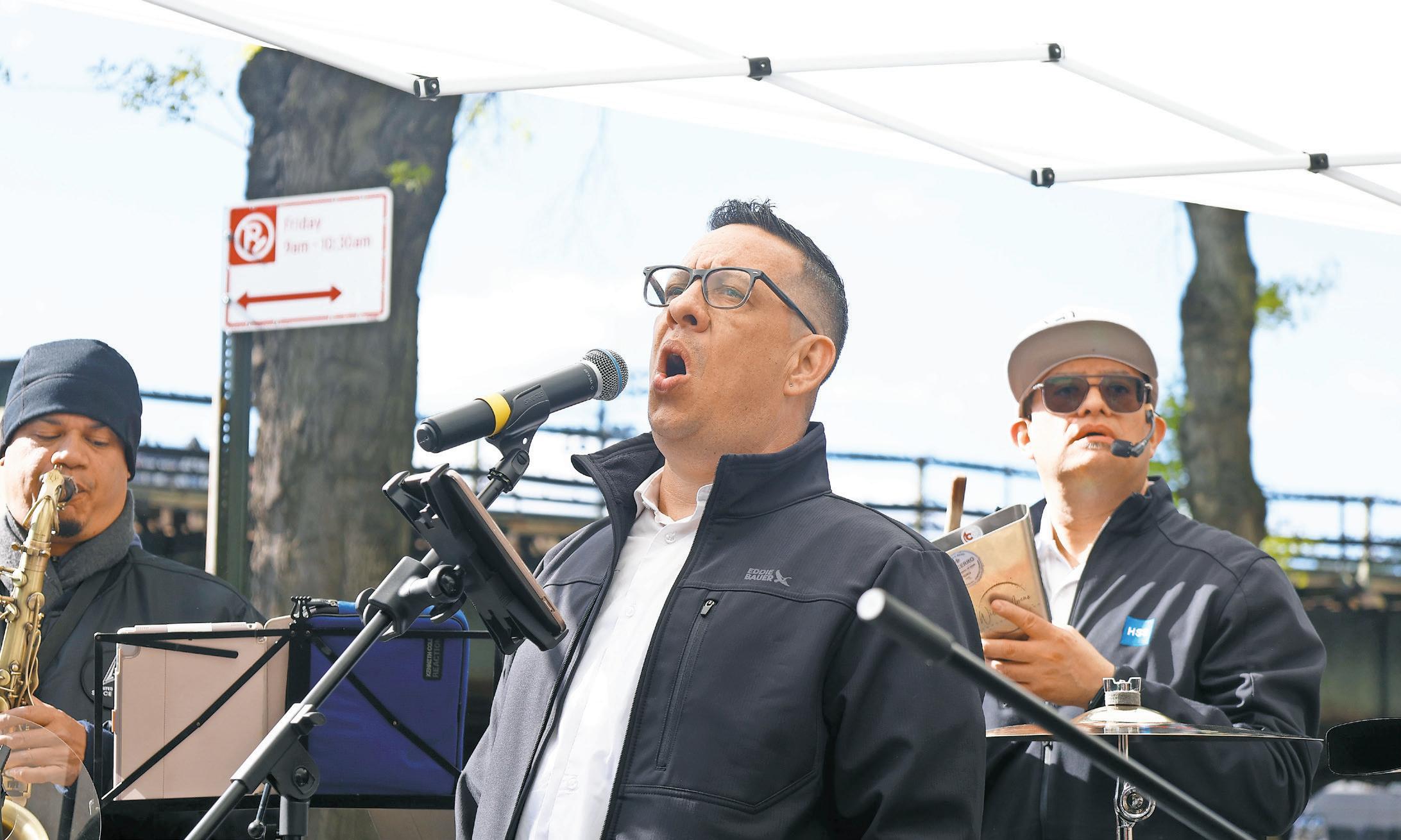
Live salsa music filled the Kingsbridge corridor during “Salsa in the Streets,” where ensemble Arturo Ortiz Y Los Impostores performed.
Attendees shared food and conversation at the “Longest Table” during a Bronx Week celebration.
Dancers filled the intersection at Broadway and West 239th Street during “Salsa in the Streets” in Kingsbridge.
VCP Stadium deemed beyond repair, set for demolition
CONTINUED from page A1
inforcing is exposed and corroded, so it is in very poor structural condition,” W ise explained. “Water is basically moving through the concrete, busting the steel that’s in there, and causing the concrete to fall and deteriorate.”
Inside, the situation is equally severe. Mechanical, electrical and plumbing systems are largely nonfunctional, and hazardous materials, including asbestos, lead-based paint and other toxic substances, have been identified throughout the structure.
According to the parks department, its Capital Architecture division has no records of any significant work having been done on the building since its initial construction.
Together, those conditions led engineers to conclude that preservation is not feasible.
“Keeping existing beams, columns, walls and foundation is not feasible in the long term and will require complete demolition and rebuilding,” Wise said.
For Deb Travis, chair of Community Board 8’s Parks and Recreation Committee, the findings confirmed
what many in the community had long suspected, even as they raised broader concerns about long-term investment.
“I wasn’t surprised by them saying that they thought that it needed to be torn down,” Travis said. “It’s really unfortunate that the lack of ongoing funding has led to this.”
She added that the community hopes to retain elements of the stadium’s history in whatever replaces it, even as the building itself cannot be preserved.
The city has not yet established a timeline for funding or redevelopment.
Still, parks officials said demolition is part of a broader long-term vision that extends beyond the structure building to the roughly 21-acre surroundings that make up the stadium, including athletic fields, courts and other recreational space. The study outlines potential upgrades across that section of the park, though funding for the plan has not yet been secured.
Stephanie Eirlich, executive director of the Van Cortlandt Park Alliance, said the urgency now lies in moving forward, warning that delays could increase costs and prolong the park’s limitations.
She said moving ahead quickly would help prevent further deterioration of the site and allow for a coordinated redevelopment that brings the fields and facilities up to modern standards, rather than intermittent improvements over time.
In the interim, the department is considering ways to maintain recreational use, including the potential relocation of courts and other amenities.
“These could include removing the existing structure and installing simpler amenities like metal benches or handball courts, or potentially constructing new handball courts and another area before demolition occurs,” Wise said.
As the building continues to deteriorate, safety remains a primary concern. Engineers will conduct regular inspections, and additional protective measures may be required over time.
“This is what happens when you don’t invest in infrastructure over time, you reach a point where there’s no choice left but to start over,” Travis said. “At this point, it’s not just about what we’re losing. It’s about making sure what comes next actually serves the community.”
Celebrating a century as fixture in the community
CONTINUED from page A1
columnist at The Daily News and briefly a Reuters correspondent.
Across 100 years, P.S. 81 has been a steady presence throughout major historical shifts. The late 1960s and early 1970s was an era of change — protests against U.S. involvement in the Vietnam War, the Kent State shootings, the death of Martin Luther King Jr. Lisa Stern, 66, said she was in fourth or fifth grade at the school when she and a group of about 20 students refused to take part in the Pledge of Allegiance during assembly. The school reacted unexpectedly.
“We weren’t penalized,” Stern, who now works as an attorney in Maryland, said.“What we were required to do was write a composition — I guess that’s what we called it back then — about defending what we were doing.”
Growing up in a school like P.S. 81, where the students lived near one another, instilled core values that are rarer today, Stern added.
“Having those community ties in a
community that is very diverse makes you much more empathetic and understanding of everybody,” she said.
Decades later, the current staff at P.S. 81 emphasized a deep sense of pride in their school, and the importance of compassion in teaching. For Kirrane, who has led P.S. 81 for 13 years, supporting students is crucial to their development.
“My philosophy is to lead with the heart,” Kirrane said. “Without meeting their social emotional needs, we cannot meet their academic needs.”
This principle is appreciated by parents too. Kelli Goodman, president of the school’s parent association, said she watched her son Owen grow academically and socially since starting at P.S. 81, and it’s what motivated her to become more involved in the school.
Staff and parent association members said the relationship between educators and parents is a key fixture of life at P.S. 81. Recently, Deborah Buardo, a second grade teacher for
more than 13 years, left her classroom for a school trip. When she returned, her walls had been decorated with multicolored balloons, “Happy Birthday” signs hanging from the window, and three cakes. The parents had thrown her a surprise party, and the students had managed to keep it a se-
cret all day long.
“It was emotional, and really overwhelmingly beautiful,” Buardo said. “I had so much gratitude.” Buardo pivoted from a career working on Wall Street to teach at P.S. 81. She grew up in Kingsbridge, and said being a teacher in the community
means everything to her. Also a threetime breast cancer survivor, her work at the school and being surrounded by a supportive staff keeps her going, she said.
“It gives me a purpose,” Buardo said. “When I tell you, this is a magical school, I don’t say that lightly.”
Riverdale Temple adds kindergarten transition class
CONTINUED from page A1
explore concepts at their own pace.
Stephanie Cruz, the school’s special education coordinator and lead teacher for the program, said the goal is to balance preparation with developmentally appropriate learning.
“I’m most excited about creating a space where we can do play-based learning for kindergarten, because now kindergarten in private and public schools [is] very intensive,” Cruz said.
While the classroom will include structured elements — such as group instruction and routines — those will be integrated alongside time for exploration and play. Educators say this approach helps children build both academic and behavioral readiness before entering more traditional school environments.
A central focus of the program is social and emotional development, particularly for children who may struggle with self-regulation or transitions.
“This gives us an opportunity to work with them on a social-emotional component and really teach them strategies they can carry into kinder-
CONTINUED from page A1
and handmade signs such as “Jews Say: No Pharaohs. No Kings,” and “Stop ICE Now,” while joining together in songs and chants. On either end of the crowd, participants handed out leaflets with information on the cause.
Madeline Ritter, a member of the steering committee on Bend the Arc’s Riverdale chapter, played a key role in organizing the local protest.
“The Torah tells us to welcome the stranger and to accompany the stranger,” Ritter said. “Making the world a welcoming and valuable place is very integral to our Jewish values.”
She added that most members of the Jewish community are descendants of immigrants as recent as one generation ago, and witnessed the hardships of their immigrant parents and grandparents.
“Right now, there’s an extra element of danger to being an immigrant in this society,” Ritter added. “So we can’t just stand by. We have to be vocal and active.”
Inside, management at Marble Hill Target declined to comment on the protest. However, Danette Lipten, also a member of Bend the Arc’s local leadership team, made clear protesters had no intention of entering the store, as they did not want to involve the employees and shoppers. Instead
garten and first grade,” Cruz said.
Teachers will work with students on skills such as managing frustration, solving problems and interacting with peers — areas that educators say are just as critical as academic preparation at this stage.
To support that work, the school also maintains a sensory room upstairs. The dedicated space allows students to step away from classroom stimulation, regulate their emotions and return ready to learn. Abikzer said the space is especially helpful for children who need short breaks to manage stress or sensory overload.
The program will also support children offered disability accommodations through individualized education programs, or IEPs, by incorporating services directly into the classroom. That includes coordination with therapists and opportunities for early intervention, which Cruz said can help address challenges before they intensify.
In addition to academics, students will participate in enrichment activities similar to those offered in the nursery school’s existing programs, including music, movement, gardening and a new science class. The
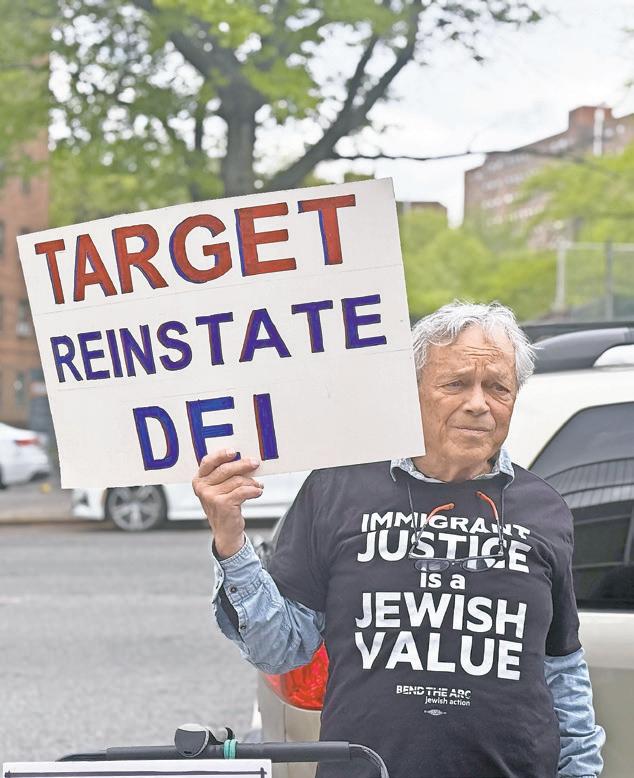
they aimed to encourage others to make informed decisions on where they shop. Near the front of the crowd was Nick Lyndon of Bend the Arc, who raised a handmade red-and-blue sign that read “Target Reinstate DEI.” He made several other signs for protesters to hold, which he noted were a reflection of the crafting hobby he discovered a love for in retirement.
During the Vietnam War, Lyndon was a consciousness objector, and said it was a pivotal moment that shaped his worldview. He said he still relies on those values of rejecting violence today.
“It’s cruel, it’s unnecessary, it’s lying,” Lyndon said, referencing what he sees as harmful rhetoric from the Trump administration surrounding immigration. Like Ritter, he referred back to the Jewish tradition of “welcoming a stranger, seeking a stranger out.”
curriculum will also remain flexible, allowing teachers to adapt lessons based on students’ interests.
Abikzer said that responsiveness is key to the program’s design, as children develop at different rates and benefit from environments that can adjust to their needs.
“It’s also for families whose kids are not mature enough yet, they want more of a play-based environment before going to public school,” she said.
Enrollment for the program is now open, with classes scheduled to begin after Labor Day. Abikzer said the first cohort will be relatively small as families become familiar with the concept.
For the educators, the program represents a shift away from a onesize-fits-all model and toward a more individualized approach to early learning that acknowledges that readiness is not defined by age alone.
As Cruz described it, the goal is to give children the space to grow into the next stage of their education, rather than rushing them toward it.
“It’s kind of nice to watch them explore and find the things that they love,” Cruz said. “This gives them the time to build skills before they’re expected to do everything at once.”
Michael Blake, former assembly member and congressional candidate challenging U.S. Rep. Ritchie Torres, was also present at the protest. He told The Press many people, he included, are tired of the hurt ICE has caused, and of companies allegedly working with the agency. Some rally participants, like former Norwood News editor Jordan Moss who is involved with Jews for Racial and Economic Justice, have also been organizing in their neighborhoods. Moss said he and other Kingsbridge Heights residents gather weekly near Sedgwick Avenue and Fort Independence Park to protest the Trump administration. Moss and neighbors, anywhere from two to a dozen, hold signs and converse with passersby, looking to engage others in their cause. Sarah Garrison was one of the rallygoers who took part in Kingsbridge Heights’ frequent protests with Moss. She said she was motivated to speak out against Target and ICE, and that being alongside her neighbors makes her feel less alone. In the
GARY JEAN-JUSTE photos
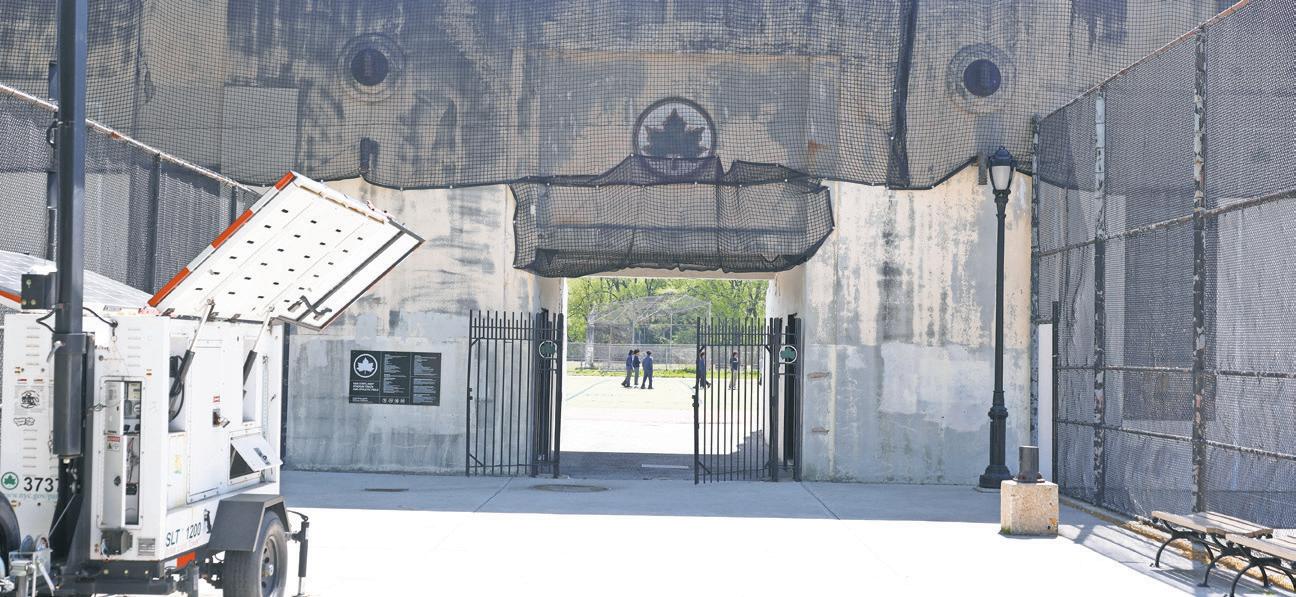
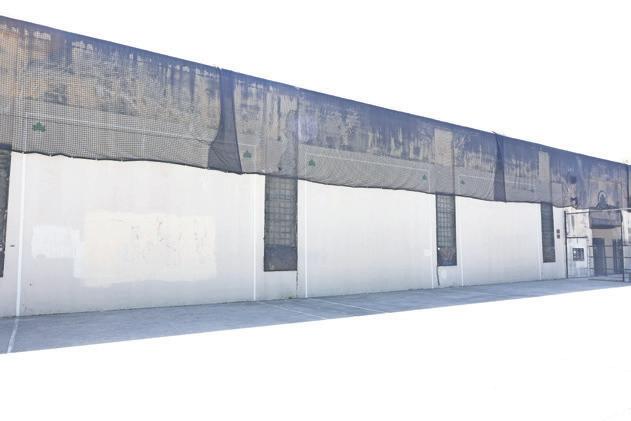
Once a vibrant hub for local sports and events, the Van Cortlandt Park Stadium now sits in disrepair as officials weigh demolition plans.
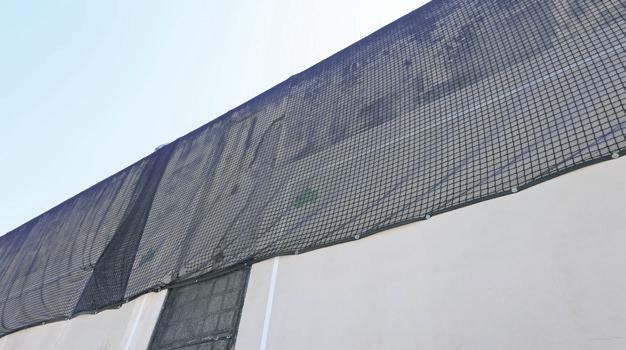
Protective netting has been installed around the stadium to contain debris as the structure continues to deteriorate.
GARY JEAN JUSTE photos
Students use the sensory room at Riverdale Temple Nursery School to regulate and reset during the school day.
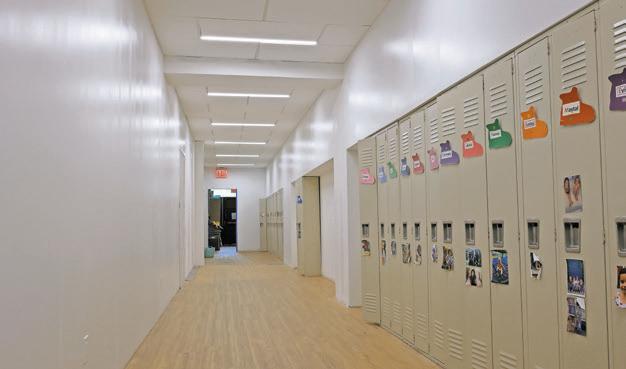
A newly constructed hallway at Riverdale Temple Nursery School expanded space to accommodate the new Kindergarten Bridge classroom.
File photo
Another file photo from The Press is dated November 1979, and says it was taken in the science lab.
GARY JEAN-JUSTE P.S. 81 was named after the Bronxite and former president of the New York City Board of Education, Robert J. Christen.
The stadium’s handball court reflects years of wear and limited maintenance.
Participants from Bend the Arc, Jews for Racial and Economic Justice, and T’ruah: The Rabbinic Call for Human Rights gather, listening to speakers.
Olivia Young photos Nick Lyndon of Bend the Arc raises his handmade protest sign.
Courtesy Riverdale Temple
A rendering shows the planned Kindergarten Bridge classroom at Riverdale Temple Nursery School, which will open this fall.
River d ale stu d io offers mountaintop yoga wit h out leaving Bronx
By Michelle Mullen mmullen@riverdalepress.com
In Riverdale, athletes and yogis are stepping into a backyard studio to breathe air that more closely resembles Colorado’s Rocky Mountains than the Bronx.
A.J. Fischer, a former Broadway performer turned personal trainer, built the space outside her home to bring together ideas she had been developing for years. Inside, oxygen levels are deliberately lowered to replicate conditions at roughly 10,000 feet above sea level, creating an environment where the body must adjust while remaining within a safe range. She pairs that setting with a structured breathing method she developed through years of training clients and graduate study in exercise science.
The space, which she calls the Hypoxix Institute, serves as both a studio and a testing ground. Inside the sleek, shed-sized room, she leads small, closely monitored classes that combine hypoxic exposure with a structured breathing method designed to regulate how the body responds to physical and mental stress.
“We’re almost at 10,000 feet,” Fischer said, gesturing toward a series of narrow pipes lining the floor.
“These pipes on the floor are what are supplying the room with the nitrogen and the oxygen change that has us at almost 10,000 feet.”
When Fischer and her family purchased their home, the space had been used by the previous owner, a 95-year-old former dancer, as a personal studio. Before moving in last year, Fischer brought in engineers from Hypoxico Altitude Systems to install equipment that creates a hypoxic system, artificially diluting oxygen concentration.
At the center of that system is an altitude generator, housed just outside the space. The device filters and concentrates nitrogen from the surrounding air, then feeds it into the space through pipes running along the floor. As nitrogen levels rise, the proportion of oxygen drops, creating the effect of higher elevation without changing air pressure.
“The generator is doing all the work,” Fischer said. “It’s taking normal air and adjusting the ratio so that you’re breathing less oxygen with every inhale. This is
really about changing the environment just enough that your body has to respond.”
Oxygen levels can be adjusted, and Fischer monitors each session using pulse oximeters to ensure clients remain within a safe range. She typically keeps participants between 82 and 93 percent blood oxygen saturation, explaining that it is low enough to prompt physiological adaptation without causing distress.
“Your body is adapting,” she said. “You don’t even have to be working out when you’re in here. Your body is adapting, and your brain is adapting,” she said.
In class, that adaptation is carefully paced. Movements unfold slowly — a shift into position, a pause, a controlled inhale, then a long, measured exhale. The class soundtrack mirrors that pattern, embedding breath cues directly into the music so participants can follow even when Fischer’s voice fades into the background.
At the start of each session, Fischer tells students to listen for that rhythm. If they lose their place, the breath is there to bring them back.
“You don’t need to rush anything in here,” she said. “If you stay with the breath, everything else starts to fall into place.”
Intensity builds gradually, she added. She designed the method for those who may not be able to tolerate traditional high-impact cardio workouts but still want comparable results.
“I designed this training method for those who can’t do high-impact, high-intensity exercise in a normal way, but want to use the combination of altitude and breath control to get high-intensity results without the extra stress and impact on the body,” Fischer told The Press.
Her path to her current work is rooted in dance. Raised in Massachusetts, Fischer trained intensively from childhood before moving to New York to pursue a career in theater. After years of auditions and regional productions, she achieved her goal of performing professionally, including a multi-year run on Broadway.
Alongside performing, she worked as a personal trainer, building a client base that included performers and high-profile clients such as comedian Amy Schumer. Over time, her focus shifted
toward the science behind training, leading her to earn both a bachelor’s and master’s degree in exercise science. Her research focused on how breathing patterns influence oxygen use, muscle activation and the nervous system, forming the basis of the method she now teaches.
The altitude component developed gradually, beginning with her interest in breathwork, and expanding into hypoxic environments before the two approaches were combined.
“I became really interested in what was happening inside the body,” she said. “Not just the movement, but how breath and oxygen were actually driving performance and recovery.”
Fischer wanted a space where she could put those ideas into
practice, pushing her and her husband to move to Riverdale with their two children last year from a one-bedroom Inwood apartment.
But her altitude room is used for more than workouts. A Murphy bed built into the wall allows clients to remain in the chamber for extended periods, gradually acclimating to lower oxygen levels while resting and sleeping. Some use the space to prepare for high-altitude hiking and travel, alternating between light activity and passive exposure.
Gregory Taylor, a Riverdale resident and class regular, discovered Fisher’s high-altitude yoga class after sustaining a severe injury, seeking a way to push himself physically without relying on high-impact exercise.
“I need high intensity, but
without the weight bearing,” he said. “I’m not going to run, I’m not going to do that kind of exercise anymore, so this felt like a way to push myself without putting that stress on my body.”
What he found was a different kind of effort, one that required attention as much as exertion. The class demanded constant focus on breath and timing, layering cognitive awareness onto physical movement.
In the weeks after starting, Taylor said he began to notice clear changes. After years of struggling with sleep, he was now sleeping through the night, and his meditation practice, which he tracks with a biofeedback device, showed measurable improvement.
“I don’t know if it’s lung capacity or if I’m better at controlling it,” he said.
Fischer said that while many of her clients are elite athletes, others are just drawn to the method as an alternative to traditional training, particularly those managing injury, stress or physical limitations.
Now, she is preparing to take that work a step further.
Fischer is set to lead a yearlong research study in Riverdale focused on menopausal women, examining how hypoxic training and controlled breathing affect cognition. It will be her third grant in this area and her first focused specifically on cognitive outcomes.
He also noticed changes in his breathing. A longtime harmonica player, he found he could sustain notes with greater ease.
GARY JEAN-JUSTE photos
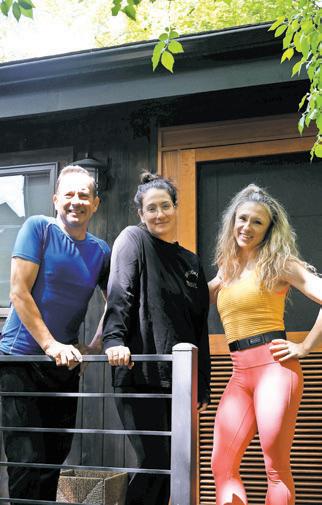
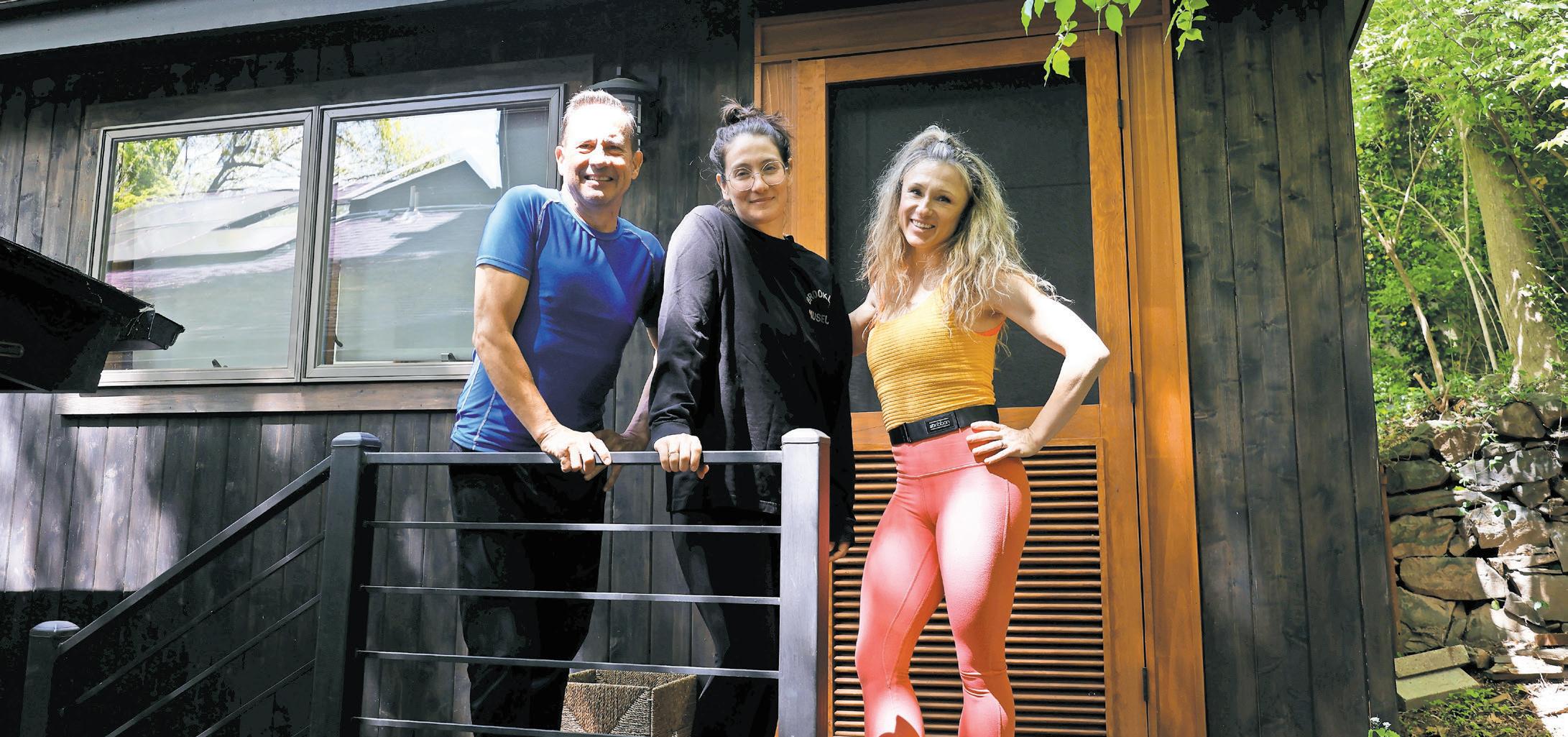
A.J. Fischer, right, stands with students outside her shed-sized high-altitude studio after teaching a yoga class.
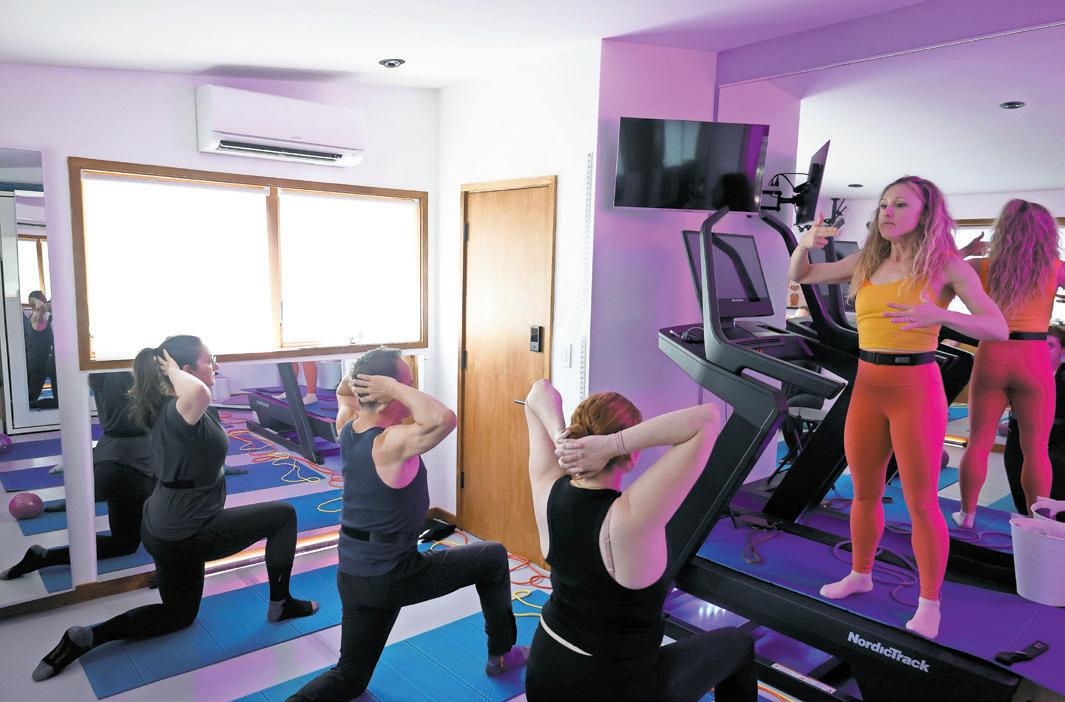
Participants hold positions and follow timed breathing cues during a hypoxic yoga class designed to mimic high-altitude conditions.
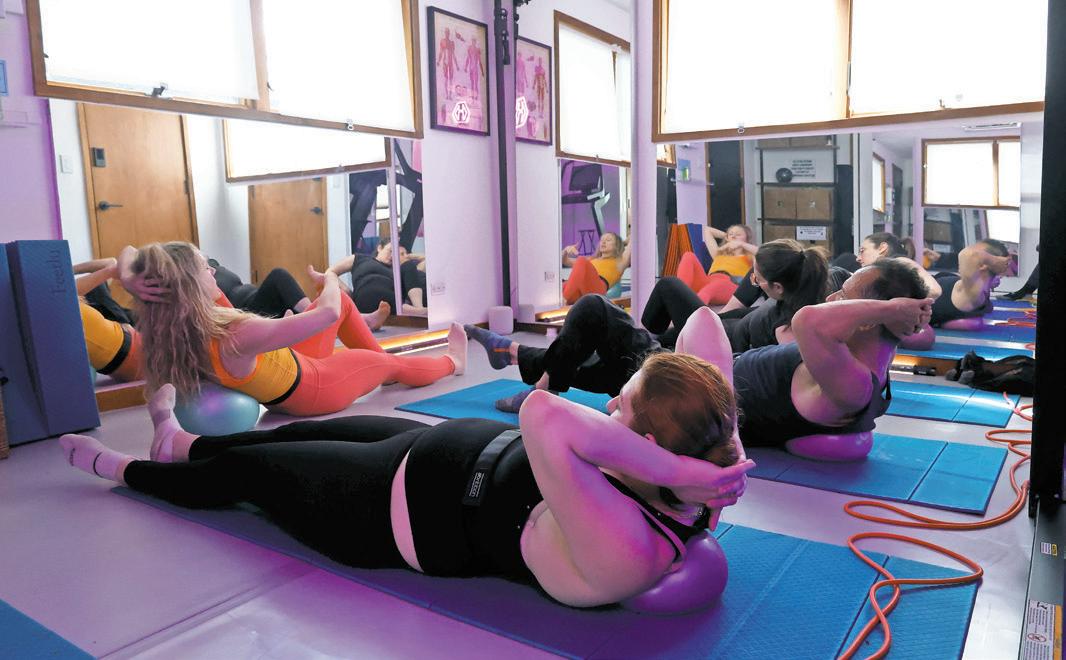
A.J. Fischer leads a hypoxic training session in her Riverdale studio, where oxygen levels are diluted to stimulate adaptation in the brain and body.
















For this Riverdale artist, connection comes sealed in an envelope
By Olivia Young oyoung@riverdalepress.com
Stacey Natal sat at her kitchen table in the Riverdale apartment she’s lived in for the past 18 years, and ran her fingers over a pink envelope. Inside was a vibrant art print, a postcard, a letter typed in a font made from her own handwriting, a card with a tailored affirmation and a set of journal prompts.
Natal is an artist and the founder of the Life Happens Now monthly mail club — named after a mantra that became crucial to her years ago after a cancer diagnosis, and gained new significance during her mother’s recent health challenges. The club launched in February, and each month, Natal draws from her personal life to create unique, themed experiences for members to look forward to.
Natal, 60, said amid junk mail and bills, she wants members to feel inspired when opening up her carefully curated envelopes. It’s a moment only for the recipient, she explained, and every detail is intentional.
“I want them to feel it’s something special,” Natal said. “As a mom, I don’t want to share. I have to share everything — my space, my time, everything. But this is just for the person that’s the member.”
A mail club is a subscription-based service usually run by artists who deliver physical items like postcards, letters, bookmarks, stickers and prints. It is often personalized, and appreciated as a way to encourage real-world connection in an increasingly digital world.
Natal’s monthly prints are inspired by photos she’s taken, then drawn using the art app Procreate. She has been promoting the club on social media, as well as emailing contacts she’s built over the years, and so far has garnered 12 subscribers. She charges $12 a month.
She started the club after what was described as a lifechanging last year and a half. Her time was dedicated to
caring for her mom, who has muscular dystrophy and suffered a bad fall in late 2024. Amid doctors appointments, a stalled Medicaid application, managing home nurses and spending the night at her mom’s to save money on additional care, Natal said she became burnt out. To take her mind off things, Natal would scroll Instagram, and started seeing other artists’ mail clubs.
Curiosity turned into action, and in a few short months the mail club became an outlet for Natal. She said she feels calmer, more relaxed. Just as she tailors the envelope’s content to create a moment solely for the recipient, the time she spends creating it is solely her own.
Natal’s experience with her mom inspired April’s theme, “April Showers Bring May Flowers.” The image on the month’s print shows a woman in a flowing skirt walking through the city, umbrella in hand. Pink flowers bloom from the umbrella, spilling over its rim.
“Somewhere on the other side of it all, I realized I had grown into a stronger, more capable version of myself than I knew existed,” Natal wrote in the club’s April letter. “Whatever storm you’re walking through right now, I want you to know that’s happening too.”
About a decade ago, Natal consciously adopted a positive mindset, which stemmed from a habit of journaling and studying personal growth. This was the first time Natal coined Life Happens Now, renaming her blog and starting a virtual club to spread selfhelp advice.
In 2018, she was diagnosed with human papillomavirusrelated throat cancer, and underwent surgery that same year to remove a small tumor on the back of her tongue, as well as lymph nodes from her neck to see if the cancer had spread. During treatment, Natal said she put her energy toward the things she could control.
Natal was born and raised in the Bronx, and moved to Riverdale when she was
14. Growing up, she always gravitated toward the arts, but was influenced by family to choose what was considered a more lucrative career path. At the State University of New York at Albany, she studied to become a computer programmer, and did so for several years, later pivoting to software training. But, the urge to do something creative was always present, and Natal said she frequently embarked on side projects while she worked her day job.
In her late 20s, Natal had a gift basket business, where she found a knack for personalizing things, including handmade bows, curated food and tasteful packaging. Once she was a new mom, she channeled her creativity into making felt hair accessories for her daughters. Her passions kept growing, from cake decorating, to blogging, to capturing it all with her camera. Once the family returned to Riverdale in 2008, Natal immersed herself in the photography business.
Every venture contributed to the mail club — a culmination of skills built and lessons learned, Natal explained, adding that “all the pieces of what I’ve been doing kind of came together.”
Recipients have felt the impact. Judith Satosky, a longtime Riverdale resident, started following Natal online a few years back for her photography and Life Happens Now content. They later met at the Riverdale Y Sunday Market. Satosky said she finds the mail club exciting and reminiscent of a predigital age.
“Today, nobody writes letters,” Satosky said. “People just text. This is the old fashioned way.”
For others, the letters represent something more intimate. Hope Silverman, a figure skating coach based in Long Island, is a childhood friend of Natal’s. Now, the two only see each other once a year. But Natal’s mail club helps keep their connection alive.
“I can remember her signature from school,” Silverman said, referencing the hand-


written signoffs at the end of each letter. “It just reminds me of her, I feel close.”
In Natal’s workspace, she has a teal board where she
prints out and pins testimonials from subscribers. As Natal works, they serve as reminders of the impact a simple envelope can carry.




Though Life Happens Now mail club is still in its early stages, Natal believes it is fostering a meaningful sense of connection already.
GARY JEAN-JUSTE photos
April’s theme was “April Showers Bring May Flowers.” Before that, it was to “Slow Down and Wander,” and had a print of a bench surrounded by greenery that Natal spotted during a trip to Cold Spring.
Stacey Natal, 60, creates her prints with the art app Procreate, based on photos she has taken. Her letters are typed in a font made from her own handwriting, and each one is personally addressed and signed.
What’s on?
Mother’s Day Weekend

At Kingsbridge Historical Society
Emergence
The Kingsbridge Historical Society hosts artist Daniel Hauben’s exhibit, “Emergence,” until June 30, at 2570 Independence Ave. It features the Bronx painter’s monumental cityscapes, sculpted oil reliefs and landscapes, both real and imagined, including the 21-foot “Reflecting on the Familiar” and the 9-foot “Emergence.”
At Wave Hill
Mother’s Day
On Sunday, May 10, spend the day in the gardens with a special Mother’s Day Family Art Project, guided garden walks, spring birding, free community yoga and a picnic on the lawn.
Atom Moore: Second Nature
Still life and product photographer Atom Moore presents “Second Nature,” an exhibit centered on the anatomy of plants in Wave Hill’s living collection. View the series at Wave Hill through July 12.
At the RiverdaleYonkers Society for
Ethical Culture
Spring Concert On Sunday, May 17, the Riverdale-Yonkers Society for Ethical Culture will host its spring concert, “Travel and Stillness: A Celebration.”
The warm, lively performance includes engaging songs spanning time, cultures and musical genres.
The event will include music by Dan Cohen, Mun-Tzung Wong and Eve Weis, encompassing classical, Broadway, jazz and pop, as well as concluding with a rousing sing-along.
Runs from 7 to 8:30 p.m. Donations are $20 per adult and $10 per youth.
At Riverdale Neighborhood House
Ballet Fit
RNH presents a new Ballet Fit class on Tuesdays at 6:30 p.m. starting May 12.
The class is a training program that combines ballet exercises with fitness exercises.
Open to ages 13 and up, the class is designed for individuals of all movement abilities. Participants will work on toning and strengthening, coordination, balance and flexibility.
Taught by Azucena Rollan Mas,
dancer, performer and certified American Ballet Theatre and Ballet Fit instructor. Register at riverdaleonline.org/classes.
Sing Like A Star
This Riverdale Neighborhood House singing workshop runs every Wednesday at 6:30 p.m. It will introduce participants to vocal techniques such as breathing, posture, tone and singing on key.
Students will learn basic music theory, vocal warm-ups, expanding vocal range and developing stage presence. They will sing both acapella and accompanied by live instruments.
Taught by Mike Flanagan, a musician and singer with over 40 years of experience, the workshop is open to anyone over the age of 15, and is designed for all levels. Register at riverdaleonline.org/classes.
Creative Nonfiction
Ready to unlock the power of your words? Taught by Anna Purves, a local writer and professor, this creative nonfiction workshop will give you the tools to craft rich and impactful writing that captures your story.
Open to anyone over 18, this Riverdale Neighborhood House workshop is the perfect place to refine your voice and explore your ex-
periences. Runs every Thursday at 6:30 p.m. Register at riverdaleonline. org/classes.
Belly Dance Riverdale Neighborhood House’s new belly dance class is open for enrollment. Belly dance is a group improvised style with deep folkloric roots. This class is designed for individuals of all movement abilities and it focuses on restorative movement that will increase mobility. The teacher’s approach focuses on cultural literacy and on empowering students to take the risk of trying a new experience for the first time. Open to ages 13+, participants can sign up for one class or the whole series. Classes are on Wednesdays from 6:30 to 7:30 p.m., through June 10. Register online at riverdaleonline.org/classes.
Learn Guitar
The Riverdale Neighborhood House’s spring session guitar class has begun. Learn key guitar skills such as chords, scales, music theory and playing songs. This weekly class runs on Monday nights at 6:30 for beginner and intermediate players ages 8+. Register online at riverdaleonline.org/ classes.
Riverdale CSA
The Riverdale CSA, Community Supported Agriculture, is accepting members for its 2026 season. Deliveries of organic and biodynamic vegetables from Hawthorne Valley Farm are made weekly on Thursdays from 3:30 to 7:30 p.m. from early June to November to the Riverdale Neighborhood House.
Full shares and partial shares are available and include seven to 10 vegetables each week. Fruit shares can be purchased that include organic strawberries, blueberries, stone fruits, apples and pears. Also available are a wide variety of local dairy products, baked goods, meats, poultry and eggs. CSAs are mutually beneficial for farmers and communities. For more information about this and the current Winter-Spring CSA with Clatter Valley Farm, go to riverdalecsa.org or email riverdalecsa@ gmail.com.
Stretch and Strengthen
Start your mornings with a light movement class at the Riverdale Neighborhood House. Classes are held on Wednesdays from 10 a.m. to noon. A social hour with refresh-
Celebrate Mother’s Day at the New York Botanical Garden. Join a garden party on Saturday, May 9 and Sunday, May 10, from noon
What’s on?
ments follows, offering a chance to chat with neighbors. Visit riverdaleonline.org to register.
At Inner Space Yoga
Ballet Flow
This low-impact workshop focuses on joyful, somatic movement, blending contemporary ballet, gentle barre, center work, and across the floor, ending in an expressive combination. No experience needed. This class will take place on Friday, May 8 from 6:30 to 7:45 p.m. with Rainey Scarborough.
Yoga Meditation Mandala
This Mother’s Day weekend afternoon yoga retreat will take place Saturday, May 9 from 3:30 to 6 p.m. with Tal Sabo and Deborah Sabalusky.
Reconnect to yourself during this workshop, designed to renew and revitalize your creative energy in preparation for creating mandala art. Space is limited.
At Derfner Judaica
Museum
Envisioning the Sacred: Modern Art from the Collection
“Envisioning the Sacred: Modern Art from the Collection” features 49 prints, paintings and drawings from the museum’s permanent collection by 20th- and 21st-century artists working in a range of modernist styles — from figurative to abstract.
These 21 artists explore stories and characters from the Bible, represent Jewish observances and traditions, or take inspiration from language and legend. Many of the artists express their Jewish identities and relationships to Jewish communal experience through their work.
For some, mysticism and quests for spiritual connection are essential features of their art. It runs until Sunday, June 21.
At the New York Public Library
Baby storytime
Join baby storytime at Kingsbridge Library on Thursdays at 11 a.m. Join for a special time to bond with your little one and meet other caregivers. The program will explore the joy of movement, books and songs in addition to building early learning skills you can practice at home. Come prepared to sit with your child on your lap. Best for children who are pre-walkers or crawlers.
Mixed media art for pre-teens
Join every Tuesday at the Riverdale branch for a session of arts and crafts using different mediums such as acrylics, watercolors, clay, beads, paper and others, such as photograms. You’ll be simultaneously listening to podcasts like “Stuff You Missed in History Class” and “Night Vale” or just jamming to your favorite playlists. Related books and resources will also be available for checkout to spark your creativity and help you dive deeper into techniques and other crafts. Runs every Tuesday from 3 to 4 p.m.
Writing Circle Kingsbridge Library hosts weekly writing circle meetings in an intimate setting where participants can share unpublished drafts and give
Mother’s Day Concert With INDIA

and receive feedback. Attendees must be at least 18 years old. Registration is available at nypl. org; the Google Meet code will be emailed the day before the session.
The group meets every Thursday from 10 a.m. to noon.
Children’s STEAM: Kiddie Crafts
Join a relaxing art program at the Riverdale branch for your little ones, focused on learning the basics of the alphabet, shapes and other concepts to prepare them for preschool.
Children are encouraged to build their motor skills using various different media, while listening to themed music. Runs Tuesday, May 12, from 10:15 to 11 a.m.
Relax and Recharge: For Young Adults
This event will take place in person at Riverdale Library. Relax and Recharge is a restorative space for middle school and high school students to relax after a long day
It features various activities that are proven to relieve stress such as journaling, collaging, gaming, singing, watching movies and various DIY crafts. Related books and resources on creativity and wellness will also be available for checkout.
Runs Thursday, May 14, from 3 to 4 p.m.
Riverdale
Art Association
Waiting for Summer
The Riverdale Art Association presents “Waiting for Summer,” featuring artworks by members Diana S. Catz, Olga Manthos and Danny Steiner. The exhibit is on view until July at the Riverdale-Yonkers Society
for Ethical Culture, at 4450 Fieldston Road. Diana Catz’s theme is “Exuberance,” Olga Manthos’ theme is “Grillin’ and Chillin’” and Danny Steiner’s is “Flowers of Summer.”
The opening reception is Saturday, May 9 from 2 to 4 p.m. Refreshments will be served.
Reduce, Renew and Recycle
The Riverdale Art Association invites you to its newest exhibit, “Reduce, Renew and Recycle.” Member artists used recycled materials to create unusual artworks that challenge how you see the environment, as well as mixed media, photography, acrylics, watercolor and oils.
The show takes place at the parish hall of Christ Church Riverdale, 5040 Henry Hudson Parkway, and is open Monday through Thursday, 10 a.m. to noon. It runs until the end of August.
Riverdale Block Party
The Riverdale Block Party returns for its fourth annual outing on Sunday, May 17.
Get ready to indulge in local eats and handmade crafts from an array of vendors, walk the doggie parade with your pup, groove to a live DJ and much more.
Takes place on Riverdale Avenue and West 259th Street from noon to 4 p.m.
At Yoga Muse
Prenatal yoga
Join Melissa Ramirez in a Yoga Muse class designed to cultivate calm, focus and resilience, preparing both body and mind for labor and delivery.
Runs Saturdays at 9:45 a.m. Visit yogamuse.co to register.
At Van Cortlandt Park
Super Seedlings
Play and plant with your little one on Saturdays at 10 a.m. Super Seedlings is a free, drop-in gardening program for kids ages 3 to 7 and their caregivers. Explore a fun and fabulous theme at each session with nature crafts, planting, soil digging and more. Come once, twice or all five weeks for some playing and planting.
Caribeando with Juan Usera and the Sambuco Tribe Caribeando features live music highlighting traditional Caribbean rhythms and dances including bomba, plena, guaracha and changüí. Led by master percussionist Juan Usera, an Afro-Puerto Rican artist and culture-bearer whose work is deeply rooted in the traditional African-based dance forms of Bomba and Plena. Watch, learn and join in on Saturday, May 9, from 2 to 4 p.m.
At the Kingsbridge Heights Community Center
Group meditation over Zoom
Join the Kingsbridge Heights of Community Center for online group meditation sessions in collaboration with the Temple of Enlightenment. It’s a great way to relax and let go during this stressful and uncertain time. This class is free and runs every Monday and Wednesday, from 7 to 8 p.m.
OBSTETRICS & GYNECOLOGY
ColumbiaDoctors
Gerald Neuberg, MD, FACC
For appointments, please call: 646.317.0130
Kung-Ming Jan, MD
For appointments, please call: 718.601.4800
David I. Sahar, MD
For appointments, please call: 718.601.3700
Ronald Weissman, MD
Dylan Marshall, MD
For appointments, please call: 844.311.1234
3050 Corlear
10463
Affiliated with NewYork-Presbyterian Allen
ColumbiaDoctors
Ava B. Anklesaria, MBBS
Jennifer Caceres, MD
David S. Lee, MD
Enad M. Dawod, MD 3050 Corlear Avenue, Suite 204 Bronx, NY 10463 For appointments, please call: 212.932.4534
Affiliated with NewYork-Presbyterian Allen Hospital
St. John’s Medical Group
Ana Androne, MD - board certified
Thomas Apuzzo, MD - board certified
Kiranprit Kaur, MD – board certified
Klaudia Nowakiwskyj, MD - board certified
Accepting new patients & most insurances Call (914) 207-0004 -1088 North Broadway, Yonkers
ColumbiaDoctors
Talitha Bruney, MD
Reyna Payero, MD
Shinelle Caldwell,
Doreen Kramer,
Alison Gruber, MD
Riverdale Eye Associates
Gordon, MD
Landzberg, MD
At Christ Church Riverdale
Forde Concert Series
The Forde Concert Series presents “A Band Called Honalee: A Folk Trio Celebrating Peter, Paul & Mary.” Join to celebrate the power and inspiration of American songs of resistance with this modern-day folk trio. Reception to follow. Sunday, May 17 at 4 p.m. at 5040 Henry Hudson Parkway.
At Riverdale Senior Services
Educational program
Join Riverdale Senior Services for its “Strong Bones, Safe Living: Preventing and Slowing Osteoporosis in Older Adults” program. Topics discussed include effective strategies to mitigate bone loss, safe exercises for enhanced strength and balance, proven fall prevention measures, and independent living habits for enhanced well-being.
Community Board 8 Meetings
Bronx Community Board 8 is in session. All meetings held at the CB8 office are located at 5676 Riverdale Ave., Suite 100. Unless specified, all hybrid meetings will be in the office or via Zoom. To access the Zoom link for CB8 meetings, visit their website, cbbronx.cityofnewyork.us/cb8. May 11 at 6:30 p.m. — Nominating Committee May 13 at 7 p.m. — Health, Hospitals and Social Services May 14 at 4 p.m. — Aging
Courtesy Lehman Center for the Performing Arts
On Saturday, May 9, Lehman Center for the Performing Arts hosts singer INDIA for her annual Mother’s Day performance, where she will perform unforgettable hits like “Vivir Lo Nuestro,” “Ese Hombre,” and “Costumbres.” Features special guest, Luis Figueroa.
Opinion
We like to believe that the internet has made us better informed. That it has democratized knowledge, broadened our horizons, introduced us to perspectives we might never have encountered otherwise. This is the appeal of the internet — a global town square, a marketplace of ideas, a constant conversation.
But for most of us, that is only one side of the story.
Often, what we experience in the online world is repetition. By scrolling and engaging online, we train various algorithms to feed us more of what we like, and more of what we believe in. We unwittingly build walls around our virtual experiences, constructing our own personal echo chambers. We see the same arguments in slightly altered language. The same moral certainty. The same villains, the same heroes. These echo chambers are not simply communities of shared interest, they are systems of reinforcement. Within them, we are not asked to think or challenge our beliefs, but to confirm them over and over again.
This is where polarization often sets in — not with disagreement, which is normal and often useful, but with the slow narrowing of our personal realities.
The algorithms that structure our online experiences do not exist to make us wise, they exist to keep us engaged. And engagement is easily produced through outrage, fear and a sense of exclusionary belonging. People do not click as eagerly on nuance. They do not share caveats or go viral for admitting uncertainty. The online world selects for emotional clarity, positions that can be shared in a sentence and enemies that can be named without complication.
Over time, this selection process changes how people talk and how they think. The echo chamber becomes a kind of moral shelter, offering the comfort of being surrounded by those who already agree with you. In our echo chambers, our anger and assumptions are validat-
ed. We are given the sense that we are on the “right side” of history, or awake while others are asleep. No matter where one stands on a given issue, no matter your age or background, it is easy to be pulled into this trap.
The danger in this is not simply that people become misinformed. It is that they become uninterested in being informed — especially when it challenges their view of reality.
In these echo chambers, we witness what has been coined “purity politics.” There is a pressure to maintain conviction in one’s beliefs. Contradictions are treated as attacks. Doubt becomes betrayal. A person who asks the wrong question is no longer seen as curious but as suspicious, leading some to stop asking altogether. This is how an online world of discussion becomes a world of surveillance, where everyone is watching everyone else for ideological impurity. Polarization thrives in this environment because it is efficient. It reduces the complexity of the world into teams. Us versus them. It eliminates the discomfort of mixed feelings. The result is not merely that society becomes divided. The result is that society becomes incapable of speaking to one another in productive ways. We see this everywhere. In politics, certainly, but also in everyday interactions online.
But we don’t have to be locked in these echo chambers. It is possible to break free, and living in a community like those in greater Riverdale puts us at an advantage. Because true community, in many ways, eliminates the need for online entrenchment. Oftentimes, the feeling of connection that algorithms try to fabricate online is a feeling we can find right outside our doors. When we connect with our community members, we are immediately greeted by the diverse range of perspectives and opinions they bring to the table. We are forced to embrace uncertainty, to approach topics with curiosity. And hopefully, we find common ground.

“Renewed push for assault loophole bill,” April 30, 2026
To the editor,
We write as members of the Ruth Mullen Riverdale Huddle, one of 27 organizations statewide which have worked tirelessly for eight years to pass A101 to remove the “voluntary intoxication exclusion” which prevents prosecution of many sexual assaults. The bill was carefully crafted by district attorneys and advocates for survivors using language found in statutes in 27 other states.
Assembly member Jeffrey Dinowitz is now being pressured to advance a watered-down version of the bill he sponsored, but the amended bill is so weak that
it would leave most victims as unprotected as they are now. It would leave out victims who are severely disoriented, who can’t stand up straight, or who don’t know where they are, and who are assaulted while they are defenseless.
We’ve told Assembly member Dinowitz that A101-A will not protect survivors, and we’ve presented him with the facts of real cases that would not be covered by the amended bill.
Passing Assembly member Dinowitz’s original bill would be a win for survivors. Passing the weak amended bill would not: it would let predators continue to take
advantage of the victim-blaming voluntary intoxication exclusion. The amended bill would be a capitulation to defense attorneys who do not want any legislation that would hold predators accountable. Jeff, please don’t pass a bill that won’t help survivors. Please stand strong, and help us pass a bill that will end a longstanding injustice in New York state.
AGNIESZKA CHEN, SUE ELLEN DODELL, LOIS HARR, HELEN KRIM, JULIE MARCUS, JUDITH MINKOFF-GREY AND DALE WOLFF
Ruth
To the editor,
talk
isn’t
control af-
the shooting in D.C. at the
Correspondents’ Dinner? We do not live in the world of armed minutemen anymore.
REV. JAMES
To the editor,
In “A Critique of Ritchie Torres’ Choices as Congressman,” Mr. Alcaide charges that the congressman has “taken part in decisions that have harmed his constituents in the 15th District or called into question his motives to represent the Bronx.” Mr. Alcaide then goes on to name two areas in which Congressman Torres has allegedly failed his constituents: immigration and AIPAC.
Mr. Alcaide bases his argument on the fact that Ritchie Torres, in 2025, voted yes on the Laken Riley Act, which expands authority to deport immigrants for nonviolent crimes. Mr. Alcaide would have us believe that this act is anti-immigrant. What it is, in fact, is anti-crime. Mr. Alcaide chooses to overlook that nonviolent crime is still crime, and that U.S. citizenship is not an entitlement — it entails certain responsibilities, obligations, and values.
On the basis of this vote,
To the editor,
It was good to read the recent editorial, “The importance of a good book.” A lifelong Bronxite, I’ve only lived in Riverdale for eight years. After retiring and reconnecting with a friend from PTA days, I joined a local book club.
I’ve since come to learn that there are quite a few book clubs in the community, several around for many
Mr. Alcaide goes on to argue that Congressman Torres has aligned himself with White House immigration policies. This is not true. The reality is that Congressman Torres has served his community honestly, productively, righteously, articulately and passionately, in service to all of his constituents, whether in the South Bronx or Riverdale.
The facts are that Congressman Torres has been a public housing advocate. He secured a $3 billion FEMA investment for public housing repairs — the largest in New York City history. He has focused on increasing accountability for U.S. Immigration and Customs Enforcement by introducing the Quick Response Act. This 2026 legislation proposes requiring ICE agents to wear QR codes on their uniforms displaying their name and badge number, aiming to unmask agents during enforcement actions. He also sponsored the “There Are No Secret Police Act,” mandating that ICE agents wear body cameras
years. There are a variety of means of choosing the monthly selection among the clubs. Our group agrees to have a member choose a book for each gathering and lead the discussion. We meet at a restaurant that happily provides individual checks for each diner.
A great benefit I’ve gained from our group is that I have read books I probably would never have chosen on my own. We mostly read fiction,
during the detention of immigrants. In addition, he has supported investigations into conditions in Louisiana ICE detention facilities. Then there is the matter of AIPAC. The writer’s stance on AIPAC subtly suggests that Congressman Torres is in AIPAC’s pay because it is his largest contributor. If this sounds suspiciously similar to claims made by Michael Blake, the former state legislator running against Ritchie Torres in the upcoming primary, it is. Blake has accused Torres of putting Israel’s military interests ahead of addressing the district’s affordability crisis. Interestingly, Blake had been an avid supporter of — and presenter at — AIPAC for years, but, for reasons unknown, made a 180-degree reversal after the Oct. 7 Hamas massacre in Israel. There is a story there. Mr. Alcaide’s hit piece is so replete with half-truths, omissions, dishonesty and innuendo that it gives one pause — even in this age of disinformation.
ISAAC GELD
occasionally historical fiction and, now and again, nonfiction. Due to our diverse backgrounds and tastes, I’ve read books about the Holocaust, trials and tribulations in Ireland, plots from South Asia, the Caribbean, Japan, feminism and more. I’ve met new people and made some new friends.
A good book is important. LOIS HARR
Mullen Riverdale Huddle
White House
Online and in print — Riverdale Press classifieds get results
It’s easy to place your ad online, by phone, by fax, by mail or e-mail and reach thousands of readers in next week’s paper — or instantly on our website.
Contact us: Online: www.riverdalepress.com
Call: 718 543 6200
Fax: 718 548 4038
E-mail: classified@riverdalepress.com
Send mail or stop by Bronx, NY 10471

Place an ad:
Our Ad-visors are available Monday thru Friday from 9 a.m. to 5 p.m. to help you word your ad.
Contact us by Monday at noon and your ad will be in that week’s paper. Please make cancellations or changes by the preceding Friday at 4 p.m.
The longer you run your ad, the cheaper it will be.
Rates:
1-5 WEEKS:
$4.30 per line, per week
5-9 WEEKS:
$3.85 per line, per week
10-25 WEEKS:
$3.30 per line, per week
26+ WEEKS:
$3.05 per line, per week
Minimum order is 5 lines for one week.





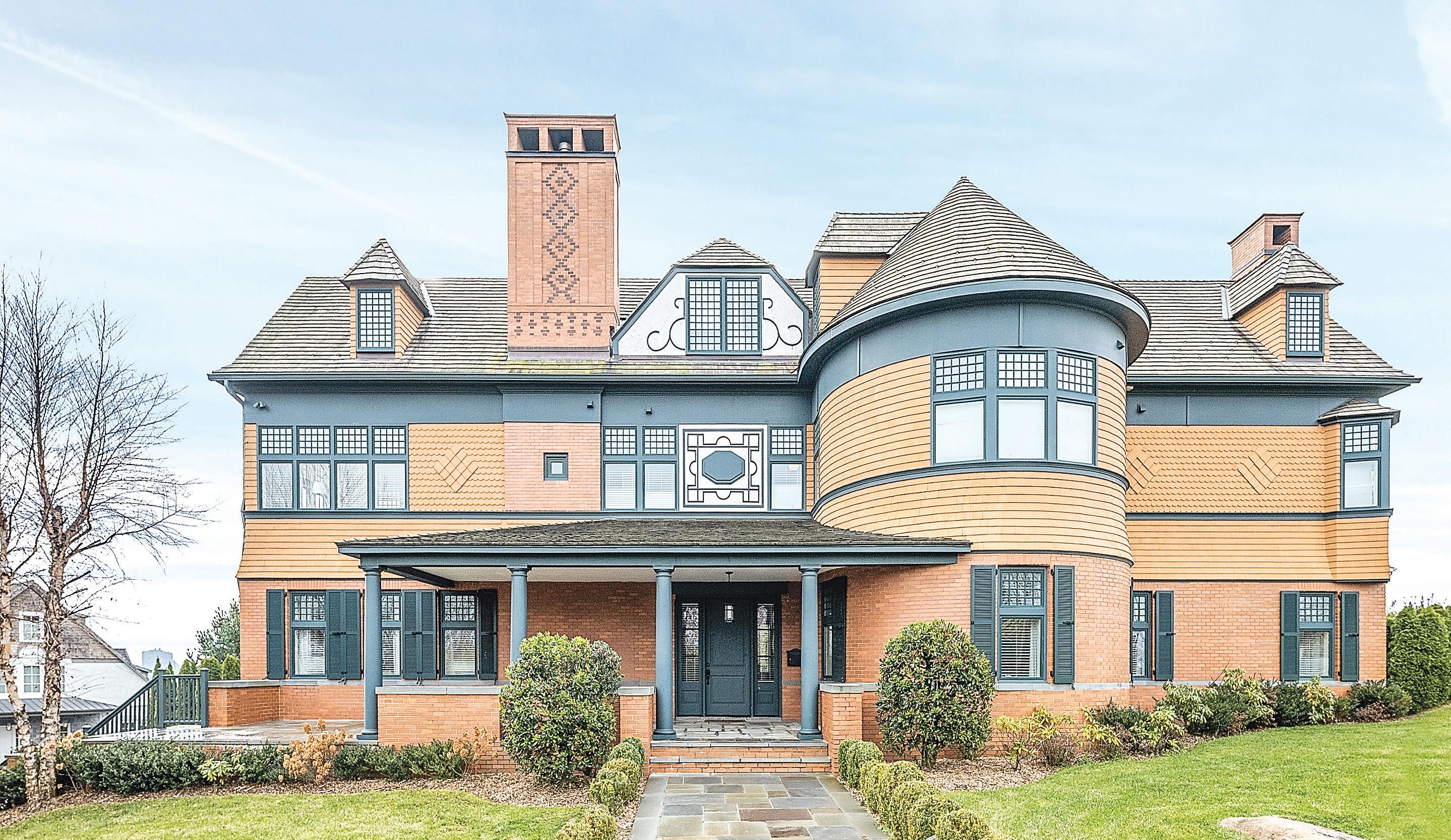
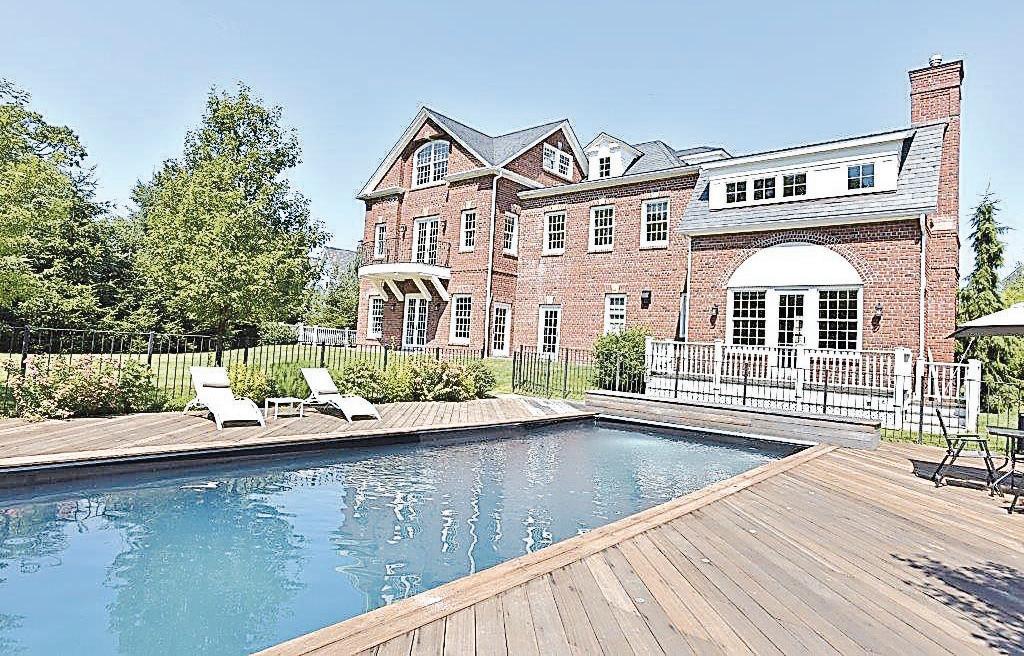
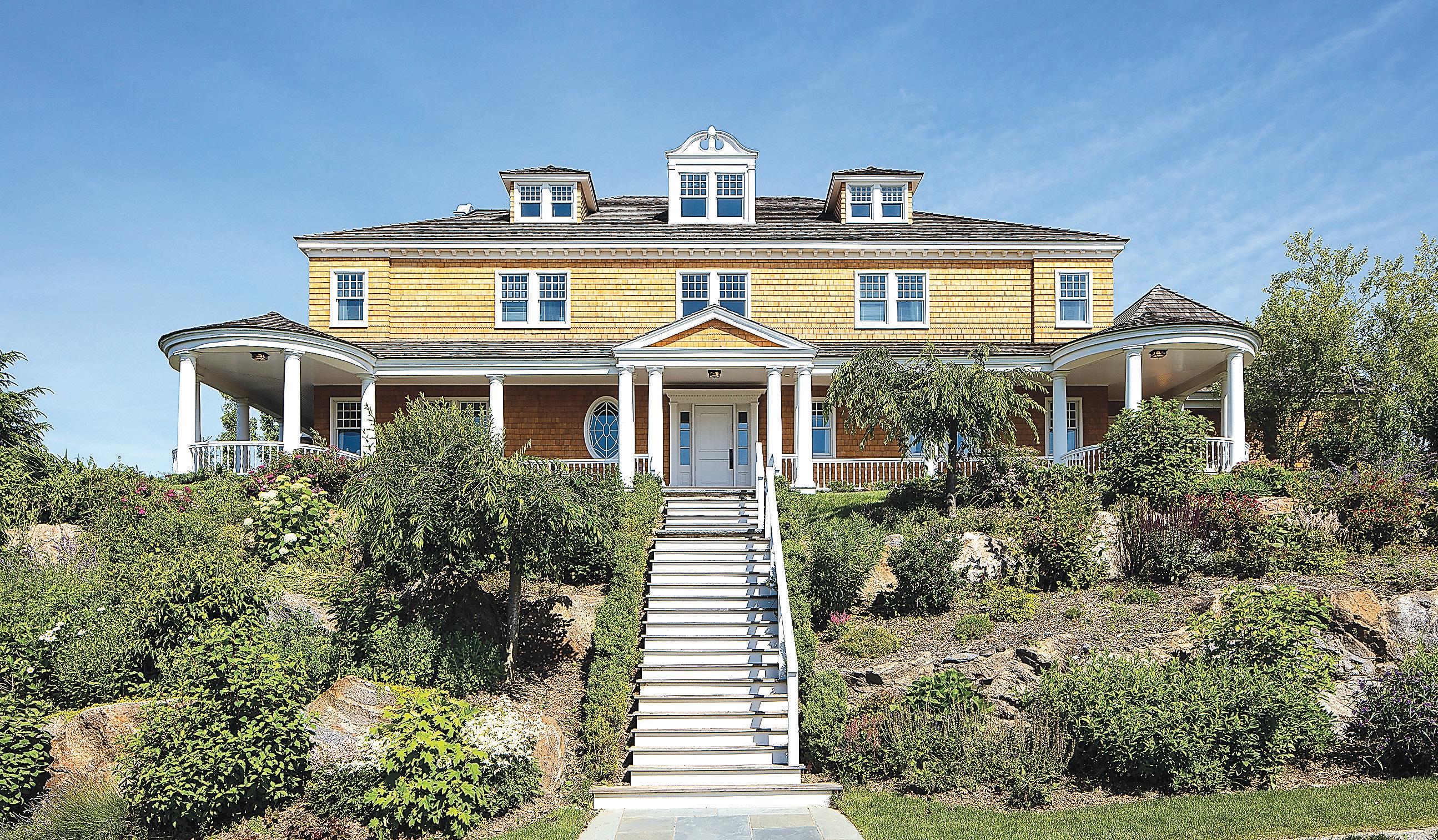






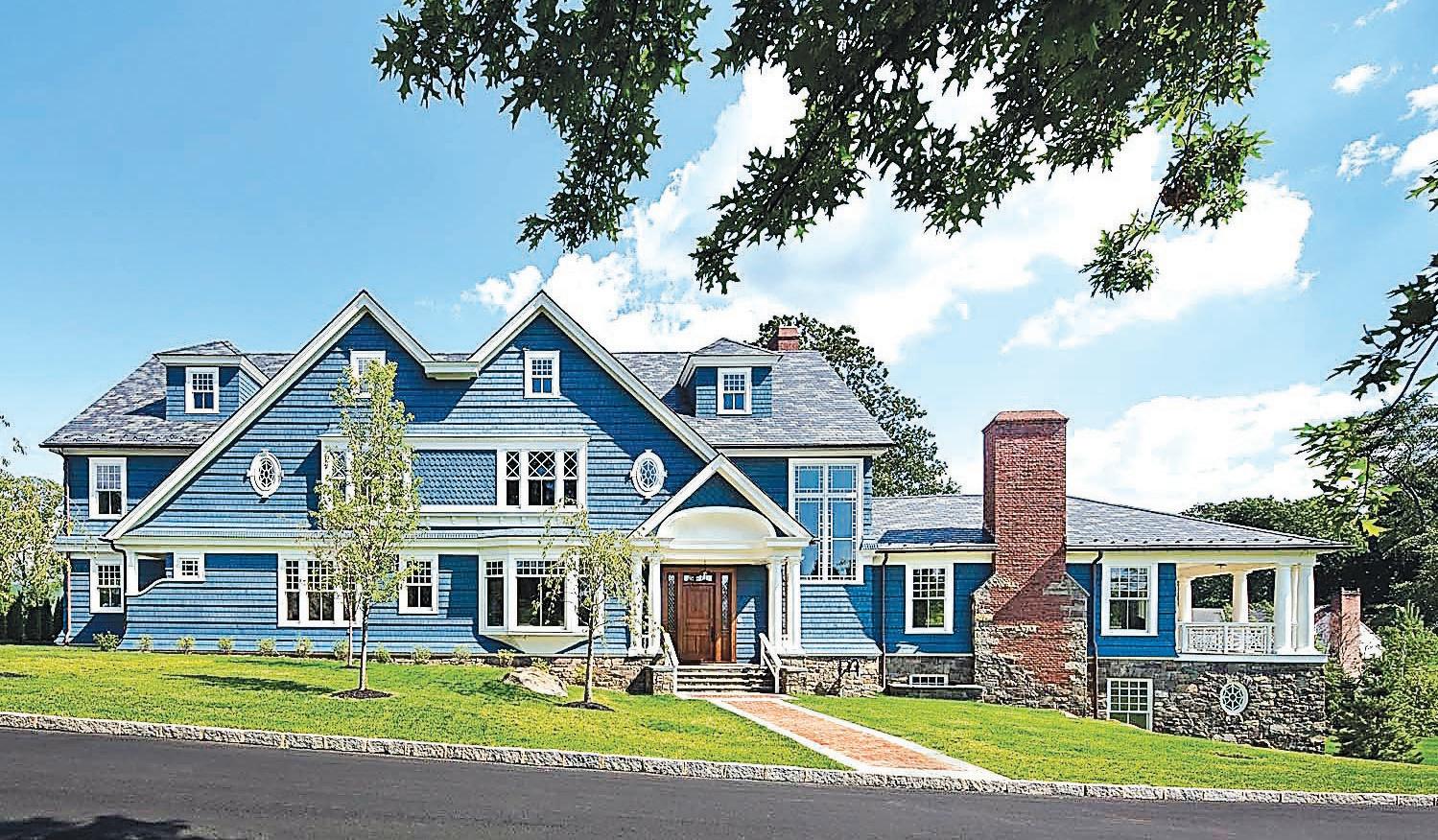
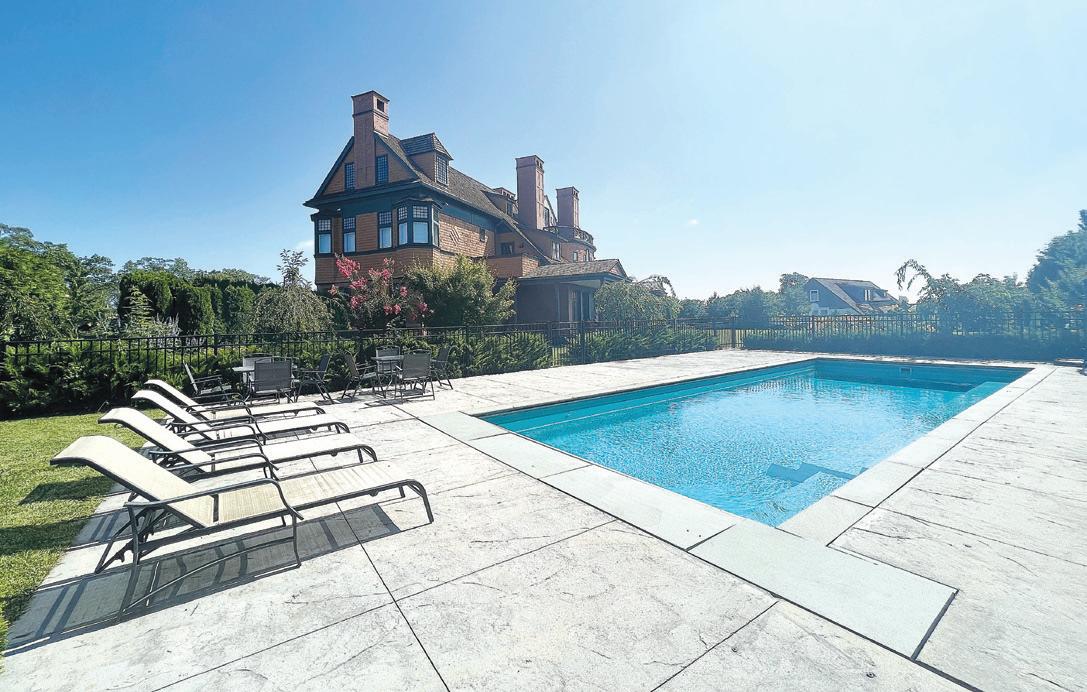
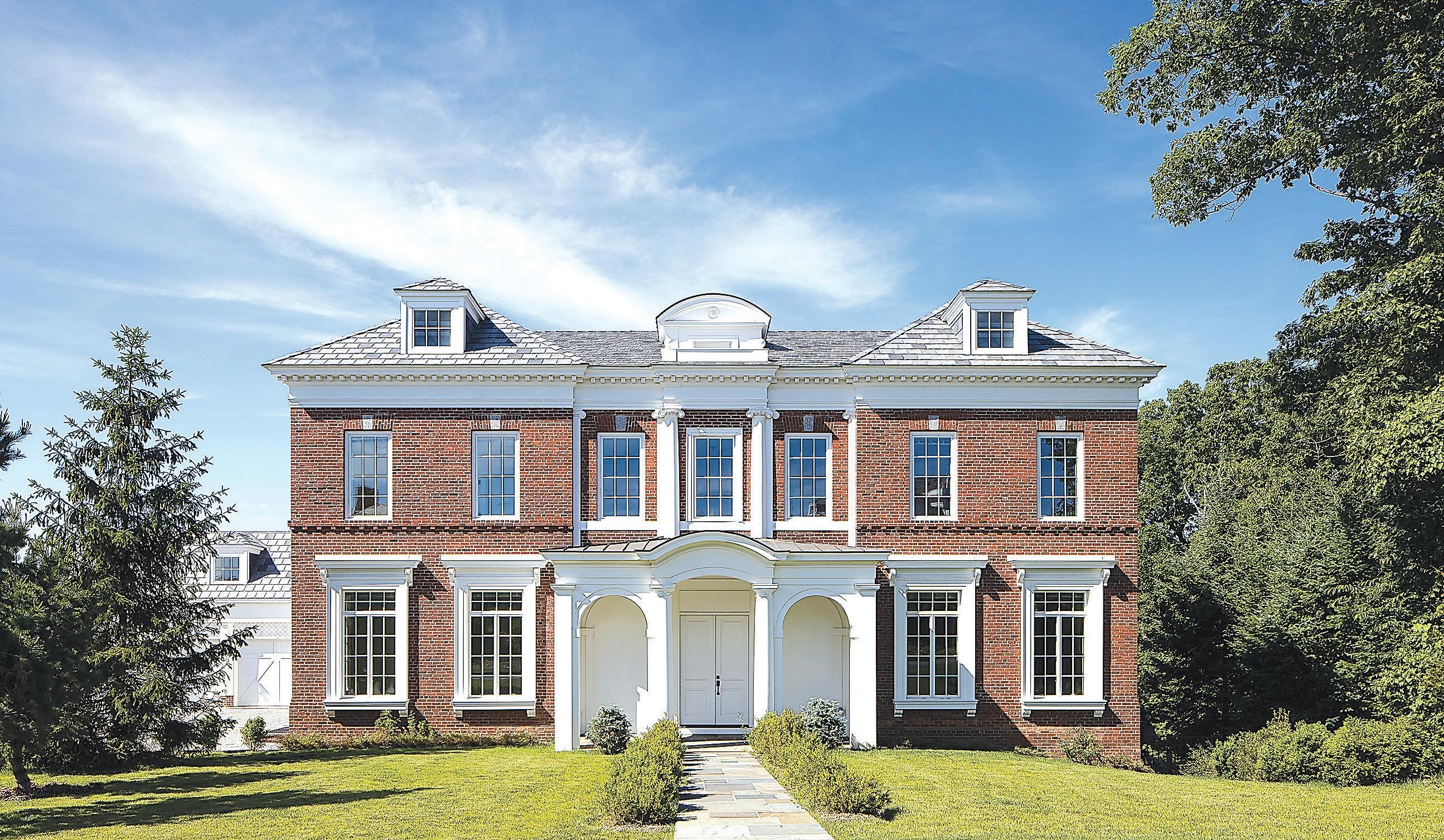
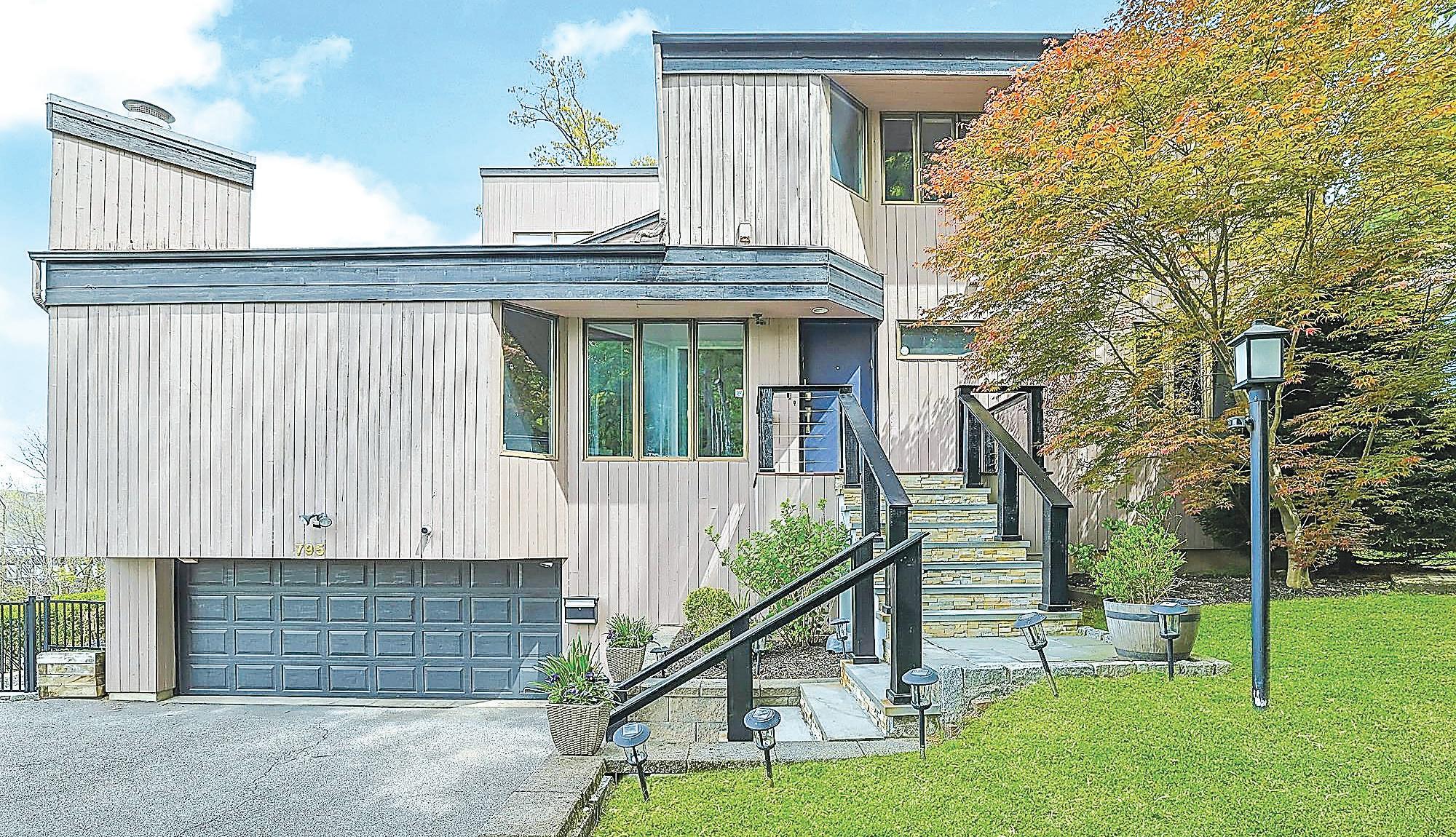

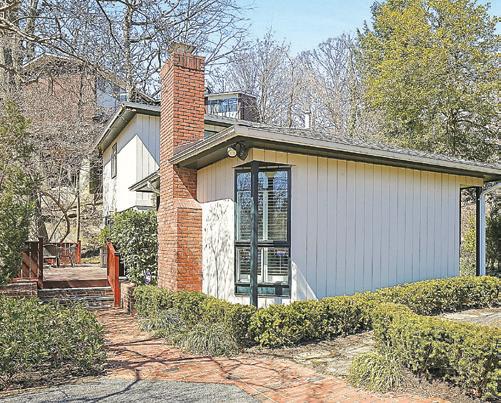
Large corner lot home offers river views and modern design
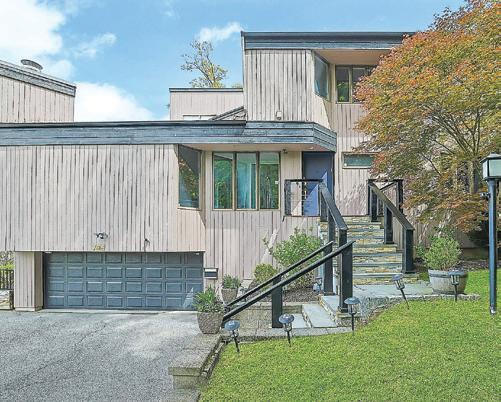
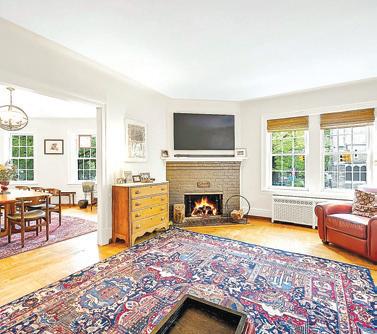
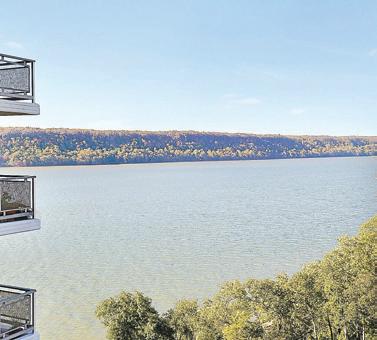
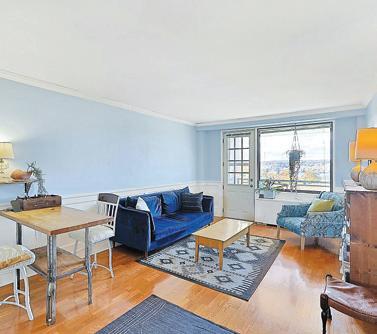
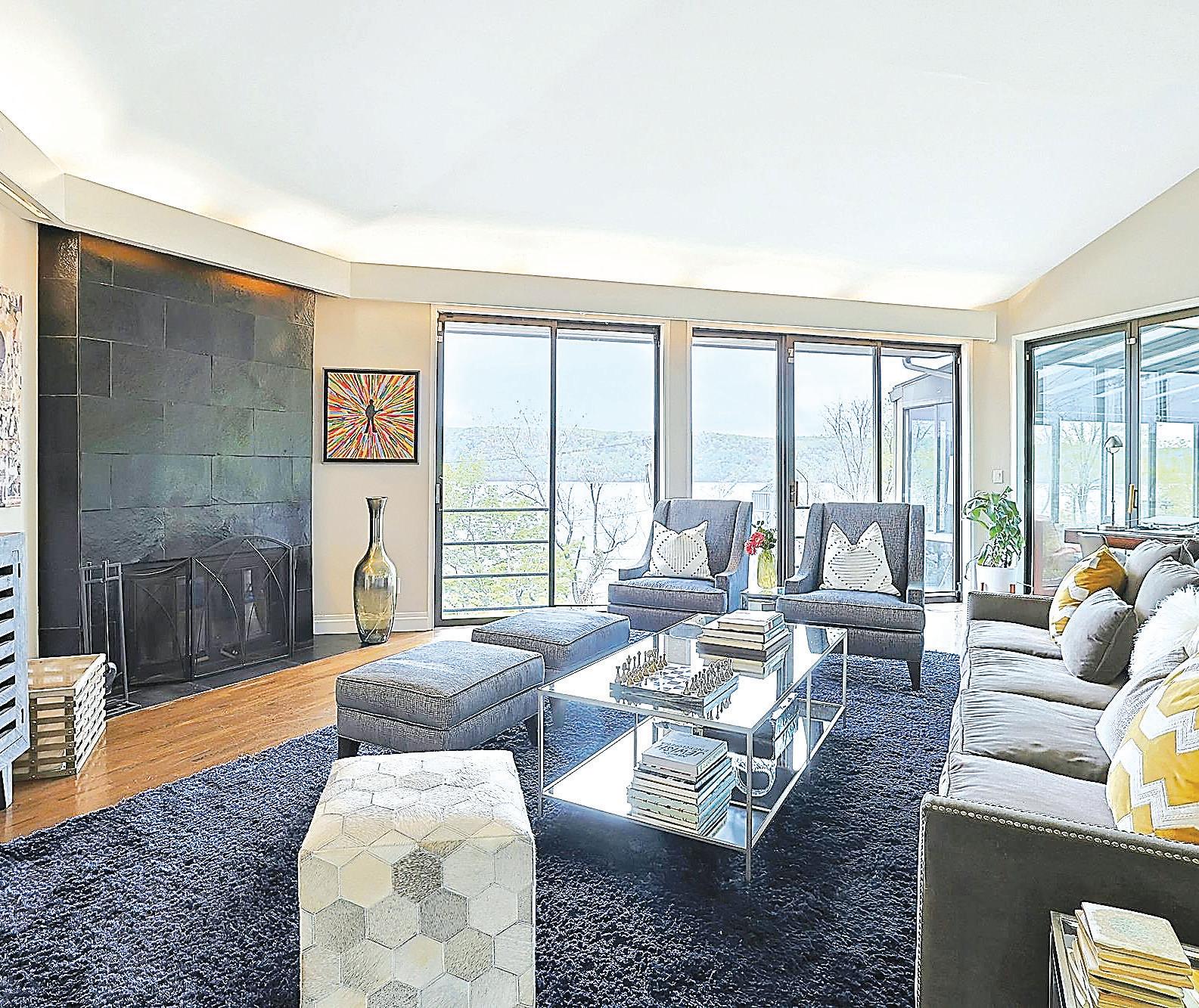
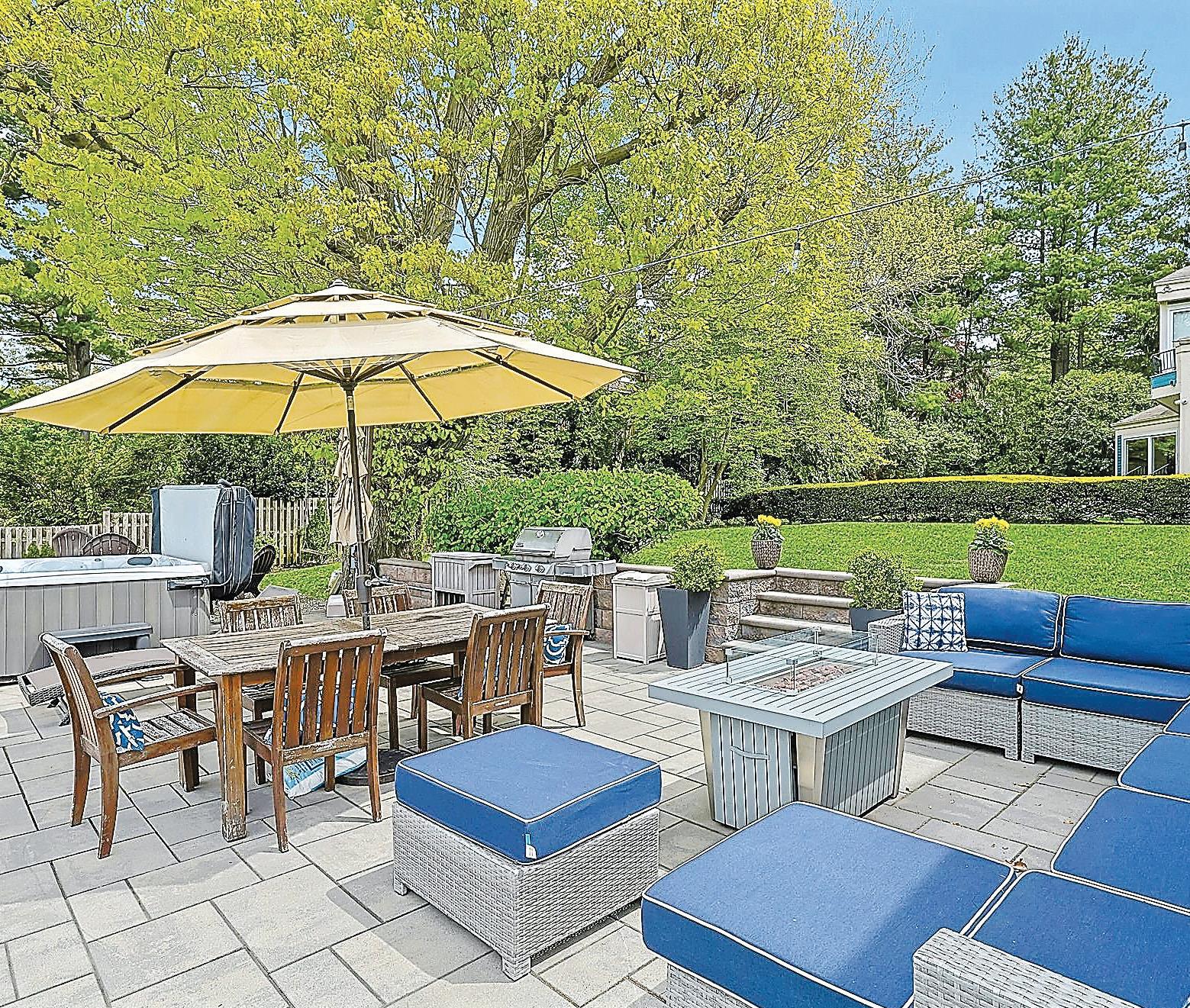
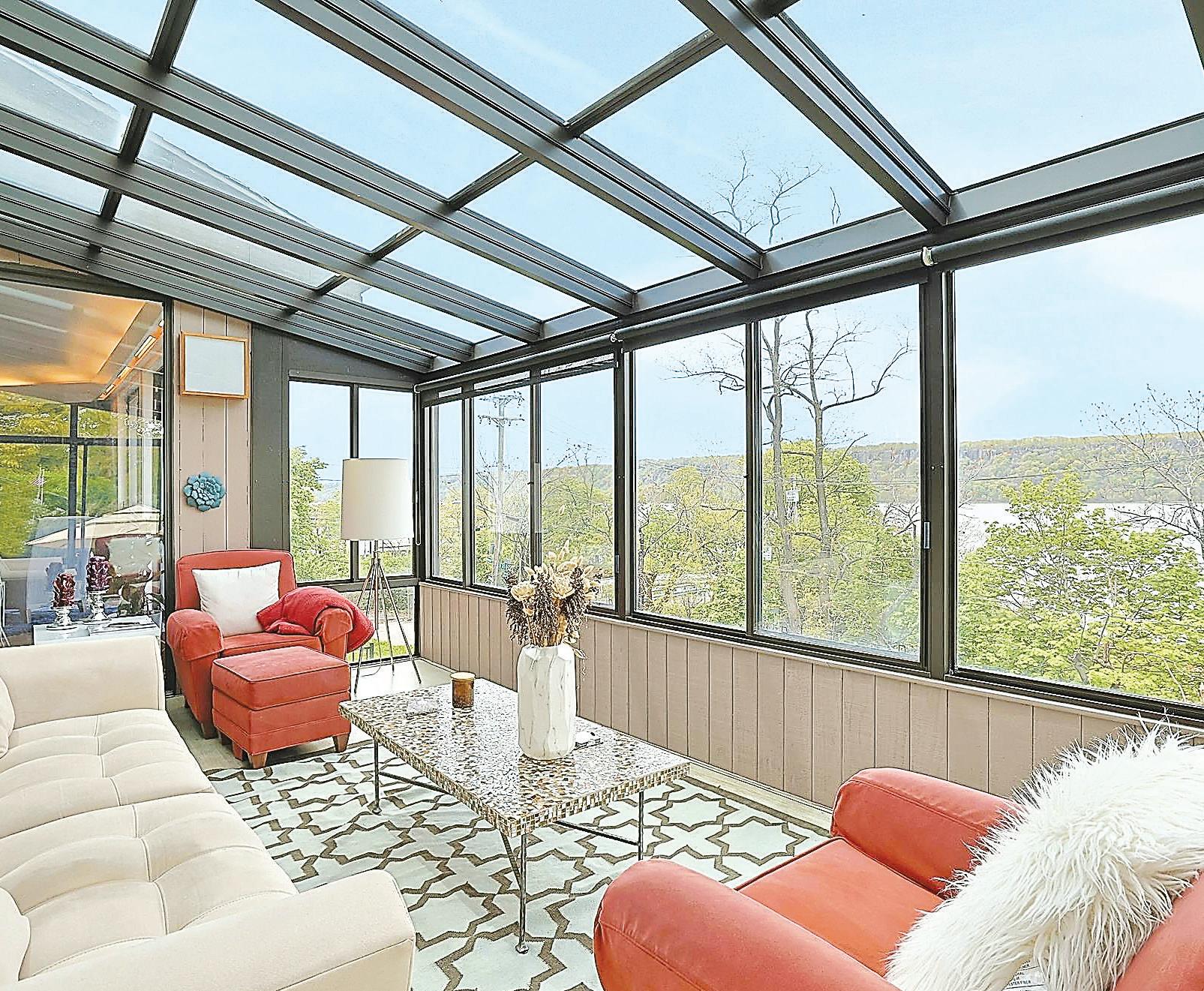
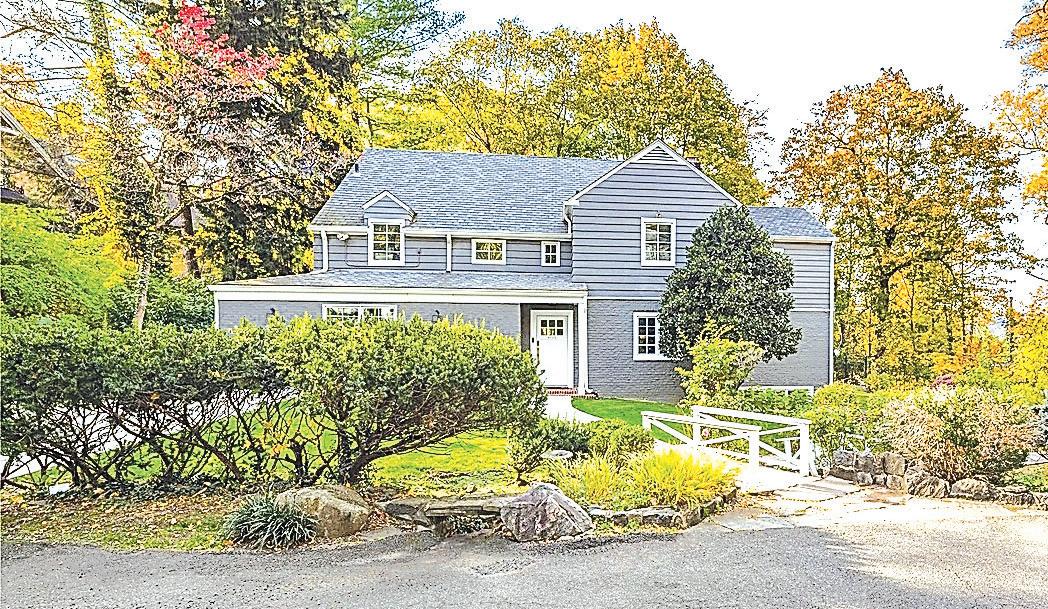
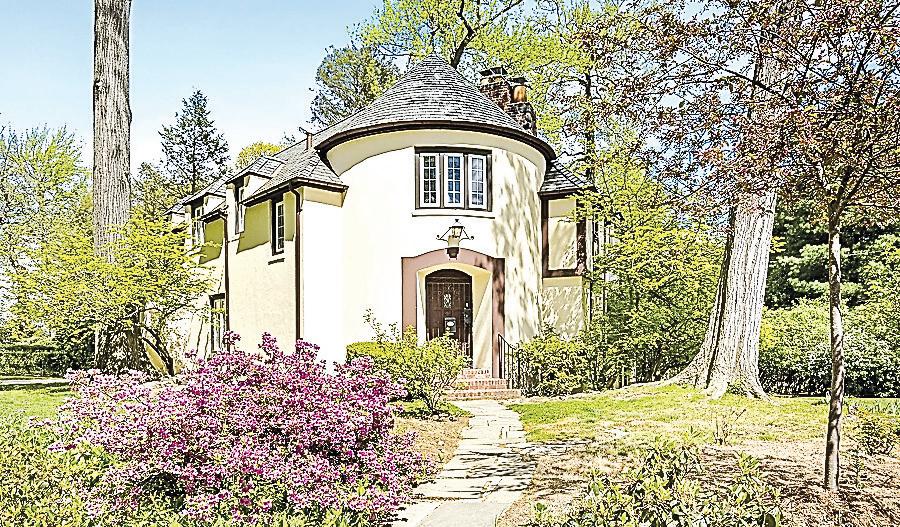
Afive-bedroom, four-bath home at 795 West 254th St in Riverdale has come to market for $2,950,000, offering a blend of modern design, generous space, and sweeping natural views. Built in 1985, the wood-clad residence sits on a 0.23-acre corner lot and overlooks both the Hudson River and the Palisades cliffs. One of its standout features is a sun-filled solarium, designed for year-round enjoyment of sunsets and river views.
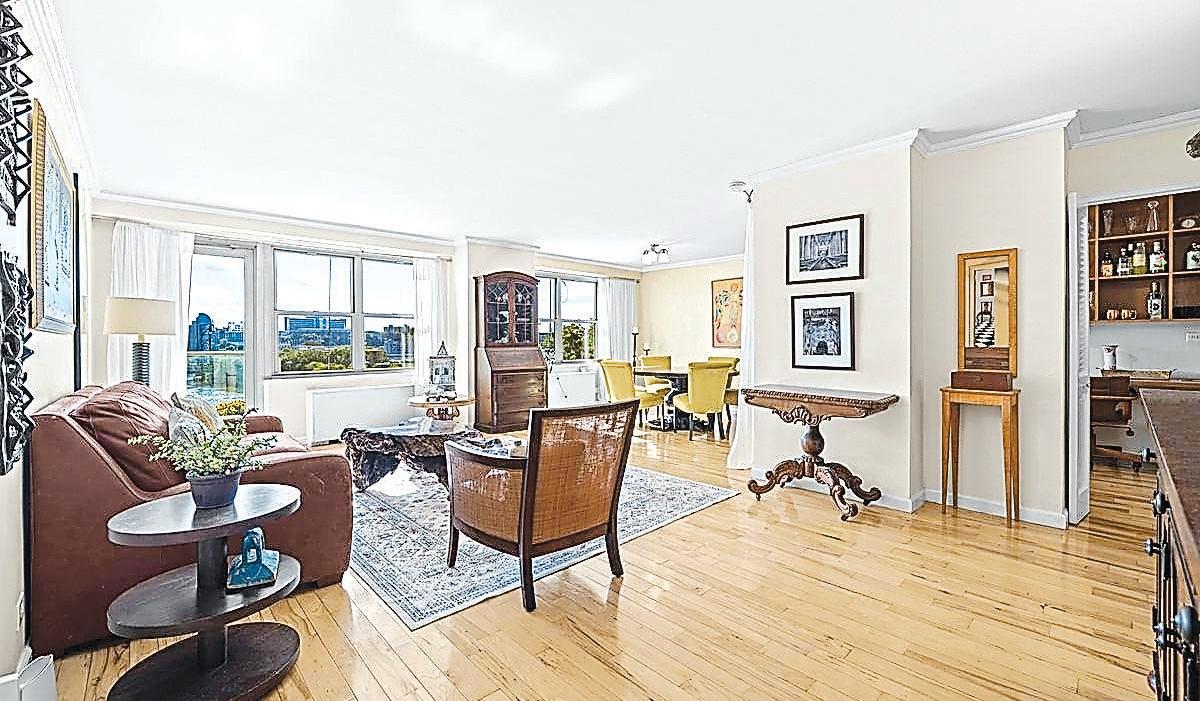
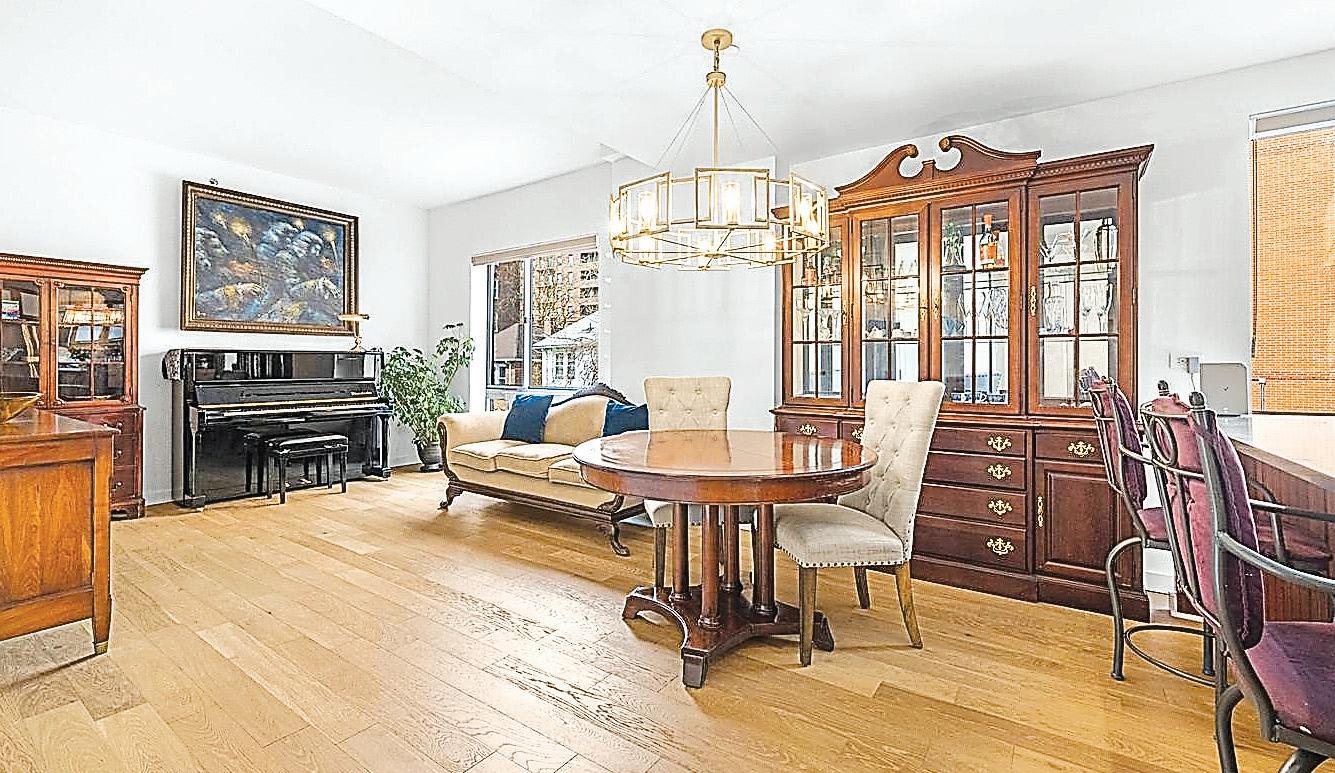
The main level includes a glass-enclosed entry vestibule leading into a sunken living room with a wood-burning fireplace and a wall of windows facing the water. An open dining area connects to a large kitchen equipped with quartz countertops, a center island with seating for six, and high-end appliances including a SubZero refrigerator, Wolf six-burner stove, Bosch dishwasher, and Sharp microwave. A den with
$


$